WASHINGTON — The Trump administration has ended the lease agreement for three public golf courses in Washington, a move that offers President Trump an additional opportunity to put his stamp on another piece of the nation’s capital.
The National Links Trust, the nonprofit that has operated Washington’s three public courses on federal land for the last five years, said Wednesday that the Department of the Interior had terminated its 50-year lease agreement. The Interior Department said it was terminating the lease because the nonprofit had not implemented required capital improvements and failed to meet the terms of the lease.
While it was unclear what the Trump administration’s plans are for the golf courses, the move gives Trump, whose private company has developed numerous golf courses in the U.S. and abroad, the chance to remake links overlooking the Potomac River and in Rock Creek Park and a site that is part of Black golf history.
Officials for the National Links Trust said in a statement that they were “devastated” by the decision to terminate the lease and defended their management of the courses. They said $8.5 million had gone toward capital improvements at the courses and that rounds played and revenue had more than doubled in their tenure managing the courses. The nonprofit has agreed to keep managing the courses for the time being, but long-term renovations will stop.
“While this termination is a major setback, we remain stubbornly hopeful that a path forward can be found that preserves affordable and accessible public golf in the nation’s capital for generations to come,” the officials added.
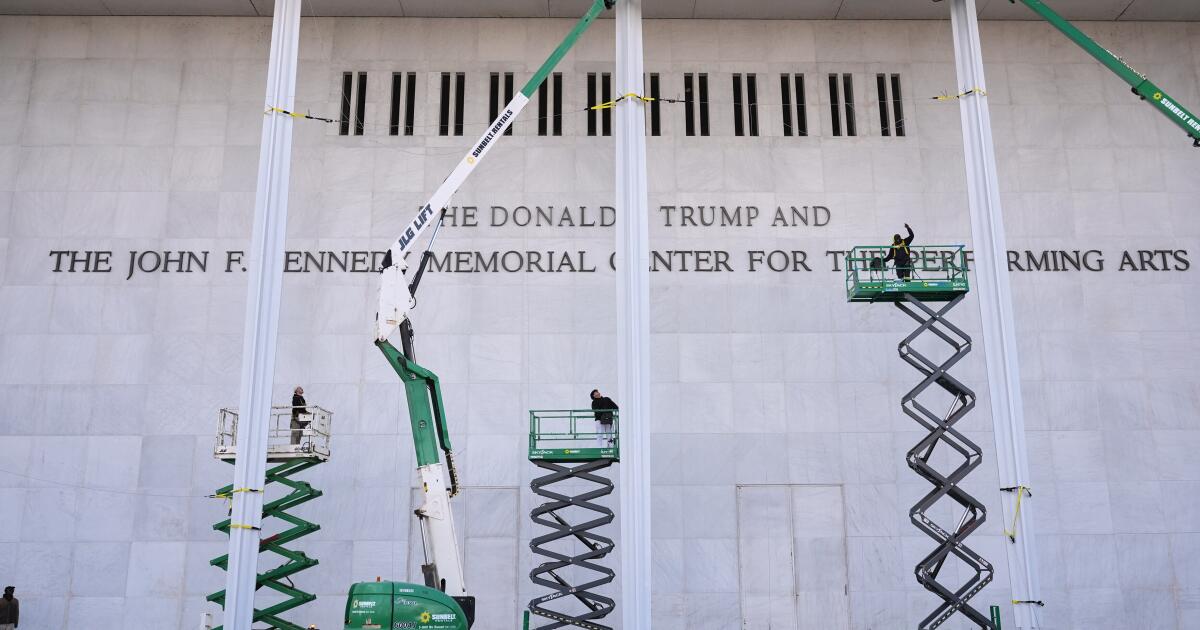
The Department of the Interior’s decision comes as Trump rebrands civic spaces in Washington and deploys National Guard members to the streets for public safety. The Kennedy Center added Trump’s name this month after the center’s board of trustees — made up of Trump appointees — voted to change the name of the performing arts space designated by Congress as a memorial to John F. Kennedy. Trump is also in the midst of a construction project to build a ballroom on the White House’s East Wing, and he has put his name on the U.S. Institute of Peace.
DUBAI, United Arab Emirates — President Trump and top Iranian officials exchanged dueling threats Friday as widening protests swept across parts of the Islamic Republic, further escalating tensions between the countries after America bombed Iranian nuclear sites in June.
At least seven people have been killed so far in violence surrounding the demonstrations, which were sparked in part by the collapse of Iran’s rial currency but have increasingly seen crowds chanting anti-government slogans.
The protests, now in their sixth day, have become the biggest in Iran since 2022, when the death of 22-year-old Mahsa Amini in police custody triggered nationwide demonstrations. However, the demonstrations have yet to be countrywide and have not been as intense as those surrounding the death of Amini, who was detained over not wearing her hijab, or headscarf, to the liking of authorities.
Trump post sparks quick Iranian response
Trump initially wrote on his Truth Social platform, warning Iran that if it “violently kills peaceful protesters,” the United States “will come to their rescue.”
“We are locked and loaded and ready to go,” Trump wrote, without elaborating.
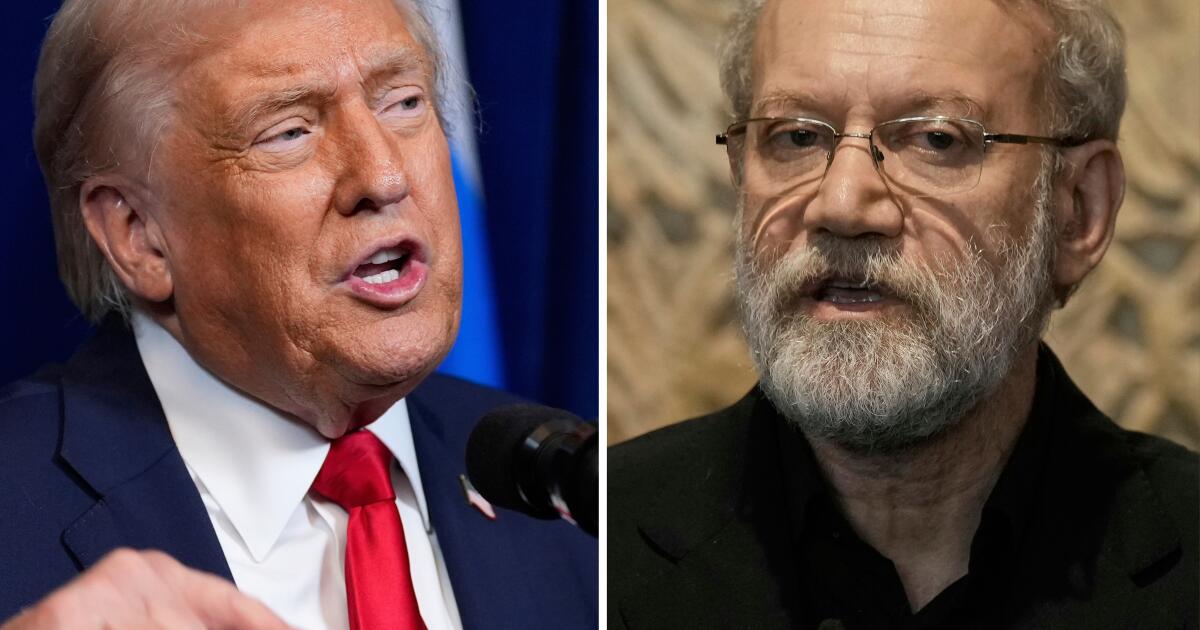
Shortly after, Ali Larijani, a former parliament speaker who serves as the secretary of Iran’s Supreme National Security Council, alleged on the social platform X that Israel and the U.S. were stoking the demonstrations. He offered no evidence to support the allegation, which Iranian officials have repeatedly made during years of protests sweeping the country.
“Trump should know that intervention by the U.S. in the domestic problem corresponds to chaos in the entire region and the destruction of the U.S. interests,” Larijani wrote on X, which the Iranian government blocks. “The people of the U.S. should know that Trump began the adventurism. They should take care of their own soldiers.”
Larijani’s remarks likely referenced America’s wide military footprint in the region. Iran in June attacked Al Udeid Air Base in Qatar after the U.S. strikes on three nuclear sites during Israel’s 12-day war on the Islamic Republic. No one was injured though a missile did hit a radome there.
Ali Shamkhani, an adviser to Supreme Leader Ayatollah Ali Khamenei who previously was the council’s secretary for years, separately warned that “any interventionist hand that gets too close to the security of Iran will be cut.”
“The people of Iran properly know the experience of ‘being rescued’ by Americans: from Iraq and Afghanistan to Gaza,” he added on X.
Iran’s hard-liner parliament speaker Mohammad Bagher Qalibaf also threatened that all American bases and forces would be “legitimate targets.”
Iran’s Foreign Ministry spokesperson Esmail Baghaei also responded, citing a list of Tehran’s longtime grievances against the U.S., including a CIA-backed coup in 1953, the downing of a passenger jet in 1988 and taking part in the June war.
The Iranian response came as the protests shake what has been a common refrain from officials in the theocracy — that the country broadly backed its government after the war.
Trump’s online message marked a direct sign of support for the demonstrators, something that other American presidents have avoided out of concern that activists would be accused of working with the West. During Iran’s 2009 Green Movement demonstrations, President Barack Obama held back from publicly backing the protests — something he said in 2022 “was a mistake.”
But such White House support still carries a risk.
“Though the grievances that fuel these and past protests are due to the Iranian government’s own policies, they are likely to use President Trump’s statement as proof that the unrest is driven by external actors,” said Naysan Rafati, an analyst at the International Crisis Group.
“But using that as a justification to crack down more violently risks inviting the very U.S. involvement Trump has hinted at,” he added.
Protests continue Friday
Demonstrators took to the streets Friday in Zahedan in Iran’s restive Sistan and Baluchestan province on the border with Pakistan. The burials of several demonstrators killed in the protests also took place, sparking marches.
Online video purported to show mourners chasing off security force members who attended the funeral of 21-year-old Amirhessam Khodayari. He was killed Wednesday in Kouhdasht, over 250 miles southwest of Tehran in Iran’s Lorestan province.
Video also showed Khodayari’s father denying his son served in the all-volunteer Basij force of Iran’s paramilitary Revolutionary Guard, as authorities claimed. The semiofficial Fars news agency later reported that there were now questions about the government’s claims that he served.
Iran’s civilian government under reformist President Masoud Pezeshkian has been trying to signal it wants to negotiate with protesters. However, Pezeshkian has acknowledged there is not much he can do as Iran’s rial has rapidly depreciated, with $1 now costing some 1.4 million rials. That sparked the initial protests.
The protests, taking root in economic issues, have heard demonstrators chant against Iran’s theocracy as well. Tehran has had little luck in propping up its economy in the months since the June war.
Iran recently said it was no longer enriching uranium at any site in the country, trying to signal to the West that it remains open to potential negotiations over its atomic program to ease sanctions. However, those talks have yet to happen as Trump and Israeli Prime Minister Benjamin Netanyahu have warned Tehran against reconstituting its atomic program.
Jan. 2 (UPI) — Danish renewable energy giant Orsted filed suit Thursday against the Department of Interior because it paused its lease on a $5 billion off-shore wind farm in Rhode Island.
Orsted’s Revolution Wind project is 87% complete, and “is expected to be ready to deliver reliable, affordable power to American homes in 2026,” a press release said.
Orsted shares jumped more than 4% on the lawsuit news, CNBC reported.
The administration put a halt to the project last month. The Interior Department announced it would pause the leases of five offshore wind farms being built on the East Coast.
Besides Revolution Wind, the projects are Vineyard Wind 1, Coastal Virginia Offshore Wind, Sunrise Wind and Empire Wind. The projects are in New England, Virginia and New York. Revolution Wind is a joint venture between Orsted and Global Infrastructure Partners’ Skyborn Renewables. It’s about 15 miles off the coast of Rhode Island.
Secretary of the Interior Doug Burgum announced on X in December: “Due to national security concerns identified by @DeptofWar, @Interior is PAUSING leases for 5 expensive, unreliable, heavily subsidized offshore wind farms! ONE natural gas pipeline supplies as much energy as these 5 projects COMBINED.”
The department explained in a press release that “unclassified reports from the U.S. government have long found that the movement of massive turbine blades and the highly reflective towers create radar interference called ‘clutter.’ The clutter caused by offshore wind projects obscures legitimate moving targets and generates false targets in the vicinity of the wind projects,” it said.
But Orsted argues that, “Revolution Wind has spent and committed billions of dollars in reliance upon, and has met the requests of, a thorough review process. Additional federal reviews and approvals included the U.S. Coast Guard, U.S. Army Corps of Engineers, National Marine Fisheries Service, and many other agencies.”
Revolution Wind faces “substantial harm” from the lease suspension order, Orsted said. “As a result, litigation is a necessary step to protect the rights of the project.”
Orsted’s other project, Sunrise Wind, which also had its lease suspended, “continues to evaluate all options to resolve the matter, including engagement with relevant agencies and stakeholders and considering legal proceedings,” Orsted said. Sunrise Wind is about 30 miles off the coast of New York.
President Donald Trump has made it clear that he dislikes wind energy, calling the turbines “ugly” and saying the noise they make causes cancer.
On Aug. 22, the administration ordered Orsted to stop construction on Revolution Wind to “address concerns related to the protection of national security interest of the United States.”
On Aug. 29, the Department of Transportation announced it was cutting about $679 million in funding to 12 wind farms, calling the projects “wasteful.”
Orsted then filed suit in September to reverse the stop-work order. In that filing, it said the project had already spent $5 billion.
As we head into 2026 and Democrats try to figure out how to regain power, their New Year’s resolution should be simple: Manage egos better.
In recent years, they seem to have forgotten the time-tested necessity of placating people. In other words, doing the same basic drudgery the rest of us rely on to get through this chaotic world.
This effort cannot merely be directed toward voters, as important as they are. It must also include elite stakeholders, some of whom might (rightly) be considered kooks, weirdos and otherwise high-maintenance eccentrics.
Lest you think Dems should simply shrug off these folks and say “good riddance,” consider this: Both Trump terms might have been avoided if Democrats had been more willing to nurture the nuts in years gone by.
Let’s start with their treatment of America’s top crank: Robert F. Kennedy Jr.
As journalist Michael Scherer, who profiled RFK Jr. for The Atlantic, told Alex Wagner of “Pod Save America”: Once Kennedy’s own 2024 presidential campaign started to flounder, he and his campaign manager began “to make sort of outreach to Democrats … to see if they can open a conversation with Biden to sort of trade something.”
Unfortunately, “the Democratic response [was] silence.” They wouldn’t meet with him, they wouldn’t talk to him.
Later, as Scherer recounts: “A friend of [Kennedy’s] connects him with Tucker Carlson who connects him with Donald Trump. And that night, just hours later, they’re talking, and Trump at that point wants to make a deal.”
The rest is history.
Now, I know what you’re thinking. “But Kennedy is a nut! Why should Democrats have humored him?”
How about this: Because Trump narrowly won the presidency in 2024 by forming a disparate coalition held together by duct tape, resentment and (possibly) a cursed amulet.
This motley crew included more prominent Dems than just RFK Jr. Remember when Biden basically ghosted Elon Musk for that big 2021 White House electric vehicle summit? Even Kamala Harris — who happily agreed with Biden on just about everything except her own polling numbers — called that a huge mistake.
Then again, Harris committed her own costly slight when she decided against going on Joe Rogan’s podcast.
For an entire decade now, Democrats have consistently alienated allies — with devastating results. I’m talking about the snubs that might have prevented Trump’s first presidential run entirely.
Not just the famous humiliation of Trump at the 2011 White House Correspondents’ Dinner. Here’s the more tragic prequel: Former “Meet the Press” host Chuck Todd told the Bulwark’s Tim Miller that before Trump went full birther, he actually called the Obama White House offering “ideas on how to improve the state dinner.”
That’s right. Donald J. Trump — future leader of the free world — just wanted to talk about better parties. Shrimp trays. Tablecloths. Maybe a chocolate fountain.
Just as the world would have been better had the Washington Senators signed Fidel Castro to a huge baseball contract before he got too interested in politics, America might have been better if Obama had made Trump the White House state dinner czar.
But as Todd put it, “The last thing the Obama White House was going to do was placate a guy like Donald Trump.”
Understandable — until you consider that the alternative to humoring him was, you know … President Trump. Twice.
Look, I totally understand why a U.S. president might think he or she shouldn’t have to stoop to kissing some crank’s ring or placating some gilded, phony billionaire. But let’s be honest: It’s part of the job.
Instead of performing this sort of ego cultivation, Democrats — whether because of snobbery, elite gatekeeping, geriatric aloofness or a disciplined disdain for “time burglars” — have repeatedly alienated potential allies (or at least neutral parties). Then they act shocked when these same people drift into the MAGA solar system like space debris.
If Trump is truly an existential threat — and Democrats say this approximately 87 times a week — then maybe, just maybe, they should Return. A. Phone. Call.
Otherwise, Donald Trump will. Probably at 3 a.m., while eating a Big Mac.
So grovel if you must. Fake interest. Smile like you’re not dying inside. Do the basic humiliations the rest of us perform daily to get hired, get promoted or get a date.
It’s the least you can do. So make it your New Year’s resolution and honor it.
But if you think you’re too good to perform the basic glad-handing and ego-stroking, even for the nuttiest eccentrics, bad things will happen.
Trust me — I’ve seen this movie. And we’re only a year into his second term.
Jan. 1 (UPI) — The Italian government said Thursday that the United States has pulled back on tariffs the Trump administration had placed on several pasta brands based in Italy.
The U.S. Department of Commerce reduced tariffs on 13 Italian pasta brands, rolling back levies that had been announced as the administration alleged that the companies had been trying to undercut U.S. manufacturers, CBS News and The Financial Times reported.
The tariffs, which were originally announced as 92% on brands that include Barilla, La Molisana and Pastificio Lucio Garofalo, would have nearly doubled their cost.
With the rollbacks, the brands will only carry a 2% to 14% tariff: La Molisana will see a 2.26% tariff, Garofalo will see a 13.98% tariff and the other 11 companies will face a 9.09% tariff.
After a preliminary review of the companies’ operations revealed that they had not been trying to undercut the price of U.S. manufactured pasta.
“The recalculation of the duties is a sign that U.S. authorities recognize our companies’ constructive willingness to cooperate,” the Italian foreign ministry said of the shift.
According to a business association in Italy, the tariffs would have affected about half of the pasta that is typically shipped to the United States.
In 2024, roughly $788 million of pasta was imported from Italy to the United States.
Over the course of 2025, the Trump administration introduced high tariffs on a wide range of products — from food and clothes to furniture and kitchen cabinets — but many have been rolled back or canceled as officials have negotiated with other countries’ officials or, such as in the case of Italian pasta, consumers were primed to see significantly increased costs.
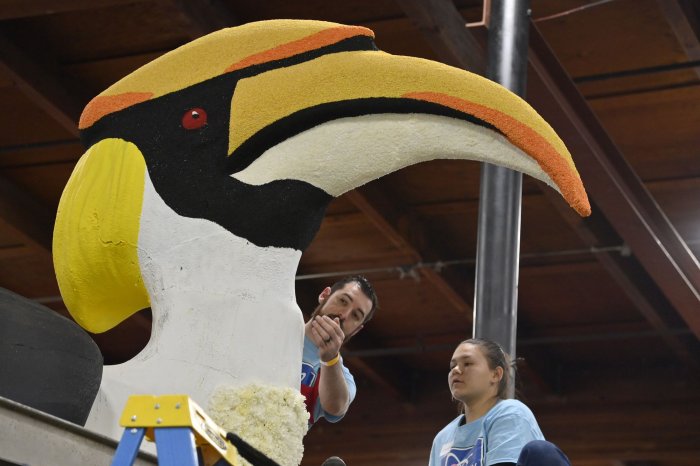
Volunteers use thousands of flowers and other plant material to prepare floats for the 137th annual Tournament of Roses Parade in Pasadena, Calif., on December 30, 2025. Photo by Jim Ruymen/UPI | License Photo
The complaint targets a policy that would nix coverage under federal health insurance for gender-affirming healthcare.
Published On 1 Jan 20261 Jan 2026
Share
A group of federal government employees in the United States has filed a class action complaint against President Donald Trump’s administration over a new policy that will eliminate coverage for gender-affirming care in federal health insurance programmes.
The policy took effect with the start of the new year, and on Thursday, the Human Rights Campaign Foundation issued the complaint, acting on behalf of the federal employees.
Recommended Stories
list of 3 itemsend of list
The US Office of Personnel Management (OPM) was named as a defendant.
In an August letter, the OPM stated that, as of 2026, “chemical and surgical modification of an individual’s sex traits through medical interventions” would no longer be covered under health insurance programmes for federal employees and US postal workers.
OPM officials could not be reached for immediate comment.
The complaint argues that the policy is discriminatory on the basis of sex. It asks that the policy be rescinded and seeks payment for economic damages and other relief.
If the issue is not resolved with the OPM, the foundation said that plaintiffs will pursue class claims before the Equal Employment Opportunity Commission and potentially continue with a class action lawsuit in federal court.
Separately, a group of Democratic state attorneys general last month sued the Trump administration to block proposed rules that would cut children’s access to gender-affirming care, the latest court battle over Trump’s efforts to eliminate legal protections for transgender people.
US Secretary of Health and Human Services Robert F Kennedy Jr has proposed rules that would bar hospitals that provide gender-affirming care to children from Medicaid and Medicare and prohibit the Children’s Health Insurance Program from paying for it.
President Donald Trump has eased pressure on two key import sectors — furniture and pasta — by delaying or scaling back steep tariffs shortly before they were due to take effect on 1 January, 2026.
For furniture, Trump has postponed planned tariff increases on certain imported home goods for one year, keeping existing duties in place while allowing further negotiations with trading partners.
On Wednesday Trump signed a proclamation delaying the scheduled increases — originally set to take effect on Thursday — until January 1, 2027.
The order preserves the current 25% tariff on “certain upholstered wooden products,” kitchen cabinets and vanities, rather than allowing it to rise to 30% for upholstered furniture and 50% for kitchen cabinets and vanities as previously directed.
“The United States continues to engage in productive negotiations with trade partners to address trade reciprocity and national security concerns with respect to imports of wood products,” the White House said in a statement announcing the move.
The furniture tariffs were imposed in September 2025 under a broader push to reshape US trade relationships and protect domestic industries. In addition to the 25% on furniture and cabinets, the administration also placed a 10% duty on imported softwood timber and lumber late last year.
The higher rates that were set to begin this week would have hit imports from major suppliers like Vietnam and China particularly hard and come amid ongoing concern about rising consumer prices.
Separately, the US Supreme Court is expected to rule on the legality of some broad tariff measures imposed under national security authorities, a decision that could have wider implications for Trump’s trade strategy.
In contrast to the furniture delay the Trump administration has significantly reduced planned anti-dumping duties on Italian pasta, offering relief to several major brands after months of dispute.
The US Department of Commerce had initially proposed very high provisional anti-dumping duties — more than 91% — on certain imports of Italian pasta, on top of an existing 15% general tariff on EU food products.
Following a review and consultations with Italian authorities, the United States lowered those planned tariffs sharply. La Molisana will face a 2.26% duty, Garofalo will face a 13.98% duty and eleven other Italian producers will face 9.09% duties.
“The redefining of these tariff rates is a testament to the US authorities’ recognition of our companies’ effective will to cooperate,” Italy’s foreign ministry said in a statement.
Italy had been working with both the US government and the European Commission since October 2025 to find a solution to the dispute.
The US market remains crucial for Italian pasta producers. Exports of pasta to the United States were estimated at about €671 million in 2024, representing roughly 17% of Italy’s total pasta exports.
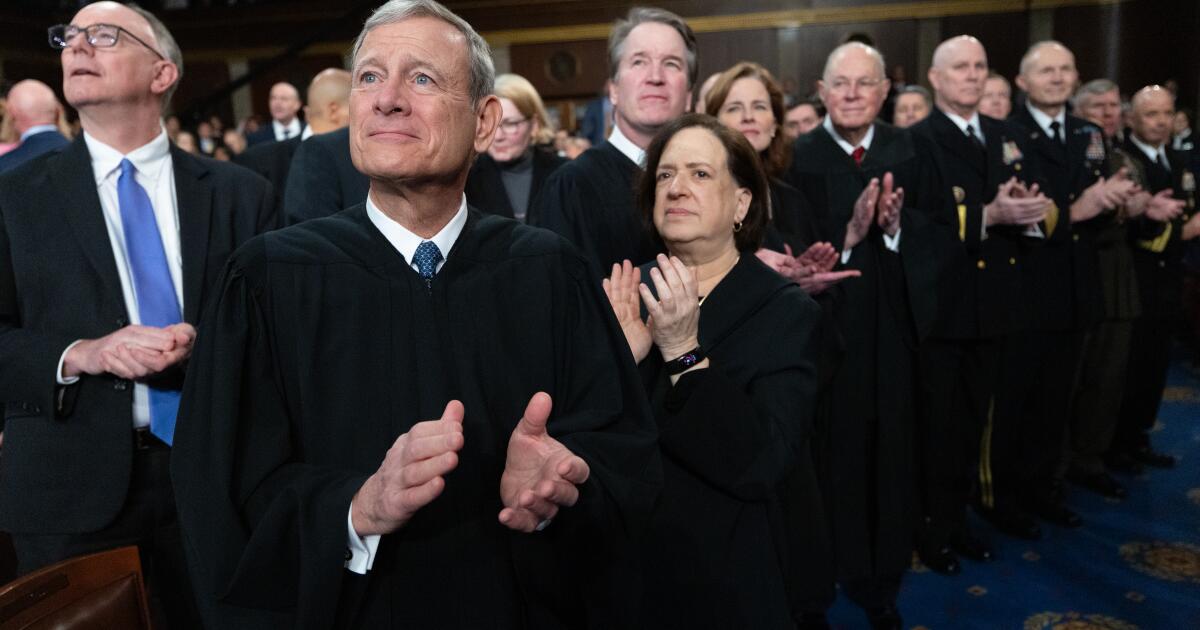
WASHINGTON — The Supreme Court, led by Chief Justice John G. Roberts Jr., ended the first year of President Trump’s second term with a record of rulings that gave him much broader power to control the federal government.
In a series of fast-track decisions, the justices granted emergency appeals and set aside rulings from district judges who blocked Trump’s orders from taking effect.
Upon taking office, Trump claimed migrants who were alleged to belong to “foreign terrorist” gangs could be arrested as “enemy aliens” and flown secretly to a prison in El Salvador.
Roberts and the court blocked such secret deportations and said the 5th Amendment entitles immigrants, like citizens, a right to “due process of law.” Many of the arrested men had no criminal records and said they never belonged to a criminal gang. Those who face deportation “are entitled to notice and opportunity to challenge their removal,” the justices said in Trump vs. J.G.G.
They also required the government to “facilitate” the release of Kilmar Abrego Garcia, who had been wrongly deported to El Salvador. He is now back in Maryland with his wife, but may face further criminal charges or efforts to deport him.
And last week, Roberts and the court barred Trump from deploying the National Guard in Chicago to enforce the immigration laws.
Trump had claimed he had the power to defy state governors and deploy the Guard troops in Los Angeles, Portland, Ore., Chicago and other Democratic-led states and cities.
The Supreme Court disagreed over dissents from conservative Justices Samuel A. Alito, Clarence Thomas and Neil M. Gorsuch.
For much of the year, however, Roberts and the five other conservatives were in the majority ruling for Trump. In dissent, the three liberal justices said the court should stand aside for now and defer to district judges.
In May, the court agreed that Trump could end the Biden administration’s special temporary protections extended to more than 350,000 Venezuelans as well as an additional 530,000 migrants who arrived legally from Cuba, Haiti, Nicaragua or Venezuela.
It was easier to explain why the new administration’s policies were cruel and disruptive rather than why they were illegal.
Trump’s lawyers argued that the law gave the president’s top immigration officials the sole power to decide on these temporary protections and that “no judicial review” was authorized.
Nonetheless, a federal judge in San Francisco twice blocked the administration’s repeal of the temporary protected status for Venezuelans, and a federal judge in Boston blocked the repeal of the entry-level parole granted to migrants under Biden.
Since 1887, when Congress created the Interstate Commerce Commission to regulate railroad rates, the government has had semi-independent boards and commissions led by a mix of Republicans and Democrats.
But Roberts and the court’s conservatives believe that because these agencies enforce the law, they come under the president’s “executive power.”
That ruling may come with an exception for the Federal Reserve Board, an independent agency whose nonpartisan stability is valued by business leaders.
Georgetown Law Professor David Cole, the former legal director at the American Civil Liberties Union, said the court has sent mixed signals.
“On the emergency docket, it has ruled consistently for the president, with some notable exceptions,” he said. “I do think it significant that it put a halt to the National Guard deployments and to the Alien Enemies Act deportations, at least for the time being. And I think by this time next year, it’s possible that the court will have overturned two of Trump’s signature initiatives — the birthright citizenship executive order and the tariffs.”
For much of 2025, the court was criticized for handing down temporary unsigned orders with little or no explanation.
That practice arose in 2017 in response to Trump’s use of executive orders to make abrupt, far-reaching changes in the law. In response, Democratic state attorneys and lawyers for progressive groups sued in friendly forums such as Seattle, San Francisco and Boston and won rulings from district judges who put Trump’s policies on hold.
The 2017 “travel ban” announced in Trump’s first week in the White House set the pattern. It suspended the entry of visitors and migrants from Venezuela and seven mostly-Muslim countries on the grounds that those countries had weak vetting procedures.
Judges blocked it from taking effect, and the U.S. 9th Circuit Court of Appeals agreed, saying the order discriminated based on nationality.
A year later, the Supreme Court agreed to hear the case and upheld Trump’s order in a 5-4 ruling. Roberts pointed out that Congress in the immigration laws clearly gave this power to the president. If he “finds that the entry of … any class of aliens … would be detrimental,” it says, he may “suspend the entry” of all such migrants for as long as “he shall deem necessary.”
Since then, Roberts and the court’s conservatives have been less willing to stand aside while federal judges hand down nationwide rulings.
Democrats saw the same problem when Biden was president.
In April 2023, a federal judge in west Texas ruled for anti-abortion advocates and decreed that the Food and Drug Administration had wrongly approved abortion pills that can end an early pregnancy. He ordered that they be removed from the market before any appeals could be heard and decided.
The Biden administration filed an emergency appeal. Two weeks later, the Supreme Court set aside the judge’s order, over dissents from Thomas and Alito.
The next year, the court heard arguments and then threw out the entire lawsuit on the grounds that abortion foes did not have standing to sue.
Since Trump returned to the White House, the court’s conservative majority has not deferred to district judges. Instead, it has repeatedly lifted injunctions that blocked Trump’s policies from taking effect.
Although these are not final rulings, they are strong signs that the administration will prevail.
In November, the justices sounded skeptical of Trump’s claim that a 1977 trade law, which did not mention tariffs, gave him the power to set these import taxes on products coming from around the world.
In the spring, the court will hear Trump’s claim that he can change the principle of birthright citizenship set in the 14th Amendment and deny citizenship it to newborns whose parents are here illegally or entered as visitors.
Rulings on both cases will be handed down by late June.
The most potent attack ad of Donald Trump’s comeback campaign seemingly ran on a loop during the final weeks before the 2024 election. Assailing rights for transgender people, its punch line indeed delivered a punch: “Kamala Harris is for they/them. President Trump is for you.”
2025: Promise broken. Back in office, the president has shown that the only pronouns he really recognizes are the first-person kind: me, myself and I.
A year into Trump 2.0, those self-regarding pronouns are now firmly affixed as the bywords of his presidency, on matters major and mundane. They might as well be mounted in gold in the Oval Office, in fonts so large as to not get lost amid all the bling he’s installed there. Asked in October just who was to be honored by Trump’s planned Arc de Triomph-like monument near Arlington Cemetery, the president was quick: “Me.”
To an extent that’s shocked even critics long convinced of his sociopathic narcissism, Trump has fashioned a government that’s of Trump, by Trump and for Trump. “I run the country and the world,” he boasted in April. Trump thinks “there’s nothing he can’t do. Nothing, zero, nothing,” his White House chief of staff, Susie Wiles, told Vanity Fair, as reported in twoarticles last month that signaled her own unease with Trump’s ongoing vengeance against his political enemies; his clemency for even the most violent rioters of Jan. 6, 2021; the pain of his erratic tariffs, too-cruel migrant roundups and tragic shutdown of USAID’s humanitarian aid; his stonewalling of the Jeffrey Epstein files that candidate Trump promised to release; and the foibles of his slavish Cabinet.
If Trump strutted as the center of the universe in 2025 — unchecked by advisors like Wiles or by a cowed Republican-controlled Congress, the Supreme Court and corporate chieftains — buckle up for 2026. It marks the 250th birthday of America’s independence, and our self-appointed master of ceremonies is focused on the festivities that he’ll star in not only on July 4th but all year long. One of his first acts as president was to create a White House task force with himself as chair, of course, to plan semiquincentennial events, ignoring an eight-year-old commission created by Congress for that purpose. Coming soon: A (possibly illegal) commemorative $1 coin with Trump’s image from the U.S. Mint.
Never mind that 2026 starts with a big spike in health insurance costs for tens of millions of Americans, including many Trump voters. The president who campaigned on bringing down the costs of living has stood in the way of a legislative remedy to the Dec. 31 expiration of healthcare premium subsidies, repeatedly mouthing his years-old promise that he’ll propose a cheaper alternative within weeks.
But here’s how 2026 will end: with midterm elections in November that loom as a referendum on whether the Trump Republican Party should keep control of Congress. The early betting is that no, it won’t. Especially after another year of Trump grandstanding, and his party’s genuflecting.
In good times, Trump’s garish self-regard might be tolerable to voters, even comical. But these aren’t good times, hardly the “golden age” Trump announced in his inaugural address last January — except for him and the wealthy hangers-on at his seemingly endless round of parties in the White House and at Mar-a-Lago. The Gatsby-themed Halloween party at Trump’s Florida resort was especially rich, pun intended, coming as it did hours before federal food aid for 42 million Americans expired amid a government shutdown he’d done nothing to avert.
Days later, voters gave a shellacking to Republicans in various states’ 2025 off-year elections, which is a good omen for the same result nationwide in 2026. There are other signs. On Tuesday, a new Gallup poll showed three out of four Americans were dissatisfied with “the way things are going in the United States.” Trump’s approval rating was just 36% in Gallup’s poll in early December, his lowest reading of the past year, and nearly equal to his all-time low after the Jan. 6 insurrection. Averages of various polls show Trump with negative ratings on his handling of immigration, the economy, trade and tariffs, and inflation — all issues that helped get him reelected.
But go ahead, Mr. President. Keep talking about how great you are. You’re a legend in your own time and mind.
Trump’s tone-deafness has become the great mystery of U.S. politics, for both parties, especially considering that he slammed President Biden for bragging about the economy’s post-pandemic recovery when Americans weren’t feeling it.
As Americans struggle to buy a home or to afford its upkeep, Trump has gilded the People’s House (see the New York Times’ recent 3-D recreation of the Oval Office for full, nauseating effect) and transformed the bathroom adjoining the Lincoln Bedroom in marble and gold. Having demolished the East Wing to make way for a gargantuan ballroom where Marie Antoinette would be at home, financed by favor-seeking billionaires and corporations, Trump told reporters on Tuesday that it would have to be bigger than he’d first planned because “we’re gonna do the inauguration” there.
What? The man who’s supposed to be leaving office on Jan. 20, 2029, is picking the new location for the next presidential inauguration? Hmmm.
Even before he’s been in office a year, Trump has put his brand on two Washington buildings, including the nation’s 60-year-old cultural center named by law as a memorial to an assassinated president. The Kennedy Center (no, I will not call it by Trump’s name) will have marble armrests; Trump took to social media on the day after Christmas to show off samples. Meanwhile, he’s refurbishing a royal jet from Qatar, a “palace in the sky.”
Trading on his power in unprecedented ways, Trump was a “crypto billionaire” by May, the Wall Street Journal reported, and in August the New Yorker estimated that he’d profited in office by at least $3.4 billion through crypto and licensing deals.
Listening to the usual legacy media suspects, one might think 2025 was an apocalyptic wasteland of sorts — an authoritarian fever dream brought on by the return of Donald J. Trump to the Oval Office. The reality looked very different. This past year was, in many ways, a pretty great and clarifying one. Let’s take stock of what happened when our government remembered whom it serves, as well as what unfinished business remains as we flip the calendar.
First, the obvious: Political sanity was restored to the nation’s capital. After years of leftist elite-driven chaos — wide-open borders, hyper-vindictive lawfare, fecklessness on the world stage and more — the nation has begun to revert back to first principles: national sovereignty, law and order, and strong leadership abroad. Under Trump, the United States has once again acted like a real nation-state that pursues its real interests — not a nongovernmental organization with a nagging guilt complex.
That reorientation has paid huge dividends. On immigration, the Biden-era invasion at the southern border has tapered by more than 90%. On energy, a renewed embrace of domestic production has led to the lowest average national gas prices in nearly five years. Violent crime, thanks to Trump’s law enforcement operations and innovative use of the National Guard, has dramatically fallen: Murders decreased by nearly 20% from 2024, and robbery and burglary also saw double-digit percentage decreases. Abroad, allies and adversaries alike recalibrated to the reality that the White House once again means what it says.
Still, work always remains. Here, then, is my 2026 wish list.
Peace in Eastern Europe
The Russia-Ukraine war has gone on far, far too long. The Trump administration has exerted tremendous diplomatic effort trying to orchestrate a peace deal, which remains elusive. A durable peace — one that halts the senseless slaughter on both sides, respects Ukrainian sovereignty and accommodates legitimate Russian concerns, and avoids a wider great-power conflagration — should be a paramount Trump administration foreign policy goal in 2026. Russia is the invader and Vladimir Putin is the greater obstacle to a lasting peace, but both sides need to make painful — if, frustratingly, also painfully obvious — concessions.
Victory on birthright citizenship
Back home, a consequential legal battle now sits before the U.S. Supreme Court: the Trump administration’s righteous challenge to the erroneous practice of constitutionally “required” birthright citizenship for the U.S.-born children of noncitizens. The notion that the 14th Amendment, ratified in 1868 in the aftermath of the Civil War, was meant to constitutionalize a global human trafficking magnet — granting automatic citizenship to all children born here, including those whose parents entered the country illegally — is indefensible as a matter of plain constitutional text, the congressional history in the House and Senate Judiciary Committees, and basic common sense. Indeed, birthright citizenship has been nothing short of ruinous for the United States. A Trump administration victory would restore Congress’s rightful authority over circumscribing citizenship and remove a longstanding incentive for illegal immigration.
Improved affordability and housing costs
Legal victories mean relatively little if ordinary Americans continue to feel like they are getting squeezed. Improved affordability must be front and center in 2026 — from the federal level down to states and localities. The cost of living is not an economic abstraction; it affects rent, groceries, child care and the difficulty of buying a first home. Housing, in particular, demands attention. Housing policy should reward supply, not suffocate it — cutting red tape and burdensome construction fees, reforming zoning incentives, and curtailing the inflationary spending that puts upward pressure on mortgage rates. A nation where young families cannot afford to put down roots is a nation courting decline — the very antithesis of Trumpian restoration.
Justice for Minnesota fraud scandal
The burgeoning fraud scandal over state and federal funds for child care in Minnesota, including at businesses run by Somali Americans — astonishing in scale — has become a test case for whether the rule of law still applies when politics get uncomfortable. Justice means following the facts wherever they lead: recovering stolen taxpayer dollars and holding wrongdoers and abettors legally accountable without fear or favor. To wit, on the subject of abettors: What did Gov. Tim Walz (D-Minn.), Atty. Gen. Keith Ellison (D-Minn.), Rep. Ilhan Omar (D-Minn.) and other prominent Minnesota politicians know, and when did they know it? Moreover, what did Kamala Harris — who picked Walz as her 2024 presidential running mate — know, and when did she know it? The Biden administration and the Walz administration began investigating these fraud allegations years ago, and the American people deserve answers to all these questions.
Tamed Communist China
Finally, no wish list can be complete without confronting the central geopolitical challenge of our age: that of Communist China. Simply put, Xi Jinping and the Chinese Communist Party, who just presided over their largest live-fire military exercises around Taiwan, must be meaningfully deterred in the Indo-Pacific. That means maintaining a combative tariff posture, implementing as much economic decoupling as is feasible and emboldening key regional allies — such as Japan — who share America’s interest in freedom of maritime navigation and diminished Chinese hegemony. Decades from now, Trump’s presidential legacy will be partially defined by how he handled the China challenge. Now is not the time to take the foot off the gas pedal.
This past year showed what is possible when Washington rejects the politics of managed decline and reembraces the best of the American tradition and way of life. Let us hope we will see more — a lot more — of that same success in this new year.
Josh Hammer’s latest book is “Israel and Civilization: The Fate of the Jewish Nation and the Destiny of the West.” This article was produced in collaboration with Creators Syndicate. X: @josh_hammer
Mali and Burkina Faso have announced they are imposing full visa bans on United States citizens in retaliation for US President Donald Trump’s ban on US visas for their citizens this month.
The two West African countries, which are both governed by the military, on Tuesday became the latest African nations to issue “tit-for-tat” visa bans on the US. These follow Trump’s new visa restrictions, which now apply to 39 countries in Africa, Asia, the Middle East and Latin America. The White House said they were imposed on “national security” grounds.
Recommended Stories
list of 4 itemsend of list
“In accordance with the principle of reciprocity, the Ministry of Foreign Affairs and International Cooperation informs the national and international community that, with immediate effect, the Government of the Republic of Mali will apply the same conditions and requirements to US nationals as those imposed on Malian citizens,” the Malian ministry said in a statement.
Burkina Faso’s foreign minister, Karamoko Jean-Marie Traore, in a separate statement similarly cited a reciprocity rule for his country’s visa ban.
Which countries have issued bans on visas for US citizens?
The US directive issued on December 16 expanded full US visa bans to citizens of five nations other than Mali and Burkina Faso: Laos, Niger, Sierra Leone, South Sudan and Syria.
Travellers holding travel documents issued by the Palestinian Authority were also banned from entering the US under the order.
The US cited the countries’ poor screening and vetting capabilities, information-sharing policies, visa overstay rates and refusal to take back their deported nationals for the ban.
Trump’s order also noted countries were additionally assessed based on whether they had a “significant terrorist presence”.
The US ban takes effect on Thursday.
Mali, Burkina Faso and neighbouring Niger have been plagued by violence from armed groups linked to al-Qaeda and ISIL (ISIS) for years. The violence in those countries has displaced millions of civilians.
On Friday, Niger banned entry for US citizens, also citing the US ban on its citizens. The country is also military-led like its neighbours Mali and Burkina Faso. All three formed the Alliance of Sahel States in July 2024 to tackle security problems and improve trade relations.
In its own reciprocal move, Chad stopped issuing visas to US citizens on June 6 with an exception for US officials. Only US citizens who were issued visas before June 9 are now allowed entry into Chad.
The country was on an initial list of 12 nations whose citizens the Trump administration issued a full visa ban on from June 9.
Burkina Faso President Ibrahim Traoré, second from left, walks alongside Malian President Assimi Goïta during an Alliance of Sahel States summit on security and development in Bamako, Mali, on December 23, 2025 [Handout/Mali government information centre via AP]
Which countries are affected by the US visa bans?
Citizens of 39 countries are now under full or partial entry restrictions to the US, according to the US-based Council on Foreign Relations think tank.
Those fully banned are:
Afghanistan
Burkina Faso
Chad
Equatorial Guinea
Eritrea
Haiti
Iran
Laos
Libya
Mali
Myanmar
Niger
Republic of Congo
Sierra Leone
Somalia
South Sudan
Sudan
Syria
Yemen
Holders of travel documents issued by the Palestinian Authority are also fully banned.
Those partially restricted are:
Angola
Antigua and Barbuda
Benin
Burundi
Cuba
Dominica
Gabon
The Gambia
Ivory Coast
Malawi
Mauritania
Nigeria
Senegal
Tanzania
Togo
Tonga
Turkmenistan
Venezuela
Zambia
Zimbabwe
Is Trump specifically targeting African countries with visa bans?
Trump’s approach to Africa regarding visa entries in his second term as US president is similar to that of his first administration when he issued a “Muslim ban”, which included citizens of three African nations – Somalia, Sudan and Libya – as well as Yemen, Syria, Iraq and Iran.
In later updates to the ban, Sudan was removed while Chad was added.
Most countries under US entry restrictions since Trump took office on January 20 are in Africa. Of the 39 affected countries, 26 are African nations.
How have US-Africa trade relations fared under Trump?
Tradewise, the US has shifted away from its preferential African Growth and Opportunity Act (AGOA) trade programme to a tariff-based regime that has also been applied to most other countries around the world under Trump’s tariffs policy.
From 2000, AGOA provided African nations with duty-free access to US markets, bolstering African exports to the US of a wide range of goods, from wine to cars.
AGOA created an estimated 300,000 jobs in African countries and indirectly sustained another 1.2 million jobs, according to the US-based Center for Strategic International Studies.
However, AGOA expired in September after the US Congress failed to renew it. Although the Trump administration said it supported a one-year extension, no steps have been announced to revive the programme.
Instead, African countries now face often steep tariffs as the US sometimes justifies them on political grounds.
South African President Cyril Ramaphosa met with Trump at the White House in May and explained that crime in the country targets the population at large – not just its white citizens – but was unable to persuade Trump.
Trump’s administration is also prioritising its access to critical rare earth minerals, used to develop high-tech devices, in a bid to remain competitive with China, which mines about 60 percent of the world’s rare earth metals and processes 90 percent of them.
Trump took up a mediator role in the conflict between the Democratic Republic of the Congo (DRC) and neighbouring Rwanda this year after the DRC government proposed a minerals deal with the US. The US and United Nations accuse Rwanda of backing a rebellion by the M23 armed group in the eastern DRC.
Trump did not commit to US military intervention in the DRC but successfully secured a peace pact between the two countries on December 4 after applying diplomatic pressure on Rwanda.
Aid groups have since reported rising hunger in northern Nigeria, Somalia and northeastern Kenya.
Health observers and analysts have also raised the alarm about the risk of undoing work to prevent and contain the spread of HIV in Lesotho and South Africa.
In northern Cameroon, officials have reported a spike in malaria deaths as drug supplies fall. This month, the US unilaterally pledged $400m in health funding to the country over the next five years on the condition that Cameroon raises its own annual health spending from $22m to $450m.
African nations were also most affected when Trump recalled 30 career diplomats appointed by former President Joe Biden from 29 countries last week.
Fifteen of them had been stationed in African nations: Algeria, Burundi, Cameroon, Cape Verde, Gabon, Ivory Coast, Egypt, Madagascar, Mauritius, Niger, Nigeria, Rwanda, Senegal, Somalia and Uganda.
Meanwhile, the US has continued to intensify strikes against armed groups linked to ISIL and al-Qaeda, similar to those during Trump’s first term as president from 2017 to 2021.
In Somalia, the US launched strikes in September targeting al-Shabab and the ISIL affiliate in Somalia Province, according to the US-based New America Foundation think tank.
The US also targeted ISIL- and al-Qaeda-linked groups in northwestern Nigeria for the first time on Thursday.
While those strikes were carried out in collaboration with the Nigerian government, a war of narratives prevailed between the two countries.
The US claims to be “saving” Nigerian Christians, who it alleges are experiencing a genocide.
Nigerian authorities, on the other hand, deny claims of genocide and say people of all religions have been badly affected by armed groups operating in the country.
NEW YORK — By nearly any measure, 2025 has been a rough year for anyone concerned about freedom of the press.
It’s likely to be the deadliest year on record for journalists and media workers. The number of assaults on reporters in the U.S. nearly equals the last three years combined. The president of the United States berates many who ask him questions, calling one woman “piggy.” And the ranks of those doing the job continues to thin.
It’s hard to think of a darker time for journalists. So say many, including Timothy Richardson, a former Washington Post reporter and now program director for journalism and disinformation at PEN America. “It’s safe to say this assault on the press over the past year has probably been the most aggressive that we’ve seen in modern times.”
Tracking killings and assaults against journalists
Worldwide, the 126 media industry people killed in 2025 by early December matched the number of deaths in all of 2024, according to the Committee to Protect Journalists, and last year was a record-setter. Israel’s bombing of Gaza accounted for 85 of those deaths, 82 of them Palestinians.
“It’s extremely concerning,” said Jodie Ginsberg, chief executive of the Committee to Protect Journalists. “Unfortunately, it’s not just, of course, about the sheer numbers of journalists and media workers killed, it’s also about the failure to obtain justice or get accountability for those killings.
“What we know from decades of doing this work is that impunity breeds impunity,” she said. “So a failure to tackle journalists’ killings creates an environment where those killings continue.”
The committee estimates there are at least 323 journalists imprisoned worldwide.
None of those killed this year were from the United States. But the work on American soil has still been dangerous. There have been 170 reports of assaults on journalists in the United States this year, 160 of them at the hands of law enforcement, according to the U.S. Press Freedom Tracker. Many of those reports came from coverage of immigration enforcement efforts.
It’s impossible to look past the influence of Trump, who frequently seethes with anger at the press while simultaneously interacting with journalists more than any president in memory — frequently answering their cell phone calls.
“Trump has always attacked the press,” Richardson said. “But during the second term, he’s turned that into government action to restrict and punish and intimidate journalists.”
Journalists learn quickly they have a fight on their hands
The Associated Press learned that quickly, when Trump limited the outlet’s access to cover him after it refused to follow his lead to rename the Gulf of Mexico. It launched a court fight that has remained unresolved. Trump has also extracted settlements from ABC and CBS News in lawsuits over stories that displeased him, and is suing the New York Times and Wall Street Journal.
Long angry about a perceived bias against conservatives on PBS and NPR newscasts, Trump and his allies in Congress successfully cut funding for public broadcasting as a whole. The president has also moved to shut down government-run organizations that beam news to all parts of the world.
“The U.S. is a major investor in media development, in independent media outlets in countries that have little or no independent media, or as a source of information for people in countries where there is no free media,” Ginsberg said. “The evisceration of Radio Free Europe, Radio Free Asia and the Voice of America is another blow to press freedom globally.”
Others in his administration take Trump’s lead, like when his press office chose the day after Thanksgiving to launch a web portal to complain about outlets or journalists being unfair.
“It’s part of this overall strategy that we’re seeing from certain governments, notably the United States, to paint all journalists who don’t simply [repeat] the narrative put out by the government as fake news, as dubious, as dodgy, as criminal,” Ginsberg said.
Trump’s defense secretary, Pete Hegseth, has portrayed journalists as dark figures skulking around Pentagon halls to uncover classified secrets as his rationale for enacting restrictive rules for coverage.
That’s led to the most notable example of journalists fighting back: most mainstream news outlets gave up their credentials to work in the Pentagon rather than agree to these rules, and are still breaking stories while working off-site. The New York Times has sued to overturn the rules. The newspaper also publicly defends itself when attacked by the president, such as when he complained about its coverage of his health.
Despite the more organized effort against the press, the public has taken little notice. The Pew Research Center said that 36% of Americans reported earlier this year hearing a lot about the Trump administration’s relationship with the press, compared to 72% who said that at the same point in his first term.
Pew’s polling shows that trust in news organizations has declined over the last decade, and journalists are likely to elicit little sympathy when their work becomes harder.
“Really, the harm falls on the public with so much of this because the public depends on this independent reporting to understand and scrutinize the decisions that are being made by the most powerful office in the world,” Richardson said.
Some reasons for optimism
The news industry as a whole is more than two decades in to a retrenchment caused largely by a collapse in the advertising market, and every year brings more reports of journalists laid off as a result. One of the year’s most sobering statistics came in a report by the organizations Muck Rack and Rebuild Local News: in 2002, there were 40 journalists for every 100,000 people in the United States; by this year, it was down to a little more than eight.
Asked if they could find reasons for optimism, both Ginsberg and Richardson pointed to the rise of some independent local news organizations, shoots of growth in a barren landscape, such as the Baltimore Banner, Charlottesville Tomorrow in Virginia and Outlier Media in Michigan.
As much as they are derided in Trump’s America, reporters at mainstream media outlets are still working hard and able to set the nation’s agenda with their reporting, noted influential Axios CEO Jim VandeHei in a recent column.
As he told the AP: “Over time, people will hopefully come to their senses and say, ‘Hey, the media like anything else is imperfect but, man, it’s a nice thing to have a free press.’”
WASHINGTON — President Trump is not the first president to want more room at the White House for entertaining, says the longest-serving top aide in the executive residence, offering some backup for the reason Trump has cited for his ballroom construction project.
Gary Walters spent more than two decades as White House chief usher to presidents Reagan, George H.W. Bush, Clinton and George W. Bush — a role that is akin to being the general manager of the residence.
“All the presidents that I had an opportunity to serve always talked about some possibility of an enlarged area” for entertaining, Walters said in an interview with the Associated Press about his recently published memoir.
Trump has been talking about building a White House ballroom for years, even before he entered the political arena. In July, the White House announced a 90,000-square-foot space would be built on the east side of the complex to accommodate 650 seated guests at a then-estimated cost of $200 million. Trump has said it will be paid for with private donations, including from him.
The Republican president later upped the proposed ballroom’s capacity to 999 people and, by October, had demolished the two-story East Wing of the White House to build it there. In December, he updated the price tag to $400 million — double the original estimate.
Images of the East Wing being demolished shocked historians, preservationists and others, but Walters said there is a long history of projects on the campus, ranging from conservatories, greenhouses and stables being torn down to build the West Wing in 1902, to the expansion of the residence with a third floor, to the addition of the East Wing itself during World War II to provide workspace for the first lady, her staff and other White House offices.
“So there’s always been construction going on around the White House,” Walters said.
Other presidents bemoaned the lack of space for entertaining
When Walters was on the job, the capacity of the largest public rooms in the White House was among the first topics he discussed with the incoming president, first lady and their social secretary, he said. The presidents he served all talked about the limited number of people the White House could handle.
When set up for a state dinner, the State Dining Room can hold about 130 people: 13 round tables each with seating for 10, Walters said. The East Room can accommodate about 300 chairs — fewer if space is needed for television cameras.
Trump complains often that both rooms are too small. He also has complained about the use of large tents on the south grounds, the main workaround for big events such as ritzy state dinners for foreign leaders. Walters said the tents had issues.
“When it rained, the water flows downhill and the grass became soggy, no matter what we tried to do,” Walters said. “We dug culverts around the outside of the tent to try and get the water.” Tents damaged the grass, requiring more work to reseed it, he said.
Walters admitted it was a bit jarring to see the East Wing torn down, and said he had fond personal memories of the space. “I met my wife at the White House and she worked in the East Wing, so that was a joy for me,” said Walters, 79.
His wife, Barbara, was a receptionist in the visitors office during the administrations of Richard Nixon and Gerald Ford. The couple recently celebrated 48 years of marriage.
Broken bones alter usher’s career trajectory
Walters owes his place in history as the longest-serving White House chief usher to the misfortune of a broken ankle.
He was 23 in early 1970, honorably discharged from the Army and looking for a job that would allow him to finish college at night. The Executive Protective Service, a precursor to the U.S. Secret Service, was hiring and accepted him.
But shortly before the graduation ceremony, Walters broke an ankle playing football. He could not patrol out of uniform, wearing a cast and hobbling around on crutches, so he was given a temporary assignment in the White House Police Control and Appointments Center. He stayed for five years.
“This injury also changed the course of my career,” Walters wrote in his memoir, “White House Memories: 1970-2007: Recollections of the Longest-Serving Chief Usher.” He gained an ”in-depth knowledge of the ways and security systems of the White House that would ultimately greatly benefit me in my future role in the Usher’s Office.”
A few months after being promoted to sergeant in 1975, he learned of an opening in the Usher’s Office. He applied and joined as an assistant in early 1976.
A decade later, he was elevated to chief usher by Reagan, who gave Walters the top job in the residence overseeing maintenance, construction and renovation projects, and food service, along with administrative, financial and personnel functions. He managed a staff of about 90 butlers, housekeepers, cooks, florists, electricians, engineers, plumbers and others.
Walters retired in 2007 after 37 years at the White House, including a record 21 years as chief usher. He served under seven presidents, from Nixon to George W. Bush.
In that time, Walters saw a broad swath of presidential history: the only president who ever resigned, an appointed vice president become the only unelected president, a president be impeached and stay in office, a father and son become president and the Supreme Court decide the most closely contested presidential election in U.S. history.
He’s often asked what he liked most about his work and “without hesitation I say it is getting to know and interact directly with the president, first lady, and other members of their family. It was an honor to get to know them with my own eyes and ears,” Walters wrote.
The Kennedy Center is ending the year with a new round of artists saying they are canceling scheduled performances after President Donald Trump’s name was added to the facility, prompting the institution’s president to accuse the performers of making their decisions because of politics.
The Cookers, a jazz supergroup that has performed together for nearly two decades, announced their withdrawal from “A Jazz New Year’s Eve” on their website, saying the “decision has come together very quickly” and acknowledging frustration from those who may have planned to attend.
Doug Varone and Dancers, a dance group based in New York, said in an Instagram post late Monday they would pull out of a performance slated for April, saying they “can no longer permit ourselves nor ask our audiences to step inside this once great institution.”
Those moves come after musician Chuck Redd canceled a Christmas Eve performance last week. They also come amid declining sales for tickets to the venue, as well as news that viewership for the Dec. 23 broadcast of the Kennedy Center Honors — which Trump had predicted would soar — was down by about 35% compared to the 2024 show.
The announcements amount to a volatile calendar for one of the most prominent performing arts venues in the U.S. and cap a year of tension in which Trump ousted the Kennedy Center board and named himself the institution’s chairman. That led to an earlier round of artist pushback, with performer Issa Rae and the producers of “Hamilton” canceling scheduled engagements while musicians Ben Folds and Renee Fleming stepped down from advisory roles.
The Cookers didn’t mention the building’s renaming or the Trump administration but did say that, when they return to performing, they wanted to ensure that “the room is able to celebrate the full presence of the music and everyone in it,” reiterating a commitment “to playing music that reaches across divisions rather than deepening them.”
The group may not have addressed the Kennedy Center situation directly, but one of its members has. On Saturday, saxophone player Billy Harper said in comments posted on the Jazz Stage Facebook page that he “would never even consider performing in a venue bearing a name (and being controlled by the kind of board) that represents overt racism and deliberate destruction of African American music and culture. The same music I devoted my life to creating and advancing.”
According to the White House, Trump’s handpicked board approved the renaming. Harper said both the board “as well as the name displayed on the building itself represents a mentality and practices I always stood against. And still do, today more than ever.”
Richard Grenell, a Trump ally whom the president chose to head the Kennedy Center after he forced out the previous leadership, posted Monday night on X, “The artists who are now canceling shows were booked by the previous far left leadership,” intimating the bookings were made under the Biden administration.
In a statement Tuesday to The Associated Press, Grenell said the ”last minute cancellations prove that they were always unwilling to perform for everyone — even those they disagree with politically,” adding that the Kennedy Center had been “flooded with inquiries from real artists willing to perform for everyone and who reject political statements in their artistry.”
There was no immediate word from Kennedy Center officials about whether the entity would pursue legal action against the latest round of artists to cancel performances. Following Redd’s cancellation last week, Grenell said he would seek $1 million in damages for what he called a “political stunt.”
Not all artists are calling off their shows. Bluegrass banjoist Randy Barrett, scheduled to perform at the Kennedy Center next month, told the AP he was “deeply troubled by the politicization” of the venue and respected those who had canceled but feels that “our tribalized country needs more music and art, not less. It’s one of the few things that can bring us together.”
President John F. Kennedy was assassinated in 1963, and Congress passed a law the following year naming the center as a living memorial to him. Scholars have said any changes to the building’s name would need congressional approval; the law explicitly prohibits the board of trustees from making the center into a memorial to anyone else, and from putting another person’s name on the building’s exterior.
The Graham Norton New Year’s Eve Show on BBC One, which featured actors Will Arnett and Owen Cooper as guests, looked back at the highlights – and low points – of 2025
01:22, 01 Jan 2026Updated 01:25, 01 Jan 2026
Graham Norton entertained viewers on BBC One last night(Image: BBC)
During his review of 2025, the veteran broadcaster was quick to turn his attention to the US President’s visit to the UK to meet the Royal Family. Graham, 62, flashed up a photo of Melania Trump wearing a wide-brimmed purple hat and joked she looked like “a lamp”.
He then quipped that the statement headwear may have been worn to stop her husband from leaning in for a kiss — setting the tone for a night of trademark digs just minutes into The Graham Norton New Year’s Eve Show on BBC One.
The Irish comedian kept the jokes rolling, leaning into the moment as he told viewers: “He was welcomed by the King and Queen, who were clearly happy to be photographed with him — Melania, not so much.” When the camera cut back to Melania’s oversized purple hat, Graham quipped: “I’m just a lamp. Please ignore me, I’m just a lamp,” before repeating, “Just ignore me,” while playfully mimicking her accent.
Yet, Graham took the gag further, Express.co.uk reports. He added: “Actually there is a security reason why Melania always wears a hat.. A nice wide brim can literally save her from a fate worse than death”” before footage showed Mr Trump attempting to kiss her on the cheek — only to be blocked by the hat.
Graham looked back at the highlights — and low points — of 2025 on the festive edition of his programme. His savage swipes came minutes into the episode of the BAFTA-winning chat show, pre-recorded ahead of its BBC One and iPlayer broadcast.
Tom Hiddleston, Laura Dern and Will Arnett, alongside Owen Cooper, Carey Mulligan and Tim Key joined Graham on the red sofa to ring in the new year. Alison Limerick provided the night’s music by performing her dance classic Where Love Lives.
The BBC recommissioned the programme for three more series earlier this year. Speaking at the time, the broadcaster said the programme remains one of its biggest entertainment successes, averaging 2.9 million viewers per episode across its most recent run and continuing to pull in huge numbers across social platforms including YouTube, TikTok and Instagram.
Graham, born in Dublin, Ireland, said hosting the programme remained both “a pleasure” and a “privilege”, teasing that the team were already looking ahead to welcoming more global stars onto the sofa.
This year’s New Year’s Eve line-up reflected that star power, with Hollywood names, British comedy favourites and breakout TV stars all joining Graham to look back on 2025.
The National Guard will be withdrawn from Chicago, Los Angeles and Portland, Ore., amid legal challenges to their use and a Supreme Court ruling against the Chicago deployment, President Donald Trump said on Wednesday. Photo by Bonnie Cash/UPI | License Photo
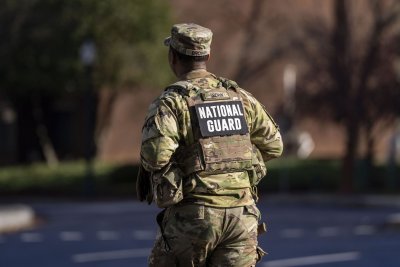
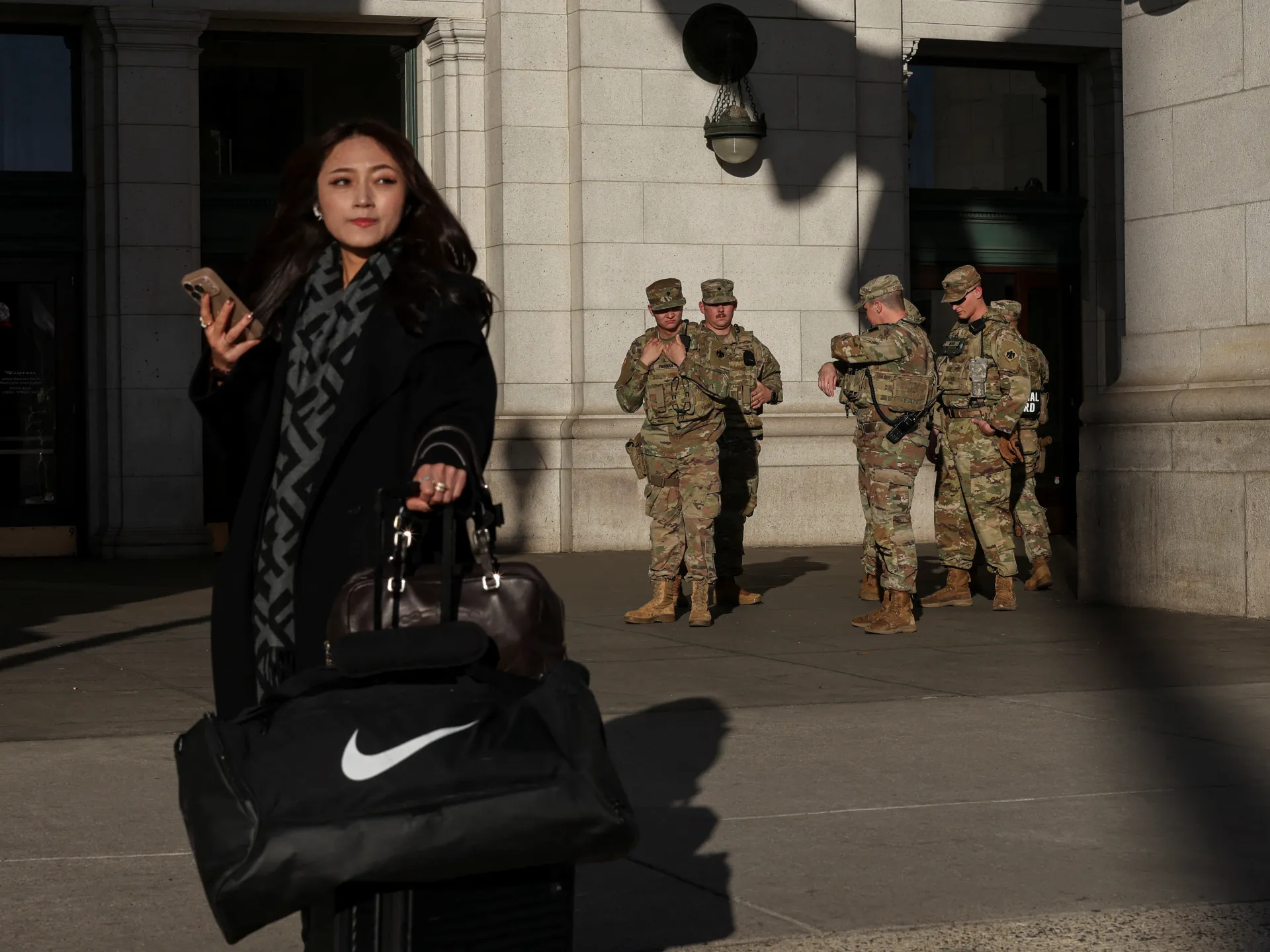
Dec. 31 (UPI) — The National Guard will be leaving Chicago, Los Angeles and Portland, Ore., but they likely will return, President Donald Trump said on Wednesday.
Trump announced the withdrawals after the Supreme Court ruled against a National Guard deployment in Chicago and amid legal challenges in California and Oregon.
The Supreme Court last week ruled the federal government cannot take control of respective state National Guard units to protect federal agents as they enforce immigration law, CNN reported.
We are removing the National Guard from Chicago, Los Angeles and Portland, despite the fact that crime has been greatly reduced by having these great patriots in those cities, and only by that fact,” Trump said in a Truth Social post on Wednesday.
Portland, Los Angeles and Chicago were gone if it weren’t for the federal government stepping in,” the president said.
He predicted the National Guard will return to those cities, though.
“We will come back, perhaps in a much different and stronger form, when crime begins to soar again,” Trump said, adding: “Only a question of time!”
Similar National Guard deployments in New Orleans and Memphis would not be affected because the respective governors in those states have okayed the deployments.
The National Guard has been deployed in Memphis to help reduce violent crime there, and National Guard units began arriving in New Orleans ahead of New Year’s Eve, the annual Sugar Bowl and Mardi Gras.
Local, state and federal law enforcement and the Louisiana National Guard seek to prevent a repeat of last year’s lone-wolf attack by an ISIS supporter, WWLTV reported.
Shamsud-Din Jabbar, 42, was a U.S. citizen from Texas who drove to New Orleans and shot and killed 14 during the early morning hours on Jan. 1.
An ISIS flag was found in his truck, along with weapons and a potential improvised explosive device, but local police shot and killed him before he could cause more harm.
He had placed two IEDs on Bourbon Street, where he also opened fire with a rifle and killed 14 before being shot and killed to end the attack.
Federal investigators found bomb-making materials in a rental home that Jabbar briefly occupied and tried to set on fire to conceal his crimes.
US president backs away from troop deployment to US cities amid legal setbacks, vows return when crime ‘begins to soar’.
United States President Donald Trump announced he is ceasing his efforts to deploy federal troops to several Democratic-led cities in a major policy pivot.
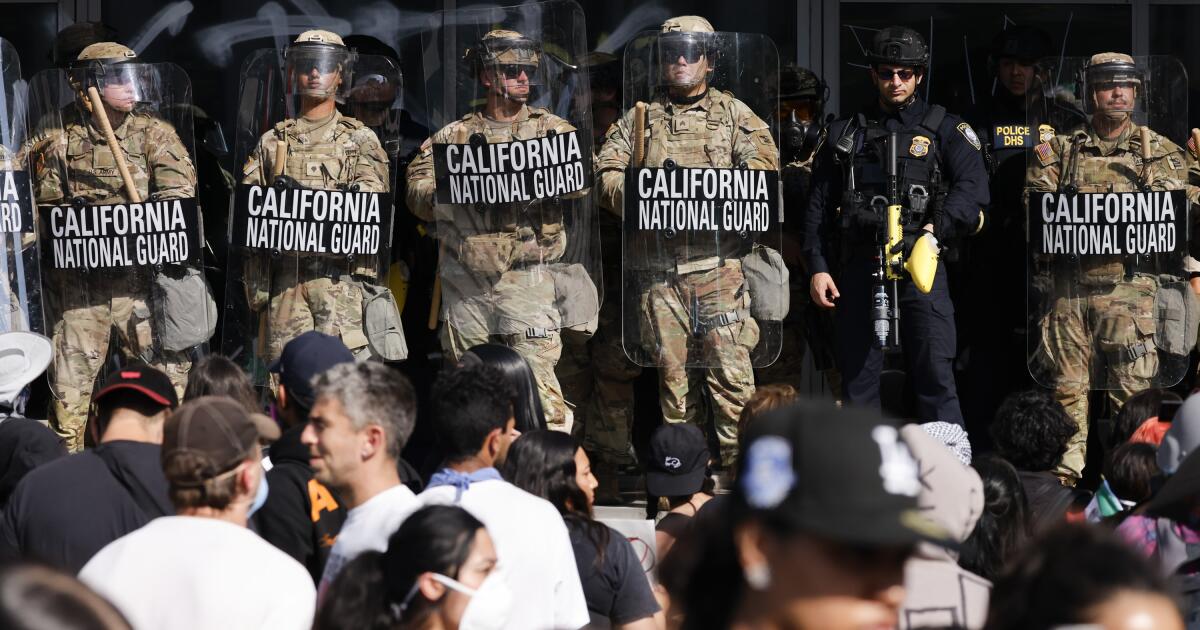
The announcement on Wednesday comes amid a series of legal setbacks to Trump’s efforts to deploy National Guard members to Chicago, Illinois; Los Angeles, California; and Portland, Oregon.
Recommended Stories
list of 3 itemsend of list
In a post on Truth Social, Trump said he’s “removing” the National Guard from those cities, although their deployment was already mostly limited by lower courts.
“We are removing the National Guard from Chicago, Los Angeles and Portland, despite the fact that CRIME has been greatly reduced by having these great Patriots in those cities, and ONLY by that fact,” he said.
Despite the claim, the National Guard has been barred from taking direct part in law enforcement, which remains illegal under US law. Trump had not invoked the Insurrection Act of 1807, which allows presidents to deploy troops domestically when “unlawful obstructions, combinations, or assemblages, or rebellion” against the federal government make it “impracticable to enforce” US law “by the ordinary course of judicial proceedings”.
Because of that, troops deployed in or around Los Angeles, Portland and Chicago had been largely tasked with guarding federal buildings and offering support services to immigration enforcement.
About 300 National Guard members remained under federal control in both Los Angeles and Chicago at the time of Trump’s announcement, with 200 more in Portland.
Since first deploying the National Guard in Los Angeles to respond to protests against mass immigration enforcement sweeps, Trump has repeatedly claimed major cities across the US have been plagued by overlapping crime and immigration crises.
Critics have accused Trump of taking part in dangerous political theatre to target opponents.
Trump’s announcement did not reference the ongoing National Guard deployment in Washington, DC, a federal territory, or in New Orleans, Louisiana, which had been specifically requested by the state’s Republican governor.
Legal setbacks
The president’s move comes amid a series of legal setbacks, topped last week by a Supreme Court order keeping in place a lower court’s ruling barring the president from deploying the National Guard to Chicago.
While members of the federal military, National Guard troops are typically deployed at the request of state governors. Presidents can unilaterally deploy the National Guard, but only in instances when other federal agents can no longer execute the law.
The majority of Supreme Court justices ruled Trump has not yet met that threshold, dealing a major blow to the administration’s justification for similar deployments across the country.
Earlier on Wednesday, Department of Justice lawyers in California withdrew a request to keep troops in the state under federal control as they appealed a lower court’s ruling. That ruling by US District Judge Charles Breyer said the troops must be returned to state control.
In a post on X, the office of California Governor Gavin Newsom, a Democrat and top Trump critic, said the “admission by Trump and his occult cabinet members means this illegal intimidation tactic will finally come to an end”.
Newsom and his staff “look forward” to a more lasting court ruling on the issue.
For his part, Trump, in his Truth Social post, said he would not hesitate to redeploy troops.
“We will come back, perhaps in a much different and stronger form, when crime begins to soar again – Only a question of time!” he said.
WASHINGTON — The day after Christmas is typically quiet in the nation’s capital. But President Trump’s decision to acknowledge a covert U.S. strike on Venezuelan territory, in an interview with an obscure local news outlet on Friday, set off a scramble in a drowsy Washington that has become a hallmark of the president.
Officials working on Latin America policy for the administration that had been closely tracking reports of refinery fires and other curious events throughout Venezuela couldn’t immediately figure out which target the president was talking about, three sources familiar with the matter told The Times.
Trump would later detail that the strike targeted a “dock area where they load the boats up with drugs.” But initial confusion from within his own government signaled just how tight a circle within the West Wing is determining whether to climb the escalation ladder toward war with Caracas.
Trump initially confirmed he had authorized CIA actions in Venezuela in an exchange with reporters on October. While the administration is obligated to report covert CIA operations to Congress, more robust congressional authorization is required for the use of military force.
“I authorized for two reasons, really. No. 1, they have emptied their prisons into the United States of America,” Trump said at the time. “And the other thing, the drugs, we have a lot of drugs coming in from Venezuela, and a lot of the Venezuelan drugs come in through the sea.”
The strike comes as Venezuelan authorities have increased the number of U.S. citizens detained in their custody, the New York Times first reported on Friday. Caracas had freed 17 Americans and permanent residents held in notorious Venezuelan prisons at the start of the Trump administration.
Evan Ellis, who served in Trump’s first term planning State Department policy on Latin America, the Caribbean and international narcotics, said it was “unclear whether the initial plan was for this operation to be publicly announced in an interview by the president.” Venezuela’s dictatorial president, Nicolás Maduro, “was certainly confused about it,” he said.
“It would make sense for them to do something like that, rather then a military strike, especially right now when there’s a delicate line between military operations and other things,” Ellis added. “My sense is — to the extent the president has acknowledged it — that this was them carrying out their mission to shape the battlespace in support of broader national objectives.”
Trump has repeatedly told the media that Maduro’s days in power are numbered. The administration refers to him and his regime as an illegitimate narco-state terrorizing American communities. On a bipartisan basis, going back to Trump’s first term and throughout the Biden administration, the United States has recognized a democratic opposition in Venezuela as its rightful government.
But a military war on the drug trade would make little sense targeting Venezuela, where only a fraction of illicit narcotics smuggled into the United States originate. Trump has hinted in recent weeks at other motives driving his calculus.
Over the last four months, the Trump administration slowly ramped up its pressure campaign on Maduro, first by targeting boats allegedly carrying narcotics and drug smugglers in international waters before announcing a blockade of Venezuelan oil tankers. Venezuela’s oil exports have consequently plummeted by half over the course of the last month.
On Wednesday, the Treasury Department also issued sanctions against four companies that it said were either operating in Venezuela’s oil sector or as accompanying oil tankers.
“Maduro’s regime increasingly depends on a shadow fleet of worldwide vessels to facilitate sanctionable activity, including sanctions evasion, and to generate revenue for its destabilizing operations,” the department said in a statement. “Today’s action further signals that those involved in the Venezuelan oil trade continue to face significant sanctions risks.”
The Pentagon, meanwhile, has stationed nearly a quarter of the U.S. naval fleet in the Caribbean since the summer, in what Trump has referred to as a “massive armada” without precedent in the region.
While Venezuela’s current oil output is modest, the nation sits on the world’s largest known oil reserves, offering significant potential access to any future strategic partners. China is currently the largest importer of Venezuelan oil, and at least one tanker subjected to the U.S. blockade has sought protection from Moscow, Maduro’s chief military ally.
Addressing the blockade in an exchange with reporters, Trump said he had spoken with top U.S. oil executives about what the Venezuelan market would look like with Maduro no longer in power. And he suggested the U.S. government would keep whatever barrels are seized, hearkening back to Trump’s campaign, throughout the 2010s, for the United States to control the oil fields of Iraq as the spoils of its war there.
“We’re going to keep it,” Trump said last week, of the 1.9 million barrels of Venezuelan oil on the first tanker seized. “Maybe we’ll sell it. Maybe we’ll keep it. Maybe we’ll use it in the strategic reserves. We’re keeping it.”
WASHINGTON — President Trump issued the first vetoes of his second term on Tuesday, rejecting two low-profile bipartisan bills, a move that had the effect of punishing backers who had opposed the president’s positions on other issues.
Trump vetoed drinking water pipeline legislation from Republican Rep. Lauren Boebert of Colorado, a longtime ally who broke with the president in November to release files on convicted sex offender Jeffrey Epstein. He also vetoed legislation that would have given the Miccosukee Tribe of Indians of Florida more control of some of its tribal lands. The tribe was among groups suing the administration over an immigration detention center in the Everglades known as “ Alligator Alcatraz.”
Both bills had bipartisan support and had been noncontroversial until the White House announced Trump’s vetoes Tuesday night.
Trump appeared to acknowledge the tribe’s opposition to the detention facility in a letter to Congress explaining his veto. “The Miccosukee Tribe has actively sought to obstruct reasonable immigration policies that the American people decisively voted for when I was elected,” Trump wrote.
Trump did not allude to Boebert in his veto of her legislation, but raised concerns about the cost of the water pipeline at the heart of that bill.
Boebert, one of four House Republicans who sided with House Democrats early on to force the release of the Epstein files, shared a statement on social media suggesting that the veto may have been “political retaliation.”
“I sincerely hope this veto has nothing to do with political retaliation for calling out corruption and demanding accountability. Americans deserve leadership that puts people over politics,” her statement said. Boebert added in another post: “This isn’t over.”
The Florida legislation had been sponsored by Republican Rep. Carlos Gimenez, whom Trump has endorsed. Gimenez and the Miccosukee Tribe were not immediately available for comment on Wednesday.
When asked whether the vetoes were punishment, the White House did not answer and instead referred to Trump’s statements explaining the vetoes.
Congress can override the vetoes by a vote of two-thirds of the members of the House and the Senate, but it’s unclear if there’s enough support in the Republican-controlled chambers to do so, especially heading into a midterm election year where many of them will be on the ballot and many GOP members will count on Trump’s backing.
Boebert’s legislation, the “Finish the Arkansas Valley Conduit Act,” aimed to improve access to clean drinking water in eastern Colorado.
While the congresswoman has long been a staunch supporter of Trump, she found herself at odds with the president with her support this year for legislation that required the Justice Department to release files related to Epstein.
Trump fought the proposal before reversing in the face of growing Republican support for releasing the files. Members of his administration even met with Boebert in the White House Situation Room to discuss the matter, though she didn’t change her mind.
Republican Rep. Jeff Hurd of Colorado, who co-sponsored the legislation, said he was “deeply disappointed” by Trump’s veto.
“This was a bipartisan, unanimous bill passed by Congress to uphold a long-standing federal commitment to southeastern Colorado,” Hurd said in a statement.
He said the legislation did not authorize any new construction spending or expand the federal government’s original commitment to the pipeline project, but adjusted the terms of repaying its costs.
Price and Kinnard write for the Associated Press. Kinnard reported from Chapin, S.C.
SACRAMENTO — The Trump administration backed off its effort to block a court order returning control of National Guard troops in Los Angeles to California Gov. Gavin Newsom.
In a brief filing with the U.S. Court of Appeals for the 9th Circuit on Tuesday, Justice Department lawyers said they no longer oppose lifting a partial administrative stay and formally withdrew their request to keep the troops under federal control while the appeal proceeds.
The move follows the U.S. Supreme Court’s decision last week in Trump v. Illinois, which cast new doubt on the administration’s legal theory for using the National Guard in domestic law enforcement operations. Tuesday’s filing with the appeals court does not concede the merits of California’s case brought by Newsom, but it removes a major procedural obstacle to enforcing the lower court’s ruling.
In the filing, federal lawyers said they “do not oppose lifting of the partial administrative stay and hereby respectfully withdraw their motion for a stay pending appeal.”
“This admission by Trump and his occult cabinet members means this illegal intimidation tactic will finally come to an end,” Newsom wrote on X, adding that he is looking forward to the 9th Circuit making an official ruling that would return the California National Guard to state service.
The decision could mark a turning point in a contentious legal fight over Trump’s use of state National Guard troops, which the president said was necessary to quell unrest over immigration enforcement. Justice Department lawyers had argued in court that once federalized, Guard troops could remain under the president’s command indefinitely and that courts had no authority to review their deployment.
Court records show roughly 300 California troops remain under federal control, including 100 of whom were still active in Los Angeles as of earlier this month. In mid-December, video reviewed by The Times showed dozens of troops under Trump’s command quietly leaving the Roybal Federal Building downtown in the middle of the night following an appellate court’s order to decamp. That facility had been patrolled by armed soldiers since June.
Earlier this month, U.S. District Judge Charles R. Breyer ruled that the president had illegally seized control of California’s National Guard during protests over immigration enforcement. Breyer ordered that command of the remaining federalized troops be returned to Newsom, rejecting the administration’s argument that once federalized, Guard units could remain under presidential control indefinitely. He warned that such a theory would upend the constitutional balance between state and federal power.
The Los Angeles case is part of a broader, high-stakes legal battle over the president’s authority to deploy armed forces inside U.S. cities. Similar disputes involving Guard deployments in Oregon and Illinois are moving through the courts, with several judges, including conservative appointees, expressing skepticism about claims that such decisions are beyond judicial review.
Members of Congress have also begun scrutinizing the deployments, raising concerns about civil liberties and the growing use of military forces in civilian settings.
WASHINGTON — President Trump’s administration announced late Tuesday that it’s freezing child care funds to Minnesota and demanding an audit of some day care centers after a series of fraud schemes involving government programs in recent years.
Deputy Secretary of Health and Human Services Jim O’Neill said on the social platform X that the move is in response to “blatant fraud that appears to be rampant in Minnesota and across the country.”
Minnesota Gov. Tim Walz pushed back on X, saying fraudsters are a serious issue that the state has spent years cracking down on but that this move is part of “Trump’s long game.”
“He’s politicizing the issue to defund programs that help Minnesotans,” Walz said.
O’Neill referenced a right-wing influencer who posted a video Friday claiming he found that day care centers operated by Somali residents in Minneapolis had committed up to $100 million in fraud. O’Neill said he has demanded Walz submit an audit of these centers that includes attendance records, licenses, complaints, investigations and inspections.
“We have turned off the money spigot and we are finding the fraud,” O’Neill said.
The announcement comes one day after U.S. Homeland Security officials were in Minneapolis conducting a fraud investigation by going to unidentified businesses and questioning workers.
There have been years of investigations that included a $300 million pandemic food fraud scheme revolving around the nonprofit Feeding Our Future, for which 57 defendants in Minnesota have been convicted. Prosecutors said the organization was at the center of the country’s largest COVID-19-related fraud scam, when defendants exploited a state-run, federally funded program meant to provide food for children.
A federal prosecutor alleged earlier this month that half or more of the roughly $18 billion in federal funds that supported 14 programs in Minnesota since 2018 may have been stolen. Most of the defendants in the child nutrition, housing services and autism program schemes are Somali Americans, according to the U.S. Attorney’s Office for Minnesota.
O’Neill, who is serving as acting director of the Centers for Disease Control and Prevention, also said in the social media post Tuesday that payments across the U.S. through the Administration for Children and Families, an agency within the U.S. Health and Human Services Department, will now require “justification and a receipt or photo evidence” before money is sent. They have also launched a fraud-reporting hotline and email address.
The Administration for Children and Families provides $185 million in child care funds annually to Minnesota, according to Assistant Secretary Alex Adams.
“That money should be helping 19,000 American children, including toddlers and infants,” he said in a video posted on X. “Any dollar stolen by fraudsters is stolen from those children.”
Adams said he spoke Monday with the director of Minnesota’s child care services office and she wasn’t able to say “with confidence whether those allegations of fraud are isolated or whether there’s fraud stretching statewide.”
Trump has criticized Walz’s administration over the fraud cases, capitalizing on them to target the Somalia diaspora in the state, which has the largest Somali population in the U.S.
Walz, the 2024 Democratic vice presidential nominee, has said an audit due by late January should give a better picture of the extent of the fraud. He said his administration is taking aggressive action to prevent additional fraud. He has long defended how his administration responded.
Minnesota’s most prominent Somali American, Democratic U.S. Rep. Ilhan Omar, has urged people not to blame an entire community for the actions of a relative few.
But Schwartz told Al Jazeera that the trend towards government data consolidation has continued in the decades since, under both Democratic leaders and Republicans.
“Surveillance is bipartisan, unfortunately,” he said.
With Trump’s second term, however, the process hit warp speed. Schwartz argues that the Trump administration’s actions violate laws like the Privacy Act, marking a “dangerous” shift away from Nixon-era protections.
“The number-one problem with the federal government in the last year when it comes to surveillance is the demolition of the Watergate-era safeguards that were intended to keep databases separated,” he said.
Schwartz noted that Trump’s consolidation efforts have been coupled with a lack of transparency about how the new, integrated data systems are being used.
“Just as the current administration has done a great leap forward on surveillance and invading privacy, so it also has been a less transparent government in terms of the public understanding what it is doing,” Schwartz said.
Already, on March 20, Trump signed an executive order that called on government agencies to take “all necessary steps” for the dissolution of what he called “data silos”.
Shortly afterwards, in April, US Immigration and Customs Enforcement (ICE) inked a deal with the IRS to exchange personal information, including the names and addresses of taxpayers.
The memo was seen as an effort to turn private taxpayer data into a tool to carry out Trump’s goal of deporting immigrants.
A federal court in November paused the agencies’ data-sharing agreement. But other efforts continue.
In June, the Supreme Court ruled in favour of giving DOGE access to sensitive Social Security data. And just this month, the Trump administration pressured states to share information about the recipients of food assistance, or else face a loss of funding.
While immigrants appear to be one of the main targets of the data consolidation project, Venzke said that Americans of all stripes should not be surprised if their personal information is weaponised down the line.
“There is no reason that it will be limited to undocumented people. They are taking a system that’s traditionally limited to non-citizens and vastly expanding it to include all sorts of information on US citizens,” Venzke said.
“That was unthinkable just five years ago, but we’re seeing it happen now, and consequently, its potential abuses are widespread.”