Dec. 23 (UPI) — The federal government is suing Washington, D.C., to ease its gun-ownership laws, which are the strictest in the nation.
The U.S. Department of Justice filed the suit Monday in federal court seeking to declare the laws unconstitutional and prevent the District from enforcing them. The laws ban most semiautomatic rifles and other firearms from being registered with the police department. This makes any possession of those guns illegal. AK-47s and AR-15s are among those that are illegal. Those owning those guns can face misdemeanor charges and fines.
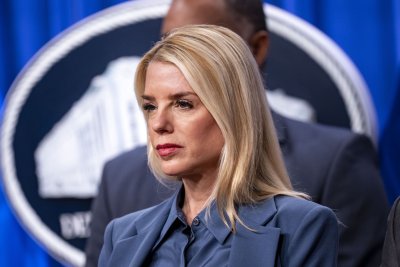
The action “underscores our ironclad commitment to protecting the Second Amendment rights of law-abiding Americans,” Attorney General Pam Bondi said in a statement. “Washington, D.C.’s ban on some of America’s most popular firearms is an unconstitutional infringement on the Second Amendment — living in our nation’s capital should not preclude law-abiding citizens from exercising their fundamental constitutional right to keep and bear arms.”
The suit cites District of Columbia v. Heller, which was decided by the Supreme Court in 2008. Before Heller, the District made it illegal to carry unregistered firearms but it also banned the registration of handguns. The Heller decision said that people can have guns in their homes for self-defense.
After Heller, the District updated its gun laws and included a registry and training requirements. But it still makes assault rifles impossible to register.
The suit filed by the Justice Department argues the merit of the law.
“D.C.’s current semi-automatic firearms prohibition that bans many commonly used pistols, rifles or shotguns is based on little more than cosmetics, appearance, or the ability to attach accessories, and fails to take into account whether the prohibited weapon is ‘in common use today’ or that law-abiding citizens may use these weapons for lawful purposes protected by the Second Amendment. Therefore, the District’s restrictions lack legal basis,” the filing said.
D.C. Mayor Muriel E. Bowser, a Democrat, said in a statement Monday, reported by the Washington Post, that the District would “vigorously defend our right to make decisions that keep our city safe.”
“Gun violence destroys families, upends communities, and threatens our collective sense of safety. MPD has saved lives by taking illegal guns off our streets — efforts that have been praised by our federal partners,” Bowser said. “It is irresponsible to take any steps that would lead to more, and deadlier, guns in our communities, especially semi-automatic rifles like AR-15s.”
Lawyers from Everytown Law, a gun safety organization, said the city’s gun bans are legal.
“The legal consensus is clear: assault weapon bans are constitutional. Since the Supreme Court’s rulings in Bruen and Rahimi, federal courts have repeatedly affirmed that these laws are consistent with the Second Amendment,” Bill Taylor, deputy director of Second Amendment litigation at Everytown Law, said in a statement. “Assault weapons are designed for mass devastation, and we look forward to supporting D.C. as it defends this critical common-sense safety measure.”
District of Columbia U.S. Attorney Jeanine Pirro told prosecutors in August not to enforce felony charges for the city’s ban on openly carrying rifles and shotguns in public or the city’s ban on magazines that hold more than 10 bullets.
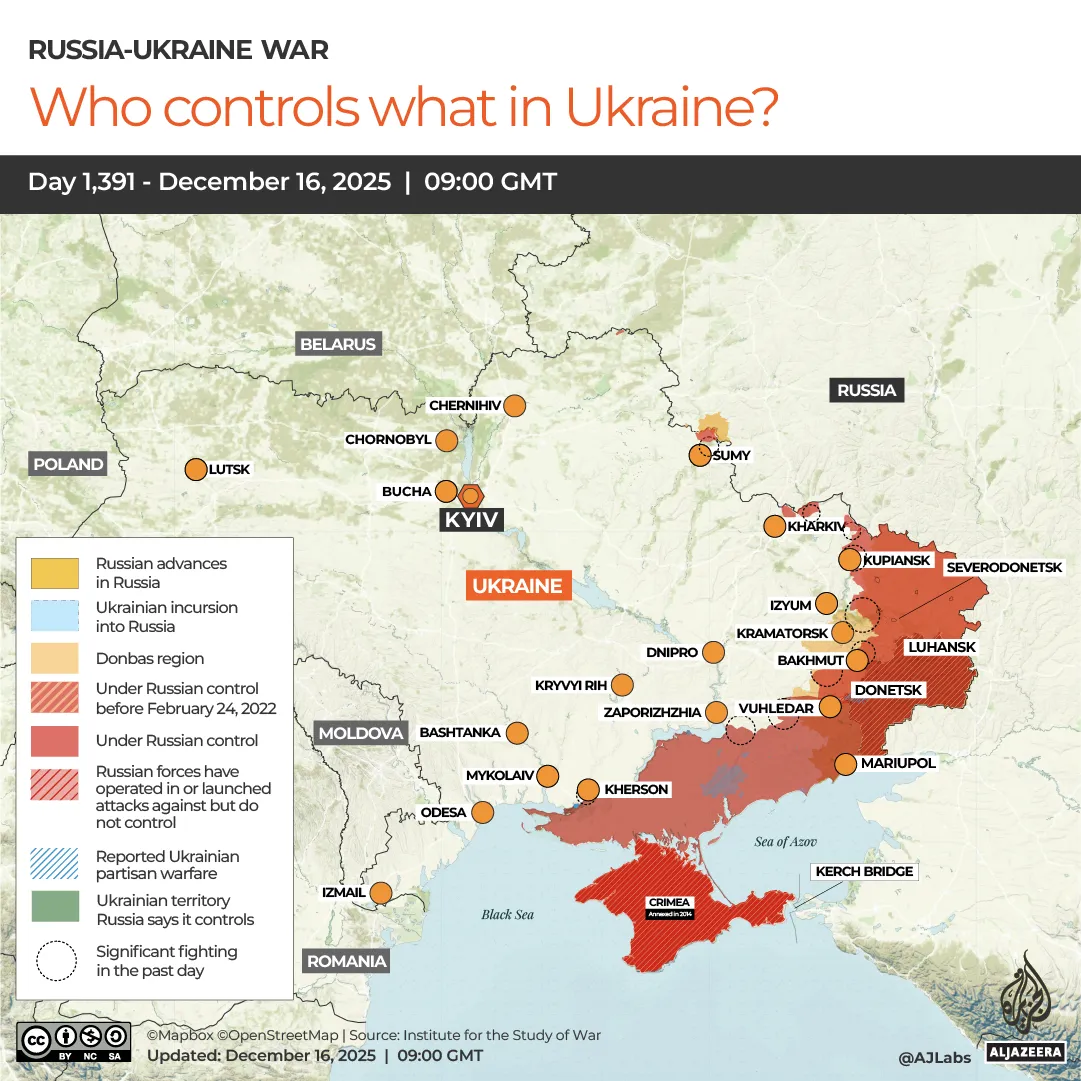
Russian forces have struck Ukraine’s southern Black Sea port of Odesa, damaging port facilities and a ship, the region’s governor says.
The attack late on Monday followed another at the weekend when Moscow carried out a sustained barrage of drones and missile attacks on the wider area around Odesa, which is home to ports crucial to Ukraine’s overseas trade and fuel imports. They followed Russian threats to cut “Ukraine off from the sea”.
Recommended Stories
list of 4 itemsend of list
The escalation in Russia’s assault on Odesa, Ukraine’s biggest port city, has unfolded as Washington steps up diplomatic efforts to bring an end to the war. Ukrainian officials met members of a US delegation on Friday in Florida while US envoys held talks with Russian representatives on Saturday.
“The situation in the Odesa region is harsh due to Russian strikes on port infrastructure and logistics,” Ukrainian President Volodymyr Zelenskyy told reporters in Kyiv on Monday. “Russia is once again trying to restrict Ukraine’s access to the sea and block our coastal regions.”
What happened in the latest Russian attack on Odesa?
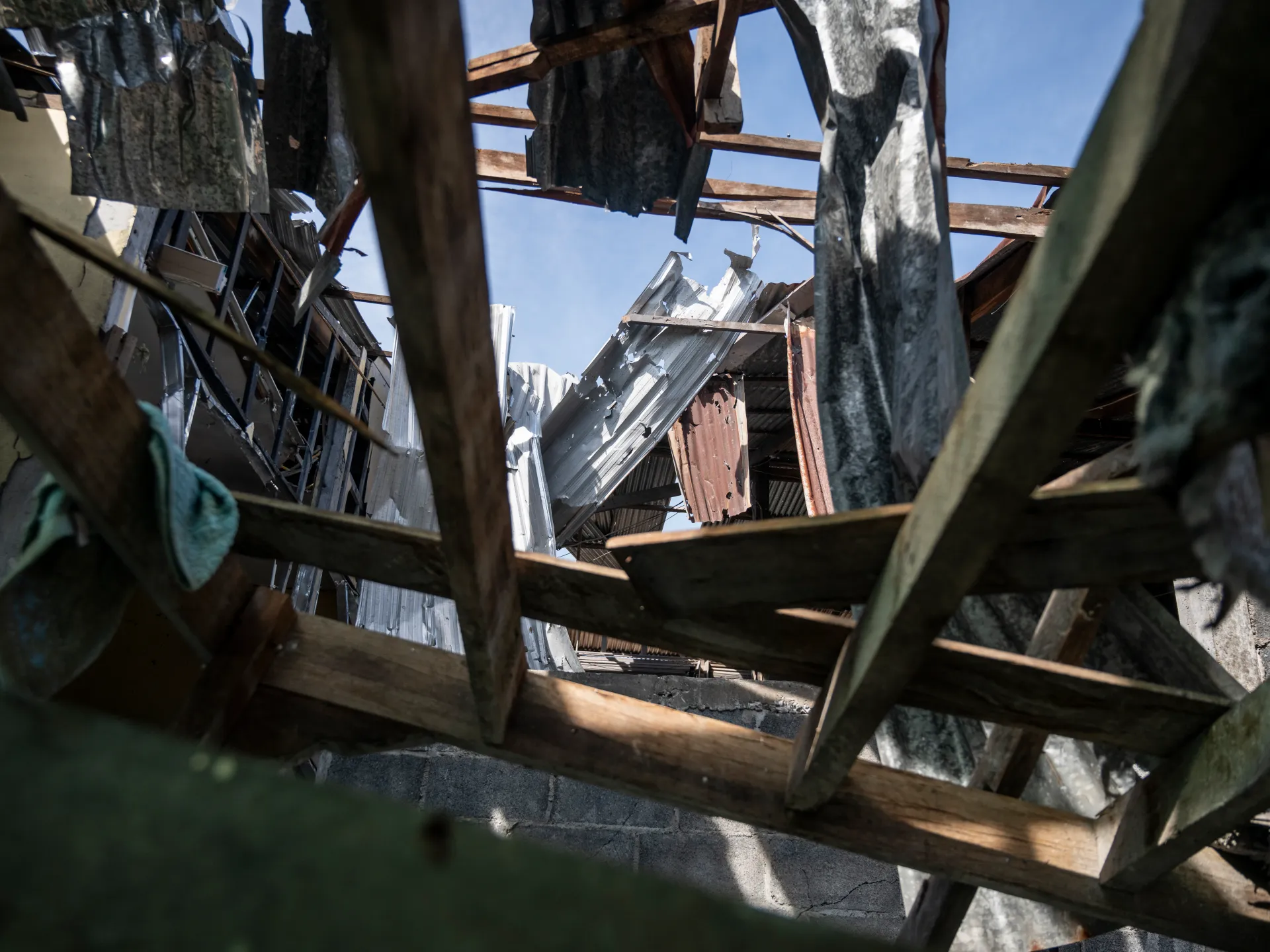
On Tuesday, the head of the Odesa Regional Military Administration, Oleh Kiper, said Russian strikes overnight had damaged a civilian cargo vessel and a warehouse in a district of Odesa while the roof of a two-storey residential building had caught fire.
Meanwhile, strikes on Saturday on the port of Pivdennyi near Odesa damaged storage reservoirs, Ukrainian Deputy Prime Minister Oleksii Kuleba said. Those came just one day after a ballistic missile strike, also in Pivdennyi, had killed eight people and wounded at least 30.
These are just the latest strikes in an escalation of hostilities in the area over the past few weeks.
Last week, Russia launched one of its largest aerial assaults of the war on the Black Sea region, damaging energy infrastructure and causing a power outage in Odesa, leaving hundreds of thousands of residents without electricity for several days.
Russia’s Ministry of Defence did not immediately comment on the strikes, but the Kremlin has previously described Ukraine’s economic infrastructure as a “legitimate military objective” during the nearly four-year war.
On the Telegram messaging app, Kuleba said on Friday that Russian forces were targeting power infrastructure and a bridge over the Dniester River near the village of Mayaky, southwest of Pivdennyi, which was struck five times in 24 hours.
That bridge links parts of the region separated by waterways and serves as the primary westbound route to border crossings with Moldova. It is currently out of operation. Kuleba said the route normally carries about 40 percent of Ukraine’s fuel supplies.
(Al Jazeera)
Why is Russia targeting Odesa?
“The focus of the war may have shifted towards Odesa,” Kuleba said, warning that the “crazy” attacks could intensify as Russia tries to weaken Ukraine’s economy.
Russian President Vladimir Putin has previously said Moscow wants to restrict Ukraine’s Black Sea access in retaliation for Kyiv’s recent drone attacks on Russia’s sanctions-evading “shadow fleet” of vessels, which carry a variety of commodities.
Ukraine said those vessels are used to illegally export sanctioned oil, which provides Russia with its main source of revenue for financing its full-scale invasion of its neighbour.
How important is the port of Odesa to Ukraine?
Odesa’s port has long been central to Ukraine’s economy. Called a “pearl by the sea”, Odesa is Ukraine’s third most populous city after Kyiv and Kharkiv.
Black Sea ports – including Odesa and two others close by, Pivdennyi and Chornomorsk – and Mykolaiv to the east handled more than 70 percent of Ukraine’s exports before the war.
But Odesa’s role as a trading hub has grown in recent years as ports in the Zaporizhia, Kherson and Mykolaiv regions have been occupied by Russia.
Since the war began in February 2022, Ukraine has continued to rank among the world’s top five exporters of wheat and corn – largely through Odesa.
By targeting Odesa’s shipping facilities with missiles and drones, Ukrainian officials said, Putin aims to destroy Ukrainian trade and business infrastructure.
Zelenskyy, who has previously accused Russia of “sowing chaos” on the people of Odesa, said: “Everyone must see that without pressure on Russia, they have no intention of genuinely ending their aggression.”
What would it mean for Ukraine if Odesa were destroyed?
If the port of Odesa were badly damaged, the economic impact for Ukraine would be severe. The city and its surrounding areas would suffer major job losses in the shipping and logistics industries, seriously squeezing local incomes. Meanwhile, port-dependent businesses would falter and investment would fall away.
Nationally, Ukraine’s export capacity would be hit hard. As a key gateway for grain and other commodities, disruptions there would raise transport costs, slow shipments and reduce export volumes, choking foreign currency earnings and piling pressure on the hryvnia, Ukraine’s currency.
Elsewhere, farmers would suffer from lower prices for their produce as well as storage bottlenecks with knock-on effects across rural economies. The government would also lose customs revenue just as reconstruction costs would rise, weakening the country’s overall economic resilience.
What other acts of maritime warfare have Ukraine and Russia engaged in during the war?
Over the past six months, maritime warfare between Ukraine and Russia has intensified. Both sides have targeted naval and commercial assets across the Black Sea and beyond.
Ukrainian forces have increasingly used underwater drones and unmanned surface vessels to strike ships tied to Russia’s shadow fleet.
Kyiv has expanded its reach elsewhere, claiming drone strikes in the Mediterranean on December 19 on the Qendil, a Russian-linked tanker, marking an expansion in Kyiv’s maritime operations.
At the same time, Russian forces have ramped up attacks on commercial targets, including a Turkish-flagged ship carrying trucks and other freight near Odesa with drone attacks on December 13.
These actions reflect a shift towards what is referred to as “asymmetric naval warfare”, in which drones and improvised systems play a growing role in disrupting each side’s economic and military support networks at sea, experts said.
A mother and her teenage son died in fighting between the Syrian military and Kurdish-led SDF forces in Aleppo. The violence began shortly after talks in Damascus on integrating SDF forces into the army. Al Jazeera’s Ayman Oghanna is in Aleppo, where a truce has been called.
The Africa Cup of Nations is more than a football tournament.
Hosted this year in Morocco, it brings together a global African audience. AFCON offers a rare glimpse of how nations connect with each other and the diaspora through football.
Liverpool manager Arne Slot says star forward Alexander Isak will be on the sidelines until at least late February.
Published On 23 Dec 202523 Dec 2025
Share
Alexander Isak is expected to be out of action for two months after fracturing his leg against Tottenham, with Liverpool manager Arne Slot accusing Tottenham’s Micky van de Ven of making a “reckless challenge”.
The Sweden striker was injured in a tackle from the defender in the act of scoring the opening goal in Saturday’s 2-1 victory and limped off the pitch.
Recommended Stories
list of 3 itemsend of list
Liverpool said in a statement on Monday that the forward had had an operation on an ankle injury that included a fibula fracture.
“It’s going to be a long injury, for a couple of months,” Slot told reporters on Tuesday, “So, yeah, that’s a big, big, big disappointment for him. And as a result, also of course for us.”
Slot described Van de Ven’s tackle as “reckless”.
“I think I said a lot about the tackle of Xavi Simons [sent off earlier in the game for Spurs], which for me was completely unintentional, and I don’t think you will ever get an injury out of a tackle like that.
“The tackle of Van de Ven, if you make that tackle 10 times, I think 10 times there’s a serious chance that a player gets a serious injury.”
Isak, centre, gets injured in a challenge with Tottenham Hotspur’s Dutch defender #37 Micky van de Ven at the Tottenham Hotspur Stadium in London, on December 20, 2025 [Justin Tallis/AFP]
Isak’s challenging year continues
Isak’s injury is the latest setback for the forward after he signed from Newcastle for a British record 125 million pounds ($168m) in September.
A dispute with Newcastle meant he did not have a proper preseason programme and arrived at Liverpool well behind his teammates in terms of fitness.
His season was then interrupted by a groin injury.
The 26-year-old has scored just three goals in 16 appearances since completing his protracted move to Anfield.
Isak’s absence will be a major blow for Reds boss Slot, with Mohamed Salah at the Africa Cup of Nations and Cody Gakpo not ready to return from a muscle injury until early in the new year.
It leaves Slot with Hugo Ekitike, who has five goals in his past four games, and the little-used Federico Chiesa as his only senior forwards.
Liverpool, whose Premier League title defence collapsed after a shocking run of results, have climbed to fifth in the table after extending their unbeaten league run to five games.
Isak’s injury raises the prospect of Liverpool moving to boost their attack in the January transfer window, with Bournemouth winger Antoine Semenyo linked with a move to Anfield.
It may also change the conversation around Salah, who had been linked with a move to Saudi Arabia following his recent claim that he had been thrown under the bus by the club and no longer had a relationship with Slot.
Salah’s rant, which came after he was left on the bench for three successive matches, prompted Liverpool to leave him out of the squad for a Champions League match at Inter Milan.
But he returned to action as a substitute against Brighton before leaving for international duty.
When Qatar helped secure a peace deal to end ongoing conflict between the M23 rebel group and Democratic Republic of the Congo’s (DRC) government last month, there was hope among many Congolese that a permanent ceasefire would soon emerge to end the fighting that has uprooted close to a million people in the country’s troubled east, and give war-racked communities some respite as the new year rolls in.
Since late 2021, the group, which the United States and the United Nations say is backed by Rwanda, has clashed with the Congolese army in heavy offensives that have killed at least 7,000 people this year alone. Several regional attempts at resolution have failed. Still, when M23 representatives and Congolese government officials met for negotiations in Doha and proceeded to sign a peace deal in November, exhausted Congolese dared to hope. This deal, some reckoned, could be different.
Recommended Stories
list of 3 itemsend of list
So when the rebels launched yet another offensive and temporarily seized the strategic city Uvira this month, hopes for lasting peace were painfully crushed, as some concluded that those at the helm of the talks were playing politics.
“It’s clear that they don’t have any will to end this conflict,” Congolese lawyer and political analyst Hubert Masomera told Al Jazeera from the M23-held eastern city of Goma, blaming both sides. “Despite the number of deaths and the extent of the destruction, there is still procrastination over the implementation of the peace agreements and compliance with the ceasefire. People here feel abandoned to their sad fate.”
Fears that the conflict will not only continue, but that it could soon take on a regional dimension, are deepening, too – a sensitive prospect in a DRC where two civil wars in the past were prompted by its neighbours.
Uvira, the newly captured city the rebels then withdrew from as a “trust-building measure” following US pressure last week, is a major transport and economic hub in the huge South Kivu province. It’s strategically located on the border with Rwanda and is just 30 kilometres from the Burundian capital, Bujumbura. The city was the last eastern stronghold of the Congolese army and its allies – local “Wazalendo” militias and about 3,000 Burundian soldiers. Early this year, M23 also seized control of South Kivu’s capital city, Bukavu, as well as Goma, the capital of North Kivu province.
Experts say M23’s advance on Uvira widens the group’s area of control significantly, puts it at the mouth of the mineral-rich Katanga region, and positions Rwandan proxies right at Burundi’s doorstep at a time when both governments are ramping up a war of words and accusing each other of backing rebels.
Rwanda, for its part, continues to distance itself from accusations that it backs M23.
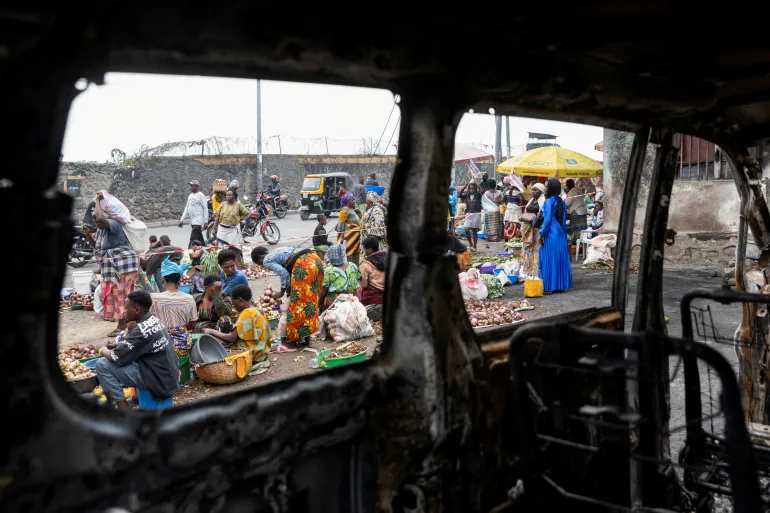
A view shows the remains of a vehicle hit by heavy and light weapons during the fighting in the town that led to the fall of Goma to M23 rebels, on February 5, 2025 [File: Arlette Bashizi/Reuters]
DRC conflict’s complex history
The recent scenes in eastern DRC appear like an eerie playback of a tragic tale, conflict monitors say.
Similar peace negotiations in late 2024, led by the African Union and Angola, seemed ready to deliver peace ahead of a new year. But they collapsed after a highly anticipated meeting between the presidents of Rwanda and DRC was called off. Both sides accused each other of foiling the talks.
“There’s a sense of deja vu,” Nicodemus Minde, East Africa analyst at the Institute for Security Studies (ISS), said. “It’s symbolic because we were exactly here last year … the prospects for peace are dire.”
Conflict in the DRC has long been mired in a complex mix of ethnic grievances, poor governance and interference from its much smaller neighbours. It goes back to the 1994 genocide of Tutsis and moderate Hutus in Rwanda, which displaced millions into neighbouring eastern DRC, making them a minority there. Rwanda has since viewed the DRC as a hiding place for Hutu genocidaires, however, and its hot pursuit of them toppled a government in Kinshasa and led to the first and second Congo wars (1996-2003). The UN also accused the Rwandan and allied Ugandan forces of looting the DRC’s vast mineral wealth, including gold, coltan and tin, during the conflict.
Scores of militias emerged as governments armed and counter-armed civilians in the wars, many of which are still active in the DRC. The M23 itself is only the latest iteration of a Tutsi militia that fought in the Congo wars, and whose fighters integrated into the DRC army. In 2012, these fighters revolted, complaining of poor treatment by the Congolese forces. Now, the M23 claims to be fighting the marginalisation of ethnic Tutsis, some of whom say they are systematically denied citizenship, among other complaints. The M23 and its allied Congo River Alliance (AFC) have not stated goals of taking Kinshasa, even though members of the group have at times threatened to advance on the capital. Officially, the rebels claim to be “liberating” eastern DRC communities.
In 2012, M23 initially emerged with enough force to take the strategic city of Goma, but was forced back within a year by Congolese forces and a special UN intervention force of troops from South Africa, Tanzania and Malawi. When the M23 resurfaced in late 2021, though, it was with much more ferocity, boosted by about 4,000 Rwandan troops in addition to its own 6,000 fighters, according to the UN. Lightning and intensely bloody offensives have since seen it control vast swaths of territory, including the major cities of Goma, Bukavu – and now, Uvira.
On the map, M23 appears to be eking out a slice of Congolese territory wedged between the DRC and neighbouring Rwanda, Uganda and Burundi. If it gains control of the two Kivus in their entirety, it would lord over a resource-rich area five times Rwanda’s size with easy access to Kigali and Kampala.
“They are trying to create some sort of buffer zone which the neighbouring countries, particularly Rwanda but also Uganda, have an interest in controlling,” analyst Paul-Simon Handy, also of the ISS, told Al Jazeera.
Kigali officially denies backing M23, but justifies its actions based on accusations that the DRC supports a Hutu rebel group, the Democratic Forces for the Liberation of Rwanda (FDLR). The FDLR did exist for many years in the DRC, but it simply no longer poses a significant threat to Kigali, analyst Minde said.
Rwanda’s tensions with Burundi have similar historic correlations, as Hutus who perpetrated the 1994 genocide similarly fled there, and Kigali alleges the government continues to back rebels. In 2015, Burundi accused Rwanda of sponsoring an abortive coup in Bujumbura. Kigali denies this.
US President Donald Trump hosts the signing ceremony of a peace deal with the president of Rwanda, Paul Kagame, left, and the president of the Democratic Republic of the Congo, Felix Tshisekedi, right, at the United States Institute of Peace in Washington, DC, on December 4, 2025 [Andrew Caballero-Reynolds/AFP]
Does the US deal have a chance?
Several African countries have attempted to help solve the crisis, militarily and diplomatically, but all have failed. The regional bloc, the East African Community, of which the DRC is a part, deployed about 6,500 Kenyan-led peacekeepers to stabilise eastern DRC, as Kenyan diplomats developed a Nairobi Peace Process in 2022 that was meant to see several rebel groups agree to a truce. The agreement collapsed only a year later, however, after Congolese President Felix Tshisekedi grew frustrated over the force’s refusal to launch offensives against M23.
Then, the Southern African Development Community (SADC), of which the massive DRC is also a part, deployed troops from South Africa, Tanzania and Malawi in May 2023. There was hope that the trio, which proved crucial in driving back the first M23 insurrection, would again record success. They appeared no match for the new M23, though, and withdrew this June.
Meanwhile, the Angola-led Luanda Peace Process collapsed after President Joao Lourenco stepped back in March, citing frustration with both sides amid constant finger-pointing.
Qatar and the US stepped in to broker peace in June this year, using a unique two-pronged approach. The Doha peace talks, on the one hand, have focused on negotiations between the DRC and M23, while the Washington talks focus on the DRC and the Rwanda governments. Some experts warned that Washington’s motivation – aside from President Donald Trump’s fixation on being a global peacemaker figure – was a clause in the deal that guarantees US extraction of rare earth minerals from both countries. The agreement was unlikely to hold on that basis, rights groups said.
After a few no-shows and wobbles, the M23 finally agreed to the Doha framework on November 15. The agreement includes eight implementation protocols, including one on ceasefire monitoring and another on prisoner exchange. On December 4, President Trump sat next to a smiling Paul Kagame and Tshisekedi as all three signed the US-peace deal in Washington, which mandated both Rwanda and DRC to stop supporting armed groups. There were pockets of fighting as the signatures were penned, but all was supposed to be largely peaceful from then on.
What happened in Uvira barely a week after was the opposite. The Congolese government said at least 400 people were killed and 200,000 others displaced as M23 fighters pressed on the city. Thousands more were displaced into Burundi, which already homes some 200,000 Congolese refugees. Fleeing Uvira residents shared accounts of bombed villages, summary killings and widespread sexual violence by both sides, according to medical group Doctors Without Borders (MSF).
Is there hope for peace?
Even though M23 began withdrawing from Uvira on Thursday, analysts are still scrambling to understand what the group was hoping to achieve by taking the city, shattering the peace agreements and angering Washington.
US Secretary of State Marco Rubio directly scolded Rwanda after Uvira’s capture, saying Kigali had violated the deal. Last week, Deputy Secretary of State Christopher Landau met with DRC Foreign Minister Therese Kayikwamba Wagner in Washington and promised that the US “is prepared to take action to enforce adherence” from Rwanda.
What that action looks like is unclear, but what’s certain, Minde said, was that the agreement seemed to favour Kigali more than Kinshasa.
“If you look at the agreement, the consequences [of either party breaching] were not forthright, and this points to the weakness of the deal,” he said, adding that there is much more at stake for DRC if there is a breach, including escalating conflict and mass displacement within the country. But that was not taken into account, the analyst explained.
Uvira’s fall, albeit on hold, is not only a blow to Trump’s peacemaker reputation but also sharpens tensions between Burundi and Rwanda, with analysts saying it could lead to direct clashes.
Bujumbura accuses Kigali of supporting the antigovernment Red Tabara rebels – a charge Rwanda and the rebels deny – and tensions between the two governments have led to border closures since last year. Last week, M23 announced that it captured hundreds of Burundian soldiers during the Uvira offensive.
Fears of a regional spillover also prompted the UN Security Council to extend the mandate of the MONUSCO peacekeeping mission for a year, ahead of its December 20 expiration. The 11,000 troop force has been in place since 1999, but has a complicated relationship with the DRC government, which says it has not done enough to protect civilians. MONUSCO forces initially began withdrawing in 2024, but then paused that move in July amid the escalating M23 offensive. Ituri, the force’s headquarters, is held by M23, meaning the troops are unable to do much.
Amid the chaos, the finger pointing, and the political games, it’s the Congolese people who are feeling the most despair at the turn of events so close to the new year, analysts say. After more than three decades of war that has turned the green, undulating hills of eastern DRC into a perpetual battlefield, Masameko in Goma said it’s locals, more than anyone else, with the most at stake.
“People have suffered enough and need to breathe, to sleep with the certainty that they will wake up tomorrow,” he said. “[They need] to live in their homes without fear of a bomb falling on them. That is all the people in this part of the republic need.”
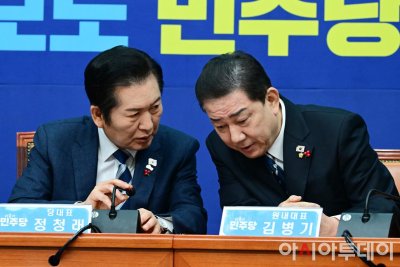
Democratic Party of Korea leader Chung Cheong-rae and floor leader Kim Byeong-gi confer during a Supreme Council meeting at the National Assembly in Seoul on Dec 22. Photo by Asia Today
Dec. 22 (Asia Today) — South Korea’s presidential office said Monday it “respects the National Assembly’s decision” after the ruling Democratic Party backed the opposition’s call for a special prosecutor to investigate matters linked to the Unification Church.
A senior presidential official said the office has consistently supported a thorough investigation regardless of party or religion and described the move as consistent with that stance.
“The presidential office has consistently advocated for a strict investigation regardless of party or religion, so a special prosecutor aligning with that stance is only natural,” the official said, adding that the party’s shift should be seen as reflecting the presidential office’s position.
Democratic Party floor leader Kim Byung-ki said during a Supreme Council meeting at the National Assembly that he supports a special probe that would include politicians from both the ruling and opposition parties.
He said the People Power Party appears to believe the Democratic Party is avoiding a special investigation and urged proceeding with a special prosecutor focused on the Unification Church.
Democratic Party leader Chung Cheong-rae also said there was no reason not to accept the proposal and called for a full accounting that includes any People Power Party figures involved.
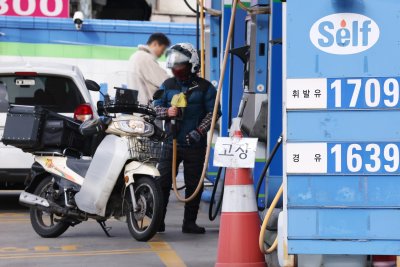
A gas station in Seoul is seen Dec. 14 as weekly average gasoline and diesel prices in South Korea fell for the first time in seven weeks. Photo by Yonhap News Agency
Dec. 22 (Asia Today) — South Korea has surpassed 100 million barrels in government-held oil reserves as it seeks to bolster energy security against global supply disruptions, the industry ministry said Monday.
The Ministry of Trade, Industry and Energy said the government’s secured stockpile exceeded 100 million barrels after the final tanker shipment of the year arrived at the Korea National Oil Corporation’s Geoje oil reserve base.
Including about 95 million barrels held by private companies, South Korea now has enough oil to cover more than 210 days under International Energy Agency standards in an emergency, the ministry said.
South Korea, which relies on imports for its oil, adopted a national stockpiling plan in 1980 and has expanded reserves over about 45 years after experiencing global supply shocks during past oil crises, the ministry said.
The country now holds the fourth-largest oil reserves among the agency’s member countries, the ministry said, describing the stockpile as an energy safety net that can help respond to supply crises.
The ministry said it plans to strengthen crisis response capabilities and shift focus from simply expanding volume to improving the quality of reserves.
In its fifth petroleum stockpiling plan prepared earlier this month, the ministry said it would restructure reserves to prioritize oil grades better suited to domestic demand.
An industry ministry official said oil reserve bases operate under strict safety requirements and the government will phase out aging equipment and strengthen disaster response systems.
People escaping fighting, lack of essential supplies in Heglig area faced with tough humanitarian conditions in search for shelter and safety.
Published On 23 Dec 202523 Dec 2025
Share
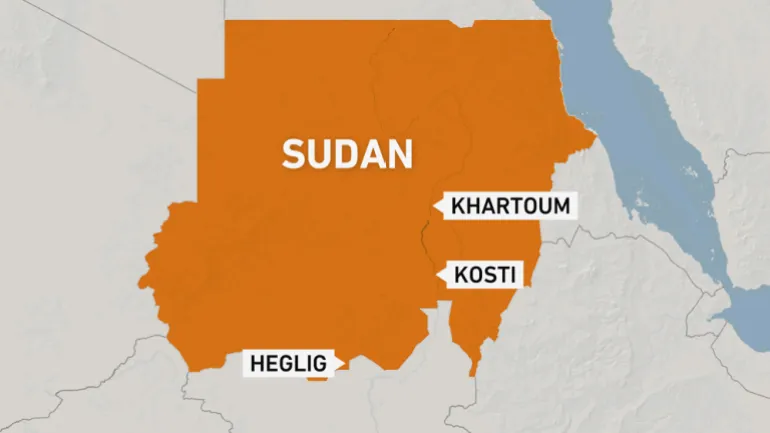
Kosti, Sudan – The flow of displaced people fleeing the fighting in Sudan shows no sign of slowing – the latest hailing from Heglig.
In early December, the paramilitary Rapid Support Forces (RSF) seized the strategic Heglig oilfield in West Kordofan province after its rival, the Sudanese Armed Forces (SAF), withdrew from the area.
Nearly 1,700 displaced people, most of them children and women, escaped the fighting in the southern region and the lack of basic necessities.
Some of them were fortunate enough to board trucks as they fled from their towns and villages in the area. After an arduous journey, the displaced people arrived at their new home – the Gos Alsalam displacement camp in Kosti, a city in the White Nile province.
“We left without anything … we just took some clothes,” said an elderly woman who appeared exhausted and frail.
Inside the camp, the people arriving are faced with extremely harsh humanitarian conditions. Tents are being pitched in haste, but as the number of displaced people grows, so do the immense humanitarian needs. Yet, humanitarian support remains insufficient to cover even the bare minimum.
“We have no blankets or any sheets, nothing. We are old people,” said a displaced elderly woman.
‘I gave birth in the street’
Nearly three years of war between the RSF and SAF have forced 14 million people to flee their homes in a desperate attempt to find shelter and safety away from the heavy fighting that has killed tens of thousands.
Some 21 million across the country are facing acute hunger, in what the United Nations calls the world’s largest humanitarian crisis.
In a small corner of the Gos Alsalam camp, Umm Azmi sits next to her newborn baby. She recalled how she was overtaken by labour on the road and delivered her baby in the open air without any medical assistance.
“I was trying for nine months … but I gave birth in the street – the condition is very difficult,” the mother said.
“I had just given birth, and I had nothing to eat. Sometimes we eat anything we find in the streets,” she added.
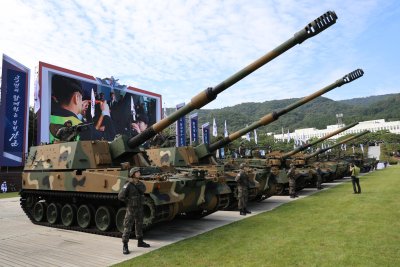
A K9 self-propelled howitzer is displayed during an Armed Forces Day media event in Gyeryong, South Korea, Sept. 29. File Photo by Yonhap News Agency
Dec. 22 (Asia Today) — South Korea’s science ministry said Monday it has selected its 2025 “Top 100 National R&D Achievements,” highlighting projects including a domestically produced 1,000-horsepower engine for the K9 self-propelled howitzer and a high-performance vanadium flow battery stack.
The Ministry of Science and ICT said the program marks its 20th year. Launched in 2006, the cross-government selection aims to raise public awareness of national research and development and recognize scientists and engineers.
The ministry said 970 candidate projects recommended by government bodies were reviewed by a selection committee of 105 experts from industry, academia and research institutes, followed by public verification. The final 100 were chosen across six categories: machinery and materials, life and marine, energy and environment, information and electronics, basic science and infrastructure and convergence.
Among the selections, STX Engine was cited for developing and commercializing a 1,000-horsepower engine for the K9, localizing a system and core components previously dependent on overseas imports. The ministry said the achievement helped address export approval hurdles and supported market expansion, including K9 exports to Egypt equipped with domestically produced engines.
In life sciences, IM Biologics was selected for work on treatments for autoimmune diseases including rheumatoid arthritis. The ministry said the company transferred related technology to U.S.-based Navigator Medicine and China’s Huadong Pharmaceutical in deals totaling 1.7 trillion won ($1.3 billion).
In energy and environment, H2 was cited for developing low-cost, high-power-density stack technology for vanadium flow batteries, a key component used in energy storage tied to solar and wind generation. The ministry said the technology contributed to South Korea’s first export of the stack technology to Germany.
Other selections included the Electronics and Telecommunications Research Institute’s demonstration of 6G wireless transmission technology and the Institute for Basic Science research group’s real-time observation of molecular ion formation and structural transitions, the ministry said.
The ministry said selected projects will receive certificates and plaques in the name of Deputy Prime Minister and Science and ICT Minister Bae Kyung-hoon. The ministry said projects and institutions may receive evaluation advantages under relevant rules and researchers may be recommended for national R&D awards.
Starting next year, the ministry said it will launch follow-up support aimed at boosting technology maturity and commercialization. Each selected project will be eligible for about 1.3 billion won (about $1.0 million) in support over three years, the ministry said.
Park In-gyu, head of the Science and Technology Innovation Headquarters, said the projects reflect sustained challenges and innovation by universities, research institutes and companies and pledged expanded support in coordination with other ministries.
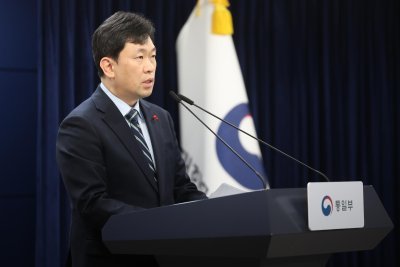
Unification Ministry spokesperson Yoon Min-ho briefs reporters at the Government Complex Seoul on Dec 22 Photo by Yonhap News Agency
Dec. 22 (Asia Today) — South Korea’s Ministry of Unification said Monday it has never reported to President Lee Jae-myung on reviewing constitutional amendments tied to a “peaceful two-state” approach as a way to bring North Korea to negotiations.
Unification Ministry spokesperson Yoon Min-ho said at a regular briefing that claims the ministry suggested reviewing constitutional changes during a closed-door work report on Friday were “completely false.”
“Reports saying that the ministry proposed reviewing constitutional amendments to draw North Korea into dialogue are untrue,” Yoon said. He added that the ministry neither raised nor examined such an issue during the briefing.
Earlier Monday, a media report said President Lee took a negative view of a purported ministry suggestion to review changes to Article 3 of the Constitution, which defines the territory of the Republic of Korea as the entire Korean Peninsula, in order to engage Pyongyang.
Yoon reiterated that no such proposal was made and said the ministry has not reviewed the matter.
He also said discussions with the U.S. Embassy on North Korea policy are expected to begin early next year. Preparations are also underway to set a schedule for regular vice-ministerial-level communication with the Foreign Ministry, he said.
On the issue of public access to North Korean media, Yoon said the ministry’s interpretation is that simply viewing North Korean outlets such as Rodong Sinmun does not violate the National Security Act.
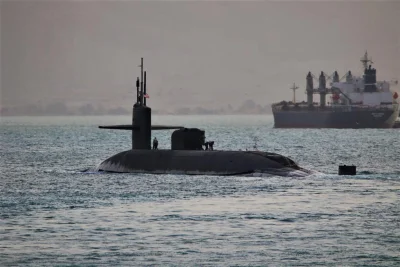
The guided-missile submarine USS Florida transits the Suez Canal en route to the Red Sea on Friday amid heightened tensions between the United States and Iran. File U.S. Navy photo by Mass Communication Specialist 2nd Class Elliot Schaudt
Dec. 22 (Asia Today) — China has voiced strong opposition to potential cooperation between South Korea and the United States on nuclear-powered submarines, warning it could undermine the global nuclear nonproliferation regime, Chinese state media reported.
Song Zhongping, a Chinese military analyst, said in an interview published Monday by the Global Times that consultations between Seoul and Washington on nuclear submarine-related cooperation could pose a “serious threat” to nuclear nonproliferation.
The Global Times cited South Korean media reports saying the two countries plan to begin sector-by-sector consultations next year related to leader-level understandings that include nuclear submarine construction, uranium enrichment and spent nuclear fuel reprocessing.
Song said the AUKUS nuclear submarine effort with Australia set a negative precedent and suggested a similar case could emerge with South Korea. He argued that U.S. support for allies’ access to nuclear technology and nuclear fuel would weaken the Nuclear Non-Proliferation Treaty.
Song also said Japan has raised the idea of acquiring nuclear-powered submarines and warned the trend could fuel an arms race. He said more countries operating nuclear-powered submarines would increase the risk of technology leakage and accidents.
He further argued South Korea has limited practical need for nuclear-powered submarines because of its restricted coastline, the report said.
In October, Chinese Foreign Ministry spokesperson Guo Jiakun said at a regular briefing that Beijing hopes South Korea and the United States will fulfill nonproliferation obligations and avoid actions that run counter to regional peace and stability, according to the report.
Colorado Gov. Jared Polis (R) talks with President Donald Trump in the Cabinet Room of the White House in Washington, D.C., on May 13, 2020. On Monday, Polis called on Trump to reverse his recent decision to deny the state disaster relief for recent flooding and fire damage. File Pool Photo by Doug Mills/UPI | License Photo
Dec. 22 (UPI) — Colorado lawmakers have called on President Donald Trump to reverse a recent decision denying state disaster aid requests in the wake of “life-threatening flooding and historic wildfires.”
In a statement Sunday, Colorado Gov. Jared Polis announced Trump had rejected the state’s requests for help and accused the president of playing “political games.” He said the state would be appealing the decision.
“Coloradans impacted by the Elk and Lee fires and the flooding in Southwestern Colorado deserve better than the political games President Trump is playing,” Polis said.
“I call on the president’s better angels, and urge him to reconsider these requests. This is about the Coloradans who need this support, and we won’t stop fighting for them to get what they deserve,” the Democratic governor added.
Polis declared a disaster emergency on Aug. 3, for the Elk Fire and added the Lee Fire three days later. He filed an executive order by the end of August as the state revealed initial damage estimates from the fires and mudslides totaled more than $27 million.
In October, Polis declared a disaster emergency to unlock $6 million in state funding for flood response and recovery in Western Colorado.
Democratic Sen. Michael Bennet said, “Trump’s decision to deny Colorado’s request for critical federal assistance is unacceptable.”
“Communities in Western Colorado are in serious need of help after the life-threatening flooding and historic wildfires earlier this year,” Bennet added. “Trump continues to use Coloradans for political games; it is malicious and obscene.”
While a president can tap additional federal assistance with a major disaster under the Stafford Act, the Trump administration has recently denied some states’ requests for aid as it works to downsize the Federal Emergency Management Agency.
The White House said Monday, “there is no politicization to the president’s decisions on disaster relief.” White House spokeswoman Abigail Jackson explained Trump’s decision, adding that the administration sent two firefighting planes to Colorado to help fight the fires.
“The president responds to each request for federal assistance under the Stafford Act with great care and consideration,” Jackson said, “ensuring American tax dollars are used appropriately and efficiently by the states to supplement — not substitute, their obligation to respond to and recover from disasters.”
Kilmar Abrego Garcia delivers remarks during a rally before his check in at the ICE Baltimore Field Office in Baltimore Maryland, on August 25. On Monday, a federal judge allowed the Salvadoran native to remain free through Christmas, after he was released earlier this month, as he awaits trial on human smuggling charges in Tennessee. File Photo by Shawn Thew/EPA
Dec. 22 (UPI) — A federal judge on Monday allowed Kilmar Abrego Garcia to remain free through Christmas as she barred Immigration and Customs Enforcement from re-detaining the Salvadoran native.
U.S. District Judge Paula Xinis in Maryland extended a temporary restraining order to keep federal officials from deporting Abrego Garcia, after the U.S. Supreme Court ruled he was deported and imprisoned in March without legal authority to El Salvador.
“This is an extremely irregular and extraordinary situation,” Xinnis told attorneys Monday, as she pressed the government on whether it would detain Abrego Garcia if there were no restraining order.
“Show your work, that’s all,” Xinis said. “Give it to me and we don’t have to speculate.”
Abrego Garcia was released from ICE detention on Dec. 11, following efforts to deport him to an African nation where he has no connection.
“Because Abrego Garcia has been held in ICE detention to effectuate third-country removal absent a lawful removal order, his requested relief is proper,” according to Xinis.
The U.S. Department of Homeland Security called Xinis’ rulings “naked judicial activism by an Obama-appointed judge.”
Abrego Garcia, who illegally entered the United States nearly 15 years ago, has accused the White House of vindictive prosecution. The administration has called him an MS-13 gang member, which he denies.
Abrego Garcia had been living in Maryland with his wife and children before being deported to El Salvador’s CECOT mega-prison in March. He was returned to the United States in June and is awaiting trial on human smuggling charges in Tennessee. He has pleaded not guilty.
On Monday, Abrego Garcia’s attorneys said he is prepared to go to Costa Rica, which the judge said the government refuses to consider.
The “persistent refusal to acknowledge Costa Rica as a viable removal option, their threats to send Abrego to African countries that never agreed to take him and their misrepresentation to the court that Liberia is now the only country available to Abrego, all reflect that whatever purpose was behind his detention, it was not for the ‘basic purpose’ of timely third-country removal,” Xinis wrote.
Planned talks come as Southeast Asian leaders urge both countries to show ‘maximum restraint’ and return to dialogue.
Published On 22 Dec 202522 Dec 2025
Share
Thailand and Cambodia have agreed to hold a meeting of defence officials later this week as regional leaders push for an end to deadly violence along the two countries’ shared border.
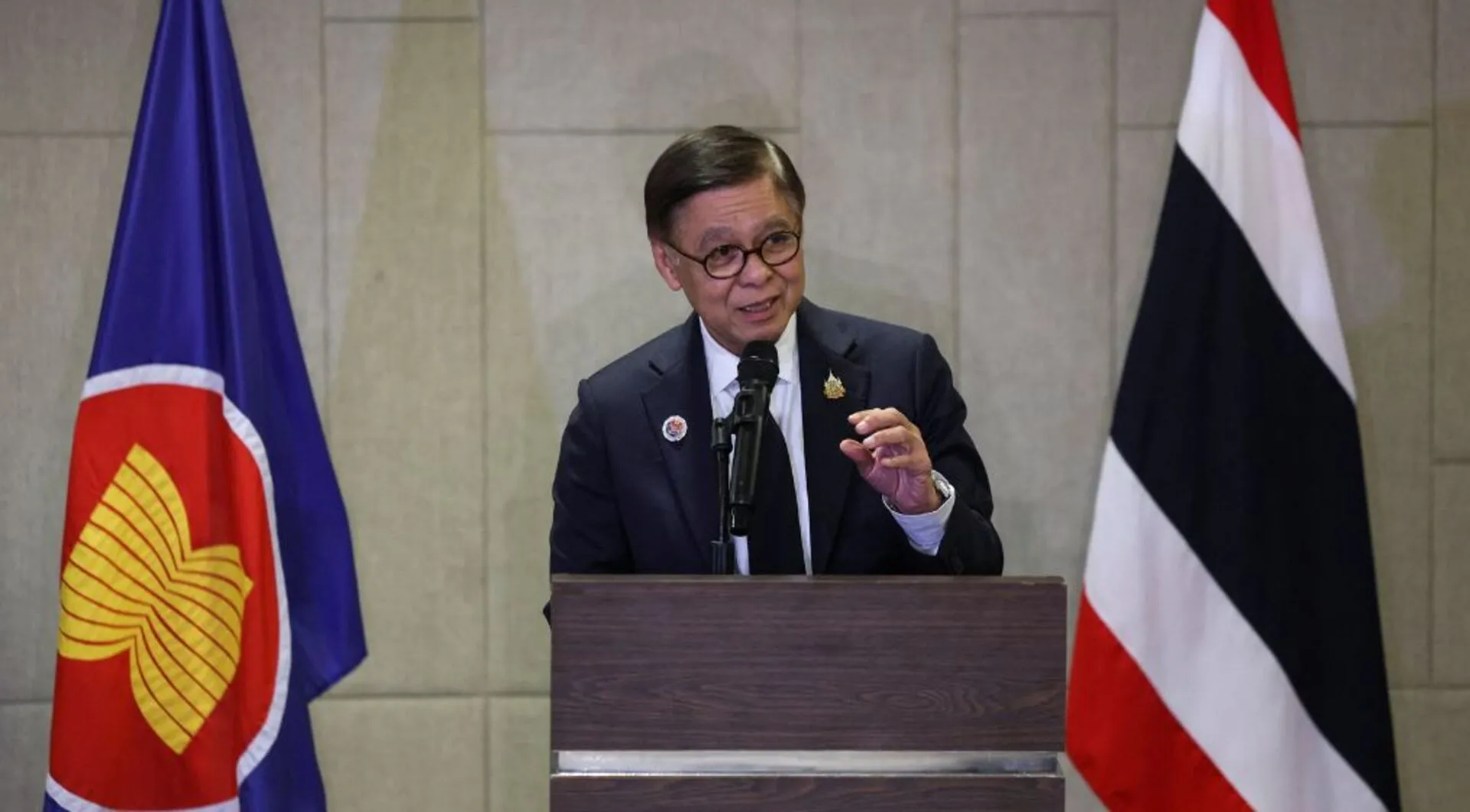
Thailand’s Foreign Minister Sihasak Phuangketkeow announced the planned talks on Monday after a special meeting in Kuala Lumpur of Southeast Asian foreign ministers, who were trying to salvage a ceasefire.
Recommended Stories
list of 3 itemsend of list
That truce was first brokered by Association of Southeast Asian Nations (ASEAN) chair Malaysia and United States President Donald Trump after cross-border fighting broke out in July.
Sihasak told reporters that this week’s discussions would be held on Wednesday in Thailand’s Chanthaburi, within the framework of an existing bilateral border committee.
But just hours after the regional crisis talks were held in Malaysia, Cambodia’s Ministry of Defence said the Thai military deployed fighter jets to bomb areas of Siem Reap and Preah Vihear provinces.
The Thai army said Cambodia had fired dozens of rockets into Thailand, with Bangkok’s air force responding with air strikes on two Cambodian military targets.
Thailand and Cambodia have engaged in daily exchanges of rocket and artillery fire along their 817km (508-mile) land border following the collapse of the truce, with fighting at multiple points stretching from forested regions near Laos to the coastal provinces of the Gulf of Thailand.
Despite the cross-border fire, Cambodia’s Ministry of Interior said it remains “optimistic that the Thai side will demonstrate sincerity” in implementing a ceasefire.
Thailand’s Sihasak, however, cautioned that the upcoming meeting may not immediately produce a truce. “Our position is a ceasefire does not come with an announcement, but must come from actions,” he said.
His ministry said the two nations’ militaries would “discuss implementation, related steps and verification of the ceasefire in detail”.
The planned meeting comes as ASEAN on Monday urged both countries to show “maximum restraint and take immediate steps towards the cessation of all forms of hostilities”.
In a statement after the talks in Kuala Lumpur, ASEAN also called on both Thailand and Cambodia to “restore mutual trust and confidence, and to return to dialogue”.
ASEAN members also reiterated their concerns over the ongoing conflict and “called upon both parties to ensure that civilians residing in the affected border areas are able to return, without obstruction and in safety and dignity, to their homes”.
People light candles in the Church of Nativity, believed to be built on the site where Jesus was born, in Bethlehem, West Bank, on Friday. A poll of Americans found that while the percent of people who observe the religious aspects of Christmas has declined over the past several years, the secular traditions have largely stayed steady. Photo by Debbie Hill/ UPI | License Photo
Dec. 22 (UPI) — While the number of Americans who enjoy the secular traditions of Christmas has remained largely unchanged over recent years, a Gallup analysis released Monday showed that fewer people are observing the religious aspects of the holiday.
The poll found that 88% of Americans say they celebrate Christmas, down from 90% in 2024 and 96% in 2005. Of the more secular aspects of Christmas, 96% of people exchange gifts (down from 97% in 2010); 95% get together with friends or family (97% in 2010); 90% put up a Christmas tree (92% in 2010); 89% put up other decorations (91% in 2010); and 43% attend a holiday concert or play (58% in 2010).
The more religious aspects of Christmas saw a greater decline over the same period of time, with 54% of people using religious decorations such as nativities (down from 68% in 2010) and 47% attending a religious service (64% in 2010).
All religious activities saw a notable drop in participation, while one secular event — attending a holiday concert or play — did as well.
“Although fewer people, including fewer Christians, appear to be incorporating religious aspects, Christmas is thriving as a social occasion focused on gatherings, festivities and gifts,” Gallup said in an analysis of the data.
“Its popularity among young adults and non-Christians in general suggests that even as the U.S. continues to change demographically, a less religiously focused Christmas will endure.”
Gallup asked a few new questions about people’s traditions this year, finding that 86% of people watch holiday-themed movies, 81% make holiday desserts and 52% send holiday cards.
Gallup said that of the adults who celebrated Christmas, 69% identified as a Christian denomination, down from 83%, mirroring the overall drop in American adults who identify with a particular religion.
The poll found that there’s little difference in the percentage of Christians and non-Christians who celebrate secular Christmas traditions, and, in fact, a marginally higher percentage of non-Christians participate in some activities, including gathering together with friends and family and exchanging gifts. In each category, 97% of non-Christians participate while 95% of Christians gather with friends and family and 96% exchange gifts.
Meanwhile, Christians are far more likely to observe religious traditions such as using religious decorates (69% compared to 22%) and attending a Christmas service (61% to 11%).
New Yorkers gather for near Times Square at SantaCon NYC on Saturday as part of the annual worldwide event where thousands dress as Santa or other festive characters for a day of drinking, parading through city streets and celebrating the holidays. Photo by John Angelillo/UPI | License Photo
Dec. 22 (UPI) — The former CEO of a healthcare software company in Arizona was sentenced to 15 years in prison and ordered to pay more than $452 million in restitution for conspiring to defraud Medicare for $1 billion, the U.S. Department of Justice said Monday.
Gary Cox, 79, of Maricopa County, was found guilty in June of healthcare fraud in which he generated false doctors’ orders to support fraudulent claims for various medical items.
“This just sentence is the result of one of the largest telemarketing Medicare fraud cases ever tried to verdict,” Acting Assistant Attorney General Matthew R. Galeotti of the Justice Department’s Criminal Division said in a statement. “Telemedicine scammers who use junk mailers, spam calls and the internet to target senior citizens steal taxpayer money and harm vulnerable populations. The Criminal Division will continue dedicating substantial resources to the fight against telemedicine and medical equipment frauds that drain our health care benefit programs.”
Cox was convicted of conspiracy to commit healthcare fraud and wire fraud, three counts of healthcare fraud, conspiracy to pay and receive healthcare kickbacks, and conspiracy to defraud the United States and make false statements in connection with healthcare matters.
Cox was the CEO of Power Mobility Doctor Rx, LLC.
Prosecutors say Cox and his co-conspirators targeted several hundred thousand Medicare beneficiaries who provided personally identifiable information and agreed to accept medically unnecessary orthotic braces, pain creams and other items through misleading mailers, television advertisements and calls from offshore call centers, the Justice Department said.
Cox connected pharmacies, durable medical equipment suppliers and marketers with telemedicine companies to accept illegal kickbacks and bribes in exchange for signed doctors’ orders transmitted using the DMERx platform.
Prosecutors said DMERx falsely said that a doctor had examined and treated the Medicare beneficiaries when, in fact, purported telemedicine companies paid doctors to sign the orders without regard to medical necessity. It was based on a brief telephone call with the beneficiary or no interaction with the beneficiary, the Justice Department said.
These doctors’ orders billed Medicare and other insurers more than $1 billion with Medicare and the insurers paying more than $360 million based on these claims.
The scheme was concealed through sham contracts and elimination from doctors’ orders in which one co-conspirator described as “dangerous words” that might cause Medicare to audit the scheme’s DME suppliers.
“This sentence sends a clear message: Those who exploit telemedicine to prey on seniors and steal from taxpayer-funded health care programs will be held accountable,” said Christian J. Schrank, deputy inspector general for investigations of the U.S. Department of Health and Human Services.
“This scheme was a massive betrayal of trust, built on deception and greed. Our investigators, working with law enforcement partners, dismantled this billion-dollar fraud operation that targeted vulnerable patients and undermined the integrity of Medicare. We will not relent in our mission to protect the public and safeguard Medicare and other federal health care programs from fraud, waste, and abuse.”
Before his sentencing, friends of the defendant submitted letters to the judge vouching for Cox’s good character.
“It is my belief, based on all my life experiences both good and bad that Gary is not a person that would take advantage of or cheat another,” one letter said.
Since March 2007, the Justice Department’s Fraud Section, operating nine strike forces in 27 federal districts, has charged more than 5,800 defendants, who collectively have billed federal healthcare programs and private insurers more than $30 billion.
“Together with our partners, the FBI will aggressively pursue those who defraud taxpayer-funded health care programs,” Rebecca Day, acting assistant director of the FBI’s Criminal Investigative Division, said. “Programs like Medicare are intended to help the most vulnerable among us, and fraud schemes like the one orchestrated by the defendant can jeopardize the delivery of critical care to those who need it the most.”
Approximately 69.4 million Americans are enrolled in the federal health insurance, which is primarily for people aged 65 and older. It also covers younger people with long-term disability, end-stage renal disease or ALS.
Medicare fraud, mistakes and abuse cost the program an estimated $60 billion annually.
“Medicare numbers are more valuable than Social Security numbers because if they have all the right documentation, the Medicare claim has to go through, there are rules and regulations around that,” Nancy Moore, director of Indiana Senior Medicare Patrol, told WRTV-TV in June.
“One of the best ways to look out for fraud is to read your summary notices, your EOB if you’re on Medicare Advantage, or your Medicare summary notice. If you notice a charge for something you never received or didn’t need. That’s when you should call us to report it.”
Consumers can also report suspected medical identity theft to the Health & Human Services fraud hotline at 800-447-8477 (800-HHS-TIPS) or the National Insurance Crime Bureau at 800-835-6422.
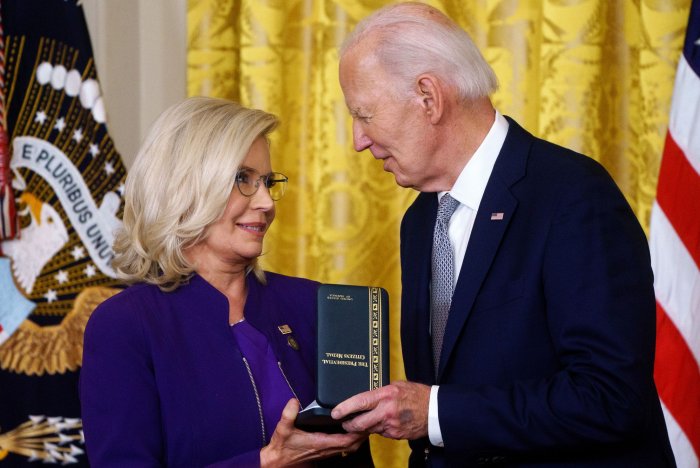
Former President Joe Biden presents the Presidential Citizens Medal to Liz Cheney during a ceremony in the East Room of the White House in Washington, on January 2, 2025. The Presidential Citizens Medal is bestowed to individuals who have performed exemplary deeds or services. Photo by Will Oliver/UPI | License Photo
Lyle Foster’s match-winning 79th-minute strike allowed South Africa to win first opening match at AFCON since 2004.
Published On 22 Dec 202522 Dec 2025
Share
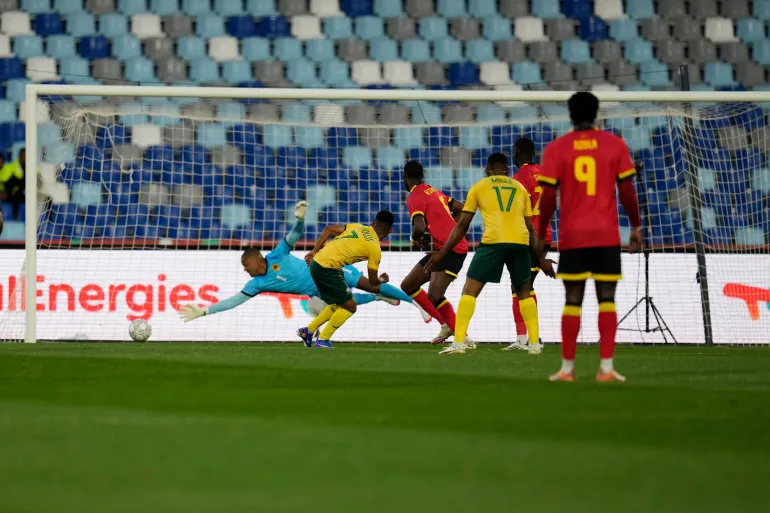
Lyle Foster scored a superb winner from outside the box as South Africa defeated Angola 2-1 in Africa Cup of Nations Group B in Marrakesh on Monday, the first time they have won their opening match at the continental finals in 21 years.
South Africa also had a goal disallowed and struck the crossbar, just about deserving the nervy victory. Angola also had chances and will be disappointed not to have gotten something from the game.
Recommended Stories
list of 2 itemsend of list
South Africa took the lead on 21 minutes when Oswin Appollis showed neat footwork in the box to work a shooting chance and put the ball in the bottom corner. But Angola equalised before the break as Show got a touch to Fredy’s free kick to steer the ball into the net.
The winning moment came after 79 minutes, when Foster was teed up 20 yards out and curled his shot into the top corner to give the bronze medallists from two years ago a positive start to their campaign.
It was a workmanlike performance from South Africa, who do not have the plethora of players in top European leagues that their tournament rivals enjoy, with Foster their only one at Premier League Burnley.
But they are a well-oiled machine under Belgian coach Hugo Broos and did enough for a victory that set them well on course for the knockout rounds. Egypt and Zimbabwe will meet later on Monday in the same pool.
South Africa’s Oswin Appollis, centre, scores the opening goal of the match in the 21st minute [Themba Hadebe/AP]
Even first half
South Africa took the lead after a period of sustained possession that led to Khuliso Mudau’s cross, which was touched by both Sipho Mbule and Foster before Appollis beat two defenders and side-footed into the bottom corner of the net.
Angola equalised on 35 minutes when Fredy’s low free kick was touched into the bottom corner by Show, his second goal in his 50th cap for his country, to make it 1-1 at the break.
South Africa thought they had retaken the lead when halftime substitute Tshepang Moremi turned his defender and fired low into the bottom corner of the net, but a VAR review showed that Foster was offside in the buildup.
South Africa’s Mbekezeli Mbokazi crashed the ball against the crossbar with a rasping shot from 35 yards, before Foster’s clinical strike secured all three points.
Zambia rally to draw with Mali
In an earlier Group A match on Monday, Zambia’s Patson Daka scored with a spectacular diving header in stoppage time to see his side come from behind and force a 1-1 draw with Mali in Casablanca.
Mali looked in control for most of the encounter, but paid the price for sitting back in the closing stages as Zambia staged a late recovery, with Daka leaping through the air to force home Mathews Banda’s curling cross two minutes into stoppage time at the end of the game.
Lassine Sinayoko had taken advantage of sloppy defending to give Mali a 62nd-minute lead after his strike partner, El Bilal Toure, had a first-half penalty saved.
Zambia’s forward Patson Daka celebrates scoring his team’s equalising goal in the 90th minute against Mali at Mohammed V Stadium in Casablanca, Morocco on December 22, 2025 [Abdel Majid Bziouat/AFP]
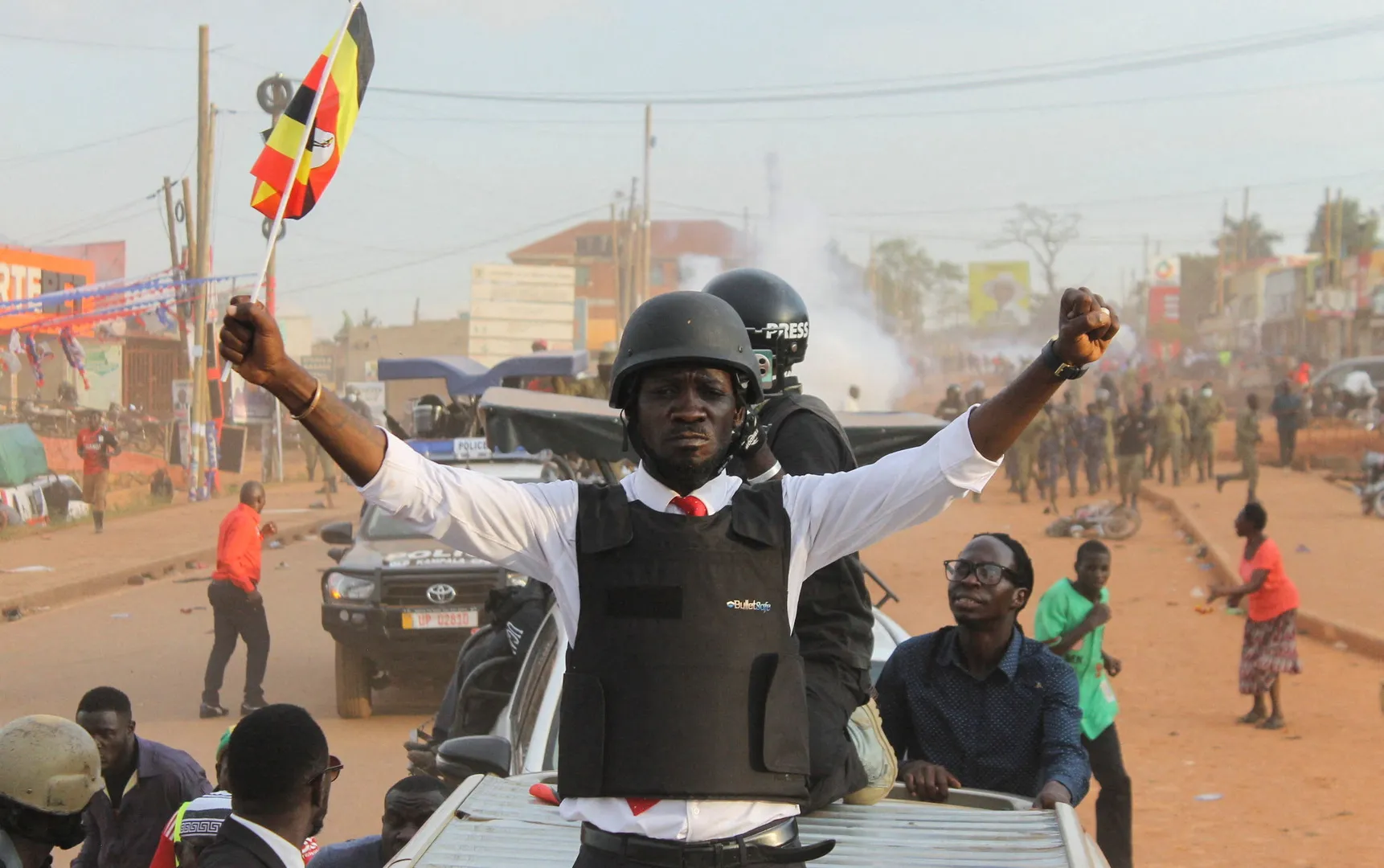
Footage shows security forces dispersing crowds with tear gas at rallies for Ugandan presidential candidate Robert Kyagulanyi, also known as Bobi Wine, in Kampala. The pop star-turned-politician is campaigning ahead of Uganda’s January 2026 elections, as officials warn against interference.
The neighbouring countries hold their first direct meeting in regional push for peace.
Fighting has escalated between Cambodia and Thailand, forcing hundreds of thousands of civilians to flee their homes on both sides of the neighbouring countries’ border.
Now, the Association of Southeast Asian Nations (ASEAN) is taking the lead in attempts to end the violence and reach a peace deal.
Recommended Stories
list of 4 itemsend of list
All this comes after an attempt by United States President Donald Trump to end the war failed.
The Thai and Cambodian foreign ministers are set to meet in the coming days in hopes of reaching what Thailand has called a “true ceasefire”.
But without any letup in the long-running conflict, what will it take to bring it to an end?
Presenter: Dareen Abughaida
Guests:
Chheang Vannarith – Chairman of Angkor Social Innovation Park and a former assistant to Cambodia’s defence minister in 2011 and 2012
Ilango Karuppannan – Adjunct senior fellow at the Nanyang Technological University and former Malaysian High Commissioner to Singapore
Phil Robertson – Director of Asia Human Rights Labour Advocates and former deputy director of Human Rights Watch’s Asia Division
Reactor buildings unit one (L, rear) through unit four (R) pictured Feb. 2015 at Tokyo Electric Power Co.’s Kashiwazaki Kariwa Nuclear Power Plant — the world’s largest nuclear power plant — in Kariwa, Niigata Prefecture, in northern Japan. Photo Provided by Kimimasa Mayama/EPA
Dec. 22 (UPI) — Japan has approved Tokyo Electric Power Co. to restart the Kashiwazaki-Kariwa nuclear site as the world’s largest nuclear power plant.
On Monday, the Niigata assembly backed Governor Hideyo Hanazumi’s decision to stay in office after approving the restart of the Kashiwazaki-Kariwa nuclear plant in its first reactor restart since the Fukushima disaster more than a decade ago.
“We remain firmly committed to never repeating such an accident and ensuring Niigata residents never experience anything similar,” a Tepco spokesperson told The Japan Times.
The decision finalizes local approval to restart the plant.
Hanazumi will meet Economy Minister Ryosei Akazawa on Tuesday to confirm the prefecture’s consent.
TEPCO intends to apply to the Japanese Nuclear Regulation Authority by Wednesday to restart its No. 6 reactor at the Kashiwazaki-Kariwa plant.
The utility aims to resume operations around Jan. 20 marking the facility’s first activity since shut down March 2012 a year after the Fukushima disaster.
On Nov. 21, Hanazumi approved restarting operations but said final approval depended on a vote by the prefectural assembly.
The assembly passed the measure with backing from the Liberal Democratic Party while opposition parties objected and called for a gubernatorial election or public referendum instead.
The Niigata provincial assembly in northern Japan approved a supplementary budget that included public relations funds for Kashiwazaki-Kariwa.
With consent already granted by the Kashiwazaki and Kariwa municipal governments, the vote cleared TEPCO’s final hurdle to resume operations.
Most of the plant’s power supplies the Tokyo area, but electric bills are expected to remain unchanged as TEPCO planned.
Meanwhile, Japan has restarted 14 of its 33 active nuclear plants to reduce reliance on imported fossil fuels.
Clouds turn shades of red and orange when the sun sets behind One World Trade Center and the Manhattan skyline in New York City on November 5, 2025. Photo by John Angelillo/UPI | License Photo
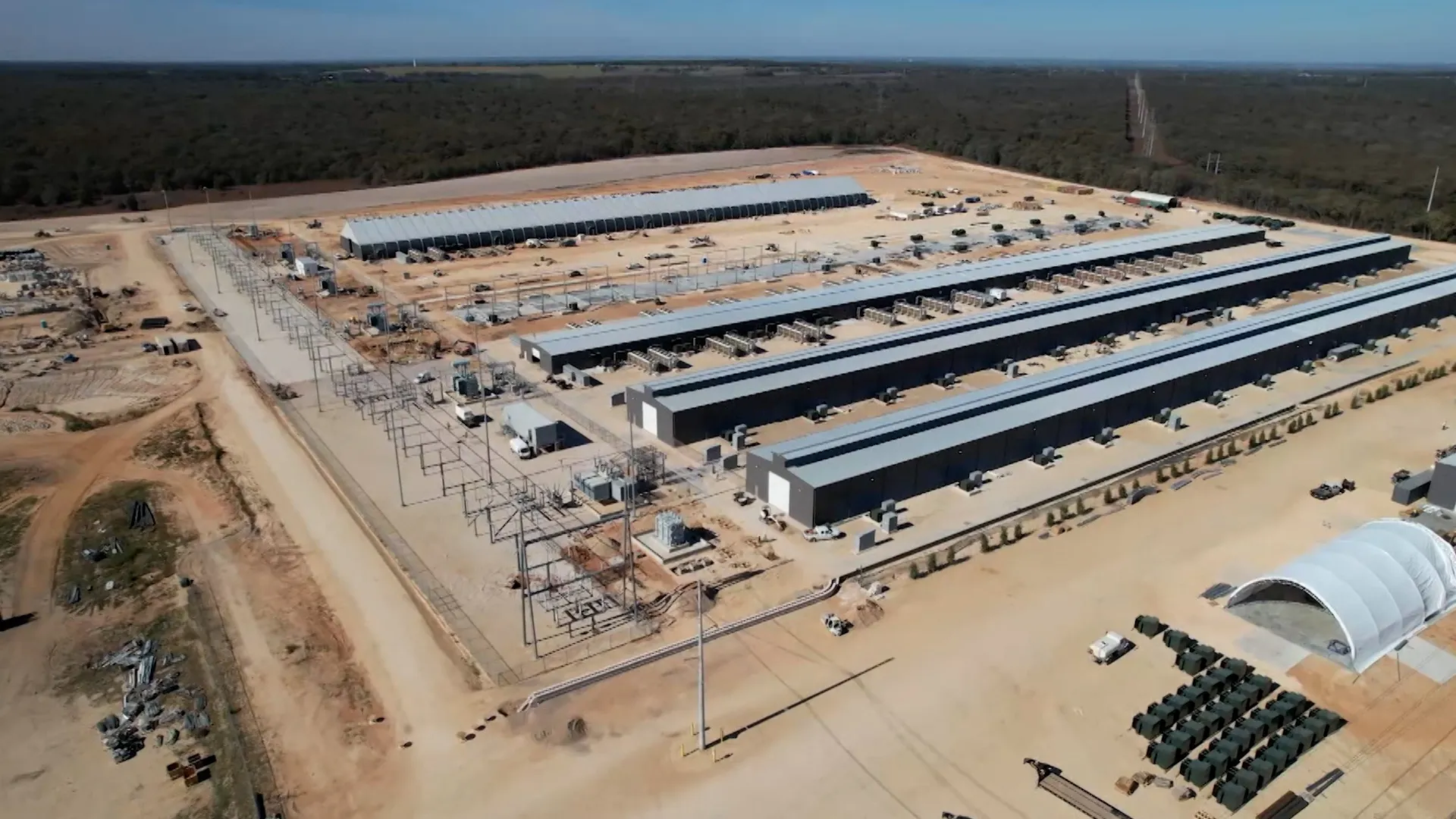
A rural Texas community says nonstop noise from a bitcoin mine is destroying their lives. Residents in Hood County describe the 24/7 hum of cooling fans as “torture,” while operators defend the project as a major jobs and tax boost. Al Jazeera’s Phil Lavelle says AI data centres may bring even bigger battles ahead.