Top News

Top news of today about travel

Kyrgios beats Sabalenka 6-3 6-3 in ‘Battle of the Sexes’ tennis showdown | Tennis News

Kyrgios, who is currently 671st in men’s rankings, beat the four-time Grand Slam singles champion in straight sets.

Nick Kyrgios beat women’s world number one Aryna Sabalenka in the “Battle of the Sexes”, in a highly-publicised showdown with modified rules that divided tennis fans.

Former Wimbledon finalist Kyrgios won 6-3, 6-3 in an exhibition match in Dubai on Sunday that bore little resemblance to the era-defining 1973 encounter between Billie Jean King and Bobby Riggs.

Recommended Stories

list of 4 itemsend of list

Back then, there was more at stake with the nascent women’s professional tour, set up by King, fighting for its legitimacy and prize money for female players still far lower than for the men.

King, one of the all-time greats of the women’s game who was at the peak of her powers, saw off the 55-year-old Riggs, a top player in his day, 6-4, 6-3, 6-3 in Houston.

On Sunday, each player received only one serve and the dimensions of Sabalenka’s side of the court were nine percent smaller, in an attempt to restrict Kyrgios’ power and speed advantage.

Kyrgios has dropped to 671 in the rankings after playing just six ATP matches over the past three seasons, but the 30-year-old Australian still had enough to see off four-time Grand Slam singles champion Sabalenka.

The maverick Australian was drenched in sweat and appeared out of breath in the second set ‌after going 1-3 down, while his opponent danced to the music ‌during a strategic timeout, but he ⁠persevered to make it 3-3 after Belarusian Sabalenka sent a shot long.

Kyrgios, who shortened the points with cheeky drop shots ‌and used variations on his serve to good effect, pulled away to seal the win on serve ‍before sharing a warm hug with Sabalenka at the net.

“Honestly, it was a really tough match. She’s a hell of a competitor,” said Kyrgios.

“I had to strap in because she was putting the pressure on and ultimately it was a really hard-fought battle.”

Sabalenka said she would “love” a rematch.

“I felt great. I put on a great fight. He was struggling. He was getting tired. I was happy to see that,” she said.

“It was a great level [of tennis]. I made a lot of great shots. I really enjoyed the show. I feel like next time when I play him I know all his tactics and strengths.”

Source link

Video: What do Rohingya refugees think about Myanmar’s election? | Elections

NewsFeed

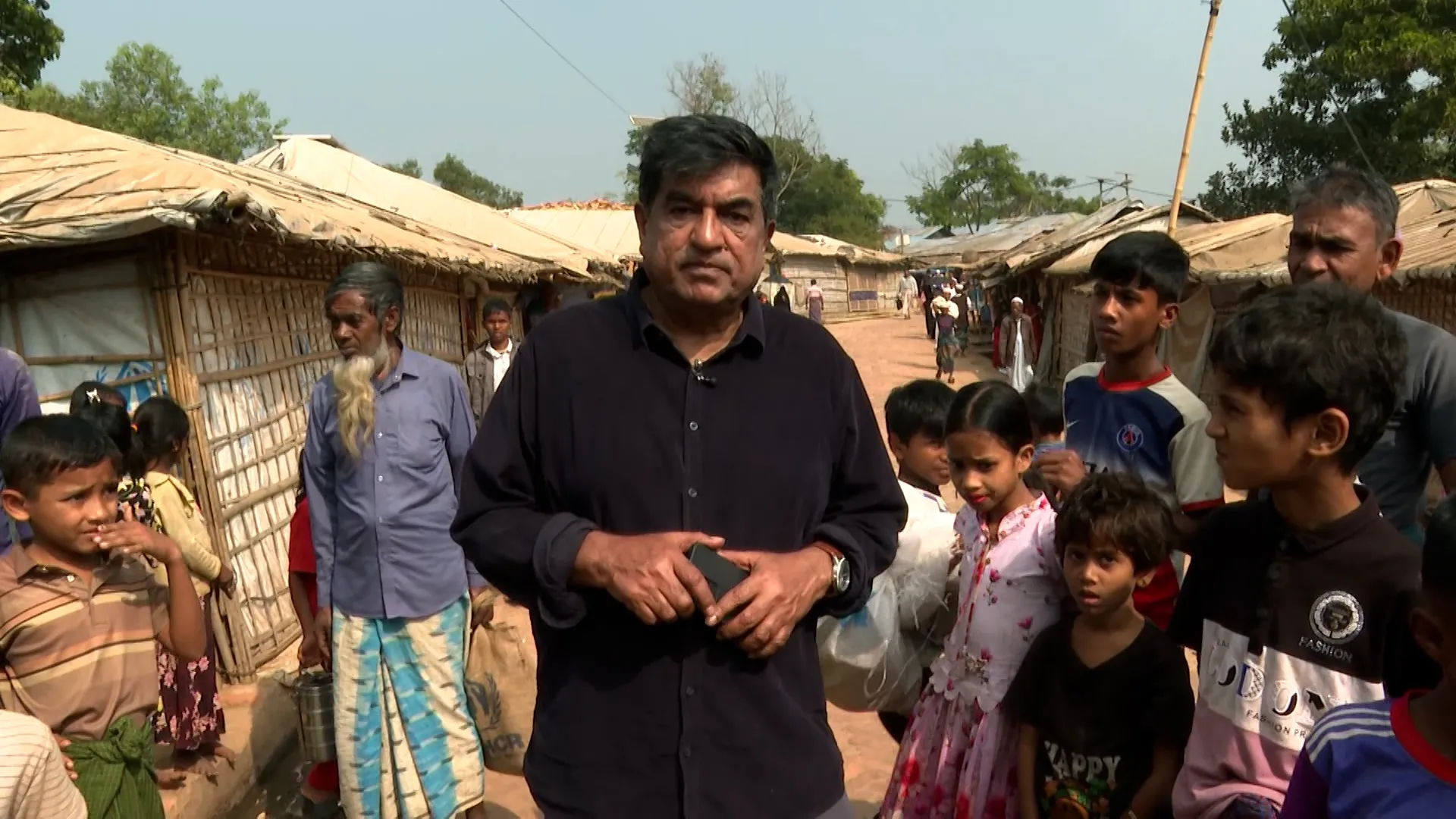
Myanmar’s election is unlikely to change the reality for more than 1M Rohingya refugees in Bangladesh who fled what the UN called ‘genocidal violence’ in Myanmar. Efforts to repatriate the Muslim minority have stalled since the junta seized power in 2021. Al Jazeera’s Tanvir Chowdhury reports from Cox’s Bazar.

Source link

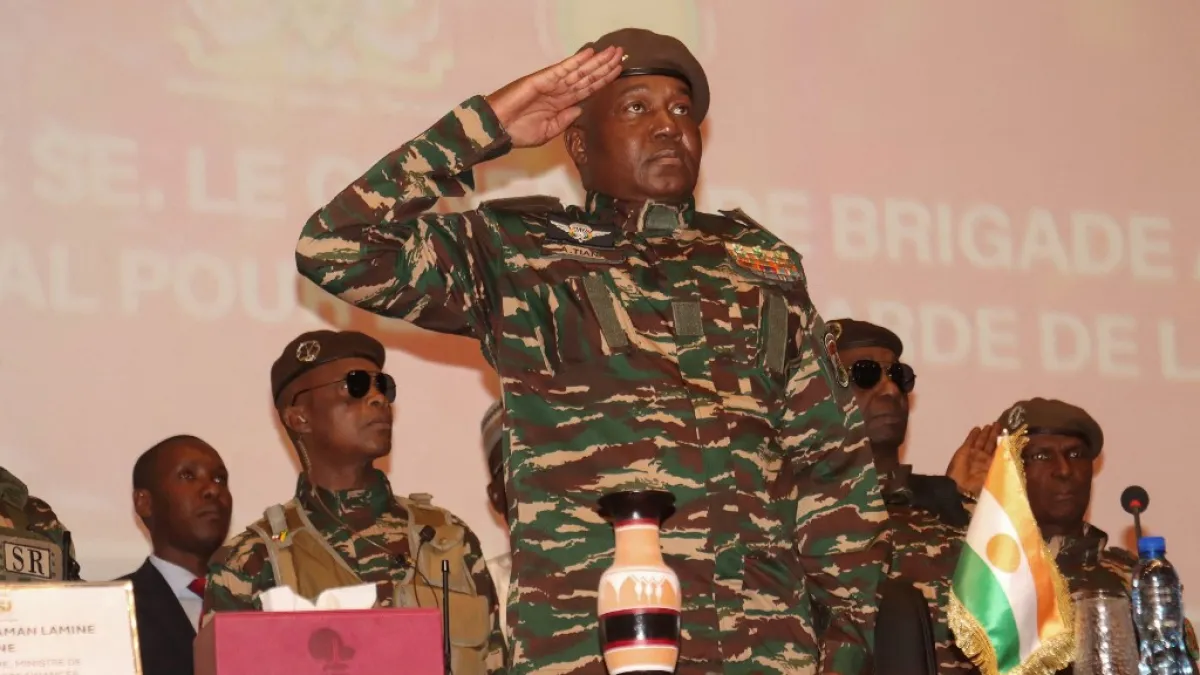
Niger’s military rulers order ‘general mobilisation’ against armed groups | Armed Groups News

The military rulers expand emergency powers, warning that people, property, and services may be requisitioned.

Niger’s military rulers have approved a general mobilisation and authorised the requisition of people and goods as they intensify the fight against armed groups across the country, according to a government statement.

The decision followed a cabinet meeting on Friday and marks a major escalation by the military government, which seized power in a July 2023 coup that toppled the country’s democratically elected president, Mohamed Bazoum.

Recommended Stories

list of 4 itemsend of list

“People, property, and services may be requisitioned during general mobilisation to contribute to the defence of the homeland, in compliance with the legislation and regulations in force,” the government said in a statement issued late on Saturday.

“Every citizen is required to respond immediately to any call-up or recall order, to comply without delay with the implementation of measures for the defence of the homeland, and to submit to requisition,” it added.

The authorities said the measures aim to “preserve the integrity of the national territory” and “protect the population” as Niger continues to face attacks by armed groups operating across several regions.

Niger has been embroiled in deadly armed conflict for more than a decade, with violence linked to fighters affiliated with al-Qaeda and the ISIL (ISIS) group. Nearly 2,000 people have been killed, according to the Armed Conflict Location and Event Data Project (ACLED), which tracks political violence.

The southeast of the country has also suffered repeated attacks by Boko Haram and its splinter group, the ISIL affiliate in West Africa Province (ISWAP), further stretching Niger’s security forces.

The mobilisation order comes five years after Niger expanded its armed forces to around 50,000 troops and raised the retirement age for senior officers from 47 to 52. Since taking power, the military government has also urged citizens to make “voluntary” financial contributions to a fund launched in 2023 to support military spending and agricultural projects.

Soon after the coup, Niger’s rulers ordered French and United States troops, who had supported operations to combat rebel fighters, to withdraw from the country.

Niger has since deepened security cooperation with neighbouring Mali and Burkina Faso, also ruled by a military government. The three Sahel states have formed a joint force of 5,000 troops, presenting it as a regional response to armed groups while further distancing themselves from Western partners.

Source link

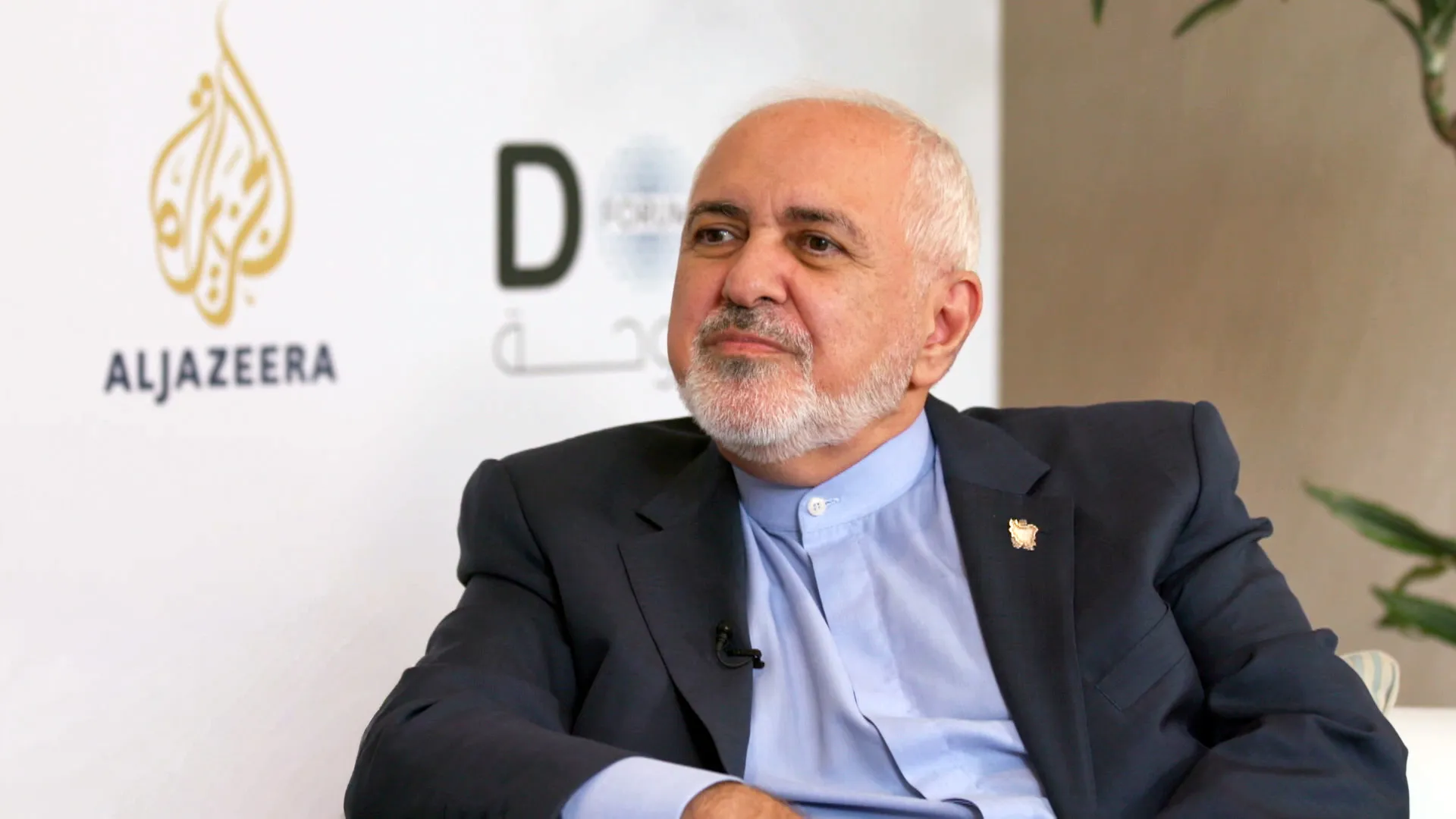
Javad Zarif: Main threat to the Middle East is Israel, not Iran | Israel-Iran conflict

Iran’s former foreign minister argues Israel, backed by the US, has killed every opportunity for peace.

Months after being attacked by the United States and Israel, Iran finds itself in the crosshairs again, with Israeli officials lobbying US President Donald Trump to address Tehran’s ballistic missiles.

Veteran Iranian diplomat Javad Zarif tells host Steve Clemons that “everybody lost any faith in diplomacy” after Israel and the US attacked Iran following five rounds of reconciliation talks between Washington and Tehran.

Zarif added that Israel has historically thwarted every opportunity for reconciliation between Iran and the US, and that Trump’s style of diplomacy is disastrous, as it creates “negotiations that end up in war”.

Source link

Somalia condemns Israel’s recognition of Somaliland as ‘naked invasion’ | Benjamin Netanyahu News

Somalia’s president calls for unity at an emergency joint session of parliament, which declares the Israeli move ‘null and void’.

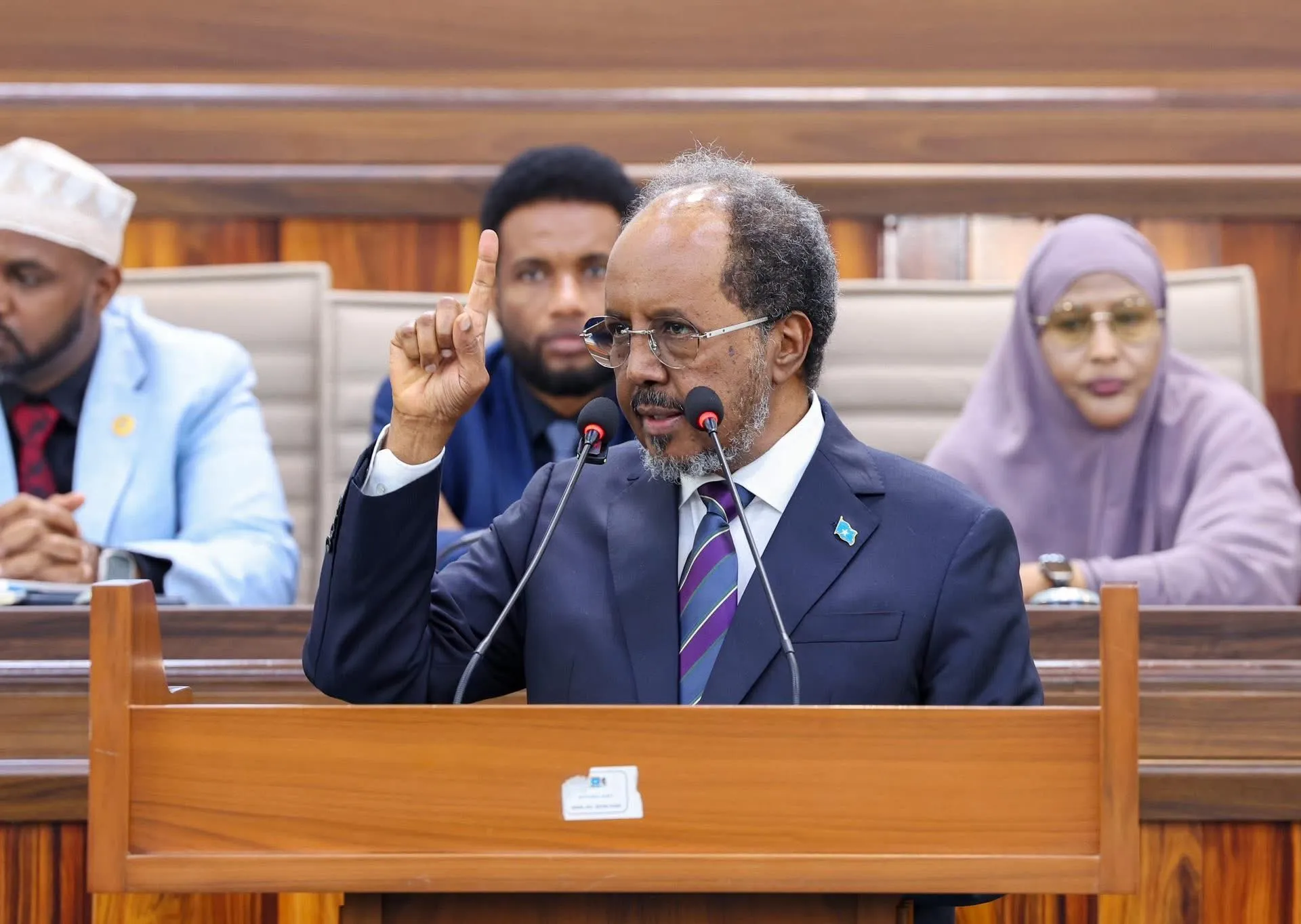
Somalia’s president has condemned Israel’s recognition of the breakaway region of Somaliland as a “naked invasion”, warning that the move threatens to ignite separatist movements elsewhere.

Addressing an emergency joint session of parliament on Sunday, President Hassan Sheikh Mohamud said Israeli Prime Minister Benjamin Netanyahu has committed the “greatest abuse” of Somalia’s sovereignty in the nation’s history and referred to Israel as an “enemy”.

Recommended Stories

list of 4 itemsend of list

“I am encouraging the Somali people to be calm and to defend the unity and the independence of our country, which is facing this naked invasion,” he said.

Lawmakers unanimously passed a resolution declaring Israel’s recognition as “null and void” although the measure is largely symbolic given that Somalia has not controlled Somaliland since it declared independence in 1991, which Somalia has never accepted.

The resolution warns that individuals or institutions violating Somalia’s sovereignty will face legal consequences under the country’s penal code and international law. It directed the government to take up the matter with the United Nations, African Union, Arab League and other regional bodies.

‘Existential threat’

Netanyahu on Friday announced that Israel had established full diplomatic relations with Somaliland, describing the move as being in the spirit of the United States-brokered Abraham Accords, which normalised ties between Israel and several Arab countries.

The announcement made Israel the first UN member state to formally recognise the self-declared state, which has sought international acceptance for more than three decades without success.

Mohamud accused Netanyahu of trying to import Middle Eastern conflicts into Somalia and promised his country would not allow its territory to be used as a military base to attack other nations.

He urged Somalis to set aside “tribal and regional rivalries” to confront what he described as an “existential threat” to the country’s unity.

“We need to combine our wisdom and strengths to defend our existence and sovereignty,” the president said, calling on Somaliland’s leaders to enter meaningful negotiations to preserve Somalia’s territorial integrity.

Somali Prime Minister Hamza Barre told Al Jazeera Arabic that Israel was “searching for a foothold in the Horn of Africa” and called on it to recognise and accept a Palestinian state instead.

Defending the Israeli move, Somaliland President Abdirahman Mohamed Abdullahi, known locally as Cirro, said on Friday that Somaliland’s recognition “is not a threat, not an act of hostility” to neighbouring countries.

He said his nation is “deeply rooted in Islamic values of moderation, justice and coexistence” and does not represent an alignment against any Islamic nation or community.

Meanwhile, the Israeli decision sparked immediate international backlash

A joint statement issued on Saturday by 21 Arab and African countries and the Organisation of Islamic Cooperation condemned the recognition as a grave violation of international law and the UN Charter.

In a statement, the Palestinian Ministry of Foreign Affairs expressed support for Somalia.

Regional leaders – including the presidents of Kenya, Uganda, Tanzania and Djibouti – held phone calls with Mohamud to reaffirm support for Somalia’s territorial integrity. Eritrea separately called on China to take action at the UN Security Council, drawing parallels to the Taiwan issue.

The European Union issued a statement calling for respect for Somalia’s sovereignty but stopped short of condemning the move. It urged authorities in Mogadishu and Hargeisa to engage in dialogue.

Israel’s move to recognise Somaliland came during a more than two-year genocidal war in Gaza, in which more than 70,000 Palestinians have been killed.

Israel is currently being investigated by the International Court of Justice over allegations of genocide, and Netanyahu is the subject of an arrest warrant issued by the International Criminal Court on accusations of war crimes and crimes against humanity.

Somaliland broke away from Somalia in 1991 after a civil war under military ruler Siad Barre. The self-declared republic controls part of northwestern Somalia and has its own constitution, currency and flag. It claims the territory of the former British Somaliland protectorate, but its eastern regions remain under the control of rival administrations loyal to Somalia.

Asked by the New York Post on Friday if he would recognise Somaliland, US President Donald Trump replied “no” although he added that the matter remained under study. “Does anyone know what Somaliland is, really?” Trump asked.

The UN Security Council is expected to discuss Israel’s recognition of Somaliland on Monday.

Source link

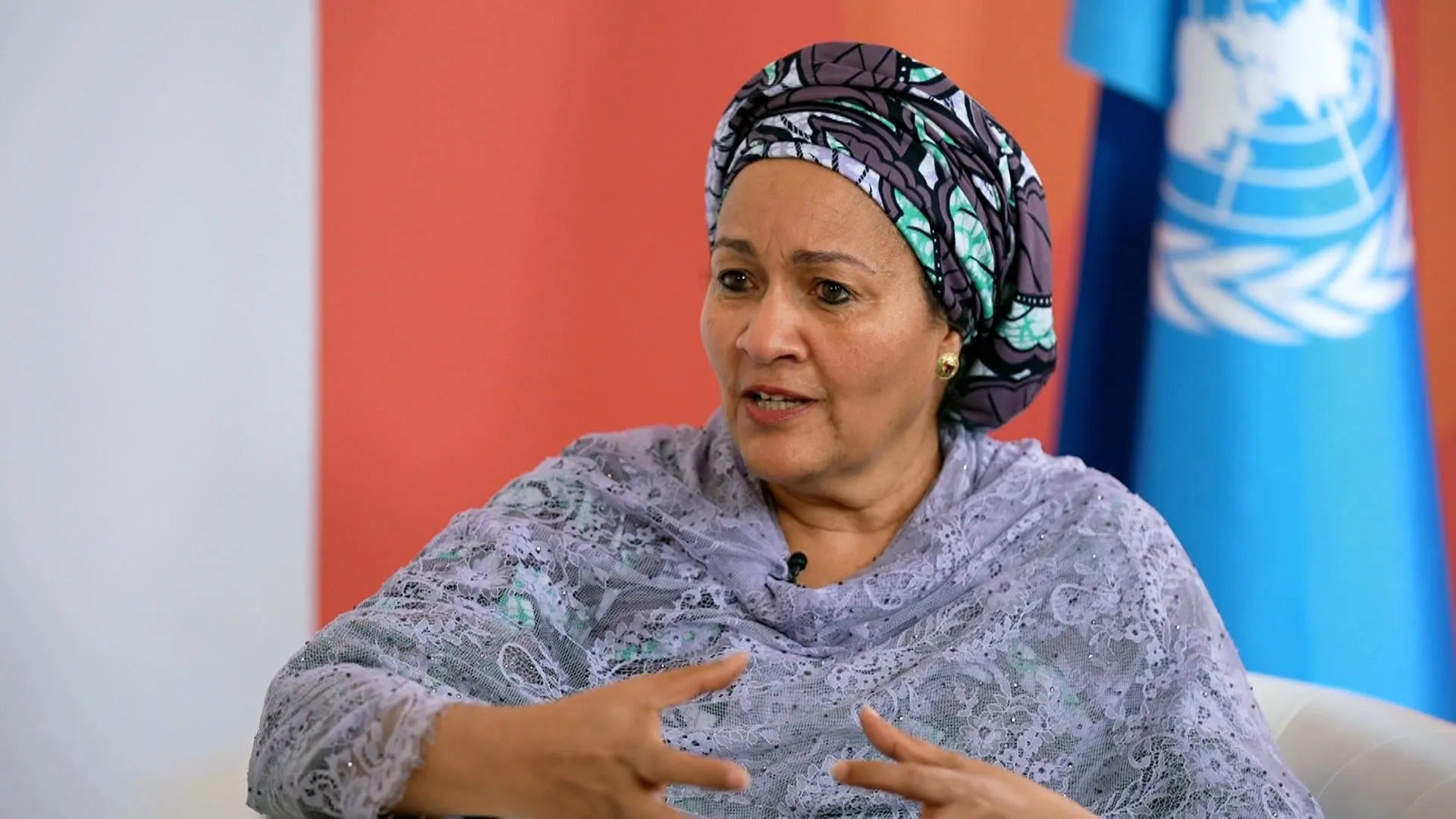
UN’s Amina Mohammed: Why women pay the highest price in war | United Nations

From Sudan to Gaza, impunity for violence against women is fuelling conflict worldwide, the UN’s deputy chief warns.

In today’s conflicts, women and girls are facing escalating violence with near-total impunity. From mass rapes in Sudan to attacks on schools and shelters in Gaza and Syria, and the segregation of women in Afghanistan, protection is collapsing as wars intensify. Speaking to Talk to Al Jazeera, UN Deputy Secretary-General Amina Mohammed warns that violence against women is not a side issue but a front-line threat to peace and development. With funding shrinking and the political will faltering, she confronts hard questions about the world’s failure to protect those most at risk.

Source link

Thousands in Kabul attend Afghanistan’s national buzkashi championship | Arts and Culture News

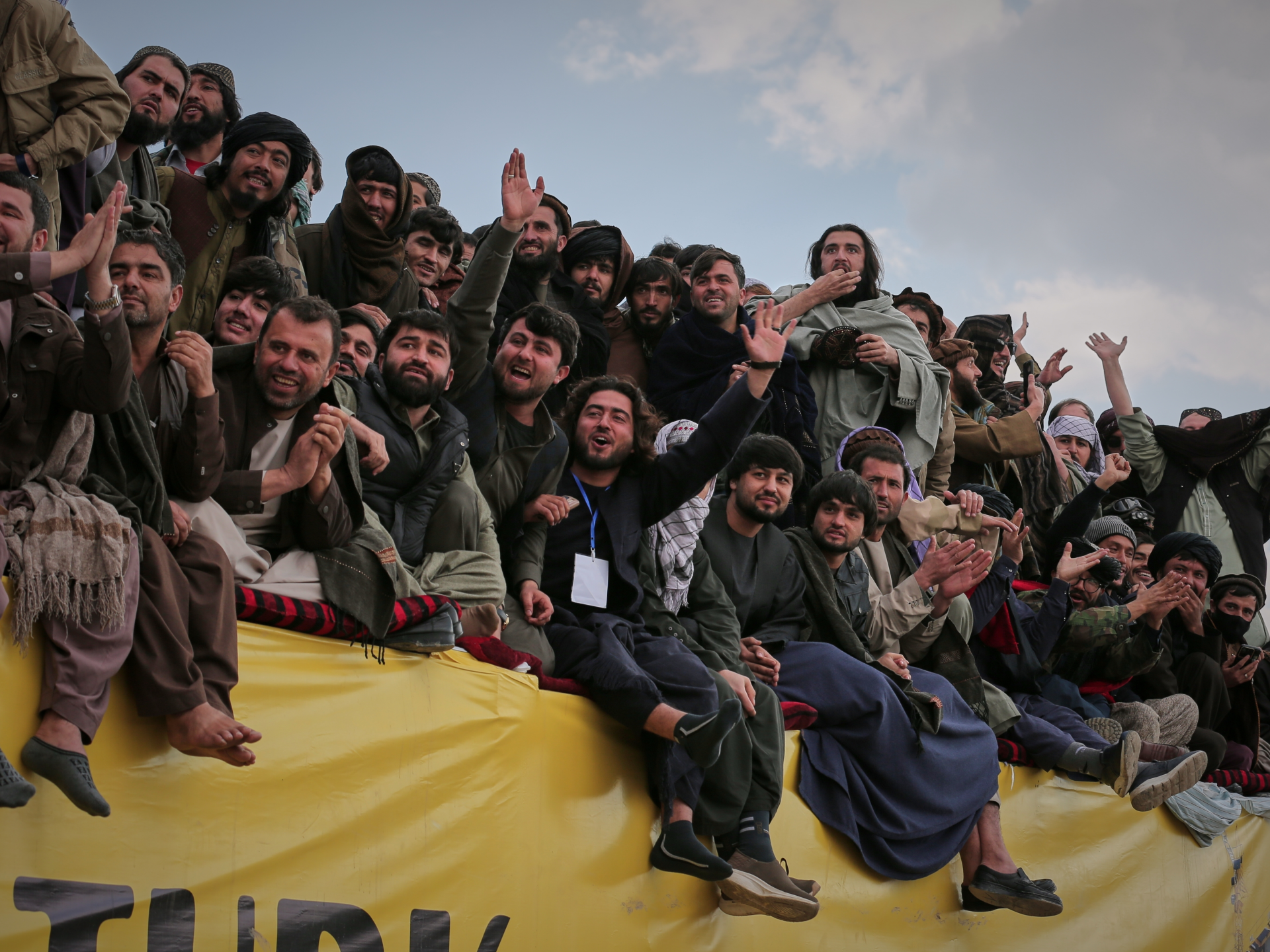
Horsemen from across Afghanistan converged for the dramatic final match of the nation’s prestigious annual buzkashi tournament on Kabul’s outskirts, attracting crowds that included high-ranking Taliban officials witnessing this centuries-old sporting tradition.

Buzkashi, Afghanistan’s national equestrian competition, showcases elite riders who must carry a leather-wrapped bundle – historically a goat carcass but now a weighted facsimile – across a designated goal line to earn points.

Amid swirling dust clouds kicked up by galloping horses, a victor ultimately prevailed. The winning team took a celebratory circuit around the field, proudly displaying their flag in triumph.

Afghanistan’s cherished buzkashi tournament maintains its status as a traditional sport characterised by limited formal rules and fierce physical competition.

In its classic format, two teams compete to score using what was traditionally a goat carcass, though contemporary matches utilise a leather-and-rope substitute filled with straw to replicate the weight of an animal.

Competitors – with 12 riders on each side – demonstrate extraordinary horsemanship, stretching dangerously from their mounts to retrieve the bundle from the ground before racing towards the goal while pursued by opposing riders.

Though prohibited during the Taliban’s earlier governance in the 1990s, buzkashi experienced a revival following their removal and has continued since their return to power in 2021, with government officials now attending competitions.

In this week’s championship, northern Sar-e-Pul province overwhelmed northeastern Badakhshan with a commanding 7-0 victory, concluding the 11-day national tournament. Baghlan claimed third place, while Kunduz finished fourth among the 11 provincial teams competing.

The competition featured eight international participants from Tajikistan and Kyrgyzstan, according to Atal Mashwani, spokesman for Afghanistan’s General Directorate of Physical Education and Sports.

Corporate sponsorship from a petrol company funded the tournament, providing automobiles as prizes for the top four teams, alongside trophies, medals, and certificates.

Thousands of male spectators filled the stands at the central Kabul venue, with enthusiastic fans even climbing nearby trees and electricity pylons to gain better vantage points of the action.

Source link

Guinea votes in first polls since 2021 coup, military leader likely to win | Elections News

Mamady Doumbouya may win amid accusations of restrictions on the media and the opposition parties.

Guinea is holding a presidential election in which incumbent military leader General Mamady Doumbouya, who took power in a 2021 coup, is widely anticipated to secure victory.

Some 6.7 million registered voters will go to the polls, which opened at 07:00 GMT on Sunday and will close at 18:00 GMT.

Recommended Stories

list of 4 itemsend of list

The former special forces commander, aged 41, faces eight other candidates in the election, as ousted President Alpha Conde and longtime opposition leader Cellou Dalein Diallo remain in exile.

The opposition has called for a boycott of the vote in the mineral-rich country where 52 percent of the population lives in poverty, according to World Bank figures.

While long blighted by coups, Guinea experienced a democratic transition with the November 2010 election of Alpha Conde, the country’s first freely elected president. Doumbouya overthrew him in September 2021.

Officials of the General Directorate of Elections (DGE) set up a ballot box at a polling station in Conakry on December 28, 2025 before polls open during Guinea's presidential election. (Photo by Patrick MEINHARDT / AFP)
Officials set up a ballot box at a polling station in Conakry [Patrick Meinhardt/AFP]

Under Doumbouya, Guinea effectively “reverted to what it has essentially known since independence in 1958: authoritarian regimes, whether civilian or military”, Gilles Yabi, founder of the West African think tank Wathi, told the AFP news agency.

Provisional results could be announced within two days, according to Djenabou Toure, head of the General Directorate of Elections.

Restrictions on opposition

Political debate has been muted under Doumbouya. Civil society groups accuse his government of banning protests, curbing press freedom and restricting opposition activity.

The campaign period “has been severely restricted, marked by intimidation of opposition actors, apparently politically motivated enforced disappearances, and constraints on media freedom”, United Nations rights chief Volker Turk said on Friday.

These conditions “risk undermining the credibility of the electoral process”, he added.

Opposition leader Diallo has condemned the vote as “an electoral charade” aimed at giving legitimacy to “the planned confiscation of power”.

In September, Guinea approved a new constitution in a referendum, which the opposition called on voters to boycott.

The new document allowed military leaders to stand for election, paving the way for Doumbouya’s candidacy.

It also lengthened presidential terms from five to seven years, renewable once.

‘Hope things will be sorted’

Guinea holds the world’s largest bauxite reserves and the richest untapped iron ore deposit at Simandou, officially launched last month after years of delay.

Doumbouya has claimed credit for pushing the project forward and ensuring Guinea benefits from its output. His government this year also revoked EGA subsidiary Guinea Alumina Corporation’s licence after a refinery dispute, transferring its assets to a state-owned firm.

The turn towards resource nationalism – echoed in Mali, Burkina Faso and Niger – has boosted his popularity, as has his youth in a country where the median age is about 19.

“For us young people, Doumbouya represents the opportunity to send the old political class into retirement,” Mohamed Kaba, a mechanic in Conakry, told the Reuters news agency.

“There is a lot of corruption right now, but I hope these things will be sorted out.”

Source link

Lee Jun-seok slams Democrats over special prosecutor

Lee Jun-seok (C), leader of the minor New Reform Party, speaks during a meeting of its Supreme Council at the National Assembly in Seoul, South Korea, 24 December 2025. Photo by YONHAP/EPA

Dec. 26 (Asia Today) — Lee Jun-seok, leader of the Reform Party, on Tuesday accused the Democratic Party of Korea of twisting itself “in every possible way” to avoid a special prosecutor investigation, pledging to step up talks with the People Power Party on joint action after Christmas.

Speaking to reporters after a Supreme Council meeting at the National Assembly, Lee said discussions on coordinated resistance would intensify once Christmas had passed, citing the physical toll of a near 24-hour filibuster carried out by People Power Party lawmaker Jang Dong-hyuk.

“There may be talk of hard-line measures such as hunger strikes or head-shaving protests,” Lee said. “But for now, the priority is to pressure the Democratic Party to give a clear answer.”

Lee noted that he himself had engaged in a prolonged hunger strike nearly nine years ago, adding that he was neither afraid of political confrontation nor short of ideas.

He branded the Democratic Party’s stance as “classic double standards,” arguing that while aggressive investigations had already been pursued against one political camp, similar scrutiny was being blocked when directed at the party itself. “That does not meet any reasonable standard of fairness,” he said.

Lee also pointed to the case of Kwon Seong-dong, a former People Power Party floor leader, who has been standing trial in detention for months based on testimony from the same individual. “If that measure was justified, then the special prosecutor into the Unification Church should be handled just as swiftly,” Lee argued, warning that delays could be seen as allowing time for evidence destruction or coordination of statements.

On prospects for passing the special prosecutor bill before the end of the year, Lee again pressed the Democratic Party, criticizing it for claiming time constraints while continuing to push through other legislation. He questioned whether efforts to revise laws aimed at removing National Assembly Vice Speaker Joo Ho-young should take precedence over the special prosecutor issue.

Lee dismissed suggestions from within the People Power Party to pursue the bill through a fast-track procedure, calling the idea unrealistic. “Rather than scattering the debate, this issue demands a serious and weighty response, as the public is watching closely,” he said.

–Copyright by Asiatoday

Source link

Japan okays $58B defense budget amid tensions with China

Dec. 26 (UPI) — The Japanese government on Friday approved a record $58 billion defense budget for the 2026 fiscal year amid worsening diplomatic tensions with China.

The allocation is 9.4% more than budgeted for defense in 2025 and is a new record for defense spending when the new fiscal year starts in April.

The funds will help pay for cruise missiles and unmanned defense systems as Japan enters the fourth year of its five-year plan to bolster its military, Newsweek reported.

During that time span, Japan is investing about 2% of its annual gross domestic product to modernize its military with state-of-the-art equipment, including drones.

It also demonstrates a significant shift in Japan’s defensive priorities after spending relatively little on national defense for several decades.

The new spending will bolster Japan’s land, sea and air coastal defenses with unmanned assets and a greater ability to attack enemies from beyond their respective ranges, according to The Japan Times.

Japan is building up its Synchronized, Hybrid, Integrated and Enhanced Littoral Defense drone system that commonly is referred to as SHIELD.

“This system will enable Japan to adopt new warfare methods, firmly protect the lives of personnel and halt enemy invasions of islands at the coastline,” Japanese Defense Minister Shinjiro Koizumi told media.

The system is slated to go into service in 2027 and will provide Japan with an ample supply of “inexpensive unmanned aerial, surface and underwater vehicles” that can be used to attack enemy targets and conduct reconnaissance.

A large quantity of relatively affordable drones is available from the United States, Australia, Turkey and other nations.

Japan also is improving its counterstrike capabilities with better anti-ship missiles and intends to acquire hypersonic missiles that can fly five or more times faster than the speed of sound.

Such improvements would improve Japan’s ability to strike enemy targets from a long distance and more effectively deter potential aggression against the island nation.

Source link

Thailand, Cambodia agree to 72-hour cease-fire amid border war

Cambodian Defense Minister Tea Seiha, left, and Thai Defense Minister Natthaphon Narkphanit exchange cease-fire agreement documents after three days of negotiations to end a weeks-long battle along the two countries border. Photo by Defense Ministry of Thailand/EPA

Dec. 27 (UPI) — Weeks into a vicious border war that has killed dozens of people and displaced roughly half a million, Thailand and Cambodia agreed to a 72-hour cease-fire on Saturday.

The countries announced in a joint statement that they would not conduct any military activities along the border, although their troops can stay there, in an effort to have a prolonged period of peace to see if the cease-fire will hold, The New York Times and Financial Times reported.

The agreement comes after several days of negotiations to end renewed fighting that has plagued the border region for weeks, including Thai air strikes on Cambodia’s Banteay Meanchey Province early Friday morning.

“The signing is not the end, but the beginning of proving sincerity through action,” Thailand’s Air Chief Marshal Prapas Sornchaidee said in a statement posted to X.

“Thailand will proceed based on the same principles it has consistently communicated to the international community,” said Sornchaidee, who is acting as director of the joint press center and principle spokesperson on the border negotiations.

The cease-fire was due to start at 12:00 p.m. local time, with all fighting and military activity halted and both sides avoiding “unprovoked firing or advancement or movement of troops toward the other side’s positions,” according to the agreement.

The agreement requires both sides to refrain from any type of provocative actions, to avoid disseminating “false information or fake news” and to commit to efforts for both countries to better work together.

Additionally, if the cease-fire holds for the full 72 hours, Thailand agreed to return 18 Cambodian soldiers — something it initially agreed to do in October — and both sides will start to allow civilians to return to their homes along the 500-mile border between the countries.

The soldiers were captured in July after weeks of fighting, which also had resulted in a cease-fire and an eventual peace accord signed in October in Kuala Lumpur.

That cease-fire and peace agreement rumbled in November when Thailand accused Cambodia of laying new landmines along its border — weapons that both countries have employed — Financial Times reported.

The new agreement, which was signed at 10:30 a.m. local time on Saturday morning, follows recent overtures from the United States and China to increase diplomatic efforts and end the conflict, the New York Times reported.

“The United States welcomes this announcement from Cambodia and Thailand on reaching a cease-fire that halts hostilities along their border,” U.S. Secretary of State Marco Rubio said in a statement. “We urge Cambodia and Thailand to immediately honor this commitment and fully implement the terms of the Kuala Lumpur Peace Accords.”

With a cease-fire agreed to after three days of negotiations, a trilateral meeting between the foreign ministers of Cambodia, Thailand and China will be held on Sunday and Monday to continue working toward a more lasting peace, Cambodian officials said.

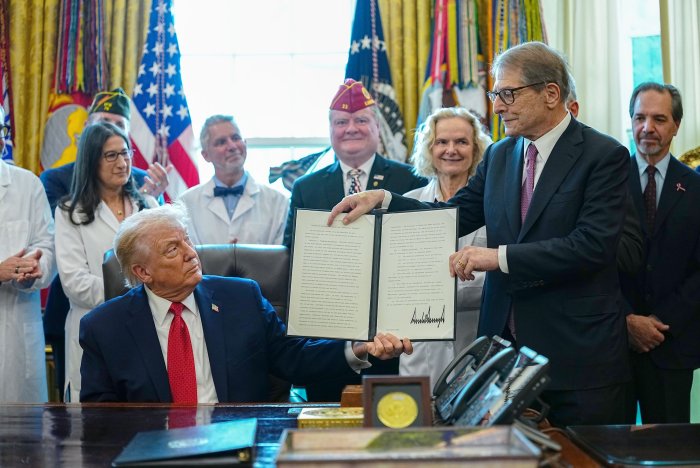
President Donald Trump holds a signed executive order reclassifying marijuana from a schedule I to a schedule III controlled substance in the Oval Office of the White House on Thursday. Photo by Aaron Schwartz/UPI | License Photo

Source link

Patel planning permanent closure of FBI’s Hoover headquarters building

Dec. 27 (UPI) — The FBI Hoover headquarters in Washington soon will be vacant as the federal law enforcement agency prepares to make a permanent exit in favor of a more modern structure.

FBI Director Kash Patel plans to make a permanent move into the former headquarters of the recently closed U.S. Agency for International Development sometime soon, according to Bloomberg.

“After more than 20 years of failed attempts, we finalized a plan to permanently close the FBI’s Hoover headquarters and move the workforce into a safe, modern facility,” Patel said in a social media post on Friday.

Moving into the former USAID headquarters will save taxpayers almost $5 billion, which was allocated to build a new FBI headquarters that would not have opened until 2035, Patel said.

“We scrapped that plan,” he explained. “Instead, we selected the already-existing Reagan Building, saving billions and allowing the transition to begin immediately with required safety and infrastructure upgrades underway.”

When the improvements are done, Patel said the FBI staff will move into the Reagan Building, which is located at 1300 Pennsylvania Ave. N.W., between the White House and the Capitol. He did not say when the move might occur.

The Hoover Building will be shut down after the FBI vacates it, the FBI director added.

While Patel said the move will save taxpayers billions of dollars, Maryland lawmakers are not happy about the change in plans.

Congress had approved the allocation to build a new FBI headquarters in Maryland during the Biden administration, but the change in plans has canceled that.

“Not only was this decision final, [but] the Congress appropriated funds specifically for the purpose of the new, consolidated campus to be built in Maryland,” the state’s Democratic Party Congressional delegation said in a joint statement in July.

“Now the Administration is attempting to redirect those funds — both undermining Congressional intent and dealing a blow to the men and women of the FBI — since we know that a headquarters located within the District [of Columbia] would not satisfy their security needs,” the delegation said.

Maryland officials in November filed a federal lawsuit accusing the Trump administration of improperly diverting $555 million when it announced the change of plans for the FBI headquarters.

“These actions flouted Congress’s explicit direction to choose a site from the three specified sites, as well as other specific statutory directives concerning the selection of the site and the use of the funds,” state attorneys say in the federal lawsuit.

The J. Edgar Hoover Building opened in 1974 and has been the FBI’s headquarters for the past 50 years.

Prior to that, the FBI was headquartered in the Justice Department building.

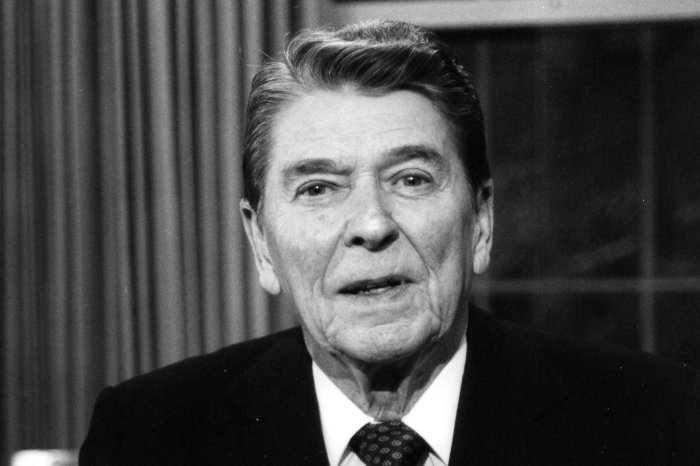
Former actor and sports broadcaster Ronald Reagan, known for films such as “Knute Rockne, All American” and “Kings Row,” is pictured in the Oval Office after delivering his farewell address to the nation on January 11, 1989. Reagan later served as the 40th president of the United States. Photo by Joe Marquette/UPI | License Photo

Source link

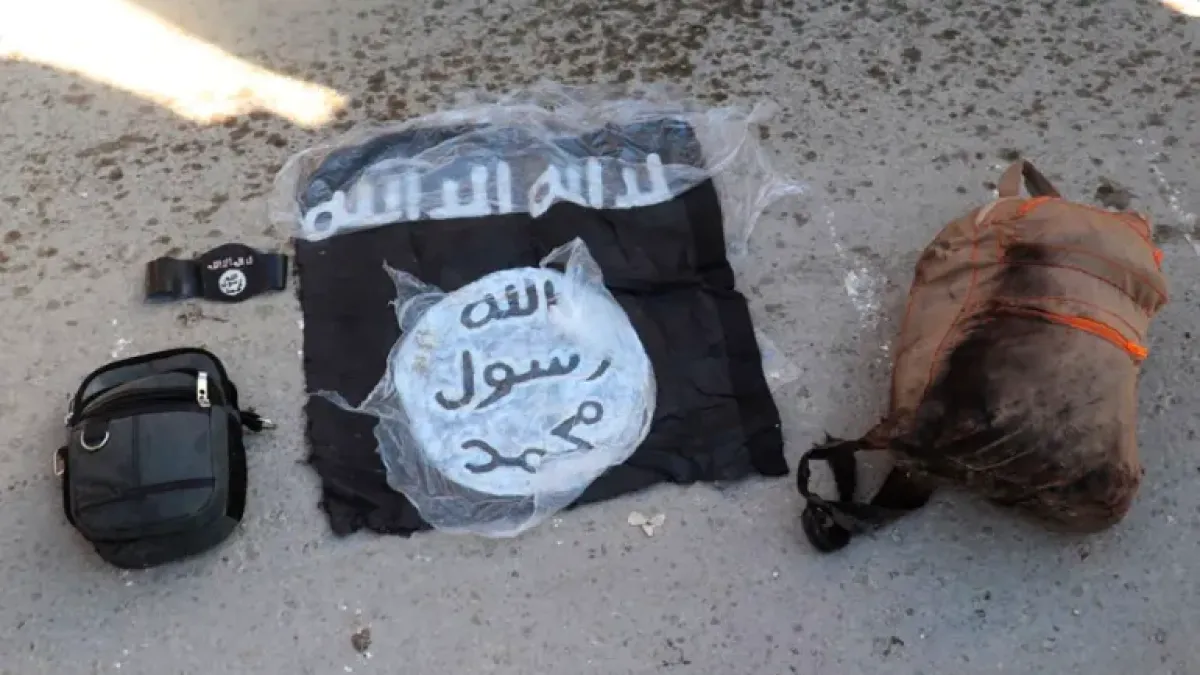
Analysis: ISIL attacks could undermine US-Syria security collaboration | Syria’s War News

On December 13, a joint US-Syrian patrol was ambushed by a member of Syria’s own security forces near Palmyra, a city in central Syria once controlled by the ISIL (ISIS) group.

Two US soldiers and an interpreter were shot dead, and four people were wounded, before Syrian forces killed the gunman.

Recommended Stories

list of 3 itemsend of list

In the aftermath of the attack, US and Syrian officials linked the attacker to ISIL, which once controlled vast swaths of Syria and Iraq, and promised to retaliate.

The incident highlights the growing cooperation between the United States and Syria against ISIL, particularly after Damascus joined the US-backed coalition against the group in November.

While it is still unclear if the attacker was a member of ISIL or another group opposed to US-Syrian relations, analysts say that cooperation between the two countries is strong and growing stronger.

“The Syrian government is responding very robustly to fighting ISIL following US requests to do so, and it is worth noting that HTS [Hayat Tahrir al-Sham], before it was in government, had a long-term policy of fighting ISIL,” Rob Geist Pinfold, a scholar of international security at King’s College London, told Al Jazeera, referring to Syrian President Ahmed al-Sharaa’s former group.

“It [HTS] did it in Idlib, and cracked down on insurgents and cells, and this is more a continuation of that policy.”

Syria’s Minister of Interior spokesman, Noureddine al-Baba, told Syria’s Al-Ikhbariah TV that there was no direct chain of command to the gunman within Syria’s internal security forces, and that he was not part of the force tasked with escorting the US forces. Investigations are under way, he added, to determine whether he had direct ties to ISIL or adopted violent ideology.

ISIL attacks down

In May 2015, ISIL took over the city of Palmyra from the former Syrian government.

Famous for its Greco-Roman ruins, the city bounced back and forth between regime forces and ISIL until the group was expelled in 2017.

In May 2017, the US-led coalition also forced the group out of Raqqa, which ISIL had declared the capital of its so-called caliphate three years earlier.

Many surviving ISIL fighters were imprisoned in the al-Hol and Roj camps in northeast Syria, controlled by the US-backed Syrian Democratic Forces (SDF). Others escaped into the Syrian desert around Palmyra, from where they have occasionally launched attacks.

When the regime of former Syrian President Bashar al-Assad fell on December 8, 2024, analysts said ISIL fighters used the ensuing chaos to go into various cities across the country. In June, the group launched an attack on a church in Damascus that killed at least 25 people.

Samy Akil, a fellow at the Tahrir Institute, said recent estimates put ISIL’s manpower in Iraq and Syria at between 3,000 and 5,000 fighters.

But experts told Al Jazeera that the coordination between Damascus and Washington has improved over the last year, and pointed to the fact that Syria’s security forces have thwarted several ISIL attacks due to US-provided intelligence.

“Ahmed al-Sharaa’s new government is committed to fighting the group and, in contrast to the Assad era, al-Sharaa’s government gets regular tip-offs from US intelligence, and probably other forms of US support as well. That’s a pretty powerful combination,” Aron Lund, a research fellow at Century International, focusing on Syria, told Al Jazeera.

This collaboration has seen a decrease in ISIL attacks in Syria, according to a report by consulting firm Karam Shaar Advisory. ISIL launched an average of 63 attacks a month in 2024, while in 2025, that number dropped to 10, according to the report.

“Since HTS arrived in Damascus, collaboration [with the US] has become much easier,” Jerome Drevon, a senior analyst with the International Crisis Group, told Al Jazeera.

Structural flaws

After the fall of the Assad regime, there were questions over how security would be enforced. The few thousand HTS members who had previously only controlled Idlib in northwest Syria would not be enough to enforce security across the country.

Syria’s security forces undertook a serious recruitment drive, bringing in tens of thousands of new recruits to add to many of the existing former opposition battalions that were incorporated under the state’s new security apparatus.

With such a huge recruitment campaign, analysts said, vetting was a difficult task.

“The Palmyra attack points to structural flaws rather than a mere one-off event. Integration of former faction fighters and rapid new recruitment have produced uneven vetting and oversight, compounded by a permissive environment for radical views, allowing infiltration to persist,” Nanar Hawash, International Crisis Group’s senior Syria analyst, told Al Jazeera.

“Together, these factors blur early warning signs and create space for hidden threats, raising the risk of repeat attacks.”

Analysts said they expect Syrian security forces to improve the vetting process with time. Meanwhile, another attack like December 13’s was possible and could dent the US’s faith that al-Sharaa’s government can provide security in Syria.

“It could happen again due to the sheer numbers [of new recruits], but over time, the government will improve its game and be more thorough to prevent that from happening again, because it will have consequences,” Drevon said.

“We should be careful over generalising based on one attack, which can be a one-off. But if it happens again, it might change the perception of the Syrian government.”

What does ISIL want?

As for ISIL, analysts said the group’s priorities have changed since the fall of al-Assad.

“What we’re seeing now is ISIL is trying to test boundaries and conduct attacks knowing it cannot gain territorial control,” Akil said.

“It aims at destabilising and staying relevant.”

“ISIS cannot hold cities or topple governments. But it doesn’t need to. Its strength lies in destabilisation,” Hawach said. “The Palmyra attack showed that one operative with the right access can kill three US personnel and shake a bilateral relationship.”

Analysts said ISIL could destabilise Syria by targeting state security forces, religious minorities – like it did in the Damascus church attack in June – or any foreigner on Syrian soil, from US soldiers to humanitarian or United Nations workers. The group could also look to capitalise on tensions between the SDF and Damascus over disagreements on how to integrate the former into the state’s security apparatus.

The SDF also manages the al-Hol and Roj prison camps in northeast Syria, where many of ISIL’s most battle-hardened fighters and commanders are held. This could prove to be a key target for ISIL in Syria.

“ISIL thrives in those vacuums,” Hawach said.

“It’s a guerrilla insurgency, not a caliphate, but in a fragile state, that’s enough to cause serious damage.”

Source link

Kentucky police seize 55 pounds of gift-wrapped meth

A man carrying 55 pounds of suspected methamphetamine in gift-wrapped boxes was arrested for drug trafficking near Louisville, Ky., on Monday. File Photo by Justin Lane/EPA-EFE

Dec. 27 (UPI) — A Nebraska man was arrested near Louisville, Ky., when police found 55 pounds of suspected methamphetamine in Christmas wrapping inside his vehicle’s trunk on Monday.

Jeffersontown Police Department officers arrested Jacob Talamantes, 23, while he was at a shopping center near the Bluegrass Parkway after a police dog detected drugs in his 2013 Chevrolet Malibu.

Police officers searched his vehicle and found the meth in gift-wrapped boxes inside the trunk and arrested him.

“No amount of festive wrapping can disguise the harm these drugs inflict on families and communities,” JPD Chief Richard Sanders said in a news release.

“The coordinated efforts of partner agencies ensured these holiday-wrapped packages never reached the streets,” Sanders said.

The police were conducting a drug investigation at the shopping center when the dog alerted them to the drugs when Talamantes arrived in the vehicle, WLWT reported.

He tried to walk away from the police, but they detained him.

Talamantes told officers he was driving from Iowa and intended to traffic the drugs, and he was arrested and charged with first-degree trafficking in a controlled substance.

The Drug Enforcement Agency and Kentucky State Police assisted with the arrest and are helping with the investigation into the matter.

Jeffersontown is located about 15 miles southeast of Louisville.

Source link

Magnitude 6.6 earthquake near Taiwan disrupts rail services

A 6.6-magnitude earthquake about 20 miles off Taiwan’s east coast briefly disrupted rail services and power to 3,000 homes late Saturday night. Photo by Ritchies B. Tongo/EPA

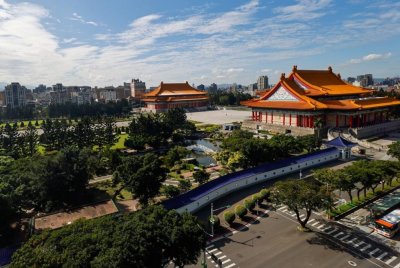
Dec. 27 (UPI) — A 6.6-magnitude earthquake was recorded off Taiwan’s northeastern coast on Saturday night, but no injuries or significant damage were reported.

The earthquake struck offshore at 11:05 p.m. local time and was located 20 miles east of Yilan County Hall.

The epicenter was 45 miles beneath the Earth’s surface, which largely protected Taiwan against harm and helped to prevent a tsunami warning.

The earthquake was felt in 17 of Taiwan’s 22 counties, which created a seismic intensity of 4 on the island’s 7-point scale.

Six of Taiwan High Speed Rail’s trains temporarily stopped upon detecting seismic alerts near Nangang and Yunlin.

Metro rail services in Taipei and Taichung reduced their respective speeds for a short time before resuming normal speeds late Saturday night.

More than 3,000 homes in Yilan lost power for a short period, but it was restored.

The U.S. Geological Survey recorded the earthquake as magnitude 6.6, but Taiwan’s Central Weather Administration reported it as magnitude 7.0.

Taiwan is located in an active seismic zone and on Wednesday recorded a 6.1-magnitude earthquake that impacted the coastal county of Taitung in the southeastern part of the island.

That earthquake also shook buildings in the capital city of Taipei.

Source link

Russia-Ukraine war: List of key events, day 1,403 | Russia-Ukraine war News

These are the key developments from day 1,403 of Russia’s war on Ukraine.

Here is where things stand on Sunday, December 28:

Fighting

  • At least two people were killed in Ukraine’s capital, Kyiv, and the surrounding region, after Russian forces launched a massive attack with hundreds of missiles and drones, ahead of Ukrainian President Volodymyr Zelenskyy’s meeting with United States President Donald Trump to work out a plan to end nearly four years of war.
  • The attack also wounded at least 46 people, including two children, according to Ukrainian officials.
  • Zelenskyy, who was on his way to meet Trump in Florida, said that Russia had launched nearly 500 drones and 40 missiles, targeting energy and civilian infrastructure.
  • Ukraine’s state grid operator, Ukrenergo, said that energy facilities across Ukraine were struck, and emergency power cuts had been implemented across the capital. DTEK, Ukraine’s largest private energy company, said the attack had left more than a million households in and around Kyiv without power.
  • Ukrainian Deputy Prime Minister Oleksii Kuleba said that more than 40 percent of residential buildings in Kyiv were left without heat, as temperatures hovered around 0 degrees Celsius (32 degrees Fahrenheit) following the attack.
  • Poland’s Air Navigation Services Agency said in a statement on X that the Rzeszow and Lublin airports in the country’s southeastern region were temporarily shut following Russia’s strikes on Ukraine. The Operational Command of the Polish Armed Forces said that Polish and allied jets were deployed during the attack, but no violations of Polish airspace were reported.
  • In Russia, air defence forces shot down 11 drones headed for the capital, Moscow, according to the city’s mayor, Sergei Sobyanin.
  • Russia’s aviation watchdog, Rosaviatsia, said that Moscow’s Vnukovo and Sheremetyevo airports imposed temporary restrictions on airspace due to security reasons.
  • Russia’s Ministry of Defence also said that its air defence systems had intercepted and destroyed more than 100 Ukrainian drones in three hours over six other Russian regions.
  • Russian commanders told President Vladimir Putin that Moscow’s forces had captured the Ukrainian towns of Myrnohrad, Rodynske and Artemivka in Ukraine’s Donetsk region, as well as Huliaipole and Stepnohirsk in the Zaporizhia region, the Kremlin and Russian news agencies said on Telegram.
  • But Ukraine’s military said in its daily battlefield update that its forces had beaten back Russian attempts to advance in the vicinity of Myrnohrad and Huliaipole.

Politics and diplomacy

  • Zelenskyy announced in a Telegram message that he would hold talks with European leaders after his meeting with Trump on Sunday, as Kyiv pushes for a stronger position in the ongoing ceasefire negotiations to prevent Russia from prolonging the war in Ukraine.
  • Zelenskyy said he wants to discuss with Trump territorial issues, the main stumbling block in talks to end the war, as a 20-point peace framework and a security guarantee deal near completion.
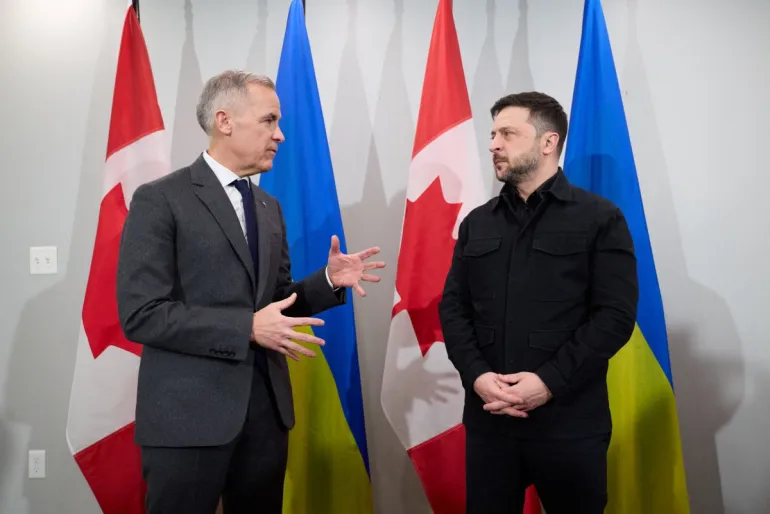
  • On the way to the meeting in Florida, Zelenskyy stopped in Canada’s Halifax to meet Mark Carney, the Canadian prime minister said in a statement after the meeting.
  • Carney denounced the latest Russian attack as “barbarism”, stressing that it is important for allies to “stand with Ukraine in this difficult time”. He also announced $1.83bn in additional economic aid to Ukraine.
  • Zelenskyy spoke to European leaders following the meeting with Carney. In a statement posted on X, European Commission President Ursula von der Leyen said: “We welcome all efforts leading to our shared objective – a just and lasting peace that preserves Ukraine’s sovereignty and territorial integrity. And that strengthens the country’s security and defence capabilities.”
  • Antonio Costa, the president of the European Council, which represents the bloc’s 27 member states, echoed von der Leyen’s promise to continue backing Ukraine, saying on X: “The EU’s support for Ukraine will not falter. In war, in peace, in reconstruction.”
  • German Chancellor Friedrich Merz said that Zelenskyy had “the full support” of European leaders ahead of his talks with Trump. The leaders of NATO and the European Union said they would work “in close coordination” with the US “for a just and lasting peace in Ukraine”, Merz added in a statement.
  • French President Emmanuel Macron said in a call with Zelenskyy that the latest Russian strikes on Kyiv showed that Moscow was not interested in ending the war, the AFP news agency reported, citing officials from Macron’s office. During the call, Macron highlighted what he called the “contrast” between “the willingness of Ukraine to build a lasting peace and Russia’s determination to prolong the war that it started”, the report said.
  • Russian President Vladimir Putin said that Russia could see Kyiv was in no hurry to end the war by peaceful means, according to the Interfax news agency. Putin said that if Ukraine did not want to resolve the conflict peacefully, then Russia would accomplish all goals of its “special military operation” by force, Russian state news agency TASS reported.
HANDOUT / UKRAINIAN PRESIDENTIAL OFFICE / AFPCopy Photo by HANDOUT / UKRAINIAN PRESIDENTIAL OFFICE / AFP This handout photograph taken on December 27, 2025 and released by the Ukrainian Presidential Office shows Ukraine's President Volodymyr Zelensky (R) and Canadian Prime Minister Mark Carney speaking to the press as they meet in Halifax, Nova Scotia, Canada. Establishing a lasting peace in Ukraine requires "a willing Russia," Carney said Saturday, denouncing the "barbarism" of Moscow's latest bombardment of Kyiv as he met with Zelensky.
Ukrainian President Volodymyr Zelenskyy (right) and Canadian Prime Minister Mark Carney (left) speak to the media as they meet in Halifax, Nova Scotia, Canada, ahead of the former’s meeting with US President Donald Trump on Sunday [Ukrainian Presidential Office/Handout Photo via AFP]

Source link

Nigeria reach AFCON knockouts despite late Tunisia scare | Africa Cup of Nations News

Victor Osimhen starred as Nigeria became the second qualifiers for the Africa Cup of Nations knockout stage after Egypt by surviving a late Tunisia onslaught to win 3-2 in Fes.

The Super Eagles were cruising to victory on Saturday, leading 3-0 through goals from Osimhen, captain Wilfred Ndidi and Ademola Lookman.

Recommended Stories

list of 4 itemsend of list

But Tunisia refused to surrender in the top-of-the-table Group C clash, and Montassar Talbi and Ali Abdi scored to set up a tense finish.

Tunisia had two chances to level during seven minutes of added time, but a header from captain Ferjani Sassi and a shot by substitute Ismael Gharbi were just off target.

Nigeria have six points, Tunisia three, and Tanzania and Uganda one each, with the final round of group matches set for Tuesday.

The showdown was the seventh time the Super Eagles and the Carthage Eagles had faced each other at an AFCON.

Nigeria won three times, and Tunisia once. Another two meetings went to penalty shootouts, with each nation winning one.

After performing well below par when edging Tanzania in the opening round, Nigeria were a transformed team against Tunisia, dominating the first 30 minutes in the northern city.

Osimhen was outstanding, particularly in aerial duels, while Tunisia were forced to constantly defend against the three-time champions.

The Galatasaray striker, wearing his trademark mask, headed just over after nine minutes, and came close again soon after as he rose to meet a corner kick.

Osimhen had the ball in the net after 17 minutes, but was rightly ruled offside. Big-screen replays showed the 2023 African player of the year timing his run too early.

Tunisia midfielder Hannibal Mejbri was lucky to escape a yellow card for dissent after reacting angrily when a Nigerian took a foul throw, flinging the ball into the ground.

Osimhen was wide with another headed goal attempt, then left the pitch temporarily so that the medical staff could apply a spray to his leg.

Tunisia finally broke out of a defensive shell on 32 minutes and forced a corner. The set-piece ended with the ball coming back to Abdi, whose shot flew well over.

Several Tunisian raids reaped no reward, and on 44 minutes, the goalless deadlock was broken, with Osimhen, predictably, the scorer.

The goal involved two former African players of the year, with 2024 winner Lookman crossing the ball and Osimhen rising between Abdi and Talbi to head powerfully into the net.

Just five minutes into the second half, Nigeria stretched their lead to two goals, as they once again exposed the aerial weaknesses of the Tunisian defence.

Atalanta striker Lookman was the architect again, floating a corner into the heart of the goalmouth, where Ndidi soared to beat goalkeeper Aymen Dahmen and score his first international goal.

After creating the first two goals, Lookman scored the third on 67 minutes, after being set up by Osimhen. He had time to control the ball in the box before slamming it into the net off the post.

Tunisia pulled one goal back with 16 minutes remaining. The North Africans finally got the better of an aerial duel, and Talbi nodded a Mejbri free-kick into the net.

The goal had a dramatic effect as Tunisia took control and scored again with three minutes left, when Abdi converted a penalty awarded after a VAR review showed Bright Samuel handled.

Uganda spurn penalty chance to beat Tanzania

Uganda’s Allan Okello missed a late penalty as his side had to settle for a 1-1 draw against East African neighbours Tanzania at the Africa Cup of Nations earlier on Saturday.

Okello’s failure to convert from the spot denied Uganda a precious victory in the Group C clash after Uche Ikpeazu had scored a late equaliser for the Cranes in front of 10,540 fans at Al Medina Stadium in Rabat.

Before that, it looked like Tanzania, winless in 10 previous matches across four AFCON tournaments, might finally break their duck when Simon Msuva put them in front from the penalty spot.

But Ikpeazu, who plays in the Scottish second tier for St Johnstone, headed in a cross by fellow substitute Denis Omedi to level the scores with 10 minutes remaining.

“I have a very bad feeling, because I think we didn’t deserve this draw. I think we had more opportunities,” said Uganda coach Paul Put.

Of the missed penalty, he said, “That is very, very painful, but that is also football.”

The deadlock between the regional rivals, who will co-host the 2027 Cup of Nations with Kenya, does little to help their chances of progressing to the last 16 from Group C.

Both have one point from two matches and trail Nigeria and Tunisia, with the two former champions facing off later on Saturday in Fes.

“It is not in our hands, but we have to believe,” said Put, whose team play Nigeria next.

Uganda, who have just one AFCON win of their own across three tournament appearances since losing the 1978 final, came closest to scoring in the first half.

An Aziz Kayondo cross from the left was met by the head of Rogers Mato, whose effort came back off the underside of the crossbar.

Tanzania were awarded a spot-kick just before the hour mark, when a shot by Alphonce Msanga struck the arm of Uganda’s Baba Alhassan.

The experienced Msuva, who plays club football in Iraq, made no mistake from the spot and has now scored goals at three different AFCON tournaments.

However, a dramatic finish to the game amid a torrential downpour saw Tanzania squander the lead and then breathe a big sigh of relief as Uganda missed the opportunity to claim victory.

Ikpeazu made it 1-1, and Uganda won a penalty when James Bogere went down as his shirt was pulled by Tanzania defender Haji Mnoga of Salford City.

With the game in the 90th minute, Okello stepped up and was perhaps put off by a huge clap of thunder just before he took his kick, which went over the bar.

“I am a little bit disappointed with the result, because we tried to win the game, but we also could have lost it in the last five minutes,” said Tanzania coach Miguel Angel Gamondi.

“We wanted our first win at the Africa Cup of Nations, and I am very sorry for all the Tanzanian people.”

Source link

Bessent, Trump urge ending the Senate filibuster; as 2026 budget looms

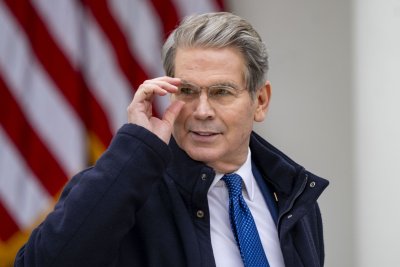
Dec. 27 (UPI) — President Donald Trump and Treasury Sec. Scott Bessent urged an end to the Senate filibuster rule ahead of an anticipated budget battle in January.

Bessent submitted an op-ed that The Washington Post published on Saturday and blames Senate Democrats and the filibuster for blocking passage of a resolution to keep the federal government open while negotiating the 2026 fiscal year budget and causing a record 43-day shutdown of the federal government.

“The American people are just now emerging from the longest and most devastating government shutdown in U.S. history,” Bessent said.

“While the blame lies squarely with Senate Democrats, we cannot ignore the weapon they used to hold the country hostage: the legislative filibuster,” Bessent wrote.

With the continuing resolution expiring on Jan. 30, Bessent said there is a strong likelihood that Senate Democrats again will use the filibuster to block passage of a budget and force the government to close again.

“Democrats inflicted tremendous harm on the nation, including $11 billion in permanent economic damage” as the federal government was “held for ransom by the left’s demands,” Bessent said.

He said the shutdown caused the nation to lose 1.5 percentage points in gross domestic product growth during the fourth quarter, triggered 9,500 canceled flights and caused 1.4 million federal workers to miss their paychecks.

He called the filibuster a “historical accident that has evolved into a standing veto for the [Senate] minority and a license for paralysis.”

The Constitution does not mention a filibuster, and its “framers envisioned debate, but they expect majority rule,” Bessent said.

He said the filibuster has its roots in an 1806 Senate rules decision that deleted a “previous question” motion, which unintentionally removed the Senate’s mechanism for ending debate with a majority vote.

Senators later realized they could “delay or block” legislative action with unending debate, and just the threat of a filibuster is enough to trigger the filibuster rule requiring a supermajority of 60 votes to end it, Bessent explained.

He said it is likely that Senate Democrats again will force the federal government to shut down at the end of January by blocking the 2026 fiscal year budget vote.

President Barack Obama called the filibuster a “‘Jim Crow relic,'” but Bessent said Senate Democrats always use it to their advantage whenever possible, and the president agrees.

“It’s time to end the filibuster,” Trump said while agreeing with Bessent in a social media post that includes Bessent’s op-ed.

He also told Politico that the GOP must end the filibuster when interviewed on Friday night.

Doing so will help his administration to undo damage that he said was caused by the Biden administration and led to very high inflation that he is trying to fix to make life more affordable in the United States, Trump said.

The president has urged Senate Republicans to end the filibuster as soon as possible and said Senate Democrats will do it the first chance that they get when they eventually win a majority in the Senate.

Senate Democrats in September and afterward overwhelmingly opposed a clean continuing resolution to keep the federal government open and instead submitted a resolution that would add $1.5 trillion in spending over the next 10 years to extend Affordable Care Act subsidies that expire at the end of December.

Senate Democrats control 47 seats, including two occupied by independents who caucus with Senate Democrats, while the GOP controls 53 seats, so neither party can overcome the filibuster rule without help from the other.

The Senate GOP could not muster the 60 votes needed to overcome the filibuster rule until eight Senate Democrats joined with most Senate Republicans to support the continuing resolution to end the 43-day government shutdown that began when the 2026 fiscal year started on Oct. 1.

Senate Democrats in 2022 tried to end the filibuster rule but could not obtain a simple majority due to opposition from Sens. Kyrsten Sinema of Arizona and Joe Manchin of West Virginia, both of whom were Democrats but have retired from politics.

Source link

Italian authorities arrest 9 alleged Hamas fundraisers

Italian officials on Saturday announced the arrests of nine people who are accused of using charities to raise $8.2 million, most of which funded Hamas. File Photo by Mohammed Saber/EPA

Dec. 27 (UPI) — Nine people who are accused of raising more than $8 million in Italy to help fund Hamas have been arrested by Italian authorities.

The nine are accused of raising $8.2 million over the past two years to help fund Hamas after it carried out the Oct. 7, 2023, attack on Israeli civilians and started the war in Gaza.

“The operation completed this morning by the State Police and the Guardia di Finanza (Financial Police) is a very important and significant one, with the arrest of nine people, including the most well-known Mohammad Hannoun,” Italian Interior Minister Matteo Piantedosi said in a post on X on Saturday.

“Despite the necessary presumption of innocence that must always be recognized at this stage, the veil has been torn away on behaviors and activities that, behind the facade of initiatives to benefit the Palestinian population, concealed support for and participation in organizations with actual terrorist aims of an Islamist nature,” Piantedosi said.

“This is a danger to which our government is paying the utmost attention,” he added.

A joint investigation by Italy’s counter-terrorism and financial police forces started after the 2023 attack on Israel by Hamas and Islamic Jihad.

Investigators uncovered a fundraising system with headquarters in Genoa and associates in Milan that raised the funds under the pretext of supporting Gazans.

“The suspects collected donations intended for the civilian population of Gaza,” a police statement said.

“However, it emerged that 71% of these funds were diverted to Hamas’ coffers to finance its military wing and support the families of suicide bombers or those detained for terrorism,” the police officials said.

Central to the investigation is Hannoun, who is the president of the Palestinian Association that is based in Italy and has denied being a financier for Hamas.

The funds allegedly were raised by Hannoun and eight other defendants through three charities and laundered to hide their true destination.

Hamas is a designated foreign terrorist organization by the United States and many other nations.

President Donald Trump holds a signed executive order reclassifying marijuana from a schedule I to a schedule III controlled substance in the Oval Office of the White House on Thursday. Photo by Aaron Schwartz/UPI | License Photo

Source link

Mane rescues Senegal in draw with DR Congo, as Benin find first AFCON win | Africa Cup of Nations News

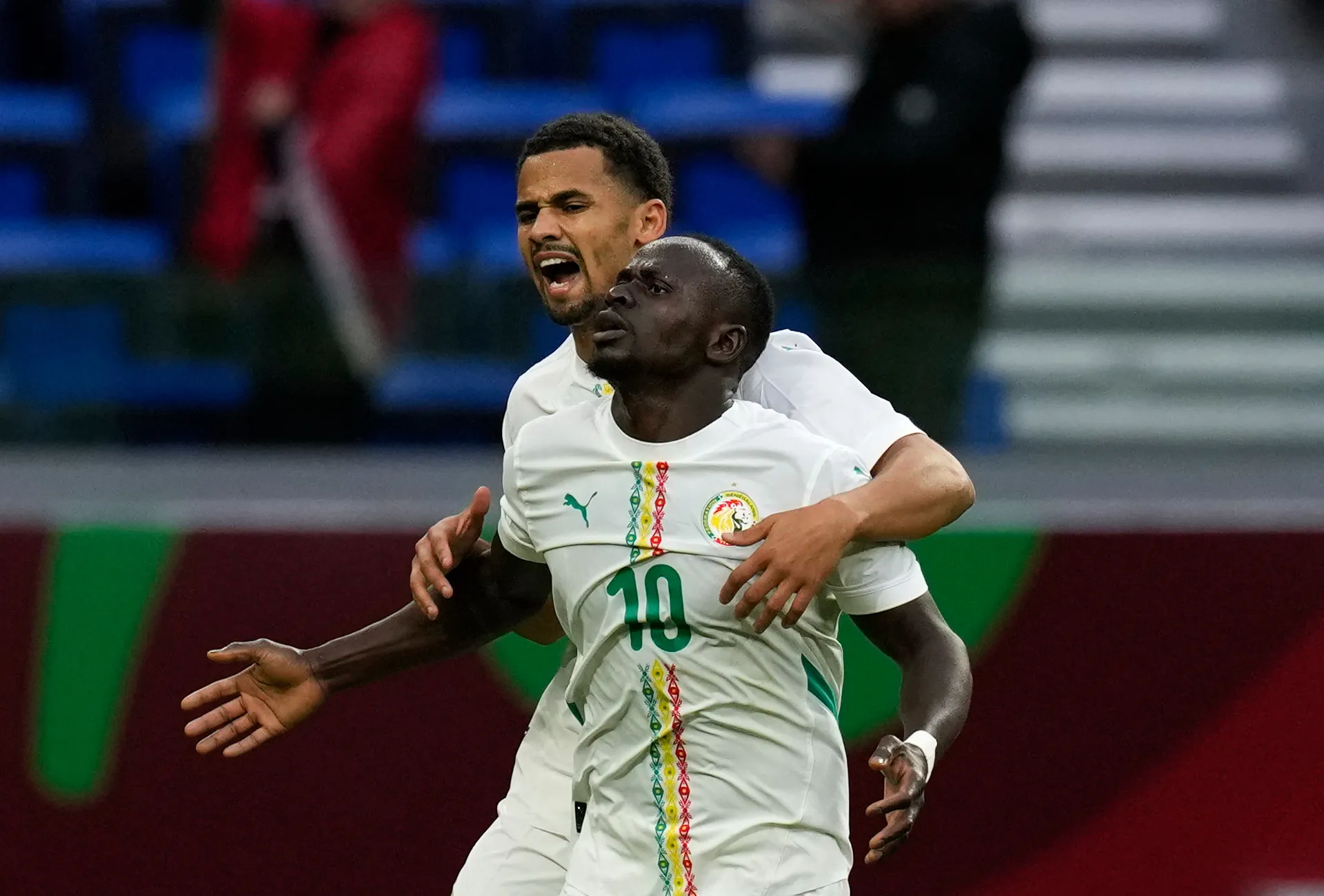
Sadio Mane’s equaliser earned 2022 champions Senegal a 1-1 draw with the Democratic Republic of the Congo (DRC) in their heavyweight Africa Cup of Nations clash on Saturday.

Cedric Bakambu had given the Leopards the lead just after the hour mark in Tangier, but Al-Nassr forward Mane replied soon after, and the result ensures Senegal stay on top of Group D with one round of matches still to play.

Recommended Stories

list of 4 itemsend of list

Both teams have four points, but Senegal have a superior goal difference before their final group match against Benin on Tuesday.

Benin have three points after a 1-0 victory earlier Saturday in Rabat against Botswana, who are bottom without a point or goal scored.

Sebastien Desabre’s Congolese side were seeking revenge after a dramatic defeat in the last meeting of the nations, in World Cup qualifying in September.

Senegal came from 2-0 down to win that encounter 3-2 in Kinshasa, a result which allowed them to go on and top their group to secure a place at next year’s finals in North America.

DRC were therefore forced to settle for second place, but can still make the World Cup if they win a one-off playoff against either New Caledonia or Jamaica in Mexico in March.

Senegal, fresh from beating Botswana 3-0 and seen as perhaps the biggest threat to Morocco’s chances of winning the title on home soil, had more of the possession and more chances on the day.

However, the Leopards took the lead in the 61st minute when Theo Bongonda – scorer of the only goal in their opening win against Benin – had a shot at the end of a fine move parried by goalkeeper Edouard Mendy, and Real Betis striker Bakambu pounced to convert the loose ball.

But Senegal were only behind for eight minutes, their equaliser coming after a superb run by teenage substitute Ibrahim Mbaye.

The 17-year-old Paris Saint-Germain winger Mbaye, who was born in France and represented them up to Under-20 level, recently committed his international future to Senegal, for whom he qualifies through one of his parents.

He replaced Ismaila Sarr just after Bakambu’s opener, and made the leveller from a penetrating run down the right.

Mbaye burst away from Arthur Masuaku, who appeared to injure himself going to tackle, and then saw his shot blocked by Lionel Mpasi, but Mane was on hand to score.

It was a 10th AFCON goal for former Liverpool superstar Mane, who is appearing at his sixth tournament.

Benin record first AFCON win in their history

Yohan Roche ‌scored a deflected winner as Benin claimed a first-ever victory ‍at the Africa ‍Cup of Nations finals, with a 1-0 Group D success against Botswana in Rabat on Saturday.

Benin move to three points from their opening two games, level with Senegal and the DRC in the table, who meet in their second pool fixture ​in Tangier later on Saturday.

Benin took the lead in ‍the 28th minute when Roche played a one-two in the box with captain Steve Mounie, and his shot from 9 metres (10 yards) took a wicked deflection off a defender ‍and into ⁠the net.

Benin finally celebrated a victory at the continental finals on the 16th attempt, following their debut in 2004, and despite the fact that they were quarterfinalists in 2019. They also have five draws to go with 10 defeats.

Botswana offered little going forward, though Mothusi Johnson struck the crossbar with a curling free-kick that ​beat the goalkeeper but not the frame of the ‌goal.

Benin had several chances to add to their score, though Botswana goalkeeper Goitseone Phoko made an excellent low stop to deny Tamimou Ouorou.

Dodo Dokou then worked an excellent shooting ‌chance 11 metres (12 yards) from goal in added time at the end of the game, but fired over ‌the bar with the goal gaping.

Botswana become ⁠the second team, after Benin, to lose their first five Cup of Nations matches after three defeats on debut in 2012 and an opening 3-0 loss to Senegal this year.

They ‌meet DRC in their final pool game on Tuesday, while Benin face Senegal at the same time.

The top two teams in each pool, ‍as well as the four best third-placed sides across the six groups, qualify for the Round of 16.

Source link