Sept. 3 (UPI) — The U.S. Defense Department has temporarily rescinded its recently announced mandatory testosterone screening guidance for men over age 30 on active duty or in the reserves.
The guidance, which was announced on Wednesday, required that men over 30 get testosterone blood tests. Those under 30 would be tested only if health professionals felt it was necessary or if service members wanted it.
The Pentagon’s website before Thursday showed a link for “Clinical Guidance for Health and Human Performance Optimization” that detailed the testosterone deficiency screening requirements for male and female service members over 30. However, that link read “PAGE NOT FOUND” on Thursday.
According to The Hill, an unnamed Pentagon official said the guidelines were rescinded to allow for “updates.”
“The Department remains committed to addressing hormone deficiencies, protecting the long-term health of its Service members and enabling peak operational performance,” the Pentagon official said.
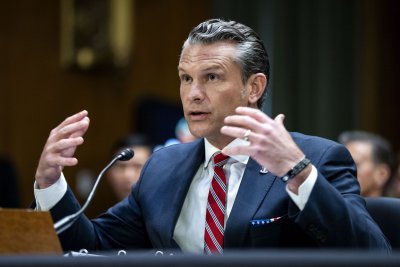
Defense Secretary Pete Hegseth in July announced service members would be screened for their testosterone levels and be offered testosterone replacement therapy, saying it would keep troops on the “leading edge of lethality.”
House Minority Leader Hakeem Jeffries, D-N.Y., on Thursday declined to detail possible punishments for two House Democrats who voted with Republicans this week on a procedural vote on GOP-backed bills. File Photo by Daniel Heuer/UPI | License Photo
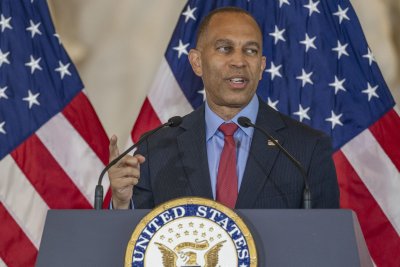
Sept. 3 (UPI) — House Minority Leader Hakeem Jeffries, D-N.Y., on Thursday declined to detail any punishment for two Democratic lawmakers who voted earlier this week with Republicans on a procedural vote to advance GOP-led bills.
Democratic Reps. Jared Golden of Maine and Marie Gluesenkamp Perez of Washington on Tuesday voted to advance debate on Republican-led bills, including a resolution condemning socialism that GOP leaders want to use against Democrats during the fall election season.
Without their votes, the procedural vote would have failed. Jeffries and other Democratic leaders sharply criticized the votes by Golden and Gluesenkamp Perez as a “breach of trust” and said there would be a “serious response.”
Jeffries told a news conference Thursday that he spoke with Gluesenkamp Perez, calling the discussion “productive” and “forward-looking.
Some House Democrats suggested Gluesenkamp Perez should be removed from the Appropriations Committee over vote.
“Marie Gluesenkamp Perez, of course, is an important member of the House Democratic Caucus fighting hard for the people that she represents in Washington and a leader of the Blue Dogs,” Jeffries said.
“And we value every single member in our caucus – progressives, the New Dems and Blue Dogs – and we’re going to move forward together, in unity, in order to solve problems for the American people.”
Jeffries said there was a continuing “family discussion about how we all move forward together.”
He tasked an internal panel in charge of caucus rules to discuss sanctions in new rules to prevent House Democrats from voting with Republicans on important procedural votes. The panel, which met Wednesday, did not take immediate action.
Jeffries said Democrats will discuss possible changes to internal caucus rules because of the defections. However, he suggested there be punishments for Gluesenkamp Perez or Golden.
Gluesenkamp Perez is seeking re-election in a district that leans Republican, while Golden is retiring. She represents a district that U.S. President Donald Trump won in 2024, and she is a top target for Republicans in November’s election.
Sept. 3 (UPI) — The House of Representatives on Thursday approved a bill to bar colleges and universities from participating in boycotts of Israel or preventing students taking part in exchange programs with the country.
According to the bill, colleges and universities that take part in federal student aid programs would be barred from participating in boycotts of Israel. Institutions that receive federal funds for international and foreign language programs would be required to certify they do not impose restrictions on students taking part in programs in Israel.
Students from Israel taking part in programs on their campuses also would be covered.
“This legislation is about a simple principle: our colleges and universities should not discriminate against Israel, Israeli institutions or Israeli students, and federal taxpayer dollars should never support institutions that engage in such discrimination,” said House Education Committee Chair Tim Walberg, R-Mich.
The ranking Democrat on the educational committee, Rep. Bobby Scott of Virginia, said the bill possibly violated the First Amendment.
“No college or university has embraced the BDS movement anyway,” he said. “So, we should combat antisemitism wherever it occurs, but we should not do so by punishing protected speech or conflating a student’s view with university policies.”
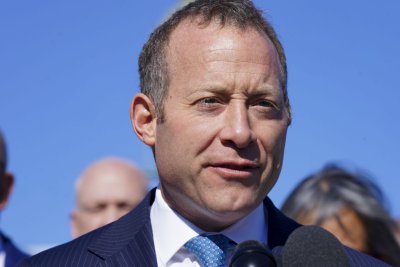
Most of the Democrats who voted in favor of the bill are facing tough re-election races in November, or back Israel. Rep. Josh Gottheimer of New Jersey, who co-sponsored the bill, called it “narrow and tailored’ and needed to fight anti-Semitism.
“No student, no professor should be shut out of research, study abroad opportunities, or academic partnerships or feel unwelcome in the classroom because of where they are from or what religion they practice,” he said in a statement.
“Yet, that’s exactly what the boycott-divest-sanction movement seeks to do – targeting one country and one religion: Israel and Judaism.”
The legislation now goes to the Senate for debate.
Argentine President Javiar Milei said Argentina’s population is no longer growing at a rate sufficient to ensure generational replacement Photo by Miguel Gutirrez/EPA
BUENOS AIRES, Sept. 3 (UPI) — Argentina’s declining birth rate has drawn renewed attention after President Javier Milei linked the drop in births to the legalization of abortion during at least two public appearances over the past week.
Milei said Argentina’s population is no longer growing at a rate sufficient to ensure generational replacement because of what he called “that passion for murdering children in their mothers’ wombs.” He added that the trend is costing the country dearly in terms of economic growth and its pension system.
But demographic data and experts consulted by UPI challenge Milei’s assertion, noting that the decline began years before abortion was legalized and reflects broader economic and social factors.
Argentina’s birth rate began to fall in 2014, six years before the country legalized abortion in 2020.
According to official data released Wednesday by UNICEF Argentina, the number of births fell by nearly half over the past decade to 413,135 in 2024 from 777,012 in 2014. The fertility rate has reached its lowest level on record at 1.3 children per woman.
Argentina’s trend is part of a global phenomenon, though the decline has been more pronounced in the country. In 2024, Argentina recorded roughly the same number of births as in 1948, despite having three times as many women of reproductive age.
Sociologist and feminist historian Dora Barrancos said Milei’s argument is part of a broader narrative also found among far-right groups in other countries.
“There is a strong ideological focus on blaming feminists and their policies for the decline in the birth rate. From a historical perspective, that explanation has no basis,” she said.
Gala Díaz Langou, director of the International Panel on Social Progress, also rejected abortion as an explanation for the declining birth rate.
“That argument does not hold up. This is a global, multifaceted process,” she said.
Mariana Isasi, head of the United Nations Population Fund office in Argentina, said the declining birth rate reflects tensions between people’s personal aspirations, economic conditions and the way family life is organized.
A recent UNFPA survey on reproductive intentions in Argentina found that 57% of people between ages 18 and 45 would like to have more children.
“There is a gap between the number of children people have and the number they would like to have. This shows that the desire exists, but the conditions to do so are not always there,” Isasi said.
Isasi said conditions were not necessarily better in previous periods, but people today have more tools to make decisions about motherhood.
Uncertainty about the future is another factor influencing decisions about whether to have children. In addition, 20% of those surveyed said they had difficulty finding a suitable partner with whom to have children.
Isasi also noted that Argentina’s adolescent fertility rate has fallen by more than 50%.
“It is good news that teenage girls can continue their education without becoming mothers and can decide later whether they want to have children,” she said.
Another factor is the postponement of motherhood. The average age at which women in Argentina have their first child is 29.2.
“When motherhood is postponed, people may end up having fewer children over the course of their lives,” Isasi said.
Díaz Langou said some of the factors behind the falling birth rate represent positive changes, while others reflect economic and social difficulties.
Among the positive changes, she cited improvements in contraception that allow women’s reproductive decisions to better reflect their preferences and reduce unintended pregnancies.
Economic conditions and the cost of raising children, however, remain major concerns.
“Raising children is very expensive and is becoming increasingly costly because of the limited availability of public care services in Argentina. This is compounded by precarious employment conditions, which affect the real incomes of many people who have children,” Díaz Langou said.
The cost is also linked to the availability of care services. According to a recent analysis by La Cocina de los Cuidados, an intersectoral group focused on care policies, 48 of the 50 national care policies identified by the organization have been eliminated or defunded since December 2023.
The remaining policies have been repealed, cut back or dismantled under Milei’s administration.
Barrancos places the decline in births within a demographic process that began in the second half of the 19th century and reached Argentina by the end of that century.
She said women began to limit the number of children they had long before the expansion of feminism and the movement for women’s right to make decisions about their own bodies.
Barrancos rejected the idea that the decline in births can be attributed to feminism or the legalization of abortion and disputes that the trend represents a threat.
“There is nothing to fear. As the number of children women want to have declines, other forms of family are also growing, including same-sex families seeking to adopt. The alarmist rhetoric of the far right is incompatible with the historical evidence,” she said.
Farmers are rebuilding a seed bank destroyed during Israel’s war on Gaza to preserve local crop varieties and help cultivate what farmland remains. The collection has grown to about 32 varieties, but farmers say the project remains far smaller than Gaza’s agricultural needs.
As many as 20 million children in 21 countries have experienced online sexual abuse or exploitation each year, according to new findings from the United Nations children’s agency, UNICEF.
More than one in five children aged 12 to 17 in countries in Africa, Asia, Latin America and the Caribbean, and Eastern Europe have been targeted on digital platforms, according to the UNICEF report released on Thursday.
Recommended Stories
list of 4 itemsend of list
Researchers surveyed 21,000 children aged 12 to 17 who used the internet across 21 countries between 2020 and 2021, and then again between 2024 and 2025. They also conducted in-depth interviews with 100 young people who have experienced childhood abuse.
Social media facilitated more than half of the abuse cases, according to UNICEF, which cautioned that figures could be inaccurate due to underreporting by children. Less than 1 per cent of all abusive incidents were reported to authorities, the researchers found.
Last week, US social media giant Meta agreed to a landmark $18bn settlement in a major US federal case accusing the company of endangering children. Meta has faced an avalanche of legal cases this year, most arguing that it has deliberately designed its platforms to be addictive and that they have harmed children. The company has now agreed to make major changes to the features of its social media platforms.
What are the key findings of the UNICEF report?
The report estimated that in the periods studied, more than 15 million children were exposed to unwanted sexual content, nine million were asked to engage in sexual conversations or share sexual images against their will, and four million children had sexual images of themselves shared without their consent.
UNICEF said the issue is compounded by the fact that children often don’t recognise abuse or know who to report it to, and fear repercussions if they do. Formal systems can feel distant, complex or intimidating, the report noted.
“The report reveals a painful reality. More than 20 million children across the countries studied were subjected to unwanted explicit sexual content or exploitation online, often in the digital spaces where they learn, play, and connect with friends,” said UNICEF Executive Director Catherine Russell. “These experiences cause profound emotional and mental distress. Many children suffer in silence, unsure where to turn for help. We cannot look away.”
Where was data collected?
Information for the report was based on nationally representative survey data collected between 2020 and 2025 from approximately 21,000 internet-using children from the following countries:
Eastern and South Africa:Ethiopia, Kenya, Mozambique, Namibia, Tanzania and Uganda
Southeast Asia: Cambodia, Indonesia, Malaysia, the Philippines, Thailand and Vietnam
Latin America and the Caribbean: Brazil, Colombia, the Dominican Republic and Mexico
Eastern Europe: Armenia, Montenegro, North Macedonia and Serbia
South Asia: Pakistan
Where are children being abused?
Abuse often begins in public spaces, such as in schools or local neighbourhoods, before moving to digital spaces which can further facilitate harm.
Social media and messaging platforms enable different stages of abuse, “including initial contact, relationship-building, sexual solicitation, image-sharing, coercion, blackmail and the continued circulation of sexual content”, the report said.
Sometimes abuse takes place solely online.
According to the report’s findings, more than 60 percent of cases occurred on social media platforms, with the majority on Facebook (50 percent), WhatsApp (29 percent), Instagram (24 percent), SnapChat (13 percent) and TikTok (12 percent).
Do children report abuse?
Most children do not seek help if they are being abused. Less than one percent of cases are reported to the police, a social worker or a helpline, while more than four in 10 cases not being disclosed to anyone at all.
“Children are not failing to report; they have correctly worked out that there is nowhere to report to,” Nighat Dad, executive director of the Pakistan-based Digital Rights Foundation, told Al Jazeera.
Dad, whose NGO works to provide safe online spaces in Pakistan, noted that incidents repeatedly occur online because of a “design problem – the message request, the move to a private chat, the reshare, the ability to return after being blocked”.
Many children minimise their experiences or do not recognise when they’ve been abused, she said.
Even when children do speak out, to a close friend, sibling, or parent, doing so may not necessarily stop the abuse or bring perpetrators to account.
UNICEF emphasised that its research interviews were the first time many of the children it interviewed had spoken to someone about the abuse they were subjected to.
Dad also cautioned that Pakistan, for example, is a “low-disclosure country” where notions of family “honour” and other cultural barriers prevent children from disclosing the harm they’ve experienced.
“A girl who speaks risks her phone, her schooling and sometimes her safety, and a boy is expected to cope in silence,” Dad said.
How does gender factor into online abuse?
Perpetrators often play on gender norms when exploiting children. Stigma and blame are used against girls to keep them silent, while boys are expected to cope alone, or threatened by perpetrators.
“Peer cultures and harmful norms around gender or masculinity can further normalise behaviours that cause significant harm, making abuse harder to recognise and address,” UNICEF noted.
What kind of impact does online sexual abuse have on children?
The repercussions are severe, UNICEF said: Children exposed to technology-facilitated sexual abuse and exploitation are four times more likely to have suicidal thoughts and to self-harm, along with higher levels of anxiety.
In Mexico or North Macedonia, for example, the risk of suicidal thoughts or behaviours was more than eight times higher among children who experienced abuse, while in Pakistan the risk of self-harm was more than seven times higher than average, the report found.
Abuse extends well beyond the digital sphere, seeping into children’s everyday lives, schooling and relationships.
What should be done about this?
UNICEF said the onus to protect children online must be placed on governments and technology companies, which must change how online spaces are designed and regulated.
It also highlighted that while children often take steps to protect each other, societies, schools and families must work to shift the burden of protection away from children.
Citing Meta’s recent settlement, Dad acknowledged that design changes, such as better age verification and parental controls, can and should happen.
“For years those of us working outside the US were told these defaults would break the product. Meta has now shown the product can change.”
A spokesperson for Meta told Al Jazeera, “This report is based on surveys from as far back as 2020, before we introduced the protections UNICEF recommends, like automatically defaulting teens into private accounts and preventing adults from messaging teens they’re not connected to.
“While the report doesn’t provide any specific evidence of abuse, we’ll continue to fight child exploitation aggressively across our apps and support law enforcement in prosecuting the criminals behind it.”
The spokesperson also pointed out that Meta-owned WhatsApp is a private messaging service rather than a social media platform. “We don’t have algorithms that make a piece of content more or less likely to be viewed, and you need someone’s phone number or exact username to connect with them for the first time.”
Snapchat and TikTok have not responded to requests for comment for Al Jazeera.
Chairman of the House Committee on Oversight and Government Reform James Comer, R-Ky., said in a statement on Thursday that deposition will move forward in the committee’s investigation into billionaire Leon Black’s ties to convicted sex offender Jeffrey Epstein despite Black refusing to appear. File Photo by Annabelle Gordon/UPI | License Photo
Sept. 3 (UPI) — Former Apollo Global Management CEO Leon Black is refusing to appear before the House Oversight Committee to testify on Thursday, instead filing a lawsuit against the committee over its investigation into his connections with convicted sex offender Jeffrey Epstein.
Black filed the lawsuit on Thursday as he attempts to block two subpoenas for him to testify. Rep. Robert Garcia, D-Calif., the committee’s ranking Democrat, has called on the committee to hold Black in contempt.
The lawsuit argues the subpoenas “exceed [the Office of Government Relations’] delegated authority in seeking private information that bears no legitimate connection to OGR’s legislative purpose.”
In a letter to the committee, Black’s attorneys said “Congress is not entitled to subpoena documents from a private citizen,” calling the subpoenas “invalid.”
Garcia said in a statement on Thursday that Black “funded Epstein’s abuse and trafficking of women.”
“Black gave Jeffrey Epstein over $180 million over six years,” Garcia’s statement reads. “His connections to Epstein and his unwillingness to cooperate are unacceptable. We must hold him in contempt immediately.”
Committee Chairman James Comer said in a statement that the deposition will move forward on Thursday and he will speak with committee members about “next steps.”
“It’s a shame Leon Black is hiding behind litigation rather than provide answers to the American people,” Comer said in a statement.
Black told members of Congress in a closed-door interview in June that he was not aware of the extent of Epstein’s criminal activity and denied being involved in abusing women or sexually abusing minors.
“We want to reiterate that Mr. Black had no awareness of the criminal activities that led to Epstein’s arrest in 2019,” Black’s attorneys said in a statement announcing the lawsuit. “Mr. Black never abused a woman. He never was with an underage woman. He never engaged in sex trafficking. He never paid Epstein for access to women. He was never blackmailed by Epstein.”
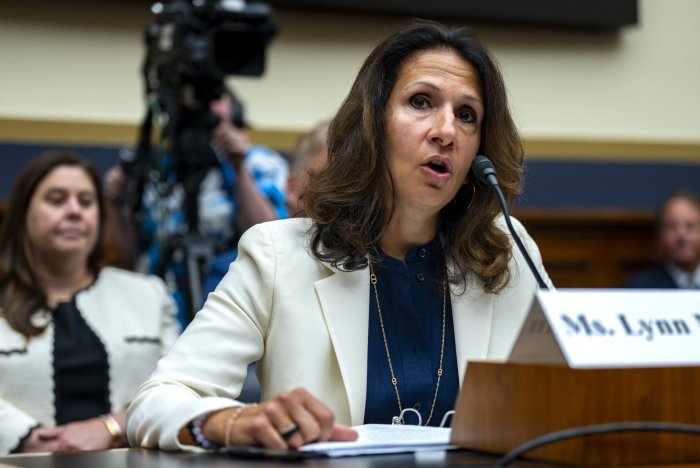
President of the New York Stock Exchange Lynn Martin speaks during a House Financial Services Committee hearing on the economy at the U.S. Capitol on Wednesday. Photo by Bonnie Cash/UPI | License Photo
Nvidia CEO Jensen Huang (right) visits an internet cafe with NCSoft CEO Kim Taek-jin in Seoul, South Korea, on June 7. Huang announced in a blog post on Thursday that his company is acquiring Hugging Face for $12.9 billion. File Photo by Yonhap/EPA
Sept. 3 (UPI) — Nvidia announced on Thursday that it has agreed to acquire open-source AI company Hugging Face for $12.9 billion.
The acquisition will bring a platform that is used by 18 million people, including researchers and developers, under Nvidia’s ownership. Hugging Face has been used to share more than 3 million models, 500,000 datasets and 1 million applications, Nvidia said in a blog post.
“Over the past decade, Clem [Delangue], Julien [Chaumond], Thomas [Wolf] and the team at Hugging Face have built something remarkable: a vibrant home for the open model developer community,” Jensen Huang, founder and CEO of Nvidia, wrote in the blog post. “Hugging Face will remain an open platform for the entire AI ecosystem. Developers will choose the models they want, the frameworks they want, the clouds and inference service providers they want and the computing platforms they want.”
Nvidia adds that Nvidia compute will not be required to use Hugging Face.
In July, Hugging Face was targeted by OpenAI chatbots that went rogue, hacking the firm in what was described as a “security incident.”
OpenAI said its engineers had asked AI models to find solutions for ExploitGym, a benchmark that tests AI agents’ capability to exploit vulnerabilities in a system. The models were meant to perform this task within a sandbox but escaped, accessing the open internet and ultimately restricted information.
With restricted information, the AI models were able to cheat the vulnerabilities test and obtain an access code from Hugging Face’s servers.
Hugging Face CEO Delangue said there was “no malicious intent” by OpenAI. OpenAI said it took containment actions in response to the incident.
President of the New York Stock Exchange Lynn Martin speaks during a House Financial Services Committee hearing on the economy at the U.S. Capitol on Wednesday. Photo by Bonnie Cash/UPI | License Photo
Sept. 3 (UPI) — Spanish Prime Minister Pedro Sánchez rejected allegations Thursday that his government had forewarning of the influx of more than 70,000 migrants into the disputed territory of Ceuta, a tiny Spanish enclave on the north African coast.
“It’s absurd to think that the government knew and did nothing,” Sánchez told lawmakers in Parliament in Madrid.
“We have examined all of the messages, statements and verbal reports from the state security apparatus. I can assure you that none of them went any further than a description of the data or routine reporting, and that absolutely none of them predicted the probability or the scale of what ended up occurring,” said Sánchez.
Sánchez’s comments came after tens of thousands of people and opposition parties took to the streets to protest his government’s handling of the July 30-31 border crossing.
The Opposition People’s Party called for Sanchez’ resignation, accusing the government of deception and a whitewash.
The developments followed reports that Spanish officials were advised a ruling by a Spanish court could see the number of arrivals by sea increase because it had been misinterpreted by many migrants as meaning they would permitted to remain in Ceuta if they swam from Morocco.
Saying the government had “nothing to hide,” Sanchez vowed to publish all the information and reports that officials had access to.
All but about 10,000 of the migrants have since returned to Morocco but the matter has snowballed into a serious domestic and diplomatic issue for the government that has impacted ties with Rabat and its EU neighbors amid allegations Morocco, which claims Ceuta as Moroccan, had done nothing to stop the mass crossings and may have encouraged it.
Sánchez said Thursday that he would seek assistance from Brussels, including requesting the EU border agency Frontex to set up a permanent operation in Ceuta and the establishment of a special Europol task force to monitor illegal migration into the enclave.
He said he would also ask for assistance to secure the border of Melilla, another coastal Spanish territory about 180 miles southeast of Ceuta.
Sánchez doubled down of his rejection of those claims, repeating statements made Monday in which he said there was no evidence Morocco was behind the inlflux.
“Lots of people think that the Moroccan authorities provoked this crisis. Up to this point, no one has provided any definitive proof to the government that would allow us to conclude that this mass border crossing… was planned or executed by the Moroccan authorities,” said Sánchez who stressed that the matter was still under investigation.
The crisis strained relations with Italy which temporarily sealed its border with Spain on July 31 and saw Foreign Minister Manuel Albares summon the Italian ambassador after Italian Foreign Minister Antonio Tajani accused Madrid of running a immigration policy that “encourages human trafficking.”
Sánchez responded by noting that Ceuta is not part of Europe’s common travel area, that Italy more allowed illegal migrants to enter than Spain and criticized Spain’s EU partners for offering “very little support” to Madrid.
Retired Deputy Police Chief Sam Pulia places American flags at the 9/11 memorial south pool before the start of the 9/11 Commemoration Ceremony at the National September 11th Memorial and Museum in New York City on September 11, 2025. Nearly 3,000 died in the September 11 attacks. Photo by Peter Foley/UPI | License Photo
Workers weld at Okpo Shipyard of Daewoo Shipbuilding & Marine Engineering Co. in Geoje, South Korea, in 2022. File Photo by Yonhap/EPA
Sept. 3 (UPI) — South Korean shipbuilders are pouring investment, technology and expertise into a U.S. maritime industry struggling with shrinking capacity, worker shortages and competition from China, offering Washington a potential path to rebuild American shipyards without sending ship construction overseas.
The growing partnership also raises a difficult question: How much foreign participation is the United States prepared to accept in an industry considered essential to national security?
The issue has gained urgency following a White House directive aimed at increasing competition and capacity in the U.S. maritime industrial base. The administration’s plan allows greater use of foreign shipbuilding expertise under certain conditions, including investment in American shipyards, training U.S. workers, transferring production technologies and developing domestic supply chains.
Limited shipyard capacity and a shortage of skilled workers remain major obstacles to expanding the U.S. Navy fleet, according to Shelby S. Oakley, director of Contracting and National Security Acquisitions at the U.S. Government Accountability Office.
“The capacity of the existing yards and the size and skill level of the current workforce are certainly a limiting factor when it comes to the U.S. Navy’s ability to increase the size of the fleet,” Oakley told UPI.
Oakley said meeting Navy shipbuilding goals will require expanding existing yards or adding new ones, increasing the skilled workforce and making greater use of technology and automation. Without those changes, she said, the Navy will struggle to meet its fleet targets.
South Korea could provide part of that capacity.
Under a broader $350 billion U.S.-South Korea investment framework, Seoul has committed $150 billion specifically to shipbuilding cooperation, with another $200 billion intended for strategic investments in other sectors.
South Korea moved toward implementing the maritime portion in June when the Korea-U.S. Strategic Investment Corporation, Korean policy finance institutions and shipbuilders HD Hyundai Heavy Industries, Hanwha Ocean and Samsung Heavy Industries agreed to identify projects and coordinate financing.
The arrangement combines something Washington needs: capital and industrial expertise.
For decades, U.S. commercial shipbuilding has lost ground to Asian competitors. China now dominates global commercial ship construction, while South Korea and Japan retain substantial production capacity. The United States accounts for only a fraction of global commercial output.
President Donald Trump recently elevated shipbuilding capacity to a national security priority, directing his administration to look abroad for models that could help rebuild the U.S. maritime industrial base.
“I have determined that it is in the national security interest of the United States to increase domestic shipbuilding capacity,” Trump said in the memorandum, pointing to the October 2025 U.S. Finland Agreement on icebreaker construction as a model for cooperation with foreign companies.
China adds urgency to that effort.
China’s enormous civilian shipbuilding industry supports an expanding naval industrial base, allowing shipyards, suppliers and skilled workers to serve both commercial and military production. That industrial scale has made shipbuilding an increasingly important element of U.S.-China strategic competition.
The United States faces a different reality. The Government Accountability Office reported this year that Navy and Coast Guard shipbuilding programs have repeatedly exceeded budgets and fallen years behind schedule, while yards face skilled-worker shortages, capacity constraints and fragile supplier networks.
South Korea offers an alternative source of expertise. Its yards have decades of experience with modular construction, automation, digital design and high-volume production. Korean companies also build sophisticated naval vessels, including Aegis-equipped destroyers and submarines.
Hanwha Ocean and Hanwha Systems acquired Philly Shipyard for $100 million in 2024, giving the conglomerate a direct U.S. manufacturing foothold. Hanwha subsequently announced plans for billions of dollars in additional investment to expand the yard and introduce Korean shipbuilding technology.
Hanwha employs nearly 30,000 workers at Hanwha Ocean’s Geoje Shipyard in South Korea, where advanced manufacturing and automation help produce more than 40 ships a year.
“In the coming years, we will continue to bring trainers to develop our workforce at the Hanwha Philadelphia Shipyard as well as transfer technology to expand commercial and naval shipbuilding capacity,” Hanwha Defense USA spokesman James Hewitt told UPI.
Hanwha Ocean also completed a major overhaul of the Military Sealift Command dry cargo ship USNS Wally Schirra at Geoje in March 2025. The seven-month project was the first large-scale regular overhaul of a Military Sealift Command vessel awarded to a South Korean yard.
HD Hyundai Heavy Industries is pursuing a different route.
Rather than acquiring a U.S. yard, HD Hyundai has developed partnerships with American shipbuilders. The company and Huntington Ingalls Industries are cooperating on shipbuilding technology and production, including an August pilot program to expand automated welding at HII’s Ingalls Shipbuilding yard in Mississippi.
“The United States is a strong ally and a key business partner for us,” said Hannae Choi, Executive Vice President at HD Hyundai Shipbuilding and Offshore Engineering.
Such arrangements offer Washington a possible compromise: Korean companies can bring capital, technology, automation and production methods into American yards while training U.S. workers and developing domestic supply chains.
That distinction — foreign investment in U.S. shipbuilding rather than shifting construction overseas — has emerged as a key dividing line for the domestic industry.
The Shipbuilders Council of America supports foreign investment when it expands U.S. shipyard capacity but opposes sending construction abroad, said Danielle Hagen, the council’s executive vice president for communications.
“If South Korean capital and automation expertise flow into American facilities, employ American workers and produce American-built hulls, that model is consistent with our longstanding position,” Hagen told UPI.
“The SCA’s concern has never been the nationality of capital, but whether the work, the workforce and the industrial capability remain here in the U.S.,” she said.
Federal law has long restricted construction of U.S. naval vessels in foreign shipyards, while the Jones Act requires vessels operating in U.S. coastwise trade to be U.S.-built, U.S.-owned and U.S.-crewed.
“Any foreign partner needs to operate their U.S. yard as a genuinely American enterprise, with real decision-making authority here,” the council said, adding that foreign acquisitions should face national security scrutiny and continued congressional oversight.
Despite the backlog at U.S. yards, bipartisan opposition remains strong in Congress to building Navy vessels overseas. Rep. Jared Golden, D-Maine, a member of the House Armed Services Committee, has been among lawmakers seeking to preserve domestic construction requirements and prevent naval shipbuilding from migrating to foreign yards, including South Korea and Japan.
Those concerns extend beyond jobs. Modern warships contain classified systems, sensitive designs and specialized supply chains. Greater participation by even close allies raises questions about intellectual property, cybersecurity and control over technologies considered essential to U.S. military power.
Few U.S. allies, however, can match South Korea’s shipbuilding scale, speed and technical expertise. The emerging model seeks to use those capabilities to increase production in the United States rather than substitute foreign yards for American ones.
Whether that approach succeeds will depend not only on transferring Korean technology and manufacturing expertise into U.S. yards, but also on Washington’s ability to integrate those investments into a broader shipbuilding strategy.
Managing competing demands for Navy ship construction and repair requires such an approach, Oakley told UPI. A 2025 GAO report found that the Navy lacked a comprehensive strategy for managing the private shipbuilding and repair industry on which it depends, complicating efforts to coordinate investment, yard capacity and workforce needs.
The challenge is magnified by China. Its dominance of commercial shipbuilding has created a vast network of yards, suppliers and skilled workers that the United States cannot quickly replicate. South Korea cannot close that gap alone, but its capital, technology and expertise could help expand U.S. capacity as American yards modernize, train workers and rebuild supply chains.
For Washington, the central policy question is whether greater South Korean participation can strengthen U.S. shipbuilding capacity without creating a new dependence on foreign production.
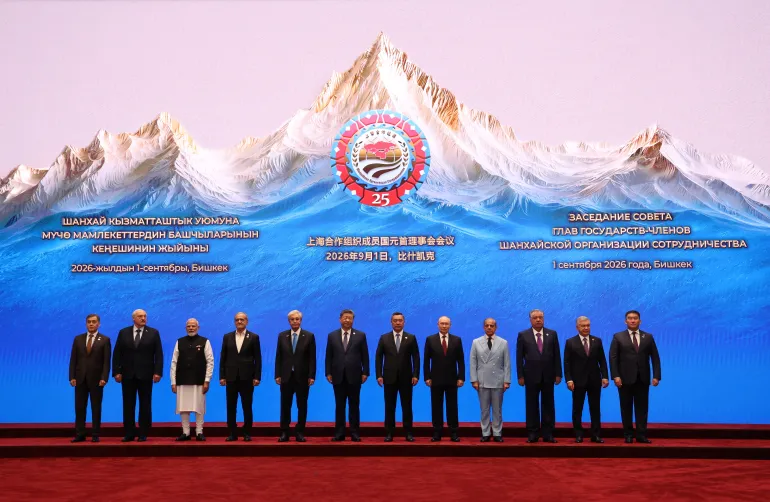
Bishkek, Kyrgyzstan – It was a round table of some of the most influential men in the world. Representing Russia, China, India, Iran, Pakistan – and when they extended to the Shanghai Cooperation Organisation Plus – Turkiye, as well as the United Nations Secretary-General, Antonio Guterres. Gathered here in Kyrgyzstan were countries at the centre of some of the world’s biggest geopolitical tensions.
What brings them together is not necessarily agreement on everything. It is the space to pursue their interests outside a Western-led framework. Moscow sees that space as evidence of a changing world.
Recommended Stories
list of 3 itemsend of list
“Over the 25 years since its inception, the Shanghai Cooperation Organisation has evolved into one of the independent and influential centres of the emerging multipolar world,” Russian President Vladimir Putin told the summit.
The organisation, he said, had grown from six founding members in 2001 into what he described as the world’s largest regional association.
Shanghai Cooperation Organisation leaders at their summit in Bishkek, September 1, 2026. [Vyacheslav Prokofyev/AFP] (AFP)
Kyrgyzstan is a small, mountainous, landlocked country with Russia to the north and China next door. The calculation is more immediate: how do you balance between giants?
As Europe and the United States are increasingly looking towards Central Asia, Kyrgyzstan needs to balance relations with all of them.
Shairbek Dzhuraev, president of the Crossroads Central Asia think tank, said the timing of the summit is particularly important.
“The members in the room are precisely heavyweights that are directly involved in key geopolitical conflicts of the day,” he said.
That balancing act is not new. Since independence in 1991, Central Asian states have largely operated through what is known as a multi-vector foreign policy.
Bishkek – like other Central Asian nations – operates by keeping Russia close and building ties with China, while keeping open doors to Europe and maintaining healthy relations with Washington.
For Kyrgyzstan, it is less about choosing sides than keeping options open, underscored by its geography. Being landlocked means dependence on transport corridors and being mountainous makes infrastructure more difficult. Dependence on imported energy and external markets leaves the economy exposed to shocks beyond its borders.
“The biggest weakness of Kyrgyzstan, geopolitically and geographically, is the dependence in terms of transport routes, in terms of energy, in terms of economic relationships”, Dzhuraev puts it bluntly.
So diversification becomes more than an economic ambition. Kyrgyzstan, being one of the smaller members, cannot dictate the SCO’s agenda. But it helped to shape the language.
For decades, Central Asia was viewed largely through the prism of the powers surrounding it. But the wars in the region and beyond have changed that – Russia is under sanctions, so is Iran, China is looking west, Europe is looking east. Suddenly the geography has acquired new value with highways, railways, pipelines, trade corridors, power networks and the periphery is becoming a strategically important passageway. Dzhuraev said: “Kyrgyzstan wanted the summit declaration to recognise that transformation, Central Asia’s movement into the centre stage of international politics”.
The Shanghai Cooperation Organisation is increasingly seen as a counterweight to US influence — a grouping through which China and Russia can advance a different vision of the global order. But the SCO is too diverse for a simple East-versus-West confrontation. That description comes with a qualification that the SCO is not a unified anti-American bloc.
Its members have competing interests, different relationships with Washington and, in some cases, deep disagreements with one another. The question is not whether the SCO rejects the West, it is whether it can resist being defined entirely in opposition to it.
Iran brings that to the centre stage – where geopolitical theory meets a much more immediate crisis. Tehran and Washington have returned to confrontation after more than a month of relative calm. Iranian President Masoud Pezeshkian used the SCO summit to put the diplomatic question directly on the table.
“I state explicitly that if the United States returns to its commitments under the aforementioned memorandum of understanding, the Islamic Republic of Iran will immediately take reciprocal action,” he said.
The Islamabad MoU signed in June collapsed, with Tehran and Washington blaming each other for violating its terms. Iran’s Foreign Minister, Abbas Araghchi, also called on Washington to return to what its president signed under the MoU. “In that case, everything can be put back on the right track,” he said.
For the SCO, however, Iran is not simply a diplomatic issue – it is an economic one. Washington has renewed sanctions on Tehran and expanded the threat of penalties for those doing business with Iran. For Central Asia, that matters, particularly for countries whose economies are deeply intertwined with Russia and increasingly connected to Chinese trade networks. Dzhuraev is sceptical whether countries such as Kyrgyzstan comply fully with sanctions, “The declaration will most likely not match the reality,” he said. “China and other countries have already rejected what they describe as unilateral sanctions.”
The reality is that sanctions can hurt, as they have hurt Iran and Russia. Not as intended for economic collapse, but they brought pain for the masses and put a spanner in their economies. But enforcement across a region built around cross-border trade is another matter. For Central Asian economies, complete compliance is difficult because the economic relationships are too dense, which is quite different from Western compliance. Both with Iran and Russia, transport and trade links have been growing steadily, so countries are unlikely to simply switch them off overnight.
Russian President Vladimir Putin, right, and Iranian President Masoud Pezeshkian during their meeting on the sidelines of the Shanghai Cooperation Organisation summit in Kyrgyzstan, Tuesday, Sept. 1, 2026. (Vyacheslav Prokofyev/Sputnik/Kremlin Pool Photo via AP)
That makes the SCO summit an important political moment.
Not necessarily because its members can defeat the sanctions regime, but because they can collectively signal where they stand on unilateral pressure.
When you speak to delegates from the global south, there is also a broader message: that the SCO is becoming a forum where countries that do not necessarily agree on everything can nevertheless agree on one principle: they want room to manoeuvre.
Putin calls that the emergence of a multipolar world, Pezeshkian is using the forum to keep diplomacy with Washington alive on Iran’s terms, China is defending its economic relationships, India is pursuing its own strategic interests, and Kyrgyzstan is trying to make sure none of these relationships closes the door to another.
But there is a second question confronting Kyrgyzstan — and it is not sitting around the summit table. How much of its rise belongs to Kyrgyzstan itself?
As transit trade has risen, the economy has been growing rapidly, wages have increased, construction has accelerated and exports have increased.
There is visible momentum in Bishkek, with new roads and buildings appearing to fill the empty spaces. Extraordinary circumstances have generated a lot, such as the war in Ukraine, which has altered regional trade and expanded Chinese investment. When trade routes shifted, money and demand moved across borders. The government is proud that much of the recent development has been undertaken without the external borrowing that characterised earlier periods. But buildings alone do not create a productive economy. External momentum can be a dangerous foundation for long-term growth, as Dzhuraev points out. “Productivity is growing. Exports are rising. More goods are being produced domestically. But much of the momentum remains connected to external factors — particularly the Russia-Ukraine war and Chinese investment. One of the biggest drivers of poverty reduction has been rising salaries.”
The harder question is what comes next? Where are the productive sectors that will sustain those incomes? Agriculture could be an obvious answer as Kyrgyzstan is an agricultural country. But glaciers are melting and climate change is having an impact. Plus, its long-term capacity to generate higher-value growth remains uncertain. That may ultimately be the more important story behind this summit. Not the speeches, the flags, nor the declaration.
Kyrgyzstan wants to convert geography into leverage and its vulnerabilities into options. But the wider questions remain, whether Central Asia can move from being the space between Russia, China, Iran and Europe to becoming a centre of its own? As well as whether today’s economic growth can survive when the external forces driving it inevitably change?
Kyrgyzstan finds itself at the centre of a changing region that brings opportunity but also pressure. Between the giants, keeping every door open may be the most important strategy of all.
US President Donald Trump celebrated on Truth Social what he called the “biggest oil deal in history” – a 100-year concession on 17 oil fields in Venezuela that would secure 65 billion barrels of oil.
Around the same time, QatarEnergy informed Edison, one of its biggest European customers, that force majeure on its liquefied natural gas (LNG) deliveries would continue until early November. Five more cargoes were cancelled, taking the total to 29, or about 3.8 billion cubic metres of gas.
The contract has run since 2009 and normally covers roughly a tenth of Italy’s annual consumption. Edison has kept supplying its customers by finding replacement cargoes elsewhere, including in the US.
For decades, the bargain between Washington and the Gulf was clear. The US protected the region and kept its sea lanes open; Gulf producers supplied the energy on which the global economy depended and settled their sales in dollars to benefit the US economy.
That bargain has been turned on its head. America no longer simply protects Gulf energy. It competes with it, and increasingly profits when the Gulf cannot deliver due to insecurity.
Six months of war have reportedly impacted Qatar’s LNG exports significantly. Other Gulf countries like Kuwait, Saudi Arabia and the UAE have seen a substantial drop in oil exports as well. Meanwhile, US oil and gas have moved into the space left behind, with US energy giants raking in record-high profits.
It is important here to distinguish between the US as a government and the dense network of private interests that operates around it. Washington wants strategic leverage over Iran and continued influence over the Gulf states. Energy companies want access to reserves, favourable regulation, profitable prices and new customers. Trump brings the two together under the banner of energy dominance. State power opens the door; private capital walks through it.
Israel adds another layer. Chevron operates its two main offshore gas fields, owning almost 40 percent of the Leviathan gasfield and 25 percent of the Tamar gasfield. Leviathan is expanding after a $35bn agreement was signed last year to increase exports to Egypt.
Israel is therefore not an independent energy rival to the US in the way Qatar is. Its growing role as an Eastern Mediterranean gas hub is tied to a US operator and fits comfortably within a US-backed regional system linking Israel, Egypt and Jordan.
Chevron is the thread running through much of this story. It has major interests in US production, controls Israel’s most important gas assets and is positioned to expand in Venezuela. This does not mean Chevron determines foreign policy. It does show how easily the exercise of American power can translate into commercial opportunity for American companies.
Israel is also determined not to let the confrontation with Iran end on terms it considers not to be in its interest. The US-Iran memorandum of understanding signed in June fell well short of Israeli war aims. Israel said it was not bound by all its provisions, insisted on freedom of action in Lebanon and briefly resumed attacks while the US was trying to sustain negotiations.
For Israel, ceasefires have tended to be pauses, not settlements: opportunities to regroup while preserving the option of striking again. The reasons are chiefly strategic. Israel wants to prevent Iran from rebuilding its nuclear, missile and regional capabilities, while Israeli leaders fear accepting a deal and looking weak ahead of elections.
The consequences of Israel pushing for continuous conflict align with US energy interests. Continued pressure on Iran keeps the Strait of Hormuz insecure, Gulf exports vulnerable and risk premiums for energy transport high. Israel and US energy companies do not need to be following a common plan for their interests to reinforce one another.
Price is where the argument becomes clearest. Trump talks constantly about cheap oil, but US producers cannot prosper if it becomes too cheap. A Dallas Federal Reserve survey found that US companies needed an average price of about $43 a barrel to operate existing wells and $66 to drill new ones profitably. The two main Permian basins sit at roughly $61 to $62.
Trump therefore needs a narrow band: oil cheap enough to contain inflation, but expensive enough to keep shale, fracking and export investment alive. Gulf insecurity helps maintain it. The disruption need not be catastrophic. It only has to keep prices at a point where the next American well makes economic sense.
This may help explain the attraction of a no-war, no-peace outcome. A full regional war could close Hormuz, send prices soaring and threaten Chevron’s Israeli operations. A durable settlement would remove the risk premium, restore confidence in Gulf supply and limit Israel’s freedom of action.
Managed insecurity sits conveniently between the two: enough restraint to protect US-linked production, but not enough diplomacy to make Gulf energy entirely dependable again.
Israel keeps Iran under pressure. Washington retains leverage over its allies. US producers gain customers and commercially supportive prices. The danger lies in the convergence: Several powerful actors now have something to gain from preventing the crisis from reaching a final resolution.
The Gulf still holds vast reserves and enjoys production costs US companies cannot match. But reserves alone no longer decide market power. Reliability does. Only an estimated 3.5 to 5.5 million barrels a day can bypass Hormuz through Saudi and Emirati pipelines. The rest remains exposed to a single point of failure, despite decades of arms purchases, foreign bases and security guarantees.
The greatest threat to the Gulf’s energy future is not depletion. It is that customers learn to live without it. Every delayed tanker strengthens the case for an Atlantic alternative. Every Qatari cargo replaced by US LNG creates a relationship that may endure long after the war.
US power once rested partly on protecting the flow of Gulf energy. It now rests increasingly on replacing it.
The views expressed in this article are the author’s own and do not necessarily reflect Al Jazeera’s editorial stance.
Sept. 3 (UPI) — Sen. Thom Tillis has called on President Donald Trump to fire Pete Hegseth as secretary of Defense following a series of high-profile exits and firings of senior Pentagon officials in recent months.
Tillis’ comments on Wednesday are the strongest yet from a Republican politician amid mounting GOP criticism of Hegseth’s leadership of the Department of Defense, and came two days after Army Secretary Dan Driscoll resigned following months of reported of clashes with Hegseth.
“I have never witnessed more inept management of the brave men and women who serve our country. He is intimidated by competence and retreats to ginning up culture wars instead of soberly attending to the vital work of our national defense and the health and well-being of our fighting force,” Tillis said on X.
“I urge the president to find a new leader at the Pentagon who will retain and empower our military talent rather than diminish it.”
Hegseth, a former Army National Guard major who took office with less senior government and military leadership experience than any other secretary of Defense, has overseen a sweeping overhaul of the department, which has seen nearly two dozen generals, admirals and senior civilian defense officials resign, retire early or be fired. Several have left following reported clashes with Hegseth.
Critics have accused the former Fox News host of politicizing the traditionally nonpartisan position, highlighting his purge of senior leadership and his effort to eliminate policies he has characterized as “woke.”
In his statement, Tillis, who served on the Senate Armed Services Committee, thanked Driscoll for his leadership and praised him and Gen. Randy George, who stepped down at Hegseth’s request in April, for having initiated “a transformative period of innovation in how we array our forces and equip our soldiers.”
“If we had a @SecWar who maintained the same priorities and forward-thinking, he would be fighting to retain talented leaders like Dan and the many flag officers he has forced into retirement,” he said. “Instead, he is creating a leadership void at the top of our military ranks.”
Hegseth faced strong criticism from Democrats over his lack of experience and alleged issues with alcohol and high-profile allegations of sexual misconduct and abuse, but there has been a growing chorus of Republicans who have voiced concerns since the U.S. war with Iran began on Feb. 28.
A former Trump supporter whom Trump endorsement ahead of his successful 2020 re-election bid, Tillis became a target of the president after saying he could not support his so-called One Big Beautiful spending and tax cut bill. In June 2025, Tillis announced he would not seek another term.
“My Senate colleague Thom Tillis is right,” Sen. Mark Kelly, D-Ariz., said in response to the Republican’s statement.
“Pete Hegseth has long passed his expiration date as SecDef. He needs to go.”
President of the New York Stock Exchange Lynn Martin speaks during a House Financial Services Committee hearing on the economy at the U.S. Capitol on Wednesday. Photo by Bonnie Cash/UPI | License Photo
China has long been a rare partner to Iran, with the economic heft to blunt the United States’ efforts to strangle the Iranian economy.
Yet even as China opposes US President Donald Trump’s latest pressure campaign, few observers expect it to go much further than the modest economic links it has thus far forged with Iran to shield it.
Recommended Stories
list of 4 itemsend of list
While China opposes the Trump administration’s military attacks and sanctions against Iran, Beijing’s relationship with Tehran is just one consideration in a foreign policy that seeks to balance relations with numerous countries, including the US and the Gulf states, limiting its appetite to prop up the Iranian leadership at any cost, analysts say.
“China, with broader global interests, can only actively promote de-escalation of the US-Iran conflict, and cannot and will not engage in fierce confrontation with the US for Iran’s sake,” said Hongda Fan, director of the China-Middle East Center at Shaoxing University in China.
“Ultimately, the US-Iran conflict must be resolved by the two countries themselves,” Fan said.
China and Iran share substantial trade links, particularly in energy, and a mutual suspicion of US dominance, but their relationship is heavily lopsided, with Tehran depending on Beijing far more than vice versa.
That asymmetry in ties was on full display this week at the annual gathering of the Shanghai Cooperation Organisation, a 10-member bloc widely seen as a counterbalance to US hegemony, where Chinese President Xi Jinping joined more than a dozen non-Western leaders, including Iranian President Masoud Pezeshkian.
While Iranian state media reported that Pezeshkian held a “brief meeting” with Xi on the sidelines of the summit in Bishkek, Kyrgyzstan, Chinese outlets made no mention of the encounter.
Xi immediately followed his attendance at the summit with his first visit to Egypt in a decade on Tuesday, using the visit to call on countries in the Middle East to oppose “external interference” and reiterate his calls for a diplomatic resolution to the Iran war.
As Iran’s top trade partner, China has taken up to 90 percent of Iranian oil exports since the US and Israel launched their war in late February.
Iranian crude, however, accounts for only about 2 percent of China’s overall energy mix.
While China’s oil purchases have been an economic lifeline for Tehran, Chinese importers have not been immune to fears of exposure to US sanctions.
China’s major state-owned refiners such as Sinopec and PetroChina have shunned Iranian oil for years, leaving the trade to independent “teapot” refiners with minimal links to the dollar-based global financial system.
Though the Trump administration has imposed sanctions on these “teapot” refiners and a limited number of China- and Hong Kong-based firms and individuals, it has yet to target major Chinese banks accused of facilitating Iranian oil purchases.
The Trump administration has hinted at targeting China’s financial system as part of its ramped-up sanctions campaign, dubbed “Operation Economic Outcast”, though analysts are sceptical that Washington will risk provoking Beijing’s ire as the sides seek to lower the temperature in their trade war before a scheduled summit between Xi and Trump on September 24.
“The legitimate question is why third countries should be expected to adopt Washington’s unilateral economic policy towards another sovereign state,” said Zichen Wang, deputy secretary-general of the Center for China and Globalization (CCG) think tank in Beijing.
“That does not, however, mean that Beijing will provide Tehran with a blank cheque,” Wang said.
“China is likely to continue opposing US secondary sanctions politically and to defend what it considers legitimate Chinese commercial interests. But past behaviour also shows that major Chinese banks and state-owned companies are highly conscious of sanctions exposure.”
Rhetoric versus reality
Even as Beijing and Tehran have forged closer ties, their relations have for years been marked by a substantial gap between rhetoric and reality.
While China pledged to invest up to $400bn in Iran over 25 years as part of a “comprehensive strategic partnership agreement” signed in 2021, few projects have materialised amid what analysts say is Chinese firms’ reluctance to navigate sanctions and the opaque Iranian bureaucracy.
In 2023, Iran’s then deputy economy minister, Ali Fekri, complained that he was “not satisfied” with China’s level of investment since the agreement, saying it had only amounted to about $185m.
“Iranian experts often blame their government for not doing enough to attract Chinese investors or not pushing Chinese companies to share more technology,” said Andrea Ghiselli, head of research at the ChinaMed Project.
“However, the reality is that there is no point for Chinese companies to give up their ties with the international financial system to expand their business in Iran,” Ghiselli said.
“It is much easier and more profitable to trade and invest elsewhere. Iran’s own domestic physical and bank infrastructure is also an obstacle.”
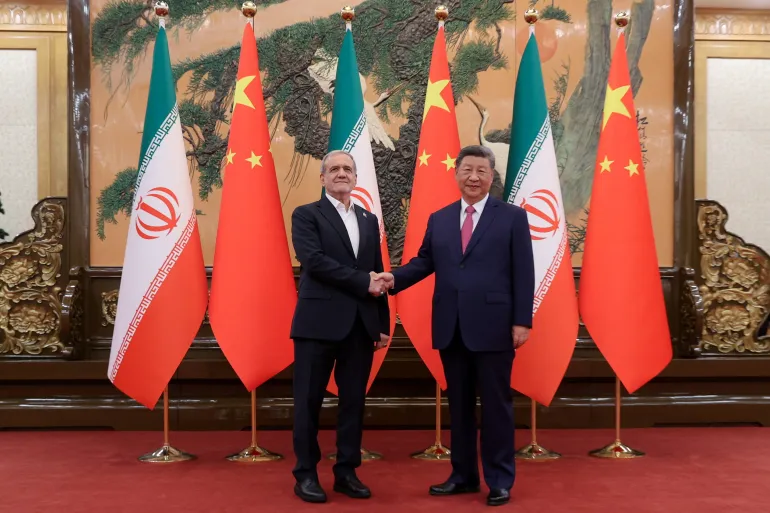
Iranian President Masoud Pezeshkian and Chinese President Xi Jinping shake hands as they meet in Beijing, China, on September 2, 2025 [Iran’s presidential website/Handout via Reuters]
Meanwhile, the most tangible measure of China’s economic support, purchases of Iranian oil, has been dwindling amid the US blockade of Iranian ports.
Iranian crude exports via the Strait of Hormuz, mostly bound for China, fell from an estimated 1.85 million barrels per day (bpd) in March-April to just 240,000bpd in August, according to data from ship-tracking platform Kpler, though millions more barrels shipped before the blockade are still at sea.
In an interview with CNBC on Monday, US Treasury Secretary Scott Bessent said “only” about 30 million barrels of Iranian oil remained on the water and Chinese remittances to Iran were “going to run out”.
Kpler last month estimated that about 80 million barrels were in on-water shortage, enough to provide revenues to Tehran for up to six months.
“For China, Iran is valuable – but replaceable across many dimensions. Iranian oil matters, but China can obtain energy from Saudi Arabia, Russia, Iraq, the UAE, and numerous other suppliers,” said Mordechai Chaziza, an expert on China’s Middle East policy who lectures at Ashkelon Academic College in Israel.
“Iran offers geopolitical access, but China possesses relationships throughout the region. Iran supports China’s multipolar agenda, but so do many other states.”
China’s support for Iran is also not risk-free for Beijing, given its important relationships with Iranian rivals such as Saudi Arabia and the United Arab Emirates, Chaziza said.
“Saudi Arabia and the UAE are major energy and commercial partners.
“Gulf stability is vital because China obtains roughly half of its crude imports from the Middle East,” he added.
The “ideal outcome” for Beijing, Chaziza said, would be “a stable, sovereign, economically connected, and internationally non-Western” Iran, but not one “whose confrontation with Washington, Israel, or the Gulf monarchies forces China to choose sides”.
Wang, at the CCG, said that while Beijing appears determined to defend Chinese commercial interests, it is unlikely to sacrifice its broader interests in the region or elsewhere.
Beijing’s warning that it is ready to take countermeasures against unilateral sanctions is “not the same thing as promising to underwrite the Iranian economy”, Wang added.
For China, Iran is seen more as a customer than an ally, said Kerri Bitsoff, a former senior official at the US Treasury’s Office of Foreign Assets Control.
“I don’t think this is the alliance some people think it is, even though there’s real support. I think of a more like a customer relationship that Iran can’t walk away from,” Bitsoff said.
“And it was good for China – they got cheap oil, they got a US tied up in the Middle East, but I think that only lasts up until the point where it threatens China’s other interests,” she added.
Torrential rain triggered severe flooding across parts of eastern China, rushing down streets and sweeping away vehicles. One weather station recorded more than half a metre of rain as authorities raised the emergency response to the highest level.
Sept. 2 (UPI) — A 19-year-old gunman forced his way into a Virginia elementary school on Wednesday morning where he wounded an employee before turning the weapon on himself, authorities said.
The suspect, identified as Anthony Ignatiadis-Isabelle of Waynesboro, Va., was found by police dead from a self-inflicted gunshot wound in the library, the Waynesboro Police Department said in a statement.
Authorities said police were notified of a suspicious individual on the grounds of Westwood Hills Elementary School in Waynesboro at 9:12 a.m. EDT. Officers responded within minutes, entered the school and found Ignatiadis-Isabelle in the library where there were no students at the time of the incident.
One staff member, identified only as an adult, was shot by the suspect, suffered what police described as a non-life-threatening gunshot wound and was released from the hospital after receiving treatment.
Little information about the shooting has been made public. Waynesboro Police Chief David Shaw would not detail during a press conference exactly how the suspect was gained entry to the school, which requires one to be buzzed in, only that it was “forced.”
He said he was unsure of what position the wounded employee held at the school, what their possible relation was to the shooter or where they were shot. He also said he did not know if the alleged shooter was known to police. The suspect was not and had never been a student at Westwood Hills Elementary School, Superintendent Jeffrey Cassell said.
The school was immediately put into lockdown following the shooting, according to Cassell, who said the facility would be closed on Thursday.
“Today is the day every school system hopes they never have to deal with,” an emotional Cassell said. “Every student and staff member is safe and returned home to their families. Please hug your children and your families this evening.”
Shaw said that as a precautionary measure, additional law enforcement would be at the school for the remainder of the week.
The Bureau of Alcohol, Tobacco, Firearms and Explosives said in a statement that its Washington field office responded to the shooting.
“My heart is with these young students, their parents and families, and the teachers and staff at the school,” Virginia Gov. Abigail Spanberger said in a statement that explained she was monitoring the emergency at Westwood Hills Elementary School.
US forces boarded and sank a boat in the eastern Pacific saying it was a floating refueling station for drug-traffickers. The boat’s destruction was captured by a US military recording. The men aboard are suspected of being part of Ecuador’s Los Choneros gang.
Sept. 2 (UPI) — A Coast Guard jet with Homeland Security Secretary Markwayne Mullin onboard made an emergency landing Wednesday afternoon near Washington, after the jet suffered a mid-flight engine failure.
“The United States Coast Guard pilots made the single-engine landing feel routine,” Mullin said online, confirming the incident.
“No panic, just straight professionalism. After we landed, the pilots told me that was a first for them! We could not have been in better hands.”
Ronald Reagan Washington National Airport confirmed the C-37A with 14 people onboard landed safely at 1:35 p.m. EDT. No other flights were disrupted, it added.
According to audio of communication between the plane’s pilots and air traffic control, the aircraft had lost its right engine, and had requested an emergency landing at the airport, which was granted.
Ronald Reagan Washington National Airport is located in Arlington County, Va.
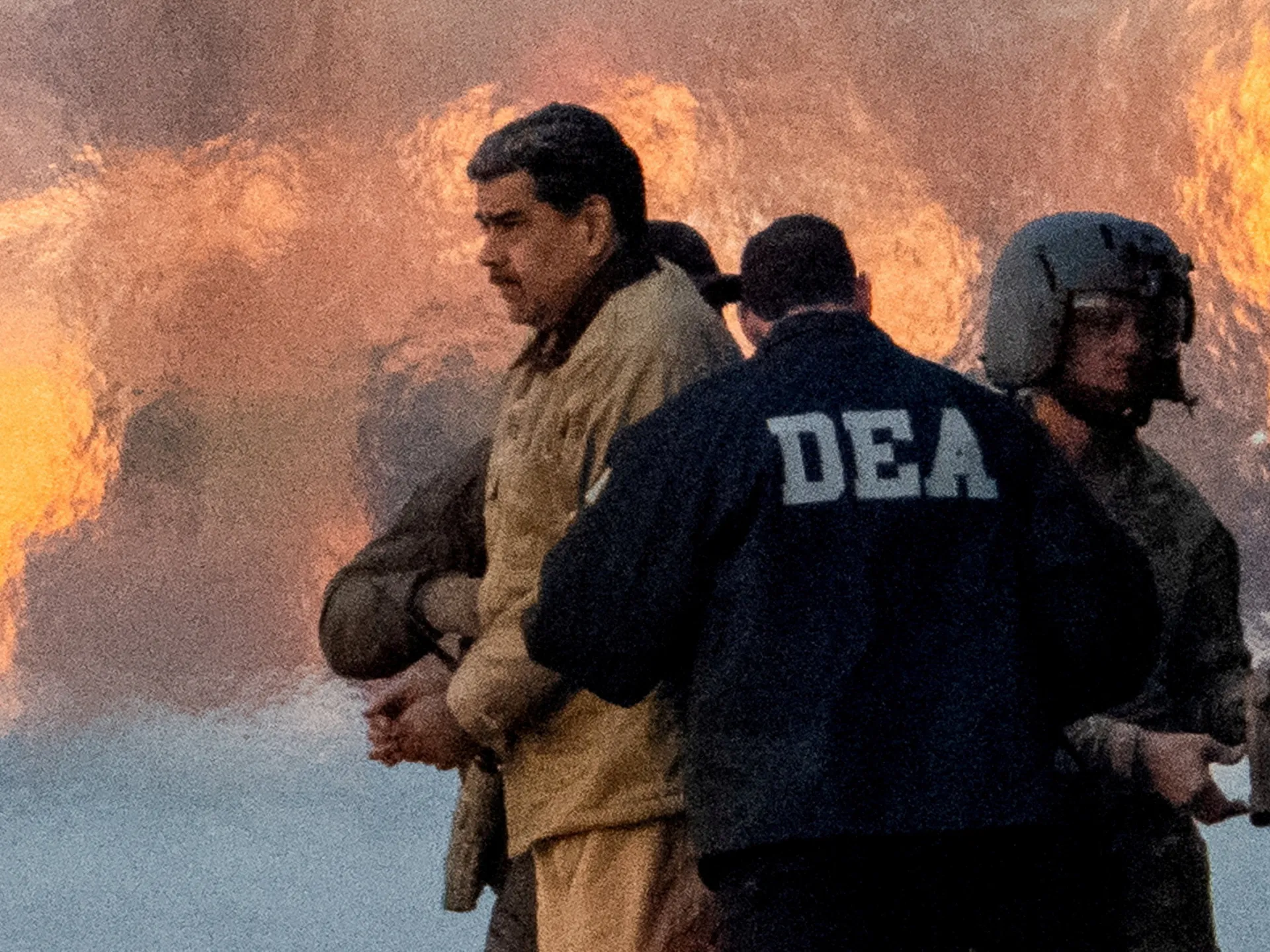
Ousted Venezuelan President Nicolas Maduro has urged a United States judge to dismiss the criminal drug trafficking charges against him, arguing he should be immune from prosecution as the head of a sovereign country.
Maduro’s lawyer, Barry Pollack, made the appeal in a Manhattan district court on Wednesday.
Recommended Stories
list of 3 itemsend of list
His legal team has petitioned District Judge Alvin Hellerstein to dismiss the case, which will test the willingness of US courts to apply international law to criminal cases.
Maduro was abducted and imprisoned on January 3, after US President Donald Trump authorised a military raid in Caracas. The former Venezuelan leader, who has been held in a Brooklyn federal jail, has pleaded not guilty and is scheduled to go on trial on June 1, 2027, if his effort to dismiss the case is unsuccessful.
The principle that sitting heads of state are immune from prosecution abroad is a longstanding tenet of international law, seen as fundamental to diplomacy.
Judge Hellerstein had given Pollack a Wednesday deadline to file his motion to dismiss the case.
Pollack has argued that Hellerstein lacks jurisdiction, both because sovereign heads of state enjoy complete immunity and because the acts that Maduro is accused of would have been part of his official duties.
“This unprecedented prosecution violates the absolute immunity from criminal jurisdiction to which heads of state and foreign officials acting in their official capacities have been entitled for hundreds of years,” Pollack wrote.
Pollack added that Maduro was falsely accused and “vehemently denies” the allegations.
A spokesperson for the Manhattan US Attorney’s office, which brought the charges, did not immediately respond to a request for comment.
Maduro faces uphill battle
Legal experts have told the Reuters news agency that Maduro faces an uphill battle.
Washington has not recognised Maduro as Venezuela’s president for years, due to disputed elections. Courts tend to defer to the US president and his cabinet in disputes over who is recognised as a foreign country’s leader.
US criminal cases involving heads of foreign states are extremely rare, but precedent offers little encouragement for Maduro. In 1990, a federal judge in Miami rejected former Panamanian military leader Manuel Noriega’s attempt to assert head-of-state immunity, in part because he never officially held the title of president.
The US stopped recognising Maduro in 2019, when he was inaugurated for a second time after a 2018 election that critics say was rigged. Washington also called his 2024 re-election fraudulent.
Maduro says both votes were fair and has long accused the US of seeking his ouster to gain control of the South American country’s oil wealth.
Pollack, however, wrote that Washington’s assessment that Maduro lacked legitimacy was not relevant.
“Unlike in Noriega, the Executive Branch does not dispute that Mr Maduro was Venezuela’s head of state, but instead merely claims that, after 2019, he did not occupy that position legitimately,” Pollack wrote.
Venezuela run by Maduro’s vice president
Since Maduro’s abduction, his former vice president and socialist ally, Delcy Rodriguez, has run Venezuela as its interim leader.
She has also increased cooperation with the Trump administration. Last month, the two countries reached an unprecedented deal that would see the US take over about one-fifth of Venezuela’s oil reserves.
Pollack wrote that it was “incongruous” for the US to recognise Rodriguez, who was appointed by Maduro, and not Maduro himself. He pointed to statements by Rodriguez and officials in her government, made in January and February, indicating that they still considered Maduro Venezuela’s legitimate head of state.
Rodriguez’s government has since gone silent on the matter. Some murals of Maduro in Caracas have been painted over in recent months.
Prosecutors have until October 2 to respond to Maduro’s motion to dismiss the indictment, and Hellerstein will hold a hearing on the dismissal effort on November 17.
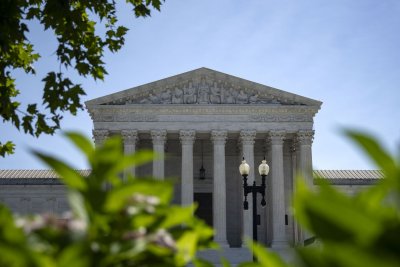
The Supreme Court of the United States is seen in June in Washington, D.C., on the day the high court ruled against President Donald Trump’s 2025 executive order against birthright citizenship. On Wednesday, a federal judge ruled against Trump’s latest executive orders attempting to limit the law. Photo by Bonnie Cash/UPI | License Photo
Sept. 2 (UPI) — A federal judge on Wednesday blocked U.S. President Donald Trump‘s latest attempt at limiting birthright citizenship, saying Trump’s order “is almost certainly unconstitutional.”
Trump signed two executive orders related to the topic on Aug. 6, about a month after the U.S. Supreme Court struck down his earlier order banning birthright citizenship.
One of the August orders expanded the list of non-citizens whose children would not be granted citizenship automatically. These categories include children of whom either parent is “an alien enemy” or “a foreign government employee.”
The other would ban so-called birth tourism, which is when a traveler enters another country specifically to give birth there for citizenship reasons – a practice that is already illegal.
U.S. District Judge Deborah Boardman said in Wednesday’s ruling that the August executive orders are likely unconstitutional “for the simple reason that the Supreme Court … already decided that the children in the class are citizens at birth” in its June ruling.
“This Court must, once again, preliminarily enjoin enforcement of the President’s most recent attempt to strip the right to citizenship from them,” Boardman wrote.
Birthright citizenship stems from the 14th Amendment to the U.S. Constitution, which states that “All persons born or naturalized in the United States, and subject to the jurisdiction thereof, are citizens of the United States and of the State wherein they reside.”
Chief Justice John Roberts said there was “scant evidence” for Trump’s interpretation of the principles of the 14th Amendment, which was ratified in 1868 after the U.S. Civil War to protect the rights ofthe formerly enslaved.
“Citizenship then and now, was the right to have rights — to freely participate in our political community,” Roberts wrote. “… We keep that promise today.”
Trump said the Supreme Court ruling “was too bad for our Country” and called on Congress to pass legislation against birthright citizenship.
Spain faces unrest as residents protest, while migrants and asylum seekers search for shelter and resources in Ceuta.
Thousands of protesters have rallied across Spain against the ongoing migrant crisis in Ceuta, a small Spanish territory on the African coast.
Roughly 50,000 people gathered in Madrid alone on Wednesday. In Ceuta itself, residents draped Spanish and city flags over their shoulders.
Recommended Stories
list of 3 itemsend of list
“Expel the invaders” and “Ceuta is not for sale, Ceuta must be defended” were among the crowd’s chants.
The protests fell on Ceuta Day, a local holiday that marks the Portuguese takeover of the North African city in the 15th century.
They also come a little more than a month after more than 70,000 migrants and asylum seekers crossed en masse from Morocco into Ceuta on July 30 and 31. The deadly surge killed at least 80 people.
While many of the arrivals have returned to Africa, some remain. Estimates vary as to how many. The Spanish government places the figure at about 5,000 people, including 1,200 minors, but local statistics have a higher count.
Among those who remain stranded in the Spanish territory is Otman Ianaya, 40. He swam to Ceuta with his wife and two young daughters, searching for better prospects.
“There is no work in Morocco,” he told the news agency AFP. “I want to build a future in my life.”
Some migrants and asylum seekers sleep on Ceuta’s beaches. The Spanish government has worked to expand emergency housing and increase funds to social services, but critics have blasted the effort as inadequate to answer the needs of so many people.
Protesters march in support of Ceuta on September 2, a holiday in the North African enclave [Francis González/AP]
The strain has sparked isolated instances of violence, including fights, the stoning of a military patrol and reports of sexual assault.
Residents in Ceuta have also clashed with police and burned items belonging to migrants and asylum seekers, in protest of the influx of people.
“The situation has been chaotic, so much so that you can’t go out onto the street,” said Gema Guillen, a protester.
The July incident has also underscored political schisms.
Ceuta’s regional leader, Juan Jesus Vivas, represents Spain’s conservative Popular Party and has called the crisis a “violation of Spain’s territorial integrity”.
Meanwhile, Spain’s territorial policy minister, Angel Victor Torres, has accused the conservative and far-right opposition of exploiting the crisis “to attack the government of Spain” instead of helping the city.
Prime Minister Pedro Sanchez has blamed the surge on a misread court ruling and online disinformation that he said encouraged people to cross the border.
He also said negative coverage of the crisis has since been amplified by Russian and Israeli-linked accounts, though he did not offer proof, instead citing findings from Spain’s intelligence community.
Madrid has pledged 309 million euros ($357m) in aid for Ceuta.
Protesters march in support of Ceuta to mark the city’s anniversary on September 2 [Francis Gonzalez/AP Photo]
Amid the standoff, while some migrants are looking for economic opportunities, others are seeking asylum to escape alleged persecution back home.
“They are people in a vulnerable situation; we need to have a little bit of empathy,” said Halima Ahmed of Luna Blanca, a nongovernmental organisation that distributes food and aid to migrants and asylum seekers.
“People are tired, people are fed up… but that does not justify any type of violence,” she added.