
Brazil’s election looms amid gang rule
As Brazil heads toward elections in 2026, millions live in fear. Nearly one in five Brazilians is affected by gangs.
Source link
Top news of today about travel
As Brazil heads toward elections in 2026, millions live in fear. Nearly one in five Brazilians is affected by gangs.
Source link
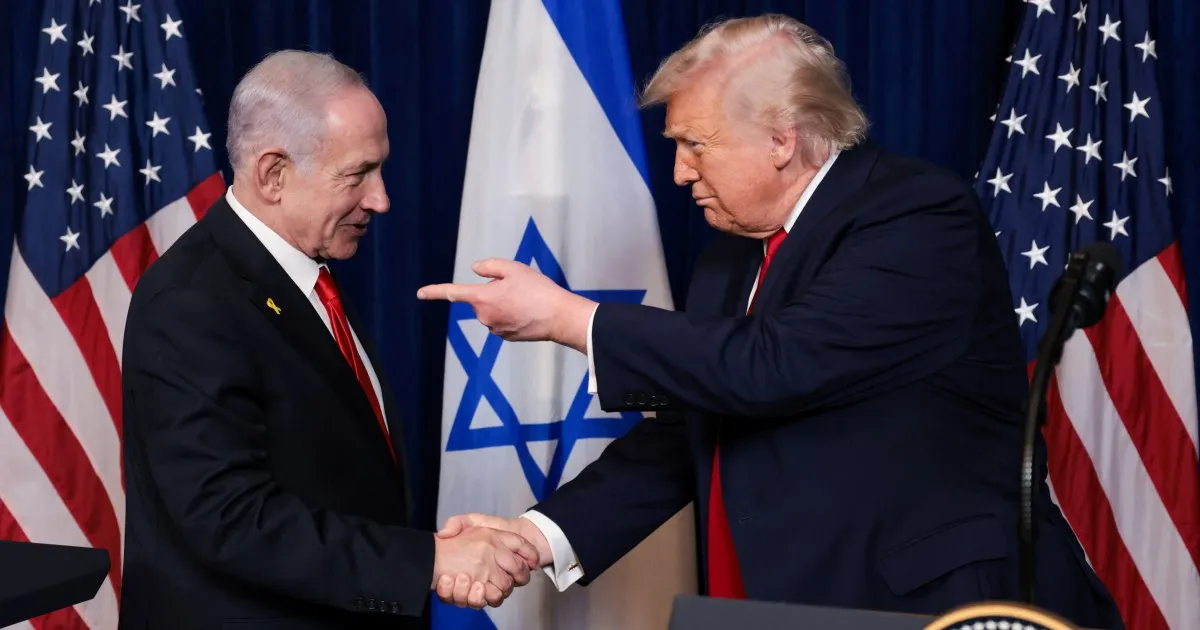
Yesterday, Israeli Prime Minister Benjamin Netanyahu paid his fifth visit to the United States since President Donald Trump took office in January. Before the meeting between the two, the Israeli press described the prime minister as fully engaged in an attempt to placate his domestic political partners by achieving “concessions” from Trump. What were these concessions? They were predominantly related to denying Turkiye any presence in the Gaza stabilisation force and to US approval for an Israeli strike on Iran.
Netanyahu failed on both counts. Trump specifically referred to his good relationship with Turkish President Recep Tayyip Erdogan, and spoke of “Bibi’s” respect for him, too. With regard to Iran, Trump mentioned Iran’s willingness to “make a deal” and provided clear guidelines for American involvement while saying nothing about authorising a solo Israeli operation. Israeli media suggests that Trump provided Israel with a “green light” for a strike on Iran. That is not reflected in Trump’s official statement in any way.
Trump talked about the reconstruction of Gaza beginning “soon”. When he spoke of the disarmament of Hamas, he said that it must happen or nearly 60 states will make it happen. Hamas has already agreed to disarm if the process is carried out by a Palestinian-led force. Trump said nothing to suggest that he does not agree with Hamas’s logic, especially when one considers the refusal of most participating countries to carry out a violent disarmament of the group. Trump also made no mention of the last hostage body held in Gaza as a necessary condition for moving to “Stage II” of the deal.
Nothing is more significant in Trump’s world than the use of language and symbolic gestures. When Trump referred to Netanyahu as a “great wartime prime minister” as he was discussing his blueprint for “peace”, he made it clear that his guest was running out of time. This was also clearly apparent when Trump said he had spoken with Israel’s official head of state, President Isaac Herzog, about a pardon for Netanyahu and was assured such a pardon was imminent. President Herzog, by the way, categorically denied that such a conversation had taken place.
What may be the best reflection of the Trump-Netanyahu meeting at Mar-a-Lago has to do with a brief conversation over the phone between Trump and Israeli Minister of Education Yoav Kish. The purpose of the call was for Kish to inform Trump that he will be awarded the Israel Prize on Israel’s Independence Day in 2026.
The award is given out by the minister of education in a televised ceremony attended by Israel’s leaders. It marks the official end of Independence Day celebrations. Its recipients are most frequently career academics at a late stage of their careers. The prize reflects a lifetime’s devotion to the expansion of human knowledge. Sometimes, special prizes are awarded in civic categories, most often for what is called a “life’s work”, such as fostering coexistence between Jews and Palestinians, promoting social equality, etc.
The prize, as understood by its name, is nearly always awarded to Israeli citizens but can be awarded to Jews living abroad and even to non-Jews who have made a “special contribution to the Jewish people”.
In other words, the Trump-Netanyahu meeting involved Trump instructing Netanyahu with regard to upcoming measures and Netanyahu snapping to attention and signalling his acceptance by heaping yet another semi-fictitious honour on Trump’s already crowded head.
Yet, despite these clear displays of the unequal nature of their relationships, there have been persistent voices suggesting that Trump and Netanyahu are operating in cahoots. According to such analyses, the United States fully supports the Israeli attempt to “change the Middle East” – Netanyahu’s favourite phrase – as the Americans make a pivot to Asia and the global race for dominance with China.
Israel will “take care” of the “Iranian threat” as the Arabs languish in their own irresolvable internal tensions and competitions. The mobilisation of Arab states after the Israeli strike on Doha is all but ignored.
These voices also point to the fact that Israel continues to completely ignore the “ceasefire” enacted by “Stage I” of the Trump plan, and does so with the full support of the United States. In fact, Trump said that Israel has “lived up” to the ceasefire “100 percent”, and that he has no problems with Israel’s actions in Gaza. These include bombing, destruction of buildings and infrastructure, the blocking of life-saving aid amid harsh weather and many other steps that ensure and expand the ongoing Israeli genocide.
It is indeed extremely difficult to reconcile this with the notion that Israel has run out of options for delaying Stage II and an internationally-brokered solution to Palestinian statehood. After all, one hears repeatedly from Israeli media about initiatives to “settle Gaza”, “relocate” 1.5 million Palestinians to Somaliland and dismantle the Oslo Accords, one ethnically cleansed Palestinian community at a time.
The US and other countries, like Germany and the UK, continue to buy Israeli arms at a massive rate and to equip Israel with arms of their own. How is it possible to reach a conclusion that the Israeli genocide is reaching its endgame?
The short answer is that it is not. Israel continues to kill, destroy, subvert and expand its efforts to destabilise any semblance of regional order. For example, Israel recognised the statehood of Somaliland in order to have a “dumping ground” for ethnically cleansed Palestinians, but also to pit the United Arab Emirates against Saudi Arabia, as both have conflicting interests in Somalia, and, by doing so, ensure that the Palestinian question is not addressed and that everyone remains frozen by fear of Israeli weapons.
The longer answer recognises the effects of this genocide on Israel itself: Genocide consumes genocidaires.
That is not to suggest that justice is assured by cosmic forces; far from it. Justice should be pursued at the most grounded and realistic level, as should the dignity and preservation of Palestinian lives.
However, the genocide has shaped Israel in its image on a daily, immediate level. Violence is rising as quickly as the prices of the staples, democracy is backsliding, and there is no end in sight to the “forever war”. This is not an abstract, “strategic” matter.
While Israel has been actively seeking to delete Palestinian identity for nearly 80 years, it has not succeeded in doing so. Israel’s internal contradictions have surfaced with paralysing force over the past two years.
Israel will not “die” or “recede”, but the gap between Israeli perceptions of the world and global perceptions of Israel has never been wider.
Trump and his vision of America do not appreciate “losers”. Israel no longer has any “wins” in the offing. It can and does kill and burn, procrastinate and obfuscate.
Even Trump recognises that this power has no lasting effects following its own immediate application. Israel has no options. There is no greater loss.
The views expressed in this article are the author’s own and do not necessarily reflect Al Jazeera’s editorial stance.


A passenger looks at an LED board showing delayed flights during the Chinese military live-fire drills around Taiwan, in Taipei, Taiwan, Tuesday. China is conducting live-fire drills in five designated maritime and airspace zones around Taiwan. Photo by Richie B. Tongo/EPA
Dec. 30 (UPI) — China continued its live-fire drill called “Justice Mission 2025,” on Tuesday creating a blockade around Taiwan and disrupting flights, but President Donald Trump said he’s not worried.
Reporters asked Trump about the drills Monday, and he said he has a “great relationship with President Xi [Jinping], and he hasn’t told me anything about it.”
“I certainly have seen it … I don’t believe he is going to be doing it,” Trump said. He didn’t elaborate on what he meant that Xi could do. “Nothing worries me.”
“They’ve been doing naval exercises for 20 years in that area,” he told reporters.
Trump is expected to make a formal visit to Beijing next year.
Though Taiwan is a self-governing democracy, China claims it is a Chinese province. China has been pushing for a “peaceful reunification” with Taiwan. But it hasn’t ruled out taking the island nation by force.
On Friday, China sanctioned U.S. companies and their leadership after the United States announced an $11.1 billion arms deal with Taiwan on Dec. 18.
Taiwan’s Ministry of National Defense said it detected 130 Chinese military aircraft and 22 naval and coast guard vessels in the past 24 hours up to 6 a.m. Tuesday.
“China ignores the expectations of the international community for peace and persists in destroying regional stability with military threat, which is a blatant provocation to regional security and international order, and I would like to express my strongest condemnation,” President Lai Ching-te said Tuesday in a Facebook post.
Lai also said the drills were disrupting trade and air traffic.
“China’s military provocations along the First Island Chain severely disrupt global maritime trade, air traffic and regional peace. #Taiwan continues to act responsibly, neither escalating tensions nor yielding to threats – we will steadfastly defend our freedom against coercion,” he said on X.
Taiwan Defense Minister Wellington Koo said the drills disregarded international norms and “clearly aim to achieve cognitive warfare and deplete Taiwan’s combat capabilities … and to create division and conflict within Taiwanese society,” The Guardian reported.
This exercise is the sixth of its kind since 2022, though it’s the largest. In 2022, the drills were in retaliation for then-Speaker of the House Nancy Pelosi‘s visit. But this is the first time since then that China has created “maritime exclusion zones.” Planes and boats were not allowed to pass during the drills.
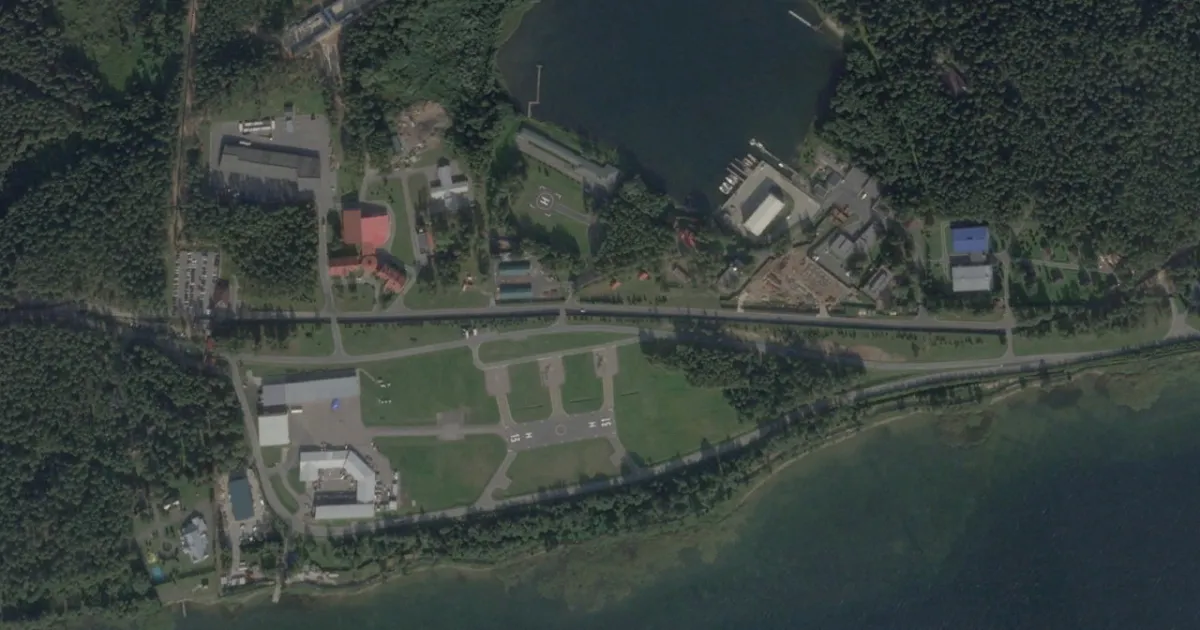
Russia says it will take a more hardline stance in negotiations on ending the war in Ukraine after claiming Kyiv tried to attack a Russian presidential residence – allegations Ukraine says Moscow has fabricated to justify further aggression.
Accusations and counteraccusations are rife as the war rages and the push for peace remains precarious.
list of 4 itemsend of list
Kremlin spokesperson Dmitry Peskov told reporters on Tuesday that the alleged drone attack on one of President Vladimir Putin’s residences in Novgorod, a region in northwestern Russia, had been intended to derail recent diplomatic efforts to negotiate an end to the conflict.
“This terrorist action is aimed at collapsing the negotiation process,” Peskov said, adding that Russia’s military knows when and how it will respond.
“The diplomatic consequence will be to toughen the negotiating position of the Russian Federation.”
Russia said on Monday that Putin’s residence had been targeted by Ukraine with 91 long-range drones that had been shot down by air defence systems with no one injured.
Ukraine has denied that the attack took place, calling the Russian allegations “false claims” intended to undermine the peace process.
In a post on X, Ukrainian Minister of Foreign Affairs Andrii Sybiha said Moscow had not provided any plausible evidence to back up its accusations.
“And they won’t. Because there’s none. No such attack happened,” he said on Tuesday.
Sybiha said Russia has “a long record of false claims”, calling them its “signature tactic”.
“They also often accuse others of what they themselves plan to do,” he said. “Their words should never be taken at face value.”
He added that Ukraine was ”disappointed and concerned“ by statements by the United Arab Emirates, India and Pakistan expressing concern over what he said was an attack that never happened.
Asked by reporters whether Russia could provide evidence of the drone attack, Peskov said air defences shot the drones down but the question of wreckage was for the Ministry of Defence.
He said attempts by Ukraine and Western media to deny the incident were “insane”.
No evidence has been provided by Russia. The Defence Ministry has issued only a statement that said 91 drones had been shot down while they were heading to Putin’s Novgorod residence, which is about 360km (225 miles) north of Moscow.
Speaking on Monday, United States President Donald Trump, who has spearheaded the push to broker peace in Ukraine, said he had been informed of the alleged attack in a phone call with Putin.
“I was very angry about it,” he said, adding that he would find out whether there was evidence to support the allegation.
The dispute over the attack played out as key leaders from Europe and Canada held discussions on advancing the peace process.
After the talks, German Chancellor Friedrich Merz posted on social media that the group was “moving the peace process forward”.
“Transparency and honesty are now required from everyone – including Russia,” he wrote.
In the wake of the meeting, Polish Prime Minister Donald Tusk said at a government meeting that he believed peace could be achieved in Ukraine in a matter of weeks.
“Peace is on the horizon. There is no doubt that things have happened that give grounds for hope that this war can end, and quite quickly, but it is still a hope, far from 100 percent certain,” Tusk said.
“When I say peace is on the horizon, I’m talking about the coming weeks, not the coming months or years. By January, we’ll all have to come together … to make decisions about the future of Ukraine, the future of this part of the world.”
He said security guarantees offered by Washington to Kyiv gave a reason to believe the conflict could end soon but Ukraine would need to compromise on territorial issues.
Russia wants Kyiv to withdraw its troops from the parts of the Donbas region in eastern Ukraine that Moscow has failed to occupy in almost four years of war.
It remains the key sticking point in the talks, ceding territory or not.
Kyiv wants fighting halted along the current front lines, and Washington has proposed a free economic zone if Ukraine pulls its forces back.
Zelenskyy has insisted Kyiv won’t give up land and the nation’s constitution also forbids it.
As leaders met for talks, Kyiv said Russia had attacked infrastructure in the Odesa region, damaging a civilian ship and facilities in the Black Sea ports of Pivdennyi and Chornomorsk, which are crucial for Ukraine’s foreign trade and integral to its wartime economy.
In a post on Telegram, Deputy Prime Minister Oleksii Kuleba said a Panama-flagged civilian ship loaded with grain was damaged and oil storage tanks hit with one person wounded.
“This is yet another targeted attack by Russia on civilian port infrastructure. The enemy is trying to disrupt logistics and complicate shipping,” Kuleba said.
Despite the attacks, both ports continued to operate, he said.
Meanwhile, Ukraine ordered the evacuation of several hundred people from 14 settlements in the northern region of Chernihiv, which borders Moscow-allied Belarus and which, Ukraine said, has been the target of daily Russian shelling.
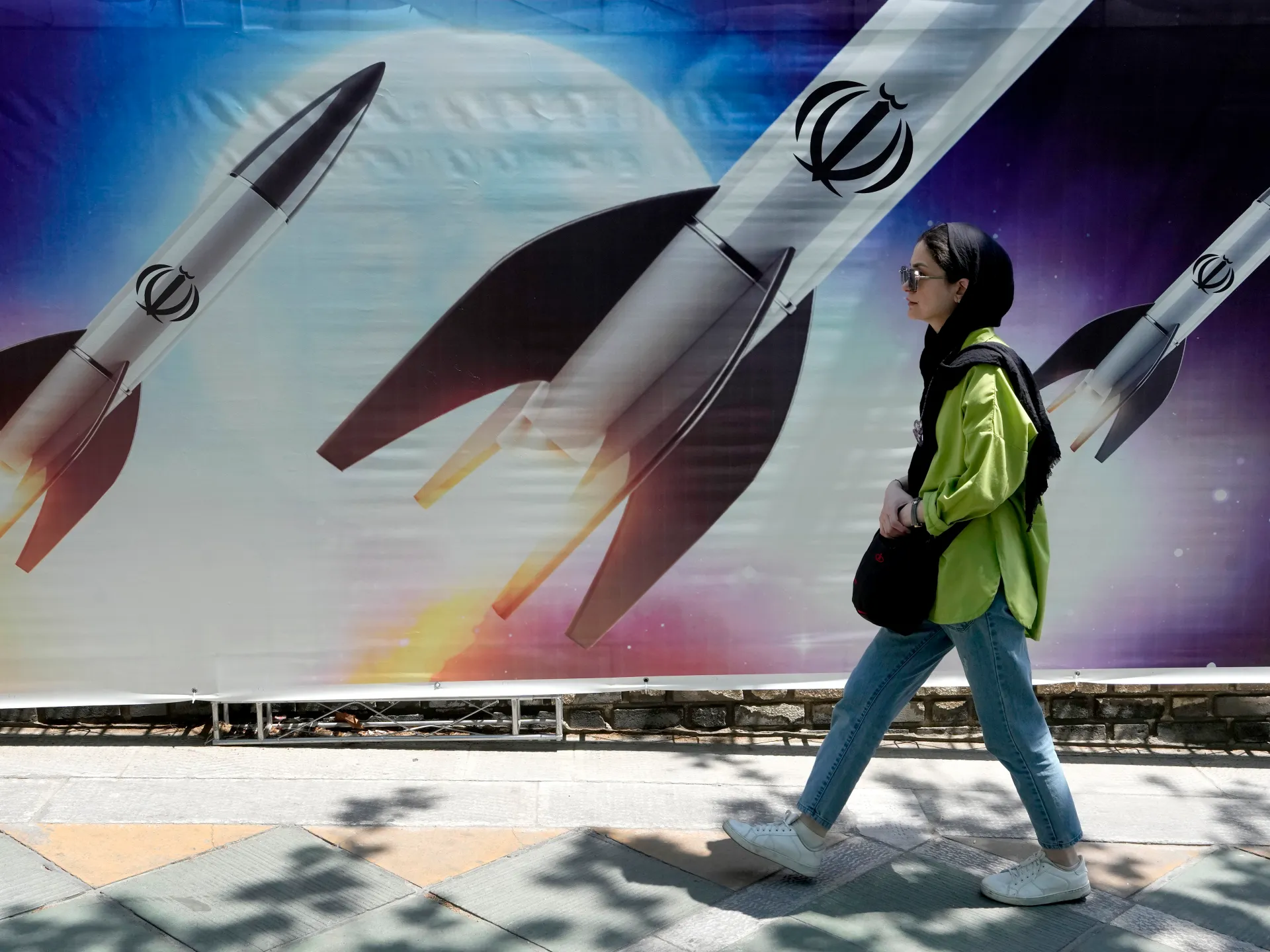
US president says he would back attacks if Tehran rebuilds nuclear or missile programmes.
Iran has promised to respond harshly to any aggression after United States President Donald Trump threatened further military action, should Tehran attempt to rebuild its nuclear programme or missile capabilities.
President Masoud Pezeshkian issued the warning on X on Tuesday, a day after Trump met Prime Minister Benjamin Netanyahu at his Florida estate, where he firmly leaned into the Israeli regional narrative yet again.
The US had not previously said it would target Iran’s missile capabilities, which has long been an Israeli aspiration, focusing instead on Tehran’s nuclear programme. Iran has repeatedly said its nuclear activities are for civilian purposes only, and neither US intelligence nor the UN’s nuclear watchdog found any evidence of atomic weapons production before the June attacks by the US and Israel.
Iran has ruled out negotiating over its missile programme.
The leaders’ comments raise the spectre of renewed conflict just months after a devastating 12-day war in June that killed more than 1,100 Iranians and left 28 in Israel dead.
Pezeshkian said the response of Iran to any aggression would be “severe and regret-inducing”. His defiant message came hours after Trump told reporters at his Mar-a-Lago resort that Washington could carry out another major assault on Iran.
“Now I hear that Iran is trying to build up again, and if they are, we’re going to have to knock them down,” Trump said, standing alongside Netanyahu. “We’ll knock the hell out of them.”
The US president said he would support strikes on Iran’s nuclear programme “immediately” and on its missile facilities if Tehran continues developing long-range weapons.
Israeli officials have expressed concern in recent weeks that Iran is quietly rebuilding its ballistic missile stockpile, which was significantly depleted during the June conflict.
“If the Americans do not reach an agreement with the Iranians that halts their ballistic missile program, it may be necessary to confront Tehran,” an Israeli official told Ynet this week.
Pezeshkian recently described the standoff as a “full-scale war” with the US, Israel and Europe that is “more complicated and more difficult” than Iran’s bloody conflict with Iraq in the 1980s, which left more than one million dead.
The June war saw Israel launch nearly 360 strikes across 27 Iranian provinces over 12 days, according to conflict monitoring group ACLED, targeting military installations, nuclear facilities and government buildings.
The assault destroyed an estimated 1,000 Iranian ballistic missiles and killed more than 30 senior military commanders and at least 11 nuclear scientists.
Iran fired more than 500 missiles at Israel during the conflict, with approximately 36 landing in populated areas. While Trump claimed Iranian nuclear capabilities were “completely obliterated” by the strikes, experts disputed that, saying Tehran may have hidden stockpiles of enriched uranium and could resume production within months.
Despite the losses, Iranian officials insist the country is now better prepared for confrontation. In a recent interview, Pezeshkian said Iran’s military forces are “stronger in terms of equipment and manpower” than before the ceasefire.
The war failed to trigger the internal unrest it is suspected that Netanyahu had hoped for. No significant protests materialised, and daily life in Tehran largely continued despite the bombardment.
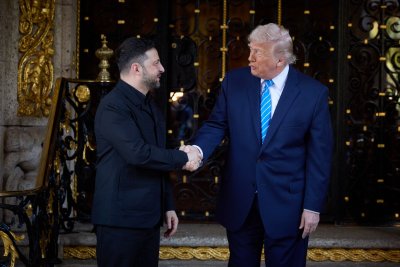

Dec. 30 (UPI) — Ukrainian President Volodymyr Zelensky accused Russia of lying over a large-scale drone attack on President Vladimir Putin’s state residence 300 miles northwest of Moscow, which it claims was carried out by Kyiv.
Monday’s alleged attack shortly after high-level U.S.-Ukraine talks at Mar-a-Lago ended was an excuse to attack Ukraine, most likely Kyiv and government buildings there, and keep the war going, Zelensky told reporters.
Zelensky said it was no accident that Moscow announced the attack after he and U.S. President Donald Trump said they had made good progress toward finalizing a peace agreement framework, as well as lengthy security guarantees, in talks Sunday at Trump’s resort in Palm Beach.
“It’s obvious that yesterday we had a meeting with President Trump, and it’s clear that when there is no scandal for the Russians, when there is progress, it is a failure for them. They do not want to end this war and are only capable of doing so under pressure. So they are looking for a pretext,” said Zelensky.
“Russia is at it again, using dangerous statements to undermine all achievements of our shared diplomatic efforts with President Trump’s team. We keep working together to bring peace closer. This alleged ‘residence strike’ story is a complete fabrication intended to justify additional attacks against Ukraine, including Kyiv, as well as Russia’s own refusal to take necessary steps to end the war. Typical Russian lies,” Zelensky wrote on X.
Russian Foreign Minister Sergey Lavrov said Monday that Moscow had already decided on when and which targets it would hit in retaliation for Kyiv’s targeting of Putin’s residence in the Novgorod region with 91 drones, which he described as a terrorist attack.
All the drones were downed by air defenses or electronic means and neither Putin or anyone else was hurt in the incident, according to Lavrov.
However, he warned Russia would revise its stance on the peace negotiations accordingly, “taking into account the Kyiv regime’s final transition to a policy of state terrorism,” but said Moscow would not be sharing details of its new tougher policy.
Speaking at a briefing on Tuesday, Kremlin spokesman Dmitry Peskov ruled out Moscow pulling the plug on the peace talks.
“Russia is not withdrawing from the negotiation process, and will certainly continue talks and dialogue, primarily with the Americans,” he said.
Speaking to journalists at Mar-a-Lago on Monday night, Trump said he was very angry about the attack, which he said he learned about directly from Putin, saying it was not the right time for offense when peace negotiations were in such a “delicate phase.”
“I don’t like it. It’s not good. I learned about it from President Putin today. I was very angry about it. It’s a delicate period of time. This is not the right time. It’s one thing to be offensive, because they’re offensive. It’s another thing to attack his house. It’s not the right time to do any of that.”
However, he acknowledged the attack may never have taken place and vowed that U.S. intelligence would get to the bottom of it.
According to the Kremlin, the attack in the early hours of Monday local time came “almost immediately” after the American and Ukrainian teams’ talks ended on Sunday evening.
Zelensky and Trump emerged from the talks to say they were at least 95% agreed on extendable 15-year security guarantees for Ukraine, but that the issues of territory and the Zaporizhzhia nuclear plant remained sticking points.
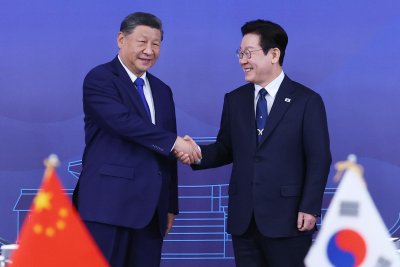

South Korean President Lee Jae Myung (R) will visit China next week for talks with Chinese President Xi Jinping, Cheong Wa Dae said Tuesday. In this November photo, the two leaders shake hands ahead of their meeting at the APEC summit in Gyeongju. Photo by Yonhap
President Lee Jae Myung will make a state visit to China early next week for summit talks with Chinese President Xi Jinping, Cheong Wa Dae said Tuesday, with the leaders expected to discuss ways to strengthen strategic cooperation and bilateral economic ties.
Lee is scheduled to depart for Beijing on Sunday for summit talks with Xi. On next Tuesday, Lee will travel to Shanghai before returning home on Wednesday, presidential spokesperson Kang Yu-jung said in a briefing.
The meeting will be the leaders’ second since their first summit talks on Nov. 1 on the sidelines of the Asia-Pacific Economic Cooperation summit in Gyeongju, South Korea.
It marks Lee’s first visit to China since taking office in June and the first state visit to China by a South Korean president since 2017.
Their first meeting in two months is expected to build on the momentum toward fully restoring “strategic cooperative partnership” between the two nations, according to the spokesperson.
“They are expected to discuss ways to produce tangible results that directly benefit people in both countries, including cooperation in supply chain investments, the digital economy and responses to transnational crime,” Kang said.
The planned visit comes as Lee has pledged to manage relations with China — South Korea’s largest trading partner and a key economic backer of North Korea — in a stable manner, amid Seoul’s efforts to bring Pyongyang back to the dialogue table.
Seoul has urged Beijing to play a constructive role in fostering conditions for the resumption of dialogue with North Korea, with China reaffirming its commitment to stability on the Korean Peninsula.
While in Shanghai, Lee will mark the 150th anniversary of the birth of Korean independence hero Kim Gu (1876-1949) and the centennial anniversary of the establishment of the Provisional Government of the Republic of Korea in the city.
Kim was a key leader of the independence movement during Japan’s 1910-45 colonial rule and served as president of the provisional government in Shanghai.
Lee is also scheduled to attend business events aimed at boosting partnerships between venture and startup companies from the two countries, Kang said.
The two countries plan to sign several memorandums of understanding covering a range of cooperation areas during the visit, she added, noting that further details will be released later.
According to industry sources, a large-scale business delegation led by SK Group Chairman Chey Tae-won is expected to accompany Lee on the trip.
Samsung Electronics Chairman Lee Jae-yong, Hyundai Motor Group Executive Chair Euisun Chung and LG Group Chairman Koo Kwang-mo are also likely to join the delegation organized by the Korea Chamber of Commerce and Industry, the sources said.
Copyright (c) Yonhap News Agency prohibits its content from being redistributed or reprinted without consent, and forbids the content from being learned and used by artificial intelligence systems.
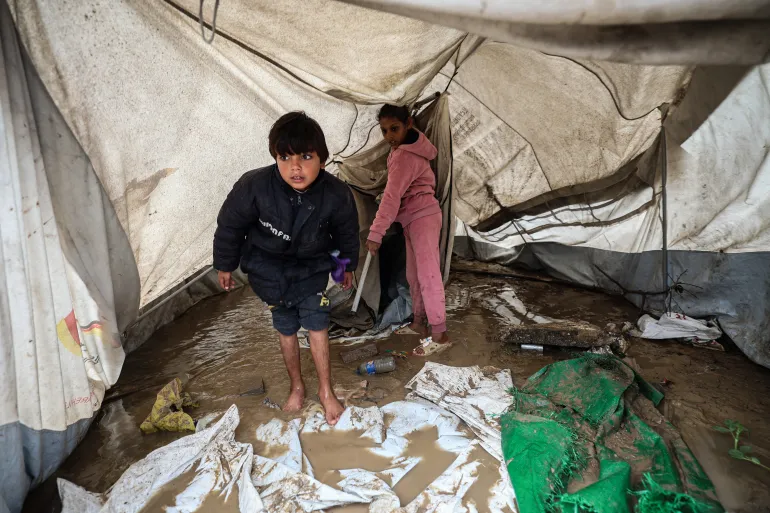
Israeli attacks, violating a ceasefire agreement, are reported across Gaza, as Palestinian misery compounded by rains.
Israeli forces have carried out strikes across the Gaza Strip as they continue with their near-daily violations of the ceasefire agreement, with Israel’s genocidal war on the besieged enclave continuing apace and displaced Palestinians enduring the destruction of their few remaining possessions in flooding brought about by heavy winter rains.
Israeli air strikes on Tuesday targeted locations north of Rafah and east of Khan Younis, the Maghazi camp in central Gaza and Beit Lahiya in the north of the Strip, Al Jazeera’s Hind Khoudary reported.
list of 4 itemsend of list
Reporting from Gaza City, Khoudary said artillery shelling had been reported in the territory’s southern and central regions, while there had also been an attack in the Gaza City neighbourhood of Shujayea, striking close to the tent of a displaced family.
She said the latest attacks, in violation of the United States-brokered ceasefire that came into force in October, numbering nearly 1,000 now, were coming at a time of immense hardship for hundreds of thousands of displaced Palestinians, as heavy rains and strong winds had ravaged their makeshift camps, destroying the few possessions they had left.
Gaza’s Government Media Office said on Sunday that Israel had committed 969 ceasefire violations since it came into effect on October 10, resulting in the deaths of 418 civilians and injuries to more than 1,100.
“Palestinians are still very traumatised and anxious,” Khoudary said. “The situation on the ground continues to deteriorate as the rain continues.”

Aid groups have repeatedly called for Israeli authorities to lift restrictions to allow more supplies, including shelter equipment, into the territory, where displaced families have been trying to stay dry in flimsy, battered tents that offer scant protection from the elements after months of use.
“Families here are helpless while the Israeli authorities continue to restrict all kinds of shelter into the Gaza Strip,” Khoudary said.
Officials have warned that the severe conditions also bring new dangers, with the threat of disease and illness as overwhelmed and damaged sewage systems contaminate floodwaters, as well as the risk that buildings could collapse amid heavy rain and wind.
At least two people have been killed by damaged structures falling amid the severe weather in recent days.
In a displacement camp east of Deir el-Balah in central Gaza, heavy rain in recent days has left tents submerged in muddy water, destroying the few possessions that the families had taken with them from their homes.
Inside the tents, an Al Jazeera team found essential items like pillows, mattresses and bedcovers soaked in muddy water.
“The tent has been flooded,” said Mohammed al-Louh, a resident.
“I took my family out, but I couldn’t even get a blanket, a mattress or a bag of flour. I have no way to sleep with my children or keep them warm.”
Another man, Haitham Arafat, said he had lost his son and daughter as well as his home to Israel’s genocidal war, and was still suffering amid the severe conditions.
“I fled to this place. Does this mean the war is over?” he said.
“No, we are still suffering. We haven’t slept for two days because of the heavy rain.”
Reporting from the camp, Al Jazeera’s Ibrahim al-Khalili said the winter storms had brought a new “chapter of suffering” for Palestinians who had been plunged into a humanitarian crisis by Israel’s war.
“What was meant to be a temporary shelter for them has turned into a flooded trap,” he said.
China has held two-day military drills – Justice Mission 2025 – around Taiwan, marking the sixth round of large-scale war games since 2022, when then-Speaker of the United States House of Representatives Nancy Pelosi visited the island.
The exercise included 10 hours of live fire drills on Tuesday as Chinese forces practised encircling Taiwan and blockading its major ports.
list of 4 itemsend of list
The war games began on Monday in the waters and airspace to the north, southwest, southeast and east of Taiwan’s main island, according to China’s Eastern Theatre Command spokesperson Shi Yi.
The exercises saw China deploy its naval destroyers, frigates, fighter planes, bombers, drones, and long-range missiles to simulate seizing control of Taiwan’s airspace, blockading its ports, and striking critical infrastructure, “mobile ground targets” and maritime targets, Shi said.
The exercises also simulated a blockade of Taiwan and its main ports, Keelung and Kaohsiung.
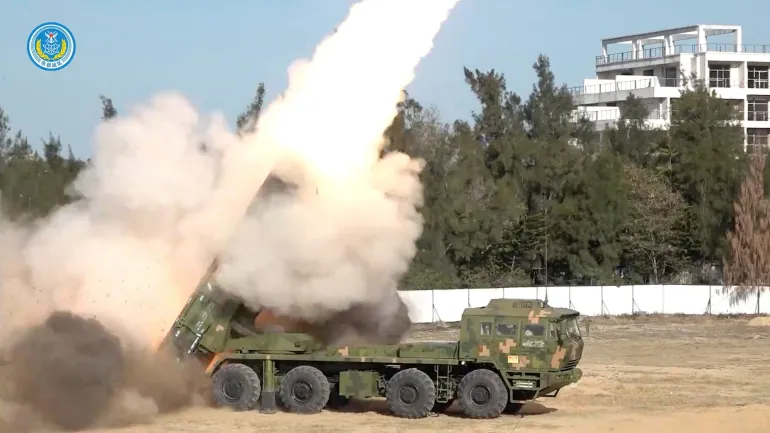
Tuesday’s live-fire drills were held in five zones around Taiwan between 8am and 6pm local time (00:00 GMT and 10:00 GMT), according to the Eastern Theatre Command. Chinese forces fired long-range rockets into the waters around the island, according to a video released by the military on social media.
Taiwan’s coastguard said seven rockets were fired into two drill zones around the main island.

Taiwan’s Ministry of Defence said it had tracked 130 air sorties by Chinese aircraft, 14 naval ships and eight “official ships” between 6am on Monday and 6am on Tuesday.
Ninety of the air sorties crossed into Taiwan’s air defence identification zone (ADIZ), an area of land and sea monitored by Taipei, during the 24 hours, in the second-largest incursion of its kind since 2022.
Justice Mission 2025 was the largest war game since 2022 in terms of the area covered, according to Jaime Ocon, a research fellow at Taiwan Security Monitor.
“These zones are very, very big, especially the southern and southeast zones around Taiwan, which actually breached territorial waters,” he told Al Jazeera, referring to the region within 12 nautical miles (22km) of Taiwan’s coast. “That’s a big escalation from previous exercises.”
They also focused explicitly on blockading Taiwan, unlike past iterations, sending a strong message to Taipei and its unofficial allies, particularly the US and Japan.
“This is a clear demonstration of China’s capability to conduct A2/AD – anti-access aerial denial – making sure that Taiwan can be cut off from the world and that other actors like Japan, the Philippines, or the United States cannot directly intervene,” Ocon said.
A blockade would impact not only the delivery of weapons systems but also critical imports, such as natural gas and coal, that Taiwan relies on to meet nearly all its energy needs. It would also disrupt vital global shipping routes through the Taiwan Strait.
Alexander Huang, director-general of Taiwan’s Council on Strategic and Wargaming Studies, told Al Jazeera the drills were similar to those held after Pelosi’s visit in August 2022.
“For this drill, it actually interfered with international civil aviation routes and also maritime shipping routes. In previous drills, they tried to avoid that, but this time they actually disrupted the air and maritime traffic,” he said.
The drills also put pressure on Taiwan’s maritime and transport links to Kinmen and Matsu islands, which are closer to the Chinese mainland.
China has a history of holding military exercises to express its anger with Taiwan and its allies, but large-scale exercises have become more frequent since Pelosi’s Taiwan visit.
Beijing claims Taiwan as a province and has accused the US of interfering in its internal affairs by continuing to sell weapons to Taipei and supporting its “separatist” government led by President William Lai Ching-te.
Washington does not officially recognise Taiwan, whose formal name is the Republic of China, but it has pledged to help Taipei defend itself under the 1979 Taiwan Relations Act and the 1982 Six Assurances.
The Justice Mission 2025 came just days after Washington approved a record-breaking $11.1bn arms sale to Taiwan.
China’s Ministry of Foreign Affairs said on Monday that the drills were a “punitive and deterrent action against separatist forces who seek ‘Taiwan independence’ through military build-up, and a necessary move to safeguard China’s national sovereignty and territorial integrity”. Beijing sanctioned 30 US firms and individuals over the arms sale.
Experts also say the exercises were linked to a separate but related diplomatic row between China and Japan.
Beijing was angered in November by remarks from Japanese Prime Minister Sanae Takaichi that an attack on Taiwan would be a “survival-threatening situation” for Japan. Such a scenario would legally permit Japan to exercise its “right of collective self-defence” and deploy its military, she said.

Taiwan cancelled more than 80 domestic flights on Tuesday and warned that more than 300 international flights could be delayed due to flight rerouting during the live-fire drills.
Taiwan’s Defence Ministry said the coastguard monitored the exercises near the outlying islands and that an undisclosed number of naval vessels had also been deployed nearby. Taipei also monitored all incursions into its ADIZ, including the Taiwan Strait, sections of coastal China, and waters around Taiwan.
In a statement on Tuesday, Defence Minister Wellington Koo said, “[Beijing’s] highly provocative actions severely undermine regional peace and stability [and] also pose a significant security risk and disruption to transport ships, trade activities, and flight routes.”
Koo described the exercises as a form of “cognitive warfare” that aimed to “deplete Taiwan’s combat capabilities through a combination of military and non-military means, and to create division and conflict within Taiwanese society through a strategy of sowing discord”.
US President Donald Trump has so far remained quiet about the military drills, telling reporters on Monday that he was “not worried”.
“I have a great relationship with President Xi, and he hasn’t told me anything about it,” Trump said when asked about the exercises during a news conference, according to Reuters. “I don’t believe he’s going to be doing it,” he added, seemingly referring to the prospect of actual military action targeting Taiwan.
William Yang, a senior analyst for Northeast Asia at the International Crisis Group, told Al Jazeera that Trump might avoid saying much about the Justice Mission 2025 exercises as he hopes to meet President Xi Jinping in April to discuss a US-China trade deal. “It’s a diplomatic strategy to make sure the US response is not going to immediately upset the temporary trade truce between the US and China,” Yang said.
“I think it’s quite consistent with how he personally and his administration have been handling the issue of Taiwan by trying to de-prioritise making public statements,” he said.
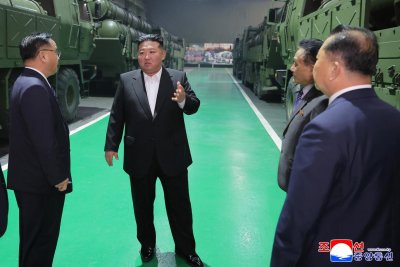

North Korean leader Kim Jong Un (C) visited a factory producing a multiple rocket launcher system, which he described as capable of “annihilating the enemy” through precise and devastating strikes, state media reported Tuesday. Photo by KCNA/EPA
SEOUL, Dec. 30 (UPI) — North Korean leader Kim Jong Un called for a major increase in the production of new multiple-rocket launcher systems that can “annihilate the enemy,” state media reported Tuesday.
During a Sunday visit to a munitions factory, Kim described the weapons as the “main strike means” that would transform the composition of the Korean People’s Army’s artillery forces and serve as a central tool in future military operations, according to the official Korean Central News Agency.
Kim said the rocket launcher “is a super-powerful weapon system” that can “annihilate the enemy through sudden precise strike with high accuracy and devastating power” and can also be used as a “strategic attack means,” KCNA reported. North Korea frequently uses the term “strategic” to signal nuclear capability.
Analysts warn that North Korea’s expanding long-range rocket artillery poses a growing conventional threat to South Korea, where much of the population and key military infrastructure lie within range of such systems.
Kim’s entourage included Defense Minister No Kwang Chol, ruling party secretary Jo Chun Ryong and Missile Administration General Director Jang Chang Ha.
The factory inspection comes amid a surge in weapons-related activity by Kim ahead of an upcoming key party congress, underscoring a broader push to expand North Korea’s arms production capacity.
On Sunday, Kim oversaw the test launch of long-range strategic cruise missiles in the Yellow Sea, saying the drills demonstrated “the absolute reliability and combat readiness of our strategic counterattack capability.” The missiles flew for roughly two hours and 50 minutes along a preset flight orbit before striking a target, KCNA said.
South Korea’s military confirmed detecting the launches and warned that further tests could follow toward the end of the year.
Last week, Kim visited the construction site of an 8,700-ton nuclear-powered strategic missile submarine, highlighting Pyongyang’s continued push to expand its strategic deterrent.
The inspection was accompanied by renewed calls from Kim to boost missile and artillery shell production capacity as North Korea ramps up weapons manufacturing ahead of the ruling Workers’ Party’s Ninth Congress, expected in early 2026.
The emphasis on munitions production has fueled speculation that Pyongyang is seeking to sustain or expand arms exports to Russia amid deepening military ties between the two countries. According to South Korea’s National Intelligence Service, North Korea has sent thousands of shipping containers of munitions to Russia and deployed about 15,000 troops to assist Russian forces in the Kursk region.
In return, experts assess that Moscow is providing Pyongyang with advanced military technology, including assistance related to space launch vehicles, reconnaissance satellites and air defense systems.
The party congress is expected to outline a new five-year economic plan and recalibrate North Korea’s military and foreign policy priorities. Analysts say the meeting could further entrench a hard-line stance toward South Korea, which the North officially designated a “hostile state” last year as Kim abandoned the long-standing goal of reunification.
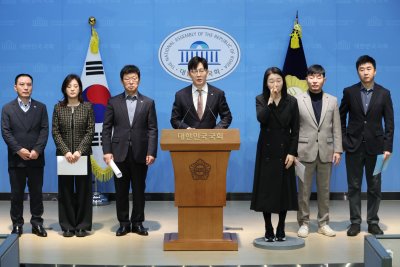

Rep. Park Chung-kwon of the People Power Party and leaders of North Korean defector groups hold a news conference at the National Assembly Communication Center in Seoul on Dec. 29 to oppose changing the official term “North Korean defectors” to “Bukhyangmin.” Photo by Yonhap News Agency
Dec. 29 (Asia Today) — North Korean defector groups on Monday urged South Korea’s Unification Ministry to halt its push to replace the official term for defectors, warning that one leading alternative could be misunderstood as meaning people who “look toward” North Korea.
Five defector organizations, including the Committee for North Korean Democracy and the North Korea Strategy Center, held a news conference at the National Assembly and issued a joint statement calling for the government to stop reviewing the term change and to release the results of a public opinion survey conducted from late September to early October, organizers said.
The groups objected in particular to “Bukhyangmin,” a term the ministry has weighed as a possible replacement for “North Korean defectors.” They said the word could be confused with similar-sounding phrases that imply sympathy for North Korea, framing it as an attack on defector identity.
The dispute also intensified after Unification Minister Chung Dong-young said during a Dec. 19 work report that “all” defectors strongly reject the current term, a claim critics said overgeneralized defector views. The ministry has said Chung asked roughly 60 residents at Hanawon, a government resettlement and education center in Anseong, Gyeonggi Province, during a private visit on Dec. 5 and that all those present supported a change.
At the news conference, Kang Cheol-hwan, head of the North Korea Strategy Center, questioned whether the new term would make defectors appear to be people who admire North Korean leader Kim Jong Un. Other speakers argued the current term reflects “escape” from the North Korean system and symbolizes resistance to repression.
A broader umbrella group, the National Association of North Korean Defectors, also issued a separate statement demanding a public apology for what it called distorted remarks and urging the government to guarantee public deliberation if it changes terminology tied to defectors, organizers said.
The ministry has said it is reviewing whether to adjust legal terminology and social usage to reduce negative connotations and support settlement and social integration.
Previous surveys have shown mixed views among defectors. A Korea Institute for National Unification survey found about 59% of defector respondents said a change was needed, but preferences among alternatives were split, with “Hanamin,” “Tongilmin” and “Bukhyangmin” drawing similar levels of support, news reports said.
The Unification Ministry has not announced a final decision and has said it is internally reviewing whether to disclose results from its latest survey, according to local reports.
— Reported by Asia Today; translated by UPI
© Asia Today. Unauthorized reproduction or redistribution prohibited.


Former People Power Party lawmaker Thae Yong-ho speaks during an appearance on Asia Today TV’s “Shin Yul’s Political Check” on Dec. 29. Photo by Asia Today
Dec. 29 (Asia Today) — Former People Power Party lawmaker Thae Yong-ho said Monday that North Korea is likely to build a nuclear-powered submarine before South Korea, citing Pyongyang’s ability to bypass lengthy legislative and administrative processes.
Thae made the remarks during an appearance on Asia Today TV’s political talk show Shin Yul’s Political Check. He was commenting on North Korea’s stated goal of developing a nuclear-powered strategic submarine as part of its five major defense modernization tasks.
“North Korea’s objective is to create a nuclear threat that the United States would perceive as credible,” Thae said. He added, however, that Washington still does not view Pyongyang’s nuclear capabilities as an immediate existential threat.
He said a land-based nuclear missile launched from North Korea would take about an hour to reach the United States and could be intercepted or neutralized through a preemptive strike. “That’s why North Korea is trying to develop a method to hide in the depths of the ocean and launch closer to U.S. shores,” he said, adding that Pyongyang ultimately seeks recognition as a nuclear-armed state.
“North Korea lies a lot and engages in bluster,” Thae said. “But when you look back, they usually end up building what they say they will. The quality may not be sophisticated, but they get it done. A nuclear submarine is just a matter of time.”
Asked whether South Korea or North Korea would succeed first, Thae said he believed the North would do so earlier. He noted that while South Korea has much of the necessary technology, building a nuclear-powered submarine would require years of preparation, legislative approval and negotiations, particularly with the United States.
“Even if it were built at a U.S. shipyard, the infrastructure alone could take five years to prepare,” he said. He added that fuel transfer issues and U.S. legislative approval would also pose major hurdles. “We are a democracy, so procedures take time. North Korea can simply cobble something together with Russia, but we cannot.”
Thae also said North Korea has not yet completed its submarine-launched ballistic missile technology. He noted that while the North has displayed launches from barges, it has not conducted a confirmed underwater launch since unveiling a nuclear attack submarine in September 2023.
“If they had mastered the technology, they would have demonstrated it by now,” he said, adding that firing missiles underwater while maintaining submarine stability is highly complex.
Thae also predicted that North Korea’s internal power structure could move into what he described as an “era of Ri Sol-ju,” referring to Kim Jong-un’s wife. He said Kim’s daughter, Kim Ju-ae’s public appearances appear symbolic rather than indicative of an imminent female successor.
Turning to South Korea’s decision to allow limited public access to Rodong Sinmun, Thae downplayed concerns about social impact. He said the newspaper is only available in restricted settings such as libraries and is not widely read even inside North Korea.
“In North Korea, officials are forced to read it during designated morning sessions,” he said. “Who would read it here, and how many people would bother? There won’t be major social repercussions.”
— Reported by Asia Today; translated by UPI
© Asia Today. Unauthorized reproduction or redistribution prohibited.
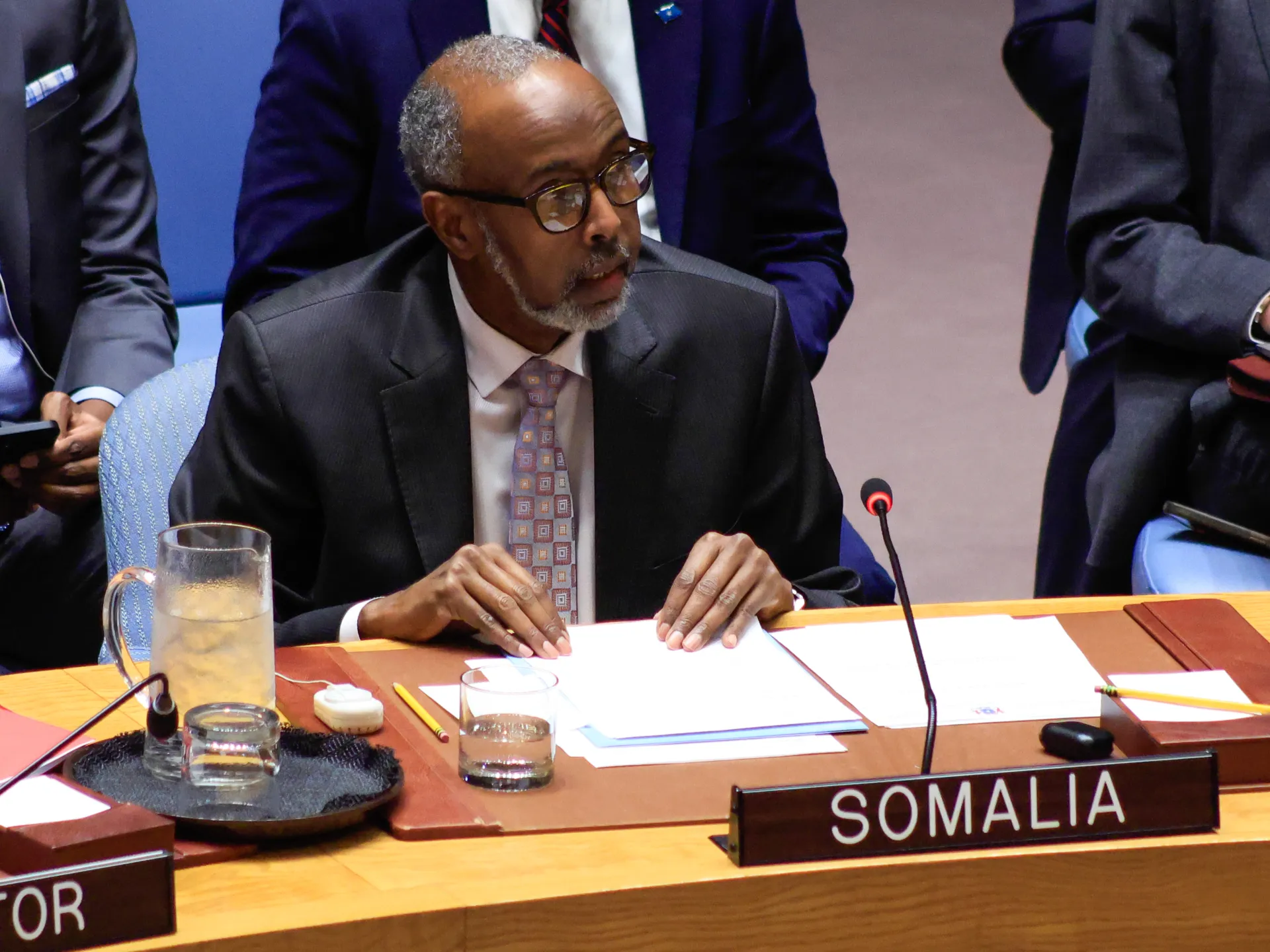
Most United Nations Security Council (UNSC) members have slammed Israel’s recognition of Somaliland at a meeting convened in response to the move, which several countries said may also have serious implications for Palestinians in Gaza.
The United States was the only member of the 15-member body not to condemn Israel’s formal recognition of the breakaway region of Somalia at the emergency meeting in New York City on Monday, although it said its own position on Somaliland had not changed.
list of 4 itemsend of list
Addressing the UNSC, Somalia’s UN ambassador, Abu Bakr Dahir Osman, implored members to firmly reject Israel’s “act of aggression”, which he said not only threatened to fragment Somalia but also to destabilise the wider Horn of Africa and the Red Sea regions.
In particular, Osman said that Somalia was concerned the move could be aimed at advancing Israel’s plans to forcibly “relocate the Palestinian population from Gaza to the northwestern region of Somalia”.
“This utter disdain for law and morality must be stopped now,” he said.
The emergency meeting was called after Israel last week became the first and only country to recognise the self-declared Republic of Somaliland as an independent and sovereign state.
Al Jazeera’s Gabriel Elizondo, reporting from UN headquarters in New York, said that “14 of the 15 council members condemned Israel’s recognition of Somaliland”, while the US “defended Israel’s action but stopped short of following Israel’s lead”.
Tammy Bruce, the US deputy representative to the UN, told the council that “Israel has the same right to establish diplomatic relations as any other sovereign state”.
However, Bruce added, the US had “no announcement to make regarding US recognition of Somaliland, and there has been no change in American policy”.
Israel’s deputy ambassador to the UN, Jonathan Miller, told the council that Israel’s decision was “not a hostile step toward Somalia, nor does it preclude future dialogue between the parties”.
“Recognition is not an act of defiance. It is an opportunity,” Miller claimed.
Many other countries expressed concerns about Israel’s recognition of Somaliland, including the implications for Palestinians, in statements presented to the UNSC.
Speaking on behalf of the 22-member Arab League, its UN envoy, Maged Abdelfattah Abdelaziz, said the group rejected “any measures arising from this illegitimate recognition aimed at facilitating forced displacement of the Palestinian people, or exploiting northern Somali ports to establish military bases”.
Pakistan’s deputy UN ambassador, Muhammad Usman Iqbal Jadoon, said at the meeting that Israel’s “unlawful recognition of [the] Somaliland region of Somalia is deeply troubling”, considering it was made “against the backdrop of Israel’s previous references to Somaliland of the Federal Republic of Somalia as a destination for the deportation of Palestinian people, especially from Gaza”.
China and the United Kingdom were among the permanent UNSC members to reject the move, with China’s UN envoy, Sun Lei, saying his country “opposes any act to split” Somalia’s territory.
“No country should aid and abet separatist forces in other countries to further their own geopolitical interests,” Sun Lei said.
Some non-members of the UNSC also requested to speak, including South Africa, whose UN envoy, Mathu Joyini, said that her country “reaffirmed” Somalia’s “sovereignty and territorial integrity” in line with international law, the UN Charter and the constitutive act of the African Union.
In addition to defending Israel’s decision, US envoy Bruce compared the move to recognise Somaliland with Palestine, which has been recognised by more than 150 of the UN’s member states.
“Several countries, including members of this council, have unilaterally recognised a non-existent Palestinian state, yet no emergency meeting has been convened,” Bruce said, criticising what she described as the UNSC’s “double standards”.
However, Slovenia’s UN ambassador, Samuel Zbogar, rejected the comparison, saying, “Palestine is not part of any state. It is illegally occupied territory… Palestine is also an observer state in this organisation [the UN].”
“Somaliland, on the other hand, is a part of a UN member state, and recognising it goes against… the UN Charter,” Zbogar added.
The self-declared Republic of Somaliland broke away from Somalia in 1991, after a civil war under military leader Siad Barre.
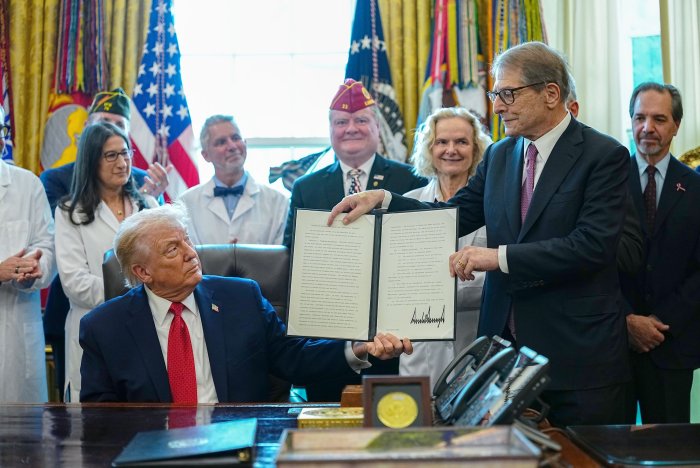
Dec. 29 (UPI) — President Donald Trump on Monday confirmed that the United States struck a “dock area” that officials believe is used to transfer drugs to boats for international distribution.
The U.S. military has struck dozens of ships in the Caribbean near Venezuela, as well as in the Pacific, that are allegedly shipping drugs from South America to the United States and other countries, but the dock would be the first time that an onshore target has been struck.
Trump said Friday in a radio interview that a “big facility” had been “knocked out” in Venezuela that was not widely publicized until Monday when reporters at Mar-a-Lago asked him about it, ABC News and The New York Times reported.
According to CNN, the dock was targeted by the CIA in a drone strike based on intelligence from the U.S. Special Forces that it was being used by the Venezuelan gang Tren de Aragua as a shipping facility for drugs.
A spokesperson for U.S. Special Operations Command told CNN that “Special Operations did not support this operation to include intel support,” the network noted, adding that the Special Operations Forces continue to be involved in Venezuela.
Despite officials offering few details about the strike, Trump, on Monday, appeared to confirm that U.S. forces struck a dock in Venezuela and why it was targeted.
“There was a major explosion in the dock area where they load up the boats with drugs,” Trump told reporters. “They load the boats up with drugs. So we hit all the boats, and now we hit the area, it’s the implementation area, that’s where they implement, and that is no longer around.”
The U.S. military for months has built up a military presence in the Caribbean in international waters offshore of Venezuela, culminating in the arrival of the USS Gerald R. Ford aircraft carrier and its carrier strike group in November.
A month before that, in mid-October, Trump told reporters that he had authorized the CIA to conduct operations in Venezuela, and noted that they had been doing so for months at that point.
He said at the time that the military had been striking ships because “a lot of Venezuelan drugs come in through the sea, so you see it,” but that the United States would “stop them by land, also” — acknowledging that the administration was considering strikes inside Venezuela.
The Ford’s presence, in addition to more than a dozen other warships, has built up a 15,000 troop presence in the Caribbean that the Pentagon has dubbed Operation Southern Spear.
In addition to striking alleged drug boats in the Caribbean and Pacific, Trump also has ordered a naval blockade to prevent Venezuela from shipping its sanctioned oil to Iran and China.
The administration so far has apprehended three oil tankers leaving Venezuela.
Trump has said he is aiming to depose Venezuelan President Nicolas Maduro based on accusations that Maduro runs the Tren de Aragua gang, has emptied the country’s prisons and sent criminals to the United States to wreak havoc in the country, and is pumping drugs into the United States.

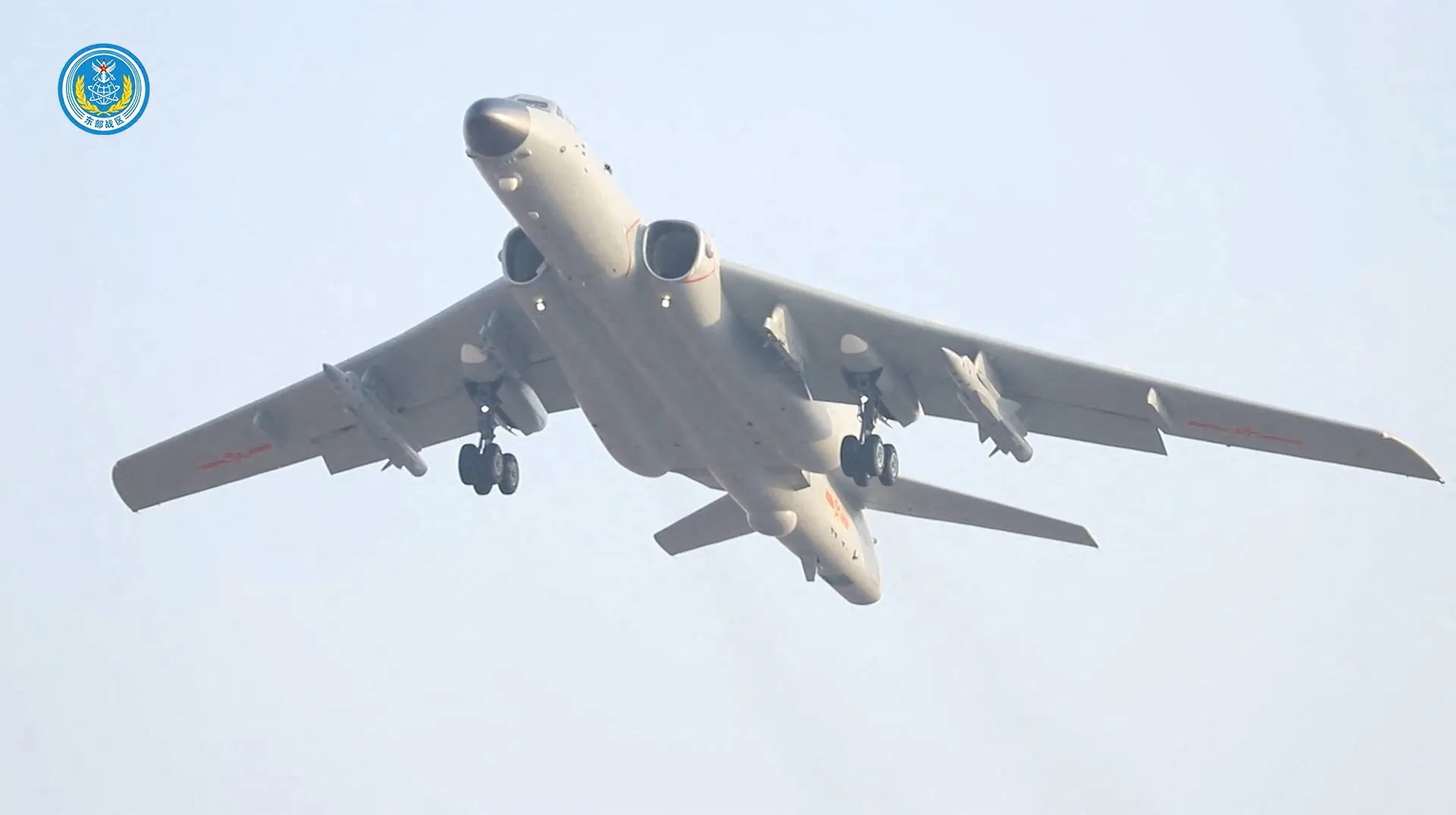
Day two of the ‘Justice Mission 2025’ drills will include 10 hours of live-fire exercises and a simulated blockade of Taiwan’s major ports.
China has begun a second day of military drills around Taiwan in the latest escalation of tensions over the self-governing island.
China’s military said on Tuesday that it had deployed navy destroyers, bombers and other forces as part of the war games, which Beijing claims are aimed at “separatist” and “external” forces.
list of 4 itemsend of list
The drills were due to include live-fire exercises between 8am and 6pm local time (00:00 to 10:00 GMT) in five maritime and airspace zones around Taiwan, as well as air and sea patrols, simulated precision strikes and anti-submarine manoeuvres, according to Chinese state media.
Taiwan’s Ministry of National Defence said some of the live-fire drills would take place in what Taiwan considers its territorial waters, or within 12 nautical miles (22km) from the coastline, according to Taiwan’s Central News Agency.
More than 80 domestic flights were cancelled on Tuesday, many to Taiwan’s outlying islands, and more than 300 international flights could face delays due to rerouted air traffic during the drills, according to Taiwan’s Civil Aviation Administration.
The exercises, code-named “Justice Mission 2025”, began early Monday and came days after the United States announced its largest-ever weapons package for Taiwan, worth $11.1bn.
State news outlet The China Daily said the drills were “part of a series of Beijing’s responses to the US arms sales to Taiwan as well as a warning to the [Taiwanese president] Lai Ching-te authorities in Taiwan”, in an editorial on Monday.
China’s Ministry of Foreign Affairs spokesperson, Lin Jian, also told reporters on Monday that the exercises were “a punitive and deterrent action against separatist forces who seek Taiwan independence through military buildup, and a necessary move to safeguard China’s national sovereignty and territorial integrity”.
Justice Mission 2025 marks the sixth time China has staged large-scale military drills around Taiwan since then-US Speaker of the House of Representatives Nancy Pelosi visited Taiwan in 2022.
A key focus of the “Justice Mission 2025” exercises will be “anti-access and area denial capability” to ensure that Taiwan cannot receive supplies from allies like Japan and the US during a conflict, according to William Yang, senior analyst for Northeast Asia at the Crisis Group.
They will also include simulating a blockade of Taiwan’s major ports in the north and south, and taking control of strategically important waterways, like the Bashi Channel and Miyako Strait, through which Taiwan imports much of its energy supplies, Yang said.
China’s Eastern Theatre Command released a poster on Tuesday, titled “Hammer of Justice: Seal the Ports, Cut the Lines”, showing large metal hammers hitting the port of Keelung in the north and the port of Kaohsiung in the south.
Taiwan’s Defence Ministry said it had tracked 130 air sorties by Chinese aircraft, 14 naval ships and eight “official ships” between 6am on Monday (22:00 GMT, Sunday) and 6am on Tuesday (22:00 GMT, Monday).
The exercises were also monitored by Taiwanese coastguard ships and an undisclosed number of naval vessels, according to Taiwan’s Defence Ministry.
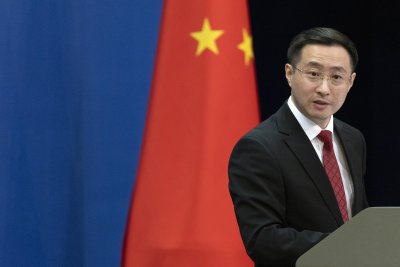

Ministry of Foreign Affairs’ spokesperson Lin Jian speaks during a press conference in Beijing, China, 05 February 2025. File ANDRES MARTINEZ CASARES/EPA
Dec. 29 (Asia Today) — China’s foreign ministry on Monday demanded the United States halt arms sales to Taiwan and warned that U.S. involvement in the Taiwan Strait cannot prevent what Beijing calls “complete reunification,” issuing the statement as the Chinese military launched large-scale drills encircling the island.
In a statement posted on social media, the ministry’s North American and Oceania affairs department criticized Washington’s approval of an $11.1 billion arms package for Taiwan, describing the move as a breach of U.S. commitments and warning it would “harm others” and ultimately “harm itself,” according to Chinese and state-linked media accounts.
The statement urged the United States to recognize what it called the “serious consequences” of arming Taiwan and argued that attempts to support “Taiwan independence” would increase the risk of conflict and confrontation between China and the United States.
It also invoked history, saying the United States sent warships to the Taiwan Strait more than 70 years ago to block reunification by force, adding that “China is no longer the China of over 70 years ago” and claiming a “fundamental shift” in the cross-strait balance of power.
“No matter how much the U.S. tries to turn Taiwan into a ‘porcupine,’ it cannot stop the historical trend of China’s complete reunification,” the statement said, warning that Washington would “reap what it sows” by encouraging pro-independence forces.
The foreign ministry’s comments followed an announcement earlier Monday by the People’s Liberation Army’s Eastern Theater Command that it would conduct joint drills involving land, sea, air and rocket forces around Taiwan, its first major “encirclement” exercise in months, according to multiple reports.
Taiwan placed its forces on heightened alert and condemned the drills, which came after Washington moved forward with the largest U.S. arms package for Taiwan to date, Reuters reported.
— Reported by Asia Today; translated by UPI
© Asia Today. Unauthorized reproduction or redistribution prohibited.

BREAKINGBREAKING,
Bangladesh’s first female prime minister dies after a prolonged illness in Dhaka, her party says.
Published On 30 Dec 202530 Dec 2025
Share
Bangladesh’s first female prime minister, Khaleda Zia, has died at a hospital in the country’s capital, Dhaka, after a prolonged illness, according to her party and local media.
In a statement on Tuesday, the Bangladesh National Party said Khaleda died at 6am local time.
She was 80 years old.
“Our beloved national leader is no longer with us. She left us at 6am today” the BNP said in the statement posted on Facebook.
Khaleda had advanced cirrhosis of the liver, arthritis, diabetes, chest and heart problems, her doctors said.
She died at the Evercare Hospital in Dhaka, where she was admitted to on November 23 with symptoms of a lung infection, according to local media.
More soon…
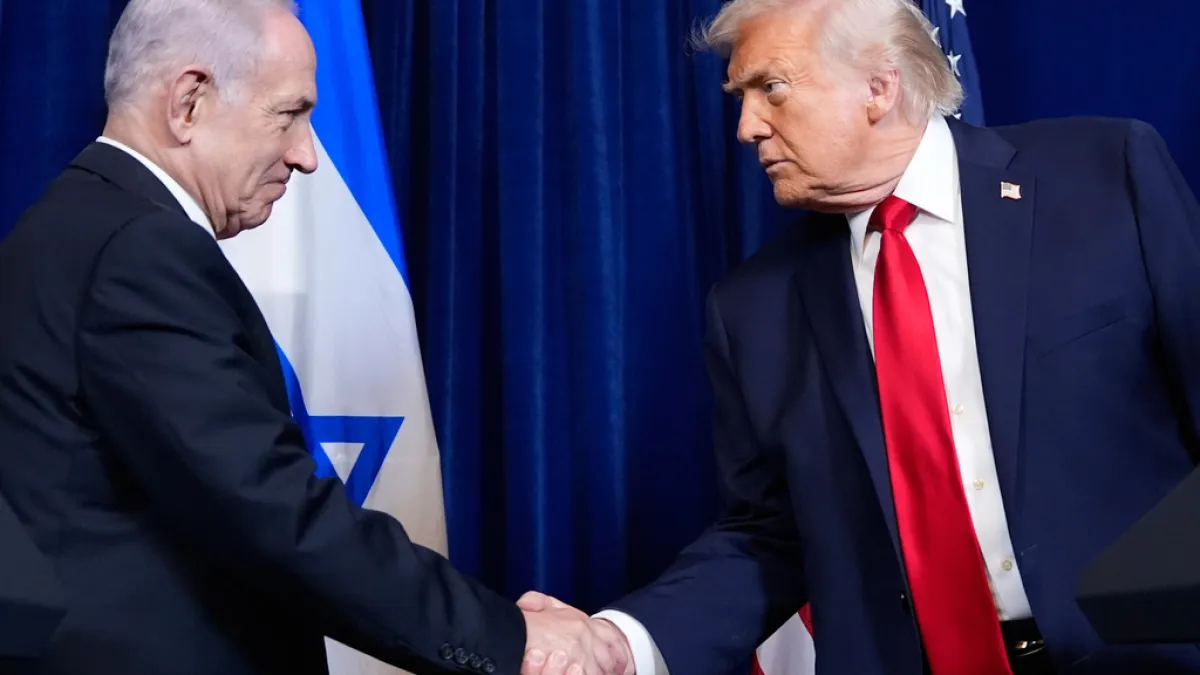
Israeli Prime Minister Benjamin Netanyahu and US President Donald Trump have presented a united front and heaped praise on each other as they held another meeting to discuss the tensions in the Middle East.
On Monday, Netanyahu paid his fifth visit to the United States since Trump’s inauguration in January, meeting the president at his Mar-a-Lago resort in Florida.
list of 3 itemsend of list
Their mutual flattery turned into geopolitical alignment as the two leaders addressed the most pressing issues in the Middle East: Gaza and Iran.
Trump claimed that Israel is helping the people of Gaza and dismissed the near-daily Israeli ceasefire violations.
Here are the key takeaways from Monday’s meeting.
Before and after his meeting with Netanyahu, Trump stressed that Hamas must disarm, issuing a stern threat to the Palestinian group.
Asked what would happen if Hamas refused to give up its weapons, Trump said: “It would be horrible for them, horrible. It’s going to be really, really bad for them.”
Last week, US Secretary of State Marco Rubio said that Washington’s top priority was to move to the second phase of the ceasefire, which would see the establishment of a technocratic Palestinian administration and the deployment of an international police force.
But on Monday, Trump kept the focus on Hamas, reiterating the claim that other countries have offered to “wipe them out” if the group refuses to give up its weapons.
Israel has killed 414 Palestinians in Gaza since the start of the ceasefire in October, and it continues to restrict the flow of international aid into the territory, including temporary shelter provisions, despite people suffering deadly weather conditions in makeshift tents.
Trump, however, said that Israel is fully living up to its commitments under the deal – “100 percent”.
“I’m not concerned about anything that Israel is doing,” he told reporters.
Trump suggested that Washington would carry out further military action against Iran if Tehran rebuilds its nuclear programme or missile capacity.
The president kept returning to the oft-cited argument that the US air strikes against Iranian nuclear facilities in June are what paved the way for the ceasefire in Gaza.
“Now I hear that Iran is trying to build up again, and if they are, we’re going to have to knock them down,” Trump said.
“We’ll knock them down. We’ll knock the hell out of them. But, hopefully, that’s not happening.”
In recent weeks, Israeli officials and their US allies have shifted the focus to Iran’s missile programme, arguing it should be dealt with before it poses a threat to Israel.
When asked whether the US would back an Israeli attack targeting Iran’s missile programme, Trump said, “If they will continue with the missiles, yes. The nuclear? Fast. OK? One will be: Yes, absolutely. The other is: We’ll do it immediately.”
Iran has ruled out negotiating over its missile programme, and it has denied seeking to build a nuclear weapon.
Israel, meanwhile, is widely believed to have an undeclared nuclear arsenal.
Since the early days of Israel’s genocidal war on Gaza, US media reports have suggested that the US president, first Joe Biden, then Trump, was angry or frustrated at Netanyahu.
But the US military and diplomatic support for Israel has never been interrupted.
Ahead of Netanyahu’s visit, similar reports emerged about a potential rift between him and Trump.
Nonetheless, the two leaders put on a show of brotherly romance on Monday.
Trump called Netanyahu a “hero”, stressing that Israel may not have existed without his wartime leadership.
“We’re with you, and we’ll continue to be with you, and a lot of good things are happening in the Middle East,” Trump told Netanyahu.
“We have peace in the Middle East, and we’re going to try and keep it that way. I think we will be very successful in keeping it that way. And you’ve been a great friend.”
The US president also highlighted his efforts to secure a presidential pardon for Netanyahu, who is facing corruption charges in Israel.
The Israeli prime minister announced that the US president will be awarded the Israel Prize, which is normally given to Israeli citizens.
“I have to say that this reflects the overwhelming sentiment of Israelis across the spectrum,” Netanyahu said.
“They appreciate what you’ve done to help Israel, and to help our common battle against the terrorists and those who would destroy our civilisation.”
Netanyahu has notably not been pardoned.
One area where Trump appeared to press Netanyahu was Syria.
Trump said Netanyahu is “going to get along” with Syria, lauding Syrian President Ahmed al-Sharaa.
Since the fall of former President Bashar al-Assad last year, Israel has expanded its occupation of southern Syria beyond the Golan Heights, seizing large areas in Jabal al-Sheikh. The Israeli military has also been carrying out raids, reportedly abducting and disappearing people in the country.
The new Syrian authorities have stressed that they do not seek conflict with Israel, but talks to reach a security agreement between the two countries have stalled.
“We do have an understanding regarding Syria,” Trump said. “Now, with Syria, you have a new president. I respect him. He’s a very strong guy, and that’s what you need in Syria.”
Netanyahu was non-committal on Israel’s approach to Syria.
“Our interest is to have a peaceful border with Syria,” he said. “We want to make sure that the border area right next to our border is safe — we don’t have terrorists, we don’t have attacks.”
Since the start of the truce in Gaza, Israel has intensified its attacks in Lebanon, leading to fears that it may re-launch its full-scale war against the country.
Earlier this year, the Lebanese government issued a decree to disarm Hezbollah, but the group pledged to hold onto its weapons to defend the country against Israel.
On Monday, Trump did not rule out renewing the conflict in Lebanon.
“We’ll see about it,” the president said when asked whether he would support more Israeli strikes in Lebanon.
“The Lebanese government is at a little bit of a disadvantage, if you think of it, with Hezbollah. But Hezbollah has been behaving badly, so we’ll see what happens.”

Dec. 29 (UPI) — The United States has pledged to contribute $2 billion to U.N. humanitarian efforts, slashing its funding to about one-fifth of its average annual financial commitment over the past decade, the U.S. State Department announced Monday.
The memorandum of understanding makes good on President Donald Trump‘s promises to dramatically reduce the amount of the United States’ foreign aid and save taxpayers’ money.
“The United States remains the most generous nation in the world for lifesaving humanitarian assistance — but under @POTUS’s leadership taxpayer dollars will never fund waste, anti-Americanism, or inefficiency,” Secretary of State Marco Rubio said in a post on X.
“This new model will better share the burden of U.N. humanitarian work with other developed countries and will require the U.N. to cut bloat, remove duplication, and commit to powerful new impact, accountability and oversight mechanisms.”
In addition to reducing funding, the agreement narrows what countries and projects benefit from the U.S. aid. The $2 billion will go into a fund administered by the U.N. Office for the Coordination of Humanitarian Affairs. Among the areas not receiving any of the U.S. funding are Gaza, Yemen and Afghanistan.
“These agreements will focus funding on hyper-prioritized life-saving activities; provide for powerful new impact, accountability, and oversight mechanisms; enhance the efficiency and flexibility of humanitarian operations; and better share the burden of humanitarian work across major donors,” a release from the U.S. State Department said.
Tom Fletcher, the U.N. under-secretary-general for Humanitarian Affairs and coordinator for Emergency Relief, offered his thanks to the United States for the commitment as “a powerful act of leadership and generosity that will help save millions of lives.”
“At a moment of immense global strain, the United States is demonstrating that it is a humanitarian superpower, offering hope to people who have lost everything.”
The newly announced funding, though, is a dramatic decrease from annual U.S. contributions over the past decade — from $6.5 billion in 2017 to a high of $17.25 billion in 2022. The average yearly contribution over the decade ending in 2024 was around $10 billion, five times the size of the funding announced Monday, according to data on the OCHA’s Financial Tracking Service.
This reduction in U.S. aid comes weeks after the United Nations launched an appeal to raise $33 billion to support operations for 2026. OCHA said the total would provide aid to 135 million people in 23 countries, and six projects serving refugees and migrants.
“The highly prioritized appeal follows a year when humanitarian lifelines strained and, in some places, snapped due to brutal funding cuts,” a release from the OCHA on Dec. 7 said.
“Funding for the appeal in 2025 — $12 billion — was the lowest in a decade and humanitarians reached 25 million less people than in 2024. The consequences were immediate: Hunger surged, health systems came under crushing strain, education fell away, mine clearance stalled and families faced blow after blow: no shelter, no cash assistance, no protection services.”

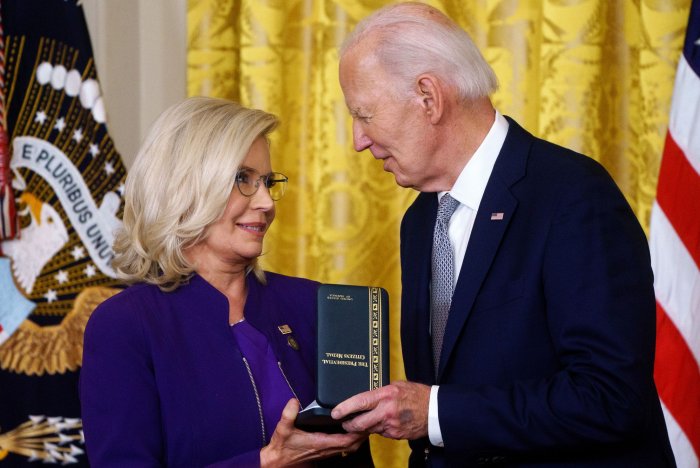
Dec. 29 (UPI) — The Trump administration on Monday announced it will distribute $50 billion dollars to expand access to rural healthcare across all 50 states with investments in growing the workforce, modernizing facilities and introducing new models of care delivery.
States are set to receive first-year awards next year of roughly $200 million under the Rural Health Transformation Program, which Congress authorized earlier this year as part of the Working Families Tax Cuts bill, the Centers for Medicare and Medicaid Services said in a press release.
“More than 60 million Americans living in rural areas have the right to equal access to quality care,” said Robert F. Kennedy, Jr., secretary of the Department of Health and Human Services.
“This historic investment puts local hospitals, clinics and health workers in control of their communities’ health care,” Kennedy said.
Today, @CMSGov announced that all 50 states will receive awards under the Rural Health Transformation Program, a $50 billion initiative established under the Working Families Tax Cuts legislation to strengthen and modernize health care in rural communities across the country…. pic.twitter.com/btt5fuCTn7— DrOzCMS (@DrOzCMS) December 29, 2025
The CMS is set to distribute the $50 billion dollars over the next five years, from 2026 through 2030, as part of the program established by the bill, which is more commonly known as the One Big Beautiful Bill Act.
Each year, $5 billion will be distributed equally to each of the 50 states, while another $5 billion will be allocated based on the proportion of rural health facilities, situations at specific facilities in the state and other factors, the agency said on the program website.
The CMS announced each state’s 2026 allocation — Washington, D.C., and U.S. territories are not eligible for the funds — in the release, with the awards ranging from New Jersey’s $147 million to Texas’ $281 million.
The funds are meant to accomplish a range of goals to “make rural America healthy again,” including:
The announcement comes after the American Hospital Association estimated earlier this year that rural hospitals could lose $50.4 billion in revenue from federal Medicaid funds over the next 10 years.
The reason is based on a Congressional Budget Office estimate earlier this year that the $1 trillion that was cut from Medicaid in the One Big Beautiful Bill Act could result in more than 7.8 million more people across the country becoming uninsured.
This loss of Medicaid coverage for patients affects revenue for healthcare providers, and the effects will be felt most acutely in rural areas.
These areas of the country currently include an estimated 16.1 million people with Medicaid coverage. Sparsely populated states such as Montana, Wyoming and Alaska have more than 50% of Medicaid recipients living in rural areas, the American Hospital Association says.
For many rural health facilities, a mixture of Medicare and Medicaid patients help them stay open, Sarah Hohman, director of government affairs for the National Association of Rural Health Clinics, told UPI in July.
“If the coverage losses pan out as they are estimated, that would mean that they are treating fewer patients that are covered by insurance,” Hohman said. “The more you have uncompensated care and individuals not able to pay, your balance gets concerning pretty quickly. That really threatens the financial viability in these areas.”

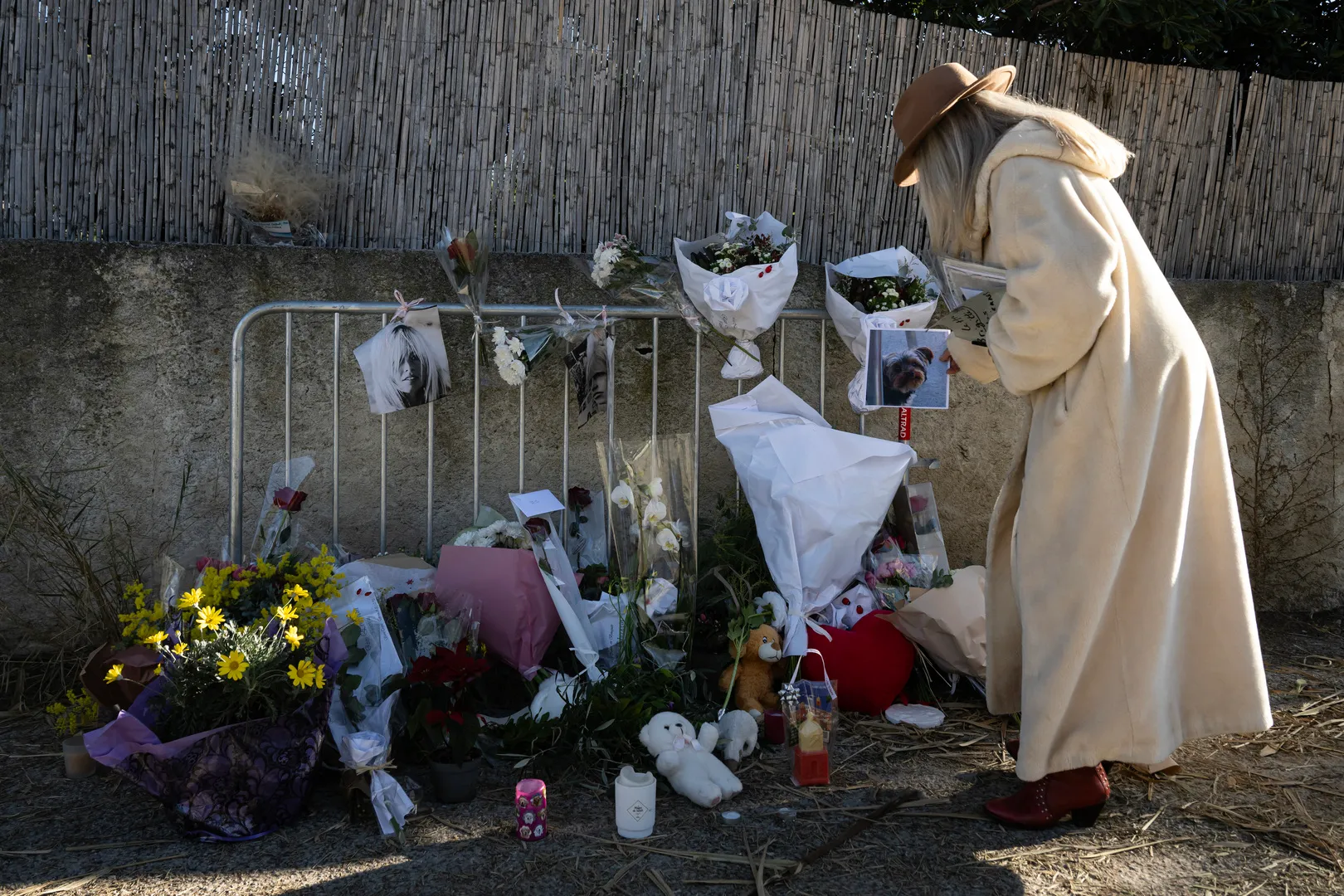
Residents of Saint-Tropez paid tribute to French film icon Brigitte Bardot on Monday outside her home, a day after the actress died at the age of 91. The actress-turned-far-right agitator will be buried in a seaside cemetery near the southern town, local officials said.
Published On 29 Dec 202529 Dec 2025
Share


Dec. 29 (UPI) — A winter storm is hitting the Midwest with strong winds, snow, ice and canceled flights expected.
A winter rainstorm is happening in the northeast and the south. In Massachusetts and Maine, that rain could turn to freezing rain.
As of 3 p.m. EST Monday, about 1,231 flights had been canceled in the United States, and more than 23,393 others were delayed, according to FlightAware.
Delta Air Lines showed the highest number of affected flights, with 3% (128 flights) canceled, and 15% (507) flights delayed.
Buffalo Niagara International Airport had the highest number of outbound flights canceled at 48% (47 flights). The Buffalo, N.Y., area could see 1 to 3 feet of snow this week, and wind gusts up to 65 mph could create whiteout conditions.
Storms capable of creating blizzard conditions with near-hurricane-force winds in the Great Lakes will hit Monday night and bring cold temperatures to the Midwest and Northeast, Accuweather reported. The storms will also bring colder temps to the southern states.
In Iowa, Illinois, Indiana, Ohio, Kentucky, West Virginia, Pennsylvania, New Jersey, Delaware and Maryland, wind gusts of up to 45 mph are predicted, ABC News reported.
Gusts up to 65 mph are possible in Ohio, Michigan and parts of Pennsylvania.
There will also be lake-effect snow and clipper storms, which could make travel dangerous in the Midwest and Northeast.
Parts of Iowa, Wisconsin and the upper peninsula of Michigan are under a blizzard warning, and the areas are facing whiteout conditions. Minneapolis had a winter weather advisory Monday morning due to blowing snow.
East Champion, Mich., in the upper peninsula, has seen 24 inches of snow in the past 24 hours, the National Weather Service reported.
In the Northeast, the main danger Monday morning was ice. There is an ice storm warning in effect in New York and Vermont, where forecasters expect 0.4 to 0.7 inches of ice. That amount can bring down trees and powerlines, as well as make roads extremely dangerous. Rain, including possible freezing rain, will be affecting Boston and Maine on Monday afternoon.
Lake-effect snow is expected to continue around the Great Lakes throughout the week.