Top News

Top news of today about travel

Competing Senate healthcare bills fail to pass

Dec. 11 (UPI) — The Senate failed to approve either of two competing healthcare plans meant to address healthcare costs likely to rise in the new year with the expiration of Affordable Care Act tax credits.

Democrats and Republicans each put forth their own healthcare plans, but neither mustered the 60 votes needed to overcome the Senate’s filibuster rule with identical 51-48 vote totals, NBC News and The Hill reported.

Each proposal mostly received party-line support, with only Sen. Rand Paul, R-Ky. voting against the GOP proposal, which all Senate Democrats also opposed.

Senate Democrats received some GOP support for their proposal, with Sens. Susan Collins, R-Maine, Josh Hawley, R-Mo., Lisa Murkowski, R-Alaska, and Dan Sullivan, R-Alaska, voting in favor.

Sen. Steve Daines, R-Mont., did not cast a vote for or against either measure.

The Democrats’ plan included a three-year extension of enhanced ACA subsidies beyond the Jan. 1 expiration date. The proposal would also limit health insurance premiums under the ACA to 8.5% of the policyholders’ incomes.

The enhanced subsidies were put in place during the COVID-19 pandemic as part of the 2021 American Rescue Plan.

To pass, Democrats needed at least 13 Republicans to vote in favor of the plan.

The expiring subsidies were the crux of a six-week government shutdown this fall. Democrats refused to vote in favor of a House Republican-drafted stopgap funding measure without including language that would see the subsidies extended beyond December.

Without the subsidies, healthcare premiums through the ACA were forecast to more than double in some cases. The Congressional Budget Office projects about 3.8 million will drop coverage annually over the next eight years without the additional subsidies. In 2025, a record 24 million Americans got their health insurance through the healthcare marketplace.

“We have 21 days until Jan.1,” Senate Democratic leader Chuck Schumer said on the Senate floor Wednesday. “After that, people’s healthcare bills will start going through the roof. Double, triple, even more.

“There is only one way to avoid all of this. The only realistic path left is what Democrats are proposing — a clean, direct extension of this urgent tax credit.”

Republicans, however, refused to consider the subsidies as part of the continuing resolution. Ultimately, Republicans agreed to consider a separate healthcare vote as a tradeoff to reopening the government.

The Republican plan, unveiled Tuesday by Sens. Bill Cassidy and Mike Crapo, doesn’t extend the subsidies but provides $1,500 health savings accounts for those earning less than 700% of the poverty level.”

“It delivers the benefit directly to the patient, not to the insurance company, and it does it in a way that actually saves money to the taxpayer,” Senate Republican leader John Thune said.

He described the Democrats’ plan as a “partisan messaging exercise” and called the idea that it would lower healthcare costs a “tour of fantasy land,” according to ABC News.

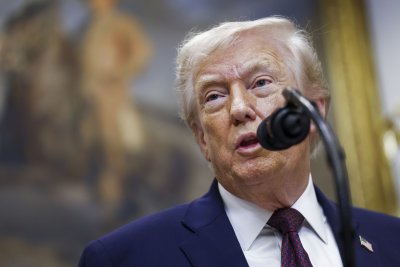
President Donald Trump makes remarks during a roundtable meeting with high-tech business executives in the Roosevelt Room of the White House on Wednesday. The president announced that the United States has seized an oil tanker near Venezuela and a revealed a new special corporate immigration gold card focused on keeping students in the United States. Photo by Aaron Schwartz/UPI | License Photo

Source link

Nuclear ambition, proxies & defiance: Iran’s former top diplomat | Israel-Iran conflict

On the Record

In this episode of On the Record, Al Jazeera’s Ali Hashem is joined by Iran’s former foreign minister, Mohammad Javad Zarif. They discuss Iran’s political and military involvement in the Middle East and beyond. Zarif reflects on Iran’s involvement with resistance groups in Syria, Gaza and Lebanon and why Iran’s nuclear ambitions have not been obliterated by either the US or Israel.

Source link

Austrian lawmakers pass headscarf ban for under-14s in schools | Religion News

Rights group Amnesty says ban, which will affect around 12,000 girls, will ‘add to racist climate towards Muslims’.

Austria’s lower house of parliament has passed a ban on Muslim headscarves in schools after a previous ban was overturned on the grounds that it was discriminatory.

Lawmakers passed the new legislation on Thursday by a large majority, meaning that girls younger than 14 will not be permitted to wear headscarves that “cover the head in accordance with Islamic traditions” in all schools, with non-compliance fines ranging from 150 to 800 euros ($175-930).

Recommended Stories

list of 2 itemsend of list

In 2019, the country introduced a ban on headscarves for under-10s in primary schools, but the Constitutional Court struck it down the following year, ruling that it was illegal because it discriminated against Muslims, going against the state’s duty to be religiously neutral.

The Austrian government says it has “done [its] best” to see that this law will hold up in the courts.

The new law, which was proposed by the governing coalition of three centrist parties at a time of rising anti-immigration and Islamophobic sentiment, was also backed by the far-right Freedom Party, which wanted it to go even further so it would apply to all students and staff. The Greens were the only party to oppose it.

Integration Minister Claudia Plakolm, of the conservative People’s Party, which leads the governing coalition, called headscarves for minors “a symbol of oppression”.

Yannick Shetty, the parliamentary leader of the liberal Neos, the most junior party in the governing coalition, told the lower house that the headscarf “sexualises” girls, saying it served “to shield girls from the male gaze”.

Rights groups have criticised the plan. Amnesty International said it would “add to the current racist climate towards Muslims”.

IGGOe, the body officially recognised as representing the country’s Muslim communities, said the ban “jeopardises social cohesion”, saying that “instead of empowering children, they are stigmatised and marginalised”.

Angelika Atzinger, managing director of the Amazone women’s rights association, said a headscarf ban would send girls “the message that decisions are being made about their bodies and that this is legitimate”.

Education Minister Christoph Wiederkehr of the Neos said young girls were coming under increasing pressure from their families, and also from unrelated young boys, who tell them what to wear for “religious reasons”.

The Greens’ deputy parliamentary leader, Sigrid Maurer, agreed that this was a problem, and suggested interdisciplinary teams, including representatives of the Muslim community, be set up to intervene in schools when “cultural tensions” flare.

Under the ban, which comes into effect in February, an initial period would be launched during which the new rules would be explained to educators, parents and children with no penalties for breaking them.

After this phase, parents will face fines for repeated non-compliance.

The government said that about 12,000 girls would be affected by the new law.


Source link

Architects of artificial intelligence named Time Person of the Year

An illustration picture shows the introduction page of ChatGPT, an interactive AI chatbot model trained and developed by OpenAI. Time magazine named the creators of artificial intelligence as the Time Person of the Year. File Photo by Wu Hao/EPA-EFE

Dec. 11 (UPI) — Time magazine on Thursday named the architects of artificial intelligence as the 2025 Person of the Year.

While no one specific person was singled out by the magazine for the annual honor, the cover story for the edition featured interviews with Nvidia CEO Jensen Huang, Softbank CEO Masayoshi Son, U.S. Energy Secretary Chris Wright and Baidu CEO Robin Li.

Time editor in chief Sam Jacobs, in a letter to readers about the selection, said no one had a greater impact on individuals than those who created AI.

“This was the year when artificial intelligence’s full potential roared into view, and when it became clear that there will be no turning back or opting out,” he wrote.

“For these reasons, we recognize a force that has dominated the year’s headlines, for better or worse. For delivering the age of thinking machines, for wowing and worrying humanity, for transforming the present and transcending the possible, the architects of AI are Time’s 2025 Person of the Year.”

The Person of the Year edition of the magazine features two covers this year — one depicting builders on scaffolding constructing the letters “AI” and another showing several tech leaders sitting on a steel beam above a cityscape, reminiscent of an iconic 1932 photo of construction workers eating lunch on a steel beam. The edition goes on sale beginning Dec. 19.

Time also named YouTube CEO Neal Mohan as CEO of the Year; Leonardo DiCaprio as Entertainer of the Year; A’ja Wilson as Athlete of the Year; and KPop Demon Hunters as Breakthrough of the Year.

Company Kawasaki Heavy Industries presents its latest humanoid robot, “RHP Kaleido 9,” during the 2025 International Robot Exhibition in Tokyo on December 3, 2025. Photo by Keizo Mori/UPI | License Photo

Source link

Bulgarian government resigns after mass protests | Politics News

PM Zhelyazkov says cabinet stepping down before parliament had been due to hold no-confidence vote.

Bulgaria’s government has resigned following weeks of street protests against its economic policies and its perceived failure to tackle corruption.

Prime Minister Rosen Zhelyazkov announced the resignation of his cabinet in a televised statement on Thursday, minutes before parliament had been due to vote on a no-confidence motion.

Recommended Stories

list of 4 itemsend of list

The resignation comes weeks before Bulgaria is due to join the eurozone on January 1.

“Our coalition met, we discussed the current situation, the challenges we face and the decisions we must responsibly make,” Zhelyazkov said, announcing the government’s decision to step down.

“Our desire is to be at the level that society expects,” he said. “Power stems from the voice of the people.”

Mass protests

Thousands of Bulgarians rallied on Wednesday evening in Sofia and dozens of other towns and cities across the Black Sea nation, the latest in a series of rolling demonstrations that have underlined public frustration with corruption and the failure of successive governments to root it out.

Last week, Zhelyazkov’s government withdrew its 2026 budget plan, the first drafted in euros, due to the protests.

Opposition parties and other organisations said they were protesting plans to hike social security contributions and taxes on dividends to finance higher state spending.

Despite the government’s retreat over the budget plan, the protests have continued unabated in a country that has held seven national elections in the past four years – most recently in October 2024 – amid deep political and social divisions.

President Rumen Radev also called on the government earlier this week to resign. In a message to lawmakers on his Facebook page on Thursday, Radev said: “Between the voice of the people and the fear of the mafia. Listen to the public squares!”

Radev, who has limited powers under the Bulgarian constitution, will now ask the parties in parliament to try to form a new government. If they are unable to do so, as seems likely, he will put together an interim administration to run the country until new elections can be held.

Source link

Mexico to begin levying up to 50% tariffs on China, others

Dec. 11 (UPI) — Mexico’s congress has approved charging up to 50% tariffs on Chinese imports Wednesday.

Mexican President Claudia Sheinbaum proposed the tariffs in September and said they are a way to boost domestic production. But others, like China, have said it’s a way to align with President Donald Trump, who has been pressuring other countries to distance themselves from China.

Mexico’s congress approved the tariffs Wednesday, and Sheinbaum is expected to sign the bill. The law would create up to 50% tariffs on China and any other country with which Mexico doesn’t have a trade agreement, including Thailand, India and Indonesia. The tariffs would take effect Jan. 1 and will include more than 1,400 products, like cars, metals, appliances and clothing.

After the United States, China is Mexico’s second-largest exporter. The United States sold $334 billion to Mexico last year, and China sold $130 billion in goods, The New York Times reported. China buys little from Mexico, which is another reason for the tariffs, Sheinbaum has said.

The Chinese government has warned Mexico to “think twice” about imposing the levies, saying it would harm China and other countries. It said the move was made “under coercion to constrain China,” alluding to Trump’s pressure.

The Chinese Ministry of Commerce said in a statement Thursday that the tariffs would “substantially harm” the country and others. It said for Mexico to “correct its erroneous practices of unilateralism and protectionism as soon as possible,” The Times reported.

Mexico is in talks with Trump, trying to reduce tariffs. The United States imposes 50% tariffs on Mexican steel and aluminum. Trump has threatened to add more to the tariffs for several reasons, including synthetic fentanyl and water rights from the Rio Grande.

Source link

Sweden’s push for an ex-IKEA CEO to lead UNHCR signals a new refugee order | Refugees

On October 14, the Swedish government announced it was nominating the CEO of IKEA, Jesper Brodin, as its candidate for United Nations High Commissioner for Refugees (UNHCR). Less than a month later, as the current high commissioner, Filippo Grandi, approached the end of his mandate, Brodin resigned from his position at the Swedish furniture giant, which he had led for eight years. In January 2026, the office of the UN secretary-general is expected to present a preferred candidate to the General Assembly for what former UNHCR head of research Jeff Crisp has called a “pro forma election”. Can the former chief of an iconic multinational company become the world’s highest authority on refugees — and what will it mean if he does?

In interviews, Jesper Brodin often refers to a small pamphlet by IKEA founder Ingvar Kamprad, titled The Testament of a Furniture Dealer, as outlining the values that inspire his way of doing business: innovation, sustainability and collective effort over individualism. Does the UNHCR need to learn lessons from a “furniture dealer”? The question matters because Brodin’s appeal is often framed in terms of corporate values, yet it remains unclear how — or whether — these translate into the protection of refugees. Whether Brodin has any chance of making it to the Geneva post or not, the question is worth asking, for the role of IKEA as a donor and operational partner of the UNHCR is significant and is likely to grow.

While humanitarianism and business have historically been companions, particularly since the end of the Cold War, this is the first time a business leader has been proposed to head the UN refugee agency. The nomination comes at a time when the UNHCR faces a dramatic cash crunch, and when political pressures and anti-refugee sentiment are increasing globally. Many scholars and practitioners believe the future of the global refugee regime itself may be at stake. Understanding the implications of Sweden’s choice, then, requires examining how corporate humanitarianism now shapes refugee protection.

Many were taken aback by the nomination. Yet the move by Sweden is anything but surprising. Over the past three decades, corporations have taken on increased responsibility for responding to humanitarian crises, while traditional organisations compete for a rapidly diminishing pool of resources. Research on the commodification of compassion has shown how, increasingly, “doing good” and “doing well” have become one and the same. This kind of “brand aid” involved both promoting commercial brands (from Toms shoes to Starbucks) through their involvement in humanitarian causes, and turning aid itself into a branded activity — something most effectively done through corporate partnerships. It began around two decades ago but has now become the dominant model of humanitarian engagement. As one major humanitarian donor in Kinshasa told us, “It’s now all about collaborations between the private sector, businesses and philanthropists.” Indeed, when the desire to help becomes something you can sell, corporations such as IKEA can profit from involvement in global helping that builds their ethical branding. But can the UNHCR profit from being led by IKEA’s CEO? The question goes to the heart of a growing unease about the direction of the refugee regime.

We see three main problems here. First, UNHCR is caught between contradictory demands from donor states in the Global North and hosting states in the South. Brodin and IKEA’s brand of feel-good capitalism cannot reconcile these fundamental tensions over sovereignty. Jesper Brodin has been lauded as a businessman and touts his credibility as a leader and negotiator. “Trump likes people in the business world,” we are told. However, the challenges to the agency’s protection mandate require a vision that goes well beyond the smiling face of compassionate capitalism. While formally remaining the guardian of the 1951 Refugee Convention, UNHCR has been operating in what scholars such as Bhupinder Chimni have described as an “erosion” of the international refugee regime — a long-term weakening of asylum norms and burden-sharing commitments. Donor governments in the Global North have used their limited support for UNHCR’s humanitarian activities in the Global South as a way to deflect attention from the disregard for refugee rights within their own borders. How will Brodin fare in navigating these competing pressures — from containment agendas in the Global North to protection obligations that lie at the heart of UNHCR’s mandate?

Second, Brodin often mentions his experience as a supply chain manager in a company that has put logistical innovation at the core of its business strategy as an important asset for the job. Indeed, this aligns with UNHCR’s current focus on renewing its own supply chain strategy. He also talks about “bringing the values and the assets of refugees to the business community,” a phrase he uses to refer to refugees’ skills and labour potential. However, this endeavour has proved far more complex than he makes it sound. Almost 10 years after IKEA’s first attempt to integrate refugees into its own supply chains in Jordan, the number of people the programme involves remains small, and refugees in the country still face significant barriers to work and social security.

A study we published in 2021 highlighted that a focus on refugee logistics actually meant working towards integrating displaced people into global supply chains rather than providing them with material support or infrastructure. Whether for business or for disaster relief, logistics depend on networks of infrastructure and rules that only function through ongoing negotiation with governments.

Finally, the contradictions of IKEA’s corporate and foundation ownership structure — what makes it work well as a business — embody the paradox of mixing public needs for refugee protection with private objectives for profit. The IKEA Foundation, the company’s philanthropic arm, has been working with UNHCR since 2010, supporting its operations in 16 countries. The UN agency defines the collaboration as “transformative”, highlighting how it has become a model for all its partnerships with the private sector. Moreover, the nomination comes at a time when major donor states, including the US, the United Kingdom and Germany, are slashing their budgets. In this geopolitical context, Sweden, while facing its own economic challenges, may well be seeking to stake its position as one of the last remaining humanitarian powers in the Western world. Brodin’s bid draws on Sweden’s perceived reputation for frugality and sustainability.

However, there is an unspoken yet fundamental contradiction between Brodin’s promise to address UNHCR’s crisis by “holding the purse strings” and the position of IKEA within global economic structures that have contributed to the humanitarian funding crisis in the first place. In 2017, following calls from EU parliamentary groups, the European Commission opened an in-depth investigation into the Netherlands — where the company is headquartered — for its tax treatment of Inter IKEA, one of the two groups operating the IKEA business. The company’s ownership structure, which benefits its commercial operations, may also reduce its tax burden, thereby reducing contributions to public finances. Here, as in many other cases, big business promises to fix global inequality it has helped create.

In the present global climate of hostility to migrants and refugees, Brodin and IKEA’s brand of feel-good capitalism risks further hollowing out UNHCR’s protection mandate, reducing humanitarianism to a matter of well-managed supply chains. The stakes are high: when humanitarian priorities are shaped by corporate logic, core protections — from asylum access to basic assistance — risk being eroded. What benefits a business organisation does not necessarily serve the rights or needs of refugees.

The views expressed in this article are the authors’ own and do not necessarily reflect Al Jazeera’s editorial stance.

Source link

At least 33 killed, 76 injured after Myanmar military bombs hospital

Commander-in-Chief of Myanmar’s armed forces, Senior General Min Aung Hlaing. The military government has been engaged in an increasingly bloody civil war with ragtag resistance forces, mainly in the center and north of the country, since seizing power in February 2021, three months after a general election in November 2020. File photo Alexander Zemlianichenko/EPA

Dec. 11 (UPI) — Airstrikes by Myanmar’s military government killed at least 33 patients and staff and injured 76, many of them critically, at a public hospital in Rakhine State in the west of the country, ahead of elections on Dec. 28.

Two 500-pound bombs were dropped in the attack on Wednesday night on the town of Mrauk-U in a region controlled by ethnic Rakhine rebels of the Arakan Army, one of a number of minorities fighting the repressive regime in Naypyidaw.

Images and footage circulating online of the aftermath and on Thursday morning show dozens of bodies, fierce fires, a large crater, one building completely destroyed and a second gutted and trees uprooted by the blast.

Arakan Army spokesman Khine Thu Kha noted that the attack came on International Human Rights Day.

The CRPH government-in-exile, representing lawmakers of Aung San Suu Kyi’s National League for Democracy and other lawmakers ousted when the military seized power in a coup in 2021, said the attack was a criminal act by an illegitimate military dictatorship.

“We strongly condemn the inhumane actions of the murderous military junta that is trying to gain legitimacy through a sham election. This action only serves to further highlight the long-standing crimes committed by the military coup,” CRPH said in a post on X.

“We deeply regret the loss of loved ones and the loss of lives in this brutal attack. We pray for the speedy recovery of the injured Rakhine people. We reiterate our commitment to continue working with all stakeholders to end the unjust military dictatorship and its violence as well as to bring peace in Myanmar.”

In the run-up to elections that the military junta is heralding as an “off-ramp” to fighting that has raged since 2021, airstrikes by its forces on rebel-held areas vowing to block the ballot have escalated sharply, hitting civilian targets, including schools, medical facilities, monasteries and displacement camps.

More than 100,000 homes have been razed in arson attacks, 3.6 million people displaced, with almost 22 million in need of humanitarian assistance, according to the United Nations, which said the junta had created “a humanitarian catastrophe,” exploiting an earthquake that hit the country in March to attack victims and gain a military advantage.

The U.N. said the elections would not be free or fair, accusing the regime of a cynical bid to create a veneer of legitimacy.

“Having driven Myanmar into a devastating humanitarian and human rights crisis and failed to consolidate control over the country, the junta is making a desperate bid to manufacture a facade of legitimacy by holding sham elections,” Tom Andrews, Special Rapporteur on human rights in Myanmar, said in a report in October.

“The polls will be neither free nor fair. A free and fair election is not possible when opposition leaders are arrested, detained, tortured or executed; when it is illegal to criticize the junta or the election; when journalists are in prison for having reported the truth.”

U.N. Human Rights Chief Volker Turk pleaded with the Trump administration not to go through with plans to end Temporary Protected Status, shielding people from Myanmar from being deported.

Speaking at the Nov. 28 press briefing in Geneva, Turk said the idea that any state would forcibly return Myanmar nationals who had fled the country in fear against the backdrop of “very serious human rights violations” was appalling.

In October, at least 24 anti-government protesters were killed and 47 were injured in Chaung-U, 200 miles northwest of Naypyidaw, after they were bombed by paragliders as they held a candle-lit vigil demanding the release of arbitrarily detained prisoners, opposing military conscription and this month’s election.

Sagaing, a quasi self-governing region in the center of the country, was targeted because it is a resistance hub, with People’s Defense Force volunteer militias running the local administration.

Source link

Venezuelan opposition leader Maria Corina Machado makes first public appearance in a year

Nobel Peace Prize laureate Maria Corina Machado reacts from the balcony at the Grand Hotel in Oslo, Norway, on Thursday, December 11, 2025. She received the Nobel Peace Prize 2025 for her work promoting democratic rights for the people of Venezuela and for her struggle to achieve a just and peaceful transition from dictatorship to democracy. Due to the situation in Venezuela, she was unable to attend the award ceremony. Photo by Lise Aserud/EPA

Dec. 11 (UPI) — Venezuelan opposition leader Maria Corina Machado has made her first public appearance in over a year early Thursday, just hours after winning the Nobel Peace Prize.

Machado was greeted by cheering supporters in the streets of Oslo.

A video of the scene was posted to her X account, showing a smiling Machado from the balcony of the Grand Hotel waving to a group of hundreds outside.

Pictures of her greeting and embracing supporters on the street were also published on her X account.

“The hug that all of Venezuela needs,” she wrote in a caption accompanying the photos.

Machado, 58, made the appearance at around 2:30 a.m. local time, The New York Times reported.

Her appearance in the Scandinavian country follows more than a year of her hiding from the regime of Venezuela’s authoritarian president, Nicolas Maduro.

Machado led an opposition movement that many Venezuelans and international observers believe outpolled Maduro in last year’s elections. She won the opposition primary but was barred from appearing on the general election ballot by the Maduro regime, a move widely condemned.

She then backed presidential candidate Edmundo Gonzalez in the race who is believed by the opposition and many observers to have won the election. Maduro, however, responded by intensifying repression and human rights abuses against political opponents and public dissent, while his government-controlled National Electoral Council declared him the winner.

Her appearance came as she traveled to Oslo to participate in the Nobel Prize Ceremony as she was this year’s recipient of the Nobel Peace Prize.

In a phone call released by the organization, Machado said she was on her way to Oslo, stating she was grateful for all those who risked their lives to make it happen.

“This is a measure of what this recognition means to the Venezuelan people,” she said, before boarding a plane.

She was unable to reach Oslo in time to receive the award, with her daughter, Ana Corina Sosa, taking the diploma and medal on her mother’s behalf at Oslo’s City Hall.

And she read her mother’s acceptance speech.

“My dear Venezuelans, the world has marveled at what we have achieved. And soon, it will witness one of the most moving sights of our time: our loved ones coming home — and I will stand again on the Simon Bolivar bridge, where I once cried among the thousands who were leaving, and welcome them back into the luminous life that awaits us,” Sosa said on her mother’s behalf.

“Because in the end, our journey towards freedom has always lived inside us. We are returning to ourselves. We are returning home.”

Source link

Can India balance its ties between Russia and the US? | Business and Economy

New Delhi is deepening economic ties with Moscow, despite pressure from Washington.

India is hedging between energy security and strategic partnerships.

Despite pressure from the United States, it has continued buying cheap Russian oil and has recently strengthened economic ties with Russia — from trade to weapons and critical minerals.

But this is a delicate balancing act for Prime Minister Narendra Modi: he wants to cut deals with Moscow, while staying friends with Washington, his biggest trading partner.

For President Vladimir Putin, it shows Russia still has powerful partners and is not completely isolated despite Western sanctions.

And Syria’s economy one year after the fall of Bashar al-Assad.

Plus, the bidding fight over Warner Bros.

Source link

DOJ sues Minneapolis schools over ‘DEI’ employment policies

Dec. 11 (UPI) — The Justice Department is suing the Minneapolis Public School District, alleging its provision to hire more teachers of color is a civil rights violation amid the Trump administration’s crackdown on diversity, equity and inclusion policies.

The lawsuit, filed Tuesday but announced Wednesday, accuses the district of discriminating against teachers based on their race, color, sex and national origin.

“Discrimination is unacceptable in all forms, especially when it comes to hiring decisions,” Attorney General Pam Bondi said in a statement.

“Our public education system in Minnesota and across the country must be a bastion of merit and equal opportunity — not DEI.”

Diversity, equity and inclusion, known as DEI, is a conceptual framework that promotes fair treatment and full participation of all people. It has for years been a target of Republican lawmakers and conservative activists, who claim DEI policies amount to unlawful racial preferences or discrimination against White individuals.

Since returning to the White House, Trump has led a campaign to erase DEI from the federal government, as well as private and public institutions, bringing a number of lawsuits against state and local governments, as well as schools and universities.

The lawsuit announced Wednesday focuses on the collective bargaining agreement the district signed with a teachers union that provides underrepresented teachers preferential treatment in employment decisions.

According to the lawsuit, the agreement requires the district when reassigning teachers, to do so based on seniority unless a teacher is from an underrepresented community. The agreement also directs the district to prioritize reinstatement of teachers from underrepresented communities.

In times of layoffs, teachers from underrepresented communities are allowed to be exempt, the Justice Department argues in the lawsuit.

“While defendants claim that these provisions are to stop discrimination, they require defendants to blatantly discriminate against teachers based on their race, color, sex and national origin,” the Trump administration said in the lawsuit,

“The United States brings this action to stop Defendants from engaging in race- and sex-based discrimination and thereby violating Title VII of the Civil Rights Act of 1964.”

Source link

South Korea apologizes to Jeju for honoring colonel linked to massacre

Several people preform a memorial service for their deceased family member before a tombstone in the Tombstone Park for the Missing with the Jeju 4.3 Peace Park, Jeju City, on April 3, 2023. Photo by Darryl Coote/UPI

JEJU ISLAND, South Korea, Dec. 11 (UPI) — The South Korean government has apologized to the province of Jeju Island for honoring the late Col. Park Jin-gyeong, who led a deadly repression operation during the early stages of the Jeju Massacre.

Seoul’s Ministry of Patriots and Veterans Affairs made its apology Wednesday for issuing Park the national merit certificate.

“Although the disposition was carried out in accordance with legal procedures, we extend our sincere apologies to the Jeju 4.3 victims, their families and the people of Jeju,” the ministry said in a statement.

Park was commander of the 9th Regiment of the Korean Constabulary on Jeju following the April 3, 1948, uprising, when some 350 armed members of the South Korean Workers’ Party Jeju branch attacked 12 police stations.

To squelch the revolt, Park led a military campaign of village sweeps and mass arrests of thousands that terrorized the local population. Park was assassinated in the early hours of June 18, 1948, by a subordinate officer, and though only on the island for about six weeks, he is widely seen as having paved the way for the massacres that would follow.

According to the official Jeju 4.3 Investigation Report, Park is quoted in testimony from a subordinate officer as having stated during his inauguration ceremony that: “In order to suppress the riot, it is fine if 300,000 Jeju people are victimized.”

About 30,000 islanders — 10% of Jeju’s population at that time — were killed during the Jeju Massacre of 1947 to 1954, which is widely referred to as the Jeju 4.3 Incident, or simply as Jeju 4.3, in Korean.

In its statement Wednesday, the ministry said Park was issued the national merit certificate on Nov. 4 following an application submitted by his bereaved family.

The national merit designation is a formal state honor, granted in the president’s name, that honors and commemorates an individual’s contributions and sacrifices to the nation.

The honor has been met with staunch opposition on the island.

The local government issued a statement Wednesday expressing its “deep regret” over the registration of Park as a national merit recipient, stating it will continue to work to establish “a historical record based on fact so that the truth of the Jeju 4.3 Incident and the honor of its victims are not undermined.”

It said the province is “concerned” that it made the decision to confer the honor on Park without considering “the historical context of 4.3 could cause confusion and harm within the local community.”

The Jeju government said that Park was given the honor for having been awarded a military medal decades ago, and that this current system for conferring awards harms the victims of the Jeju Massacre.

In response, the local government will install a sign at Park’s memorial on Monday that will include information about the massacre, including Park’s activities during the roughly 40 days he was on Jeju.

“The truth of 4.3 has been confirmed not through any particular viewpoint or political interpretation, but on the basis of the state’s official report and the accumulated body of research. Jeju Province will continue to faithfully convey the historical truth of 4.3 through fact-based explanations,” Jeju Gov. Oh Young-hoon said in a statement.

“We will continue to take responsible action to ensure that the honor of the victims and their families is not damaged and that the truth is set right.”

The ministry said it will work to prepare measures to ensure that similar issues do not occur in the future.

“Once again, we extend our sincere apologies to the Jeju 4.3 victims, their bereaved families and the people of Jeju,” it said.

The apology came on the same day a court ruled that Tae Yong-ho, a former politician of the conservative People’s Power Party, had defamed the Jeju 4.3 victims and bereaved families by making false statements.

In early 2023, controversy erupted on Jeju after Tae claimed the uprising of April 3, 1948, was initiated by North Korean founder Kim Il Sung and his communist party.

The official government investigation report said there is “no concrete evidence that the events were directed by the instructions of the headquarters of the South Korean Labor Party.”

Following Tae’s comments, right-wing political organizations erected 80 banners around the island that advertised his remarks. The banners were promptly removed by local officials.

The court on Wednesday ordered Tae to compensate the complainant, the the Jeju 4.3 Bereaved Families Association.

Source link

U.S. calls on Houthis to release detained mission staff

Houthi supporters shout slogans during a protest against Israel in Sana’a, Yemen, on August 29. On Wednesday, the United States called on the militant group to release former and current mission staff detained by the Houthis. File Photo by Yahya Arhab/EPA

Dec. 10 (UPI) — The United States late Wednesday called on Yemen-based Houthis to release all current and former staff the rebels have kidnapped, amid ongoing legal proceedings alleging international spy cells operating in the Middle Eastern country under the cover of humanitarian aid.

It was unclear how many current and former staff, all Yemeni nationals, of the U.S. Mission to Yemen were in Houthi custody. The United Nations has said 59 of its staff and dozens of diplomatic mission, NGO and civil society personnel have been detained by the Iran-proxy militia.

“The Iran-backed Houthis, a designated Foreign Terrorist Organization, have intensified their campaign of intimidation and abuse against Yemeni citizens affiliated with international organizations and foreign governments,” State Department spokesperson Thomas Pigott said in a statement.

“The Houthis’ arrests of those staff, and the sham proceedings that have been brought against them, are further evidence that the Houthis rely on the use of terror against their own people as a way to stay in power.

“We call for the immediate and unconditional release of the Mission staff.”

The Houthis have detained and are trying the workers they allege are members of foreign espionage cells linked to United States, Britain, Israel and Saudi Arabia.

Late last month the Houthi-controlled Foreign Ministry warned the United States against interfering in its judicial independence, saying it only confirms Washington’s involvement in espionage against them.

U.N. Secretary-General Antonio Guterres said he is “gravely concerned” about the arbitrary detention of his 59 personnel and the dozens of others in Houthi captivity and condemns their referral to a special criminal court.

Some of the U.N. personnel have been held by the Houthis for years without any due process and in violation of international law, he said, adding that they are immune from legal process for all acts performed in their official capacity.

In late August, 11 U.N. employees were abducted by Houthi-controlled authorities after they raided World Food Program facilities in the capital Sanaa. The raid followed Israeli airstrikes that killed the Houthis’ prime minister, Ahmed al-Wawai, along with several other ministers.

Hans Grundberg, U.N. special envoy for Yemen, said then that there were 23 U.N. workers in Houthi captivity.

On Tuesday, Volker Turk, the U.N. high commissioner for human rights, said one of his colleagues who has been detained by the Houthis since November 2021 has been presented before the Special Criminal Court on “fabricated charges of espionage connected to his work.”

“This is totally unacceptable and a grave human rights violation,” he said.

“Our colleagues, along with dozens of other U.N. and humanitarian staff, have been detained while bravely carrying out their work assisting the people of Yemen, and held in intolerable conditions ever since,” he said in a statement.

The U.N., he said, has received reports that numerous detained staff have been mistreated.

“Their suffering, and that of their families, has gone on far too long,” he said. “Their safety and well-being are at grave risk.”

Stephane Dujarric, spokesman for U.N. secretary-general, told reporters during a Tuesday press conference that they have not been able to speak with any of their detained staff but are in constant communication with the Houthis trying to secure their release.

“We don’t want them to be in this court, and we want them to be released,” he said.

The U.S. Embassy in Yemen said Wednesday that the “sham trials” are evidence of the Houthis’ weakness.

“The Houthis continue to use intimidation to distract from their inability to govern legitimately,” it said on X.

“We call for the immediate release of these unjustly held Yemeni citizens, so that they can return to their families after years of illegal detention.”

The U.N., along with humanitarian and non-governmental organizations, operate in Yemen as its 12-year civil war between the Houthi militants and the internationally recognized Yemeni government has made it one of the world’s worst humanitarian crises.

Source link

Ukraine reports large Russian mechanised assault in battle for Pokrovsk | Russia-Ukraine war News

Russia has claimed to be in full control of Pokrovsk, but Ukrainian forces say they still control the northern part of the strategic city in eastern Ukraine.

Ukrainian forces have reported an unusually large Russian mechanised attack inside the strategic eastern city of Pokrovsk, where Russia has reportedly massed a force of some 156,000 troops to take the beleaguered and now destroyed former logistics hub.

“The Russians used armoured vehicles, cars, and motorcycles. The convoys attempted to break through from the south to the northern part of the city,” Ukraine’s 7th Rapid Response Corps said in a statement on Wednesday regarding an assault earlier in the day.

Recommended Stories

list of 4 itemsend of list

A source in the 7th Rapid Response Corps told the Reuters news agency that Russia had deployed about 30 vehicles in convoy, making it the largest such attack yet inside the city. The source added that previously, Russia had deployed just one or two vehicles to aid troop advances.

While Russia has claimed full control of Pokrovsk, Kyiv maintains that its troops still hold the northern part of the city, where fierce urban battles continue to rage.

Russian troops have pushed into the city for months in small infantry groups, looking to capture the former logistics hub as a critical part of Moscow’s campaign to seize the entire industrial Donbas region of eastern Ukraine.

Video clips shared by the 7th Rapid Response Corps showed heavy vehicles in snow and mud, as well as drone attacks on Russian troops and explosions and burning wreckage.

Russian forces were attempting to exploit poor weather conditions but had been pushed back, the unit said on Facebook.

Capturing Pokrovsk would be Russia’s biggest prize in Ukraine in nearly two years, and the city’s weakening defence amid Moscow’s onslaught has added to pressure on Kyiv, which is attempting to improve terms in a United States-backed proposal for a peace deal that is widely seen as favourable to Moscow.

Ukraine’s top military commander, Oleksandr Syrskii, told journalists earlier this week that the situation around Pokrovsk remained difficult as Russia massed a force of some 156,000 around the beleaguered city.

Syrskii said Russian troops were staging the military buildup in the area under the cover of rain and fog.

George Barros, Russia team lead at the Institute for the Study of War – a US-based think tank – said Moscow is “hyping” the importance of the fall of Pokrovsk “in order to portray Russia’s battlefield advances as inevitable”.

“That sense of inevitability is being echoed by some members of President Donald Trump’s negotiating team trying to pull together a peace proposal for the Ukraine war,” Barros wrote in an opinion piece shared online.

But Russia has paid a huge price in its push to take the city with “more than 1,000 armoured vehicles and over 500 tanks” lost in the Pokrovsk area alone since the beginning of Russia’s offensive operations in October 2023 to seize nearby Avdiivka, which fell to Russian forces in early 2024 in one of the bloodiest battles of the war so far.

On Wednesday, President Trump said he had exchanged “pretty strong words” with the leaders of France, Britain and Germany on Ukraine, telling them their plan to hold new talks on a proposed US peace plan this weekend risked “wasting time”.

“We discussed Ukraine in pretty strong words,” Trump told reporters when asked about the phone call with British Prime Minister Keir Starmer, French President Emmanuel Macron and German Chancellor Friedrich Merz.

“They would like us to go to a meeting over the weekend in Europe, and we’ll make a determination depending on what they come back with. We don’t want to be wasting time,” Trump said.

The initial US peace plan that involved Ukraine surrendering land that Russia has not captured was seen by Kyiv and its European allies as aligning too closely with many of Russia’s demands to end the war, and has since been revised.

Trump has been pushing Ukrainian President Volodymyr Zelenskyy to agree to the US plan while Ukrainian officials told the AFP news agency on Wednesday that Kyiv had sent an updated draft of the plan back to Washington.


Source link

Kentucky Republican Rep. Thomas Massie introduces legislation for U.S. to leave NATO

Dec. 10 (UPI) — U.S. Rep. Thomas Massie, a Republican serving a House district in Kentucky, introduced legislation for the United States to pull out of NATO.

Rep. Anna Paulina Luna, a Republican from Florida, posted on X that she would be a co-sponsor of the Not a Trusted Organization Act, or NATO Act. Utah Republican Mike Lee introduced the same legislation in the Senate earlier this year.

“NATO is a Cold War relic,” Massie said in a statement Tuesday. “We should withdraw from NATO and use that money to defend our own country, not socialist countries.

“NATO was created to counter the Soviet Union, which collapsed over 30 years ago. Since then, U.S. participation has cost taxpayers trillions of dollars and continues to risk U.S. involvement in foreign wars.”

He added: “Our Constitution did not authorize permanent foreign entanglements, something our Founding Fathers explicitly warned us against. America should not be the world’s security blanket – especially when wealthy countries refuse to pay for their own defense.”

NATO was founded in 1949 by 12 members as a military alliance involving European nations, as well as the U.S. and Canada in North America. There are now 32 members, with Finland joining in 2023 and Sweden in 2024.

The NATO Act would prevent the use of U.S. taxpayer funds for NATO’s common budgets, including its civil budget, military budget and the Security Investment Program.

Article 13 of the North Atlantic Treaty allows nations to opt out.

“After the Treaty has been in force for 20 years, any Party may cease to be a Party one year after its notice of denunciation has been given to the Government of the United States of America, which will inform the Governments of the other Parties of the deposit of each notice of denunciation,” the treaty reads.

During the last NATO summit in The Hague, the Netherlands, President Donald Trump told reporters he agrees with NATO’s Article 5 mutual defense treaty.

“I stand with it. That’s why I’m here,” Trump said. “If I didn’t stand with it, I wouldn’t be here.”

Article 5 was invoked for the first time after the 9/11 attacks in the United States, leading to NATO’s involvement in Afghanistan.

The Kentucky Republican, who calls himself a “fiscal hawk” and a “constitutional conservative,” has been at odds with Trump on several issues, including fiscal spending, foreign policy/war powers, government surveillance and transparency.

Trump has also been critical of NATO.

During his 2016 election campaign, Trump called the alliance “obsolete.”

He urged nations to spend at least 3.5% of gross domestic product on core defense needs by 2035.

In June, NATO allies agreed to a new defense spending guideline to invest 5% of GDP annually in defense and security by 2035.

Five nations were above 3% in 2024: Poland at 4.12%, Estonia at 3.43%, U.S. at 3.38%, Latvia at 3.15% and Greece at 3.08%. In last is Spain with 1.28% though Iceland has no armed forces and Sweden wasn’t listed.

Some Republican senators want stronger involvement in the alliance, including Joni Ernst of Iowa and Sen. Roger Wicker of Mississippi. Wicker is chairman of the Senate Armed Services Committee.

For passage, a House majority is needed, but 60 of 100 votes in the Senate to break the filibuster and then a majority vote. Trump could also veto the bill.

Source link

Russia-Ukraine war: List of key events, day 1,386 | Russia-Ukraine war News

These are the key developments from day 1,386 of Russia’s war on Ukraine.

Here’s where things stand on Thursday, December 11:

Fighting

  • Ukrainian sea drones hit and disabled a tanker involved in trading Russian oil as it sailed through Ukraine’s exclusive economic zone in the Black Sea to the Russian port of Novorossiysk, a Security Service of Ukraine (SBU) official said.
  • The Dashan tanker was sailing at maximum speed with its transponders off when powerful explosions hit its stern, inflicting critical damage on the vessel, the SBU official said. No information was available on possible casualties from the attack.
  • The attack marks the third sea drone strike in two weeks on vessels that are part of Russia’s so-called “shadow fleet” – unregulated ships which Kyiv says are helping Moscow export large quantities of oil and fund its war in Ukraine despite Western sanctions.
  • Three people were killed and two wounded by Ukrainian shelling of a hospital in the Russia-controlled part of the Kherson region in Ukraine, a Russia-installed governor claimed on Telegram. All those killed and injured were reportedly employees of the medical facility.
  • Ukrainian forces are fending off an unusually large Russian mechanised attack inside the strategic eastern city of Pokrovsk, Kyiv’s military said, including “armoured vehicles, cars, and motorcycles”.
  • Russian drones have hit the gas transport system in Ukraine’s southern Odesa region, a senior Ukrainian official said, in an area which contains several pipelines carrying US liquefied natural gas to Ukraine from Greece.
  • Russian air defences shot down two drones en route to Moscow, the city’s Mayor Sergei Sobyanin said.

Peace deal

  • President Volodymyr Zelenskyy said Ukraine had agreed on key points of a post-war reconstruction plan and an “economic document” in talks with United States President Donald Trump’s son-in-law, Jared Kushner, Treasury Secretary Scott Bessent, and BlackRock CEO Larry Fink.
  • “The principles of the economic document are completely clear, and we are fully aligned with the American side,” Zelenskyy said. “An important common principle is that for reconstruction to be of high quality and economic growth after this war to be tangible, real security must be at the core. When there is security, everything else is there too,” he said.
  • Zelenskyy also said work was proceeding on the “fundamental document” of a US-backed 20-point plan aimed at ending the war. He said two other associated documents dealt with security guarantees and economic issues.
  • The leaders of Britain, France and Germany held a call with President Trump to discuss Washington’s latest peace efforts to end the war in Ukraine, in what they said was “a critical moment” in the process.
  • French President Emmanuel Macron said Trump and the European leaders discussed how to move forward on “a subject that concerns all of us”.
  • There will be another meeting on Thursday of the leaders of the so-called “coalition of the willing” group of nations backing Ukraine, said the French presidency, adding that this meeting would be held via videoconference.

Military aid

  • The US House of Representatives has passed a massive defence policy bill authorising a record $901bn in annual military spending, including $400m in military assistance to Ukraine in each of the next two years and other measures reinforcing the US commitment to Europe’s defence.

Politics and diplomacy

  • Trump again expressed concern that Ukraine had not had an election in a long time, putting additional pressure on Zelenskyy to hold one.
  • Zelenskyy said he had discussed with Ukraine’s parliament legal and other issues linked to the possibility of holding an election during wartime, and urged other countries, including the US, not to apply pressure on the issue.
  • Wartime elections are forbidden by law in Ukraine, but Zelenskyy, whose term expired last year, is facing renewed pressure from Trump to hold a vote.

Regional security

  • Following a report from the head of Kyiv’s foreign intelligence service that Russia and China were taking steps to intensify cooperation, Zelenskyy said there was a “growing trend of the de-sovereignisation of parts of Russian territory in China’s favour”, primarily through Moscow’s sale of its “scarce resources” to Beijing.
  • “We … note that China is taking steps to intensify cooperation with Russia, including in the military-industrial sector,” Zelenskyy wrote on X.

Sanctions

  • The US has extended a deadline for negotiations on buying the global assets of Russian oil company Lukoil by a little over a month to January 17. Trump imposed sanctions on Lukoil and Rosneft, Russia’s two biggest energy companies, on October 22 as part of an effort to pressure Moscow over its war in Ukraine, and Lukoil put its assets up for sale shortly after.
  • Russian prosecutors asked a Moscow court to seize the assets of US private equity fund NCH Capital in Russia, the Kommersant newspaper said, citing court documents. Prosecutors accused the fund’s owners of financing Ukraine’s military forces.
  • European Union ambassadors have greenlit the bloc’s plan to phase out Russian gas imports by late 2027, three EU officials told the Reuters news agency, clearing one of the final legal hurdles before the ban can pass into law.


Source link

‘Largest tanker ever seized’ held by U.S. off the coast of Venezuela

Dec. 10 (UPI) — The United States seized a large oil tanker off the coast of Venezuela amid ongoing tensions between President Donald Trump and Venezuelan President Nicolas Maduro.

The tanker was seized during a “judicial enforcement action on a stateless vessel” that had docked in Venezuela, Bloomberg reported.

“Today, the Federal Bureau of Investigation, Homeland Security Investigations and the United States Coast Guard, with support from the Department of War, executed a seizure warrant for a crude oil tanker used to transport sanctioned oil from Venezuela and Iran,” Attorney General Pam Bondi said in a late-afternoon post on X.

U.S. officials sanctioned the oil tanker several years ago due to its “involvement in an illicit oil shipping network supporting foreign terrorist organizations,” Bondi explained.

“This seizure, completed off the coast of Venezuela, was conducted safely and securely — and our investigation alongside the Department of Homeland Security to prevent the transport of sanctioned oil continues.”

U.S. military personnel seized the tanker by fast-roping from a helicopter to board it, Bloomberg reported.

Trump earlier confirmed the tanker’s seizure at the start of a 2 p.m. EST roundtable at the White House.

“We’ve just seized a tanker off the coast of Venezuela — the largest tanker ever seized,” Trump said at the start of the roundtable meeting.

He said “it was seized for a very good reason” and the “appropriate people” would address the matter when asked for more information by a reporter.

The vessel’s seizure occurred as the Trump administration has been applying pressure on Maduro, whom Trump has accused of being a narco-trafficker and of stealing the country’s 2024 presidential election by declaring himself the winner.

The Trump administration has designated Cartel de los Soles aka Cartel of the Sun a foreign terrorist organization that includes many Venezuelan military and government officials among its leadership.

Defense Secretary Pete Hegseth has ordered a carrier strike group to join other U.S. Navy vessels in the Caribbean Sea amid ongoing strikes against small craft departing Venezuela and other nations that are alleged tobe carrying illicit drugs.

The oil tanker’s seizure and the presence of the U.S. military in international waters near Venezuela are likely to discourage oil companies from transporting Venezuelan crude oil.

“Shippers will likely be much more cautious and hesitant about loading Venezuelan crude going forward,” Kpler oil analyst Matt Smith told CNBC.

Rystad Energy’s Jorge Leon, who is in charge of the firm’s geopolitical analysis, told Bloomberg the U.S. seizure of a “Venezuelan tanker” is a “clear escalation from financial sanctions to physical interdiction.”

The seizure “raises the stakes for Caracas and anyone facilitating its exports,” Leon said.

The Trump administration also has advised international airlines to be cautious when approaching Venezuela, which has caused many to suspend operations there.

President Donald Trump walks on the South Lawn of the White House after arriving on Marine One in Washington on Tuesday. Trump said people were “starting to learn” the benefits of his tariff regime. Photo by Graeme Sloan/UPI | License Photo


Source link

Tents flood, families seek shelter as Storm Byron bears down on Gaza | Israel-Palestine conflict News

Storm Byron is threatening to heap new miseries on Palestinians in Gaza, with families making distress calls from flooded tents and hundreds of others fleeing their shelters in search of dry ground as the fierce winter storm lashes heavy rains on the besieged territory.

Officials warned Wednesday that the storm was forecast to bring flash floods, strong winds and hail until Friday, conditions expected to wreak havoc in a territory in the grip of a humanitarian crisis, where hundreds of thousands of displaced people live in tents, temporary structures, or damaged buildings after two years of Israel’s genocidal war against the Palestinian people in Gaza.

Recommended Stories

list of 4 itemsend of list

Humanitarian workers said Israeli restrictions on the entry of tents, tools to repair water and sewage systems have left Gaza poorly equipped to respond to the storm, and called on the international community to pressure the Netanyahu government to urgently allow in supplies.

In the southern city of Rafah, the Palestinian Civil Defence said its teams had already received distress calls from displacement camps, with families reporting “flooded tents and families trapped inside by heavy rains”.

“Despite limited resources and a lack of necessary equipment, our teams are working tirelessly to reach those in need and provide assistance,” the rescue agency said on Telegram.

Footage posted on social media and verified by Al Jazeera showed Palestinians shovelling a ditch around tents in a desperate attempt to create barriers that would prevent them from flooding.

Displacement camps at risk

Nearly 850,000 people sheltering in 761 displacement sites face the highest risk of flooding, according to the UN Office for the Coordination of Humanitarian Affairs (OCHA).

Flooding has previously been recorded at more than 200 of the highest-risk sites, affecting more than 140,000 people, the office said.

Previous storms had contaminated displacement sites with sewage and solid waste, swept away families’ tents and driven them out of makeshift shelters.

Reporting from Gaza City, Al Jazeera’s Tareq Abu Azzoum said that UN  agencies and local authorities were warning that any significant rainfall could have devastating consequences for Gaza’s population, with the displacement camps built on barren, open terrain that would be highly susceptible to flooding.

The tents available to people were typically flimsy, unreinforced and often torn, he said, offering negligible protection from heavy rains, which were likely to seriously damage whatever possessions families had left.

Risk of water contamination, disease

Amjad Shawa, director of the Palestinian NGOs network, said Israeli restrictions on the entry of aid and equipment had left Gaza ill-equipped to deal with the storm.

He said only 40,000 tents, out of a needed 300,000, had been allowed in, while tools that would likely be needed to repair sewage systems and water networks were also restricted.

Flooding would bring a serious risk of sewage and solid waste contaminating drinking water or food supplies, raising the risk of diseases in the densely populated Strip, where 2.2 million people are crammed into just 43 percent of the territory, while the remaining 57 percent remains under Israeli military control.

“If Israel were to allow the entrance of supplies, things would be different. But for now, it has done all it can to make life more complicated for Palestinians,” Shawa said.

Oxfam humanitarian response adviser Chris McIntosh agreed, telling Al Jazeera that the people of Gaza were bracing for a “very tragic situation”.

“Persistent bureaucracy prevented us from bringing in adequate dwellings for people in Gaza,” McIntosh said. “The Israelis have not permitted tents to enter Gaza for many months. The only thing they’re allowing at this point is some tarpaulin, which isn’t going to do much for people who need proper shelter.”

He said Palestinians were being forced to live in “deplorable conditions”, with well more than 50 percent of the population living in tents.

He anticipated many would attempt to find dry ground inside bombed-out buildings that were at heightened risk of collapse amid the forecast heavy rains and winds.

Families flee flooding risk

Farhan Haq, a spokesperson for UN Secretary-General Antonio Guterres, warned that vulnerable groups, including newborn children, are at particular risk from the incoming winter storm.

About 200 families were expected to arrive at a new displacement site in eastern Khan Younis in the south of the Strip, fleeing a heightened risk of flooding in their present location, he said.

“These households made the decision to move given the impact of the frequent rains and the risk of flooding,” he said.

Ismail al-Thawabta, director of Gaza’s Government Media Office, told Al Jazeera that about 288,000 Palestinian families were without shelter as Storm Byron bore down on the enclave, and issued a call to the international community to pressure Israel to allow in supplies to help respond to the storm.

“We are issuing an urgent appeal to the world, [United States] President Trump and the [United Nations] Security Council to pressure the Israeli occupation,” he said.

Francesca Albanese, the UN special rapporteur on human rights in the occupied Palestinian territory, condemned global inaction as families in Gaza braced for the storm.

“Palestinians in Gaza are literally left alone, freezing and starving in the winter storm,” she posted on X.

“I keep asking how we became such monsters, [i]ncapable of stopping this nightmare.”

Source link

Gregg Phillips, election denier and FEMA critic, to help lead agency

Dec. 10 (UPI) — Gregg Phillips has been selected for a leadership position in the Federal Emergency Management Administration, though he hasn’t managed emergencies at the state or federal level and has been critical of the agency.

Philipps, 65, is best known for claiming millions of noncitizens voted in the 2016 election.

Phillips will lead the Office of Response and Recovery, which is FEMA’s largest division, as first reported by The Handbasket. The position doesn’t need to be confirmed by the U.S. Senate.

Karen Evan, FEMA’s newly appointed interim leader, also doesn’t have major management experience. She replaced David Richardson, who resigned as FEMA’s acting administrator on Nov. 17 after being appointed on May 8, and also didn’t have emergency experience.

Phillips will be “joining the FEMA leadership team, bringing experience in emergency and humanitarian response, state government operations, and large-scale program reform,” a spokesperson for the Department of Homeland Security, which oversees FEMA, wrote in an email to The Hill.

In a LinkedIn post last year, he wrote: “I have been a very vocal opponent of FEMA” and believes that the agency has failed people in need.

Homeland Security Secretary Kristi Noem, whose agency oversees FEMA, has said there is a need to “eliminate FEMA as it exists today.”

Since January, the number of active FEMA employees has decreased by approximately 2,500 from around 25,800.

The FEMA’ Fiscal Year 2025 budget is approximately $59.2 billion, which includes annual appropriations and supplemental funding for the Disaster Relief Fund. The initial budget request was $27.9 billion.

Phill will “support FEMA leadership as the agency advances reforms aligned with the direction set by President Trump and Secretary Noem, focused on clarifying federal responsibilities, strengthening coordination with states, and improving accountability in disaster operations,” the spoekspereson said.

The office recommends to FEMA’s administrator whether a disaster should be declared. They distribute manufactured housing after disasters, assist communities after disasters or terrorism, provide disaster response and ensure FEMA’s field operations are timely and effective.

A longtime, unnamed FEMA official told The Washington Post: “You want that person to have deep technical knowledge to say ‘This is why this should get declared [a disaster] and why this shouldn’t.’ So the administrator can look and say ‘yep, that makes total sense, let’s send this to the White House.’ ”

He led the Texas Health and Human Services Commission and was deputy Commissioner of the Mississippi Department of Human Services. Phillips’ work was

He was accused of ethical misconduct in funneling contracts to his private companies.

Elections denial

Phillips has been an ardent supporter of Donald Trump.

After the 2016 election, Phillips claimed that mass voter fraud had denied Trump the popular votes against Hillary Clinton.

He said his Texas-based nonprofit, True the Vote, gathered data showing that 3 million “noncitizens.”

Trump later posted the information on Twtter, which is now X, writing: In addition to winning the Electoral College in a landslide, I won the popular vote if you deduct the millions of people who voted illegally.”

Phillips didn’t produce evidence about his claim and later disputed Joe Biden won the 2020 election.

In 2022, Phillips and True the Vote’s president were jailed because they defied a court order to turn over information backing their allegations that an election software company helped Biden win.

He was also featured in the discredited film 2000 Mules in 2022 about 2020 election fraud.

Source link