Top News

Top news of today about travel

Cuba says 32 Cubans killed during US raids on Venezuela | News

DEVELOPING STORY,

Havana declares two days of mourning for the Cubans killed in US’s operation to capture Nicolas Maduro.

The government of Cuba has announced that 32 ⁠of its ​citizens were ‍killed during the raid by the United States to abduct Venezuelan President Nicolas Maduro in Caracas.

It said on Sunday that there would be two days of mourning on ‌January 5 and ‌6 in ⁠honour of those killed and that ‌funeral arrangements would be announced.

More soon…

Source link

Dan Bongino exits post as deputy director of the FBI

Jan. 4 (UPI) — Former New York City cop, U.S. Secret Service agent and conservative media personality Dan Bongino has exited his post as deputy director after less than a year in the office.

“It was a busy last day on the job. This will be my last post on this account. Tomorrow I return to civilian life,” Bongino, 51, posted on X Saturday.

“It’s been an incredible year thanks to the leadership and decisiveness of President [Donald] Trump. It was the honor of a lifetime to work with Director [Kash] Patel, and to serve you, the American people. See you on the other side.”

On Bongino’s last shift Saturday, Venezuelan President Nicolas Maduro and his wife Cilia were captured by U.S. special forces and FBI agents, and flown to New York where they are to be arraigned on weapons and drug charges on Monday.

“Dan heads back to the private sector after helping orchestrate a record year for the @fbi,” Patel wrote on X Sunday.

“-Historic 20% drop in nationwide murder rate-100% increase in arrests year to year -1,800 gangs and criminal enterprises disrupted (210% increase)-2,000+ kilos of Fentanyl seized (up 31%) enough to kill 130 million Americans-Nihilistic Violent Extremism arrests up 490%-Over 6,000 child victims located (up 22%),” Patel continued.

“-Espionage arrests up 35%-Multiple successful surges including Summer Heat which had almost 9,000 arrests in just three months This FBI is saving lives, protecting innocent kids, and taking deadly drugs off our streets at levels not seen in decades. None of it would’ve been possible without Dan’s leadership and support. And he paved the way for even better things to come. Thank you @dbongino.”

Bongino replied to Patel, stating: “Thank you my friend, it was an honor to serve with you. You’re doing an incredible job and I KNOW you’re focused, resolute, and over the target. We got a lot done in a year and there’s a lot more coming.”

Bongino announced last month that he was planning to leave.

At the time, Trump told reporters Bongino had done a “great job,” but wants to “get back to his show.”

CNN said Bongino exited because he frequently clashed with Attorney General Pam Bondi and because the job was taking a toll on his personal life.

Fox News said Andrew Bailey is now the only deputy director at the FBI.

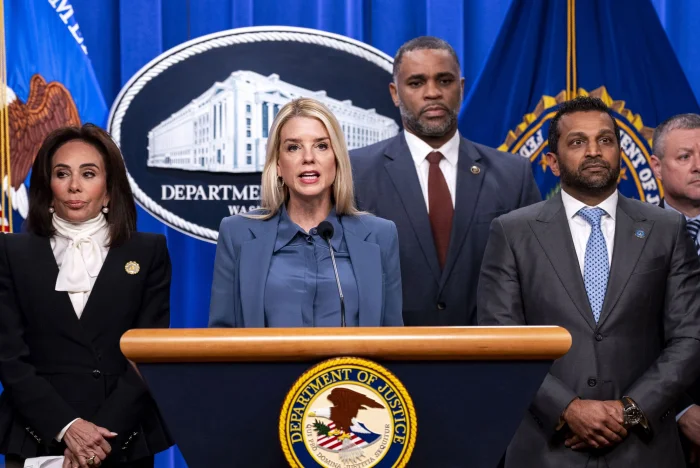
Attorney General Pam Bondi (C), FBI Director Kash Patel (R), U.S. Attorney for the District of Columbia Jeanine Pirro and others hold a press conference at the Department of Justice Headquarters on Thursday. The FBI arrested Brian Cole of Virginia, who is believed to be responsible for placing pipe bombs outside the Republican and Democratic party headquarters the night before the January 6, 2021, insurrection. Photo by Bonnie Cash/UPI | License Photo

Source link

Cameroon edge South Africa 2-1 to book AFCON quarterfinal with Morocco | Football News

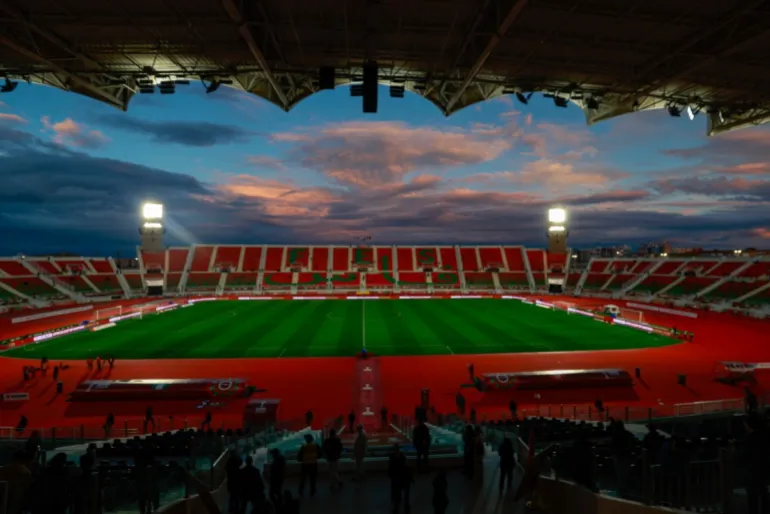
Goals either side of half-time by Junior Tchamadeu and Christian Kofane took Cameroon through to the Africa Cup of Nations quarterfinals at South Africa’s expense, as the Indomitable Lions edged their last-16 clash 2-1.

Tchamadeu opened the scoring in the 34th minute at Al Medina Stadium in Rabat on Sunday, and teenage Bayer Leverkusen forward Kofane headed in the crucial second goal two minutes after half-time.

Recommended Stories

list of 4 itemsend of list

A late rally from South Africa saw Evidence Makgopa pull one back, but it is Cameroon who go through. The five-time champions now play the hosts, Morocco, in a heavyweight quarterfinal on Friday.

They can go into that match in a relaxed mood, knowing all the pressure is on Morocco as they look to win a first AFCON title in 50 years in front of their home support.

For Cameroon, reaching the last eight means their AFCON is already a success after a chaotic buildup in which Samuel Eto’o, the football federation president and Indomitable Lions legend, sacked the coach, Marc Brys, replacing him with David Pagou.

The new coach got the better of South Africa’s Hugo Broos, who had promised to show no mercy to Cameroon, nine years after leading them to their last continental crown at the Cup of Nations in Gabon.

Bafana Bafana, who finished third at the last AFCON two years ago in Ivory Coast, will be hugely disappointed, but they can console themselves by turning their attentions towards the upcoming World Cup.

Yet, South Africa had chances to take an early lead, with Relebohile Mofokeng squandering a golden opportunity inside seven minutes.

Cameroon defender Che Malone failed to deal with a simple ball forward, to leave Mofokeng in on goal, but the Orlando Pirates forward blazed over.

Lyle Foster then had the ball in the net only to be denied by the offside flag, and instead, Cameroon went in front just after the half-hour mark.

When the South African defence could only partially clear a corner, the ball fell to Carlos Baleba on the edge of the area.

He took a touch and tried a shot which was deflected into the path of Tchamadeu, and the London-born full-back with Stoke City rolled home from close range.

That goal – confirmed after a long VAR check – was celebrated by the Cameroonian fans, who made up the majority of the 14,127 crowd, with two-time AFCON winner as a player Eto’o among those in attendance.

South Africa would have hoped for a strong start to the second half, but instead, Cameroon scored again within two minutes of the restart.

Substitute Mahamadou Nagida crossed from the left, and Kofane headed in his second goal of the tournament so far.

Cameroon goalkeeper Devis Epassy then made good saves from Samukele Kabini and from a Teboho Mokoena free-kick, before Makgopa turned in a low cross by fellow substitute Aubrey Modiba on 88 minutes.

That set up a grandstand finish, but Cameroon nervously held on.

Morocco see off Tanzania

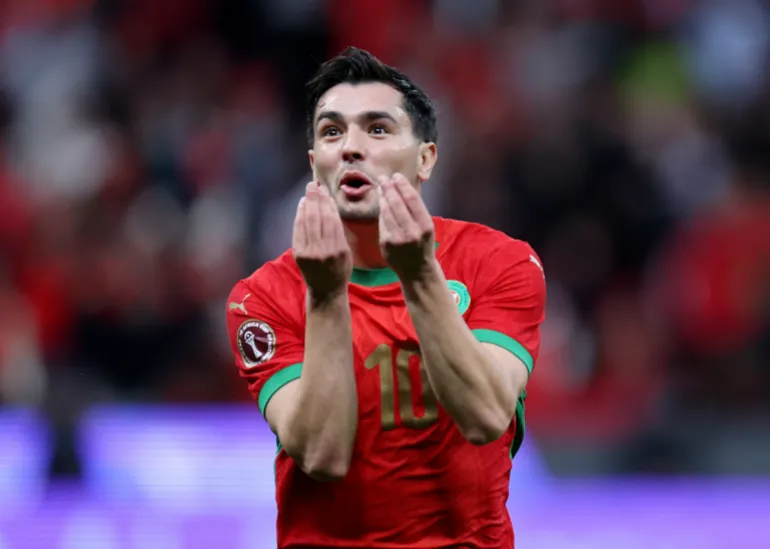
Earlier on Sunday, Brahim Diaz scored his fourth goal for Morocco at the 2025 Africa Cup of Nations to put the hosts into the quarterfinals with a nervous 1-0 Round-of-16 victory over Tanzania in Rabat.

Morocco dominated possession, but ⁠Tanzania had opportunities too, and it took a fine strike from Diaz to book a ​place in the last eight.

Captain Achraf Hakimi fed Diaz on the right side of the box on 64 minutes, and the Real Madrid playmaker worked his way to the byline before firing into ‍the goal from ⁠a tight angle when most expected a cross.

Soccer Football - CAF Africa Cup of Nations - Morocco 2025 - Round of 16 - Morocco v Tanzania - Prince Moulay Abdellah Stadium, Rabat, Morocco - January 4, 2026 Morocco's Brahim Diaz celebrates scoring their first goal REUTERS/Amr Abdallah Dalsh
Morocco’s Brahim Diaz celebrates scoring against Tanzania [Amr Abdallah Dalsh/Reuters]

Morocco wasted several other chances, but were also fortunate that Tanzania were wasteful too, with Simon Msuva and Feisal Salum missing gilt-edged opportunities for the East Africans, with the score at 0-0.

It was far from a vintage performance from the home side, who have yet to click into top gear at the tournament, but they did enough to keep their campaign on track.

“The ​competition is hotting up, and we faced our toughest opponent in ‌this Tanzania team,” Diaz said.

“Not everything worked, we know that, but fortunately, we managed to secure our qualification [to the next round]. Now, we are going back to work to be fully ready for the quarterfinals.”

Source link

Venezuela decries ‘cowardly kidnapping’ as officials back Maduro | US-Venezuela Tensions News

Venezuela’s Defence Minister Vladimir Padrino Lopez has denounced the United States’ move to abduct leader Nicolas Maduro as a “cowardly kidnapping”, adding that some of the president’s bodyguards were killed “in cold blood”, as well as military personnel and civilians on the Venezuelan side.

In his televised statement on Sunday, Padrino Lopez also endorsed a Supreme Court ruling that appointed Vice President Delcy Rodriguez — who also serves as oil minister — as acting president for 90 days.

Recommended Stories

list of 3 itemsend of list

US President Donald Trump threatened that Rodriguez will pay a “very big price” if she doesn’t cooperate with Washington. “If she doesn’t do what’s right, she is going to pay a very big price, probably bigger than Maduro,” Trump told The Atlantic in a telephone interview.

US forces attacked Caracas in the early hours of Saturday, bombing military targets and spiriting away Maduro and his wife to face federal narco-trafficking charges in New York. The Venezuelan president was escorted off a plane at Stewart Air National Guard Base in New York state and taken to a Brooklyn jail.

He is due to make his first appearance on Monday in Manhattan’s federal court.

US to use oil blockade to leverage change in Venezuela

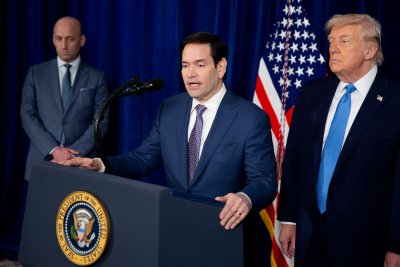
US Secretary of State Marco Rubio on Sunday suggested that Washington would not take a day-to-day role in governing Venezuela other than enforcing an existing “oil quarantine”, using that leverage to press policy changes in the country.

Rubio’s statements seemed designed to temper concerns, a day after Trump announced the US would “run” the oil-rich nation. The Trump administration’s actions drew unease from parts of his own Republican Party coalition, including an “America First” base that is opposed to foreign interventions, as well as from observers who recalled past nation-building efforts in Iraq and Afghanistan.


Rubio dismissed such criticism, saying that Trump’s intent had been misunderstood by a “foreign policy establishment” that was fixated on the Middle East.

Al Jazeera’s Phil Lavelle, reporting from Doral, Florida in the US, said Trump had been elected on an “America First” policy centred around no engagement in foreign wars or sending US service personnel into danger.

“Now we’ve got this situation where he said, less than 24 hours ago, ‘We’re not afraid of putting boots on the ground,’” Lavelle said.

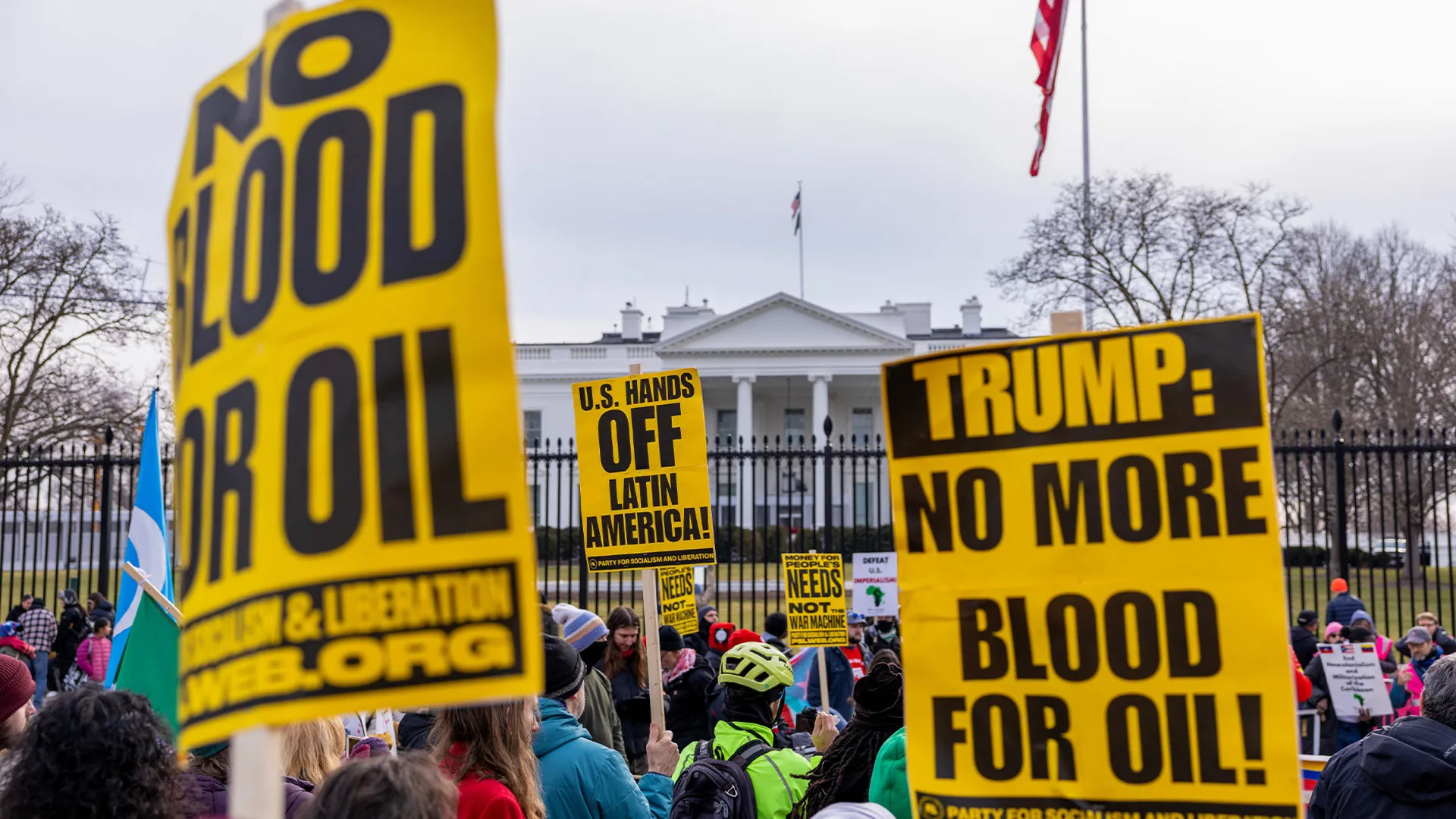
Protests took place in cities across the US against Trump’s military action in Venezuela. Hundreds gathered in the rain in downtown Los Angeles, carrying signs saying “Stop bombing Venezuela now!” and “No blood for oil”.

“I stand against US imperialism altogether. They want oil … They want to help the corporate billionaires. Bombing is just their means to building power like that, of taking control. So again, I’m against it,” said one protester named Niven.

Trump on Saturday delivered a speech in which he made little mention of the so-called “war on drugs” – which for months had been his main justification for bombing Venezuelan ship and assets – but argued that Venezuela had “stolen” oil from the US and that it would now be taken back.

The United Nations special rapporteur on human rights and counterterrorism, Ben Saul, said the US actions in Venezuela were illegal, calling on Trump to be investigated and impeached. “Every Venezuelan life lost is a violation of the right to life. President Trump should be impeached and investigated for the alleged killings,” he said in a social media post.

The UN Security Council (UNSC) was set to meet on Monday to discuss the situation in Venezuela. UN Secretary-General Antonio Guterres said he was “deeply alarmed” by the US strikes, which a spokesperson said could “constitute a dangerous precedent”.

Uncertainty in Venezuela after Maduro’s abduction

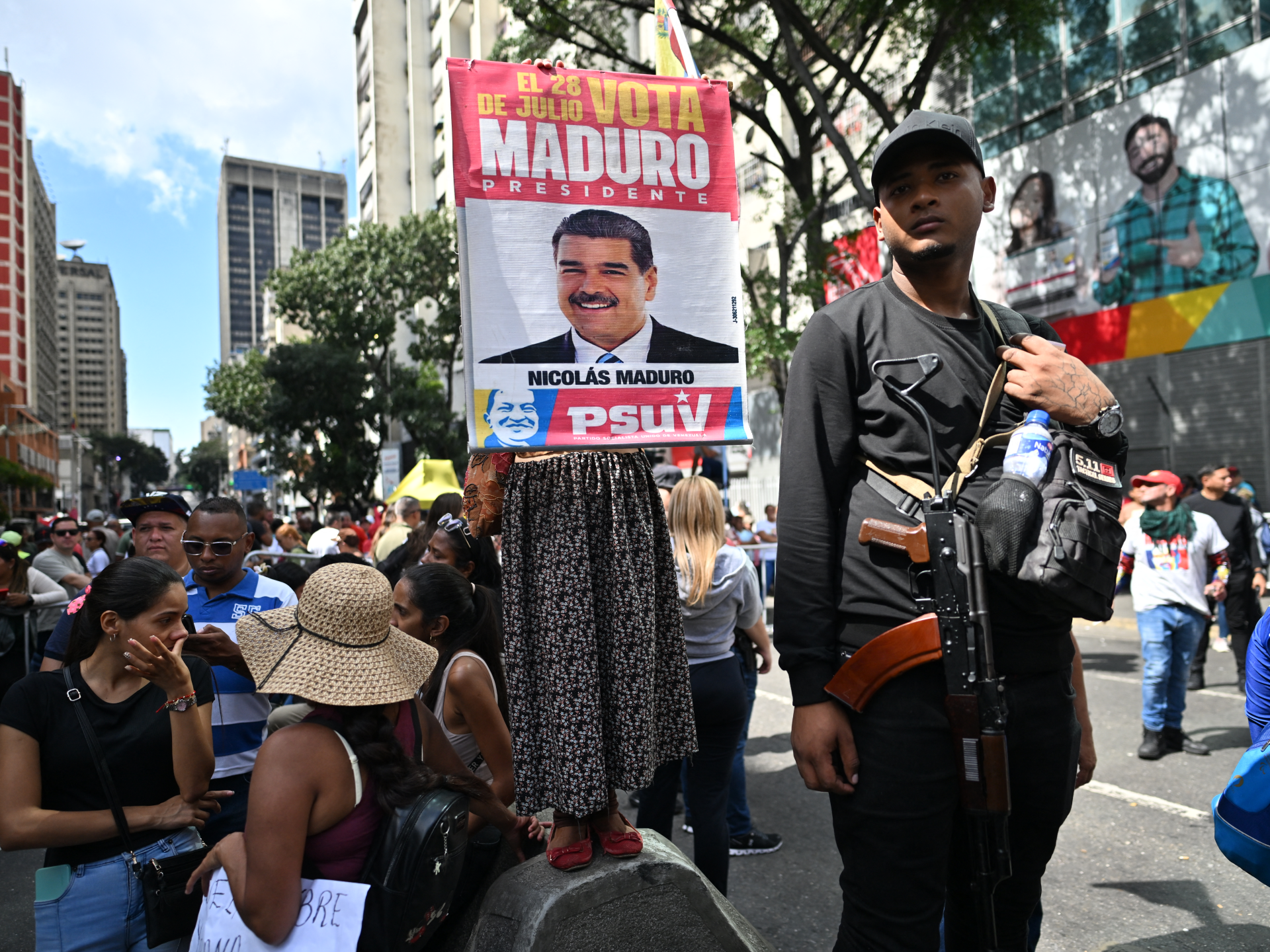
Some Venezuelans in Caracas have welcomed the US’s seizure of Maduro, but others said the action could worsen conflict in the country, with protests denouncing the US taking place.

“There should be a positive change for all Venezuelans, because it has been 28 years of government, and now is the time for transition in this country,” said Ronald Gaulee, a motorcycle rider in Caracas.

Merchant Juan Carlos Rincon was more cautious. “The truth is that there is a lot of manipulation behind all this,” he told the Reuters news agency. “We want to be at peace, move forward, and for Venezuela to have, like any other country, the right to choose its own destiny and its own leaders.”

Baker Franklin Jimenez said he would heed the government’s call to defend the country. “If they took him away, I think they shouldn’t have done so, because this will create an even worse conflict than the one we have now,” he said. “And as for the bombings and all that, we have to go out, we all have to go out into the streets to defend our homeland, to defend ourselves.”

Some Venezuelans decided to flee the country amid the uncertainty, crossing the Venezuela-Colombia border to reach the Colombian town of Cucuta. Karina Rey described a “tense situation” in the Venezuelan city of San Cristobal, just across the border.

“There are long lines, and people are very paranoid, or on edge, over food. Supermarkets are closing,” Rey told Al Jazeera. “The lines are very long just to stock up on food, because we don’t know what will happen in the coming weeks. We’re waiting to see what happens.”

Al Jazeera’s Alessandro Rampietti, reporting from Cucuta, said many Venezuelans there initially felt jubilant after Maduro was ousted. “But that quickly shifted to uncertainty,” he said.

“Several people said they expected the United States to immediately bring opposition leader Maria Corina Machado back into the country, along with Edmundo Gonzalez Urrutia, who many Venezuelans believe won the last presidential election,” Rampietti continued.

“Instead, with much of the existing leadership still in place and with Vice President Delcy Rodriguez appointed as interim leader, there is growing fear about what could happen next.”

Tiziano Breda, a senior analyst at the Armed Conflict Location and Event Data Project, said what happens next hinges on the response of Venezuela’s government and armed forces.

“So far, they’ve avoided direct confrontation with US forces, but deployments on the streets point to efforts to contain unrest,” he said. “A smooth transition remains unlikely, and the risk of resistance from pro-regime armed groups – including elements within the military and Colombian rebel networks active in the country – remains high.”

Source link

Left-wing militant group claims it set fire to Berlin power plant

A pedestrian walks on a darkened street in the Zehlendorf district in southwest Berlin on Sunday after a large-scale power outage the day before, which a far-left activist group has taken credit for as an “action in the public interest.” Photo by Filip Singer/EPA

Jan. 4 (UPI) — A far-left activist group sent police a letter taking credit for setting fire to part of a power plant near Berlin, leaving nearly 50,000 customers in the dark, as a protest against the fossil fuel industry.

The German activist group Vulkangruppe, or Volcano Group, acknowledged in a 2,500-word letter that it set a fire on Saturday near the Lichterfelde heat and power station, damaging high-voltage cables to “cut the juice to the ruling class,” The Guardian reported.

On Sunday morning, Stromnetz Berlin, the power company that owns the station, reported that roughly 45,000 homes and 2,200 businesses had lost power in the outage, Deutche Welle reported.

The power company said that while some connections have been turned back on in small waves, some customers may not have their electricity until as late as Thursday afternoon.

Some schools may also be closed for the part of the week because they do not have power, The BBC reported.

“We are expecting damage costing millions to plants and machines and owing to high losses in revenue,” Alexander Schirp, director of the regional business associations in Berlin and Brandenburg, said of the arson.

“This is a serious problem and stokes a feeling of insecurity in the business world,” he added.

Early Saturday, cables near the power plant were spotted burning and incendiary devices were later found to have caused the inferno.

In the aftermath, several hospitals and health care facilities received emergency generators, but many people had to be moved from either facilities or their own homes because there was no power.

Vulkangruppe said in the letter, which police have said is credible, that they set the fire in an “act of self-defense and international solidarity with all those who protect the Earth and life.”

The group condemned “greed for energy” by burning fossil fuels for the ever-growing electricity needs of humanity, and specifically called out the massive, and exponentially growing, use of electric for artificial intelligence computing.

“We are contributing to our own surveillance and it is comprehensive. The tech corporations are in the hands of me with power, which we give them,” the group wrote, calling the fire an “action in the public interest.”

Vulkangruppe previously took credit for a fire that was set at Tesla’s Gigafactory in Berlin in March 2024.

That arson included deliberately setting fire to a high-voltage electric pole, which damaged the electric line and cut power to the surrounding area, including the plant, officials said at the time.

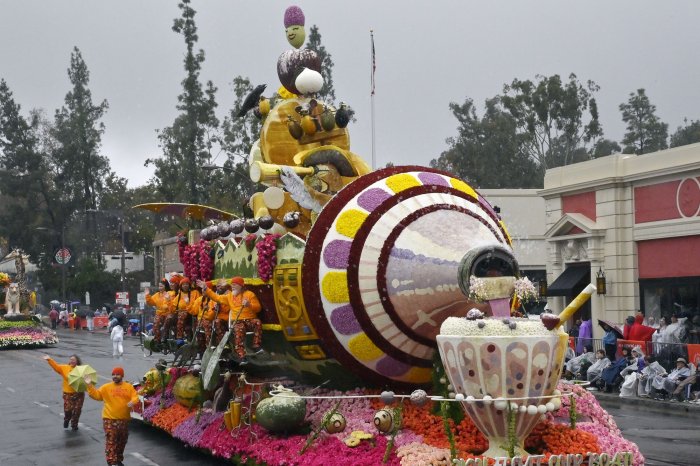
Trader Joe’s “You Float Our Boat!” design makes its way down Colorado Boulevard during the Rose Parade held in Pasadena, Calif., on January 1, 2026. The float won the Wrigley Legacy Award for most outstanding display of floral presentation, float design and entertainment. Photo by Jim Ruymen/UPI | License Photo

Source link

Trump says U.S. needs Greenland ‘for defense’

Jan. 4 (UPI) — President Donald Trump said in an interview published Sunday that the United States needs to annex Greenland “for defense,” while his deputy chief of staff’s wife was reproached by Denmark’s ambassador to the U.S. for a social media post about the possible move.

Trump has consistently discussed annexing Greenland since before retaking office in January 2025, but has also long been rebuffed on the idea by officials in both Denmark and Greenland.

But at a news conference on Saturday morning after the U.S. apprehension of Venezuelan President Nicolas Maduro, Trump and Secretary of State Marco Rubio both alluded to the potential of U.S. military action elsewhere in the Americas.

When asked on Sunday if Maduro’s apprehension should be interpreted by other nations — for instance, Greenland, which does not want to be annexed — as a signal that his administration might consider military action to pursue more goals, Trump demurred.

“They are going to have to view it themselves,” Trump told The Atlantic in an interview on Sunday. “I really don’t know … But we do need Greenland, absolutely. We need it for defense.”

He also noted that the NATO ally is “surrounded by Russian and Chinese ships.”

Trump previously has refused to rule out military action to annex Greenland, saying in May that he wouldn’t “say I’m not going to do it but I don’t rule out anything … We need Greenland very badly,” The Guardian reported.

Greenland, which is the world’s largest island, is a self-governing territory of Denmark. It is largely covered with ice, though it has oil, natural gas and mineral resources, and already is home to the United States’ northernmost military base.

Trump said in a nationally televised speech in March that his administration was “working with everybody involved to try and get it.”

“We need it really for international world security,” he said during the speech, adding that he thought “we’re going to get it, one way or the other.”

At the time, Greenland Prime Minister Mute Egede said in a Facebook post that Greenland would determine it’s own future and does not what to be Americans any more than they want to be Danish.

Trump’s recently named Greenland envoy, Louisiana Gov. Jeff Landry, said in December that the United States is not going to “go in there trying to conquer anybody.”

Landry also said in December that he was thankful to Trump for the “honor to serve you in this volunteer position to make Greenland a part of the United States,” The Guardian reported.

Denmark’s ambassador to the United States, Jesper Moeller Soerensen, responded to a Saturday post on X by Katie Miller, wife of White House Deputy Chief of Staff Stephen Miller, that depicted Greenland with a U.S. map overlaid on it with the word “SOON,” the BBC reported.

“Just a friendly reminder about the U.S. and Denmark: We are close allies and should continue to work together as such,” Soerensen said in a response on X.

“And yes, we expect full respect for the territorial integrity of the Kingdom of Denmark,” Soerensen added.

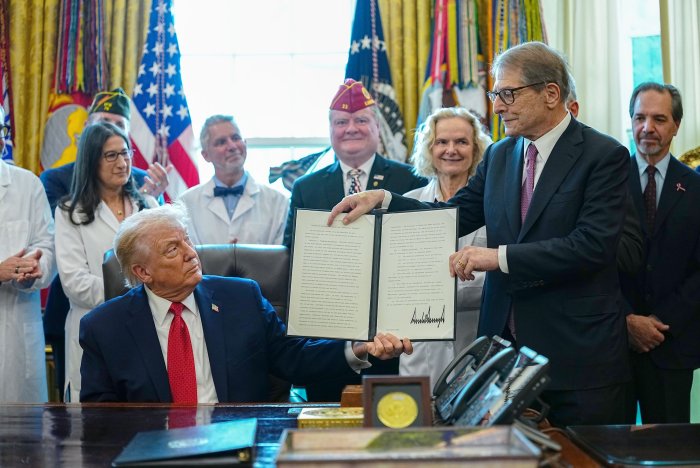
President Donald Trump holds a signed executive order reclassifying marijuana from a schedule I to a schedule III controlled substance in the Oval Office of the White House on Thursday. Photo by Aaron Schwartz/UPI | License Photo

Source link

Rubio on Venezuela: U.S. troops off shore are leverage, election talk is premature

Jan. 4 (UPI) — Secretary of State Marco Rubio said in interviews on Sunday that it is “premature” to discuss elections in Venezuela because higher priorities, including reinvigorating the country’s oil industry, must be addressed first.

In interviews with ABC, CBS and NBC, Rubio said that the United States will continue to strike drug boats and detain oil tankers as the Trump administration moves to stabilize and “run” Venezuela after the apprehension of Venezuelan President Nicolas Maduro on Saturday.

The Trump administration plans to keep its “quarantine” of Venezuelan oil in place as it pressures the remainders of Maduro’s government to end their cooperation with South American drug gangs, as well as stop selling oil to the United States’ adversaries, Rubio said.

“As we move forward here, we’ll set the conditions so that we no longer have in our hemisphere a Venezuela that’s the crossroads for many of our adversaries around the world, including Iran and Hezbollah,” Rubio said on ABC News’ “This Week.”

Rubio added that Venezuela would also no longer be “a narcotrafficking paradise for all those drugs coming out of Colombia … and toward the United States.”

Offshore armada is ‘leverage’

In a press conference on Saturday, Trump told reporters that there was a second strike planned in the case that Venezuelan forces responded to Maduro’s capture or the plan was not successful, but U.S. military commanders decided against launching it.

Trump noted Saturday, and Rubio reiterated on Sunday, that the roughly 15,000 troops offshore of Venezuela spread across more than a dozen warships would remain in the Caribbean.

Their objectives, he told CBS’ “Face The Nation,” are striking drug trafficking boats, apprehending tankers suspected to be carrying sanctioned Venezuelan oil and using the armada, as Trump has referred to it, of U.S. military ships offshore to encourage the remaining members of Maduro’s administration to comply with U.S. demands.

“What’s going to happen here is that we have a quarantine on their oil,” Rubio said. “That the means that their economy will not be able to move forward until the conditions that are in the national interest of the United States and of the Venezuelan people are met.”

“So, that leverage remains,” he added. “That leverage is ongoing. And we expect that it’s going to lead to results here.”

No elections yet

Although the Trump administration “cares about elections, we care about democracy, we care about all of that,” the priority is the U.S.’ goals of stopping the flow of drugs into the United States and U.S. “safety, security, well-being and prosperity,” Rubio told NBC News’ “Meet The Press.”

At this point, he said, considering new elections in Venezuela “is premature at this point” as Trump has tasked Rubio with “running policy” in the South American country.

In the next several months, Rubio said that the main priorities are to end entanglements between the Venezuelan government and drug gangs, as well as to prevent Iran, Russia, China and Cuba, among other nations, from investing in the country and gaining a foothold in the Western Hemisphere.

Maduro and his wife, who are in a jail in New York City awaiting trial, along with four other people in the Venezuelan government who were not arrested in Saturday’s raid, have been indicted for allegedly working with Colombian drug gangs and rebel groups to assist them in trafficking cocaine.

The quarantine on ships transporting Venezuelan oil is linked to Trump’s goal of sending U.S. oil companies to inspect and reinvigorate Venezuela’s ailing oil industry, while keeping the oil in the Americas.

While noting that the United States, which is a net oil exporter, does not need the oil, he questioned why Iran, Russia or China should need Venezuelan oil considering all three are nowhere near South America.

“They’re not even in this continent,” Rubio said. “This is where we live, and we’re not going to allow the Western Hemisphere to be a base of operations for adversaries, competitors and rivals of the United States.”

Source link

Spanish Empire: Sword and Cross | History

How Spain conquered with armies and missionaries, fusing faith, force and gold into global dominance.

This film explores how the Spanish empire built its global dominance by fusing military conquest, religious conversion and imperial wealth.

At the heart of the Spanish expansion was the close alliance between crown, church and conquest. Military campaigns were inseparable from missionary efforts as conversion to Christianity became both a justification for empire and a tool of control. Faith and force advanced together, reshaping societies across the Americas.

Through the conquests of the Aztec and Incan empires, the documentary shows how Spanish power was established through violence, alliances and religious authority. The mission system spread across the Americas, reorganising Indigenous life around churches, labour regimes and colonial administration. Conversion promised salvation but enforced obedience and cultural destruction.

The film also examines the economic foundations of Spanish imperial power. Vast quantities of gold and silver were extracted from the Americas alongside the exploitation of Indigenous and enslaved labour. These resources fuelled European economies, financed global trade and helped integrate the Americas into an emerging world system built on extraction and inequality.

By tracing how faith, conquest and wealth operated together, the documentary reveals how Spanish colonialism shaped global capitalism, religious power and imperial governance. It shows how the legacies of conquest, forced conversion and resource extraction continue to influence social inequality, cultural identity and economic structures in the modern world and how current global superpowers like the United States and China adopt this model to their benefit. It also draws on the parallels between the erasure of cultural artefacts then and today’s “algorithmic colonisation”.

Source link

Britain, France strike ISIS weapons facility in Syria

A Royal Air Force Typhoon prepares to take off at an undisclosed location in the Middle East to join French aircraft in a joint strike targeting access tunnels to an underground ISIS facility near Palmyra in Syria. Sgt. Lee Goddard/Royal Air Force Handout/EPA

Jan. 4 (UPI) — British and French aircraft conducted a joint strike on Saturday night on an underground facility in Syria used by ISIS to store weapons and explosives.

Royal Air Force Typhoons and a Voyager refueling tanker joined the French aircraft to strike the mountain facility north of Palmyra as part of ongoing patrols to prevent the terrorist group from resurging and regaining ground in Syria, Britain’s Ministry of Defense said in a press release.

“This action shows our U.K. leadership, and determination to stand shoulder to shoulder with our allies, to stamp out any resurgence of [ISIS] and their dangerous and violent ideologies in the Middle East,” John Healey, U.K. defense secretary, said in the release.

The Saturday evening strike targeted access tunnels into the facility using Paveway IV guided bombs, with the ministry noting that initial indications show the mission was successful as a more detailed assessment is conducted.

The area around the site is “devoid of civilians habitation,” the ministry said, and there is no indication the bombing posed risks to civilians.

In a post on X, the French Ministry of the Armed Forces posted video from the strikes and said Operation Inherent Resolve, which includes ongoing patrols of the region, is essential to the region’s stability.

“Preventing the resurgence of [ISIS]: a major issue for the security of the region,” the French ministry said in the post. “The fight against terrorism remains a priority for France and the partner countries of the Coalition.”

The British personnel who conducted the mission were deployed over Christmas and the New Year, Healey said, continuing various patrols in Syria, and specifically Palmyra, that have been conducted by an international coalition that includes the United States.

In a lone gunman ambush on a patrol in Palmyra last month, two Iowa National Guard members and a civilian interpreter were killed, in addition to three other U.S. soldiers and two Syrians being shot. The gunman was identified as a member of ISIS.

Officials with Operation Inherent Resolve said in a statement on X that although ISIS no longer controls territory, “it continues to operate through residual cells, particularly in remote desert areas.”

Zohran Mamdani and his wife, Rama Duwaji, wave after Mamdani’s inauguration as mayor of New York City. They are shown outside City Hall on January 1, 2026. Photo by Derek French/UPI | License Photo

Source link

UN General Assembly president on war, vetoes and UN reform | Gaza

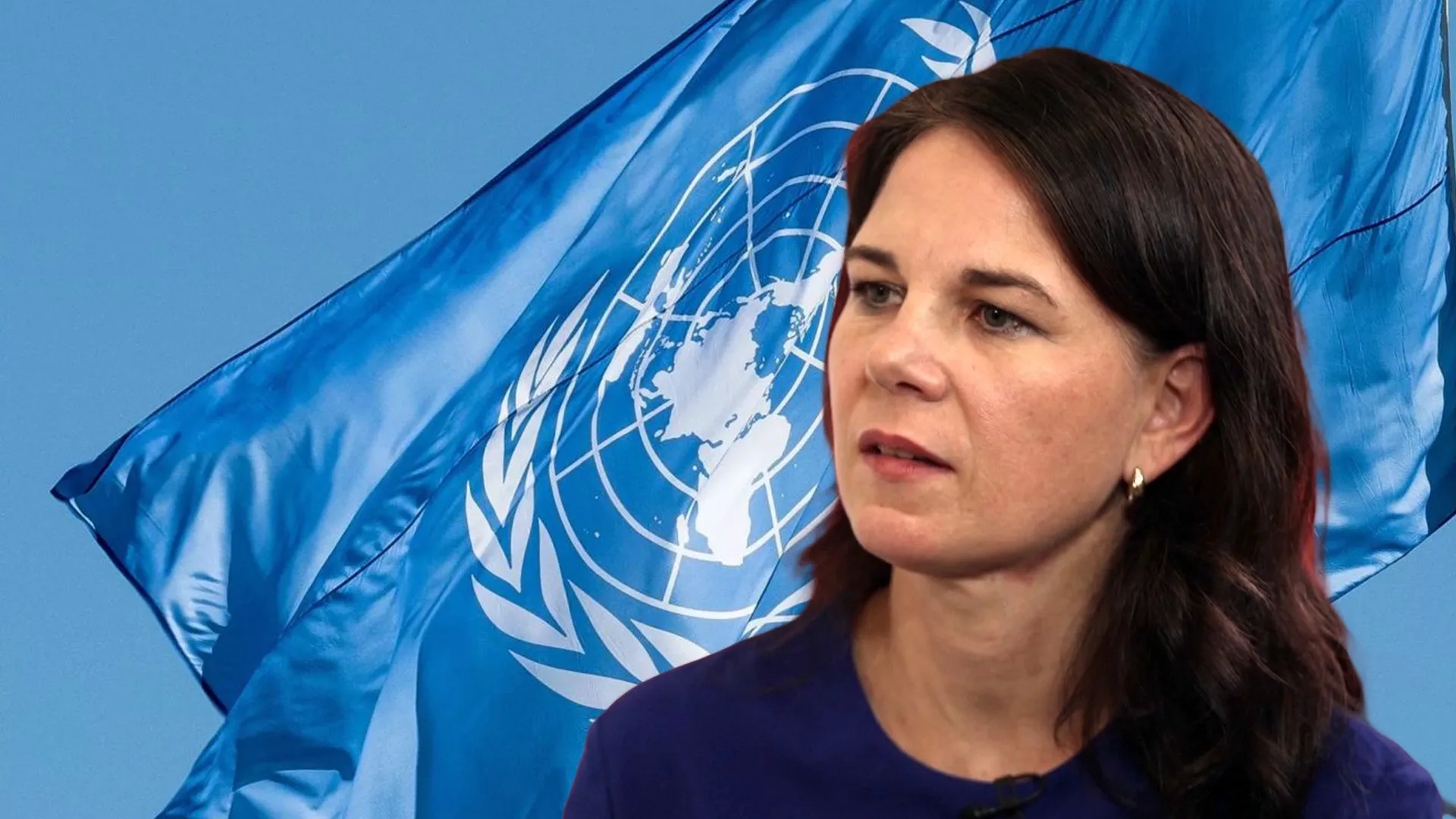
As global crises multiply and trust in international institutions erodes, the United Nations faces growing questions about its relevance and authority. Thirty years after pledges to end hunger and reduce inequality, progress is stalling, wars are spreading, and UN Security Council vetoes are paralysing action.

In this episode of Talk to Al Jazeera, UN General Assembly President Annalena Baerbock reflects on the UN’s credibility, the limits of the UNSC, and whether a more assertive UNGA can drive reform before the 2030 Sustainable Development Goals deadline.

Source link

Nigeria vs Mozambique: AFCON 2025 – team news, start time and lineups | Africa Cup of Nations News

Who: Nigeria vs Mozambique
WhatCAF Africa Cup of Nations
Where: Fez Stadium in Fez, Morocco
When: Monday at 8pm (19:00 GMT)
How to follow: We’ll have all the build-up on Al Jazeera Sport from 16:00 GMT in advance of our text commentary stream.

Fun, flair and fragility sum up Nigeria’s ongoing campaign at AFCON 2025.

Recommended Stories

list of 3 itemsend of list

As the tournament’s leading attacking force, Nigeria have laid down an early marker as title contenders but while the West Africans boast impressive squad depth, they still need to shore up a leaky defence.

The Super Eagles have moved on swiftly from the heartbreak of missing out on the FIFA World Cup and have been flying high in Morocco on the back of a talented squad featuring Ademola Lookman, Raphael Onyedika, Victor Osimhen and Alex Iwobi.

As one of only two teams to maintain a perfect group-stage record, the former champions now face Mozambique, who for the first time advanced past the group stage, for a place in the quarterfinals.

Ranked 102nd in the world, Mozambique are up for a historic knockout appearance, facing the daunting task of taking on a side ranked 74 places above them.

Here’s everything you need to know about Nigeria vs Mozambique:

How did Nigeria reach the round of 16?

The African powerhouse soared into the knockouts as the table toppers of Group C, registering victories over Tunisia, Uganda and Tanzania. Nigeria were the first team to reach the last 16 with a 100 percent record.

How did Mozambique reach the round of 16?

Mozambique advanced as one of the four best third-placed sides. The Mambas lost two Group F games and won one, against Gabon, which ended their 40-year wait for a victory at the continental tournament. They are making their first appearance in AFCON’s knockout stages.

Who will the winner face in the next round?

The winner of the Nigeria and Mozambique match will travel to Marrakesh to face the winner of the Algeria and Democratic Republic of the Congo match in the quarterfinal on January 10.

Fez Stadium is pictured prior the Africa Cup of Nations (CAN) Group C football match between Nigeria and Tunisia
Fez Stadium has hosted all of Nigeria’s matches so far and will also be the venue for the fixture against Mozambique [Abdel Majid Bziouat/AFP]

Who are Nigeria’s best players?

With two goals and two assists, forward Lookman has been one of Nigeria’s standout players at the tournament. The 28-year-old was the architect of the team’s victories in their opening two games, equally influential as both a playmaker and a finisher.

Rested for the final group match, Lookman is expected to come out all guns blazing against their East African opponents.

Midfielder Onyedika, who scored twice in the last match, is another key contributor while Iwobi has been pulling the strings in the midfield, and striker Osimhen remains one of the most feared attackers in the competition.

Who are Mozambique’s best players?

Winger Geny Catamo has scored two of Mozambique’s four goals at the tournament and has been central to their historic qualification. Forward Faisal Bangal and right back Diogo Calila have also found the net.

Nigeria and Mozambique form guides

Nigeria: W-W-W-L-L

Mozambique: L-W-L-L-D

  • Nigeria finished the group stage with eight goals, the highest tally in the competition, while also recording the highest average possession rate (66 percent).
  • Nigeria have won all three of their group games for the first time since 2021.
  • Mozambique’s victory over Gabon is their only win in 18 AFCON matches (D4 L13).
  • Mozambique are yet to keep a clean sheet at AFCON, conceding in all 18 games.

Head-to-head

Nigeria and Mozambique have met in five previous encounters across competitive and friendly games.

Nigeria dominate the head-to-head record with four wins and a draw.

When did Nigeria and Mozambique last meet?

The teams last met in a friendly in Albufeira, Portugal, in October 2023 when Nigeria won 3-2.

Nigeria vs Mozambique – stat attack

Monday’s game will be their second meeting at AFCON. Their previous AFCON encounter came in the final group game of the 2010 edition when Nigeria ran out 3-0 winners.

This is Nigeria’s 16th successive appearance in the knockout rounds, having last failed to progress beyond the group stage in 1982.

Have Nigeria ever won an AFCON title?

Nigeria are three-time AFCON champions, having lifted the trophy in 1980, 1994 and 2013.

They also finished as runners-up five times. This is their 21st appearance at the continental championship.

Have Mozambique ever won an AFCON title?

No. This is their sixth appearance at the tournament, and the 2025 edition already marks their best finish.

Nigeria team news

Cyriel Dessers, who is yet to feature, and Ryan Alebiosu, who made his debut in the previous game, are both ruled out through injury. Their absence is unlikely to have a major impact because neither is a regular starter.

Coach Eric Chelle could retain Onyedika in midfield after his brace in the last game, which earned him the player of the match award.

Nigeria’s predicted lineup

Stanley Nwabili (goalkeeper); Bright Osayi-Samuel, Semi Ajayi, Calvin Bassey, Bruno Onyemaechi; Samuel Chukwueze, Wilfred Ndidi, Onyedika, Iwobi; Osimhen, Lookman

Mozambique team news

Mozambique will be without Calila, who was taken off in the last game after only 15 minutes due to an injury. Nene, who scored an own goal against Cameroon, is also injured.

Mozambique’s predicted lineup

Ivane Urrubal (goalkeeper); Infren Nani, Mexer, Reinildo Mandava, Bruno Langa; Guima, Manuel Kambala; Catamo, Elias Pelembe, Witi; Bangal

Source link

Former world boxing champion Tyson Fury comes out of retirement again | Boxing News

‘Been away for a while but I’m back now, 37 years old and still punching,’ Fury said in a post announcing his return.

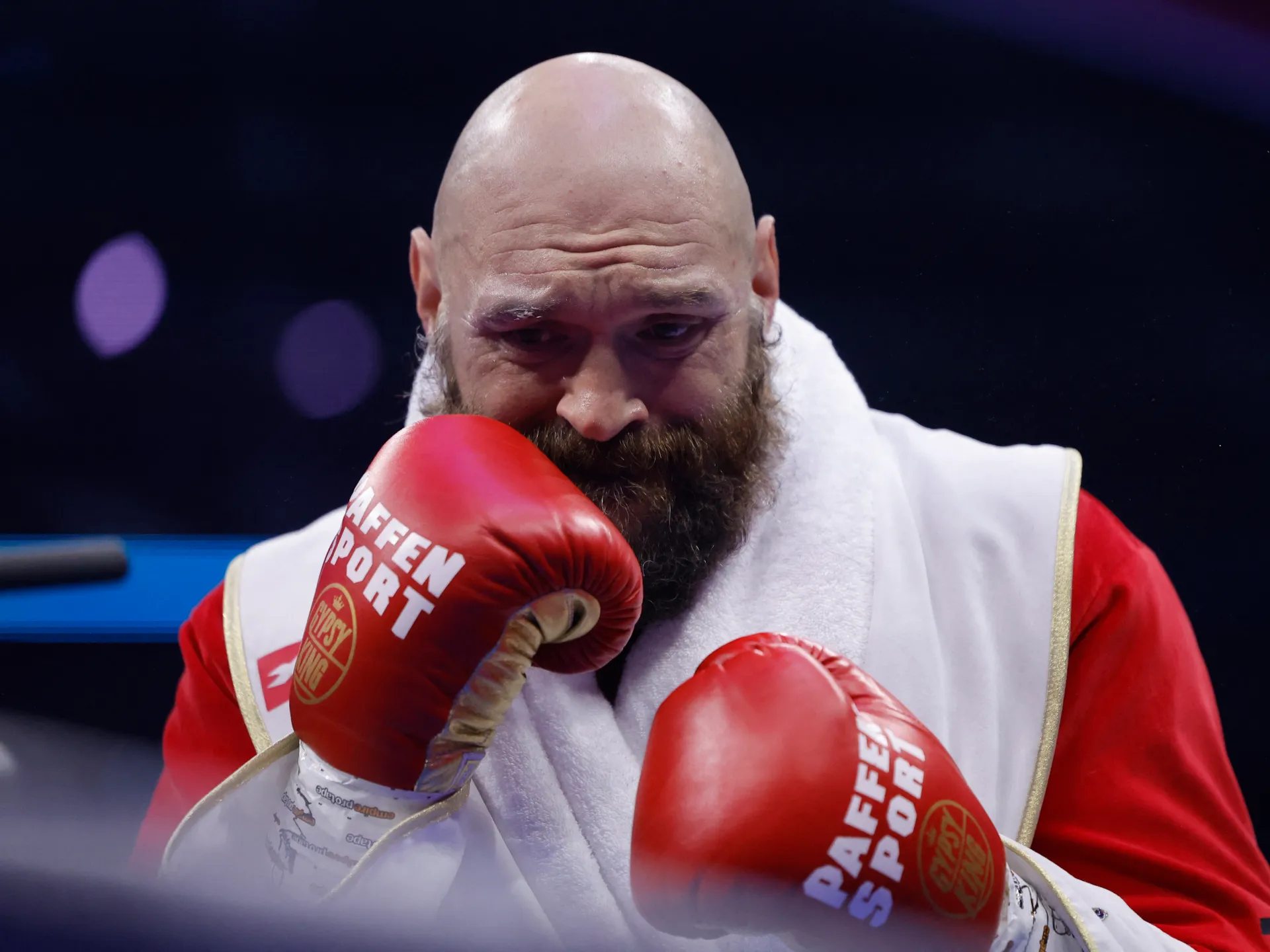
Former world heavyweight champion Tyson Fury has announced his return to boxing, having retired from the sport in December 2024 after losing to Oleksandr Usyk in a bout for three of the four major world titles.

The British star confirmed his comeback in a post on social media, which sets up the prospect of a long-awaited showdown with Anthony Joshua.

Fury posted on Instagram that “2026 is that year. Return of the mac.”

“Been away for a while but I’m back now, 37 years old and still punching,” he said. “Nothing better to do than punch men in the face and get paid for it.”

Before his two bouts with Usyk, Fury was unbeaten in 35 fights, winning 34 and drawing one.

Fury did not mention potential opponents, but his announcement comes after increased speculation about a clash with British rival Joshua in 2026. Joshua, who is also a former world champion, last month knocked out YouTube star Jake Paul. But he was injured in a fatal car crash that killed two of his friends in Nigeria this week, which has resulted in uncertainty over his immediate plans.

Fury is a two-time world champion. He ended the reign of Wladimir Klitschko with a points win in 2015 that saw him crowned Super WBA, IBF and WBO champion.

He didn’t fight again until 2018 – but a thrilling trilogy with American Deontay Wilder resulted in a draw and two victories for him to claim the WBC title.

Fury previously said he was retiring after he beat Dillian Whyte in 2022, but was back in the ring the following year.

A fight with Joshua has long been anticipated. There is also the potential of a trilogy-capping fight with Usyk or a clash with WBO champion Fabio Wardley.

Source link

Who is Venezuelan Vice President Delcy Rodriguez, now leading the country? | Nicolas Maduro News

A brief power vacuum had emerged in Venezuela in the sudden chaos and confusion after the abduction of President Nicolas Maduro by the United States.

But shortly after the US military rained strikes down on Caracas and other areas on Saturday, US President Donald Trump – in a surprise snub against Venezuelan opposition leader Maria Corina Machado, who was awarded last year’s Nobel Peace Prize – noted that Vice President Delcy Rodriguez, 56, had been sworn in as interim president.

Recommended Stories

list of 4 itemsend of list

The right-wing Machado – who had cosied up to Trump, especially after her October Nobel win, an honour that he himself coveted and she dedicated to him – was described by the US president as not having enough support or “respect” to be Venezuela’s leader.

Trump said Rodriguez had talked to US Secretary of State Marco Rubio and was “essentially willing to do what we think is necessary to make Venezuela great again”.

“I think she was quite gracious,” Trump added. “We can’t take a chance that somebody else takes over Venezuela that doesn’t have the good of the Venezuelan people in mind.”

However, Rodriguez’s remarks soon after the strikes and abduction were diametrical: She criticised the US military action as “brutal aggression” and called for Maduro’s immediate release.

“There is only one president in this country, and his name is Nicolas Maduro,” Rodriguez said defiantly on state television as she was flanked by top civilian officials and military commanders.

Who, then, is the current acting president of Venezuela?

Revolutionary roots

A Caracas native, Rodriguez was born on May 18, 1969. She is the daughter of left-wing rebel fighter Jorge Antonio Rodriguez, who founded the Socialist League party in the 1970s. Her father was killed while tortured in police custody in 1976, a crime that shook many activists of the era, including a young Maduro.

Rodriguez’s brother, also named Jorge, also holds a key role in government as the head of the National Assembly.

She is an attorney who graduated from the Central University of Venezuela and rose rapidly through the political ranks in the past decade. Rodriguez has a long history of representing on the world stage what late President Hugo Chavez called his socialist “revolution” with those carrying on his legacy referred to as Chavistas.

She served as communication and information minister from 2013 to 2014, foreign minister from 2014 to 2017 and as the head of a pro-government Constituent Assembly, which expanded Maduro’s powers, in 2017.

Economic prowess

Rodriguez is sometimes perceived as more moderate than many soldiers who took up arms with Chavez in the 1990s.

Rodriguez’s roles as finance and oil minister, held simultaneously with her vice presidential post, have made her a key figure in the management of Venezuela’s economy and gained her major influence with the country’s withered private sector. She has applied orthodox economic policies in a bid to fight hyperinflation.

Maduro added the oil ministry to Rodriguez’s portfolio in August 2024, tasking her with managing escalating US sanctions on Venezuela’s most important industry.

Rodriguez developed strong ties with Republicans in the US oil industry and on Wall Street who balked at the notion of a US-led change in Venezuela’s government.

Among her past interlocutors were Blackwater security company founder Erik Prince and, more recently, Richard Grenell, a Trump special envoy who tried to negotiate a deal with Maduro for greater US influence in Venezuela.

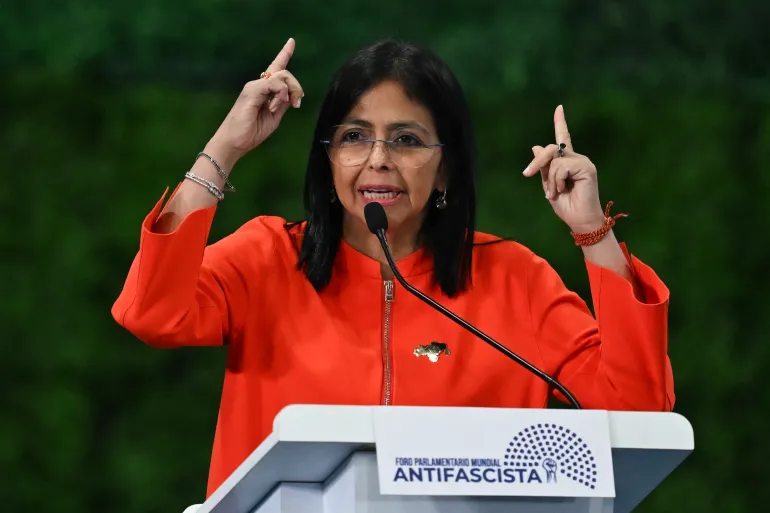
(FILES) Venezuela's Vice President Delcy Rodriguez speaks during the Antifascist Global Parliamentary Forum in Caracas on November 5, 2024.
Venezuelan Vice President Delcy Rodriguez speaks during the Antifascist Global Parliamentary Forum in Caracas [File: AFP]

A ‘tiger’

Despite being perceived as more moderate, Maduro has called Rodriguez a “tiger” for her die-hard defence of his socialist government.

When she was named vice president in June 2018, Maduro described her as “a young woman, brave, seasoned, daughter of a martyr, revolutionary and tested in a thousand battles”.

After Maduro’s abduction on Saturday, Rodriguez demanded the US government provide proof of life for Maduro and his wife, Cilia Flores, and minced no words in denouncing the US actions.

“We call on the peoples of the great homeland to remain united because what was done to Venezuela can be done to anyone. That brutal use of force to bend the will of the people can be carried out against any country,” she said in an address broadcast by the state television channel VTV.

The Constitutional Chamber of Venezuela’s Supreme Court later on Saturday ordered Rodriguez to serve as acting president.

The court ruled that Rodriguez will assume “the office of President of the Bolivarian Republic of Venezuela, in order to guarantee administrative continuity and the comprehensive defence of the Nation”.

Source link

Longtime Al Jazeera anchor and journalist Jamil Azar passes away | Al Jazeera News

Jamil Azar, 89, was the author of Al Jazeera’s motto, ‘The opinion and the other opinion’.

Longtime Al Jazeera Arabic anchor and journalist Jamil Azar, a pioneer of the network since its establishment three decades ago, has passed away.

Director-General Sheikh Nasser bin Faisal Al Thani lauded Azar, 89, in a statement on Sunday as a “distinguished linguist” and the author of the network’s motto, “The opinion and the other opinion”.

Recommended Stories

list of 3 itemsend of list

“Jamil Azar leaves behind a remarkable and lasting media legacy, a reputation defined by integrity and excellence, and a deep influence on generations of journalists who learned from him at Al Jazeera and other institutions where he served and helped shape professional standards,” Sheikh Nasser said.

“He was, in every sense, a living school of journalism and a trusted reference in editorial practice, the Arabic language, television presentation, and newsroom leadership. Always generous with his guidance and advice, he was known for his humility and openness, and remained steadfastly loyal to Al Jazeera, deeply committed to its values, standing and reputation.”

With Azar’s passing, Sheikh Nasser emphasised, Arab media “loses one of its most respected figures and Al Jazeera bids farewell to one of its brightest and most influential stars”.

Born in the town of al-Husn in Irbid, Jordan, in 1937, Azar began his career in journalism at the BBC’s Arabic Service, where he worked between 1965 and 1996 as a news translator and presenter.

During his time at the BBC, Azar held different positions, including producing programmes such as Politics Between the Questioner and the Respondent and Arab Affairs in the British Press.

In 1996, Azar joined Al Jazeera at its launch on July 30, playing a key role in the network’s early years as a news anchor and presenter, hosting the programme The Week in the News.

The Jordanian journalist stepped down from the network in 2011.

Source link

How the US attack on Venezuela, abduction of Maduro unfolded | US-Venezuela Tensions News

In a move that stunned the world, the United States bombed Venezuela and toppled President Nicolas Maduro amid condemnation and plaudits.

In a news conference on Saturday at his Mar-a-Lago resort in Florida, President Donald Trump praised the operation to seize Maduro as one of the “most stunning, effective and powerful displays of American military might and competence in American history”.

Recommended Stories

list of 4 itemsend of list

It was the riskiest and most high-profile military operation sanctioned by Washington since the US Navy’s SEAL team killed al-Qaeda leader Osama bin Laden in a safe house in Pakistan’s Abbottabad in 2011.

News of the 63-year-old Maduro being abducted took over the global news cycle.

After months of escalation and threats over Maduro’s alleged involvement in shipping drugs to the US, the Trump administration had increased pressure on Caracas with a military build-up in the Caribbean and a series of deadly missile attacks on alleged drug-running boats that had killed more than 100 people and whose legality has been heavily questioned by the United Nations and legal experts.

The US had also previously offered a $50m reward for information leading to Maduro’s arrest.

But while the military was conducting operations in the Caribbean, US intelligence had been gathering information about Maduro, his eating habits, and special forces covertly rehearsed a plan to remove him from power forcibly.

Here’s everything we know about how Maduro and his wife, Cilia Flores, were “captured”.

How was Maduro abducted?

The operation, named “Absolute Resolve”, was carefully rehearsed for months, according to General Dan Caine, chairman of the Joint Chiefs of Staff, who spoke at Trump’s news conference.

Trump also told Fox News that US forces had practised their extraction of Maduro on a replica building.

“They actually built a house which was identical to the one they went into with all the same, all that steel all over the place,” Trump said.

At 11:46pm local time on Friday (03:46 GMT on Saturday), Trump gave the green light.

On Friday night, Caine said, “the weather broke just enough, clearing a path that only the most skilled aviators in the world could move through”, with about 150 aircraft involved in the operation, taking off from 20 different airbases across the Western Hemisphere.

As part of the operation, US forces disabled Venezuela’s air defence systems, with Trump saying the “lights of Caracas were largely turned off due to a certain expertise that we have”, without elaborating.

Several deafening explosions rang out across the capital, with Pete Hegseth, the defence secretary, describing it as part of a “massive joint military and law enforcement raid” that lasted less than 30 minutes.

US helicopters then touched down at Maduro’s compound in the capital at 2:01am (06:01 GMT) on Saturday, with the president and his wife then taken into custody.

There has been no readout on whether there was an exchange of fire, in a chaotic scramble, or if they were taken without a struggle.

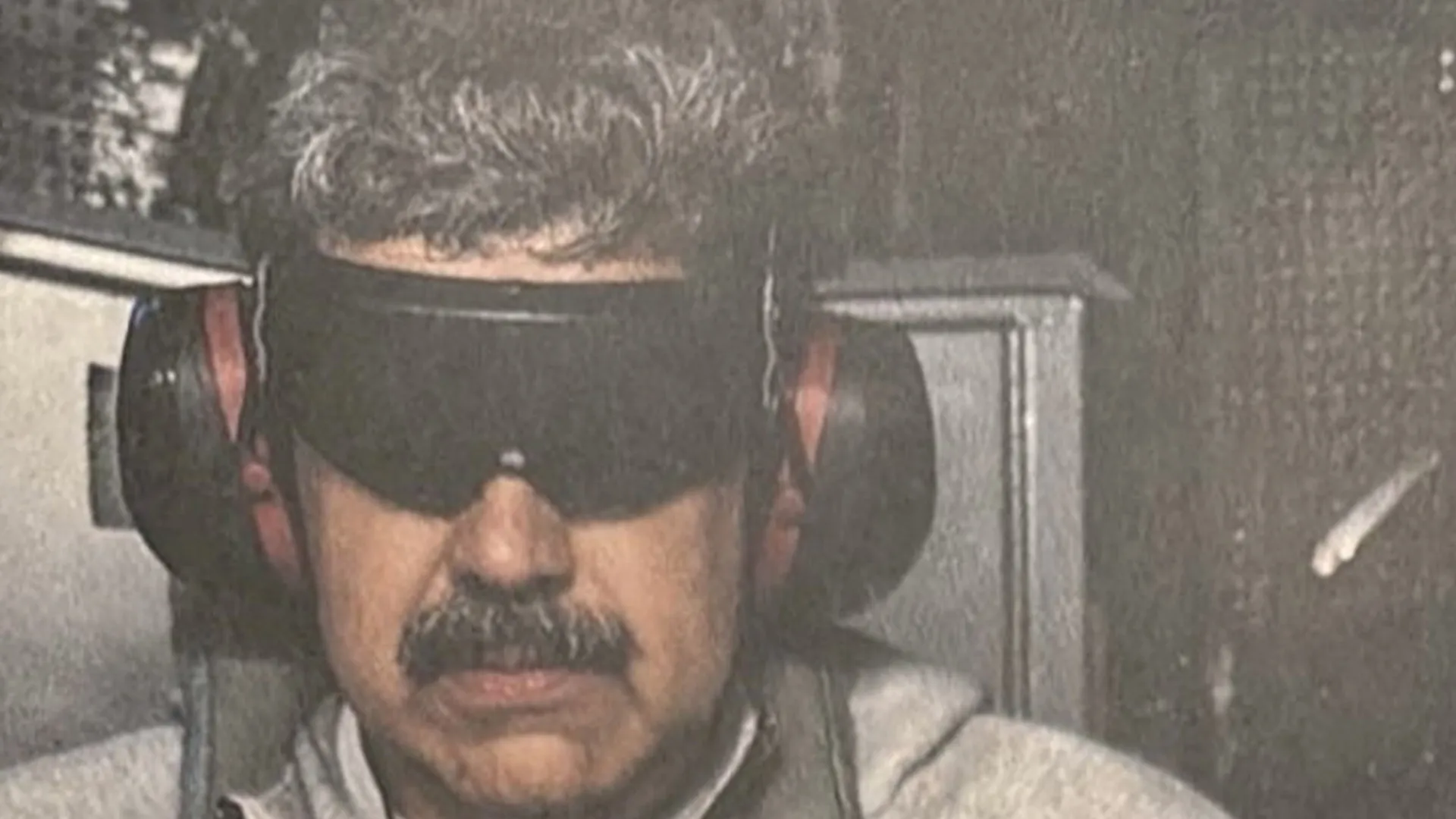
At 4:29am (08:29 GMT), just two and a half hours later, Maduro was put on board a US aircraft carrier, en route to New York. Trump later posted a photograph of the Venezuelan leader on his Truth Social social media platform, blindfolded, wearing a grey tracksuit.

After departing the USS Iwo Jima, US forces escorted Maduro on a flight, touching down in New York’s Stewart Air National Guard Base at about 4:30pm (21:30 GMT).

How many people were killed in the US strikes on Venezuela?

The US strikes hit Caracas as well as the states of Miranda, Aragua and La Guaira, according to the Venezuelan government.

To Linda Unamumo, a public worker, the US attacks caused an explosion that was so strong it destroyed the roof of her house.

“Even up until a little while ago, I was still crying … I was crying because I was so scared … I had to leave my house with my daughter, with my family, and go to another house, a neighbour’s house. It was really traumatic. I wouldn’t wish it on anyone, really,” she told the AFP news agency.

While official casualty counts have yet to be released, an official told The New York Times newspaper on condition of anonymity that at least 40 people had been killed in the attacks.

According to Trump, a few US members were injured in the operation, but he believed no one was killed.

What’s next for Venezuela?

During his news conference on Saturday, Trump announced that the US would “run” the country until a new leader was chosen.

“We’re going to make sure that country is run properly. We’re not doing this in vain,” he said. “This is a very dangerous attack. This is an attack that could have gone very, very badly.”

The president did not rule out deploying US troops in the country and said he was “not afraid of boots on the ground if we have to”.

Trump also, somewhat surprisingly, ruled out working with opposition figure and Nobel Peace Prize winner Maria Corina Machado, who had dedicated her prize, which he so wanted to win himself, to the US president.

“She doesn’t have the support within or the respect within the country,” he said.

The Constitutional Chamber of Venezuela’s Supreme Court ordered Vice President Delcy Rodriguez to serve as acting president following the US’s abduction of Maduro.

The court ruled that Rodriguez will assume “the office of President of the Bolivarian Republic of Venezuela, in order to guarantee administrative continuity and the comprehensive defence of the Nation”.

The court also said it would work to “determine the applicable legal framework to guarantee the continuity of the State, the administration of government, and the defense of sovereignty in the face of the forced absence of the President of the Republic”.

Trump had said earlier on Saturday that the US would not occupy Venezuela, provided Rodriguez “does what we want”.

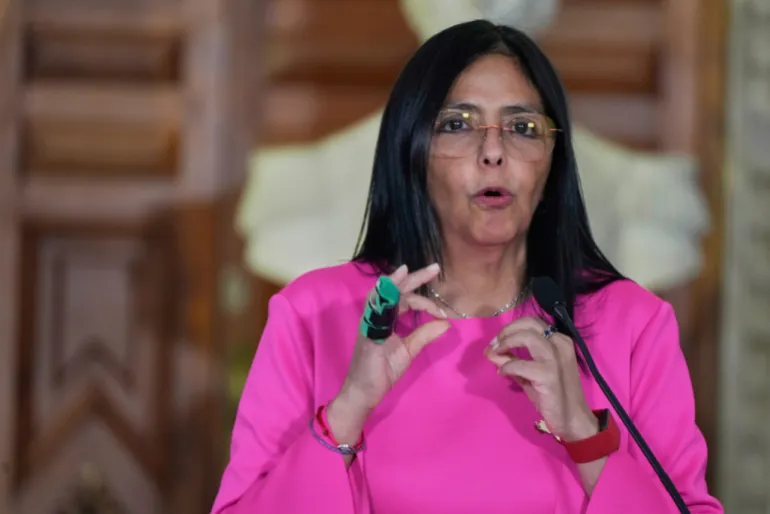
Delcy Rodriguez addresses the press
Venezuelan Vice President Delcy Rodriguez speaks to the press at the Foreign Office in Caracas, Venezuela, on August 11, 2025 [Ariana Cubillos/AP Photo]

Source link

Trump just sent a very dangerous message to Latin America | Nicolas Maduro

Within hours of a massive operation of regime change in Venezuela, United States President Donald Trump revelled in his “success”. He posted a photo of Venezuelan President Nicolas Maduro in handcuffs and then addressed the American public.

He praised the military for launching “one of the most stunning, effective and powerful displays of American military might” in US history, allegedly rendering Venezuelan forces “powerless”. He announced that Maduro and his wife would be indicted in New York for “narcoterrorism” and claimed – without evidence – that US operations have reduced maritime drug trafficking by 97 percent.

Trump went further, declaring that the US would “run the country” until an unspecified transition could be arranged, while openly threatening a “second and much larger attack”. Crucially, he framed these claims within a broader assertion of US “domination over the Western Hemisphere”, explicitly invoking the 1823 Monroe Doctrine.

The US military intervention in Venezuela represents something far more dangerous than a single act of aggression. It is the latest manifestation of a centuries-old pattern of US interference that has left Latin America scarred. The regime change operation in Caracas is a clear sign the Trump administration is embracing this old policy of interventionism with renewed fervour. And that bodes ill for the region.

That this attack targeted Maduro’s repressive and corrupt government, which was responsible for the immense suffering of many Venezuelans, makes the situation no less catastrophic. Washington’s long history of supporting brutal dictatorships across the region strips away any pretence of moral authority. Trump himself can hardly claim any moral high ground given that he is himself embroiled in a major political scandal due to his close ties with convicted paedophile Jeffrey Epstein and has maintained unconditional support for Israel’s genocide in Gaza.

The Trump administration’s attack on Venezuela solidifies a catastrophic pattern of violations of international law. If the US can unilaterally launch military strikes against sovereign nations at a whim, then the entire framework of international law becomes meaningless. This tells every nation that might and power trump legality and sovereignty.

For Latin America specifically, the implications are chilling. To understand why this attack reverberates so painfully across the region, one must take a quick look at its history. The US has orchestrated or supported coups and military dictatorships throughout the region with disturbing regularity.

In Guatemala in 1954, the CIA overthrew the democratically elected government of Jacobo Arbenz. In Chile in 1973, the US backed the coup that brought Augusto Pinochet to power and ushered in an era of unchecked political violence. In 1983, the US invaded and occupied the island of Grenada to overthrow its socialist government. In Argentina, Brazil, Uruguay, and throughout Central America, Washington provided training, funding and political cover for military regimes that tortured dissidents and murdered civilians.

The new question now is, if the US carried out regime change in Venezuela so easily, who is next? Colombia’s President Gustavo Petro, who has been at odds with the Trump administration, was quick to react – and is right to be concerned, as in December, Trump threatened an intervention, saying “he’ll be next“. Others in the region are also nervous.

Beyond the looming threat of US intervention, Latin America now also faces the potential regional instability that a regime change in Caracas is likely to create. The political crisis under Maduro had already spilled beyond its borders into neighbouring Colombia and Brazil, where Venezuelans fled poverty and repression. One can only imagine the ripple effect the US-enacted regime change will have.

There are probably many Venezuelans who are celebrating Maduro’s ouster. However, the US intervention directly undermines the political opposition in Venezuela. It would allow the regime, which appears to retain power, to paint all opposition as foreign agents, eroding its legitimacy.

The Venezuelan people deserve democracy, but they have to achieve it themselves with international support, not to have it imposed at gunpoint by a foreign power with a documented history of caring more about resources and geopolitical dominance than human rights.

Latin Americans deserve better than to choose between homegrown authoritarianism and imported violence. What they need is not American bombs but genuine respect for self-determination.

The US has no moral authority to attack Venezuela, regardless of Maduro’s authoritarian nature. Both can be true: Maduro is a dictator who caused immense harm to his people, and US military intervention is an illegal act of aggression that will not resolve the crisis of democracy in Venezuela.

The region’s future must be determined by people themselves, free from the shadow of empire.

The views expressed in this article are the author’s own and do not necessarily reflect Al Jazeera’s editorial stance.

Source link

Argentina OKs allowing undeclared savings into financial system

BUENOS AIRES, Jan. 2 (UPI) — Argentina’s government has enacted the so-called Fiscal Innocence Law, which changes tax evasion thresholds and seeks to encourage declaring and depositing undeclared U.S. dollar savings, commonly known locally as “dollars under the mattress,” into the formal financial system.

Official data show Argentines held about $254 billion outside the banking system as of September, slightly below the $256.5 billion reported at the end of 2023.

The phenomenon reflects decades of mistrust in the financial system after repeated economic crises, bank account freezes and successive currency devaluations. Under previous administrations, the volume of undeclared dollars grew sharply amid restrictions on access to the official foreign exchange market.

The initiative is part of President Javier Milei’s economic agenda. It aims to bring undeclared savings back into the formal economy, broaden the tax base and support economic activity.

The law introduces two main changes.

First, it seeks to protect taxpayers by shifting the legal standard from “guilty until proven innocent” to “innocent until proven guilty.”

Second, it simplifies the tax system by sharply raising the thresholds for pursuing tax evasion, which had not been updated for years. Simple tax evasion will now be investigated starting at $100,000, up from about $1,500, while aggravated tax evasion will apply from $1 million, compared with a previous threshold of about $15,000.

The reform also shortens the statute of limitations for tax crimes from five years to three. Taxpayers who receive a notice of irregularities will be able to normalize their situation by paying what they owe without facing criminal penalties.

The government stressed that the measure is not a tax amnesty, as individuals still must pay taxes owed on previously undeclared income.

“This law is probably one of the most important in Argentina’s recent history,” said Manuel Adorni, the government’s chief spokesman, during a press briefing. He said the reform overturns a legal paradigm in place for more than a century.

“Instead of being treated as suspects, all citizens are presumed innocent until the courts prove otherwise,” Adorni said.

He added that bringing these funds into the formal system could boost investment and deepen capital markets.

Private sector credit in Argentina currently amounts to about 9% of gross domestic product, well below the regional average, which ranges between 60% and 120%. The new law, Adorni said, creates an opportunity to channel savings into investment projects.

Economist Elena Alonso, co-founder and chief executive of Emerald Capital Global, told UPI the reform represents a profound shift in the relationship between the state and taxpayers.

“The core idea is to stop treating everyone as a suspect by default and move to a system where people are considered compliant unless the tax authority proves otherwise,” Alonso said.

Previously, she said, the system placed the burden on taxpayers to prove they had done nothing wrong even in the absence of evidence.

“This does not mean taxes will go unpaid or debts will be forgiven,” Alonso said. “It simply means wrongdoing must be proven first and only then can the state make a claim.”

She said the change would lead to more targeted requests for clarification, focused on proven cases rather than minor or formal errors.

For citizens, Alonso said, the benefits include greater predictability, less fear of administrative mistakes and a more balanced relationship with the state. “That also encourages compliance because the system feels fairer,” she said.

Source link

China’s BYD electric cars beat Tesla deliveries in 2025

Jan. 2 (UPI) — Chinese electric car maker BYD surpassed Tesla in annual sales in 2025.

BYD said it sold 2.26 million battery electric vehicles in 2025, a boost of 28% year over year, the company said in a statement Thursday. BYD’s total deliveries from BEVs and plug-in hybrids were about 4.6 million vehicles.

Tesla sold 1.64 million vehicles in 2025, which is about an 8% decline from 2024, the company announced Friday. It’s the company’s second-straight annual drop.

Tesla CEO Elon Musk once laughed at BYD cars in an interview on Bloomberg TV in 2011. He said, “I don’t think they have a great product,” CNBC reported Musk said.

Musk spent the first half of 2025 working for the federal government in the administration of President Donald Trump as the leader of the Department of Government Efficiency. He left in May amid a fight with Trump.

In November, Tesla shareholders approved a new pay package for Musk.The firm said 75% of shareholders with voting rights backed Musk’s 10-year pay deal, which could net him $1 trillion over that time by boosting his stake in Tesla by more than 423 million shares.

Though shares dropped significantly in the first quarter of 2025, they are back on track with an all-time closing high of $489.88 last month, after Musk said it had been testing driverless vehicles in Austin, Texas.

A model poses for photographers during the Tokyo Auto Salon 2025 event at the Makuhari Messe convention center in Chiba, Japan, on January 10, 2025. Photo by Keizo Mori/UPI | License Photo

Source link

Trump says US will ‘run’ Venezuela after Nicolas Maduro seized | Donald Trump News

United States President Donald Trump has said that Washington will “run” Venezuela until a political transition can take place, hours after US forces bombed the South American country and “captured” its president, Nicolas Maduro.

Speaking during a news conference on Saturday, Trump said the US would “run the country until such time as we can do a safe, proper and judicious transition”.

Recommended Stories

list of 3 itemsend of list

“We don’t want to be involved with having somebody else get in, and we have the same situation that we had for the last long period of years,” he said.

The Trump administration launched attacks on Venezuela’s capital, Caracas, and seized Maduro and his wife in the early hours of Saturday.

A plane carrying the Venezuelan leader landed in New York state on Saturday evening, according to US media.

Footage broadcast by CNN, Fox News and MS Now showed US officials escorting a person they identified as Maduro off a plane at the Stewart international airport, about 97 kilometres (60 miles) northwest of New York City.

Maduro’s capture took place after a months-long US pressure campaign against his government, which included US seizures of oil tankers off the Venezuelan coast, as well as deadly attacks on alleged drug-smuggling boats in the Caribbean. The attacks were widely denounced as extrajudicial killings.

Washington had accused the Venezuelan leader, who has been in power since 2013, of having ties to drug cartels. Maduro had rejected the claim, saying the US was working to depose him and take control of Venezuela’s vast oil reserves.

During Saturday’s news conference, Trump said that “very large United States oil companies” would move into Venezuela to “fix the badly broken… oil infrastructure and start making money for the country”.

He added that his administration’s actions “will make the people of Venezuela rich, independent and safe”.

The Trump administration has defended Maduro’s “capture, saying the left-wing leader faced drug-related charges in the US.

These charges include “narco-terrorism conspiracy, cocaine importation conspiracy, possession of machine guns and destructive devices, and conspiracy to possess machine guns and destructive devices against the United States”, US Attorney General Pam Bondi said.

“They will soon face the full wrath of American justice on American soil in American courts,” she added in a post on X.

A Justice Department official told the Reuters news agency that Maduro is expected to make an initial appearance in Manhattan federal court on Monday.

‘Illegal abduction’

But legal experts, world leaders and Democratic Party lawmakers in the US have condemned the administration’s actions as a violation of international law.

“Attacking countries, in flagrant violation of international law, is the first step towards a world of violence, chaos, and instability, where the law of the strongest prevails over multilateralism,” Brazilian President Luiz Inacio Lula da Silva wrote on X.

Ben Saul, the United Nations special rapporteur on human rights and counterterrorism, slammed what he called Washington’s “illegal abduction” of Maduro. “I condemn the US’ illegal aggression against Venezuela,” Saul wrote on social media.

A spokesperson for UN chief Antonio Guterres said he was “deeply alarmed” by the situation, describing the US’s actions as setting “a dangerous precedent”.

“The Secretary-General continues to emphasize the importance of full respect – by all – of international law, including the UN Charter. He’s deeply concerned that the rules of international law have not been respected,” Guterres’s office said in a statement.

Earlier on Saturday, Venezuela’s defence minister released a defiant statement in response to the US attacks, urging people to remain united.

“We will not negotiate; we will not give up,” Vladimir Padrino Lopez said, stressing that Venezuela’s independence is not up for negotiation. “We must maintain calm and [be] united in order to prevail in these dire moments.”

Uncertainty prevails

It remains unclear how exactly the US plans to “run” Venezuela, and how long the purported transitional period will last.

During Saturday’s news conference, Trump said that US Secretary of State Marco Rubio had spoken with Venezuelan Vice President Delcy Rodriguez.

“She was sworn in as president just a little while ago,” Trump told reporters. “She had a long conversation with [Rubio], and she said, ‘We’ll do whatever you need’. I think she was quite gracious, but she really doesn’t have a choice.”

Rodriguez appeared to contradict that in a news conference in Caracas later in the day.

“We demand the immediate release of President Nicolas Maduro and his wife. The only president of Venezuela is President Nicolas Maduro,” she said.

“We are ready to defend Venezuela. We are ready to defend our natural resources, which should be for national development,” she added.

Al Jazeera’s Latin America editor Lucia Newman, reporting from Chile, said that, if Rodriguez is “on board” with the US plan for Venezuela, as Trump and Rubio have suggested, “she certainly didn’t sound like it” during her address.

“She sounded like her typical, fiery self, very much on the side of… Maduro, demanding that he be released and saying that Venezuela would not be a colony of the United States,” Newman said.

The events of the day have brought “a rollercoaster of emotions” to “Venezuelans both inside and outside of the country”, said Caracas-based journalist Sissi de Flaviis.

“When we first heard that Maduro was taken out of the country, there was a mix of reactions,” she said. “A lot of people couldn’t believe it. Other people were pretty much celebrating. Other people were kind of on standby, waiting.”

After Trump’s news conference announcing US plans to run Venezuela, “there’s been a shock”, de Flaviis added.

“People are a bit concerned about what this will actually mean for us, what this will mean for the government and who is going to lead us in the next few days, months and years.”

Meanwhile, Harlan Ullman, a former US naval officer, told Al Jazeera that “the notion of America taking over Venezuela is going to explode in our faces”.

“When Trump says, ‘We’re going to run the country’: We’re not capable of running America, how are we going to be able to run Venezuela?” Ullman said.

“I do not believe that we have a plan for dealing with Venezuela,” he added. “A country is extraordinarily complex. We lack the knowledge, understanding and all the logistics to do this.”

Source link

US Republicans back Trump on Venezuela amid faint MAGA dissent | US-Venezuela Tensions News

Since coming down the escalator in 2015 to announce his first presidential run, Donald Trump has presented himself as a break from the traditional hawkish foreign policy in the United States.

The US president has even criticised some of his political rivals as “warmongers” and “war hawks”.

Recommended Stories

list of 3 itemsend of list

But Trump’s move to abduct Venezuelan President Nicolas Maduro and announce that the US will “run” the Latin American country has drawn comparisons with the regime change wars that he built a political career rejecting.

Some critics from Trump’s Make America Great Again (MAGA) movement, who backed his message of focusing on the country’s own issues instead of conflicts abroad, are criticising Washington’s march to war with Venezuela.

Still, Trump’s grip on Republican politics appears to remain firm, with most legislators from the party praising Trump’s actions.

“To President Trump and his team, you should take great pride in setting in motion the liberation of Venezuela,” Senator Lindsey Graham wrote in a social media post.

“As I have often said, it is in America’s national security interest to deal with the drug caliphate in our backyard, the centrepiece of which is Venezuela.”

Graham’s reference to a “drug caliphate” seems to play on Islamophobic tropes and promote the push to liken the US attacks on alleged drug traffickers in Latin America to the so-called “war on terror”.

The US senator heaped praise on the winner of the FIFA Peace Prize – handed to Trump by the association’s chief, Gianni Infantino, in December – and called him “the GOAT of the American presidency”, which stands for “the greatest of all time”.

Muted criticism

While it was expected that Graham and other foreign policy hawks in Trump’s orbit would back the moves against Venezuela, even some of the Republican sceptics of foreign interventions cheered the abduction of Maduro.

Former Congressman Matt Gaetz, one of the most vocal critics of hawkish foreign policy on the right, poked fun at the “capture” of the Venezuelan president.

“Maduro is gonna hate CECOT,” he wrote on X, referring to the notorious prison in El Salvador where the Trump administration sent hundreds of suspected gang members without due process.

Libertarian Senator Rand Paul, who has been a leading voice in decrying Congress’s war-making power, only expressed muted disapproval of Trump’s failure to seek lawmakers’ authorisation for military action in Venezuela.

“Time will tell if regime change in Venezuela is successful without significant monetary or human cost,” he wrote in a lengthy statement that mostly argued against bringing “socialism” to the US.

“Best though, not to forget, that our founders limited the executive’s power to go to war without Congressional authorisation for a reason – to limit the horror of war and limit war to acts of defence. Let’s hope those precepts of peace are not forgotten in our justified relief that Maduro is gone and the Venezuelan people will have a second chance.”

Early on Saturday morning, Republican Senator Mike Lee questioned the legality of the attack. “I look forward to learning what, if anything, might constitutionally justify this action in the absence of a declaration of war or authorisation for the use of military force,” he wrote on X.

Lee later said that Secretary of State Marco Rubio told him that US troops were executing a legal arrest warrant against Maduro.

“This action likely falls within the president’s inherent authority under Article II of the Constitution to protect US personnel from an actual or imminent attack,” the senator said.

Dissent

Republican Congresswoman Marjorie Taylor Greene was one of the few dissenting voices.

“Americans’ disgust with our own government’s never-ending military aggression and support of foreign wars is justified because we are forced to pay for it and both parties, Republicans and Democrats, always keep the Washington military machine funded and going,”  Greene wrote on X.

Greene, a former Trump ally who fell out with the US president and is leaving Congress next week, rejected the argument that Trump ordered Maduro’s “capture” because of the Venezuelan president’s alleged involvement in the drug trade.

She noted that Venezuela is not a major exporter of fentanyl, the leading cause of overdose deaths in the US.

She also underscored that, last month, Trump pardoned former Honduran President Juan Orlando Hernandez, a convicted drug trafficker who was serving a 45-year sentence in a US jail.

“Regime change, funding foreign wars, and American’s [sic] tax dollars being consistently funneled to foreign causes, foreigners both home and abroad, and foreign governments while Americans are consistently facing increasing cost of living, housing, healthcare, and learn about scams and fraud of their tax dollars is what has most Americans enraged,” Greene said.

Congressman Tomas Massie, another Republican, shared a speech he delivered in the House of Representatives earlier this month, warning that attacking Venezuela is about “oil and regime change”.

“Are we prepared to receive swarms of the 25 million Venezuelans, who will likely become refugees, and billions in American treasure that will be used to destroy and inevitably rebuild that nation? Do we want a miniature Afghanistan in the Western Hemisphere?” Massie said in the remarks.

“If that cost is acceptable to this Congress, then we should vote on it as a voice of the people and in accordance with our Constitution.”

While Massie and Greene are outliers in their party, Trump’s risky moves in Venezuela were a success in the short term: Maduro is in US custody at a minimal cost to Washington.

Similarly, few Republicans opposed the US war in Iraq when then-President George W Bush stood under the “mission accomplished” sign on the aircraft carrier USS Abraham Lincoln after toppling Iraq’s leader, Saddam Hussein, in 2003.

But there is now a near consensus across the political spectrum that the Iraq invasion was a geopolitical disaster.

The fog of war continues to hang over Venezuela, and it is unclear who is in charge of the country, or how Trump will “run” it.

The US president has not ruled out deploying “boots on the ground” to Venezuela, raising the prospect of a US occupation and the possibility of another Vietnam, Iraq or Afghanistan.

“Do we truly believe that Nicolas Maduro will be replaced by a modern-day George Washington? How did that work out in… Libya, Iraq or Syria?” Massie warned in his Congress speech.

“Previous presidents told us to go to war over WMDs, weapons of mass destruction, that did not exist. Now, it’s the same playbook, except we’re told that drugs are the WMDs.”

Source link