Australia has swept to an 82-run win in the third Ashes Test at Adelaide Oval to retain the urn with two matches to spare and leave England facing recriminations over another failed campaign.
Chasing a world record 435 runs to win on Sunday, England battled doggedly on day five but folded for 352 with left-armed quick Mitchell Starc taking three wickets and Scott Boland the last dismissal of Josh Tongue before tea.
Recommended Stories
list of 4 itemsend of list
“Three-nil is hugely satisfying for many reasons but particularly with how the chat before the series was how equally poised it was going to be,” Australia captain Pat Cummins, who took six wickets on his return from a back injury, told reporters
“This group’s amazing at just cracking on.”
Much of the talk in the build-up to the Ashes had been the age profile of the Australia squad, but Starc said the veterans had proved their worth.
“We do laugh at some of the comments that get back to us about how old we are,” the 35-year-old said.
“I’m sure experience plays a part going through your highs and lows. … That plays a big part in all of this.”
After eight-wicket defeats in Perth and Brisbane, England have now lost the Ashes in three matches for the fourth consecutive tour while losing 16 of their last 18 Tests in the country.
Although two Tests remain, the latest surrender may top the previous tours for sheer disappointment.
There were expectations of a genuine contest, fighting words from England captain Ben Stokes and hope that “Bazball” might win the urn in Australia for the first time since 2010-2011.
All that was swept aside in Adelaide, where England ditched their trademark aggression, reverted to more traditional Test batting and were still beaten convincingly.
“We obviously came here with a goal in mind, and we haven’t been able to achieve it. It hurts, and it sucks,” England skipper Stokes said.
“They’ve been able to outdo us on a much higher level. … I thought we did incredibly well to take us where we did in this fourth innings.
“We couldn’t do what we came here to do, but there was some good stuff to come out of this game.”
England’s Jamie Smith scored 60 and mounted an England comeback on the final day, but it wasn’t enough to save the match – and the series [Asanka Brendon Ratnayake/Reuters]
The king of Adelaide
On day five while still needing 228 runs to win, England’s hopes were pinned on all-rounder Will Jacks and wicketkeeper Jamie Smith after they resumed on 207 for six.
Jacks turned his ankle when pushing off his crease for a run but battled on for 40 minutes until rain halted play.
England fans cheered, but it was just a passing squall, the ground soon bathed in sunshine.
The Surrey duo brought up a fifty-run partnership with the old ball and were soon spared spinner Nathan Lyon, who came off with a hamstring injury after cutting off a four in the field.
When the second new ball came, Smith attacked with gusto, smashing both Cummins and Starc for back-to-back fours.
But with the deficit trimmed to 150 runs, he threw the bat at a Starc delivery for a third time in succession and was caught for 60 by a back-pedalling Cummins at mid-on.
Jacks played a steadier hand with tailender Carse, who finished 39 not out and hung tough with the all-rounder for 52 runs.
Home fans shifted uncomfortably in their seats as the pair reduced the deficit to under 100 runs, but Starc returned and Marnus Labuschagne flew in the slips to snuff out the danger.
Jacks, on 47, drove at a Starc ball that moved away off the seam, and Labuschagne dived to his left for another terrific one-handed catch, having removed Ollie Pope with a screamer in the slips on day four.
Jofra Archer then tried to slog Starc but sent the ball down the throat of Jake Weatherald at deep point to leave England one wicket from defeat before Boland had Tongue sending another slips catch to Labuschagne.
Australia wicketkeeper Alex Carey was named Man of the Match for a first-innings 106 and 72 in the second while Travis Head set up the victory with 170 in the third innings, his fourth consecutive Test ton at Adelaide Oval.
“If he wasn’t before, he’s the king of Adelaide,” Starc said of Head, who also scored a match-winning 123 in Perth.
“He’s not going to have to pay for another beer [here]. I don’t know how he does it, but jeez, it’s bloody good to watch.”
Australia’s captain Pat Cummins, right, shakes hands with England captain Ben Stokes after the third Ashes cricket Test match in Adelaide [William West/AFP]
The way the story is often told is that Western countries gifted human rights to the world and are the sole guardians of it. It may come as a surprise for some, then, that the international legal framework for prohibiting racial discrimination largely owes its existence to the efforts of states from the Global South.
In 1963, in the midst of the decolonisation wave, a group of nine newly independent African states presented a resolution to the United Nations General Assembly (UNGA) calling for the drafting of an international treaty on the elimination of racial discrimination. As the representative from Senegal observed: “Racial discrimination was still the rule in African colonial territories and in South Africa, and was not unknown in other parts of the world … The time had come to bring all States into that struggle.”
The groundbreaking International Convention on the Elimination of All Forms of Racial Discrimination (ICERD) was unanimously adopted by the UNGA two years later. The convention rejected any doctrine of superiority based on racial differentiation as “scientifically false, morally condemnable and socially unjust”.
Today, as we mark 60 years since its adoption, millions of people around the world continue to face racial discrimination – whether in policing, migration policies or exploitative labour conditions.
In Brazil, Amnesty International documented how a deadly police operation in Rio de Janeiro’s favelas this October resulted in the massacre by security forces of more than 100 people, most of them Afro-Brazilians and living in poverty.
In Tunisia, we have seen how authorities have for the past three years used migration policies to carry out racially targeted arrests and detentions and mass expulsions of Black refugees and asylum seekers.
Meanwhile, in Saudi Arabia, Kenyan female domestic workers face racism and exploitation from their employers, enduring gruelling and abusive working conditions.
In the United States, diversity, equity and inclusion (DEI) initiatives aimed at tackling systemic racism have been eliminated across federal agencies. Raids by Immigration and Customs Enforcement (ICE) targeting migrants and refugees are a horrifying feature of President Donald Trump’s mass deportation and detention agenda, rooted in white supremacist narratives.
Migrants held in detention centres have been subjected to torture and a pattern of deliberate neglect designed to dehumanise and punish.
Elsewhere, Amnesty International has documented how new digital technologies are automating and entrenching racism, while social media offers inadequately moderated forums for racist and xenophobic content. For example, our investigation into the United Kingdom’s Southport racist riots found that X’s design and policy choices created fertile ground for the inflammatory, racist narratives that resulted in the violent targeting of Muslims and migrants.
Even human rights defenders from the Global South face racial discrimination when they have to apply for visas to Global North countries in order to attend meetings where key decisions are made on human rights.
All these instances of systemic racism have their roots in the legacies of European colonial domination and the racist ideologies on which they were built. This era, which spanned nearly four centuries and extended across six continents, saw atrocities that had historical consequences – from the erasure of Indigenous populations to the transatlantic slave trade.
The revival of anti-right movements globally has led to a resurgence of racist and xenophobic rhetoric, a scapegoating of migrants and refugees, and a retrenchment in anti-discrimination measures and protections.
At the same time, Western states have been all too willing to dismantle international law and institutions to legitimise Israel’s genocide against Palestinians in Gaza and shield Israeli authorities from justice and accountability.
Just as the creation of the ICERD was driven by African states 60 years ago, Global South countries continue to be at the forefront of the fight against racial oppression, injustice and inequality. South Africa notably brought the case against Israel at the International Court of Justice and cofounded The Hague Group – a coalition of eight Global South states organising to hold Israel accountable for genocide.
On the reparations front, it is Caribbean and African states, alongside Indigenous peoples, Africans and people of African descent, that are leading the pursuit of justice. The Caribbean Community (CARICOM) has been intensifying pressure on European governments to reckon with their colonial past, including during a recent visit to the United Kingdom by the CARICOM Reparations Commission.
As the African Union announced 2026-36 the Decade of Reparations last month, African leaders gathered in Algiers for the International Conference on the Crimes of Colonialism, at which they consolidated demands for the codification of colonialism as a crime under international law.
But this is not enough. States still need to confront racism as a structural and systemic issue, and stop pretending slavery and colonialism are a thing of the past with no impact on our present.
Across the world, people are resisting. In Brazil, last month, hundreds of thousands of Afro-Brazilian women led the March of Black Women for Reparations and Wellbeing against racist and gendered historic violence. In the US, people fought back against the wave of federal immigration raids this year, with thousands taking to the streets in Los Angeles to protest and residents of Chicago mobilising to protect migrant communities and businesses against ICE raids.
Governments need to listen to their people and fulfil their obligations under ICERD and national law to protect the marginalised and oppressed against discrimination.
The views expressed in this article are the authors’ own and do not necessarily reflect Al Jazeera’s editorial stance.
Real Madrid star forward scores his 59th goal in a calendar year to equal Cristiano Ronaldo’s record tally at the club.
Published On 21 Dec 202521 Dec 2025
Share
Kylian Mbappe has equalled Cristiano Ronaldo’s club record of 59 goals in a calendar year for Real Madrid with a late penalty in his side’s 2-0 home win over Sevilla in La Liga, with the French forward celebrating his 27th birthday in style.
Mbappe missed several earlier chances before getting his opportunity from the spot four minutes from time on Saturday, and he made no mistake to net his 59th goal in as many games across all competitions in 2025 to level Ronaldo’s 2013 haul.
Recommended Stories
list of 4 itemsend of list
“Today, and because of the record, it’s incredible, in my first year to be able to do what Cristiano did,” Mbappe told RMTV.
“My idol, the best player in the history of Real Madrid and a reference in world football. It’s an honour for me.”
Jude Bellingham put Real in front in the opening half, and Sevilla went down to 10 men with 22 minutes remaining after Marcao received a second booking, but the hosts had goalkeeper Thibaut Courtois to thank for keeping them ahead.
Real are second in the La Liga standings on 42 points, one behind Barcelona, who are away to third-placed Villarreal on Sunday, while Sevilla are ninth on 20 points.
Xabi Alonso’s side were looking to end the year on a high note after losing top spot in November with three consecutive draws, and they saw out 2025 with three successive wins in all competitions, but it was far from a straightforward success.
Sevilla created plenty of problems early on, with Isaac Romero chipping a shot narrowly wide when sent through on goal, bringing whistles from the home crowd with Real under pressure.
Mbappe sent a snap shot wide, as the hosts struggled to find a clear-cut chance, and Sevilla’s Lucien Agoume put another strike wide for the visitors before Real went in front seven minutes before the break.
Rodrygo put a free kick into the box, and Bellingham rose to power a header into the far corner to settle Real’s nerves at the break.
Mbappe scores Real’s second goal in the 86th minute, equalling Ronaldo’s record of 59 goals in a calendar year [Oscar Del Pozo/AFP]
Mbappe made to wait
Mbappe sent an effort straight at the keeper and dragged another shot wide, while at the other end, Courtois twice denied Alexis Sanchez and Romero with Real all too easy to open up at the back.
From a corner, Mbappe hit the crossbar with a header, and after Marcao’s sending off, Rodrygo struck a beautiful shot on the turn, but Sevilla keeper Odysseas Vlachodimos touched it onto the bar.
Real were hanging on for the win with Mbappe still labouring to find the net when Juanlu Sanchez fouled Rodrygo in the box and the birthday boy stepped up to score before pulling out Ronaldo’s celebration.
“I wanted to give him a little nod because he has always been affectionate with me,” Mbappe added.
“Normally, I have my own celebration, but I wanted to share that with him, and like I said, he’s been my idol since I was a kid. I have a very good relationship with him; he’s a friend now.”
Mbappe thought he had been gifted the perfect chance to score again when the referee pointed to the spot two minutes later, but the official changed his mind after a VAR check, and the Frenchman had to settle for a share of the record.
Watch: Images, cassettes and high-profile figures – What’s in the latest Epstein files?
The release of thousands of pages of documents related to the late sex offender Jeffrey Epstein’s abuse by the US department of justice (DOJ) has left some who were anxiously awaiting the files disappointed.
By law, the DOJ had to make all materials public by the end of Friday. But only some have been released, many with numerous redactions.
The lawmakers who pushed for these documents to see the light of day have described the DOJ’s efforts as insincere, and some legal experts say that the redactions may only fuel ongoing conspiracy theories.
“We just want all of the evidence of these crimes out there,” Epstein survivor Liz Stein told the BBC.
Ms Stein told Radio 4’s Today programme that she thought the justice department was “really brazenly going against the Epstein Files Transparency Act” – the law that requires all the documents to be released.
Survivors are really worried about the possibility of a “slow roll-out of incomplete information without any context”, she noted.
Marina Lacerda, who was 14 when she was abused by Epstein, also told the BBC some of the survivors were “still nervous and sceptical about how they are going to release the rest of the files”.
“We are very worried that it will still be redacted in the same way that it was today.
“We are a little disappointed that they’re now still lingering on and distracting us with other things.”
US Department of Justice
Epstein poses with Michael Jackson
Among the latest released information is a photo of Epstein now jailed confidante Ghislaine Maxwell outside Downing Street – the UK prime minister’s office and residence – a document that claims Epstein introduced a 14-year-old girl to US President Donald Trump at Mar-a-Lago, and multiple images of former President Bill Clinton.
Other released photos show the interiors of Epstein’s homes, his overseas travels, as well as celebrities, including Andrew Mountbatten-Windsor, Mick Jagger, Michael Jackson, Diana Ross and Peter Mandelson – former UK Labour Party politician and ambassador to the US.
Being named or pictured in the files is not an indication of wrongdoing. Many of those identified in the files or in previous releases related to Epstein have denied any wrongdoing.
Trump has consistently denied any wrongdoing in relation to Epstein and has not been accused of any crimes by Epstein’s victims. Clinton has never been accused of wrongdoing by survivors of Epstein’s abuse, and has denied knowledge of his sex offending.
At least 15 of the released files were no longer available on the DOJ website on Saturday.
One of the missing files showed a mass of framed photos on a desk, according to CBS, the BBC’s media partner in the US. The photos showed Bill Clinton, and another was of the Pope. In an open drawer, there was a photo of Trump, Epstein, and Maxwell.
Other missing files included photos of a room with what appeared to be a massage table and nude photos and nude paintings.
It was not clear why the files were no longer available.
In a post on X on Saturday night, the DOJ wrote: “Photos and other materials will continue being reviewed and redacted consistent with the law in an abundance of caution as we receive additional information.”
The BBC has asked the DOJ for comment.
Deputy US Attorney General Todd Blanche said on Friday – the day the materials were released – that the department had identified more than 1,200 Epstein victims or their relatives, and withheld material that could identify them.
But many of the documents are also heavily redacted.
The DOJ said it would comply with the congressional request to release documents, with some stipulations.
It redacted personally identifiable information about Epstein’s victims, materials depicting child sexual abuse, materials depicting physical abuse, any records that “would jeopardise an active federal investigation” or any classified documents that must stay secret to protect “national defence or foreign policy”.
The DOJ said it was “not redacting the names of any politicians”, and added a quote they attributed to Blanche, saying: “The only redactions being applied to the documents are those required by law – full stop.
“Consistent with the statute and applicable laws, we are not redacting the names of individuals or politicians unless they are a victim.”
John Day, a criminal defence attorney, told the BBC he was surprised by the amount of information that was redacted.
“This is just going to feed the fire if you are a conspiracy theorist,” he said. “I don’t think anyone anticipated there would be this many redactions. It certainly raises questions about how faithfully the DOJ is following the law.”
Mr Day also noted that the justice department is required to provide a log of what was being redacted to Congress within 15 days of the files’ release.
“Until you know what’s being redacted you don’t know what’s being withheld,” he said.
In a letter to the judges overseeing the Epstein and Maxwell cases, US attorney for the Southern District of New York Jay Clayton, said: “Victim privacy interests counsel in favour of redacting the faces of women in photographs with Epstein even where not all the women are known to be victims because it is not practicable for the department to identify every person in a photo.”
Clayton added that “this approach to photographs could be viewed by some as an over-redaction” – but that “the department believes it should, in the compressed time frame, err on the side of redacting to protect victims.”
Reuters
Epstein survivor Liz Stein has called for all of the files to be released
Baroness Helena Kennedy, a human rights lawyer and Labour peer in the House of Lords in the UK, said she was told the redactions in the documents were there to protect the victims.
“Authorities always have a worry” about “exposing people to yet further denigration in the public mind”, she told the BBC’s Today programme.
Many Epstein survivors seem “very keen” to have the material exposed, she said, but added that they “might not be so keen if they knew exactly what was in there”.
Democrat Congressman Ro Khanna, who led the charge along with Republican Congressman Thomas Massie to release the files, said the release was “incomplete” and added that he is looking at options like impeachment, contempt or referral to prosecution.
“Our law requires them to explain redactions,” Khanna said. “There is not a single explanation.”
Massie seconded Khanna’s statement and posted on social media that Attorney General Pam Bondi and other justice department officials could be prosecuted by future justice departments for not complying with the document requirements.
He said the document release “grossly fails to comply with both the spirit and the letter of the law” of the Epstein Files Transparency Act.
After the release, the White House called the Trump Administration the most “transparent in history”, adding that it has “done more for the victims than Democrats ever have”.
Blanche was asked in an interview with ABC News whether all documents mentioning Trump in the so-called Epstein files will be released in the coming weeks.
“Assuming it’s consistent with the law, yes,” Blanche said. “So there’s no effort to hold anything back because there’s the name Donald J Trump or anybody else’s name, Bill Clinton’s name, Reid Hoffman’s name.
“There’s no effort to hold back or not hold back because of that.
“We’re not redacting the names of famous men and women that are associated with Epstein.”
Palestinians crowd to receive hot meals in the Al-Mawasi area of Khan Yunis, Gaza, in June. A hunger watch group said Friday that Gaza is no longer in famine, but there is still critical food insecurity. File Photo by Anas Deeb/UPI | License Photo
Dec. 19 (UPI) — An international hunger watchdog group said that while Gaza is no longer in famine conditions since the cease-fire between Israel and Hamas, it’s still food-insecure and many people still go hungry.
It said that acute malnutrition is still critical in Gaza City and is serious in Deir al-Balah and Khan Younis with nearly 101,000 children under 5 likely to suffer acute malnutrition through mid-October 2026 throughout Gaza.
Israel’s foreign ministry called the IPC report “deliberately distorted” and “doesn’t reflect the reality in the Gaza Strip,” the BBC reported.
Between “600 and 800 aid trucks enter the Gaza Strip every day, 70 percent of them carrying food — nearly five times more than what the IPC itself said was required for the Strip,” the Israeli Foreign Ministry said in a statement.
Since the cease-fire, humanitarian agencies have been better able to get aid into Gaza, easing the famine that caused widespread hunger and malnutrition in the area during fighting, when Israel blocked aid from the Palestinians.
“Over the next 12 months, across the entire Gaza Strip, nearly 101,000 children aged 6-59 months are expected to suffer from acute malnutrition and require treatment, with more than 31,000 severe cases,” the report said. “During the same period, 37,000 pregnant and breastfeeding women will also face acute malnutrition and require treatment.”
“The latest report from the IPC info underscores how fragile the gains have been since the cease-fire began in October,” UNWRA said in a statement. “While Gaza Governorate is no longer classified as being in famine, 1.6 million people still face high levels of acute food insecurity. To end this catastrophe, supplies must be let in at scale and humanitarians allowed to do their job.”
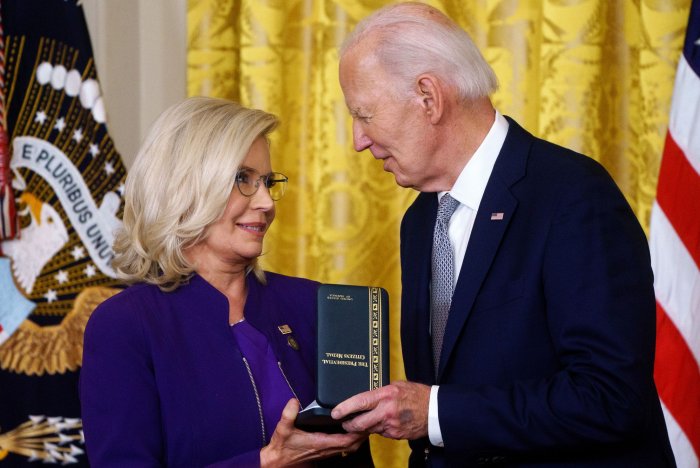
Former President Joe Biden presents the Presidential Citizens Medal to Liz Cheney during a ceremony in the East Room of the White House in Washington, on January 2, 2025. The Presidential Citizens Medal is bestowed to individuals who have performed exemplary deeds or services. Photo by Will Oliver/UPI | License Photo
Weekly insights and analysis on the latest developments in military technology, strategy, and foreign policy.
The U.S. Marine Corps is looking for companies that can provide 10,000 first-person view drones by Jan. 1, 2027, according to a Request for Information (RFI) posted Thursday on a government procurement website. While just a minute fraction of the number of FPV drones being used by both sides of the war in Ukraine monthly, the RFI is the latest move by the Marines to put these swift and maneuverable weapons into the hands of its troops. It was issued as the Pentagon seeks to dramatically increase drone supplies across the services.
The USMC, as we have previously noted, wants strike weapons at the squad level with far greater reach than rifles and mortars. The Corps has created “attack drone teams” to integrate the lessons in Ukraine about the effectiveness of these weapons against personnel and equipment into their formations. We’ll talk more about those teams later in this story.
U.S. Marines with III Marine Expeditionary Force prepare to receive a drone during the Marine Corps Attack Drone Competition on Camp Schwab, Okinawa, Japan, Dec. 9, 2025. (U.S. Marine Corps photo by Cpl. Joaquin Dela Torre) Cpl. Joaquin Carlos Dela Torre
The use of FPV drones by both Russia and Ukraine has changed the face of war. They have enabled small units to strike targets in some cases as far away as 40 kilometers, though more typically less than half that distance, greatly extending the depth of the front lines.
Drone footage from Ukraine’s Lazar Special Forces Group captures a precision strike on a Russian 9K33 Osa air defense vehicle in Kherson Oblast, destroying its active radar. The FPV drone covered the 300-meter distance to impact in less than 17 seconds. pic.twitter.com/VtYVcvYJak
“FPV drones offer squad-level lethality up to 20 kilometers for under $5,000, compared to more expensive weapons systems with less capability,” the Marines explained in March. “This provides a cost-effective and scalable solution for modern combat.”
The RFI, published on Thursday, is one step toward meeting that goal. It calls for FPV drones costing less than $4,000 per unit for the aircraft, with the understanding that ground-control stations, communications equipment, goggles, batteries and charging stations for swarming will add to the price tag.
These can be controlled by radio frequencies as well as fiber optic cables. First employed by Russia last year, these cable-controlled drones are now widely used by both sides because they are immune to jamming and many other forms of electronic warfare. They also help mitigate interference from geography and structures that can impede radio signals.
A first-person view (FPV) drone controlled by fiber optic cables in Ukraine. (Photo by Mykhaylo Palinchak/SOPA Images/LightRocket via Getty Images) SOPA Images
The use of these types of FPV drones has become so ubiquitous that some Ukrainian cities are covered in cables, which you can see in the following video.
Pilots from the reconnaissance company of the 63rd Mechanized Brigade showed what Lyman looks like today. The city is holding on, but is gradually becoming covered by this “web.” – “Today, the intensity of combat is measured not so much by destroyed buildings as by the amount of… pic.twitter.com/KzRyRWmkpa
The Marines are also seeking designs that can be easily converted from non-kinetic to multiple different kinetic payloads by troops on the front lines. In addition, the RFI calls for drones giving Marines the ability to “modify, within reason, the system with a variety of third-party payloads, armaments, and munitions without vendor involvement.” The Corps also wants the ability to repair these drones by itself, without vendor involvement, a critical need in any swiftly evolving fight.
There are no requirements listed for speed, range, altitude, or payload weights; however, the RFI asks that interested companies provide those specifications. Regardless, the Corps is looking to move out quickly — at least in terms of notoriously sluggish U.S. military procurement norms — on this effort. The RFI calls for the delivery of an initial tranche of these weapons by Jan. 1, 2027, “with the ability to quickly ramp production and deliver larger quantities up to 5,000 air vehicles within 6 months and 10,000 units within 12 months.”
The RFI comes as the Marines are testing FPV drones to see how they function in simulated combat and to certify troops on their use. There have been at least two examples of that since November alone.
U.S. Marines with III Marine Expeditionary Force load a notional payload on a drone during the Marine Corps Attack Drone Competition on Camp Schwab, Okinawa, Japan, Dec. 9, 2025. (U.S. Marine Corps photo by Cpl. Joaquin Dela Torre) Cpl. Joaquin Carlos Dela Torre
Earlier this month, the 3rd Marine Division, III Marine Expeditionary Force, participated in the Marine Corps Attack Drone Competition at Camps Hansen and Schwab, Okinawa, Japan.
A Neros Archer first-person view (FPV) drone. (U.S. Marine Corps photo by Cpl. Joshua Barker) Cpl. Joshua Barker
The attack drone competition on Okinawa allowed Marines “to test and improve their drone skills alongside the top operators in the Marine Corps, enhancing their confidence and capabilities on the battlefield,” said U.S. Marine Corps Sgt. Grant Doran, an attack drone instructor with the Marine Corps Attack Drone Team in Quantico. “It also lets us train the people who will be taking over our positions in the future. Other branches were also able to bring their top operators in, so we can share our tips and tricks to increase lethality across all services.”
The certification “increased 3rd Marine Division’s tactical drone use in both offensive and defensive scenarios,” the division explained. “The Neros Archer drone extends the Marines’ understanding of the battlespace by 20 kilometers, and this capability increases the Marines’ lethal reach and ability to attack using precision weapons.”
“I believe that with [any potential] crisis, small Unmanned Aerial Systems development and integration within small unit formations is going to be super relevant given its longer reach,” Doran posited.
A Marine working on first-person view (FPV) drones. (U.S. Marine Corps photo by Connor Taggart) Connor Taggart
In November, the Marine Corps Battalion Landing Team 3/6, 22nd Marine Expeditionary Unit (Special Operations Capable) conducted FPV attack drone training on Camp Santiago, Puerto Rico.
“The 2d Marine Division and the Marine Corps Attack Drone Team are training and certifying 22nd MEU(SOC) Marines on the Neros Archer first-person view drone system, demonstrating the 22nd MEU(SOC)’s commitment to innovation, adaptability, and enhanced combat readiness,” a release explains. That training came as the U.S. was ramping up its Operation Southern Spear campaign against drug traffickers and Venezuelan dictator Nicolas Maduro, which you can read more about here.
22nd MEU FPV Drone Training
The RFI and the recent competition and training come after the Corps announced the establishment of its experimental Marine Corps Attack Drone Team (MCADT) at the service’s base in Quantico, Virginia, earlier this year.
MCADT’s creation was a direct response to “the rapid proliferation of armed first-person-view drone technology and tactics observed in modern conflicts, particularly in Eastern Europe,” the Marines said in a press release issued back in March. “As emerging threats continue to evolve, the Marine Corps is prioritizing the integration of FPV drone capabilities to enhance lethality and operational effectiveness across the Fleet Marine Force.”
The Marines, meanwhile, have a separate program to spend hundreds of millions of dollars on small drones. In April 2024, the Marine Corps Systems Command (MARCORSYSCOM) awarded three companies – Teledyne FLIR Defense, AeroVironment and Anduril Industries – an Indefinite Delivery/Indefinite Quantity contract worth up to $249 million under its Organic Precision Fires-Light (OPF-L) program. The most recent order came earlier this month, when the Corps agreed to purchase 600 Rogue-1 loitering munitions from Teledyne FLIR Defense for $42.5 million, or about $71,000 a piece. That follows an initial $12 million order for 127 Rogue-1s, which had a price tag of about $90,000 per unit.
Teledyne FLIR Defense senior marketing manager Shannon Jidas holds up a Rogue-1 drone at the 2024 SOF Week special operations conference in Tampa. (Howard Altman/staff ) Teledyne FLIR Defense senior marketing manager Shannon Jidas holds up a Rogue 1 drone at the SOF Week special operations conference in Tampa. (Howard Altman/staff )
As the Marines eye a potential future peer conflict where drones will play a huge role, there is another lesson from the Ukraine war to consider. Magazine depth for these weapons is critical, which is why the Corps is also looking for a mix of short-range, troop-controlled drones, including ones far cheaper, albeit less capable in some ways, than the Rogue-1.
Still, the procurement of 10,000 FPV drones, as we noted earlier in this story, pales in comparison to what is seen in Ukraine, a nation in an existential fight. Kyiv, for instance, plans to produce 4.5 million FPV drones by the end of this year. Russia, for its part, plans to produce 2.5 million of these weapons. Still, Ukraine is a unique, well-established conflict with largely static lines, and is not what the U.S. would likely face in the Pacific, for instance, where FPV drones won’t be needed in such massive quantities. Still, FPV drones will be a staple of land warfare going forward.
Though its goals are comparatively small in number, the RFI is a small step toward closing the Pentagon’s yawning drone development and procurement gap that TWZ has frequently highlighted.
Victims of Jeffrey Epstein have criticised the United States government after it released a partial trove of documents from cases against the late convicted sex offender with heavily redacted pages and blacked-out photos.
The growing outcry on Saturday came as US media reported that at least 16 files from the tranche, which were published online, had disappeared from the public webpage.
Recommended Stories
list of 3 itemsend of list
The deleted files included a photograph showing President Donald Trump.
The Department of Justice (DOJ) began releasing the trove on Friday to comply with a law overwhelmingly passed by Congress in November that mandated the disclosure of all Epstein files, despite Trump’s months-long effort to keep them sealed.
It said it plans to release more records on a rolling basis, blaming the delay on what it said was a time-consuming process of obscuring survivors’ names and other identifying information.
But the tens of thousands of pages made public offered little new insight into Epstein’s crimes or the prosecutorial decisions that allowed him to avoid serious federal charges for years. They also omitted some of the most closely watched materials, including FBI interviews with victims and internal DOJ memos on charging decisions.
Meanwhile, a 119-page document titled “Grand Jury-NY”, likely from one of the federal sex trafficking investigations that led to the charges against Epstein in 2019, was entirely blacked out.
One of Epstein’s victims, Marina Lacerda, reacted angrily to the large number of redactions and unreleased documents.
“All of us are infuriated by this,” she told the news outlet MS NOW on Saturday. “It’s another slap in the face. We expected way more.”
Lacerda, who said Epstein abused her when she was 14 years of age, was a crucial witness in the 2019 investigation that led to the filing of sex trafficking charges against the late financier.
Epstein killed himself in jail that year shortly after his arrest.
Lacerda told The New York Times in a separate interview that she felt let down.
“So many of the photos are irrelevant,” she said.
Another survivor, Jess Michaels, told the news outlet CNN that she spent hours searching through the released files for her victim’s statement and records of her call to an FBI tipline, but found neither.
“I can’t find any of those,” she said. “Is this the best that the government can do? Even an act of Congress isn’t getting us justice.”
Marijke Chartouni, who said she was abused by Epstein when she was 20 years old, decried a lack of openness.
“If everything is redacted, where is the transparency?” she said on Friday in an interview with The New York Times.
Some lawmakers also expressed frustration.
Republican Representative Thomas Massie, who helped spearhead the legislative push, accused the White House of failing to comply “with both the spirit and the letter of the law that Donald Trump signed just 30 days ago” in a social media post on Friday.
That law required the government’s case file to be posted publicly by Friday, constrained only by legal and victim privacy concerns.
Meanwhile, the unexplained 16 missing files led to speculation online about what was taken down and why the public was not notified, compounding longstanding intrigue about Epstein and the powerful figures who surrounded him.
Democrats on the House Oversight Committee pointed to the missing image featuring a Trump photo in a post on X, writing: “What else is being covered up? We need transparency for the American public.”
“If they’re taking this down, just imagine how much more they’re trying to hide,” said senior Democrat Chuck Schumer. “This could be one of the biggest cover-ups in American history.”
The Trump administration, however, denied that it was not being forthcoming with the released materials. Deputy Attorney General Todd Blanche said during a TV interview with ABC that there was no attempt “to hold anything back” to protect Trump.
The DOJ also issued a statement on X late on Saturday. “Photos and other materials will continue being reviewed and redacted consistent with the law in an abundance of caution as we receive additional information,” it said.
Separately, celebrities who appeared in photos made available as part of Friday’s release include former President Bill Clinton, late news anchor Walter Cronkite, singers Mick Jagger, Michael Jackson and Diana Ross, British entrepreneur Richard Branson and the former Duchess of York, Sarah Ferguson.
There were also photos of Epstein with actors Chris Tucker and Kevin Spacey.
Many of the photos were undated and provided without context, and none of those figures has been accused of any wrongdoing in connection with Epstein.
Andrew Mountbatten-Windsor also appears in one photo lying across the laps of several women. The former duke of York, who was stripped of his royal title over his ties to Epstein, has denied any wrongdoing.
Notably missing were references to Trump himself, despite his frequent inclusion in previous releases of Epstein-related documents. Trump and Epstein were friends in the 1990s and early 2000s and had a falling out before Epstein’s first conviction in 2008.
Trump has not been accused of wrongdoing and has denied knowing about Epstein’s crimes.
Amid the outcry, the DOJ sought to draw attention to Clinton, with two agency spokespeople posting on social media images that they said showed him with Epstein victims.
Clinton’s deputy chief of staff, Angel Urena, said in a statement that the White House was attempting to “shield themselves” from scrutiny by focusing on the former president.
“They can release as many grainy 20-plus-year-old photos as they want, but this isn’t about Bill Clinton,” he wrote.
NEWS BRIEF China’s rare-earth magnet exports surged to 6,150 metric tons in November, the second-highest level on record and a 12% increase from October, following the U.S.-China agreement to streamline exports of the critical elements. The recovery comes after China restricted magnet exports in April during the trade war, bringing parts of the global supply […]
Pakistan’s former Prime Minister Imran Khan, pictured in 2021, and his wife have been sentenced to 17 years in prison for corruption. File Photo by Chamila Karunarathne/EPA-EFE
Dec. 20 (UPI) — The former prime minister of Pakistan, Imran Khan, and his wife have been sentenced to 17 additional years in jail over charges of corruption and grifting.
Khan and his wife, Bushra Bibi, received the sentence in the Toshakhana-2 case, which charged them with fraud for intentionally undervaluing a Bulgari jewelry set that had been gifted to them by Saudi Crown Prince Mohammed bin Salmon in 2021, The BBC and Bloomberg reported.
The verdict, handed down late Friday during a hearing at the jail Khan is at, also includes a roughly $54,000 fine, is just the latest in a series of charges and trials he has faced since leaving office.
Khan and Bibi may be permitted to serve the new sentences concurrent to their previous sentences, according to reports.
“This court, while passing sentences, has considered the old age of Imran Ahmed Khan Niazi, as well as the fact that Bushra Imran Khan is a female,” Pakistani news organization Dawn reported Special Judge Central Shahrukh Arjumand said in a court order. “It is in considering of both said factors that a lenient view has been taken awarding a lesser punishment.”
Imran has been imprisoned since August 2023 on a 14-year sentence related to another corruption case, the same case that landed Bibi a seven-year jail sentence.
Khan also awaits trial on charges under Pakistan’s Anti-Terrorism Act because of riots in 2023 linked to his arrest for the litany of charges he faces, which include illegally receiving land worth $6.5 million and allegations that he “deliberately concealed” the details and value of gifts from foreign officials.
In Pakistan, politicians are required to return state gifts to the country’s treasury, but are permitted to buy them back. In the case of the Bulgari jewelry set, Khan and Bibi allegedly had the jewels undervalued to avoid paying what they are truly worth.
President Donald Trump holds a signed executive order reclassifying marijuana from a schedule I to a schedule III controlled substance in the Oval Office of the White House on Thursday. Photo by Aaron Schwartz/UPI | License Photo
The United Nations Security Council (UNSC) has condemned Rwanda for backing a rebel offensive in eastern Democratic Republic of the Congo and urged it to withdraw its forces and stop supporting the M23 armed group.
The UNSC unanimously adopted the resolution on Friday, and also extended the UN peacekeeping mission in the DRC, known as MONUSCO, for a year. This came despite Rwanda’s repeated denials – contrary to overwhelming evidence – of involvement in a conflict that has intensified as a United States-brokered peace deal unravels.
Recommended Stories
list of 3 itemsend of list
The UNSC said M23’s seizure of the strategic city of Uvira “risks destabilizing the whole region, gravely endangers civilian populations and imperils ongoing peace efforts”.
“M23 must immediately withdraw at least 75km (47 miles) from Uvira and return to compliance with all of its obligations undertaken in the Framework Agreement,” said Jennifer Locetta, a US representative to the UN.
M23 captured Uvira in the South Kivu Province on December 10, less than a week after the DRC and Rwandan presidents met US President Donald Trump in Washington and committed to a peace agreement.
“It is an amazing day: great day for Africa, great day for the world and for these two countries. And they have so much to be proud of,” Trump crowed, as fighting quickly undermined the White House spectacle.
“The only thing we need is peace. Anyone able to provide us with peace is welcome here. For the rest, we as citizens, we don’t care about it.”
The M23 group claimed on Wednesday it was withdrawing from the city following international backlash, but the DRC government dismissed this as a “staged” pullback, saying M23 forces remain deployed there.
US Secretary of State Marco Rubio acknowledged on Friday that commitments under the Washington accord were “not being met” but said his government had now signed agreements it could “hold people to”.
The US earlier warned it would use available tools against those undermining the peace deal, with US officials estimating between 5,000 and 7,000 Rwandan soldiers were operating in eastern DRC as of early December.
The US had previously sanctioned Rwandan cabinet ministers earlier this year, and the DRC later led calls to expand those sanctions after the seizure of Uvira.
The fighting has triggered a major humanitarian emergency, with more than 84,000 people fleeing into Burundi since early December, according to the UN refugee agency, which said the country has reached a “critical point” as refugees arrive exhausted and traumatised. They join approximately 200,000 others who had already sought refuge in the country.
Regional officials say more than 400 civilians have been killed in recent violence in the city.
The seizure of Uvira, located directly across Lake Tanganyika from Burundi’s largest city, Bujumbura, has raised fears of broader regional spillover. The city was the last major foothold in South Kivu for the DRC government and the Wazalendo, which are DRC-allied militias, after M23 captured the provincial capital, Bukavu, in February.
Rwanda has consistently denied backing M23, despite assessments by UN experts and the international community. In a February interview with CNN, Rwandan President Paul Kagame said he did not know whether his country’s troops were in the DRC, despite being commander-in-chief of the armed forces.
Rwanda implicitly acknowledged a presence in eastern DRC in February 2024, when it rejected a US call to withdraw troops and surface-to-air missile systems, saying it had adjusted its posture for self-defence.
Rwanda maintains that its security concerns are driven by the presence of the Democratic Forces for the Liberation of Rwanda, a militia composed largely of Hutus who fled to the DRC after participating in the 1994 genocide that killed approximately 800,000 Tutsis and moderate Hutus.
Kigali views the group as an existential threat and accuses the DRC government of supporting it.
The broader conflict in the mineral-rich eastern DRC, where more than 100 armed groups operate, has displaced more than seven million people, creating one of the world’s worst humanitarian crises.
In a ‘declaration of vengeance’ for a deadly attack on US soldiers last week, the US military launched more than 70 strikes on alleged ISIL targets in Syria.
Negotiators from Russia and the United States have met in the US city of Miami as Ukrainian President Volodymyr Zelenskyy urged Washington to ramp up the pressure on Moscow to end its war on Ukraine.
The meeting on Saturday took place between Russian President Vladimir Putin’s special envoy, Kirill Dmitriev, and US President Donald Trump’s special envoy, Steve Witkoff, and his son-in-law, Jared Kushner.
Recommended Stories
list of 3 itemsend of list
Dmitriev told the reporters the talks were positive and would continue on Sunday.
“The discussions are proceeding constructively,” said Dmitriev. “They began earlier and will continue today, and will also continue tomorrow.”
Earlier, US Secretary of State Marco Rubio had said that he may also join the talks in Miami. He said that progress has been made in discussions to end the war, but there is still a way to go.
“The role we’re trying to play is a role of figuring out whether there’s any overlap here that they can agree to, and that’s what we’ve invested a lot of time and energy [on], and continue to do so,” Rubio said. “That may not be possible. I hope it is. I hope it can get done this month, before the end of the year.”
Trump’s envoys have for weeks been negotiating a 20-point peace plan with Ukrainian, Russian and European officials.
While US officials say they have made progress, major differences remain on the issues of territory and possible security guarantees that Kyiv says are essential for any agreement.
Russia has shown few signs that it is willing to give up its expansive territorial demands in Ukraine, which it believes it is well-positioned to secure as the war grinds on and political fractures emerge among Ukraine’s European allies.
In Kyiv, Zelenskyy said he remains supportive of a US-led negotiations process, but that diplomacy needs to be accompanied by greater pressure on Russia.
“America must clearly say, if not diplomacy, then there will be full pressure… Putin does not yet feel the kind of pressure that should exist,” he said.
The Ukrainian leader said Washington has also proposed a new format for talks with Russia, comprised of three-way talks at the level of national security advisers from Ukraine, Russia, and the US.
Zelenskyy expressed scepticism that the talks would result in “anything new”, but said he would support trilateral discussions if they led to progress in areas such as prisoner swaps or a meeting of national leaders.
“If such a meeting could be held now to allow for swaps of prisoners of war, or if a meeting of national security advisers achieves agreement on a leaders’ meeting… I cannot be opposed. We would support such a US proposal. Let’s see how things go,” he said.
The last time Ukrainian and Russian envoys held official direct talks was in July in Istanbul, which led to prisoner swaps but little else.
The talks in Miami come after Putin promised to press ahead with his military offensive in Ukraine, hailing Moscow’s battlefield gains in an annual news conference on Friday.
Putin, however, suggested that Russia could pause its devastating strikes on the country to allow Ukraine to hold a presidential ballot, a prospect that Zelenskyy rejected.
Meanwhile, the death toll in Ukraine’s Black Sea Odesa region from an overnight Russian ballistic missile strike on port infrastructure rose to eight, with 30 people wounded.
A civilian bus was struck in the attack, Ukrainian Prime Minister Yulia Svyrydenko said.
The Russian attacks on the coastline region have wrought havoc in recent weeks, hitting bridges and cutting electricity and heating for hundreds of thousands in freezing temperatures.
Moscow earlier said it would expand strikes on Ukrainian ports as retaliation for targeting its sanctions-busting oil tankers.
On Saturday, Ukraine claimed to have destroyed two Russian fighter jets at an airfield in Moscow-occupied Crimea, according to the security service SBU. Kyiv’s army said it struck a Russian oil rig in the Caspian Sea as well as a patrol ship nearby.
Putin described Russia’s initial full-scale invasion of Ukraine as a “special military operation” to “demilitarise” the country and prevent the expansion of NATO.
Kyiv and its European allies say the war, the largest and deadliest on European soil since World War II, is an unprovoked and illegal land grab that has resulted in a tidal wave of violence and destruction.
It’s odd the moments you remember after someone’s gone.
Scrolling through a seemingly infinite number of clips featuring Rob Reiner being compassionate and kind, scenes from his movies that feature a bone-deep empathy for the ways human beings struggle and strive to be better, I kept thinking back to a little wink in “This Is Spinal Tap,” the 1984 mockumentary Reiner directed and co-starred in, playing filmmaker Marty DiBergi.
I’ve seen this movie so many times that I could probably act out the whole thing upon request. It provided a soundtrack to a family trip to Stonehenge several years ago. But thinking about Reiner in the wake of the horrible news that he and his wife, Michele Singer Reiner, were found dead in their home on Sunday night, their son Nick subsequently charged with their murders, I randomly landed on the scene where DiBergi talks with Spinal Tap lead singer David St. Hubbins (Michael McKean) after guitarist Nigel Tufnel (Christopher Guest) leaves the band.
St. Hubbins blithely insists he won’t miss Nigel any more than insignificant band members who played briefly in the group. DiBergi is stunned. He loves Spinal Tap and fears for its future. Reiner plays the moment with such sincere heartbreak, partly in character, but mostly I think because that’s who he was. Reiner couldn’t help it. He felt things deeply and spent much of his life working to make things better for those on society’s margins. He will be missed in so many ways.
I’m Glenn Whipp, columnist for the Los Angeles Times and host of The Envelope newsletter. How to describe this week? None more black will do. But Christmas is coming, and that Vince Guaraldi song never fails to make me smile. Let’s look at some good news for those who made the Oscar shortlists this week.
Sign up for The Envelope
Get exclusive awards season news, in-depth interviews and columnist Glenn Whipp’s must-read analysis straight to your inbox.
The film academy announced shortlists for 12 categories at the 98th Oscars, whittling down the list of contenders and offering a few indications about what films are scoring early points with voters.
Ryan Coogler’s critically acclaimed, genre-defying blockbuster “Sinners” picked up eight mentions, as did “Wicked: For Good.” Both movies placed two songs on the original song shortlist and both were cited in the newly created casting category.
The bounty for “Sirât,” the Oliver Laxe thriller that is unquestionably one of the most memorable movies of the year, offered an indication that the word of mouth on this movie is strong enough to land it a spot among the nominees for international feature.
Can it do better than that? It should. Here are five suggestions for voters, including “Sirât,” as the lists are narrowed ahead of Oscar nominations on Jan. 22.
Cinematography: ‘Sirât’
“Sirât” contains so many surprising twists and turns that when asked to describe the plot, I simply tell people that it’s about a father who shows up at a rave in southern Morocco with his young son looking for his missing daughter. The long desert journey they end up taking is astonishing, and cinematographer Mauro Herce, shooting on 16mm film, captures every treacherous mile in dramatic detail.
Original score: ‘Marty Supreme’
Voting with the Los Angeles Film Critics Assn., I cast my ballot for Kangding Ray’s hypnotic score for (you guessed it) “Sirât.” But that was just one of many soundtracks that found its way into my life this year. Hans Zimmer’s synth-heavy “F1” score makes for propulsive listening while pedaling on an exercise bike and ranks among the celebrated composer’s best work. And I share Times film editor Josh Rothkopf’s enthusiasm for Daniel Lopatin’s throwback electronic beats in “Marty Supreme,” a delight for anyone who grew up listening to the ethereal soundscapes created by Tangerine Dream.
Casting: ‘Weapons’
I’m highlighting Zach Cregger’s horror-mystery “Weapons” here partially because of its inexplicable absence in the makeup and hairstyling category. I guess voters knew it was Amy Madigan in that bright red wig all along. That omission aside, “Weapons” is a prime example of what a great casting director can do, making use of familiar faces (Josh Brolin, Julia Garner, Madigan) in unexpected ways, finding the right child actor (Cary Christopher) to deliver big emotional moments and elevating emerging talent (Austin Abrams) to unexpected heights. Allison Jones, one of the greats, belongs among the casting category’s inaugural set of nominees.
Documentary: ‘My Undesirable Friends: Part 1 — Last Air in Moscow’
Julia Loktev’s five-hour chronicle of the chilling Russian crackdown on independent journalists has won documentary honors from both the Los Angeles and New York film critics. The doc begins in 2021, when the journalists, mostly women, are forced to label themselves as “foreign agents” simply for doing their jobs, covering Putin’s regime in a factual manner. Things intensify after Russia’s invasion of Ukraine, turning “My Undesirable Friends” into a cautionary tale about the perils of bending to an autocrat. It goes without saying, but this is essential viewing.
Dec. 20 (UPI) — Most tourists visiting Rome’s iconic Trevi Fountain will have to pay a modest fee starting Feb. 1, but locals and some tourists will not.
It will cost €2, equivalent to $2.34, to get a close-up view of the fountain that features Baroque artwork and statues, according to the BBC.
Tourists still can toss coins into the fountain, which legend says ensures they go back to the Eternal City, once they have paid the entry fee.
Rome Mayor Roberto Gualtieri announced the new fee on Friday, which he called a “paltry” sum and said it will help local officials to better control traffic while visiting one of the ancient city’s most popular sites.
It also reduces the size of crowds at the 18th century fountain, which is located in a relatively confined space that easily becomes crowded. The space is limited to no more than 400 people at a time.
Local officials said the fountain drew 9 million visitors over the past year and anticipate the new fee will reduce the number of annual visitors, although the fee is expected to draw roughly €6 million — more than $7 million — in annual revenues.
Only tourists will pay and not Rome’s residents. Neither will children under 5 years of age, nor people who have disabilities and those who accompany them.
Tourists won’t have to pay a fee to view the Trevi Fountain from a distance, though.
Local officials remove coins and other items tossed into the fountain and donate them to the Caritas Catholic charity.
Fees also will be charged to visit other sites around Rome, so tourists are advised to plan ahead and ensure they have the pocket change to cover admission costs at various sites.
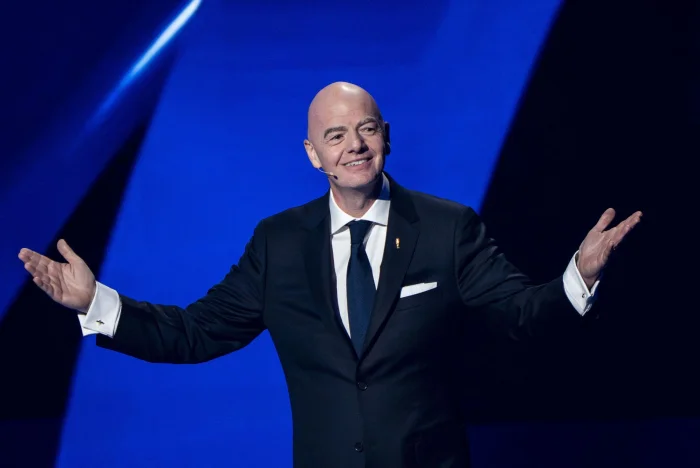
FIFA President Gianni Infantino speaks during the 2026 FIFA World Cup Draw at the John F. Kennedy Center for Performing Arts in Washington, D.C., on Friday, which revealed the group-stage matchups for the first-ever 48-team FIFA World Cup in 2026. Photo by Bonnie Cash/UPI | License Photo
Here is where things stand on Sunday, December 21:
Fighting
The death toll from a Russian missile attack on Ukraine’s port city of Odesa rose from seven to eight, with at least 30 others wounded, according to Ukrainian authorities.
Ukrainian President Volodymyr Zelenskyy described the situation in Odesa as “harsh” and accused Russia of trying to block Kyiv’s access to the Black Sea.
The Ukrainian leader also said that he is looking to replace the head of the Southern Air Command, Dmytro Karpenko, over the Russian strikes on Odesa.
Ukrainian Deputy Prime Minister Oleksii Kuleba said Russian forces also attacked the nearby port of Pivdennyi on Saturday, hitting several reservoirs.
Ukraine’s military said its special forces carried out a drone attack on a Lukoil oil rig in the Caspian Sea on Friday, along with the Russian military patrol ship Okhotnik. The military also said that the Filanovsky oil rig, which had been targeted twice this month, was damaged in the strike.
The Ukrainian military also said it destroyed two Russian fighter jets at an airfield in the occupied Crimean peninsula.
Russia’s Ministry of Defence said its forces took control of the villages of Svitle and Vysoke, located in Ukraine’s eastern Donetsk region and the northeastern Luhansk region, respectively.
Diplomacy and ceasefire talks
Zelenskyy said the United States proposed a new format for talks with Russia, comprised of three-way talks at the level of national security advisers from Ukraine, Russia, and the US.
The Ukrainian leader expressed scepticism that the talks would result in “anything new”, but added that he believes that US-led talks have the best chance of success.
He added that he would support trilateral discussions if they led to progress in areas such as prisoner swaps or a meeting of national leaders. “If such a meeting could be held now to allow for swaps of prisoners of war, or if a meeting of national security advisers achieves agreement on a leaders’ meeting… I cannot be opposed. We would support such a US proposal. Let’s see how things go,” he said.
Zelenskyy also pushed back against calls for Ukraine to hold elections as the war drags on, stating that voting cannot take place in Russian-occupied areas and that security conditions must first improve. “It is not [Russian President Vladimir] Putin who decides when and in what format the elections in Ukraine will take place,” Zelenskyy said.
Zelenskyy urged European leaders to approve a measure to seize frozen Russian assets and use them to fund Ukraine’s war effort, saying that doing so will strengthen Ukraine’s leverage at the negotiating table. The International Monetary Fund has estimated that Ukraine will need about 137 billion euros ($161bn) in 2026 and 2027, as the demands of the war continue to strain the country’s economy.
Russian special envoy Kirill Dmitriev held talks with his US counterpart, Steve Witkoff, and US President Donald Trump’s son-in-law, Jared Kushner, in the city of Miami.
“The discussions are proceeding constructively. They began earlier and will continue today, and will also continue tomorrow,” Dmitriev said
Russian Minister of Foreign Affairs Sergey Lavrov attended a summit in Cairo, held to advance closer cooperation between Russia and African nations, and attended by more than 50 countries. Lavrov pitched Russia as a “reliable partner” to African countries in areas such as security and national sovereignty.
Weapons
Ukrainian presidential aide Oleksandr Kamyshin announced a deal with Portugal on the joint production of maritime drones, saying it would help “defend Europe from the sea”.
Dec. 20 (UPI) — Some Jeffrey Epstein case files released on Friday by the Justice Department are not available one day later, and other files have drawn criticism for redactions and other concerns.
More than a dozen files that were available on Friday have disappeared from the DOJ’s Epstein Library webpage, which enables visitors to search for and download files, NPR reported.
One missing file shows a photo on a desk of President Donald Trump, while others showed artwork, some of which included nudity, according to NPR.
The DOJ’s Epstein Library webpage instructs visitors to report files that they don’t think should be made available by sending an email to a provided address, but it’s unknown if the missing files were reported.
Many files have redacted information, which prompted some to suggest the White House ensured Trump’s name had been redacted.
Deputy Attorney General Todd Blanche on Friday told ABC News there is no effort to conceal the president’s name or those of other high-profile individuals.
“We’re not redacting the names of famous men and women that are associated with Epstein,” Blanche said, as reported by ABC News.
“President Trump has certainly said from the beginning that he expects all files that can be released to be released, and that’s exactly what we’re doing,” he added later.
A spokesman for President Bill Clinton suggested the Trump administration intentionally released photographs that included one showing the former president with Ghislaine Maxwell and a woman whose face was redacted, according to The Guardian.
White House press secretary Karoline Leavitt posted the pic of Clinton at the poolside on social media and preceded by “Oh my!”
Clinton spokesman Angel Urena afterward accused the White House of “hiding these files for months” and releasing them late on Friday while “shielding themselves from what comes next or from what they’ll try and hide forever” in a post on X.
He said the Epstein files “isn’t about Bill Clinton” and “never has, never will be.”
The DOJ began posting those files and hundreds of thousands of others on Friday in response to a newly enacted law requiring their release to ensure transparency.
Epstein was a financier and convicted sex offender who died when he hung himself in a Manhattan jail in 2019 while awaiting a federal trial on charges accusing him of sex-trafficking of minors.
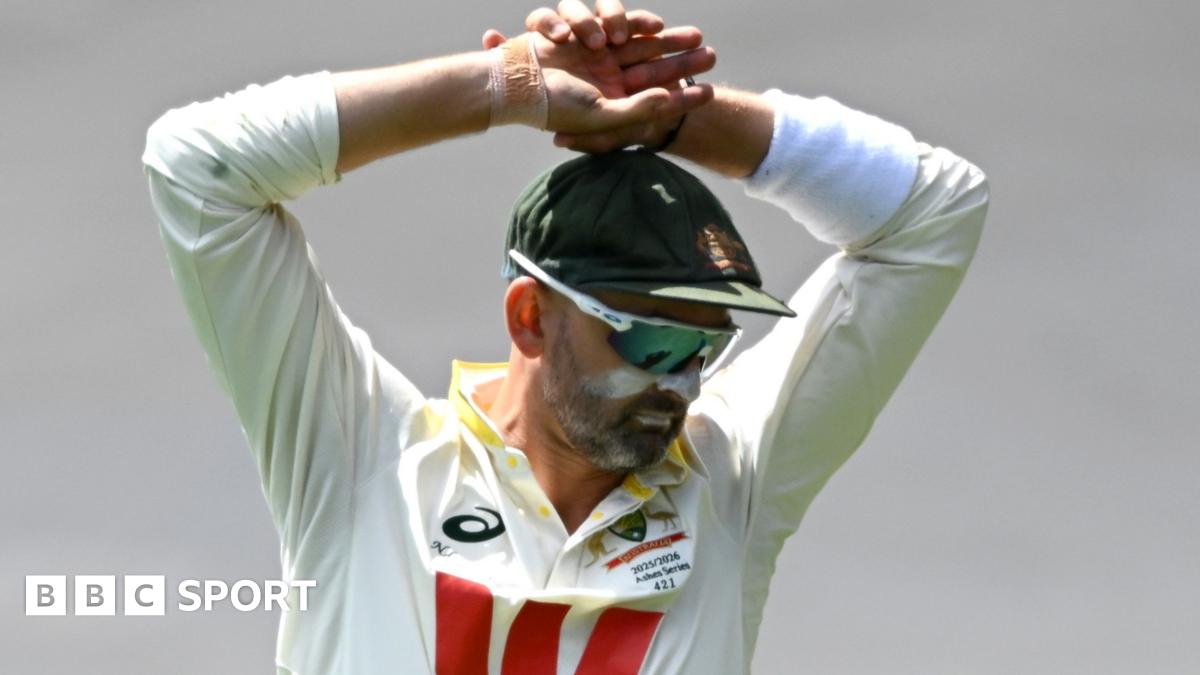
Australia spinner Nathan Lyon will play no further part on the final day of the third Ashes Test and is a doubt for the remainder of the series because of a hamstring injury.
Lyon, 38, who became Australia’s second highest Test wicket-taker during the Adelaide Test, was injured diving in the field on the morning of the fifth day.
He clutched his right hamstring and left the field immediately.
Lyon took three wickets on the fourth afternoon to put Australia on the brink of a victory that will confirm a series win.
He went wicketless before his injury on day five, however, as England showed admirable fight.
There are just five days before the fourth Test begins in Melbourne on 26 December (23:30 GMT, 25 December), leaving Lyon with little time to recover. The final Test in Sydney follows five days after the fourth has finished.
Lyon, one of the greatest spinners of all time, suffered a calf injury during the second Test of the 2023 Ashes, which was a significant factor in England recovering to draw the series 2-2.
He bowled only two overs in the first Test of this series and then said he felt “filthy” after being left out of the second in Brisbane.
Dec. 20 (UPI) — Three officers with the Rochester (N.Y.) Police Department and another man were shot by an assailant, whom police tracked down and killed in a gunfight on Friday night.
The officers responded to a domestic disturbance call at 10:15 p.m. from a man who reported another man was trying to break into his girlfriend’s apartment and might be armed, USA Today reported.
The caller also said he was armed with a pistol and had a permit for it.
When the officers arrived at the woman’s home, they found the suspect on the side of the house.
“He immediately pulled out a handgun and fired multiple shots from close range toward the officers and the victim, striking two officers,” Rochester Police Chief David Smith told media on Saturday morning.
The man who called the police engaged the suspect and exchanged gunfire, but was shot several times.
The suspect then fled the scene, but another police officer located him within minutes.
The suspect also shot that officer, but that officer and others who arrived at the scene shot and killed the suspect.
An officer who had been shot several times in the upper body was hospitalized in stable condition, while another who was shot in the upper body underwent surgery and is in stable but critical condition.
The third wounded officer was seriously injured but is in stable condition, while the man who called the police is hospitalized with multiple gunshot wounds that are not life-threatening and is in serious condition.
None of the identities of those involved have been released, and an investigation into the matter is ongoing.
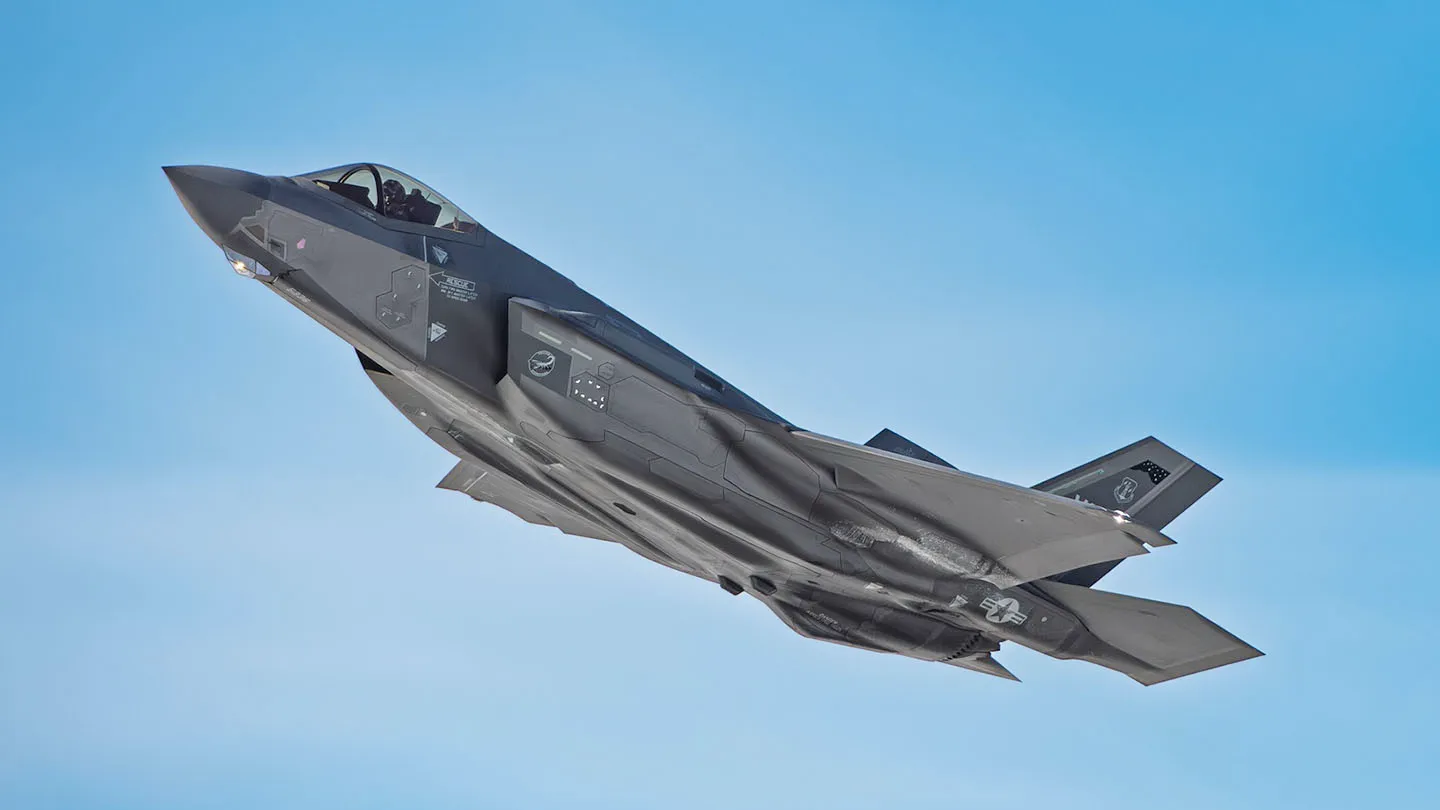
TWZ was the first to report that the 158th’s F-35As were being deployed to Southern Spear. You can catch up with our previous story about this operation here.
The jets were captured on video and in still images by airplane spotters. We reached out to the Vermont National Guard for comment.
F-35A Lightning lls with the “Green Mountain Boys” of the Vermont Air National Guard’s 134th Fighter Squadron, 158th Fighter Wing, seen on the tarmac at Roosevelt Roads Naval Station in Eastern Puerto Rico, after arriving earlier today from the Mainland United States.
F-35A operating in the Caribbean — the first USAF tactical jets to do so as part of this operation — offer the ability to drop 2,000lb-class guided bombs from their internal bays on targets deep inside Venezuelan airspace. The Marine Corps F-35Bs previously deployed to Puerto Rico are limited to carrying 1,000lb-class weapons internally. They also have significantly less range and reduced agility. Their presence in the region is part of the increasing evidence that the U.S. is preparing for strikes.
The arrival of the jets comes as the Trump administration continues to increase military and economic pressure on Maduro. Saturday, U.S. personnel boarded another oil tanker off the coast of Venezuela.
In a pre-dawn action early this morning on Dec. 20, the US Coast Guard with the support of the Department of War apprehended an oil tanker that was last docked in Venezuela.
The United States will continue to pursue the illicit movement of sanctioned oil that is used to fund… pic.twitter.com/nSZ4mi6axc
That action follows a blockade on sanctioned tankers ordered by President Donald Trump and marks at least the second such seizure. The U.S. had already seized one sanctioned oil tanker, the M/T Skipper. That mission, which occurred on December 10, was led by the U.S. Coast Guard with elements of the U.S. military providing support.
Today, the Federal Bureau of Investigation, Homeland Security Investigations, and the United States Coast Guard, with support from the Department of War, executed a seizure warrant for a crude oil tanker used to transport sanctioned oil from Venezuela and Iran. For multiple… pic.twitter.com/dNr0oAGl5x
It remains unclear what, if any action, Trump will ultimately take against Venezuela. The arrival of the F-35As from Vermont gives him another range of capabilities to employ.
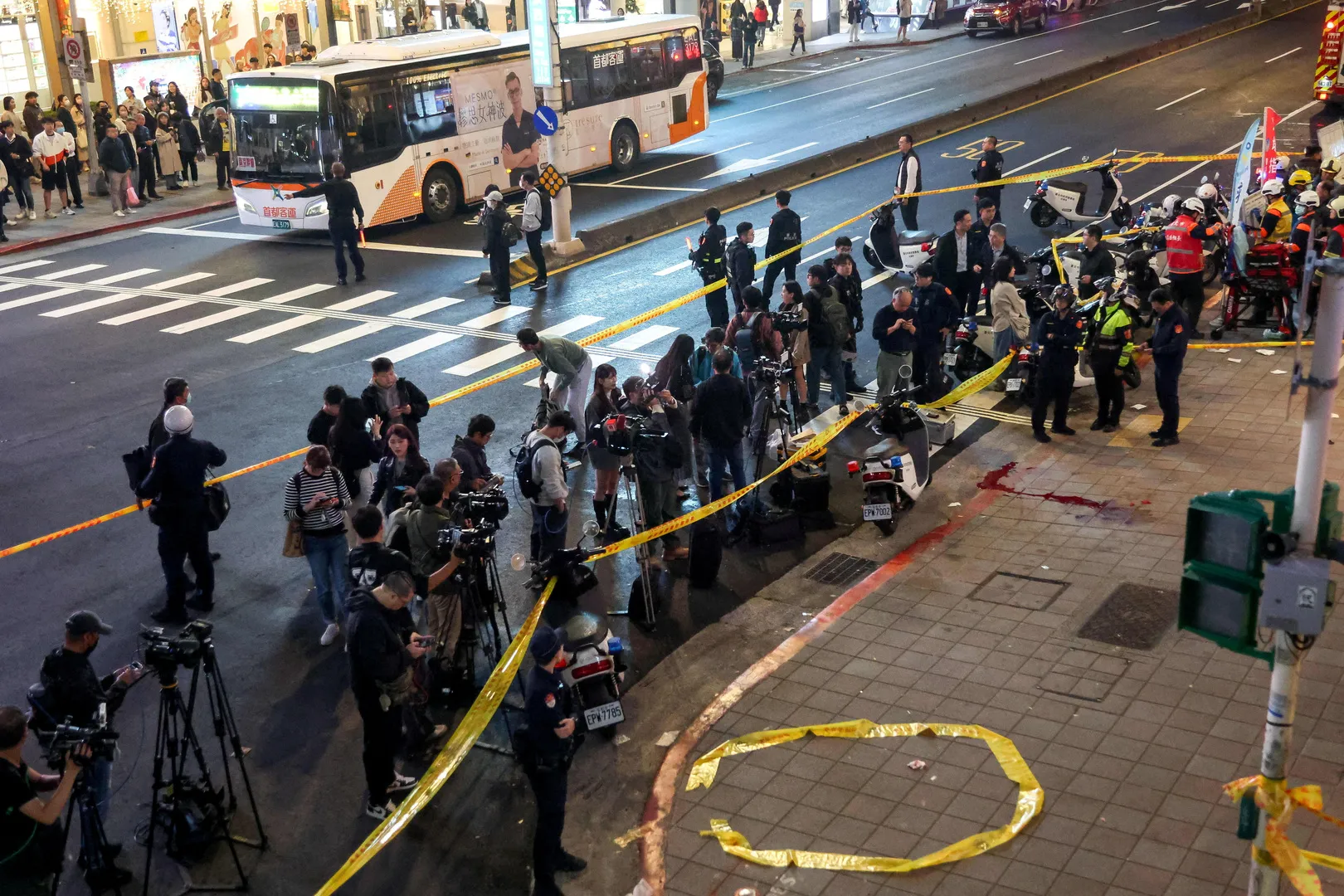
Taiwan’s president Lai Ching-te has ordered sweeping security reforms after a knife and smoke grenade attack killed three people and injured 11 in Taipei. The suspect, Chang Wen, 27, set fires and struck multiple sites before dying from a fall.
NEWS BRIEF The World Bank has approved $700 million in financing for Pakistan’s economic stability, advancing a controversial multi-year program that could total $1.35 billion. The funding arrives as Pakistan grapples with deep structural issues, from fragmented regulation to political capture of resources, and faces growing regional opposition, with India reportedly poised to challenge further […]
A U.S. military helicopter hovers over an oil tanker seized early Saturday morning in international waters near Venezuela. Photo Courtesy of the U.S. Coast Guard
Dec. 20 (UPI) — The U.S. Coast Guard led another seizure of an oil tanker in international waters near Venezuela on Saturday after President Donald Trump declared a blockade of Venezuela.
The U.S. Navy and other federal entities participated in the seizure of the oil tanker, which is not among those sanctioned by the federal government, the Wall Street Journal, CBS News and CNN reported.
Armed U.S. personnel on military helicopters descended onto the tanker’s deck during the early morning hours on Saturday and seized it, Homeland Security Sec. Kristi Noem said in a social media post.
In a pre-dawn action early this morning on Dec. 20, the US Coast Guard with the support of the Department of War apprehended an oil tanker that was last docked in Venezuela.
The United States will continue to pursue the illicit movement of sanctioned oil that is used to fund… pic.twitter.com/nSZ4mi6axc— Secretary Kristi Noem (@Sec_Noem) December 20, 2025
No one aboard the oil tanker resisted, and the United States seized it for carrying sanctioned Venezuelan oil.
The seized tanker displayed a Panamanian flag and was carrying Venezuelan oil that it was to offload in Asia.
Much of Venezuela’s oil is shipped to China, which has privately owned teapot refineries that often buy and refine illicit oil from Venezuela, Iran and other sanctioned nations.
The president on Tuesday ordered a “total and complete blockade” of all sanctioned oil tankers as they enter or leave Venezuelan waters.
Saturday’s raid shows the blockade could affect any vessel that carries Venezuelan oil, as affirmed by Noem.
The United States on Wednesday seized a sanctioned oil tanker after it departed a Venezuelan port and diverted it to Texas, where Trump said the United States could keep the oil in its hold.
That tanker, The Skipper, was flying the flag of Venezuela’s neighbor, Guyana, officials for which said the vessel is not among those registered there.
Such activities are typical of a shadow fleet that uses deceptive tactics to hide where respective vessels are located and transport illicit oil, which often benefits Iran, Russia and other sanctioned states.
Venezuelan President Nicolas Maduro‘s government called The Skipper’s seizure an act of “piracy” and “robbery” and said the blockade is a “grotesque threat” that violates international law, according to CBS News.
Maduro’s regime accuses the United States of trying to “appropriate the oil, land and minerals of the country through gigantic campaigns of lies and manipulations.”
The blockade and tanker seizures are in addition to U.S. military strikes on alleged drug boats carrying illicit drugs destined for the United States and Europe.
Both tactics are efforts to isolate the Maduro regime, which Trump seeks to force out of power by depriving it of its primary revenue sources.
Former President Joe Biden presents the Presidential Citizens Medal to Liz Cheney during a ceremony in the East Room of the White House in Washington, on January 2, 2025. The Presidential Citizens Medal is bestowed to individuals who have performed exemplary deeds or services. Photo by Will Oliver/UPI | License Photo