News

American-Made Shahed-136 Kamikaze Drone Clones Being Tested By Marines

The U.S. Marine Corps is testing the Low-Cost Uncrewed Combat Attack System (LUCAS) as a long-range one-way strike drone. Based on a design reverse-engineered from the Iranian-designed Shahed-136, these drones have already been deployed by U.S. Central Command (CENTCOM) to the Middle East, which you can read more about in our deep dive here.

The Marines are sponsoring a test of the LUCAS drones at the U.S. Army’s Yuma Proving Ground (YPG), the Army stated. The move comes as the Corps is working to increase its own one-way attack drone capabilities and the Pentagon is pushing for more drone use across the military in the wake of their ubiquity in the Ukraine war. The Pentagon is hoping that the LUCAS drones can be quickly and cheaply built and delivered at scale.

“Harkening back to the Liberty Ship production model that rapidly produced thousands of cargo ships during World War II, testers hope that the LUCAS will eventually serve a similar function in the new era of warfare,” Col. Nicholas Law, Director of Experimentation in the Office of the Under Secretary of War for Research & Engineering, said in a release. “It’s not a single manufacturer: it’s designed to go to multiple manufacturers to be built in mass quantities.”

We laid out this exact concept months ago, along with our in-depth case for rushing mass production of American Shahed-136 copies, that you can read in full here.

Law envisions these drones as ultimately able to be used on dynamic targets, such as vehicles on the move or targets of interest that the drones find themselves with a degree of autonomy.

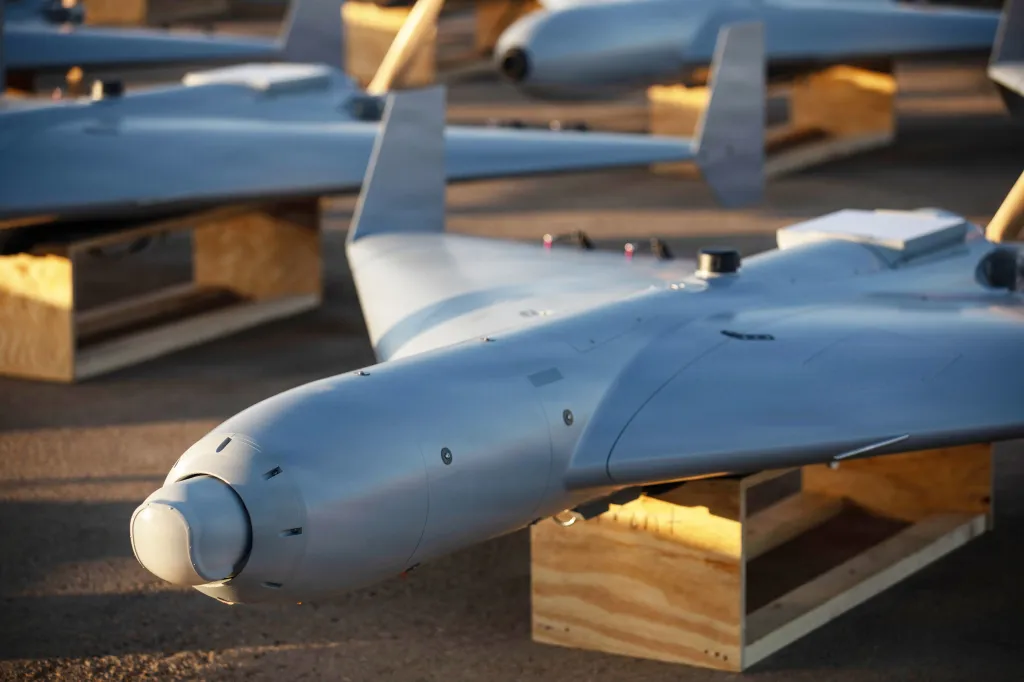
U.S. CENTRAL COMMAND AREA OF RESPONSIBILITY (Nov. 23, 2025) Low-cost Unmanned Combat Attack System (LUCAS) drones are positioned on the tarmac at a base in the U.S. Central Command operating area, Nov. 23. Costing approximately $35,000 per platform, LUCAS drones are providing U.S. forces in the Middle East low-cost, scalable capabilities to strengthen regional security and deterrence. (Courtesy Photo)
Some LUCAS drone deployed in the Middle East have gimballed cameras and satellite communications. (Courtesy Photo)

“Once we start weaponization and automated target recognition, we can have a target that is a representation of a real target,” he explained. Law didn’t provide any specifics, and we have reached out to the Army and Marines for more information.

You can read our deep dive on how artificial intelligence will revolutionize lower-end drones like LUCAS in exactly this way in our special feature linked here. But the fact that LUCAS can be equipped with a satellite datalink means that it could hunt for and find targets of interest over great distances all on its own, while still allowing a human operator to approve a strike.

In addition to strikes, LUCAS drones equipped with nose-mounted gimbal cameras can also be deployed to provide intelligence, surveillance and reconnaissance (ISR). With an estimated price tag for the platform itself of about $35,000, these LUCAS variants could provide an affordable, attritable platform for ISR. The LUCAS drones we have seen also have swarming capabilities — the ability to work cooperatively as a team — which can make them especially effective at attack operations and acting as decoys to confuse enemy air defenses.

The one detail Law provided about the drones being tested at YPG is that they are not yet equipped with warheads.

“The warhead that will eventually be integrated into LUCAS isn’t constructed yet, but it will also be low-cost and mass produced by multiple manufacturers,” Law posited. “Evaluators are currently testing LUCAS with inert payloads.”

CENTCOM declined comment on whether its LUCAS drones currently deployed have kinetic payloads and referred us to statements previously made that they have been deployed as one-way attack drones. It’s possible that they feature more improvised, less powerful warheads at this time. They can also just fly into their targets to damage them — especially fragile ones like radar arrays.

As we noted in our original piece on the topic, CENTCOM stood up Task Force Scorpion Strike (TFSS), the military’s first one-way attack drone squadron, to operate the LUCAS drones. Roughly 10 feet long with a wingspan of eight feet, was developed by Arizona-based SpektreWorks in cooperation with the U.S. military primarily as a target drone to emulate a Shahed-136-like threat, but also as a weapon in its own right.

U.S. CENTRAL COMMAND AREA OF RESPONSIBILITY (Nov. 23, 2025) Low-cost Unmanned Combat Attack System (LUCAS) drones are positioned on the tarmac at a base in the U.S. Central Command (CENTCOM) operating area, Nov. 23. The LUCAS platforms are part of a one-way attack drone squadron CENTCOM recently deployed to the Middle East to strengthen regional security and deterrence. (Courtesy Photo)
Low-cost Unmanned Combat Attack System (LUCAS) drones are positioned on the tarmac at a base in the U.S. Central Command (CENTCOM) operating area, Nov. 23. (Courtesy Photo) U.S. Central Command Public Affa

There are, however, other companies involved in providing LUCAS variants. For instance, Griffon Aerospace has been pitching a Shahed-like drone called the MQM-172 Arrowhead to America’s armed forces.

The company, which is building the air frames, has already provided them to the Pentagon for use as both strike weapons and targets, Griffon spokesman Dan Beck told us Wednesday. However, it is unclear whether they have been fitted with kinetic payloads or how widespread their testing and use is across the military. We have reached out to the Pentagon to learn more.

Beck said Kraken Kinetics is providing the payload for these LUCAS variants. We’ve reached out to them as well.

While Beck declined to provide many details of his company’s work with the Pentagon, he did offer us some insights about the Arrowhead’s specifications.

Considered a long-range LUCAS version, the Arrowhead can carry a payload of up to 100 pounds as far as 1,500 nautical miles, Beck told us. That’s akin to the Shahed-136 drones produced by Iran and modified by Russia for its use against Ukraine. The current LUCAS models deployed to the Middle East are smaller and have significantly less endurance and about half the payload capacity.

American Shahed 2? You bet! Meet the MQM-172 “Arrowhead”, an enhanced US copy of the Iranian Shahed-136 kamikaze drone. This is apparently the second Shahed clone; the first, called LUCAS (Low-Cost Uncrewed Combat Attack System), was developed by Arizona-based SpektreWorks and… pic.twitter.com/ptI5iq9vk9

— Air Power (@RealAirPower1) August 8, 2025

While the general concept has existed for decades, similar delta-winged one-way attack munitions are steadily emerging globally among allies and potential foes alike, including in China. Russia is also said to be assisting North Korea in establishing its own domestic capacity to produce Shahed-136s, or derivatives thereof, as part of an exchange for Pyongyang’s help in fighting Ukraine.

Beck also told us that Griffon has been “flying these airplanes very frequently” and have been launched pneumatically and from trucks. There are plans to use rocket-assisted takeoff (RATO), but that hasn’t been tested yet, he added. Asked about whether these have been tested with kinetic payloads, Beck declined comment.

Though these types of weapons have a long development history, Iranian officials mocked the U.S. for copying their design.

“There is no greater source of pride and honor than seeing the self-proclaimed technological superpowers kneel before the Iranian drone and clone it,” Brig. Gen. Abolfazl Shekarchi boasted to reporters on Tuesday.

Iranian-made Shahed-136 'Kamikaze' drone flies over the sky of Kermanshah, Iran on March 7, 2024. Iran fired over 100 drones and ballistic missiles on Saturday, April 13, 2024, in retaliation to an attack on a building attached to the country's consular annex in Damascus that killed the guards, and two generals of the Quds Force of Iran's Islamic Revolutionary Guard Corps (IRGC) on April 01, 2024. Iran has blamed Israel for the attack on April 5, 2024 in Tehran. (Photo by Anonymous / Middle East Images / Middle East Images via AFP) (Photo by ANONYMOUS/Middle East Images/AFP via Getty Images)
An Iranian-made Shahed-136 ‘Kamikaze’ drone flies over the sky of Kermanshah, Iran on March 7, 2024. (Photo by Anonymous / Middle East Images via AFP) ANONYMOUS

The reality is that Iran didn’t really come up with this configuration, it dates back decades to a western design and Israel largely pioneered the operational use of the long-range one-way attack munition.

IAI’s MBT HARPY System


With LUCAS’s sudden deployment to the Middle East as a kinetic weapon and now the Marines testing the concept to see if it fits their needs, the future of America’s Shahed-136 knock-off looks remarkably bright. And we could be seeing just the budding of what will become a mass produced staple weapon that will be deployed en-masse across Europe and the Pacific.

Contact the author: howard@thewarzone.com

Howard is a Senior Staff Writer for The War Zone, and a former Senior Managing Editor for Military Times. Prior to this, he covered military affairs for the Tampa Bay Times as a Senior Writer. Howard’s work has appeared in various publications including Yahoo News, RealClearDefense, and Air Force Times.


Tyler’s passion is the study of military technology, strategy, and foreign policy and he has fostered a dominant voice on those topics in the defense media space. He was the creator of the hugely popular defense site Foxtrot Alpha before developing The War Zone.


Source link

Pokrovsk’s Fall Weakens Ukraine in U.S.-Led Negotiations, But Frontline Holds

Russia has reportedly captured parts of Pokrovsk in Donetsk, though Ukraine still holds positions in the northern sections. The city, largely in ruins, was a critical logistical hub and home to 60,000 people before the war. Its capture comes at a sensitive time, coinciding with U.S. envoy discussions, including those involving former President Trump, on a possible plan to end the war.

WHY IT MATTERS

The fall of Pokrovsk does not signal a collapse of Ukraine’s eastern front, but it affects Kyiv’s leverage in negotiations. Russian control of high ground provides tactical advantages, including drone launch capabilities. Meanwhile, U.S. support and military aid remain pivotal for Ukraine’s defense. The city’s loss could influence American perceptions of Ukraine’s strength, particularly in political circles advocating a quick resolution.

CURRENT MILITARY SITUATION

Russian troops have advanced in small assault groups, showing the slow, attritional nature of their operations. Ukraine has reinforced key positions with elite units, including special forces, but is mindful of troop shortages. Frontline fortifications, drones, and piecemeal Russian advances suggest Ukraine’s defenses remain resilient despite localized losses. Russia has also made limited gains in Zaporizhzhia and Dnipropetrovsk regions, though rapid territorial expansion is unlikely.

GEOPOLITICAL DIMENSIONS

Control over Pokrovsk is central to broader negotiations involving the U.S., where Trump has advocated a tougher line on Ukraine. Russia likely intends to use Pokrovsk as a platform to target nearby “fortress cities” such as Sloviansk and Kramatorsk. European allies’ financial and military support remains crucial, especially given Ukraine’s ongoing attacks on Russian energy infrastructure to weaken Moscow’s revenue streams.

CHALLENGES FOR UKRAINE

Maintaining troop strength amid attritional warfare and draft limitations.

Avoiding pressure to cede territory while securing ongoing U.S. and European support.

Managing long-term resilience against persistent Russian missile and drone attacks, which damage civilian infrastructure.

Balancing strategic defense with political messaging to allies, particularly the U.S.

ANALYSIS

The fall of Pokrovsk illustrates the psychological and strategic impact of attritional warfare. While Ukraine’s frontline holds, the loss of a city at a negotiation-sensitive moment could weaken Kyiv’s perceived bargaining power, especially in U.S. circles influenced by former President Trump’s assessment of the conflict. Militarily, the slow pace of Russian operations suggests that while gains like Pokrovsk are symbolic and tactical, they do not threaten an immediate collapse of Ukraine’s defenses.

Looking forward, Ukraine must focus on consolidating defenses, leveraging drone technology, and securing more support from European allies. Politically, the timing underscores the importance of maintaining strong ties with Washington, balancing pressure from U.S. actors advocating a settlement with the need to protect sovereignty over the Donbas region. The war remains likely to continue in a stalemated, attritional pattern, with momentum shifts driven as much by geopolitical influence as by battlefield developments.

With information from Reuters.

Source link

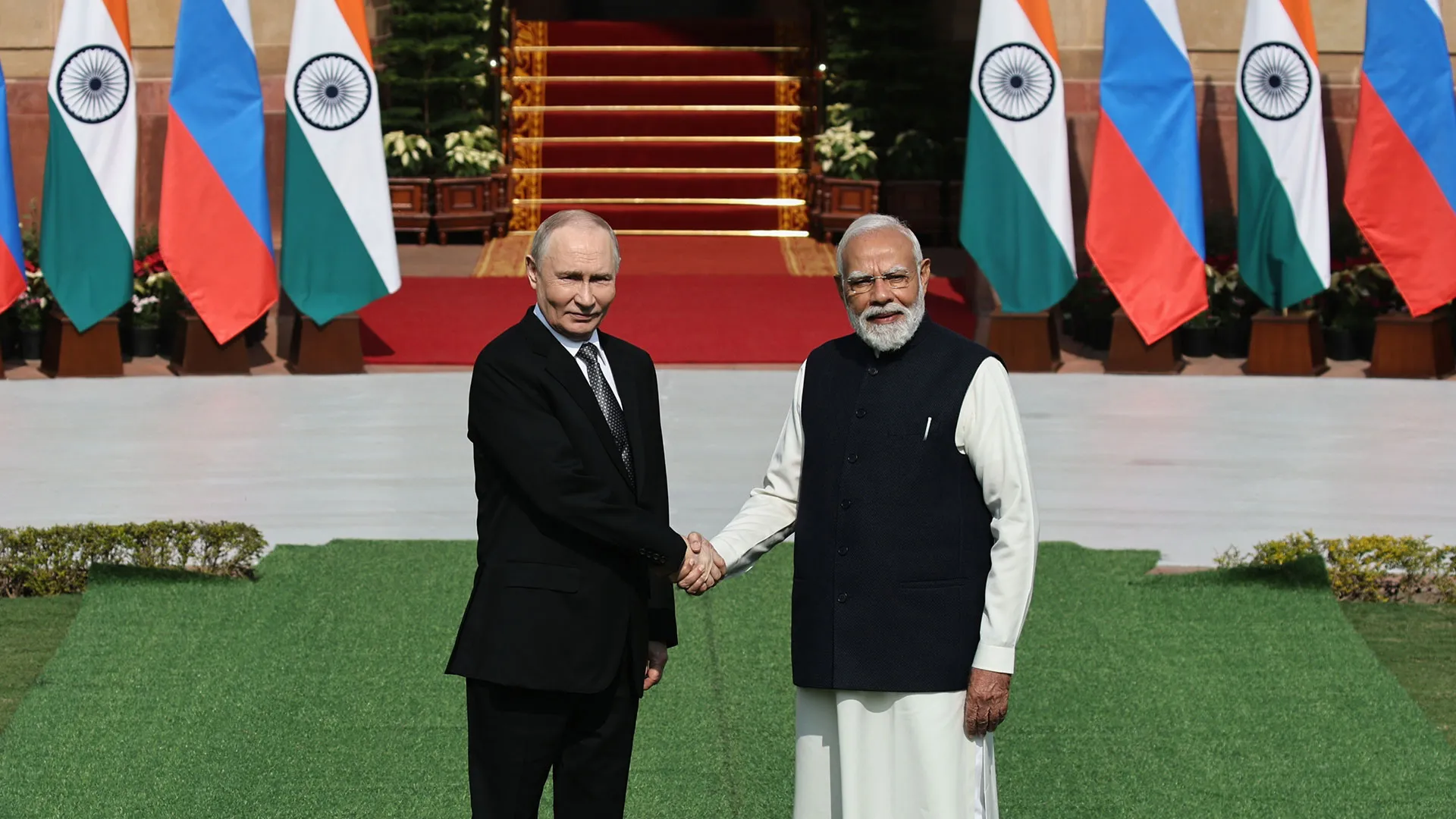
Can India balance its ties between Russia and the US? | Business and Economy

New Delhi is deepening economic ties with Moscow, despite pressure from Washington.

India is hedging between energy security and strategic partnerships.

Despite pressure from the United States, it has continued buying cheap Russian oil and has recently strengthened economic ties with Russia — from trade to weapons and critical minerals.

But this is a delicate balancing act for Prime Minister Narendra Modi: he wants to cut deals with Moscow, while staying friends with Washington, his biggest trading partner.

For President Vladimir Putin, it shows Russia still has powerful partners and is not completely isolated despite Western sanctions.

And Syria’s economy one year after the fall of Bashar al-Assad.

Plus, the bidding fight over Warner Bros.

Source link

South Sudan army to secure critical Heglig oilfield in Sudan war spillover | Sudan war News

South Sudan’s military has moved into the Heglig oilfield under an unprecedented agreement between the country and neighbouring Sudan’s warring parties to safeguard critical energy infrastructure from the country’s civil war.

The deployment on Wednesday came after the paramilitary Rapid Support Forces (RSF) captured the strategic site on December 8, compelling the government-aligned Sudanese Armed Forces (SAF) units to retreat across the border into South Sudan, where they reportedly surrendered their weapons.

Recommended Stories

list of 3 itemsend of list

The agreement aims to neutralise the facility from combat operations as fighting intensifies across Sudan’s Kordofan region, threatening both countries’ primary revenue source.

Official Sudanese government sources revealed to Al Jazeera that high-level contacts have taken place between the Sudanese and South Sudanese leaderships since the beginning of this week, after the RSF mobilized to attack the “Heglig” area. Understandings were reached to secure the evacuation of workers in the field and avoid military confrontations to ensure that the oil field and its facilities are not subjected to sabotage and destruction, and tribal leaders also played a role in that.

The deployment of South Sudan forces was based on a previous oil and security cooperation agreement signed between Khartoum and Juba, which stipulates the protection of oil fields, pipelines and central pumping stations for South Sudan’s oil, in addition to the electricity interconnection project and strengthening cooperation in the energy sector.

The new factor is the involvement of the RSF.

South Sudan People’s Defence Forces Chief of Staff Paul Nang said at Heglig that troops entered under a “tripartite agreement” involving President Salva Kiir, SAF chief Abdel Fattah al-Burhan, and RSF leader Mohamed Hamdan Dagalo, widely known as Hemedti, according to state broadcaster SSBC News.

The pact requires both Sudanese forces to withdraw from the area.

Nang stressed that South Sudanese forces would maintain strict neutrality.

“The primary goal is to completely neutralise the Heglig field from any combat operations”, he said, because it “represents an economic lifeline not only for South Sudan but for Sudan as well”.

The deployment followed a deadly drone attack on Tuesday evening that killed dozens, including three South Sudanese soldiers.

SAF confirmed using a drone to target RSF fighters at the facility, though the exact death toll remains unclear. Local media reported that seven tribal leaders and numerous RSF personnel died in the attack.

Approximately 3,900 Sudanese soldiers crossed into South Sudan’s Rubkona County after evacuating Heglig, handing over tanks, armoured vehicles and artillery to South Sudanese authorities, according to Unity State officials in South Sudan.

Thousands of civilians have also fled across the border since Sunday.

Heglig houses a central processing facility able to handle up to 130,000 barrels per day of South Sudanese crude destined for export through Sudanese pipelines. The site also includes Block 6, Sudan’s largest producing field.

Jan Pospisil, a South Sudan expert at Coventry University, explained the strategic calculus behind the unusual arrangement.

“From the SAF’s perspective, they don’t want the RSF to find another possible revenue stream, and it is better from their perspective for South Sudan to take control of the area,” he told Al Jazeera.

He added that the RSF “can’t really defend against air attacks by the SAF, as we saw with this drone strike, and they don’t need money right now”.

The seizure of Heglig marks the latest RSF advance as the conflict’s centre of gravity shifts from Darfur to the vast Kordofan region. The paramilitary force secured complete control of Darfur in October with the fall of el-Fasher, prompting international alarm over mass atrocities.

Activists at the Tawila camp told Al Jazeera that refugees continue arriving, with some forced to sleep outdoors due to insufficient resources.

UN human rights chief Volker Turk repeated a warning he issued last week that he was “extremely worried that we might see in Kordofan a repeat of the atrocities that have been committed in el-Fasher”, amid RSF advances in the region.

The Global Centre for the Responsibility to Protect echoed his warning, with Executive Director Savita Pawnday stressing that Sudan faces “one of the world’s gravest atrocity crises”, where civilians are enduring “unimaginable harm while the international community fails to respond”.

The fighting has triggered displacement, with the International Organization for Migration reporting more than 1,000 people fled South Kordofan province in just two days this week as combat intensified around the state capital, Kadugli.

In el-Fasher, the Sudan Doctors Network reported this week that the RSF is holding more than 19,000 detainees across Darfur prisons, including 73 medical personnel.

The medical advocacy group said cholera outbreaks are killing people due to overcrowding and the absence of adequate healthcare, with more than four deaths recorded weekly from medical neglect.

Source link

DOJ sues Minneapolis schools over ‘DEI’ employment policies

Dec. 11 (UPI) — The Justice Department is suing the Minneapolis Public School District, alleging its provision to hire more teachers of color is a civil rights violation amid the Trump administration’s crackdown on diversity, equity and inclusion policies.

The lawsuit, filed Tuesday but announced Wednesday, accuses the district of discriminating against teachers based on their race, color, sex and national origin.

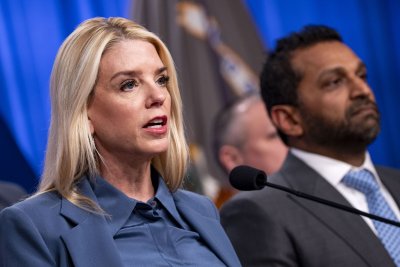
“Discrimination is unacceptable in all forms, especially when it comes to hiring decisions,” Attorney General Pam Bondi said in a statement.

“Our public education system in Minnesota and across the country must be a bastion of merit and equal opportunity — not DEI.”

Diversity, equity and inclusion, known as DEI, is a conceptual framework that promotes fair treatment and full participation of all people. It has for years been a target of Republican lawmakers and conservative activists, who claim DEI policies amount to unlawful racial preferences or discrimination against White individuals.

Since returning to the White House, Trump has led a campaign to erase DEI from the federal government, as well as private and public institutions, bringing a number of lawsuits against state and local governments, as well as schools and universities.

The lawsuit announced Wednesday focuses on the collective bargaining agreement the district signed with a teachers union that provides underrepresented teachers preferential treatment in employment decisions.

According to the lawsuit, the agreement requires the district when reassigning teachers, to do so based on seniority unless a teacher is from an underrepresented community. The agreement also directs the district to prioritize reinstatement of teachers from underrepresented communities.

In times of layoffs, teachers from underrepresented communities are allowed to be exempt, the Justice Department argues in the lawsuit.

“While defendants claim that these provisions are to stop discrimination, they require defendants to blatantly discriminate against teachers based on their race, color, sex and national origin,” the Trump administration said in the lawsuit,

“The United States brings this action to stop Defendants from engaging in race- and sex-based discrimination and thereby violating Title VII of the Civil Rights Act of 1964.”

Source link

‘A gesture of love’: Italy’s cuisine joins UNESCO’s cultural heritage list | Arts and Culture News

A UNESCO panel backed Italy’s bid, recognising Italian cuisine as a social ritual that binds families, communities.

Italian cuisine, long cherished for its deep regional traditions, has been officially recognised by UNESCO as an “intangible cultural heritage” – a designation the country hopes will elevate its global prestige and draw more visitors.

“We are the first in the world to receive this recognition, which honours who we are and our identity,” Italy’s Prime Minister Giorgia Meloni said in a statement on Instagram on Wednesday.

Recommended Stories

list of 4 itemsend of list

“For us Italians, cuisine is not just food, not just a collection of recipes. It is much more, it is culture, tradition, work, and wealth,” Meloni said.

The vote by a cultural panel of UNESCO – the United Nations Educational, Scientific and Cultural Organization – meeting in New Delhi capped a process Italy launched in 2023, with the government portraying the country’s culinary tradition as a social ritual that binds families and communities.

‘Cooking is a gesture of love’

UNESCO did not single out any famous dishes or regional specialities. Instead, the citation focused on how much Italians value the everyday rituals around food: the big Sunday lunch, the tradition of nonnas teaching kids how to fold tortellini just right, and simply sitting down together to enjoy a meal.

“Cooking is a gesture of love; it’s how we share who we are and how we look after each other,” said Pier Luigi Petrillo, part of Italy’s UNESCO campaign and a professor at Rome’s La Sapienza University.

In its announcement, UNESCO described Italian cuisine as a “cultural and social blend of culinary traditions”.

“Beyond cooking, practitioners view the element as a way of caring for oneself and others, expressing love and rediscovering one’s cultural roots. It gives communities an outlet to share their history and describe the world around them,” it added.

The UNESCO listing could deliver further economic benefits to a country already renowned for its cooking and where the agri-food supply chain accounts for about 15 percent of the national gross domestic product (GDP).

It could also bring some relief to traditional family-run restaurants, long the backbone of Italian dining, which are facing a harsh economic climate in a market increasingly polarised between premium and budget options.

The Colosseum is illuminated during a special light installation
The Colosseum is illuminated during a special light installation, after Italy won a place on UNESCO’s cultural heritage list [Remo Casilli/Reuters]

Honouring cultural expressions

Italy is not the first country to see its cuisine honoured as a cultural expression.

In 2010, UNESCO inscribed the “gastronomic meal of the French” on its intangible heritage list, calling out France’s tradition of marking life’s important moments around the table.

Other food traditions have been added in recent years, too, including the cider culture of Spain’s Asturian region, Senegal’s Ceebu Jen dish, and the traditional cheese-making of Minas Gerais in Brazil.

UNESCO reviews new candidates for its intangible-heritage lists every year under three categories: a representative list; a list for practices considered in “urgent” need of safeguarding; and a register of effective safeguarding practices.

At this year’s meeting in New Delhi, the committee evaluated 53 proposals for the representative list, which already includes 788 entries. Other nominees included Swiss yodelling, the handloom weaving technique used to make Bangladesh’s Tangail sarees, and Chile’s family circuses.

A woman spoons onto a plate some "spaghetti alla Carbonara" during a cooking competition on the eve of the Carbonara Day
A woman spoons ‘spaghetti alla Carbonara’ during a cooking competition [Andrew Medichini/AP Photo]


Source link

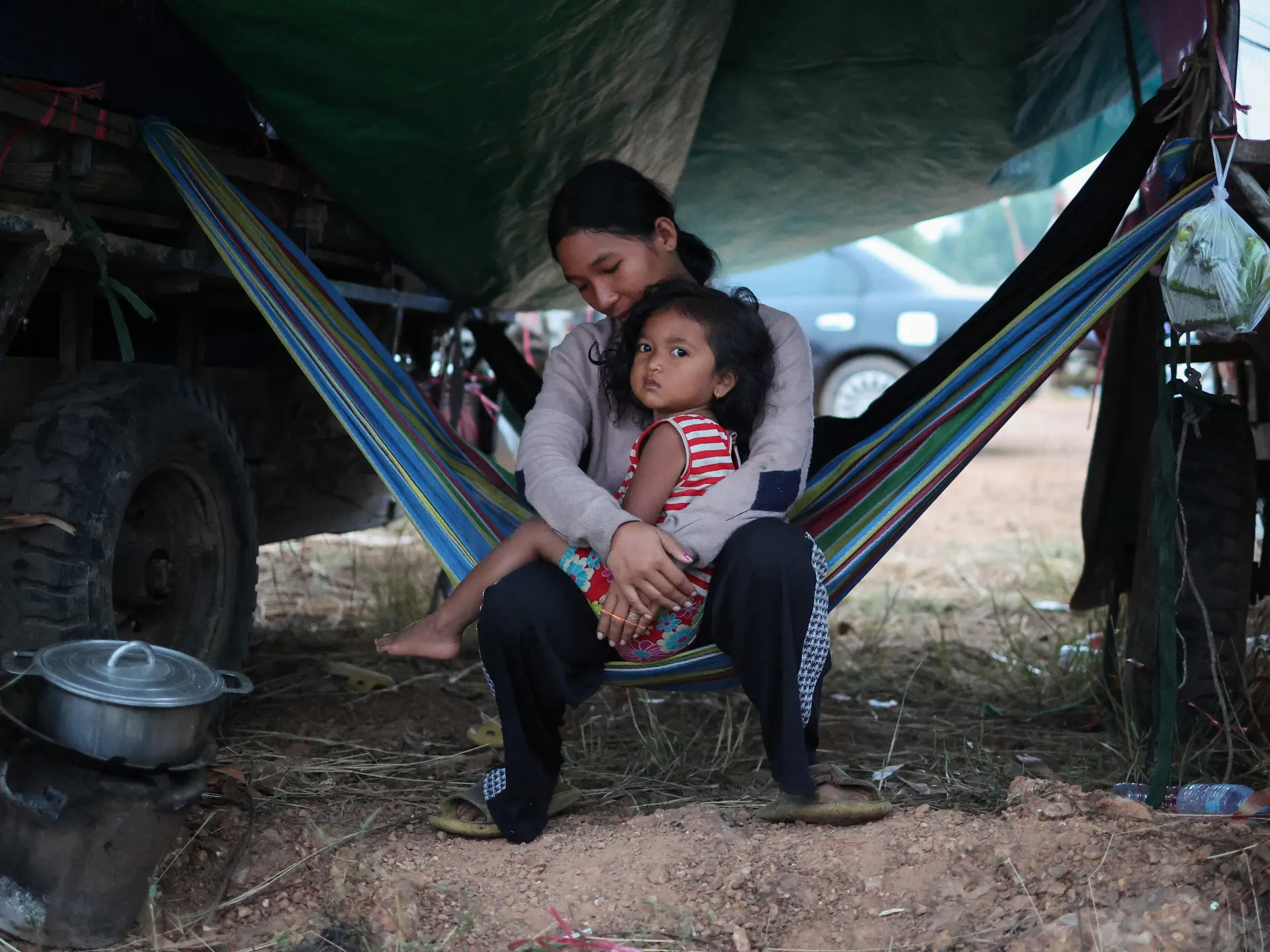
Cross-border fighting between Thailand, Cambodia enters fourth day | Border Disputes News

Both sides have accused each other of violating international law as they await a promised phone call from Donald Trump.

Renewed fighting between Thailand and Cambodia has entered its fourth day, with both sides accusing one another of violating international law, as they await a promised phone call from United States President Donald Trump.

Cambodia’s Ministry of Defence accused Thailand’s military of carrying out numerous attacks within the country in the early hours of Thursday morning, including deploying tanks and artillery to strike targets in the country’s Pursat, Banteay Meanchey, and Oddar Meanchey provinces.

Recommended Stories

list of 3 itemsend of list

In one such attack, Cambodia accused Thai soldiers of violating international humanitarian law by firing on civilians in Prey Chan village in Banteay Meanchey province.

In another, it accused Thai forces of shelling “into Khnar Temple area”, and said Thai forces had also “fired artillery and support fire into the O’Smach area”.

“Cambodia urges that Thailand immediately stop all hostile activities and withdraw its forces from Cambodia’s territorial integrity, and avoid acts of aggression that threaten peace and stability in the region,” the Defence Ministry said.

Clashes took place on Wednesday at more than a dozen locations along the contested colonial-era demarcated 817-kilometre (508-mile) Thai-Cambodian border, with some of the most intense fighting being reported since a five-day battle in July, which saw dozens killed on both sides.

Cambodia’s Ministry of the Interior said homes, schools, roads, Buddhist pagodas and ancient temples had been damaged by “Thailand’s intensified shelling and F-16 air strikes targeting villages and civilian population centres up to 30km [18.6 miles] inside Cambodian territory”.

“It should be noted that … these brutal acts of aggression of the Thai military indiscriminately opened fire targeting civilian areas, especially schools, and further destroyed Ta Krabey and Preah Vihear temples, the highly sacred cultural sites of Cambodia and the world cultural heritage,” it said.

The ministry added that, as of Wednesday, the death toll on the Cambodian side of the border stands at 10 civilians, including one infant, while 60 people have been injured.

Responding to the accusations, the Thai army said Cambodia had “intentionally” used a historical site as a “military base of operations” and therefore was guilty of violating international law.

“Cambodia intentionally used the ancient site for military operations, as a base to attack Thailand, and deliberately undermined the protection of the ancient site. Thailand retaliated as necessary,” the Thai army said.

Eight Thai soldiers have also been killed in the fighting so far this week, with 80 more wounded, it said.

Both sides have blamed one another for reigniting the conflict, which began on Monday and has expanded to five provinces across Thailand and Cambodia, according to a tally by the AFP news agency.

More than 500,000 Thai and Cambodian civilians have been forced to flee border areas due to fighting.

It was only on October 26 that Trump presided over the signing of a ceasefire between the Southeast Asian neighbours in Kuala Lumpur, Malaysia. Hailing the deal, which was also brokered by Malaysian Prime Minister Anwar Ibrahim, Trump said mediators had done “something that a lot of people said couldn’t be done”.

Optimistic of securing another peace deal, Trump told reporters on Wednesday that “I think I can get them to stop fighting”.

“I think I’m scheduled to speak to them tomorrow,” he added.

Source link

South Korea apologizes to Jeju for honoring colonel linked to massacre

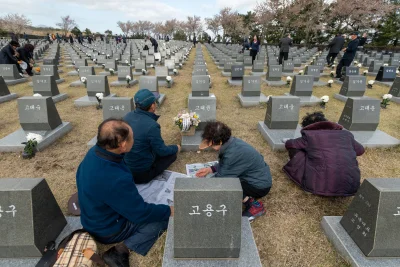
Several people preform a memorial service for their deceased family member before a tombstone in the Tombstone Park for the Missing with the Jeju 4.3 Peace Park, Jeju City, on April 3, 2023. Photo by Darryl Coote/UPI

JEJU ISLAND, South Korea, Dec. 11 (UPI) — The South Korean government has apologized to the province of Jeju Island for honoring the late Col. Park Jin-gyeong, who led a deadly repression operation during the early stages of the Jeju Massacre.

Seoul’s Ministry of Patriots and Veterans Affairs made its apology Wednesday for issuing Park the national merit certificate.

“Although the disposition was carried out in accordance with legal procedures, we extend our sincere apologies to the Jeju 4.3 victims, their families and the people of Jeju,” the ministry said in a statement.

Park was commander of the 9th Regiment of the Korean Constabulary on Jeju following the April 3, 1948, uprising, when some 350 armed members of the South Korean Workers’ Party Jeju branch attacked 12 police stations.

To squelch the revolt, Park led a military campaign of village sweeps and mass arrests of thousands that terrorized the local population. Park was assassinated in the early hours of June 18, 1948, by a subordinate officer, and though only on the island for about six weeks, he is widely seen as having paved the way for the massacres that would follow.

According to the official Jeju 4.3 Investigation Report, Park is quoted in testimony from a subordinate officer as having stated during his inauguration ceremony that: “In order to suppress the riot, it is fine if 300,000 Jeju people are victimized.”

About 30,000 islanders — 10% of Jeju’s population at that time — were killed during the Jeju Massacre of 1947 to 1954, which is widely referred to as the Jeju 4.3 Incident, or simply as Jeju 4.3, in Korean.

In its statement Wednesday, the ministry said Park was issued the national merit certificate on Nov. 4 following an application submitted by his bereaved family.

The national merit designation is a formal state honor, granted in the president’s name, that honors and commemorates an individual’s contributions and sacrifices to the nation.

The honor has been met with staunch opposition on the island.

The local government issued a statement Wednesday expressing its “deep regret” over the registration of Park as a national merit recipient, stating it will continue to work to establish “a historical record based on fact so that the truth of the Jeju 4.3 Incident and the honor of its victims are not undermined.”

It said the province is “concerned” that it made the decision to confer the honor on Park without considering “the historical context of 4.3 could cause confusion and harm within the local community.”

The Jeju government said that Park was given the honor for having been awarded a military medal decades ago, and that this current system for conferring awards harms the victims of the Jeju Massacre.

In response, the local government will install a sign at Park’s memorial on Monday that will include information about the massacre, including Park’s activities during the roughly 40 days he was on Jeju.

“The truth of 4.3 has been confirmed not through any particular viewpoint or political interpretation, but on the basis of the state’s official report and the accumulated body of research. Jeju Province will continue to faithfully convey the historical truth of 4.3 through fact-based explanations,” Jeju Gov. Oh Young-hoon said in a statement.

“We will continue to take responsible action to ensure that the honor of the victims and their families is not damaged and that the truth is set right.”

The ministry said it will work to prepare measures to ensure that similar issues do not occur in the future.

“Once again, we extend our sincere apologies to the Jeju 4.3 victims, their bereaved families and the people of Jeju,” it said.

The apology came on the same day a court ruled that Tae Yong-ho, a former politician of the conservative People’s Power Party, had defamed the Jeju 4.3 victims and bereaved families by making false statements.

In early 2023, controversy erupted on Jeju after Tae claimed the uprising of April 3, 1948, was initiated by North Korean founder Kim Il Sung and his communist party.

The official government investigation report said there is “no concrete evidence that the events were directed by the instructions of the headquarters of the South Korean Labor Party.”

Following Tae’s comments, right-wing political organizations erected 80 banners around the island that advertised his remarks. The banners were promptly removed by local officials.

The court on Wednesday ordered Tae to compensate the complainant, the the Jeju 4.3 Bereaved Families Association.

Source link

VOV 2025 Wrapped – HumAngle

<![CDATA[VOV 2025 Wrapped | RSS.com]]>


To tell stories of conflict, and show what becomes of people and communities when their lives are upended, is to witness both the depth of human suffering and the remarkable ways people adapt and survive. Through Vestiges of Violence, HumAngle has continued to shine a light on the human faces behind Nigeria’s conflicts. This year, we shared eleven stories of abduction, displacement, loss, and the daily struggle for survival that thousands endure.

This is our 2025 wrapped.


Reported and scripted by Sabiqah Bello

Multimedia editor is Anthony Asemota

Executive producer is Ahmad Salkida

HumAngle’s “Vestiges of Violence” podcast focuses on telling stories of conflict in Nigeria, highlighting human suffering and resilience. In 2025, it shared eleven narratives of abduction, displacement, loss, and survival, revealing the personal impacts of ongoing conflicts. Sabiqah Bello reported and scripted the episodes, with Anthony Asemota serving as multimedia editor and Ahmad Salkida as executive producer. Through these stories, the podcast aims to put a human face on the devastation and adversity experienced by affected communities.

Source link

U.S. calls on Houthis to release detained mission staff

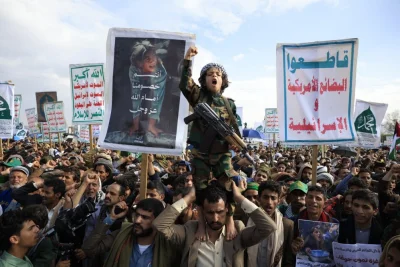
Houthi supporters shout slogans during a protest against Israel in Sana’a, Yemen, on August 29. On Wednesday, the United States called on the militant group to release former and current mission staff detained by the Houthis. File Photo by Yahya Arhab/EPA

Dec. 10 (UPI) — The United States late Wednesday called on Yemen-based Houthis to release all current and former staff the rebels have kidnapped, amid ongoing legal proceedings alleging international spy cells operating in the Middle Eastern country under the cover of humanitarian aid.

It was unclear how many current and former staff, all Yemeni nationals, of the U.S. Mission to Yemen were in Houthi custody. The United Nations has said 59 of its staff and dozens of diplomatic mission, NGO and civil society personnel have been detained by the Iran-proxy militia.

“The Iran-backed Houthis, a designated Foreign Terrorist Organization, have intensified their campaign of intimidation and abuse against Yemeni citizens affiliated with international organizations and foreign governments,” State Department spokesperson Thomas Pigott said in a statement.

“The Houthis’ arrests of those staff, and the sham proceedings that have been brought against them, are further evidence that the Houthis rely on the use of terror against their own people as a way to stay in power.

“We call for the immediate and unconditional release of the Mission staff.”

The Houthis have detained and are trying the workers they allege are members of foreign espionage cells linked to United States, Britain, Israel and Saudi Arabia.

Late last month the Houthi-controlled Foreign Ministry warned the United States against interfering in its judicial independence, saying it only confirms Washington’s involvement in espionage against them.

U.N. Secretary-General Antonio Guterres said he is “gravely concerned” about the arbitrary detention of his 59 personnel and the dozens of others in Houthi captivity and condemns their referral to a special criminal court.

Some of the U.N. personnel have been held by the Houthis for years without any due process and in violation of international law, he said, adding that they are immune from legal process for all acts performed in their official capacity.

In late August, 11 U.N. employees were abducted by Houthi-controlled authorities after they raided World Food Program facilities in the capital Sanaa. The raid followed Israeli airstrikes that killed the Houthis’ prime minister, Ahmed al-Wawai, along with several other ministers.

Hans Grundberg, U.N. special envoy for Yemen, said then that there were 23 U.N. workers in Houthi captivity.

On Tuesday, Volker Turk, the U.N. high commissioner for human rights, said one of his colleagues who has been detained by the Houthis since November 2021 has been presented before the Special Criminal Court on “fabricated charges of espionage connected to his work.”

“This is totally unacceptable and a grave human rights violation,” he said.

“Our colleagues, along with dozens of other U.N. and humanitarian staff, have been detained while bravely carrying out their work assisting the people of Yemen, and held in intolerable conditions ever since,” he said in a statement.

The U.N., he said, has received reports that numerous detained staff have been mistreated.

“Their suffering, and that of their families, has gone on far too long,” he said. “Their safety and well-being are at grave risk.”

Stephane Dujarric, spokesman for U.N. secretary-general, told reporters during a Tuesday press conference that they have not been able to speak with any of their detained staff but are in constant communication with the Houthis trying to secure their release.

“We don’t want them to be in this court, and we want them to be released,” he said.

The U.S. Embassy in Yemen said Wednesday that the “sham trials” are evidence of the Houthis’ weakness.

“The Houthis continue to use intimidation to distract from their inability to govern legitimately,” it said on X.

“We call for the immediate release of these unjustly held Yemeni citizens, so that they can return to their families after years of illegal detention.”

The U.N., along with humanitarian and non-governmental organizations, operate in Yemen as its 12-year civil war between the Houthi militants and the internationally recognized Yemeni government has made it one of the world’s worst humanitarian crises.

Source link

Crew Optional Designs Could Be Barred By Law From Navy’s Drone Ship Program

The U.S. Navy may soon be required by law to only consider designs built from the keel up to sail without a crew ever being on board for at least its first batch of Modular Surface Attack Craft (MASC). The service wants to acquire a new family of larger uncrewed surface vessels readily configurable for surveillance and reconnaissance, strike, and other missions using modular payloads through the MASC program. Being able to dispense with features necessary for even optional human operation does offer potential benefits, especially when it comes to cost and production at scale.

A provision explicitly about the MASC program is contained in the most recent draft of the annual defense policy bill, or National Defense Authorization Act, which the House Armed Services Committee released this past weekend. The legislation, which is a compromise between previous House and Senate versions of the NDAA for Fiscal Year 2026, could now be put to a vote as early as this week.

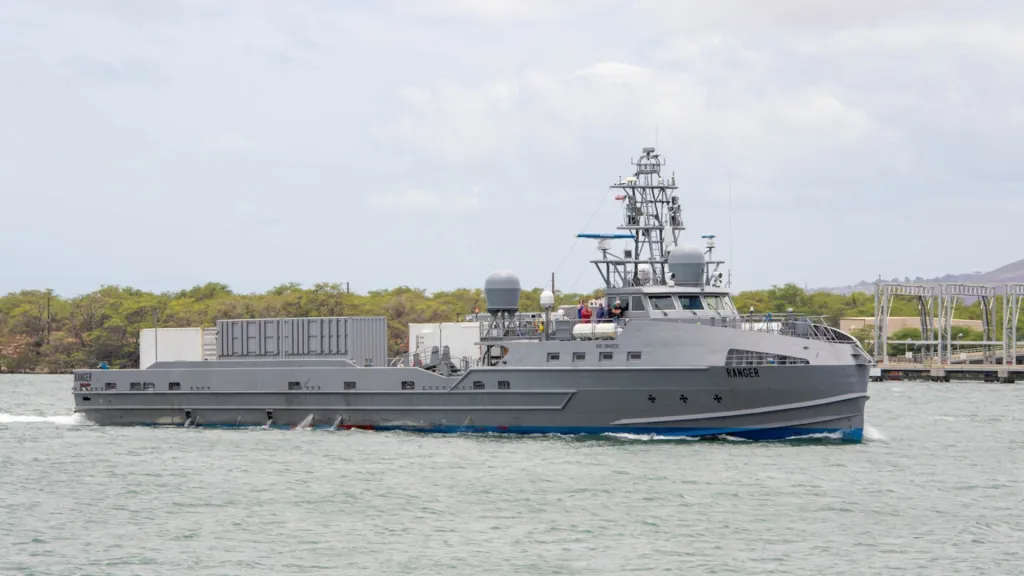
The Ranger seen here is one of several optionally crewed vessels the US Navy has been using to support USV test and evaluation activities for years now. USN

The MASC provision contained in the current version of the bill is brief but to the point. It stipulates that “the Secretary of the Navy may not enter into a contract or other agreement that includes a scope of work, including priced or unpriced options, for the construction, advance procurement, or long-lead material for Modular Attack Surface Craft Block 0 until the Secretary certifies to the congressional defense committees that such vessels will be purpose-built unmanned vessels engineered to operate without human support systems or operational requirements intended for crewed vessels.”

The Navy laid out a host of details regarding its plans for MASC this past summer, including initial requirements for a baseline design, as well as high-capacity and single-payload types, all of which you can read more about here. As mentioned, the Navy is primarily looking to configure MASC drone ships to conduct surveillance and reconnaissance and strike missions. The service has also expressed an interest in unspecified capabilities to counter adversary intelligence, surveillance, reconnaissance, and targeting activities. As TWZ has previously noted, stated power generation requirements could also be particularly relevant for any plans to integrate laser or high-power microwave directed energy weapons, as well as electronic warfare suites, onto future members of the MASC family.

For years now, the Navy has been using optionally crewed vessels to help lay the groundwork for future fleets of medium and large uncrewed surface vessels (MUSV/LUSV). This has included the test-firing of a containerized missile launcher from one of those ships, as seen in the video below.

See the game-changing, cross-domain, cross-service concepts the Strategic Capabilities Office and @USNavy are rapidly developing: an SM-6 launched from a modular launcher off of USV Ranger. Such innovation drives the future of joint capabilities. #DoDInnovates pic.twitter.com/yCG57lFcNW

— Department of War 🇺🇸 (@DeptofWar) September 3, 2021

The MASC program reflects a larger shift in focus away from those previous efforts, which were defined primarily by very rigid length and displacement requirements. Modular, containerized payloads, rather than specific hull designs, are central to the new MASC concept.

The Navy has also been fielding a growing number of speed boat and jet ski-type USV designs through programs separate from MASC.

The two Global Autonomous Reconnaissance Craft (GARC) assigned to Unmanned Surface Vessel Squadron 3 (USVRON 3) seen here are indicative of the US Navy’s separate ongoing work on smaller USVs. USN

As mentioned, USVs that are designed from the outset to only sail in an uncrewed mode offer benefits when it comes to development, production, and operational employment. They do not need berthing space, galleys, toilets, or any other features needed to support human personnel on board. All of this, in turn, can allow for more radical design decisions optimized for the performance of the missions, as well as help reduce overall complexity and cost. This can further translate into USVs that are faster and easier to produce in larger quantities.

With all this in mind, the Navy has already been openly talking about moving away from optionally-crewed designs for MASC.

“When you introduce that capability to operate with people on board, it creates a lot of other requirements and cost and complications,” Navy Capt. Matt Lewis, program manager of the Unmanned Maritime Systems program office within Naval Sea Systems Command (NAVSEA), told USNI News on the sidelines of an event back in August. “The [MASC] solicitation that went out for industry… it was open, and we are eager to get proposals as we review them, to look at the proposals that don’t have people on board.”

“We definitely want unmanned. Period. I mean, it’s that simple,” Navy Capt. Garrett Miller, commander of Surface Development Group One (SURFDEVGRU), also said at that time.

SURFDEVGRU is currently a focal point within the Navy for work on operationalizing USV capabilities and has two unmanned surface vessel squadrons assigned to it. The Group also oversees the two Zumwalt class stealth destroyers that the Navy has in service now. The third ship in that class, the future USS Lyndon B. Johnson, is also set to be assigned to the unit.

The US Navy’s optionally crewed vessels Ranger and Mariner, both assigned to SURFDEVGRU, sail together with a Japanese Mogami class frigate. USN

Larger USVs intended to sail for protracted periods without even a skeleton crew on board to provide immediate maintenance and other support do also present certain challenges. These vessels have to be highly reliable and be capable of at least a certain degree of safe autonomous operation in areas that could be full of other ships. How force protection might be ensured, especially during more independent operations, is an open question, too.

Underscoring all of this, the recently release draft NDAA for Fiscal Year 2026 includes a separate provision that would prevent the Secretary of the Navy from awarding “a detail design or construction contract or other agreement, or obligate funds from a procurement account, for a covered [medium and large USV] program unless such contract or other agreement includes a requirement for an operational demonstration of not less than 720 continuous hours without preventative maintenance, corrective maintenance, emergent repair, or any other form of repair or maintenance,” for a variety of key systems. It would also block the Navy from accepting delivery of any “articles” produced under any such contract or agreement before the successful conclusion of that operational demonstration.

The Navy has already been cooperating with the U.S. Defense Advanced Research Projects Agency (DARPA) on a program specifically intended to prove new USV capabilities with a demonstrator designed from the start to operate without humans ever being on board. The Defiant drone ship that was developed for DARPA’s Manning Required Ship (NOMARS) effort, also known as the USX-1, kicked off an extended at-sea trial in September that has included a demonstration of its ability to be refueled at sea using a system that does not require personnel to be present on the receiving side. You can read more about the Defiant, which prime contractor Serco also developed to be a lower-cost and readily producible design, here.

USX-1 Defiant fueling at sea demonstration


USX-1 Defiant begins at-sea demonstration


The stated plan is for Defiant to be transferred to SURFDEVGRU after DARPA’s testing with the ship wraps up. The Navy has said that it sees the vessel, which is also designed around carrying containerized mission payloads, as a key technology ‘feeder’ into the MASC effort. Prime contractor Serco has already been developing an enlarged derivative, currently called the Dauntless, as well.

A model of the enlarged Dauntless design. Howard Altman

Other companies are already lining up to compete for future MASC contracts, including Eureka Naval Craft with its Bengal-Module Carrier, or Bengal-MC.

U.S. shipbuilder Huntington Ingalls Industries (HII) unveiled its own plans for a new line of USVs, called ROMULUS, in September. HII says ROMULUS designs will be highly modular and capable of carrying containerized payloads, which is all in line with the Navy’s current vision for MASC.

In November, Anduril announced a partnership with HD Hyundai Heavy Industries in South Korea to develop a new family of what the company is calling Autonomous Surface Vessels (ASV), including a version explicitly intended to meet the Navy’s MASC requirements. An initial ASV prototype is set to be built in Korea, but Anduril has plans to establish its own production capacity within the United States at a revamped shipyard in Seattle, Washington.

There are other U.S. companies, especially ones like Leidos that are already very active in the USV space, which could join the race to meet the Navy’s MASC needs. The marketplace for larger USVs, and particularly designs built around readily interchangeable containerized payloads, is growing globally, as well. This includes several designs that have emerged in China in recent years.

全球首次公开亮相!中国大型无人作战艇“虎鲸号”抵达珠海航展第二展区。“虎鲸”号是一艘五百吨级无人作战艇,装备有通用垂直发射装置。😀 pic.twitter.com/x22uttsPZo

— DS北风(风哥) (@WenJian0922) November 8, 2024

A widening and ever more worrisome gap in U.S. shipbuilding capacity versus China has been a key driver behind the surge in the Navy’s interest in USVs in recent years, to begin with. Distributed fleets of USVs configured for a variety of missions, including strike and ISR missions, could be critical to bolstering existing fleets of traditional crewed warships, especially in a future large-scale conflict across the broad expanses of the Pacific. With a high degree of autonomy, those uncrewed vessels could operate more independently of their crewed companions, creating new operational possibilities, but also introducing new risks.

The Navy has also highlighted how MASC USVs being readily reconfigurable could create targeting challenges and other dilemmas for opponents who would not know what payloads they might be carrying at any one time. MASC drone ships could also be sent first into higher-risk areas or otherwise help reduce risks to crewed assets.

The plans for MASC are still very much evolving. However, the Navy’s vision looks increasingly set to eschew optionally-crewed designs, something Congress now looks intent on further compelling the service to do by law.

Contact the author: joe@twz.com

Joseph has been a member of The War Zone team since early 2017. Prior to that, he was an Associate Editor at War Is Boring, and his byline has appeared in other publications, including Small Arms Review, Small Arms Defense Journal, Reuters, We Are the Mighty, and Task & Purpose.


Source link

Ukraine reports large Russian mechanised assault in battle for Pokrovsk | Russia-Ukraine war News

Russia has claimed to be in full control of Pokrovsk, but Ukrainian forces say they still control the northern part of the strategic city in eastern Ukraine.

Ukrainian forces have reported an unusually large Russian mechanised attack inside the strategic eastern city of Pokrovsk, where Russia has reportedly massed a force of some 156,000 troops to take the beleaguered and now destroyed former logistics hub.

“The Russians used armoured vehicles, cars, and motorcycles. The convoys attempted to break through from the south to the northern part of the city,” Ukraine’s 7th Rapid Response Corps said in a statement on Wednesday regarding an assault earlier in the day.

Recommended Stories

list of 4 itemsend of list

A source in the 7th Rapid Response Corps told the Reuters news agency that Russia had deployed about 30 vehicles in convoy, making it the largest such attack yet inside the city. The source added that previously, Russia had deployed just one or two vehicles to aid troop advances.

While Russia has claimed full control of Pokrovsk, Kyiv maintains that its troops still hold the northern part of the city, where fierce urban battles continue to rage.

Russian troops have pushed into the city for months in small infantry groups, looking to capture the former logistics hub as a critical part of Moscow’s campaign to seize the entire industrial Donbas region of eastern Ukraine.

Video clips shared by the 7th Rapid Response Corps showed heavy vehicles in snow and mud, as well as drone attacks on Russian troops and explosions and burning wreckage.

Russian forces were attempting to exploit poor weather conditions but had been pushed back, the unit said on Facebook.

Capturing Pokrovsk would be Russia’s biggest prize in Ukraine in nearly two years, and the city’s weakening defence amid Moscow’s onslaught has added to pressure on Kyiv, which is attempting to improve terms in a United States-backed proposal for a peace deal that is widely seen as favourable to Moscow.

Ukraine’s top military commander, Oleksandr Syrskii, told journalists earlier this week that the situation around Pokrovsk remained difficult as Russia massed a force of some 156,000 around the beleaguered city.

Syrskii said Russian troops were staging the military buildup in the area under the cover of rain and fog.

George Barros, Russia team lead at the Institute for the Study of War – a US-based think tank – said Moscow is “hyping” the importance of the fall of Pokrovsk “in order to portray Russia’s battlefield advances as inevitable”.

“That sense of inevitability is being echoed by some members of President Donald Trump’s negotiating team trying to pull together a peace proposal for the Ukraine war,” Barros wrote in an opinion piece shared online.

But Russia has paid a huge price in its push to take the city with “more than 1,000 armoured vehicles and over 500 tanks” lost in the Pokrovsk area alone since the beginning of Russia’s offensive operations in October 2023 to seize nearby Avdiivka, which fell to Russian forces in early 2024 in one of the bloodiest battles of the war so far.

On Wednesday, President Trump said he had exchanged “pretty strong words” with the leaders of France, Britain and Germany on Ukraine, telling them their plan to hold new talks on a proposed US peace plan this weekend risked “wasting time”.

“We discussed Ukraine in pretty strong words,” Trump told reporters when asked about the phone call with British Prime Minister Keir Starmer, French President Emmanuel Macron and German Chancellor Friedrich Merz.

“They would like us to go to a meeting over the weekend in Europe, and we’ll make a determination depending on what they come back with. We don’t want to be wasting time,” Trump said.

The initial US peace plan that involved Ukraine surrendering land that Russia has not captured was seen by Kyiv and its European allies as aligning too closely with many of Russia’s demands to end the war, and has since been revised.

Trump has been pushing Ukrainian President Volodymyr Zelenskyy to agree to the US plan while Ukrainian officials told the AFP news agency on Wednesday that Kyiv had sent an updated draft of the plan back to Washington.


Source link

Macron’s Warning, Bremen’s Wallet: Europe’s New Space-Defense Era

When French President Emmanuel Macron inaugurated France’s Space Command in Toulouse on 12 November 2025 and declared that “space is no longer a sanctuary; it has become a battlefield,” few expected such swift validation. Two weeks later, at the ESA Ministerial Council in Bremen on 26–27 November, member states delivered the largest budget in the agency’s history—€22.1 billion for 2026–2028, a 30% increase over the previous cycle—with an unprecedented focus on security, defense, and strategic autonomy. The Bremen decision has transformed Macron’s stark warning from rhetoric into funded reality and confirmed that Europe is finally awakening to the fact that the next decisive domain of great-power competition lies far above the Earth’s atmosphere.

Paris is preparing to invest about €4.2 billion in military space activities from 2026 to 2030 and around €16 billion in civilian and dual-use programs by the end of the decade. The ambition is to strengthen Europe’s resilience in orbit, reduce dependence on non-European systems, and create an industrial base capable of supporting long-term security objectives.

French planners are betting on a new generation of proximity‑inspection satellites to anchor this strategy, with demonstration flights envisaged in the second half of the decade and operational testing to follow. These satellites can approach, observe, and, if required, interdict suspicious objects in orbit. France is also exploring non‑kinetic tools—lasers and electromagnetic systems among them—designed to disrupt hostile platforms without creating debris. Paris has rejected destructive anti-satellite testing and argues that Europe must enhance space security without undermining international norms.

The European Union is entering this field late. Russia and China have already developed advanced inspection and interference capabilities. In September 2025, German Defence Minister Boris Pistorius revealed that two Russian Luch or Olymp satellites were shadowing Intelsat platforms used by the Bundeswehr. The episode underscored Europe’s lack of awareness and defensive capacity in orbit.

In Brussels, officials are floating the idea of a “European Space Shield”—a more integrated architecture to protect satellites and align EU and NATO postures. Success will depend on the willingness of member states to coordinate procurement, share data, and harmonize strategic objectives. Europe’s current system remains fragmented and is often slowed by national industrial preferences.

Macron has also called for reform of the European Space Agency’s geographic return rule, which distributes contracts according to member-state contributions rather than technical merit. The French position is that this rule limits innovation and prevents Europe from responding quickly to fast-moving threats in orbit.

There are challenges. Even non-kinetic defenses can be misinterpreted as escalatory. The orbital environment is crowded, vulnerable to miscalculation, and poorly regulated. France has therefore paired its military investments with calls for new rules of behavior and a European proposal for an orbital code of conduct. Such a framework would help prevent misunderstandings and promote transparency.

The ESA Ministerial Council that concluded in Bremen on 27 November delivered what many had doubted was possible: a €22.1 billion envelope for 2026–2028 that explicitly prioritizes space security, resilient navigation (FutureNAV), Earth-observation continuity, and dual-use technologies. Germany increased its contribution by nearly a third despite domestic fiscal constraints, while the package includes more than €1 billion for programs directly supporting defense and sovereignty. Crucially, ministers opened the door to greater flexibility on the controversial “geographic return” rule for critical security projects—a French demand that had been resisted for years. Bremen did not create a fully unified European space-defense policy overnight, but it transformed Macron’s Toulouse rhetoric into funded reality and gave the proposed European Space Shield its first serious financial and political tailwind.

Satellites underpin critical EU functions, including climate monitoring, secure communications, trade logistics, and border management. Rivals are developing tools that can dazzle, jam, or disable them. Europe cannot assume that these systems will remain safe without deliberate action.

Macron’s announcement in Toulouse should be seen as a strategic warning. Europe has the capacity to protect its interests in orbit, but only if it acts with coherence and political determination. The challenge for the European Union is not technological. It is the ability to work collectively and with a sense of urgency. In an era in which conflict begins long before military forces deploy, the EU’s strategic autonomy may depend on decisions made far above the atmosphere.

Source link

Kentucky Republican Rep. Thomas Massie introduces legislation for U.S. to leave NATO

Dec. 10 (UPI) — U.S. Rep. Thomas Massie, a Republican serving a House district in Kentucky, introduced legislation for the United States to pull out of NATO.

Rep. Anna Paulina Luna, a Republican from Florida, posted on X that she would be a co-sponsor of the Not a Trusted Organization Act, or NATO Act. Utah Republican Mike Lee introduced the same legislation in the Senate earlier this year.

“NATO is a Cold War relic,” Massie said in a statement Tuesday. “We should withdraw from NATO and use that money to defend our own country, not socialist countries.

“NATO was created to counter the Soviet Union, which collapsed over 30 years ago. Since then, U.S. participation has cost taxpayers trillions of dollars and continues to risk U.S. involvement in foreign wars.”

He added: “Our Constitution did not authorize permanent foreign entanglements, something our Founding Fathers explicitly warned us against. America should not be the world’s security blanket – especially when wealthy countries refuse to pay for their own defense.”

NATO was founded in 1949 by 12 members as a military alliance involving European nations, as well as the U.S. and Canada in North America. There are now 32 members, with Finland joining in 2023 and Sweden in 2024.

The NATO Act would prevent the use of U.S. taxpayer funds for NATO’s common budgets, including its civil budget, military budget and the Security Investment Program.

Article 13 of the North Atlantic Treaty allows nations to opt out.

“After the Treaty has been in force for 20 years, any Party may cease to be a Party one year after its notice of denunciation has been given to the Government of the United States of America, which will inform the Governments of the other Parties of the deposit of each notice of denunciation,” the treaty reads.

During the last NATO summit in The Hague, the Netherlands, President Donald Trump told reporters he agrees with NATO’s Article 5 mutual defense treaty.

“I stand with it. That’s why I’m here,” Trump said. “If I didn’t stand with it, I wouldn’t be here.”

Article 5 was invoked for the first time after the 9/11 attacks in the United States, leading to NATO’s involvement in Afghanistan.

The Kentucky Republican, who calls himself a “fiscal hawk” and a “constitutional conservative,” has been at odds with Trump on several issues, including fiscal spending, foreign policy/war powers, government surveillance and transparency.

Trump has also been critical of NATO.

During his 2016 election campaign, Trump called the alliance “obsolete.”

He urged nations to spend at least 3.5% of gross domestic product on core defense needs by 2035.

In June, NATO allies agreed to a new defense spending guideline to invest 5% of GDP annually in defense and security by 2035.

Five nations were above 3% in 2024: Poland at 4.12%, Estonia at 3.43%, U.S. at 3.38%, Latvia at 3.15% and Greece at 3.08%. In last is Spain with 1.28% though Iceland has no armed forces and Sweden wasn’t listed.

Some Republican senators want stronger involvement in the alliance, including Joni Ernst of Iowa and Sen. Roger Wicker of Mississippi. Wicker is chairman of the Senate Armed Services Committee.

For passage, a House majority is needed, but 60 of 100 votes in the Senate to break the filibuster and then a majority vote. Trump could also veto the bill.

Source link

US plans to ask visitors to share 5 years of social media history to enter | Donald Trump News

Tourists from 42 countries may soon need to also disclose email accounts, extensive family history and biometrics to enter US.

Visitors who are eligible to enter the United States without a visa may soon be required to provide the Department of Homeland Security with significantly more personal information, including details about their social media activity, email accounts and family background.

According to a notice published on Wednesday in the Federal Register, US Customs and Border Protection (CBP) is proposing to collect up to five years of social media data from travellers from certain visa-waiver countries.

Recommended Stories

list of 4 itemsend of list

The proposed requirement would apply to travellers using the Electronic System for Travel Authorization (ESTA) under the Visa Waiver Program, which allows citizens of 42 countries – including the United Kingdom, Germany, Qatar, Greece, Malta, New Zealand, Australia, Japan, Israel and South Korea – to travel to the US for tourism or business for up to 90 days.

Currently, the ESTA automatically screens applicants and grants travel approval without requiring an in-person interview at a US embassy or consulate, unlike standard visa applications.

At present, ESTA applicants are required to provide a more limited set of information, such as their parents’ names, current email address, and details of any past criminal record.

A question asking travellers to disclose their social media information was first added to the ESTA application in 2016, though it has remained optional.

New rules also target metadata, email history

The new notice also states that the CBP plans to request additional personal information from visitors, including telephone numbers used over the past five years and email addresses used over the last 10 years.

Authorities also said they plan to add what they describe as “high-value data fields” to the ESTA application “when feasible”. These would include metadata from electronically submitted photographs, extensive personal details about applicants’ family members, such as their places of birth and telephone numbers used over the past five years, as well as biometric information, including fingerprints, DNA and iris data.

The announcement did not say what the administration was looking for in the social media accounts of visitors or why it was asking for more information.

But the CBP said it was complying with an executive order that US President Donald Trump signed in January that called for more screening of people coming to the US to prevent the entry of possible national security threats.

Travellers from countries that are not part of the Visa Waiver Program system are already required to submit their social media information, a policy that dates back to the first Trump administration. The policy remained during US President Joe Biden’s administration.

The public has 60 days to submit comments on the proposed changes before they are finalised, the notice in the Federal Register states.

Source link

Russia-Ukraine war: List of key events, day 1,386 | Russia-Ukraine war News

These are the key developments from day 1,386 of Russia’s war on Ukraine.

Here’s where things stand on Thursday, December 11:

Fighting

  • Ukrainian sea drones hit and disabled a tanker involved in trading Russian oil as it sailed through Ukraine’s exclusive economic zone in the Black Sea to the Russian port of Novorossiysk, a Security Service of Ukraine (SBU) official said.
  • The Dashan tanker was sailing at maximum speed with its transponders off when powerful explosions hit its stern, inflicting critical damage on the vessel, the SBU official said. No information was available on possible casualties from the attack.
  • The attack marks the third sea drone strike in two weeks on vessels that are part of Russia’s so-called “shadow fleet” – unregulated ships which Kyiv says are helping Moscow export large quantities of oil and fund its war in Ukraine despite Western sanctions.
  • Three people were killed and two wounded by Ukrainian shelling of a hospital in the Russia-controlled part of the Kherson region in Ukraine, a Russia-installed governor claimed on Telegram. All those killed and injured were reportedly employees of the medical facility.
  • Ukrainian forces are fending off an unusually large Russian mechanised attack inside the strategic eastern city of Pokrovsk, Kyiv’s military said, including “armoured vehicles, cars, and motorcycles”.
  • Russian drones have hit the gas transport system in Ukraine’s southern Odesa region, a senior Ukrainian official said, in an area which contains several pipelines carrying US liquefied natural gas to Ukraine from Greece.
  • Russian air defences shot down two drones en route to Moscow, the city’s Mayor Sergei Sobyanin said.

Peace deal

  • President Volodymyr Zelenskyy said Ukraine had agreed on key points of a post-war reconstruction plan and an “economic document” in talks with United States President Donald Trump’s son-in-law, Jared Kushner, Treasury Secretary Scott Bessent, and BlackRock CEO Larry Fink.
  • “The principles of the economic document are completely clear, and we are fully aligned with the American side,” Zelenskyy said. “An important common principle is that for reconstruction to be of high quality and economic growth after this war to be tangible, real security must be at the core. When there is security, everything else is there too,” he said.
  • Zelenskyy also said work was proceeding on the “fundamental document” of a US-backed 20-point plan aimed at ending the war. He said two other associated documents dealt with security guarantees and economic issues.
  • The leaders of Britain, France and Germany held a call with President Trump to discuss Washington’s latest peace efforts to end the war in Ukraine, in what they said was “a critical moment” in the process.
  • French President Emmanuel Macron said Trump and the European leaders discussed how to move forward on “a subject that concerns all of us”.
  • There will be another meeting on Thursday of the leaders of the so-called “coalition of the willing” group of nations backing Ukraine, said the French presidency, adding that this meeting would be held via videoconference.

Military aid

  • The US House of Representatives has passed a massive defence policy bill authorising a record $901bn in annual military spending, including $400m in military assistance to Ukraine in each of the next two years and other measures reinforcing the US commitment to Europe’s defence.

Politics and diplomacy

  • Trump again expressed concern that Ukraine had not had an election in a long time, putting additional pressure on Zelenskyy to hold one.
  • Zelenskyy said he had discussed with Ukraine’s parliament legal and other issues linked to the possibility of holding an election during wartime, and urged other countries, including the US, not to apply pressure on the issue.
  • Wartime elections are forbidden by law in Ukraine, but Zelenskyy, whose term expired last year, is facing renewed pressure from Trump to hold a vote.

Regional security

  • Following a report from the head of Kyiv’s foreign intelligence service that Russia and China were taking steps to intensify cooperation, Zelenskyy said there was a “growing trend of the de-sovereignisation of parts of Russian territory in China’s favour”, primarily through Moscow’s sale of its “scarce resources” to Beijing.
  • “We … note that China is taking steps to intensify cooperation with Russia, including in the military-industrial sector,” Zelenskyy wrote on X.

Sanctions

  • The US has extended a deadline for negotiations on buying the global assets of Russian oil company Lukoil by a little over a month to January 17. Trump imposed sanctions on Lukoil and Rosneft, Russia’s two biggest energy companies, on October 22 as part of an effort to pressure Moscow over its war in Ukraine, and Lukoil put its assets up for sale shortly after.
  • Russian prosecutors asked a Moscow court to seize the assets of US private equity fund NCH Capital in Russia, the Kommersant newspaper said, citing court documents. Prosecutors accused the fund’s owners of financing Ukraine’s military forces.
  • European Union ambassadors have greenlit the bloc’s plan to phase out Russian gas imports by late 2027, three EU officials told the Reuters news agency, clearing one of the final legal hurdles before the ban can pass into law.


Source link

US Congress advances bill to nix Caesar Act sanctions on Syria | Business and Economy News

The US has rolled back a series of restrictive economic sanctions put in place during the rule of Bashar al-Assad.

The United States House of Representatives has voted forward a bill that would end the restrictive Caesar Act sanctions on Syria, originally imposed during the rule of former leader Bashar al-Assad.

The bid to repeal the sanctions was passed on Wednesday as part of a larger defence spending package, known as the National Defense Authorization Act, or NDAA.

Recommended Stories

list of 3 itemsend of list

“With this NDAA, as many know, we are repealing sanctions on Syria that were placed there because of Bashar al-Assad and the torture of his people,” Representative Brian Mast of Florida said. “We’re giving Syria a chance to chart a post-Assad future.”

Mast had previously been opposed to dropping the sanctions. In his statement on the House floor on Wednesday, he warned that, under the bill, the White House could “reimpose sanctions if the president views it necessary”.

The bill now heads to the Senate and is expected to be voted on before the end of the year.

If passed, the NDAA would repeal the 2019 Caesar Act, which sanctioned the Syrian government for war crimes during the country’s 13-year-long civil war.

It would also require the White House to issue frequent reports confirming that Syria’s new government is combating Islamist fighters and upholding the rights of religious and ethnic minorities.

Human rights advocates have welcomed the easing of heavy sanctions that the US and other Western countries imposed on Syria during the war.

They argue that lifting those economic restrictions will aid Syria’s path towards economic recovery after years of devastation.

The Caesar Act was signed into law during President Donald Trump’s first term.

But in December 2024, shortly before Trump returned to office for a second term, rebel forces toppled al-Assad’s government, sending the former leader fleeing to Russia.

Trump has since removed many sanctions on Syria and met with President Ahmed al-Sharaa, who led the push that ousted al-Assad.

But some sanctions can only be removed by Congress, a step that Trump has encouraged lawmakers to take.

This month, Syrians celebrated the one-year anniversary of al-Assad’s overthrow with fireworks, prayer and public displays of pride. But the country continues to face challenges as it recovers from the destruction and damage wrought by the war.

Syrian officials have urged the repeal of remaining sanctions, saying that it is necessary to give the country a fighting chance at economic stability and improvement.

Syrian central bank Governor Abdulkader Husrieh called US sanctions relief a “miracle” in an interview with the news service Reuters last week.

The United Nations Security Council also voted to remove sanctions on al-Sharaa and Interior Minister Anas Khattab, who were previously on a list of individuals linked to ISIL (ISIS) and al-Qaeda.

Source link

‘Largest tanker ever seized’ held by U.S. off the coast of Venezuela

Dec. 10 (UPI) — The United States seized a large oil tanker off the coast of Venezuela amid ongoing tensions between President Donald Trump and Venezuelan President Nicolas Maduro.

The tanker was seized during a “judicial enforcement action on a stateless vessel” that had docked in Venezuela, Bloomberg reported.

“Today, the Federal Bureau of Investigation, Homeland Security Investigations and the United States Coast Guard, with support from the Department of War, executed a seizure warrant for a crude oil tanker used to transport sanctioned oil from Venezuela and Iran,” Attorney General Pam Bondi said in a late-afternoon post on X.

U.S. officials sanctioned the oil tanker several years ago due to its “involvement in an illicit oil shipping network supporting foreign terrorist organizations,” Bondi explained.

“This seizure, completed off the coast of Venezuela, was conducted safely and securely — and our investigation alongside the Department of Homeland Security to prevent the transport of sanctioned oil continues.”

U.S. military personnel seized the tanker by fast-roping from a helicopter to board it, Bloomberg reported.

Trump earlier confirmed the tanker’s seizure at the start of a 2 p.m. EST roundtable at the White House.

“We’ve just seized a tanker off the coast of Venezuela — the largest tanker ever seized,” Trump said at the start of the roundtable meeting.

He said “it was seized for a very good reason” and the “appropriate people” would address the matter when asked for more information by a reporter.

The vessel’s seizure occurred as the Trump administration has been applying pressure on Maduro, whom Trump has accused of being a narco-trafficker and of stealing the country’s 2024 presidential election by declaring himself the winner.

The Trump administration has designated Cartel de los Soles aka Cartel of the Sun a foreign terrorist organization that includes many Venezuelan military and government officials among its leadership.

Defense Secretary Pete Hegseth has ordered a carrier strike group to join other U.S. Navy vessels in the Caribbean Sea amid ongoing strikes against small craft departing Venezuela and other nations that are alleged tobe carrying illicit drugs.

The oil tanker’s seizure and the presence of the U.S. military in international waters near Venezuela are likely to discourage oil companies from transporting Venezuelan crude oil.

“Shippers will likely be much more cautious and hesitant about loading Venezuelan crude going forward,” Kpler oil analyst Matt Smith told CNBC.

Rystad Energy’s Jorge Leon, who is in charge of the firm’s geopolitical analysis, told Bloomberg the U.S. seizure of a “Venezuelan tanker” is a “clear escalation from financial sanctions to physical interdiction.”

The seizure “raises the stakes for Caracas and anyone facilitating its exports,” Leon said.

The Trump administration also has advised international airlines to be cautious when approaching Venezuela, which has caused many to suspend operations there.

President Donald Trump walks on the South Lawn of the White House after arriving on Marine One in Washington on Tuesday. Trump said people were “starting to learn” the benefits of his tariff regime. Photo by Graeme Sloan/UPI | License Photo


Source link

Man Utd 0-3 Lyon: Humbled by Lyon – but key lessons learned

Skinner’s reminder of Lyon’s ability cannot be ignored as they boasted a side including 2018 Ballon d’Or winner Ada Hegerberg and USA World Cup winner Lindsey Heaps.

Legendary France centre-back Wendie Renard was an unused substitute and elite players such as Lily Yohannes, Kadidiatou Diani and Marie-Antoinette Katoto all came on in the second half.

That quality and the “speed and physicality” were the differences on the night, according to Skinner, but he also recognised the gap between United and Europe’s elite.

“Theirs is the upper echelon of that,” added Skinner. “They pay for it. They have grown in experience and have built that team over a long period of time.

“The reality is you have to be at your game in every moment because if not, they can take their opportunities. They were the better team – but I would expect them to be.

“It’s a juxtaposition because I don’t want to lose games. But we also have to take a moment and go, we’ve already qualified, let’s see where we go.

“All the things you see, I see. I also know what the fix is, but you can’t do it in one moment, you have to build it. We are progressing.”

Lyon boss Jonatan Giraldez described United’s season as “super positive” and said the answer to progress is about building a mentality to be better than the day before.

United’s challenge will only get greater as they look to continue their journey in the Champions League.

They currently sit ninth in the 18-team league table and occupying an unseeded position for the play-offs.

If they can climb at least one place, they will be seeded and avoid stronger opposition.

Skinner said that gives them more incentive to perform in their final league phase match against sixth-placed Juventus on 17 December – but just getting to this stage has been an achievement.

“When you go into the knockout stages, it is what it is. You have to play the best teams,” he added.

“We go [to Juventus] with confidence to try to win the game and see what happens. Our objective was always to qualify and we have done that. Where we finish is a bonus.”

Source link

Tents flood, families seek shelter as Storm Byron bears down on Gaza | Israel-Palestine conflict News

Storm Byron is threatening to heap new miseries on Palestinians in Gaza, with families making distress calls from flooded tents and hundreds of others fleeing their shelters in search of dry ground as the fierce winter storm lashes heavy rains on the besieged territory.

Officials warned Wednesday that the storm was forecast to bring flash floods, strong winds and hail until Friday, conditions expected to wreak havoc in a territory in the grip of a humanitarian crisis, where hundreds of thousands of displaced people live in tents, temporary structures, or damaged buildings after two years of Israel’s genocidal war against the Palestinian people in Gaza.

Recommended Stories

list of 4 itemsend of list

Humanitarian workers said Israeli restrictions on the entry of tents, tools to repair water and sewage systems have left Gaza poorly equipped to respond to the storm, and called on the international community to pressure the Netanyahu government to urgently allow in supplies.

In the southern city of Rafah, the Palestinian Civil Defence said its teams had already received distress calls from displacement camps, with families reporting “flooded tents and families trapped inside by heavy rains”.

“Despite limited resources and a lack of necessary equipment, our teams are working tirelessly to reach those in need and provide assistance,” the rescue agency said on Telegram.

Footage posted on social media and verified by Al Jazeera showed Palestinians shovelling a ditch around tents in a desperate attempt to create barriers that would prevent them from flooding.

Displacement camps at risk

Nearly 850,000 people sheltering in 761 displacement sites face the highest risk of flooding, according to the UN Office for the Coordination of Humanitarian Affairs (OCHA).

Flooding has previously been recorded at more than 200 of the highest-risk sites, affecting more than 140,000 people, the office said.

Previous storms had contaminated displacement sites with sewage and solid waste, swept away families’ tents and driven them out of makeshift shelters.

Reporting from Gaza City, Al Jazeera’s Tareq Abu Azzoum said that UN  agencies and local authorities were warning that any significant rainfall could have devastating consequences for Gaza’s population, with the displacement camps built on barren, open terrain that would be highly susceptible to flooding.

The tents available to people were typically flimsy, unreinforced and often torn, he said, offering negligible protection from heavy rains, which were likely to seriously damage whatever possessions families had left.

Risk of water contamination, disease

Amjad Shawa, director of the Palestinian NGOs network, said Israeli restrictions on the entry of aid and equipment had left Gaza ill-equipped to deal with the storm.

He said only 40,000 tents, out of a needed 300,000, had been allowed in, while tools that would likely be needed to repair sewage systems and water networks were also restricted.

Flooding would bring a serious risk of sewage and solid waste contaminating drinking water or food supplies, raising the risk of diseases in the densely populated Strip, where 2.2 million people are crammed into just 43 percent of the territory, while the remaining 57 percent remains under Israeli military control.

“If Israel were to allow the entrance of supplies, things would be different. But for now, it has done all it can to make life more complicated for Palestinians,” Shawa said.

Oxfam humanitarian response adviser Chris McIntosh agreed, telling Al Jazeera that the people of Gaza were bracing for a “very tragic situation”.

“Persistent bureaucracy prevented us from bringing in adequate dwellings for people in Gaza,” McIntosh said. “The Israelis have not permitted tents to enter Gaza for many months. The only thing they’re allowing at this point is some tarpaulin, which isn’t going to do much for people who need proper shelter.”

He said Palestinians were being forced to live in “deplorable conditions”, with well more than 50 percent of the population living in tents.

He anticipated many would attempt to find dry ground inside bombed-out buildings that were at heightened risk of collapse amid the forecast heavy rains and winds.

Families flee flooding risk

Farhan Haq, a spokesperson for UN Secretary-General Antonio Guterres, warned that vulnerable groups, including newborn children, are at particular risk from the incoming winter storm.

About 200 families were expected to arrive at a new displacement site in eastern Khan Younis in the south of the Strip, fleeing a heightened risk of flooding in their present location, he said.

“These households made the decision to move given the impact of the frequent rains and the risk of flooding,” he said.

Ismail al-Thawabta, director of Gaza’s Government Media Office, told Al Jazeera that about 288,000 Palestinian families were without shelter as Storm Byron bore down on the enclave, and issued a call to the international community to pressure Israel to allow in supplies to help respond to the storm.

“We are issuing an urgent appeal to the world, [United States] President Trump and the [United Nations] Security Council to pressure the Israeli occupation,” he said.

Francesca Albanese, the UN special rapporteur on human rights in the occupied Palestinian territory, condemned global inaction as families in Gaza braced for the storm.

“Palestinians in Gaza are literally left alone, freezing and starving in the winter storm,” she posted on X.

“I keep asking how we became such monsters, [i]ncapable of stopping this nightmare.”

Source link