After composing the score for the BBC’s Trials of Life in 1990, Fenton went on to create the music for what became known as David Attenborough’s Earth Trilogy: The Blue Planet, Planet Earth and Frozen Planet.
Fenton’s music perfectly complemented the stunning visuals of the ocean’s depths and the polar ice caps, adding an emotional weight to the narrative, using the full might of the orchestra to evoke everything from wonder and awe to tension and suspense.
Following the success of the documentaries, Fenton created a show – The Blue Planet in Concert – which has been performed by leading orchestras in venues around the world.
Among his other well-known soundtracks were The Long Walk Home, You’ve Got Mail, Sweet Home Alabama, The Lady In The Van and Mrs Henderson Presents.
Fenton also scored more films for British director Ken Loach than any other composer.
Their 18 collaborations included Ladybird, Ladybird; I, Daniel Blake and The Wind That Shakes the Barley, which won the Palme d’Or at the 2006 Cannes Film Festival.
He also founded the Association of Professional Composers, which later merged with The Ivors Academy; and he is one of only a handful of musicians to receive the Academy’s fellowship, alongside Sir Andrew Lloyd Webber, Sir Elton John, Kate Bush, Bruce Springsteen and George Michael.
In addition, Fenton was a visiting professor at the Royal College of Music and the University of Nottingham. He was made a CBE for services to music in 2023.
The composer often said that his musical career had been an accident, but nothing gave him greater joy than seeing his work come to life.
On his episode of Desert Island Discs, Fenton chose one of his own compositions – Reunion, from the soundtrack to the movie Accidental Hero – as it reminded him of watching pianist John Lowe play the melody in the studio.
“If I was sitting on a desert island and thinking about what a good time I’d had writing music, which I have, I want just one thing to remind me about the best part – which is the fact that you write something and then you’re so surprised and thrilled at the way it’s played,” he told Sue Lawley.
“For a composer, that’s the biggest kick you can get.”
Hispanic voters are twice as likely to favour Democratic Party over Trump’s Republican Party in the November elections.
Published On 5 Oct 20265 Oct 2026
A new poll from the news agency Reuters and the research firm Ipsos has found that United States President Donald Trump’s approval rating remains at a record low as the midterm elections approach in November.
The six-day survey, completed on Monday, found that just 32 percent of US voters approve of the job Trump is doing as president.
Recommended Stories
list of 3 itemsend of list
While that low rate has held steady since September, the latest Reuters-Ipsos poll suggests his support among Latino voters is continuing to slide.
Trump’s approval rating shrunk this month to 24 percent among Hispanic voters, its lowest point in either of his two terms in office.
The Republican leader had previously made substantial inroads with that constituency.
The Pew Research Center estimated that Trump and his Democratic rival, Kamala Harris, were within three percentage points of each other in the 2024 presidential race, earning 48 percent and 51 percent of the Hispanic vote, respectively.
That rate marked a significant jump for Trump over the 2020 election, when he only earned 36 percent of the Hispanic vote.
Experts have credited the boost in Hispanic support with helping Trump win the 2024 race. His 2020 bid, by contrast, ended in defeat to Democrat Joe Biden.
The Monday poll found that Trump’s gains among Hispanics have largely evaporated.
About 52 percent plan to vote for the Democrats in the November midterms, compared to 26 percent for Republicans.
The upcoming midterm is largely viewed as a referendum on Trump’s second term and will decide whether the Republicans maintain their majorities in the US House of Representatives and the Senate.
Democrats have seized on Trump’s low approval ratings, hoping to translate frustration with the president into voter momentum for their party.
A Democratic majority in one or both houses of Congress would place substantial constraints on Trump’s agenda for the remainder of his time in office.
But Trump has also faced rumblings from within his Republican Party as the November 3 midterms approach.
One Republican incumbent, Representative Maria Elvira Salazar of Florida, released a campaign advertisement last month that addressed Trump directly, saying, “The same Hispanics who helped you get to the White House in 2024 feel betrayed today.”
She cited Trump’s hardline immigration crackdown as a source of tension. “Some of your immigration enforcement efforts have gone too far,” she said, pointing to the detention and deportation of immigrants with no criminal record.
Experts have also warned that the president’s shrinking popularity, driven in part by concerns about the cost of living and his decision to launch a war on Iran, could weigh down Republican candidates in key races across the country.
Still, Trump has continued to express confidence about the prospects of his Republican Party in the upcoming midterms.
He has also defended his decision to place himself at the centre of the Republican election campaign strategy. Trump recently launched a 32-day blitz of cross-country rallies ahead of the November 3 midterms.
“Just so you understand, they all want me to go,” Trump said, denying that some Republicans would prefer he keep his distance. “They all want me to go campaign.”
Student groups call for the abolition of Greek life and punitive action in wake of fraternity assault allegations.
Published On 5 Oct 20265 Oct 2026
Protesters in the United States have shattered a glass door at Cornell University’s main administrative headquarters and spray-painted messages on the building’s walls as backlash continues following allegations about a 2024 gang rape at a local fraternity.
In the early hours of Monday, the glass panes on an entrance door for the building, Day Hall, were smashed, leaving shards strewn across the floor.
Recommended Stories
list of 3 itemsend of list
Activists, outraged at the school’s handling of the case, also graffitied nearby walls with slogans like “At Cornell rapists are protected protesters are expelled” and “Smash the patriarchy”.
The predawn incident came ahead of a rally demanding “justice for survivors” by student groups on Monday.
Cornell spokesperson Kyle Kimball said Monday that the university was investigating the vandalism.
“We understand the frustration and strong emotions being expressed across our community,” Kimball said. “Those concerns deserve to be heard, but damaging property is not the answer.”
Cornell, a prominent Ivy League university in the state of New York, has been at the centre of a national firestorm over sexual violence on US campuses, after an anonymous student, Jane Doe, filed a civil lawsuit last month alleging a gang rape at the fraternity Chi Phi.
Her complaint accuses seven former students of perpetrating “heinous criminal sexual acts” against her during a fraternity party on the night of October 19, 2024, after she says she was pressured to drink and take the drug ketamine.
The fraternity, Cornell University and others are named as co-defendants in the suit. Lawyers for two of the former students have rejected claims that they participated in sexual assault.
The case has elicited outcry over how sexual assault is handled on campuses across the country.
At Monday’s demonstration, students demanded an overhaul of the university’s sexual assault complaint process, the termination of certain school officials and stricter disciplinary action against alleged abusers.
In a statement to the student news outlet The Cornell Daily Sun, student organisers wrote that they were calling for the “abolition” of the Interfraternity Council system on campus and the “expulsion/revocation of degrees for all Chi Phi members involved in the rape”.
They also demanded that Cornell’s Office of Student Conduct and Community Standards be replaced by a “democratic disciplinary system”. Monday’s protest, they added, was designed to draw attention to the systemic failures that allow sexual violence to occur.
“We wanted to ensure that Day Hall, the centre of Cornell’s administrative function, was not able to continue business as usual,” the students told the campus paper.
The alleged crime at the fraternity, they wrote, was part of a “rampant pattern of sexual assault perpetrated by members of Greek life at Cornell University and hundreds of other academic institutions throughout the country”.
Under pressure by New York Governor Kathy Hochul and Attorney General Letitia James, the university announced this week it would be appointing a law firm to conduct an independent internal review of how it initially handled the case.
A transcript, obtained by US media, shows that although no charges were filed, Doe told campus police at the time that she could “say with 100% confidence I was raped”.
Her lawsuit also alleges that Cornell “afforded” the accused fraternity members “the opportunity to mitigate their conduct by submitting essays” to the school. Two were later expelled, and another two were suspended.
Michael Olise and Desire Doue help France score four goals in closing stages to overturn 1-0 deficit at home to Belgium in Nations League Group A1.
Published On 5 Oct 20265 Oct 2026
France came from a goal down to beat Belgium 4-1 in their Nations League Group A1 meeting at the Stade de France on Monday.
Zinedine Zidane secured his first home win in charge, three days after a 1-1 draw against Italy, thanks to his substitutes.
Recommended Stories
list of 4 itemsend of list
Belgium’s Dodi Lukebakio put the visitors ahead in the 35th minute, but Desire Doue, Rayan Cherki and Michael Olise, all on the bench at kickoff, turned the match on its head in the final 15 minutes.
Doue levelled with a left-footed shot from the edge of the box in the 77th minute. Four minutes later, Cherki put his side in front, finishing from an Olise cross.
Olise then completed a brace just before and during stoppage time, the second latching onto Doue’s slick pass after a clinical break.
France’s Michael Olise celebrates scoring their third goal [Benoit Tessier/Reuters]
In the same Nations League group, Italy secured a 3-1 victory over Turkiye with Gianluca Scamacca, Riccardo Calafiori and Pio Esposito scoring. Turkiye’s Aral Simsir had equalised earlier, just after the hour mark.
France sit top of Group A1 with 10 points, three ahead of Italy and four clear of Belgium. Turkiye are at the bottom with four defeats from four matches.
France head to Milan to face the Azzurri in their penultimate group game next month before hosting Turkiye.
Russian authorities quarantine hospital, monitor 200 contacts after suspected pneumonic plague death in Siberia.
Published On 5 Oct 20265 Oct 2026
President Donald Trump says the United States is ready to help Russia with a suspected pneumonic plague outbreak.
“We are looking at it very strongly. We just heard about it,” Trump said, adding that he had not spoken to Russian President Vladimir Putin about it but is prepared to offer US support.
Recommended Stories
list of 3 itemsend of list
“It’s a disease we used to be able to control,” Trump said. “Even with great advancement, the germs have really become relatively stronger than they were, and things that used to work on pneumonia don’t work anymore … anyone that has that kind of problem, we will help.”
The World Health Organization (WHO) said based on unofficial information it has received, the “public health risk to the general population appears to be low”.
Earlier on Monday, US Secretary of State Marco Rubio downplayed the danger as well. “I don’t think it’s cause for alarm, but it is cause for focus and a cause to just keep an eye on it,” Rubio said.
Russian authorities have quarantined a hospital and are tracing the contacts of an employee at a plague research institute in the remote Siberian region of Irkutsk who died of a suspected pneumonic plague infection. Local media identified the employee as 28-year-old laboratory technician Darya Shipilova.
Official details about the incident have been limited, and Russian media reports say authorities in Irkutsk have placed nearly 200 people under medical observation.
On Sunday, Russia’s official TASS news agency reported that the country’s consumer protection agency, Rospotrebnadzor, said an employee at the Irkutsk Anti-Plague Research Institute of Siberia and the Far East was diagnosed with “pneumonia of unknown aetiology” or origin. The agency also said it had expanded sample testing from the patient and found no microorganisms associated with her work.
On Saturday, the governor of neighbouring Buryatia region said in a post on his Telegram channel that a woman in Irkutsk had “died, maybe of the plague”.
In a statement to Al Jazeera, a US State Department official said: “We encourage Russian authorities to share accurate information quickly and openly.”
Pneumonic plague is caused by the bacterium Yersinia pestis, usually found in small mammals and their fleas. According to the WHO, the plague is highly infectious and can be fatal if not treated early.
The plague comes in three forms affecting different parts of the body. Pneumonic plague, an infection of the lungs, triggers the patient to cough out infectious airborne droplets.
If identified quickly, antibiotics can treat the disease. Left untreated, it can be fatal in one to six days.
Neighbouring countries say coastal states must govern Red Sea as fighting escalates in northern Ethiopia.
Published On 5 Oct 20265 Oct 2026
Ethiopia’s Prime Minister Abiy Ahmed has insisted that his landlocked country must have access to the Red Sea, despite a conflict in the north of the country that risks escalating into a regional conflict.
Abiy made the demand as he was sworn in for another five-year term in power on Monday. His call came as Ethiopian forces were pushing back opposition forces in the northern Tigray region, which are backed by Eritrea, whose independence in 1993 blocked Addis Ababa’s access to the coast.
Recommended Stories
list of 4 itemsend of list
Repeating previous assertions, Abiy said in a speech in Parliament that the country would work to secure a port on the Red Sea, saying that access was critical to Ethiopia’s “civilisation”.
“Based on the principle of give and take, we will work diligently to ensure that Ethiopia has an outlet to the sea,” he said.
Ethiopian pro-government Tigray Peace Force fighters ride in a truck as federal forces entered Tigray’s capital of Mekelle, October 4, 2026 [AFP]
Abiy’s new term and call for Red Sea access come amid worsening relations between Ethiopia and its neighbours.
Ethiopia has accused Eritrea, Egypt and Sudan of supporting opposition forces in the northern Tigray region, following a resurgence of fighting against Abiy’s government.
Lower-level clashes between the federal military and Tigray People’s Liberation Front (TPLF) began in August, violating a three-year-old peace deal that ended a devastating two-year war between the parties.
Fighting intensified following the formation of the Ethiopian Peoples’ Forces Alliance for Survival – a coalition of seven armed movements, including the TPLF, which has committed itself to removing Abiy’s government.
In an exclusive interview with Al Jazeera, Somali President Hassan Sheikh Mohamud said Somalia did not object to Ethiopia gaining access to the Red Sea through Somali territory but added that the two countries would need to officially negotiate.
Four of the five countries bordering the Red Sea – Egypt, Eritrea, Sudan and Somalia – met on Sunday in Egypt’s New Alamein, claiming that oversight of the coastline was reserved for bordering states.
The following day, Ethiopia’s Foreign Ministry said discussions over the Red Sea must account for the country’s “legitimate interests and enduring connection” to the body of water.
Syrians released from Israeli detention have described abuse including sleep deprivation, violent searches, and dog attacks, while dozens of others remain detained. Al Jazeera’s Heidi Pett met with some of them, who recounted the torture they suffered behind bars.
The incident is the latest suspected Russian drone incursion, as fears grow that the war in Ukraine could spill over.
Published On 5 Oct 20265 Oct 2026
Ukraine’s President Volodymyr Zelenskyy has blamed a Russian drone attack for the sinking of a ship in Romania’s section of the Black Sea.
Romania reported that two people were killed and 11 rescued when a grain ship caught fire and sank in its waters on Monday. The Ukrainian president’s claim suggests the incident is the latest in a series of suspected incursions along NATO’s eastern flank, and will fuel concerns that Moscow’s war in Ukraine could spill over.
Recommended Stories
list of 4 itemsend of list
“A horrific strike by two Russian drones on a civilian vessel in neutral waters carrying corn and owned by Turkiye,” Zelenskyy wrote on social media.
According to the Romanian Ministry of Internal Affairs, the coastguard was alerted at about 11am local time (08:00 GMT) that a fire had broken out on the ship, adding that it was in the country’s “exclusive economic zone”.
The ministry did not identify the cause of the fire.
Azerbaijani and Indian citizens were on board the ship at the time of the attack, it is reported.
A Romanian F-16 fighter jet flies amid heightened security concerns over cross-border drone incursions, on August 17, 2026 [Andreea Alexandru/AP]
Romania is among several NATO members to have reported incursions this year, as Russia and Ukraine have increasingly turned to launches of hundreds of drones and missiles.
In May, a Russian drone hit an apartment building. In June, a stray Ukrainian maritime drone exploded in the Black Sea port of Constanta. In July, Bucharest summoned Russia’s ambassador after air defences intercepted three drones within the span of one week.
Incursions by Russian drones into eastern European airspace are seen by some as a test of NATO and the European Union’s defences and response capabilities.
The Baltic states have also seen drones enter their airspace throughout the war, with airspace violations contributing to the collapse of Latvia’s government in late May after a dispute over how to respond to the incursions.
The incursions have also prompted Poland to bolster its air defence posture after accusing Moscow of violating its airspace in September. Suspected drones were shot down twice in Moldova.
Romania’s Ministry of National Defence said the Romanian Naval Forces had destroyed nine drifting sea mines in the Black Sea since the start of the war.
The Mecca Alliance says it has agreed to trigger collective deterrence measures in response to “heinous attacks” by Yemen’s Houthi group against Saudi Arabia.
In a statement on Monday, the Pakistani Foreign Ministry said Saudi Arabia, Pakistan and Turkiye had decided to “provide the agreed military forces and capabilities and ensure their rapid deployment” to the kingdom.
Saudi Arabia’s Defence Minister, Khalid bin Salman, said the member countries agreed to trigger the alliance in response “to the attacks and all those responsible for them”.
The announcement comes as the Saudi-backed Yemeni government has launched a counteroffensive to push the Iran-aligned Houthis back from territory captured last month.
The agreement was reached during an emergency meeting of the Strategic Political and Defence Committee under the Mecca Alliance in Riyadh.
The mutual defence pact was signed in August, shortly before the Houthis launched their offensive in Yemen, which has included attacks against Saudi targets. Questions as to whether Islamabad and Ankara would agree to trigger the agreement have persisted since.
However, with hostilities increasing in Yemen, the committee agreed to “move immediately” to implement the collective defence measures to “ensure their rapid deployment in the Kingdom,” the joint statement reads.
The defence commitments will be executed under “approved arrangements” and the national laws of the three countries, the statement added.
Israel ordered East Jerusalem consulate to be closed in retaliation for British sanctioning of settlements in the occupied West Bank.
Published On 5 Oct 20265 Oct 2026
The United Kingdom has threatened to expel 27 Israeli diplomats should Israel proceed with plans to close the British consulate in occupied East Jerusalem, according to unverified Israeli media reports.
The Ynet outlet reported on Monday that the British Ambassador to Israel, Simon Walters, had conveyed the warning to Israeli officials. Israel ordered the closure of the consulate by October 8 in retaliation for the British decision to sanction illegal settlements in the occupied West Bank.
According to the report, the British government has threatened to expel one Israeli diplomat for each of the 27 British diplomats whose diplomatic status at the consulate would be terminated in the event that it is shut.
Israel ordered the consulate’s closure after Britain imposed sanctions targeting illegal Israeli settlements in the West Bank, including a ban on imports.
The consulate operates separately from the British Embassy in Israel and handles relations with Palestinians in East Jerusalem, the occupied West Bank and Gaza, including political and consular affairs.
Britain’s National Security Adviser, Jonathan Powell, travelled to Israel last week in an undisclosed attempt to persuade Israeli officials to reverse the closure, the Reuters news agency reported on Monday. The talks did not produce an agreement, although discussions are continuing.
The British embassy in Israel has declined to comment on the reported threat, according to Ynet.
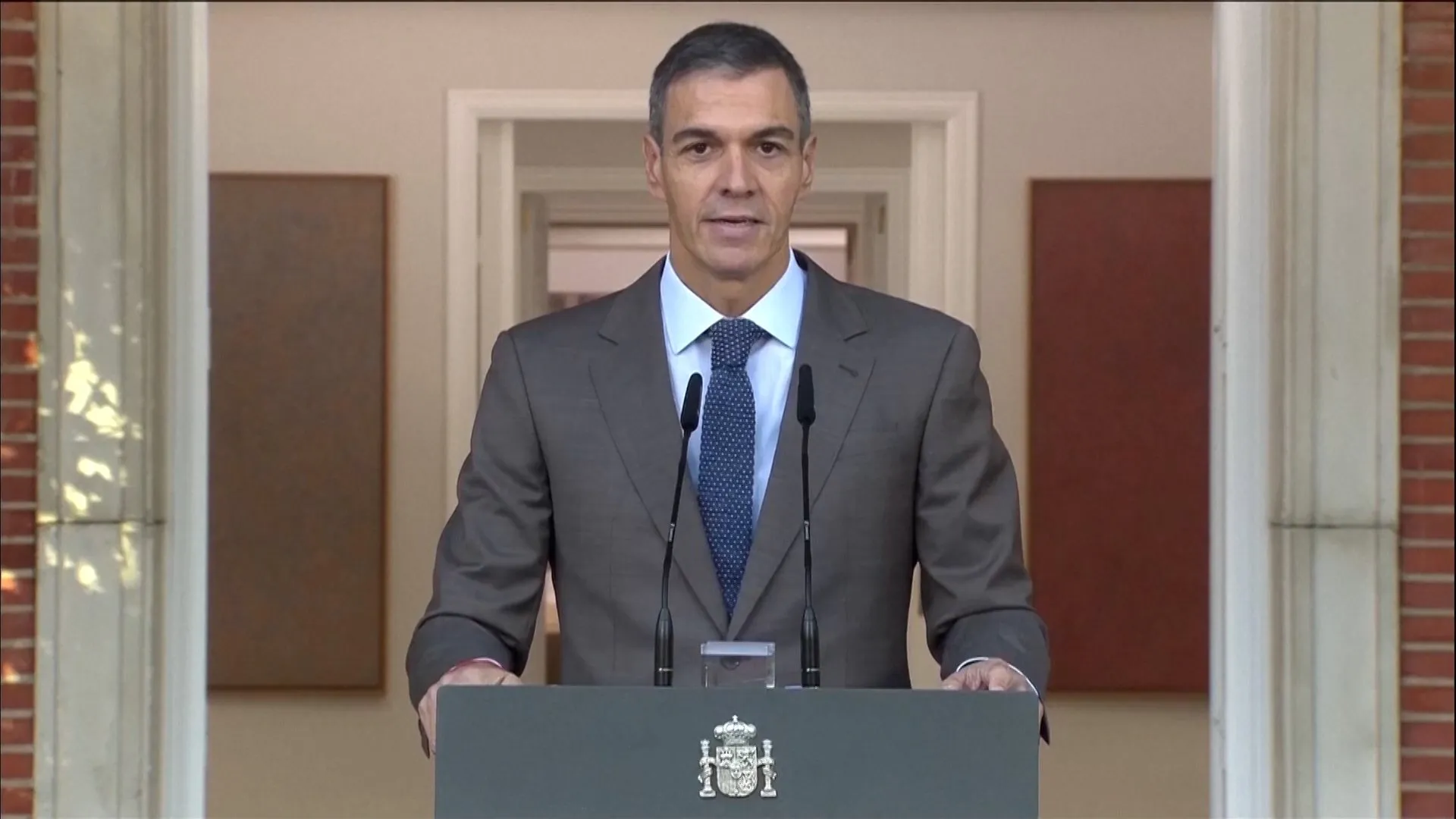
Mounting anger over Spain’s housing crisis and a defeat in parliament over housing measures have led Prime Minister Pedro Sanchez to call an early election on November 29. The Socialist leader is taking a gamble as he faces a tough campaign with his minority government weakened.
US Secretary of State Marco Rubio has arrived in Reykjavik, Iceland, for the first leg of a four-day European tour in which he will also visit Greece and Portugal.
“Economic and security collaboration” top the agenda for his talks on Monday with Icelandic officials, according to a statement from the Department of State.
Recommended Stories
list of 4 itemsend of list
Ahead of his departure, he told reporters he would not directly tie the United States’ decision to remove its B-1 bombers from the British base of Fairford to last week’s incident.
“I wouldn’t just directly tie that to the move that was made,” Rubio told reporters, adding that “the Department of War is constantly reallocating resources where they need to be”.
Rubio asserted confidence in the security of all US bases and praised United Kingdom authorities’ cooperation.
Five British men were arrested near the British airbase at Fairford on suspicion of preparing “terrorist acts”, and were later released on bail. A sixth man, a dual UK-Iranian national arrested separately in London, has also been released on bail.
B-1 bombers were returned to the US. They had been used for strikes on Iran.
A NATO military source had, however, said: “It is still believed that Iran poses an acute threat to US assets in the UK”.
Iran’s Revolutionary Guards previously said the Fairford base was a legitimate target, but Tehran denied any links to last week’s incident.
Rubio is also visiting Greece to lead the US delegation for the sixth US-Greece Strategic Dialogue, focusing on defence cooperation and regional and energy security, and will wrap up his tour in Lisbon, where he will discuss defence, economic and technology cooperation.
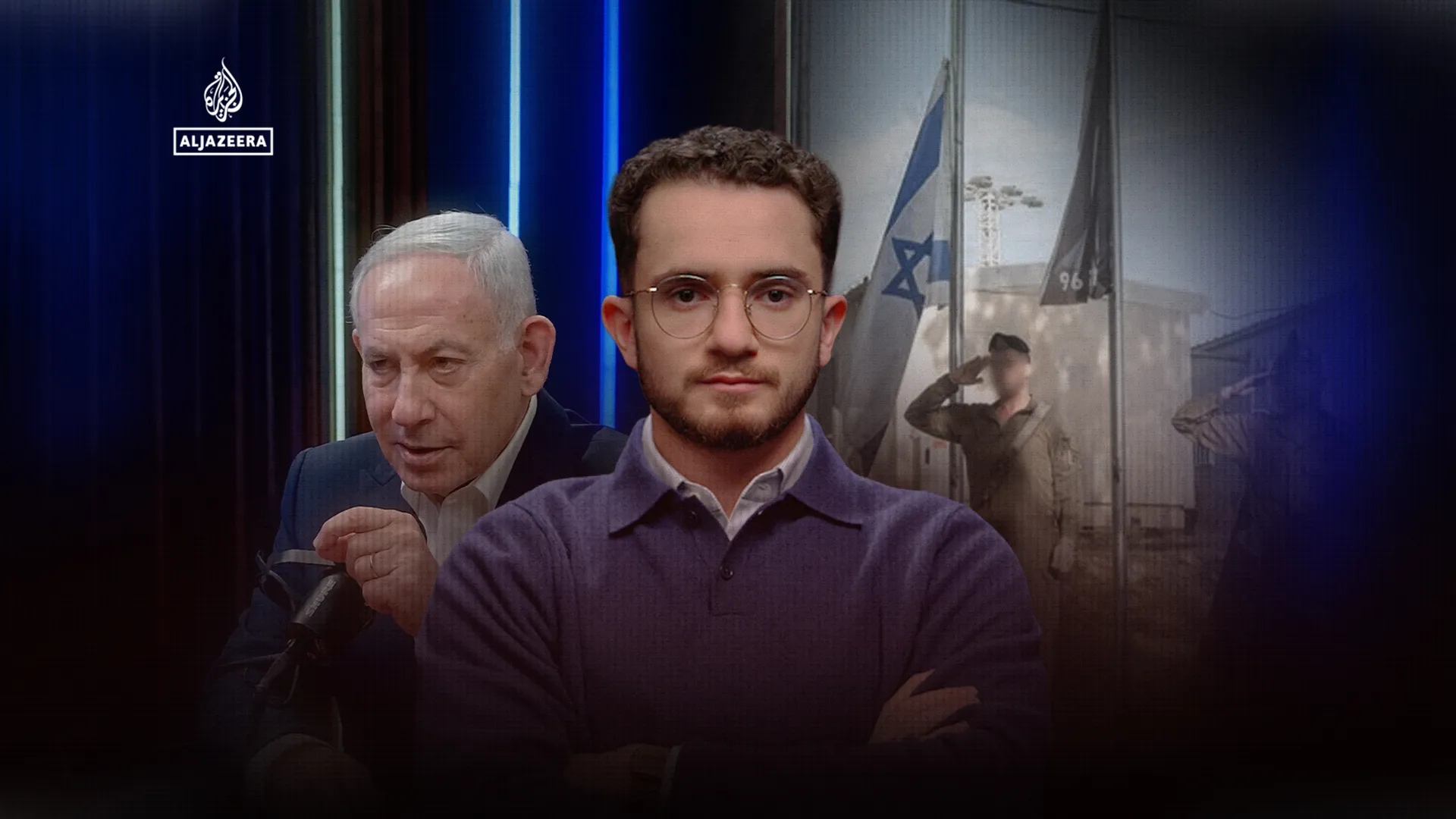
Israeli Prime Minister Benjamin Netanyahu has given voters an election ultimatum: Vote for him or vote for Palestine. And Israelis mark three years in the Jewish calendar since the October 7th attacks.
The newspaper wrote that the new information was part of the same threat warnings from three weeks ago, but officials acted quickly after specific details emerged in the past 24 hours.
Ezra Cohen, who served as a defence official under Trump’s first administration, called the US’ decision “prudent”.
He told BBC Radio 4’s Today programme: “These are very, very unique platforms that aren’t being produced anymore, and we have a limited number of them. The B-1 bomber is a strategic asset, and we’re going to take steps to protect it from all sorts of threats.”
But the removal of the bombers from RAF Fairford will see the US lose a foothold for the country outside continental Europe.
Liberal Democrat defence spokesperson James MacCleary called the US’ decision to withdraw its bombers “deeply concerning” and called for the government to set out a plan to ensure the country’s military bases are “fit for purpose”.
Days after the incident at RAF Fairford, Prime Minister Andy Burnham said there were “strong indications” that Iran had played a part in the incident but did not provide further details, while US Secretary of State Marco Rubio said on Fox News that it “clearly involve[d] the hands of a foreign actor” without going into further details.
Tehran has strongly denied any involvement.
In July, Iran said “any base used for aggression against Iranian territory constitutes a legitimate target for our forces”.
RAF Fairford, near the village of Whelford in the Cotswolds, has been used as a forward operating location by the USAF for decades.
In recent months, the US has flown B-1 and B-52 bombers from the base for the Middle East, after the UK approved a US request to use it for defensive strikes on Iran.
Residents living close to RAF Fairford told the BBC of their relief at the departure of bombers from the airbase, with one local saying she was “thrilled,” citing the noise and feeling “increasingly vulnerable” in recent weeks.
Another villager, who said he has seen bombs being loaded aboard aircraft from his back garden, said he knew something was happening when he saw planes leaving “one, after another, after another” on Sunday.
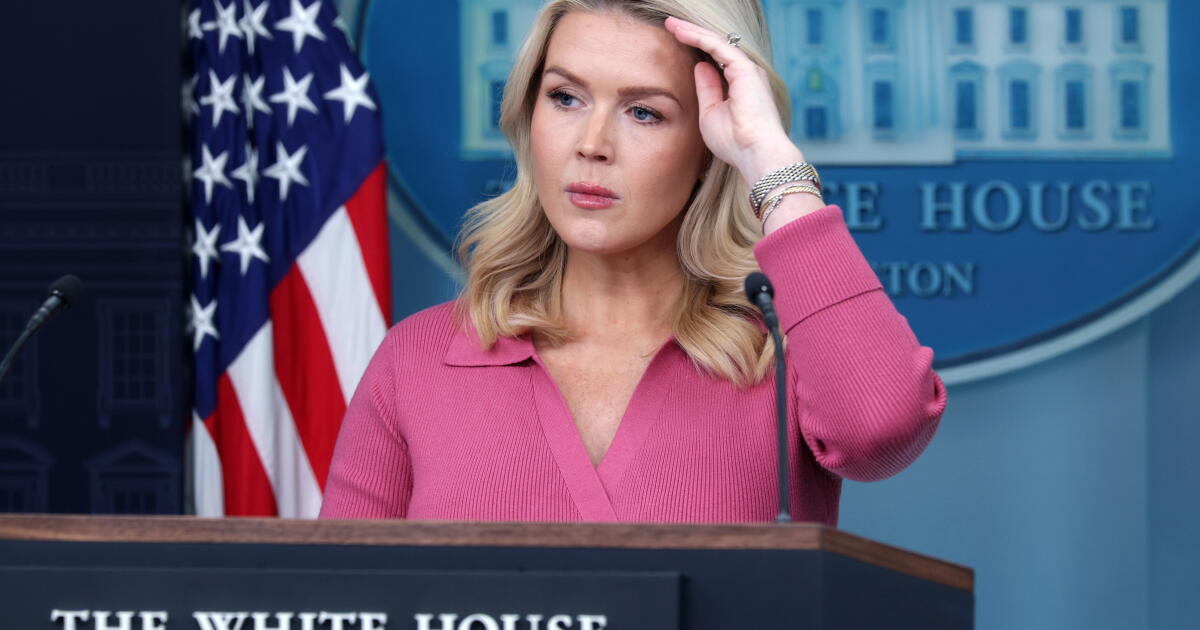
Karoline Leavitt, the tenacious former Trump White House press secretary, is joining Fox News as a contributor.
The network announced Monday that Leavitt, 29, known for her rapid-fire defense of Trump’s policies in the White House briefing room, will be delivering commentary and analysis across Fox News programs starting Nov. 1.
Leavitt joins a long line of former White House secretaries who have made the jump to TV news punditry. Her predecessor Kayleigh McEnany is a co-host on the daytime Fox News chat show “Outnumbered” and hosts her own Saturday program.
Leavitt joins Fox News at a time when President Donald Trump has been irritable over negative press coverage as his favorability ratings with the public are at an all-time low. He briefly banned CNN, MS NOW and Politico from the White House until a federal judge stepped in.
Trump has complained about Fox News coverage as well, although the opinion hosts on the conservative-leaning network have continued to defend him. Leavitt will likely give the president another robust advocate on the channel he often watches.
Trump has hired Fox News personalities for his cabinet as well, naming former weekend host Pete Hegseth as his defense secretary and Jeanine Pirro, a one-time co-host of “The Five,” as U.S. Attorney for the District of Columbia.
“Karoline’s first hand experience in the White House and on the presidential campaign trail gives her a distinct understanding of today’s political landscape,” Fox News Media Chief Executive Suzanne Scott said in a statement.
Leavitt served in Trump’s second administration from Jan. 2025 until Aug. 2026. She was the youngest person in American history to hold the White House press secretary position. She departed her role after returning from maternity leave, saying she would continue to promote the Republican party and the issues important to Trump’s MAGA followers.
Prior to joining the White House, Leavitt served as national press secretary for Trump’s 2024 presidential campaign. She ran for Congress in her home state of New Hampshire in 2022 and served as communications director for then-House Republican Conference Chair Rep. Elise Stefanik (R-NY).
Leavitt also served as an assistant White House press secretary during Trump’s first term.
In her time as press secretary, Leavitt created a “new media” briefing room seat, often filled by conservative commentators and pro-Trump social media influencers.
Two crew members died and 11 were rescued after a fire broke out aboard the Turkish-owned Royad Mammadov in the Black Sea. Ukrainian president Volodymyr Zelenskyy said Russian drones caused the fire, but Romanian authorities did not comment.
The latest attack brings the death toll from US military boat strikes to at least 235 from 70 maritime strikes across the region.
Published On 5 Oct 20265 Oct 2026
The United States has conducted another strike on an alleged drug trafficking boat in the Caribbean, killing four, according to the US military.
US Southern Command said late Sunday that it struck alleged drug traffickers operating along “established narco-trafficking routes” in the eastern Pacific and Caribbean, following its standard reporting pattern for military operations of suspected cartels across the multinational maritime zones.
The latest attack brings the death toll from US military boat strikes to at least 235 deaths across 70 attacks, since the administration of US President Donald Trump first launched its counter-narcoterrorism campaign, termed Operation Southern Spear, in September of last year.
At the time, Trump characterised the fight against cartels in Latin America as an active “armed conflict” while defending the strikes as a necessary escalation to curb illicit drug trafficking and reduce fatal US overdoses.
The move comes as United Nations experts warn that the strikes violate international law and could amount to crimes against humanity.
Despite releasing footage on X showing the explosion that destroyed the moving vessel, the US military has offered no evidence that the targeted boat was ferrying drugs.
The Trump administration has been actively seeking regional security agreements across Latin America to expand joint military operations against what it has designated as criminal cartels. The deals come under the US-led Shield of the Americas coalition, launched in March. The president has pledged the undertaking will use “unmatched military might” to dismantle drug cartels while simultaneously countering Chinese economic influence in the Western Hemisphere.
During a visit to Panama in August, Defense Secretary Pete Hegseth announced that Colombia, Guatemala and Honduras had agreed to joint counter-crime military operations on their soil, a statement Guatemala quickly disputed to clarify its sovereignty and boundaries within the 19-member alliance.
Hi, and welcome to another edition of Prep Rally. I’m Eric Sondheimer. Football forfeits have been happening. Athletic directors and coaches have been scrambling to make sure players are eligible and parental paperwork is accurate. That’s just a small part of the ethical dilemmas taking place in the high school sports world.
Let the debate begin on ethics
Nobody likes to be told what to do. Nobody likes to be told they are wrong. Nobody likes bureaucracy because it moves slowly. Everybody likes to find shortcuts and to be told they are right. It’s almost a daily experience working in the high school sports world, figuring out ethical dilemmas and how to proceed.
Get our high school sports newsletter
Prep Rally is devoted to the SoCal high school sports experience, bringing you scores, stories and a behind-the-scenes look at what makes prep sports so popular.
By continuing, you agree to our Terms of Service, which include arbitration and a class action waiver. You agree that we and our third-party vendors may collect and use your information, including through cookies, pixels and similar technologies, for the purposes set forth in our Privacy Policy such as personalizing your experience and ads.
Coaches are supposed to tell their players every season that hazing is wrong and won’t be tolerated. Then hazing happens, and the coach is the one held accountable, sometimes even losing their job.
There always are internal politics at play. A winning coach will be treated differently from a losing coach. That’s a fact. In my job as a sportswriter, I’ve been monitoring decisions on ethics for decades. I was around when the California Interscholastic Federation adopted lessons from the influential Michael Josephson, who created the Character Counts coalition. Awards continue to be given out to those who hold their ground and choose the ethically right decision to make.
Do you go out and check the address of transfer student or trust the paperwork submitted? Do you report another team using an ineligible player immediately or hold it back until right before the playoffs, causing the entire team to lose out on the playoffs because of forfeits?
Tahj Skinner of Sherman Oaks Notre Dame accounted for four touchdowns — throwing for three and returning an interception for another— in a 28-21 win over Chaminade.
(Craig Weston / For The Times)
Tahj Skinner of Sherman Oaks Notre Dame intends to play safety for UC Davis. But he’s been doing such a fantastic job playing quarterback for the unbeaten Knights that being a wildcat quarterback could be in his future. He had three touchdown passes and returned an interception for a touchdown in a win over Chaminade. Here’s the report.
In a battle of very good defenses, Santa Margarita defeated Mater Dei 14-7. Here’s the report.
Another week, another historic win for unbeaten Cleveland in the City Section. The Cavaliers defeated longtime power Birmingham 14-9 in the West Valley League opener. Here’s the report.
In a battle of unbeaten teams, Corona del Mar got past Villa Park, 24-10. Here’s the report.
Granada Hills Kennedy (6-0) has won 20 consecutive Valley Mission League games.
Ceasar Reyes of Garfield continues to pile up rushing yards. He had 374 yards in 39 carries and scored five touchdowns in a 42-28 win over Bell. He‘d better bring doughnuts to his offensive linemen on Monday mornings.
Quarterback Shawn Sanders of Paracete had a game for the ages in a 56-36 win over St. Paul. He was 14 for 15 passing for 205 yards and two touchdowns. He rushed for 188 yards and two touchdowns. He kicked seven PATs and seven balls into the end zone for touchbacks. Did he bring out the water bottles too?
Corona Centennial has nine players in its football program with variations of the same first name. Here’s the report.
One of the great teams from the 2026-27 school year is going to end up being JSerra flag football. The Lions won the Southern Section Division 1 title last season and are even better this season with 21 consecutive victories. If any opponent gets close, that will be news.
You need to go watch the duo of quarterback Kate Meier and receiver Tessa Russell.
Carson has taken over as No. 1 in the City Section.
Girls’ volleyball
There’s a clear pecking order in the Southern Section. Mater Dei and Sierra Canyon have been the top teams all season. Mira Costa, Los Alamitos and Marymount are right behind.
From Chaminade AD: Bryan Cantwell is taking personal leave and we have named long time assistant coach Chris Johnson as interim Head Coach. We expect Bryan to return at some point in the future. Basketball.
Yorba Linda’s football team has been forced to forfeit four victories, which means its record is 0-6 and making the playoffs would require earning an automatic berth from the Alpha League. The school district indicated there were violations involving bylaws 503.B (1) and 510, which involve administrative oversight and undue influence….
Todd Therrien, a former football coach at St. Bonaventure who won two state Division III championships, died on Sept. 30, the Ventura County Star reported. He was 47. He recently had a stroke and was a quadriplegic after a spinal cord injury from a car accident in 2022. He succeeded Jon Mack in 2007….
Freshman Emiliano Plascencia of Whitter has more than 100 goals for his water polo team this season.
(Los Angeles Times)
Whittier has a freshman water polo player scoring goals in bunches. Here’s the report. …
JSerra made it to the championship game in water polo at the Elite 8 tournament before losing to Cathedral Catholic….
The Southern Section football playoff pairings will be announced on Sunday, Nov. 1 at 10 a.m. That’s also the end of daylight savings time when the clocks move back one hour, so no sleeping in for coaches, parents or players….
The Luderer twins, Keira and Kelsey, from Sherman Oaks Notre Dame committed to Florida State for softball. Here’s the report….
Chaminade has begun construction of a $66-million project that will include new baseball and softball diamonds. Here’s the report.
From the archives: Jamie Dixon
Jamie Dixon was a star guard at Sherman Oaks Notre Dame, went on to Texas Christian, became a top assistant to Ben Howland at Northern Arizona, then an assistant at Pittsburgh before becoming coach. He has been TCU’s coach since 2016.
From the Los Angeles Times, a story on Inglewood football coach Mil’Von James saying he played three ineligible players in Texas because he didn’t know they were ineligible outside of California.
From the Los Angeles Times, a story on how unbeaten Sierra Canyon’s football team has found a top sophomore linebacker in Eli Zamorano, who spent nearly three months living on Easter Island when he was 15.
From Yahoo, a story on former Mater Dei receiver Cooper Barkate having a breakout performance for Miami.
Tweets you might have missed
𝘿𝙚𝙢𝙤𝙡𝙞𝙨𝙝𝙚𝙙 𝙗𝙮 𝘿𝙞 𝙈𝙖𝙜𝙜𝙞𝙤
Matti Di Maggio crushes one for a leadoff solo shot!
One reason why it’s going to be so difficult to get high school softball teams to play in state championships instead of club ball is seen in X profiles. Players mention their club team, not their high school team.
The JSerra Girls Flag Football team improved to 20-0 on the season, as the Lions defeated the Santa Margarita Eagles 34-20 in a Trinity League game on Tuesday at JSerra Catholic High School.
JSerra has now won 48 straight games dating back to last season.
The City Section will soon consider a proposal that would punish an individual student for playing on outside team (think soccer) when discovered in the playoffs and not eliminate the team.
BREAKING: Moorpark High striker Bella Sanabria Cora, the cousin of former Boston Red Sox manager Alex Cora and MLB All-Star Joey Cora, was named to the U17 World Cup team for Puerto Rico.
Keep an eye out for my exclusive interview with Sanabria Cora in The Star early next week. pic.twitter.com/aw3JmJPSN7
Matti Di Maggio (Dos Pueblos) and Bryant Ju (Cypress) are coming home with gold medals after USA won the 15U World Cup in Mexico with a 5-4 walk-off win over Dominican Republic in the B 8th.
A special night was had tonight as this ALL FEMALE officiating crew made history in Orange County! 👏✨
White Hat: Mary Margaret Montgomery Head Lines: Kristi Wilson Umpire: Maryann Menlove Line Judge: Nina Berbiglia Back Judge: Sarita Stamps pic.twitter.com/DrM86nO8ku
I’m hearing a growing concern of high school football players directing the N word at opponents. Enough. And coaches need to intervene before someone gets fired, suspended, kicked off. Just like hazing, it’s unacceptable. Officials have already thrown flags trying to stop the taunting.
Former Gardena Serra running back Kai Honda rushed for 219 yards and scored four touchdowns for Princeton in win over Columbia. Always knew his time would come in the Ivy League. https://t.co/SpDT0qeXDq
Have a question, comment or something you’d like to see in a future Prep Rally newsletter? Email me at eric.sondheimer@latimes.com, and follow me on X at @latsondheimer.
Did you get this newsletter forwarded to you? To sign up and get it in your inbox, click here.
A man who killed dog walker Wayne Broadhurst and attacked two other people in a “frenzy of violence” in west London has been given an indefinite hospital order for manslaughter.
Dawood Safi, 28, fatally stabbed Wayne Broadhurst, 49, in the street during a series of knife attacks which began at Safi’s home in Uxbridge on 27 October last year.
Safi, who was having paranoid delusions and hearing voices, attacked his landlord Shahzad Farrukh minutes before killing Broadhurst, and also stabbed a 14-year-old boy.
This breaking news story is being updated and more details will be published shortly. Please refresh the page for the fullest version.
All season long, Golden State Valkyries coach Natalie Nakase has been begging her team to empty the tank. In the winner-take-all Game 3 win over Dallas on Friday, it seems she took that too literally.
“The stress at this time of year is real,” said Becky Hammon, Las Vegas Aces coach and Nakase’s former mentor. “The pressure, you don’t get a lot of sleep. You’re not eating as well as you probably should. There’s a lot of factors that go into that. That was kind of scary actually to watch, and just you know, that little sucker popped right back up, though. Got right back up on that marker and kept it pushing.”
Nakase said Sunday she is fine and just battling exhaustion, something she is taking seriously in her quest to prioritize self-care.
“[My father] told me about 10 years ago when I never knew what I was going to do with my career, and he just said, ‘do not let your career ever get involved if your mental health or your health gets complicated,’” she said. “So when that happened, it definitely was like a wake-up call for me.”
Newsletter subscription change
Starting Sept. 21, this newsletter will be available to Los Angeles Times subscribers only. A free press isn’t free, and we depend on reader support to report on the stories that make a difference. If you’re already a subscriber, nothing will change. If you’re not, there’s never been a better time to sign up. Get started here.
But anyone who knows Nakase is not surprised to see her truly empty the tank like this. Ever since the Huntington Beach native and Marina High graduate was a walk-on to UCLA’s team in 1998, she has had an unwavering intensity.
“She has that [intensity] but with a smile on her face,” said her high school coach Pete Bonny. “From the get-go, this is who she is.”
In her second season as a WNBA coach, those around her have seen her willingness to adapt to the situation.
“She has always found ways to keep us winning,” Valkyries assistant coach Landon Tatum said. “Her ability to change in real time and make adjustments I think is the biggest difference for her this year.”
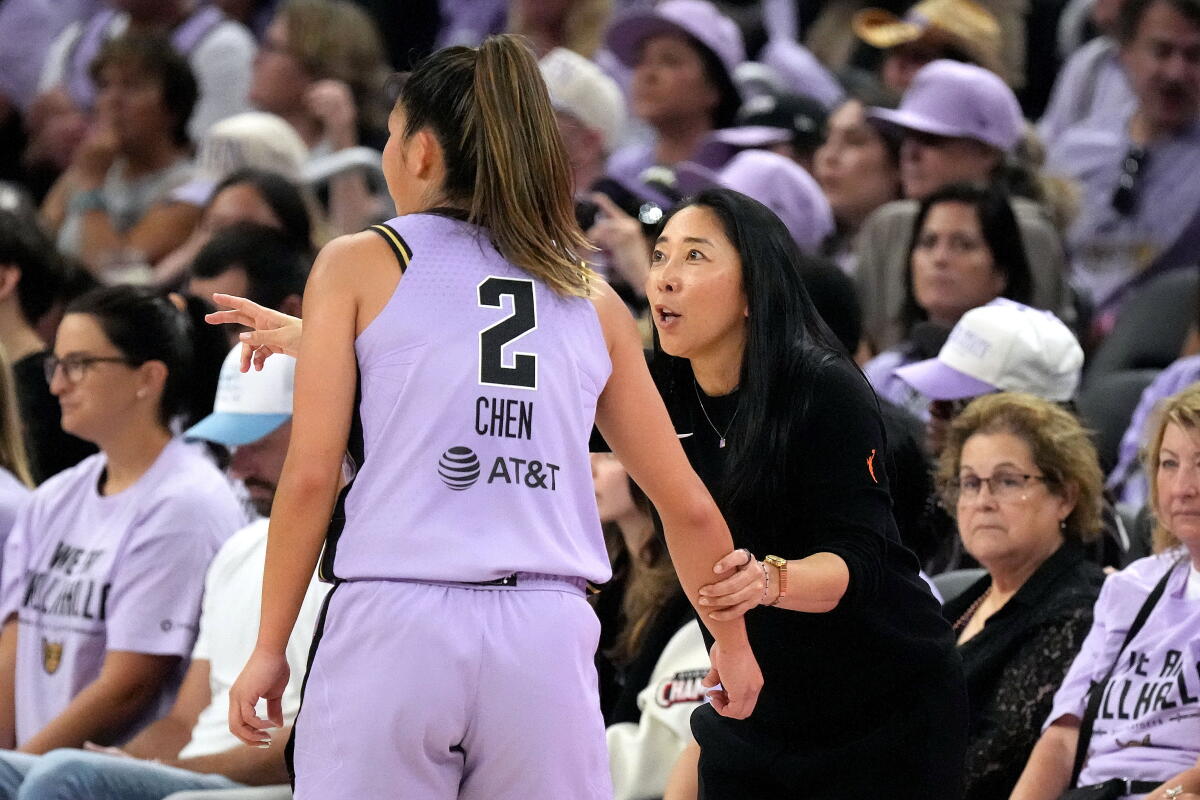
Golden State Valkyries coach Natalie Nakase talks with Kaitlyn Chen during Game 1 of a WNBA semifinal series against the Las Vegas Aces in San Francisco on Sunday.
(Tony Avelar / Ap Photo/tony Avelar)
Nakase walked on at UCLA after turning down a scholarship offer from UC Irvine. With the Bruins, she became a starter and captain, earning honorable mention All-Pac-10 honors in 2002 and finishing her career ranked 10th in program history with 358 assists.
The Bruins made two NCAA tournament appearances during Nakase’s four seasons.
In her first year as a WNBA head coach, Nakase led the Valkyries to the postseason, the first time an expansion team ever accomplished that feat. It earned her the league’s coach of the year award.
“If you put all 44 games together, all 44 of the regular season, I don’t know if there’s a team that played harder than her team every [game] for the 44 games, and that’s that’s a tribute to her,” Hammon said. “That’s the highest compliment I can give someone.”
This year, Golden State went even deeper with a first-round series win over Dallas after finishing the regular season with the league’s second-best record. After top seed Minnesota was upset in the first round, the Valkyries now have home court throughout the postseason.
“She always sticks to her plan,” said Valkyries point guard Veronica Burton about how she has seen Nakase grow this season. “Every single game she approaches with the utmost respect. I think it says a lot about her as a coach, and then what she expects of us. I think every single game I know what to expect going in, and I know what she wants of me, and I know what she expects of me. She makes us feel prepared.”
Golden State Valkyries coach Natalie Nakase raises the WNBA Coach of the Year award before a playoff game against the Minnesota Lynx on Sept. 17, 2025, in San José.
(Thearon W. Henderson / Getty Images)
Nakase was back on the sidelines on Sunday to face Hammon, wearing a heart monitor and trying to practice what she preaches about recovery. She ultimately led Golden State to a 71-60 win in Game 1 of the series.
Nakase does not plan on tempering her trademark fervor, even if this was an important learning experience. After all, she built an unlikely UCLA career and surging WNBA coaching career by sticking with who she is.
“She’s never been afraid that she knows she is going to mess up sometimes,” Tatum said. “Her ability to create a culture that fast, like that’s not easy. I think that’s when you kind of knew off top in training camp, like, oh yeah, I think she’s ready for this. She’s got this.”
Bruins’ Canada also thriving in WNBA playoffs
Dream guard Jordin Canada dribbles between New York Liberty center Han Xu, left, and guard Marine Johannes, right, during Game 1 of a WNBA semifinal series Sunday in Atlanta.
(Colin Hubbard / Associated Press)
The Associated Press’ Alan Cole highlighted a banner Sunday for UCLA alum Jordin Canada:
Jordin Canada scored 20 of her 25 points in the second half and had five steals to help the Atlanta Dream beat the New York Liberty 92-82 on Sunday in Game 1 of the best-of-five WNBA semifinals series.
DeWanna Bonner added 23 points and helped fill the void when Allisha Gray went down with a left hand injury in the second quarter. Atlanta once again played stellar defense, scoring 32 points off 21 forced turnovers, including 16 in a dominant third quarter. The 32 points off turnovers tied an all-time WNBA playoff record.
“Everybody stepped up, and that’s what we need,” Canada said. “Next-man up mentality. I just tried to do what I do best. I tried to be aggressive, find my shots and take my shots with confidence.”
Gray’s injury was the key moment of a very even first half. Neither team led by more than six points in a half that had 14 lead changes. New York went into the locker room with a slim 40-37 advantage. But Atlanta outscored New York 32-15 in the third quarter, seizing control with relentless defensive pressure.
“We knew we didn’t play our best in the first half,” Canada said. “We gave up a lot of defensive assignments, we weren’t playing up to our schemes and we just weren’t being aggressive enough on the offensive end.”
Angel Reese and Canada had three steals apiece in the third, keying a 13-3 run to start the half which gave Atlanta a lead it never surrendered. Seven New York players recorded at least one third-quarter turnover, and the team shot just four of 14 from the floor in a stretch that created a margin too big to overcome.
Oregon’s Lanning compares UCLA to national champs
Oregon coach Dan Lanning dodged questions this past week about the health of quarterback Dante Moore following a brutal hit during a win over USC by trying to focus on UCLA.
USC linebacker Desman Stephens II charged forward to tackle Moore on a run play on Sept. 26. Moore slid late and Stephens didn’t change course, lowering his shoulder and running into Moore’s head. Oregon players and fans were more offended after Stephens celebrated the play that nearly triggered a fight among the two teams and he was captured by NBC cameras smiling on the sideline while Moore was treated on the field before being transported to the hospital by ambulance. Stephens was ejected for targeting, but new NCAA rules allowed him to remain on the sideline and try to fire up his team during the second half.
A day after USC coach Lincoln Riley said he did not see Stephens’ sideline behavior and defended keeping him on the sideline in the second half, the school issued statements from Riley and Stephens apologizing for the hit and Stephens’ behavior while Moore received treatment. Stephens was suspended for one game.
Lanning called the play “disgusting” during his postgame news conference.
Oregon announced that Moore was diagnosed with a concussion, but tests showed no further injuries. Lanning said the team would be cautious as Moore recovers from the head injury.
Oregon, like UCLA, had a bye this past week and Lanning didn’t see reporters again until Wednesday. When asked for updates on Moore and for his thoughts on USC’s apologies and discipline, Lanning punted and instead compared UCLA to last year’s national champion.
“We’re about to play a UCLA team that reminds me a lot of Indiana from last year,” Lanning told reporters. “…Let’s just be honest. We’re not remotely close to what we need to be. We’re not remotely close.”
Lanning also said UCLA coach Bob Chesney texted him after the Ducks’ win over USC, offering to visit Moore if he had to remain in the hospital in Los Angeles. Moore instead was released and allowed to fly back to Oregon with his teammates.
Men’s water polo splits top-four matchups
The No. 1 UCLA men’s water polo split its marquee matchups to open Mountain Pacific Sports Federation play during the weekend.
The Bruins fell 19-15 to No. 2 Stanford on Saturday, but they rebounded for a 13-11 win over No. 4 California Sunday. Junior Ryder Dodd had five goals and three assists during the victory over the Golden Bears.
The Cardinal set a tougher pace on Saturday, leading by one goal at the end of the first, second and third quarters before extending their lead during a pivotal 7-4 fourth quarter. Dodd again paced the Bruins with four goals and five assists.
UCLA hosts Golden West College and California Baptist this weekend before the pressure rises again with a match at No. 3 USC on Oct. 17.
Sign up for UCLA Unlocked
A weekly newsletter offering big game takeaways, recruiting buzz and everything you need to know about UCLA sports — exclusive to L.A. Times subscribers. Free Members receive a partial preview of each edition.
By continuing, you agree to our Terms of Service, which include arbitration and a class action waiver. You agree that we and our third-party vendors may collect and use your information, including through cookies, pixels and similar technologies, for the purposes set forth in our Privacy Policy such as personalizing your experience and ads.
Bruins on deck
Here are all UCLA games scheduled to be played this week across all sports, with all times Pacific:
Tuesday, Oct. 6
Men’s soccer vs. Westmont, 7 p.m.
Thursday, Oct. 8
Women’s soccer vs. Indiana, 7 p.m.
Friday, Oct. 9
Men’s tennis at UC Santa Barbara Fall Classic, All day
Cross country at Wisconsin’s Nuttycombe Invite, Time TBA
Women’s volleyball at Maryland, 3:30 p.m.
Saturday, Oct. 10
Men’s tennis at UC Santa Barbara Fall Classic, All day
Football at Oregon, 12:30 p.m.
Men’s water polo vs. Golden West College, 1 p.m.
Women’s volleyball at Rutgers, 4 p.m.
Men’s water polo vs. California Baptist, 6 p.m.
Men’s soccer vs. Ohio State, 6 p.m.
Sunday, Oct. 11
Men’s tennis at UC Santa Barbara Fall Classic, All day
Do you have a comment or something you’d like to see in a future UCLA newsletter? Email newsletters editor Houston Mitchell at houston.mitchell@latimes.com. To get this newsletter in your inbox, click here.
Sports editor Iliana Limón Romero contributed to this report.
The United Kingdom’s Green Party has voted to define Zionism as a form of racism, drawing condemnation from the Israeli government.
In a binding vote held at the party’s conference over the weekend, members voted to usher in the new definition as well as a series of other strongly pro-Palestine policies.
Recommended Stories
list of 4 itemsend of list
However, just as the resolution has drawn international criticism, it has also proved internally controversial with four of the party’s five members in parliament opposing it.
Israel on Monday banned party leader Zack Polanski from the country just a day before the politician faces a by-election as he runs in the London constituency that former Prime Minister Keir Starmer represented.
Zionism emerged as a political ideology in the late 19th century. It called for the creation of a Jewish homeland at a time of rising anti-Semitism and persecution of Jews in Europe. Theodore Herzl, an Austro-Hungarian journalist considered the father of political Zionism, originally proposed an independent and colonial Jewish state in either Palestine or Argentina.
Here’s what we know about what the Greens have said:
Green Party leader Zack Polanski, right, chats with Ben Jamal, director of the Palestine Solidarity Campaign, at the 2025 Green Party conference in Bournemouth, England [File: Getty Images]
What is the resolution?
The Greens endorsed the motion to equate Zionism with racism by a vote of 1,022 to 813.
In addition, the party restated its “commitment to Palestinian liberation” and called for the “establishment of a single democratic state throughout historic Palestine”.
The party also recommitted to its support of Palestinians’ right of return as well as to the Boycott, Divestment, Sanctions movement against Israel.
“The real, material, manifestation of Zionism has been the historic and ongoing dehumanisation, displacement, dispossession, disenfranchisement and destruction of Palestinians,” a Green Party statement said.
A significant number of party members, including four of its five MPs, were against parts of the resolution, exposing divisions within the party.
Codeputy leader Rachel Millward said in a post on X that while the party is committed to “stop the genocide”, the term Zionism means “different things to different people, … so I personally do not think the policy helps us do the work we all want to”.
Meanwhile, Polanski, who is Jewish and was away campaigning during the vote, told journalists afterwards that if Zionism equates to the displacement of Palestinians, “that is clearly racist.”
Polanski said he, however, did not support the reference to a single Palestinian state and external entities should not decide what a future state would look like.
How has Israel responded?
Israel has accused the party of legitimising “terrorism”, and senior officials equated it to anti-Semitism.
“The Greens have adopted not only the green of Hamas, but also its ideology: the elimination of the State of Israel through armed struggle,” the Israeli Ministry of Foreign Affairs wrote on social media.
Israeli President Isaac Herzog said it would “deliberately endanger Jews and Israelis everywhere”. Opposition leader Yair Lapid said the party was “racist”.
The Green Party has rejected equating criticism of Israel with anti-Semitism and reiterated its stance against “any form of discrimination or harassment”.
“We know there is no conflict between supporting the rights of Palestinians and the rights of Jewish people,” Polanski and other senior party members said in a statement on Sunday.
Has Zionism been equated to racism before?
Yes. In 1975, the UN General Assembly passed a resolution that “determines that Zionism is a form of racism and racial discrimination”.
The vote was sponsored by the Soviet bloc and the Arab League. It passed after 72 countries, largely from the Middle East and Africa, voted for it. Israel and 34 other countries – chiefly from the West – were against it. Thirty-two other countries abstained.
Just a year before, at the 1974 General Assembly, Palestinian leader Yasser Arafat had given his “olive branch” speech at the General Assembly.
About the same time, African countries opposing the apartheid regime in South Africa, which was increasingly allying with Israel, had resolved separately that the Israeli government was “racist” and both had an “imperialist origin.”
Also, in 1975, at the first international women’s conference, held in Mexico City, attendees decided there would be no international peace outside the “elimination of foreign occupation, Zionism, apartheid” and all other forms of “racial discrimination”.
However, the General Assembly vote proved controversial. Chaim Herzog, then-Israeli ambassador to the UN and later president, told the assembly in a speech that it was “based on hatred, falsehood and arrogance” and proceeded to rip up copies of the resolution in front of the audience.
The US too accused the UN of making “anti-Semitism international law”.
In December 1991, the US, under President George HW Bush, stepped up a campaign to revoke the resolution with Bush declaring at the UN that equating Zionism with racism “is to reject Israel itself” and to “challenge its right to exist”.
Israel also insisted it would not participate in the Madrid Peace Process to continue negotiations between Israel and Palestinian leaders if the resolution was not cancelled.
After much pressure from the US, an overwhelming majority of countries voted for its revocation – 111 to 25, including European and African countries.
Who else equates Zionism with racism?
Jewish Voice for Peace, the American anti-Zionist and pro-Palestinian advocacy group, has also named Zionism as a movement that creates a “racist hierarchy with European Jews at the top”.
In a February statement, the group reiterated its stance against what it called the “colonial ideology” of Zionism’s founders.
Similarly, in the United Kingdom, an employment tribunal in 2024 backed anti-Zionist activist and professor David Miller, who was earlier sacked from his post at the University of Bristol in 2021 for his views that the movement was “inherently racist”.
Education Minister Edouard Geffray said on Sunday about 500 schools likely to be fully or partially closed on Monday.
Published On 5 Oct 20265 Oct 2026
Hundreds of high schools in France are closed as student protests continue against rundown schools and teacher shortages.
Government spokesperson Maud Bregeon told CNews television on Monday that the priority was to “restore order”.
Recommended Stories
list of 3 itemsend of list
Earlier, National Education Minister Edouard Geffray said on Sunday evening, of the 3,700 schools, 400 to 500 were likely to be closed fully or partially on Monday.
Geffray said 24 schools had been burned or ransacked, while 78 teaching staff had been injured since the beginning of the protests.
Nationwide demonstrations erupted at the end of last month at a high school in a Parisian suburb over teacher shortages, before spreading nationwide.
Reporting from a high school in Paris, Al Jazeera’s Natacha Butler said students had set up a barricade in front of the building’s entrance using dustbins and fences.
“We’ve been talking to many of the students who have come out here, and what they say is that they are here to have their demands heard by the government. They say they are fed up with teacher shortages and often don’t have teachers for subjects like maths and English,” she said.
“They also tell us that they’re here to demonstrate to show solidarity with other high school students who are in perhaps poorer areas in France with less adequate facilities or in France’s overseas territories. They say all young people should have an equal right to education,” Butler added.
French news channel BFMTV showed images of police and students clashing in Lille, northern France, tear gas being used in Toulouse in the southwest and of a fire being set alight as people tried to break into a school in central Paris.
Carole Zerbib, head of the vandalised Lycee Vauquelin in Paris’s 13th district, said a “very determined” group wearing hoods and masks attacked her school.
While police and firefighters quickly put out the fire and the school was evacuated, suspending classes, Zerbib said it was “very violent and happened very quickly”, adding that the attack lasted 15-20 minutes.
Since September 28, about 5,000 people, mostly teenagers, have been arrested across the country and dozens have been injured.
French newspaper La Voix du Nord reported on Monday that a teenager lost a hand after picking up a police stun grenade.
Teachers and members of the public have also been attacked, while estimated costs of property damage are in the tens of millions of euros.
Student unions have called for a national day of demonstration on Tuesday.





![Members of the Ethiopian pro-government Tigray Peace Force (TPF) ride in a pickup truck while Ethiopian federal and allied forces enter the Tigray capital of Mekelle, October 4, 2026 [AFP]](https://i0.wp.com/occasionaldigest.com/wp-content/uploads/2026/10/afp_6ac4015e5e71-1791230302.jpg?w=640&ssl=1)

![A Romanian F-16 fighter jet flies amid heightened security concerns over cross-border drone incursions, August 17, 2026 [Andreea Alexandru/AP Photo]](https://i0.wp.com/occasionaldigest.com/wp-content/uploads/2026/10/AP26219409679050-1791212123.jpg?w=640&ssl=1)