News

Faced with Trump’s deportation push, US teachers fear leaving the classroom | Donald Trump News

Washington, DC – For the past two years, weekdays for Susanna have meant thumbing through picture books, organising cubby holes and leading classroom choruses of songs.

But her work as a pre-school teacher came to a screeching halt in October, when she found out her application to renew her work permit had been denied.

Recommended Stories

list of 3 itemsend of list

Susanna, who uses a pseudonym in this article for fear of reprisals, is one of the nearly 10 percent of teachers in the United States who are immigrants.

But while the US has increasingly looked abroad to fill teacher shortages, some foreign-born teachers say the deportation push under President Donald Trump has threatened their livelihoods — and risks traumatising their students.

Susanna, an asylum applicant who fled violence in Guatemala nearly a decade ago, said that losing her permit meant she had to stop working immediately.

She recalls breaking the news to her students, some of whom are only three years old. Many were too young to understand.

“In one week, I lost everything,” Susanna told Al Jazeera in Spanish. “When I told the kids goodbye, they asked me why, and I told them, ‘I can only tell you goodbye.’ There were kids that hugged me, and it hurt my heart a lot.”

Kids walk along a Washington, DC, sidewalk outside CommuniKids
Advocates warn that the sudden departure of teachers could harm the development of young children in school [Mohammed Zain Shafi Khan/Al Jazeera]

Looking abroad for teachers

Estimates vary as to how many foreign-born teachers currently work in the US. But one 2019 report from George Mason University found that there were 857,200 immigrants among the country’s 8.1 million teachers, in roles ranging from pre-school to university.

For the 2023-2024 school year alone, the US government brought 6,716 full-time teachers to the country on temporary exchange visas to fill openings in pre-kindergarten, primary and secondary school education.

Many hailed from the Philippines, as well as countries like Jamaica, Spain and Colombia.

The uncertainty for immigrants under Trump’s second term, however, has proven disruptive to schools that rely heavily on foreign-born teachers.

That is the case for the pre-school where Susanna worked, CommuniKids, which offers language immersion programmes in Washington, DC.

Cofounder and president Raul Echevarría estimates that immigrants — both citizens and non-citizens working with legal authorisation — comprise about 90 percent of CommuniKids’s staff.

But Echevarría told Al Jazeera that the push to rescind legal pathways to immigration has jeopardised the employment of several faculty members.

Five other teachers at the school have seen their ability to work affected by changes to the Temporary Protected Status (TPS) programme.

All five, Echevarría explained, were originally from Venezuela. But in October, the Trump administration ended TPS status for more than 350,000 Venezuelan citizens, including the teachers at CommuniKids.

Their authorisation to work legally in the US will expire on October 2, 2026, according to the US Citizenship and Immigration Services website.

“These teachers lost their ability to make a living,” Echevarria said, noting that his school requires educators with expertise in languages like Spanish, French and Mandarin.

A classroom hall at CommuniKids
CommuniKids, a language immersion school in Washington, DC, helps young children develop skills in French, Mandarin and Spanish [Mohammed Zain Shafi Khan/Al Jazeera]

‘Strong bonds’

For the schools themselves, the losses can be devastating. Every state in the US has reported teacher shortages to the federal government.

But advocates say the high stress and low pay of education make teachers difficult to recruit and keep.

That leads some states to look abroad for education workers. In North Carolina, for example, 1,063 foreign nationals worked full-time as grade-school teachers on temporary J-1 visas during the 2023-2024 school year.

The top destinations for such recruits were all southern states: North Carolina was followed by Florida with 996 teachers on J-1 visas, and Texas with 761.

But Echevarria said some of the biggest impacts of the deportation drive are felt by the students themselves.

“Our students develop strong bonds with their teachers, and all of a sudden, overnight, they lost their teachers,” said Echevarría.

“Their number one superpower”, he added, “is their ability to empathise and to create strong, effective bonds with people from any background”.

But when those bonds are broken, there can be mental health consequences and setbacks for educational achievement, particularly among younger children.

A 2024 study published by the American Educational Research Association found that, when teachers leave midyear, children’s language development takes a measurable hit.

In other words, the loss of a familiar teacher — someone who knows their routines, strengths and fears — can quietly stall a child’s progress. The consequences extend to a child’s sense of self and stability.

Mental health consequences

For parents like Michelle Howell, whose child attends CommuniKids, the loss of teachers has also made the classroom environment feel fragile.

“The teachers there aren’t just teachers for these young kids,” Howell said of CommuniKids. “They’re like extended family.

“They hug them, they hold them, they do the things a parent would do. When those people disappear, it’s not just hard for the kids. It’s hard for everyone.”

Howell, who is Chinese American, said the sudden disappearances reminded her of her own family’s history.

“I used to read about things like this happening in China, the place my family left to find safety,” she said. “It’s very disturbing to know that what we ran from back then is our reality now. People disappear.”

School psychologist Maria C, who asked to remain anonymous to protect her work in the Texas public school system, has noticed the children she works with struggling with instability caused by the deportation push.

The disappearance of a loved one or mentor — say, a favourite teacher — could flood a child’s body with cortisol, the hormone meant to protect them in moments of danger, she explained.

But when that stress becomes chronic, the same hormone starts to hurt more than it helps. It interferes with memory, attention and emotional regulation.

“For some, it looks like anxiety. For others, it’s depression or sudden outbursts,” Maria said. “They’re in fight-or-flight mode all day.”

She added that selective mutism, an anxiety disorder, is on the rise among the children she sees, who range in age from five to 12.

“It used to be rare, maybe one case per school,” she said. “Now I see it constantly. It’s a quiet symptom of fear.”

Preparing for the worst

Back at CommuniKids, Echevarría explained that he and other staff members have put together contingency plans, just in case immigration enforcement arrives at the pre-school.

The aim, he said, is to make both employees and students feel safer coming to class.

“We put those steps in writing because we wanted our staff to know they’re not alone,” he said. “We have attorneys on call. We’re partners with local police. But above all, our job is to protect our children.”

But as an added precaution, teachers are advised to carry their passports or work permits with them.

Even Echevarría, a US citizen born in Virginia, said he carries his passport wherever he goes. The fear of deportation has a way of lingering.

“I’m bilingual and of Hispanic descent,” he said. “Given how things are, I want to be able to prove I’m a citizen if anyone ever questions it.”

Source link

HumAngle Unveils Radical Anti-Burnout Policy, Adopts Nine-Month Work Year

HumAngle, the newsroom known for its in-depth coverage of conflict, displacement, and insecurity across West Africa, has announced a major overhaul of how our journalists work and rest.

From January 2026, an Anti-Burnout Work Policy that restructures the work year into nine active months and three mandatory rest months will be introduced, while maintaining a full 12-month salary for our journalists.

The move, an attempt at reimagining what sustainable journalism looks like, is designed to protect mental health, reduce burnout, and sustain the quality of reporting from some of the region’s most difficult environments.

Under the new system, editorial staff will work in three cycles each year:

  • Work: January–March 
  • Rest: April
  • Work: May–July 
  • Rest: August
  • Work: September–November 
  • Rest: December

Traditional annual leave will be embedded into these rest periods, which are intended to serve as structured breaks for recovery, reflection, and creative renewal. The in-house workweek for journalists will also be shortened to three days — Monday to Wednesday.

Support teams and staff of the advocacy arm, HumAngle Foundation, will have a different, flexible structure: they will be required to work two in-office days per week, with the remaining days remote, and will receive 28 days of paid annual leave. Accountability and performance expectations will remain in place, but alongside a clearer recognition of human limits.

Why rest is now part of the job

HumAngle’s reporters routinely work in and around conflict zones, camps for displaced people, and communities living with violence and trauma. This kind of journalism demands not just technical skill but emotional stamina and deep empathy, and the costs are often borne silently. We have a dedicated clinical psychologist who supports staff well-being and manages secondary trauma that results from our regular interaction with violence and victims of violence.

HumAngle sees burnout not simply as personal exhaustion, but as a direct threat to credible journalism, storytelling, creativity, and accuracy. Building rest into the structure of work itself is a step towards treating mental health as a core requirement for excellence, not an afterthought. Well-rested journalists are better able to think clearly, write powerfully, and engage more sensitively with vulnerable sources and communities.

The policy aims to ensure continuity in coverage while allowing staff to step back regularly, process the emotional weight of their work, and return with renewed focus.

A cultural shift in African newsroom practice

Care, structure, and humanity, especially in newsrooms that routinely deal with violence, loss, and injustice, are critical for the sustainability of newsrooms. By aligning productivity with well-being, HumAngle hopes to model an alternative to the long-standing culture of overwork that exists in many media spaces.

The policy is a commitment to our people and our mission: to demonstrate that rest and excellence can reinforce each other, and that protecting journalists’ minds is part of preserving the integrity of the stories they tell.

HumAngle has introduced a revolutionary Anti-Burnout Work Policy starting January 2026 to protect journalists from burnout while ensuring sustained quality in journalism. This policy divides the work year into nine active months and three mandatory rest months while maintaining a full 12-month salary. Journalists will work in three-month cycles followed by a month-long rest, with a shortened three-day workweek, enhancing recovery and creative renewal.

The policy acknowledges the strenuous nature of reporting in conflict zones, promoting mental health as essential for journalism excellence. HumAngle’s inclusion of structured rest in work routines aims to prevent burnout, which they view as a threat to storytelling and credibility. The organization is pioneering this cultural shift in African newsroom practices, aligning productivity with well-being, demonstrating that rest complements excellence. This approach aims to support journalists’ mental health and uphold the integrity of their impactful reporting.

Source link

Fulton County DA Fani Willis testifies before Georgia Senate committee

Fulton County District Attorney Fani Willis is testifying before a Georgia state Senate committee Wednesday about her case against President Donald Trump. File Photo by Erik S. Lesser/EPA

Dec. 17 (UPI) — Fulton County District Attorney Fani Willis is facing a Georgia state Senate committee over her attempts to prosecute President Donald Trump in a 2020 election interference case as well as her hiring of Nathan Wade, with whom she had a romantic relationship.

Willis has fought the subpoena requiring her to appear before the committee since the summer of 2024. Her attorney is former Georgia Gov. Roy Barnes, who said she maintains that the committee’s actions are politically motivated.

Barnes argued before the Georgia Supreme Court on Dec. 9 that the subpoena to testify issued by the committee is invalid because it was issued after the legislature adjourned.

The committee plans to ask about her decisions regarding the case against Trump and his supporters, some of whom pleaded guilty to charges. Sidney Powell, Jenna Ellis, Kenneth Chesebro and Scott Hall took plea deals after agreeing to testify. Trump later gave them all federal pardons.

Wade and Willis were removed from the case, and Willis fought to stay on the case, but lost her appeal. The case against Trump was dropped after a new prosecutor took over the case.

President Donald Trump participates in a Hanukkah reception in the East Room at the White House on Tuesday. Photo by Yuri Gripas/UPI | License Photo

Source link

Aftermath Of Ukraine’s Underwater Drone Attack On Russian Submarine Seen In Satellite Imagery

Satellite imagery is now available showing the aftermath of a Ukrainian attack yesterday on a Russian Navy Improved Kilo class diesel-electric submarine in the Black Sea naval stronghold of Novorossiysk. The Security Service of Ukraine (SBU) claimed that this was the first attack against a Russian vessel using an uncrewed underwater vehicle (UUV). The operation could also mark the historic first successful use of a UUV as an anti-ship weapon, but the actual level of damage inflicted on the submarine remains unclear. Readers can first get up to date on the attack in our initial reporting here.

TWZ obtained satellite images of where the attack occurred in Novorossiysk from Vantor (formerly Maxar Technologies). Additional imagery from Planet Labs has also been circulating online.

The satellite imagery confirms that the UUV — named by the SBU as a Sub Sea Baby, a previously unknown type — detonated off the stern of the submarine, which was at a pier in the port of Novorossiysk. A substantial chunk of the pier itself was destroyed in the attack. This all aligns with video footage shot during the attack from a position on the ground nearby, which the SBU released yesterday.

Satellite image from after the attack, with an overview of the targeted submarine, within the harbor, and another submarine moored outside of it. Other ships are also moored nearby. Satellite image ©2025 Vantor

The post-strike imagery shows that the Improved Kilo class submarine, also known as a Project 636.3 Varshavyanka class type, is in the same position as it was before the attack. Two other submarines that were moored nearby when the attack occured have moved. Other submarines and ships are still in the moorings, including on the outside edge of the damaged pier.

Some of the imagery available now suggests that the submarine that was attacked may now be sitting lower in the water, but that can’t be readily confirmed. Any damage below the waterline would also not be visible in the images. At the same time, there are also no clear signs of any emergency measures having been taken to keep it afloat, or to contain the leakage of oil or other potentially hazardous fluids, as one might expect to see if the damage was severe.

A closer view of the submarine targeted in the SBU’s attack and the surrounding areas, with the damage to the pier also clearly visible. Satellite image ©2025 Vantor
The same area seen before the attack, in an image from December 11, 2025. Satellite image ©2025 Vantor

Based on the estimated length of what is visible of the submarine, some observers have noted that the epicenter of the explosion looks to have been less than 65 feet from the stern. The size and configuration of the Sub Sea Baby’s warhead, as well as other details about the UUV and its capabilities, remain scant.

Satellite imagery shows the aftermath of a strike by a Sea Baby underwater drone against a submarine pier in the port of Novorossiysk.

According to the image, the strike occurred approximately 20 meters from the stern of a Project 636 Varshavyanka-class submarine, which remains… https://t.co/SVecegvkeD pic.twitter.com/fxOicR5AAW

— OSINTWarfare (@OSINTWarfare) December 16, 2025

To note, the stern section of Kilo-class submarine remains submerged so presumably it was even closer than 20 meters.

Highly probable that at least the propelled end got affected in a kinetic way.

(satellite imagery I’ve used is not recent and used for illustration purposes… https://t.co/fwO0UldAZs pic.twitter.com/qxNHs2AEQf

— Status-6 (Military & Conflict News) (@Archer83Able) December 16, 2025

It’s also worth noting that wider views of the port of Novorossiysk following the attack show four Project 636 submarines still present. There is nothing definitive to indicate that the targeted boat might have been replaced by another to conceal the extent of the damage.

Satellite reveals that four Kilo-class submarines are docked at the Novorossisk port in Russia. One of them appears to have a slightly different waterline compared to the other three. Ukraine claimed that its underwater UV launched an attack on the area via Mizarvision #OSINT pic.twitter.com/k1DLtOcloL

— GEOINT (@lobsterlarryliu) December 16, 2025

For its part, the Russian Ministry of Defense had unsurprisingly denied that any damage was inflicted on the submarine or to any personnel at the port. The ministry has released a video that it claims shows the undamaged boat, but does not offer a view of the stern end. The background is also heavily censored. Even so, it does still reveal what looks like piles of broken concrete debris left on the pier after the explosion, which was clearly visible in the SBU’s video of the attack, as well as in the satellite imagery available now.

The press service of the Russian Black Sea Fleet, which operates the submarine, also denies any damage to its vessels. This is also consistent with reports from various Russian naval monitoring channels on social media, but clear corroborating evidence has yet to emerge.

Overall, at this stage, we still cannot say with any authority what degree of damage, if any, the submarine may have actually sustained.

On the other hand, the attack does show Ukraine was at least able to slip a UUV into a heavily defended harbor, in daylight, and detonate its warhead only a few dozen or so feet away from a prized Russian submarine worth, according to the SBU, around $400 million.

At least one Ukrainian UUV was therefore notably able to penetrate past barriers erected at the mouth of the port, intended specifically to protect the vessels within. It’s worth noting, however, that the defensive barriers Russia has already built around ports were primarily put there in response to Ukraine’s uncrewed surface vessel (USV) campaign. This underscores the significance of the use of a UUV in this attack, as another example of the steady adaptation of weapons systems and tactics in response to countermeasures that has become a particular hallmark of the conflict in Ukraine.

Barriers at the entrance to the Novorossiysk naval base, seen after the attack. Satellite image ©2025 Vantor
The same area, seen before the attack, on December 11, 2025. Satellite image ©2025 Vantor

With that in mind, Russia is likely to introduce new countermeasures against this particular mode of attack, one which Ukraine has spent some time developing.

The results of yesterday’s attack, while inconclusive for now, will likely spur further such developments in Ukraine, as well. Before SBU targeted the submarine in Novorossiysk, Ukraine had unveiled a UUV dubbed Marichka, designed to launch kamikaze attacks against ships and maritime infrastructure. At least one other Ukrainian UUV, known as Toloka, has previously been disclosed. It’s unclear if either of these has any relationship to the Sub Sea Baby.

Video of the Toloka UUV:

Автономний підводний дрон TOLOKA


Furthermore, the attack confirms that the Black Sea Fleet is very much still a prime target for Ukraine. This applies especially to the submarines like the Project 636 types and corvettes that are able to launch Kalibr long-range cruise missiles. These weapons have been regularly used in Russia’s nightly barrages launched against targets across Ukraine.

Already, Ukrainian naval actions had forced the Black Sea Fleet to retreat from bases on the occupied Crimean Peninsula to Novorossiysk. Attacks in Crimea were also prosecuted against another Improved Kilo class submarine. In September 2023, the Rostov-on-Don was severely damaged during a combined missile and USV attack on Sevastopol. Ukraine later claimed it was destroyed.

Photo showing damage to the Improved Kilo class submarine at Sevastopol, apparently first published by the Conflict Intelligence Team. CIT via X

At the start of Russia’s full-scale invasion of Ukraine, the Black Sea Fleet had a total of six Project 636 submarines available.

Other navies around the world will likely have watched yesterday’s attack with interest.

As well as the United StatesChina and many other nations are developing their own UUVs for missions like this one.

UUVs are able to attack vessels and other targets at long distances and can be launched from submarines and motherships, further extending their range. They can also be used for surveillance and mine laying, among other duties. You can read more about these vessels in various TWZ stories here.

Ultimately, whether or not the Russian submarine was damaged, the attack has demonstrated once again that the war in Ukraine is a crucible for the development of new military technologies, especially uncrewed ones.

Contact the author: thomas@thewarzone.com

Thomas is a defense writer and editor with over 20 years of experience covering military aerospace topics and conflicts. He’s written a number of books, edited many more, and has contributed to many of the world’s leading aviation publications. Before joining The War Zone in 2020, he was the editor of AirForces Monthly.


Joseph has been a member of The War Zone team since early 2017. Prior to that, he was an Associate Editor at War Is Boring, and his byline has appeared in other publications, including Small Arms Review, Small Arms Defense Journal, Reuters, We Are the Mighty, and Task & Purpose.


Source link

Exploring Technology, Mind, and Health with Global Academy

The Technology Mind Health half-day summit, hosted by the Global Academy for Future Governance (GAFG) and its partners, brought together interdisciplinary leaders, researchers, and thinkers to explore the intersection of digital technologies and human psychological well-being. Reflecting the Academy’s foundational mission to enhance the development of governments, businesses, academia, civil society, and consumers through ethical and human-centered deployment of technology, the event underscored that technological progress, when governed thoughtfully, can strengthen individual and collective mental health rather than undermine it.

What made this event truly unparalleled on a global scale was its extraordinary diversity, uniting every geography and every generation under the Global Academy’s platform. No other gathering brings together both the developing and the developed world in such a format—not only in its audience but also among its speakers.

The summit indeed offered a genuinely equal platform across continents and age groups: from seasoned experts and leading professionals to the youngest participant, just 11 years old. All stood side by side, engaged in a shared mission to confront one of the most urgent issues of our time, the relationship between technology, mind, and health, and to collectively explore the challenges and chart future pathways.

Or, as the Development-8 Secretary-General, Isiaka A. Imam, urged previously, the emerging digital world must be co-written by all nations, not inherited by a few. These are words that were further detailed by Charles Oppenheimer, who warned that AI is a new primordial fire, powerful enough to uplift humanity or to undo it. 

Mission and Framing

Founded to advance the ‘3M’ matrix (maximum good for maximum species over maximum time), mindful, measurable, and mutually beneficial technological integration across sectors, the Global Academy for Future Governance promotes sustainable progress free of hidden social, environmental, and health costs. Its interdisciplinary, multispatial, cross-sector mandate aligns with pressing global needs to distinguish substantive technological challenges from hype and to strengthen frameworks that enable early identification and mitigation of risks.

The Technology Mind Health summit of early December 2025 opened with a warm introduction delivered by Dr. Philippe Reinisch, GAFG co‑founder. He highlighted this gathering as the inaugural event for the newly created GAFG and emphasized the importance of bridging technology and society with human enhancement, including human mental wellness.

Acting as the GAFG host, Jesinta Adams, Assistant Director-General of GAFG, spoke passionately about the central role different generations play at the intersection of technology and mind health. 

Voices from Leadership and Thought

The event began with a prerecorded (unauthorized) address by Dr. Khaled El‑Enany Ezz, a candidate for UNESCO Secretary‑General. This powerful note reflected on humanity’s current crossroads amid rapid technological change, underscoring rising challenges related to health, wealth inequality, and psychological well‑being. He emphasized education as the essential tool for guiding technological deployment with wisdom, extending beyond technical mastery into cultural and ethical literacy. His message was clear: “Use technology as a tool rather than a master.”

Following this, Vladimir Norov, former Foreign Minister of Uzbekistan and former Secretary‑General of the Shanghai Cooperation Organisation, addressed the Summit. He drew attention to expanding societal risks, including threats to mental health, social cohesion, privacy, and equitable access, but urged attendees to consider the transformative potential of AI when governed ethically. Highlighting examples from medical innovation in Central Asia, Norov stressed three core principles for beneficial technological integration: human‑centered design, ethical governance, and resilience building. He concluded, “Technology does not replace us but elevates us.” 

Expert Contributions on Mind, Health, and Technology

Closing on the high level, the keynote addresses and the substantive section as the central part of the Summit have started with Dr. KaT Zarychta, a specialist in technology, innovation, and holistic health. She opened by comparing artificial intelligence to the human mind, reminding audiences that AI cannot feel, empathize, or emotionally self‑correct. She argued that the most effective path forward lies in human‑AI collaboration, where evidence‑based digital tools support rather than supplant human capacities. Dr. Zarychta closed with a call to co‑create a world where psychological well‑being is nurtured and protected in tandem with technological innovation.

As the next speaker, Marisa Peer, RTT founder and bestselling author, focused on the role of social media as a source of disconnection and psychological distress. She highlighted the platforms’ addictive dynamics and their proliferation of unrealistic ideals that fuel dissatisfaction and self‑doubt. She urged reimagining digital spaces as tools for learning, growth, and mental enrichment—enabling technology to expand, not contract, human potential.

Prof. John A. Naslund, co‑director of the Mental Health for All Lab at Harvard Medical School, addressed the global mental health crisis, particularly rising depression rates. He introduced the EMPOWER Model, a psychosocial behavioral intervention framework emphasizing community‑based support and scalable delivery. Naslund highlighted the model’s adaptability, from teenagers to adults, and its multilingual expansion, demonstrating how evidence‑driven designs can strengthen resilience across populations.

Dr. Malek Bajbouj, Head of Psychiatry and Psychotherapy at Charité Berlin, examined psychological health in contexts of conflict, pandemics, and ecological anxiety. He described the accelerating demand for mental health support and positioned trustworthy digital tools as essential if governed ethically. According to Dr. Bajbouj, resilient mental health systems rest on population‑wide strategies, transparent communication, and sustained trust in public institutions.

From Uruguay, Professor María Castelló of the Clemente Estable Research Institute investigated neurological and psychological effects of prolonged technology use, especially in youth. She highlighted concerns about brain development, anxiety, depression, and unhealthy digital habits. Yet Castelló also acknowledged potential cognitive benefits, such as enhanced memory, behavioral functioning, and multitasking skills. Her call to action called for policies that address digital inequities and mental health from a neuro‑social perspective rather than one‑size‑fits‑all approaches. 

In her part, Prof. Birgitta Dresp-Langley identified excessive childhood exposure to digital environments as a central factor underlying a range of growing health concerns. Prolonged screen time indoors reduces children’s exposure to natural daylight, which is essential for healthy visual development, sleep regulation, and metabolic balance. This deficit is linked to increasing rates of early myopia, obesity, sleep disorders, depression, and behavioral difficulties, with risks emerging even in very young children.

French professor Dresp-Langley proposes a unifying biological model in which reduced daylight and increased artificial light disrupt vitamin D and melatonin production, leading to deregulation of serotonin and dopamine pathways in the developing brain. These neurochemical changes resemble those seen in addictive disorders and may result in long-term cognitive, emotional, and behavioral consequences. She concluded her detailed writing contribution to the Summit by concluding that urgent awareness, preventive policies, and increased outdoor activity are needed to mitigate these risks.

Youth Engagement and Future Directions

The event culminated with the announcement of winners from the Technology Mind Health Essay Competition, led by Theodora Vounidi (Balkan Youth Initiative founder). Contestants (aged 14-18 and 18-28) discussed the correlation between digital technology and mental health and the need for balance between analog and digital time, as well as the newly formed ‘always online’ (sub-)culture.

With 40 global submissions comprising about 60 writers, as some elected to work in teams, including from the youngest entrant at age 11 (demoiselle Tess), the competition highlighted both the breadth of youth engagement and the global relevance of the human technology dialogue.

First place was awarded to Nikos Galitsis from Greece, second place to Claudio Monani from Italy, and third place was awarded to Kenedy Agustin from the Philippines, while fourth place was secured by a participant from India. Fifth place was awarded to the youngest entrant from Singapore. The top three winners of the competition were given the opportunity to present their work, offering insightful perspectives on the emerging intersection of technology and mental health. 

Main takeaways & future outlook

The Technology Mind Health summit highlighted a crucial truth—as encapsulated in the closing remarks by Prof. Anis H. Bajrektarevic, GAFG cofounder, “technological advancement is inevitable, but its impact on humanity is not predetermined—it depends on the collective choices we make.”

Across sessions, speakers emphasized that technology can either be a catalyst for psychological well-being or a source of disruption, depending on how it is designed, governed, and integrated into society. Ethical frameworks, evidence-based policies, and human-centered governance are essential to ensure that digital tools empower rather than diminish individual and collective mental health.

Equally important is the role of education, intergenerational dialogue, and global collaboration. As the GAFG summit demonstrated, solutions require insights from every sector, culture, and age group—from seasoned professionals to the youngest participants. By fostering awareness of risks such as digital overexposure, social media-induced stress, and inequitable access, while simultaneously encouraging innovative approaches for mental wellness, society can navigate the technological landscape thoughtfully.

Ultimately, the responsibility to shape a future where technology enhances rather than undermines human flourishing lies with all stakeholders—governments, academia, civil society, businesses, and individuals alike.

By successfully conducting such a complex and content-rich event, the GAFG demonstrated its true capability to provide flexible, impartial, and highly engaging solutions for the FAST technology to both the public and private sectors.

In recognition of the summit’s success and the youth essay competition’s impact, the Global Academy for Future Governance (GAFG) has decided to annualize both the Technology-Mind-Health Summit and the essay competition (with its BYI partner), ensuring ongoing dialogue and engagement at the intersection of technology, meridians, generations, and mental well-being.

Source link

FIFA announces new $60 World Cup ticket tier

From Anthony Solorzano: FIFA announced an affordable admission pricing tier for every nation that’s qualified for the 2026 World Cup co-hosted by the U.S., Canada and Mexico. The supporter entry tier will make tickets available at a fixed price of $60 for every match, including the final, for each nation’s participating members associations.

The new tier comes after supporters’ groups from Europe called out FIFA on the dynamic pricing of tickets, which changes the value based on the popularity of the teams playing in each match.

“In total, 50% of each PMA allocation will fall within the most affordable range, namely supporter value tier (40%) and the supporter entry tier (10%),” FIFA said in a statement on Tuesday. “The remaining allocation is split evenly between the supporter standard tier and the supporter premier tier.”

FIFA will also waive the administrative fees for fans who secure participating member association tickets. But if their teams do not advance, they can seek refunds.

Continue reading here

FIRST, A SPECIAL DODGERS DEBATE

The Times’ very own Jack Harris, Bill Plaschke and Dylan Hernández come together — matching Christmas sweaters and all — to discuss all things Los Angeles Dodgers.

Watch it here

LAKERS’ JJ REDICK REMAINS HOPEFUL

From Thuc Nhi Nguyen: In a game with 68 free throws, five technical fouls and one potential dagger three-pointer marred by an ejection, there was definitely a lot of struggle.

The thought still made JJ Redick smile.

“It’s about growth,” Redick said after the Lakers survived a slugfest against the Phoenix Suns on Sunday. “It’s not about perfection.”

The Lakers (18-7) are far from perfect. They got blitzed by the San Antonio Spurs last week and gave up a 20-point lead in seven minutes in an ugly game against Phoenix. But there is still promise.

“Consistently, when they have been challenged on a very specific thing, they have responded to those challenges,” Redick said of his players.

Continue reading here

USC AND BROWN CANCEL MATCHUP

From Ryan Kartje: USC and Brown have mutually agreed to cancel their upcoming men’s basketball game at Galen Center on Sunday, in light of the recent mass shooting on Brown’s campus.

USC announced the cancellation on Tuesday morning while sending its support to Brown and those affected. The school said in a statement that it plans to announce a new nonconference opponent to fill the same slot on Sunday.

The matchup with Brown was slated to be USC’s nonconference finale. The Trojans have yet to lose outside of Big Ten play this season, currently standing at 9-0.

USC was set to be Brown’s first opponent since this past Sunday, when two people were killed and nine were wounded in a deadly shooting on campus.

Continue reading here

USC’S MAIAVA TO RETURN IN 2026

From Ryan Kartje: USC’s starting quarterback is returning for another season in 2026.

Jayden Maiava made it official Tuesday as the school announced that he had re-signed with the program for the upcoming season, his third with the Trojans.

Maiava led USC to a 9-3 record in his first full season as starter after taking over the job during the final month of the 2023 season. He threw for 3,431 yards, 23 touchdowns and eight interceptions. He also added six scores on the ground.

Maiava struggled in each of the Trojans’ three losses on the road in 2025. But when asked about his progress last month, Trojans coach Lincoln Riley credited Maiava for leading “one of the best offenses in the country.”

“He’s been a big part of that,” Riley said. “He’s playing good. He’s still learning. He can play better. But he’s continuing to give us chances to win every week.”

Continue reading here

UCLA TOPPLES CAL POLY

From Anthony Solorzano: With a dominant performance on both sides of the court, including 46 rebounds and 19 steals, the UCLA women’s basketball team beat Cal Poly 115-28 on Tuesday at Pauley Pavilion.

The UCLA (10-1) defense held the Mustangs (2-8) to three points in the second quarter and forced 31 turnovers and single digit scoring in the last three quarters. The Bruins scored 59 points off turnovers. Senior Lauren Betts earned her third double-double of the season with 20 points and 10 rebounds.

Freshman Sienna Betts, the No. 2 recruit from the 2025 class, played her first minutes with the Bruins, sharing the court with her sister for the first time for UCLA. She scored her first field goal in the fourth to give the Bruins their first 100-point game since December 2024 against Long Beach State, which they will face on Sunday.

Continue reading here

UCLA box score

Big Ten standings

DUCKS FALL TO BLUE JACKETS

Adam Fantilli scored with 1:28 left in overtime to lift the Columbus Blue Jackets to a 4–3 win over the Ducks on Tuesday night, breaking a five-game losing streak.

Zach Werenski scored twice and added an assist in his 600th NHL game, Boone Jenner had a goal and an assist, and Kent Johnson added two assists. Jet Greaves stopped 24 shots for his first win since Nov. 20.

Mikael Granlund had a goal and an assist, Ryan Strome and Jackson LaCombe also scored goals, and Ryan Poehling recorded two assists for the Ducks. Ville Husso made 24 saves as the Ducks dropped three games on their five-city trip.

Continue reading here

Ducks summary

NHL standings

STATUS OF RAMS’ RECEIVER UNCERTAIN

From Gary Klein: It’s going to be cold, and it could be raining on Thursday night in Seattle.

Not exactly ideal conditions for any receiver, let alone a near-33-year-old with a hamstring injury.

So while it seems doubtful that the Rams would let Davante Adams risk suffering more damage against the Seattle Seahawks, that did not stop coach Sean McVay on Tuesday from engaging in some gamesmanship.

McVay told reporters that a determination about Adams’ status would not be made until game time.

“He’s as tough as it gets,” McVay said during a videoconference with reporters, “and so want to be able to kind of see what it looks like with the time that we have.”

The Rams, of course, could use Adams, a future hall of famer who leads the NFL with 14 touchdown catches.

Continue reading here

FOLEY LEAVES WWE FOR ITS TRUMP TIES

From Chuck Schilken: Professional wrestling legend Mick Foley announced Tuesday that he is “parting ways with WWE” because of the organization’s ties with fellow WWE Hall of Fame inductee President Trump.

“While I have been concerned about WWE‘s close relationship with Donald Trump for several months — especially in light of his administration’s ongoing cruel and inhumane treatment of immigrants (and pretty much anyone who “looks like an immigrant”) — reading the President’s incredibly cruel comments in the wake of Rob Reiner’s death is the final straw for me,” Foley, 60, wrote Tuesday on Instagram.

“I no longer wish to represent a company that coddles a man so seemingly void of compassion as he marches our country towards autocracy. Last night, I informed @WWE talent relations that I would not be making any appearances for the company as long as this man remains in office.

“Additionally, I will not be signing a new Legends deal when my current one expires in June.”

Continue reading here

THIS DAY IN SPORTS HISTORY

1933 — The Chicago Bears win the first NFL championship with a 23-21 victory over the New York Giants. The Bears score the winning touchdown on a 36-yard play that starts with a short pass from Bronko Nagurski to Bill Hewitt, who then laterals to Bill Kerr for the score.

1944 — National Football League Championship, Polo Grounds, NYC: Green Bay Packers beat New York Giants, 14-7 for 6th and final league title under long-time coach Curly Lambeau.

1983 — In his 352nd NHL game, Wayne Gretzky scores a goal & 5 assists in 8-1 rout of Quebec Nordiques to record his 800th point and 500th assist; averages 2.27 points, 1.42 assists, 0.85 goals per game to start career.

1987 — Chicago’s Michael Jordan scores 52 points to lead the Bulls to a 111-100 win over the Cleveland Cavaliers.

1991 — The Cleveland Cavaliers turn a 20-point halftime lead over Miami into the most lopsided victory in NBA history, 148-80 over the Heat. The 68-point margin eclipses the mark of 63 set March 19, 1972, when the Lakers beat the Golden State Warriors 162-99.

1993 — Julio Cesar Chavez secures his place in boxing history, retaining his WBC super lightweight title with a fifth-round victory over Britain’s Andy Holligan. It’s the 27th time Chavez fought for a title without a loss since 1984, breaking Joe Louis’ mark of 26.

1993 — Virgil Hill becomes the most successful light heavyweight in boxing history, winning a record 15th title defense with a unanimous decision over Guy Waters of Australia. Hill, the WBA champion for five of the last six years, had been tied with Bob Foster, who held light heavyweight titles from 1968 to 1974.

2000 — Terrell Owens catches an NFL-record 20 passes for 283 yards and a touchdown in San Francisco’s 17-0 victory over Chicago. Jeff Garcia completes 36 of 44 passes for 402 yards and two touchdowns for the 49ers.

2005 — John Ruiz loses the WBA heavyweight title, dropping a disputed majority decision to 7-foot Nikolay Valuev of Russia in Berlin. Valuev, the first Russian heavyweight champion, also becomes the tallest and heaviest (323 pounds) champion of all-time.

2006 — LaDainian Tomlinson breaks Paul Hornung’s 46-year-old NFL single-season scoring record on a 15-yard run in the first quarter of San Diego’s game against Kansas City. The touchdown run gives him 180 points, breaking Hornung’s record of 176 set with the Green Bay Packers in 1960.

2006 — Gilbert Arenas sets a franchise record with 60 points, 16 of them in overtime, to lead Washington to a 147-141 victory over the Lakers.

2013 — Kaleena Mosqueda-Lewis scores 21 points on a career-high seven 3-pointers and No. 1 Connecticut beat second-ranked Duke 83-61. Breanna Stewart has 24 points and 11 rebounds for the Huskies as coach Geno Auriemma earns his 850th career win.

2016 — Donnel Pumphrey breaks the NCAA career rushing record in his college finale, running for 115 yards and a touchdown in San Diego State’s 34-10 victory over Houston in the Las Vegas Bowl. Pumphrey passes former Wisconsin star Ron Dayne’s mark of 6,397 yards on a 15-yard run early in the fourth quarter and wraps up his sensational career in his Nevada hometown with 6,405 yards. Pumphrey’s senior total of 2,133 yards rushing ranks in the top 10 for a FBS player.

2016 — Malik Monk scores a Kentucky freshman record 47 points and hits the go-ahead 3-pointer with 16.7 seconds left to lead the sixth-ranked Wildcats past No. 7 North Carolina 103-100 in a thrilling showdown of traditional powers.

2022 — Minnesota Vikings recover from 33-0 down at halftime to beat Indianapolis Colts, 39-36 in overtime at US Bank Stadium, Minneapolis, MN; biggest comeback in NFL history.

Compiled by the Associated Press

Until next time…

That concludes today’s newsletter. If you have any feedback, ideas for improvement or things you’d like to see, email me at houston.mitchell@latimes.com. To get this newsletter in your inbox, click here.

Source link

Activists decry state of Tunisia’s democracy, 15 years after Arab Spring | Arab Spring

NewsFeed

The Arab Spring began in Tunisia 15 years ago, after Mohamed Bouazizi set fire to himself triggering unrest which toppled the dictator and sparked hopes for freedom. Relatives of political prisoners say President Kais Saied has pushed the country back into authoritarianism.

Source link

False spring: The end of Tunisia’s revolutionary hopes? | Arab Spring News

Fifteen years ago, a Tunisian fruit seller, Mohamed Bouazizi, despairing at official corruption and police violence, walked to the centre of his hometown of Sidi Bouzid, set himself on fire, and changed the region forever.

Much of the hope triggered by that act lies in ruins. The revolutions that followed in Tunisia, Libya, Egypt and Syria have cost the lives of tens and thousands before, in some cases, giving way to chaos or the return of authoritarianism.

Recommended Stories

list of 4 itemsend of list

Only Tunisia appeared to fulfil the promise of the “Arab Spring”, with voices from around the world championing its democratic success, ignoring economic and political failings through much of its post-revolutionary history that stirred discontent.

Today, many of Tunisia’s post-revolutionary gains have been cast aside in the wake of President Kais Saied’s dramatic power grab in July 2021. Labelled a coup by his opponents, it ushered in a new hardline rule in Tunisia.

Burying the hopes of the revolution

Over the following years, as well as temporarily shuttering parliament – only reopening it in March 2023 – Saied has rewritten the constitution and overseen a relentless crackdown on critics and opponents.

“They essentially came for everyone; judges, civil society members, people from all political backgrounds, especially the ones that were talking about unifying an opposition against the coup regime,” Kaouther Ferjani, whose father, 71-year-old Ennahdha leader Said Ferjani, was arrested in February 2023.

In September, Saied said his measures were a continuation of the revolution triggered by Bouzazzi’s self-immolation. Painting himself a man of the people, he railed against nameless “lobbyists and their supporters” who thwart the people’s ambitions.

However, while many Tunisians have been cowed into silence by Saied’s crackdown, they have also refused to take part in elections, now little more than a procession for the president.

In 2014, during the country’s first post-revolution presidential election, about 61 percent of the country’s voters turned out to vote.

By last year’s election, turnout had halved.

“Kais Saied’s authoritarian rule has definitively buried the hopes and aspirations of the 2011 revolution by systematically crushing fundamental rights and freedoms and putting democratic institutions under his thumb,” Bassam Khawaja, deputy director at Human Rights Watch, told Al Jazeera English.

In the wake of the revolution, many across Tunisia became activists, seeking to involve themselves in forging what felt like a new national identity.

The number of civil society organisations exploded, with thousands forming to lobby against corruption or promote human rights, transitional justice, press freedom and women’s rights.

At the same time, political shows competed for space, debating the direction the country’s new identity would take.

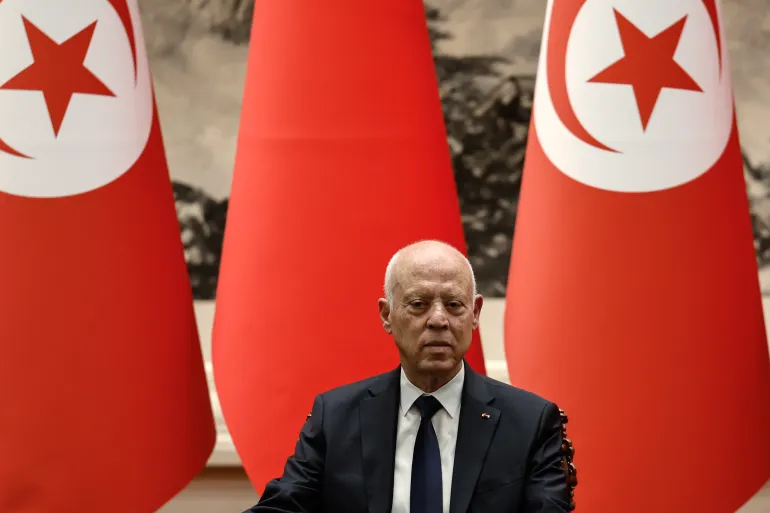
BEIJING, CHINA - MAY 31: Tunisian President Kais Saied attends a signing ceremony with Chinese President Xi Jinping (not pictured) at the Great Hall of the People on May 31, 2024 in Beijing, China. (Photo by Tingshu Wang - Pool/Getty Images)
Tunisian President Saied attends a ceremony with President Xi Jinping in China [ingshu Wang/Getty Images]

“It was an amazing time,” a political analyst who witnessed the revolution and remains in Tunisia said, asking to remain anonymous. “Anybody with anything to say was saying it.

“Almost overnight, we had hundreds of political parties and thousands of civil society organisations. Many of the political parties shifted or merged… but Tunisia retained an active civil society, as well as retaining freedom of speech all the way up to 2022.”

Threatened by Saied’s Decree 54 of 2022, which criminalised any electronic communication deemed by the government as false, criticism of the ruling elite within the media and even on social networks has largely been muzzled.

“Freedom of speech was one of the few lasting benefits of the revolution,” the analyst continued.

“The economy failed to pick up, services didn’t really improve, but we had debate and freedom of speech. Now, with Decree 54, as well as commentators just being arrested for whatever reason, it’s gone.”

In 2025, both Amnesty International and Human Rights Watch slammed Tunisia’s crackdown on activists and nongovernmental organisations (NGOs).

In a statement before the prosecution of six NGO workers and human rights defenders working for the Tunisian Council for Refugees in late November, Amnesty pointed to the 14 Tunisian and international NGOs that had their activities suspended by court order over the previous four months.

Included were the Tunisian Association of Democratic Women, the Tunisian Forum for Social and Economic Rights, the media platform Nawaat and the Tunis branch of the World Organisation against Torture.

‘Plotting against state security’

Dozens of political figures from post-revolution governments have also been arrested, with little concern for party affiliation or ideology.

In April 2023, 84-year-old Rached Ghannouchi, leader of what had been Tunisia’s main political bloc, the Ennahdha Party, was arrested on charges of “plotting against state security”.

According to his daughter, Yusra, after a series of subsequent convictions, Ghannouchi currently faces a further 42 years in jail.

Later the same year, Ghannouchi’s principal critic, Abir Moussi, the leader of the Free Destourian Party, was jailed on a variety of charges.

Critics dismiss the charges, saying the criteria for arrest have been the person’s potential to rally opinion against Saied.

“This is not just the case for my father,” Yusra continued, referring to others, such as the leading post-coup opposition figure Jawhar Ben Mubarak.

“Other politicians, judges, journalists, and ordinary citizens … have been sentenced to very heavy sentences, without any evidence, without any respect for legal procedures, simply because Tunisia has now sadly been taken back to the very same dictatorship against which Tunisians had risen in 2010.”

The head of Tunisia's Islamist movement Ennahdha Rached Ghannouchi greets supporters upon arrival to a police station in Tunis ,on February 21, 2023, in compliance to the summons of an investigating judge. (Photo by FETHI BELAID / AFP)
The head of Tunisia’s Ennahdha, Rached Ghannouchi, greets supporters upon arrival at a police station in Tunis on February 21, 2023, in compliance with the summons of an investigating judge [Fethi Belaid/AFP]

Ghannouchi and Moussi, along with dozens of former elected lawmakers, remain in jail. The political parties that once vied for power in the country’s parliament are largely absent.

In their place, since Saied’s revised 2022 constitution weakened parliament, is a body that is no longer a threat to the president.

“The old parliament was incredibly fractious, and did itself few favours,” said Hatem Nafti, essayist and author of Our Friend Kais Saied, a book criticising Tunisia’s new regime. He was referring to the ammunition provided to its detractors by a chaotic and occasionally violent parliament.

“However, it was democratically elected and blocked legislation that its members felt would harm Tunisia.

“In the new parliament, members feel the need to talk tough and even be rude to ministers,” Nafti continued. “But it’s really just a performance… Nearly all the members are there because they agree with Kais Saied.”

Hopes that the justice system might act as a check on Saied have faltered. The president has continued to remodel the judiciary to a design of his own making, including by sacking 57 judges for not delivering verdicts he wanted in 2022.

By the 2024 elections, that effort appeared complete, with the judicial opposition to his rule that remained, in the shape of the administrative court, rendered subservient to his personally appointed electoral authority, and the most serious rivals for the presidency jailed.

“The judiciary is now almost entirely under the government’s control,“ Nafti continued. “Even under [deposed President Zine El Abidine] Ben Ali you had the CSM [Supreme Judicial Council], which oversaw judges’ appointments, promotions, and disciplinary matters.

“Now that only exists on paper, with the minister of justice able to determine precisely what judges go where and what judgements they’ll deliver.”

Citing what he said is the “shameful silence of the international community that once supported the country’s democratic transition”, Khawaja said: ”Saied has returned Tunisia to authoritarian rule.”

A man holds a flare as protesters rally.
A protest against Saied on fourth years after his power grab. Tunis, July 25, 2025 [Jihed Abidellaoui/Reuters]

Source link

UNC objects to South Korea bill on civilian DMZ access

SEOUL, Dec. 17 (UPI) — The United Nations Command objected to a legislative effort in South Korea that would transfer authority over non-military access to the Demilitarized Zone from the UNC to Seoul, as debate grows over control of one of the world’s most sensitive border areas.

The UNC’s rare public statement follows renewed calls by Unification Minister Chung Dong-young and ruling party lawmakers for a bill that would allow the South Korean government to approve civilian entry into the DMZ without prior UNC authorization.

In a press release issued Tuesday, the U.S.-led UNC reiterated its authority to implement and enforce the 1953 Korean Armistice Agreement, including control over access to the DMZ.

“Since 1953, UNC has been the successful administrator of the Demilitarized Zone, a role that has been essential in maintaining stability, especially amid periods of heightened inter-Korean tensions,” it said.

Citing provisions that assign “civil administration and relief” within the zone to the UNC commander and grant the UNC Military Armistice Commission exclusive jurisdiction over entry approvals, the command stressed that no person, military or civilian, may enter the DMZ without specific authorization.

“Civil administration and relief in that part of the Demilitarized Zone which is south of the Military Demarcation Line shall be the responsibility of the Commander-in-Chief, United Nations Command,” the statement said.

The release added that the UNCMAC reviews access requests under established procedures designed to avoid actions that could be perceived as provocative or that could endanger safety.

The issue resurfaced earlier this month after Chung publicly backed legislation that would allow South Korea to grant access for “peaceful use” without UNC approval, arguing that current restrictions undermine Seoul’s sovereignty and the civilian use of the DMZ.

Chung cited recent cases in which Deputy National Security Adviser Kim Hyun-jong and Cardinal Lazzaro You Heung-sik were denied access to the buffer zone.

Seoul’s defense and foreign ministries have expressed reservations about the proposal, however, warning that separating civilian access from UNC procedures could complicate armistice maintenance and military coordination.

The UNC statement noted that the South Korean military already carries out “critical tasks such as policing, infrastructure support, medical evacuation [and] safety inspections,” highlighting what it described as Seoul’s sovereignty and primary role in its own defense.

In a follow-up release Wednesday, the UNC said it had granted Kim access to the DMZ for a briefing on North Korean military activities and South Korea’s response measures, as well as discussions on preventing accidental clashes.

“UNC is committed to maintaining peace and stability on the Korean Peninsula and actively supports measures that reduce the risk of miscalculation between military forces near the Military Demarcation Line,” it said.

Source link

South Africa to deport Kenyans involved in US-Afrikaner refugee scheme | Donald Trump News

Foreign nationals arrested for illegally processing applications under Trump’s contentious programme for white South Africans.

South Africa has arrested and ordered the deportation of seven Kenyan nationals who were illegally working at a centre processing refugee applications for a highly controversial United States resettlement programme aimed at only white Afrikaners.

The arrests on Tuesday in Johannesburg followed intelligence reports that the Kenyans had entered the country on tourist visas and taken up employment despite South Africa’s Home Affairs Department having previously denied work visa applications for the same positions.

Recommended Stories

list of 3 itemsend of list

The seven individuals will be banned from re-entering South Africa for five years.

The operation has led to a new diplomatic dispute between Pretoria and Washington, adding to tensions that have escalated throughout 2025 over US President Donald Trump’s widely rejected claims that white South Africans face “genocide” and racial persecution.

The US State Department told CNN that “interfering in our refugee operations is unacceptable” and said it would seek immediate clarification.

CNN reported that two US government employees were briefly detained during the raid, though South Africa’s statement said no American officials were arrested.

The Kenyans were working for processing centres run by Amerikaners, a group led by white South Africans, and RSC Africa, a Kenya-based refugee support organisation operated by Church World Service. These organisations handle applications for Trump’s programme, which has brought small numbers of white South Africans to the US this year.

South Africa’s Department of International Relations and Cooperation said the presence of foreign officials coordinating with undocumented workers “raises serious questions about intent and diplomatic protocol” and has initiated formal engagements with both the US and Kenya.

‘If you’re not white, forget about it’

Trump launched the resettlement programme in February through an executive order titled “Addressing Egregious Actions of The Republic of South Africa”, cutting all US aid and prioritising Afrikaner refugees who he claims face government-sponsored discrimination.

In September, he set a historic low refugee ceiling of 7,500 for 2026, with most spots reserved for white South Africans.

Scott Lucas, a professor of US and international politics at University College Dublin’s Clinton Institute, previously told Al Jazeera the contrast between how Trump treats white South African refugees, and refugees of colour from other countries, showed a “perverse honesty” about Trump’s conduct and worldview.

“If you’re white and you’ve got connections you get in,” Lucas said. “If you’re not white, forget about it.”

South Africa’s government strongly rejects the persecution allegations.

Foreign Minister Ronald Lamola has said there is no data supporting claims of white persecution, noting that Afrikaners are among the country’s “most economically privileged” citizens.

Major Afrikaner organisations also rejected Trump’s characterisation.

AfriForum and the Solidarity Movement, representing some 600,000 Afrikaner families, declined his refugee offer, saying emigration would mean “sacrificing their descendants’ cultural identity”.

The Afrikaner enclave of Orania said: “Afrikaners do not want to be refugees. We love and are committed to our homeland.”

Deteriorating relations

Trump has repeatedly presented debunked evidence to support his claims, including a choreographed and televised ambush of South African President Cyril Ramaphosa during a White House visit.

Trump played video in May featuring images later verified as being from the Democratic Republic of the Congo and footage of a temporary memorial that Trump falsely claimed showed mass graves.

Relations between the countries have deteriorated sharply this year.

Trump expelled South Africa’s ambassador in March, boycotted Johannesburg’s G20 summit in November, and last month excluded South Africa from participating in the 2026 Miami G20, calling it “not a country worthy of Membership anywhere” in a social media post.

Just one day before the arrests, South Africa condemned its G20 exclusion as an “affront to multilateralism”.

Source link

Israel to advance plans for 9,000 houses in occupied East Jerusalem | Israel-Palestine conflict News

Israeli authorities are engaged in multiple major efforts, including building settlements and pursuing annexation, to ensure there will be no Palestinian state in the future.

Israeli authorities are expected to advance plans to build 9,000 new housing units in an illegal settlement on the site of the abandoned Qalandiya airport in occupied East Jerusalem, in another attempt to cut off Palestinian lands from each other and block any possibility of a contiguous Palestinian state ever emerging.

The so-called Atarot neighbourhood in northern East Jerusalem, reminiscent of the E1 plan to undermine Palestinian statehood, is to be discussed and have its outlines approved on Wednesday by the District Planning and Building Committee, according to Israeli group Peace Now.

Recommended Stories

list of 3 itemsend of list

The advocacy group said the new settlement is envisioned to be built within a densely populated Palestinian urban area, stretching from Ramallah in the occupied West Bank and Kafr Aqab in the north through the Qalandiya refugee camp, ar-Ram, Beit Hanina and Bir Nabala.

It would build an Israeli enclave in an area where hundreds of thousands of Palestinians live in close proximity, with the aim of blocking development in a key area and further damaging the likelihood of a sovereign Palestinian state being established.

“This is a destructive plan that, if implemented, would prevent any possibility of connecting East Jerusalem with the surrounding Palestinian area and would, in practice, prevent the establishment of a Palestinian state alongside Israel,” Peace Now said.

Translation: The massacre government is working to establish a new ultra-Orthodox mega-settlement across the Green Line north of Jerusalem. The new political attack called ‘Atarot’ is planned to be built in the heart of the Palestinian state that will be established alongside Israel. This involves 9,000 housing units that Israel will have to evacuate. Isn’t it a shame?

The organisation said the far-right government of Prime Minister Benjamin Netanyahu is seizing every moment to bury chances for a future of peace and compromise.

“Especially now, when it is clear to everyone that the ideas of ‘managing the conflict’ and ‘decisive victory’ have led to a security disaster for Israel, we must act to resolve the conflict.”

The plan’s advancements date back to early 2020, when Israel’s Housing Ministry sent it to the Jerusalem municipality to prepare it for approval. It completed the bureaucratic preparation process within months, but faced objections from the Environmental Protection and Health ministries, according to Peace Now, which said the administration of United States President Barack Obama had also opposed it.

It would need further government consideration and approval before being given legal effect and moving towards tender processes to select construction contractors.

Most of the plan area is designated as “state land” by Israeli authorities, meaning they would not have to seek permission from Palestinian landowners.

Israel has been quickly advancing with several major projects to build illegal settlements on occupied Palestinian territory and pursuing annexation of the occupied West Bank, alongside its genocidal war on Gaza that started in October 2023 and has now killed more than 70,000 people.

The E1 plan, which would see the construction of thousands of illegal Israeli homes in the occupied West Bank, is hailed by Israeli officials despite international condemnation.

Israel’s security cabinet last week signed off on plans to formalise 19 illegal settlements across the West Bank.

Demolitions and widespread arrests

Israeli forces continue to launch raids across the occupied West Bank and support violent settlers in attacking Palestinian lands while issuing permits to demolish Palestinian homes.

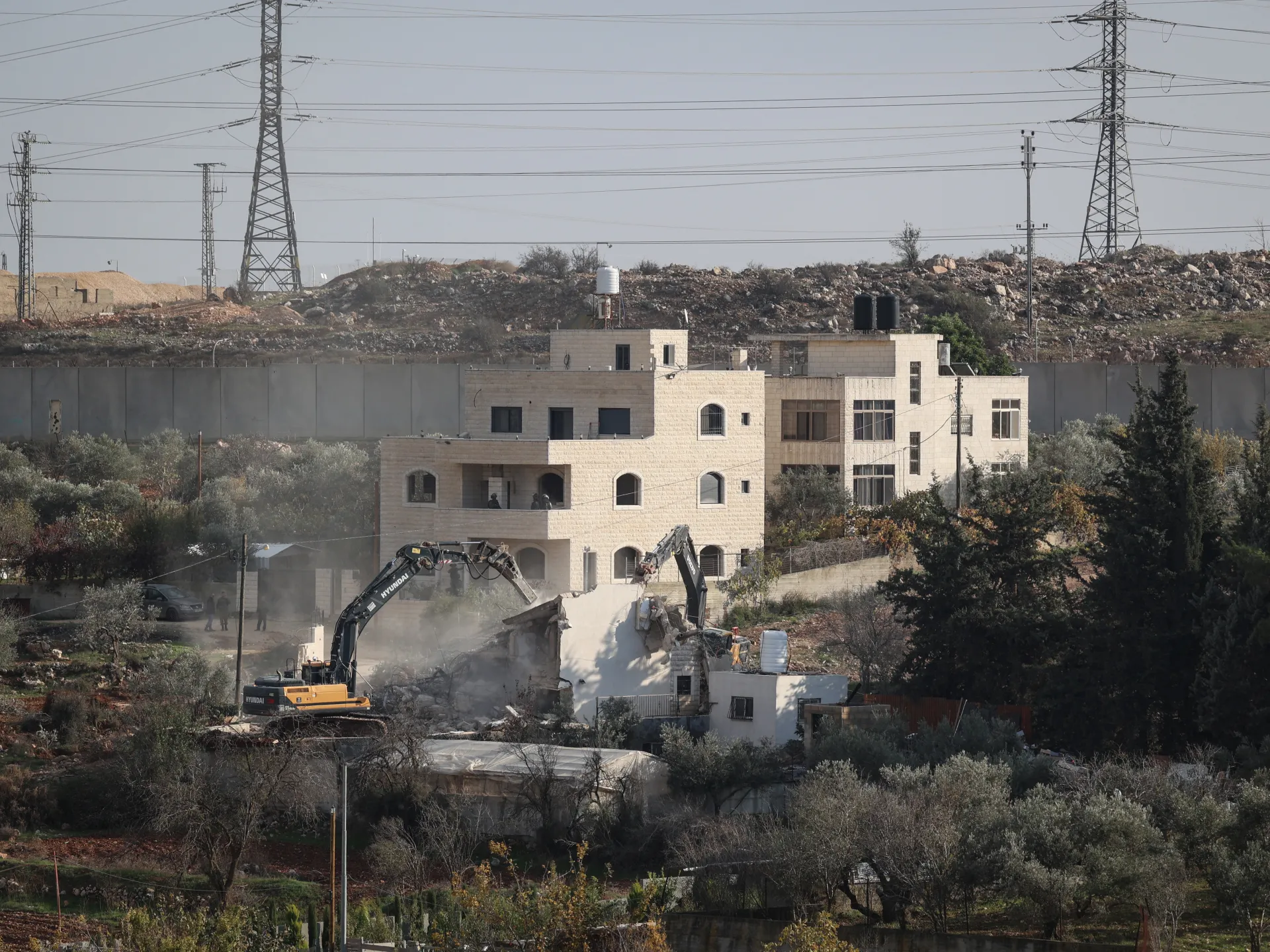
Israeli authorities began carrying out demolition operations Wednesday morning in the town of Biddu, located northwest of occupied East Jerusalem, under the pretext that the Palestinian buildings lacked permits.

In the central part of the West Bank, settlers, who have been rampaging with impunity often backed by the Israeli military, burned Palestinian vehicles and wrote racist slogans in the village of Ein Yabrud in Ramallah on Wednesday.

Several Palestinians were also arrested during raids across the West Bank, including in Nablus.

Local authorities said the Israeli military plans to demolish 25 residential buildings in the Nur Shams refugee camp this week.

Source link

Teenager charged with murder of girl, 9, in Weston-super-Mare

Sarah TurnnidgeWest of England

PA A police forensics officer in white overalls is seen from the back, opening a van door. There is another police van parked next to it. In the background there is a police cordon across the road, with a police officer behind it. It is a residential street, with a house and a garage partially visible.  PA

A post-mortem found the preliminary cause of Aria’s death was a single stab wound

A 15-year-old boy has been charged with the murder of a nine-year-old girl.

Police have named the victim as Aria Thorpe, who was found dead at a house in Lime Close, Weston-super-Mare, on Monday evening.

A post-mortem examination found the preliminary cause of her death was a single stab wound, Avon and Somerset Police said.

The teenage suspect, who cannot be named due to his age, remains in custody and is due to appear at Bristol Magistrates’ Court later.

Bunches of brightly flowers line a street corner, around a low brick wall. Some of the bunches of flowers have handwritten notes on them, and there are also several stuffed toys. On the wall are several dandles, including a candle holder shaped like a snowman.

Floral tributes to Aria have been left close to the scene of the incident

Supt Jen Appleford said it was “impossible to adequately describe how traumatic the past 36 hours have been” for Aria’s family.

“The tragic loss of such a young girl has caused a huge amount of shock and upset, with there being a profound sense of loss felt throughout the community,” she added.

She said police officers were working with schools across the area to make sure those affected were being supported, adding: “We are grateful to local residents for the patience shown while we have been carrying out enquiries in the area.”
A police cordon has been in place around Lime Close since Monday, with forensics teams working at the scene as officers carry out house-to-house inquiries.

A close up shot of some of the floral tributes, some of which have notes attached.

Officers are working with schools to make sure children are supported

Neighbours said they feel “shocked” and “horrified” by what has happened, as the usually quiet residential area has been taken over by emergency services.

Supt Appleford said work gathering evidence would continue in the coming days.

The town’s MP, Dan Aldridge, described Aria’s death as an “utterly heartbreaking tragedy for the family and her loved ones”.

“This is a moment that will understandably shock and sadden us all, and I know many in our town will be grieving, anxious, and seeking answers,” he said, adding that there was no indication of any wider threat to the public.

Source link

No legal, national security justifications for ship strikes, says Sen. Murphy

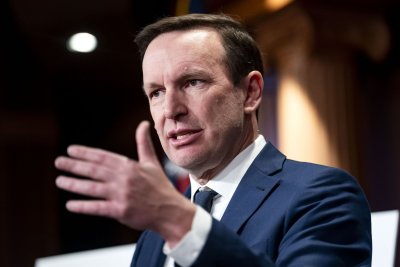
Dec. 17 (UPI) — There are no legal or national security justifications for the Trump administration’s attacks on ships in the eastern Pacific and Caribbean Sea, Sen. Chris Murphy said following a bipartisan classified briefing on the strikes.

At least 95 people have been killed in 25 military strikes on ships the Trump administration accuses of being used by drug cartels and gangs designated as terrorist organizations since Sept. 2.

The strikes have drawn mounting domestic and international condemnation and questions over their legality by both Democratic and Republican lawmakers.

The administration defends the strikes as legal under both U.S. and international law, arguing the United States is at war with the drug cartels who are flooding the country with deadly substances.

State Secretary Marco Rubio and Defense Secretary Pete Hegseth held a classified briefing on the strikes with members of Congress on Tuesday, with many Democrats, including Murphy, D-Conn., calling foul.

“While I obviously can’t tell you any classified information I learned, I can tell you this: that the administration had no legal justification for these strikes, and no national justification for these strikes,” Murphy said in a video posted to his X account.

On the national security front, the administration admitted to the lawmakers that there is no fentanyl coming to the United States from Venezuela and the cocaine that is coming from Venezuela is mostly going to Europe, he said.

“And so we are spending billions of your taxpayer dollars to wage a war in the Caribbean to stop cocaine from going from Venezuela to Europe,” he said. “That is a massive waste of national security resources and of your taxpayer dollars.”

On the legal front, the administration is justifying the strikes by stating they are targeting gangs and cartels that the Trump administration has designated as terrorist organizations.

Since February, President Donald Trump has designated 10 cartels and gangs as terrorist organizations, with Clan de Golfo blacklisted on Tuesday.

Murphy said that while the president has the power to designate groups as terrorist organizations, it does not give him the ability to carry out military strikes targeting them.

“A designated ‘terrorist organization’ allows the president to impose sanctions on those organizations and individuals,” he said. “Only Congress, only the American public, can authorize war. And there’s just no question that these are acts of war.”

Source link

The Women Who Keep Vigil on Their Farms in Adamawa

Kolo Askumto sits on a small mat outside her makeshift shelter, a shawl draped around her shoulders for warmth. Her eyes remain fixed on the farmland ahead, not out of desire but necessity. Rows of guinea corn and beans stretch into the darkness. While she scans the fields, careful not to blink for too long, her ears strain at every unfamiliar rustling of leaves. 

It is midnight, and Kolo is at the Lainde fields in Mayo-Ine, a community in Fufore Local Government Area of Adamawa State, in North East Nigeria.

The 55-year-old has been living on her farm during every harvest season for the past three years. Before 2022, guarding her ripe beans or guinea corn was never a concern. That changed when thieves began invading their fields at night, carting away crops — sometimes even those already harvested and packed, waiting to be transported home. 

Kolo lives with her family at the Malkhohi displacement camp in Yola, the state capital. She managed to secure farmland in Lainde after fleeing Madagali in Borno State due to Boko Haram attacks. Since 2016, subsistence farming has helped her support her husband in providing for their family. 

This year, Kolo has slept on her farm for more than two weeks. Every night, she spreads her blanket on her mat, switches on her torch, and scans her surroundings like an owl. When the night deepens, she retreats to her thatched tent but barely blinks while she’s there. 

Small, round hut made of straw and twigs with a narrow entrance. It stands on dry ground with sparse trees in the background.
Kolo’s thatched tent at the Lainde fields in northeastern Nigeria. Photo: HumAngle. 

She is not the only one keeping watch. The isolation of the area adds to the danger. Located on the outskirts of the Mayo-Ine area, Lainde lie far from residential settlements, with only a few people living there permanently. There is no police station nearby, farmers said, except in the main village several kilometres away, leaving those who sleep on the fields largely on their own through the night.

The vigil

Every night, several farmers keep watch across open fields. Some sit in small groups, whispering as they stay awake until dawn. At sunrise, some resume their harvest, while others head home to return by evening for the night shift. The women mostly stick together. 

To stay awake, the farmers told HumAngle that they drink herbal concoctions believed to chase sleep from their eyes. Sometimes, they light a fire and huddle around it for warmth. 

“We pray that God should protect us before we sleep, but we wake up to every sound we hear,” Kolo said. 

Though the vigil has helped keep her farm safe this year, fear still lingers. Two years ago, criminals struck in the dead of night and stole all the grains she had packed in sacks. She was not physically harmed, but the memory of that night has never left her. Since then, she sleeps with a machete by her side.

Unlike some women who return home during the day to rest, Kolo plans to remain on the farm for nearly a month — until the crops are fully harvested. The journey from the IDP camp is long and exhausting. “If we are to trek before we get here, we will be tired, and we will not have enough strength to work,” Kolo said. It takes about an hour to reach Lainde from Yola by tricycle, and much longer on foot.

While she has not encountered any security problems this year, she fears she might encounter the same group that robbed her the last time. However, Kolo says she is willing to go to any length to protect her farm. “If we don’t sleep here, we can lose everything,” she said.

“We can’t afford to pay”

Not every farmer in Lainde stays on the field all night. Some pay guards, mostly young men, to keep watch on their behalf. It costs around ₦60,000 to ₦70,000 monthly. In some cases, the guards are paid with a bag or two of harvested crops.  

For many women, that option is simply out of reach. “We have to buy fertilisers, herbicides, and other inputs,” Kolo explained. “There is nothing left to pay guards.”

Elizabeth Joseph has farmed maize, groundnuts, and beans in the Lainde fields for three years. Every harvest season, she says, comes with anxiety. Once, she harvested several bags of beans and left them in the field while she went to find transport. When she returned, everything was gone. Not even a single grain remained.

Bags and bundles of straw leaning against a tree in a sunny, arid landscape. A pair of shoes is on the ground nearby.
Bags of harvested maize in Lainde field await transportation. Photo: HumAngle

In 2024, a bag of beans sold for between ₦110,000 and ₦130,000, while a bag of maize cost about ₦60,000; losing even a few bags can undo months of back-breaking work for these small-scale farmers. That loss left her with little choice but to keep watch herself.

But the vigil is exhausting.

“If I have money, I won’t have to come to the farm. I will just assign labourers to do the work for me, and I will just come during the harvest season. I will even pay those who will harvest, and there won’t be any stress, but since I don’t have the money, I have to come and guard myself,” Elizabeth added. 

Although her husband could sleep on the farm while she managed the household, they switched roles. According to Elizabeth, men are more likely to be attacked or killed by thieves at night.  Her fear is not unfounded.

Recently, in Bare, another community in Adamawa State, twelve young men working on a farm at night were attacked; three of them were killed. Even on the Lainde fields, such attacks that claimed lives have occurred. 

Such thefts are not isolated to Lainde or Bare. Across the BAY states — Borno, Adamawa, and Yobe — farmers have repeatedly reported nighttime farm thefts and attacks during harvest seasons. Communities continue to call on authorities to address the insecurity, saying the losses threaten their livelihoods and food supply.

These threats compound the vulnerability of rural communities to hunger and poverty. Nearly 35 million people in Nigeria, particularly in the BAY states, are facing acute food insecurity, according to the World Food Programme. Displacement, rising food prices, and ongoing violence have further worsened the risk of malnutrition in the region.

Living with danger

However, the robbers are not the only thing farmers are afraid of; they face other threats such as snakes, scorpions, cold weather, and isolation. 

Zara Abba, who began farming in Lainde in 2023, said the environment becomes frightening after sunset. “By 7 p.m., everywhere looks like it is midnight; the whole place gets dark,” she stated. 

Like Kolo and Elizabeth, Zara cannot afford night guards. A mother of four, she brings her children to the farm and lives with them in a thatched tent. At night, the children sleep while she stays awake, watching the fields.

Zara said the women had once raised their concerns with the community leader, hoping for intervention or improved security. But nothing changed.

A child stands outside a small straw hut with belongings scattered nearby in a rural area, with trees and dry grass in the background.
Zara Abba and her family will stay on the Lainde field for a month before returning home with their harvest. Photo: HumAngle 

“If I could afford guards, I would stay home with my children,” she said. “But I don’t have a choice.” She carries gallons of water, cooking utensils, and clothes, staying on the farm for nearly a month until the harvest is complete.

“The other women, too, have been sleeping here for a long time,” she said. “We decided to come here because if we don’t, we will lose our harvest.”

As someone who has lost her ripened crops to thieves in the past, Zara says she does not mind living on the open field with her four children, where she can keep an eye on all of them. 

While they continue to find ways to adapt, the women who spoke to HumAngle said staying on the fields has impacted their other responsibilities, especially for those who can’t bring their children to the open fields. “When coming to sleep here, we leave the children at home and make sure we give them food that would sustain them with the older ones who take care of them before we get back,” Kolo said. 

Though the routine has become familiar, it remains exhausting. 

“The nights are harsh, and sometimes we feel like not selling our farm produce because of the suffering, but we end up selling it at a cheaper price sometimes,” Elizabeth lamented. The exposure often leaves them with flu. “Every harvest season comes with its stress.”

Elizabeth is also frightened by snakes and scorpions; people have been bitten in the fields in the past. To protect herself, she keeps a machete by her side.

As the harvest season draws to a close, the women of Lainde fields look forward to when they can return home, carrying the fruits of both their labour and sleepless nights. Yet even as they prepare to leave, another harvest season will come, and they will be forced to face long nights under open skies again.

Source link

More KC-135 Tankers Deploy To The Caribbean

The Pentagon is continuing to pour assets into the Caribbean to beef up the Trump administration’s military pressure on Venezuelan dictator Nicolas Maduro and enhanced drug interdiction operations. As additional aerial refueling tankers arrive in the region, the White House is also reportedly preparing to seize more sanctioned oil tankers to further impact Maduro’s income.

Meanwhile, Defense Secretary Pete Hegseth and Secretary of State Marco Rubio visited Capitol Hill on Tuesday to again explain to lawmakers the details of a Sept. 2 attack on a suspected drug boat that also killed the survivors of an initial strike on the vessel. Three more boats were destroyed yesterday in the Operation Southern Spear campaign that began as a counter-narcotics mission but has morphed into one aimed at Maduro.

On Dec. 15, at the direction of @SecWar Pete Hegseth, Joint Task Force Southern Spear conducted lethal kinetic strikes on three vessels operated by Designated Terrorist Organizations in international waters. Intelligence confirmed that the vessels were transiting along known… pic.twitter.com/IQfCVvUpau

— U.S. Southern Command (@Southcom) December 16, 2025

New imagery emerged on social media Monday showing that at least four more U..S. Air Force KC-135 Stratotankers have joined six aerial refuelers that recently arrived at Aeropuerto Internacional Las Américas in the Dominican Republic. Meanwhile, KC-46 Pegasus tankers have been flying sorties out of the U.S. Virgin Islands for months, with a major ramp-up in activity in recent weeks. As we previously noted, forward deploying the tankers reduces the amount of time needed to fly to the region and thus increases time on station and sortie rates.

In addition, an online airplane tracker using the @LatAmMovements X handle said more C-17 Globemaster III heavy cargo jets have arrived in Ecuador with supplies from Erbil, Iraq. The flight was the latest of several from the U.S. Central Command (CENTCOM) region bolstering Southern Spear. CENTCOM declined to comment on that effort.

RCH937 out of MacDill AFB (KMCF) 🇺🇸 en route to Manta (MEC/SEMT) 🇪🇨.

This is the fourth Southern Spear-related cargo flight to Ecuador. This flight is carrying cargo from Erbil, Iraq.

RCH937 | 04-4137 | C-17A | #AE1242 | USAF pic.twitter.com/2ljlQA2UYH

— LatAmMilMovements (@LatAmMilMVMTs) December 16, 2025

The open-source tracker also found that at least nine C-17s have arrived in Puerto Rico from the Vermont Air National Guard’s 158th Fighter Wing, likely carrying supplies and troops ahead of the looming deployment of an unspecified number of F-35A stealth fighters, which we were the first to report. The Vermont National Guard (VNG) declined to offer any details. Low resolution satellite imagery we obtained shows C-17s in Puerto Rico.

RCH234 out of Burlington ANGB (KBTV) 🇺🇸 en route to Roosevelt Roads (RVR/TJRV) 🇵🇷.

This is the ninth cargo flight in support of the 158th FW’s upcoming deployment to PR.

RCH234 | 08-8197 | C-17A | #AE2FA9 | USAF pic.twitter.com/TQVuq7Owe3

— LatAmMilMovements (@LatAmMilMVMTs) December 15, 2025

Low resolution satellite imagery showed C-17s on the ground in Puerto Rico. We also found that , with a major ramp-up in activity in recent weeks.

The new tankers and cargo planes join a growing aerial armada that includes combat search and rescue (CSAR) aircraft, E/A-18G electronic warfare jets, Marine Corps F-35B and AV-8B Harrier II fighters, MQ-9 Reapers and AC-130 Ghostrider gunships and various helicopters already in the region.

As for the Navy, an official told us Tuesday morning that no new ships have joined the 11 already there, including the USS Gerald R. Ford, the world’s largest aircraft carrier.

Though ordered to the Caribbean as part of the ongoing counternarcotics mission, the USS Gerald R Ford aircraft carrier is holding off the coast of Africa.
The aircraft carrier USS Gerald R. Ford is one of 11 Navy warships currently deployed to the Caribbean. (U.S. Navy photo by Mass Communication Specialist Seaman Apprentice Alyssa Joy)

Beyond equipment, U.S. Southern Command continues to expand its footprint in the region. On Monday, Trinidad and Tobago agreed to allow the U.S. military to use its airports for Southern Spear. That follows an earlier deployment by the U.S. Marine Corps of an AN/TPS-80 Ground/Air Task-Oriented Radar (G/ATOR), a modern road-mobile multi-purpose AESA radar that can be used for air defense and more general air traffic control purposes.

Amid all these aircraft movements, the Federal Aviation Administration issued a new Notice To Airmen (NOTAM) warning them to “exercize caution” in and around Venezuelan airspace.

“OPERATORS ARE ADVISED TO EXERCISE CAUTION WHEN OPERATING IN THE MAIQUETIA FLIGHT INFORMATION REGION (SVZM FIR) AT ALL ALTITUDES DUE TO THE WORSENING SECURITY SITUATION AND HEIGHTENED MILITARY ACTIVITY IN OR AROUND VENEZUELA,” according to the NOTAM. “THREATS COULD POSE A POTENTIAL RISK TO AIRCRAFT AT ALL ALTITUDES, INCLUDING DURING OVERFLIGHT, THE ARRIVAL AND DEPARTURE PHASES OF FLIGHT, AND/OR AIRPORTS AND AIRCRAFT ON THE GROUND.”

That move came after a Jet Blue airliner had a close encounter with a U.S. Air Force aerial refueling tanker near Venezuela on Friday. The FAA issued a similar NOTAM last month.

ATC audio of US Military aircraft operating DUE REGARD over the Caribbean Sea, this JetBlue pilot sounds pissed but what are they going to do about? 😎 https://t.co/Eq5yCmeEHy

— Thenewarea51 (@thenewarea51) December 14, 2025

On the economic front, the Trump administration is reportedly planning to take control of more oil tanker ships in the wake of the seizure of the M/T/ Skipper last week. The goal is to deprive Maduro of revenues gained from oil sales.

Today, the Federal Bureau of Investigation, Homeland Security Investigations, and the United States Coast Guard, with support from the Department of War, executed a seizure warrant for a crude oil tanker used to transport sanctioned oil from Venezuela and Iran. For multiple… pic.twitter.com/dNr0oAGl5x

— Attorney General Pamela Bondi (@AGPamBondi) December 10, 2025

There are upwards of 18 sanctioned oil-laden ships in Venezuela’s waters now, Axios reported. “Eight are classified as ‘Very Large Cargo Container ships’ like Skipper, which can carry nearly 2 million barrels of Venezuelan crude, according to Samir Madani, co-founder of the firm Tanker Trackers that monitors global shipping.”

So far, Trump has opted against moving into Venezuelan waters to seize any of these vessels, but that could soon change, Axios noted.

“We have to wait for them to move. They’re sitting at the dock. Once they move, we’ll go to court, get a warrant and then get them,” a Trump adviser told Axios. “But if they make us wait too long, we might get a warrant to get them” in Venezuelan waters.

The U.S. seized the M/T Skipper, a sanctioned oil tanker, on Dec. 10. (Satellite image ©2025 Vantor)

While the Trump administration continues to insist that Southern Spear is directed at stemming the flow of drugs into the U.S., The New York Times on Tuesday suggested Venezuela’s vast oil reserves and competition from China are the real motivating factors.

“Venezuela and its oil lie at the nexus of two of Mr. Trump’s stated national security priorities: dominance of energy resources and control of the Western Hemisphere,” the newspaper noted. “Venezuela has about 17 percent of the world’s known oil reserves, or more than 300 billion barrels, nearly four times the amount in the United States. And no nation has a bigger foothold in Venezuela’s oil industry than China, the superpower whose immense trade presence in the Western Hemisphere the Trump administration aims to curb.”

In its recently published China’s Policy Paper on Latin America and the Caribbean, Beijing repeated its stance that it has a valid economic stake in the region and does not want to have its access cut off.

Today I had the chance to read #China’s Policy Paper on Latin America and the Caribbean, released just a few days ago.

It is the first update to this document in 9 years and it came immediately after the “Trump Corollary” to the Monroe Doctrine was released. I think the timing… pic.twitter.com/2fA0Atlw00

— Imdat Oner (@imdat_oner) December 15, 2025

Against this backdrop, Hegseth and Rubio provided closed-door briefings to the Senate (SASC) and House Armed Services Committees (HASC) about the Sept. 2 boat strike. It was the first of nearly two dozen such attacks that have so far killed almost 90 people. These attacks – and especially the follow-up one on Sept. 2 that killed survivors – have been strongly condemned by various parties.

Hegseth promised to provide the committees with full versions of the video feed from that attack. Only snippets have been publicly released so far.

The full video of that attack will remain classified and won’t be shown to the public, Hegseth proclaimed. He also justified the boat attack campaign.

Southern Spear has been “a highly successful mission to counter designated terrorist organizations, cartels, bringing weapons – meaning drugs – to the American people and poison the American people for far too long,” Hegseth told reporters gathered at the Capitol. “So we’re proud of what we’re doing…”

Senators received a classified briefing from Secretary Marco Rubio and Secretary Pete Hegseth on the ongoing operations in the Caribbean today, but left without seeing the highly requested unedited video of the Sept. 2 boat strikes, senators said. https://t.co/ezRFeAMfn4 pic.twitter.com/ga3uHgaP8M

— ABC News (@ABC) December 16, 2025

Hegseth’s comments came a day after Trump issued an executive order declaring fentanyl a weapon of mass destruction, a move that could possibly widen the administration’s ability to take action against Maduro, who has a $50 million bounty on his head as a fugitive wanted on U.S. drug charges. However, while Trump and his aides have insisted Southern Spear is aimed mainly at stopping drug trafficking, “Venezuela is not a drug producer, and narcotics smuggled through the country mostly go to Europe,” The New York Times noted.

In a somewhat surprising exchange, Wiles, the president’s chief of staff, suggested getting rid of Maduro may be the real reason Trump is expending so many resources and so much political capital in the Caribbean.

“Over lunch, Wiles told me about Trump’s Venezuela strategy,” Vanity Fair reporter Chris Whipple wrote Tuesday in the second part of an exclusive interview with one of Trump’s closest advisors. Wiles told the magazine that “He wants to keep on blowing boats up until Maduro cries uncle. And people way smarter than me on that say that he will.” The story continued, stating “Wiles’s statement appears to contradict the administration’s official stance that blowing up boats is about drug interdiction, not regime change.”

“Over lunch, Wiles told me about Trump’s Venezuela strategy: “He wants to keep on blowing boats up until Maduro cries uncle. And people way smarter than me on that say that he will.” (Wiles’s statement appears to contradict the administration’s official stance that blowing up…

— Natasha Bertrand (@NatashaBertrand) December 16, 2025

Trump’s true motivations and how he will act on them remain unknown. On Friday, he repeated his refrain that he may soon order strikes against drug traffickers on land in addition to those at sea. Meanwhile, some 15,000 U.S. troops who have surged to the region continue to wait for orders.

Update: 7:49 PM Eastern –

In a post on Truth Social, Trump offered the clearest indication of his motives and terms for the Caribbean build-up and how Venezuela’s oil reserves play a role.

“Venezuela is completely surrounded by the largest Armada ever assembled in the History of South America. It will only get bigger, and the shock to them will be like nothing they have ever seen before — Until such time as they return to the United States of America all of the Oil, Land, and other Assets that they previously stole from us,” Trump wrote. “The illegitimate Maduro Regime is using Oil from these stolen Oil Fields to finance themselves, Drug Terrorism, Human Trafficking, Murder, and Kidnapping. For the theft of our Assets, and many other reasons, including Terrorism, Drug Smuggling, and Human Trafficking, the Venezuelan Regime has been designated a FOREIGN TERRORIST ORGANIZATION.”

Trump also ordered  “A TOTAL AND COMPLETE BLOCKADE OF ALL SANCTIONED OIL TANKERS going into, and out of, Venezuela, however, he did not provide details of how that will work. We reached out to the White House for more information.

Contact the author: howard@thewarzone.com

Howard is a Senior Staff Writer for The War Zone, and a former Senior Managing Editor for Military Times. Prior to this, he covered military affairs for the Tampa Bay Times as a Senior Writer. Howard’s work has appeared in various publications including Yahoo News, RealClearDefense, and Air Force Times.


Source link

White House Rifts Laid Bare as Trump Aide Wiles Details Internal Clashes

White House Chief of Staff Susie Wiles offered an unusually candid look inside President Donald Trump’s second-term administration in comments published by Vanity Fair, drawn from 11 interviews conducted over Trump’s first year back in office. Wiles, a key architect of Trump’s 2024 comeback and the first woman to hold the chief of staff role, spoke about internal disagreements over tariffs, immigration enforcement, government downsizing and the handling of the Jeffrey Epstein files. The article prompted an immediate backlash from Wiles and senior officials, who accused the magazine of selectively quoting her remarks.

Why It Matters

The comments highlight the limits of internal restraint in Trump’s White House. While Wiles described herself as a facilitator rather than a check on presidential power, her inability to alter decisions on tariffs, pardons and political retribution underscores how heavily policymaking still rests on Trump’s instincts. The revelations also revive politically sensitive issues, including Epstein-related disclosures and tensions over Elon Musk’s role in dismantling USAID, complicating efforts to project unity and stability.

Trump remains the central figure, with Wiles emerging as both a stabilising force and a focal point of controversy. Vice President JD Vance, Attorney General Pam Bondi and Elon Musk are drawn into the spotlight, reflecting competing centres of influence within the administration. Beyond the White House, trade partners, immigrant communities, congressional leaders and Trump’s political base all have stakes in the policies and internal divisions exposed by the interviews.

What’s Next

The administration is likely to move quickly to contain political fallout and reinforce discipline, but the substance of Wiles’ remarks may continue to resonate. Policy direction appears unchanged, with tariffs, immigration enforcement and confrontational political strategies set to continue. The episode raises fresh questions about whether Trump’s more structured second-term White House can prevent internal tensions from spilling into public view again.

With information from Reuters.

Source link

South Korea’s PPP says dues-paying membership nears 1 million

Song Eun-seok, floor leader of South Korea’s People Power Party, presides over a parliamentary strategy meeting at the National Assembly in Seoul on Dec. 16. Photo by Asia Today

Dec. 16 (Asia Today) — South Korea’s People Power Party said Tuesday its number of dues-paying members is nearing 1 million, arguing the growth reflects a strengthening of the opposition since the Lee Jae-myung administration took office.

Secretary-General Jeong Hee-yong said at a parliamentary strategy meeting at the National Assembly that, as of December, the party had 963,231 dues-paying members, which he described as the highest level since membership statistics were first compiled.

Jeong said the party had 744,354 dues-paying members in late November last year. That figure fell to 711,528 in April, then rose to 751,030 by Aug. 26, when the party held its national convention. Since then, Jeong said dues-paying membership has increased by 212,201 compared with the convention period.

Jeong said the leadership does not view the increase as a typical election-season boost. He said the number of “responsible members” – defined as members who have paid dues for more than three months – also rose by 53,995 compared with the convention period. He called the scale of the increase unprecedented.

Jeong said public demand to push back against the Lee Jae-myung administration and the Democratic Party is being reflected in higher party membership. He said the participation and solidarity of members shows expectations for the People Power Party to mount a stronger opposition.

He added that the party aims to build a more active organization with its members, win the next local elections and position itself as an alternative party focused on people’s livelihoods.

– Reported by Asia Today; translated by UPI

© Asia Today. Unauthorized reproduction or redistribution prohibited.

Source link

Myanmar regime claims Aung San Suu Kyi ‘in good health’ despite son’s fears | Aung San Suu Kyi News

Noble laureate’s son says military must ‘prove’ Suu Kyi is healthy after her years in detention and unseen following military coup.

Military-ruled Myanmar has said the country’s jailed Nobel Peace Prize laureate Aung San Suu Kyi is “in good health” amid concerns about the health of the pro-democracy leader who was removed from power by a coup in 2021.

“Daw Aung San Suu Kyi is in good health,” a statement posted on the military-run Myanmar Digital News said on Tuesday, using an honorific for the country’s leader.

Recommended Stories

list of 4 itemsend of list

The military, which offered no evidence or details about Aung San Suu Kyi’s condition, issued the statement one day after her son, Kim Aris, told the Reuters news agency that he had received little information about the 80-year-old’s condition and fears she could die without him knowing.

“The military claims she is in good health, yet they refuse to provide any independent proof, no recent photograph, no medical verification, and no access by family, doctors, or international observers,” Aris told Reuters on Wednesday in response to the military’s statement.

“If she is truly well, they can prove it,” he said.

A Myanmar regime spokesman did not respond to calls seeking comment.

Interviewed in October, Aris told the Asia Times news organisation that he believed his mother, who has not been seen for at least two years, was being held in solitary confinement in a prison in the capital Naypyidaw and “not even the other prisoners have seen her”.

Aung San Suu Kyi was detained after the 2021 military coup that toppled her elected civilian government from power, and she is now serving a 27-year prison sentence on charges that are widely believed to be trumped-up, including incitement, corruption and election fraud – all of which she denies.

Aris also said the military was “fond of spreading rumours” about his mother’s health in detention.

“They have said she is being held under house arrest, but there is no evidence of that at all. At other times, they said she has had a stroke and even that she has died,” he told Asia Times.

“It’s obviously hard to deal with all this false information,” he said.

A civil war has gripped Myanmar since the 2021 coup, but the military plans to hold elections at the end of this month that analysts and several foreign governments have dismissed as a sham designed to legitimise military rule.

While fighting rages across the country, Aung San Suu Kyi’s National League for Democracy (NLD), Myanmar’s largest political party, remains dissolved, and several anti-military political groups are boycotting the polls.

On Wednesday, the military said it was pursuing prosecutions of more than 200 people under a law forbidding “disruption” of the election, legislation that rights monitors have said aims to crush dissent.

“A total of 229 people” are being pursued for prosecution “for attempting to sabotage election processes”, the military regime’s Home Affairs Minister Tun Tun Naung said, according to state media.

Convictions under election laws in Myanmar’s courts can result in up to a decade in prison, and authorities have made arrests for as little as posting a “heart” emoji on Facebook posts criticising the polls.

The legislation also outlaws damaging ballot papers and polling stations – as well as intimidating or harming voters, candidates and election workers, with a maximum punishment of 20 years in prison.

Source link