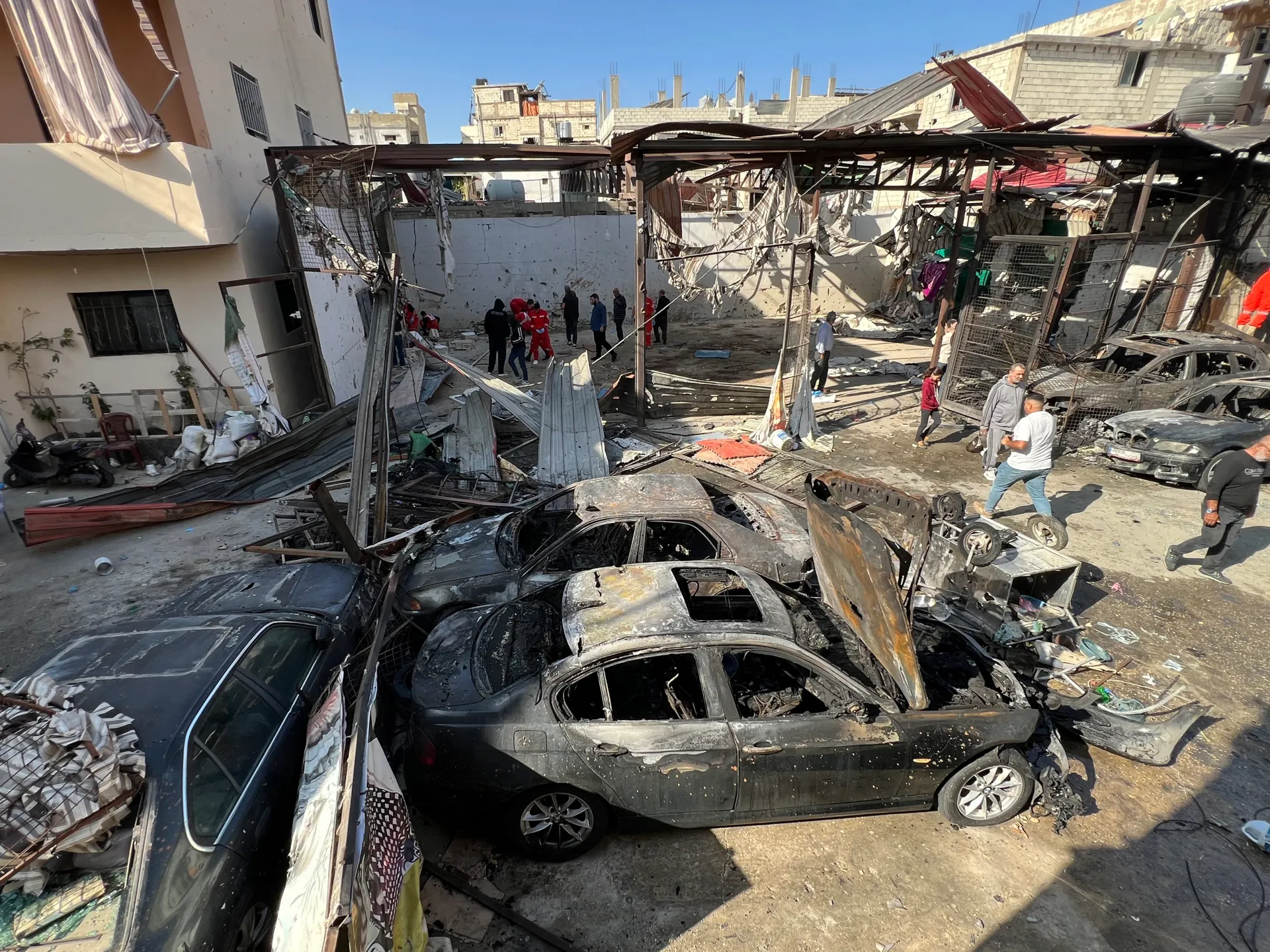
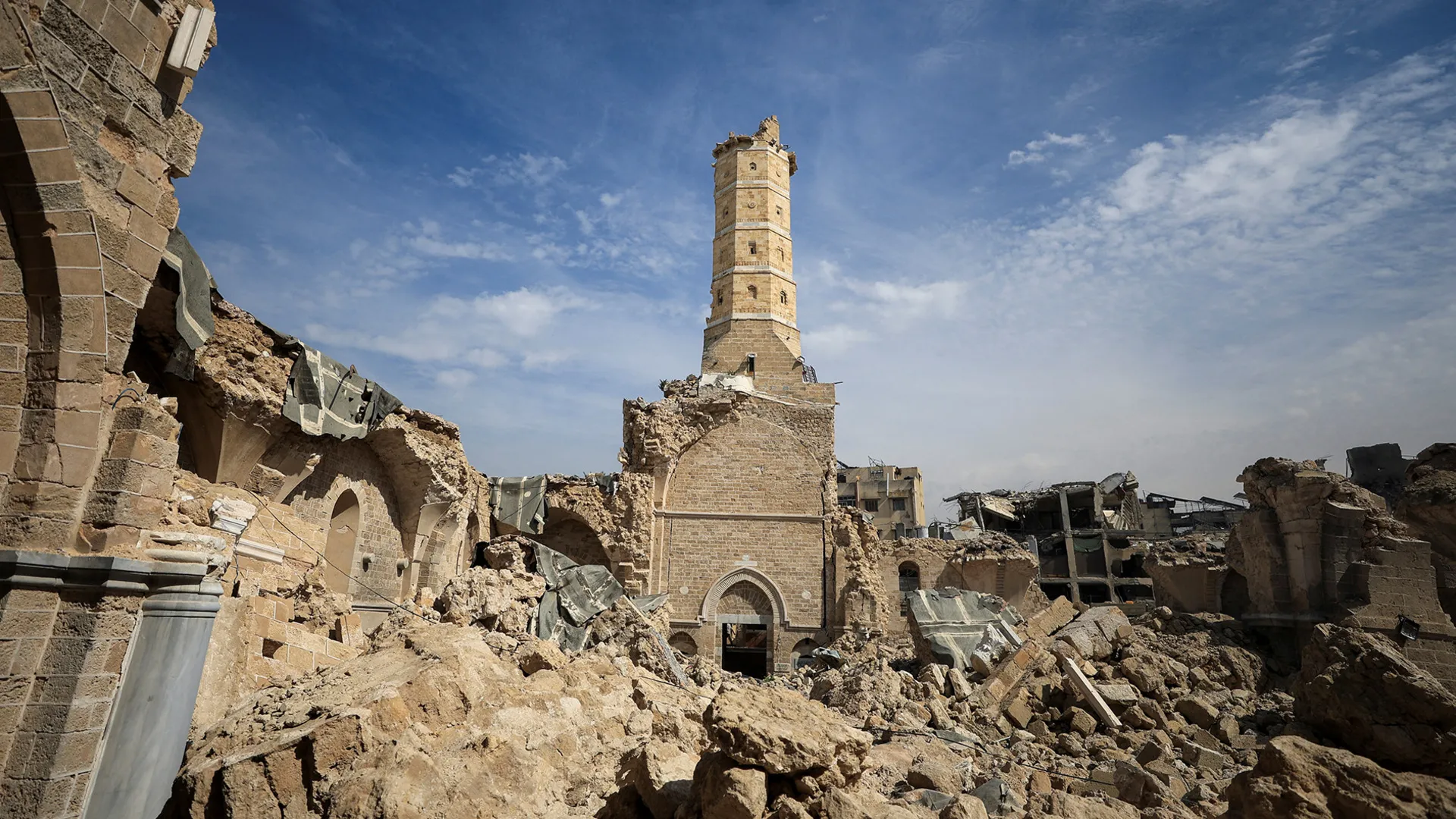
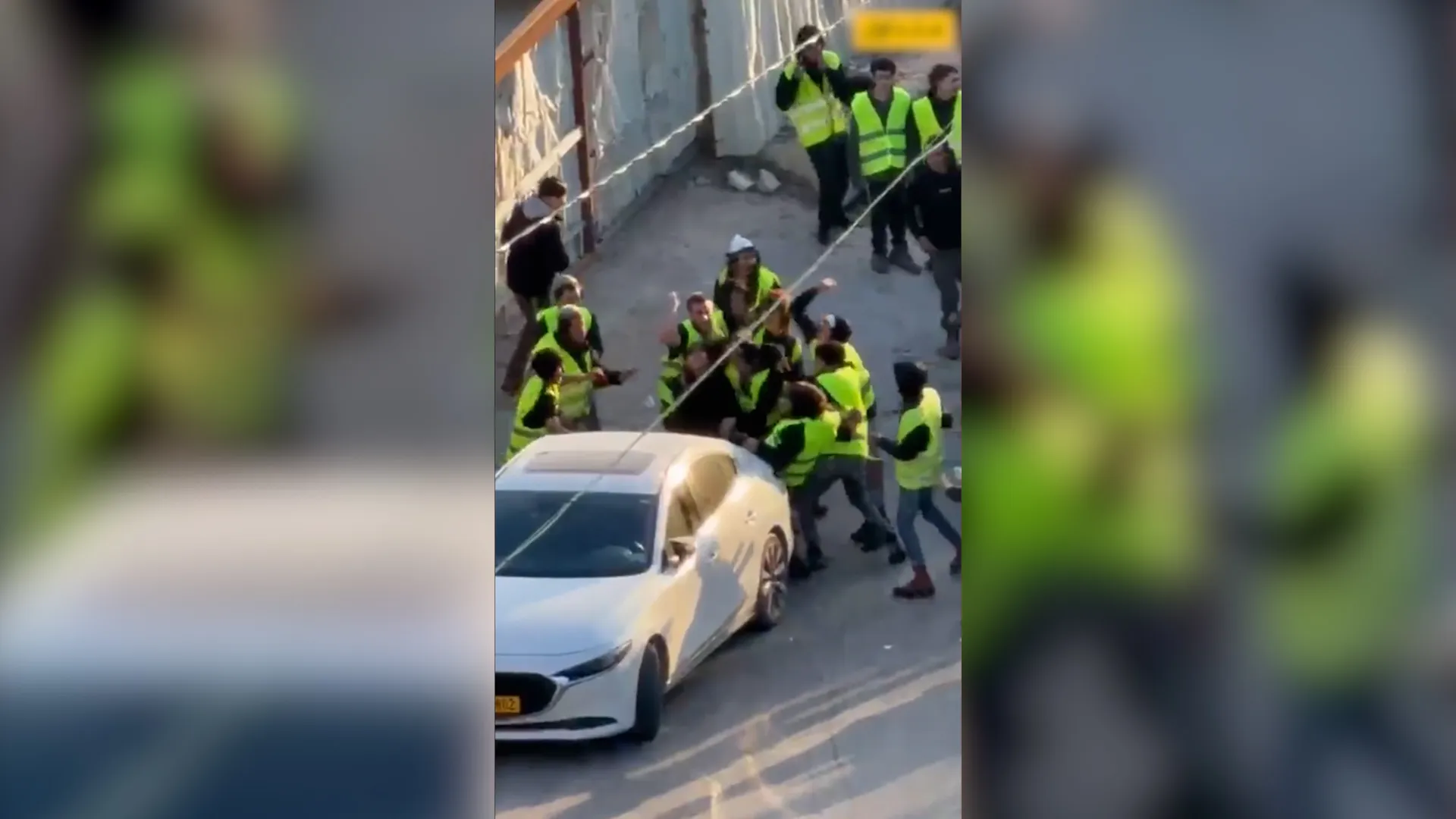
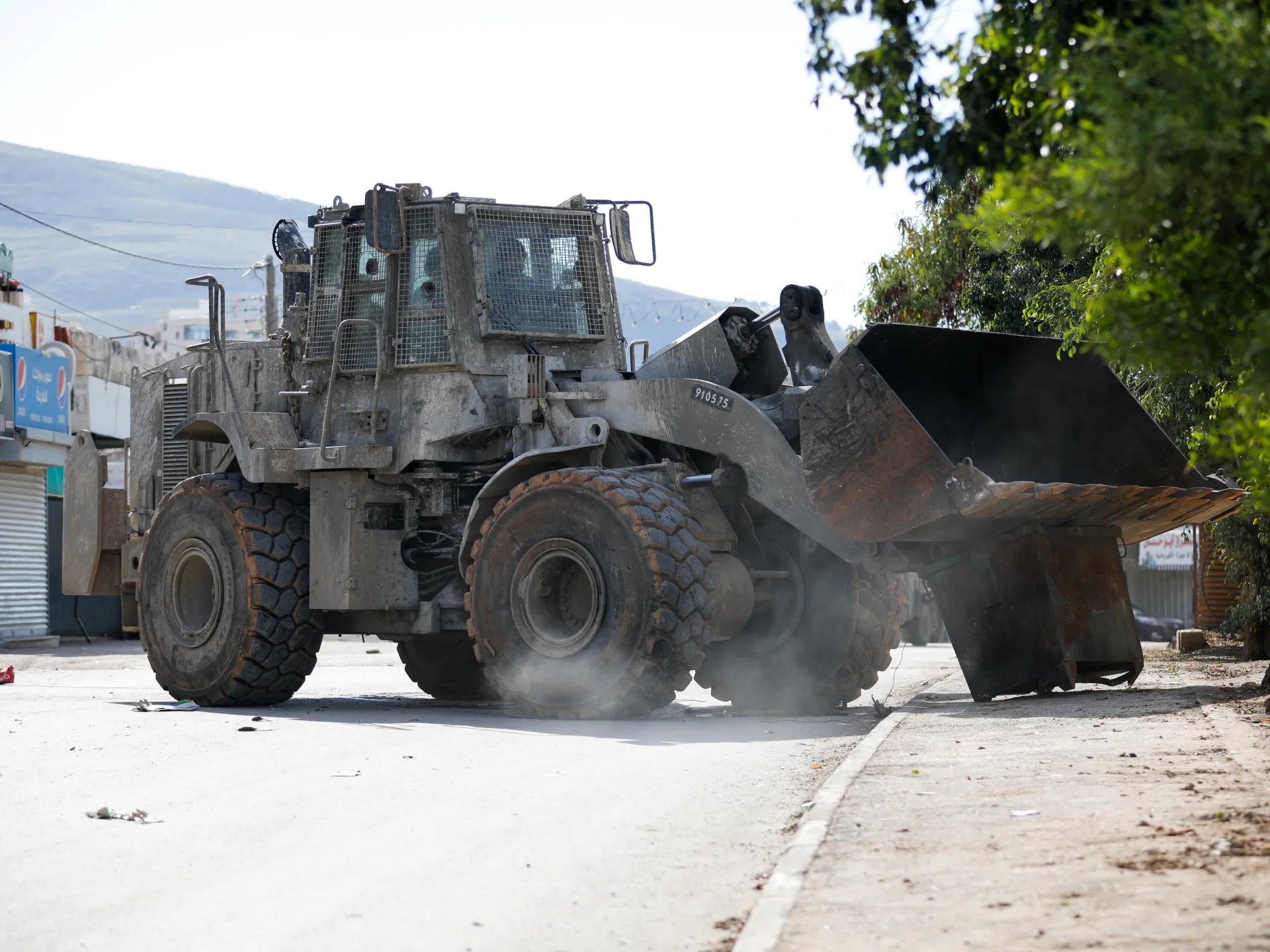
Christmas celebrations return to Bethlehem as thousands gather in Manger Square for the first time since 2022.
Thousands of people have gathered in Bethlehem on Christmas Eve for the first public celebrations since 2022 after the city cancelled or muted festivities for two years out of respect for the thousands killed during Israel’s genocidal war on Gaza.
Families filled Manger Square in the occupied West Bank city as a giant Christmas tree returned to the plaza, replacing a nativity display used during the war that showed baby Jesus amid rubble and barbed wire, symbolising the devastation in Gaza.
Recommended Stories
list of 3 itemsend of list
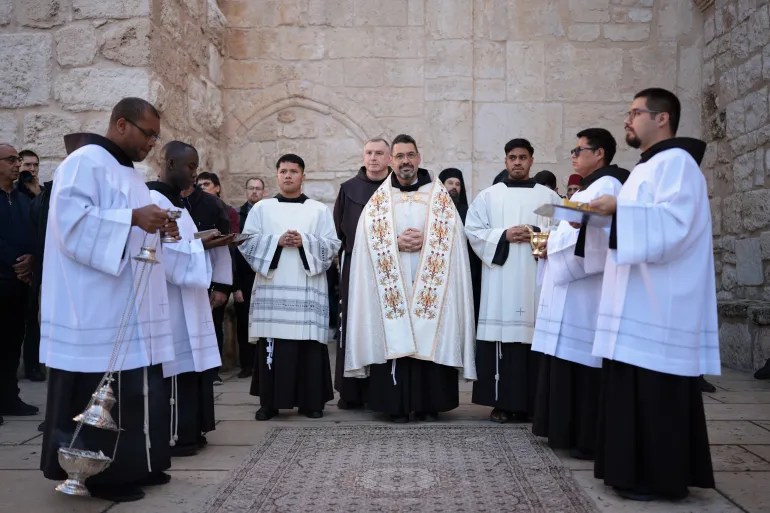
The celebrations were led by Cardinal Pierbattista Pizzaballa, the top Catholic leader in the Holy Land, who arrived in Bethlehem from Jerusalem in the traditional Christmas procession and called for “a Christmas full of light”.
Clergymen and alter boys wait ahead of Christmas service in the Manger Square outside the Church of the Nativity (R) in the biblical city of Bethlehem in the occupied West Bank on Christmas eve on December 24, 2025. (AFP)
Scout bands from towns across the West Bank marched through Bethlehem’s streets, their bagpipes draped with tartan and Palestinian flags.
Since the start of Israel’s genocidal war on Gaza, its forces have carried out near-daily raids across the West Bank, arresting thousands of Palestinians and sharply restricting movement between cities.
Palestinians say the intensified military presence, road closures and checkpoint delays have deterred visitors, paralysing the tourism sector on which Bethlehem’s economy depends.
The vast majority of those celebrating were local residents, with only a small number of foreign visitors.
Unemployment in Bethlehem surged from 14 percent to 65 percent during the genocidal war on Gaza, Mayor Maher Nicola Canawati said earlier this month. As economic conditions deteriorated, about 4,000 residents left the city in search of work, he added.
Israeli raids and settler attacks
The return of Christmas celebrations comes despite continued raids and large-scale military incursions across the occupied West Bank, even after a fragile ceasefire in Gaza, which has been repeatedly violated by Israeli forces, took hold in October.
The raids often entail mass arrests of Palestinians, home searches and demolitions, as well as physical assaults that sometimes lead to deaths.
Attacks by Israeli settlers against Palestinians have reached their highest level since the United Nations humanitarian office began recording data in 2006. The attacks have involved killings, beatings and the destruction of property, often under the protection of the Israeli military.
Earlier on Wednesday, more than 570 Israeli settlers entered the Al-Aqsa Mosque compound in occupied East Jerusalem under police protection, the Palestinian news agency Wafa reported.
Palestinians say such incursions violate the longstanding status quo governing Islam’s third-holiest site.
Israel’s security cabinet has also signed off on plans to formalise 19 illegal settlements across the West Bank, in a move Palestinian officials say deepens a decades-long project of land theft and demographic engineering.
The United Kingdom, Canada, Germany and other countries condemned the move on Wednesday.
“We call on Israel to reverse this decision, as well as the expansion of settlements,” said a joint statement released by the UK, Belgium, Denmark, France, Italy, Iceland, Ireland, Japan, Malta, the Netherlands, Norway and Spain.
“We recall that such unilateral actions, as part of a wider intensification of the settlement policies in the West Bank, not only violate international law but also risk fuelling instability.”
Palestinian, Jewish and Indigenous groups say they will launch constitutional challenge to anti-protest laws described as ‘rushed’.
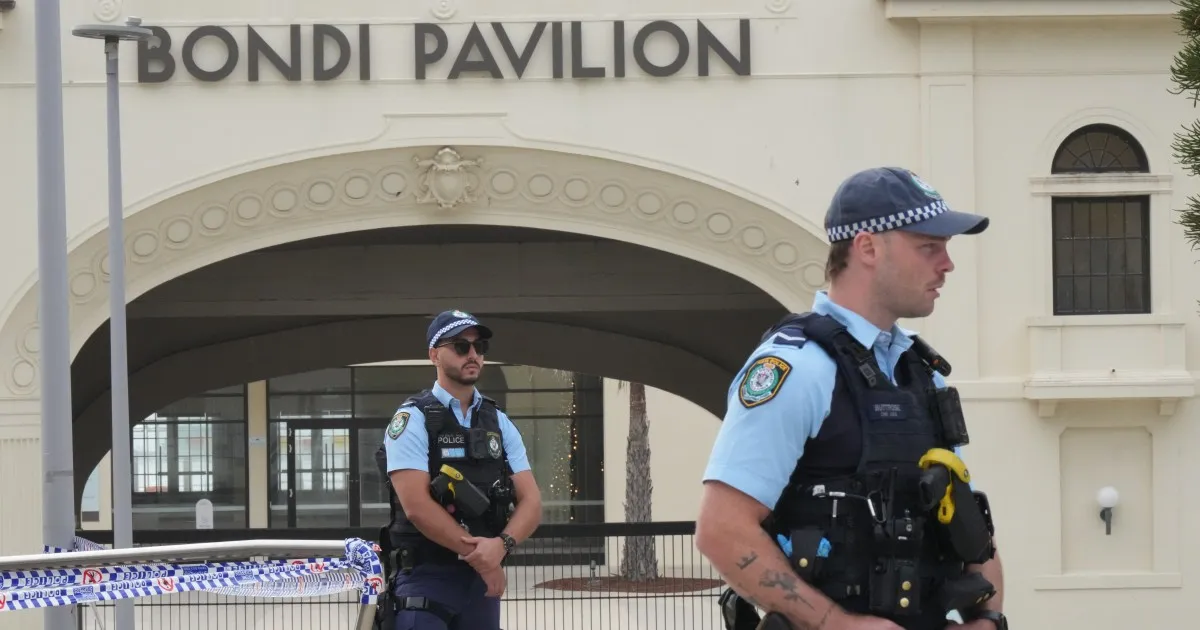
The state of New South Wales (NSW) will have the toughest gun laws in Australia as well as wide-reaching new restrictions on free speech in the wake of the Bondi Beach mass shooting, which left 15 people dead.
Less than two weeks after the attack on a Jewish celebration, new legislation was passed by the state’s legislative assembly in the early hours of Wednesday morning, including restrictions that appear to target speech in solidarity with Palestinians.
Recommended Stories
list of 4 itemsend of list
Notably, the Terrorism and Other Legislation Amendment Bill 2025 gives police powers to restrict public protests for up to three months “following a terrorism declaration”, while the public display of symbols of prohibited organisations will be banned.
“Once a declaration is made, no public assemblies can be authorised in designated areas, including by a court and police will be able to move people on if their behaviour or presence obstructs traffic or causes fear, harassment or intimidation,” the NSW government said in a statement.
In the statement, NSW Premier Chris Minns and other top officials said that the sweeping changes would involve a review of “hate speech” and the words “globalise the Intifada” were singled out as an example of speech that will be banned. The term is often used in solidarity with Palestinians and their civil struggle against Israeli military occupation and illegal settlement expansion, dating back to the 1980s.
Minns acknowledged that the new laws involved “very significant changes that not everyone will agree with” but he added, “our state has changed following the horrific anti-Semitic attack on Bondi Beach and our laws must change too.”
He also said that new gun laws, which restrict certain types of guns to use by farmers, would also help to “calm a combustible situation”.
Constitutional challenge
Three NSW-based pro-Palestinian, Indigenous and Jewish advocacy groups said on Tuesday, before the final vote on the legislation, that they would be “filing a constitutional legal challenge against the draconian anti-protest laws”.
Palestine Action Group Sydney said in a statement shared on Facebook that it was launching the challenge together with the Indigenous group Blak Caucus and Jews Against the Occupation ’48.
“These outrageous laws will grant NSW Police sweeping powers to effectively ban protests,” the Palestinian advocacy group said, accusing the NSW government of “exploiting the horrific Bondi attack to advance a political agenda that suppresses political dissent and criticism of Israel, and curtails democratic freedoms”.
Changes to the state’s protest laws also come just months after more than 100,000 people marched over the Sydney Harbour Bridge in protest against Israel’s genocidal war on Gaza, after a court overturned an attempt by the Minns government to try to stop the peaceful protest from taking place.
Following the huge display of public support for ending Israel’s war on Gaza, Australia joined more than 145 other UN member states in recognising Palestinian statehood at the United Nations in September this year, much to the outrage of Israeli officials.
Within hours of the Bondi attack, Israeli Prime Minister Benjamin Netanyahu, who is wanted for alleged war crimes by the International Criminal Court (ICC), linked the shooting to Australia’s recognition of Palestinian statehood.
UN special rapporteur Ben Saul, who is also an international law chair at the University of Sydney, criticised Netanyahu’s comments.
Saul, whose UN mandate focuses on ensuring human rights are protected while countering terrorism, called for a “measured response to the Bondi terrorist attack”.
“Overreach does not make us safer – it lets terror win,” Saul said in a post on social media.
Heroes to be honoured
Australia’s Prime Minister Anthony Albanese said on Wednesday that he plans to create a special honours list to recognise the people who rushed in to try to stop the two attackers as they targeted the Hanukkah celebration at Bondi Beach on December 14.
Australian public broadcaster the ABC reported those honoured would likely include Australian-Syrian shop owner Ahmed al-Ahmed, as well as Boris and Sofia Gurman, a local couple who tried to stop the gunmen but were among those killed in the attack.
While al-Ahmed has been widely hailed as a hero around the world, less is known about a second Muslim man who ran in to help, even as he was tackled by bystanders because he was mistaken for being an attacker.
The man’s lawyer, Alisson Battisson, says that her client, whom she did not name, is a refugee who is potentially facing deportation due to a past criminal record, despite his repeated attempts to help stop the Bondi attack.
Other countries, including Brazil, Colombia, Ireland, Mexico, Spain and Turkiye, have already joined the case in The Hague.
Published On 23 Dec 202523 Dec 2025
Share
Belgium has formally joined the case launched by South Africa at the International Court of Justice (ICJ) alleging Israel is committing genocide in the Gaza Strip.
In a statement on Tuesday, the ICJ – The Hague-based highest court of the United Nations – said Belgium had filed a declaration of intervention in the case.
Recommended Stories
list of 4 itemsend of list
Other countries, including Brazil, Colombia, Ireland, Mexico, Spain and Turkiye, have already joined the proceedings.
South Africa brought the case in December 2023, arguing that Israel’s war in Gaza violates the 1948 UN Convention on the Prevention and Punishment of the Crime of Genocide.
Israel has rejected the allegations and criticised the case.
While a final ruling could take years, the ICJ issued provisional measures in January 2024 ordering Israel to take steps to prevent acts of genocide in Gaza and to allow unimpeded access for humanitarian aid.
The court’s orders are legally binding although it has no direct mechanism to enforce them.
The ICJ also said Israel’s presence in occupied Palestinian territory is unlawful and its policies amount to annexation.
Israel has continued its assaults in Gaza and the occupied West Bank despite the rulings and growing international criticism while advancing plans to seize large parts of Palestinian territory.
Meanwhile, the United States and several of its European allies continue to provide military and financial support to Israel.
Washington has rejected the merits of South Africa’s case, and US lawmakers have criticised the country and issued threats against it.
The US has also imposed sanctions on members of the International Criminal Court (ICC), which has issued arrest warrants against Israeli Prime Minister Benjamin Netanyahu and former Defence Minister Yoav Gallant.
Belgium was also among a group of countries that recognised the State of Palestine in September. Nearly 80 percent of UN member states now recognise Palestine.
Since a ceasefire began on October 10, the Palestinian Ministry of Health in Gaza said, Israel has killed at least 406 Palestinians and injured 1,118 in the enclave. Since the start of the war on October 7, 2023, the ministry said, at least 70,942 Palestinians have been killed and 171,195 wounded.
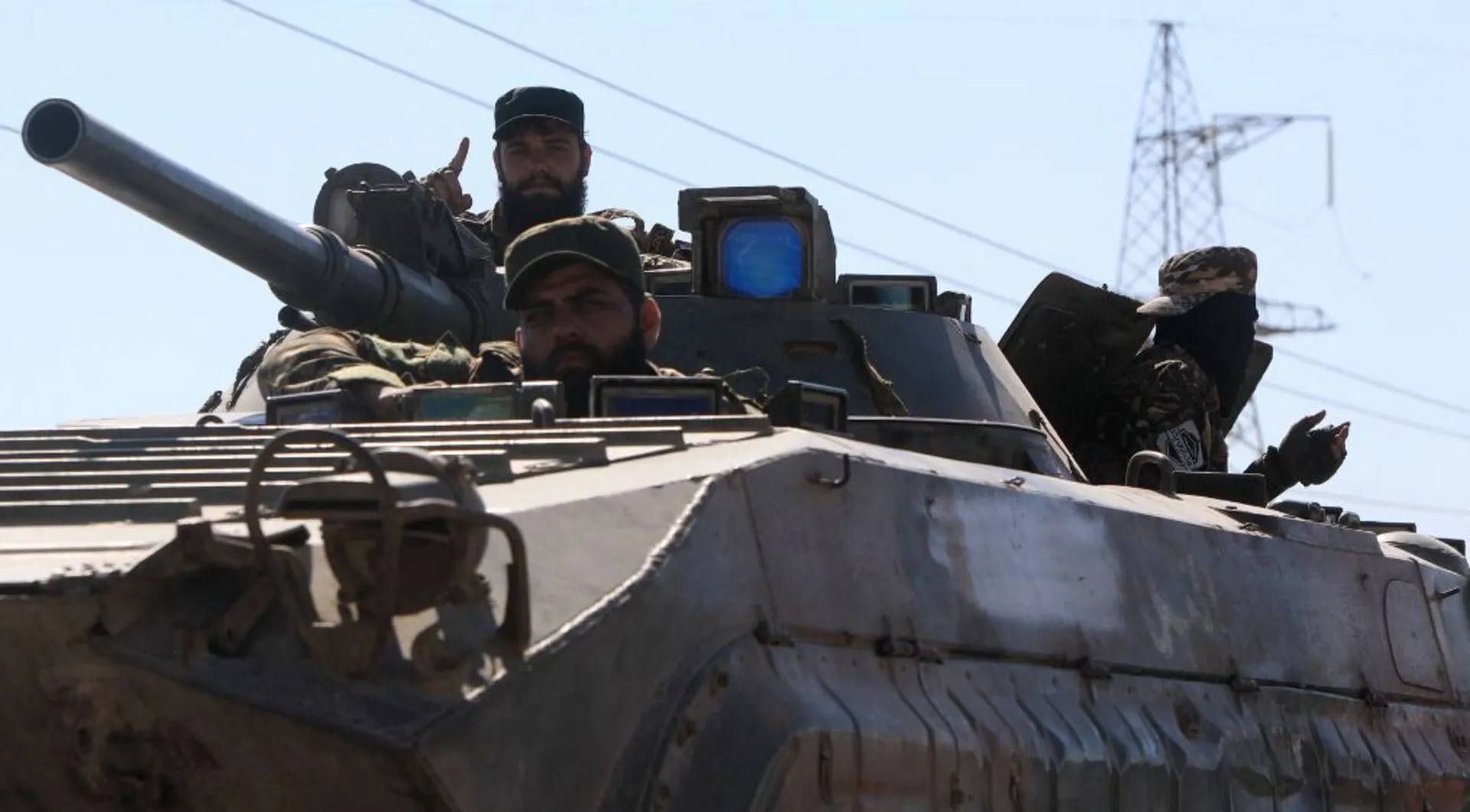
Renewed fighting between army and SDF highlights volatility.
As the year comes to an end, a deal between the Syrian government and the Kurdish-led Syrian Democratic Forces was expected to come into force.
Instead, fighting has erupted between the two sides in the northern city of Aleppo.
They later agreed to stop the fighting, while blaming each other for the violence.
That deal was supposed to lead to the SDF integrating with the army, but it is stalling on how that should be implemented.
This renewed tension comes as Damascus faces other threats, ranging from ISIL (ISIS) to recurrent conflicts with the Druze community and continuing attacks by Israel.
So what does this complex security situation mean for Syria, a year after the fall of Bashar al-Assad?
Presenter: Dareen Abughaida
Guests
Haid Haid – Researcher at Chatham House
Steven Heydemann – Professor and Middle East Studies programme director at Smith College
Omer Ozkizilcik – Nonresident fellow for the Syria project in the Atlantic Council’s Middle East programme
The Israeli government is cracking down on critical media outlets, giving it unprecedented control over how its actions are presented to its citizens.
Among the moves is the so-called Al Jazeera Law, which allows the government to shut down foreign media outlets on national security grounds. On Tuesday, the Israeli parliament approved the extension of the law for two years after it was introduced during Israel’s genocidal war on Gaza to essentially stop Al Jazeera’s operations in Israel.
Recommended Stories
list of 4 itemsend of list
Separately, the government is also moving to shut down the popular Army Radio network, one of two publicly funded Israeli news outlets. The radio station is often criticised by the Israeli right wing, which views Army Radio as being biased against it.
Israelis are still reliant on receiving their news from traditional outlets with about half relying on broadcast news for information on current affairs and about a third similarly relying upon radio stations.
The tone of the media that is allowed to publish and broadcast is important. According to analysts inside Israel, the selective broadcasting of Palestinian suffering during Israel’s war on Gaza has helped sustain the carnage and reinforced a sense of grievance that allows for Israel’s continued assaults on Gaza as well as regional countries, such as Syria, Yemen and Lebanon.
Despite what observers characterise as a media environment firmly rigged in its favour, the far-right government of Prime Minister Benjamin Netanyahu, which contains ministers convicted of “terrorism” offences and others who have repeatedly called for the illegal annexation of the occupied West Bank, is looking nevertheless to bypass legal checks on its control of the media and bring more of Israel’s information feed under its control.
Let’s take a closer look.
Because the government believes it is too critical.
Israeli politicians have long complained about how the war in Gaza has been covered in both the international and domestic media.
But the government added a new accusation in November, partly blaming the media for the Hamas-led attacks on southern Israel on October 7, 2023.
“If there hadn’t been a media entirely mobilised to encourage refusal [to volunteer to reserve duty] and reckless opposition to the judicial reform, there wouldn’t have been such a rift in the nation that led the enemy to seize the opportunity,” Communications Minister Shlomo Karhi said as he introduced a bill to increase government control of the news environment, referring to attempts by the Israeli government to reduce the independence of the judiciary.
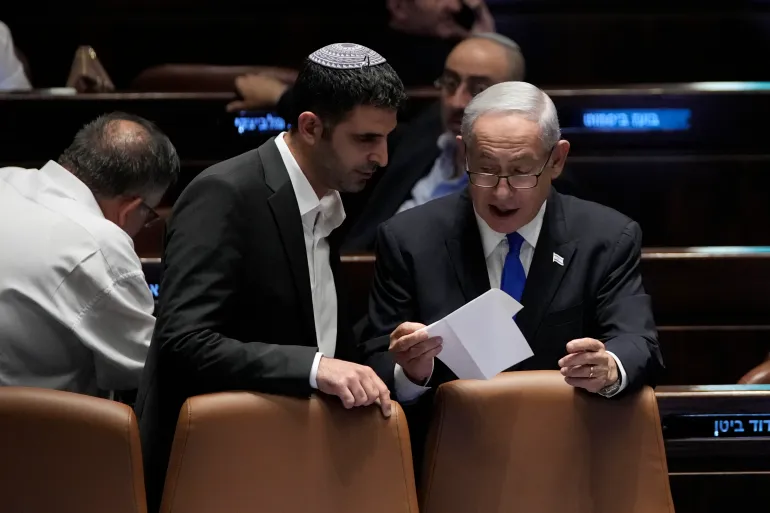
Israeli Prime Minister Benjamin Netanyahu, right, speaks to Minister of Communications Shlomo Karhi in the Knesset in West Jerusalem [File: Maya Alleruzzo/AP Photo]
In addition to the ‘Al Jazeera Law’, there are three items of legislation under way: a plan to privatise Israel’s public broadcaster, Kan, the move to abolish Army Radio, and an initiative to bring the media regulator under government control.
Both Army Radio and Kan, the other state-funded outlet with editorial independence, have carried numerous reports critical of the government.
This week, Kan aired an interview with Netanyahu’s former spokesperson Eli Feldstein, who told the broadcaster that the prime minister had instructed him to develop a strategy to help evade responsibility for the October 7 attacks.
Meanwhile, Israeli Defence Minister Israel Katz, justifying the move to shut down Army Radio, said on Monday that the outlet had become a platform to attack the Israeli military and its soldiers.
Israel is also potentially changing the way it regulates its media. In November, the Israeli parliament pressed ahead with a bill that would abolish existing media regulators and replace them with a new authority appointed by the government, potentially allowing for even greater state interference.
Israeli Attorney General Gali Baharav-Miara attends a cabinet meeting at the Bible Lands Museum in Jerusalem [Gil Cohen-Magen/Pool via Reuters]
Lastly, Israel has also codified into law the emergency legislation banning foreign media outlets whose output it disagrees with. It was first enacted as emergency legislation in May 2024 when Israel used it to ban Al Jazeera from its territory, and it was then used in the same month to halt the activity of The Associated Press after the government accused the United States-based news agency of sharing footage with Al Jazeera.
Under the new law, the communications minister – with the prime minister’s sign-off and the backing of a ministerial committee – may halt a foreign broadcaster’s transmissions if the prime minister accepts a professional assessment that the outlet poses a security threat. The minister can also shut the broadcaster’s offices, confiscate equipment used to produce its content and block access to its website.
Have the moves been criticised?
The International Federation of Journalists (IFJ) and the United Kingdom’s National Union of Journalists have criticised Israel’s decision to legislate against foreign media platforms it deems a security threat.
In a statement, IFJ General Secretary Anthony Bellanger said: “Israel is openly waging a battle against media outlets, both local and foreign, that criticise the government’s narrative: that is typical behavior of authoritarian regimes. We are deeply concerned about the Israeli parliament passing this controversial bill, as it would be a serious blow to free speech and media freedom, and a direct attack on the public’s right to know.”
The attempt to shutter Army Radio has also been heavily criticised with Israeli Attorney General Gali Baharav-Miara declaring the move unlawful and accusing Netanyahu’s coalition of making public broadcasting “weakened, threatened and institutionally silenced and its future shrouded in mist”.
Baharav-Miara has also criticised the move to place media regulation under government control, saying the bill “endangers the very principle of press freedom”.
Not very.
The Israeli media have overwhelmingly been a consistent cheerleader of the Israeli government’s actions in Gaza, where more than 70,000 Palestinians have been killed by Israel, and in the occupied West Bank.
The suffering of Palestinians is rarely shown, and when it is, it is often justified.
That means Israelis often don’t recogise the hypocrisy of their government’s statements.
An example came in June after Iran struck an evacuated hospital during the 12-day war between Israel and Iran. The Israeli government called the incident a war crime, and the Israeli media reflected that outrage.
But the attack came after Israel had been accused by a variety of organisations, including the United Nations, of systematically destroying Gaza’s healthcare system with medical workers targeted for arrest and frequently tortured despite their protection under international law.
“The Israeli media … sees its job as not to educate – it’s to shape and mould a public that is ready to support war and aggression,” journalist Orly Noy told Al Jazeera from West Jerusalem in the wake of the strike on the Israeli medical centre. “It genuinely sees itself as having a special role in this.”
Police say there is ‘insufficient evidence’ to bring charges after investigating comments made at Glastonbury festival.
Published On 23 Dec 202523 Dec 2025
Share
British police have said they will take no further action over comments made by punk-rap duo Bob Vylan about the Israeli military during a performance at the Glastonbury music festival in June.
Avon and Somerset Police said on Tuesday that the remarks did not meet the criminal threshold required for prosecution “for any person to be prosecuted”.
Recommended Stories
list of 4 itemsend of list
During the performance, the group’s lead singer – Pascal Robinson-Foster, known by his stage name Bobby Vylan – led chants of “death, death” directed at the Israeli military over its genocidal war in Gaza.
Police said there was “insufficient evidence to provide a realistic prospect of conviction”. The force added that it interviewed a man in his mid-30s and contacted about 200 members of the public as part of the investigation.
The chant, which was livestreamed by the BBC as part of its Glastonbury coverage on June 28, prompted a widespread backlash. The broadcaster later apologised for transmitting what it described as “such offensive and deplorable behaviour”, and its complaints unit found the BBC had breached editorial guidelines.
Avon and Somerset Police said it had considered the intent behind the words, the wider context, relevant case law and freedom of expression issues before concluding the investigation.
“We believe it is right this matter was comprehensively investigated, every potential criminal offence was thoroughly considered, and we sought all the advice we could to ensure we made an informed decision,” the statement said.
“The comments made on Saturday 28 June drew widespread anger, proving that words have real-world consequences.”
Following the performance, the United States revoked the visas of Bob Vylan, forcing the cancellation of a planned US tour scheduled to begin in October.
Bob Vylan have launched defamation proceedings against Irish broadcaster RTE, alleging it falsely claimed they led anti-Semitic chants during the Glastonbury performance.
In July, the British police also dropped an investigation into the Irish-language rap group Kneecap after chants of “Free Palestine” during a performance.
Detectives sought advice from the Crown Prosecution Service and decided to take no further action, citing “insufficient evidence to provide a realistic prospect of conviction for any offence”.
Commercial premises among buildings facing demolition as military incursions intensify near Qalandiya and Kafr Aqab.
Israeli forces have begun demolishing shops in the vicinity of the Qalandiya refugee camp, north of occupied East Jerusalem, as part of a wider military incursion across several Palestinian neighbourhoods, witnesses and medical officials say.
The raids, which began early on Tuesday, have extended into the nearby town of Kafr Aqab, where Israeli troops deployed in large numbers, carried out house searches and forcibly evicted residents from their homes, according to local media reports.
Recommended Stories
list of 3 itemsend of list
The Palestine Red Crescent Society said its medical teams treated at least three people injured during the raids in Qalandiya and Kafr Aqab. The injuries included a bullet wound to the thigh, wounds caused by shrapnel from live ammunition, and injuries resulting from physical assault.
The Jerusalem governorate reported that at least three Palestinians were injured by Israeli forces’ gunfire, in addition to dozens of cases of suffocation caused by the firing of tear gas and stun grenades, the Palestinian Wafa news agency reported.
Several Palestinians were detained during the large-scale incursion that was also accompanied by the deployment of military vehicles and bulldozers.
Among those arrested are Anan Mohammed Taha and his father, Mohammed Taha, residents of the Qalandiya refugee camp, Wafa said.
‘Intimidation’ and ‘anxiety’
Residents said Israeli forces ordered several families to evacuate their homes, with at least three houses converted into temporary military outposts in Kafr Aqab. Homeowners were reportedly told the operation would continue until at least Wednesday morning.
Israeli forces also stormed the youth club inside the Qalandiya refugee camp and turned the facility into a military base, according to Al Jazeera Arabic’s correspondent.
Journalists covering the operation were also targeted, including Al Jazeera Arabic reporters, with Israeli forces firing stun grenades and tear gas canisters in their direction during the raid in Kafr Aqab.
According to the Jerusalem governorate authorities, stun grenades were also fired directly towards students in the area as they were returning home from school, while private surveillance cameras were seized.
Al Jazeera’s Nida Ibrahim, reporting from Kafr Aqab, said Israeli forces are continuing to “intimidate” Palestinians.
“They have raided Palestinian stores, Palestinian shops, and they’ve destroyed some of the plaques, some of the advertisement billboards that were here”, in an attempt to further cripple the Palestinian economy, Ibrahim said.
“This is part of the anxiety that Palestinians live through day in and day out as these Israeli raids continue on a daily basis,” she added.
Israeli incursions across the West Bank average “60 raids per day”, Ibrahim said.
In addition to the demolitions, Israeli forces confiscated goods from commercial shops in the Qalandiya refugee camp, Kafr Aqab and parts of northern Jerusalem, citing alleged unpaid municipal taxes.
Most Palestinians living in these areas hold Jerusalem residency identification cards. Residents say they are subject to high municipal taxes while receiving few basic services.
Separately, confrontations were also reported in the town of Beit Furik, east of Nablus in the occupied West Bank, after Israeli forces stormed the area.
Israel Katz says military units will be established inside the Palestinian enclave, in contravention of the truce agreement.
Published On 23 Dec 202523 Dec 2025
Share
Israeli Defence Minister Israel Katz has said the Israeli military will never fully withdraw from the Gaza Strip and that an army unit will be established inside the Palestinian enclave.
Speaking on Tuesday, Katz said Israeli forces would remain deployed throughout Gaza, despite a United States-backed peace plan signed by Israel and Hamas in October that calls for a full Israeli military withdrawal and rules out the re-establishment of Israeli civilian settlements in the territory.
Recommended Stories
list of 4 itemsend of list
“We are located deep inside Gaza, and we will never leave all of Gaza,” Katz said. “We are there to protect.”
“In due course, we will establish Nahal [an Israeli infantry brigade] outposts in northern Gaza in place of the settlements that were uprooted,” Katz added, according to Israeli media.
Hours later, he issued a statement in English to the Reuters news agency, saying Nahal units would be stationed in Gaza “only for security reasons”. The Israeli media reported that US officials were displeased with Katz’s initial comments and demanded clarification.
Nahal units are military formations that combine civilian service with army enlistment and have historically played a role in the creation of Israeli communities.
Katz was speaking at a ceremony in the occupied West Bank marking the approval of 1,200 housing units in the illegal Israeli settlement of Beit El.
Addressing settlement expansion in the West Bank, Katz said: “Netanyahu’s government is a settlements government … it strives for action. If we can get sovereignty, we will bring about sovereignty. We are in the practical sovereignty era.”
“There are opportunities here that haven’t been here for a long time,” he added.
Israel is expected to head into an election year in 2026, with illegal settlement expansion a key political issue. Far-right and ultranationalist members of Prime Minister Benjamin Netanyahu’s coalition have repeatedly said they intend to reoccupy Gaza and expand illegal settlements in the West Bank.
Under international law, all Israeli settlements in the occupied West Bank are illegal. The transfer of an occupying power’s civilian population into occupied territory is considered a war crime under the Rome Statute of the International Criminal Court.
Meanwhile, violence by Israeli forces and settlers has continued across the West Bank, while killings continue in Gaza despite the ceasefire. Palestinian officials say more than 1,100 Palestinians have been killed, about 11,000 wounded and more than 21,000 arrested.
The Palestinian Ministry of Health said that since a ceasefire began on October 11, at least 406 Palestinians have been killed and 1,118 injured. Since the start of Israel’s war on October 7, 2023, the ministry said, 70,942 Palestinians have been killed and 171,195 wounded.
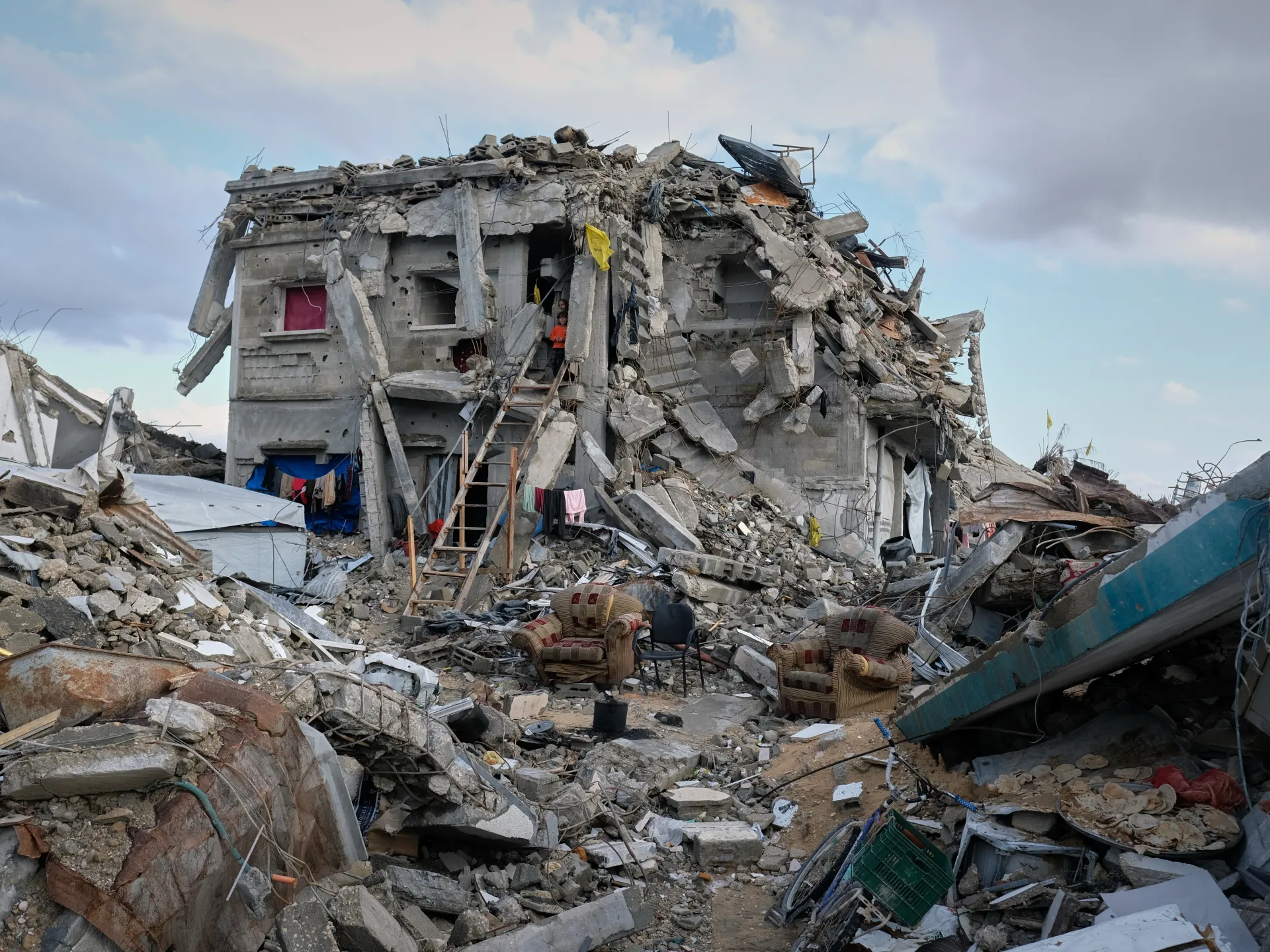
The Halawa family’s building still stands two storeys above the rubble in Gaza City, a rare survivor after two years of nonstop Israeli air attacks that levelled buildings across the besieged Palestinian enclave.
One section has collapsed, with bent metal rods protruding from where a roof once existed. The family built a narrow set of creaking wooden steps to access their home, though these makeshift stairs threaten to give way at any moment. Yet amid the destruction, it remains home.
Israel’s genocidal war on Gaza has killed more than 70,000 Palestinians, destroyed or damaged more than 70 percent of the buildings, and displaced most of the territory’s 2.3 million residents.
In October, Israel reached an agreement to cease fire, but its attacks have not stopped. It has killed more than 400 Palestinians since then, in violation of the truce agreement. It has also not allowed the full entry of aid.
Reconstruction has not begun and is projected to take years, as Israel has kept total control over what goes in and comes out of the enclave. This means families like the Halawas are struggling to rebuild their lives.
The family abandoned their home three months after the war began on October 7, 2023. They returned during the fragile calm established by the truce. Like many others, this family of seven found living in their damaged residence preferable to tent life, particularly as winter rains flooded tent shelters over the past weeks.
In one damaged room, Amani Halawa brewed coffee in a small tin over a fire while thin rays of light filtered through concrete fragments. Amani, her husband Mohammed, and their children have made repairs using concrete scraps, hanging backpacks from exposed metal rods and arranging pots and pans across the kitchen floor.
The home’s walls feature a painted tree and messages to family members separated by the conflict.
Throughout damaged apartments in Gaza City, daily life persists, even as families lie awake fearing their walls might collapse. Health officials report that at least 11 people died from building collapses in a single week in December.
In her home, Sahar Taroush swept dust from carpets placed over rubble. Her daughter Bisan’s face glowed in the light of a computer screen as she watched a movie beside gaping holes in the wall.
On another building’s cracked wall, a family displayed a torn photo of their grandfather on horseback from his time serving in the Palestinian Authority’s security forces during the 1990s. Nearby, a man reclined on a bed precariously balanced on a damaged balcony, scrolling through his phone above the devastated al-Karama neighbourhood.
Deadly attack comes as Gaza government media office says Israel violated ceasefire 875 times since it began in October.
Israeli forces have killed at least two Palestinians in the Gaza Strip as Israel continues to violate a ceasefire agreement and block desperately needed humanitarian aid to the war-ravaged coastal enclave.
The Palestinian news agency Wafa reported on Monday that two people were killed after Israeli troops opened fire in the Shujayea neighbourhood of eastern Gaza City.
Recommended Stories
list of 3 itemsend of list
Their deaths bring the total number of Palestinians reported killed in Gaza over the past 24 hours to at least 12, including eight whose bodies were recovered from the rubble in the territory.
The Gaza City attack is the latest in hundreds of Israeli violations of a United States-brokered ceasefire between Israel and Hamas, which came into effect on October 10.
Gaza’s Government Media Office on Monday condemned Israel’s “serious and systematic violations” of the truce, noting that the Israeli authorities had breached the ceasefire 875 times since it came into force.
That includes continued Israeli air and artillery attacks, unlawful demolitions of Palestinian homes and other civilian infrastructure, and at least 265 incidents of Israeli troops shooting Palestinian civilians, the office said in a statement.
At least 411 Palestinians have been killed and 1,112 others wounded in Israeli attacks on Gaza since the ceasefire began, it added.
Worsening shelter conditions
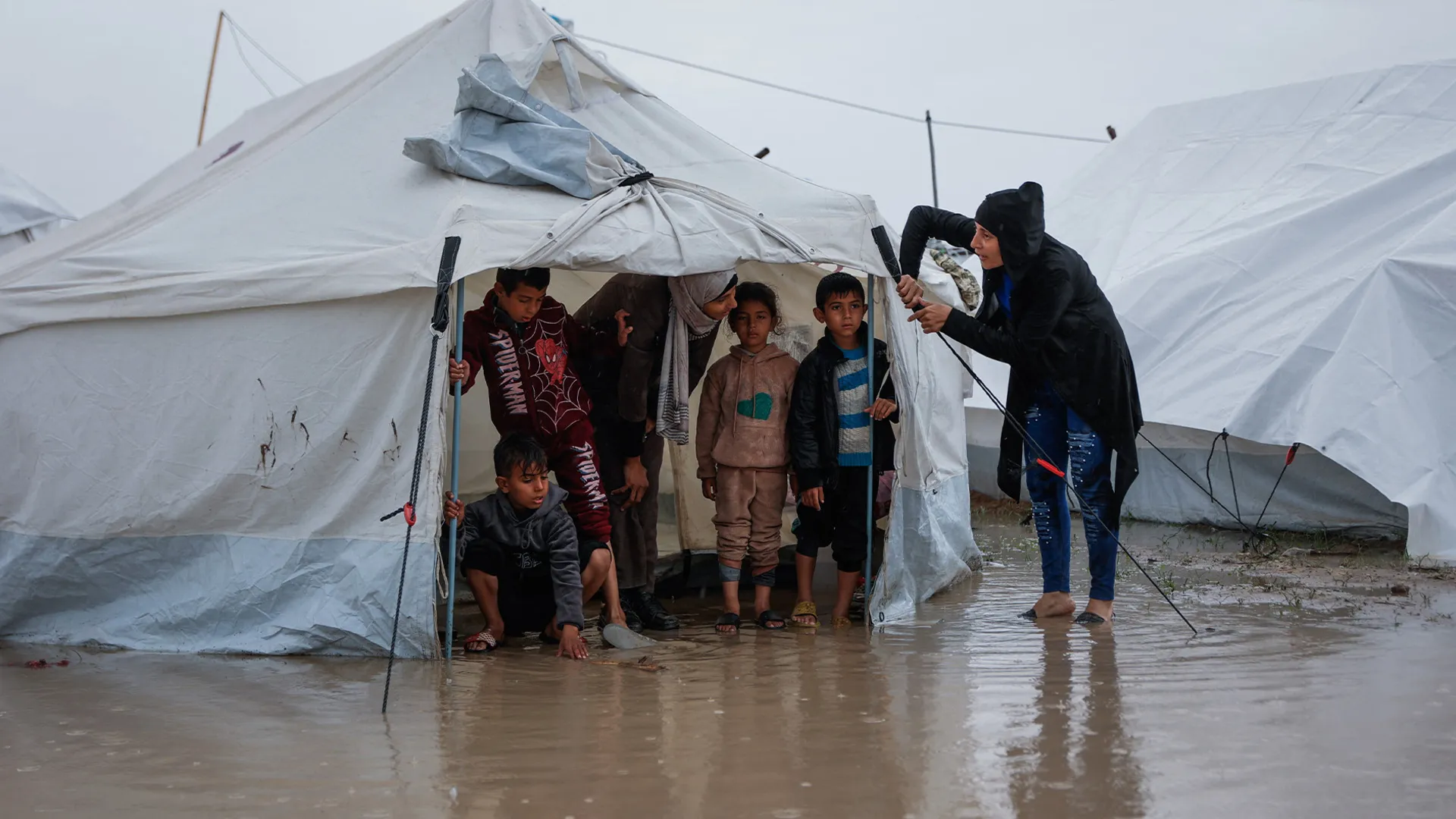
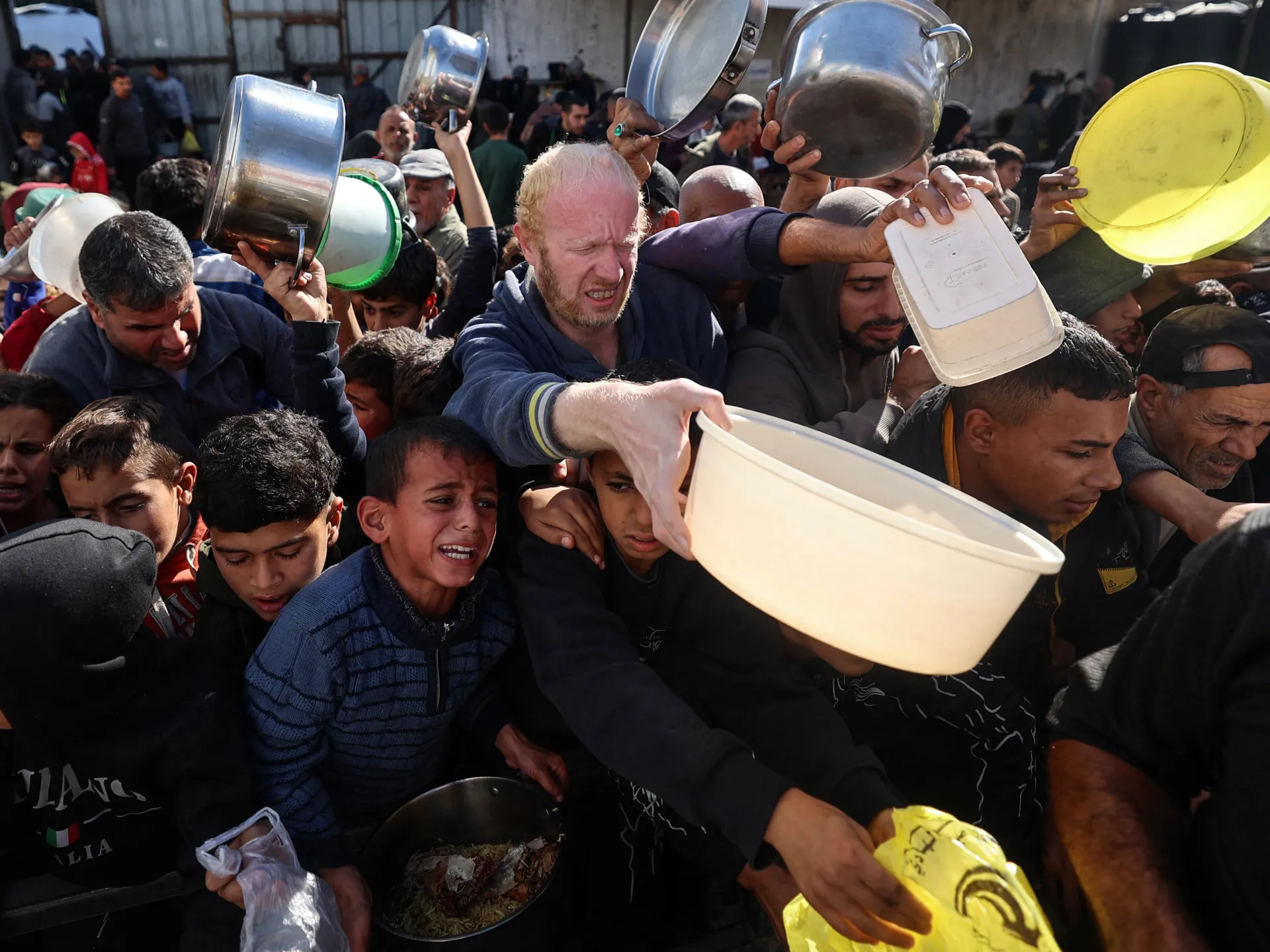
Meanwhile, hundreds of thousands of Palestinian families displaced by Israel’s genocidal war on Gaza continue to grapple with a lack of humanitarian supplies, including adequate food, medicine and shelter.
As the occupying power in Gaza, Israel has an obligation under international law to provide for the needs of Palestinians there.
But the United Nations and other humanitarian groups say it has systematically failed to allow unimpeded deliveries of aid into Gaza.
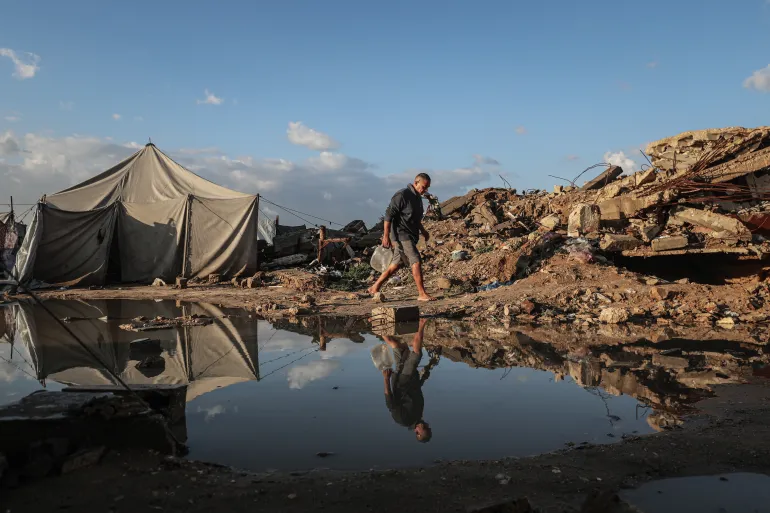
The situation has been worsened by a series of winter storms that have pummelled the Strip in recent weeks, with rights groups saying Israel’s refusal to allow tents, blankets and other supplies into Gaza is part of its genocidal policy and threatening Palestinian lives.
On Monday, the Gaza Government Media Office said that only 17,819 trucks entered the territory out of the 43,800 that were supposed to be allowed in since the ceasefire came into effect in October.
That amounts to an average of just 244 trucks per day – far below the 600 trucks that Israel agreed to allow into Gaza daily under the ceasefire agreement, the office said.
On Monday, a spokesperson for UN chief Antonio Guterres reiterated the call “for the lifting of all restrictions of the entry of aid into Gaza, including shelter material”.
“Over the past 24 hours, and despite the ceasefire, we have continued to receive reports of air strikes, shelling and gunfire in all five governorates of Gaza. This has resulted in reported casualties and disruptions to humanitarian operations,” Stephane Dujarric said.
He said that the UN’s humanitarian partners are working to address the significant shelter needs, particularly for displaced families living in unsafe conditions.
“Our partners continue to work to improve access to dignified shelter for approximately 1.3 million people in Gaza in the past week, about 3,500 families affected by storms are living in flood prone areas,” he said.
Dujarric said that aid deliveries have included tents, bedding sets, mattresses and blankets, as well as winter clothing for children, but the needs remain overwhelming.
Palestinians struggle with flooding after heavy rain hits the Bureij refugee camp in Gaza City [File: Moiz Salhi/Anadolu]
The appeals come a day after the Palestinian Ministry of Health in Gaza said that a lack of drugs and other healthcare supplies was making it difficult to provide care to patients.
Nearly all of Gaza’s hospitals and healthcare facilities were attacked during Israel’s two-year bombardment of the territory, damaging at least 125 facilities, including 34 hospitals.
The Israeli army has killed at least 70,937 Palestinians in Gaza, mostly women and children, and injured 171,192 others since its genocidal war began in October 2023.
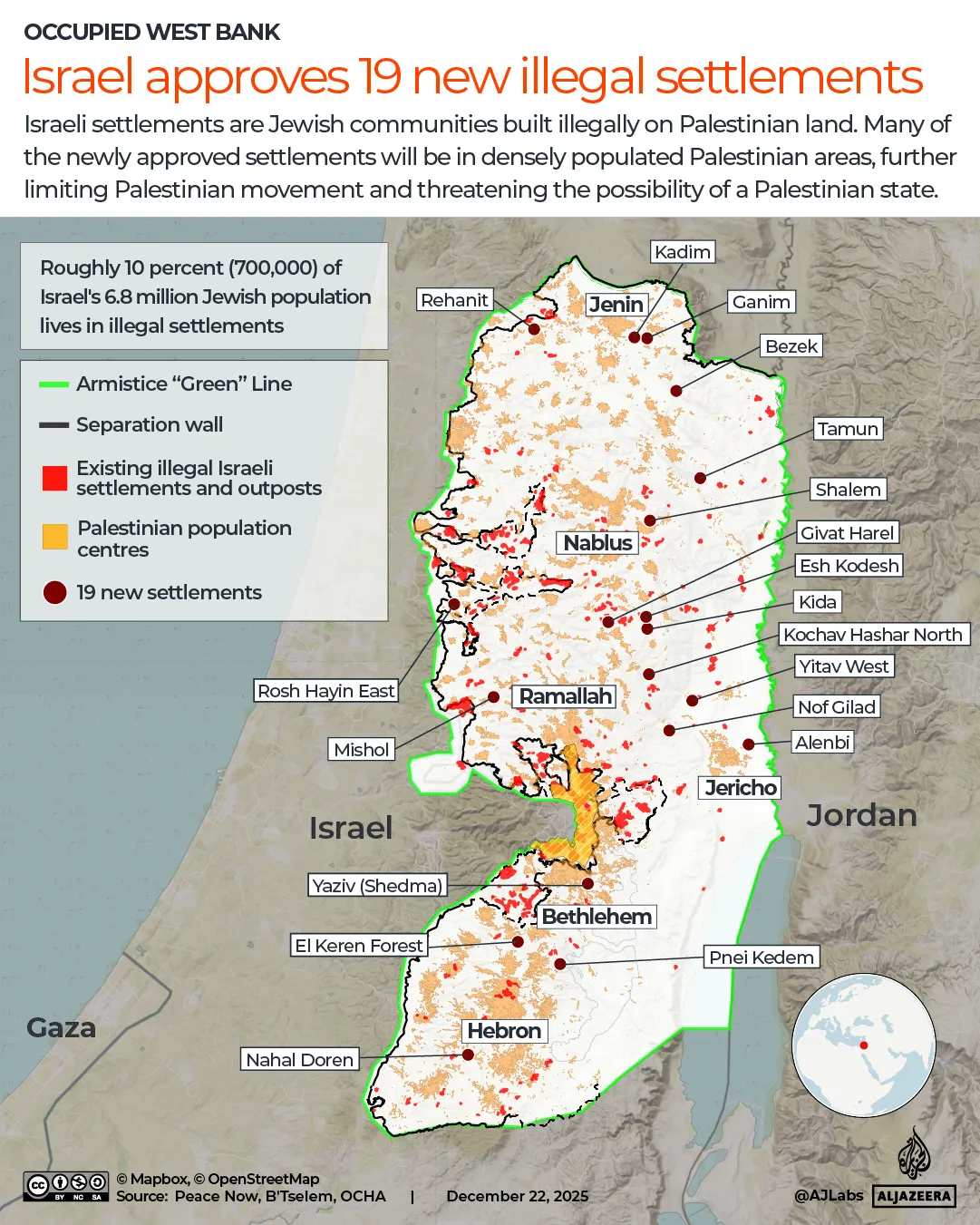
The Israeli security cabinet has approved 19 new settlement outposts in the occupied West Bank as the right-wing government headed by Prime Minister Benjamin Netanyahu moves to prevent the formation of a viable Palestinian state.
As Netanyahu’s government has made the annexation of occupied Palestinian territory a priority, the United Nations has said Israeli settlement expansions in 2025 have reached their highest level since 2017.
“These figures represent a sharp increase compared to previous years,” UN Secretary-General Antonio Guterres said, noting an average of 12,815 housing units were added annually from 2017 to 2022.
Under the current far-right government, the number of settlement and outposts in the West Bank and occupied East Jerusalem has risen by nearly 50 percent – from 141 in 2022 to 210 now. An outpost is built without government authorisation while a settlement is authorised by the Israeli government.
Nearly 10 percent of Israel’s Jewish population of 7.7 million people lives in these settlements, which are considered illegal under international law.
Here’s everything you need to know about the newly approved settlements and what they mean for the future of Palestinian statehood.
(Al Jazeera)
Where are the new settlements?
The new settlements are spread across the West Bank – home to more than three million Palestinians – from Jenin in the north to Hebron in the south.
Most of them are close to the densely populated Palestinian villages of Duma, Jalud, Qusra and al-Lubban Asharqiya in the Nablus governorate and Sinjil in the Ramallah and el-Bireh governorate, according to Peace Now, an antisettlement watchdog group based in Israel. Other locations identified by the watchdog for the new settlement areas are in the northwestern West Bank, in the Salfit governorate, near the Palestinian towns of Sa’ir and Beit Sahour, and other areas near Bethlehem and in the Jericho governorate.
Israel’s construction spree is entrenching the occupation and squeezing Palestinians out of their homeland. Settlements dot the West Bank and are often connected by Israeli-only highways while Palestinians face roadblocks and security checks, making their daily commutes harrowing experiences.
Israel has also built Separation Barrier that stretches for more than 700km (435 miles) through the West Bank restricting movement of Palestinians. Israel says the wall is for security purposes.
Under a dual legal system, Palestinians are tried in Israel’s military courts while crimes committed by settlers are referred to a civilian court.
Israel’s latest approval also includes settlements in Ganim and Kadim, two of the four West Bank settlements east of Jenin that were dismantled as part of Israel’s 2005 disengagement plan, a unilateral withdrawal ordered by then-Prime Minister Ariel Sharon.
Five of the 19 settlements already existed but had not previously been granted legal status under Israeli law, according to a statement from the office of Finance Minister Bezalel Smotrich.
Israel controls most of the West Bank and East Jerusalem, territory Palestinians want to be part of a future state along with Gaza. Israel captured East Jerusalem, the West Bank and the Gaza Strip in a 1967 war. It later annexed East Jerusalem, which Palestinians see as their future capital.
Israeli settlements and outposts are Jewish-only communities built on Palestinian land and they can range in size from a single dwelling to a collection of high-rises. About 700,000 settlers live in the West Bank and East Jerusalem, according to Peace Now.
The latest approval comes at a time when the United States has been working with Israel and Arab allies to move the Gaza ceasefire into a second phase. After a meeting on Friday of top officials from the US, Egypt, Turkiye and Qatar in the US city of Miami, Florida, Turkish Foreign Minister Hakan Fidan accused Israel of committing repeated violations of the ceasefire that began in October.
Israel still controls nearly half of Gaza’s territory since a ceasefire was announced on October 10 after more than two years of a genocidal war killed more than 70,000 Palestinians.
Palestinian farmers, left, scuffle with Israeli settlers during the olive harvest in the Palestinian village of Silwad,near Ramallah in the Israeli-occupied West Bank on October 29, 2025 [AFP]
Has settlement construction spiked in recent years?
The new settlements bring the total number approved over the past three years to 69, according to a statement from the office of Smotrich, who is a vocal proponent of settlement expansion and a settler himself.
In May, Israel approved 22 new settlements in the West Bank, the biggest expansion in decades.
The UN chief has condemned what he described as Israel’s “relentless” expansion of settlements in occupied Palestinian territory. It “continues to fuel tensions, impede access by Palestinians to their land and threaten the viability of a fully independent, democratic, contiguous and sovereign Palestinian state”, Guterres said this month.
Palestinians have also been facing increasing settler violence since Israel’s war on Gaza began.
According to data from the UN Office for the Coordination of Humanitarian Affairs (OCHA), settlers have attacked Palestinians nearly 3,000 times over the past two years.
Settler attacks often escalate during the olive harvest from September to November, a vital time of year that provides a key source of income for many Palestinian families.
Settlers are often armed and frequently accompanied or protected by Israeli soldiers. In addition to destroying Palestinian property, they have carried out arson attacks and killed Palestinian residents.
Every West Bank governorate has faced settler attacks over the past two years, data from OCHA shows.
(Al Jazeera)
Are the settlements legal under international law?
No. The UN, the International Court of Justice (ICJ) and the International Committee of the Red Cross all consider Israeli settlements as a violation of the Fourth Geneva Convention, which outlaws settler activity.
In a landmark judgement in July 2024, the ICJ, the UN’s top court, found that Israel’s occupation, settlement activity and annexation measures are illegal. In its nonbinding advisory opinion, the ICJ ruled that Israel’s continued presence in occupied Palestinian territory is unlawful and should come to an end “as rapidly as possible”.
The judges pointed to a wide list of policies – including the building and expansion of Israeli settlements in the West Bank and East Jerusalem, use of the area’s natural resources, the annexation and imposition of permanent control over lands and discriminatory policies against Palestinians – all of which it said violated international law.
Two months later, the UN General Assembly adopted a resolution demanding that Israel end its occupation of Palestinian territory within a year.
But Israel has defied the resolution by the global body backed by its ally – the United States. Washington has extended diplomatic cover to Israel against numerous UN resolutions.
Palestinians harvest olives near the occupied West Bank village of Turmus Aya near Ramallah on October 19, 2025 [Hazem Bader/AFP]
Since returning to power in January, US President Donald Trump has adopted a permissive stance towards Israeli settlement activity, breaking with longstanding US policy.
In 2019, he said Israeli settlements in the West Bank were not inherently illegal under international law. Trump also revoked his predecessor President Joe Biden’s sanctions on several settlers and groups accused of perpetrating violence against Palestinians in the West Bank.
US sanctions on settlers under Biden came under Washington’s long-held policy that settlements are the biggest impediments to the two-state solution to the conflict.
However, Trump and his officials have repeatedly said Israel cannot annex the West Bank. “It won’t happen because I gave my word to the Arab countries,” Trump told Time magazine in October. “Israel would lose all of its support from the United States if that happened.”
Israelis walk past soldiers standing guard during a weekly settlers tour in Hebron in the Israeli-occupied West Bank on December 13, 2025 [Mussa Qawasma/Reuters]
What will the new settlements mean for the future of a Palestinian state?
The growing settlements – together with other projects undertaken by Netanyahu’s government like the E1 settlement plan that will split the West Bank – are further squeezing Palestinians in occupied territory.
Settlement expansions have drawn criticism from the international community, including Israel’s European allies, who said the steps undermine prospects for a two-state solution.
But Netanyahu and his far-right cabinet, including Smotrich and National Security Minister Itamar Ben-Gvir, have doubled down on their rhetoric against a Palestinian state.
“On the ground, we are blocking the establishment of a Palestinian terror state,” Smotrich said in his statement on Sunday.
In June, the United Kingdom, Australia, Canada, New Zealand and Norway slapped sanctions on Smotrich and Ben-Gvir for inciting violence.
Several European nations, including the UK and France, as well as Australia recognised Palestinian statehood in September in a push for the two-state solution.
Israel condemned the move, and Netanyahu said he won’t allow a Palestinian state. He has previously boasted how he scuttled the 1993 and 1995 Oslo peace accords by boosting settlement expansion in occupied territory.
“It’s not going to happen. There will be no Palestinian state to the west of the Jordan River,” Netanyahu said in an address in September. “For years, I have prevented the creation of that terror state against tremendous pressure, both domestic and from abroad.”
Deadly Israeli air strike is latest in Israel’s near-daily violations of 2024 ceasefire agreement with Hezbollah.
At least three people have been killed in an Israeli attack near the southern Lebanese city of Sidon, the country’s National News Agency (NNA) is reporting, in the latest Israeli breach of a ceasefire agreement with Hezbollah.
Lebanon’s Ministry of Health said on Monday that the three people were killed in an Israeli air strike on a vehicle on Quneitra Road in the southern Sidon district, according to NNA.
Recommended Stories
list of 4 itemsend of list
The Israeli military said in a statement that it had targeted Hezbollah members in the Sidon area, without providing further details.
The deadly strikes come a day after another Israeli attack on southern Lebanon on Sunday killed one person and wounded two others. The Israeli army said it killed a Hezbollah member in that attack.
Israel has repeatedly violated the November 2024 ceasefire agreement with the Lebanese group, carrying out near-daily attacks across Lebanon, particularly in the south, that have drawn widespread condemnation.
Between January and late November, Israeli forces carried out nearly 1,600 strikes across Lebanon, according to data compiled by the Armed Conflict Location and Event Data Project (ACLED).
Late last month, the United Nations said at least 127 civilians had been killed in Israeli attacks on Lebanon since the ceasefire took effect, prompting a call from the United Nations human rights office for a “prompt and impartial” investigation.
Delegations meet in southern Lebanon
Israel’s attacks have continued despite the November 2024 ceasefire agreement, which includes provisions for Hezbollah’s disarmament in parts of southern Lebanon and the withdrawal of Israeli forces.
On Saturday, Prime Minister Nawaf Salam said Lebanon was close to completing the disarmament of Hezbollah in the area south of the Litani River.
That is a key provision of UN Security Council Resolution 1701, which designates the zone between the Litani River and the Israeli border as an area where only the Lebanese army and UN peacekeepers are permitted to operate.
Hezbollah has long rejected calls for full disarmament, saying its weapons are necessary to defend Lebanon against Israeli attacks and occupation.
Hezbollah leader Naim Qassem has consistently said the group will end its military presence south of the Litani River in line with the ceasefire, but insists it will retain its weapons elsewhere in Lebanon.
Under the 2024 ceasefire agreement, Israeli forces were also required to withdraw fully from southern Lebanon, south of the Litani River, by January. But Israeli troops have only partially pulled back and continue to maintain a military presence at five border outposts inside Lebanese territory.
Hezbollah officials have previously said the group would not fully implement its commitments under the ceasefire while Israeli forces remain deployed in southern Lebanon.
Meanwhile, a committee overseeing the ceasefire agreement continues to hold talks in southern Lebanon as Israel and the United States increase pressure on Hezbollah to disarm.
Civilian and military delegations from Israel and Lebanon met in the southern town of Naqoura on Friday in closed-door discussions.
Following the talks, Lebanese President Joseph Aoun met with diplomat Simon Karam, who has been appointed as Lebanon’s chief civilian negotiator.
Hezbollah has been critical of the appointment of Karam, who has previously served as the ambassador of Lebanon to the US.
In a statement, the Lebanese presidency said Aoun stressed that enabling tens of thousands of displaced Lebanese civilians to return to their villages and homes was “an entry point for addressing all other details” of the agreement.
Aoun said the committee’s next meeting is scheduled for January 7.
He also welcomed a separate diplomatic agreement reached in Paris between the US, France and Saudi Arabia to organise an international conference in early 2026 to support the Lebanese army and internal security forces.
The Great Omari Mosque is one of Gaza City’s most significant landmarks, with origins dating back more than 2,000 years. It was destroyed in an Israeli strike in December 2023. Hatem Haniya, the mosque’s administrator, reflects on its history and its deep significance to the people of Gaza.
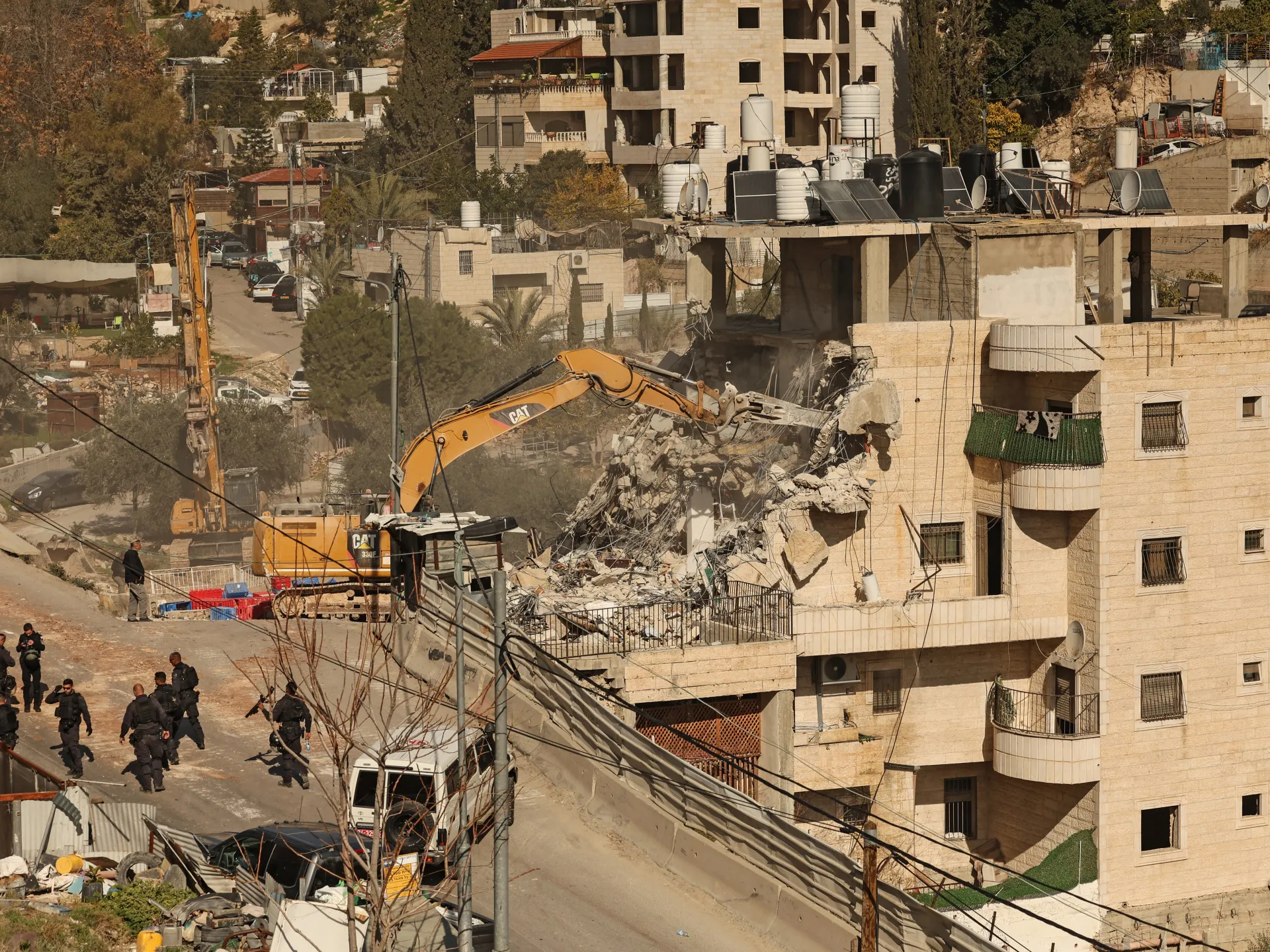
Israeli settlers attacked Palestinians who were forced out of their homes in occupied East Jerusalem, as Israeli forces demolished a four-storey residential building displacing around 100 people on Monday. It was the latest in a series of demolitions targeting Palestinian homes in the area.
Palestinian officials condemn the actions as part of a ‘systematic policy of displacement’ in the occupied territory.
Israeli forces have stormed towns in the occupied West Bank and demolished a residential building.
Soldiers fired stun grenades and tear gas on Monday as they carried out the demolition in East Jerusalem. Palestinian officials accused Israel of a campaign of displacement in the city, saying the operation was part of a systematic attempt to ethnically cleanse Palestinians from their land.
Recommended Stories
list of 4 itemsend of list
Scores of Palestinians were displaced as Israeli bulldozers tore through a four-storey residential building. Activists called it the largest such demolition in the area this year.
Three bulldozers destroyed the building with 13 apartments in the Wadi Qaddum neighbourhood of the Silwan district, south of Jerusalem’s Old City, Al Jazeera Arabic correspondents reported.
Israeli forces cordoned off surrounding roads, deployed heavily across the area and positioned security personnel on the rooftops of neighbouring houses. During the operation, a young man and a teenage boy were arrested.
Residents were told the demolition order was issued because the building had been constructed without a permit.
Palestinians face severe obstacles in obtaining building permits due to Israel’s restrictive planning policies, activists say, a policy that they assert is part of a systematic attempt to ethnically cleanse Palestinians from their land.
Israel’s security cabinet has recently approved the recognition of 19 new settlements in the West Bank, expanding the total number approved this year to 69 as the government continues its settlement push.
‘Systematic policy of displacement’
The Jerusalem governorate, affiliated with the Palestinian Authority, condemned the demolition.
“The building’s destruction is part of a systematic policy aimed at forcibly displacing Palestinian residents and emptying the city of its original inhabitants,” the governorate said in a statement.
“Any demolition that expels residents from their homes constitutes a clear occupation plan to replace the land’s owners with settlers.”
The Jerusalem municipality, an Israeli authority whose jurisdiction over East Jerusalem is not recognised under international law, said the demolition was based on a 2014 court order.
Israeli human rights groups Ir Amim and Bimkom said the demolition was carried out without warning despite a scheduled meeting on Monday to discuss steps to legalise the building.
“This is part of an ongoing policy. This year alone, around 100 East Jerusalem families have lost their homes,” the groups said, calling Monday’s demolition the largest of 2025.
Escalated attacks
Elsewhere in the West Bank, Israeli forces damaged agricultural land and uprooted trees in the northern town of Silat al-Harithiya.
In the city of Halhul, north of Hebron, Israeli forces stormed several neighbourhoods with large numbers of military vehicles, deployed sniper teams and took up positions across the city.
Al Jazeera Arabic journalists reported that Israeli vehicles entered Halhul through multiple checkpoints, including Nabi Yunis, while closing the Halhul Bridge checkpoint linking the city to Hebron.
Since Israel launched its war on Gaza in October 2023, Israeli forces and settlers have also sharply escalated attacks across the West Bank.
More than 1,102 Palestinians have been killed in the territory, about 11,000 wounded and more than 21,000 arrested, according to Palestinian figures.
‘The scale of needs is so huge.’ As Gaza’s displaced Palestinians suffer from winter storms after surviving two years of genocidal war, UNICEF’s Jonathan Crickx explains how many clothes, blankets and tents are needed to save children from dying.
Let’s jump into her list and maybe you’ll find your own shop that offers the best of both worlds.
(Lisa Boone/Los Angeles Times )
Flowerboy Project (Venice)
With Flowerboy Project, equal parts coffeehouse, florist and gift shop, partners Sean Knibb and Stella Shirinda have created an intriguing space that offers a feel-good mix for all the senses.
On Lincoln Boulevard in Venice, the concept cafe and flower shop offers apparel, jewelry, Venice Organics chocolate, home decor and apothecary items alongside fresh-cut and dried floral arrangements.
The cafe serves hot and cold coffee drinks, plus a few specialty drinks such as the Dirty Rose Girl (rose latte) and Lavender Boy (lavender latte), served with flowers on top. Custom flower arrangements are offered at prices ranging from $90 to $175.
(Lisa Boone/Los Angeles Times )
Javista at the Atrium (West Hollywood)
Billed as “The Botanist’s Bodega,” the bustling two-story Atrium in West Hollywood is a unique blend of coffee and plants. With Javista Coffee on the ground floor and a delightful array of plants, gifts and additional seating upstairs, the Atrium is a haven for plant enthusiasts and coffee lovers alike.
In addition to coffee staples such as macchiato and espresso, the bodega offers some exotic beverages like the CBTea Latte.
But that’s not all. The Atrium also hosts plant-related workshops, such as a recent one on how to mount a staghorn fern and create a terrarium. Plant lovers will appreciate a variety of plant accessories, including ceramic pots, misters, river stones and LED grow lights.
To support other small businesses, owner Andrew Ruiz stocks a wide selection of books and clothing along with candles from Flamingo Estate, Lavune and Marak, adding a local touch to the Atrium’s offerings.
(Lisa Boone/Los Angeles Times)
Little Nelly (Burbank)
Conveniently located in a Burbank neighborhood with plenty of parking, this takeout spot is a great place to shop for gifts while you wait for your espresso or hot combo sandwich (shaved turkey, hot coppa, Gioia burrata, giardiniera, wild arugula and pesto).
The market and sandwich shop, which also offers catering, is filled with cookbooks, handmade ceramics, wood carving boards perfect for charcuterie displays, candles and greeting cards. And for the foodies in your life, the market stocks unique pantry items such as spices, olive oils, vinegar and hot sauce that are perfect for stocking stuffers.
Made by DWC Cafe and Gift Boutique (Downtown L.A.)
Made by DWC, the Skid Row gift shop launched by the Downtown Women’s Center in Los Angeles in 2011, offers handmade gifts — soaps, bath salts, soy candles and greeting cards — crafted by women on L.A.’s Skid Row area as part of a vocational training program.
All profits from the Made store and cafe, which sells organic coffee, smoothies, salads and pastries from Homeboy Industries, help fund the center’s career training and mentorship programs. Note: The gift shop is not open on weekends.
(Lisa Boone/Los Angeles Times)
Sachi.LA (Del Rey)
Influenced by their Japanese heritage, sisters Sachi and Chiyo Hartley opened their Del Rey coffeehouse in 2018 to share “Sachi” — the Japanese kanji character meaning happiness, fortune or good luck — with their community. The coffeehouse, which serves a wide variety of coffee drinks including matcha and the Sachi Special, a signature cold brew with oat milk and vanilla syrup, is just the beginning.
Adjacent to the coffeehouse, which also serves pastries, the sisters have opened a retail space that is a treasure-trove filled with houseplants, gifts, vintage clothes and plant accessories such as bud vases and planters. They also host occasional pop-ups, so keep an eye on their Instagram for updates.
You’re reading the Essential California newsletter
The week’s biggest stories
(Tomas Ovalle/For The Times)
Crime, courts and policing
Apps, social media and tech
Statewide news
What else is going on
Must reads
Other meaty reads
For your downtime
(Illustrations by Lindsey Made This; photograph by Kim Newmoney)
Going out
Staying in
L.A. Affairs
Get wrapped up in tantalizing stories about dating, relationships and marriage.
L.A. Timeless
A selection of the very best reads from The Times’ 143-year archive.
Have a great day, from the Essential California team
Jim Rainey, staff reporter Hugo Martín, assistant editor, fast break desk Kevinisha Walker, multiplatform editor Andrew J. Campa, weekend writer Karim Doumar, head of newsletters
The talks between the four countries lauded the first stage of the truce, including expanded humanitarian assistance, return of captives, force withdrawals and reduction in hostilities.
The United States, Egypt, Qatar and Turkiye have urged the parties to the Gaza ceasefire to honour their commitments and show restraint, the chief US envoy says after talks in the US city of Miami.
Senior officials from the four mediator countries met Steve Witkoff, US President Donald Trump’s special envoy, on Friday to review the first phase of the ceasefire between Israel and Hamas, which took effect on October 10, according to a joint statement released on Saturday.
Recommended Stories
list of 4 itemsend of list
The meeting was held against the backdrop of ongoing Israeli attacks on the enclave. The Palestinian Civil Defence in Gaza said that six people were killed on Friday when an Israeli strike hit a school housing displaced people, raising the number of Palestinians killed by Israeli fire since the deal took effect to about 400.
“We reaffirm our full commitment to the entirety of the President’s [Trump’s] 20-point peace plan and call on all parties to uphold their obligations, exercise restraint, and cooperate with monitoring arrangements,” Witkoff said in a statement posted on X.
First phase of truce
Saturday’s statement cited progress yielded in the first stage of the peace agreement, including expanded humanitarian assistance, the return of captives’ bodies, partial force withdrawals and a reduction in hostilities.
It called for “the near-term establishment and operationalisation” of a transitional administration, which is due to happen in the second phase of the agreement, and said that consultations would continue in the coming weeks over its implementation.
Under the truce deal’s terms, Israel is supposed to withdraw from its positions in Gaza, an interim authority is to govern the Palestinian territory instead of Hamas, and an international stabilisation force is to be deployed.
On Friday, US Secretary of State Marco Rubio expressed hope that countries would contribute troops for the stabilisation force, but also urged the disarmament of Hamas, warning the process would unravel unless that happened.
Hamas statement
A meeting was also held between Hamas’s chief negotiator, Khalil al-Hayya, and Turkish intelligence chief Ibrahim Kalin in Istanbul on Saturday.
In a statement from Hamas after the meeting, the group said it was committed to abiding by the ceasefire agreement, despite Israeli violations.
“The delegation stressed the urgent need to halt these continuous violations,” the statement added.
“The delegation also reviewed the deteriorating humanitarian situation in the Gaza Strip with the onset of winter, emphasising the critical priority of urgently bringing in tents, caravans, and heavy equipment to save our people from death by cold and drowning, given the destruction of infrastructure and homes.”
Winter storms have been worsening the conditions for hundreds of thousands of displaced Palestinians in Gaza, as aid agencies warn that Israeli restrictions are preventing lifesaving assistance from reaching people across the besieged enclave.
Bodies recovered, Israeli strikes continue
On Saturday, an Israeli air strike targeted two people in northern Gaza, according to a statement from the military, which alleged that they “posed an immediate threat” to Israeli troops after crossing the so-called yellow line, which separates areas under Israeli army control from those where Palestinians are permitted to move.
No details were yet available on whether the two people were killed or injured.
Gaza’s Civil Defence on Saturday also said it recovered the bodies of 94 Palestinians from the rubble in the enclave.
The bodies were retrieved in central Gaza City and transferred to the forensic department at Al-Shifa Medical Complex to arrange their burial in the Martyrs’ Cemetery in the central city of Deir el-Balah, according to a statement from the Civil Defence.
Thousands of Palestinians are believed to still be buried under the rubble of destroyed buildings in Gaza.
The Israeli army has killed more than 70,700 people in Gaza, mostly women and children, and injured more than 171,000 others since it began its genocidal war on the enclave in October 2023.
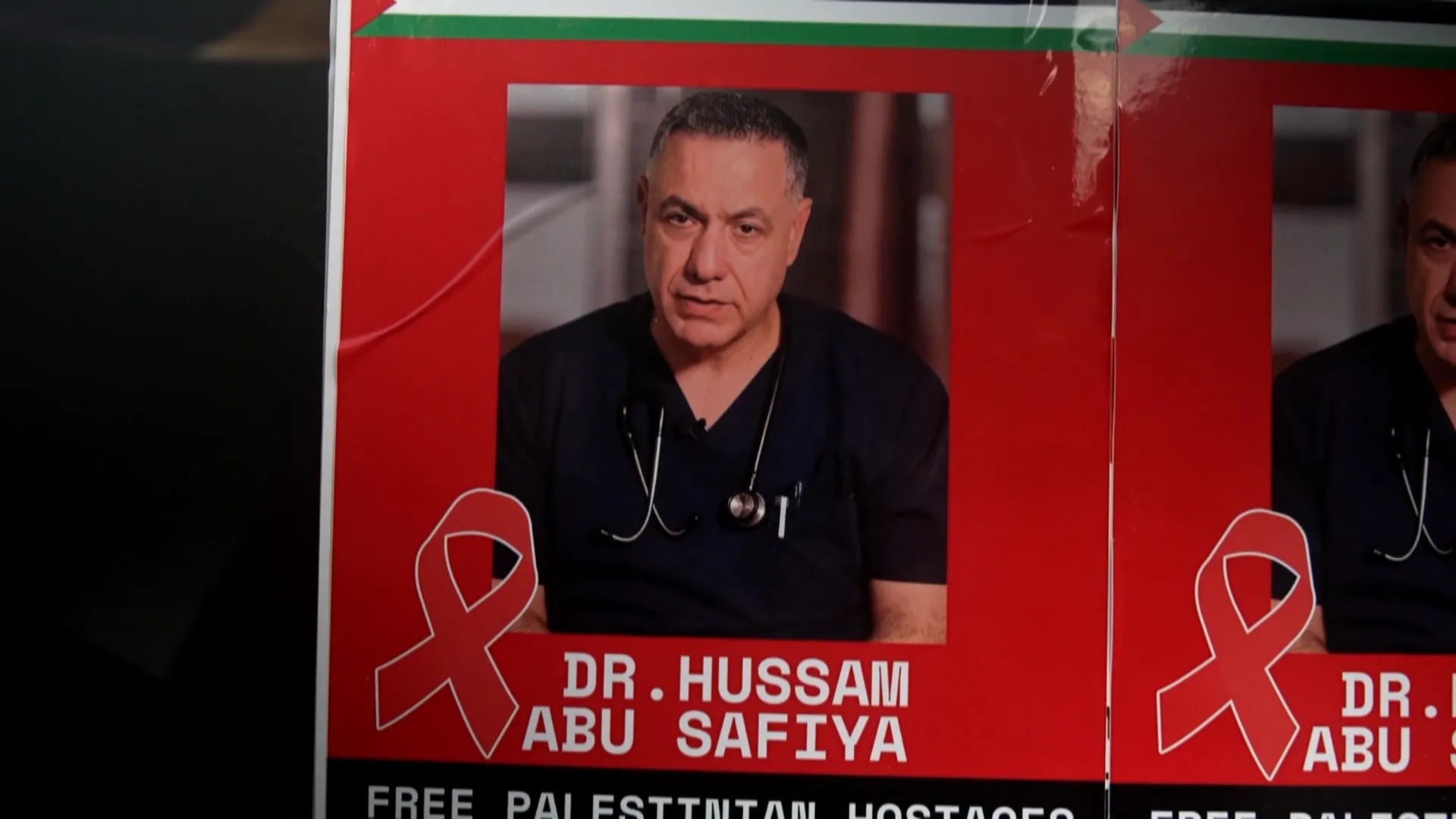
Red ribbons and Palestinian flags were seen in London at a vigil calling for the release of thousands of Palestinians being held without charge in Israeli prisons. The vigil focused on Dr. Hussam Abu Safia, director of Gaza’s Kamal Adwan Hospital, who’s been held for nearly one year. Al Jazeera’s Milena Veselinovic was there.
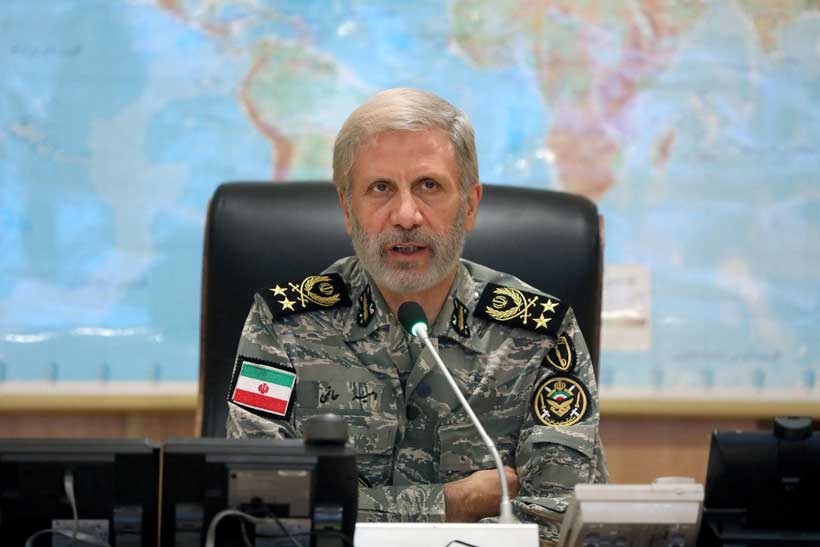
NEWS BRIEF Iran executed a man on Saturday accused of spying for Israel, the latest in an escalating series of death sentences carried out amid a deepening shadow war between Tehran and Jerusalem. The execution, described by human rights groups as based on coerced confessions, underscores Iran’s harsh response to perceived security threats and the […]
The PM says the part of the plan on south of the Litani River is ‘only days away from completion’.
Published On 20 Dec 202520 Dec 2025
Share
Lebanon is close to completing the disarmament of Hezbollah in the south of the Litani River before a year-end deadline as part of a ceasefire deal with Israel, according to Prime Minister Nawaf Salam.
Saturday’s statement comes as the country races to fulfil the key demand in the US-backed deal agreed in November last year and ended more than a year of fighting between Israel and Hezbollah.
Recommended Stories
list of 3 itemsend of list
The agreement requires the disarmament of the Iran-aligned Lebanese armed group, starting in areas south of the river adjacent to Israel.
Lebanese authorities, led by President Joseph Aoun and Salam, tasked the US-backed Lebanese army on August 5 with devising a plan to establish a state monopoly on arms by the end of the year.
“Prime Minister Salam affirmed that the first phase of the weapons consolidation plan related to the area south of the Litani River is only days away from completion,” a statement from his office said.
“The state is ready to move on to the second phase – namely [confiscating weapons] north of the Litani River – based on the plan prepared by the Lebanese army pursuant to a mandate from the government,” Salam added.
Committee meeting
The statement came after Salam held talks with Simon Karam, Lebanon’s top civilian negotiator on a committee overseeing the Hezbollah-Israel truce.
In a meeting on Friday, the committee focused on how to return displaced people to their homes, addressing civilian issues to help prevent renewed war if the year-end deadline to disarm Hezbollah is not met.
The 15th meeting of the committee reflected a longstanding US push to broaden talks between the sides beyond monitoring the 2024 ceasefire.
At Friday’s meeting in the southern Lebanese coastal town of Naqoura, civilian participants discussed steps to support safe returns of residents uprooted by the 2023-24 war and advance economic reconstruction, the US Embassy in Beirut said.
Since the ceasefire, Israeli warplanes have repeatedly targeted parts of Lebanon, mostly southern Lebanon, but sometimes even the capital.
Israel says it is questioning the Lebanese army’s efforts to disarm Hezbollah.
Hezbollah, a Shia Muslim armed group, has tried to resist the pressure – from its mainly Christian and Sunni Muslim opponents in Lebanon as well as from the US and Saudi Arabia – to disarm, saying it would be a mistake while Israel continues its air strikes on the country.
Israel has publicly urged Lebanese authorities to fulfil the conditions of the truce, saying it will act “as necessary” if Lebanon fails to take steps against Hezbollah.