In an exclusive interview, Somalia’s president Hassan Sheikh Mohamud told Al Jazeera that the breakaway region of Somaliland has agreed to accept displaced Palestinians being relocated there in exchange for recognition. Somaliland officials have rejected the allegations.
Demonstrators in Turkiye demand global pressure on Israel, calling the so-called ceasefire ‘a slow-motion genocide’ against Palestinians.
Hundreds of thousands of people are marching through Istanbul in a sweeping show of solidarity with Palestinians, condemning Israel’s genocide in Gaza and rejecting claims that a ceasefire has brought meaningful relief.
Protesters, many waving Palestinian and Turkish flags, converged on the city’s historic Galata Bridge on Thursday despite freezing temperatures.
The march, organised by civil society groups under the National Will Platform alongside Turkish football clubs, rallied under the slogan: “We won’t remain silent, we won’t forget Palestine.”
More than 400 civil society organisations joined the mobilisation, underscoring the scale of public anger at Israel’s ongoing assault on Gaza. Several major football clubs urged their supporters to attend, helping turn the rally into one of the largest pro-Palestine demonstrations Turkiye has seen since Israel’s war began.
Galatasaray football club chair Dursun Ozbek described Israel’s actions as a moral reckoning for the world.
“We will not get used to this silence,” Ozbek said in a video message shared on X. “Standing shoulder to shoulder against oppression, we come together on the same side for humanity.”
An aerial view of boats carrying Palestinian flags around Galata Bridge [Muhammed Enes Yildirim/Anadolu via Getty Images]
‘A slow-motion genocide’
Sinem Koseoglu, Al Jazeera’s Turkiye correspondent, reported from the Galata Bridge that Palestine remains a point of national consensus. She said the issue cuts across political lines, uniting supporters of the governing AK Party with voters from major opposition parties.
“Today people are trying to show their support on the very first day of the new year,” Koseoglu said, as crowds packed the bridge and surrounding streets.
Police sources and the Anadolu state news agency said about 500,000 people took part in the march.
The rally included speeches and a performance by Lebanese-born singer Maher Zain, who sang “Free Palestine” to a sea of raised flags.
For many demonstrators, the protest was also a rejection of Israel’s ceasefire narrative.
“These people here do not believe in the ceasefire,” Koseoglu said. “They believe the current ceasefire is not a real ceasefire, but a slow motion of the genocide.”
Thousands of people have gathered across Istanbul to march in solidarity with Palestinians, calling for an end to the genocidal war on Gaza, on January 1, 2026 [Muhammed Ali Yigit/Anadolu via Getty Images]
Turkiye has cut trade with Israel and closed its airspace and ports, but Koseoglu said protesters want sustained international pressure rather than symbolic measures.
“The main idea here is to show their solidarity with the Palestinian people and let the world not forget about what’s going on in Gaza,” she said, warning that many see the ceasefire as “very fragile”.
Turkiye has positioned itself as one of Israel’s sharpest critics and played a role in brokering a ceasefire announced in October by United States President Donald Trump.
Yet the pause in fighting has failed to halt bloodshed, with more than 400 Palestinians killed by Israel since the ceasefire took effect, and aid still being withheld from entering the besieged Strip.
Israel currently occupies the Palestinian side of the crossing, choking Gaza of a vital humanitarian entry point.
Published On 1 Jan 20261 Jan 2026
Share
Israel is preparing to reopen the Rafah crossing between the Gaza Strip and Egypt in both directions after Prime Minister Benjamin Netanyahu returns from a visit to the United States, according to Israeli media reports.
Israel’s Kan 11 news reported on Wednesday that the expected decision comes as a result of pressure from US President Donald Trump.
Recommended Stories
list of 3 itemsend of list
For Palestinians in Gaza, the Rafah crossing had long been the only connection to the outside world.
That was until May 2024, when Israeli forces occupied the Palestinian side of the crossing, destroying its buildings, preventing travel and causing a severe humanitarian crisis, especially for patients.
It marked the first time in 20 years that Israeli forces directly controlled the border crossing as they deployed soldiers in a military buffer zone all across the Philadelphi Corridor, where they remain today.
The first phase of Trump’s 20-point plan – imposed by the US administration in October – to end Israel’s genocidal war on Gaza had called for Israeli authorities to let humanitarian aid into the territory and open “the Rafah crossing in both directions”.
Israel, however, has continued to restrict the entry of aid, while a military unit called Israel’s Coordination of Government Activities in the Territories (COGAT) announced in December that the “Rafah Crossing will open in the coming days exclusively for the exit of residents from the Gaza Strip to Egypt”.
The announcement caused concern among mediators, with the foreign ministers of Egypt, Indonesia, Jordan, Pakistan, Qatar, Saudi Arabia, Turkiye and the United Arab Emirates issuing a joint statement that expressed “deep concern” and expressed their “complete rejection of any attempts to displace the Palestinian people from their land”.
Israel’s Kan news reported that discussions about reopening the crossing in both directions had been held before Netanyahu met with Trump in the US, but the move was postponed.
It added that an unnamed US source believed that the announcement about the opening of the crossing would take place in the coming days.
Netanyahu has reached the end of his latest trip to the US, with Trump hailing him as a “hero” and saying Israel – and by extension its prime minister – had “lived up to the plan 100 percent” in reference to the US president’s peace plan.
However, reports emerged last week that suggested US officials are growing frustrated over Netanyahu’s apparent “slow walking” of the 20-point ceasefire plan, suspecting that the Israeli prime minister might be hoping to keep the door open to resuming hostilities against the Palestinian group Hamas at a time of his choosing.
Israel is revoking the licenses of 37 international organisations, forcing them to stop operations in Gaza. Al Jazeera’s Hani Mahmoud explains how the new restrictions will worsen an already dire humanitarian crisis.
Deir el-Balah and Nuseirat, Gaza Strip – In her tent made of fabric sheets with a roof covered in white plastic tarp, Sanaa Issa tries to steal a quiet moment with her daughters.
Sanaa spoke to Al Jazeera as the new year approached, and with a ceasefire officially in place in Gaza. But, lying on a wet blanket in a tent with rain pouring down, Sanaa doesn’t have a huge amount to be positive about.
Recommended Stories
list of 3 itemsend of list
“We didn’t know whether to blame the war, the cold, or the hunger. We’re moving from one crisis to another,” Sanaa told Al Jazeera, describing a harsh year she, and other displaced Palestinians like her, have faced in the Gaza Strip.
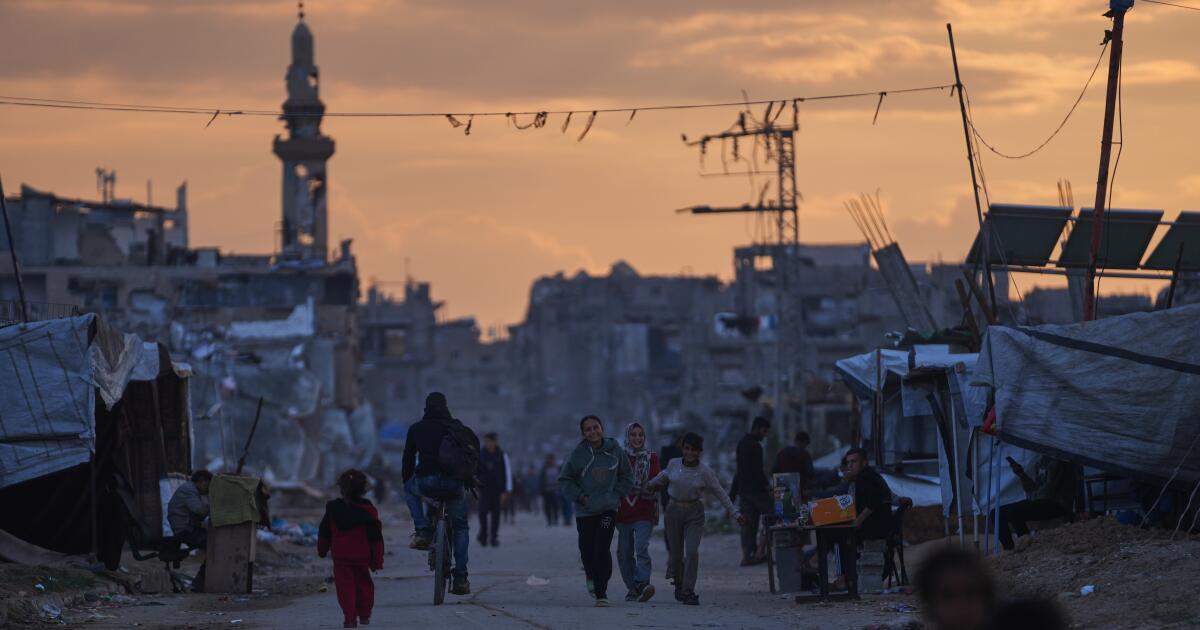
Amid worsening humanitarian conditions, the once-ambitious hopes of Palestinians in Gaza, dreams of a better future, prosperity, and reconstruction, are gone. In their place are basic human needs: securing flour, food and water, obtaining tents to shield them from the cold, accessing medical care, and simply surviving bombardments.
For Palestinians like Sanaa, hope for the new year has been reduced to a daily struggle for survival.
Sanaa is a 41-year-old mother of seven, who has been solely responsible for raising her children after her husband was killed in an Israeli strike in November 2024, at the end of the first year of Israel’s genocidal war on Gaza.
“Responsibility for the children, displacement, securing food and drink, making tough decisions here and there. Everything was required of me at once,” Sanaa, who fled with her family from al-Bureij to Deir el-Balah, both in central Gaza, said.
Sanaa’s biggest challenge in 2025 was securing “a loaf of bread” and getting her hands on even a kilogram of flour every day for her family.
“During the famine, I slept and woke up with one wish: to get enough bread for the day. I felt I was dying while my children were starving before me, and I could do nothing,” she said bitterly.
The search for flour eventually saw Sanaa decide to go to the US-backed GHF aid distribution points that opened at the end of May across Gaza.
“At first, I was scared and hesitant, but the hunger we live through can force you to do things you never imagined,” Sanaa said, describing her weekly visits to the aid points.
Visiting the sites, which the US and Israel supported as alternatives to long-established aid organisations, was inherently dangerous. More than 2,000 Palestinians were killed in and around GHF sites, according to the United Nations, before the GHF officially ended its mission in late November.
But going to the sites wasn’t just a risk to Sanaa’s life, it was a path that “took away her dignity”, leaving lasting scars.
On one occasion, Sanaa was hit by shrapnel in her arm while waiting for aid at the Netzarim distribution point in central Gaza, and her 17-year-old daughter was injured in the chest at the Morag point east of Rafah.
But her injuries didn’t stop her from trying again, although she began to go alone, leaving her children behind in relative safety.
During the famine in Gaza, Sana’a’s greatest wish was to provide a loaf of bread for her seven children, amid a six-month-long Israeli blockade that prevented food and goods from entering [Abdelhakim Abu Riash/Al Jazeera]
Desperation
The war in Gaza led to severe interruptions in food and humanitarian aid, the last of which began in late March 2025, eventually leading to the declaration of a famine. It continued until October 2025, gradually easing after the ceasefire announcement.
During this period, the United Nations officially declared a state of famine, confirming that parts of Gaza had entered catastrophic hunger stages, with acute shortages in food, water, and medicine, and high rates of malnutrition among children and pregnant women.
Thousands of residents had to search for food using dangerous methods, including by waiting for long hours at the GHF sites.
“Hunger lasted a long time; it wasn’t a day or two, so I had to find a solution,” Sanaa said. “Each time, people crowded in their hundreds of thousands. Some would spend the night there, hundreds of thousands of displaced people – men, women, children, old and young.”
“The scenes were utterly humiliating. Bombing and heavy gunfire on everyone, not to mention the pushing and fighting among people over aid.”
The crowds meant that Sanaa often returned to her tent empty-handed, but the rare times she brought back a few kilos of flour felt like “a festival”, she recalled.
“One time, I got five kilos [11 pounds] of flour. I cried with joy returning to my children, who hadn’t tasted bread for days,” she added.
Sanaa sits with her children inside their tent, holding on to the hope that living conditions will improve in the coming year [Abdelhakim Abu Riash/Al Jazeera]
Sanaa divided the five kilos over two weeks, sometimes mixing it with ground lentils or pasta dough. “We wanted to recite a spell over the flour so it would multiply,” she said with dark humour.
A heavy silence followed as Sanaa adjusted the plastic tarp over her tent against the strong wind, then said:
“We witnessed humiliation beyond measure? All this for what? For a loaf of bread!” she added with tearful eyes. “If we were animals, perhaps they would have felt more pity for us.”
Despite the hardships she has endured and continues to face, Sanaa has not lost hope or her prayers for Gaza’s future.
“Two years are enough. Each year has been harder than the previous one, and we are still in this spiral,” she added. “We want proper tents to shelter us in winter, a gas cylinder to cook instead of burning wood, we want life and reconstruction.”
“Our basic rights have become distant wishes at year’s end.”
Batoul Abu Shawish, 20, lost her entire family in an Israeli strike that targeted their home in Nuseirat during the ceasefire in November 2025 [Abdelhakim Abu Riash/Al Jazeera]
The only survivor
Sanaa’s husband was one of the more than 71,250 Palestinians killed by Israel during the war.
Twenty-year-old Batoul Abu Shawish can count her father, mother, two brothers and two sisters – her whole immediate family – among that number.
Batoul comes into the new year wishing for only one thing: to be with her family.
Her heartbreaking loss came just a month before the end of the year, on November 22.
Despite the ceasefire, an Israeli bomb struck the home her family had fled to in central Gaza’s Nuseirat refugee camp.
“I was sitting with my two sisters. My brothers were in their room, my father had just returned from outside, and my mother was preparing food in the kitchen,” she recalled, eyes vacant, describing the day.
“In an instant, everything turned to darkness and thick dust. I didn’t realise what was happening around me, not even that it was bombing, due to the shock,” Batoul added, as she stood next to the ruins of her destroyed home.
She was trapped under the debris of the destroyed home for about an hour, unable to move, calling for help from anyone nearby.
“I couldn’t believe what was happening. I wished I were dead, unaware, trying to escape the thought of what had happened to my family,” Batoul said.
“I called for them one by one, and there was no sound. My mother, father, siblings, no one.”
After being rescued, she was found to have severe injuries to her hand and was immediately transferred to hospital.
“I was placed on a stretcher above extracted bodies, covered in sheets. I panicked and asked my uncle who was with me: ‘Who are these people?’ He said they were from the house next to ours,” she recalled.
As soon as Batoul arrived at the hospital, she was rushed into emergency surgery on her hand before she could learn about what had happened to her family.
“I kept asking everyone, ‘Where is my mom? Where is my dad?’ They told me they were fine, just injured in other departments.”
“I didn’t believe them,” Batoul added, “but I was also afraid to call them liars.”
The following day, her uncles broke the news to Batoul that she had lost her mother and siblings. Her father, they told her, was still in critical condition in the intensive care unit.
“They gathered around me, and they were all crying. I understood on my own,” she said.
“I broke down, crying in disbelief, then said goodbye to them one by one before the funeral.”
Batoul’s father later succumbed to his injuries three days after the incident, leaving her alone to face her grief.
“I used to go to the ICU every day and whisper in my father’s ear, asking him to wake up again, for me and for himself, but he was completely unconscious,” Batoul said as she scrolled through photos of her father on her mobile phone.
“When he died, it felt as if the world had gone completely dark before my eyes.”
Batoul al-Shawish holds a photo on her phone showing her with her family, including her father, mother, and siblings Muhammad, Youssef, Tayma, and Habiba [Abdelhakim Abu Riash/Al Jazeera]
‘Where is the ceasefire?’
Israel said that it conducted the strikes in Nuseirat in response to an alleged gunman crossing into Israel-held territory in Gaza, although it is unclear why civilian homes in Nuseirat were therefore targeted.
According to Gaza’s Government Media Office and the Ministry of Health, around 2,613 Palestinian families were completely wiped out during the war on the Gaza Strip up until the announcement of the ceasefire in October 2025.
Those families had all of their members killed, and their names erased from the civil registry.
The same figures indicate that approximately 5,943 families were left with only a single surviving member after the rest were killed, an agonising reflection of the scale of social and human loss caused by the war.
These figures may change as documentation continues and bodies are recovered from beneath the rubble.
For Batoul, her family was anything but ordinary; they were known for their deep bond and love for one another.
“My father was deeply attached to my mother and never hid his love for her in front of anyone, and that reflected on all of us.”
“My mother was my closest friend, and my siblings loved each other beyond words. Our home was full of pleasant surprises and warmth,” she added.
“Even during the war, we used to sit together, hold family gatherings, and help one another endure so much of what we were going through.”
The understandable grief that has overtaken Batoul leaves no room for wishes for a new year or talk of a near future, at least for now.
One question, however, weighs heavily on her: why was her peaceful family targeted, especially during a ceasefire?
“Where is the ceasefire they talk about? It’s just a lie,” she said.
“My family and I survived bombardment, two years of war. An apartment next to our home in eastern Nuseirat was hit, and we fled together to here. We lived through hunger, food shortages, and fear together. Then we thought we had survived, that the war was over.”
“But sadly, they’re gone, and they left me alone.”
Batoul holds onto one wish from the depths of her heart: to join her family as soon as possible.
At the same time, she carries an inner resignation that perhaps it is her fate to live this way, like so many others in Gaza who have lost their families.
“If life is written for me, I will try to fulfil my mother’s dream that I be outstanding in my field and generous to others,” said Batoul, a second-year university student studying multimedia, who is currently living with her uncle and his family.
“Life without family,” she said, “is living with an amputated heart, in darkness for the rest of your life, and there are so many like that now in Gaza.”
Batoul al-Shawish stands in front of the rubble of her destroyed home, where she was trapped for about an hour before being rescued [Abdelhakim Abu Riash/Al Jazeera]
Israeli Prime Minister Benjamin Netanyahu has reached the end of his latest trip to the United States and appears to have gained what he wants from President Donald Trump.
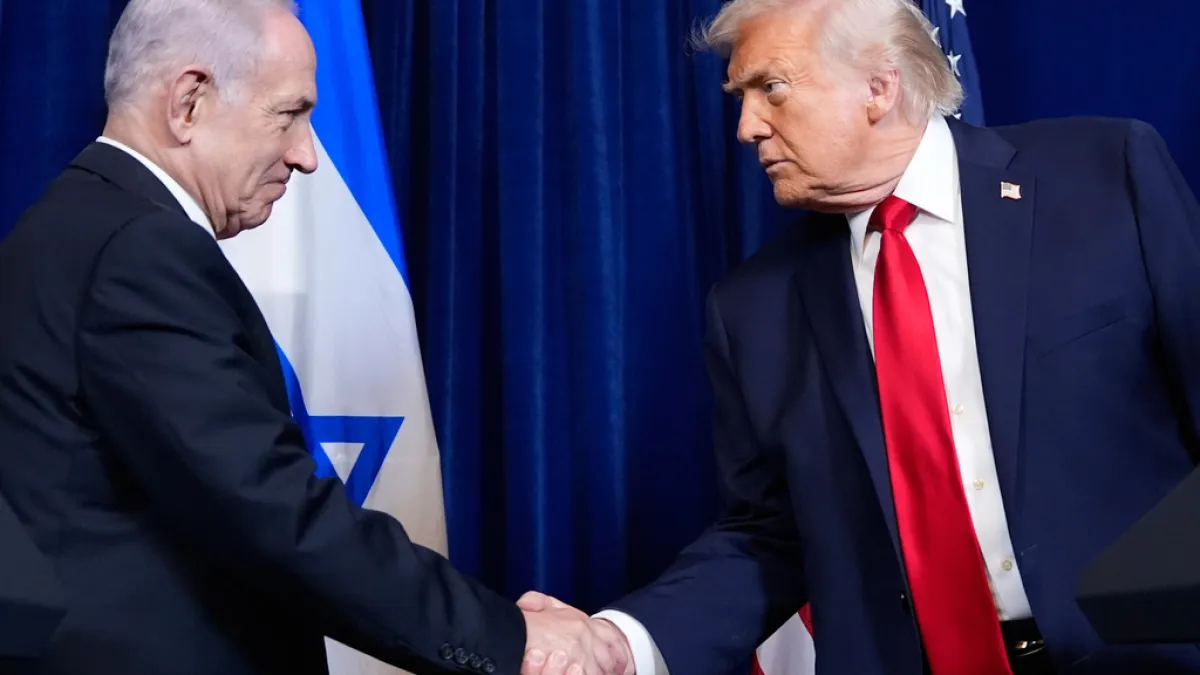
Trump hailed Netanyahu after their meeting on Monday, calling him a “hero” and saying Israel – and by extension its prime minister – had “lived up to the plan 100 percent” in reference to the US president’s signature Gaza ceasefire.
Recommended Stories
list of 4 itemsend of list
That is despite reports emerging last week that US officials were growing frustrated over Netanyahu’s apparent “slow walking” of the 20-point ceasefire plan – imposed by the US administration in October – suspecting that the Israeli prime minister might be hoping to keep the door open to resuming hostilities against the Palestinian group Hamas at a time of his choosing.
Under the terms of that agreement – after the exchange of all captives held in Gaza, living and dead, aid deliveries into the enclave and the freezing of all front lines – Gaza would move towards phase two, which includes negotiations on establishing a technocratic “board of peace” to administer the enclave and the deployment of an international security force to safeguard it.
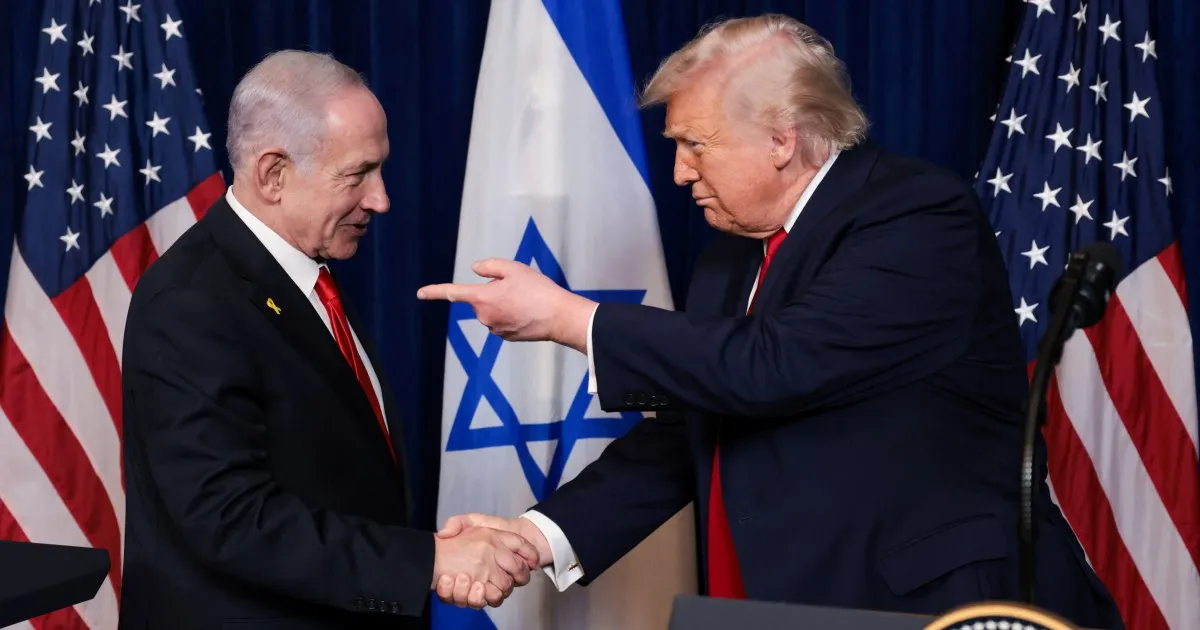
US President Donald Trump, right, called Israeli Prime Minister Benjamin Netanyahu a ‘hero’ during his visit to Trump’s Florida estate on December 29, 2025, saying he had lived up to Trump’s ceasefire plan ‘100 percent’ [Jonathan Ernst/Reuters]
So far, Netanyahu has not allowed in all of the required aid that Gaza desperately needs and is also maintaining that phase two cannot be entered into until Hamas returns the body of the last remaining captive. He has also demanded that Hamas disarms before Israel withdraws its forces, a suggestion fully endorsed by Trump after Monday’s meeting.
Hamas has repeatedly rejected disarmament being forced upon it by Israel, and officials have said that the question of arms was an internal Palestinian matter to be discussed between Palestinian factions.
So is Netanyahu deliberately trying to avoid entering the second phase of the agreement, and why would that be the case?
Here are four reasons why Netanyahu might be happy with things just as they are:
He’s under pressure from his right
Netanyahu’s ruling coalition is, by any metric, the most right wing in the country’s history. Throughout the war on Gaza, the support of Israel’s hardliners has proven vital in shepherding the prime minister’s coalition through periods of intense domestic protest and international criticism.
Now, many on the right, including National Security Minister Itamar Ben-Gvir and Finance Minister Bezalel Smotrich, oppose the ceasefire, protesting against the release of Palestinian prisoners and insisting that Gaza be occupied.
Netanyahu’s defence minister, Israel Katz, has also shown little enthusiasm for honouring the deal his country committed to in October. Speaking at a ceremony to mark the expansion of the latest of Israel’s illegal settlements in the occupied West Bank, Katz claimed that Israel’s forces would remain in Gaza, eventually clearing the way for further settlements.
Katz later walked his comments back, reportedly after coming under pressure from the US.
Israeli Defence Minister Israel Katz [Menahem Kahana/AFP]
He doesn’t want an international force in Gaza
Allowing an international force to deploy to Gaza would limit Israel’s operational freedom, constraining its military’s ability to re-enter Gaza, conduct targeted strikes or pursue Hamas remnants within the enclave.
So far, despite the ceasefire, Israeli forces have killed more than 400 people in the enclave since agreeing to halt fighting on October 10.
Politically, agreeing to an international stabilisation force, particularly one drawn from neighbouring states, would broaden what Israel has often seen as a domestic war into an international conflict with many of the strategic, diplomatic and political decisions over that conflict being made by actors outside of its control.
It could also be framed domestically as a concession forced by the US and international community, undermining Netanyahu’s repeated claims of maintaining Israeli sovereignty and strategic independence.
“If Netanyahu allows a foreign military force into Gaza, he immediately denies himself a large degree of his freedom to operate,” Israeli political analyst Nimrod Flaschenberg said from Berlin. “Ideally, he needs things to remain exactly where they are but without alienating Trump.”
Smoke rises from an Israeli strike on Gaza’s Bureij refugee camp on October 19, 2025, in one of the near-daily attacks Israel has carried out since the ceasefire went into effect [Eyad Baba/AFP]
He wants to resist any progress towards a two-state solution
While not explicitly mentioning a two-state solution, the ceasefire agreement does include provisions under which Israel and the Palestinians commit to a dialogue towards what it frames as a “political horizon for peaceful and prosperous co-existence”.
Netanyahu, however, has been arguing against a two-state solution since at least 2015 when he campaigned on the issue.
More recently, at the United Nations in September, he branded the decision to recognise a Palestinian state “insane” and claimed that Israel would not accept the establishment of a Palestinian homeland.
Israeli ministers have also been at work ensuring that the two-state solution remains a practical impossibility. Israel’s plan to establish a series of new settlements severing occupied East Jerusalem – long considered the future capital of any Palestinian state – from the West Bank would make the establishment of a feasible state impossible.
This isn’t just an unfortunate consequence of geography. Announcing the plans for the new settlements in August, Smotrich said the project would “bury the idea of a Palestinian state”.
Israeli Finance Minister Bezalel Smotrich holds a map near the settlement of Maale Adumim showing a land corridor known as E1, in which Israel plans to build thousands of settler homes and which Smotrich says would ‘bury the idea of a Palestinian state’ [Menahem Kahana/AFP]
A resumption of war would benefit him
Netanyahu faces numerous domestic threats, from his own corruption trial to the potentially explosive issue of forcing conscription on Israel’s ultra-religious students. There is also the public reckoning he faces for his own failures before and during the Hamas-led attacks on southern Israel on October 7, 2023, all of which will fall within a critical election year for the prime minister.
Each of these challenges risks fracturing his coalition and weakening his hold on power. All of them, however, could be derailed – or at least politically blurred – by a new conflict either with Hamas in Gaza, Hezbollah in Lebanon or possibly even with Iran.
Renewed fighting would allow him to once more present himself as a wartime leader, limit criticism and rally both his allies and adversaries around the well-worn flag of “national emergency”.
In 2025, Israel carried out thousands of attacks in Gaza and the occupied West Bank, with at least 10,600 attacks recorded across multiple countries including Lebanon, Iran, Syria, Yemen and Qatar.
Hassan Sheikh Mohamud says his country believes the move is linked to Israel’s plans to forcibly displace Palestinians from Gaza.
Somali President Hassan Sheikh Mohamud has told Al Jazeera that Israel’s “unexpected and strange” recognition of Somaliland may have implications for Palestinians in Gaza.
“Somaliland has been claiming the secession issue for a long time, over the past three decades, and no one country in the world has recognised it,” Mohamud told Al Jazeera in an exclusive interview from Istanbul, Turkiye, on Tuesday.
Recommended Stories
list of 4 itemsend of list
“For us, we’ve been trying to reunite the country in a peaceful manner,” the Somali leader added. “So, after 34 years, it was very unexpected and strange that Israel, out of nowhere, just jumped in and said, ‘We recognise Somaliland’.”
Israel last week became the first and only country to formally recognise Somaliland, a breakaway region in northwest Somalia, bordering the Gulf of Aden.
Somalia’s president also told Al Jazeera that, according to Somali intelligence, Somaliland has accepted three Israeli conditions in exchange for Israeli recognition: the resettlement of Palestinians, the establishment of an Israeli military base on the coast of the Gulf of Aden, and Somaliland joining the Abraham Accords. The accords are a set of pacts establishing the normalisation of ties between Israel and several Arab states. The UAE, Bahrain, Morocco and Sudan have signed onto the accords.
Mohamud also said that Somalia has intelligence indicating there is already a certain level of Israeli presence in Somaliland, and Israeli recognition of the region is merely a normalisation of what was already happening covertly.
Israel will resort to forcibly displacing Palestinians to Somalia, and its presence in the region is not for peace, the Somali leader added.
A 20-point plan released by the administration of US President Donald Trump ahead of a ceasefire between Israel and Hamas in Gaza said that “no one will be forced to leave Gaza, and those who wish to leave will be free to do so and free to return”.
However, Israel has reportedly continued to explore ways to displace Palestinians from the besieged and occupied territory, including in mysterious flights to South Africa, which has formally accused Israel of committing genocide in Gaza.
Israel is also seeking to control strategically important waterways connecting vital seas of commercial and economic significance, namely the Red Sea, the Gulf and the Gulf of Aden, Mohamud said.
The Somali leader was in Turkiye on Tuesday, where he gave a joint news conference with Turkish President Recep Tayyip Erdogan, with the two leaders warning that Israel’s recognition of the breakaway region could destabilise the Horn of Africa.
Somaliland declared independence from Somalia in 1991, but had failed to gain recognition from any United Nations member state, before Israel changed its position last Friday.
Israel’s move was swiftly condemned, including by most members of the UN Security Council at an emergency meeting convened in New York on Monday.
The United States was the only member of the 15-seat body that defended Israel’s move, although it stressed that the US’s position on Somaliland remained unchanged.
Weekly insights and analysis on the latest developments in military technology, strategy, and foreign policy.
New-build F-15 Eagle fighters are headed to Israel again, with a contract for 25 new F-15IA aircraft placed with Boeing. These will be the first new Eagles that the country has acquired since 1999, when it received the last of its F-15I Ra’am jets and continues the enduring legacy of the F-15 in Israeli Air Force service.
The Pentagon announced on Monday that Boeing had been awarded a Foreign Military Sales (FMS) contract with a ceiling of $8.58 billion for the F-15 Israel Program. The contract covers the design, integration, instrumentation, test, production, and delivery of 25 new F-15IA aircraft, with an option for an additional 25. Work will be performed at St. Louis, Missouri, and is expected to be completed by the end of 2035. The aircraft will almost certainly feature extensive Israeli-specific modifications, as was the case with previous Eagles, especially when it comes to electronic warfare, weapons, and communications systems.
An earlier Boeing graphic showing a heavily armed F-15IA. Boeing
The contract announcement came after U.S. President Donald Trump met Israeli Prime Minister Benjamin Netanyahu in Florida.
In August 2024, Israel was given U.S. approval to buy as many as 50 F-15IAs, as well as upgrade its existing F-15Is as part of an overall package valued at $18.82 billion that you can read about here.
The U.S. Secretary of State has approved a possible Foreign Military Sale to Israel of 50 new F-15IA aircraft as well as mid-life update modification kits for its existing 25 F-15I aircraft (F-15I+ standard) & related equipment & services for an estimated cost of $18.82 billion. pic.twitter.com/v1mzvG2lZZ
Subsequently, in November of last year, the Israeli Ministry of Defense announced that it had agreed to buy the 25 F-15IAs, reserving the option to buy the other 25 jets.
At that point, the Israeli Ministry of Defense said that deliveries of the F-15IAs would start in 2031, with between four and six aircraft being supplied annually. The stated cost was $5.2 billion, and it’s not exactly clear why that has since increased substantially. We reached out to Boeing for clarification, and the company deferred to the U.S. government.
“The new F-15IA will be equipped with cutting-edge weapon systems, including state-of-the-art Israeli technologies,” the ministry said at the time. “The upgraded aircraft will feature enhanced range capabilities, increased payload capacity, and improved performance across various operational scenarios.”
As we have discussed in the past, the F-15IA that Israel will be receiving is based on the F-15EX used by the U.S. Air Force.
A U.S. Air Force F-15EX Eagle II, assigned to 85th Test and Evaluation Squadron, Eglin Air Force Base, Florida. USAF U.S. Air Force photo by Airman Nathaniel Jackson
In the past, Boeing and the U.S. Air Force have both stressed the aircraft’s range and stores-carrying capabilities. In a U.S. context, these attributes are seen as being especially relevant for operations across the vast expanses of the Pacific. Meanwhile, Israel has long prized the F-15 for its ability to strike targets at long range while carrying heavy loads of ordnance.
The latest versions of the F-15 also have a notable ability to carry outsize weapons, including hypersonic missiles, as well as simply larger numbers of legacy weapons. Once again, this is a feature of the jet that will be of particular interest to Israel. The Israeli Air Force’s recent operations against Iran have demonstrated the increasing importance of air-launched ballistic missiles and other air-launched standoff weapons, which would also be very well suited to the F-15IA.
An Israeli Air Force F-16I armed with a Rampage standoff missile. IAF
The 25 new F-15IAs will provide the Israeli Air Force with an additional Eagle squadron. This will double the number of strike-optimized F-15s available to the service. Currently, the 25 F-15I Ra’am jets, delivered in the second half of the 1990s, serve with 69 Squadron “Hammers” at Hatzerim Air Base.
An Israeli Air Force F-15I Ra’am. IAF
While it’s unclear for now if the F-15I fleet will also be upgraded, as once proposed, it seems reasonable to assume that the F-15IAs will go some way toward replacing the older F-15A-to-D Baz, which survive with two squadrons stationed at Tel Nof Air Base, which you can read more about here. If the F-15I fleet is upgraded, it would parallel the approach taken by Saudi Arabia, which bought new-build F-15SA jets and upgraded existing F-15S aircraft to the same standard.
Israeli Air Force F-15A-to-D Baz fighters from 106 Squadron “Tip of the Spear.” Amit Agronov
The Baz is used for both air-to-air and air-to-ground missions, but these are mainly very old jets, with the first examples having seen combat as long ago as 1979. Successively upgraded and also bolstered through transfers from U.S. Air Force stocks, these jets remain very valuable to the Israeli Air Force, as demonstrated by their prominent role in recent combat operations.
The F-15IA deal has been widely viewed through the prism of the conflict that began in the Middle East after the surprise attack on Israel by Hamas militants on October 7, 2023.
At the same time, the F-35I Adir fighter is increasingly becoming a weapon of choice for combat missions both in close proximity to Israel and over much greater distances.
F-35I Adirs of the Israeli Air Force. IAF
With that in mind, Israel has opted for procuring a mix of fighters, the benefits of which we have described in the past:
“Buying the F-15IA and F-35I will provide the Israeli Air Force with two complementary platforms, both of which are among the most capable anywhere in the world, especially when it comes to long-range strike. Israeli F-15s, in particular, are also used for forward networking and command and control nodes, vital for managing long-range operations. On the other hand, both the F-15IA and F-35I are also more than efficient for air defense, including against drone threats, as well as air-to-ground operations closer to Israel, such as the ongoing conflicts in Gaza and Lebanon.”
As part of this strategy, Israel opted to buy a third squadron of F-35Is last year. Covering 25 more F-35Is worth approximately $3 billion, this will expand the Israeli Air Force Adir fleet to 75 aircraft. The latest batch of the stealth jets will begin to be delivered in 2028, meaning at least some will be delivered in parallel with the F-15IA.
Whether Israel chooses to add more F-15s or even upgrades, the current security situation in the Middle East means it would be unwise to rule out the prospect of further combat aircraft acquisitions.
Somali President Hassan Sheikh Mohamud has accused Israel of violating international law and of ‘illegal aggression’.
Turkish President Recep Tayyip Erdogan has condemned Israel’s decision to recognise Somaliland as a sovereign state, calling the move “illegitimate and unacceptable”.
At a joint news conference with Somali President Hassan Sheikh Mohamud in Ankara on Tuesday, Erdogan warned that Israel’s recognition of the breakaway region of Somalia could destabilise the Horn of Africa.
Recommended Stories
list of 4 itemsend of list
He added that Turkiye and Somalia were deepening energy cooperation after promising signs from joint offshore exploration efforts.
“Preserving the unity and integrity of Somalia in all circumstances holds special importance in our view. Israel’s decision to recognise Somaliland is illegitimate and unacceptable,” Erdogan said.
“The Netanyahu government has the blood of 71,000 of our Palestinian brothers and sisters on its hands. Now it is trying to destabilise the Horn of Africa as well, after its attacks on Gaza, Lebanon, Yemen, Iran, Qatar and Syria,” he added, referring to Israel’s genocidal war on Gaza.
Israel became the first and only country to formally recognise Somaliland last Friday, describing the move as being in the spirit of the Abraham Accords, which normalised ties between Israel and several Arab nations.
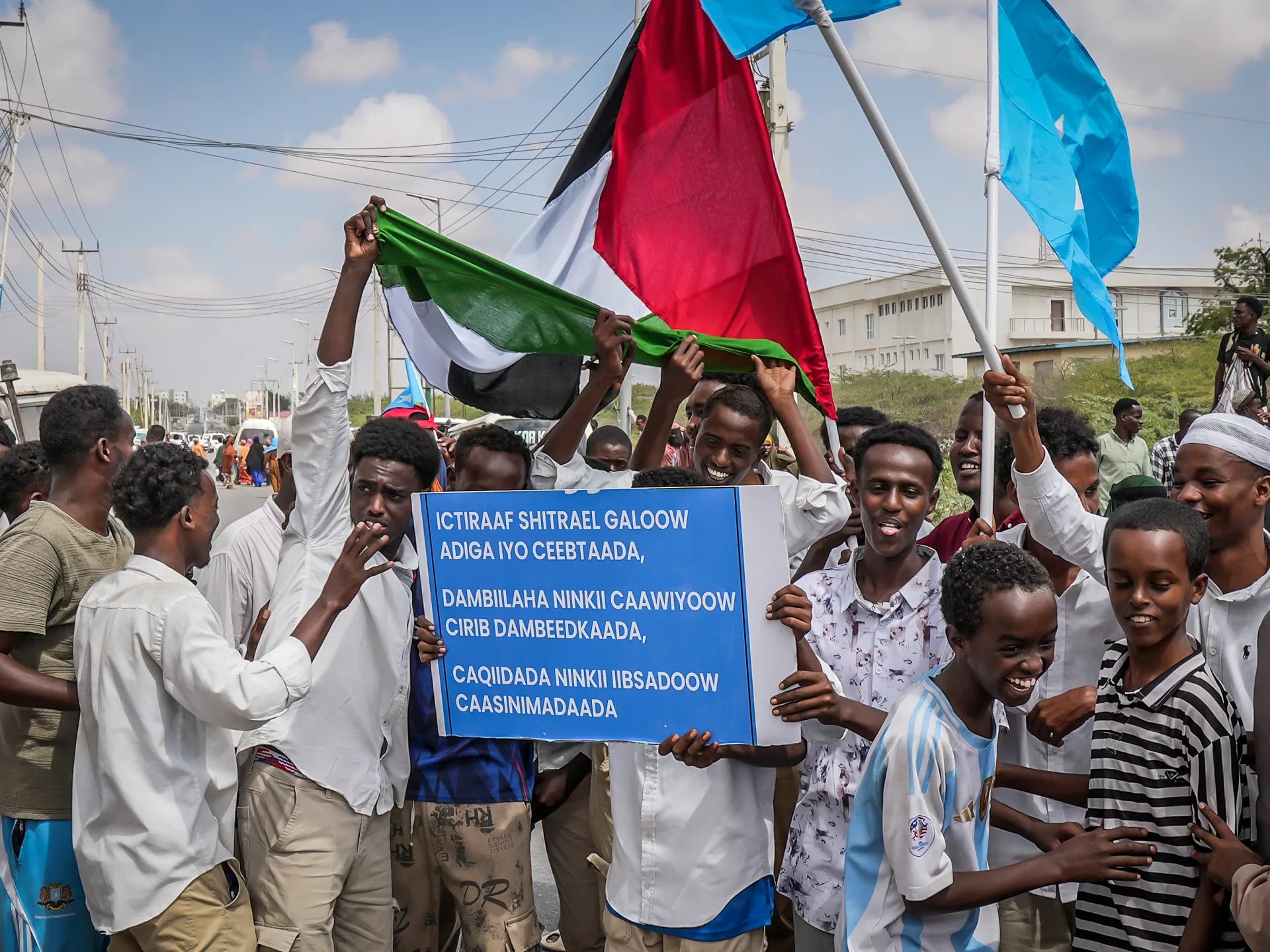
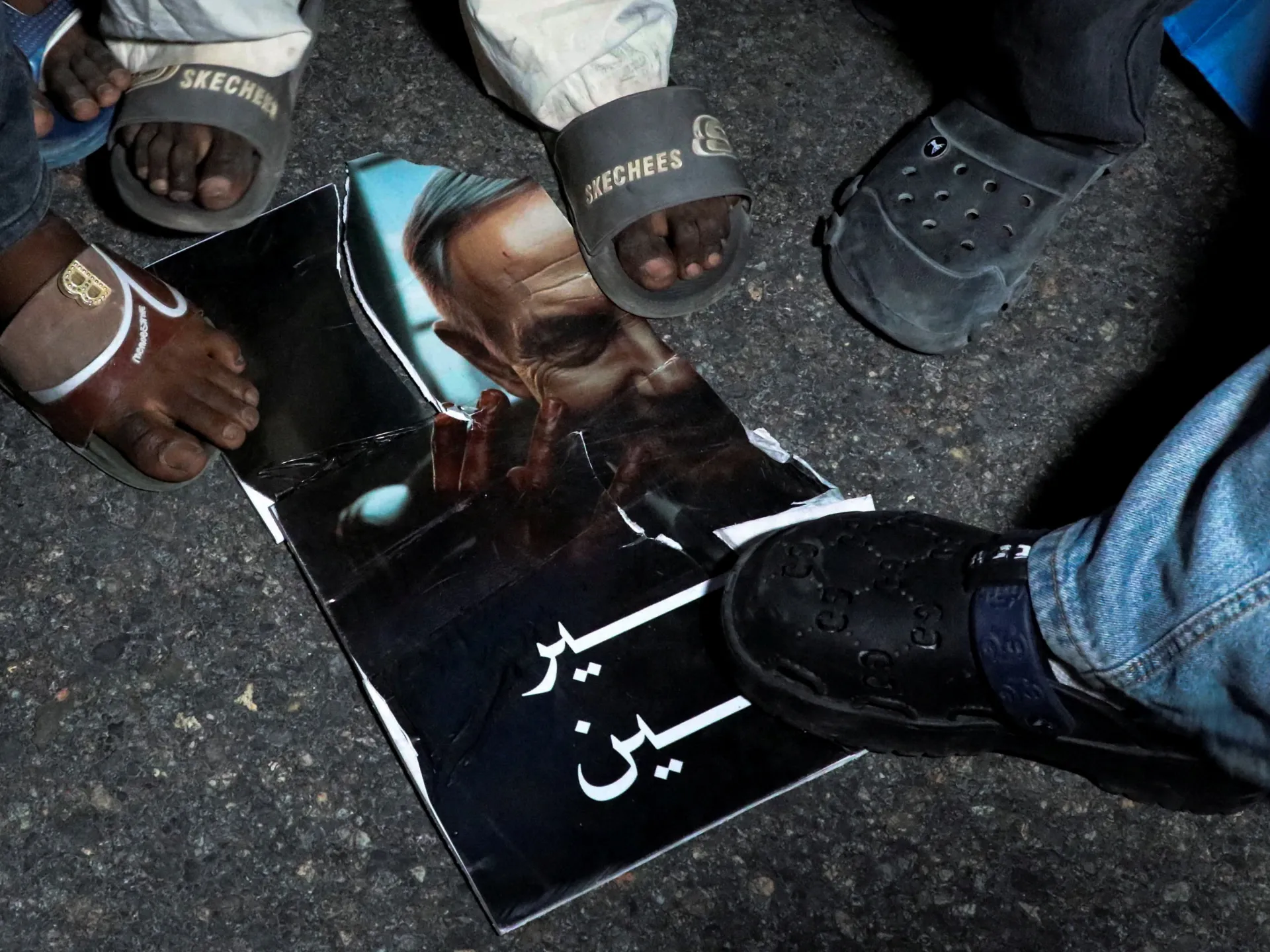
Somalis step on an image depicting Israeli Prime Minister Benjamin Netanyahu during a demonstration in Mogadishu [Feisal Omar/Reuters]
‘Illegal aggression’
Somaliland unilaterally declared independence from Somalia in 1991, following the collapse of the central government after a civil war. Despite maintaining its own currency, passport and army, it has failed to gain international recognition.
Standing alongside Ergogan, Mohamud accused Israel of “illegal aggression”, saying the recognition breaches the United Nations charter and African Union agreements.
“Israel is exporting its problems in Gaza and Palestine, and it is trying to divert the attention of the entire world, including the Arab and Islamic world,” he later told Al Jazeera in an interview.
“Israel will resort to forcibly displacing Palestinians in Somalia. It also wants to control strategically important waterways that connect vital seas, both commercially and economically, between the Red Sea, the Gulf, and the Gulf of Aden.”
Destabilising Africa
Mohamud warned that the move would have international consequences and also said it could mark the beginning of instability in the Horn of Africa, particularly in Somalia.
He recalled that Turkiye had previously played a mediating role between Somalia and Somaliland and continues to support efforts to resolve the dispute peacefully.
Abdinor Dahir, an independent researcher, said that Turkiye has invested heavily in Somalia, supporting its security forces and political process, while mediating talks between Somalia and Somaliland.
Israel’s recognition “threatens Turkiye’s economic interests” and presence in the country and “poses a direct challenge to Somalia’s sovereignty”, he told Al Jazeera.
Dahir warned that Somalia, which has endured years of civil war and continues to fight armed groups including al-Shabab and ISIL (ISIS), has made progress on security, which could be undermined by the move.
The recognition risks “destabilising the wider African region, and could transfer the Middle East conflict into the Horn of Africa”, he said.
Israel says it will suspend more than two dozen humanitarian organisations, including Doctors Without Borders, for failing to meet its new rules for aid groups working in the war-ravaged Gaza Strip.
Organisations facing bans starting on Thursday didn’t meet new requirements for sharing information on their staffs, funding and operations, Israeli authorities said.
Recommended Stories
list of 4 itemsend of list
Other major organisations affected include the Norwegian Refugee Council, CARE International, the International Rescue Committee and divisions of major charities such as Oxfam and Caritas.
Israel accused Doctors Without Borders, known by its French acronym MSF, of failing to clarify the roles of some staff members, alleging they cooperated with Hamas.
“The message is clear: Humanitarian assistance is welcome. The exploitation of humanitarian frameworks for terrorism is not,” Diaspora Affairs Minister Amichai Chikli said.
MSF – one of the largest medical groups operating in Gaza, where the health sector has been targeted and largely destroyed – said Israel’s decision will have a catastrophic impact on its work in the enclave, where it supports about 20 percent of the hospital beds and one-third of births. The organisation also denied Israel’s accusations about its staff.
“MSF would never knowingly employ people engaging in military activity,” it said.
International organisations said Israel’s rules are arbitrary. Israel said 37 groups working in Gaza didn’t have their permits renewed.
‘Appalling conditions’
Aid organisations help with a variety of social services, including food distribution, healthcare, mental health and disability services, and education.
Amjad Shawa from the Palestine NGOs Network said the decision by Israel is part of its ongoing effort “to deepen the humanitarian catastrophe” in Gaza.
“The limitations on the humanitarian operations in Gaza are in order to continue their project to push out the Palestinians, deport Gaza. This is one of the things Israel continues doing,” Shawa told Al Jazeera.
Israel’s move comes as at least 10 countries expressed “serious concerns” about a “renewed deterioration of the humanitarian situation” in Gaza, describing it as “catastrophic”.
“As winter draws in civilians in Gaza are facing appalling conditions with heavy rainfall and temperatures dropping,” Britain, Canada, Denmark, Finland, France, Iceland, Japan, Norway, Sweden and Switzerland said in a joint statement.
“1.3 million people still require urgent shelter support. More than half of health facilities are only partially functional and face shortages of essential medical equipment and supplies. The total collapse of sanitation infrastructure has left 740,000 people vulnerable to toxic flooding.”
The countries urged Israel to ensure international NGOs can operate in Gaza in a “sustained and predictable” way and called for the opening of land crossings to boost the flow of humanitarian aid.
Israel’s Ministry of Foreign Affairs called the joint statement “false but unsurprising” and “part of a recurring pattern of detached criticism and one-sided demands on Israel while deliberately ignoring the essential requirement of disarming Hamas”.
‘Needs in Gaza are enormous’
Four months ago, more than 100 aid groups accused Israel of obstructing life-saving aid from entering Gaza and called on it to end its “weaponisation of aid” as it refused to allow aid trucks to enter the battered Gaza Strip.
More than 71,000 Palestinians have been killed since Israel launched its genocidal war on Gaza in October 2023. Hundreds have died from severe malnutrition and thousands more from preventable diseases because of a lack of medical supplies.
Israel claims it’s upholding the aid commitments laid out in the latest ceasefire, which took effect on October 10, but humanitarian groups dispute Israel’s numbers and say a lot more aid is desperately needed in the devastated enclave of more than two million Palestinians.
Israel changed its registration process for aid groups in March, which included a requirement to submit a list of staff, including Palestinians in Gaza.
Some aid groups said they didn’t submit a list of Palestinian staff for fear those employees would be targeted by Israel.
“It comes from a legal and safety perspective. In Gaza, we saw hundreds of aid workers get killed,” said Shaina Low, communications adviser for the Norwegian Refugee Council.
Desperately needed lifelines
The decision not to renew aid groups’ licences means their offices in Israel and occupied East Jerusalem will close and organisations won’t be able to send international staff or aid into Gaza.
“Despite the ceasefire, the needs in Gaza are enormous, and yet we and dozens of other organisations are and will continue to be blocked from bringing in essential lifesaving assistance,” Low said. “Not being able to send staff into Gaza means all of the workload falls on our exhausted local staff.”
Israel’s decision means the aid groups will have their licences revoked on Thursday and, if they are located in Israel, they will need to leave by March 1, according to the ministry.
This isn’t the first time Israel has tried to crack down on international humanitarian organisations. Throughout the war, it accused the United Nations agency for Palestinian refugees, UNRWA, of being infiltrated by Hamas and Hamas of using UNRWA’s facilities and taking its aid. The UN has denied that.
In October, the International Court of Justice issued an advisory opinion saying Israel must support UN relief efforts in Gaza, including those conducted by UNRWA.
The court found Israel’s allegations against UNRWA – including that it was complicit in the Hamas-led October 7, 2023, attacks on Israel – were unsubstantiated.
The court also said Israel, as the occupying power, must ensure the “basic needs” of the Palestinian population of Gaza are met, “including the supplies essential for survival”, such as food, water, shelter, fuel and medicine.
A number of countries halted funding for UNRWA after Israel’s accusations, jeopardising one of Gaza’s most desperately needed lifelines.
Yesterday, Israeli Prime Minister Benjamin Netanyahu paid his fifth visit to the United States since President Donald Trump took office in January. Before the meeting between the two, the Israeli press described the prime minister as fully engaged in an attempt to placate his domestic political partners by achieving “concessions” from Trump. What were these concessions? They were predominantly related to denying Turkiye any presence in the Gaza stabilisation force and to US approval for an Israeli strike on Iran.
Netanyahu failed on both counts. Trump specifically referred to his good relationship with Turkish President Recep Tayyip Erdogan, and spoke of “Bibi’s” respect for him, too. With regard to Iran, Trump mentioned Iran’s willingness to “make a deal” and provided clear guidelines for American involvement while saying nothing about authorising a solo Israeli operation. Israeli media suggests that Trump provided Israel with a “green light” for a strike on Iran. That is not reflected in Trump’s official statement in any way.
Trump talked about the reconstruction of Gaza beginning “soon”. When he spoke of the disarmament of Hamas, he said that it must happen or nearly 60 states will make it happen. Hamas has already agreed to disarm if the process is carried out by a Palestinian-led force. Trump said nothing to suggest that he does not agree with Hamas’s logic, especially when one considers the refusal of most participating countries to carry out a violent disarmament of the group. Trump also made no mention of the last hostage body held in Gaza as a necessary condition for moving to “Stage II” of the deal.
Nothing is more significant in Trump’s world than the use of language and symbolic gestures. When Trump referred to Netanyahu as a “great wartime prime minister” as he was discussing his blueprint for “peace”, he made it clear that his guest was running out of time. This was also clearly apparent when Trump said he had spoken with Israel’s official head of state, President Isaac Herzog, about a pardon for Netanyahu and was assured such a pardon was imminent. President Herzog, by the way, categorically denied that such a conversation had taken place.
What may be the best reflection of the Trump-Netanyahu meeting at Mar-a-Lago has to do with a brief conversation over the phone between Trump and Israeli Minister of Education Yoav Kish. The purpose of the call was for Kish to inform Trump that he will be awarded the Israel Prize on Israel’s Independence Day in 2026.
The award is given out by the minister of education in a televised ceremony attended by Israel’s leaders. It marks the official end of Independence Day celebrations. Its recipients are most frequently career academics at a late stage of their careers. The prize reflects a lifetime’s devotion to the expansion of human knowledge. Sometimes, special prizes are awarded in civic categories, most often for what is called a “life’s work”, such as fostering coexistence between Jews and Palestinians, promoting social equality, etc.
The prize, as understood by its name, is nearly always awarded to Israeli citizens but can be awarded to Jews living abroad and even to non-Jews who have made a “special contribution to the Jewish people”.
In other words, the Trump-Netanyahu meeting involved Trump instructing Netanyahu with regard to upcoming measures and Netanyahu snapping to attention and signalling his acceptance by heaping yet another semi-fictitious honour on Trump’s already crowded head.
Yet, despite these clear displays of the unequal nature of their relationships, there have been persistent voices suggesting that Trump and Netanyahu are operating in cahoots. According to such analyses, the United States fully supports the Israeli attempt to “change the Middle East” – Netanyahu’s favourite phrase – as the Americans make a pivot to Asia and the global race for dominance with China.
Israel will “take care” of the “Iranian threat” as the Arabs languish in their own irresolvable internal tensions and competitions. The mobilisation of Arab states after the Israeli strike on Doha is all but ignored.
These voices also point to the fact that Israel continues to completely ignore the “ceasefire” enacted by “Stage I” of the Trump plan, and does so with the full support of the United States. In fact, Trump said that Israel has “lived up” to the ceasefire “100 percent”, and that he has no problems with Israel’s actions in Gaza. These include bombing, destruction of buildings and infrastructure, the blocking of life-saving aid amid harsh weather and many other steps that ensure and expand the ongoing Israeli genocide.
It is indeed extremely difficult to reconcile this with the notion that Israel has run out of options for delaying Stage II and an internationally-brokered solution to Palestinian statehood. After all, one hears repeatedly from Israeli media about initiatives to “settle Gaza”, “relocate” 1.5 million Palestinians to Somaliland and dismantle the Oslo Accords, one ethnically cleansed Palestinian community at a time.
The US and other countries, like Germany and the UK, continue to buy Israeli arms at a massive rate and to equip Israel with arms of their own. How is it possible to reach a conclusion that the Israeli genocide is reaching its endgame?
The short answer is that it is not. Israel continues to kill, destroy, subvert and expand its efforts to destabilise any semblance of regional order. For example, Israel recognised the statehood of Somaliland in order to have a “dumping ground” for ethnically cleansed Palestinians, but also to pit the United Arab Emirates against Saudi Arabia, as both have conflicting interests in Somalia, and, by doing so, ensure that the Palestinian question is not addressed and that everyone remains frozen by fear of Israeli weapons.
The longer answer recognises the effects of this genocide on Israel itself: Genocide consumes genocidaires.
That is not to suggest that justice is assured by cosmic forces; far from it. Justice should be pursued at the most grounded and realistic level, as should the dignity and preservation of Palestinian lives.
However, the genocide has shaped Israel in its image on a daily, immediate level. Violence is rising as quickly as the prices of the staples, democracy is backsliding, and there is no end in sight to the “forever war”. This is not an abstract, “strategic” matter.
While Israel has been actively seeking to delete Palestinian identity for nearly 80 years, it has not succeeded in doing so. Israel’s internal contradictions have surfaced with paralysing force over the past two years.
Israel will not “die” or “recede”, but the gap between Israeli perceptions of the world and global perceptions of Israel has never been wider.
Trump and his vision of America do not appreciate “losers”. Israel no longer has any “wins” in the offing. It can and does kill and burn, procrastinate and obfuscate.
Even Trump recognises that this power has no lasting effects following its own immediate application. Israel has no options. There is no greater loss.
The views expressed in this article are the author’s own and do not necessarily reflect Al Jazeera’s editorial stance.
US president says he would back attacks if Tehran rebuilds nuclear or missile programmes.
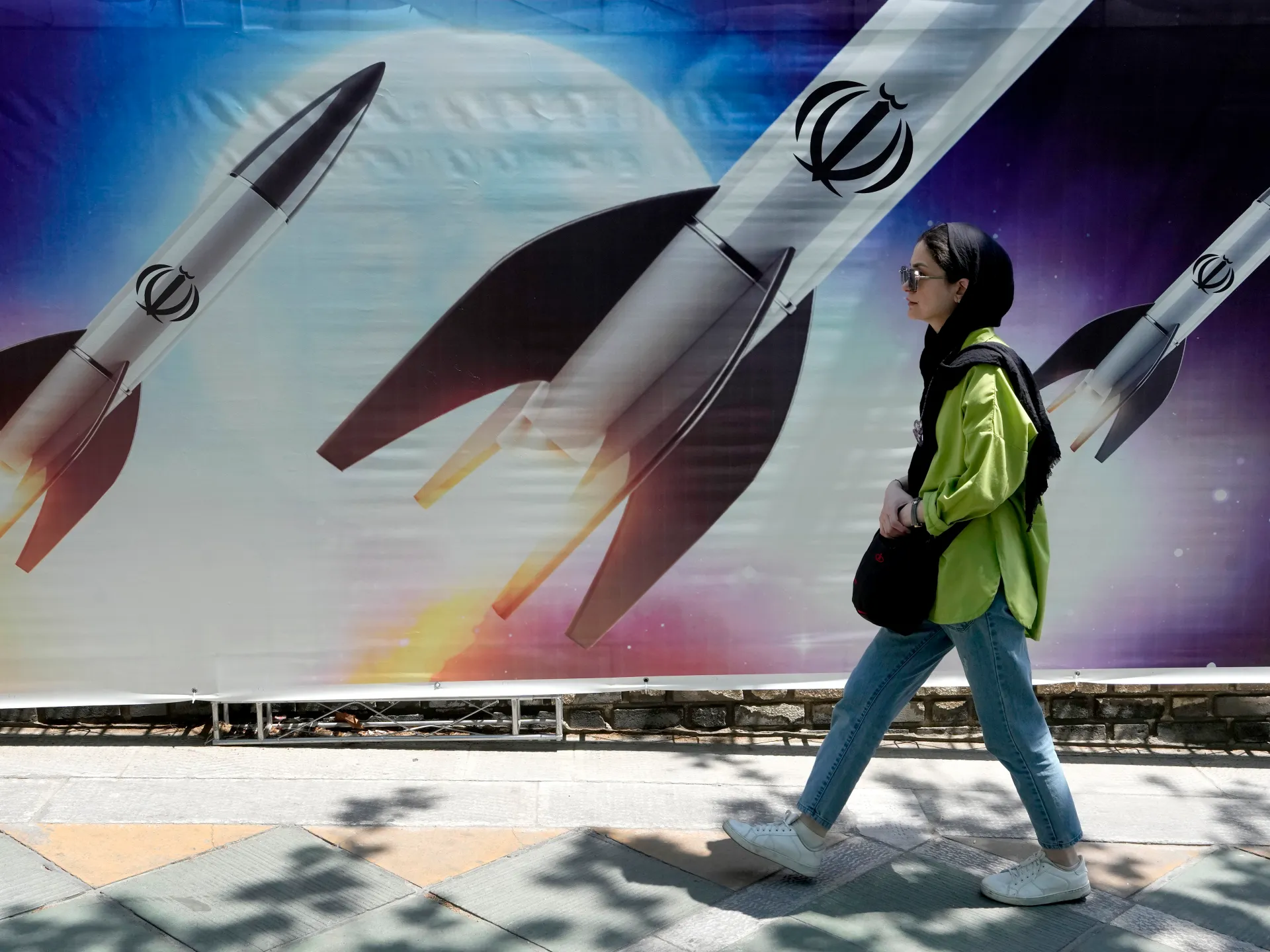
Iran has promised to respond harshly to any aggression after United States President Donald Trump threatened further military action, should Tehran attempt to rebuild its nuclear programme or missile capabilities.
President Masoud Pezeshkian issued the warning on X on Tuesday, a day after Trump met Prime Minister Benjamin Netanyahu at his Florida estate, where he firmly leaned into the Israeli regional narrative yet again.
The US had not previously said it would target Iran’s missile capabilities, which has long been an Israeli aspiration, focusing instead on Tehran’s nuclear programme. Iran has repeatedly said its nuclear activities are for civilian purposes only, and neither US intelligence nor the UN’s nuclear watchdog found any evidence of atomic weapons production before the June attacks by the US and Israel.
Iran has ruled out negotiating over its missile programme.
The leaders’ comments raise the spectre of renewed conflict just months after a devastating 12-day war in June that killed more than 1,100 Iranians and left 28 in Israel dead.
Pezeshkian said the response of Iran to any aggression would be “severe and regret-inducing”. His defiant message came hours after Trump told reporters at his Mar-a-Lago resort that Washington could carry out another major assault on Iran.
“Now I hear that Iran is trying to build up again, and if they are, we’re going to have to knock them down,” Trump said, standing alongside Netanyahu. “We’ll knock the hell out of them.”
The US president said he would support strikes on Iran’s nuclear programme “immediately” and on its missile facilities if Tehran continues developing long-range weapons.
Israeli officials have expressed concern in recent weeks that Iran is quietly rebuilding its ballistic missile stockpile, which was significantly depleted during the June conflict.
“If the Americans do not reach an agreement with the Iranians that halts their ballistic missile program, it may be necessary to confront Tehran,” an Israeli official told Ynet this week.
Pezeshkian recently described the standoff as a “full-scale war” with the US, Israel and Europe that is “more complicated and more difficult” than Iran’s bloody conflict with Iraq in the 1980s, which left more than one million dead.
The June war saw Israel launch nearly 360 strikes across 27 Iranian provinces over 12 days, according to conflict monitoring group ACLED, targeting military installations, nuclear facilities and government buildings.
The assault destroyed an estimated 1,000 Iranian ballistic missiles and killed more than 30 senior military commanders and at least 11 nuclear scientists.
Iran fired more than 500 missiles at Israel during the conflict, with approximately 36 landing in populated areas. While Trump claimed Iranian nuclear capabilities were “completely obliterated” by the strikes, experts disputed that, saying Tehran may have hidden stockpiles of enriched uranium and could resume production within months.
Despite the losses, Iranian officials insist the country is now better prepared for confrontation. In a recent interview, Pezeshkian said Iran’s military forces are “stronger in terms of equipment and manpower” than before the ceasefire.
The war failed to trigger the internal unrest it is suspected that Netanyahu had hoped for. No significant protests materialised, and daily life in Tehran largely continued despite the bombardment.
The intensity of the current backlash against Alaa Abdelfattah in Britain is striking – not because it reflects a renewed concern for justice, but because it exposes how selectively outrage is deployed.
Alaa, an Egyptian-British writer and activist, spent more than a decade in and out of Egyptian prisons following the 2011 uprising that toppled President Hosni Mubarak. His detention was marked by prolonged hunger strikes, denial of basic rights and treatment that human rights organisations described as cruel and degrading. He was released on September 23 after a years-long campaign by his mother, sister and close friends. A travel ban on him was lifted only this month, and he was able to join his family in the UK on December 26.
Alaa left behind a decade of repression in Cairo only to be welcomed in London with public attacks and a call for the revocation of his British citizenship and his deportation. Public hostility was whipped up by the uncovering of a social media post from 2010 in which Alaa said he considered “killing any colonialists … heroic”, including Zionists.
The tweet has been widely condemned, referred to the counter-terrorism police for review, and seized upon by politicians calling for punitive measures.
The speed and intensity of this reaction stand in stark contrast to the silence surrounding far more consequential statements and actions that the UK not only tolerates but actively enables.
This is what selective outrage looks like.
While Alaa’s words are dissected and framed as a moral emergency, the UK continues to host and collaborate with senior Israeli officials who have been accused of participating in and inciting genocide.
In July, for example, Israel’s air force chief Tomer Bar – the man who has overseen the carpet bombing of Gaza, destruction of hospitals, schools and homes and the extermination of entire families – was granted special legal immunity to visit the UK. Reporting by Declassified UK showed that this immunity shielded him from arrest for war crimes while on British soil.
There has been no comparable outcry over this.
Israeli President Isaac Herzog was also able to pay a visit to the UK in September and hold high-level meetings. This is the same man who, at the start of the genocide, suggested that the “entire [Palestinian] nation” is responsible and that “This rhetoric about civilians not aware, not involved – it’s not true.” This and other statements by Herzog have been collected in a large database that currently supports the genocide case against Israel at the International Court of Justice (ICJ).
Yet, despite being accused of incitement to genocide, the Israeli president entered the UK without a problem and was welcomed by Prime Minister Keir Starmer. Those quarters concerned about Alaa’s tweet displayed no outrage over the visit of a potential war criminal.
They have also been silent about British citizens who have travelled to serve in the Israeli military, including during Israel’s offensives in Gaza and the ongoing genocide. These operations, documented by the United Nations, Amnesty International and Human Rights Watch, have resulted in tens of thousands of civilian deaths, the destruction of hospitals and universities, and the devastation of entire neighbourhoods.
Despite extensive documentation of war crimes and crimes against humanity, and the ICJ’s warning of a serious risk of genocide, there has been no systematic investigation into whether British nationals may have been involved in violations of international law.
Again, there is little sustained outrage.
At the same time, the UK continues to license arms exports to Israel and to engage in political, military and intelligence cooperation. These policies have persisted even as international bodies have warned of grave humanitarian consequences and potential violations of international law. All of this unfolds with relatively little political cost.
And yet it is a decade-old tweet – not mass killing, not siege, not the destruction of civilian life on a vast scale, not incitement to genocide – that triggers political panic in the UK.
This contrast is not incidental. It reveals a hierarchy of outrage in which dissenting voices are policed and punished, and state violence is not, and in which public hostility is directed downward at individuals rather than upward at power. Alaa’s case shows how moral language is deployed selectively – not to restrain impunity, but to manage discomfort.
This asymmetry corrodes the credibility of the principles the UK claims to uphold. When human rights are defended selectively, they become tools of convenience rather than universal norms. When outrage is loud but inconsistent, it becomes performative. And when accountability is withheld from powerful allies, impunity hardens into policy.
Those who defend this approach often invoke “quiet diplomacy”, arguing that restraint is more effective than confrontation. Yet there is little evidence that silence has delivered accountability – either for Alaa or for civilians subjected to mass violence in Gaza. In both cases, discretion has functioned less as a strategy than as permission.
The UK has the tools to act differently: Suspending arms exports, investigating potential crimes by its nationals, conditioning cooperation on respect for international law, restricting visits by officials implicated in serious abuses. That these tools remain largely unused is itself revealing.
Until that changes, outrage will remain selective, accountability conditional, and impunity intact – widening the gap between the values the UK professes and the violence it continues to enable.
The views expressed in this article are the author’s own and do not necessarily reflect Al Jazeera’s editorial stance.
Protests have erupted across Somalia following Israel’s formal world-first recognition of the breakaway region of Somaliland, with demonstrators taking to the streets in multiple cities, including the capital, Mogadishu.
On Tuesday morning, large crowds gathered at locations including Mogadishu’s main football stadium and around the city’s airport, where protesters waved Somali flags and chanted slogans calling for national unity.
Recommended Stories
list of 3 itemsend of list
The demonstrations, which also took place in Baidoa, Dhusamareb, Las Anod, Hobyo and Somalia’s northeastern regions, came as President Hassan Sheikh Mohamud travelled to Istanbul for talks with his Turkish counterpart Recep Tayyip Erdogan following a stop in neighbouring Djibouti.
Somalia and Turkiye have close political and security ties, with Ankara emerging as a regional rival to Israel in recent months.
Small gatherings also took place in Borama, a city in western Somaliland, where the population has appeared more ambivalent about separation from Somalia, to express opposition.
Somaliland unilaterally declared independence in 1991 following a civil war, but has failed to gain international recognition despite maintaining its own currency, passport and army.
Somaliland’s leaders say the state is the successor to the former British protectorate, which voluntarily merged with Italian Somaliland and has now reclaimed its independence. Somalia continues to claim Somaliland as part of its territory and does not recognise its independence.
Israel became the first and only country to formally recognise it as a sovereign state last Friday, describing the move as being in the spirit of the Abraham Accords that normalised ties between Israel and several Arab nations.
President Mohamud urged Somaliland’s leadership over the weekend to reverse the decision, warning that its territory, overlooking the strategic gateway to the Red Sea, must not be used as a base for targeting other nations.
Yemen’s Houthi rebels have said any Israeli presence in Somaliland would be considered “a military target for our armed forces”.
Shortly after Somaliland announced mutual recognition with Israel on Friday, President Abdirahman Mohamed Abdullahi said the move “is not a threat, not an act of hostility” towards any state, and warned that Somalia’s insistence on unified institutions risks “prolonging divisions rather than healing” them.
The widespread public anger in Somalia reflects a rare show of political unity, where leaders across the spectrum have condemned Israel’s decision.
On Monday, the National Consultative Council — chaired by Mohamud and including the prime minister, federal state presidents and regional governors — rejected the recognition as an “illegal step” that threatens regional security stretching from the Red Sea to the Gulf of Aden.
Four federal member states issued coordinated statements over the weekend denouncing the move. However, Puntland and Jubbaland — both of which recently announced their withdrawal from Somalia’s federal system over electoral and constitutional disputes — have remained silent.
Most United Nations Security Council (UNSC) members slammed Israel’s recognition of Somaliland at a meeting convened on Monday in response to the move, which several countries said may also have serious implications for Palestinians in Gaza.
The United States was the only member of the 15-member body not to condemn Israel’s formal recognition at the emergency meeting in New York on Monday, although it said its own position on Somaliland had not changed.
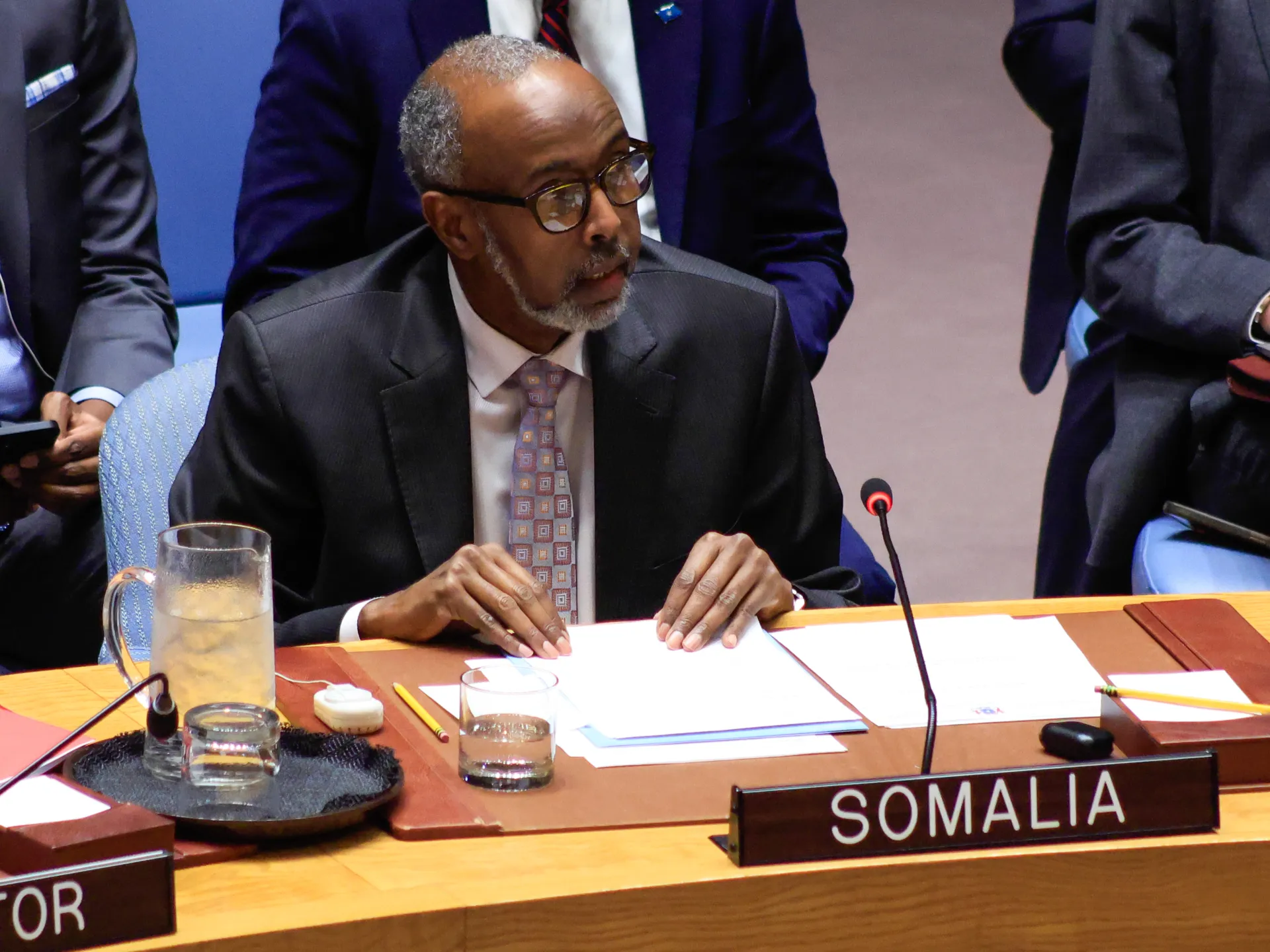
Somalia’s UN ambassador, Abu Bakr Dahir Osman, warned that the recognition “aims to promote the fragmentation of Somalia” and raised concerns it could facilitate the forced relocation of Palestinians from Gaza to northwestern Somalia, a fear echoed by several other nations.
“This utter disdain for law and morality must be stopped now,” he said.
US deputy representative Tammy Bruce told the council that “Israel has the same right to establish diplomatic relations as any other sovereign state”, though she added Washington had made “no announcement” regarding its own recognition of Somaliland.
Israel’s deputy UN ambassador, Jonathan Miller, defended the decision as “not a hostile step toward Somalia” and made the case to the UNSC for other countries to follow its lead.
Somalia’s state minister for foreign affairs, Ali Omar, thanked UNSC members for their “clear and principled” stance on the issue in a post on X.
Most United Nations Security Council (UNSC) members have slammed Israel’s recognition of Somaliland at a meeting convened in response to the move, which several countries said may also have serious implications for Palestinians in Gaza.
The United States was the only member of the 15-member body not to condemn Israel’s formal recognition of the breakaway region of Somalia at the emergency meeting in New York City on Monday, although it said its own position on Somaliland had not changed.
Recommended Stories
list of 4 itemsend of list
Addressing the UNSC, Somalia’s UN ambassador, Abu Bakr Dahir Osman, implored members to firmly reject Israel’s “act of aggression”, which he said not only threatened to fragment Somalia but also to destabilise the wider Horn of Africa and the Red Sea regions.
In particular, Osman said that Somalia was concerned the move could be aimed at advancing Israel’s plans to forcibly “relocate the Palestinian population from Gaza to the northwestern region of Somalia”.
“This utter disdain for law and morality must be stopped now,” he said.
The emergency meeting was called after Israel last week became the first and only country to recognise the self-declared Republic of Somaliland as an independent and sovereign state.
Al Jazeera’s Gabriel Elizondo, reporting from UN headquarters in New York, said that “14 of the 15 council members condemned Israel’s recognition of Somaliland”, while the US “defended Israel’s action but stopped short of following Israel’s lead”.
Tammy Bruce, the US deputy representative to the UN, told the council that “Israel has the same right to establish diplomatic relations as any other sovereign state”.
However, Bruce added, the US had “no announcement to make regarding US recognition of Somaliland, and there has been no change in American policy”.
Israel’s deputy ambassador to the UN, Jonathan Miller, told the council that Israel’s decision was “not a hostile step toward Somalia, nor does it preclude future dialogue between the parties”.
“Recognition is not an act of defiance. It is an opportunity,” Miller claimed.
Many other countries expressed concerns about Israel’s recognition of Somaliland, including the implications for Palestinians, in statements presented to the UNSC.
Speaking on behalf of the 22-member Arab League, its UN envoy, Maged Abdelfattah Abdelaziz, said the group rejected “any measures arising from this illegitimate recognition aimed at facilitating forced displacement of the Palestinian people, or exploiting northern Somali ports to establish military bases”.
Pakistan’s deputy UN ambassador, Muhammad Usman Iqbal Jadoon, said at the meeting that Israel’s “unlawful recognition of [the] Somaliland region of Somalia is deeply troubling”, considering it was made “against the backdrop of Israel’s previous references to Somaliland of the Federal Republic of Somalia as a destination for the deportation of Palestinian people, especially from Gaza”.
China and the United Kingdom were among the permanent UNSC members to reject the move, with China’s UN envoy, Sun Lei, saying his country “opposes any act to split” Somalia’s territory.
“No country should aid and abet separatist forces in other countries to further their own geopolitical interests,” Sun Lei said.
Some non-members of the UNSC also requested to speak, including South Africa, whose UN envoy, Mathu Joyini, said that her country “reaffirmed” Somalia’s “sovereignty and territorial integrity” in line with international law, the UN Charter and the constitutive act of the African Union.
Comparison with Palestinian recognition
In addition to defending Israel’s decision, US envoy Bruce compared the move to recognise Somaliland with Palestine, which has been recognised by more than 150 of the UN’s member states.
“Several countries, including members of this council, have unilaterally recognised a non-existent Palestinian state, yet no emergency meeting has been convened,” Bruce said, criticising what she described as the UNSC’s “double standards”.
However, Slovenia’s UN ambassador, Samuel Zbogar, rejected the comparison, saying, “Palestine is not part of any state. It is illegally occupied territory… Palestine is also an observer state in this organisation [the UN].”
“Somaliland, on the other hand, is a part of a UN member state, and recognising it goes against… the UN Charter,” Zbogar added.
The self-declared Republic of Somaliland broke away from Somalia in 1991, after a civil war under military leader Siad Barre.
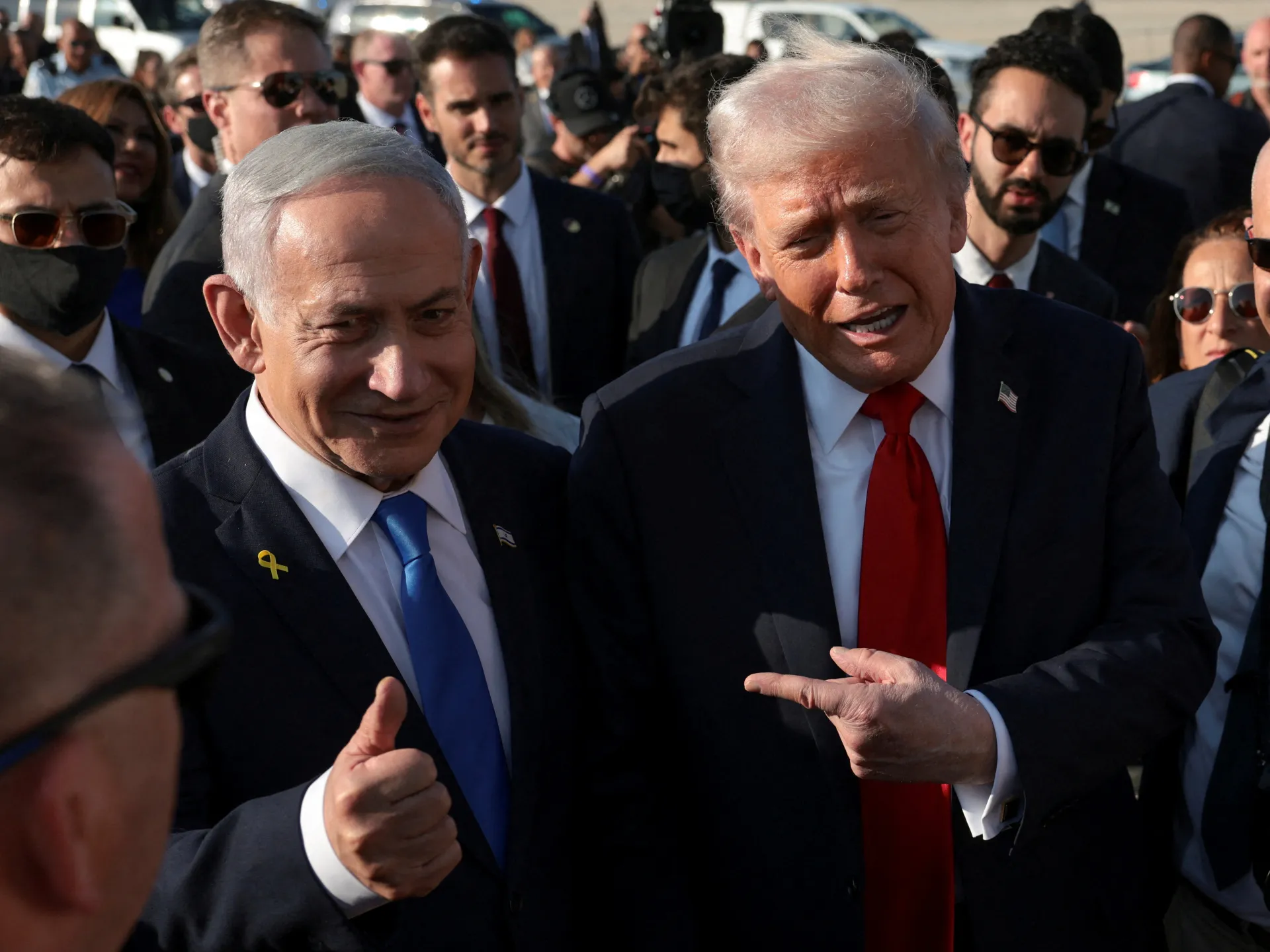
Israeli Prime Minister Benjamin Netanyahu and US President Donald Trump have presented a united front and heaped praise on each other as they held another meeting to discuss the tensions in the Middle East.
On Monday, Netanyahu paid his fifth visit to the United States since Trump’s inauguration in January, meeting the president at his Mar-a-Lago resort in Florida.
Recommended Stories
list of 3 itemsend of list
Their mutual flattery turned into geopolitical alignment as the two leaders addressed the most pressing issues in the Middle East: Gaza and Iran.
Trump claimed that Israel is helping the people of Gaza and dismissed the near-daily Israeli ceasefire violations.
Here are the key takeaways from Monday’s meeting.
Trump stresses Hamas must disarm
Before and after his meeting with Netanyahu, Trump stressed that Hamas must disarm, issuing a stern threat to the Palestinian group.
Asked what would happen if Hamas refused to give up its weapons, Trump said: “It would be horrible for them, horrible. It’s going to be really, really bad for them.”
Last week, US Secretary of State Marco Rubio said that Washington’s top priority was to move to the second phase of the ceasefire, which would see the establishment of a technocratic Palestinian administration and the deployment of an international police force.
But on Monday, Trump kept the focus on Hamas, reiterating the claim that other countries have offered to “wipe them out” if the group refuses to give up its weapons.
Israel has killed 414 Palestinians in Gaza since the start of the ceasefire in October, and it continues to restrict the flow of international aid into the territory, including temporary shelter provisions, despite people suffering deadly weather conditions in makeshift tents.
Trump, however, said that Israel is fully living up to its commitments under the deal – “100 percent”.
“I’m not concerned about anything that Israel is doing,” he told reporters.
US threatens Iran
Trump suggested that Washington would carry out further military action against Iran if Tehran rebuilds its nuclear programme or missile capacity.
The president kept returning to the oft-cited argument that the US air strikes against Iranian nuclear facilities in June are what paved the way for the ceasefire in Gaza.
“Now I hear that Iran is trying to build up again, and if they are, we’re going to have to knock them down,” Trump said.
“We’ll knock them down. We’ll knock the hell out of them. But, hopefully, that’s not happening.”
In recent weeks, Israeli officials and their US allies have shifted the focus to Iran’s missile programme, arguing it should be dealt with before it poses a threat to Israel.
When asked whether the US would back an Israeli attack targeting Iran’s missile programme, Trump said, “If they will continue with the missiles, yes. The nuclear? Fast. OK? One will be: Yes, absolutely. The other is: We’ll do it immediately.”
Iran has ruled out negotiating over its missile programme, and it has denied seeking to build a nuclear weapon.
Israel, meanwhile, is widely believed to have an undeclared nuclear arsenal.
Bromance festival
Since the early days of Israel’s genocidal war on Gaza, US media reports have suggested that the US president, first Joe Biden, then Trump, was angry or frustrated at Netanyahu.
But the US military and diplomatic support for Israel has never been interrupted.
Ahead of Netanyahu’s visit, similar reports emerged about a potential rift between him and Trump.
Nonetheless, the two leaders put on a show of brotherly romance on Monday.
Trump called Netanyahu a “hero”, stressing that Israel may not have existed without his wartime leadership.
“We’re with you, and we’ll continue to be with you, and a lot of good things are happening in the Middle East,” Trump told Netanyahu.
“We have peace in the Middle East, and we’re going to try and keep it that way. I think we will be very successful in keeping it that way. And you’ve been a great friend.”
The US president also highlighted his efforts to secure a presidential pardon for Netanyahu, who is facing corruption charges in Israel.
The Israeli prime minister announced that the US president will be awarded the Israel Prize, which is normally given to Israeli citizens.
“I have to say that this reflects the overwhelming sentiment of Israelis across the spectrum,” Netanyahu said.
“They appreciate what you’ve done to help Israel, and to help our common battle against the terrorists and those who would destroy our civilisation.”
Netanyahu has notably not been pardoned.
Trump calls for Israel-Syria rapprochement
One area where Trump appeared to press Netanyahu was Syria.
Trump said Netanyahu is “going to get along” with Syria, lauding Syrian President Ahmed al-Sharaa.
Since the fall of former President Bashar al-Assad last year, Israel has expanded its occupation of southern Syria beyond the Golan Heights, seizing large areas in Jabal al-Sheikh. The Israeli military has also been carrying out raids, reportedly abducting and disappearing people in the country.
The new Syrian authorities have stressed that they do not seek conflict with Israel, but talks to reach a security agreement between the two countries have stalled.
“We do have an understanding regarding Syria,” Trump said. “Now, with Syria, you have a new president. I respect him. He’s a very strong guy, and that’s what you need in Syria.”
Netanyahu was non-committal on Israel’s approach to Syria.
“Our interest is to have a peaceful border with Syria,” he said. “We want to make sure that the border area right next to our border is safe — we don’t have terrorists, we don’t have attacks.”
On renewed war in Lebanon: ‘We’ll see about it.’
Since the start of the truce in Gaza, Israel has intensified its attacks in Lebanon, leading to fears that it may re-launch its full-scale war against the country.
Earlier this year, the Lebanese government issued a decree to disarm Hezbollah, but the group pledged to hold onto its weapons to defend the country against Israel.
On Monday, Trump did not rule out renewing the conflict in Lebanon.
“We’ll see about it,” the president said when asked whether he would support more Israeli strikes in Lebanon.
“The Lebanese government is at a little bit of a disadvantage, if you think of it, with Hezbollah. But Hezbollah has been behaving badly, so we’ll see what happens.”
Somalia says it is concerned the recognition serves as a pretext for the forced relocation of Palestinians.
Israel’s recognition of Somaliland, a breakaway region of Somalia, is a “direct and grave threat to international peace and security”, Somalia has said.
In a letter penned to the United Nations Security Council (UNSC) on Monday, Somalia rejected the move as a violation of its sovereignty, calling it “morally indefensible”.
Recommended Stories
list of 4 itemsend of list
Last week, Israel became the first country to formally recognise the self-declared Republic of Somaliland as an independent and sovereign state. Israel described the move as being in the spirit of the United States-brokered Abraham Accords, which normalised ties between Israel and several Arab countries.
“We further note with deep concern reports that this recognition may serve as a pretext for the forced relocation of Palestinians to Northwestern Somalia,” Somalia’s letter to the UNSC stated.
“Israel’s actions not only set a dangerous precedent and risk destabilising the Horn of Africa and the Red Sea region but also undermine collective efforts and pose a serious threat to regional and international peace and security,” Somalia also stated in the letter, urging UNSC members to uphold its sovereignty.
Abu Bakr Dahir Osman, Somalia’s representative to the UNSC, echoed the letter’s sentiments,
“This region [Somaliland] is not legally entitled to enter into any agreement or arrangement, nor to receive recognition from any other state,” Osman said.
“This act of aggression aims to promote the fragmentation of Somalia and must be rejected and condemned unequivocally by all Member States,” he added.
Recognition rejected
The United Kingdom on Monday said that it does not recognise the independence of Somaliland, and reaffirmed its support for Somalia’s sovereignty and territorial integrity.
It urged efforts between the Federal Government of Somalia and the Somaliland authorities to “address differences and work together to face common threats”, stating that armed groups benefited from internal divisions in the country.
“No country should encourage or support other countries’ internal separatist forces for its own selfish interests,” Chinese Ministry of Foreign Affairs spokesperson Lin Jian told reporters at a regular news conference.
South Africa’s Foreign Ministry, the Department of International Relations and Cooperation, on Monday urged the international community to “reject this external interference and support a united, stable Somalia”.
However, Tammy Bruce, the US deputy representative to the UN, said that “Israel has the same right to establish diplomatic relations as any other sovereign state”.
“Several countries, including members of this Council, have unilaterally recognised a non-existent Palestinian state, yet no emergency meeting has been convened,” Bruce added, chiding what she said were the UNSC’s “double standards”.
“We have no announcement to make regarding the recognition of Somaliland, and there has been no change in US policy,” Bruce added.
Somaliland broke away from Somalia in 1991, after a civil war under military leader Siad Barre. The self-declared republic controls part of northwestern Somalia and has its own constitution, currency and flag.
It claims the territory of the former British Somaliland protectorate, but its eastern regions remain under the control of rival administrations loyal to Somalia. It has sought international acceptance for more than three decades without success.
Residents of Somaliland’s capital city, Hargeisa, have been celebrating Israel’s declaration
Israel has taken the controversial decision to recognise the breakaway state of Somaliland as an independent nation, sparking condemnation from many other countries.
China is the latest to condemn the decision, with its foreign ministry spokesperson Lin Jian telling reporters: “No country should encourage or support other countries’ internal separatist forces for its own selfish interests.”
China outlined its position ahead of the UN Security Council holding an emergency session to discuss Israel’s decision.
Israel on Friday became the first country in the world to acknowledge Somaliland as a standalone republic, more than 30 years after the region declared independence from Somalia.
Somaliland’s president called the development “a historic moment”, but Somalia furiously rejected Israel’s move as an attack on its sovereignty.
Dozens of countries and organisations, such as Turkey, Saudi Arabia and the African Union, have also condemned Israel’s surprise declaration.
Why does Somaliland want independence?
A breakaway, semi-desert territory on the coast of the Gulf of Aden, Somaliland declared independence after the overthrow of Somali military dictator Siad Barre in 1991.
The move followed a secessionist struggle during which Siad Barre’s forces pursued rebel guerrillas in the territory. Tens of thousands of people were killed and towns were flattened.
Though not internationally recognised, Somaliland has a working political system, government institutions, a police force, and its own currency.
Its history as a distinct region of Somalia dates back to nineteenth century colonial rule. It was a British protectorate – known as British Somaliland – until it merged with Italian Somaliland in 1960 to form the Somali Republic.
Those in favour of Somaliland’s independence argue that the region is predominantly populated by those from the Isaaq clan – an ethnic difference from the rest of Somalia.
However, Somalia considers Somaliland to be an integral part of its territory. The government in Somalia’s capital city, Mogadishu, has repeatedly said that any recognition of Somaliland’s independence would contravene Somalia’s sovereignty.
Somali President Hassan Sheikh Mohamud has also characterised Israel’s declaration as an “existential threat” to his country’s unity.
Why did Israel recognise Somaliland as an independent state?
In a phone call with Somaliland President Abdirahman Mohamed Abdullahi on Friday, Israeli Prime Minister Benjamin Netanyahu said his country was acknowledging Somaliland’s “right of self-determination”.
He also said official recognition would be “a great opportunity for expanding” the countries’ partnership.
However analysts say there are strategic reasons for Israel’s declaration.
“Israel requires allies in the Red Sea region for many strategic reasons, among them the possibility of a future campaign against the Houthis,” Israeli think tank the Institute for National Security Studies said, referring to Yemen’s Iran-backed rebels, in a paper last month.
“Somaliland is an ideal candidate for such cooperation as it could offer Israel potential access to an operational area close to the conflict zone.”
Israel repeatedly struck targets in Yemen after the Gaza war broke out in October 2023, in response to Houthi attacks on Israel that the rebels said were in solidarity with Palestinians in the Gaza Strip.
In response to Israel recognising Somaliland, the Houthis warned that any Israeli presence in Somaliland would be considered a “military target” for their forces.
A few months ago, a number of news outlets reported that Israel had contacted Somaliland over the potential resettlement of Palestinians forcibly removed from Gaza.
Israel did not comment on the reports, but at the time, Somaliland said that any move by Israel to recognise its independence would not have anything to do with the Palestinian issue. Both Somalia and the Palestinian Authority have suggested Israel’s recognition of Somaliland could be linked to a plan to displace Palestinians.
“Somalia will never accept the people of Palestine to be forcibly evicted from their rightful land to a faraway place,” Somalia’s president told his parliament on Sunday.
Offering his perspective, US-based Africa analyst Cameron Hudson told the BBC that Israel has recognised Somaliland primarily because it is trying to counter Iran’s influence in the Red Sea region.
“The Red Sea is also a conduit for weapons and fighters to flow up the Red Sea into the Eastern Mediterranean. It has traditionally been a source of support and supply to fighters in Gaza. And so having a presence, having a security presence, having an intelligence presence at the mouth of the Red Sea only serves Israel’s national security interests,” he said.
Why has Israel’s move been condemned so widely?
Israel has been criticised by the likes of Egypt, Turkey, Saudi Arabia, the African Union, Yemen, Sudan, Nigeria, Libya, Iran, Iraq and Qatar.
In their condemnations, many of these countries have referred to Somalia’s “territorial integrity” and the breaching of international principles.
The African Union has long been concerned that recognising Somaliland could set off a chain reaction, where separatists could demand recognition for the territories they claim.
“Regions could attempt to establish external alliances without the consent of central governments, creating a dangerous precedent that risks widespread instability,” Abdurahman Sayed, a UK-based analyst for the Horn of Africa, told the BBC.
Is there any support for Israel’s declaration?
Countries considered to be allies of Somaliland, or sympathetic to the region’s campaign for recognition, have largely remained quiet.
For instance, the United Arab Emirates (UAE), which operates a military port in Somaliland, has not released a statement.
Mr Hudson told the BBC that the UAE is “very much aligned with the Israelis on this question of Somaliland”.
“I think even now today you’re going to see an alignment of Israeli and Emirati interests across the entire Red Sea region,” he added.
Mr Abdurahman said Turkey stepped in to mediate between Somalia and Ethiopia. It led Ethiopia to sign an agreement with Somalia’s government, committing to respect its territorial integrity.
“As a result, although Israel’s unilateral recognition of Somaliland may be quietly welcomed by Ethiopia, Addis Ababa appears to have adopted a cautious “wait-and-see” approach,” the analyst added.
Somalilanders had hoped the US would recognise it as an independent state following signals given before Donald Trump began his second term as president.
But in response to Israel’s declaration, Trump suggested to the New York Post that he would not swiftly follow Netanyahu’s lead.
“Does anyone know what Somaliland is, really?,” he reportedly said.
PALM BEACH, Fla. — President Trump is scheduled to meet with Israeli Prime Minister Benjamin Netanyahu Monday, as Washington looks to create fresh momentum for a U.S.-brokered ceasefire in Gaza that could be in danger of stalling before a complicated second phase.
Trump could use the face-to-face at his Mar-a-Lago estate in Florida to try to leverage his strong relationship with Netanyahu and look for ways to speed up the peace process. Before that, Netanyahu met separately with Secretary of State Marco Rubio.
The ceasefire between Israel and Hamas that Trump championed has mostly held, but progress has slowed recently. Both sides accuse each other of violations, and divisions have emerged among the U.S., Israel and Arab countries about the path forward.
The truce’s first phase began in October, days after the two-year anniversary of the initial Hamas-led attack on Israel that killed about 1,200 people. All but one of the 251 hostages taken then have been released, alive or dead.
The Israeli leader has signaled he is in no rush to move forward with the next phase as long as the remains of Ran Gvili are still in Gaza. Netanyahu’s office said he met with Gvili’s parents in Florida.
Now comes the next, far more complicated part. Trump’s 20-point plan — which was approved by the U.N. Security Council — lays out an ambitious vision for ending Hamas’ rule of Gaza.
Iran and other topics likely to come up
The two leaders also are expected to discuss other topics, including Iran, whose nuclear capabilities Trump insists were “completely and fully obliterated” after U.S. strikes on its nuclear sites in June. Israeli officials have been quoted in local media as expressing concern about Iran rebuilding its supply of long-range missiles capable of striking Israel.
There are many key facets of the ceasefire’s second phase that Israel’s leader doesn’t support or has even openly opposed, said Mona Yacoubian, director and senior adviser of the Middle East program at the Center for Strategic and International Studies.
“This is going to be a really tall order, I think, for President Trump to get Netanyahu to agree,” she said.
“How he does that, what kind of pressure he puts on Netanyahu, I think, is going to be important to watch for,” said Yacoubian, who also said the two could exhibit ”a broader clash of approaches to the region.”
Next phase is complex
If successful, the second phase would see the rebuilding of a demilitarized Gaza under international supervision by a group chaired by Trump and known as the Board of Peace. The Palestinians would form a “technocratic, apolitical” committee to run daily affairs in Gaza, under Board of Peace supervision.
It further calls for normalized relations between Israel and the Arab world, and a possible pathway to Palestinian independence. Then there are thorny logistical and humanitarian questions, including rebuilding war-ravaged Gaza, disarming Hamas and creating a security apparatus called the International Stabilization Force.
The Board of Peace would oversee Gaza’s reconstruction under a two-year, renewable U.N. mandate. Its members had been expected to be named by the end of the year and might even be revealed after Monday’s meeting, but the announcement could be pushed into next month.
Netanyahu was the first foreign leader to meet Trump at the White House in his second term, but this will be their first in-person meeting since Trump went to Israel in October to mark the start of the ceasefire’s initial phase. Netanyahu has been to Mar-a-Lago before, including in July 2024 when Trump was still seeking reelection.
Much remains unsettled
Their latest meeting comes after U.S. Mideast envoy Steve Witkoff and the president’s son-in-law, Jared Kushner, recently huddled in Florida with officials from Egypt, Qatar and Turkey, which have been mediating the ceasefire.
Two main challenges have complicated moving to the second phase, according to an official who was briefed on those meetings. Israeli officials have been taking a lot of time to vet and approve members of the Palestinian technocratic committee from a list given to them by the mediators, and Israel continues its military strikes.
Trump’s plan also calls for the stabilization force, proposed as a multinational body, to maintain security. But it, too, has yet to be formed. Whether details will be forthcoming after Monday’s meeting is unclear.
A Western diplomat said there is a “huge gulf” between the U.S.-Israeli understanding of the force’s mandate and that of other major countries in the region, as well as European governments.
All spoke on the condition of anonymity to provide details that haven’t been made public.
The U.S. and Israel want the force to have a “commanding role” in security duties, including disarming Hamas and other militant groups. But countries being courted to contribute troops fear that mandate will make it an “occupation force,” the diplomat said.
Hamas has said it is ready to discuss “freezing or storing” its arsenal of weapons but insists it has a right to armed resistance as long as Israel occupies Palestinian territory. One U.S. official said a potential plan might be to offer cash incentives in exchange for weapons, echoing a “buyback” program Witkoff has previously floated.
Questions about Gaza reconstruction
One displaced man in Khan Yunis, Iyad Abu Sakla, said Trump needed to urge Netanyahu to allow Palestinians to return to their homes. Under the agreement, most Palestinians are permitted in a zone just under half the size of Gaza.
“We are exhausted. This displacement is bad; it’s cold and freezing. Enough lying to us and enough insulting our intelligence,” Sakla said.
Israeli bombardment and ground operations have transformed neighborhoods across Gaza into rubble-strewn wastelands, with blackened shells of buildings and mounds of debris stretching in all directions.
Egypt, Qatar, Saudi Arabia and Turkey are pressing for a negotiated deal on disarming Hamas and on additional Israeli withdrawal from Gaza before moving to next elements of the plan, including deployment of the international security force and reconstruction, three Arab officials said.
Three other officials, including two Americans, said the United Arab Emirates has agreed to fund reconstruction, including new communities, although they said plans have not been settled.
All the officials spoke on condition of anonymity to discuss internal deliberations between the various countries. The UAE did not respond to multiple requests for comment.
Weissert, Mednick and Magdy write for the Associated Press. AP writers Darlene Superville in Washington and Lee Keath and Fatma Khaled in Cairo contributed to this report.

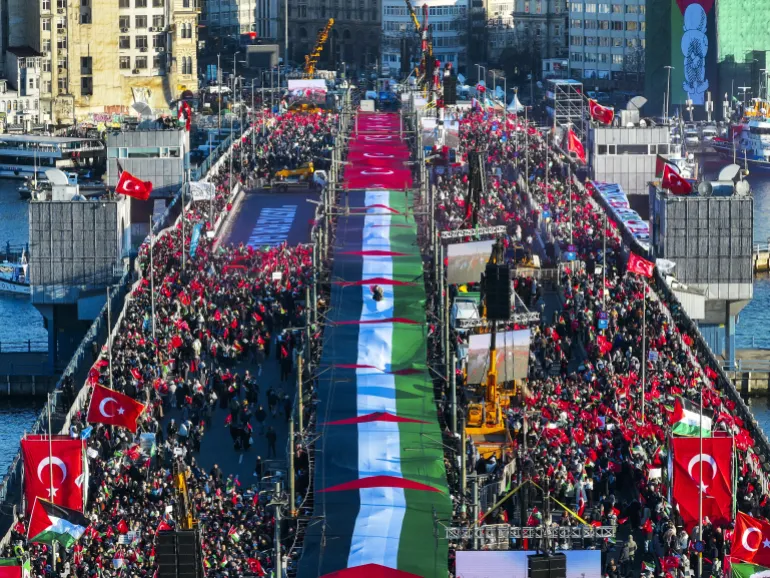



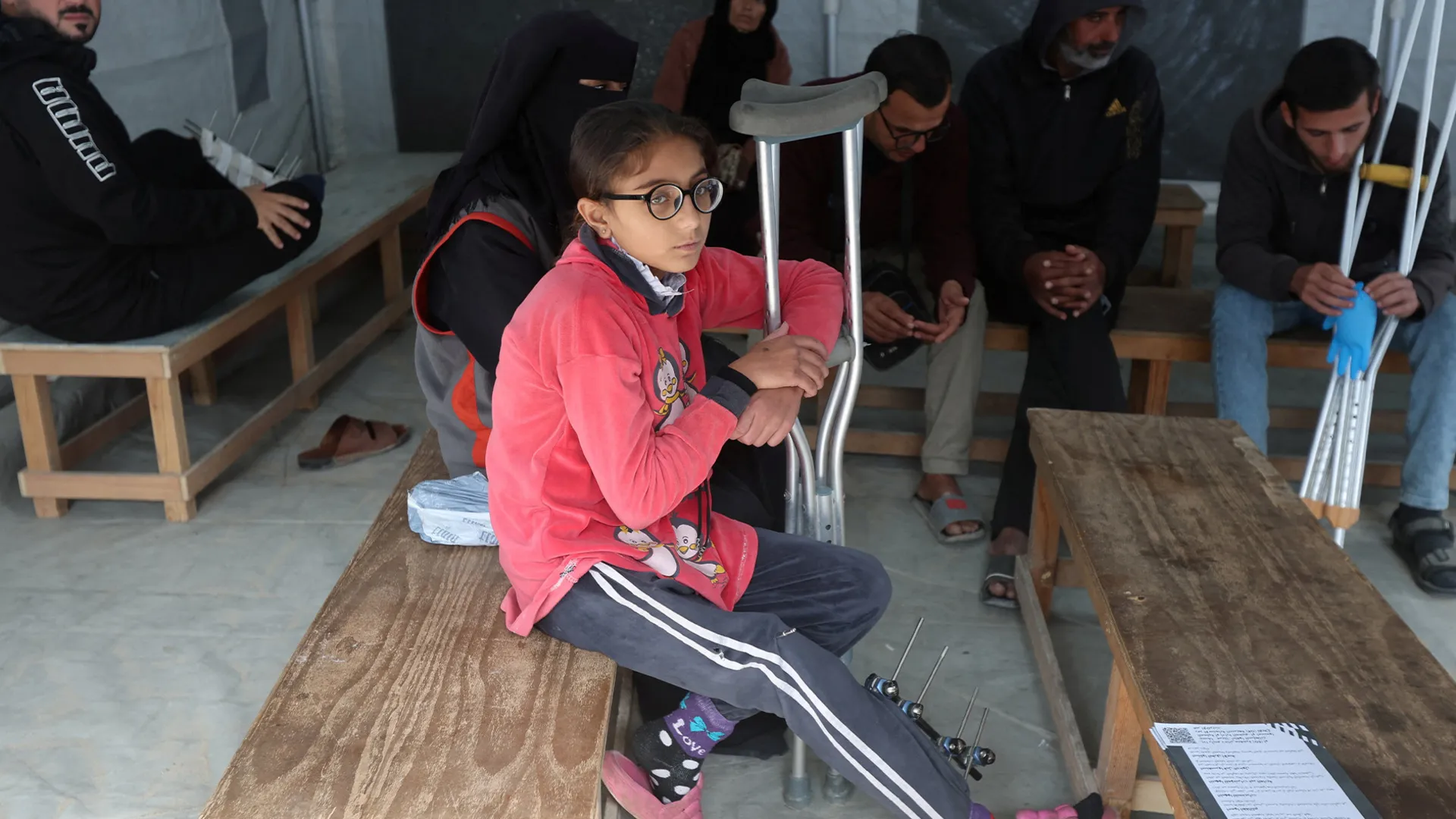


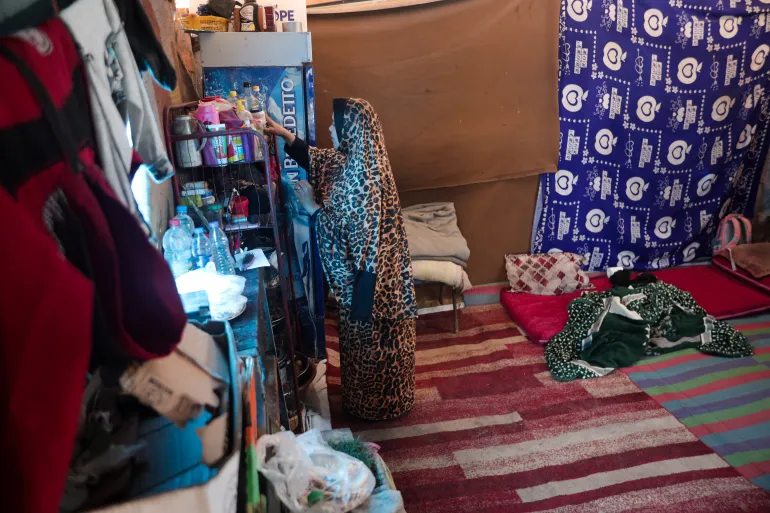
![During the famine, Sana’a’s greatest wish was to provide a loaf of bread for her seven children, amid a six-month-long blockade that prevented food and goods from entering [Abdelhakim Abu Riash/Al Jazeera]](https://i0.wp.com/www.aljazeera.com/wp-content/uploads/2025/12/873A1745-1767205773.jpg?w=640&ssl=1)
![Sana’a sits with her children inside their tent, holding on to hope that living conditions will improve in the coming year [Abdelhakim Abu Riash/ Al Jazeera]](https://i0.wp.com/www.aljazeera.com/wp-content/uploads/2025/12/873A1784-1767206217.jpg?w=640&ssl=1)
![Batoul Abu Shawish, 20, lost her entire family in an Israeli strike that targeted their home in Nuseirat during the ceasefire in November 2025 [Abdelhakim Abu Riash/ Al Jazeera]](https://i0.wp.com/www.aljazeera.com/wp-content/uploads/2025/12/873A1950-1767206334.jpg?w=640&ssl=1)
![Batoul holds a photo on her phone showing her with her family, including her father, mother, and siblings Muhammad, Youssef, Tayma, and Habiba [Abdelhakim Abu Riash/Al Jazeera]](https://i0.wp.com/www.aljazeera.com/wp-content/uploads/2025/12/873A2057-1767206534.jpg?w=640&ssl=1)
![Batoul stands in front of the rubble of her destroyed home, where she was trapped for about an hour before being rescued when it was hit [Abdelhakim Abu Riash/ Al Jazeera]](https://i0.wp.com/www.aljazeera.com/wp-content/uploads/2025/12/873A1970-1767206634.jpg?w=640&ssl=1)
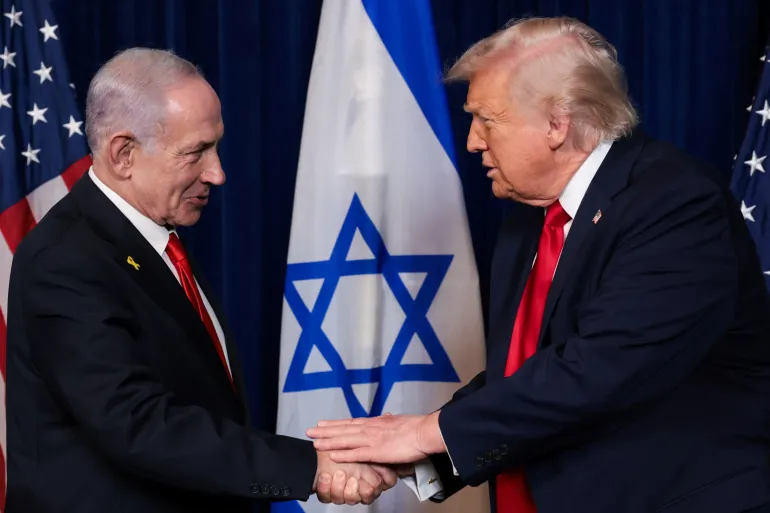


![Israeli far-right Finance Minister Bezalel Smotrich holds a map of an area near the settlement of Maale Adumim, a land corridor known as E1, outside Jerusalem in the occupied West Bank, on August 14, 2025, after a press conference at the site. [Menahem Kahana/AFP]](https://i0.wp.com/occasionaldigest.com/wp-content/uploads/2025/12/AFP__20250814__69HV6DR__v1__HighRes__IsraelPalestinianConflictSettlementPolitics-1755194568.jpg?w=640&ssl=1)
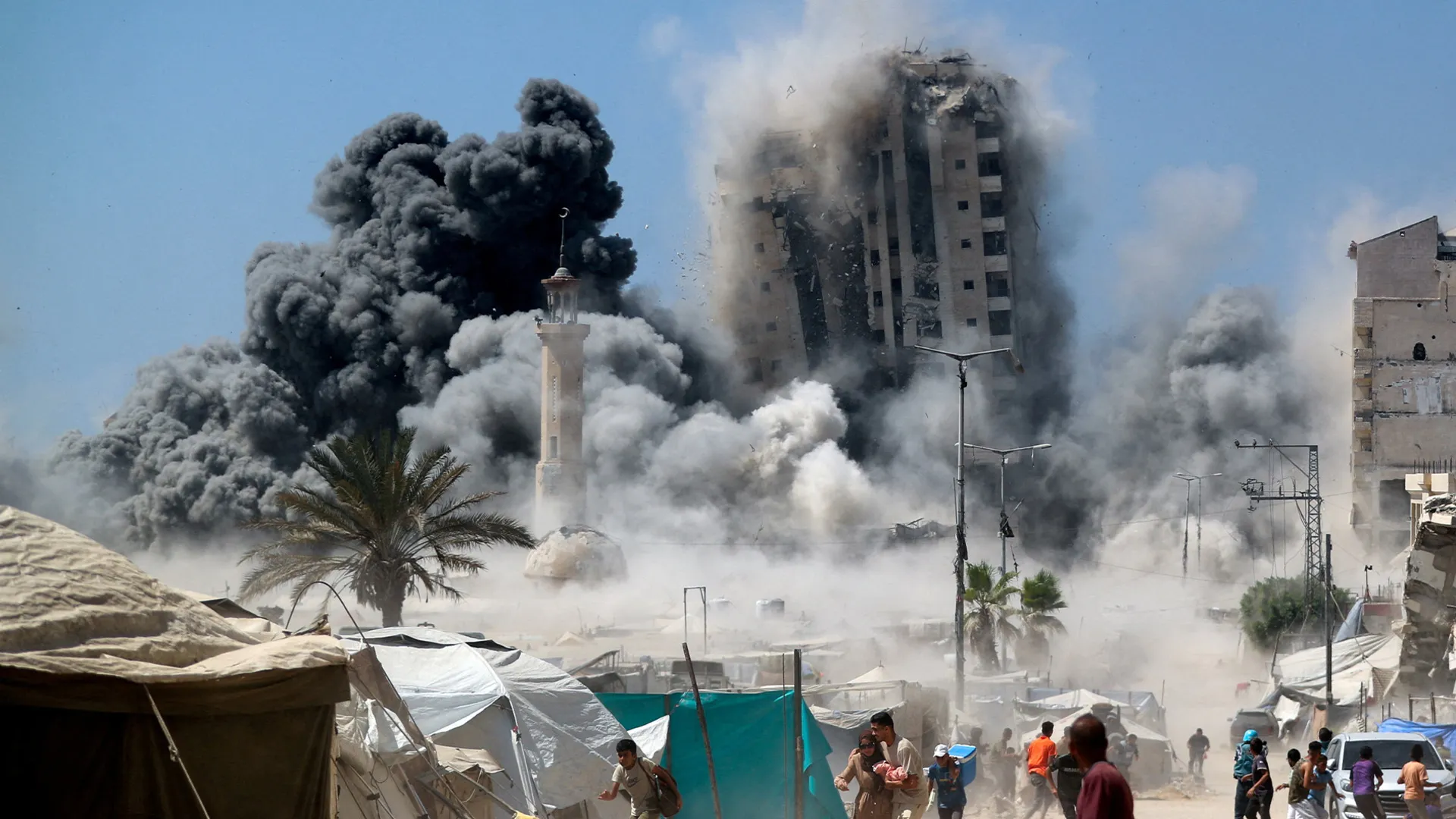
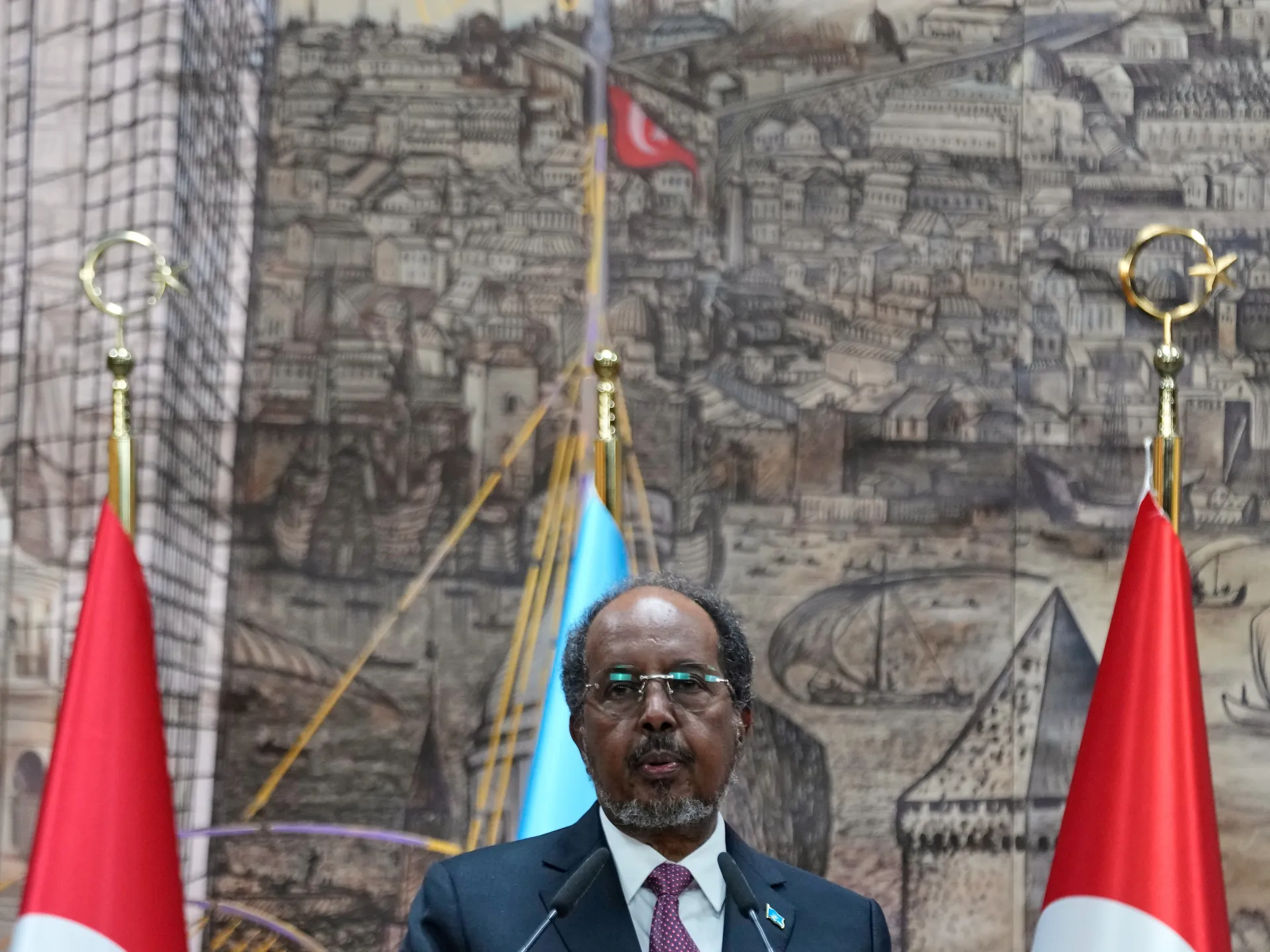
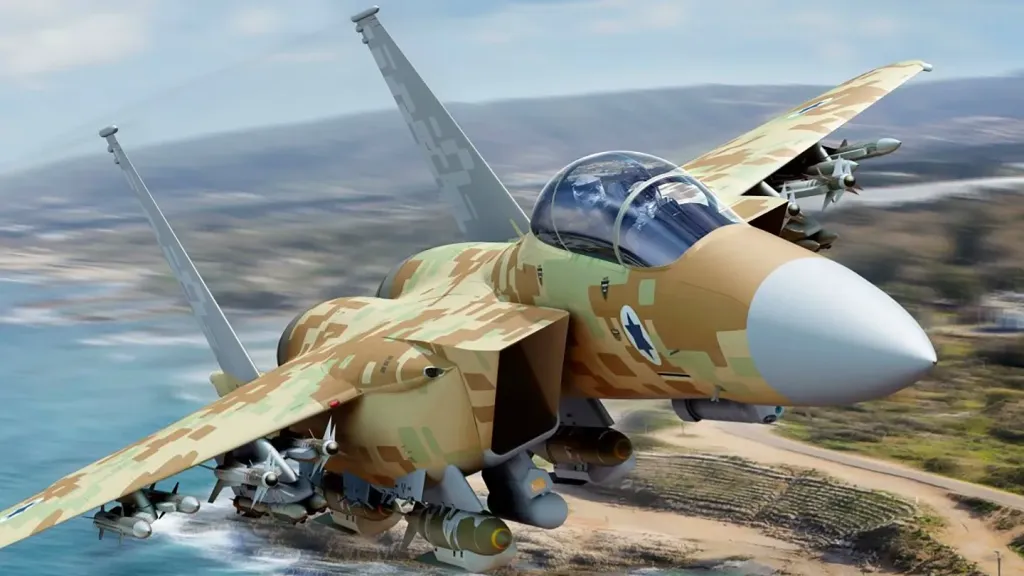


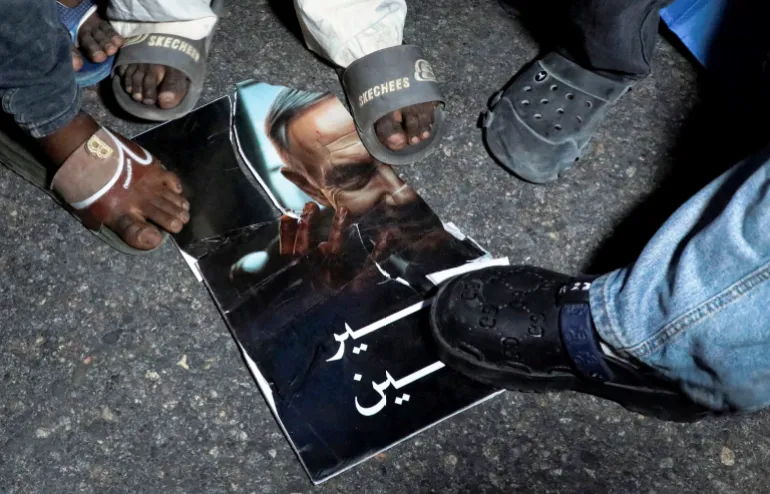

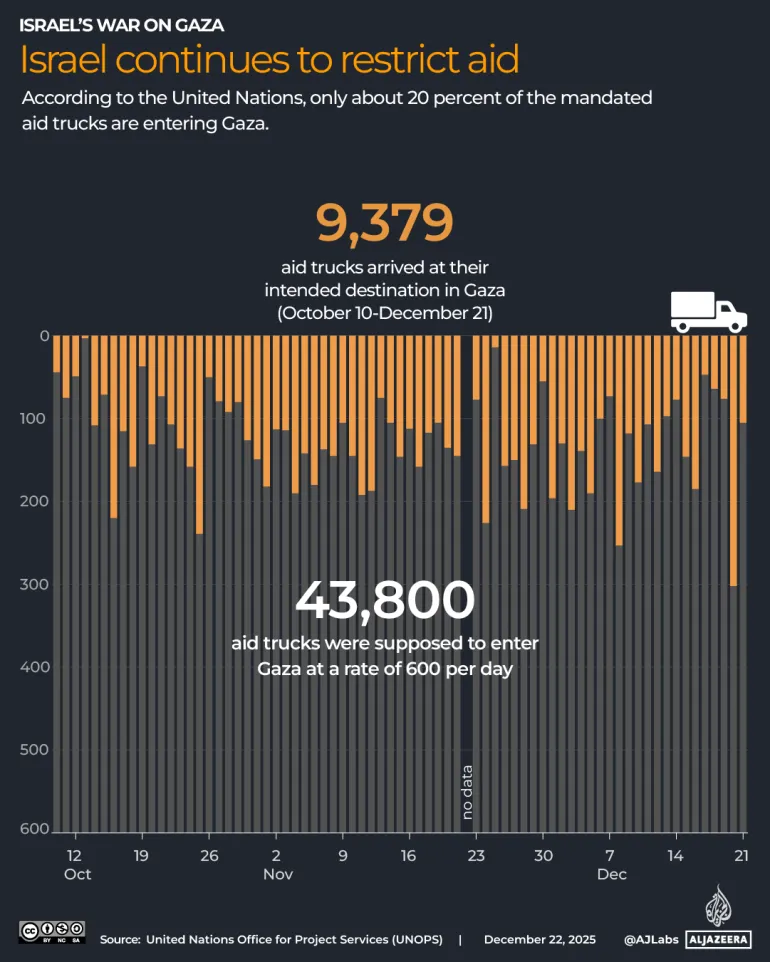

![[Al Jazeera]](https://i0.wp.com/www.aljazeera.com/wp-content/uploads/2025/04/Interactive_Gaza_foodaid_timeline-1742987531-1744365779.webp?w=640&ssl=1)