ANOTHER rival to Eurostar and Virgin has revealed they will be launching new trains between the UK and Europe.
Ferrovie dello Stato Italiane (FS Group) are Italy‘s state-owned railway operator, and previously bid to launch trains from London to Paris.
Sign up for the Travel newsletter
Thank you!
FS Group could take on Eurostar and Virgin in new plansCredit: AFP
However, they were beaten by Virgin to become the first rival to Eurostar since it launched back in the 1990s.
Despite this, new plans revealed by The Telegraph has shown that they still plan to run routes between the two European capitals.
Instead of keeping trains at the UK Temple Mills International depot used by Eurostar and soon by Virgin, they will instead build a new £87million facility just outside Paris.
This will allow them to keep 10 Channel Tunnel trains there, without facing problems of capacity in the UK.
The initial direct routes will be to Paris, Brussels and Amsterdam, which Eurostar currently operates to and from.
However, there are future plans for trains to France, Germany and Switzerland.
Both Ashford International and Ebbsfleet International stations would also get Virgin trains, with both having Eurostar trains until the pandemic.
Virgin boss Sir Richard Branson said: It’s time to end this 30-year monopoly and bring some Virgin magic to the cross-Channel route.
“Virgin is no stranger to delivering award-winning rail services, and just as we have successfully challenged incumbents in air, cruise and rail, we’re ready to do it again.
“We’re going to shake-up the cross-Channel route for good and give consumers the choice they deserve.”
While a western German city slept through the Christmas holidays, thieves drilled into a bank vault and vanished with millions.
Robbers broke into a vault at a savings bank in western Germany during the Christmas holidays, stealing cash, gold and jewellery estimated to be worth up to $105m, the police and the bank said.
According to police on Tuesday, the perpetrators used a large drill to bore through a thick concrete wall of a branch of Sparkasse bank in the city of Gelsenkirchen, in North Rhine-Westphalia state. Breaking in from an adjacent parking garage, the thieves gained access to an underground vault room and forced open more than 3,000 safe deposit boxes.
Recommended Stories
list of 4 itemsend of list
Thomas Nowaczyk, a police spokesperson, said investigators believe the total value of the stolen items could range between 10 and 90 million euros ($11.7m and $105.7m).
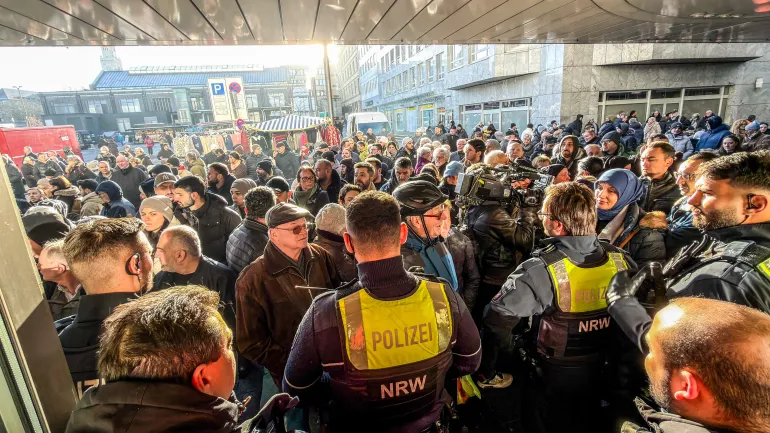
Police and concerned bank customers stand in front of a branch of the Sparkasse bank in Gelsenkirchen, western Germany, on December 30, 2025, after the bank was robbed [AFP]
German news agency dpa reported that the robbery may rank among the biggest in the country’s history.
Sparkasse confirmed that the branch had been “broken into over the Christmas holidays”, saying that “more than 95 percent of the 3,250 customer safe deposit boxes were broken into by unknown perpetrators”.
The crime is believed to have taken place while businesses were closed for the extended Christmas break. Police suspect the gang may have remained inside the building for several days, using the long holiday weekend to break into the deposit boxes undetected.
The theft only came to light in the early hours of Monday, when a fire alarm was triggered. Emergency responders who arrived at the scene discovered the hole leading into the vault.
Witnesses later told police they had seen several men carrying large bags through the parking garage stairwell overnight between Saturday and Sunday.
Security camera footage also showed a black Audi RS 6 leaving the garage early on Monday morning, with masked individuals inside. The vehicle was later identified as having a licence plate belonging to a car stolen in Hanover, more than 200km (124 miles) northeast of Gelsenkirchen.
Ocean’s Eleven-esque
A police spokesman described the operation as highly organised, comparing it with a Hollywood-style robbery resembling Ocean’s Eleven.
The break-in was “indeed very professionally executed”, he told the AFP news agency.
“A great deal of prior knowledge and/or a great deal of criminal energy must have been involved to plan and carry this out,” he added.
Emergency responders discovered a giant hole in the wall of the bank’s vault after unknown thieves broke into a Sparkasse bank branch during the Christmas holidays [Handout: Police Gelsenkirchen via AFP]
Police said the average insured value of each deposit box was more than 10,000 euros ($11,700). However, officers said several victims had reported that the contents of their boxes were worth significantly more than the insured amount.
On Tuesday, hundreds of customers gathered outside the bank, demanding answers. The branch remained closed for security reasons after threats were reportedly made against staff.
“I couldn’t sleep last night. We’re getting no information,” one man told the Welt broadcaster, saying he had used the safe deposit box for 25 years and stored his retirement savings there.
Nowaczyk, the police spokesperson, said officers remained at the scene to monitor the situation. “We’re still on site, keeping an eye on things,” he said, adding that “the situation has calmed down considerably”.
The bank said it had set up a hotline for affected customers and would contact them in writing as soon as possible. It added that it was working with insurers to determine how compensation claims would be handled.
“We are shocked,” said bank press spokesperson Frank Krallmann. “We are standing by our customers, and hope that the perpetrators will be caught.”
Police said the suspects remain at large, and investigations are ongoing.
A spokesperson for the Sparkasse bank in Gelsenkirchen did not immediately respond to a request for comment.
These are the key developments from day 1,406 of Russia’s war on Ukraine.
Published On 31 Dec 202531 Dec 2025
Share
Here is where things stand on Wednesday, December 31:
Fighting
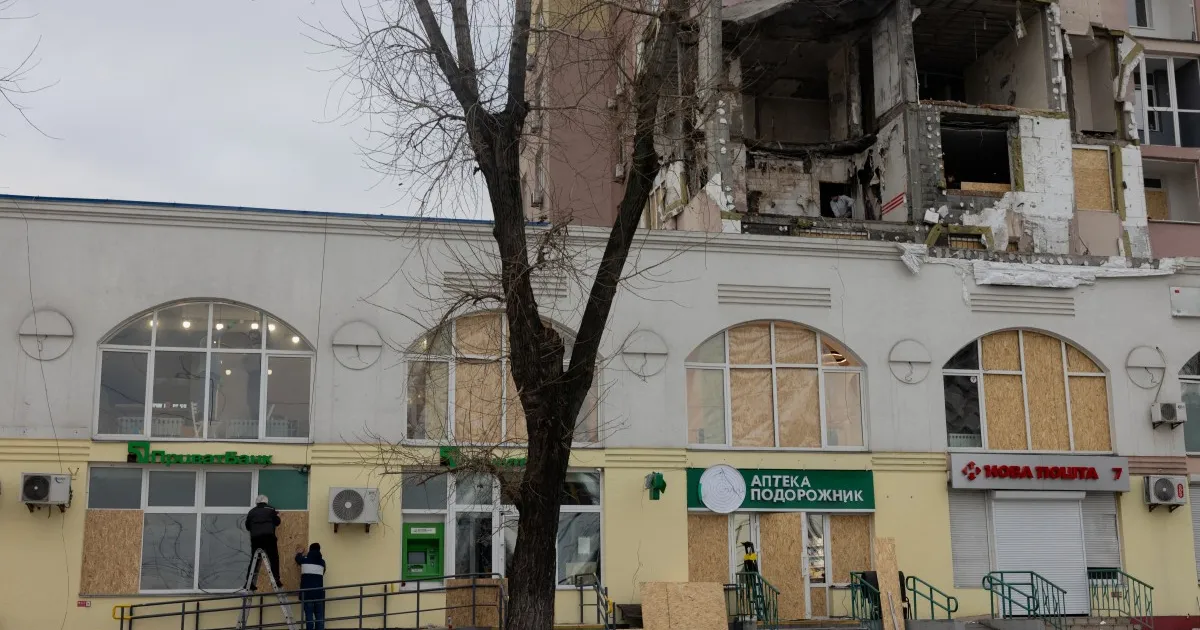
Russian forces shelled the town of Kostiantynivka in Ukraine’s Donetsk region, killing one person, an official said. The deadly attack came a day after an attack in Druzhkivka killed another person and wounded four, according to the Ukrinform news agency.
Russian forces also launched waves of attacks on the Black Sea ports of Pivdennyi and Chornomorsk in Ukraine’s Odesa region, hitting two Panama-flagged civilian vessels – Emmakris III and Captain Karam – as they approached to load wheat, the Ukrainian navy said.
Ukrainian Deputy Prime Minister Oleksii Kuleba said that oil storage tanks were also hit in the port attacks.
Authorities in Ukraine’s northern Chernihiv region introduced a mandatory evacuation order for the residents of 14 border villages in four districts. The order will affect some 300 people who still live in the Novhorod-Siverskyi, Semenivka, Snovsk, and Horodnya communities, which have been experiencing daily shelling, an official said.
Ukrainian Deputy Minister of Energy Olha Yukhymchuk said that 75,000 households in Chernihiv remain without electricity following Russian attacks on energy infrastructure in the region. There were also settlements in the Kharkiv and Sumy regions that were fully or partially without electricity, she said.
Yukhymchuk also said that repair work had been completed on transmission lines near the Zaporizhzhia nuclear power plant to ensure “stable and reliable power supply to the station in the event of damage or shutdown of the Dniprovska overhead line due to” Russian shelling.
Russia’s Ministry of Defence said it had taken control of two more settlements in eastern Ukraine. It identified them as the village of Lukianivske in the Zaporizhia region and the settlement of Bohuslavka in the Kharkiv region.
Russian authorities said that a Ukrainian drone attack on the Russian Black Sea port of Tuapse damaged port infrastructure and a gas pipeline in a residential area there. The regional administration said no injuries were reported.
Other Ukrainian drone attacks on Russia’s Belgorod region killed a woman and wounded four other people, local authorities said.
Alleged attack on Putin’s residence
Kremlin spokesman Dmitry Peskov said that Russia will “toughen” its negotiating position in talks on a deal to end the war in Ukraine as a “diplomatic consequence” of an alleged attempted drone attack on Russian President Vladimir Putin’s residence in northwestern Russia’s Novgorod on Sunday.
Peskov said the attack, which Ukraine denies, was aimed at collapsing the peace talks and accused Western media of playing along with Kyiv’s denial.
Ukraine has dismissed the Russian claim as lies aimed at justifying additional attacks against Kyiv and prolonging the war.
Ukrainian Minister of Foreign Affairs Andrii Sybiha said Russia had not provided any plausible evidence of its accusations. “And they won’t. Because there’s none. No such attack happened,” Sybiha said on X.
Ukrainian President Volodymyr Zelenskyy slammed countries, including India and the United Arab Emirates, that have condemned the alleged attack, which he said “didn’t even happen”. He called the moves “confusing and unpleasant”.
China said “dialogue and negotiation” remain the only “viable way out of the Ukraine crisis”, when asked for a comment on the alleged attack on Putin’s residence.
Lin Jian, a spokesperson for China’s Ministry of Foreign Affairs, also called on “relevant parties to follow the principles of no expansion of the battlefield, no escalation of fighting and no provocation by any party”, to work towards the de-escalation of the situation, and to “accumulate conditions for the political settlement of the crisis”.
The Institute for the Study of War, a Washington, DC-based think tank, said that its analysts found that the “circumstances” of the alleged attack did not fit the “pattern of observed evidence” usually seen “when Ukrainian forces conduct strikes into Russia”.
The US ambassador to NATO, Matthew Whitaker, cast doubt on Russia’s accusation, saying he wants to see US intelligence on the incident. “It is unclear whether it actually happened,” Whitaker told Fox Business’s Varney & Co.
The German government also said it shares Ukraine’s concern that Russian allegations of the attack could be used as a pretext for further escalation of Moscow’s war.
Diplomacy
Zelenskyy said that Ukraine and the Coalition of the Willing group of nations backing Kyiv plan to hold their next meetings at the start of January. Zelenskyy said that the countries’ national security advisers would meet in Ukraine on January 3, and with the leaders in France on January 6.
He also told reporters that Kyiv was discussing with US President Donald Trump the possible presence of US troops in Ukraine as part of security guarantees.
“Of course, we are discussing this with President Trump and with representatives of the [Western] coalition [supporting Kyiv]. We want this. We would like this. This would be a strong position of the security guarantees,” the Ukrainian president said.
Polish Prime Minister Donald Tusk told officials that there is reason to hope for peace in Ukraine quite soon. “Peace is on the horizon; there is no doubt that things have happened that give grounds for hope that this war can end, and quite quickly, but it is still a hope, far from 100 percent certain,” he said.
Tusk said security guarantees offered to Kyiv by the US were a reason to hope the conflict could end soon, but that Kyiv would need to compromise on territorial issues.
The US removed sanctions on Alexandra Buriko, the former chief financial officer of Russia’s state-owned Sberbank, according to the US Treasury Department.
Buriko was among a group of senior executives and board members who resigned from Western-sanctioned Sberbank shortly after Russia’s full-scale invasion of Ukraine in 2022. She sued the Treasury Department in a Washington federal court in December 2024, arguing she had severed ties with Sberbank days after it was sanctioned and that her continued inclusion on the sanctioned list was unlawful.
Weapons
Romania’s Ministry of Foreign Affairs announced that the country would spend 50 million euros ($58m) to support a European initiative to buy weapons made by US companies for Ukraine, known as the Priority Ukraine Requirements List (PURL).
Belarus released a video of what it said was the deployment on its territory of the Russian nuclear-capable hypersonic Oreshnik missile system, a development meant to bolster Moscow’s ability to strike targets across Europe in the event of a war.
Footage shows a massive hole in the vault of Sparkasse Bank in Gelsenkirchen, Germany, where thieves made off with valuables estimated to be worth between 10 and 90 million euros ($11.7 to 105.7 million), police said. Angry customers assembled outside the bank on Tuesday demanding answers.
Russia has threatened to retaliate against Ukraine after alleging that nearly 100 drones had targeted one of Russian President Vladimir Putin’s residences.
The threat on Monday was made as United States President Donald Trump tries to broker a peace agreement to end the war in Ukraine, which will enter its fifth year in February.
Recommended Stories
list of 4 itemsend of list
What has Russia claimed?
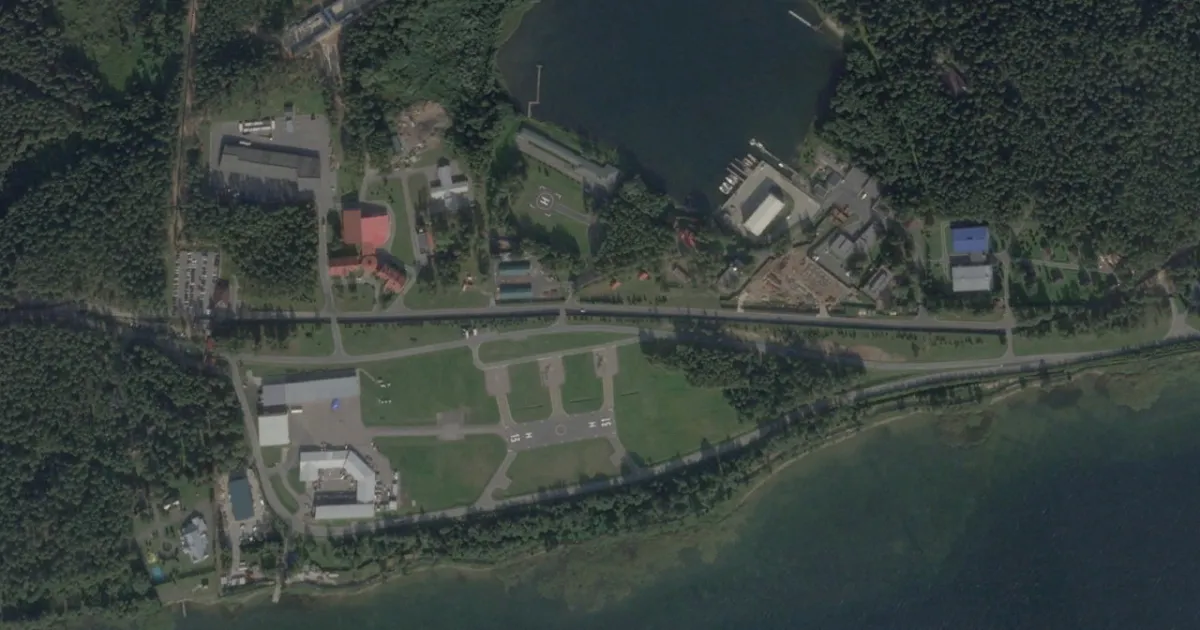
On Monday, Russian Foreign Minister Sergey Lavrov alleged that Ukraine had launched the attack on the Valdai residence, one of Putin’s residences in the Novgorod region in northwestern Russia. The property is 360km (225 miles) north of Moscow.
Lavrov told reporters that Ukraine had launched 91 drones towards the residence. He added that air defence systems shot down the drones and no one was injured.
The Russian Ministry of Defence said 49 of the drones were shot down over the Bryansk region, one was shot down over the Smolensk region and 41 were shot down over the Novgorod region while en route.
“Such reckless actions will not go unanswered,” Lavrov said. “The targets for retaliatory strikes and the timing of their implementation by the Russian armed forces have been determined.”
Russian officials accused Ukraine and its president, Volodymyr Zelenskyy, of carrying out the strike to derail the prospects of a peace agreement.
In an apparent reference to Zelenskyy, Russian Security Council Deputy Chairman Dmitry Medvedev wrote on X: “The stinking Kiev b**tard is trying to derail the settlement of the conflict. He wants war. Well, now at least he’ll have to stay in hiding for the rest of his worthless life.”
Kremlin foreign policy aide Yury Ushakov said the strike took place on Sunday “practically immediately after” talks were held in Florida between Trump and Zelenskyy on ending Russia’s war on Ukraine.
After that meeting, Trump and Zelenskyy had voiced optimism, saying a peace deal between Russia and Ukraine was “close”.
Putin has not publicly commented on the attack yet. It is unclear where Putin was at the time of the attack, but he was holding meetings in the Kremlin on Saturday and Monday.
How has Ukraine responded?
Zelenskyy has strongly denied Russia’s allegation that Ukraine attacked one of Putin’s residences.
“Russia is at it again, using dangerous statements to undermine all achievements of our shared diplomatic efforts with President Trump’s team,” Zelenskyy wrote in an X post on Monday.
“This alleged ‘residence strike’ story is a complete fabrication intended to justify additional attacks against Ukraine, including Kyiv, as well as Russia’s own refusal to take necessary steps to end the war.”
Ukrainian Foreign Minister Andrii Sybiha also condemned Moscow’s claims, saying they were designed to undermine the negotiations.
In a post on X, Sybiha said the claim was intended “to create a pretext and false justification for Russia’s further attacks against Ukraine, as well as to undermine and impede the peace process”.
In another post on Tuesday, Sybiha wrote: “Almost a day passed and Russia still hasn’t provided any plausible evidence to its accusations of Ukraine’s alleged ‘attack on Putin’s residence.’ And they won’t. Because there’s none. No such attack happened.”
How has Trump reacted?
Trump appeared to accept the Russian version of events on Monday when he told reporters: “It’s one thing to be offensive. It’s another thing to attack his house. It’s not the right time to do any of that. And I learned about it from President Putin today. I was very angry about it.”
But when reporters asked Trump if US intelligence agencies had evidence of the alleged attack, Trump said: “We’ll find out.”
Congressman Don Bacon, a member of Trump’s Republican Party, criticised the president for accepting the Russian account of events without assessing the facts.
“President Trump and his team should get the facts first before assuming blame. Putin is a well known boldface liar,” Bacon wrote in an X post.
How have other world leaders reacted?
Like Trump, other leaders appeared to accept the Russian allegations.
In a statement released on Monday, the United Arab Emirates Ministry of Foreign Affairs wrote: “The United Arab Emirates has strongly condemned the attempt to target the residence of His Excellency Vladimir Putin, President of the Russian Federation, and denounced this deplorable attack and the threat it poses to security and stability.”
Indian Prime Minister Narendra Modi wrote in an X post on Tuesday: “Deeply concerned by reports of the targeting of the residence of the President of the Russian Federation.”
Modi added that the ongoing diplomatic engagement being led by the US is the “most viable path” towards achieving peace. “We urge all concerned to remain focused on these efforts and to avoid any actions that could undermine them.”
Pakistani Prime Minister Shehbaz Sharif also condemned the alleged attack.
“Pakistan condemns the reported targeting of the residence of His Excellency Vladimir Putin, President of the Russian Federation. Such a heinous act constitutes a grave threat to peace, security, and stability, particularly at a time when efforts aimed at peace are underway,” Sharif wrote on X.
“Pakistan expresses its solidarity with the President of the Russian Federation, and with the government and people of Russia.”
Have Putin’s residences previously been attacked?
Russia has made previous claims of Ukrainian attacks on Putin’s residences, including on the Kremlin, Putin’s official residence and main workplace.
In May 2023, Moscow alleged that Ukraine had deployed two drones to attack Putin’s residence in the Kremlin citadel but said its forces had disabled the drones. Kyiv denied any involvement.
On December 25, 2024, Russia alleged that it had intercepted and destroyed a Ukrainian drone also targeting the Kremlin. Kyiv again denied responsibility.
Conversely, Ukraine has alleged that Russia has attacked Kyiv and other government buildings in Ukraine.
In September, the Ukrainian military said a Russian drone attack damaged a government building in Kyiv that is home to Ukraine’s cabinet. Plumes of smoke were seen emerging from the building. Russia said it had targeted Ukrainian military infrastructure only.
What has Russia now threatened to do?
While Russia has not outright threatened to end the peace talks, Moscow said it would realign its position in the talks.
“The diplomatic consequence will be to toughen the negotiating position of the Russian Federation,” Kremlin spokesman Dmitry Peskov told reporters on Tuesday.
Russian Ministry of Foreign Affairs spokesperson Maria Zakharova warned that Moscow’s response “would not be diplomatic”. Indeed, it has warned that it plans to hit back militarily but has given no details of how or when it might do this.
Will this derail the US-led peace talks?
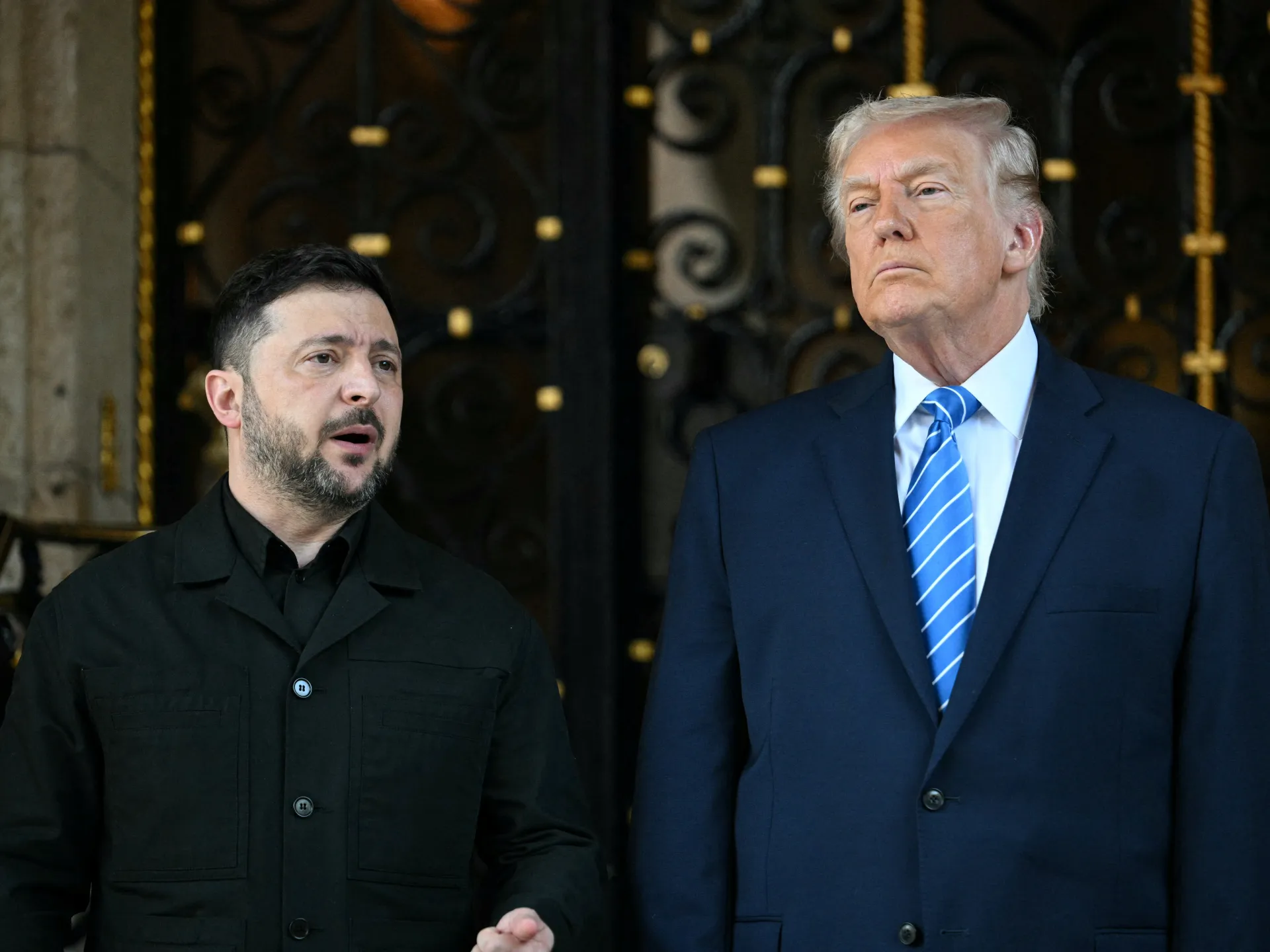
Speaking to reporters after his “terrific” meeting with Zelenskyy on Sunday at his Mar-a-Lago residence in Palm Beach, Florida, Trump told reporters that Moscow and Kyiv were “closer than ever” to a peace deal.
But Trump has made this claim several times before. In April, Trump said Russia and Ukraine were “very close to a deal” after Trump’s envoy Steve Witkoff met with Putin in Moscow.
On December 15, Trump also said Russia and Ukraine were “closer than ever” to a deal after talks in Berlin involving Zelenskyy and the leaders of France, Germany, the United Kingdom and NATO.
However, observers and analysts said the issue of territorial concessions remains a major sticking point. Trump’s 28-point peace plan for Ukraine, which he unveiled in November, involved Ukraine ceding large amounts of land that Russia has occupied during nearly four years of war. Zelenskyy has stated on numerous occasions that this is a line Ukraine will not cross.
Most analysts are sceptical that any progress has been made on this point and said the latest accusations against Ukraine will probably have little effect. “I don’t think there is anything to derail at this point,” said Marina Miron, an analyst at King’s College London.
The peace process “is not going well due to disagreements on key issues between Ukraine and Russia”, she told Al Jazeera.
“Trump has repeatedly claimed that a peace deal is close without sustainable agreement,” Keir Giles, a Russian military expert at the London think tank Chatham House, told Al Jazeera this month.
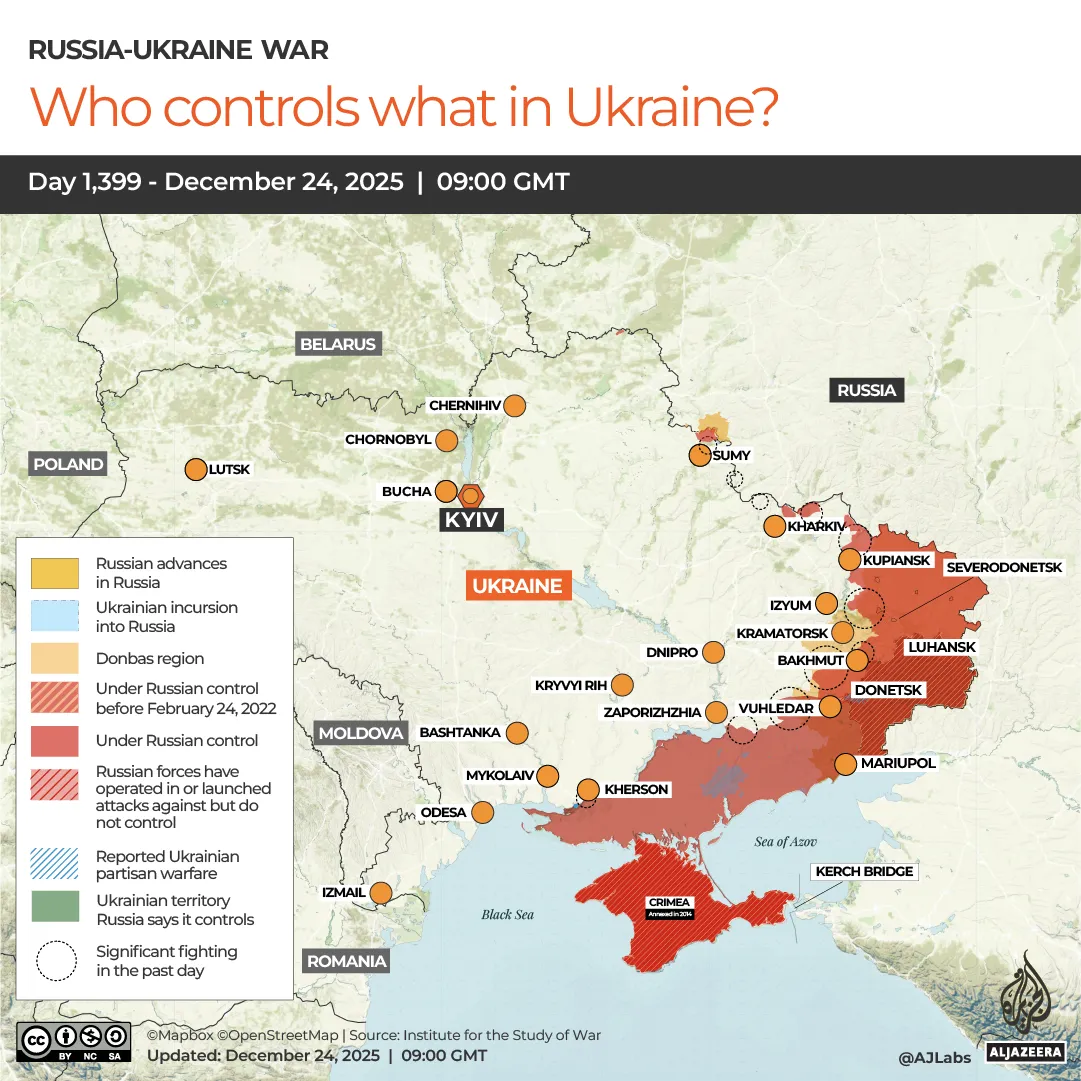
Russia has occupied nearly 20 percent of eastern Ukraine and has been slowly gaining territory as Ukraine’s military has been weakened by desertions, casualties and dwindling military aid. Moscow annexed Ukraine’s Crimean Peninsula in 2014.
(Al Jazeera)
“It’s probably impossible that Ukrainians will voluntarily withdraw from these territories unless we will also see a withdrawal of Russian forces on the other side,” Nathalie Tocci, director at the Rome-based think tank Istituto Affari Internazionali (Institute of International Affairs), told Al Jazeera.
Giles said there are still parallel negotiation tracks, however – one involving the US and Ukraine and another between Ukraine and European nations. He added, however, that there is no clear evidence that these efforts are fully coordinated or aligned in terms of strategy.
Russia says it will take a more hardline stance in negotiations on ending the war in Ukraine after claiming Kyiv tried to attack a Russian presidential residence – allegations Ukraine says Moscow has fabricated to justify further aggression.
Kremlin spokesperson Dmitry Peskov told reporters on Tuesday that the alleged drone attack on one of President Vladimir Putin’s residences in Novgorod, a region in northwestern Russia, had been intended to derail recent diplomatic efforts to negotiate an end to the conflict.
“This terrorist action is aimed at collapsing the negotiation process,” Peskov said, adding that Russia’s military knows when and how it will respond.
“The diplomatic consequence will be to toughen the negotiating position of the Russian Federation.”
Russia said on Monday that Putin’s residence had been targeted by Ukraine with 91 long-range drones that had been shot down by air defence systems with no one injured.
‘No such attack happened’
Ukraine has denied that the attack took place, calling the Russian allegations “false claims” intended to undermine the peace process.
In a post on X, Ukrainian Minister of Foreign Affairs Andrii Sybiha said Moscow had not provided any plausible evidence to back up its accusations.
“And they won’t. Because there’s none. No such attack happened,” he said on Tuesday.
Sybiha said Russia has “a long record of false claims”, calling them its “signature tactic”.
“They also often accuse others of what they themselves plan to do,” he said. “Their words should never be taken at face value.”
He added that Ukraine was ”disappointed and concerned“ by statements by the United Arab Emirates, India and Pakistan expressing concern over what he said was an attack that never happened.
Asked by reporters whether Russia could provide evidence of the drone attack, Peskov said air defences shot the drones down but the question of wreckage was for the Ministry of Defence.
He said attempts by Ukraine and Western media to deny the incident were “insane”.
No evidence has been provided by Russia. The Defence Ministry has issued only a statement that said 91 drones had been shot down while they were heading to Putin’s Novgorod residence, which is about 360km (225 miles) north of Moscow.
Speaking on Monday, United States President Donald Trump, who has spearheaded the push to broker peace in Ukraine, said he had been informed of the alleged attack in a phone call with Putin.
“I was very angry about it,” he said, adding that he would find out whether there was evidence to support the allegation.
European leaders hold talks
The dispute over the attack played out as key leaders from Europe and Canada held discussions on advancing the peace process.
After the talks, German Chancellor Friedrich Merz posted on social media that the group was “moving the peace process forward”.
“Transparency and honesty are now required from everyone – including Russia,” he wrote.
In the wake of the meeting, Polish Prime Minister Donald Tusk said at a government meeting that he believed peace could be achieved in Ukraine in a matter of weeks.
“Peace is on the horizon. There is no doubt that things have happened that give grounds for hope that this war can end, and quite quickly, but it is still a hope, far from 100 percent certain,” Tusk said.
“When I say peace is on the horizon, I’m talking about the coming weeks, not the coming months or years. By January, we’ll all have to come together … to make decisions about the future of Ukraine, the future of this part of the world.”
He said security guarantees offered by Washington to Kyiv gave a reason to believe the conflict could end soon but Ukraine would need to compromise on territorial issues.
Russia wants Kyiv to withdraw its troops from the parts of the Donbas region in eastern Ukraine that Moscow has failed to occupy in almost four years of war.
It remains the key sticking point in the talks, ceding territory or not.
Kyiv wants fighting halted along the current front lines, and Washington has proposed a free economic zone if Ukraine pulls its forces back.
Zelenskyy has insisted Kyiv won’t give up land and the nation’s constitution also forbids it.
Black Sea ports attacked
As leaders met for talks, Kyiv said Russia had attacked infrastructure in the Odesa region, damaging a civilian ship and facilities in the Black Sea ports of Pivdennyi and Chornomorsk, which are crucial for Ukraine’s foreign trade and integral to its wartime economy.
In a post on Telegram, Deputy Prime Minister Oleksii Kuleba said a Panama-flagged civilian ship loaded with grain was damaged and oil storage tanks hit with one person wounded.
“This is yet another targeted attack by Russia on civilian port infrastructure. The enemy is trying to disrupt logistics and complicate shipping,” Kuleba said.
Despite the attacks, both ports continued to operate, he said.
Meanwhile, Ukraine ordered the evacuation of several hundred people from 14 settlements in the northern region of Chernihiv, which borders Moscow-allied Belarus and which, Ukraine said, has been the target of daily Russian shelling.
The intensity of the current backlash against Alaa Abdelfattah in Britain is striking – not because it reflects a renewed concern for justice, but because it exposes how selectively outrage is deployed.
Alaa, an Egyptian-British writer and activist, spent more than a decade in and out of Egyptian prisons following the 2011 uprising that toppled President Hosni Mubarak. His detention was marked by prolonged hunger strikes, denial of basic rights and treatment that human rights organisations described as cruel and degrading. He was released on September 23 after a years-long campaign by his mother, sister and close friends. A travel ban on him was lifted only this month, and he was able to join his family in the UK on December 26.
Alaa left behind a decade of repression in Cairo only to be welcomed in London with public attacks and a call for the revocation of his British citizenship and his deportation. Public hostility was whipped up by the uncovering of a social media post from 2010 in which Alaa said he considered “killing any colonialists … heroic”, including Zionists.
The tweet has been widely condemned, referred to the counter-terrorism police for review, and seized upon by politicians calling for punitive measures.
The speed and intensity of this reaction stand in stark contrast to the silence surrounding far more consequential statements and actions that the UK not only tolerates but actively enables.
This is what selective outrage looks like.
While Alaa’s words are dissected and framed as a moral emergency, the UK continues to host and collaborate with senior Israeli officials who have been accused of participating in and inciting genocide.
In July, for example, Israel’s air force chief Tomer Bar – the man who has overseen the carpet bombing of Gaza, destruction of hospitals, schools and homes and the extermination of entire families – was granted special legal immunity to visit the UK. Reporting by Declassified UK showed that this immunity shielded him from arrest for war crimes while on British soil.
There has been no comparable outcry over this.
Israeli President Isaac Herzog was also able to pay a visit to the UK in September and hold high-level meetings. This is the same man who, at the start of the genocide, suggested that the “entire [Palestinian] nation” is responsible and that “This rhetoric about civilians not aware, not involved – it’s not true.” This and other statements by Herzog have been collected in a large database that currently supports the genocide case against Israel at the International Court of Justice (ICJ).
Yet, despite being accused of incitement to genocide, the Israeli president entered the UK without a problem and was welcomed by Prime Minister Keir Starmer. Those quarters concerned about Alaa’s tweet displayed no outrage over the visit of a potential war criminal.
They have also been silent about British citizens who have travelled to serve in the Israeli military, including during Israel’s offensives in Gaza and the ongoing genocide. These operations, documented by the United Nations, Amnesty International and Human Rights Watch, have resulted in tens of thousands of civilian deaths, the destruction of hospitals and universities, and the devastation of entire neighbourhoods.
Despite extensive documentation of war crimes and crimes against humanity, and the ICJ’s warning of a serious risk of genocide, there has been no systematic investigation into whether British nationals may have been involved in violations of international law.
Again, there is little sustained outrage.
At the same time, the UK continues to license arms exports to Israel and to engage in political, military and intelligence cooperation. These policies have persisted even as international bodies have warned of grave humanitarian consequences and potential violations of international law. All of this unfolds with relatively little political cost.
And yet it is a decade-old tweet – not mass killing, not siege, not the destruction of civilian life on a vast scale, not incitement to genocide – that triggers political panic in the UK.
This contrast is not incidental. It reveals a hierarchy of outrage in which dissenting voices are policed and punished, and state violence is not, and in which public hostility is directed downward at individuals rather than upward at power. Alaa’s case shows how moral language is deployed selectively – not to restrain impunity, but to manage discomfort.
This asymmetry corrodes the credibility of the principles the UK claims to uphold. When human rights are defended selectively, they become tools of convenience rather than universal norms. When outrage is loud but inconsistent, it becomes performative. And when accountability is withheld from powerful allies, impunity hardens into policy.
Those who defend this approach often invoke “quiet diplomacy”, arguing that restraint is more effective than confrontation. Yet there is little evidence that silence has delivered accountability – either for Alaa or for civilians subjected to mass violence in Gaza. In both cases, discretion has functioned less as a strategy than as permission.
The UK has the tools to act differently: Suspending arms exports, investigating potential crimes by its nationals, conditioning cooperation on respect for international law, restricting visits by officials implicated in serious abuses. That these tools remain largely unused is itself revealing.
Until that changes, outrage will remain selective, accountability conditional, and impunity intact – widening the gap between the values the UK professes and the violence it continues to enable.
The views expressed in this article are the author’s own and do not necessarily reflect Al Jazeera’s editorial stance.
A feasibility study has concluded that a railway tunnel beneath the Strait of Gibraltar is technically viable, with Spain now commissioning blueprints for the ambitious project
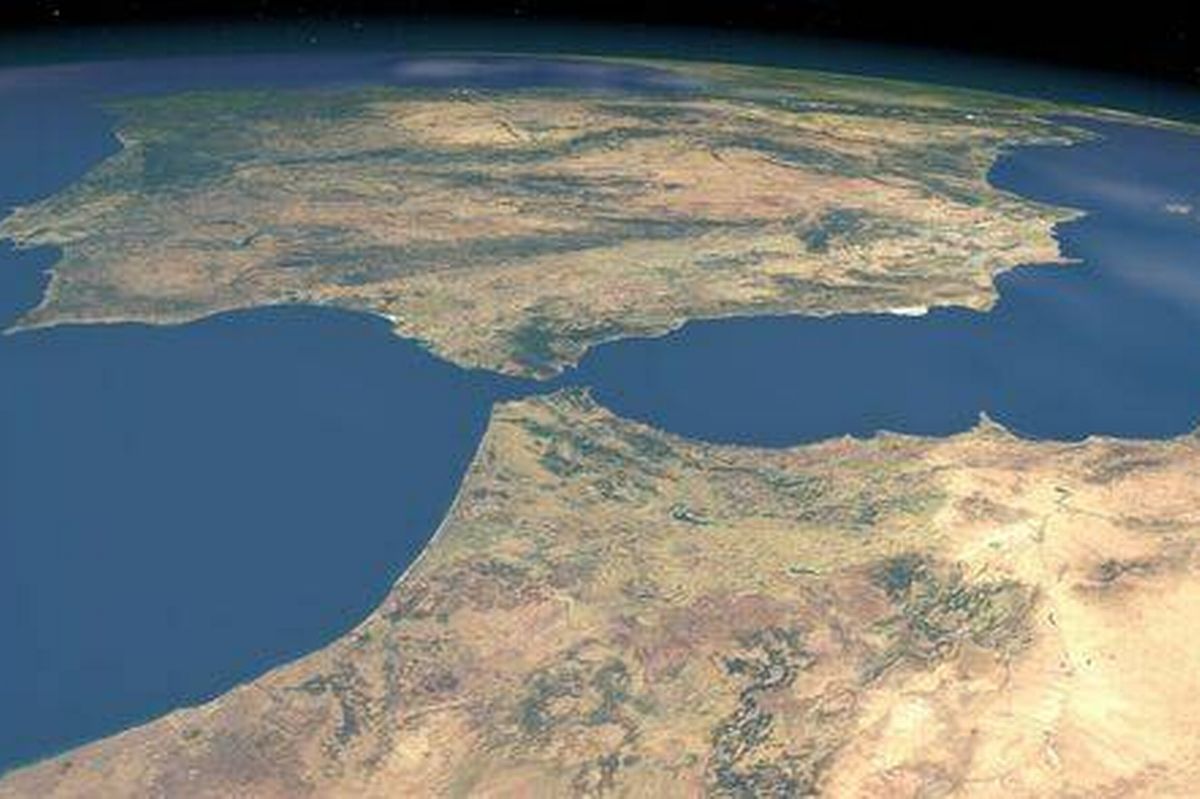
The tunnel would be bored beneath the nine-mile stretch of water separating southern Spain from Morocco(Image: Getty)
A colossal underwater tunnel linking Europe and Africa could finally be on the cards after the project received a major boost.
The ambitious project, which would see the tunnel burrow beneath the Strait of Gibraltar, has been reignited by Spain after being mooted by various governments for decades. Now scientists have declared that such an engineering feat is possible.
In October, a study commissioned by the Spanish Government and carried out by German tunnel experts Herrenknecht concluded that drilling a railway tunnel below the Strait would be technically achievable with current technology. Since then, Spanish consultancy firm Ineco has been tasked with drawing up a blueprint for the project by the end of next year, with hopes that Government approval could be granted as early as 2027.
The concept of creating a man-made link between Europe and Africa first surfaced in the 1970s, popping up intermittently in election campaigns and Government agendas since then, but no tangible steps have been taken until now. Previous proposals included the establishment of a joint Spain-Morocco committee in 1979 to assess the feasibility of the plan.
The proposed tunnel, to be drilled beneath the nine-mile stretch of water separating southern Spain from Morocco, would take inspiration from the Eurotunnel, which opened in 1994 and links Britain to northern France under the English Channel.
The Herrenknecht report, formally commissioned by the Spanish Society for Studies on Fixed Communication across the Strait of Gibraltar (Secegsa), under the Ministry of Transport, has assessed the feasibility of constructing the railway tunnel in its most complex sections, especially under the Camarinal Threshold – an area with extremely difficult geological conditions.
The most recent cost estimate for the project is €8.5 billion (£7.4 billion), according to Voz Populi.
The project, featuring two separate railway tunnels each carrying trains in one direction, is set to connect Punta Paloma in Cadiz with Morocco’s Cape Malabata, near Tangier. The tunnel would span roughly 26 miles, with nearly 17 miles of the route submerged underwater, reports the Express.
It’s also projected to reach a depth of 1,540 feet – significantly deeper than the Channel Tunnel, which only dips to 246 feet below sea level. Upon completion, the journey is estimated to take about 30 minutes by train, with the capacity to carry both passengers on high-speed AVE trains and freight.
The project faces significant technical challenges, particularly due to its location at the boundary between the Eurasian and African tectonic plates along the Azores-Gibraltar fault line, Morocco World News reports.
If given the green light, fieldwork is anticipated to commence in 2030, with the main construction phase scheduled for between 2035 and 2040. However, these dates could be subject to change.
While initial plans aimed to complete the tunnel by 2030, coinciding with the FIFA World Cup co-hosted by Spain, Portugal, and Morocco, experts have since stated that this timeline is unrealistic, given the project’s complexity and its current preliminary stage of studies.
The current proposed route, from Punta Paloma to Cape Malabata, comes after decades of discarded proposals, including an early concept for a suspension bridge. This type of connection was eventually ruled out due to the Strait’s depth, seismic activity and extreme wind conditions.
The project is being jointly managed by SECEGSA and its Moroccan counterpart, SNED (National Society for Strait Studies). Both organizations are working to establish a reliable rail connection for passengers and freight between Europe and North Africa.
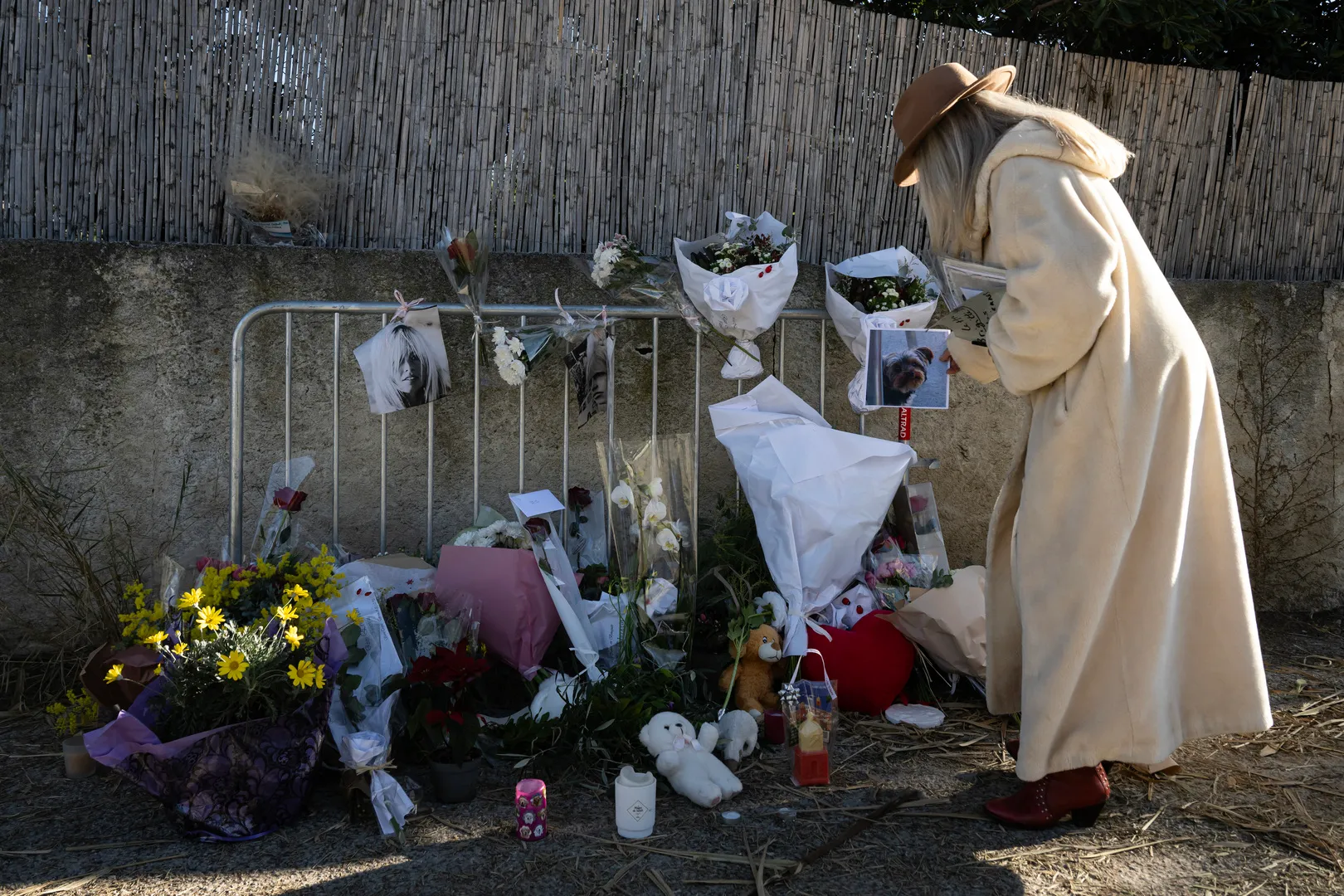
Residents of Saint-Tropez paid tribute to French film icon Brigitte Bardot on Monday outside her home, a day after the actress died at the age of 91. The actress-turned-far-right agitator will be buried in a seaside cemetery near the southern town, local officials said.
SCOTLAND could soon have its own direct link to Europe via ferry.
Plans have been in the works for years to connect Scotland to northern France and it’s set to become a reality in 2026.
Sign up for the Travel newsletter
Thank you!
The proposed route will connect a town in Fife, Scotland to the city of DunkirkCredit: AlamyThe route to France would be one of the longest in Europe taking around 20 hoursCredit: Alamy
Speaking in Westminster in November 2024, Scottish MP Graeme Downie proposed that £3 million in funding was needed to start up the service.
He said: “It is estimated the direct ferry link would initially carry 51,000 passengers a year, rising to 79,000, bringing an additional £11.5 million of spend to the Scottish economy.”
The new proposed route would become one of the longest ferry journeys in Europe.
But that title currently belongs to the service between Portsmouth to Bilbao in Spain, which lasts between 27 and 30 hours.
In the past, Scotland had a similar service between Rosyth and Zeebrugge which Belgium previously connected Scotland to Europe.
The overnight crossing took 17 hours and operated four times per week.
DFDS offers three routes from the UK to France – but these are from Dover and NewhavenCredit: Alamy
The route was discontinued in 2008, following six years of service.
It was reintroduced in 2009, but was pulled again in 2010 because of insufficient demand.
DFDS operates three main routes from the UK to France.
Currently, there are no direct passenger ferries from Scotland to mainland Europe.
Other routes DFDS offers include those to the Channel Islands from southern England and the northernmost major ferry route from the UK from Newcastle to Amsterdam.
Another ferry route connects Essex to the Netherlands…
Elsewhere in the UK, Harwich, a seaside town in Essex, already has a direct ferry service to Europe.
Brits looking to head to the Netherlands will be excited to know about Harwich’s ferry link to the Hook of Holland.
With a journey time of roughly seven hours, many tourists opt for the sleeper service so they can arrive in Holland early in the morning.
From the Dutch ferry port, Rotterdam is 40 minutes away by car, while a drive to Amsterdam takes just over an hour.
Egyptian-British writer Alaa Abd El-Fattah, who faced years of imprisonment in Egypt, ‘unequivocally’ apologises for the tweets.
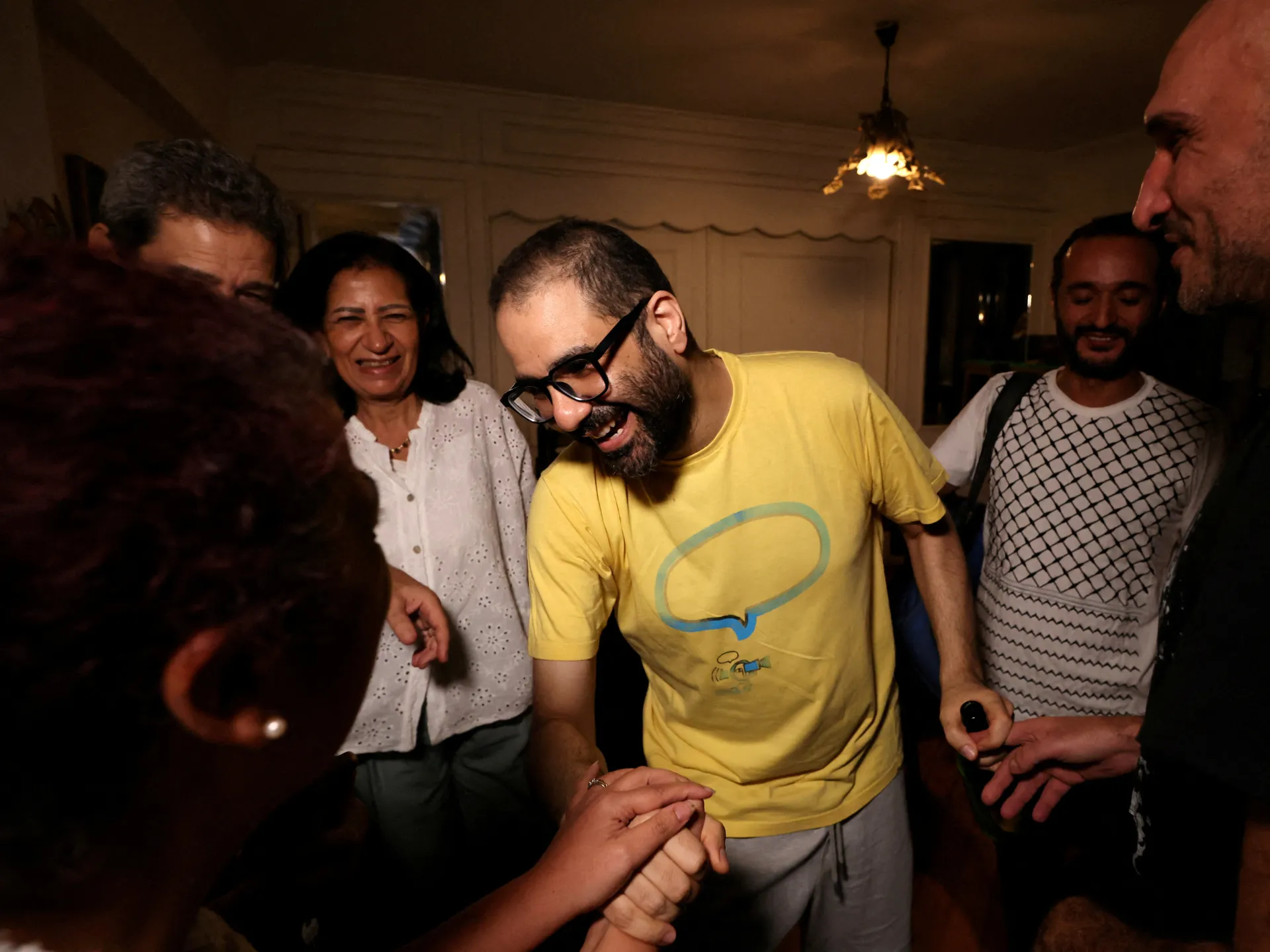
Alaa Abd El-Fattah, an Egyptian-British human rights campaigner, has “unequivocally” apologised after right-wing leaders in the United Kingdom dug up decade-old tweets to demand he be stripped of British citizenship.
In a lengthy apology posted online, the writer and blogger – who returned to Britain this week after 12 years of imprisonment in Egypt – said the tweets were “shocking and hurtful”, but added that some had been “completely twisted”.
Recommended Stories
list of 4 itemsend of list
Conservative Party and far-right Reform UK leaders, along with right-wing commentators, took to sympathetic outlets and social media to demand that Abd El-Fattah be stripped of citizenship for the posts dating back to 2010, which included alleged references to killing Zionists and police officers.
The tweets were “expressions of a young man’s anger and frustrations in a time of regional crises”, including the wars on Iraq and Gaza, and a pervasive culture of “online insult battles”, Abd El-Fattah wrote.
Still, “I should have known better”, he said.
“I am shaken that, just as I am being reunited with my family for the first time in 12 years, several historic tweets of mine have been republished and used to question and attack my integrity and values, escalating to calls for the revocation of my citizenship,” he added.
Conservative leader Kemi Badenoch wrote in a Daily Mail op-ed that Home Secretary Shabana Mahmood should consider how Abd El-Fattah “can be removed from Britain” and added that she does “not want people who hate Britain coming to our country”.
Nigel Farage, the Reform UK leader, posted a letter he wrote to Mahmood on X and took a swipe at Badenoch for being part of the 2021 administration, then under Conservative Prime Minister Boris Johnson, that granted Abd El-Fattah citizenship.
Human rights activists and supporters of Abd El-Fattah dismissed the efforts as a smear campaign and directed followers to his apology.
Jewish academic and writer Naomi Klein wrote on social media that right-wingers were “playing politics with his hard-won freedom”, while Mai El-Sadany, executive director of the Washington, DC-based Tahrir Institute for Middle East Policy, said the citizenship revocation campaign was “coordinated” to “impugn his reputation and harm him”.
British law allows the home secretary to revoke citizenship if doing so is considered “conducive to the public good”, a policy that critics say is disproportionately wielded against British Muslims.
In a 2022 report, the Institute on Statelessness and Inclusion estimated that at least 175 people had been stripped of British citizenship since 2006, including more than 100 in 2017 – prompting the group to deem the UK “a global leader in the race to the bottom” for revocations.
Part of British conservatives’ ire appeared to stem from the reaction of British Prime Minister Keir Starmer to Abd El-Fattah’s release. Earlier this week, he said the case had been a “top priority” and added that he was “delighted” by Abd El-Fattah’s return, a sentiment echoed by Foreign Secretary Yvette Cooper.
Abd El-Fattah had been jailed during Egypt’s mass protests in 2011 that ousted then-leader Hosni Mubarak. He went on to become a top critic of Egyptian President Abdel Fattah el-Sisi, who took power in a military coup two years later.
The writer received a 15-year prison sentence in 2014 on charges of spreading fake news. He was briefly released in 2019 before receiving another five-year sentence.
He received a pardon in September, along with five other prisoners, after repeated international calls to release him.
US President Donald Trump and Ukrainian leader Volodymyr Zelenskyy are talking up prospects of ending the war with Russia, after meeting in Florida. But they admitted there are ‘thorny issues’ to resolve about the status of the Donbas region which has been annexed by Russia.
These are the key developments from day 1,404 of Russia’s war on Ukraine.
Published On 29 Dec 202529 Dec 2025
Share
Here is where things stand on Monday, December 29:
Diplomacy
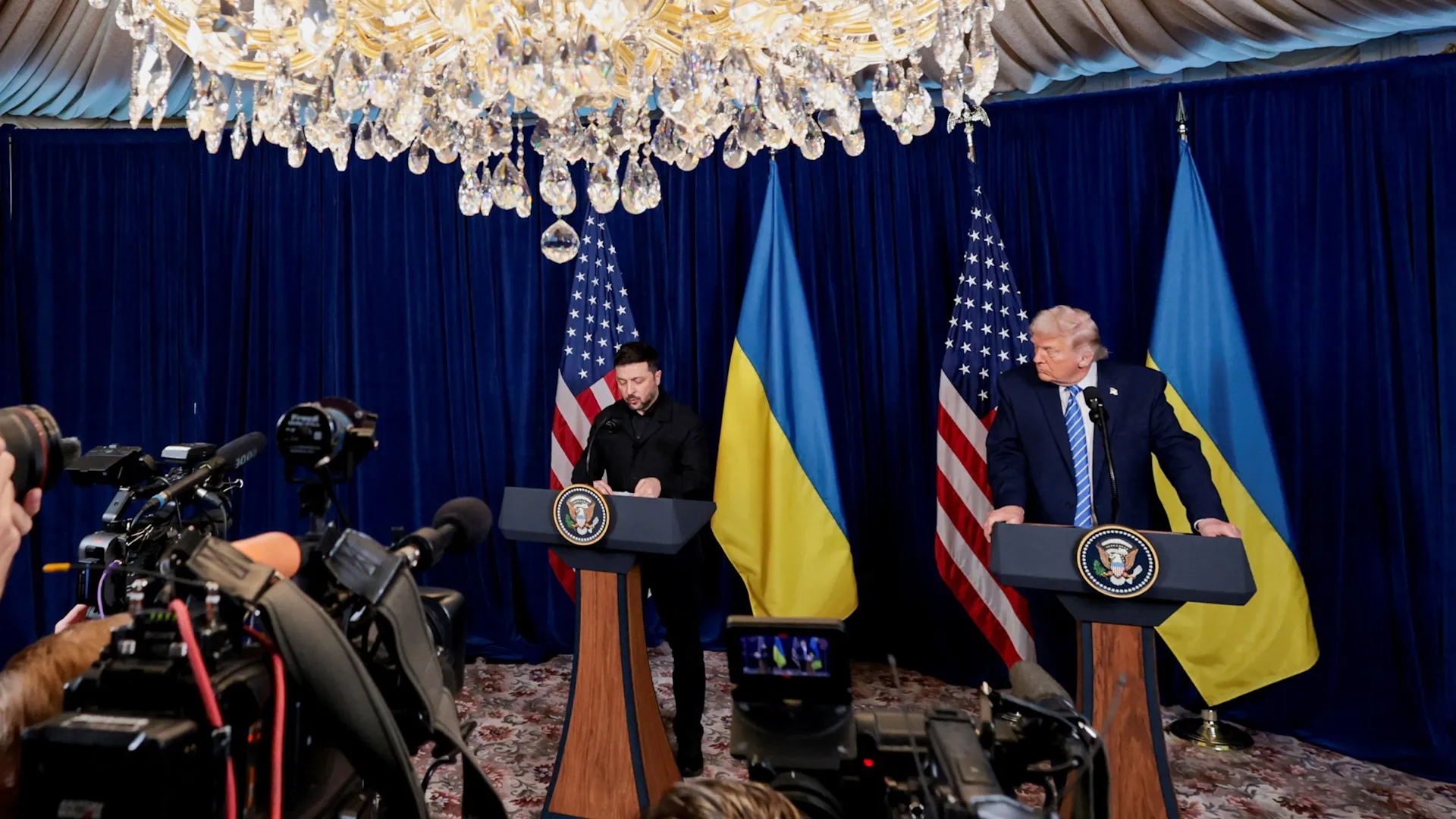
United States President Donald Trump hosted Ukrainian President Volodymyr Zelenskyy for talks at his Mar-a-Lago resort in Florida and said the two leaders were “getting a lot closer, maybe very close” to a deal to end the war in Ukraine.
Trump and Zelenskyy reported progress on two of the most contentious issues in the peace talks: security guarantees for Ukraine and the division of eastern Ukraine’s Donbas region that Russia has sought to capture.
On security guarantees, Zelenskyy said that a deal had been reached, while Trump said they were 95 percent of the way to such an agreement.
Both Trump and Zelenskyy said that the future of the mostly Russian-occupied Donbas had not been settled, though the US president said discussions were “moving in the right direction”. “It’s unresolved, but it’s getting a lot closer. That’s a very tough issue,” Trump said.
The two leaders did not offer further details or a deadline for completing the deal, but Zelenskyy said any peace agreement would have to be approved by Ukraine’s parliament or by a referendum.
Shortly after the Trump-Zelenskyy meeting, Russian President Vladimir Putin’s special envoy, Kirill Dmitriev, wrote on X that the “whole world appreciates” Trump and his team’s peace efforts.
Ahead of the meeting with Zelenskyy, Trump and Putin spoke for more than two hours on the telephone. The US president described the call as “excellent” and “productive”.
Trump said he would call Putin again after the meeting with Zelenskyy.
Kremlin foreign policy aide Yury Ushakov said the initial call was “friendly” and that Putin had told Trump that a 60-day ceasefire, proposed by the European Union and Ukraine, would simply prolong the war.
Ushakov said that a “bold, responsible, political decision is needed from Kyiv” on the Donbas region and other disputed matters for there to be a “complete cessation” of hostilities.
European leaders, including those from Finland, France, Germany, Poland and the United Kingdom, joined at least part of the Trump-Zelenskyy meeting by phone.
European Commission President Ursula von der Leyen said in a statement that Europe was ready to keep working with Ukraine and the US, and that having ironclad security guarantees would be of “paramount” importance.
French President Emmanuel Macron said that progress had been made on security guarantees at the meeting. Macron said that countries in the so-called “Coalition of the Willing” would meet in Paris in early January to finalise their “concrete contributions”.
Zelenskyy said that Trump had agreed to host European leaders again, possibly at the White House, sometime in January. Trump said the meeting could be in Washington, DC, or “someplace”.
Earlier on Sunday, Russian Minister of Foreign Affairs Sergey Lavrov warned that any European troop contingents deployed to Ukraine would become legitimate targets for Russia’s forces. Lavrov also accused European politicians of being driven by “ambitions” in their relations with Kyiv, and disregarding the people of Ukraine and of their own nations.
Fighting
Russian forces attacked a heating plant in the southern Ukrainian city of Kherson, wounding one person and causing “significant damage” to the facility, state oil and gas firm Naftogaz said.
Ukraine’s leading private energy provider, DTEK, said it had restored power to more than a million households in and around Kyiv a day after a massive Russian air attack had forced emergency outages.
Ukraine’s military said it had struck the Syzran oil refinery in Russia’s Samara region in a drone attack. The strike caused a fire, and damages were still being assessed, the army said in a statement.
The military also said that only part of the southeastern town of Huliaipole was under Russian control, contradicting an earlier claim by Moscow that it had been captured. It added that fighting was also still under way for Stepnohirsk, another town in the southeastern Zaporizhia region that Russia claimed it had captured.
Meanwhile, Russia’s Ministry of Defence said in a statement that its troops had taken control of four other settlements in the Donetsk region. It identified them as Myrnohrad, Artemivka, Rodynske and Vilne.
The French star reshaped post-war cinema before retreating from global fame into animal rights activism and, later, far-right politics.
Published On 28 Dec 202528 Dec 2025
Share
Brigitte Bardot, the French actor and singer who became a global sensation before reinventing herself as an animal protection campaigner and outspoken supporter of the far right, has died aged 91.
The Brigitte Bardot Foundation announced her death on Sunday, saying “with immense sadness” that its founder and president had died.
Recommended Stories
list of 4 itemsend of list
In a statement sent to the AFP news agency, the foundation described Bardot as “a world-renowned actress and singer, who chose to abandon her prestigious career to dedicate her life and energy to animal welfare and her foundation”. It did not give details about when or where she died.
Bardot rose to international fame in 1956 with her role in And God Created Woman, a film that sought to project female sexuality on screen. She went on to appear in about 50 films, becoming one of the most recognisable faces of post-war French cinema.
In the early 1970s, Bardot quit acting at the height of her fame, turning her attention to animal protection. While her campaigning earned admiration from supporters, her public life grew increasingly controversial as she embraced far-right politics and made repeated racist and inflammatory remarks.
French actress Brigitte Bardot poses with a huge sombrero she brought back from Mexico, as she arrives at Orly Airport in Paris, France, on May 27, 1965 [AP Photo]
Her activism hardened into open support for France’s far-right National Front, now known as National Rally, and the party’s longtime leader Marine Le Pen. Over the years, French courts convicted Bardot multiple times for inciting racial hatred.
In 2022, a court fined her 40,000 euros ($47,000) after she described people from Reunion, a French overseas territory, as “degenerates” who had “kept their savage genes”. It marked the sixth time authorities had sanctioned her for racist and hate speech. Muslims and immigrants were among her frequent targets.
Born in Paris in 1934, Bardot grew up in a conservative Catholic household and trained as a ballet dancer at the Conservatoire de Paris. She began modelling as a teenager, appearing on the cover of Elle at 15, which led to early film roles and her marriage to director Roger Vadim.
Despite later being hailed by some as a trailblazer for women in cinema, Bardot dismissed complaints about sexual harassment in the film industry.
“Many actresses flirt with producers to get a role. Then when they tell the story afterwards, they say they have been harassed. … In actual fact, rather than benefit them, it only harms them,” she said.
“I thought it was nice to be told that I was beautiful or that I had a pretty little a**. This kind of compliment is nice.”
Diplomacy over the Russia-Ukraine war is in its “final stages”, said US President Donald Trump as he welcomed Ukraine’s leader Volodymyr Zelenskyy to his Florida estate.
The two leaders stood outside the Mar-a-Lago resort on Sunday and addressed reporters as they prepared to discuss a new proposal to end the bloody conflict.
Recommended Stories
list of 4 itemsend of list
The US president has been working hard to end the nearly four-year war in Ukraine for much of his first year back in office, showing irritation with both Zelenskyy and Russian President Vladimir Putin while publicly acknowledging the difficulty of ending the fighting.
“I think we’re … in final stages of talking and we’re going to see. Otherwise, it’s going to go on for a long time, and millions of additional people will be killed,” said Trump, adding he did not have a deadline for the process.
“I do believe that we have the makings of a deal that’s good for Ukraine, good for everybody.”
He added there would be “a strong agreement” to guarantee Ukraine’s security, one that would involve European countries.
“We have two willing parties. We have two willing countries … The people of Ukraine want [the war] to end, and the people of Russia want it to end, and the two leaders want it to end,” Trump said.
Zelenskyy, by Trump’s side, said he and the US president would discuss issues of territorial concessions, which have so far been a red line for his country. He said his negotiators and Trump’s advisers “have discussed how to move step by step and bring peace closer” and would continue to do so in Sunday’s meeting.
During recent talks, the US agreed to offer certain security guarantees to Ukraine similar to those offered to other members of NATO.
The proposal came as Zelenskyy said he was prepared to drop his country’s bid to join the security alliance if Ukraine received NATO-like protection designed to safeguard it against future Russian attacks.
Oleksandr Kraiev, an analyst with the think-tank Ukrainian Prism, said the people of Ukraine are “quite cynical” about the talks brokered by the United States.
“We tried this in 2015, 2016, 2017, and unfortunately each time the Russians broke even the ceasefire regime, not even talking about the peace process,” he told Al Jazeera.
“So we have little faith that a proper peace process will take place. As of now we’re striving for a ceasefire as a precondition for any kind of talks… We cannot trust the Russians with a peace deal, but a ceasefire is something we’re working on.”
‘Blindsided yet again’
Trump’s upbeat tone comes despite widespread scepticism in Europe about Putin’s intentions after Russia carried out another massive bombardment of the Ukrainian capital just as Zelenskyy headed to Florida.
Before Zelenskyy arrived, Trump spoke with Putin by phone for more than an hour and said he planned to speak again after the Zelenskyy meeting – catching Ukrainian leaders off guard, reported Al Jazeera’s Shihab Rattansi.
“From what we’re hearing, the Zelenskyy delegation here have been blindsided yet again by Donald Trump. And according to the Russians, it was at the Americans’ insistence there should be a call with Vladimir Putin the hour before Zelenskyy arrived,” said Rattansi, speaking from Palm Beach, Florida.
Meanwhile, while there is talk about land concessions from Ukraine’s side, they are outside the framework Zelenskyy is hoping for.
The Kremlin gave a more pointed readout of Trump’s talks with Putin, saying the US leader agreed a mere ceasefire “would only prolong the conflict” as it demanded Ukraine compromise on territory.
Zelenskyy said last week that he would be willing to withdraw troops from Ukraine’s eastern industrial heartland as part of a plan to end the war, if Russia also pulls back and the area becomes a demilitarised zone monitored by international forces.
Putin has publicly said he wants all the areas in four key regions captured by his forces, as well as the Crimean Peninsula, illegally annexed in 2014, to be recognised as Russian territory. He also insisted that Ukraine withdraw from some areas in eastern Ukraine that Moscow’s forces have not captured.
Kyiv has publicly rejected all those demands.
Trump has been somewhat receptive to Putin’s conditions, making the case that the Russian president can be persuaded to end the war if Kyiv agrees to cede Ukrainian land in the Donbas region, and if Western powers offer economic incentives to bring Russia back into the global economy.
The military rulers expand emergency powers, warning that people, property, and services may be requisitioned.
Published On 28 Dec 202528 Dec 2025
Share
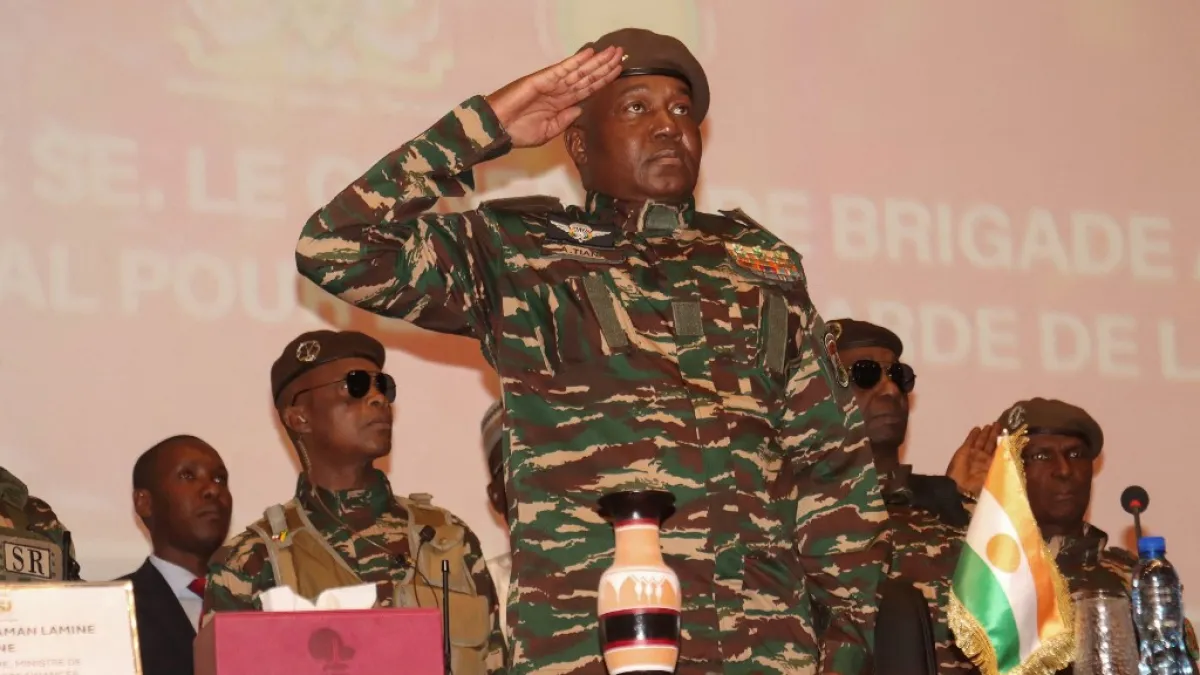
Niger’s military rulers have approved a general mobilisation and authorised the requisition of people and goods as they intensify the fight against armed groups across the country, according to a government statement.
The decision followed a cabinet meeting on Friday and marks a major escalation by the military government, which seized power in a July 2023 coup that toppled the country’s democratically elected president, Mohamed Bazoum.
Recommended Stories
list of 4 itemsend of list
“People, property, and services may be requisitioned during general mobilisation to contribute to the defence of the homeland, in compliance with the legislation and regulations in force,” the government said in a statement issued late on Saturday.
“Every citizen is required to respond immediately to any call-up or recall order, to comply without delay with the implementation of measures for the defence of the homeland, and to submit to requisition,” it added.
The authorities said the measures aim to “preserve the integrity of the national territory” and “protect the population” as Niger continues to face attacks by armed groups operating across several regions.
Niger has been embroiled in deadly armed conflict for more than a decade, with violence linked to fighters affiliated with al-Qaeda and the ISIL (ISIS) group. Nearly 2,000 people have been killed, according to the Armed Conflict Location and Event Data Project (ACLED), which tracks political violence.
The southeast of the country has also suffered repeated attacks by Boko Haram and its splinter group, the ISIL affiliate in West Africa Province (ISWAP), further stretching Niger’s security forces.
The mobilisation order comes five years after Niger expanded its armed forces to around 50,000 troops and raised the retirement age for senior officers from 47 to 52. Since taking power, the military government has also urged citizens to make “voluntary” financial contributions to a fund launched in 2023 to support military spending and agricultural projects.
Soon after the coup, Niger’s rulers ordered French and United States troops, who had supported operations to combat rebel fighters, to withdraw from the country.
Niger has since deepened security cooperation with neighbouring Mali and Burkina Faso, also ruled by a military government. The three Sahel states have formed a joint force of 5,000 troops, presenting it as a regional response to armed groups while further distancing themselves from Western partners.
AS the year comes to a close, most theme parks across the UK have shut up shop for the season.
But theme park fanatics have plenty to look forward to in 2026, as both thrillseekers and families with young children can expect new favourites.
Sign up for the Travel newsletter
Thank you!
Fans of Bluey can ride a new coaster at Alton Towers’ CBeebies LandCredit: Alton TowersThe Octonauts ride is a popular choice at CBeebies LandCredit: Alton Towers Resort
2026 is set to be a huge year in the world of theme parks and attractions – here are the most exciting new rides and rollercoasters set to open next year.
Bluey Ride, Alton Towers, UK
Alton Towers will welcome the world’s first ever Bluey coaster next year.
The new addition will sit inside of Alton Towers’ CBeebies Land, home to rides like the Octonauts Rollercoaster Adventure and Peter Rabbit Hippity Hop.
As well as enjoying a brand new ride, Bluey fans can take part in the popular Heeler family interactive show, and stay to meet Bluey and Bingo afterwards.
Excitement is building as Disneyland Paris prepares to open their World of Frozen land in Spring 2026.
The new land will see the introduction of a new ride at Disneyland Paris: Frozen Ever After.
The frosty land of Arendelle is bought to life in the brand new World of FrozenCredit: Disneyland ParisFrozen Ever After already exists as a ride at the Disney World EPCOT park in Florida USACredit: Disney WorldThe ride is already a popular choice amongst EPCOT visitorsCredit: Getty
The ride is inspired by the popular version at Disneyworld’s EPCOT in Florida.
Boarding this boat-themed ride will take visitors on a journey through the familiar scenes of Disney’s Frozen.
Fans can sing along to Frozen tunes as they look out for the movie’s popular characters in animatronic form.
Frozen Ever After will be less of a fear-inducing ride and more of an immersive experience.
It is a slow-moving journey with descents down short waterfalls – so bare in mind that you might get wet!
Visitors will also be able to stroll through Arendelle, as well as meet Anna, Elsa and Olaf.
Frozen Ever After, and the World of Frozen land, is set to open on 29 March 2026.
Drakon and Vild Swing, Paultons Park, UK
Paultons Park in Hampshire are due to open their first ever inverting rollercoaster, as well as a Wild Swing ride in the spring of 2026.
The amusement park is home to the famous Peppa Pig World, but new coaster Drakon is set to thrill an older crowd.
Drakon is set to be one of the most exhilerating rides at Paultons ParkCredit: Paultons ParkThe ride will be ready in time for 2026Credit: Paultons Park
Drakon riders can expect to coast their way up a vertical lift hill before plummeting into a beyond vertical drop.
The terrifying drop means that riders will hang over the edge at an angle greater than 90°, or steeper than falling straight down.
As well as this, visitors can expect to regularly ride upside down, due to the inverting design.
The inverting coaster even intertwines with Raven – the new name for the park’s Gerstlauer Bobsled ride previously named Cobra.
As well as Drakon, the park will be introducing the ‘Vild Swing’ ride.
Vild Swing is a 12m-high ART Wild Swing ride, the first of its kind to land in the UK.
Valgard – The Realm of Vikings will open in 2026Credit: Paultons ParkPaultons Park is popular amongst families for its for Peppa Pig WorldCredit: Paultons Park
The family-friendly ride is a free-swinging gondola with no rollovers, therefore it will be more of a gentle thrill than Drakon.
The rides will be part of the theme park’s brand new Viking-themed world: Valgard – Realm of the Vikings.
The new themed area cost roughly £12m to build, and is set to open in May 2026.
Spider-themed ride, Gröna Lund, Sweden
Gröna Lund (or “Green Grove”) in Sweden is Stockholm’s oldest amusement park.
It’s located on Stockholm‘s DjurgårdenIsland, and has over 30 rides.
The park is home to a mix of both thrilling coasters and family-friendly rides, and is now set to open a brand new thrill ride: Spindeln (The Spider).
Spindeln will be a Super Jumper ride – the first of its kind to arrive in Sweden.
Created by the Italian SBF Visa Group, the Super Jumper is made up of multiple arms which rise and fall quickly, designed to look like the spider’s legs.
The terrifying spider ride is complete with the latest new harnessing technologyCredit: Gröna LundGröna Lund sits on the waterfront in Stockholm, SwedenCredit: Gröna Lund
This creates a bouncing effect as the central tower rotates, meaning riders can expect plenty of spooky sudden jumps and spins.
The thrill ride has space for 42 riders, and is ideal for older and younger guests alike.
Spindeln will be the first Super Jumper in the world to allow younger children to ride, with a minimum height requirement of 100cm when accompanied by an adult.
The coaster is set to open to the public in Summer 2026.
Raiponce Tangled Spin, Disneyland Paris
March 2026 will see Disneyland Paris open up not one, but two brand new themed worlds.
As well as introducing the brand new World of Frozen, the land previously known as Walt Disney Studios Park will become Disney Adventure World.
The park revamp also sees the addition of a brand new ride, Raiponce Tangled Spin.
Raiponce Tangled Spin is a spinning miniature boat rideCredit: Disneyland paris
Visitors will be able to climb aboard a small gondola that gently turns under sparkling lanterns, just like the famous scene in the film Tangled.
The glowing lanterns illuminate ceiling paintings inspired by those made by the princess in the popular movie.
This will be the second standalone Tangled themed ride across Disney parks worldwide, alongside Rapunzel’s Lantern Festival at Tokyo DisneySea.
The gentle ride is suitable for all ages, and will open alongside Frozen Ever After on 29 March 2026.
Aviktas, Blackpool Pleasure Beach Resort, UK
Blackpool’s Pleasure Beach is known for its rides such as Valhalla, Big Dipper as well as its Nickelodeon Land.
And now the amusement park have invested £8.72m into a new ride, set to be the tallest of its kind in the UK by almost double.
Aviktas will be a Gyro Swing ride – a giant spinning pendulum seating 40 visitors.
Riders will face outwards to sea as they swing 120°, reaching a maximum height of 138 feet.
Pleasure Beach Resort’s new addition will tower over the parkCredit: Pleasure Beach Resort
The Gyro Swing ride is “one of the most exciting flat rides in existence” said CEO of Pleasure Beach Resort, Amanda Thompson OBE.
“It’s dynamic, fast, and incredibly high, as well as being completely weightless at the top”.
Aviktas is currently under construction, and due to open in 2026.
The amusement park also recently revamped their Launch Pad ride.
The shot tower ride had its cylinder replaced and reopened in May of 2025.
This made for more powerful launches, intense g-force, and moments of weightlessness.
“This is a great re-imagining. The ride has got back its ‘oomph’” said Scott Bickerton, owner of YouTube channel Your Experience Guide.
The resort is one of Blackpool’s most popular attractionsCredit: Pleasure Beach Resort
“You can really feel the g-force and there’s a great moment of airtime at the top. It’s amazing to have this ride back.”
Alton Towers hosts Bluey meet and greets and even themed hotel roomsCredit: Alton towers
From displaced Palestinian families struggling in the cold winter in makeshift tents in Gaza, Christmas celebrations in Ukraine amid the ongoing Russia-Ukraine war, to the historic gathering of more than one million people in Dhaka welcoming home Bangladesh’s opposition leader Tarique Rahman after his 17-year self-imposed exile, here is a look at the week in photos.
They’re easy to get to from the UK, with airlines British Airways operating direct flights from London to São Miguel.
Once you’ve landed in São Miguel, you can hop from island to island by ferry or inter-island flight.
The best time to visit them is in spring or summer, when temperatures peak to a sunny 25 °C.
Plus, these islands make for a rather inexpensive holiday.
Most read in Beach holidays
Most attractions are outdoor spectacles, meaning that they are free to admire.
Food and drink is affordable across the islands, too, with lunch and a drink averaging around just €10.
São Miguel – best for water sports and volcanic baths
São Miguel is the largest and most popular of the islands, and is home to some mind-blowing nature and wildlife.
It is nicknamed “The Green Island” for its signature rolling green hills backed by thick forests.
There is plenty of beautiful flora which makes the island burst with colour in springtime – from bright blue hydrangeas to pink rhododendron.
The volcanic island is also home to over 30 geysers, waterfalls, geothermal pools, as well as two crater lakes: one green and one blue.
There is also plenty of wildlife to spot, including whales, dolphins, turtles lizards and exotic birds.
The best time of year to visit for bird, whale and dolphin watching is from April to October.
Apart from admiring the nature, there are plenty of unique places to visit in São Miguel like the island’s pineapple plantation and tea factory.
Lagoa do Fogo sits in São Miguel’s green valleyCredit: GettyThe Boca de Inferno viewpoint looks over the island’s twin green and blue lakesCredit: GettyYou can swim in geothermal pools on São Miguel islandCredit: Alamy
Santa Maria – best for cheap food and sunbathing
Santa Maria is the southernmost island in the Azores, meaning it is the hottest and sunniest option.
It’s also a super cheap destination, with a meal and a pint costing an average of £8.91 per person.
It’s also home to the largest waterfall in the Azores, Aveiro Waterfall.
It’s great for sporty travellers, with plenty of walking trails, snorkelling and diving.
Sao Lourenco bay in Santa Maria has formed in a volcanic craterCredit: Alamy
There’s 55 locations to go scuba diving, including caves and wrecks where you can come face to face with manta rays and whale sharks.
Hike to the island’s highest point, Pico Alto, for views over the rugged coastline.
For a unique experience, head to Barreiro de Faneca – the island’s vast “Red Desert” with a Martian-like landscape.
Or for something more chilled, you can spend your days sunbathing on its golden sand beaches to unwind.
Vila de Porto has some beautiful architecture, like this Santa Marian chapelCredit: Alamy
Central Group – best for outdoor adventurers
The Central Group is a cluster of five small Azores islands – Pico, Faial, Graciosa, São Jorge, and Terceira.
The latter three islands are sometimes referred to as “The Triangle” due to their formation in the water.
Pico is famously home to Mount Pico, the highest mountain in Portugal that towers over the islands.
Faial, on the other hand, is a tiny island more suited to day trip visits.
It’s often considered the best spot among the islands for whale and dolphin watching.
Mount Pico is the highest point in the whole of PortugalCredit: Alamy
Graciosa, or the “White Island”, is a peaceful UNESCO biosphere reserve.
With its unique features like craters and lava caves, this island is more for adventure and exploring than sunbathing.
Similarly, São Jorge is known for its rare landscape features.
Most notably it is known for its fajãs, which are flat coastal plains formed by lava flows.
Terceira is one of the larger islands in the Azores, and is home to their oldest city – Angra de Heroísmo.
Here, cobbled streets and historic buildings give this island a more bustling and lived-in feel than the others in the Central Group.
Praia da Vitoria Imperio chapel on Terceira Island stands out with its bright coloursCredit: GettyPorto Pim bay on Faial Island has houses overlooking the calm watersCredit: Alamy
Flores and Corvo – best for remote island feel
Flores and Corvo are known as the Western islands of the Azores.
These islands are not as frequently visited as others, and make for a real remote island experience.
Flores is bursting with wild greenery and unspoilt landscapes, and is often called the most beautiful island in the Azores.
“Flores” is the Portuguese word for “flowers” – and this island really lives up to its name, blooming with colour in springtime.
And if you’re looking to feel like you’ve really gotten far away from the real world, Corvo is the smallest and most remote island of the archipelago.
Flores has a beautiful rugged coastlineCredit: AlamyThe landscapes of Corvo are unspoiltCredit: AlamyCorvo is the smallest of the islandsCredit: Alamy
The island is home to just 430 people, who all live in one village called Vila do Corvo.
The island itself is tiny, covering just over 17 square kilometres.
Corvo only received electricity in 1963, and is most popular with birdwatchers and hikers.
These westernmost islands feel truly isolated – the perfect spot if you’re after that castaway, edge-of-the-world experience.
The islands are home to many volcanic craters which make for beautiful viewpointsCredit: Getty
The Balkan nation votes again as PM Albin Kurti seeks majority to break the stalemate and form a government.
Published On 28 Dec 202528 Dec 2025
Share
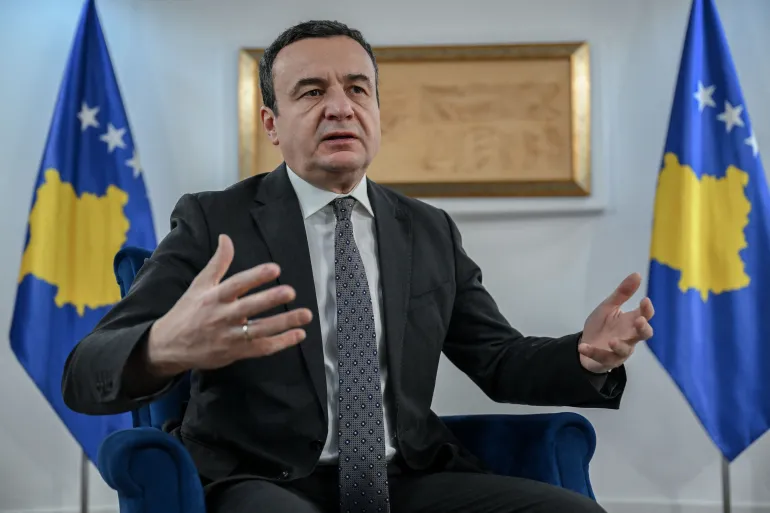
Kosovo is voting to elect a new parliament for the second time in 11 months, as nationalist Prime Minister Albin Kurti’s party seeks a majority to end a yearlong political deadlock.
Polls opened at 7am local time (06:00 GMT) and will close at 7pm (18:00 GMT) on Sunday, with exit polls expected soon after voting ends.
Recommended Stories
list of 3 itemsend of list
The snap parliamentary vote was called after Prime Minister Albin Kurti’s Self-Determination Movement (LVV) party failed to form a government despite winning the most votes at a February 9 ballot.
Failure to form a government and reopen parliament would prolong the crisis at a critical time. Lawmakers must elect a new president in April and ratify 1 billion euros ($1.2bn) in loan agreements from the European Union and World Bank that expire in the coming months.
The Balkan country’s opposition parties have refused to govern with Kurti, criticising his handling of ties with Western allies and his approach to Kosovo’s ethnically divided north, where a Serb minority lives.
Kosovo’s acting PM and leader of the LVV party, Albin Kurti [File: Armend Nimani/AFP]
Despite international support, the country of 1.6 million has struggled with poverty, instability and organised crime. Kurti’s tenure, which began in 2021, was the first time a Pristina government completed a full term.
To woo voters, Kurti has pledged an additional month of salary per year for public sector workers, 1 billion euros per year in capital investment and a new prosecution unit to fight organised crime. Opposition parties have also promised to focus on improving living standards.
Opinion polls are not published in Kosovo, leaving the outcome uncertain. Many voters say they are disillusioned.
“There wouldn’t be great joy if Kurti wins, nor would there be if the opposition wins. This country needs drastic changes, and I don’t see that change coming,” Edi Krasiqi, a doctor, told Reuters news agency.
Tensions with Serbia
Formerly a province of Serbia, Kosovo, whose population is almost exclusively Albanian, declared independence from Serbia in 2008 following an uprising and NATO intervention in 1999.
It has been recognised by more than 100 countries, but not by Russia, Serbia, Greece or Spain. It is seen as a potential candidate for accession to the EU.
Tensions with Serbia flared in 2023, prompting the EU to impose sanctions on Kosovo.
The bloc said this month it would lift them after ethnic Serb mayors were elected in northern municipalities, but the measures likely cost Kosovo hundreds of millions of euros.
Kosovo remains one of the poorest countries in Europe. It is one of the six Western Balkan countries striving to eventually join the EU, but both Belgrade and Pristina have been told they must first normalise relations.
The United Kingdom has imposed visa restrictions on the Democratic Republic of the Congo, accusing its government of failing to cooperate with its new policy on the return of undocumented migrants and those who commit criminal offences.
The UK Home Office announced the measures in a statement late on Saturday. It also said that Angola and Namibia have agreed to step up efforts to take back their citizens.
Recommended Stories
list of 3 itemsend of list
The agreements mark the first major change under sweeping reforms unveiled by Secretary of State for the Home Department Shabana Mahmood last month to make refugee status temporary and speed up the deportation of those who arrive without documents in the UK.
There was no immediate comment from the DRC, Angola or Namibia.
The Home Office said the DRC failed to meet the UK’s requirements for cooperation and has now been stripped of fast-track visa services and preferential treatment for VIPs and decision makers.
Mahmood said the UK could escalate measures to a complete halt of visas for the DRC unless cooperation rapidly improves.
“We expect countries to play by the rules. If one of their citizens has no right to be here, they must take them back,” she said.
“I thank Angola and Namibia and welcome their co-operation. Now is the time for the Democratic Republic of Congo to do the right thing. Take your citizens back or lose the privilege of entering our country.
“This is just the start of the measures I am taking to secure our border and ramp up the removal of those with no right to be here,” she added.
Prime Minister Keir Streamer’s centre-left government unveiled sweeping changes to the UK’s asylum system last month, including drastically cutting protections for refugees and their children, as part of a bid to stem the arrivals of irregular migrants that have fuelled rising anger on the far-right.
More than 39,000 people, many fleeing conflict, have arrived in the UK on small boats this year, more than for the whole of 2024 but lower than the record set in 2022, when the Conservatives were in power.
Mahmood told lawmakers that the reforms, modelled on Denmark’s strict asylum system, would discourage refugees and asylum seekers from crossing the English Channel from France on small boats.
She described the current system as “out of control and unfair”, adding that it was an “uncomfortable truth” that the government must face.
Under the reforms, refugee status will become temporary and will be reviewed every 30 months. Refugees will be forced to return to their home countries once those are deemed safe.
They will also need to wait for 20 years, instead of the current five, before they can apply for permanent residency.
The government has also said it will legislate to make it harder for irregular migrants and foreign criminals to use the European Convention on Human Rights (ECHR) to stop deportation.
Since July last year, the UK has “removed more than 50,000 people with no right to remain”, a 23 percent increase on the previous period, and instructed diplomats to make returns a top priority, Secretary of State for Foreign and Commonwealth Affairs Yvette Cooper said.
The policy has been facing criticism, however, with Mark Davies, a former adviser to the Foreign Office, calling it “shameful” and a departure from “Britain’s historic commitment to support refugees”.
Former Labour leader Jeremy Corbyn also described the policy as “draconian”, adding that it tries to “appease the most ghastly, racist right-wing forces all across Europe”, while undermining the UN Convention on Human Rights.
Enver Solomon, chief executive of the Refugee Council, urged the government to reconsider, warning the plans “will not deter” crossings, and that refugees who work hard should be able to build “secure, settled lives”.
Official figures cited by the AFP news agency showed that asylum claims in the UK are at a record high, with about 111,000 applications made in the year to June 2025.
But the number of initial positive decisions the UK authorities granted fell from 2023 to 2024.
Most asylum seekers and refugees arrive in the UK legally. Net migration reached a record high of 906,000 in the year to June 2023, before it fell to 431,000 in 2024, partly reflecting the tighter rules.