




Europe

Russia-Ukraine war: List of key events, day 1,409 | Russia-Ukraine war News

These are the key developments from day 1,409 of Russia’s war on Ukraine.

Here is where things stand on Saturday, January 3:

Fighting

  • Two people were killed, including a three-year-old child, and at least 31 people were wounded in a Russian ballistic missile attack on a five-storey residential building in the centre of Ukraine’s Kharkiv, the region’s governor Oleh Syniehubov wrote on Telegram.
  • Russia’s Ministry of Defence denied responsibility for the attack, claiming it was caused by the detonation of Ukrainian ammunition and was meant as a distraction from a deadly attack the day before on the village of Khorly, in a Russian-occupied part of the Kherson region.
  • The death toll from the drone strike on a hotel and cafe in Khorly rose to 28 people, the region’s Russian-installed governor, Vladimir Saldo, told Russia’s state-run TASS news agency. Saldo also said that more than 60 people were injured in the attack. Ukraine has responded to the strike by saying it does not target civilians.
  • Ukraine’s Deputy Prime Minister Oleksii Kuleba said in a post on Facebook that Ukrainian authorities have decided to evacuate more than 3,000 children, along with their parents, from 44 front-line settlements in Ukraine’s Zaporizhia and Dnipropetrovsk regions due to Russian aggression.
  • A Ukrainian attack on the electricity grid in the Russian-occupied Zaporizhia region of Ukraine left 1,777 households without power, Russian-installed regional governor, Yevgeniy Balitsky, wrote on Telegram.
  • Russian forces shot down 64 Ukrainian drones overnight into Friday, Russia’s Defence Ministry said, according to TASS.
  • Ukrainian monitoring site DeepState reported Russian forces seized more land in the Myrnohrad and Pokrovsk areas of Ukraine’s Donetsk region, as well as in Svitle in the Ternopil region.
  • The Russian army captured more than 5,600 square kilometres (2,160 square miles), or nearly 1 percent, of Ukrainian territory in 2025, according to an analysis of data from the Institute for the Study of War (ISW), which works with the Critical Threats Project.
  • According to the AFP news agency, the land seized by Russian forces last year was more than in the previous two years combined, but less than the 60,000sq km (23,166sq miles) Russia took in 2022, the first year of its all-out invasion.

Politics and diplomacy

  • Ukrainian President Volodymyr Zelenskyy named Ukraine’s military intelligence chief Kyrylo Budanov as his presidential chief of staff on Friday, in the latest Ukrainian leadership shake-up.
  • Zelenskyy also nominated Mykhailo Fedorov, a drone and digitalisation specialist who has served as first deputy prime minister and minister of digital transformation, as defence minister. Fedorov, whose appointment must be approved by parliament, will replace Denys Shmyhal, a former prime minister who was being offered a new government post.
  • RecepTayyip Erdogan, the president of Turkiye, told reporters in Istanbul that he would hold a phone call with United States President Donald Trump on Monday to discuss peace efforts. Turkiye has been hosting intermittent peace talks during Russia’s war on Ukraine.
  • Erdogan also said Turkiye’s Foreign Minister Hakan Fidan will attend a meeting of the “coalition of the willing”, a group of nations backing Ukraine, in Paris, in the coming days.

Source link

Nigeria police charge Joshua driver with dangerous driving over fatal crash | Boxing News

Crash kills two men and injures British boxer Anthony Joshua in Nigeria.

The driver of a car carrying British boxer Anthony Joshua that was involved in a fatal crash in Nigeria has been charged with reckless and dangerous driving, police in southwestern Nigeria’s Ogun State say.

Adeniyi Mobolaji Kayode, 46, was driving the boxer and two of his friends, Latif Ayodele and Sina Ghami, on a busy highway linking Lagos and Ibadan on Monday when the Lexus SUV in which they were travelling rammed into a stationary truck.

Recommended Stories

list of 4 itemsend of list

“The defendant was granted bail in the sum of 5 million naira ($3,480) with two sureties. He was remanded pending when he meets his bail condition,” police spokesman Oluseyi Babaseyi told the AFP news agency on Friday.

Kayode has been held in police custody since he was discharged from hospital on Thursday.

Nigerian police and state officials said Ayodele and Ghami died at the scene while Joshua and the driver sustained minor injuries.

Preliminary investigations showed that the vehicle was moving at an excessive speed and had burst a tyre before the crash, the Traffic Compliance and Enforcement Agency in Ogun State, where the accident occurred, told AFP earlier in the week.

After leaving the hospital on Wednesday, Joshua and his mother paid their respects at the funeral home where the bodies of his friends were being prepared for repatriation.

A government source suggested to AFP on Thursday that the remains of the victims may have been repatriated to the United Kingdom. Joshua’s whereabouts are unknown.

Source link

Ukraine’s Zelenskyy names GUR chief Kyrylo Budanov as top aide | News

Military intelligence chief has been credited with a series of daring operations against Russia since it launched its invasion.

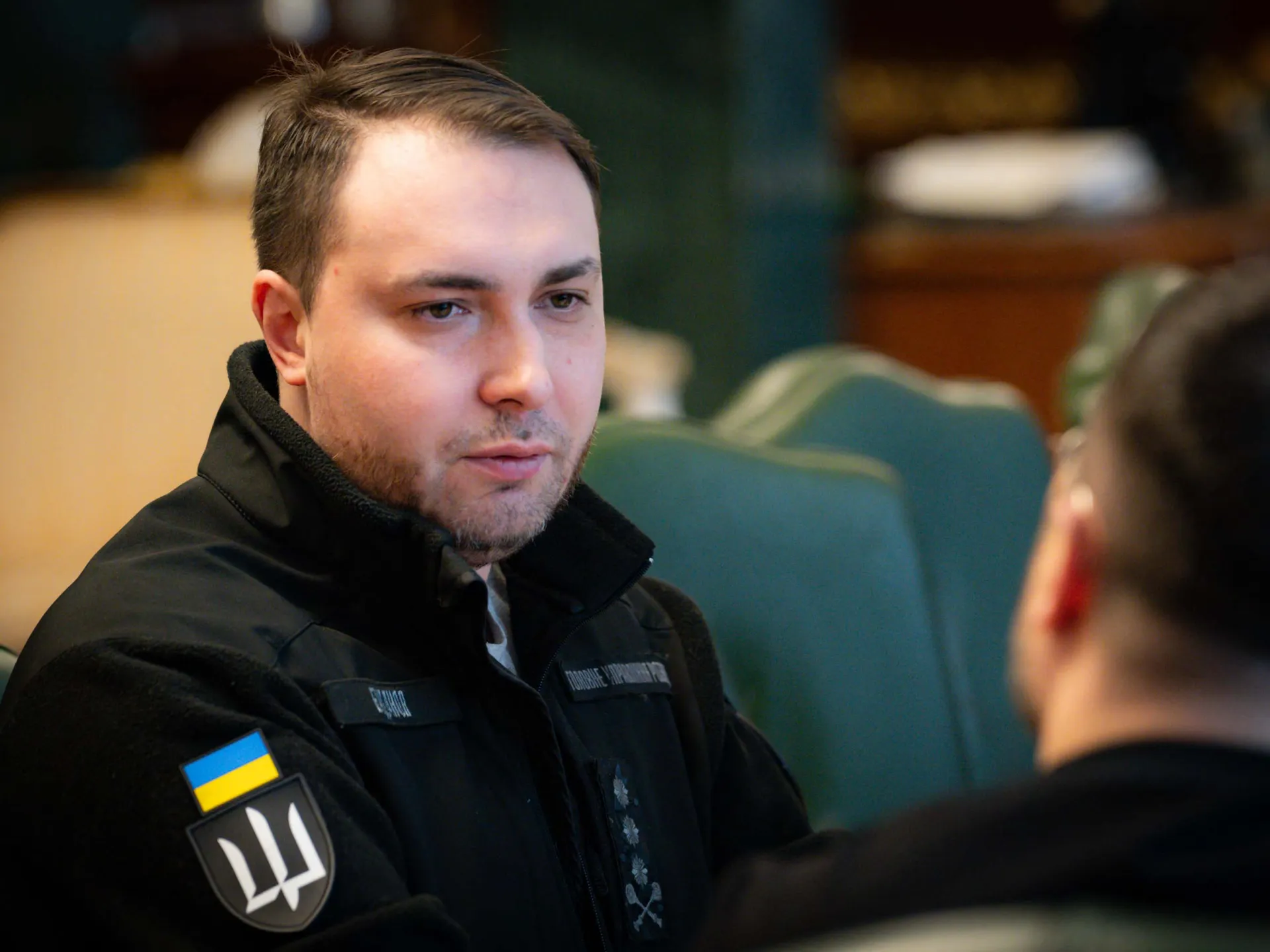
Ukrainian President Volodymyr Zelenskyy has named military intelligence chief Kyrylo Budanov as his new chief of staff as Ukraine and the United States work on a 20-point plan that could end Russia’s war.

“Ukraine needs greater focus on security issues, the development of the Defence and Security Forces of Ukraine, as well as on the diplomatic track of negotiations, and the Office of ​the President will primarily serve the ‌fulfillment of these tasks of our state,” Zelenskyy said on X on Friday.

Recommended Stories

list of 3 itemsend of list

“Kyrylo has specialized experience in these areas and sufficient strength to deliver results,” ‌he added.

The new post for the head of the Main Directorate of Intelligence (GUR) of the Ministry of Defence was announced at a key moment in the nearly four-year war with Russia after Zelenskyy announced on Wednesday that the US-brokered deal to end the conflict was “90 percent” ready.

Budanov has been credited with a series of daring operations against Russia since it launched an all-out assault against Ukraine in 2022. The 39-year-old has run the GUR since being ⁠appointed to the post by Zelenskyy in August 2020.

Budanov said he had accepted the nomination and would “continue to serve Ukraine”.

“It is an honour and a responsibility for me to focus on critically important issues of strategic security for our state at this historic time for Ukraine,” he said on Telegram.

Procedures to formally appoint him as the president’s chief of staff have been launched, Zelenskyy’s adviser Dmytro Lytvyn told journalists.

Budanov will succeed Andriy Yermak, a divisive figure in Kyiv. He was decorated as a Hero ‍of Ukraine and known to be Zelenskyy’s most important ally, but he resigned in November after investigators raided his house as part of a sweeping corruption probe.

The corruption scandal involving Yermak, who was also Kyiv’s lead negotiator in US-backed peace talks, fuelled public anger over persistent high-level graft.

His opponents accused him of accumulating vast power, acting as a gatekeeper regarding access to the president and ruthlessly sidelining critical voices.

Source link

Belfast rallies for Palestine hunger strikers as memories of 1981 return | Israel-Palestine conflict

Belfast, Northern Ireland — On New Year’s Eve, as fireworks lit the Belfast sky, the city’s streets were abuzz — and not only in celebration.

Hundreds gathered in solidarity with activists from the Palestine Action group who are on hunger strikes in prison. Their chants echoed past murals that do not merely decorate the city, but testify to its troubled past.

Along the Falls Road, Irish republican murals sit beside Palestinian ones. The International Wall, once a rolling canvas of global struggles, has become known as the Palestinian wall. Poems by the late Palestinian writer Refaat Alareer, killed in an Israeli air strike in December 2023, run across its length. Images sent by Palestinian artists have been painted by local hands.

More recently, new words have appeared on Belfast’s famed walls. “Blessed are those who hunger for justice.” Painted alongside long-familiar images of Irish republican prisoners like Bobby Sands are new names now written into the city’s political conscience: the four pro-Palestinian activists currently on hunger strike in British prisons, their bodies weakening as the days stretch on.

“This is not a city that will ever accept any attempt to silence our voice or our right to protest or our right to stand up for human rights,” said Patricia McKeown, a trade union activist who spoke at the protest.

“These young people are being held unjustly and in ridiculous conditions – and they have taken the ultimate decision to express their views … and most particularly on what’s happening to people in Palestine – why would we not support that?” she asked.

A hunger strike reaches Belfast

The protest in Belfast is part of a growing international campaign urging the British government to intervene as the health of four detainees deteriorates behind prison walls. All are affiliated with Palestine Action and are being held on remand while awaiting trial, a process campaigners say could keep them imprisoned for more than a year before their cases are heard. With legal avenues exhausted, supporters say the hunger strike has become a last resort.

The Palestine Action members are being held over their alleged involvement in break-ins at the United Kingdom subsidiary of Elbit Systems in Filton near Bristol, where equipment was reportedly damaged, and at a Royal Air Force base in Oxfordshire, where two military aircraft were sprayed with red paint. The prisoners deny the charges against them, which include burglary and violent disorder.

The prisoners are demanding release on bail, an end to what they describe as interference with their mail and reading materials, access to a fair trial and the de-proscription of Palestine Action. In July, the British government of Prime Minister Keir Starmer banned Palestine Action under a controversial anti-terrorism law.

Heba Muraisi is on day 61 without food. Teuta Hoxha is on day 55. Kamran Ahmed on day 54. Lewie Chiaramello on day 41. Hoxha and Ahmed have already been hospitalised. Campaigners describe it as the largest hunger strike in Britain since 1981, one they say is explicitly inspired by the Irish hunger strikes.

In 1981, Irish Republican Army and other republican prisoners went on hunger strike in Northern Ireland, demanding the restoration of their political status. Ten men died, including their leader, Bobby Sands, who was elected to the British parliament during the strike. Margaret Thatcher took a hardline public stance, but behind the scenes, the government ultimately sought a way out as public opinion shifted.

One prisoner, 29-year-old Martin Hurson, died on the 46th day. Others, including Raymond McCreesh, Francis Hughes, Michael Devine and Joe McDonnell, died between days 59 and 61. Sands died after 66 days on a hunger strike.

Sue Pentel, a member of Jews for Palestine Ireland, remembers that period vividly.

“I was here during the hunger strike,” she said. “I went through the hunger strikes, marched, demonstrated, held meetings, protested, so I remember the callous brutality of the British government letting 10 hungers die.”

“The words of Bobby Sands, which are ‘Our revenge will be the laughter of our children’. And we raised our families here, and they’re the same people, this new generation who are standing in solidarity with Palestine.”

‘If this continues, some will die’

Standing beneath a mural of Bobby Sands, Pat Sheehan fears history is edging dangerously close to repeating itself. He spent 55 days on a hunger strike before it was called off on October 3, 1981.

“I was the longest on that hunger strike when it came to an end in 1981, so in theory I would have been the next person to die,” he said.

By that stage, he said, his liver was failing. His eyesight had gone. He vomited bile constantly.

“Once you pass 40 days, you’re entering the danger zone,” Sheehan said. “Physically, the hunger strikers must be very weak now for those who have been on hunger strike for over 50 days.”

“Mentally, if they have prepared properly to go on hunger strike, their psychological strength will increase the longer the hunger strike goes on.”

“I think if it continues, inevitably some of the hunger strikers are going to die.”

Sheehan, who now represents West Belfast as an MLA for Sinn Fein, believes that Palestine Action-linked hunger strikers are political prisoners, adding that people in Ireland understand Palestine in a way few Western countries do.

“Ireland is probably the one country in Western Europe where there’s almost absolute support for the Palestinian cause,” he said. “Because we have a similar history of colonisation; of genocide and detention.”

“So when Irish people see on their TV screens what’s happening in Gaza, there’s massive empathy.”

Ireland’s stance

That empathy has increasingly translated into political action. Ireland formally recognised the state of Palestine in 2024 and has joined South Africa’s case at the International Court of Justice, alleging genocide in Gaza, a charge Israel denies.

The Irish government has also taken steps to restrict the sale of Israeli bonds, while Ireland has boycotted the Eurovision Song Contest over Israel’s participation and called for its national football team to be suspended from international competition.

But many campaigners say the government’s actions have not gone far enough. They argue that the Occupied Territories Bill, which seeks to ban trade with illegal Israeli settlements, has been stalled since 2018, and express anger that United States military aircraft transporting weapons to Israel are still permitted to pass through Ireland’s Shannon Airport.

Meanwhile, in the northern part of Ireland that remains part of Britain, the war in Gaza has dominated domestic politics.

The Stormont Assembly was thrown into crisis after Democratic Unionist Party education minister Paul Givan travelled to Jerusalem on a trip paid for by the Israeli government, prompting a no-confidence vote amid fierce criticism from Irish republican, nationalist, left-wing and unaligned political groups.

Belfast City Hall’s decision last month to fly a Palestinian flag was also fervently opposed by unionist councillors before it was eventually approved.

For some loyalist and unionist groups, support for Israel has become entwined with loyalty to Britain, with Israeli flags also flying in traditionally loyalist parts of Belfast.

With a legacy of identity rooted along sectarian lines, the genocide in Gaza has at times been recast along the old fault lines of division.

‘Solidarity reaches Palestine’

Yet on the streets of Belfast, protesters insist their solidarity is not rooted in national identity, but in humanity.

Damien Quinn, 33, a member of the Boycott, Divestment, Sanctions (BDS) movement, said hunger strikes had always carried a particular weight in Ireland.

“We are here today to support the hunger strikers in Britain. But we are also here for the Palestinian people for those being slaughtered every single day,” he said.

Palestine Action, he said, “made it very clear they have tried signing petitions, they have tried lobbying, they’ve tried everything”.

“So when I see the way they are being treated in prison, for standing up against genocide, that’s heartbreaking.”

For Rita Aburahma, 25, a Palestinian who has found a home in Belfast, the hunger strike carries a painful familiarity.

“My people don’t have the luxury of speaking out, being in Palestine – solidarity matters,” she said.

“I find the hunger strikers are really brave – it’s always been a form of resistance. It does concern me, and many other people, how long it has taken the government to pay attention to them, or take action in any form.

“Nothing will save those people if the government doesn’t do something about them. So it is shocking in a way, but not that surprising because the same government has been watching the genocide unfold and escalate without doing anything.

“Every form of solidarity reaches the people in Palestine.”

Source link

Swiss officials face painful task of identifying victims of deadly bar fire | Tourism News

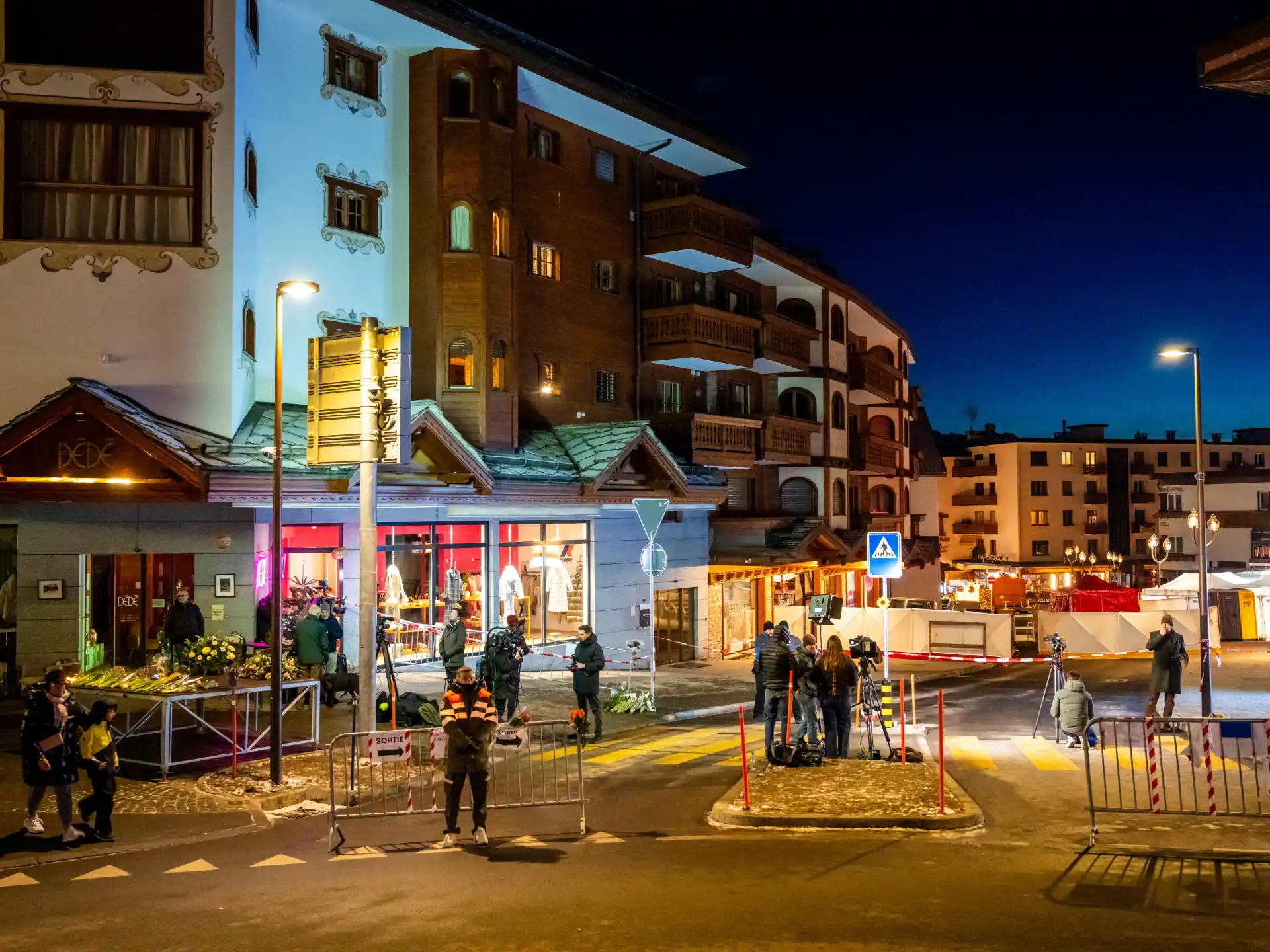
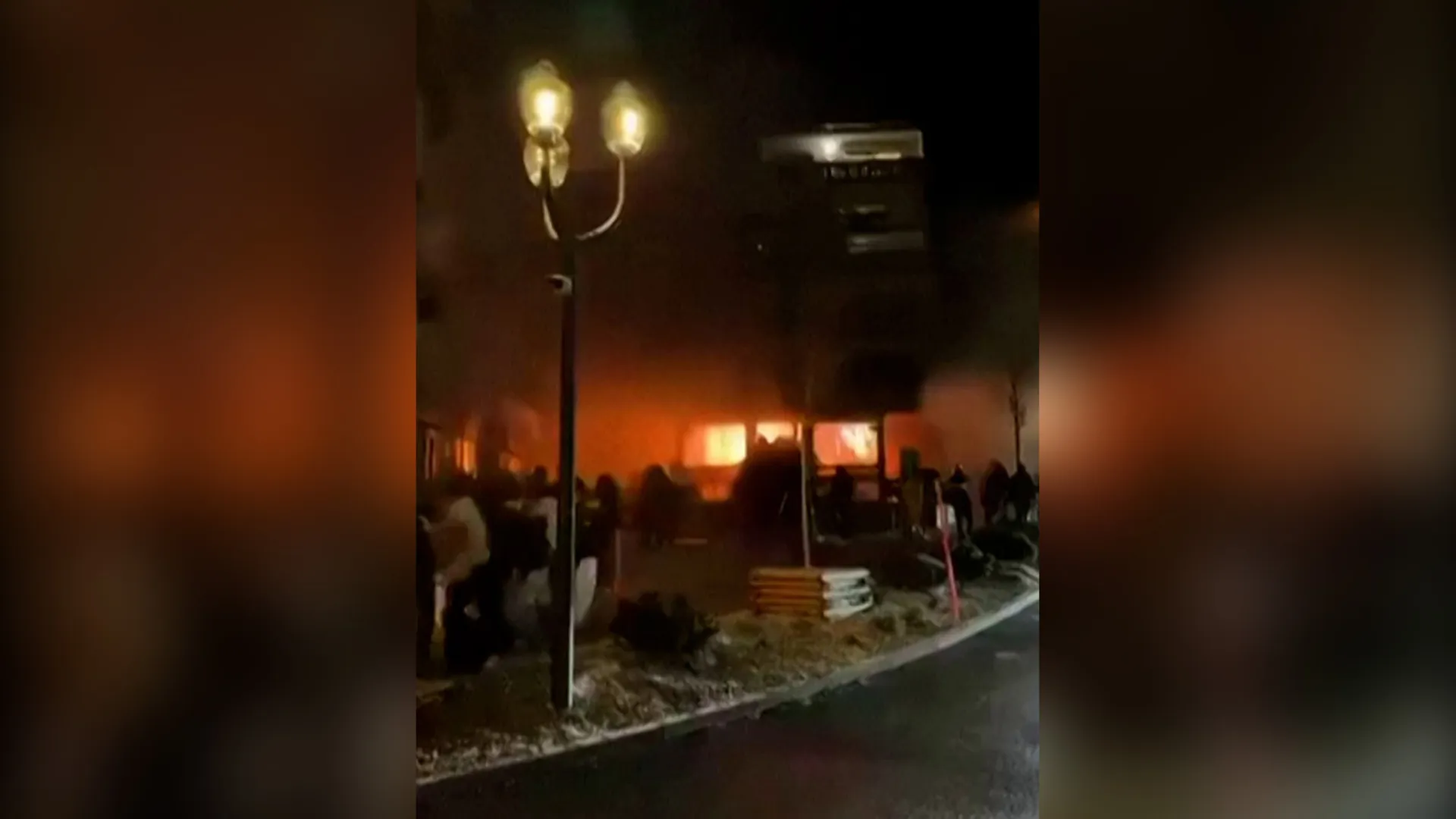
Investigators are rushing to identify the victims and establish the cause of a devastating fire at a New Year’s Eve party that ripped through a bar in the Swiss Alps town of Crans-Montana.

Relatives and friends have been scrambling to find their loved ones, with many circulating photos on social media after the disaster that happened in the early hours of 2026, killing about 40 people and injuring about 115 others, many seriously.

Recommended Stories

list of 4 itemsend of list

“We tried to reach them; some of their locations are still showing here,” Valais, a teenager who was attending the party, told the AFP news agency, nodding at the bar now shielded by opaque white tarpaulins and behind a wall of temporary barriers.

“We took loads of photos [and] we put them on Instagram, Facebook, every social network possible to try to find them,” Eleonore, another one, said.

“But there’s nothing. No response. We called the parents. Nothing. Even the parents don’t know,” she added.

Officials have started the arduous process of identifying the victims, but with some of the bodies badly burned, police warned the process could take days or even weeks.

“The first objective is to assign names to all the bodies,” Crans-Montana’s mayor Nicolas Feraud told a news conference on Thursday evening. This, he said, could take days.

Mathias Reynard, head of government of the canton of Valais, said experts were using dental and DNA samples for the task.

“All this work needs to be done because the information is so terrible and sensitive that nothing can be told to the families unless we are 100 percent sure,” he said.

Bystanders described scenes of panic and chaos during the incident as people tried to break the windows to escape, and others, covered in burns, poured into the street.

The exact number of people who were at the bar when it went up in flames remains unclear, and police have not specified how many are still missing.

Le Constellation had a capacity of 300 people, plus another 40 people on its terrace, according to the Crans-Montana website. Crans-Montana is about 200km south of the Swiss capital, Bern.

More than 30 victims were taken to hospitals with specialised burns units in Zurich and Lausanne, and six were taken to Geneva, according to the Swiss media.

There is no official estimate of the missing or headcount from Le Constellation bar that night.

While Swiss officials have said about 40 people were killed, Italy has put the death toll at 47, based on information from Swiss authorities.

Italy and France are among the countries that have said some of their nationals are missing and Italian Foreign Minister Antonio Tajani will visit Crans-Montana on Friday, Italy’s ambassador to Switzerland Gian Lorenzo Cornado said.

All bar five of the 112 injured had been identified now, Cornado said. Six Italians are still missing and 13 hospitalised, he added. Three Italians were repatriated on Thursday and three more will follow on Friday, he said.

The French foreign ministry said nine French citizens figured among the injured, and eight others remained unaccounted for.

‘The apocalypse’

Swiss President Guy Parmelin, who took over on Thursday, called the fire “a calamity of unprecedented, terrifying proportions”, and announced that flags would be flown at half-staff for five days.

The fire broke out at about 1:30am (00:30 GMT) on Thursday at Le Constellation, a bar popular with young tourists.

“We thought it was just a small fire – but when we got there, it was war,” Mathys, from neighbouring Chermignon-d’en-Bas, told AFP. “That is the only word I can use to describe it: the apocalypse.”

Authorities have declined to speculate on what caused the tragedy, saying only that it was not an attack.

The canton’s chief prosecutor, Beatrice Pilloud, said investigators would look into whether the bar met safety standards and had the required number of exits.

Multiple sources told AFP that the bar owners are French nationals: a couple originally from Corsica who, according to a relative, are safe, but have been unreachable since the tragedy.

Source link

Who are the Palestine Action hunger strikers? | Human Rights News

Four members of the Palestine Action group, which has been proscribed as a terrorist organisation in the United Kingdom, are continuing with their hunger strikes in different prisons around the country.

Four other Palestine Action members have ended their hunger strikes – some after being hospitalised.

Recommended Stories

list of 4 itemsend of list

Here is what we know about the four remaining hunger strikers.

Why are the Palestine Action protesters on hunger strike?

Imprisoned Palestine Action members have been on hunger strikes in prisons around the UK for more than 50 days.

The Palestine Action members are being held on remand in prisons over their alleged involvement in break-ins at the UK subsidiary of Elbit Systems in Filton near Bristol, where equipment was reportedly damaged, and at a Royal Air Force base in Oxfordshire, where two military aircraft were sprayed with red paint.

The prisoners deny the charges against them, which include burglary and violent disorder.

Of the four still on hunger strikes, three were imprisoned in November 2024 for their alleged involvement in break-ins at the UK subsidiary of Israeli weapons group Elbit Systems in Filton near Bristol, where equipment was reportedly damaged. One has been in prison since July 2025 for alleged involvement in damage at a Royal Air Force base in Oxfordshire, where two military aircraft were sprayed with red paint.

Palestine Action, a protest group launched in July 2020, describes itself as a movement “committed to ending global participation in Israel’s genocidal and apartheid regime”.

The UK parliament voted in favour of proscribing the group on July 2, 2025, classifying it as a “terrorist” organisation and bringing it into the same category as armed groups like al-Qaeda and ISIL (ISIS). Critics decried the move, arguing that while members of the group have caused damage to property, they have not committed acts of violence that amount to terrorism.

More than 1,600 arrests linked to support for Palestine Action were made in the three months following the ban’s introduction. The ban has been challenged in court.

The hunger strikers have five key demands: immediate bail, the right to a fair trial – which they say includes the release of documents related to “the ongoing witch-hunt of activists and campaigners” – ending censorship of their communications, “de-proscribing” Palestine Action and shutting down Elbit Systems, which operates several UK factories.

“The UK government has forced their bodies to a breaking point,” pro-Palestine activist Audrey Corno told Al Jazeera Mubasher.

“A promise to the government is that the prisoners’ resistance and the people’s resistance against the genocide [in Gaza], Israel’s occupation and apartheid of genocide will not stop until it ends.”

Who are the remaining hunger strikers?

Heba Muraisi, Kamran Ahmed, Teuta Hoxha and Lewie Chiaramello are the four people, aged between 20 and 31, who are continuing their hunger strikes.

Heba Muraisi

Muraisi, 31, was on day 60 of her hunger strike on Thursday. She is being held in HMP [His Majesty’s Prison] New Hall in Wakefield, a prison in West Yorkshire about 180 miles (290km) north of London.

Muraisi was arrested in November 2024 for her alleged role in an August 2024 raid on the Israel-based Elbit Systems in Bristol, which is believed to have cost the Israeli weapons manufacturer more than $1.34m.

According to social media posts, Muraisi is of Yemeni origin. However, Al Jazeera could not independently verify this.

She was transferred to the West Yorkshire prison in October 2025 from HMP Bronzefield in Surrey, about 18 miles from the UK capital.

“Heba is demanding to be transferred back to HMP Bronzefield. She was transferred very suddenly, very far away from her entire support network and family, which is based in London. She’s been experiencing consistent medical negligence. Her body is, as you’d imagine, increasingly weak,” Corno said.

In a statement shared with Al Jazeera on December 29, Muraisi said: “I’ve been force-fed repression and I’m stuffed with rage and that’s why I’m doing what I’m doing now. I am bringing acute awareness to the unjust application of UK laws by our Government and I’m glad that people can now see this after a year of imprisonment and human rights violations. Keep going, keep fighting.”

Muraisi’s trial is set for June 2026, according to the protest group Prisoners For Palestine.

Heba Muraisi
Heba Muraisi [Courtesy of Prisoners for Palestine]

Kamran Ahmed

Ahmed, 28, was also arrested in November 2024 and is being held in HMP Pentonville in north London. He was also arrested for his alleged involvement in the raid on Elbit Systems in Bristol. Ahmed has been on a hunger strike for more than 50 days.

According to a report by Middle East Eye, Ahmed is a mechanic.

Ahmed was hospitalised for a third time on December 20 after he refused food, his sister, Shahmina Alam, told Al Jazeera.

“We know that he’s rapidly been losing weight in the last few days, losing up to half a kilogramme [1.1lbs] a day,” Alam told Al Jazeera in late December.

Ahmed, who is 180cm (5′11′), entered prison at a healthy 74kg (163lbs), but his last recorded weight was 60kg (132lbs).

“Kamran has been hospitalised for the fourth time recently,” Corno said.

Kamran Ahmed
Kamran Ahmed [Courtesy of Prisoners for Palestine]

Teuta Hoxha

Hoxha, 29, was on day 54 of her hunger strike on Thursday. She is being held at HMP Peterborough. She was also arrested in November 2024 on allegations of involvement in the Elbit Systems raid.

According to Prisoners for Palestine, Hoxha was moved from HMP Bronzefield on the day UK parliamentarians voted to proscribe Palestine Action – July 2, 2025.

Corno told Al Jazeera that she is in regular contact with Hoxha and that she has been having heart palpitations. “She’s not been able to sleep through the night for weeks on end. I can see her memory start to deteriorate.”

In a statement published on the Prisoners for Palestine website, Hoxha said: “This is a witch hunt, not a fair fight, and that behind the arrests of dissenting voices under counterterrorism powers, holding us on remand without trial for nearly two years and targeting protesters who condemn Palestinian suffering, is the palpably desperate attempt to force us all under the imperial boot of submission.”

Teuta Hoxha
Teuta Hoxha [Courtesy of Prisoners for Palestine]

Lewie Chiaramello

Chiaramello, 22, has type 1 diabetes and hence, he has been fasting every other day. He is on day 28 of his hunger strike.

He has been held in HMP Bristol since July 2025 in connection with an incident at RAF Brize Norton, according to Prisoners for Palestine, and faces charges of conspiring to enter a restricted area for purposes harmful to the UK’s safety and interests, as well as conspiracy to commit criminal damage. His trial is set for January 18, 2027.

On June 20, a group of Palestine Action activists broke into RAF Brize Norton, the largest Royal Air Force base in Oxfordshire, and sprayed two military planes with red paint, causing an estimated $9.4m worth of damage.

“He’s been having to manage his insulin intake on his own with no medical supervision,” Corno said.

Lewie Chiaramello
Lewie Chiaramello [Courtesy of Prisoners for Palestine]

Who else has been on a hunger strike?

Four other imprisoned Palestine Action activists have ended their hunger strikes, mostly after being hospitalised.

This includes Qesser Zuhrah, 20 and Amu Gib, 30, who are being held at Bronzefield prison in Surrey. The pair began their hunger strikes on November 2 to coincide with the Balfour declaration of 1917, when Britain pledged to establish a national home for the Jewish people in Palestine.

Umar Khalid, 22, who has muscular dystrophy, ended his hunger strike after 13 days. Jon Cink ended his hunger strike after 41 days when he was hospitalised. Qesser Zuhrah ended her hunger strike after 48 days and was hospitalised. Amy Gib was also hospitalised.

Source link

Bulgaria adopts euro amid celebration and anxiety over inflation | Business and Economy News

Move comes nearly two decades after the Balkan country entered the EU as hope for stability clashes with fear of rising prices.

Bulgaria has officially adopted the euro, becoming the 21st country to join the single currency nearly two decades after entering the European Union, a move that has led to both celebration and anxiety.

At midnight on Wednesday (22:00 GMT), the Balkan country abandoned the lev, its national currency since the late 19th century.

Recommended Stories

list of 3 itemsend of list

Images of Bulgarian euro coins lit up the central bank’s headquarters in Sofia as crowds gathered in freezing temperatures to mark the new year.

“I warmly welcome Bulgaria to the euro family,” said Christine Lagarde, the president of the European Central Bank.

Some residents welcomed the change with optimism. “Great! It works!” said Dimitar, 43, speaking to The Associated Press after withdrawing 100 euros from a cash machine shortly after midnight.

Successive Bulgarian governments have backed euro adoption, arguing it would strengthen the country’s fragile economy, anchor it more firmly within Western institutions and shield it from what officials describe as Russian influence. Bulgaria, with a population of about 6.4 million, remains the poorest member of the EU.

Commuters walk past an advertisement promoting Bulgaria's entry into the Eurozone in Sofia's subway on December 31, 2025, ahead of the country's adoption of the euro on January 1, 2026. (Photo by Nikolay DOYCHINOV / AFP)
Commuters walk past an advertisement promoting Bulgaria’s entry into the eurozone in Sofia’s subway on December 31, 2025, ahead of the country’s adoption of the euro on January 1, 2026 [Nikolay Doychinov/AFP]

Divided public

Yet public opinion has long remained split. Many Bulgarians fear the euro will drive up prices while wages stagnate, worsening living standards in a country already struggling with political instability.

In a televised address before midnight, President Rumen Radev described the euro as the “final step” in Bulgaria’s integration into the EU.

However, he criticised the absence of a public referendum on the decision.

“This refusal was one of the dramatic symptoms of the deep divide between the political class and the people, confirmed by mass demonstrations across the country,” Radev said.

Bulgaria recently plunged into further uncertainty after anticorruption protests toppled a conservative-led government in December, pushing the country towards its eighth election in five years.

“People are afraid that prices will rise, while salaries will remain the same,” a woman in her 40s told the AFP news agency in Sofia.

At city markets, vendors listed prices in both levs and euros. Not everyone was worried.

“The whole of Europe has managed with the euro, we’ll manage too,” retiree Vlad said.

Source link

Russia claims Ukrainian drone attack killed 24 people in Kherson | Russia-Ukraine war News

Russia has accused Ukraine of killing at least 24 people, including a child, in a drone attack on a hotel and cafe where New Year celebrations were taking place in a Russian-controlled part of Ukraine’s southern Kherson region.

Vladimir Saldo, the Russian-installed governor of the region, first made the claim in a statement on Telegram before Russia’s Ministry of Foreign Affairs, and senior politicians later accused ⁠Ukraine of carrying out “a terrorist attack”.

Recommended Stories

list of 3 itemsend of list

Saldo also published photos of what he wrote was the aftermath of the attack, which Al Jazeera has not been able to verify.

At least one person’s body was visible in the images beneath a white sheet.

The building showed signs that a fierce fire had raged, and there were what appeared to be bloodstains on the ground.

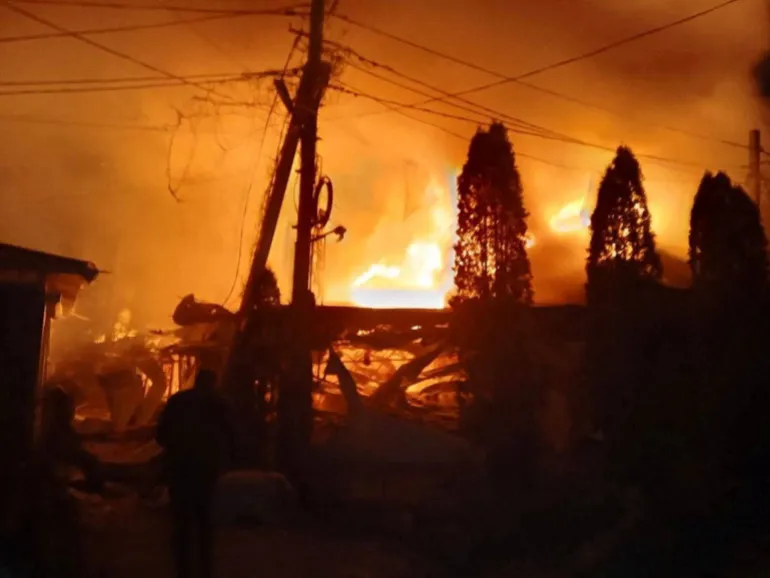
In the statement, ​Saldo said three Ukrainian drones had struck the site of New Year ‌celebrations in Khorly, a coastal village, in what he said was a “deliberate strike” against civilians. He said many people were burned alive.

Russia’s Foreign Ministry said initial information indicated that 24 people had been killed, and that 50 people had been injured.

“There is ‌no doubt that the attack was planned in advance, with ⁠drones deliberately targeting areas where civilians had gathered to celebrate New Year’s Eve,” the ministry said in a statement, calling the attack “a war crime”.

Flames and smoke rise from a fire following what Russian-installed authorities described as an overnight Ukrainian drone strike on a hotel and cafe, amid the ongoing Russia-Ukraine conflict in the village of Khorly, in the Kherson Region, a Russian-controlled area of Ukraine, January 1, 2026. Governor of Kherson Region Vladimir Saldo via Telegram/Handout via REUTERS ATTENTION EDITORS - THIS IMAGE WAS PROVIDED BY A THIRD PARTY. NO RESALES. NO ARCHIVES. MANDATORY CREDIT.
Flames and smoke rise from a fire following what Russian-installed authorities described as an overnight Ukrainian drone attack on a hotel and cafe [Handout/Governor of Kherson on Telegram via Reuters]

Russian Foreign Ministry spokeswoman Maria Zakharova said in a statement on Telegram that ‌Ukraine’s backers in the West were ultimately to blame.

Senior politicians, including the speakers of both houses of Russia’s parliament, condemned Kyiv.

Kherson is one of the four regions in Ukraine ‍that Russia claimed as its own in 2022, a move Kyiv and most Western countries denounced as an illegal land grab.

Ukraine’s ‍military ‍did not comment on Moscow’s claim, but it said it had hit Russia’s Ilsky ⁠oil refinery in ​the Krasnodar region overnight, ‍adding that the results of the attack ‍were still ⁠being confirmed.

In a statement on Telegram, the military also said it hit the ​Almetyevsk ‌oil facility in Russia’s Tatarstan region.

The Almetyevsk facility is ‌more than 965km (600 ‌miles) from ⁠the nearest part of Ukraine, and even further ‌from the nearest territory currently controlled by ‍Kyiv.

Russia releases video of ‘attack’ on Putin’s residence

On Tuesday, Moscow claimed that Ukraine launched a long-range drone attack against one of President Vladimir Putin’s official residences in northwestern Russia, which Kyiv has denounced as a “lie”.

Russia’s Defence Ministry released a video on Wednesday of a downed drone it said was involved in the attack.

The night-time clip showed a man in camouflage, a helmet and a Kevlar vest standing near a damaged drone lying in snow.

The man, with his face covered, talks about the drone. Neither the man nor the Defence Ministry provided any location or date.

The video and claims could not be independently verified.

Peace talks

Kyiv has called the allegations of an attack on Putin’s residence a ruse to derail ongoing peace negotiations, which have ramped up in recent weeks on both sides of the Atlantic.

In his New Year’s address, President Volodymyr Zelenskyy said a peace deal was “90 percent ready” but warned that the remaining 10 percent, believed to include key sticking points such as territory, would “determine the fate of peace, the fate of Ukraine and Europe, how people will live”.

Trump’s special envoy Steve Witkoff said on Wednesday that he, Secretary of State Marco Rubio and Trump’s son-in-law Jared Kushner had had a “productive call” with the national security advisers of the United Kingdom, France, Germany and Ukraine to discuss the “European peace process”.

“We focused on how to move the discussions forward in a practical way on behalf of [Trump’s] peace process, including strengthening security guarantees and developing effective deconfliction mechanisms to help end the war and ensure it does not restart,” Witkoff said in a post on X.

Lead Ukrainian negotiator Rustem Umerov also reaffirmed that European and Ukrainian officials plan to meet on Saturday, while Zelenskyy is due to hold talks next week with European leaders.

Russia’s attacks on Ukraine

Elsewhere in Ukraine, Russia attacked the Odesa region overnight, targeting civilian infrastructure in several waves of drone attacks, according to regional head Oleh Kiper.

In a post on Telegram, Kiper said a two-storey residential building was damaged and that a drone hit an apartment on the 17th floor of a high-rise building without detonating. No casualties were reported.

In its daily report, the air force said air defence forces had downed or suppressed 176 of 205 drones targeting Ukraine overnight.

It said 24 drone hits were recorded at 15 locations, and the attack was ongoing.

Source link

Enzo Maresca leaves Chelsea after just 18 months as manager | Football News

Maresca exits the club midway through a turbulent season with the team winning just one Premier League game in December.

Chelsea have parted ways with ‌Enzo Maresca, a dramatic fall from grace for the Italian who was named ‍Manager of the Month ‍for November before the club won just one of their last seven league games, causing them to fall out of the Premier League title race.

“Chelsea Football Club and head coach Enzo Maresca have parted company,” the club said in a statement on Thursday.

Recommended Stories

list of 3 itemsend of list

Maresca, who joined Chelsea in 2024 after steering Leicester City to Premier League promotion, leaves 18 months to the day since he was ⁠tasked with reviving the club’s fortunes after two years of failing to qualify for the Champions League.

He eventually ​guided the London side to UEFA Champions League qualification with a fourth-placed finish, the Conference ‍League trophy and the Club World Cup title in his first season with a young but expensively built squad.

Poor run of form

However, a poor run of form in December and an uncharacteristic outburst from the Italian prompted the club hierarchy to take ‍action and part ⁠ways with the 45-year-old manager.

“With key objectives still to play for across four competitions including qualification for Champions League football, Enzo and the club believe a change gives the team the best chance of getting the season back on track,” the Chelsea statement said.

Chelsea were as high as third in November and were among the title contenders, high on confidence after they had also crushed Barcelona 3-0 in ​the Champions League at Stamford Bridge.

But they have since slipped to fifth in ‌the league to sit 15 points behind leaders Arsenal at the halfway stage of the season.

Enzo Maresca and Cole Palmer react.
Chelsea star Cole Palmer shakes hands with Maresca, left, after being substituted during what turned out to be the Italian’s last match in charge of the club against Bournemouth at Stamford Bridge, London, UK, on December 30, 2025 [Andrew Boyers/Action Images via Reuters]

‘Worst 48 hours’

Last month, Maresca voiced frustration over issues behind the scenes, saying he felt he had a lack of support from the club, describing a period ‌after a 2-0 win over Everton as “the worst 48 hours” of his tenure.

The Italian did not clarify what he meant by the comment, but the damage ‌seemed to have been done as Chelsea’s league form nosedived.

Although Chelsea ⁠beat Cardiff City to reach the League Cup semifinals, they picked up only two points in their last three Premier League games.

Off the pitch, there was also the unwelcome distraction of rubbishing links to the Manchester City job as Maresca pointed out that he was committed ‌to Chelsea, where he had a contract until 2029.

But Tuesday’s 2-2 home draw with Bournemouth – where fans chanted, “You don’t know what you’re doing” when he substituted playmaker Cole Palmer while they also booed at the final whistle – proved to be his final match in charge.

The club did not say who would take charge before Sunday’s match against second-placed Manchester City.

Source link

Four affordable short-haul Europe trips for 2026 with flights under £15 and hotel rooms from £30

LOOKING for somewhere cheap to visit in 2026, that won’t have you stuck on a plane for hours?

We’ve put together a list of some of the most affordable short-haul destinations to visit, with insider tips on where to eat and stay for cheap.

Dublin’s Temple Bar area is extremely popular with tourists and a great photo opportunityCredit: unknown
Dublin’s cobbled streets are full of charmCredit: Getty

Whether it’s a weekend city break, a romantic getaway or a quick foodie trip – here’s our top picks for the best in short-haul holidays.

Dublin, Ireland

Dublin is one of Europe’s most exciting and lively capital cities, with loads to see and do, and plenty of good craic to be had.

There are plenty of fun experiences like the Guinness Storehouse (from €22 (£19) or Jameson’s Distillery tour (from €26 (£22.80)), both of which are worth every penny.

But there’s also no need to spend on days out when there is so much to see just by strolling through the city.

SHORT BREAK

Popular city named underrated winter city break is still 20C with £28 flights


WEEKEND WONDERS

2 Euro city breaks perfect for a weekend of gorging on food, wine & culture

Wander down Grafton Street to listen to some of the most talented buskers you’ve ever heard.

Or take a picnic to Stephen’s Green to feed the resident swans, relax and watch the world go by.

And if you’re looking for the best pint, we have some insider tips.

Whilst it’s worth visiting the famous Temple Bar for a photo op, there are some much more authentic (and cheaper) places to get a drink.

Grab your pint of Guinness from bars loved by locals such as Gravediggers or Mulligan’s for a more authentic experience.

Flights from multiple UK airports to Dublin are often only £14.99 each way with Ryanair.

Plus the flight over is so fast, cabin crew barely have the time to get the trolley down the aisle before you’ve landed!

Stay at a hostel like Generator Dublin for an urban, industrial vibe right in the heart of the city, whilst paying as little as £14 to stay the night.

The flight from London to Milan is only 2 hoursCredit: Getty
Piazza del Duomo square is one of the most photographed spots in MilanCredit: Getty

Milan, Italy

Milan might be known as one of Europe‘s top fashion capitals, but this sleek Italian city is a surprisingly cheap stay.

Skip the pricey guided tours – Milan is best explored on foot.

Stroll through the Galleria Vittorio Emanuele II, admire the Duomo (or climb the rooftop for €15 (£13)), and unwind in Parco Sempione behind Sforza Castle.

There are loads of architectural masterpieces which are free to enter, such as the grand Basilica di Sant’Ambrogio and the stunning San Maurizio – often dubbed the Sistine Chapel of Milan.

There are also some great museums with free entry, such as the Palazzo Morando art museum and the Mudec – Museum of Cultures.

Another major perk of Milan is that you can feast on authentic Italian food to your heart’s content – without breaking the bank.

Head to the Navigli district, famous for its canals and buzzing nightlife, where you can order an aperitivo for around €10 (£8.80) and you’ll get a cocktail plus a plate of free snacks, or even a mini buffet to go with it.

Or for some traditional pasta, visit restaurants such as Il Brutto Anatroccolo for mains from €8 (£7).

The flight from London to Milan is only 2 hours long, and costs as little as £14.20 each way with easyJet.

There are plenty of cheap hotels to choose from, including the 4-star Cosmo Hotel Palace for £54 per night.

The Hungarian Parliament Building stands majestically on the Danube RiverCredit: Getty
The Szechenyi Baths in Budapest get their water from two thermal springsCredit: Alamy
The Szimpla is a trendy ruin bar and a great spot for a drinkCredit: Getty
Many street vendors in Budapest offer Hungarian chimney cakeCredit: Getty

Budapest, Hungary

Budapest might look like a luxury city break at first glance, with its grand architecture, thermal spas and classy rooftop bars.

But the Hungarian capital actually one of the most affordable capitals to visit in Europe.

Start your trip in the city’s famous ruin bars – once crumbling buildings turned into quirky bohemian pubs.

Here you can grab a pint for 1000 HUF (£2.25) and dance the night away without burning a hole in your pocket.

Szimpla Kert is the most iconic ruin bar, packed with vintage furniture, fairy lights, and live music most nights.

To relax, skip the expensive spas and head to the picture-perfect Széchenyi Thermal Bath.

It’s the largest medicinal bath in Europe, and costs 12,500 HUF (around £28) to visit.

Soak in your choice of 15 steamy outdoor pools surrounded by Budapest’s signature neo-baroque architecture.

The city is also dotted with street vendors selling delicious chimney cake, or ‘Kürtőskalács’ – a delicious sweet pastry that is a must-try when in Budapest.

It’s made by wrapping dough around a spit before rolling it in cinnamon sugar or chocolate, and you can grab them for as little as 445 HUF (or £1).

Return flights to Budapest cost as little as £42 with Ryanair, and city centre hotels such as the Benczúr offer rooms for as little as £30 a night.

Walk the walls of Girona for great views over the cityCredit: Getty
Girona in Spain has a beautiful canal and colourful historic buildingsCredit: Getty
Xuixos are tasty Spanish pastries – a popular snack in GironaCredit: Alamy

Girona, Spain

Girona might not be the first place that comes to mind for a Spanish break, but it should be.

This colourful Catalan city has all the charm of Barcelona – without the chaos or the price tag.

Wander through the Old Town”s medieval streets to see sights like the impressive Gothic Cathedral and the famous colourful houses that line the Onyar River.

There are plenty of fascinating historic sites to visit, like the arching Arab Baths and the Força Vella, the Roman fortress remains.

You can even walk along the city walls for some unbeatable views.

There’s also some quirky places to visit such as the Cinema Museum, Game of Thrones filming sites and the Pont de las Peixateries Velles – the city’s iconic red bridge.

Food is where Girona really shines.

A coffee costs €1.50 (£1.30) and you can tuck into a menu del día (a hearty three-course lunch) for under €15 (£13).

Rocambolesc is known for its tubs of ice cream and gelato with lashings of delicious chocolate toppings.

Don’t miss out on xuixos, the city’s signature cream-filled pastry that’s best enjoyed warm with an espresso.

One-way flights from Manchester to Girona with Ryanair start from £14.99.

For a cheap place to stay, opt for the Ibis Budget Girona Costa Brava – with doubles from £48 per night.

Source link

The world is still failing its children. We can change that in 2026 | Child Rights

As we enter 2026, one truth is impossible to ignore: children around the world are facing their greatest levels of need in modern history – just as the humanitarian system meant to protect them and their futures is battling some of its biggest challenges in decades.

The events of 2025 marked a dramatic rupture in global humanitarian and development efforts. When the United States abruptly halted foreign aid in January, billions of dollars vanished overnight. Critical programmes were suspended, offices closed, and millions suddenly lost access to food, healthcare, education, and protection. Overnight, lifelines that communities had depended on for decades were thrown into jeopardy – and children, as always, paid the highest price.

For international NGOs, the shock was immediate and severe. At Save the Children, we were forced to take some of the toughest decisions in our 106-year history. We had to close country offices, cut thousands of staff positions, and wind down life-saving operations. We estimated that about 11.5 million people – including 6.7 million children – would feel the immediate impacts of these cuts, while many more would be impacted in the longer term.

The aid cuts came at a time when children globally were already facing major challenges, from conflict to displacement, to climate change, with decades of progress at risk of being reversed.

The facts are startling. In 2025, one in every five children was living in an active conflict zone where children are being killed, maimed, sexually assaulted and abducted in record numbers. About 50 million children globally are displaced from their homes. Nearly half the world’s children – about 1.12 billion – cannot afford a balanced diet, and some 272 million were out of school.

These numbers point to a global failure. Behind each statistic is a child whose childhood is being cut short, a childhood defined by fear, hunger and lost potential.

For children, the collapse of aid was not an abstract budgetary decision, but it was deeply personal.  Health clinics closed, classrooms closed, and protection services disappeared just as violence, climate shocks and displacement intensified. Years of hard-won progress in child survival, education and rights were suddenly at risk of being undone, leaving millions of children more vulnerable to hunger, exploitation and violence.

The crisis also revealed the fragility of the global aid system itself. When humanitarian support is concentrated among a handful of government donors, sudden political shifts reverberate directly through children’s lives. The events of 2025 showed how quickly international commitments can unravel – and how devastating that can be for the youngest and least protected.

Yet amid this turmoil, something extraordinary happened.

In many places, families, teachers, health workers and local organisations found ways to keep learning going, to provide care, and to create spaces where children could still play, heal and feel safe. These efforts underscored a simple truth: Responses are strongest when they are rooted close to children themselves.

There were also moments of progress. In a year marked by pushback against human rights, important legal reforms advanced children’s protection – from a ban on corporal punishment in Thailand, to the criminalisation of child marriage and the passing of a digital protection law in Bolivia. These gains reminded us that change is possible even in difficult times, when children’s rights are put at the centre of public debate and policy.

Out of the shocks of 2025 has come a moment of reckoning and an opportunity: to adapt, to innovate, towards approaches that are more sustainable, more locally led and more accountable to the people they are meant to serve. For children, this shift is critical. Decisions made closer to communities are more likely to reflect children’s real needs and aspirations.

This period of reinvention has also revived difficult questions that can no longer be postponed. How can life-saving assistance be insulated from political volatility? How can funding be diversified so that children are not abandoned when a single donor withdraws? And how can children and young people meaningfully participate in decisions that shape their futures?

Innovation alone will not save children, but it can help. When digital tools, data and community-led design are used responsibly, they can improve access, accountability and trust. Used poorly, they risk deepening inequalities. The challenge is not technological — it is political and ethical.

Children do not stop wanting to learn, play or dream because bombs fall or aid dries up. In camps, cities and ruined neighbourhoods, they organise, speak out and imagine futures that adults have failed to secure for them. They remind us why our work – and our ability to adapt – matters so profoundly.

In Gaza this year, I witnessed the horrors that children are living through daily, with the war now raging for more than two years and most of the Strip covered in rubble. I saw children facing malnutrition at our healthcare clinics and heard how some now wish to die to join their parents in heaven. No child should ever be living under such terror that death is preferable. They are children, and their voices need to be heard.

If 2025 exposed the failures of the old aid model, 2026 must become a turning point. A different choice is possible — one that builds systems resilient to political shocks, grounded in local leadership and accountable to the children they claim to serve. The challenge now is to reshape our systems so that, no matter how the world changes, we can put children first, always, everywhere.

The views expressed in this article are the author’s own and do not necessarily reflect Al Jazeera’s editorial stance.

Source link

10 of the best learning holidays in Europe for 2026 | Learning holidays

Rock climbing in the Peak District

Even complete beginners will soon be scaling sheltered Peak District crags on this two-day course with Pure Outdoor. Participants will master tying in, belaying and several climbing techniques, as well as abseiling down. With a maximum of six learners to one instructor, there is a lot individual attention and personalised targets. The course is suitable for anyone aged 13 and over, from first-time climbers to those with some indoor experience. It is non-residential, but Pure Outdoor has a list of recommended, affordable accommodation nearby, including campsites, hostels, B&Bs and pubs with rooms. The training centre is 10 minutes’ walk from Bamford railway station, which is on the Hope Valley line from Manchester to Sheffield.
£199 for two days, weekends from 7 March-8 November, plus weekday courses most months, pureoutdoor.co.uk

Abstract painting in Spain

In the heights … turn sketches into abstracts in Andalucía Photograph: Andrew Watson

Moclín, a historic hillside village in Andalucía, about 45 minutes’ drive from Granada, is the inspiring setting for this painting holiday. Painters of all abilities – including beginners – will learn how to plan and create abstract artworks. Some time will be spent outside, working on guided exercises en plein air. These charcoal drawings and watercolour studies will then be developed in the studio, with participants producing several abstract landscapes in acrylics to be exhibited in the village. The group has sole use of the hotel, which is set around an open courtyard and has a roof terrace with views over the hills. The price includes five days’ painting tuition; all meals, including a tapas dinner in Granada; and an excursion to the castle and other local sights.
From €1,950 for seven nights, 19-26 May, granadaculturalholidays.com

Ottolenghi-inspired vegetarian cooking in Portugal

Veg out … Ottolenghi-style meals in Portugal. Photograph: Figs on the Funcho

This Mediterranean cooking retreat, set on a riverside villa in the inland Algarve, is inspired by the vegetarian dishes of Yotam Ottolenghi and Ixta Belfrage. Guests will learn to produce meze spreads, attend a falafel-making workshop, perfect brunch dishes such as shakshuka, and make hearty mains including spicy mushroom ragu and moussaka. There are visits to the village market and a local vineyard to taste Portuguese wines, plus free time for walks by the Funcho River, to relax on the deck or swim in the infinity pool. The villa, a former farmhouse, has five bedrooms, plus safari tents in the grounds.
From €900 for five days from 20 March, 8 May, 11 September and 13 November, responsibletravel.com

Street dance in Buckinghamshire

Keep it locked … street dance classes in High Wycombe. Photograph: Gradyreese/Getty Images/iStockphoto

Hip Hop Don’t Stop is an uplifting, inclusive three-day adults’ street dance camp in High Wycombe, Buckinghamshire. The format each day is a party-style group warmup, followed by three 90-minute workshops covering different street dance styles, then an hour-long jam to show off those solos. Dancers are divided into groups according to ability and experience, so it is suitable for those who are brand new to popping and locking, right up to advanced dancers or teachers. The camp doesn’t include accommodation but there are several hostels and hotels within walking distance, and it is 23-35 minutes by train into central London.
£245 for three days; next course 7-9 April, urbanstrides.com

Sea shanty weekend in Cornwall

On the fiddle … learn to write sea shanties in St Ives. Photograph: Desha Cam/Stock Adobe

St Ives is the perfect setting for a sea shanty weekend. Guests will learn traditional shanties from a folk singer and vocal coach, and have a go at writing their own. There will be vocal warmups, breathing exercises, performance tips and a final evening concert. The holiday is held in a country house overlooking St Ives Bay. All meals are provided, including a Cornish cream tea on arrival, cooked or continental breakfasts, packed lunches and three-course dinners. Grog, alas, is not included. All together now: “What will we do with the drunken sailor …?”
From £429, 31 January-3 February and 31 October-3 November, hfholidays.co.uk

Creative writing in Crete

Write on … village-style hotel in the White mountains, Crete.

Author, playwright and lecturer Greg Mosse leads the daily workshops on this writing retreat. He covers everything from plot, characters, locations and suspense, to submitting work to publishers. Greg’s wife, the bestselling author Kate Mosse, will co-host events at the beginning and end of the week. The holiday is based at a village-style hotel in Vamos at the foot of the White mountains – 10 one- and two-bedroom cottages surround a garden and pool (non-writing partners or friends are welcome to share a cottage). On the last night, budding authors celebrate with a concert in the garden and a farewell dinner.
From £893pp for seven nights (based on two sharing), 11-18 August, simpsontravel.com

Introduction to beekeeping in Mid Wales

Hive mind … be shown beekeeping skills in mid Wales. Photograph: Gary Yeowell/Getty Images

The Centre for Alternative Technology near Machynlleths runs a host of courses covering sustainability: from wildlife gardening to making pallet furniture. This two-day course will help participants get to grips with the basics of beekeeping, explore the biology of honeybees and learn about their environmental benefits. It is designed to produce “bee-friendly beekeepers”. The weekend is also a chance to de-stress in CAT’s sustainably managed woodlands, which are home to polecats, otters, dormice, lesser horseshoe bats and rare birds. Bed and breakfast the night before the course is £80, and full-board accommodation during the course is £97.
£248, 30-31 May, 5-6 September; cat.org.uk

Sailing for beginners in Essex

Essex appeal … learn sailing on the Blackwater estuary. Photograph: Brit Pics/Alamy

These new summer sailing weekends are spent on Wayfarers (dinghies) and Dufours (keelboats) on the Blackwater estuary in Essex. They are aimed at adult beginners learning the ropes or more experienced mariners who want a refresher. Sailors can hone their helming, strengthen their seamanship and work towards the Royal Yachting Association’s levels one to three in a fun, welcoming environment. There are day-only and residential options, staying in simple dorms in the waterside Bradwell training centre. The day option includes packed lunches, while the residential package includes two nights’ accommodation and all meals, from full English breakfasts to evening barbecues.
From £299, 18-20 July and 4-6 September, essexoutdoors.com

Introduction to open-water swimming in Cyprus

Top dips … open-water swimming in Cyprus. Photograph: Andy Tester

The setting for this swim camp is a beach resort in Peyia, just north of Paphos, on the white sand of the Coral Bay. It is aimed at those who can comfortably swim 500 metres in a pool, and want to make the transition to open water. All swims start from the shallow waters of the bay, rather than a boat, and the average distance covered is up to 2km a day). There are also daily technical coaching sessions with video analysis in an Olympic-sized swimming pool, two minutes’ walk from the hotel. The price includes coaching, accommodation, breakfast and dinner.
From £1,350 for five nights from 5, 11 and 17 June, swimtrek.com

Mosaic-making in Turkey

Pieces of you … a mosaic break in Turkey. Photograph: Mosaic and You

Ingi, a mosaicist who learned the art in Turkey nearly 20 years ago, now runs artistic retreats at her villa in Fethiye on the Turquoise Coast. Guests – a maximum of three people – spend the week making a mosaic to take home, in a studio on the terrace. But the holiday is about more than mosaics: Ingi introduces guests to the local culture, taking them to the market, into Fethiye for lunch, and on optional visits to the Blue Lagoon and a hammam. There is also time to relax by the pool, in the landscaped gardens or on uncrowded Calis beach. All meals are included.
From £1,099 for six nights, up to three courses a month from 18 April-17 October, responsibletravel.com

Source link

Gorgeous island dubbed ‘Hawaii of Europe’ is 23C in January with £17 flights

This island offers the perfect winter escape with average temperatures of 20C in January – and it’s just a four-hour flight from London

As murmurs of snow and icy conditions intensify, and the January weather settles in, it’s hardly surprising that many are dreaming of escaping to warmer climes – minus the peak-season throngs.

Those blessed with sufficient funds and holiday allowance might contemplate Cancun, but there’s a secret paradise much nearer that can be reached for a fraction of the price: an island hailed as the “Hawaii of Europe”, merely a four-hour journey from London (which is due to crash down to -3C this week).

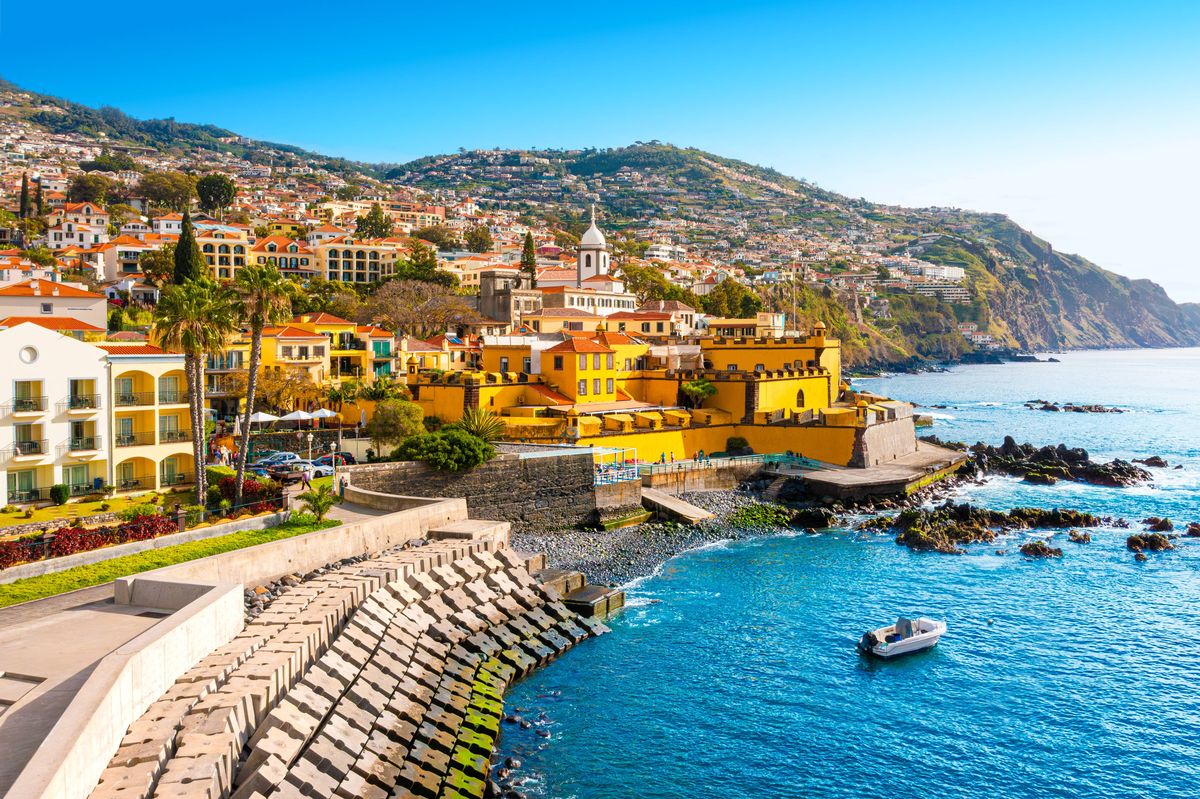
Positioned 500km from Africa’s shores and 450km north of the Canary Islands, Madeira is renowned as Cristiano Ronaldo’s homeland – not, bewilderingly, the English sponge cake bearing the same moniker. The Portuguese island chain comprises four territories: Madeira, Porto Santo, the Desertas, and the Selvagens.

It serves as a perfect winter retreat, offering average temperatures as high as 23C on the warmest January days. The Met Office reports that the archipelago typically basks in six hours of daily sunshine throughout winter. Nevertheless, weather patterns differ considerably across mountainous areas, influenced by elevation. Even during quieter months, the heavily populated isle can still appear bustling, particularly following its social media fame as a breathtaking oceanic sanctuary competing with tropical paradises.

“If you’re looking for winter sun, you won’t have much trouble finding it in Madeira in January. Daytime temperatures can be 20°C in the south below what’s called the ‘banana line’, the best place for cultivating the fruit. Yet look at the mountaintops from Funchal, and you may well see snow glittering in the sunlight. Madeirans take their first sea swims of the year, but you might want to wait a few months,” explains Responsible Travel.

Even during the quieter months, the heavily populated island can still seem busy, particularly following its social media fame as a breathtaking oceanic retreat competing with tropical hotspots, according to the Express.

As a delightful perk, Madeira operates on the UK’s timezone, meaning you won’t squander valuable time off wrestling with jet lag.

Madeira, the main island, is bursting with attractions and adventures crammed into its compact area, ideal for those seeking more than simply lounging in the sun and making their friends back home envious. Must-see experiences include trekking up Pico Ruivo, wandering through the lush gardens at Monte Palace, and visiting local wineries to discover the area’s fascinating wine-making heritage.

The island’s famous Madeira wine found its way to England during the 1800s and was traditionally served alongside lemon and almond-flavoured madeira cake – remarkably giving the dessert its name despite having no other link.

According to Visit Madeira, Ponta do Sol boasts the island’s highest annual sunshine hours. It’s described as a “place much appreciated by those seeking to enjoy sunny days on the beach or in contact with some idyllic spots in nature”.

For culture enthusiasts, Ponta do Sol Beach is unbeatable during their visit. Boasting excellent water quality and a charming setting, this compact 160-metre stretch is ideal for tranquillity seekers. Meanwhile, Madalena do Mar Beach sits nestled near dramatic rocky cliffs and is adored by swimmers. Visit Madeira explains: “This bathing resort is a combination of pebbles and black sand. It is bathed by crystal-clear waters with mild temperatures all year round, and low swell.”

In terms of how long to stay, Lonely Planet’s Austin Bush suggests: “Because Madeira’s highlights are found at all over the island, you shouldn’t plan a stay of under four days. Consider a night in Funchal to get oriented, then supplement this with stops in one or two more destinations elsewhere on the island. Dedicate a day to active pursuits, followed ideally by a day to recover on the beach. Tack on at least another two nights if you plan to hit Porto Santo, the other inhabited island that forms part of the Madeiran archipelago.”

Direct flights to Madeira operate from numerous major UK airports, including Manchester, Liverpool, Leeds, Bristol and Gatwick. From northern England, the journey to Madeira takes roughly four hours, compared to approximately 19 hours to reach Hawaii – which has no direct connections from the UK. Right now, there are flights from Bristol for £17, Manchester for £24 and Birmingham for £32 this January.

Source link

New Year’s Eve celebrations as the world welcomes 2026 | News

New Year’s Eve celebrations are unfolding across the world as countries move into 2026 one time zone at a time.

The first major cities to mark the new year welcomed midnight with fireworks over their waterfronts, and large crowds gathered at public viewing points.

As the night continues, countries across the Americas will close out the global transition with events stretching from Rio de Janeiro’s beaches to Times Square in New York City and beyond.

This gallery shows how people are marking the start of 2026 around the world.

Source link

Finland seizes ship sailing from Russia after suspected cable sabotage | News

New telecommunications cable damage discovered in Finland’s exclusive economic zone.

Finnish authorities have seized a vessel suspected of intentionally severing undersea telecommunications cables amid fears of Russian sabotage in the Gulf of Finland.

The seized cargo vessel Fitburg was en route from the Russian port of St Petersburg ⁠to Israel at the time of the incident on Wednesday, Finnish Border Guard officials said at a news conference in Helsinki.

Recommended Stories

list of 3 itemsend of list

The Fitburg was dragging its anchor in ‌the sea and was directed to Finnish territorial waters, the police and Border Guard said.

Helsinki police opened an investigation into potential aggravated criminal damage and aggravated interference with telecommunications.

The Fitburg’s 14 crew members were from Russia, Georgia, Kazakhstan and Azerbaijan and were all detained by Finnish police, investigators said. The ship sailed under the flag of St Vincent and the Grenadines.

“Finland is prepared for security challenges of various kinds, and we respond to them as necessary,” Finnish President Alexander Stubb said in a statement.

Part of the Baltic Sea, the Gulf of Finland is bordered by Estonia, Finland and Russia. The area has been hit by a string of similar incidents in recent years.

The undersea cable belongs to telecommunications service provider Elisa and is considered to be critical underwater infrastructure for Finland.

The company said in a statement the cable damage has “not affected the functionality of Elisa’s services in any way”, noting services have been rerouted. Earlier, Elisa said it had detected a fault in its cable and reported it to Finnish authorities.

NATO has boosted its presence in the Baltic with frigates, aircraft and naval drones in recent years.

“We remain in contact with the Finnish authorities through exchange of information via the NATO shipping centre located at our Allied Maritime Command in Northwood, UK,” an official at the military alliance said.


A deliberate act?

Estonia’s Ministry of Justice and Digital Affairs said a second telecoms cable connecting ‌the country to Finland also suffered an outage on Wednesday. It’s unclear whether the incidents are related.

“I’m concerned about the reported damage. … Hopefully it was not a deliberate act, but the investigation will clarify,” Estonian President Alar Karis said on X.

Energy and communications infrastructure, including underwater cables and pipelines, have been damaged in the Baltic Sea in recent years.

Since Russia’s full-scale invasion of Ukraine in February 2022, many security analysts and political leaders have viewed cable sabotage as part of a “hybrid war” carried out by Russia against NATO countries and their allies.

On Christmas Day 2024, the Cook Islands-registered oil tanker Eagle S cut five cables in the Gulf of Finland after dragging its anchor on the seabed for 90km (56 miles).

In October, Helsinki’s District Court ruled it did not have jurisdiction to hear a case against the ship’s three senior officers. It said it was up to the vessel’s flag state or the defendants’ home countries – Georgia and India – to try them

Finnish prosecutors have appealed the ruling.

Source link

German thieves steal up to $105m in ‘Ocean’s Eleven’ heist: What we know | Banks News

Robbers stole items worth up to $105bn from safe-deposit boxes held at a German retail bank in Gelsenkirchen, North Rhine-Westphalia state, during the Christmas holiday, German police said on Tuesday.

The German news agency dpa reported that it may rank among the biggest thefts in the country’s history.

What happened and what was stolen?

The thieves broke into a branch of Sparkasse bank in the city of Gelsenkirchen, in North Rhine-Westphalia state, from an adjacent parking garage, according to the police, at some point when businesses were closed for the Christmas holiday.

The German state is home to museums and Gothic architecture. Its capital, Dusseldorf, is known for its shopping boulevard and the Rheinturm telecommunications tower.

Using a large drill, the thieves bore through a thick concrete wall of the bank and gained access to an underground vault room. Then, they forced open some 3,000 safe deposit boxes, before making off with cash, gold and jewellery.

A police spokesperson likened the break-in to the movie, Ocean’s Eleven, and described it as “very professionally executed”, according to the AFP news agency.

“A great deal of prior knowledge and/or a great deal of criminal energy must have been involved to plan and carry this out,” the spokesperson told the agency.

The bank said “more than 95 percent of the 3,250 customer safe deposit boxes were broken into by unknown perpetrators.”

Police say they were alerted to the robbery when a fire alarm went off on Monday, but have not confirmed exactly when the robbery took place.

How much are the stolen items worth?

Investigators estimate the total value of the stolen items to be anything between 10 and 90 million euros ($11.8m and $105.7m), according to police spokesperson Thomas Nowaczyk.

Police said the average insured value of each deposit box was more than 10,000 euros ($11,700). However, officers said several victims have reported that the contents of their boxes were worth significantly more than the insured amounts.

What do we know about the robbers?

No arrests have been made, and the thieves remain at large.

Security camera footage showed a black Audi RS 6 leaving the bank’s parking garage during the early hours of Monday, with masked people inside.

The police said the car’s licence plate had been stolen earlier in the city of Hanover, about 200km (124 miles) northeast of Gelsenkirchen, where the robbery took place.

How have bank customers reacted?

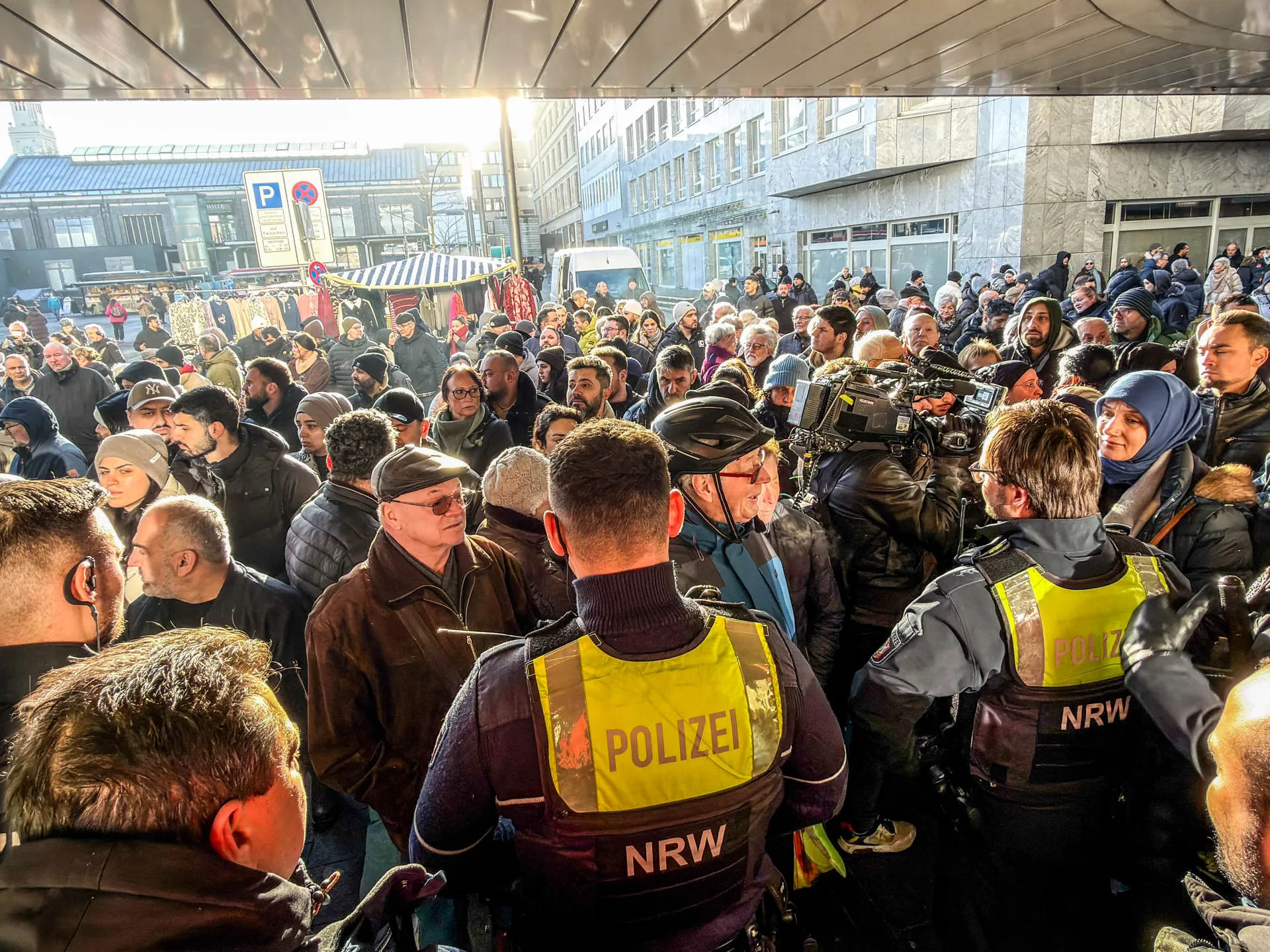
On Tuesday, angry customers rallied outside the bank branch, demanding answers about the robbery from the bank.

The police spokesperson told AFP that the bank branch remained closed for security reasons after threats were made against bank employees.

“We’re still on site, keeping an eye on things,” AFP quoted the police spokesperson as saying, adding “the situation has calmed down considerably.”

How has the bank responded?

The bank is writing to notify all customers affected by the robbery. It also set up a customer hotline for those affected.

It said it is also working with insurers to determine how compensation claims will be handled.

“We are shocked,” said bank press spokesman Frank Krallmann. “We are standing by our customers and hope that the perpetrators will be caught.”

Which other significant heists have happened recently?

October 2025: The Louvre, France

In late October, a gang of robbers broke into the Louvre Museum in Paris and stole eight Napoleonic pieces of jewellery in less than seven minutes. The thieves made off on motorcycles laden with eight items dating back to the Napoleonic era, dropping a ninth on their way out.

The stolen items of jewellery were estimated to be worth $102m.

So far, French authorities have arrested eight suspects over the Louvre heist.

The first four suspects, three men and a woman, were arrested, formally investigated and charged.

The last four suspects taken into custody are two men aged 38 and 39, and two women aged 31 and 40, from the Paris area. They are being investigated as possible accomplices. The names of the suspects arrested have not been made public.

September 2025: Museum of Natural History, France

On September 30, a 24-year-old Chinese woman was arrested in Barcelona on suspicion of stealing six gold nuggets from the National Museum of Natural History in Paris. The gold nuggets were worth about 1.5 million euros ($1.76m).

The woman was arrested while trying to dispose of melted gold – it is unclear who melted it or how. The museum’s alarms and security system had been disabled in a cyberattack, but it is also unclear whether the thieves were also behind that cyberattack or whether the theft was opportunistic.

March 2024: Los Angeles cash site, United States

Thieves stole at least $30m in cash from a GardaWorld facility in Los Angeles over the Easter weekend.

GardaWorld is a global security company which provides services such as facilities management, property management and cash handling.

Local media called the heist one of the biggest cash heists in LA history. There has not been a public announcement indicating that the burglars have been caught.

Source link

Democrats Question Timetable for Troop Cuts : Defense: Pentagon chief sees the Soviet Union pulling its forces out of Europe by 1995. Senators argue that events call for faster negotiations.

Defense Secretary Dick Cheney predicted Thursday that the Soviet Union will withdraw all of its troops from Europe by 1995, a forecast that prompted key Senate Democrats to question whether President Bush’s new proposal for cutting U.S. forces should be faster and deeper.

As the Senate Armed Services Committee opened congressional debate on reshaping the nation’s military structure, Cheney and the chairman of the Joint Chiefs of Staff, Gen. Colin L. Powell, were repeatedly challenged on the Administration’s troop-reduction plans.

195,000 Force Level

Cheney, disclosing the Pentagon’s rough timetable for cuts in Europe, testified that it may take a year or two to carry out any U.S.-Soviet agreement on the issue.

Bush announced Wednesday night that he was recommending that each side cut its combat forces in Central Europe to 195,000, with the United States allowed to have an additional 30,000 elsewhere in Europe. Currently, the United States has 305,000 troops on the continent.

Sen. Alan J. Dixon (D-Ill.), sharply criticizing the pace of negotiations, declared that he would push the subcommittee he heads to legislate an immediate reduction of 50,000 American troops in Europe and 10,000 in Korea.

Dixon said events are overtaking negotiations, with NATO allies West Germany and Belgium already planning their own deep cuts and Soviet forces certain to be kicked out by new governments in Eastern Europe.

“I’m not saying we should strip until we’re naked,” Dixon said. “There are reasonable, moderate, fair reductions we can make.”

Later, Committee Chairman Sam Nunn (D-Ga.) applauded Bush for going beyond his proposal of last May and advocating the withdrawal of 80,000 U.S. troops, not just the 30,000 he called for then. He called it “much more relevant to the changes in Europe and to the budget realities here at home.”

But Nunn voiced strong concern when Cheney seemed to advocate keeping 225,000 U.S. troops in Europe indefinitely, despite his prediction that the Soviets would pull all of its forces out of Eastern Europe and the two Germanys would be reunited.

Nunn warned that unless the United States had plans to make substantial withdrawals in such a case, it could wind up supplying most of the ground forces for NATO as other allies disbanded their units.

The influential senator got Cheney to concede that the Administration would “take another look” at U.S. troop levels in the event of a sweeping Soviet pullback and German reunification.

Despite Cheney’s expression of flexibility, the defense secretary firmly defended Bush’s new plan. He asserted that any effort by Congress to make unilateral troop cuts before the conclusion of U.S.-Soviet arms control talks would undermine the NATO alliance and encourage greater instability in Europe.

“We are on the verge of winning one of the greatest victories in the history of the world without a shot being fired,” Cheney said. “We should not unilaterally bring them (U.S. troops) home before we get an agreement.”

Republicans Cautious

Several Republicans on the committee strongly backed that position.

“We cannot let the euphoria sweeping this nation drive us to unilateral and hasty reductions in these forces,” Sen. Strom Thurmond (R-S. C.) said.

Although members of both parties warmly pledged to work cooperatively with Cheney and Powell in the battles ahead, several Democrats served notice that they would press for deep cuts in the Administration’s proposals for increased spending on strategic weapons programs.

Sen. Edward M. Kennedy (D-Mass.) proposed a “Democratic alternative” that he said would carve a $169-billion “peace dividend” out of the defense budget over the next five years, more than quadrupling the savings proposed by Bush for the same period.

Kennedy singled out the B-2 Stealth bomber, the “Star Wars” anti-missile program and other major programs for deep slashes. He argued that Bush’s budget fails to reflect a dramatically diminished Soviet military threat and a massive upgrading of U.S. strategic weapons in the last decade.

“We have to have a modernization program,” he said, “but does it have to be at the madcap pace of the 1980s?”

Cheney, while acknowledging major changes in the world, said that the Soviets continue to modernize their own strategic arsenal. “The Soviet Union remains the only nation on earth capable of destroying the United States,” he said.

Powell likewise contended that this was no time for the nation to let down its guard.

“I never want to return to that leisurely, comfortable ‘From Here to Eternity’ attitude of the 1930s that helped invite global conflict to an unsuspecting world,” he said.

Source link

New train operator to take on both Virgin and Eurostar with routes to Europe from the UK

ANOTHER rival to Eurostar and Virgin has revealed they will be launching new trains between the UK and Europe.

Ferrovie dello Stato Italiane (FS Group) are Italy‘s state-owned railway operator, and previously bid to launch trains from London to Paris.

Two men in suits stand in front of a red and silver high-speed train.
FS Group could take on Eurostar and Virgin in new plansCredit: AFP

However, they were beaten by Virgin to become the first rival to Eurostar since it launched back in the 1990s.

Despite this, new plans revealed by The Telegraph has shown that they still plan to run routes between the two European capitals.

Instead of keeping trains at the UK Temple Mills International depot used by Eurostar and soon by Virgin, they will instead build a new £87million facility just outside Paris.

This will allow them to keep 10 Channel Tunnel trains there, without facing problems of capacity in the UK.

RAIL CHAOS

Passengers hit by Eurostar delays and cancellations in 2nd day of rail chaos


RAIL BAD

What are your rights for compensation as Eurostar cancels all trains to Europe

Just one train would need to be in the UK overnight to allow for an early morning departure from London St Pancras.

Being backed by US private equity firm Certares, the new London-Paris routes could launch from 2029.

Despite the UK train depots being at higher capacity, the Channel Tunnel currently runs under 50 per cent of capacity.

And the 2029 launch date would even beat Virgin, who aims to launch new European routes from 2030.

Virgin first announced plans to rivalling Eurostar in January 2025.

The initial direct routes will be to Paris, Brussels and Amsterdam, which Eurostar currently operates to and from.

However, there are future plans for trains to France, Germany and Switzerland.

Both Ashford International and Ebbsfleet International stations would also get Virgin trains, with both having Eurostar trains until the pandemic.

Virgin boss Sir Richard Branson said: It’s time to end this 30-year monopoly and bring some Virgin magic to the cross-Channel route.

“Virgin is no stranger to delivering award-winning rail services, and just as we have successfully challenged incumbents in air, cruise and rail, we’re ready to do it again.

“We’re going to shake-up the cross-Channel route for good and give consumers the choice they deserve.” 

In the mean time, Eurostar recently revealed £1.7billion plans for double decker trains for the first time.

And Eurostar also has future plans for new destinations across Europe including Switzerland, Germany and Italy.

Eurostar train at London St Pancras International station, with passengers on the platform.
Eurostar has been the only UK-Europe train operator since the 1990sCredit: Alamy

Source link

Germany hunts Christmas thieves after Ocean’s Eleven-style bank heist | Crime News

While a western German city slept through the Christmas holidays, thieves drilled into a bank vault and vanished with millions.

Robbers broke into a vault at a savings bank in western Germany during the Christmas holidays, stealing cash, gold and jewellery estimated to be worth up to $105m, the police and the bank said.

According to police on Tuesday, the perpetrators used a large drill to bore through a thick concrete wall of a branch of Sparkasse bank in the city of Gelsenkirchen, in North Rhine-Westphalia state. Breaking in from an adjacent parking garage, the thieves gained access to an underground vault room and forced open more than 3,000 safe deposit boxes.

Recommended Stories

list of 4 itemsend of list

Thomas Nowaczyk, a police spokesperson, said investigators believe the total value of the stolen items could range between 10 and 90 million euros ($11.7m and $105.7m).

Policemen and concerned bank customers stand in front of a branch of the Sparkasse bank in Gelsenkirchen, western Germany, on December 30, 2025, after the bank was robbed.
Police and concerned bank customers stand in front of a branch of the Sparkasse bank in Gelsenkirchen, western Germany, on December 30, 2025, after the bank was robbed [AFP]

German news agency dpa reported that the robbery may rank among the biggest in the country’s history.

Sparkasse confirmed that the branch had been “broken into over the Christmas holidays”, saying that “more than 95 percent of the 3,250 customer safe deposit boxes were broken into by unknown perpetrators”.

The crime is believed to have taken place while businesses were closed for the extended Christmas break. Police suspect the gang may have remained inside the building for several days, using the long holiday weekend to break into the deposit boxes undetected.

The theft only came to light in the early hours of Monday, when a fire alarm was triggered. Emergency responders who arrived at the scene discovered the hole leading into the vault.

Witnesses later told police they had seen several men carrying large bags through the parking garage stairwell overnight between Saturday and Sunday.

Security camera footage also showed a black Audi RS 6 leaving the garage early on Monday morning, with masked individuals inside. The vehicle was later identified as having a licence plate belonging to a car stolen in Hanover, more than 200km (124 miles) northeast of Gelsenkirchen.

Ocean’s Eleven-esque

A police spokesman described the operation as highly organised, comparing it with a Hollywood-style robbery resembling Ocean’s Eleven.

The break-in was “indeed very professionally executed”, he told the AFP news agency.

“A great deal of prior knowledge and/or a great deal of criminal energy must have been involved to plan and carry this out,” he added.

This handout photo taken on December 29, 2025 in Gelsenkirchen, western Germany, and handed out by the Police Gelsenkirchen shows a giant hole in a wall of the bank vault of a Sparkasse bank branch after the unknown perpetrator(s) broke in during the Christmas holidays.
Emergency responders discovered a giant hole in the wall of the bank’s vault after unknown thieves broke into a Sparkasse bank branch during the Christmas holidays [Handout: Police Gelsenkirchen via AFP]

Police said the average insured value of each deposit box was more than 10,000 euros ($11,700). However, officers said several victims had reported that the contents of their boxes were worth significantly more than the insured amount.

On Tuesday, hundreds of customers gathered outside the bank, demanding answers. The branch remained closed for security reasons after threats were reportedly made against staff.

“I couldn’t sleep last night. We’re getting no information,” one man told the Welt broadcaster, saying he had used the safe deposit box for 25 years and stored his retirement savings there.

Nowaczyk, the police spokesperson, said officers remained at the scene to monitor the situation. “We’re still on site, keeping an eye on things,” he said, adding that “the situation has calmed down considerably”.

The bank said it had set up a hotline for affected customers and would contact them in writing as soon as possible. It added that it was working with insurers to determine how compensation claims would be handled.

“We are shocked,” said bank press spokesperson Frank Krallmann. “We are standing by our customers, and hope that the perpetrators will be caught.”

Police said the suspects remain at large, and investigations are ongoing.

A spokesperson for the Sparkasse bank in Gelsenkirchen did not immediately respond to a request for comment.

Source link

Russia-Ukraine war: List of key events, day 1,406 | Russia-Ukraine war News

These are the key developments from day 1,406 of Russia’s war on Ukraine.

Here is where things stand on Wednesday, December 31:

Fighting

  • Russian forces shelled the town of Kostiantynivka in Ukraine’s Donetsk region, killing one person, an official said. The deadly attack came a day after an attack in Druzhkivka killed another person and wounded four, according to the Ukrinform news agency.
  • Russian forces also launched waves of attacks on the Black Sea ports of Pivdennyi and Chornomorsk in Ukraine’s Odesa region, hitting two Panama-flagged civilian vessels – Emmakris III and Captain Karam – as they approached to load wheat, the Ukrainian navy said.
  • Ukrainian Deputy Prime Minister Oleksii Kuleba said that oil storage tanks were also hit in the port attacks.
  • Authorities in Ukraine’s northern Chernihiv region introduced a mandatory evacuation order for the residents of 14 border villages in four districts. The order will affect some 300 people who still live in the Novhorod-Siverskyi, Semenivka, Snovsk, and Horodnya communities, which have been experiencing daily shelling, an official said.
  • Ukrainian Deputy Minister of Energy Olha Yukhymchuk said that 75,000 households in Chernihiv remain without electricity following Russian attacks on energy infrastructure in the region. There were also settlements in the Kharkiv and Sumy regions that were fully or partially without electricity, she said.
  • Yukhymchuk also said that repair work had been completed on transmission lines near the Zaporizhzhia nuclear power plant to ensure “stable and reliable power supply to the station in the event of damage or shutdown of the Dniprovska overhead line due to” Russian shelling.
  • Russia’s Ministry of Defence said it had taken control of two more settlements in eastern Ukraine. It identified them as the village ⁠of Lukianivske in the Zaporizhia region and ​the ‌settlement of Bohuslavka in the ‌Kharkiv ‌region.
  • Russian authorities said that a Ukrainian ‍drone attack on the Russian Black Sea port of Tuapse ‍damaged port infrastructure and a gas pipeline in a residential area there. The regional administration said no ⁠injuries were reported.
  • Other Ukrainian drone attacks on Russia’s Belgorod region killed a woman and wounded four other people, local authorities said.

Alleged attack on Putin’s residence

  • Kremlin spokesman Dmitry Peskov said that Russia will “toughen” its negotiating position in talks on a deal to end the war in Ukraine as a “diplomatic consequence” of an alleged attempted drone attack on Russian President Vladimir Putin’s residence in northwestern Russia’s Novgorod on Sunday.
  • Peskov said the attack, which Ukraine denies, was aimed at collapsing the peace talks and accused Western media of playing along with Kyiv’s denial.
  • Ukraine has dismissed the Russian claim as lies aimed at justifying additional attacks against Kyiv and prolonging the war.
  • Ukrainian Minister of Foreign Affairs Andrii Sybiha said Russia had not provided any plausible evidence of its accusations. “And they won’t. Because there’s none. No such attack happened,” Sybiha said on X.
  • Ukrainian President Volodymyr Zelenskyy slammed countries, including India and the United Arab Emirates, that have condemned the alleged attack, which he said “didn’t even happen”. He called the moves “confusing and unpleasant”.
  • China said “dialogue and negotiation” remain the only “viable way out of the Ukraine crisis”, when asked for a comment on the alleged attack on Putin’s residence.
  • Lin Jian, a spokesperson for China’s Ministry of Foreign Affairs, also called on “relevant parties to follow the principles of no expansion of the battlefield, no escalation of fighting and no provocation by any party”, to work towards the de-escalation of the situation, and to “accumulate conditions for the political settlement of the crisis”.
  • The Institute for the Study of War, a Washington, DC-based think tank, said that its analysts found that the “circumstances” of the alleged attack did not fit the “pattern of observed evidence” usually seen “when Ukrainian forces conduct strikes into Russia”.
  • The US ‌ambassador to NATO, Matthew Whitaker, cast doubt on Russia’s accusation, saying he wants to see US intelligence on the incident. “It is unclear whether it actually happened,” Whitaker told Fox Business’s Varney & Co.
  • The ‍German ‍government also said it shares Ukraine’s concern that Russian ⁠allegations of the attack could be used as a pretext for ‍further ⁠escalation of Moscow’s war.

Diplomacy

  • Zelenskyy said ‍that Ukraine and the Coalition of the Willing group of nations ⁠backing Kyiv plan to ​hold their next meetings at ‍the start of January. Zelenskyy said that the countries’ national ‍security advisers would ⁠meet in Ukraine on January 3, and with the leaders in France on January 6.
  • He also told reporters that Kyiv was discussing with US President Donald Trump the possible ⁠presence of ​US troops in Ukraine ‍as part of security guarantees.
  • “Of course, we are discussing this with President Trump and with representatives of the [Western] coalition [supporting Kyiv]. We want this. We would like this. This would be a ‍strong position of the security ⁠guarantees,” the Ukrainian president said.
  • Polish Prime Minister Donald Tusk told officials that there is reason to hope for peace in Ukraine quite soon. “Peace ⁠is on the horizon; there is no doubt that things ​have happened ‌that give grounds for hope that this war ‌can end, ‌and quite quickly, ⁠but it is still a hope, far ‌from 100 percent certain,” he said.
  • Tusk said security guarantees offered to Kyiv ‌by the US were a reason to hope the conflict could end soon, but that Kyiv would need to compromise on territorial issues.
  • The US removed sanctions on Alexandra Buriko, the former chief ⁠financial officer ​of Russia’s state-owned ‍Sberbank, according to the US Treasury Department.
  • Buriko was among ​a ‌group of senior executives and board members who ‌resigned from Western-sanctioned ‌Sberbank shortly after ⁠Russia’s full-scale invasion of Ukraine in 2022. She sued the Treasury Department in a Washington federal court in December 2024, arguing she had severed ‌ties with Sberbank days after it was sanctioned and that her continued inclusion on ‌the sanctioned list was unlawful.

Weapons

  • Romania’s Ministry of Foreign Affairs announced that the country would spend 50 million euros ($58m) to support a European initiative to buy weapons made by US companies for Ukraine, known as the Priority Ukraine Requirements List (PURL).
  • Belarus ‌released a video of what it said was ‍the deployment on ‍its territory of the Russian nuclear-capable hypersonic Oreshnik missile system, a development meant to bolster Moscow’s ability to strike targets across Europe in the event of a war.

Source link