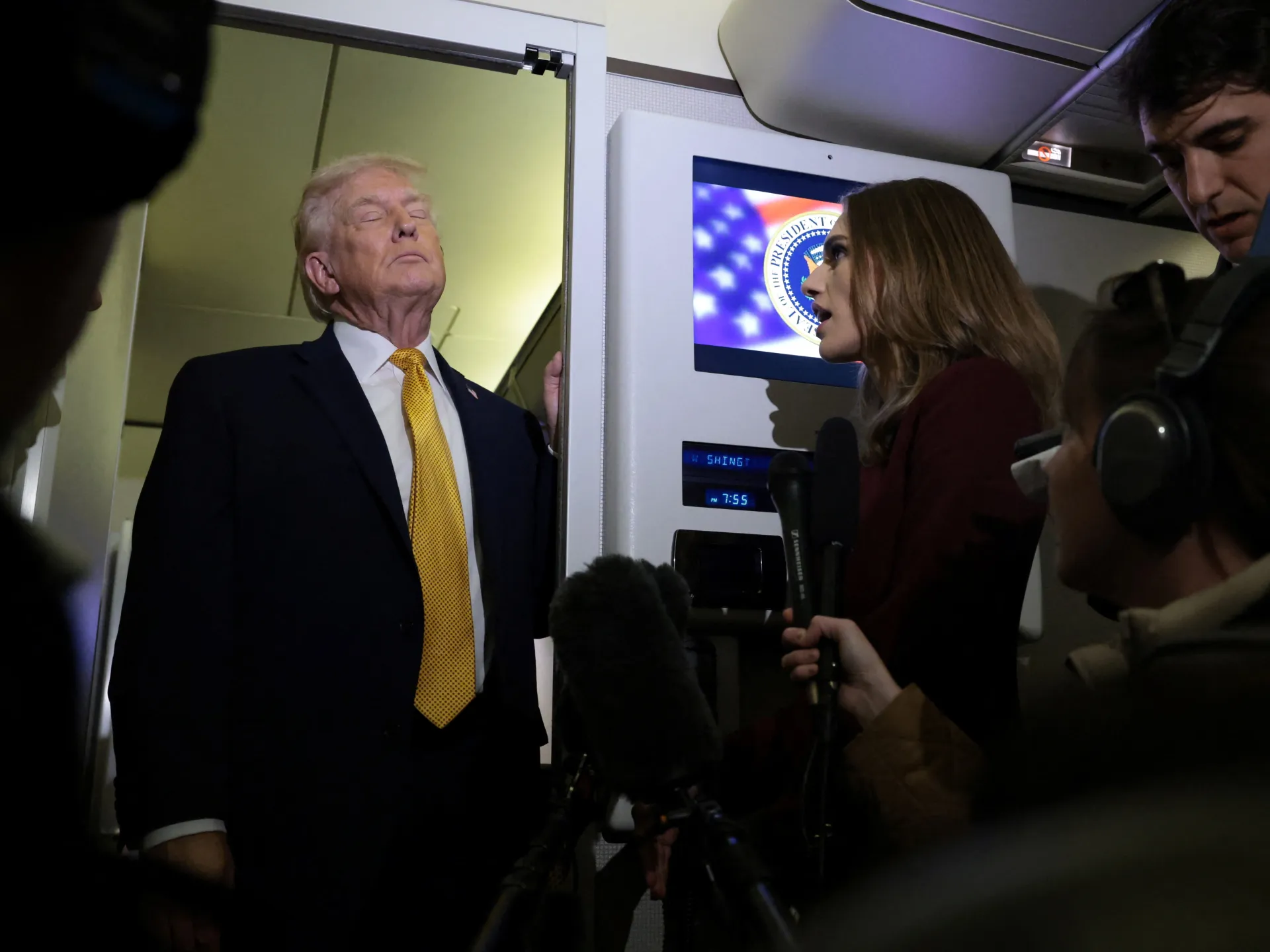
The order comes a week after the US military seized an oil tanker off Venezuela’s coast.
Published On 17 Dec 202517 Dec 2025
Share
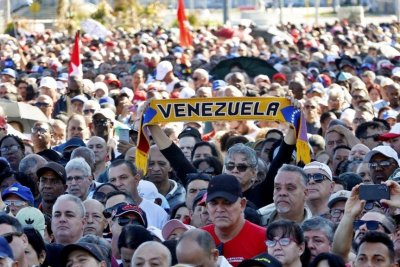
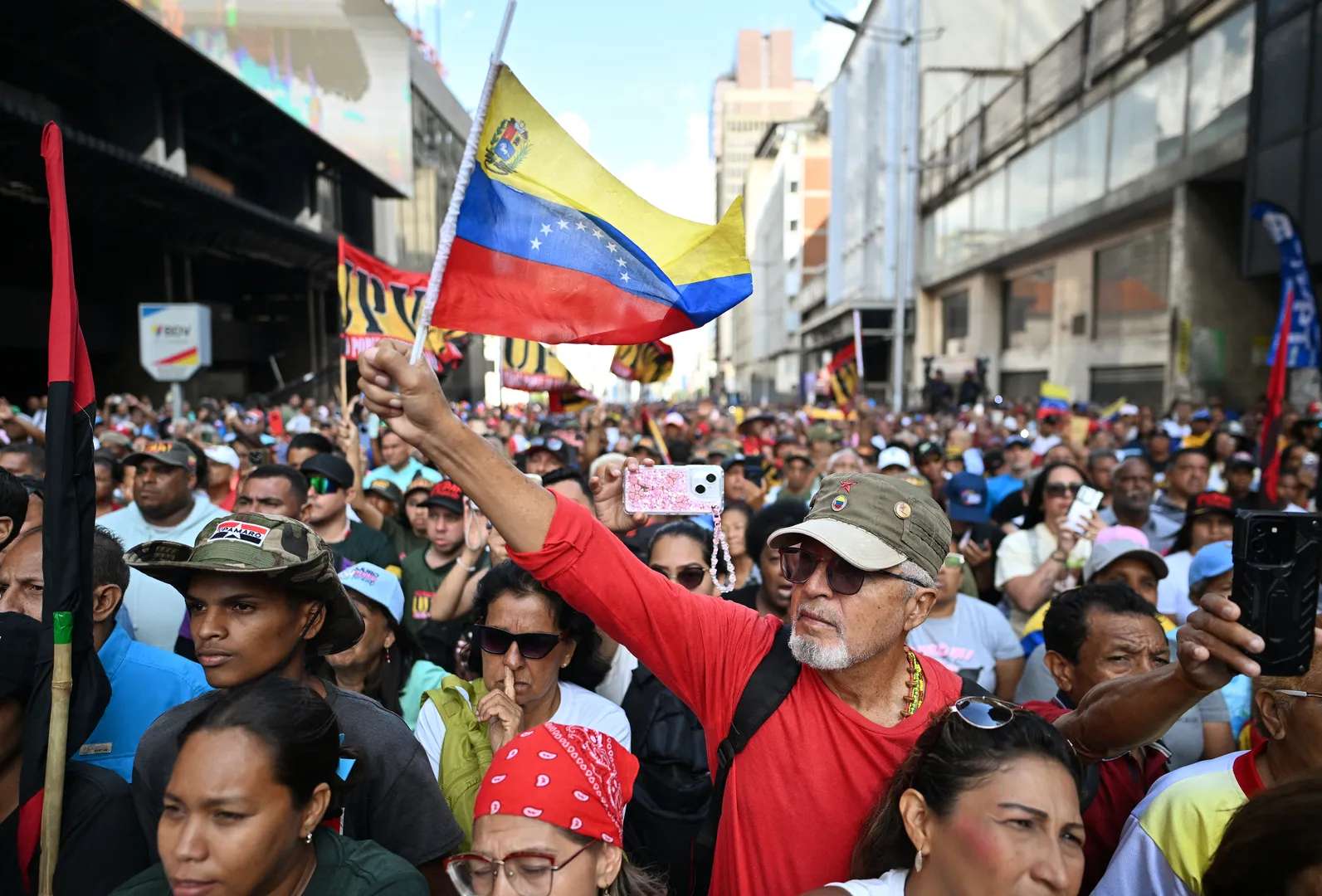
United States President Donald Trump has ordered “a total and complete” blockade of all US-sanctioned oil tankers entering and leaving Venezuela.
“Venezuela is completely surrounded by the largest Armada ever assembled in the History of South America,” Trump said in a post on his social media platform Truth Social.
Recommended Stories
list of 4 itemsend of list
“For the theft of our Assets, and many other reasons, including Terrorism, Drug Smuggling, and Human Trafficking, the Venezuelan Regime has been designated a FOREIGN TERRORIST ORGANIZATION,” Trump said.
“Therefore, today, I am ordering A TOTAL AND COMPLETE BLOCKADE OF ALL SANCTIONED OIL TANKERS going into, and out of, Venezuela,” he said.
Trump’s comments come a week after US forces seized a sanctioned oil tanker off the coast of Venezuela and as Washington has ordered a huge build-up of US military forces off the Venezuelan coast in an operation said to target drug smuggling.
The US military has killed at least 90 people since September in attacks on dozens of vessels in the eastern Pacific Ocean and Caribbean Sea near Venezuela, in what international law experts have criticised as extrajudicial killings.
Washington claimed the vessels were involved in drug trafficking but has provided no evidence to support its allegations.
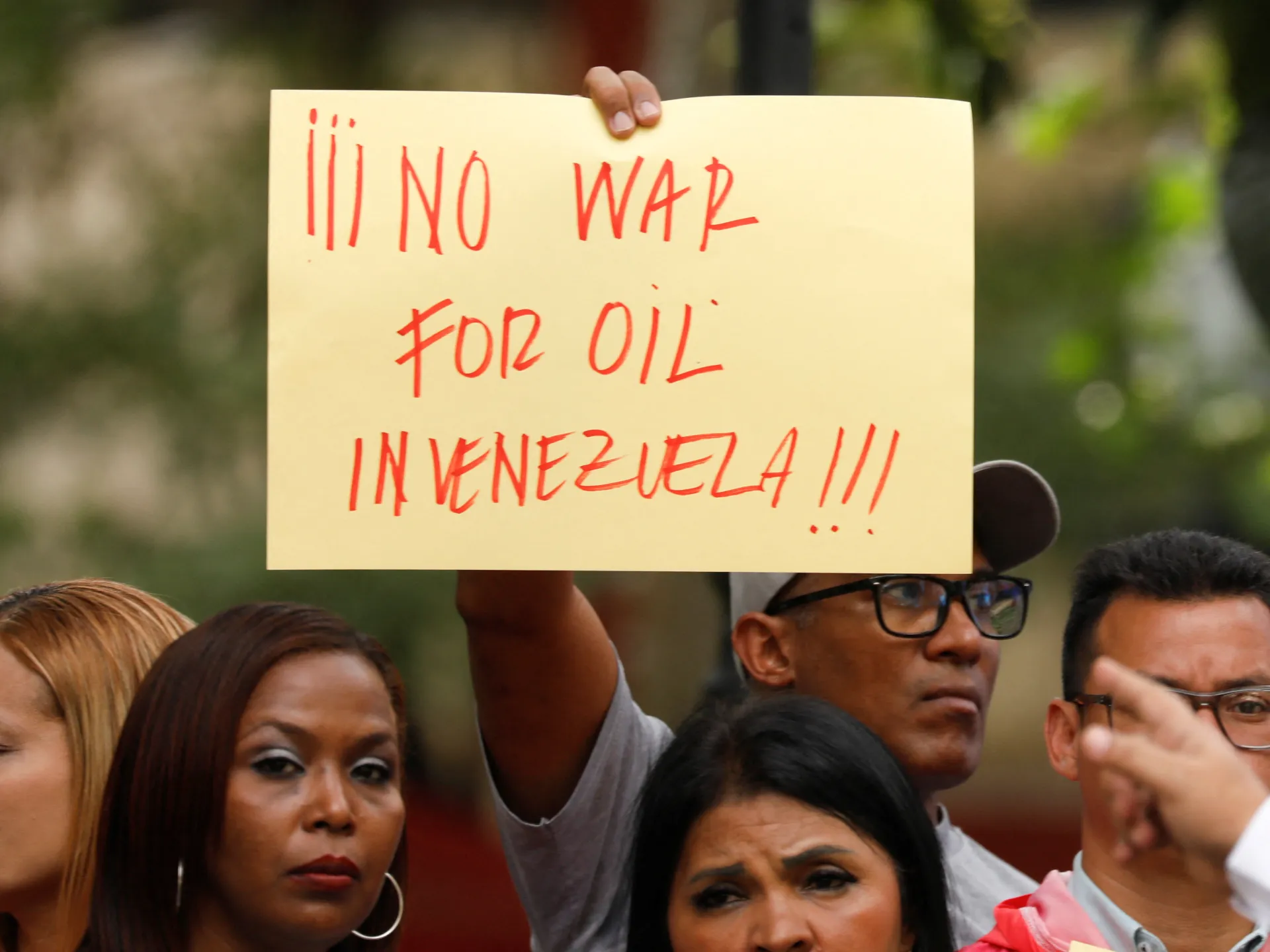
Caracas has long said the deployment of US forces to the region was aimed at allowing “external powers to rob Venezuela’s immeasurable oil and gas wealth“.
Despite holding the world’s largest proven oil reserves, Venezuela has faced severe restrictions on its exports in recent years under US sanctions first imposed during the first Trump presidency.
This is a breaking news story. More to follow shortly.
“While I have been concerned about WWE‘s close relationship with Donald Trump for several months — especially in light of his administration’s ongoing cruel and inhumane treatment of immigrants (and pretty much anyone who “looks like an immigrant”) — reading the President’s incredibly cruel comments in the wake of Rob Reiner’s death is the final straw for me,” Foley, 60, wrote Tuesday on Instagram.
“I no longer wish to represent a company that coddles a man so seemingly void of compassion as he marches our country towards autocracy. Last night, I informed @WWE talent relations that I would not be making any appearances for the company as long as this man remains in office.
“Additionally, I will not be signing a new Legends deal when my current one expires in June.”
WWE did not immediately respond to a request for comment from The Times.
Following the killings of Hollywood icon Reiner and wife Michele Singer Reiner, Trump wrote on social media that the couple died “reportedly due to the anger he caused others through his massive, unyielding, and incurable affliction with a mind crippling disease known as TRUMP DERANGEMENT SYNDROME.”
Trump added of Reiner, who had campaigned for liberal causes: “He was known to have driven people CRAZY by his raging obsession of President Donald J. Trump, with his obvious paranoia reaching new heights as the Trump Administration surpassed all goals and expectations of greatness, and with the Golden Age of America upon us, perhaps like never before. May Rob and Michele rest in peace!”
Nick Reiner, 32, has been arrested on suspicion of murdering his parents. Trump’s comments have drawn bipartisan backlash.
Foley won the WWF (as the company was then known) championship three times in the late 1990s in his Mankind persona. He has also won eight WWF tag team titles and also has wrestled as Cactus Jack, Dude Love and under his own name. He retired from the ring in 2012 but has appeared in various roles for the league since then.
Foley was inducted into the WWE Hall of Fame in 2013. So was Trump, as a celebrity inductee.
A longtime pro wrestling fan, Trump has hosted WWE events and has been an active participant, both in and out of the ring, in a number of storylines. Late last year, Trump named Linda McMahon — the former longtime WWE chief executive and president whose husband, Vince McMahon, is the company’s founder — as secretary of Education for his second term.
US adds five Arab and African countries to travel ban list as right-wing politicians intensify Islamophobic rhetoric.
United States President Donald Trump has added five countries to the list of nations whose citizens are banned from entering the US, including Palestine and Syria.
The White House announced the expansion of the ban on Tuesday, as it intensifies its crackdown on immigration.
Recommended Stories
list of 3 itemsend of list
Tuesday’s order imposed a travel ban on six new countries – Palestine, Burkina Faso, Mali, Niger, South Sudan and Syria – in addition to the 12 initially made public in June.
The decree did not refer to Palestine, which Washington does not recognise as a state, by name or even as the occupied Palestinian territory.
Instead, it describes the Palestine category as “Palestinian Authority Documents” and refers to Palestinians as “individuals attempting to travel on PA-issued or endorsed travel documents”.
The decision comes weeks after Trump declared a “permanent pause” on migration from what he called “all Third World Countries” in response to the shooting of two National Guard troops in Washington, DC.
“Several US-designated terrorist groups operate actively in the West Bank or Gaza Strip and have murdered American citizens. Also, the recent war in these areas likely resulted in compromised vetting and screening abilities,” the White House said.
“In light of these factors, and considering the weak or nonexistent control exercised over these areas by the PA, individuals attempting to travel on PA-issued or endorsed travel documents cannot currently be properly vetted and approved for entry into the United States.”
Democratic Congresswoman Rashida Tlaib, who is of Palestinian descent, slammed the ban, accusing Trump and his top aide Stephen Miller of pushing to alter the demographics of the country.
“This administration’s racist cruelty knows no limits, expanding their travel ban to include even more African and Muslim-majority countries, even Palestinians fleeing a genocide,” she said in a social media post.
The move to ban Palestinians from entering the US comes as Israel continues its daily deadly attacks in Gaza and the occupied West Bank, where Israeli settlers have killed at least two US citizens this year.
Meanwhile, the ban on Syrians coincides with rapprochement between Washington and Damascus after Syrian President Ahmed al-Sharaa visited the White House in November.
“While the country is working to address its security challenges in close coordination with the United States, Syria still lacks an adequate central authority for issuing passports or civil documents and does not have appropriate screening and vetting measures,” the White House said.
On Thursday, US Director of National Intelligence Tulsi Gabbard cited the mass shooting that killed 15 people at a Jewish festival in Australia to laud Trump’s immigration restrictions.
“Islamists and Islamism is the greatest threat to the freedom, security, and prosperity of the United States and the entire world. It is probably too late for Europe – and maybe Australia,” she wrote on X.
“It is not too late for the United States of America. But it soon will be. Thankfully, President Trump has prioritized securing our borders and deporting known and suspected terrorists, and stopping mass, unvetted migration that puts Americans at risk.”
Trump’s Republican allies have been increasingly using Islamophobic rhetoric, and calling for Muslims to be blocked from entering the country.
On Sunday, Senator Tommy Tuberville called Islam a “cult”, baselessly accusing Muslims of aiming to “conquer” the West.
“Stop worrying about offending the pearl clutchers,” he wrote in a social media post. “We’ve got to SEND THEM HOME NOW or we’ll become the United Caliphate of America.”
When Trump first ran for president in 2015, he called for a complete ban on Muslims entering the US, and when he started his first term, he imposed a travel ban on several Muslim-majority countries.
When bidding farewell to the nation in January, President Obama urged perseverance in the face of political change.
“If you’re disappointed by your elected officials, grab a clipboard, get some signatures and run for office yourself,” he said.
Dozens of people who worked in his administration or on his presidential bids have taken that call to action to heart, with several top political aides, policy staff and ambitious millennials from the Obama era mounting campaigns of their own right here in California. All are Democrats, and some of their races could be tipping points in the 2018 midterms as the party attempts to win back control in Washington.
Among the former government officials is Ammar Campa-Najjar, who is seeking to oust Republican Rep. Duncan Hunter in San Diego County.
Born in the U.S. to a Mexican mother and a Palestinian father, Campa-Najjar recalls questioning if his fellow Americans would ever truly accept him in the aftermath of the Sept. 11 terrorist attacks.
He brooded and struggled, but his faith was renewed when another biracial man with a unique name and an absent father, Barack Obama, won the presidency of the United States.
“In 2008, the country said, ‘Yes, we can,’ and elected this skinny brown kid with a funny name. It really kind of inspired me,” said Campa-Najjar, 28.
In the short term, that resulted in Campa-Najjar interning at the White House, where he was assigned the task of reading the letters Americans sent the president about their heartbreak and their victories, and helping select the 10 that were sent to Obama for him to read himself daily. He later worked in the Department of Labor and on Obama’s 2012 reelection campaign.
Today, he is among the youngest congressional candidates in the nation. And he is one of several former Obama campaign and administration officials who are running for office across the nation at all levels of government.
It’s not unusual for political staffers to seek elected office, but the number of Obama alumni who have entered the field for the 2018 election is notable. In California alone, there are at least four congressional candidates who worked for Obama, as well as several others seeking legislative and statewide posts.
President Obama in his farewell address urged listeners unhappy with their representatives to “run for office yourself.” (Zbigniew Bzdak / TNS)
(Zbigniew Bzdak / TNS)
Ammar Campa-Najjar is trying to oust Republican Rep. Duncan Hunter in San Diego County. (Hayne Palmour IV / San Diego Union-Tribune)
(Hayne Palmour IV / San Diego Union-Tribune file)
Their campaigns are driven by the election of President Trump, fewer opportunities in Washington, D.C., with Republicans in control of the White House and Congress, and the desire to protect and build upon the former president’s legacy.
“Coming out of the Obama administration, people are particularly motivated by what Donald Trump has been trying to do to this country,” said Bill Burton, who served as a spokesman for Obama during the 2008 campaign and his first term in office and is now a Democratic operative in Southern California.
He added that early Obama supporters who signed on at a time when Hillary Clinton was perceived as the unstoppable nominee have already shown a natural willingness to take on long odds, a quality that can help them achieve their own political goals.
“When I started working for [Obama], the only person in America who thought he was going to win the Iowa caucuses was him,” Burton said.
The congressional candidates in California are all running in districts historically dominated by the GOP.
Sam Jammal is trying to defeat Rep. Ed Royce (R-Fullerton), who has represented Orange County in Congress for nearly 25 years. Jammal said his experience growing up in the district as the child of immigrants, attending law school and then working on Obama’s 2008 campaign and in the Department of Commerce proved to him that anything is possible.
Sam Jammal, a former staffer in President Obama’s Commerce Department, is now a congressional candidate in Orange County.
(Sam Jammal)
“Our story is the embodiment of that,” said Jammal, whose parents are from Jordan and Colombia. “The same day my dad landed here, he was working at a gas station …. For me, his youngest son, I was able to work for the president of the United States. My proudest moment in the administration was taking my parents to a White House naturalization ceremony where they were able to meet President Obama. It’s full circle.”
Others, including Eleni Tsakopoulos Kounalakis, said they expected Clinton to win the November 2016 election, giving them the opportunity to work for the first woman president. The experiences the Sacramento-area native had as Obama’s ambassador to Hungary cemented her desire to continue working in public life once he left office.
“It took me a few months after the election to recalculate how I could best serve,” said Kounalakis, who is one of two Obama alumni running for lieutenant governor. “It [became] clear: It was more important than ever that California lead the way on our values, whether it’s fighting for the climate or supporting and celebrating our immigrant community and our LGBT community.”
Trump’s actions since taking office, including trying to institute a travel ban on people from several Muslim-majority nations and withdrawing from the Paris climate accord, quickened the Obama alums’ resolve. But nearly all said Trump’s recent statements placing neo-Nazis and white supremacists who violently protested in Charlottesville on the same moral plane as those who protested against them exemplified why they decided to run.
“What has happened … with this presidency and what Donald Trump stands for and believes in is in such stark contrast to everything we worked on for eight years,” said Buffy Wicks, a grass-roots organizer who worked on Obama’s campaigns and as the White House deputy director of public engagement. She is now running for the California Assembly.
But an impressive political résumé is no guarantee of success.
Ultimately, the races will come down to how voters connect with the politicians and their policies, said Massachusetts state Sen. Eric Lesser, who went from shepherding luggage during the 2008 campaign to working steps from the Oval Office as the top aide to one of Obama’s must trusted advisors, David Axelrod.
“Show, don’t tell. You have to be elected on your own merits and your own vision, and ideas for your community,” he said.
While Lesser speaks reverently about his time working for Obama and Axelrod and the counsel he received from them during his 2014 campaign, he noted that voters want to hear how a candidate is going to address their needs, not about his time in Washington.
“Expecting people to suddenly be impressed or suddenly open doors because of a previous fancy job is not going to happen,” he said.
Expecting people to suddenly be impressed or suddenly open doors because of a previous fancy job is not going to happen.
— Eric Lesser, former Obama White House aide elected to the Massachusetts state Senate in 2014
Eleni Tsakopoulos Kounalakis, then the U.S. ambassador to Hungary, waves rainbow flags at a gay pride march in Budapest in 2012. She’s now running for lieutenant governor in California.
(Peter Kollanyi / Associated Press)
Lesser recalled that when he mounted his 2014 run, the best advice he received was from Obama, who told him to outhustle his rivals and connect with the people who would become his constituents.
“He asked, ‘How many people are in the district? How many households? How many doors?” Lesser said. “When I ran the numbers, he goes, ‘You can meet all those people.’ I haven’t quite met everyone, but I took his advice to heart.”
Reed Galen, who worked for President George W. Bush, said that while some administration posts could be particularly relevant to a race — one Obama administration official who worked on the auto industry bailout is now running for Congress in Michigan, for example — most candidates with such experience probably worked in a vast bureaucracy that few voters know or care about.
“My guess is most of these folks, the best thing they have going for them is a picture of them and the president [that shows] Barack Obama reasonably knows who I am,” said Galen, a former California GOP operative who worked on both of Bush’s campaigns and in his administration.
The greater advantages, he said, are the relationships forged with donors, leaders, strategists and the alumni network that remains tightly knit after their tenure ends.
Wicks’ fundraisingreport illustrates the political value of the connections that come from working for Obama. Axelrod, elected officials including former Rep. Gabby Giffords of Arizona, and scores of people from Washington, D.C., have donated to her campaign, names unlikely to appear on the donor list for most other California legislative candidates.
Buffy Wicks, center, who worked in the Obama White House and for the Obama and Hillary Clinton campaigns, is running for the state Assembly.
(Kirk McKoy / Los Angeles Times)
Wicks’ campaign also follows a grass-roots blueprint she helped craft for Obama when he was unknown, introducing himself to voters in diners and coffee shops and talking about their concerns.
“I’m doing house parties all over the district, really spending a lot of time in living rooms, 20 to 30 people at a time and having a really thoughtful conversation about what kind of community do we want to live in,” she said. “It’s a way to build relationships with voters, investing on the front end of that relationship and not just plying you with direct mail pieces and television ads.”
And for those who lack Wicks’ campaign experience, the connections to some of the top Democrats in the nation is invaluable.
“When you haven’t been an elected official before, you have a lot of questions .… You understand the policies, you know what your positions are, but the actual architecture of running a campaign is something that’s inherently new,” said Brian Forde, who worked on technology in the Obama administration and is now trying to topple Republican Rep. Mimi Walters in Orange County.
“What’s most helpful is being able to pick up the phone or send a text message to a friend who was a speechwriter for the president or the first lady, or someone who did work on communications who does understand all of these things because they worked on the campaign,” Forde said.
The US economy gains jobs in healthcare and construction as other sectors stagnate, shrink.
The United States economy lost 41,000 jobs in October and November, and the unemployment rate has ticked up to its highest level since 2021 as the labour market cools amid ongoing economic uncertainty driven by tariffs and immigration policies.
In November, the US economy added 64,000 jobs after shedding 105,000 in October, according to a report released on Tuesday by the Department of Labor’s Bureau of Labor Statistics.
Recommended Stories
list of 4 itemsend of list
The unemployment rate rose to 4.6 percent, up from 4.4 percent in September. Because of the government shutdown in October and November, the US government was unable to gather key data used to gauge the state of the economy, including the unemployment rate for October.
October’s job losses reflected the 162,000 federal workers who lost their posts, a result of deferred buyouts of their contracts, which expired at the end of September.
In November, there was a loss of another 6,000 government jobs. Gains were seen in the healthcare, social assistance and construction sectors. Healthcare added 46,000 jobs – higher than the 39,000 jobs gained in the sector on average each month over the past 12 months.
Construction added 28,000, consistent with average gains over the past year. The social assistance sector added 18,000 jobs.
Transportation and warehousing lost 18,000. Manufacturing jobs are also on the decline. The sector shed 5,000 jobs in November after cutting 9,000 jobs in October following a 5,000-job loss in September.
White House economic adviser Kevin Hassett told reporters on Tuesday to expect to see more manufacturing jobs in the next six months.
His assessment was driven by growth in construction jobs and manufacturing investments, which signal job growth is on the way.
People working part time for economic reasons also rose to 5.5 million, which is up 909,000 from September.
“Today’s long-awaited jobs report confirms what we already suspected: [President Donald] Trump’s economy is stalling out and American workers are paying the price,” Alex Jacquez, chief of policy and advocacy at the economic think tank Groundwork Collaborative, said in a statement.
“Far from sparking a manufacturing renaissance, Trump’s reckless trade agenda is bleeding working-class jobs, forcing layoffs, and raising prices for businesses and consumers alike.”
The data was released after the Federal Reserve cut its benchmark interest rate by 25 basis points to 3.5-3.75 percent as labour conditions cool.
“The labour market has continued to cool gradually, … a touch more gradually than we thought,” Fed Chairman Jerome Powell said after the rate cut decision last week.
On Wall Street, markets fell slightly after the jobs report. In midday trading, the Nasdaq was down 0.4 percent, the S&P 500 was down 0.5 percent and the Dow Jones Industrial Average was 0.4 percent below its market open.
Exclusive: Iran’s foreign minister sits down with Fault Lines to discuss the nuclear standoff and diplomatic deadlock.
In an exclusive, wide-ranging interview recorded in October with Al Jazeera’s Fault Lines documentary programme, Iranian Foreign Minister Abbas Araghchi tells correspondent Hind Hassan that strikes by Israel and the United States in June caused “serious damage” to Iran’s nuclear facilities but insists its nuclear programme will continue.
“Technology cannot be eliminated by bombing,” he says, arguing that Iran’s scientific knowledge remains intact.
As Iran remains locked in a standoff with the US and refuses to renew negotiations while zero uranium enrichment demands remain in place, Araghchi says European snapback sanctions have undermined future cooperation with the United Nations nuclear watchdog, the International Atomic Energy Agency, and Iran would reconsider how it cooperates in the future.
Despite emphasising that “diplomacy is our priority,” the foreign minister insists that Iran is prepared to fight back if it is attacked again. Araghchi maintains that while Tehran has “never trusted the United States as an honest negotiating partner”, Iran remains prepared to engage diplomatically if both sides respect each other’s rights and pursue mutual interests based on equality.
Dec. 16 (UPI) — President Donald Trump is suing the BBC for $10 billion, alleging it intentionally misrepresented a speech he gave before the Jan. 6 storming of Capitol Hill in order to influence the result of the 2024 presidential election.
The lawsuit was filed in a Florida court on Monday, more than a month after Trump threatened to bring litigation against Britain’s public broadcaster over the editing of a speech he gave to supporters in Washington on Jan. 6, 2021, in the documentary Trump: A Second Chance.
Trump’s lawyers described the documentary’s depiction of him as “false, defamatory, deceptive, disparaging, inflammatory and malicious,” alleging it was aired “in a brazen attempt to interfere in and influence the election’s outcome to President Trump’s detriment.”
The suit is for $5 billion in damages, plus interest, costs, punitive damages, attorneys’ fees and other relief the court finds appropriate.
The BBC declined to comment Tuesday but vowed it would fight the case.
“As we have made clear previously, we will be defending this case. We are not going to make further comment on ongoing legal proceedings,” said a spokesman.
The Panorama documentary aired in Britain on Oct. 28, 2024, just days ahead of the Nov. 5 election. The BBC stresses it was not broadcast in the United States and that it did not make it available to view there.
In the documentary, video of Trump’s speech was edited to piece together two comments the president made about 50 minutes apart, while omitting other parts of his speech.
“[T]he BBC “intentionally and maliciously sought to fully mislead its viewers around the world by splicing together two entirely separate parts of Trump’s speech on January 6, 2021,” his lawyers state in the lawsuit.
“The Panorama Documentary deliberately omitted another critical part of the Speech in such a manner as to intentionally misrepresent the meaning of what President Trump said.”
The claim refers to the splicing together of excerpts lifted from the video that made it sound as if Trump was inciting his supporters to march on the Capitol and fight:
“We’re going to walk down to the Capitol and I’ll be there with you. And we fight. We fight like hell,” was what viewers of the program saw, when Trump’s actual words were, “We’re going to walk down to the Capitol, and we’re going to cheer on our brave senators and congressmen and women.”
It wasn’t until 50 minutes later in the speech that Trump made the comments about fighting.
The infraction went unnoticed until early November when The Telegraph published an exclusive on a leaked internal BBC memo in which a former external ethics adviser allegedly suggested that the documentary edited Trump’s speech to make it appear he directed the Jan. 6 attack on Congress.
Following the report, the BBC’s director-general, Tim Davie, and head of news, Deborah Turness, resigned.
BBC chairman Samir Shah immediately apologized for what he called an unintentional “error of judgment.”
After Trump wrote the BBC demanding a correction, compensation and threatening a $1 billion lawsuit, the corporation formally apologized and issued a retraction that was the lead story across all of its news platforms on television, radio and online — but said it strongly disagreed “there is a basis for a defamation claim.”
To win the case, Trump’s legal team would need to convince the court the program had caused Trump “overwhelming financial and reputational harm.”
The BBC has said that since the program was not broadcast in the United States or available to view there, Trump was not harmed by it and the choices voters made in the election were not affected as he was re-elected days after.
However, Trump’s legal team alleges the BBC had a deal with a third-party media company that had rights to air the documentary outside of the United Kingdom.
The blunder has reignited a furious national debate about the BBC’s editorial impartiality and the institution itself, which is funded by a $229 annual license that households with a TV must pay.
It also comes as the future of the BBC is under review, with the renewal date of its royal charter approaching on the centenary of its founding in 2027.
Trump has won out-of-court settlements in a series of disputes with U.S. broadcasters, although largely at significantly reduced sums than those sought in the original lawsuit.
In July, CBS settled a $20 billion claim out of court for $16 million over an interview with Democratic presidential nominee Kamala Harris that aired four weeks before the election on Nov. 5.
ABC News paid Trump $15 million and apologized to settle a defamation suit over comments by presenter George Stephanopoulos that incorrectly stated Trump was “liable for rape.”
In 2022, CNN fought and successfully defended a $475 million suit alleging it had defamed Trump by dubbing his claim the 2020 election was stolen from him as the “Big Lie.” The judge ruled it did not meet the legal standard of defamation.
He has live cases pending cases against the Wall Street Journal and The New York Times.
President Donald Trump and first lady Melania Trump attend the Congressional Ball in the Grand Foyer of the White House on Thursday. Photo by Shawn Thew/UPI | License Photo
SEOUL, Dec. 16 (UPI) — The likelihood of a renewed summit between U.S. President Donald Trump and North Korean leader Kim Jong Un has increased, even as Pyongyang presses ahead with nuclear weapons development, a South Korean think tank said Tuesday.
In an annual forecast released by the Foreign Ministry-linked Korea National Diplomatic Academy, analysts said Trump is expected to continue a top-down approach to North Korea under which leader-level talks could resume.
“The likelihood of a North Korea-U.S. summit has increased somewhat due to common ground in the two leaders’ desire to hold a summit, pursue peaceful coexistence and lower the priority of the denuclearization issue,” the report said.
Trump met Kim three times during his first term — in Singapore in 2018, in Hanoi in 2019 and briefly at the Demilitarized Zone later that year — but talks collapsed amid disagreements over sanctions relief and steps toward denuclearization.
Since returning to office, Trump has floated another summit with Kim on numerous occasions, telling reporters in October he “would love” to meet the North Korean leader during a visit to South Korea.
Kim has also signaled a willingness to resume diplomacy with Washington, saying he has “fond memories” of Trump, while warning that any discussion of giving up his regime’s nuclear arsenal would be off the table.
Despite the prospect of renewed diplomacy, the KNDA report said engagement with Washington is unlikely to slow Pyongyang’s military buildup.
North Korea is expected to “accelerate the production of nuclear materials and the development and deployment of new missile systems” in 2026 as it works to operationalize a broader range of nuclear strike capabilities, the report said.
The academy added that a seventh nuclear test remains a “military and technological necessity,” although Pyongyang is likely to exercise restraint as it weighs the impact on its relations with China and the United States.
North Korea last conducted a nuclear test in September 2017 at its Punggye-ri site. During a period of detente with Seoul and Washington the following year, Pyongyang demolished the entrances to two test tunnels in a highly publicized move.
Those steps have since been reversed, however. The U.N. nuclear watchdog International Atomic Energy Agency said North Korea began restoring tunnels at the site in 2022, and a 2025 U.S. Defense Intelligence Agency assessment concluded the country is now “postured to conduct a seventh nuclear test at a time of its choosing.”
Prospects for inter-Korean relations remain dim, the report said, despite efforts by South Korean President Lee Jae Myung to rehabilitate ties since taking office in June
Communication between Seoul and Pyongyang is unlikely to resume as the North continues to promote its “hostile two-state doctrine,” which defines the two Koreas as permanently separate adversaries.
“The likelihood of inter-Korean dialogue reopening is not high,” the report said.
As Donald Trump threatens legal action against the Beeb, the Mirror takes a look at the broadcaster’s most recent list of top earners, which includes some surprises
Julia Banim Audience Writer, Mark Jefferies, Nicola Methven and Mia O’Hare
09:52, 16 Dec 2025Updated 09:56, 16 Dec 2025
Donald Trump has vowed to sue the BBC over an episode of Panorama(Image: Getty Images)
POTUS is here referring to an episode of Panorama which aired a week before the 2024 US election, which showed comments he made to supporters ahead of the deadly 2021 Capitol riots. The episode appears to show Trump telling crowds: “We’re going to walk down to the Capitol and I’ll be there with you, and we fight. We fight like hell.”
However, these words were created from different segments of the 79-year-old’s speech, delivered nearly one hour apart. The BBC has since issued an apology over the edit, admitting to an “error of judgment” while clarifying there was no legal basis for Trump’s claim. As the row continues, the Mirror takes a look at the Beeb’s list of top earners.
Back in July, the BBC published the salaries of its highest-paid stars as part of its annual report, and a number of significant changes amongst the top earners. Former Match of the Day presenter Gary Lineker, who this year left the corporation was once again the top earner with a take home salary of £1.35million. This was followed by former Radio 2 breakfast host Zoe Ball, who took home £515,000 despite being replaced on the Breakfast Show by Scott Mills.
Match of the Day Host Alan Shearer emerged as the third highest paid BBC star of the year, increasing his salary from the year before after covering the Euros last year. The former Newcastle star boosted his paycheck to almost half a million pounds with his punditry at the tournament.
Radio host and political expert Nick Robinson also had a pay rise last year, while Radio 2 host Vernon Kay joined the top 10 for the first time. Perhaps surprisingly, BBC North America Editor Justin Webb also made the top 10, with a very impressive salary of £365,000.
The BBC’s top earners:
Gary Lineker £1,350,000-£1,354,999 (no change)
Zoe Ball £515,000-£519,999 (down from £950,000-£954,999)
Alan Shearer £440,000-445,000 (up from £380,000-£384,999)
Greg James £425,000-£429,999 (up from £415,000-£419,999)
Fiona Bruce £410,000-£414,999 (up from £405,000-£409,999) and Nick Robinson £410,000-£414,999 (Up from £345,000 and £349,000)
Stephen Nolan £405,000-£409,999 (up from £400,000-£404,999)
Laura Kuenssberg £395,000-£399,999 (up from £325,000-£329,999)
Vernon Kay £390,000 – £394,999 (joined Radio 2 in May 2023)
Justin Webb £365,000-£369,999 (up from £320,000-£324,999)
Naga Munchetty £355,000-£359,999 (up from £345,000-£349,999)
Scott Mills £355,000-£359,999 (up from £315,000 – £319,999)
Last year, Vernon Kay made the list for the very first time after joining BBC Radio 2. The Bolton born presenter replaced Ken Bruce and took home a whopping £320,000 from the corporation in his first year. Despite this staggering sum, his take-home pay was almost 20 per cent less than what Ken earned in the previous year in the slot.
Meanwhile, disgraced BBC News host Huw Edwards also remained on the list last year, coming in at third place with a wage of £475,000-£479,999 (up from £435,000-£439,999). Edwards, who had been off-air since July 2023, left the BBC after being named as the presenter at the centre of days of allegations and speculation regarding his private life.
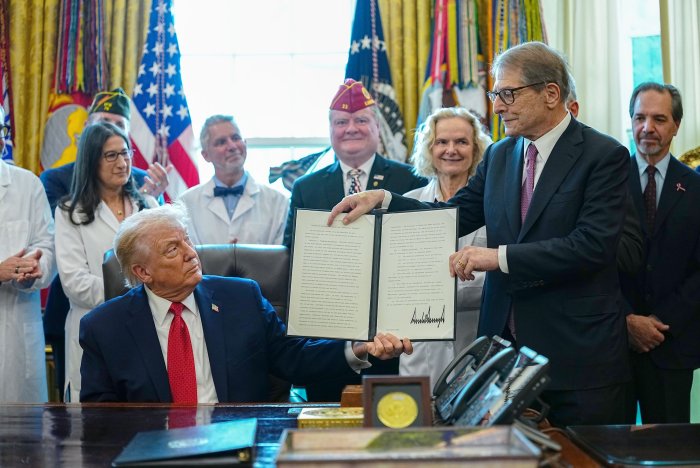
Dec. 16 (UPI) — President Donald Trump has awarded 13 soldiers and Marines the newly established Mexican Border Defense Medal for their contributions to safeguarding the U.S. southern border.
The service members are the first to receive the commendation, created Aug. 13 in a memo signed by Defense Secretary Pete Hegseth to honor those deployed to the U.S.-Mexico border.
The commander-in-chief awarded the medals to the service members at the White House.
“On day one of my administration, I signed an executive order making it [the] core mission of the United States military to protect and defend the homeland. And today, we’re here to honor our military men and women for their central role in the protection of our border,” Trump said during the ceremony.
Since returning to the White House in January, Trump has overseen crackdowns on immigration and crime that have included the deployment of troops to the U.S.-Mexico border.
More than 10,000 U.S. military service members attached to Joint Task Force Southern Border have been deployed to the U.S.-Mexico border in support of the Department of Homeland Security, with the missions to secure the border, disrupt transnational criminal organizations and respond to national security threats.
Trump said Monday that more than 25,000 service members have served in this “incredible and historic operation,” which has overseen 13,000 patrols along the border.
“They’ve spent night and day enduring scorching hot and bitter cold, and they’ve given up their holidays and their weekends, working with the offices of Customs and Border Protection,” Trump said.
“And today, we give these great warriors the recognition that they have earned — and they have really earned it.”
The medal, according to the Department of Defense, is identical to the Mexican Border Service Medal awarded for service in 1916 and 1917 in the Mexican state of Chihuahua as well as the U.S.-Mexico border regions in New Mexico and Texas.
It is bronze with a sheathed Roman sword hanging on a tablet on the front, which bears an inscription that reads: “For Service on the Mexican Border.”
Those eligible for the award must have been permanently assigned to a designated Department of Defense military operation supporting CBP within the area of eligibility for at least 30 consecutive or non-consecutive days from Jan. 20 of this year.
“We’re proud of this mission,” Hegseth said during the White House event. “We’re proud to defend the American people and pinning these medals on is an example of how important it is to us.”
The Trump administration states that its crackdown has resulted in more than 2.5 million undocumented migrants removed from the United States and the lowest level of illegal border crossings since 1970.
Lawyers for US President Donald Trump say the BBC caused him overwhelming reputational and financial harm.
Published On 16 Dec 202516 Dec 2025
Share
United States President Donald Trump has filed a lawsuit seeking at least $10bn from the BBC over a documentary that edited his speech to supporters before the US Capitol riot in 2021.
The lawsuit, filed in federal court in Miami on Monday, seeks “damages in an amount not less than $5,000,000,000” for each of two counts against the United Kingdom broadcaster for alleged defamation and violation of the Florida Deceptive and Unfair Trade Practices Act.
Recommended Stories
list of 4 itemsend of list
Earlier in the day, Trump confirmed his plans to file the lawsuit.
“I’m suing the BBC for putting words in my mouth, literally… I guess they used AI or something,” he told reporters at the White House.
“That’s called fake news .”
President Trump: “I’m suing the BBC for putting words in my mouth, literally…I guess they used AI or something…they actually put terrible words in my mouth having to do with January 6th that I didn’t say.” pic.twitter.com/cUwXqBq3Zd
Trump has accused the UK publicly-owned broadcaster of defaming him by splicing together parts of a January 6, 2021, speech, including one section where he told supporters to march on the Capitol, and another where he said, “Fight like hell”.
The edited sections of his speech omitted words in which Trump also called for peaceful protest.
Trump’s lawsuit alleges that the BBC defamed him, and his lawyers say the documentary caused him overwhelming reputational and financial harm.
The BBC has already apologised to Trump, admitted an error of judgement and acknowledged that the edit gave the mistaken impression that he had made a direct call for violent action.
The broadcaster also said that there was no legal basis for the lawsuit, and that to overcome the US Constitution’s strong legal protections for free speech and the press, Trump will need to prove in court not only that the edit was false and defamatory, but also that the BBC knowingly misled viewers or acted recklessly.
The broadcaster could argue that the documentary was substantially true and its editing decisions did not create a false impression, legal experts said. It could also claim the programme did not damage Trump’s reputation.
Rioters attack the US Capitol in Washington, DC, on January 6, 2021, in an attempt to disrupt the certification of Electoral College votes and the election victory of President Joe Biden [File: John Minchillo/AP Photo]
Trump, in his lawsuit, said that the BBC, despite its apology, “has made no showing of actual remorse for its wrongdoing nor meaningful institutional changes to prevent future journalistic abuses”.
A spokesman for Trump’s legal team said in a statement that the BBC had “a long pattern of deceiving its audience in coverage of President Trump, all in service of its own leftist political agenda”.
The BBC did not immediately respond to a request for comment after the lawsuit was filed on Monday.
The dispute over the edited speech, featured on the BBC’s Panorama documentary show shortly before the 2024 presidential election, prompted a public relations crisis for the broadcaster, leading to the resignations of its two most senior officials.
Other media organisations have settled with Trump, including CBS and ABC, when Trump sued them following his comeback win in the November 2024 election.
Trump has also filed lawsuits against The New York Times, The Wall Street Journal and a newspaper in Iowa, all of which have denied wrongdoing.
These are the key developments from day 1,391 of Russia’s war on Ukraine.
Published On 16 Dec 202516 Dec 2025
Share
Here is where things stand on Tuesday, December 16:
Fighting
A Russian drone attack killed a 62-year-old Ukrainian man as he was riding a bicycle in the Velyka Pysarivka community of Ukraine’s Sumy region, Governor Oleh Hryhorov said in a post on the Telegram messaging app.
Russian forces launched 850 attacks on Ukraine’s Zaporizhia region in a single day, injuring 14 people and damaging houses, cars and infrastructure, Governor Ivan Fedorov said on Telegram.
Russian forces injured five people in attacks on Ukraine’s Dnipropetrovsk region, and six people in the Kherson region in the past day, local officials said, according to the Ukrainian news agency Ukrinform.
In Dnipropetrovsk, those injured included a firefighter and factory worker, hurt after Russian forces launched a second attack on a factory in the Synelnykivskyi district, as rescuers tried to respond to a fire caused by an earlier Russian attack, the State Emergency Service of Ukraine reported on its website.
Russian attacks caused power outages in Ukraine’s capital, Kyiv, as well as the Donetsk and Dnipropetrovsk regions, the Ukrainian energy company NPC Ukrenergo said on Facebook.
Ukraine claimed that underwater drones had, for the first time in the war, struck a Russian submarine docked in the Black Sea port of Novorossiysk.
The head of Russia’s Black Sea Fleet press service, Aleksei Rulyov, denied that the underwater drone attack was successful. “Not a single ship or submarine of the Black Sea Fleet located at the base in Novorossiysk Bay was damaged,” he said. “The enemy’s attempt at sabotage through underwater drones failed to achieve its aims.”
Ceasefire talks
US President Donald Trump said a deal to end Russia’s war in Ukraine was “closer than ever” after American, Ukrainian, European and NATO leaders met in Berlin for hours of talks on a potential settlement, hosted by German Chancellor Friedrich Merz.
European leaders issued a joint statement after the talks, saying that any decisions on potential Ukrainian territorial concessions to Russia can only be made by the people of Ukraine, and once robust security guarantees are in place for Kyiv.
They also said that US and European leaders had agreed to “work together to provide robust security guarantees”, including a European-led “multinational force” made up of nations willing to assist “in securing Ukraine’s skies, and in supporting safer seas, including through operating inside Ukraine”.
Speaking at a news conference after the talks, Merz said that the US had offered “considerable” security guarantees, and that although there is now a “chance for a real peace process”, “territorial settlement remains a key question”.
Regional security
Russian Minister of Foreign Affairs Sergey Lavrov called “the EU’s aggressive actions the main threat in the world at the moment”, and claimed that the US is trying to put Europe “in its place”, in an interview with Iranian state television.
Germany’s lower house of parliament, the Bundestag, suffered a major email outage. Officials told UK newspaper The Financial Times that they suspect it was a cyberattack, while the Ukraine ceasefire talks were taking place in Berlin.
Air Chief Marshal Sir Richard Knighton, the new head of the UK’s armed forces, has called for “national resilience” in the face of a “growing” risk from Russia. “It means more people being ready to fight for their country,” Knighton said of the threat from Moscow, while also referring to recent comments from his French counterpart, Fabien Mandon, who said France must be ready to “lose its children”.
Statement comes as regional body says no evidence of fraud in November vote that Trump-backed candidate Asfura leads.
Published On 15 Dec 202515 Dec 2025
Share
The head of Honduras’s National Electoral Council (CNE) has decried acts preventing the ongoing recount of the Central American country’s presidential election, as a regional body said there was no reason to suspect fraud in the November 30 vote.
Ana Paola Hall’s statement on Monday came amid ongoing protests and unrest over the unresolved election. Nasry Asfura, a right-wing businessman publicly supported by US President Donald Trump, has held a razor-thin lead over his top opponent, Salvador Nasralla.
Recommended Stories
list of 3 itemsend of list
At least 99 percent of votes have already been counted, but CNE has said that nearly 2,800 ballots will need to be re-examined through a special recount.
In a post on X, Hall said disturbances seen in the country’s capital, Tegucigalpa, have “prevented the necessary conditions for the special recount to begin”.
Observers have said infighting at the CNE, which is run by three officials each representing one of the major political parties, has delayed reaching the final results.
Both Nasralla, a conservative, and outgoing left-wing President Xiomara Castro have alleged vote tampering, although several international missions have dismissed the claims.
On Monday, the Organization of American States (OAS), a regional body, said that despite a lack of expertise in overseeing the election, there was not “any evidence that would cast doubt on the results”.
The OAS mission “urgently calls on the electoral authorities to immediately begin the special recount and to explore all possible ways to obtain the official results as quickly as possible,” OAS official Eladio Loizaga said in a report he read to the group’s members.
“The current delay in processing and publishing the results is not justifiable,” he said in the report.
The OAS statement added that its mission of 101 observers from 19 countries “did not observe any malice or obvious manipulation of the electoral materials or computer systems”. The finding was in line with that of a parallel European Union mission.
The election in Honduras had been in turmoil even before polls opened, with several major parties, political figures, and foreign interference for months casting doubt on the election’s integrity.
The most prominent scandal involved an investigation by the attorney general into a member of Asfura’s National Party for allegedly discussing plans with a military officer to influence the vote.
The candidate for outgoing President Castro’s LIBRE party, Rixi Moncada, later told Reuters news agency that the alleged conspiracy proved the election was “the most rigged in history”.
Several candidates have also criticised the influence of Trump, who endorsed Asfura in the final stretch of the race and vowed to withhold US funding if his candidate did not win.
The US president also pardoned former Honduran President and National Party member Juan Orlando Hernandez, who had been convicted in the US of drug trafficking, two days before the vote.
German President Frank-Walter Steinmeier (R) welcomes Ukrainian President Volodymyr Zelensky (L) at Bellevue Palace in Berlin on Monday ahead of three way talks between European, American and Ukrainian delegations on efforts to hammer out a peace deal that is acceptable to all sides. Photo by Hannibal Hanschke/EPA
Dec. 15 (UPI) — British Prime Minister Keir Starmer and German Chancellor Friedrich Merz were set to meet with Ukrainian President Volodymyr Zelensky and U.S. officials in Berlin on Monday in an effort to reach a consensus on what any peace deal with Russia should look like.
The European leaders, along with French President Emmanuel Macron, who has yet to confirm his attendance, will seek to negotiate an alternative to the U.S.-Russia plan currently on the table with a stronger deal for Ukraine with better protections for its security.
The talks will also attempt to keep afloat an EU-brokered agreement to loan Ukraine some of the $246.7 billion of Russia’s assets frozen in European banks and other institutions to help it defend itself and take “forward peace talks from a position of strength,” amid mounting opposition to the plan.
The meeting follows five hours of talks on Sunday between Zelensky and U.S. Special Envoy Steve Witkoff and President Donald Trump‘s son-in-law, Jared Kushner, at the Federal Chancellery that Witkoff said were productive and would resume on Monday.
“Representatives held in-depth discussions regarding the 20-point plan for peace, economic agendas, and more. A lot of progress was made, and they will meet again tomorrow morning,” Witkoff posted on X on Sunday evening.
Zelensky was reported to have dropped demands for NATO membership, if it was what was required to end the war, in exchange for a bilateral defense agreement with the United States similar to an Article 5-like guarantee, along with other guarantees from Ukraine’s European partners.
Article 5 is a cast-iron guarantee, a collective defense principle enshrined in NATO’s constitution under which an armed attack on one member is considered an attack on all members and triggers an obligation for each member to come to its defense.
Following the initial discussions on Monday, Merz’s spokesman confirmed the group would be widened to include “numerous European heads of state and government, as well as the leaders of the EU and NATO.”
The diplomatic focus will shift to Brussels on Thursday when the leaders of all 27 EU nations converge on the Belgian capital for a meeting of the European Council with Ukraine and European security topping the agenda.
Council President Antonio Costa said the summit would address how best to continue defending Europe’s interests and how to “strengthen Ukraine’s negotiating position,” a key element of which necessitated “increased pressure on Russia.”
Costa said that having already committed to providing for Ukraine’s urgent financial needs for 2026-2027, including funding for its military and defense, it was now time to decide how to implement it and that leaders must keep talking on Thursday until an agreement was reached.
Earlier this month, European Commission President Ursula von der Leyen unveiled two options — both controversial — to provide Ukraine with $105.8 billion of the $158.6 it is estimated it will need in the two years through 2027 to keep the country running and being able to continue fighting Russia.
The so-called “reparations loan” option involving using frozen Russian assets only requires a two-thirds majority of EU states to vote for it. The second option under which the EU would use its budget to go borrow on the international capital markets is more problematic because it could be blocked by a single state.
Hungary and Slovakia have indicated they are opposed to either route, while Belgium, home to Euroclear, the clearing house where the majority of Russia’s frozen assets are held, has expressed strong worries that it could be taken to court by Russia were the frozen assets tapped or that it may scare off foreign investors.
Russia has protested that appropriating its assets amounts to theft but the EU says that is not the case because there was nothing to preclude Russia from reclaiming the funds in future — after it has paid war reparations to Ukraine.
Ukraine is set to run out of money early in the New Year.
South Africans honor Nelson Mandela
Large crowds gather outside Nelson Mandela’s former home in the Johannesburg suburb of Houghton to pay their respects on December 7, 2013. Mandela, former South African president and a global icon of the anti-apartheid movement, died on December 5 at age 95 after complications from a recurring lung infection. Photo by Charlie Shoemaker/UPI | License Photo
Dec. 14 (UPI) — Ukrainian President Volodymyr Zelensky said Sunday that his country may give up its dreams of NATO ascension, at least temporarily, for an end to the war and security guarantees from the United States and Europe, reports said.
Zelensky, who has said that NATO ascension is unlikely because of Russian opposition, held that Ukraine would still seek security guarantees similar to the bloc’s Article 5 clause for mutual protection for members under attack.
“This is already a compromise on our part,” Zelensky said.
German Chancellor Friedrich Merz will host talks Sunday between Zelensky, as well as Steve Witkoff and President Donald Trump‘s son-in-law, Jared Kushner, at the Federal Chancellery.
Zelensky added that he has not yet received a response from the Trump administration on revised peace proposals sent last week, the reports said.
Under that peace plan, The New York Times reported, Ukraine said any decision to give up Ukrainian territory would need to be put to a vote and it removed a measure put in place by American negotiators preventing it from ever joining NATO, indicating that Zelensky holds on to hope Ukraine could join the defense alliance in the future.
Yuri Ushakov, the foreign policy adviser to President Vladimir Putin, said on state television Sunday that Russia would have “sharp objections” if the United States adopted any Ukrainian or European suggestions for the plan.
Both Ukraine and Russia have seemingly rejected a proposal from the Trump administration that would create a sort-of demilitarized zone in parts of eastern Ukraine that it still holds, requiring only Ukrainian troops to withdraw from the buffer area.
Zelensky said Sunday he did not consider it fair that Russian troops were not also asked to withdraw deeper into the occupied territories.
“We stand where we stand,” he said. “That is precisely a ceasefire.”
The incident involved JetBlue Flight 1112 from Curacao, which is just off the coast of Venezuela, en route to New York City’s JFK airport.
Published On 14 Dec 202514 Dec 2025
Share
A JetBlue flight from the small Caribbean nation of Curacao halted its ascent to avoid colliding with a US Air Force refuelling tanker on Friday, with the JetBlue pilot blaming the military plane for crossing his path.
“We almost had a midair collision up here,” the JetBlue pilot said, according to a recording of his conversation with air traffic control. “They passed directly in our flight path… They don’t have their transponder turned on. It’s outrageous.”
“We just had traffic pass directly in front of us, within 5 miles [8km] of us – maybe 2 or 3 miles [3 or 5km] – but it was an air-to air refueller from the United States Air Force, and he was at our altitude,” the pilot said. “We had to stop our climb.”
The pilot said the US Air Force plane then headed into Venezuelan airspace.
Derek Dombrowski, a spokesman for JetBlue, said on Sunday: “We have reported this incident to federal authorities and will participate in any investigation.”
He added, “Our crew members are trained on proper procedures for various flight situations, and we appreciate our crew for promptly reporting this situation to our leadership team.”
The Pentagon referred The Associated Press agency to the Air Force for comment. The Air Force did not immediately respond to a request for comment.
The US Federal Aviation Administration last month issued a warning to US aircraft, urging them to “exercise caution” when in Venezuelan airspace, “due to the worsening security situation and heightened military activity in or around Venezuela”.
According to the air traffic recording, the controller responded to the JetBlue pilot, “It has been outrageous with the unidentified aircraft within our air.”
US President Donald Trump is promoting his nation’s economic record, insisting prices are falling and investment is surging – but the data, and rising cost-of-living pressures, tell a different story. Jillian Wolf checks the facts.
Subscribe to our channel: http://bit.ly/AJSubscribe Follow us on X : https://twitter.com/AJEnglish Find us on Facebook: https://www.facebook.com/aljazeera Check our website: http://www.aljazeera.com/ Check out our Instagram page: https://www.instagram.com/aljazeeraenglish/ Download AJE Mobile App: https://aje.io/AJEMobile
Historian Alan McPherson tells Marc Lamont Hill how the US is carrying out a regime change campaign in Venezuela.
Is the United States orchestrating regime change in Venezuela? Could this spark an all-out war?
This week on UpFront, Marc Lamont Hill speaks to Alan McPherson, an author and history professor at Temple University who specialises in US-Latin American relations.
The US is continuing the largest military build-up in Latin America in decades and has seized an oil tanker off the coast of Venezuela. US President Donald Trump has also threatened to attack Venezuela by land “very soon”, while the Pentagon continues to strike alleged drug boats in the Caribbean and Pacific. At least 87 people have been killed in what human rights groups have called extrajudicial killings and murder.
The Trump administration has made clear that it wants Venezuelan President Nicolas Maduro out of power, and has thrown its support behind opposition figure and Nobel Peace Prize laureate Maria Corina Machado. She supports foreign intervention and wants to privatise Venezuelan oil, leaving many to question how much the ideologies of US politicians and the interests of oil companies are driving the push for regime change inside Venezuela.
US President Donald Trump has vowed retaliation against ISIL after an ambush near Palmyra in central Syria killed three US citizens. Trump blamed ISIL for the attack, though investigators are assessing the possibility it may have been an insider attack by a member of an allied force.
A Royal Thai Navy spokesman says its military launched an operation to reclaim border ‘territories’ in Trat province.
Thailand’s military has launched a new offensive against Cambodia to “reclaim sovereign territory”, spurning mediation efforts including that of United States President Donald Trump.
Violence between the two Southeast Asian nations continued on Sunday, a day after Phnom Penh announced that it was shutting all of its crossings with Thailand, its northern neighbour.
Recommended Stories
list of 3 itemsend of list
The conflict stems from a long-running dispute over the colonial-era demarcation of their 800km (500-mile) shared border. Fighting has left at least 25 soldiers and civilians dead, and displaced over half a million people on both sides.
The newspaper Matichon Online quoted a Royal Thai Navy spokesman, Rear Admiral Parach Rattanachaiyapan, as saying that its forces “launched a military operation to reclaim Thai sovereign territory” in an area of the coastal province of Trat.
“The operation began in the early morning hours with heavy clashes, conducted under the principles of self-defence according to international law and the preservation of national sovereignty,” Rattanachaiyapan told the Thai newspaper.
The Thai military said it has “successfully controlled and reclaimed the area, expelling all opposing forces”.
The public television channel Thai PBS also reported that the country’s military “planted the Thai national flag” after “driving out all opposing forces” in the area.
Thailand’s TV 3 Morning News quoted the military as saying that, as of early Sunday, the country’s “army, Navy and Air Force are continuing with [their] operations” along the border.
It also reported “sporadic clashes” in several other areas, including in Surin’s Ta Khwai area where “direct fire and indirect” and drone attacks took place.
There were no immediate reports on casualties from the latest incidents. The Cambodian military has yet to issue a statement regarding the latest fighting on Sunday.
But the Cambodian news website Cambodianess reported attacks in at least seven areas including in Pursat province, where the Thai military reportedly used F-16 fighter jet to drop bombs in the Thma Da commune.
Thai military also allegedly fired artillery shells southward into Boeung Trakoun village in the Banteay Meanchey province.
Al Jazeera could not independently confirmed the reports as of publication time.
Displaced Thai villagers who fled their homes following clashes between Thai and Cambodian troops rest at an evacuation centre in Si Sa Ket province in Thailand [Rungroj Yongrit/EPA]
Border shutdown
Late on Saturday, Cambodia announced that it was shutting all border crossings with Thailand due to the fighting.
“The Royal Government of Cambodia has decided to fully suspend all entry and exit movements at all Cambodia-Thailand border crossings, effective immediately and until further notice,” Cambodia’s Ministry of Interior said in a statement late on Saturday.
The border shutdown was yet another symptom of the frayed relations between the neighbouring countries, despite international pressure to secure peace.
Earlier on Saturday, Trump had declared that he had won agreement from both countries for a new ceasefire.
But Thai officials said they had not agreed to pause the conflict. Rather, Thai Prime Minister Anutin Charnvirakul pledged that his country’s military would continue fighting on the disputed border.
Thai Minister of Foreign Affairs Sihasak Phuangketkeow also said on Saturday that some of Trump’s remarks did not “reflect an accurate understanding of the situation” on the ground.
Cambodia has not commented directly on Trump’s claim of a new ceasefire, but its Ministry of National Defence said earlier that Thai jets carried out air strikes on Saturday morning.
The latest large-scale fighting was set off by a skirmish on December 7, which wounded two Thai soldiers, derailing a ceasefire promoted by Trump that ended five days of combat in July.
The July ceasefire was brokered by Malaysia and pushed through by pressure from Trump, who threatened to withhold trade privileges unless Thailand and Cambodia agreed. It was formalised in more detail in October at a regional meeting in Malaysia that Trump attended.
Trump has cited his work on the Southeast Asian conflict as he lobbies for a Nobel Peace Prize.
Late on Saturday, a spokesman for Trump said in a statement: “The President expects all parties to fully honor the commitments they have made in signing these agreements, and he will hold anyone accountable as necessary to stop the killing and ensure durable peace.”
Displaced people gather at a temporary camp in the Banteay Meanchey province of Cambodia on Saturday amid clashes along the country’s border with Thailand [Tang Chhin Sothy/AFP]
A Lululemon store pictured Dec. 2019 in Lynnfield, Mass. On Friday, the Canada-based company’s sock value spiked more than 9% in premarket trading following its announcement CEO Calvin McDonald will step down next month. Photo Provided by CJ Gunther/EPA
Dec. 12 (UPI) — Shares of Lululemon stock surged Friday after CEO Calvin McDonald announced his retirement.
The Canada-based company’s stock value spiked more than 9% in premarket trading following its announcement that McDonald was resigning from his role.
“The timing is right for a change,” McDonald said on a call. “I’ve described being CEO of Lululemon as my dream job. It truly has lived up to every expectation and given me the opportunity of a lifetime.”
McDonald expects a Jan. 31 departure from the athleisure company and will cap more than a year of lackluster performance.
Lululemon’s NYSE shares climbed 9.35% to $204.50 in recent trading, following a roughly 10% surge the day prior.
The company disclosed McDonald’s exit alongside fiscal third-quarter earnings and another batch of disappointing guidance.
According to the company, Lululemon’s board has engaged an unnamed “leading” executive search firm to replace McDonald.
The outgoing CEO will remain as senior adviser until March 31.
Lululemon named CFO Meghan Frank and Chief Commercial Officer Andre Maestrini as interim co-CEOs while it hunts for a permanent leader.
Meanwhile, Board chair Marti Morfitt will assume an expanded role as executive chair.
“As we look to the future, the board is focused on identifying a leader with a track record of driving companies through periods of growth and transformation to guide the company’s next chapter of success,” said Morfitt.
Lululemon reported quarterly revenue of $2.57 billion, up from $2.40 billion the same period last year.
McDonald pointed to a robust Thanksgiving weekend demand that helped the company clear outdated inventory through discounts.
He said early holiday results were “encouraging” as it looked ahead to the current quarter.
“I also want to acknowledge we’ve seen trends slow a bit since Thanksgiving, which we’ve taken into account in our Q4 guidance,” McDonald continued.
But he added it projected revenue of $3.50 billion to $3.59 billion, which was slightly under Wall Street forecasts.
Lululemon has grappled with mounting pressures over the past year, including competition and tariffs imposed by U.S. President Donald Trump.
Belarusian President Alexander Lukashenko, pictured at a press conference in January, agreed to release 123 political prisoners on Saturday in exchange for the United States dropping its crippling sanctions against the potash industry in Belarus. File Photo by Belarus President Press Service/EPA-EFE
Dec. 13 (UPI) — President Donald Trump on Saturday ended U.S. sanctions on potash fertilizers from Belarus in exchange for Belarusian President Alexander Lukashenko releasing 123 political prisoners.
Lukashenko freed the prisoners, who include Nobel Peace Prize laureate Ales Bialiatski and political opposition figure Maria Kolesnikova, in an effort to improve the Russia-allied nation’s relations with the United States, Bloomberg and the Los Angeles Times reported.
“In accordance with President Trump’s instructions, the United States is lifting sanctions on potash,” U.S. Special Envoy John Coale told Belta, Belarus’ official news agency.
“I believe this is a very good step by the United States for Belarus,” Coale said. “We are lifting them now.”
Belarus has been sanctioned by the U.S. and other Western nations since 2021 because of Lukashenko’s authoritarian rule and decades of political repression.
Sanctions have ramped up since 2022 because Lukashenko also allowed Russian President Vladimir Putin to launch his invasion of Ukraine from Belarus.
In 2024, Lukashenko started releasing prisoners in order to appease Western leaders, including Trump, and get sanctions lifted that have crippled the Belarusian potash industry.
Since July 2024, before Saturday’s prisoner release, Belarus has freed more than 430 political prisoners.
According to Coale, the United States is “constantly talking” to Belarus and lifting the U.S. sanctions on potash — European sanctions, which have been called more consequential than the U.S. sanctions, remain in place — is a step toward reaching a point where all sanctions against the country have been removed.
“As relations between the two countries normalize, more sanctions will be lifted,” Coale said.