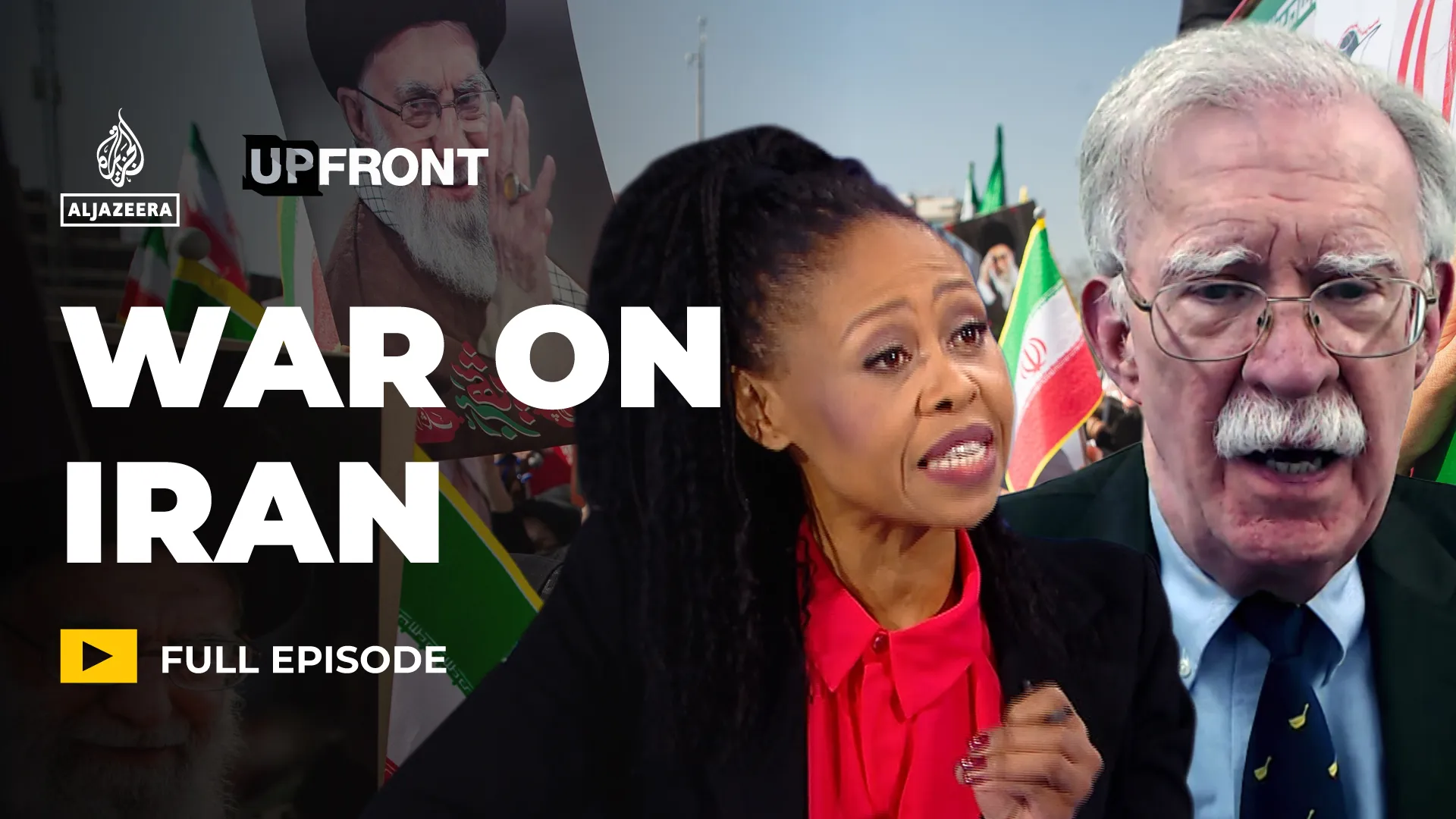
Redi Tlhabi challenges former US Ambassador to the UN John Bolton on why he supports war and regime change in Iran.
This past week, the United States and Israel launched a war on Iran under the banner of regime change. But as the war escalates and with Iran firing missiles at US bases across the region and at Israel – questions are mounting over how far this conflict could spiral.
This week on UpFront Redi Tlhabi challenges former National Security Adviser and former US Ambassador to the United Nations John Bolton on why he believes that a diplomatic end to the war would be a mistake, and we speak to Joe Cirincione, author of, Nuclear Nightmares: Securing the World Before it is Too Late, about the risk of nuclear proliferation.
March 6 (UPI) — The Department of Justice released new FBI documents Thursday that describe several interviews with a woman who accused President Donald Trump of sexually abusing her when she was a young teen.
Officials said they were held back because they mistakenly believed they were duplicates.
The 16 pages of notes describe three interviews that the FBI conducted in 2019 with the woman, who said she was sexually abused by Epstein and Trump when she was between the ages of 13 years and 15 years in the 1980s.
There are also two pages from an intake form that document the initial call to the FBI from a friend who reported the woman’s claims.
Epstein died by suicide in jail in 2019.
The House Oversight Committee voted Wednesday to subpoena U.S. Attorney General Pam Bondi to testify on the Justice Department’s handling of the Epstein files, which are legally required to be released to the public.
The Justice Department posted on X that it identified about a dozen other documents that were “incorrectly coded as duplicative.”
Federal prosecutors in Florida also determined that five prosecution memos that had been labeled privileged could be redacted and released.
NPR reported that it conducted an investigation that found 53 pages that appeared to be missing from the public release database.
There are still 37 pages missing, NPR said, including notes from the interviews, a law enforcement report and license records.
Democrats on the House Oversight Committee said in a statement that they applauded the release of the interviews but still criticized the department for its handling.
“But let’s be clear — this White House cover-up is ongoing. Millions of pages still remain concealed from the public and our committee,” said Sara Guerrero, spokesperson for Oversight Democrats.
White House press secretary Karoline Leavitt said in a statement to NPR Friday that Trump has been “totally exonerated by the release of the Epstein files.”
“These are completely baseless accusations, backed by zero credible evidence, from a sadly disturbed woman who has an extensive criminal history,” Leavitt wrote to NPR.
“The total baselessness of these accusations is also supported by the obvious fact that Joe Biden‘s department of justice knew about them for four years and did nothing with them — because they knew President Trump did absolutely nothing wrong. As we have said countless times, President Trump has been totally exonerated by the release of the Epstein Files,” she wrote.
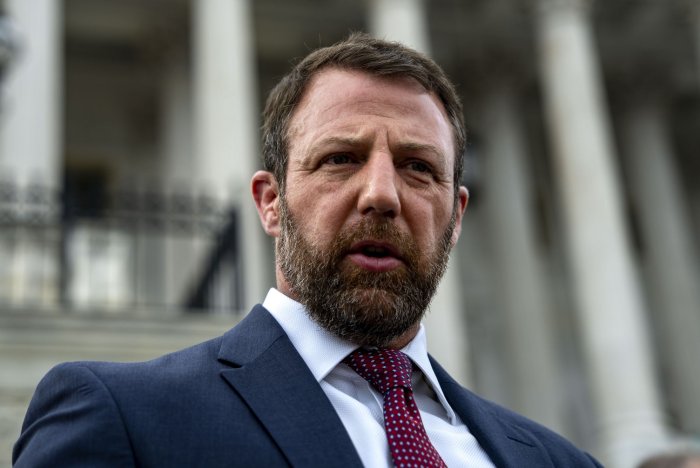
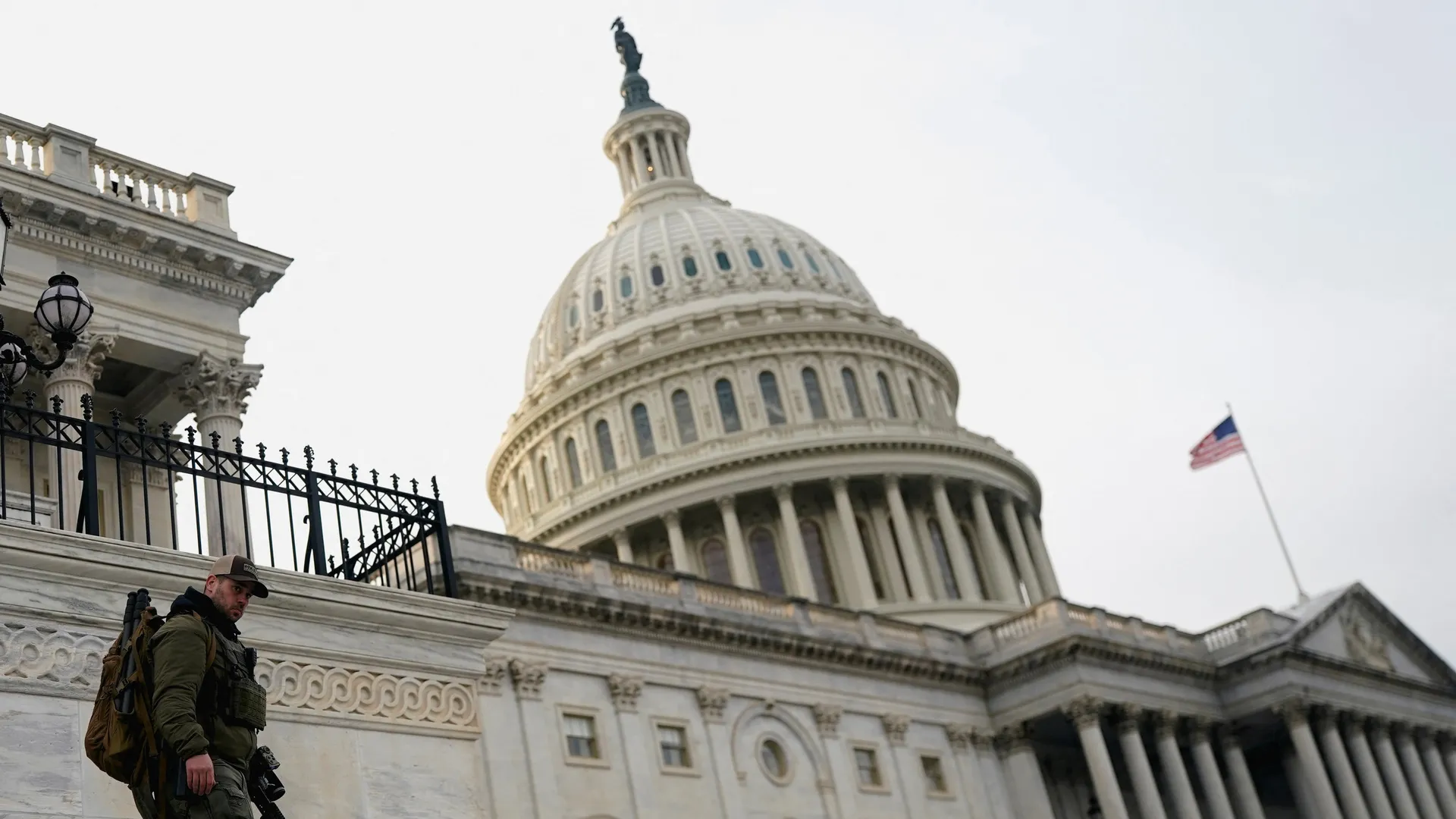
Sen. Markwayne Mullin, R-Okla., speaks to the press outside the U.S. Capitol on Thursday. Earlier today, President Donald Trump announced Mullin would replace Kristi Noem as Secretary of the Department of Homeland Security. Photo by Bonnie Cash/UPI | License Photo
The government in Havana has claimed that the 10 people on board the speedboat had planned to unleash terrorism in Cuba.
Published On 7 Mar 20267 Mar 2026
Share
The government of Cuba has announced that a fifth person died as a consequence of a fatal shootout last month involving a Florida-flagged speedboat that allegedly opened fire on soldiers off the island nation’s north coast.
The island’s Ministry of Interior said late on Thursday in a statement that Roberto Alvarez Avila died on March 4 as a result of his injuries.
Recommended Stories
list of 3 itemsend of list
It added that the remaining injured detainees “continue to receive specialised medical care according to their health status”.
On February 26, authorities in Cuba said that Cuban soldiers confronted a speedboat carrying 10 people as the vessel approached the island and opened fire on the troops.
They said the passengers were armed Cubans living in the United States who were trying to infiltrate the island and “unleash terrorism”. Cuba said its soldiers killed four people and wounded six others.
“The statements made by the detainees themselves, together with a series of investigative procedures, reinforce the evidence against them,” the Cuban Interior Ministry said in its statement.
It added that “new elements are being obtained that establish the involvement of other individuals based in the US”.
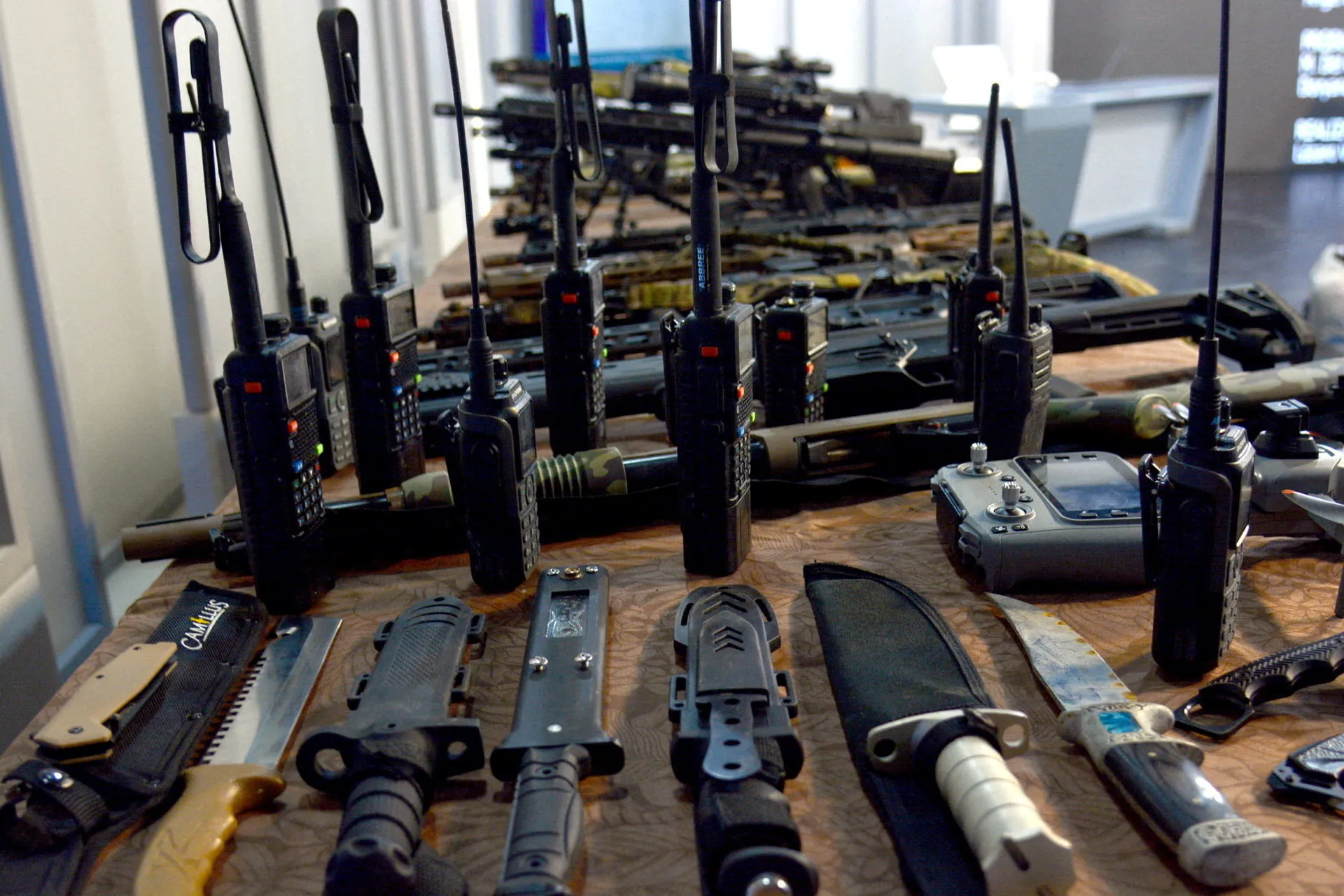
Earlier this week, Cuba said it had filed terrorism charges against six suspects who were on the speedboat. The government also unveiled items it claimed to have found on the boat, including a dozen high-powered weapons, more than 12,800 pieces of ammunition and 11 pistols.
Cuban authorities have provided few details about the shooting, but they said the boat was roughly 1.6 kilometres (1 mile) northeast of Cayo Falcones, off the country’s north coast.
They also provided the boat’s registration number, but The Associated Press news agency was unable to readily verify the details because boat registrations are not public in the state of Florida.
The shooting threatened to increase tensions between US President Donald Trump and Cuban authorities.
The island’s economy was, until recently, largely kept economically afloat by Venezuela’s oil, which is now in doubt after a US military operation abducted and deposed former Venezuelan President Nicolas Maduro.
March 6 (UPI) — Russia is helping Iran by giving it intelligence on American troops, ships and aircraft during the U.S. and Israeli assault on the Middle Eastern nation.
The intelligence Iran has received on potential U.S. targets in the region — naval vessels, military bases and the locations of other American assets — has largely been provided using Russia’s massive space-based surveillance apparatus, CNN reported.
It remains unclear exactly what or how much Russia has helped Iran with but The Washington Post, which was the first to report that one of the United States’ longest-running adversaries is assisting the Iranian regime, reported that one its sources said the assistance “does seem like it’s a pretty comprehensive effort.”
Additionally, sources told NBC News that the intelligence could potentially be used to help Iran locate American assets in the region, though there has been no indication that Russia has actually helped direct Iranian attacks against U.S. interests there.
One source that was briefed on the intelligence reported by all three news organizations told CNN that despite Russia’s appearance that it is staying out of the widening conflict in the Middle East, it “still likes Iran very much.”
Dara Massicot, expert on the Russian military at the Carnegie Endowment for International Peace, told The Post that Iran’s “very precise hits on early warning radars or over-the-horizon radars” indicated they were methodically targeting U.S. assets in an effort to undermine American command and control.
When asked by reporters on Friday, President Donald Trump replied that the U.S. is doing “very well” in its plans against Iran and said it was “a stupid question … to be asking at this time.”
“Somebody said, how would you score it from zero to 10?,” NBC News reported Trump said. “I’d give it a 12 to a 15. Their army is gone. … Their navy is gone. Their communications are gone. Their leaders are gone. Two sets of their leaders are gone. They’re down to their third set. Their air force is wiped out entirely. Think of it.”
U.S. intelligence also reportedly suggests that China is considering getting involved in the conflict, with financial assistance, spare parts and missile components potentially being on the table as it worries about access to Iranian oil that it heavily relies on.
Sen. Markwayne Mullin, R-Okla., speaks to the press outside the U.S. Capitol on Thursday. Earlier today, President Donald Trump announced Mullin would replace Kristi Noem as Secretary of the Department of Homeland Security. Photo by Bonnie Cash/UPI | License Photo
The licence follows a push from US President Donald Trump to open Venezuela’s resource sector to international investment.
Published On 6 Mar 20266 Mar 2026
Share
The United States government has authorised a limited licence for the export of Venezuelan gold, following a high-level meeting to expand mining in the country.
On Friday, a notice appeared on the US Department of the Treasury’s website announcing the licence.
Recommended Stories
list of 3 itemsend of list
It allows Venezuela’s state-run mining company Minerven and its subsidiaries to export, transport and sell Venezuelan gold to the US, within the parameters set out under US law.
Under the licence, however, no Venezuelan gold will be permitted to be exchanged with Cuba, North Korea, Iran or Russia.
The licence also requires payments to sanctioned individuals to flow through Treasury accounts known as Foreign Government Deposit Funds, the same system that has been used to store the proceeds from Venezuelan oil sales.
Minerven and other state-owned industries have faced US sanctions for years, as a penalty for the push to nationalise Venezuela’s resources under former President Hugo Chavez.
But the US has been pushing for inroads into Venezuela’s oil and mining sectors since January 3, when it launched an operation to abduct and imprison the country’s then-president, Nicolas Maduro.
The January 3 military operation has been condemned as a violation of international law, and critics argue that US President Donald Trump has since sought to exploit Venezuela’s natural resources for his country’s gain.
Trump and his allies maintain that Venezuela’s oil resources were stolen from the US, citing the expropriation of assets from US businesses in 2007.
But international law guarantees that countries have permanent sovereignty over their own natural resources, which cannot be exploited by foreign powers without consent.
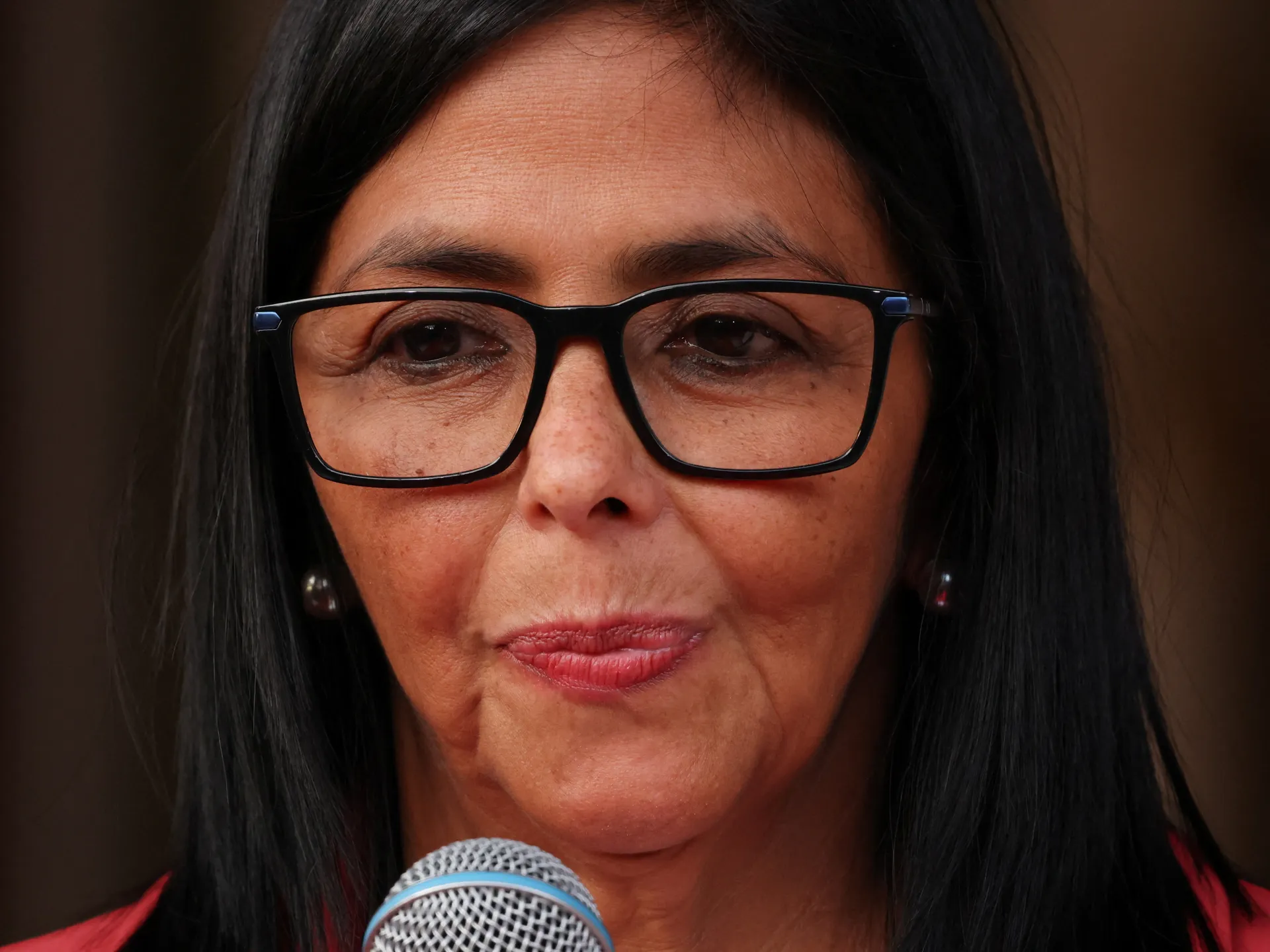
So far, the government of interim Venezuelan President Delcy Rodriguez has complied with Trump’s requests to surrender oil to the US and open the country’s oil and mining sectors to foreign investment.
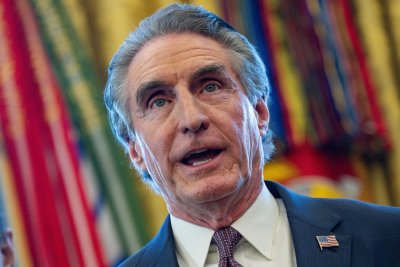
Just this week, Rodriguez agreed to send a mining reform law to the country’s National Assembly, following a two-day visit from Trump’s Interior Secretary Doug Burgum.
And in late January, Rodriguez signed into law a separate reform that allowed for the expansion of private investment from abroad in Venezuela’s oil sector and lowered taxes on the industry.
Venezuela’s economy has struggled under tightening US sanctions and government mismanagement, forcing millions of citizens from the South American country to flee its borders over the last decade.
Proponents of the reforms say outside investment can help revive Venezuela’s ailing economy and fund upgrades to its outdated mining infrastructure.
On Friday, Venezuela’s central bank released its first inflation statistics since November 2024, showing that inflation skyrocketed to 475 percent in 2025, when the US placed an embargo on Venezuelan oil exports.
Gold production from Venezuela in 2025 amounted to nearly 9.5 tonnes, according to the government, and the country sits on some of the largest oil deposits in the world.
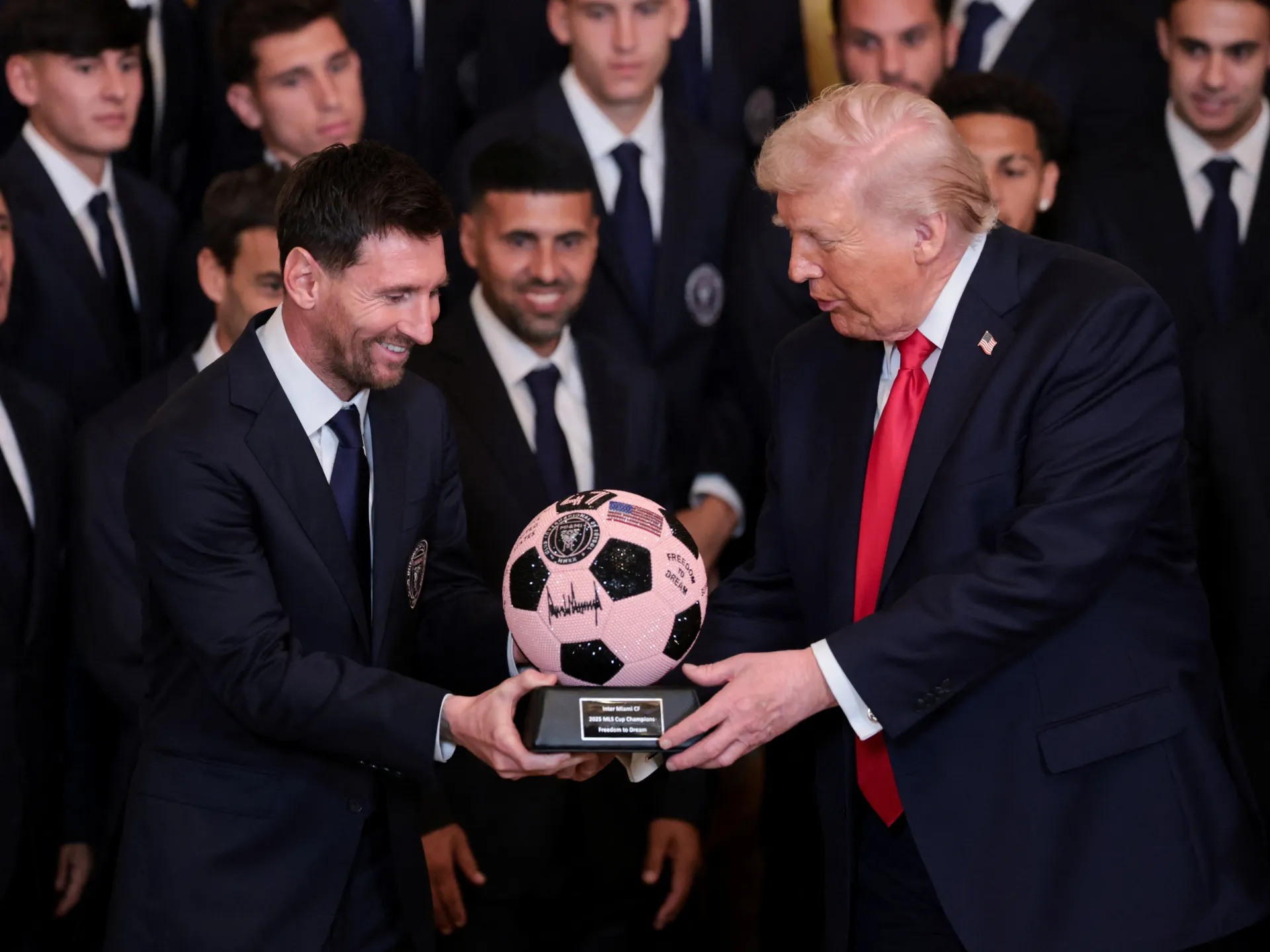
Lionel Messi has been criticised for meeting US President Donald Trump and applauding his latest brief on the Iran war at a White House event honouring the Argentinian superstar and his Inter Miami team.
Lindsey Halligan is under investigation by the Florida Bar Association for her efforts to prosecute President Donald Trump’s enemies. File Photo by Al Drago/EPA
March 6 (UPI) — Former Justice Department official Lindsey Halligan is under investigation by the Florida Bar Association for her time trying to prosecute President Donald Trump‘s enemies while acting as a U.S. attorney.
Halligan, Trump’s former personal attorney, brought cases against former FBI Director James Comey and New York Attorney General Letitia James, both of which failed. On Nov. 24, U.S. District Judge Cameron Currie in South Carolina dismissed both cases and ruled that Attorney General Pam Bondi‘s installation of Halligan as interim U.S. attorney was invalid. But Halligan continued to work as a U.S. attorney in the Justice Department.
In January, Halligan stepped down from the position after a U.S. District Judge David Novak ordered her to stop “masquerading as a U.S. attorney in Virginia.
The Florida bar, of which Halligan is a member, sent a letter to the nonprofit Campaign for Accountability acknowledging the investigation.
The Campaign for Accountability had requested disciplinary proceedings against Halligan over her conduct while acting as a U.S. attorney in the cases against Comey and James. It sent a similar request to the Virginia bar about Halligan, who worked as an insurance lawyer in Florida before Trump’s second administration.
“We already have an investigation pending,” the Florida bar said in its letter, which was also sent to Halligan, according to a copy reviewed by The Washington Post.
If the Florida bar determines that she acted improperly, she could be disbarred in the state.
The Department of Justice on Wednesday proposed a change to federal regulations for state bar investigations of its attorneys. The proposal was posted to the Federal Register and said, “Before a current or former Department lawyer may participate in any investigative steps initiated by the bar disciplinary authority … in response to allegations that a current or former Department attorney violated an ethics rule while engaging in that attorney’s federal duties, the Department will have the right to review the allegations in the first instance and shall request that the bar disciplinary authority suspend any parallel investigations until the completion of the Department’s review.”
The rule change is necessary because “over the past several years, political activists have weaponized the bar complaint and investigation process,” the memo said.
Halligan, who had no previous trial experience, was appointed to replace Erik Siebert, who resigned the position in September amid concerns he would be forced out for failing to prosecute James.
Interim U.S. attorneys can only stay in their positions for 120 days, and Siebert had already exceeded his time without confirmation.
Sen. Markwayne Mullin, R-Okla., speaks to the press outside the U.S. Capitol on Thursday. Earlier today, President Donald Trump announced Mullin would replace Kristi Noem as Secretary of the Department of Homeland Security. Photo by Bonnie Cash/UPI | License Photo
Over the past two decades, China has quietly eclipsed the United States as the dominant trading partner in parts of Latin America.
But since taking office for a second term, United States President Donald Trump has pushed to reverse Beijing’s advance.
Recommended Stories
list of 3 itemsend of list
That includes through aggressive manoeuvres directed at China’s allies in the region.
Already, the Trump administration has stripped officials in Costa Rica, Panama and Chile of their US visas, reportedly due to their ties to China.
It has also threatened to take back the Panama Canal over allegations that Chinese operatives are running the waterway. And after invading Venezuela and abducting President Nicolas Maduro, the US forced the country to halt oil exports to China.
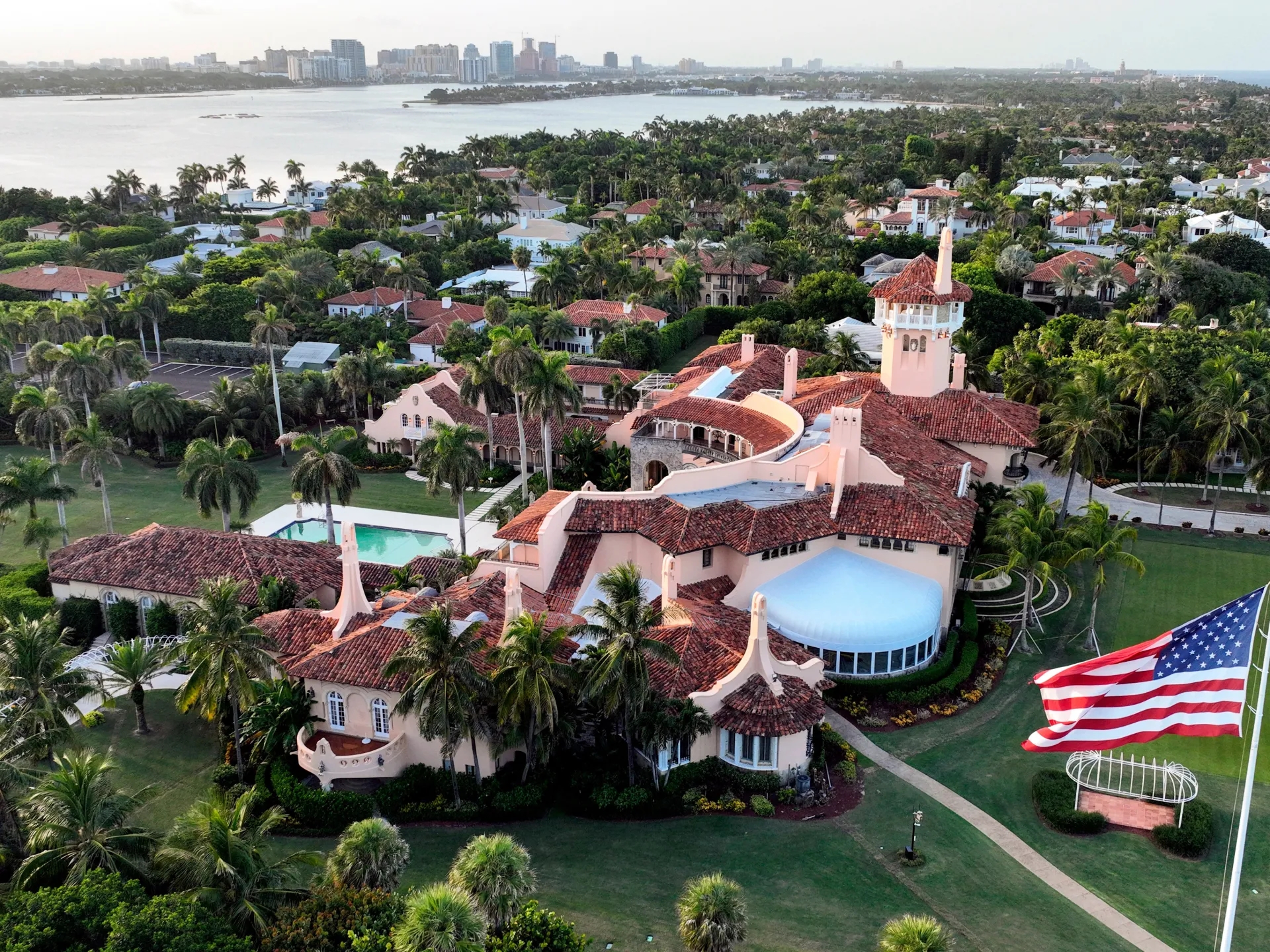
But on Saturday, Trump is taking a different approach, welcoming Latin American leaders to his Mar-a-Lago estate for an event dubbed the “Shield of the Americas” summit.
How he plans to persuade leaders to distance themselves from one of the region’s largest economic partners remains unclear.
But experts say the high-level meeting could signal that Washington is prepared to put concrete offers on the table.
Securing meaningful commitments from Latin American leaders will take more than a photo op and vague promises, according to Francisco Urdinez, an expert on regional relations with China at Chile’s Pontifical Catholic University.
Even among Trump’s allies, Urdinez believes significant economic incentives are required.
“What they’re really hoping is that Washington backs up the political alignment with tangible economic benefits,” he said.
‘Reinforcing the Donroe Doctrine’
Already, the White House has confirmed that nearly a dozen countries will be represented at the weekend summit.
They include conservative leaders from Argentina, Bolivia, Chile, Costa Rica, Ecuador, El Salvador, the Dominican Republic, Honduras, Panama, Paraguay, and Trinidad and Tobago.
Mexico and Brazil, the region’s largest economies, have been notably left out. Both are currently led by left-leaning governments.
In a post on social media, the Trump administration framed the event as a “historic meeting reinforcing the Donroe Doctrine”, the president’s plan for establishing US dominance over the Western Hemisphere.
Part of that strategy involves assembling a coalition of ideological allies in the region.
But rolling back Chinese influence in a region increasingly reliant on its economy will not be an easy feat, according to Gimena Sanchez, the Andes director at the Washington Office on Latin America (WOLA), a US-based research and advocacy group.
The US “is trying to get countries to agree that they’re not going to have China be one of their primary trading partners, and they really can’t at this point”, Sanchez said.
“For most countries, China is either their top, second or third trading partner.”
China, after all, has the second-largest economy in the world, and it has invested heavily in Latin America, including through infrastructure projects and massive loans.
The Asian giant has emerged as the top trading partner in South America in particular, with bilateral trade reaching $518bn in 2024, a record high for Beijing.
The US, however, remains the biggest outside trade force in Latin America and the Caribbean overall, due in large part to close relations with its neighbour, Mexico.
As of 2024, US imports from Latin America jumped to $661bn, and its exports were valued at $517bn.
Rather than choosing sides, though, many countries in the region are trying to strike a balance between the two powers, Sanchez explained.
Still, she added that the US cannot come empty-handed to this weekend’s negotiations.
“If the US is very boldly telling countries to cut off strengthening ties with China”, Sanchez emphasised that “the US is going to have to offer them something.”
What’s on the table?
Trump has already extended economic lifelines to Latin American governments politically aligned with his own.
In the case of Argentina, for instance, Trump announced in October a $20bn currency swap, meant to increase the value of the country’s peso.
He also increased the volume of Argentinian beef permitted to be imported into the US, shoring up the country’s agricultural sector, despite pushback from US cattle farmers.
Trump has largely tied those economic incentives to the continued leadership of political movements favourable to his own.
The $20bn swap, for instance, came ahead of a key election for Argentinian President Javier Milei’s right-wing party, which Trump supports.
Isolating China from resources in Latin America could also play to Trump’s advantage as he angles for better trade terms with Beijing.
A show of hemispheric solidarity could give Trump extra leverage as he travels to Beijing in early April to meet with Chinese President Xi Jinping, Urdinez pointed out.
Then there’s the regional security angle. The US has expressed particular concern about China’s control of strategic infrastructure in Latin America and the critical minerals it could exploit in the region to bolster its defence and technology capabilities.
Bolivia, Argentina and Chile, for instance, are believed to hold the world’s largest deposits of lithium, a metal necessary for energy storage and rechargeable batteries.
The Trump administration referenced such threats in its national security strategy, published in December.
“Some foreign influence will be hard to reverse,” the strategy document said, blaming the “political alignments between certain Latin American governments and certain foreign actors”.
But Trump’s security platform nevertheless asserted that Latin American leaders were actively seeking alternatives to China.
“Many governments are not ideologically aligned with foreign powers but are instead attracted to doing business with them for other reasons, including low costs and fewer regulatory hurdles,” the document said.
It argued that the US could combat Chinese influence by highlighting the “hidden costs” of close ties to Beijing, including “debt traps” and espionage.
‘More aspiration than reality’
Henrietta Levin, a senior fellow at the Center for Strategic and International Studies in Washington, believes that many Latin American countries would prefer to deepen economic engagement with the US over China.
But in many cases, that hasn’t been an option.
She pointed to Ecuador’s decision to sign a free trade agreement (FTA) with China in 2023 after it failed to negotiate a similar agreement with the US under President Joe Biden.
Some US politicians had opposed the deal as a threat to domestic industries. Others had encouraged Biden to reject it due to alleged corruption in Ecuador’s government.
Critics, though, said the resistance pushed Ecuador into closer relations with China.
“ When Ecuador signed their free trade agreement with China a couple years ago, their leader actually made quite clear that they had wanted an FTA with the US and would’ve preferred that,” said Levin.
“But the US didn’t want to negotiate such an agreement, and China did.”
As a result, Ecuador became the fifth country in Latin America to ink a free trade pact with China, after Chile, Peru, Costa Rica and Nicaragua.
For Levin, the question looming over this weekend’s summit is whether the Trump administration will step up and provide alternatives to the economic engagement China has already delivered.
Options could include trade agreements, financing for new development and investments with attractive terms.
But without such offers, Urdinez, the Chilean professor, warns that Trump will face limits to his ambitions of checking China’s growth in Latin America.
“Until Washington is willing to fill the economic space it’s asking countries to vacate, the rollback strategy will remain more aspiration than reality,” said Urdinez.
A moment of silence for all the comedians, late-night-show writers, political satirists, memers, animators and random influencers who just lost a wealth of inspiration.
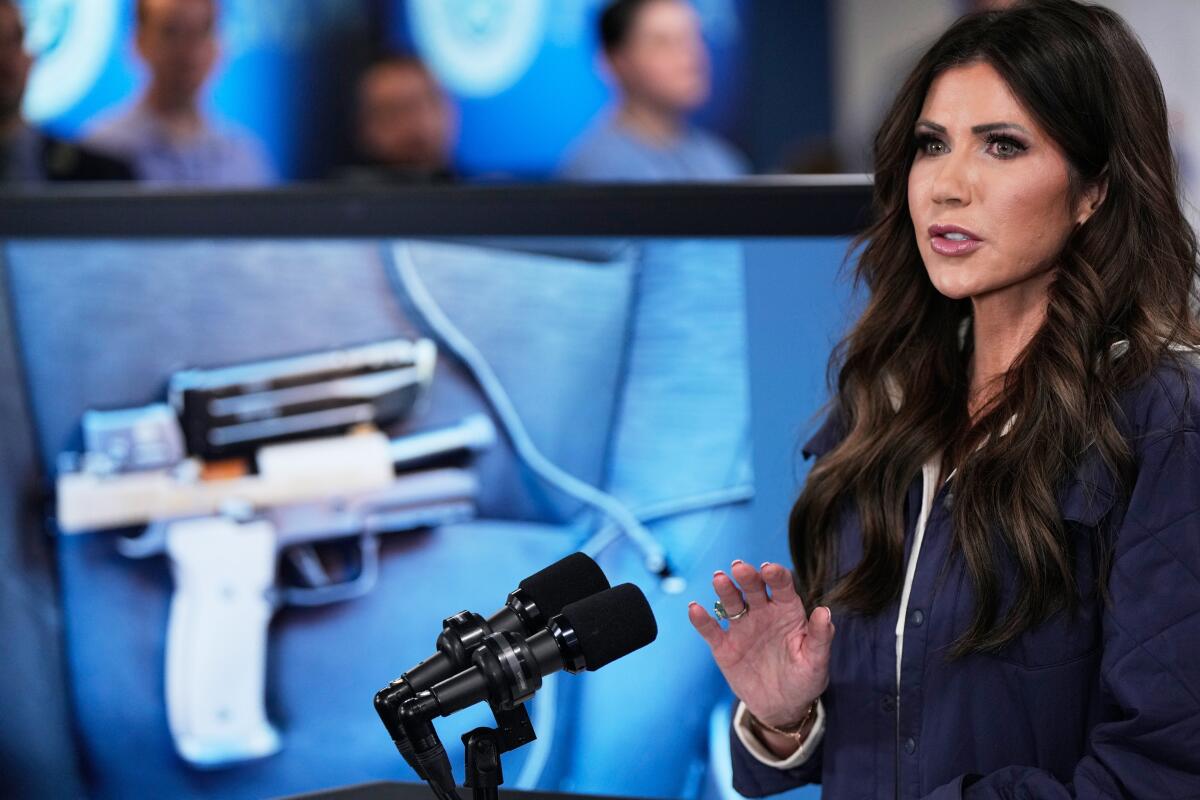
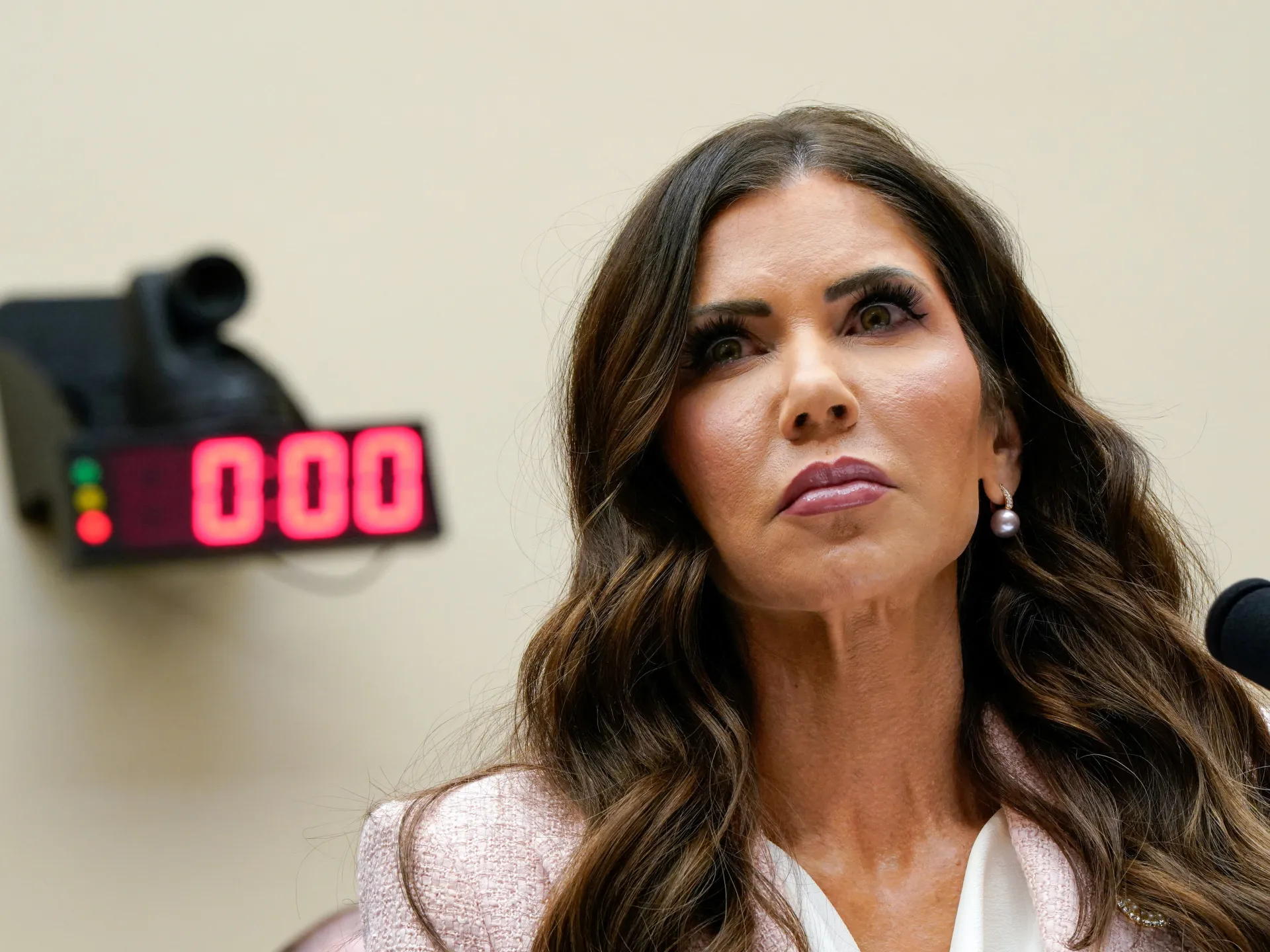
Kristi Noem, Homeland Security secretary, was fired Thursday by President Trump, ending the 13-month tenure of a political figure whose bravado, cruelty, incompetence and commando cosplay inspired more wickedly funny material than Dick Cheney, Sarah Palin and Sean Spicer combined.
Social media’s so-called ICE Barbie, the first Cabinet secretary to leave the Trump administration during the president’s second term, was a font of material for “South Park,” “SNL,” late night and thousands more sketch artists, impersonators, musicians and everyday trash posters. She never disappointed, unless you were looking to her for feasible, humane immigration policy enforcement.
Former Homeland Security Secretary Kristi Noem.
(Julia Demaree Nikhinson / Associated Press)
Drama and spectacle marked her brief career, from posing in front of a packed holding cell at El Salvador’s maximum security prison CECOT, where the DHS had shipped and detained deportees, to casting herself as an agent of action in multiple ICE raid videos. Donning a big gun and long, flowing locks of hair, she insinuated herself into operations, vamping for the camera in a bulletproof vest while masked agents rounded up fellow humans like cattle.
Grim, to be sure, but at least she contributed a shred of comic relief (unintended, of course) to our new, sad reality of federal agents invading American cities and abducting people off the streets, out of their cars and from their homes.
“South Park” skewered Noem in unprintable ways. “SNL” brought back Tina Fey to play Noem. Dressed in a lavender pantsuit, too much makeup and brandishing a massive firearm, she introduced herself as “the rarest type of person in Washington, D.C.: a brunette that Donald Trump listens to.”
The endless stream of memes across social media date back to 2024, when in her memoir Noem recalled shooting and killing her 14‑month‑old dog, a wirehaired pointer named Cricket, after deciding the dog was “untrainable.” Gov. Gavin Newsom later trolled the DHS and Noem with a meme captioned “Kristi Noem’s Dog Obedience School: She’ll Treat Them As Good As She Treats Brown People.” The mock ad featured a smiling woman holding a gun and kneeling beside a dog.
If it seems cruel, consider that the DHS posted holiday-themed deportation memes around Christmas, proclaiming that federal agents were stepping up removals “for the holidays,” with a “holiday deal” offering a free flight and $1,000 to those who self-deport. One X post featured an AI-generated image of federal agents in Santa hats with the caption, “YOU’RE GOING HO HO HOME.”
Noem’s dismissal comes on the heels of two congressional hearings this week where she was questioned about her response to the ICE killings of U.S. citizens Renee Good and Alex Pretti in Minneapolis (she incorrectly called Good a domestic terrorist and claimed Pretti was involved in an act of domestic terrorism). She was grilled about the department spending $172 million for the purchase of two jets, the nature of her relationship with top DHS adviser Corey Lewandowski, and her $220-million DHS ad campaign starring none other than Kristi Noem. She testified in the hearings that Trump approved the ads. He said he knew nothing about them.
Her firing triggered an immediate rush of snarky content across social media, and a sharp a comment or two from prominent politicians. “Shouldn’t let the door hit her on the way out,” said Illinois Democratic Gov. JB Pritzker.
But all is not lost for those needing a laugh at Noem’s expense, or at the expense of the DHS, for that matter. The president said Thursday that Noem would take on a new, freshly invented role: Envoy for The Shield of the Americas. He described the position as one that will lead “our new Security Initiative in the Western Hemisphere.” The job title and description already sound like the basis for a villainous political satire, without even trying.
And for the new guy taking the post? He’s Sen. Markwayne Mullin (R-Okla.), a former MMA fighter. Let the memes begin …
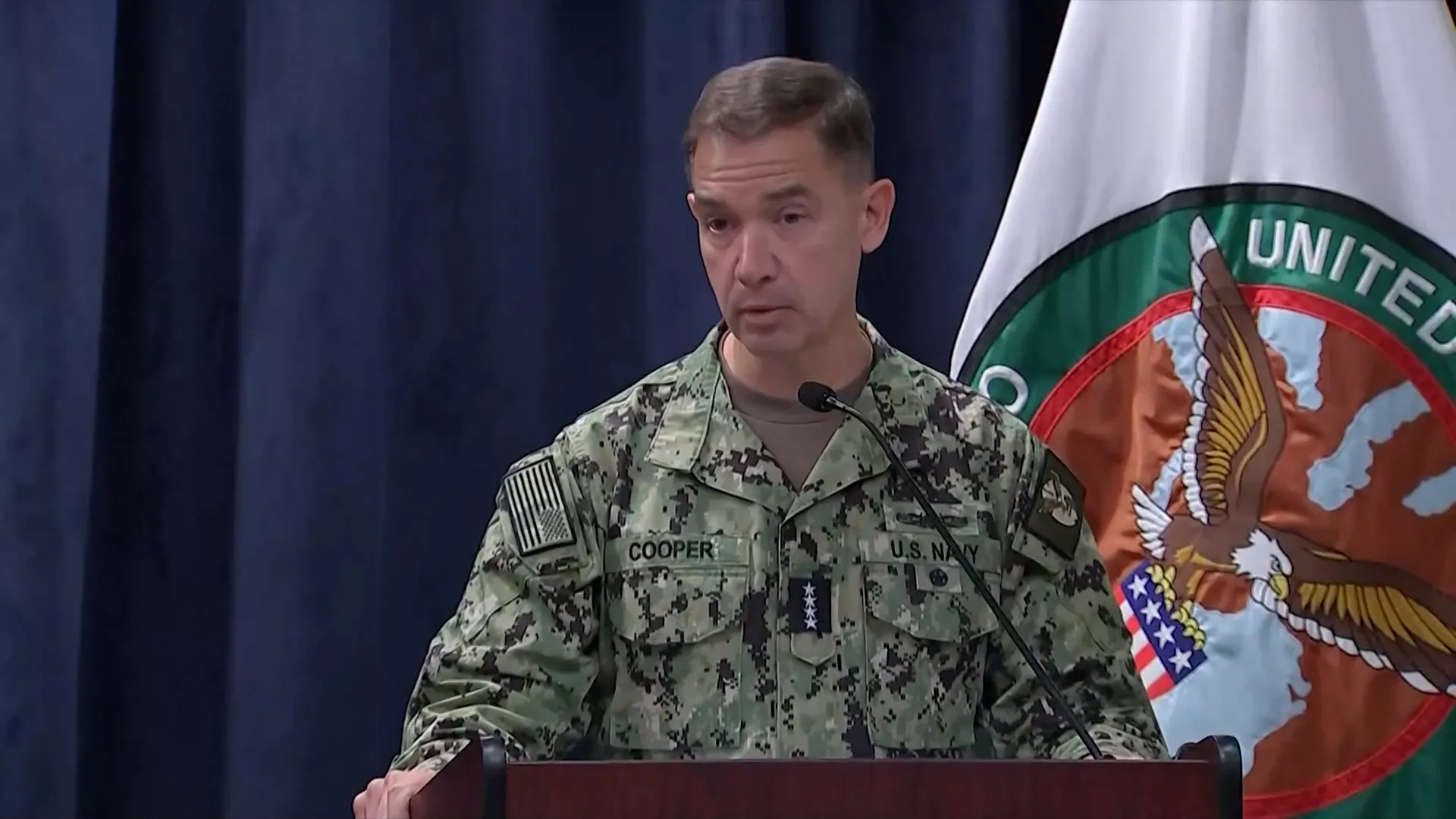
The head of US Central Command says B-2 bombers have dropped dozens of 2,000-pound bombs on buried Iranian ballistic missile launchers, contributing to a 90% drop in missile attacks. The commander added an Iranian “drone carrier ship” is currently on fire after being hit.
The US House of Representatives has joined the Senate in killing a war powers resolution that would have forced Donald Trump to end his war on Iran. Although the vote was largely symbolic, Al Jazeera’s Patty Culhane says Democrats are using it to get Republicans on the record.
New Delhi, India — Dressed in a blue Navy uniform and sleek sunglasses, Indian Prime Minister Narendra Modi, in late October, addressed a gathering of the country’s sea warriors.
He listed out the strategic significance of the Indian Ocean — the massive volumes of trade and oil that pass through it. “The Indian Navy is the guardian of the Indian Ocean,” he then said, to loud, proud chants of “Long Live Mother India” from his audience.
Less than five months later, India has been shown up as a “guardian”, unable to protect its own guest.
On Wednesday, the Iranian warship, IRIS Dena, was torpedoed by a US submarine just 44 nautical miles off (81km) southern Sri Lanka, as it was returning home from naval drills hosted by India. During the “Milan” biennial multilateral naval exercise, Indian President Droupadi Murmu had posed with sailors from the Dena.
Yet it took the Indian Navy more than a day after the Iranian warship was struck to respond formally to the attack, which US officials made clear was a sign of how the Donald Trump administration was willing and ready to expand its war against Iran.
“An American submarine sank an Iranian warship that thought it was safe in international waters,” US Defense Secretary Pete Hegseth said at the Pentagon on Wednesday. “Instead, it was sunk by a torpedo. Quiet death.”
Tehran is furious over the attack on its warship hundreds of miles away from home. And Iran made sure to note that the IRIS Dena warship was “a guest of India’s navy”, returning after completing the exercise it joined upon New Delhi’s invitation.
“The US has perpetrated an atrocity at sea, 2,000 miles [3,218km] away from Iran’s shores,” Iran’s foreign minister Abbas Araghchi said, referring to the sinking of the frigate. “Mark my words: The US will come to bitterly regret [the] precedent it has set.”
Now, the IRIS Dena is at the bottom of the Indian Ocean, and more than 80 Iranian sailors, who marched during joint parades and posed for selfies with Indian naval officers during their two-week visit, are dead.
What has also fallen, said retired Indian naval officers and analysts, is India’s self-image as a net security provider in the Indian Ocean. Instead, they said, the US attack on the Dena has exposed the limits of India’s power and influence in its own maritime back yard.
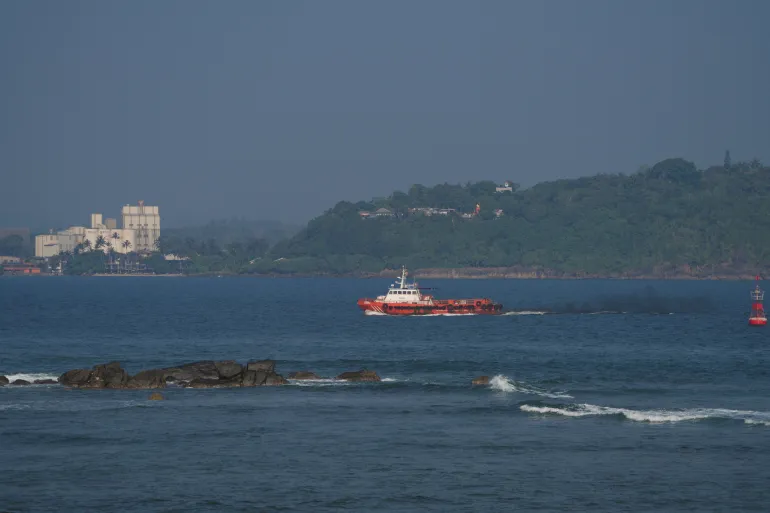
A vessel sails off the Galle coast after a submarine attack on the Iranian military ship, Iris Dena, off Sri Lanka, in Galle, Sri Lanka, March 4, 2026 [Thilina Kaluthotage/Reuters]
‘War reaches India’s backyard’
After participating in the naval exercises, IRIS Dena left Visakhapatnam on India’s eastern coast on February 26. It was hit in international waters, just south of Sri Lanka’s territorial waters, in the early hours of March 4, local time.
In response, Sri Lankan Navy rescuers recovered more than 80 bodies and picked up 32 survivors, reportedly including the commander and some senior officers from the warship. More than 100 men are still missing.
In a tweet welcoming the Dena to the naval drills, the Indian Navy’s Eastern Command had posted: “Her arrival … [reflects] long-standing cultural links between the two nations [Iran and India]”.
Vice Admiral Shekhar Sinha, the former vice chief of India’s naval staff, told Al Jazeera that he attended the Iranian parade at the function.
“I met and really liked them, especially their march for sailors travelling thousands of miles,” Sinha said. “It is always sad to see a ship sinking. But in a war, emotions don’t work. There’s nothing ethical in a war.”
Sinha said that the Indian Ocean — central to the strategic and energy security of the nation with the world’s largest population — was thought to be a fairly safe zone earlier. “But that is not the case, as we are learning now,” he told Al Jazeera.
“The unfolding battle [between the US and Israel on the one hand, and Iran on the other] has reached India’s back yard. New Delhi has to be concerned,” Sinha, who served in the Indian Navy for four decades, added. “The liberty we enjoyed in the Indian Ocean has apparently shrunk.”
Security personnel stand guard as an ambulance enters inside the Galle National Hospital, following a submarine attack on the Iranian military ship, IRIS Dena, off the coast of Sri Lanka, in Galle, Sri Lanka, March 5, 2026 [Thilina Kaluthotage/Reuters]
India’s Catch-22 situation
Only on Thursday evening did the Indian Navy issue any formal statement on the attack — more than 24 hours after the Dena was hit by a torpedo.
The Navy said that it received distress signals from the Iranian ship and had decided on deploying resources to help with rescuing sailors. But by then, it said, the Sri Lankan Navy had already stepped to lead the rescue effort.
Neither New Delhi nor the Navy has criticised — even mildly — the decision by the US to sink the Iranian warship.
Military analysts and former Indian naval officers say India is caught in a classic catch-22: Was India aware of the incoming US attack in the Indian Ocean on an Iranian warship, or was it blindsided by a nuclear-submarine in its backyard?
Admiral Arun Prakash, the former chief of India’s naval staff, told Al Jazeera that if New Delhi was blindsided, “it reflects on the US-India relationship directly.”
“If it is a surprise, then that’s a great concern since we have a so-called strategic partnership with the USA.”
And if India knew about the attacks, it would be seen by many as strategically siding with the US and Israel over their war on Iran.
C Uday Bhaskar, a retired Indian Navy officer and currently the director of the Society for Policy Studies, an independent think tank based in New Delhi, said that the US sinking an Iranian warship in the Indian Ocean muddies the Indian perception of itself as a “net security provider” in the region.
Bhaskar said the incident is a “strategic embarrassment” for India and weakens New Delhi’s credibility in the Indian Ocean, while its moral standing “takes a beating” because of the Indian government’s near-silence.
An injured Iranian sailor is moved on a stretcher at Galle National Hospital, where the sailors are receiving treatment, following a submarine attack on the Iranian military ship, IRIS Dena, off the coast of Sri Lanka, in Galle, Sri Lanka, March 5, 2026 [Thilina Kaluthotage/Reuters]
‘India on aggressor’s side’
In the post-colonial world order, India was a leader of the non-alignment movement, the Cold War-era neutrality posture adopted by several developing nations.
India now no longer calls its approach non-alignment, instead referring to it as “strategic autonomy”. But, in reality, it has inched closer to the United States and its allies, most importantly, Israel.
Merely two days before the US and Israel bombed Iran, Modi was in Israel, addressing the Knesset and warmly hugging Prime Minister Benjamin Netanyahu, who called his Indian counterpart a brother.
But Iran, under the late Supreme Leader Khamenei, was a friend of India as well, with New Delhi making strategic, business, and humanitarian investments in the country.
However, Modi has not said a word in condolence after Khamenei’s assassination. On Thursday, Indian Foreign Secretary Vikram Misri visited the Iranian embassy in New Delhi to sign a memorial book. Indian governments normally deploy ministers — not bureaucrats or diplomats — for such sombre occasions.
It is against that backdrop that India’s response to the attack on the Dena has come under scrutiny.
Because the frigate was hit when it was in international waters, India had “no formal responsibility”, said Srinath Raghavan, an Indian military historian and strategic analyst.
“But the US Navy’s actions underline both the spreading geography of this war and the sharp limits of India’s ability to manage, let alone control, its fallout,” Raghavan told Al Jazeera.
Diplomatically, India has “objectively positioned itself on the side of the aggressors in this war,” he said, by “acts of commission — visit to Israel on the eve of war — and of omission, with not even [an] official condolence, let alone condemnation, of the assassination of the Iranian head of state.” Modi visited Israel on February 25-26.
Mallikarjun Kharge, the president of India’s opposition Congress party, said the Modi government had recklessly abdicated “India’s strategic and national interests”. And the government’s silence “demeans India’s core national interests and destroys our foreign policy, carefully and painstakingly built and followed by successive governments over the years.”
In addition, Raghavan highlighted that Modi has only criticised Iran’s retaliation, which threatens to drag the Gulf region to the brink of war.
“It is difficult not to conclude that India has drastically downgraded its interests in the relationship with Iran,” he said.
“All of this detracts from India’s credibility as a player in the region and will have short and long-term consequences for the equities in West Asia [as the Middle East is referred to in India],” Raghavan told Al Jazeera.
US president says he’d be ‘all for’ Kurdish ground assault on Iran amid reports that Washington is egging on rebellion.
Donald Trump has expressed public support for a possible Kurdish offensive against Iran as the United States pushes to destabilise the Iranian governing system internally.
“I think it’s wonderful that they want to do that, I’d be all for it,” the US president told the Reuters news agency on Thursday when asked about the prospects of a Kurdish rebellion in Iran.
Recommended Stories
list of 3 itemsend of list
Several US media outlets have reported that Trump called leaders in the semi-autonomous Kurdish region of Iraq to enable Iranian Kurdish groups launch a ground offensive inside Iran.
In his comments on Thursday, Trump declined to say whether the US would provide air support for Kurdish rebels.
The White House had confirmed that the US president contacted Kurdish leaders in Iraq but denied that Trump agreed to a plan to push for an armed uprising by the Kurds in Iran.
“The president has held many calls with partners, allies and leaders in the region, in the Middle East,” Karoline Leavitt told reporters on Wednesday.
“He did speak to Kurdish leaders with respect to our base that we have in northern Iraq.”
US assets in Erbil in the Kurdish region of Iraq have come under repeated Iranian drone and missile attacks since the war started.
Iran is home to millions of Kurds, mostly living in the west of the country.
Kurds represent a sizable ethnic minority in Iraq, Syria and Turkiye, as well.
Earlier this week, Mustafa Hijri, head of the Democratic Party of Iranian Kurdistan (PDKI), a prominent Kurdish opposition group, called for desertion from the Iranian army and Islamic Revolutionary Guard Corps (IRGC).
“I call upon all aware and freedom-seeking soldiers and personnel across Iran, and especially in Kurdistan, to abandon the barracks and military centres of the IRGC, the army, and other military forces of the regime, to refuse their assigned duties, and to return to the embrace of their families,” Hijri wrote on X.
“This action is important both for preserving their lives in the face of these attacks and as a sign of turning their backs on the regime’s military and repressive forces.”
On several occasions in recent decades, Washington has urged Kurdish groups seeking autonomy to rebel against governments it viewed as hostile in the region, only to cut off support to them or fail to come to their aid when the political situation changes.
Some critics have warned that stoking ethnic tensions in Iran could lead to a civil war that could further destabilise the entire region.
On Wednesday, Iran’s Press TV reported that the IRGC launched missiles and drones at the headquarters of “anti-Iran terrorist groups in the Iraqi Kurdistan region”.
The Kurdistan Regional Government (KRG) in Iraq has condemned the Iranian attacks on the region while also “categorically denying reports of playing a role in an offensive against Iran.
“At the same time, the Kurdistan Regional Government and the political parties within it are not part of any campaign to expand the war and tensions in the region,” the KRG said in a statement. “On the contrary, we call for peace and stability in the region.”
But with government troops showing no signs of defection despite thousands of US and Israeli strikes, the Trump administration has struggled to find a prominent friendly force on the ground in Iran.
Despite the US president’s repeated calls for Iranians to rise up against their government, there have been no significant protests since the war began on Saturday.
March 5 (UPI) — President Donald Trump has removed Secretary of the Department of Homeland Security Kristi Noem and appointed Sen. Markwayne Mullin, R-Okla., Thursday after she was aggressively grilled by a Senate committee the day before.
Trump announced the change on Truth Social, along with a new job for Noem, naming her “Special Envoy for The Shield of the Americas, our new Security Initiative in the Western Hemisphere we are announcing on Saturday in Doral, Florida. I thank Kristi for her service at ‘Homeland.'”
He praised Noem for her “numerous and spectacular results” in the announcement.
“I am pleased to announce that the Highly Respected United States Senator from the Great State of Oklahoma, Markwayne Mullin, will become the United States Secretary of Homeland Security (DHS), effective March 31, 2026,” he said.
Mullin has been a Senator since 2023 and served in the House from 2013-2023. He is a member of the Cherokee Nation.
Noem faced a combative Senate Judiciary Committee on Wednesday, as they pressed her for answers on several issues the department has been plagued with in the past year.
Sen. Thom Tillis, R-N.C., called her leadership a “disaster” and told her she should resign.
“What we’ve seen is innocent people getting detained that turn out are American citizens,” Tillis said in a heated exchange.
“The fact that you can’t admit to a mistake, which looks like, under investigation, is gonna prove that Ms. [Renee] Good and Mr. [Alex] Pretti probably should not have been shot in the face and in the back. Law enforcement needs to learn from that. You don’t protect them by not looking after the facts.”
Sen. John Kennedy, R-La., pressed Noem about DHS ads that she starred in, spending $200 million.
The ads were made by a Republican consulting firm that was allegedly created just before submitting bids for the work.
The company is reportedly connected to the husband of Noem’s former spokesperson, though she denied any part in choosing the firm and called the ads “extremely effective.”
“Well they were effective in your name recognition,” Kennedy said. “It troubles me. A fifth to a quarter of a billion dollars of taxpayer money when we’re scratching over every penny and we’re fighting over rescission packages. I just can’t agree.”
Noem told the Senate panel that Trump had authorized the ads.
Kennedy told reporters Thursday that he got a call from the president about her testimony, The New York Times reported.
“Put it this way: His recollection and her recollection are different.”
Mullin told The Times that he has not had time to call Noem, whom he said is a friend.
“She was tasked with a very difficult job,” he said. “I think she has done the best that she could do under the circumstances.”
But he said he believed that there are opportunities to “build off things that didn’t quite go as planned.”
Sen. Chris Coons, D-Del., said he would wait and see if Mullin will be an improvement at DHS but told The Times, “It will be hard to be a downgrade.”
The Department of Homeland Security is in its third week of a shutdown, with Congress expected to vote later Thursday on a funding package.
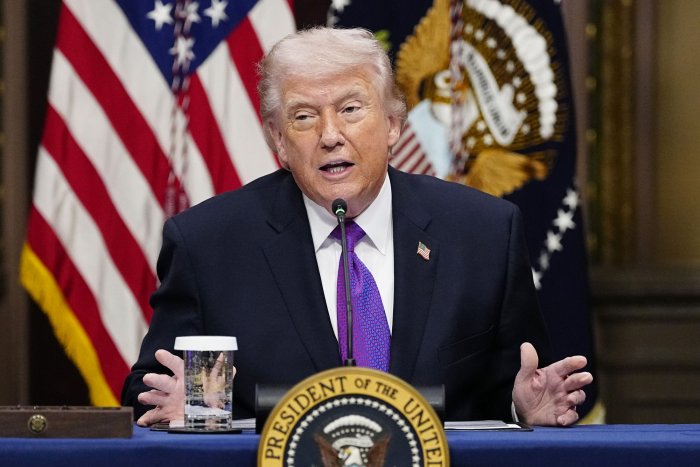
President Donald Trump speaks during a roundtable on the Ratepayer Protection Pledge inside the Indian Treaty Room of the Eisenhower Executive Office Building near the White House on Wednesday. Technology firms that sign the pledge will commit to ensuring artificial intelligence infrastructure does not raise utility bills for households and small businesses. Photo by Bonnie Cash/UPI | License Photo
United States President Donald Trump has announced that he will replace Department of Homeland Security Secretary Kristi Noem with Republican Senator Markwayne Mullin.
In a social media post on Thursday, Trump explained that he had reassigned Noem to be a special envoy for a new security initiative focused on the Western Hemisphere, dubbed the “Shield of the Americas”.
Recommended Stories
list of 3 itemsend of list
The staffing change, he added, will take effect starting March 31. It marks the first major cabinet-level shake-up of Trump’s second term so far.
Trump praised Noem upon her departure from the cabinet-level post, writing that she “has served us well, and has had numerous and spectacular results (especially on the Border!)”
But Noem has played a prominent role in some of the administration’s most controversial immigration policies, and her tenure at the Department of Homeland Security (DHS) has spurred questions about government spending and conflicts of interest.
The announcement that she would be leaving her post comes a day after she faced a grilling from Democrats during congressional hearings this week, with several politicians called for her resignation.
“DHS is supposed to be protecting our residents and upholding constitutional protections. But you’ve turned that on the head. You have actually turned the United States government against its own residents,” Representative Pramila Jayapal, a Democrat, said during Wednesday’s hearing.
“Yours is a case of failed leadership. Secretary, you need to resign, be fired or be impeached because you don’t have the right to lead this agency.”
The announcement of Noem’s removal also comes as DHS continues to weather a partial government shutdown.
Democrats have opposed approving new funding for the department in response to deadly shootings involving immigration agents under Noem’s leadership.
Those shootings were brought up again this week during Noem’s appearances before judiciary committees in the Senate and House of Representatives.
Democratic Representative Jamie Raskin, for instance, repeatedly accused Noem of launching a “smear campaign” against two US citizens shot dead during interactions with immigration agents: Renee Good and Alex Pretti.
“There have been three homicides in Minneapolis in 2026, and your agents committed two of them,” Raskin told Noem.
He also highlighted comments Noem made calling Good and Pretti “domestic terrorists“, despite evidence undercutting the administration’s depiction of the events leading to their deaths.
“Rather than work with state and local authorities to solve these homicides, you barred Minnesota’s investigators from the crime scenes,” Raskin said.
“It smells like a coverup, and it makes me wonder who the real domestic terrorists are.”
Noem, formerly the Republican governor of South Dakota, has also been scrutinised for a $220m advertising campaign promoting border security.
The advertising campaign shows Noem riding a horse near Mount Rushmore, a well-known national memorial in her home state.
The news outlet ProPublica previously reported that a government contract for the campaign went to a Republican consulting firm with ties to senior DHS officials.
Noem has denied any wrongdoing, stating that the bidding process was “competitive” and that the contract was “all done correctly, all done legally”.
On Thursday, before announcing the staffing change, Trump denied any connection to the advertising campaign, telling the news service Reuters that he “never knew anything about it”.
Noem played a key role in the administration’s mass deportation push, and she has frequently used rhetoric that vilified immigrants as dangerous and violent.
Though DHS’s mandate focuses on domestic security, Noem has made several international trips over the last year, including visits to Ecuador in July and November.
Trump has called a “Shield of the Americas” summit at his Mar-a-Lago estate this weekend, inviting world leaders from multiple countries to discuss regional security and combatting Chinese influence in Latin America.
Noem’s replacement as DHS head, Mullin, has served as a US senator since 2023. He was a representative in the House for a decade before that, representing Oklahoma.
Trump highlighted his membership in the Cherokee Nation, writing that Mullin would be a “fantastic advocate for our incredible Tribal Communities” as DHS leader.
“Markwayne will work tirelessly to Keep our Border Secure, Stop Migrant Crime, Murderers, and other Criminals from illegally entering our Country, End the Scourge of Illegal Drugs and, MAKE AMERICA SAFE AGAIN,” Trump said on Thursday.
The United States-Israeli war with Iran continues to rage, as Washington pledges to send more troops and military assets to the Middle East and Tehran widens its retaliatory strikes across the region.
But on Thursday, top officials under US President Donald Trump shifted focus to another military front: Latin America.
Recommended Stories
list of 3 itemsend of list
Since taking office for a second term, Trump has indicated he plans to exert US dominance over the entire Western Hemisphere. His push for control has coincided with military operations against alleged criminal networks across the region.
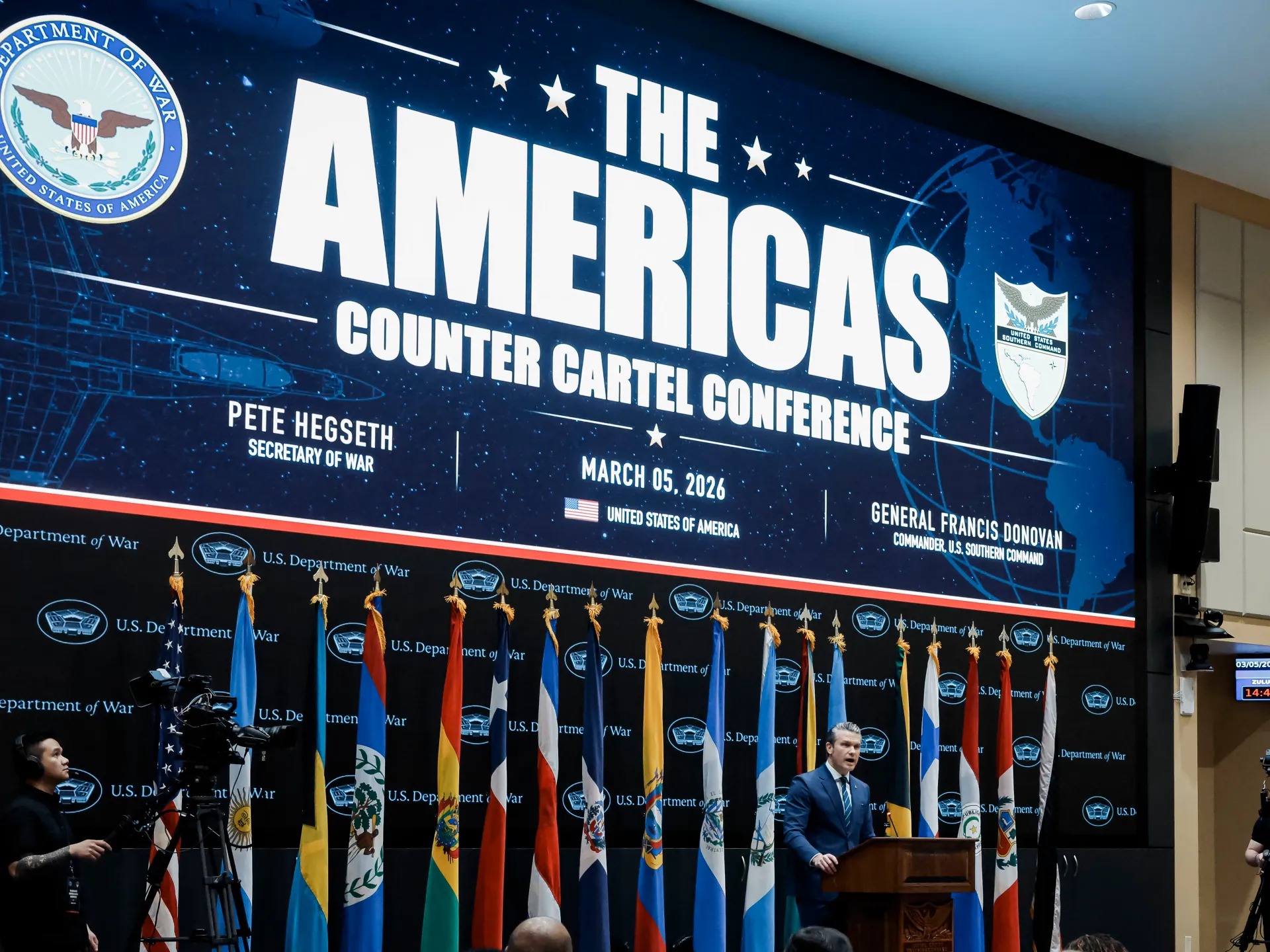
At Thursday’s inaugural “Americas Counter Cartel Conference”, speakers such as White House security adviser Stephen Miller assured reporters that Latin America would remain a top military priority for the US, regardless of events in the Middle East.
“We are not going to cede an inch of territory in this hemisphere to our enemies or adversaries,” Miller said, adding the US was “using hard power, military power, lethal force, to protect and defend the American homeland”.
Miller further maintained there is no “criminal justice solution” to drug cartels, which he likened to armed groups like al-Qaeda and ISIL (ISIS).
Organised crime, he concluded, “can only be defeated with military power”.
Since Trump took office last year, his administration has applied what experts describe as a “global war on terror” approach to Latin America, including by labelling drug cartels “foreign terrorist organisations”.
Figures like Miller, a key architect behind Trump’s hardline immigration policies, have championed the president’s militaristic approach, even as critics warn it raises human rights and legal concerns.
Last September, for instance, the administration began striking alleged drug-smuggling boats in the Caribbean and eastern Pacific Ocean, in what rights groups have decried as extrajudicial killings.
And in early January, the US launched an extraordinary operation to abduct Venezuelan leader Nicolas Maduro. It has since pursued a pressure campaign against Cuba designed to weaken its communist government.
Just this week, on Wednesday, the Pentagon announced it had launched joint operations with Ecuador’s military “against Designated Terrorist Organizations” in the South American country.
The announcement indicated a new front for US military actions in the region, which officials have said could include land operations.
But the broadening scope of Trump’s military involvement in Latin America, combined with the nascent war with Iran, has raised questions about the US’s ability to sustain such intense military activity.
Prepared to ‘go on offence alone’
The “Americas Counter Cartel Conference” came as Latin American leaders arrived in South Florida to attend a regional summit hosted by Trump at his Mar-a-Lago estate.
Attendees included officials from the Trump-allied conservative governments in Argentina, Honduras and the Dominican Republic.
But despite support from several regional governments, Secretary of Defence Pete Hegseth nevertheless told the audience that the US was “prepared to take on” Latin America’s cartels and “go on the offence alone, if necessary”.
“However, it is our preference — and it is the goal of this conference — that, in the interest of this neighbourhood, we all do it together,” Hegseth added.
The secretary also praised Trump’s take on the 1823 Monroe Doctrine, which sought to establish a US sphere of influence, separate from Europe, in the Western Hemisphere. Administration officials have dubbed Trump’s parallel approach the “Donroe doctrine”.
Hegseth framed the administration’s attacks on alleged drug-smuggling boats as a keystone of Trump’s effort to maintain regional influence.
The US military has carried out at least 44 aerial strikes on vessels in the Caribbean Sea and eastern Pacific Ocean, resulting in an estimated 150 known deaths.
The identities of the victims have not been released, with several family members saying fishermen and informal workers were among those targeted.
The Pentagon chief said the approach was meant to “establish deterrence”.
“If the consequence was simply to be arrested and then released, well, that’s a consequence they’d already priced in a long time ago,” Hegseth said.
He then pointed to a “few weeks” in February in which there were no strikes on alleged drug boats.
The pause in attacks, he said, was evidence of the strategy’s success. But that break notably came as the US surged assets to the Middle East.
Emphasis on ‘heritage’
Neither Hegseth nor Miller specifically referred to the war with Iran, but the pair touched on themes that have been present in the administration’s messaging on the war.
Trump, for example, said Iran’s government “waged war against civilisation itself”. There have been reports, meanwhile, that US military officials have referenced the biblical “end times” as a religious underpinning for the war.
Those remarks have reflected what critics consider Trump’s embrace of Christian nationalism and his view of the Americas as a European-derived “civilisation” threatened by outside forces.
At Thursday’s conference, Miller himself referenced violence in European history as justification for the modern-day military actions in Latin America.
There were periods in European history throughout the 18th and 19th centuries during which “ruthless means were used to get rid of the people who were raping and murdering and defying established systems of order and justice,” Miller said.
He also echoed Trump’s allegation that Europe was facing “civilisational erasure” as a result of left-wing leadership and immigration.
“The reason why many Western countries are struggling today is they’ve forgotten the eternal truth and wisdoms they once followed,” Miller said.
Hegseth, meanwhile, described all the countries at Thursday’s meeting as “offsprings of Western civilisation”.
Representatives in attendance, he said, faced a test “whether our nations will be and remain Western nations with distinct characteristics, Christian nations under God, proud of our shared heritage with strong borders and prosperous people ruled not by violence and chaos but by law”.
He added that foreign “incursions” represent “existential questions” for the region, seemingly referencing the growing influence of China as an economic and political partner in the Americas.
Iran has launched operations targeting Iranian and Iraqi Kurdish groups in the semi-autonomous Kurdish region in neighbouring Iraq as the regional war ignited by the United States and Israel entered its sixth day, with more than 1,000 people killed across the country.
State television, Press TV, reported early on Thursday that Tehran was striking “anti-Iran separatist forces”, referring to Iranian and Iraqi Kurdish groups believed to be based in mountainous, hard-to-reach areas near the Iran-Iraq border.
Recommended Stories
list of 4 itemsend of list
Iranian missiles hit Sulaimaniyah city in the semi-autonomous Kurdistan region, according to local reports.
“We targeted the headquarters of Kurdish groups opposed to the revolution in Iraqi Kurdistan with three missiles,” Iran’s official IRNA news agency reported on Thursday, quoting a military statement. The Iranian military said earlier on Tuesday it used “30 drones” on Kurdish positions.
The attack comes just days after multiple publications reported that US President Donald Trump was in active talks with Iranian and Iraqi Kurdish groups, and that Washington hopes to use them to spur a popular uprising.
Various Iranian Kurdish groups, which share close ties with Iraqi Kurds, have long opposed Tehran from their bases in northern Iraq and along the Iraq-Iran border. These groups reportedly have thousands of fighters between them.
Here’s what we know so far:
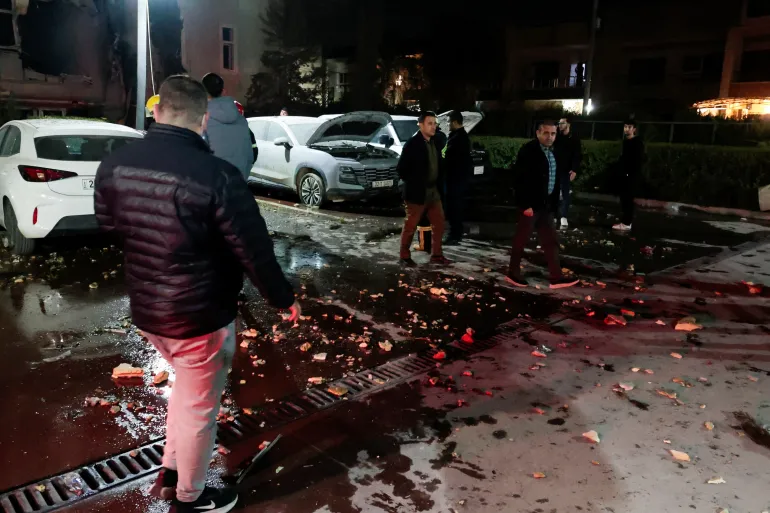
People gather near debris from a drone that fell onto a building near Erbil airport, amid the US-Israeli conflict with Iran, in the Ankawa district of Erbil, Iraq, on March 4, 2026 [Khalid al-Mousily/Reuters]
Why are Kurdish groups cooperating with the US?
US officials said the aim is to stretch Iranian forces and take out the remains of the military-dominated Iranian government, according to reporting by CNN.
There is also speculation that the groups could be supported to take control of northern Iran to create a ground buffer for Israeli forces, possibly streaming in from Iraq.
US-Israeli bombings have heavily targeted areas along the Iraq-Iran border since the start of the war on Saturday, possibly to degrade Iranian defences and allow Kurdish opposition groups to cross fully into Iran, according to a briefing by US-based think tank, the Soufan Center.
The US has not ruled out sending ground forces, although analysts told Al Jazeera Iran’s rugged territory would make that very difficult.
If the US does support these groups against Tehran, it would mean that Washington is treating them like armed “players on a board,” Winthrop Rodgers, associate fellow at the UK think tank, Chatham House, told Al Jazeera.
(Al Jazeera)
Which Kurdish groups are there?
Neither the US nor Kurdish groups had confirmed any agreements by Thursday.
However, it is known that Trump has spoken to the leaders of two Kurdish groups in Iraq: Masoud Barzani, leader of the Kurdistan Democratic Party, and Bafel Talabani, leader of the Patriotic Union of Kurdistan (PUK), according to US publication, Axios. Talabani confirmed the call on Wednesday.
Trump also spoke to Mustafa Hijri, head of the Democratic Party of Iranian Kurdistan (KDPI), on Tuesday, CNN reported, quoting a Kurdish official.
Meanwhile, Iranian Kurdish rebel groups, which have thousands of fighters along the Iraq-Iran border, formed the Coalition of Political Forces of Iranian Kurdistan (CPFIK) alliance one week before the war broke out.
The group issued statements at the start of the conflict, signalling imminent intervention and urging Iranian military members to defect. According to Israel’s I24News, thousands of its fighters were in Iran by Wednesday.
Here are the different groups:
Kurdistan Democratic Party: The ruling party in the semi-autonomous Kurdistan Regional Government (KRG). The party controls the capital city of Erbil as well as Duhok. It has historical ties with Iranian Kurdish groups.
However, the KRG is not eager to be seen as supporting attacks on Iran, even as Iranian drones have hit US assets in Erbil. On Wednesday, Kurdistan region President Nechirvan Barzani spoke with Iranian Foreign Minister Abbas Araghchi and told him his region “will not be part of conflicts” targeting Tehran.
In 2023, the two countries signed a security deal that saw Iraq promise to disarm and relocate Iranian opposition groups on its territory, although it appears many groups are still based there, reflecting the limited influence the government wields over them.
Iraqi Kurds, who have close ties with both the US and Iran, are in a “difficult position”, said Rodgers.
“They are under tremendous pressure from a wide range of forces, including (pro-Iran) Iraqi militias. They will try to stay out of the conflict as much as they can, but that will likely prove impossible,” he said.
Patriotic Union of Kurdistan (PUK): The PUK is the official opposition in the semi-autonomous Kurdistan region and also nationally relevant as Iraqi President Abdul Latif Rashid is a member. In a statement on Sunday, Rashid urged dialogue and an end to the war. Iraq declared three days of mourning following the killing of Iran’s Ayatollah Ali Khamenei in US-Israeli strikes on Tehran on Saturday.
Coalition of Political Forces of Iranian Kurdistan (CPFIK): Formed on February 22, 2026, the group includes six Iranian Kurdish opposition groups seeking an independent state.
Kurdistan Democratic Party of Iran (KDPI) – Based in the Kurdistan region, the group has about 1,200 members and is proscribed as a “terror” group by Iran.
Kurdistan Freedom Party (PAK) – Also based in Kurdistan, it has an estimated 1,000 members.
Kurdistan Free Life Party (PJAK) – A close ally of the Turkish opposition armed group, Kurdistan Workers’ Party (PKK), PJAK is proscribed as a “terror” group by Ankara. PJAK’s armed wing, the Eastern Kurdistan Units (YRK), is believed to have between 1,000 and 3,000 members, many of them women. It is based in the rugged Qandil Mountains near the Iran-Iraq border and in the semiautonomous Kurdistan region. It has launched numerous attacks on Iranian forces in the past decade. A recent Iranian strike reportedly killed one fighter.
Organisation of Iranian Kurdistan Struggle (Khabat) – It has an unknown number of fighters.
Komala of the Toilers of Kurdistan – Based in Iraq’s KRG, it has an unknown number of fighters.
Komala Party of Iranian Kurdistan (KPIK) – Also headquartered in the Kurdistan region, it has an estimated 1,000 fighters in 2017.
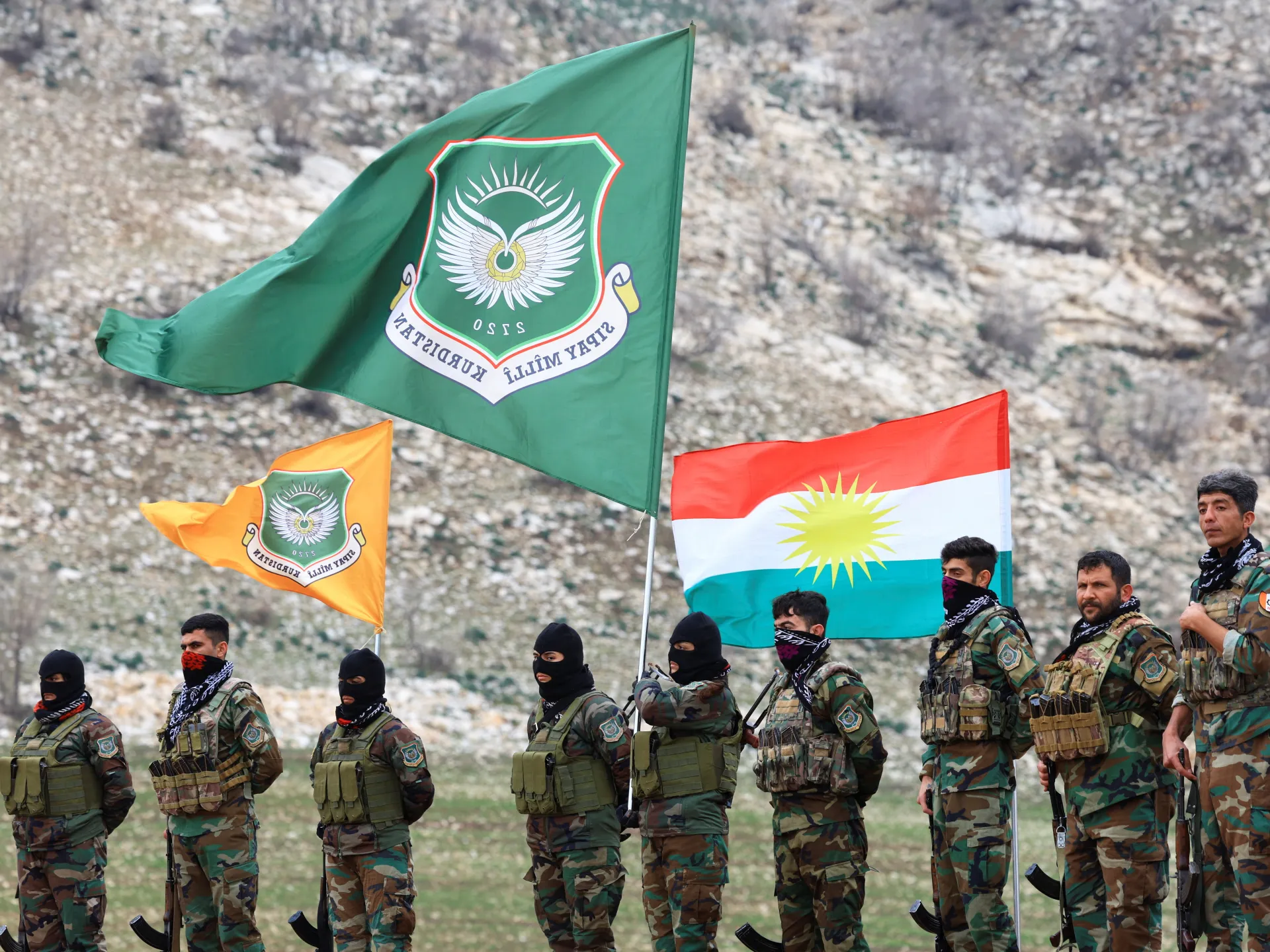
A fighter from the Kurdistan Freedom Party (PAK) carries a rifle and gestures while standing on rocky terrain, at a training session at a base near Erbil, Iraq, on February 12, 2026 [File: Thaier Al-Sudani/Reuters]
What is the history of US involvement with Kurdish resistance groups in the Middle East?
Kurds are an ethnic minority spread across the Middle East with a shared language and culture. They do not have a state of their own and have historically been marginalised across countries – mainly Iran, Iraq, Syria and Turkiye.
For decades, several armed Kurdish groups have sought self-governance in Turkiye, Syria and Iran.
In Iraq, Kurdish nationalist groups gained some success during the 1991 Gulf War by working with the US, which helped establish the self-governing Kurdistan region of Iraq. The US Central Intelligence Agency (CIA) also trained and armed its army, known as the Peshmerga, after the US invaded Iraq in 2003. In 2005, the semiautonomous region was officially recognised in Iraq’s constitution.
Since 2017, Washington has also armed and trained the People’s Protection Units (YPG), a Syrian Kurdish militia that Turkiye lists as a “terror” group because of its links with the proscribed PKK. The group, which successfully resisted ISIL (ISIS), now forms the main component of the Syrian Democratic Forces (SDF). It controlled Raqqa and other ISIL strongholds.
However, when it began military clashes with Syrian forces under the President Ahmed al-Sharaa-led government last August, Washington turned away from the group and backed Damascus instead. In January this year, the SDF signed an agreement with the Syrian government to integrate into the government forces. In return, the Syrian government recognised Kurdish rights.
In Turkiye, meanwhile, the PKK, whose presence in northern Iraq has long been a source of tension with Ankara, declared a ceasefire in March 2025, after a call from its imprisoned leader, Abdullah Ocalan, to disarm.
How does Kurdish resistance in Iran compare with others?
Iranian Kurds opposed the Iranian government even before the formation of the Islamic Republic in 1979, Rodgers said, and Tehran’s current weakness provides an opportunity for them to advance their political aims in the country.
However, the new coalition of multiple diverse groups is unprecedented, the analyst added, and their internal dynamics will be a key decisive factor in what role Kurdish groups will play in this war.
“Support from the US is helpful, especially in terms of targeting security forces’ infrastructure with air strikes, but they will likely be cautious about relying too much on Washington, especially from an administration as capricious and disorganised as Trump’s,” Rodgers said, noting how Washington abandoned the Kurds in Syria.
Unlike the split Iranian movements, Iraqi Kurds have long united to form a devolved government enshrined in the Iraqi constitution, built an advanced economy, and secured substantive relations with a wide range of foreign countries. That’s something Kurdish groups will also be hoping to establish in a democratic Iran, he said.
“I think it is unlikely that the Trump administration has made any commitments to the Iranian Kurds about supporting their political goals,” Rodgers said, adding that the US’s plan “does not look fully thought through at all”.
Kim Jong Un supervised the launch of sea-to-surface ‘strategic cruise missiles’ from country’s new naval destroyer.
Published On 5 Mar 20265 Mar 2026
Share
North Korean leader Kim Jong Un has overseen the test-firing of “strategic cruise missiles” from a new 5,000-tonne naval destroyer before the vessel’s official commissioning, according to state media.
Kim supervised the launch of sea-to-surface missiles from the destroyer Choe Hyon on Wednesday, assessing the test as a “core” element of the new warship’s capabilities, which he described as a “new symbol of sea defence” for his country.
Recommended Stories
list of 4 itemsend of list
Calling for the production of more warships of a similar class or better, Kim said his navy’s adoption of nuclear weapons was making progress.
“Our Navy’s forces for attacking from under and above water will grow rapidly. The arming of the Navy with nuclear weapons is making satisfactory progress,” Kim said at the Nampo Shipyard in the west of the country, according to North Korea’s official Korean Central News Agency (KCNA).
“All these successes constitute a radical change in defending our maritime sovereignty, something that we have not achieved for half a century,” he said.
South Korea’s official Yonhap news agency noted that North Korea uses references to “strategic” weapons to indicate they could have nuclear capabilities.
According to KCNA, over a two-day visit to the shipyard, spanning Tuesday and Wednesday, Kim inspected the Choe Hyon, the lead vessel in a new series of 5,000-tonne “Choe Hyon-class” destroyers currently under construction in North Korea.
North Korean leader Kim Jong Un oversees a missile test launch conducted by the Choe Hyon naval destroyer during his visit to inspect the vessel at the Nampo Shipyard, in North Korea, on March 4, 2026 [KCNA via Reuters]
‘Wage a more active and persistent struggle’
In May 2025, North Korea’s ambitious naval modernisation programme suffered a major setback when a second Choe Hyon-class destroyer capsized during a botched side-launch ceremony at Chongjin Shipyard, an incident witnessed by the Korean leader.
Later, and in a rare admission of failure, KCNA reported that a launch mechanism malfunction caused the stern of the 5,000-tonne destroyer to slide prematurely into the water. The accident crushed parts of the hull and left the bow stranded on the shipway.
At the time, Kim characterised the launch failure as a “criminal act”, blaming the incident on “absolute carelessness” and “irresponsibility” across multiple state institutions.
This week’s missile tests come after the North Korean leader pledged in late February to lift living standards as he opened a rare congress of the governing Workers’ Party, held once every five years.
Kim told the congress that the ruling party was “faced with heavy and urgent historic tasks of boosting economic construction and the people’s standard of living”.
“This requires us to wage a more active and persistent struggle without allowing even a moment’s standstill or stagnation,” he said.
North Korea has prioritised nuclear weapons development and military strength above all else, claiming that it must be militarily strong to resist pressure from the United States and its ally, South Korea.
Since taking power in late 2011, Kim has maintained the military as a core priority while simultaneously emphasising economic strengthening to address the country’s chronic impoverishment.
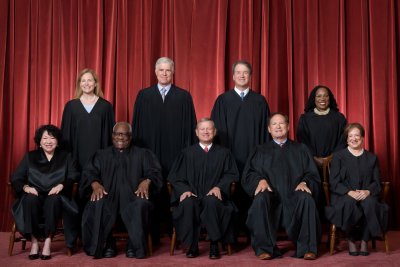
WASHINGTON, March 4 (UPI) — The Supreme Court on Wednesday considered whether the brokers who connect shippers with trucking companies can be held liable for irresponsible drivers.
The case, Montgomery vs. Caribe Transport II LLC, stems from a 2017 incident in which Shawn Montgomery, the petitioner, suffered significant injuries after a tractor-trailer hit his parked truck on the side of an Illinois highway.
A key part of the case is the interpretation of part of the Federal Aviation Administration Authorization Act of 1994. It prevents state laws “related to a price, route or service” of trucking companies or brokers that connect them to shippers.
However, the statute also provides an exception, stating that it will “not restrict the safety regulatory authority of a state with respect to motor vehicles.”
The outcome could redefine liability standards for freight brokers and impact the broader transportation industry and interstate commerce landscape.
The driver of the tractor-trailer, Yosniel Varela-Mojena, had been involved in a crash months earlier, but was still employed by Caribe Transport II, an interstate trucking company. Freight broker C.H. Robinson recruited Caribe II to deliver a cross-country shipment. After the crash, Montgomery sued the broker for negligent hiring under Illinois state laws.
During the arguments, the two sides disagreed about whether the phrase “with respect to motor vehicles” includes brokers.
“We do believe that ‘with respect to motor vehicles’ is the crucial question here,” said Theodore Boutrous Jr., Caribe II’s counsel. He argued Congress did not intend for brokers to be included.
The attorney for the United States agreed that the two different sections of the law being discussed should, in context, be taken altogether to mean that brokers are not included in the realm of “motor vehicles.”
“Paragraph one uses the phrase ‘with respect to the transportation of property,’ [and] paragraph two [says] ‘with respect to motor vehicles,'” said Sopan Joshi, assistant to the U.S. solicitor general. “That seems like a conscious choice that Congress made to parallel the language, but change the noun to a much narrower noun.”
Associate Justice Brett Kavanaugh questioned Paul Clement, Montgomery’s counsel, on how brokers would address safety concerns if the court were to rule in favor of Montgomery and say that brokers are liable for consequences of negligent hiring.
For instance, Kavanaugh suggested drivers should be proficient in English to ensure safety. In April 2025, President Donald Trump signed an executive order to enforce English-language requirements for commercial motor vehicle drivers.
“If you’re hiring drivers who can’t read the signs, that seems like a safety issue,” Kavanaugh said.
Clement said brokers could work with larger trucking companies with deeper pockets and check that they have adequate programs in place to test drivers for drug use, check on prior accidents and address other potential concerns.
“One of the reasons, I think, that you do want [brokers] to have some duty of care in these circumstances is this is a margin business,” Clement said. “If they don’t have any sort of incentive to internalize any of the cost of not asking the question, they really have no good reason to ask the question. They want the cheapest carrier.”
Associate Justice Ketanji Brown Jackson asked Joshi to explain why he thought Congress did not think brokers should share responsibility for safety given the language in the 1994 law.
“The problem, I think, with the argument in the way that you’ve set it up is that you are assuming away any responsibility that a broker might have for safety,” Jackson said.
Joshi argued that Congress did not intend for brokers to have responsibility regarding safety and could have worded the law differently if it did.
“Congress has an entire chapter, several chapters, of the U.S. Code in Title 49 that deal with safety addressing carriers, safety of motor vehicles, driver qualifications, and they’re all addressed at carriers,” Joshi said. “Not a single one is addressed at brokers.”
Joshi acknowledged that the Federal Motor Carrier Safety Administration is “understaffed,” “overworked” and unable to review all of the federally registered carriers. However, he said Congress has provided ways of bringing consequences against carriers who violate federal requirements and regulations.
In his closing rebuttal, Clement told the court that 94% of registered carriers on the road do not have meaningful federal safety inspections — a number derived from 2021 Federal Motor Carrier Safety Administration data.
He said state tort law could provide a “backstop to the federal system.”
“This case doesn’t have to be that hard. The thing that triggers state tort liability is an 80,000-pound motor vehicle. That’s what devastatingly injured my client,” Clement said.
The court is expected to issue a ruling by summer.
HomeNewsUS-Iran War Puts Strait Of Hormuz Under Fire, Disrupting Global Energy Trade
US strikes on Iran escalate Strait of Hormuz tensions, spiking energy prices, disrupting trade and heightening global geopolitical risk.
Trade traffic within the Strait of Hormuz has nearly halted as fuel tankers and other shipping remain vulnerable to attacks and are virtually uninsurable, amplifying fears that the US-Israeli war on Iran is turning into a broader global conflict with major economic consequences.
Global energy prices, especially, are a key focus point since the Strait serves as a critical maritime artery for roughly 20% of the world’s oil flows — 70% of that oil goes to China, South Korea, India, and Japan.
Meanwhile, President Donald Trump’s standoff with EU leaders over the use of certain military bases is making an already contentious situation worse.
Chokepoint Under Fire
Iran’s Revolutionary Guards claim total control of the passage just days after US-led airstrikes killed Iran’s Supreme Leader, Ayatollah Ali Khamenei. The UK Maritime Trade Operations Center is actively documenting multiple vessel attacks and electronic interference affecting navigation in and around the Gulf.
A bomb-carrying drone boat struck a Marshall Islands-flagged tanker in the Gulf of Oman, killing at least one mariner, according to the Wall Street Journal, citing Omani authorities.
The economic shock was swift. West Texas Intermediate crude notched its biggest two-day rally since March 2022. European natural gas prices nearly doubled in 48 hours. The biggest jolt came after QatarEnergy halted liquefied natural gas production following attacks on its facilities, sending European gas prices soaring more than 40%. The United States Oil Fund LP rallied over 15% over the past five days.
Analysts are also at odds over whether a total Iranian blockade will occur.
Insurance Vanishes, Ships Stall
“A sustained, structural military blockade by Iran that totally stops ships from passing through is unlikely,” Morningstar Equity Director Joshua Aguilar said. Still, the commercial reality may produce the same effect.
“Ships may not pass through because no insurance is willing to cover them,” Aguilar added
Mutual insurers such as the London P&I Club, NorthStandard, UK P&I Club and Noord Nederlandsche P&I Club provide coverage for vessels navigating volatile regions. If that coverage drops, shipping companies face untenable exposure — effectively freezing commerce even absent a formal blockade.
In response, Trump said on his Truth Social platform that he had ordered the US International Development Finance Corporation to offer political risk insurance and guarantees “for the financial security of all maritime trade, especially energy, traveling through the Gulf.” He also said the US Navy would escort tankers through the Strait.
BIMCO’s Chief Safety & Security Officer, Jakob Larsen, scrutinized the logic of Trump’s plan. Indeed, naval escorts would reduce the threat ships currently face.
“That said, providing protection for all tankers operating in areas currently threatened by Iran is unrealistic,” he says. “This would require a very high number of warships and other military assets.”
CaixaBank, in a research note on Wednesday, issued its own warnings about Iran’s attacks and Strait of Hormuz closures. Energy prices will spike as long as the disruption continues, the firm predicts.
“Iran’s response — expanding the radius of the conflict, effectively closing maritime traffic through Hormuz, and threatening critical infrastructure — is causing a short-term escalation of tensions,” the firm stated. “It remains to be seen for how many days this response can be sustained and what approach will be taken by the new leadership core (and, in particular, by Khamenei’s successor).”
Persistent high prices could prompt hawkish European Central Bank and Federal Reserve moves, increasing economic drag, the firm continued.
Transatlantic Talks Turn Tense
The maritime chaos is unfolding alongside a sharp diplomatic rupture with Europe. Trump on Tuesday threatened to “cut off all trade with Spain” after Madrid refused US access to its military bases. He also criticized the UK’s decision to block the use of Diego Garcia in the Indian Ocean.
“This is not the age of Churchill,” Trump said during a White House meeting with European counterparts. “The UK has been very, very uncooperative with that stupid island that they have.”
The remarks underscore mounting friction within NATO and the broader Western alliance at a moment when coordinated action would be critical to stabilizing markets. Instead, the spat adds another layer of uncertainty to global trade flows already strained by inflation and tariff confusion on the heels of the US Supreme Court ruling against Trump.
Many dealmaking plans are also likely on hold, marking a stark contrast to 2025, the second-highest year on record for transaction value.
“The sentiment was that the stars were aligned” for a similar trajectory in 2026, said Kyle Walters, an analyst at PitchBook.
M&A consultancies such as McKinsey & Company and Bain & Co. had projected sustained M&A growth in 2026 due to energy security priorities, sovereign wealth fund firepower, and supportive fiscal reforms.
Then one weekend changed the narrative. As Walters puts it: “Uncertainty is bad for M&A appetite.”
Tariff ambiguity can slow deals. Inflation complicates financing. Armed conflict in a region central to global energy flows is far more destabilizing.
“In periods of uncertainty, buyers take a step back. They’re in wait-and-see mode,” Walters said, adding that domestic M&A has been “flipped on its head.” Cross-border activity is particularly exposed, with capital flight, currency volatility, and political risk creating an “unopportunistic M&A environment.” European firms considering expansion into the Middle East now face heightened scrutiny; “It has to be an A+ transaction to proceed,” Walters said.
Markets Brace For Escalation
What began the year as a story of alignment and acceleration has become one of recalibration — with capital pausing just as geopolitical risk surges.
BMI, a unit of Fitch Solutions, outlined a short-term scenario in which the US coordinates with Israel to overwhelm Iran and minimize retaliation against US assets and the Strait itself.
But even a limited campaign carries economic consequences.
Abigail Hall, a senior fellow at the Independent Institute, warned that energy markets are likely to bear the brunt. “There are already concerns about shipping and other disruptions — particularly around the Strait of Hormuz,” she said, pointing to “knowledge constraints on the part of policymakers and the presence of misaligned incentives.”
Hall also expressed skepticism that the US-led strikes would produce long-term political transformation inside Iran. “You may have ‘cut the head off the snake,’ but neglected the fact that there were many other vipers in the room,” she said.
Military strikes, she explained, often empower the most extreme factions of a country and produce a “rally-around-the-flag” effects whereby an external attack draws the civilian population toward the existing regime.
“In Iran we’ve seen that military escalation, and the domestic dissent it inspires,” she adds. “It often leads to harsher repression and increased regime control.”
March 4 (UPI) — Venezuela state oil company Petróleos de Venezuela S.A. announced signing new contracts to supply crude oil and refined products for the U.S. market.
The agreements were signed with several international trading companies to ensure a stable flow of energy to refineries along the U.S. Gulf Coast, according to a statement from the company.
Although PDVSA did not disclose the names of the parties, the contracts add to existing operations involving major companies such as Chevron, which plans to increase exports to about 300,000 barrels per day this month.
PDVSA said the agreements maintain a “historic commercial relationship” with the United States and reaffirm the company’s “commitment to the stability of the international energy market.”.
The newly signed contracts mark the official return of Venezuelan crude to U.S. refineries after the United States captured former President Nicolás Maduro on Jan. 3.
The agreements were facilitated after the U.S. Treasury Department’s Office of Foreign Assets Control issued licenses, signaling significant changes in Washington’s licensing policy this year.
The authorizations allow U.S. entities to participate in lifting, transporting, storing and refining Venezuelan oil. The current regulatory framework favors companies from the United States and Western countries, while maintaining strict restrictions on entities from countries such as China, Russia and Iran.
In addition to Chevron, four other oil companies — BP, Eni, Shell and Repsol — have received authorization to resume operations and sign investment agreements in Venezuela.
In its statement, PDVSA reiterated the Venezuelan government’s call for the removal of sanctions on the country’s energy industry.
“The Venezuelan nation reiterates the need for a hydrocarbon industry free of sanctions in order to boost national production and strengthen international trade,” the company said.
Through these contracts, PDVSA aims to restore its position as a strategic supplier in a global market that continues to demand heavy crude, while Washington seeks to use Venezuelan oil to stabilize domestic fuel prices and reduce dependence on other suppliers.
During his State of the Union address, President Donald Trump highlighted the arrival of 80 million barrels of Venezuelan crude, describing Venezuela as a “new friend and partner” in energy cooperation.
U.S. Interior Secretary Doug Burgum visited Venezuela on Wednesday, marking a new step in the energy and diplomatic agenda between Washington and Caracas.
Since January, Burgum has led discussions with executives from Chevron, ExxonMobil and ConocoPhillips aimed at granting general licenses that would allow private operations in the country, local outlet Efecto Cocuyo reported.
The plan aligns with Trump’s “Energy Dominance” policy, a central strategy of the administration designed to position the United States as a global energy superpower.
Under the approach, U.S. companies would provide private capital without federal subsidies, while the government would guarantee security and stability for investments.