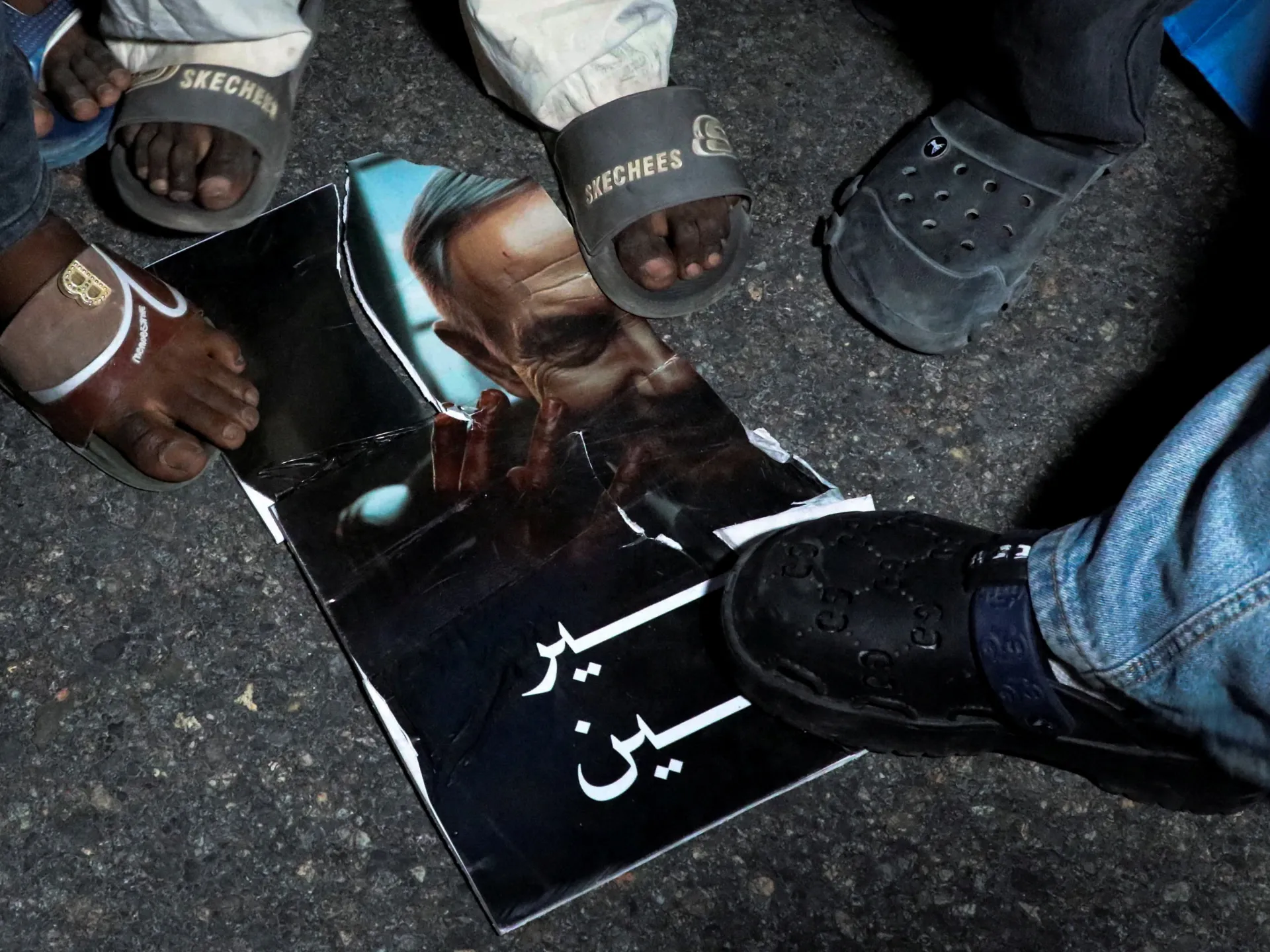
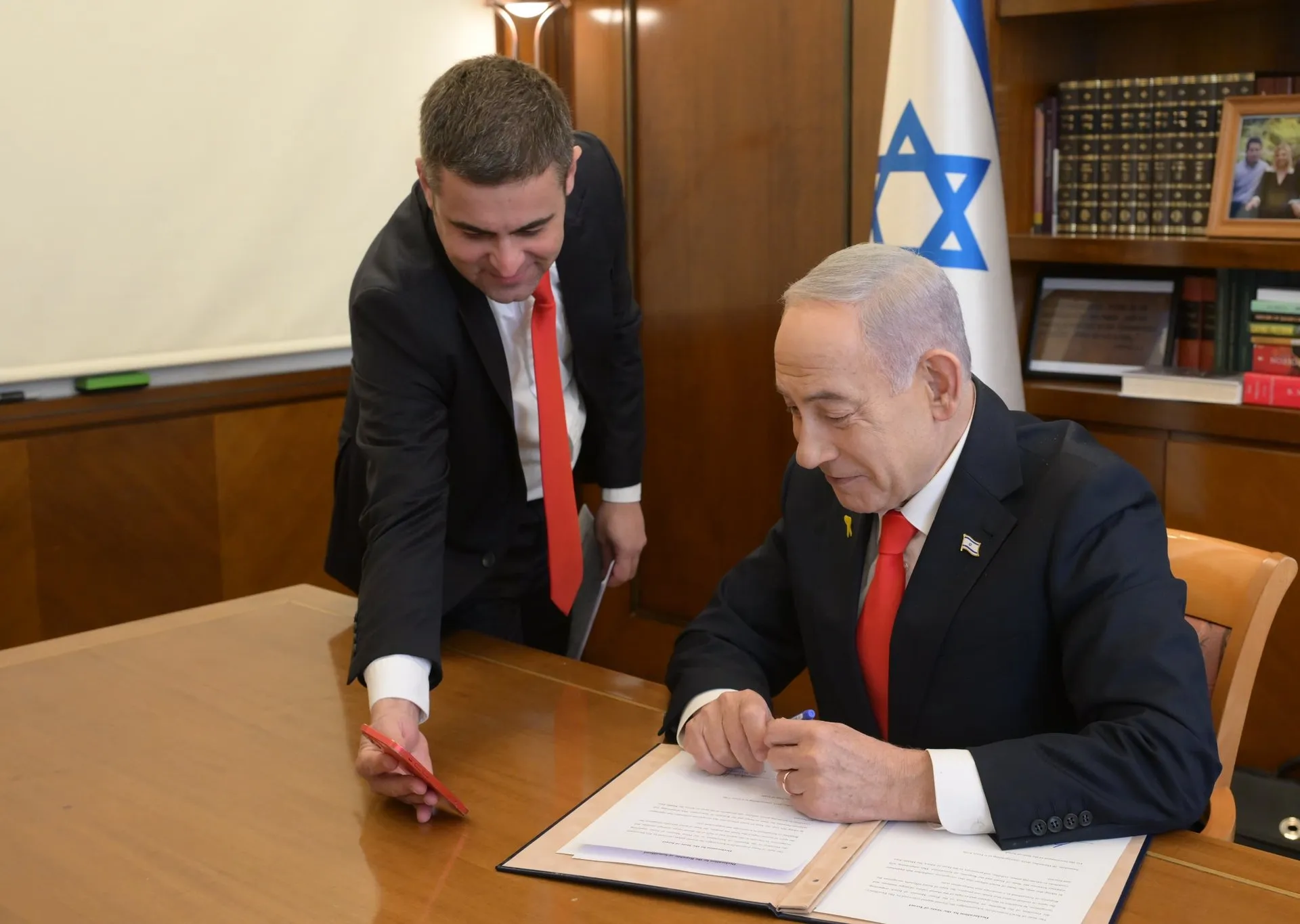
Somalia says it is concerned the recognition serves as a pretext for the forced relocation of Palestinians.
Israel’s recognition of Somaliland, a breakaway region of Somalia, is a “direct and grave threat to international peace and security”, Somalia has said.
In a letter penned to the United Nations Security Council (UNSC) on Monday, Somalia rejected the move as a violation of its sovereignty, calling it “morally indefensible”.
Recommended Stories
list of 4 itemsend of list
Last week, Israel became the first country to formally recognise the self-declared Republic of Somaliland as an independent and sovereign state. Israel described the move as being in the spirit of the United States-brokered Abraham Accords, which normalised ties between Israel and several Arab countries.
“We further note with deep concern reports that this recognition may serve as a pretext for the forced relocation of Palestinians to Northwestern Somalia,” Somalia’s letter to the UNSC stated.
“Israel’s actions not only set a dangerous precedent and risk destabilising the Horn of Africa and the Red Sea region but also undermine collective efforts and pose a serious threat to regional and international peace and security,” Somalia also stated in the letter, urging UNSC members to uphold its sovereignty.
Abu Bakr Dahir Osman, Somalia’s representative to the UNSC, echoed the letter’s sentiments,
“This region [Somaliland] is not legally entitled to enter into any agreement or arrangement, nor to receive recognition from any other state,” Osman said.
“This act of aggression aims to promote the fragmentation of Somalia and must be rejected and condemned unequivocally by all Member States,” he added.
Recognition rejected
The United Kingdom on Monday said that it does not recognise the independence of Somaliland, and reaffirmed its support for Somalia’s sovereignty and territorial integrity.
It urged efforts between the Federal Government of Somalia and the Somaliland authorities to “address differences and work together to face common threats”, stating that armed groups benefited from internal divisions in the country.
“No country should encourage or support other countries’ internal separatist forces for its own selfish interests,” Chinese Ministry of Foreign Affairs spokesperson Lin Jian told reporters at a regular news conference.
South Africa’s Foreign Ministry, the Department of International Relations and Cooperation, on Monday urged the international community to “reject this external interference and support a united, stable Somalia”.
However, Tammy Bruce, the US deputy representative to the UN, said that “Israel has the same right to establish diplomatic relations as any other sovereign state”.
“Several countries, including members of this Council, have unilaterally recognised a non-existent Palestinian state, yet no emergency meeting has been convened,” Bruce added, chiding what she said were the UNSC’s “double standards”.
“We have no announcement to make regarding the recognition of Somaliland, and there has been no change in US policy,” Bruce added.
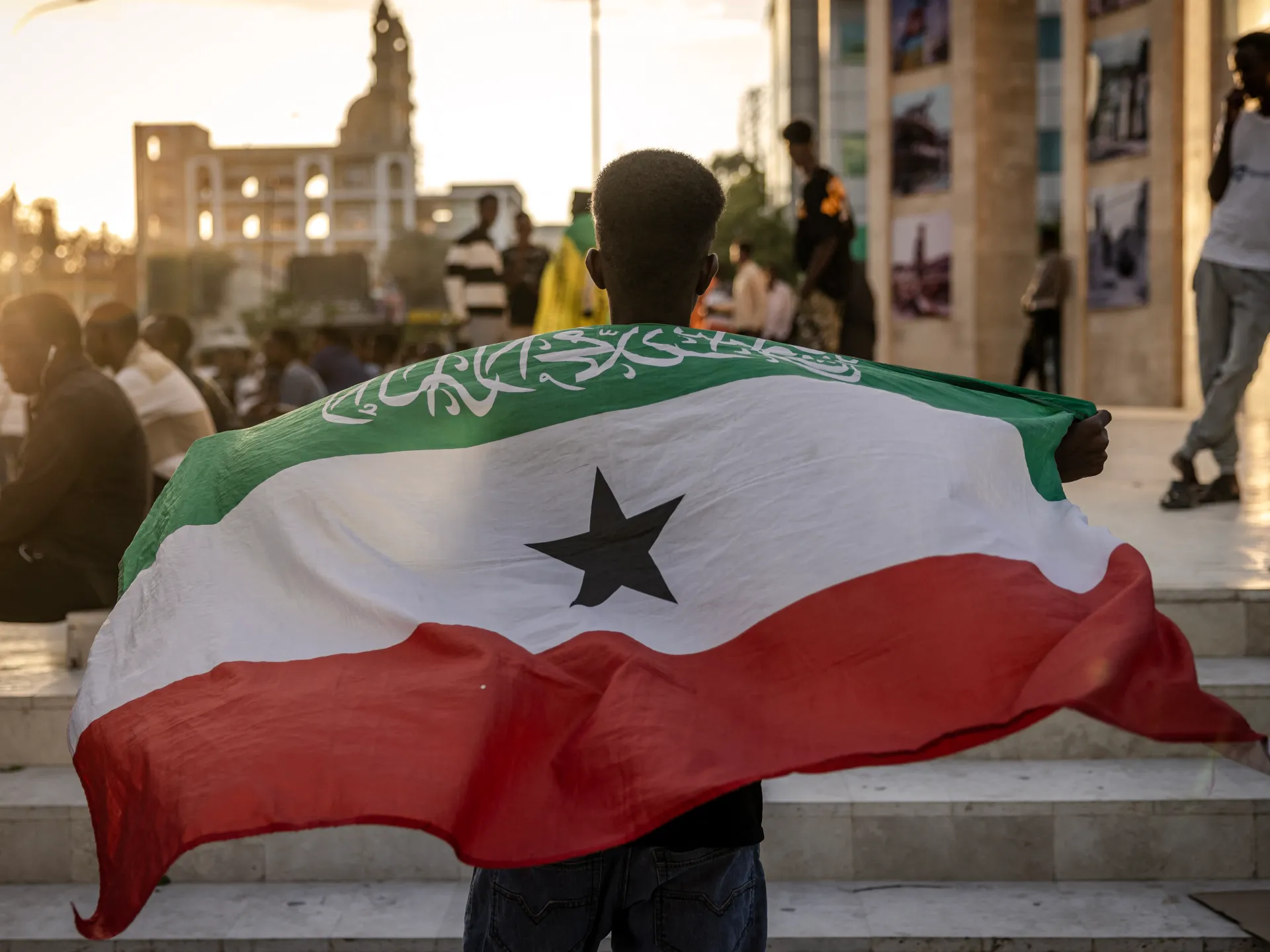
Somaliland broke away from Somalia in 1991, after a civil war under military leader Siad Barre. The self-declared republic controls part of northwestern Somalia and has its own constitution, currency and flag.
It claims the territory of the former British Somaliland protectorate, but its eastern regions remain under the control of rival administrations loyal to Somalia. It has sought international acceptance for more than three decades without success.
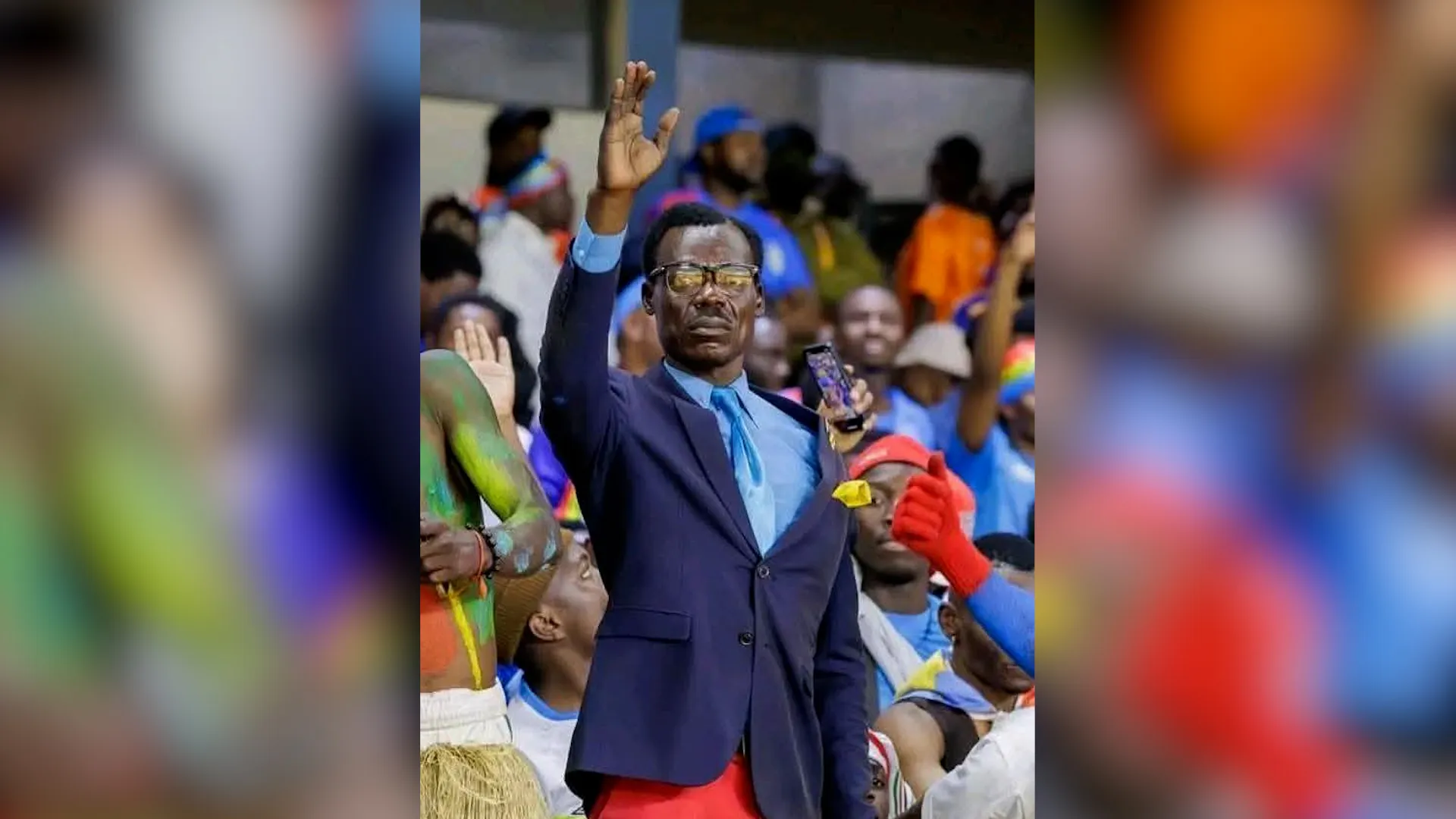
A DR Congo fan known as ‘Lumumba’ stood motionless in the stands for the entire match against Senegal at AFCON on Saturday, mirroring a statue of the country’s independence leader.
Israel on Friday announced it is officially recognising Somaliland, a first for the self-proclaimed republic since 1991.
Published On 28 Dec 202528 Dec 2025
Share
The leader of Yemen’s Houthi rebels has warned any Israeli presence in Somaliland would be considered a “military target”, in the latest condemnation of Israel’s move to recognise the breakaway region.
“We consider any Israeli presence in Somaliland a military target for our armed forces, as it constitutes aggression against Somalia and Yemen, and a threat to the security of the region,” said the group’s chief, Abdel-Malik al-Houthi, according to a statement published by rebel media online.
Recommended Stories
list of 4 itemsend of list
Israel announced on Friday that it is officially recognising Somaliland, a first for the self-proclaimed republic that in 1991 declared it unilaterally separated from Somalia.
The Houthi chief warned that the move carried grave consequences, saying that recognition is “a hostile stance targeting Somalia and its African surroundings, as well as Yemen, the Red Sea, and the countries along both shores of the Red Sea”.
Somaliland, which has for decades pushed for international recognition, enjoys a strategic position on the Gulf of Aden and has its own money, passport and army.
Regional analysts say a rapprochement with Somaliland would provide Israel with better access to the Red Sea, enabling it to hit Houthi rebels in Yemen.
After launching its genocidal war on Gaza in October 2023, Israel repeatedly struck targets in Yemen in response to Houthi attacks on Israel, which the Yemeni rebels said were in solidarity with Palestinians in Gaza.
The Houthis have halted their attacks since a fragile truce began in Gaza in October.
Somaliland has been diplomatically isolated since its unilateral declaration of independence, even if it has generally experienced greater stability than Somalia, where al-Shabab fighters periodically mount attacks in the capital, Mogadishu.
Israel’s recognition of Somaliland was criticised by the African Union, Egypt, Turkiye, the six-nation Gulf Cooperation Council, and the Saudi-based Organisation of Islamic Cooperation.
The European Union insisted that Somalia’s sovereignty should be respected.
Elsewhere in the Africa Cup of Nations 2025, Cameroon and Ivory coast draw 1-1, while Sudan see off Equatorial Guinea.
Published On 28 Dec 202528 Dec 2025
Share
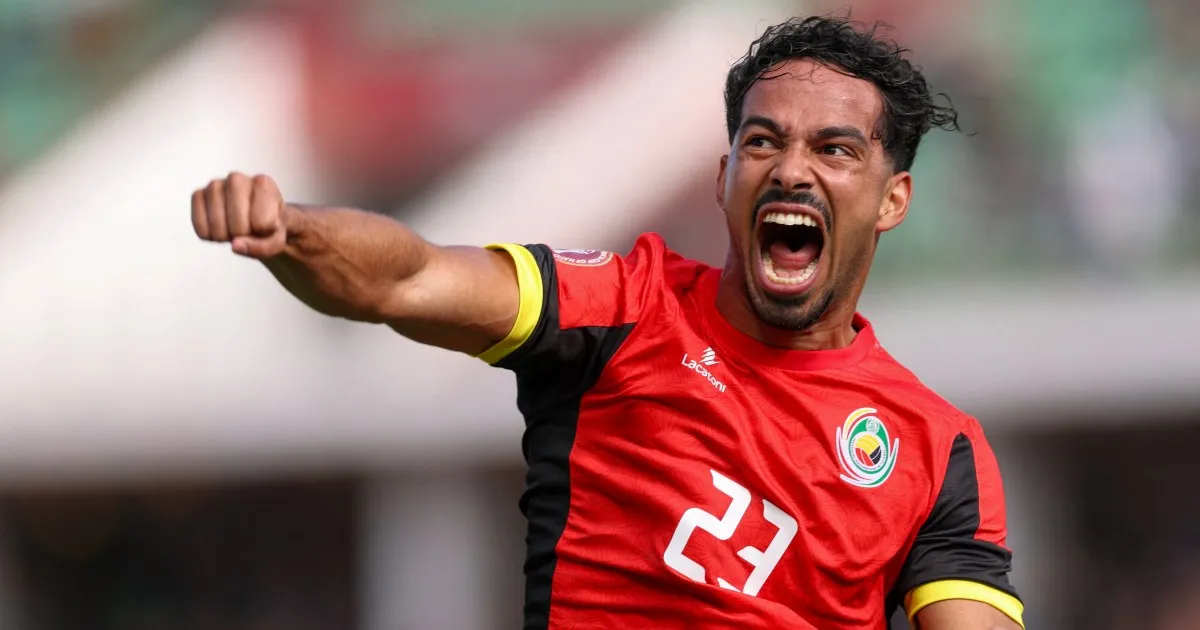
Mozambique have claimed a historic first victory in the Africa Cup of Nations, breathing new life into their campaign after overcoming Gabon 3-2 in Agadir, while Algeria have booked their place in the last 16 of AFCON with a narrow win over Burkina Faso.
Beaten in their tournament curtain-raiser by Ivory Coast, Mozambique scored twice before half-time in their Group F game on Sunday as Faizal Bangal headed home and Geny Catamo netted from the penalty spot.
Recommended Stories
list of 4 itemsend of list
Former Arsenal and Chelsea forward Pierre-Emerick Aubameyang pulled one back for Gabon before the break, but Diogo Calila restored Mozambique’s two-goal cushion. It was ultimately enough to seal a maiden win for Mozambique in this tournament at the 17th attempt, despite Gabon’s Alex Moucketou-Moussounda pulling one back.
Elsewhere in the group, defending champions Ivory Coast took a lead that lasted only five minutes before Cameroon equalised to secure a 1-1 draw in their heavyweight clash on Sunday.
Amad Diallo scored for a second successive game to open the scoring for the Ivorians in the 51st minute, but full-back Junior Tchamadeu levelled for Cameroon with the help of a deflection in the 56th minute at Marrakesh Stadium.
Cameroon and the Ivory Coast, who have eight AFCON titles between them, now share the lead in Group F with four points apiece, followed by Mozambique on three.
Gabon need to win their final group game to have any chance of reaching the knockout stages as one of the best third-placed teams.
Algeria have secured their place in the last 16, after a Riyad Mahrez penalty gave them a 1-0 victory over Burkina Faso.
Captain Mahrez converted from the spot midway through the first half at the Moulay El Hassan Stadium in Rabat on Sunday, and Algeria then held on to win a bruising contest against a determined Burkina outfit.
The penalty that decided the game was awarded when Manchester City’s Rayan Ait-Nouri was bundled over.
Mahrez made no mistake with his 23rd-minute kick as he followed his brace in the opening 3-0 defeat of Sudan to take his tally at this Cup of Nations to three goals. The former Leicester City and Manchester City winger, appearing at his sixth AFCON, now has nine goals at the tournament, an Algerian record.
Pierre Landry Kabore, the Hearts’ striker, came close to equalising for Burkina Faso with a header from a corner, before Mahrez teed up Mohamed Amoura for a shot that was saved by goalkeeper Herve Koffi at the end of an Algerian breakaway in the first half of stoppage time.
Bayer Leverkusen’s Ibrahim Maza twice failed to convert good opportunities in the second half, while substitute Georgi Minoungou fired just over as Burkina Faso pushed unsuccessfully for an equaliser.
Algeria, African champions in 1990 and in 2019, have the maximum six points after two games in Group E and are yet to concede a goal, with Vladimir Petkovic’s side living up to their billing as one of the pre-tournament favourites.
Burkina Faso and Sudan come next on three points each, but they play each other in the final round of group games on Wednesday. This means Algeria are guaranteed a top-two finish even if they lose their final outing against the currently pointless Equatorial Guinea.
Sudan boosted their chances of qualifying for the knockout stage of the Africa Cup of Nations on Sunday after a Saul Coco own goal gave them a 1-0 win over Equatorial Guinea.
Unlucky Torino centre-back Coco saw the ball come off him and ricochet into the net in the 74th minute in Casablanca when his teammate Luis Asue attempted to clear a Sudan free kick.
Sudan won the Africa Cup of Nations in 1970, but this is just their second victory in 18 matches across six appearances at the tournament since then.
Several countries and regional blocs have condemned Israel’s recognition of Somaliland, a breakaway region of Somalia, as an independent nation. Somalia called Israel’s announcement a ‘deliberate attack’ on its sovereignty that undermines efforts for regional peace.
The military rulers expand emergency powers, warning that people, property, and services may be requisitioned.
Published On 28 Dec 202528 Dec 2025
Share
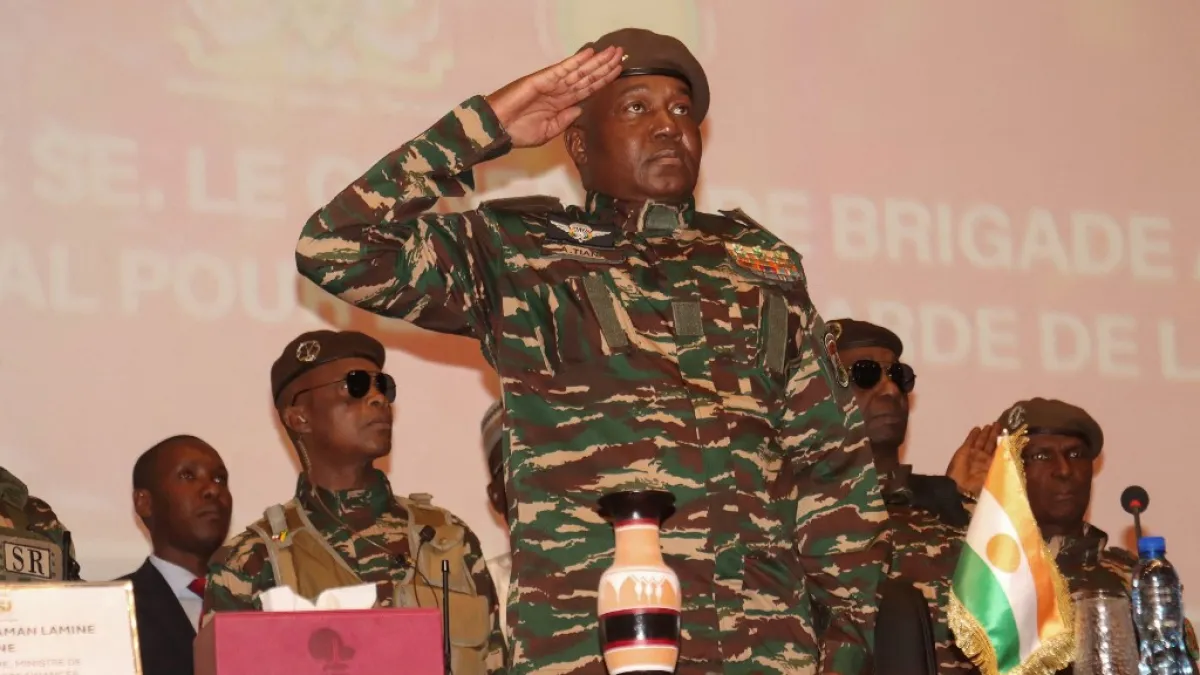
Niger’s military rulers have approved a general mobilisation and authorised the requisition of people and goods as they intensify the fight against armed groups across the country, according to a government statement.
The decision followed a cabinet meeting on Friday and marks a major escalation by the military government, which seized power in a July 2023 coup that toppled the country’s democratically elected president, Mohamed Bazoum.
Recommended Stories
list of 4 itemsend of list
“People, property, and services may be requisitioned during general mobilisation to contribute to the defence of the homeland, in compliance with the legislation and regulations in force,” the government said in a statement issued late on Saturday.
“Every citizen is required to respond immediately to any call-up or recall order, to comply without delay with the implementation of measures for the defence of the homeland, and to submit to requisition,” it added.
The authorities said the measures aim to “preserve the integrity of the national territory” and “protect the population” as Niger continues to face attacks by armed groups operating across several regions.
Niger has been embroiled in deadly armed conflict for more than a decade, with violence linked to fighters affiliated with al-Qaeda and the ISIL (ISIS) group. Nearly 2,000 people have been killed, according to the Armed Conflict Location and Event Data Project (ACLED), which tracks political violence.
The southeast of the country has also suffered repeated attacks by Boko Haram and its splinter group, the ISIL affiliate in West Africa Province (ISWAP), further stretching Niger’s security forces.
The mobilisation order comes five years after Niger expanded its armed forces to around 50,000 troops and raised the retirement age for senior officers from 47 to 52. Since taking power, the military government has also urged citizens to make “voluntary” financial contributions to a fund launched in 2023 to support military spending and agricultural projects.
Soon after the coup, Niger’s rulers ordered French and United States troops, who had supported operations to combat rebel fighters, to withdraw from the country.
Niger has since deepened security cooperation with neighbouring Mali and Burkina Faso, also ruled by a military government. The three Sahel states have formed a joint force of 5,000 troops, presenting it as a regional response to armed groups while further distancing themselves from Western partners.
Somalia’s president calls for unity at an emergency joint session of parliament, which declares the Israeli move ‘null and void’.
Somalia’s president has condemned Israel’s recognition of the breakaway region of Somaliland as a “naked invasion”, warning that the move threatens to ignite separatist movements elsewhere.
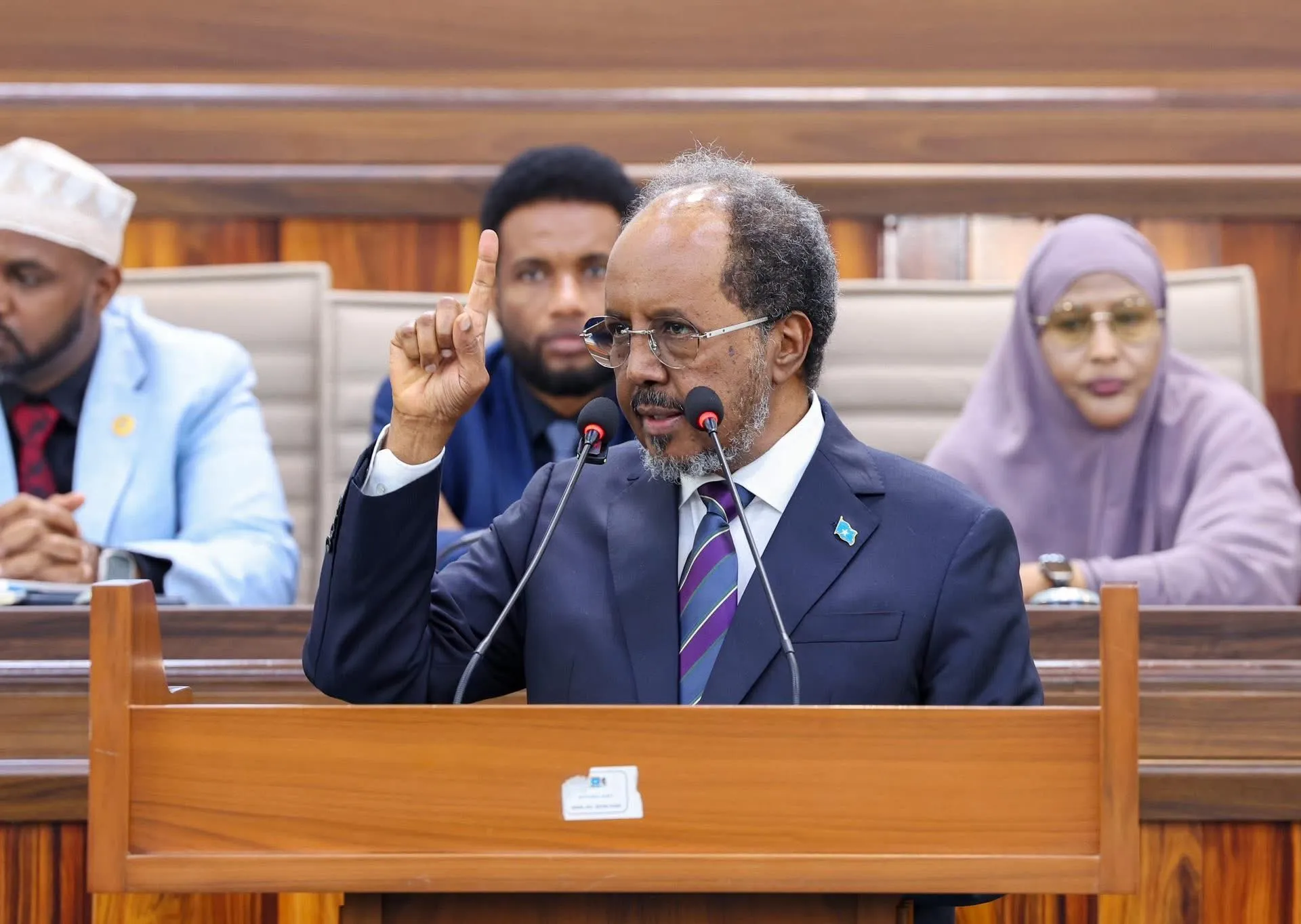
Addressing an emergency joint session of parliament on Sunday, President Hassan Sheikh Mohamud said Israeli Prime Minister Benjamin Netanyahu has committed the “greatest abuse” of Somalia’s sovereignty in the nation’s history and referred to Israel as an “enemy”.
Recommended Stories
list of 4 itemsend of list
“I am encouraging the Somali people to be calm and to defend the unity and the independence of our country, which is facing this naked invasion,” he said.
Lawmakers unanimously passed a resolution declaring Israel’s recognition as “null and void” although the measure is largely symbolic given that Somalia has not controlled Somaliland since it declared independence in 1991, which Somalia has never accepted.
The resolution warns that individuals or institutions violating Somalia’s sovereignty will face legal consequences under the country’s penal code and international law. It directed the government to take up the matter with the United Nations, African Union, Arab League and other regional bodies.
‘Existential threat’
Netanyahu on Friday announced that Israel had established full diplomatic relations with Somaliland, describing the move as being in the spirit of the United States-brokered Abraham Accords, which normalised ties between Israel and several Arab countries.
The announcement made Israel the first UN member state to formally recognise the self-declared state, which has sought international acceptance for more than three decades without success.
Mohamud accused Netanyahu of trying to import Middle Eastern conflicts into Somalia and promised his country would not allow its territory to be used as a military base to attack other nations.
He urged Somalis to set aside “tribal and regional rivalries” to confront what he described as an “existential threat” to the country’s unity.
“We need to combine our wisdom and strengths to defend our existence and sovereignty,” the president said, calling on Somaliland’s leaders to enter meaningful negotiations to preserve Somalia’s territorial integrity.
Somali Prime Minister Hamza Barre told Al Jazeera Arabic that Israel was “searching for a foothold in the Horn of Africa” and called on it to recognise and accept a Palestinian state instead.
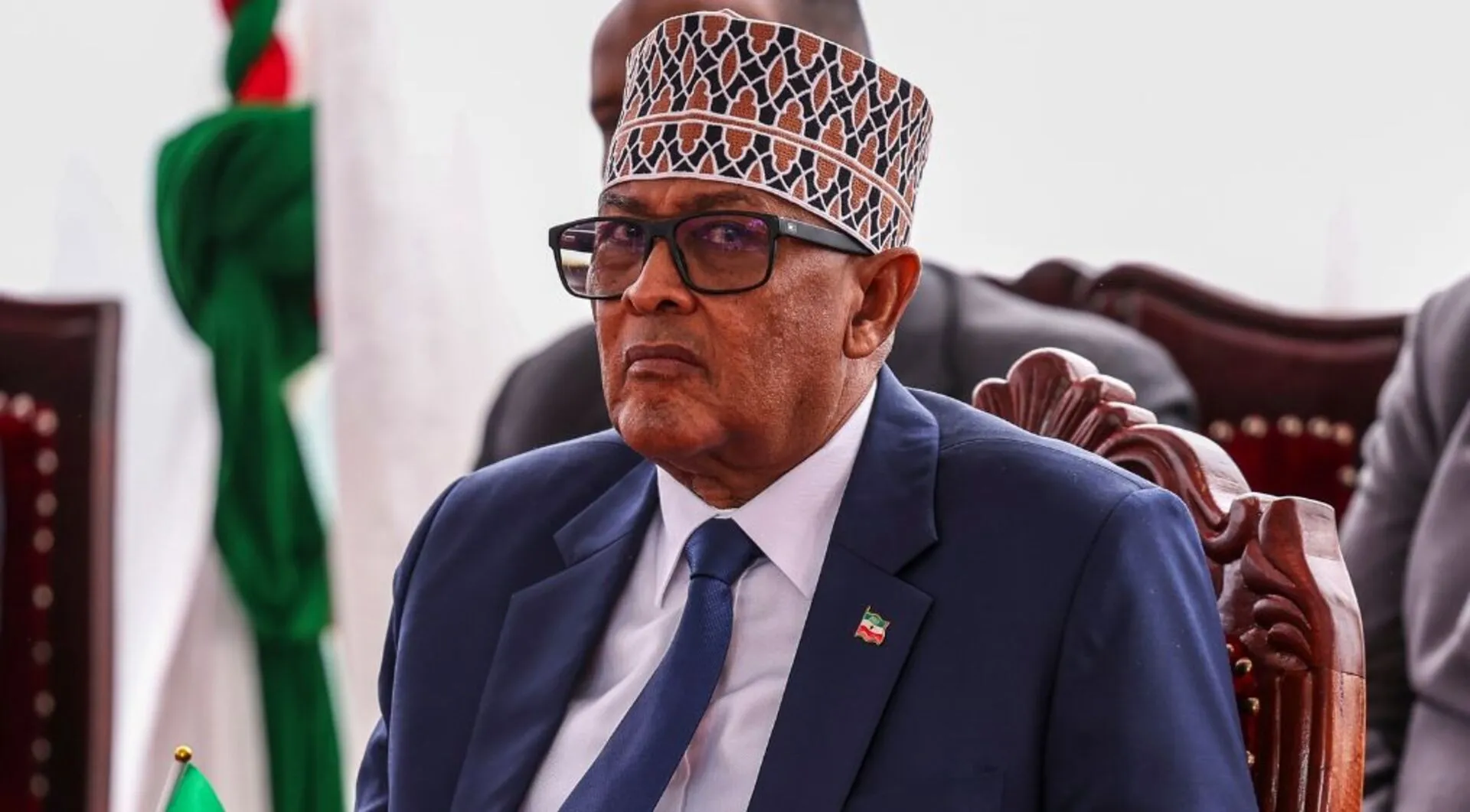
Defending the Israeli move, Somaliland President Abdirahman Mohamed Abdullahi, known locally as Cirro, said on Friday that Somaliland’s recognition “is not a threat, not an act of hostility” to neighbouring countries.
He said his nation is “deeply rooted in Islamic values of moderation, justice and coexistence” and does not represent an alignment against any Islamic nation or community.
A joint statement issued on Saturday by 21 Arab and African countries and the Organisation of Islamic Cooperation condemned the recognition as a grave violation of international law and the UN Charter.
In a statement, the Palestinian Ministry of Foreign Affairs expressed support for Somalia.
Regional leaders – including the presidents of Kenya, Uganda, Tanzania and Djibouti – held phone calls with Mohamud to reaffirm support for Somalia’s territorial integrity. Eritrea separately called on China to take action at the UN Security Council, drawing parallels to the Taiwan issue.
The European Union issued a statement calling for respect for Somalia’s sovereignty but stopped short of condemning the move. It urged authorities in Mogadishu and Hargeisa to engage in dialogue.
Israel’s move to recognise Somaliland came during a more than two-year genocidal war in Gaza, in which more than 70,000 Palestinians have been killed.
Israel is currently being investigated by the International Court of Justice over allegations of genocide, and Netanyahu is the subject of an arrest warrant issued by the International Criminal Court on accusations of war crimes and crimes against humanity.
Somaliland broke away from Somalia in 1991 after a civil war under military ruler Siad Barre. The self-declared republic controls part of northwestern Somalia and has its own constitution, currency and flag. It claims the territory of the former British Somaliland protectorate, but its eastern regions remain under the control of rival administrations loyal to Somalia.
Asked by the New York Post on Friday if he would recognise Somaliland, US President Donald Trump replied “no” although he added that the matter remained under study. “Does anyone know what Somaliland is, really?” Trump asked.
The UN Security Council is expected to discuss Israel’s recognition of Somaliland on Monday.
Mamady Doumbouya may win amid accusations of restrictions on the media and the opposition parties.
Published On 28 Dec 202528 Dec 2025
Share
Guinea is holding a presidential election in which incumbent military leader General Mamady Doumbouya, who took power in a 2021 coup, is widely anticipated to secure victory.
Some 6.7 million registered voters will go to the polls, which opened at 07:00 GMT on Sunday and will close at 18:00 GMT.
Recommended Stories
list of 4 itemsend of list
The former special forces commander, aged 41, faces eight other candidates in the election, as ousted President Alpha Conde and longtime opposition leader Cellou Dalein Diallo remain in exile.
The opposition has called for a boycott of the vote in the mineral-rich country where 52 percent of the population lives in poverty, according to World Bank figures.
While long blighted by coups, Guinea experienced a democratic transition with the November 2010 election of Alpha Conde, the country’s first freely elected president. Doumbouya overthrew him in September 2021.
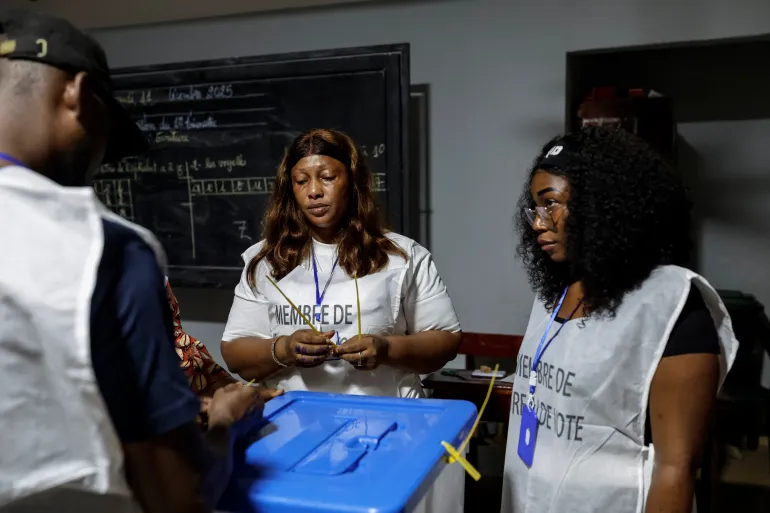
Officials set up a ballot box at a polling station in Conakry [Patrick Meinhardt/AFP]
Under Doumbouya, Guinea effectively “reverted to what it has essentially known since independence in 1958: authoritarian regimes, whether civilian or military”, Gilles Yabi, founder of the West African think tank Wathi, told the AFP news agency.
Provisional results could be announced within two days, according to Djenabou Toure, head of the General Directorate of Elections.
Restrictions on opposition
Political debate has been muted under Doumbouya. Civil society groups accuse his government of banning protests, curbing press freedom and restricting opposition activity.
The campaign period “has been severely restricted, marked by intimidation of opposition actors, apparently politically motivated enforced disappearances, and constraints on media freedom”, United Nations rights chief Volker Turk said on Friday.
These conditions “risk undermining the credibility of the electoral process”, he added.
Opposition leader Diallo has condemned the vote as “an electoral charade” aimed at giving legitimacy to “the planned confiscation of power”.
In September, Guinea approved a new constitution in a referendum, which the opposition called on voters to boycott.
The new document allowed military leaders to stand for election, paving the way for Doumbouya’s candidacy.
It also lengthened presidential terms from five to seven years, renewable once.
‘Hope things will be sorted’
Guinea holds the world’s largest bauxite reserves and the richest untapped iron ore deposit at Simandou, officially launched last month after years of delay.
Doumbouya has claimed credit for pushing the project forward and ensuring Guinea benefits from its output. His government this year also revoked EGA subsidiary Guinea Alumina Corporation’s licence after a refinery dispute, transferring its assets to a state-owned firm.
The turn towards resource nationalism – echoed in Mali, Burkina Faso and Niger – has boosted his popularity, as has his youth in a country where the median age is about 19.
“For us young people, Doumbouya represents the opportunity to send the old political class into retirement,” Mohamed Kaba, a mechanic in Conakry, told the Reuters news agency.
“There is a lot of corruption right now, but I hope these things will be sorted out.”
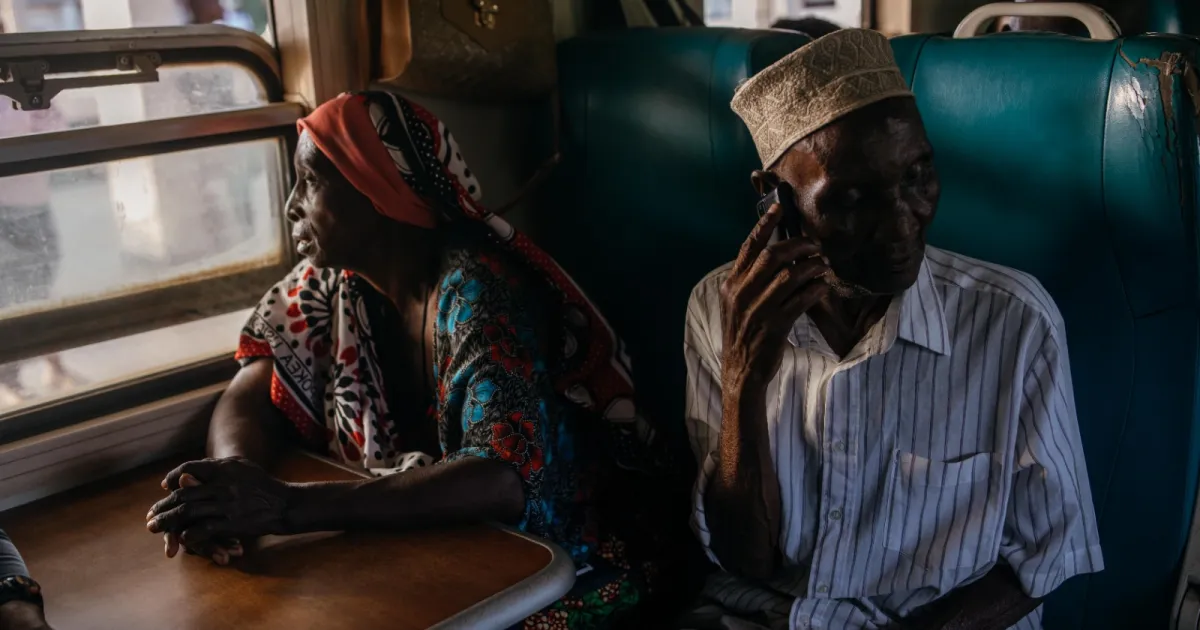
Dar es Salaam, Tanzania to Kapiri Mposhi, Zambia — In Dar es Salaam’s train station, hundreds of passengers sat amid piles of luggage as a listless breeze blew through the open windows. Shortly before their scheduled 3:50pm departure on the Tanzania-Zambia Railway Authority’s (TAZARA) Mukuba Express train, an update crackled over the tannoy: the train would be leaving two hours late.
A collective groan rippled through the crowd, and under the soaring roof of the station, pigeons darted back and forth, disappearing into holes left from rotted-out ceiling tiles. But nobody was really surprised. Given the train’s reputation for unreliable service, the passengers knew a two-hour delay for the TAZARA was practically on time.
The railway runs from Tanzania’s largest city through the country’s southern highlands and across the border into Zambia’s copper provinces, finally pulling into the town of Kapiri Mposhi some 1,860 kilometres (1,156 miles) away. It’s a journey that, according to official timetables, should take about 40 hours.
For regular passengers, it’s a cheap way to reach parts of the country that are not located near main highways. For foreign tourists, it’s a unique way to see Tanzania’s landscapes far from the bustling cities and overcrowded safari parks, provided they are not in a hurry. A first-class sleeper car all the way to Mbeya, a travel hub and border town just to the east of Zambia, surrounded by lush mountains and coffee farms, is just over $20.
This year, the railroad celebrated its 50th anniversary, but it has struggled for most of its existence, requiring foreign investment for basic upkeep and failing to haul the amount of freight it was built to carry. Inconsistent maintenance and limited investment have seen its infrastructure and cars deteriorate from decades of use.
It’s hard to determine exactly where a trip on the TAZARA will be at any given time, due to the myriad delays and breakdowns that randomise each journey. Simple derailments from poorly loaded cars and deteriorating tracks are common, and then there’s the occasional unfortunate brush with nature — in August, service was cancelled after a passenger train struck an African buffalo while passing through Tanzania’s Mwalimu Julius Nyerere National Park.
But since the beginning of 2025, the TAZARA has been plagued by more serious incidents — and fatalities — that reveal the desperate need for an overhaul of both ageing infrastructure and poor safety management. In April, two locomotives being moved from Zambia to a workshop in Mbeya for repairs derailed at a bridge in southern Tanzania, killing both drivers.
Two months later, in June, a train derailed in Zambia and was then struck by the “rescue train” dispatched to assist it. The collision killed one TAZARA employee and injured 10 staff and 19 passengers, according to a media release from the railway.
Citing “unexpected operational challenges,” passenger service was briefly suspended in early September. As it turned out, the few operational locomotives the TAZARA could field were stuck in Tanzania, after a fire damaged one of the hundreds of bridges along the track.
But big improvements for TAZARA are on the horizon, thanks to a major investment by the China Civil Engineering Construction Corporation (CCECC), which has pledged $1.4bn to refurbish the ageing rail line over the next three years. Though the continuation of passenger service is mentioned in the agreement, construction work will necessitate some pauses to regular service as the project is completed.
Most of the money will be spent on rehabilitating the tracks, but $400m will go toward 32 new locomotives and 762 wagons, “significantly increasing freight and passenger transport capacity,” according to a TAZARA statement. In return, the Chinese state-owned corporation will receive a 30-year concession to run the TAZARA railway and recoup its investment before turning day-to-day management back over to Tanzanian and Zambian authorities.
The United Kingdom has imposed visa restrictions on the Democratic Republic of the Congo, accusing its government of failing to cooperate with its new policy on the return of undocumented migrants and those who commit criminal offences.
The UK Home Office announced the measures in a statement late on Saturday. It also said that Angola and Namibia have agreed to step up efforts to take back their citizens.
Recommended Stories
list of 3 itemsend of list
The agreements mark the first major change under sweeping reforms unveiled by Secretary of State for the Home Department Shabana Mahmood last month to make refugee status temporary and speed up the deportation of those who arrive without documents in the UK.
There was no immediate comment from the DRC, Angola or Namibia.
The Home Office said the DRC failed to meet the UK’s requirements for cooperation and has now been stripped of fast-track visa services and preferential treatment for VIPs and decision makers.
Mahmood said the UK could escalate measures to a complete halt of visas for the DRC unless cooperation rapidly improves.
“We expect countries to play by the rules. If one of their citizens has no right to be here, they must take them back,” she said.
“I thank Angola and Namibia and welcome their co-operation. Now is the time for the Democratic Republic of Congo to do the right thing. Take your citizens back or lose the privilege of entering our country.
“This is just the start of the measures I am taking to secure our border and ramp up the removal of those with no right to be here,” she added.
Prime Minister Keir Streamer’s centre-left government unveiled sweeping changes to the UK’s asylum system last month, including drastically cutting protections for refugees and their children, as part of a bid to stem the arrivals of irregular migrants that have fuelled rising anger on the far-right.
More than 39,000 people, many fleeing conflict, have arrived in the UK on small boats this year, more than for the whole of 2024 but lower than the record set in 2022, when the Conservatives were in power.
Mahmood told lawmakers that the reforms, modelled on Denmark’s strict asylum system, would discourage refugees and asylum seekers from crossing the English Channel from France on small boats.
She described the current system as “out of control and unfair”, adding that it was an “uncomfortable truth” that the government must face.
Under the reforms, refugee status will become temporary and will be reviewed every 30 months. Refugees will be forced to return to their home countries once those are deemed safe.
They will also need to wait for 20 years, instead of the current five, before they can apply for permanent residency.
The government has also said it will legislate to make it harder for irregular migrants and foreign criminals to use the European Convention on Human Rights (ECHR) to stop deportation.
Since July last year, the UK has “removed more than 50,000 people with no right to remain”, a 23 percent increase on the previous period, and instructed diplomats to make returns a top priority, Secretary of State for Foreign and Commonwealth Affairs Yvette Cooper said.
The policy has been facing criticism, however, with Mark Davies, a former adviser to the Foreign Office, calling it “shameful” and a departure from “Britain’s historic commitment to support refugees”.
Former Labour leader Jeremy Corbyn also described the policy as “draconian”, adding that it tries to “appease the most ghastly, racist right-wing forces all across Europe”, while undermining the UN Convention on Human Rights.
Enver Solomon, chief executive of the Refugee Council, urged the government to reconsider, warning the plans “will not deter” crossings, and that refugees who work hard should be able to build “secure, settled lives”.
Official figures cited by the AFP news agency showed that asylum claims in the UK are at a record high, with about 111,000 applications made in the year to June 2025.
But the number of initial positive decisions the UK authorities granted fell from 2023 to 2024.
Most asylum seekers and refugees arrive in the UK legally. Net migration reached a record high of 906,000 in the year to June 2023, before it fell to 431,000 in 2024, partly reflecting the tighter rules.
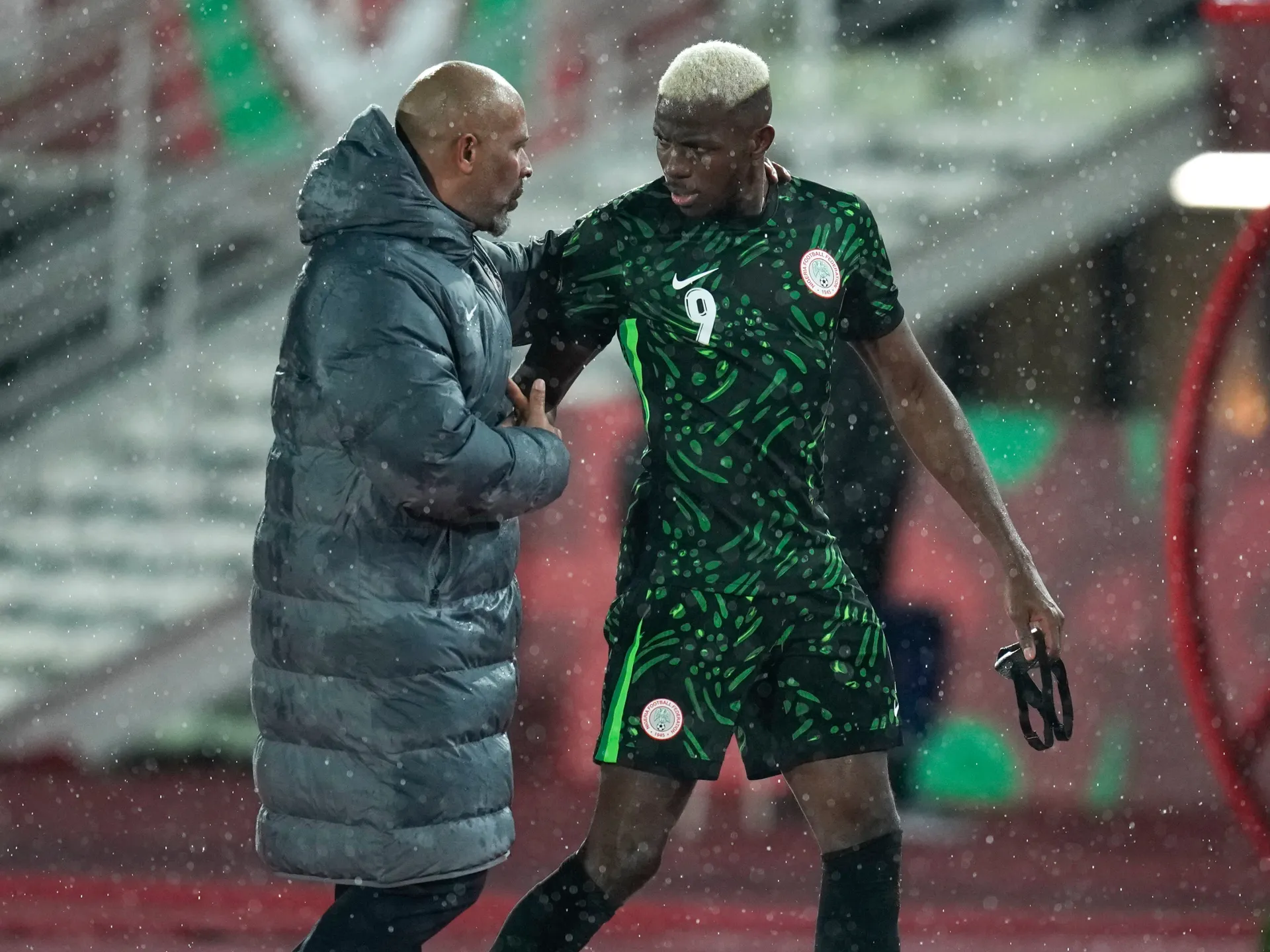
Victor Osimhen starred as Nigeria became the second qualifiers for the Africa Cup of Nations knockout stage after Egypt by surviving a late Tunisia onslaught to win 3-2 in Fes.
The Super Eagles were cruising to victory on Saturday, leading 3-0 through goals from Osimhen, captain Wilfred Ndidi and Ademola Lookman.
Recommended Stories
list of 4 itemsend of list
But Tunisia refused to surrender in the top-of-the-table Group C clash, and Montassar Talbi and Ali Abdi scored to set up a tense finish.
Tunisia had two chances to level during seven minutes of added time, but a header from captain Ferjani Sassi and a shot by substitute Ismael Gharbi were just off target.
Nigeria have six points, Tunisia three, and Tanzania and Uganda one each, with the final round of group matches set for Tuesday.
The showdown was the seventh time the Super Eagles and the Carthage Eagles had faced each other at an AFCON.
Nigeria won three times, and Tunisia once. Another two meetings went to penalty shootouts, with each nation winning one.
After performing well below par when edging Tanzania in the opening round, Nigeria were a transformed team against Tunisia, dominating the first 30 minutes in the northern city.
Osimhen was outstanding, particularly in aerial duels, while Tunisia were forced to constantly defend against the three-time champions.
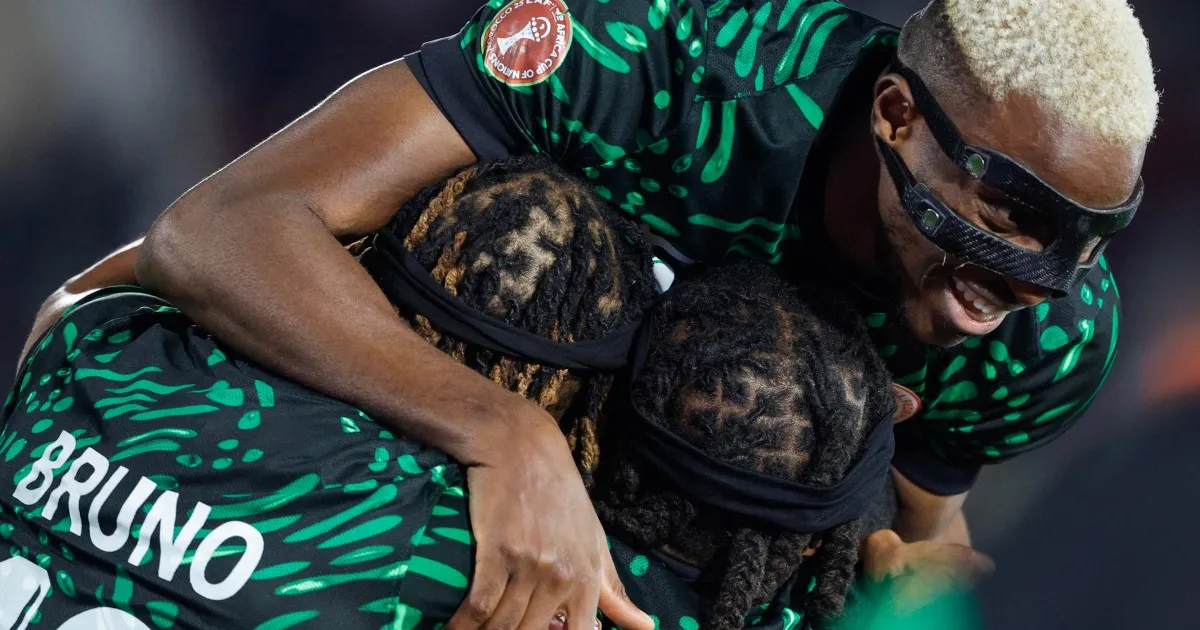
The Galatasaray striker, wearing his trademark mask, headed just over after nine minutes, and came close again soon after as he rose to meet a corner kick.
Osimhen had the ball in the net after 17 minutes, but was rightly ruled offside. Big-screen replays showed the 2023 African player of the year timing his run too early.
Tunisia midfielder Hannibal Mejbri was lucky to escape a yellow card for dissent after reacting angrily when a Nigerian took a foul throw, flinging the ball into the ground.
Osimhen was wide with another headed goal attempt, then left the pitch temporarily so that the medical staff could apply a spray to his leg.
Tunisia finally broke out of a defensive shell on 32 minutes and forced a corner. The set-piece ended with the ball coming back to Abdi, whose shot flew well over.
Several Tunisian raids reaped no reward, and on 44 minutes, the goalless deadlock was broken, with Osimhen, predictably, the scorer.
The goal involved two former African players of the year, with 2024 winner Lookman crossing the ball and Osimhen rising between Abdi and Talbi to head powerfully into the net.
Just five minutes into the second half, Nigeria stretched their lead to two goals, as they once again exposed the aerial weaknesses of the Tunisian defence.
Atalanta striker Lookman was the architect again, floating a corner into the heart of the goalmouth, where Ndidi soared to beat goalkeeper Aymen Dahmen and score his first international goal.
After creating the first two goals, Lookman scored the third on 67 minutes, after being set up by Osimhen. He had time to control the ball in the box before slamming it into the net off the post.
Tunisia pulled one goal back with 16 minutes remaining. The North Africans finally got the better of an aerial duel, and Talbi nodded a Mejbri free-kick into the net.
The goal had a dramatic effect as Tunisia took control and scored again with three minutes left, when Abdi converted a penalty awarded after a VAR review showed Bright Samuel handled.
Uganda spurn penalty chance to beat Tanzania
Uganda’s Allan Okello missed a late penalty as his side had to settle for a 1-1 draw against East African neighbours Tanzania at the Africa Cup of Nations earlier on Saturday.
Okello’s failure to convert from the spot denied Uganda a precious victory in the Group C clash after Uche Ikpeazu had scored a late equaliser for the Cranes in front of 10,540 fans at Al Medina Stadium in Rabat.
Before that, it looked like Tanzania, winless in 10 previous matches across four AFCON tournaments, might finally break their duck when Simon Msuva put them in front from the penalty spot.
But Ikpeazu, who plays in the Scottish second tier for St Johnstone, headed in a cross by fellow substitute Denis Omedi to level the scores with 10 minutes remaining.
“I have a very bad feeling, because I think we didn’t deserve this draw. I think we had more opportunities,” said Uganda coach Paul Put.
Of the missed penalty, he said, “That is very, very painful, but that is also football.”
The deadlock between the regional rivals, who will co-host the 2027 Cup of Nations with Kenya, does little to help their chances of progressing to the last 16 from Group C.
Both have one point from two matches and trail Nigeria and Tunisia, with the two former champions facing off later on Saturday in Fes.
“It is not in our hands, but we have to believe,” said Put, whose team play Nigeria next.
Uganda, who have just one AFCON win of their own across three tournament appearances since losing the 1978 final, came closest to scoring in the first half.
An Aziz Kayondo cross from the left was met by the head of Rogers Mato, whose effort came back off the underside of the crossbar.
Tanzania were awarded a spot-kick just before the hour mark, when a shot by Alphonce Msanga struck the arm of Uganda’s Baba Alhassan.
The experienced Msuva, who plays club football in Iraq, made no mistake from the spot and has now scored goals at three different AFCON tournaments.
However, a dramatic finish to the game amid a torrential downpour saw Tanzania squander the lead and then breathe a big sigh of relief as Uganda missed the opportunity to claim victory.
Ikpeazu made it 1-1, and Uganda won a penalty when James Bogere went down as his shirt was pulled by Tanzania defender Haji Mnoga of Salford City.
With the game in the 90th minute, Okello stepped up and was perhaps put off by a huge clap of thunder just before he took his kick, which went over the bar.
“I am a little bit disappointed with the result, because we tried to win the game, but we also could have lost it in the last five minutes,” said Tanzania coach Miguel Angel Gamondi.
“We wanted our first win at the Africa Cup of Nations, and I am very sorry for all the Tanzanian people.”
The recent strikes by the United States on alleged ISIL (ISIS) targets in northwest Nigeria have been presented in Washington as a decisive counter-terror response. For the supporters of the administration of US President Donald Trump, the unprecedented operation signalled his country’s renewed resolve in confronting terrorism. It is also making good on Trump’s pledge to take action on what he claims is a “Christian genocide” in Nigeria.
But beneath the spectacle of military action lies a sobering reality: Bombing campaigns of this nature are unlikely to improve Nigeria’s security or help stabilise the conflict-racked country. On the contrary, the strikes risk misrepresenting the conflict and distracting from the deeper structural crisis that is driving violence.
The first problem with the strikes is their lack of strategic logic. The initial strikes were launched in Sokoto in northwest Nigeria, a region that has experienced intense turmoil over the past decade. But this violence is not primarily driven by an ideological insurgency linked to ISIL, and no known ISIL-linked groups are operating in the region. Instead, security concerns in this region are rooted in banditry, the collapse of rural economies, and competition for land. Armed groups here are fragmented and motivated largely by profit.
The Christmas Day strikes appear to have focused on a relatively new ideological armed group called Lakurawa, though its profile and any connection to ISIL are yet to be fully established.
The ideological armed groups with the strongest presence in northern Nigeria are Boko Haram and the ISIL-affiliate in West Africa Province (ISWAP). The centre of these groups’ activity remains hundreds of kilometres from Sokoto, in the northeast of Nigeria – the states of Borno, Yobe and Adamawa – where insurgency has a long history. This begs the question: Why strike the northwest first? The logic is unclear.
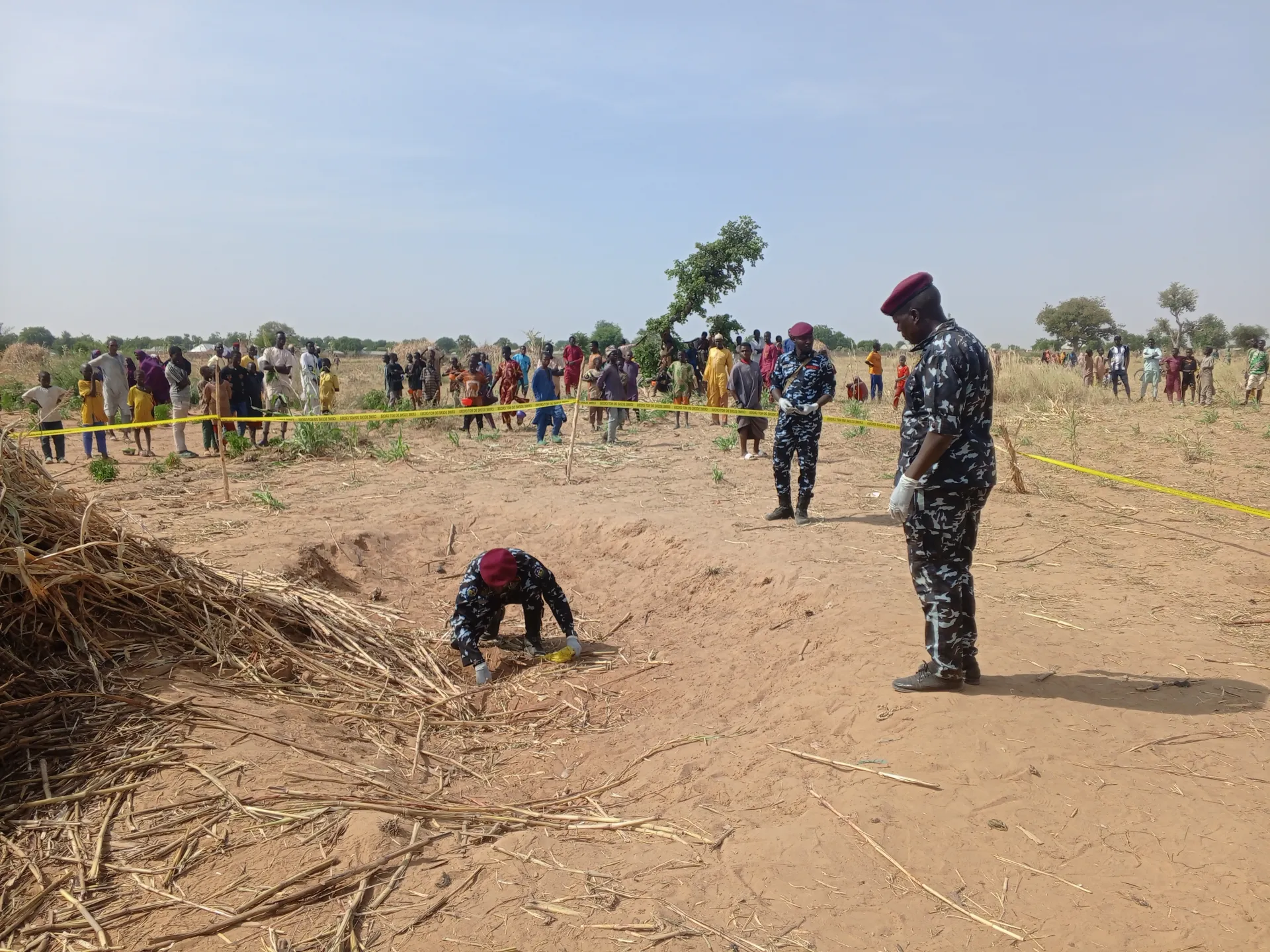
Equally concerning is the uncertainty surrounding casualties. So far, we have no authoritative figures. Some social media accounts claim there were no human casualties, suggesting the bombs fell on empty targets. Security analyst Brant Philip posted on his social media platform X: “According to a private source familiar with the US operation against the Islamic State in Nigeria, several strikes were launched, but most of the individuals and groups targeted were missed, and the actual damage inflicted remains mostly unknown.”
Nigerian news platform Arise TV reported on X that locals confirmed the incident caused widespread panic; according to its correspondent, at least one of the attacks happened in a district that had not suffered from violence before. They also noted that the full impact of the attack, including whether there were civilian casualties, is yet to be determined.
Other social media accounts have circulated images alleging civilian casualties, though these claims remain unverified. In a context where information warfare operates alongside armed conflict, speculation often travels faster than facts. The lack of transparent data on casualties from the US government risks deepening mistrust among communities already wary of foreign military involvement.
Symbolism also matters. The attack took place on Christmas Day, a detail that carries emotive and political significance. For many Muslims in northern Nigeria, the timing risks being interpreted as an act of supporting a broader narrative of a Western “crusade” against the Muslim community.
Even more sensitive is the location of the strikes: Sokoto. Historically, it is the spiritual seat of the 19th-century Sokoto Caliphate, a centre of Islamic authority and expansion revered by Nigerian Muslims. Bombing such a symbolic centre risks inflaming anti-US sentiment, deepening religious suspicion, and giving hardline propagandists fertile ground to exploit. Rather than weakening alleged ISIL influence, the strikes could inadvertently energise recruitment and amplify grievance narratives.
If air strikes cannot solve Nigeria’s security crisis, what can?
The answer lies not in foreign military intervention. Nigeria’s conflicts are symptoms of deeper governance failures: Weakened security, corruption, and the absence of the state in rural communities. In the northwest, where banditry thrives, residents often negotiate with armed groups not because they sympathise with them, but because the state is largely absent to provide them with security and basic services. In the northeast, where Boko Haram emerged, years of government neglect, heavy-handed security tactics, and economic exclusion created fertile ground for insurgency.
The most sustainable security response must therefore be multi-layered. It requires investment in community-based policing, dialogue, and pathways for deradicalisation. It demands a state presence that protects rather than punishes. It means prioritising intelligence gathering, strengthening local authorities, and restoring trust between citizens and government institutions.
The US strikes may generate headlines and satisfy a domestic audience, but on the ground in Nigeria, they risk doing little more than empowering hardline messaging and deepening resentment.
Nigerians do not need the US to bomb their country into security and stability. They need autochthonous reform: Localised long-term support to rebuild trust, restore livelihoods, and strengthen state institutions. Anything less is a distraction.
The views expressed in this article are the author’s own and do not necessarily reflect Al Jazeera’s editorial stance.
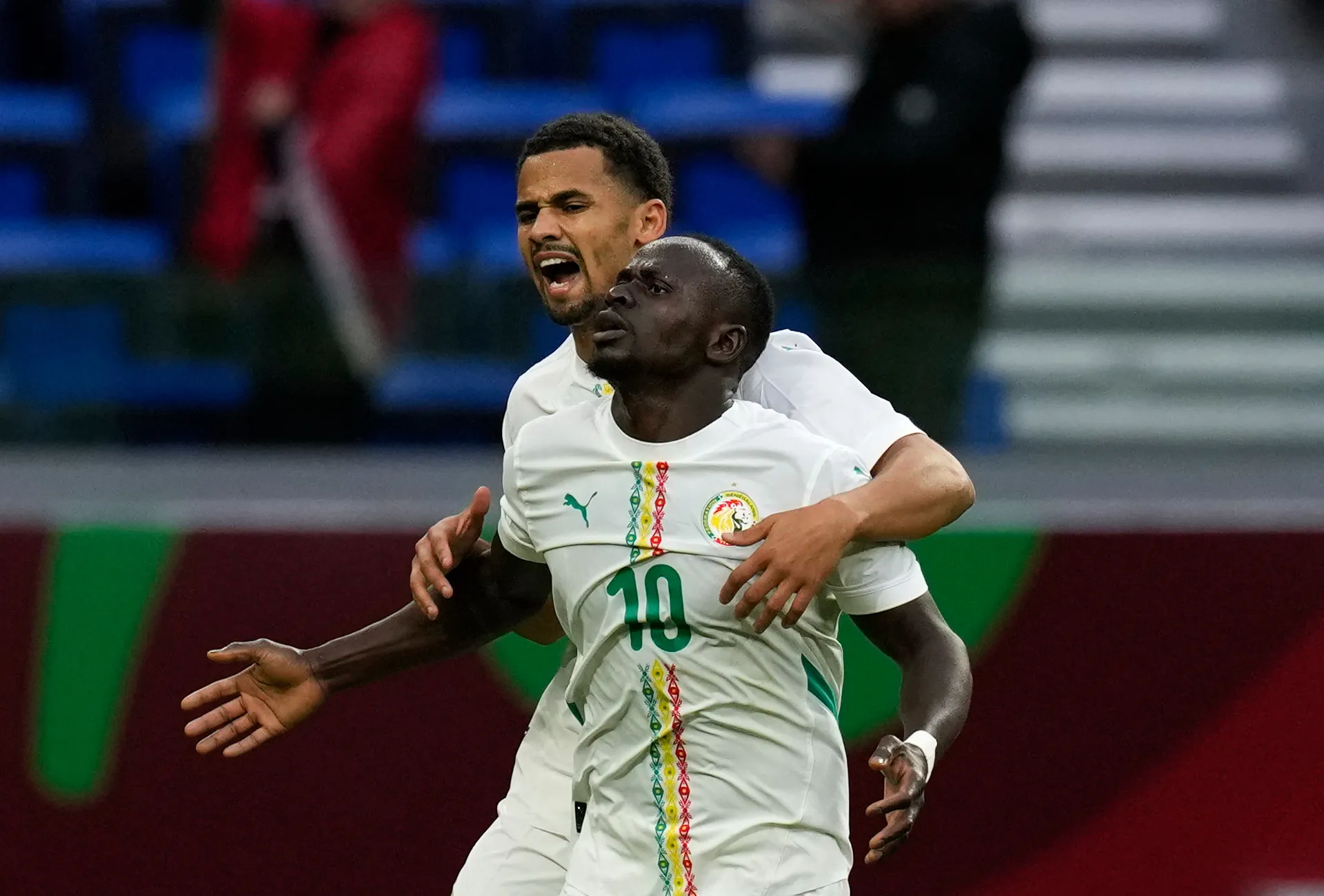
Sadio Mane’s equaliser earned 2022 champions Senegal a 1-1 draw with the Democratic Republic of the Congo (DRC) in their heavyweight Africa Cup of Nations clash on Saturday.
Cedric Bakambu had given the Leopards the lead just after the hour mark in Tangier, but Al-Nassr forward Mane replied soon after, and the result ensures Senegal stay on top of Group D with one round of matches still to play.
Recommended Stories
list of 4 itemsend of list
Both teams have four points, but Senegal have a superior goal difference before their final group match against Benin on Tuesday.
Benin have three points after a 1-0 victory earlier Saturday in Rabat against Botswana, who are bottom without a point or goal scored.
Sebastien Desabre’s Congolese side were seeking revenge after a dramatic defeat in the last meeting of the nations, in World Cup qualifying in September.
Senegal came from 2-0 down to win that encounter 3-2 in Kinshasa, a result which allowed them to go on and top their group to secure a place at next year’s finals in North America.
DRC were therefore forced to settle for second place, but can still make the World Cup if they win a one-off playoff against either New Caledonia or Jamaica in Mexico in March.
Senegal, fresh from beating Botswana 3-0 and seen as perhaps the biggest threat to Morocco’s chances of winning the title on home soil, had more of the possession and more chances on the day.
However, the Leopards took the lead in the 61st minute when Theo Bongonda – scorer of the only goal in their opening win against Benin – had a shot at the end of a fine move parried by goalkeeper Edouard Mendy, and Real Betis striker Bakambu pounced to convert the loose ball.
But Senegal were only behind for eight minutes, their equaliser coming after a superb run by teenage substitute Ibrahim Mbaye.
The 17-year-old Paris Saint-Germain winger Mbaye, who was born in France and represented them up to Under-20 level, recently committed his international future to Senegal, for whom he qualifies through one of his parents.
He replaced Ismaila Sarr just after Bakambu’s opener, and made the leveller from a penetrating run down the right.
Mbaye burst away from Arthur Masuaku, who appeared to injure himself going to tackle, and then saw his shot blocked by Lionel Mpasi, but Mane was on hand to score.
It was a 10th AFCON goal for former Liverpool superstar Mane, who is appearing at his sixth tournament.
Benin record first AFCON win in their history
Yohan Roche scored a deflected winner as Benin claimed a first-ever victory at the Africa Cup of Nations finals, with a 1-0 Group D success against Botswana in Rabat on Saturday.
Benin move to three points from their opening two games, level with Senegal and the DRC in the table, who meet in their second pool fixture in Tangier later on Saturday.
Benin took the lead in the 28th minute when Roche played a one-two in the box with captain Steve Mounie, and his shot from 9 metres (10 yards) took a wicked deflection off a defender and into the net.
Benin finally celebrated a victory at the continental finals on the 16th attempt, following their debut in 2004, and despite the fact that they were quarterfinalists in 2019. They also have five draws to go with 10 defeats.
Botswana offered little going forward, though Mothusi Johnson struck the crossbar with a curling free-kick that beat the goalkeeper but not the frame of the goal.
Benin had several chances to add to their score, though Botswana goalkeeper Goitseone Phoko made an excellent low stop to deny Tamimou Ouorou.
Dodo Dokou then worked an excellent shooting chance 11 metres (12 yards) from goal in added time at the end of the game, but fired over the bar with the goal gaping.
Botswana become the second team, after Benin, to lose their first five Cup of Nations matches after three defeats on debut in 2012 and an opening 3-0 loss to Senegal this year.
They meet DRC in their final pool game on Tuesday, while Benin face Senegal at the same time.
The top two teams in each pool, as well as the four best third-placed sides across the six groups, qualify for the Round of 16.
The US president says air strikes are against ISIL, claiming the group targets Christians.
“More to come”: Those are the words of United States Defense Secretary Pete Hegseth after his country carried out a wave of air strikes against ISIL (ISIS) in northwestern Nigeria.
Hegseth said the aim is to stop the group’s killing of what he called “innocent Christians”.
Recommended Stories
list of 4 itemsend of list
Back in November, President Donald Trump warned the US would take action against the group if the Nigerian government continued to allow what he claimed was the targeting of Christians.
Many say Trump was pressured by his right-wing Christian base in the US to carry out the recent attacks in Nigeria. But what could be the fallout on the African country with a highly complex religious makeup?
Presenter: Adrian Finighan
Guests:
Malik Samuel – Senior researcher at Good Governance Africa
Ebenezer Obadare – Senior fellow for Africa studies at the Council on Foreign Relations
David Otto – Deputy director of counterterrorism training at the International Academy for the Fight Against Terrorism
Regional blocs join nations in condemning Israel’s move to formally recognise breakaway Somali region as independent.
The Arab League, the Gulf Cooperation Council (GCC) and the African Union (AU) have joined numerous countries decrying Israel’s formal recognition of the northern Somali breakaway region of Somaliland as an independent state.
Somaliland, a region in the Horn of Africa, declared independence from Somalia in 1991 and has pushed for international recognition for decades, with President Abdirahman Mohamed Abdullahi making it a top priority since taking office last year.
Recommended Stories
list of 4 itemsend of list
Israel announced on Friday that it viewed Somaliland as an “independent and sovereign state”, becoming the first country to make such a declaration.
The announcement prompted Somalia to call the decision a “deliberate attack” on its sovereignty that would undermine regional peace.
In a statement on Friday, the AU continental bloc rejected Israel’s move and warned that it risked “setting a dangerous precedent with far-reaching implications for peace and stability across the continent”.
The AU Commission chair, Mahmoud Ali Youssouf, said the institution “firmly rejects any initiative or action aimed at recognising Somaliland as an independent entity, recalling that Somaliland remains an integral part of the Federal Republic of Somalia”.
‘Dangerous precedent’
Arab League Secretary-General Ahmed Aboul Gheit called Israel’s action “a clear violation of international law and a flagrant infringement of the principle of the unity and sovereignty of states”.
“Any attempt to impose unilateral recognitions constitutes an unacceptable interference in Somalia’s internal affairs and sets a dangerous precedent that threatens regional and international security and stability,” he warned.
The GCC called the development “a grave violation of the principles of international law and a blatant infringement” of Somalia’s sovereignty.
“This recognition represents a dangerous precedent that will undermine the foundations of stability in the Horn of Africa region and open the door to further tensions and conflicts, contradicting regional and international efforts aimed at strengthening international peace and security in the region,” GCC Secretary-General Jasem Albudaiwi said in a statement.
The European Union said it respected Somalia’s territorial integrity and sovereignty, calling for dialogue between the Somali national government and Somaliland.
The foreign ministers of Somalia, Egypt, Turkiye and Djibouti also condemned Israel’s recognition of Somaliland, saying: “The ministers affirmed their total rejection and condemnation of Israel’s recognition of the Somaliland region, stressing their full support for the unity, sovereignty and territorial integrity of Somalia.”
Egypt’s Ministry of Foreign Affairs made the statement following a phone call between the countries’ top diplomats on Friday.
Somalia demands reversal of recognition
Qatar, Iran, Saudi Arabia, Pakistan and China were among the other countries that condemned Israel’s move.
The Palestinian Authority and Hamas also rejected Israel’s recognition of Somaliland.
On Friday, Somalia demanded Israel reverse its recognition of Somaliland as independent, condemning the move as an act of “aggression that will never be tolerated”.
However, Somaliland leader Abdullahi hailed Israel’s decision as a “historic moment” and said in a post on X that it marked the beginning of a “strategic partnership”.
As world leaders weighed in, Somalia’s al-Qaeda-linked armed group al-Shabab pledged on Saturday to fight any attempt by Israel “to claim or use parts of Somaliland”.
“We will not accept it, and we will fight against it,” the group that has waged a decades-long armed rebellion in the region said in a statement.
United States President Donald Trump also commented on the issue.
Asked by the New York Post newspaper whether Washington planned to also recognise Somaliland, Trump said “no”.
“Does anyone know what Somaliland is, really?” he added on Friday.
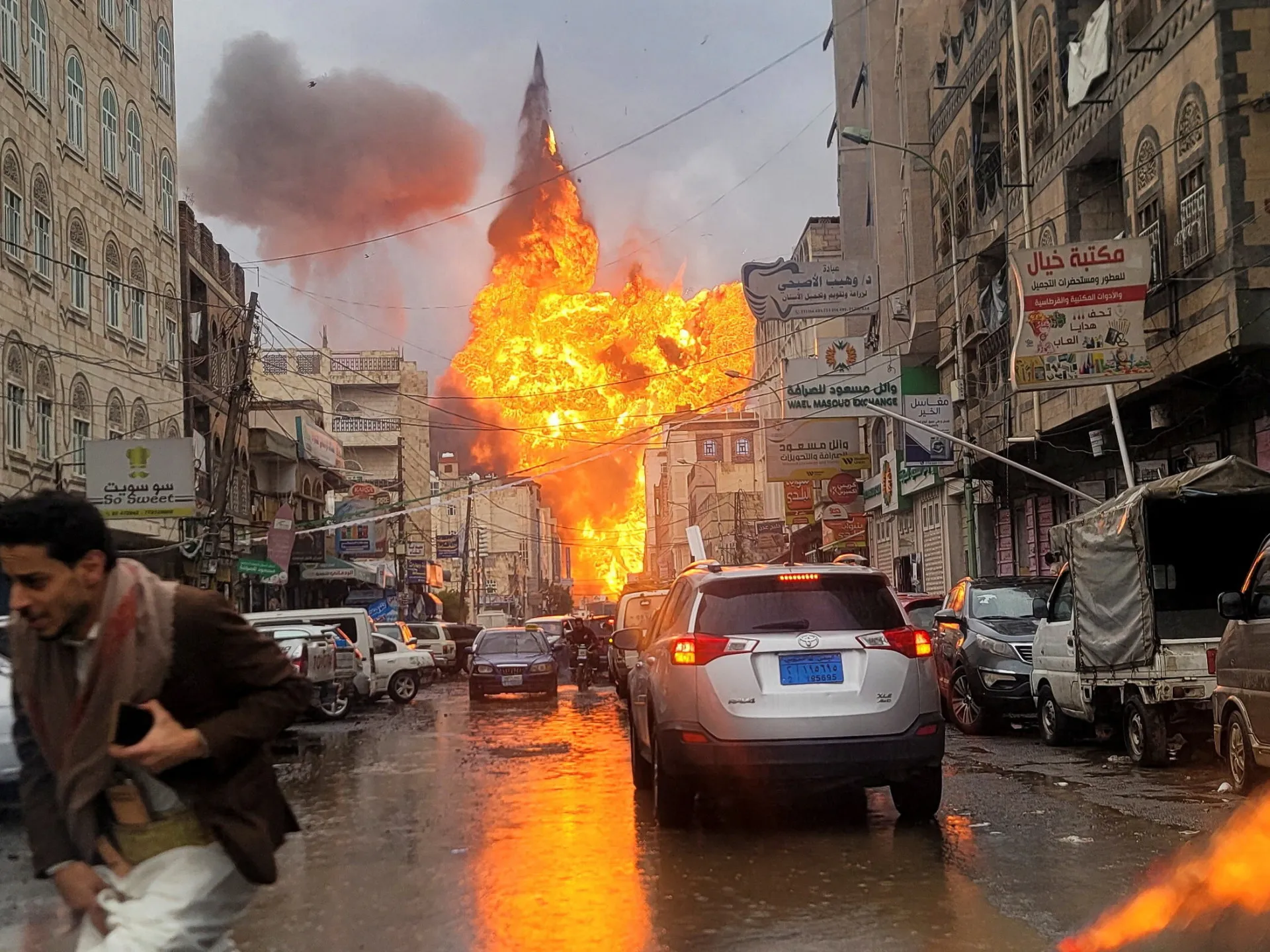
‘Debris was burning’.
Nigerians have described what they witnessed in US strikes on the town of Jabo, which President Donald Trump says were targeting ISIL.
Somalia has demanded Israel reverse its recognition of the breakaway region of Somaliland, condemning the move as an act of “aggression that will never be tolerated”.
Ali Omar, Somalia’s state minister for foreign affairs, told Al Jazeera in an interview on Saturday that the government would pursue all available diplomatic means to challenge what it described as an act of “state aggression” and Israeli interference in the country’s internal affairs.
Recommended Stories
list of 4 itemsend of list
The sharp rebuke came a day after Israel became the first nation in the world to formally recognise Somaliland, triggering swift condemnation across African and Arab nations, and raising concerns about whether the move was part of an alleged Israeli plan to forcibly displace Palestinians.
Somaliland broke away from Somalia in 1991 following a brutal civil war but has never secured recognition from any United Nations member state. The self-declared republic has established its own currency, flag and parliament, though its eastern territories remain disputed.
“This will never be acceptable or tolerable to our government and people who are united in defending our territorial integrity,” Omar said. “Our government strongly advises the State of Israel to rescind its divisive actions and abide by international law.”
Somaliland President Abdirahman Mohamed Abdullahi, known locally as Cirro, had been signalling for weeks that recognition by an unnamed state was imminent, though he didn’t clarify which country. Somaliland’s capital Hargeisa had been dotted with billboards in recent weeks, telling residents that recognition was coming.
Omar said the strategic importance of the Horn of Africa was driving foreign interference and interest. “The importance of this region isn’t new. It is still important for international trade today,” he said.
‘Displacement of Palestinians’
Omar accused Israel of pursuing Somaliland’s recognition in order to further displace Palestinians from Gaza. “One of the motivating factors is the displacement of Palestinians from Gaza,” he told Al Jazeera. “It has been widely known – Israel’s goal on that issue.”
Palestine’s foreign ministry backed Somalia, recalling that Israel had previously identified Somaliland as a potential destination for forcibly displacing Palestinians from Gaza, which it described as a “red line”.
On Saturday, Somaliland’s Cirro defended the Israeli move, insisting it was “not directed against any state, nor does it pose a threat to regional peace”.
Hours after Israeli Prime Minister Benjamin Netanyahu announced the recognition on Friday, Somalia’s prime minister’s office issued a statement describing Israel’s action as a deliberate attack on Somalia’s sovereignty and an unlawful step, and emphasising that Somaliland remains an integral and “inseparable” part of the Somali territory.
Netanyahu framed the diplomatic breakthrough with Somaliland as being in the spirit of the Abraham Accords and said he would champion Somaliland’s cause during his meeting with United States President Donald Trump on Monday. Netanyahu also invited Cirro to Israel, which the latter has accepted.
But Trump has distanced himself from close ally Netanyahu on the issue, telling The New York Post newspaper he would not follow Israel’s lead.
Somalia’s Public Works Minister Ayub Ismail Yusuf welcomed Trump’s stance, writing on social media: “Thank you for your support, Mr. President.”
Trump’s comments marked a shift from August, when he told a news conference his administration was working on the Somaliland issue. In recent weeks, the US president has frequently attacked the Somali community in the US and Somalia.
The US has also expressed frustration with Somalia, saying at a recent UN Security Council meeting that Somali authorities had failed in improving security in the country despite billions in aid, and signalling it will not continue to fund a costly peacekeeping mission.
Meanwhile, the African Union’s chairperson, Mahamoud Ali Youssouf, rejected any initiative aimed at recognising Somaliland as an independent nation, warning it would set a dangerous precedent with far-reaching implications. The continental bloc cited a 1964 decision on the intangibility of borders inherited at a country’s independence as a fundamental principle.
Arab League Secretary-General Ahmed Aboul Gheit also condemned what he described as a provocative Israeli assault on the sovereignty of an Arab and African state. He said the Israeli recognition was a clear violation of international law and a flagrant infringement of the principle of state sovereignty.
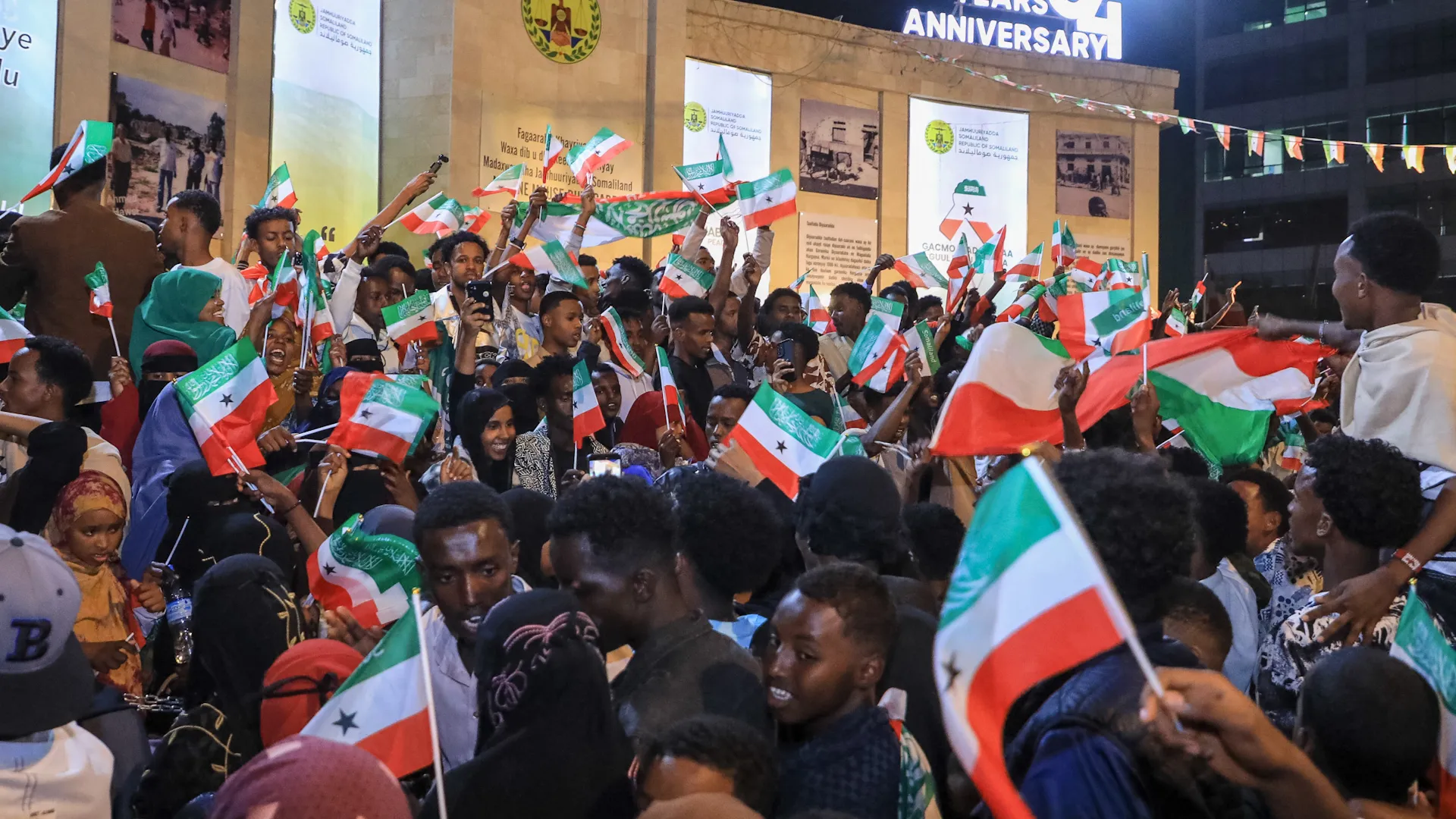
Despite the international reactions, thousands poured onto the streets of Hargeisa on Friday to celebrate what many saw as the end of 30 years of diplomatic isolation. The Israeli flag was emblazoned on the national museum as residents welcomed the breakthrough.
Somalia has historically had contentious relations with Israel, stemming from Israel’s historic ties with Somalia’s regional rival, Ethiopia.
During the Cold War, Israel provided Ethiopia with military training, intelligence and weapons, while Somalia, aligned with Arab states hostile to Israel, was defeated in the 1977 Ogaden War, a setback that helped fuel decades of civil unrest.
Somaliland declared independence from Somalia in 1991 following persecution under former leader Mohammed Siad Barre, but Somalia has never recognised the breakaway region.
Earlier this month, Israeli Deputy Foreign Minister Sharren Haskel revealed there had been communication with Somalia’s government about shared concerns over Houthi influence in the region.
But Omar, the Somali state minister for foreign affairs, strongly denied any ties with Israel, stating that the country’s position on Israeli policies remained unchanged.
Citizens of the Central African Republic (CAR) will vote on Sunday in highly controversial presidential and legislative elections expected to extend President Faustin-Archange Touadera’s tenure beyond two terms for the first time in the country’s history.
Touadera, who helped put his country on the map when he adopted Bitcoin as one of its legal tenders in 2022, had earlier pushed through a referendum abolishing presidential term limits. That, as well as significant delays that almost upturned the confirmation of two major challengers, has led some opposition groups to boycott the vote, calling it a “sham”.
Recommended Stories
list of 4 itemsend of list
CAR will also hold local elections for the first time in 40 years, after a long period of destabilising political conflict, including an ongoing civil war between the predominantly Muslim Seleka rebel movement and the largely Christian Anti-balaka armed groups, which has led to the displacement of one million people. There are fears that the country’s electoral body is not equipped to handle an election on this scale.
The landlocked nation is sandwiched between several larger neighbours, including Chad to the north and the Democratic Republic of the Congo (DRC) to the south. It has an ethnically and religiously diverse population of about 5.5 million, with French and Sango being the national languages.
Although rich in resources like crude oil, gold and uranium, persistent political instability since independence from France in 1960, and the ongoing civil war (2013-present) have kept CAR one of Africa’s poorest nations. For security, CAR is increasingly reliant on Russian assistance to guard major cities against rebels.
Citizens of CAR are referred to as Central Africans. The country’s largest city and capital is Bangui, named after the Ubangi River, which forms a natural border between CAR and the DRC. The country exports mainly diamonds, timber and gold, but much of the population depends on subsistence agriculture, and economic activity is limited.
Supporters of presidential candidate Faustin-Archange Touadera react during a campaign before Sunday’s second round election against longtime opposition candidate Anicet-Georges Dologuele, in Bangui, Central African Republic, February 12, 2016 [File: Siegfried Modola/Reuters]
Here’s what we know about Sunday’s election:
Who can vote and how does it work?
About 2.3 million Central Africans over the age of 18 are registered to vote for the country’s next president. Of these, 749,000 registrations are new since the previous election in 2020.
They’ll also be voting for national lawmakers, regional and, for the first time in about 40 years, municipal administrators. Average turnout in past years has been about 62 percent, according to the International Foundation for Electoral Systems (IFES). There are about 6,700 polling units across the country.
The National Elections Authority initially planned to hold the municipal government elections at the end of August, but moved the polls to December at the last minute, blaming insufficient funds as well as technical and organisational challenges. The decision has added to concerns among election observers and opposition politicians about how prepared the electoral body is.
Campaigning began on December 13, but opposition groups claim that delays in including Touadera’s biggest challengers in the process have favoured the president’s rallies.
The presidential candidate with an absolute majority is declared the winner, but if there is no outright winner in the first round, a second run-off vote will determine the victor.
Although presidents were previously limited to two, five-year terms, a controversial 2023 referendum introduced a new constitution which removed term limits and increased each term to seven years.
Who is running for president?
The country’s constitutional court approved Touadera’s candidacy alongside prominent opposition leader Anicet-Georges Dologuele, ex-Prime Minister Henri-Marie Dondra, and five others.
However, delays in approving the two major opponents and concerns around the readiness of the electoral body have led an opposition coalition, the Republican Bloc for the Defence of the Constitution (BRDC), to boycott the election. The group has, therefore, not presented a candidate.
Here is what we know about the candidates who are standing:
Faustin-Archange Touadera
Touadera, 68, is a mathematician and former vice chancellor of the University of Bangui. He is running under the ruling United Hearts Movement (MCU).
He served as the country’s prime minister from 2013 to 2015 under President Francois Bozize. He was elected as president in 2016 and again in 2020, although opposition groups contested the vote.
Touadera, who is the favourite to win in these polls, has campaigned on promises of peace, security and new infrastructural development in the country.
After 10 years in office, the president’s legacy is mixed. His administration has been dogged by accusations of suppressing the opposition and rigging elections.
Indeed, Touadera would not be eligible to run had he not forced the 2023 referendum through. He sacked a chief judge of the constitutional court in October 2022, after she ruled that his referendum project was illegal.
Opposition members boycotted the referendum, but that only gave the Touadera camp more “yes” votes. Although a civil society group launched a legal challenge against his candidacy before the polls, the constitutional court threw out the suit.
Russian President Vladimir Putin and Central African Republic’s President Faustin-Archange Touadera shake hands as they meet in Moscow, Russia, January 16, 2025 [File: Evgenia Novozhenina/Reuters]
Touadera is credited with spearheading some economic development, compared with his predecessors. New roads and highways have been built where there were previously none, but the World Bank still ranks CAR’s economy as “stagnant”.
Touadera has also been praised for achieving relative stability in the conflict-affected country where armed groups hold swaths of territory, especially in the areas bordering Sudan.
Support from a United Nations peacekeeping force, Rwandan troops and Russian Wagner mercenaries has helped to reduce violence in recent years.
CAR was the first country to invite the Russian mercenary group to the continent in 2018 in a security-for-minerals deal, before other countries, including Mali, Burkina Faso, and Niger, also secured security contracts.
CAR was historically closer to former colonial power France, but Paris suspended its military alliances and reduced aid budgets to the country in 2021 following the Russia cooperation.
At a meeting with Russian President Vladimir Putin in 2023, Touadera praised Russia for saving CAR’s democracy. The two met again in January 2025.
In advance of the elections, Touadera has also signed a series of peace accords with some armed groups active in the country, although there are fears that the agreements will only hold until after the polls.
The president launched Bitcoin as a legal tender in 2022, making CAR the second country to do so after El Salvador. The idea drew scepticism, as less than 10 percent of Central Africans can access the internet, and was ultimately abandoned after a year.
In February 2025, CAR launched the $CAR meme coin, which the government said is an experiment.
This week, Touadera’s government signed a new contract with Elon Musk’s Starlink to expand internet services to rural and remote regions.
Henri-Marie Dondra
The 59-year-old is a career banker and former finance minister. He is running under his Republican Unity party (UNIR), which has positioned itself as a reformist party and is not part of the opposition coalition. He served as prime minister under Touadera between 2021 and 2022 but was fired, likely because of his strong pro-France tendencies at a time when the administration was turning towards Russia, according to reporting by French radio, RFI.
Dondra’s candidacy was not approved until November 14, after Touadera accused him of holding Congolese citizenship, which he denied. The accusations raised fears that he would be barred from the vote. Two of his brothers were reportedly arrested and detained without charge before the vote, Dondra told Human Rights Watch in late November.
A campaign billboard of presidential candidate Anicet-Georges Dologuele, of the Union for Central African Renewal (URCA), stands before the presidential election scheduled for December 28, in Bangui, Central African Republic, December 24, 2025 [Leger Serge Kokpakpa/Reuters]
Anicet-Georges Dologuele
The main opposition leader of the Union for Central African Renewal (URCA) party broke from the boycotting opposition coalition in order to run in these elections. Dologuele’s candidacy has prompted what some analysts say are xenophobic statements from Touadera’s supporters.
The 68-year-old dual citizen French-CAR politician first ran for the top job back in 2015 and was the runner-up in the 2020 presidential race. His third bid has faced challenges over his citizenship status. The 2023 referendum limited candidates to CAR citizenship only, and derisive comments from some in the governing camp have suggested some opposition candidates are not “real Central Africans”.
In September, Dologuele said he had given up his French citizenship; however, in October, a Central African court stripped him of his CAR citizenship, citing a clause in the old constitution disallowing dual citizenship. Dologuele reported the issue as a violation of his human rights to the UN human rights agency. It’s unclear what, if any, action the agency took, but Dologuele’s name on the final candidates list suggests his citizenship was reinstated.
Dologuele served as prime minister in the 1990s, under President Ange-Felix Patasse, before joining the Bank of Central African States and later heading the Development Bank of Central African States.
Although he is seen by some as an experienced hand, others associate him with past government failures. Dologuele is promising stronger democratic institutions and better international alliances.
Other notable candidates
Aristide Briand Reboas – leader of the Christian Democratic Party, the 46-year-old was a former intelligence official and the sports minister until 2024. He is running on promises of better amenities, including electricity and water. He previously ran in 2020.
Serge Djorie – a former government spokesperson until 2024, the 49-year-old is running under his Collective for Political Change for the new Central African Republic party. The medical doctor and published researcher has campaigned on public health reforms, poverty reduction and more pan-Africanism. Djorie ran in the 2020 elections.
Eddy Symphorien Kparekouti – The civil engineer helped draft the new constitution that was controversially adopted in 2023. In his campaigns, the independent candidate has emphasised poverty reduction in order to solve political insecurity and other developmental challenges.
What are the key issues for this election?
Armed groups
Protracted political conflict in CAR has continued for more than a decade, with many Central Africans saying they want a leadership that can bring peace.
Trouble began following a coup in March 2013 by the mainly Muslim Seleka rebel alliance that overthrew President Francois Bozize. In retaliation, Bozize assembled Christian and animist rebel armed groups, known as the Anti-balaka. Both sides attacked civilians and have been accused of war crimes by rights groups. Bozize, who continues to lead a rebel coalition, is now in exile in Guinea-Bissau. His attempted attacks in 2020 were fended off by Touadera’s Russian mercenaries.
However, killings, kidnappings and displacement continue in many rural communities in the country’s northwest, northeast and southeast regions, despite recent peace deals signed with some groups. Russian mercenaries have proven pivotal in securing major areas, but are also accused of human rights violations, such as mass killings, while opposition politicians have criticised the reliance on foreign fighters.
A 17,000-strong UN peacekeeping force, MINUSCA, has been extended until November 2026, although the move faced resistance from the US, which wants CAR to handle its own security going forward. The force has suffered at least three deaths in deadly attacks this year alone. There are also fears about the security of voters in rural areas; about 800 voting units were forced to close in the last elections due to rebel violence.
Poverty
CAR remains one of the poorest nations in the world, with more than 60 percent of the population living in poverty, according to the World Bank.
Most people live in rural areas and survive on subsistence farming in the absence of any state-propelled industry.
Economic growth rate is slow, averaging 1.5 percent yearly. Only 16 percent of citizens have access to electricity, and only 7.5 percent have access to the internet.
Persistent fuel shortages make economic activity more difficult.
The country ranked 191st of 193 countries in the 2022 Human Development Index.
Divisive politics
The country’s turbulent political history and the present landscape of deeply divided political groups have failed to deliver a unified opposition coalition that can challenge Touadera and enshrine a functioning democracy.
Fears around whether Touadera intends to run for life following the 2023 referendum are high, with opposition and rights groups already calling for reforms to the new constitution. There are also fears around vote rigging in the elections in favour of Touadera’s governing party.
UN experts say the armed group remains a major threat to stability in Somalia and neighbouring countries.
United Nations experts say the threat of al-Shabab remains the greatest immediate threat to Somalia and the East African region, especially Kenya.
The al-Qaeda-linked group controls significant parts of southern and central Somalia, carrying out attacks on government and security forces, as well as civilians.
Recommended Stories
list of 3 itemsend of list
Over the years, the group has claimed responsibility for attacks in Kenya, Uganda and Djibouti.
Despite efforts by Somali and international forces to combat its operations, it still has the ability to strike.
So why has the fight against this group failed over two decades?
Presenter:
Dareen Abughaida
Guests:
Ismael Tahir – Research fellow at Hilin, an organisation committed to development, governance and politics in the Somali Peninsula.
Afyare Elmi – Research professor at City University of Mogadishu.
Abdullahi Halakhe – Horn of Africa security analyst.
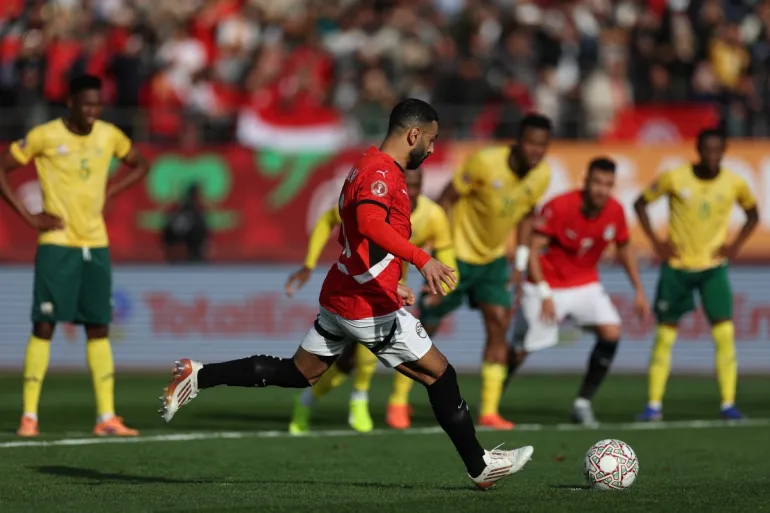
Mohamed Salah has scored as 10-man Egypt have beaten South Africa 1-0 in Agadir to become the first qualifiers for the knockout stage of the 2025 Africa Cup of Nations.
The Liverpool star converted a penalty on 45 minutes on Friday, and South Africa were denied a spot kick late in the second half when Yasser Ibrahim appeared to handle the ball inside the box.
Recommended Stories
list of 4 itemsend of list
Salah came to Morocco after not starting in five Liverpool matches and his omission leading to an outburst against manager Arne Slot.
Egypt were reduced to 10 men in first-half added time when right back Mohamed Hany was shown a second yellow card for a stamp, followed by a red.
After two rounds in Group B, record seven-time champions Egypt have six points and are guaranteed a top-two finish in the group stage and a place in the round of 16.
South Africa have three points and Angola and Zimbabwe one each after they drew 1-1 in Marrakesh earlier on Friday.
The first chance fell to Salah after 11 minutes, but he could not move forward quickly enough to connect with a low cross from Hany.
That the majority of the crowd were supporting the Pharaohs became obvious soon after when the Burundi referee ignored Zizo’s appeals for a free kick and loud whistling enveloped the stadium.
When Salah delivered a free kick into the heart of the South African area, three Egyptians darted forward, but none could connect with the ball.
Midway through the opening half, a pattern had developed. Egypt were pushing forward regularly while South Africa defended with calmness and solid tackling.
Salah shoots from the penalty spot to score the team’s winner during the Africa Cup of Nations Group B match against South Africa [Franck Fife/AFP]
When South Africa’s Teboho Mokoena fouled Omar Marmoush just outside the D, he was yellow-carded. However, the Manchester City striker fired the resultant free kick wide.
As the first half progressed, the sun broke out in the southern coastal city – a welcome sight for players and spectators with many earlier group matches staged in torrential rain.
A rare South Africa attack ended disappointingly as Lyle Foster struck a weak shot that was comfortably saved by 37-year-old Mohamed El Shenawy.
Awarded a free kick close to the touchline, South Africa performed an intricate, multipass move that ended tamely as El Shenawy clutched a cross.
Salah was being closely policed by Aubrey Modiba, and as half-time drew near, the Liverpool star retreated into the Egyptian half to retain possession.
Then, as the Egypt captain chased a loose ball with Khuliso Mudau, the South African right back raised his left arm, striking Salah’s left eye.
Amid Egyptian protests, the Burundian referee viewed the incident on a VAR monitor and pointed to the penalty spot.
A lengthy delay before the kick was taken could not have eased the nerves of Salah, but he comfortably converted the penalty as Ronwen Williams dived in the wrong direction.
More drama erupted in added time when Hany stamped on Mokoena, leading to a second yellow card for the defender.
South Africa, with a numerical advantage, attacked more as the second half progressed, but Egypt came close to a second goal with Williams foiling substitute Emam Ashour after a quick free kick.
El Shenawy displayed his agility with 15 minutes remaining, using his right hand to tip to safety a low shot from Foster. It was one of several saves that kept Egypt ahead.
Angola and Zimbabwe keep alive AFCON hopes
Veteran Knowledge Musona scored as Zimbabwe came from behind to draw 1-1 with Angola in Marrakesh to kick off the second round of AFCON matches earlier in the day.
Gelson Dala put Angola ahead midway through the first half, and recalled Musona levelled deep in first-half added time.
A draw in Group B suited neither team, leaving both two points adrift of joint leaders Egypt and South Africa after having played one match more.
Only the top two finishers in each group automatically qualify for the knockout phase. The best four third-placed teams from the six mini-leagues also will advance.
Bill Antonio wasted a good chance to give Zimbabwe an early lead when he blazed wide from close range before a small crowd.
Angola recovered quickly to establish control and took the lead after 24 minutes through Qatar-based striker Dala.
A superb lobbed pass from To Carneiro dropped in front of Dala inside the box, and he squeezed the ball between the near post and 40-year-old goalkeeper Washington Arubi.
Musona, one of four changes to the Zimbabwe lineup after a 2-1 loss to Egypt in Agadir four days earlier, became increasingly involved as the Warriors sought an equaliser.
Musona wasted a free kick opportunity by hitting the ball into the defensive wall, then shot wide, much to the frustration of Romanian coach Marian Marinica, who repeatedly shook his head.
Hugo Marques, the 39-year-old Angola goalkeeper, had his head heavily bandaged before continuing after a collision with an opponent.
The perseverance of Musona finally paid off six minutes into added time at the end of the opening half when he equalised.
After Angola were dispossessed in midfield, Zimbabwe counterattacked swiftly, and a superb pass found Musona inside the box.
He struck a slow shot between the legs of Carneiro and just wide of the outstretched right leg of Marques into the net.
As both sides sought a second goal and the lead, Marques rescued Angola 12 minutes from the end of regular time with an acrobatic one-hand save of an attempt by substitute Tawanda Chirewa.