Discover the latest happenings and stay in the know with our up-to-date today news coverage. From breaking stories and current events to trending topics and insightful analysis, we bring you the most relevant and captivating news of the day.
A spokesperson for Antonio Guterres calls for UN staffers’ immediate release, as 69 now detained in the country.
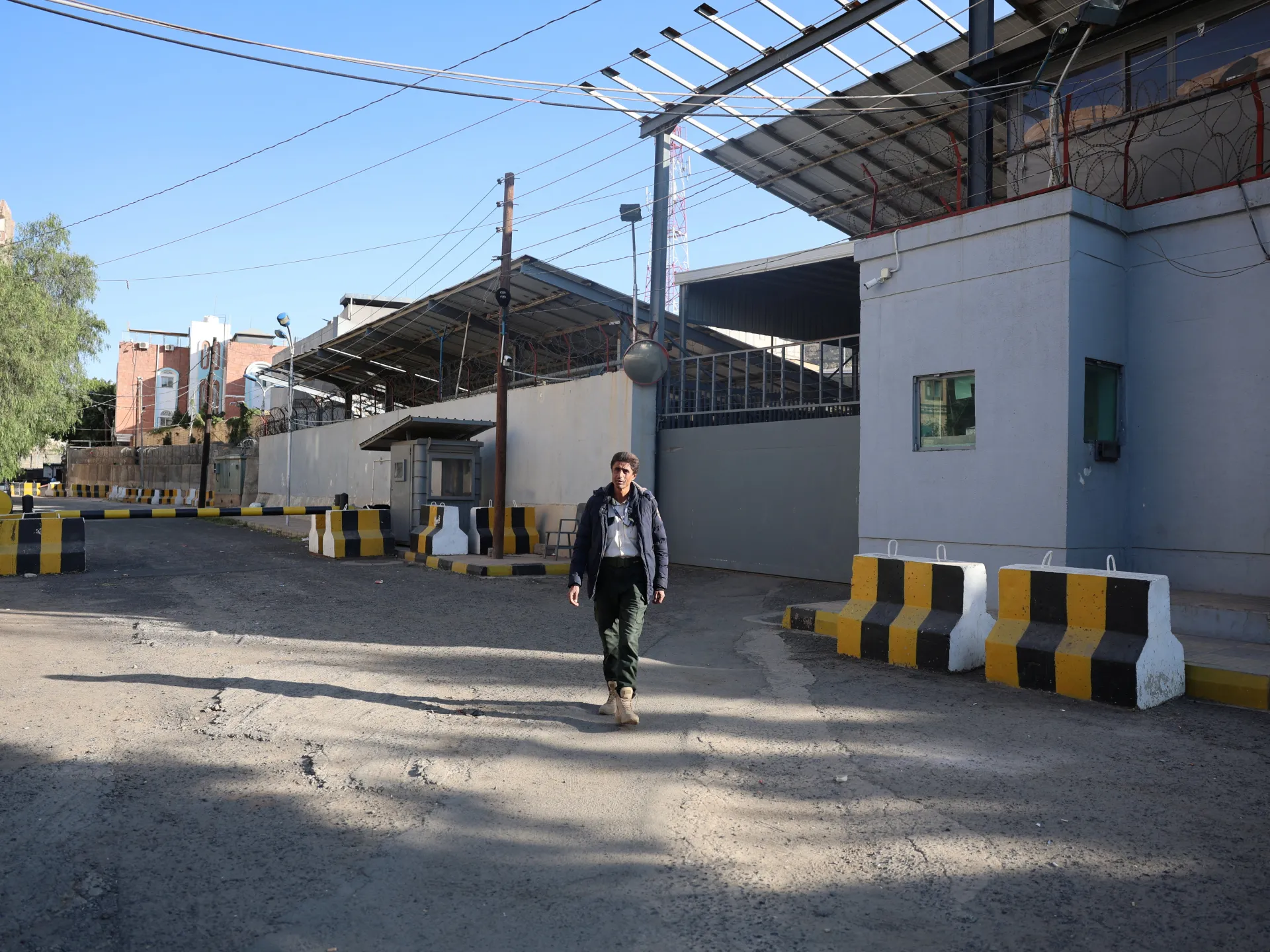
United Nations Secretary-General Antonio Guterres has condemned the detention of 10 more UN staff members by the Houthis in Yemen.
Stephane Dujarric, a spokesperson for Guterres, confirmed on Friday that the previous day’s arrests had brought the total of detained local staffers to 69, calling for their immediate release.
Recommended Stories
list of 3 itemsend of list
“These detentions render the delivery of UN humanitarian assistance in Houthi-controlled areas untenable. This directly affects millions of people in need and limits their access to life-saving assistance,” Dujarric said.
The Houthis, who control most of northwestern Yemen, including the capital Sanaa, have stepped up their arrests of UN staff since the start of Israel’s genocidal war on Gaza in October 2023, accusing them of spying for the United States and Israel.
The UN has repeatedly rejected Houthi accusations that its staff or operations in Yemen are involved in spying, a charge that carries the death penalty in the country.
On Thursday, the organisation confirmed that the detainees were all Yemeni nationals.
The latest arrests came days after Guterres discussed detained UN, diplomatic and NGO staff with Sultan Haitham bin Tariq of Oman, which has served as a mediator in the conflict in Yemen.
Guterres also commented this week on the Houthis’ recent referral of three detained UN staffers to a criminal court, saying they had been charged in relation to “their performance of United Nations official duties” and calling for charges to be dropped.
Shift in balance of power
A decade of civil war has plunged Yemen into one of the world’s worst humanitarian crises, according to the UN.
Guterres said this week that 19.5 million people in the country – nearly two-thirds of the population – need humanitarian assistance.
The conflict has recently entered a new phase, as separatists with the Southern Transitional Council (STC) extended their presence in southeastern Yemen – marking one of the largest shifts in power since the war began.
They now claim to control areas including the eastern governorates of oil-rich Hadramout and al-Mahra and the port city of Aden.
The STC, which wants to establish an independent state in the south of Yemen, has fought in the past alongside the internationally recognised, Saudi-backed government, which is based in Aden, against the Houthis.
However, the STC’s advance in the south brings it into direct confrontation with the government in Aden, known as the Presidential Leadership Council (PLC), which condemned the seizure of territory as “unilateral and a blatant violation”.
The STC’s leader, Aidarous al-Zubaidi, has a seat on the PLC, officially as one of its vice chairmen.
But relations have often been shaky between the group and the internationally recognised government, which came under major pressure in areas under its control over power outages and a currency crisis this year.
The two entities have previously fought, most notably in 2018 and 2019, in Aden and its surrounding governorates.
This week, Guterres urged all parties to exercise “maximum restraint, de-escalate tensions, and resolve differences through dialogue”.
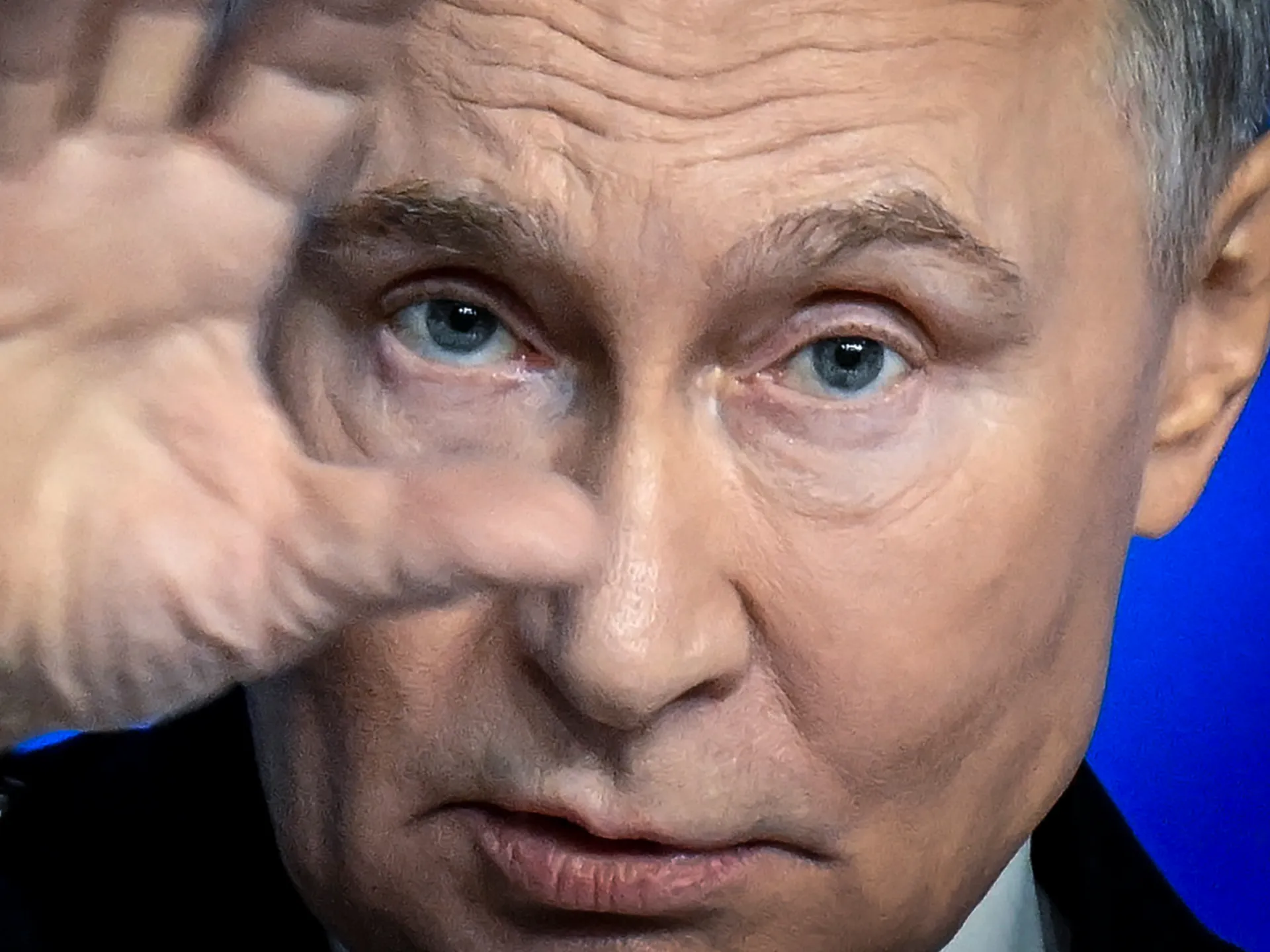
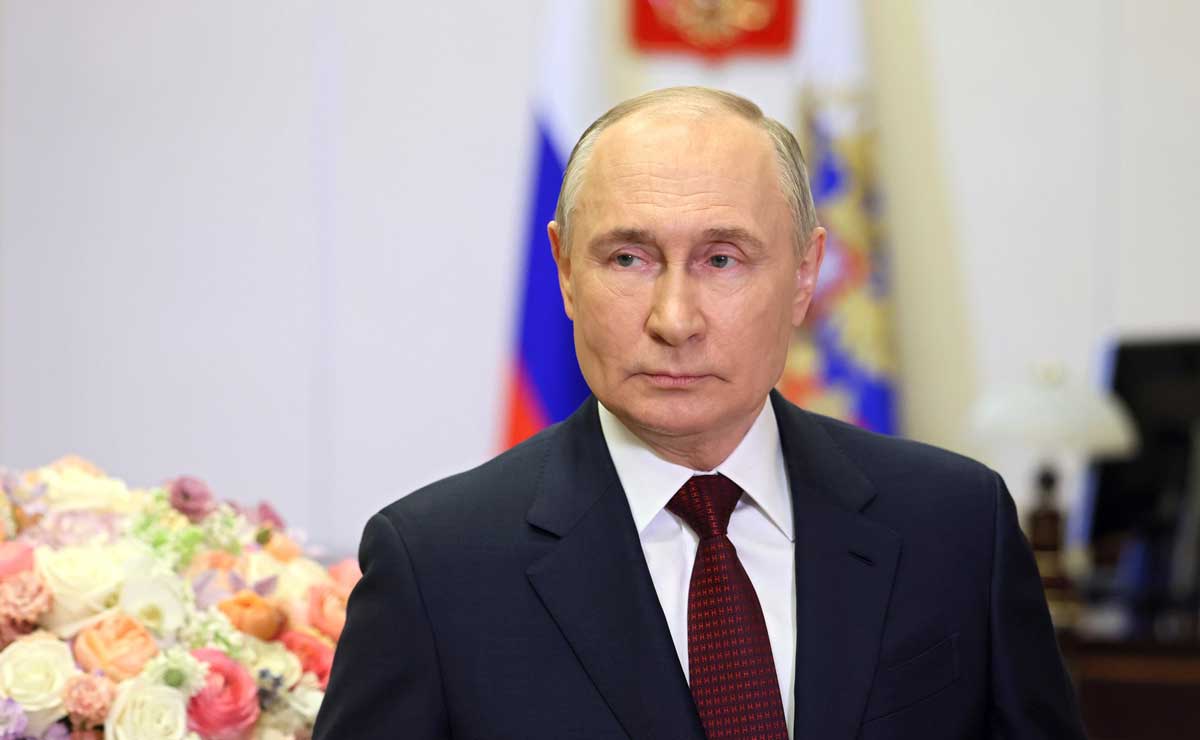
The war on Ukraine was a big topic at Vladimir Putin’s annual televised question and answer session, but the Russian president wouldn’t say if the war is coming to an end.
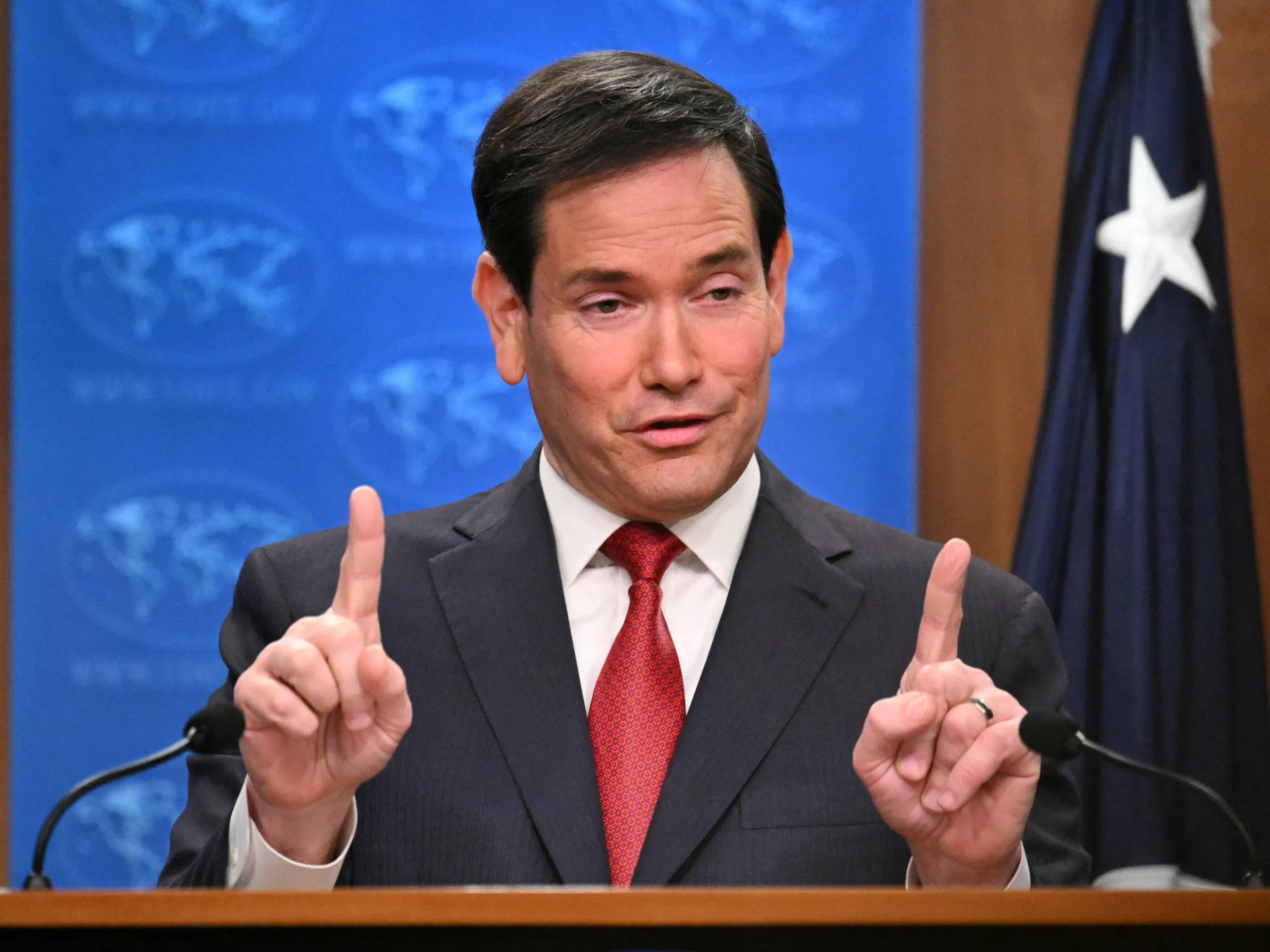
Responding to reports that Hamas may be willing to partially disarm, handing over heavy weaponry but keeping its small arms, US Secretary of State Marco Rubio said peace will never happen if the group has the capability to “threaten or attack Israel.”
Weekly insights and analysis on the latest developments in military technology, strategy, and foreign policy.
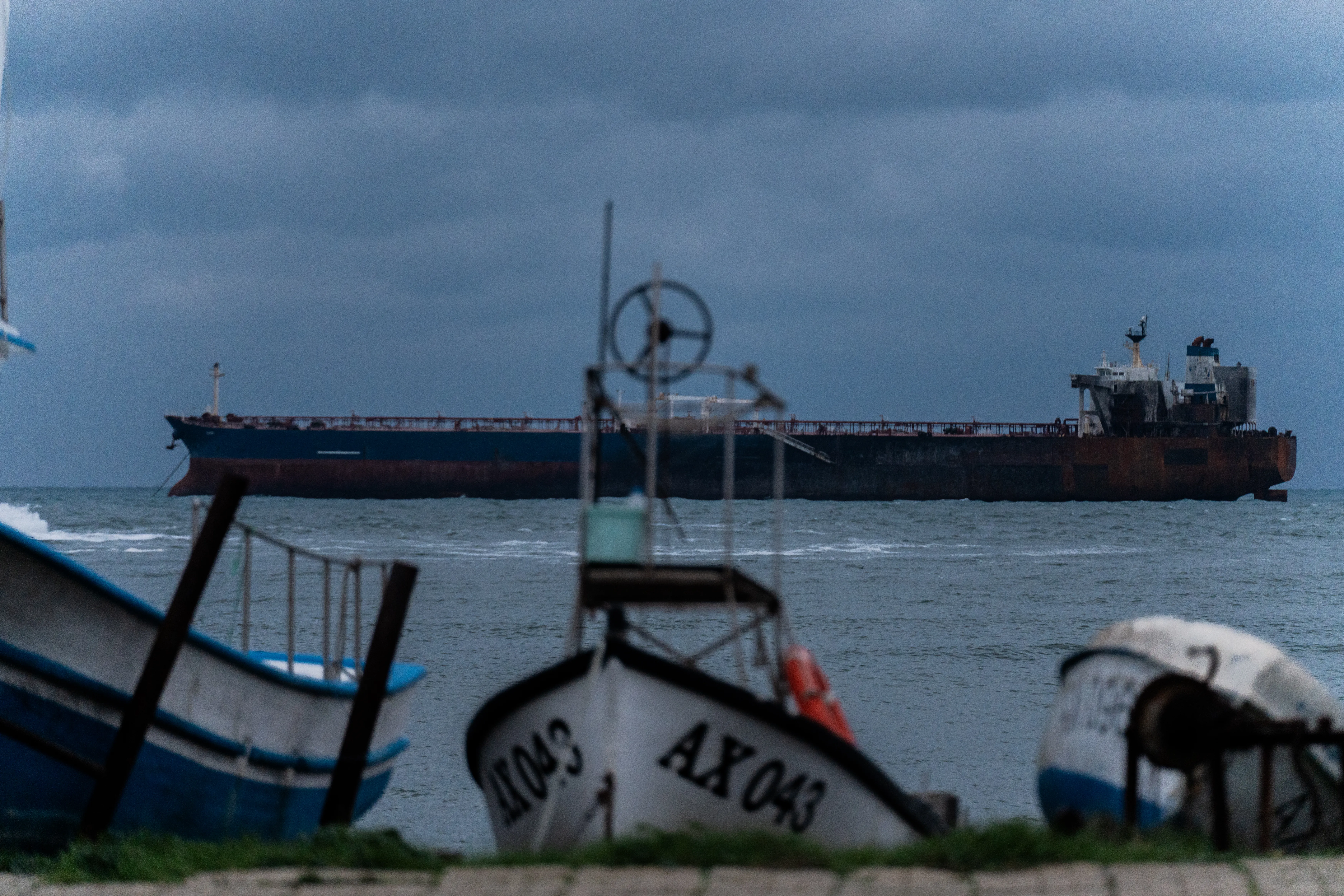
In a significant escalation of the ‘tanker war’ between Russia and Ukraine, which has so far played out mainly in the Black Sea, Ukrainian aerial drones have struck a tanker belonging to Russia’s so-called ‘shadow fleet’ in the Mediterranean. The latest incident comes after a tit-for-tat series of attacks, and a warning earlier this month from Russian President Vladimir Putin that he would “cut Ukraine off from the sea” in response to Kyiv stepping up its campaign against Russian commercial shipping.
A source from within the Security Service of Ukraine (SBU), the government’s main internal security agency, told TWZ that “a new, unprecedented special operation” was carried out “more than 2,000 kilometers” (1,243 miles) from Ukrainian territory.
A video appeared online allegedly showing a drone attack on a Russian shadow fleet tanker in the Mediterranean sea.
Reportedly, it was a QENDIL tanker that transports Russian oil that was empty at the moment of the strike. There are reports that the vessel was critically… pic.twitter.com/G50Sf579If
The target was the Oman-flagged crude oil tanker Qendil, empty at the time of the attack and sailing from the Indian port of Jamnagar, where it had been unloaded on December 1.
“Accordingly, this attack did not pose any threat to the ecological situation in the region,” the SBU said.
Before unloading, the tanker had left Russia’s Black Sea port of Novorossiysk on November 4, sailing through the Bosphorus and Mediterranean, then passing the Suez Canal en route to India. The vessel was built in 2006 and has a capacity of 115,338 deadweight tonnes.
Russian tanker hit in Ukrainian drone strike
A Russian oil tanker tied to Moscow’s so-called shadow fleet has sustained critical damage after being struck by Ukrainian aerial drones in the Mediterranean Sea, according to reports. #MarineTraffic data shows the tanker Qendil… pic.twitter.com/jb82QT40S7
According to Lloyd’s List Intelligence vessel tracking, the attack likely occurred when the tanker was heading west in the Mediterranean between Malta and Crete, which would put it around 930 miles from Ukraine. According to AIS data, the vessel made a U-turn immediately before midnight and then turned toward the east, for unknown reasons, changing its destination to Port Said in Egypt.
The SBU explained that aerial drones were used as part of a “multi-stage” operation that was conducted by forces from its Special Group “Alpha.” The same group was responsible for yesterday’s aerial drone attack on Belbek Air Base in Crimea, which you can read more about here.
The SBU shared a video with us that purports to show the attack on the tanker. Here, munitions can be seen dropped onto the deck from a hexacopter-type aerial drone, indicating a short-range attack, with ‘bomber drones’ likely having been launched from a nearby vessel. The launch of these drones from a neighboring country would only be possible if the target was half a dozen or so miles off the coast.
The SBU claims that the tanker “suffered critical damage and cannot be used for its intended purpose.” The video evidence suggests that damage was inflicted on the tanker’s topside infrastructure, although it’s unclear how severe this was.
“Russia used this tanker to circumvent sanctions and earn money that went to the war against Ukraine,” the agency added in a statement. “Therefore, from the point of view of international law and the laws and customs of war, this is an absolutely legitimate target for the SBU. The enemy must understand that Ukraine will not stop and will strike it anywhere in the world, wherever it may be.”
In a statement, the security firm Vanguard said that the attack reflected “a stark expansion of Ukraine’s use of uncrewed aerial systems against maritime assets associated with Russia’s sanctioned oil export network.”
The EU and the United Kingdom sanction Qendil, since it is considered part of the shadow fleet, a term for vessels used by Russia (as well as by Iran and Venezuela) to evade sanctions with deceptive practices. These include changing flags and complex chains of ownership, often using shell companies.
The oil tanker Kairos, a Gambian-flagged vessel believed to be part of the Russian shadow fleet, remains anchored on December 8, 2025, in Ahtopol, Bulgaria. The ship was sailing from Egypt toward the Russian port of Novorossiysk when it caught fire after an alleged attack by Ukrainian naval drones. Photo by Hristo Rusev/Getty Images Hristo Rusev
It might not be a coincidence that the attack took place on the day of Russian President Vladimir Putin’s annual end-of-year press conference. During this, Putin said that Russia would respond to recent Ukrainian attacks on shadow fleet tankers.
Since the start of the full-scale invasion of Ukraine, Russia has relied heavily on the shadow fleet, estimated to number more than 1,000 ships, to circumvent sanctions and export crude oil, bringing much-needed revenue.
Putin said today that Russia would “definitely respond” to Ukraine’s campaign against its shadow fleet. “Ultimately, this will not lead to the expected result,” he said. “It will not disrupt any supplies, but will only create additional threats,” Putin added.
Ukraine has previously used drone strikes to target Russian shadow tankers in the Black Sea.
As we have previously reported, Ukraine carried out three attacks on Russian-connected oil tankers in the Black Sea in late November and early December. This campaign has drawn a response in kind from Russia, using a Shahed-type drone, as you can read about here.
Ukraine’s SBU security service says its Sea Baby naval drones today struck another Russian “shadow fleet” tanker in the Black Sea.
Video from an SBU source purports to show the oil tanker “Dashan” being hit by the attack drone and explosions in the stern area. “The vessel,… pic.twitter.com/mtfBqYe1gQ
However, the first confirmed Ukrainian strike on a Russian-linked vessel this far from the Black Sea theater is a significant development. It is highly likely that the clandestine anti-ship war waged between Iran and Israel — something we have reported on for years now —likely provided a template for this.
The ability to use short-range drones to prosecute attacks in the Mediterranean indicates that vessels could be under threat elsewhere in European waters or even beyond. Beyond that, we could see Ukraine start to use longer-range systems, including one-way attack drones equipped with Starlink terminals, in the future.
Regardless, this development not only makes it potentially harder for Russia to export oil but also means that other commercial shipping will have to be aware of the increasing risks and potentially take measures to enhance their protection.
While the attack on Qendil appears to be the first of its kind in the Mediterranean, a further geographical expansion of Kyiv’s campaign against the Russian shadow fleet should not be ruled out.
French President Emmanuel Macron indicated that Europe may need to directly engage with Russian President Vladimir Putin if U.S.-led efforts toward a Ukraine peace deal fail. European leaders have been dissatisfied with their exclusion from peace talks led by the Trump administration and have been focused on supporting Ukraine’s negotiating position from afar. During remarks in Brussels, Macron emphasized the necessity for a solid peace agreement with security guarantees, suggesting that without this, Europe should prepare to re-establish direct dialogue with Russia. This comes after EU leaders decided to provide Ukraine with a 90 billion euro loan, utilizing the EU’s budget rather than frozen Russian assets, amid internal divisions.
Macron argued that the EU cannot afford to lose its communication channels with Moscow, particularly as U.S. officials prepare for talks with Russian negotiators. Most EU nations, except Hungary and Slovakia, have halted communication with Putin since the invasion of Ukraine. Macron highlighted the need for a strategic approach to facilitate renewed discussions with Russia, warning that continued inaction might leave EU leaders isolated and marginalized in negotiations.
Moreover, some EU leaders expressed concerns about diminishing public support for sustaining Ukrainian resistance to the ongoing war. The summit’s outcome aims to support Ukraine financially, reflecting a recognition of the war’s broader implications for European security, despite worries about increasing political pressure and potential public fatigue regarding the conflict. Danish Prime Minister Frederiksen noted that Putin is likely counting on a combination of war fatigue and societal uncertainty to undermine European resolve.
Singapore has reported a growing number of “rogue” or “shadow fleet” tankers operating off its shores in and around one of the world’s busiest maritime corridors.
According to Lloyd’s List Intelligence data cited by international maritime authorities, at least 27 such ships transited the Singapore Strait in early December, with another 130 clustered nearby around Indonesia’s Riau Archipelago.
Recommended Stories
list of 4 itemsend of list
While traffic through the strait remains dense and appears outwardly routine – more than 80,000 vessels pass through it each year – ship-spotters and analysts say the profile of some of the ships using these waters has recently changed.
Why are so many ‘rogue’ tankers appearing near Singapore?
Conflict in Ukraine and the Middle East has sparked a surge in Western sanctions on oil exports from countries such as Russia and Iran. The European Commission and the United States Trump administration have both recently renewed or extended sanctions against Venezuelan oil, as well.
As a result, a parallel, unofficial maritime network has emerged to keep sanctioned oil moving.
The Singapore Strait is a vital artery for global maritime trade, carrying about one-third of the world’s traded goods at some point along their journeys. For tankers at sea, it is almost unavoidable – the strait is a natural gateway between the Indian Ocean and the South China Sea, also a busy trade artery.
The Maritime and Port Authority monitors vessel movements within Singaporean waters. But international law limits what action it can take once ships move into the high seas – in effect, international waters – allowing shadow fleets to thrive in regulatory grey zones.
In recent weeks, suspect shipping activity has been noted just beyond Singapore’s territorial waters – roughly 22.2 kilometres from its coast – in international waters, just outside of the city state’s law enforcement reach.
What are ‘shadow fleets’ and how do they avoid sanctions?
As a result of record sanctions by Western governments in recent years over Russia’s war in Ukraine, Iran’s nuclear programme and, most recently, United States President Donald Trump’s campaign against Venezuela, the number of falsely flagged ships globally has more than doubled this year to more than 450, most of them tankers, according to the International Maritime Organization database.
All vessels at sea are required to fly a flag showing the legal jurisdiction governing their operations in international waters. The body which grants ship nationalities is the UN Convention on the Law of the Sea (UNCLOS).
A shadow ship, or “ghost” ship, is typically an ageing vessel with obscure ownership. These vessels frequently change flags – for instance, when the US seized the tanker, Skipper, off the coast of Venezuela earlier this month, the government of Guyana, Venezuela’s neighbour, said it was “falsely flying the Guyana flag”, and clarified that it was not registered in the country.
Operators of shadow ships also falsify registration details, broadcast false geo-location codes, or even switch off tracking systems altogether to evade detection and skirt UNCLOS laws.
These vessels typically carry sanctioned oil and other restricted goods such as military equipment. They often conduct risky ship-to-ship transfers of cargo under the cover of night to avoid detection. This can create serious safety and environmental risks.
Additionally, most of the tankers are owned by shell companies in jurisdictions such as Dubai, where rapid buying and selling by anonymous or newly formed firms can take place, making it even harder to trace their origins.
Jennifer Parker, a specialist in maritime law at Australia’s University of New South Wales, said the increasing number of shadow fleets presents a “real challenge”.
Parker told Al Jazeera that “finding out who owns them and who insures them has been incredibly difficult because of the [murky] paper trail around them”.
She added that “often they would do what is called bunkering, which is the process of transferring fuel at sea between ships. So that makes it hard to track where that ship has actually come from and where that oil has come from.”
She added: “Sometimes, what they do is actually mix oil, so you will have a legitimate ship that will do a ship-to-ship transfer at sea with a shadow fleet and they will mix the oil so it becomes hard to really trace where that oil has come from … to avoid sanctions.”
What sort of problems do these tankers cause?
When ageing, uninsured vessels are involved in accidents, it can lead to environmental disasters like oil spills.
According to Bunkerspot, a specialist maritime publication, a shadow tanker spill, which can cause enormous damage to water, wildlife and local coastlines, can cost up to $1.6bn in response and cleanup alone.
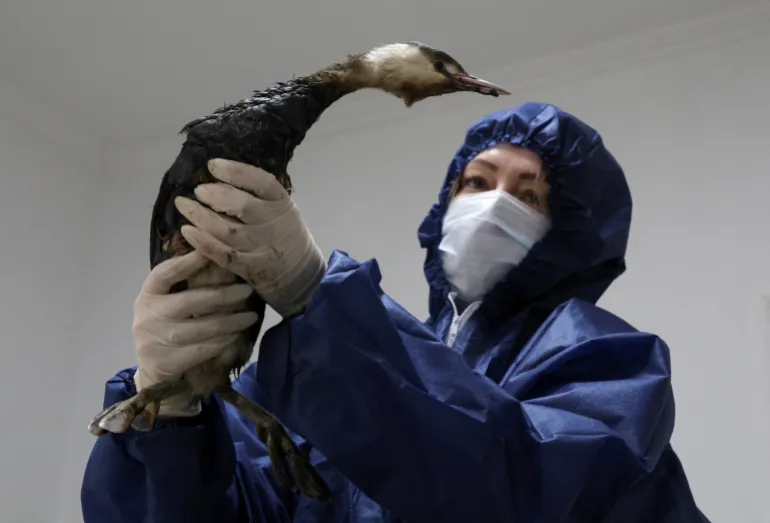
Last December, Russian authorities scrambled to contain an oil spill in the Kerch Strait caused by two 50-year-old tankers which had been damaged during a heavy weekend storm. The scale of the environmental damage and the associated cleanup costs remain unclear.
In addition to vessel collisions, they can cause environmental damage through chemical leaks and illegal waste dumping.
A volunteer cleans up a bird covered in oil following an oil spill by two tankers damaged in a storm in the Kerch Strait, at a veterinary clinic in the Black Sea resort city of Saky, Crimea, on January 8, 2025 [Alexey Pavlishak/Reuters]
Who uses shadow fleets the most?
Russia is the primary beneficiary of ghost fleet trading. Moscow has largely maintained its oil exports despite Western sanctions, ensuring steady revenue for its war in Ukraine. Though not to the same extent, Iran and Venezuela also sell fossil fuels using ghost fleets.
China and India, currently the largest buyers of Russian crude, benefit from steep discounts, often purchasing oil well below the Western-imposed $60 per barrel price cap, which was imposed in December 2022 following Russia’s invasion of Ukraine.
Tracking by S&P Global and Ukrainian intelligence shows that Russia relied heavily on its shadow tanker fleet in 2025. India has been the main destination, importing about 5.4 million tonnes (or 55 percent of Russian crude oil sales via shadow tankers) between January and September.
China has taken a smaller but still significant share of about 15 percent. Overall, most Russian seaborne crude now moves outside Group of Seven (G7)-compliant shipping, underscoring the shadow fleet’s central role in this trade.
What actions have governments taken against shadow fleets?
To avoid enforcement of sanctions, many shadow tankers have moved out of major shipping lanes. In part, this is down to European authorities now requiring physical inspections during ship-to-ship transfers, making it riskier for these vessels to operate on conventional routes.
For instance, Denmark, Sweden, Poland, Finland and Estonia recently began carrying out insurance checks on tankers transiting the Gulf of Finland and the waters between Sweden and Denmark. This is aimed at ensuring compliance with 2022 sanctions on Russian oil.
Meanwhile, in July 2025, the United Kingdom imposed measures – such as restrictions on access to UK ports, insurance and financial services – on 135 shadow fleet vessels and two linked firms, aiming to reduce Russia’s shipping capacity and cut its energy earnings.
In the US, President Donald Trump has warned that comparable measures will follow if Russia refuses to agree to a ceasefire in Ukraine, raising the prospect of closer transatlantic coordination with the UK and Europe against shadow fleets.
Ukrainian military successes and Russian narratives clashed this week, as Moscow’s assertion of inevitable victory flew in the face of facts on the ground.
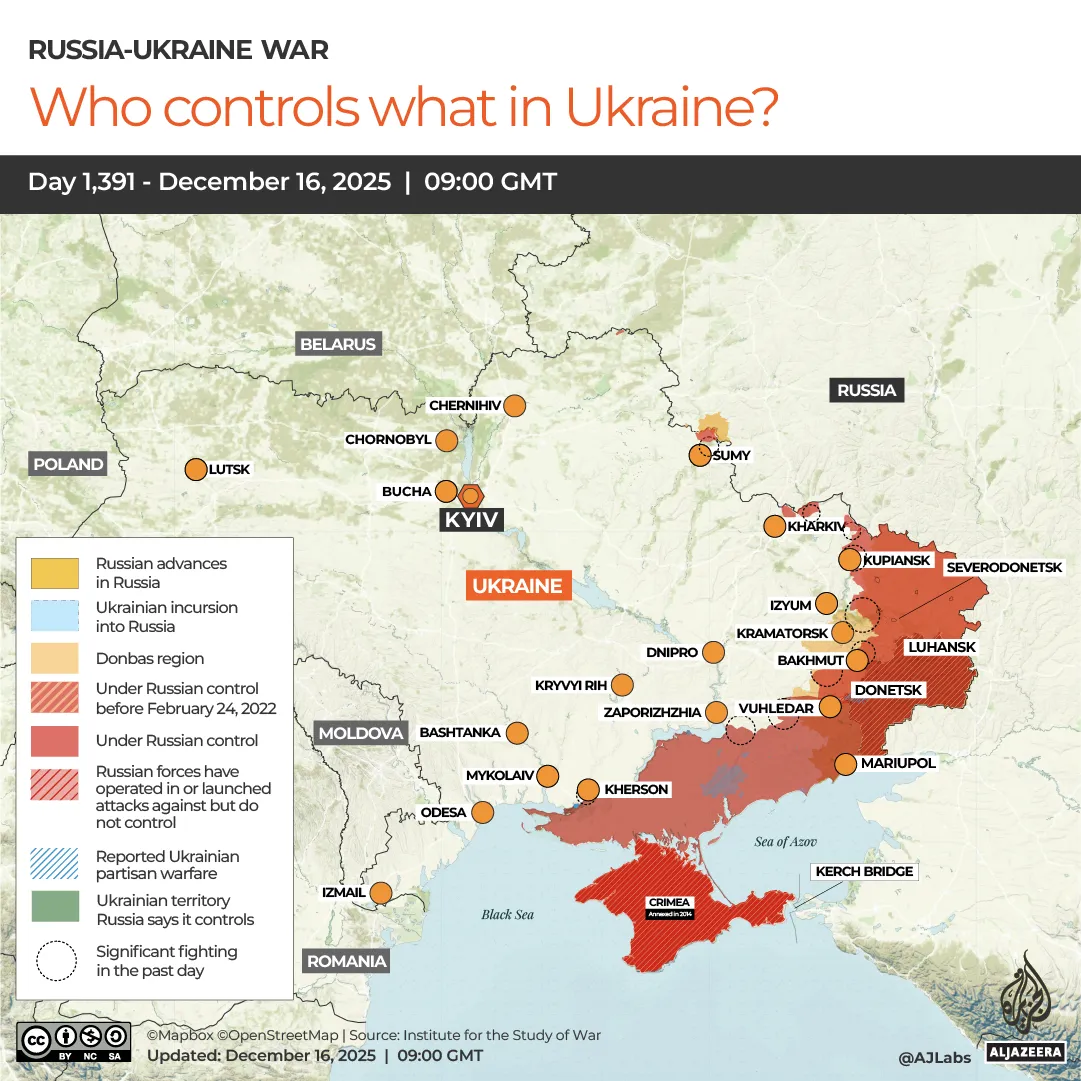
Ukraine steadily took back control of almost all of its northern city of Kupiansk after isolating Russian forces within it, belying Russian claims to have seized it.
Russian forces were also unable to dislodge Ukrainian defenders from the eastern city of Pokrovsk to back up Moscow’s claims of total control.
And Moscow attempted to deny Ukraine’s successful use of an underwater unmanned vehicle to severely damage a Kilo-class submarine, despite visual evidence.
Ukrainian forces operating in the northern Kharkiv region said they had cut Russian logistics to Kupiansk, surrounded a vanguard of 200 Russians inside it, and cleared Russian forces out of forests north of the city on December 12.
Geolocated footage showed Ukrainian forces advancing in the city the following day and taking back the southern suburb of Yuvileynyi, pushing Russian troops to the northern and western suburbs.
The Russian position had become more precarious by Monday. Ukrainian forces said they prevented reinforcements from entering the city through a gas pipeline, a tactic Russia had used in the siege of Chasiv Yar, and the isolated Russian troops were being supplied solely by drone. Ukraine’s General Staff said its forces were still repelling Russian attacks on Friday.
Russia’s Ministry of Defence insisted it had control of the situation. “Units of the Zapad Group of Forces exercise reliable control over all districts of liberated Kupiansk,” it said on Monday, claiming that Ukraine’s efforts to enter the city from the south were being suppressed.
“The only thing that can be said for sure is that the Russian Armed Forces are still holding part of the centre and north of Kupiansk, but most of it is already either in the grey zone or under the control of the Armed Forces of Ukraine,” wrote a Russian military reporter on the Telegram messaging app.
On Wednesday this week, Colonel General Oleksandr Syrskii, Ukraine’s Army commander-in-chief, told a Ramstein-format of Ukraine’s allies that his forces had taken back 90 percent of Kupiansk. At the same time in Moscow, Russian Defence Minister Andrei Belousov was telling Russian President Vladimir Putin that “the enemy is unsuccessfully trying to regain” the city.
“The Russian Defense Minister, Belousov, continues to lie that Russia controls Kupiansk,” wrote Andrii Kovalenko, head of Ukraine’s Center for Countering Disinformation, on Telegram. “In reality, most of the city is controlled by the Ukrainian Defense Forces, which are continuing to clear it of Russians. However, all of Putin’s officials, from [commander-in-chief Valery] Gerasimov, who was the first to lie about controlling the city, to Belousov, continue to lie in the presence of Putin himself.”
Contrary to the available evidence, Belousov also insisted that Russia had seized Pokrovsk, which Russia calls Krasnoarmeysk, and was on the cusp of vanquishing neighbouring Myrnohrad, which Russia calls Dimitrov. Both towns are in the eastern Donetsk region, and are almost surrounded by Russian forces to the north, south and east.
“Russian soldiers continue to inflict fire damage on Ukrainian troops in Dimitrov, the last stronghold of the Armed Forces of Ukraine in Krasnoarmeysk agglomeration,” Belousov told Putin.
But Syrskii told allies that Ukrainian forces had regained about 16 square kilometres (6 square miles) in the northern part of Pokrovsk and 56sq km (22sq miles) west of the city. “Logistics in Myrnograd are complex, but the operations continue,” he wrote.
Russia had claimed complete control over Pokrovsk on December 2 and was sticking to its story.
(Al Jazeera)
Submarine and oil refinery explosions
A third point of contention was Ukraine’s successful use of an underwater unmanned vehicle (UUV) to strike a Russian Kilo-class submarine on Monday (December 15), in what is considered the first such attack in military history.
Video of the Russian fleet at anchor in the port of Novorossiysk on the Black Sea shows a huge explosion in the stern section of the submarine.
Ukraine’s State Security Service later claimed credit for the attack.
However, Russia’s Defence Ministry said: “Not a single ship or submarine as well as the crews of the Black Sea Fleet stationed in the bay of the Novorossiysk naval base were damaged as a result of the sabotage.”
The ministry published footage of what it said was the attacked submarine, in which it appeared undamaged above the surface, but the video did not show the stern section.
Ukraine’s long-range strikes against Russia scored other successes, on which Russia did not comment.
Ukraine struck the oil refinery in Yaroslavl, northeast of Moscow, on December 12. On Sunday, Ukrainian drones struck the Afipsky refinery in Krasnodar Krai and the Uryupinsk oil depot in Volgograd, causing explosions in both locations. They also struck the Dorogobuzhskaya power plant in Smolensk.
A Ukrainian Presidential Press Service photo shows President Volodymyr Zelenskyy as he awards a serviceman of the 14th Separate Mechanized Brigade of the Armed Forces of Ukraine during his visit to the front-line town of Kupiansk on December 12, 2025 [Ukrainian Presidential Press Service/Handout via Reuters]
United States and Ukrainian negotiating teams met for two days in Berlin on Sunday and Monday. Russian officials said they would be briefed next week on the results of those talks.
But even as it claimed to be interested in ongoing peace negotiations, Russia clearly signalled that it plans to continue aggressive operations next year.
“The key task for the next year is to maintain and increase the pace of the offensive,” said Belousov in Putin’s presence on Wednesday, at an expanded meeting of the Defence Ministry Board.
“It wasn’t us who started the war in 2022; it was the destructive forces in Ukraine, with the support of the West – essentially, the West itself that unleashed this war,” Putin said. “We are only trying to finish it, to put an end to it.”
Putin said “the goals of the special military operation will certainly be achieved,” and “Russia will achieve the liberation of its historical lands by military means,” suggesting there was little room for compromise on Moscow’s side.
Putin’s Deputy Foreign Minister Sergey Ryabkov signalled the same thing in an interview with ABC on Tuesday. He said Europe and Ukraine expected a “deep and very wrong” revision of Russian peace proposals, and ruled out conceding seized Ukrainian land.
“We are not able in any form to compromise on this, because it would be, in our view, a revision of a very fundamental element of our statehood, set forth through our constitution,” Naryshkin said.
(Al Jazeera)
Russian losses outpace recruitments
Russia has attempted to give the impression that it has inexhaustible manpower with which to prosecute the war it started in Ukraine.
Belousov said almost 410,000 Russians volunteered for military service, exceeding expectations for 2025.
That translates to 32,800 per month. “Data from the Ukrainian General Staff on Russian losses indicate that Russian forces suffered an average of 34,600 casualties per month between January and November 2025 – suggesting that Belousov’s recruitment numbers are not quite replacing Russian losses,” wrote the Institute for the Study of War, a Washington-based think tank.
Ukrainian President Volodymyr Zelenskyy suggested most of these casualties were deaths. “[Putin] spends around 30,000 soldiers’ lives on the front every month. Not wounded – 30,000 killed each month… We have drone footage confirming these deaths,” he told Dutch parliamentarians.
Syrski also doubted Russian recruitment quotas were sufficient.
“The number of Russian troops has long been around 710,000,” he wrote on Telegram. “However, the enemy has not been able to increase this figure, despite active recruitment in Russia, because our soldiers are ‘reducing’ the number of occupiers by a thousand every day through deaths and injuries.”
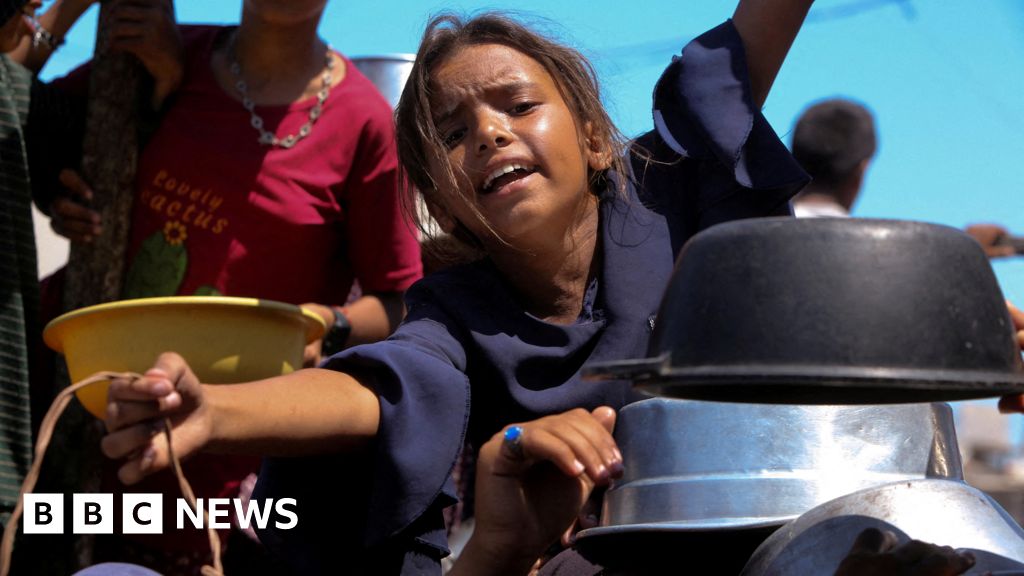
UN-backed food security experts have found improvements in nutrition and food supplies in Gaza since the ceasefire but say 100,000 people were still experiencing “catastrophic conditions” last month.
In August, the Integrated Food Security Phase Classification (IPC) found that half a million people – about a quarter of Gaza’s population – were living in areas suffering from famine.
Since a fragile ceasefire came into force in October, the UN and other humanitarian agencies have been able to increase food getting into Gaza.
Israel’s foreign ministry said the report was “deliberately distorted” and “doesn’t reflect the reality in the Gaza Strip”.
The latest IPC analysis suggests that a month ago, half a million Gazans were still facing emergency conditions and more than 100,000 were still under the highest level of food insecurity – IPC Phase 5 – experiencing “catastrophic conditions”.
It projects that number will continue to decrease but stressed the situation remains “highly fragile”.
IPC Phase 5 signifies the most extreme level of food insecurity , labelled “Famine” for an area or “Catastrophe” when referring to households. The report said no areas in Gaza were now classified as “in Famine”.
Israel rejected the original findings of famine by the IPC – which monitors and classifies global hunger crises – and has continued to criticise its methodology.
Cogat, the Israeli military body which controls Gaza’s crossings, said the number of trucks with food aid entering each week went beyond what the UN had determined it needed.
“The report relies on severe gaps in data collection and on sources that do not reflect the full scope of humanitarian assistance,” the body said in a statement.
The IPC said acute malnutrition was at critical levels in Gaza City and serious in Deir al-Balah and Khan Younis.
In the coming months the situation is expected to remain severe but the number of people facing the most severe conditions is predicted to fall to 1,900 by April, according to the report.
But it added that if there were renewed hostilities the entire Strip would be at risk of famine.
Israel’s Prime Minister Benjamin Netanyahu said earlier this month that the second phase of the US-brokered peace plan – which would see Israel withdraw troops further from Gaza and Hamas disarm – was close but key issues still needed to be resolved.
The IPC said key drivers of food insecurity included restricted humanitarian access, displacement of more than 730,000 people and the destruction of livelihoods – including more than 96% of crop land in Gaza being destroyed or inaccessible.
Israel imposed a total blockade on aid deliveries to Gaza at the start of March this year, which was eased in May, saying it wanted to put pressure on the armed group Hamas to release hostages remaining in Gaza at the time.
Ahead of this IPC report Cogat said the body had not engaged with the US or Israel and its methodology, “reinforcing a false narrative, driven in part by Hamas-sourced claims, while ignoring the actual humanitarian conditions on the ground”.
It also denied Israel was preventing winter and medical supplies from entering the territory and that there was a shortage of drinking water.
Unwra, the UN agency for Palestinian refugees, said while the report stated Gaza was no longer in famine, the situation remained “critical”.
“Overall living conditions in the Gaza Strip are still catastrophic, made worse by the winter weather,” it said in a statement, adding there must be “sustained, expanded, and consistent humanitarian and commercial access”.
OLD man? Look again, because according to my Spotify Wrapped, I am a svelte and fresh-faced 19. Here’s how you can get a musical age in the tantalising teens:
Music is cyclical
Instead of listening to comfortable 80s rock, why not listen to Chappell Roan? She paints her face like KISS, belts it out like Heart and the cheesy guitar solo at the end ofPink Pony Clubis the equivalent of anything by Def Leppard’s Phil Collen. Plus it’s about finding true joy by being a stripper! Ignore the gay bits and that’s hair metal city.
Think sexually
But – and this is where you’ll have to stretch yourself – from the lady’s side of the bed. Because while there’s a sorry dearth of men boasting about their conquests in song, today’s young women are sex-crazed. Slap on a Sabrina Carpenter or Lola Young track about giving it up to the wrong guy, imagine yourself as him and you’re laughing.
Don’t trust your memory
Men try to reduce their Spotify age by streaming recent acts. Unfortunately getting older means your mind plays tricks, and they consider the likes of Notorious BIG, the Kooks and Fatboy Slim to be recent when actually they’re somewhat older. Spotify has loads of lists of new music; just put those on indiscriminately. But how will you stand it? Next point.
Other voices, other rooms
Who says you have to be in the same room you’re streaming in? Especially when you’ve got a multi-room Sonos set-up, like I have. Simply set Rap Caviar or K-Pop ON! streaming in the kitchen while you playShades of Deep Purple on 180 gram vinyl. Your listening age is reducing by the minute while you’re vibing to real music.
Remember the remaster
What about when you’re out and about? Then deluxe versions, remasters and box sets are your friends. Springsteen’s seven-albumTracks II may comprise unreleased gems going back to the 1980s, but it only came out this year so it’s as 2025 as Sombr. Be up to the minute while mired in the past and it’s all on noise-cancelling cans. Nobody will know.
Grin and bear it
There are times when no substitute will do. When you’ve picked her up for the date and the leather seats in your BMW are crying out for Dire Straits? That’s when you play FKA Twigs. ‘Yeah,Eusexua?’ you’ll say, casually, ‘So much better now she’s updated the track order.’ And just like that, you’re Spotify Listening young.
When Wura Hope paints her nails, she paints her prosthesis too. Pink glows on her dark skin like fine art. But her right foot is pale, yellowish-tan, the generic colour of many imported prosthetics. It contrasts with her melanin-rich skin and does not offer the aesthetics she desires.
Wura is a model, fashion designer, and vendor of Ankara fabrics. She also interns at a bank. Sometimes, she doesn’t want the spotlight that comes with being an amputee. But with a prosthetic foot so different from the rest of her body, curious eyes are unavoidable. As a result, she fully covers up her leg.
The unease Wura feels today traces back to when she was 11. One of her daily chores was filling the water tank of the large generator her parents used at their home in Abuja, in Nigeria’s North Central. One day, the propeller caught her long dress and badly injured her right leg. An infection followed, and the leg was eventually amputated.
The 28-year-old barely remembers life with two legs. She has lived with one for so long that she even forgets she has a physical challenge.
“Like, I literally forget,” said Wura.
Every word she says seems to arrive with a smile. And when her lips spread, they show her teeth like fresh corn peeking through a half-opened husk. She’s grateful to be walking again after many years on crutches.
Her current prosthesis is her third. The first, donated by an Indian charity in 2014, was heavy and rigid. The second caused blisters around her stump that took days to heal. The one she uses now is lighter and has a knee joint that makes walking easier. But it is far from perfect. In hot weather, the liner squeaks against her sweaty stump and sometimes threatens to slip off. When that happens, she has to find a restroom, take it off, clean it, let it dry for a few minutes, and put it back on.
“Sometimes in the market, I’ll be looking for somewhere private to clean my liner,” she told HumAngle.
Moments like this remind Wura of her disability, turning long-distance walking into a nightmare.
The struggle is not just Wura’s; it is a shared reality for many who wear devices designed for colder climates. Thirty-year-old Eva Chukwunelo knows it well. She finds her stump in a pool of sweat after walking just a few metres. But in March this year, she walked seamlessly from Washington Park to the Brooklyn Bridge in New York, a distance of more than two kilometres. Back home in Abuja, she would have stopped multiple times to pull off her prosthesis, drain the sweat from its liner, and wait for her stump to dry.
In Abuja, March is one of the hottest months, but it is cold in New York, giving chills rather than sweat. Most advanced prosthetic devices come from temperate countries, where they may be designed with little consideration for Africa’s heat and humidity.
Silicon liners, the technology used by both Wura and Eva, were invented in Iceland and initially called the Icelandic Roll-On Silicone Socket. Made from medical-grade silicone RTVs, they do not absorb sweat. As moisture gathers inside, it simply coats the stump, making every step increasingly uncomfortable. The material is soft and generally reliable, but it does not match Africa’s weather realities.
“So I felt like if you’re wearing a silicone liner, you cannot do so well in a hot environment,” Eva said.
As for the skin covers, they are either too black or not black at all, wrote Eva in the Nov. 5 dispatch of The Amputee LifeStyle, the newsletter where she documents the lived experiences of amputees.
“Somewhere between ‘too white’ and ‘too black’, African amputees are left underrepresented,” she noted. “So yes, we walk again. But sometimes, we walk in discomfort.”
The more money you have, the lighter it becomes. Photo: Eva Chukwunelo
Eva was also born with two legs. As a child, she was always running, climbing trees, playing football, or dancing. Even after she was diagnosed with osteomyelitis, a severe bone infection, she stayed active in school and continued playing with friends. But her left foot soon developed ulcers, prompting concerns about activities that could expose her to germs. The leg began to decay right from between the big toe and the second. When gangrene—the death of body tissue due to lack of blood flow or severe bacterial infection—set in, the only option was amputation.
Eva was just 16. She imagined a future spent on crutches, or confined to a wheelchair, or, even worse, reduced to begging like the lepers who often took shelter under the flamboyant trees outside her parents’ house. She had never heard of prosthetics, a life-changing technology that dates as far back as ancient Egypt. But everything shifted the day her doctor invited a prosthetist into the room.
“The first time I walked again, it felt like a miracle,” she wrote in her newsletter.
Her first two prosthetic devices were heavy, rigid, and, in her words, ugly. They helped her walk, but she was never comfortable enough to let her live freely. Until she got her third device, which came with a silicon liner, she never felt confident leaving her left leg uncovered in public. The fourth was lighter. The fifth, lighter still and more advanced, each upgrade was a small step toward ease, though never quite the perfect match she longed for.
“I think the more money you have, the lighter it becomes,” Eva told HumAngle.
Africa’s difference is not just in climate and skin tones. Like Nigeria, most African countries trail far behind Europe in minimum wage and purchasing power. And for many amputees across the continent, this means the most advanced and most comfortable prosthetic devices are far beyond reach.
On the day 18-year-old Adeola Olailo lost one of her legs in an accident in Ekiti State, South West Nigeria, she had hoped to hawk groundnuts after school. Selling groundnuts and fried pork was how she supported her parents, who struggled to make ends meet. And she was good at it. But when a car veered off the road and ploughed into the students walking home, Adeola lost a limb on the spot, and her family lost a vital source of income. It took repeated media reports and the state government’s intervention for her to receive a locally made prosthesis, one she has now outgrown.
For amputees like Adeola, a matching device must be affordable, too. She dreams of a waterproof leg that aligns with her height, matches her complexion, and lets her jump, walk without pain, run, and dance again, especially now that she is preparing for university. But a prosthesis that can do even a fraction of these may cost up to ₦5 million, an amount far beyond the reach of her household. And like most imports, when the naira slips, the price soars.
Taiwo Akinsanya, founder of Dynalimb, a Nigerian company working to expand access to quality prosthetics, said there are still many barriers to creating truly Nigerian or African-centred devices. One of the biggest, he explained, is the education system that does not encourage home-grown innovation, often producing graduates who take pride in their ability to apply foreign products rather than pioneer new ones for local realities.
“We were taught in medical school to take the approach of what is currently being done in the current market and keep applying it to a number of patients,” he said.
Access and affordability, he added, are also limited by Nigeria’s heavy reliance on foreign manufacturers for key prosthetic components.
“We were trying to develop a locally made prosthetic device here in Nigeria. We did it, and it worked. The major constraint we had was that the raw materials, such as steel, used to produce the metallic part of the prosthetic device, were imported, which made European products more affordable than we wanted to achieve here.”
Every imported part raises the overall cost, making locally assembled devices expensive and out of reach for many amputees. Meanwhile, Dynalimb’s mission was to make prosthetic devices accessible and affordable. They had to scrap the innovation.
Of the estimated 65 million amputees in the world, about five million live in Africa. Many are victims of diabetes, road traffic accidents, industrial mishaps, congenital conditions, and conflict-related injuries. Yet most struggle with prosthetic devices never designed with their bodies, climates, or lifestyles in mind. An even larger number have no access to prosthetics at all.
Amid numerous infrastructural constraints and inadequate government support, African innovators are working hard to adapt foreign inventions to local realities and, in some cases, to build African-centred devices from scratch. Earlier this year, South Africa’s Prosthetic Engineering Technologies launched silicone liners “engineered for the unique challenges of African terrain and climate”. The liners, according to the company, are locally manufactured to reduce costs and improve access. In Nigeria, Immortal Cosmetic Art is creating hyper-realistic prosthetic skin covers for people of colour, an innovation that has already been celebrated both locally and abroad. But the effects of these breakthroughs are yet to be felt at scale. And African amputees, tired of struggling in devices not made for them, want even more.
“My leg is black, but the prosthesis is not,” Adeola said about why she always wears knee-high socks.
“I think it’s time we start designing prosthetics that understand Africa. Products that consider the climate, materials that can breathe, and sweat and heat. Products that match our tones, so people stop asking why your leg looks ‘imported’,” Eva wrote in her International Prosthetic and Orthotics Day newsletter.
Once, Wura received a dark prosthetic foot from a company that imported devices from China. When she painted the nails, it looked “very, very pretty.” It felt like it truly belonged to her. But the joy didn’t last.
“I don’t know what they sell to us here,” she told HumAngle. “I don’t think that foot lasted six months. I like it when the colour of my socket is dark. Because I’m a dark person, my foot should also be dark.”
When she painted the nails, it looked “very, very pretty”. Photo: Hope Wura
Taiwo said there are no perfect prosthetics. An artificial limb, he said, will always be an artificial limb. But for amputees like Wura, Eva, and Adeola, progress begins with a limb that matches their skin and survives their weather.
Russian President Vladimir Putin is expected to address the future of the war in Ukraine when he speaks at his marathon end-of-year news conference on Friday. Russia’s invasion of Ukraine in February 2022 triggered the most severe confrontation between Moscow and the West since the Cold War, following years of conflict in eastern Ukraine. The annual “Results of the Year” event, held in various formats since 2001, allows Putin to field wide-ranging questions from journalists and citizens, covering domestic pressures such as inflation as well as foreign policy, nuclear weapons and the war that the Kremlin still calls a “special military operation”.
Why it matters Putin’s remarks are likely to be closely parsed in Washington and European capitals for clues about whether Moscow is open to negotiations or prepared for a prolonged conflict. U.S. President Donald Trump has said he wants to be remembered as a peacemaker but has struggled to bring the war to an end, fuelling concern in Kyiv and Europe that any U.S.-brokered deal could sideline European interests or weaken Ukraine. With millions of casualties reported by U.S. officials and continued territorial gains by Russian forces, the stakes include not only the future of Ukraine but also the stability of Europe’s security order.
Russia is seeking to consolidate gains and redefine its relationship with the West, while Ukraine and its European allies remain wary of concessions that could reward aggression. The United States plays a central role as a potential broker, with Trump’s approach diverging from that of his predecessor, Joe Biden. The European Union, which has just agreed to jointly borrow funds to support Ukraine’s defence, faces long-term financial and security implications depending on how the war evolves. China is an indirect but important actor, given Moscow’s growing alignment with Beijing.
What’s next Putin’s statements could clarify whether Russia is willing to engage in serious peace talks or intends to press ahead militarily, despite the economic and human costs. Any hint of compromise may open the door to renewed diplomatic efforts led by Washington, while a hardline stance would point to a longer, bloodier conflict with rising risks of escalation. Markets, governments and militaries will be watching closely for signals that could shape the next phase of the war.
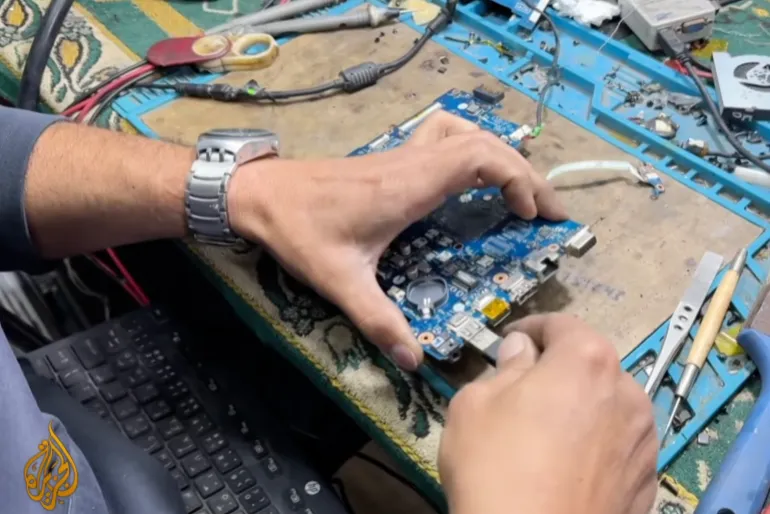
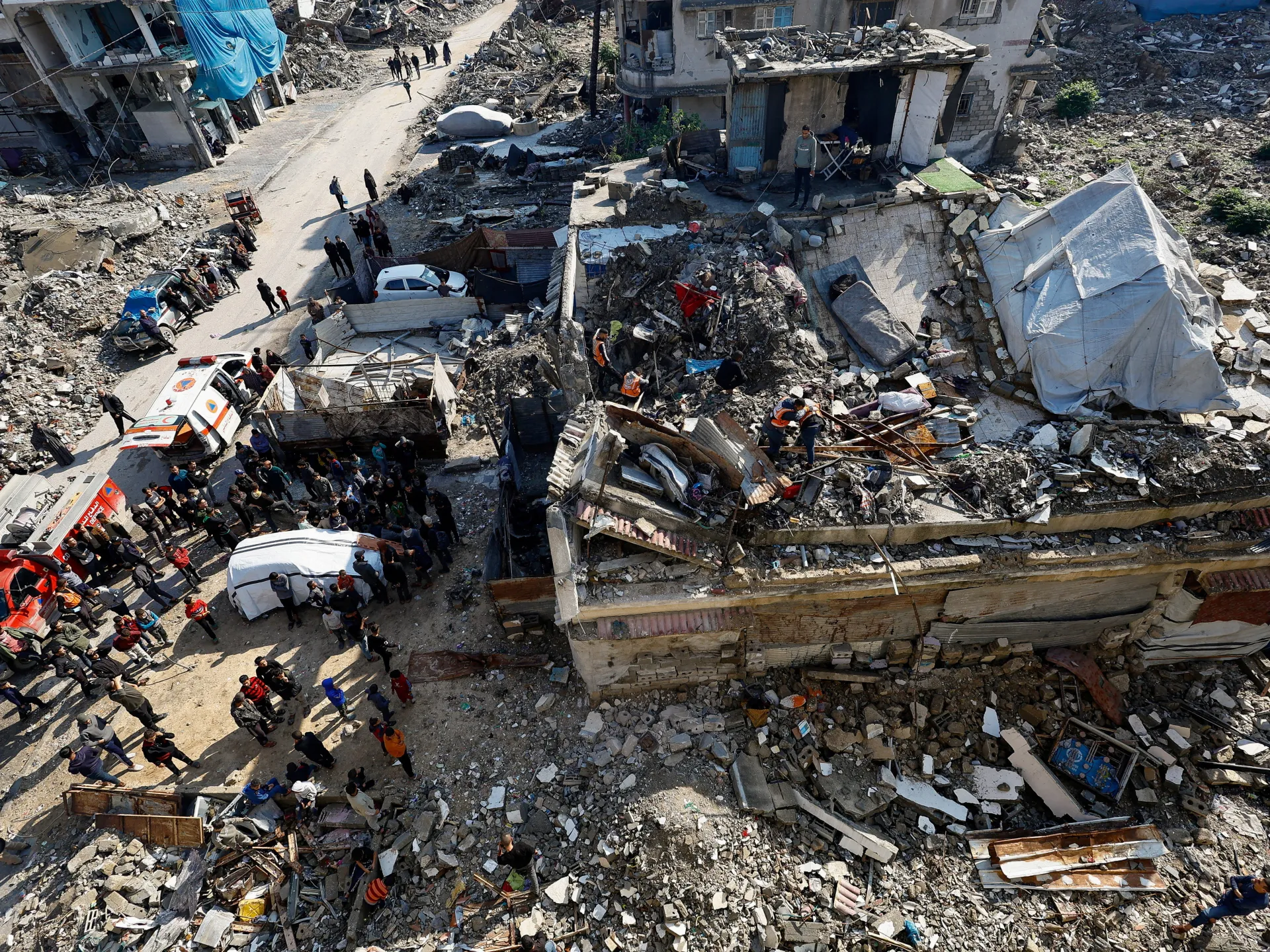
In a territory where 81 percent of buildings lie damaged or destroyed, a small community of young Palestinians is fighting to preserve what remains of Gaza’s digital world.
Coders, repair technicians and freelance workers are labouring under impossible conditions to keep the besieged enclave connected to the outside world.
Recommended Stories
list of 3 itemsend of list
Against all odds, Gaza’s youths continue to adapt. They work offline, code in notebooks, store solar power whenever the sun is out, and wait for rare moments of connectivity to send their work to clients around the world.
In a war that has taken nearly everything, digital skills have become a form of survival – and resilience.
Many now also rely on online work to make a living. But even that fragile lifeline is now hanging by a thread after more than two years of Israel’s genocidal war.
Palestinians work on laptops and mobile devices in Gaza despite widespread destruction of telecommunications infrastructure [Al Jazeera]
According to the Palestinian Central Bureau of Statistics, Israeli forces have “deliberately and systematically destroyed” the telecommunications infrastructure.
“We just always look for another way to get connected, always find another way,” said Shaima Abu Al Atta, a coder working from a displacement camp. “This is what actually gave us purpose because if we didn’t do this, we would just die surviving and not doing anything. We would die internally.”
Before the war erupted in October 2023, Gaza had a modest but vibrant tech scene. Innovation hubs hosted coding bootcamps, and hundreds of freelancers worked remotely for international clients. Much of that ecosystem now lies in ruins.
Shareef Naim, an engineer who led a technology hub, described what was lost. His building housed more than 12 programmers with contracts for companies outside Gaza, he said. “The team was very active,” Naim told Al Jazeera.
Today, the structure is destroyed, though some team members are still trying to work from tents and emergency shelters.
Technicians in Gaza work to repair telecommunications equipment amid severe shortages of spare parts and electricity [Al Jazeera]
Computer technician A’aed Shamaly says, “The main challenge is electricity. Today, electricity is not available all the time, and if it is available, it is unstable, and there will be a lot of cuts. Prices are also high.”
Electricity, when available at all, is unstable and prohibitively expensive, $12 per kilowatt compared with $1.50 for 10 kilowatts before the war, he said. “There are no spare parts,” he added, so technicians must scavenge components from broken equipment pulled from bombed buildings.
The scale of destruction is staggering. According to the United Nations Satellite Centre (UNOSAT), approximately 198,273 structures across Gaza have been damaged, with 123,464 completely destroyed. The telecommunications sector has been particularly hard hit.
Data from the Palestinian Central Bureau of Statistics reveals that 64 percent of mobile phone towers were out of service as of early April 2025. In Rafah, coverage has collapsed to just 27 percent, down from near-universal access before the war.
During the war, connectivity watchdog NetBlocks documented repeated disruptions, including what it called a “near-total telecoms blackout” in January 2024 that lasted for days.
Israel has long restricted Gaza to outdated 2G mobile technology while allowing 4G in the occupied West Bank.
The telecommunications sector’s value has cratered from $13m in 2023 to just $1.5m in 2024, an 89 percent collapse. Estimated losses exceed half a billion dollars, while reconstruction is projected to cost at least $90m.
Palestinians struggle to maintain internet connectivity in Gaza, where most telecommunications infrastructure has been destroyed [Al Jazeera]
The consequences ripple across Gaza’s economy and society.
Remote work was a crucial income source in a territory where unemployment exceeded 79 percent even before October 2023. Now, erratic internet access has pushed many freelancers into joblessness just as Israeli-induced famine has sent food prices soaring.
The telecommunications collapse has also paralysed the banking system, preventing money transfers and leaving families unable to access cash. Healthcare has been disrupted, with the World Health Organization documenting deaths caused by the inability to contact emergency services in time.
Even during the fragile ceasefire that took effect in October 2025, Israel has blocked essential repair equipment from entering Gaza. The restrictions form part of what analysts describe as a deliberate strategy to maintain control over Palestinian digital infrastructure and suppress the flow of information to the outside world.
The future remains deeply uncertain, as efforts to push a fragile ceasefire forward appear to stall and Israel threatens the possibility of returning to full-scale war.
The United States Middle East envoy, Steve Witkoff, will hold talks in Miami, Florida, with senior officials from Qatar, Egypt and Turkiye as efforts continue to advance the next phase of the Gaza ceasefire, even as Israel repeatedly violates the truce on the ground.
A White House official told Al Jazeera Arabic on Friday that Witkoff is set to meet representatives from the three countries to discuss the future of the agreement aimed at halting Israel’s genocidal war on Gaza.
Recommended Stories
list of 3 itemsend of list
Axios separately reported that the meeting, scheduled for later on Friday, will include Qatari Prime Minister and Foreign Minister Sheikh Mohammed bin Abdulrahman bin Jassim Al Thani, Turkish Foreign Minister Hakan Fidan and Egyptian Foreign Minister Badr Abdelatty.
At the same time, Israel’s public broadcaster, quoting an Israeli official, said Prime Minister Benjamin Netanyahu is holding a restricted security consultation to examine the second phase of the ceasefire and potential scenarios.
That official warned that Israel could launch a new military campaign to disarm Hamas if US President Donald Trump were to disengage from the Gaza process, while acknowledging that such a move was unlikely because Trump wants to preserve calm in the enclave.
Despite Washington’s insistence that the ceasefire remains intact, Israeli attacks have continued almost uninterrupted, as it continues to renege on the terms of the first phase, as it blocks the free flow of desperately needed humanitarian aid into the besieged Palestinian territory.
According to an Al Jazeera analysis, Israeli forces carried out attacks on Gaza on 58 of the past 69 days of the truce, leaving only 11 days without reported deaths, injuries or violence.
In Washington, Trump said on Thursday that Netanyahu is likely to visit him in Florida during the Christmas holidays, as the US president presses for the launch of the agreement’s second phase.
“Yes, he will probably visit me in Florida. He wants to meet me. We haven’t formally arranged it yet, but he wants to meet me,” Trump told reporters.
Qatar and Egypt, who are mediating and guaranteeing the truce after a devastating two-year genocide in Gaza, have urged a transition to the second phase of the agreement. The plan includes a full Israeli military withdrawal and the deployment of an international stabilisation force (ISF).
Fragile truce, entrenched occupation
Qatar’s prime minister warned on Wednesday that daily Israeli breaches of the Gaza ceasefire are threatening the entire agreement, as he called for urgent progress towards the next phase of the deal to end Israel’s genocidal war on the besieged Palestinian enclave.
Sheikh Mohammed made the appeal following talks with United States Secretary of State Marco Rubio in Washington, where he stressed that “delays and ceasefire violations endanger the entire process and place mediators in a difficult position”.
The ceasefire remains deeply unstable, and Palestinians and rights groups say it is a ceasefire only in name, amid Israeli violations and a rapidly deteriorating humanitarian situation in Gaza.
Since the truce took effect on October 10, 2025, Israel has repeatedly breached the agreement, killing hundreds of Palestinians.
Gaza’s Government Media Office says Israel committed at least 738 violations between October 10 and December 12, including air strikes, artillery fire and direct shootings.
Israeli forces shot at civilians 205 times, carried out 37 incursions beyond the so-called “yellow line”, bombed or shelled Gaza 358 times, demolished property on 138 occasions and detained 43 Palestinians, the office said.
Israel has also continued to block critical humanitarian aid while systematically destroying homes and infrastructure.
Against this backdrop, Israel Hayom quoted an Israeli security official as saying the so-called “yellow line” now marks Israel’s new border inside Gaza, adding that Israeli forces will not withdraw unless Hamas is disarmed. The official said the army is preparing to remain there indefinitely.
The newspaper also reported that Israeli military leaders are proposing continued control over half of Gaza, underscoring Israel’s apparent intent to entrench its occupation rather than implement a genuine ceasefire.
Compounding the misery in Gaza, a huge storm that recently hit the Strip has killed at least 13 people as torrential rains and fierce winds flooded tents and caused damaged buildings to collapse.
Israel’s two-year war has decimated more than 80 percent of the structures across Gaza, forcing hundreds of thousands of families to take refuge in flimsy tents or overcrowded makeshift shelters.
Favourite Anthony Joshua tips the scales more than 12 kilos heavier than YouTuber-turned-boxer Jake Paul at weigh-in.
Published On 19 Dec 202519 Dec 2025
Share
Former heavyweight world champion Anthony Joshua easily made weight ahead of his fight against social media boxing disruptor Jake Paul at Thursday’s official weigh-in in Miami.
Joshua, who under the rules of the fight, couldn’t weigh more than 245 pounds (111kg), tipped the scales at 243.4 pounds (110kg).
Recommended Stories
list of 4 itemsend of list
Joshua (28-4, 25 KOs), who usually fights in the heavyweight classification at about 250 pounds (11kg), was the lightest he has been since he dropped to 240 pounds (109kg) for his first heavyweight title fight against Oleksandr Usyk on September 25, 2021.
Paul (12-1, 7 KOs) weighed in at a bulky 216 pounds (98kg) – but still more than two stones, or 12.7 kilogrammes, less than the Briton, who is 13 centimetres taller at 1.98m (Six feet, six inches).
It was just the second time in his professional career that the American weighed in above his usual cruiserweight limit of 91kg, or 200 pounds.
Paul riles up the crowd at the weigh-in [Marco Bello/Reuters]
After the weigh-in, Paul, who excitedly took to the stage first and jeered up the crowd, claimed Joshua was nervous heading into the fight and said he would “shock the world” on Friday.
“I smell fear. I see something in his eyes, I truly do,” Paul said.
“The pressure is on him. I’m fighting free. I’ve already won. This is a lose-lose situation for him. I’ve got him right where I want him.”
Joshua, who remained composed throughout the weigh-in, other than when he pushed Paul’s fist away from his face and exclaimed “don’t touch me” during the promotional stare off, said his talent would prevail against the smaller, less experienced boxer.
“I’ll just outclass this kid. I’m a serious fighter. That’s the difference. I’m a serious, serious fighter,” the 2012 Olympic champion said.
The fight will take place at Miami’s Kaseya Center at 10:30pm on Friday (03:30 GMT Saturday).
The contest is an eight-round sanctioned bout with 10-ounce gloves to be used.
Joshua is returning to the ring for the first time since his knockout defeat to fellow Briton Daniel Dubois in September 2024.
In the weigh-in for the co-main event, holder Alycia Baumgardner came in at 129.2 pounds (58.6kg) while challenger Leila Beaudoin came in at 130 pounds (58.9kg) ahead of their unified junior lightweight title bout.
Baumgardner hasn’t been beaten since 2018 and is the strong favourite to retain her titles.
Alycia Baumgardner, left, and Leila Beaudoin face off during their ceremonial weigh-in ahead of their co-main event fight [Leonardo Fernandez/Getty Images via AFP]
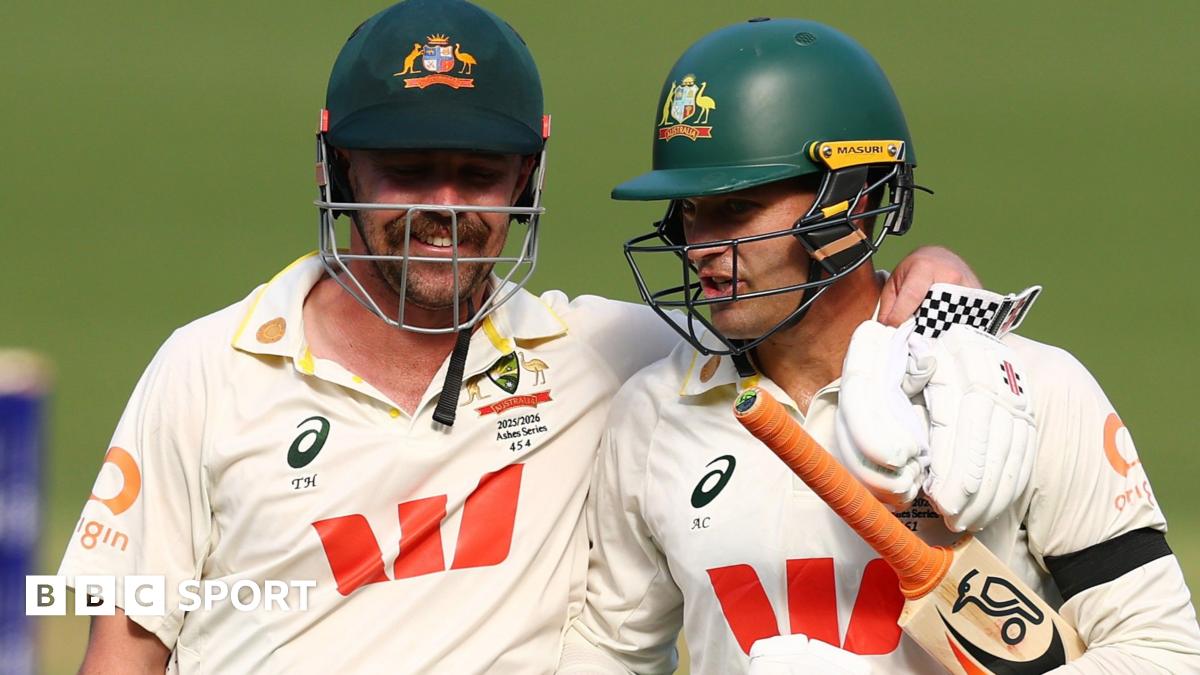
England were pushed towards the precipice of the fastest Ashes series defeat in more than 100 years as a Travis Head century maintained Australia’s grip on the third Test in Adelaide.
Head was dropped on 99 by Harry Brook and spent eight balls one run short of a hundred before belting Joe Root down the ground for four to draw a deafening roar from his home-town crowd at the Adelaide Oval.
The left-hander moved Australia’s second innings to 271-4 and their overall lead to 356 at the end of the third day.
If England’s third loss in as many Tests is completed on Saturday, it would mean the Ashes have been decided in 10 days of cricket.
Not since 1921, when Australia needed only eight days of play to win in England, has the destination of the urn been settled so swiftly.
Head’s inevitable ton snuffed out brief England hope that was raised when captain Ben Stokes and Jofra Archer added 73 runs in the morning session.
Stokes made 83 and Archer 51 in a stand of 106, the highest by an England ninth-wicket pair in Australia since 1924.
By creeping to 286 all out, 85 behind on first innings, England could have left themselves an outside chance by dismissing Australia for a total below 240 in their second innings.
At 53-2 and 149-4, England clung on before being cut adrift by Head. At some point, England will be tasked with pulling off the highest successful chase on this ground in order to keep the Ashes alive.
Of further concern to the visitors is the fitness of all-rounder Stokes, who is yet to bowl in the 66 overs of Australia’s second innings.
Weekly insights and analysis on the latest developments in military technology, strategy, and foreign policy.
As military and economic pressure builds on Venezuelan dictator Nicholas Maduro,an E-3 Sentry Airborne Warning and Control System (AWACS) aircraft was tracked on FlightRadar24 flying close to the Venezuelan coast. To our knowledge, at least in recent days, these aircraft have not been present on flight tracking software in this increasingly high-activity area. And if they have popped-up, their presence has been impersistent at best. At the same time, E-3s are no stranger to this region though and have played a role in drug interdiction operations for years in this exact area.
🇺🇸🇻🇪⚡️- A U.S. Air force E-3C Sentry, airborne early warning and control aircraft, is currently loitering off the coast of Venezuela. pic.twitter.com/oujrc0CpxA
While E-3s may have been present but not trackable over the Caribbean in recent days, this one being trackable is not a mistake. U.S. military aircraft executing easily trackable sorties very near Venezuelan airspace has been a key component of the pressure campaign placed on Maduro.
The reappearance of the E-3s is a relatively important development, as they would be key to any major kinetic operation against Venezuela. While the carrier-based E-2D Hawkeye, which have been a staple of operations in the area for weeks, is extremely capable, and in some ways more so than the E-3, they are not as well suited for providing airborne early warning, data-sharing and command and control functions for a large and diverse force beyond the carrier air wing. The E-3 also has a higher perch for its radar and passive sensors to take advantage of. It can also better integrate with USAF forces.
Meanwhile, other U.S. combat aircraft made their closest and most sustained publicly-known presence near the northern Venezuelan coast on Thursday. It’s worth mentioning that we do not know how close aircraft with transponders turned off have been getting, as we can only see the flights that are publicly trackable. These missions are part of Operation Southern Spear, a counter-narcotics mission that morphed into one aimed at Maduro and Venezuelan oil, the country’s main source of income.
Amid all this aerial activity, President Donald Trump today said he was open to notifying Congress before a direct attack on Venezuela. His comments to reporters at the White House today came a day after the House of Representatives shot down measures requiring the president to obtain prior permission for such an action.
“I wouldn’t mind telling them,” Trump said when asked if he would seek permission from lawmakers for land and boat attacks against Venezuela. He added that prior notification is not required.
“I don’t have to tell them,” he posited. “It’s been proven, but I wouldn’t mind at all. I just hope they wouldn’t leak it. You know, people leak it. They are politicians, and they leak like a sieve, but I have no problem.”
BREAKING: Reporter: Will you be seeking any authorization from Congress for any land attacks on cartels in Venezuela?
Trump: I don’t have to tell them, but I would not mind it at all. I just hope they would not leak it. They are politicians, and they leak like a sieve. pic.twitter.com/UpFHPtt2vX
Trump’s views on Congressional authority have generated debate on Capitol Hill that broke down almost completely along party lines, with nearly all Republicans in agreement and Democrats opposed.
Under the 1973 War Powers Resolution, the Commander-In-Chief must notify Congress within 48 hours after“introducing United States Armed Forces into hostilities or into situations where imminent involvement is clearly indicated by the circumstances.” The Resolution also says any such actions are limited to 60 days without subsequent Congressional authorization, though the President can extend that timeline by 30 days with a written certification of the need for the continued use of force.
Donald Trump does NOT have the authority to carry out his current plans to use military force in the Caribbean without authorization from Congress.
If he acts without congressional authorization, the Senate will move a bipartisan resolution to prevent the unauthorized use of…
Trump, who ordered a blockade against sanctioned ships carrying oil to and from Venezuela, continues to assert that the U.S. has a right to that oil. On, Wednesday, Trump doubled down on his blockade warning, telling reporters that the U.S. is “not gonna let anybody go through that shouldn’t go through.”
Trump on Venezuela:
It’s a blockade, not gonna let anybody going through that shouldn’t be going through…
The blockade announcement sparked a separate debate in Congress and elsewhere about its legality.
“American presidents have broad discretion to deploy U.S. forces abroad, but Trump’s asserted blockade marks a new test of presidential authority,” international law scholar Elena Chachko of U.C. Berkeley Law School told Reuters.
Meanwhile, Venezuela condemned the blockade and said it would take its case to the United Nations.
Venezuela has released a statement. Here is the English translation of both pages:
On the night of today, December 16, 2025, the President of the United States, Donald Trump, violating International Law, free trade, and freedom of navigation, has issued a reckless and serious… https://t.co/dS3e4Yib1Xpic.twitter.com/Irf9ECnaux
Despite Trump’s pronouncement, several ships carrying oil byproducts from the South American country sailed from Venezuela’s east coast under escort from that country’s Navy “between Tuesday evening and Wednesday morning,” The New York Times reported.
“The ships transporting urea, petroleum coke and other oil-based products from the Port of José were bound for Asian markets,” per that story, citing anonymous sources. “The Venezuelan government imposed the military escort in response to Mr. Trump’s threats.”
🇻🇪🇺🇸 Venezuela’s government has ordered its Navy to escort ships carrying petroleum products from port following Trump’s blockade announcement.
Several ships sailed from the country’s east coast with a naval escort between Tuesday evening and Wednesday morning, according to… pic.twitter.com/xY9huYtMqa
— Status-6 (Military & Conflict News) (@Archer83Able) December 17, 2025
The blockade announcement came after the U.S. government had already seized one sanctioned oil tanker, the M/T Skipper. That mission, which occurred on December 10, was led by the U.S. Coast Guard with elements of the U.S. military providing support.
Today, the Federal Bureau of Investigation, Homeland Security Investigations, and the United States Coast Guard, with support from the Department of War, executed a seizure warrant for a crude oil tanker used to transport sanctioned oil from Venezuela and Iran. For multiple… pic.twitter.com/dNr0oAGl5x
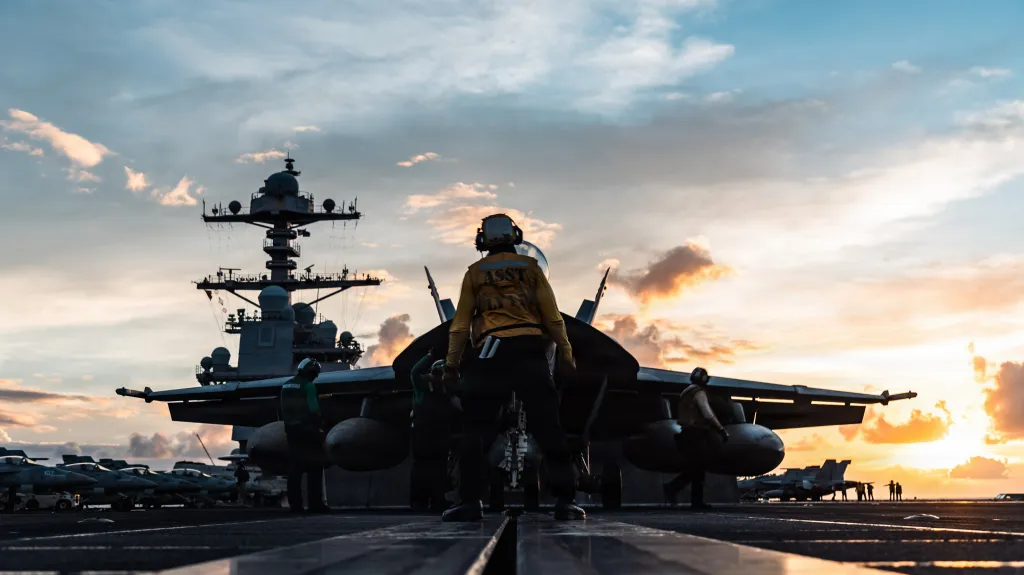
A U.S. Sailor directs an F/A-18F Super Hornet onto a catapult during flight operations aboard the world’s largest aircraft carrier, USS Gerald R. Ford (CVN 78), while underway in the Caribbean Sea in support of Operation Southern Spear (U.S. Navy photo) Petty Officer 3rd Class Gladjimi Balisage
The presence of aerial refueling tankers is also growing. KC-46 Pegasus tankers have been flying sorties out of the U.S. Virgin Islands for months, with a ramp-up in activity in recent weeks. There are now at least 10 KC-135 Stratotanker refuelers deployed to the Dominican Republic.
While these assets, along with about 15,000 deployed U.S. troops, are capable of limited sustained operations, it is far from the force that would be required for a land invasion or any large ground operation in Venezuela.
US Air Force KC-135 tankers forward deployed in the US Southern Command area of responsibility. USAF
Since September, U.S. military operations in the Caribbean Sea, as well as the Eastern Pacific, have already included nearly two dozen strikes on boats allegedly involved in drug smuggling. The first of these strikes, which came on September 2, has become the focus of particular controversy, including allegations that it may have constituted a war crime.
The Sept. 2 incidenthas spurred numerous Congressional briefings, but on Wednesday, the Chairman of the House Armed Services Committee, Mike Rogers, an Alabama Republican, said he was satisfied by testimony about that strike and that no further hearings would be held. It is unclear if there will be other Congressional action, though, since the Senate Armed Services Committee has also been investigating the matter.
The boat attacks continued on Wednesday, with another four suspected traffickers killed, bringing the total number of fatalities to about 100.
On Dec. 17, at the direction of @SecWar Pete Hegseth, Joint Task Force Southern Spear conducted a lethal kinetic strike on a vessel operated by a Designated Terrorist Organizations in international waters. Intelligence confirmed that the vessel was transiting along a known… pic.twitter.com/Yhu3LSOyea
Amid all this tension, Brazilian President Luiz Inacio Lula da Silva offered to serve as an intermediary between Trump and Maduro to “avoid armed conflict.”
Lula told reporters on Thursday that Brazil was “very worried” about the mounting crisis between Venezuela and the United States. He added that he told Trump that “things wouldn’t be resolved by shooting, that it was better to sit down around a table to find a solution.”
The Brazilian leader suggested that he may speak to Trump again before Christmas to reinforce this offer “so that we can have a diplomatic agreement and not a fratricidal war.”
“I am at the disposal of both Venezuela and the US to contribute to a peaceful solution on our continent.”
🇧🇷🇺🇸🇻🇪 | Lula da Silva: “Estoy pensando que, antes de Navidad, posiblemente tenga que conversar con el presidente Trump otra vez, para saber en que puede contribuir Brasil para que tengamos un acuerdo diplomático y no una guerra fraticida”
The Thai-Cambodian tension is almost uniformly treated as a manageable bilateral issue, serious but contained, sensitive but familiar. This is a mistake. The real implication of the dispute is not the danger it poses of immediate escalation but rather what it indicates of the future security order of Southeast Asia and of ASEAN’s decreasing strategic relevance in the formation of that order. The problem is not that ASEAN lacks goodwill or experience, but that it is increasingly misaligned with the type of conflicts now emerging within its own region. At the heart of the dilemma is a category mistake: ASEAN was never constituted to arbitrate or adjudicate, only to regulate. Its diplomatic culture emphasizes confidence-building practices and the maintenance of open, institutionalized avenues for dialogue. Those are things necessary and reasonable. Territory sovereignty is different; it is zero-sum and domestically chiseled. As such, solving such disputes with ASEAN’s traditional toolkit is to operate outside one’s skill set, not unlike an artist trying to bake a cake.
Border tensions play a role in domestic politics on both sides. They play into narratives of sovereignty, justify military readiness, and distract from internal pressures. Crucially, escalation is not an end in itself. Escalation has its risks; resolution has its concessions. Protracted ambiguity, on the other hand, can be handled politically. ASEAN’s preference for dialogue without deadlines, restraint without enforcement, and consensual rather than arbitrated decision-making seems to reproduce this state of equilibrium. This dynamic is often misinterpreted as diplomatic paralysis. It is instead the reflection of a stable, albeit fragile, strategic equilibrium. ASEAN offers a forum for de-escalation. From the standpoint of member states, this is not an institutional malfunction but a rational outcome. The costs of change exceed the benefits, especially when national leaders must answer to domestic audiences that reward toughness over compromise. Where this method turns strategically perilous is in the aggregate. Managed conflicts are not frozen conflicts; they harden over the years. Military interventions are normalized, crisis rhetoric becomes established, and trust dribbles away. What begins as stability based on restraint gradually transforms into militarized coexistence. This process is not the escalation of the crisis but its solidification. As strife becomes routine, the region becomes accustomed to permanent insecurity, and politicians come to treat it as usual, not abnormal.
The regional context renders this trend more significant. Southeast Asia is not functioning in a permissive strategic environment today. Competition among the great powers is increasingly shaping the calculations of states in the region. Thailand’s security ties and Cambodia’s external alignments are not marginal to the conflict; they are part of its strategic backdrop. With external alignments solidifying, tensions within the region are becoming less easy to isolate. Even when they are not directly involved, the great powers’ presence changes bargaining behavior, threat perceptions, and strategic confidence. ASEAN can least afford to see its centrality challenged now. Centrality is strategically and politically meaningful when regional institutions make rather than take outcomes. When disagreements are settled outside the ASEAN framework through bilateral interests, external balancing, or strategic ambiguity, the organization’s role is so minimal as to be symbolic at worst. The consultations and statements continue, but the real influence is shifting elsewhere. ASEAN, over time, also runs the risk of becoming a platform on which it simply reacts rather than organizes and shapes regional strains.
The economic aspect makes the matter even more complex. ASEAN’s integration project presupposes a degree of predictability and strategic restraint. However, it is not entirely effective while security tensions between the two remain unresolved. Border disputes impede cross-border trade and infrastructure planning and introduce risk into investment calculations. They seldom produce immediate or dramatic changes, but they do build up. For a while, economic integration can coexist with political tensions, but not forever. Often, uncertainty begins to erode confidence, particularly in mainland Southeast Asia, where connectivity is most vulnerable to instability. The fundamental problem, then, is not whether ASEAN can stop war. It pretty much can, and it often does. The more profound question, then, is whether war prevention is sufficient in a region under such long-term strategic duress. A security order based solely on restraint, without avenues for resolution, will erode its ability to adapt. It treats the symptoms and not the causes of these problems. This does not necessitate that ASEAN turn away from its founding principles, but rather that it apply them in new and innovative ways. Consensus and respect for non-interference continue to be the pillars of regional cohesion. However, they no longer suffice. Without additional tools in the toolbox, such as informal arbitration, issue-specific mediation regimes, or more explicit regional norms on appropriate dispute behavior, ASEAN will remain trapped in a stance of containment, with no progress.
Overall, the Thai–Cambodian tension is no mere side issue. It shows how latent tensions, domestic politics, and external competition converge in ways that ASEAN cannot fully control. The risk is not a sudden breakdown but strategic stagnation: a region at peace but progressively divided, stable but strategically tenuous, and whose members continue to hesitate over which direction they want to take. If ASEAN is ever to have a fundamental, not just a token, role, it has to face up to this fact, not just in rhetoric but in its structures. This decision will determine whether the future security structure in Southeast Asia is built on deterrence of conflict or on the tolerance of latent tensions as the price of regional cohesion.
Albanese said Australia has more guns now than 30 years ago, when the country’s deadliest-ever mass shooting took place.
Australia will launch a national gun buyback scheme, Prime Minister Anthony Albanese has announced, as the country continues to come to terms with the deadly attack on a Jewish holiday event at Sydney’s Bondi Beach that left 15 people dead.
Albanese called the plan the country’s biggest gun buyback since 1996 – the year of Australia’s deadliest mass shooting in modern history, the Port Arthur massacre in the island state of Tasmania – and said authorities will purchase surplus, newly-banned and illegal firearms.
Recommended Stories
list of 3 itemsend of list
“Right now, there are more guns in Australia than there were during Port Arthur. We can’t allow that to continue,” Albanese told a news conference on Friday, adding that there are currently more than four million firearms in the country.
“Non-citizens have no need to own a gun. And someone in suburban Sydney has no need to own six … The terrible events of Bondi show we need to get more guns off our streets,” he said.
Albanese added that authorities in Australia’s states and territories will be tasked with collecting the weapons and processing payments for surrendered firearms under the scheme. Federal police will then be responsible for destroying them.
“We expect hundreds of thousands of firearms will be collected and destroyed through this scheme,” Albanese added.
Aided by some of the toughest gun restrictions globally, Australia has one of the lowest gun homicide rates in the world.
Restrictions were tightened after a lone gunman, armed with semiautomatic weapons, killed 35 people at the Port Arthur tourist site almost 30 years ago.
The massacre shocked the country, with authorities soon after launching a major gun amnesty and buyback scheme that removed more than 650,000 newly-prohibited firearms from circulation.
‘We need to do more to combat this evil scourge’
Sunday’s shooting in Sydney’s Bondi Beach area – in which two attackers, named as father and son Sajid Akram and Naveed Akram, went on a shooting spree and killed 15 people – has had a similarly jolting impact on Australian society as the Port Arthur massacre and prompted self-reflection.
Albanese said 50-year-old Sajid – who was shot dead at the scene – and 24-year-old Naveed – who was charged with “terrorism” and murder offences after he awoke from a coma on Tuesday – were inspired by “Islamic State ideology”.
On Thursday, Albanese announced tougher hate speech laws as he acknowledged the country had experienced a rising tide of anti-Jewish hate since the Hamas-led October 7, 2023, attacks on Israel, and Israel’s genocidal war on Gaza.
Albanese said rising anti-Semitism in Australia “culminated on Sunday in one of the worst acts of mass murder that this country has ever seen”.
“It was an attack on our Jewish community – but it was also an attack on the Australian way of life,” he said.
“Australians are shocked and angry. I am angry. It is clear we need to do more to combat this evil scourge, much more,” he added.
The prime minister also announced on Friday that Australia will hold a national day of reflection this Sunday – one week after the mass shooting.
Albanese urged Australians to light candles at 6:47pm (07:47 GMT) on Sunday, December 21 – “exactly one week since the attack unfolded”.
“It is a moment to pause, reflect, and affirm that hatred and violence will never define who we are as Australians,” he told reporters.
Earlier on Friday, hundreds of people plunged into the ocean off Bondi Beach in another gesture to honour the dead.
Swimmers and surfers paddled into a circle as they bobbed in the gentle morning swell, splashing water and roaring with emotion.
“They slaughtered innocent victims, and today I’m swimming out there and being part of my community again to bring back the light,” security consultant Jason Carr told the AFP news agency.
“We’re still burying bodies. But I just felt it was important,” the 53-year-old said.
“I’m not going to let someone so evil, someone so dark, stop me from doing what I do and what I enjoy doing,” he said.
Surfers and swimmers congregate in the surf at Bondi Beach as they participate in a tribute for the victims of Sunday’s Bondi Beach attack, in Sydney, on December 19, 2025 [David Gray/AFP]
Greg Biffle’s plane caught fire after crash-landing at a regional airport, state authorities said. Other victims have not yet been identified.
Published On 18 Dec 202518 Dec 2025
Share
A former NASCAR driver has been identified as one of seven people who died in a plane crash in the southern United States.
Authorities said Greg Biffle and members of his family died when a private jet crashed on Thursday while trying to land at Statesville Regional Airport, north of Charlotte, North Carolina.
Recommended Stories
list of 3 itemsend of list
Flight records showed the plane was registered to a company run by Biffle.
“Although the post-crash fire prevents us from releasing a definitive list of the occupants at this time, it is believed that Mr Gregory Biffle and members of his immediate family were occupants of the airplane,” state police said.
Further details about the victims were not immediately available.
First responders tend to the scene of a reported plane crash at a regional airport in Statesville, North Carolina [Matt Kelley/The Associated Press]
Throughout his 16-year career, Biffle won more than 50 races across the three racing-circuit types offered by NASCAR, a US-based association for car races.
He placed first in 19 races at the Cup Series, considered NASCAR’s top level. He also won the Craftsman Truck Series championship in 2000 and the Xfinity Series title in 2002.
Biffle’s plane had taken off from the airport shortly after 10am local time on Thursday (15:00 GMT), but it then returned to North Carolina and was attempting to land there, according to tracking data posted by FlightAware.com.
Video from WSOC-TV showed first responders rushing onto the runway as flames burned near scattered wreckage from the plane.
The National Transportation Safety Board (NTSB) and the Federal Aviation Administration (FAA) were investigating the crash.
All told, the NTSB has investigated 1,331 crashes in the US in 2025.
EU delays Mercosur trade deal until January amid farmer protests and opposition from France and Italy.
The European Union has delayed a massive free-trade deal with South American countries amid protests by EU farmers and as last-minute opposition by France and Italy threatened to derail the agreement.
European Commission chief spokesperson Paula Pinho confirmed on Thursday that the signing of the trade pact between the EU and South American bloc Mercosur will be postponed until January, further delaying a deal that had taken some 25 years to negotiate.
Recommended Stories
list of 4 itemsend of list
Commission President Ursula von der Leyen was expected to travel to Brazil on Saturday to sign the deal, but needed the backing of a broad majority of EU members to do so.
The Associated Press news agency reported that an agreement to delay was reached between von der Leyen, European Council President Antonio Costa and Italian Prime Minister Giorgia Meloni – who spoke at an EU summit on Thursday – on the condition that Italy would vote in favour of the agreement in January.
French President Emmanuel Macron had also pushed back against the deal as he arrived for Thursday’s summit in Brussels, calling for further concessions and more discussions in January.
Macron said he has been in discussions with Italian, Polish, Belgian, Austrian and Irish colleagues, among others, about delaying the signing.
“Farmers already face an enormous amount of challenges,″ the French leader said.
The trade pact with Argentina, Brazil, Bolivia, Paraguay and Uruguay would be the EU’s largest in terms of tariff cuts.
But critics of the deal, notably France and Italy, fear an influx of cheap commodities that could hurt European farmers, while Germany, Spain and Nordic countries say it will boost exports hit by United States tariffs and reduce reliance on China by securing access to key minerals.
Brazil’s President Lula says Italy’s PM Meloni asked for ‘patience’
The EU-Mercosur agreement would create the world’s biggest free-trade area and help the 27-nation European bloc to export more vehicles, machinery, wines and spirits to Latin America at a time of global trade tensions.
Al Jazeera’s Dominic Kane, reporting from Berlin, said Germany, Spain and the Nordic countries were “all lobbying hard in favour of this deal”. But ranged against them were the French and Italian governments because of concerns in their powerful farming sectors.
“Their worry being that their products, such as poultry and beef, could be undercut by far cheaper imports from the Mercosur countries,” Kane said.
“So no signing in December. The suggestion being maybe there will be a signing in mid-January,” he added.
“But there must now be a question about what might happen between now and mid-January, given the powerful forces ranged against each other in this debate,” he added.
Farmers wear gas masks at the Place du Luxembourg near the European Parliament, during a farmers’ protest on December 18, 2025 [Nicolas Tucat/AFP]
Mercosur nations were notified of the move, a European Commission spokeswoman said, and while initially reacting with a now-or-never ultimatum to its EU partners, Brazil opened the door on Thursday to delaying the deal’s signature to allow time to win over the holdouts.
Brazil’s President Luiz Inacio Lula da Silva said Italy’s Meloni had asked him for “patience” and had indicated that Italy would eventually be ready for the agreement.
The decision to delay also came hours after farmers in tractors blocked roads and set off fireworks in Brussels to protest the deal, prompting police to respond with tear gas and water cannon.
Protesting farmers – some travelling to the Belgian capital from as far away as Spain and Poland – brought potatoes and eggs to throw and waged a furious back-and-forth with police while demonstrators burned tyres and a faux wooden coffin bearing the word “agriculture”.
The European Parliament evacuated some staff due to damage caused by protesters.
The Australian government has announced a gun buyback scheme in the wake of the Bondi Beach attack – its deadliest mass shooting in decades.
The scheme is the largest since the Port Arthur massacre in 1996, which left 35 people dead and prompted Australia to introduce world-leading gun control measures.
Fifteen people were killed and dozens injured on Sunday when two gunmen, believed to have been motivated by “Islamic State ideology”, opened fire on a Jewish festival at the country’s most iconic beach.
On Friday police said a group of men who were arrested in Sydney after travelling from the state of Victoria had “extremist Islamic ideology”.
Police allege Sunday’s attack, which they have declared a terrorist incident, was committed by a father-son duo. Naveed Akram, 24, has been charged with 59 offences, including 15 counts of murder and one of committing a terrorist act. His father Sajid was killed during the attack.
The day after the shooting, national cabinet – which includes representatives from the federal government and leaders from all states and territories – agreed to tighten gun controls.
Speaking to media on Friday, Prime Minister Anthony Albanese said there are now more than 4 million firearms in Australia – more than at the time of the Port Arthur massacre.
“We know that one of these terrorists held a firearm licence and had six guns, in spite of living in the middle of Sydney’s suburbs… There’s no reason why someone in that situation needed that many guns.
“We need to get more guns off our streets.”
Earlier on Friday, a senior New South Wales police officer told national broadcaster ABC seven men arrested by counter terrorism police in Sydney on Thursday evening may have been on their way to Bondi.
Tactical officers swarmed on the group, who had travelled from Victoria and were known to police there, in dramatic scenes in the suburb of Liverpool.
NSW Police Deputy Commissioner David Hudson said “some indication” that Bondi was one of the locations they were considering visiting, but “with no specific intent in mind or proven at this stage”.
Rarely used national security powers were relied upon to swoop before their plans developed.
“We made the decision that we weren’t going to … take any chances in relation to what they might be doing,” he said.
Officers found a knife, but no guns or other weapons, Mr Hudson added.
By the end of the 15th century, Portuguese explorers, such as Vasco da Gama, had discovered a new sea route to India, making Goa an attractive base for the new trade routes. In 1510, the Portuguese overthrew the ruling Bijapur sultan Yusuf Adil Shah with the help of a local ally, establishing a permanent settlement in Goa. This was the beginning of Portuguese rule in Goa that would last for over 450 years.
Goa prospered, becoming the largest city in Asia for a time, with a population of over 40,000. It became known as ‘Rome of the East’ and boasted over 300 churches.
By the middle of the 18th century, Portuguese Goa had expanded to most of its present-day state limits. Though they lost other possessions in India, the borders of Portguese control stabilised, forming the Estado da Índia Portuguesa or State of Portuguese India, of which Goa was the largest territory.
After India gained its independence from the British in 1947, India requested that Portuguese colonies on the Indian subcontinent be ceded to India. In line with the approach of the Estado Novo government regarding its overseas territories, Portugal refused to negotiate on the sovereignty of its Indian territories. The Portuguese argued that India had no rights to this territory because the Republic of India did not exist at the time when Goa came under Portuguese rule
On 19 December 1961, the Indian Army invaded with Operation Vijay. The operation took 36 hours and ended with the surrender of the Portuguese Governor General Vassalo da Silva and the annexation of Goa, and of Daman and Diu islands into the Indian union. Goa, along with Daman and Diu, was organised as a centrally administered union territory of India.
On 30 May 1987, the union territory was split, and Goa became India’s twenty-fifth state, with Daman and Diu remaining a union territory.