
Russia-Ukraine war may “grind on for another 12 to 18 months”
“These peace negotiations are a farce.”
Source link
Discover the latest happenings and stay in the know with our up-to-date today news coverage. From breaking stories and current events to trending topics and insightful analysis, we bring you the most relevant and captivating news of the day.
“These peace negotiations are a farce.”
Source link
One more Palestinian killed by Israeli army in Gaza while two Palestinians, including a child, are shot dead in occupied West Bank.

Published On 21 Dec 202521 Dec 2025
Share
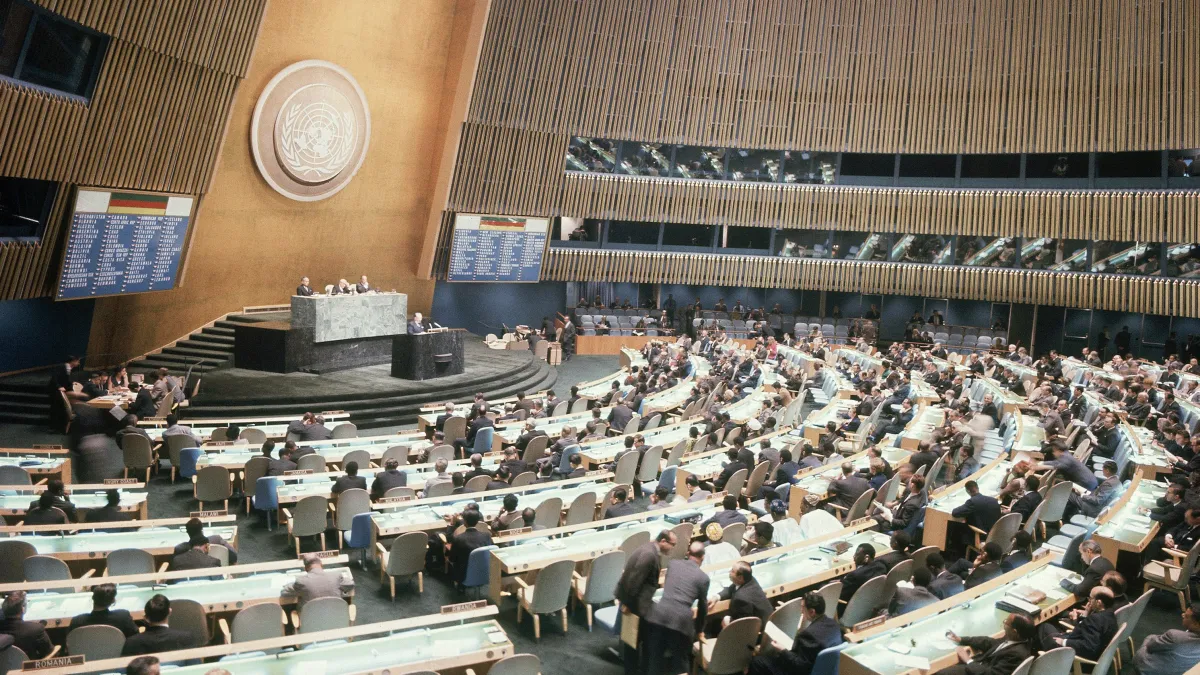
The way the story is often told is that Western countries gifted human rights to the world and are the sole guardians of it. It may come as a surprise for some, then, that the international legal framework for prohibiting racial discrimination largely owes its existence to the efforts of states from the Global South.
In 1963, in the midst of the decolonisation wave, a group of nine newly independent African states presented a resolution to the United Nations General Assembly (UNGA) calling for the drafting of an international treaty on the elimination of racial discrimination. As the representative from Senegal observed: “Racial discrimination was still the rule in African colonial territories and in South Africa, and was not unknown in other parts of the world … The time had come to bring all States into that struggle.”
The groundbreaking International Convention on the Elimination of All Forms of Racial Discrimination (ICERD) was unanimously adopted by the UNGA two years later. The convention rejected any doctrine of superiority based on racial differentiation as “scientifically false, morally condemnable and socially unjust”.
Today, as we mark 60 years since its adoption, millions of people around the world continue to face racial discrimination – whether in policing, migration policies or exploitative labour conditions.
In Brazil, Amnesty International documented how a deadly police operation in Rio de Janeiro’s favelas this October resulted in the massacre by security forces of more than 100 people, most of them Afro-Brazilians and living in poverty.
In Tunisia, we have seen how authorities have for the past three years used migration policies to carry out racially targeted arrests and detentions and mass expulsions of Black refugees and asylum seekers.
Meanwhile, in Saudi Arabia, Kenyan female domestic workers face racism and exploitation from their employers, enduring gruelling and abusive working conditions.
In the United States, diversity, equity and inclusion (DEI) initiatives aimed at tackling systemic racism have been eliminated across federal agencies. Raids by Immigration and Customs Enforcement (ICE) targeting migrants and refugees are a horrifying feature of President Donald Trump’s mass deportation and detention agenda, rooted in white supremacist narratives.
Migrants held in detention centres have been subjected to torture and a pattern of deliberate neglect designed to dehumanise and punish.
Elsewhere, Amnesty International has documented how new digital technologies are automating and entrenching racism, while social media offers inadequately moderated forums for racist and xenophobic content. For example, our investigation into the United Kingdom’s Southport racist riots found that X’s design and policy choices created fertile ground for the inflammatory, racist narratives that resulted in the violent targeting of Muslims and migrants.
Even human rights defenders from the Global South face racial discrimination when they have to apply for visas to Global North countries in order to attend meetings where key decisions are made on human rights.
All these instances of systemic racism have their roots in the legacies of European colonial domination and the racist ideologies on which they were built. This era, which spanned nearly four centuries and extended across six continents, saw atrocities that had historical consequences – from the erasure of Indigenous populations to the transatlantic slave trade.
The revival of anti-right movements globally has led to a resurgence of racist and xenophobic rhetoric, a scapegoating of migrants and refugees, and a retrenchment in anti-discrimination measures and protections.
At the same time, Western states have been all too willing to dismantle international law and institutions to legitimise Israel’s genocide against Palestinians in Gaza and shield Israeli authorities from justice and accountability.
Just as the creation of the ICERD was driven by African states 60 years ago, Global South countries continue to be at the forefront of the fight against racial oppression, injustice and inequality. South Africa notably brought the case against Israel at the International Court of Justice and cofounded The Hague Group – a coalition of eight Global South states organising to hold Israel accountable for genocide.
On the reparations front, it is Caribbean and African states, alongside Indigenous peoples, Africans and people of African descent, that are leading the pursuit of justice. The Caribbean Community (CARICOM) has been intensifying pressure on European governments to reckon with their colonial past, including during a recent visit to the United Kingdom by the CARICOM Reparations Commission.
As the African Union announced 2026-36 the Decade of Reparations last month, African leaders gathered in Algiers for the International Conference on the Crimes of Colonialism, at which they consolidated demands for the codification of colonialism as a crime under international law.
But this is not enough. States still need to confront racism as a structural and systemic issue, and stop pretending slavery and colonialism are a thing of the past with no impact on our present.
Across the world, people are resisting. In Brazil, last month, hundreds of thousands of Afro-Brazilian women led the March of Black Women for Reparations and Wellbeing against racist and gendered historic violence. In the US, people fought back against the wave of federal immigration raids this year, with thousands taking to the streets in Los Angeles to protest and residents of Chicago mobilising to protect migrant communities and businesses against ICE raids.
Governments need to listen to their people and fulfil their obligations under ICERD and national law to protect the marginalised and oppressed against discrimination.
The views expressed in this article are the authors’ own and do not necessarily reflect Al Jazeera’s editorial stance.

The release of thousands of pages of documents related to the late sex offender Jeffrey Epstein’s abuse by the US department of justice (DOJ) has left some who were anxiously awaiting the files disappointed.
By law, the DOJ had to make all materials public by the end of Friday. But only some have been released, many with numerous redactions.
The lawmakers who pushed for these documents to see the light of day have described the DOJ’s efforts as insincere, and some legal experts say that the redactions may only fuel ongoing conspiracy theories.
“We just want all of the evidence of these crimes out there,” Epstein survivor Liz Stein told the BBC.
Ms Stein told Radio 4’s Today programme that she thought the justice department was “really brazenly going against the Epstein Files Transparency Act” – the law that requires all the documents to be released.
Survivors are really worried about the possibility of a “slow roll-out of incomplete information without any context”, she noted.
Marina Lacerda, who was 14 when she was abused by Epstein, also told the BBC some of the survivors were “still nervous and sceptical about how they are going to release the rest of the files”.
“We are very worried that it will still be redacted in the same way that it was today.
“We are a little disappointed that they’re now still lingering on and distracting us with other things.”

 US Department of Justice
Among the latest released information is a photo of Epstein now jailed confidante Ghislaine Maxwell outside Downing Street – the UK prime minister’s office and residence – a document that claims Epstein introduced a 14-year-old girl to US President Donald Trump at Mar-a-Lago, and multiple images of former President Bill Clinton.
Other released photos show the interiors of Epstein’s homes, his overseas travels, as well as celebrities, including Andrew Mountbatten-Windsor, Mick Jagger, Michael Jackson, Diana Ross and Peter Mandelson – former UK Labour Party politician and ambassador to the US.
Being named or pictured in the files is not an indication of wrongdoing. Many of those identified in the files or in previous releases related to Epstein have denied any wrongdoing.
Trump has consistently denied any wrongdoing in relation to Epstein and has not been accused of any crimes by Epstein’s victims. Clinton has never been accused of wrongdoing by survivors of Epstein’s abuse, and has denied knowledge of his sex offending.
At least 15 of the released files were no longer available on the DOJ website on Saturday.
One of the missing files showed a mass of framed photos on a desk, according to CBS, the BBC’s media partner in the US. The photos showed Bill Clinton, and another was of the Pope. In an open drawer, there was a photo of Trump, Epstein, and Maxwell.
Other missing files included photos of a room with what appeared to be a massage table and nude photos and nude paintings.
It was not clear why the files were no longer available.
In a post on X on Saturday night, the DOJ wrote: “Photos and other materials will continue being reviewed and redacted consistent with the law in an abundance of caution as we receive additional information.”
The BBC has asked the DOJ for comment.
Deputy US Attorney General Todd Blanche said on Friday – the day the materials were released – that the department had identified more than 1,200 Epstein victims or their relatives, and withheld material that could identify them.
But many of the documents are also heavily redacted.
The DOJ said it would comply with the congressional request to release documents, with some stipulations.
It redacted personally identifiable information about Epstein’s victims, materials depicting child sexual abuse, materials depicting physical abuse, any records that “would jeopardise an active federal investigation” or any classified documents that must stay secret to protect “national defence or foreign policy”.
The DOJ said it was “not redacting the names of any politicians”, and added a quote they attributed to Blanche, saying: “The only redactions being applied to the documents are those required by law – full stop.
“Consistent with the statute and applicable laws, we are not redacting the names of individuals or politicians unless they are a victim.”
John Day, a criminal defence attorney, told the BBC he was surprised by the amount of information that was redacted.
“This is just going to feed the fire if you are a conspiracy theorist,” he said. “I don’t think anyone anticipated there would be this many redactions. It certainly raises questions about how faithfully the DOJ is following the law.”
Mr Day also noted that the justice department is required to provide a log of what was being redacted to Congress within 15 days of the files’ release.
“Until you know what’s being redacted you don’t know what’s being withheld,” he said.
In a letter to the judges overseeing the Epstein and Maxwell cases, US attorney for the Southern District of New York Jay Clayton, said: “Victim privacy interests counsel in favour of redacting the faces of women in photographs with Epstein even where not all the women are known to be victims because it is not practicable for the department to identify every person in a photo.”
Clayton added that “this approach to photographs could be viewed by some as an over-redaction” – but that “the department believes it should, in the compressed time frame, err on the side of redacting to protect victims.”
 Reuters
Baroness Helena Kennedy, a human rights lawyer and Labour peer in the House of Lords in the UK, said she was told the redactions in the documents were there to protect the victims.
“Authorities always have a worry” about “exposing people to yet further denigration in the public mind”, she told the BBC’s Today programme.
Many Epstein survivors seem “very keen” to have the material exposed, she said, but added that they “might not be so keen if they knew exactly what was in there”.
Democrat Congressman Ro Khanna, who led the charge along with Republican Congressman Thomas Massie to release the files, said the release was “incomplete” and added that he is looking at options like impeachment, contempt or referral to prosecution.
“Our law requires them to explain redactions,” Khanna said. “There is not a single explanation.”
Massie seconded Khanna’s statement and posted on social media that Attorney General Pam Bondi and other justice department officials could be prosecuted by future justice departments for not complying with the document requirements.
He said the document release “grossly fails to comply with both the spirit and the letter of the law” of the Epstein Files Transparency Act.
After the release, the White House called the Trump Administration the most “transparent in history”, adding that it has “done more for the victims than Democrats ever have”.
Blanche was asked in an interview with ABC News whether all documents mentioning Trump in the so-called Epstein files will be released in the coming weeks.
“Assuming it’s consistent with the law, yes,” Blanche said. “So there’s no effort to hold anything back because there’s the name Donald J Trump or anybody else’s name, Bill Clinton’s name, Reid Hoffman’s name.
“There’s no effort to hold back or not hold back because of that.
“We’re not redacting the names of famous men and women that are associated with Epstein.”
Additional reporting by Jaroslav Lukiv
The TWZ Newsletter
Weekly insights and analysis on the latest developments in military technology, strategy, and foreign policy.
The U.S. Marine Corps is looking for companies that can provide 10,000 first-person view drones by Jan. 1, 2027, according to a Request for Information (RFI) posted Thursday on a government procurement website. While just a minute fraction of the number of FPV drones being used by both sides of the war in Ukraine monthly, the RFI is the latest move by the Marines to put these swift and maneuverable weapons into the hands of its troops. It was issued as the Pentagon seeks to dramatically increase drone supplies across the services.
The USMC, as we have previously noted, wants strike weapons at the squad level with far greater reach than rifles and mortars. The Corps has created “attack drone teams” to integrate the lessons in Ukraine about the effectiveness of these weapons against personnel and equipment into their formations. We’ll talk more about those teams later in this story.

The use of FPV drones by both Russia and Ukraine has changed the face of war. They have enabled small units to strike targets in some cases as far away as 40 kilometers, though more typically less than half that distance, greatly extending the depth of the front lines.
Drone footage from Ukraine’s Lazar Special Forces Group captures a precision strike on a Russian 9K33 Osa air defense vehicle in Kherson Oblast, destroying its active radar. The FPV drone covered the 300-meter distance to impact in less than 17 seconds. pic.twitter.com/VtYVcvYJak
— Polymarket Intel (@PolymarketIntel) December 19, 2025
The Marines want the same capabilities.
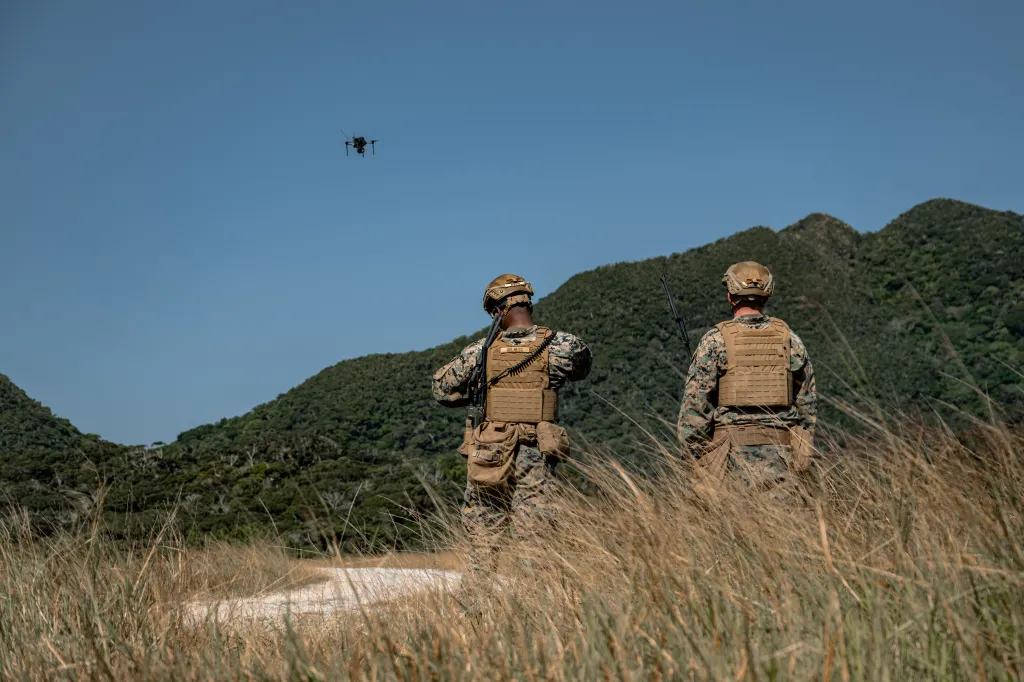
“FPV drones offer squad-level lethality up to 20 kilometers for under $5,000, compared to more expensive weapons systems with less capability,” the Marines explained in March. “This provides a cost-effective and scalable solution for modern combat.”
The RFI, published on Thursday, is one step toward meeting that goal. It calls for FPV drones costing less than $4,000 per unit for the aircraft, with the understanding that ground-control stations, communications equipment, goggles, batteries and charging stations for swarming will add to the price tag.
These can be controlled by radio frequencies as well as fiber optic cables. First employed by Russia last year, these cable-controlled drones are now widely used by both sides because they are immune to jamming and many other forms of electronic warfare. They also help mitigate interference from geography and structures that can impede radio signals.

The use of these types of FPV drones has become so ubiquitous that some Ukrainian cities are covered in cables, which you can see in the following video.
Pilots from the reconnaissance company of the 63rd Mechanized Brigade showed what Lyman looks like today. The city is holding on, but is gradually becoming covered by this “web.” – “Today, the intensity of combat is measured not so much by destroyed buildings as by the amount of… pic.twitter.com/KzRyRWmkpa
— Ukraine – Combat Footage Archive 🇬🇪 🇺🇦 (@Bodbe6) December 19, 2025
The Marines are also seeking designs that can be easily converted from non-kinetic to multiple different kinetic payloads by troops on the front lines. In addition, the RFI calls for drones giving Marines the ability to “modify, within reason, the system with a variety of third-party payloads, armaments, and munitions without vendor involvement.” The Corps also wants the ability to repair these drones by itself, without vendor involvement, a critical need in any swiftly evolving fight.
There are no requirements listed for speed, range, altitude, or payload weights; however, the RFI asks that interested companies provide those specifications. Regardless, the Corps is looking to move out quickly — at least in terms of notoriously sluggish U.S. military procurement norms — on this effort. The RFI calls for the delivery of an initial tranche of these weapons by Jan. 1, 2027, “with the ability to quickly ramp production and deliver larger quantities up to 5,000 air vehicles within 6 months and 10,000 units within 12 months.”
The RFI comes as the Marines are testing FPV drones to see how they function in simulated combat and to certify troops on their use. There have been at least two examples of that since November alone.

Earlier this month, the 3rd Marine Division, III Marine Expeditionary Force, participated in the Marine Corps Attack Drone Competition at Camps Hansen and Schwab, Okinawa, Japan.
“The competition put Neros Archer, first-person view attack drones into the hands of the Division’s capable warfighters,” the Marines said in a release. The Neros Archer is “capable of carrying a 2 kg/4.5 lb payload over 20 kilometers,” the company asserts on its LinkedIn page. In November, the company was awarded a $17 million contract to provide about 8,000 drones, including kinetic-strike capable FPVs, to the Corps. It was previously awarded a contract under the U.S. Army’s Purpose-Built Attritable Systems (PBAS) program and had produced 6,000 of these drones for Ukraine.

The attack drone competition on Okinawa allowed Marines “to test and improve their drone skills alongside the top operators in the Marine Corps, enhancing their confidence and capabilities on the battlefield,” said U.S. Marine Corps Sgt. Grant Doran, an attack drone instructor with the Marine Corps Attack Drone Team in Quantico. “It also lets us train the people who will be taking over our positions in the future. Other branches were also able to bring their top operators in, so we can share our tips and tricks to increase lethality across all services.”
The certification “increased 3rd Marine Division’s tactical drone use in both offensive and defensive scenarios,” the division explained. “The Neros Archer drone extends the Marines’ understanding of the battlespace by 20 kilometers, and this capability increases the Marines’ lethal reach and ability to attack using precision weapons.”
“I believe that with [any potential] crisis, small Unmanned Aerial Systems development and integration within small unit formations is going to be super relevant given its longer reach,” Doran posited.

In November, the Marine Corps Battalion Landing Team 3/6, 22nd Marine Expeditionary Unit (Special Operations Capable) conducted FPV attack drone training on Camp Santiago, Puerto Rico.
“The 2d Marine Division and the Marine Corps Attack Drone Team are training and certifying 22nd MEU(SOC) Marines on the Neros Archer first-person view drone system, demonstrating the 22nd MEU(SOC)’s commitment to innovation, adaptability, and enhanced combat readiness,” a release explains. That training came as the U.S. was ramping up its Operation Southern Spear campaign against drug traffickers and Venezuelan dictator Nicolas Maduro, which you can read more about here.

22nd MEU FPV Drone Training
The RFI and the recent competition and training come after the Corps announced the establishment of its experimental Marine Corps Attack Drone Team (MCADT) at the service’s base in Quantico, Virginia, earlier this year.
MCADT’s creation was a direct response to “the rapid proliferation of armed first-person-view drone technology and tactics observed in modern conflicts, particularly in Eastern Europe,” the Marines said in a press release issued back in March. “As emerging threats continue to evolve, the Marine Corps is prioritizing the integration of FPV drone capabilities to enhance lethality and operational effectiveness across the Fleet Marine Force.”
The Marine Corps’ growing interest in FPV drones is unfolding as their use, popularized by the war in Ukraine, has spread to conflicts across the globe by states and non-state actors. Still, it is important to note, as TWZ regularly does, that the threats posed by weaponized uncrewed aerial systems, including small modified commercial designs, far predate the all-out war in Ukraine. The following image shows a drone used by a Mexican cartel in 2020.

The U.S. is increasingly heeding the wake-up call emanating from the battlefields of Ukraine. In July, War Secretary Pete Hegseth unveiled an ambitious Pentagon-wide effort to dramatically boost the number of troops armed with small drones. Earlier this month, the Pentagon unveiled its $1 billion “Drone Dominance” program to purchase hundreds of thousands of kamikaze drones of all types. Last month, the Army announced its own plans to purchase a million kamikaze drones over the next two to three years and recently signed a $1 billion agreement to purchase Switchblade-series loitering munitions. These Trump administration efforts, among several others, have subsumed the Biden administration’s $1 billion Replicator program, created to buy small drones.
The Marines, meanwhile, have a separate program to spend hundreds of millions of dollars on small drones. In April 2024, the Marine Corps Systems Command (MARCORSYSCOM) awarded three companies – Teledyne FLIR Defense, AeroVironment and Anduril Industries – an Indefinite Delivery/Indefinite Quantity contract worth up to $249 million under its Organic Precision Fires-Light (OPF-L) program. The most recent order came earlier this month, when the Corps agreed to purchase 600 Rogue-1 loitering munitions from Teledyne FLIR Defense for $42.5 million, or about $71,000 a piece. That follows an initial $12 million order for 127 Rogue-1s, which had a price tag of about $90,000 per unit.

As the Marines eye a potential future peer conflict where drones will play a huge role, there is another lesson from the Ukraine war to consider. Magazine depth for these weapons is critical, which is why the Corps is also looking for a mix of short-range, troop-controlled drones, including ones far cheaper, albeit less capable in some ways, than the Rogue-1.
Still, the procurement of 10,000 FPV drones, as we noted earlier in this story, pales in comparison to what is seen in Ukraine, a nation in an existential fight. Kyiv, for instance, plans to produce 4.5 million FPV drones by the end of this year. Russia, for its part, plans to produce 2.5 million of these weapons. Still, Ukraine is a unique, well-established conflict with largely static lines, and is not what the U.S. would likely face in the Pacific, for instance, where FPV drones won’t be needed in such massive quantities. Still, FPV drones will be a staple of land warfare going forward.
Though its goals are comparatively small in number, the RFI is a small step toward closing the Pentagon’s yawning drone development and procurement gap that TWZ has frequently highlighted.
Contact the author: howard@thewarzone.com

NEWS BRIEF China’s rare-earth magnet exports surged to 6,150 metric tons in November, the second-highest level on record and a 12% increase from October, following the U.S.-China agreement to streamline exports of the critical elements. The recovery comes after China restricted magnet exports in April during the trade war, bringing parts of the global supply […]
The post Magnet Diplomacy: China’s Rare-Earth Exports Soar After Xi Deal appeared first on Modern Diplomacy.
The United Nations Security Council (UNSC) has condemned Rwanda for backing a rebel offensive in eastern Democratic Republic of the Congo and urged it to withdraw its forces and stop supporting the M23 armed group.
The UNSC unanimously adopted the resolution on Friday, and also extended the UN peacekeeping mission in the DRC, known as MONUSCO, for a year. This came despite Rwanda’s repeated denials – contrary to overwhelming evidence – of involvement in a conflict that has intensified as a United States-brokered peace deal unravels.
list of 3 itemsend of list
The UNSC said M23’s seizure of the strategic city of Uvira “risks destabilizing the whole region, gravely endangers civilian populations and imperils ongoing peace efforts”.
“M23 must immediately withdraw at least 75km (47 miles) from Uvira and return to compliance with all of its obligations undertaken in the Framework Agreement,” said Jennifer Locetta, a US representative to the UN.
M23 captured Uvira in the South Kivu Province on December 10, less than a week after the DRC and Rwandan presidents met US President Donald Trump in Washington and committed to a peace agreement.
“It is an amazing day: great day for Africa, great day for the world and for these two countries. And they have so much to be proud of,” Trump crowed, as fighting quickly undermined the White House spectacle.
One Uvira resident, Feza Mariam, told Al Jazeera in recent days: “We don’t know anything about the political process they are talking about.
“The only thing we need is peace. Anyone able to provide us with peace is welcome here. For the rest, we as citizens, we don’t care about it.”
The M23 group claimed on Wednesday it was withdrawing from the city following international backlash, but the DRC government dismissed this as a “staged” pullback, saying M23 forces remain deployed there.
US Secretary of State Marco Rubio acknowledged on Friday that commitments under the Washington accord were “not being met” but said his government had now signed agreements it could “hold people to”.
The US earlier warned it would use available tools against those undermining the peace deal, with US officials estimating between 5,000 and 7,000 Rwandan soldiers were operating in eastern DRC as of early December.
The US had previously sanctioned Rwandan cabinet ministers earlier this year, and the DRC later led calls to expand those sanctions after the seizure of Uvira.
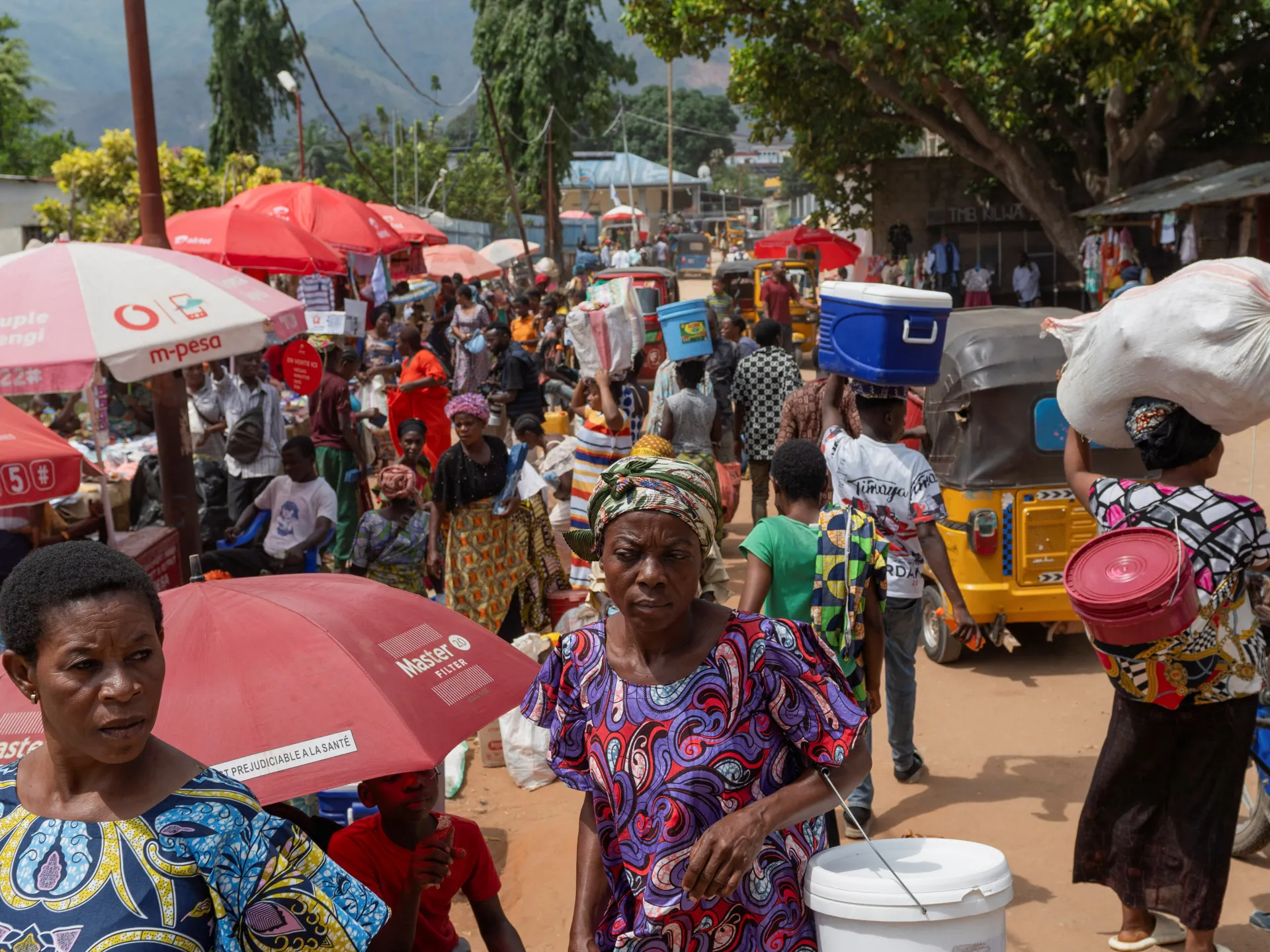
The fighting has triggered a major humanitarian emergency, with more than 84,000 people fleeing into Burundi since early December, according to the UN refugee agency, which said the country has reached a “critical point” as refugees arrive exhausted and traumatised. They join approximately 200,000 others who had already sought refuge in the country.
Regional officials say more than 400 civilians have been killed in recent violence in the city.
The seizure of Uvira, located directly across Lake Tanganyika from Burundi’s largest city, Bujumbura, has raised fears of broader regional spillover. The city was the last major foothold in South Kivu for the DRC government and the Wazalendo, which are DRC-allied militias, after M23 captured the provincial capital, Bukavu, in February.
Rwanda has consistently denied backing M23, despite assessments by UN experts and the international community. In a February interview with CNN, Rwandan President Paul Kagame said he did not know whether his country’s troops were in the DRC, despite being commander-in-chief of the armed forces.
Rwanda implicitly acknowledged a presence in eastern DRC in February 2024, when it rejected a US call to withdraw troops and surface-to-air missile systems, saying it had adjusted its posture for self-defence.
Rwanda maintains that its security concerns are driven by the presence of the Democratic Forces for the Liberation of Rwanda, a militia composed largely of Hutus who fled to the DRC after participating in the 1994 genocide that killed approximately 800,000 Tutsis and moderate Hutus.
Kigali views the group as an existential threat and accuses the DRC government of supporting it.
The broader conflict in the mineral-rich eastern DRC, where more than 100 armed groups operate, has displaced more than seven million people, creating one of the world’s worst humanitarian crises.
Negotiators from Russia and the United States have met in the US city of Miami as Ukrainian President Volodymyr Zelenskyy urged Washington to ramp up the pressure on Moscow to end its war on Ukraine.
The meeting on Saturday took place between Russian President Vladimir Putin’s special envoy, Kirill Dmitriev, and US President Donald Trump’s special envoy, Steve Witkoff, and his son-in-law, Jared Kushner.
list of 3 itemsend of list
Dmitriev told the reporters the talks were positive and would continue on Sunday.
“The discussions are proceeding constructively,” said Dmitriev. “They began earlier and will continue today, and will also continue tomorrow.”
Earlier, US Secretary of State Marco Rubio had said that he may also join the talks in Miami. He said that progress has been made in discussions to end the war, but there is still a way to go.
“The role we’re trying to play is a role of figuring out whether there’s any overlap here that they can agree to, and that’s what we’ve invested a lot of time and energy [on], and continue to do so,” Rubio said. “That may not be possible. I hope it is. I hope it can get done this month, before the end of the year.”
Trump’s envoys have for weeks been negotiating a 20-point peace plan with Ukrainian, Russian and European officials.
While US officials say they have made progress, major differences remain on the issues of territory and possible security guarantees that Kyiv says are essential for any agreement.
Russia has shown few signs that it is willing to give up its expansive territorial demands in Ukraine, which it believes it is well-positioned to secure as the war grinds on and political fractures emerge among Ukraine’s European allies.
In Kyiv, Zelenskyy said he remains supportive of a US-led negotiations process, but that diplomacy needs to be accompanied by greater pressure on Russia.
“America must clearly say, if not diplomacy, then there will be full pressure… Putin does not yet feel the kind of pressure that should exist,” he said.
The Ukrainian leader said Washington has also proposed a new format for talks with Russia, comprised of three-way talks at the level of national security advisers from Ukraine, Russia, and the US.
Zelenskyy expressed scepticism that the talks would result in “anything new”, but said he would support trilateral discussions if they led to progress in areas such as prisoner swaps or a meeting of national leaders.
“If such a meeting could be held now to allow for swaps of prisoners of war, or if a meeting of national security advisers achieves agreement on a leaders’ meeting… I cannot be opposed. We would support such a US proposal. Let’s see how things go,” he said.
The last time Ukrainian and Russian envoys held official direct talks was in July in Istanbul, which led to prisoner swaps but little else.
The talks in Miami come after Putin promised to press ahead with his military offensive in Ukraine, hailing Moscow’s battlefield gains in an annual news conference on Friday.
Putin, however, suggested that Russia could pause its devastating strikes on the country to allow Ukraine to hold a presidential ballot, a prospect that Zelenskyy rejected.
Meanwhile, the death toll in Ukraine’s Black Sea Odesa region from an overnight Russian ballistic missile strike on port infrastructure rose to eight, with 30 people wounded.
A civilian bus was struck in the attack, Ukrainian Prime Minister Yulia Svyrydenko said.
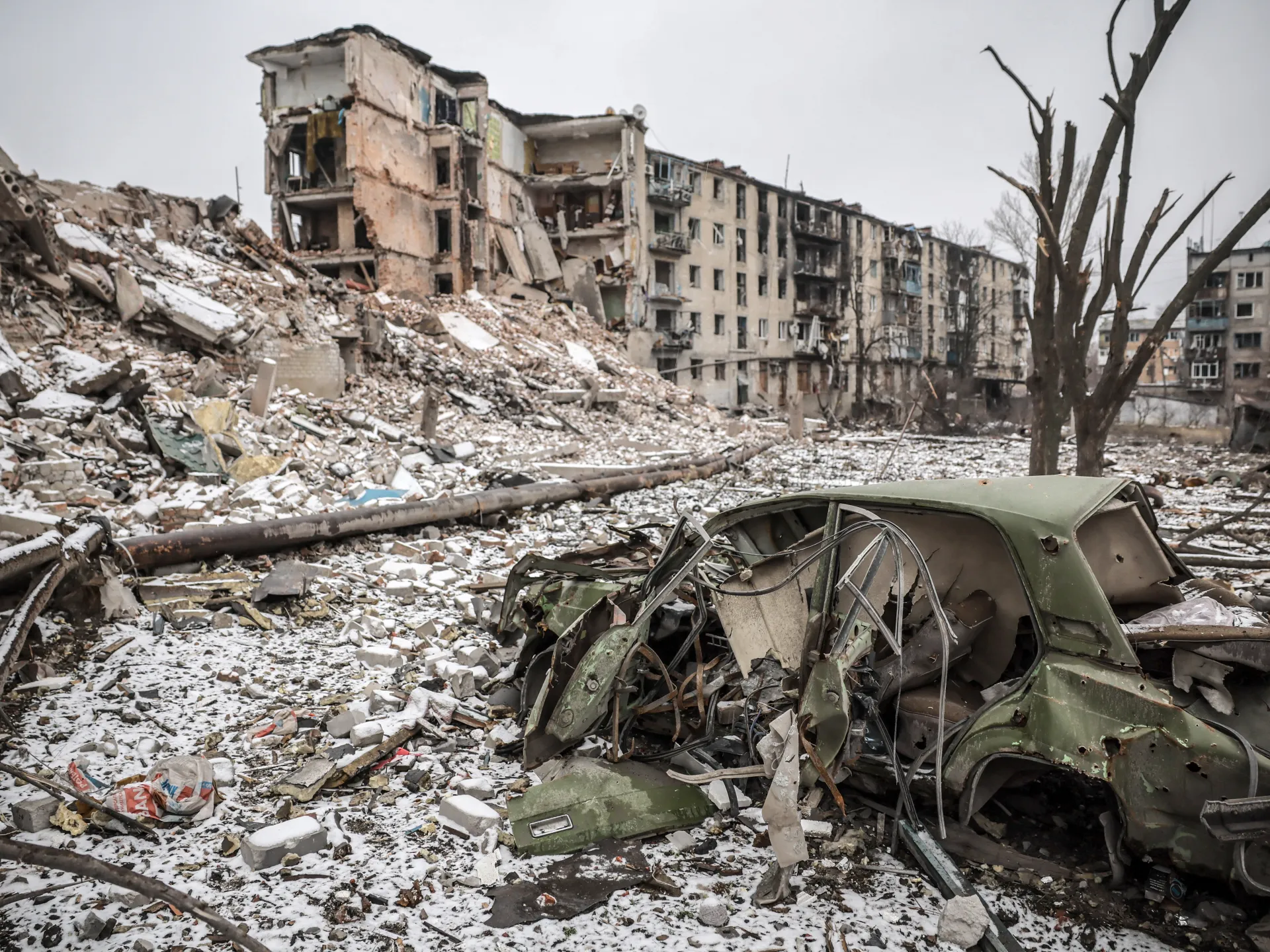
The Russian attacks on the coastline region have wrought havoc in recent weeks, hitting bridges and cutting electricity and heating for hundreds of thousands in freezing temperatures.
Moscow earlier said it would expand strikes on Ukrainian ports as retaliation for targeting its sanctions-busting oil tankers.
On Saturday, Ukraine claimed to have destroyed two Russian fighter jets at an airfield in Moscow-occupied Crimea, according to the security service SBU. Kyiv’s army said it struck a Russian oil rig in the Caspian Sea as well as a patrol ship nearby.
Putin described Russia’s initial full-scale invasion of Ukraine as a “special military operation” to “demilitarise” the country and prevent the expansion of NATO.
Kyiv and its European allies say the war, the largest and deadliest on European soil since World War II, is an unprovoked and illegal land grab that has resulted in a tidal wave of violence and destruction.
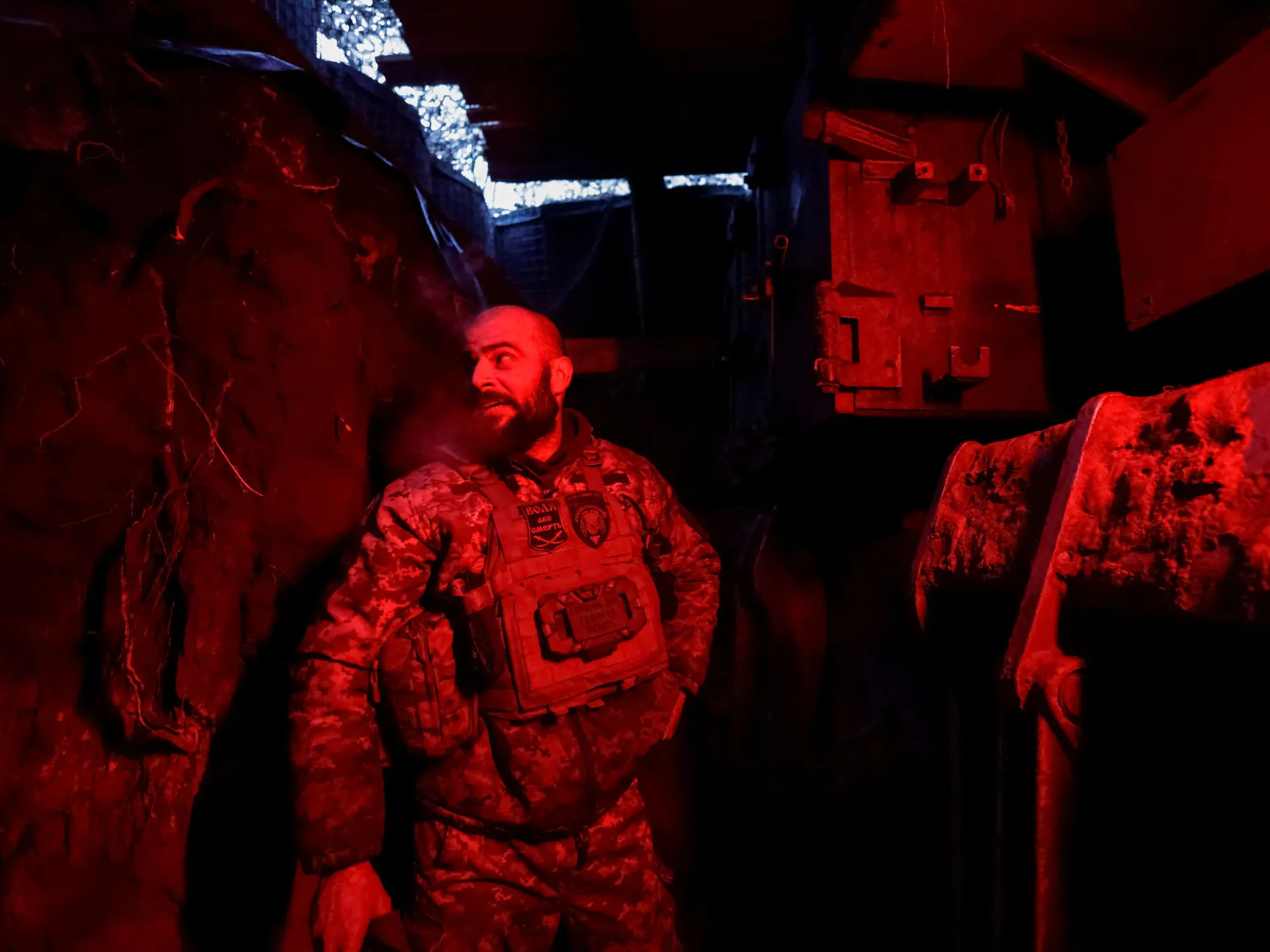
Here is where things stand on Sunday, December 21:
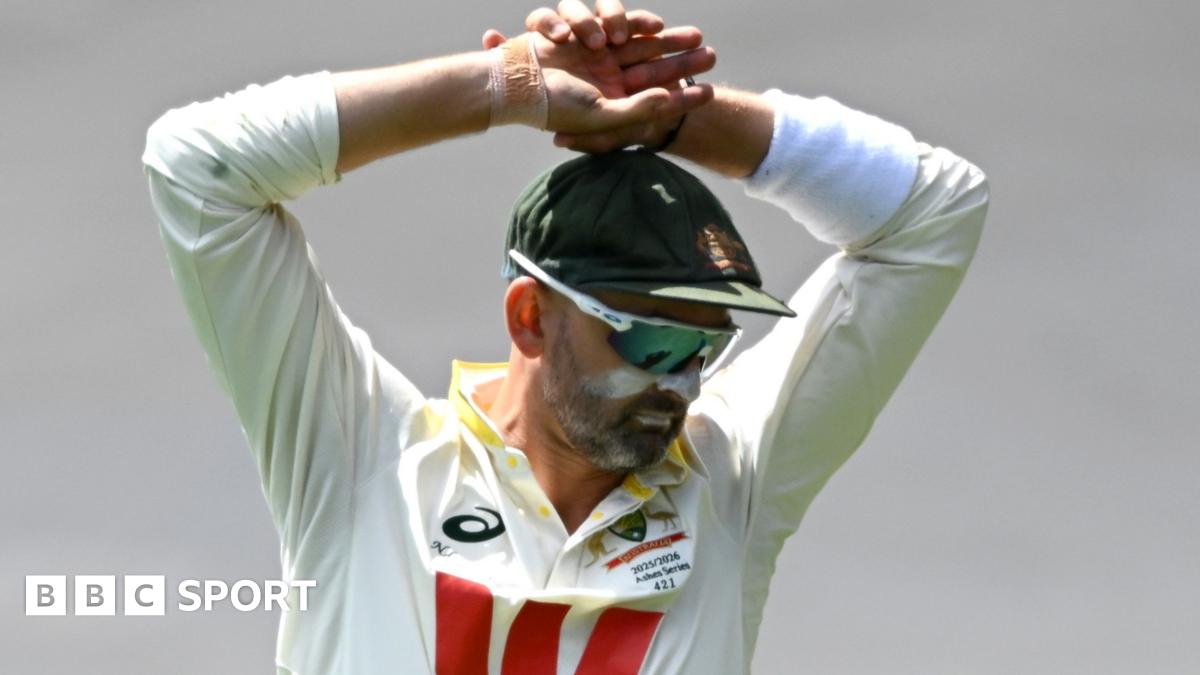
Australia spinner Nathan Lyon will play no further part on the final day of the third Ashes Test and is a doubt for the remainder of the series because of a hamstring injury.
Lyon, 38, who became Australia’s second highest Test wicket-taker during the Adelaide Test, was injured diving in the field on the morning of the fifth day.
He clutched his right hamstring and left the field immediately.
Lyon took three wickets on the fourth afternoon to put Australia on the brink of a victory that will confirm a series win.
He went wicketless before his injury on day five, however, as England showed admirable fight.
There are just five days before the fourth Test begins in Melbourne on 26 December (23:30 GMT, 25 December), leaving Lyon with little time to recover. The final Test in Sydney follows five days after the fourth has finished.
Lyon, one of the greatest spinners of all time, suffered a calf injury during the second Test of the 2023 Ashes, which was a significant factor in England recovering to draw the series 2-2.
He bowled only two overs in the first Test of this series and then said he felt “filthy” after being left out of the second in Brisbane.

The TWZ Newsletter
Weekly insights and analysis on the latest developments in military technology, strategy, and foreign policy.
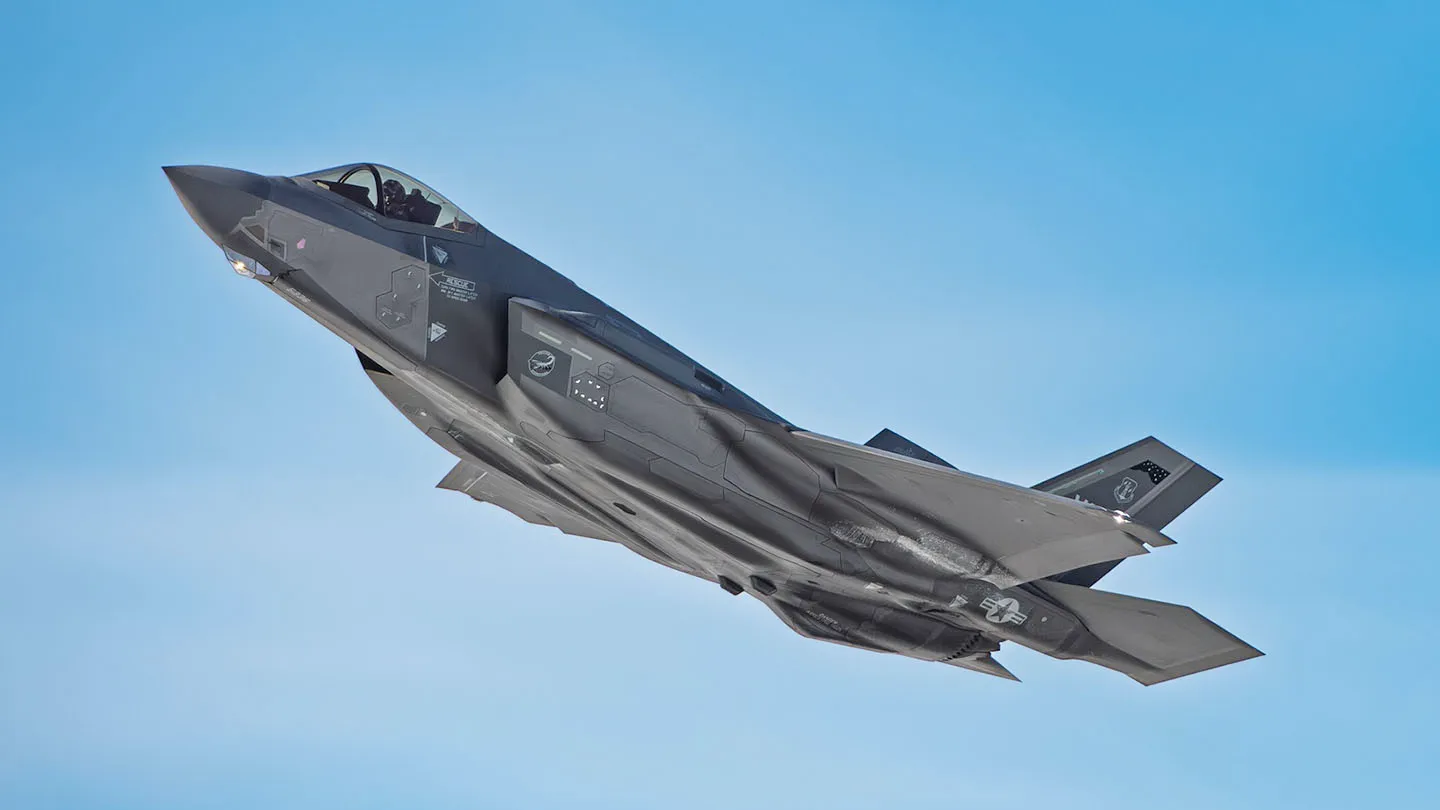
F-35A Joint Strike Fighters from the Vermont Air National Guard‘s 158th Fighter Wing have arrived at the former Roosevelt Roads Navy base in Puerto Rico to take part in Operation Southern Spear. The arrival of these jets is the latest buildup of U.S. forces in the region for the mission to pressure Venezuelan dictator Nicolas Maduro.
TWZ was the first to report that the 158th’s F-35As were being deployed to Southern Spear. You can catch up with our previous story about this operation here.
The jets were captured on video and in still images by airplane spotters. We reached out to the Vermont National Guard for comment.
F-35A Lightning lls with the “Green Mountain Boys” of the Vermont Air National Guard’s 134th Fighter Squadron, 158th Fighter Wing, seen on the tarmac at Roosevelt Roads Naval Station in Eastern Puerto Rico, after arriving earlier today from the Mainland United States.
Video… pic.twitter.com/yLLeCT0xh0
— OSINTdefender (@sentdefender) December 20, 2025
F-35A operating in the Caribbean — the first USAF tactical jets to do so as part of this operation — offer the ability to drop 2,000lb-class guided bombs from their internal bays on targets deep inside Venezuelan airspace. The Marine Corps F-35Bs previously deployed to Puerto Rico are limited to carrying 1,000lb-class weapons internally. They also have significantly less range and reduced agility. Their presence in the region is part of the increasing evidence that the U.S. is preparing for strikes.
The F-35As join a growing air armada amassed for Southern Spear, including combat search and rescue (CSAR) aircraft, E/A-18G electronic warfare aircraft, MQ-9 Reaper drones, AC-130 Ghostrider gunships, and various helicopters already in the region.
Earlier this week, an E-3 Sentry Airborne Warning and Control System (AWACS) aircraft was tracked on the FlightRadar24 open source flight-tracking site flying close to the Venezuelan coast.
FlightRadar24 also showed a U.S. Navy F/A18E Super Hornet making repeated loops reportedly right on the outer edge of Venezuela’s northern airspace. In addition, two U.S. Navy E/A-18G Growler electronic warfare jets, two more Super Hornets, and an E-2D Advanced Hawkeye airborne early warning plane were tracked on FlightRadar24 flying close to the Venezuelan coast. There has been a notable uptick in such trackable flights recently.
In addition, the world’s largest aircraft carrier, the USS Gerald R. Ford, is also in the Caribbean. It has four squadrons of F/A-18 Super Hornets, a squadron of Growlers, a squadron of E-2D Advanced Hawkeye airborne command and control aircraft, MH-60S and MH-60R Seahawk helicopters, and a detachment of C-2A Greyhound carrier onboard delivery planes.
The arrival of the jets comes as the Trump administration continues to increase military and economic pressure on Maduro. Saturday, U.S. personnel boarded another oil tanker off the coast of Venezuela.
In a pre-dawn action early this morning on Dec. 20, the US Coast Guard with the support of the Department of War apprehended an oil tanker that was last docked in Venezuela.
The United States will continue to pursue the illicit movement of sanctioned oil that is used to fund… pic.twitter.com/nSZ4mi6axc
— Secretary Kristi Noem (@Sec_Noem) December 20, 2025
That action follows a blockade on sanctioned tankers ordered by President Donald Trump and marks at least the second such seizure. The U.S. had already seized one sanctioned oil tanker, the M/T Skipper. That mission, which occurred on December 10, was led by the U.S. Coast Guard with elements of the U.S. military providing support.
Today, the Federal Bureau of Investigation, Homeland Security Investigations, and the United States Coast Guard, with support from the Department of War, executed a seizure warrant for a crude oil tanker used to transport sanctioned oil from Venezuela and Iran. For multiple… pic.twitter.com/dNr0oAGl5x
— Attorney General Pamela Bondi (@AGPamBondi) December 10, 2025
It remains unclear what, if any action, Trump will ultimately take against Venezuela. The arrival of the F-35As from Vermont gives him another range of capabilities to employ.
Contact the author: howard@thewarzone.com

In Chinese, Dongzhi (‘dongzhi’ in Mandarin and ‘dung zi’ in Cantonese) means ‘extreme of winter’ and the Dongzhi festival marks the Winter Solstice in the Northern Hemisphere.
The winter solstice occurs when the earth is tilted at its maximum annual angle away from the sun creating the day with the shortest amount of daylight.
The solstice marked the middle of winter in many ancient cultures. Solstice literally means ‘the standing still of the sun’ as the sun appears to do just that on sunrise on the solstice before it rises ever so slightly south on the next day.
Noting the arrival of the shortest day, was a time for celebration. Of course, winter wouldn’t end for several months, but to know that you were past the middle and that the dark, cold nights would start to get shorter is an event that has been marked by feasts and rituals since the dawn of civilisation.
As long ago as the Zhou period (circa 1100BC-256BC), the Chinese were already observing the winter solstice as a state holiday.
This turning point of the year is an important aspect of Dongzhi with a traditional custom in parts of China being that on Dongzhi everyone turns one year older.
Certainly, the festival is a time to gather with your family and a common activity in southern China is the making and eating of a sweet soup containing balls of glutinous rice, called tangyuan. The spherical tangyuan, which can be stuffed with meat, some kind of sweet paste, or without filling, symbolise fullness and completeness.
In Hong Kong, tangyuan is almost always served as a dessert; the most popular fillings are sesame, red bean, or peanut paste. The clear syrup is sometimes flavoured with ginger or osmanthus flowers.
In Korea, a popular traditional food to eat on Dong-Ji is Patjuk, a red bean porridge. The custom is that the red colour of the porridge can ward off evil spirits and cure sickness.

NEWS BRIEF The World Bank has approved $700 million in financing for Pakistan’s economic stability, advancing a controversial multi-year program that could total $1.35 billion. The funding arrives as Pakistan grapples with deep structural issues, from fragmented regulation to political capture of resources, and faces growing regional opposition, with India reportedly poised to challenge further […]
The post Funding Pakistan’s Stability: The World Bank’s $700 Million Commitment appeared first on Modern Diplomacy.
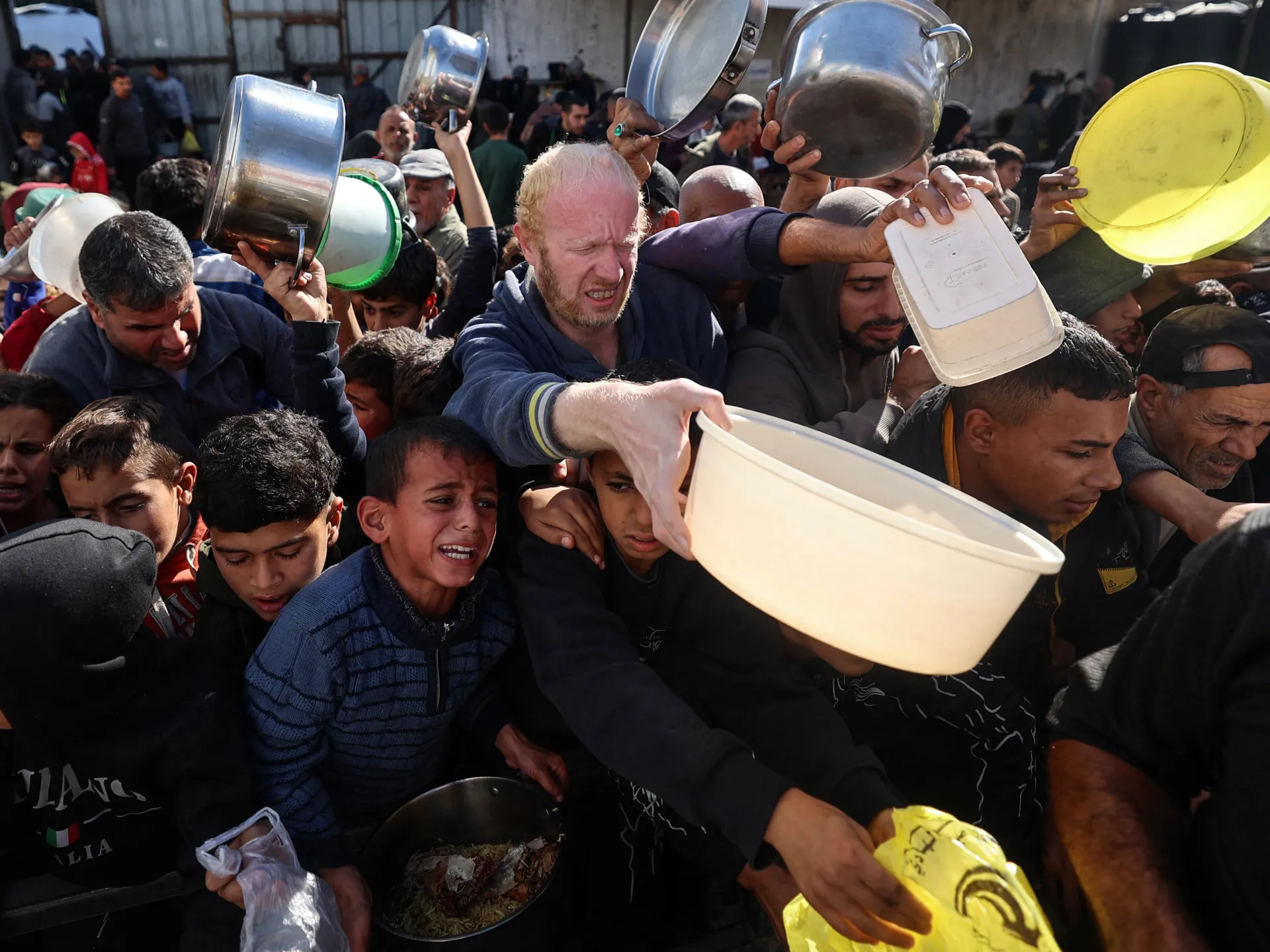
The talks between the four countries lauded the first stage of the truce, including expanded humanitarian assistance, return of captives, force withdrawals and reduction in hostilities.
The United States, Egypt, Qatar and Turkiye have urged the parties to the Gaza ceasefire to honour their commitments and show restraint, the chief US envoy says after talks in the US city of Miami.
Senior officials from the four mediator countries met Steve Witkoff, US President Donald Trump’s special envoy, on Friday to review the first phase of the ceasefire between Israel and Hamas, which took effect on October 10, according to a joint statement released on Saturday.
list of 4 itemsend of list
The meeting was held against the backdrop of ongoing Israeli attacks on the enclave. The Palestinian Civil Defence in Gaza said that six people were killed on Friday when an Israeli strike hit a school housing displaced people, raising the number of Palestinians killed by Israeli fire since the deal took effect to about 400.
“We reaffirm our full commitment to the entirety of the President’s [Trump’s] 20-point peace plan and call on all parties to uphold their obligations, exercise restraint, and cooperate with monitoring arrangements,” Witkoff said in a statement posted on X.
Saturday’s statement cited progress yielded in the first stage of the peace agreement, including expanded humanitarian assistance, the return of captives’ bodies, partial force withdrawals and a reduction in hostilities.
It called for “the near-term establishment and operationalisation” of a transitional administration, which is due to happen in the second phase of the agreement, and said that consultations would continue in the coming weeks over its implementation.
Under the truce deal’s terms, Israel is supposed to withdraw from its positions in Gaza, an interim authority is to govern the Palestinian territory instead of Hamas, and an international stabilisation force is to be deployed.
On Friday, US Secretary of State Marco Rubio expressed hope that countries would contribute troops for the stabilisation force, but also urged the disarmament of Hamas, warning the process would unravel unless that happened.
A meeting was also held between Hamas’s chief negotiator, Khalil al-Hayya, and Turkish intelligence chief Ibrahim Kalin in Istanbul on Saturday.
In a statement from Hamas after the meeting, the group said it was committed to abiding by the ceasefire agreement, despite Israeli violations.
“The delegation stressed the urgent need to halt these continuous violations,” the statement added.
“The delegation also reviewed the deteriorating humanitarian situation in the Gaza Strip with the onset of winter, emphasising the critical priority of urgently bringing in tents, caravans, and heavy equipment to save our people from death by cold and drowning, given the destruction of infrastructure and homes.”
Winter storms have been worsening the conditions for hundreds of thousands of displaced Palestinians in Gaza, as aid agencies warn that Israeli restrictions are preventing lifesaving assistance from reaching people across the besieged enclave.
On Saturday, an Israeli air strike targeted two people in northern Gaza, according to a statement from the military, which alleged that they “posed an immediate threat” to Israeli troops after crossing the so-called yellow line, which separates areas under Israeli army control from those where Palestinians are permitted to move.
No details were yet available on whether the two people were killed or injured.
Gaza’s Civil Defence on Saturday also said it recovered the bodies of 94 Palestinians from the rubble in the enclave.
The bodies were retrieved in central Gaza City and transferred to the forensic department at Al-Shifa Medical Complex to arrange their burial in the Martyrs’ Cemetery in the central city of Deir el-Balah, according to a statement from the Civil Defence.
Thousands of Palestinians are believed to still be buried under the rubble of destroyed buildings in Gaza.
The Israeli army has killed more than 70,700 people in Gaza, mostly women and children, and injured more than 171,000 others since it began its genocidal war on the enclave in October 2023.

Defending champions Liverpool win 2-1 at Tottenham to climb to fifth in the Premier League table.
Published On 20 Dec 202520 Dec 2025
Share
Alexander Isak endured a bittersweet evening as the Liverpool striker scored before limping off injured in a chaotic 2-1 win over nine-man Tottenham.
Isak put Liverpool ahead in the second half in north London on Saturday after Tottenham’s Xavi Simons was sent off before the interval for a nasty lunge on Virgil van Dijk.
list of 4 itemsend of list
It was only Isak’s third goal in 16 games in all competitions since his British record 125-million-pound ($166m) move from Newcastle on transfer deadline day.
Yet in keeping with Isak’s troubled start to life with the Premier League champions, the 26-year-old was unable to fully enjoy his goal as he was forced to come off after being injured by Micky van de Ven’s failed attempt to stop him scoring.
Hugo Ekitike’s fifth goal in his last four appearances put Liverpool in command before Richarlison’s reply set up a tense finale that came to a head with Tottenham defender Romero’s dismissal in stoppage time.
Arne Slot’s side are up to fifth place in the Premier League after extending their unbeaten run to six games in all competitions, further distancing them from the miserable run of nine defeats in 12 that plunged them into crisis.
While Liverpool steadied the ship with a third successive win, Isak’s injury could not have come at a worse time following Mohamed Salah’s departure for the Africa Cup of Nations.
Slot claimed on Friday that Liverpool had “moved on” from the Salah controversy after his explosive interview two weeks ago in which he said he had been thrown under the bus by the club and no longer had a relationship with the Reds boss.
He was dropped from the squad for a Champions League game at Inter Milan but returned as a substitute in last week’s victory over Brighton.
The 33-year-old is now on international duty with Egypt for several weeks, making Isak’s injury an especially painful blow if he is ruled out for a prolonged period.
Slot will spend Christmas sweating on Isak’s fitness, and Tottenham manager Thomas Frank’s festive period will be even more fraught.
Last weekend’s limp 3-0 loss at Nottingham Forest sparked debate over the Dane’s future in his rocky first season in charge.
Tottenham are languishing in 13th place after winning just one of their last eight league games.
Ange Postecoglou was sacked despite winning the Europa League last season to end Tottenham’s 17-year trophy drought, and Frank is in danger of suffering the same fate as the Australian if results do not improve soon.
Simons left Tottenham with a mountain to climb in the 33rd minute when he raked his studs down Van Dijk’s calf with an ugly challenge from behind.
Initially booked for the foul, Simons was shown the red card after a VAR review.
Slot sent on Isak for the injured Conor Bradley at half-time and it took the Sweden striker just 11 minutes to make an impact as Liverpool broke the deadlock with a goal 300 million pounds ($399m) in the making.
All three of Liverpool’s costly close-season signings combined as Ekitike picked out Florian Wirtz, and he slipped a perfectly weighted pass to Isak, who timed his run to drill a clinical finish past Guglielmo Vicario from 10 yards.
Ekitike doubled Liverpool’s lead in the 66th minute.
Jeremie Frimpong’s deflected cross looped into the six-yard box, where Ekitike out-jumped Romero to thump his header into the top corner.
Richarlison reduced the deficit with a close-range blast after Reds captain van Dijk miscued a clearance in the 83rd minute.
But, with the visitors wobbling, Romero’s second booking for kicking Ibrahima Konate let Liverpool off the hook.

Tarana Burke tells Marc Lamont Hill on Epstein, Trump and how widespread sexual violence is in the United States.
In 2017, a reckoning over sexual violence called “#MeToo” swept the globe. Eight years later, has the movement done enough for survivors? And what will it take for some of the world’s most powerful men accused of sexual misconduct to face consequences?
This week on UpFront Marc Lamont Hill speaks to founder of the Me Too movement, Tarana Burke.
The Department of Justice has released files related to the late convicted sex offender and financier Jeffrey Epstein after mounting pressure led President Donald Trump to sign the Epstein Files Transparency Act last month. Trump, who himself has been accused dozens of times of sexual assault and misconduct, has already appeared in photos, emails and other documents in connection with Epstein, causing a rift in his base. Other business elites, academics, politicians and world leaders have also been named in connection to Epstein. While some have faced minor consequences, only Ghislaine Maxwell has been criminally convicted as part of Epstein’s sex trafficking of minors. Will newly released documents lead to new convictions and genuine accountability for survivors?
Published On 20 Dec 202520 Dec 2025
Share
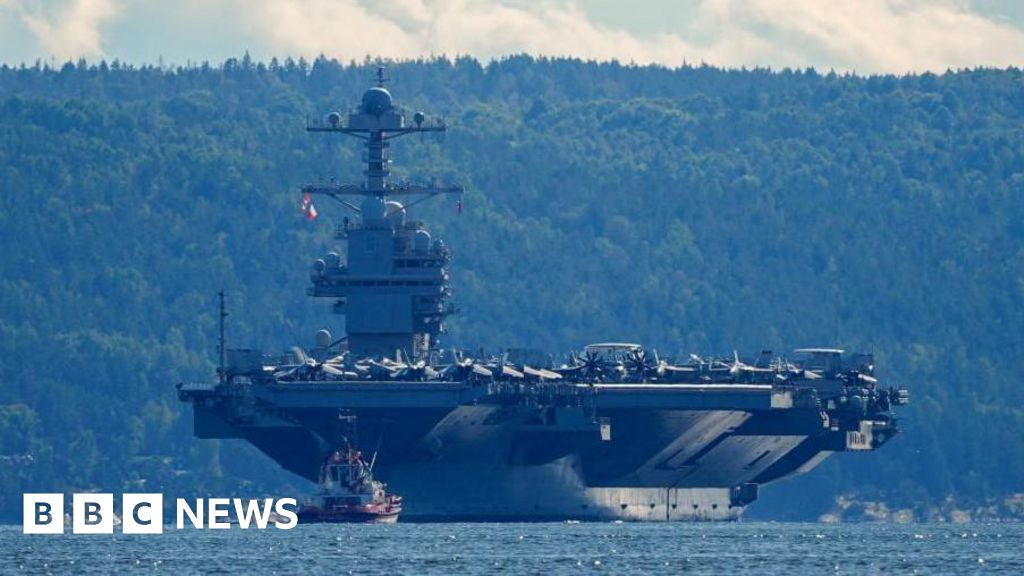
The US has seized a vessel in international waters off the coast of Venezuela, US officials have told BBC News partner CBS.
It is the second time this month that the US has seized a ship off the country’s coast.
The move comes after US President Donald Trump on Tuesday said he was ordering a “blockade” of sanctioned oil tankers entering and leaving Venezuela.
Venezuela has not yet responded to the latest US seizure, but has previously accused Washington of seeking to steal its oil resources.
The BBC has contacted the White House for comment.
The operation was led by the US Coast Guard, similar to the operation earlier this month, CBS reports. The ship was boarded by a specialised tactical team.
In recent weeks, the US has been building up its military presence in the Caribbean Sea and has carried out deadly strikes on alleged Venezuelan drug-smuggling boats, killing around 100 people.
The US has provided no public evidence that these vessels were carrying drugs, and the military has come under increasing scrutiny from Congress over the strikes.
The US has accused Venezuela President Nicolás Maduro of leading a designated-terrorist organisation called Cartel de los Soles, which he denies.
The Trump administration accuses him of and the group of using “stolen” oil to “finance themselves, Drug Terrorism, Human Trafficking, Murder, and Kidnapping”.
Venezuela – which is home to the world’s largest proven oil reserves – is highly dependent on revenues from its oil exports to finance its government spending.
Trump’s announcement of a “blockade” came less than a week after the US seized an oil tanker believed to be part of the “ghost fleet” off the coast of Venezuela, which allegedly used various strategies to conceal its work.
The White House said the vessel in question, called the Skipper, had been involved in “illicit oil shipping” and would be taken to a US port.
Venezuela’s government decried the move, with Maduro saying the US “kidnapped the crew” and “stole” the ship.
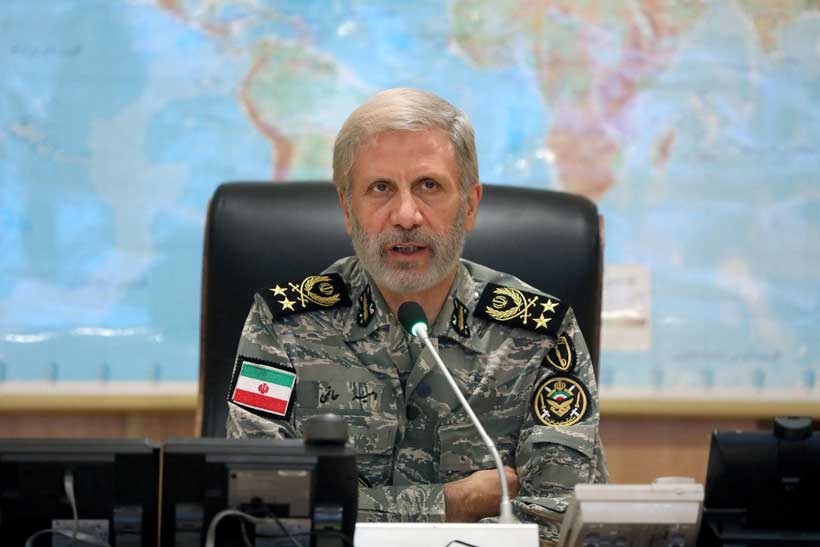
NEWS BRIEF Iran executed a man on Saturday accused of spying for Israel, the latest in an escalating series of death sentences carried out amid a deepening shadow war between Tehran and Jerusalem. The execution, described by human rights groups as based on coerced confessions, underscores Iran’s harsh response to perceived security threats and the […]
The post Iran’s Deadly Crackdown on Alleged Israeli Spies Intensifies appeared first on Modern Diplomacy.
The PM says the part of the plan on south of the Litani River is ‘only days away from completion’.
Published On 20 Dec 202520 Dec 2025
Share
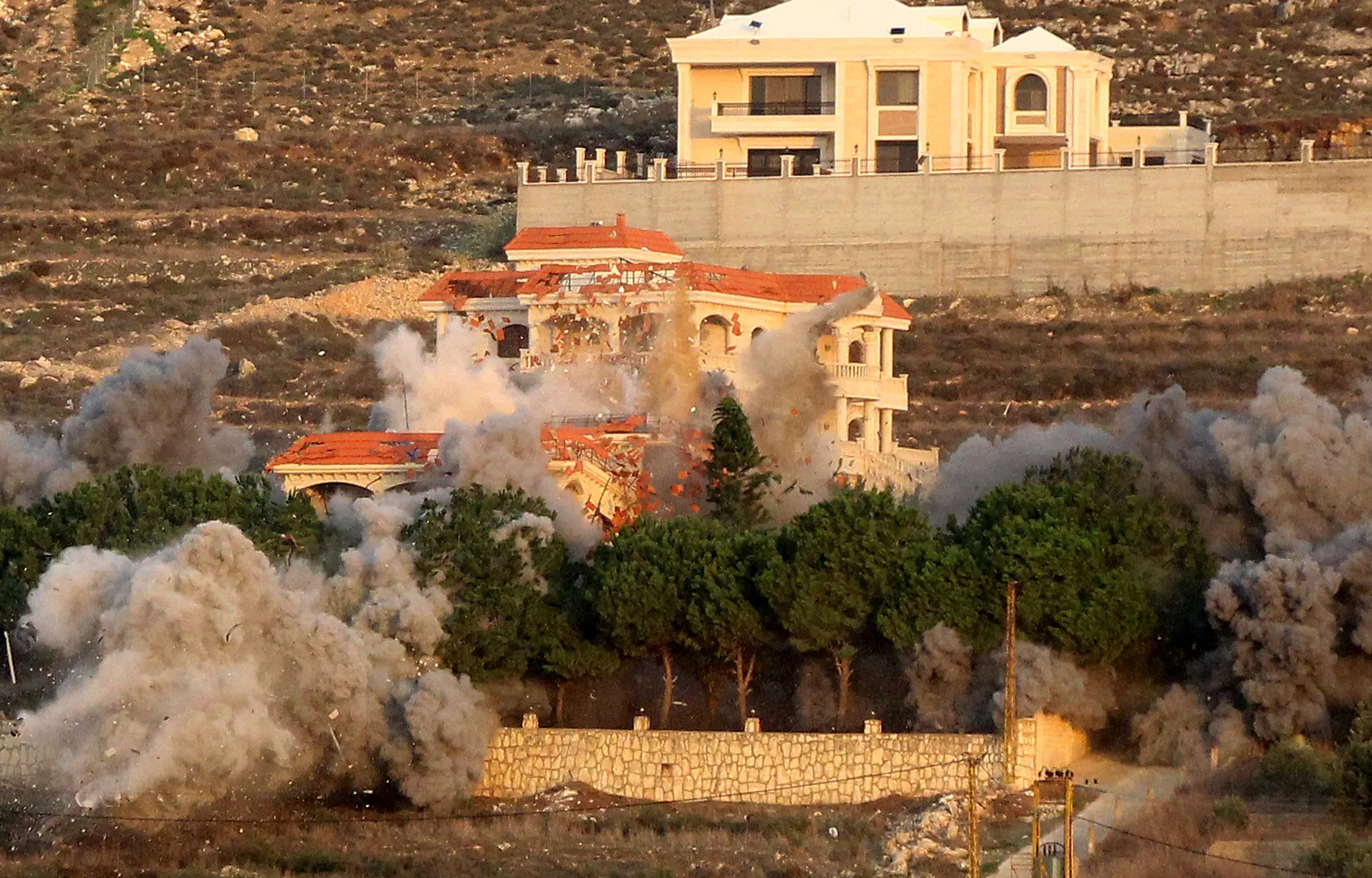
Lebanon is close to completing the disarmament of Hezbollah in the south of the Litani River before a year-end deadline as part of a ceasefire deal with Israel, according to Prime Minister Nawaf Salam.
Saturday’s statement comes as the country races to fulfil the key demand in the US-backed deal agreed in November last year and ended more than a year of fighting between Israel and Hezbollah.
list of 3 itemsend of list
The agreement requires the disarmament of the Iran-aligned Lebanese armed group, starting in areas south of the river adjacent to Israel.
Lebanese authorities, led by President Joseph Aoun and Salam, tasked the US-backed Lebanese army on August 5 with devising a plan to establish a state monopoly on arms by the end of the year.
“Prime Minister Salam affirmed that the first phase of the weapons consolidation plan related to the area south of the Litani River is only days away from completion,” a statement from his office said.
“The state is ready to move on to the second phase – namely [confiscating weapons] north of the Litani River – based on the plan prepared by the Lebanese army pursuant to a mandate from the government,” Salam added.
The statement came after Salam held talks with Simon Karam, Lebanon’s top civilian negotiator on a committee overseeing the Hezbollah-Israel truce.
In a meeting on Friday, the committee focused on how to return displaced people to their homes, addressing civilian issues to help prevent renewed war if the year-end deadline to disarm Hezbollah is not met.
The 15th meeting of the committee reflected a longstanding US push to broaden talks between the sides beyond monitoring the 2024 ceasefire.
At Friday’s meeting in the southern Lebanese coastal town of Naqoura, civilian participants discussed steps to support safe returns of residents uprooted by the 2023-24 war and advance economic reconstruction, the US Embassy in Beirut said.
Since the ceasefire, Israeli warplanes have repeatedly targeted parts of Lebanon, mostly southern Lebanon, but sometimes even the capital.
Israel says it is questioning the Lebanese army’s efforts to disarm Hezbollah.
Hezbollah, a Shia Muslim armed group, has tried to resist the pressure – from its mainly Christian and Sunni Muslim opponents in Lebanon as well as from the US and Saudi Arabia – to disarm, saying it would be a mistake while Israel continues its air strikes on the country.
Israel has publicly urged Lebanese authorities to fulfil the conditions of the truce, saying it will act “as necessary” if Lebanon fails to take steps against Hezbollah.
On the eve of the 2025 AFCON, football’s governing body in Africa create new four-year cycle and form a Nations League.
Published On 20 Dec 202520 Dec 2025
Share
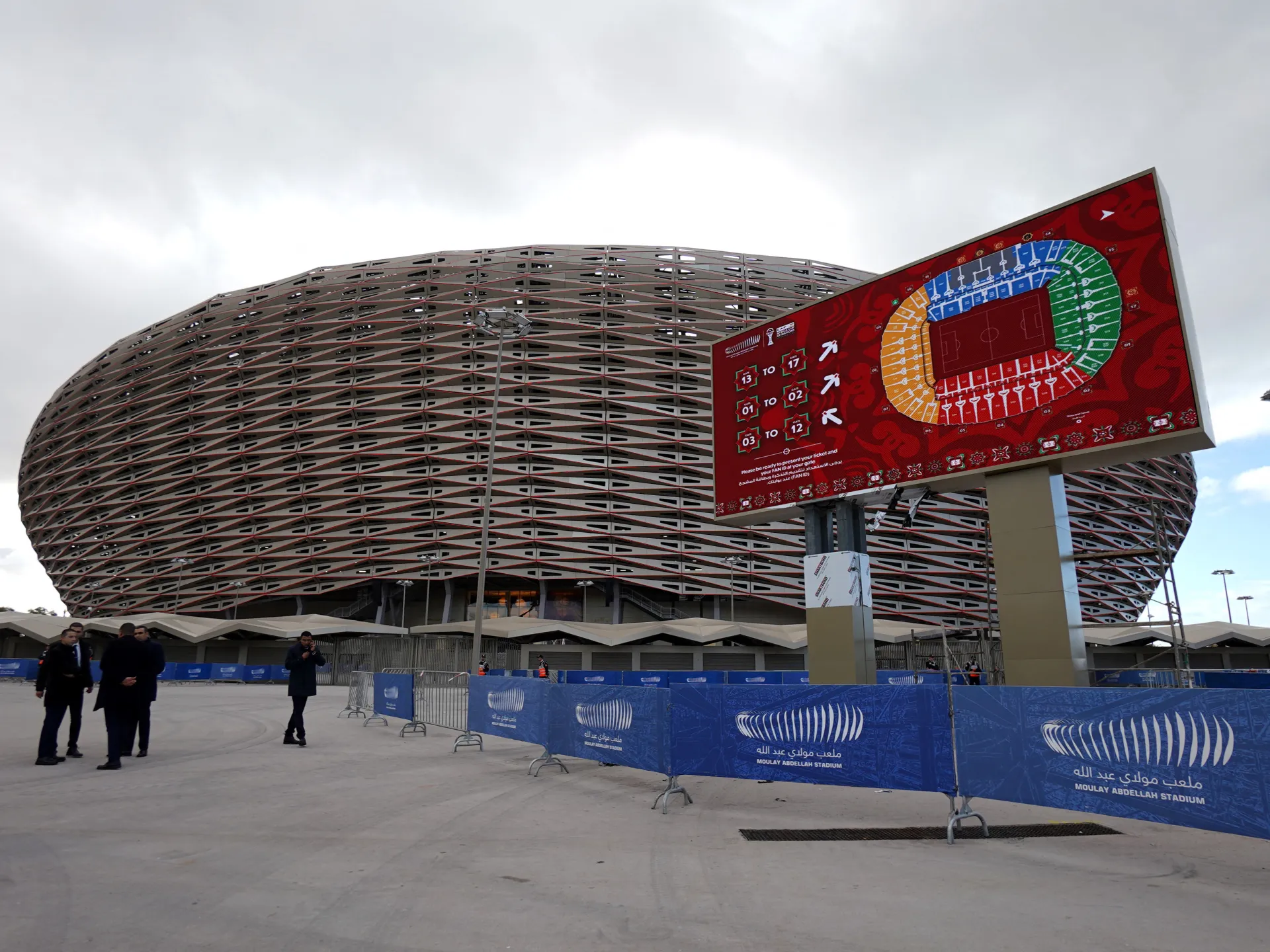
African football is getting a major shake-up with the creation of the African Nations League and conversion of the biennial Africa Cup of Nations to a four-year cycle.
Patrice Motsepe, the president of the Confederation of African Football, announced the changes Saturday during his news conference before the 2025 Africa Cup hosted by Morocco.
list of 4 itemsend of list
Motsepe said that the 2027 Africa Cup, to be hosted by Uganda, Kenya and Tanzania, will go ahead as planned and that the following edition – originally scheduled for 2029 – will be moved forward to take place in 2028. The next Africa Cup after that will be in 2032.
This would allow the first African Nations League to take place in 2029. Motsepe said it would involve each of the continent’s 54 members, divided into four geographical zones, with games in September and October before the finals are held in November.
“What is new is that … in Africa there’s going to be a competition every year where the best African players who play in Europe and worldwide will be with us on the continent,” Motsepe said.
CAF officials did not immediately specify if the African Nations League will be held on a biennial or annual basis.
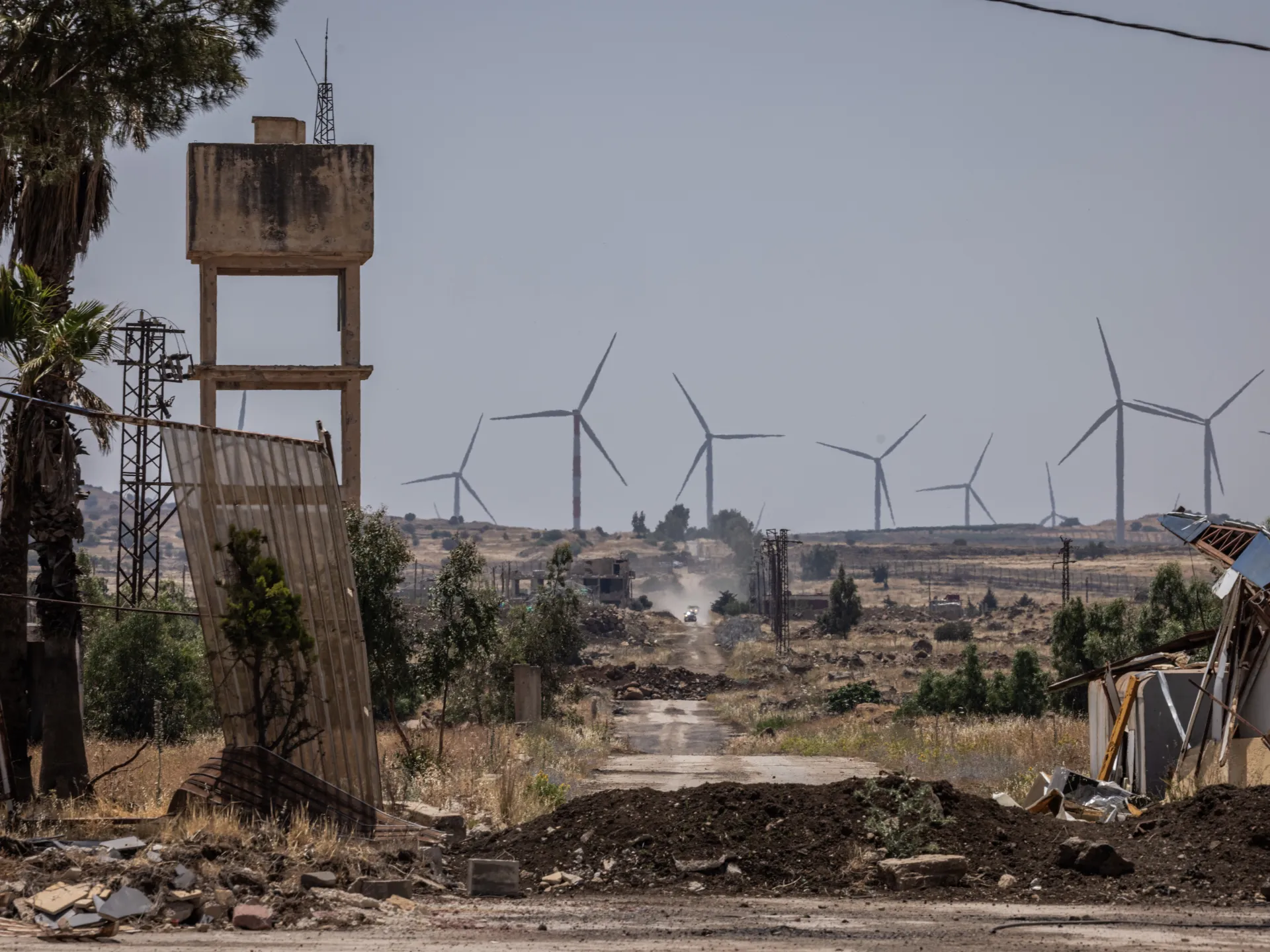
Syrian state television denounces the Israeli incursion as another violation of the nation’s sovereignty.
Israeli forces have advanced into the Quneitra area of Syria’s occupied Golan Heights and set up two military checkpoints, an Al Jazeera correspondent on the ground reports.
The Israeli military operation on Saturday took place in the villages of Ain Ziwan and al-Ajraf in the southern part of the country.
list of 4 itemsend of list
For months, Israeli forces have conducted near-daily incursions into southern Syria, particularly in the Quneitra governorate, carrying out arrests, erecting checkpoints, and bulldozing land, all of which have prompted growing public anger and unrest.
Syrian state television said the Israeli incursion was a violation of Syrian sovereignty, noting that the army used five military vehicles to set up the checkpoint in Ain Ziwan.
The latest raid comes one day after Israeli forces advanced towards the towns of al-Asha, Bir Ajam, Bariqa, Umm al-Azam and Ruwayhina in the southern Quneitra countryside, according to the Syrian News Agency (SANA).
Dozens of Syrians on Friday protested the Israeli incursion in the city of al-Salam in the Quneitra Governorate, condemning the ongoing Israeli attacks against citizens and their properties.
The demonstrators, part of a group called “Syrians with Palestine”, held banners denouncing what they stated were repeated Israeli violations of Syrian lands.
Despite a reduction in direct military threats, the Israeli army continues to carry out air raids that have caused civilian casualties and destroyed Syrian army sites and facilities.
Over the past year, Israel has launched more than 600 air, drone or artillery attacks across Syria, averaging nearly two attacks a day, according to a tally by the Armed Conflict Location and Event Data (ACLED).
Israeli military incursions have become more brazen, more frequent and more violent since Israel expanded its occupation of southern Syria following the ousting of President Bashar al-Assad in December 2024.
After al-Assad’s fall, Israel declared the 1974 Disengagement Agreement – brokered after the 1973 war, in which Syria failed to regain the occupied Golan Heights – void.
The agreement had established a UN-patrolled buffer zone, which Israel has since violated, advancing deeper into Syrian territory.
Citing al-Assad’s flight, Israel says the accord no longer applies, while carrying out air raids, ground incursions, reconnaissance flights; setting up checkpoints; and arresting or disappearing Syrians. Syria has not responded with attacks.
In September, Syrian President Ahmed al-Sharaa stated that Israel had conducted more than 1,000 air attacks and more than 400 ground incursions in Syria since al-Assad was overthrown, describing the actions as “very dangerous”.
Syrians believe that the continuation of these violations hinders efforts to restore stability in the region and undermines attempts to improve the economic situation in southern Syria.
Al Jazeera visited Quneitra in recent weeks and spoke to Syrians about Israeli incursions and abductions there, which have stoked fears.
Syria and Israel are currently in talks to reach an agreement that Damascus hopes will secure a halt to Israel’s air raids on its territory and the withdrawal of Israeli troops who have pushed into southern Syria.
In the background, the United States has been pushing diplomatic efforts to restore the 1974 deal.
Stuart Maisnerand
Simon Jones,South East
 Gareth Fuller/PA Media
Long queues of travellers formed earlier at the Port of Dover, which have been blamed on IT issues at French border controls.
The delays, which lasted into the afternoon, were described as “absolute chaos” by one traveller, and images of the port showed a long line of vehicles queuing at a standstill.
Eurotunnel was also experiencing lengthy delays at its Folkestone terminal on Saturday – at the start of a weekend which is expected to see the Christmas getaway reach its peak.
The Port of Dover reported that traffic was free-flowing just before 15:00 GMT, after several hours of delays.
The port is expected to see about 30,000 cars pass through it until Sunday.
One traveller had posted earlier on X: “Horrible experience at Port of Dover this morning. Absolute chaos.
“Traffic at a standstill for an hour. Worst start to holiday imaginable. Just missed our boat. Still stuck. Kids in car.”
One local resident told the BBC the town was “proper rammed”.
 Gareth Fuller/PA Media
The port advised passengers not to arrive more than two hours before their sailing.
It said if customers do miss their scheduled sailing due to the wait times, their ferry operator will place them on the next available crossing.
Long queues were also seen on the roads leading into Dover.
A port spokesperson asked all port-bound traffic to remain on main roads “to allow the Dover community to travel to festive events and finish their Christmas shopping in the town”.
Eurotunnel said it had a waiting time of two and a half hours for cars and 60 minutes for freight at its Folkestone terminal due to “high demand”.
Meanwhile, public transport operators had experienced problems reaching the port.
Bus company Stagecoach said in a statement: “Due to heavy traffic at the docks the service will be unable to serve Eastern Docks at the moment.”