Xi Jinping

Trump and Xi to meet in Beijing: The key issues shaping the China summit | Donald Trump News

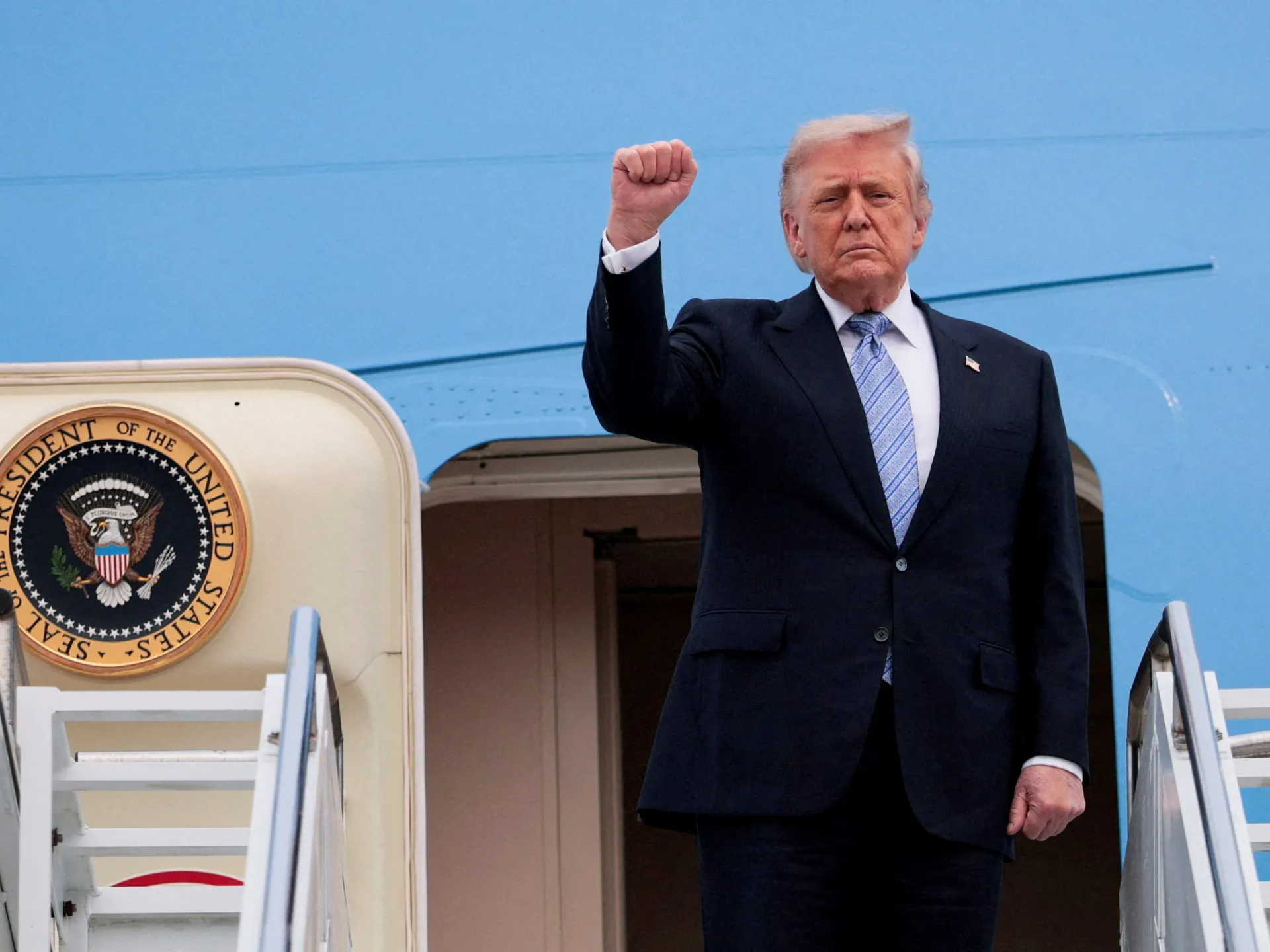
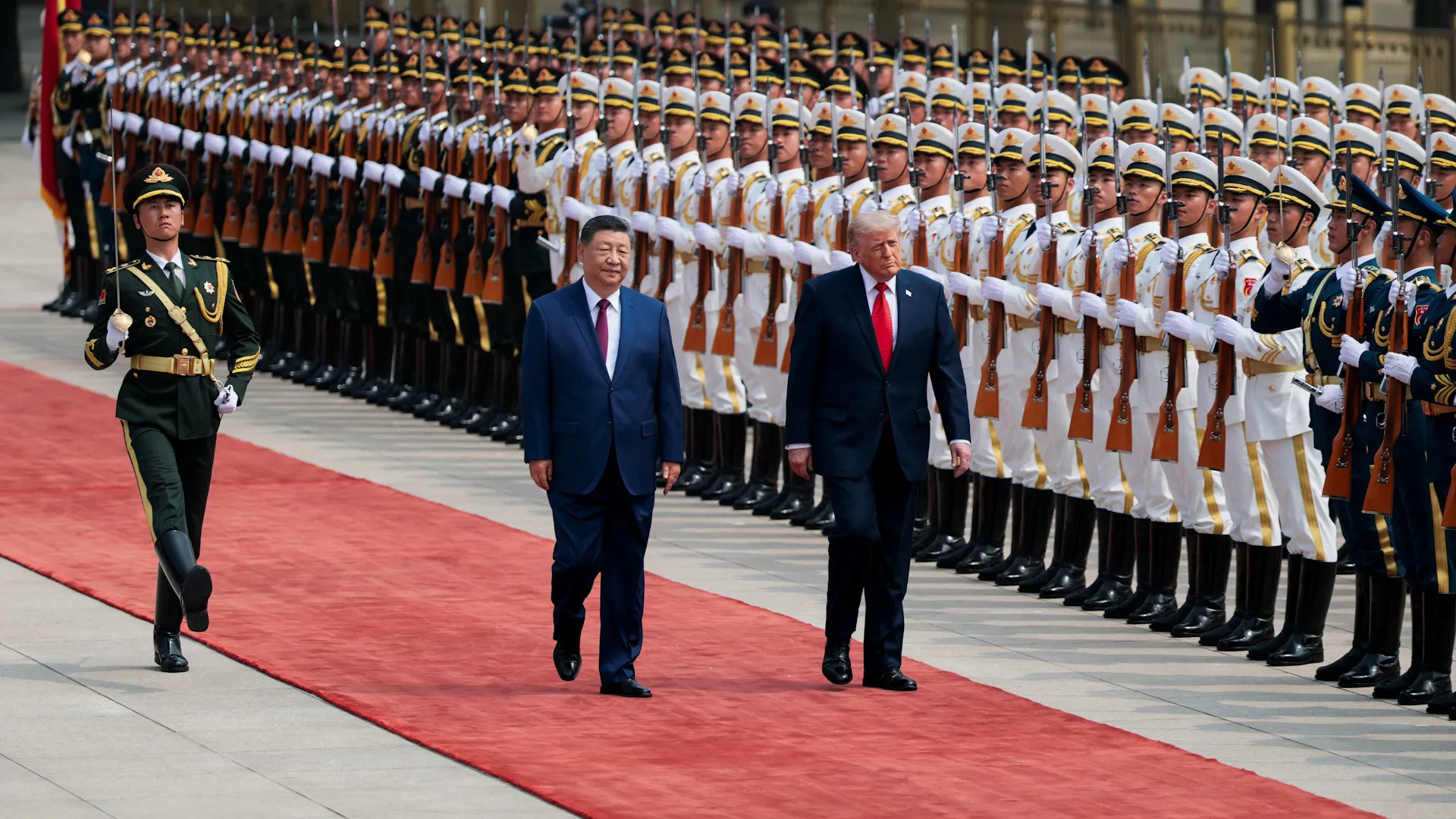
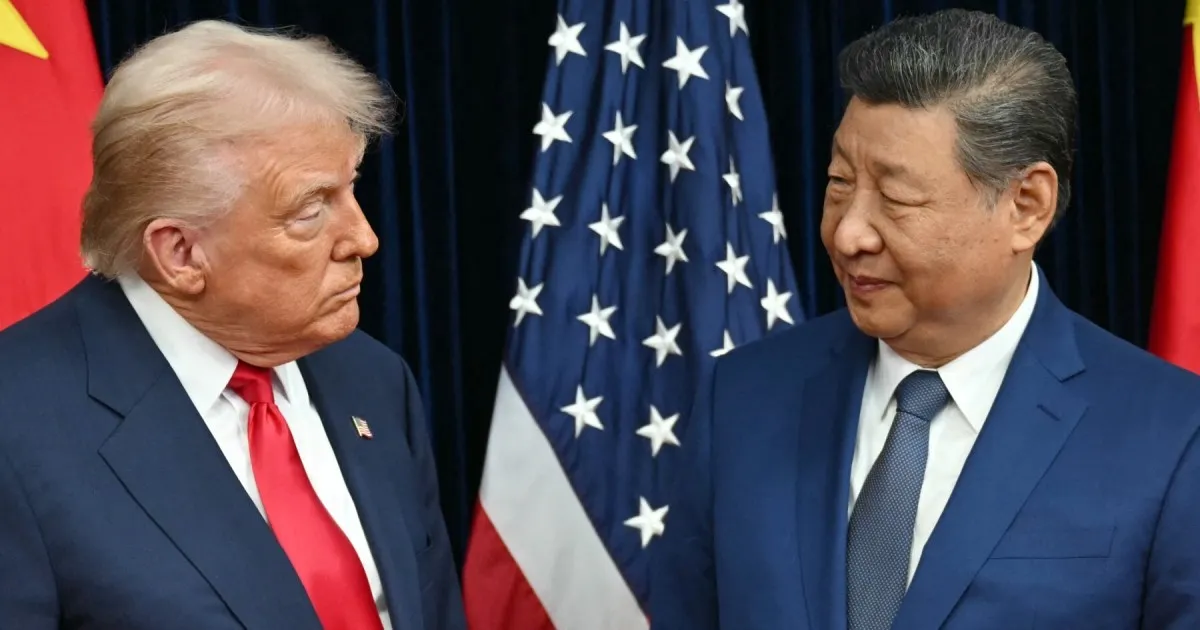
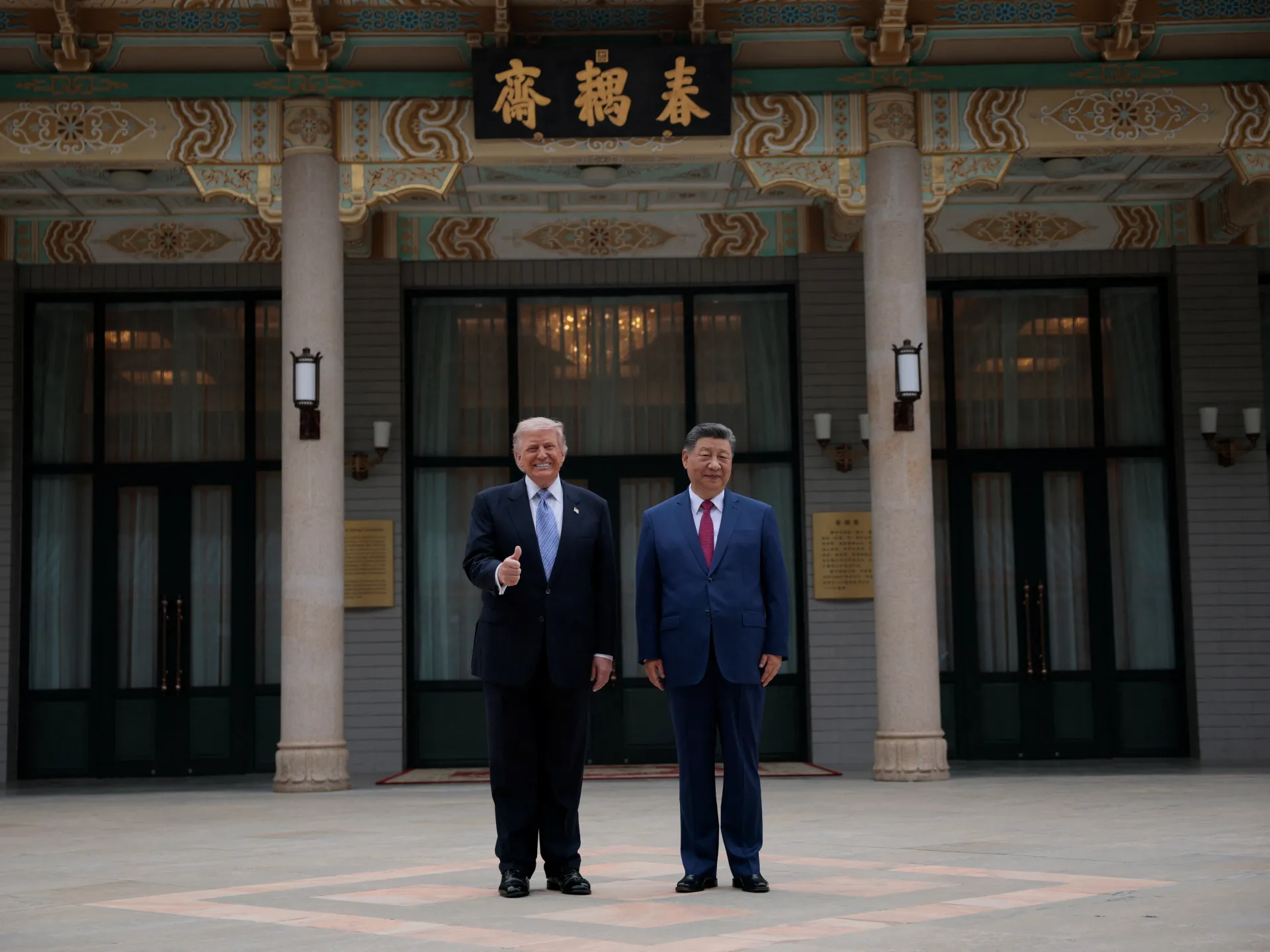
United States President Donald Trump has departed for Beijing ahead of a high-stakes summit with Chinese President Xi Jinping, after weeks of unsuccessful US efforts to persuade China to help bring Iran back to negotiations and ease tensions around the Strait of Hormuz.

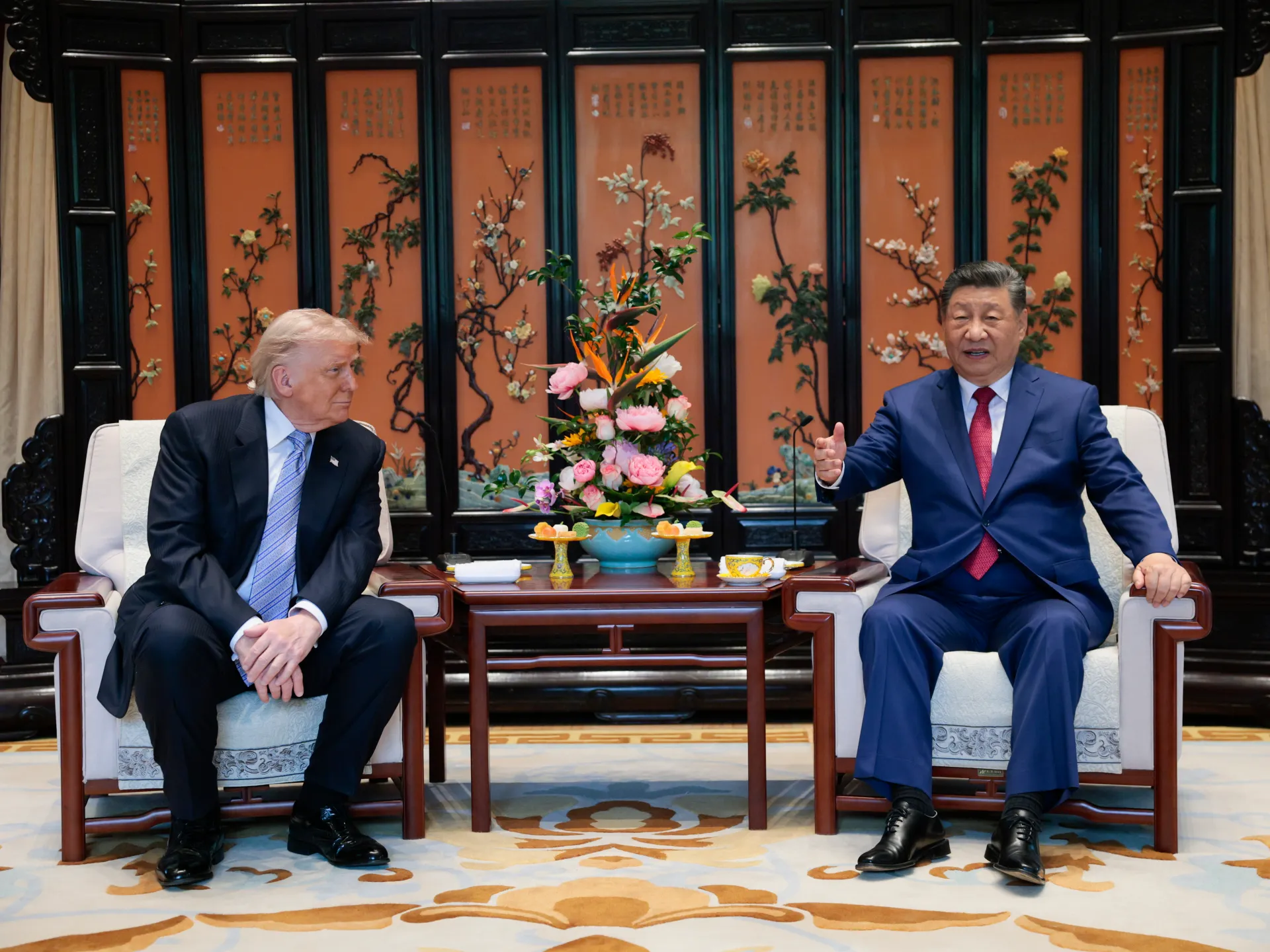
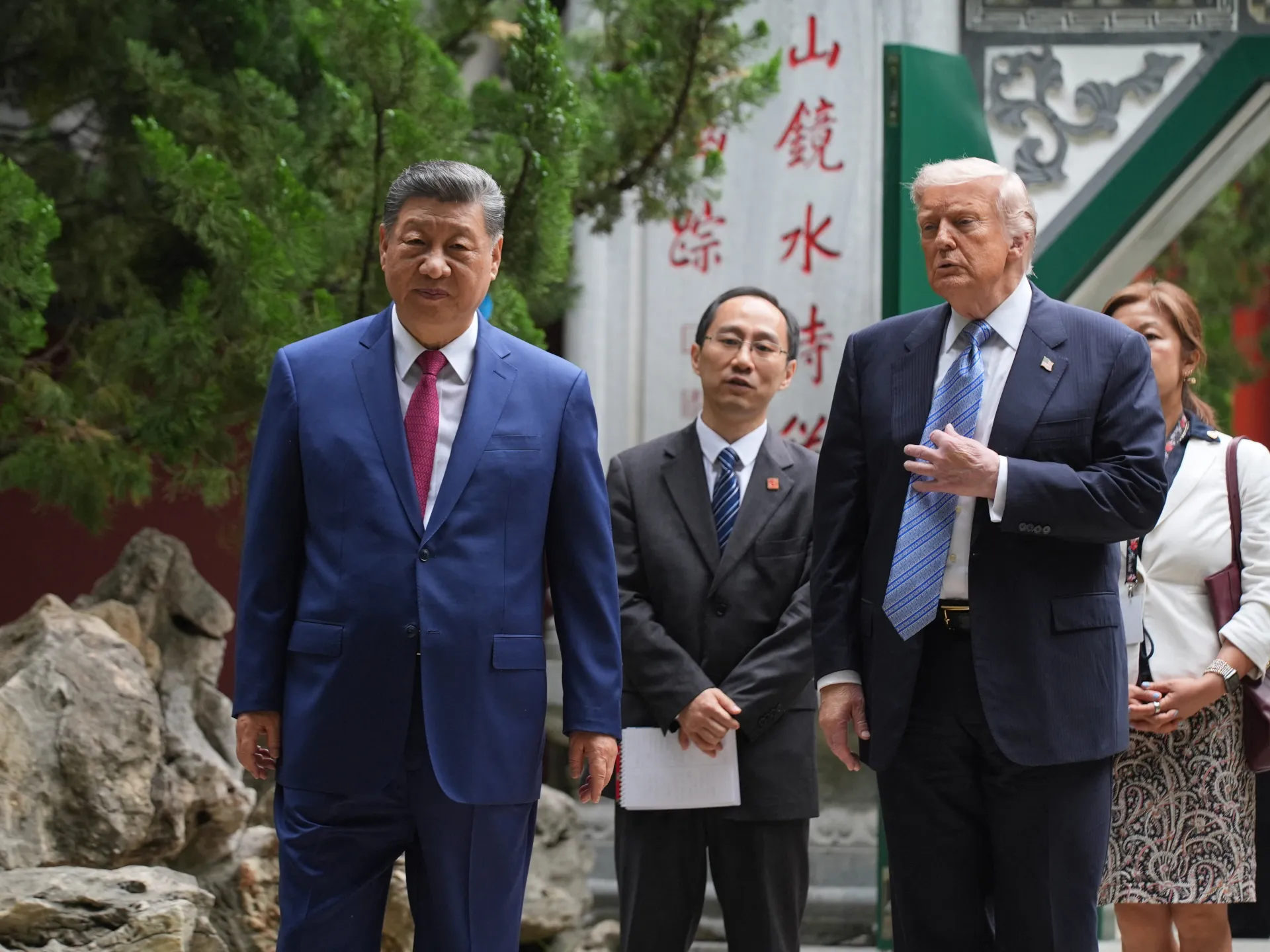
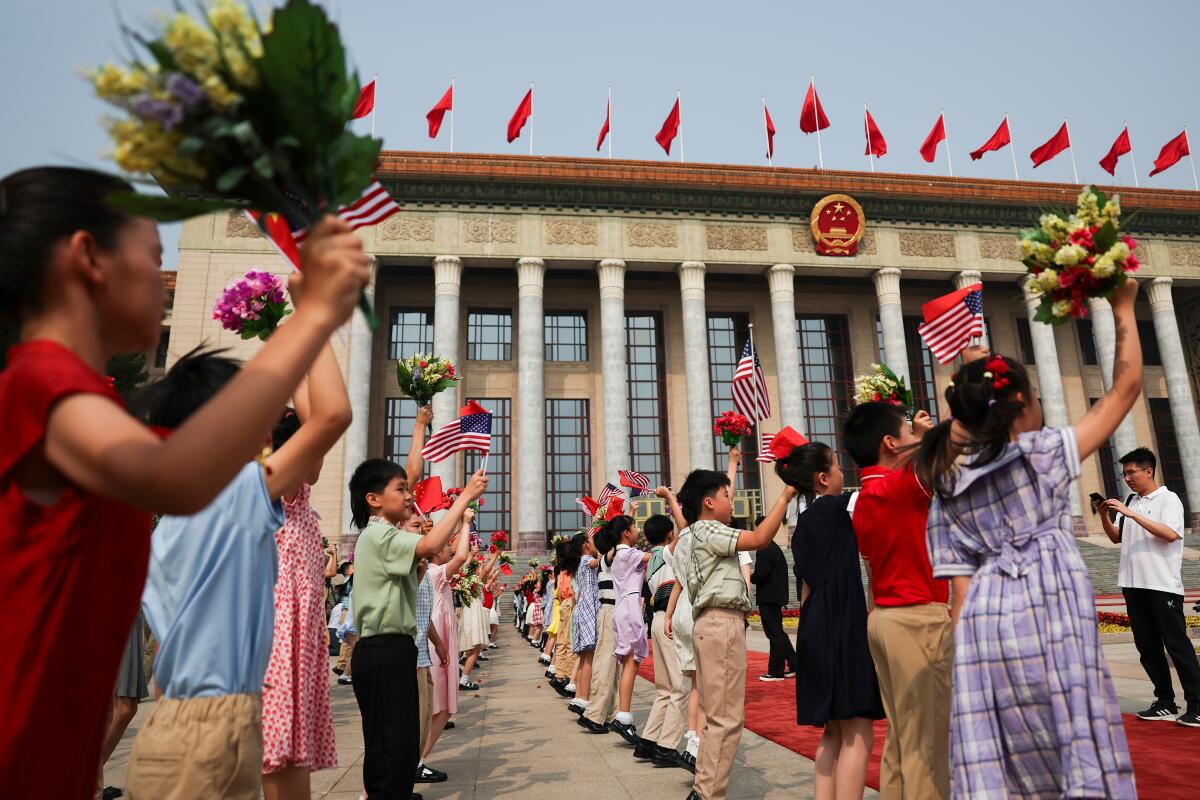
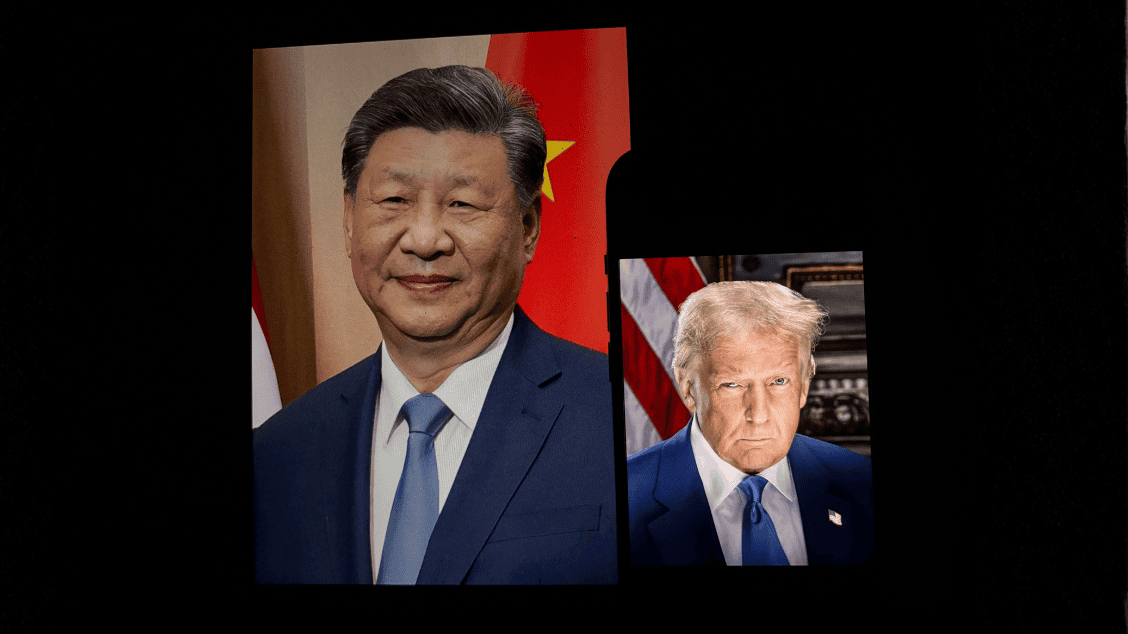
The leaders of the world’s two largest economies are due to meet on Thursday and Friday during Trump’s first visit to China since 2017, with talks expected to focus on trade, Taiwan, artificial intelligence and the war involving Iran.

Recommended Stories

list of 3 itemsend of list

Here is what we know about the upcoming summit and the key issues expected to dominate the agenda.

Why does the Trump-Xi summit matter?

The Trump-Xi summit is a high-level meeting between Trump and Xi Jinping taking place in Beijing as the world’s two largest economies face growing tensions over trade, technology, Taiwan and the Iran war.

The summit is particularly significant because Trump will be the first US leader to visit China in nearly a decade, while the talks also come at a time of heightened geopolitical and economic uncertainty. Originally expected earlier this year, the meeting was delayed by the war on Iran.

Before departing for Beijing, Trump said he and Xi would have a “long talk” about Iran, although he stressed that trade would remain the central focus of the visit.

“Trade remains politically powerful, especially for Trump, because it gives rivalry a language that voters can easily understand,” said Salvador Santino Regilme, associate professor and programme chair of international relations at Leiden University. “Yet the deeper conflict concerns hierarchy, legitimacy and the future architecture of global order.”

Regilme added that both countries remain locked in a relationship shaped by strategic rivalry and deep economic dependence.

“The United States still relies heavily on China’s manufacturing capacity and low-cost production, while China depends on access to US consumers, technology, capital markets and the wider stability of the dollar-centred global economy.”

“This is the paradox of US-China rivalry: each side wants greater autonomy, yet both remain tied to a structure of mutual dependence that neither can easily dismantle without hurting itself,” Regilme added.

What are the biggest issues at the Trump-Xi summit?

Analysts say the US and China are entering the summit with different priorities.

Trump is expected to focus heavily on trade with the aim of securing what he can present as economic wins ahead of November’s midterm elections. Washington has pushed for China to increase purchases of American goods, including Boeing aircraft, beef and soya beans, while also seeking closer investment and trade cooperation.

Beijing, meanwhile, is expected to press the US to ease restrictions on advanced semiconductor exports and roll back measures limiting China’s access to critical chip-making technology. Taiwan is also likely to remain one of the most sensitive and contested issues in the summit.

Trump has also said he plans to raise the case of Jimmy Lai, the jailed Hong Kong media tycoon and pro-democracy figure sentenced earlier this year under Beijing’s national security law.

Beyond bilateral disputes, the two leaders are also expected to discuss the war on Iran, tensions around the Strait of Hormuz and the growing risks linked to artificial intelligence.

The biggest flashpoints include:

Tech vs rare earths

Technology and supply chains are expected to be among the key issues at the summit, as Washington and Beijing remain locked in a widening battle over semiconductors and critical minerals.

The US has tightened restrictions on advanced chips and chip-making equipment going to China, saying the measures are needed to slow Beijing’s military and AI development.

China, meanwhile, controls roughly 90 percent of global rare earth refining, materials essential for semiconductors, electric vehicles, military equipment and electronics, and has responded with tighter export controls on several critical minerals.

Beijing is expected to push for fewer US technology restrictions, while Washington wants China to resume shipments of rare earths and critical minerals after export controls disrupted parts of the American automotive and aerospace sectors.

 Iran war and the Strait of Hormuz

The Iran war is expected to be one of the most closely watched issues at the summit.

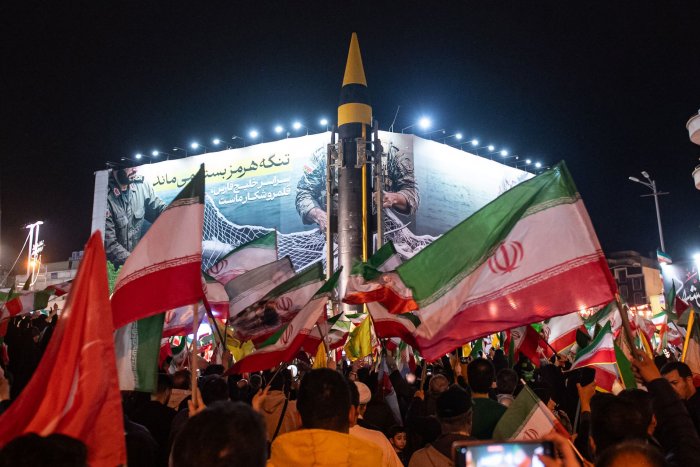
Analysts expect Washington to press Beijing to use its influence over Tehran, particularly because China remains the largest buyer of Iranian oil — by far — purchasing more than 80 percent of Iran’s shipped crude exports. US officials have also urged China to support efforts to reopen and secure the Strait of Hormuz, a vital route for global energy supplies.

The conflict has also increased pressure on China’s economy and energy security. About half of China’s crude oil imports come from the Middle East, while disruptions in the Gulf have left commercial shipping vulnerable to attacks and delays.

“I have no doubt that Trump is going to at least try to enlist Xi Jinping to assert some pressure for the Iranians to come back to the table and agree to a settlement,” said Dan Grazier, a senior fellow and director of the National Security Reform programme at the Stimson Center.

Experts say Iran may be one of the few areas where US and Chinese interests overlap, as both countries benefit from stable energy flows through the Gulf.

“Both sides would like to see the strait opened,” said Gregory Poling, director and senior fellow at the Center for Strategic and International Studies (CSIS), but he noted Beijing is unlikely to align itself too closely with Washington’s approach towards Tehran.

While China wants shipping through the Strait of Hormuz restored, Poling argued the diplomatic and strategic pressure created by the disruption is falling far more heavily on Washington.

“It is not China being humiliated in the strait … It’s the US.”

INTERACTIVE - IRGC releases map of control over Strait of Hormuz - May 5, 2026-1777975253

Taiwan: An existential problem

Taiwan is expected to be one of the most sensitive issues, with Beijing repeatedly warning that it remains the biggest source of tension in US-China relations.

China claims the self-ruled island as part of its territory and has increased military pressure on Taiwan in recent years through regular air and naval operations around the island.

Tensions have risen further under Taiwanese President William Lai Ching-te, whom Beijing has sharply criticised because his party views Taiwan as already sovereign.

The US officially recognises the communist mainland as China but is legally committed under the Taiwan Relations Act to support Taiwan’s self-defence, a policy that has long angered China. Washington has approved tens of billions of dollars in military sales to Taiwan over the years, including an $11bn package announced last year, and Trump recently said he discussed the issue with Xi ahead of the summit.

Analysts say Taiwan will be paying close attention to what Trump and Xi say publicly after the summit, especially on defence and arms sales.

“What matters is the precise wording,” Regilme said. “Whether Trump reaffirms support for Taiwan’s defence, whether he sounds ambiguous on arms sales, and whether he gives Xi any rhetorical opening to claim that Washington is restraining Taipei.”

Regilme said Beijing is likely to push for limits on US arms sales and stronger political restrictions on Taiwan, while also discouraging any movement towards formal independence. At the same time, Taipei fears it could become part of a broader geopolitical bargain between Washington and Beijing.

“In great-power politics, small words often carry large consequences, especially for those whose survival depends on the credibility of others,” Regilme added.

Tariffs

Trade is also expected to be a sticking point after years of friction between the US and China over tariffs and economic competition.

The latest trade dispute intensified last year when Trump imposed new tariffs on Chinese goods. China responded with its own tariffs.

At the height of the dispute, tariffs on some goods climbed above 100 percent, prompting concerns about the impact on global trade and supply chains.

The two countries later agreed to temporarily lower tensions through a trade truce reached during talks in South Korea. As part of the deal, China agreed to buy more US agricultural products, including soya beans, while Washington rolled back some tariffs.

What would count as a successful outcome for Trump and Xi?

Analysts say a successful outcome for Trump would likely need to be visible and easy to sell politically at home. That could include Chinese purchases of US goods, movement on tariffs, cooperation on Iran, or progress on rare earth exports.

“Trump’s foreign policy style places enormous value on the public performance of dealmaking, so the optics of success may matter almost as much as the substance,” Regilme said.

For Xi, success would mean preserving stability without appearing to bow to Washington, while securing greater economic predictability and recognition of China as a global power.

“A comprehensive trade deal seems unlikely because the structural sources of rivalry remain unresolved,” Regilme added.

Instead, he said a limited agreement is more likely, potentially involving tariff pauses, purchase commitments, rare earth arrangements or a framework for future negotiations.

“Such an agreement would manage the rivalry temporarily, while leaving untouched the deeper problem: the two economies remain mutually dependent, but their governments increasingly treat that dependency as a strategic danger.”
Source link

Trump downplays US-Iran differences as he heads to Beijing to meet with Xi | Xi Jinping News

Donald Trump gives conflicting messages on prominence of Iran war in upcoming talks, with his administration emphasising trade.

United States President Donald Trump has departed the White House en route to Beijing, where he will meet with his Chinese counterpart Xi Jinping.

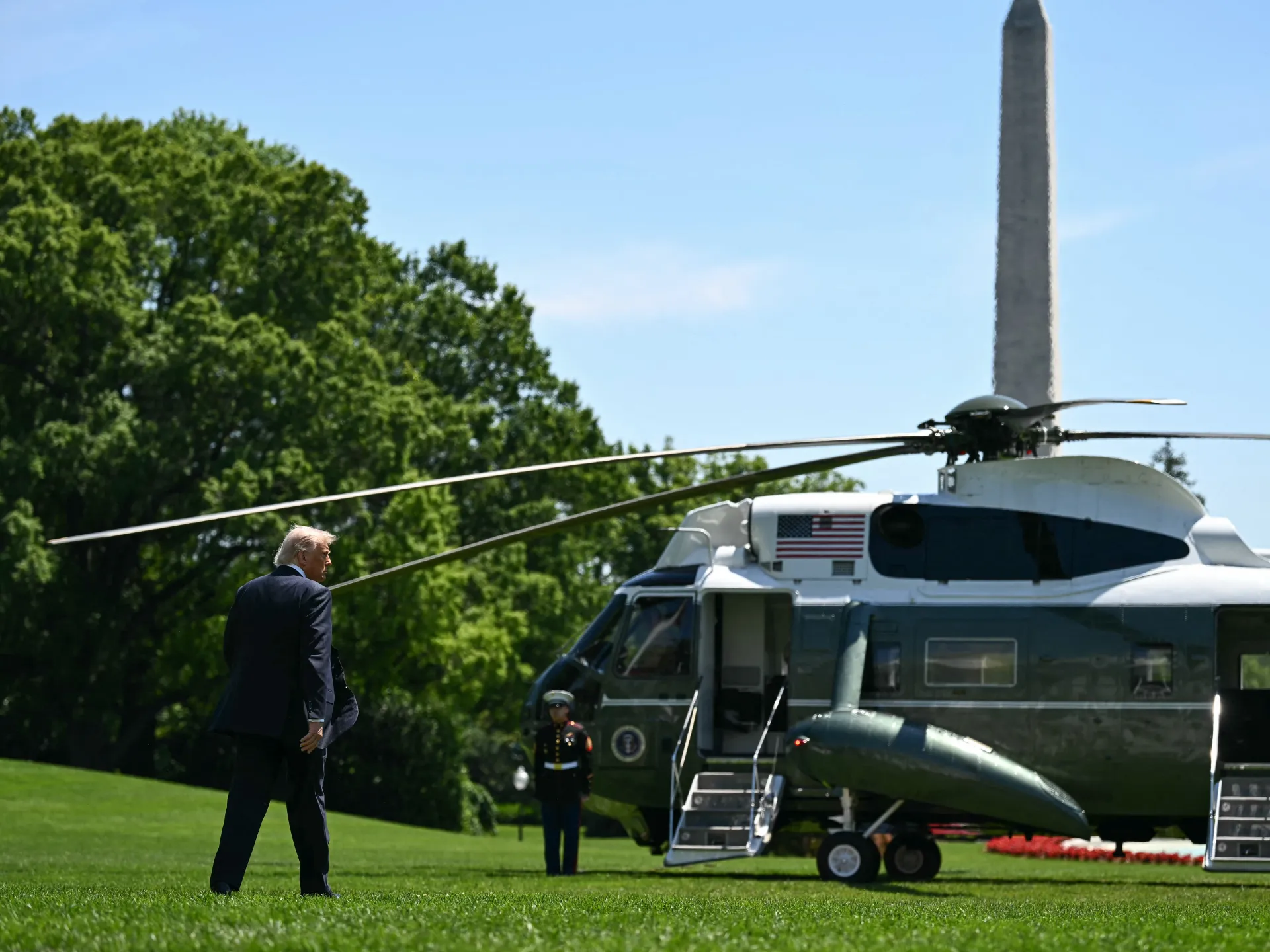
Trump spoke briefly with reporters on Tuesday as he boarded the Marine One helicopter. He was then set to arrive in China aboard Air Force One on Wednesday, ahead of the planned meetings on Thursday and Friday.

Recommended Stories

list of 3 itemsend of list

United States officials have taken pains in recent days to downplay how big a topic the US-Israel war on Iran will be during Trump’s visit.

Beijing has made its opposition to the war clear, at times asserting behind-the-scenes pressure on its trading partner Iran. However, it has largely avoided being pulled into the fray.

In recent days, US Secretary of State Marco Rubio and Treasury Secretary Scott Bessent have stepped up their calls for China to use its influence to help reopen the Strait of Hormuz, through which about 20 percent of the world’s oil supply flowed before the war began.

But Trump again gave conflicting messages on Tuesday about how much the war would feature in his meetings in China.

“We’re going to have a long talk about it. I think he’s been relatively good, to be honest with you,” Trump said of his plans to discuss the conflict – and how it has roiled global oil markets – with Xi.

Minutes later, he added, “We have a lot of things to discuss. I wouldn’t say Iran is one of them, to be honest with you, because we have Iran very much under control.”

“I don’t think we need ⁠any help with Iran. We’ll win it one way or the other, peacefully or otherwise,” he said.

Trade to loom large

The upcoming meetings will be the first face-to-face exchanges since the leaders of the world’s two largest economies met on the sidelines of the Asia-Pacific Economic Cooperation (APEC) summit in Busan, South Korea, in October 2025.

It is the second time Trump will travel to China as president, and the first time since his second term began on January 20, 2025. Xi is expected to travel to the US later this year.

Beyond the war, the US administration has stressed that trade will be a top subject discussed, with Trump seeking a series of business deals and agreements.

Underscoring that initiative, Trump invited an array of US business leaders to accompany him on the trip, including Tesla CEO Elon Musk, who had previously chaired Trump’s so-called Department of Government Efficiency (DOGE), and Apple CEO Tim Cook.

Both sides are expected to seek to avoid a return to the tariff war that defined Trump’s early days in office, which saw Trump set tariffs on Chinese goods at 145 percent, while China announced a further tightening of rare-earth export controls that would have hurt US industry.

The two sides reached a fragile truce in October of last year.

China’s continued support for Iran’s ballistic programme and its defence of Tehran’s nuclear programme has also risked again derailing relations.

Last month, Trump threatened to impose a 50 percent tariff on China after reports that Beijing was preparing to deliver a shipment of new air defence systems to Iran. He later backed away from the threat, claiming that he had received written assurance from Xi that he would not provide Tehran with weaponry.

Days later, Trump said that the US Navy had intercepted a Chinese vessel carrying a “gift” for Iran. Neither side offered further details of the incident.

Xi was also expected to push Trump on US arms sales to Taiwan, the self-governing island that China claims as its own.

Source link

Trump’s Tariff Strategy Crumbles Before High-Stakes Xi Summit

Legal defeats at home leave the White House with dwindling leverage as trade talks begin in Beijing.

President Donald Trump heads into this week’s summit with Chinese President Xi Jinping with a major embarrassment back home: the legal foundation of his aggressive tariff strategy is rapidly eroding.

Trump expects to meet Xi in Beijing from May 14 to May 15 to discuss trade, the war in Iran and, possibly, Taiwan. But the meeting comes as federal courts rule against Trump’s sweeping tariff measures, including the 10% global duties and triple-digit levies on Chinese goods that the White House once promoted as a key source of leverage over Beijing.

The rulings, the most recent of which was on May 7, weaken one of Trump’s most aggressive economic weapons just as Washington, D.C., tries to navigate an increasingly fragile geopolitical landscape.

Trump has refused to concede defeat. In March, he defended the tariffs on his social platform, Truth Social. He argued that Section 122 of the Trade Act of 1974 “fully allowed” and “legally tested” the levies. Trump is the first president to invoke Section 122.

Now, his administration is looking to Section 301 of U.S. trade law as a potential path to impose tariffs with fewer legal vulnerabilities.

What’s Section 301?

Section 301 is a provision of the Trade Act of 1974 that empowers the U.S. president to impose tariffs or other penalties on countries accused of unfair trade practices.

But analysts warn that the strategy may also face significant legal and procedural obstacles — worse than Section 122.

“Section 301 tariffs involve a more cumbersome investigatory process before they can be imposed. That is why Trump has preferred other statutes such as [The International Emergency Economic Powers Act] and Section 122, which he attempted to implement by simple executive order,” said Phillip Magness, senior fellow at the Independent Institute.

With Section 122 of IEEPA, the Trump administration sought to revive a long-dormant statutory provision and reinterpret Congress’s definition of “balance of payments” to justify using it against modern trade deficits. If Trump pivots to Section 301 as his next option, his powers are more restricted and must meet more onerous regulatory requirements.

Magness expects this will potentially trigger another wave of lawsuits.

“Trump will attempt to stretch the language of Section 301 as well, in which case there will probably be court challenges to some of his weaker Section 301 findings,” Magness said.

Since April of last year, hundreds of companies have challenged the tariffs in court, including Costco Wholesale Corp., Prada SpA, Staples Inc. and Bumble Bee Foods, along with foreign firms such as BYD Co., Kawasaki Motors and Yokohama Rubber Co.

Iran and Taiwan

The summit also unfolds against a dramatically altered geopolitical backdrop from the leaders’ last meeting in South Korea in October, when both sides agreed to temporarily pause an escalating trade war after China threatened restrictions on rare earth exports.

Since then, Trump has become increasingly consumed by the conflict with Iran — one of China’s closest Middle Eastern allies — a war that has contributed to a global energy crunch and redirected U.S. military resources away from Asia.

The conflict has also strained U.S. munitions stockpiles, fueling speculation among some Chinese analysts about Washington’s ability to defend Taiwan in a prolonged regional confrontation, according to reports from The New York Times.

Source link

U.S. business leaders to travel with Trump for China trip

Elon Musk, and more than a dozen other U.S. business executives, will accompany President Donald Trump on his trip to Beijing this week as part of a wide-ranging summit with Chinese President Xi Jinping. File photo by Francis Chung/UPI | License Photo

May 11 (UPI) — President Donald Trump will be accompanied by 16 senior executives of U.S. companies for his trip to Beijing to meet with Chinese President Xi Jinping.

The White House on Monday shared a list of the executives, which include Tesla’s Elon Musk, Apple’s Tim Cook, BlackRock’s Larry Fink and Boeing’s Kelly Ortberg, among others.

Cisco CEO Chuck Robbins was unable to join the trip, however executives from Blackstone, Cargill, Citigroup, Coherent, GE Aerospace, Goldman Sachs, Illumina, Matstercard, Meta, Micron Technology, Qualcomm and Visa will also travel to China with Trump.

Trump is expected to discuss trade, artificial intelligence, Taiwan and the Iran War, with the creation of a board of investment and a board of trade with China high on his list of goals for his meetings with Xi.

“We’re doing a lot of business [with China], but it’s smart business,” Trump told reporters during a press briefing in the Oval Office on Monday.

“We used to be taken advantage of for years with our previous presidents,” he said. “And now we’re doing great with China. We make a lot of Monday with China.”

The U.S. caravan will depart for Beijing on Tuesday, with meetings scheduled for the rest of the week between the two delegations.

Each of the executives traveling for the meetings has significant business interests in China, which is why they were asked to join Trump for the trip, White House officials have said.

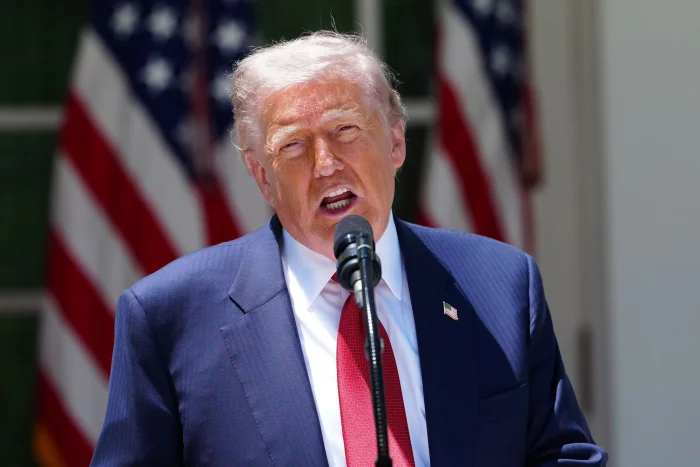
President Donald Trump delivers remarks at an event he is hosting for a group that includes Gold Star Mothers and Angel Mothers in honor of Mother’s Day in the Rose Garden of the White House on Friday. Photo by Aaron Schwartz/UPI | License Photo

Source link

Trump to discuss Iran with Xi Jinping during China visit: Officials | Donald Trump News

Official says US president will likely ‘apply pressure’ on China over Beijing’s purchase of Iranian oil amid war.

Donald Trump is set to arrive in Beijing on Wednesday evening to discuss the Iran war and other issues with his Chinese counterpart President Xi Jinping.

White House Principal Deputy Press Secretary Anna Kelly said an opening ceremony and meeting will be on Thursday morning, and the trip will conclude on Friday. The US plans to host the Chinese leader during a reciprocal visit later this year.

Recommended Stories

list of 3 itemsend of list

Kelly said that this week’s trip would be of “tremendous symbolic significance” and focus on “rebalancing the relationship with China and prioritising reciprocity and fairness to restore American economic independence”.

Trump’s visit, initially scheduled for earlier this year but postponed in March due to the US-Israel war on Iran, comes as the US president struggles to contain the fallout from the war, both at home and abroad.

A senior administration official told news outlets in an anonymous briefing on Sunday that Trump could “apply pressure” to China on Iran in areas such as oil sales and Tehran’s purchase of potential dual-role military-civilian goods.

US Treasury Secretary Scott Bessent last week accused China of “funding” Iran.

“Iran is the largest state sponsor of terrorism, and China has been buying 90 percent of their energy, so they are funding the largest state sponsor of terrorism,” Bessent told Fox News.

Iran closed the Strait of Hormuz in response to US-Israeli attacks, restricting passage through a key artery of global energy transport.

China has said that it wants to see the war end and hosted Iranian Foreign Minister Abbas Arraghchi last week. At the same time, Beijing has refused to recognise Washington’s “unilateral” sanctions on Iran’s oil sector.

Disruptions stemming from the war have disrupted the global economy, with Asian states that depend on imports from the Middle East especially hard hit.

Trump could also bring up China’s support for Russia during the talks, along with trade and rare earth minerals, a vital resource for the US tech sector. Business executives from aerospace manufacturer Boeing and a handful of agricultural companies are set to travel with the US delegation.

The anonymous administration official said that no change was expected regarding the US stance on Taiwan, a main sticking point in relations between Washington and Beijing. China considers the self-ruling island a part of its territory, but the US has deep security and economic commitments to Taiwan.

Source link

Explosion at China fireworks plant kills 26, dozens hurt

May 5 (UPI) — An explosion at a fireworks factory in China’s Hunan Province has killed 26 people and injured dozens more, state media reported Tuesday, prompting Chinese President Xi Jinping to call for those responsible to be held accountable.

The blast occurred Monday afternoon at the Huasheng Fireworks Manufacturing and Display plant in the southern city of Liuyang, the state-run Xinhua News Agency reported. Authorities said 26 people were killed and 61 injured at a press conference Tuesday.

Five rescue teams totaling nearly 500 personnel were dispatched to the scene, while an area with a radius of nearly two miles was evacuated due to the risk of further explosions.

Rescuers set up firebreaks and sprayed water over the site to “prevent secondary accidents during the rescue,” Xinhua said.

Mayor Chen Bozhang of provincial capital Changsha told reporters Tuesday that search and rescue operations were largely complete, adding that real-time air and water monitoring showed no signs of environmental contamination.

The person in charge of the fireworks company has been taken into custody, Chen said.

Aerial footage from Chinese state broadcaster CCTV showed widespread damage, with smoldering factory buildings leveled across a wide area.

Xi on Tuesday ordered a prompt investigation into the accident and said “those responsible must be held accountable,” state media reported. He also called for stronger risk screening and hazard controls in key sectors, along with enhanced public safety management.

The blast follows other deadly fireworks-related accidents in China in recent years. Ahead of Lunar New Year celebrations in February, an explosion and fire at a fireworks store in Jiangsu Province killed eight, prompting officials to call for increased safety checks on pyrotechnics.

In 2019, another fireworks factory explosion in Liuyang killed 13 people. The city is the hub of China’s fireworks manufacturing industry, accounting for about 60% of the domestic market and roughly 70% of exports, according to state media.

Source link