




The neighbourhood is jam-packed full of coffee shops, pubs and restaurants(Image: Nicola Roy)
A £4.60 oat milk mocha might not be everyone’s idea of a bargain. But at Zennor in Govanhill, I’d argue it’s worth every penny – and the surrounding streets offer plenty of reasons to stay after the last sip.
The neighbourhood on Glasgow’s south side earned a place among the world’s five coolest neighbourhoods in Time Out’s annual list. Its appeal goes well beyond fashionable coffee shops, with a diverse mix of people, cultures and businesses shaping the area.
From Turkish börek to Pakistani street food, independent cafés to a pub named after a footballing legend, there’s plenty to explore. Some may say it’s all new coffee shops and no substance, but they couldn’t be more wrong.
Victoria Road is a natural starting point. Busy with dog walkers, friends catching up and people carrying takeaway coffees, it leads towards the green space of Queen’s Park.
Govanhill is one of Scotland’s most diverse neighbourhoods, reflected in its cafés, bakeries, takeaways and gift shops. You could easily spend hours browsing and stopping for something to eat.
Options include a flat white from a Transylvanian coffee shop or traditional Turkish börek from Pistachio. For me though, Zennor was the destination of choice.
On the corner of Langside Road and Dixon Avenue, Zennor’s second Glasgow location combines Scandi-inspired light wood and stainless steel décor with paper lanterns and the smell of freshly ground coffee.
Zennor’s seasonal specials are really where they excel, but I didn’t spot anything on there that caught my eye on this occasion, so I opted for a mocha. And you can’t pop in here without grabbing a sweet treat, such as their dark chocolate and sea salt cookie – utter bliss.
With oat milk, my coffee order totalled £4.60. It pains me to admit, but I don’t think that’s too steep these days, particularly when it’s this good. And it’s worth every penny in my opinion.
Directly opposite Zennor is the Rose Reilly, my favourite pub in Govanhill. Named after the legendary footballer, it offers a welcoming atmosphere, a good choice of drinks and plenty of outdoor seating for sunny days.
For something more substantial, I recommend Pakistani Street Food for a samosa, Bar Vini for a generous serving of pasta and Errol’s Hot Pizza for the best pizza you’ll ever eat.
Together, these venues offer plenty of scope to turn a quick coffee visit into a longer afternoon or weekend exploring the neighbourhood.
Govanhill’s fashionable reputation is only part of its story. The area faces challenges, and residents hold differing views about how it has changed, with gentrification a particularly contentious issue.
My view, however, is that its mix of people and cultures is what makes it such a lively and fascinating place to discover. The coffee may provide a reason to stop, but it is far from the only attraction.
There’s also libraries, craft spaces, workshops, community projects and events, and with great public transports links too, you’re never too far from other parts of the city. Other nearby neighbourhoods in Glasgow’s south side, like Pollokshields, Strathbungo and Mount Florida, are also full of fun things to do.
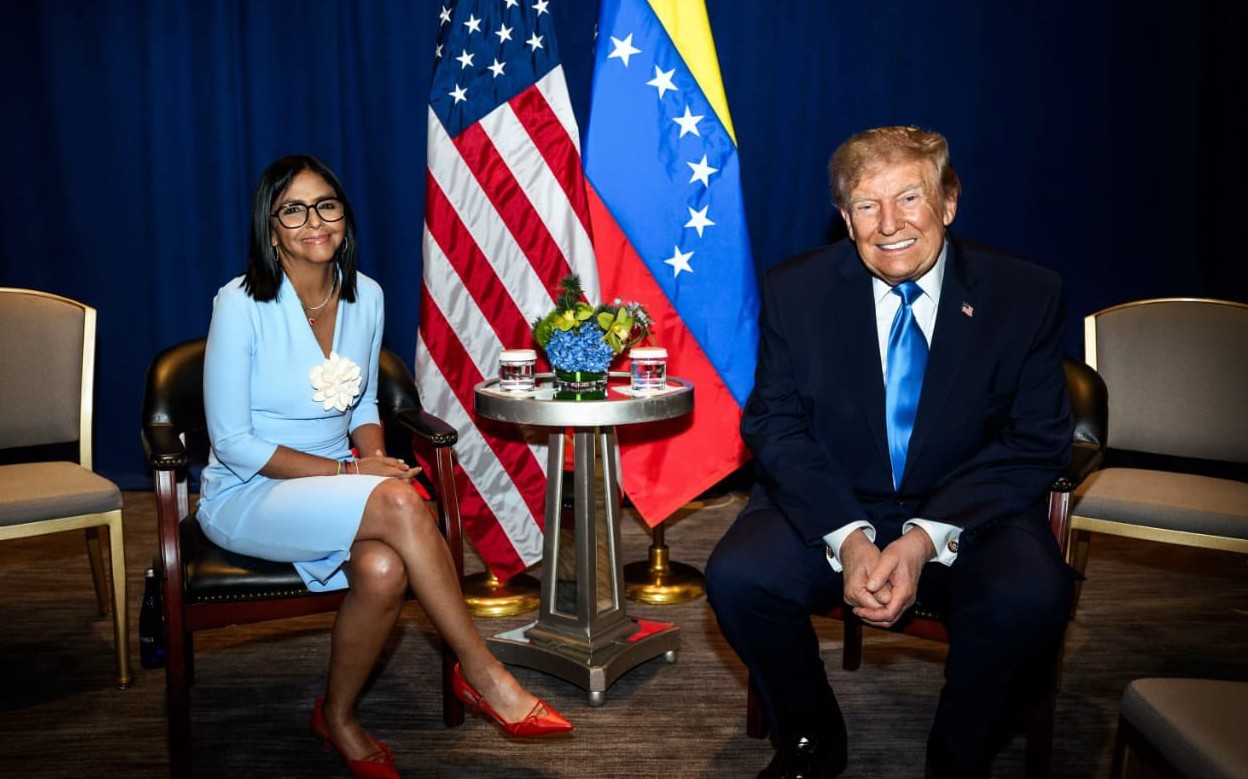
On the same day Delcy Rodríguez was in New York meeting Donald Trump and representing Venezuela at the United Nations, María Corina Machado was trying, unsuccessfully, to get closer to her own country.
It was her third attempt in barely 24 hours. First came a planned maritime departure from Panama, which was canceled after the company operating the vessel reported mechanical problems. Then came an attempted flight to Aruba, from where Machado intended to continue by sea. Finally, there was another flight plan, this time for Curaçao. That trip did not happen either. Her team now says she has attempted to return to Venezuela seven times since she left in December 2025 to get her Nobel Prize in Oslo.
The exact responsibility for the latest failures remains unclear. But what happened during previous attempts is better documented. Axios reported in July that the Trump administration’s position was that third countries should not help Machado enter Venezuela. When Deputy Secretary of State Chris Landau appeared to tell the Dutch government otherwise, officials in Washington corrected the message. Curaçao withdrew permission for Machado’s plane to land while she was already in the air. According to the same account, Secretary of State Marco Rubio subsequently reiterated the policy to Machado personally.
This sits awkwardly beside Washington’s public position. Rubio said this month that Machado, as a Venezuelan citizen, has every right to return “whenever she wants.” A State Department official told Congress in July that the US would not obstruct her return. Trump himself has denied telling her to stay away.
After World War II, keeping Emperor Hirohito in power did not mean preserving his capacity to decide who could participate in Japanese politics.
All of those statements may be technically true. The US does not issue Venezuelan visas and cannot legally forbid a Venezuelan citizen from entering Venezuela. But Machado cannot teleport into Caracas. Getting home requires aircraft, airports, territorial waters, neighboring governments and, increasingly, governments that want to know Washington’s position before helping her. There is a meaningful difference between saying that the US will not prohibit her return and telling American partners that facilitating it is not US policy.
This would already be an odd arrangement for any opposition leader. It is stranger still in Machado’s case. She is hardly a geopolitical threat to Washington. She has gone out of her way to present a democratic Venezuela as a close strategic partner of the US. In December, she said explicitly that America would be Venezuela’s “main ally.” She has spoken about opening the country to Western investment, rebuilding the energy sector with foreign capital and transforming Venezuela from a security liability into a partner for the US. After Maduro’s removal, she publicly thanked Trump and Rubio and described the outcome as a potential “win-win” for both countries.
Yet Reuters reported last week that US officials remain wary of her return because they fear her presence could disrupt the transition Washington is supporting around Rodríguez. Machado’s movement is not part of the current US-backed negotiating mechanism, while Delcy’s government has become Washington’s main Venezuelan interlocutor.
That raises a question that goes beyond Machado.
The Trump administration has repeatedly defended its approach as a matter of sequencing. Venezuela needs stability first, then economic recovery and reconciliation, and “ultimately democratic transition.” The White House argues that rebuilding the economy is a precondition for elections rather than a substitute for them.
There is a serious argument behind that position. Venezuela inherited a devastated public administration, a crippled oil industry, enormous external debt and institutions hollowed out by years of authoritarian rule. Abruptly dismantling the bureaucracy, military hierarchy or State-owned companies could reproduce some of the worst mistakes made in other post-authoritarian or post-conflict transitions. A functioning State matters.
But preserving the State is not the historical equivalent of preserving the regime.
After World War II, the United States repeatedly confronted versions of this distinction. In Japan, the occupation retained Emperor Hirohito partly because American planners believed institutional continuity could make the transition less destabilizing. But keeping the emperor did not mean preserving the emperor’s capacity to decide who could participate in Japanese politics. On October 4, 1945, General Douglas MacArthur ordered the Japanese government to remove restrictions on political and civil liberties and release political prisoners. Among those released were prominent Japanese Communists who had been imprisoned by the old order. American officials later acknowledged that the resulting political opening was so broad that some Japanese mistakenly concluded that the occupation itself favored the Communist Party.
When it comes to the geopolitical role of the US, the Trump administration depicts itself as the decisive actor reshaping Venezuela. When questions turn to the lack of institutional reforms, Venezuela’s sovereignty becomes a much more convenient explanation for the limits of American responsibility.
Something similar happened in Italy. The Allies initially worked through King Vittorio Emanuele III and Marshal Pietro Badoglio because they needed an Italian government capable of administering the country during the war. At the same time, political exiles were allowed to come home and anti-Fascist parties returned to public life. The contrast is particularly striking in the case of Palmiro Togliatti, the leader of the Italian Communist Party and a former senior official of the Communist International. When Togliatti sought to return from Moscow in 1944, the US State Department explicitly said it had “no objection.” He returned and soon participated in the new political order.
Neither Japan nor Italy offer a blueprint for Venezuela. The historical circumstances were radically different, and American occupation policy was hardly politically neutral. But the underlying distinction is useful. Administrative continuity did not require preserving the old regime’s monopoly over politics. The State could survive while the political system opened around it.
That is precisely where Washington’s current Venezuelan policy becomes harder to understand.
Keeping experienced civil servants at their desks is State continuity. Avoiding a wholesale purge of the armed forces may be State continuity. Keeping PDVSA pumping oil while new rules are negotiated is State continuity. None of those choices inherently require preventing opposition politicians from returning, organizing, or campaigning.
And Venezuela’s political opening remains incomplete. A UN Fact-Finding mission reported this month that, despite prisoner releases and some liberalization, the structures responsible for years of repression remain largely intact. Officials linked to previous abuses remain in important positions, restrictive laws survive and arbitrary detention and mistreatment have not disappeared.
This makes the widening gap between economic opening and political opening particularly important. Washington is moving rapidly on the former. Rodríguez traveled to New York accompanied by officials discussing oil, mining, debt restructuring and access to international financial institutions. American companies are negotiating their return to Venezuela’s energy sector. Trump has made the oil agreement one of the centerpieces of his foreign-policy narrative.
At the United Nations this week, Trump went further. After celebrating Maduro’s capture, the release of prisoners and Washington’s relationship with Venezuela’s current leaders, he described the new oil arrangement in unmistakably triumphalist terms. “It was a war,” he said, before invoking the old expression: “to the victor belong the spoils.” He then presented Venezuela as proof that the US would once again impose its power against threats in the Western Hemisphere.
If Machado returns, travels freely, organizes her movement, holds rallies and begins preparing for an eventual presidential campaign, Delcy’s continued presence can still be understood as part of an administrative transition.
The rhetoric creates an uncomfortable asymmetry. When discussing oil, geopolitical alignment or American power, the administration depicts itself as the decisive actor reshaping Venezuela. When questions turn to the remaining coercive apparatus, restrictions on political competition or the continued exclusion of important opposition actors, Venezuela’s sovereignty becomes a much more convenient explanation for the limits of American responsibility.
Washington cannot have unlimited responsibility for everything that happens inside Venezuela. Delcy Rodríguez still controls a government, a bureaucracy and a security apparatus of its own. But the US plainly possesses enormous leverage over the political and economic environment in which that government operates. The history of Machado’s attempts to return suggests that this influence may extend even to whether neighboring governments are prepared to help a Venezuelan opposition leader reach her country.
That is why Machado’s return matters beyond Machado herself.
If she returns, travels freely, organizes her movement, holds rallies and begins preparing for an eventual presidential campaign, Delcy’s continued presence can still be understood as part of an administrative transition: an imperfect bridge between the regime that existed under Maduro and a genuinely competitive political order.
If her return continues to be regarded as destabilizing, however, the logic starts to invert. Political competition itself becomes a threat to stability. The government is no longer merely being preserved so that the State can function while politics reopens; political reopening is being limited because it might endanger the government being preserved.
Venezuela does not need another collapse of the State. But avoiding State collapse and protecting the political equilibrium inherited from chavismo are two different objectives.
The distinction between them may ultimately define this transition.

10:29, 24 Sep 2026

You can even take a pint to your room
Love it or loathe it, Wetherspoons is a British institution. Its patterned carpets, bargain drinks and grand old buildings are familiar features of high streets across the country.
For a long time, I’ve been in the loathe camp. Having whiled away much of my latter teenage years in one of its pubs – a once particularly grand building converted into the biggest, cheapest drinking den in the South East – I fell out of love with Tim Martin’s chain in my 20s. Partly because the local newspaper I worked for had no offices, so we had to hold news conferences in the room above our local Spoons. Partly out of support for independent pubs, which have been in a fight for survival for the past decade.
Something Spoons is certainly not doing. The chain is booming. It has around 800 venues across the UK and brought in £2.13 billion last year, an almost 5% year-on-year increase. But while most of us know its pubs, I had no idea it had also been running hotels since 1998, when the chain’s first opened in Shrewsbury with 22 rooms. A further 54 have opened since.
As you might expect with Spoons, the major draw is the price. A room for a night costs at most £50 at most venues, which is an absolute bargain anywhere near London. The chain also scored four stars out of five for value for money in a Which? budget hotel survey, one of only two to land the score.
So, on a bitter Wednesday in November, I arrived at the Thomas Ingoldsby in Canterbury, frozen and disheveled after a long bike ride from Broadstairs, ready to give Spoons another chance. I was glad that I did.
Cheap drinks are a big part of Spoons’ appeal, and its hotel rooms follow the same formula.
In the Which? survey, Wetherspoons was one of just two hotel groups to earn four stars for value for money. The other was the overall winner, the Coaching Inn Group. While the Coaching Inn Group’s average room rate was £128 a night, Wetherspoons’ was £70. When I checked, a double at the Thomas Ingoldsby for the following Wednesday was available for just £55.
The savings didn’t stop at the bedroom door. I spent the evening drinking £1.89 pints of ale, then tucked into a £2.99 veggie breakfast the next morning. Both were rather decent. Perhaps I’d spent too long inside the M25, but those prices felt almost ridiculously cheap. At a time when leaving the house seems to cost £20 before you’ve done anything, the affordability was the standout attraction.
My previous Spoons visit had been to the vast, strangely subdued Coronet on London’s Holloway Road. Canterbury on a chilly Wednesday evening couldn’t have felt more different. There were university students, cheerful groups of pensioners and solitary blokes reading books over onion rings. It was a lively cross-section of life, with people happily sharing the same space.
The hotel rooms are a short flight of stairs above the pub, so getting to bed after a pint couldn’t be much easier. You could even take a deli wrap and chips upstairs to enjoy in the bath. A member of staff told me rooms could be booked on a whim, although anyone who had overdone it at the bar might be turned away.
I’ve stayed in plenty of budget hotels, and this was among the best. Everything felt fresh, well maintained and thoughtfully put together. My double room was generously sized, with a large desk, a well-stocked tea tray and a decent-sized television. Better still, it had a view of Canterbury Cathedral that few hotels in the city could rival.
Only two rooms at the Thomas Ingoldsby enjoy that outlook. Those on the other side not only miss out on the cathedral view but are reportedly disturbed by early-morning lorry movements. If you can get it, room 110 is the one I’d recommend. After a freezing day cycling across Kent, I was particularly pleased to discover the thermostat went up to 25C — and that the heating delivered. Within a short time, it felt as though I’d escaped somewhere considerably warmer.
There is no all-inclusive package, which is perhaps just as well given the potential combination of Hooch and endless chips. Still, the room came with plenty of useful extras: reliable Wi-Fi, a couple of packets of biscuits, fresh towels, two bottles of water and a generous supply of tea, coffee and hot chocolate sachets. Check-out was at 11am. Breakfast wasn’t included, but at £2.99 for my veggie option, that hardly felt like a reason to complain.
A friend’s dad once told me that Spoons was the closest thing Britain had left to a genuine social institution. Watching the mix of people enjoying their evening in Canterbury, I could see what he meant.
As nightclubs and members’ societies close, places where people from different backgrounds can gather feel increasingly valuable. Whatever my reservations about the business, this pub offered exactly that.
Add a comfortable room, a cathedral view and remarkably low prices, and the appeal becomes difficult to resist. I arrived as a skeptic, but Thomas Ingoldsby won me over.

Did the Rams’ humiliating season-opening loss to the San Francisco 49ers in Australia make you reevaluate your preseason choices?
Did it make you doubt the veracity of the Rams’ championship claim?
Were you among the dummies who, as Davante Adams put it, were “freaking out”?
“You’re a fool if you think that that’s what it’s going to look like every single week,” a confident Adams said before putting on a cape and a show in the Rams’ 28-6 victory over the New York Giants on Monday at SoFi Stadium.
The 33-year-old receiver was confident because, for one, the Rams are never again going to fly 16 hours, hop off a plane and play NFL football.
Also, the Rams are very good.
And anybody — or “everybody,” per Adams — who doubts these Rams, does so at their own peril.
Because this is a team with so many weapons they seem sometimes to almost forget about one of them — Adams.
Prime-time ’Tae, the six-time Pro Bowler, three-time All-Pro first-teamer and future Hall of Famer.
A 13th-year professional scorer who, on Monday, passed Art Monk (12,721) to enter the top 25 on the NFL’s all-time receiving yards list. Adams also passed Antonio Brown, Calvin Johnson, Brandon Marshall and Jimmy Smith (46) and tied Torry Holt and Michael Irvin (47) for the ninth-most games in NFL history with 100-plus receiving yards.
With star receiver Puka Nacua out nursing a hip injury, all eyes were on Adams — and hopefully you didn’t blink.
In Adams’ best game as a Ram, he caught eight passes for two touchdowns and 195 yards — 13 more than the Giants’ yardage total. And just 11 yards fewer than his career high.
Among his snags Monday was a leaping, two-handed grab off a sidearm sling from quarterback Matthew Stafford on the Rams’ second possession. Adams brought that down and sashayed in for a 31-yard touchdown that opened the scoring.
Then Stafford hit him in stride for a 64-yard monster gain on the Rams’ third drive, which set up Kyren Williams’ 10-yard touchdown reception.

Rams wide receiver Davante Adams, right, celebrates with wide receiver Xavier Smith after catching a touchdown pass in the first quarter Monday against the Giants.
(Allen J. Schaben / Los Angeles Times)
Stafford and Adams also had one of their patented over-the-shoulder touchdown connections in the corner of the end zone, which made it 21-3 in the third quarter.
“We’ve done that quite a few times on that route in particular,” Adams said, with a grin. “They did double-team it, but just tried to hide it a little too much. And if you’re going to double, you better get over there — because we’re going.”
And if you’re someone who thought the Rams play things too cool, well, Monday was too cool: “Our O-line did a great job protecting, to allow Matthew and Davante to have a bunch of cool connections,” coach Sean McVay said. “Anytime you go eight for 195, it’s a pretty special deal.”
Adams made high-degree-of-difficulty catches look elementary, like foregone conclusions. He was clinical, smooth with his body control.
“It’s a blessing, man,” Adams said. “Games like this. … I think you guys know what I’m capable of. I certainly do.”
But maybe Monday’s performance was a reminder not just of the Rams’ super-upside, but for the Rams themselves: As obvious a target as Nacua is, Adams remains a special talent. They ought to feed him more.
“He’s Wide Receiver 1 to me,” McVay said. “He ain’t a 2 … and I’m really happy for him. I thought he made some great plays, but you could see there’s a lot of trust that he and Matthew have. They were able to get a lot of work together this offseason, and it’s only going to continue to build.”
That investment in time and trust might have all been for naught had the Rams traded Adams — who previously was released by the New York Jets in March 2025 — when the Philadelphia Eagles were shopping A.J. Brown in the offseason.
The Rams didn’t hide that fact from Adams, McVay said: “I did want to acknowledge it. He’s a grown man, and I think he understood that this is a part of this business.”
And Adams didn’t take umbrage, he said at the start of training camp: “It’s just the way that this business goes … ultimately I’m still a Ram and I’m here and I’m happy to be here.”
Here, in L.A., still pursuing the elusive, ultimate goal — a Super Bowl title.

Rams wide receiver Davante Adams celebrates after catching a touchdown pass against the Giants.
(Allen J. Schaben / Los Angeles Times)
Last season, Adams lost in the NFC championship for the fifth time when the Rams were ousted 31-27 by the eventual Super Bowl-champion Seahawks.
And now, despite the debacle Down Under, the Rams remain the favorites to win the Super Bowl this year.
Monday’s victory — imperfect but convincing — reinforced those assumptions.
And proved Adams’ point.
“We’ve still got another level we can tap into,” he said. “This team, we got to the confidence level we’re at because of the work we put in. … We’re trying to be great and be a Super Bowl-caliber team, you gotta hold yourself to a high standard.
“This is definitely on track with what we’re capable of.”

In the second week of the college football season, in a clash of titans, the University of Texas scored 21 unanswered points to surge past Ohio State in the fourth quarter and win, 24-23.
The comeback, Gov. Greg Abbott decreed, was the greatest home victory in more than 130 years of Longhorn football.
A screen grab of one celebratory moment showed a group of students ecstatic beyond belief. They were clad in the university’s signature burnt orange. Two wore cowboy hats. One flashed “Hook ‘em Horns,” the university’s proud hand signal.
To see the picture earlier this month was to witness pure, untempered joy.
But Bo French, the Republican candidate for Texas Railroad Commission, saw something different.
Most of the students were darkly complected and apparently of South Asian heritage. French posted the photo and wrote on X, “I heard UT graduation this year looked like this. I didn’t believe it. The problem is now obviously far worse than anyone imagined.”
He followed with a second post, doubling down on the racist “Great Replacement” theory.
“Like body-cams exposed criminals, social media is exposing how many Americans have been displaced by foreigners,” French spewed. “It’s everywhere and far worse than any of us could imagine.”
In many places, French’s unapologetic, unvarnished bigotry would be disqualifying. But given Texas’ strong Republican leaning he stands a better-than-even chance of being elected in November to the state Railroad Commission, which, despite its name, oversees Texas’ vast oil and gas industry.
The hateful gibe was perfectly in character. “In some ways in Texas this is old news,” said Brandon Rottinghaus, who teaches political science at the University of Houston.
Last year, as chairman of the Tarrant County GOP, French posted an online poll asking, “Who is a bigger threat to America?” The choice on offer: Muslims or Jews.
Speaking in March at a political conference, he urged President Trump to round up and deport every Muslim in the country, calling the Islamic faith subversive and a clear and present danger to America.
“The Republican Party is used to Bo French making these kinds of outrageous statements,” Rottinghaus said.
Still, the response to French’s latest acrid emission was telling, not least for what it says about reflexive partisanship and today’s political reward structure.
As you’d expect, his Democratic opponent, state Rep. Jon Rosenthal, was scathing. “I spent 25 years as an oil and gas engineer,” he wrote on social media. “Bo French spent Sunday morning sorting our student section by skin color … A man who can’t tell a Longhorn from a foreigner has no business regulating anything in TX.”
The state’s outgoing U.S. senator, Republican John Cornyn, was also quick to denounce French. “This is the Republican nominee for statewide office,” Cornyn said in a post. “Are other Republican elected officials going to condemn the intolerance and racism, or look the other way while it becomes normalized.”
For Abbott and for Ken Paxton, who beat Cornyn in an eye-gouging, rabbit-punching Republican Senate primary, the answer was, for all intents, the latter.
“That is not my message,” Abbott said in a written statement, summoning the moral clarity and political courage of a puff pastry. “We all support our college football teams. The way we win the state is the same way we win football games. We unite under the brand of Texas.”
Then, just to have it both ways, Abbott suggested “that doesn’t mean that Texas cannot also lead in having the toughest immigration laws of any state in America and freezing H1B visas at our universities.” (The overwhelming majority of those holding H1B visas are Asian nationals from India and China.)
Paxton responded by attacking his Democratic opponent, state Rep. James Talarico, for saluting Cornyn for taking a stand against French’s prejudice. “I condemn racism in all its forms,” Paxton wrote on X, adding, “Only one person in this race has a history of dividing Texans by race, and it’s James Talarico.”
A simple, straightforward condemnation shouldn’t have been hard. Lacey Hull, a Republican state representative from Houston, was among those in the GOP who showed how.
“Please delete this,” she urged French on X. “This post breaks my heart. I see college kids cheering on their football team. I see Texans.”
But Abbott, bidding for an unprecedented fourth term, is facing a tougher than expected race against Democratic state Rep. Gina Hinojosa.
Paxton, whose unsavory resume includes impeachment, indictment, petty theft and charges of adultery, has managed the rare feat of turning his race against Talarico into a nail-biter. (It’s been more than three decades since a Democrat won statewide office in Texas.)
Both need a robust GOP turnout to win in November and neither wants to risk alienating too many within the party’s xenophobic, anti-immigrant wing.
“They’re concerned about turnout,” said Mark Jones, a political scientist at Rice University. “Texas is a red state, but one thing that Republicans are concerned about is that the base may not turn out in as large a number as they need.”
Given French’s loathsome history, Abbott and others in the party establishment worked hard to keep him from winning the Republican nomination, Rice noted. But not Paxton. He headlined the kickoff to French’s campaign and has good reason to be glad he won and is now part of the GOP ticket.
His presence means that Paxton is only the second most odious figure seeking statewide office in Texas in November.

Hayley Anderson Screen Time TV Reporter
16:25, 18 Sep 2026
Lizzie Borden’s disturbing children’s rhyme might be entertaining but it is false.
Monster on Netflix is back following the global success of season three which told the horrific story of Ed Gein, starring Sons of Anarchy legend Charlie Hunnam.
This time around, all eyes are on Lizzie Borden who was accused of the brutal murder of her dad and step-mother in the late 19th Century before she was acquitted.
Despite Lizzie being set free, her reputation was never restored and for more than 100 years, a gruesome children’s rhyme has immortalised the crimes.
But even though this is why Lizzie Borden remains a familiar name in criminal history, the chant is far from factually correct.
Watch Jose Mourinho Netflix doc with free Netflix subscription
Jose Mourinho’s three-part Netflix documentary is available to watch at no extra cost for Sky customers as the provider gives away free subscriptions with each of its Sky Stream TV bundles.
Here is the Lizzie Borden rhyme in full: “Lizzie Borden took an axe, and gave her mother 40 whacks.
“When she saw what she had done, she gave her father 41.”
It states that Lizzie killed her mother and father but the woman was actually her step-mother Abby Borden as her biological mum died when she was just a child.
The rhyme goes on to detail that her parents were “whacked” 40 and 40 times but this is an exaggeration as Abby was killed by 18 or 19 strikes and father Andrew by 10 or 11.
In addition, the rhyme states that the murders were committed with an axe but police and experts believe the weapon was a hatchet, a far smaller and compact tool meant for lighter tasks in comparison to an axe.
There’s also the matter that the children’s song states that Lizzie Borden was the one to commit these crimes.
However, a jury acquitted Lizzie of their murders in 1893, so legally, she didn’t kill Abby and Andrew Jackson Borden.
Despite this verdict, public suspicion remained throughout her life and to this day, especially since it was an all-male jury that didn’t think an upper-class woman could commit such a “feral” crime.
Monster: The Lizzie Borden Story is available to watch on Netflix

Paez is a record breaker and a headline maker.
He became the youngest debutant and goalscorer in Ecuadorian top-flight history at the age of 15 before making his debut in the Copa Libertadores, South America’s equivalent of the Champions League, later that same season.
Later in 2023, aged 16 years and 131 days, he made his second appearance for Ecuador, becoming the second-youngest South American international to feature in World Cup qualifying after Diego Maradona.
A month later, he became the youngest South American to score in a World Cup qualifier in a 2-1 win away to Bolivia.
It was understandable, therefore, that Chelsea believed the attacker, who had two international goals and 18 caps when they agreed to sign him, was destined for big things.
Chelsea allowed him to train regularly with the first team before he was officially eligible to join the club following his 18th birthday.
They also provided security for Paez, his family and the family of international team-mate Moises Caicedo after violence broke out in Ecuador in early 2024.
A few months later, Paez was filmed in a New York strip club while away on international duty.
He initially impressed on loan at Chelsea‘s sister club Strasbourg by winning September’s Young Player of the Month award in the French top flight, but then came in for criticism from then-manager Liam Rosenior.
“We expect more, clearly,” Rosenior said later that season. “I’m tired of using the excuse of the player’s youth.”
Despite Strasbourg’s links to Chelsea through their shared ownership, the loan was cut short after one goal in 21 appearances. Instead, he joined Argentine giants River Plate on a two-year loan spell.
Sources in Argentina expressed similar concerns about his attitude when asked by BBC Sport. They point to a disappointing display in the 1-0 Superclasico defeat by fierce rivals Boca Juniors at the Monumental in April.
Shortly afterwards, Paez was named by club president Stefano Di Carlo as one of 15 players training away from River Plate’s first team, although other sources felt he could have been given more opportunities.
His loan ended by mutual consent after Paez scored once in 14 appearances in 461 minutes for River Plate.
Ahead of the international break, concern has been expressed in Ecuador, having built him up as the country’s next great attacking talent.
Michel Deller, the owner of Independiente, told Hincha Amarillo: “He’s like a son to us. We care about him deeply.
“He’s a good kid who’s had a tough time and has made decisions that have complicated his life.
“We are always hopeful he’ll show his exceptional talent one again but right now, it’s up to him to decide what to do with his life.”
These concerns are not dismissed completely by Chelsea or Paez’s environment. However, there is a belief they are grossly overstated, highlighting he is owed time to grow as a player and person.
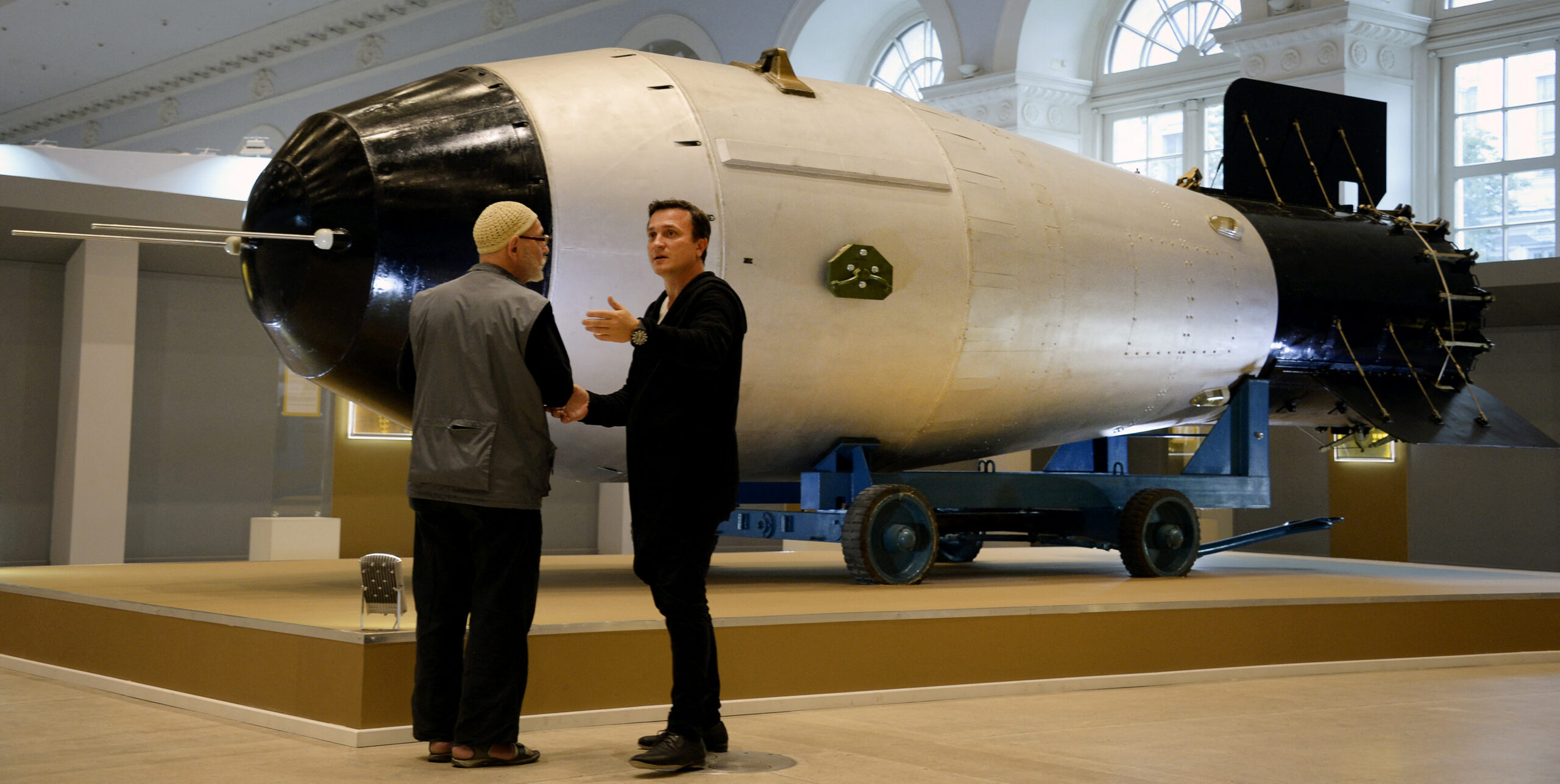
On Sept. 26, 1983 the Soviet Union’s Oko early warning system reported that the US had launched five intercontinental ballistic missiles.
Lt. Col. Stanislav Petrov, the duty officer at the Serpukhov-15 bunker, broke protocol and refused to report the alert as a confirmed strike. He reasoned that a real US first strike would involve hundreds or thousands of missiles, not five. The system, it turned out, had mistaken sunlight reflecting off clouds for missile launches.
Petrov’s decision to defy protocol prevented an erroneous retaliatory nuclear strike and its incalculable consequences.
“I had all the data (to suggest there was an ongoing missile attack),” he told the BBC’s Russian Service 30 years later.
“If I had sent my report up the chain of command, nobody would have said a word against it. They were lucky it was me on shift that night.”
That Cold War lesson resonates loudly amid growing fear over how AI is being deployed in warfare. A recent appeal has put automation in war back in the spotlight, raising a question that leaves many uneasy: What would happen if a computer — an AI system — were the one calling the shots and it got the response to an attack wrong?

In an essay published over the weekend, Anthropic CEO Dario Amodei called for AI model development to slow down and face closer scrutiny. The appeal was not unprecedented but this time it drew rare public agreement from two rivals: Sam Altman of OpenAI and Elon Musk of xAI.
“Over the last few months I have become convinced that fully addressing the risks requires even more prudence — not just investing in risk prevention but pacing the rate of capabilities advancement so that risk prevention has time to keep up,” Amodei said.
A threat-intelligence report published by Anthropic found that a cell based in northern Yemen tried to use Claude (its AI tool) to build guided rockets and missiles, including a ballistic missile with a claimed 2,000 km range and a separate program incorporating a hypersonic glide vehicle.
Anthropic said that it banned the accounts after detecting the activity, although there was no evidence that the group successfully fielded an operational weapon.
War offers no shortage of similar examples, where AI streamlines battlefield decisions or powers surveillance. The Middle East, given its strategic weight and the range of actors involved, has become a testing ground for the technology.

Israel has long used AI in its military. Over three years of war in Gaza its forces have reportedly deployed several machine-learning systems — Habsora (“Gospel”), Lavender, Fire Factory and Where’s Daddy — to automate large parts of target generation and strike planning.
The systems mine surveillance feeds, communications data and existing databases to propose targets and recommend munitions and strike schedules. Analysts reportedly went from producing about 50 targets a year to as many as 100 a day.
Concerns over AI-supported targeting resurfaced during the Iran war, after a US strike hit the Shajareh Tayyebeh girls’ school in Minab, southern Iran, killing at least 168 people, most of them children.
The US has not disclosed whether AI was used in that strike but Adm. Brad Cooper, the US commander leading the campaign, has confirmed the use of “a variety of advanced AI tools” to process large volumes of data, without naming specific systems. He said that the tools let commanders make “smarter decisions faster than the enemy can react,” cutting processes that once took hours or days down to seconds.
“Humans will always make final decisions on what to shoot and what not to shoot, and when to shoot,” he said.

The US military has run AI-enabled war programs since at least 2017. Its Maven Smart System, built by Palantir, helps fuse battlefield data, identify targets and accelerate decisions. NATO acquired its own version in 2025. OpenAI and Anthropic are also competing for military contracts, reflecting the growing reliance of defense operations on commercial AI and the increasingly close ties between the two sectors.
In Ukraine, both sides use AI for data processing and target selection. Ukraine’s former Deputy Defense Minister Yuriy Myronenko told the BBC that AI analyzed more than 50,000 front-line video streams each month, helping “quickly process this massive data, identify targets and put them on a map.”
But as war spills beyond the traditional battlefield into a hybrid, multi-faceted front, AI adoption follows.
In April YouTube banned Explosive Media, a Gen Z Iranian channel that used AI-generated Lego-style animations mocking Western figures — including Donald Trump and Benjamin Netanyahu — while pushing pro-Iranian, anti-US and anti-Israel narratives.
More recently separate media investigations found that Israel had funded multimillion-dollar PR campaigns to shape how AI chatbots, including ChatGPT, answer questions about Gaza and the Israeli military. By setting up fake think tanks and publishing AI-generated papers with no real authors, the investigators said, Israel built a sophisticated operation to manipulate search results and shape public understanding — a shift in propaganda tactics that is harder to detect because it disguises advocacy as neutral expertise.
Throughout history militaries have sought tools that offer an edge over adversaries. But deploying AI in high-stakes environments like armed conflict carries risks distinct from any previous technology.
Part of the concern lies in the technology itself. An AI model trained on faulty or unrepresentative data can generate inaccurate results or malfunction once deployed in conditions that differ from its training environment.

AI-supported targeting is a case in point. Where such tools generate targets at scale with minimal human oversight, errors are not difficult to imagine.
That risk grows more acute as AI development moves from decision support to agents that can pursue complex goals with little human supervision. The next step, recursive self-improvement, would involve systems upgrading themselves with decreasing human input in a potentially open-ended loop.
As Jean-Marc Rickli and Tobias Knappe of the Geneva Centre for Security Policy note in a recent paper, agentic AI “is shifting the AI landscape from being a passive, supportive tool towards an active executor that can increasingly define and take courses of action on behalf of a human user” — a shift that, they added, “also raises significant societal, security, legal and ethical risks.”
In this sense, the proliferation of AI, on and off the battlefield, has introduced unprecedented challenges, prompting scrutiny of its impact on moral agency and accountability.
In June the UN held its first Informal Exchange on Artificial Intelligence in the Military Domain. Discussions centered on human rights and international humanitarian law, with nongovernmental organizations pushing for a moratorium on AI systems used in lethal decision-making — such as automated targeting — until robust global safeguards are in place.
The meeting followed a December 2025 UN General Assembly resolution on “Artificial intelligence in the military domain and its implications for international peace and security.” Experts welcomed it as a step forward, despite notable absences — including the US, which voted against the resolution.
Momentum is now shifting to New York, where a factual summary of the Geneva talks is due to reach the UN First Committee during its October session.

Despite these efforts, battlefield AI remains governed largely by existing legal frameworks.
Existing international humanitarian law applies to AI-enabled weapons through the principles of distinction, proportionality, military necessity and precaution. Responsibility remains with states and human actors, while Article 36 of Additional Protocol I to the 1949 Geneva Conventions also requires states party to the protocol to review new weapons, means and methods of warfare for legal compliance. US Directive 3000.09 similarly requires “appropriate levels of human judgment” but stops short of mandating real-time human control or creating binding international accountability.
In early September a UN disarmament forum in Geneva concluded three years of work on autonomous weapons, colloquially known as “killer robots.” A total of 128 states reached a non-binding consensus text after last-minute objections from the US and Russia, backing a proposed two-tier framework: prohibiting autonomous weapons whose effects are unpredictable or designed to target humans directly and restricting all others through mandatory human supervision rules.

Human Rights Watch said that the final text was considerably watered down and the US and Russia remain opposed to binding negotiations. But with 76 states now backing a legally binding instrument, the Convention on Certain Conventional Weapons’ November Review Conference looms as the decisive test of whether formal talks begin.
“AI systems will not change that the human is responsible for mistakes but it will obscure that humans feel responsible for mistakes and that can lead to a greater willingness to use force,” Elke Schwarz, professor of political theory at London’s Queen Mary University and author of “Death Machines: The Ethics of Violent Technologies,” told Arab News.
“There is a plausible deniability implicit in the use of AI enabled systems because they are essentially operating in a zone of invisibility.”
Israel offers the clearest example to date. When Israeli outlet +972 reported on the Lavender system it caused uproar by showing AI used not merely to assist analysts but to generate vast target lists — reportedly with only cursory human checks. The system’s scale, its claimed 90 percent accuracy and its use against people in their homes raised fears that human control was slipping and that AI could make large-scale violence faster, more impersonal and harder to attribute.

This marks a paradigm shift unseen in the history of conflict, which, as Schwarz argued, reshapes humanity’s relationship with violence and challenges conventional notions of ethical conduct in war.
She maintains that AI-enabled weapons systems facilitate the objectification of human targets, raising tolerance for collateral damage, while automation bias and technological mediation weaken operators’ moral agency and diminish their capacity for ethical judgment.
“Machines cannot be better at war than humans because machines don’t understand what war is, what it entails and what suffering it produces,” she said.
“They can only contribute to the actions humans decide on in better or worse ways. In my view AI-enabled systems make humans less restraint in using force, not more.
“Humans decide on the parameters. If they want to design a system that is less restraint, they will, if it is perceived to be more effective. A system cannot be a ‘better’ moral actor than the human because it has no concept of meaning for moral decisions. So, humans will not disappear from war with AI systems, but AI systems will change the relationship we humans have to violence. And that will make war worse.”
As a growing number of whistleblowers and experts warn, the risk is that an unchecked race toward superintelligent AI carries real risks to the very humans who built it.

For Schwarz, an AI “doomsday” is no longer far-fetched science fiction.
“I think we have already witnessed a horrendous human cost on account of AI enabled weapon systems,” she said.
“The introduction of AI systems into war has, at the very least, not lead to more restraint, more global stability, less conflict, fewer civilians killed or harmed. Quite the contrary. Children are dying due to war at a staggering rate. This is quite doomsday-ish in my books.”
As comparisons between the AI and nuclear arms races grow sharper by the day, the argument circles back to Petrov and to an ominous question: Would an algorithm have shown the same restraint?
“We can of course conjure up all kinds of awful scenarios, for example if someone decides to put an AI agent in charge of nuclear decision making (which would be ludicrous but you never know) and a data glitch leads to a nuclear threat spiral. But I think things are already quite awful because the technology and dehumanization seem to go hand in hand.”
Anthropic’s Claude offers a similar note of caution.
“What’s not really disputed is that today’s actual military AI risks are the boring-sounding ones: bad targeting data, automation bias, escalation happening faster than diplomacy can respond, systems proliferating to actors with no safety culture at all. The ‘robots decide to turn on us’ framing, if anything, can be a distraction from those.”
Quite wise. Humans should take note.