ONE of my fondest childhood holidays was going to Legoland Windsor, feeling like a real pirate as I sifted for gold while struggling to remember my left and rights in the driving school.
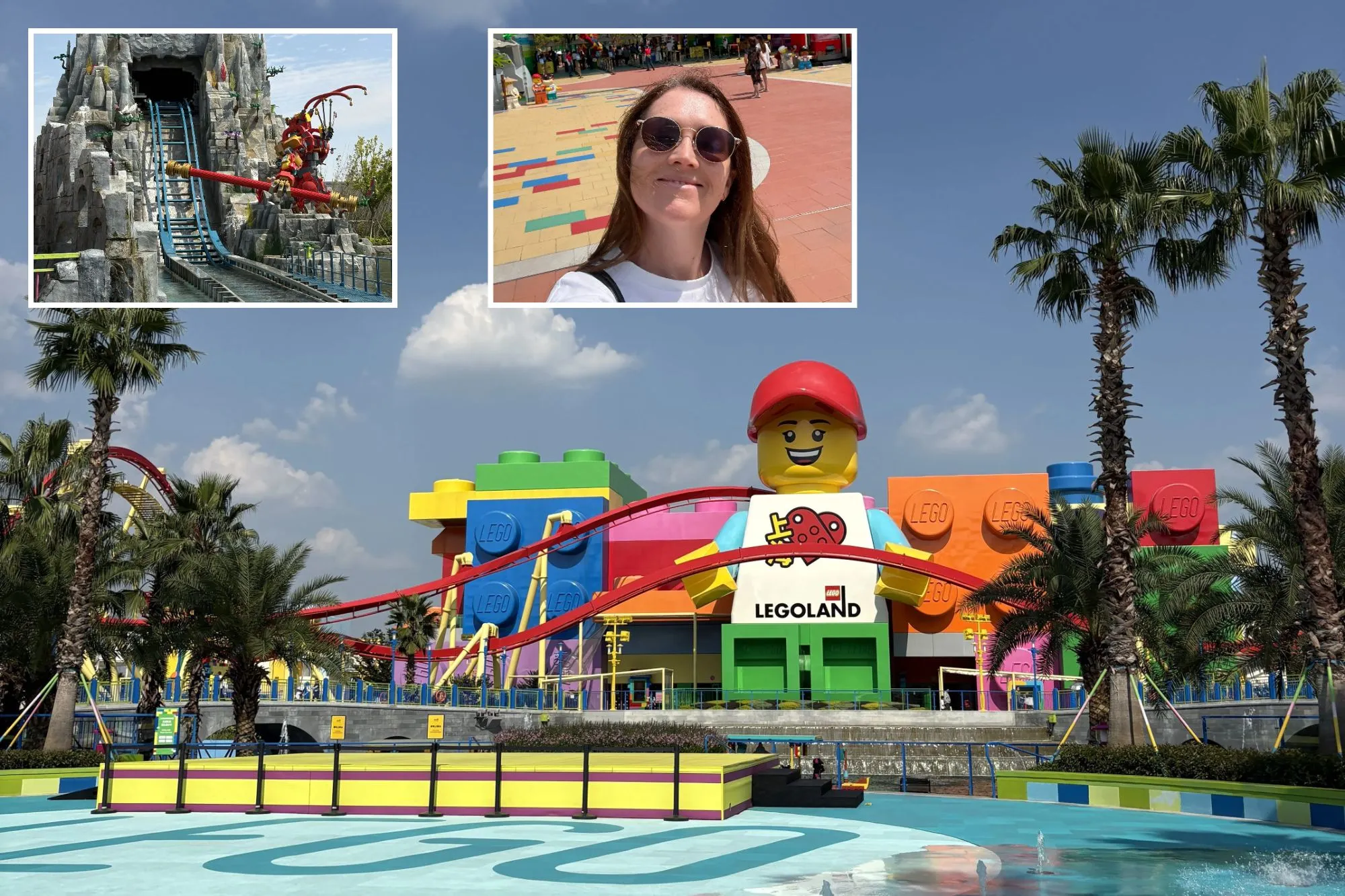
But as an adult, I recently visited the new Legoland theme park which has become the world’s biggest – and was blown away by the sheer scale of it.
The world’s biggest Legoland opened last yearI visited to see how it compared to Legoland Windsor in the UK
Legoland Shanghai recently celebrated its first birthday, having opened just outside of the city in July 2025 and celebrating two million visitors already.
It is home to the world’s largest Mini Figure, nicknamed Dada and measuring 85ft.
It also has the world’s only land dedicated to Monkie Kid, with rides including the park’s log flume.
And I was so surprised about how great it was for adults as well.
The Miniland is the central attraction and well-worth a visit, not just for Lego-enthusiasts.
It has the world’s biggest Mini FigureThe Miniland is insanely huge too, with 20million bricks
It’s made up of an insane 20million bricks, with fantastic displays including the Shanghai skyline, Beijing and water villages Suzhou.
Kids will have fun though, where they can build their own cars to race or spaceships to shoot rockets.
But there are definitely enough rides to keep adults busy.
It has the Big Lego rollercoaster, the longest coaster at any Lego park at 1,379ft.
Created by Bolliger & Mabillard (behind Nemesis and Oblivion at Alton Tower), it was a thrilling ride that threw me around the tracks, having amazing views of the park until hitting speeds of 53mph.
It’s safe to say I went on this ride a few times…
Otherwise it also has the Dragon Coaster, which is bigger and faster than the UK version.
It even has a unique boat ride which goes through Chinese water villages, and is a welcome break from the heat.
The food will please both adults and kidsSave space for the Lego shaped sandwiches and ice cream
Of course, kids will love the eight themed lands – there is the world-exclusive Lego Monkie Kid land, with the main water flume ride (don’t worry if you get wet – there is a full-sized dryer right next to it).
LEGO City is where they can get their driving license, as well as go on rides based on firefighters, pilots and police officers, and the NINJAGO land has fantastic live performances.
Come with an empty stomach – you can enjoy brick-shaped sandwiches, burgers and even ice cream.
Ticket prices are usually similar to Legoland Windsor, which is around £31.
The water flume is found at the Lego Monkie Kid land, the only one of its kind in the worldThe park has 75 attractions to choose fromThe boat ride takes you through Chinese water villages
However, tickets are currently 50 per cent off due to it being Shanghai Tourism Week, meaning £16 tickets until September 27.
Even if you aren’t planning a trip to Shanghai, you can visit Legoland if you are travelling through on a stopover.
The theme park is around one hour from Pudong International Airport, or 25 minutes from Hongqiao International Airport.
Or you can stay longer and stay at the on-site Legoland Hotel.
‘I think my boots are falling apart!” shouts Nigel just as we hit the pinnacles, a whole range of them jutting up and out from the mountainside, all thrillingly tall, spiky and knobbled. Through them we painstakingly step, fingers aching in gloves, heads sweating in helmets – squashing up narrow chimneys, squeezing through mighty boulders and inching along slender ledges on a twisting path that’s only just discernible through swathes of sharp white scree.
I know how Nigel’s boots are feeling: the going is far harder than I was expecting. This is only the first day of our annual trip to the Dolomites, a vast range of breathtaking sawtooth peaks in northern Italy, but my head’s already full of the thought I have every year as we start out: “If only you’d got fitter.”
But it should be worth all the scrapes, bumps, scares and sweat. Somewhere up ahead, hopefully not too far, is Rifugio Passo Santner, or Santnerpass Hut, a spectacular mountain refuge that, as everyone who sits near my desk at work knows, has been obsessing me ever since I first saw a picture of it eight months ago.
Allowing you to stay deep in the mountains for days on end, the high-altitude Dolomites huts we overnight at all have their charms, from hearty food to giddying views to a generous way with the grappa. But in terms of appearance, they tend to fall into two not particularly pulse-quickening camps: stone block or cuckoo clock. Although you’re almost always overjoyed to see them, none could ever pass for a Bond villain’s lair, however much grappa you’ve had.
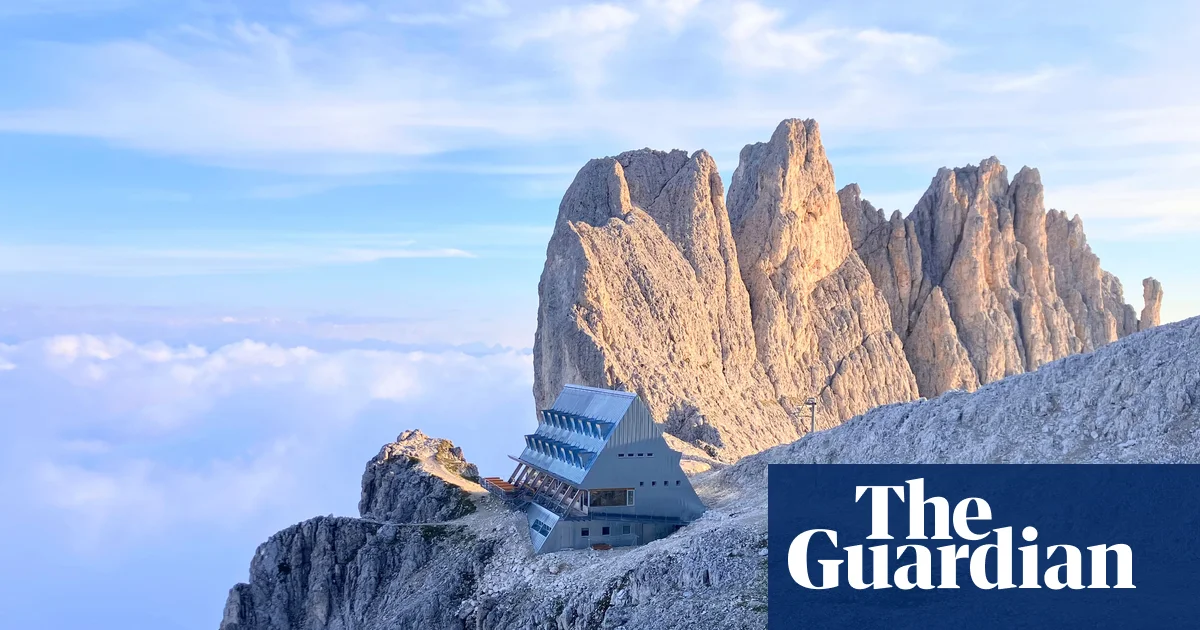
Yet that is exactly what Santnerpass Hut resembles. Perched on top of a sheer cliff, this elongated triangle encased in a gleaming wrapper of galvanised steel looks like a giant Toblerone still in its foil – an eyepopping hit of modernity, originality and innovation in a place where tradition usually dictates more of the same.
After one final push, the five of us scramble up on to the summit and there it is just ahead, side on and glowing silver in the late afternoon sun, like a star that has touched down on Earth to enjoy the stunning views of the surrounding peaks with the rest of us, up at the bracing height of 2,734m.
“Welcome!” says the bartender as we enter. “You made it. Well done!” With the customary relief – if not actual jubilation – that follows a tough climb finally ending, we ease off our backpacks, gloves and boots then look around, slowly realising that Santnerpass Hut isn’t just a treat for the eyes from the outside.
Inside, what you first notice is the unbroken parade of huge windows wrapping around the refuge’s front and flanks. This doesn’t just turn every spot of the roomy ground floor into a light-filled observation point. It also means the hut achieves passive heating since it’s effectively one big solar collector. So there’s no need for log-devouring stoves. That’s quite an achievement at ground level; at more than 2km up, with no road access, it’s verging on miraculous.
‘Santnerpass Hut was built in 1956 but was taken over, closed and rebuilt, finally opening to the eager climbing public in the summer of 2023.’ Photograph: Andrew Gilchrist
Then there’s the wood. It’s blond and everywhere. Guests are basically cocooned within a spellbinding timber tapestry that casts everything in a warm yellow glow, quite a novelty to anyone used to the dingy two-watt corridors and bedrooms of most refuges.
The flooring is larch, the restaurant furnishings maple and the load-bearing A-frame spruce, its hefty angular joists exposed on the sundeck, where we soon find ourselves sinking well-earned ice-cold drinks and marvelling at this beacon of sustainable architecture.
There are other things to marvel at. Off in the distance, piercing up through an immense blanket of cloud, the lofty peaks of the Latemar group are catching the last rays of the sun, turning pink, orange and purple in a ravishing Dolomites phenomenon known as the enrosadira, triggered by calcium and magnesium in the rock. “This place is incredible,” says Donnie, sipping an Aperol spritz. “I’ve never been anywhere like it in my life.”
Santnerpass Hut was built in 1956 but in the last decade or so was taken over, closed and rebuilt, finally opening its generous glass doors in 2023. Designed by alpine specialists Senoner Tammerle Architects, the new refuge is not just meant to please the eye: the shape lets it shed thick snow and deflect howling winds.
There are more surprises when we take our pre-dinner showers. Not only does the wood here give way to zesty yellow laminated panels that wouldn’t look out of place in a chic nightclub, the showerheads also actually stay pointing at your body for the full three minutes of hot water a token gets you.
Dinner, however, may have been the biggest surprise of all. It was completely vegetarian – a shock for all of us and a treat for veggies Sam and Nigel. No goulash, no ragu, no pork chops. Instead, out of the kitchen came herb-sprinkled lentils with asparagus, radish and onion, pea and mint soup, then beetroot dumplings on a rich bean, tomato and yellow pepper broth, washed down with superb local wine in actual wine glasses and finished off with creme brulee.
“A delicious and nutritious meal,” said Sam, running his spoon round his plate. “What an eye-opener. A win-win for hiker and planet.”
Curfew was at 10pm but the restaurant was clearing out anyway. This may have been due to the fact that, in high spirits after our action-packed day, we had taken the hut’s guitar off the wall and treated everyone to that Proclaimers Alpine classic Sunshine on Leith, managing to get a singalong going with the very up-for-it, very international audience.
‘Made it’ … the writer on the summit, nearing the refuge. Photograph: Donald Livingstone
The refuge sleeps 4o in 16 rooms. Ours was a spacious affair with bunkbeds, a dainty dormer window and two large cubbyholes each, one for your bag, the other for your stuff – so much more useful than the usual pointless wardrobes and drawers that no one ever unpacks into, since you’ll be gone in a hurry at the crack of dawn.
We reached Santnerpass Hut via the König Laurin cable car, 22 miles (35km) from Bolzano, gateway to the Dolomites. After that, it’s a rising, fairly straight line to the refuge, a two-to-three-hour hike through loose scree, then boulders and pinnacles. But be warned: the last section is a via ferrata, meaning there’s a metal cable for you to clip your harness to, and grab hold of as you reach trickier, more treacherous passages. It’s not for beginners.
I’d heard, though, that there was another route and, keen to take it back down to the cable car, asked at reception. “Yes, there’s another way,” said Romina Huber, who co-owns and runs the hut with her husband (and chef) Michel Perathoner. “It’s not a via ferrata and it’s super beautiful.”
She wasn’t kidding. First it took us past the Vajolet towers, dramatic spires that lure climbers from all over the world. Then we swung right on to a winding path of fine white scree that rises sharply through meadows full of edelweiss, saxifrage, dwarf pine and boulders, leading to bulging cliffs and eventually the Coronelle Pass, an astonishing vantage point at 2,360m.
“Well, that was a walk and a half,” said Mac as we descended in the cable car 30 minutes later, exhausted after the final knee-popping trudge down from the pass on timber-pinned switchbacks. “My boots,” said Nigel, lifting his feet to let us see a rip in one and a sole flapping off the other, “have completely had it.”
Santnerpass Hut starts at €105pp per night, including breakfast and four-course vegetarian dinner
Hutiquette: the mountain hut code
Mountain huts may occasionally be rather luxurious these days, but their original function, still relevant, is survival. There are, as you might expect, several very sensible codes that make great use of words like “respect”, “other users”, and “environment”. My own code is no less worthy and comes from hard-won experience.
No complaining Huts are not hotels. If there’s a problem, go sort it out. Certainly, never complain about snoring, even when you are convinced it is about to trigger an avalanche. I once did, only to be informed, rather too forcefully, that is was me doing the snoring, an outrageous lie that triggered grunts of approval from other grumpy insomniacs. Gel ear plugs work well.
Share It’s sometimes hard to drop the urban habit of self-assertion to ensure survival. One night in a Corsican hut with a shared sleeping platform, an obnoxious Brit in a down bag shoved all the other sleepers into a pile at one end of the bench, claiming later that he was “dreaming of being pushed”. I pray never to run into him again.
Clean up after yourself … and take your rubbish home. The British Mountain Bothy Code has a good reminder on this point. I’d go even further and say, try to leave absolutely no trace at all. Visiting one treasured wild swimming spot recently, I found the scorch mark of a campfire. Whoever it was had not left any rubbish, and there was nothing to mark their visit, except that dreaded black spot, as if Blind Pew had delivered a death sentence.
The hut is for everyone I once cycled to a remote Icelandic hut and found it blissfully empty of people. Lighting the fire, I prepared my simple meal, and apart from wishing I had packed a beer, looked forward to a night of splendid isolation. Then a large group of locals arrived. I felt my heart sink. My solitary bliss was gone. They sat down, gave me a beer, and two hours later, after helping to eat their huge delicious feast, I felt like I’d joined a tribe. When a hut generates that kind of gang conviviality, it’s uplifting.
Look after others In Scandinavia, this is a social habit that is deeply embedded. You turn up in a hut in winter and there are logs because the last visitors left them for you. You cut your finger and they all have the plaster that you forgot to bring. The Norwegian Mountain Code has a list of essential reminders. Kevin Rushby
THE 40 most trendy spots in the world have been announced, and three neighbourhoods in the UK have made it onto the list.
The locations were chosen by Time Out’s on-the-ground experts based on criteria like food and drink, nightlife and liveability – so which ones came out on top?
Govanhill in Glasgow is officially one of the world’s trendiest neighbourhoodsCredit: AlamyAnother trendy neighbourhood is the Cathedral Quarter in BelfastCredit: Alamy
According to Time Out,one of the best neighbourhoods is Govanhill in Glasgow – it came in fifth place.
Just beating it to the punch were Jongno 3-ga in Seoul, the L’Ocean District in Rabat, Neos Kosmos in Athens and Chinatown in Los Angeles.
Sign up for the Travel newsletter
Thank you!
Talking about Govanhill, the publication described it as for years being “Shawlands‘ rougher little sibling”.
But over the past few years it has been transformed with trendy new bars, bookshops and brunch spots.
It added: “Gen Z are migrating from West End bars and brunch spots to trendy new spots in Govanhill, injecting this once-overlooked sandstone suburb with quirkiness and energy.”
When it comes to pubs, Time Out suggests popping into the Bell Jaror theRose Reilly.
Reporter for the Scottish Sun Oliver Norton gave us the inside track on the neighbourhood, he said: “The Govanhill district of Glasgow has just been voted the fifth coolest neighbourhood in the world. I’m not surprised.
“I don’t live there, but I spend a lot of time in the area as it’s home to some of my favourite people and places.
“There’s always something going on, and the multicultural vibe has totally transformed what some once considered a deprived dump.
“The area in the south side of the city is home to around 17,000 people and has experienced a visible wave of gentrification over recent years.”
Oliver says that Govanhill has recently transformed into a trendy suburbCredit: Alamy
Oliver continued: “It is now home to people from at least 52 different nationalities speaking over 88 different languages, also making it Scotland’s most culturally diverse neighbourhood.
“As a regular visitor, I’ve experienced how dedication from local activists, entrepreneurs and creatives has helped raise the profile of the area and made it a welcoming home to many.
“Time Out, which tipped Govanhill among its top five cool neighbourhoods, hailed it for it for the ‘vibrant community spirit, independent shops, and creative culture’.
“And that’s a fair assessment.
“When visiting, I like to swing by Cibo, an Italian kitchen and deli, or one of the trendy cafes before browsing through local book and record shops.
“Later in the day, the area comes alive thanks to some of Glasgow’s best pubs – far away from the stress of the city centre.
“Personal favourites include McNeill’s Bar or Ryan’s Bar where some of the city’s finest DJs and selectors have provided the soundtrack to many a night.
“Pubs like The Rose Reilly or the The Bell Jar, both name-checked by Time Out, are great for relaxed drinks with friends.
“Govanhill also hosts regular arts and music festivals, concerts and exhibitions which draw people from across the city and beyond, especially during the summer.
“My personal highlights this year include the Sub Club Southside Weekender with house pioneer Kerri Chandler and Detroit techno legend Robert Hood’s Floorplan project.
“Queen’s Park, which is great for a walk or a picnic with friends, also hosts regular events, including concerts, film screenings and entertainment for kids.
“In July, Libertines front man Pete Doherty headlined the annual Recovery Connects festival which is alcohol-free and aimed at supporting people in recovery.”
Travel Reporter Jenna Stevens loves exploring the Cathedral Quarter in BelfastThere are buzzy bars, pubs and independent shops
“The Govanhill Street Music Festival and the Govanhill International Festival and Carnival are also hot tips for music and art lovers planning to visit.”
Two other UK spots made the list – and coming in 24th position is the Cathedral Quarter in Belfast.
It was described as having “cobbled lanes and old warehouses house galleries, gig spaces, restaurants, yoga studios and enduring cultural institutions.”
Travel Reporter Jenna Stevens said: “Whether you’re wanting a pint in a pretty setting, the city’s coolest souvenir shopping or a backdrop for your Instagram pictures, the Cathedral Quarter is the place to be in Belfast.
“The area is anchored by St Anne’s Cathedral, where cobbled streets branch out to reveal buzzy bars, pubs and independent shops.
“Once an old warehouse district, this trendy quarter is now the city’s creative heart. Victorian warehouses that used to store linen and rope now house art galleries and indie coffee shops.
“Red brick walls are plastered with impressive murals of hyper-realistic portraits and landscapes.
“It also hosts many of the city’s festivals, including the yearly Cathedral Quarter Arts Festival packed with comedy, street theatre and arts, and a hilarious Improv Festival in September.
“The Metropolitan Arts Centre is always switching up with the latest theatre and art exhibitions, while the Golden Thread Gallery and Oh Yeah Music Centre are a shrine to the city’s musical heritage, celebrating artists from Van Morrison to Snow Patrol.
“When it comes to shopping, here you’re trading bland malls for independent gems. Hill Street and Commercial Court house vintage clothing, boutiques and specialist shops.
“One must-visit is The Friend in Hand, a whiskey shop and museum that feels like a Harry Potter wand shop, with warm orange lighting filling the small wooden space.
“Inside you’ll find a plethora of Irish whiskeys, including the Writers’ Tears collection celebrating the city’s best authors. King Charles and Queen Camilla even visited in 2025, and you’ll see a framed photo of them propped up at the till.
“Then there’s the food and drink scene, which is one of the quarter’s biggest draws.”
The top neighbourhood on the world’s most trendy is Jongno 3-ga in SeoulCredit: AlamyNew York’s financial district is one of the must-visit spots tooCredit: Alamy
Jenna added: “The Dirty Onion and Yardbird is a popular pub housed in Belfast’s oldest building, which puts on traditional music seven nights a week and has a massive beer garden. You can grab a crispy fried chicken burger for £13.50, or a rack of ribs smothered in sauce for £25.50.
“The Muddlers Club is a more modern spot, serving Michelin small plates in an eight-course tasting menu for £80pp – which is great if you have a special occasion to celebrate.
“As for cheap eats, Common Market is a giant food hall where you can grab dirty loaded fries, gyros, wings and more to sink down with a perfectly-poured pint. Lunch here will cost around £8 – £15.
“For something sweet, Established Coffee does a banging banoffee french toast and lemon meringue pie, plus unique drinks like an apple pie latte (£4.80).
“Whether you’re after a cosy traditional pub, a vintage clothes shop or industrial cocktail bar, the Cathedral Quarter offers them all – often on the same street.
“Oh, and make sure to visit Commercial Court when it gets dark to get that classic picture underneath the neon-lit hanging umbrellas.”
The last spot in the UK to make the list is the neighbourhood of Newington Green in London which came in at number 33.
Time Out describes Newington Green as a mix of old and new London.
The publication said: “These days it’s brimming with brilliance. From newly forged, hipstery gastropub Golden Tooth and small-herd butcher-cum-nightclub Stella’s to legendary Turkish seafood joint Sariyer Balik and the old Mildmay Club, Newington Green successfully combines both new and old London.”
Some of the top spots are Jolene, a trendy bakery and restaurant that is constantly popping up on Instagram thanks to its daily rotating menu, pastries, and natural wines.
There’s a trendy pizzeria called Bar Etna, Stella’s restaurant and the Army & Navypub.
The full list of Time Out’s 40 trendiest neighbourhoods around the world…
FOR the first time in 12 years, Dubai Airport could be knocked off its top spot for the world’s busiest airport.
It’s set to be overtaken by a hub in South Korea which has indoor waterfalls and peaceful gardens – while London Heathrow stays at number two.
Incheon International Airport in South Korea is expected to become the world’s busiestCredit: AlamyIn the first half of 2026 is served 38.4million passengersCredit: Alamy
Incheon International Airport could become the world’s busiest airport for international passengers, according to preliminary data from the Airports Council International.
The data reveals that Incheon served 38.4million international passengers during the first six months of 2026 which could see it given the title.
Sign up for the Travel newsletter
Thank you!
Prior to this, Dubai International held the crown of the world’s busiest airport for international passengers for over a decade.
Last year it saw 96.2million international passengers in one year.
But due to the Iran War, footfall has decreased, and it’s predicted to fall outside of the top five.
However, Dubai International is still predicted to have seen 70million passengers by the end of the year.
According to the initial reports, London Heathrow is set to retain second place, recording 37.79 million passengers in the first half of the year.
It came in second place last year with 79.8million international passengers in 2025.
Expected to be in third place is Singapore’s Changi Airport, which has seen 34.53million international passengers pass through in the first half of this year.
Incheon International Airport first opened in 2001 as a hub for northwestern South Korea – about 25 miles away from Seoul and has seen visitor numbers skyrocket.
Inside the airport are lush gardens and even an indoor waterfallCredit: Facebook/Incheon Airport
It has had an increase of 18 per cent this year with some traffic from flights taking different paths due to airspace closures.
South Korea has seen a surge in popularity in recent years thanks to K-pop as well as its fashion and food.
For anyone travelling across, to Incheon International Airport, they’ll find it’s modern and bright with high glass ceilings, plenty of natural light and indoor gardens.
The botanical zones have features like waterfalls as well as vertical gardens with trees and orchids to give it a calming feel.
Terminal 2 is designed to appear like an art museum with rotating installations, sculptures, and even interactive exhibits.
The airport also has a spa and sauna, capsule hotels, children’s play areas – outside is a 36,000-square-meter flower field and plane-spotting park.
The Iran War means that Dubai International could be knocked off top spotCredit: Alamy Stock PhotoLondon Heathrow is expected to remain in second placeCredit: Alamy Stock Photo
One passenger was so impressed by the airport that he called it the “future of travel”.
Another called it “Korea’s most beautiful terminal”.
CAMB.AI is introducing its new Streaming SDK and Streaming Dashboard at IBC2026, with integrations into NVIDIA Holoscan for Media open reference architecture
The release gives developers and broadcast teams new ways to integrate, manage and deploy real-time multilingual broadcasting within their existing workflows.
Multilingual broadcasting, now live as an SDK
Available for C++, Python, Java and Rust, the SDKs allow developers to start broadcasting in multiple languages with as little as three lines of code, making it easier to integrate multilingual capabilities directly into existing applications and workflows.
CAMB.AI’s live streaming platform supports 150+ languages, producing dubbed audio and subtitles for live content. It supports source-speaker voice cloning, studio voices and custom terminology, allowing names, venues, sponsors and other specific terminology to remain consistent across languages.
The release features the latest quality enhancements backed by CAMB’s foundational models MARS and BOLI.
Bringing live dubbing to NVIDIA Holoscan for Media open reference architecture
CAMB.AI’s new capabilities will be available within the NVIDIA Holoscan for Media reference architecture as a hybrid SaaS.
Holoscan for Media is NVIDIA’s open reference architecture and developer toolkit for building AI-powered live media solutions on NVIDIA infrastructure.
Program audio can be processed by CAMB.AI’s models to produce dubbed commentary in each target language, with outputs returned to the production network or delivered directly to destinations including CDN, OTT and YouTube Live.
For broadcasters, this allows live localization to operate alongside other production applications. It reduces the need to send feeds to a separate cloud localization environment and back, reducing infrastructure hops while allowing media to remain within the broadcaster’s facility or own cloud environment when required.
New Streaming Dashboard
The new Streaming Dashboard provides a visual environment for building, launching and monitoring multilingual streams.
Operators can configure sources, select audio, set processing profiles, create language pipelines and manage output destinations from a single interface. During a live broadcast, teams can monitor stream health, outputs, runtime and live transcripts, as well as pause and resume dubbing without stopping the stream.
CAMB.AI’s live localization technology has already been used across Ligue 1+, NASCAR and Eurovision Sport, including live AI-dubbed commentary and multilingual subtitling.
See It at IBC2026
CAMB.AI will preview its new dashboard and SDKs atIBC2026. Visitors will be able to see live multilingual dubbing in action at the CAMB.AI booth.
CAMB.AI builds localization AI for content, entertainment and sport.
Its MARS family of speech models and livestreaming platform deliver dubbing, translation and subtitles in more than 150 languages, live and on demand.
Founded in 2022, CAMB.AI has offices in Dubai and San Francisco.
The historic English city with Roman roots was crowned the world’s most beautiful city according to research
One English city is steeped in Roman history(Image: Bardhok Ndoji via Getty Images)
Sitting in northwest England close to the Welsh border, this historic city is steeped in centuries of history. Chester’s story stretches back almost 2,000 years.
The city was founded as Deva Victrix, a major Roman fortress, around AD 79. Today, traces of its Roman past can still be found throughout Chester, including the remains of its impressive amphitheatre and parts of the original fortress.
One of Chester’s biggest attractions is its remarkably well-preserved city walls. The roughly two-mile circuit follows the route of the city’s historic defences and offers a unique way to explore Chester, taking in many of its best-known landmarks along the way.
‘Most beautiful’ city
Chester has been previously crowned the most beautiful city in the world. Taking the top spot with an impressive 83.7% “beauty score” based on the “golden ratio”, Chester had seen off fierce competition from Edinburgh, Bristol, Prague, Venice and even Rome to claim the coveted title.
The research, carried out by Online Mortgage Advisor, used Google Street View to assess the architectural grandeur of thousands of homes, landmarks and streets from across the globe.
While the study ranked cities on their built environment, its foundations are firmly rooted in the world of art.
Explaining the significance of the golden ratio in the art world, it noted: “Artists over the last few centuries have incorporated the golden ratio into their work, believing it to be a gold standard in natural aesthetic perfection,” reports the Express.
Perhaps nothing gives Chester its distinctive character quite like The Rows.
These unusual two-level, covered walkways run through the heart of the city centre, with shops, cafés and restaurants lining the galleries.
The medieval structures are among Chester’s most recognisable features and give the city centre an atmosphere unlike many other places in England.
Meanwhile, the magnificent Chester Cathedral is another highlight, with a history spanning centuries and architecture ranging from the Norman period through to the Victorian era.
The Eastgate Clock has also become one of the city’s most recognisable landmarks. Perched above the Eastgate section of the city walls, it is an especially popular spot for photographs.
Walkable city
Despite officially being a city, Chester’s compact historic centre has a distinctly smaller-town feel.
Visitors can wander between independent shops, pubs, cafés and restaurants while surrounded by timber-framed, black-and-white buildings that give parts of the city an almost storybook appearance.
Beyond the centre, the surrounding Cheshire countryside provides plenty of opportunities to escape the bustle.
Chester’s location also makes it a convenient base for exploring North Wales, while Liverpool and Manchester are both within easy reach.
It is no wonder that Chester draws visitors from across the globe, with many leaving glowing five-star reviews on Tripadvisor.
John J was thoroughly impressed during a visit, saying: “Chester really is a beautiful town.”
He added: “The Chester Rows are just what makes Chester. Beautiful old buildings kept in remarkable condition. Walking around and seeing the history and beauty is so enjoyable. Sampled some nice food and pubs.”
During a visit to the cathedral, Sue. W called it “magnificient inside and out”.
She added: “This cathedral is magnificent. It is large so takes some time to get round it and do it justice. The craftsmanship inside is superb from the stone masonry to the tiled floors and the wooden carving to the stained glass.”
What is the ‘golden ratio’?
For centuries, artists have woven the ‘golden ratio’ into their creations, regarding it as the ultimate benchmark of natural aesthetic perfection.
By applying the ratio to measure buildings and iconic landmarks, experts have been able to determine which cities across the UK and the wider world can boast the most stunning architecture.
Other British cities that made the grade include London and Belfast, scoring 83% and 82.9% respectively.
On the global stage, Chester was closely followed by Venice, which scored 83.3%; Rome, with 82%; and the Spanish city of Barcelona rounding things off with 81.9% on the scale.
Cape Town and Rio de Janeiro are two cities on most people’s bucket lists, but which one reigns supreme when it comes to the best – one writer compares the two
(Image: Getty Images/Publisher Mix RF)
Days shaped by sand, surf and salt air. Nights by bars, beats and grills. All played out in a city somehow woven between soaring mountains and sun-swept shores. Sounds good, no? Well this is both Brazil’s Rio de Janeiro and South Africa’s Cape Town. Then chuck in vibrant waterfront neighbourhoods, primeval hiking trails, world-class food and drink, plus a melting pot of cultures and you’ve got what it takes to be the greatest city in the world. Which is what both have boldly claimed.
But they both can’t be right, so which takes the crown? I’ve lived in samba-soaked Rio, and recently spent a month exploring the city straddling Africa’s southern tip, so may just be qualified enough to have a say in the debate that’s enraged Brazilians and South Africans online. The neutral voice of reason ’n’ all that.
Weather
Rio has a glorious tropical climate. Hot and humid, with sweltering summers often as high as 40C. You’ll rarely feel cold, but if you’re of a sensitive disposition, it may be too much heat to handle. Plus biblical rains can wash your trip away.
Conversely, Cape Town has a Mediterranean-style climate. Dry, warm summers with highs of a perfect 30C. Fantastic if it weren’t for one thing – the wind. Known as the “Cape Doctor”, it’s like nothing I’ve ever experienced. Sweeping in off the ocean, it can make a hot summer’s day feel like autumn. Worse, it can be downright violent, turning beaches into giant sandblasters, stinging your skin, near blinding you. Bad doctor.
Verdict: Rio is the winner.
Beaches
Oh my, what an amazing array of beaches they both have, like no other city in the world. Apart from each other, of course. Both have smaller arcing sands near the city centre, becoming longer and more pristine the further out of town you head.
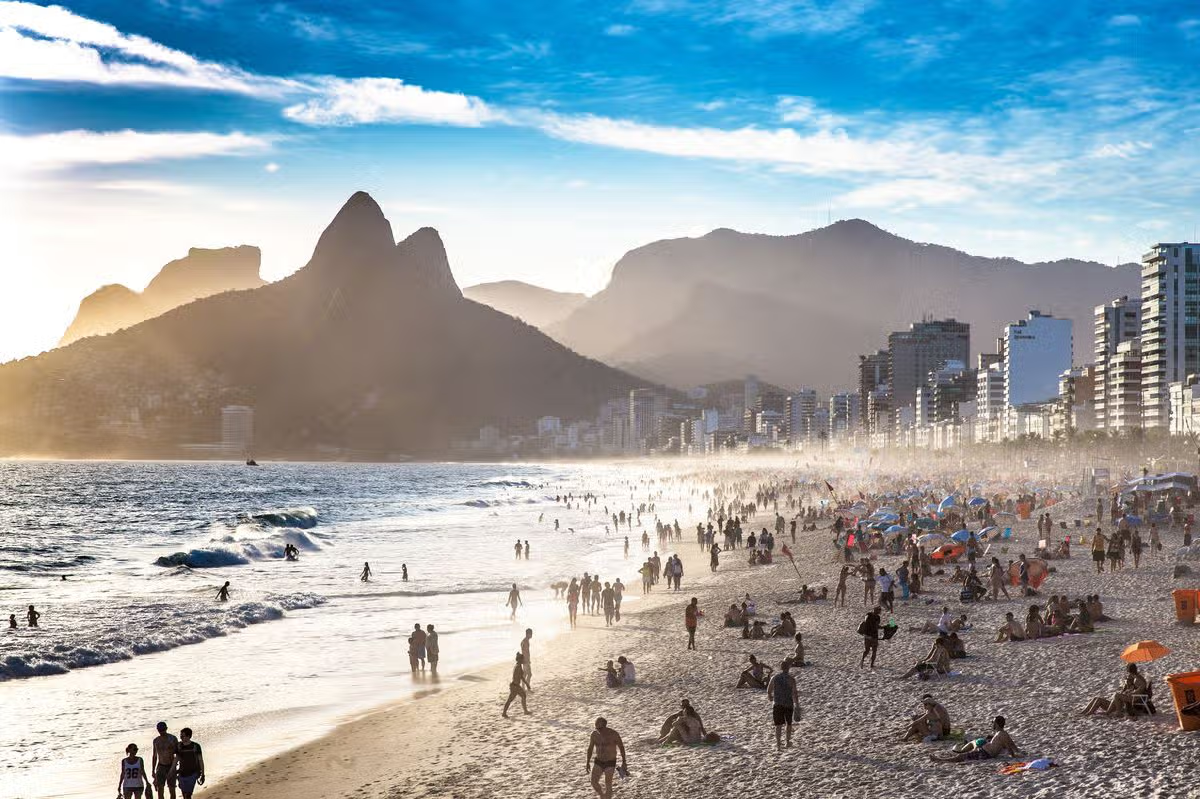
Just south of the centre, Rio has the world-famous Copacabana and Ipanema beaches, broad stretches of golden sand where the whole city decants to at weekends to let it all hang out in too-scant swimwear.
Cape Town has the likes of smaller yet very pretty Sea Point, Clifton and Camps Bay, which were far more debonair than I expected. More like the Cote d’Azur than the Cape of Good Hope.
Further up the coast, Rio has beautiful Barra, and Cape Town kite-surf strewn Bloubergstrand, giant stretches of glorious open coastline pounded by those big blue waves.
But the key difference is that Rio’s waters are much warmer, whereas Cape Town’s side of the Atlantic is surprisingly cold year-round, plus that wiiiind, meaning you don’t see many people swimming – the complete opposite of Rio.
Verdict: Rio takes the crown.
Mountains
Both have an imperious plethora of peaks. Cape Town’s most famous is Table Mountain, which your eyes can dine upon from all over the city. Rio’s is craggy Corcovado, atop which the statue of Christ offers redemption to thousands of tourists daily. But there are countless breathtaking viewpoints from many other fantastically surreal mountains, plus hiking trails that transport you into oh-so-big nature – lush jungle in Rio, temperate forest in Cape Town – a world away from the urbanity below.
Verdict: All too amazing to call. Draw.
City centres
Surprisingly, their city centres are the least impressive aspect. Both have smallish downtowns and historical quarters, which are nice but nothing impressive compared to some global cities. Much better are the colourful colonial-era neighbourhoods – Lapa in Rio, Bo Kaap in Cape Town – where you can join the tourist hordes to get your Insta-pics.
Down by the water, Rio’s Port Zone has cool museums and galleries, while Cape Town’s upmarket V&A Waterfront is very pretty with great views and shops, albeit a tad generic. Then both have plush beach front neighbourhoods, where you can whimsically while away days on the golden sands or trendy terraces.
Verdict: Again, too close to call. Draw.
Food and drink
Both have excellent culinary scenes, especially their meats and barbecues. Yum. But Cape Town has a much broader option of cuisines and restaurants, local and international, and during the entire month I was there I didn’t have a single bad meal. Caipirinhas and other potent cocktails get the party rocking in Rio, but Cape Town’s wines are next level. Despite being of proud Provençal stock, I can freely admit their rosés were the best I’d ever tasted. Perfect sundowners.
Verdict: Cape Town is the clear winner here.
Prices
Both have similar prices, which are considerably cheaper than the UK and Western Europe. Decent budget meals are around £4-£10, and mid-level accommodation around £50-£100pn. There are plenty of upmarket options, which are also relatively good value for money.
Verdict: Draw.
Nightlife and music
Both cities come alive even more when the sun sinks into the ocean. Your more mainstream bars and restaurants line the beachfronts, while cool bar-clubs are found in the more hipster hoods of Ipanema and Lapa in Rio, and Bree St and Woodstock in Cape Town.
Both cities are home to world-class music, Rio sways to the sound of samba, rap and “funk”, whereas in Cape Town it’s Afro house, amapiano and 3-step that get things thumping.
Verdict: Cape Town (but mostly due to my penchant for house music), although if we were judging it on Carnival season alone, nothing comes close to Rio!
Vibe
Brazilians are famously some of the most friendly and welcoming people in the world, which is true for Rio, but like any big city, you get plenty of miserable buggers too. People of all shades were friendly with me when I was in Cape Town, yet seemingly not that much with each other.
Sadly, both cities are still riddled with historical divisions between class and race, yet in Cape Town the legacy of Apartheid looms large indeed, and as a tourist you unfortunately won’t see much of the native African side of the city. The division feels tense.
Verdict: Rio.
Overall verdict
My biggest gripe with Cape Town is that as a tourist, you only really see the predominantly rich, white neighbourhoods that feel more like Canada, the US and Australia than Africa.
In Rio, though, everywhere is very Brazilian, no matter the social makeup of the area. Plus the beaches are a leveller, especially Copacabana where the whole city congregates for communal sun-worshipping, eating, drinking, sport playing, and strutting of stuff, no matter if black, white or brown, muscle-bound or beer-belly beautiful – nobody seemingly cares.
And that, for me, is the key difference – which is why Rio is my overall winner.
THE Portuguese love a summer spent in the Algarve as much as the rest of us.
But instead of the better-known Albufeira, Faro and Lagos, they head to the quaint fishing town of Tavira.
Tavira’s whitewashed buildings are strikingCredit: GettyThe beautiful Praia da Ilha de Tavira, which spans eight miles, leaves plenty of room for your beach towelCredit: Alamy
On the eastern end of the famous coastline, it has calmer, cheaper and more cultured experiences than its neighbouring tourist hotspots.
And with easyJet having launched new routes from the UK this summer, it’s the perfect time to explore new Algarvian shores.
Sign up for the Travel newsletter
Thank you!
WHY SHOULD I GO?
Put simply, for the numerous beaches. Tavira is a paradise within the Algarve, which was last year crowned the World’s Best Beach Destination 2025.
These numerous wild, sandy stretches are largely unspoilt and crowd-free, even in peak season.
Notably, they include the beautiful Praia da Ilha de Tavira, which spans eight miles, leaving plenty of room for your beach towel.
Here, the sea is famously warmer as it is more sheltered from the chilly expanse of Atlantic Ocean.
STREETS MADE FOR WALKING?
The Gilao river is great to walk alongCredit: Alamy
To reach Praia da Ilha de Tavira, you will need to take a ferry or, if you feel you like splashing out, a water taxi.
From Tavira, the easiest place to hop on is at the town’s pier.
Ferries, which operate between March and October, take 20 minutes and cost around £2 for a return trip.
Back on dry land in central Tavira, however, the town’s winding, cobbled streets can be easily explored on foot.
Make sure to stroll along the picturesque Gilao river, which runs through the centre, flanked by traditional tile-covered buildings.
And linger to take in the live music at golden hour on the old Ponte Romana bridge.
Want to rest your legs? You can travel past the town’s key landmarks on a traditional hop-on, hop-off “tourist train”.
ANYTHING FOR THE BUCKET LIST?
The historic Ponte Romana bridge connects the townCredit: Alamy
For those who like to relax on holiday, the port town’s beaches include the option to rent sunloungers, as well as surfboards, and enjoy beach club drinks served while you sunbathe.
While you’re between the sandy dunes and saltwater lagoons, you may even see the flamingos, dolphins and turtles that call this area home.
If you often get itchy feet and like to immerse yourself in the local culture — or need to walk off the traditional dessert of a freshly baked pastel de nata — then this is a Portuguese spot rich in history.
The ruins of a Moorish castle can be found in Tavira, and they are free to explore.
Plenty of architectural evidence also remains of the sailors and fishermen who came to inhabit the town in the Middle Ages.
WHERE SHOULD I EAT?
Pastel de nata are like Portuguese custard tartsCredit: Getty
Given its proximity to the coast, seafood is the most popular choice here.
Try Mesa Farta, which has a modern take on traditional Portuguese food, including homemade sourdough and mackerel, as well as fresh chocolate mousse.
Special occasion? You can’t beat A Ver Tavira. Situated near the castle and with the best views in town, it is one of only seven Michelin-starred restaurants in the Algarve, with mouthwatering dishes that take culinary inspiration from the local area.
A particular favourite of the locals is Restaurante Pedro, in the nearby village of Cabanas de Tavira.
I FANCY A DRINK
There are no shortage of bars in Tavira. One popular option is Arcada, positioned on the main square, which serves freshly-shaken cocktails.
Meanwhile, the Black Anchor is an Irish bar with a terrace that overlooks the river, with the Portuguese beer Sagres on the menu — or even a Guinness on tap if you must.
If you are more of an early bird than a night owl, the town is brimming with cafes where you can get your caffeine fix for less than a couple of euros.
Flat white or matcha more to your taste? Then head to speciality coffee shop, The Table.
WHERE SHOULD I STAY?
For complete tranquillity, head to the 4* Quinta dos Perfumes, with its rooms and pool area nestled in an oasis of orange and avocado trees.
It is less than a ten-minute drive from the centre, a 15-minute walk to the boats at Cabanas de Tavira and close to Benamor golf course.
GO: TAVIRA
GETTING THERE: easyJet flights from Newcastle to Faro start from £25.99pp.
This cave is the deepest in the world(Image: Getty)
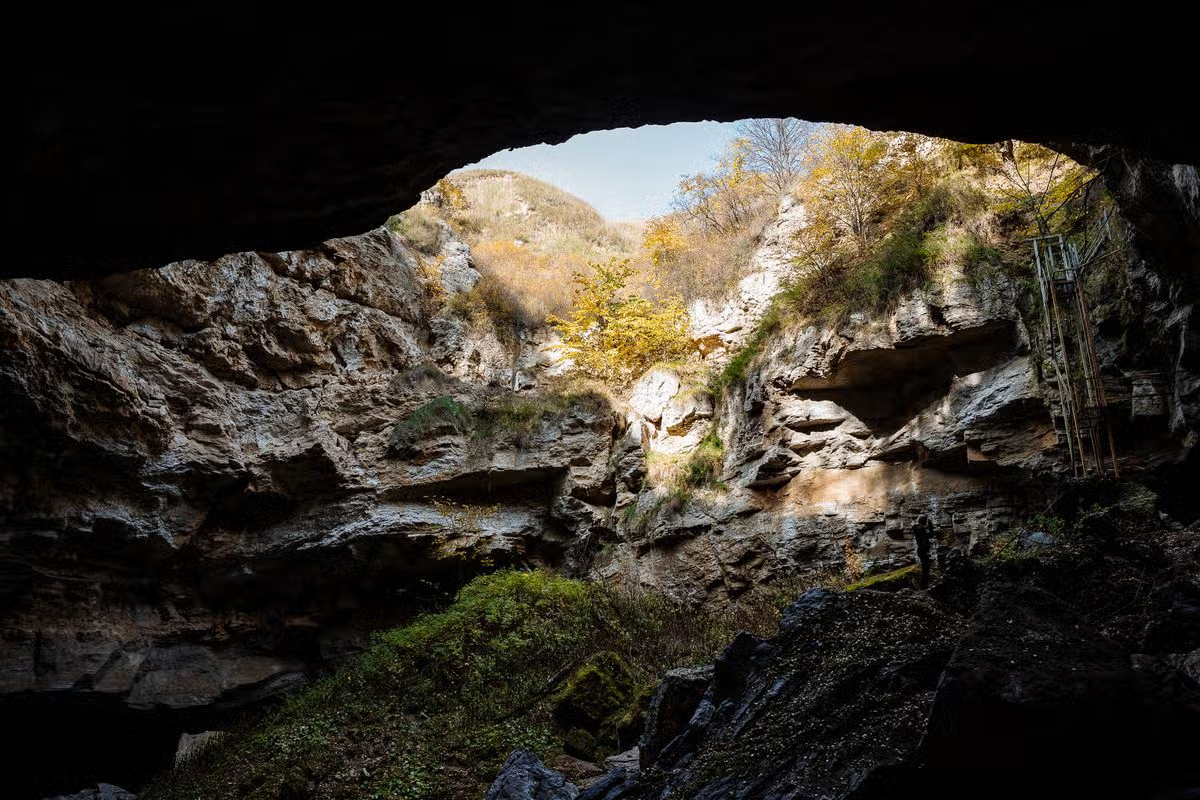
Deep beneath a massive mountain range lies a sprawling cave system that spirals beneath the hills, extending more than 2000 metres into the earth. This cave system is the deepest in the world (depending on who you ask), its limestone caverns so huge that you could upend Ben Nevis and place it inside, and still have room remaining.
The Veryovkina Cave lies beneath the Gagra Range of the Western Caucasus within the Georgian region of Abkhazia. This cave is one of two which frequently compete for the title of the deepest cave on earth.
According to Live Science, both Veryovkina and another cave in the same region, Krubera (also known as the Everest of the Deep), alternate as record holders, depending on the most recent research.
Both caves are more than 2,000 metres deep and are frequently explored further by scientists and cavers who are constantly updating the measurements.
The caves are dark, inhospitable and cold with temperatures rarely exceeding 3°C.
As you descend further into the depths, animals begin to change. Many of the species which call these caves home have no eyes or pigmentation and have long antennae, appendages and hairs which help them sense vibrations and move throughout the blackness of the cave system.
As of January this year, Veryovkina is currently in the lead, with a depth of 2,212 metres, or 1.37 miles. Krubera is close behind, at 2,199 metres, or 1.37 miles.
Veryovkina was discovered in 1968 and given the name S-115 and then renamed in 1986 after Alexander Veryovkin, a cave diver who died in a water-filled passage while exploring a nearby cave Su-Akan.
Another major incident in Veryovkina Cave occurred in 2018, and very nearly killed a team of cave explorers.
National Geographic photographer Robbie Shone and his assistant Jeff Wade joined a team of Russian explorers who had descended to the very bottom of the cave over four days.
They were camped in the darkness to undertake a more detailed examination of the cavern.
One morning, the team were eating breakfast when the cavern shook as if an earthquake had struck, and according to Robbie an “enormous torrent” of white water appeared from a hole and began to flood the cavern.
National Geographic wrote about the team’s desperate scramble back up the cave to escape the rapid flooding.
Robbie remembered climbing through the tight passages upwards as they rapidly filled with water.
He said: “All I could see was the white rope in front of me. “And I just kept moving the ascender up a little bit at a time. I was saying to myself, ‘Just keep going. Just keep doing this.’”
The whole team escaped from the cave, barely.
Robbie said: “This team had the strength, the reserves, mentally and physically, to deal with the worst situation. That’s not only why they’re exploring the deepest cave in the world so successfully, but why we all survived.”
You paid for it. But do you actually own it? GTA 6 is exposing a bigger battle over the future of gaming – and the demand for physical media ownership. Al Jazeera’s Lina Serene breaks it down.
EVER wanted to head to a music festival abroad? Well, how about heading to the world’s biggest where most concerts are free?
Found in the capital of Morocco – Rabat – Mawazine isn’t your usual festival.
Mawazine Festival is the largest in the worldCredit: AP:Associated PressIt takes place each year in Rabat, MoroccoCredit: Getty
Instead of lasting the normal three-days, Mawazine goes on for nine days in total.
The festival takes place each June and its attendance always breaks records with 3.75million people visiting in 2025 – making it the largest music festival in the world by attendance.
Sign up for the Travel newsletter
Thank you!
As for whats on at the festival, around 90 per cent of the concerts are free to attend.
You can expect Moroccan and Arab artists as well as global headliners.
There are a seven stages in total including OLM Souissi, which is the main stage where international stars such as Rihanna, Beyoncé, Shakira, Elton John, Stevie Wonder, Justin Timberlake and Maroon 5 have all performed.
You could then go to the Nahda Stage, which is dedicated to Arabic and Oriental music.
And over at Chellah, you’ll find a historic Roman site used for calm with acoustic music.
The festival isn’t just music either – you can expect art exhibitions, workshops and film screenings.
The festival spans nine days with most of the concerts being freeCredit: Getty
If you want to head to the festival, make sure to book your hotel well ahead.
The city of Rabat is transformed for the nine days as well, with cafes and shops open later.
The city is also a UNESCO World Heritage Site meaning there is plenty to explore including a huge medina, Hassan Tower and Kasbah of the Oudayas – a historic fortress with sea views.
Return flights from the UK to Rabat cost as little as £125 in June.
Drivers will be required to pay a toll to cross the bridge.
15:29, 31 Aug 2026Updated 15:34, 31 Aug 2026
World’s longest bridge is set to open in 2032(Image: strettodimessina)
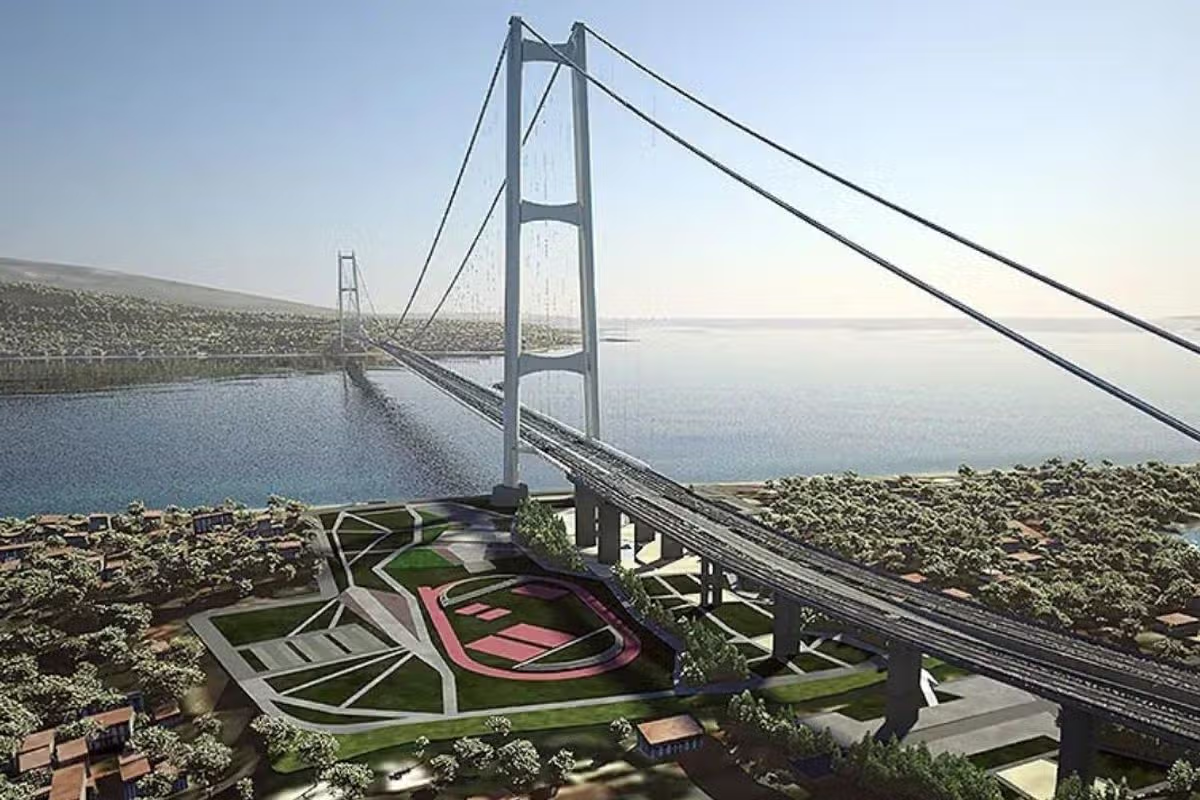
A new bridge connecting the city of Messina, in Sicily, to mainland Italy is set to become the world’s longest suspension bridge. The project, estimated to cost £11.5billion, has received the green light and is expected to be finished by 2032-2033.
The Strait of Messina Bridge will stretch a total length of 3,666 metres (2.2 miles), and is designed to accommodate six lanes of traffic and two railway tracks. It will have a maximum capacity of 200 trains a day and 6,000 vehicles an hour.
The Strait of Messina Bridge sits at the point where the African and Eurasian tectonic plates meet, making seismic planning absolutely vital.
In 1908, Europe’s most powerful earthquake, with a magnitude of 7.5 on the Richter scale, struck southern Italy, centred in the Messina Strait. Moments after the earthquake, a devastating tsunami formed, causing 40-foot waves.
The population of Messina was reduced from 150,000 to only hundreds, and the total death toll in Italy was nearly 200,000.
The project plans state that “from a seismic viewpoint, the bridge is able to withstand an earthquake of 7.1 on the Richter scale”.
Motorists will be required to pay a toll to cross the bridge. The cost of a single crossing in a motor vehicle will be between €4 and €7 (£3-£6) per trip.
The project’s website explained: “The above rates will ensure that the cost of the project will be covered over the period of the concession term, as well as the related operating costs and routine and non-routine maintenance expenses.
“At the same time, the bridge will provide seamless travel between Sicily and Calabria with tolls far lower than the current cost of crossing the Strait.”
WHEN most of us check into a hotel, it’s likely to have a restaurant, a spa and a bar – but around the globe are some VERY luxurious ones with suites costing as much as £30k per night.
In a new Channel 4 series, First Dates star Fred Sirieix heads behind the scenes to see what exactly makes these hotels the best of the best.
First Dates star Fred Sirieix checked into four ‘ultimate’ hotelsCredit: Waddell Media Suites at The Royal Monsour in Marrakesh and be as much as £30k per nightCredit: Waddell Media
In the show called Fred‘s Ultimate Hotel, the charming maître d’ explores four hotels; The Royal Mansour in Marrakesh, The Royal Madikwe Lodge in South Africa, Les Barmes de l’Ours in France and Raffles Hotel in Singapore.
All of the hotels are five-star with Michelin-star dining and experiences that make them a step above the rest.
Sign up for the Travel newsletter
Thank you!
Thanks to his history of working in hospitality, Fred can definitely make a judgement on whether these hotels live up to expectation.
Fred explained: “I’ve been doing this work from the age of 15 in hotels and restaurants – so I speak the lingo.
“Observing them, being a guest and then behind the scenes and working with the people there because this is all I’ve done all my life – and I wanted to see if these hotels were actually ultimate and why.”
Not only does Fred check-in at the hotels as a guest but he also goes behind the scenes as concierge and even bar staff – so here are the best ones he explored.
The Royal Mansour, Marrakesh
The first stop is at The Royal Mansour in Marrakesh which is owned by King Mohammed VI of Morocco.
It has 53 private riads with gardens, courtyard patio, roof terrace, swimming pools, hammams and each comes with a personal butler.
Fred said: “The most incredible thing is that this hotel was built from scratch and this started from the back of the house.
“They created the most efficient hotel, it’s aerodynamic – it’s like Formula 1 it makes for such fast service.
The Royal Mansour is owned by King Mohammed VI of MoroccoCredit: Waddell Media
Fred continued: “I was an easy customer for the butler, by 6 o’clock I told him I was OK. I can call room service or make my own coffee from the machine in my room – but some customers use the butler for 18-hours a day.”
“These are the Premier League of hotels – and the way to be the best is to not say no. You have to deliver – they are working at the highest level.”
The Royal Mansour in Marrakesh ranked 13th globally and Best Hotel in Africa at the World’s 50 Best Hotels Awards last year.
Sounds incredible, right? If you’re looking to stay, you might need to start saving now as the top suite, the Grand Riad, costs over £30,000 per night.
Villas in The Royal Madikwe Lodge can cost up to £6,000 per nightCredit: chriscloete.comFred ventured out into the bush to spot the wildlife
The Royal Madikwe Lodge, South Africa
The next stop on his trip is safe to say one of Fred’s best, and possibly worst emotional experiences, at The Royal Madikwe Lodge in South Africa.
Fred explained: “The Royal Madikwe, out of all the places I have been in the world, I have never felt so emotional throughout.
“From the moment I arrived, I started to cry. It was so emotional – I almost died in the bush, sandwiched between an elephant and two rhinos.”
Luckily bush ranger Ernie came to Fred’s rescue: “He saved my life because of how he dealt with the situation.”
“The staff there were on another level – it was very touching. It was very different as well like when I was in the bush with Ernie because it was a very responsible job.”
The most expensive accommodation at The Royal Madikwe Lodge is The Sovereign House which racks up to £6,000 per night.
It sits by a well-travelled elephant path so guests are likely to see the creatures from the comfort of their room.
It has room for six guests across three spacious bedrooms, with a glass wine cellar, plunge pool and private boma.
Les Barmes de l’Ours in the French Alps has suites that cost £3,500 per nightCredit: Nicolas AnetsonGuests can make use of the spa and are right next to the mountainsCredit: Waddell Media
Barmes de l’Ours, France
Tucked way in the French ski resort of Val-d’sère is the five-star luxury Les Barmes de l’Ours.
It’s safe to say that Fred, who was born and raised in France, had high hopes and luckily, they delivered.
Fred said: “These people are the embodiment of French hospitality – it’s a dying art that people do not practice anymore.
“From the moment I arrived, I was so impressed. It’s rare in life when you’re really impressed in life and you see excellence in people who want to do a good job.
“One thing about these hotels is that the five-star standard must be everywhere. If you’re walking down a corridor and you cross a member of staff – they must see, smile and say hello before you do that to them.”
The hotel in the mountains has North American-style lodges, alpine chalets and even contemporary lofts.
It’s the only hotel to sit at the foot of Face de Bellevarde – a black run which has a vertical drop of 850metres.
With the hotel guests can fly in via private helicopter and arrange paragliding flights from the slopes, it also has a two-lane bowling alley.
Here, the Bear Suite is the most expensive at over £3,500 per night – it has a private Jacuzzi, sauna, hammam and balcony overlooking the mountains.
When a hotel has former guests like Queen Elizabeth II, Prince William and Princess Kate, and Elizabeth Taylor – you know it’s going to be amazing.
Raffles Hotel in Singapore has had lots of high-profile guestsCredit: Waddell Media The hotel is where the famous Singapore Sling drink was founded – and Fred has a goCredit: Waddell Media
Raffles Hotel, Singapore
Raffles Hotel in Singapore is found on 1 Beach Road, the colonial-style hotel is surrounded by lush gardens and it has a huge rooftop pool.
It’s the birthplace of the Singapore Sling cocktail which was invented at its Long Bar where Fred attempts to create the drink himself.
Its suites all have high ceilings with separate living areas. Guests get 24-hour butler service – and it’s in a league of its own with personalised itinerary and service.
Fred said the special touches from his butler makes the experience extra special.
He explained: “I arrived on Father’s Day and the butler there looked me up before I arrived.
“They prepared a Father’s Day card for me with pictures of my children and left it in the room – it was so special. I thought wow, this is a touch above the rest.”
Raffles Hotel started off as a 10-bedroom bungalow before being expanded into the grand hotel it is now with 115 suites.
THE WORLD’S top cities for a night out have been revealed with one spot in the UK making the list – and no, it isn’t London, Birmingham or Manchester.
The UK is home to great nights out anywhere you go, but one seaside city in particular has it all.
Brighton has been named as one of the best places in the world for a night outCredit: GettyThe seaside city came eighth overall and was the only UK spot to feature on the listCredit: Alamy
According to Time Out, Brighton is the best city to go on a night out in the UK and one of the best spots in the world.
The publication commented: “Brighton’s legacy as the home of the UK’s LGBTQ+ nightlife scene continues to thrive.
Sign up for the Travel newsletter
Thank you!
“Of all cities on this ranking, Brighton received the highest score for its sense of community, with 84 per cent of locals saying it’s easy to make connections in the seaside city.”
According to TripAdvisor, the best spot to head to in the city is Maggie Mae’s, which opened back in 2014 and claims to be “one of Brighton’s busiest and most loved venues”.
For the number one LGBTQ+ nightclub on the South Coast, visit Revenge which has three floors, five VIP booths and even a magic mirror photobooth.
A raunchier option is Madam Lola’s – a cabaret and nightlife experience inside a Grade II-listed building with drag performances, dancing on tables and circus performances.
If you like to enjoy a pint but also want a bit of fun then The World’s End is the ideal spot.
The venue is home to a lively bar area as well as a 10-person remote controlled race track and a retro arcade.
Bangkok in Thailand was named as the best city in the world for a night outCredit: Getty
If you want something unique, head to Alcotraz – a prison-cum-bar immersive experience – or for sticky floors and cheesy tunes, head to Pryzm nightclub.
Comedy clubs are more your thing? Brighton has options including Komedia, which hosts around 700 comedy performances each year.
While Brighton came eighth overall, the top spot went to Bangkok in Thailand.
The city has “everything you could ask for, from the pokey street-side bars to the mega clubs and the 360-degree rooftop bars to the wild LGBTQ+ party pads”, according to Time Out.
Berlin in Germany followed in second placeCredit: Getty
Full list of Time Out’s best cities for a night out
Bangkok, Thailand
Berlin, Germany
New York City, USA
Melbourne, Australia
São Paulo, Brazil
Medellín, Colombia
Johannesburg, South Africa
Brighton, UK
Beijing, China
Amsterdam, Netherlands
Porto, Portugal
Hong Kong, China
Athens, Greece
Madrid, Spain
Hanoi, Vietnam
Seoul, South Korea
Bengaluru, India
Accra, Ghana
Singapore
Mexico City, Mexico
In second place – and the best city for nightlife in Europe – was Berlin in Germany, known for the hedonistic Berghain where cameras are banned but nudity is a go.
Time Out said: “Berlin’s nightlife is at a turning point. Rising rents and redevelopment have fuelled what critics call Clubsterben: the slow death of the city’s legendary clubs.
“But there is light at the end of the darkroom. Germany is aiming to reclassify its clubs as cultural institutions, making them harder for developers to displace; a new layer of protecting following UNESCO’s 2024 recognition of Berlin’s techno culture as intangible cultural heritage.”
Rounding out the top three was New York in America.
This train track claimed the lives of hundreds of people during its 24 years of construction.
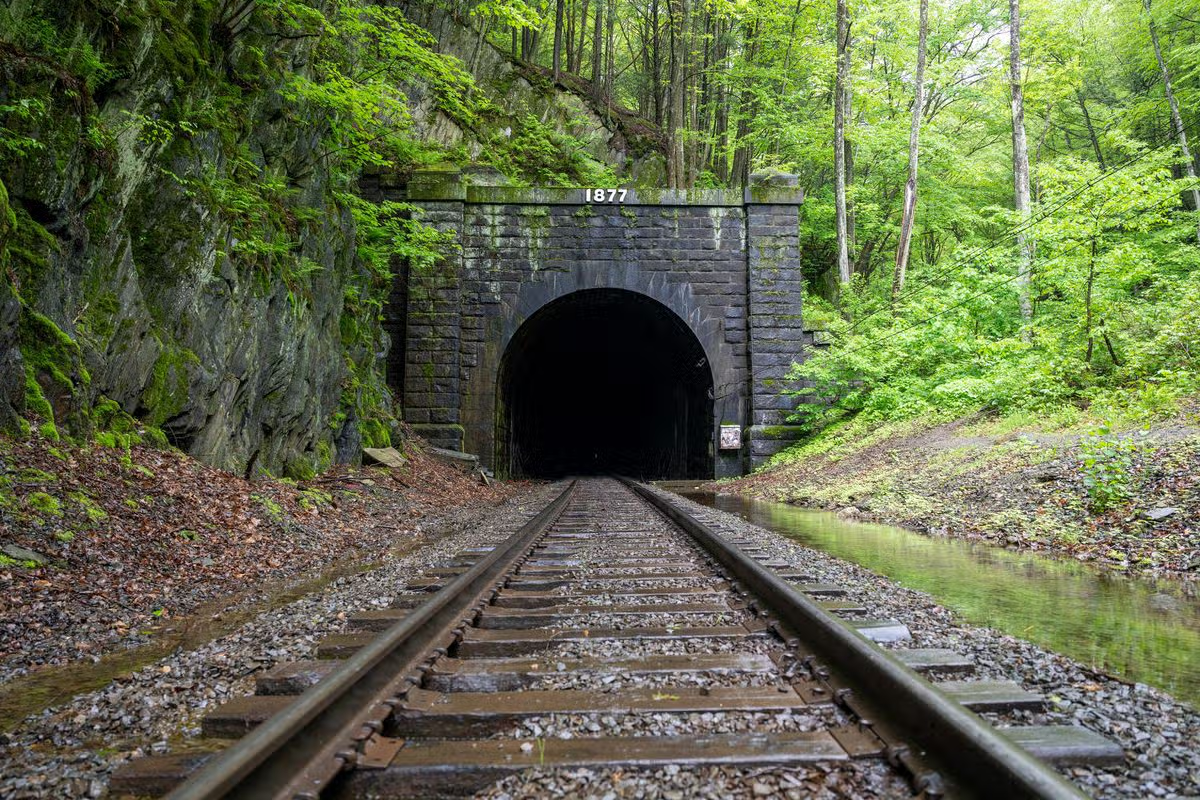
This tunnel claimed the lives of hundreds(Image: Getty)
Burrowing beneath a towering mountain range in Massachusetts is a railway tunnel with a long and blood soaked history. The Hoosac Tunnel travels between North Adams in the west to the town of Florida, Massachusetts in the east. It was constructed in 1851 and finally finished in 1975.
However, during its 24 years of construction, this railway tunnel claimed the lives of around 200 men, giving it the terrifying nickname of ‘the Bloody Pit’. Men were killed by explosions, falling rocks and accidents with ladders and scaffolding, leading to a strike in 1865 where workers burned buildings in protest of the horrific working conditions.
Over the year following the strike, a further 14 men were killed or injured at work in the tunnel.
On October 17, 1867, the tunnel saw the deadliest accident of its 24 years in construction.
Workers were digging a 1,028 foot long vertical exhaust shaft when a candle ignited the fumes that had leaked from a lamp.
An explosion ripped through the shaft, setting the hoist alight. It collapsed into the shaft, trapping 13 men working at the base of the shaft inside the darkness.
The pumps were destroyed, and the shaft began to fill with water.
In a desperate attempt to save the men trapped below, a worker was lowered into the shaft the following day but was overcome by fumes and reported no survivors once he reached the surface again.
Horrifyingly, when workers reached the bottom of the shaft months later they found that at least some of the men had survived long enough to build a raft to escape the rising flood waters before they suffocated.
The men died due to a lack of oxygen as fires burned through the air.
Despite the tragedies that befall construction, the tunnel was finally completed and used by both passenger and freight trains.
Today, the tunnel still stands but is only used for freight trains.
THE world’s most famous nepo-baby North West has revealed she is planning to land a job at Starbucks next year.
The 13-year-old star is arguably the most famous child-star and nepo-baby thanks to her parents being Kim Kardashian and Kanye West.
Nepo-baby North West reveals she wants to work at Starbucks and get a ‘regular job’Credit: Kim & North @TikTokThe daughter of Kim and Kanye has already been chasing fame – but now she’s after a regular jobCredit: TikTok/kimandnorth
She has already carved out an impressive career having released her own music, appeared in stage productions and taken part in fashion editorials all before becoming a teenager.
But despite already living the life of luxury in the fame world, North has now admitted that she wants to give it all up and bag a “regular job”.
Sign up for the Showbiz newsletter
Thank you!
In a brand new interview with Dazed magazine, North confessed that as well as her music career, her dream role is to be work as a barista at Starbucks.
Speaking to the publication, North said: “I still wanna work.
Kim and Kanye’s daughter has already broken out into the music and fashion industriesCredit: GettyShe has also been open about her very unique look at such a young ageCredit: Kim & North / TikTok
“I wanna work at, like, Starbucks next year.
“I think I can next year ’cause I’m gonna be 14, so… I think I can.
“I want to have a regular job, I guess.”
It marks a major U-turn for the young star to pivot away from the mega Kardashian brand.
In her first magazine interview, North also opened up on her well-discussed look.
Despite her tender age, conversation has swirled around her dyed blue hair and multiple body piercings.
Clapping back, she said: “Everyone’s in love with boys, vaping and doing all kinds of bad stuff.
“All I want is blue hair and piercings.”
But North did reveal that she had been disallowed from getting her “bridge pierced” – a piercing that goes through the top of your nose and under your eyebrow.
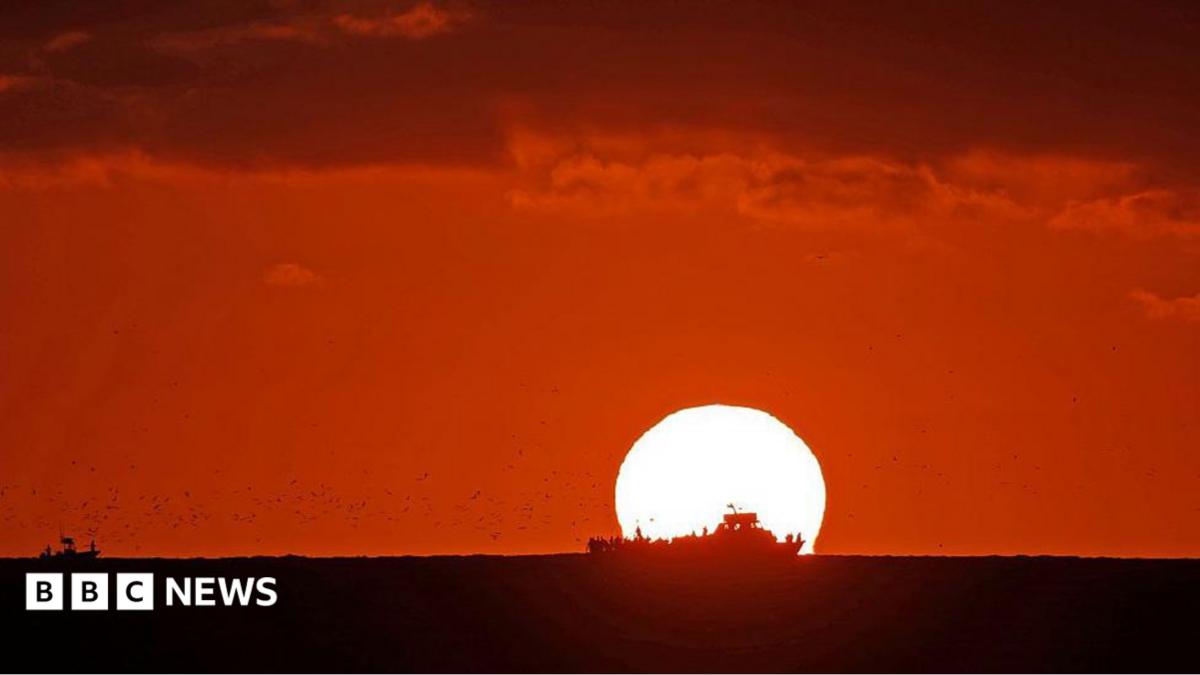
The waters far away from El Niño’s Pacific hunting ground are also extremely warm, including around the UK and Europe.
The western English Channel has seen almost continuous marine heatwave conditions for more than three years, peaking at 7C above normal in July, according to Prof Tim Smyth, director of science at Plymouth Marine Laboratory.
“This is unprecedented,” he added.
Scientists say such widespread warmth around the planet is a clear sign of the growing effect that human-caused climate change is having on the world’s seas.
The oceans take up more than 90% of the excess heat trapped by humanity’s greenhouse gas emissions, mainly from burning fossil fuels.
“The latest Copernicus data reinforce the troubling upward trend in ocean temperatures,” said Smyth.
Warmer seas help to fuel more extreme weather. They can provide storms with extra moisture and energy, and can intensify heatwaves on land in some coastal regions by reducing the cooling effect of sea breezes.
Warmer water also takes up more space, raising sea levels and bringing a greater risk of coastal flooding – while intense ocean heat can be devastating for sea habitats, such as coral reefs.
The increasing frequency of marine heatwaves is already “putting increasing pressure on marine ecosystems and the communities that depend on them”, Burgess said.