worldclass

I found Portugal’s top sporting retreat loved by pro footballers with world-class golf, and huge inflatable aqua park

VISITING one of Portugal’s top golfing regions without an ounce of experience of the game was certainly a nerve-racking move.  

But I needn’t have worried. 

The Algarve is so much more than a golfer’s paradise — but it’s also the perfect place to learn Credit: Supplied
Whether you want to spend your days down at the driving range, sipping cocktails by the beach or trying to master the splits in Pilates, this Portuguese playground is the place to do so Credit: Jenna Stevens

The Algarve is so much more than a golfer’s paradise — but it’s also the perfect place to learn.  

With a nature park that’s home to a 37-mile lagoon and salt marshes frequented by flamingos, otters and Mediterranean chameleons — plus breathtaking island beaches reminiscent of the Caribbean — this beauty spot is a haven for anyone seeking R&R. 

I was staying at the 4H Magnolia Hotel in Quinta do Lago, a lavish complex tucked away within the Ria Formosa Nature Park that features four hotels and a private villa estate spread across 2,000 acres. 

While the complex may be luxury, the price tag needn’t be. The Magnolia, one of the entry-level hotels, is affordable yet stylish and oozes retro glamour with its Palm Springs theme.  

AND RELAX

I stayed at the countryside spa hotel loved by WAGs with £50pp rooms


TURN THE PAGE

Is this village the most autumnal English destination EVER?

A bright pink, neon ‘Welcome’ sign sits above the entrance, which is flanked by two cactus plants. Outside you’ll find a pool around which palm trees and stripey yellow sun loungers are dotted. Inside, the rooms are light, airy and unfussy.  

Staying here means you’ll also get access to the same shared facilities as the fancier hotels within Quinta do Lago, like the 5H Conrad.

This includes a gigantic lake with an inflatable obstacle course and watersports galore, plus a beach boardwalk that leads you straight down to the turquoise sea.

While golf is far from the only activity available to guests, the three championship courses are undoubtedly a big selling point to many.  

The Campus in the Quinta do Lago resort has facilities used by top sports stars Credit: Supplied
Enjoy a tasty bite by the lake at The Shack Credit: Supplied

The legendary South Course has hosted the Portuguese Open eight times and each of the pristine fairways is backed by wildflowers and umbrella pines — pretty hard to resist. 

So it wasn’t long until I found myself at the driving range, picking up a club for the first time.  

Confronted with pyramids of perfectly-stacked golf balls, I wondered how many I would get through before I made a decent shot.  

But a beginner’s lesson from coach Callum had me swinging like a pro in no time, with simple drills and explanations that I could take away with me.  

If golf isn’t your sport, though, you can also try your hand at tennis, cycling, padel and Pilates. 

Many of these activities are at The Campus, which looks more like a glam beach club.  

It has a flawless football pitch on one side, and a patchwork of blue and orange sports courts on another.  

These grounds have been run on by elite athletes, including Chelsea and Everton footballers, during warm weather training camps, so you can be sure that the facilities here are top-notch. 

Have a game of padel Credit: Supplied
The Sun’s Jenna Stevens gives golf a go Credit: Jenna Stevens

But despite its championship status and the reel of famous faces that have visited, I soon came to understand that Quinta do Lago is a place to relax and try new things, not one where you’re expected to step up to the plate and perform. 

If your aching muscles need soothing, then head to the wellness centre, which offers a sauna, steam room and plunge pool.  

There’s also Dano’s Sports Bar, a chillout spot where you can order wings and beers then sink back into a beanbag to catch a game on the big screen. 

I fuelled up on Caesar salad and bites of pizza before trying my hand at padel, which is basically tennis’s cooler, younger sibling. It’s a lot less strenuous and makes for easy rallies — ideal for beginners. 

My days at Quinta soon fell into a relaxed routine: wake up, spend the morning and afternoon trying new sports, go for a dip, then relax with dinner and cocktails. 

To fuel the body for all that sport, guests can pick from 14 dining spots spread across the resort and available to all guests. 

For an unbeatable breakfast, Pure backs on to the eighth hole of the North Golf Course and serves up freshly-squeezed juice and protein pancakes on a sun terrace shaded by pines.  

For lunch by the lake, stroll over to The Shack, where you can grab bites such as burgers and crispy fish tacos.  

And for a classy evening meal, I recommend Casa do Lago or Bovino — the former offers delicious fish from local markets, while the latter serves up juicy steaks and bold Portuguese red wines to match. 

Looking for the perfect way to end your night? Follow the boardwalk to its end to find Gigi’s, a cocktail bar that will happily shake up anything you like, and enjoy views of birds dipping down into the marshland. 

I left Quinta do Lago with not just a golden tan, but some muscle definition that I hadn’t seen in a while (a pleasant change from the usual extra holiday pounds) and a newfound love for golf — if you can’t beat them, join them. 

Holidays here feel like a health retreat that is actually fun and the exercise feels easy. There’s zero pressure to be perfect.  

Whether you want to spend your days down at the driving range, sipping cocktails by the beach or trying to master the splits in Pilates, this Portuguese playground is the place to do so.  

Who knew breaking a sweat could feel so incredibly glamorous?  

GO: FARO, PORTUGAL

GETTING THERE: Jet2 offers return flights from London to Faro from £68. See jet2.com

STAYING THERE: Standard double rooms at The Magnolia Hotel are from £170pn on a B&B basis. See quintadolago.com/en

Source link

Kent is having a champagne moment: ‘English wine has gone from a joke to world-class’ | Wine holidays

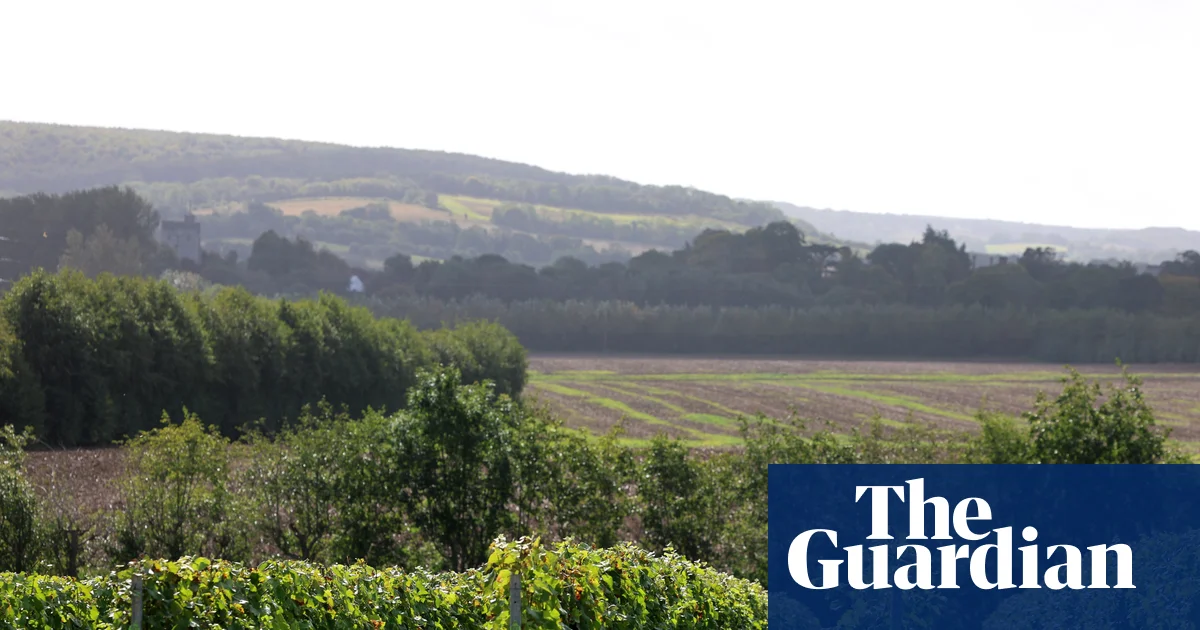
The grapes are turning purple on tall green vines, which stretch down towards the distant flint-and-limestone tower of Chilham church. These rows of Pinot Meunier, destined for English sparkling wine, are 51% owned by French champagne house Taittinger. “England is now the most exciting wine region,” says host and sales executive Hilary Sharp as she leads me around Domaine Evremond vineyard, which opened its visitor centre last year to coincide with the launch of its first wine.

In his 2023 book Vines in a Cold Climate, drinks writer Henry Jeffreys charts the rise of English wine “from a joke to world-class in 30 years”. The book opens with an alcohol-fuelled scene of vine-planting at Domaine Evremond in May 2017: unseasonably cold, rainy, muddy, with rambling anecdotes from anglophile Pierre-Emmanuel Taittinger about “English women encountered in his misspent youth”. The vineyard is named for the exiled French aristocrat Charles de Saint-Évremond, a symbol of hedonistic Anglo-French cooperation. The bon vivant introduced champagne to England and party-loving Charles II made him governor of Duck Island in St James’s Park.

Illustration: Guardian Graphics

We stroll past a Land Rover, parked up by a windbreak of crab apple trees. Harriet opens the back to reveal a tray of glasses with a chilled bottle of Domaine Evremond’s Edition I, and we’re soon sipping creamy, citrussy fizz with a view of vines. It tastes great to me, but I’m no expert.

Wine critic Jancis Robinson gave it a “distinguished” 16/20 and Jeffreys, in his Substack, Drinking Culture, describes “bright green apple fruit with a reassuring bass note of croissant and Marmite”. King Charles III toasted French president Emmanuel Macron with this wine at a state banquet last summer.

Taittinger’s vineyard director, Christelle Rinville, supervises the vines at Domaine Evremond, regularly taking Le Shuttle from Champagne and enthusing about flinty Kentish subsoils. One of the companies that dug through chalk to make the Channel tunnel excavated Evremond’s 25-metre-deep cellars, where 1.5 million bottles can stay cool around the UK’s first subterranean winery.

Domaine Evremond’s new winery building

An elegant umbrella-shaded terrace outside the chalk-cliff walls of the winery has long rustic tables with vases of wildflowers. Visitors can sample the wine (£12.50 a glass, £55 a bottle) from Wednesday to Sunday and there are year-round tours and tastings. Sitting here under blue skies, among banks of yarrow, knapweed, vetch and wild carrot scorched by the relentless sun, it doesn’t feel very English.

Europe is the world’s fastest-warming continent. The unirrigated vines (unlike many other crops) seem to be thriving, and the harvest will be up to three weeks early. Jeffreys writes: “Currently the climate in south-east England is similar to that of Champagne in the 1970s.” Optimal latitudes for wine are supposed to be 30 to 50 degrees, with Champagne at the northerly end of the range. Chilham sits at 51 degrees north.

The vineyard is a half-hour walk through fields from the village, with its cafes, pubs and railway station, where only the front four carriages fit next to the short platform. Bearded butter-yellow cobs of sweetcorn are bursting out of pale green husks beside the path. I loop back to Chilham through Perry Wood. Just beyond the vines, I can see an old oasthouse through branches laden with rosy gala apples. The land was bought in 2015 from the fruit-growing Gaskain family, whose managing director, Mark Gaskain, oversees day-to-day operations in the vineyards as well as producing about 70 million apples a year.

Further on, an orchard of plums is drooping under the weight of purple fruit and crates are stacked up ready for harvest. In the hedges, sprawling hops and honey-scented wild clematis tangle with reddening rosehips and sweet, wine-dark blackberries. Sparrows snack on early-ripened hawthorn under arching beech and sweet chestnut trees, ancient ivy-wreathed hedge maples and squirrel-haunted hazels. Huge clumps of mistletoe hang from towering poplars.

Chilham Castle’s gardens were landscaped by Capability Brown and now include a vineyard. Photograph: Goddard New Era/Alamy

Cottage gardens are heady with late summer roses, scented lavender, aromatic catnip. I wander past wisteria-clad walls and a row of mud-built house martin nests with late fledglings still cheeping under half-timbered eaves while gathering swallows twitter on the wires.

Deputy church warden Lynda Twaite shows me round the flint-walled St Mary’s, pointing out memorials and a battered old school table, graffitied by 18th-century kids. The pilgrim route to Canterbury runs through the lime- and yew-shadowed churchyard. Across the square, I peer through the gates at creeper-covered Jacobean Chilham Castle. Its gardens, landscaped by Capability Brown, now include a new vineyard.

Before heading to the Woolpack Inn for the night, I take an evening stroll by the River Stour, with a view of weatherboarded Chilham Mill framed by willowherb and ripe elderberries. The river sparkles in the sun and turquoise damselflies hover among loosestrife and waterlilies.

The Woolpack’s garden has a Mediterranean feel, with pink hydrangeas, agapanthus and a 600-year-old olive tree. The brick-walled bar has a curving window seat, weathered oak beams and is stuffed with prints and plants and quirky lighting. After a multimillion-pound renovation a couple of years ago, suites and bedrooms upstairs are named after Kentish vineyards, while the big rooms in Rose Cottage, across the lane, come with their own private gardens.

The Woolpack Inn’s ‘Woolly cheeseboard ’is served on a slice of tree trunk. Photograph: Phoebe Taplin/The Guardian

I sit in the leafy shade with a “Woolly cheeseboard” on a slice of tree trunk. As much cheese-based installation as meal, its applewood-smoked and creamy goat are artfully arranged among crackers, olives, nuts, dried fruit, chutneys and tangy homemade pickles. To go with it, there are pints of Shepherd Neame’s toffee-appley Master Brew from down the road in Faversham, or glasses of the local cuvée at cellar door prices.

Domaine Evremond helped found the Wine Garden of England, a collaboration of Kent vineyards. August 2026 also saw the launch of a new tourism initiative, the Kentish Wine Way, encouraging people to visit “England’s largest and most awarded wine region”. The county has 120 commercially active vineyards and more than 25% of Britain’s vines by area, with last year’s harvest producing more than five million bottles. From the train window next day, after hours of walking through wooded hills and burdened orchards, several vineyards roll past, glowing in the evening sunlight.

Accommodation was provided by the Woolpack Inn (doubles from £140 B&B) and some transport by Southeastern (advance tickets from London St Pancras from £16 each way)


Five more Kent vineyards to visit

Balfour Winery

Balfour produced the first English wine to win a gold medal and a trophy at the International Wine Challenge for its 2004 Brut Rosé. Most days, you can pick up a map at the Cellar Door and wander free around the vineyards, orchards, wildflower meadows and ancient oakwoods – or book a range of experiences (from £15pp for a self-tutored tasting). There’s a free shuttle bus to Balfour from Marden train station Friday to Sunday (45 mins from London or Canterbury), and car-free visitors get 20% off the year-round tours and tastings.

Biddenden Vineyards

Five miles from Sissinghurst Castle Garden, the vineyard at Biddenden is the oldest in Kent. Drinks journalist Henry Jeffreys writes that the Barnes family are “apple growers who moved into grapes in 1969 when Joyce Barnes … heard a segment about English viticulture on Radio 4’s Woman’s Hour and decided to plant some vines”. You can still buy all kinds of fancy apple juice and cider here, as well as a range of experiences. Most run from May to September (from £15 for a self-guided tour and tasting flight) with a new behind-the-scenes production tour and tasting added this year for the colder months (£30).

Chapel Down

Photograph: Tim Winter

Chapel Down, near Tenterden, is England’s largest wine producer, with bottles in numerous supermarkets, made using fruit from more than 700 acres of vineyards across south-east England. A half-hour taxi ride from Ashford International, it offers various tours and tastings, including a cheese and wine pairing (£70).

Simpsons’ Wine Estate

Ruth and Charles Simpson started making wine in Languedoc in 2002 and, since 2012, in Kent, which they call “one of the most dynamic wine-producing regions of the world”. Bookable sessions include tastings (from £25) on a glass-walled mezzanine floor in the winery with velvet sofas and an optional helter-skelter slide to get back down after sampling their still and sparkling wines.

Westwell

On the edge of the Kent Downs, Westwell is close to Charing station and a short walk from the Pilgrims’ Way. The vineyard is known for its experimental approaches, including wild yeasts, small-scale production and cloudy, naturally sparkling Pet Nats. Alongside regular tours, there are Friday pizza nights and seasonal supper clubs. Tour and tasting £28.

Source link