World

Osimhen scores two goals as Nigeria set up World Cup clash with DR Congo | Football News

Victor Osimhen’s brace against Gabon puts Nigeria through to CAF World Cup playoff final on Sunday against DR Congo.

Star forward Victor Osimhen scored twice in extra time to clinch a 4-1 semifinal victory for Nigeria over Gabon on Thursday and set up a Confederation of African Football (CAF) 2026 World Cup qualifying final against the Democratic Republic of the Congo (DRC).

Captain Chancel Mbemba was the Congolese hero in the second semifinal, scoring in the first minute of added time to beat eight-time World Cup qualifiers Cameroon 1-0 in torrential rain in Rabat.

Recommended Stories

list of 3 itemsend of list

Nigeria will face DRC on Sunday in the Moroccan capital, and the winners qualify for a six-nation FIFA inter-continental tournament in March. The African playoffs involved the best four group runners-up.

Bolivia and New Caledonia have already secured slots in the playoffs; Iraq or the United Arab Emirates will represent Asia; and there will be two qualifiers from the Central America/Caribbean region. Europe are excluded.

After semifinals among the four lowest-ranked teams, the winners of the two finals will secure places at the World Cup in the United States, Canada and Mexico.

Nigeria are seeking a seventh appearance at the global showpiece and DRC a second, having played in the 1974 tournament when the central African country was called Zaire.

Osimhen squandered a great chance to give Nigeria victory at the end of added time, firing wide with only goalkeeper Loyce Mbaba to beat.

But the 2023 African Player of the Year atoned on 102 minutes, firing across Mbaba into the far corner after being set up by Benjamin Fredrick.

He struck again on 110 minutes, controlling a long pass before once again beating the goalkeeper with a shot into the far corner.

After conceding an 89th-minute equaliser in regular time, Nigeria regained the lead when substitute Chidera Ejuke scored his first goal for the Super Eagles after 97 minutes.

Alex Iwobi and Andre Poko in action.
Nigeria’s Alex Iwobi, left, in action with Gabon’s Andre Poko (#17) [Stringer/Reuters]

Osimhen’s impact

Akor Adams had put Nigeria ahead on 78 minutes, and Mario Lemina levelled after 89 minutes.

Nigeria had a purple patch midway through the opening half with Osimhen coming close three times to breaking the deadlock.

The 26-year-old Galatasaray striker headed wide twice, then had an appeal for handball turned down after a VAR review.

There was another VAR check on the hour after Nigeria full-back Bright Osayi-Samuel pulled the shirt of Aaron Appindangoye in the box, denying the defender a chance to connect with a free-kick.

After a lengthy review, Gabonese appeals for a penalty were turned down by the South African referee.

The deadlock in a tense showdown was finally broken when Adams intercepted a misplaced Gabon pass, rounded Mbaba and scored.

There was an element of luck about the Gabon equaliser as goalkeeper Stanley Nwabali appeared to have the shot from Lemina covered until it took a deflection and sneaked into the corner of the net.

Joris Kayembe and Etta Eyong.
Congo’s Joris Kayembe, left, and Cameroon’s Etta Eyong battle for the ball during a World Cup qualifying football match against Cameroon, on November 13, 2025, in Rabat, Morocco [AP Photo]

DRC deny Cameroon

With just six world ranking places separating Cameroon and DRC, a close encounter was expected, and so it proved with few clear-cut scoring chances in a cagey clash before Mbemba struck.

Manchester United striker Bryan Mbeumo had the best opportunity for Cameroon midway through the second half, but his low shot was just off target.

A little earlier, Congolese veteran Cedric Bakambu was foiled by goalkeeper Andre Onana, who pushed away his shot at the expense of a corner.

Group winners Algeria, Cape Verde, Egypt, Ghana, Ivory Coast, Morocco, Senegal, South Africa and Tunisia secured the nine automatic qualifying places reserved for Africa.

Source link

Ronaldo sent off as Ireland stun Portugal to keep World Cup hopes alive | Football News

Troy Parrott scores twice in first half to keep Ireland’s hopes of reaching next tournament alive with a famous victory.

Ireland have stunned Portugal 2-0 to keep their narrow path to next year’s World Cup open and make the Nations League winners wait to book an automatic spot on a night where their captain Cristiano Ronaldo was sent off.

Ireland, who have not qualified for a major tournament in a decade and last reached a World Cup in 2002, needed at least a draw on Thursday to keep their qualification hopes alive and a first half Troy Parrott double capped their best performance in years.

Recommended Stories

list of 4 itemsend of list

They still need a win in Budapest on Sunday to claim a spot in next March’s playoffs after second-placed Hungary won 1-0 in Armenia. A draw at home to bottom-placed Armenia is likely the most Portugal need to secure automatic qualification.

But they will have to do it without Ronaldo, whose initial yellow card for lashing out with an elbow to the back of Ireland defender Dara O’Shea was upgraded after review to his first ever red card for Portugal in his 226th appearance.

Portugal, who were moments away from securing their seventh successive World Cup appearance a month ago before a stoppage-time Hungarian equaliser in Lisbon, fell behind on 17 minutes after Liam Scales headed a fizzed-in corner back across goal and Parrott could not miss.

Well worth the lead, Ireland went inches from doubling it when Chiedozie Ogbene struck the post with a fine effort before in-form AZ Alkmaar striker Parrott found the bottom corner with a brilliant finish from similar distance just before the break.

Ireland, who defended gallantly in the reverse fixture before going down to a late goal, did not require a repeat once Ronaldo received his marching orders on the hour, sarcastically clapping the delighted home fans as he departed.

Portugal, who are assured at least a playoff spot, are two points clear of Hungary at the top of Group F with a superior goal difference. The Irish are one point further back.

Parrott told RTE that it was “probably the best night” of his life.

“It is such a relief and overwhelming feeling to see the hard work paying off,” he said.

“We all knew how important this game was for us, especially given the other result tonight [Hungary beat Armenia]. I am just overwhelmed, I don’t know what words to give now. I am over the moon.”

Ireland coach Heimir Hallgrimsson praised the backing of the fans and suggested they may have gotten to Ronaldo.

“I can only praise the supporters. We have amazing fans as always. They have a lot of say in this win, they give us energy and help us at crucial times. They deserve this win,” he said.

“[Ronaldo[ lost his focus a little bit. Maybe it was the fans as well that helped a little bit. He was frustrated and reacted in a way that he knows he shouldn’t.”

Portugal's forward Cristiano Ronaldo (R) reacts after missing a free kick during the men's football 2026 World Cup Group F qualifier between Ireland and Portugal at Aviva Stadium in Dublin on November 13, 2025. (Photo by Paul Faith / AFP)
Ronaldo endures a frustrating evening against an excellent Ireland side [Paul Faith/AFP]

Elsewhere on Thursday, Two goals from star striker Kylian Mbappe helped send two-time champions France to the 2026 World Cup with a 4-0 home win against Ukraine.

Midfielder Michael Olise and substitute forward Hugo Ekitike added the other goals in a dominant second half from France, the World Cup runner-up in 2022.

Late goals from Gianluca Mancini and Francesco Pio Esposito helped Italy to a 2-0 win away against Moldova on Thursday, keeping alive their faint hopes of automatic qualification for the 2026 World Cup with their fifth consecutive victory.

The result lifted Italy to 18 points, three behind group leaders Norway, who earlier beat Estonia 4-1, with the two sides meeting on the final qualifying matchday on Sunday. The Azzurri now face what looks an impossible task, needing to win and overturn Norway’s goal difference of 17.

England eased to a mundane 2-0 victory over Serbia with goals from Bukayo Saka and Eberechi Eze to make it seven wins from seven games in their World Cup qualifying campaign at a rain-soaked Wembley Stadium on Thursday.

Serbia put up more resistance than in the 5-0 home drubbing by England in September and Dusan Vlahovic twice went close to equalising but the defeat means his side can no longer finish in the top two and earn a playoff shot.

Albania will finish as runners-up and are guaranteed a playoff place after they beat Andorra 1-0 away.

Source link

U.S. bishops give ‘special’ message against Trump immigration policy

1 of 2 | American Catholic bishops pictured April 2008 singing in the Crypt Church of the Basilica of the National Shrine in Washington, D.C. On Wednesday, the U.S. Conference of Catholic Bishops issued sharp criticism to the Trump administration’s ongoing mass deportation of immigrants. File Photo by Alexis C. Glenn/UPI | License Photo

Nov. 13 (UPI) — America’s Catholic bishops sent sharp criticism of rising fear in the United States and ongoing mass deportations in a rebuke of Trump administration immigration policy.

On Wednesday, the U.S. Conference of Catholic Bishops said its some 273 active bishops were “disturbed” to see that “among our people a climate of fear and anxiety around questions of profiling and immigration enforcement.”

“We are saddened by the state of contemporary debate and the vilification of immigrants,” the group wrote in its statement.

It arrived after U.S.-born Pope Leo XIV directed bishops in the United States to be vocal and speak out against President Donald Trump‘s hardline crackdown on migration.

The U.S. religious leaders approved the rare “special message” with 5 votes against and 3 abstentions of 216 ballots cast at its meeting Wednesday in Baltimore, Md.

“We recognize that nations have a responsibility to regulate their borders and establish a just and orderly immigration system for the sake of the common good,” the plethora of all-male bishops added. “Without such processes, immigrants face the risk of trafficking and other forms of exploitation. Safe and legal pathways serve as an antidote to such risks.”

It marked the first time in 12 years the USCCB invoked its urgent way of collectively speaking as a body.

“We are concerned about the conditions in detention centers and the lack of access to pastoral care,” the bishops added. “We lament that some immigrants in the United States have arbitrarily lost their legal status.”

Trump has targeted immigration enforcement in Democratic-run cities such as the nation’s capital, Los Angeles and in Chicago with the presence of masked ICE agents leading to violent activity, arrests and sprayed tear gas.

The bishops wrote that Catholic teaching “exhorts nations to recognize the fundamental dignity of all persons, including immigrants.”

“We bishops advocate for a meaningful reform of our nation’s immigration laws and procedures,” they continued. “Human dignity and national security are not in conflict.”

The new pope has called for an end to Israel’s war in Gaza with the militant wing Hamas, expanded access to much-needed aid for hundreds of thousands of Palestinian refugees and children and a cease to Russia’s full-scale invasion of Ukraine.

On Wednesday, the Catholic leaders said national security and human dignity both “are possible if people of good will work together.

Source link

How evil can you be on the Eras tour? Sofia Isella carves dark lane in pop

It takes a certain composure, as a teenager, to walk out onto Taylor Swift’s stage in a sold-out stadium and play an opening set to tens of thousands of fans who have never heard of you. But it takes even more conviction to use the occasion to play music almost guaranteed to leave them squirming — grimy, bloodletting noise-rock and electro about being a sexual menace and growing disillusioned with God.

The now-20-year-old singer-songwriter Sofia Isella did that last year, opening on the Australian run of Swift’s Eras tour. “Taylor was an angel for allowing me to share that stage,” L.A.-raised Isella said. “I wish I could have recorded that feeling. But the show itself is not as nerve-wracking as it is playing for 20 people. There’s something about a giant room that almost feels a little dissociative, like it’s not really happening or it’s not really there.”

“Dissociative” is a decent descriptor for Isella’s music, too — disorienting, unnerving, drawing out emotions you might not understand. But there’s so much skill in the performances and imagination in her arrangements that they may well get Isella — who plays the Fonda Theater on Nov. 16 — onto much bigger stages of her own, just as the world gets much bleaker around her.

“This next record, I’m having so much fun with s— that’s really f— dark,” Isella said. “It’s like, the only way to stop screaming about it is to have a moment laughing about it.”

Isella grew up in Los Angeles in a family with enough entertainment-biz acclaim to make being an artist feel like a viable career. Yet they still let her be feral and freewheeling in developing her craft. Her father, the Chilean American cinematographer Claudio Miranda, won an Oscar for 2012’s “Life of Pi” and shot “Top Gun: Maverick” and the recent racing hit “F1” (Her mom is the author Kelli Bean-Miranda). Looking back on her bucolic childhood in L.A., Isella recalled it filled with music and boundless encouragement, worlds away from her social media-addled peers.

“I’d been homeschooled my whole life,” Isella said. “My mom would leave little trails of poetry books for me to find, and my dad would set up GarageBand and leave me for hours with all the instruments and nothing but free time. I didn’t even have a phone until I was 16. When I first was on TikTok, I saw everyone had the same personality, because they had been watching each other for so long. Being around kids my age was so strange, because I’d grown up around adults — like, ‘Oh, these kids are so sweet and kind and adorable, but they think I’m one of them.’”

After her family temporarily moved to Australia during the pandemic and Isella began self-releasing music, it became clear that her talents set her very far apart. Drawing on her early background in classical music and a fascination with scabrous rock and electronic music, she found a sound that melded the Velvet Underground and Nico’s elegant miserablism, Chelsea Wolfe and Lingua Ignota’s doom-laden art metal and the close-miked , creepy goth-pop of Billie Eilish’s first LP.

Isella began self-releasing music during the pandemic. Since then, she's landed opener spots on multiple high-profile tours.

Isella began self-releasing music during the pandemic. Since then, she’s landed opener spots on multiple high-profile tours.

(@okaynicolita)

Her early music showed a withering humor and skepticism of the culture around her (“All of Human Knowledge Made Us Dumb,” “Everybody Supports Women”), but singles came at rapid clip and translated surprisingly well on the social media platforms she loathed (she has 1.3 million followers on TikTok). It all got her onto stages with Melanie Martinez and Glass Animals and, eventually, Swift. (A Florence + The Machine arena tour opening slot is up next.)

On 2024’s writhing EP “I Can Be Your Mother,” songs like “Sex Concept” had the sensual fatalism of poets like Anne Sexton and Sylvia Plath, paired with the drippy erotic menace of Nine Inch Nails. “I’ll bend him over backwards, give him something to believe in,” she sings. “We’ll play the game, both go insane and then we’ll call it even … I’m the only god that you’ll ever believe in.”

“The first EP was this whole story of giving birth to yourself, this giant stretched-out muse,” Isella said, leaning into a stemwinder about the genesis of art. “It just doesn’t feel like it’s coming from me. It feels like it’s coming from some weird thing I somewhat worship.”

A May 2025 follow-up, “I’m Camera,” dealt with the depersonalizing effects of sudden attention. On “Josephine,” she makes tour life feel like a proverbial grippy-sock vacation to the breakdown ward — “I’m sock-footed, sick and selfish holding strangers’ hands … I lost something, I sold it, I only remember the ache.”

Isella’s wariness of institutions extends to her recording career. She’s still independent for now — surprising for an artist on Swift’s radar — and uncompromising about what a label would demand of her compared to what they can provide. “I’ve met with a lot of the big dogs, and they’re very kind people, but I just love the feeling of being independent,” Isella said. “Maybe I’ll change my mind on that, but I’m trying to fully understand a label and what its functions are, what it gives the artist in a social media day. I’m trying to fully assess that before I sign any magic papers.”

Her newest material (and her subversively eerie, Francesa Woodman-evoking music videos like “Muse”) feel perfectly timed to the apocalyptic mood in L.A. and the U.S. now, where an inexorable slide to ruin feels biblical. “Out In the Garden,” from September, hits some of the Southern gothic moods of Ethel Cain, but with a sense of acidic pity that’s all her own. “That there’s a small part of me that’s envious / That you full-heartedly believe someone is always there,” she sings. “That will always love you, and there’s a plan for you out there.”

Even at her bleakest, there’s a curdled humor underneath (her current tour is subtitled “You’ll Understand More, Dick”). But if this little sliver of young fame has taught Isella anything, it’s that even when everyone wants a piece of you, no one is actually coming to save any of us.

“There’s nothing with weight, nothing that’s meaningful, to blind faith,” Isella said. “On this next record, I’m about to go really angry because religion really pisses me off, it inflames me. But it’s the most beautiful placebo to imagine that there’s a father that loves you no matter what you do. I’m a really lucky person in that I’ve always been safe and protected, but if you’ve had a rough life, that is insanely powerful to imagine that and believe that.”

Source link

Over 550,000 students take annual college entrance exam

Over 550,000 South Korean students took the annual college entrance exam on Thursday, the highest number of participants in seven years. Photo by Yonhap News

The annual college entrance exam was held nationwide Thursday with the largest number of applicants in seven years due in part to an unusually high birth rate in 2007.

The College Scholastic Ability Test (CSAT), seen as one of the nation’s most important academic events, began at 1,310 test centers across the country at 8:40 a.m. and is set to end at 5:45 p.m.

Test-takers arrived at designated centers amid cheers from their juniors, parents and teachers. Police officers were deployed nationwide to help transport students and, in some cases, bring them their lunch boxes from home. And students residing on small islands had traveled to the mainland beforehand as no test centers were set up on islets.

A total of 554,174 people have applied for this year’s exam, up 31,504, or 6 percent, from last year and the highest figure since 2018, according to the education ministry.

High school seniors and graduates account for 67.1 percent and 28.9 percent of the total, respectively, it said.

Outside a high school in Cheongju, about 110 kilometers south of Seoul, 21-year-old Shin Ju-won, a student at Chungbuk National University, joined a cheering squad.

“We were cheered on when we took the exam, so we want to repay our juniors,” Shin said. “They’re probably very nervous, but I hope they do well.”

Competition for admission to top colleges is expected to be fierce due to the large number of test-takers and the government’s backtracking on a medical school quota increase.

Last year, the quota was increased by 1,497 slots to 4,610 under former President Yoon Suk Yeol’s policy to address a shortage of doctors.

The plan backfired, however, forcing a return to the previous level of 3,123 seats.

Meanwhile, the number of test-takers is up in part because most people born in 2007, the year of the auspicious Golden Pig that saw an unusually high birth rate, are now in their third year of high school.

In Jeonju, some 200 km south of Seoul, a mother quietly wiped away tears as she watched her daughter enter a test center.

“I’m just thankful to my daughter that she studied for over 10 years to take this exam,” she said, giving her last name as Kang. “I just want her to perform as usual without aiming too high.”

The CSAT is the culmination of years of grueling studies for many students, and the government makes every effort to cater to their needs on exam day.

All aircraft takeoffs and landings across the country will be banned from 1:05 p.m. to 1:40 p.m. to minimize noise during the English listening portion of the exam.

Aircraft in flight, excluding those in emergency situations, must remain in the air at an altitude of 3 kilometers or higher under the direction of air traffic control authorities.

In Seoul, the subway service was increased by 29 runs, mostly between 6 a.m. and 10 a.m., to help students get to their test centers on time.

Stock markets, which are typically open from 9 a.m. until 3:30 p.m., opened one hour later to ease morning rush-hour traffic and will close one hour later.

The exam answers will be finalized and announced at 5 p.m. on Nov. 25 before report cards are distributed to test-takers on Dec. 5.

Source link

The pope’s favorite movies? Not a slasher film in the bunch

The “Purge” movies are missing from the list, as are the entries in the “Saw” franchise. There are no “Evil Dead” titles. “The Exorcist” is suspiciously absent.

The list, in this case, is the favorite four films of Pope Leo XIV, f.k.a. Robert Francis Prevost of Chicago. The pontiff released the list via video ahead of a planned meeting Saturday with luminaries from the world of cinema.

To avoid the risk of being played off the stage by the academy’s orchestra, let’s share the winners quickly:

1. “It’s a Wonderful Life,” 1946
2. “The Sound of Music,” 1965
3. “Ordinary People,” 1980
4. “Life Is Beautiful,” 1997

That’s it. No “The Agony and the Ecstasy.” No “Pope Joan” or “Spotlight” or “Conclave,” for obvious reasons. No “Sister Act” or “Oh, God!” or any of the associated sequels, for less obvious reasons.

As a matter of fact, not a single comedy at all, much less a goofy comedy. And on either the drama or comedy fronts, the pope definitely could have chosen at least one flick set in his former neck of the woods. Think “The Blues Brothers,” “Home Alone,” “The Untouchables,” “High Fidelity,” “Eight Men Out” or “Ferris Bueller’s Day Off.” (Think “Chicago,” for goodness’ sake.)

Pope Leo will apparently be meeting Saturday with Hollywood types including, Variety reports, actors Monica Bellucci, Cate Blanchett, Alison Brie, Dave Franco, Viggo Mortensen and Chris Pine, plus directors Spike Lee, George Miller, Giuseppe Tornatore and Gus Van Sant.

Seems the pope “has expressed his desire to deepen dialogue with the World of Cinema, and in particular with actors and directors, exploring the possibilities that artistic creativity offers to the mission of the Church and the promotion of human values,” according to a statement obtained by CNN.

That sounds all well and good, and a person can’t really go wrong with the movies on the pope’s list — two of the four are best picture Oscar winners, and the other two are best picture nominees.

That said, let’s shed a tiny tear for the exclusion of “Bruce Almighty,” if only because Morgan Freeman could use a little papal recognition too.

Source link

UN warns Sudan is the ‘largest displacement crisis in the world’ | Sudan war

NewsFeed

The head of the UN migration agency says more than 10 million people have been forced to flee their homes in Sudan because of the war between the Sudanese army and the paramilitary Rapid Support Forces. The agency says humanitarian operations in North Darfur are on the brink of collapse.

Source link

Former CEO of firm that produces ‘Love Island’ sues ad agency for $100 million

The former chief executive of WPP’s Motion Content Group — the producer behind “Love Is Blind” and other reality TV shows — is suing the ad agency, saying he was fired after he flagged alleged improper billing practices.

In the lawsuit, filed in U.S. District Court for the Southern District of New York on Tuesday, Richard Foster said he was ousted after he repeatedly warned senior managers about alleged “kickback practices” involving the company’s “rebate-driven deals” that he said “were unsustainable, unlawful, and a significant threat to the Company.”

Foster, a 17-year veteran, led WPP’s media division that is the producer and co-financier of “Love Island” and some 2,500 other television shows around the world. The division was rebranded in 2023 as GroupM Motion Entertainment in the North America.

Foster alleged in his lawsuit that GroupM leveraged “client budgets to secure inventory deals” from media companies that included cash rebates, inventory discounts and other financial incentives, and that these transactions were not always transparent or disclosed to clients.

Over the last five years, the lawsuit states, the company “generated rebate-driven deals valued between $3 [billion] and $4 billion, of which it improperly retained approximately $1.5 [billion] to $2 billion.”

But rather than confront the issues, Foster claims executives “marginalized him, and ultimately terminated him and his team to cover up their own improper practices.”

WPP disputed the claims.

“The Company is aware of a lawsuit in the New York State Court filed by a former employee who was let go in a recent organizational restructuring,” a WPP spokesperson said in a statement. “The court has not yet made any findings in relation to the allegations and we will defend them vigorously.”

In December, Foster submitted a 35-page internal report emphasizing that there were opportunities to establish a new entertainment division, but warned that its use of rebates could pose “possible legal and reputational” risks to the company.

At one point, Foster alleged that he told one executive, that “WPP and GroupM have ‘been sleepwalking to the edge of a cliff and people don’t want to hear it.’”

In January, Foster said he was asked to discuss the report with Brian Lesser, global CEO of GroupM, who “expressed concern about the legal risks tied to GroupM Trading and said he would investigate this further.” Days later Foster claimed that he received a text from Lesser asking him to send a “sanitized version of the report” and “to exclude any overt criticism of [GroupM Trading] as that is not in the spirit of working together.”

Eventually, Foster said he was terminated on July 10. He is seeking $100 million in damages.

“Richard Foster devoted nearly two decades to helping build one of the world’s most successful media and entertainment creation operations,” his attorney, William A. Brewer III, partner at Brewer, Attorneys & Counselors, said in a statement. “When he stood up for transparency and accountability at WPP, he was let go. This case will shine a light on systemic misconduct and the retaliation faced by an executive who refused to go along to get along.”

Source link

Maduro raises Venezuela’s military alert amid U.S. maneuvers

A group of Venezuelans hold signs against U.S. military intervention during a protest outside the U.S. Embassy in Caracas, Venezuela, on October 27. The embassy has been closed since 2019, when Nicolas Maduro announced the break of diplomatic relations with the United States. File Photo by Ronald Rena/EPA

Nov. 12 (UPI) — President Nicolás Maduro announced activation of a “higher phase” of the Independence Plan 200, a program of joint civilian-military exercises designed to test Venezuela’s ability to respond to external threats.

The deployment includes the Bolivarian National Armed Forces, or FANB, the Bolivarian Militia and police units across all states, with a focus on Apure, Cojedes, Carabobo and the capital region, TeleSURTV reported.

The measure, announced Tuesday by Defense Minister Vladimir Padrino, aims to “strengthen territorial defense and enhance operational readiness” amid rising geopolitical tensions in the Caribbean.

Activation of this “higher phase” coincides with the arrival of the aircraft carrier USS Gerald R. Ford in the region under the U.S. Southern Command.

The U.S. Department of Defense said the deployment is part of an operation aimed at “disrupting narcotics trafficking and dismantling transnational criminal organizations” operating in the region. However, the Venezuelan government has interpreted the move as a “provocation.”

According to Venezuela’s Defense Ministry, the new stage of the Independence Plan 200 includes command, control and communications exercises, along with simultaneous air, land, naval and river operations, the newspaper Ámbito reported.

The government described it as an “advanced phase” of the plan launched in September, aimed at ensuring “active resistance and permanent defense” against what it calls pressure and maneuvers by the United States.

Alongside the heightened military alert, the government enacted the Law of the Command for the Comprehensive Defense of the Nation, approved days earlier by the National Assembly.

The law establishes a network of comprehensive defense commands at the national, regional and municipal levels to coordinate the armed forces, civilian institutions and citizens in the “protection of sovereignty and peace.”

Maduro signed the law at the Miraflores Palace on Wednesday, invoking Article 326 of the Constitution, which defines the people’s shared responsibility in national defense. The president said he was prepared to confront any threat and ordered the immediate creation of the new commands.

“The order must be activated so that the comprehensive defense commands are established, structured and begin their work, to be prepared, if we as a republic and as a people are called to take up armed struggle to defend this sacred legacy of the liberators, to be ready to win, to triumph through patriotism and courage,” Maduro said, according to a report by NTN24.

These groups will be led by the Strategic Operational Command of the Armed Forces, which will oversee the integration, planning, coordination, supervision and control of the country’s defense organizations in support of military operations nationwide.

The government sees the legislation as a step toward strengthening its civilian-military defense doctrine, while analysts and opposition figures warn it could expand the militarization of the country and the political role of the armed forces.

Source link

Chile faces uncertain elections with the return of compulsory voting

Jose Antonio Kast, the Republican Party’s candidate for the Chilean presidency, speaks during a campaign closing event in Santiago, Chile, on Tuesday. Photo by Ailen Diaz/EPA

SANTIAGO, Chile, Nov. 12 (UPI) — Chileans are preparing to vote in Sunday’s presidential election with eight candidates and marked by uncertainty.

For the first time in more than a decade, voting will be compulsory, greatly expanding the electorate and potentially reshaping a race that, according to recent polls, remains tight between the government’s candidate, the communist Jeannette Jara, and far-right leader José Antonio Kast.

Chilean President Gabriel Boric is not eligible for re-election because the constitution prohibits consecutive four-year terms.

An expected surge in voter turnout — after years of sustained abstention — adds an unpredictable element to the outcome and will test the parties’ ability to mobilize a broader and more diverse electorate.

René Jara, a political science professor at the University of Santiago, told UPI it will be an unprecedented election. As the first with compulsory voting in many years for more than 15 million registered voters, “there could be quite a few surprises,” he said.

“The expansion of the potential electorate hides several forms of silent voting, representing voices that in the past did not regularly take part in elections.”

Chilean law prohibits the publication of polls during the 15 days before an election. According to the latest surveys, Jara was leading in voter preference, but not by enough to avoid a runoff.

Her level of support also most likely would fall short of securing victory in the second round, scheduled for Dec. 14.

The same polls indicate that any opposition candidate who advances to the runoff most likely would win the presidency.

The right enters the election with three strong contenders. Kast, leader of the Republican Party, appears to have the best chance to win. Evelyn Matthei, a former minister under President Sebastián Piñera, represents the traditional right, and libertarian Johannes Kaiser has emerged as one of the race’s biggest surprises.

According to projections, Jara would lose to Kast in a runoff by about 12 points (36% to 48%), by 10 points to Matthei (33% to 46%), and by five points to Kaiser.

“This election is significant because of the fragmentation of Chile’s right wing. Traditionally, it was a bloc that faced elections in a unified way,” political scientist Hernán Campos, of Diego Portales University’s School of Political Science, told UPI.

He said that since the 2017 presidential election, and especially after 2021, increasingly extreme tendencies have taken root within the opposition.

Although Chile’s pre-election polling ban has prevents measuring public opinion after the close of the campaigns and the candidates’ performance in the final debates, Campos said he believes it is highly likely that the right will win the presidency.

He also sees the possibility that this bloc could secure a majority in the Chamber of Deputies and the Senate.

“This would open the door for them to carry out deeper reforms that could transform aspects of Chile’s institutions and public policy orientations that have defined the country’s political life over the past 20 years,” Campos said.

Public debate during the campaign centered on three main issues: security, migration and the economy.

Pressure to curb crime and control the northern border has co-existed with concern over employment, inflation and pensions, while deeper issues such as gender equality, low birth rates and historical memory continue to divide the country.

In this context, the return of compulsory voting could reshape Chile’s political landscape by bringing back to the polls voters who have long been absent from the democratic process.

Source link

Human Rights Watch says Venezuelans sent to El Salvador were tortured

Nov. 12 (UPI) — Dozens of Venezuelans incarcerated in El Salvador’s notorious CECOT — terrorism confinement mega prison — after being deported from the United States were tortured and subjected to other serious human rights abuses, according to a report out Wednesday.

Titled “You Have Arrived in Hell,” the 81 page report by Human Rights Watch and regional human rights organization Cristosal details the treatment of 40 Venezuelans during four months of incommunicado detention in the maximum security facility this year.

The men were among 252 Venezuelans flown to El Salavador in March and April by U.S. authorities, most of them on the basis of allegations by the U.S. and El Salvadorean governments that they were “terrorists” in the Tren de Aragua organized crime gang, designated a foreign terrorist group by Washington.

Detainees told HRW of constant beatings from the moment they were taken off the plane, being held in inhumane conditions, insufficient food, poor hygiene and sanitation, limited access to health care and medicine and zero recreation or education provision.

Three said they suffered sexual violence and several reported being severely beaten, apparently as punishment for speaking with the International Committee of the Red Cross when the charity visited CECOT in May.

The ill-treatment did not constitute isolated incidents by rogue guards or riot police, but rather systematic violations “designed to subjugate, humiliate, and discipline detainees,” Human Rights Watch and Cristosal said.

“The brutality and repeated nature of the abuses also appear to indicate that guards and riot police acted on the belief that their superiors either supported or, at the very least, tolerated their abusive acts,” they added.

Human Rights Watch and Cristosal said that contrary to the allegations the men were terrorists, only 3% of them had U.S. convictions for violent or potentially violent offenses, half had no U.S. criminal record at all and many had clean records in their home country of Venezuela or other Latin American countries.

The report said the human rights abuses in El Salvadorean prison were well known — including by the State Department which had criticized security and law enforcement in the countrty — but the Trump administration sent the Venezuelans, including dozens of asylum seekers, there anyway.

“The Trump administration paid El Salvador millions of dollars to arbitrarily detain Venezuelans who were then abused by Salvadoran security forces on a near-daily basis,” said HRW Americas director Juanita Goebertus.

“The Trump administration is complicit in torture, enforced disappearance, and other grave violations, and should stop sending people to El Salvador or any other country where they face a risk of torture,” she said.

Cristosal executive director Noah Bullock, said the Trump administration was guilty of “hir[ing] the Salvadorian prison system as a prop in a theatre of cruelty.”

“They wanted to demonstrate and send a message of brutality. But I don’t know if they knew how far it would go and how terrible the horrors of torture are,” he said.

HRW and Cristosal also called for an independent investigation by the U.S. Justice Department and warned that U.S. complicity in the violations drew parallels with the human rights abuses meted out to Iraqis by U.S. military and intelligence personnel in Baghdad’s Abu Ghraqib prison in the Iraq War.

Source link

Ireland vs Portugal: World Cup qualifier – Ronaldo, team, start and lineups | Football News

Who: Ireland vs Portugal
What: UEFA World Cup qualifier, Group F
Where: Aviva Stadium in Dublin, Ireland
When: Thursday at 7:45pm (19:45 GMT)

Click here to follow our live coverage.

Recommended Stories

list of 4 itemsend of list

Unbeaten Portugal (3-1-0) will seal direct qualification to the FIFA World Cup 2026 if they beat Ireland in their penultimate Group F fixture at the Aviva Stadium.

Armed with a five-point lead, Roberto Martinez’s team are in the box seat to seal a seventh consecutive appearance at football’s global showpiece.

Ireland (1-1-2), for their part, still have a mathematical chance to keep their World Cup aspirations alive by causing a huge upset on Thursday night against an opponent that is fifth in the FIFA world rankings.

They are currently third in the group – but only a point behind second-placed Hungary with two matches still to play. Ireland last qualified for the World Cup in 2006.

Here is all to know about their Group F return clash:

Current Group F standings (two fixtures remaining):

  • Portugal – 10 points (from four matches)
  • Hungary – 5 points (from four matches)
  • Ireland – 4 points (from four matches)
  • Armenia – 3 points (from four matches)

How can Portugal and Ireland still qualify for World Cup in Group F?

Scenario 1: 

Group leaders Portugal require a win against Ireland to ensure direct World Cup qualification into next year’s tournament, which is being held in the United States, Canada and Mexico.

In this scenario, Portugal would have 13 points – an insurmountable lead over the other three teams in the group with just one match remaining.

Scenario 2:

If Portugal were to draw its final two fixtures against Ireland and Armenia, they would also finish top of the Group F standings with 12 points from six matches.

Scenario 3:

If Portugal lose its final two matches against Ireland and Armenia, and Hungary – which currently has five points – wins its final two fixtures against Armenia and Ireland, then Hungary would move top of Group F with 11 points vs Portugal’s 10 points.

If Ireland win their final two games, and Portugal lose their final two games, then the teams would be level on 10 points at the top of the standings with the group winner being decided by goal difference.

All 12 group winners in Europe qualify directly for the World Cup while the runners-up go on to the playoffs for the remaining finals places taking place in March.

Dominik Szoboszlai in action.
Hungary midfielder Dominik Szoboszlai’s equalising late goal against Portugal in Lisbon on October 14, 2025, has kept the Group F race for direct World Cup qualification alive for his side and Ireland [Armando Franca/AP]

What happened in Portugal’s last match against Hungary?

Portugal were on the brink of punching their ticket to the World Cup as they led Hungary 2-1 in stoppage time in Lisbon, knowing a win would confirm first place in Group F.

However, Hungary snatched a late draw when Liverpool’s Dominik Szoboszlai finished from close range in injury time.

What happened the last time Portugal played Ireland?

The teams last played on October 11 in Lisbon.

Portugal’s Ruben Neves scored a stoppage-time goal to snatch a dramatic 1-0 home win in Group F after his teammate Ronaldo had a penalty saved earlier in the match as Ireland threatened to hold the unbeaten hosts to a draw.

Is the 2026 World Cup Ronaldo’s last major international tournament?

Yes. With Portugal on the verge of qualifying for the World Cup, Ronaldo confirmed the tournament in North America will be his swansong on football’s biggest stage.

“Definitely, yes, because I will be 41 years old [at the World Cup],” said Ronaldo, who is also the top scorer in history with 143 international goals.

“I gave everything for football. I’ve been in the game for the last 25 years. I did everything. I have many records in the different scenarios in the clubs and also in the national teams.

“I’m really proud. So let’s enjoy the moment, live the moment.”

Cristiano ronaldo in action.
Ronaldo’s Portugal can qualify for their seventh World Cup in a row with a victory over Ireland on November 13, 2025 [File: Pedro Nunes/Reuters]

Head-to-head

This is only the 18th meeting between the European sides with Portugal winning 10 and Ireland winning four.

Ireland’s last win came in a friendly in 2005, courtesy of Andy O’Brien’s solitary strike in Dublin. There have been four subsequent matches, of which Portugal have won three.

Ireland’s last competitive win against Portugal came in a European Championships qualifier in 1995.

The fixture dates back to 1946 and began with a 3-1 home win for Portugal in a friendly.

Portugal’s form

W-W-W-W-D (most recent result last)

Ireland’s form

D-D-L-L-W (most recent result last)

Portugal team news

Chelsea winger Pedro Neto has withdrawn from Martinez’s squad after he suffered a groin injury in his side’s 3-0 Premier League victory over Wolves on Saturday. Rafael Leao is the most likely replacement for Neto.

Sporting Lisbon midfielder Pedro Goncalves is also out for a month after an undisclosed injury playing against Santa Clara on the weekend.

“[I’m] out of these next two games and not being able to be present in the World Cup qualifiers. Something I always dreamed of was representing the National Team, and not being able to go hurts. Now it’s time to recover properly, even though I’m not doing what I love the most! Thank you to the team for the effort until the end! We still have a lot to achieve,” Goncalves wrote on social media.

Ronaldo, who has yet to score away to Ireland in four career meetings, will lead the line for Portugal.

Ireland team news

In a big blow to Ireland’s chances, star striker Evan Ferguson is out of the Portugal fixture with an ankle issue and is in doubt for their final World Cup match against Hungary, which may decide who finishes second in Group F.

Manager Heimir Hallgrimsson will also be without three other injured regulars in the squad: Callum O’Dowda (minor knock), Mark Sykes (shin) and Sammie Szmodics (knee).

Ryan Manning and Jayson Molumby are serving one match suspensions.

Evan Ferguson in action.
Injured forward Evan Ferguson, who has scored three of Ireland’s four goals in World Cup qualifying, will be sorely missed as an attacking option against Portugal [File: David Fitzgerald/Sportsfile via Getty Images]

Predicted starting lineups:

Ireland: Kelleher (goalkeeper); O’Brien, O’Shea, Collins; Coleman, Cullen, Taylor, Johnston; Ebosele, Azaz; Parrott

Portugal: Costa (goalkeeper); Cancelo, Dias, Inacio, Mendes; Fernandes, Vitinha, Neves, Bernardo, Ronaldo, Leao

What the coaches had to say:

Hallgrimsson:

“If Armenia wins or there is a draw, a win in Hungary is enough for us, so that is two of four scenarios for us,” the Ireland manager said.

“If Hungary win, we need at least a draw, but if they win by two or three goals, we will need a draw [against Portugal] and win by maybe three goals away in Hungary.

“We will know what we need in this game against Portugal before we kick off, which is a benefit to us, but it doesn’t change how we start and play the game, but may need to take calculated risks as the game progresses.”

Martinez:

“November is always a difficult stage. Even so, our focus is on qualifying for the World Cup. … We have to improve, especially in the final 20 minutes of games,” Portugal’s manager said.

Source link

How Sabrina Carpenter’s personal photographer captures the pop star’s evolution

Alfredo Flores is always moving, but you wouldn’t know it from the precise stills he takes of Sabrina Carpenter emerging onstage, her cheekiness and sparkly go-go boots shining through his images.

The portfolio of 36-year-old Flores, Carpenter’s tour photographer, is already familiar to most. Those photos of Carpenter posed with the tour stop’s city labeled on a mug and sealed with a kiss — that’s Flores’ work.

He has captured Carpenter’s rise from her “Emails I Can’t Send” era to the dazzlingly successful Short n’ Sweet tour, the work from which earned Flores the iHeart Radio Award for favorite tour photographer and puts him back on the road next week for an additional North American leg, including her six-night run at Crypto.com Arena next week.

But Carpenter’s towel reveals, set changes and winks won’t look exactly the same.

“Creatively, I just try my best to figure out different ways to shoot the same show,” said Flores, fresh off VMAs adrenaline and the release buzz of Carpenter’s latest album, “Man’s Best Friend.”
He constantly alters angles and lenses, including long, short and fish-eye, all with his Canon — the camera brand he’s been loyal to his entire career. However, that doesn’t make his first forays into photography any less impactful.

Alfredo Flores smiling with Sabrina Carpenter

Alfredo Flores smiling with Sabrina Carpenter.

(Courtesy of Alfredo Flores)

Flores’ trajectory as a live music photographer is informed by the era he grew up in, one of disposable cameras, 24-hour photo labs, VHS camcorders, photo books full of family vacation pictures and the visionaries behind the hits that made us press the replay button on CD players.

He recalls his path was charted before him one afternoon in his native Belleview, N.J., on a sick day home from school in the form of the VH1 show “Pop-Up Video,” which featured music videos accompanied by trivia-filled text bubbles.

“It was Mariah Carey’s music video for ‘Honey,’ and it said, ‘This video is directed by Paul Hunter. The location is Puerto Rico. This is an extra. This is a body double,’ ” said Flores, who added, “And it clicked in my brain, ‘Oh, this is something that people create’ … and that’s where my interest really peaked in a more professional way.”

In 2008, when the ultimate music video platform was no longer VH1, but YouTube, Flores moved to Los Angeles and sought out the minds who inspired him — the directors and producers who shaped his camcorder and disposable days, before he ever strapped a Canon around his neck.

“I went to the [Geffen Records] offices every day until I got a yes,” said Flores.

He spent his initial internship days showcasing his perceptive eye by compiling magazine photos for music video storyboards. It was this eye that quickly put Flores on set, shooting bonus footage for a 2009 Nickelodeon production, “School Gyrls.” The made-for-TV movie featured a certain Canadian teen who benefited from the YouTube boom.

The Justin Bieber cameo would develop into a working relationship, allowing Flores to pursue the art form that prompted his move to Los Angeles: directing music videos.

Flores’s music video for Bieber’s song “Love Me” encapsulates the early stages of Bieber’s career. Flores intercut Bieber singing to the camera with footage of fans, behind-the-scenes chats with Usher and numerous angles of Bieber’s signature look — the swoop that inspired hair flips round the world.

Years later, in 2020, when the world stopped, Flores didn’t. He co-directed Bieber once again for the “Stuck with U” music video, a montage of loved ones dancing and embracing in their homes. It was 4 minutes and 17 seconds of celebrated togetherness in the midst of government-enforced close proximity. The song is a duet between Bieber and Ariana Grande, an artist whom Flores defines as a “once-in-a-lifetime kind of talent.”

Flores spent much of the 2010s working with Grande, all angles taken into consideration. From her upside-down album cover for “Thank U, Next” to co-directing her more festive side for the “Santa Tell Me” video to incorporating nostalgia into a Grande-Victoria Monét collaboration, “Monopoly.” Co-directing the friendship anthem’s music video, Flores nodded to a ‘90s upbringing by using a decent amount of camcorder footage.

“Joan [Grande’s mom] probably has so many VHS videos of Ari growing up. And Beth [Carpenter’s mom] has so many VHS recordings of Sabrina,” he said.

The artistic journeys of Carpenter, Grande and Flores are intertwined with the sought-after music video director Dave Meyers. The Grammy winner has bestowed the world with distinct visuals, such as Kendrick Lamar re-creating “The Last Supper” while rapping “HUMBLE.,” Britney Spears accepting an acting award in the midst of belting out “Lucky,” and Grande as an ethereal being singing “God Is a Woman.”

Meyers directed two music videos for Carpenter’s “Short n’ Sweet” album with Flores as the behind-the-scenes photographer. Both videos helped facilitate Carpenter’s catapult into the cultural lexicon with the summer-infused shots in “Espresso” and the “Death Becomes Her” story line in “Taste.”

Alfredo Flores in the photo pit for Sabrina Carpenter.

Alfredo Flores in the photo pit for Sabrina Carpenter.

(Courtesy of Alfredo Flores)

“BTS for me in the hands of Alfredo feels like a living yearbook of the experience we all had. I’m so deep in the creative process that I’m not self-aware of what’s happening, and to re-watch through his work allows me to enjoy the stories being told all around us. The capturing of the actual process, the passion we all share to create — those are the stories he captures over and over,” said Meyers.

Often, Flores takes those candid moments even further with a Polaroid camera — he points, shoots and hopes for the best. The instant photo is at the mercy of light and luck, which are part of the magic, he said.

“It’s the color, the grain, the imperfection of it all,” he said.

By definition, pop music is inextricably tied to its time period, the subject matter and sound speaking to its modern, often younger audiences. This can denote a fleeting quality, a trend to pass us by, not unlike the evolution of photography and videography.

However, the artists of today suggest otherwise. Carpenter covered Abba’s hit “Mamma Mia.” Grande sampled ‘N Sync in her “Thank U, Next” album. Both MTV and VH1 still have something to teach the music video directors of today. There’s lasting power in pop songs as are the mediums we associate with them. Who are we creatively if not an amalgamation of all we’ve seen, the people we know, the ways in which we originally consumed them?

“When I work with an artist we have longevity,” said Flores.

Not a surprising sentiment from the man taking a backstage Polaroid picture of a Gen Z pop star who praises disco.

Source link

At Brazilian climate summit, Newsom positions California as a stand-in for the U.S.

The expansive halls of the Amazon’s newly built climate summit hub echoed with the hum of air conditioners and the footsteps of delegates from around the world — scientists, diplomats, Indigenous leaders and energy executives, all converging for two frenetic weeks of negotiations.

Then Gov. Gavin Newsom rounded the corner, flanked by staff and security. They moved in tandem through the corridors on Tuesday as media swarmed and cellphone cameras rose into the air.

“Hero!” one woman shouted. “Stay safe — we need you,” another attendee said. Others didn’t hide their confusion at who the man with slicked-back graying hair causing such a commotion was.

“I’m here because I don’t want the United States of America to be a footnote at this conference,” Newsom said when he reached a packed news conference on his first day at the United Nations climate policy summit known as COP30.

In less than a year, the United States has shifted from rallying nations on combating climate change to rejecting the science altogether under President Trump, whose brash governing style spawned in part from his reality-show roots.

Newsom has engineered his own evolution when coping with Trump — moving from sharp but reasoned criticism to name-calling and theatrical attacks on the president and his Republican allies. Newsom’s approach adds fire to America’s political spectacle — part governance, part made-for-TV drama. But on climate, it’s not all performance.

California’s carbon market and zero-emission mandates have given the state outsize influence at summits such as COP30, where its policies are seen as both durable and exportable. The state has invested billions in renewables, battery storage and electrifying buildings and vehicles and has cut greenhouse gas emissions by 21% since 2000 — even as its economy grew 81%.

“Absolutely,” he said when asked whether the state is in effect standing in for the United States at climate talks. “And I think the world sees us in that light, as a stable partner, a historic partner … in the absence of American leadership. And not just absence of leadership, the doubling down of stupid in terms of global leadership on clean energy.”

Newsom has honed a combative presence online — trading barbs with Trump and leaning into satire, especially on social media, tactics that mirror the president’s. Critics have argued that it’s contributing to a lowering of the bar when it comes to political discourse, but Newsom said he doesn’t see it that way.

“I’m trying to call that out,” Newsom said, adding that in a normal political climate, leaders should model civility and respect. “But right now, we have an invasive species — in the vernacular of climate — by the name of Donald Trump, and we got to call that out.”

At home, Newsom recently scored a political win with Proposition 50, the ballot measure he championed to counter Trump’s effort to redraw congressional maps in Republican-led states. On his way to Brazil, he celebrated the victory with a swing through Houston, where a rally featuring Texas Democrats looked more like a presidential campaign stop than a policy event — one of several moments in recent months that have invited speculation about a White House run that he insists he hasn’t launched.

Those questions followed him to Brazil. It was the first topic posed from a cluster of Brazilian journalists in Sao Paulo, Brazil’s largest city and financial hub, where Newsom had flown to speak Monday with climate investors in what he conceded sounded more like a campaign speech.

“I think it has to,” said Newson, his talking points scribbled on yellow index cards still in his pocket from an earlier meeting. “I think people have to understand what’s going on, because otherwise you’re wasting everyone’s time.”

In a low-lit luxury hotel adorned with Brazilian artwork and deep-seated chairs, Newsom showcased the well-practiced pivot of a politician avoiding questions about his future. His most direct answer about his presidential prospects came in a recent interview with “CBS News Sunday Morning,” on which Newsom was asked whether he would give serious thought after the 2026 midterm elections to a White House bid. Newsom responded: “Yeah, I’d be lying otherwise.”

He laughed when asked by The Times how often he has fielded questions about his plans in 2028 in recent days, and quickly deflected.

“It’s not about me,” he said before fishing a malaria pill out of his suit pocket and chasing it with borrowed coffee from a nearby carafe. “It’s about this moment and people’s anxiety and concern about this moment.”

Ann Carlson, a UCLA environmental law professor, said Newsom’s appearance in Brazil is symbolically important as the federal government targets Californa’s decades-old authority to enforce its own environmental standards.

“California has continued to signal that it will play a leadership role,” she said.

The Trump administration confirmed to The Times that no high-level federal representative will attend COP30.

“President Trump will not jeopardize our country’s economic and national security to pursue vague climate goals that are killing other countries,” White House spokesperson Taylor Rogers said.

For his own part, Trump told world leaders at the United Nations in September that climate change is a “hoax” and “the greatest con job ever perpetrated on the world.”

Since Trump returned to office for a second term, he’s canceled funding for major clean energy projects such as California’s hydrogen hub and moved to revoke the state’s long-held authority to set stricter vehicle emissions standards than those of the federal government. He’s also withdrawn from the Paris climate agreement, a seminal treaty signed a decade ago in which world leaders established the goal of limiting global warming to 2 degrees Celsius (3.6 degrees Fahrenheit) above preindustrial levels and preferably below 1.5 degrees Celsius (2.7 degrees Fahrenheit). That move is seen as pivotal in preventing the worst effects of climate change.

Leaders from Chile and Colombia called Trump a liar for rejecting climate science, while Brazilian President Luiz Inácio Lula da Silva broadly warned that extremist forces are fabricating fake news and “condemning future generations to life on a planet altered forever by global warming.”

Terry Tamminen, former California Environmental Protection Agency secretary under Gov. Arnold Schwarzenegger, contended that with the Trump administration’s absence, Newsom’s attendance at COP30 thrusts even more spotlight on the governor.

“If the governor of Delaware goes, it may not matter,” Tamminen said. “But if our governor goes, it does. It sends a message to the world that we’re still in this.”

The U.S. Climate Alliance, a bipartisan coalition of state leaders, said three governors from the United States attended COP30-related events in Brazil: Newsom, Wisconsin’s Tony Evers and New Mexico’s Michelle Lujan Grisham.

Despite the warm reception Newsom has received in Belém, environmentalists in California have recently questioned his commitment.

In September, Newsom signed a package of bills that extended the state’s signature cap-and-trade program through 2045. That program, rebranded as cap-and-invest, limits greenhouse gas emissions and raises billions of dollars for the state’s climate priorities. But, at the same time, he also gave final approval to a bill that will allow oil and gas companies to drill as many as 2,000 new wells per year through 2036 in Kern County. Environmentalists called that backsliding; Newsom called it realism, given the impending refinery closures in the state that threaten to drive up gas prices.

“It’s not an ideological exercise,” he said. “It’s a very pragmatic one.”

Leah Stokes, a UC Santa Barbara political scientist, called his record “pretty complex.”

“In many ways, he is one of the leaders,” she said. “But some of the decisions that he’s made, especially recently, don’t move us in as good a direction on climate.”

Newsom is expected to return to the climate summit Wednesday before traveling deeper into the Amazon, where he plans to visit reforestation projects. The governor said he wanted to see firsthand the region often referred to as “the lungs of the world.”

“It’s not just to admire the absorption of carbon from the rainforest,” Newsom said. “But to absorb a deeper spiritual connection to this issue that connects all of us. … I think that really matters in a world that can use a little more of that.”

Source link

Trump vows to proceed with $1B lawsuit against BBC

Nov. 12 (UPI) — U.S. President Donald Trump signaled his intention to push ahead with a $1 billion lawsuit against the BBC, saying he had an obligation due to the “fraudulent” way it had edited a speech he made right before the Capitol Hill riots in 2021.

Speaking to Fox News on Tuesday night, Trump said he had to take legal action because the public service broadcaster “butchered up” the speech he gave to supporters outside the White House on Jan. 6 and had deceived viewers.

The speech formed part of a documentary, Trump: A Second Chance, that went out on the BBC network just before the Nov. 4 U.S. elections, although the BBC maintains that it was not available to view outside of the United Kingdom.

“They defrauded the public and they’ve admitted it. They actually changed my Jan. 6 speech which was a beautiful speech, which was a very calming speech, and made it sound radical. It was very dishonest,” Trump said.

Trump said he had a duty to go ahead and file a defamation lawsuit against the BBC because he “can’t allow people to do that,” in the same way he had been forced to pursue CBS over an interview with Democratic presidential nominee Kamala Harris that aired four weeks before the election on Nov. 4.

CBS settled Trump’s $20 billion claim out of court for $16 million in July.

The BBC has acknowledged receipt of a letter from Trump’s legal team demanding a “full and fair retraction” of the documentary, an immediate apology, and that the BBC “appropriately compensate President Trump for the harm caused.”

It said the BBC must comply by 5 p.m. EST on Friday, to which the corporation has said it would respond “directly in due course.”

The director-general and the head of news both resigned Sunday after it was revealed the corporation’s Panorama program spliced together two sections of Trump’s speech 53 minutes apart without telling viewers it had done so.

The edited version made it sound as if Trump was inciting his supporters to march on the Capitol and “fight” when what he actually said was that they should all walk down to the Capitol “peacefully and patriotically” and “we’re going to cheer on our brave senators and congressmen and women.”

No complaint was raised at the time the documentary aired but the incident has reignited a furious domestic debate about the BBC’s editorial impartiality and the internal culture of the institution which is funded by a $229 annual license that households with a TV must pay.

If the BBC chose to fight the case, which Trump’s lawyer intends to file in the state of Florida, significant obstacles mean long odds on Trump’s chances of prevailing.

For his lawsuit to succeed, his team would have to convince a court that Trump had “suffered overwhelming financial and reputational harm” as a result of the program, as stated in the letter to the BBC.

BBC Chairman Samir Shah has already apologized for what he said was an “error of judgment.”

“We accept that the way the speech was edited did give the impression of a direct call for violent action. The BBC would like to apologize for that error of judgment,” Shah told a parliamentary committee Monday.

However, while that could go against the corporation, as an apparent admission of liability, the case would still have to overcome major challenges.

Legal expert Joshua Rozenberg KC called for the BBC to go further and “draft a retraction and apology in terms that the president’s lawyer finds acceptable” and for the retraction to feature as prominently as the original broadcast.

Writing on his blog post Tuesday, Rozenburg said the BBC would have to pay compensation but suggested that, based on previous legal claims brought by Trump, it would be an out-of-court settlement.

“It won’t be cheap. But it will be cheaper than a billion dollars,” he said.

Source link

South Korea to back U.N. resolution condemning North Korea rights abuses

SEOUL, Nov. 12 (UPI) — South Korea will again co-sponsor a United Nations resolution condemning North Korea‘s human rights violations, its Foreign Ministry confirmed Wednesday, amid speculation that Seoul might withhold support in an effort to improve relations with Pyongyang.

The draft resolution, introduced last week to the Third Committee of the U.N. General Assembly, “condemns in the strongest terms the long-standing and ongoing systematic, widespread and gross violations of human rights in and by the Democratic People’s Republic of Korea, including those that may amount to crimes against humanity.”

The Democratic People’s Republic of Korea is the official name of North Korea.

The resolution calls on Pyongyang to “respect, protect and fulfill all human rights and fundamental freedoms” and to “immediately close the political prison camps and release all political prisoners unconditionally.”
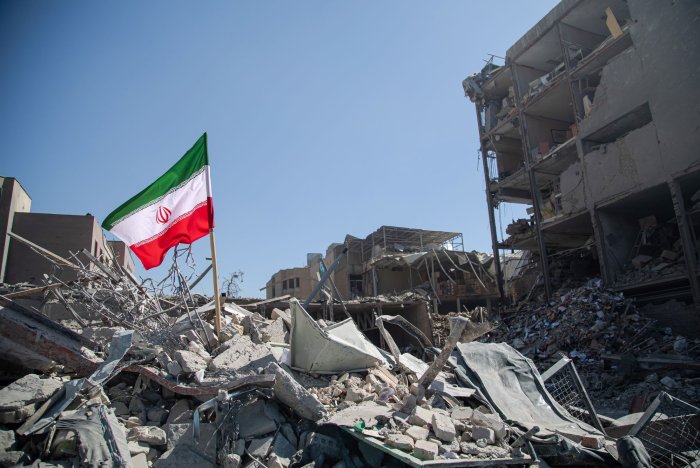
South Korea was among the 41 U.N. member states that co-sponsored the resolution, maintaining the position of former President Yoon Suk Yeol’s conservative government.

The Foreign Ministry said Wednesday that Seoul’s approach to North Korean human rights would remain a matter of principle.

“Our government, recognizing the importance of substantially improving the human rights of North Korean citizens and committed to continuing cooperation with the international community to this end, has participated as a co-sponsor of this resolution,” the ministry said in a statement sent to UPI.

The move comes as Seoul weighs how to balance engagement with Pyongyang against pressure to address its human rights record. President Lee Jae Myung has made efforts to improve relations between the two Koreas since taking office in June, with conciliatory gestures such as dismantling propaganda loudspeakers and restricting activist groups from floating balloons carrying information across the border.

He has expressed support for renewed diplomacy between U.S. President Donald Trump and North Korean leader Kim Jong Un, saying last month he hoped Trump would have a chance to play the role of “peacemaker” on the Korean Peninsula.

South Korea co-sponsored the resolution from 2008 through 2018, but withdrew during a period of inter-Korean detente between 2019 and 2022 under then-President Moon Jae-in.

In late October, Human Rights Watch and 20 other groups sent an open letter urging Lee’s government to back the resolution, warning that recent domestic policy shifts “signal a troubling move away from support for the victims of North Korea’s repression.”

The rights watchdog praised Seoul for its support on Wednesday.

“South Korea’s co-sponsorship showcases leadership as a democracy upholding law and dignity,” Lina Yoon, senior Korea researcher at Human Rights Watch, told UPI.

“Seoul should sustain it, by supporting U.N. accountability, protecting North Korean escapees, expanding information flows and pressing Pyongyang along with other governments for reforms to end repression,” she said.

The United States was not among the sponsoring countries. In February, President Trump signed an executive order withdrawing the United States from the U.N. Human Rights Council, reinstating the position he adopted during his previous term.

North Korea has long rejected such resolutions as hostile acts, accusing the United Nations and Western powers of using human rights as a pretext to undermine its government.

Following the adoption of last year’s measure, Pyongyang’s Foreign Ministry denounced it as a “politically motivated provocation.”

A September report by the U.N. Human Rights Office found that North Korea’s human rights situation “has not improved over the past decade and, in many instances, has degraded,” citing worsening food shortages, widespread forced labor and tight restrictions on movement and expression.

The U.N. General Assembly is expected to vote on the resolution in December.

Source link

Mirae Asset Securities, Korea Investment post solid 3rd-quarter results

The headquarters of Mirae Asset Securities in Seoul. The brokerage led the strong
performances of South Korean securities companies in the third quarter. Photo
courtesy of Mirae Asset Securities

SEOUL, Nov. 12 (UPI) — South Korea’s leading brokerage houses delivered solid performances in the third quarter of this year, thanks to the recent bullish run in the Seoul bourse.

The country’s business bellwether, Mirae Asset Securities, said early this month that it netted $234 million in profit for the July-September period, up 18.8% from a year earlier.

The Seoul-based company’s sales also jumped 22.5% year-on-year to reach $4.55 billion, the largest in the industry.

Korea Investment & Securities said Tuesday that its third-quarter net profit nearly doubled to $413 million, while turnover just edged up 0.4% to $3.85 billion.

Another major player, Samsung Securities, chalked up $1.86 billion in sales, down 1.5% from a year before, for a net income of $211 million, up 28.7%.

Market observers point out that the strong rally in the Korean stock market underpinned the stellar earnings of local securities companies. During the third quarter, the benchmark KOSPI advanced more than 11%.

Their upward momentum is expected to continue because the KOSPI has surged by over 20% since Oct. 1, surpassing the 4,000-point mark for the first time.

“Steady capital inflows into the equity market are expected for the time being, providing a favorable tailwind for domestic brokerages’ earnings,” Kyobo Securities analyst Kim Ji-young said in a media interview.

The share price of Mirae Asset Securities rose 6.97% on Wednesday, while Samsung Securities soared 8.65%. Korea Investment & Securities, which is unlisted, saw its parent company, Korea Investment Holdings, gain 3.95%.

Source link

Invisible Sudan: The Hierarchy of Digital Empathy in the World

In a remote and silent region, thousands of innocent lives have been lost for the sake of a country’s interests. The silence of Sudan has become a global tragedy, with more than 60,000 people killed and more than 11 million displaced. Yet the world seems silent and mute, as if they are ‘invisible.’

Is empathy for a life that is not recognized by digital algorithms so low?

This question seems to haunt me every time I open social media. I see many people around me who do not even know what is happening in Sudan. Their social media timelines never show any news or posts about it, as if nothing is happening. In fact, thousands of lives are lost there every day. This shows that digital empathy is highly controlled by algorithms on social media, which determine what should be visible and what should be left to sink into silence.

During a class discussion a few days ago, I realized that to attract empathy from the digital community, conflicts and global issues are influenced by hashtags used by prominent figures on social media. When they raise the issue of Gaza, the whole world will talk about it, so that issues that are invisible to them, such as Sudan, will never be seen by algorithms and will have an impact on the digital empathy of the community.

In her study, Zeynep Tufekci (2017) states that social media algorithms create filter bubbles, where users are exposed to information that confirms their views, while alternative views are ignored. This further shows that digital empathy is highly controlled by algorithms on social media. Thus, when information does not align with the algorithms and their behavior on social media, it is ignored. In other words, the digital world creates inequality in the space of empathy, where certain issues, such as Sudan, which are not included in social media algorithms, will remain buried and forgotten because they do not meet the logic of virality.

This phenomenon not only reveals the weakness of digital empathy but also how it shapes the hierarchy of humanity in the digital space. Safiya Umoja Noble (2018), in The Algorithm of Oppression, argues that social media algorithms are not neutral but refer to the interests within them. Social media search engines prioritize certain issues and promote websites that lead to a set of biased algorithms, ignoring issues that should be of global concern. As a result, a hierarchy of global empathy towards certain issues is formed, whereby issues that do not align with economic or political interests, such as Sudan, will never gain traction in the global arena.

The impact of this algorithmic bias is very real. The conflict in Sudan is an extreme example of the existence of a ‘Digital Empathy Hierarchy’ where only issues that receive a lot of response are considered important, while issues that do not receive much response and global attention are easily ignored. Hashtags such as #AllEyesOnRafah managed to capture the world’s attention, while hashtags such as #Sudan and #Sudanese only received brief attention and then disappeared into silence. In fact, the suffering in Sudan is no less tragic than what is being widely discussed, but the public seems to turn a blind eye, creating injustice in the digital space and allowing empathy to be controlled by invisible algorithms.

The agenda-setting theory states that the media can shape public opinion by determining which issues receive the most attention. It has been widely studied and applied to various forms of media, which easily gain global attention and are considered important by the international community. However, when issues in Sudan are not reported, people consider them unimportant, and the media agenda for Sudan is low, resulting in a low public agenda for Sudanese issues.

Sociologist Zygmunt Bauman (1993) states that moral distance causes people to lack a sense of responsibility to care about the suffering of others who are geographically and symbolically distant from them. This moral distance creates digital inequality because algorithms are increasingly widening, making it easy to dismiss information that does not attract mass attention. This imbalance in empathy and morality reflects the worsening humanitarian reality in Sudan. According to the OCHA report (2025), Sudan is facing the worst crisis in its history, with 30.4 million people, more than half of Sudan’s population, in dire need of humanitarian aid. Of that number, 16 million are children who are Sudan’s future generation. However, despite the large number of victims, Sudan remains invisible and neglected by a world that seems to prefer to remain silent.

Data from DataReportal (2025) shows that Sudan had 3.68 million social media users in January 2025, equivalent to 7.2 percent of the total population. Digital access in Sudan is indeed open and increasing, but the volume of discussion about Sudan is very small and even inaudible. This further proves that there is a paradox in the digital world, where the more connected humans are, the more disconnected they become from real empathy. This humanitarian crisis requires a response and support from the global media, but as long as everything is determined by algorithmic biases that are considered uninteresting to gain global attention and international support, then hundreds of lives lost and the suffering of the Sudanese people will be lost in silence and invisibility.

If issues that are considered important are only viewed in terms of their magnitude and depend on digital hierarchy algorithms, then humanity’s morals are declining. International organizations controlled by countries with political interests are increasingly eager to create narratives that seem to say that an issue is considered unimportant because it does not benefit them. This pattern slows down the response of international organizations in addressing issues due to digital inequality that creates a hierarchy that will continue to exist, leaving those who are suffering further behind and forgotten.

Many Sudanese people are waiting for hope and support from the global community, but they seem indifferent and uncaring towards the suffering experienced by Sudan. Even in classroom learning, issues that are not widely discussed on social media are often not discussed, and this is very much at odds with the sense of humanity that should be fundamental to international relations students.

As an international relations student, I understand that in this world, everything is determined by interests, power, and algorithms that appear in digital media. Conflicts that are ‘uninteresting’ in the digital space become irrelevant to those with political interests. However, we have a responsibility to eliminate this inequality and moral decline. If social media cannot create algorithms to raise these issues, then we must be the ones to take the lead in continuing to voice these issues in public until the world realizes that there are important issues that must be raised.

Because in truth, Sudan is not invisible, but we are the ones who choose not to see it.

Source link

Colombia suspends intelligence sharing with U.S. over boat strikes

Nov. 12 (UPI) — Colombian President Gustavo Petro has ordered the South American nation’s security authorities to cease sharing intelligence with the United States over the Trump administration’s continued attacks on vessels in the Caribbean and Pacific Ocean.
“An order is given to all levels of intelligence within the public security forces to suspend the sending of communications and other dealings with U.S. security agencies,” Petro said in the statement on X.

“This measure will remain in effect as long as the missile attacks on boats in the Caribbean continue.”

At least 75 people have been killed in 19 known U.S. military attacks targeting boats in the Caribbean and eastern Pacific since Sept. 2. The Trump administration accuses the vessels of shipping narcotics for drug cartels that it has designated as terrorist organizations.

The attacks have drawn both domestic and international criticism and allegations of potential war crimes and extrajudicial killings perpetrated by the United States. Petro has also accused Trump of murder, saying one of the attacks in mid-September killed a fisherman named Alejandro Carranza.

The Trump administration has defended the strikes as necessary to protect Americans from the drugs the boats are allegedly bringing into the United States. President Donald Trump has also seemingly rejected the notion of seeking congressional approval for the strikes, stating last month that “I think we are just going to kill people that are bringing drugs into our country.”

The announcement Tuesday came on the heels of Petro recalling Colombia’s ambassador to Washington for consultations in response to a photo released by the White House on Oct. 21 in which Deputy Chief of Staff James Blair is seen holding a folder that contains photos of Petro and Venezuela’s authoritarian president, Nicolas Maduro, in prison jumpsuits.

The actions are expected to further strain relations between the two allies, which have become fraught during the Trump administration. Petro has been a critic of the American leader’s hardline immigration and drug enforcement policies, and Trump has accused Petro of not doing enough to curb the manufacturing of drugs in the South American nation.

Trump has imposed sanctions on Petro and his immediate family members on accusations that Petro is permitting drug cartels to conduct their business without impediment.

Petro has rejected the accusations and, in turn, accused the Trump administration of lying. His administration maintains drug production is declining under Petro’s tenure.

“The fight against drugs must be subordinated to the human rights of the Caribbean people,” Petro said Tuesday.

Source link