The Iranian military shot down a U.S. F-15E similar to the one pictured on Friday. File Photo by Senior Airman Mitch Fuqua/U.S. Air Force.
April 3 (UPI) — The U.S. forces rescued at least one crew member after Iran shot down a U.S. F-15E fighter jet Friday, unnamed U.S. military sources told multiple media outlets.
Officials confirmed the rescue to CBS News but said search-and-rescue operations were still taking place. CNN reported they were looking for one other pilot before Iranian forces could reach them. The F-15E has a standard crew of two pilots, The New York Times reported.
Iran’s state-run Tasnim news agency reported that Iranian officials’ efforts to locate the two U.S. pilot had “so far been unsuccessful.” Another Iranian news outlet, Fars News, said the government was offering a reward to anyone who captured an “enemy pilot or pilots.”
The New York Times reported that amid the search-and-rescue efforts, Iranian ground fire also hit a U.S. Air Force UH-60 Black Hawk helicopter. Officials told the news outlet that the crew was able to fly the aircraft back to safety in Iraq.
The Times also reported that another aircraft, an A-10 Thunderbolt, or Warthog, crashed near the Strait of Hormuz around the same time as the F-15E fighter jet. Two U.S. officials told the outlet that the only pilot on board the aircraft was rescued.
Iranian media outlets published photos of what appears to be a shot-down F-15 fighter jet.
White House press secretary Karoline Leavitt told CNN that President Donald Trump had been briefed on the incident.
This is the first U.S. aircraft to be shot down by Iran since the start of U.S. and Israeli bombing on Feb. 28. Three other F-15 jets were shot down by mistake in Kuwait.
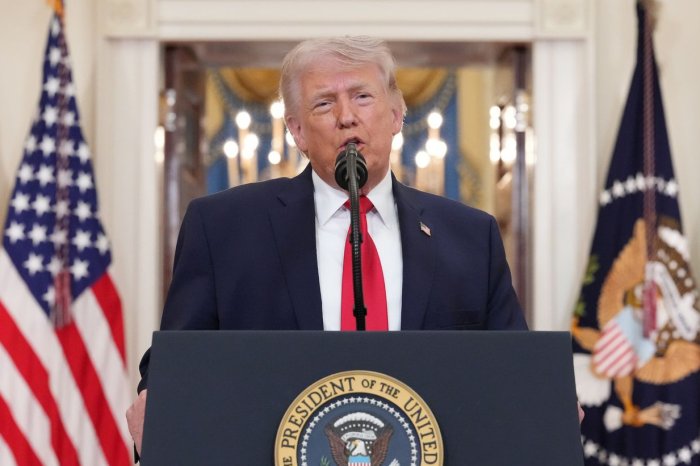
President Donald Trump delivers a prime-time address to the nation from the Cross Hall in the White House on Wednesday. President Trump used the address to update the public on the month-long war in Iran. Pool photo by Alex Brandon/UPI | License Photo
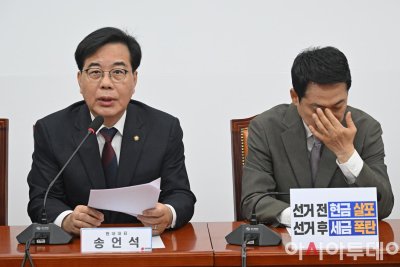
Song Eon-seok, floor leader of the People Power Party, speaks at a party Supreme Council meeting at the National Assembly in Seoul on Wednesday. At right is party leader Jang Dong-hyuk. Photo by Asia Today
April 3 (Asia Today) — Song Eon-seok, floor leader of the People Power Party, on Thursday criticized the government’s proposed 26.2 trillion won (about $19.6 billion) supplementary budget, calling it a “misguided plan” that relies on cash handouts instead of addressing the impact of high oil prices.
Speaking at a party strategy meeting at the National Assembly, Song said the proposal “diagnoses high oil prices but prescribes cash handouts,” arguing that it fails to support those most affected by rising fuel costs.
He said the government has become overly focused on distributing cash while neglecting vulnerable groups, adding that one-time payments of 100,000 won (about $75) would not meaningfully help people facing mounting living costs.
Song also criticized the exclusion of workers directly impacted by fuel prices, including truck drivers, delivery workers and taxi drivers, from key support measures.
“We will transform this supplementary budget from a war-related or election-driven budget into a ‘people’s survival budget,'” he said, pledging to shift from broad cash payments to targeted assistance.
He said the party would seek to cut spending items deemed unrelated to high oil prices during the review process, including renewable energy projects, independent film production support and regional development programs in Changwon. Savings from those cuts, he added, would be redirected to groups most affected by fuel price increases.
Song proposed expanding the fuel tax reduction from 15% to 30% and providing fuel subsidies of 600,000 won (about $450) to roughly 700,000 workers in transportation and delivery sectors.
He also suggested additional support measures, including subsidies for delivery and takeout packaging costs for about 670,000 self-employed business owners, as well as a 50% discount on the K-Pass public transportation program for six months.
Regarding the government’s plan to implement an odd-even license plate driving system, Song said the policy should be reconsidered. If implemented, he said, it should be accompanied by adequate compensation for affected citizens.
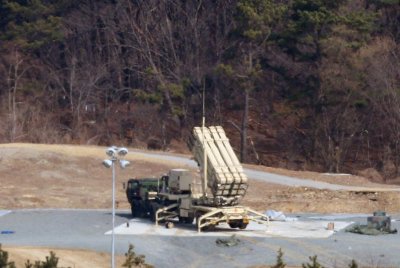
A launch vehicle of the Terminal High Altitude Area Defense (THAAD) system is seen at a U.S. military base in Seongju, North Gyeongsang Province, South Korea, 05 March 2026. File. Photo by YONHAP / EPA
April 3 (Asia Today) — South Korea will accelerate deployment of its long-range artillery interception system, known as the Korean Air and Missile Defense system, aiming to bring it into service by 2029, two years ahead of schedule.
The Defense Acquisition Program Administration said Thursday it approved a revised development and deployment plan during a Defense Acquisition Program Committee meeting.
Under the plan, the military will use prototypes to speed up deployment, advancing the timeline from the original target of 2031. The project was accelerated in response to North Korea’s expansion of long-range artillery capabilities.
The government plans to invest 842 billion won (about $630 million) in research and development for the system through 2030.
The system, under development by the Agency for Defense Development, is designed to intercept North Korea’s long-range artillery fired in large volumes at low altitudes and short ranges. Officials have said the system is intended to outperform Israel’s Iron Dome by engaging a greater number of incoming targets simultaneously.
Separately, the committee also approved plans to procure SM-3 ballistic missile interceptors from the United States by 2031 at a cost of 753 billion won (about $565 million). The missiles will be deployed on the King Jeongjo-class Aegis destroyers.
Additional measures approved include improvements to tactical information-sharing systems for joint South Korea-U.S. maritime operations, as well as a broader 2026-2030 defense industry development plan.
Heavyweights Derek Chisora and Deontay Wilder will reach a combined 100 professional fights when they meet at London’s O2 Arena on Saturday.
British veteran Chisora, 42, made his professional debut in 2007 and has recorded 36 wins and 13 defeats.
Former world heavyweight champion Wilder, 40, was once considered the most feared puncher in boxing. However, he has lost four of his last six bouts, leaving his record at 44-4-1.
Chisora says this will be his final fight. If he is to be believed, can he bow out on a high? And with Wilder no longer at his peak, could a win on the road reignite his career?
BBC Sport asks figures from across the boxing world for their predictions.
World boxing champion Lauren Price says the structure in her life is what gives her the “confidence” to win.
Price splits her time between her home in Wales and her training camp in Sheffield, living away from her family and partner in the build-up to a fight.
On Saturday she will fight in front of a home crowd in Cardiff to defend her titles against Stephanie Pineiro.
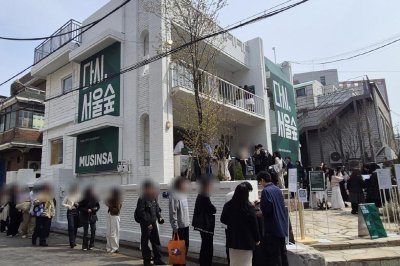
1 of 2 | A long line of visitors waits outside the “Cocoon’s Private Studio” event venue near Ttukseom Station in Seoul on Thursday. Photo by Asia Today
April 3 (Asia Today) — A once-quiet café district near Seoul Forest is rapidly transforming into a retail hotspot, drawing long lines of visitors as fashion platform Musinsa expands its presence in the area.
By late morning Thursday, more than 200 people were lined up along Atelier-gil in Seongdong District, even on a weekday. The crowd gathered for a pop-up event tied to Musinsa’s “Back to Seoul Forest” campaign, where musician Code Kunst drew attention by serving coffee in person.
“Seoul Forest is really popular these days,” one visitor in her 20s said. “I’ve been to Yeonmujang-gil many times, so now I’m coming here instead.”
The campaign invites visitors to explore 24 stores in the area, scanning QR codes to collect stamps. Participants who collect four stamps receive promotional items and can enter prize drawings, encouraging foot traffic throughout the neighborhood.
The initiative is part of Musinsa’s broader “Seoul Forest Project,” launched earlier this year to expand consumer activity beyond the already saturated Yeonmujang-gil in nearby Seongsu. The company aims to connect the two areas into a single retail corridor.
Local businesses say the change is already noticeable. A staff member at a nearby lifestyle store said customer traffic surged so quickly during the event that QR code stations had to be moved outside to manage demand, adding that the area attracts a particularly young customer base compared to other locations.
Until recently, the Seoul Forest area was dominated by cafes and restaurants, with relatively short visitor stays. The district has about 35 beverage shops and 91 dining establishments, and its closure rate last year exceeded the city average.
Musinsa saw this as an opportunity. While Yeonmujang-gil faces high rents and heavy foot traffic, Seoul Forest had lower visitor numbers – about 3,000 people daily, roughly one-quarter of nearby Seongsu’s café street – despite being within a 15- to 20-minute walk.
To reshape the district, Musinsa leased about 20 vacant storefronts last year and subleased them to emerging brands, lowering entry barriers for companies seeking offline expansion.
As a result, designer brands that were previously difficult to find in physical stores are beginning to cluster in the area. Several labels, including General Idea, Lookcast and Have a Whale, have opened locations within the past two months, filling previously empty spaces with new retail content.
Kim Young-min, a director at a women’s fashion brand operating in the area, said high rents in neighborhoods such as Seongsu and Hannam had delayed offline expansion plans. “Musinsa offered space here, which made it easier to open a store,” Kim said.
The layout of Atelier-gil has also contributed to the shift. Unlike the large industrial-style buildings in Seongsu, the area consists mainly of smaller structures, reducing initial investment costs and making it more accessible for emerging designers.
While some vacancies remain, Musinsa plans to attract about 20 brands to the area this year. Upcoming openings include specialty retail concepts focused on hats, footwear, children’s products and beauty.
The company said it aims to strengthen its identity within the broader Seongsu district while redefining Seoul Forest as a destination where visitors can explore, shop and experience a variety of content.
The effort is already reshaping the neighborhood, turning previously quiet streets into a growing hub of fashion and lifestyle activity.
Hello! I’m Mark Olsen. Welcome to another edition of your regular field guide to a world of Only Good Movies.
This is another strong week for new releases. By now you have likely heard something about “The Drama,” which has become inescapable thanks to the tireless promotion of its two stars, Zendaya and Robert Pattinson.
In a movie written and directed by Norwegian provocateur Kristoffer Borgli (“Dream Scenario”), the pair play Emma and Charlie, an engaged couple who find their wedding week thrown into disarray by the revelation of a deep secret from the bride-to-be.
Robert Pattinson and Zendaya in the movie “The Drama.”
(A24)
As Amy Nicholson put it in her review, “To another screenwriter, ‘The Drama’ would be an intimate study and a more emotionally wrenching film. But Borgli forces us to parse the mushy stuff from the mess and analyze the pending nuptials as an impersonal problem: What comes after a public shaming for the guilty and the inquisitors? That’s one of the most important (and unresolved) questions of the modern era, so I’ll forgive the filmmaker for being no more interested in writing Emma and Charlie as complex human beings than if they were character names in a math quiz about two people on two trains speeding toward a crash.”
Meanwhile, Tim Grierson spoke to Shira Small, the folk artist whose sole 1974 album features a song heard in an early scene of “The Drama.” Small, a delightful interview, goes into the music career she left behind a long time ago — one which may be reigniting now thanks to the movie.
Also opening in Los Angeles this week is Israeli filmmaker Nadav Lapid’s “Yes,” a guaranteed conversation-starter. Ariel Bronz stars as a musician who, in the aftermath of the Oct. 7 attacks, decides to say yes to composing a vicious new political anthem..
Reviewing the film, Joshua Rothkopf said, “It’s a movie about a citizenry at war with itself, hoping to keep the plates spinning for one more night. You watch it and think how easy it would be to envision an American remake — and wonder, too, if a filmmaker like Lapid even exists here.”
One of my favorite films from SXSW 2025, “Fantasy Life,” is finally coming to theaters. Written and directed Matthew Shear, the movie is an affectionate nod to the chatty dramedies of Noah Baumbach (some of which Shear has acted in). Here he plays Sam, a troubled law school dropout who takes a job looking after the children of a Brooklyn couple (Amanda Peet and Alessandro Nivola) and finds himself in an emotional affair with the wife.
“Fantasy Life” actor-writer-director Matthew Shear and star Amanda Peet bond in New York.
(Justin Jun Lee / For The Times)
I recently spoke to Shear and Peet about their collaboration on the film. Peet’s character in the film is also an actor and, though much of the film’s anxieties felt familiar to her, one scene in particular is drawn from Peet’s own experience: She is often mistaken in public for Lake Bell, including once on a red carpet.
“It’s a weird thing because you’re like, what do I do here?” said Peet with a laugh. “What’s the least douchey way to get out of this?”
The Black Pack’s resistance humor
Robert Townsend in the 1987 movie “Hollywood Shuffle.”
(Samuel Goldwyn Company / Photofest)
Curated around a new book by Artel Great, the UCLA Film and Television Archive is launching the series “The Black Pack: Rewriting American Comedy,” to spotlight a moment in the 1980s and ’90s when a small group of Black creators reached the very heights of Hollywood.
Eddie Murphy, Paul Mooney, Robert Townsend, Keenan Ivory Wayans and Arsenio Hall were friends and collaborators who, from 1987 to 1994, created the work showcased in the series. The Black Pack is a name they gave to themselves, partly in response to the John Hughes-affiliated Brat Pack.
Things begin tonight with a 35mm screening of Townsend’s essential 1987 satire “Hollywood Shuffle.” Great will be there for an introduction and a Q&A with cast member Anne-Marie Johnson and Spring Mooney, daughter of late actor Paul Mooney, who also appeared in the movie.
The cast of “In Living Color,” to be celebrated as part of the UCLA screening series “The Black Pack.”
(Fox / Photofest)
Other events include an evening of episodes of Wayans’ sketch comedy series “In Living Color,” 1988’s “Coming to America,” starring Murphy and Hall, a 35mm screening of Townsend’s 1991 “The Five Heartbeats” and a 35mm screening of 1989’s “Harlem Nights,” the only movie starring, directed, written and produced by Murphy, then at the height of his cultural capital.
This series is a terrific example of why smart programming matters. Here is a group of films (and a TV show) that might seem only related in a vague way, but when put together under a specific theme or idea, they are suddenly transformed into something revelatory.
Each evening of the series is designed to make the case for a different aspect of the Black Pack’s work and influence. The series as a whole puts forward a larger concept Great has coined a term for.
“I’m arguing through the series that the Black Pack’s cultural material is connected to a longstanding tradition that I call Black resistance humor,” says Great, now an associate professor at San Francisco State University, in an interview this week. “This idea of Black resistance humor is really a cultural practice where Black cultural workers are using political wit, irony, satire, parody, absurdity to challenge corrupt authority, to give voice to racial trauma and also attach themselves to re-imagining what freedom can really look like.”
From left, Arsenio Hall, Eddie Murphy, James Earl Jones and Madge Sinclair in the movie “Coming to America.”
(Paramount / Photofest)
There are plans for Black Pack programs in other cities, including Atlanta, San Francisco and Chicago, bringing this fresh look at their specific moment to venues around the country.
“I’m hopeful that the series will allow communities and audiences to see the Black Pack as cultural strategists who are using this idea of Black resistance humor to address very serious issues of power, identity and race,” says Great. “But also as a way of thinking, as a way of seeing and as a way of building alternative systems. Because that’s what they were able to do.”
Points of interest
‘The Birthday Party’ in 35mm
Actor Robert Shaw, left, with director William Friedkin on the set of “The Birthday Party” in 1968.
(Larry Ellis / Getty Images)
As part of its series celebrating the legacy of actor Robert Shaw, the Academy Museum will screen 1968’s “The Birthday Party” in 35mm on Sunday. One of the earliest features directed by William Friedkin (who would go on to such classics as “The Exorcist” and “To Live and Die in L.A.”), the film’s screenplay was written by Harold Pinter, adapting his own play. Shaw, Friedkin and Pinter make for a combustible intensity.
Shaw plays Stanley, the lone boarder at a seaside inn. When two mysterious men (Dandy Nichols and Sydney Tafler) arrive, they engineer a party for Stanley that becomes increasingly ominous.
In his original review, Charles Champlin lauded Shaw, saying he gives “one of the total and totally engrossing movie performances,” adding that Friedkin “as a director is everything a dramatist, and an audience, could want. The sense of loving care and artistic sureness which characterizes every aspect of the movie is extremely tonic. Pinter may be an acquired taste, but it is easy to acquire.”
‘He Got Game’ in 35mm
Denzel Washington in 1998’s “He Got Game.”
(David Lee / Touchstone Pictures)
Spike Lee’s prolific career is now studded with movies that maybe didn’t quite get their due in their day but deserve renewed attention. Screening in 35mm on Sunday at Brain Dead Studios is Lee’s 1998 “He Got Game,” which is just that kind of movie: stuffed with ideas and ambitions even if it doesn’t totally all come together for everyone. I particularly like his use of composer Aaron Copland’s music, which gives many of the images an epic quality they might not otherwise fully achieve, challenging preconceived notions of what can be thought of as Americana.
The movie stars a particularly electric Denzel Washington as Jake Shuttlesworth, a once-promising basketball player whose life took a turn. Now he’s in prison. His son, Jesus (played by NBA star Ray Allen), is a promising prospect and Jake is given an offer of a reduced sentence if he can convince his son to attend a certain college. The mixture of two of Lee’s own personal preoccupations, basketball and family, makes for a potent combination.
Reviewing the movie when it was released, Kenneth Turan wrote, “Given that writer-director Lee is one of the most visible of the New York Knicks’ celebrity fans, what’s surprising is not that he made a film about the sport he cares so much about but that he waited so long. … Though ‘He Got Game’ is periodically awkward and unruly, it benefits, as many of Lee’s films do, from the director’s determination to connect with the troublesome issues of the real world. Too few American directors work with Lee’s kind of social immediacy, and that makes his films, flawed and didactic though they sometimes are, essential viewing.”
Harmony Korine’s ‘Gummo’
Jacob Reynold, left, and Nick Sutton in Harmony Korine’s ‘Gummo’
(Criterion Collection)
Harmony Korine’s first feature as director, 1997’s “Gummo,” will screen at Vidiots on Monday. The event is co-presented by the Cinegogue, a group perhaps best known for their limited-edition movie-themed clothing drops, but who describe their mission thusly: “Our goal: make movies cool again through concert-like experiences and fanfare. … Because even though a movie might end, cinema is forever.” (And that’s a sentiment we here can get behind.)
The film finds Korine attempting to bring elements of experimental film and video to a nominally more mainstream context. It’s both confrontational and playful. Using a collage-like structure, the film follows a few kids as they make their way around their small town in Ohio after a tornado. Mostly featuring non-actors, the cast also includes Linda Manz and Chloë Sevigny, who is also credited as the film’s costume designer.
Writing about “Gummo” and Korine’s subsequent “julien donkey-boy,” Kevin Thomas made special note of “the intensity of Korine’s compassion for individuals who have so little going for them and so much going against them, yet at times are capable of experiencing an exhilarating freedom of spirit.”
1 of 2 | Yang Kyung-soo, leader of the Korean Confederation of Trade Unions, speaks during a rally in front of the presidential office Cheong Wa Dae to express their objection to the US-Israel war with Iran and South Korea’s dispatch of troops to the conflict, in Seoul, South Korea, 25 March 2026. File. Photo by YONHAP / EPA
April 3 (Asia Today) — South Korea’s largest labor group on Thursday called on the government to adopt a more worker-centered approach in shaping industrial and trade policies, emphasizing job security amid economic and technological changes.
The Korean Confederation of Trade Unions made the request during a meeting with Industry Minister Kim Jeong-kwan at its headquarters in central Seoul.
The group said employment stability must be a key consideration in industrial policymaking and trade negotiations, particularly as industries undergo restructuring driven by artificial intelligence and face overlapping challenges from climate change, global trade tensions and economic uncertainty.
The meeting was organized to raise the need for labor-focused policy and to establish a framework for ongoing communication and cooperation with the government.
Union officials, including Chairman Yang Kyung-soo, Vice Chairman Jeon Ho-il and other senior staff, attended the session, along with ministry officials responsible for industrial and manufacturing policy.
Yang said industrial and trade policies are directly tied to workers’ livelihoods and warned that policies focused primarily on corporate competitiveness could shift economic burdens onto labor.
“Government agencies must rethink their view of labor,” he said. “Labor is not a cost but the foundation that sustains industry.”
He added that industrial transitions should not come at the expense of workers and called for what he described as a “just transition” that protects jobs and working conditions.
The union said it would continue engaging with the government to push for broader changes aimed at placing workers at the center of economic policy decisions.
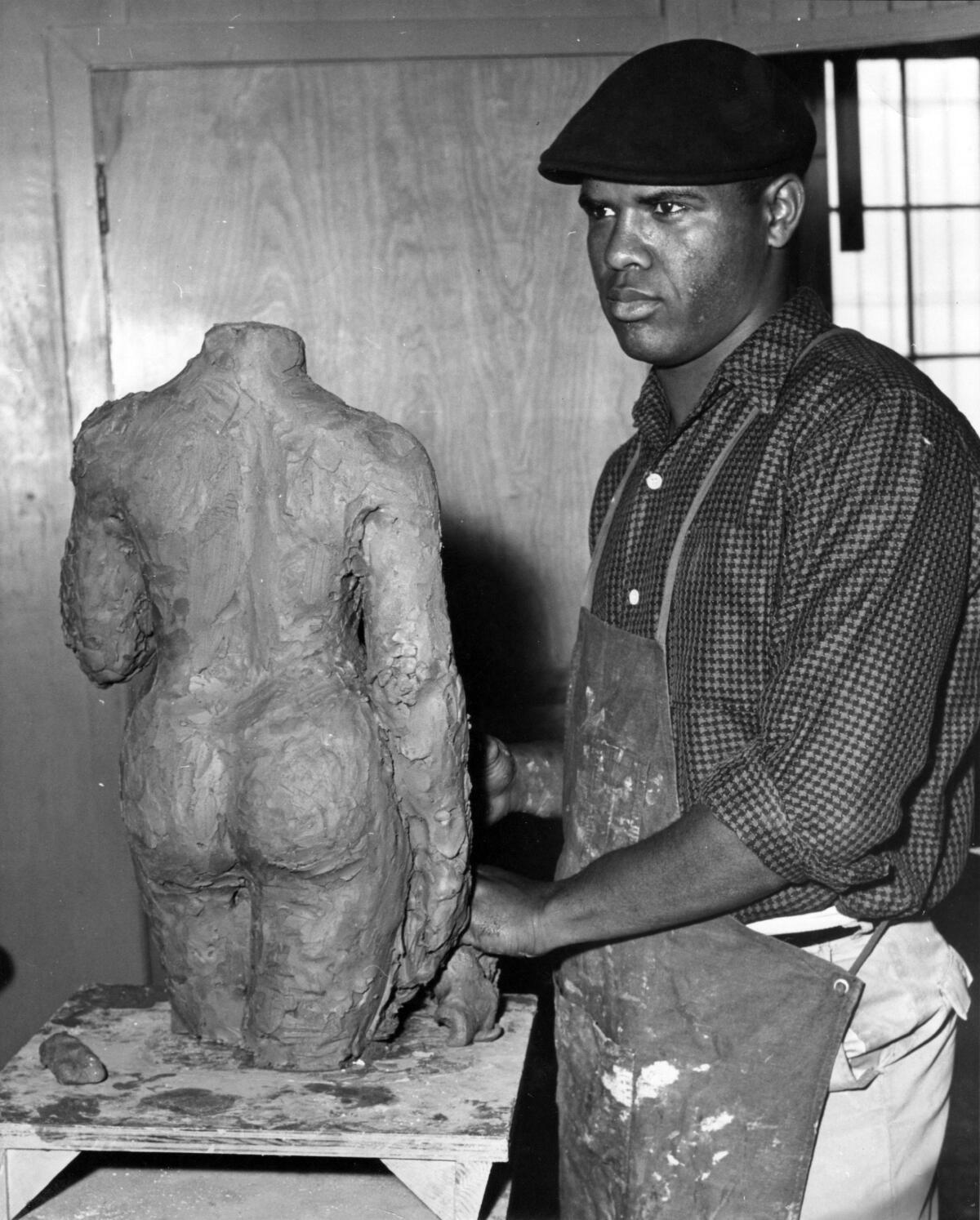
Melvin Edwards, a sculptor best known for abstract steel works that illustrated the history and resistance of African Americans, died March 30 at his Baltimore home. He was 88.
His death was confirmed by Alexander Gray Associates, the gallery that represents him.
Edwards rose to prominence in 1963 with the first works of what would become his most notable series, “Lynch Fragments.” A collection of small, wall-mounted sculptures, he combined fragments of found and recycled steel and welded them into forms of chains, sharp tools, barbed wire and other metal objects.
The series spans several decades, drawing inspiration from racial violence during the civil rights movement, the Vietnam War, his personal relationship to Africa, people in his own community and across the African diaspora.
Over the years, Edwards made more than 300 “Lynch Fragments.”
Recurring materials in his works held layered meanings. Barbed wire served as a symbol of violence and oppression, but also of agriculture, cultivation and survival.
“Melvin was somebody who looked at multiple dimensions of any situation or person,” said Alexander Gray, a gallery owner and close personal friend of Edwards. “He really looked at the world, not through any kind of binary lens, but through a personal lens that was respectful of other people’s perspective.”
Born May 4, 1937, in Houston, the eldest of four children, Edwards grew up surrounded by racial segregation. As a child, he took drawing classes and visited museums, and he also played football.
“The world that I came from was American racism, segregation. I may have been young, but I paid attention,” Edwards said in an introduction to “Lynch Fragments” at the Museum of Modern Art in New York.
Melvin Edwards, seen here in fellow sculptor Hal Gebhardt’s class at USC sometime between 1959 and 1960, died March 30 at his home in Baltimore.
His artistic career began while studying art on a football scholarship at USC, where he met and was mentored by Hungarian painter Francis de Erdely. Edwards’ L.A. roots were critical to his identity as an artist. Here, he began experimenting with welded steel, which became his primary medium.
After moving to New York City in 1967, he became, in 1970, the first African American sculptor to have a solo exhibition at the Whitney Museum of American Art.
Throughout his career, Edwards remained committed to public art, creating sculptures for universities, public housing projects and museums around the world.
Those who knew him described him as overwhelmingly positive, which shaped both his work and his relationships.
“Melvin’s community of artists was remarkable because it spanned the globe. You could spin a globe, land anywhere, say the name of the country or the city, and he would know three people there, minimum,” said Gray. “He could recall a conversation he had with a person 35 years ago without any hesitation. He had an incredible constellation of people that he was surrounded by.”
A car drives past a sign reading ‘cars with even-numbered plates are not allowed to be driven for the day’ in Seoul, South Korea, 17 March 2026. The government invoked emergency measures against severe fine dust, implementing an alternate-day driving system for public agencies and limiting the operation of coal-fired power plants and high-emission state facilities. Photo by YONHAP / EPA
April 3 (Asia Today) — South Korea’s major business groups on Thursday pledged to support government efforts to stabilize energy supply, announcing voluntary measures to reduce consumption as risks grow from instability in the Middle East.
Six economic organizations – including the Korea Economic Association, the Korea Chamber of Commerce and Industry and other industry groups – said in a joint statement they would take part in nationwide conservation efforts.
“We strongly agree with the government’s call to ensure stable energy supply and promote conservation in preparation for a prolonged Middle East conflict,” the groups said. “We will actively participate in efforts to overcome the crisis.”
The statement comes as the government raised its energy security alert level and introduced additional conservation measures, including expanded vehicle restrictions at public institutions.
Business leaders said ensuring stable energy supplies and improving efficiency have become more urgent than ever, pledging to expand private-sector efforts.
Proposed measures include broader use of flexible work arrangements, such as staggered commuting hours, to reduce traffic demand and energy consumption. Companies also plan to improve manufacturing efficiency and optimize facility operations to cut energy use.
Additional steps include turning off office lighting during lunch breaks and after work hours, as well as encouraging employees to use public transportation.
The groups emphasized that coordinated action among the government, businesses and the public will be essential to address the crisis.
“Voluntary participation is key to spreading a culture of energy conservation,” the statement said, adding that the private sector would play an active role in responding to the situation.
WASHINGTON — A crew member was rescued after an American aircraft went down Friday in Iran, the Associated Press reported, citing U.S. and Israeli officials.
U.S. forces launched a rescue mission in southwestern Iran after at least one American crew member ejected from a fighter jet downed by Iranian defenses, according to a U.S. official and news outlets.
The downing of the jet, an F-15E, was confirmed to The Times by a U.S. official who was not authorized to speak publicly. That type of jet reportedly carries a standard crew of two, but it was not clear if more than one crew member ejected.
Defense Secretary Pete Hegseth has maintained for weeks that the U.S. has “complete, uncontested control of Iranian airspace” after destroying the country’s air defenses.
“Iran has no air defenses, Iran has no air force,” he said at a March 13 Pentagon news conference. “Today, as we speak, we fly over the top of Iran and Tehran, fighters and bombers all day, picking targets as they choose, as our intelligence gets better and better and more refined.”
But the Islamic Revolutionary Guard Corps claimed that a new type of Iranian air defense system deployed for the first time in recent days had shot down a warplane on Friday.
The statements stirred a flurry of conflicting instructions from Iranian state-affiliated broadcasters. One local television channel initially encouraged viewers to search for the downed pilot and “shoot them as soon as you see them.”
It then changed the instructions, according to the Associated Press, after local police issued a statement asking the public to capture and turn in American pilots alive to security agencies to “receive a precious prize.”
On social media, Iranian accounts posted videos purporting to show helicopters searching for downed pilots in Iran’s western and southern provinces, according to a report from Fars News.
Fars also reported officials in Iran’s southwest were offering a “valuable reward” to anyone “who captures the American pilot alive.”
Images of a tail section posted on social media had markings indicating it was from the 48th Fighter Wing, which is based at RAF Lakenheath in the United Kingdom, according to Peter Layton, a visiting fellow at the Griffith Asia Institute in Australia, in an interview with NBC News.
U.S. and Israel escalate attacks on infrastructure
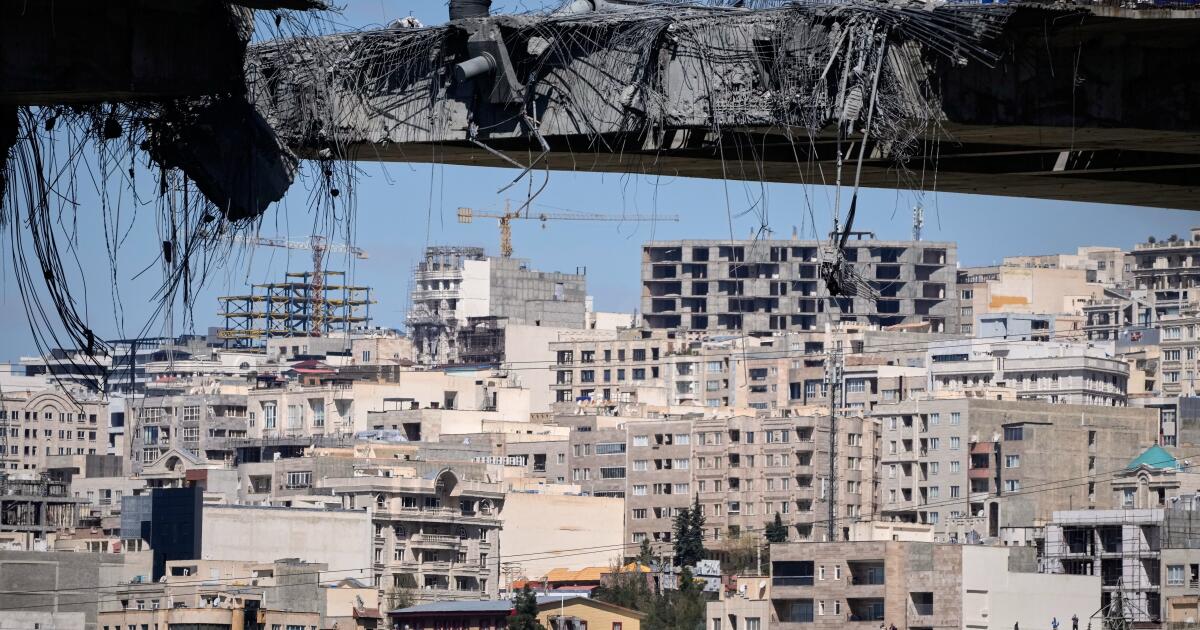
The development came as U.S. and Israeli forces escalated attacks on civilian sites and key infrastructure across Iran Friday, including strikes on residential buildings, health centers and Iran’s largest bridge, with President Trump warning that the U.S. “hasn’t even started destroying what’s left in Iran.”
On his social media, the president posted dramatic images of the smoldering B1 bridge, a towering cable-suspended viaduct that was severed in U.S.-Israel strikes late Thursday.
“The biggest bridge in Iran comes tumbling down, never to be used again — Much more to follow!” Trump wrote.
Connecting Tehran to the city of Karaj, the $400-million bridge was Iran’s largest, and was often regarded as one of the most prominent, expensive and complex engineering endeavors in the Middle East.
Iranian Foreign Ministry spokesperson Esmail Baghaei labeled the attack a “war crime in the style of ISIS terrorism.” Foreign Minister Seyed Abbas Araghchi called the act a sign of moral collapse by “an enemy in disarray,” stating that such actions will not compel Iranians to surrender.
“Every bridge and building will be built back stronger. What will never recover: damage to America’s standing.”
The attacks come after Trump announced what he described as a two- to three-day “off-ramp” from hostilities, while simultaneously warning he would bring Iran “back to the Stone Ages” if it didn’t cede to U.S. demands.
Reports from Iranian state media and international monitoring groups indicate strikes have also hit homes, religious centers, universities and municipal infrastructure across multiple provinces, raising concerns among humanitarian organizations about the widening scope of targets.
World Health Organization Director-General Tedros Adhanom Ghebreyesus said Friday that the U.S. and Israel have carried out routine attacks on Iranian healthcare facilities since March 1.
“WHO has verified over 20 attacks on health care in Iran, resulting in at least nine deaths, including that of an infectious diseases health worker and a member of the Iranian Red Crescent Society,” Tedros wrote on X.
Iran’s health ministry estimated about 2,076 people have been killed and 26,500 wounded by U.S.-Israeli attacks since fighting broke out Feb. 28. An estimated 1,300 have been killed in Lebanon, according to its health ministry, while more than two dozen people have died in Gulf states and the occupied West Bank.
Thirteen U.S. service members have been killed, and 19 Israeli service members have been reported dead in a five-week-old war that has triggered growing unease stateside.
A recent Pew Research Center survey conducted in late March found that most Americans opposed direct U.S. military involvement in a war with Iran. A separate Gallup poll reported declining approval for the administration’s handling of foreign policy.
Lawmakers in both parties have raised concerns about Israel’s influence in the Trump administration’s decision to enter a lengthy conflict, stoking debates over military aid and executive war powers.
Rep. Alexandria Ocasio-Cortez (D-N.Y.) said Wednesday that she plans to oppose future military aid to Israel, including for its Iron Dome defense systems. She argued that the Israeli government recently funded a $45-billion defense budget and is “well able” to bankroll its war without U.S. help.
“I will not support Congress sending more taxpayer dollars and military aid to a government that consistently ignores international law and U.S. law,” she said on X.
Iran hit desalination plant and oil refinery
Iran returned fire, again aiming at infrastructure targets operated by its Gulf neighbors. A series of airstrikes set Kuwait’s Mina al-Ahmadi oil refinery on fire, the Associated Press reported, as Kuwaiti firefighters were working to knock down several blazes there.
Kuwait also reported that an Iranian attack significantly damaged a desalination plant, which supplies drinking water to the region.
Bahrain, Saudi Arabia and Israel all scrambled to intercept incoming Iranian missiles Friday, according to reports, despite the Pentagon’s assurances that Iran’s military facilities and missile capacity have been largely wiped out.
Meanwhile, the United Arab Emirates shut down a gas field after a missile interception reportedly rained debris on it and started a fire, the Associated Press reported.
The war has pushed Iran to tighten its grip over the Strait of Hormuz, sending oil prices soaring 50%, upending stock markets, and stirring supply chain disruptions that threaten to destabilize global food markets.
Americans felt the oil rally again this week, after Trump’s Wednesday address dashed investors’ hopes of a swift end to the conflict, sending U.S. crude prices up 11% Thursday and another half point on Friday.
The Azzurri’s failure to reach a third consecutive World Cup continues to send shockwaves through Italian football.
Published On 3 Apr 20263 Apr 2026
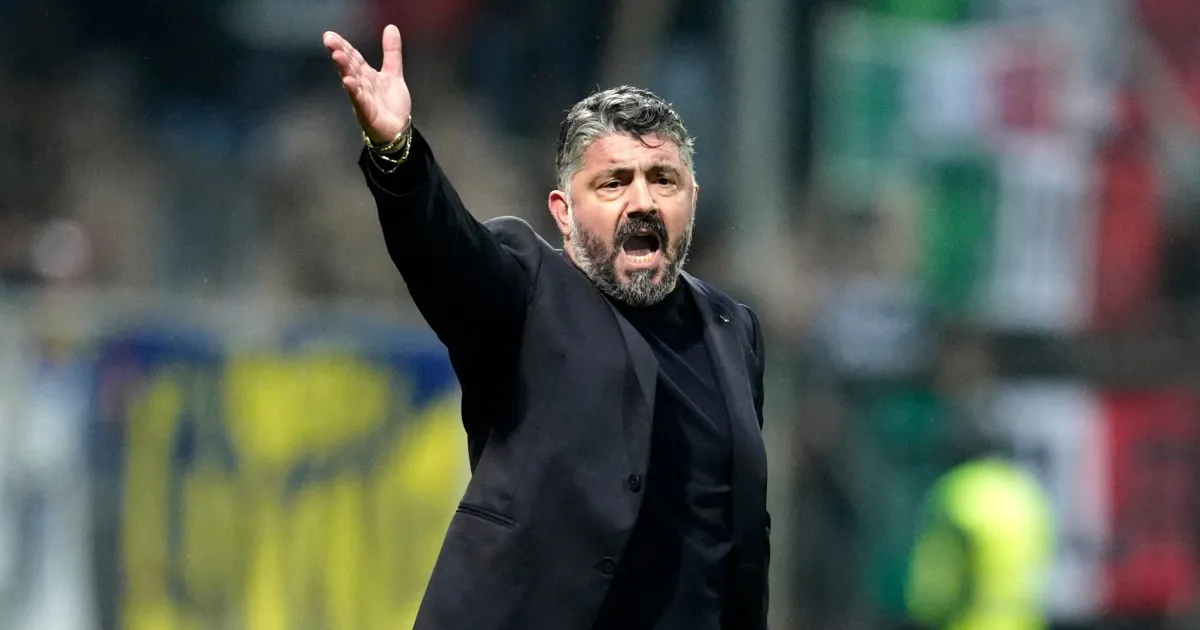
Italy coach Gennaro Gattuso has left his role “by mutual consent”, three days after the national team failed to qualify for a third consecutive World Cup.
The Italian football federation announced the news in a statement on Friday, thanking Gattuso “for the dedication and passion” during his nine months in charge.
Recommended Stories
list of 4 itemsend of list
Italy’s chances of reaching this year’s tournament in North America ended on Tuesday after a penalty shootout loss to Bosnia and Herzegovina in a qualifying playoff.
“With a heavy heart, having failed to achieve the goal we had set ourselves, I consider my time in charge of the national team to be over,” Gattuso said in a statement.
“The Azzurri shirt is the most precious asset in football, which is why it is right to facilitate future technical assessments with immediate effect.
“It has been an honour to lead the national team, and to do so with a group of lads who have shown commitment and loyalty to the shirt.”
Gattuso was appointed in June on a one-year contract, replacing Luciano Spalletti who was sacked following Italy’s 3-0 defeat by Norway in their opening group game, although he remained in place for the 2-0 win over Moldova the next day.
Italy won their next five group games under Gattuso, but given Norway’s far superior goal difference, they were resigned to another World Cup playoff before the final group game, which Norway won 4-1 at the San Siro.
Italy had lost at the playoff stage for the last two World Cups to Sweden and North Macedonia, respectively, but looked on course to make it this time after a 2-0 win over Northern Ireland in the semifinal, before it all fell apart in Bosnia.
Gattuso’s 10-man team let slip a 1-0 lead and crumbled in the penalty shootout.
His departure comes a day after Italy’s football federation president Gabriele Gravina resigned, along with Gianluigi Buffon, who was the national team’s delegation chief.
Uncapped striker Cora Chambers has been included in new Northern Ireland boss Michael McArdle’s first squad for their April World Cup qualifying double-header against Malta.
The 22-year-old was involved in Kenny Shiels’ full-time panel ahead of Euro 2022, but did not go to the tournament and has not been involved with the senior side since.
The Linfield forward netted 20 league goals for the Blues last year and has scored 39 goals in 47 appearances since making the move to the club from Sion Swifts in 2024.
She is included in one of two changes from the squad which lost both games in Kris Lindsay’s interim spell as manager against Switzerland and Turkey.
Hearts midfield Joely Andrews also returns to the 23-strong squad after missing last month’s games through injury.
Experienced defender Sarah McFadden drops to the standby list while Glentoran midfielder Mia Moore, who made her first start in the defeat against Turkey, will instead be part of the under-19 squad competing in Euro qualifiers this month.
McArdle, who was the Scottish FA’s head of elite women’s football and former interim head coach of Scotland, was appointed as Tanya Oxtoby’s permanent successor in March.
His first game as NI manager will take place at Mourneview Park against Malta on Tuesday, 14 April.
His side will then travel to Malta for the second of April’s double-header on Saturday, 18 April as they look to pick up their first win in qualifying.
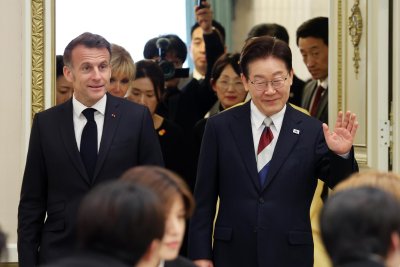
French President Emmanuel Macron (L) and South Korean President Lee Jae Myung (R) enter a welcome luncheon at the presidential Blue House in Seoul Friday. Photo by Yonhap
President Lee Jae Myung said Friday he and French President Emmanuel Macron agreed to work together to secure the safe passage through the Strait of Hormuz and mitigate the broad impact from the war in the Middle East.
Lee addressed concerns over uncertainties in global energy supply chains following summit talks with Macron, during which the two leaders discussed ways to deepen economic ties and strengthen coordination on security issues.
“President Macron and I agreed to share policy-related experiences and strategies in order to jointly address the economic and energy crises triggered by the Middle East war. We also concurred on working together to reduce uncertainty in the global economy,” Lee said during a joint press announcement.
“We confirmed our commitment to bolstering energy security by expanding our cooperation in the nuclear and offshore wind power sectors while collaborating to secure safe maritime transport routes through the Strait of Hormuz,” he added.
Lee said the two leaders also agreed to boost trade and investment with a goal of reaching $20 billion in annual bilateral trade by 2030, up from $15 billion last year.
To boost cooperation across sectors, the two sides signed a series of memorandums of understanding (MOUs) and other documents.
They pledged to expand cooperation in advanced technologies and future industries — including artificial intelligence, semiconductors and quantum technology — and to establish a ministerial-level joint committee on science and technology.
The two countries also signed a letter of intent on cooperation in critical mineral supply chains, aimed at combining South Korea’s manufacturing capabilities with France’s processing technology and infrastructure.
The state-run Korea Hydro & Nuclear Power signed MOUs with French nuclear firms, Orano and Framatome, as well as a separate MOU with France’s EDF on a joint development of an offshore wind power plant in the southwestern city of Yeonggwang.
Lee expressed hope that the agreements would ensure a stable supply of raw materials for South Korea’s nuclear power plants and lay the groundwork for joint entry into the global market.
He also laid out plans to cooperate in space and defense while pledging efforts to bolster collaboration in the cultural sector in light of an MOU signed between the two nations’ cultural heritage agencies.
During the talks, Lee said he explained Seoul’s efforts to resume dialogue with Pyongyang to promote peace on the Korean Peninsula, while Macron reaffirmed Paris’ support for peace and stability on the peninsula.
“We two leaders shared a profound understanding that peace on the Korean Peninsula has far reaching implications not just in Northeast Asia and Europe but also the rest of the world,” Lee said.
Lee noted that Seoul and Paris have expanded cooperation across a wide range of sectors, including future strategic industries, such as artificial intelligence, quantum technology, space, nuclear energy and defense, and expressed hope to deepen coordination on the international stage.
“As responsible members of the international community, the two countries are also working together to respond to rapid changes in the global landscape,” he said.
Lee said Macron extended a formal invitation to the Group of Seven summit scheduled for June in Evian, France, adding that he accepted the invitation. If he attends, it would mark his second consecutive appearance at the G7, following his participation in Canada last year.
Lee welcomed the two countries’ decision to upgrade ties from “a comprehensive partnership for the 21st century,” established in 2004, to “a global strategic partnership,” calling it “a new milestone” in bilateral relations built on 140 years of trust and friendship.
Macron struck a similar tone, expressing hope to expand cooperation across a broad range of areas, including artificial intelligence, quantum technology, semiconductors, space and culture, under the upgraded partnership.
He said that Seoul and Paris could strengthen security cooperation and work together to help stabilize the situation in the Middle East, including ensuring safe passage through the Strait of Hormuz.
The visit marks Macron’s first trip to South Korea since taking office in 2017 and the first by a French president in 11 years. It comes as the two countries mark the 140th anniversary of diplomatic relations, established with the signing of the Treaty of Friendship, Commerce and Navigation between France and the Joseon Dynasty (1392-1910).
Copyright (c) Yonhap News Agency prohibits its content from being redistributed or reprinted without consent, and forbids the content from being learned and used by artificial intelligence systems.
This photo, taken Friday, shows the trading room of Hana Bank in central Seoul as South Korean stocks jumped nearly 3 percent on hopes that the Strait of Hormuz would reopen. Photo by Yonhap
South Korean stocks soared by nearly 3 percent Friday, as Iran’s discussions with Oman on a protocol to monitor traffic through the Strait of Hormuz boosted hopes of easing oil supply disruptions despite heightened tensions in the Middle East. The Korean won strengthened sharply against the U.S. dollar.
The benchmark Korea Composite Stock Price Index (KOSPI) added 143.25 points, or 2.74 percent, to 5,377.30, rebounding from sharp losses in the previous session.
Trading volume was moderate at 1.12 billion shares, with a total value of 22.13 trillion won (US$14.69 billion), as gainers outnumbered losers 664 to 224.
Foreign and institutional investors bought a net 814.57 billion won and 716.93 billion won worth of shares, respectively, while individuals sold a net 2.09 trillion won worth of shares.
The rebound followed news that Tehran was drafting a protocol with Oman to monitor maritime traffic through the Strait of Hormuz, raising hope of progress toward reopening the waterway.
The strategic waterway has effectively been shut since the outbreak of war in the Middle East in late February, driving up global oil prices due to supply disruptions.
Dozens of countries are also seeking ways to resume shipments through the Strait of Hormuz after U.S. President Donald Trump warned of an “extremely hard” attack on Iran within the next two to three weeks, while urging countries that rely on the key shipping route for energy imports to “take care of” it themselves.
“Iran has said the measure is intended to ensure safety and improve services, suggesting that the blockade of the waterway may be easing,” Seo Sang-young, a researcher at Mirae Asset Securities, said.
Top-cap shares finished mixed.
Market bellwether Samsung Electronics surged 4.37 percent to 186,200 won, while chip giant SK hynix soared 5.54 percent to 876,000 won.
Defense giant Hanwha Aerospace climbed 2.26 percent to 1,449,000 won, and artificial intelligence investment firm SK Square went up 2.88 percent to 483,000 won. Nuclear power plant builder Doosan Enerbility jumped 3.21 percent to 96,600 won.
Shipbuilders gathered ground. Local industry leader HD Hyundai Heavy spiked 9.23 percent to 479,000 won, and its rival Hanwha Ocean went up 7.29 percent to 128,000 won.
Carmakers finished mixed. Top automaker Hyundai Motor advanced 1.18 percent to 471,000 won, while its affiliate Kia fell 0.27 percent to 150,200 won.
Leading battery maker LG Energy Solution fell 1.48 percent to 398,500 won, and bio giant Samsung Biologics lost 1.96 percent to 1,554,000 won. Leading financial firm KB Financial shed 0.68 percent to 145,500 won.
The local currency was quoted at 1,505.2 won against the U.S. dollar as of 3:30 p.m., up 14.5 won from the previous session.
Copyright (c) Yonhap News Agency prohibits its content from being redistributed or reprinted without consent, and forbids the content from being learned and used by artificial intelligence systems.
Cuba said Thursday that it will release more than 2,000 inmates. File Photo by Ernesto Mastroscusa/EPA-EFE
April 3 (UPI) — The Cuban government has announced it will pardon more than 2,000 prisoners, its second such release in less than a month.
The Embassy of Cuba in Washington announced Thursday in a statement that Havana had decided to grant pardons to 2,010 inmates on “humanitarian and sovereign grounds.”
The move was made to coincide with Holy Week celebrations, it said, adding that the gesture is “customary” in the criminal justice system of the Catholic-majority country.
Analysis of the nature of the offenses committed, conduct of the inmate while in prison, time served and their health were taken into consideration, with many of those to be pardoned being either young, women, adults over 60 years of age, foreign nationals and Cubans living abroad, it said.
Excluded were those inmates convicted of crimes such as sexual assault, murder, drug offenses, theft, robbery with violence, being repeat offenders and those who had previously received a pardon and then were convicted of committing new crimes.
Last month, Cuba announced it was to release 51 inmates who had served a significant portion of their sentences.
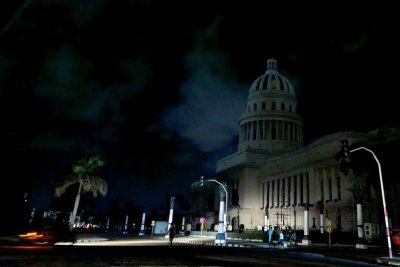
The move comes as Cuba is facing an energy crisis that began early this year when the Trump administration announced a de facto oil blockade of the island nation.
When it announced the release of inmates last month, Cuba said it followed talks with the Vatican, which has been trying to facilitate talks between Havana and Washington.
Burkina Faso’s president, Ibrahim Traore, pictured in 2025 in Moscow meeting Russian President Vladimir Putin, and his regime have killed more than 1,800 civilians — including dozens of children — since taking power in September 2022. File Photo by Russian Presidential Office/UPI | License Photo
April 2 (UPI) — More than 1,800 civilians have been killed since the military took power in Burkina Faso as it has gone after al-Qaeda-linked jihadist groups wreaking havoc in the region for years.
Roughly 1,837 civilians — including dozens of children — have been killed in 57 separate incidents since Ibrahim Traore and the military took over in a September 2022 coup, Human Rights Watch said in a report published Thursday.
The report covers events that occurred between January 2023 and August 2025 in 11 regions of the country that resulted in the deaths of 647 men, 171 women, 212 children, 162 adults whose gender is unknown and another 651 deaths the organization does not have data on.
“As part of widespread or systemic attacks on civilian populations, the murder and forcible displacement by all sides amount to crimes against humanity,” HRW wrote in the report.
“Government forces have also carried out the crimes against human of arbitrary imprisonment, torture, enforced disappearance and other inhuman acts,” it said.
Traore ousted former President Lt. Col. Paul-Henri Sandaogo Damiba in September 2022, who had taken power nine months earlier when he overthrew Burkina Faso’s democratically elected president, Roch Marc Christian Kabore.
Since taking power, Traore’s government has said that it is working to counter armed Islamist groups that have caused political instability in the country, but has suppressed “fundamental rights and freedoms” as it eliminates political opponents, journalists and other threats to its power, HRW wrote in the report.
HRW noted that although some figures are available through various databases, including one that suggests well over 10,000 civilians have been killed in Burkina Faso since 2016 but that “many incidents go unreported.”
“The grievous harm suffered by civilians in the conflict and the junta’s suppression of public dissent and criticism mean that Burkina Faso’s international partners … need to play a critical role to break the country’s long-standing cycles of abuses and impunity and promote accountability,” the organization said.
President Donald Trump delivers a prime-time address to the nation from the Cross Hall in the White House on Wednesday. President Trump used the address to update the public on the month-long war in Iran. Pool photo by Alex Brandon/UPI | License Photo
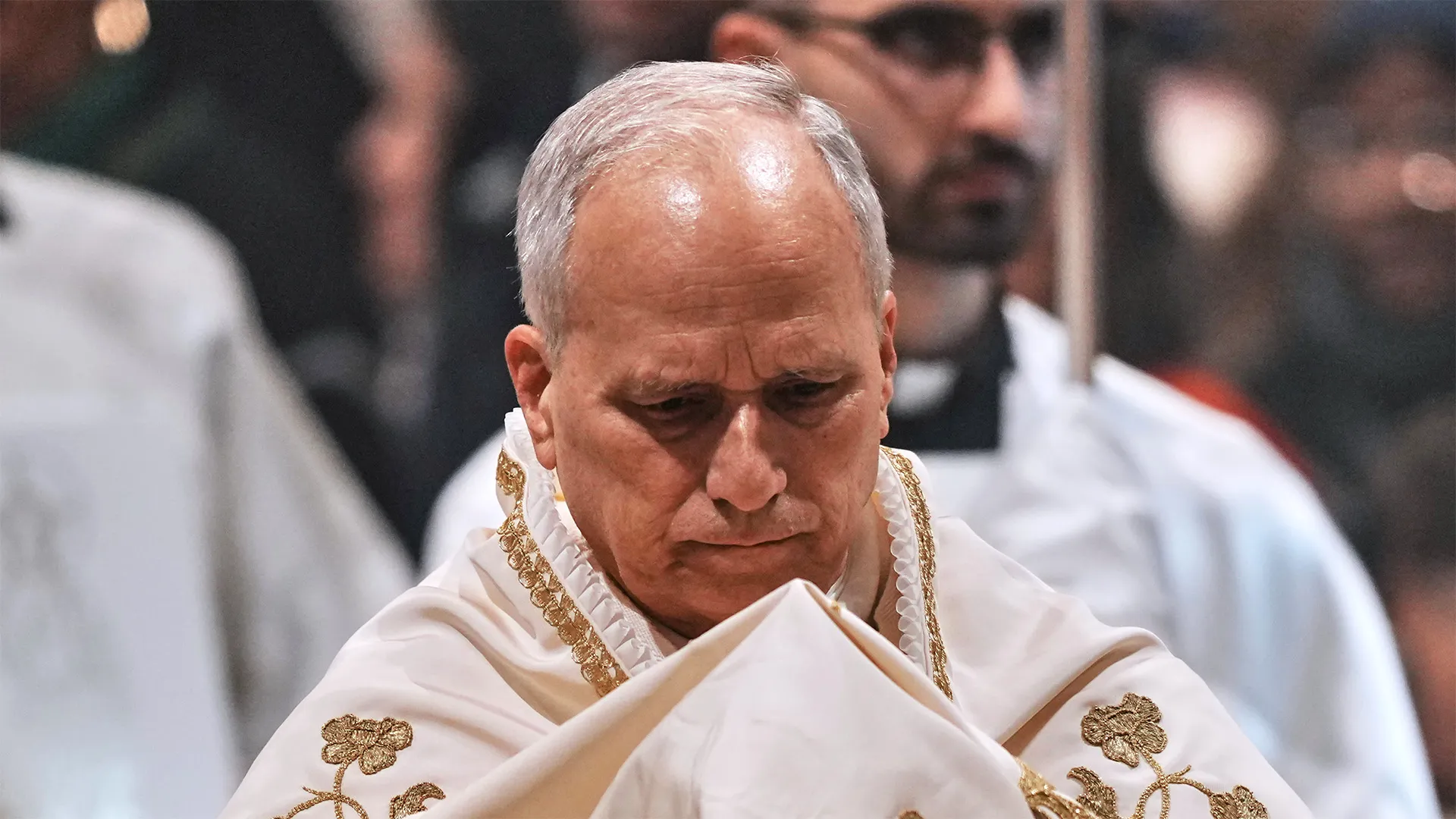
Pope Leo washed the feet of 12 priests in a Holy Thursday ritual, using the moment to urge Catholics to stand with the oppressed. His remarks come after he criticised the Trump administration on the Iran war and called for an end to the fighting.
Zenica, Bosnia and Herzegovina – The Bilino Polje Stadium in Zenica has witnessed the Bosnian national football team’s giant-killing ways for decades.
Branded a “cursed” venue for visiting sides, it has hosted the Dragons’ triumphs over formidable European opponents – Norway, Greece, Romania, Finland, Wales and Austria – in recent years, while football powerhouses Spain, Portugal, the Netherlands and Turkiye have all been held to draws here.
Recommended Stories
list of 4 itemsend of list
Bosnia enjoyed an unbeaten streak at Dragons’ Nest between 1995 and 2006. Add to that the stadium’s compact nature, the close proximity of fans, and it’s no wonder the players often say they feel at home here.
Hence, when thousands of Bosnian supporters descended upon the storied arena for the home side’s World Cup playoff final against Italy on Tuesday, it was with an unwavering belief in their team as well as the magic of the venue.
Italy’s storied football history, their four World Cup trophies, and a tag of pre-match favourites did little to dampen the local fans’ hopes. And when Esmir Bajraktarevic drilled the ball past Gianluigi Donnarumma to convert Bosnia’s fourth penalty and inflict a defeat on Italy in a dramatic shootout, pandemonium erupted in the Dragons’ Nest.
‘I’m from Bosnia, take me to America’
Fans began arriving in Zenica – a city 70 kilometres (43 miles) north of the capital, Sarajevo – in the early hours of the morning, well before the 8:45pm (18:45 GMT) kickoff.
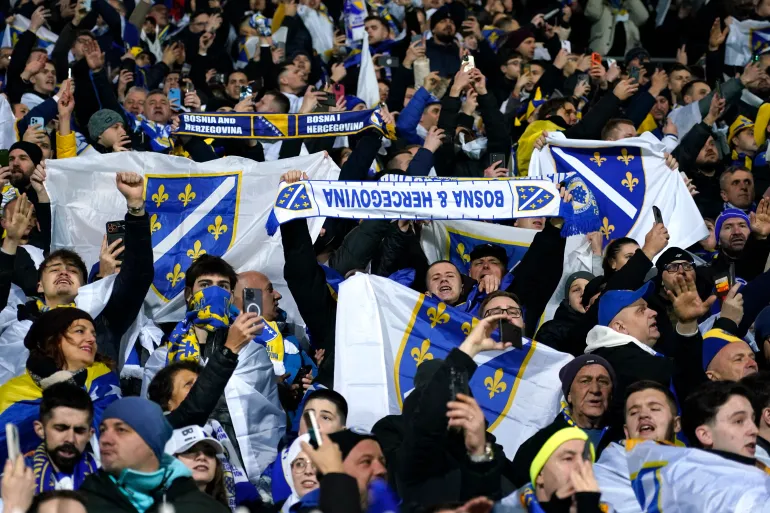
Wave after wave of supporters, dressed in the team’s colours and waving the national flag, approached the venue from all parts of the country. Some even flew in from abroad to soak in what promised to be a historic night.
Thousands of them could not even get close to the turnstiles of the 10,000-capacity stadium and instead gathered at a nearby fan zone. Others filled up cafes and restaurants across the city to watch the match on large screens.
There was a strong conviction among the fans that even if the stadium had been 10 times larger, it would have still filled up to capacity on a night of this magnitude.
Members of the popular Bosnian band Dubioza Kolektiv led fans in the streets of Zenica, singing the chorus of their hit song “USA”.
“I am from Bosnia, take me to America” fit the bill perfectly in advance of the deciding match for a place in the World Cup cohosted by Canada, Mexico and the United States.
As kickoff approached, the spectators slowly settled into a familiar rhythm: Getting up on their feet during the players’ warm-up routines, singing songs and bellowing chants that have carried the national team in their most important fixtures, and making enough noise to count as the 12th member of the team.
Bosnom Behar Probeharao (Blossoms Have Bloomed in Bosnia) – a nostalgic refrain that many Bosnians consider a symbol of love for their homeland – rang throughout the cauldron and beyond.
Fans await kickoff [Matteo Ciambelli/Reuters]
A historic bond, a special night
While the world weighed in on the Italian team’s chances of qualifying for the World Cup after missing out on the last two editions, Bosnia’s legendary captain, Edin Dzeko, reminded fans that their ties with the Azzurri run deeper than an on-field battle.
The 40-year-old striker, with a last shot at playing in the World Cup, asked Bosnian fans to applaud the Italian national anthem before kickoff.
It was a reference to the Italian football team’s visit to Sarajevo in 1996, following the Bosnian war, when they played a friendly match that helped revive international football in the country.
Fans obliged, as they did 30 years ago, and the entire stadium stood up and applauded the Italian anthem. But that’s where the pleasantries ended, and the mission to qualify for the North American World Cup began.
The heated and tense encounter ended 1-1 after extra time, forcing the game into a penalty shootout, where Bosnia emerged as the winners.
The crowd screamed, waved their flags, lit flares on the terraces, and set off fireworks from nearby buildings – illuminating the sky above Zenica and indicating that the party would carry on into the early morning. The players remained on the pitch to share in the joy of the celebrating fans.
Once the stadium emptied out, the party soon spilled onto the streets.
Convoys of cars laden with fans, draped with the flag and blaring horns, turned Zenica into a giant stage, which became the centre of Bosnian celebrations.
Bosnian fans celebrated well past the end of the match [Matteo Ciambelli/Reuters]
‘I believed in the Dragons’
In Sarajevo, a few hours later, a reception was organised for the players and coaching staff, who were greeted by nearly 100,000 supporters, celebrating what many termed one of the greatest wins in the nation’s history.
One frequently shared comment read, “This is not just a victory, it’s a reminder of who we are.”
Twelve years since their painful first-round exit at their World Cup debut, Bosnia had returned to the big time.
One of the most famous nights at the stadium came on March 21, 2013, when Bosnia and Herzegovina defeated Greece in a qualifier, opening the path to the country’s historic first appearance at the 2014 World Cup in Brazil.
For many fans, the playoff final against Italy carried similar emotions.
Dzevahid Mehicic, an elderly man from Zenica, said many people from his generation doubted they would live to see Bosnia and Herzegovina qualify for the World Cup again.
“They thought that moment might never come again, but I believed the Dragons had the strength to defeat even a powerful Italy,” he told Al Jazeera after Bosnia’s win.
For the younger fans, it was a unique experience of their own.
Wrapped in the national flag, 11-year-old fan Nihad Babovic said teen forward Kerim Alajbegovic was his favourite player besides Dzeko.
“I can’t wait for the World Cup to start so I can watch the matches with my dad.”
For one night, yet again, Zenica became the beating heart of Bosnia as the city’s famous football stadium saw the past and present come together in a moment of collective euphoria.
Bosnian supporters of all generations came out to celebrate [Amel Emric/Reuters]
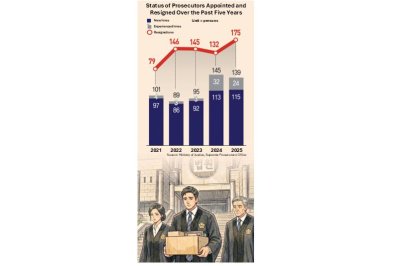
A graphic shows the number of prosecutors hired and those who resigned in South Korea from 2021 to 2025, highlighting a growing gap as resignations outpaced recruitment. Data from Ministry of Justice, Supreme Prosecutors’ Office. Graphic by Asia Today and translated by UPI
April 1 (Asia Today) — More prosecutors have left South Korea’s prosecution service than have been hired over the past five years, deepening a shortage of experienced mid-level staff and slowing investigations, according to data compiled by Asia Today.
From 2021 through 2025, 569 prosecutors were newly appointed, but 677 resigned, resulting in a net loss of 108-roughly equivalent to the full staffing level of the Seoul Southern District Prosecutors’ Office.
Most vacancies have been filled by newly appointed prosecutors rather than experienced hires. During the same period, about 90% of new recruits were first-time appointees, while experienced hires remained limited. Analysts say the gap has left the organization unable to replace departing mid-level prosecutors with personnel who have comparable investigative experience.
As a result, junior prosecutors are increasingly assigned to handle cases without sufficient on-the-job training. Legal officials say this has contributed to delays in investigations and a growing backlog of cases.
A comparison of authorized staffing levels and actual personnel in January 2025 and January 2026 shows that prosecutor positions nationwide were understaffed by about 10%. Over the past two years, all but two of the country’s 60 local prosecutors’ offices reported staffing shortages.
The imbalance has been particularly evident in 2022, 2023 and 2025, when resignations exceeded new appointments. In 2022, 89 prosecutors were appointed while 146 resigned. In 2023, 95 were appointed and 145 resigned. In 2025, 139 were appointed while 175 left the service.
Observers link the exodus to a series of prosecutorial reforms, political transitions and personnel reshuffles that have reduced job stability and increased workload pressure. Concerns over reduced investigative authority also contributed to a surge in resignations in 2022.
The outflow has been compounded by the dispatch of prosecutors to multiple special investigations, further straining frontline resources.
The Ministry of Justice has responded by accelerating recruitment and expanding the number of new appointments. It is also recruiting experienced legal professionals with at least two years of practice, with new appointees expected to begin work in May.
However, officials within the prosecution service say new hiring alone is unlikely to resolve accumulated case delays and staffing shortages, particularly as a broader restructuring-including the planned abolition of the prosecution service in October-approaches.
A Justice Ministry official said new prosecutors will be assigned to priority areas such as trial work, reducing investigative delays, judicial oversight, human rights protection, recovery of criminal proceeds and support for crime victims.
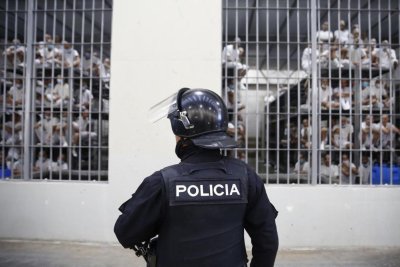
The U.N. Office of the High Commissioner for Human Rights wants authorities in El Salvador to reconsider constitutional and legal changes that allow life sentences for minors as young as 12. File Photo by Rodrigo Sura/EPA
April 2 (UPI) — The United Nations Office of the High Commissioner for Human Rights urged authorities in El Salvador to reconsider recent constitutional and legal changes that allow life sentences for minors as young as 12.
The agency warned Wednesday that the measure contradicts international human rights standards and obligations.
El Salvador’s Legislative Assembly approved the reform March 26, amending the country’s juvenile criminal law to permit life imprisonment for minors linked to criminal groups.
The change is part of broader constitutional changes promoted by President Nayib Bukele, and it expands the use of life sentences, previously authorized for adults, to include adolescents.
The reform accompanying a constitutional amendment promoted by the government of Nayib Bukele alters the juvenile justice system by removing previous maximum detention limits for crimes such as terrorism and organized crime, digital outlet Lexis reported.
The move is part of a broader tightening of criminal policy after ratification of a constitutional reform that authorizes life sentences for adults and now extends them to adolescents, with the stated goal of combating criminal networks and gangs.
Until now, Salvadoran law established that in severe cases, minors under 12 could face up to 10 years in detention, while those older than 16 could receive sentences of up to 15 years.
The new legal framework establishes life imprisonment as the only possible sentence for crimes such as homicide, femicide, rape and gang membership for those between ages 12 and 18, representing a major shift in the country’s juvenile justice model, Infobae reported.
The proposed measure was ratified with 57 votes in favor, marking a significant shift in the Central American country’s criminal policy.
In response to the U.N. statement, Bukele pointed to historical precedents. He recalled the implementation of the Juvenile Offender Law in 1994, adopted following U.N. recommendations, which he said contributed to conditions that enabled the growth of gangs in the country.
In a message on X, Bukele said past decisions, along with processes such as the deportation of Salvadorans during the administration of Bill Clinton, helped strengthen criminal structures that shaped decades of violence in El Salvador.
“So, no, thank you very much. Take your social experiments to other countries that have not suffered what we have suffered; maybe they will believe you (hopefully not). We are not going back to the past,” Bukele wrote.
¿Recuerdan el 27 de abril de 1994?
Tal vez ustedes no, pero nosotros sí.
El Salvador acababa de salir de una sangrienta guerra civil que dejó 85,000 muertos.
Luego, siguiendo sus recomendaciones, ese día se aprobó la Ley del Menor Infractor, bajo los mismos argumentos del… https://t.co/5zpwvbBqEw— Nayib Bukele (@nayibbukele) March 31, 2026
The office of high commissioner said the reform conflicts with the Convention on the Rights of the Child, which requires that children in conflict with the law be treated in a way that prioritizes rehabilitation and reintegration, and that detention be used only as a last resort and for the shortest possible time.
“Prolonged detention is deeply harmful to children, violates several of their rights and affects their development and well-being throughout life, reducing their chances of successful reintegration into society,” spokesperson Marta Hurtado said in a statement.
The agency added that improving prison conditions and ensuring full compliance with human rights standards for all detainees remain essential.
Salvadoran magistrates defended the reform, saying it is consistent with the Convention on the Rights of the Child because it does not impose a sentence without the possibility of release, the newspaper La Nación reported.
The government created a mechanism that allowed those sentenced to life imprisonment to seek a review of their sentence. Under certain criteria, this could allow them to regain their freedom in a controlled manner after 25 years in prison.
If a minor is convicted of more than one crime, the sentence review would take place after 35 years in prison. If the conviction involves an aggravated or extremely serious offense, the sentence may not be reviewed until 40 years have been served.
On March 27, El Salvador marked four years under a state of emergency aimed at combating gangs, which authorities blame for the majority of homicides in the country.