Dodgers two-way phenom Shohei Ohtani waddled through the clubhouse after the Dodgers’ 4-3 comeback victory against the Padres on Friday night, the bulging ice wraps around his left knee and right arm creating a penguin-like effect to his gait.
That in and of itself wasn’t noteworthy — ice after starts is a regular part of any pitcher’s recovery and arm care. But for Ohtani, the awkward wraps were reminders of one ailment he’s getting over, knee inflammation, and one that popped up Friday night — a right biceps problem.
“More precautionary reason,” Ohtani said through interpreter Will Ireton about being replaced by a pinch-hitter in the seventh inning. “I was a little concerned with my biceps with the last at-bat that I took.”
Ohtani limited the Padres (43-44) to three runs over 110 pitches when he stepped up to the plate in the sixth.
Teoscar Hernández hits a grand slam for the Dodgers against the San Diego Padres on Friday.
He worked a full count and then flew out to right field. Ohtani paused on his follow-through, his lips pursed, before jogging up the line.
“It’s the same location that I felt a couple months ago,” Ohtani said. “It went away relatively quickly, so I expect that to happen again.”
That Ohtani dealt with a biceps problem earlier this season was not disclosed before Friday. Even manager Dave Roberts said after the game that he had just learned about the previous ailment.
Ohtani will take off Saturday to recover, Roberts said. And Ohtani skipping his last pitching start before the All-Star break is “on the table.”
Ohtani was voted the starting designated hitter for the National League, marking his sixth straight All-Star selection. But even before Friday, it seemed unlikely he would pitch in the All-Star Game given his rotation schedule.
“He’s a quick healer, and finds a way to get back,” Roberts said. “But I do think that for us to read and react and hear what his body is telling him is really important, given the toll it takes on his body to be a two-way player.”
The injury concern replaced now-assuaged questions about Ohtani’s pairing with catcher Dalton Rushing with Will Smith (neck) on the injured list. Smith has at least resumed throwing and took swings Thursday, Roberts said, but he isn’t expected to return before the All-Star break.
The last time Rushing caught Ohtani, the pitcher took over pitch-calling after a disastrous second inning against the Twins last week.
“I just overthought last time,” Rushing said in a conversation with The Times on Thursday night. “I was trying to be perfect, and with a guy like that, you don’t have to be perfect. You just need to call the right pitches at the right time and allow his stuff to just beat them naturally. And that’s the plan [Friday]. Whether I call the pitch, he calls the pitch. I want to make sure we’re both convicted in what we’re throwing, and we can execute it to the best of our ability.”
On Friday, Ohtani handed back over pitch-calling duties, communicating with head shakes and nods instead of the PitchCom buttons on his arm.
Ohtani walked the first two batters he faced. But then he struck out three of the next four, escaping the jam down just 1-0, courtesy of an RBI single from Gavin Sheets.
That started a streak of 10 batters who Ohtani retired in order, fanning six of them.
“The best way that I can describe it is, if it ain’t broke, don’t fix it,” Rushing said when asked what he’d learned from following along last week. “That’s the way he pitches. … Trust what you do, trust how good his stuff is, and just go from there.”
Dodgers pitcher Shohei Ohtani, left, gets a fist bump from catcher Dalton Rushing during the first inning of a 4-3 win over the San Diego Padres at Dodger Stadium on Friday night.
(Gina Ferazzi / Los Angeles Times)
Ohtani’s back-to-back strikeouts to end the second inning were a good example. Against left-handed hitting Sung-Mun Song, he threw mostly four-seam fastballs and splitters, finishing off the six-pitch at-bat with a sweeper, according to Statcast.
Against right-handed hitting Rodolfo Durán, Ohtani threw mostly sinkers and sweepers, with one four-seamer mixed in out of seven pitches.
Ohtani eventually relented a second run with two outs in the fourth inning. He fell behind 0-2 in the count to Jackson Merrill, who flipped a strike call with an ABS challenge. Then Merrill hammered a fastball over the plate for a solo homer.
Ohtani successfully navigated traffic to throw a scoreless fifth, but Xander Bogaerts tagged him for an RBI double in the sixth.
“I think I did the bare minimum,” Ohtani said. “To get through six, to give the team the chance to win, keep the game in check. But there were some good and some bad.”
Ohtani gave up seven hits for a quality start that wasn’t his cleanest. The Dodgers (58-31), who had struggled to get anything going against Padres starter Michael King, were trailing 3-0 when Ohtani exited. But Teoscar Hernández took care of the deficit.
Teoscar Hernández hits a grand slam in the seventh inning of the Dodgers’ 4-3 win over the San Diego Padres at Dodger Stadium on Friday night.
(Gina Ferazzi / Los Angeles Times)
Facing reliever Adrian Morejon with the bases loaded and no outs in the seventh, Hernández ambushed a first-pitch slider.
“Knowing him, every pitch is hard,” Hernández said. “I was looking for the hardest one, the fastball, middle-in. But just reacted to that one in the middle of the plate.”
Hernández drifted up the first-base line as he watched the ball fly. When it landed, he launched his bat back toward the dugout, and it made it halfway there.
“I’m just trying to find the same swing that I had before I got hurt,” Hernández said. “And at the same time, just do something for the team. It happened to be a big swing.”
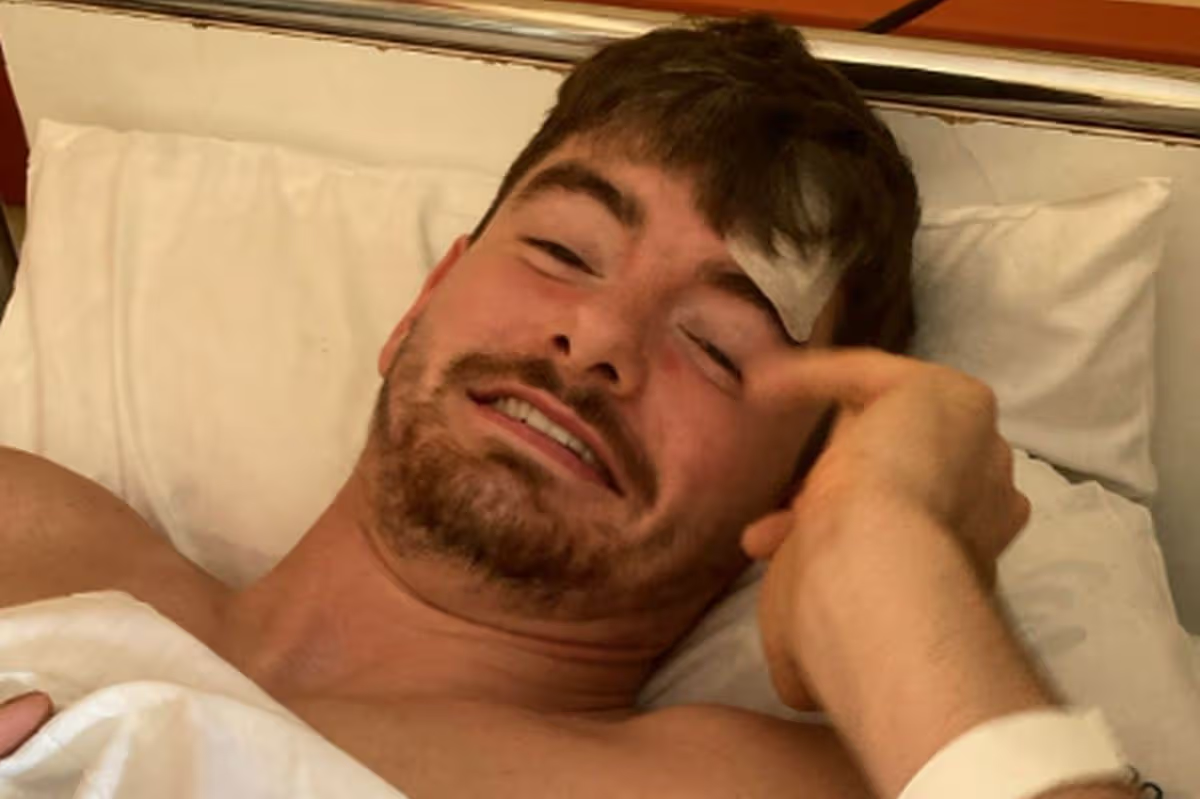
Jakob Davies, 25, suffered severe injuries after falling from a three-storey balcony during a stag do in Albufeira, Portugal, as his family launches a fundraiser to help him
Jakob Davies remains in hospital after falling from a balcony in Portugal(Image: Kennedy News and Media)
The devastated family of a Brit who plunged from a three-storey balcony during a stag do in Portugal fear his travel insurance may not cover his mounting medical bills because he had been drinking.
Jakob Davies, 25, remains in hospital in Faro after suffering catastrophic injuries in a fall at a hotel in Albufeira earlier this month. His loved ones say they are still waiting to hear whether his insurer will pay out after tests showed alcohol in his system.
The factory worker, who is from Scarborough, North Yorkshire, had travelled to the Portuguese party hotspot with around 30 work colleagues for a stag weekend on June 4.
His mum, Claire Gerrard, fears the family could be left facing huge costs after doctors warned Jakob he may never walk again without urgent surgery.
The 51-year-old woman said: “He’s totally on his own. I need to know what’s going to happen to him. He was told if you don’t have this operation immediately then you won’t walk again.
“He does have travel insurance but because of the alcohol that he’s drunk it’s not looking like they will pay. We’ve contacted the insurance company and they wanted all the reports so I sent the reports.
“The doctor gave Jakob his alcohol levels with his bloods done and it did show alcohol in his system, which unfortunately they will not pay out.
“25 [years old] on a stag party he’s not going to have none is he? They’ve not said no yet, we’re still waiting on information. I think it should be made more clear to people, especially to youngsters. You’re going on holiday to a stag party and you can’t drink, they don’t listen, they just go and have a drink.”
Jakob had chosen to stay behind at the accommodation on June 5 to play football while the rest of the stag group headed out.
But when his friends returned later that day, they were alarmed to see fire engines, police cars and ambulances rushing towards their hotel.
Claire expained: “I think there were about 30 of them and it was somebody from work’s stag party. It’s all really, really vague, Jakob has no recollection of it whatsoever.
“He had been playing football with some other guys, his party were leaving and Jakob had said ‘I’m going to continue to play football’.
“I don’t even think he remembers playing football but that’s what he was doing. When the party was returning back to the hotel there were fire engines flying past and then the police came past and then the ambulances came past and had turned into their hotel so they thought ‘oh gosh something is going on’.
“When they got there Jacob was unconscious on the floor with severe head injuries and broken bones, it looked pretty horrific initially. When they got him in the ambulance, he had regained consciousness and he was speaking but he wasn’t aware of what had happened.”
Believed to have fallen from a three-storey balcony, Jakob was initially taken to a local hospital before being transferred to a larger hospital in Faro.
Doctors later discovered he had suffered a serious head injury, broken feet and ankles, as well as fractures to both his L1 and L4 vertebrae.
Recalling the moment she learned about the horror fall, the worried mum said: “I got a phone call at around 11am on Saturday morning [June 6] to say Jakob’s fallen from a three-storey balcony. My initial feelings from then on were absolute dread.”
As Jakob continues his recovery overseas, family and friends have launched a GoFundMe appeal to help cover medical expenses and the cost of bringing him back to the UK.
Travel insurance experts warn that some policies contain exclusions relating to alcohol or drug use, although terms and conditions vary between providers. Holidaymakers are urged to check the small print of their policies before travelling, particularly if they are planning to drink while abroad.
A LESSER-KNOWN European theme park has announced it is getting a major new ride.
Previously named one of the best amusement parks in Europe by the European Star Awards, Nigloland is about two and a half hours from Paris.
Sign up for the Travel newsletter
Thank you!
Nigloland is about two and a half hours from ParisCredit: Nigloland
And the French theme park will be getting a new £15.5million rollercoaster called ‘Supersonic 1887’.
The ride, which will be the park’s largest investment to date, is a launch shuttle rollercoaster.
At its highest point it will reach 47 metres off of the ground, and it will reach speeds of up to 56.5mph.
Even though the track itself stretches for 355 metres, riders will travel a total of 770 metres thanks to sections where the rollercoaster will travel backwards.
The rollercoaster will also turn the 32 riders upside down at least six times across three inverted parts of the track, including a loop.
Each of the two carriages also include eight ‘wing seats’ that allow riders to dangle their feet in the air.
And the park will soon get a new rollercoasterCredit: NiglolandThe rollercoaster is expected to open in 2027Credit: Nigloland
And what makes the ride even more fun will be the fact that over half the time riders are on it, they will be suspended over water.
The ride is inspired by World Expositions that took place during the 19th century, according to EAP Magazine.
The story of the ride will follow a character called Emilie Delaroche, an engineer who has developed a steam machine that travels at high speeds.
The rollercoaster is expected to open in 2027.
President and Director of the Park, Rodolphe Gelis said: “Nigoland is set to celebrate its 40th anniversary.
“To mark this milestone, we wanted to create a major attraction that reflects our ambitions.
“Supersonic is a project conceived by our creative and technical teams, which we entrusted to a leading manufacturer renowned for the quality of its work and its wealth of innovations.
“It is the most ambitious project Nigoland has ever undertaken.”
The theme park features more than 40 attractions in total, 27 of which are ideal for younger children.
There are four immersive zones in total including The Canadian Village, The Rock ‘n’ Rock Village, The Magical Village and The Swiss Village.
Rides include Krampus Expedition which is a water coaster based on Alpine folklore.
There’s also Spatiale Expérience, which is an indoor rollercoaster that travels through outer space.
Visitors can also stay onsite at the Hotel des Pirates.
Weekly insights and analysis on the latest developments in military technology, strategy, and foreign policy.
The service says the Warthog will fly to 2030. Evidence shows a lack of commitment and the irreversible loss of A-10 combat capability is instead just months away.
This September, the A-10 “Warthog” Thunderbolt II was scheduled to make its final flight. Instead, the A-10 deployed again, this time supporting combat operations over the Strait of Hormuz, striking Iranian fast-attack craft and maritime threats near one of the world’s most important shipping chokepoints. The A-10 was also the “Sandy” escort that recovered two downed F-15E airmen from inside Iran. Then, later in April, the Air Force reversed course and announced it would keep the jet flying through 2030.
While the Air Force changed the headline, it has yet to follow through with the harder financial commitment needed to preserve actual A-10 combat power. Its fiscal 2027 budget, released shortly after the extension announcement, funds zero dollars of A-10 modernization, cuts depot maintenance below the service’s own stated requirement, and is crippled by “sunset” policy and institution resistance around the aircraft’s “upcoming divestment.”
In other words, by the end of this year, the A-10 will be without depot support, without a training pipeline, without weapons-school instruction, and without operational-test capacity. To a community that was scheduled for final retirement this October, every month waiting for the promised extension makes rebuilding slower, costlier, and closer to infeasible. Without action, the A-10 will transition from a combat asset to a line item waiting for liquidation.
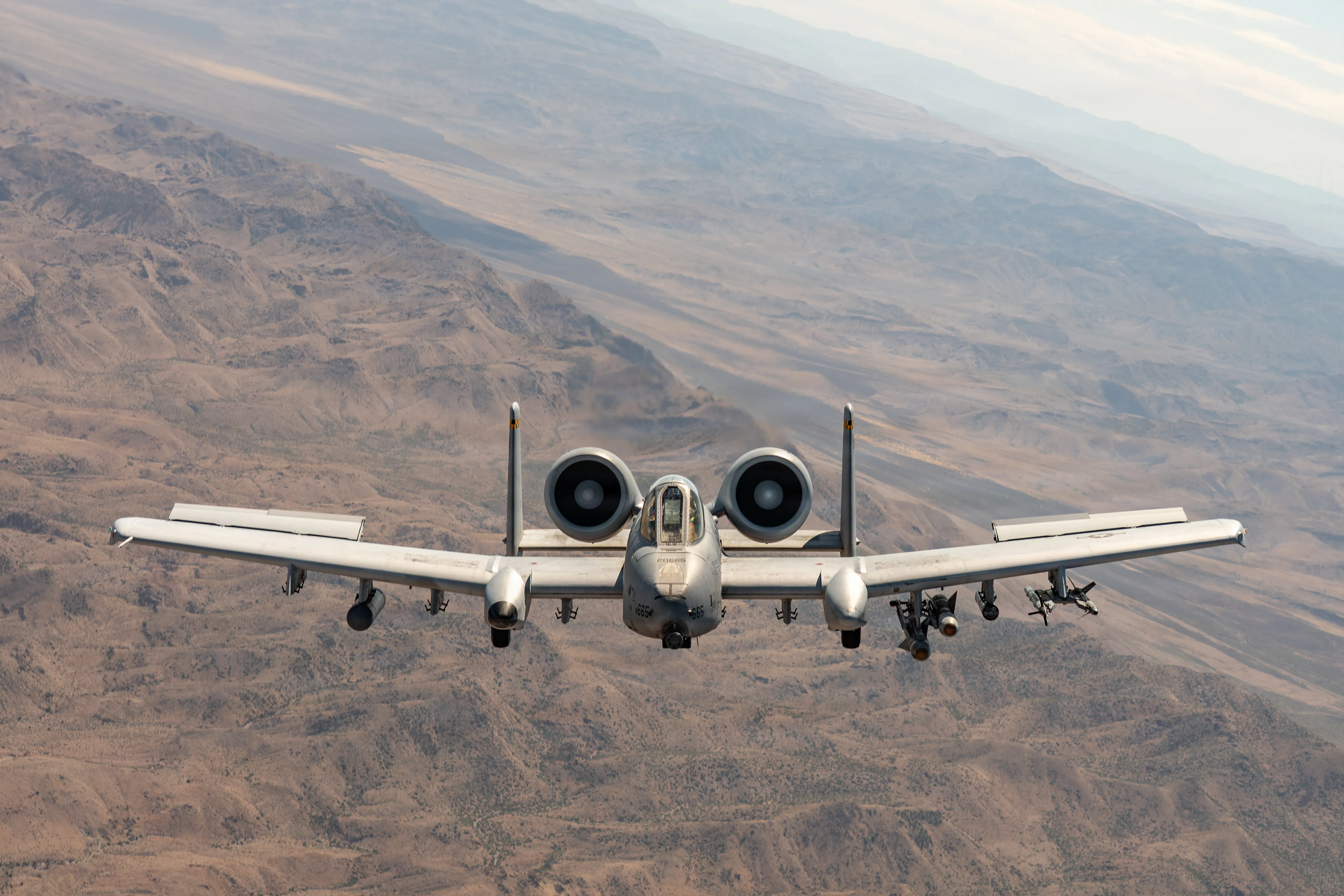
A U.S. Air Force A-10 Thunderbolt II aircraft assigned to the 66th Weapons Squadron, U.S. Air Force Weapons School, flies during a Weapons School Integration mission over the Nevada Test and Training Range, Nevada, May 28, 2026. (U.S. Air Force photo by Airman 1st Class Jennifer Nesbitt) Airman 1st Class Jennifer Nesbitt
A-10 combat capacity requires a meaningful shift in priorities that brings back resources and overcomes institutional resistance. Saving a limited number of aircraft is wasteful unless it is matched with resources, personnel, and policy that make it clear the A-10 is a valuable combat asset. The justification for preserving the A-10 is measurable in combat utility and financially sound reasoning.
I have no sentimental attachment to the A-10. I flew combat fighters as both an F/A-18 TOPGUN graduate and later as a U.S. Air Force F-22 Mission Commander with more than 2,000 flight hours, including combat deployments to Afghanistan, Iraq, and Syria. Since leaving the cockpit, I have worked closely alongside the A-10 community as it reinvented itself around modern warfare and Indo-Pacific priorities. I care about preserving combat capability and making disciplined present-value force-management decisions grounded in operational reality.
The A-10 was not preserved out of nostalgia. It was preserved because recent operations reminded the Air Force that immediate combat power still matters and the A-10 has proven useful in ways many planners underestimated. Today, it provides unique value unmatched by any of its peer tactical aircraft. It operates from austere locations, supports standoff and maritime strike, and validates emerging lower-cost weapons that reduces pressure on more expensive strike aircraft.
A U.S. Air Force A-10 Thunderbolt II aircraft provides close air support to Independence-variant littoral combat ship USS Santa Barbara (LCS 32) during a training exercise in the Arabian Gulf, Feb. 2, 2026. Santa Barbara is deployed to the U.S. 5th Fleet area of operations to support maritime security and stability in the Middle East. (U.S. Navy photo by Mass Communication Specialist 2nd Class Iain Page) Petty Officer 2nd Class Iain Page
As noted in the opening of this article, the A-10 also fills a critical combat role many have discounted: Sandy missions supporting combat search and rescue. Recent recovery operations over Iran protecting two F-15E airmen demonstrated again that personnel recovery escort, permissive strike, armed reconnaissance, and low-altitude tactical coordination remain critical and complex combat skills. The A-10 community has been supporting these missions for over 50 years. That wealth of knowledge and experience is being displaced. Without a replacement, the Air Force carries a mission requirement it may prove unable to fulfill.
Why Preserving The A-10 Was The Right Decision
For years, the Air Force’s divestment logic rested on several assumptions: that future conflicts would prioritize different force packages, that replacement capability would mature on schedule, and that preserving the A-10 generated less value than retiring it.
Recent events changed that projection. The A-10 has sustained operations in both Europe and the Middle East. Simultaneously, Air Force strategy in the Pacific has benefited from ongoing A-10 support developing distributed combat employment, maritime strike, and advanced weapons integration. The same platform once dismissed as a legacy close-air-support aircraft is now proving adaptable to several emerging operational problems and service priorities.
An A-10 Thunderbolt II fires its GAU-8 Avenger 30mm Gatling gun at the Barry M. Goldwater Range near Gila Bend, Ariz., as part of the close air support competition during Hawgsmoke 2024 on Sept. 13, 2024. (U.S. Air Force photo by Tech. Sgt. Tyler J. Bolken) Tech. Sgt. Tyler J. Bolken
The A-10 is not theoretical surge capacity sitting in storage. It remains active combat power supporting real operational demand today. Combat escort, personnel recovery, permissive strike, armed reconnaissance, and maritime interdiction remain ongoing Air Force missions and long-standing A-10 strengths.
A less known strength of the A-10 is the leverage it provides as a modernization platform. The A-10 community has quietly become one of the Air Force’s most effective rapid integration ecosystems. Because the aircraft relies heavily on government-owned hardware and software architectures, operators and engineers have been able to test and field new capabilities in weeks instead of years. The community has been behind recent breakthrough integrations including AGR-20 APKWS, Small Diameter Bomb, ADM-160 MALD employment, beyond-line-of-sight communications, maritime strike weapons, and network-enabled command and control.
A-10C with a load of Small Diameter Bombs. (U.S. Air Force photo by William R. Lewis)
Nobody is arguing the A-10 is the future of Pacific airpower. It doesn’t need to be. The aircraft has become a low-cost operational laboratory for rapid tactical adaptation fully integrated into real combat capacity.
An A-10C Thunderbolt II assigned to the 74th Fighter Squadron flies with its new refueling probe at Moody Air Force Base, Georgia, May 19, 2026. The A-10 integrated the probe with the A-10, tested it and it was in combat in a matter of weeks. (U.S. Air Force photo by Airman 1st Class Rachel Howell) Airman 1st Class Rachel Howell
Preserving one of the few communities with real operational experience executing tactics the broader force is still learning is strategically wise. The A-10’s latest life extension was never simply about preserving an airframe. It was about preserving combat capability, operational experience, and one of the Air Force’s few proven rapid-integration ecosystems.
What The Air Force Will Lose
The current plan has the service preserving a limited number of airframes while allowing the combat system behind the A-10 to collapse. A fleet that numbered more than 280 aircraft just a few years ago, and 162 at the start of fiscal 2026, is set to fall to 54 next year and just 36 by 2030. The cuts land hardest where the expertise is hardest to rebuild: the Air National Guard’s A-10 force, 47 aircraft as recently as last year, goes to zero, its flying hours swapped for a new cyber mission. What survives risks becoming a ghost-fleet. Of the “three squadrons to 2030” the Chief of Staff has promised, the active-duty force shrinks to a single squadron of 17 jets with no spares behind it.
A U.S. Air Force A-10C Thunderbolt II flies over the Gulf of America, September 16, 2025. The A-10, from Detachment 1, 40th Flight Test Squadron at Davis-Monthan Air Force Base, Arizona, has an orange nose panel to represent an area or part of the aircraft that is undergoing test operations. (U.S. Air Force photo by Tech Sgt. Jacob Stephens) Staff Sgt. Jacob Stephens
Combat capability does not reside in aluminum alone. It resides in maintainers, instructor pilots, operational test teams, weapons officers, logistics pipelines, and institutional continuity accumulated over decades. All of that is currently at risk. The capacity to produce, refine and retain this talent and experience is perishable. Airmen face irreversible career decisions. Maintainers transition to other fleets. Weapons instructors leave. Operational test is blocked. Once assignment pipelines close and personnel move on, the impact compounds quickly. To a community that was previously scheduled for final retirement this October, every month of uncertainty adds to the complexity of sustained readiness. Rebuilding later becomes expensive and slow, if not impossible.
How perishable A-10 specific knowledge is was documented by the Air Force’s own testing. When the Pentagon ran a 2018–2019 flyoff to determine whether the F-35 could replace the A-10 in close air support, forward air control-airborne (FAC-(A)), and combat search and rescue (CSAR), F-35 pilots had no qualification or training requirement for the FAC(A) and CSAR missions. To make the comparison work, the test had to crew the F-35 with former A-10 pilots, aviators who carried their Sandy and weapons-school training over from the very aircraft being retired. The report demonstrated mission performance depended on the aircrew, not the airframe.
Four Joint Terminal Attack Controllers assigned to the 6th Combat Training Squadron, Nellis Air Force Base, Nevada, display the Tactical Air Control Party flag after completing a mission on the Nevada Test and Training Range, Nevada, Aug. 3, 2022. (U.S. Air Force photo by William R. Lewis) William Lewis
Years later, in 2023 and 2024, the Air Force still had no close-air-support or CSAR training requirement for any F-35 pilot. In April 2026, the formal A-10 training unit at Davis-Monthan, the 357th Fighter Squadron, the schoolhouse that is home to the Sandy qualification, graduated its last class. On the same day, halfway across the world, A-10 flew the combat rescue mission saving downed aircrew inside Iran. The dissonance between real world combat value and misaligned budget politics will be on full display if the 357th schoolhouse and its Sandy training syllabus are allowed to fully inactivate in just a few months. The Air Force has confirmed there is no transition underway to move the Sandy mission to any other airframe, and no successor qualification program in development.
This is not a new concern. In 2021, the Senate formally recorded that A-10 combat search and rescue had been “100 percent effective” in Operation Allied Force, recovering a downed F-117 and F-16 pilot. The Warthog has now done it again over Iran. Congress has consistently levied the concern but the Air Force and its budget still haven’t made this a real priority.
The Air Force has already invested heavily to preserve A-10 viability well beyond 2030: roughly $1.1 billion to re-wing 173 aircraft, completed in 2019, and a follow-on contract worth up to $999 million to put new wings on the remaining 109, about $2.1 billion in total to extend the entire fleet’s structural life into the late 2030s. But even those investments faced similar institutional resistance inside the Air Force. The service repeatedly placed A-10 funding on its “unfunded requirements” list rather than in its base budget, while funding upgrades to other legacy fighters instead. Congress has consistently met Air Force resistance, such as in 2021 when the service spent just $15.6 million of $100 million Congress had appropriated to sustain the fleet into the 2030s. Allowing the enterprise behind those re-winged jets to collapse now would write off an investment the taxpayer and Congress already paid for and has barely begun to recoup.
U.S. Air Force Airmen assigned to the 309th Aircraft Maintenance Group Expeditionary Depot Maintenance team replace the wings on an A-10 Thunderbolt II assigned to the 357th Fighter Generation Squadron at Davis-Monthan Air Force Base, Arizona, Oct. 11, 2022. Due to the extensive in-depth work required to complete a wing swap, skilled professionals from the 309th AMXG Expeditionary Depot forward deployed to DM for this major component maintenance. (U.S. Air Force photo by Senior Airman Kaitlyn Ergish) Staff Sgt. Kaitlyn Ergish
This is not a theoretical risk. When the F-22 production line closed at 186 aircraft, well short of the original requirement of 750, the assumption was that follow-on capability would arrive to fill the gap. The limited F-22 fleet now bears disproportionate sustainment costs awaiting delivery of the proposed F-47 sometime in the mid-2030s, and even then, the two could serve alongside each other for a period of time. Timing errors in force design can become effectively irreversible, especially once the infrastructure that sustains a capability is dismantled. In the A-10 case, that includes not only the aircraft but also the depot and integration ecosystem that support it. Once those are gone, the option value is gone with them.
The financial logic behind accelerated divestment is also less straightforward than topline savings figures suggest. Retiring the A-10 does not eliminate operational demand. Combat search and rescue escort, permissive strike, armed reconnaissance, and distributed-operations requirements still exist. Those missions and their costs migrate elsewhere: more flight hours on higher-cost aircraft, additional maintenance burden, increased schoolhouse demand, and greater operational tempo across communities already under strain.
A U.S. Air Force A-10 Thunderbolt II aircraft assigned to the 66th Weapons Squadron, U.S. Air Force Weapons School, performs an austere landing at Delamar Dry Lake near Alamo, Nevada, May 28, 2026. The 66th WPS provided close air support and forward air control during a Weapons School Integration mission. (U.S. Air Force photo by Airman 1st Class Jennifer Nesbitt) Airman 1st Class Jennifer Nesbitt
The A-10 offers combat power at a discount through both cost per flight hour and cost per effect on target. Mission specialization means A-10 employing laser-guided rockets, gun, or other comparatively low-cost weapons provides a strong complement to high-end fighter packages and their standoff weapons.
The Air Force mission, its airmen, and our nation’s combat capacity all stand to benefit from a more complete commitment to the A-10 and its community.
What The Air Force Should Do
The Air Force must revisit their A-10 commitments to ensure the extension is real.
Restore and protect the 357th Fighter Squadron at Davis-Monthan. The 357th is the Air Force’s formal A-10 training unit and the institutional home of the Sandy qualification, the schoolhouse where combat-search-and-rescue expertise is produced, refined, and passed to the next generation of aircrew. It graduated its last class in April 2026 and is set to inactivate this year. No successor Sandy qualification program exists across the Department of War, and the Air Force has confirmed none is in development. Inactivating the 357th severs the center of excellence that produces the very capability the service says it values. Reversing that decision is the single highest-leverage action available, and the clearest signal of whether the 2030 commitment is real. The squadron should be retained until a validated replacement for the Sandy mission is stood up and producing qualified aircrew on a replacement platform.
A U.S. Air Force HH-60 Pave Hawk and A-10 Warthog fly in support of the Air Force Weapons School over Nellis Air Force Base, Nev., May 23, 2012. (USAF) Staff Sgt. Matthew Bruch
Stabilize the rest of the enterprise through the extension timeline. If the service intends to preserve meaningful capability through 2030, the supporting structure has to survive with it. That means protected funding for depot maintenance, training, operational-test, and maintainer retention. Exempt the A-10 from “sunset” policy where budgets are still being slashed with justification of “upcoming divestment.” Instead, leverage the A-10 operational-test process as a rapid-integration and tactics pathfinder, capturing and transferring those lessons across the broader force before the capability disappears.
Tie any future divestment to demonstrated replacement readiness, not the calendar. Do not divest the A-10 until there is a trained and capable replacement for each mission it performs. Build a deliberate plan for a clean handoff of mission responsibility and the community knowledge behind it, and gate future retirements on proven replacement capability rather than programmatic timelines.
The case for retiring the A-10 was always a timing argument: accept a measured reduction in near-term capacity in exchange for a better future force. The Air Force already announced the A-10 was back. Now it must fund the decision it already made before the combat capacity disappears anyway.
Paul “Gu$” Garcia is a TOPGUN Navy Fighter Weapons School instructor and graduate who flew combat missions in the F/A-18 across Iraq, Afghanistan, and Syria. He transitioned to fly the F-22 in the IndoPacific as a member of the Hawaii Air National Guard, leading the Homeland Defense mission for the Hawaii and Guam Air Defense Region for Operation Noble Eagle. He retired from the U.S. Air Force as the lead for PACAF modernization and innovation in 2025. He is Managing Partner and founder of Merge Combinator.
The opinions and views expressed in this article are those of the author and do not reflect the views or opinions of the U.S. Air Force, the U.S. Department of Defense, or any part of the U.S. government.
Al Jazeera’s Dominic Kane explains that the EU won’t lift crucial sanctions on Iran until a formal nuclear agreement is reached. The bloc’s foreign policy chief Kaja Kallas also clarified that human rights-related sanctions will continue regardless.
Brendan Sorsby won’t be playing football for Texas Tech this fall after all.
It’s not because the transfer quarterback has been permanently banned by the NCAA for wagering on college sports — an injunction issued by a Texas judge last week appeared to clear the way for Sorsby to play for the Red Raiders in 2026.
That ruling, however, was being challenged through separate court filings by the NCAA and the Big 12 Conference. Facing that uncertainty over his final season, and with the deadline to enter the NFL supplemental draft quickly approaching, Sorsby opted to leave the Red Raiders without playing a down.
Sorsby’s decision was announced Monday night in an open letter by Cody Campbell, chairman of the Texas Tech board of regents.
“This decision was made with Brendan and his family and is purely an output of practical analysis of the situation,” Campbell wrote. “Brendan and Texas Tech stand on very solid and legitimate legal ground, but he faces a June 22nd deadline to be eligible to enter the NFL’s supplemental draft, and there is no practical way to resolve all the various pending legal disputes and ensure his eligibility prior to this date. This is the only viable and fair path for Brendan and his future, as well as for his teammates, and our university.”
Sorsby posted a statement Monday night on Instagram.
“I am grateful for the support from my family, my Tech coaching staff, teammates, the community, and so many others who have encouraged me to address and learn more about this important issue,” Sorsby wrote. “As my journey continues, I remain fully committed to and focused on being the best I can be, both on and off the field.”
Sorsby transferred to Texas Tech this offseason, after two years each at Indiana and Cincinnati, for a reported multimillion-dollar deal. In late April, he and Texas Tech jointly announced that he had entered a residential treatment program for gambling addiction. Sorsby completed the 35-day program in May.
Court records show that Sorsby has admitted to wagering at least $90,000 during his time as an NCAA student athlete, including 40 bets on Indiana football games he was not participating in while a freshman backup with the Hoosiers in 2022.
“Texas Tech will continue to provide the support and recovery resources Brendan requires on this journey,” Campbell wrote. “Furthermore, Texas Tech will not seek return of any amounts already paid to Brendan through his NIL agreements.”
In May, Sorsby filed a lawsuit in Lubbock County District Court asking to have his eligibility restored because the NCAA “failed to comply with its contractual commitments” to him as a student athlete and therefore “is precluded from enforcing its gambling bylaws against Mr. Sorsby to deny or withhold his reinstatement.”
Last week, judge Ken Curry granted a temporary injunction that would have allowed Sorsby to play for the Red Raiders in 2026. He would have had to miss the first two games of the season as one of the conditions of the ruling.
Without the injunction, Curry wrote in his ruling, Sorsby would “suffer a probable, imminent and irreparable injury” by missing out on the “elite coaching, training resources, camaraderie, and regimen that only being a member of a Division I college football team can provide.”
The final hearing had been scheduled to begin Feb. 8, nearly two weeks after college football’s national championship game.
Following the ruling, several teams and conferences discussed a ban on playing Texas Tech in any sport. After appealing the decision last week, the NCAA filed an emergency motion on Monday to stay the injunction and asked for the case to be resolved before the start of the Red Raiders season.
Also on Monday, the Big 12 filed for a judgment from a U.S. District Court in Dallas protecting the conference’s ability under its bylaws to sanction Texas Tech, a member school, if Sorsby played this season.
“An athlete with an extensive, documented history of wagering on intercollegiate athletic contests — especially his own team’s games — presents a reputational and integrity risk to the conference and its championship competition that the conference has both the right and the responsibility to address,” attorneys for the Big 12 wrote in the filing.
Soon after Campbell announced Sorsby’s decision, Texas Tech president Lawrence Schovanec and athletic director Kirby Hocutt issued a joint statement on the matter.
“When Brendan’s lawsuit resulted in the granting of a temporary injunction, we found ourselves in a difficult situation,” they wrote. “With his health and wellness as our top priority, we supported him in spite of very different perspectives and opinions. Our position was challenged by many but our support for him never changed.
“We will continue to extend all available resources that Brendan had as a student and athlete to ensure his transition is as successful as possible.”
One code can mean it takes longer to get through security. Here’s the code many travellers dread seeing on their boarding pass and what it means for their flight if they get it
11:40, 12 Jun 2026Updated 11:42, 12 Jun 2026
Getting through security may take longer(Image: Getty)
Navigating the airport can be an exhausting ordeal. In an ideal world, we’d sail through the security queue to give ourselves time to browse the perfumed duty free outlets or enjoy a relaxed coffee, but there are many bottlenecks where you can find yourself delayed.
One indication that your journey through the airport might not run as smoothly as you’d hope can be identified once your boarding pass has been printed. Check-in personnel will often add codes to your ticket alerting airport staff to watch for particular things, and there’s one code travellers really won’t want to encounter if they’re jetting off to the World Cup.
Those flying to or from the United States may notice SSSS on their boarding pass, which stands for Secondary Security Screening Selection or Secondary Security Screening Selectee. Essentially, this code indicates you’ve been chosen for extra inspection, and this can be for a wide range of reasons.
Certain airlines won’t print SSSS, but may have their own method of flagging that a passenger requires additional screening. For instance, Southwest Airlines reportedly uses a chequerboard pattern which appears on boarding passes.
Citizens of particular countries, such as those with sanctions or political tensions with the USA, may be more likely to encounter SSSS on their boarding pass. But the Transportation Security Administration (TSA) remains tight-lipped about the precise criteria that could see your name flagged in this manner, reports the Express.
The ACLU (American Civil Liberties Union) has previously claimed that “TSA maintains a “Selectee List” (sometimes called the “Automatic Selectee List”) of people who are automatically and intentionally selected for enhanced screening every time they fly.”
However, there are other factors that could see passengers flagged for additional screening, including making one-way bookings and purchasing tickets with cash. Travellers who have previously passed through high-risk countries, regularly visit ‘unusual’ destinations, or display other flight patterns deemed suspicious may also find themselves subjected to extra screening.
Having a name similar to someone on a Department of Homeland Security watch list could be yet another reason you end up with additional security checks, and could even result in you being denied boarding. Passengers who are repeatedly flagged for extra screening can apply for the DHS Traveler Redress Inquiry Program (DHS TRIP), and if approved they’ll receive a Redress Control Number to use when booking flights, which should make their travels considerably smoother.
If you do spot SSSS or a similar code on your boarding pass, there’s no need to panic. More often than not, it simply means you’ll require some additional time to clear security.
Typically this involves an enhanced pat-down, a manual inspection of carry-on bags, and possibly the use of a handheld metal detector as you pass through the security lane. Travellers should make sure they adhere to their airline’s advice on when to arrive at the airport, as this will guarantee they have sufficient time to clear any additional security checks.
In the USA, the TSA advises arriving a minimum of two hours before domestic flights and three hours ahead of international departures.
Have a story you want to share? Email us at webtravel@reachplc.com
It seems sensible in theory, but thousands of budget travellers won’t benefit
Wizz Air issued the advice to passengers ahead of summer holiday season(Image: Bloomberg via Getty Images)
Earlier this month, budget airline Wizz Air told all travellers to get to the airport three hours ahead of their flight due to new border control checks that have been brought in. Managing director Yvonne Moynihan warns that holidaymakers have missed their return or connecting flights due to lengthy airport queues since the rollout of the Entry Exit System (EES).
Problems were flagged when the travel system was launched in April, but as more people pass through airports this summer for the first time since regulations changed, travellers may face hold-ups. Taking to TikTok, travel specialist Kate Donnelly (@Thedonnellyedit) argues that the latest guidance from the airline is “useless” for most people jetting off this summer.
She said: “We know when you’re travelling short haul that the general advice is to get to the airport two hours before your flight. Wizz Air is advising people to arrive three hours before their departure to beat queues and reduce the risk of missing their flight due to the EES system.
“So, while this advice appears sensible, the reality is that most check-in desks only open two hours before departure, in some cases two and a half hours,” Kate argues that only certain travellers would actually gain from turning up at the airport three hours before take-off.
Details available directly on Wizz Air’s website (as of June 7) state: “Airport check-in and baggage drop-off start two hours and close 40 minutes before departure. It’s worth noting that at some airports, the check-in desk may open or close earlier.”
Content cannot be displayed without consent
Nearly all airports listed with an earlier-than-standard check-in time are international. London Luton Airport was the only UK airport with differing rules, with check-in desks that open “180 minutes (three hours) before the scheduled time of departure” for all travellers, reports the Express.
Kate also suggested that passengers travelling with hand luggage only could be among those who stand to gain the most from arriving early. Without any luggage to weigh and drop off, the whole process becomes considerably faster, and passengers “would be allowed to get straight through security and into duty-free”.
The airport itself remains one of the most significant factors that could cause delays, even for those who arrive earliest. Kate claims: “A lot of airports have more than one border control, meaning that you are still going to have to wait until the announcement is made for your gate so that you know which border control you need to go to.”
What is the general advice on when to arrive at the airport?
To avoid any issues, it is best to double-check with your specific airline about the earliest time check-in opens. Arriving as early as possible can give extra time for delays, but being ready too soon could result in pointless delays just by waiting around.
Kate said: “If you are travelling to the Schengen area this summer, two hours before your departure is enough time, based on the fact that the airport processes have not changed. Unless [airlines] decide to start opening up check-in desks earlier and announcing gates sooner, you might as well stick with the two-hour rule.”
The Schengen area is an extensive, border-free travel zone encompassing 29 European countries. It features numerous popular summer holiday destinations such as Spain, Turkey and Greece – which means many British holidaymakers will encounter EES checks.
Hold-ups are likely to come from first-time EES users who are required to scan their passport, have a photo taken, and submit a 4-fingerprint scan (children under 12 are exempt from fingerprints). This establishes a digital record valid for three years, and during new trips within that timeframe, travellers just need to scan their passport and provide one biometric identifier (photo or fingerprint).
Call “Scary Movie” lazy, dumb and offensive. It would enthusiastically agree. The lowbrow horror parody thrives on shtick about weed, race and genitalia. The only thing that scares it is high expectations.
But amid the rampant stupidity of the first “Scary Movie,” released in 2000, original director Keenen Ivory Wayans discovered two major talents: Regina Hall and Anna Faris. As heroines Brenda and Cindy, respectively, Hall and Faris were daffy, dopey and committed. Alongside a cast of Playmates (Carmen Electra, Shannon Elizabeth) and family members (Wayans brothers Marlon and Shawn), they played stupid like Shakespeare. In two decades since, both gave up the Ghostface to do better things: Hall in “Girls Trip” and “One Battle After Another,” and Faris in “Smiley Face” and “The House Bunny.” (Frankly, Faris deserves to be doing more.) If a sixth “Scary Movie” is going to lure them back for what the ensemble openly frets is a rebooquel — as in a reboot-sequel, here pronounced “re-booty call” — it better be good.
Fine, good is a stretch. The latest “Scary Movie,” which simply recycles the title “Scary Movie,” is as lazy, dumb and offensive as the others. But Hall and Faris, now playing the dotty mothers of the next generation of victims, are hilarious, romping about like their Brenda and Cindy have clearly been knocked on the head too often. (Brenda, fans of the franchise know, has technically already died twice.) I laughed 10 times, which makes this “Scary Movie” the best of the bunch — a pallid compliment.
Directing duties have shuffled to Michael Tiddes, a longtime Wayans collaborator, who gets gutsy performances from three of this entry’s newbies: Olivia Rose Keegan and Savannah Lee Nassif as Cindy’s estranged daughters, a pill-popper and a Wednesday Addams clone, and Ruby Snowber, maximizing every second of her feature debut as a high school tramp.
The Wayans clan left the series early on due to a contract dispute with Harvey and Bob Weinstein. Now seven have returned. Four Wayans (Craig, Keenan Ivory, Marlon and Shawn) co-wrote the script with Rick Alvarez; three more (Kim, Damon Jr., and Gregg) act in the film alongside Marlon and Shawn, who revive their characters Shorty, a stoner with a shrill cackle, and Ray, whose only personality trait is being gay. In one of many homages to “Sinners,” Ray promises a church he’ll act straight. Then he mimes tucking his manhood between his legs and dancing like Buffalo Bill in “The Silence of the Lambs.”
Yes, Shorty and Ray were also murdered in the first movie. No, it doesn’t matter. “Scary Movie’s” one genuinely ingenious move is to resurrect actors without shame. Jon Abrahams’ bad boyfriend (stabbed), Lochlyn Munro’s lout (slit throat), and Electra’s eye candy (pierced through the breast implant) are back, too, as are a pair of erotically linked survivors, Cheri Oteri’s news anchor and Dave Sheridan’s moronic cop, whose spittle-flecked chin is the grossest thing in a film that has a mall Santa costumed like “Terrifier’s” Art the Clown gifting a child a set of severed testicles.
“The Silence of the Lambs” remains the only horror film to win best picture at the Academy Awards. This “Scary Movie” has no delusions of that. Yet in the years since the last installment, 2013’s “Scary Movie 5” — a sequel so awful that even its own director, Malcolm D. Lee, later admitted, “It’s not worth your time” — the horror genre at-large has become ambitious, with “Sinners,” “The Substance,” and “Get Out” earning Oscar nominations and “Weapons’” witchy Amy Madigan seizing the supporting actress prize.
This “Scary Movie” makes fun of all four of those newer hits, as well as the recent rebooquels of “Halloween,” which was earnest, and “Scream,” which couldn’t decide what tone to hit. Each send-up is funny for at least an entire minute, a lifetime when you’re watching Marlon’s Shorty mug for the camera. Either Shorty has the most screen time or he’s just so excruciating that it feels like it.
I cannot make the straight-faced argument that the worst “Scary Movies” were held back by their source material. Still, it’s true that when the series was at its nadir, so few vibrant horror films were being made that it was stuck lampooning the now-forgotten Jessica Chastain chiller “Mama.” Likewise, when this “Scary Movie” takes a jab at Nicolas Cage’s more-kooky-than-tedious “Longlegs,” the limp gag of the creepy Shorthand (Chris Elliot), underscores that the movie itself just isn’t that interesting.
“Scary Movie” inserts two political jokes that earn a solid gasp-giggle-groan. Yet, the most grating new addition is a self-righteous student named Dei Meeks (Sydney Park), who polices the humor. The movie relishes killing the killjoy. A whole mob does her in; it’s the one death that feels angry. I’d have been happy to see her die in her first scene. Not that I empathize with canceled comics who posture as if they’re victims under attack, but it would do this country good if it could occasionally share a laugh.
Don’t waste one brain cell trying to deduce the assassin. The answer is surprising and satisfying. While the script’s hasty nods to “KPop Demon Hunters” and the biopic “Michael” make it feel like it was written on yesterday’s Kleenex, the immediacy allows “One Battle After Another’s” Teyana Taylor to acknowledge that Madigan’s Aunt Gladys stole her Oscar. Swilling tequila shots and hollering “Viva la revolución!,” she’s hysterical in the cleverest opening slasher scene since Drew Barrymore answered the phone in the 1996 “Scream.” I’d watch six more “Scary Movies” if Taylor starred in them. But like Hall and Faris, she deserves better.
‘Scary Movie’
Rated: R, for crude sexual content, graphic nudity, strong violence, and drug content and language throughout
Hamas says it will not hand over its weapons right now, resisting ongoing disarmament demands and stating that the ultimate fate of its military arsenal will be decided following comprehensive discussions with other Palestinian factions.
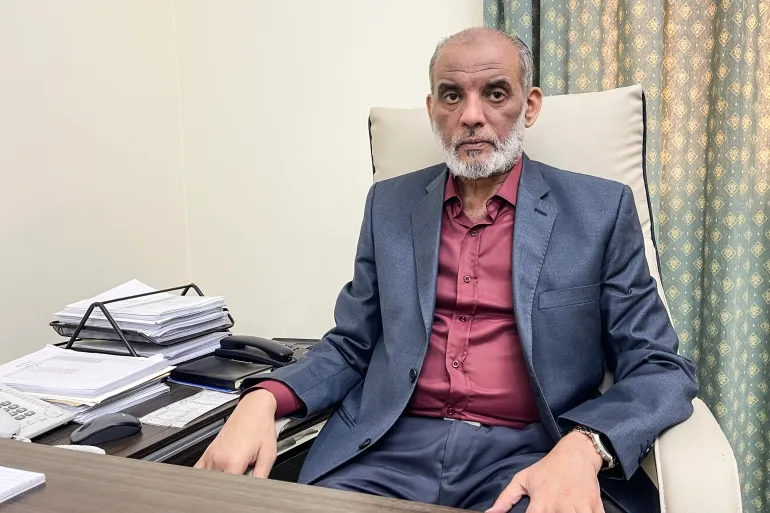
Husam Badran, a member of the Hamas political bureau, spoke exclusively to Al Jazeera about the group’s vision for a long-term ceasefire in Gaza [Mohammad Mansour/Al Jazeera]
In an exclusive interview with Al Jazeera, Husam Badran, a member of the Hamas political bureau, offered an inside look into the group’s proposed solutions to the stalled negotiations, introducing the concept of a long-term hudna (truce).
“When this Palestinian committee [the National Committee for the Administration of Gaza (NCAG)] comes to take over the Gaza Strip, there will be no visible weapons in the streets and alleys of Gaza except the official weapons belonging to this committee, which is the official Palestinian police, ” Badran told Al Jazeera. “There will be no armed manifestations like the ones we were accustomed to in the Gaza Strip.”
But he clarified that this did not mean a formal surrender of arms.
“We are not talking about handing them over; we are talking about, at least, weapons not being visible except for the official weapons of the Palestinian police,” he said. “The details of this matter will be discussed within a national framework.”
The Hamas stance comes as an informed source told Al Jazeera that the group is preparing to send its delegation to Cairo for renewed talks, which are set to begin this weekend. Hamas had briefly delayed its participation to demand a halt to ongoing Israeli assassinations—such as the recent killings of military commanders Izz al-Din al-Haddad and Mohammed Odeh—to ensure a more favourable negotiating environment.
The disarmament of Hamas and the withdrawal of Israeli troops from Gaza remain the biggest sticking points in the United States-brokered October 2025 ceasefire plan.
Factional consensus in Cairo
The upcoming Cairo meetings will gather eight key Palestinian factions to form a unified national stance. Badran confirmed the attendance of representatives from Hamas, Palestinian Islamic Jihad (PIJ), the Popular Front for the Liberation of Palestine (PFLP), the Democratic Front for the Liberation of Palestine (DFLP), the PFLP-GC, the National Initiative, the Popular Resistance Committees (PRC), and the Democratic Reform Current affiliated with the Fatah movement.
These talks aim to salvage the ceasefire originally proposed by United States President Donald Trump. However, Badran noted that Israel has failed to implement even 30 percent of its phase one obligations, making any transition to subsequent phases impossible.
“We are talking about humanitarian aid … the Rafah crossing mechanism, the infrastructure, and the assassinations,” Badran explained. “The idea was a comprehensive ceasefire, but around 1,000 people have been killed. Saying Israel implemented even 30 percent is an overstatement.”
Only 150 to 250 aid trucks are entering the Gaza Strip daily instead of the agreed-upon 600, while the critical infrastructure for electricity, hospitals and fuel remains completely decimated.
The ‘disarmament’ deadlock
While Palestinian factions demand the fulfilment of these phase one survival metrics, Israeli officials and Nickolay Mladenov, the high representative for Gaza on Trump’s “Board of Peace”, are conditioning the transition to phase two on the disarmament of armed groups.
To break the deadlock, Mladenov recently presented a 15-point “roadmap” built by the ceasefire guarantors. In a May 2026 briefing to the United Nations Security Council, Mladenov defended the plan, emphasising that its architecture rests on a strict principle of reciprocity and verification. Addressing Palestinian concerns, Mladenov clarified that the roadmap explicitly dictates that “no Palestinian armed group will be required to transfer its weapons to Israel”. Instead, the decommissioning of weapons would be gradual, sequenced, and Palestinian-led, with all arms transferred to the NCAG.
Mladenov outlined that this disarmament process is tied directly to an Israeli military pullback. The plan commits Israel to a phased withdrawal of its forces to Gaza’s perimeter on an agreed timetable, conditional upon verified progress on decommissioning and the deployment of an International Stabilization Force (ISF) to act as a buffer.
Mladenov warned the UNSC of the severe consequences of rejecting the roadmap. With 85 percent of Gaza’s buildings damaged or destroyed, he stressed that “reconstruction financing will not follow where weapons have not been laid down”. Without an agreement, he cautioned, Gaza will remain divided, with Hamas holding administrative control over less than half the territory.
‘Negotiation time’ and Israeli expansion
However, Palestinians view this 15-point framework as a stalling tactic designed to extract concessions while Israel deepens its occupation. Palestinian political analyst Wissam Afifa told Al Jazeera that Israel is exploiting “negotiation time” to exhaust the population through continuous escalation.
“They shifted from Trump’s 20 points to a new square, the 15-point square, which revolves entirely around one single clause: disarmament,” Afifa explained. He noted that the Palestinian resistance has been cornered and asked to make major concessions without real guarantees, while the Israeli government uses the talks to advance its territorial goals.
According to Afifa, Prime Minister Benjamin Netanyahu is weaponising the negotiations for domestic electoral gains, expanding Israel’s control from 60 percent of Gaza to 70 percent or more. This expansion is happening while oversight mechanisms, such as the Civil-Military Coordination Center (CMCC), have completely failed and paralysed the monitoring process.
“We are facing a scenario where the occupation has reshaped the ceasefire on its own terms,” Afifa said, adding that Mladenov has in effect adopted the Israeli and American vision by demanding disarmament without offering a clear political horizon for “the day after”.
The National Committee hurdle
This ongoing expansion complicates the transition of power. Amid accusations that Hamas is clinging to power, the group’s spokesperson, Hazem Qassem, reiterated that Hamas is fully prepared to hand over all governance and security responsibilities to the Cairo-based National Committee. Badran confirmed that Hamas has prepared all necessary administrative and security files for the transfer.
However, the NCAG itself faces massive operational barriers and has become, as Afifa described, a “hostage” to Israeli pressure.
A member of the committee, speaking to Al Jazeera on condition of anonymity, firmly denied reports that the body would enter Gaza soon, outlining strict conditions for assuming power. The committee categorically refuses to operate behind the Israeli-controlled “Yellow Line” or to cooperate with Israeli-backed armed militias currently operating in the Strip, the source said.
Furthermore, the source stressed that the committee will not enter Gaza until the International Stabilization Force is deployed in the buffer zones separating Israeli forces from Palestinian areas.
While the political deadlock continues, the human toll mounts. Mladenov acknowledged in his UN briefing that ceasefire violations continue to kill civilians and obstruct humanitarian access.
Since the ceasefire took effect, ongoing Israeli military actions have killed 933 Palestinians and injured 2,868, raising the total death toll since October 2023 to 72,942, with 172,967 people injured.
June 4 (UPI) — Acting Director of National Intelligence Bill Pulte, whose new assignment has drawn bipartisan criticism, won’t be the “permanent” choice for the job, President Donald Trump said Thursday.
Trump, speaking to reporters Thursday the White House, said Pulte’s role as acting director of DNI to replace Tulsi Gabbard, which began Tuesday, would not be “permanent.”
Rather, the president said Pulte will be “very good” as he takes the job on for a “little while,” while also asserting he will be able to “figure it out quickly.”
Gabbard announced her resignation in May, saying she will step down June 30, and Trump’s pick of Pulte to replace her two days ago ignited a backlash among lawmakers of both parties.
A former housing developer and currently director of the Federal Housing Finance Agency, Pulte — a staunch Trump loyalist — has no experience in foreign intelligence work, a fact that has sparked criticism from both sides of the political aisle.
Sen. Thom Tillis., R-N.C., on Wednesday blasted Pulte as an “incendiary attack dog” for Trump who likely wouldn’t pass Senate muster for confirmation.
“I don’t think he has a prayer” of becoming the permanent DNI, Tillis told CNBC, adding that Pulte’s presence could hurt the GOP congressional majority’s efforts to reauthorize the part of the Foreign Intelligence Surveillance Act governing warrantless surveillance.
Similarly, Sen. Ron Wyden, D-Ore., a long-serving member of the Senate Intelligence Committee, decried the choice of Pulte for DNI director, saying Trump is “appointing his top political henchman to one of the most important positions for protecting the safety of Americans and preventing terrorist attacks like September 11th.”
Pulte, he said, “appears to be unscathed by intelligence or any semblance of ethics,” noting he has already used his post at a housing agency “to persecute Trump’s political opponents, including Senator Adam Schiff, New York Attorney General Leticia James and Federal Reserve Board member Lisa Cook.”
Pulte has alleged fraud against several of Trump’s foes in their mortgage applications, including Cook for claiming two different homes as her primary residence. She has appealed her firing by Trump to the U.S. Supreme Court.
President Donald Trump presents the Commander in Chief’s Trophy to the Navy Midshipmen football team during a ceremony in the East Room of the White House on Friday. The award is presented annually to the winner of the football competition between the Navy, Air Force and Army. Navy has won the trophy back to back years and 13 times over the last 23 years. Photo by Bonnie Cash/UPI | License Photo
WASHINGTON — President Trump said Thursday that federal housing finance regulator Bill Pulte, his pick for acting director of national intelligence, would not be his “permanent” choice for the critical security post.
The Republican president’s disclosure that he was ruling out installing Pulte in the position full time came after bipartisan pushback on Capitol Hill in recent days over Pulte’s lack of national security experience. The position requires Senate confirmation, something that lawmakers indicated was unlikely if Pulte were the nominee.
“He’s not going to be permanent because, you know, I don’t think he’d want to be permanent,” Trump said while taking questions in the Oval Office after an event on coal. He called Pulte a “very smart guy” and said he may look at past elections that Trump claims, without credible evidence, were “rigged” against him.
Trump said other candidates were under consideration for nomination to the post. “We’re interviewing people right now,” he said.
Pulte, a grandson of the founder of PulteGroup, has been a source of controversy within the administration for his work as director of the Federal Housing Finance Agency and his oversight of the mortgage companies Fannie Mae and Freddie Mac.
Pulte has used his position to pursue Trump’s perceived political rivals for alleged mortgage fraud and has verbally attacked Jerome H. Powell, whose term as the Federal Reserve chairman recently ended after months of Trump and Pulte attacking him for not slashing the central bank’s benchmark rates. The federal housing finance regulator has also pitched a 50-year mortgage, an idea that backfired as it meant that the process of building wealth through homeownership would be slowed.
Both Republican and Democratic senators expressed concerns about Pulte and his lack of national security credentials in occupying a role coordinating 18 federal agencies involved in domestic and foreign security issues. Trump’s initial director of national intelligence, Tulsi Gabbard, resigned last month, citing her husband’s recent cancer diagnosis.
Senate Majority Leader John Thune, a Republican from South Dakota, said the national intelligence director job shouldn’t be “weaponized” and should be led by “professionals.”
Republican Sens. Thom Tillis of North Carolina, Bill Cassidy of Louisiana and John Cornyn of Texas, who are each leaving the chamber after this year’s elections, also expressed concerns about Pulte.
Democratic senators view Pulte as a risk even if he is serving only temporarily as the director of national intelligence while keeping his position at the FHFA.
Sen. Elizabeth Warren (D-Mass.) sent Trump a letter on Thursday calling on him to rescind Pulte’s national security appointment.
“Americans cannot trust him to protect our nation and refrain from misusing the sensitive information he will have access to,” Warren wrote, saying that giving Pulte the job on an acting basis was a risk because Trump’s own words suggested the federal agency could be used “to promote election denial theories.”
At a hearing on Wednesday, Treasury Secretary Scott Bessent confirmed reports that he had threatened to fight Pulte in September, a sign of the friction that the federal housing finance director had generated inside the administration.
But as a frequent traveler on Air Force One, Pulte has a close relationship with Trump.
“He’s a person who’s got high integrity,” Trump said Thursday about Pulte.
WITH over 6,000 islands, travellers are simply spoiled for choice when it comes to booking a holiday in Greece – but one quieter island offers a serene retreat.
Often dubbed the ‘Goldilocks’ of the Greek Cyclades, Sifnos “is quite possibly the perfect Greek island: not too big and not too small” according to Conde Nast Traveller.
Sign up for the Travel newsletter
Thank you!
Sifnos island in Greece experiences fewer crowds than other Greek destinationsCredit: AlamyThe island is known for having many churches, including the Church of the Seven MartyrsCredit: Alamy
Follow The Sun’s award-winning travel team on Instagram and Tiktok for top holiday tips and inspiration@thesuntravel.
Its ‘perfect’ appearance is helped by the lack of crowds on the island compared to other Greek islands.
So much so, Swedish news website News55 has said the island is one of the top travel destinations this year as it avoids mass tourism.
Apollonia is the main village on the island and when visiting, make sure to have a wander down Steno, which is the main pedestrian street lined with traditional shops and cosy cafes.
On the coast of the island, you can visit the former capital Kastro.
Dating back around 3,000 years, Kastro is completely pedestrianised and is full of quaint, whitewashed buildings with paths leading down to the sea where you can spot Church of the Seven Martyrs, perched on a rock islet just below the village.
The island is also home to some amazing beaches such as Platis GialosCredit: AlamyAcross the villages you will also find traditional tavernasCredit: Alamy
There are a number of other villages on the island too, including Artemonas, which is just a short walk from Apollonia.
In Artemonas, visitors can see a number of 19th century neoclassical mansions along the main stone path.
The village is also known for its churches, such as the Church of Panagia Kohi, which is built over an ancient temple to Artemis.
If you’re more of an outdoorsy person, you won’t be short of hiking routes including a well-marked trail between Artemonas and the sea.
Wherever you go on the island, make sure to look out for amigdalota – a type of almond sweet that the island is famous for.
Scattered across the island you’ll see lots of quaint tavernas too, serving traditional Sifniote food such as chickpea balls and slow roasted lamb.
Wherever you go on the island, make sure to look out for amigdalota – a type of almond sweet that the island is famous forCredit: Alamy
One Sun reporter who previously visited the island said: “Everything is delicious on Sifnos.
“There’s the food bursting with zingy, sunny flavour, a landscape of steep hillsides carved with agricultural terraces, azure-domed churches perched by the sea and whitewashed villages.
“For a beach day, head to Platis Gialos – a stretch of sand backed by chic bars and eateries, such as Omega3 which serves seafood dishes such as sea urchin ceviche, paired with regional wines.
“The coastline is laced with smaller beaches and secluded rocky coves, with my favourite being below the blue-domed church of Panagia Poulati –reached via a short, but steep, hike down from Verina Astra.
“Floating in the clear water, and having the place all to ourselves, was the most delicious feeling of all.”
Holiday homes on the island cost from as little as £63 per nightCredit: Alamy
If you are keen to explore more beach spots, Cherronisos is another good choice and can be found in a small fishing village on the far north of the island.
One recent visitor said: “Amazing beach, amazing walking trail to the church on the top of the hill and AMAZING tavern.”
Dotted around the beach you will find a number of holiday homes too, costing as little as £63 per night and boasting panoramic views of the sea.
Sifnos doesn’t have an airport, so you’ll have to catch a ferry to reach the island which takes between two-and-a-half and three-and-a-half hours from Athens.
The main and only port on Sifnos is Kamares, where you will also find a number of places to stay including AirBnBs costing as little as £209 for a five night stay.
A single ticket from Athens to Sifnos on the ferry costs from €40.50 (£35.01) and the return leg costs from €35 (£30.26).
















![Hossam Badran, a member of the Hamas Political Bureau, spoke exclusively to Al Jazeera about the group's vision for a long-term Hudna in Gaza. [Mohammad Mansour/Al Jazeera]](https://i0.wp.com/www.aljazeera.com/wp-content/uploads/2026/06/IMG_7408-1780572254.jpg?w=640&ssl=1)