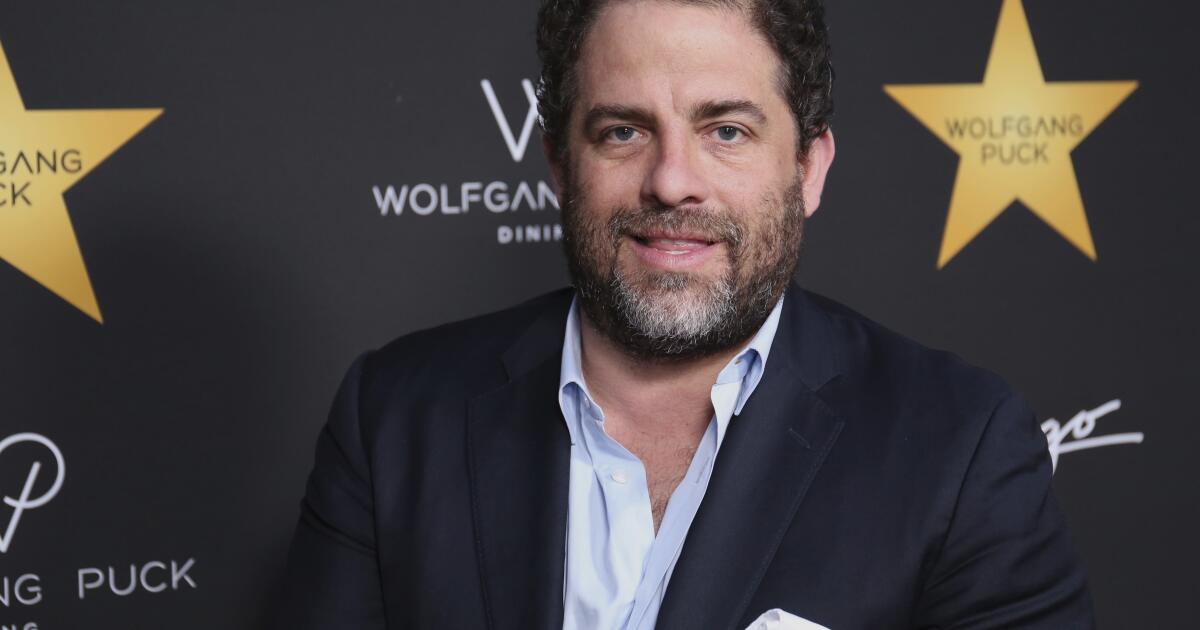
Controversial director Brett Ratner, whose documentary “Melania,” about the first lady, premiered last week, found himself in the headlines once again over his alleged ties to Jeffrey Epstein.
A photograph, part of the trove of files released Friday in the Department of Justice’s investigation into Epstein, shows Ratner sitting on a couch with his arms wrapped around a woman, whose identity is concealed. She is sitting next to Epstein and a second woman, who is also redacted in the photo and is sitting at the far end of the couch next to the disgraced financier. It is unclear where the photo was taken or when.
The filmmaker is among several prominent individuals from the worlds of entertainment, technology, politics and business — including L.A. Olympics boss Casey Wasserman — who have turned up among the millions of files that the Justice Department has released.
Epstein died by suicide in 2019 in Manhattan Correctional Center while awaiting trial on sex trafficking charges.
Ratner’s name also surfaces in a number of emails contained in the released files in which Epstein discusses his attempts to connect with the director and descriptions in which their social circles overlap.
It is not the first time Ratner turned up in Epstein’s orbit. In December, his photo appeared in an earlier batch of files the department released.
In the undated photograph, Ratner is seen seated, hugging a shirtless Jean-Luc Brunel, a French modeling agent and an Epstein associate.
Brunel died of an apparent suicide in 2022 in a French prison while awaiting trial on charges that he had raped a minor.
Ratner has not been accused of any wrongdoing in connection with Epstein.
A spokesperson for the director did not immediately respond to a request for comment.
During a Monday appearance on “Piers Morgan Uncensored,” Ratner said that the recently released photograph was taken about 20 years ago. He said that the woman he is hugging was his then-fiancée, whom he declined to name, and that she had invited him to an event where the picture was taken.
“I’ve never been in contact with Jeffrey Epstein before that photo and never in contact with him after,” he said on the show.
Among the emails in which Ratner is mentioned, in December 2010, Epstein discusses a dinner he is having at “7:30” in which he says that he has invited Ratner but has not yet heard back.
In December 2010, it was widely reported that Epstein hosted a dinner at his Manhattan townhouse just months after he finished serving a prison sentence and house arrest for soliciting a minor for prostitution. The dinner was attended by a number of boldfaced names including Woody Allen and Andrew Mountbatten-Windsor, formerly Prince Andrew.
A year later, Epstein’s assistant appears to email Ratner saying, “Jeffrey would like to speak with you regarding [redacted] could you please give us a call.” It is unclear whether Ratner followed up.
In another heavily redacted email from 2018, Epstein writes to someone saying: “Hi I’m Jeffrey. brett Ratner thought we should meet.” He follows up with a second email asking whether Ratner had spoken to this person yet.
During the Cannes film festival in 2012, celebrity superpublicist and ubiquitous presence on the awards circuit Peggy Siegal emailed Epstein that she was sitting with Ratner about to watch a Roman Polanski documentary, adding that “Brett says ‘hi’ and he loves you!”
In other gossipy emails Siegal sent to Epstein, she cites Ratner in her listing of which power brokers and celebrities are in attendance at various parties and who is staying on whose yacht in St. Barts (Ratner, she wrote, was staying with his business partner, the Australian billionaire James Packer).
Siegal’s relationship with the convicted pedophile came under renewed scrutiny in 2019 after Epstein was arrested on sex trafficking charges, particularly as she helped facilitate his return to society following his prison sentence.
“Had I known that he had been accused of abusing underage girls, I would not have maintained a friendship with him,” she told the Hollywood Reporter.
Siegal could not be immediately reached for comment.
On Nov. 1, 2017 — the day The Times published its investigation in which six women accused Ratner of sexual misconduct — Epstein emailed lawyer Reid Weingarten: “brett ratner now oy.”
Ratner’s career was derailed nine years ago after The Times published detailed allegations against the director made by multiple women who accused him of harassment, groping and forced oral sex. Actor Olivia Munn claimed that Ratner masturbated in front of her when she delivered a meal to his trailer on the set of the 2004 film “After the Sunset.”
At the time, the director’s attorney Martin Singer rejected the women’s claims, saying that his client “vehemently denies the outrageous derogatory allegations that have been reported about him.”
Ratner’s agents at WME dropped him, as did his publicist, and projects were put on hold. Ratner parted ways with Warner Bros.
“I don’t want to have any possible negative impact to the studio until these personal issues are resolved,” he said in a statement.
In 2020, Ratner became embroiled in another Hollywood sex scandal, involving British actor Charlotte Kirk.
In a sworn court declaration, Kirk said she was victimized by then-Warner Bros. Chief Executive Kevin Tsujihara, Ratner, Packer and Millennium Films CEO Avi Lerner, stating that the men “coerced me into engaging in ‘commercial sex’ for them and their business associates.”
Singer, who represented the men, “categorically and vehemently” denied any wrongdoing on the part of his clients.
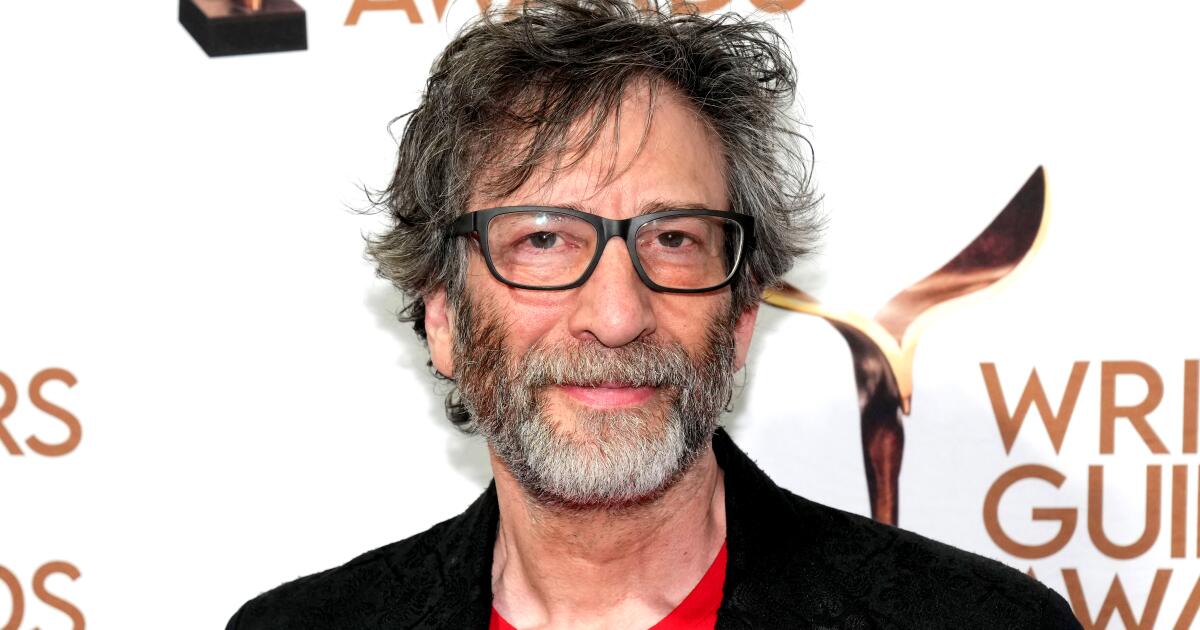
Writer Neil Gaiman denied sexual misconduct allegations first brought forth against him over a year and a half ago in a statement released Monday.
Gaiman, the bestselling fantasy author behind “The Sandman” comic books, and novels and shows “American Gods” and “Good Omens,” called the allegations, which emerged in the summer of 2024, a “smear campaign” that are “simply and completely untrue.”
“These allegations, especially the really salacious ones, have been spread and amplified by people who seemed a lot more interested in outrage and getting clicks on headlines rather than whether things had actually happened or not,” Gaiman wrote.
Five women first accused the 65-year-old British author of sexual misconduct in the summer of 2024, appearing in the Tortoise Media podcast “Master: The Allegations Against Neil Gaiman.” The women claimed Gaiman had them call him “master” during their alleged sexual encounters.
Eight women then accused the author of assault, abuse and coercion in an article published by New York magazine just over a year ago.
Scarlett Pavlovich, Gaiman’s former nanny, filed a lawsuit against the author and his estranged wife Amanda Palmer, almost exactly a year ago, accusing the couple of human trafficking. She alleged that she was brutally and repeatedly raped and sexually assaulted by Gaiman while working for the couple without pay.
“Gaiman repeatedly physically and emotionally abused Scarlett, raping her vaginally and anally, humiliating her, forcing her into sexual conduct in front of Gaiman’s child, and forcing her to touch and lick feces and urine,” the complaint states. Gaiman called Pavlovich “slave” and ordered her to call him “master,” the complaint states.
The abuse took place while Pavlovich was providing babysitting services for the couple in New Zealand in 2022, according to the suit.
All other allegations against the author stemmed from the 1990s to 2022, when he was living in the United States, Britain and New Zealand.
The author has sold more than 50 million copies of his books worldwide, and many have received film and television adaptations over the years. His work drew a large female readership, typically uncommon for comic-book writers. The allegations clashed with the self-proclaimed feminist writer’s public persona.
Gaiman has spent the last year out of the spotlight, after publishing company Dark Horse Comics cut ties with him shortly after the New York magazine article was published. Gaiman was also dropped from various film and TV adaptations of his work, including the final season of Amazon’s “Good Omens” and the streamer’s new “Anansi Boys” TV series.
He was also left out of press for the final season of Netflix’s “The Sandman” last year and Disney halted development of “The Graveyard Book” months after the initial allegations.
The author last publicly addressed the allegations a day after the New York magazine article was released, and wrote he had stayed quiet “both out of respect for the people who were sharing their stories and out of a desire not to draw even more attention to a lot of misinformation.”
At the time, Gaiman wrote that he “could have and should have done so much better,” admitting that he “was obviously careless with people’s hearts and feelings, and that’s something that I really, deeply regret. It was selfish of me. I was caught up in my own story and I ignored other people’s.”
Gaiman’s most recent statement comes just days after an unidentified Substack user who goes by TechnoPathology posted the latest in a series of articles over the last year defending the fantasy author.
Gaiman claimed he hasn’t been in contact with the anonymous poster but would “like to thank them personally for actually looking at the evidence and reporting what they found, which is not what anyone else had done.”
He said “the actual evidence was dismissed or ignored” by most reporting, including “mountains” of “emails, text messages and video evidence that flatly contradict” the claims.
The author also announced in the statement that he’s been working on a book throughout the “strange, turbulent and occasionally nightmarish year and a half.” The project is his longest since the 450-plus-page “American Gods,” he said.
“It’s a rough time for the world,” Gaiman wrote. “I look at what’s happening on the home front and internationally, and I worry; and I am still convinced there are more good people out there than the other kind.”
I’M A Celeb AITCH had a secret snog with a stunning blonde podcast queen -15 years his senior – weeks before jetting Down Under.
The Brit-Award winning rapper locked lips with manifestation guru Francesca Amber at showbiz bash the Pride of Britain Awards, London in October, just a fortnight before he flew to Australia to take part in the ITV reality show.
Sign up for the Showbiz newsletter
Thank you!
I’M A Celeb AITCH had a secret snog with a stunning blonde podcast queen who is 15 years his seniorCredit: GettyThe Brit-Award winning rapper locked lips with manifestation guru Francesca Amber at showbiz bash the Pride of Britain AwardsCredit: Getty
Cheeky Aitch, who was 25 at the time, hit it off at the free bar with author Francesca, 40, and was seen cracking jokes with the manifestation guru in the corner.
An onlooker revealed: “Aitch is a bit younger than Francesca but didn’t lack any confidence, he has bags of character and he was showing off and making her laugh, they were having a right giggle.
“By the end of the evening they were kissing in front of everyone, it was quite romantic. Aitch has got loads of charisma and can hold his own, he’s no boy when it comes to flirting, so you can see how he won her over. They exchanged numbers before heading off into the night.”
Mum-of-three Francesca is still single, and Aitch’s spokesman declined to comment.
Following his I’m A Celeb stint, fans were convinced Aitch was falling in love with co-star former EastEnders actress Shona McGarty, 34, after they were seen having heart-to-hearts on camera and play fighting.
The pair had raised hopes of a jungle love story earlier in the series after rapper Aitch said he had a “soft spot” for the former EastEnders actress.
But upon exiting camp Mancunian Aitch shut down rumours of a romance. He said: “No, Shona’s just a cool person. I feel like me and Shona are just cut from the same cloth in a way. We just have the same sense of humour.
Asked if there is any chance of a romance, Aitch responded: “No, not at all. That’s just a good friend of mine.”
Previously he has said: “I love dating a girl who is understanding and who can have a laugh with. I like it when I feel like my girlfriend is my best mate and understands me.”
Just before the rapper flew into the jungle it was revealed that he had parted ways with psychology student Lois Cottam.
A source at the time said: “Aitch and Lois still have a lot of love for each other but they decided they are better off as friends.
“They enjoyed the time they spent together. Things ended amicably between them.”
Aitch and Lois, are understood to have dated for at least a year.
We revealed that the pair were dating in May 2025, reporting that he had whisked her off for a trip to New York.
They also holidayed on the Greek island of Santorini in the summer but kept their relationship under wraps, with Aitch, real name Harrison Armstrong, not sharing pictures of them together on social media.
Mum-of-three Francesca is still single following the kissCredit: Getty
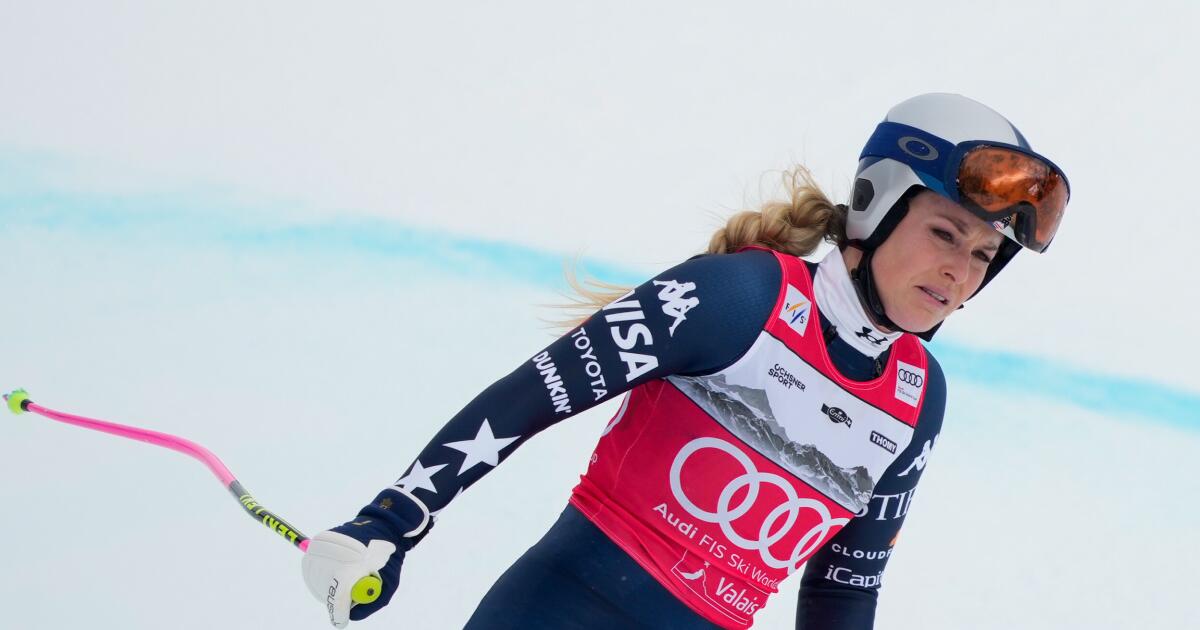
Lindsey Vonn sat out a World Cup super-G race Saturday after crashing and injuring her left knee a day earlier but remains on track for the Milan Cortina Olympics, her coach told the Associated Press.
“No she is not racing today but preparing for Cortina as usual,” Chris Knight, Vonn’s personal head coach, said in a text message to the AP.
Vonn then posted on Instagram, “Unfortunately, I won’t be able to race today,” adding, “Thank you for all of the love and support I have received. Means the world to me.
“Doing my best right now….,” Vonn concluded with praying hands and fingers-crossed emojis.
Vonn crashed in a downhill in Crans-Montana, Switzerland, on Friday and ended up in the safety nets. After skiing down to the bottom of the course, she was airlifted away for medical attention.
It still wasn’t clear what her injury was.
“I crashed today in the downhill race in Switzerland and injured my left knee. I am discussing the situation with my doctors and team and will continue to undergo further exams,” Vonn wrote on Instagram on Friday.
Vonn, a 41-year-old American, is expected to be one of the biggest stars of the Winter Games, which open next Friday. Her first race comes two days later in the women’s downhill.
Saturday’s super-G was slated to be her final race before the Games.
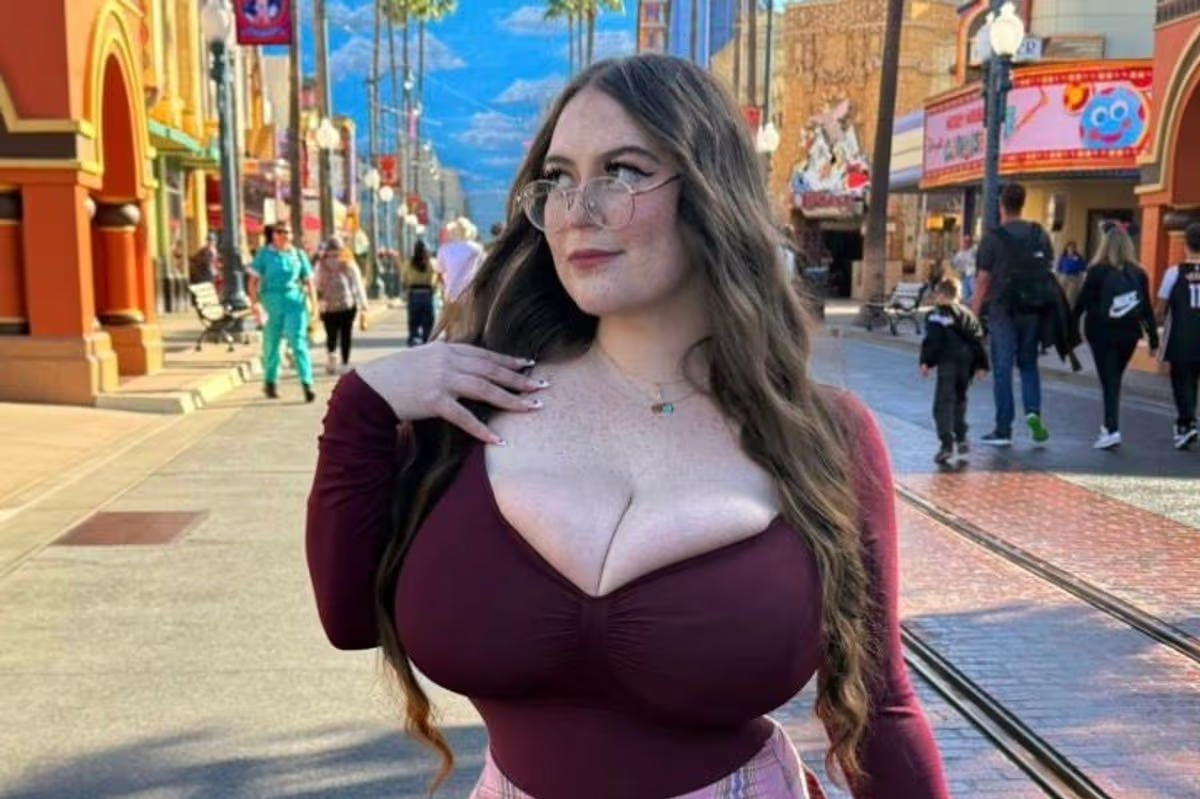
Summer Robert, 28, claims she was asked to leave Disneyland because staff deemed her outfit “inappropriate”. She says she was unable to cover up her boobs properly
Summer Robert recently visited Disneyland in America (Image: Summer Robert)
She currently has R-cup breasts, but they could grow even bigger, as she suffers from something called Macromastia. This is the medical term used to describe having abnormally large breasts. The health problem can actually cause many issues such as chronic back, neck and shoulder pain and headaches, and she recently explained how people can misunderstand things about how she looks.
In an open conversation, Summer, who has over 200,000 Instagram followers, explained: “I was absolutely heartbroken. You go to the happiest place on earth, expecting a wonderful time, but instead I was treated horribly. I have a medical condition I can’t control and, because I can’t find clothes that fully cover my 30R chest, I was kicked from the park.
“Being followed into a shop by staff like I was a criminal simply for existing in my own body is a level of humiliation I wouldn’t wish on anyone.”
Summer said she had visited Disney before and worn a similar outfit, but she’s never previously had any problems. She has been to Orlando and Paris with “no complaints” about her choice of clothing.
During her trip, she was wearing a skirt and a long-sleeved top, something she thought was more than acceptable for the occasion. However, according to her, some members of staff had other ideas.
Summer said: “A male employee approached me and said ‘This is just to let you know someone has complained about what you’re wearing’. I asked him what was wrong with my outfit, and he shrugged, and gave me a look that basically said ‘nothing’.
“I told him there was nothing inappropriate about what I was wearing. I was dressed the same as most people there, the only difference being that I have larger breasts. He laughed and said ‘Trust me, I’m trying not to look — you’re good’.
“As I started to walk away, an older female employee came up to me and began shouting. She said ‘I’m a mother, an aunt and a daughter and I can tell you’re dressed ridiculously. You need to go to your car and get a sweatshirt to cover them up’.
“I told her I didn’t have a sweatshirt, it was 30° heat, and asked why I would. She then told me I needed to buy one from the Disney store or leave.”
At this point, Summer claimed she was “yelling”, which made the male employee “extremely uncomfortable”. Summer said he kept glancing at her as if to apologise for her behaviour.
Summer told them they were about to leave anyway, which seemed to please the female member of staff. However, it’s claimed she then followed Summer and her friends.
“My friend and I went into a store outside of the park, thinking she had stopped following us,” she added. “While we were browsing, she approached us again and said ‘Unless you’re in here buying something to cover them up, you need to leave NOW.’
“I had remained calm the entire time, because I didn’t want to draw attention to myself, and was honestly embarrassed, but at that point I spoke up. I told her ‘We’ve left the park. I’m not buying something to cover up.
“There is absolutely nothing wrong with my outfit, there are people walking around in sports bras and leggings. I am fully covered. The only difference is that I have large breasts, which I cannot help’.
“She changed her story and claimed the issue was now my skirt, a skirt that had shorts underneath. This was despite her repeatedly saying I needed to ‘cover those up’, clearly referring to my chest. A back-and-forth followed. People were staring, and several parents were visibly shaking their heads at her in disapproval.”
Summer stated the entire experience left her feeling “disgusting”, and led to her crying all the way home. They spent around four hours in the park before the events unfolded, and also received a free fast pass ticket for a ride from a worker prior to this.
She added that she now won’t return to California Disney, as the incident left her feeling so “embarrassed”. Summer continued: “It’s sad, because we were having such a good time until it happened, and now I just have a sour taste in my mouth.”
As is always the case, the Grammys this year will be dominated by pop, rap, country and rock. But the best races often lie in the less mainstream genres. Take best jazz vocal album, where Samara Joy, Dee Dee Bridgewater and Bill Charlap, Michael Mayo, Terri Lyne Carrington and Christie Dashiell and Nicole Zuraitis are competing for the honor.
The highly impressive group reflects the current state of jazz, where both young guns and veterans are combining to bring the music to a new swell of fans. To talk about the present state of jazz, The Times brought together 26-year-old Joy and 75-year-old Bridgewater. What followed is an incredible conversation on politics, race, equality and mutual fandom.
You both have had Grammy success. But is it still just as thrilling to be nominated?
Dee Dee Bridgewater: I can speak on that because I haven’t been nominated in years. And yeah, it’s a thrill when you’re nominated and you haven’t been and you’ve done something that your peers think is Grammy worthy. I don’t know about Samara, but for me, I don’t do any of my recorded projects with the intention of getting a Grammy nomination, which seems to be the goal of a lot of younger artists. So that me doing something that I just was trying to chronicle and because of this work that Bill and I have been doing off and on for the last few years, it’s like the icing on the cake. It’s wonderful.
Samara Joy: Agreed, when I say I’m just grateful to be here, like in this space, being able to talk about this in this way, I mean it. It wasn’t the intention behind making the music that I love to make with the people I love to make it with. And when kids come up to me and they say, “Because of you, now my goal is to be a Grammy winner.” I’m like, “You’ve already strayed way off course. We need to come back.” And realize that the accolades and the awards and the acknowledgment is beautiful because it’s coming from your peers and we’re celebrating each other. It’s amazing, it’s exciting, it’s wonderful. I’m grateful for it. But at the same time, the other 364 days of the year, we’re working and we’re touring and we’re performing because we love it. And it’s with the intention of seeing what else we can learn and express and finding new ways to do that. I’m grateful to be in the conversation, but also I’m using it even more as an opportunity to thank the people who support us and who listen to the music and who come to the concerts to say that that’s what I love. So, the fact that people have connected with it enough to acknowledge it on such a high level is amazing, but the love of it never goes away.
Bridgewater: Yes, I agree with that, Samara. When I do my work, because I like to call myself an artist who flies under the radar, I’m basically out there trying to bring joy to people. With the music that I do, I try to change up the projects depending on what is going on in the world or depending on what I’m thinking about and feeling about society and just trying to make a connection with people and be a conduit for the people and speak through the songs, things that I think will bring them joy or get them to think about some things that they are not wanting to say out loud. So, that’s what I’m doing right now. Then with my music, what I’m trying to do is bring more attention to women in jazz. For the last few years, aside from my occasional concerts with Bill [Charlap], I have been working with women. I have created a band. I call it We Exist! We are doing socially conscious music, some protest songs, and that is what I’m taking around the world. Generally, people come up to me and say, “Thank you so much for saying these things for us. We need to hear this.” My concern at my older age, now that I’m in my golden years, is the state of society and the world and this political crisis that we are in. So, I’m trying to speak about this in a way that people can hear it without getting on some kind of political bandstand and speaking in that way. I think that the world is in danger politically and I think our democracy is in danger. That’s my concern and that’s what I’m trying to do through my music. Also, I want people to see more women in the jazz space, and I think as an elder it’s almost an obligation of mine to lead that front and present this and present this image. I get many women that come up and say, “Thank you so much for doing this for women.” So, that’s where my head is right now.
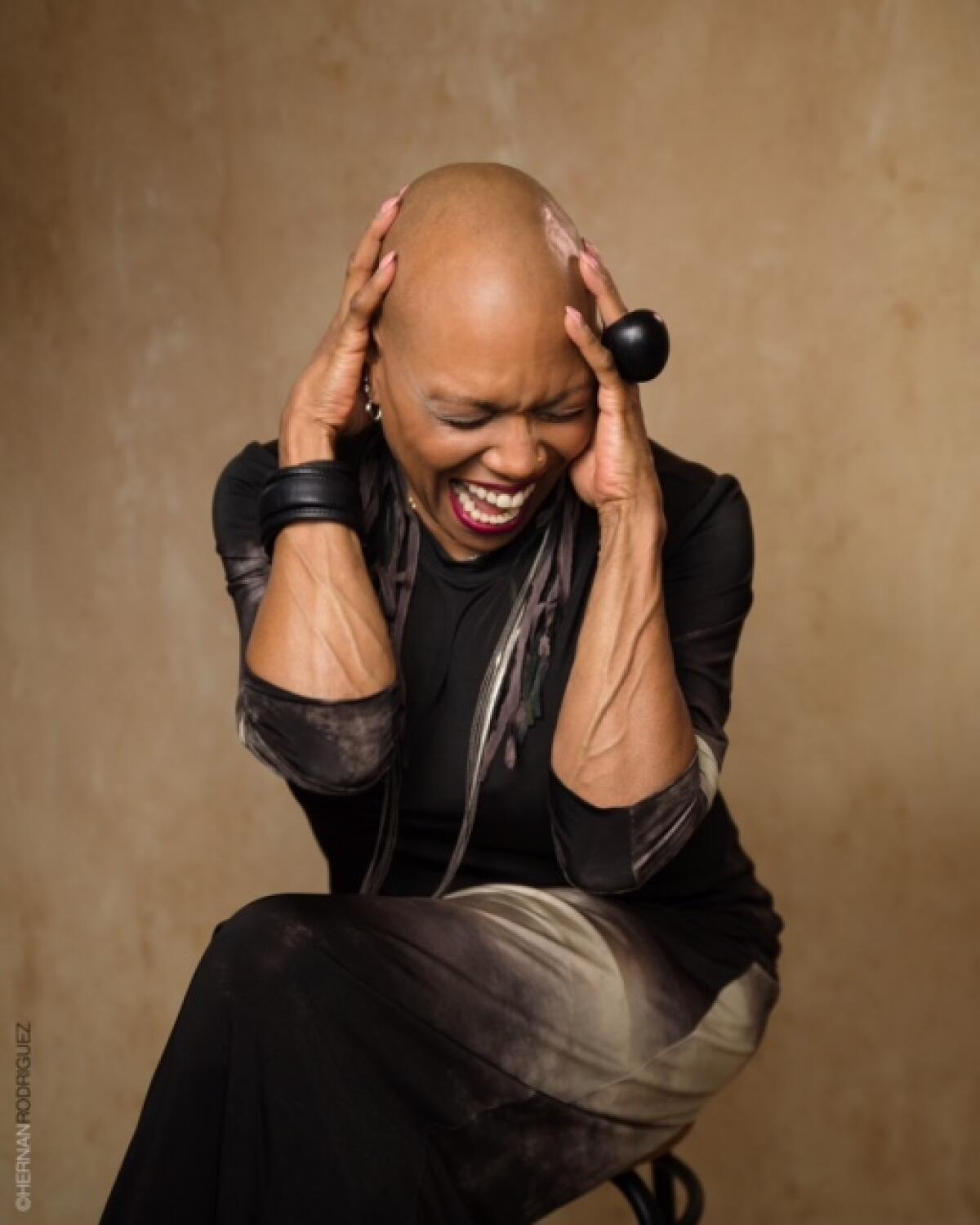
Dee Dee Bridgewater
(Hernan Rodriguez)
How exciting is it to see that, of the jazz vocal nominees, four of the five are women?
Bridgewater: Yeah, and isn’t that wonderful? But I can say this, for vocal jazz, it usually is women. This has been the place where we have been allowed to shine as vocalists. It’s been for many, many years, the only place where we’re allowed to shine. So, when you get female instrumentalists besides Terri Lyne [Carrington] because Terri Lyne broke through in a period of when there were not a lot of jazz drummers, so that she worked with Herbie [Hancock] and she worked with Wayne [Shorter]. They gave her a platform that most women are not granted. Of course, also, one has to be extremely talented. And Terri Lyne can stand beside any man and hold her own and outdo many men. That’s not the point. The point is that she had that opportunity. They gave her that opportunity and then she’s been able to pay it forward. But to see instrumentalists like Lakecia Benjamin who has really come to the forefront as an alto saxophonist and to see her get Grammy nominations, that’s something that, for me, is huge.
Samara, talk about what you’re seeing in the scene today in terms of gender disparity and overall vibe.
Joy: I’ve had the opportunity to play with some amazing ones. I went to the Vanguard a few weeks ago and sat in with [Christian] McBride and Savannah Harris was on drums. I played with Alexandra Ridout, who is an incredible trumpet player as well. Although I understand the disparity in the current time and throughout history, I also understand that I might be living through a privileged time where I just kind of see women around me everywhere. So, I don’t understand what it’s like to be without it on the scene. I can read about the fact that maybe at a time saxophone was taking precedence over jazz vocals or with each era, there’s a new focus. But I guess on the scene now I’m proud to be able to see all of these wonderful women composers and instrumentalists stepping to the forefront.
Both of you have made music that is very uplifting as well. In these difficult times, music is something that can lift the spirits and bring people together. For each of you talk about making music that uplifts because there are so many great jazz standards that have the point of lifting up the world.
Bridgewater: I’m here in town at Birdland with Bill Charlap and we are doing songs from the American Songbook primarily and Duke Ellington. It has nothing to do with anything that’s going on today, politically speaking. Last night was our first show and the audience just loved it. So, there is that side that one can take. And I’ve been very apolitical. It’s just since the two Trump administrations and the Gaza war that happened and some other things that I’ve seen going on outside of the United States that have really incensed me that I felt the need to speak out in the way that I am, you know. But it is wonderful to go to a show and have people come to see a show and be able to completely lose themselves and be outside of what is going on for that span of time that they are with the artists. For the other side, when I do these socially conscious songs, people come and say, “Oh my God, thank you. I needed to hear that. I needed to hear someone.” Because my point at the end of my show is I say, “We the people have the power, we can’t forget that. We are the people that can motivate the change and protect our democracy because we see democracy being chipped away around the world.” I grew up in an era where there was a distinct difference between Black and white and I was not able to be served when I would go to sit at a lunch counter as a little Black girl. So, I’ve experienced both sides. My awareness is different than Samara’s and I feel the alarms. The alarm bells are just ringing for me. But when I come back and I do a show with Bill, sometimes it’s difficult for me to get into these sweet, innocent songs because they don’t have the gravitas that I’m experiencing doing a Nina Simone song like “Mississippi Goddam.” For me, artistically speaking, it’s been interesting to find a balance. Samara, you do these beautiful songs with that stunning voice of yours. Your take is totally different. And you’ve grown up in another era.
Joy: This is the first time in my life that I have not only been aware of what’s happening in the world but also feel compelled. Like, I have a responsibility to do something about it because I’ve never been so aware of what is happening around me as I am right now. I don’t know if that’s a good thing or bad thing but I just feel like, ”OK, I’m an adult and this is the world that I live in and I have a responsibility as one of the people living in this world to not only do something about it right now but do something for the next generation of people who are going to have to live in the world that results in what we do right now.” It’s scary. I don’t know how people do it, especially because it’s not as difficult right now. It’s not as difficult for me to say something that might have been for an Abbey Lincoln or Nina Simone or whoever. I’m also living in a sort of luxury in that way that I don’t have to speak out and be the only one who is doing so and then be proven right later. In that way, I’m like, “I have to because of all these women who have gone before me, who made that difference and who stood and didn’t get appreciated or thanked for it in the moment, have made it so that the world that I live in now, as crazy as it is, I’m able to have a platform in the first place and be able to lead some sort of charge — or at least spread some sort of message so that the world that we’re building for the ones who come later. It’s not just about me right now, it’s all interconnected.” It feels a little heavy, a little scary. I’m still trying to figure out where my voice fits.
Bridgewater: You know what, honey, I get that. When I was your age, I honestly was not at all concerned about politics and what was going on. I was concerned about my Blackness because I’ve experienced our people being named four different times. When I was a little girl, I was colored, then I was Negro, and when they said Black, I was incensed because your hair is black. Our skin is brown. But I understand where you’re coming from because you are coming up in a different time. And you are just beginning to navigate all of the politics, so you’re going to probably go through a similar kind of thing that I went through when I was young, and I concentrated on just writing my music and things that spoke to me. You’re fine where you are and you’re going to learn to navigate all of this in time and what I would hope for you is that you don’t feel a weight. We’re all going to feel this heaviness because of the situation that we’re in but as an artist, I want you to feel free to discover and do the things that you feel in your spirit and not feel led to do something because it’s what’s going on around you. You’ve got to continue to stay true to yourself, which you’ve been doing, which is wonderful. I’m at a different stage in my life. I’m in the last quarter of my life. I’m 75 and I’ve been through all of this stuff. I feel like I’m at a place where if I want to say something instead of not like I’ve done in the past, I’m going to speak my mind. I want to say this to Samara and I’ve said this to her before. But I am so proud of you and what you are doing. And you have a voice that the gods have blessed you with, Samara. At my age to be in the same space with you for the Grammys, I am so tickled. I love you so dearly. I truly do, and you know that. The times that we’ve been on stage together, it’s been wonderful for me. I want you to know that there are people who are your elders who, besides loving you like we do, we depend on you, Samara. You have been able to enter the space and bring jazz to the world in a way that we were not.
Joy: I love you too. I’m sitting here thinking about one of the first times I got the chance to see you perform at Blue Note. I was there with my professor at the time. I was so nervous, but I’m so honored to know you. I’m so honored to have loved you from afar and now get the chance to love you up close and honor you and appreciate you and shower you just as you have showered me.
If you were going to do one song together at the Grammys, what would you want to do?
Joy: “I Wish I Knew How it Would Feel to be Free,” [Nina Simone].
Bridgewater: That’s in my repertoire. I do that. That would be a great one, Samara. I’m on board. We would tear it up.
The U.S. Department of Education has given San José State 10 days to comply with a list of demands after finding that the university violated Title IX concerning a transgender volleyball player in 2024.
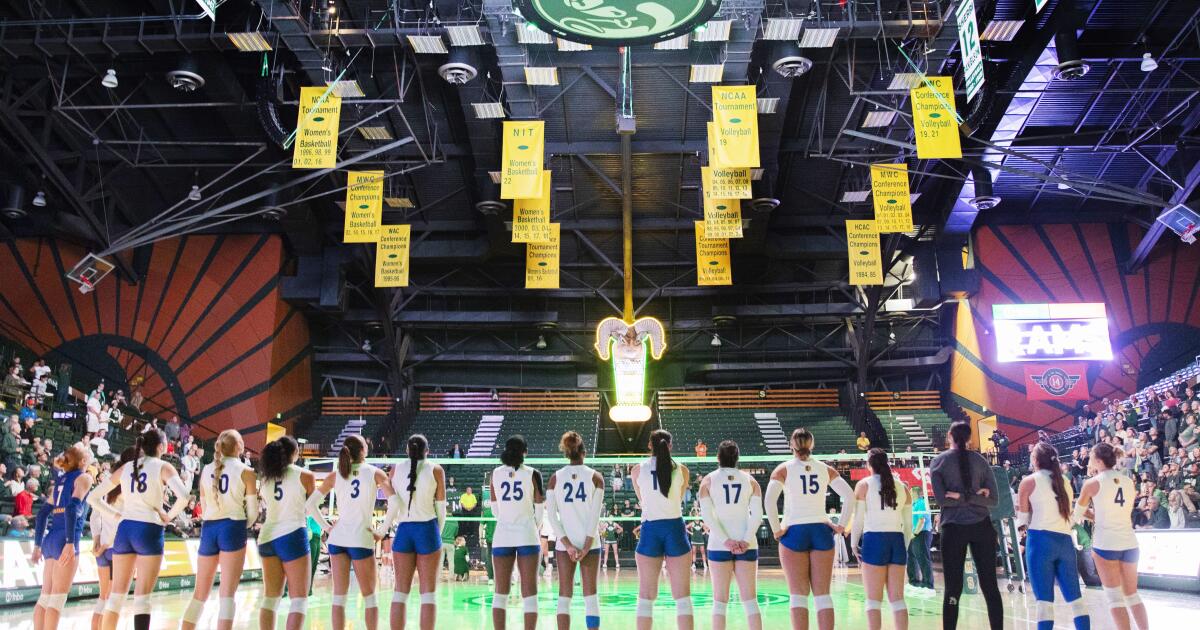
A federal investigation was launched into San José State a year ago after controversy over a transgender player marred the 2024 volleyball season. Four Mountain West Conference teams — Boise State, Wyoming, Utah State and Nevada-Reno — each chose to forfeit or cancel two conference matches to San José State. Boise State also forfeited its conference tournament semifinal match to the Spartans.
The transgender player, Blaire Fleming, was on the San José State roster for three seasons after transferring from Coastal Carolina, although opponents protested the player’s participation only in 2024.
In a news release Wednesday, the Education Department warned that San José State risks “imminent enforcement action” if it doesn’t voluntarily resolve the violations by taking the following actions, not all of which pertain solely to sports:
1) Issue a public statement that SJSU will adopt biology-based definitions of the words “male” and “female” and acknowledge that the sex of a human — male or female — is unchangeable.
2) Specify that SJSU will follow Title IX by separating sports and intimate facilities based on biological sex.
3) State that SJSU will not delegate its obligation to comply with Title IX to any external association or entity and will not contract with any entity that discriminates on the basis of sex.
4) Restore to female athletes all individual athletic records and titles misappropriated by male athletes competing in women’s categories, and issue a personalized letter of apology on behalf of SJSU to each female athlete for allowing her participation in athletics to be marred by sex discrimination.
5) Send a personalized apology to every woman who played in SJSU’s women’s indoor volleyball from 2022 to 2024, beach volleyball in 2023, and to any woman on a team that forfeited rather than compete against SJSU while a male student was on the roster — expressing sincere regret for placing female athletes in that position.
“SJSU caused significant harm to female athletes by allowing a male to compete on the women’s volleyball team — creating unfairness in competition, compromising safety, and denying women equal opportunities in athletics, including scholarships and playing time,” Kimberly Richey, Education Department assistant secretary for civil rights, said.
“Even worse, when female athletes spoke out, SJSU retaliated — ignoring sex-discrimination claims while subjecting one female SJSU athlete to a Title IX complaint for allegedly ‘misgendering’ the male athlete competing on a women’s team. This is unacceptable.”
San José State responded with a statement acknowledging that the Education Department had informed the university of its investigation and findings.
“The University is in the process of reviewing the Department’s findings and proposed resolution agreement,” the statement said. “We remain committed to providing a safe, respectful, and inclusive educational environment for all students while complying with applicable laws and regulations.”
In a New York Times profile, Fleming said she learned about transgender identity when she was in eighth grade. “It was a lightbulb moment,” she said. “I felt this huge relief and a weight off my shoulders. It made so much sense.”
With the support of her mother and stepfather, Fleming worked with a therapist and a doctor and started to socially and medically transition, according to the Times. When she joined the high school girls’ volleyball team, her coaches and teammates knew she was transgender and accepted her.
Fleming’s first two years at San José State were uneventful, but in 2024 co-captain Brooke Slusser joined lawsuits against the NCAA, the Mountain West Conference and representatives of San José State after alleging she shared hotel rooms and locker rooms with Fleming without being told she is transgender.
The Education Department also determined that Fleming and a Colorado State player conspired to spike Slusser in the face, although a Mountain West investigation found “insufficient evidence to corroborate the allegations of misconduct.” Slusser was not spiked in the face during the match.
President Trump signed an executive order a year ago designed to ban transgender athletes from competing on girls’ and women’s sports teams. The order stated that educational institutions and athletic associations may not ignore “fundamental biological truths between the two sexes.” The NCAA responded by banning transgender athletes.
The order, titled “Keeping Men Out of Women’s Sports,” gives federal agencies, including the Justice and Education departments, wide latitude to ensure entities that receive federal funding abide by Title IX in alignment with the Trump administration’s view, which interprets a person’s sex as the gender they were assigned at birth.
San José State has been in the federal government’s crosshairs ever since. If the university does not comply voluntarily to the actions listed by the government, it could face a Justice Department lawsuit and risk losing federal funding.
“We will not relent until SJSU is held to account for these abuses and commits to upholding Title IX to protect future athletes from the same indignities,” Richey said.
San José State was found in violation of Title IX in an unrelated case in 2021 and paid $1.6 million to more than a dozen female athletes after the Department of Justice found that the university failed to properly handle the students’ allegations of sexual abuse by a former athletic trainer.
The federal investigation found that San José State did not take adequate action in response to the athletes’ reports and retaliated against two employees who raised repeated concerns about Scott Shaw, the former director of sports medicine. Shaw was sentenced to 24 months in prison for unlawfully touching female student-athletes under the guise of providing medical treatment.
The current findings against San José State came two weeks after federal investigators announced that the California Community College Athletic Assn. and four other state colleges and school districts are the targets of a probe over whether their transgender participation policies violate Title IX.
The investigation targets a California Community College Athletic Assn. rule that allows transgender and nonbinary students to participate on women’s sports teams if the students have completed “at least one calendar year of testosterone suppression.”
Also, the Education Department’s Office of Civil Rights has launched 18 Title IX investigations into school districts across the United States on the heels of the Supreme Court hearing oral arguments on efforts to protect women’s and girls’ sports.
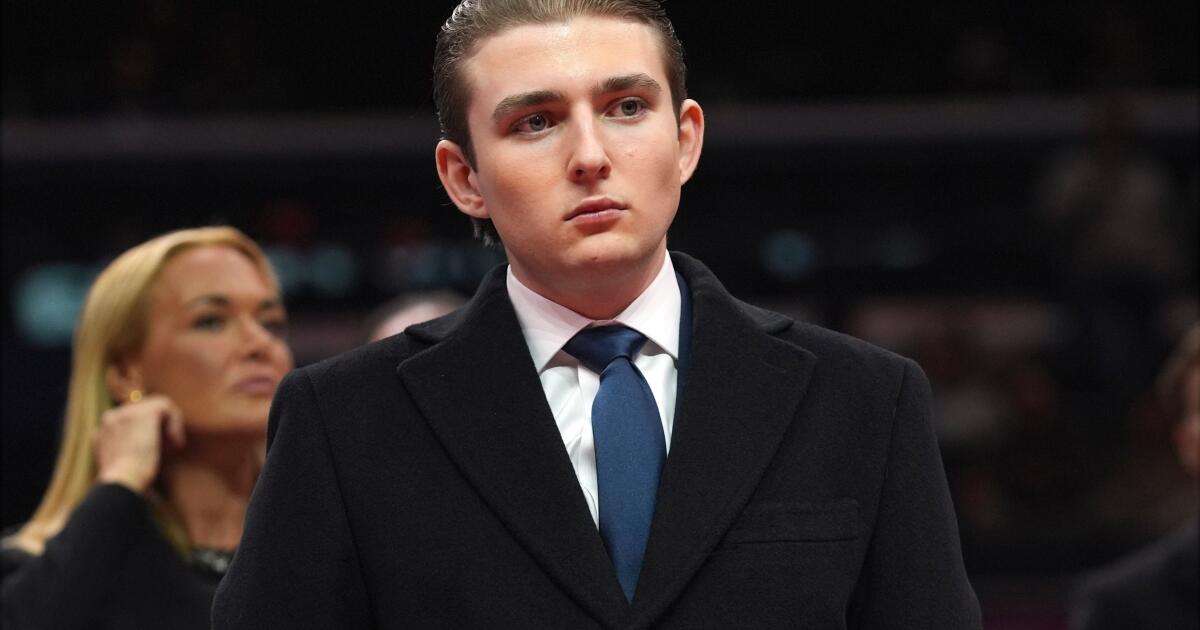
LONDON — The crime was in London, the suspect was Russian and the witness who saw the beating on a video call was in the United States and happened to be the youngest son of President Trump.
Barron Trump called police in the British capital and his intervention more than a year ago led Wednesday to the assault conviction of Matvei Rumiantsev, who admitted he was jealous of his girlfriend’s friendship with Trump.
Trump said he placed a late night FaceTime call to the victim, a woman he met on social media, and was startled when it was answered by a bare-chested man.
“This view lasted maybe one second and I was racing with adrenaline,” Trump told police. “The camera was then flipped to the victim getting hit while crying, stating something in Russian.”
The call was hung up after a few seconds and Trump then phoned London police in a recording in which Trump desperately pleaded for help as the dispatcher insisted he answer basic questions about the victim.
“How do you know her?” the operator asked after a back-and-forth dialog.
“Can you stop being rude and actually answer my questions?” the dispatcher said. “If you want to help the person, you’ll answer my questions clearly and precisely, thank you. So how do you know her?”
Police went to the address on Jan. 18 and arrested Rumiantsev, 22, a receptionist who lived in London.
He was acquitted in Snaresbrook Crown Court of rape and choking the woman on the night Trump called police, and an additional rape and assault alleged in November 2024.
Rumiantsev testified that he was jealous of Trump but that he also felt badly for him because he thought that his girlfriend was leading him on.
Defense lawyer Sasha Wass said that Trump didn’t know the woman had a boyfriend and questioned how much he could have seen in five or seven seconds of video.
Wass said that the woman exploited her ties to Trump to make her boyfriend envious in a “relationship full of dramas.”
Trump, 19, the only child of Donald and Melania Trump, didn’t testify in the case.
Justice Bennathan advised jurors before they began deliberating to treat Barron Trump’s accounts — on the recording of his call to police and his follow-up email to investigators — with caution because he hadn’t been subjected to cross-examination.
“If he had done so, no doubt, he could have been asked about things such as whether he ever got a good view of what happened, whether he actually saw (the woman) being assaulted, or jumped to this conclusion on the basis of her screams,” Bennathan said. “He might also have been asked whether his perception was biased because he was close friends with (her).”
Rumiantsev was also convicted of perverting the course of justice, because he sent the woman a letter from jail asking her to retract her allegations. He’s scheduled to be sentenced on March 27.
Sheraz Malik was convicted by a jury at Birmingham Crown Court
An asylum seeker has been found guilty of two counts of raping an 18-year-old woman in a park in Nottinghamshire.
A trial at Birmingham Crown Court heard the woman had been drinking at Sutton Lawn park in Sutton-in-Ashfield when she was attacked by Sheraz Malik, shortly after being raped by another man he was with, who has yet to be identified.
Malik, 28, had claimed the sex was consensual, but the jury returned unanimous guilty verdicts on two counts of rape and a not guilty verdict on a third.
It can be now reported that Malik is an asylum seeker who was born in Pakistan and lived in Italy, Germany and France before coming to the UK.
Judge Simon Ash KC adjourned the case for a mention hearing on 6 February so a date for sentencing Malik – who lived at an address in Bath Street in Sutton-in-Ashfield at the time – could be fixed.
A reporting restriction was put in place at Nottingham Crown Court in September last year, preventing any mention of the defendant’s immigration status until the trial had concluded.
Police said another suspect was still being “relentlessly” sought in relation to the case.
After highlighting the suspect’s background on his Facebook and X accounts, demonstrators gathered in the town to demand tighter rules on immigration.
Counter-protesters also turned out, but Nottinghamshire Live reported these were outnumbered.
Protests related to the case were held last summer
Warning: This article includes details that some readers may find distressing
Prosecution counsel Nicholas Corsellis KC previously told the court the woman had been drinking at the park with a male friend, and was drunk when she met Malik and a group of other men, who she had never seen before.
Her friend asked the group to “look after” her while he went to meet another friend and one of Malik’s associates took the woman to an isolated area of the park so she could go to the toilet, the court heard.
Corsellis said: “The first man forcibly raped her before bringing her back to the group.
“The defendant then decided he wished to have sex with her and took his turn to take her to a secluded spot, where he physically struck her while raping her.”
The jury were told Malik had grabbed her by the neck and hair as he raped her, and afterwards she sent a Snapchat message to a friend saying “please help me”.
“The one you told to look after me tried to rape me… and the one with the black T-shirt,” the message said.
“Please help, I can’t cope, I feel like killing myself.”
Corsellis told the jury that the complainant was “alone, drunk and was obviously a vulnerable person”.
Google
The woman told police she was attacked in Sutton Lawn park in Nottinghamshire
Malik, who gave evidence in English during the trial, said he had been playing cricket with a group of other men and smoking cannabis in the park before the attack.
He denied he had slapped her at any point and claimed the woman had told him “I really like you” and “I really enjoyed it”.
Later in his evidence, Malik was asked why a different name had been used to book him a coach ticket to leave the Nottinghamshire area after the attack.
He said a friend had booked the ticket for him, adding that the Home Office was “giving me £50 for every week”.
Addressing Malik in the dock, the judge said: “You have been convicted of very serious charges and I will need to sentence you in due course.
“The case will next be listed on 6 February to fix a sentence date.
“I have ordered a pre-sentence report to assess the level of dangerousness. You must engage with the probation service when they seek to engage with you.
“You will be remanded into custody at this stage.”
In a statement after the sentencing, Nottinghamshire Police confirmed Malik was a Pakistani national who followed proceedings through a Pashto interpreter.
The force said the investigation remained a priority.
Det Insp Nicole Milner said: “As is always the case for investigations of this nature, there are many people involved and they have all played a part to bring Malik to justice.
“I particularly want to acknowledge the work of Det Con Malgorzata Kacprzycka and Det Sgt Barry Haines, who have been crucial in bringing Malik to justice.
“Above all, I also want to acknowledge the bravery and resilience of the victim.
“She has shown great courage throughout and helped us to build a very strong case against Malik, whose version of events lacked credibility from the start.
“As a result of her evidence, the jury was able to see through his lies and to convict him on three counts of rape.”