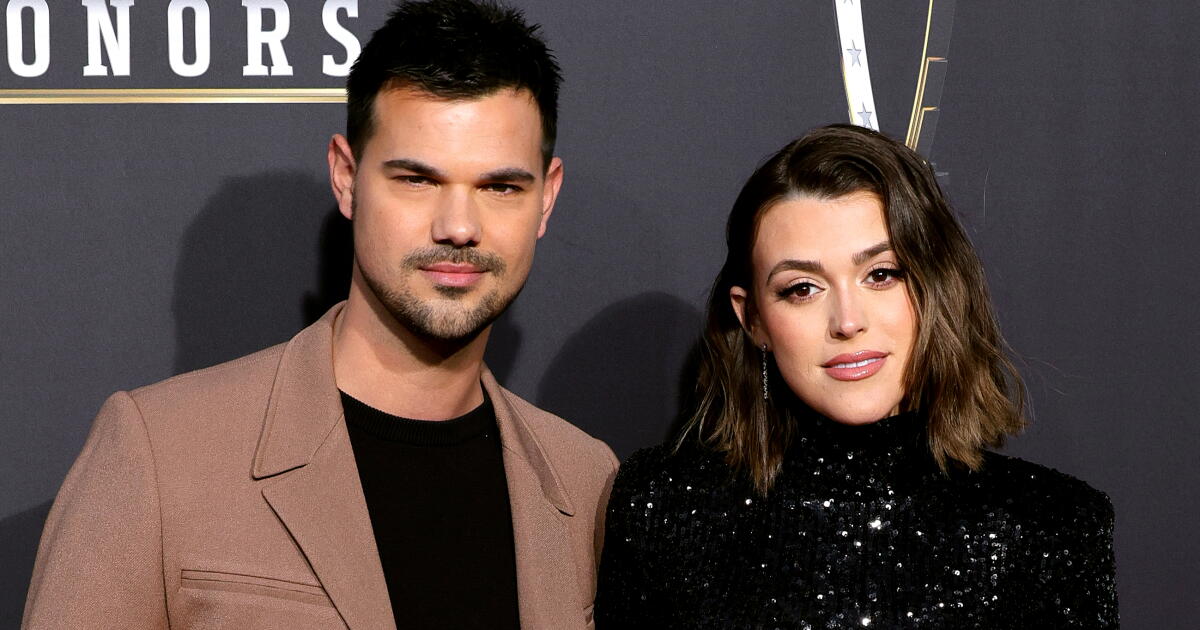
Last week, a woman filed a civil lawsuit against Nacua, alleging that on New Year’s Eve he made an antisemitic statement during a group dinner and later bit her shoulder. Attorney Levi McCathern told The Times before the lawsuit was filed that Nacua denied the allegations and that Nacua would “pursue all available legal remedies in response to these false and damaging statements.”
The California Post reported Wednesday that Nacua had checked into a Malibu rehab facility. A Rams official declined to comment.
In a statement to The Times on Wednesday, McCathern said Nacua “voluntarily entered a private facility to focus on his health, personal growth, and overall development — and I’m really proud of him for doing that ahead of his upcoming season.
“He is committed to using this time constructively so that he can return in the best possible position — both personally and professionally — to continue contributing to his team and the game he loves.”
The Rams are scheduled to begin offseason workouts under coach Sean McVay on April 20. In the statement, McCathern said that Nacua would complete the program in time to participate in Rams organized team activities. That part of the offseason program begins several weeks into the offseason.
“Puka is deeply grateful for the support he has received from his family, friends, Coach McVay, and his teammates,” McCathern said. “It is unfortunate that a trivial lawsuit has drawn attention to him during a time when he is committed to becoming a better person. I am excited to see what the future holds for this exceptionally talented young man.”
The lawsuit was the latest situation involving Nacua that cast a spotlight on the fourth-year pro.
During a livestream last December, Nacua criticized NFL officials and made a gesture regarded as antisemitic. Nacua apologized, and the Rams and the NFL issued statements condemning antisemitism and discrimination. But after the Rams’ loss to the Seattle Seahawks, Nacua criticized officials in a social media post from the locker room. The NFL fined him $25,000.
Nacua, 24, led the NFL with 129 receptions last season, was voted All-Pro and was a finalist for NFL offensive player of the year. He is entering the final year of his rookie contract, and he is eligible for an extension that could equal or surpass the deal Seattle Seahawks receiver Jaxon Smith-Njigba recently signed that includes $120 million in guarantees.
On Monday, at the NFL owners meetings, McVay repeatedly said, “I trust this kid’s heart,” and later said “he understands what the responsibility is, not exclusive to just the production on the field.”
General manager Les Snead described Nacua as “ young man, becoming,” who is “continuing to evolve” as a person and player. Snead and Tony Pastoors, the Rams’ chief operating officer both said on-the-field performance is not the only factor that is taken into account when making decisions regarding contract extensions.
“It isn’t just, ‘OK, turn it on on Sundays and make decisions from there,’” Pastoors said. “We have to take in every data point we can.”
WASHINGTON — Inside the Supreme Court, as justices heard oral arguments in the case over birthright citizenship, President Trump became the first sitting president to attend such a proceeding.
Outside the court, the great-grandson of Wong Kim Ark — the San Francisco man whose landmark Supreme Court case affirmed birthright citizenship in 1898 — addressed a crowd of hundreds of people.
“Wong Kim Ark’s victory ensured that people like me and millions of others would be recognized as fully American, not outsiders in the country of our birth,” said Norman Wong. “This case transformed the 14th Amendment from words on paper into living promise. Today, that promise is still being tested.”
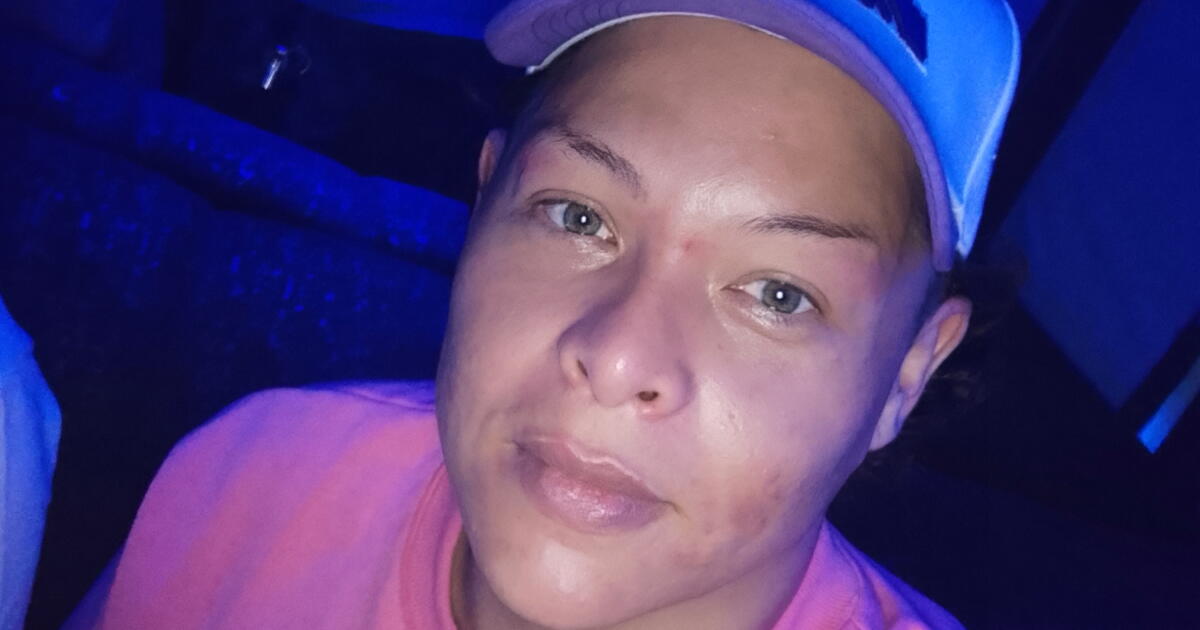
Surrounded by protesters in favor of birthright citizenship was a lone counter-protester. The woman, who wore a red baseball cap and a sweatshirt stating “Chicago flips red,” yelled into a megaphone as speakers addressed the crowd.
“Freedmen stand with Donald Trump,” she said as the Rev. William Barber II spoke. “America first. Americans first.”
The Rev. William Barber II speaks during a rally on protecting birthright citizenship outside the Supreme Court on Wednesday.
(Al Drago / Getty Images)
Undaunted, Barber noted that the 14th Amendment, ratified in 1868, makes clear that anyone born in the U.S. is a citizen.
“The 14th Amendment protects babies from a caste system,” Barber said. “They didn’t allow evil in 1868, and we’re not going to allow evil in 2026.”
“Stop lying, pastor,” the woman taunted him.
After Barber finished his remarks, the woman was drowned out by Aretha Franklin’s “Respect” playing over the speakers.
Inside the building, justices heard arguments over a Trump executive order which aimed to end birthright citizenship. The administration has argued that children born of parents who are in the country illegally or temporary visas should be denied citizenship.
A man from Cameroon said he chose to speak out because he doesn’t want future generations to become stateless and feel what he has felt. The man said he had been authorized to work in the United States Temporary Protected Status until the Trump administration terminated it last year.
“I know what it feels like to have your sense of belonging taken from you overnight,” he said.
Nancy Jeannechild, 69, traveled from Baltimore with a handwritten sign asking the justices to “Do your job.” She said Trump has amassed too much power and that the Supreme Court hasn’t stood up to him enough.
“This is another opportunity for them to do the right thing, and I hope that they will,” she said. “Just because Trump doesn’t like it doesn’t mean it’s not what’s in the Constitution.”
Araceli Hernandez, 29, attended the rally with her 1-year-old son. She said she immigrated from Honduras five years ago and that her son being born here means he has better opportunities to study, access to healthcare and a safe environment to live in.
“We came to represent the children who are not yet born because they also have a right to have a better future in this country,” she said.
Sen. Alex Padilla (D-Calif.) said he was confident birthright citizenship would prevail because the Constitution is clear. The fight is personal, he said, as the a proud American and son of immigrants.
“The moment I was born on U.S. soil I was born a citizen, and I’ll be damned if Donald Trump tries to take that away from me,” he said. “What’s on the line isn’t just a question about citizenship — it is about upholding the Constitution, respecting the rule of law and keeping the promise that the 14th Amendment has held for more than 150 years.”
After the arguments wrapped up, Cecilia Wang, who led the defense of birthright citizenship for the American Civil Liberties Union, addressed the crowd. She said she was confident that the Trump administration would lose the case.
“Whether you’re an indigenous American, whether you are descended from African Americans who were enslaved and free, whether you are the descendant of someone who came on the Mayflower or someone who arrived just before your birth, we all are Americans alike,” she said. “That is the principle that we stood up for together, all of us, in the Supreme Court of the United States today.”
Rock and Roll Hall of Famer Lindsey Buckingham was attacked by a woman in Santa Monica on Wednesday morning.
The Los Angeles Police Department confirmed that a woman with a history of stalking Buckingham, 76, tossed an unknown substance toward the former Fleetwood Mac guitarist and vocalist from a container as he entered a building for an appointment. According to law enforcement, Buckingham was not harmed; the woman is known to the musician and had been the subject of prior action with the LAPD threat management unit.
Police believe the woman found out when and where Buckingham had scheduled his appointment. She was not apprehended Wednesday morning, but an arrest was expected soon.
Santa Monica police and the LAPD are investigating the incident.
Representatives for Buckingham have not responded to a request for comment.
In December 2024, Buckingham filed a request for a restraining order against Michelle Dick, who was 53 at the time of that filing. Los Angeles County Superior Court Judge Elizabeth Scully granted the order, which mandates that Dick stay at least 100 yards away from Buckingham, his wife and his son. She was also ordered not to harass or attempt to make contact with him in any way.
In 2018, Buckingham split with Fleetwood Mac and a legal battle over lost wages with his former band ensued. Then, in February 2019, Buckingham suffered a heart attack and had to undergo triple bypass surgery. During the process, the insertion of a breathing tube damaged his vocal cords, leaving him questioning whether he would ever be able to sing again, he told The Times in 2021.
He spent much of the pandemic focusing on his recovery.
“I’ll tell you what: Between the Fleetwood Mac stuff and the heart attack, it’s all been humbling,” Buckingham said. “I’ve never suffered from a lack of confidence, and sometimes could get carried away with that in the process of leading the band. But everything has pulled me in a little bit. I’m not as aggressive a person as I was before, which is probably not a bad thing. It made me look around more — and become less self-involved, hopefully.”
Earlier this year, the Bronx-born Dominican actor reprised her breakthrough TV role as Carla Espinosa on the reboot of the beloved ABC medical sitcom, “Scrubs.” For just four episodes, she returned to Sacred Heart Hospital as head nurse and an exhausted mother of four daughters, whom she parents alongside her onscreen hubby, chief of surgery Dr. Christopher Turk (played by Donald Faison).
While fans only caught a quick glimpse of Carla — who is said to be picking up extra shifts elsewhere — her name lingers in the script.
“I’m like the Lord,” said Reyes on a recent video call with The Times. “Just when you think you’re getting away with something, there’s Carla!”
In reality, Reyes has been splitting her time on set with another ABC workplace drama. Now in its second season, “High Potential” sees Reyes leading a top-notch team of crime solvers as Lieutenant Selena Soto, opposite Kaitlin Olson and Daniel Sunjata. “I don’t know any other way to be!” she said of the role. “Latinos are lieutenants and nurses and doctors, et cetera!”
When The Times connected with Reyes, she was crouched down backstage at the Lovinger Theatre at Lehman College in the Bronx. We spoke merely hours before the debut of “Freestyle: A Love Story,” a stage production that follows two lovers who meet at a freestyle show — then reconnect at a concert 20 years later.
Created and directed by George Valencia, with Reyes as one of the executive producers, the story interlaces the history of freestyle music: a Latin hip-hop and pop hybrid genre popularized in the 1980s by acts like Lisa Lisa & Cult Jam, George Lamond and Judy Torres.
“Our very existence is political no matter what. Our joy is a problem for a lot of people,” said Reyes. “It’s really important for us to tell our stories.”
Between the passion project and two highly-rated Hulu shows, which continue to stream on the platform despite eventual plans to merge into the Disney+ app, Reyes is not taking her spotlight for granted — especially amid a sinking Hollywood industry model that’s made it difficult for some to find work — “I’m milking it for all it’s about,” she said.
This interview has been edited and condensed for clarity.
How were you able to film both the “Scrubs” reboot and Season 2 of “High Potential”? ABC was willing to make it work. “Scrubs” had been in the works for a long time. From Zach Braff and Donald Faison doing their podcast [during the pandemic], to the T-Mobile commercials … A whole new generation became interested in and got hitched to “Scrubs.”] It just so happened at the same time that “High Potential” was happening. My manager was wonderful about making sure [filming] was accommodating.
“I’m so honored and so thrilled to be part of what I consider a television history,” said Judy Reyes of her role as Carla Espinosa on the ABC medical sitcom “Scrubs.”
(Jeff Weddell / Disney)
Did it feel natural to return as your character Carla on “Scrubs”? It did. They did right by making all these characters older. We were all older with each other. We’re all friends that don’t necessarily talk to each other every day [except] Zach and Donald — they’re pretty much married — but it was like we never left.
What has changed in Carla — and what hasn’t changed? What’s changed in Carla is that she’s got four kids and she’s tired and she’s older. The consuming passion of her work is not what it used to be because it’s physical. Life is catching up. Her kids are older, so everything changes and she’s not able to work her ass off the way she used to and she has to confront that.
In season 2 of “High Potential,” your character Lieutenant Soto faces a moment of defeat when she’s not chosen to be captain. What thoughts popped into your head as you rehearsed the scene? It’s extremely well-written. Defeat is very relatable as a woman — [and] as a woman of color, as a woman of a certain age and as a woman of a certain position. I think we can all, as actors, relate to not getting something you are sure you deserved. But there’s also the surrendering. It’s opening up to all the [possibilities] because if you don’t do that, then you get paralyzed. It stops you in your tracks. “Well, what if I feel this defeat again?” You might, you know, but what’s your alternative? You gotta eat s— to move ahead.
Judy Reyes portrays Lieutenant Selena Soto in “High Potential,” leading a top-notch team of crime solvers opposite Kaitlin Olson and Daniel Sunjata.
(Jessica Perez / Disney)
There are some moments in “High Potential” when your character is holding up a mug with the Dominican Republic flag. How do you find other ways to incorporate your Latinidad in the story? When we did the “High Potential” pilot, the props department said I got a mug in the scene and if I wanted anything on it. I was like, “Hmm, no one ever asked me before. Can you do a Dominican flag?” That was in Vancouver and I’ve had it since. The Dominicans lose their f— minds on social media and I love it. It fills my heart.
The other stuff is just being me, which is the purpose of being an artist. I don’t know how much sense it makes to throw in the Spanish word, unless you have other Latino people with you.
Latinos haven’t historically been represented as leaders in Hollywood. Has it evolved? Things progressed before DEI collapsed. There was an active attempt and pursuit of putting people of color in leadership roles. I’m grateful it’s happened. I’m sad it’s retreated a little bit, but I think it has to start behind the camera. We need to champion writers, directors, producers and the stories or get risky and daring with casting.
What has changed in Hollywood and what has not changed in your perspective? Many things have changed from the way we view television. Everything is streamed. Now everything is a limited series. There’s such a political impact in what gets seen and what doesn’t. It’s very hard for people right now and I feel challenged to say how it is better, because I’m working. I see how hard it is. The best thing I can do is seize the platform and connect with other creatives who want to go ahead and take a chance and make investments in stories.
Now with the growing monopolies in the entertainment industry, I’m sure that’ll likely change Hollywood too. It continues to affect the workforce. The workforce is gonna be severely impacted. The more you merge, the more people you fire and the more machines you put in their place. It’s a frightening moment.
I’m grateful I saw Noah Wyle represent against the [Paramount-Warner Bros.] merger. I’m motivated, because I think we ultimately have to protect each other and protect the art for as long as we can.
What grounds you and your art in an era that is often trying to strip you away from your creative liberties? My company GoodTalk Films, myself and my partner and husband George Valencia are working with the Watford F.C. Women’s League to launch a Latina Women’s Football Club here in L.A.. We [want to] train Latinas to be coaches. That’s another way to reach out to the community and help people see themselves. That keeps you grounded in the creative process.
I see a lot of theater. I make a lot of trips to New York. I just saw [the Broadway adaptation of] “Dog Day Afternoon,” produced by Stephen Adly Guirgis. My kid is in the arts and I hang out a lot with him and help him sing and perform. The process is what brings joy in working with other people interested in the same thing.
The Final Four in men’s and women’s basketball is scheduled for this weekend, and Southern California has two players to root for who were high school graduates from the area.
McDonald’s All-American Brayden Burries, a freshman at Arizona from Eastvale Roosevelt, has been a key player in the Wildcats’ season, averaging 16.1 points.
Gabriela Jaquez has helped the UCLA’s women’s team reach the Final Four, averaging 13 points a game for the 35-1 Bruins.
The men’s semifinals and final are Saturday and Monday at Lucas Oil Stadium in Indianapolis.
The women’s semifinals and final are Friday and Sunday at the Mortgage Matchup Center in Phoenix.
This is a daily look at the positive happenings in high school sports. To submit any news, please email eric.sondheimer@latimes.com.
It’s clear that “Forbidden Fruits” director and co-writer Meredith Alloway has marinated in plenty of ’90s teen movies and the kitschy pop-culture ephemera of that era. Her directorial debut, written with Lily Houghton and based on Houghton’s play “Of the woman came the beginning of sin and through her we all die,” is essentially a synthesis of “The Craft,” “Mean Girls” and “Clueless,” about a coven of catty witches who work at a boutique in a Texas mall.
But in “Forbidden Fruits,” it’s hard to shake the feeling that Alloway’s movie knowledge is just that — easily identifiable iconography without much innovation or depth.
Our clique comes storming down the mall food court in that classic slow-motion strut, letting us know right away what we’re in for. They’re known as the Fruits because they all happen to be named after them. The leader, Apple (Lili Reinhart), operates in the controlling mode of Regina George or Cher Horowitz; her lackeys are alt queen Fig (Alexandra Shipp) and blond bimbo Cherry (Victoria Pedretti). When they realize that a cute pretzel purveyor is named Pumpkin (Lola Tung), they quickly bring her into their circle as a fourth, seemingly only because her name fits the theme.
Apple runs her high-femme coven out of their store Free Eden with an emphasis on iconic women: The girls confess to their martyr Marilyn Monroe in a dressing room and practice dark magic with their panties and a silver cowboy boot. In the interest of helping each other “shine,” Apple also takes a page from Ann Lee and the Shakers — sex and boys are banned and communication is highly controlled.
It’s only when Pumpkin starts uncovering some of the coven’s secrets, including the existence of a former member named Pickle (Emma Chamberlain), that their controversial personal histories involving hexes, poison, fires and hidden boyfriends come to light, and the situation spirals out of control (literally — the climax happens during a tornado).
Alloway and cinematographer Karim Hussain craft a distinctive and unique aesthetic, a gauzy, highly artificial look that underlines the winky referential tone, but one that also lends “Forbidden Fruits” a strangely dreamlike quality that doesn’t always work for the genre.
While the actors, particularly Reinhart and Pedretti, are locked in with the tone and Reinhart delivers the fierceness required of such a role, the pace of “Forbidden Fruits” is at odds with the performers. The film is weirdly slow and sleepy and at least 20 minutes too long. The convoluted story, peppered with various twists, lacks momentum.
A stronger hand in the edit could have resulted in something more dynamic and engaging, but the plotting is mushy and then rushed. For a witchy horror thriller, it’s heavier on psychological violence than actual scares, and a third-act bloodbath and big reveal can’t save it when we finally get there.
The film’s theatrical provenance reveals itself in long monologues in the Marilyn confessional room and Pedretti delivers one that reveals the depth beyond Cherry’s ditzy exterior. We can see Houghton’s play in these moments, but then Alloway’s cheeky pop sensibility intervenes, the arch artificiality and ironic tone draining the emotional impact.
“Forbidden Fruits” can’t reconcile all of its influences and just ends up as a collection of references and high style without much staying power — it’s essentially the fast fashion of girly pop horror.
Katie Walsh is a Tribune News Service film critic.
‘Forbidden Fruits’
Rated: R, for strong violent content/gore, sexual content, nudity, language and brief drug use
You might expect a screenwriter working in the horror genre to be relatively difficult to scare, but Haley Z. Boston, the creator and executive producer of Netflix’s harrowing new limited series “Something Very Bad Is Going to Happen,” insists that is not the case.
“I’m afraid of everything,” Boston, 31, said during a recent Zoom conversation. “I’m afraid of horror movies, but that’s why I love them so much, because they scare me. A lot of horror people are desensitized and looking for something to shake them. I am the opposite. I am easily afraid.”
The easily frightened — and the recently engaged — might be advised to approach Boston’s new series, which premiered Thursday, with caution. A haunting fusion of David Lynch surrealism and “Rosemary’s Baby” paranoia, “Something Very Bad Is Going to Happen” traces the peculiar and ominous events that unfold in the week leading up to the nuptials between wary Rachel (Camila Morrone) and trusting fiancé Nicky (Adam DiMarco), as overseen by Nicky’s mother Victoria (Jennifer Jason Leigh).
Faced with inexplicable truths about Nicky’s family and her own past, Rachel becomes convinced that saying “I do” has the potential to prove deadly, and she comes to fear what might take place when she walks down the aisle.
Camila Morrone as Rachel Harkin in Netflix’s “Something Very Bad Is Going to Happen.”
(Netflix)
“I’d seen people in their wedding, in their vows, say, ‘I never once had a doubt,’” Boston said. “I’m like, ‘How could you not constantly question everything?’ It felt very natural to me to explore that idea in a horror show where the doubt is the horror.”
Horror has long been a preoccupation for Boston. The Oregon native has a tattoo of the phrase “Carrie White burns in hell” to commemorate her favorite film, Brian DePalma’s landmark Stephen King adaptation, “Carrie.” She distinguished herself writing episodes of weird, atmospheric series including Netflix’s “Brand New Cherry Flavor,” a nightmarish exploration of witchcraft and filmmaking in 1990s L.A., and “Guillermo del Toro’s Cabinet of Curiosities,” also for Netflix.
Her installment in the Oscar-winning director’s anthology series, “The Outside,” was inspired by a comic titled “Some Other Animal’s Meat” and followed the unnerving transformation one woman undergoes after purchasing a beauty cream advertised on a late-night infomercial. “It’s all about being an outsider and feeling different, and I related to that,” Boston said.
Boston began writing at the age of 11, and after seeing Quentin Tarantino’s “Kill Bill” in her early teens, she became interested in filmmaking. “I was so taken by the way that the story is told, and I love a revenge story,” she said. “That’s when I started to think, ‘Is this something? Who wrote that? How does any of this work?’”
She had considered following her parents’ path and choosing a career in medicine, but during her first formal writing class at Northwestern University, she felt that she’d found her calling. “I was like, ‘No, this is it. This is what I want to do,’” Boston said.
“I’m like, ‘How could you not constantly question everything?’” Haley Z. Boston says about marriage. “It felt very natural to me to explore that idea in a horror show where the doubt is the horror.”
(Christina House / Los Angeles Times)
After graduation, she moved to L.A., taking a job in the William Morris Endeavor mailroom and writing scripts on her own time. A high school slasher movie she’d penned in college landed her an agent. Soon after, her pilot for a “sapphic murder story” inspired by “Killing Eve” netted her 22 pitch meetings — the first was with director Sam Raimi, whose early-career “Evil Dead” movies are beloved cult classics. “I was 24, and I did the scariest thing at the time possible,” Boston said. “Sometimes I think if you don’t think too much about how terrifying it is, and you’re just thrown into it, that’s better.”
With “Something Very Bad Is Going to Happen,” Boston found herself thrown into the position of showrunner without ever having spent any real time on a set. Yet Morrone says Boston was the picture of confident professionalism throughout the shoot. “There’s just a grace to her,” Morrone said. “Even if she was overwhelmed, you would just never see it. These are her words and her world, and she inherently knows the character and the story so well that she could really navigate any questions thrown at her because it lives in her.”
The series is something profoundly personal for Boston. Growing up with parents whose marriage seemed idyllic had left her struggling once she began dating, and she channeled many of her own anxieties into the show. “They’ve been together for 37 years or something,” Boston said of her parents. “I felt all this pressure knowing that that exists. It always felt like a curse. You have this great example of what a marriage is, and I always found myself weighing every little romantic tryst against this 30-year marriage — which was unhelpful.”
She hit upon the premise for the series right around her 27th birthday, a time when more and more of her friends began to get married, and developed the idea while working on other projects. By the time Boston sat down to write the pilot episode, she knew the narrative and the characters so well that it took her just two weeks to finish.
Pitching the series, she met with “Stranger Things” creators Matt and Ross Duffer, who were so impressed by her vision that they signed on to executive produce “Something Very Bad Is Going to Happen” through their Upside Down Pictures banner.
“From reading one page of her script, it became very clear that this is someone who has a very unique voice,” Ross said. “It was unlike anything we’d ever read before. Immediately, we were like, ‘We have to be involved with this. We have to help bring her vision to life.’”
Rachel (Camila Morrone) and Nicky (Adam DiMarco) experience peculiar and ominous events leading up to their wedding.
(Netflix)
Matt added, “Haley has such a specific sense of humor. It’s very dark, very dry, but it also feels incredibly real. Her characters talk very much in the same way that real people talk. I find that sadly rare in the scripts that you read.”
The series was filmed in Toronto in January 2025 with directors Weronika Tofilska (“Baby Reindeer”), Lisa Brühlmann (“Killing Eve”) and Axelle Carolyn (“American Horror Story”) behind the camera. Boston said she and her collaborators would often reference specific films — everything from “The Celebration” to “Uncut Gems” — as a shorthand for the tone they were hoping to strike in a given episode. “I really love a story that takes something normal and grounded and gives one twist on it that throws you into a different world and makes you see things in a different way,” Boston said.
With “Something Very Bad Is Going to Happen” poised to elevate Boston’s Hollywood profile, establishing her as one of the most exciting voices in horror, she’s already planning for her future, writing a film that she intends to direct. “I love the horror community, but it is still such a boy’s club, and I really want to infiltrate it,” Boston said.
“The genre has been so much about women, and in studying feminist theory in horror, especially back in the ’70s, the genre forced men to relate to women — you’re watching a woman survive, which is ultimately very powerful,” she added. “I find it interesting how many men are making horror movies about women. I talked about ‘Carrie.’ I love that movie, but it’s missing something. Same with ‘Rosemary’s Baby.’
“This show is such a great opportunity to begin my career in this genre — now, I want to continue my reign of terror.”
Clavicular, the social media influencer leading the “looksmaxxing” movement, is out on bond after being arrested in Florida on suspicion of misdemeanor battery.
The manosphere internet celebrity, born Braden Eric Peters, was taken into custody Thursday on a warrant issued by the Osceola County Sheriff’s Office, according to a Fort Lauderdale Police Department spokesperson.
The sheriff’s office asked Fort Lauderdale police for assistance in arresting Peters, 20, who they alleged instigated a fight between his girlfriend, Violet Lentz, 24, and a 19-year-old influencer in February at a Kissimmee short-term rental.
In the video of the altercation, which was broken into clips and cross-posted across social media platforms, Peters and the woman are hanging out when Lentz arrives, upset. The argument escalates into a physical altercation with the women pushing, punching and pulling hair.
Peters is seen in the video standing to the side for much of the brawl, but at one point, he intervenes and holds the 19-year-old’s wrists while separating the women. While the woman’s wrists are being held to her sides, Lentz punches her several times, the video shows.
“Neither Peters nor Lentz came out of the residence to speak to deputies about the incident when they arrived at the house to investigate,” the sheriff’s office said in a statement to NBC Miami. “Detectives from the Osceola Sheriff’s Office completed their investigation after reviewing videos and talking with witnesses.”
Peters did not respond to reporters’ questions about the battery charges as he left Broward County Jail on Friday.
“I just woke up. I’m a little tired. Maybe next time,” he said.
A representative for Peters declined to comment on Friday.
The face of “looksmaxxxing,” a subculture hyperfocused on taking extreme measures to perfect one’s physical appearance, Peters doesn’t just boast a fit lifestyle, he’s admitted in interviews to using drugs from steroids, peptides and testosterone to methamphetamine and has said he chisels his face by smashing his bones with a hammer.
The Florida Fish and Wildlife Conservation Commission has also launched a separate investigation into another of Peters’ videos involving an alligator in the Everglades, according to the agency.
In that video, the influencer appears to come across what is seemingly the carcass of an alligator floating in the water and shoots it repeatedly. Peters has not been charged with any crime in that incident.
“Florida’s wildlife and waterways deserve respect, not content farming,” Lt. Gov. Jay Collins said in a statement on X. “Under my watch, anyone who abuses wildlife in Florida will be held accountable to the fullest extent of the law.”
Peters was previously arrested in February at Casa Amigos nightclub in Scottsdale, Ariz., and charged with forgery and possession of prescription-only pills. But the Maricopa County Attorney’s Office dropped the charges on Feb. 11, citing “no reasonable likelihood of conviction.”
Peters shared the news on X alongside a screenshot of an article with the headline “Men’s facial features may sway criminal sentencing.”
Above the screenshot, he wrote, “You just gotta mog.”
By Friday evening, Peters once again returned to social media, posting a video on TikTok with the caption “I’m back.”
A comment underneath the post read, “Bailmaxxxing.”
SACRAMENTO — As a Ventura County public defender, Liana Johnsson has handled many life-changing cases, but her biggest public crusade these days has been going topless.
For months, Johnsson has been fighting to allow topless women at California beaches and parks, and now the issue has made its way to the Capitol.
A group of lawyers, at Johnsson’s request, has asked the Legislature to make topless sunbathing legal, saying the ban is the last criminal sanction that treats women differently than men.
The new movement has urgency: Because of a December court ruling, Johnsson and other attorneys contend, women convicted of indecent exposure could find themselves listed as sex offenders under Megan’s Law, alongside rapists and child molesters.
“At some point, men’s breasts became liberated and women’s didn’t,” Johnsson said Friday. “This is the only thing left that men are legally allowed to do and, for women, they have to register as a sex offender. The real issue is there should be equal protection under the law.”
The office of state Atty. Gen. Bill Lockyer said women should not be concerned about being identified as sex offenders, given that California law considers topless sunbathing to be indecent but not lewd. Lawmakers may soon be tackling the issue to remove any chance of misinterpretation by local prosecutors.
Before her idea reached Sacramento this week, Johnsson presented her arguments to more than 400 delegates at an October bar association convention. She flashed images on a screen of the big-breasted male evildoer from “Austin Powers: The Spy Who Shagged Me,” as she spoke.
Johnsson — who wears a pink badge that reads, “I support breast equality” — also has produced a two-minute video featuring obese men with large breasts lounging on California beaches, proof, she said, that the law is not applied equally to men and women, as required by the U.S. Constitution.
After a bit of tittering followed by a plea to protect children, the lawyers’ group approved a resolution asking that the criminal codes forbidding topless sunbathing be removed. Lobbyists for the Conference of Delegates of California Bar Associations said they expect a lawmaker next week to introduce the bill Johnsson seeks, although an author and details of the proposal have not been decided.
The issue goes beyond topless sunbathing. The conference lobbyist, Randy Perry with Aaron Read & Associates, questioned whether fraternity boys mooning out a car window or golfers caught urinating in the woods would also be required to register as sex offenders now, if convicted of indecent exposure.
“What we’re talking about is common sense,” said Perry.
He noted that since California legalized public breastfeeding in 1998, the only area of the law exclusively targeting women has been topless sunbathing.
Perry said the 2005 bill would either exempt topless women from Megan’s Law, make topless sunbathing an infraction instead of a misdemeanor or let judges decide whether to require sex offender registration.
In an Orange County case last month, a state Court of Appeal ruled that anyone convicted of misdemeanor indecent exposure must be listed as a sex offender under Megan’s Law. The databank recently was placed on the Internet, so people can search it for sex offenders.
The court said including indecent exposure offenders is not cruel and unusual punishment because Megan’s Law is not technically a “punishment” but simply a regulatory tool. Lawyers in the case said trial judges and prosecutors should have the discretion to decide, but the court took that away.
“Can you imagine the burden on police to now have to track all these people?” asked Carol E. Lavacot, the Orange County public defender who challenged the ruling in the 4th Appellate District. “It’s a way overboard decision.”
It’s extremely rare for women to be convicted of misdemeanor indecent exposure for going topless or, as the law currently reads, exposing “any portion of the breast at or below the upper edge of the areola of any female person.”
Officials at the California Department of Parks and Recreation say it has not been a priority for them to cite women at its 278 parks and beaches. California has dozens of unofficially designated nude beaches and rivers, including the popular Black’s Beach near San Diego, where people lie about in the nude, mostly without interference from police or rangers.
“Our rangers — how can I put this? — are very busy,” said Joe Rosato, a parks department spokesman. “It’s a low, low priority. Instead, what the rangers do is ask the women to put their tops on, and usually it’s 100%. If there are any indecent exposures, it’s more of a flasher or someone jumping out of bush exposing themselves.”
For its part, the state attorney general’s office said Megan’s Law would apply only if the woman has “lewd intent” — and topless sunbathing is not normally considered lewd. In addition, they said, a misdemeanor conviction for indecent exposure requires only registration under Megan’s Law, not public disclosure on the new government websites.
The office of Gov. Arnold Schwarzenegger declined to comment on the possible legislation, and it was unclear if the governor would rank this effort as one of the “silly” bills he says the Legislature often dreams up. “You’ve got to be kidding me,” spokeswoman Margita Thompson said in an e-mail when asked to comment.
The legislation probably faces a fight. Lawmakers in California have been eager to expand Megan’s Law, not carve out exemptions.
Randy Thomasson, president of Campaign for Children and Families, called it a “loopy idea” at a time when California needs to strengthen laws against public nudity.
“We already have too many sexual assaults in society. This will fuel that fire, and if the women don’t understand, that’s because they don’t think like a man,” Thomasson said.
But Johnsson countered the notion that “if you allow topless sunbathing on state beaches … civilization will collapse. I tried to show that we have faced these same fears, like when we gave women the right to vote and enter the armed forces, and we have survived.”
MINNEAPOLIS — Airport security video shows another way federal agents are taking immigrants to detention centers — in some cases they’re using commercial flights, with escorts dressed like any other passenger.
Video obtained through a public records request shows a 5-year-old boy who became a face of the immigration crackdown in Minneapolis being flown with his father to Texas on a Delta Air Lines flight, just a day after they were taken into custody. He had been detained while wearing a bunny hat.
Adrian Conejo Arias and son Liam Conejo Ramos seemed calm in these recordings as they were being escorted through the Minneapolis-St. Paul International Airport by a man and two women dressed in plain clothes. Since the father and boy didn’t appear to be in custody, their trip to San Antonio probably went unnoticed by fellow passengers.
The Trump administration, like its predecessors, is mostly using ICE Air Operations charter flights as it detains hundreds of thousands of people for deportation. Human rights monitors are trying to keep track as detainees are loaded onto planes in shackles in parts of airports the public can’t easily see.
The video of Liam and his father, they say, exposes another route that’s harder for rights monitors to document, despite happening in plain view inside the same airport terminals where Immigration and Customs Enforcement agents wearing tactical, military-style gear are now being deployed to support security checkpoints.
What happened in this case?
The father, who was seeking asylum from Ecuador, and son were detained by ICE officers in Minnesota on Jan. 20 and taken to Texas. They were released on a judge’s orders and returned to Minnesota, but then an immigration judge denied their asylum request. The family’s lawyer said they’re appealing.
The video that revealed their commercial airline travel was first obtained by Nick Benson, an aviation enthusiast and activist with MN 50501, a grassroots group involved in anti-ICE and No Kings protests. Benson said he’s never seen children while monitoring ICE charter flights, so he suspected the agency was flying them commercially. He identified the time and day the father and son were flown out of Minneapolis, filed a public records request for the security video — and there they were.
The Associated Press obtained the same video through a similar request to the MSP Airport Police Department. It shows the father carrying the boy’s Spider-Man backpack as a woman shows an airline agent their boarding passes. A man and the other woman follow them onto the jet bridge.
Delta declined to comment on the video. But the airline said most government travel is booked through third-party agencies, with no advance notice about who is flying or why. The Department of Homeland Security did not immediately return messages seeking comment.
What is ICE Air?
ICE Air Operations transfers and deports people mostly using flights chartered through airline broker CSI Aviation, which has subcontracted with small airlines such as GlobalX, Eastern Air Express, Bighorn Airways, Key Lime Air and Avelo Airlines.
ICE Air continues to rapidly expand both domestic transfer and deportation flights, according to Human Rights First, which documented 1,630 immigration enforcement flights in February alone. Of that total, 183 were deportation flights and 1,170 were domestic transfer flights.
ICE also uses U.S. Coast Guard planes. Flight Monitor said it has tracked hundreds of flights since June in which Coast Guard planes were used to transport immigrants domestically.
“It seems that ICE sometimes uses commercial flights to destinations where they don’t carry out kind of larger scale ICE Air deportation flights,” said Savi Arvey, director of research and analysis for refugee and immigrant rights at Human Rights First.
The monitors use flight-tracking websites to follow the charter planes, but these tools can’t track individual passengers on commercial flights, making them “less in the public eye,” Arvey said. “It adds another level of opaqueness.”
Bellisle and Vancleave write for the Associated Press. Bellisle reported from Seattle. AP writers Rio Yamat in Las Vegas and Rebecca Santana in Washington contributed to this report.

The U.S. Department of Justice announced Thursday that it has launched an investigation into two California women’s prisons to determine if they unconstitutionally provided housing and preferential treatment to “biological male prisoners.”
In a letter to Gov. Gavin Newsom, Assistant Atty. Gen. Harmeet Dhillon — who heads the Justice Department’s Civil Rights Division — said investigators will look into “widely reported allegations of deprivation of female prisoners’ rights” at the Central California Women’s Facility in Madera County and the California Institution for Women in San Bernardino County.
The Justice Department said in a news release that there have been allegations “of sexual assaults, rape, voyeurism and a pervasive climate of sexual intimidation due to the presence of males in the women’s prison.”
Newsom’s office referred The Times to the California Department of Corrections and Rehabilitation. A spokesperson for the agency said it is “committed to providing a safe, humane, respectful and rehabilitative environment for all incarcerated people.”
The Department of Justice also notified Maine Gov. Janet Mills of an investigation into allegations that the state “has allowed a biological male inmate to remain housed with women despite complaints that the male inmate has assaulted or harassed several female inmates.”
Dhillon said in a video posted on X that the investigations are part of a new project called the “single-sex prisons initiative” to look for potential civil rights violations in which female inmates are forced “to be in the same rooms with men who are posing as women to get access to the female prisons.”
“In California there are reports of many dozen such men housed in women’s prisons which of course is exposing these women to sexual assault and other forms of violence and harassment that, if true, are extremely troubling and could violate the civil rights of these women,” Dhillon said.
In 2020, Newsom signed into law Senate Bill 132, which gives transgender, nonbinary and intersex inmates at state prisons the right to be housed at either men’s or women’s facilities. Opponents of the law sued the following year, alleging that it was unconstitutional and created an unsafe environment for women in female facilities, with some plaintiffs claiming they were assaulted.
At the time, LGBTQ+ advocates slammed the suit as baseless and damaging.
“The way they wrote [the complaint] is saying that trans women are men and they are putting men in women’s prisons, which is completely false,” Bamby Salcedo, president and chief executive of the TransLatin@ Coalition, which cosponsored SB 132, previously told The Times. “They’re making a claim that is not accurate and not respectful towards trans women specifically.”
In an interview with the Times Thursday, Salcedo said that while there may be instances in which people have abused the law, she stressed “it is the responsibility of the CDCR to protect people who are incarcerated.”
“They should be able to not just follow the law, but also to be able to screen people appropriately,” Salcedo said.
Salcedo said she was not surprised to hear about the new Justice Department investigation, calling it “an effort for this administration to continue to deny opportunities and access to trans people in our society.”
The Women’s Liberation Front, which brought the lawsuit, announced this week that a federal court had dismissed the case but that they planned to appeal. In an emailed statement, Elspeth Cypher, Women’s Liberation Front board president, called the Justice Department investigation “welcome and long overdue.”
“I hope that this investigation provides the women in prison with some hope that finally someone is listening,” Cypher said.
Under the bill enacted in 2021, 1,028 inmates housed at male prisons have requested to be moved to female facilities, according to data as of March 4. The department had granted 47 requests and denied 132. Another 140 applicants “changed their minds,” according to the department.
State officials said that 84 inmates sought to be transferred into men’s facilities from women’s prisons. Of those, seven were approved.
According to the corrections department, 2,405 inmates identify as nonbinary, intersex or transgender. Those populations are said to experience excessive violence in prison. A 2007 UC Irvine study that included interviews with 39 transgender inmates found that the rate of sexual assault is 13 times higher for transgender people, with 59% of those surveyed reporting experiencing such encounters.
The Justice Department said Thursday that its investigation was just getting underway and that it “has not reached any conclusions regarding allegations in these matters.”
“I’m very determined to ensure that no woman who’s incarcerated in the United States is subject to potential rape, sexual assault or other violations of her civil rights as a condition of incarceration to satisfy some woke ideology by the state,” Dhillon said. “If these states are violating these rights and they don’t stop, we will make them through litigation.”
Singer-songwriter FKA twigs is suing her ex-boyfriend, actor Shia LaBeouf, claiming that he is trying to “silence” her from speaking out against sexual abuse through the use of an “unlawful” nondisclosure agreement.
The complaint, filed in Los Angeles Superior Court on Wednesday, seeks a court order to prohibit LeBeouf from enforcing sections of an NDA which Tahliah Barnett — the Grammy Award-winning singer’s legal name — says violates California law.
“Shia LaBeouf has tried to control Tahliah Barnett for the better part of a decade,” the filing states.
“This action was taken in response to Mr. LaBeouf’s attempt to bully and intimidate twigs through a frivolous and unlawful secret arbitration he filed against her in December in which he sought to extract money from her,” said the singer’s attorney Mathew Rosengart, national co-chair of media & entertainment litigation at Greenberg Traurig in Century City, in a statement.
Rosengart added that twigs “refuses to be bullied anymore. She is instead standing up for herself and other survivors of sexual abuse who have improperly been silenced. This is the unusual case that is not about money but about justice and upholding and enforcing California law and policy designed to protect survivors by nullifying illegal NDAs.”
LaBeouf’s attorney Shawn Holley of Kinsella Holley Iser Kump Steinsapir denied the claims.
“When Ms. Barnett and Mr. LaBeouf both decided to resolve their differences and move on with their lives, no one forced her or ‘bullied’ her to stay silent,” Holley said in a statement. “As a woman with agency, she decided to settle the case and accepted money to dismiss her lawsuit.”
In a response to the suit, the actor told the New York Times that “many of these allegations are not true.”
But he added, “I am not in the position to defend any of my actions. I owe these women the opportunity to air their statements publicly and accept accountability for those things I have done.”
In the statement Thursday, Holley added that the claim of sexual battery “was disputed, as were the other claims made in Ms. Barnett’s lawsuit.”
Shia LaBeouf poses for photographers upon arrival at the premiere of the film “The Phoenician Scheme” at the 78th annual Cannes Film Festival May 18, 2025.
(Lewis Joly / Invision / AP)
According to the new lawsuit, LaBeouf filed a secret arbitration complaint and “improperly sought exorbitant monies” from Barnett last December, claiming she had breached their agreement by violating its nondisclosure provisions after she gave an interview to the Hollywood Reporter in October.
In the interview, Barnett was asked if she felt safe and answered that as a woman of color in the entertainment industry, she “wouldn’t feel safe” and discussed her involvement with organizations that support survivors, saying, “I think it’s less about me at this point and more about looking forward. Just, you know, moving on with my life.”
The agreement Barnett reached with LaBeouf “contained a deficient and unlawful NDA that is unenforceable,” under California’s Stand Together Against Non-Disclosure Act, according to the complaint. The law forbids NDAs from being used to silence victims of sexual misconduct.
“As the California Legislature has made clear, survivors should have the right to tell their stories without fear or coercion, and California law does not and must not allow abusers and bullies to silence them through secret agreements containing unconscionable, unlawful gag orders,” the complaint states.
The lawsuit further alleges that while LaBeouf has sought to prohibit Barnett from talking about her abuse, he has “repeatedly brought up his relationship with Ms. Barnett—on his own and without being directly asked about her—materially breaching the very confidentiality provisions that he had just contended were fully enforceable against Ms. Barnett.”
While the actor agreed to drop the arbitration in February, he has “refused to acknowledge, however, that the NDA provisions are illegal and unenforceable,” the filing states.
These instances can often come at a financial cost, sometimes referred to as the “ADHD tax”, such as paying late fees and penalties for administrative delays, replacing frequently lost items, missing appointments or pre-booked travel, impulsive purchases and budgeting issues.
Puka Nacua has denied a woman’s claim that he made an antisemitic comment, says the Rams wide receiver’s attorney.
Madison Atiabi made the claim this week in an application for a temporary restraining order obtained by The Times.
Atiabi asserted in the court filing that during a group New Year’s Eve dinner, Nacua said “f— all the Jews … in a manner audible to [her] and others at the table.” Atiabi added that Nacua’s “vulgar, threatening, violent and harassing conduct” escalated as the evening progressed.
After dinner, Atiabi said she was in a car with Nacua and others when the Rams star bit her on the left shoulder, leaving a substantial bite mark that was photographed. Nacua also is alleged to have bitten the thumb of Atiabi’s friend “so forcefully that she screamed in pain,” according to the filing.
Nacua’s attorney, Levi McCathern, said he has spoken to witnesses — including other Rams players who were present — who didn’t hear Nacua make the antisemitic statement. He also said the bite was innocent “horseplay.”
“Puka denies these allegations in the strongest possible terms,” McCathern said. “We will pursue all available legal remedies in response to these false and damaging statements.”
The request for a temporary restraining order was denied by a Los Angeles Superior Court judicial officer and a hearing is scheduled for April 14.
“Our office was contacted with demands of millions of dollars in exchange for not publicizing these allegations,” McCathern told TMZ. “This is not a legitimate claim — it is blackmail.”
The livestreamers, with Nacua out of earshot, discussed whether Nacua would get in trouble if he performed a move that references an offensive stereotype about Jewish people. Ross is Jewish, but he often performs the move in his livestreams.
They suggested Nacua, who led the NFL with 129 receptions and was named an All-Pro in 2025, perform the gesture the next time he scored a touchdown.
“At the time, I had no idea this act was antisemitic in nature and perpetuated hateful stereotypes against Jewish people,” Nacua wrote in his post. “I deeply apologize to anyone who was offended by my actions as I do not stand for any form of racism, bigotry or hate of another group of people.”
The Rams distanced themselves from Nacua’s gesture in a statement.
“There is no place in this world for antisemitism as well as other forms of prejudice or hostility towards the Jewish people and people of any religion, ethnicity, or race,” the team said.
Victoria Pedretti was fresh out of Carnegie Mellon University’s School of Drama when she was cast in Mike Flanagan’s acclaimed 2018 horror series, “The Haunting of Hill House.”
In her breakout role as Nell Crain, the youngest and most sensitive of five adult siblings reckoning with wounds from a childhood summer spent in a cursed home, Pedretti became the undisputed heart of “Hill House,” anchoring the show with a spellbinding performance that christened her as a scream queen. Her subsequent appearances in “The Haunting of Bly Manor” and “You” were characterized by a similar dramatic intensity, solidifying her renown in the horror genre.
But in Pedretti’s new “Forbidden Fruits,” a horror-comedy directed by Meredith Alloway making her feature debut and produced by “Jennifer’s Body” screenwriter Diablo Cody, the actor shines in all-new soapy splendor.
Set in a Dallas shopping mall, “Forbidden Fruits” revolves around an elite clique of retail employees who run a witches’ coven out of the basement of their boho boutique Free Eden. Pedretti stars alongside Lili Reinhart, Lola Tung and Alexandra Shipp.
Victoria Pedretti in the movie “Forbidden Fruits.”
(Sabrina Lantos / Independent Film Company and Shudder)
Initially asked to look at both the roles of whimsigoth physics buff Fig and the bubbly yet emotionally complex Cherry, described by Alloway as a “Texas Brigitte Bardot,” Pedretti fell hard for the latter.
“She really popped off the page,” Pedretti, 31, says on a recent Zoom interview she takes while on a sandwich run in L.A. “I entered into this glorious flow state.”
“I can’t say I’ve had any experience quite like it, where I really didn’t spend a lot of time questioning myself,” the actor says. “She kind of took over.”
That confidence was perhaps the product of Pedretti performing in two stage plays before “Forbidden Fruits” — or maybe it was the nighttime filming schedule. Either way, Pedretti says she improvised constantly and always kept swinging until somebody said, “Cut.”
The result: Pedretti in Alloway’s instant cult classic is a laugh-out-loud-funny unending well of charm, packing humor into even her most routine dialogue. In her best quotable moments, she seamlessly infuses her sometimes shrill timbre with a dash of Southern drawl. One of her most iconic facial expressions in the film is already circulating as a reaction meme online.
“I was enjoying being in this character so much, I just wouldn’t stop,” Pedretti says, adding that Alloway, who was sensitive to cast members’ interpretations of their roles, supported experimentation.
Alloway praises the Philadelphia-born Pedretti for nailing Cherry’s comedic moments yet also grounding the character in a traumatic backstory — a balancing act the director knew she was capable of after watching “Hill House.”
“I saw her in that show and I was like, ‘Who is that?’” Alloway says. “She is magnificent and so raw. I didn’t feel like I was watching someone acting. I was worried for her.”
After later watching Pedretti nail her role in “You” as Love Quinn, a wealthy, charismatic chef who hides a psychopathic nature, Alloway was convinced of her star power.
Victoria Pedretti in the movie “You.”
(John P. Fleenor / Netflix)
Cody was most familiar with Pedretti’s performance in “You,” pegging the actor as an “intense brunet” that didn’t square at first with her interpretation of Cherry as an Anna Nicole Smith type.
“Then I see the movie and I’m like, oh my God, she has that fragility,” Cody recalls. “She has that humor. She has that sexuality. She has all of it.
“Victoria brought all of those layers and I’m really blown away by her,” the Oscar-winning “Juno” screenwriter adds.
Cody says she wasn’t surprised that the film drew such talent. From the moment Alloway and Lily Houghton, who wrote the play “Forbidden Fruits” is based on and cowrote the film’s screenplay, brought the material to Cody and her producing partner Mason Novick, she became obsessed.
“It feels spiritually like a film that I would want to be part of my body of work,” Cody says. She remembers being especially delighted by the echoes of “Jennifer’s Body” present in Alloway and Houghton’s screenplay.
“Jennifer’s Body” was widely considered a box-office flop and critical failure upon its release in 2009 — grossing only $31 million worldwide against a $16-million budget — but in recent years has enjoyed a reappraisal as a stealth-feminist essential, reclaimed by superfans.
“I don’t think that the world was ready for these kinds of themes,” Cody says of the movie’s ideas, including the cost of toxic femininity, the nuances of female friendship and the pervasiveness of the male gaze.
When it came to promoting “Jennifer’s Body,” the producer adds, “there was a huge emphasis on trying to market it to straight men, based on Megan [Fox] being attractive, and that was not at all the point of the film, so that was frustrating.” Conversely, “Forbidden Fruits” speaks intimately to the female experience and “doesn’t attempt to pander to any other demographic.”
“The current zeitgeist is a great place for a movie like this,” she says. “This movie is for the girls, gays and theys, as they say.”
Alloway, a trained actor who worked as a film journalist before moving into directing, was struck with a similar feeling when she first discovered Houghton’s play, right around the time she was consuming copious media about women criminals, such as Tori Telfer’s 2017 book “Lady Killers: Deadly Women Throughout History.”
“I was so entrenched in why women commit acts of crime,” Alloway said, adding that she was disappointed to find that revenge films on the subject still often revolved around men.
Picking up Houghton’s script, the director recalls feeling relieved. “Oh, this is just about women,” she says, her face brightening. “This is about women friendships, women being pitted against each other.”
In an early meeting with Houghton, Alloway told the playwright she’d like to bring a genre lens to “turn up the dial on the emotions that you feel reading the play and make them accessible to people who haven’t had these experiences — or validate people who have.”
Outside of the opportunity to work with so many other young women, Pedretti said she was drawn to “Forbidden Fruits” because of its use of style and tone.
“It asks a lot of people to try to step into a world like this one,” the actor says of the unabashedly histrionic screenplay. “And as nerve-racking as it may be to take that big swing, you gotta take the big swing.”
“She has that fragility,” says producer Diablo Cody of Pedretti. “She has that humor. She has that sexuality. She has all of it.”
(Evelyn Freja / For The Times)
And swing she does: Pedretti plays up Cherry’s emotional volatility, giving her a full-bodied form of expression. The actor even did her own onscreen makeup (as did Reinhart) and collaborated heavily with costume designer Sarah Millman on Cherry’s wardrobe and styling. Plus, she performed her first topless scene — in a sequence that doesn’t involve men or even sex.
“I’m really proud of the way we use nudity to show a certain kind of unspoken comfortability among women,” she continues. “I remember always getting such a thrill at the comfort level of a girl being like, ‘We’re going to the bathroom together,’ and to me, that is that moment.”
It’s a perfect example of a scene that doesn’t try to speak to anyone except those it’s specifically written for, and one that you only get with women at the helm of a production.
Reflecting on the agency she had to shape Cherry, Pedretti says she is more inspired to explore directorial projects of her own.
“I am so interested in protecting these spaces to be positive, creative experiences for everyone involved,” she says.
Whenever Pedretti does make her feature debut behind the camera (she’s already made a short or two), perhaps Cody will pick up the phone.
The U.S. Department of Education’s Office for Civil Rights set a deadline Tuesday that sounds much like two earlier deadlines, giving San José State University 10 days to comply with a list of athletics-related demands or face enforcement action, including the termination of the university’s federal funding.
This is the third 10-day deadline issued by the OCR to SJSU, the first in January and the second having expired last weekend. All three concern the same case, that of a transgender woman who played on the school’s women’s volleyball team from 2022 to 2024.
A federal investigation was launched in February 2025 after controversy over Blaire Fleming disrupted the 2024 volleyball season. Four Mountain West Conference teams — Boise State, Wyoming, Utah State and Nevada-Reno — chose to forfeit matches to SJSU.
The probe concluded that SJSU’s policies “allowing males to compete in women’s sports and access female-only facilities deny women equal educational opportunities and benefits.”
SJSU pushed back, insisting it followed the law in allowing Fleming to play. SJSU president Cynthia Teniente-Matson wrote in a March 6 letter to the campus community that the university “vigorously disputes the conclusions that OCR reached. … Our position is simple: We have followed the law and cannot be punished for doing so.”
SJSU requested that the OCR rescind its findings and close its investigation. Instead, the federal agency redoubled its efforts, with the latest salvo a “letter of impending enforcement” issued Tuesday and accompanied by a statement from U.S. Assistant Secretary for Civil Rights Kimberly Richey.
“We have provided SJSU with multiple opportunities to resolve its Title IX violations with common sense actions: separating male and female athletes based on their biological sex, keeping men out of women’s locker rooms and bathrooms, restoring rightfully earned titles and accolades to female athletes, and apologizing to the women forced to forfeit competitions to protect themselves,” Richey said. “Yet, SJSU remains obstinate, choosing a radical ideology over safety, dignity, and fairness for its own students.
“With today’s action, the Department is putting the university on notice: comply with the law or risk losing its federal funding.”
SJSU enlisted the support of the California State University system, which sued the Department of Education on March 6 to challenge its allegedly “lawless overreach” and block the federal government from cutting funding to SJSU if the school does not agree to a proposed itemized resolution agreement.
“Whether and under what conditions transgender women should be allowed to compete in women’s athletics has been hotly contested,” the CSU lawsuit said. “But this case is not about that issue. It is about the Department’s attempt to punish SJSU, even though the law in the Ninth Circuit has been and is clear. Under Ninth Circuit law, Title IX and the Equal Protection Clause protect transgender students from discrimination.”
Suing the Education Department “is not a step we take lightly,” Teniente-Matson said. “However, we have a responsibility to defend the integrity of our institution and the rule of law, while ensuring that every member of our community is treated fairly and in accordance with the law.”
An estimated two-thirds of SJSU students receive federal financial aid totaling about $130 million annually, according to Cal State University. Losing federal funds could also disrupt $175 million in research.
The Office of Civil Rights’ proposed resolution agreement, which SJSU dismissed out of hand, contains the following demands:
1) Issue a public statement that SJSU will adopt biology-based definitions of the words “male” and “female” and acknowledge that the sex of a human — male or female — is unchangeable.
2) Specify that SJSU will follow Title IX by separating sports and intimate facilities based on biological sex.
3) State that SJSU will not delegate its obligation to comply with Title IX to any external association or entity and will not contract with any entity that discriminates on the basis of sex.
4) Restore to female athletes all individual athletic records and titles misappropriated by male athletes competing in women’s categories, and issue a personalized letter of apology on behalf of SJSU to each female athlete for allowing her participation in athletics to be marred by sex discrimination.
5) Send a personalized apology to every woman who played in SJSU’s women’s indoor volleyball from 2022 to 2024, beach volleyball in 2023, and to any woman on a team that forfeited rather than compete against SJSU while a male student was on the roster — expressing sincere regret for placing female athletes in that position.
In a related lawsuit, a Colorado district judge this month deferred ruling on motions to dismiss former SJSU volleyball player Brooke Slusser’s lawsuit against the California State University system. Slusser alleged that she was made to share bedrooms and changing spaces with Fleming without being informed that Fleming is transgender.
Judge Kato Crews dismissed the Mountain West Conference as a defendant but said he wants to put the rest of the case on hold until after a Supreme Court ruling in B.P.J. v. West Virginia, which is expected to come in June.
The B.P.J. case went to the Supreme Court after a transgender teen sued West Virginia to block a state law that prevents males from competing in girls’ high school sports.
Bill Cosby drugged and sexually assaulted a former waitress in 1972 after escorting her to one of his shows, a civil jury in California concluded Monday, awarding the woman $19.25 million in damages.
The verdict was the latest turn in a series of legal battles the disgraced entertainer, now 88, has faced since allegations that he repeatedly drugged and raped women exploded publicly about a decade ago. Since then, he served about three years in a Pennsylvania prison on sexual assault charges before the case was overturned in 2021.
Donna Motsinger, now 84, said in her lawsuit filed in Los Angeles County Superior Court that Cosby had given her wine and a pill that left her unable to move, and that she woke up in her house wearing nothing but her underwear, according to court records, and that “she knew she had been drugged and raped by Bill Cosby.”
Cosby has denied the allegations, as well as those brought by dozens of other women who claimed they had been drugged and raped. Coming in the early years of the #MeToo movement, a broad social media-inspired campaign to name and prosecute men accused of sexual misconduct, Cosby’s attorneys painted him as an unfair target of mass vigilantism gone awry.
Motsinger sued Cosby in 2023, alleging that, at the time, she was working at a Sausalito restaurant called The Trident that was popular with celebrities, including Cosby, according to the complaint her attorneys filed Sept. 27 of that year. One night, Motsinger accepted Cosby’s invitation to go with him to his show at the Circle Star Theater in San Carlos. Cosby picked her up at her home in a limousine, according to her complaint, and, on the way to the venue, gave her the wine and a pill that she thought was aspirin.
“Next thing she knew, she was going in and out of consciousness while two men attending to Mr. Cosby were putting her in the limousine,” the complaint said. “The last thing Ms. Motsinger recalls were flashes of light,” before waking up in her house in nothing but underwear.
Motsinger didn’t consent to Cosby’s sexual contact and, having been rendered unconscious by drugging, she couldn’t consent to it to begin with, according to the complaint. As a consequence of her ordeal, her complaint says she suffered lost wages, medical bills, pain and suffering and emotional distress.
A woman who found a secret compartment in a plane toilet was left gobsmacked by what she found inside – as some said other public toilets should do the same
The woman found something amazing in the plane bathroom (stock photo)(Image: kool99 via Getty Images)
Your next flight might be concealing some vital items in a “secret compartment” within the toilet. We’re all aware that air travel can be an uncomfortable affair. You’re squeezed onto an aircraft alongside a host of strangers and informed you can only bring a small bag containing all your essentials – and you’re likely to overlook something important.
While nothing will truly enhance the experience unless you splash out thousands of pounds for first class, one woman on social media has revealed that a hidden door in the bathroom could hold something which at least makes the journey tolerable for some passengers.
Rhonda Abdalla, from Florida, US, was travelling on a Southwest Airlines service from Tampa to Houston, Texas, en route to Las Vegas, when she unexpectedly started her period. She consulted a flight attendant who pointed her towards a small compartment in the aircraft toilet, which was stocked with tampons and sanitary towels.
The woman admitted she had no clue the compartment existed, and suspected other women would be equally unaware, so she turned to Threads to share the discovery and spread awareness.
She posted: “I’m a girls’ girl, so I have to share. Ladies! Did you know there’s a secret compartment in the airplane bathroom that has tampons and pads if you need them?! Because nobody wants to be caught off guard at 35,000 feet.”
Speaking to Newsweek, Rhonda revealed the flight attendant instructed her to take as many tampons as required, and even thoughtfully disclosed she had additional supplies if the stock in the lavatory proved insufficient.
Rhonda detailed that whilst the compartment does feature a sign indicating it can be opened, it “isn’t very noticeable”, so she believes she never would have considered looking there had the flight attendant not informed her about it.
Southwest Airlines has confirmed that sanitary products are something they ensure are stocked on all aircraft for any passenger who might require one urgently.
They told Newsweek: “Sanitary products are available on all Southwest aeroplanes in all lavatories. These items are supplied in case a customer needs one. Whilst we do supply them, they are not a relatively high-use item.”
Both flight attendants and passengers have reacted to Rhonda’s social media post, with numerous people expressing gratitude for her sharing the information, whilst others mentioned they always carry spare tampons for circumstances like hers.
One flight attendant commented: “The amount of times someone has come up to me in tears because on top of a stressful travel day, they started their period and all their products are in their checked bag. Baby, I got you. Tampons, chocolate and a glass of wine will be brought to your tray table immediately.”
Another contributed: “And if you don’t find them in the lavatory, ask a flight attendant. We always have some on board!” One grateful passenger responded: “That’s actually a really useful travel tip! Appreciate you sharing that with everyone.”
Rhonda later expressed her satisfaction at the positive feedback to her post, as she believes it’s important for everyone to be aware of the resources available to them when needed.
She stated: “The response has been really positive, and I’m glad it’s helping spread awareness. Getting your period mid‐flight is already stressful, so knowing there are resources available makes a big difference.”
However, it’s worth noting that some airlines may not stock sanitary products in their lavatories. You can always enquire with a flight attendant who may be able to assist, but it’s advisable to always carry a few emergency tampons or pads – either for your own use or to help someone else in need.
“In that darkness, I found myself,” says Mexican pop star Kenia Os, who collaborated with indie icon Carla Morrison and transmuted online hate into her fiercest album yet
Mexico’s reigning pop princess is entering her femme fatale era.
Kenia Os played up her cute and cuddly side in her previous album, 2024’s “Pink Aura” — but with her upcoming album “K de Karma,” out Friday, Os is putting that era to bed.
Os, born Kenia Guadalupe Flores Osuna in Mazatlán, Sinaloa, has made an incredible leap from social media influencer to Latin Grammy-nominated pop star in under a decade. Yet at 26, she has weathered countless storms — whether facing incessant body-shaming online, or defending her pop music pivot from cynics in the comments.
In an interview with the L.A. Times, the Mexican superstar explains how she transmuted that energy into her most fierce and sexy musical offering yet.
“In that darkness, I found myself,” the 26-year-old says over Zoom from her hotel room in Los Angeles — where she’s traded her signature blood red dress for a black tank top and jeans as she prepares for her upcoming tour.
“This album is totally about empowerment. There’s an energy behind it of divine justice… What’s for you belongs to you.”
Os had plenty of examples of powerful pop divas to draw inspiration from. Though she fondly recalls her mother playing the music of the late Selena Quintanilla and Jenni Rivera, Os was tapped into American talents like Miley Cyrus — namely her “Hannah Montana” alter ego — as well as Demi Lovato, Ariana Grande and Selena Gomez.
“I’ve always been inspired by a lot of female artists,” she recalls. “The power that women wield has always been at the core of who I am an artist.”
As Os looks back on being a teen girl who shared her life gratuitously on YouTube, and later social media platforms like Instagram and TikTok, she still feels the sting of body-shaming comments. Os reveals during that time, her weight would fluctuate from dealing with hormonal issues such as PCOS (polycystic ovary syndrome) and endometriosis.
“It’s very difficult how people judge you for your body, if you gain weight, have a tummy, or whatever,” she says. “It was very complicated to grow from a young girl into a woman [in a world] where you are how you look. Currently, I feel at ease because thanks to the universe, I’ve had the opportunity to take care of my body, understand it, and heal from within. It’s made me a stronger woman.”
Another hurdle that Os had to overcome in her career is an ongoing stigma placed on influencers-turned-pop stars. Although artists like Addison Rae, Tate McRae, and Charli D’Amelio successfully forged their careers as performers on social media before taking center stage, Os sees Mexico as being less receptive to that kind of career transition as the U.S. or Canada.
“In Mexico, it hasn’t been that easy for people to understand that I am a singer,” she says. “I’m not the best, but I’m here, I have my fandom that I love and we’re doing incredible things together.” (Os is referring to her massive following online, which includes 26.3 million fans on TikTok and 18.2 million fans on Instagram.)
When Os first launched as a singer in 2018, some immediately took aim at her dance moves and the digitally augmented sound of her voice. Os admits that she’s come a long way since that first iteration with rigorous singing and choreography lessons; three years later, she signed a record deal with her current label Sony Music Mexico, and released her glossy debut album, “Cambios De Luna,” in 2022.
Since then, Os has come to rule the Latin pop scene in Mexico, boasting multiple sold-out tours of the country.
“It’s been difficult for people to understand that I started out making content — which I still love to do — and suddenly, I’m [also] a singer,” she says. “They try to devalue my work and what I do as an artist. At the end of the day, I’m still as hard-working as I [was] on day one. I’m on the charts with a lot of artists. I’ve put myself in a position where I can say that I’m fully dedicated to music. For me, it’s been a beautiful journey where I’ve learned a lot about myself and I’ve grown so much.”
Os achieved an international breakthrough with her visual album, 2022’s “K23.” The following year she scored a viral hit on TikTok with the flirty “Malas Decisiones,” which has over 340 million streams on Spotify. Os would soon tour the U.S. for the first time, and at the 2023 Latin Grammy Awards, “K23” was nominated in the category of long form music video.
“I loved that experience, and I believe it would be beautiful to win a Grammy, but now I’m more dedicated to my fans, my music and what I like without expecting an award,” she says.
Last year, Os also pulled a page from Taylor Swift’s playbook by releasing the concert film “Kenia Os: La OG” in theaters in both the U.S. and Mexico.
Now with “K De Karma” out, Os is finding strength in further harnessing a sexier and more defiant alter ego — which she introduced in her cinematic music video for “Belladona.” Directed by Daniel Eguren, the visuals emphasize the fatality of her femininity with a car explosion and suited-up businessmen bending to her will.
“It doesn’t feel like that I have to act or pretend to be sexy or sensual,” Os admits. “Now, this feels very natural. It feels very me. This is who I am at this moment as a woman.”
She adds that her album was also inspired by a marginalized group that stuck by her side through her ups and downs: the LGBTQ+ community. As a show of gratitude to the girls and the gays, Os transforms from “Belladona” to Primadonna in vogue-ready house bangers like “Slay,” “Problemática,” and “Boom In Your Face.”
“I wanted to do something fun and different for the LGBTQ+ community,” she says. “I’m very happy and grateful for the love they’ve given me. I believe they’re my most passionate fans — they’re the kind of fans that are there for you the most. To put on concerts where you know most of the crowd belongs to that community, it’s an incredible experience.”
A surprising collaborator on “K De Karma” is Mexican singer-songwriterCarla Morrison. She co-wrote the tender love song “Tú y Yo X Siempre” with Os; the two also collaborated on “Días Tristes,” which is reminiscent of the moody ‘80s pop anthem by Jeanette, “El Muchacho De Los Ojos Tristes.”
Os reveals that she and Morrison worked on a third song that they’re still putting the finishing touches on. “It was very magical to work with her,” she adds. “She’s an exceptional and incredible human being with a big heart. She told me very beautiful words that motivated me all of last year. Those were words that I needed to hear.”
On the personal side, Os is also relishing her relationship withPeso Pluma. After collaborating on the reggaeton track “Tommy & Pamela” in 2024, the two Mexican artists went public as an item last year. Os has even accompanied Pluma on a few stops of his recent Dinastía Tour.
“It’s very beautiful to know that you have a partner that knows what you go through and that can give you advice from his experiences as well,” Os says. “I love that I can count on someone that understands me completely and supports me.”
As for now, she is raring for the Mexican leg of her “K de Karma Tour” that kicks off on April 25 in her hometown. She is hoping to eventually add some dates in the States.
“I want to grow more internationally with this album,” says Os. “As long as my fans love and enjoy this album, that’s all that matters to me.”
The latest episode of Season 2 of ‘The Pitt’ shows ICE agents at the ER, dramatizing what has happened at hospitals across the country, including in California.
WASHINGTON — Since becoming defense secretary, Pete Hegseth has found no shortage of ways to bring his strand of conservative evangelicalism into the Pentagon.
He hosts monthly Christian worship services for employees. His department’s promotional videos have displayed Bible verses alongside military footage. In speeches and interviews, he often argues the U.S. was founded as a Christian nation and troops should embrace God, potentially risking the military’s secular mission and hard-won pluralism.
Now the defense secretary’s Christian rhetoric has taken on new meaning after the U.S. and Israel went to war with Iran, an Islamic theocracy.
“The mullahs are desperate and scrambling,” he said at a recent Pentagon press briefing, referring to Iran’s Shiite Muslim clerics. He later recited Psalm 144, a passage of Scripture that Jews and Christians share: “Blessed be the Lord, my rock, who trains my hands for war and my fingers for battle.”
Hegseth has a history of defending the Crusades, the brutal medieval wars that pitted Christians against Muslims. In his 2020 book “American Crusade,” he wrote that those who enjoy Western civilization should “thank a crusader.” Two of his tattoos draw from crusader imagery: the Jerusalem Cross and the phrase “Deus Vult,” or “God wills it,” which Hegseth has called “the rallying cry of Christian knights as they marched to Jerusalem.”
Matthew D. Taylor, a visiting scholar at Georgetown who studies religious extremism and has been a frequent Hegseth critic, said, “The U.S. voluntarily going to war against a Muslim country with the military under the leadership of Pete Hegseth is exactly the kind of scenario that people like me were warning about before the election and throughout his appointment process.”
Taylor said Hegseth’s rhetoric and leadership “can only inflame and reinforce the fears and deep animosity that the regime in Iran has towards the U.S.”
When asked whether Hegseth views the war in Iran in religious terms, a Defense Department spokesperson pointed to a recent CBS interview in which Hegseth seemed to confirm as much.
“We’re fighting religious fanatics who seek a nuclear capability in order for some religious Armageddon,” Hegseth said of Iranian leaders. “But from my perspective, I mean, obviously I’m a man of faith who encourages our troops to lean into their faith, rely on God.”
Allegations U.S. military commanders cited biblical prophecies remain unverified
Generations of evangelicals have been influenced by their own version of Armageddon and the end of the world, circulated by books like the “Left Behind” series and “The Late Great Planet Earth,” or the horror film “A Thief in the Night.” Some evangelicals espouse prophecies in which warfare involving Israel is key to bringing about the return of Jesus.
Christian Zionist pastor John Hagee, head of Christians United for Israel, said of the Iran war, “Prophetically, we’re right on cue.”
The co-founder of Hegseth’s denomination, however, does not teach this theology. Pastor Doug Wilson of the Communion of Reformed Evangelical Churches identifies as a postmillennialist, meaning he believes most of the apocalyptic events of the Bible have already happened, paving the way for the gradual Christianization of the world before Christ’s return.
Hegseth has not said the Iran war is part of Christian prophecy. Yet days after the conflict began, claims went viral that U.S. military commanders were telling troops the war fulfilled biblical prophecies around Armageddon and the return of Christ.
The Associated Press has not been able to verify these claims, which stem from one source: Mikey Weinstein, the head of the Military Religious Freedom Foundation, a watchdog group. Based on allegations Weinstein said he received from hundreds of troops, 30 Democratic members of Congress asked the Pentagon inspector general to investigate.
In an interview with the AP, Weinstein declined to provide documentation or the original emails he received from service members. He said troops were afraid of retaliation, so they would not speak to the media, even if their identities remained protected.
Three major religion watchdog groups — the Freedom From Religion Foundation, the Anti-Defamation League and the Council on American-Islamic Relations — said they have not received similar complaints. The Pentagon declined to comment on the allegations.
Hegseth wants to reform the military chaplain corps
Hegseth’s church network, the CREC, preaches a patriarchal form of Christianity, where women cannot serve in leadership, and pastors argue that homosexuality should be criminalized. Hegseth last year reposted a video in which a CREC pastor opposed women’s right to vote. Wilson, its most prominent leader, identifies as a Christian nationalist and preached at the Pentagon in February at Hegseth’s invitation.
Both Wilson and Hegseth have questioned Muslim immigration to the United States. Wilson argues the country should restrict Muslim immigration in order to remain predominantly Christian. In “American Crusade,” Hegseth lamented growing Muslim birth rates and that Muhammad was a popular boys’ name in the U.S.
As head of the armed forces, Hegseth has overseen changes that are in line with his conservative Christian worldview, including banning transgender troops, curtailing diversity initiatives and reviewing women in combat roles.
Youssef Chouhoud, a political scientist at Christopher Newport University, said, “The intrusion of Christian nationalist policy, not just Christian nationalist rhetoric … that is what’s troubling.”
Hegseth has pledged to reform the military’s chaplain corps, which provides spiritual care to troops of any faith and no faith at all. He scrapped the 2025 U.S. Army Spiritual Fitness Guide and wants to renew chaplains’ religious focus, which he said in a December video message has been minimized “in an atmosphere of political correctness and secular humanism.”
Rabbi Laurence Bazer, a retired U.S. Army colonel and chaplain, said it risks making service members feel like outsiders when the language of military leadership draws exclusively from one faith tradition.
“The U.S. military reflects the full diversity of this country — people of every faith step forward to serve,” Bazer said in a statement. “That diversity is a strength worth protecting.”
Stanley writes for the Associated Press. AP reporter Peter Smith in Pittsburgh , and AP reporter Konstantin Toropin contributed to this report..
The photos currently flooding my social media stream are like a highlight reel of the life of Chicana civil rights icon Dolores Huerta.
The famous 1960s-era black-and-white shot of her looking like a bohemian in sweatshirt and black paints while she holds up a sign proclaiming “HUELGA” in the grape fields of California’s Central Valley.
Chanting at the front of picket lines, strands of gray in her hair, in the 1980s.
Beaming as President Obama awarded her the Presidential Medal of Freedom in 2012 for a lifetime of good work that expanded beyond the United Farm Workers union she co-founded.
What’s especially popular is admirers posting pictures of themselves with her — at protests, during art gallery openings, in classrooms, even dancing. It’s the type of public outpouring one usually sees when a celebrity dies. Sadly, there is grief involved in people sharing their encounters with her right now.
Someone didn’t die. But something did.
Earlier this week, Huerta’s disclosed to the New York Times that fellow Chicano civil rights icon Cesar Chavez raped her during the 1960s. It was part of a story that also interviewed two women who claimed the United Farm Workers co-founder sexually abused them when they were young teens in the 1970s.
One of the posts I saw soon after the story’s publication was an Instagram portrait Maricela Cueva took when the two met a few years ago during a conference in Burbank.
“Standing with Dolores Huerta,” said Cueva, president of the public relations firm VPE Communications, “means honoring her legacy in the farmworker movement as well as the victims who had the courage to come forward and acknowledging the personal sacrifices behind it.”
Former West Covina Mayor Brian Calderón Tabatabei shared on the platform formally known as Twitter a photo of him shaking hands with Huerta in Berkeley at a Working Families Party gathering for elected leaders in 2024, where she joined breakout sessions and listened to the next generation of leaders.
“I look at the folks who posted pictures and we are all children of the movement,” said Tabatabei, who’s also an El Monte High ethnic studies teacher. He kicks off each school year with a shout-out to Huerta. “She lived with that pain so we could be in these spaces. So we don’t have to be quiet.”
Together, the photos stand as a communal family album. It’s a show of love and solidarity to Huerta — but also a challenge to ourselves. Many of us immediately believed the longtime activist not just because of her stature, but because we’re sadly too familiar with the script playing out in real time.
A Latina abused by a trusted, powerful man. A terrible secret kept to not make him look bad and ruin his life. A need for the victim to consistently praise the abuser to others no matter what. A life of service in the form of sacrifice. Eternal grace masking an unimaginable pain.
Her story is the story of too many women I know and you know — and maybe the story of you.
Steely resolve in the face of suffering is not new in the Huerta story. For decades, reporters, activists, historians and others who formed the narrative of Chicano civil rights treated her as a modern-day Mary Magdalene — a woman who found purpose by following a man. Chavez was positioned as the Christlike figure who toiled for all of us at great personal cost and thus anointed the face of the farmworkers movement. Meanwhile, he and others relegated Huerta to sidekick status, both in the trenches and in the public — and the image makers followed his lead.
She found more prominence after his death in 1993, but Chavez’s shadow loomed over her for too long. Huerta became one of Chavez’s fiercest defenders even after revelations about his autocratic ways became public — but what else was she supposed to do when people tied so much of her identity to him?
Through it all, Huerta showed up not just for la causa but for those of others. People in Bakersfield, where Huerta lives, know she’s a supporter of arts and live music — she was seen dancing with family members at a Mardis Gras party just last month, gladly taking photos with well-wishers. I have run into her at my wife’s restaurant in Santa Ana, at movie theaters in Los Angeles, during online fundraisers for museums. My favorite memory is the time we both spoke to students at a high school summer conference. Afterward, the organizers told me her speaking fee was a pittance compared to that of a famous Latina author who demanded $25,000 for an hour-long chat.
That’s why Huerta’s recent revelations hit particularly hard — unlike the long-sainted Chavez, she always seemed more like one of us. Huerta has cycled through the stages of life in the public eye in a way that has seen Latinos relate to her over the decades as our daughter, our sister, our aunt. Our mother, grandmother and now great-grandmother in the winter of her years.
We all know women in one of those roles who suffered the same violations Huerta did. The same dismissals and insults. Who never spoke about their ignominies because they were afraid we wouldn’t be there for them.
Huerta was once one of them.
“I believed that exposing the truth,” Huerta wrote in a short essay, “would hurt the farmworker movement I have spent my entire life fighting for.”
By coming forward now, she’s speaking up for every woman who has kept their abuse private, every woman overlooked in favor of a man, every relative told to keep secrets lest they embarrass the family, every woman attacked for finally speaking up. By posting all those photos of Huerta — by herself, in a crowd, with others — people are publicly and unconsciously saying:
We can do better for the girls and women in our lives. We must do better.
“I have kept this secret long enough,” she concluded in her essay. “My silence ends here.”
May we all hear the Dolores Huertas in our lives. May we finally stand by them.