SACRAMENTO — Rep. Doris Matsui (D-Sacramento) has successfully defended a challenge from fellow Democrat Mai Vang to continue representing California’s 7th Congressional District.
The Associated Press declared Matsui the winner Tuesday afternoon over Vang, a Sacramento City Council member who entered the race pushing for a new generation of Democratic leadership.
Matsui, 82, was first elected to the House of Representatives in 2005, succeeding her late husband, Robert Matsui, who had served in Congress since 1979. She ran on her congressional experience and record of delivering federal funding for projects in the district. She lent her campaign more than $5 million this cycle.
“The votes have been counted and voters have spoken,” Matsui said in a statement. “I believe their mandate was clear: They want someone who shows up to work every day, seeks common ground, and who listens to their concerns. The voters of this new district chose the steady solutions I’ve delivered throughout my service as their representative. I promise to keep delivering for them.”
Vang, 41, is the daughter of Hmong refugees and previously served on the Sacramento City Unified School District Board of Education, where she helped establish the Sacramento Children’s Fund for young people affected by poverty, violence and trauma.
The solidly Democratic district encompasses Sacramento, Elk Grove, Galt, Lodi, Placerville and El Dorado.
Proposition 50’s redistricting added conservative voters in the Sierra foothills to the district. In an effort to win over those voters, Matsui attacked Vang for appearing on left-wing streamer Hasan Piker’s platform and fundraising with him.
Matsui previously served as one of eight members of former President Clinton’s transition board. She later served as deputy assistant to the president in the White House Office of Public Liaison.
Two of California’s congressional races remained too close to call Tuesday evening: In Northern California’s 4th District, Democratic challenger Eric Jones led incumbent Rep. Mike Thompson (D-St. Helena) by about 5 percentage points. In the 23rd District, which was considered to be a safe Republican seat, Rep. Jay Obernolte (R-Big Bear Lake) narrowly led Democratic challenger Tessa Lynn Hodge by less than 2 percentage points.
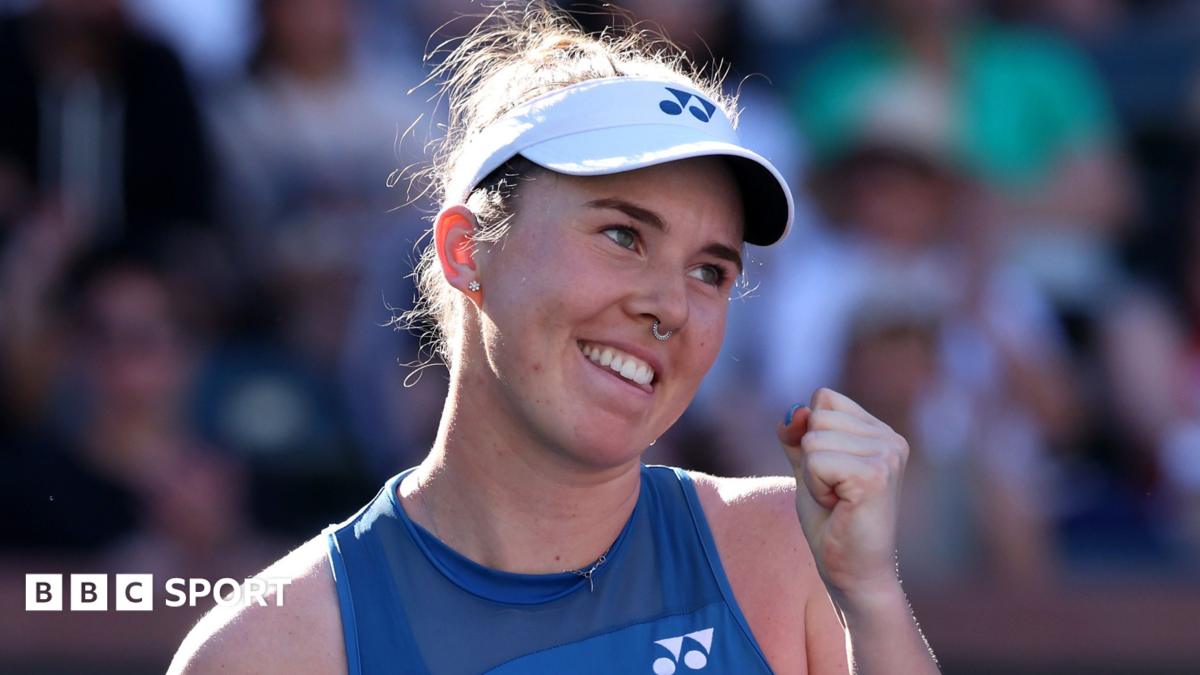
Wimbledon champion Linda Noskova dismantled Coco Gauff to become the first player to reach the last four of the WTA Finals.
Czech Noskova played with controlled aggression and served brilliantly to beat the American 6-3 6-3.
World number eight Noskova was composed throughout and broke Gauff’s serve four times in the first set alone.
She sent powerful winners to all corners to outmuscle her opponent, who is one of the best movers on the WTA Tour, and committed only one unforced error in a dominant second set.
The 21-year-old fittingly sealed victory with an ace to secure a place in the semi-finals on her tournament debut.
“Thank you guys for the cheers I’m getting now – but it was a little weaker in the match, guys, I’m not going to lie,” Noskova joked to the California crowd afterwards.
“I feel like I stayed in the match through every moment, from beginning to end.”
Gauff, who won a thriller against compatriot Jessica Pegula on Sunday, had a poor day on serve.
She hit the same amount of aces and double faults – eight apiece – and won only six of 24 points behind her second serve.
Fourth-ranked Gauff can still qualify for the last four, as can Pegula.
Earlier in group one, Pegula claimed her first win since September to eliminate alternate Marta Kostyuk.
American Pegula won 6-2 7-5 in a scrappy match that saw seven breaks of serve.
Ukraine’s Kostyuk, who has been dealing with a wrist injury since August, only found out she would be playing on Saturday after world number one Elena Rybakina withdrew.
She lost her opener to Noskova on Sunday and struggled for rhythm and consistency in a low-quality match against Pegula.
Pegula made only five unforced errors to Kostyuk’s 17 as she took the first set, and the home favourite quickly went up a break in the second.
However, four breaks of serve then ensued, with Pegula eventually sealing the decisive break at 5-5 before serving out victory.
Elsewhere, Britain’s Toby Samuel fell 6-1 6-4 to world number 25 Lorenzo Musetti in the Basel Open second round.
All hail the JSerra Lions, the best high school flag football team in California and probably in the nation.
The Lions went 28-0 this season, their second straight unbeaten season. They won the Southern Section Open Division championship game on Saturday night with a 40-14 victory over Newport Harbor at Huntington Beach.
Coach Brian Ong wasn’t supposed to have a better team than the unbeaten 2025 squad, but the Lions pulled it off led by quarterback Kate Meier and receiver Tessa Russell, both of whom are only sophomores.
Meier passed for four touchdowns on Saturday. Russell had 12 receptions for 153 yards. No opponent came closer than 13 points all season. Newport Harbor, the No. 2 team in Southern California, lost three times to the Lions.
LIONS POSTGAME: Sophomore Kate Meier threw for 262 yards and four touchdowns, including three to fellow sophomore Tessa Russell (who had 12 catches for 153 yards), to help spark the JSerra Girls Flag Football team to a 40-14 win over the Newport Harbor Sailors in the CIF-SS Open… pic.twitter.com/3JKAcUoibb
In other finals, Oxnard won its first Division 1 title with an 18-12 win over Palos Verdes. In Division 2, San Clemente defeated Gahr 35-34 in overtime.
In Division 3, Valencia defeated Quartz Hill 12-7. Valencia’s 11-man football quarterback, Evan McCalister, was on hand to help his father, Cedric, the head coach. Camila Quintero threw three touchdown passes.
Valley Christian won Division 4 with a 33-18 win over West Ranch. Loma Linda defeated Peninsula 33-6 in Division 5. St. Monica, in its inaugural season, won Division 6 with a 39-20 victory over Heritage.
Tel Aviv-Jaffa, Israel – On election day, Lama Yassin, 31, drove to polling stations in her hometown of Arrabeh, where Palestinian citizens of Israel make up an overwhelming majority, inspired by what she was witnessing.
“You would see families coming to the polls together, grandparents and grandchildren,” she said. “It was the first time in a really long time that I felt there is hope – hope of a change.”
Recommended Stories
list of 3 itemsend of list
The overwhelming Arab turnout in the October 27 Israeli election won the Arab parties a record 19 seats in the Knesset, the Israeli parliament.
Thabet Abu Rass, an expert on Jewish-Arab relations in Israel, had predicted the Arab parties would be impossible for Gadi Eisenkot’s opposition bloc to ignore: Their seats push it past the 61-seat threshold for a ruling coalition.
Instead, Yassin and others saw Israeli channels invite “Jews to talk about Arabs and Arab voter turnout”, she recalled, with almost no Arab guests.
“The whole conversation was about how dangerous these Arab voters are.” The “most disgusting term” she saw online, however, was the repeated refrain of “election terrorism” on Channel 14, the hard-right, pro-Netanyahu station.
Within a day of the vote, Likud and figures like Itamar Ben-Gvir accused the Arab parties of stealing the election through “bribery, threats, violence, forgeries”. The accusations have continued even after the Central Elections Committee and the Israeli police said they found no sign of organised tampering.
Distraught, Yassin posted an Instagram video that went viral among Palestinians, capturing the doublespeak of Israelis they so often hear:
“Eating hummus with us? ‘Brothers and friends’.
Seeking political power? ‘Terror supporters’.
Helping someone in distress? ‘Brothers and friends’.
Voting in large numbers? ‘Terror at the ballot box’.”
“When it suits you, we are brothers and friends. When it suits you, we are a symbol of coexistence. When it suits you, you go around the world boasting about our integration into Israeli society.
“But the moment we demand to have influence, to shape policy, and to take part in decision-making – suddenly, our very presence becomes a threat.”
When voting becomes ‘a danger to the state’
More than a week after the election, Jaffa’s Ajami neighbourhood offers both the history leading up to – and the fraught circumstances of – this moment that Abu Rass calls Israel’s “political crossroads”.
Faded Arabic signs on abandoned buildings hint at the Palestinian community that thrived in Ajami before 1948. On Ajami’s streets, posters of children killed during Israel’s genocidal war on Gaza hang metres away from campaign posters for Ra’am and the Joint List.
From the back office of his cluttered hardware shop, Omar Siksik, once a Tel Aviv-Jaffa city councilman who now co-chairs Kulna Yaffa, a grassroots, Arab-Jewish civic initiative in the city, weighs this moment of unprecedented representation – met by renewed delegitimisation efforts – against Ajami’s own history. It is a struggle, he says, for basic existence.
Omar Siksik, once a Tel Aviv-Jaffa city councilman, now co-chairs Kulna Yaffa [Al Jazeera]
Before 1948, Jaffa had about 100,000 Palestinians. After the Nakba, fewer than 4,000 remained – with those left fenced inside Ajami under military rule. “We called it the Ajami ghetto,” explained Siksik. Born there in 1957, he grew up sharing a toilet and kitchen with newly arrived Jewish immigrants who took the homes of expelled Palestinian neighbours.
Over time, the fence surrounding Ajami was torn down, martial law ended, and the Palestinians who remained there were granted Israeli citizenship. But later, when Siksik became the head of the Rabita Association, a nonprofit for the Palestinian residents of Jaffa, he remembered “sleeping under the bulldozers” that were razing the houses of Palestinians in the area, a practice that Rabita had fought in court.
For Siksik and others, election day is the only occasion that’s different for Palestinian citizens of Israel. “This is a democratic election,” he said. “It’s the only thing where we’re equal with the Jews. The only thing.
“When we came and expressed our dissatisfaction with this government, the Arab vote became a danger to the state,” said Siksik. “It’s not normal.”
Many Palestinian citizens of Israel believe they’ve been allowed to remain out of necessity, not equality. “The bus drivers are Arabs, the doctors in the hospitals are Arabs, the construction workers are Arabs,” Siksik notes.
But even those “essential worker” roles are being stripped away. After October 7, Israel revoked tens of thousands of work permits for Palestinians from Gaza and the West Bank to enter Israel, and the essential jobs they filled are being replaced by short-term labourers brought from abroad. Yassin notes fabricated stories over the summer on Israeli social media that Arab doctors were poisoning Jewish patients at Rambam Hospital in Haifa.
“If they could give up on anything Arab, they would,” says Yassin. “It’s not because they like us [that they let us remain]… It’s not because they want to; it’s because they have to.”
Facing ‘the whole Israeli system’
Yassin herself went through that struggle for acceptance in Israeli society. After growing up in Arrabeh, she learned Hebrew so well at Ben-Gurion University that “no one knew I was an Arab any more.” She took a job at a regional council near Jerusalem, in an entirely Jewish workplace, to prove she was “fully Israeli”.
“I did not speak Arabic in public. I even voted for [left-wing Zionist party] Meretz and favoured them over Arab parties,” said Yassin. “I wanted to be ‘the good Israeli’.”
But she could never escape that sense of otherness. At the council, colleagues asked if they could call Yassin – whose first name, Lama, means “why” in Hebrew – “Yasmine” instead, because she reminded them of Jasmine from the movie Aladdin. She was Yasmine for a year and a half. “It was another demand of giving up on another part of my identity – one that defines me literally.”
Posters at ‘Gaza’s Children Square’ in Ajami [Al Jazeera]
And then, the Sunday after the October 7 attacks, her colleagues would not say hello back to her.
She came to realise that “shared society cannot be built over inequality.”
After becoming director of public policy at the Abraham Initiatives, which advances the rights of Palestinian citizens in Israel, Yassin testified at Knesset committee meetings regarding unchecked crime and violence affecting their communities. She describes being dismissed or silenced outright, despite prior approval to speak. “If you say one more word,” she recalled the National Security committee chairman saying, “I will ask you to leave.”
Yassin sees that derision of a Palestinian political voice carrying over into the rhetoric – and investigations – surrounding the post-election talks. In Jaffa, that wider climate was felt on November 3, when, about midnight, about 15 security officers, a few of them masked, raided the Jaffa home of Abed Abou Shehadeh, a journalist and activist, arresting him in front of his two children. Accused of having “contacts with a foreign agent”, a court has ordered him held until November 8.
The ‘loyalty test’
In the south, meanwhile, police arrested seven Bedouin men on suspicion of planning to pay people to vote for Ra’am, which calls them party activists and denies the allegations. Arab political leader Ayman Odeh now faces investigations as well by the Shin Bet intelligence service, which is run by the Netanyahu-aligned David Zini, over allegations that he received money from foreign sources to influence voter turnout. Odeh denies the allegations, calling them “political persecution”.
“We are now facing the whole Israeli system,” says Abu Rass. “I think we are facing the deep state also.”
Before the election, Abu Rass had predicted to Al Jazeera that 15 to 17 seats would have Israeli party leaders knocking on the Arab parties’ doors. But despite the Arab parties exceeding even those high expectations, that success has not yet borne such fruit.
With 67 members of the Knesset, including those from the Arab parties, recommending Eisenkot to the president to form a government, the anti-Netanyahu bloc has signalled agreement to remove Knesset speaker Amir Ohana and halt the judicial overhaul legislation. The Arab parties also plan to back a state inquiry into the October 7 security failures. But Abu Rass does not mistake this for a lasting partnership.
“[Eisenkot is] counting on us only for the coming months,” he says, “to help him stabilise his government, to pass this stage of removing the government and Netanyahu.”
And while Eisenkot campaigned on two pillars – removing Netanyahu, and mandating military service for ultra-Orthodox Haredim who largely do not serve – even Avigdor Liberman, long a fierce opponent of Haredi draft-dodging, now signals he would work with the Haredi parties to form an anti-Netanyahu government without the Arabs, who have repeatedly offered to support Eisenkot from outside the coalition to unseat Netanyahu.
Israeli President Isaac Herzog, tasked with choosing a leader to try to form a government, this week condemned “the coarseness and racist expressions that we have heard recently”. But according to Israeli media, during meetings with party leaders, he asked Ra’am leader Mansour Abbas whether he considers Hamas a terrorist organisation. “You cannot constantly put us to this test,” said Abbas, who has repeatedly condemned the October 7 attacks, according to Israeli media.
Yassin has felt and seen these loyalty tests play out before in Israel. “Even if the two million Arabs who live here … say ‘we condemn Hamas,’ the day after, we will have another loyalty test,” she says. “It’s never-ending, and whoever wants to deny our rights in this country does not really need a reason to.”
A Jewish-only coalition, she says, would mean “we went a few stairs down in the whole democracy approach, the so-called democracy in Israel.”
Israeli soldiers drag a handcuffed Palestinian during an arrest campaign in Qalqilyia city, West Bank [Al Jazeera]
‘We don’t have the privilege of giving up’
Most people in working-class Ajami have swiftly come down from their election-night highs. “I am not optimistic,” said Nadia, a middle-aged woman sitting behind the counter of a clothing store. “If we raise our voice in the streets, we are arrested. If we raise our voice in the ballot, we are dismissed.”
Siksik fears: “I see catastrophic things coming here.”
But Nadia noted she would vote again if it means keeping Ben-Gvir and Smotrich out of government.
As Yassin puts it: “We don’t have the privilege of giving up. If we don’t do this work, no one will.”
After the sense of power the 19 seats gave people, she says, “it’s going to be hard to give it away.”
Sitting in a liberal Tel Aviv cafe, Yassin overheard a conversation at the adjacent table turn to Gaza and “how they killed the children” – apparently in reaction to what she had been saying.
As the opposition bloc appears to be pursuing every avenue to avoid including Arab parties in any position of power, she finds herself looking at even “liberal” Israelis differently.
“I was looking at every one of them and wondering if they would support an Arab or Arab parties being part of the coalition,” she said.
“Because if they don’t want my representatives, it also means that they don’t want me.”
DSA-backed Raman will lead America’s second largest city, promising action on homelessness and affordable housing.
Published On 5 Nov 20265 Nov 2026
Nithya Raman, a progressive Los Angeles City Council member, has defeated incumbent Mayor Karen Bass, putting her on track to become the first South Asian to lead the second-largest city in the United States.
The Associated Press called the race for Raman on Thursday, with Raman holding 52 percent of the vote.
Recommended Stories
list of 3 itemsend of list
Raman, 45, overtook Bass despite the incumbent’s support from prominent Democrats such as California Governor Gavin Newsom, former Vice President Kamala Harris and former House Speaker Nancy Pelosi.
Her campaign was backed by the Democratic Socialists of America (DSA), with her victory coming as part of a surge in visibility and electoral wins for the left-wing political movement.
A record number of candidates backed or affiliated with the DSA won federal offices in Tuesday’s midterm elections. On its website, the DSA has claimed credit for contributing to at least 300 candidacies or ballot referendums during the midterms, and it said it is on track to count 105 of those as victories.
Some of those wins came in congressional races, with figures such as Darializa Avila Chevalier, Claire Valdez, Melat Kiros and Chris Rabb winning their first terms as US representatives.
Raman’s victory in Los Angeles follows another high-profile democratic socialist winning a mayor’s race in New York City last year: Zohran Mamdani.
Raman was born in India and worked as an urban planner before running for office. Once an ally of Bass, she had initially endorsed her re-election campaign but reversed course, entering the mayoral race in February, just hours before the filing deadline.
In her victory speech, Raman promised to restore what she called an ambitious, creative and entrepreneurial Los Angeles.
“For too long our broken and unjust status quo has convinced Angelenos that this is the best that we can do,” she told the crowd.
Raman also pledged to expand affordable housing, improve neglected city services and take a different approach to homelessness by deploying more medical teams to assist people who are unhoused.
In addition, she called for replacing the city’s police chief over concerns about cooperation with federal immigration authorities.
Raman now faces the task of delivering on those promises in a city of more than 3.8 million people.
Los Angeles also faces the challenge of hosting the 2028 Olympic Games, which open in July of that year.
With the result, Bass has become the first Los Angeles mayor in more than two decades to lose a re-election bid.
Her defeat follows a difficult four years in office. Her administration faced mounting criticism over the city’s homelessness crisis and its response to the deadly Palisades Fire, which broke out while she was overseas and devastated communities across the Los Angeles area.
In a statement on Thursday, Bass congratulated Raman and said she was committed to ensuring a smooth transition.
“Four years ago, you elected me as the first Black woman mayor in the history of Los Angeles. You gave me the honor of serving the city that raised me, and every single day since, I have carried that responsibility with me,” Bass wrote.
“Moving this city forward is what Los Angeles needs from all of us.”
Richard Barrera will be the next state superintendent of public instruction, with opponent Sonja Shaw conceding the race on Wednesday.
Barrera, the school board president of San Diego Unified, was ahead by double digits in ongoing tallies and already had declared victory. He was the heavy favorite as the Democrat in the race, even though the office is listed as nonpartisan.
Barrera, 59, described his campaign message as “a positive vision for our public schools. We’ve got so many examples of great work happening in our public schools that deserve to be elevated.”
He also campaigned on increasing school funding and “a message that our public schools need to be healthy, safe communities for all of our students. I think that was a clear contrast to a message that our public schools are failing.”
Barrera benefited from more than $9 million in independent campaign spending in support of his election by the California Teachers Assn., or CTA, which he said was instrumental in helping him get his message out.
In a social media post conceding the race Wednesday night, Shaw said she ran “because I believe California’s children deserve better.”
“The problem is that for decades, the same people have had their hands on our education system, while our children have continued to fall behind,” she said in the post. “I believed we had an opportunity to change that. I still believe in the movement we created. They want us to give up, we are not going to!”
The superintendent’s office has an uncertain future. In June, the Legislature signed off on Gov. Gavin Newsom’s plan to reshape the position, transferring oversight of schools and management of the state Education Department to an appointee of the governor. By nearly all accounts, the state superintendent’s power has been dramatically reduced. Many of the new duties of the elected office have yet to be worked out.
Barrera hopes to move quickly as an education advocate, laying out specific budget proposals and policy priorities in setting an agenda for Gov.-elect Xavier Becerra to respond to.
Although Barrera prevailed by a comfortable margin, Shaw outperformed other statewide Republican candidates in Tuesday’s blue wave election for Democrats.
A centerpiece of Shaw’s campaign was her opposition to allowing transgender athletes to compete in girls’ and women’s sports — a position that had strong support in recent polling.
Barrera supports California law on this matter, which allows transgender participation. He has noted that the number of transgender athletes is exceedingly small.
Shaw, 44, broadly characterized the public education system as failing because of liberal Democratic policies, although she praised the quality of the public schools where she lives, Chino, which is in San Bernardino County.
On the November ballot, Barrera supported tax measures that benefit education. He also has consistently opposed Trump administration policies. He has sought to offer support for families affected by immigration enforcement as a senior official in the state’s second-largest school system.
Shaw’s views correspond closely with those of the Trump administration’s Education Department, although during the campaign, she repeatedly separated her policy positions from those of Trump, asserting, for example, in a campaign forum, that she “never even met with the dude.”
As a school board president, Shaw led efforts to ban unsanctioned flags on campuses and in classrooms. Some conservative activists have promulgated such bans with the aim of targeting gay pride flags. Shaw’s board majority also approved mandatory parent notification of their child’s gender-identity expression at school and a policy that allowed parents to challenge school library books with content they deemed sexually explicit. The parent notification policy is tied up in litigation, and advocates have filed a challenge to the library book policy with the state Education Department.
CTA’s campaigning for Barrera was embedded in the union’s hard push for Proposition 3, an initiative that would establish as permanent the current higher tax rates on state residents with the highest taxable income — about the top 2%.
Shaw opposed Proposition 3, which was well ahead Thursday morning.
Leading up to this race, CTA had backed the last eight winners for the state schools office, going back 32 years.
With a crowded field of Democrats in the June primary, Shaw had an opening as a Republican and finished first with 22.6% of the vote, compared with Barrera’s 20.3%.
Analysts, however, expected Barrera to consolidate the votes of Democrats and predicted that the support of CTA, and other unions to a lesser extent, would make a difference for him.
Leaving the office is two-term incumbent Tony Thurmond, who was barred by term limits from serving again and ran unsuccessfully for governor.
Sign up for the L.A. Times California Politics newsletter
Deeply reported insights into legislation, politics and policy from Sacramento, Washington and beyond. In your inbox twice per week.
By continuing, you agree to our Terms of Service, which include arbitration and a class action waiver. You agree that we and our third-party vendors may collect and use your information, including through cookies, pixels and similar technologies, for the purposes set forth in our Privacy Policy such as personalizing your experience and ads.
Bobby Pulido is graduating from quinceañera gigs to the Capitol. The Tejano singer pulled off a historic victory when he flipped a Texas congressional seat back to blue during the U.S. midterm elections.
On Tuesday, the Latin Grammy-winning artist defeated Republican incumbent Monica De La Cruz in Congressional District 15, a narrow geographical area that extends east of San Antonio down to Rio Grande Valley.
The singer’s win comes after President Trump pushed Texas Republicans to redraw congressional districts last year, with the intent to weaken the state’s Democratic strongholds by diluting the Latino vote in the region.
However, attempts to overhaul district seats in favor of a GOP candidate backfired; in fact, Texas Republicans now will have one less seat in the House come January.
Tuesday night, as poll results began trickling in in favor of Pulido — and other Democratic victors in the state including U.S. Senator-elect James Talarico and Governor-elect Gina Hinojosa — he took to X to share his disbelief in a Spanish expletive similar to “Holy s— !”
On Wednesday morning, after major polls confirmed that Pulido won 62% of the total vote, he shared a video message to all his supporters on Instagram: “I give you my word tonight that I will never forget where I came from.”
The clip was from a speech he made during his final concert on Oct. 17, titled “La Última Desvelada” (The Last Restless Night), in his hometown of Edinburg, Texas, per TejanoNation.
“I did music for me, but I’m running for Congress for you,” Pulido stated in the Instagram video. “Because I’m not going to Washington to serve a political party, I’m going to serve you.”
In July 2025, Pulido announced his political interests in Congress via Instagram, which came after he got a nudge from Lorena Saenz Gonzalez, the wife of Rep. Vicente Gonzalez (D-Texas).
In an interview with The Times in July 2025, he explained that he wanted to run an “issues-based campaign” focused on immigration, the economy and healthcare. He stressed that he would not run on a platform of “vote for me because I’m famous.”
Still, it didn’t stop De La Cruz from targeting his musical background. In March, she referred to Pulido as a “scandal-plagued celebrity,” adding that “this election isn’t about who you want performing at your niece’s quinceañera,” according to the Texas Tribune.
The commentary on the traditional cultural celebration prompted Pulido to put out an open call for invitations to perform at quinceañeras across the Congressional District, aiding his popularity in the region.
“In South Texas, a quinceañera isn’t just a pachanga. It’s a rite of passage that brings family and neighbors together,” said Pulido in a TikTok clip uploaded on March 10. “And honestly, that’s exactly what this campaign is about. We want to bring people together, not tear them apart.”
Born in Edinburg, Texas, Pulido comes from a famous musical family. His dad, Roberto Pulido, is credited with the modernization of Tejano music through added brass instrumentation that helped bridge the separate camps of Tejano and Conjunto music.
In 1995, Pulido launched his own independent singing career during the golden age of Tejano music, defined by acts such as Patsy Torres, Little Joe y La Familia and Selena Quintanilla.
The singer is best known for his smash hit “Desvelado,” a 1995 cumbia-tinged track off his debut album by the same name. While many fans have speculated that the song was about Selena, who was killed in March 1995, Pulido has said it is not. Although he did admit to having a crush on the “Como La Flor” singer when they were young, “but to be fair, who didn’t,” he shared with Mitú earlier this year.
Early hits like “Se Murió de Amor,” “Le Pediré” and “Enséñame” also helped cement the crooner’s legacy as a Tejano legend with a cumbia edge, not only making his lyrics relatable for the yearning community, but also danceable.
In January, when U.S. Representative-elect Pulido takes office, he will be the first congressman to have two Latin Grammy Awards, which he won in 2022 and 2025 in the Tejano album category for “Para Que Baile Mi Pueblo” and “Bobby Pulido & Friends Una Tuya y Una Mía (Vol.1/En Vivo),” respectively.
Although, he could have a total of three gramophone trophies by the time January rolls around. His latest album, “Bobby Pulido & Friends Una Tuya y Una Mía (Vol.2/En Vivo),” is nominated in the Tejano album category at the Latin Grammy Awards, which will take place Nov. 12 in Las Vegas.
Staff writer Carlos De Loera contributed to this report.
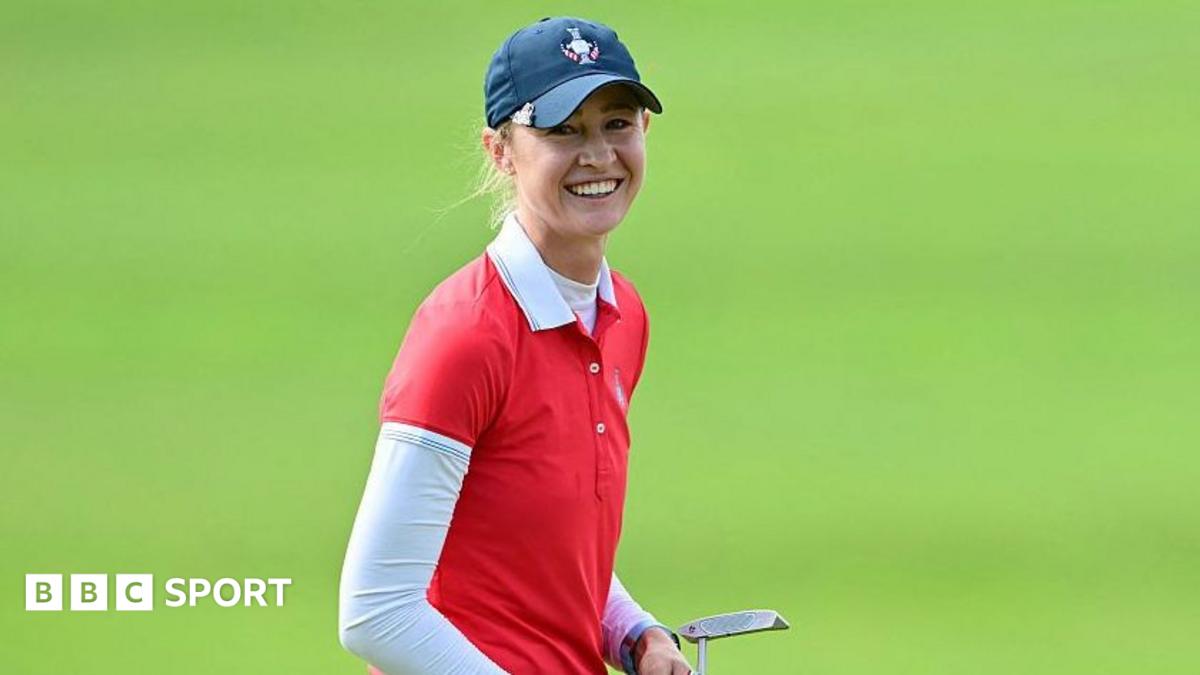
The American, who won the award in 2024, is one victory away from qualifying for the LPGA Hall of Fame.
Asked about potentially entering the Hall of Fame, Korda said in June: “I think it’s an amazing accomplishment and it would be one of the best achievements of my career for sure.”
The four-time major winner opened the 2026 LPGA Tour season with a six-tournament stretch where she either won or finished as the runner-up, to open a healthy lead in the points race.
South Korea’s Haeran Ryu also won two majors this year but withdrew from last week’s tournament in Malaysia because of injury.
And with Japan’s Miyu Yamashita and Thailand’s Jeeno Thitikul not entering The Annika next week in Florida, Korda secured the award with three tournaments remaining.
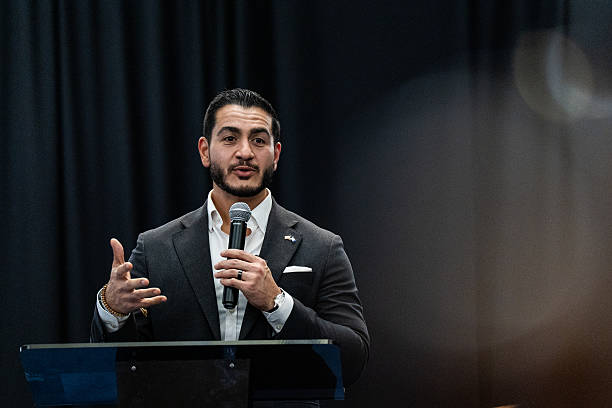
Democrat Abdul El-Sayed has won Michigan’s closely watched U.S. Senate race, defeating Republican Mike Rogers and becoming the country’s first Muslim senator.
His victory comes as Democrats secured control of the upper chamber on Tuesday, giving the party a decisive Senate majority.
Democrat James Talarico wins the Texas Senate race in a historic midterm upset, ending nearly 3 decades of Republican dominance. He pledged to tackle political corruption, expand healthcare, invest in education and end what he called costly, corrupt wars.
Longtime Republican Senator Susan Collins had held the seat for nearly three decades, but was swept away in the blue wave.
Published On 4 Nov 20264 Nov 2026
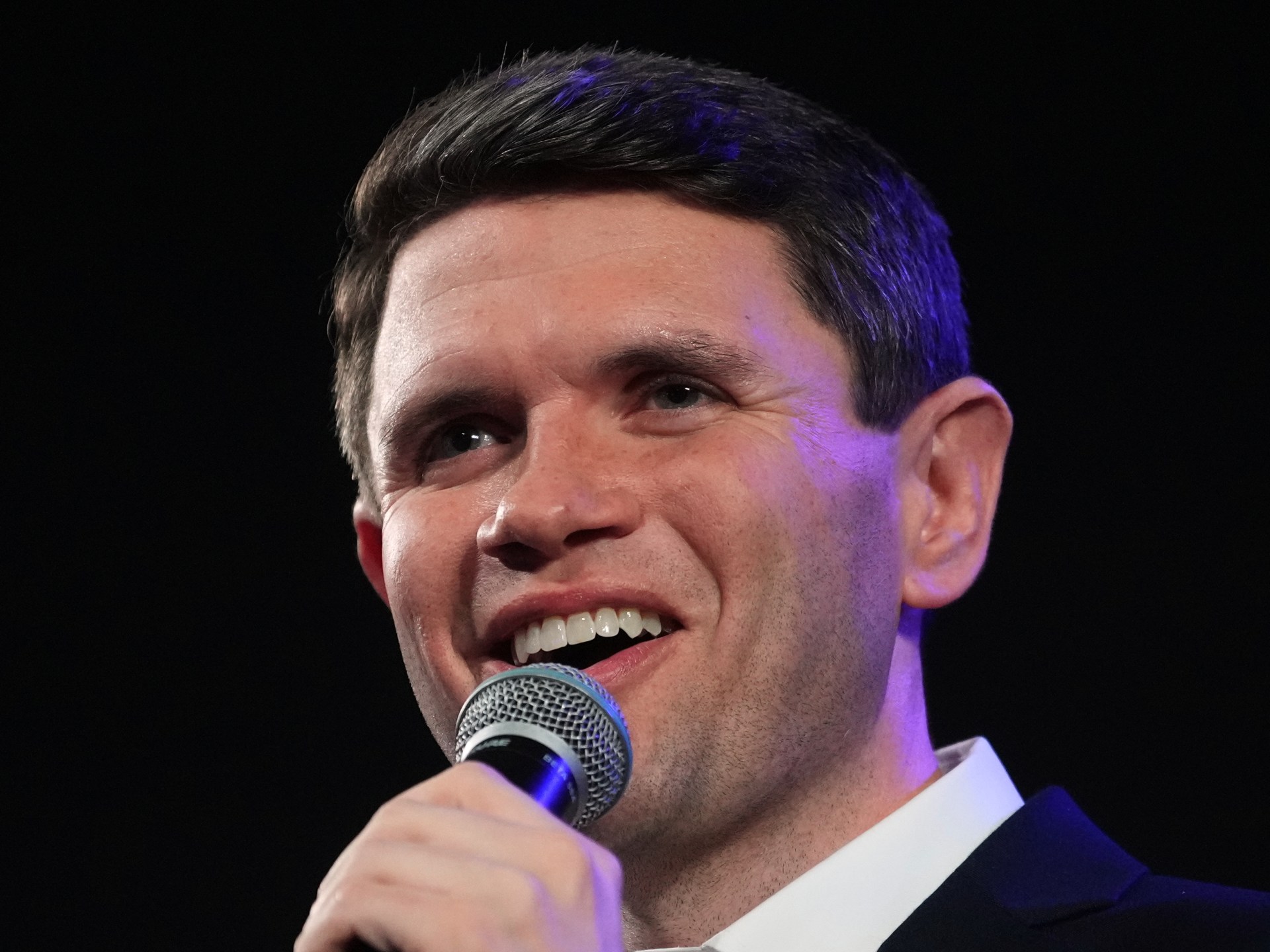
Democrat Troy Jackson, a former Maine Senate president and labour organiser who entered the race in July, has won the Senate race in Maine, flipping a seat held by the Republicans for 30 years.
Longtime Republican Senator Susan Collins conceded the race to Jackson early on Wednesday, ending nearly three decades as Senator for Maine.
Recommended Stories
list of 3 itemsend of list
Maine’s race was one of the most closely watched in the country. Republican groups spent heavily on the race, donating $76m compared with $40m by Democrats. Jackson’s campaign raised $26.9m, slightly more than the $25.2m for Collins through mid-October.
Located in the far northeastern United States bordering Canada, Maine’s economy has been affected by Trump’s tariff wars with its northern neighbour and key trading partner.
Collins, who has served as senator since 1997, has framed herself as sharing voters’ moderate politics and serving the state’s 1.4 million residents as chair of the Senate’s powerful Appropriations Committee.
Polls released shortly before the election suggested Jackson edging out Collins in a tight race shaped by negative campaigning.
Collins distanced herself from Trump during the campaign but drew criticism for voting in favour of Trump’s legislation and judicial nominees after the Supreme Court ended abortion rights.
Jackson, who campaigned on strengthening the economy and government accountability, framed Collins as a Trump ally and accused her of corruption, which she has denied.
Collins focused on her independence – she was one of the few Republicans who voted to remove Trump from office after the January 6, 2021 attack on the Capitol – and attacked Jackson for his federal inexperience and his voting record in the state legislature.
James Talarico has won the United States Senate race in Texas, the first time a Democrat has won state office since 1994.
Tuesday’s victory marks a seismic shift in Texas, which has become a standard-bearer for staunch conservative policies for the Republican Party.
The win comes after a primary intervention by US President Donald Trump, which saw him endorse scandal-ridden Texas Attorney General Ken Paxton over Republican Senate candidate John Cornyn.
But Paxton failed to generate enthusiasm, even among his own party. That came despite record-breaking spending, topping over half a billion dollars.
The largest share came from billionaire donor Elon Musk, who spent at least $212 million supporting Paxton.
Musk’s SpaceX company is based in Texas. He has spent heavily across the country, with Democrats expected to investigate his role as head of the federal cost-cutting panel, DOGE, after taking control of Congress.
“It’s historic,” said Taylor Bell, a 27-year-old law student, who attended an election watch party in Houston.
“Hopefully we see money coming back to the people of Texas, and not more of the same we’ve seen — well, my whole life at this point.”
Congressman Christian Menefee, who represents Houston, told those gathered that “tonight Texas has restored the hope of a nation”.
“Tonight, I believe firmly that we can accomplish anything in this country if we just stand together and we fight back against hate and bigotry,” he said.
“The younger generation and all the people who want a better future came out and made their voices heard,” said 29-year-old Yvonne Nunga, who works in IT. “This party, this fight right now, is not about left or right. It’s about top versus bottom, and I’m so glad that we have candidates that are making this a pivotal point in their messaging.”
“The current politics of the current administration is not working for the people. It’s not for the people, by the people, it’s for the billionaires bought by the billionaires,” she said.
No ‘puppet governor’ for Trump
Tuesday also saw the surprise victory of Gubernatorial Democratic challenger Gina Hinojosa, whose challenge had been considered a long shot even into the final days of the race.
Hinojosa has become the first Latino governor in the history of Texas, despite Latinos making up 40 percent of the state’s population.
Alejandra Peimbert, a regional communications director for Hinojosa’s campaign, said the victory should be seen as a rebuke to the hardline immigration policies enacted under 10 years of outgoing governor Greg Abbott.
Abbott has cooperated closely with the Trump campaign in its mass deportation campaign, spearheading policies that saw local law enforcement officials conduct immigration enforcement.
“I think the Latino community and our vote has been underestimated by politicians constantly,” Peimbart told Al Jazeera, adding that the economy is so bad, and the horrendous things that ICE has done to our community, tearing apart families…I think my community finally had enough.”
“President Trump will no longer have a puppet in a governor,” she said.
Abbott’s tenure has been defined by a conservative lurch in the state, with hardline approaches not only to immigration, but to social welfare programmes, abortion rights, education and religious freedom.
Abbott’s supporters have touted rapid economic growth in recent years, spurred by tax cuts and rollbacks on regulation.
The state has long been a Republican standard bearer in the US
Critics have said the metrics of economic success have the most positive impact on corporations and the wealthy, while middle and lower class Texans see little benefit.
Texas’s poverty rate sits above the national average, with little in the way of social safety nets.
“It’s one of the biggest things Texas can ever experience because these are two strong candidates that took their time, they took their dedication, and focused with every community in Texas, and so they deserve this position,” said 21-year-old Dylan Sutter.
“Everything is blue. It’s like the ballot itself was painted blue by the time we were done with it.”
Australian jockey Ethan Brown has ridden Point Of Law, a horse previously owned by King Charles, to victory in this year’s Melbourne Cup, the country’s most prestigious race.
Point of Law, which was bought from the King earlier this year for an undisclosed sum, was considered an early favourite.
Brown pushed Point Of Law from the middle of the pack to take the lead with just a few hundred metres to go.
The Melbourne Cup has run in Australia since 1861, often referred to as the “race that stops a nation”. With a prize of A$10.2m ($7.04m; £5.3m), it is the country’s third richest race.
“Don’t wake me up,” said Brown, in the post-race interview.
“Just stay cool, stay patient,” Brown said, recalling his thoughts as he pushed Point Of Law to overtake Royal Supremacy from a dozen lengths behind on the home stretch.
This is a breaking news story – we’ll bring you more details as we get them.
Andreas Almgren continued his remarkable year by winning the New York Marathon men’s race on his debut over 26.2 miles.
The 31-year-old Swede broke the European half-marathon record in September, having already won 10,000m gold at the European Athletics Championships in August.
Almgren then lived up to the anticipation surrounding his marathon debut by finishing in two hours, six minutes and one second in New York – 13 seconds in front of Italy’s Yemaneberhan Crippa.
Lesotho’s Kamohelo Mofolo finished a further 12 seconds back in third.
Almgren became the first European-born man in 30 years to win the race in New York, after Italy’s Giacomo Leone in 1996.
“I just thought, ‘I’ve got the legs today’,” said Almgren.
“I’m about to start crying. It’s better than anything I could have ever imagined.”
In the women’s race, Kenya’s Sheila Chepkirui claimed her second New York Marathon success.
The 35-year-old finished in 2:24:36, which was six seconds ahead of American Jessica McClain, with Kenya’s Hellen Obiri a further second back.
“The last mile was really tricky and I had to be patient because I knew Hellen was really strong,” said Chepkirui.
“I had to really push up to the finish line.”
The race marked the 50th anniversary of the marathon, which links New York’s five boroughs of Staten Island, Brooklyn, Queens, the Bronx and Manhattan.
Britain’s Harriet Dart won the first WTA Tour singles title of her career as she beat fast-rising Austrian teenager Lilli Tagger in the Guangzhou Open final.
Dart, 30, was overcome by emotion following a 4-6 6-3 6-4 victory in a tense final.
The British number five, ranked 115th in the world, twice had a lead in the decider wiped out by 18-year-old Tagger.
But Dart broke for a third time for 4-3 and held serve to move within one game of the title.
Dart held two championship points on 53rd-ranked Tagger’s serve in the ninth game – dumping an inviting mid-court ball into the net on the second – but recovered to seal victory in the biggest match of her career.
She took her third championship point with a service winner, falling to the court in joy before celebrating with her team.
The gutsy victory capped a stunning run for Dart, who came through qualifying to reach her first tour-level final at the WTA 250 event.
As well as taking home the trophy, Dart will be rewarded for the best week of her career by climbing back inside the world’s top 100.
It means she will go directly into the main draw of the Australian Open when the opening Grand Slam of the season takes place in January.
The hallmark of Dart’s success this week has been her resilience and ability to recover from losing positions.
Fighting back against 2025 French Open junior champion Tagger was the fourth time in seven matches she won after losing the first set.
The title is rich reward for a superb second half to the season, in which Dart has struck the ball consistently well and continued to grow in confidence.
Dart reached a career high of 70th in the world in 2024, having made the Wimbledon third round and US Open second round, but has been languishing outside the top 100 for most of the past two seasons.
Working with former Wimbledon champion Marion Bartoli has been a big factor in Dart’s resurgence.
Dart has won 19 of her 24 tour-level matches on the hard courts since Wimbledon, taking her overall record on the WTA Tour this season to 23 victories from 34 matches – the highest winning percentage of her career.
“It wasn’t fun to be on the other side of the court today – you’ve had an amazing year,” Tagger, who beat seven-time major champion Venus Williams on her way to the final, told Dart.
Marc Marquez takes 44-point lead over Jorge Martin and can seal the MotoGP title in Qatar next weekend.
Published On 1 Nov 20261 Nov 2026
Reigning MotoGP champion Marc Marquez has won the Malaysian Grand Prix to take a 44-point lead over absent title rival Jorge Martin in the championship and inch closer to retaining his title.
The Ducati rider shot out of the blocks and beat his brother Alex, the pole-sitter, into the opening turn on Sunday in Sepang.
Alex Marquez was able to quickly regain the lead but ran wide a turn later to hand it back, and his brother made no mistakes from that point on to claim the chequered flag for the first time since 2018.
Victory moved seven-time MotoGP champion Marc Marquez up to 399 points in the championship standings, 44 ahead of Martin, who did not compete after suffering a wrist fracture.
If Marc Marquez is able to extend his lead to 74 points at next week’s Qatar Grand Prix, he could seal an eighth championship title with two rounds remaining in the season.
“We did a perfect race, so I’m super, super happy,” said the winner, who won the race by more than four seconds.
“But my mentality still cannot change. I have to keep focus, keep pushing. There are not many races to go, but there are many moments left. So we must be super confident.”
Saturday’s sprint winner, Pedro Acosta of KTM, finished second while Gresini’s Alex Marquez was third.
After losing the lead to his brother, Alex Marquez was drawn into a duel with Acosta, who stuck to the wheel of the Gresini rider for several laps before expertly overtaking him at the midway point of the race.
By then, however, the distance to the leader had already grown too large to overcome.
Aprilia rider Marco Bezzecchi, an outside contender for the title, finished in sixth place after being overtaken late by both Trackhouse rider Ai Ogura and Tech3’s Enea Bastianini.
Marc Marquez’s main title rival, Martin, had initially looked set to return in Malaysia and briefly tried to compete in Saturday morning’s practice session.
However, the Aprilia rider was visibly struggling and eventually did not take part in qualifying, ending his weekend early to continue his recovery from the fracture he sustained in a crash at Phillip Island, Australia, last week.
The Spaniard, who won the title in 2024, conceded that his MotoGP title challenge was essentially over after his withdrawal.
The MotoGP season next moves to the Lusail International Circuit for the Qatar Grand Prix, which is set to go ahead next weekend despite pushback from riders concerned about going there during the United States-Israel war on Iran.
Ducati’s Spanish rider Marc Marquez holds a Spanish flag as he finishes first at the Malaysian Grand Prix [Mohd Rasfan/AFP]
A parade of short-priced winners opened the Breeders’ Cup on Friday, with the afternoon’s heaviest favorite capturing the headline race as Hughes won the $2 million Juvenile.
Hughes, named for New Jersey Devils forward and U.S. Olympic hockey hero Jack Hughes, held off American History and Salahudin in the 1 1/16-mile race at Keeneland Racecourse in Lexington, Ky., to remain undefeated in five starts and clinch the 2-year-old championship.
The son of Into Mischief, ridden by Flavien Prat for trainer Bob Baffert, went off at odds of 4-5 and returned $3.64 after covering the distance in 1 minute 42.27 seconds.
The winner of the Juvenile normally is anointed the early favorite for next spring’s Kentucky Derby, but Hughes will have to vie for that label with U.S.S. Valor, who skipped the Juvenile after a very impressive win in the Champagne Stakes last month at Belmont Park.
Friday’s win was the third in a Grade 1 race for Hughes, following victories in the American Pharoah at Santa Anita and the Del Mar Futurity.
Baffert also had the favorite in the Juvenile Fillies, but Miss Monica was runner-up behind second choice Emphatic ($7.92). The other losing favorite was Folsom Blues, who was second in the Juvenile Turf behind third choice Haffner ($9.46).
The other races were won by favorites — Libertango ($5.74) in the Turf Sprint and Sun Goddess ($3.70) in the Juvenile Fillies Turf.
Ryan Moore rode Sun Goddess and Haffner for trainer Aidan O’Brien, who broke a tie with Baffert for most Breeders’ Cup wins (23-22).
There are nine more races Saturday beginning at 10:10 a.m. PDT. The final race, the $7 million Classic, is scheduled for 3:16 p.m.
Great Britain’s Jody Cundy’s 20-year reign as para cycling’s C4 kilo time trial world champion was ended by Australian Korey Boddington at the para cycling track world championships in the Netherlands.
Cundy, 48, won the world title in 2006 and had managed to hold onto his rainbow jersey in the 15 world championships since.
But battling for his 17th title in the C4 kilo discipline, Cundy had to settle for silver after finishing his kilometre in one minute and 4.93 seconds, a time which Boddington beat by 2.25 seconds on the final run.
Cundy is a nine-time Paralympic champion – with three of his medals coming in para swimming between 1996 and 2000.
Elsewhere on day one of the championships, Great Britain’s Rebecca Newark took gold in the women’s C5 kilo time trial.
In the women’s B kilo time trial, Britain’s Sophie Unwin and pilot Jenny Holl won silver and Elizabeth Jordan and pilot Anna Whitworth Hay claimed bronze.
Great Britain’s Finlay Graham also took bronze in the men’s C3 sprint final.
Scotland men emulated their female counterparts by opening the European Curling Championships with victory.
Grant Hardie’s rink triumphed 8-4 in Ostrava in the Czech Republic and face Belgium later on Wednesday.
The men picked up two at the opening end and three at the third to lead 5-1. The Dutch were 6-4 down after six ends but Scotland picked up two more at the seventh to see out the win.
Fay Henderson’s Scotland women began their campaign with a comprehensive 12-3 victory over Denmark.
They edged the opening two ends by single points before the Danes halved the deficit.
However, the Scots took control of their opening, surging into a five-point lead by the close of the fourth end.
Although Denmark scored two points in the fifth, Scotland ended the contest emphatically with a six-point haul in the sixth and final end.
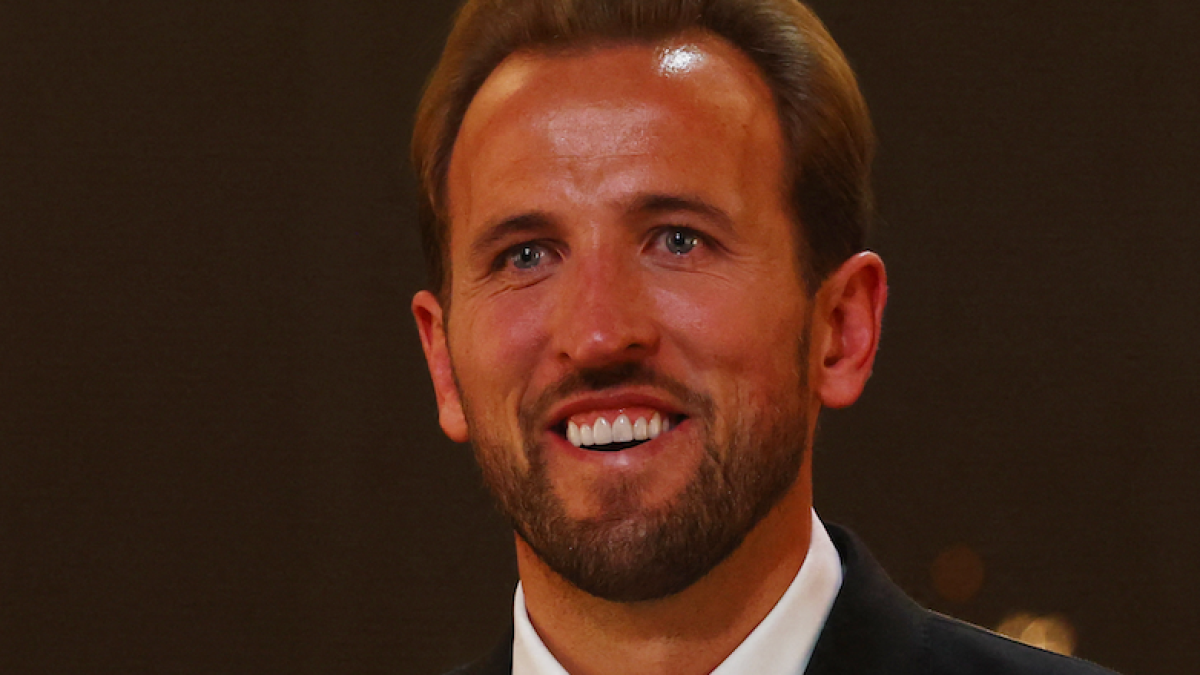
Bayern Munich and England striker Harry Kane has won his first Ballon d’Or after a record-breaking season, becoming the first Englishman to claim football’s top individual honour since Michael Owen in 2001. Kane scored 73 goals in 65 games for club and country last season.
Elbit Systems (ESLT) has secured contracts worth approximately $200M from an Asia-Pacific country to supply airborne intelligence, surveillance, reconnaissance, targeting, and training solutions.
The contracts will be executed over a period of up to five years.