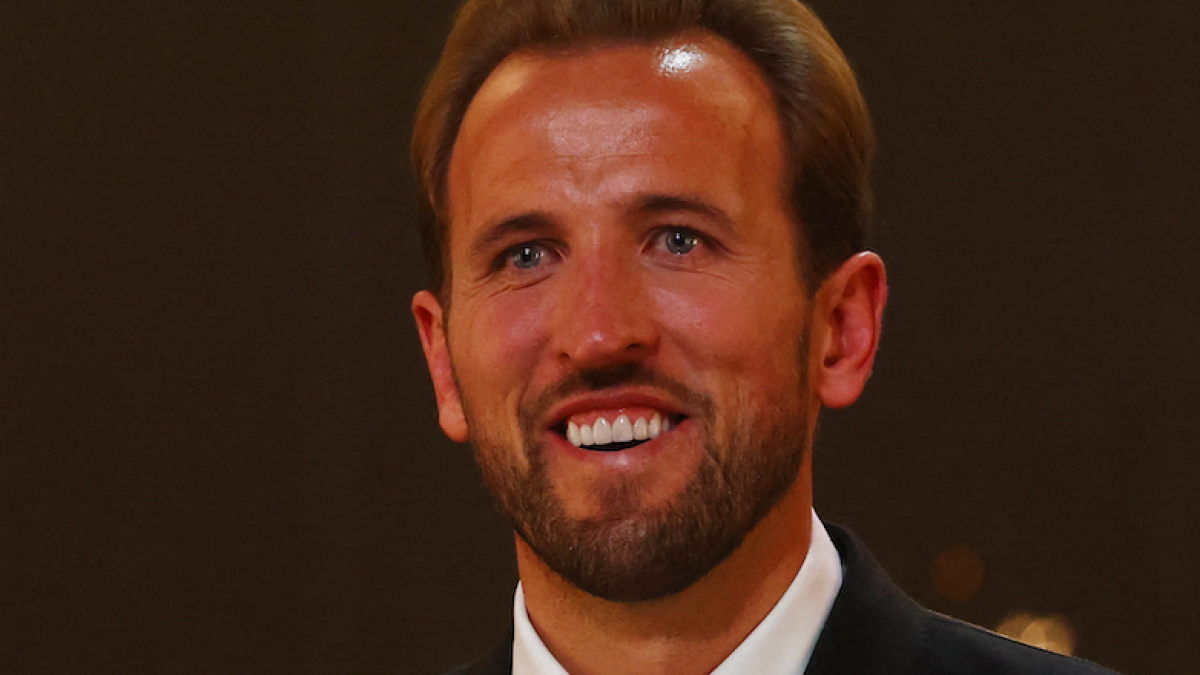
Bayern Munich and England striker Harry Kane has won his first Ballon d’Or after a record-breaking season, becoming the first Englishman to claim football’s top individual honour since Michael Owen in 2001. Kane scored 73 goals in 65 games for club and country last season.
Elbit Systems (ESLT) has secured contracts worth approximately $200M from an Asia-Pacific country to supply airborne intelligence, surveillance, reconnaissance, targeting, and training solutions.
The contracts will be executed over a period of up to five years.
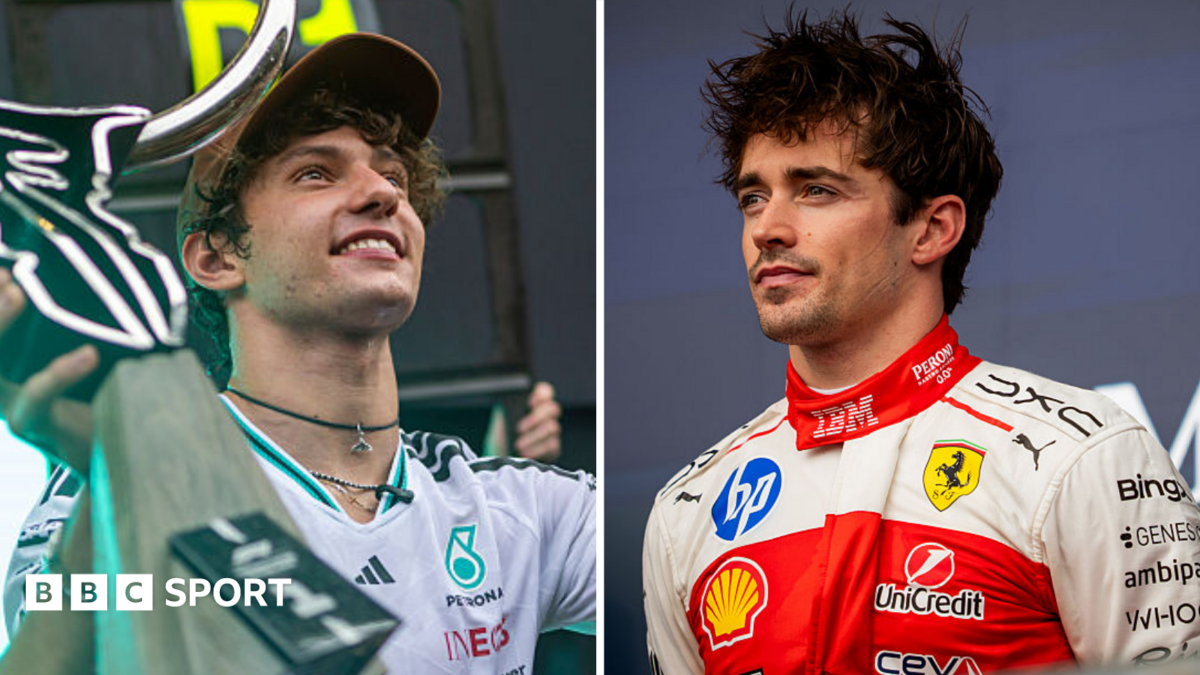
Championship leader Kimi Antonelli sealed his ninth victory of the season with victory at the United States Grand Prix in Austin.
Ferrari’s Charles Leclerc was second and Red Bull’s Max Verstappen third.
Mercedes’ Antonelli, 20, can become the youngest world champion in Formula 1 history if he finishes ninth or higher at the Mexico City Grand Prix next weekend.
Here are my ratings for how the drivers performed across the whole weekend in Texas.
Kimi Antonelli – 10/10
A superb weekend under the added pressure of having his first opportunity to seal the championship. Produced an outstanding lap for pole and then controlled the race beautifully, making the one-stop work while many around him needed two.
Charles Leclerc – 9.5/10
Very close to a perfect weekend himself. Fastest in both Friday practice sessions, qualified fourth and then raced brilliantly in his Ferrari to second, including late passes on Lando Norris and Max Verstappen.
Max Verstappen – 8.5/10
Quick all weekend and put the Red Bull on the front row, but the poor start immediately made his race more difficult. Recovered well despite problems with the car and still came away with a sixth consecutive podium.
Lewis Hamilton – 7.5/10
Another strong weekend but behind team-mate Leclerc for the majority of it. Fastest in final practice, only narrowly behind Leclerc in qualifying and fought his way back to fourth after Ferrari committed to the two-stop strategy.
Lando Norris – 8/10
Recovered well from eighth on the grid but qualifying should have been better as his quickest Q3 lap was deleted for track limits. McLaren’s decision to leave him out on ageing tyres cost him late on, so fifth was not entirely of his own making.
Isack Hadjar – 8.5/10
An excellent turnaround after struggling badly with the Red Bull during practice. Qualified a superb third, ran strongly in the race and eventually finished sixth despite throttle mapping problems and moving aside for team-mate Verstappen.
Oscar Piastri – 6.5/10
A fairly subdued weekend by the McLaren man’s standards. Seventh in qualifying and seventh in the race, although the first-lap battle with George Russell went against him and the stewards decided the Mercedes driver was at fault.
George Russell – 5.5/10
A disappointing weekend given what the other Mercedes achieved. Admitted both of his Q3 laps were poor and then picked up a five-second time penalty for leaving the track and gaining an advantage in his battle with Piastri, eventually finishing eighth.
Liam Lawson – 8/10
Another quietly excellent weekend from Lawson. Racing Bulls sacrificed a proper Q3 attempt to preserve tyres for Sunday and he converted ninth on the grid into ninth at the finish to score again.
Pierre Gasly – 8/10
Probably extracted just about everything available from the Alpine. Missed Q3 but fought his way back into the points after an early dice with Haas’ Oliver Bearman.
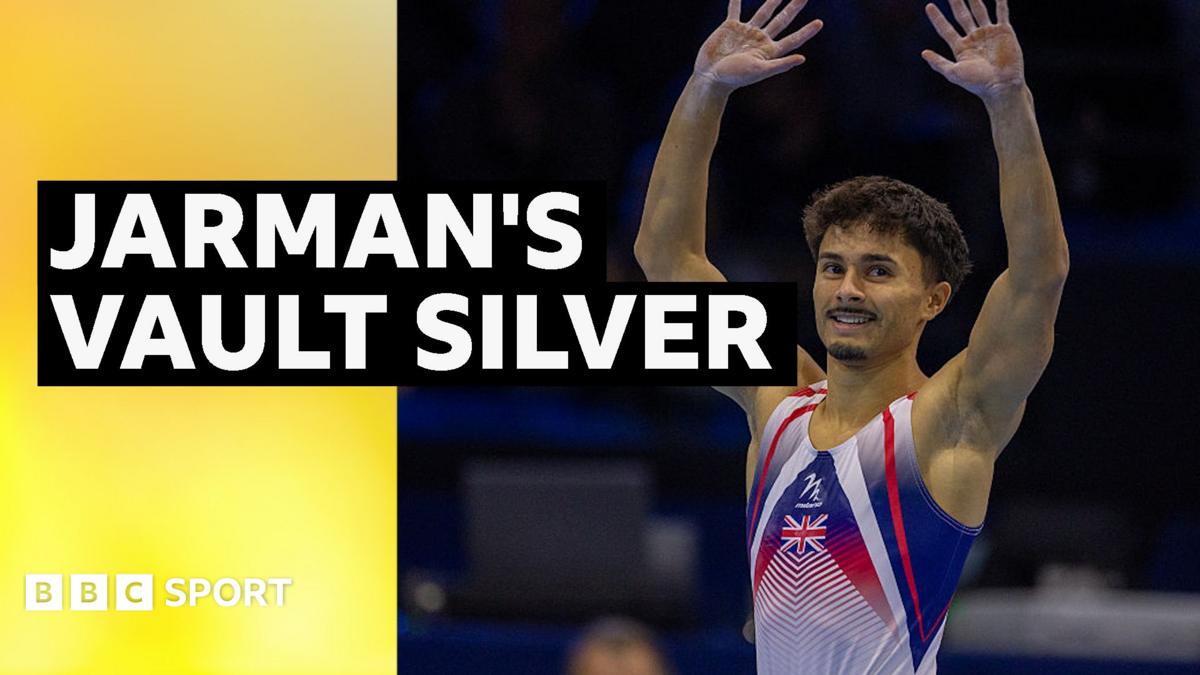
Jake Jarman becomes the first British male gymnast to win two individual medals in the World Gymnastics Championships, after winning silver in a thrilling men’s vault final in Rotterdam.
The victory helped the Kazakh take a big step towards securing the year-end number one ranking.
Published On 25 Oct 202625 Oct 2026
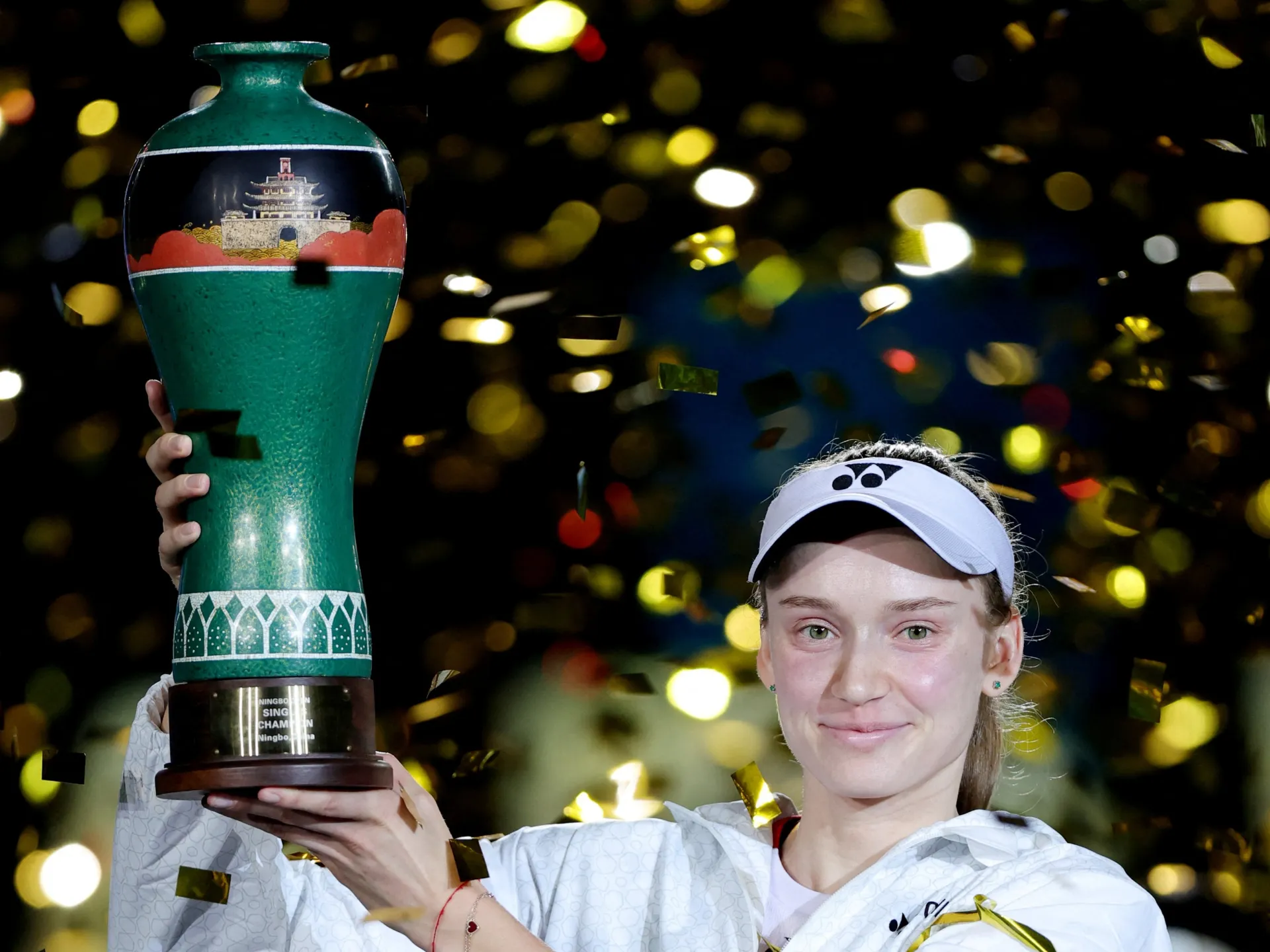
Elena Rybakina blazed past unseeded Canadian Leylah Fernandez 6-2 6-2 in the Ningbo Open final to retain her title and lift her first trophy as the world number one ahead of the WTA Finals next month.
The victory on Sunday also helped the Kazakh take a big step towards securing the year-end number one ranking, further burnishing a spectacular season in which she won the Australian Open title before adding the US Open crown to reach the summit.
Top seed Rybakina made the breakthrough with her trademark power in the fifth game and then unleashed a searing crosscourt backhand winner to go 4-2 up, before the 27-year-old wrapped up the opening set in only 38 minutes.
World number 30 Fernandez made a bright start to the next set but Rybakina absorbed the pressure and raised her level to force an error and break for 2-1, with the three-time Grand Slam champion breezing to victory from there.
Rybakina’s latest triumph is a timely lift after setbacks in Beijing and Wuhan, as she turns her attention to the Pan Pacific Open in Tokyo this week before launching her title defence at the season finale in Indian Wells from November 8.
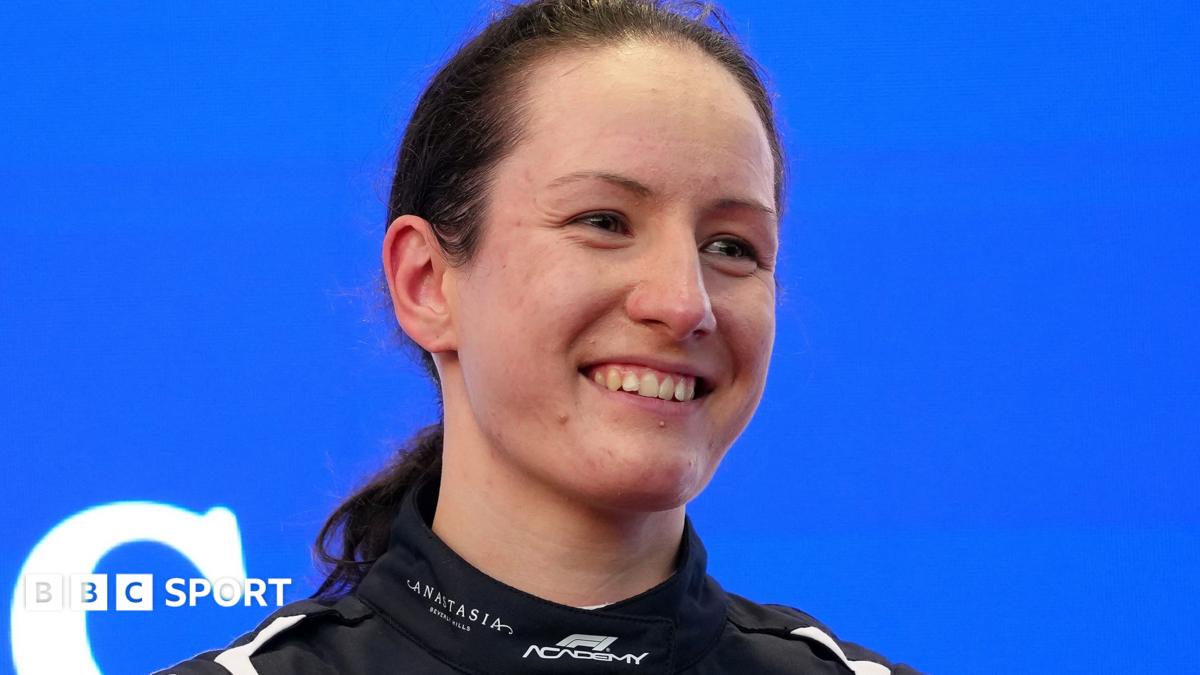
Britain’s Alisha Palmowski says that winning the F1 Academy title is “a dream come true”.
The 20-year-old finished second in Saturday’s reverse grid race at the Circuit of the Americas, which was enough to be crowned champion before Sunday’s feature race and the season finale in Las Vegas in November.
Palmowski becomes the youngest champion of the all-female development series, and is the second British driver to win the title after Abbi Pulling in 2024.
She drives for Campos Racing and is part of the Red Bull driver academy.
Glossop-born Palmowski has won five out of the 11 races held so far this season, only finishing outside of the points once during the reverse grid race at Zandvoort.
In an emotional post-race interview, she dedicated her championship win to her ill grandmother and thanked her family.
“It’s been a really special journey. I started racing when I was eight or nine years old, it was just me and my parents,” she said.
“The sacrifices that they’ve made behind the scenes, they’ve really put their lives on pause to allow me to live my dream.”
Before Saturday’s race, Austrian Emma Felbermayr was the only driver with a mathematical chance of overhauling Palmowski but fourth place was not enough to keep her hopes alive.
Denmark’s Alba Larsen took the chequered flag to secure her first F1 Academy victory, with 17-year-old Lisa Billard of France completing the podium in third.
Neve Jones will win her 50th Ireland cap as Stacey Flood and Dorothy Wall return for the first of two WXV Global Series Tests against South Africa in Cape Town.
Gloucester-Hartpury’s Jones is named at hooker, while Flood and Wall are reinstalled at full-back and lock for Saturday’s game at Athlone Stadium (14:00 BST).
Wall’s return to partner Jane Clohessy in the second row means Fione Tuite-O’Sullivan switches to blind-side flanker, while Brittany Hogan starts at number eight to deputise for injured star Aoife Wafer.
Jemima Adams Verling, who filled in for Wafer in the 43-19 win over Japan in Cork on 3 October, drops to the bench.
Flood, who replaces Niamh Gallagher in the 15 jersey, is joined by Beibhinn Parsons and Robyn O’Connor in the back three. Anna McGann and Aoife Dalton are again paired in midfield, while Dannah O’Brien and Emily Lane continue their half-back partnership.
Linda Djougang continues at loose-head prop with Eilis Cahill at tight-head either side of Jones, while Erin King captains the team from open-side flanker.
Kate Jordan, who made her debut as a second-half replacement for King in the win over Japan, is one of six forwards on the bench alongside Beth Buttimer, Niamh O’Dowd, Sadhbh McGrath, Grace Moore and Adams Verling.
Aoibheann Reilly and Eve Higgins provide backline cover from the bench.
Ireland’s only previous meeting with South Africa was a 2006 Women’s Rugby World Cup match in Canada, which the Irish won 37-0.
Scott Bemand’s side opened their WXV campaign with defeat by the United States before bouncing back to beat Japan in Galway. They also defeated Japan in Cork in a non-WXV Test match in Cork.
After Saturday’s first meeting, Ireland face South Africa again in Cape Town on 31 October.
Ireland: Stacey Flood; Beibhinn Parsons, Anna McGann, Aoife Dalton, Robyn O’Connor; Dannah O’Brien, Emily Lane; Linda Djougang, Neve Jones, Eilis Cahill, Jane Clohessy, Dorothy Wall, Fiona Tuite-O’Sullivan, Erin King (capt), Brittany Hogan.
Replacements: Beth Buttimer, Niamh O’Dowd, Sadhbh McGrath, Kate Jordan, Grace Moore, Jemima Adams Verling, Aoibheann Reilly, Eve Higgins.
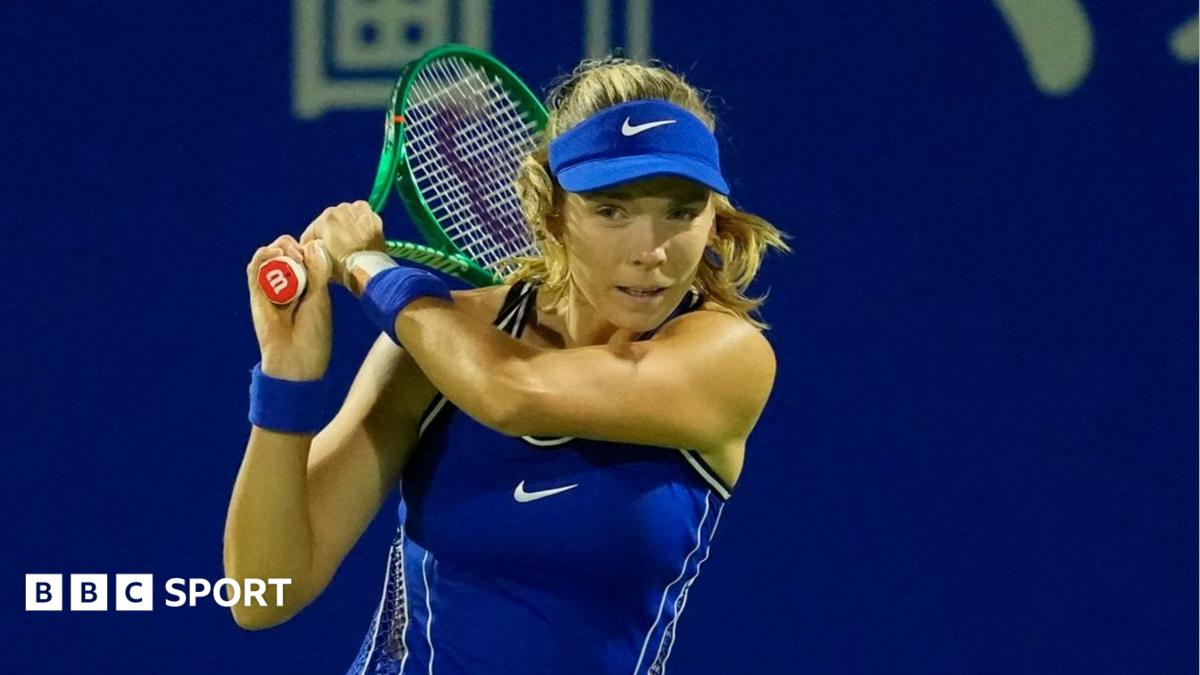
Katie Boulter moved into the quarter-finals of the Japan Open after she beat Viktorija Golubic in less than an hour.
The British number two defeated her Swiss opponent 6-2 6-1 in Osaka and will face either Croatia’s Antonia Ruzic or American Kayla Day in the next round.
Boulter saved a break point in the opening game but dominated from 2-2 in the first set, winning nine games in a row before Golubic took the penultimate game of the match.
Boulter, who is seeded eighth in the competition, said she was pleased with how she handled “difficult conditions”, with a strong wind affecting play.
“I think one of the biggest things for me is staying patient in the wind,” she said.
“Sometimes I can get a little frustrated, and I’m very pleased that I didn’t allow that to affect me today and I think I ended up playing some really good tennis in the second set. I’m really pleased with the performance.”
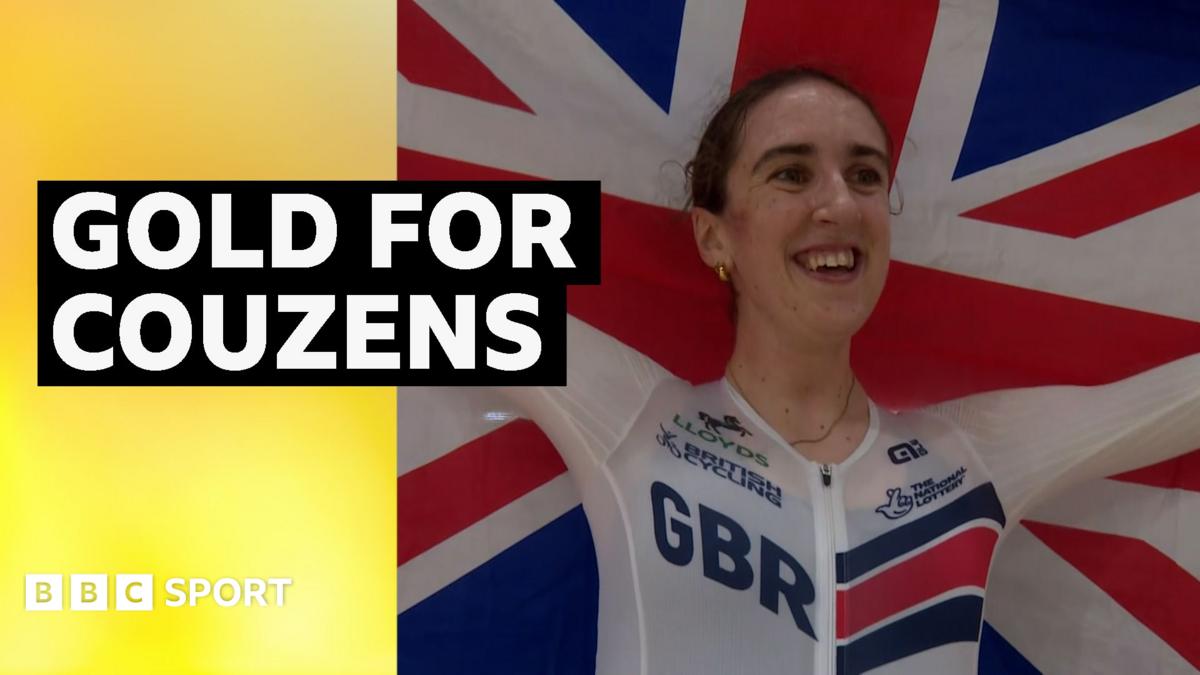
Great Britain’s Millie Couzens beats her compatriot Josie Knight in the final of the women’s individual pursuit at the Track Cycling World Championships in Shanghai.
The US FDA has approved Alcon’s (ALC) Brytly (apraclonidine opthalmic solutions) over-the-counter eye drops.
The company said that a single trops provides 12 hours of redness relief and lasts 50% longer than rival Bausch + Lomb’s (BLCO) Lumify (brimonidine tartrate optholamic solutions) drops.
Studies also found Brytly is associated with a low risk of redness rebound and tachyphylaxis.
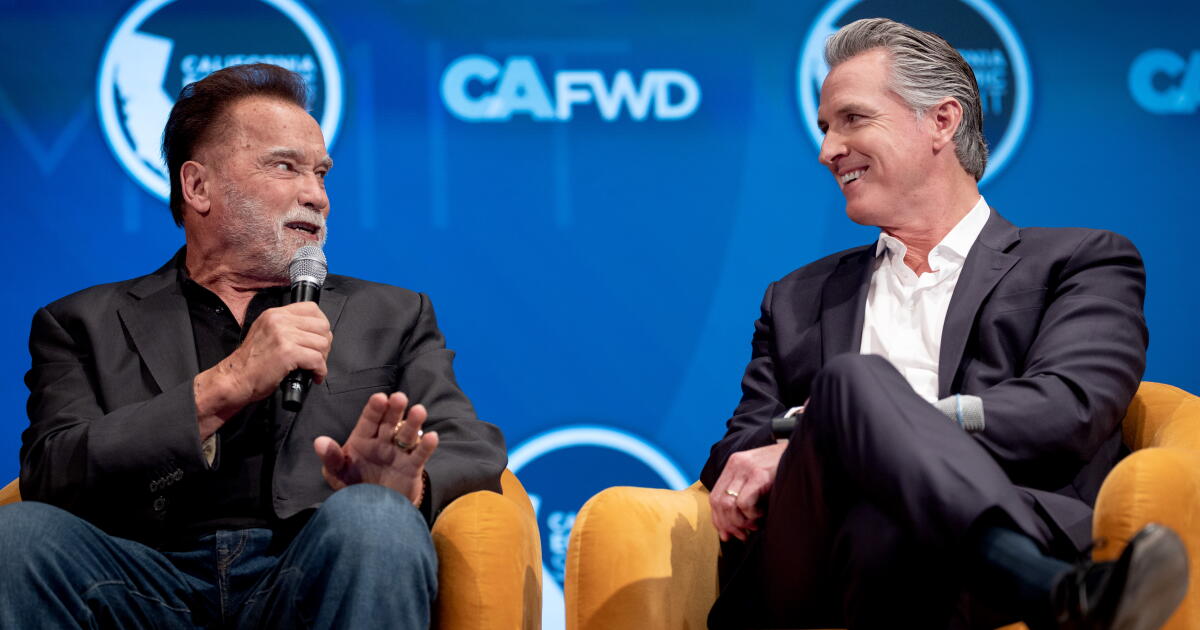
Former Gov. Arnold Schwarzenegger, a Republican, celebrated the 20-year anniversary of landmark climate legislation he signed while in office alongside Democrats including Gov. Gavin Newsom on Wednesday.
“California is the perfect example of what can be done when people work together and when we don’t look at this as a Republican or as a Democratic issue,” Schwarzenegger said at an economic conference in Long Beach, noting that Assembly Bill 32, the Global Warming Solutions Act had significantly reduced greenhouse gas emissions while creating more than a half a million clean-energy jobs.
“This is the message that is so important for the world,” he said, because the state’s policies have become a model for other states and nations.
Newsom noted that the state had met “audacious” goals for reducing greenhouse gas emissions, touting 39,000 megawatts of clean energy that have been installed in the last seven years, 23,000 megawatts of battery storage created, and that no flex alert has been issued in the state in four years.
“So we’re not in the goal-setting business; we’re in the how business,” he said.
He added that the clean energy transition is “the most critical national security issue in the United States of America,” with economic and supply chain leadership at stake as China surpasses the U.S. in electric vehicles, clean-energy manufacturing and the deployment of renewables.
The state already met the climate change legislation’s ambitious target — returning emissions to 1990 levels by 2020 — four years ahead of schedule. However, recent analyses indicate California is not on track to meet its future targets of cutting emissions 40% by 2030 and 85% by 2045.
The event as well as a luncheon the prior day in Santa Monica were rare displays of bipartisan unity at a time of heightened political polarization in the United States. Schwarzenegger and Newsom piled praise upon each other during the Wednesday afternoon discussion, hugging at the end.
At the luncheon, former Gov. Gray Davis, whom Schwarzenegger ousted from office in the 2003 recall election, as well as billionaire hedge-fund founder turned environmental warrior Tom Steyer, who unsuccessfully ran for governor this year, were among the Democrats in attendance, as well as former state Assembly Speaker Fabien Nunez and former state Sen. Fran Pavley, who were both pivotal in the passage of the climate-change legislation.
In addition to remarks highlighting the foundation of some of the nation’s bedrock environmental policies, such as former GOP President Richard Nixon creating the Environmental Protection Agency and signing the Endangered Species Act, there were moments of levity.
Schwarzenegger said he told fellow Republicans “f— you” when they balked at him naming Susan Kennedy, a Democrat, as his chief of staff, he said Tuesday.
During a breakout session at the Wednesday conference, he referenced his former wife, Maria Shriver, a scion of the Kennedy family, as he described his desire to hear from people on both sides of the aisle.
“So I had Democrats in my administration, and of course the Republican Party went nuts,” he said. “I didn’t care because, to me, I thought I wanted to hear what the Democrats were thinking. Plus, I was sleeping with one every night anyway.”
Hamilton had started on the medium tyres while Verstappen and Leclerc chose the softs. Despite his theoretically more durable tyres, the Briton pitted on lap 18 to switch to the softs, while Leclerc waited until lap 24 to swap his softs for mediums.
Leclerc came out of the pits from his stop just ahead of Hamilton, who had stronger pace on his softer tyres.
Yet Ferrari chose not to order Leclerc to let Hamilton through to maximise his pace, a decision that was questioned by Hamilton from the car.
A virtual safety car was called on lap 39 and Leclerc and Antonelli, who had chased the Ferraris closely from the start from his fourth place on the grid, took the opportunity for a cheap pit stop – it takes 10 seconds less to stop under a safety car than under racing conditions.
Yet Hamilton, despite having older tyres, did not stop, a decision that promoted him to second behind Verstappen.
As Leclerc was catching Hamilton, the Briton was told he needed to stop again; he pushed back to suggest he try to go to the end, but was told they were six laps short to make it in terms of tyre life.
Leclerc soon caught Hamilton and passed him on lap 46 and set off after Verstappen, but could get no closer than 7.3 seconds to the Red Bull.
Hamilton never did stop, but as his tyres lost grip he fell back into the clutches of Norris and Antonelli.
A passing attempt by Norris on lap 54 with eight to go saw Hamilton run off track and take to the escape road at Turn One, but as he did, Antonelli grabbed the chance to pass the McLaren, and then Hamilton later on the same lap.
Norris followed him through, and now Hamilton fell back towards the second McLaren of Oscar Piastri, who passed him on the final lap after a resolute attempted defence from Hamilton.
It was Hamilton’s call not to stop and he apologised for it on the slowing down lap – but there remain a number of questions as to the choices made.
Russell’s fight back through the field took him up to seventh as he delayed his pit stop as long as possible.
But after dropping back to 10th behind Audi’s Nico Hulkenberg and Alpine’s Pierre Gasly, he passed Gasly after trailing him for 10 laps or so, but could not make it past Hulkenberg, who was himself chasing Racing Bulls’ Liam Lawson.
Red Bull’s Isack Hadjar took the final point in 10th after starting from the back.
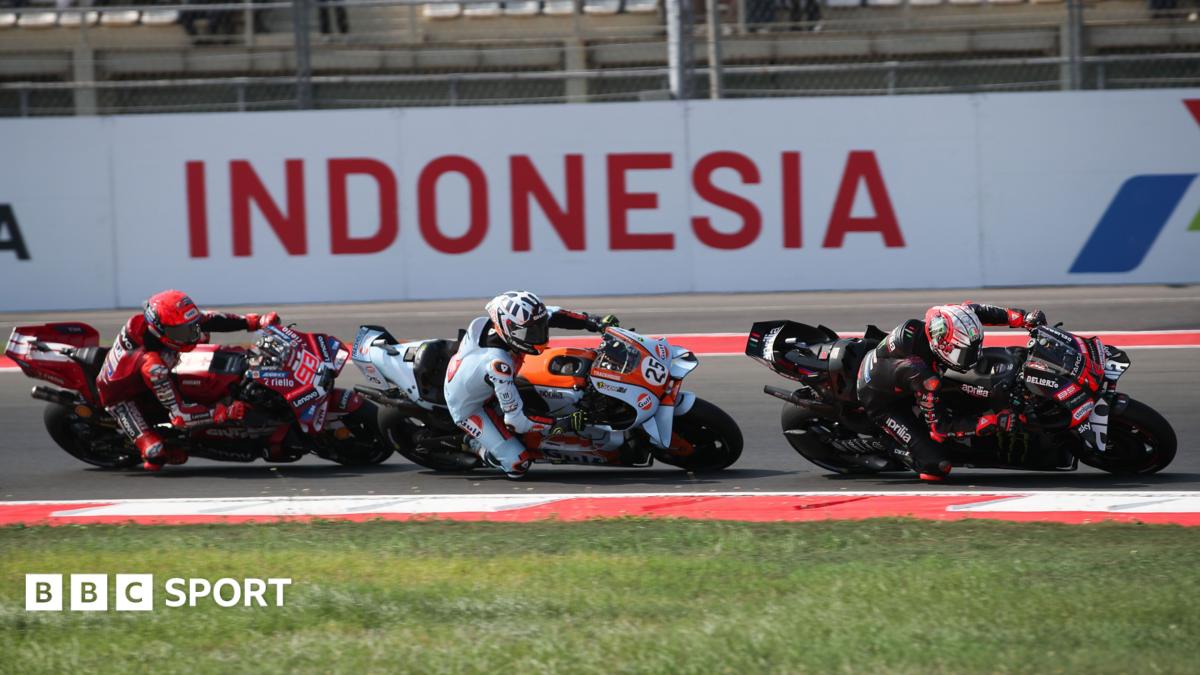
Marco Bezzecchi triumphed at the Indonesian Grand Prix, while Jorge Martin finished third to retake the lead from Marc Marquez in the MotoGP world championship.
Italian Bezzecchi made his move on pole-sitter Raul Fernandez with nine laps to go at a sweltering Mandalika International Circuit.
Fernandez finished second ahead of compatriot Martin, with the Spanish duo locking out the podium for Italian manufacturer Aprilia.
Ducati’s reigning seven-time world champion Marquez finished sixth, losing the championship lead he had taken for the first time this season by winning Saturday’s sprint race.
Fernandez and Bezzecchi had clashed and crashed out in that race, with the Spaniard needing to brake with his middle finger for the whole of Sunday’s race after fracturing his index finger.
Starting at the front of the grid, the pair negotiated the first turn and then surged away from the chasing pack.
Having initially looked comfortable, Fernandez began to fade and Bezzecchi seized an opportunity on lap 19 before putting distance on his rival.
The result for 2024 world champion Martin moves him up to 355 points at the top of the championship standings, with Marquez second on 353 and Bezzecchi third with 309.
There are five grands prix remaining in the 2026 season, with the Australian Grand Prix at Phillip Island the next meeting in the calendar in a fortnight’s time.
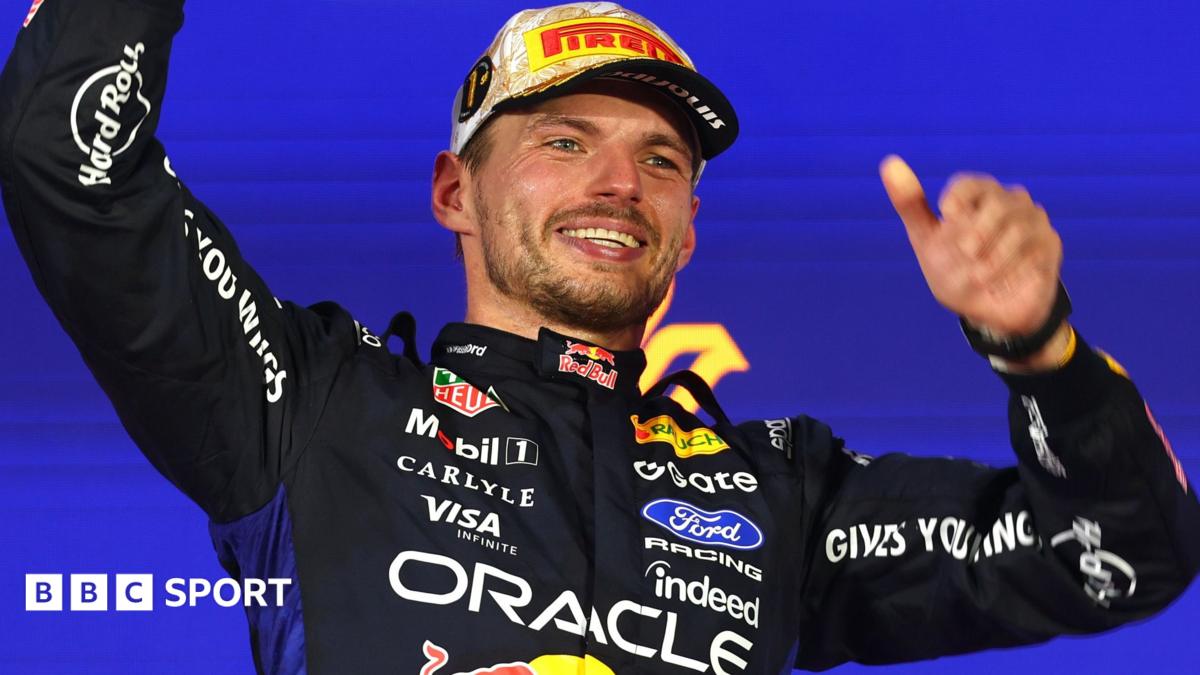
Max Verstappen’s sprint race win was Dutchman’s first of any kind in Singapore as he finished ahead of Lewis Hamilton.
Published On 10 Oct 202610 Oct 2026
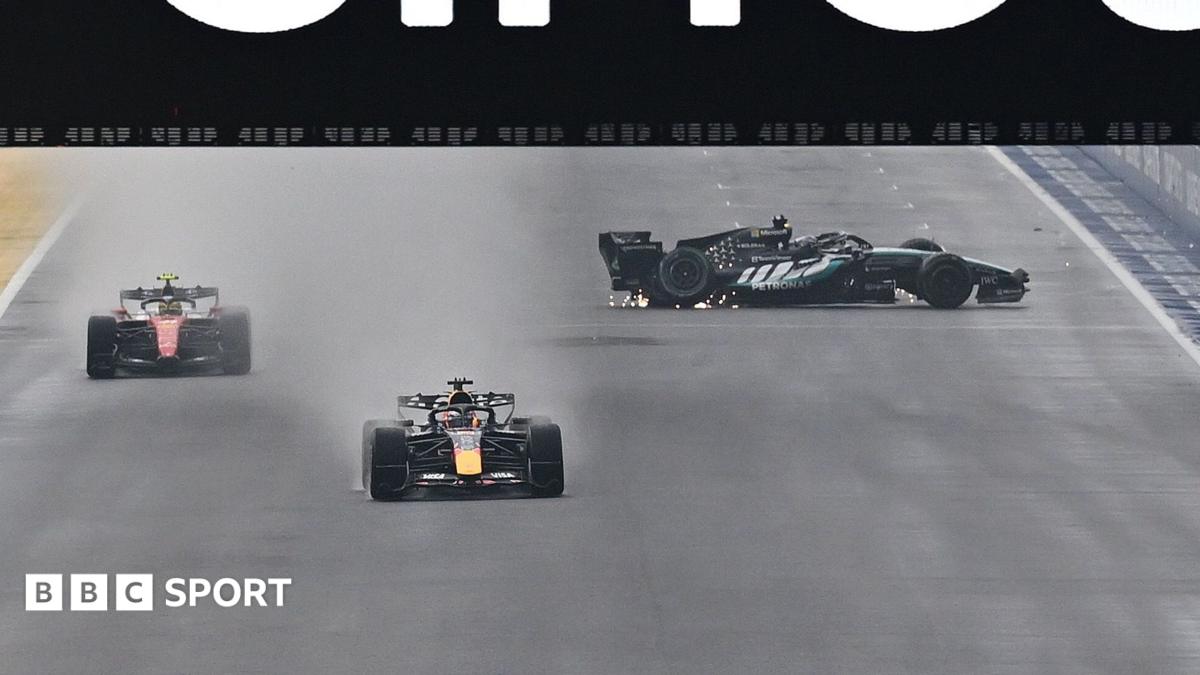
Red Bull’s Max Verstappen won a wet and wild Singapore Grand Prix sprint race on Saturday after George Russell crashed his Mercedes while leading at the end of the opening lap.
Four-time Formula One champion Verstappen held off Ferrari’s Lewis Hamilton to win by 2.50 seconds, with Charles Leclerc third as the McLarens of Lando Norris and Oscar Piastri touched and spun on the final lap while in fourth and fifth.
Recommended Stories
list of 4 itemsend of list
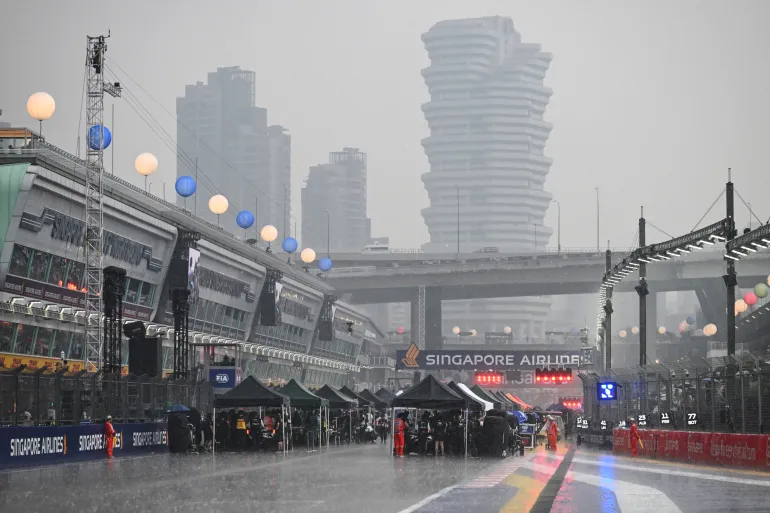
A heavy shower 10 minutes before the scheduled start meant a delay of 30 minutes.
All cars began on intermediate tyres, with some sectors of the Marina Bay Street Circuit much drier than others as the field embarked on two formation laps behind the safety car.
Rain falls on the grid before the Sprint ahead of the F1 Grand Prix of Singapore at Marina Bay Street Circuit on Saturday [Rudy Carezzevoli/Getty Images]
The eventual standing start saw Russell start on the front row alongside pole-sitter Verstappen and it was the Englishman who got away better.
His lead was short-lived as he lost control after touching a treacherous white line on the final bend of the opening lap. He slid sideways into the pit lane wall, bringing out a safety car.
It was another setback in a season of bad luck for Russell, who will start from the back of the grid in Sunday’s Grand Prix because of engine penalties.
“It was a miscalculation,” Russell told Sky Sports. “Came through the corner, had more battery deployment than I thought, pushed me a little bit wider than I hoped and went on to the white line.
“Silly mistake. Big consequences.”
It left Hamilton, who had a brilliant start from sixth on the grid, in second place, having leapfrogged Ferrari teammate Leclerc and the two McLarens.
The big beneficiary of Norris and Piastri’s “papaya spat” on the last lap was championship leader Kimi Antonelli, who inherited fourth place in his Mercedes having started seventh on the grid.
Fifth was RB’s Liam Lawson, sixth was the Haas of Oliver Bearman, seventh was Audi’s Nico Hulkenberg and Norris got going again to limp home in eighth and round out the points scorers.
Red Bull’s Max Verstappen won an incident-packed sprint race at the Singapore Grand Prix after Mercedes driver George Russell crashed out of the lead.
Russell was leading in tricky conditions, with half the track dry and half wet, when he got a little too wide at the final corner at the end of the first lap.
He lost control of his Mercedes, which spun across the track into the inside wall, before bouncing back again to the outside, the rest of the field somehow avoiding him.
A final-lap collision between the McLarens as Lando Norris tried to pass Oscar Piastri at Turn Five promoted Russell’s team-mate Kimi Antonelli to fourth place.
In combination with Russell’s retirement, that extends the Italian’s championship lead to 89 points.
Former US Vice President Kamala Harris among those to hail Wilson as Las Vegas Aces centre continues record run.
Published On 9 Oct 20269 Oct 2026
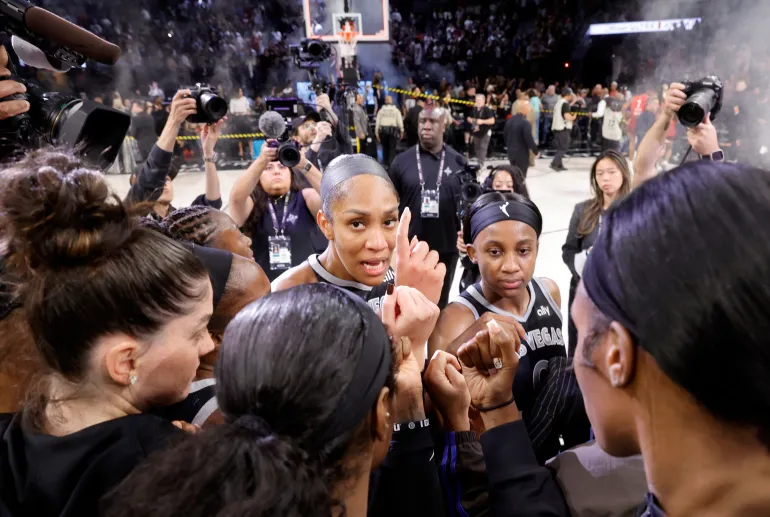
A’ja Wilson fine-tunes her shooting touch after every practice. That extra work has defined her greatness since being drafted first overall in 2018.
On Thursday, she received a voice message from former Vice President Kamala Harris congratulating her on redefining greatness leaguewide after she was named the WNBA’s MVP for a third straight year and for the fifth time overall.
Recommended Stories
list of 4 itemsend of list
“Obviously, that is an honour,” Wilson said. “A woman of our history, and I’m so appreciative to be able to share that moment with her through the phone call and the message of her delivering that I won my fifth MVP.”
In addition to becoming the first player to three-peat, Wilson won the award in 2020 and 2022.
Commissioner Cathy Engelbert, Aces owner Mark Davis and team President Nikki Fargas accompanied Wilson’s mother, Eva, who presented her daughter with the trophy.
“Each one of these has not been taken lightly,” Wilson said while flanked by all five of her MVP trophies. “In my heart, they’ve always been so special. But this one here, I cried a little bit harder. This one here is just a little bit different. … When you dream as a young girl, you dream so big and you write your goals out, and you just never imagine that you were able to just check them off.
“And when you’re able to check them off – small wins, big wins – it truly means a lot. And so I think that’s why I cried a little bit harder on this one, because 15-year-old A’ja wasn’t sitting up here dreaming about being a five-time MVP. She wasn’t dreaming about being a three-time champion. She was dreaming about surviving this world.”
The 30-year-old Wilson once again led the league in scoring with an average of 26.2 points per game while shooting nearly 53 percent from the field. She averaged 9.4 rebounds per game, a career-best 3.2 assists and 1.9 blocks.
Wilson, centre, huddles with her teammates after they defeated the Indiana Fever in Game 3 of an WNBA basketball first-round playoff series [File: Steve Marcus/AP]
Wilson has the defending champion Aces back in the WNBA semifinals for the eighth consecutive season although Las Vegas is down 2-0 in the best-of-five series against Golden State. Game 3 is on Friday.
“This is great. I love it, not going to take for granted, shine her up, let’s do it,” Wilson said on Thursday. “But tomorrow, when it comes to hoisting it in front of the fans, I love the fans, … but I doubt I will be doing that. I’ll be warming up with my team. … Everyone in this room knows the competitor that I am. Everyone knows what my main focus is, and that is to get a game.”
Wilson received 65 first-place votes and nine second-place votes for a total of 713 points from a national panel of sportswriters and broadcasters. Minnesota’s Olivia Miles received six first-place votes and 40 second-place votes (442 points) while Indiana guards Kelsey Mitchell and Caitlin Clark followed with 287 and 212 points, respectively.
No WNBA player besides Wilson has more than three MVPs. Sheryl Swoopes, Lisa Leslie and Lauren Jackson each have a trio. On the NBA side, Kareem Abdul-Jabbar has six, and Michael Jordan and Bill Russell each have five.
“A’ja Wilson is one of one,” Fargas said. “She’s now standing in a category that no other WNBA player in the history of the league has accomplished. She’s in the conversations with the Michael Jordans and the Wayne Gretzkys of the world – where she belongs.”
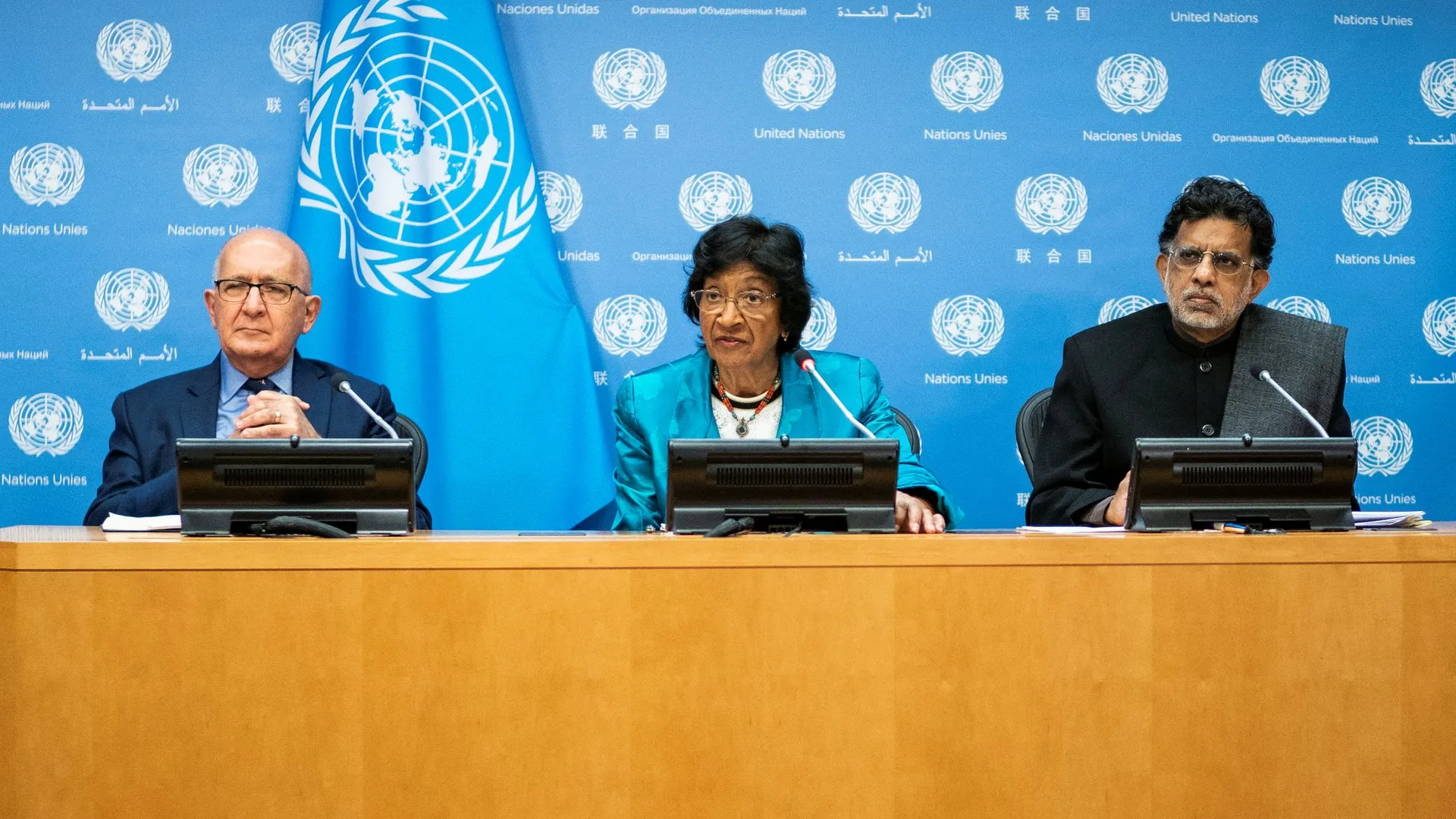
International Court of Justice judge Navi Pillay has been awarded this year’s Nobel Peace Prize. A former head of the UN’s inquiry into the occupied Palestinian territories, the Nobel committee called her ‘one of the great defenders of international legal principles’.
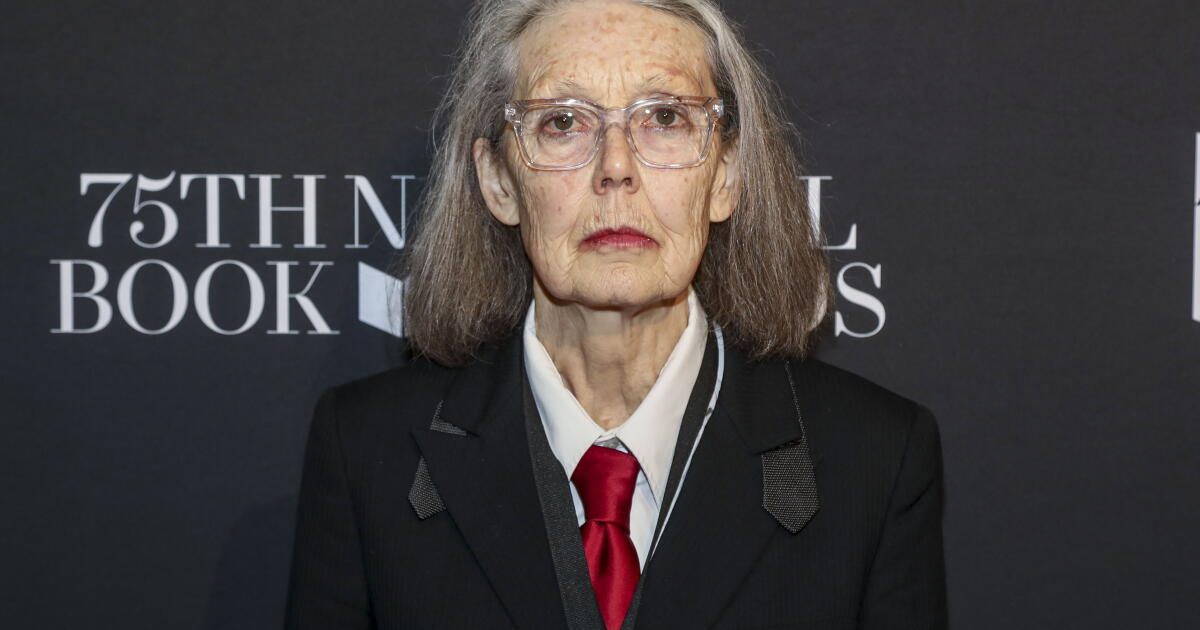
Anne Carson, the Canadian poet, essayist, professor of classics and translator, has won the 2026 Nobel Prize in literature.
The prize, announced at the Swedish Academy in Stockholm on Thursday, awarded Carson “for her bold and inventive oeuvre that, in playful dialogue with the classical tradition, has created new forms for contemporary literature.” Carson is the 19th woman to win.
Among Carson’s myriad acclaimed works are her novel in verse “Autobiography of Red” and its sequel, “Red Doc>”; her seminal book of literary criticism, “Eros the Bittersweet”; poetry collections such as “Glass, Irony, and God” — which contains “The Glass Essay” — and the T.S. Eliot Prize-winning collection of narrative poetry “The Beauty of the Husband: A Fictional Essay in 29 Tangos”; her haunting accordion-fold elegy, “Nox”; and her widely praised translation of Sappho’s surviving fragments, “If Not, Winter.”
“In 1981, she published her doctoral thesis in classics, and has throughout her entire career, combined poetry writing with translation work and teaching at various universities,” said Anders Olsson, who serves as the chair of the Nobel Committee for Literature at the Swedish Academy, and presented the laureate. “Almost all her literary production has centered upon the intersection between the philologist’s obsession with words and the poet’s desire for new meaning.
“Throughout her entire authorship, Carson, with a light touch, explores the possibilities of writing, a process by which the literary sketch has become of particular value for her. In her collaborations with visual artists and choreographers, and with opera and theater directors, she has crossed over into various artistic fields, which has lent her writing a strongly performative aspect,” Olsson continued. “This demonstrates the freedom with which she relates to literary expectations and rule systems, which in turn lies behind the outstanding importance her work since the 1990s has had for the international art and literature scene.”
Nobel committee member Steve Sem-Sandberg said Carson is “an author for our time,” unique in her skill at connecting contemporary ways of living through antiquity. Sem-Sandberg marveled at Carson’s use of the myths, characters, stories and fables from that time, and the way she puts them into a modern context. “The mixture between those two gives an enormous energy to her writing,” he said. “Nobody writes like her, and nobody would even, I think, dare to do this in this way.”
Carson was sipping tea and eating crackers at her seaside home in Iceland — she also resides in Ann Arbor, Mich., where she teaches — after she got the big news. She said she was thinking of ways to give the 12 million Swedish kronor ($1.2 million) award away. “We have a friend who needs a house, and we always give a lot to Doctors Without Borders,” she said. She also planned to celebrate by taking a walk through the woods and turning off the phone.
Carson’s initial reaction was surprise. “Who would expect it? For heaven’s sake!”
Several of today’s papers lead with the government’s review of ADHD and autism diagnoses. A “stark warning over rising demand for NHS autism and ADHD care” tops the Guardian. Elsewhere, it reports that two Latvians have been arrested after they were “found inside RAF base”. And, after it was revealed that the three sisters who died in the Brighton sea had taken their own lives, the paper describes their “final pilgrimage”.
After blowing past a self-imposed August deadline, the U.S. Navy has finally announced Boeing as the winner of its F/A-XX next-generation carrier-based fighter competition. F/A-XX has become one of the most hotly anticipated U.S. defense procurement decisions in recent memory after the Pentagon tried to shelve the program indefinitely last year.
Boeing had been competing against Northrop Grumman for the F/A-XX contract. An earlier down-select reportedly eliminated Lockheed Martin back in March 2025.
TWZ has now published an initial analysis of Boeing’s winning F/A-XX design based on what can be seen in the new rendering, which you can find here.
As mentioned, the Pentagon had moved to freeze the F/A-XX program in June 2025. Three months earlier, Boeing had won a separate U.S. Air Force competition to produce what is now called the F-47. U.S. military officials had argued that the U.S. industrial base lacked the capacity to support work on two next-generation fighters simultaneously.
A rendering of Boeing’s F-47 for the US Air Force. USAF
Congress subsequently intervened to keep the F/A-XX program running, but its future had remained very murky until earlier this year. In April, Chief of Naval Operations (CNO) Adm. Daryl Caudle said that a winner of the competition would finally be announced in August. Secretary Pete Hegseth and Acting Secretary of the Navy Hung Cao both publicly committed to that same timeline later that month. There had been concerns that the program might have slipped back into limbo after that deadline came and went. Adm. Caudle told Aviation Week‘s Brian Everstine that he himself was no longer aware of when this decision might come on the sidelines of the Tailhook Association’s annual convention last month.
Just two weeks ago, Air Force Gen. Dale White, the service’s Direct Reporting Portfolio Manager for Critical Major Weapon Systems, reiterated concerns about industrial capacity in response to a question about potential challenges in building F/A-XXs at the same time as F-47s. White also acknowledged that these concerns were “not unique” to F/A-XX and F-47.
In this context, Boeing’s win today is perhaps unsurprising. The company will be able to leverage design work it has already been doing in relation to the F-47 program, as well as relevant production experience and supply chains. TWZ had previously highlighted similarities between what was seen in a rendering the company released of its F/A-XX proposal and official renders of what it is building for the Air Force. We still have yet to learn just how closely related the two designs are.
Boeing’s previously released F/A-XX rendering. Boeing
It is also worth noting here that Boeing previously pushed back publicly on the assertion that it was not ready to meet Air Force and Navy needs at the same time.
Regardless of any industrial base considerations, top Navy officials have been consistently vocal about the need for F/A-XX, even after the Pentagon’s move to put the program on ice last year. The service has presented the next-generation fighters as essential for staying ahead of top global competitors like China and Russia, as well as smaller adversaries, such as Iran.
“I know these things are expensive, and I know the defense industrial base is compressed, but we have got to figure out how to walk and chew gum here with aircraft,” CNO Caudle said in January, just weeks before the start of major combat operations against Iran. “The folks that used to be not in [the] headspace that I needed a stealth aircraft of this level to fly a mission into their country, will gain capability that the F-18 [F/A-18E/F Super Hornet] will not match against.”
A US Navy F/A-18E Super Hornet seen being launched from a carrier. USN
“This is an ever-evolving theme, and when you’ve got partnerships … well coupled with each other across China and Russia and Iran and North Korea, and terrorist groups that are getting that kit from all of those through back-channel ways, our ability to fly with impunity with our existing airframes is fleeting,” he added at that time. “So, if I don’t start building that [F/A-XX] immediately, you’re not going to get it for some time.”
The Pentagon has now issued a full press release for the F/A-XX contract award to Boeing, which is valued at approximately $20 billion. The deal covers the “full-scale development phase” and includes the procurement of “multiple test aircraft for ground, airworthiness, systems, and weapons integration testing.”
“The F/A-XX is a critical pillar in our commitment to maintaining peace through strength. F/A-XX will dominate contested airspace, extend operational reach, and deliver a decisive combat advantage for the warfighter,” Michael P. Duffey, Under Secretary of War for Acquisition and Sustainment, has said in a statement. “The F/A-XX platform represents a crucial, non-negotiable investment in America’s national security and long-term air combat capabilities. We are joining forces with Boeing to field these capabilities rapidly, ensuring our warfighters possess the lethal and highly networked systems required to deter aggression, project undisputed power, and secure absolute air superiority.”
“This achievement marks a new era for the U.S. Navy,” Acting Secretary of the Navy Hung Cao also said in a statement. “The Sixth-Generation fighter is a generational leap in air superiority and will provide the world’s best aviators with unparalleled capabilities to fight, win, and come home safe. We are excited to partner with Boeing, and for our warfighters to continue to dominate the skies and defeat our nation’s enemies.”
“The F/A-XX will provide advanced carrier-based power projection that extends the range of the most agile and survivable airfields: U.S. Navy carriers. In addition, F/A-XX will be interoperable with manned and unmanned platforms such as Collaborative Combat Aircraft (CCA) and increase the capability of every CCA it teams with,” the press release adds. “Following this contact award announcement, Boeing will deliver the platform to augment and eventually replace legacy F/A-18E/F Super Hornets and EA-18G Growlers beginning in the 2030s, and operate alongside the F-35C.”
The Navy has not yet announced a formal designation for the F/A-XX aircraft. If Boeing’s base design does share significant DNA with the F-47, it is possible that the designation for the new sixth-generation carrier-based fighter could reflect that.
It is also worth noting how muted the F/A-XX announcement has been across the board given how hotly anticipated it was. The contrast with the F-47 contract announcement, which was a live-broadcast event headed up by President Donald Trump from White House, is particularly striking.
Update: 6:14 PM ET –
Boeing has now put out its own press release regarding the F/A-XX contract award, which notes that “technical and programmatic details” about the aircraft “remain classified under U.S. national security and export laws.”
“It’s an honor to be selected to produce the Navy’s first sixth–generation platform,” Steve Parker, President and CEO of Boeing Defense, Space & Security, said in a statement. “Backed by decades of work, bolstered by game-changing innovations and solidified by the investments we’ve made in new facilities uniquely suited to build multiple products with next generation capabilities, our dedicated and talented team is ready to execute this critical program.”
6th-gen edge.
Thank you, @USNavy, for continuing our partnership to design, build and deliver your F/A-XX aircraft. We’re honored to produce the 6th-generation fighter that will revolutionize advancements in naval aviation to maintain U.S. carrier air superiority.
“Delivering two advanced fighters in parallel was always our plan, and we invested accordingly,” Parker added. “We are ready and able to build multiple concurrent future combat aircraft franchise programs.”
Boeing’s release explicitly highlights a major ongoing expansion of its production and other facilities in St. Louis, Missouri. That work is also widely understood to be supporting the F-47 program, asTWZ reported separately just earlier today.
“Investment in facilities is just one part of the story,” Boeing’s Parker also said. “We’re also investing in technology and people so that we can deliver for our customers.”
As an aside, Boeing also received a separate contract today from the Navy, valued at $16,667,607, to support the final shutdown of the production line for the F/A-18E/F Super Hornet fighter and EA-18G Growler electronic warfare jet.
Great timing. The same afternoon Boeing gets F/A-XX, the Navy gives them a new contract for shutting down the F/A-18, EA-18 line
Boom times are coming for STL though: F-47, F/A-XX, F-15EX increase, T-7 ramping up, MQ-25. pic.twitter.com/9TnMBC7jMb