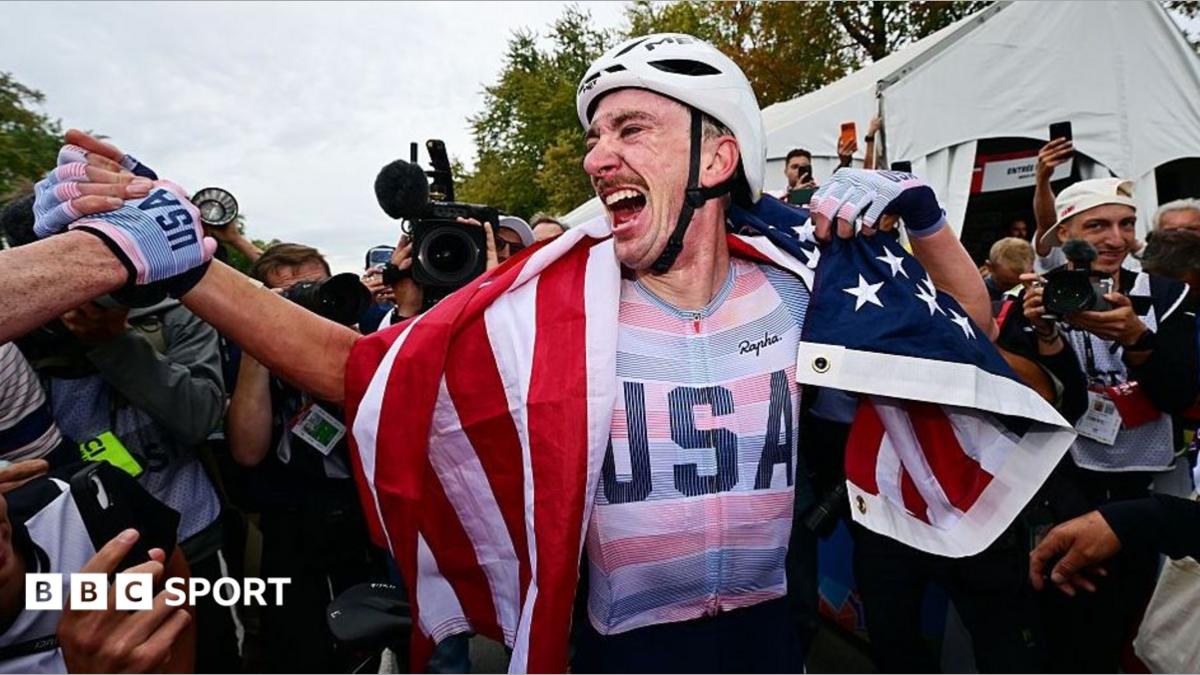

winner

Josh Kerr: Ultimate Championship 1500m winner ramps up debate over country vs brands kit

Whereas players in sports like football earn a salary based on a contract with the team that employs them, and athletes in individual sports like tennis and golf can earn a great deal from prize money at major tournaments, athletics competitors rely much more heavily on personal sponsorships and endorsements.

That is because they are paid no direct annual salary, and the only standardised prize money on offer is $50,000 (£37,000) for winning gold in one of the 48 track and field events at the Olympics.

That prize money was only introduced at the 2024 Games in Paris, and is paltry compared to the potential millions in winnings on offer in other major sports.

Some nations – including the USA – also choose to pay athletes who win medals from their own resources, but Britain does not.

Instead, athletes are awarded funding and grants by UK Sport, with the majority of the money coming from the National Lottery.

UK Sport ranks athletes by how likely they are to win medals at major events, and gives more funding to those whose chances it believes are better.

Athletes typically use that funding to pay for training camps, equipment, travel and, in some cases, personal support staff like physiotherapists, nutritionists and chefs.

So why would athletes be instructed to wear national team kit at the Ultimates?

The Ultimate Championship is billed as three fast-paced evenings with a record $10m (£7.4m) prize pot on offer for the biggest stars in athletics.

The condensed schedule and focus on star names is designed to appeal to viewers on television and social media – the latter likely playing a role in the focus on short, sharp bursts of action which can capture attention online.

Most viewers of athletics are used to watching athletes compete while wearing national kit at the Olympics and World Championships. Put simply, the use of a national kit makes it easier for the casual viewer to quickly spot who they should be rooting for and feel invested in the action.

But Kerr’s comments have highlighted the fact that something which may well improve the viewing experience can be felt as a direct financial negative by the athletes themselves.

With the next edition of the Ultimate Championship set to take place in September 2028, shortly after the Olympics in Los Angeles, the battle between brands and country could continue to heat up.

Source link

Erling Haaland goal: Was Haaland’s derby winner a VAR error?

With Haaland’s goal settling the match, United were unsurprisingly disappointed by the decision.

“I think it was offside,” said Martinez. “And what I can’t understand is the rules. I want to be calm now, I want to control myself.

“It’s so hard because you lose a derby, you lose three points at home, and every season they’re [referees] coming to our club, they explain for one hour the rules, and they look so confident with that, and then after [there are] five or six people doing these kind of mistakes in the Premier League – it’s unacceptable.

“It’s the best league in the world, you have the best teams in the world, the best players in the world, and now we have to go home with this injustice.”

United boss Carrick also expressed his confusion.

“We put things in place in the game now, we have people in offices with all the screens for this decision,” he said.

“It’s more worrying about if that’s the interpretation of football now. If that’s the interpretation of not interfering in the game now, that’s really worrying for me. It’s a staggering explanation.

“The decision isn’t going to change the season, but it’s had a major impact on the game.”

Wayne Rooney, part of the BBC’s MOTD2 team, said: “Surely it’s offside. Martinez is impacted by Fernandez’s movement, and he is offside.”

Gary Neville said on Sky Sports: “I think we’ll see some sort of apology from the referee’s association, there’s no doubt Fernandez is playing that ball and is trying to put off Martinez. I think it’s one they’ll recognising they got wrong.”

Micah Richards added: “I think it’s been a bad day for referees. They got the Foden decision wrong and the Fernandez decision wrong. I think they got it so wrong but I don’t think it takes anything away from City’s performance.”

Meanwhile, City boss Maresca said: “I think it was onside clearly so it’s good.”

Source link

Phil Foden sees red but Erling Haaland scores winner – Manchester Utd v City player ratings

Senne Lammens: Not as busy as he might have expected to be. Absolutely vital save from Fernandez to prevent City second. 7

Diogo Dalot: If only he had been able to control Bruno Fernandes’ chipped pass into the penalty area he might have marked his 250th Manchester United appearance with a rare goal. Didn’t look down the line to see he was clearly offside as United pressed just before half-time. Screwed shot wide after break. 4

Harry Maguire: Decent performance from veteran central defender and not far away from an equaliser with late header. Needless push on Enzo Fernandez in the box, for which he was booked. 6

Lisandro Martinez: Didn’t dive in when Bruno Fernandes played a pass towards his own goal straight to Erling Haaland and won the ball from the Norwegian. Decent effort 7

Patrick Dorgu: Replaced Luke Shaw at left back in the starting 11 and did OK but doesn’t have the same link with Rashford. Attempted block proved so crucial to City’s opener. 6

Kobbie Mainoo: Another assured display in front of England boss Thomas Tuchel. Came close to giving his side the lead just after half-time and was home side’s most effective midfielder. 8

Youri Tielemans (off 66, Sesko): Best performance of the season so far but yet to make the standout contribution expected. 7

Bryan Mbeumo: Probably United’s most-effective attacking player. Header just wide before injury-time effort saved. 8

Bruno Fernandes: Fortunate to get away with no sanction at all over the incident that led to Foden’s dismissal. Not one of his better efforts 6

Marcus Rashford (off 83, Zirkzee): Curling long-range free-kick against the post with Donnarumma beaten and shot into side-netting but still waiting for first goal since his return. 6

Matheus Cunha: Preferred to Benjamin Sesko in starting line-up and dragged early shot wide. Got involved on plenty of occasions, but again by dropping deep. Off target with a second-half opportunity. 7

Subs:

Benjamin Sesko (on 66, Tielemans): Brought on to make an impact and tried his luck from distance soon afterwards. 6

Joshua Zirkzee (on 83, Rashford) 6

Subs not used: Darlow, Mazraoui, Mount, Yoro, Santos, Heaven, Lacey.

Source link

Aster Guardians Global Nursing Award 2026 Names Agimol Pradeep From United Kingdom Winner of USD 250,000 Prize

Article content

KOCHI, India — From more than 134,000 registrations spanning 214 countries and economies, Nurse Agimol Pradeep from United Kingdom has been announced as the winner of the Aster Guardians Global Nursing Award 2026. A Senior Transplant Coordinator at King’s College Hospital and Honorary Senior Lecturer at the University of Salford, UK, she was recognised with USD 250,000 at a prestigious ceremony held in Kochi, India.

Article content

Article content

Since its launch in 2021, the Aster Guardians Global Nursing Award has grown into a global platform that celebrates nurses who are advancing the profession and creating meaningful change. The award was presented by Shri V. D. Satheesan, Hon’ble Chief Minister of Keralam, in presence of Dr. Azad Moopen and Alisha Moopen. The ceremony also featured a special message from Dr. Tedros Adhanom Ghebreyesus, Director-General of the WHO, applauding Aster’s role in celebrating the contributions of nurses worldwide.

Article content

Article content

Article content

Nurse Agimol Pradeep

Article content

Article content

“I am deeply honoured to receive the Aster Guardians Global Nursing Award. I hope to use this opportunity to expand organ and stem cell donation, while empowering nurses and strengthening the global nursing workforce to drive lasting change.”

Article content

Dr. Azad Moopen, Founder Chairman, Aster DM Healthcare

Article content

Article content

Article content

Article content

Nurse Agimol Pradeep’s achievement embodies the expertise, courage, compassion and unwavering commitment that define exceptional nursing. These are the qualities at the heart of the Aster Guardians Global Nursing Award, which was established to recognise and elevate the vital contributions of nurses worldwide.”

Article content

Alisha Moopen, Managing Director and Group CEO, Aster DM Healthcare

Article content

Article content

Article content

Nurse Agimol has shown us that meaningful change can begin anywhere through a single nurse determined to solve a problem. Stories of our top 10 finalists demonstrate that nurses are not only essential to delivering healthcare; they are shaping how healthcare evolves.”

Article content

About Aster DM Healthcare:

Article content

Founded in 1987 by Dr. Azad Moopen, Aster DM Healthcare is a leading integrated healthcare provider, with a strong presence across seven countries. Aster is committed to the vision of providing accessible and high-quality healthcare, from primary to quaternary services, with its promise of “We will treat you well.”

Article content

Article content

Article content

Article content

View source version on businesswire.com:

Article content

https://www.businesswire.com/news/home/20260912257725/en/

Article content

logo

Article content

Article content

Source link

I’ve been to both cities claiming to be the world’s greatest – there’s a clear winner

Cape Town and Rio de Janeiro are two cities on most people’s bucket lists, but which one reigns supreme when it comes to the best – one writer compares the two

Days shaped by sand, surf and salt air. Nights by bars, beats and grills. All played out in a city somehow woven between soaring mountains and sun-swept shores. Sounds good, no? Well this is both Brazil’s Rio de Janeiro and South Africa’s Cape Town. Then chuck in vibrant waterfront neighbourhoods, primeval hiking trails, world-class food and drink, plus a melting pot of cultures and you’ve got what it takes to be the greatest city in the world. Which is what both have boldly claimed.

But they both can’t be right, so which takes the crown? I’ve lived in samba-soaked Rio, and recently spent a month exploring the city straddling Africa’s southern tip, so may just be qualified enough to have a say in the debate that’s enraged Brazilians and South Africans online. The neutral voice of reason ’n’ all that.

Weather

Rio has a glorious tropical climate. Hot and humid, with sweltering summers often as high as 40C. You’ll rarely feel cold, but if you’re of a sensitive disposition, it may be too much heat to handle. Plus biblical rains can wash your trip away.

Conversely, Cape Town has a Mediterranean-style climate. Dry, warm summers with highs of a perfect 30C. Fantastic if it weren’t for one thing – the wind. Known as the “Cape Doctor”, it’s like nothing I’ve ever experienced. Sweeping in off the ocean, it can make a hot summer’s day feel like autumn. Worse, it can be downright violent, turning beaches into giant sandblasters, stinging your skin, near blinding you. Bad doctor.

Verdict: Rio is the winner.

Beaches

Oh my, what an amazing array of beaches they both have, like no other city in the world. Apart from each other, of course. Both have smaller arcing sands near the city centre, becoming longer and more pristine the further out of town you head.

Just south of the centre, Rio has the world-famous Copacabana and Ipanema beaches, broad stretches of golden sand where the whole city decants to at weekends to let it all hang out in too-scant swimwear.

Cape Town has the likes of smaller yet very pretty Sea Point, Clifton and Camps Bay, which were far more debonair than I expected. More like the Cote d’Azur than the Cape of Good Hope.

Further up the coast, Rio has beautiful Barra, and Cape Town kite-surf strewn Bloubergstrand, giant stretches of glorious open coastline pounded by those big blue waves.

But the key difference is that Rio’s waters are much warmer, whereas Cape Town’s side of the Atlantic is surprisingly cold year-round, plus that wiiiind, meaning you don’t see many people swimming – the complete opposite of Rio.

Verdict: Rio takes the crown.

Mountains

Both have an imperious plethora of peaks. Cape Town’s most famous is Table Mountain, which your eyes can dine upon from all over the city. Rio’s is craggy Corcovado, atop which the statue of Christ offers redemption to thousands of tourists daily. But there are countless breathtaking viewpoints from many other fantastically surreal mountains, plus hiking trails that transport you into oh-so-big nature – lush jungle in Rio, temperate forest in Cape Town – a world away from the urbanity below.

Verdict: All too amazing to call. Draw.

City centres

Surprisingly, their city centres are the least impressive aspect. Both have smallish downtowns and historical quarters, which are nice but nothing impressive compared to some global cities. Much better are the colourful colonial-era neighbourhoods – Lapa in Rio, Bo Kaap in Cape Town – where you can join the tourist hordes to get your Insta-pics.

Down by the water, Rio’s Port Zone has cool museums and galleries, while Cape Town’s upmarket V&A Waterfront is very pretty with great views and shops, albeit a tad generic. Then both have plush beach front neighbourhoods, where you can whimsically while away days on the golden sands or trendy terraces.

Verdict: Again, too close to call. Draw.

Food and drink

Both have excellent culinary scenes, especially their meats and barbecues. Yum. But Cape Town has a much broader option of cuisines and restaurants, local and international, and during the entire month I was there I didn’t have a single bad meal. Caipirinhas and other potent cocktails get the party rocking in Rio, but Cape Town’s wines are next level. Despite being of proud Provençal stock, I can freely admit their rosés were the best I’d ever tasted. Perfect sundowners.

Verdict: Cape Town is the clear winner here.

Prices

Both have similar prices, which are considerably cheaper than the UK and Western Europe. Decent budget meals are around £4-£10, and mid-level accommodation around £50-£100pn. There are plenty of upmarket options, which are also relatively good value for money.

Verdict: Draw.

Nightlife and music

Both cities come alive even more when the sun sinks into the ocean. Your more mainstream bars and restaurants line the beachfronts, while cool bar-clubs are found in the more hipster hoods of Ipanema and Lapa in Rio, and Bree St and Woodstock in Cape Town.

Both cities are home to world-class music, Rio sways to the sound of samba, rap and “funk”, whereas in Cape Town it’s Afro house, amapiano and 3-step that get things thumping.

Verdict: Cape Town (but mostly due to my penchant for house music), although if we were judging it on Carnival season alone, nothing comes close to Rio!

Vibe

Brazilians are famously some of the most friendly and welcoming people in the world, which is true for Rio, but like any big city, you get plenty of miserable buggers too. People of all shades were friendly with me when I was in Cape Town, yet seemingly not that much with each other.

Sadly, both cities are still riddled with historical divisions between class and race, yet in Cape Town the legacy of Apartheid looms large indeed, and as a tourist you unfortunately won’t see much of the native African side of the city. The division feels tense.

Verdict: Rio.

Overall verdict

My biggest gripe with Cape Town is that as a tourist, you only really see the predominantly rich, white neighbourhoods that feel more like Canada, the US and Australia than Africa.

In Rio, though, everywhere is very Brazilian, no matter the social makeup of the area. Plus the beaches are a leveller, especially Copacabana where the whole city congregates for communal sun-worshipping, eating, drinking, sport playing, and strutting of stuff, no matter if black, white or brown, muscle-bound or beer-belly beautiful – nobody seemingly cares.

And that, for me, is the key difference – which is why Rio is my overall winner.

Source link

Ex-Miss World winner spills show’s secrets

IT has been branded “offensive” and its host was once pelted with rotten fruit, but the Miss World contest will be watched by two billion when the 75th anniversary final takes place this week.

And representing England at the 2026 showpiece in Vietnam will be Grace Richardson, who has already won the contest’s talent round and has sailed through to the final event.

Ann Sidney after being crowned Miss World in 1964 Credit: Getty
Grace Richardson, the current Miss England Credit: SWNS

One woman who knows what it takes to triumph at the Miss World is former title holder Ann Sidney, who won the 1964 contest representing the United Kingdom.

Now 82, and one of only five Brits to have held the title, she defends the contest against the usual criticisms that it is sexist and out of date.

Ann, who was a 20-year-old hairdresser from Poole in Dorset before entering the competition, tells The Sun: “Miss World was a soft target for protesters. I think people working in TV are more anti-Miss World than the general public.

“When I won, I was in the swimsuit. Now there is an evening gown.

‘JAW DROPPED’

Miss Universe host hits out on stage after contestants wear indigenous dress


TRAGIC BEAUTY

Miss Universe contestant, 23, found dead in her apartment by horrified family

“I didn’t think twice about wearing a swimsuit. I never felt embarrassed by being in a swimsuit.”

When Ann was named Miss World in 1964, the show’s British TV audience was an extraordinary 27million, which was around half the population at the time.

It catapulted Ann on to the international stage, and she starred in a movie with Mick Jagger, appeared in TV secret agent series The Avengers, entertained US troops in Vietnam with Bob Hope, auditioned for a James Bond film, had a lead role in The Sound Of Music stage show in the West End and met Elvis Presley in Las Vegas.

Miss World, which began as a bikini contest at the Festival of Britain in 1951, provided a jet-set life of five-star hotels, limousines and having the likes of Frank Sinatra fix Ann a drink.

Welsh beauty queen Helen Morgan held the title for just four days in 1974 Credit: Getty
Tom Jones with Miss World Marjorie Wallace on a film set in 1974 Credit: Alamy

But holding on to that crown required sacrifices and hard work.

The Miss World organisation signed a lucrative deal with a trade body for the wool industry, which meant Ann would be the Ambassadress for Wool for a year.

Her contract had a “morality clause”, which meant she could not have boyfriends and had to be Miss Perfect in terms of her behaviour.

And that was a strain for Ann, as she was in an on-off relationship with a married Bruce Forsyth.

The presenter, who died in 2017 aged 89, was a household name, compering the Sunday Night At The London Palladium variety show, decades before he became known for hosting Strictly Come Dancing.

Ann says: “The situation with Bruce kind of broke my heart. I couldn’t get any bad publicity, I would lose the contract basically and certainly lose any money. They paid me very well.

“It was a very difficult thing for me because I had this man in the background that was wanting to go out with me and to see me, and I knew I had to focus on what I was doing.

“You have to be that perfect woman. I had to be completely single and above and beyond suspicion. No dating whatsoever.”

And that is tricky when lots of men want to boast they have slept with Miss World. Once a footballer even pretended to be from room service just so he could tell his team-mates he had been in Ann’s bedroom.

When other men were too persistent, Ann put them firmly in their place.

She says: “I’m not knocking men, but you’re always going to be a trophy, something a man can boast about.

“You can’t take it seriously. Back then, if somebody got naughty, you said, ‘Stop it, you dirty old man’, you know, ‘Give me a break’. Usually men will go, ‘I’m sorry’. You dealt with those things yourself. I think today we’ve become very offended.”

Ann sizzles in a swimsuit back in 1964 Credit: Rex Features
Last year’s Miss England, Milla Magee, quit the show because she felt it treated her ‘like a prostitute’ Credit: Neil Hope

There were other potential pitfalls. Playboy tycoon Hugh Hefner offered Ann $10,000 — around £140,000 in today’s money — to pose naked in his magazine.

Even though he plied her with drink, she turned him down, knowing she would be stripped of her Miss World title if she accepted his offer.

Once her year was up, Ann pursued an acting career, going into repertory theatre to learn the trade in the traditional manner.

She recalls having to overcome the widespread idea that beauty contest winners were “bubble-headed”, with people asking questions about her such as, “Can she learn lines?”.

But she went on to secure a broad range of roles, from the cult 1970 crime film Performance, starring Mick Jagger, to the cosy Seventies sitcom Are You Being Served?.

Since the death in 2019 of her fifth husband, theatre producer Duncan Weldon, she has continued living and working in California.

For other queens over the years, the price of fame was too much.

Britain’s first Miss World, Rosemarie Frankland, had a tragic end. An 18-year-old Marks & Spencer shop worker when she won in 1961, Rosemarie died aged just 57 from a drug overdose in 2000 in a shabby Los Angeles flat.

A 20-year affair with Bob Hope, two broken marriages and a short-lived acting career, which included appearing in The Beatles’ 1964 movie A Hard Day’s Night, is said to have left her depressed.

Our third winner, Leslie Langley in 1965, appeared in Bond film Goldfinger and Doctor Who, then quit showbusiness to be a dental nurse.

Welsh beauty queen Helen Morgan held the title for just four days in 1974, stepping down when it was revealed she was an unmarried mother with an 18-month-old son — somewhat more scandalous in the 1970s — and that a woman intended to name her in a divorce case.

The previous year’s winner, American Marjorie Wallace, was stripped of her title after a fling with singer Tom Jones.

Judges for Miss World have included Sir Bruce Forsyth Credit: ITV
A recent snap of former Miss World winner Ann Sidney Credit: Facebook/Ann Sidney

In 1980, German Gabriella Brum quit after 18 hours when adult images emerged.

The last Brit to win was Sarah-Jane Hutt in 1983. Since then attitudes have softened over the years. Miss UK Nicola Willoughby was allowed to stay in the competition in 1999, even though topless photos were published.

Last year Miss England, Milla Magee, quit the show because she felt it treated her “like a prostitute”.

Now this year’s Miss England, 21-year-old Grace — a performing arts graduate from Leicestershire — is in a strong position to take the crown and sash in Vietnam.

The first openly gay Miss England, who has revealed that she was cruelly bullied over her appearance at school, was set to perform a ballet dance in the talent round, but broke her foot just a week after entering the event.

Luckily she had a back-up talent and secured her place among the Top 40 quarter-finalists by wowing judges with her rendition of the song Never Enough, from the 2017 film The Greatest Showman.

These days, it seems, talent and brains are as important as looks in the Miss World contest, and you will find biochemists and world-class dancers among the women strutting their stuff at the finals.

Since contest founder Eric Morley died in 2000 it has been run by his widow Julia, 86, who has introduced the concept of Beauty With A Purpose — an ideal which means the pageant has raised more than a billion pounds for charity.

Lesley Langley raises a toast in 1965 Credit: Getty
Miss World contestant Halle Berry in 1986 Credit: News Group Newspapers Ltd

It could be seen as a response to critics, who have blasted the pageant on feminist grounds.

One such protest against it came in 1970 when Women’s Liberation activists threw flour bombs at host Bob Hope. BBC One controller Michael Grade removed Miss World from the channel in 1984, claiming it was “verging on the offensive”. It is now available on YouTube.

But former winner Ann thinks it is time to bring back the show, which is still broadcast in more than 180 countries, to British terrestrial television.

Ann, who is still working in Hollywood, says: “Miss World has its critics, but I would do it again tomorrow.

“It was a great stepping stone for me. I travelled the world five times in a year. I met incredible people.”

WINNING WAS JUST THE BEST

By Jamie Pyatt, The Sun’s former Miss World Correspondent

FROM judges storming out of press conferences to the countries who have won it back-to-back, here are ten facts about Miss World . . . 

  • Soccer legend George Best was said to have bedded seven Miss World winners, including the US’s Marjorie Wallace in 1973 and Swede Mary Stavin in 1977. But he said in his autobiography: “It was only four. I didn’t turn up for the other three!”
  • More than a million women apply every year to take part in the hope of becoming one of the 108 contestants and winning the $1million first prize.
  • Miss World is the most watched annual TV event, with more than two billion viewers in 180 countries. In the UK it fell out of favour in the 1980s as feminists claimed it degraded women. Indeed, guests arriving for the 2002 event at London’s Alexandra Palace, including this correspondent, were pelted with human poo.
  • The 11 Miss World finalists who have appeared in James Bond movies include the US’s Halle Berry (Die Another Day), Malaysia’s Michelle Yeoh (Tomorrow Never Dies) and the UK’s Carolyn Seaward (Octopussy).
  • The UK is one of only three countries to have won Miss World back-to-back – with Sweden in 1951 and 1952, English roses Ann Sidney and Lesley Langley in 1964 and 1965 and India in 1999 and 2000. The last UK contestant to win was Sarah-Jane Hutt in 1983.
  • Judges for Miss World have included Sir Bruce Forsyth, Sir Richard Branson, Shirley Bassey, Piers Morgan and Jerry Hall, who famously stormed out of a press conference at Sun City resort in South Africa in 1992. It happened when I asked if she had any comment on her then husband Mick Jagger allegedly being caught cheating on her, after she had warned such a question was “out of bounds”. But it gave me a front-page story and Miss World a great publicity boost!
  •  The Miss World crown is the fourth since the contest began and is worth £100,000. It belongs to the Miss World Organisation but each winner gets a replica when she passes her crown to the following year’s winner.
  • In 2002 The Sun helped to evacuate more than 80 beauty queens from Nigeria to the UK as riots over the “offensive” contest led to more than 250 deaths. The contest was rescheduled for London.
  • The current Miss World is Miss Thailand, Suchata Chuangsri, 22, who is the first Thai to win the contest.
  • Final word to George Best, who famously said: “If you’d given me the choice of beating four men and smashing a goal in from 30 yards or going to bed with Miss World, it would have been a difficult choice. Luckily, I had both!”

Source link

Ipswich Town sign Argentina World Cup winner Exequiel Palacios from Bayer Leverkusen

Argentina midfielder Exequiel Palacios has become the first World Cup winner to sign for Ipswich Town after joining from Bayer Leverkusen.

Palacios, 27, left the Bundesliga club for an undisclosed fee and has signed a four-year contract with the Premier League newcomers.

He was part of the Argentina side that both won the World Cup in 2022 and reached the final this summer while he also won the Copa America twice with his country.

“This is a club with great ambition and I am excited to play football in England and compete against some of the best clubs and players in the world,” Palacios said.

Palacios, Ipswich’s 11th signing of the transfer window, started Argentina’s 3-1 win against World Cup debutants Jordan in the group stage in his only appearance at the 2026 tournament.

Ipswich manager Gary O’Neil added: “He is a player who has had real success at the top level of the game, winning the biggest prize of all in the World Cup, as well as major trophies at club level.

“That experience will be vital for us as we continue to work to improve the squad this summer.”

Source link

The Biggest Winner in Sports May Be the Insurance Industry| Global Finance Magazine

As the sports economy grows, insurers rush to cover risks from World Cup disruptions to NIL liabilities.

This article appears in the September issue of Global Finance Magazine.

On 104 separate occasions in June and July, World Cup organizers tried something new. They held games at 16 venues across Mexico, the U.S., and Canada. More games in more locations increased the risk of cancellation due to threats of terrorism, fire, and climate-related catastrophes, as well as cyber incidents and other disruptions.

Long before players took the field, a small army of insurance professionals analyzed risks, negotiated policies, and drafted contracts to help ensure FIFA would not suffer crippling financial losses if an event was canceled. FIFA carried about $1 billion in event-cancellation coverage for this year’s tournament, up from an estimated $900 million for Qatar in 2022, according to Mario De Cicco, vice president of Morningstar DBRS’s Global Insurance & Pension Ratings group. 

FIFA is just one component of the mammoth worldwide sports industry, which the World Economic Forum estimates generated $2.3 trillion in revenue in 2025. 

“It’s not only the large events like the World Cup which are becoming more frequent and more complex,” said De Cicco. “There is also growing participation at every level, from amateurs to professionals. So there are more potential financial losses, and that creates higher demand for insurance protection.”

The magnitude of the money isn’t the only thing that’s changed; the risks CFOs must insure against are also evolving. A decade ago, sports insurance meant stadiums, workers’ comp, and injured players. Today it means ransomware, brand damage, NIL (name, image, and likeness) contracts, and even sports-betting integrations with little or no actuarial history, forcing carriers and brokers to build coverage from scratch in real time for risks that may not have existed five years ago.

Burgeoning demand has transformed a specialty market into a profit center for insurers, according to De Cicco. Large carriers such as Zurich, Munich Re, Swiss Re, and Allianz dominate the top end, he noted, while niche players like American Specialty Insurance and Berkley Insurance add depth. Often, the largest sports insurance contracts are underwritten by a syndicate, using a risk-sharing structure to mitigate catastrophic losses.

The Change at Colleges

Rory Lough,
Gallagher

College sports illustrate what can happen when rapid growth hits an area with little or no actuarial history. Much of the growth comes from NIL compensation and the revenue-sharing framework established by the landmark 2025 House v. NCAA decision, which turned university athletic departments in the U.S. into direct payers of athlete compensation — and bearers of financial risk when a star gets hurt.

Zurich entered the market in August 2025 with the sports-data firm Players Health, after about 15 years of providing coverage to schools and sports organizations. They built a product that reimburses institutions for NIL value when an athlete misses at least 40% of a season, up to policy limits of $2 million. However, for the new line, Zurich had no direct actuarial history.

“We weren’t pricing it blind,” said Marty Banaszek, head of Group Accident at Zurich North America; Players Health’s underlying injury data across sport and position helped to make the risk underwritable. Premiums run roughly 6% to 12% of contract value, weighted toward the highest-exposure positions: “starting quarterbacks, starting running backs,” Banaszek said.

Tate Gillespie, vice president of NIL Strategy & Partnerships at Players Health, helped build the product with Zurich. His “aha” moment came while working in sports at the University of Kansas, when the team’s starting quarterback, a player earning significant NIL money, was injured. A friend and eventual Players Health co-founder asked what the university’s risk management plan was, assuming there wasn’t one. 

“You realize that’s not how the National Football League does it,” his friend said, pointing out that pro teams had been insuring against this kind of loss for years, but nothing like it existed in college sports.

The combined NIL and revenue-share market is approaching $3 billion today, Gillespie estimates, and he projects it will reach $4 billion to $5 billion in a year, with 30% to 40% annual growth. Banaszek frames buying behavior in financial terms: “These organizations really need to think of this spend as an investment portfolio, not dissimilar [to] how insurance or other financial institutions make investment decisions.”

When Risk Stopped Being Physical

That’s already the case, said Rory Lough, senior vice president at global brokerage Gallagher, who pointed out that NIL has broadened exposure well beyond the training room. It now includes athlete protection, contractual and business liability for collectives, and institutional compliance risk related to Title IX and employment classification. 

“Stakeholders are no longer looking at insurance as simply protection against injury,” she said. That newly intangible category of risk — brand, data, governance — runs through nearly every exposure. Cyber touches it all, from contract records and fan payment data to medical files, compliance documentation, and more.

Cybercriminals target major sporting events for their high visibility, said Jeffrey Lang, senior vice president and California Platform Leader at brokerage Trucordia. However, the risk is particularly hard to price because of its relative newness and the perpetrators’ adaptability. A game-day ransomware attack on a stadium operator can simultaneously bring down payment systems, digital ticketing, security access, and broadcast feeds. Risk rises with AI deepfakes and misinformation that can derail a team’s reputation. 

“How do you put a precise dollar figure on lost brand trust or broken sponsor confidence?” Lang asked. “You can measure the cost of rebuilding a damaged wall, but calculating the financial damage of a ruined reputation is much harder.”

Ten years ago, he said, he would talk with prospects about insuring their stadium against fire or property damage, covering concourse slip-and-falls, buying workers’ comp for staff, and securing basic coverage for player injuries or weather-related cancellations. If something broke or someone got hurt, the carrier absorbed the financial hit. That playbook, Lang said, no longer applies.

Much of the sports insurance build-out can be ascribed to the growth of major sports franchises, some of which have become multifaceted corporations, worth more than many Fortune 500 companies. They run real estate portfolios, media companies, and massive data operations. 

But the nature of the insured is different too. 

“The big difference between a sports franchise and a typical corporate entity is visibility,” Lang added. “If a corporate server goes down quietly, it’s an internal headache. If a stadium’s entry system fails live on international TV and in front of 70,000 fans, it’s global news instantly.”  

Weld Royal is a contributing writer based in the U.S.

Source link