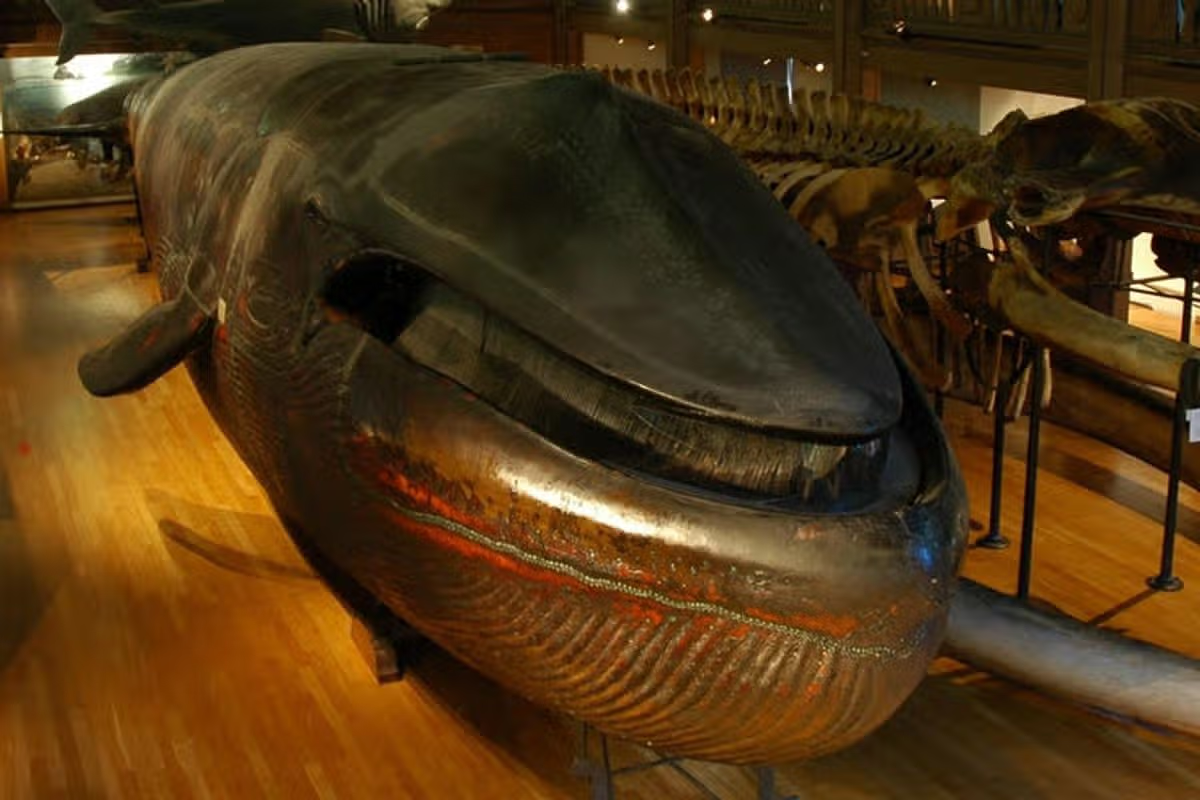
The Malm Whale at the Gothenburg Natural History Museum is the only stuffed blue whale in the world, and it’s also once of Europe’s strangest tourist attractions

The whale is open to visitors on special occasions
Roughly 100 years ago, a young Swedish couple ruined it for the rest of us.
They were caught, trousers down, in the belly of the world’s only stuffed blue whale. Not quite the sex-positive Scandinavia it is today, the scandal led officials to snap its vast, gaping jaw shut, bringing an end to the days of ready access to the 16m long sea mammal.
“We must be content with the fact that it was two citizens of our own city that enjoyed this privilege,” the director of Gothenburg’s Natural History Museum said at the time, finding a silver lining in the moral outrage.
Although my efforts to track down the descendants of a couple that, I’d wager, are history’s only to have sex in a cetacean have so far failed, on a recent trip to Gothenburg, I fulfilled a long-held ambition to get inside a magnificent exhibit that remains the only real blue whale on display anywhere in the world.

“We only open it on special occasions, such as election days, because the Swedish word for vote (val) is the same for the word for whale (val),” explained Stefen Örgårdm the museum’s current director, as we walked up wooden steps into the whale’s mouth.
On special occasions such as Christmas, when Santa hands out presents from inside the tum, the top jaw is cranked open in an unnatural but convenient way, allowing tall Nordic visitors to enter without bumping their heads, then move on into the belly.
It’s more of a local village hall than Jonah in there, the organs having long been stripped and placed in barrels of ethanol kept in the museum’s cellar. Two wooden benches running beneath simple drapery have taken their place. We looked out through the baleen-trimmed jaws of the leviathan as Stefen told me of the coming autumn’s new exhibition on unloved city animals and why we should reappraise them.
Today, blue whales are among the most beloved of all animals. Mysterious, elegant and massive.
“The biggest animal that has ever lived on our planet: a blue whale. … It’s far bigger than even the biggest dinosaur. Its tongue weighs as much as an elephant. Its heart is the size of a car. And some of its blood vessels are so wide that you could swim down them,” Sir David Attenborough said in Blue Planet. They are the ultimate Guinness World Record animal.
Their population has bounced back from 5,000 to 25,000, after decades of commercial hunting brought it down from a pre-whaling 300,000 peak.
Back in October 1865, when fisherman brothers Olof and Carl Larsson discovered the whale helplessly beached just off the Swedish west coast, the animals were reviled.
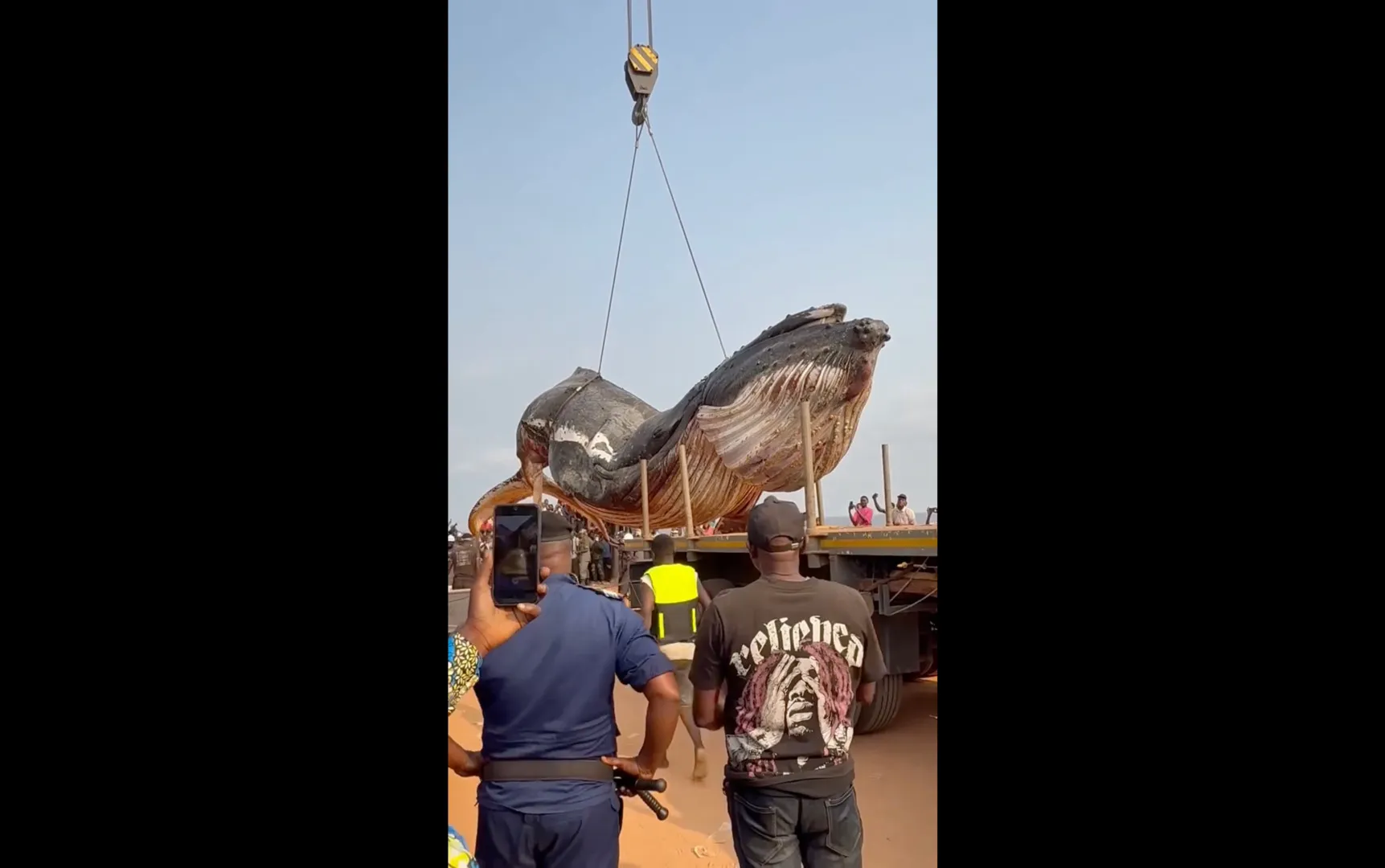
Charitably, it was fear of this vast, mysterious beast that caused the Larssons to do what they did next. I will not repeat the details of the two days of barbarity here. Suffice it to say the whale was killed. And then transported by three steamships and two coal barges into Gothenburg, where the naturalist Augustus Malm purchased the body.
“I will stuff everything,” he declared, leaping onto the collapsing carcase to deliver a speech to the assembled masses. And so he did.
Dozens of butchers, plied with as much beer as needed to withstand the violent smell, hacked it into parts, scooped the organs out and removed the skeleton.
There is something about whales that sends people a little mad. In Nobel Prize winner László Krasznahorkai’s book The Melancholy of Resistance, the arrival of a huge whale on a circus truck sparks a riot. Famously, Ishmael is driven loopy by Moby Dick. And so with the Gothenburg whale.
After days of feverish work, Malm was forced to rest as nausea hit. Realising the whale’s owner had gone, a horde of locals rushed in and snatched blubbery souvenirs. Thankfully, enough remained for the whale to be reconstructed.
Its skin and baleen was cured with arsenic, mercuric chloride and a top coat of colourless copal varnish before being placed onto a wooden frame, 30,000 zinc and copper pins holding it in place. The structure was built in four separable sections, making it easier to transport the whale on trucks to its later resting place in the museum’s great hall. A magnificent photo shows the whale’s head being rolled through a hole in the outer wall.
The whale, still pungent all these years later, remains the museum’s prized exhibit, only competing for the title with a magnificent stuffed elephant.
When in Gothenburg, the museum is the must-visit. But there is much else in Sweden’s second city that is also worth exploring.
Head to Haga, Gothenburg’s oldest neighbourhood, and wander down the cobbled streets. They’re packed with excellent homeware, furniture, book and clothing shops, as well as Café Husaren, a cosy wood-paneled spot known for its massive hagabullar cinnamon buns. These seem to be the Swedish version of the stupidly big croissants everyone photographed for their Instagram last year.
The neighbourhood is now pedestrianised, having been saved from mass demolition in the 1980s and built up from a rough, rundown area into the lovely spot it is today.
From there, hop on a tram or bus and head for the city’s Art Museum. A long day wouldn’t quite be enough to get around all six of its floors, so if in a rush, I recommend the Nordic Fin-de-Siècle section to take in the stunning nature paintings of late 19th-century Swedes, before giving the collection of Carl Larssons their dues.
If not defeated by the earlier hagabullar, consider filling up on Sweden’s (much superior) answer to McDonald’s, Max Burger, or picking up one of the country’s famously weird pizzas and heading home.
Like many second cities, Gothenburg is famous for its friendliness. But also for its terrible weather. There is a good chance you’ll be rained on.
With a sliced banana, pineapple, curry powder and peanut pizza under my arm, I retreated from the deluge to my Airbnb on the outskirts of town. Like Stockholm, you’re never more than ten minutes from the natural world in Gothenburg, or more than 20 from a lake or pretty serious forest. Robert’s place in Ugglum was but a short ride from the centre, but could’ve been deep in the woods of remote Sweden, such was the green surroundings and calm of the place.
This was no corporate holiday let landlord spinning multiple properties, but a family home costing around £200 a night where kids’ paintings decorated the walls and a Barbie Dream House stood proudly in the bedroom.
It is one of Airbnb’s Guest Favourite properties, a title reserved for the accommodation firm’s most rated properties. If you’re spending a little longer in the city, a whole host of Airbnb Experiences are available, such as exploring a local chocolate factory with a chocolatier, joining a seasoned sailor to tack down the coast, or trotting through the woodlands on horseback.
Getting to Gothenburg from the UK is quick and is easy. Direct flights from the UK to Gothenburg-Landvetter Airport are operated by British Airways from London Heathrow, Ryanair from London Stansted, Manchester, and seasonally from Edinburgh, and Norwegian from London Gatwick. Return flights are regularly available for around £30.