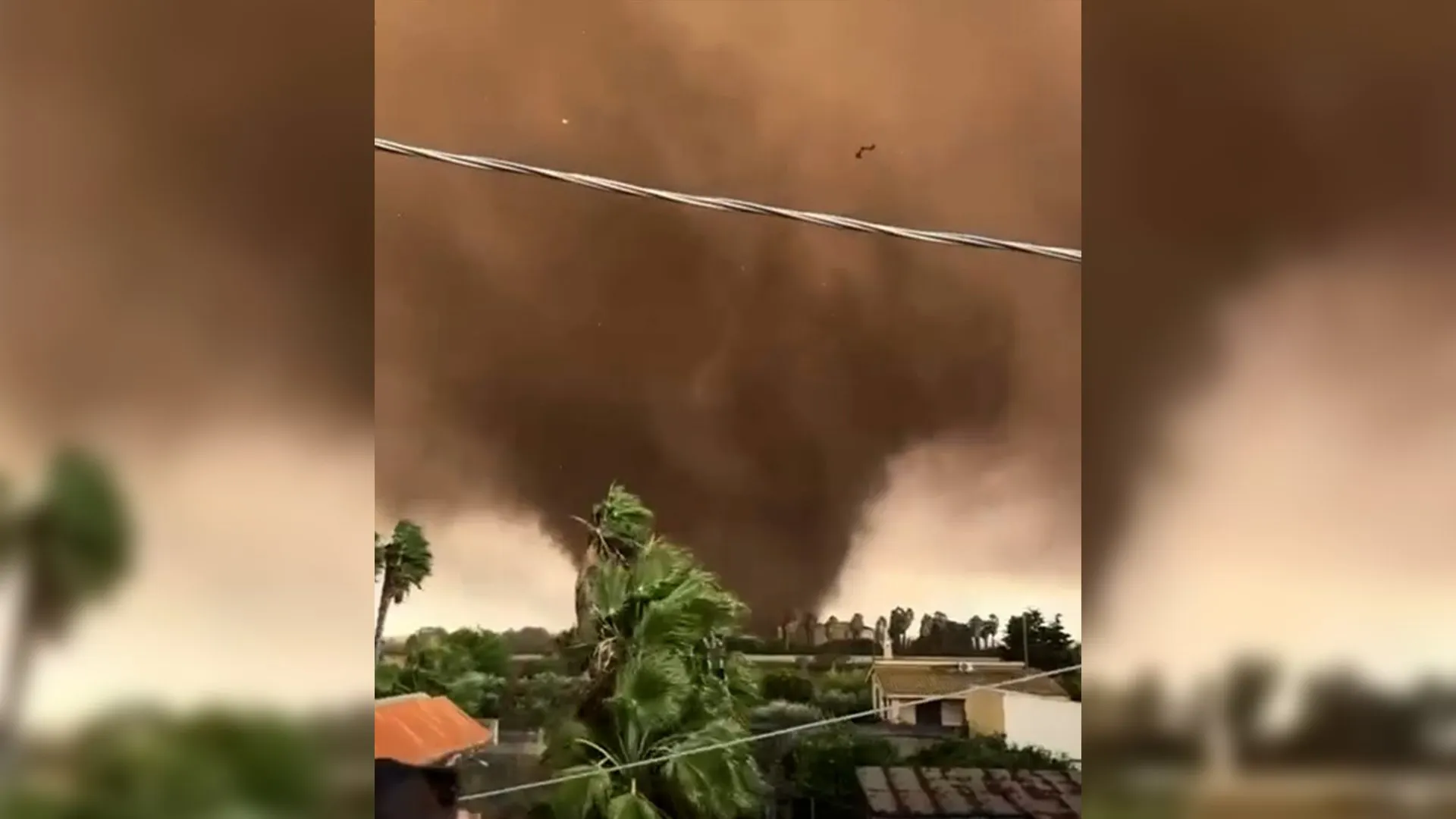
Powerful tornado rips through western Sicily | Weather
A powerful tornado tore through western Sicily, causing injuries, widespread destruction and forcing evacuations across the cities of Marsala and Petrosino.
Published On 9 Oct 2026
A powerful tornado tore through western Sicily, causing injuries, widespread destruction and forcing evacuations across the cities of Marsala and Petrosino.
Published On 9 Oct 20269 Oct 2026
Share

WEDNESDAY’S RESULTS
City Section
Cleveland 24, Chatsworth 0
El Camino Real 27, Taft 6
Narbonne 27, Wilmington Banning 18
South Gate 38, Marquez 0
Southern Section
Anaheim Canyon 6, Santa Ana Foothill 0
Arlington 32, Lakeside 0
Arroyo 6, Rosemead 0
Artesia 6, La Mirada 0
Baldwin Park 20, Nogales 18
Bishop Amat 19, Gardena Serra 7
Bishop Montgomery 14, St. Paul 7
Bolsa Grande 57, Magnolia 18
Brentwood 39, YULA 0
Cantwell-Sacred Heart 52, Sacred Heart of Jesus 0
Century 12, Western 0
Chino 28, Chaffey 7
Costa Mesa 20, Ocean View 6
Covina 26, Charter Oak 20
Dominguez 6, Compton Early College 0
Downey 46, Warren 19
Eastside 13, Highland 6
Edison 33, Fountain Valley 18
El Rancho 38, Keppel 0
El Toro 25, Mission Viejo 6
Esperanza 6, Crean Lutheran 0
Etiwanda 37, Eastvale Roosevelt 0
Fillmore 36, Cate 6
Fullerton 13, Westminster 12
Gahr 28, Bellflower 0
Garden Grove Pacifica 48, Troy 0
Garden Grove Santiago 6, Los Amigos 0
Glenn 26, Oxford Academy 6
Godinez 16, Katella 0
Hacienda Heights Wilson 15, Northview 0
Huntington Beach 68, Marina 0
La Canada 20, Burbank Burroughs 13
Laguna Beach 7, Newport Beach Pacifica Christian 6
La Habra 40, Brea Olinda 0
Lakewood St. Joseph 45, St. Mary’s Academy 6
La Serna 42, Mayfair 7
Lawndale 37, Beverly Hills 7
Long Beach Cabrillo 34, Compton Centennial 6
Long Beach Poly 19, Lakewood 0
Long Beach Wilson 34, Long Beach Jordan 12
Louisville 18, Flintridge Sacred Heart 14
Montclair 6, Don Lugo 0
Montebello 14, Mountain View 2
Newport Harbor 38, Corona del Mar 7
Norwalk 25, Whitney 13
Orange 19, Estancia 6
Palm Springs 6, Cathedral City 0
Pasadena Poly 45, Chadwick 0
Placentia Valencia 27, La Palma Kennedy 13
Rancho Alamitos 20, Loara 19
Rancho Christian 27, Orange Vista 26
Redlands 20, Loma Linda Academy 0
Redlands Adventist Academy 33, Yucaipa 7
Redlands Adventist Academy 19, San Jacinto Valley Academy 6
Rowland 6, West Covina 0
Saddleback 12, Savanna 0
Sage Hill 13, Portola 8
San Marino 18, Monrovia 0
Santa Fe 6, Paramount 0
Schurr 19, San Gabriel 6
Segerstrom 32, Laguna Hills 0
South El Monte 19, Bell Gardens 0
St. Bernard 27, Mary Star of the Sea 0
St. Margaret’s 26, Rosary 6
St. Monica 31, Ramona Convent 14
Temecula Prep 13, California Military Institute 6
Tustin 14, Buena Park 6
Upland 19, St. Lucy’s 18
Villa Park 14, Sunny Hills 6
Western Christian 58, Capistrano Valley Christian 6
Woodbridge 44, Irvine University 13
Workman 6, La Puente 0
Yorba Linda 38, Cypress 0
Yucaipa 33, San Jacinto Valley Academy 6
Intersectional
Birmingham 12, Vasquez 0
THURSDAY’S RESULTS
City Section
Carson 14, King/Drew 0
GALA 6, Fremont 0
Garfield 27, South East 6
Hawkins 14, Fremont 6
Los Angeles Hamilton 13, Fairfax 6
Los Angeles Roosevelt 18, Huntington Park 13
Palisades 26, LACES 12
San Pedro 60, Gardena 0
Sotomayor 19, Elizabeth 0
Venice 37, Los Angeles University 0
West Adams 13, Diego Rivera 0
Westchester 20, WISH Academy 6
Southern Section
Agoura 13, Thousand Oaks 6
Antelope Valley 30, Palmdale 0
Brentwood 26, Shalhevet 18
Camarillo 33, Oak Park 0
Canyon Country Canyon 18, West Ranch 13
Capistrano Valley 26, Dana Hills 6
Hart 14, Saugus 0
Mater Dei 34, La Serna 31
Oaks Christian 55, Calabasas 0
Ontario Christian 26, Fairmont Prep 6
Oxnard 26, Ventura 14
Palos Verdes 13, Torrance 0
Peninsula 13, West Torrance 0
Quartz Hill 14, Knight 0
Redondo Union 27, Mira Costa 14
Santa Barbara 46, Del Sol 0
Santa Monica 7, Inglewood 6
Santa Paula 53, Cate 6
Simi Valley 6, Moorpark 0
South Torrance 39, North Torrance 0
Tesoro 37, San Clemente 26
Valencia 40, Golden Valley 0
Valley View 14, Arlington 13
Westridge 14, Windward 13
Westlake 46, Newbury Park 26
Whittier 46, Pioneer 6
Intersectional
Castaic 12, Granada Hills Kennedy 12
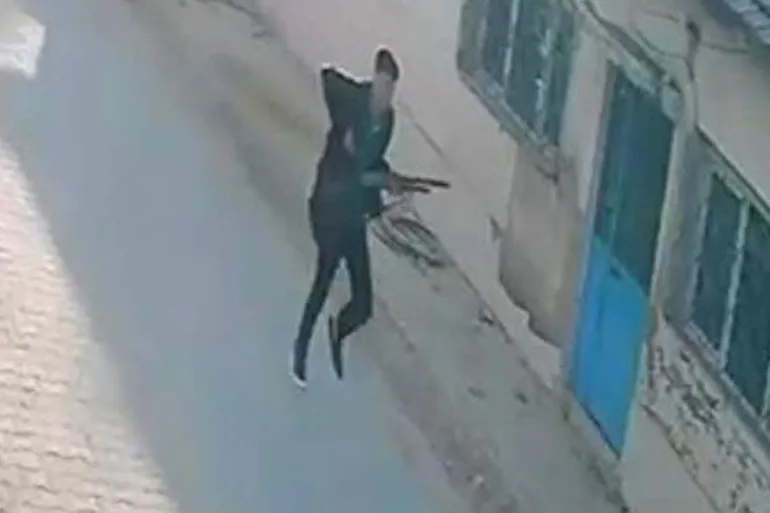
Police arrest suspect in shooting near high school as injured are rushed to local hospitals for treatment.
Published On 22 Sep 202622 Sep 2026
An armed man has opened fire near a high school in western Turkiye, wounding eight people, including students, authorities said.
The injured were rushed to hospitals after the shooting early on Tuesday near a vocational and technical high school in the Turgutlu district in the western Manisa province, the governor’s office said in a statement on X.
list of 3 itemsend of list
Police arrested the suspect after he attempted to flee the scene.
“A report was received regarding gunfire in the vicinity of the Inci Uzmez Vocational and Technical Anatolian High School in our Turgutlu district at 07:59,” the governor’s office said.
The motive for the attack was under investigation, it added.
“After the incident, the suspect believed to have fired the weapon was caught by security forces and taken into custody,” the statement read.
Several images of the suspect were posted online, showing him walking near the school holding a gun.

The attack comes months after two school shootings in Turkiye.
In April, 16 people, mostly students, were wounded when a former student opened fire at a high school in the Sanliurfa province. The attacker later killed himself.
The following day, a 14-year-old killed nine people, including students and teachers, and wounded 13 others in an attack at his school in the Kahramanmaras province. The assailant was killed by police.

Results from CIF City and Southern Section high school football games on Friday, Sept. 18.
Source link
Israeli politicians reacted to sanctions by states including the United Kingdom, France, and Canada on the country’s illegal settlements in the occupied West Bank with self-righteous anger. But what is the latest example of Israel’s international isolation brought on by its treatment of the Palestinian people has not been influential in swaying the electorate in the run-up to October’s elections, analysts tell Al Jazeera.
Responding to the UK Foreign Minister Ed Miliband’s accusation that Israelis were ethnically cleansing the occupied West Bank, Israel’s Gideon Saar accused his counterpart of spreading “outrageous lies” and attempting to interfere in the election through foreign pressure.
list of 4 itemsend of list
Israeli President Isaac Herzog also condemned the measures, branding them a “gross interference in the democratic elections” of Israel.
But, in reality, the majority of Jewish Israelis have supported their country’s genocidal war in Gaza and the occupation of the West Bank.
A poll from August, published as the death toll for Palestinians killed in the West Bank had already reached 76 this year, showed that more than half of Jewish Israelis supported retaining the illegal settlements as part of any future agreement on a Palestinian state, while nearly 40 percent supported annexing the territory in defiance of international law.
“People just don’t care that settlements are illegal,” Israeli political analyst Ori Goldberg said.
”Ed Miliband expressed a number of laudable sentiments when announcing the measures,” Goldberg said, referencing the UK foreign secretary’s references to his own Jewish heritage when announcing the cessation of trade with Israel’s illegal outposts. “But we’re at the stage where Israelis aren’t even interested in the truth so much as they are the sentiment.”
Israeli Prime Minister Benjamin Netanyahu goes into the elections at serious risk of losing, with many polls predicting that a coalition of parties opposed to him could win the majority in Israel’s parliament.
But it will not be issues like the settlement-related sanctions that will lose him votes, analysts said.
Public backing for the “government and opposition blocs are pretty hardened, and nobody is going to switch from one side to the other over sanctions arising from [the settlements],” Michael Koplow, chief policy officer at the Israeli Policy Forum, said. He added that the sanctions were unlikely to weigh as heavily with the electorate as “this government’s record and the related feelings people have about Netanyahu”.
“When people were asked what would determine their vote, security came first,” Israeli sociologist Yehouda Shenhav-Shahrabani said.
“I think there are several mechanisms operating simultaneously,” he added.
First, he said, is the normalisation of the settlements. In Israeli public discourse, the occupied West Bank is increasingly referred to by the biblical name “Judea and Samaria” – a shift he said was becoming institutionalised.
“Second, external sanctions don’t necessarily translate into domestic political costs,” Shenhav-Shahrabani said. “And perhaps most importantly, politically foreign pressure can be absorbed into an existing Israeli narrative [of anti-Semitism] rather than [changing how the issue itself is understood].”
None of Israel’s most prominent politicians has criticised the government for its support of the settlements in defiance of international condemnation. Yair Lapid, a former prime minister and one of Netanyahu’s leading opponents, has, instead, focused his ire on the countries condemning Israel. “Imposing boycotts and sanctions on Israel is a grave mistake,” he said. “This is a wrong and dangerous policy, at the wrong time and for the wrong reasons.”
Another of Netanyahu’s principal rivals, Gadi Eisenkot – whose Yashar Party manifesto does not mention either the West Bank or Gaza – has declined to speak on the sanctions directly. Netanyahu has also yet to comment on the sanctions publicly, despite his Likud party having championed settlement expansion for decades.
“The sanctions haven’t particularly hurt Netanyahu, at least not as far as we can see in terms of direct influence on … polling,” said Dahlia Scheindlin, a pollster and public opinion researcher based in Tel Aviv.
Instead, the focus has been on other elements of an eventful electoral cycle, including the emergence of new challengers to Netanyahu on the right.
“We aren’t seeing any real backlash from the sanctions,” Scheindlin said. “Instead, it’s just getting filtered through what people already think of him – his critics dislike him even more, and his supporters basically say, ‘Well, the world hates us no matter what.’”
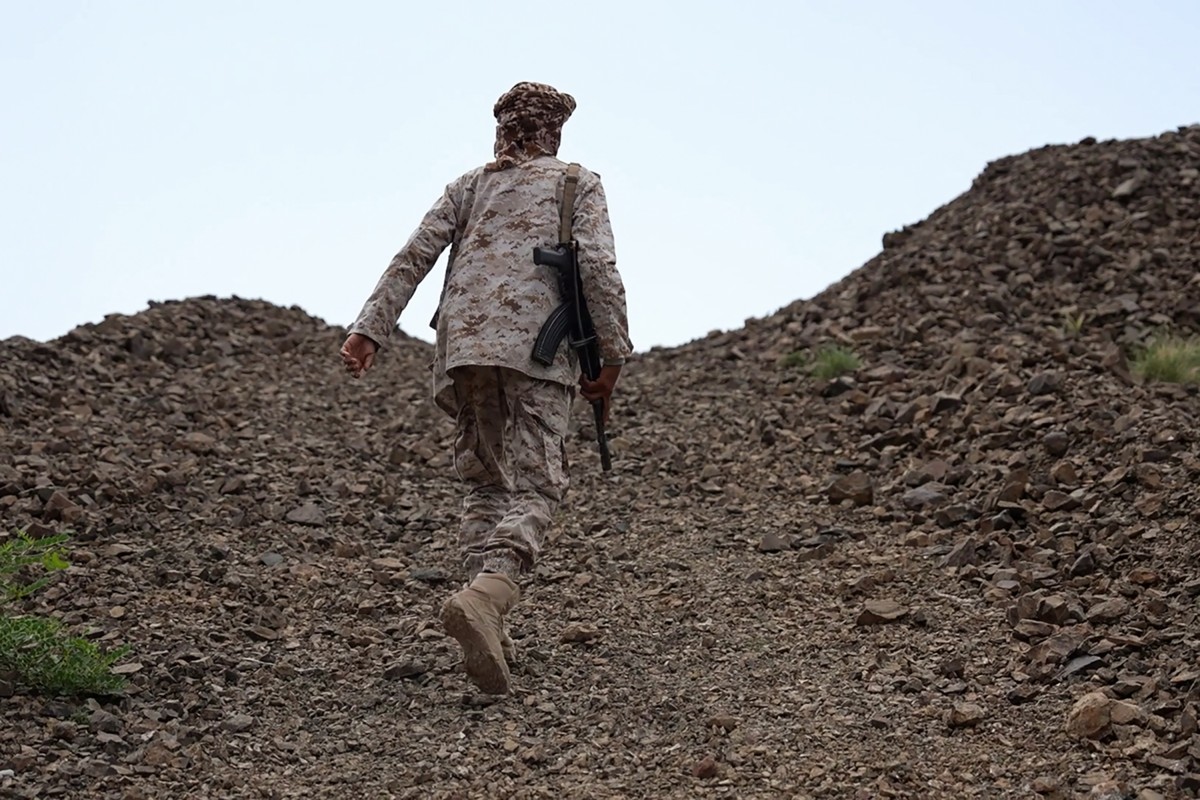

Fighting is continuing along Yemen’s western front, with government forces reporting strikes against Houthi positions in areas stretching from Taiz toward the Red Sea coast.
The government said on Monday that its forces targeted Houthi personnel, equipment and positions in Dhu Bab in Taiz governorate and Khokha in neighboring Hodeidah governorate.
The areas are strategically important because they lie along Yemen’s western coastline near the Red Sea and Bab Al-Mandab Strait, one of the world’s key maritime chokepoints connecting the Red Sea with the Gulf of Aden and wider Indian Ocean.
Dhu Bab is close to Bab Al-Mandab, while Khokha lies further north along the Red Sea coast. The fighting is taking place along territory that links the front lines around Taiz with Yemen’s strategically important western coastline.
Yemen’s armed forces spokesman, Col. Majid Al-Nazili, said government forces targeted Houthi equipment, personnel and positions in the two areas.
Military commanders also visited several front lines around Taiz, including areas near Bani Omar, Jardad and Al-Wazi’iyah, to assess combat readiness.
Maj. Gen. Abu Bakr Al-Jubouli, commander of the Tor Al-Baha axis, said government forces had inflicted heavy losses on the Houthis during recent clashes.

After lower house approval, the bill to grant tens of thousands of Sahrawis citizenship now goes to the Spanish Senate.
Published On 10 Sep 202610 Sep 2026
Spanish lawmakers have backed legislation that would grant citizenship to tens of thousands of Western Saharans who were born when Spain ran the disputed territory now largely controlled by Morocco.
Spain’s lower house of Parliament on Thursday approved the legislation 168-31, with 145 abstentions.
list of 3 itemsend of list
The bill still requires Senate approval before becoming law.
The text grants Spanish nationality to Sahrawis born before September 29, 1977 and to their children through naturalisation, even if they never resided in Spain.
Although the exact number of beneficiaries is unknown, Sahrawi groups estimate that between 70,000 and 120,000 people could benefit from the legislation, which supporters described as addressing a “historical injustice” by colonial Spain in the Western Sahara.
The vote comes at a particularly sensitive time for Madrid’s historically delicate relations with Rabat due to the migration crisis in Spain’s north African territory of Ceuta, and the mass arrival of at least 70,000 migrants from Morocco in July.
Spain’s leftist government has avoided blaming Morocco – which does not recognise Spanish sovereignty over Ceuta and Spain’s other North African territory of Melilla – but the right accuses Rabat of orchestrating the surge for political motives.
Morocco claims sovereignty over Western Sahara and began asserting control over the territory after Spanish rule ended.
The Algerian-backed Polisario Front independence movement seeks recognition of an independent state called the Sahrawi Arab Democratic Republic.
Many Sahrawis live in refugee camps in Tindouf in western Algeria, or elsewhere abroad, while others remain in Western Sahara.
Against this backdrop, the initiative to grant Spanish nationality to Sahrawis has divided opinion in Morocco but not prompted condemnation from the government.
Moroccan media quoted Ramadan Messaoud, a member of the Royal Advisory Council for Saharan Affairs, as saying in July that Rabat had “no problem” with Sahrawis obtaining Spanish citizenship. Others had done so “over the past few years”, noted Messaoud, who is also president of the Sahrawi Association for Human Rights.
Western Sahara was a Spanish colony until 1975, when Spain relinquished its administration under agreements with Morocco and Mauritania.
Spain’s ruling Socialist Party and its junior left-wing partner Sumar, which filed the initiative, were among those who supported the bill, while the opposition conservative People’s Party abstained and far-right Vox voted against it.
“With the adoption of this legislation, we are restoring – and I emphasise, restoring – the Spanish national identity card to those Sahrawis who once held it and from whom this state took it away,” said Tesh Sidi of the leftist Sumar coalition, the first woman of Sahrawi origin to serve in Spain’s Parliament.
The bill will now go to the Senate, where amendments are expected, before returning to the lower house for final approval.