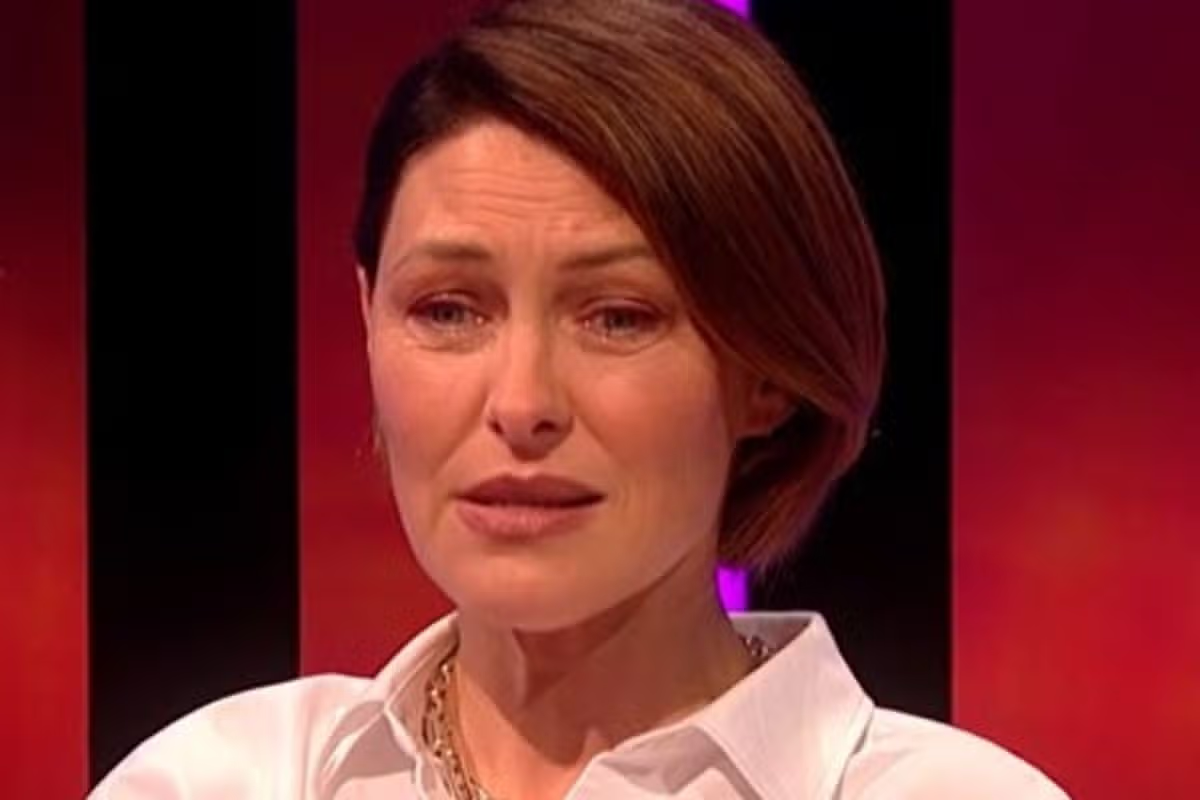
Emma Willis has shared an update on Delta Goodrem after she was forced out of Strictly Come Dancing and admitted she could tell “something wasn’t right” with the pop star

Emma Willis ‘knew something wasn’t right’ with Delta Goodrem before she was forced out of Strictly with an injury(Image: BBC)
Emma Willis has shared an update on Delta Goodrem after she was forced out of Strictly Come Dancing.
Pop singer Delta is currently in the lineup of celebrities trying their luck on the dancefloor. Whilst she and Kai Widdrington managed to top the leader board last week with their Salsa, it quickly emerged that the singer had done the show in “absolute agony” and on the Sunday, she went to hospital with a rib injury.
Appearing on Thursday’s edition of It Takes Two, Emma told host Ellie Taylor that it was somewhat obvious that something was amiss with Delta’s health at the time. She said: “It’s such a shame. I think it became quite apparent after the show that last week that something wasn’t right.”
Delta has been given a free pass – or bye – to the next round of the competition and, even though she will miss out on Icons Week, Emma said the cast and crew are hopeful this will mean she will be back and fighting fit.
She added: “We’re just hoping that because she has this bye week, by the week after, she’ll be good to get back. Fingers crossed!”
The TV presenter Emma, 50, took the reins of the new series of the BBC Saturday night favourite along with Johannes Radebe and Josh Widdicombe when Tess Daly and Claudia Winkleman left at the end of last year.
Delta, who is best known for starring in Australian soap Neighbours and released hits such as Innocent Eyes before representing her home country at Eurovision earlier this year, has broken her rib but is hoping to recover in time for next week and – following her doctor’s order – has been getting rest at home.
Taking to social media, she wrote: “Just wanted to come on here and say a big Thank you to everyone who has sent messages and wrote lovely comments the last couple of days, I see them all.
“Not the start to the week I’d hoped for but your support has meant the world. Also special big thank you to my amazing dance partner @kaiwidd who I will miss dancing with this weekend but I am so beyond grateful for his guidance and friendship through it all.. as well as the wonderful Strictly team!!”
She added: “Resting and recovering at home and will be cheering everyone on from my couch on Saturday night xx.” Delta had previously said she was “absolutely gutted” to be out the show for the week, and hoped she’d be back the following week.
It was revealed today that Delta’s planned dance to Dolly Parton’s Jolene with Kai Widdrington will be performed instead by Amy Dowden.
A spokesperson for the show had said: “Due to injury, Delta Goodrem has been advised by doctors to rest and, as a result, will not dance on this weekend’s Strictly Come Dancing.
“In line with the rules of the show, Delta and Kai will receive a bye through to next week when it is hoped they will be able to dance again. We wish Delta the very best as she continues her recovery.”
Delta added: “I’ve been loving every second of this experience, so having to sit this one out is heartbreaking – especially after the high of Saturday night.” “I cannot tell you how much I love being a part of this magical show. I’m going to focus on resting and recovering, and hopefully I’ll be back on that dancefloor very soon. Thank you so much to everyone for all the love and support. It’s so appreciated. I’ll be cheering everyone on from the sidelines this week!”
Sources revealed that Delta’s rib injury “deteriorated” and she was “in absolute agony” performing. She was later rushed to hospital to undergo tests but is now resting at home.
A source said: “Delta has been pushing herself as far as possible to impress Strictly viewers. A small injury at the start of last week has quickly deteriorated. On Saturday night, despite putting on a brave face and smiling, she was in absolute agony.
“Filming didn’t wrap until late Saturday night and she was exhausted. The plan was to go home and get some rest but she could hardly sleep. On Sunday morning she was raced to A&E and then spent most of Monday also at the hospital.”
Like this s tory? F or more of the latest showbiz news and gossip, follow Mirror Celebs on TikTok , Snapchat , Instagram , Twitter , Facebook , YouTube and Threads .