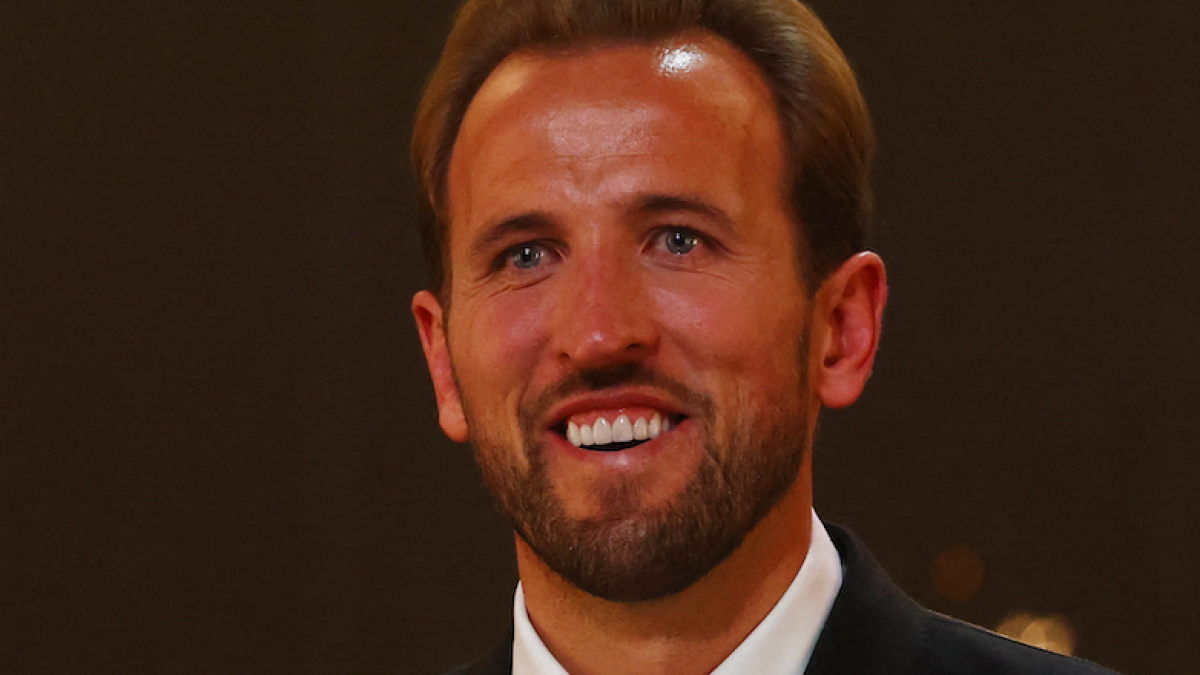
Bayern Munich and England striker Harry Kane has won his first Ballon d’Or after a record-breaking season, becoming the first Englishman to claim football’s top individual honour since Michael Owen in 2001. Kane scored 73 goals in 65 games for club and country last season.
Maiduguri, Nigeria – For more than 15 years, Kashim Mohammed has hoped that his younger sister, Falmata Mohammed, is still alive.
Falmata disappeared in 2011 while travelling with her mother from Maiduguri, the capital of northeastern Nigeria’s Borno State, to Port Harcourt in the south. According to Kashim, the two women were abducted by unidentified gunmen.
Years later, a man approached Kashim at Baga Road Market in Maiduguri with news that briefly revived the family’s hopes of finding the women. He claimed Falmata had been found in Benin and was searching for her relatives.
But the man disappeared without leaving contact details. Kashim said he has never been able to establish whether the information was genuine.
“From then until now, nobody knows anything about the man who brought the information,” he said.
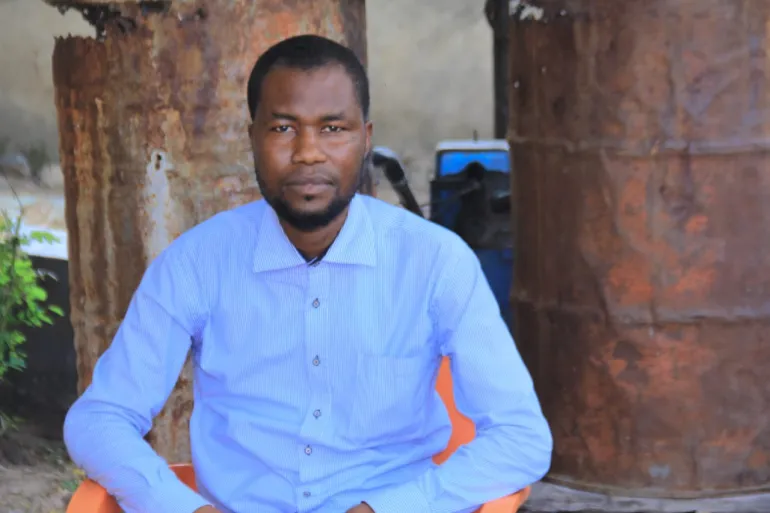
Kashim, 39, chairs the Association for the Well-being of Displaced and Missing Persons’ Families, a community organisation based in Bolori II, Ngarnam ward, Maiduguri. He said years of violence have torn his family apart.
“As a result of the violence, I lost my sister from the same father,” he said.
Their father, Mohammed Kolo, worked at Maiduguri’s State Specialist Hospital. Kashim said his father died at 60 from an illness he attributed to high blood pressure without learning what had happened to his daughter.
Kolo had refused to abandon hope that she would return.
“Our father always said, ‘Wherever she is, I believe my daughter is alive,’” Kashim recalled.
A brother still searching
For Muhammad Alhaji Bashir, the disappearance of his elder brother, Adam Muhammad Bashir, known as Bakura, has left a similar void.
Muhammad, 29, said Bakura went missing around 2012 or 2013 when Muhammad was about 14. His brother, then believed to be in his early 20s, sold cosmetics in a Maiduguri market and was studying civil engineering at Ramat Polytechnic, according to Muhammad.
“I sincerely lost my brother as a result of the Boko Haram crisis,” Muhammad said.
Boko Haram’s armed rebellion began in northeastern Nigeria in 2009. The conflict has devastated communities through attacks, abductions and displacement, leaving families searching for relatives whose fates remain unknown.
Muhammad’s elder brother, Adam Muhammad Bashir, known as Bakura, has been missing for 13 to 14 years [Adamu Aliyu Ngulde/Al Jazeera]
Muhammad said Bakura’s family searched across Maiduguri. A rehabilitation centre offered them some hope.
“Whenever we heard that rescued people had been brought to the rehabilitation centre in Bulumkutu, we went there with Bakura’s pictures, but unfortunately, nobody recognised him,” Muhammad said.
Muhammad said his father and stepmother, who was Bakura’s mother, later died from illnesses the family attributed to hypertension. He and other relatives continue to search, without confirmation of whether Bakura is alive or dead.
Thousands of families, thousands of questions
The two families’ experiences reflect the uncertainty facing relatives of people who have disappeared during more than a decade of conflict in northeastern Nigeria.
The International Committee of the Red Cross (ICRC), working with the Nigerian Red Cross Society, has supported efforts to trace missing people and reconnect separated families.
Local advocates for missing people cited an estimate of 17,000 people missing across northern Nigeria, many of them linked to the conflict involving Boko Haram and its aftermath. Kashim said his association’s records indicated that about 10,000 people are missing in Borno State alone. He added that many families have yet to register their missing relatives.
The sources for the estimates cited by advocates and the association, their geographical coverage, reporting periods and methods of compilation have not been independently established for this article.
Behind the estimates are families who have spent years searching, parents who have died without learning what happened to their children and children growing up without a parent.
Some people reportedly disappeared during attacks on their communities. Others became separated from relatives while fleeing violence or travelling between towns. Families search hospitals, displacement camps and centres receiving people rescued from conflict areas, often following leads that prove impossible to verify.
Even when names, photographs and personal details are submitted to organisations involved in tracing missing people, locating relatives can take time.
An association born out of loss
Kashim said his search for Falmata helped motivate him and other affected families to establish their association in 2023. He said the organisation obtained registration with Nigeria’s Corporate Affairs Commission in 2025.
Members meet monthly to share information and discuss their circumstances. Some families have reported losing eight or nine relatives, according to Kashim.
“In our community of Bolori II, we have many families who lost their relatives as a result of years of violence that ravaged northeastern Nigeria,” he said.
Kashim said the group sometimes receives notices from the Red Cross containing names and details of missing people. These can give families leads to pursue although they do not necessarily mean a relative has been located.
The association also supports children affected by the disappearances. Kashim said it was assisting about 600 orphaned children from affected families. Some attend school while others have dropped out because their relatives cannot afford to pay for their education or other basic needs.
“We are now suffering because of the harsh living conditions,” he said, adding that the ICRC had distributed relief items to some families.
When a missing person is a parent or breadwinner, relatives must cope with lost income while trying to provide food, shelter and schooling for children. The association’s work has consequently expanded beyond tracing missing people to helping families manage the hardships their disappearances leave behind.
Floods add to the losses
The search became harder for some families after devastating floods struck parts of Maiduguri in 2024.
Kashim said floodwaters submerged parts of Ngarnam and destroyed photographs that families had kept to help identify missing relatives.
Kashim Mohammed, 39, has spent more than 15 years hoping his younger sister, Falmata, is still alive [Adamu Aliyu Ngulde/Al Jazeera]
Photographs can be vital when families try to identify people who have been rescued, displaced or found in unfamiliar communities. Without them, relatives must rely on names, physical descriptions and memories.
Kashim said some families now have little beyond remembered details and surviving records to help identify their relatives.
The floods added another obstacle to searches already complicated by years of conflict, displacement and uncertainty.
Waiting for an answer
For Kashim, finding Falmata would resolve a question that has haunted his family since 2011. His father died believing she might still return, and the family has never established whether the report of her discovery in Benin was true.
Muhammad’s search for Bakura continues without the parents who once helped him look for his brother.
Both families are appealing to anyone who may have information about their missing relatives. For them, finding an answer would mean more than ending a search: It would establish what happened to someone whose absence has shaped their lives for years.
Kashim’s message to his sister remains a plea for a reunion that his family has waited years to see.
“Falmata Mohammed, if you are alive anywhere in this world, we are the family of late Mohammed Kolo in Bolori II, Ngarnam. We are waiting for you,” he said.
For anyone who has watched Nathan Fielder and Lance Oppenheim’s documentary about former Theranos CEO (and convicted felon) Elizabeth Holmes and her partner Billy Evans in the past week, every new think piece, funny meme, discussion thread or video parody about the film has been something to revel in. I’ve personally spent several hours messaging or speaking to friends and colleagues over the phone about the documentary, and it seems like a lot of people similarly can’t stop obsessing about it.
The film has sparked renewed interest not only in Holmes, but also in works previously released about her, including “Bad Blood,” written by John Carreyrou, the journalist who exposed Holmes and Theranos’ fraudulent practices, and Alex Gibney’s 2019 documentary “The Inventor,” which senior writer Greg Braxton rewatched and analyzed in the context of the new documentary. Also notable has been the resurgence of Hulu’s “The Dropout,” the 2022 limited series created by Liz Meriwether (“Furious”) that stars Amanda Seyfried — Variety reported this week that the series has seen a jump in viewership over the past month. And of course, there’s been lots of interest in Fielder; we’ve put together a guide to his work if you’re looking to understand him and his style.
But with all the attention on Holmes, Times culture critic Mary McNamara raises an important question: Why are we still so fascinated by Holmes, despite her track record as a con artist and fraudster? There are many answers to the question, but there’s no denying the public’s renewed fascination with Holmes, and now Evans as well.
However, if you prefer to think about lighter relationships that are less perplexing, NBC’s latest sitcom will do the job and remind you of what it’s like to be immediately swept off your feet. “Newlyweds,” starring Téa Leoni, Tim Daly and Jamie Lee Curtis arrives on NBC today. Curtis, who co-created the series, stopped by Guest Spot to talk about what inspired it and the recent changes behind the scenes.
You’re reading the Screen Gab newsletter
Sign up to get recommendations for the TV shows and streaming movies you can’t miss, plus exclusive interviews with the talent behind your favorite titles, in your inbox every Friday.
By continuing, you agree to our Terms of Service, which include arbitration and a class action waiver. You agree that we and our third-party vendors may collect and use your information, including through cookies, pixels and similar technologies, for the purposes set forth in our Privacy Policy such as personalizing your experience and ads.
Also in this week’s Screen Gab, our writers recommend a documentary about a saga surrounding one of the greatest hip-hop groups of all time and a cult-classic horror film that’s perfect for spooky season. — Maira Garcia
Turn on
Recommendations from the film and TV experts at The Times
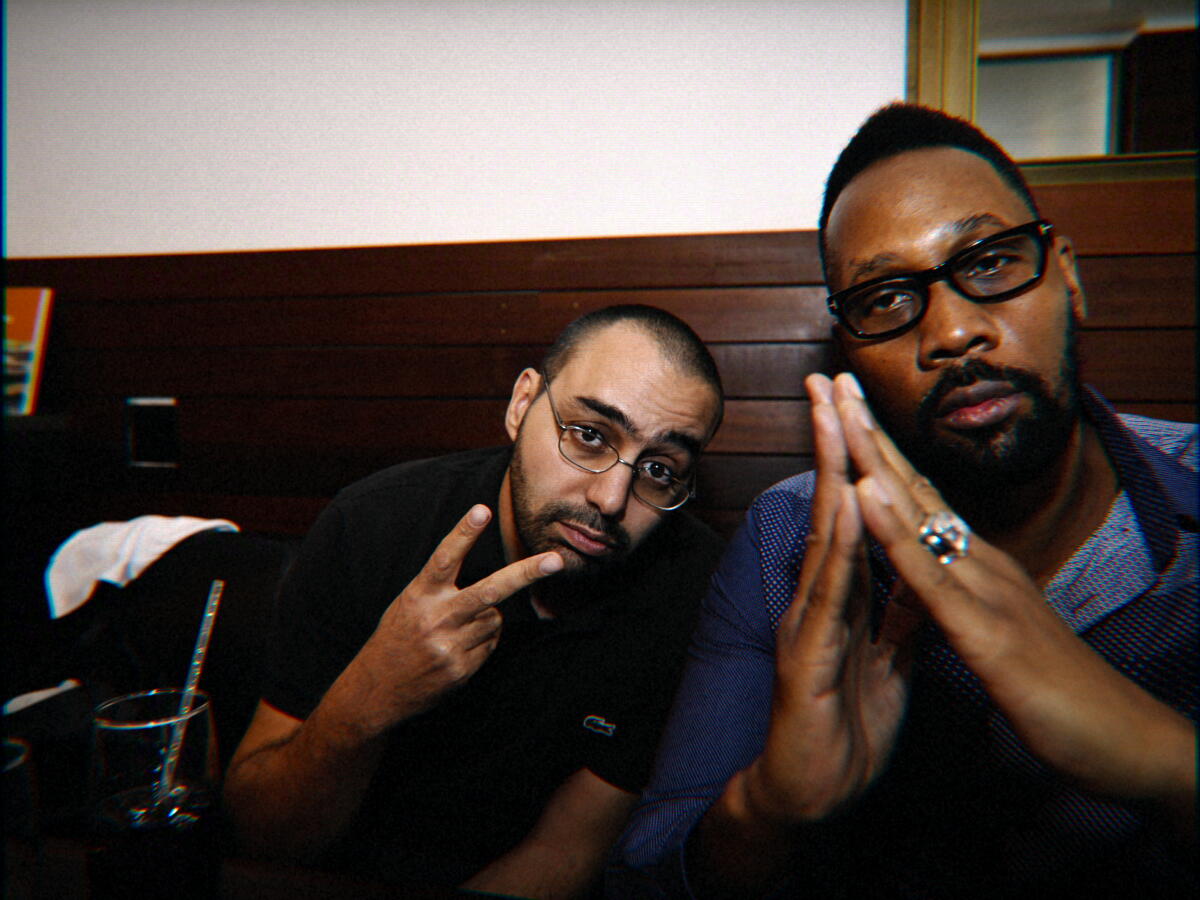
Tarik Azzougarh, left, and the RZA in Netflix’s “The Disciple.”
(Netflix)
“The Disciple: A Wu-Tang Fable” (Netflix)
In 2015, the only copy of the Wu-Tang Clan’s “Once Upon a Time in Shaolin” sold at auction for $2 million. The buyer was revealed to be hedge fund and pharma dirtbag Martin Shkreli, who infamously raised the price of an antiparasitic drug by 5,000% overnight and later went to prison for securities fraud. Joanna Natasegara‘s enchanting documentary “The Disciple” explores the long run-up to this Guinness Book of World Records event, and its aftermath, through the surprising, touching, funny and sometimes sad story of the album’s co-producer, Tarik Azzougarh, a.k.a. Cilvaringz. A Dutch Moroccan superfan whose freestyling and persistence earned him a place in the group’s auxiliary, it was Cilvaringz who first proposed the idea and brought it to fruition with Wu-Tang main man RZA — both a culmination and the beginning of an end. The film raises questions of art and ownership, friendship and business, creativity and capitalism, asking the questions who is music for, and what is it for. — Robert Lloyd
‘Highway to Hell’ (Tubi, Prime Video)
This is the perfect spooky-season flick to pop on when you don’t mind interruptions from trick-or-treaters or your buddy who treats movie night like an audition for “Mystery Science Theater 3000.” Directed by Ate de Jong (“Drop Dead Fred”), this 1992 comedy-horror cult classic stars Chad Lowe and Kristy Swanson as an eloping couple who take the wrong shortcut and wind up in Hades — basically, an even worse version of the drive to Vegas — where a young Ben Stiller works the roadside diner and Gilbert Gottfried plays Hitler. Every shot has a snort-worthy gag: a stop-motion Cerberus, a casino-bar called Hoffa’s, a cop whose handcuffs are literally a pair of severed hands. A flop at the time, “Highway to Hell’s” breakneck mix of smart and stupid was applauded by former L.A. Times film critic Kevin Thomas as “the Greek legend of Orpheus, revved up ‘Mad Max’-style.” Screenwriter Brian Helgeland would eventually win an Oscar for “L.A. Confidential.” Somehow, I never hear him brag about this goofy delight. He should. — Amy Nicholson
Guest spot
A weekly chat with actors, writers, directors and more about what they’re working on — and what they’re watching
Jamie Lee Curtis as Claudia in “Newlyweds,” a sitcom she co-created and executive produces.
(Nicole Weingart / NBC)
Jaime Lee Curtis has been in showbiz for a very long time. And when she sets her mind to something, like returning to a sitcom, she’s going to make it happen.
“It’ll be 50 years next January that I have been a professional actress,” she says over a video call earlier this week. “It’ll be 50 years that I’ve been driving on the lot at Universal.”
Over the course of her long career, Curtis, 67, has developed a lengthy résumé in film and television, winning numerous accolades along the way, including an Oscar and an Emmy (she’s been nominated for a Grammy too — there’s still time for an EGOT). But she longed to return to a sitcom ever since wrapping her lead role on ABC’s “Anything but Love,” a series that premiered in 1989 and ran for four seasons.
While she’s had guest appearances and some recurring roles on sitcoms over the years, including on shows like “New Girl” and “The Drew Carey Show,” NBC’s “Newlyweds” was an idea she had gestated for years, and now it’s set to arrive as part of the network’s Friday prime-time lineup. The actor, who executive produces “Newlyweds” and has a recurring role, took some time to discuss how she came up with the idea for the show, her co-creator’s firing and the political thriller series she’s watching with her spouse, filmmaker Christopher Guest. — M.G.
Jamie, you co-created this series and it’s loosely based on your relationship with your husband, Christoper Guest. Tell me how it came about and how you wanted to tell that story in this show.
It was April 25, 2019. I was in New York City … I was in a car being driven by a man in his 60s in a suit with gray hair on his temples. We were chatting, as one does in the back of a car, and I asked him if he was married, and he said he was divorced. I said, “Do you have kids?” And he said, “No.” And I said, “Well, that’s the blessing that you know you’re not dealing with divorce and children, which I’ve dealt with a lot.” And he then said, “But my new wife.” In that second, I went, “Oh, my new wife.” That’s a sitcom about people in their 60s hooking up, similar to the way my husband and I met, which was we met and married very quickly. And in fact, we would have gotten married had we gone out on our first date. We have said we would have gone and gotten married that night. So the idea popped in my head: What happens if two people in their 60s get married on a whim, and decide to just throw caution to the wind and go for it? What happens to the families and the friends and their own lives and the very routinized lives that they had led leading up to that moment? I knew it was a sitcom.
It wasn’t until years later I was put together with Gail Lerner, and we — during COVID actually — started working on the idea. But much of what’s in that script was kind of what happened to me and my husband … it’s something that’s been around for a while, and I’m just really excited finally that it has turned into this version, “Newlyweds” starring Tim and Téa.
Let’s talk about Tim and Téa. They’re the newlyweds, but they’re also married in real life. What was it like playing off their dynamic and vice versa?
When the pilot got picked up, … it was what they call “cast-contingent,” which means they like the idea, but they want to make sure that the right person gets in … so they wanted us to find Jeanie first, and it was a very short list of actresses they would bank a show on. Téa, luckily, was one of those actresses and had been looking for something on the lighter side. … and it so happens she’s married to a guy IRL who happens to have a lot of experience in the comedy space on TV shows, and all of a sudden we were like, oh, wouldn’t that make a kind of fantastic bit of pairing.
What do you think we’re going to learn about Claudia? She seems so liberated, but we’ve only seen the surface. She’s got a soft spot for Jeanie and even James.
I think you’re gonna see, in fact, that she becomes not just a foil but a friend. I feel like her acceptance of Jeanie … we’re going to mine it for its comedy. I mean, I think at the end of the day, she will always shake things up because that’s just her nature. We get to meet Claudia’s mother. I can’t tell you because we haven’t announced it yet, who plays my mother. I can tell you that she’s over 90.
You’re going to have me Googling.
We get to see a little bit of the oak tree and the acorn. We definitely get the snarky oak tree and the snarky acorn.
Well, you can imagine it was a bummer. You know, network television has a whole series of requirements, way beyond … my little creative ideas. It has to do with management of scripts and the amount of early drafts of things, and it’s required within a network structure. And to run a show on television, and to consistently run a show, is a different animal than just the creativity that it takes to think of a show or to develop a show. That’s why Bruce has stepped in very quickly because Bruce has proven over and over again that he’s a guy who can make 100 episodes of a show with a much bigger worldview.
It was beautiful that Gail said the very things she said because we all felt that way too. It was joyous, fun, but there were a lot of things that were way beyond my understanding. What I’ve come to learn, I’m 67, is that creativity is a continuum. That it is not rigid and binary. That I had an idea that then Gail took and built on that idea, and now Bruce has come in and taken Gail’s idea … and is building out another version of the show.
Bruce Helford was the second in charge at the TV show “Anything but Love” when I did it back in the day, so I’ve known him.
So y’all are back together.
The only other time I was ever on a sitcom was “The Drew Carey Show” when Bruce Helford wrote me a part of this crazy hairdresser who … goes on a date with Drew Carey and ends up doing bungee jumping with him on the date. It’s a funny continuum for me to be back with Bruce, who weirdly enough was the actual first person I called when I had the idea [for “Newlyweds”]. I called Bruce because I knew him as a showrunner for sitcoms. We talked about it very briefly, and then he went off to something else. I went off to something else, and it kind of fell apart. So it’s slightly weird to me, and beautiful in that way that the person I actually called when I had the idea is now the one running the show.
It’s a full–circle moment.
Completely full-circle moment.
Has Christopher seen the show? What does he think?
I will say this: Christopher Guest is not a sitcom fan. You know, my husband is a very specific person and makes very specific, very funny movies and television shows. [Sitcoms are] not the thing that he is drawn to. But he genuinely understands that I’ve wanted to do a sitcom for a long time.
Because it’s spooky season right now, and you’re one of the OG scream queens, I have to ask you: Do you watch anything in that vein?
So I’m boring because the truth is, I don’t like scary things. I don’t like scary movies. I have zero interest in scary movies, and I think if someone ended up doing some analysis of me as a human once I’m dead, they would understand that actually my natural fear of scary things is what, in fact, made me such a good actress in them, and I don’t pretend to like them. I like the fans of [scary movies] because there’s a passionate group of people that love them. But I don’t have to love the movies, I just have to love what I do.
Is there anything else you’re watching right now?
My husband and I just started watching the [fourth] season of “The Diplomat” [Netflix], which the writing is so great. Last night we watched an episode written … by Peter Noah, who was the guy who took over “Anything but Love” … and was the showrunner. This episode last night [Episode 4, “Pagliacci”] was what Chris and I watched, and I wrote to Peter last night to say, “Bravo, bravo! Oh, the writing is so gripping.” Of course the writing leads the performances, which lead the filmmaker. It’s always the writing.
Prime Video’s Last One Laughing is back for its very first Halloween special
12:07, 23 Oct 2026Updated 12:11, 23 Oct 2026
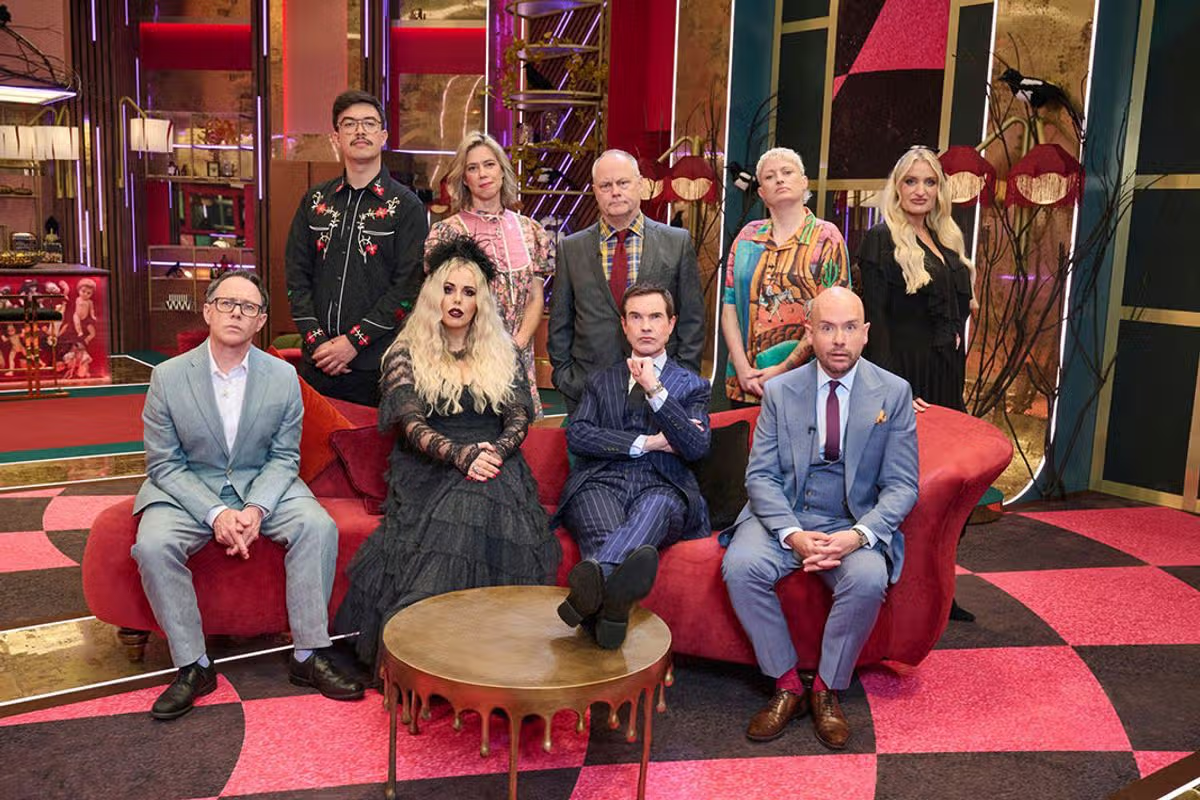
The Last One Laughing Halloween special has four episodes (Image: Prime Video)
Last One Laughing fans risk missing a key episode of the Halloween special.
The Prime Video show is finally back on our screens with an exciting line-up of comedians taking on the side-splitting challenge. After its hugely successful second series, the competition was confirmed for a new season coming out in 2027. But viewers still have four fresh episodes to devour in the meantime.
We are, of course, referring to the spooky Halloween special which slightly changes the show’s beloved format. As always, a group of famous comics put their comedic talent to the test as they try to break their opponents – laugh and you’re out. But there’s an additional spooky-themed rule this time around: scream and you’re out.
The final comedian standing will take home the crown and join season one winner Bob Mortimer and season two champion David Mitchell in the hall of fame. So when can viewers tune in to the special episodes?
When is the Last One Laughing Halloween special released?
Content cannot be displayed without consent
The first three episodes of Last One Laughing: Halloween are available to stream on Prime Video from Friday, October 23. Fans will be forced to wait another week before the final episode, which drops on Friday, October 30.
A synopsis for the seasonal special teases: “Over the course of the first Halloween Special, the famous faces will use every ounce of their comedic talent to break their opponents without laughing or screaming.
“And it’s not just their rivals they need to watch out for. Cursed props, ghostly interruptions and spine-tingling surprises are all designed to catch even the bravest comic off guard. The rules are simple: laugh and you’re out, scream and you’re out. Who will survive last One Laughing: Halloween?”
Ensure our latest TV stories always appear at the top of your Google Search by making us a Preferred Source. Click here to activate or add us as Preferred Source in your Google search settings.
Get Amazon’s Prime Video free for a month
This article contains affiliate links, we will receive a commission on any sales we generate from it. Learn more
TV lovers can get 30 days’ free access to tantalising TV like The Boys, Reacher and Clarkson’s Farm by signing up to Amazon Prime. Just remember to cancel at the end and you won’t be charged.
Jimmy Carr returns as the show’s host, with the likes of Jack Dee, Daisy May Cooper, Phil Wang, Lou Sanders, Reece Shearsmith, Harriet Dyer and Tom Allen on the cast.
A 30-second teaser for the upcoming episodes has been generating buzz on social media, where one fan raved: “Looking forward to it!” Someone else said: “Looking forward to seeing Jack Dee on this!!”.
A third fan chimed in with: “Oh this is going to be funny for Halloween,” with a fourth adding: “THE BEST SHOW OF ALL TIME. YESSSSSSSSSSSSSSSS.” And another enthusiastic viewer commented: “Oh great… Now you want to make me laugh to death on Halloween. Good grief!”
The first three episodes of Last One Laughing: Halloween are available to stream now on Prime Video
Who doesn’t love a Hollywood ending — or a beginning?
The only guide you need for fall entertainment.
As summer gives way to the inevitable grunts of awards-season jockeying, how wonderful it is to crawl back into the head of our favorite portal John Malkovich, returning with his most complex work in years in “Wild Horse Nine” (hitting theaters Nov. 6). Meanwhile, Jordan Firstman made his name with viciously funny online “Impressions” and a spotlight-stealing turn on HBO’s “I Love LA,” but did you know he was Trojan-horsing in a triple threat? “Club Kid” (out Nov. 6) marks the arrival of a serious screenwriter, director and star making a feature debut of rare wisdom.
Read on for features about those two movies, and if you’d like more options, here are 17 fall titles worth getting excited about in the coming months.
‘Resident Evil’ (Sept. 18)
Austin Abrams in “Resident Evil,” directed by Zach Cregger.
(Sony Pictures Releasing)
Milla Jovovich brought stony-faced supermodel moxie to 2002’s underrated first film and her subsequent franchise was a mixed bag. But there’s a whole global fandom of obsessives who feel that none of these movies truly got the crux of what made Capcom’s original games such an all-night fixation. One of those people turns out to be filmmaker Zach Cregger, who, between “Barbarian” and his Oscar-winning “Weapons,” can now write his own ticket. As unlikely as it seems, this reboot is a project he has spent a considerable amount of his newfound Hollywood capital pursuing and you have to love him for it. Apocalyptic Raccoon City and a viral zombie outbreak are sure to figure, but also, given the Cregger of it all, spooky subterranean passages and confident performances, this time from Austin Abrams and Paul Walter Hauser. — Joshua Rothkopf
‘Digger’ (Oct. 2)
Tom Cruise in the movie “Digger.”
(Warner Bros. Pictures)
Tom Cruise has been busy these last 15 years, starring in five “Mission Impossible” movies, reboots of “The Mummy” and “Top Gun” and a handful of other would-be blockbusters best forgotten. In nearly all of them, he plays a version of the unstoppable Cruise persona. And that’s a performance for sure. But we haven’t seen him play a real character in a long time, which makes his new movie my most-anticipated of the fall, even if the trailer makes it look like it could be a tonal train wreck. Billed as a “comedy of catastrophic proportions,” “Digger” has Cruise playing a Texas oil man charged with saving the world from an environmental disaster that he appears to have caused. The writer-director, Alejandro González Iñárritu, is a five-time Oscar winner, but not a filmmaker known for his humor. That makes the trailer’s absurdist tone and visual style intriguing (and also concerning). Iñárritu clearly loves “Dr. Strangelove,” as do we all. Fingers crossed. — Glenn Whipp
‘Fjord’ (Oct. 9)
Sebastian Stan and Renate Reinsve in the movie “Fjord.”
(Neon)
Winner of the Palme d’Or at this year’s Cannes Film Festival — the second for writer-director Cristian Mungiu and an astonishing seventh in a row for distributor Neon — this is a gripping morality tale specifically designed to make viewers question their instinctive reactions no matter where they sit on the political spectrum. A conservative religious couple (Sebastian Stan and Renate Reinsve, both giving quietly riveting performances) relocate from Romania to a small village in Norway and soon find that the outwardly progressive locals are less than welcoming. The Gheorghius’ five children are taken into protective custody amid allegations of abuse and soon enough, it seems that their beliefs and values are being put on trial. Fans of “Anatomy of a Fall” (another Neon title) will appreciate the detailed glimpse inside another international legal system, as the courtroom scenes are full of tension, emotion and surprise. — Mark Olsen
‘The Social Reckoning’ (Oct. 9)
Jeremy Strong as Mark Zuckerberg in the movie “The Social Reckoning.”
(Leah Gallo / Columbia Pictures)
It’s been 16 years — an eon in internet time — since David Fincher made gripping drama out of coding, depositions and bruised male egos in “The Social Network.” Facebook’s story has since then taken a far darker turn: Russian troll farms, growing concerns about worsening teenage mental health and election misinformation. Aaron Sorkin, who scripted the first film, both writes and directs the follow-up, drawing on internal Facebook documents that whistleblower Frances Haugen (Mikey Madison) leaked to Wall Street Journal reporter Jeff Horwitz (Jeremy Allen White) for the paper’s “Facebook Files” investigation. In a particularly inspired bit of casting, Jeremy Strong succeeds Jesse Eisenberg as Mark Zuckerberg. After playing Kendall Roy, a would-be mogul desperate to seize power in HBO’s “Succession,” and Roy Cohn, a fixer who wielded it ruthlessly in the Trump biopic “The Apprentice,” Strong may have been preparing for Zuck all along. That alone might be reason enough to log back onto Facebook. — Josh Rottenberg
‘Sense and Sensibility’ (Oct. 16)
Daisy Edgar-Jones, left, and Esmé Creed-Miles in the movie “Sense and Sensibility.”
(Focus Features)
You come to “Sense and Sensibility” for sisterly love, for Edward and Elinor, for wit and cleverness, for nosy neighbors, for passionate longing, brooding, Byronic suitors and happily-ever-afters. The 1995 film adaptation of the Jane Austen classic, directed by Ang Lee with Emma Thompson starring and writing the screenplay, was damn near perfect, setting a high bar for any and all comers. So it’s with pleasure (and relief) that I can report that the latest version, directed by talented British filmmaker Georgia Oakley, will delight Janeites and anyone else who appreciates a smart, charming costume drama. The film faithfully adheres to the text, foregrounding the relationship between the Dashwood sisters, the passionate Marianne (Esmé Creed-Miles) and the pragmatic Elinor (Daisy Edgar-Jones). It’s fresh without needing to lunge for all the compulsively shocking aesthetics that undid Emerald Fennell’s “Wuthering Heights” earlier this year. Oakley crisply delivers everything you want, everything you need. — G.W.
‘Whalefall’ (Oct. 16)
Austin Abrams in the movie “Whalefall.”
(20th Century Studios)
If you’re a sucker for that “Pinocchio” sequence in which Geppetto gets swallowed by a whale, you’ll dig Pulitzer Prize-winning novelist Daniel Kraus’ “Whalefall,” a drama about a Californian scuba diver stuck in the stomach of a 60-ton behemoth. That’s bad enough. Worse, the kid’s oxygen tank is running low. One part survival quest, one part ghost story, the narrative centers on the young man hallucinating his abusive dead father, who advises him on how to escape. I devoured the book in one weekend, but couldn’t imagine how this claustrophobic nightmare could possibly translate to film. Director Brian Duffield (“Spontaneous,” “No One Will Save You”) has braved the challenge. Austin Abrams plays the trapped swimmer; Josh Brolin is his seafaring dad. It’s a reunion for two of the leads in last year’s “Weapons.” Steel yourself for slimy bile, sticky emotions and wet tears. — Amy Nicholson
‘Clayface’ (Oct. 23)
Tom Rhys Harries in the movie “Clayface.”
(Warner Bros. Pictures)
Even comic-book obsessives will mention a dozen other DC villains before digging out Clayface, the nom de gloop of a disfigured actor transformed into human Play-Doh. But after the animated series “Harley Quinn” stretched the character into a squishy, vulnerable showboat, I’m curious to see what he looks like in the hands of James Watkins, director of the mischievous 2024 thriller “Speak No Evil.” Watkins has a vicious sense of humor and the casting of Welsh theater actor Tom Rhys Harries in the title role is a signal that the film might be a performance showcase in the vein of Tom Hardy’s roiling split-personality turn in “Venom.” Early glimpses of footage at CinemaCon hint that the script by Mike Flanagan and Hossein Amini is most hyped to mix the superhero genre with icky body horror. Apparently, there are images in which Clayface doesn’t even have a face. — A.N.
‘Fatherland’ (Oct. 23)
Sandra Hüller and Hanns Zischler in the movie “Fatherland.”
(Agata Grzybowska / Mubi)
Paweł Pawlikowski has made a specialty of looking at European history from close range: the aftermath of the Holocaust in the Oscar-winning “Ida” and the Iron Curtain era in “Cold War.” Eight years after the latter, Pawlikowski returns with this spare black-and-white drama, for which he left Cannes with a directing honor. Hanns Zischler plays author Thomas Mann, the Nobelist and critic of Hitler, returning to Germany in 1949 after 16 years in exile, with his daughter Erika (Sandra Hüller) behind the wheel. Their journey takes them through a ruined country eager to reclaim one of its greatest writers without dwelling too much on why he fled. After the moral minefields of “Anatomy of a Fall” and “The Zone of Interest,” Hüller seems ideally cast as Erika, a writer and committed anti-Nazi unlikely to let her father, or the country around him, off the hook. — J. Rottenberg
‘Klara and the Sun’ (Oct. 23)
Jenna Ortega in the movie “Klara and the Sun.”
(Sony Pictures)
When novelist Kazuo Ishiguro published “Klara and the Sun” in 2021, a book narrated by an artificial intelligence still felt safely like science fiction. Five years and one AI boom later, the future has arrived early. Jenna Ortega plays Klara, a solar-powered “artificial friend” purchased as a companion for an ailing teenager (Mia Tharia) whose mother is played by Amy Adams. Klara observes the humans around her with extraordinary attentiveness but only a partial understanding of their behavior, gradually forming her own ideas about love, loneliness and what makes one person irreplaceable to another. Taika Waititi, whose movies have ranged from the antic Nazi satire “Jojo Rabbit” to the candy-colored superhero spectacle of the “Thor” films, is an unexpected match for Ishiguro’s quiet, melancholy story. But with people already turning to chatbots for companionship, the film’s central question no longer feels quite so theoretical: What happens when the machine stops feeling like a machine? — J. Rottenberg
‘Wicker’ (Oct. 23)
Alexander Skarsgård and Olivia Colman in the movie “Wicker.”
(Kristof Galgoczi Nemeth / Black Bear Pictures)
Most of the questions you have following the recent trailer that sent the internet into a tizzy are in fact answered by seeing the movie itself. Set in an indistinct Mitteleuropean village of an uncertain era, the story follows an unmarried fisherwoman (Olivia Colman) who asks her friend, a master basketweaver (Peter Dinklage), to make her a husband. And does he ever, sending over a mass of reeds fashioned into Alexander Skarsgård. Their little community goes berserk, full of curiosity and more than a hint of jealousy at their loving and compatible albeit unconventional union. Adapted from an Ursula Wills-Jones short story by the husband-and-wife writer-director team of Alex Huston Fischer and Eleanor Wilson, the film never overlooks how absurd its premise is, but also finds tender emotional notes within it as well. “Wicker” is a wise, warm allegory examining community and relationships — and why we need the things we do. — M.O.
‘Godzilla Minus Zero’ (Nov. 6)
A scene from the movie “Godzilla Minus Zero.”
(2026 TOHO)
Three years ago, the post-World War II period thriller “Godzilla Minus One” was a monster smash, earning the 72-year-old franchise its first Oscar win and biggest box office haul to date. (What, you thought the radioactive lizard wouldn’t come back?) Takashi Yamazaki’s sequel — the 39th Godzilla movie, if you’re counting — takes place in 1949 Tokyo after disgraced kamikaze pilot Kōichi (Ryunosuke Kamiki) has begun to rebuild his life with new wife Noriko (Minami Hamabe). In still-traumatized Japan, simply having hope for tomorrow is brave and foolhardy with an angry kaiju sulking in the Pacific. Yes, Godzilla exploded in the last film. Since when has that mattered? “Godzilla Minus Zero” has giant shoes to fill, but personally, I couldn’t care less if the green guy wins another Academy Award as long as the multiplex enjoys a shivery blast of his atomic breath. — A.N.
‘Paper Tiger’ (Nov. 13)
Adam Driver in the movie “Paper Tiger.”
(Neon)
A favorite of international festival programmers and film critics for decades now, James Gray has never quite had his breakthrough with mainstream audiences. That may finally change with his latest, which finds him again exploring the rich, complicated bonds of family amid the betrayals and uncertainties of New York’s outer-borough criminal underworld in a way that feels totally fresh and new. Miles Teller is a family man drawn into a business scheme by his ex-cop brother (Adam Driver) that puts them both afoul of the Russian mob in a story set in Queens in the 1980s. Scarlett Johansson plays Teller’s wife. All three give what are easily among their career-best performances as Gray steadily ratchets up the tension with a master’s hand, melding the crime thriller with domestic drama in a distinctive way. With a tremendous payoff in its devastating climactic sequence, this feels like the film Gray has been building toward his entire career. — M.O.
‘Elsinore’ (Nov. 20)
Andrew Scott as Ian Charleson in the movie “Elsinore.”
(Anthony Dickenson / Focus Features)
The Scottish actor Ian Charleson would forever be an Olympic runner on the beaches of “Chariots of Fire,” head tipped back in a kind of spiritual ecstasy. The role brought him international acclaim, but there weren’t enough of them, and a secret battle with HIV and AIDS took its toll. But what Charleson didn’t know was that, near the end, he would embark on the run of his life, performing a legendary Hamlet onstage in a race with death. Andrew Scott carries the whole of this exhilarating biopic on his knitted brow, diving deeply into the metaphysical darkness of Shakespeare’s text, into the rituals and camaraderie of actors and, ultimately, into the defiance of an artist who only wants to disappear once more into his art. Inexplicably overlooked for “All of Us Strangers” and “Blue Moon,” Scott is just now arriving at a kind of effortless humility, dazzling yet approachable, that puts him in the company of the all-time greats. — J. Rothkopf
‘Josephine’ (Nov. 20)
Mason Reeves in the movie “Josephine.”
(Sumerian)
If we are to have things like a “Sundance Film Festival” or “independent cinema,” it should be to support and nourish movies like Beth de Araújo’s powerful San Francisco-set thriller, about a violent sex crime witnessed by an 8-year-old, who is altered by the experience but then called upon to be a courtroom voice in the world of adults. Everyone who has come together to make this tricky but meaningful project seems to be operating on a higher plane: For Channing Tatum, playing a dad increasingly out of his depths, it’s an opening door to the kind of complex roles he has earned from being a dependable goof. For Gemma Chan, as a parent dealing with the unthinkable, the film is a promise fulfilled. But for young Mason Reeves, imbuing the title character with an evolving mystery that suggests a prodigy, “Josephine” is a revelation. — J. Rothkopf
‘Minotaur’ (Nov. 20)
A scene from the movie “Minotaur.”
(Mubi)
The whispers were fierce at a recent Academy Museum screening of Adrian Lyne’s windy erotic thriller “Unfaithful” as plugged-in attendees looked for points of similarity with Andrey Zvyagintsev’s sleek domestic drama, one that dominated this year’s Cannes conversation. Both movies are remakes of Claude Chabrol’s 1969 “The Unfaithful Wife,” but Zvyagintsev kicks the concept up to expert level, turning an affair and its brutal repercussions into a referendum on Russia’s new-money detachment: eating, lying and screwing with the Ukraine war out of mind. Was Zvyagintsev able to shoot in Russia itself? Of course not — he needed to film in look-alike Latvia. That’s how dependably infuriating he is to the authorities. But it’s a miracle he’s shooting anywhere at all: A case of long COVID, a coma and a yearlong hospital stay almost snuffed out one of the boldest filmmakers on the planet. His return to action is a grand piece of fortune. — J. Rothkopf
‘The Further Mis-Adventures of Cliff Booth’ (in Imax Nov. 25; on Netflix Dec. 23)
Brad Pitt and Leonardo DiCaprio in a scene from 2019’s “Once Upon a Time … in Hollywood.”
(Andrew Cooper / Sony Pictures Releasing)
Three years ago, Quentin Tarantino teased that his 10th and final film would be “The Movie Critic,” centered on a film reviewer for a 1970s porno rag, but he scrapped it and pivoted to a sequel featuring Brad Pitt’s stuntman from “Once Upon a Time … in Hollywood.” Tarantino didn’t want to direct it, though, preferring to challenge himself with something more ambitious for his sign-off. So he handed the screenplay — an “unwieldy thing,” he calls it — to David Fincher, tasking him to shrink it down. And that’s how we’ve arrived at a collaboration between two defining American filmmakers who came to prominence in the ’90s and share an interest in dark impulses that often turn violent. How Fincher will meld his clinical precision to Tarantino’s yo-gabba-gabba gonzo spirit is the movie question of the season. — G.W.
‘All of a Sudden’ (Nov. 25)
Tao Okamoto, left, and Virginie Efira in the movie “All of a Sudden.”
(Neon)
It still feels like a magic trick, the way Japan’s Ryusuke Hamaguchi turned “Drive My Car,” a three-hour movie about grief and chauffeuring (among other subjects), into a 2022 Oscar juggernaut. The director is back to remind you of everything you loved about that one, plus he’s got even more in the trunk. Many filmmakers are indulged with long running times; few of them make them as worthy and unnoticeable as Hamaguchi. He’s also in a class with Richard Linklater and virtually no one else when it comes to the lingering, evolving conversation, the kind that drifts into flirtation, debate and something soul-revising. Here it’s between two women (Tao Okamoto and the emotionally reverberant Virginie Efira) who, over the course of a walk along the Seine as dusk turns to night, find themselves bonded by something unexpected. “All of a Sudden” has death on its mind, but also how we live and care for each other en route to that destination. It’s a conversation we all need to have. — J. Rothkopf
Goals from Hammam Al-Hammami and Firas Al-Buraikan give the hosts their fourth Arabian Gulf Cup trophy.
Published On 7 Oct 20267 Oct 2026
Saudi Arabia have ended a long wait for an Arabian Gulf Cup trophy with a 2-0 win over the United Arab Emirates amid a charged atmosphere at the King Abdullah Sports City Stadium in Jeddah.
The hosts held on to an early lead, thanks to goals from Hammam Al-Hammami and Firas Al-Buraikan, to lift the regional crown on Tuesday.
Saudi Arabia set an early attacking pace in the game and were rewarded when Al-Hammami scored the opening goal in the 11th minute from the edge of the penalty area, setting off wild celebrations in the stands.
The home team’s dream start continued as, two minutes later, Al-Buraikan doubled the score with a close-range shot after a precise assist from Nasser Al-Dosari.
Saudi Arabia’s Firas Al-Buraikan celebrates scoring their second goal [Ibraheem Abu Mustafa/Reuters]
Saleh Abu Al-Shamat almost scored the third goal for Saudi Arabia in the 16th minute, but the ball was deflected off the goalpost after a one-on-one with UAE goalkeeper Khaled Issa.
The UAE’s first attack came in the 24th minute, when Nicolas Gimenez’s shot hit the post.
Six minutes before halftime, UAE’s Bruno thought he had won a penalty, only to be reversed by the video assistant referee.
Saudi Arabia’s head coach Georgios Donis credited his team’s discipline for the long-awaited home win.
“There were many difficulties, but the players showed focus and discipline and gave their best on the pitch,” he said after the match.
“I think we turned those difficulties into a title, and that’s important. We were the best team in this tournament. This title gives us confidence for the future, and we must continue to show the same qualities.”
Saudi fans celebrate with flares after winning the Gulf Cup [Reuters]
Asian Cup boost
At the start of the second half, Saudi goalkeeper Mohammed Al-Owais saved a close-range shot from substitute Sultan Adel to maintain his impressive clean sheet in the tournament.
Despite Saudi Arabia’s wastefulness in front of goal, their coach was pleased with the team’s efforts.
“After the World Cup, we realised we made mistakes and went through bad moments, but we learned from that experience,” Donis said.
“We improved our level and developed our style of play. And I think they deserve this result. It reflects our hard work.”
Saudi Arabia have now won four Gulf Cup titles, with the last one clinched in 2004.
The Green Falcons exited the FIFA World Cup 2026 in the group stage but will look at their performance in the Gulf Cup as a foundation for the upcoming AFC Asian Cup 2027.
Saudi Arabia will host the continental tournament from January 7 to February 5, as it gears up to become the second Gulf country after Qatar to host the FIFA World Cup in 2034.