votes

Arab News | Sweden votes in election thriller, far right eyes govt role

STOCKHOLM: Sweden began voting Sunday in a general election after a tight race that will see either the far-right enter government for the first time or the left-wing opposition reclaim power.

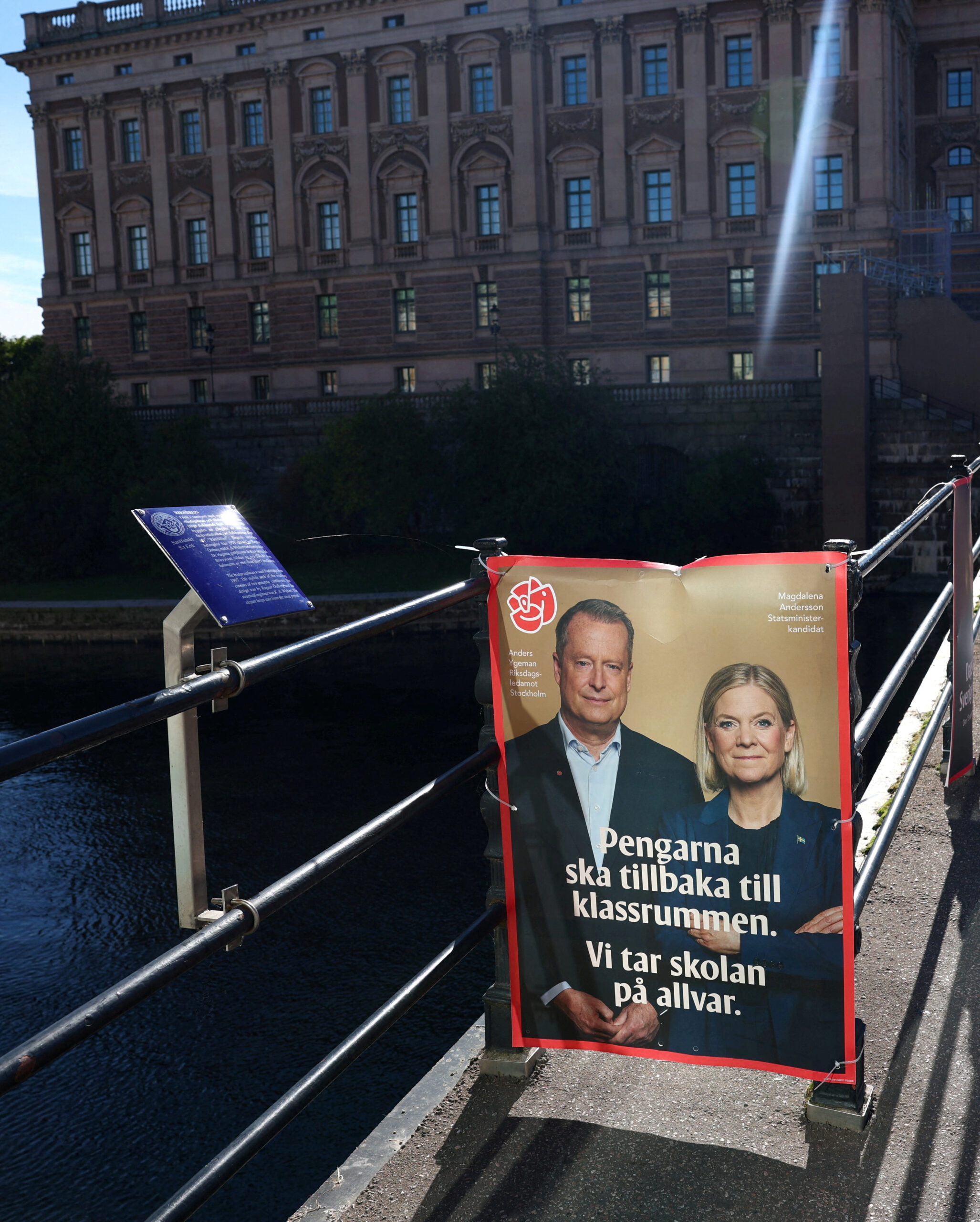
Opposition leader Magdalena Andersson of the Social Democrats was among the first to cast her ballot after polling stations opened at 8:00 am (0600 GMT).

Clad in a pale blue suit, the 59-year-old who in 2021-2022 became the first woman to serve as Sweden’s prime minister voted with her husband at a school in her home municipality of Nacka, south of Stockholm.

Opinion polls have long credited the four parties in her left-wing bloc with a comfortable lead over conservative Prime Minister Ulf Kristersson’s four-party alliance, which includes the far-right Sweden Democrats.

But the gap narrowed to a dead heat in the final days of the campaign.

“It is now up to the Swedish people to decide which direction our country should take. Should we have a government entirely dominated by the Sweden Democrats? Something that has never happened in Sweden before? Or should we have a government led by me, which will steer Sweden in a new spirit of cooperation?” Andersson told reporters after voting.

Her party, which governed the Scandinavian country for the better part of the 20th century and remains Sweden’s largest, has pledged to bolster the welfare state and help struggling households cope with rising costs.

‘Make Sweden great again’

Outgoing Prime Minister Kristersson has meanwhile vowed to focus on improving Swedes’ everyday lives now that his government’s clampdown on organised crime and immigration has begun to show results.

Deadly shootings and bombings by organised crime networks have decreased significantly in recent years, and asylum applications are at a record low.

“We want to use our new and far better preconditions to improve the lives of ordinary people… to make Sweden great again,” Kristersson told AFP before the vote, borrowing Donald Trump’s famous catchphrase.

His three-party minority coalition cut a deal in 2022 with the Sweden Democrats giving them influence over government policy, in particular on immigration and crime, in exchange for their support in parliament.

Over the past two decades, far-right leader Jimmie Akesson has steered the party with neo-Nazi roots into the mainstream.

It is now hoping to enter government. Kristersson has promised the far right key cabinet posts if the right-wing wins the election.

“I think it’s a very important election this year, and hopefully a lot of people will realise that we have to change course… so that everyone will feel included in society,” store manager Linda Eriksson, 48, told AFP as she voted at a polling station.

Ingrid Rudien, a 64-year-old assistant secretary, said she hoped the country “can unite together as a nation even though we may have a close result”.

‘We’ve already won!’

Akesson was confident of victory at a final election rally on Saturday in the Swedish capital.

“We’ve already won!” the 47-year-old said to thunderous applause in Stockholm’s Kungstradgarden Park.

“Sweden is becoming safer, better, and more Swedish,” he said, surrounded by blue and yellow campaign posters blaring “Make Sweden Sweden Again”.

Agneta Andersson, a 78-year-old pensioner attending the rally, told AFP she was voting for the far right.

“Like Jimmie, I want it to be like it was when I was young, in the old Sweden. I can’t cope with all this violence in society.”

Voting stations close at 8:00 pm (1800 GMT) when exit polls were to be published, with the first reliable results expected several hours later.

Some eight million people are eligible to vote in the election, in a country of 10.6 million where voter turnout regularly tops 80 percent.

Around half of voters have cast their ballots in advance.

If the right wing were to win the election, the formation of a new government would be fairly straightforward.

But as the four left-wing parties are splintered ideologically, tough negotiations would be needed to form a government even if they hold a majority.


Source link

Iceland votes to reject EU accession talks: What happens next? | Explainer News

With almost all votes counted, the ‘no’ side was ahead by 52.5 percent to 47.5 percent, the national broadcaster says.

Voters in Iceland have rejected a proposal to resume negotiations on joining the European Union, dealing a setback to the government’s push for closer ties with the 27-country bloc.

With almost all votes counted, the “no” side was ahead by 52.5 percent to 47.5 percent, according to national broadcaster RUV. Official results have not been announced yet.

Recommended Stories

list of 3 itemsend of list

The result is not a vote on EU membership itself, but on whether Iceland should reopen accession negotiations that were suspended more than a decade ago.

The government had argued that renewed talks could help Iceland confront growing economic and geopolitical pressures, including tensions over Arctic security.

Opponents of accession instead focused on protecting Iceland’s fishing waters and general sovereignty-related issues that would arise if the country became part of the bloc.

Here is what you need to know:

What was the vote about?

The referendum asked Icelanders a simple question: Should Iceland resume accession negotiations with the European Union?

It was not a vote on whether Iceland should actually join the EU. A “yes” result would have allowed the government to restart negotiations with Brussels. Any eventual agreement on membership would then have been put to voters in another referendum.

In 2009, Iceland applied to join the EU, following a financial crisis that severely affected its economy. Negotiations were suspended in 2013 after a eurosceptic government came to power.

Technically, the referendum result is nonbinding, but the coalition government headed by Social Democratic Prime Minister Kristrun Frostadottir has vowed to respect the result.

What was the result of the vote?

The “no” side won, according to RUV, with 52.5 percent against 47.5 percent for “yes”. Some votes from one constituency were still pending, but they were not expected to change the result.

The outcome represents a setback for Frostadottir’s government, which had presented the referendum as a “now or never” moment for the EU debate.

What’s the debate in Iceland on joining the EU?

The debate has largely centred on the economy, fishing rights and the cost of living.

The most important argument put forward by opponents against membership was the fate of the country’s fishing industry, a major part of Iceland’s economy.

Gudrun Hafsteinsdottir, the opposition leader who campaigned for the “no” vote, rejected claims that Brussels could solve Iceland’s economic problems.

“These are not problems that Brussels will solve for us. These are problems that Icelandic politicians must solve,” she said.

A supporter wearing a European Union flag attends an election-night gathering in Reykjavik, Iceland, Sunday, Aug. 30, 2026. (AP Photo/Marco Di Marco)
A supporter wearing a European Union flag attends an election-night gathering in Reykjavik, Iceland, Sunday, August 30, 2026 [Marco Di Marco/AP Photo]

Supporters, however, argued EU membership could help address Iceland’s high inflation and interest rates. Iceland’s central bank rate is eight percent, compared with 2.25 percent at the European Central Bank.

Some also saw adopting the euro as a potential source of economic stability. Nevertheless, Iceland already has close economic links with the EU.

It belongs to the European Economic Area and the Schengen free-travel zone, giving it access to the EU’s single market without being a member.

What triggered the referendum?

The EU debate gained urgency because of a changing geopolitical environment surrounding Arctic countries. Iceland is a NATO member, but has no military of its own and depends heavily on its allies for defence.

However, the country’s left-leaning coalition government, elected in 2024, moved up the EU referendum it had planned for next year after US President Donald Trump mistakenly named the country four times while speaking about his policy towards Greenland.

The government argued that closer ties with Europe could provide Iceland with greater protection and strengthen its position amid growing tensions in the region.

Frostadottir said the campaign had raised discussion about Iceland’s place in the world and its broader geopolitical position.

“We’ve been waiting for this for years to be able to have a vote,” Frostadottir said, adding ⁠⁠that her government would continue its work regardless of the outcome.

What happens next?

It is unlikely that Iceland will resume EU accession negotiations during the current government’s term, which runs until 2028.

The government had already said it would respect a “no” vote. It is also expected to refer to parliament the question of whether Iceland should formally withdraw its EU membership application.

For now, Iceland will remain outside the EU while continuing its existing relationship with the bloc through the European Economic Area and Schengen.

Source link

Guinea-Bissau votes on a stronger presidency: What’s at stake? | News

Voters in Guinea-Bissau will decide on August 30 whether to approve a new constitution that would significantly strengthen the presidency and reshape the country’s electoral system.

The vote comes nine months after the military seized power and installed General Horta Inta-A Na Man as transitional president, and just more than three months before presidential and legislative elections scheduled for December 6.

Supporters of the reform say it would provide clearer lines of authority and help address years of political instability and disputes between state institutions. Critics argue that it would concentrate too much power in the presidency and have questioned the process through which the draft was produced.

The African Party for the Independence of Guinea and Cape Verde (PAIGC), one of Guinea-Bissau’s main opposition parties, has rejected the referendum and called for a boycott.

The referendum will determine whether the constitution approved by the National Transitional Council (CNT) enters into force and provides the framework for the country’s return to elected government.

Why is Guinea-Bissau changing its constitution?

The process began after the November 26, 2025, military coup.

Presidential and legislative elections had been held three days earlier. The military seized power while the electoral process was still under way, one day before the electoral commission was due to announce the presidential results.

Horta, then army chief of staff, became transitional president.

The transition charter established a National Transitional Council (CNT), which was given legislative powers during the transition. The council approved the proposed constitutional text on January 13, 2026.

Guinea-Bissau is a small Portuguese-speaking country on the West African coast, bordered by Senegal to the north and Guinea to the east and south. It gained independence from Portugal in 1974 and has experienced repeated coups and political crises since independence.

Under the existing constitution, Guinea-Bissau operates a semi-presidential system in which executive authority is shared between the president and prime minister.

The proposed constitution would substantially alter Guinea-Bissau’s existing semi-presidential system, giving the president significantly greater executive authority and reducing the prime minister’s role in government.

What would change?

Under the proposed constitution, the president would have greater control over the government, including the appointment and dismissal of the prime minister and members of the government.

The president would also chair the Council of Ministers and have the power to create or abolish ministries.

The proposed constitution would reduce parliament from 102 seats to 65 and cut the number of electoral constituencies from 29 to 12.

It would also introduce new requirements for presidential candidates.

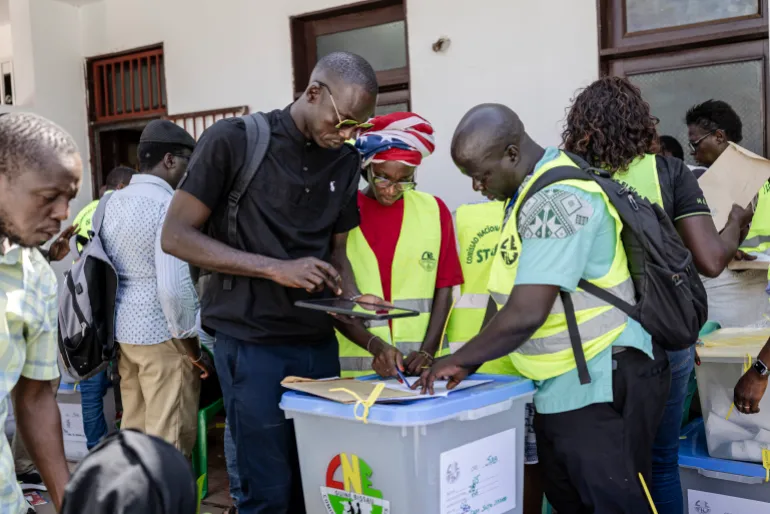
The referendum will determine the constitutional framework under which Guinea-Bissau’s next elected president and parliament will govern [PATRICK MEINHARDT / AFP]
The referendum will determine the constitutional framework under which Guinea-Bissau’s next elected president and parliament will govern [Patrick Meinhardt/AFP]

Candidates would have to have lived permanently in Guinea-Bissau for the five years preceding an election. They would also have to pay a 50 million West African CFA franc deposit, or approximately $90,000.

Political parties sponsoring presidential candidates would need at least 5,000 members, including at least 300 in each region.

The proposed constitution would also establish a Constitutional Court.

Why is a stronger presidency controversial?

Guinea-Bissau’s political system has repeatedly been marked by disputes between presidents, prime ministers and parliament.

Supporters of the reform argue that giving the president clearer authority over the government could reduce institutional conflicts and make decision-making more effective.

Critics fear that concentrating executive authority in the presidency would weaken parliament and other checks on government, significantly altering the balance between the executive and legislature.

Critics have also raised concerns about the proposed reduction in the number of electoral constituencies, arguing that it could affect political representation and weaken parties that rely on strong local support.

The new financial and membership requirements have likewise drawn criticism from those who argue that they could make it harder for smaller political movements to contest presidential elections.

There is a separate dispute over how the constitution was produced.

The draft was prepared during a military-led transition rather than by a restored elected parliament. Opposition parties and civil society groups have criticised the process and questioned whether the drafting process was sufficiently inclusive.

Is the referendum about Horta Inta-A Na Man?

Horta has led the transition since the coup, but the referendum is not simply a vote on his political future.

The transition framework bars the transitional president and prime minister from running in the elections at the end of the transition.

The immediate issue is therefore what powers the next elected president will have.

If the constitution passes, the president elected in December would have considerably greater authority over the government than under the existing constitutional system.

Why does the timing matter?

The referendum comes before the presidential and legislative elections scheduled for December 6.

Voters will therefore decide the proposed constitutional framework before choosing the leaders who are expected to govern under it.

That means the next president and parliament could take office under rules drawn up during the military-led transition.

For the transitional authorities, the referendum is part of the process leading to a return to elected government.

For opponents, the timing raises the question of whether a military-led authority should determine fundamental political rules before elected institutions are restored.

What would a yes or no vote mean?

A yes vote would bring the proposed constitution into force, including stronger presidential powers, a smaller parliament, fewer electoral constituencies and new requirements for presidential candidates.

A no vote would reject the proposed constitution, leaving the question of constitutional reform unresolved.

At stake is not simply whether Guinea-Bissau adopts a new constitution, but how much power the presidency should hold when the country returns to elected government.

Source link

Kazakhstan Votes on Power-Shifting Election

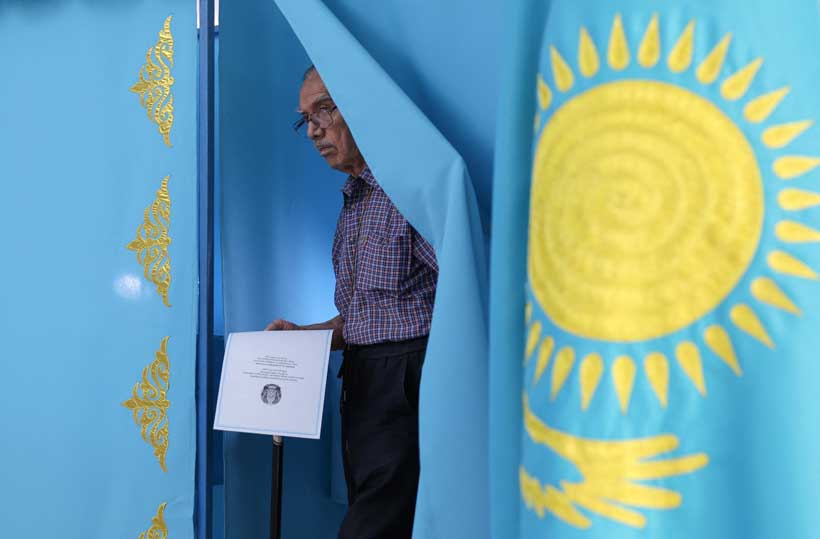
Kazakhs began voting on Sunday in a snap parliamentary election that is expected to increase President Kassym-Jomart Tokayev’s power. This election follows a new constitution that changed parliament from two chambers to one. The supreme court confirmed that this allows Tokayev, who has been in office since 2019, to run for another seven-year term.

Polls show strong support for Adilet, a new pro-Tokayev party, which has absorbed the previous ruling party, Amanat. Several opposition parties, seen as loyal to Tokayev, are also participating. While voting in Astana, Tokayev mentioned it was too early to decide if he would run for another term. He was appointed by Kazakhstan’s first president, Nursultan Nazarbayev, and distanced himself from his predecessor after the unrest in 2022.

With information from Reuters

Source link