vote

Police raid Peru’s election authorities after outcry over slow vote count | Elections News

Anticorruption police gathered material from the homes of election officials including former office leader Piero Corvetto.

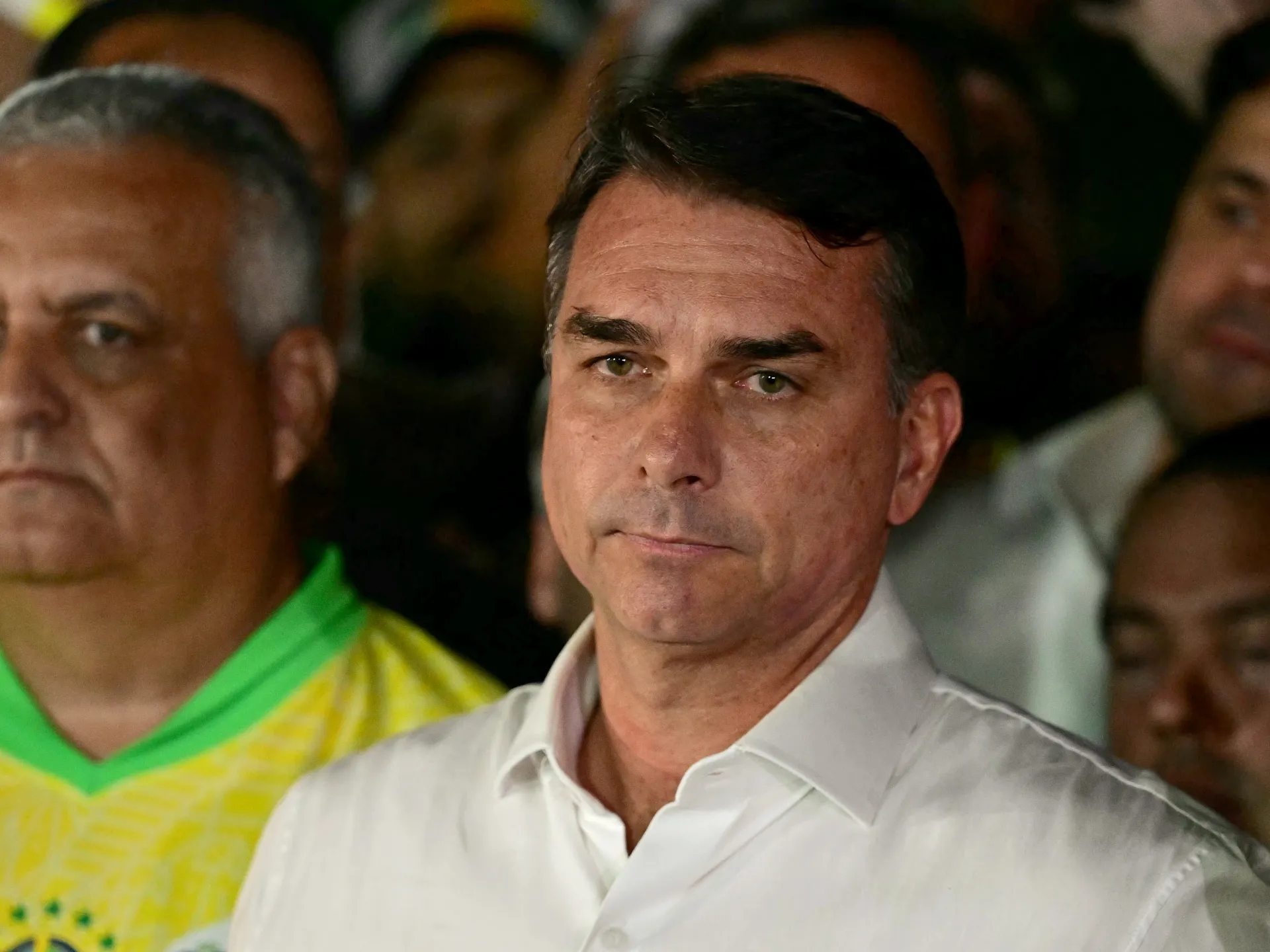
Police in the Peruvian capital of Lima have raided a home belonging to the former head of its national election agency, amid growing frustration in the aftermath of the country’s presidential election.

As of Friday, results still had not been finalised for the presidential race, which took place on April 12.

Recommended Stories

list of 3 itemsend of list

Delays in ballot deliveries forced the voting in some areas to be extended by an extra day, and the slow vote count has led to accusations of wrongdoing. But the European Union’s election mission to Peru found no indication of fraud.

Law enforcement was seen entering the home of Piero Corvetto, the former head of Peru’s National Office of Electoral Processes (ONPE), on Friday as part of a judicial warrant.

The officers with the local anticorruption police unit were tasked with removing mobile phones, laptops and documents, according to local broadcaster RPP.

The homes of five other officials were also targeted by police raids, as were offices belonging to Galaga, a private company that transports election ballots.

Corvetto resigned on Tuesday, though he denied any wrongdoing or irregularities in the election process. In a statement, he said he hoped his departure would boost public confidence.

On Friday, his lawyer, Ricardo Sanchez Carranza, told the news agency Reuters that a judge authorised the raid but denied prosecutors’ request to put Corvetto in preliminary detention.

But one of the leading presidential candidates, Lima’s former far-right mayor, Rafael Lopez Aliaga, has accused Corvetto of being a “criminal” and pledging to pursue him “until he dies”.

Lopez Aliaga is currently in a narrow race for second place in the presidential election.

With 95 percent of the ballots tallied, right-wing candidate and former First Lady Keiko Fujimori is in first place with 17 percent of the vote. She is all but assured of proceeding to the run-off on June 7.

Lopez Aliaga, meanwhile, is in third place with 11.9 percent, behind left-wing Congress member Roberto Sanchez at 12.03 percent.

Roughly 20,000 votes separate Sanchez from Lopez Aliaga, who has increasingly denounced the election as illegitimate, though he has yet to provide evidence to support that claim. Still, he has called the vote tally an “electoral fraud unique in the world”.

The final results are expected on May 15.

Source link

Democrats win in Virginia but it won’t be the final say in a national redistricting competition

Democrats on Wednesday celebrated an election win in Virginia that could put them slightly ahead in the national redistricting competition that President Trump triggered in an attempt to preserve his party’s House majority in this year’s midterms, but it will not be the final round.

Now that it’s been approved by voters, the new Virginia map will have to clear additional legal hurdles. On Wednesday, the state attorney general’s office said it would immediately appeal a ruling earlier in the day from a judge in rural southern Virginia who ordered that the results of Tuesday’s vote not be certified.

Ultimately, the Virginia Supreme Court will decide whether Democratic lawmakers violated procedural rules when they referred a constitutional amendment to the ballot authorizing the new U.S. House districts that could help Democrats win as many as four additional seats in the state. If so, that could invalidate the map voters narrowly approved Tuesday.

What happens next in Florida also will matter.

The state’s Republican-controlled Legislature is to meet in a special session next week that GOP Gov. Ron DeSantis called in part to draw a new map to expand the party’s congressional majority there. The U.S. Supreme Court is scheduled to issue an opinion by the end of June in a Louisiana case that could overturn a key provision of the Voting Rights Act and lead to redrawn political maps across the South, though almost all of those could not happen until 2028.

After voters passed the Virginia amendment, Democrats could tentatively claim that they netted 10 seats nationally from the mid-decade redistricting, compared with the nine that Republicans claim. Even if things swing again in the GOP’s favor, the net result of Trump’s campaign would be at best an incremental increase in the number of GOP-leaning House seats at a time when his approval rating is dropping and Republican anxiety over losing control of Congress in November is rising.

“We have successfully blunted Trump’s attempt to completely hijack the midterms,” said John Bisognano, president of the National Democratic Redistricting Committee.

Many Republicans agreed.

“The GOP will now lose net seats across the country. If you’re going to pick a fight, at least win it,” Ari Fleischer, who was a spokesman for President George W. Bush, posted on the social media site X after the Virginia vote. “All this was foreseeable and avoidable. We should not have started this fight.”

Adam Kincaid, executive director of the National Republican Redistricting Trust, argued that it is too soon to declare one party a victor.

“It’s an ongoing process with many legal challenges pending, and it’s far too early for sweeping statements on the final outcome,” he said.

Trump on Wednesday tried to undermine the Virginia result by leveling groundless accusations of fraud similar to ones he made after losing the 2020 presidential election. He called the Virginia vote “RIGGED” and “Crooked” in a post on his social media site and added, “Let’s see if the Courts will fix this travesty of ‘Justice.’”

Redistricting spread from Texas to other states

Redistricting is typically done every 10 years after each census, unless ordered by a court. But last summer, Trump pushed a redrawing in Texas, prodding the state’s Republican-controlled Legislature to add up to five winnable House seats for his party. Trump then began pressuring other Republican-run states to follow. Missouri, North Carolina and Ohio have since created more GOP-leaning seats in addition to Texas.

Democrats began to fight back, even though they were more constrained because several Democratic-controlled states had maps drawn by independent commissions rather than lawmakers and governors.

To counter Texas, California’s Democratic governor, Gavin Newsom, pushed the Democratic-controlled Legislature to place a redistricting initiative on last fall’s ballot. After voters overwhelmingly approved it, the measure will replace a commission-approved map with one that could gain Democrats five seats.

Democrats reclaimed the Legislature and governor’s office in November in Virginia and swiftly moved to replicate California’s move with an even more aggressive redistricting plan. It replaces a congressional map imposed by a court after the last census that had resulted in a 6-5 edge for Democrats with one that could allow Democrats to win as many as 10 seats.

“We are not going to let anyone tilt the system without a response,” state Senate President L. Louise Lucas said at a news conference Wednesday.

Courts could still have a say on redistricting

In Washington, U.S. House Democratic leader Hakeem Jeffries of New York warned Florida Republicans, who have been openly nervous about redrawing their district boundaries and potentially spreading their core voters too thin before an election that appears to be trending against them.

“Our message to Florida Republicans right now is, ‘F around and find out,’” Jeffries said.

House Majority Forward, the nonprofit arm of the super political action committee aligned with House Democrats, has spent nearly $60 million to push back against Republicans’ redistricting efforts. Some $40 million of that was on the Virginia campaign.

Another obstacle in Florida is an anti-gerrymandering constitutional amendment that was approved by state voters in 2010. It is likely that any new Florida map would trigger significant litigation, although six of the state Supreme Court’s seven justices were appointed by Republicans.

Nicholas Stephanopolous, a Harvard law professor, said a challenge for DeSantis is that the Florida amendment forbids drawing lines for purely partisan purposes, so he has to find some other excuse for revising the map. “Even with that sort of acquiescent state supreme court, I don’t think it’s a done deal,” Stephanopolous said.

The Virginia move comes with its own legal issues. Republicans have challenged the process that Democrats used to place the measure on the ballot and the state Supreme Court opted to wait for the vote before even scheduling arguments in the case. It is unclear when a ruling could come.

Wednesday’s ruling stopping certification came from a separate case that Republicans filed with the same lower court judge, whose initial ruling against the initiative was put on hold by the state supreme court.

“The ballot box was never the final word here,” Terry Kilgore, the Virginia House Republican leader, said in a statement after Tuesday’s vote. “Serious legal questions remain about both the wording of this referendum and the process used to put it before voters.”

The biggest legal wild card is held by the U.S. Supreme Court. Its conservative majority could throw out a requirement under the Voting Rights Act that in areas with a large minority population, mapmakers draw districts that are more favorable to the election of minority candidates.

That provision has led to the creation of several majority-minority congressional seats, especially in the South. Without it, Republicans in conservative states could shrink the number of U.S. House seats winnable by Democrats even further.

But it’s unlikely that any state other than Louisiana, which brought the lawsuit the high court will rule on, would be able to adjust its congressional lines in time for November even if the court eliminates that provision, known as Section Two. That’s because the November election is already officially underway in most states and candidate filing deadlines — and, in some cases, primary elections — have already passed.

Riccardi and Lieb write for the Associated Press. AP writers Lisa Mascaro and Leah Askarinam in Washington contributed to this report.

Source link

Peru’s election chief steps down amid frustration over long vote count | Elections News

Ballot delivery delays and other missteps on election day have contributed to frustration with electoral authorities.

The head of Peru’s election authority has resigned from his role amid widespread anger over the country’s chaotic general election earlier this month, with vote counting still under way.

Piero Corvetto said in a social media post on Tuesday that he was stepping down as head of the National Office of Electoral Processes (ONPE), a government body tasked with organising elections in Peru.

Recommended Stories

list of 3 itemsend of list

In a letter to the National Board of Justice (JNJ), Corvetto denied that irregularities had taken place, as some politicians have alleged.

But he explained that he was leaving in a bid to increase public confidence, ahead of an anticipated second round of voting in the presidential race on June 7.

The first round of the election, held on April 12, was marred by logistical issues that led to the extension of voting hours around the capital Lima and elsewhere.

Election observers have acknowledged missteps with the electoral process but cautioned that there is no firm evidence of fraud.

Peru’s National Jury of Elections (JNE) said the voting results will be finalised no later than May 15, with the top two presidential candidates advancing to the final round.

Right-wing candidate Keiko Fujimori leads with about 17 percent of the vote and is likely to advance to the run-off.

But who will face her remains a mystery. Left-wing Congressman Roberto Sanchez and Lima’s former far-right mayor Rafael Lopez Aliaga remain virtually tied, with 12 percent and 11.9 percent respectively.

The hectic first round of voting could deepen dissatisfaction with the country’s political system at a time of protracted instability and sloping trust in government institutions.

Even before the April election, about 68 percent of Peruvians said that they had little to no trust in the country’s election authorities, according to a poll conducted by the Institute for Peruvian Studies (IEP) and the Institute Bartolome de las Casas (IBC).

Some presidential candidates, including Lopez Aliaga, have pushed unconfirmed claims of fraud and have called for the first round of voting to be nullified.

Election authorities have begun to review thousands of contested ballots that were challenged due to inconsistencies, missing details or tally sheet errors.

Source link

Virginia voters deciding on redistricting plan that could boost Democrats’ seats in Congress

Virginia voters on Tuesday are deciding whether to ratify an unusual mid-decade redrawing of U.S. House districts that could boost Democrats’ chances of flipping control of the closely divided chamber, as the state becomes the latest front in a national redistricting battle.

A proposed constitutional amendment backed by Democratic officials would bypass the state’s bipartisan redistricting commission to allow use of new congressional districts approved by state lawmakers in this year’s midterm elections.

The referendum, which needs a simple majority to pass, tests Democrats’ ability to push back against President Trump, who started the gerrymandering competition between states after successfully urging Texas Republicans to redraw congressional districts in their favor last year. Virginia is the second state, after California last fall, to put the question to voters.

It also tests voters’ willingness to accept districts gerrymandered for political advantage — coming just six years after Virginia voters approved an amendment meant to diminish such partisan gamesmanship by shifting redistricting away from the legislature.

Even if Democrats are successful Tuesday, the public vote may not be the final word. The state Supreme Court is considering whether the redistricting plan is illegal in a case that could make the referendum results meaningless.

Virginia Democrats are following California’s lead

Congressional redistricting typically is done once a decade after each U.S. census. But Trump urged Texas Republicans to redistrict ahead of the November elections in hopes of winning several additional seats and maintaining the GOP’s narrow House majority in the face of political headwinds that typically favor the party that is out of power during midterms.

The Texas gambit led to a burst of redistricting nationwide. So far, Republicans believe they can win up to nine more House seats in newly redrawn districts in Texas, Missouri, North Carolina and Ohio.

Democrats think they can win up to five more seats in California, where voters approved a mid-decade redistricting effort last November, and one more seat under new court-imposed districts in Utah. Democrats hope to offset the rest of that gap in Virginia, where they decisively flipped 13 seats in the state House and won back the governor’s office last year.

Voters focus on fairness, with different perspectives

The stream of voters was steady Tuesday at a recreation center in the Old Town area of Alexandria, Virginia.

Matt Wallace, 31, said he votes regularly but this election has additional emphasis.

“I think the redistricting issue across the country is unfortunate, that we’ve had to resort to temporary redistricting in order to sort of alter our elections across the country,” Wallace said. He said he voted for the Democratic redistricting amendment “to help balance the scales a bit until things get back to normal.”

Joanna Miller, 29, said she voted against the redistricting measure, “because I want my vote to count in a fair way.” Miller said she was more concerned about representation in Virginia than trying to offset actions in other states.

“I want my vote and my representation to matter this fall,” she said.

Political parties made a big push in Virginia

Leaders of both major parties see Tuesday’s vote as crucial to their chances to win a House majority in the fall. Trump weighed in via social media Tuesday morning, telling Virginians to “vote ‘no’ to save your country!”

Former Virginia Gov. Glenn Youngkin, a Republican, rallied with opponents of the measure Monday night, calling the redistricting plan “dishonest” and “brazenly deceptive.” House Minority Leader Hakeem Jeffries told reporters at the Capitol earlier in the day that a vote to approve the redraw “will serve as a check and balance on this out-of-control Trump administration.”

A committee supporting the Democratic redistricting effort had raised more than $64 million — three times as much as the roughly $20 million raised by opponents, according to finance reports filed less than two weeks before the election.

The back-and-forth battle over congressional districts is expected to continue in Florida, where the Republican-led legislature is scheduled to convene April 28 for a special session that could result in a more favorable map for Republicans.

A lobster-like district could aid Democratic efforts

In Virginia, Democrats currently hold six of the 11 U.S. House seats under districts that were imposed by the state Supreme Court in 2021 after a bipartisan commission failed to agree on a map based on the latest census data.

The new plan could help Democrats win as many as 10 seats. Five are anchored in Democratic-heavy northern Virginia, including one shaped like a lobster that stretches into Republican-leaning rural areas.

Revisions to four other districts across Richmond, southern Virginia and Hampton Roads dilute the voting power of conservative blocs in those areas. And a reshaped district in parts of western Virginia lumps together three Democratic-leaning college towns to offset other Republican voters.

The Virginia redistricting plan is “pushing back against what other states have done in trying to stack the deck for Donald Trump in those congressional elections,” Democratic Gov. Abigail Spanberger said during an online rally last week.

Ads for the “yes to redistricting” campaign featuring former President Barack Obama have flooded the airwaves.

Opponents have distributed campaign materials citing past statements from Obama and Spanberger criticizing gerrymandering, but those were before Trump pushed Republican states to redraw their congressional maps in advance of this year’s midterms.

Democrats “were all against gerrymandering before they were for it,” Virginia Republican Party Chairman Jeff Ryer said.

Virginia court weighs whether lawmakers acted illegally

Virginia lawmakers endorsed a constitutional amendment allowing their mid-decade redistricting last fall, then passed it again in January as part of a two-step process that requires an intervening election for an amendment to be placed on the ballot. The measure allows lawmakers to redistrict until returning the task to a bipartisan commission after the 2030 census.

In February, they passed a new U.S. House map to take effect pending the outcome of the redistricting referendum. Republicans have filed multiple legal challenges against the effort.

A Tazewell County judge ruled that the redistricting push was illegal for several reasons. Circuit Court Judge Jack Hurley Jr. said lawmakers failed to follow their own rules for adding the redistricting amendment to a special session.

He ruled that their initial vote failed to occur before the public began casting ballots in last year’s general election and thus didn’t count toward the two-step process. He also ruled that the state failed to publish the amendment three months before that election, as required by law.

If the state Supreme Court agrees with the lower court, the results from Tuesday’s vote could be rendered moot.

Lieb writes for the Associated Press. AP writers Gary Fields in Virginia and Lisa Mascaro in Washington contributed to this report.

Source link

Virginia redistricting vote: What polls suggest and what voters will decide | US Midterm Elections 2026 News

Voters in Virginia head to the polls on Tuesday to decide on a measure that could redraw the state’s congressional map and potentially shift the balance of power in Washington.

Major political figures, including former President Barack Obama and House of Representatives Speaker Mike Johnson, have weighed in on the high-stakes vote, with nearly $100m spent on campaigning around it.

Part of a broader redistricting battle that began in Texas and spread nationwide, the vote may be the Democrats’ last chance this year to gain seats by changing district maps. The vote comes about six months before the 2026 midterm elections.

Here is what we know:

What is Virginia voting on?

Virginia currently sends 11 members to the House. At the moment, six of them are Democrats, and five are Republicans, reflecting the state’s balance.

Democrats now want to redraw the map to favour them in a way that could help them win up to 10 of the 11 seats. Under the proposal, most districts would be safely Democratic or lean towards the party, with only one strongly Republican.

A breakdown would be:

  • Eight districts would be safely Democratic
  • Two would be competitive but lean Democratic
  • Only one would be safely Republican

If approved, this could give the Democrats several extra seats in Congress, helping them win back or strengthen control of the House in Washington, where majorities are often decided by just a few seats.

That would be a big political shift for the state, which was once closely contested but has become more Democratic-leaning in recent years.

Supporters depart a campaign rally against Virginia Democrats' proposed state redistricting constitutional amendment
Supporters depart a campaign rally against Virginia Democrats’ proposed state redistricting constitutional amendment [FILE: Ken Cedeno/Reuters]

How would the vote work?

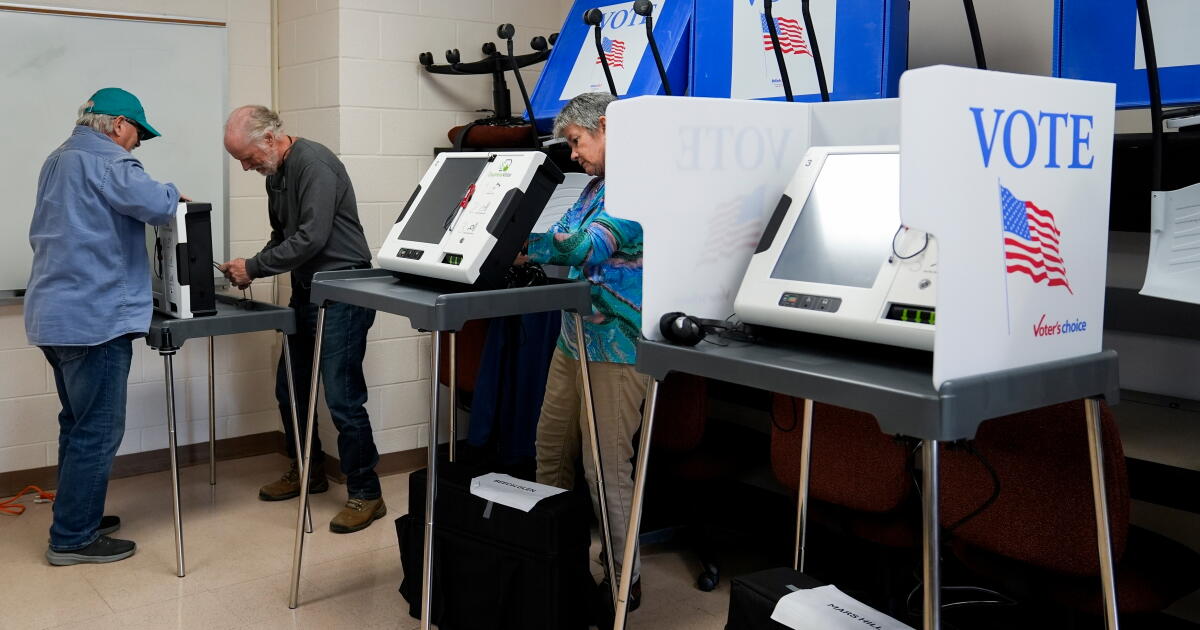
Voters in Virginia can cast their ballots either early or on Election Day.

Polling stations will be open across the state on Tuesday:

  • Polls open at 10:00 GMT
  • Polls close at 23:00 GMT

Votes will be counted after polls close, with early results expected later that evening and fuller results overnight or the next day.

What are voters being asked to decide?

The proposed constitutional amendment is the only statewide contest on the ballot.

It reads:

“Should the Constitution of Virginia be amended to allow the General Assembly to temporarily adopt new congressional districts to restore fairness in the upcoming elections, while ensuring Virginia’s standard redistricting process resumes for all future redistricting after the 2030 census?”

A “yes” vote would support allowing the General Assembly to redraw congressional districts before the midterms.

A “no” vote would leave current boundaries unchanged until the next round of regularly scheduled redistricting after the 2030 census.

What do the latest polls suggest?

The result is expected to be close.

A recent poll by State Navigate, a nonpartisan research group, suggests a small lead for supporters, with about 53 percent in favour and 47 percent against.

Why do district lines matter so much?

District lines decide how voters are grouped, which can shape who wins elections.

Moving the lines can make a district more favourable to a Democratic or Republican win, by adding or removing neighbourhoods and communities that lean one way or the other.

It can turn a close race into a safe seat, or the other way around. It affects which communities are kept together and who represents them.

This process, often called gerrymandering, allows parties to draw maps that benefit them.

In a closely divided state like Virginia, even small changes to the map can shift several seats and influence who holds power in Congress.

A 2023 study by Harvard University researchers found that gerrymandering often creates “safe” seats for politicians, meaning their races are less competitive.

In turn, those politicians become less responsive to the needs of their constituents, who become discouraged about voting as a result.

Supporters pray during a campaign rally against Virginia Democrats' proposed state redistricting constitutional amendment
Supporters pray during a campaign rally against Virginia Democrats’ proposed state redistricting constitutional amendment [Ken Cedeno/Reuters]

When could new maps take effect?

If approved, the new map could be used as early as the next election cycle, including the upcoming midterms, depending on legal approval.

However, the plan could face legal challenges. Critics have questioned the ballot wording and the process used by lawmakers.

The Virginia Supreme Court has allowed the vote to go ahead while reviewing those concerns.

If it later finds that rules were broken, the results could be overturned, and the current maps would remain.

Why this vote could shape power in Washington?

A handful of seats could decide control of the US House.

Republicans currently hold a narrow 218–213 majority, but Democrats are seen as competitive heading into the midterms.

Political leaders have underscored the stakes.

Hakeem Jeffries, the Democratic Party’s leader in the House, has pointed to Virginia as a crucial battleground, while Mike Johnson has said the result will be closely watched across the country.

U.S. House Speaker Mike Johnson (R-LA) speaks during a campaign rally
US House Speaker Mike Johnson (R-LA) speaks during a campaign rally [Reuters]

What it means to control the US House

The party with the majority (more seats) in Congress can:

  • Set the agenda, deciding which bills are brought up for debate
  • Control committees, including investigations and hearings
  • Pass legislation more easily (if they stay united)
  • Block bills from the minority party.

The majority party also chooses the speaker of the House, who has major influence over what reaches the floor.

Where else has this happened?

Virginia’s redistricting vote is part of a larger political battle playing out in the US. Republicans in Texas, encouraged by Donald Trump, have redrawn district maps to strengthen their advantage, prompting similar efforts in other states.

In rare cases, voters have been asked to decide directly, including in California last year and now in Virginia.

In California, voters backed the changes despite concerns about fairness. Now it’s Virginia’s turn to decide.

What Democrats are saying, and why?

Democrats argue the plan is a response to Republican actions in other states, not just a power grab.

Leaders like Obama had long opposed gerrymandering in principle, but have now backed the Virginia move, even releasing a video asking voters to go out and vote for the constitutional amendment.

Source link

What is Trump-backed SAVE America Act and what could it mean for US vote? | US Midterm Elections 2026 News

Washington, DC – United States President Donald Trump has been unambiguous about his desire for Congress to pass the SAVE America Act, a sweeping voting law that supporters say will boost election security and that detractors say risks disenfranchising millions of voters.

The push has gained new urgency, with the US Senate continuing debate on the law following a two-week recess.

Recommended Stories

list of 3 itemsend of list

The president has said the bill, which at its core would create higher documentation standards for proving citizenship when registering to vote and casting a ballot, is his top priority ahead of the midterm elections in November, which will determine which party controls the Senate and the US House of Representatives.

The bill has near-total support from Republicans, with Democrats remaining largely unified in opposition. It passed in the Republican-controlled House of Representatives in February along party lines.

The measure has since remained stalled in Congress, where Republicans control 53 out of 100 seats, short of the 60 votes it will likely need to pass.

That is, unless party leaders move to change the chamber’s longstanding rules, a transformative approach considered a”nuclear” option that will reverberate for years to come.

Here’s what to know.

What would the SAVE America Act do?

The version of the Safeguard American Voter Eligibility (SAVE) America Act passed by the House in February would require voters to provide proof of citizenship – a birth certificate or passport – when registering to vote. It would also implement stricter voter identification requirements for individuals casting ballots, whether by mail or in person.

Under the US Constitution, states administer elections, and currently have different processes for registering voters and confirming citizenship. Voting by noncitizens is already illegal, and all people registering to vote attest they are US citizens under threat of perjury.

The bill does not provide any funding for the new verification processes, which would be effective immediately upon the bill being signed into law.

The legislation would also require all states to run their voter rolls through a US Citizenship and Immigration Services (USCIS) “Alien Verification Eligibility” system to identify potential noncitizens already enrolled.

It would include criminal penalties for election officials who register voters without the required documentation.

What has Trump said about the SAVE Act?

The US president has long maintained that elections in the country are marred by widespread fraud, including noncitizen voting, despite there being no evidence to support these claims.

Even the conservative Heritage Foundation, which has influenced many of Trump’s policies, has found only exceedingly rare instances of voter fraud over decades of US elections.

Trump’s focus on election administration dates back to his 2020 loss to former US President Joe Biden, which he continues to maintain was the result of the vote being “stolen”. Again, no evidence has emerged to back those claims.

The president has called the SAVE America Act “one of the most IMPORTANT & CONSEQUENTIAL pieces of legislation in the history of Congress, and America itself”.

In March, he vowed not to sign any other bills into law until the legislation was passed. He has further vowed not to endorse any Republicans who do not support the legislation.

Trump also told members of his party in March that passing the bill would “guarantee” their success not only in the midterm elections but in the years to come.

Several top Republicans have embraced Trump’s messaging, with US House Speaker Mike Johnson saying opponents of the legislation “want illegal aliens to vote in our elections”.

What have critics said about the SAVE Act?

Critics have said the bill would be tantamount to widespread voter disenfranchisement, creating onerous barriers to address what several studies show to be the fleetingly rare problem of noncitizens registering to vote.

Several studies have shown that about 11 percent of eligible voters do not have access to birth certificates, while 52 percent do not have valid passports. All told, a recent study by several election-monitoring groups found that about nine percent of eligible voters in the US do not have easy access to documents proving citizenship, accounting for about 21.3 million people.

Several groups, including the Bipartisan Policy Center, have argued the legislation risks doing more damage than good. Data from a USCIS voter verification system, which some states already use to identify noncitizens in their voter rolls, found that only 0.04 percent of reviewed cases were flagged as potential noncitizens.

But as noted by the Bipartisan Policy Center, evidence indicates that the rate may be considerably lower, pointing to a review by Travis County, Texas that found that a quarter of the voters flagged by USCIS had actually provided proof of citizenship.

In another example, a review of all registered voters in Utah from 2025 to 2026 found only a single instance of a noncitizen registered to vote out of more than two million voters. There were no confirmed instances of a noncitizen actually voting.

Top Democrats have echoed those criticisms, while charging that Trump is seeking to influence the outcome of the midterms as part of what they call a years-long effort to politicise voting administration.

“The only thing Republicans are trying to save with this legislation is their own skin in the next election,” Chuck Schumer, the top Democrat in the Senate, said earlier this week.

Could it affect women and name changes?

A main point of contention for opponents of the legislation is the additional barriers it could create for individuals, primarily women, who changed their last names after marriage or for other reasons.

An estimated 69 million women in the US lack easy access to documentation linking their current legal names to those at birth, according to the League of Women Voters, which has been a leading opponent of the bill.

The requirement for extra documentation for some married women creates inherent inequality in the system, the organisation has argued.

The law would further create extra barriers for individuals who move regularly, including members of the military, and those who have been afflicted by disruptive life changes, including natural disasters, opponents have argued.

How does this relate to the filibuster?

The so-called “filibuster” is a procedural rule in the Senate that can be used to require 60 votes to pass most bills, as opposed to a simple majority of 51 votes in the 100-seat chamber.

Parties in the minority have long used the rule to temper the party in the majority, with Republicans and Democrats rarely holding a filibuster-proof 60 seats.

Being a rule of the Senate’s own making, it could be easily scrapped by the party in power. However, doing so has long been seen as a “nuclear” option. While it would offer short-term benefits to the majority party, it would undermine the same party if it becomes the minority in future elections.

Nevertheless, Trump has heaped pressure on Republican leaders in the Senate to scrap the rule, writing on Truth Social in March, they need to “Kill the Filibuster”.

What happens next?

Debate remains ongoing in the Senate over the legislation, but major shifts in support are seen as extremely unlikely.

Republicans are unlikely to bring the legislation to a vote if they do not have the support for it to pass.

Currently, there is no plan to hold a vote to do away with the filibuster, which would require only a simple majority.

Lawmakers have also not yet pursued other, more incremental procedural manoeuvres to pass the bill without 60 votes.

Source link

How popular are the Dodgers? Even the Lakers look up at them. Way up.

The Dodgers are too good, and too rich. If the owners of other major league teams ultimately deem that combination so objectionable that they shut down the sport this winter because of it, they will risk a rupture in one of the greatest fan bases in American sports history.

The four million tickets the Dodgers sold last season tells one part of the story. Here is an arguably better one: For decades, the Dodgers and Lakers have dominated Los Angeles sports and left every other team far behind in popularity.

For now, after back-to-back World Series championships, the Dodgers have left even the Lakers far behind in popularity, and every other team in town even further behind.

In a Loyola Marymount survey asking Los Angeles County residents to identify their favorite among the 12 pro sports teams within the local media market, nearly half picked the Dodgers.

The Dodgers’ lead over the Lakers — 43% to 28% — represented the largest gap between the teams in the nine editions of the survey, first conducted in 2014 by the Thomas and Dorothy Leavey Center for the Study of Los Angeles.

The Rams ranked third, at 7%, followed by the Kings at 5% and the Angels at 4%.

The two women’s teams — Angel City FC and the Sparks — tied for last, each with less than 1% of the vote. Even when the study separated votes by gender, the two women’s teams got less than 1% of the vote from women.

As recently as 2018, five teams beyond the Dodgers and Lakers — the Angels, Clippers, Galaxy, Kings and Rams — attracted at least 4% of the vote. In this year’s survey, only the Rams did.

“I’m a big Rams fan,” said Fernando Guerra, the center’s director, “and I still put the Dodgers first.

“I love all these teams. But, when you have to choose one, it’s the Dodgers.”

Dodgers president Stan Kasten pointed to the popularity and excellence of the players, the cherished ballpark and the generational fan support as factors contributing to the top ranking.

“If you have a lot of good elements but you don’t win, you’re not going to be as high,” Kasten said. “And, if you win but you don’t have the other elements, you’re not going to be as high.

“I think, right now, we’re as close as you can be to clicking on all cylinders.”

Beyond the winning, Guerra cited Shohei Ohtani as a driving force behind the Dodgers’ popularity, and not just as a tourist attraction, merchandise driver, and the foremost product endorser in sports.

In 2018, Ohtani’s debut season with the Angels, 8% of fans that identified themselves as Asian picked the Angels as their favorite team and 34% picked the Dodgers — a terrific showing for the Angels, since the study polls residents in L.A. County, not Orange County.

That demographic this year: 4% picked the Angels, 47% picked the Dodgers.

In their 10 years since returning to Los Angeles, the Rams have made seven playoff appearances and two Super Bowl appearances, winning one. All that, and a half-century in their previous run in L.A., and their membership in the most popular sports league in America, and the best they could do was 7%.

“It’s just tough to break the Lakers’ and Dodgers’ hold,” Guerra said. “It’s not like we don’t love the Rams or the others. It’s just not your top priority.”

The Lakers and Dodgers have combined to win 20 championships in Los Angeles. The other 10 teams that call this market home have combined to win 16.

In the 13 seasons since Mark Walter and Co. bought the Dodgers, the team has won 12 division titles, made five World Series appearances, and won three championships. In the same time, the Lakers have won three division titles, advanced past the first round of the playoffs twice, and won one championship.

Walter bought a controlling interest in the Lakers last year. He has installed Lon Rosen, formerly the Dodgers’ executive vice president and chief marketing officer, as the Lakers’ president of business operations.

“When the Lakers are winning a lot of championships, they’re No. 1,” Rosen said. “When the Dodgers are, they’re No. 1.

“It’s a good position to be in, since we control both teams, and both teams are highly successful.”

In this moment, the Dodgers are highly successful.

“The Lakers and Dodgers are going to be neck and neck very soon,” Rosen said. “The Lakers will 100% be champions again soon.”

The Dodgers do not concede the days of neck and neck will return. Kasten, remember, said the Dodgers were as close as they could be to clicking on all cylinders.

“We don’t take that for granted,” he said. “We know we can do even better.”

Source link

Thune: Senate may vote next week on ICE, Border Patrol funding

April 14 (UPI) — A budget resolution to fund federal immigration enforcement could hit the Senate floor by next week, Senate Majority Leader John Thune said Tuesday, as Republicans seek to bypass Democratic demands for reforms to Immigration and Customs Enforcement and Border Patrol.

Federal funding for Immigration and Customs Enforcement and Border Patrol lapsed on Feb. 14 after Republicans agreed with the Democrats to remove the Department of Homeland Security from a larger spending package and avert a government shutdown.

Neither agency has been funded through regular DHS appropriations since, though they continue operating through other, emergency funding.

Democrats began demanding reforms to the federal immigration enforcement agencies before agreeing to restore funding after two U.S. citizens were killed by federal immigration officers amid President Donald Trump‘s aggressive immigration crackdown.

Amid a stalemate in negotiations, Republicans are considering passing three years of funding for the agencies through a complicated legislative mechanism called a budget reconciliation bill that permits certain spending legislation to pass with a simple majority rather than 60 votes, Thune told reporters Tuesday in the Capitol.

“Republicans are going to stand with our Border Patrol, with our law enforcement agencies and we’re going to ensure that they are funded, not only today but well into the future,” Thune, R-S.D., said.

Sen. Lindsey Graham, R-S.C., is preparing the resolution to fund the agencies that will be followed by the reconciliation bill “to ensure the job gets done,” he said.

Democrats have blocked funding for ICE and Border Patrol until reforms — including requiring judicial warrants and banning officers from wearing masks — are made, but the reconciliation bill tactic could ensure funding without any votes from Democratic lawmakers.

The same tactic was used last year to pass Trump’s sweeping spending and tax cut bill, which provided $75 billion for ICE.

“All of the things that the Democrats made this about, which was supposed to be about reforms to the way that ICE and Border Patrol operate — they get none of that,” Thune said.

“And now, we’re going to fund those agencies for three years into the future. The only thing the Democrats got out of this was they now own the issue of open borders and defund law enforcement.”

Republicans hold a narrow 53-47 majority in the Senate, with two independents caucusing with the Democrats, as well as a 218-213 majority in the House.

The Senate has twice passed bipartisan bills to fund DHS aside from ICE and Border Patrol, which the House has balked at. Democrats blame the Trump administration’s influence on the lower chamber.

“Republicans are dragging the Senate through a partisan circus just to avoid basic accountability for ICE and Border Patrol,” Senate Minority Leader Chuck Schumer told reporters at the Capitol during a separate press conference on Tuesday.

He said Democrats will continue to push for immigration enforcement reforms.

“So, the pattern, unfortunately, with this administration is clearer and clearer,” the veteran New York Democrat said. “Chaos abroad — the war; chaos at home with not funding DHS with reforms. A failed war overseas, a manufactured crisis here in Washington — in both cases Republicans aren’t leading, they are following orders.”

Source link

Swalwell resigns seat in Congress amid rape and sexual misconduct allegations

California Rep. Eric Swalwell resigned his congressional seat on Monday under intense pressure from lawmakers of both parties after several women accused him of sexual misconduct, including a former staffer who alleged rape.

Swalwell, a Dublin Democrat who suspended his campaign for California governor on Sunday, said in a statement that he was stepping down from the House, where he has served since 2013, and planned to continue fighting what he called “serious, false” allegations made against him.

“However, I must take responsibility and ownership of the mistakes I did make,” Swalwell wrote without specifying which mistakes those were.

His resignation came hours after the House Ethics Committee opened an investigation into the sexual misconduct allegations against him and as lawmakers from both parties threatened to expel him from the House if he did not leave his post. He said he was aware of the expulsion efforts underway and said that it was “wrong” to expel a member of Congress “without due process, within days of an allegation being made.”

“But it is also wrong for my constituents to have me distracted from my duties. Therefore, I plan to resign my seat in Congress,” he said.

Asked about replacing Swalwell, Gov. Gavin Newsom’s office said in a statement that it is “reviewing the matter. Once the seat is officially vacant, our office will make an official announcement.”

The allegations, detailed in reports by the San Francisco Chronicle and CNN last week, drew swift bipartisan condemnation, with lawmakers from both parties calling the accusations “disgusting” and demanding that he either resign or be removed from office.

Rep. Anna Paulina Luna (R-Fla.) intended to lead the charge to expel Swalwell. In an interview Monday, Luna said she planned to file a motion as early as Tuesday on the grounds that he violated House rules over an alleged inappropriate sexual relationship with a subordinate. A House floor vote could have been held as early as Wednesday, she said.

Following Swalwell’s resignation, Luna said the Northern California lawmaker did “the right thing.” But she took issue with him saying that the allegations were not grounds for expulsion, noting that he was under criminal investigation.

In New York, the Manhattan district attorney’s office opened an investigation into sexual assault allegations against Swalwell by a former staffer and issued a statement over the weekend that urged “survivors and anyone with knowledge of these allegations to contact our Special Victims Division.”

After the sexual allegations came to light, Democrats called on Swalwell to resign, but when it comes to expulsion, they said they would not move against Swalwell alone. They were also pushing to expel Rep. Tony Gonzales (R-Texas), who last month admitted to a sexual relationship with a staffer who later died by suicide.

Late Monday, Gonzales said he too was stepping down. “When Congress returns tomorrow, I will file my retirement from office,” he wrote on X.

The push to get Swalwell expelled had gained traction even among his friends.

Sen. Ruben Gallego (D-Ariz.) wrote on X on Monday that Swalwell should be kicked out of Congress, saying he “trusted someone who I believed was a friend, but is now clear that he is not the person I thought I knew.” Gallego said the woman “deserves to be believed, to be supported, and to see justice served.”

Had Swalwell been expelled, it would have been the first such removal in congressional history on the grounds of sexual misconduct, and among the rare instances in the House’s 237-year history in which members ousted one of their own.

Only six members have been expelled from the House. Three were fighting for the Confederacy, two were convicted of bribery and one was the fraudster George Santos, whose sentence was later commuted by President Trump.

Now that Swalwell has resigned, he is still eligible for his pension and for a number of other perks extended to other former members, including the ability to enter the House floor and access to the congressional gym.

Swalwell said Monday that he is working with his staff to “ensure they are able, in my absence, to serve the needs of the good people of the 14th congressional district.”

While many of Swalwell’s staffers have already quit, remaining staffers not involved in constituent services would lose their jobs and receive no severance pay.

Daniel Schuman, executive director of the American Governance Institute, which is focused on congressional reform, argues that the practice is unfair.

“I think the House owes them a duty for what they’ve had to go through,” Schuman said.

Longtime ethics expert Meredith McGehee said that members have been reluctant to expel their colleagues in recent years because of the razor-thin majorities in the House, but that not doing so hurts the credibility of the institution.

“It’s really important at this moment that the House act to expel these men who have been seriously and credibly accused of wrongdoing,” said McGehee, a former executive director of the ethics watchdog Issue One. “To allow either one of them to stay in office and serve out their term would be a farce.”

The Swalwell scandal could still prompt an ever larger surge of expulsion calls. Some lawmakers called for two additional members to be swept into any expulsion vote: Rep. Cory Mills (R-Fla.), who has been accused of sexual assault, and Rep. Sheila Cherfilus-McCormick (D-Fla.), who was indicted on charges that she laundered $5 million of federal disaster money and used it to fund a political campaign.

“Reps. Swalwell, Gonzales, Cherfilus-McCormick, and Mills should resign. If they refuse, they should be expelled,” Rep. Nydia Velazquez (D-N.Y.) wrote on X on Monday. “Americans deserve better and Congress must hold our members accountable.”

Any expulsion would require a two-thirds majority vote, or 290 of 435 votes if every House member participates. The Senate would not be required to concur with the House vote to make the expulsion effective, but it remains to be seen whether the House could meet the two-thirds threshold.

Times staff writer Melody Gutierrez in Sacramento contributed to this report.

Source link

Peruvians vote in a tight presidential race as a runoff appears inevitable

Peru held a presidential election on Sunday, where voters cast ballots for a new president and Congress members from a pool of over 30 candidates. This election comes after years of political instability that have lowered public trust in government institutions. With no clear frontrunner and all major candidates polling below the 50% needed for an outright win, a runoff on June 7 appears likely, posing further uncertainty for the country.

Voting began at 7 a.m. local time with about 27 million eligible voters. Some voters reported issues at polling stations, such as long lines and delayed openings, causing frustration. Voter Margarita Sandoval expressed her discontent, saying, “These elections are a disaster. “

The candidates represent a wide ideological range, including seasoned politicians, a far-right businessman, and a comedian. Notable candidates include conservative Keiko Fujimori, who is making her fourth attempt for the presidency and is known for her promises of order and economic stability amid rising crime. Despite her experience, she remains a controversial figure. Other emerging candidates include Ricardo Belmont from the center-left, who recently gained popularity, and comedian Carlos Alvarez, who is focused on a strict crime-fighting message.

Public safety is the primary issue driving the campaign, as crime rates have increased due to drug trafficking and illegal mining. Most candidates propose enhancing military involvement in domestic security. Furthermore, the election has geopolitical implications, notably due to Peru’s growing ties with China, which are causing concern in the United States. Post-election, the new president will face a fragmented Congress, complicating legislative efforts and increasing the likelihood of impeachment disputes. Polls closed at 5 p.m., with preliminary results expected shortly thereafter.

With information from Reuters

Source link

Bush and Kerry See Openings in Military Vote

Kevin Dellicker stays away from politics when he reports for duty at the National Guard armory in Harrisburg, Pa. But out of uniform, the captain in the Pennsylvania National Guard does everything he can to persuade the people he served with in Iraq to reelect President Bush.

Shaking some of the same hands as Dellicker is Jonathan Soltz, a former Army captain recently returned from Iraq who spends his days pleading with soldiers to vote for Sen. John F. Kerry of Massachusetts, the Democratic presidential nominee.

In the swing state of Pennsylvania, where both live, the votes of those in the military — including more than 15,000 reservists — who are serving or have served in Iraq or Afghanistan are much in demand.

But which way the people fighting the war will vote in Pennsylvania and elsewhere is anybody’s guess.

Tight restrictions on seeking the votes of active-duty military personnel, along with taboos in the military culture against the open expression of political views, make it tough for candidates to target military voters — and make it tough for pollsters to figure them out.

Historically, military turnout in elections has been low.

With more than 400,000 troops overseas now, many living in difficult and dangerous conditions, it is not clear whether those who want to vote this fall will succeed. A Pentagon initiative meant to make it easier for troops to cast absentee ballots via the Internet and by fax is being criticized as vulnerable to tampering.

All that has left the Bush and Kerry campaigns working the edges of a potential voting bloc that could be significant in a tight election.

“It’s very hard to get a read on how the active-duty personnel are reacting to the war politically, because they are so busy reacting on the ground,” Soltz said. “So what I do — I talk to my friends, tell them to e-mail their friends about Kerry; I talk to people like me who are out of the service now. I’m not going to go give a speech to a group of soldiers. It’s not the thing they want to hear while they’re just trying to keep their lives together.”

Political activity in the military is — like much else — strictly regulated.

Troops are not prohibited from expressing political opinions, but they are not allowed to work for partisan political organizations while in the military. Campaigning is prohibited at military facilities, and the rules for conducting polls among active-duty troops are so cumbersome that pollsters have generally given up.

“As a society, we rely on the apolitical loyalties and professionalism of the military — we entrust them with capabilities that we don’t give anyone else — and in exchange for that we demand total political neutrality from them,” said Peter Feaver, a political science professor at Duke University who studies military voting patterns.

“We seek to avoid creating a partisan voting bloc in the military that is wooed or courted the way that soccer moms are. So for that reason the government doesn’t ask questions itself, and they restrict the access of anyone else to do so.”

More is known about how veterans lean politically: Polls show they tend to vote Republican.

Because of that, it has long been presumed that the active military also leans Republican. A poll by Army Times of its readers in December found that more supported the administration than did not. But the poll did not ask respondents for whom they would vote. Its pollsters acknowledged that its readers tended to be older, career soldiers, rather than enlisted personnel, 35% of whom are black and Latino — groups that among civilians tend to vote Democratic.

This year, both presidential campaigns have infused their efforts with military imagery, and the experience of both Bush and Kerry during the Vietnam War era is under scrutiny.

A parade of retired generals at the Democratic and Republican conventions endorsed one candidate or the other. Kerry opened his speech with a salute. Bush and Vice President Dick Cheney have regularly visited military bases, and Kerry meets with veterans, reservists and military families. Elizabeth Edwards, the wife of Democratic vice presidential nominee John Edwards, parlays her background as the daughter of a career soldier into regular chats with military families.

“The political appeals to this broad category of people somehow associated with the military [have] not been this overt in decades,” said Carroll Doherty of the Pew Research Center for the People and the Press. “But of the leanings of active-duty military, the people in the fight, the candidates are as stumped as the pollsters.”

Both parties are pushing overseas voter registration, including that of military personnel. The Bush campaign is deeply aware that military absentee ballots may have helped swing Florida — and the election — for Bush in 2000. Democrats, meanwhile, are predicting that more of the military vote will go their way this November because long tours of duty and heavy casualties have antagonized a growing number of military families.

“This time around, the Democrats are convinced that the advantage among military voters won’t be nearly as big for the GOP,” said Curtis Gans, director of the Committee for the Study of the American Electorate. “They also think that in a post- 9/11 election, how can the Democrats show that they’re tough on national security? If they can win the military and veterans endorsement race, then that can serve symbolically as proof that they are good on national security.”

Pentagon attempts to improve voter turnout among soldiers overseas have generated considerable controversy.

In February, the Pentagon dropped a $22-million plan to test Internet voting for 100,000 military workers and civilians overseas. After a panel of experts cited security concerns, the agency said it could not ensure the legitimacy of online votes.

Subsequently, the Defense Department said that members of the military would be allowed to vote by faxing or e-mailing their vote, but only after waiving their right to a secret ballot. Under the Pentagon plan, a contractor, Omega Technologies, will accept the ballots on a toll-free line, then send them to appropriate local elections offices.

But under that system, the contractor, the Pentagon and county officials would all know which candidates individual military voters had chosen.

Critics have pointed out that Omega’s chief executive, Patricia Williams, has donated $6,000 in this election cycle to the National Republican Congressional Committee and serves on the committee’s business advisory council. They say such partisanship leaves open the possibility that votes will be tampered with, as does the nonsecret ballot.

Missouri and North Dakota will allow e-mail voting by the military. Twenty other states will permit faxed ballots, also to be handled by Omega.

In Pennsylvania, which has sent more reservists to Afghanistan and Iraq than all but five other states, and which has had more war deaths than any other presidential swing state, the Bush and Kerry campaigns are pulling hard for the military vote.

Dellicker, the guardsman, said the local Bush campaign organization he volunteers for had compiled an extensive e-mail list, primarily through word of mouth, of active-duty troops. The campaign uses the list to send regular updates on campaign events and issues.

“I don’t pester my colleagues at my base, because that would be inappropriate. But if I have colleagues, you’d better believe that I’m going to talk to them about [the election] when out of uniform and in an appropriate setting,” Dellicker said.

Soltz, the Army veteran, said he arranged for Iraq veterans in Pennsylvania to speak in favor of Kerry at veterans halls.

“I talk all the time to these guys. I have friends who aren’t even back from Iraq yet who wish they could get back and tell people what they’ve seen, what they know,” Soltz said. “I know there are people like me working for Bush driving these roads too. The question is, who are soldiers listening to?”

Source link

Hungarians vote as PM Orban faces toughest election challenge in years | Elections News

The parliamentary election could end Prime Minister Viktor Orban’s 16-year hold on power.

Polls have opened in Hungary’s parliamentary elections with incumbent Prime Minister Viktor Orban facing his biggest electoral challenge after 16 years in power.

Voting in the election for the 199-seat parliament started at 6am local time (0400 GMT) and is due to close at 7 pm (0500 GMT).

Recommended Stories

list of 3 itemsend of list

Opinion polls over the last two weeks have shown Orban’s Fidesz party trailing Peter Magyar’s upstart centre-right opposition Tisza party by 7-9 percentage points, with Tisza at around 38-41 percent.

Orban, a eurosceptic nationalist, has cast the election as a choice between “war and peace”. During campaigning, the government blanketed the country with signs warning that Tisza leader Magyar would drag Hungary into Russia’s war with Ukraine, something he strongly denies.

“I am looking forward to Sunday’s election with the best hope,” Orban told supporters in his birthplace Szekesfehervar.

“If we know ourselves well, if we know our country well and if we know our own people well, then I must say Hungarians will vote for safety on Sunday,” he added.

Many Hungarians have however grown increasingly weary of 62-year old Orban, after three years of economic stagnation and soaring living costs as well as reports of oligarchs close to the government amassing more wealth.

“I am very excited but also very scared,” Kriszta Tokes, a 24-year-old who sells postcards and trinkets in Budapest, told the Reuters news agency.

“I know that my future depends on this,” she said, adding that she plans to leave Hungary if Orban wins.

Source link

Christian group warns against church-state collusion before vote

1 of 2 | A 2024 Christmas service attended by South Korea’s then Ruling People Power Party acting leader Rep. Kweon Seong-dong (2-L) and main opposition Democratic Party leader Rep. Lee Jae-myung (2-R – now President) among other members of their parties, at Yoido Full Gospel Church, in Seoul. Photo by YONHAP / EPA

April 10 (Asia Today) — A South Korean Christian group called for an end to political entanglement with religion ahead of upcoming local elections, warning such practices could undermine the church.

The group, Start with Me Forum, issued a declaration after holding its fifth forum in Seoul on Thursday, urging believers to reject improper ties between faith and politics.

“Prayer must not become lobbying for a candidate, and offerings must not be turned into political funds,” the group said. “If the faith community becomes a vote bank, the church will collapse.”

The forum was led by Rev. Ryu Young-mo, who emphasized the need to break what he described as a long-standing pattern of using religion for political power.

Participants said the risk of religion being used as a political tool is increasing ahead of the June 3 local elections, calling for “painful self-reflection” within the Protestant community.

The declaration rejected both political forces seeking to influence religious groups for votes and religious organizations aligning with politics for institutional benefits, stressing the need to uphold the separation of church and state.

At the same time, the group opposed a proposed bill aimed at preventing church-state collusion, arguing it could infringe on religious freedom as well as freedoms of expression and association.

Speakers at the forum also highlighted broader concerns about religious involvement in politics. Professor Tak Ji-il said inappropriate ties with political power are not limited to fringe groups but affect mainstream churches as well.

“It is urgent for churches to establish safeguards to prevent irrational behavior carried out in the name of orthodoxy,” he said.

The forum included discussions on patterns of political participation among Korean Protestant churches and historical debates over church-state separation.

The organization was founded in 2017 to promote reform within the Korean church and encourage greater social responsibility among believers.

— Reported by Asia Today; translated by UPI

© Asia Today. Unauthorized reproduction or redistribution prohibited.

Original Korean report: https://www.asiatoday.co.kr/kn/view.php?key=20260410010003228

Source link

On Hungary visit, Vance urges voters to support Orbán days before pivotal election

Vice President JD Vance on Tuesday urged Hungarians to back Prime Minister Viktor Orbán in upcoming elections, dubbing the populist leader a defender of “Western civilization” during a visit to Hungary meant to help push Orbán over the finish line.

Vance’s two-day visit to Budapest was the clearest sign yet that President Trump’s administration is going all in for an Orbán victory when Hungarians go to the polls on Sunday. With only five days until the vote, Orbán, the European Union’s longest-serving leader and a close Trump ally, is trailing in the polls.

Speaking before over 1,000 Orbán supporters at an election rally at a sports arena in Budapest, Vance campaigned openly for the autocratic leader, telling the crowd: “We have got to get Viktor Orbán reelected as prime minister of Hungary, don’t we?”

Orbán is running for his fifth-straight term as prime minister. He and his nationalist-populist Fidesz party are facing their toughest race in two decades against a center-right challenger, the Tisza party led by Péter Magyar, that could bring an end to his 16 years in power.

Orbán has bristled at the slightest mention of the Hungarian election by any of his EU partners, decrying any expressions of support for his opponent as a grave breach of Hungary’s sovereignty and meddling in the election.

Yet Vance’s appearance alongside Orbán at the election rally — dubbed a “Day of Friendship” event — was an unusual step from a foreign leader, and a break with most politicians who avoid taking an active role in the political campaigns of other countries.

To loud applause, Vance asked rally attendees: “Will you stand for Western civilization? Will you stand for freedom, for truth, and for the God of our fathers?”

“Then, my friends, go to the polls in the weekend. Stand with Viktor Orbán, because he stands for you, and he stands for all these things,” Vance said.

‘I love that Viktor’

Long accused by critics of taking over Hungary’s institutions, clamping down on press freedom and overseeing entrenched political corruption — charges he denies — Orbán has become an icon in the global far-right movement.

Trump has repeatedly endorsed Orbán’s candidacy for reelection, and many in the Make America Great Again movement approve of the Hungarian leader’s opposition to immigration, curtailing of LGBTQ+ rights, and capture of the media and academia.

But with most independent polls showing a double-digit deficit for Fidesz among decided voters ahead of the vote, Orbán has sought to boost his profile by appearing publicly with his international admirers.

Vance spoke at length on Tuesday about what he views as the civilizational dangers posed by progressivism, “faceless bureaucrats” and censorship. He lauded Orbán for his strong stand against immigration, and his adversarial approach to the EU.

“I admire what you’re fighting for,” Vance said. “I am here because President Trump and I wish for your success, and we are fighting right here with you.”

Vance used his phone to call Trump from the lectern, to loud applause. After first reaching an automated message about the caller’s voicemail box not being set up yet, Trump answered the call and told the crowd through a microphone: “I love Hungary and I love that Viktor, I tell you he’s a fantastic man.”

Trump said Orbán had not allowed migrants “to storm” and “ruin” Hungary.

“He’s kept Hungarian people in your country,” Trump said.

Hungarian ‘reconquista’

The Trump administration’s embrace of Orbán reflects its affinity for European far-right parties broadly, and the admiration, from Spain to France to Germany and the Netherlands, has been mutual.

Orbán has long been a thorn in the side of the EU, and has tested the bloc’s system of governance by frequently using his veto power to paralyze decision-making in order to leverage concessions.

Last month, he vetoed a major, 90-billion euro ($104-billion) EU loan to Ukraine, angering the bloc’s leaders who accused him of hijacking the critical aid while undermining the EU in an effort to win his election.

At the rally on Tuesday, Orbán declared that “freedom-loving Americans and Hungarians must unite and save Western civilization.”

“To do this, we must fight the progressives that nest in Brussels,” the EU’s de-facto capital, he continued. He declared that Hungary had launched a “reconquista” of EU institutions which “will bring new patriotic governments to power.”

Late last month, Orbán hosted dozens of allies from around Europe and beyond at the Hungarian iteration of the Conservative Political Action Conference, and at a meeting of the far-right Patriots for Europe party family, the third-largest group in the European Parliament.

Trump sent a video message to Conservative Political Action Conference Hungary, saying Orbán had his “complete and total endorsement” and was a “fantastic guy.”

Still, Trump’s recent approach to foreign affairs has reverberated in Europe, with his actions over Greenland, Venezuela and Iran straining those relationships. Some commentators have suggested support from Vance and Trump may not help boost Orbán’s popularity at home.

Orbán, however, has remained deferential, and echoed Trump’s false claims that he won the 2020 election.

Russian energy

Orbán’s government has broken with most EU countries by refusing to assist Ukraine with financial aid or weapons to ward off Russia’s full-scale invasion. Meanwhile, it has remained firmly committed to purchasing Russian energy despite EU efforts to wean off such supplies.

In November, Hungary received an exemption from U.S. sanctions on Russian oil and gas after a White House meeting between Orbán and Trump.

Yet at a joint news conference with Orbán earlier on Tuesday, Vance seemed to contradict U.S. efforts to push its allies to break with Russian energy, excoriating other EU countries for moving to cease their imports of Russian fossil fuels in response to the war.

“It’s funny to watch prime ministers and leaders in some of the Western European capitals talk about the energy crisis when frankly they should have been following the policies of Viktor Orbán,” he said.

Despite his clear endorsement of Orbán, Vance lashed out at the EU for what he said was “one of the worst examples of foreign election interference that I’ve ever seen or ever even read about.”

Vance did not address numerous recent reports that Russian secret services are meddling in Hungary’s election to tip it in Orbán’s favor.

Spike writes for the Associated Press. Mike Catalini in Morrisville, Pa., contributed.

Source link

Vance heads to Budapest to shore up Orban’s support before Sunday vote | Politics News

United States Vice President JD Vance is travelling to Budapest to bolster support for Hungarian Prime Minister Viktor Orban, whose Fidesz Party faces its most difficult election in over a decade.

The White House announced last week that Vance would arrive in Hungary on Tuesday and hold two days of bilateral meetings.

Recommended Stories

list of 3 itemsend of list

In February, US President Donald Trump endorsed right-wing leader Orban ahead of Hungary’s April 12 parliamentary elections, while US Secretary of State Marco Rubio visited the country that month to show support.

Kim Lane Scheppele, a professor of sociology at Princeton University in the US who has spent years as an analyst and critic of Orban’s government, says that the trip is meant to underscore the close relationship between Trump and his Hungarian counterpart.

“Orban will make a big deal out of the fact that he’s got Trump’s support. And that’s why Vance is coming,” she said, adding that she is sceptical that Vance’s trip will have a large impact on the outcome of the election.

“If you look at the polls in Hungary, they show the opposition with an 8 to 12 percent lead, in some recent polls up to a 20 percent lead. One visit by a relatively low-profile American vice president is not going to change that.”

Fidesz party voter Gergo Farkas takes part in Prime Minister Viktor Orban’s election campaign rally with his friends in Szombathely, Hungary, April 2, 2026. REUTERS/Marton Monus
Fidesz party voter Gergo Farkas takes part in Prime Minister Viktor Orban’s election campaign rally with his friends in Szombathely, Hungary, April 2, 2026 [Marton Monus/Reuters]

Robust opposition

Orban’s 16-year tenure has been marked by the erosion of the independence of institutions such as the judiciary and the media, as well as reforms that critics say have slanted the electoral system in favour of Orban and his Fidesz party.

But despite what the opposition has described as a deeply imbalanced electoral environment, most polls show the 62-year-old Orban trailing the 45-year-old opposition leader, Peter Magyar, and his Tisza Party.

Magyar is a former high-ranking Fidesz official who broke with the party two years ago and has emerged as a popular voice railing against Orban’s rule.

His campaign has focused on corruption, deteriorating social services, economic conditions, and Orban’s combative relationship with the European Union, which has often centred on immigration and support for Ukraine.

The European Union suspended billions of euros in funding for Hungary in 2022 over what it characterised as democratic backsliding and declining judicial independence.

Magyar has pledged a more cordial relationship with the European bloc, as well as reforms that could lead to the restoration of suspended funds.

While Orban has depicted the opposition as a destabilising force that will sell out the country’s national interests on behalf of Ukraine and the EU, Magyar’s right-leaning politics mean that policies on issues such as immigration would see little change.

“Magyar is centre-right; he’s basically a believer in much of what Orban has done, minus the corruption. In EU terms, he’s slightly eurosceptical but wants to get the money back,” said Scheppele.

BUDAPEST, HUNGARY - MARCH 15: Peter Magyar, Hungarian opposition, leader of the 'TISZA' (Respect and Freedom) party, delivers a speech at a demonstration during commemorations of the 178th anniversary of the 1948/49 Hungarian Revolution on March 15, 2026 in Budapest, Hungary. A rally by Fidesz party supporters of Viktor Orban, Hungary's long-serving prime minister, is taking place alongside a demonstration led by Peter Magyar, leader of the Tisza party, and Orban's main challenger in the upcoming parliamentary elections scheduled for April 12. The 1848 Hungarian Revolution sought independence from Austria through a peaceful movement, standing apart from the many European Revolutions of that same year. Despite its failure, it remains pivotal in Hungarian history, with its anniversary, March 15, being one of the nation's three national holidays. (Photo by Janos Kummer/Getty Images)
Peter Magyar, Hungarian opposition leader of the ‘Tisza’ (Respect and Freedom) Party, delivers a speech at a demonstration during commemorations of the 178th anniversary of the 1948-49 Hungarian Revolution on March 15, 2026 in Budapest, Hungary [Janos Kummer/Getty Images]

Blueprint for the US right

While Orban’s approach to consolidating power and his embrace of far-right politics have mired his relationships in Europe, they have made him a source of inspiration for the US far right and prominent members of the Trump administration, such as JD Vance.

Hungary has previously hosted the Conservative Political Action Conference (CPAC), an annual summit where individuals and groups from across the US right and allies from other countries gather to discuss the future of the conservative movement.

When CPAC convened in Budapest in 2024, Trump sent a video praising Orban for “proudly fighting on the front lines of the battle to rescue Western civilisation”.

Shared ire for Muslims, immigrants, and centres of liberal politics such as universities has helped cement that bond, and Vance himself has enjoyed especially close relations with Orban’s government.

When he was selected as Trump’s running mate in July 2024, Orban’s political director shared a photo of himself posing with Vance, captioned: “A Trump-Vance administration sounds just right.”

Orban’s Hungary has been at the centre of the Trump administration’s shifting policy towards Europe, firmly aligning itself with far-right parties and immigration restrictionists in countries such as France and Germany.

Scheppele says that Orban’s relationship with the Trump administration and status as an icon of the global far right may be of limited use in an election that is mostly focused on domestic issues.

But she noted that more tangible steps, such as a pledge of US financial support from the Trump administration if Orban wins, could buoy his chances in the closing days of the race.

“The big thing to watch is that, when Orban came to the US recently, Trump appeared to promise a fiscal safety net if Orban wins,” said Scheppele, adding that the US took similar steps before the 2025 midterm elections in Argentina in order to bolster right-wing ally Javier Milei, now the country’s president.

“Trump hasn’t made that kind of formal promise, and he’s now denied that he made any specific promise. But the Orban people think that Trump is going to backstop them if they win the election,” Scheppele added. “If Vance makes that kind of announcement, it could be a real game-changer.”

Source link

From TMZ to Trump, pressure grows to bring Congress back during partial shutdown

TMZ built its brand tracking celebrities. Now it’s turning its attention to Congress, chasing down paparazzi-style shots of lawmakers on break from Washington during a record-long partial government shutdown.

Videos and photos posted by the tabloid website showing lawmakers in airports, Las Vegas and even Disney World have racked up millions of views and fueled a growing backlash. With travel disruptions persisting and some federal workers going without pay, pressure is mounting on Congress to cut short its regularly scheduled recess.

Beyond TMZ, President Trump also wants lawmakers to come back, even hinting he might invoke rarely used powers to call Congress into session.

Still, it’s not clear what a return would accomplish, with the 45-day partial government shutdown at a deeper impasse than ever. The Senate reached a bipartisan funding deal last week, but House Speaker Mike Johnson rejected it, and House Republicans passed their own version before heading for the exits.

“I’m not sure that we’d come,” Democratic Sen. Chris Coons said Monday when asked about members being called back. “And I’m not sure that there would be any difference from what’s happened so far.”

On recess — and on camera

As lawmakers headed out of Washington last week, the celebrity-gossip outlet TMZ put out a call.

“TMZ is on the hunt for photos of politicians on vacay as TSA officers suffer!” the outlet said in a social media post.

The focus from TMZ — an outlet known more for capturing unflattering footage of celebrities than digging into the nuances of federal policy — was the latest example of how politics is being fueled by viral images and populist sentiment.

Videos quickly followed, showing senators moving through airports — often attempting to shield themselves from cameras — with provocative headlines layered on top. The clips racked up millions of views.

The outlet didn’t stop there. Photos of lawmakers on vacation soon followed, including viral images of Republican Sen. Lindsey Graham at Disney World with captions such as: “Lindsey Graham lives it up at Disney World during the partial government shutdown!”

Graham said that he had been in Florida for a meeting with Trump administration officials and had made a stop at Disney World with a friend. He also blamed Democrats for the shutdown.

Another widely shared post showed Democratic Rep. Robert Garcia in Las Vegas.

“Actually I don’t mind what TMZ is doing here,” Garcia posted in response, adding that he was visiting his father. “Like I said a few days ago, Speaker Mike Johnson should have never sent us all home.”

The effort grew out of frustration, said TMZ executive producer Harvey Levin, after the outlet interviewed a TSA worker struggling due to missed paychecks during the shutdown.

“It outraged us so much we wanted to use our platforms to show how Congress — Dems AND Republicans — have betrayed us,” Levin said in a statement.

He added that lawmakers shouldn’t expect the coverage to end anytime soon.

“Several months ago we decided to amp up our presence and our voice,” Levin said. “We now have a producer and a photog circulating in the Capitol, showing the intersection between politics and pop culture.”

Pressure mounts on Congress to return

The backlash playing out online is fueling other pressure as well. Trump has called on Congress to return. He spoke with Senate Majority Leader John Thune on Sunday and Monday, and White House press secretary Karoline Leavitt said he has urged leadership to cancel recess “repeatedly.”

“He’ll host a big Easter dinner here at the White House if Congress will come back,” she added.

So far, Republican leadership has not blinked, raising questions about how much pressure Trump will ultimately apply — and whether he would be willing to concede ground to Democrats to end the shutdown.

Unions are adding to that pressure.

“To leave Washington while tens of thousands of workers are going without pay shows a clear lack of respect for the essential employees tasked with keeping our nation safe,” said Hydrick Thomas, president of the American Federation of Government Employees TSA Council 100.

Although vacation snapshots have stirred outrage, recess is also an opportunity for lawmakers to reconnect with constituents back home. Some hold town hall events. Others go on trips abroad, such as joining a delegation to Taiwan.

Why the funding impasse won’t be easy to solve

Even if lawmakers return to Washington, there isn’t an easy way out of the funding impasse.

Senators already labored for weeks to try to find agreement on Democrats’ demand that any funding for the Department of Homeland Security come with restrictions on how federal immigration agents conduct enforcement. In vote after failed vote, Democrats showed they wouldn’t budge.

As the partial government shutdown extended to the longest in U.S. history, the Senate settled on a last-ditch effort to fund most of DHS while leaving out money for Immigration and Customs Enforcement and U.S. Border Patrol.

But that deal was rejected by Johnson in the House, who instead pushed through a bill to extend DHS funding on a party-line vote. The collapse of the bipartisan agreement has soured the mood for negotiations and left lawmakers pointing fingers.

“There’s no point in calling us back because that was the result of a conscious choice by the Republican majority,” said Coons, a Delaware Democrat.

Johnson, a Louisiana Republican, told Fox News on Tuesday that the House can come back “on a moment’s notice,” but “the Senate has to do their job and help us on this heavy lift.”

But Thune, a South Dakota Republican, has been clear that he sees no way to get a DHS funding bill through the Senate with its 60-vote threshold for advancing legislation, known as the filibuster.

Still, Thune is coming under renewed pressure to find a way past the funding impasse — with calls from Trump and some conservatives to get rid of the filibuster.

That’s unlikely to work either because of a handful of Republican senators who have made it clear they won’t vote to change the Senate’s rules. Still, Trump told reporters Sunday night that, “They should terminate the filibuster and they should vote.”

Sen. Mike Lee, a Utah Republican, agreed. He said on social media that he thinks one of the only options for the Senate is to “nuke the filibuster and pass everything.”

“Inaction is unacceptable,” he added.

Cappelletti and Groves write for the Associated Press. AP writer Mary Clare Jalonick contributed to this report.

Source link

North Carolina’s electoral future may hinge on rural Black voters who feel ignored by Democrats

Ricky Brinkley has lived in rural North Carolina nearly all of his 65 years, and he likes it “out in the county,” past the street lights and bustle of the small towns that carpet the landscape.

But the former truck driver can feel left out when elections roll around in this battleground state.

“People don’t come out like they should and ask you how you feel about things,” Brinkley said while he manned the counter at his daughter’s beauty supply store down the street from the Nashville courthouse. “You want somebody to vote, but you don’t want to do nothing to get the vote. No, it don’t work that way.”

Brinkley is among the rural Black residents who Democrats have often failed to mobilize as they try to dent Republican advantages here. It’s an urgent demographic puzzle for the party, which is normally strong with Black voters but tends to fall short in rural areas.

Success could help former Gov. Roy Cooper win a hotly contested U.S. Senate race this year and tilt the balance of power in Washington. It could also reshape presidential elections, providing Democrats with a wider path to the White House.

“People want to look at the word ‘rural’ in North Carolina and equate it to the word ‘white,’” said state party chair Anderson Clayton, a 28-year-old who won her job three years ago promising to expand the party beyond cities. “In my vision of a Democratic Party, when you talk about reaching out to rural voters, you are talking about rural Black voters.”

The Rev. James Gailliard, a former state lawmaker who leads a large Black congregation in Rocky Mount, put it even more bluntly.

“You don’t win this state in Durham,” Gailliard said. “You win it in the east.”

It’s about more than Cooper’s Senate bid

North Carolina is known for the university-heavy Research Triangle that includes Durham, Raleigh and Chapel Hill, along with Charlotte’s banking hub. But it also includes large swaths of small towns and rural areas where Democrats have lost ground in recent decades.

That’s not just because of white voters realigning with Republicans. It’s also because Black voters who lean Democratic don’t vote as often as their urban counterparts. Those rural Black voters are concentrated east of the triangle, extending along winding state highways through small towns, flatlands and farmland toward the Atlantic coastline.

Cooper, 68, won two terms as governor and four terms as state attorney general. However, Republicans control the state courts and the legislature, and they’ve redrawn the congressional map to expand their advantage in the U.S. House. Donald Trump carried the state for Republicans all three times he ran for the White House.

A native of rural Nash County, Cooper already in recent months held roundtable sessions with Black farmers, business owners and civic leaders in eastern North Carolina, along with students from North Carolina A&T University, a historically Black school that draws students from across the state. His campaign promises a statewide organizing effort before November.

Gailliard wants a more intentional effort

But Gailliard wants more.

The founding pastor at Word Tabernacle Church, Gailliard was among the Black state lawmakers who lost seats after Republican-led redistricting. He said regaining ground will require neighborhood-level organizing and investment from national Democrats, something he struggled to get from Kamala Harris’ 2024 presidential campaign.

“I couldn’t get any traction,” Gailliard recalled. “I begged them to bring her to Rocky Mount. I said, ‘Listen, Rocky Mount is the gateway to the East. If we crack Rocky Mount, we’ve cracked the East.’ Could not convince them to come. Two weeks later, guess who’s in Rocky Mount? Donald Trump.”

The Harris campaign sent former President Bill Clinton to the area instead.

Gailliard said Cooper needs people like him to get elected.

“Roy is a great friend, and I’m gonna run my butt off to help him in every way, but I’m not banking on his coattails,” Gailliard said. “I’m going to do the opposite. I’m going to grow coattails for him.”

The state party tries to fill gaps

Clayton, the state party chair, said the national party and its donors haven’t prioritized North Carolina early enough in recent cycles.

She said she’s relied mostly on local money to finance 25 full-time staffers, more than three times what the state party had heading into the 2022 midterms.

Bertie County Democratic chairwoman Camille Taylor, whose hometown of Powellsville has fewer than 200 residents, said she’s felt the shift.

She speaks regularly with a field organizer in nearby Greenville, the city closest to the northeastern counties with large proportions of Black residents. But she said it’s especially difficult to persuade rural voters to care about voting beyond the presidency, even though she tells them “these are the races and the people that you’re going to interact with more.”

Democrats have recruited candidates in all 170 legislative districts — two are Democratic-aligned independents — and every U.S. House district. State Supreme Court Justice Anita Earls, a noted civil rights attorney and Black woman, is running statewide for reelection.

Gailliard said he’s identified a few hundred nonprofits, neighborhood associations and other groups that can do issue-orientated work in his district as the election approaches. He wants to match each of them to specific precincts, routing money for them to reach voters and persuade them to vote.

He wants volunteers to get training from Democratic and left-leaning organizations rather than have the outsiders themselves knocking on rural Black voters’ doors.

“We can’t have 21-year-old recent college graduates from Utah knocking doors at $22 an hour in the hood,” Gailliard said. “That just does not work. They’re not a trusted messenger.”

Marginal voting changes add up

About 2 in 10 North Carolina voters in the 2024 and 2020 presidential elections were Black, according to AP VoteCast, as well as in the 2022 Senate election.

Roughly 4 in 10 Black voters in North Carolina’s last presidential election said they live in small towns or rural communities, similar to the share who said they live in the suburbs. Only about one-quarter reported living in urban areas.

Small shifts in persuasion matter, particularly when races are close. In 2008, Barack Obama became the last Democratic presidential candidate to win North Carolina, by a margin of just 14,000 votes out of 4.3 million votes cast.

Voter turnout between the 2020 and 2024 elections declined more in North Carolina counties that have larger Black populations.

Counties where Black voters make up about 30% to 40% of the electorate saw the biggest drop, with turnout falling by more than 3 percentage points. Counties with smaller Black populations saw more modest declines of about 1 percentage point. Overall, turnout remains higher in counties with fewer Black voters.

An old Cooper schoolmate just wants to be asked

Gailliard said Democrats cannot underestimate how much it means for someone to simply get asked for their vote.

“Black and rural voters are not transactional,” he said. “They are relational.”

Back in Nashville at the beauty supply store, Brinkley agreed.

“You get to be a big wheel, and you can forget where you came from,” Brinkley said. “I ain’t gonna say Roy forgot. He’s a hometown guy, so to speak, but I don’t expect to see him out here walking.”

Brinkley made it clear that if he votes, it would be for Cooper and other Democrats — but only if he votes.

“I could. I could. I may vote,” he said. “There’s just so much going on.”

Barrow and Sweedler write for the Associated Press. Sweedler reported from Washington. AP journalist Linley Sanders in Washington contributed to this report.

Source link

A simple-majority vote would end the madness on passing state budget

Sacramento

Frustrated by his fellow Republicans in the state Senate, Gov. Arnold Schwarzenegger finally is starting to come around — coming around to the recognition that California’s daunting budget hurdle is destructive and dopey.

California is one of only three states — the others being Arkansas and Rhode Island — that require a supermajority legislative vote for passage of a budget. California mandates a two-thirds majority, an inanity given that a 60% vote in elections is considered a landslide.

Republicans — almost always comprising the legislative minority in California — have staunchly defended the two-thirds requirement, contending that it’s what makes them relevant. But too often it makes the entire Legislature look ridiculous.

Every state but California has enacted a budget for the fiscal year that began July 1. California has missed the deadline for 17 of the last 21 years. If the stalemate continues, it “could raise credit concerns,” the bond-rating agency Standard & Poor’s warned Friday.

Because no budget has been passed, some companies that do business with the state are being stiffed. The state has withheld more than $3 billion in payments to vendors, hospitals, nursing homes, hospices, child-care centers, community colleges. . . .

Call it tyranny by the minority in the Legislature.

Schwarzenegger isn’t exactly calling it that, nor calling for the two-thirds vote to be scuttled. But he did take a significant step in that direction last week at a money-strapped adult healthcare center in Santa Maria. There, the governor praised one Republican — local Sen. Abel Maldonado — for being an “extraordinary leader” and breaking party ranks to vote for the budget. Schwarzenegger also tried to generate public pressure on the 14 other GOP senators to follow suit.

The governor was asked why Sacramento can’t ever seem to get its budget work done on time.

“Yes, we have had this mess, as you know, for decades,” Schwarzenegger replied. “I think that everyone now has come to the conclusion — all the leaders — that we must work, as soon as the budget is over, on a system that allows us to have a budget on time.

“If that means we should go and shoot for, as some suggested, a simple majority to pass the budget rather than a two-thirds vote, maybe that’s the solution.”

Schwarzenegger also mentioned an idea that he said former President Clinton gave him. In Arkansas, when Clinton was governor, he and the Legislature agreed on a program priority list. When the state fell short of money, the lowest priority programs automatically were cut.

“It’s all laid out . . . so there’s no fight over it,” Schwarzenegger said.

There would be in California, I suspect. The Legislature is in session much longer, and there are many interest groups with squeaky wheels.

Gubernatorial spokesman Adam Mendelsohn downplayed Schwarzenegger’s seeming tilt toward a simple-majority budget vote.

“He’s just encouraging debate,” Mendelsohn said. “He’s saying everything’s up for debate. . . . It’s frustrating for him to watch the Legislature fail to do its job.”

Actually, the Assembly did pass a $146-billion bipartisan budget with Republican support. It’s only in the Senate that the spending proposal has been blocked by Republicans demanding deeper cuts.

Senate GOP leader Dick Ackerman of Irvine echoes most Republicans in contending that eliminating the two-thirds vote requirement could lead to a taxpayers’ disaster if Democrats controlled both the legislative and executive branches, as they did when Gray Davis was governor.

“Think back,” he says, “if we hadn’t had the two-thirds vote to stop tax increases.”

That typical thinking assumes the two-thirds vote requirement for a tax hike also would be scrubbed. It should be. Lawmakers illogically are allowed to cut taxes with a majority vote but need two-thirds to raise them. The state can go bankrupt just as fast lowering taxes as it can increasing spending, and proved that during the Davis days.

But for the sake of punctual budgets, let’s forget the tax vote. Keep it at two-thirds and merely lower the budget vote.

That gets the support of the Legislature’s most fiscally conservative member, veteran Sen. Tom McClintock (R-Thousand Oaks).

Let the majority party rule and be accountable for the consequences, McClintock says. Give ‘em the rope to hang themselves. And with a two-thirds vote still required for tax hikes, he notes, “spending can’t run away.”

The budget two-thirds vote was enacted in 1933 during the Depression. The idea was to hold down spending. It never really worked.

A decade ago, a bipartisan citizens budget commission found that “the vast majority of states that have simple-majority requirements have weathered their budgetary crises more effectively than California. None of these states have produced deficit spending remotely close to California’s.”

The panel concluded: “There is no evidence [the two-thirds vote] does anything to slow the increase in state spending. Instead, it encourages horse trading [and] pork-barrel legislation. . . . Stories abound of ‘buying’ votes to reach the two-thirds.”

McClintock agrees. Normally, he says, “there are a few morally flexible members of the minority party who are bought off with promises of all sorts of lard for their districts.”

This summer, the Senate GOP has been trying to sell its budget votes for legislation crimping Atty. Gen. Jerry Brown’s ability to block public works projects that don’t control greenhouse gases. This is shaping up as the grand compromise on the budget. Schwarzenegger and McClintock both consider it a good cause, but neither think it should have held up the budget.

“I don’t believe in tying unrelated subjects to any measure,” McClintock says.

But that’s the sort of tawdry horse trading that comes with a nutty two-thirds vote rule — a rule too often abused, as Schwarzenegger is finding.

george.skelton@latimes.com

Source link

EU lawmakers approve trade deal with U.S., but add safeguards

The European Parliament voted Thursday to approve a trade deal between Washington and Brussels but with amendments added to protect European interests should the United States fail to hold up its end of the bargain.

The deal was negotiated last July in Turnberry, Scotland, by President Trump and European Commission President Ursula von der Leyen. It set a 15% tariff on most goods in an effort to stave off far higher import duties on both sides that might have sent shock waves through economies around the globe.

New language now says that the deal can be suspended if Washington “undermined the objectives of the deal, discriminated against EU economic operators, threatened member states’ territorial integrity, foreign and defence policies, or engaged in economic coercion.”

That clause was forged because of the tensions over Greenland, said Bernd Lange, a German lawmaker and head of the EU’s parliamentary trade committee.

Trump drew widespread condemnation across the 27-nation bloc by threatening to take control of Greenland, a semiautonomous territory of Denmark. He has backed away from the threat, at least for now.

“If this would happen again, then immediately the tariffs would be installed,” he said at a news conference after lawmakers voted. He said the protective modifications were “weatherproofing” the Turnberry deal.

The deal will now be further negotiated by EU trade representatives Maroš Šefčovič and his U.S. counterpart Jamieson Greer, who are meeting Friday on the sidelines of the World Trade Organization meeting in Yaoundé, Cameroon.

“We need the EU-U.S. deal in force on both sides — delivering real certainty for EU businesses and showing that genuine partnership gets results,” Šefčovič said after the vote in Brussels.

There were formally two votes to introduce clauses to the deal. One passed 417-154 and the other 437-144 with dozens of abstentions each.

The U.S. Ambassador to the EU Andrew Pudzer said the vote would provide “stability and predictability” for U.S. and EU businesses and drive economic growth. “We encourage all parties to think to the future and the importance of unleashing opportunities for businesses on both sides of the Atlantic,” he said.

Malte Lohan, CEO of American Chamber of Commerce to the European Union, said the vote is “the right signal for businesses that have been stuck in limbo over the past year” and “a necessary step towards a more predictable transatlantic marketplace.”

Croatian lawmaker Željana Zovko said that despite the trade spat between Brussels and Washington, trade across the Atlantic had grown over the past year. “This resilience proves the trans-Atlantic trade works, and if it works, we should strengthen it, not hold it back.”

McNeil writes for the Associated Press.

Source link

Warner shareholders to vote on Paramount takeover

Warner Bros. Discovery shareholders will soon render a verdict on Hollywood’s biggest merger in nearly a decade.

Warner has set an April 23 special meeting of stockholders to vote on the company’s proposed sale, for $31-a-share, to the Larry Ellison family’s Paramount Skydance.

The $111-billion deal is expected to reshape the entertainment industry by combining two historic film studios, dozens of prominent TV networks, including CBS, HBO, HGTV and Comedy Central, streaming services and prominent news organizations, CNN and CBS News. The tie-up would give Paramount such beloved characters as Batman, Wile E. Coyote, and Harry Potter, television shows including “Hacks,” and “The Pitt,” and a rich vault of movies that includes “Casablanca,” and “One Battle After Another.”

The $31-a-share offer represents a 63% increase over Paramount Chairman David Ellison’s initial $19-a-share proposal for the company in mid-September, and a staggering 150% premium over Warner’s stock’s trading levels prior to news of Ellison’s interest.

“This transaction is the culmination of the Board’s robust process to unlock the full value of our world-class portfolio,” Warner Bros. Discovery Chief Executive David Zaslav said Thursday in a statement. “We are working closely with Paramount to close the transaction and deliver its benefits to all stakeholders.”

Paramount hopes to finalize the takeover by September. It has been working to secure the blessing of government regulators in the U.S. and abroad.

Should those regulatory deliberations stretch beyond September, Paramount will pay shareholders a so-called “ticking fee” — an extra 25 cents a share for every 90-day-period until the deal closes.

The transaction will leave the combined company with nearly $80-billion in debt, a sum that experts say will lead to significant cost cuts.

Paramount Skydance David Ellison in Washington, Tuesday, Feb. 24, 2026. (AP Photo/Mark Schiefelbein)

Paramount Skydance Chairman and CEO David Ellison attends President Trump’s State of the Union address three days before clinching his hard-fought Warner Bros. Discovery deal.

(Mark Schiefelbein / Associated Press)

For weeks it appeared that Netflix would scoop up Warner Bros.

Netflix initially won the bidding war in early December with a $27.75 offer for the studios and streaming services, including HBO Max. But Ellison refused to throw in the towel. He and his team continued to lobby shareholders, politicians and Warner board members, insisting their deal for the entire company, including the cable channels, was superior and they had a more certain path to win regulatory approval.

The Ellison family is close to President Trump. This week, Trump named Larry Ellison to a proposed White House council on technology issues, including artificial intelligence.

Warner’s board, under pressure, reopened the bidding in late February to allow Paramount to make its case. Warner board members ultimately concluded that Paramount’s bid topped the one from Netflix and the streamer bowed out. Paramount paid a $2.8-billion termination fee to Netflix and signed the merger agreement on Feb. 27.

Warner’s board is advising its shareholders to approve the Paramount deal. Failure to cast a vote will be the same as a no-vote, according to the company’s proxy.

Warner’s largest shareholders include the Vanguard Group, BlackRock, Inc. and State Street Corp.

Zaslav has significant stock and options holdings, worth about $517 million at the deal’s close, according to the proxy.

The regulatory filing also disclosed that a mysterious bidder had surfaced at the auction’s 11th hour.

A firm called Nobelis Capital, Pte., reportedly based in Singapore, alerted Warner on Feb. 18 that it was willing to pay $32.50 a share in cash.

The firm said it had placed $7.5 billion into an escrow account. However, Warner’s bankers “could not find the purported deposit at J.P. Morgan,” according to the proxy. And there was no evidence that Nobelis had any assets or any “equity or debt financing” lined up, Warner said, adding that it “took no further action with respect to the Nobelis proposal.”

Source link

CA AG moves to block Republican sheriff’s investigation of seized ballots

The feud between California Atty. Gen. Rob Bonta and Riverside County Sheriff Chad Bianco has escalated after Bonta asked a court to stop Bianco’s investigation into alleged election fraud.

In a 70-page petition filed with the Fourth Appellate District Monday, Bonta wrote that “the Sheriff’s misguided investigation threatens to sow distrust and jeopardize public confidence” in upcoming elections. The investigation, which he also called “sweeping and unprecedented,” is an abuse of the criminal process, he wrote.

Bianco, who is a leading Republican candidate for governor, last month seized more than 650,000 ballots cast in Riverside County in the November election for Proposition 50, which temporarily redrew the state’s congressional districts to favor Democrats.

The sheriff has said that his investigators are looking into allegations by a local citizens group that “did their own audit” and found that the county’s tally was falsely inflated by more than 45,000 votes — a claim that local election officials have emphatically rejected.

Bianco has described his probe as a “fact-finding mission” to determine if votes were fraudulently counted. He has accused the attorney general, a Democrat, of improperly interfering with what he says is a lawful criminal investigation.

In Riverside County, the proposition passed by more than 82,000 votes. Statewide, it passed with about 64% of the vote and a margin of more than 3.3 million ballots.

“Well, well, well, the political corruption in California just gets bigger and bigger,” Bianco said in a social media video Monday night in response to Bonta’s petition.

“Why in the world would Rob Bonta want that count stopped unless he was afraid of what that count would uncover?” he added. “We have an extremely politically biased appeals court, so this is going to be interesting.”

Political observers have said that Bianco, an outspoken supporter of President Trump, appears to be vying for attention from Trump, who has called on the federal government to “nationalize” state-run elections, remains fixated on his 2020 election loss and has falsely claimed widespread fraud.

Kim Nalder, a political science professor and director of the Project for an Informed Electorate at Sacramento State, said that Bianco’s investigation appears to be “an electoral ploy.”

“At this stage in the election, most voters haven’t really tuned into the gubernatorial race, and there are a ton of candidates,” she said. “People who don’t know his background will know now. This is clear signaling.”

The sheriff has denied the probe has anything to do with his campaign.

A poll released last week by UC Berkeley’s Institute of Governmental Studies and co-sponsored by The Times showed Bianco and conservative commentator Steve Hilton leading the crowded field of gubernatorial candidates by slim margins, with the Democratic vote split among multiple candidates in a left-leaning state.

Bonta’s office said in a statement Monday evening that it was asking the court to pause the investigation “while we work to understand its basis.”

Bonta’s petition revealed that — in addition to warrants issued on Feb. 9 and 23 — the sheriff obtained a third warrant from the Riverside County Superior Court on March 19 to restart a paused recount of the ballots. The warrants now are under seal.

Bonta’s office called the warrants and the affidavits supporting them legally deficient because “the Sheriff has not identified any particular crime that may have been committed by anyone — a necessary predicate to obtain a criminal search warrant.”
Bonta had earlier questioned whether Bianco had concealed important information from the magistrate judge who approved the warrants.

In his petition, Bonta wrote that the sheriff’s department had planned to assign “12 employees working four days a week, five to seven hours each day” to count the votes.

David Becker, executive director of the Center for Election Innovation & Research and a former senior trial attorney overseeing voting enforcement for the Department of Justice’s Civil Rights Division, agreed with Bonta’s assessment that the sheriff’s probe is a legally deficient “fishing expedition.” He questioned how Bianco got a judge to sign off on three warrants.

“You can’t use a warrant as a PR tool, as something to help your political campaign,” Becker said. “You have to meet certain standards in order to obtain a warrant, because a warrant is extraordinary. A warrant is saying we believe there is probable cause to seize evidence, and we need it now.”

Bianco said in a news conference Friday that a Riverside County Superior Court judge had ordered the appointment of a special master to oversee the count. His investigators had already begun counting, but the tally would start over under the court’s guidance, Bianco said.

“This isn’t about counting yes and no votes,” Bianco said in his social media video Monday. “This is simply counting the total ballots and comparing that total with the number of votes. … Plain and simple. Common sense.”

Source link

The Riverside County sheriff has seized 650,000 ballots. Here’s what we know

Chad Bianco, the Riverside County sheriff and a leading Republican candidate for governor, has seized more than 650,000 ballots from last November’s election as part of an investigation that he called a “fact-finding mission” to determine if they were fraudulently counted.

Atty. Gen. Rob Bonta, the state’s top law enforcement official, has sharply criticized the probe, which he called “unprecedented in both scope and scale.”

In a March 4 letter to the sheriff, Bonta said the seizure of the ballots “sets a dangerous precedent and will only sow distrust in our elections.” He threatened to seek legal recourse if Bianco does not halt his investigation.

Bianco said Friday that his investigators are looking into allegations by a local citizens group that “did their own audit” and found that the county’s tally was falsely inflated by more than 45,000 votes — a claim that local election officials have emphatically rejected.

Here is what we know.

Why were ballots taken?

According to Bonta’s office, Bianco’s department on Feb. 26 took about 1,000 boxes of ballot materials in Riverside County related to the November election for Proposition 50, which temporarily redrew the state’s congressional districts to favor Democrats in response to partisan redistricting in Republican states, including Texas.

Bianco said that it’s his “constitutional duty” to investigate a potential crime and that he is not trying to change the election results.

The investigation includes all of the ballots cast in the county, where Proposition 50 passed with 56% of the vote, a margin of more than 82,000 ballots. Statewide, it passed with 64% of the vote, a margin of more than 3.3 million ballots.

Bianco said he had been contacted by “a group of citizen volunteers” that said it performed an audit finding that 45,896 more ballots were counted than were cast. He did not name the group, but the allegations match those made by a group called the Riverside Election Integrity Team.

In a February presentation to the Riverside County Board of Supervisors, Registrar of Voters Art Tinoco disputed the group’s allegations and said they were based on a misunderstanding of raw data that had not been fully processed.

The actual discrepancy, Tinoco said, was 103 votes — a variance of 0.016%.

How did the sheriff get the ballots?

Bianco said his department served the registrar with a warrant “approved and signed by a judge” on Feb. 9.

According to Bonta’s office, an additional warrant was issued on Feb. 23. Bianco said the warrants are now sealed.

In the March 4 letter to Bianco, the attorney general said he had “serious concerns” about whether the sheriff had probable cause to seize the election materials.

Bonta questioned whether Bianco had concealed information from the magistrate judge who approved the warrants, including details from the registrar’s analysis of the citizen group’s allegations.

An official from Bonta’s office told The Times that the attorney general “found out in the middle of the week that [Bianco] was going to execute the warrants on a Friday.” Bonta’s office asked the sheriff to slow down and share information about the investigation, but “instead of waiting, he actually moved it up” and seized the ballots sooner than planned, said the official, who would only speak on background.

Bianco said a Riverside County Superior Court judge ordered the appointment of a special master to oversee the ballot count. His investigators had already begun counting, but the tally would start over under the court’s guidance, Bianco said.

The ballots would have soon been destroyed

California law requires county officials to keep election materials — including ballots and voter identification envelopes — for 22 months for elections involving a federal office and for six months for all other contests.

The materials must be sealed and then destroyed at the end of the retention period.

The Proposition 50 election took place on Nov. 4, so the ballots are scheduled to be destroyed in May.

Why investigate now?

Political observers say that Bianco — a leading gubernatorial candidate — appears to be vying for attention from President Trump and his supporters.

Kim Nalder, a political science professor and director of the Project for an Informed Electorate at Sacramento State, said the investigation appears to be “an electoral ploy.”

“At this stage in the election, most voters haven’t really tuned into the gubernatorial race, and there are a ton of candidates,” she said. “People who don’t know his background will know now. This is clear signaling.”

Trump has repeatedly called on the federal government to “nationalize” state-run elections. He remains fixated on his 2020 election loss and has falsely claimed widespread fraud.

In January, the FBI raided the elections office in Fulton County, Ga., seizing 2020 presidential election records. And this month, the Republican leader of Arizona’s state Senate said he had handed over 2020 election records to the FBI, complying with a federal grand jury subpoena for records related to a controversial audit of the election in Maricopa County.

Bianco is an outspoken Trump supporter.

A poll released last week by UC Berkeley’s Institute of Governmental Studies and co-sponsored by The Times showed Bianco and conservative commentator Steve Hilton leading the crowded field of gubernatorial candidates by slim margins, with the Democratic vote split among multiple candidates in a left-leaning state.

The top two vote getters, regardless of party, will advance to the November election.

Bianco said the investigation was “not a recount” for Proposition 50 and had nothing to do with his campaign for governor.

Source link