

visit

This is the perfect time to visit Santorini

I’M not religious but, if heaven looks this good, I want a ticket there.

The blue domed roofs of Santorini’s churches have been painted to match the sky and are symbolic of spiritual paradise, my guide tells me.

The famous blue domed rooftops of Oia Credit: Getty Images
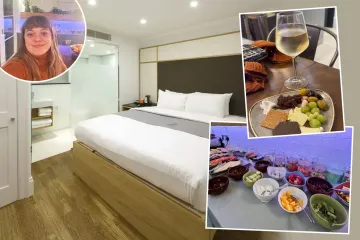
The chilled out vibes at the hotel

They’ve got the colour spot on, I point out.

Not a single wisp of white cloud taints the blue canvas sitting behind the white-washed buildings.

I was in the village of Oia, where hotels, restaurants and holiday homes tumble down the cliffside towards a glistening sea.

I’ve seen this picture before, although not in real life.

WAIL OF A TIME

I drove Irish Route 66 with deserted golden beaches and pirate-like islands


TEMPTED?

Tiny ‘Bali of Europe’ town with stunning beaches, €3 cocktails and £20 flights

The exact scene in front of me is so famous it even stars on the packet of feta cheese that I bought from the supermarket before sitting down to write this piece.

Oia sits on the largest of the islands that make up Greece’s ­Santorini.

Yes, Santorini is actually five islands (I didn’t know either).

It was once one larger patch of land, but thousands of years ago a volcano erupted so aggressively that it collapsed in on itself, sinking into the ocean and splitting the area into five fragments.

Known as a caldera, the volcano’s crater sits 400m below the water’s surface — deep enough for giant cruise ships to sail over.

The high perches of Oia, on the main island of Thera, offer a great vantage point for admiring the ­vastness of this watery pit and the village is also on the right side of the island for catching the most spectacular sunsets.

It gets busy, though, and sadly you can’t just wander to any old bar or viewpoint without booking first or arriving extremely early.

That was the huge perk of my Tui Musement excursion — which also included a visit to local wineries earlier that day.

At the end of my village tour I had a seat waiting for me at one of the most sought-after sunset bars, Sun Spirit, where I drank in clear views of fiery pinks and oranges melting into the horizon.

This same group of seats always remains reserved for customers on this specific Tui tour — as good a reason as any to book.

But before we settled down, tour guide Kim took the experience to new heights, guiding our group to not only the key sights but also the best spots for those all-important pictures, away from the overly busy areas where you’ll have to queue (yes, really) to get your shot.

Crowds are the only downside to Santorini. Its beauty is so widely known that it can attract hordes of tourists, especially on days the cruise ships sail into town.

Lap up the waves at Blue Meltemi
The Sun’s Sophie Swietochowski soaks up the view Credit: Supplied

That’s why visiting early or late in the season is best — it’s cheaper then, and the heat is more manageable.

Luckily, I had ample opportunity to cool off at my hotel when temperatures soared.

The 5* Tui Blue Meltemi, is set mere yards from the beach in the laidback region of Perissa and is a great spot for lazing.

Even the most basic rooms here come with a whirlpool bath, some inside and others outside.

Plus, there are three outdoor pools, framed by sunloungers and palm trees.

All stays are half-board, meaning you only need to shell out for lunch — but with such plentiful breakfast and dinner buffets, you may not even fancy a midday meal.

Also included in every stay is one dinner at The Culinarium, the hotel’s fancy a la carte restaurant where I opted for a Greek tasting menu that knocked my socks off.

Over several hours, while the sun set, I gorged on creamy orzo, fava bean hummus and a simple salad of cherry tomatoes, an ingredient Santorini produces in abundance.

They are also a staple in Santorini’s must-try tomato fritters.

You can learn to master this traditional recipe, along with other local classics, at a cooking class (£87pp).

Or if you’re more of a sunbathing sort, you won’t regret booking a catamaran cruise that sails through the belly of the caldera to beaches that can’t be reached on foot.

Our talented skippers delivered me cocktails and beer while I soaked up the rays from the wide nets at the front of the boat, admiring the rocky landscape of the islands from a distance.

Forget what I said earlier. It turns out I’ve already found heaven.

GO: SANTORINI

GETTING/STAYING THERE: Seven nights’ half-board at the 5T Tui Blue Meltemi is from £1,091.30pp, including flights from Gatwick on September 30. See tui.co.uk.

OUT & ABOUT: A catamaran cruise is from £131 per adult, including lunch.

A Santorini Wine Lovers’ Tour with sunset is from £96pp.

Tui Musement experiences can be booked via tuimusement.com, at a Tui store or with the Tui rep at your hotel.

Source link

Xi Jinping to visit North Korea next week in first trip since 2019

Chinese President Xi Jinping (R) will visit North Korea next week, state media from both countries reported Friday. This photo shows North Korean leader Kim Jong Un and Xi shaking hands during a meeting at the Great Hall of the People in Beijing in September 2025. File Photo by KNCA/EPA

SEOUL, June 5 (UPI) — Chinese President Xi Jinping will visit North Korea next week, state media in both countries reported Friday, marking his first trip to the isolated state since 2019.

Xi will make the visit on June 8-9 at the invitation of North Korean leader Kim Jong Un, China’s official Xinhua News Agency reported. North Korea’s Korean Central News Agency also reported the upcoming trip, but neither outlet provided further details.

The trip will be Xi’s second to North Korea. He last made a two-day state visit in June 2019.

It comes amid a stretch of renewed high-level engagement between the longtime allies. Kim traveled to Beijing in September for a military parade marking the 80th anniversary of the end of World War II, where he held summit talks with Xi.

China has long been North Korea’s largest trading partner, and international observers say it continues to help Pyongyang skirt punishing economic sanctions. Ties had appeared to cool in recent years, however, as North Korea deepened military cooperation with Russia following Moscow’s invasion of Ukraine.

In exchange for providing troops and munitions to Russia, North Korea is believed to be receiving economic support and advanced military technology for its weapons programs, reducing its dependence on China and giving Kim greater leverage in dealings with Beijing.

The announcement of Xi’s visit comes one day after North Korea unveiled a new uranium enrichment facility used to produce fissile material for nuclear weapons, with Kim calling for an “exponential” increase in the country’s nuclear arsenal.

The visit also comes amid growing uncertainty over Beijing’s approach to North Korea’s nuclear ambitions.

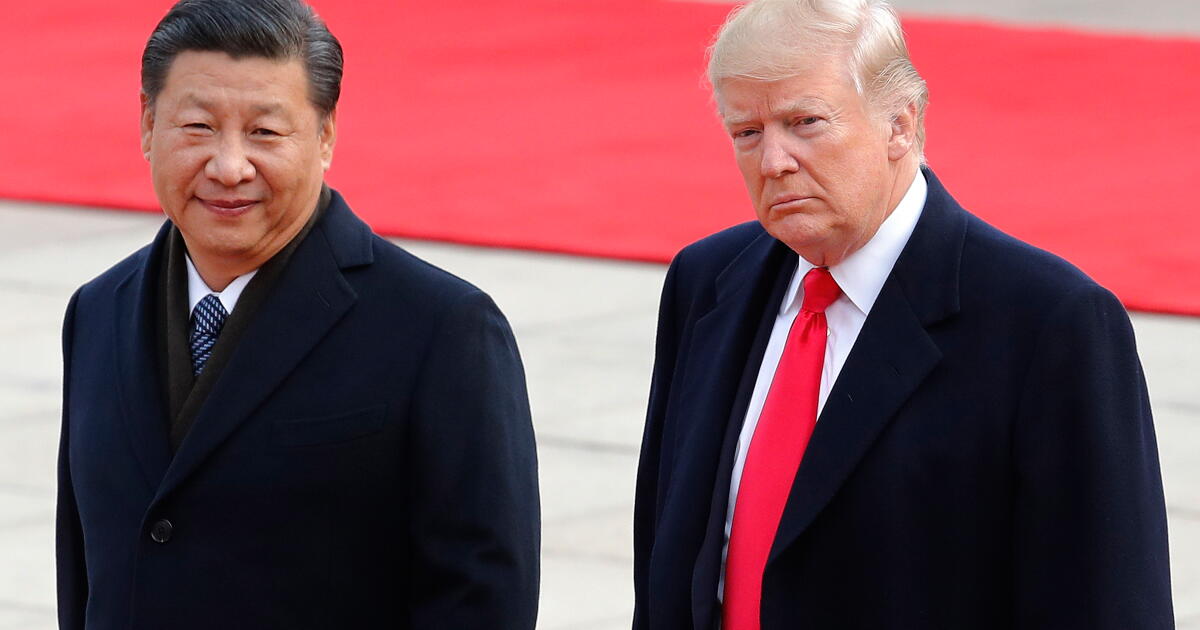
After Xi met with U.S. President Donald Trump last month, the White House said the two leaders had reaffirmed their shared commitment to the denuclearization of North Korea. China’s Foreign Ministry, however, said only that the leaders had “exchanged views” on the Korean Peninsula.

Some analysts have suggested that China increasingly views North Korea’s nuclear capabilities as a “geopolitical asset” that helps constrain Washington as competition between the two powers intensifies.

The visit will be closely watched in Seoul, where President Lee Jae Myung has sought to ease tensions with Pyongyang since taking office last year.

Unification Minister Chung Dong-young on Thursday proposed a four-way dialogue involving the two Koreas, the United States and China aimed at establishing a peace regime on the peninsula.

South Korea’s Foreign Ministry said Friday that it hopes Xi’s visit will “play a constructive role in addressing issues related to the Korean Peninsula,” according to Yonhap News Agency.

Source link

Israel must allow ICRC to visit Palestinians in prison, Supreme Court rules | Israel-Palestine conflict News

Israel’s Supreme Court rejects government ban on prisoner visits, affirming Red Cross access under international law.

Israel’s Supreme Court has unanimously rejected a government policy banning representatives of the International Committee of the Red Cross (ICRC) from visiting Palestinian detainees in Israeli prisons.

The court ruled on Wednesday that by preventing the Red Cross from visiting prisoners, the government had contravened Israeli and international law, and therefore the policy must be repealed.

Recommended Stories

list of 3 itemsend of list

It also ruled that the government failed to present a legal foundation for its policy on annulling all visits after the Hamas-led attack on October 2023, in which more than 1,100 people were killed and more than 240 were taken captive.

The assault triggered a brutal war in Gaza, which has been defined as a genocide by several prominent scholars and an independent United Nations inquiry. The Israeli army killed more than 72,950 people in the enclave, according to Gaza’s Health Ministry, and reduced most of the besieged territory to rubble, and forced the displacement of nearly 1.9 million Palestinians.

Violence across the occupied West Bank perpetrated by Israeli forces also intensified to unprecedented levels. All visits to prisoners were halted, and information about them was not shared – something that used to be standard practice before the war. Back then, Israeli authorities accused Hamas of failing to secure access to the captives in Gaza.

It was the first time in 50 years that Israel prevented Red Cross visits, according to the Association for Civil Rights in Israel (ACRI), which filed the petition.

“For the first time in nearly three years, the over 9,000 Palestinian security prisoners being held in Israeli prisons and military detention centers will receive Red Cross visits,” ACRI said. The ban remained in place even after a “ceasefire” was agreed last October.

Initial petition

The petition by ACRI, Physicians for Human Rights, Israeli rights group HaMoked and Israeli NGO Gisha against the government policy was first filed in Israel’s High Court in February 2024. But the state of Israel asked for 27 extensions before a hearing was held at the end of October last year.

The ICRC welcomed the decision, saying it was ready to resume its visits. “We are continuing our dialogue with the Israeli authorities to resume our work in detention as soon as possible,” it said in a statement. It added that access to detainees and the ability to meet with them privately are obligations under international law.

Wednesday’s decision comes amid growing concerns over the ill-treatment of Palestinian detainees in Israeli prisons.

Last week, the United Nations released its annual report on conflict-related sexual violence verified in 2025. It cited torture, rape, gang rape, forced nudity and “cavity searches conducted without apparent security justification perpetrated” by Israeli armed forces and security forces primarily during detention and interrogation and across several sites, including the infamous Sde Teiman military camp, among others.

Source link

Rivals fans can visit the beautiful Cotswolds manor used in the show

As seen on screen in Disney’s hit show Rivals, this country home is just as beautiful in real life now that fans of the show can see it up close and personal

Rivals is back on our screens once again, and with it comes a growing intrigue into the beautiful setting, based predominantly in the UK’s Cotswolds, including this stunning manor.

Playing a huge part in the Disney Plus series is its countryside setting, with beautiful backdrops and unbelievable luxury homes all set within the fictional county of Rutshire.

One of those very settings is The Priory, the home belonging to Declan O’Hara in the show, a highly regarded Irish TV presenter and journalist. Although, in real life, it’s privately owned by an entirely different family and known as Chavenage House.

Set back within Tetbury, the home was up until recently under the helm of the chatelaine and matriarch for 67 years, Rona Lowsley-Williams. Rona sadly passed away in July 2025 and is much to thank for transforming the estate from a fading Edwardian household to a visitor attraction.

It stands proudly as an Elizabethan house, a Grade I listed building, built in 1576 by a man named Edward Stephens. Over time it has transformed with extensions done in the 17th, 19th and 20th centuries, looking rather different from its more humble beginnings but keeping with the original style and materials.

Filming

The house has been used as a prime filming location for a number of film and TV productions, not just for Rivals. Famous faces have graced its grounds over the last few decades, including the likes of Eddie Redmayne, Jamie Dornan and Aidan Turner.

A big example of this is the BBC’s Poldark, where Chavenage portrays the fictional house of Trenwith in the series. It also featured as Candleford Manor in the BBC’s Lark Rise to Candleford from 2008 while also appearing in The House of Eliott, Casualty and Dracula, to name a few.

Now, outside of its scheduled filming, the wonderful home is open for the public to see and explore a real-life set of their favourite show.

Visiting

According to its website, the opportunity to tour the house is limited and so allows for guests to make reservations prior to turning up, subject to availability, as it is a privately owned residence after all.

The cost of this unique attraction is £12 a head for adults with a minimum group size of 21 and £6 for children. If group tours aren’t available and an individual visit is wanted, the bespoke private tour will begin at £250.

A recent visitor claimed it’s unmissable, writing on TripAdvisor: “This privately owned manor is full of history and artefacts, and the owners are lovely people. What a treat to have a personal tour of this incredibly special place, built in the Elizabethan period. If you have seen Poldark, you will recognise many of the scenes filmed in this historic home.”

Another shared: “Wow. After visiting many beautiful estates and castles (Buscot and Highclere), I didn’t expect to be blown away. However beautiful they were, I enjoyed Chavenage House so much more.

“Primarily, because the host was personally invested – he is part of the Lowsley-Williams family that has been at home here since 1891 and takes great pride in personally giving the tour. This truly makes a difference; the personal stories, pride and detail makes it very intimate.”

You can find out more on chavenage.com.

Source link

World’s biggest rodeo and space exploration – here’s why you need to visit Houston

We visited Houston in Texas where a rodeo, baseball, space and delicious food were on the jam-packed agenda. Here’s why you need to get planning your trip to the Lone Star State…

I’ve always wanted to visit Texas and what better time than rodeo season? Rodeo is a year-round pastime for Texans, but Houston holds the largest event in the US in March, with even more cowboy boots and hats descending upon the city than usual, a buzz of excitement and yee-haw in the air. Add in a Space Center visit and a baseball game and this trip to the Lone Star State isn’t one that I’ll forget in a hurry.

RIP-ROARING RODEO

The Houston Livestock Show and Rodeo runs across 21 days, with a carnival atmosphere, shows, music, energy and excitement. Inside the NRG Stadium, rodeo competitions – bull riding, barrel racing, saddle-bronc riding and roping – take place, while outside there’s livestock shows, exhibitions and loads more fun.

The fried food creations on offer are endless – think funnel cakes, jumbo corn dogs and deep-fried Oreos. “When in Texas,” we thought, as we ordered (and surprisingly enjoyed) a deep-fried cheesecake.

The rodeo is a jam-packed day and each night a musical superstar takes to the stage in the stadium. We got to see Texas native Kelly Clarkson putting on an impressive show as she bounced energetically around the rotating stage and reminding the 70,000-strong crowd just how many hits she has – naturally she finished her set with Since U Been Gone.

COWBOY COOL

To take in the atmosphere like a local, we wanted to be properly kitted out, so we visited the Republic Boot Co. I’ve never seen so many tempting rows of cowboy boots – and it’s not just a tourist trap, either. Drake is among the clientele of this cool spot.

As well as footwear, there’s a dedicated Hat Bar, where you can choose from a range of styles and colours, customising your hat however you like. My plan for a simple, understated look quickly changed when I saw the leather trims, feathers, charms and badges on offer. I walked out with my initials branded on and a playing card tucked behind a giant feather.

BASEBALL & BEERS

Go Astros! We headed to Daikin Park, the baseball stadium which is home to the Houston Astros, to watch a quarter-final of the World Baseball Classic where the US took on – and beat – Canada. It was my first time at a game, but you don’t need to be an expert to be caught up in the thrill – it’s relentless. Soon

I was willing a home run so I could see the Home Run Train chuff round the track in celebration. We didn’t need to be told twice to order the stadium’s signature Crawford Dog and settled happily into our seats with giant beers, feeling like we were at the movies.

OUT OF THIS WORLD

Houston is known as Space City, so I couldn’t miss a visit to Space Center Houston, the official visitor centre of NASA, where astronauts train and Mission Control keeps everything on track. So soon after Artemis II’s moon mission, the place is still feeling the thrill of the historic exploration, and this is where you can really immerse yourself in all things astronautical.

The highlight was the tram tour to see the Astronaut Training Facility and Rocket Park, packed with actual rocket parts so you can see the incredible scale. It’s impossible not to get caught up in the excitement.

TASTE OF TEXAS

Texas is foodie heaven. Battling jet lag on our first night, we grabbed dinner at Agnes and Sherman, a short walk from our hotel, kicking things off on a real high. The cheeseburger fried rice has to be tasted to be believed.

For a great breakfast or brunch, head to Dandelion Cafe, where the generous-sized chicken waffles have been voted “best breakfast in the US” by Good Morning America. We were also told that Viet-Cajun crawfish was a must try, so we pulled on our bibs and gloves with enthusiasm at Crawfish & Noodles in Chinatown.

A little out of town in the seaside resort of Galveston, we discovered Gaido’s Seafood Restaurant, which has served seafood to hungry locals since 1911. We dined on delicious stuffed shrimp and gumbo, followed by the famous pecan pie, before a stroll on the waterfront.

But the most magical meal of our trip was at intimate indigenous restaurant Ishtia. Choctaw chef David Skinner is inspired by his heritage and ancestors and tells the story of each dish and its ingredients as they are served.

WHERE TO STAY

We stayed in Hotel Daphne, a stylish luxury boutique hotel in historic Houston Heights. The relaxed atmosphere was just our vibe, as was the bright, quirky decor and striped purple and blue bathrobes. Around this pretty neighbourhood we discovered cool shops and grand houses on tree-lined streets, but you don’t have to venture far for a cocktail. The hotel’s restaurant and bar, Hypsi, with a sun-filled courtyard that’s perfect for catching rays, is always there to welcome you at the end of a day of adventures.

HOW TO BOOK

BA and United Airlines offer direct flights to Houston from London Heathrow. Rooms at Hotel Daphne cost from £272 per night, see hyatt.com. Plan your trip with visithouston.com

Source link

Trump wraps up 3-hour medical visit to Walter Reed

President Trump had another medical exam Tuesday, putting his health under renewed public scrutiny as he has worked to dismiss concerns over his age and stamina.

The 79-year-old president spent more than three hours at Walter Reed National Military Medical Center for what the White House described as preventive medical and dental checkups. It was Trump’s fourth publicly disclosed medical exam since he returned to office for a second term, and it comes as he tries to project strength ahead of midterm elections that will test his sway with voters.

In a social media post after the visit, Trump said he just finished his “6 month physical” and “Everything checked out PERFECTLY.”

For decades, administrations have released selected results from presidential physicals, offering the public a glimpse at the commander in chief’s health. But the results are filtered through the White House and must be approved by the president, raising questions about what the public does and doesn’t get to see.

Trump turns 80 next month and was the oldest person elected president. His immediate predecessor, President Biden, was 82 when he left office, dropping out of the 2024 race because of widespread concerns he was too old for the job.

A Washington Post/ABC News/Ipsos poll conducted in April found that less than half of U.S. adults think Trump has the mental sharpness or physical health to serve effectively as president.

“I think concern for the president’s physical health is probably at an all-time high, and I think advanced physical age is the No. 1 concern,” said Dr. Jeffrey Kuhlman, who served as a White House physician for more than a decade under Presidents Obama, George W. Bush and Clinton.

For a president of Trump’s age, a complete physical would be expected to include advanced heart testing, screening for common cancers and a cognitive assessment, along with basics like height, weight and blood pressure, Kuhlman said.

The White House has not disclosed what the visit entailed but expressed confidence in what it will show.

“President Trump is the sharpest and most accessible President in American history who is working nonstop to solve problems and deliver on his promises, and he remains in excellent health,” White House spokesperson Davis Ingle said in a statement.

No law requiring presidents to disclose medical records

In the weeks leading up to his visit, Trump has been saying he feels as good as he did five decades ago — even as he jokes about his fondness for fast food and his minimal exercise regimen. Yet he’s also sensitive to perceptions about his age, noting that he takes extra caution descending the steps from Air Force One to avoid headlines about a stumble.

There is no law requiring presidents to publicize their health records, and the degree of transparency has varied by administration. Trump’s past reports have been criticized for offering scant detail and providing statistics that some medical experts eyed with skepticism.

At public appearances, Trump often is seen wearing makeup to conceal bruising on his hands, which the White House attributes to handshaking and regular aspirin use. He sometimes has appeared drowsy during meetings and closed his eyes for long stretches, though he denies having fallen asleep.

Trump often boasts of having “aced” cognitive tests while frequently deriding Biden, who faced questions about his mental acuity. Biden and his aides pushed back aggressively against doubts raised about his fitness for office.

Some of Trump’s previous physicals have included the Montreal Cognitive Assessment, used to screen for dementia and cognitive impairment. His physicians reported a score of 30 out of 30 for him at 2018 and 2025 checkups.

Yet critics have pointed to Trump’s meandering speeches and sometimes bellicose rhetoric as evidence of cognitive decline.

Last month, a statement from more than 30 neurologists, psychiatrists and other medical experts — who acknowledged they’ve never examined him — said Trump was mentally unfit to serve and warned of an “increasingly dangerous decline” in his behavior based on what they called “objectively observable signs of serious medical concern.″

“Any so-called medical professionals engaging in armchair diagnosis or false speculation for political purposes are clearly breaking the Hippocratic Oath they’ve sworn to,” Ingle said.

Just like any other patient, presidents get to choose what’s disclosed about their health, said Sara Rosenthal, a bioethicist at the University of Kentucky who studies presidential health. Questions about transparency have become more acute as America elects aging presidents like Trump and Biden, she said.

“We can expect very little disclosure about the true health status of any president unless they’re in perfect health,” said Rosenthal, who has suggested an independent medical organization to review and report on the health of the president and those in the line of succession.

‘Nothing should be hidden’

Trump’s first medical report in his second term was released in April 2025. In July, he was diagnosed with chronic venous insufficiency, a common condition in older adults that causes blood to pool in his veins. Photographs have shown the president with swollen feet, ankles and calves, described by the White House as a symptom of chronic venous insufficiency leading to “mild swelling” in his lower legs.

Following his last publicly disclosed exam, described as a routine follow-up in October, Trump’s physician issued a one-page summary saying the president was in “exceptional health” without divulging many specific results.

The frequency of Trump’s medical checkups is not uncommon for someone his age, according to S. Jay Olshansky of the University of Illinois-Chicago, who has studied the health of past presidents. It’s part of a strategy to catch problems while they’re still treatable, Olshansky said.

Olshansky says the public deserves to see more than White House medical summaries that “may be subject to editorial discretion.” Full, unredacted medical records should be made public, he said. “Nothing should be hidden.”

Binkley writes for the Associated Press.

Source link

I asked travel experts for the best UK staycation towns to visit this summer

From charming market towns to picturesque coastal villages, travel experts share some of the best UK staycation towns

With holiday prices soaring and a fuel crisis affecting air travel, many families may opt to stay in the UK this summer instead of jetting abroad for their annual break. But there’s absolutely no reason to feel let down if this applies to you, as the country boasts countless beautiful destinations from top to bottom.

With this in mind, express.co.uk has consulted several travel experts who have revealed their top recommendations, all of which are excellent options for those seeking the ideal staycation location. From northern forests to sun-drenched southern coastlines, whatever kind of break you’re after, the UK offers an abundance of possibilities.

Andy Brooker, travel expert at kate & tom’s, said: “Many of us forget how much the UK has to offer. There’s something for everyone here, and many fantastic towns to explore depending on the type of experience you’re looking for.”

Andy suggests Formby near Liverpool and Bowness-on-Windermere in the Lake District.

Championing Formby as an excellent choice for families, he explained: “Variety is important when you have busy children to please, and Formby offers the opportunity to explore dramatic sand dunes, sweeping pinewoods, and the native red squirrel population at The Formby Red Squirrel Reserve.”

Endorsing Bowness-on-Windermere, Andy added: “Bowness-on-Windermere is an iconic town in Cumbria and one of the Lake District’s most popular destinations for a reason.” It blends breathtaking lakeside vistas with delightful cafés, independent shops and gateways to some of Cumbria’s most picturesque trails.

“From cruising across Lake Windermere and exploring The World of Beatrix Potter to relaxing in traditional pubs and taking in panoramic views. Bowness offers the perfect mix of outdoor adventure, family-friendly activities and classic Lake District charm.”

Andy isn’t alone in championing a Lake Windermere escape, with Jerry Rebbeck from Wheelwrights Holiday Cottages highlighting the neighbouring village of Clappersgate.

He said: “Whilst it may be a small village, it boasts a rich history with many historic structures, including the notable Clappersgate Bridge.

“The Grade II listed bridge dates back to the 17th century and is a popular spot for visitors interested in its unique design and views over the river and surrounding greenery.”

Nestled near the River Brathay and Lake Windermere, Clappersgate is ideally positioned for watersports enthusiasts, while the Loughrigg Circular provides an excellent walking route for ramblers.

When the weather turns, there’s also the nearby Lake District Aquarium and the striking neo-gothic Wray Castle to explore.

For those seeking something further south, Jacob Wedderburn-Day, travel expert and CEO of Stasher, points to Rye in West Sussex, Totnes in Devon, and Frome in Somerset.

Speaking about the first, he said: “Rye is one of the most distinctive small towns in the UK, with cobbled streets, historic inns, shops and easy access to Camber Sands.

“It is a good choice for travellers who want a break without staying in a larger seaside resort. It works especially well for a weekend because the town is compact and easy to explore at a relaxed pace.”

Totnes, meanwhile, is highlighted as one of the “best towns for travellers looking for shops, good food and easy access to the South Devon countryside and coast.”

He went on to say: “The community there has a relaxed pace, which makes it ideal for a slower weekend away. It is also well placed for travellers who want to combine a town break with day trips nearby.”

Jacob describes Frome as one of the “most interesting town breaks” in the UK, boasting a thriving shopping scene, a vibrant creative community and lively weekend markets.

Conveniently situated close to both Bath and Bristol, Frome works brilliantly as a day trip from either city, or as a base from which to explore the surrounding area.

Although she stops short of naming a specific town, Rachel Pennycook, Europe Travel Specialist at The Luxury Holiday Company, urges visitors not to overlook the Scottish Highlands.

“The Highlands are popular for a reason. They’re one of the few places in the UK where you can properly disconnect and feel a world away.

“In summer, the long daylight hours mean you can take your time, whether that’s a morning by the loch, an afternoon exploring castles, or an evening enjoying local food with a view.

“For me, what sets the Highlands apart is the sense of space and freedom. You don’t need to plan every minute; sometimes, the best days are simply about soaking up the scenery, finding a quiet spot, or sharing a meal with friends and family.

“It’s a destination that works just as well for families looking for adventure as it does for couples.”

Source link

Chinese President Xi likely to visit N. Korea as early as next week: sources

Chinese President Xi Jinping (R) will likely visit North Korea as early as next week, sources said Wednesday. In this photo, Xi shakes hands with North Korean leader Kim Jong Un during a meeting in Beijing. File Photo by KCNA/EPA

Chinese President Xi Jinping will likely visit North Korea as early as next week, sources said Wednesday.

“We have obtained intelligence indicating that President Xi Jinping will visit North Korea soon,” a high-ranking government official told Yonhap News Agency.

Another government official also said there is a high possibility of Xi visiting North Korea later this month or early next month, noting Chinese Foreign Minister Wang Yi‘s visit to Pyongyang last month and the recent trips by Xi’s security guards and ceremonial staff to the North Korean capital.

During the meeting with Wang, North Korean leader Kim Jong-un expressed willingness to strengthen high-level exchanges and enhance strategic communication with Beijing, as he recalled his visit to China last year.

The two nations mark the 65th anniversary of signing a comprehensive treaty on cooperation this year.

Xi’s possible visit to the reclusive regime also follows summit talks with U.S President Donald Trump in Beijing last week. During the talks, the two leaders reaffirmed their shared goal of denuclearizing North Korea.

A separate government source said the Chinese leader could seek to mediate relations between North Korea and the United States.

During his state visit to China in January, South Korean President Lee Jae Myung asked Xi to help mediate inter-Korean relations, and the Chinese leader responded positively to the request, according to the source.

Copyright (c) Yonhap News Agency prohibits its content from being redistributed or reprinted without consent, and forbids the content from being learned and used by artificial intelligence systems.

Source link

Weird Britain: 10 glorious oddities to visit and marvel at | United Kingdom holidays

One thing unites the British more than anything else. It stands there in plain sight but is rarely spoken about. We may try to hide it; we may not admit it to ourselves; but under the surface, deep down, in the nicest possible way, we are all a little odd. Not in a sinister way, just eccentric, weird, unpredictable and downright wonderful. As a nation we have an artistic and creative zest and boffin-like inventiveness. In fields of innovation, we led the tech world with some of our brave and crazy inventions. Even our landscapes are damn weird, with some of the oldest, most mysterious and diverse geological oddities in Europe, and plentiful legends too. I spent years exploring the enchanting strangeness of Britain, discovering follies, eccentric public art, strange buildings, mysterious ruins and eerie landscapes for my Weird Guide, which features about 300 of these curiosities. Here are some of my favourites.

The Yoxman, Suffolk

In a field not far from the A12 in Yoxford, Suffolk, stands the Yoxman, an artwork of colossal proportions. At 8m (26ft) high and made from bronze, it took creator Laurence Edwards and his team four years to make. The figure is a personal tribute to Suffolk, the artist describing it as a visitor from the past, both from the land and of the land. The result, finished in 2021, is astounding – a fully grown adult barely makes it to the top of his shin, as the Yoxman dwarfs even some of the surrounding trees. From Yoxford village, take the path opposite the shop and follow it through the grounds of the hall to the statue.

Little Italy, Gwynedd

Little Italy is not open to the public but is visible from a footpath. Photograph: Dave Hamilton/Wild Things Publishing

The late Mark Bourne, a chicken farmer, was obsessed by Italy, visiting as often as he could, filling notebooks with sketches of buildings and architecture. When he returned to his remote cottage on the Corris hillside in Gwynedd, Wales, he and his wife aimed to recreate what he had seen in their garden. Both worked on the creation, named Little Italy, well into their 80s, with models of everything from the Leaning Tower of Pisa to Florence’s Duomo. Although Bourne’s old garden is strictly off-limits to passersby, the surrounding wall is relatively low and the buildings are large enough to see from the path. From the Corris Institute, turn left up the hill along the lane then follow a footpath on the right after the youth hostel for about 100m.

Mannakin, Lincolnshire

Dave Hamilton joins the mannakins. Photograph: Dave Hamilton/Wild Things Publishing

Mannakin Hall near Grantham feels like an eerie plastic graveyard. Situated down a narrow Lincolnshire lane, it was set up by Roz Edwards in 2008 when she realised that most mannequins were discarded after no more than five years of service, and began to acquire those destined for landfill. Once repaired or cleaned up, they are hired out and at any given time there are about 15,000 mannequins on site; most are unclothed, but some are dressed up in Halloween costumes or strange outfits. As a working business, Mannakin Hall isn’t open to the public on a walk-in basis but you can prebook and visit as a group, attend one of the regular open days or even stay overnight in your camper van!

White Scar, Yorkshire Dales

The grykes (gaps) between the rocks provide a habitat for rare plants. Photograph: Martin Priestley/Alamy

On the west side of the Ingleborough summit in North Yorkshire, just south of the ancient Roman road, lies one of the country’s most remarkable areas of limestone pavement, known as White Scar. This extraordinary landscape formed during and after the last ice age, as massive glaciers scraped away the surface. Millennia of weathering broke down the soft alkaline stone, revealing intricate miniature canyons, or grykes. These deep fissures have become like terrariums, providing a habitat for rare plants that are normally at home in dark woodlands.

Library, Isle of Arran

The Library was built using trees blown down in a storm. Photograph: Arran Brough/Wild Things Publishing

The woodland Library near Levencorroch on the Isle of Arran, Scotland, is a unique tourist attraction, a cabin with an interior resembling a 3D giant visitors’ book. Built by the woodland’s owner, Albert Holmes, using trees blown down in a storm, the cabin is covered with drawings, poems, messages, words of wisdom and notes from all over the world. Ranging from playful to profound, the papers, which are now about 25 layers deep, are stuck in every conceivable space, including the ceiling. It feels like entering something from a Michel Gondry film, or a strange nest left by a literary woodland creature. Pick up a map at the Eas Mor Ecology cafe, east of Levencorroch, and follow a steep gravel path to the waterfall and on to the library. It’s a 25-minute walk.

Sultan the Pit Pony, Mid-Glamorgan

The earth sculpture was built in the late 1990s. Photograph: Tom Goudsmit/Wild Things Publishing

Measuring close to 200 metres from his nose to the end of his tail, Sultan the Pit Pony sits on the site of the old Penallta colliery north of Caerphilly. Mike Petts used 60,000 tons of coal shale rock to create the sculpture, which he built in the late 1990s to honour the thousands of ponies put to work in British mines throughout the Industrial Revolution. It’s close to Parc Penallta Ponds, with its wonderful wildlife and walking trails.

Painshill Follies, Surrey

The grotto dates from the 18th century. Photograph: T P Holland/Wild Things Publishing

Inspired by the culture, paintings and architecture he experienced during his grand tour of Europe, aristocrat Charles Hamilton began transforming his country estate – Painshill in Cobham, Surrey – into something between a work of art and a garden in 1738. Alongside a temple, gothic tower and lake, he created one of the most spectacular follies in the country, employing grotto builder Joseph Lane to construct a semi-naturalistic cavern with sparkling stalactites made of minerals such as feldspar and quartz. The park fell into ruin in the 1940s, but the local authority acquired it in the late 1970s and though much has been restored, work continues. The crystal grotto was completed in 2013, with builders making every effort to make it look like the original, using paintings of the grotto.

Rock-cut tombs, Lancashire

The tombs are just outside an eighth-century chapel. Photograph: Stephen Gidzey/Wild Things Publishing

There is a local legend that, after being shipwrecked, Saint Patrick was washed ashore and set up a chapel at Heysham, Lancashire, sometime in the fifth century. Considering Saint Patrick was also supposed to have been shipwrecked on Ynys Môn (Anglesey), there may be some doubt about this story! Regardless, during the eighth century a chapel was built in honour of the saint. The remains of this chapel still stand, along with eight rock-cut tombs in one group of six and another of two.

Blackchurch Rock, Devon

The rocks are a walk away from Clovelly village. Photograph: Mark Wordy/Wild Things Publishing

Around 320 million years ago, the great continent of Gondwana collided with Laurasia (present-day Europe, Russia, North America and parts of Asia). The force of the impact was so great that it pushed up the rocks of Blackchurch Rock near Clovelly, Devon, into its present formation (we know the date thanks to fossils found in the stone, including Goniatites). Over time, tidal seas shaped Blackchurch further, carving out the great arch. It’s a 30-minute walk north west along the coast path from Clovelly village.

The Tilted Globe, Highlands

The sculpture at Knockan Crag is made from local moine schists, a type of metamorphic rock. Photograph: Media World Images/Alamy

Joe Smith, creator of The Tilted Globe at Knockan Crag in Assynt, north of Ullapool, first learned how to dry stone in 1961, at the tender age of 11. By the time he was 19, dry-stone walling had become his means of earning a living. Over time, he stopped seeing walls as only functional and instead recognised how the stacking of stones could be beautiful, appreciating their potential for creating artworks. He has collaborated with Andy Goldsworthy on a number of projects around the world, including Slate, Hole, Wall at the Royal Botanic Gardens, Edinburgh. The Tilted Globe is an independent work made from moine schist local to Knockan Crag. The area is of geological importance, as the ancient rock has been moved through tectonic action about 43 miles (70km) west to remain above the line of the younger rocks. It’s a short walk on marked trails from the turf-roofed hexagonal visitor centre.

This is an edited extract from Weird Guide by Dave Hamilton, published by Wild Things Publishing (£18.99). To support the Guardian, order your copy from guardianbookshop.com. Delivery charges may apply. Follow @davewildish

This article was amended on 21 May 2026 to remove an incorrect reference to Sultan the Pit Pony being the largest earth sculpture in the UK.


Source link

Disney faces $5-million lawsuit over use of facial recognition technology.

A visitor has filed a $5-million lawsuit against Disneyland for allegedly failing to properly disclose the use of facial-recognition technology at park and collecting sensitive data on guests.

Summer Christine Duffield of Riverside County filed the lawsuit after a May 10 visit to Disneyland and sister park California Adventure, alleging that the resort violates privacy and consumer protection laws collecting biometric data of visitors, without adequate consent.

“Disney does not adequately disclose the use of their biometric collection, so consumers — which almost always include children — have no idea that Disney is collecting this highly sensitive data,” the plaintiff noted in the lawsuit. “Guests should be able to expressly opt in to this type of sensitive facial recognition technology with written consent — the onus of privacy rights should not be on the victim.”

The suit was filed on May 15 in U.S. District Court in New York. The lawsuit cites an article from The Times on consumer reaction to Disney’s use of facial recognition.

The Walt Disney Company didn’t respond to a request for comment.

“People are getting fed up with being force-fed new tech, new AI, new tracking tools,” said Ari Waldman, Professor of Law at the UC Irvine.

Walt Disney Co. rolled out its facial recognition technology in late April across Disneyland Resort to verify tickets. The way it works is guests’ faces are scanned, converted into a numerical identifier and matched with ticket data.

Disney’s privacy policy notes that the identifiers created for identification are deleted within 30 days unless they need to be kept for legal or fraud prevention purposes.

Guests who don’t want to use the technology can enter through a separate entrance marked with a silhouette of a head and shoulders with a slash through it. However, of the dozens of lines to enter Disneyland and California Adventure, there were only four that didn’t use facial recognition, during an April visit.

The sign saying “Use of this technology is optional,” adorn the security checkpoint entrances.

“This technology facilitates ease of reentry into our parks and helps prevent fraud,” the company noted in its website.

Use of facial recognition technology for crowd management and ticketing has become increasingly commonplace.

Dodger Stadium deploys facial recognition for guests using the “Go Ahead Entry” at certain gates without producing a physical or digital ticket to enter the stadium. At Intuit Dome in Inglewood, visitors can use “GameFaceID” to quickly move through a separate lane with their face as their ID.

The lawsuit comes at a time when there is increasing concern of surveillance in public places, and privacy advocates have rallied against the normalization of surveillance. More recently, concerns of the potentially abusive use of artificial intelligence by government to analyze large quantities of data — from texts to facial scans — to surveil U.S citizens resulted in a high-profile showdown between the Pentagon and Anthropic.

Source link

Russian President Vladimir Putin arrives for state visit to China

May 19 (UPI) — Russian President Vladimir Putin arrived Tuesday in Beijing for a state visit after U.S. President Donald Trump made a similar visit last week.

It’s Putin’s 25th trip to the country and marks his most recent meeting with Chinese leader Xi Jinping with a “quite packed” schedule, Russian news agency TASS reported. The two leaders have met more than 40 times over their respective tenures.

“Hosting two of the most powerful leaders in the world in a matter of days shows China’s growing confidence in its place and standing in the world,” said William Yang, a senior analyst at the International Crisis Group, The Guardian reported. He said the Chinese leader “likely wants to remind Trump that Beijing has other solid and robust relationships that it can count on, so Washington can’t easily isolate or harm Beijing if it tries to.”

TASS said that Xi will host Putin for tea and the two leaders will discuss “pressing international issues.” The visit will also include talks involving delegations, a meeting with Chinese Premier Li Qiang, a tour of an exhibit on the relationship between the two countries and other events, the news agency said.

In a video address to China on Monday, Putin said the relationship between the two countries had reached an “unprecedented level,” The Guardian reported. Meanwhile, Guo Jiakun, China’s foreign ministry spokesperson, said, “The friendship between China and Russia will be further deepened and will be more deeply rooted in people’s hearts.”

In Putin’s video address, the Russian leader mentioned that transactions and financial considerations between the countries have taken place mainly in Russian and Chinese currencies rather than the U.S. dollar.

In this way, the countries have been building resistance against sanctions from Western nations; China does not acknowledge sanctions against Russia and has purchased billions in Russian fossil fuels since Russia’s invasion of Ukraine. There have also been sanctions against China since that war began.

Wreathes are seen amongst the statues at the Korean War Veterans Memorial during Memorial Day weekend in Washington on May 27, 2023. Memorial Day, which honors U.S. military personnel who died while in service, is held on the last Monday of May. Photo by Bonnie Cash/UPI | License Photo

Source link

Xi Jinping seeks to strengthen ties with Putin during China visit | Politics

NewsFeed

China’s Xi Jinping is hosting Russian President Vladimir Putin, just days after welcoming Donald Trump to Beijing. The Chinese leader is set to discuss energy security and trade, while balancing access to European markets, as Al Jazeera’s Katrina Yu explains.

Source link

India’s Tata and Dutch giant ASML sign semiconductor deal during Modi visit | International Trade News

Prime Minister Narendra Modi says his talks with the Dutch PM also focused on expanding cooperation in defence and security.

India’s Tata Electronics has signed a deal with Dutch technology giant ASML to build a major semiconductor plant in western India, as Prime Minister Narendra Modi visited the Netherlands during his European tour.

The agreement, announced on Saturday, will support the development of Tata’s semiconductor facility in Dholera, Gujarat – Modi’s home state.

Recommended Stories

list of 4 itemsend of list

ASML, Europe’s largest technology company by market value, manufactures advanced lithography machines used to produce high-end microchips found in products ranging from mobile phones to cars.

The Dutch company said it would help “establish and ramp up” production at the plant by supplying its cutting-edge chipmaking tools.

Tata Electronics plans to invest $11bn in the facility, which is expected to manufacture chips for artificial intelligence, the automotive industry and other sectors.

ASML chief executive Christophe Fouquet said the company saw “many compelling opportunities” in India’s growing semiconductor industry.

“We are committed to establishing long-term partnerships in the region,” Fouquet said in a statement.

The deal comes as India and the Netherlands move to deepen economic ties, with New Delhi seeking foreign technology and investment to boost manufacturing and create jobs.

The European Union has increasingly viewed India – the world’s most populous country and one of its fastest-growing economies – as a key future market.

During his visit, Modi held talks with Dutch Prime Minister Rob Jetten and met King Willem-Alexander.

“My conversations with Prime Minister Rob Jetten were extensive and covered a wide range of topics,” Modi wrote on X.

“One of them was defense and security. I spoke about the possibility of drawing up an action plan for the defense industry as quickly as possible. We can also collaborate in sectors such as space travel, maritime systems, and maritime security.”

Modi also addressed members of the Indian diaspora and is expected to inspect centuries-old Chola copper plates being returned to India by Leiden University.

Indian and Dutch officials are also discussing a more flexible visa arrangement for Indian students and workers in the Netherlands.

Modi will next travel to Sweden for talks with Prime Minister Ulf Kristersson focused on trade, innovation and green technology cooperation. The visit marks his second trip to the country since attending the first India-Nordic summit in 2018.

Source link

I visit popular holiday spot every year — but noticed a sad change this time

The holiday destination is hugely popular with UK tourists, and it’s brilliant – but one significant difference is hard not to notice

There’s nothing quite as exciting as discovering somewhere new on holiday. Trying out new restaurants, exploring the attractions and wandering for hours makes for the ideal short break, especially when the weather’s lovely and warm.

I love to travel and aim to visit a new city or country at least once a year. That said, I’m also a bit of a creature of habit, and there’s one destination I’ve returned to repeatedly that never loses its appeal. I first went to Playa Blanca in Lanzarote aged just nine, and it’s since become my family’s ultimate go-to retreat.

If you’ve visited before, you’ll know it feels very much like a second home. British and Irish tourists are everywhere, numerous seafront bars screen football while serving pints and full English breakfasts, and the streets are lined with familiar shops including Spar, Mango, Aldi and Lidl.

But the glorious sunshine, stunning beaches, distinctive landscape and lovely villas make it exceptional, so it’s hardly surprising that my family and I always look forward to our visits there.

We’ve been so often that all the typical tourist attractions have been crossed off our list. Timanfaya volcano, the cactus gardens and Mirador del Rio – a spectacular viewpoint nearly 500 metres above sea level – are all worthwhile visits, but nowadays when we go it’s purely for unwinding.

However, after our return earlier this month, I spotted a major difference, and unfortunately not a positive one.

Like most holidaymakers, there’s only one thing occupying my thoughts when I travel — and that’s the food. Playa Blanca has an abundance of outstanding restaurants catering to every possible taste, from traditional Spanish tapas and paella to sushi, curries, pasta and countless other options.

There are certain places we return to without fail, as well as exciting newcomers constantly appearing on the scene. It’s really unusual to have a disappointing meal anywhere across Playa Blanca.

However, this year many of the restaurants we went to were noticeably quieter than usual. The island itself appeared no less busy than normal, but even during peak periods, the dining spots we passed or visited had noticeably fewer customers.

Asia Playa Blanca, a personal favourite, was practically empty when we dropped in for lunch one afternoon. One family arrived, took their seats and promptly left — a disheartening sight, especially given the exceptional standard and presentation of the Japanese cuisine.

La Bodegon, a superb tapas spot along the waterfront, also seemed to be serving considerably fewer customers than I’ve seen before. While Lanzarote has pleasant weather throughout the year, visitor numbers typically drop during winter — but this was May, and the streets were as packed as ever.

The slump in restaurant footfall could be down to the construction of several large, all-inclusive hotels near the resort over the past few years.

For families in particular, opting for half-board at one of these properties is likely far more cost-effective and convenient than hunting down a different restaurant each evening.

If Playa Blanca is on your travel radar this year, a wander through the old town and a visit to a couple of local restaurants is highly recommended. Top picks would include Imagine India, La Casa Roja and Primari for curries, paella and Aperol Spritz respectively.

The staff are wonderfully friendly and attentive — you’ll often be treated to a complimentary Limoncello or honey rum at the end of your meal — and you might just stumble upon your new favourite dining destination.

Source link

CIA director’s visit to Havana fuels questions over Cuba’s future

May 15 (UPI) — CIA Director John Ratcliffe’s visit to Havana this week opened a new political chapter inside and outside Cuba, with analysts and opposition figures interpreting the meeting as a sign of direct pressure from Washington on a regime battered by massive blackouts, fuel shortages and an increasingly deep economic crisis.

The trip marked an unusual development in bilateral relations. The Cuban government confirmed that a U.S. delegation led by Ratcliffe met with his counterpart Thursday at Cuba’s Interior Ministry.

Washington had requested the meeting, which was approved by “the leadership of the Revolution,” according to the state-run newspaper Granma.

The CIA released photos of the meeting — “the most significant milestone so far in the two months of opaque negotiations taking place between Washington and Havana,” Spanish newspaper El País reported.

In another twist, according to reports by CBS News, USA Today and NBC News, a U.S. Justice Department official said the United States is considering formally charging former Cuban President Raul Castro over a 30-year-old incident in which the Cuban government shot down two aircraft operated by Cuban exile group Brothers to the Rescue.

The Ratcliffe visit, which lasted a brief time, was not announced in advance. He him Air Force plane flew from Joint Base Andrews in Maryland and returned hours later.

For decades, the Cuban government systematically accused opposition figures, independent journalists and dissidents of acting as agents or collaborators of the CIA. However, it was the regime itself that officially announced the meeting with agency director.

“The Cuban government announced the CIA visit first. For Cubans, that means important things are happening or about to happen,” Sebastián Arcos, acting director of the Institute for Cuban Studies, told UPI.

“This increases expectations and anxiety inside and outside the island.”

Energy has become the central focus of Cuba’s crisis. Ratcliffe arrived on the island precisely as Cuba declared a total energy collapse, formally running out of diesel fuel because of the U.S. naval blockade, while multiple technical failures at thermoelectric plants have left millions of people without electricity for up to 22 hours a day.

According to posts shared by activists and users on Facebook, protests have spread across the Cuban capital for four consecutive nights, while reports of internet outages in areas where gatherings have taken place have increased, Diario de Cuba reported.

Professor Jorge Piñón, director of the Latin America and Caribbean Energy Program at the University of Texas’ Energy Institute, said the visit by the CIA chief to Cuban territory “puts on the table what the rules of the game are from the point of view of the United States,” amid a crisis he described as “hour zero” for Cuba’s energy system.

Piñón told UPI that Cuba has practically exhausted its fuel reserves at storage facilities, ports and refineries, while thermoelectric plants operate on the verge of technical collapse.

The consequences extend far beyond the lack of electricity.

Piñón warned that the crisis affects ground transportation, water and food distribution, agriculture and even humanitarian operations by religious organizations that lack diesel to transport aid.

The deterioration of the electrical system also stems from structural problems accumulated over decades. Cuba depends on thermoelectric plants more than 40 years old, many adapted to burn extra-heavy domestically produced oil with high levels of sulfur and contaminating metals.

According to Piñón, that fuel accelerates the deterioration of already obsolete equipment, generating a “vicious cycle” of temporary repairs and new breakdowns.

He said the island produces about 40,000 barrels a day of heavy crude, but needs about 100,000 barrels a day to cover its energy demand, leaving a critical deficit of refined fuels mainly intended for transportation.

At the same time, Professor Raúl Rodríguez, director of the Center for Hemispheric and United States Studies at the University of Havana, described a society marked by daily exhaustion, uncertainty and the progressive deterioration of living conditions.

He told UPI that prolonged blackouts affect food preservation, access to drinking water and hospital operations.

The crisis also has deep economic consequences. Tourism, one of Cuba’s main sources of foreign currency, operates at less than 50% of capacity, affecting employment and the flow of resources into the country.

Rodríguez estimated that about 300,000 workers linked to the tourism sector face direct impacts from the economic slowdown.

Additional problems include health and environmental issues stemming from the lack of fuel for fumigation, garbage collection and basic urban services. The academic warned of growing risks of mosquito-borne diseases such as dengue and chikungunya.

Despite intensifying social unrest, the experts agreed that the crisis will not necessarily lead to an immediate political change.

Rodríguez argued that protests over blackouts and shortages “do not constitute, by themselves, a trigger capable of provoking regime change,” due to the absence of an organized political alternative with social legitimacy.

Piñón, meanwhile, said that although signs of social exhaustion exist, the country currently lacks leadership capable of channeling a political transition or with enough authority to organize a possible post-crisis scenario.

According to press reports, the U.S. demands delivered directly by the CIA director focus on an ultimatum conditioned on deep and immediate structural changes.

Washington is demanding that the Cuban government carry out political reforms toward democratization, release all political prisoners and fully open the economy to the private sector.

“From the information that has emerged, the CIA director traveled to Cuba to deliver an ultimatum: either you move, or the United States will,” the Institute for Cuban Studies’ Arcos said.

The reaction of Miguel Díaz-Canel’s government has reflected pragmatism forced by extreme economic suffocation and the collapse of basic services on the island.

Although Havana agreed to receive the CIA delegation to avoid a violent social outcome, it formally maintains its rhetoric defending national sovereignty, rejecting political conditions that threaten the socialist system.

Cuban officials used the meeting to present evidence that the island does not represent a threat to U.S. security, demanding in return its removal from the list of state sponsors of terrorism and an end to the naval blockade preventing fuel shipments from reaching the island.

Describing the country’s daily deterioration, Cuban writer Leonardo Padura recently portrayed Cuba as a nation where old social protections have collapsed, while the political structure remains intact.

In an essay published on the website La Carta de las Ideas, Padura recalled that July 2021 protests represented an unprecedented social explosion on an island historically marked by strong surveillance and state control mechanisms.

The government response, he wrote, was a severe “order to fight” accompanied by exemplary judicial proceedings aimed not only at punishing, but also at discouraging future public expressions of dissent.

Padura said that precedent helps explain why, despite economic and social conditions now being even worse than in 2021, street demonstrations have been more limited than many outside Cuba expected.

Another expert thinks the United States will dominate as Cuba sinks into crisis.

“The CIA currently has the upper hand. Without the CIA, [President Donald] Trump can do nothing, and [Secretary of State Marco] Rubio knows nothing because he has never even been to Cuba,” Lillian Guerra, professor of Cuban and Caribbean history and director of the Cuba Program at the University of Florida, told UPI.

Guerra argued that the agency holds a dominant position over the Cuban state because of its understanding of the regime’s “theater and discourse of lies and subterfuge” amid the crisis.

Guerra said “nobody is buying” the government’s official explanations anymore and warned that Cuban authorities “are running out of time” as public frustration grows across the island.

She added that the meeting shows Washington is negotiating with Cuba’s “real leaders” linked to the Ministry of the Interior, a structure she described as more powerful than the Revolutionary Armed Forces and primarily focused on preserving political control.

Source link

Russia’s Putin to visit China following Trump’s trip | Politics News

Putin and Chinese President Xi Jinping plan to ‘further strengthen the comprehensive partnership’, the Kremlin says.

Russia’s President Vladimir Putin will pay an official visit to China from May 19 to 20, the Kremlin has announced.

Putin and his Chinese counterpart, President Xi Jinping, plan to “further strengthen the comprehensive partnership and strategic cooperation” between Moscow and Beijing, the Kremlin said in a statement.

Recommended Stories

list of 4 itemsend of list

Putin is also scheduled to discuss economic and trade cooperation with Chinese Premier Li Qiang.

Russia’s TASS news agency reported that the visit is timed to commemorate the 25th anniversary of the signing of the Treaty of Good-Neighborliness and Friendly Cooperation, a key Moscow-Beijing agreement signed in 2001.

News of Putin’s forthcoming trip arrives one day after United States President Donald Trump departed China following the first presidential visit to Beijing in almost a decade.

Although Trump and Xi touted several broad trade deals, they appeared to make little public progress on key sticking points related to Taiwan or the US-Israel war on Iran.

They also touched on the Russia-Ukraine war, in which China is officially neutral and Xi has presented himself as a mediator.

Still, Xi’s “no limits” alliance with Putin – announced just before the full-scale Russian invasion of Ukraine in 2022 – has undercut that stance.

China has also denied reports from Reuters and other news agencies showing that Chinese firms have single-handedly sustained Russian drone production, in part by shipping engines mislabelled as “industrial refrigeration units” to drone assembly plants.

“We discussed – well, it’s one that we’d like to see settled,” Trump said in remarks reported by the Kyiv Post.

Trading partners

As Washington and Beijing’s relationship has been beset by tension, Chinese-Russian relations have only appeared to deepen in recent months.

Although the duo are not formal military allies, they maintain extremely close political and economic ties, with China stepping in to buy Russian oil and goods after Western nations cut ties with Moscow.

Before a four-day trip to China last August, Putin decried “discriminatory” Western sanctions and heaped praise on Beijing.

China is now by far Russia’s biggest trading partner by volume, and transactions are almost entirely carried out in Russian roubles and Chinese yuan, Putin said at the time.

Last month, Xi pressed for “closer and stronger strategic coordination” between Beijing and Moscow in a meeting with Russian Foreign Minister Sergey Lavrov.

Xi also visited Russia in May last year and pledged to stand with Moscow against “unilateralism and hegemonic bullying”.

Source link

Belarus authoritarian leader welcomes U.S. evangelist Franklin Graham to hold massive gathering

Belarus’ authoritarian leader on Friday greeted U.S. Rev. Franklin Graham, who arrived in the tightly controlled country to hold the largest evangelical Christian gathering in its history.

Belarusian President Alexander Lukashenko asked Graham to convey warm greetings to President Trump and tell him that he has “reliable friends and supporters in Belarus.”

Since Trump returned to the White House, Lukashenko has released hundreds of political prisoners as part of U.S.-brokered deals that lifted some U.S. sanctions, part of the isolated leader’s efforts to improve ties with the West.

“Without the U.S. president, it might have been more difficult for us to establish our relations,” Lukashenko told Graham, president of Samaritan’s Purse and the Billy Graham Evangelistic Assn. Graham was accompanied by Greta Van Susteren, the anchor for Newsmax TV who is married to Trump’s special envoy for Belarus, John Coale.

Lukashenko has ruled the nation of 9.5 million with an iron fist for more than three decades, and the country has been sanctioned repeatedly by Western countries — both for its crackdown on human rights and for allowing Moscow to use its territory in the full-scale invasion of Ukraine in 2022.

Graham is set to hold the largest gathering of evangelicals ever in Belarus’ history, with thousands expected to attend what the organizers called the Festival of Hope at an indoor sports arena in Minsk, the capital.

Lukashenko’s rule was challenged after a 2020 presidential election, when hundreds of thousands took to the streets to protest a vote they viewed as rigged. In an ensuing crackdown, tens of thousands were detained, with many beaten by police. Prominent opposition figures fled the country or were imprisoned.

Five years after the mass demonstrations, Lukashenko won a seventh term last year in an election that the opposition called a farce.

As part of a deal in March that Washington helped broker, Lukashenko ordered the release of 250 political prisoners, while the U.S. agreed to lift sanctions from two Belarusian state banks and the country’s Finance Ministry, and to remove the top Belarusian potash producers from a sanctions list.

Another deal in April released prominent journalist Andrzej Poczobut in a swap with Poland that saw a total of 10 people freed.

However, Belarus still has 845 political prisoners, including 22 journalists, according to the Viasna human rights center.

Belarus opposition leader-in-exile Sviatlana Tsikhanouskaya voiced hope that Graham’s visit will help the release of all political prisoners. “We continue to push for a complete end to the harsh political repressions in Belarus,” Tsikhanouskaya told the Associated Press.

Belarusian authorities’ permission for the massive gathering of evangelicals marks a shift, following years of crackdown on clergy — Catholic, Orthodox and Protestant — which saw dozens jailed, silenced or forced into exile for protesting the 2020 election. In the country of 9.5 million, about 80% are Orthodox Christians; nearly 14% are Catholics, residing mostly in western, northern and central parts of the country; and about 2% belong to Protestant churches.

A 2024 law required all religious organizations to reregister with authorities or face being outlawed if their loyalty to the state is in doubt.

The U.S. Commission on International Religious Freedom has listed Belarus among countries with religious freedom violations, particularly noting its restrictive legislation.

Natallia Vasilevich, coordinator of the Christian Vision monitoring group, noted that even as Graham’s visit to Belarus was a “mega-important event” for evangelicals in the country, they continue to face a repressive environment.

“Some believers view Graham’s visit as a miracle and a window of opportunity, while others see a risk that they will have to turn a blind eye to repression and take part in something that makes the regime look nice,” Vasilevich said.

Karmanau writes for the Associated Press.

Source link

Trump marvels at Chinese power as summit kicks off

An extraordinary display of power and precision along Tiananmen Square greeted President Trump in Beijing on Thursday, kicking off a two-day summit with particularly high stakes for the Americans.

Trump’s meetings with his Chinese counterpart, Xi Jinping, began at the Great Hall of the People moments after a welcome ceremony that seemed to impress the president, featuring a Chinese military honor guard and a greeting from excited school children. American flags waved as “The Star Spangled Banner” rang out on a smoggy day in the heart of the capital.

Children holding Chinese and U.S. flags rehearse before the welcome ceremony for President Trump.

Children holding Chinese and U.S. flags rehearse before the welcome ceremony for President Trump.

(Maxim Shemetov / Associated Press)

Trump reflected on the stakes of his visit at the top of the meeting, telling Xi that the ceremony was an honor “like few I’ve seen before.”

“There are those who say it may be the biggest summit ever,” he said. “I have such respect for China, the job you’ve done.”

Both men struck a conciliatory tone, despite the agenda for the summit featuring some of the thorniest issues facing the two superpowers today, from the U.S. war in Iran to trade relations and the future of Taiwan.

“We’ve gotten along — when there have been difficulties, we’ve worked it out,” Trump added. “We’re going to have a fantastic future together.”

Trump is expected to ask Xi for help reopening the Strait of Hormuz, a vital commercial waterway disrupted by Iran since the start of the war, and for the extension of a truce in the trade war he started at the beginning of his second term.

China, in turn, will ask the Trump administration not to proceed with arms sales to Taiwan, despite their approval by Congress, and for a declaration of opposition to Taiwanese independence. Beijing also seeks access to top-end chips made by American manufacturers.

Chinese President Xi Jinping and President Trump shake hands at the Great Hall of the People.

Chinese President Xi Jinping and President Trump shake hands at the Great Hall of the People.

(Kenny Holston / Associated Press)

The agenda exposes the mutual dependence of the two rival superpowers, marked by distrust but driven by a quest for cooperation and stability.

The welcome ceremony outside of the Great Hall kicked off with Xi shaking the hands of Trump’s delegation, including figures such as his political advisor, James Blair, his communications director, Steven Cheung, and his daughter-in-law, Lara Trump.

They were just a few members of a U.S. delegation accompanying Trump filled with curiosities.

Chinese officials were surprised to learn that Pete Hegseth was joining Trump in Beijing this week, marking the first time a president has brought his secretary of defense on an official state visit. It wasn’t immediately clear to the Chinese what his inclusion was meant to convey.

Eric Trump, the president’s son, is here, seeking to leverage the family name for lucrative business deals as Beijing aggressively campaigns against government corruption at home. And First Lady Melania Trump decided to stay at home, an unusual snub of such a high-level event.

A contingent of U.S. business leaders was given little notice to prepare for the trip, including the CEO of Nvidia, who raced to join Trump aboard Air Force One at a refueling stop in Alaksa.

The diplomatic faux pas follow weeks of Chinese frustration over what they see as the Trump administration’s lack of preparation — a perceived display of incompetence that boosts their confidence heading into the negotiations.

Over the course of the visit, Trump is expected to visit the Temple of Heaven, a monument to imperial China and Confucian thought in the center of Beijing. Ahead of Trump’s arrival, an area roughly the size of 400 American football fields was closed in preparation for a stop here.

On Thursday night, local time, Trump will return to the Great Hall of the People for a banquet dinner. Additional meetings are scheduled for Friday morning before Trump departs midday for home.

Source link

FBI Director Kash Patel denies drinking allegations in heated Senate exchange

FBI Director Kash Patel angrily lashed out at a Democratic lawmaker at a budget hearing Tuesday, calling allegations that he drinks excessively on the job and has been unreachable at times to his staff “unequivocally, categorically false.”

“I will not be tarnished by baseless allegations,” Patel told Sen. Chris Van Hollen when the Maryland Democrat confronted him about a recent article in the Atlantic magazine that painted an unflattering portrait of his leadership of the nation’s premier federal law enforcement agency. Patel has sued over the story. The Atlantic has said it stands by its reporting and will vigorously defend against the “meritless lawsuit.”

Patel shouted over Van Hollen and sought to turn the tables by accusing him of “slinging margaritas” in El Salvador, a reference to a visit the Democrat paid last year to Kilmar Abrego Garcia while he was jailed there following his arrest in Maryland.

The testy exchange occurred at an annual Senate committee budget hearing featuring Patel and other senior law enforcement leaders.

Tucker writes for the Associated Press.

Source link

ICE puts new restrictions on members of Congress inspecting detention centers

A new Immigration and Customs Enforcement policy requires members of Congress to seek advanced approval in order to speak with detainees during oversight inspections at detention facilities.

It’s the latest twist in a months-long effort by ICE to restrict such visits by lawmakers, which have skyrocketed amid the Trump administration’s mass deportation campaign.

California Reps. Mike Levin (D-San Juan Capistrano) and Sara Jacobs (D-San Diego) learned about the new policy when they made a surprise visit on Monday to the Otay Mesa Detention Center in San Diego.

ICE allowed them to enter, Levin said, but when the members asked to speak with detainees, local personnel handed them a memo outlining the new policy — dated the same day and signed by acting ICE Director Todd Lyons.

In it, Lyons calls the visits disruptive and resource-intensive because they pull staff away from law enforcement duties. Lawmakers sometimes request to speak with a particular kind of detainee — for example, people held longer than 90 days — and Lyons said meeting such requests takes up too much time.

“This is an unsustainable burden for ICE employees and a hindrance to ICE operations given the exceptional growth in congressional visits,” he wrote.

Moving forward, members must identify detainees by name at least two business days in advance of a visit and provide a signed consent form from each detainee.

The Department of Homeland Security and ICE did not immediately respond to a request for comment.

Levin said the new policy effectively defeats the purpose of unannounced oversight visits.

“I think it’s a deliberate effort to make sure we don’t hear from people in ICE custody,” he said.

Democratic House members sued the Trump administration last July after they were repeatedly denied access to immigrant detention facilities in California and across the country.

Under federal law, funds appropriated by Congress cannot be used to prevent a member of Congress from entering or inspecting a detention facility operated by or for Homeland Security.

Monday’s unannounced visit was Levin’s first to the Otay Mesa facility since a federal judge in February blocked a previous Trump administration policy requiring members of Congress to give seven days notice before visiting ICE detention centers.

The administration appealed, and on Friday an appellate court in Washington denied the administration’s request to restore the seven-day policy while the case proceeds, saying the government hadn’t provided enough evidence that the visits are harmful.

That win for the lawmakers could be short-lived — the panel of judges who denied the administration’s request also wrote in their order that the members of Congress “have no standing to maintain this lawsuit, so the government is very likely to succeed on the merits of its appeal.”

In the memo on ICE’s new policy, Lyons noted that in the 10 fiscal years before 2025, ICE facilitated roughly 45 congressional visits to detention centers each year.

After Trump took office, the agency facilitated more than 150 visits in fiscal year 2025. As of May 11, ICE had facilitated about 200 congressional visits since the start of this fiscal year.

Levin said the increased visits by himself and other members have become necessary because Homeland Security has slashed the vast majority of staff at the Office for Civil Rights and Civil Liberties, as well as the Office of the Immigrant Detention Ombudsman.

“The volume Lyons is citing is a direct consequence of his own department dismantling all the alternatives,” Levin said. “They gutted the internal oversight and then complained that the external oversight is too active, then issued a memo to restrict it. All of that only makes sense if the goal is no oversight.”

During previous visits, Levin said he would ask for detainees who met specific criteria, such as those held in a unit of the detention center that was the source of complaints to his office. Those detainees would write their names on a sheet of paper if they were interested in speaking with him.

Barred from speaking with detainees, Levin inspected what he could at Otay Mesa on Monday. Levin said he drank the facility’s water (it tasted like regular tap water) and tried the food — chili, salad, corn, chips and cake that won’t “win any culinary awards, but it was fine.”

At one point, Levin said he saw a detainee using a tablet and asked how it works. An employee interjected and reminded him of the new policy, he said.

Observation is a necessary part of any inspection, Levin said, but you don’t really know what’s going on without talking to people in a way that’s unplanned.

The facility held 1,008 ICE detainees — 864 men and 144 women, as well as others in U.S. Marshals Service custody, Levin said. Nearly a third of the detainees were from Mexico, with smaller numbers from Guatemala, China and other countries. On average, they had been detained 130 days.

Levin said he sent the ICE memo to Rep. Joe Neguse (D-Colo.), who is the main plaintiff in the lawsuit over the oversight visits, and lawyers in the case are now reviewing its legality.

Eighteen people have died so far this year in immigrant detention facilities, leaving 2026 on track to be the agency’s deadliest year in more than two decades. Last year, 32 people died in detention facilities.

Since Trump returned to the White House, reports from detention centers have highlighted issues of overcrowding, insufficient medical care and widespread use of force.

Source link

Trump to discuss Iran with Xi Jinping during China visit: Officials | Donald Trump News

Official says US president will likely ‘apply pressure’ on China over Beijing’s purchase of Iranian oil amid war.

Donald Trump is set to arrive in Beijing on Wednesday evening to discuss the Iran war and other issues with his Chinese counterpart President Xi Jinping.

White House Principal Deputy Press Secretary Anna Kelly said an opening ceremony and meeting will be on Thursday morning, and the trip will conclude on Friday. The US plans to host the Chinese leader during a reciprocal visit later this year.

Recommended Stories

list of 3 itemsend of list

Kelly said that this week’s trip would be of “tremendous symbolic significance” and focus on “rebalancing the relationship with China and prioritising reciprocity and fairness to restore American economic independence”.

Trump’s visit, initially scheduled for earlier this year but postponed in March due to the US-Israel war on Iran, comes as the US president struggles to contain the fallout from the war, both at home and abroad.

A senior administration official told news outlets in an anonymous briefing on Sunday that Trump could “apply pressure” to China on Iran in areas such as oil sales and Tehran’s purchase of potential dual-role military-civilian goods.

US Treasury Secretary Scott Bessent last week accused China of “funding” Iran.

“Iran is the largest state sponsor of terrorism, and China has been buying 90 percent of their energy, so they are funding the largest state sponsor of terrorism,” Bessent told Fox News.

Iran closed the Strait of Hormuz in response to US-Israeli attacks, restricting passage through a key artery of global energy transport.

China has said that it wants to see the war end and hosted Iranian Foreign Minister Abbas Arraghchi last week. At the same time, Beijing has refused to recognise Washington’s “unilateral” sanctions on Iran’s oil sector.

Disruptions stemming from the war have disrupted the global economy, with Asian states that depend on imports from the Middle East especially hard hit.

Trump could also bring up China’s support for Russia during the talks, along with trade and rare earth minerals, a vital resource for the US tech sector. Business executives from aerospace manufacturer Boeing and a handful of agricultural companies are set to travel with the US delegation.

The anonymous administration official said that no change was expected regarding the US stance on Taiwan, a main sticking point in relations between Washington and Beijing. China considers the self-ruling island a part of its territory, but the US has deep security and economic commitments to Taiwan.

Source link