State Department reports downplay the dangers in countries that asylum seekers are fleeing
MINNEAPOLIS — In its travel advisories, the U.S. State Department warns Americans not to visit Honduras’ Gracias a Dios region, alerting them to violent crime, armed robbery, murder and active terrorist groups.
But for Hondurans, the message is less stark. “Overall, Gracias a Dios is a low-crime, functioning department,” says a State Department background report obtained by the Associated Press.
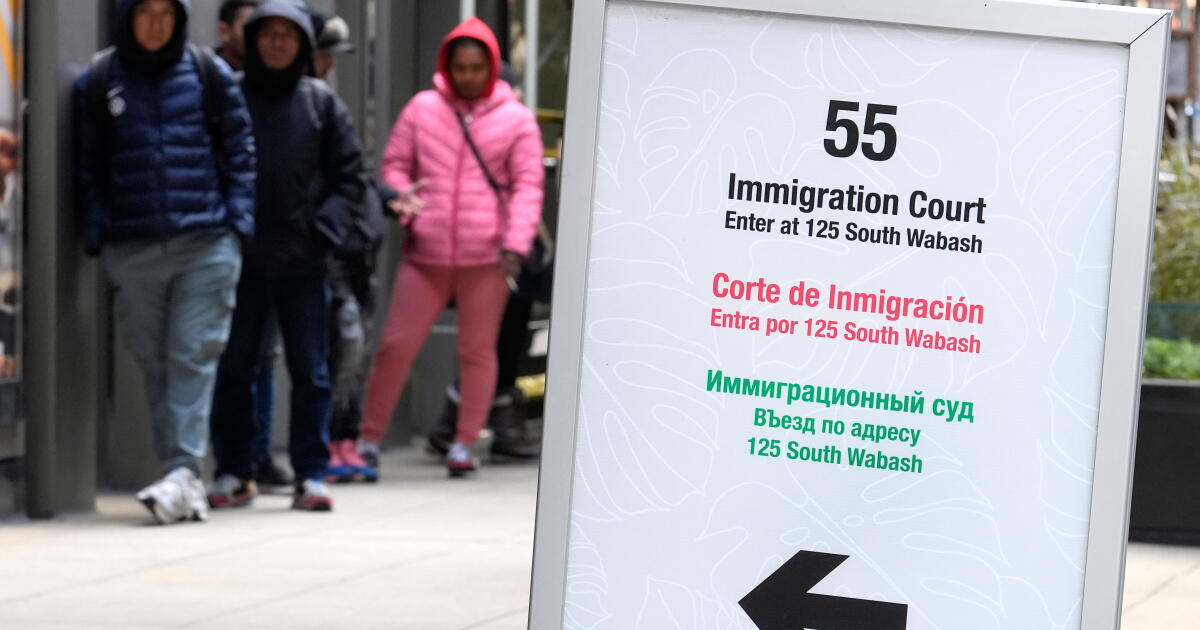
The report, and similar documents about Guatemala, Mexico and El Salvador, were prepared for use in immigration courts, where asylum denial rates have soared to 94% during President Trump’s second term.
The reports use cherry-picked data, careful phrasing and in some cases facts that don’t stand up to scrutiny to create misleading depictions of countries that are in fact often plagued by violence, government corruption and police inaction.
They appear designed to make it easier for judges to deny asylum to people from those nations fleeing domestic violence and criminal gangs, painting pictures of life in their home countries that often clash with reality.
The reports have been “reverse-engineered,” said Elliot Young, a professor at Lewis & Clark College who analyzed the documents for the college’s Migration and Asylum Lab.
“They’re trying to hit the most frequent kinds of (asylum) cases that come up and provide counterevidence to the overwhelming evidence that these are dangerous places,” said Young, a scholar of Latin America and asylum law who has testified as an expert witness in more than 700 asylum cases.
In a statement, the State Department said that in line with U.S. laws and regulations it “may provide information about conditions in foreign countries” to immigration courts and U.S. Citizenship and Immigration Services. The Justice Department, which oversees immigration courts, did not respond to a request for comment on what role the reports play in influencing asylum decisions.
A system in turmoil — and targeted
Cutting back on asylum has been a centerpiece of Trump’s immigration crackdown dating to his first term, when he dismissed migrants waiting in Mexico to get into the U.S. as “not legitimate asylum-seekers.”
Most asylum seekers, the Republican president said, were fleeing poverty.
“Asylum is a very special protection intended only for those fleeing government persecution based on race, religion and other protected status,” he said in a 2018 White House appearance.
Trump was years out of date. While asylum was largely seen after World War II as a way to protect people fleeing political persecution, the definition was expanded long ago, including to encompass some people fleeing domestic and criminal violence.
But he had a point about poverty.
Legal and illegal migration, particularly from Latin America, has exploded over the past two decades as people have sought more economic opportunity, with increasing asylum claims based on safety fears from domestic partners and criminal gangs.
Even during President Joe Biden’s years, most asylum claims were rejected.
But denials have jumped from roughly 72% at the end of that Democratic administration to 94% in June under Trump, according to the data research nonprofit Transactional Records Access Clearinghouse.
Trump was elected to a second term in part by focusing on frustrated voters who had seen illegal immigration soar under Biden, with border arrests from Mexico reaching a record 250,000 in December 2023. The asylum system, meanwhile, faced a backlog of millions of cases.
The Trump administration has reshaped immigration courts as part of its push to increase deportations, organizing mass hearings, authorizing military lawyers as immigration judges, and giving judges more leeway to summarily dismiss claims.
A sanitized view of troubled countries
Immigration judges must weigh whether people seeking asylum based on domestic violence or criminal threats have a reasonable fear of persecution because of their race, religion, nationality, political views or an often-debated catch-all category, “membership in a particular social group.” They also have to show that their government can’t or won’t protect them and that they can’t move elsewhere in their home country to escape persecution.
The reports offer what can sometimes seem like travel brochure descriptions of life in these countries.
They mention good schools, low crime, quality hospitals and constitutions that protect individual rights, with brief notes that “the availability of services” can vary across each country.
Take El Salvador, where the government of President Nayib Bukele has long faced accusations of widespread human rights abuses, including torture.
The State Department report takes a far more generous view of the situation, noting the government approach to rights abuses “is no different than that of developed countries in Europe and North America, including the United States itself,” and highlighting a handful of prosecutions tied to the civil war, which ended in 1992.
“In any country, a rogue official can mistreat those under their power,” it says.
For Honduras’ Gracias a Dios province, violent crime rates “compare favorably with rates of violent crime in many parts of the United States,” says the report.
Former officials and advocates say the six-page reports pale in comparison to traditional State Department human rights reports, lengthy dissections of more than 100 nations around the world, which under the second Trump administration have been truncated and delayed.
“These shorter reports clearly don’t address the full range of human rights issues that the country reports have traditionally addressed,” said Scott Busby, former deputy assistant secretary in the Bureau of Democracy, Human Rights and Labor at the State Department and now a senior adviser at the group Human Rights First.
They are “especially problematic given that the country reports themselves for last year have yet to be issued,” he said.
Looking at asylum-seekers’ ability to move elsewhere
In many ways, the reports appear aimed most directly at asylum regulations around a person’s ability to escape persecution by simply moving.
Those regulations are key for anyone seeking asylum based on domestic or criminal violence.
The reports highlight specific parts of each country, mentioning places like an off-the-beaten track tourist destination in Guatemala and a province in El Salvador that has low crime and 24-hour emergency medical care.
But those mentions only tell part of the story.
“The fact that there may be pockets of a country that are relatively safe for some people doesn’t mean that everybody can just move to that part of the country,” said Neela Chakravartula, an asylum attorney with the Center for Gender & Refugee Studies at the University of California College of the Law, San Francisco.
If that were the case, Chakravartula said: “We’d all be living in Malibu.”
Sullivan writes for the Associated Press. AP reporter Joshua Goodman in Miami contributed to this report.