Renewed Violence in Southern Taraba Communities Shatters Peace Deal
Joy Oga, a pregnant woman in her second trimester, was harvesting yams on her farm in Kwanta/Dooshima area when armed men attacked. The 31-year-old farmer had gone out with three others from her community on June 16 to harvest the farm she had been unable to reach since her village was invaded in September 2025. She never finished the harvest.
“I went to the farm to pack yams when I was attacked,” Joy told HumAngle.
Joy had farmed in her village in Chanchanji, Takum Local Government Area, in Taraba State, northeastern Nigeria, for five years, and farming is her only means of livelihood. After enduring months of hardship in a displacement camp in Chanchanji town, she was eager to resume farming as soon as she and other residents were asked to return home. On the day of the recent attack, she was there to also clear the land for a new planting season.
Joy said the attackers, whom she claimed were herders, confronted her and the other people that were with her, and immediately started hacking them with the machete. She ran back to the community with a cut on her face, wrist, and legs.

The attack came barely two months after a peace deal was struck between the Fulani and Tiv communities of southern Taraba, and has raised questions about the restoration of peace and the fate of residents who rely on farming for survival in the area.
In April, a peace dialogue organised by the Taraba State government, northeastern Nigeria, brought together leaders of the Fulani and Tiv ethnic groups to put an end to the series of clashes that claimed lives and properties in communities within southern Taraba. The Fulani in the area are predominantly nomadic herders, while the Tiv are mostly farmers. During the dialogue in Jalingo, the state capital, both parties agreed never to raise arms against one another.
The government also instructed displaced residents across the affected areas to return home. Weeks later, some residents began to exit the displacement camps in Chanchanji and Amadu for their hometowns after months of facing terror attacks, mass displacement, and food shortages. Three committees were set up by the government to manage the displaced persons’ return, inter-boundary and migration control, and boundary assessment and settlement.
A multitude of motives
Southern Taraba has witnessed recurring violence involving farming and pastoralist communities for more than two decades. The area comprises five Local Government Areas (LGAs): Donga, Ibi, Takum, Ussa, and Wukari. Researchers say the conflict is driven by a complex mix of competition over land and water, population growth, the proliferation of small arms, weak law enforcement, and criminality. While these clashes are often described as “farmer-herder conflicts”, several studies caution that they increasingly involve organised armed groups whose activities go beyond disputes over grazing routes. Indigenous Tiv communities in Taraba and neighbouring Benue State also say the attacks are a strategic move to take over their lands and resources.
A security expert, who has also worked as a police officer in the area, told HumAngle that the crisis goes beyond ethnicity. “This is terrorism, because the attackers come into town, destroy property, and run back. They do not have a settlement around that area, and whenever they come to Chanchanji, it does not only affect one tribe — it affects other tribes living in Chanchanji too,” the source, who pleaded anonymity, noted.

He argued that terrorists are exploiting the unresolved ethnic clash between both parties to infiltrate the area, particularly in ungoverned spaces, adding that if it were purely an ethnic conflict, only the Tiv and Fulani would be affected; since every tribe in the area suffers during the attacks, he believes it is more accurate to describe the situation as terrorism.
Other claims about the motive of the attacks have been circulating; one of them originated from the deceased leader of a criminal gang that operated along the border between Benue and Taraba. Before his death in the hands of the Nigerian Military in September 2020, Terwase Akwaza, known popularly as Gana, a notorious criminal gang leader in Benue, claimed during an interview that armed groups posing as herders had approached him and asked him to carry out attacks in “about three states they want to [capture], being Plateau, Taraba, and Benue.” Joy, like many other residents, believes that the attacks were carried out by these armed groups.
After Gana’s death, his allies fractured into rival factions, with the most prominent ones being led by Fullfire and Chen. Despite attempts by community leaders urging these groups to cease fire, they have continued to operate violently in the region.
On the allegations from both parties about the hiring of militias, the security expert acknowledged that “in an environment where there is crisis, there are people who try to bring up some things to justify their actions”, adding that parties might exaggerate casualties or incidents.
A blow on both sides?
Benjamin Kwazza, who also survived the June 16 attack, told HumAngle that the attackers were tactical, targeting their heads and necks with the intention of causing instant death. “They pursued us, and along the line when they got us, they started to cut my neck,” he said, adding that he sustained a deep neck wound.
When Joy, Benjamin, and the others returned to the village, residents organised a search party, but the attackers had already fled.
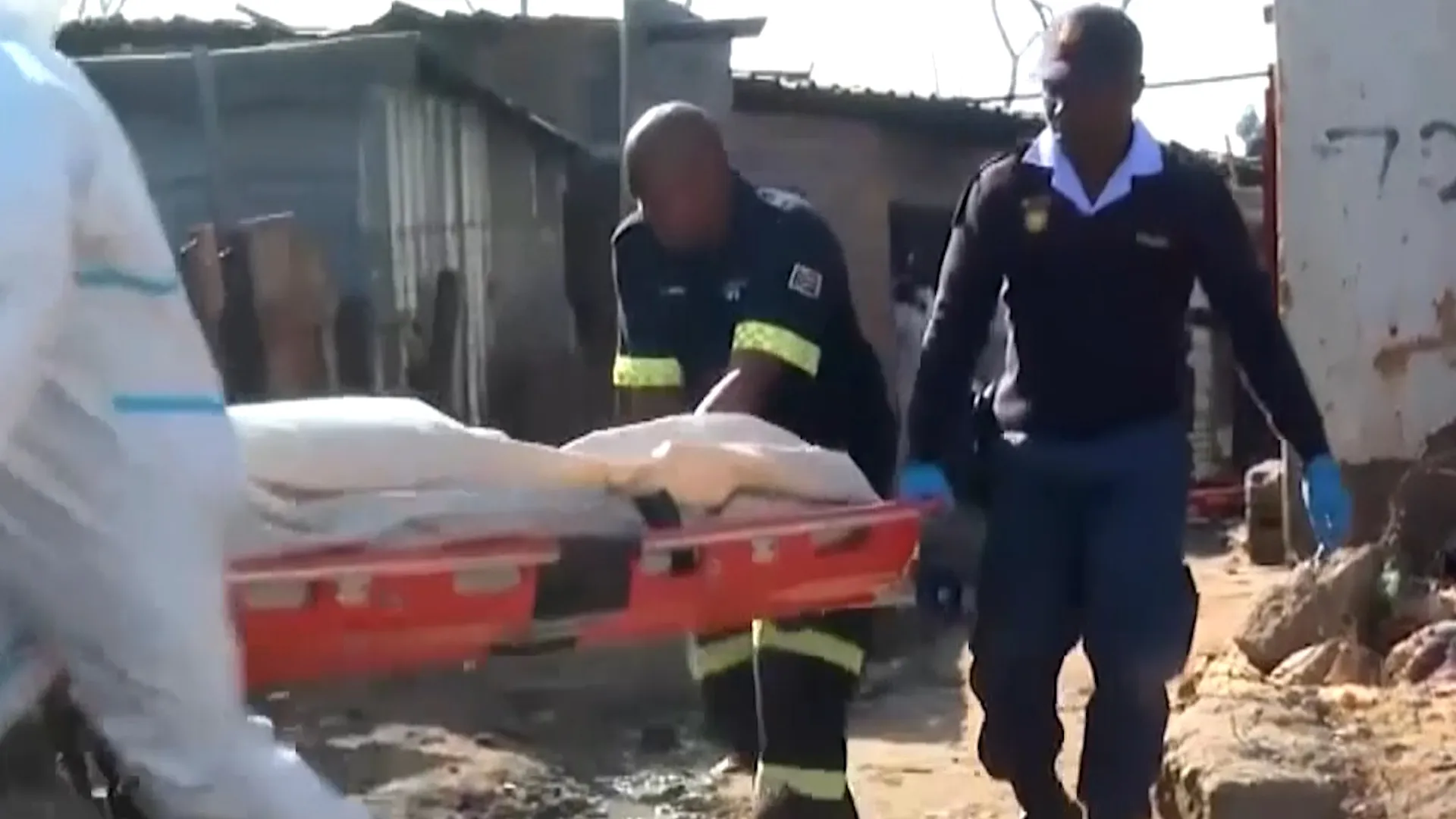
The following day, June 17, two other farmers were attacked on their farmland in the same community. While the other farmer managed to escape untouched, Terkura Mathew was brutalised and left in his pool of blood. Locals found him and brought him back to the village. His condition remains critical.
HumAngle reviewed videos and photographs of the June attacks, which showed visible wounds sustained by survivors, including deep cuts and injuries consistent with machete assaults.
Bello Mbela, the Taraba State chairperson of Tabital Pulaaku International, an organisation that serves as a unified voice for Fulani communities across the continent, explained that the southern Taraba crisis is a blow to both sides. Tabital Pulaaku represented the Fulani community during the signing of the peace deal in Jalingo.
According to him, Fulani people who live around Southern Taraba communities like Kofai Amadu, Tor Damisa, Kurmi and other areas are always caught up in the violence, which has led to loss of lives, cattle, and properties, with many who are currently displaced.

Bello said the most recent incident occurred in February. “In Kofai Amadu under Takum Local Government Area (LGA), several women and children. The children were grazing when they were attacked, and their necks were snapped,” he stated.
The Tabital Pulaaku leader also stressed that the herder communities in the region were set ablaze by aggrieved locals multiple times. “Also, around Kurmi LGA, there were rape cases. When a young woman sets out, she’s captured, threatened with a knife and raped. Especially those who go to hawk Fura da Nono,” Bello claimed.
Although he did not provide visual evidence of the alleged violence, he said attacks against herders and their families often go unreported and undocumented. “We do not record their deaths. We bury them instantly and keep moving. Most of the deaths are common among the elderly, disabled, pregnant women, and children,” he told HumAngle.
Bello added that the affected herder communities are afraid of seeking shelter in temporary displacement camps in the towns due to fear of being profiled. Hence, they retreat farther into the bush for safety when their homes are razed. “Some of them come to Jalingo where they are sheltered by the Muslim council,” he said.
Similarly, farming communities report a similar pattern of targeted abuse. Uzaki Peter, a local leader in Bachula, a community in southern Taraba that was displaced by attacks, told HumAngle that farmers have been experiencing a series of fresh attacks since they resumed farming in June. According to him, locals were adamant about returning home despite the hardships in the camp, but the peace meeting in April gave many hope.
HumAngle learnt that locals and herders lived together in the region for years until clashes started recurring in 2025. “We always meet with the herders. They were telling us there is no problem. We should invite our people to come back. So, we started feeling like there was a solution, so our people started going back,” he said. However, Bachula is currently experiencing the same pattern of attack that occurred last year, according to Uzaki. “They will come and attack you. If you have a phone, they will collect it, and if you have money, they will collect it. They were sleeping with our women who were going to the farm,” the community leader said.
Despite the peace dialogue
Bello, who was present during the peace dialogue, told HumAngle that both parties have been trying to abide by their agreement that no party must attack the order. However, new cases are coming up. “In May, two women went to the Chanchanji area and did not return. They were killed.”
He explained that the incident sparked outrage and nearly led to fresh clashes. Since there was a peace dialogue, the issue was reported to the police station, and an investigation began. To date, none of the perpetrators has been caught.
“If someone goes to the bush to graze alone, he does not return,” Bello gave another instance, stating that they are probably killed because such incidents took place in the past.
When HumAngle reached out to James Lashen, the Taraba State Police Command’s Public Relations Officer, regarding the recent attacks in the region, he said that Kwanta/Dooshima and other areas in Chanchanji that are constantly under attack fall under “ungoverned spaces”.
“Taraba is the third largest in landmass in this country after Borno and Niger,” he stated, explaining that the landmass affects security response and patrol. “But for now, Chanchanji, Amadu and other areas, there is peace. There is a sustained patrol. We would like to embark on a convoy patrol due to the length of the road. You know, from Takum to Wukari, it is a long distance. And that is where they normally perpetrate. But for now, we have already taken charge of that area. For now, no incidents are taking place there,” he asserted.
When asked about the recent incidents in the area, despite his assurance of peace, Lashen said it is quite common during the farming season and that it is the responsibility of the Divisional Police Officers to report to the command. However, he noted that he had yet to receive a report of the incident in Kwanta/Doorshima or Bachula at the time of our communication.
The PPRO stressed that the Taraba State Police Command has ensured displaced communities returned home. “Everybody has been back. Policemen are stationed there. We have posted tactical teams there in that area. Everybody has gone back to his house,” the officer said.
However, some residents disagree. Uko Moses, a farmer and resident of Peva, another affected area in the region, told HumAngle that the Peva community remains deserted to date, and locals are still in displacement camps in Amadu and Chanchanji town due to recurring attacks and unresolved tension. He also noted that areas such as New Gboko, Demavaa, and other southern Taraba communities remained abandoned.
“Those who try to access their farmlands are being hurt on a daily basis,” Moses said.
According to him, food, clothing, and healthcare are the basic challenges faced by displaced people still in camps due to fear of returning home. Also, children have been out of school for over nine months. “We depend on the government, humanitarian organisations, and philanthropists. The insecurity has made us become beggars,” he stated.
To cushion the suffering of displaced persons in the displacement camps, HumAngle learned that Kefas Agbu, the Taraba State Governor, donated bags of rice and other relief items across the camps in March. Also, Benue State Governor Hyacinth Alia visited the displaced and assured those living along the Benue border that they would soon be able to return home.
“His words were full of hope. According to him, it will not take long for the people to return to their communities and continue with their daily business.” Moses spoke of the Benue State Governor’s promise.
However, locals remained in the displacement camps, and despite the hardship, Moses said they prefer to stay in the camps rather than come home where their safety is not guaranteed.
“The security architecture there is very poor. In some of the villages, there are no checkpoints close by or police stations built there,” he said.
Uzaki, the Bachula caretaker, echoes Moses’s security concerns in the area. “Yesterday [June 16], I reported a case of three people. They were admitted to the hospital, and the day before yesterday [June 15], I reported a case involving two people. They are also here. And today [June 17] two have been brought out that have been matcheted,” he said.
Lashen, the police spokesperson, said officers in the region cannot be everywhere. “So that is why we always engage with the stakeholders within the community to talk to their people. Because the police cannot be everywhere. Because of this landmass,” he said.

Herder communities are also grappling with another crisis. According to the Tabital Pulaaku leader, herders are often segregated in local healthcare facilities when it comes to receiving treatment for injuries sustained during clashes. “Some of them are even arrested on the spot. This has made some of them stop accessing healthcare centres and rely on home treatment, which leaves them dead,” he said.
What now?
During a summit in 2025, the Federal government described Taraba state as “a cornerstone of Nigeria’s agricultural and industrial future”, owing to its agricultural potential. The state was also hailed as a major producer of export-grade tea, coffee, and livestock for the meat industry.
A recent study by socio-political science researchers in the country’s northeastern region found that the majority of the population in IDPs camps and those killed, injured and displaced due to the conflict are farmers. While the rate of the clashes is said to be high, the impact on food insecurity in the region is also high due to the magnitude of the attacks on farming communities.
Felix Ashe, a farmer from Chanchanji, told HumAngle that the most recent attacks in the area occurred on farmland, prompting locals to abandon their farms. He says hunger now shapes the lives of many who usually depend on farming for survival.
“We planted yams, groundnuts, benniseed and so on. The yam that was planted last year was not able to be harvested, and those who tried to harvest them are being attacked,” he said.
In the Peva and Amadu communities, which are known as agrarian areas, Moses said locals are facing food scarcity. “Seriously, we are living at the mercy of God, because predominantly, we are farmers and we started receiving these unprovoked attacks since last September, and till today, we are still receiving attacks. We don’t have access to farms, and farm produce has been destroyed. We are facing the challenge of hunger,” Moses said.

If the attacks persist, local farmers in the region say they fear for their future.
“The most important thing we need now is peace. That is the restoration of peace in the area. If we’re able to get peace, everything will come back gradually,” Moses said.
While peace efforts are being made, the Tabithal Pulaaku leader said most of the herders around the affected Southern Taraba communities are still displaced, while some remain missing. Through stakeholder engagements and awareness-raising campaigns, Bello said leaders of the Fulani community are sensitising locals to shun violence and embrace peace to resolve the crisis.
To permanently break the cycle, the security expert calls on the government to move beyond temporary peace declarations and to continue engaging local leaders and stakeholders from both ethnic groups, formally entrusting them with responsibility for maintaining peace among their people. He strongly advocates for the establishment of modern ranches and clearly designated grazing routes for herding communities.
“They don’t have a route to follow with their cattle, so they follow people’s farmlands, and that causes a lot of issues. There should be a dedicated path for them,” he said. “The herders should maintain their particular axis and also, people should be notified not to go there and farm.”
He also emphasised the need for a visible security presence in those areas and for constant patrols. “The security agencies should be well equipped and motivated to be very active at work,” the expert added.