victory

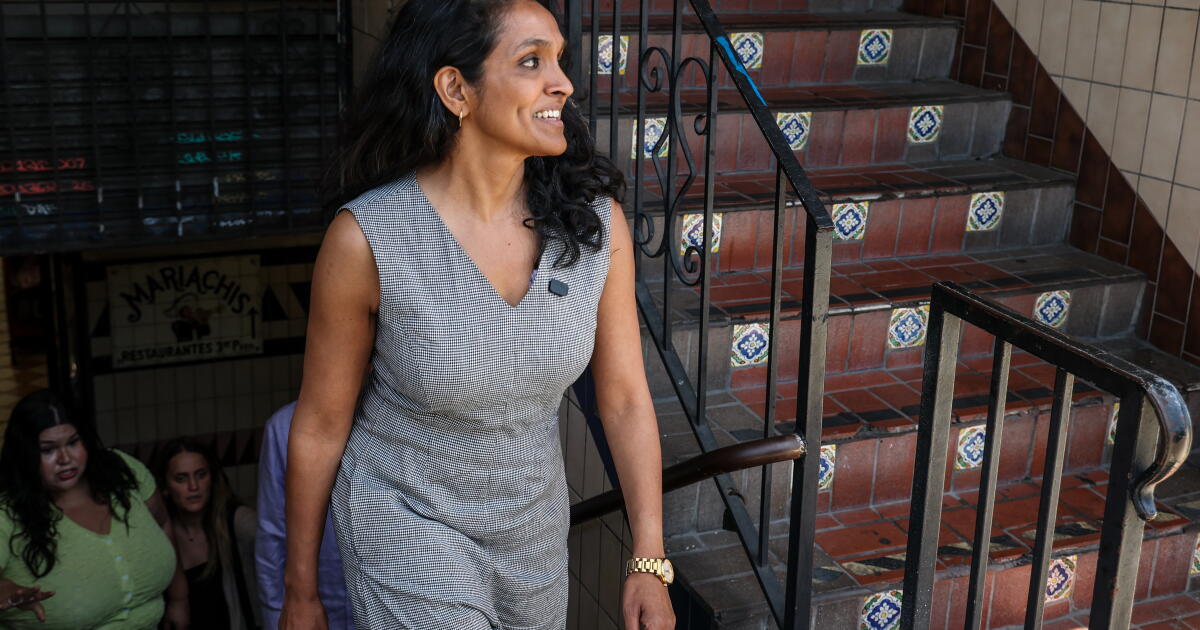
Raman’s victory was a resounding rebuke to L.A.’s Latino political establishment

When Angelenos chose Nithya Raman as their next mayor, Karen Bass wasn’t the only establishment pillar that was resoundingly rebuked.

Here in the country’s Latino capital, the metropolis that delivered California its first Latino U.S. senator and pioneered the type of winning political machine that Latinos across the country replicated for decades, almost all the city’s Latino power brokers — politicians, nonprofit leaders, union activists, celebrities — bet big on longtime ally Bass, only to now find themselves on the outside looking in.

All that might and hype delivered worse than nada for Bass, who finished first in the June primary thanks in part to Latino support, winning 35 Latino-majority neighborhoods compared with just seven for Raman. The reverse happened in last week’s general election, with Raman winning many of the city’s key Latino neighborhoods — South L.A. to the Eastside, Pico-Union to Wilmington — according to a Times analysis of precinct data.

It was a fitting dénouement to Mayor Bass’ one term in office, and the capstone of a terrible four-year run for L.A.’s Latino political establishment, beginning with the leak of a profane, racist conversation that disgraced four top politicos.

Bass should have run as far away as possible from our caudillos y caudillas. But she just couldn’t quit them. Take an Oct. 24 lunchtime rally at Plaza Del Valle in Panorama City, the nexus for the fabled San Fernando Valley Latino political machine.

Volunteers handed out “Latinos Con Bass” signs to customers and store owners. An all-star roster of elected officials — City Councilmembers Monica Rodriguez and Imelda Padilla, Assemblymember Celeste Rodriguez (no relation to Monica) and Rep. Luz Rivas — gathered in a community room to make the case that Bass was the best choice.

“You have tías and cousins and primos that call you, ‘Who should I vote for? What do I do? How do I fill out the ballot?’” Rivas told a crowd of about 60, most of whom were not Latino. “You need to remind them Mayor Karen Bass is the right leader.”

“This is where we win elections,” Rodriguez asserted, describing the mayor — whom she bitterly opposed until fellow Councilmember Raman entered the race — as a “Valley girl” and the election as “our moment.”

The enthusiasm level struggled to exceed that of a line at the DMV. Half an hour later and a few miles east in Sylmar, a very different scene was unfolding.

DJ Danny Guerrero blasted quinceañera classics like “Vivir mi Vida” and “Come On Let’s Go” by Pacoima native Ritchie Valens as Raman’s team hosted a canvasada — free tacos for everyone to fuel an afternoon of canvassing. L.A. Unified school board member Kelly Gonez was the only elected official at the Carpenters Local 818 training center. The others were union members, Latino hipsters or kids too young to vote.

“Her passion to protect our community — that compassion resonated with me,” said Guerrero, a 21-year-old Cal State Northridge political science major who helps undocumented college students at his school’s Dream Center. “I advocate for that in my life, and I see Nithya doing that. She meets us where we’re at.”

Guerrero cheered as Raman kicked off her remarks with an “¡Hola, Sylmar!,” pronouncing the “y” like an “i” the way a Spanish speaker would. The candidate shouted out Latino Valley icons like Lenchita’s, Tia Chucha’s Centro Cultural and even Plaza Del Valle. But she received the biggest cheers when she said, “La communidad latina merece más.”

Latinos deserve more.

In the end, Raman captured most of the precincts in Padilla’s and Rodriguez’s districts even after the two council members whacked away at her through the election like brats hogging the piñata stick at a birthday party.

Without institutional support, Raman focused on a new generation of Latino leaders who are not part of the traditional political machines.

“Maybe they [Latino establishment leaders] felt obligated to back her,” Rocío Rivas said of Bass. The L.A. Unified school board member and democratic socialist endorsed Raman and attended her election night party at the Greek Theatre, where a crowd of hundreds chanted, “Sí se puede.”

“Or maybe they’re not as connected to the community as they once were,” Rivas added.

The trouble for the establishment started in 2022 when three City Council members and a powerful union leader became pariahs after starring in the audio leak scandal. That same year, democratic socialist upstarts Hugo Soto-Martínez and Eunisses Hernandez won City Council seats, despite a lack of support from Chicanosauruses who mocked their chances.

In January 2024, former City Councilmember Jose Huizar — once a rising star with aspirations for higher office — was sentenced to 13 years in prison after pleading guilty to corruption charges. In the fall of that year, Eastside Assembly and City Council seats held by Latinos for decades went to Filipina Americans Jessica Caloza and Ysabel Jurado. Meanwhile, former Mayor Antonio Villaraigosa’s campaign for governor sputtered out with just 1% of the vote.

In the race to succeed Nury Martinez, who resigned from the City Council after the audio leak, Padilla won with backing from the Valley Latino political machine.

Marco Santana lost to Padilla in the primary. despite an endorsement from Raman, and supported Raman’s mayoral campaign.

“The mayor ran on a very institutional playbook of getting a bunch of Latino politicians together so they could tell Latinos how to vote,” said Santana, 36. “That doesn’t work anymore. Latinos want deeds.”

Instead, outdated ideas were all Bass had.

It started with her choice of chief campaign strategist: Julie Chavez Rodriguez, who was campaign manager for President Biden’s disastrous 2024 reelection bid and then Kamala Harris’ failed attempt to pick up the pieces. I quickly tuned out the one time Chavez Rodriguez described her vision for Latino outreach, which would have been revolutionary in L.A. two generations ago.

While Bass’ campaign mounted a vigorous media outreach effort in English and Spanish, her own attempts to court Latino voters kept backfiring. The crowd at the annual City Hall Mexican Independence Day celebration booed when Padilla, in a green outfit that matched Bass’, hailed the mayor as “good.”

At Homegirl Cafe in Chinatown the morning before the election, customers largely ignored Bass while swarming gubernatorial candidate Xavier Becerra. She stood next to Becerra at the restaurant, only to have him later clarify to reporters that he wasn’t endorsing anyone in the mayor’s race.

Michael Trujillo is a longtime political consultant who served as an unpaid advisor to a pro-Bass independent expenditure committee and has participated in the rise and struggles of the Eastside and San Fernando Valley machines.

“It’s going to take a long time” for L.A.’s Latino political establishment “to be reconstructed, and that’s ironic when you have Latinos in charge in Sacramento now,” he said. But he predicted that Raman would bear her former opponents no ill will, because “they’re going to give her a fair shot” — because what else can they do?

The Raman era will undoubtedly boost a new generation of Latino leaders. But establishments don’t fade away so easily — and insurgents don’t automatically shun them.

On Saturday, Raman attended a news conference to condemn the arrests of two people by federal immigration agents during an anti-ICE protest outside Adventist Health White Memorial Center. The mayor-elect shook the hands of state Sen. Maria Elena Durazo, SEIU California President David Huerta and Angelica Salas, executive director of the Coalition for Humane Immigrant Rights of Los Angeles, all of whom endorsed Bass and recorded social media videos in support of the incumbent.

When it was Raman’s turn to speak, she led the crowd in chants of “ICE out of Boyle Heights” and praised Huerta, Durazo and Salas. Raman concluded by promising Angelenos in Spanish that she would “defend” immigrants.

And then L.A.’s Latino political establishment did the only thing they could: They applauded.

Source link

Clippers beat Pelicans to end seven-game losing streak

Darius Garland had 24 points and 10 assists, Brook Lopez added 20 points and the Clippers ended a seven-game losing streak with a 139-123 victory over the New Orleans Pelicans on Sunday night.

Gradey Dick and rookie Keaton Wagler each scored 15 points and Rui Hachimura added 14 as the Clippers won for the first time since getting past the Sacramento Kings in the season opener.

The Clippers went on a 15-6 run to open the fourth quarter to take control with a 117-101 lead and finished off the victory after failing to hold on to double-digit fourth-quarter leads in their previous two games.

Trey Murphy III scored 26 points, while Zion Williamson and Jeremiah Fears each added 25 as the Pelicans lost their second consecutive game after a four-game winning streak. Saddiq Bey had 13 points for New Orleans, which was playing the opener of a two-game California trip.

The Pelicans shot 50.6% from the floor while getting held to 52 points in the paint after entering the with 61.6 per game in that department to lead the NBA.

The Clippers took a 124-107 lead with 4:56 remaining on three free throws from Garland and cruised to the victory from there with a season high in points. They shot a season-best 54.8% from the field.

The Clippers led 67-60 at halftime after shooting 52.3% from the field and getting 14 points from Garland, while Williamson had 17 points for the Pelicans. New Orleans opened the second half on an 18-10 run to take their first lead since the opening minute at 78-77.

The Clippers were without center Isaiah Jackson (groin), as well as former Pelicans star Brandon Ingram (heel), who is close to his debut for his new team.

Source link

Undefeated JSerra wins second straight flag football title

All hail the JSerra Lions, the best high school flag football team in California and probably in the nation.

The Lions went 28-0 this season, their second straight unbeaten season. They won the Southern Section Open Division championship game on Saturday night with a 40-14 victory over Newport Harbor at Huntington Beach.

Coach Brian Ong wasn’t supposed to have a better team than the unbeaten 2025 squad, but the Lions pulled it off led by quarterback Kate Meier and receiver Tessa Russell, both of whom are only sophomores.

Meier passed for four touchdowns on Saturday. Russell had 12 receptions for 153 yards. No opponent came closer than 13 points all season. Newport Harbor, the No. 2 team in Southern California, lost three times to the Lions.

In other finals, Oxnard won its first Division 1 title with an 18-12 win over Palos Verdes. In Division 2, San Clemente defeated Gahr 35-34 in overtime.

In Division 3, Valencia defeated Quartz Hill 12-7. Valencia’s 11-man football quarterback, Evan McCalister, was on hand to help his father, Cedric, the head coach. Camila Quintero threw three touchdown passes.

Valley Christian won Division 4 with a 33-18 win over West Ranch. Loma Linda defeated Peninsula 33-6 in Division 5. St. Monica, in its inaugural season, won Division 6 with a 39-20 victory over Heritage.


Source link

James Talarico, senator-elect of Texas, addresses Trump in ‘SNL’ cold open

After this week’s major wins by the Democratic Party in the midterm elections, it’s no surprise that the cold open on “Saturday Night Live” was political in nature.

But there was one surprise guest: The new senator-elect of Texas, James Talarico.

The cold open began with a conversation between Rep. Hakeem Jeffries (Kenan Thompson) and Sen. Chuck Schumer (Sarah Sherman), the minority leaders of the House and Senate (and possible future majority leaders), respectively, as they celebrated their party’s victory, including flipping Texas blue — for which they took credit. (Schumer: “That was all me. I found the candidates, I recruited them. And as a show of respect, they begged me not to appear at their campaign events.”)

Jeffries pledged that their first order of business would be to march up to President Trump and tell him, “Hey, knock it off, Buster.”

But Trump (James Austin Johnson), not one to be left out, interrupted to take the credit for the Democratic victories instead — thanks to the “horrible economy and terrible war.” “So in the words of Moana’s big fat friend, ‘You’re Welcome,’” he said.

After an appearance from J.D. Vance (Jeremy Culhane) and Defense Secretary Pete Hegseth (Colin Jost), plus Trump’s complaints about having to work with millennials and the return of their optimism, he began listing some of the newly elected senators who would be arriving in Washington: “Jon Ossoff, or as I call him Thinky Herman. Abdul El-Sayed, or as I call him, Mamdani for men. And of course, down in Texas, Talafreako.” Talarico then stepped into frame to a roar of applause and cheers from the audience, leading to this exchange:

Talarico: “Hi America, I am James Talarico, the guy who has been texting you everyday asking for $5.”

Trump: “In this economy, who can blame you.”

Talarico: “But I think Mr. President, if we can work together, we can make life better for everyday Americans. It’s clear people want something new. They want something different. I’m talking of course about ‘SNL’s’ cold opens. How many of these Trump freezes are they going to do?”

Trump: “Infinity.”

Talarico: “Well in that case, there is only one thing to say: Live from New York, it’s Saturday Night Live.”

Source link

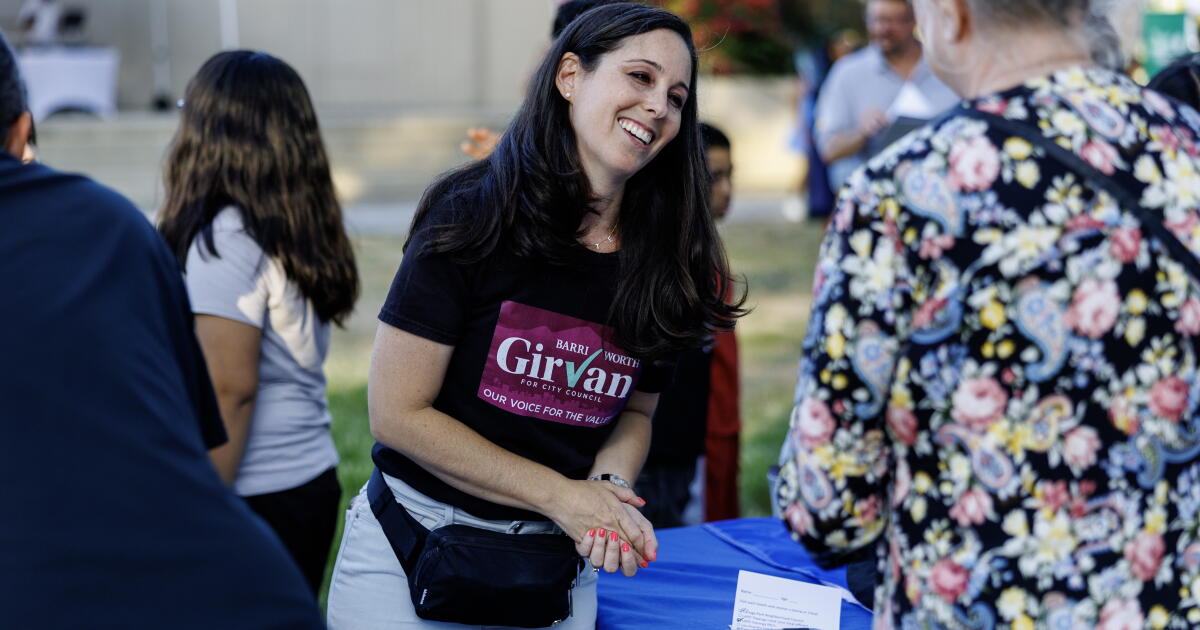
Barri Worth Girvan declares victory in race for West Valley seat on L.A. City Council

Barri Worth Girvan, a veteran government employee who ran on a platform of leveraging her experience to advocate for residents, declared victory in the race for Los Angeles City Council’s Third District seat late Friday.

Worth Girvan’s announcement came after the latest vote tally Friday evening showed her widening her lead over rival Tim Gaspar, with 51% of the vote to Gaspar’s 49%.

“I will bring competence, transparency, follow-through, and ethical leadership to City Hall, which Angelenos deserve and too often do not get,” she said in a statement, which also thanked Gaspar for stepping up to run as well.

“I know how City Hall works, and I know how to make it work for you,” Worth Girvan said. “I am ready to hit the ground running on Day One, delivering the services our neighborhoods deserve, and leading with the integrity you have every right to expect.

Earlier Friday, Gaspar’s campaign said he wasn’t yet ready to concede. The campaign couldn’t immediately be reached for comment following Worth Girvan’s announcement.

The current Third District councilmember, Bob Blumenfield, is leaving office because of term limits. The 3rd District seat includes Woodland Hills, Reseda and Canoga Park.

Worth Girvan and Gaspar were virtually tied on election night Tuesday, but on Thursday Worth Girvan began pulling ahead as more mail-in ballots were counted.

Before entering the race, Worth Girvan was L.A. County Supervisor Lindsey Horvath’s district director for three years, handling constituent services on the Westside and in the Valley.

A former insurance company owner, Gaspar is running on a pro-business platform and has been endorsed by the Valley Industry & Commerce Assn. and the Los Angeles Police Protective League, a union representing LAPD officers. He’s also been endorsed by Blumenfield, L.A. County Supervisor Kathryn Barger, real estate developer Rick Caruso and former Democratic state Assemblymember Bob Hertzberg, Worth Girvan’s former boss.

Worth Girvan was endorsed by the L.A. County Democratic Party and labor unions including the local chapters of the International Brotherhood of Electrical Workers and the Service Employees International Union. She’s also been endorsed by Horvath and former L.A. Mayor Antonio Villaraigosa.

In the race for District 9, both Jose Ugarte and Estuardo Mazariegos remain locked in a tight contest. Councilmember Curren Price is also termed out.

District 9 encompasses South L.A. neighborhoods, the Convention Center and USC. But no matter who wins, District 9 will undergo a shift in representation after decades of being represented by a Black council member.

Price is currently facing charges of embezzlement and conflict of interest and he has denied wrongdoing. Price has endorsed Ugarte, his former deputy chief of staff, whose platform includes protecting city residents from federal immigration enforcement and the Trump administration.

Mazariegos is backed by the L.A. chapter of the Democratic Socialists of America. He’s worked as a community organizer for decades and said he’s running to improve quality of life in the city, including by making housing more affordable and spending money on basic services other than policing.

Ugarte’s campaign received outside support from special interest groups including Airbnb, Uber, the California Apartment Assn. and the International Brotherhood of Electrical Workers Local 18, which represents workers at the Department of Water and Power.

Mazariegos was supported by groups including United Teachers Los Angeles and the Progressive Era PAC. Special interest groups have spent more than $250,000 supporting his campaign.

Source link

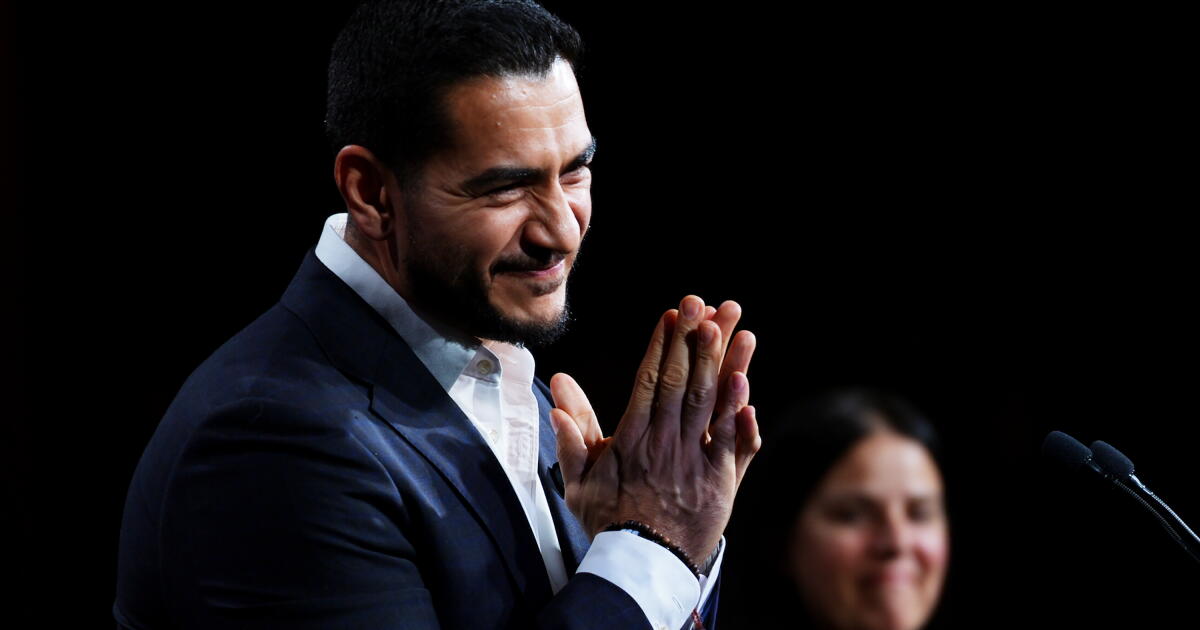
‘A beautifully American story’: El-Sayed’s historic Senate victory resonates with Muslim Americans

Campaigning relentlessly across Michigan, Abdul El-Sayed didn’t highlight the possibility that he could become the first Muslim elected to the U.S. Senate. But with victory in hand, he savored his triumph over the vitriol aimed at him and his fellow Muslim Americans.

“They tried to demonize people because of how they pray,” he told the Associated Press on Wednesday. “And Michigan — the whole Michigan — clapped back. People don’t want that. They’re sick of it.”

He showed his pride in his victory speech, declaring: “My name is Abdulrahman Mohamed El-Sayed.”

Twenty-five years after the Sept. 11 attacks and their aftermath yanked anti-Muslim sentiment into the forefront of American life, those emotions are shared by many Muslim Americans in Michigan and across the country.

They saw a surge of anti-Muslim rhetoric after Zohran Mamdani’s election as New York City mayor a year ago, and they saw the attacks intensify as El-Sayed became the new prime target. President Trump called him a “jihadist” who was “on the side of the terrorists.” Dozens of Trump’s fellow Republicans in Congress formed a Sharia-Free America Caucus, depicting Islam’s religious code as a threat to the U.S. Constitution.

But now, after El-Sayed’s defeat of GOP rival Mike Rogers was confirmed early Wednesday, there is a pervasive sense that a broader victory is at hand.

The outcome “represents a historic turning point for American Muslim political engagement and a historic defeat for the politics of hate,” said Nihad Awad, national executive director of the Council on American-Islamic Relations.

“Anti-Muslim extremists, Israel lobby groups and even the president of the United States used every smear in the book to paint Dr. El-Sayed as a Muslim bogeyman,” he said. “None of it was true, and none of it worked. Anti-Muslim hate was on the ballot, and it failed.”

In Dearborn, talk of ‘a beautifully American story’

Excitement over El-Sayed’s victory was palpable in Dearborn, a city near Detroit with a sizable Arab American population. The mayor, Abdullah Hammoud, said residents showed up at the ballot box in huge numbers.

“What a beautifully American story,” Hammoud said. “One of our brightest and best earned the support of the majority of Michiganders who participated in yesterday’s election. And regardless of the direction in which he prays, they’re sending him to the U.S. Senate.”

Hammoud, who has known El-Sayed for more than a decade, said although his win was important for many Arab Americans, people voted for him because of his platform, not his identity. He cited support in Dearborn for independent Vermont Sen. Bernie Sanders’ 2016 presidential campaign. Sanders, who is Jewish and caucuses with Democrats, ran on a progressive platform.

In El-Sayed, residents of Dearborn “finally saw themselves and a candidate who appealed to them, but it had to do with far more than just his ethnicity or his religion,” Hammoud said. “It was honestly because of the policies and building a coalition with this community in an honest way.”

When Zaynah Jadallah, 26, canvassed for El-Sayed in Dearborn, she said most people told her they already planned on voting for him before inviting her in for water or food. She credited the name recognition to El-Sayed’s grassroots campaigning and his pride in his Egyptian heritage.

“He’s always been proud of his identity. He never shied away from it or from saying his name,” Jadallah said.

Yasmin El-Sayed, no relation to the senator-elect, took her two daughters to the Detroit watch party from New York. She teared up after the victory speech.

“Having grown up in a post-9/11 world, being Muslim, being Arab myself, never in a million years did I think we would see what we saw today,” she said.

In a time of suspicion of government, a message of representation

El-Sayed depicted his election as a victory for all those “who don’t see themselves reflected in our government or who’ve been told that they don’t belong for some reason or another — not just how they pray but who they love, how they identify, the color of their skin, where they grew up.″

“I didn’t run to be the first Muslim senator. I ran to be the next senator of the state of Michigan who happens to be Muslim,” he said. ″But I also know that democracy is constantly about the conversation about who we are, who we want to be.”

“Michigan proved just how big we are. Rejected a hateful, spiteful campaign that had nothing to say about the issues and only wanted to point to my name and my face,” he added. ″I want all of those folks out there who have been told that America’s not big enough for them to reflect on that. America really is big enough for all of us.”
Mohamed Gula, CEO of the Muslim American advocacy group Emgage Action, said he was elated by El-Sayed’s triumph after a year of “extremely Islamophobic and disgusting rhetoric being used as a campaign strategy.”

“For Abdul to come out last night and use his full name meant the world to someone who grew up in post-9/11 America, where the Muslim American community was seen through a national security lens,” Gula said.

“Our children, years from now, will be able to run for office,” he said, “to be seen as who they are.”

A debate over the place of sharia law — and its very definition

Among the most frequent targets of anti-Muslim rhetoric was sharia, the religious code that provides Muslims with guidance on how to lead righteous lives. At the Republicans’ midterm convention in Dallas, some of the loudest cheers came after GOP Sen. Ted Cruz of Texas declared: “Sharia law has no place in America.”

Muslim American civic leaders and scholars — in Texas and other states — responded forcefully to the anti-sharia rhetoric that dates back more than 15 years.

They passionately defended sharia — the way it’s practiced in the United States — as positive guidance that shares elements with the codes of other faiths, such as the Ten Commandments and the collective body of Jewish law derived from the Torah. They rebutted the claims of GOP critics that sharia is a coercive code that threatens the Constitution and the judicial system.

Gula noted that Republican Texas Gov. Greg Abbott and Atty. Gen. Ken Paxton were among the leaders of the anti-sharia campaign. Abbott lost his bid for reelection in Tuesday’s voting, and Paxton was trounced by Democrat James Talarico in the race for a U.S. Senate seat.

“I saw this as not just Muslims standing against Islamophobia as never before,” Gula said. “I saw Americans saying hate will not be used as a campaign issue … we are not going to accept hate.”

Asma Uddin, a professor at Michigan State University’s College of Law, has argued that many American politicians are depicting ordinary Muslim religious practices — such as prayer, choice of apparel, family counseling and mosque attendance — as evidence of political danger.

“What I find especially exciting is that El-Sayed won in a political climate where being visibly Muslim can still be a liability,” she said. His victory “gives us real reason for optimism. It suggests that anti-Muslim attacks don’t necessarily carry the political weight that those deploying them assume they do.”

GaNun, Cappelletti and Crary write for the Associated Press. Cappelletti reported from Washington and Crary from New York.

Source link

The Sports Report: Lakers get 40 points from Doncic in victory

Lakers get past the Kings

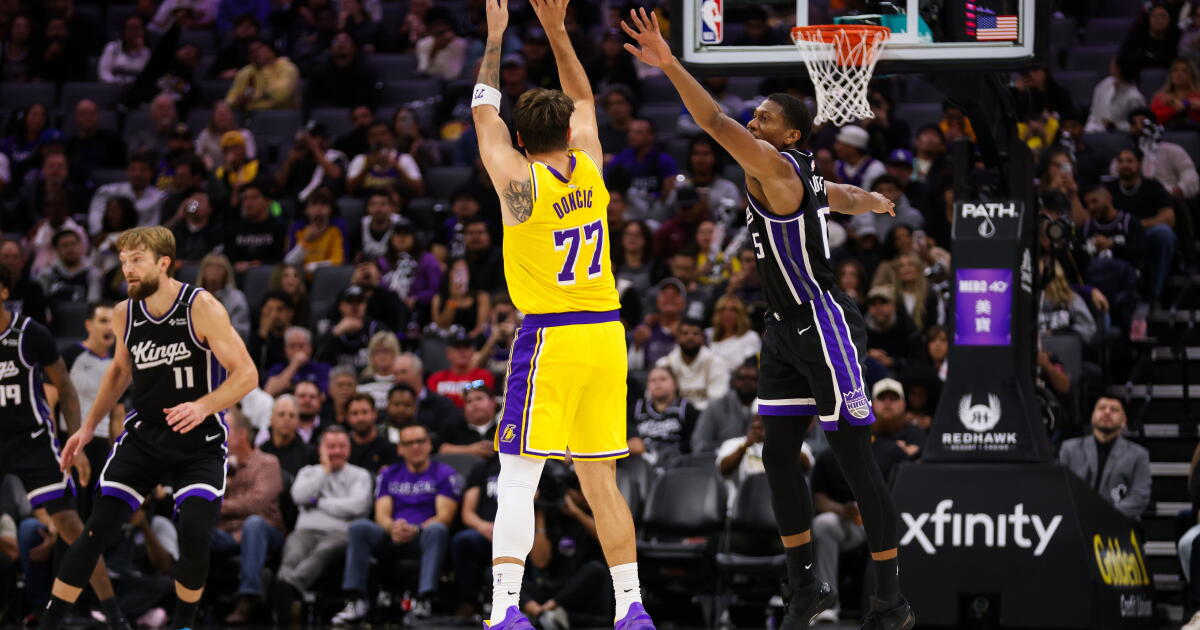
From Broderick Turner: On a night when Lakers coach JJ Redick said his team was “a little flat,” Luka Doncic flattened yet another opponent.

Even Doncic started slow compared to his usual first-quarter exploits, but he picked up his pace as the game progressed, dropping 40 points on the woeful Sacramento Kings to lead the Lakers to a 116-103 win Wednesday night at Golden1 Center.

Doncic has scored 40-plus points in three straight games and in five of his last six.

So, after he went 11-for-23 from the field and six-for-13 from three-point range and after he also notched nine rebounds and seven assists, Doncic was asked if he’s ever had a better offensive stretch over his eight-year NBA career.

“Maybe. I don’t know,” he said. “I had some good stretches in my career. But obviously this could be one of the highest ones. But there’s still some work to do.”

Continue reading here

Lakers box score

NBA standings

Go beyond the scoreboard

Get the latest on L.A.’s teams in the daily Sports Report newsletter.

Clippers lose at last second

Klay Thompson made the winning three-pointer with a second left in overtime and the Miami Heat rallied past the reeling Clippers 117-116 on Wednesday night.

Bam Adebayo set season highs with 35 points and 10 rebounds for the Heat, who have won three of four after losing their first four games. Thompson scored 30, going eight of 17 from three-point range, and Giannis Antetokounmpo had 27 points, 14 boards and six assists.

Miami trailed by 20 in the second quarter and was still down 10 with 4 1/2 minutes left in the fourth before a 9-0 spurt set up the tight finish.

Continue reading here

Clippers box score

NBA standings

Myles Garrett returns to Rams practice

From Gary Klein: Rams star edge rusher Myles Garrett, who has been sidelined for seven games following knee surgery, returned to practice Wednesday.

Garrett, the reigning NFL defensive player of the year, has been on injured reserve since undergoing left knee surgery after the Rams’ season-opening loss to the San Francisco 49ers in Australia.

Coach Sean McVay said the Rams have attempted to be “as diligent, as thorough” as possible before allowing Garrett to practice and opening the 21-day window for him to return to the roster.

McVay said Garrett would take half the amount of full reps on Wednesday and would be evaluated each day before determining when he would be activated to the roster for a game. Garrett went through individual drills with edge rushers during the portion of practice open to reporters.

The Rams play the Washington Commanders on Sunday in Landover, Md.

Continue reading here

Rams’ Jaylen Watson to miss rest of season

From Gary Klein: Rams cornerback Jaylen Watson will have shoulder surgery and is out for the season, coach Sean McVay said Wednesday.

Watson, who signed with the Rams as a free agent after winning two Super Bowl titles in four seasons with the Kansas City Chiefs, reinjured his shoulder during last Sunday’s victory over the Chargers at SoFi Stadium.

“That’s a big blow,” McVay said. “Bummer for him. He’s been such a stud for us. He wanted to be able to play through it but just kind of understanding the totality of it all, just some of the different things, recommended to get that surgery.

Continue reading here

Kempe’s hat trick leads Kings

Adrian Kempe had a hat trick and an assist, Quinton Byfield scored two goals, and the Kings routed the San José Sharks 7-2 on Wednesday night.

Erik Haula and Joel Armia also scored for the Kings and Darcy Kuemper made 30 saves. Artemi Panarin had four assists.

It was the 37th multigoal game Kempe has had with the Kings, moving him past Dustin Brown for sole possession of ninth place in the history of the franchise. Kempe returned to the lineup after missing a 3-2 loss to the Buffalo Sabres on Saturday because of an undisclosed injury.

Continue reading here

Kings summary

NHL standings

This day in sports history

1927 — Walter Hagen beats Joe Turnesa 1-up to capture the PGA Championship for the fourth consecutive year and fifth overall.

1955 — Montreal’s Jean Beliveau scores the second fastest hat trick in NHL history in a 4-2 win over Boston. Beliveau, who scores all four Canadien goals, gets three in 44 seconds against Bruins goaltender Terry Sawchuk on the same power play.

1961 — Bill Stacy of the St. Louis Cardinals returns two interceptions for touchdowns in a 31-17 victory over the Dallas Cowboys.

1966 — Virgil Carter of Brigham Young passes for 513 yards and rushes for 86 to set an NCAA record for total yards with 599 in a 53-33 victory over Texas Western.

1977 — BYU sophomore Marc Wilson sets an NCAA record with 571 passing yards in a 38-8 rout of Utah.

1978 — Oakland coach John Madden becomes the 13th head coach to win 100 games in the NFL as the Raiders beat the Kansas City Chiefs 20-10.

1988 — Alysheba becomes the richest racehorse when he beats Seeking the Gold by a half-length in the $3 million Breeders’ Cup Classic at Churchill Downs.

1994 — George Foreman regains part of the heavyweight title he lost to Muhammad Ali in 1974, stopping Michael Moorer with a two-punch combination at 2:03 of the 10th round. Foreman, 45, captures the IBF and WBA championships to become the oldest champion in any weight class.

1999 — Carolina’s Ron Francis becomes the sixth NHL player to reach 1,500 points when he assisted on Sami Kapanen’s first-period goal for the Hurricanes in 3-2 loss at Detroit.

2008 — Tony Parker scores a career-high 55 points, including a 20-footer at the buzzer to force a second overtime in San Antonio’s 129-125 victory over Minnesota.

2010 — Calvin Borel and Javier Castellano tussle at Churchill Downs just moments after tangling during the $500,000 Breeders’ Cup Marathon in an ugly, chaotic scene. Castellano’s horse Prince Will I Am runs into the path of Romp and Martin Garcia. Garcia is able to stay on top of his horse but also impedes Borel and A.U. Miner. After the race, an enraged Borel is restrained by security personnel and his older brother Cecil.

2010 — Mexico beats the United States in one of the biggest upsets in the history of women’s soccer. The Mexicans, on goals by Maribel Dominguez and Veronica Perez, post 2-1 victory and qualify for the 2011 World Cup.

2011 — Drew Alleman kicks a 25-yard field goal in overtime to give top-ranked LSU a 9-6 win over No. 2 Alabama.

2016 — Arrogate catches 4-5 favorite California Chrome in the final 100 yards to win the $6 million Breeders’ Cup Classic.

2017 — Shalane Flanagan dethrones three-time winner Mary Keitany to become the first American woman to win the New York City Marathon since 1977.

2017 — Eli Manning of the Giants became the seventh NFL quarterback to reach the 50,000-mark with his completion to Sterling Shepard in the fourth quarter against the Rams.

2022 — Alex Ovechkin scores 787th goal for the Washington Capitals surpassing Gordie Howe of the Detroit Red Wings, for all-time NHL record for most goals scored for a single team, in 3-2 loss to Arizona Coyotes.

2022 — World Series: Houston Astros win second title in franchise history; beat Philadelphia Phillies, 4-1 iat Minute Maid Park, Houston for 4-2 series victory; MVP: Astros SS Jeremy Peña, Dusty Baker (73) becomes oldest manager to win championship, Phillies set ignominious record striking out 71 times.

2025 — Washington Capitals left wing Alex Ovechkin becomes first NHL player to score 900 goals in a 6-1 win over the St. Louis Blues

Compiled by the Associated Press

Until next time…

That concludes today’s newsletter. If you have any feedback, ideas for improvement or things you’d like to see, email me at houston.mitchell@latimes.com. To get this newsletter in your inbox, click here.

Source link

Clippers lose seventh in a row after Heat rally for last-second victory

Klay Thompson made the winning three-pointer with a second left in overtime and the Miami Heat rallied past the reeling Clippers 117-116 on Wednesday night.

Bam Adebayo set season highs with 35 points and 10 rebounds for the Heat, who have won three of four after losing their first four games. Thompson scored 30, going eight of 17 from three-point range, and Giannis Antetokounmpo had 27 points, 14 boards and six assists.

Miami trailed by 20 in the second quarter and was still down 10 with 4 1/2 minutes left in the fourth before a 9-0 spurt set up the tight finish.

Darius Garland had 26 points and seven assists to pace the Clippers, who have lost seven games in a row since winning their season opener Oct. 21 against Sacramento.

Source link

Iranians celebrate Democrat victory in US midterms | US Midterm Elections 2026

Iranians celebrated the US midterm results as a victory for Iran, after US President Donald Trump acknowledged the Republicans’ crushing defeat was partly due to the war. Now, attention turns to whether a Democratic majority in Congress can challenge Trump’s military decisions.

Source link

What Becerra’s historic win says about Latino political power in California

Mike Madrid was prepping to interview Xavier Becerra on Olvera Street last month when the immensity of the moment hit him.

That morning, Becerra held a rally for his gubernatorial campaign in the birthplace of Los Angeles alongside California Assembly Speaker Robert Rivas and the leader of the state Senate, Monique Limón, that doubled as a referendum on where Latinos stood politically.

Never before have Latinos occupied the top spots in both chambers of the Legislature and the governor’s mansion simultaneously, Rivas told the cheering crowd. Becerra reminded the audience that the moment was fraught for Latinos, though. Federal agents were still detaining undocumented immigrants across the state, and Latino residents — the state’s largest ethnic group at 41% — were suffering under the crushing cost of food, gas and housing.

“[Latinos] are here, we are present and we will fight,” Becerra said. “But right now, our fight is to get the vote out, to make sure everyone understands that our power lies in our vote.”

Governor candidate Xavier Becerra.

Gubernatorial candidate Xavier Becerra purchases an agua fresca from Taqueria Vista Hermosa in Mercado La Paloma on June 9.

(Ronaldo Bolaños / Los Angeles Times)

Madrid, a longtime political commentator and strategist, had set up his recording equipment at the Pico House, formerly a historic hotel named after the last Mexican governor of California. He recalled how Pio Pico, who helped found the California Republican Party but ended up dying destitute, opened the structure in 1870 as a testament to what Latinos had contributed to their state. But they would eventually be seen as a relic of the bygone days when Mexicans ruled — days that gringos imagined would never return.

The symbolism of a Becerra victory would be “kind of a big deal,” Madrid said, representing a back to the future opportunity for an ethnic group that ruled California until the United States won the Mexican-American War, then was relegated to political irrelevance for over a century before finally being at the doorstep of the governor’s mansion again. Becerra would become California’s first Latino governor in modern times and the second since Romualdo Pacheco served for 10 months in 1875.

Now that the race has been called, Becerra’s victory signifies how much Latinos have advanced since Pico’s days. But it’s also anticlimactic.

As California’s Latino population grew and their political power eventually did too, the days when such a victory would have been an inspiring surprise are long gone. Becerra is now just one of many Latino political captains who steer the Golden State.

Xavier Becerra with Roy Kuroyawagi.

Xavier Becerra, right, fist bumps with Roy Kuroyawagi, owner of Japangeles, during a tour of businesses in Little Tokyo on Aug. 18.

(Genaro Molina / Los Angeles Times)

California Supreme Court Chief Justice Patricia Guerrero became the first Latina to occupy that role when Gov. Gavin Newsom appointed her in 2023. The state’s senior U.S. senator, Alex Padilla, is the son of Mexican immigrants who settled in the San Fernando Valley. Rep. Pete Aguilar, a fourth-generation Mexican American from Redlands, is the third most powerful Democrat in Congress as the head of the party’s House caucus. Lorena Gonzalez, daughter of a Mexican immigrant father and white mother, leads the California Labor Federation, a longtime kingmaker in state politics.

And now, with Becerra at the helm, they will have to govern at a precarious moment, inheriting a state with existential problems affecting everyone, everywhere.

Droughts, El Niño, an eroding coast and the year-round threat of wildfires, much of it accelerated by climate change. Stagnant population growth that threatens to shrink the number of congressional seats. A presidential administration that keeps fighting California in federal court and has attempted to block the votes of 20,000 Californians it alleges are noncitizens. A restive population that Madrid predicts won’t let Becerra bask in his historic win.

“This is what you’ve always wanted. Here’s the keys to the car,” he cracked. “You’re responsible for it now. Who you’re going to blame if things don’t get better — Trump?”

Jody Agius Vallejo, associate director of USC’s Equity Research Institute, said she hopes that California’s new caretakers remember the struggles of getting to the summit — that they represent the dreams and battles of generations of politicians, voters and activists — as they embark on whatever’s next.

“You use these narratives [of Latino personal and collective struggle] to get elected,” she said. “Use them to understand what people need, and govern for them.”

1

Patricia Guerrero, left, is sworn-in to the California Supreme Court in 2022 by Gov. Gavin Newsom.

2

Sen. Alex Padilla, D-Calif., questions Attorney General Pam Bondi.

3

Rep. Pete Aguilar, D-Calif., speaks at a Democratic Steering and Policy Committee hearing in 2026.

4

Lorena Gonzalez, President and Chief Officer of the California Labor Federation.

1. Patricia Guerrero, left, is sworn-in to the California Supreme Court in 2022 by Gov. Gavin Newsom. (Nathaniel Levine / The Sacramento Bee via Associated Press) 2. Sen. Alex Padilla, D-Calif., questions Attorney General Pam Bondi as she testifies before a Senate Judiciary Committee in 2025. (Jose Luis Magana / Associated Press) 3. Rep. Pete Aguilar, D-Calif., speaks at a Democratic Steering and Policy Committee hearing in 2026. (Allison Robbert / Associated Press) 4. Lorena Gonzalez at podium with California Attorney General Rob Bonta during a news conference in Los Angeles in 2024. (Damian Dovarganes / Associated Press)

Many voters were already shrugging about the significance of Becerra’s likely victory — especially Latinos. Only 45% of Latino voters in California felt “proud” about the prospect of a Latino governor, according to a Berkeley IGS poll released last week.

Those results aren’t surprising to Lena Gonzalez, a Long Beach-area state senator who chairs California’s Latino Legislative Caucus. She praised Becerra’s victory as the culmination of decades of political organizing. But voters care more about results than identity, she said — something the Latino political class has been slow to realize.

“People will say, ‘OK, that’s great [he’s Latino], but how are you fighting back?’” she said. “I just think we need to lead now and not advertise we’re Latinos.”

 Xavier Becerra waves goodbye after his visit to Hoover St. Elementary School

Los Angeles mayoral candidate Xavier Becerra waves goodbye after a visit to Hoover St. Elementary School in March 2001.

(Kim D. Johnson / Associated Press)

Becerra has long been a poster child for Latino political firsts, representing L.A.’s Eastside in the state Assembly and Congress for 27 years before Gov. Jerry Brown appointed him to be California’s first Latino attorney general in 2017. Three years later, Becerra became the country’s first Latino Health and Human Services secretary under President Biden.

Becerra has rarely highlighted his latinidad while never shying away from his background as the child of Mexican immigrants. He told Madrid at the end of their interview at the Pico House that Californians should be prouder of his working class roots than his ethnicity.

Some have complained that Becerra is an unworthy, boring torchbearer for Latinos — not dynamic enough to meet a moment where many hoped for a firebrand. But in many ways, his style is a callback to the past.

When Latino politicians first began winning local and state legislative elections in the decades after World War II, they “were constantly about, ‘How do I mobilize the Latino vote without alienating the white vote, and how do I get support from the establishment which is white?’” said Fernando Guerra, director of the Center for the Study of Los Angeles at Loyola Marymount University and a longtime chronicler of California politics.

Latinos were the majority of the population in some areas during that era, but politicians couldn’t rely solely on them to win, because they still didn’t represent a majority of voters. That changed by the late 1980s, as immigration brought millions of Latinos to California.

Civil rights activists successfully sued cities and counties to draw district lines making it easier for Latinos to vote for Latino candidates. Local activists registered new voters by selling them a future where people like them would be leaders, not tokens. Pioneers like Richard Alatorre and Gloria Molina subsequently created political machines, which helped Becerra get his start.

Antonio Villaraigosa and Karen Bass

Mayoral candidate Antonio Villaraigosa, center, and Assemblywoman Karen Bass, left, dance to gospel music sung by the McCoy Memorial Baptist choir during an endorsement celebration in 2005.

(Stefano Paltera / For The Times)

That set the stage for politicians who “didn’t need the external validation anymore” of white voters or power brokers, Guerra said. “They could now say, ‘I am a Latino candidate with a Latino agenda, because I represent a Latino district.’”

By 1996, two years after the anti-immigrant Proposition 187 galvanized Latino activism, a record number of newly registered Latino voters in Orange County helped Loretta Sanchez upset longtime Republican Rep. Bob Dornan, the first welt of purple in a famously red county. That same year, Cruz Bustamante became the first Latino Assembly speaker, then lieutenant governor — the first Latino elected to statewide office in California since Pacheco ascended to the same position in the 1870s. In 2005, Antonio Villaraigosa was elected mayor of Los Angeles, sparking national headlines as the first Latino to occupy that position in modern times.

The Latino political firsts kept coming over the next 20 years, now reaching a pinnacle with Becerra’s win. Guerra said that “incremental” approach made Latinos mainstream to the point where the novelty of another milestone quickly wore off.

“Do you want a transformative moment? Absolutely,” he said. “But those come few and far in between. Incremental comes every two years.”

Xavier Becerra takes a selfie with supporters.

Democratic gubernatorial candidate Xavier Becerra takes a selfie with supporters after a campaign stop on May 21 at the Wende Museum in Culver City.

(Gina Ferazzi / Los Angeles Times)

Becerra started his campaign for governor far behind in the polls, surging after Rep. Eric Swalwell dropped out due to sexual assault allegations. Becerra’s campaign leaned into his milquetoast persona and crowned him Tío Xavier — Uncle Xavier — to market him as a non-threatening moderate who happened to be Latino.

Madrid, a lifelong Republican, voted for Becerra because of GOP candidate Steve Hilton’s refusal to denounce MAGA. He also thinks Becerra can “resurrect a healthy economy for the working class” — something he accuses Democrats of “abandon[ing] for a generation.” The “burden” is on California’s Latino leaders to show they can serve not just their own community but everyone, he said.

On Monday, Becerra mingled with eaters at Homegirl Cafe in Chinatown, looking anodyne in a white shirt, wire-framed glasses and tan khakis as supporters asked for selfies or a hug.

Half-hearted shouts of “¡Sí se puede!” gave way to authentically boisterous chants of “Be-ce-rra!”

The heavy favorite for governor took questions in the packed dining room and didn’t flinch when I asked him to reflect on the fact that Latinos will head every branch of California government if he wins.

“We’re all fortunate when a state like California gives all of us opportunities to be in position of authority,” Becerra replied.

He nodded at Los Angeles Mayor Karen Bass, who stood by his side.

“But we gotta do it right,” he said. “And it’s on me to be a good governor — not to be a good Latino governor, but to be a good governor.”

Source link

Lincoln Riley answers his many critics with stunning USC win

Credit to Lincoln Riley. USC’s embattled football coach stood and stared directly at what could have been the death knell for his Trojans tenure and said: Not today.

Actually, he said more than that after his unranked Trojans upset No. 2 Ohio State, 30-18 on Saturday.

He had a whole statement prepared to read at the end of his postgame news conference.

“I got one other thing I want to say here,” said Riley, whose victory kept alive the Trojans’ hopes of making the College Football Playoff for the first time on his watch. “I want to make sure to articulate my thoughts.

“This program’s not built on internal joy — excuse me, is built on internal joy — not external applause. This win’s for all the staff members, the players, the leaders, admin, all the people within the walls.

“I said before this game, that I’m the right person for this job, and as long as all those people know that, that’s all I care about.

“I appreciate being a part of this university and all it does. I appreciate our kids and our staff, and I’m going to continue to fight on because that’s what being a Trojan’s all about. Fight On.”

Then he stood and punctuated his address: “Adios.”

The way USC dismantled a Buckeyes team that was considered one of the leading national championship contenders this zany college football season, Riley deserved to crow.

The way his team refused to let go of the rope — even with their head coach on the ropes, Riley deserved a victory lap.

It’s just that before sharing his statement, he didn’t seem all that interested in taking it.

He began his news conference looking, appropriately, to lend perspective to the victory — his first in his USC tenure against a top-10 team — in which the Trojans exploded on a Buckeyes team that hadn’t given up more than 24 points in a game since losing to Oregon 32-31 on Oct. 12, 2024.

“Every win’s important,” said Riley, whose overall record at USC in his fifth season is now 42-20. “When you get a chance, like tonight, to play a really good football team — one of the best programs in America over a long, long period of time — those are great opportunities.”

He gave deserved kudos to his team for staying together and responding after last week’s disappointing 24-7 loss at Wisconsin. And reiterated his usual message, win or lose: “I know what’s building within those walls. Like, I know it. All my years of experience and all that I’ve kind of seen and got to experience in this game tells me that. I believe that with every fiber in my being.”

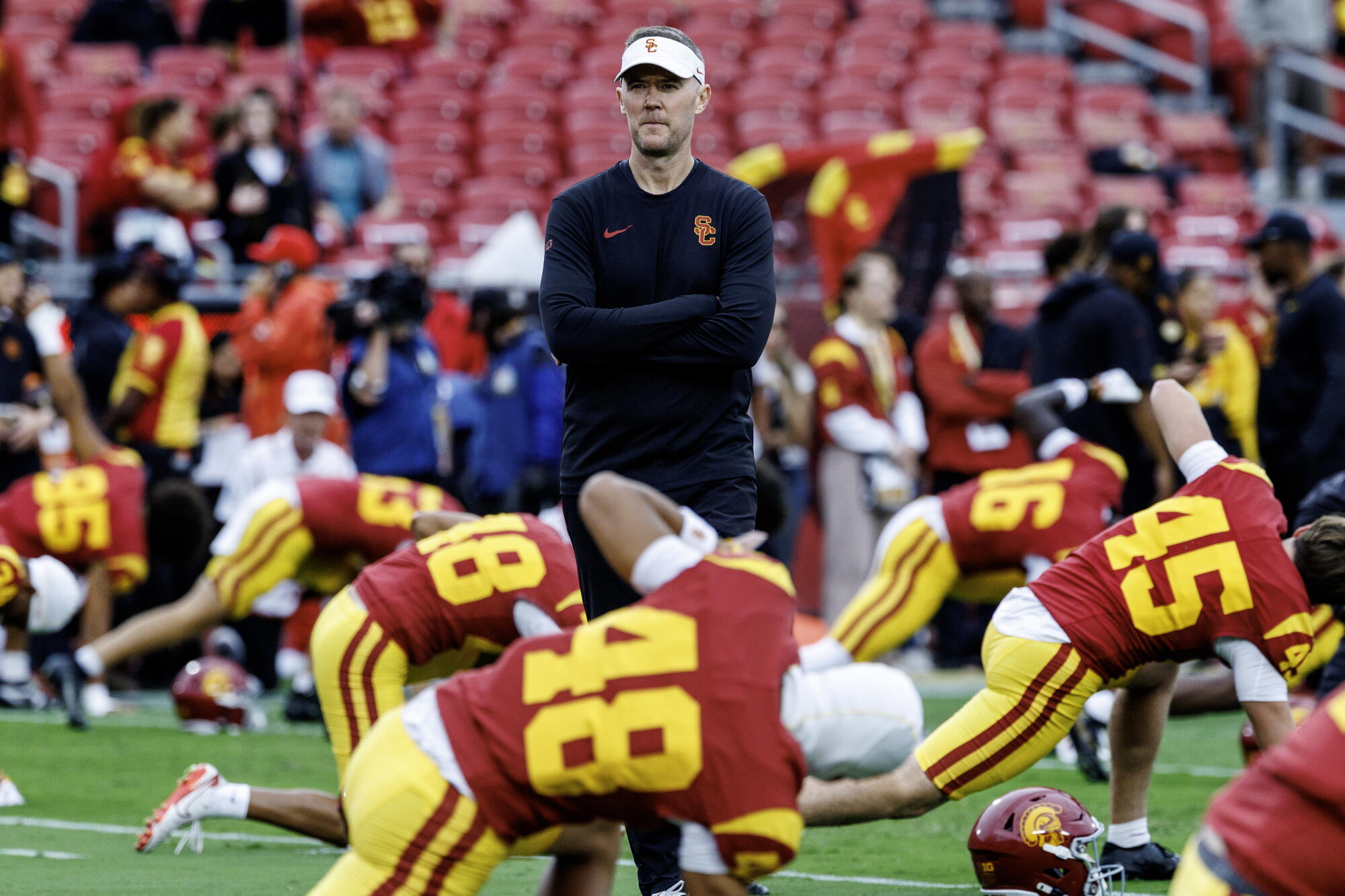
USC coach Lincoln Riley watches his players warm up before facing Ohio State at the Coliseum on Saturday.

USC coach Lincoln Riley watches his players warm up before facing Ohio State at the Coliseum on Saturday.

(Gina Ferazzi / Los Angeles Times)

Saturday’s victory won’t necessarily be good news for dissatisfied fans rooting for Riley’s ouster. But it was big for anyone partial to a good comeback story — and for those tenuous CFP prospects.

“I keep saying, look at all the craziness across the country,” Riley said. “The teams that just hang in there, keep going, get better, stay together, are going to be the ones that are there in the end.”

The Trojans could be one of those teams. They should be, in fact.

They have the talent, as we saw Saturday when previously injured freshmen Trent Mosley and Mark Bowman gashed a Buckeyes defense that hadn’t allowed a play longer than 36 yards all season with plays of 69 and 70 yards.

And they have the fortitude, as we witnessed when USC’s defense forced Ohio State to settle for a field goal after they had first and goal at the one-yard line late in the second quarter: “Grit play, a toughness deal. A mindset thing,” defensive tackle Alex VanSumeren said.

What made the Trojans’ previous losses so galling was the gauntlet ahead of them, starting with Ohio State.

Before, we wondered: If they couldn’t beat Oregon and its backup quarterback at home, how the heck were they going to beat Ohio State (and its understudy QB, Mission Viejo’s Luke Fahey)?

Earlier, we asked: If Wisconsin was going to force them into the worst offensive showing in the Riley era, what was defending national champion Indiana going to do to them?

And, of course: If they were just sneaking by struggling teams like Rutgers, Penn State and Washington, what chance was there that they could surprise still-undefeated UCLA?

But now, after Saturday’s sensational showing, we’ll spend next week’s bye and then the week ahead of their game in Bloomington against the Hoosiers — who escaped Saturday with a 23-16 overtime win over Minnesota — doing the math and wondering why can’t USC knock off another top-five team?

USC linebackers Ta'mere Robinson, left, and Jadyn Walker leap in celebration.

USC linebackers Ta’mere Robinson, left, and Jadyn Walker leap in celebration following a 30-18 win over Ohio State on Saturday.

(Gina Ferazzi / Los Angeles Times)

And if the Trojans can beat Indiana, why can’t they beat the 8-0 Bruins, who have been taking care of business against opponents who have no business beating them, like Nevada on Saturday, 27-0?

Because the Trojans haven’t folded. In fact, things went so well on this rainy Halloween evening — which ended with pirates and princesses and people in all varieties of costume celebrating on the field with the players — you might have started to wonder whether they had been bluffing.

Just like we assume Riley is bluffing whenever he talks about being able to block out “the noise.”

He might not want to worry himself with the “external applause,” but if he wants to fight on at USC, he’s going to need to continue earning it.

Source link

Golden State Valkyries win WNBA title with victory over Atlanta Dream

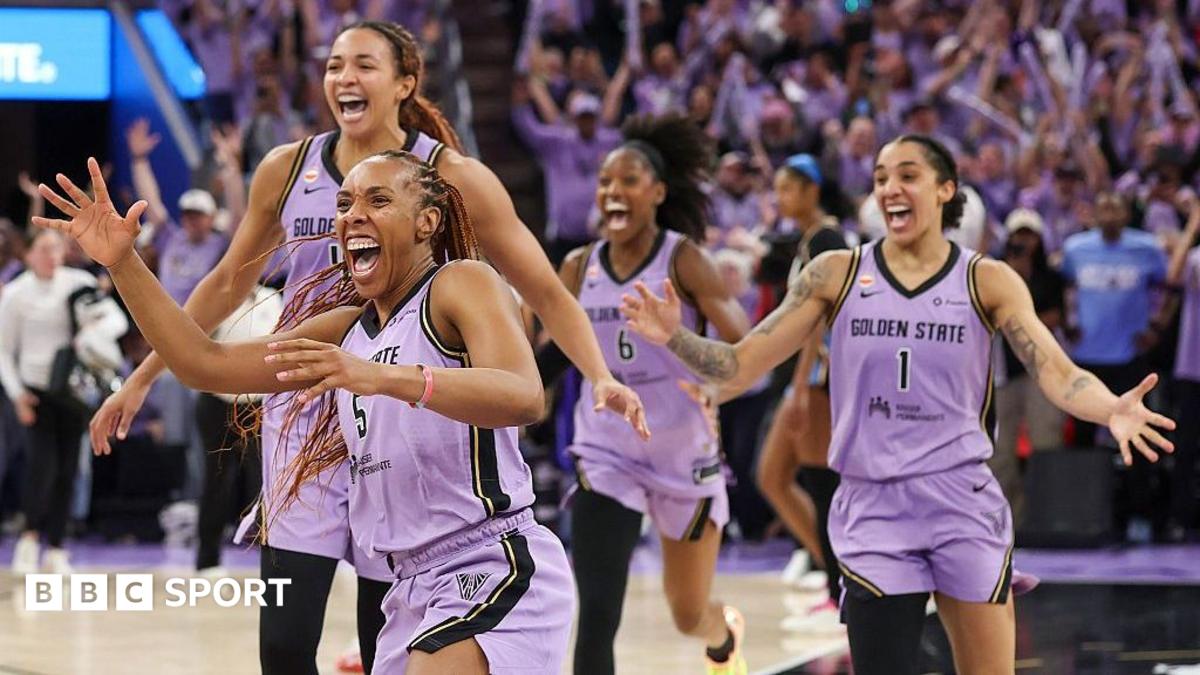
The Golden State Valkyries secured the Women’s NBA title in just their second season with a 68-63 victory over the Atlanta Dream.

After the Dream levelled the seven-match series on Thursday, Gabby Williams starred for the Valkyries with 30 points to seal the win in the first Game Seven in WNBA Finals history.

Williams also claimed the WNBA Finals Most Valuable Player award.

“It’s easy when the energy is this good and positive,” said Williams. I wouldn’t change a thing.

“All it took was good people. We have winners, we have people who are ready to put their bodies on the floor to win a game.

“They don’t care about scoring. They just want to do defence and rebounding. Do whatever it takes and we built a beautiful culture here.”

Twenty eight of Williams’ points came in the second half, including a three-pointer with just over two minutes remaining to edge ahead by 60 points to the Dream’s 57, before free throws by Tiffany Hayes and Veronica Burton closed out the win.

The Valkyries are the WNBA’s newest team, having been formed in 2024, and won in front of a sell-out crowd of more than 18,000 fans at San Francisco’s Chase Center.

It is the fourth time that Dream have lost the finals in their 18-year history.

Source link

Kyren Williams, Blake Corum keep proving they can help Rams win

The Rams finally found it.

For one game at least, running backs Kyren Williams and Blake Corum each carried the ball nearly the same number of times, rushed for nearly the same amount of yards and each scored a touchdown last week in the Rams’ victory over the Las Vegas Raiders.

“We have similarities running the ball but also differences too,” Williams said. “And I think that’s what makes that 1-2 punch everybody keeps talking about.”

Before the victory over the Raiders, most of the conversation about the rushing attack centered around a question: When would coach and play-caller Sean McVay find a way to effectively use both?

Now the question is whether McVay and the backs can repeat or produce a similar performance Sunday against the Chargers and beyond.

McVay noted that Williams and Corum are interchangeable.

“As a play-caller, the best thing is you just call the plays,” McVay said. “It’s not like I have a specific menu of plays for Blake or for Kyren or vice versa.”

Williams, 26, is 5 feet, 9 inches, and 207 pounds. Corum, 25, is 5-8 and 202 pounds.

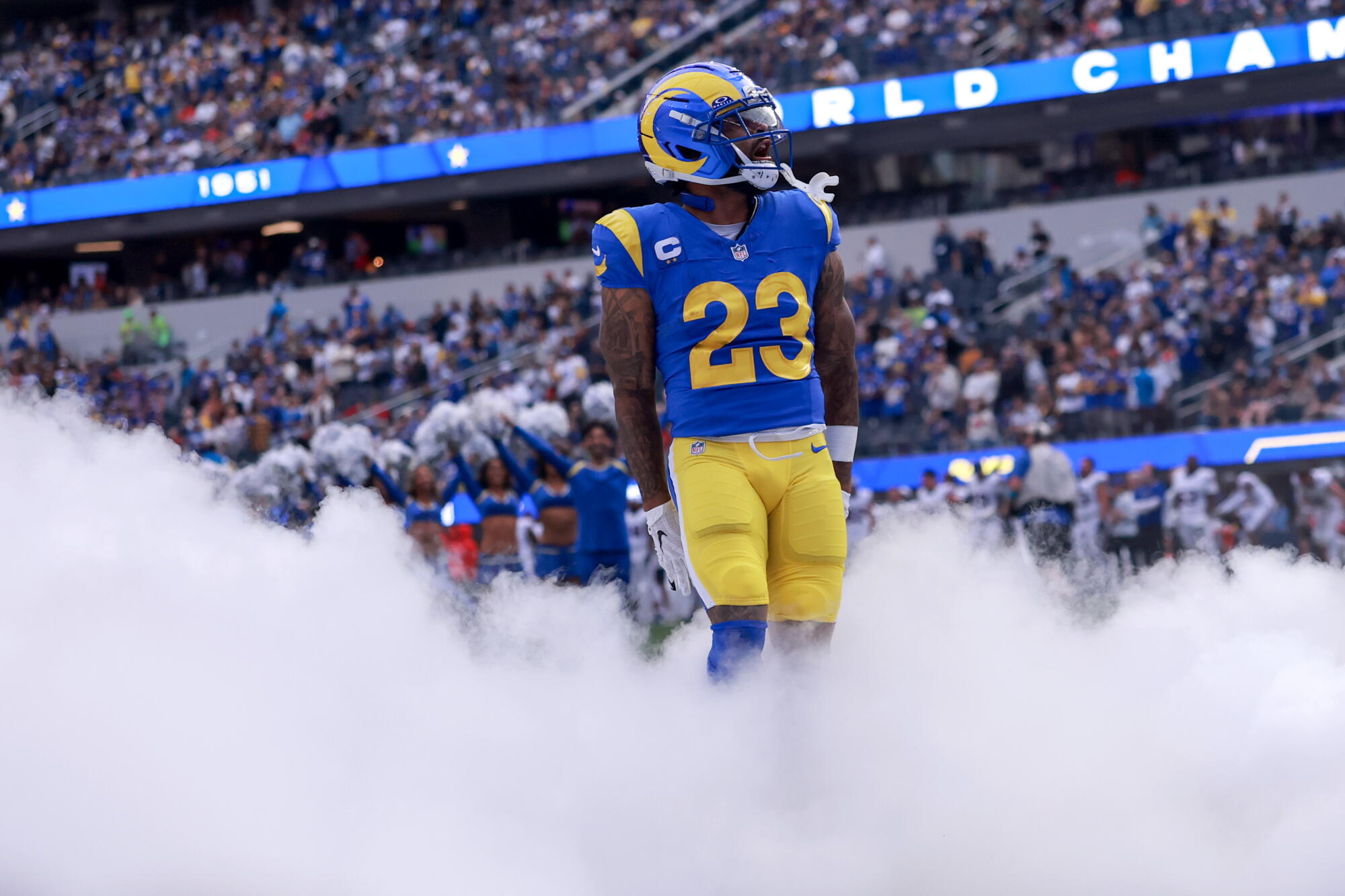
Williams wears jersey No. 23, Corum No. 24.

The Rams drafted Williams in the fifth round out of Notre Dame in 2022, and selected Corum in the third round out of Michigan in 2024.

“There’s a difference in their run style,” McVay said. “You’re defending different things. They’re nice complements.”

That was in full effect against the Raiders.

Williams rushed for 99 yards and a touchdown in 16 carries. Corum rushed for 93 yards and a touchdown in 17 carries.

Their effort helped the Rams take a 35-21 victory that ended a two-game losing streak and kept alive hope for a team that started the season as the Super Bowl favorite.

The two backs share a “growth mindset,” Williams said.

“It’s a great vibe, where we’re able to play off each other, not just on the football field but also in life,” he said.

Rams running back Kyren Williams takes the field before facing the Buffalo Bills at SoFi Stadium on Oct. 12.

Rams running back Kyren Williams takes the field before facing the Buffalo Bills at SoFi Stadium on Oct. 12.

(Eric Thayer / Los Angeles Times)

They also enjoy “a healthy, competitive relationship,” Corum said.

“It’s like I want to see the best for you and he wants to see the best for me,” Corum said. “If he does something great, it’s ‘All right, can I do something greater to help the team.’

“And if I do something great, he’s like, ‘Can I do something greater.’ It’s all love, and all for the team.”

Williams, a 2023 Pro Bowl player, signed a three-year extension before last season that included $23 million in guarantees. He went into this season having rushed for at least 1,144 yards in each of the last three seasons, including more than 1,200 in each of the last two.

The game against the Raiders is what the Rams envisioned — but did not achieve — last season when they aimed to reduce Williams’ workload as a way of keeping him fresh for the latter part of the season and the playoffs.

In 2025, Williams rushed for 1,252 yards and 10 touchdowns in 259 carries. Corum gained 746 yards and scored six touchdowns in 145 carries.

So far this season, Williams has rushed for 492 yards and five touchdowns in 96 carries. He also has 32 receptions for 239 yards and a touchdown.

Corum has rushed for 316 yards and two touchdowns in 64 carries. He has 10 catches for 99 yards and a touchdown.

“I haven’t been a part of that before where you haven’t thought to yourself, ‘OK, we want to lean on these types of plays when this guy’s in and these types of plays when the other guy’s in,’” quarterback Matthew Stafford said. “I think you’re really comfortable with both those guys doing everything we ask of a halfback in this offense.”

Offensive linemen said they often are unaware which running back is in the game — until they look up to see who is celebrating in the end zone.

“It’s crazy to say — but legit,” guard Kevin Dotson said. “It feels just like a plug and play. I don’t know who’s really in, and it doesn’t really matter.

“I know they can make it happen.”

Source link

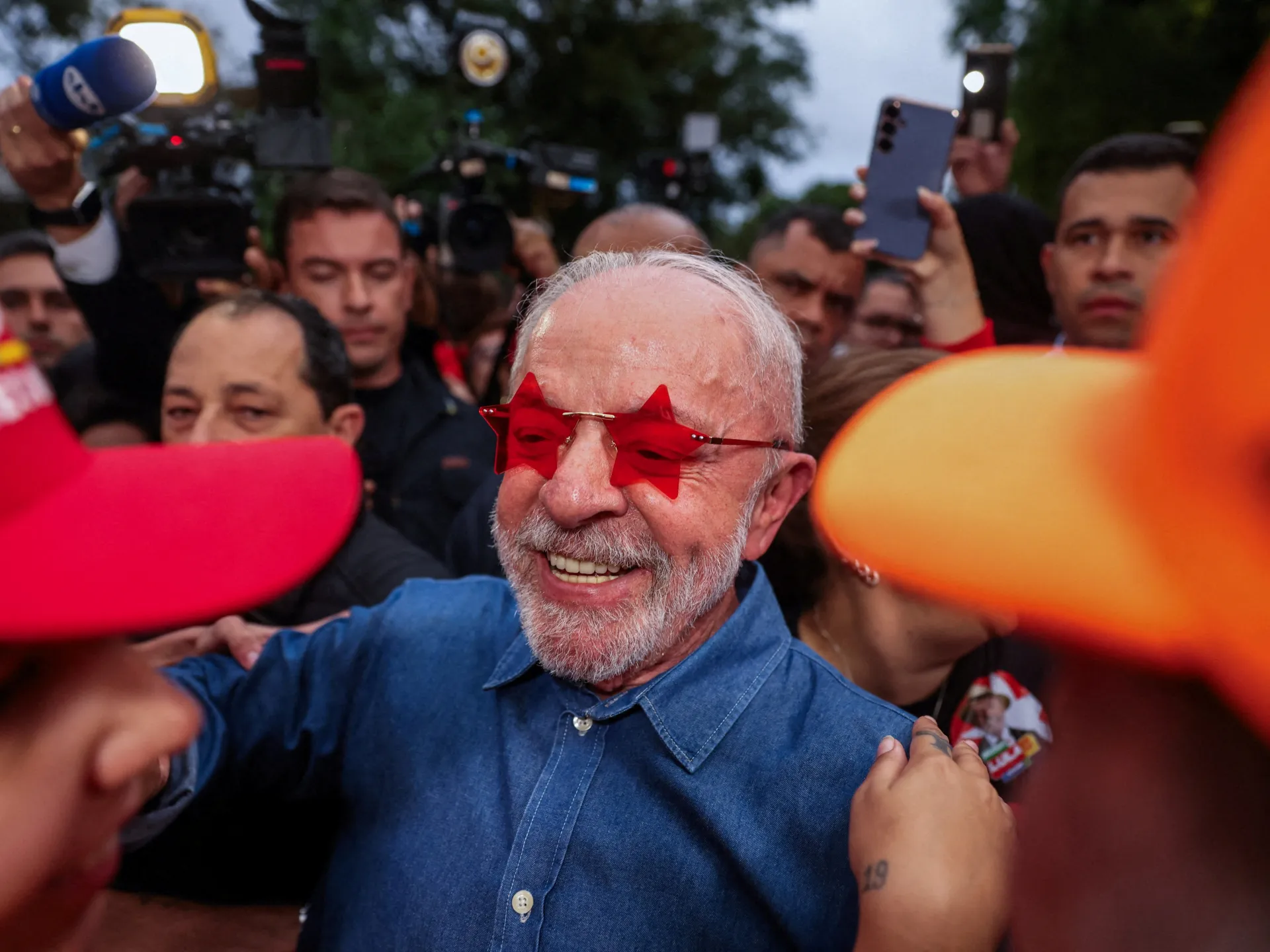
Lula’s victory echoes across BRICS after fears of a Bolsonaro win | Elections

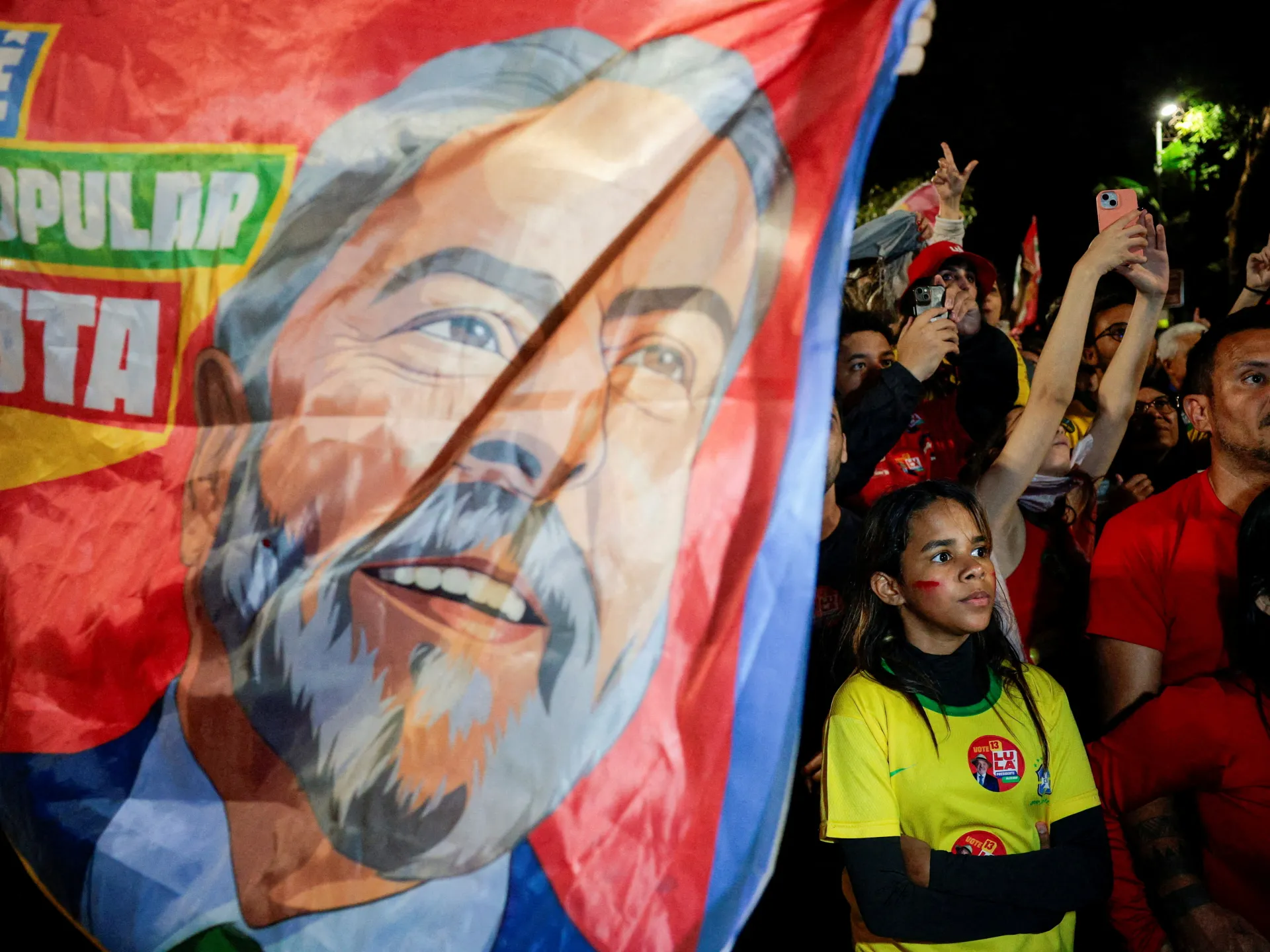
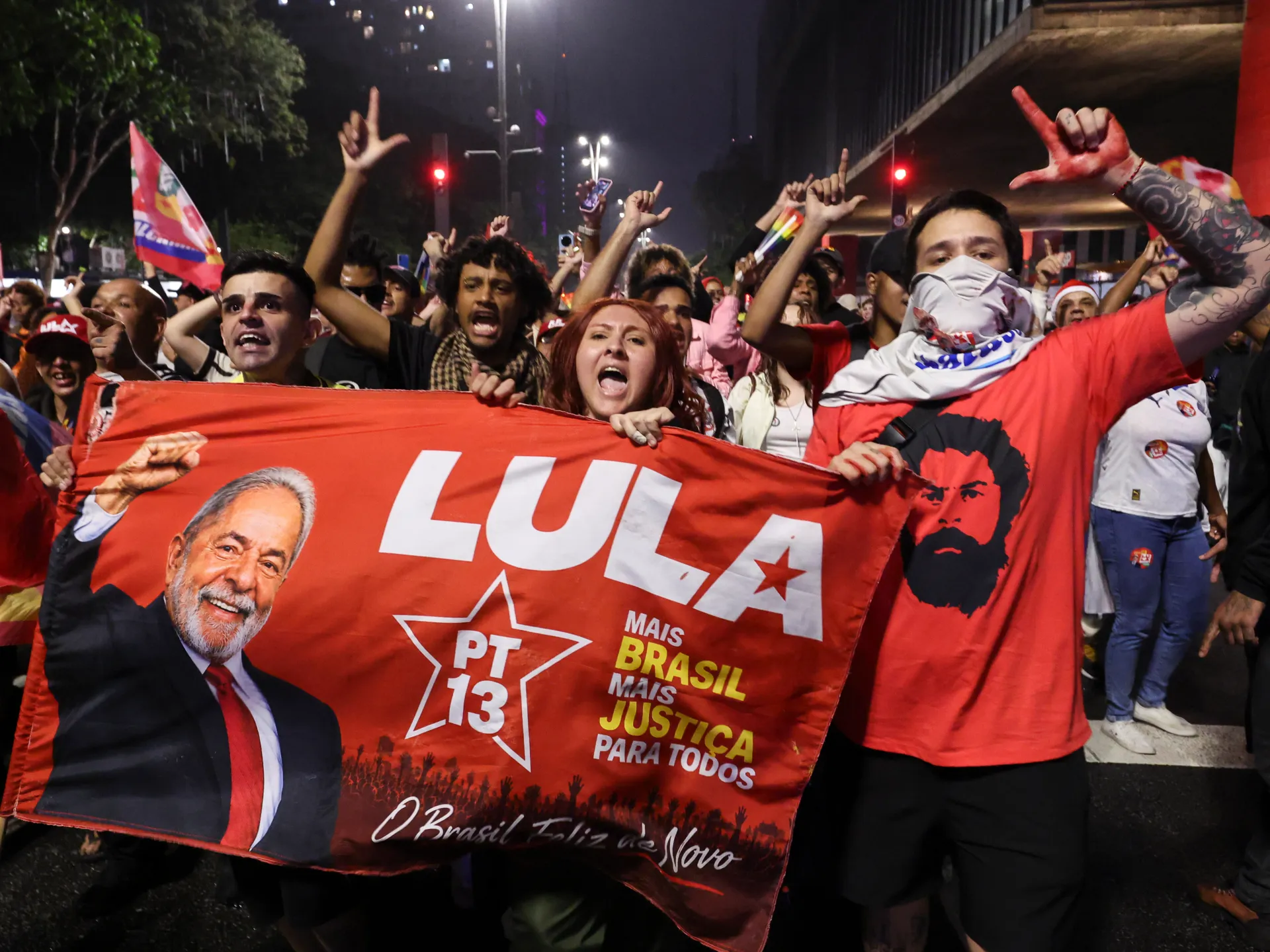
When Brazil’s President Luiz Inacio Lula da Silva scored his surprise election victory on Sunday, winning an unprecedented fourth term in office, his supporters were euphoric.

The joy they felt over Lula’s victory has echoed across large parts of the Global South – and could restore some hope to the grouping that has sought to give emerging countries a greater stake on the world stage, the BRICS alliance.

Recommended Stories

list of 4 itemsend of list

At a time when United States President Donald Trump is seeking to reassert US power and has cast BRICS as a threat to US interests, Lula’s victory in Brazil offers the alliance a measure of political reassurance, experts say.

A win by his rival, Flavio Bolsonaro, could have threatened Brazil’s commitment to the bloc, given his links to Trump and calls to reconsider the country’s role in BRICS.

Instead, Lula’s return gives the grouping one fewer reason to fear a retreat from within – as it continues to help forge a more multipolar future for a world dominated by the US.

As Esmat Zaidan, professor of public policy at Qatar’s Hamad Bin Khalifa University, told Al Jazeera, “The victory of Lula is important to BRICS’ political continuation in the current climate as it seeks to increase the bloc’s role and make it stronger in global governance.”

A spared fracture

It was clear to analysts that Lula’s win would safeguard the continuation of the BRICS alliance, while under Bolsonaro, its future may have floundered.

Lula himself was one of the architects of the bloc when it was founded nearly two decades ago, and has sought to advance its role on the global stage.

According to Zaidan, Bolsonaro’s desire to reconsider Brazil’s participation in BRICS and instead pursue closer alignment with Washington would have weakened the bloc’s political cohesion and potentially slowed cooperation on trade and financial reform.

Bolsonaro had reportedly also promised the US Trade Representative that Brazil’s Pix instant payment system would stay out of non-Western payment schemes, as the US seeks to safeguard global dominance of the dollar, said Imran Khalid, a geostrategic analyst and senior fellow at Foreign Policy in Focus.

“BRICS makes decisions by consensus, so one unwilling founding member can slow everything down from the inside. That was the real risk, more than Brazil walking out,” Khalid told Al Jazeera.

Still, Zaidan cautioned that continuity of the alliance does not amount to total unity within.

“The member countries of BRICS have distinctly different economic interests and geopolitical goals,” he said. “Therefore, while Lula’s victory makes it easier for the BRICS bloc to continue working towards a common agenda, his election did not eliminate these distinct differences.”

Guy Burton, a geopolitical and policy analyst, agreed that the bloc’s differences will remain unchanged with Brazil’s election result.

“BRICS matters because it represents a large share of the world’s population, economy and trade. But it has never really acted as a political unit. Its members are too different,” he said.

“The bloc now includes Iran and the UAE, which sit on opposite sides of the current war. That tells you how limited its cohesion is,” Burton added.

More multipolarity, but not a counterweight to Washington

The apparent relief in the Global South to Lula’s win reflects a broader concern among many emerging economies about their exposure to decisions made in Washington, “particularly regarding trade, tariffs and international economic relations,” said Zaidan.

“For these countries, the issue is not necessarily opposition to the US. It is about having greater room to make independent decisions and avoiding excessive dependence on any single global power,” he said.

Khalid pointed to China and Russia’s support for Lula, with Xi Jinping backing him against outside interference, and the Kremlin praising his work for the BRICS alliance.

“Most of these countries do not want a fight with the United States; they want the freedom to say no to Washington without being punished for it,” he explained.

“A strong Brazil inside BRICS helps protect that freedom.”

Lula has long advocated for a more multipolar international system, in which emerging economies have a stronger voice when it comes to shaping international rules and institutions, added Zaidan.

Burton said even countries and regions beyond the Global South are looking to lessen their reliance on  Washington, including Europe, which is building its own security against Russia and in support of Ukraine.

“So states, whether in the Western camp or not, have accepted that they must pursue their own interests. That means working with whoever they can. We are moving into a genuinely multipolar world,” he said.

Still, BRICS’ diversity and its member states’ varied interests have meant it has never been a coherent counterweight to the West, experts said.

Many in the alliance maintain strong economic and security relationships with the US, said Zaidan.

“I would see Lula’s victory as strengthening the case for strategic autonomy rather than confrontation with Washington,” said the professor.

“BRICS is potentially more effective when it expands the choices available to its members, rather than defining itself simply through opposition to the United States.”

Burton agreed, pointing to Brazil’s changing ties with Trump over the years.

“Russia and China are the obvious US rivals. But India under Modi long had a close relationship with Washington, and with Trump in particular, even if that has weakened recently,” he said.

“Brazil, too, was close to Trump under Jair Bolsonaro, Flavio Bolsonaro’s father, when he was in office.”

Challenging dollar dependence

Among the BRICS’ many ambitions is to promote trade in local currencies rather than the US dollar – and Lula’s victory could provide the political foundation to build on these efforts, said Zaidan, given that Brazil is one of the largest trading economies in the bloc.

Khalid said that after the alliance scrapped the idea of a common BRICS currency at its most recent summit in New Delhi in September, its ambition for trade in local currencies has become far more viable.

“If the [BRICS’ New Development Bank] moves towards its goal of 30 percent of lending in member currencies, and Brazil and China settle more trade in reais and yuan as they agreed in 2023, reliance on the dollar falls step by step, without an open confrontation,” he explained.

But Zaidan said that political will alone is not enough.

“Countries also need reliable payment infrastructure, sufficient currency liquidity, appropriate financial regulations, and businesses willing to use these arrangements,” he said.

For now the dollar reigns supreme in foreign exchange transactions, and there may be no tipping point for another decade or so, Burton said.

Ultimately, though, Lula’s victory could help BRICS move from political discussions towards more practical financial cooperation, while reducing dollar dependence will be “gradual, uneven and driven as much by economic feasibility as by geopolitical ambition”, said Zaidan.

How Washington reacts to this is another variable; Trump’s government sits at the contradiction of wanting to remain the world’s superpower, while also retreating to a more protectionist America-first role, said Burton.

“Developments such as Lula’s re-election will only sharpen the pressures already building in the Global North,” said the expert.

Source link

Serbia’s ‘students’ celebrate for a second night after election victory | Elections

Thousands gathered on the streets of the Serbian capital Belgrade for a second night to celebrate the victory of the student-led protest movement in parliamentary elections. The result removed the party of former president Aleksandar Vucic from power.

Source link

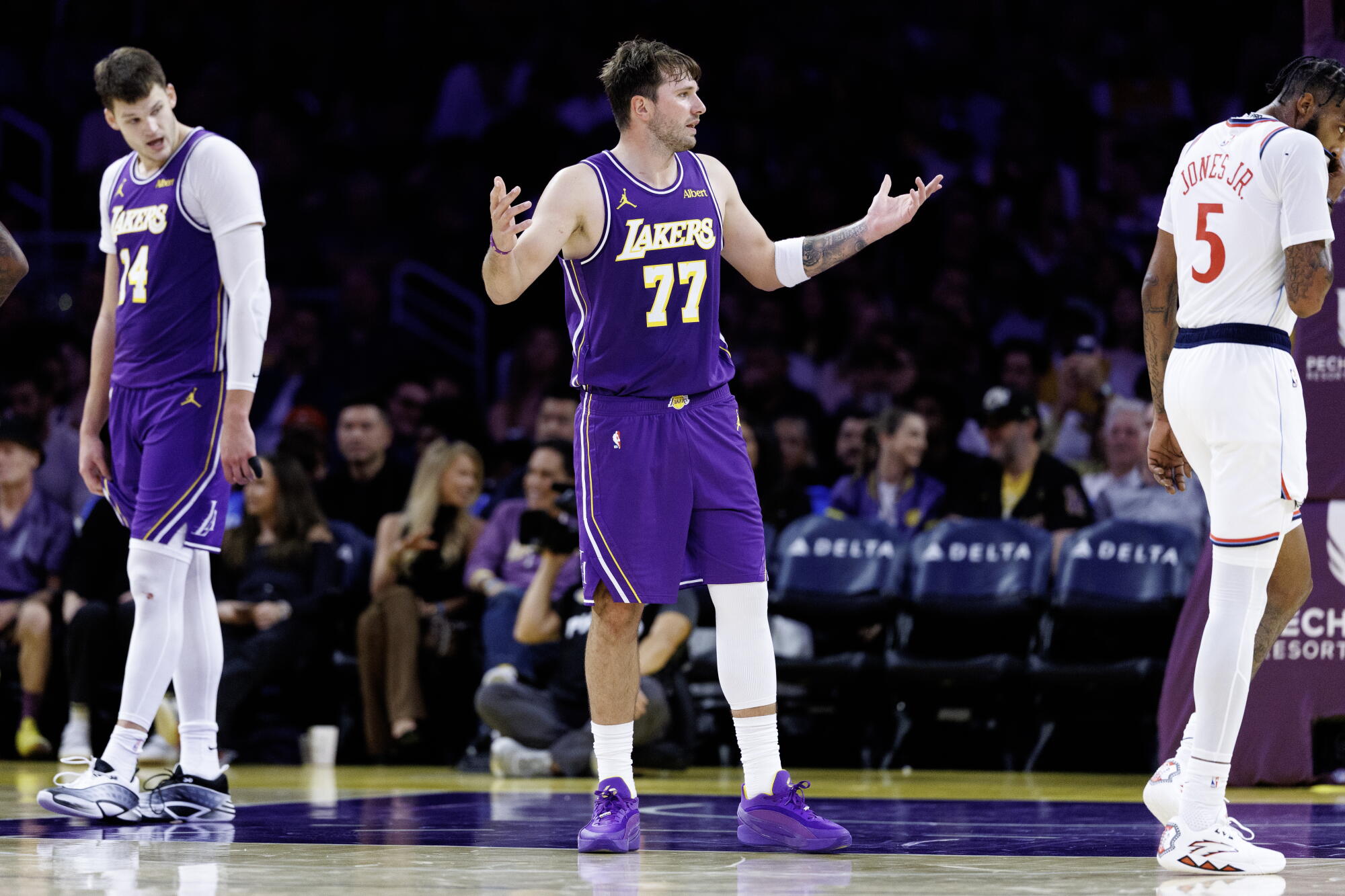
Luka Doncic’s antics sharpen his edge. Lakers fans must embrace it

You don’t like Luka Doncic’s attitude.

I love it.

You think the Lakers star whines too much. All the complaining to officials kills you. If there were a suggestion box, you’d follow Golden State Warriors rookie Yaxel Lendeborg and lodge a complaint.

You do whatever you want; I’m not offended by any of it.

You are not entertained. You don’t like the demonstrative way he waves off calls. You hate how he’ll belabor a point for possessions at a time — as he did, per usual, in Friday’s not-particularly pretty 125-117 victory over the Clippers at Crypto.com Arena. The Lakers improved to 2-0 and Doncic had 23 points, six rebounds, seven assists and, if you’re looking to complain, a career high-tying 11 turnovers.

But me? I am entertained — endlessly. As long as Luka’s list of grievances is long.

Because Doncic is a maniac. Not a mad man, a madman. And a reminder that these millionaires are playing a child’s game, because no one relishes it with quite the joy and verve and passion and emotion and occasional tantrum like Doncic does.

He’s someone who arrived onstage, talented beyond his years. He’s also a toddler.

He couldn’t change if he wanted to, but would you really want him to?

There’s no slicing and dicing without a sufficiently sharp edge.

And I get it. Opposing fans — and their teams’ general managers, whose preseason survey answers about this season’s prospective MVP candidates excluded Doncic in favor of Victor Wembanyama, Nikola Jokić, Anthony Edwards, Shai Gilgeous-Alexander and Jayson Tatum — are not supposed to appreciate Luka’s lip.

But if you’re a Lakers fan, you have to know you can’t take out the trash talk from Doncic’s game. You can’t ask him nicely to clean up his mess, man. Petty isn’t going to be pretty. And everyone can get it — including, once, the reporters on press row covering Doncic’s Dallas Mavericks. “You can’t guard me!” he screamed at us, ridiculously.

You have to let him cook, your very own basketball anarchist.

Lakers star Luka Doncic holds out his arms in front of him with palms up during a win over the Clippers.

Lakers star Luka Doncic reacts during a win over the Clippers on Friday.

(Gina Ferazzi / Los Angeles Times)

“He’s always going to play with an edge,” Lakers coach JJ Redick said. “As long as he’s not causing the other team to have a five-on-four transition opportunity, it doesn’t bother me.”

And if he’s not toeing the line on a late-season suspension triggered by a 16th technical foul, his antics probably wouldn’t bother Lakers fans, either.

“This season, I’m trying to not get techs,” Doncic said after Wednesday’s season-opening victory against the Warriors, when he and Lendeborg mixed it up. “It was the first time that was not a double tech, ’cause I didn’t say nothing. So I’m working on it.”

It isn’t that Doncic busies himself with the refs because he’s lazy and doesn’t want to get back on defense — do you know how much stamina it takes to keep up a marathon-length running dialogue? How exhausting it has to be to litigate every little thing, to be so constantly aggrieved?

It’s a special part of his special skill set; put him in the top 1% in the world of complainers. If he wasn’t one of the world’s top 1% of hoopers, imagine him in court instead of on the court; he’d be a bulldog: Objection! Objection! Objection!

The man is a rascal, but he’s not a villain. Everything he does is with a wink-wink twinkle in his eye.

He never shuts up on the court, but he’s a man of few words off of it, low-key and community-minded and in the top 1% of patient autograph-givers. A generous teammate to whom good vibes matter much.

But he’s an absolute menace to compete against and, yes, to officiate.

So, kids, don’t try this at home. At least not during a basketball game. Don’t show that energy to the refs, who deserve your respect. As do your teachers and your coaches and your parents or guardians.

But do keep that energy. You’re not going to get what you want in life unless you advocate — agitate — for it. Put pressure on powers that be. Ask for explanations — demand them. Because it’s true, the squeaky wheel gets the grease.

Being pushy works, even if it won’t win you popularity contests. The GMs left Doncic off their predictive MVP list for a reason. He finished fourth in MVP voting last season and has never been higher than third in his eight NBA seasons.

That’s largely a reflection of where the Lakers placed last season — fourth. And where they’re expected to finish this season; there are 12 teams with better odds to win the title, according to DraftKings.

But it probably has more to do with voters’ appetite for discussion, the type of heated debate that offends the sensibilities of so many — even though that mayhem is a crucial ingredient of Luka’s magic. Just sit back and relax. Enjoy the show.

Source link

Brazil’s real sinks after Lula’s re-election victory | Financial Markets News

Investors react to Lula’s election victory with a sharp decline in the Brazilian real and concerns over increased spending and fiscal challenges.

Brazil’s real dropped against the United States dollar on the heels of Brazil’s President Luiz Inacio Lula da Silva’s unexpected re-election after right-wing Flavio Bolsonaro, the son of former President Jair Bolsonaro, led in the first round of voting earlier this month.

Brazil’s currency dropped against the dollar by 12 percent in spot trading. Bovespa stock index futures tumbled nearly 15 percent on Monday.

Recommended Stories

list of 3 itemsend of list

“I’m not surprised the real is sinking sharply; traders are covering their bets that assume a Bolsonaro victory and tighter fiscal policy,” Rachel Ziemba, adjunct senior fellow at the Center for a New American Security, told Al Jazeera.

Brazil’s stock exchange halted trading for 30 minutes. The Bovespa index fell 10 percent from its previous close, triggering a circuit-breaker safety mechanism and reversing a rally earlier this month amid expectations of a shift to the right after Bolsonaro won the first round.

Ziemba says Bolsonaro’s refusal to concede the election has driven some financial uncertainty.

“The market pressure is also amplified by the objections raised by Bolsonaro, but the scale of the victory suggests that the result will stand,” she said.

Interest rate futures had also reflected expectations that tighter fiscal policy under Bolsonaro would allow borrowing costs to decline.

“They [investors] assume more domestic spending and higher rates in Brazil. However, the real is still likely to be supported by strong commodity revenues,” Ziemba noted.

Stocks closed on Friday almost 7 percent above their level before the first round, while the Brazilian real was nearly 5 percent stronger against the US dollar.

Interest rate futures are up 3.1 percent, rising sharply after President Lula’s win. Interest rate futures had previously reflected a tighter fiscal policy amid expectations that Bolsonaro would oust the incumbent and that he would allow borrowing costs to decline.

Lula faces an increase in Brazil’s debt and will be challenged with protecting both social programmes and investment, with investors looking for signs of whether his gradual fiscal approach can bring borrowing costs down.

Lula’s team aims to produce a budget surplus of about 1.3 percent of gross domestic product (GDP) by 2030. That would leave money to cover part of the interest bill, reducing the need for fresh borrowing. But public debt already exceeds 82 percent of GDP, while pensions and other legally required spending limit where savings can come from.

“Lula’s policies have talked about spending cuts, but he has not gone into the details of how that is going to look,” said Divya Singaravelu, head of research at Meridian 1305 Capital.

Attention will now turn to Lula’s choice of finance minister and what it signals about his fiscal approach.

Source link

Lula’s victory may be a turning point for Latin America | Elections

At 80, President Luiz Inacio Lula da Silva has pulled off an extraordinary political victory. After losing the first round to Flavio Bolsonaro, son of former President Jair Bolsonaro, by 47 percent to 45 percent, Lula defied the odds to secure a stunning second-round victory, with 51.8 percent of the vote against Bolsonaro’s 48.2 percent.

His triumph confounded every pre-election poll and crowned a dramatic campaign revival that few had anticipated.

Lula’s victory in Latin America’s largest country does more than halt the far right’s return to power in Brazil. It breaks a succession of right-wing electoral victories across the region and deals a major blow to United States President Donald Trump’s increasingly interventionist agenda in the Western Hemisphere.

When Bolsonaro unexpectedly defeated Lula in the first round, the result sent shockwaves across Brazil and beyond. For the government, the defeat was particularly startling given its strong socioeconomic record. What followed was an extraordinary three-week political mobilisation that transformed the sluggish first-round campaign of Lula’s Workers’ Party into an existential confrontation over the future of democracy and sovereignty in Brazil.

The economic record was hardly that of a government heading for defeat. Brazil’s economy grew by a cumulative 9.2 percent between 2023 and 2025, compared with an average of just 5.6 percent among its South American neighbours. Unemployment fell from 9.3 percent in 2022 to a historic low of 5.4 percent in 2026.

Brazil also exited the United Nations Hunger Map in 2025, after having returned to it under the Bolsonaro senior administration. In the Amazon, deforestation fell to its lowest level in decades, a sharp reversal of the trend under his predecessor.

Not everything has been rosy under the Lula administration. Millions of Brazilians have remained trapped in credit-card debt, struggling with extremely high interest rates, while an explosion of online gambling has devastated the livelihoods of families. The run-off result sent a clear signal that there was social discontent.

Lula responded with unusually bold measures: a sweeping debt-relief initiative and restrictions on online betting, as well as expanded social benefits, fuel subsidies, and the transition from a six-day to a five-day working week. These policies sought to reconnect the government’s macroeconomic achievements with the everyday economic anxieties of Brazilian voters.

Bolsonaro offered a radically different vision for Brazil: sweeping spending cuts, privatisations, lower taxes and, above all, an iron-fisted response to crime and insecurity. His proposals included building five maximum-security prisons modelled on El Salvador’s notorious penitentiary system and authorising lethal force against heavily armed criminals.

Bolsonaro also pledged to pardon his father, sentenced to 27 years for plotting to overturn the 2022 election, and to grant clemency to those convicted over the January 8, 2023 assault on Brazil’s democratic institutions. For his supporters, this represented an opportunity to reverse what they considered judicial persecution. For his opponents, it threatened to rehabilitate the attempted coup and undermine judicial independence.

Lula’s campaign came back re-energised, with many young Brazilians mobilising at the grassroots level. The campaign was able to overcome even algorithmic bias by social media giants like Meta, which favoured Bolsonaro.

Ultimately, the election became a battle not only over Brazil’s democracy but also its sovereignty. Trump’s administration has intervened conspicuously in Brazilian politics throughout Lula’s term, imposing punitive tariffs, sanctioning a Supreme Court justice involved in Jair Bolsonaro’s prosecution and openly embracing his son’s candidacy.

In May, Trump received Flavio Bolsonaro in the Oval Office. Two days later, Secretary of State Marco Rubio designated Brazil’s two largest crime organisations as foreign terrorist organisations, a measure Flavio had publicly requested.

These designations carry implications extending far beyond electoral politics. They potentially open the door to US military operations on Brazilian territory under Washington’s expanding war on so-called “narcoterrorism”. The world saw how one such foreign terrorist designation enabled the US to intervene militarily in Venezuela and abduct its sitting president.

Whereas Trump seeks to draw Latin America’s largest country into Washington’s expanding system of hemispheric military dominance, Lula has defended Brazil’s strategic autonomy, insisting that cooperation against organised crime must respect national sovereignty.

He framed the election as a choice between a sovereign Brazil charting its own course and one subordinated to Washington’s geopolitical agenda. Sunday’s election result shows that the Brazilian people have made their choice.

Importantly, Lula’s victory may mark a turning point in Latin America’s rightward shift. Since Trump’s return to the White House, the right has scored a string of electoral victories in Honduras, Chile, and Bolivia, among others. But Lula’s re-election suggests that its momentum may be faltering.

The result comes just ahead of the US midterms and could deliver a significant setback to the strength of Trump’s leadership in the Americas. In Argentina, President Javier Milei — who regularly attacks Lula and threw all his weight behind Bolsonaro — has been sliding in the polls ahead of next year’s presidential election. In Chile, President Jose Antonio Kast has suffered an even more precipitous collapse in public support.

Mexico’s Claudia Sheinbaum, for her part, has likely breathed a sigh of relief. A Lula defeat would have left her increasingly isolated in a region gravitating towards Mexico’s northern neighbour. Instead, Latin America’s two most populous countries and largest economies will remain firmly on the left for the foreseeable future.

It is too early to declare the region’s rightward turn over. But Lula’s victory raises the possibility that the wave has already crested. Brazil will not be joining Trump’s Shield of the Americas, and while the “Donroe Doctrine” remains a threat, its moment of greatest ascendancy may already be behind it.

Lula’s victory is a vindication of a lifetime spent fighting for society’s most marginalised and disenfranchised. And its significance extends far beyond Brazil’s borders. For defenders of democracy, multilateralism, international law, environmental protection and the sovereignty of the Global South, it sends a powerful message: the far right’s advance is neither inevitable nor irreversible. Not in Brazil. Not anywhere.

The views expressed in this article are the author’s own and do not necessarily reflect Al Jazeera’s editorial stance.

Source link

Matthew Stafford and Rams beat Raiders to help revive their season

What happened in Vegas cannot stay in Vegas.

Not if the Rams want to make a run to the playoffs.

Matthew Stafford must continue to flash his 2025 MVP form. Star receiver Puka Nacua and Rams tight ends must keep carrying a Davante Adams-less receiving corps. Kyren Williams and Blake Corum must build on an impressive combo rushing performance.

And the Rams’ defense must negate potential comebacks.

The Rams displayed all those attributes Sunday in a 35-21 victory over the Raiders at Allegiant Stadium.

Gary Klein breaks down what went right for the Rams in a 35-21 win over the Las Vegas Raiders.

Stafford became the franchise’s all-time leader in touchdown passes by connecting with tight end Davis Allen for two and with Nacua for another in a victory that improved the Rams’ record to 3-4.

“A good step in the right direction,” coach Sean McVay said.

Williams and Corum each rushed for a touchdown as the Rams bounced back from consecutive defeats by the Buffalo Bills and Arizona Cardinals to keep alive their turnaround from their third poor start in three seasons.

For the first time in the Rams’ last five games, the outcome did not come down to the final play.

“I like those,” said Stafford, who ranks fourth all-time in fourth-quarter comebacks. “It’s nice feeling a little bit more comfortable in the fourth quarter.”

It was not a perfect performance — Williams lost a fumble and penalties nullified two Corum touchdown runs.

But that did not matter against a Raiders team that served as a welcome antidote for the injury-depleted Rams.

The Raiders (3-4) went into the game having lost three in a row, and they showed no sign that their struggles against quality opponents will end anytime soon.

Next up for the Rams: The winless Chargers.

After that, trips to Washington (1-4-1) and Arizona (2-5) before a bye.

Rams running back Blake Corum tries to fend off Raiders safety Treydan Stukes during the fourth quarter Sunday.

Rams running back Blake Corum tries to fend off Raiders safety Treydan Stukes during the fourth quarter Sunday.

(Candice Ward / Getty Images)

If the Rams keep playing the way they did Sunday, they could begin to round into a semblance of the team they were projected to be when they opened the season as Super Bowl favorites.

They certainly might be healthier.

Edge rusher Myles Garrett and tight end Terrance Ferguson are eligible to come off injured reserve. Cornerback Trent McDuffie, who sat out the last two games because of a groin injury, could make his way back.

Defensive lineman Kobie Turner will be out at least three more games but could possibly return for the matchup against the Green Bay Packers the night before Thanksgiving. Adams also will be back at some point.

In the meantime, McVay needs Stafford to play with the efficiency he showed Sunday.

The 18th-year pro completed 23 of 29 passes for 195 yards. A catchable fourth-quarter pass to tight end Colby Parkinson bounced off Parkinson and into the hands of Raiders linebacker Nakobe Dean. Stafford has passed for 14 touchdowns, with seven interceptions.

His second-quarter touchdown pass to Nacua was the 155th since he joined the Rams in 2021, moving him past Roman Gabriel into first on the team’s all-time list. Stafford is also the first player in NFL history to lead two different franchises in touchdown passes; he had 282 with the Detroit Lions.

Nacua was questionable for the game because of a calf injury he suffered during practice. But the fourth-year pro caught eight passes for 68 yards, including his catch-and-run for an 11-yard touchdown.

Williams rushed for 99 yards and a touchdown in 16 carries. Corum gained 93 yards and scored a touchdown in 17 carries. He would have amassed more than 100 yards rushing if a 43-yard touchdown had not been nullified by a penalty.

Rams running back Kyren Williams stiff-arms Raiders cornerback Hezekiah Masses in the second quarter Sunday.

Rams running back Kyren Williams stiff-arms Raiders cornerback Hezekiah Masses in the second quarter Sunday.

(Ethan Miller / Getty Images)

“It feels great being able to have a partner back there like Kyren,” Corum said. “It just makes you want to go harder, seeing him do some of the things that he does on the field.

“You’re just like, ‘All right, it’s my time. Let me go do it.’ And so I feel like we just make each other proud and feed off each other’s energy.”

On a day when the NFC West-leading San Francisco 49ers lost for the first time, the Rams avoided falling further behind and appeared capable of possibly engineering turnarounds similar to the ones they produced in 2023 and 2024.

The Rams led 14-3 early in the second quarter on Stafford’s touchdown passes to Allen.

A few minutes before halftime, Nacua scored. Williams’ 17-yard touchdown run gave the Rams a comfortable 28-6 lead.

The Raiders threatened in the fourth quarter when Kirk Cousins connected with Tre Tucker for a 37-yard touchdown pass and, after Dean’s interception, found Ashton Jeanty for another.

But Corum sealed the victory with a four-yard touchdown run.

The Rams’ performance was more than enough against the Raiders.

Now they must build on it.

Source link

Lula holds off far right with victory in Brazil presidential election | Elections News

Leftist President Luiz Inacio Lula da Silva has defeated right-wing Senator Flavio Bolsonaro in Brazil’s contentious presidential race, pulling off a remarkable comeback after a first-round loss that galvanised the country’s political right.

Shortly after 9:00pm Brasilia time on Sunday (00:00 GMT), Brazil’s Superior Electoral Court called the race for Lula, who had earned more than 51 percent of the vote. More than 64 million ballots were cast for the incumbent.

Recommended Stories

list of 3 itemsend of list

Bolsonaro, meanwhile, netted 48 percent, or north of 59 million ballots. More than 4 million votes separated the two candidates, with the final votes still being counted.

With his victory, Lula has made history. No other politician in modern Brazilian history has lost the first round of a presidential election only to win the second round.

“A historic turning point for democracy,” Edinho Silva, the head of Lula’s Workers’ Party, posted on social media, along with a video of supporters chanting, “Ole, ole, ole, ole, ola! Lula, Lula!”

Still, the vote process was marred by allegations of voter suppression after reports emerged that public transport in some areas had been suspended.

Lula’s allies accused Bolsonaro’s supporters of reducing bus availability, in an attempt dampen the president’s working-class base.

Heavy rains, meanwhile, affected southern areas considered to be Bolsonaro strongholds.

The campaigns of both Lula and Bolsonaro ultimately petitioned the Supreme Court for a voting extension. Polls across the country were kept open two hours later than expected, until 7pm Brasilia time (22:00 GMT).

Sunday’s victory means Lula will retain the presidency of Latin America’s largest country, denying a crucial victory to the region’s right wing.

In recent years, right-wing leaders have swept presidential races in nearby countries like Peru, Colombia, Argentina, Bolivia and Ecuador. Many have ridden a wave of anti-incumbent energy and enjoyed support from United States President Donald Trump, who returned to office in January 2025.

A former union leader for metalworkers, Lula – at age 80 – will be sworn in on January 5, 2027, when he will beat his own record as the oldest Brazilian president to take the oath of office since the country’s return to democracy.

His victory has earned him an unprecedented fourth non-consecutive term.

Lula came into Sunday’s run-off as an underdog. While he narrowly led pre-election, the first round of voting on October 4 showed him trailing Bolsonaro.

He earned 45 percent of the first-round vote, compared with the right-wing senator’s 47 percent, both tallies short of the 50 percent needed to avoid a run-off.

But in the weeks since, Lula has rallied supporters around cost-of-living issues. He championed a constitutional amendment passed this month that shortened the Brazilian workweek, and floated the possibility of providing free public transport on weekends.

Having entered politics in the 1980s, during the twilight of the country’s military dictatorship, Lula has run for president seven times.

He won two consecutive terms from 2002 through 2010, as well as a third term in 2022, in what was the tightest race in modern Brazilian history up to that point.

His rival in that election, former far-right President Jair Bolsonaro, is the father of Senator Bolsonaro, Lula’s adversary in this race.

Jair Bolsonaro has since been sentenced to 27 years in prison for his role in plotting a coup following his loss to Lula.

Despite overseeing a decline in poverty and low unemployment during his third term in office, Lula has faced questions about his age, his ability to combat crime, and the country’s polarised political landscape.

An explosion of household debt has also left many Brazilians feeling their economic circumstances have worsened.

In September, Lula banned online gambling and sport betting apps to address the issue.

While the victory over Bolsonaro cements Lula’s status as one of the most significant and influential figures in Brazil’s modern history, efforts to advance legislative priorities during his fourth term could be stymied by the most right-wing Congress in recent memory.

Source link

NFL fines 3 coaches $250K for berating officials, but they may not pay

Three NFL head coaches were each fined $250,000 Wednesday for their conduct toward game officials. Yet apparently nobody has to whip out a checkbook quite yet.

The fines are on hold and could be rescinded altogether if the coaches behave themselves going forward, according to multiple reports.

The New England Patriots’ Mike Vrabel, the Philadelphia Eagles’ Nick Sirianni and the New York Jets’ Aaron Glenn were hit with the fines, which were put into abeyance pending future interaction with officials.

The NFL did not disclose the specific behavior that prompted the organization to single out those coaches, although all three have had visible sideline beef with officials this season.

Vrabel left the coaching box to confront an official late in the first half of the Patriots’ 29-26 victory over the Buffalo Bills on Oct. 5, losing his cool over a defensive holding call against Patriots’ cornerback Marcus Jones. Vrabel was hit with a 15-yard unsportsmanlike conduct penalty.

Referee Bill Vinovich said afterward that Vrabel was flagged for using profanity toward an official. Vrabel told reporters that Vinovich “was a little sensitive. I told him it was a terrible — I’m not going to say effing call. I’ve said that 87 times since I’ve been a head coach. It was nothing derogatory.”

A week later, Glenn went on a tirade while surrounded by three officials during the Jets’ victory over the Browns. Sirianni has had several sideline temper tantrums, including one Sept. 28 after Eagles quarterback Jalen Hurts was called for intentional grounding.

Troy Vincent, the NFL executive vice president of football operations, told reporters Wednesday at the owners meetings in New York City that sportsmanship was a discussion item. The fines appear to be sending a message that relationships between coaches, game officials and players need to be more civil.

The NFL suspended game officials Jeff Seeman and Adrian Hill on Oct. 5 following separate incidents of unprofessional conduct toward players. Seeman appeared to curse at Arizona Cardinals tight end Trey McBride, and Hill confronted Minnesota Vikings linebacker Eric Wilson after being inadvertently knocked down.

Source link