Venezuelans

Venezuelans Rage as Blackouts Intensify

Photo of the Guri Hydroelectric Plant posted by the US Embassy on August 3

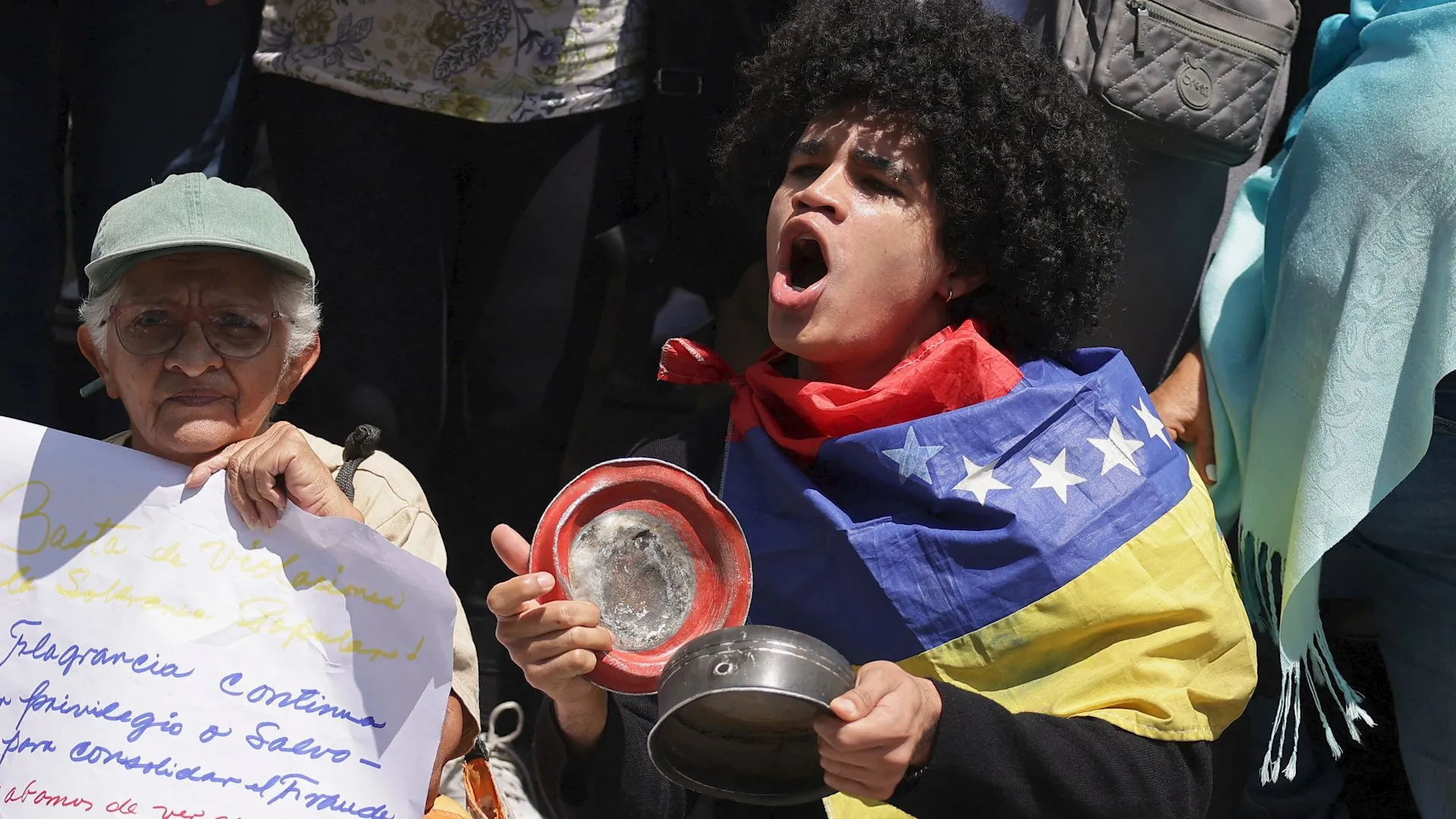
In the last few days, a sight that had become unusual in Venezuela for years took place in multiple parts of the country: street protests over electricity. The blackouts are increasing in frequency and duration without any warning, along with several strong brownouts. This recent uptick has even reached the capital, which the chavista government usually tries to protect from the chronic power deficit, at the expense of the rest of the nation.

In Carabobo state, people in Valencia and its surrounding cities reported both prolonged cuts and swift interruptions, which have taken their toll on their daily routine. Local authorities say that the full recovery of the thermoelectric plant Termocarabobo (directly affected by the earthquakes just like Planta Centro, close to the epicenter of the first quake) will help alleviate the problem.

Next door, in Aragua state, things are not much better. People in Maracay report daily double cuts of four to five hours, hitting the city’s commercial sector despite the use of power plants. In the smaller towns of Villa de Cura and San Mateo, citizens held peaceful protests to complain as governor Joana Sánchez blamed current electricity woes on the June 24 earthquakes.

The increase in power outages has reached both the east and west of Venezuela. In the western Lara state, an unannounced blackout right after midnight on July 31 left large parts of the state in the dark, in addition to the lengthy daily rationing that reaches up to five hours. Local NGO Activos por la Luz, which monitors the effects of the electric crisis in the region, released in response a very scathing statement on social media:

Protests spanning affluent Lechería and impoverished El Callao spell bad news for Delcy Rodríguez’s promise of economic recovery. 

“This has stopped being just an electrical problem. This is a systematic destruction of our mental health, our emotional stability, of our dignity and of our hope as people. It’s not normal to live under constant stress, without knowing when the power goes out, how long the blackout will last or how you will go to sleep, work or just survive the heat and the burnout. We have been pushed to a permanent state of anxiety, frustration and impotence…”

Very bad mood in Oriente

Meanwhile in the eastern cities of Maturín and Anaco, people made their voices heard in front of the offices of State-owned electricity Corpoelec without incident. Sadly, that wasn’t the case in Guayana, as a public gathering in the road to enter the town of Guasipati on July 28th was dissolved by a group of unidentified men using firearms. The following day, the nearby town of El Callao witnessed a civic strike protesting six-to-seven hour power cuts and the collapse of other public services caused by increasing mining activity in the area and the growing population influx.

Such is the level of exasperation that the mayor of Lechería, Manuel Ferreira, publicly called Corpoelec to establish a proper scheduling of the electrical cuts. “Without schedules, without timetables and without respect: that’s how our neighbors have been treated. We understand the climate variables or the structural system failures, but if the rationing is unavoidable, the least we demand is respect and dignity. People have the right to know when the service is taken off so they can prepare.”

To better understand the relevance of this: both Guasipati and El Callao belong to the region covered by the Mining Arc, where there is a documented presence of gangs (hence the recent killing of Tren de Aragua’s leader in nearby Kilometro 88), and the military is currently deploying intense control over the population. The gold industry in the region is vital for the regime’s interests and has recently fallen under the eye of the Trump administration and the international mining companies the White House aspires to attract to Venezuela. Lechería remains an enclave for the privileged, the ones who built or preserved a comfortable life during the worst years of the country’s economic decline. The fact that both regions are witnessing protests of this scale is more bad news for Delcy Rodríguez’s promise of economic recovery. 

The electric transition hasn’t started either

Back in May, as the national power grid was stretching thin because of high temperatures and rising demand, the Electricity Minister Ronald Alcalá and the US Chief of Mission John Barrett met to discuss plans to rebuild the country’s power grid.

In the early days of June, the National Assembly apparently advanced in the drafting of a partial reform to the Electric System and Service Organic Law, allowing the private sector to participate in the electricity service but still keeping the State mostly in control of it. Some have criticized the changes as insufficient.

After that, the interim government signed two memorandums of understanding in June. The first one with Argentinian company IMPSA, which involves two hydroelectric plants in Guayana: repairing the Macagua Dam and finishing the long-delayed and unfinished Tocoma Dam. 

IMPSA was formerly a State-owned company which won the contracts in 2008 when Cristina Kirchner was in charge but stalled around 2013-14 as the Maduro government stopped paying.

With the arrival of Javier Millei to La Casa Rosada, IMPSA was privatized and later sold to US consortium Industrial Acquisitions Fund (IAF), which decided to pick up the pending projects in Venezuela again right after the events of January 3rd, with Washington’s help.

The second MoU was with GE Vernova, a major US energy company which was once part of the famous conglomerate General Electric until its breakup in 2024. In the agreement, GE Vernova would assist with improving Venezuelan energy supply to one gigawatt in the first 24 months and more than five gigawatts over the course of four years. The company also committed to properly train personnel and transfer technology to modernize the infrastructure.

The second reading and final passing of the electricity reform is now on hold as the Rodríguez-controlled National Assembly says it is focused on more urgent, disaster-related matters.

Days after those preliminary agreements were announced and signed, the earthquakes occurred and some of the set priorities took a backseat. For example, the grid was heavily hit in places like La Guaira and power had to be restored in parts of Falcón. As mentioned earlier, Carabobo’s generation plants were also affected.

As those short-term fixes are on the top of the list, some of those positive developments from June have gone down on the to-do list, as the CEO of GE Vernova Scott Strazik admitted to Bloomberg: “Practically speaking, if not for the earthquake that had taken place that took us off track, we could be very close to a contract today…” The company is optimistic to start working this year.

In a similar vein, the second reading and final passing of the electricity reform law is now on hold as the Rodríguez-controlled National Assembly says it is focused on more urgent disaster-related matters. But the earthquakes deepened the many issues the national grid had been carrying for long, as this Runrun.es report indicates:

Letters of intent that the government signed with international consortiums to recover turbines in the Caroni (River) or to rehabilitate trunk transmission do not accelerate engineering times. Therefore, specialists insist that stabilizing the system is a complex process that’ll take years.

Until those projects materialize, the interior of the country will keep paying the cost of the system that works to its limits. The seismic doublet of June not only shaken distribution lines of those who usually don’t lose the light; for the rest of Venezuela, the true earthquake is day-by-day in the darkness of a structural crisis that is not solved with speeches.

The official response from Delcy Rodriguez is to simply throw the ball back and ask them to keep carrying that weight as she just announced a brand new plan to save electricity and water. The pretext: the effects of El Niño are being felt around the world and the solar radiation phenomenon that caused the original declaration of electric emergency in March is returning later in August.

For the record, there have been previous precedents of planned power rationing timetables like in 2016, when there was a situation similar to the current one. However, a rationing plan like the one announced for the summer of 2026 is the first in years. Corpoelec chose instead to send SMS messages of questionable accuracy. 

In the meantime, she can at least count on the Trump administration giving her a little help-out, thanks to the visit of John Barrett to Guri, along with experts from the US Energy Department.

Source link

Even without birthright citizenship, Supreme Court co-signs much of Trump’s immigration agenda

Over the past year and a half, the Trump administration has turned repeatedly to the Supreme Court for clearance on its sweeping immigration enforcement plans. While the administration lost its bid this week to do away with birthright citizenship by executive order, its strategy has, in large part, been a success.

In a White House news release listing 60 actions the administration has taken as part of its America First agenda to restrict immigration, the first four actions were decisions by the Supreme Court.

After the court ruled in June that President Trump can, without judicial review, end temporary legal protections for hundreds of thousands of immigrants, his administration celebrated the ruling as a “major victory for American sovereignty.”

The list of accomplishments also noted that the high court had granted immigration officers greater leeway to remove green card holders who are accused but not convicted of crimes; allowed the administration to limit how many people can apply for asylum; and gave it the green light to continue deporting immigrants to third-party countries where they have no connection.

The decisions raise significant consequences for immigrants who have made their lives in the U.S., and stand to reshape public views over the country’s historic position as a place of refuge. The administration has not only tried to restrict illegal immigration, it has also targeted people residing in the country legally and stepped up efforts to drive them out.

The court’s term that ended last week is the most robust judicial affirmation of executive power over immigration in the court’s history, said Muzaffar Chishti, a senior fellow at the Migration Policy Institute, a nonpartisan think tank. Chishti said the rulings signify that future presidents could continue to change immigration policies at their discretion.

“The biggest impact is that we have now fully understood the power of the presidency, especially in immigration matters,” Chishti said. “Where there is any discretion left to the president or the executive, this Supreme Court has widened the limits of that authority.”

One of Trump’s earliest wins since returning to the White House came last September, when the Supreme Court affirmed that immigration agents can stop anyone they suspect of being in the country illegally on the basis of their perceived race and ethnicity, job or the language they speak.

Afterward, federal officials launched enforcement operations in Chicago, North Carolina and Minneapolis, using increasingly aggressive tactics until two U.S. citizens were shot and killed by immigration agents in January and the administration shifted course.

The Supreme Court’s rulings have landed with particular force in South Florida, which is home to the largest share of Venezuelan immigrants in the country.

The end of Temporary Protected Status — a program intended to protect people in the event of a natural disaster — heightened concerns about deportation to a country that is reeling after twin earthquakes from June 24. More than 100 Venezuelans deported from the U.S. hours before the disaster are among those missing.

Some Florida Republicans called on the administration to renew the legal protections for Venezuelans in the U.S.

“Congress specifically included earthquakes in the TPS statute for moments exactly like this,” said Rep. Maria Elvira Salazar (R-Fla.). “I urge the Administration to redesignate TPS for Venezuelans already in the United States because sending them back after this catastrophe is simply not the right thing to do.”

The White House did not respond to a request seeking comment on whether Trump would authorize humanitarian relief for Venezuelan immigrants.

Immigrants from El Salvador are now holding their breath for an upcoming decision on their TPS designation, which is set to expire Sept. 9.

About 1.3 million people from 17 countries were enrolled in the program when Trump took office last year. The administration has already terminated TPS for many of them, and the Supreme Court’s decision last week, which concerned Haitians and Syrians, clears the way for federal officials to continue.

“The implication of this is that at least most of the claims that have been litigated to challenge this administration’s illegal war on TPS are now foreclosed,” said Ahilan Arulanantham, co-director of the Center for Immigration Law and Policy at UCLA, who presented arguments for the Syria case.

The concern among advocates took on greater urgency after The New York Times and other outlets reported on Thursdaythat immigration officials, seeking to reach a goal of 2,000 arrests per day, had detained more than 10,000 people in less than a week.

Arnulfo De La Cruz, who leads a California union representing thousands of home care workers with temporary protected status, said he is alarmed by the Supreme Court’s many immigration rulings.

“We’re getting into really dangerous territory with, in some ways, the Supreme Court almost legislating the priorities of the administration,” said De La Cruz, who is president of SEIU California and SEIU Local 2015. “That’s the responsibility of Congress.”

In a blow to a centerpiece of the administration’s immigration agenda, the divided Supreme Court upheld birthright citizenship — that, with few exceptions, a person born in U.S. soil is citizen.

Stephen Yale-Loehr, a retired Cornell University immigration law professor, called the ruling one setback among Trump’s largely successful restructuring of how the U.S. treats immigrants. He pointed to a tracker led by a Stanford University law professor that lists more than 700 immigration policy actions by the Trump administration so far.

“Despite this seemingly historic loss, the Trump administration is winning its war on immigrants,” Yale-Loehr said.

And now some Republicans, including Trump, are saying Congress should lead the attack on birthright citizenship.

“You can’t have the kinds of immigration programs other countries have when you can just have a baby here, and now that child is an American citizen,” said Stephen Miller, a Trump aide who is behind much of his immigration agenda.

But Chishti, of the Migration Policy Institute, said in reality, “Congress can’t do anything — it was left powerless by the Supreme Court.”

Other conservatives called on the administration to lean on the considerable authority it already has.

Dale Wilcox, executive director of the Federation for American Immigration Reform, a hard-line restrictionist group, said the birthright decision “makes it all the more urgent to step up enforcement to the maximum possible extent.”

Democrats, meanwhile, cheered the win while acknowledging that their fight against the administration’s immigration policies continues.

“We cannot rest,” said Sen. Alex Padilla (D-Calif.). “Because this is certainly not the end of Trump’s attacks on our Constitution, our democracy, and the notion of what it means to be American.”

More immigration-related cases are among those in the Supreme Court’s docket starting in October and could offer further expansions of executive power.

One case concerns more than 50,000 petitions filed in federal courts in hopes of obtaining the release of detained immigrants. Those petitions ballooned after the administration began limiting the ability of many immigrants to seek release through bond hearings in immigration court.

The administration is expected to put up a fierce defense.

Source link

Venezuelans dig for earthquake survivors as 72-hour rescue window nears end | Earthquakes News

At least 920 people are confirmed dead and more than 51,000 missing after two earthquakes struck Venezuela on Wednesday.

Rescuers are racing against time in Venezuela, three days after two powerful earthquakes struck, with at least 920 people confirmed dead and more than 51,000 still missing.

The twin, magnitude 7.2 and 7.5 quakes hit on Wednesday, devastating the coastal area around La Guaira, where authorities moved on Friday night to restrict access as traffic chaos began to hamper search efforts.

Recommended Stories

list of 4 itemsend of list

With a scarcity of government rescue teams, Venezuelans have become desperate in the hardest-hit areas, digging through rubble with their hands, with aid agencies warning the critical 72-hour survival window is closing fast.

Officials said anyone who wants to enter the area around La Guaira would now have to seek official permits, but provided few details of who would be allowed in.

People reported seeing few state rescue teams in the hardest-hit areas, despite authorities projecting an image of a robust government response.

“Each person saved is a miracle,” said Jorge Rodriguez, president of the National Assembly.

“We are not going to hide absolutely anything about the magnitude of this tragedy.”

Government forces distributed food and water to survivors in La Guaira, and Acting President Delcy Rodriguez said her government was mounting a full response during these “critical hours for rescuing people alive”.

She welcomed the arrival of international rescuers and humanitarian aid.

Rodriguez said La Guaira had been “militarised” and more help was on the way, even as residents said it was just a fraction of what they needed.

Rodriguez, the former vice president, took office in January after the United States captured and removed then-President Nicolas Maduro.

Venezuela has been facing economic disarray for more than a decade, and many people reject the legitimacy of the political movement Rodriguez represents.

‘People are still terrified to re-enter what were their homes’

The number of dead was expected to climb, as people reported tens of thousands of missing on independent digital databases.

Those figures likely included people who have been incommunicado due to the lack of phone signals, and some reports may be duplicates.

The number of injured was more than 3,300 as of midday Friday, and authorities said they had rescued 243 people.

The International Organization for Migration said up to 6.76 million people could be affected, some two million of them in Caracas alone.

The destruction was amplified by the quick succession of shallow quakes, experts said.

Loyce Pace, the International Red Cross regional director for the Americas, said “people are still terrified to re-enter what were their homes.”

Venezuelan authorities said 861 volunteers from Mexico, the US, El Salvador, Switzerland, Colombia and beyond were in the country, and more were coming from elsewhere.

Source link

What Venezuelans Should Know About Colombia’s Pick-Your-Poison Election

As Colombia comes down from the ecstasy-filled high of its recent win in their 2026 World Cup opener, a sadder, and much darker reality is beginning to set. On June 21st, 2026, Colombians will vote in a historic runoff election that will not only hurt Colombia but will have serious effects on the future of Venezuela. 

No matter the outcome, Colombia will be worse off, as both Iván Cepeda and Abelardo De la Espriella are a study on how a democracy can offer voters a choice between two particular brands of terrible.

The first-round of the election provides a clear insight into the current state of Colombian civil society. Like many presidential systems, Colombia structures its presidential elections in a two-round system.  If no candidate surpasses 50% of the vote in the first round, as happened on May 31st, a second runoff election is called between the first and second placed candidates. That runoff is this Sunday, June 21st. Moderate and moderate right-wing candidates Sergio Fajardo and Paloma Valencia achieved historic electoral lows for centrists with 4% and 6% of the vote respectively, whilst the radical extremes of the political scale rejoiced in victory. 

The biggest surprise was undoubtedly Abelardo de la Espriella´s first round victory, with the self-anointed “Tiger” garnering 43.7% of the vote to first round favourite Iván Cepeda´s 40.9%. With a mere 600,000 votes separating the candidates and about 3 million votes being contested, both can win the election. 

Cepeda, who is President Gustavo Petro’s hand-picked heir, initially questioned the results alongside the controversial president, and only accepted them on June 7th, a week after the election. With his institutional backing, that delay matters. All in all, Colombians ran to the extremes, which provided a clear data-backed picture of just how polarized Colombian civil society is.

Whoever gets sworn in Bogotá on August 7th2026, will have more operational influence over Venezuelan affairs than any other head of state in the hemisphere, apart from Trump.

Regardless of the result in the June 21st runoff, the Colombian elections will have a lasting effect on the future of Venezuela and could be the catalyst for very different answers to the question of the country´s political future. 

First and foremost, Colombia is the country that has received the largest number of Venezuelan migrants, with approximately 3 million Venezuelans calling the country home. Since January 2025, Colombia has been hosting the diaspora without US funding and support. Furthermore, part of the the 2,219 kilometre-long border between both countries is controlled by the Colombian Guerrilla ELN (Ejército de Liberación Nacional), who lost key ally and facilitator Nicolás Maduro on January 3rd and is currently massing on the Colombian side.

Bogotá’s diplomatic influence and posture is one of the few international players that can have significant effects on whether interim dictator Delcy Rodríguez will eventually push for elections in Venezuela. 

All in all, whoever gets sworn in Bogotá on August 7th 2026, will have more operational influence over Venezuelan affairs than any other head of state in the hemisphere, apart from the self-proclaimed most popular man in Venezuela, Donald Trump.

Now, it’s time to get down to brass tacks, the who is who. Inside trash can number one we find Iván Cepeda. Cepeda’s personal arc is worryingly similar to that of the Rodríguez siblings in Venezuela. His father was a radical Left politician murdered by far Right paramilitary groups. That fuelled Cepeda’s deep hatred towards the Colombian political system and institutions. A career senator and politician, Cepeda is probably the smartest mind in Colombia’s hard Left. He is also an admirer of Hugo Chávez, and strong critic of former president and kingmaker Álvaro Úribe. Cepeda’s followers will frame him as a left-wing moderate, but he is not. He is Petro without the cocaine, prostitutes and charisma, running on continuing the Total Peace framework that has seen record numbers of cocaine production in the country, and bolstered the rearming of the ELN. His commitment to governmental continuity will no doubt hurt Colombia, starting with the fact that current policies have driven down Foreign Direct Investment in Colombia by 30% from a 2023 peak.

De la Espriella is a one-man band who won the first round through violent speeches, AI anthropomorphic videos of himself as a tiger, and evangelical networks.

Furthermore, his delay in recognizing the electoral results provides an interesting insight on how Cepeda could interact with institutions that he finds inconvenient. A man who questions clean elections certified by international observers has no business rewriting constitutions, a key pillar on his first-round electoral campaign, which he recently dropped in a pathetic attempt to attract centrists and moderates. Cepeda’s rhetoric and language is extremely divisive. He frames every political opponent as an oligarch, every private enterprise as an exploiter, every security operation as state violence whilst analysing the deep social gaps and concerns the country must navigate. Rather than seeking to solve them, Cepeda weaponizes them to further divide the Colombian population.

But Cepeda’s rottenness is not counterbalanced by a knight in shining armour, but by a different but equally foul-smelling individual. We find Abelardo “The Tiger” de la Espriella inside trash can number two. The part-time attorney, part-time rum maker, aspiring opera singer, fashionista with terrible taste is one of the most questionable figures in the Colombian public sphere. A criminal defence attorney, who became famous for being the lawyer and fixer for chavista allies like Alex Saab and paramilitary leaders, has found a new “passion project” in his expanding list of questionable side hustles: becoming the president of Colombia. De la Espriella comes in as a true outsider who has no congressional or political backing. He is a one-man band who won the first round through violent speeches, AI anthropomorphic videos of himself as a tiger, and evangelical networks.

Abelardo’s rhetoric only serves to perpetrate a never-ending cycle of violence. The anti-democratic claims that he will literally “gut leftists,” his active endorsements of states of exception and support for arbitrary concentrations of power within the presidency, his promise to open ten CECOT-style mega prisons, and his constant disregard and attacks against human rights are problematic. 

His “security agenda” is not offering any coherent security policy. On the contrary, he’s seeking to create a permission structure for state-sponsored political violence, dressed as law and order. His policy against the ELN of all-out war has no institutional backing, and risks triggering considerable escalation. Events like the April 25th bombing can serve as a prelude of what an empowered ELN can look like. 

De la Espriella’s polarization is of a different flavour to Cepeda’s, but equally problematic. Instead of using social and class divides, the Tiger weaponizes the us-versus-them mentality along the lines of patriots and enemies. In a country with such a tragic and saddening history of political violence, that rhetoric has a body count attached to it.

Cepeda’s attitude will likely be lukewarm and soft on Venezuela, dragging his feet on any meaningful action such as Venezuelan migrants in Colombia or elections in our country.

At the end of the day, either candidate will face serious problems to govern, and will bring a myriad of conundrums for Colombia, but how do their stances translate into the Venezuelan question? On one hand, Iván Cepeda has constantly framed the operation to extract Nicolás Maduro as violation of sovereignty, a position which lacks any diplomatic nuance, and at the same time provides strong insights into how Cepeda will behave towards Venezuela and how much pressure he´ll exert on Venezuela to call for elections. The Total Peace Framework will provide the ELN with the political umbrella to consolidate in the border region, stacking an unpredictable situation on top of an already volatile powder-keg in Venezuela. Calling Cepeda a “friend” of Maduro or Delcy is not accurate, but he is the regime’s useful neighbour. His attitude will most likely be lukewarm and soft on Venezuela, dragging his feet on any meaningful action like his predecessor Gustavo Petro such as Venezuelan migrants in Colombia or elections in our country.

On the other hand, analysing Abelardo’s impact on Venezuela must begin with the fact that he was the leading defence attorney for Alex Saab between 2013 and 2018, the same years Saab ran Maduro’s sanction-busting operation. Although his divisive rhetoric claims forceful actions, his personal history and contacts in his rolodex prove that rather than full force, there is a clear entanglement with the chavista operation. De la Espriella also has no real plan for the domestic situation with refugees, and his ultra-nationalist stance could cause serious problems for foreign populations in Colombia. Furthermore, his full force campaign against the guerrillas can drive the ELN back over the Venezuelan border.

A small “silver lining” does exist. On one hand, Cepeda has stated that he will try to push for regularization mechanisms in Colombia. On the other, Abelardo’s ties to the International Right and Donald Trump can transform him into a key figure to push for a decisive presidential election and as a source of pressure on Delcy.

Colombia’s role as a key interlocutor with Venezuela is undeniably at risk regardless of who wins the presidency. Because the region and Venezuela needed a Colombian president that could be a genuine bridge between Washington and Caracas, between the Venezuelan diaspora and integration, between the ELN and disarmament, and for the ever-divided poles of the Colombian population. But rather, on June 21, the country was forced to choose between ideological blindness dressed in progressive language, and maximum pressure dressed over an obvious conflict of interest. Venezuela might again pay the price for someone else’s terrible choices.

Source link

Venezuelans’ presence in Chile’s labor market declines

By far, the occupation that could face the greatest labor shortage in Chile is motorcycle drivers, where 61.1% of workers are Venezuelan. File Photo by Ronald Pena/EPA

SANTAIGO, Chile, May 15 (UPI) — The departure of more than 30,000 Venezuelan workers from Chile’s labor market in recent months has become an unprecedented trend that analysts say appears linked to tougher immigration policies under President José Antonio Kast and, to a greater extent, Venezuela’s political reconfiguration.

A study by the Economic Context Observatory at Diego Portales University found that the Venezuelan labor force in Chile fell 5.4% during the January-March quarter, marking five consecutive months of year-over-year declines.

Over that period, Chile’s overall labor force grew 1.1%.

“This is not an isolated phenomenon. The magnitude of the decline in the Venezuelan labor force had not been observed in previous periods,” economist Juan Bravo, director of the Economic Context Observatory and author of the study, told UPI.

Bravo said the gradual, but noticeable, return home of Venezuelans living in Chile began after the arrest of Venezuela’s president, Nicolás Maduro during a U.S. military operation Jan. 3.

“Venezuela is undergoing a transition and internal reconfiguration process, with some signs of change, but still facing high social tensions and a fragile economic situation,” he said.

With Kast taking office in March after campaigning on stricter measures against undocumented immigrants, Venezuela’s recovery process has become a more significant factor in migration patterns.

“While it is not appropriate to assume that the entire Venezuelan population in Chile will return to their country, it is also unrealistic to assume that no one will,” Bravo said.

The decline in Venezuela’s labor force is concentrated among people who have lived in Chile for fewer than five years, are age 34 or younger, male, single and hold university degrees. That group represents 80.1% of the total decrease.

Researchers warned that the reduced Venezuelan presence is directly affecting jobs in sectors that include delivery services, hospitality and customer service.

“By far, the occupation that could face the greatest labor shortage is motorcycle drivers, where 61.1% of workers are Venezuelan,” Bravo said.

He said Venezuelan workers also are heavily represented among vehicle cleaners, gas station attendants, hotel receptionists, electronics technicians and mechanics, cosmetologists and restaurant servers.

The drop in Venezuelan participation also comes as Kast’s government advances another campaign promise: the construction of a border trench aimed at stopping undocumented migration.

The so-called Border Shield Plan calls for a 37-mile trench in northern Chile along the borders with Peru and Bolivia. Authorities said in late April that 20% of the project had been completed, including an initial 7.5-mile stretch.

At the same time, Kast is seeking to restore diplomatic relations with the government of interim Venezuelan President Delcy Rodríguez to begin deporting undocumented foreigners living in Chile.

Authorities estimate that 75% of undocumented migrants in Chile are Venezuelans who cannot be deported because the lack of consular relations prevents Chilean authorities from verifying their identities and Venezuela will not accept them back.

Ernesto León, national director of migration and international police at Chile’s Investigative Police Department, or PDI, told Spanish newspaper El País that 6,000 deportations to Venezuela remain pending, while another 2,000 Venezuelans have left Chile voluntarily.

Source link