Venezuelan Oil

The Multi-Billion Dollar Black Box the US and Delcy Refuse to Open

Is the Trump administration actually stealing from Venezuelans?

The Financial Times estimated the “likely value” of Venezuela’s oil revenues since January, when those income streams (not only from oil and gas, but also from gold and other minerals) came under the direct control and supervision of the US government. Using data from Kpler and Argus Media, the newspaper put the figure at $13 billion. 

Let’s assume that one figure is accurate or at least comes close to the real number. The key question here, which neither the United States nor Venezuelan authorities have bothered to answer, is how much of that has been trickling back to the Venezuelan economy.

American officials, in press conferences and hearings, have given remarks about how the revenue repatriation framework is supposed to work under the current arrangement. There was a temporary framework immediately after the gringo takeover (the famous Qatar fund we reported in January). Now, it allegedly works like this:

1) Oil revenues flow into accounts managed by the US Treasury. Crude buyers, such as India and Spain, route payments into US-controlled “Foreign Government Deposit Funds.” 

2) Secretary of State Marco Rubio (empowered by Executive Order 14373) provides instructions to the Treasury for disbursements to Venezuelan entities, particularly the Venezuelan Central Bank (BCV).

3) The funds land in BCV accounts.

4) One chunk of that pays pensions, public workers’ salaries, the military and the police apparatus, i.e. the basic components of the State.

5) Another part of those dollars is channelled to the domestic banking system through a select group of private banks—here’s where things start to get tricky. Rather than holding competitive auctions or floating currency rates on a free market, the BCV distributes capped quotas of dollars to these banks at the strictly controlled official exchange rate.

6) At the final stage, from commercial banks to the private sectors, the transaction is a direct cash sale: to purchase dollars, Venezuelan companies must have the full equivalent in bolivars ready in their accounts. Banks immediately debit the buyer’s bolivar account at the day’s official rate and credit the equivalent dollars into the company’s local foreign-currency account. It works as a rationing mechanism, since major corporations (e.g. those in key sectors like food and medicine) are prioritized, and smaller companies acquire USD on a first-come, first-served basis through online banking platforms until daily dollar quotas run out.

Good. So now we know how the repatriation framework is supposed to work.

Let’s go back to the $13 billion figure, and the stage of the sequence connecting the US Treasury and the BCV. The US calls itself de facto custodian of Venezuelan money (remember EO14373 speaks of the “Custodial Nature of United States Possession”), so it should showcase full transparency over those transactions and demand accountability from the Delcy Rodríguez government. How much money has the US disbursed? Has it published anything about those disbursements? What about the Delcy government?

The fundamental question is not only how much revenue the US and the Rodríguez administration are processing, but who ultimately benefits from these flows and whether they contribute to genuine economic recovery.
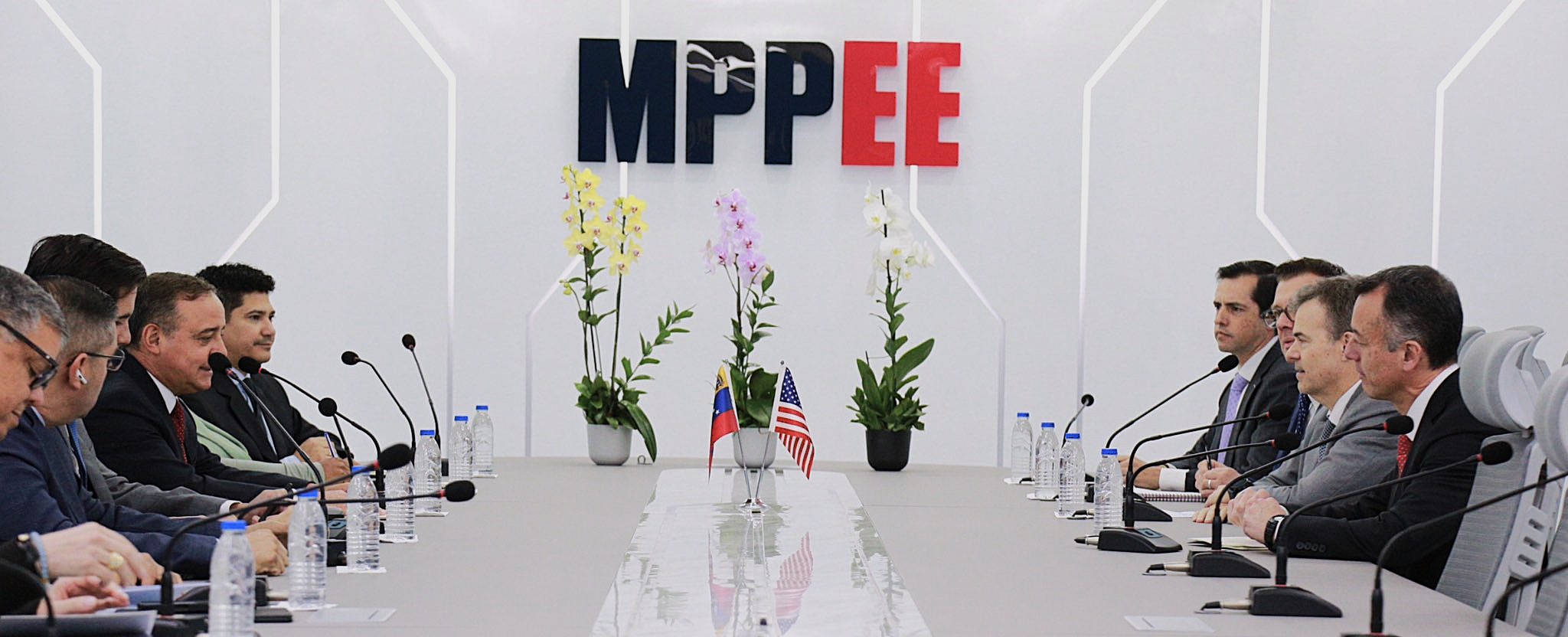
Here’s where the news is worse. Washington has not disclosed anything concrete. What we know is limited to what US officials tell journalists (mainly foreign correspondents) off the record, which is very vague, and very little. Most recently, a “senior US official” told reporter Stephania Taladrid (who wrote this 11-pager about Maria Corina Machado) that the Trump administration “authorized the disbursement of more than six billion dollars to Rodríguez’s government.” Officials had given some accounts of the amounts disbursed in the first days of the arrangement. For instance, Rubio mentioned that $300m were disbursed through the Qatari fund during a Senate hearing in late January. In early February, an anonymous US official confirmed that Venezuela received its first $500 million post-Maduro. That was the first full disbursement, the last one that the US addressed, though without offering any form of paper trail.

You could say things are equally opaque on Delcy’s front, with the caveat that we are used to this defining feature of the chavista regime. I should add something else about the US-Venezuela framework explained above: according to public statements from American officials, Caracas should submit monthly budget requests to the US, so Rubio can keep authorizing cash transfers with peace of mind. The State Department (through Western Hemisphere chief diplomat Michael Kozak, who is playing an important role in Venezuelan politics) said in April that the accounting firm KPMG was hired to produce quarterly audits of how Venezuelan oil revenues are being spent. He also claimed that, by then, $3 billion had been “moved through” to Venezuela.

Three months later, those reports do not exist. Or are not public at least. It seems that our friend El Kenedi was right when he warned Venezuela will never show you the money, but that’s the Viceroy’s fault, not just Delcy’s.

The Financial Times, which ran the story that ignited the controversy, is playing an interesting role in shaping the conversation about the value of Venezuelan assets and liabilities. Right before the devastating earthquakes, an FT scoop said the Delcy government would reveal a $240 billion debt pile (“much higher than expected”). The latest article might not paint the full picture (as a New York Times reporter suggests) but it’s perhaps the first major broadsheet to lambast Trump for his irresponsible (and misleading) remarks, and his team for the lack of transparency over the handling of Venezuelan money. This issue is nothing new, although the recent catastrophe makes full disclosure much more urgent. Other prominent figures and organizations had raised their voice before the quakes.

On June 2, Harvard economist Ricardo Hausmann wrote a column in Project Syndicate titled “The Rape of Venezuela” where he addresses this issue and others, including the politics of the looming debt restructuring and the lack of a democratic recovery. In it, he accuses the Trump White House of viewing Venezuela not as a democratic reconstruction project, but as a strategic hydrocarbon asset in the service of American power. A day later, the Council on Foreign Relations (a leading liberal-leaning US think tank) broke down how US control of Venezuelan oil remains murky. That has served as a valuable source for much of the stuff we mention here.

Going back to yesterday’s story, it quotes Venezuelan economist Alejandro Grisanti noting clear indications of large dollar inflows over the past few months. While Grisanti had initially expected economic growth to accelerate in the fourth quarter of this year, he noted that the recent earthquake is now likely to push that recovery back into the middle of next year.

These “indications of large dollar inflows” provide a clear clue as to how the Delcy Rodríguez administration is spending the oil revenues disbursed by the US Treasury. The BCV continues to deploy significant foreign currency reserves to artificially stabilize the official exchange rate. As Juan Comella observed in May, Rodríguez’s monetary policy differs little from that of the Maduro regime. Grisanti and Ecoanalítica remain sharp critics of this interventionist model, the very mechanism that wrecked Venezuela’s economy in the first place by turning privileged access to official-rate dollars into a primary driver of systemic corruption and economic inefficiency.

In an April report, Ecoanalítica criticized the rigid framework governing the domestic private sector’s acquisition of foreign exchange. Only entities with foreign bank accounts (which can be cleared through the SWIFT network) can buy dollars from the select group of major Venezuelan banks, effectively excluding emerging firms and SMEs. Consequently, local businesses receiving US dollars often cannot execute international transactions (such as paying overseas vendors) because they lack the proper banking infrastructure or because their local financial institutions lack correspondent banks abroad. Furthermore, the report highlights that retail accounts held by natural persons capture 20-30% of total FX allocations. This reflects the classic playbook of rewarding cronies while perpetuating market distortions: privileged individuals purchase dollars cheaply at the official BCV rate and immediately offload them on the parallel market at a premium.

We may not know the exact figures, but funds are trickling through the system. The fundamental question is not only how much revenue the US and the Rodríguez administration are processing, but who ultimately benefits from these flows and whether they contribute to genuine economic recovery.

Source link

Delcy’s Fragile Reopening Meets the Old Power Crisis

When US Energy Secretary Chris Wright visited Venezuela in February, he left Miraflores with an ambitious message. After meeting Delcy Rodríguez in Miraflores, he told reporters: “This year, we can drive a dramatic increase in Venezuelan oil production, in Venezuelan natural gas production and Venezuelan electricity production.”

Three months later, large parts of the country are enduring heavy electricity rationing, with daily cuts lasting between five and eight hours. Even after the government imposed a 45-day electricity-saving plan in late March to cope with high temperatures and surging demand, the situation continues to deteriorate. As the system faces renewed strain, the US Embassy in Caracas publicized a meeting with Ronald Alcalá, Delcy’s new electric energy minister, where US Chief of Mission John Barrett said Washington will “work with the interim authorities to rebuild the power grid.”

“The three-phase plan of President Trump and Secretary Rubio focuses on restoring reliable energy supply through experience, investment, and collaboration with the US,” Barrett’s brief statement read.

Caracas has resorted to nationwide measures like banning cryptocurrency mining, as power consumption recently reached its highest levels in nearly a decade. El Pitazo reported that current nationwide rationing has exceeded those seen in 2012 across much of the country, with Caracas remaining the main exception.

The latest chapter of this long-running crisis arrives at a sensitive moment for the post-Maduro regime. As has been widely reported, Rodríguez is trying to boost some parts of the economy and attract foreign investment into oil, gas and mining. But the country’s electrical system—weakened by decades of underinvestment, mismanagement and institutional collapse—has re-emerged as an obstacle.

For Luisa Palacios, a Venezuelan professor and energy executive that served as CITGO’s chairwoman, the current blackout cycle reveals something deeper than previous ones.

“This new episode should serve as a wake-up call about the urgency of restructuring the country’s electrical system,” she says. “We are witnessing a stress test of the system even under a modest recovery in demand.

One huge challenge is to bring back investment and expertise required, Palacios wrote in February along with Francisco Morandi, an AES Corporation executive who did strategic planning for Electricidad de Caracas. However, some major companies are hesitating to join after meetings with officials last month, Reuters reported. One executive shared his view: “I returned very skeptical from Venezuela (…) The power plants have not been properly repaired in 10 years, so the needs are almost infinite. But they still have no clue on how we would get paid.”

“The electricity sector is a highly capital-intensive sector that requires large investments to be made before a single cent of profit is seen,” Palacios told Caracas Chronicles. “That is why counterparty risk is fundamental in the electricity sector: ensuring that the user pays you, and on time, is essential.”

The most immediate problem is straightforward. Except for Haiti, Venezuela is the only country in the region where power consumption has actually declined over the past decade, according to OLADE, with per capita consumption falling by roughly 30% since 2014. Nevertheless, the country still does not generate enough electricity to meet demand.

Palacios was firm in the idea that it is necessary to move beyond the State’s central role in power generation, which can’t afford the necessary investments, and that the time to do so is now. 

“Without increasing power generation offered significantly by the private sector and improving transmission and distribution, the country won’t recover from the structural electric crisis that today remains the main bottleneck in terms of infrastructure”.

One of the central proposals advanced by Palacios and other energy experts is to restore thermal generation using Venezuela’s own natural gas resources. Large volumes of gas currently burned or flared during oil production could instead feed thermal plants and combined-cycle gas turbine (CCGT) facilities, systems that generate electricity more efficiently by combining gas and steam turbines. Such a shift would not only reduce pressure on the hydroelectric system but also lower emissions associated with gas flaring.

“This could be the single biggest climate action Venezuela could take in the short term,” Palacios argues. 

Other proposals involve allowing independent power producers to generate electricity for specific industrial regions and oil hubs, reducing pressure on the fragile national grid. She has also suggested the creation of autonomous microgrids operating in “island mode” (localized systems capable of functioning independently when the national grid fails) to provide more reliable service to critical industrial, commercial, and residential areas. Battery storage systems could also help stabilize electricity supply.

Renewable energy is also part of the conversation. Venezuela relies on largely clean, hydroelectric energy, but Palacios sees potential for solar, wind and biofuel projects. Other oil-producing neighbors like Brazil, Colombia and Argentina serve as prime examples in that sense.

The challenge is not just technical. Broadly speaking, there is agreement among specialists about what Venezuela’s electrical system needs, and what requires fixing: new thermal generation, modernization of transmission infrastructure, decentralized generation capacity, tariff reform, and a new regulatory framework capable of attracting investment. The financing problem is huge: rebuilding Venezuela’s grid would require enormous amounts of long-term capital. Gelvis Sequera, who chairs the domestic Association of Electrical and Mechanical Engineers, places the required investment at around $20 billion.

“The electricity sector is a highly capital-intensive sector that requires large investments to be made before a single cent of profit is seen,” Palacios told Caracas Chronicles. “That is why counterparty risk is fundamental in the electricity sector: ensuring that the user pays you, and on time, is essential.”

But many investors remain cautious. According to Reuters, several companies that recently held meetings with Venezuelan officials left unconvinced about the prospects of doing business. One executive summarized the dilemma bluntly: “The power plants have not been properly repaired in 10 years, so the needs are almost infinite. But they still have no clue how we would get paid.”

The vicious cycle of regional power cuts affecting refineries and fuel production, and therefore also undermining the power sector, needs a major overhaul to finally be brought to an end.

When considering whether to deploy capital in Venezuela, investors are less confused about the needs and more about the ifs. They are uncertain about whether the Venezuelan State can offer credible guarantees, stable regulation, enforceable contracts, and reliable payment mechanisms over the long term.

As Palacios put it: “Power infrastructure is a low-margin business, established for the long term and highly dependent on regulatory and macroeconomic risks.” For that reason, she argues that regulatory clarity, transparent tariffs, and technically competent institutions are indispensable if Venezuela hopes to attract serious capital into the sector.

This also raises uncomfortable political questions about the future role of CORPOELEC, the omnipotent overseer of Venezuelan electricity. Founded by Hugo Chávez in 2007, the public company serves as the power grid’s service provider, operator and developer.

“Venezuela needs to seriously rethink the role of CORPOELEC and the State in providing such a fundamental service,” Palacios says. “It is not possible to solve this crisis with the current management structure.” At the moment, however, there are few signs that such reforms are imminent.

“To build and rebuild a reliable system will depend on having the right actors on the table”, she continues, pointing out that multilateral organizations can provide technical capacity and long-term financing that can “de-risk investment”, giving some assurances to the private sector.

“There’s a lot of Venezuelan entrepreneurship more than willing to invest in a system with clear rules based on international standards”.For now, as hopes of an economic recovery reach their highest levels since the Chávez era, Venezuelans long accustomed to blackouts are desperate to avoid a repeat of the worst 2019-esque scenarios. The contradiction is also acute for Delcy Rodríguez, whose critical infrastructure problem is one of the most immediate constraints on the reopening she is attempting. The vicious cycle of regional power cuts affecting refineries and fuel production, and therefore also undermining the power sector, needs a major overhaul to finally be brought to an end.

Source link

The Social Crisis Awaiting Venezuela’s Returning Investors

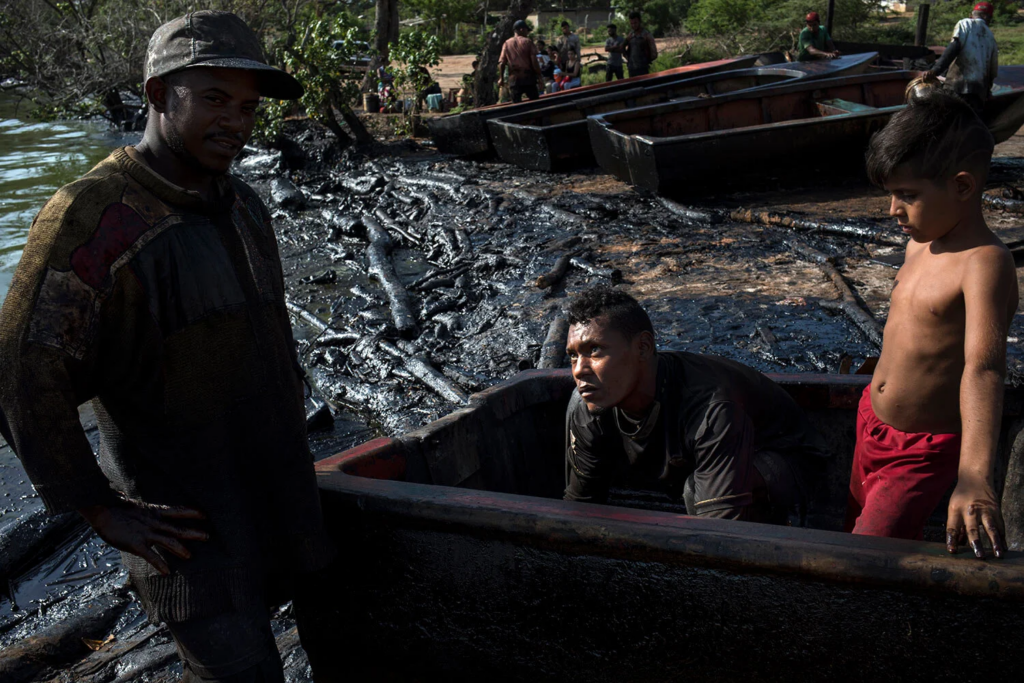
Photo by Rodrigo Abd for The Associated Press, May 2019 

The window international operators had waited years opened overnight in Venezuela. The interim government has signed new hydrocarbon and mining laws. US officials have been in and out of Caracas. The government of Delcy Rodríguez has landed several new deals in a matter of months. Everything is happening so fast that elements that seemed obvious when Nicolás Maduro was in charge are suddenly overlooked or underdiscussed.

For the last thirteen years I have worked in indigenous communities in the Venezuelan Amazon, in border towns along the Colombian border, and in barrios in and around Caracas. The Venezuelan towns and territories are not the ones the companies coming back will remember.

Almost eight million people left Venezuela during the crisis, one of the largest displacement events in history. The oil-dependent towns of Zulia, Anzoátegui, and Monagas were not spared, nor were mining communities in Bolívar and Amazonas. In some places, a large share of the working-age population is simply gone. What remains is older, poorer, and more dependent on informal survival than the country they left.

Institutions have followed. Hospitals in oilfield regions operate, where they operate at all, at drastically reduced capacity. Schools have hemorrhaged teachers. Local government in many areas has ceased to perform basic functions. Chronic blackouts compound everything. Formal PDVSA employment, the organizing principle of community life in these regions, collapsed along with the company. In many places there are no longer legitimate interlocutors left to negotiate with as the local civic infrastructure that companies elsewhere take for granted has been hollowed alongside everything else.

Once the rigs come back, however, these towns will not stay hollow. They will hastily be filled with returnees, prospectors, informal traders, and internal migrants chasing rumored hiring. The Mining Arc has already shown what this looks like: since 2016, gold has pulled in shifting populations of miners, intermediaries, and military protection chains, with towns like Tumeremo and El Callao expanding and contracting to the rhythm of the frontier economy.

A criminalized operating environment

In most resource markets, companies enter with a clear distinction between the formal environment and the informal risks around it. That distinction broke down in Venezuela a long time ago.

Research by Insight Crime and the International Crisis Group has documented how, over a decade, the line between State oversight and participation in illicit extraction dissolved. Individuals linked to the military and the ruling party benefited from illegal mining, using it as political currency and to cement alliances with Colombia’s ELN and FARC dissident factions. Gold mining was estimated to generate more than $2.2 billion last year, much of it through channels that evaded oversight. In the oil sector, criminal groups have been documented siphoning roughly 30% of fuel in some regions.

“There is deep political skepticism in the communities. Many do not believe that this time will actually bring lasting reforms,” a senior humanitarian told me.

The Rodríguez-led interim government intends to change this, and the foreign policy pressure behind the new laws is real. But the continuity problem deserves precision. The recent turnover at the top of the security apparatus—Defense, military intelligence, the presidential guard—was a selective reshuffle within the chavista system, not an outsider takeover or institutional rupture. The personnel and chains of command sitting inside this supposedly new architecture are not new. Informal structures built over a decade do not dissolve with a reshuffle among the same political elite.

Informal actors are not parallel to the formal system, but intertwined with it, which presents a complex practical consequence to the investors. Companies entering these zones will negotiate, in practice, with all of them at once: the local political boss, the garrison commander asking for vacuna, the colectivo that controls the access road, the gestor who can speed a permit, the sindicato, the guerrilla commander. The single regulator is a fiction.

What communities remember

These are not communities without prior experience of extraction. Many have decades of it, enough to have formed hard views about what operators promise, what they deliver, and what gets left behind. Those views were then tested against a decade of watching investment withdraw, oil spills go unaddressed, and industry jobs disappear.

The environmental record is severe and specific. Aging pipelines and wells around Lake Maracaibo, once the engine of the Venezuelan oil industry, have left slicks visible from the air, fishing communities along its shores watching their catch collapse, and a persistent green bloom of algae fed by untreated sewage and hydrocarbon residue. In mining regions, studies have found that up to 90% of Indigenous women in the Orinoco Mining Arc carry dangerously high mercury levels. These are not abstract concerns. They are the lived experience of the population any operator will meet.

The damage is also in the memory of being told it would be different. Communities have seen “openings” before. A senior humanitarian, who has spent years working on community engagement throughout the country, put it to me while I was writing this piece: “There is deep political skepticism in the communities. Many do not believe that this time will actually bring lasting reforms, and that hardens their initial positions. Even well-intentioned and hopeful promises can be met with radical distrust.”

Sanctions, fiscal terms, and reservoirs can be modeled from afar. The social landscape of a specific Zulia oilfield town or a Bolívar Indigenous territory cannot.

For an operator arriving with standard community-engagement  language, the problem is not that the offer isn’t understood. Other versions of it have been heard before, and the probability it fails to hold is being priced in.

Skepticism in Venezuela also comes pre-supplied with vocabulary. Almost three decades of State rhetoric have framed foreign extractive capital as imperial extraction (saqueo, entrega). People do not have to believe the framing to use it. Many will reach for it because it is the only available vocabulary for criticizing a returning company. The corporate language that lands well in a boardroom across an ocean arrives into a discursive space that has been filled for a generation.

None of which prepares an operator for the deepest mismatch. Where the State has withdrawn from basic services, foreign companies will not be received as purely economic actors. They will be received as potential substitutes for the State and expected to provide what the hospital, the school, the utility, and the municipality no longer do. A company arriving to play a bounded role (taxes, permits, a defined social investment envelope) may find the limits it has drawn around itself are not recognized on the other side of the gate. Conflict may rise not because the company has done something wrong, but because the role it is willing to play is smaller than the role it is being asked to fill. And past experience tells people that the only leverage they have, when promises don’t hold, is disruption.

The carpentry problem

In their 1984 book El caso Venezuela: una ilusión de armonía, Moisés Naím and Ramón Piñango argued that Venezuela had lived for decades in an unsustainable harmony, oil revenue papering over political frustrations. Today there is no harmony and there is no illusion. The arbiters are weaker than they have ever been. The redistributive cushion is gone.

In a 2024 retrospective, Naím and Piñango named a specific mode of failure: the neglect of what they called, in a deliberate understatement, la carpintería, the carpentry. The unglamorous work of implementation, where plans either succeed or quietly fall apart. Small, dismissed flaws in execution had repeatedly proved fatal. When everything was a priority, nothing was.

This is where the current opening risks repeating the failure, transposed from public policy to private investment. A former senior executive at a major international oil company recently told me that the industry’s preference for offshore projects in Venezuela is shaped to a meaningful extent by a desire to avoid the social dynamics on land, not only by reservoir quality. Sanctions, fiscal terms, and reservoirs can be modeled from afar. The social landscape of a specific Zulia oilfield town or a Bolívar Indigenous territory cannot, and the speed of the opening is pulling capital past the groundwork that determines whether a project actually runs.

The contracts will be signed in Caracas and approved in Houston or London. They will fail or hold somewhere else: at the gate of a refinery in Anzoátegui and on the road into a mining town, in front of a hospital that hasn’t run a power generator in a year. The plans are moving faster than the country they describe. That is the carpentry. That is where the projects will come apart: not on the page, but among neighbors more changed, more skeptical, and more demanding than the plan assumed.

Source link