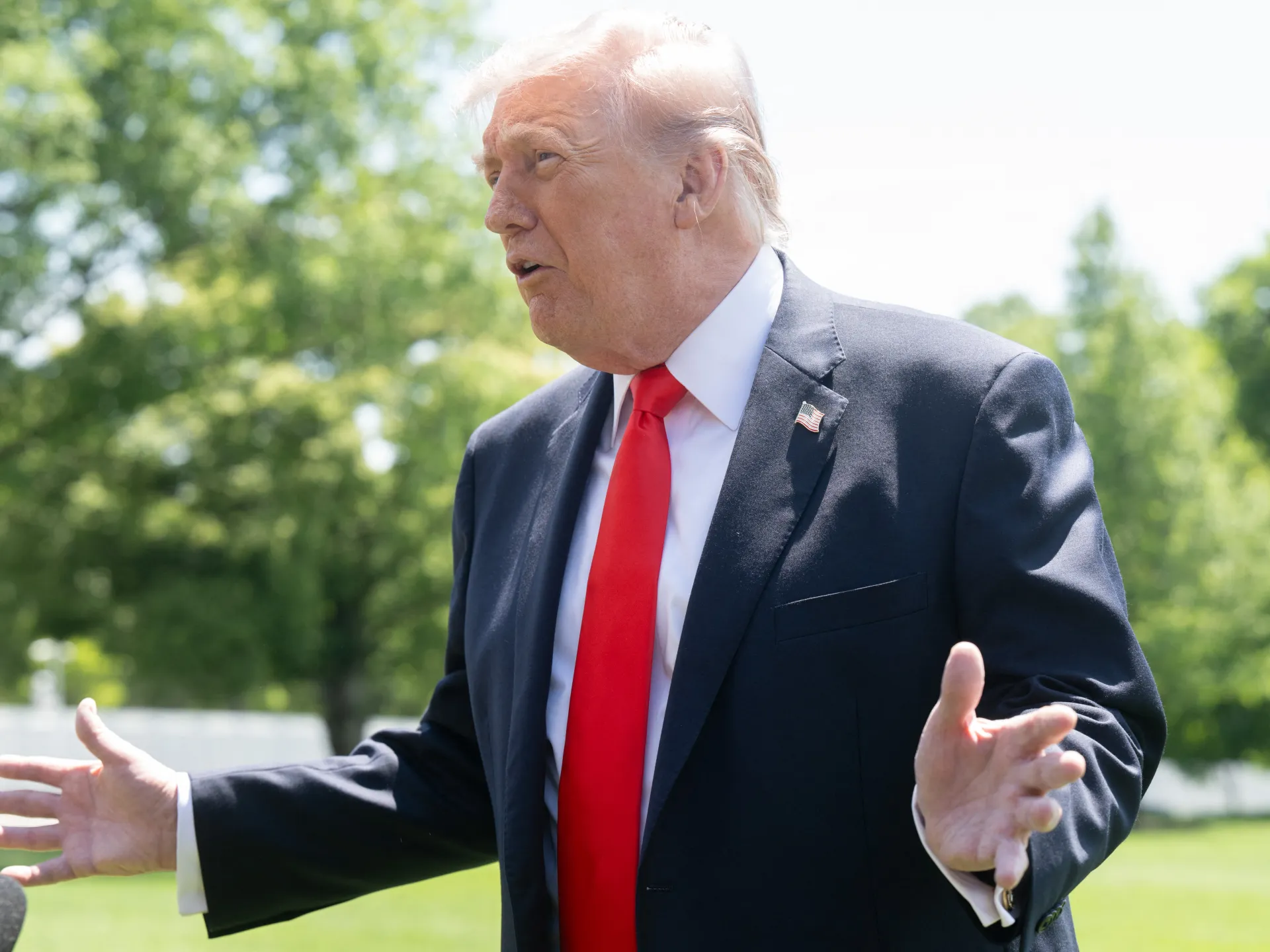
US President Donald Trump said he is “not happy” with the latest peace proposal from Iran and warned that the alternative to talks is to “blast the hell out of” the country.
Latest warning comes as Iranian state media reports Tehran has presented new peace proposal to US.
Published On 1 May 20261 May 2026
The United States has warned that any shippers paying tolls or other fees to Iran for passage through the Strait of Hormuz risk being sanctioned.
The warning on Friday comes as a US naval blockade of the strait continued for its third week, amid stalled US-Iran ceasefire talks. Iranian President Masoud Pezeshkian has called the ongoing siege on the country’s ports “intolerable”.
Recommended Stories
list of 3 itemsend of list
Iran’s influence over, and ability to effectively close, the Strait of Hormuz emerged as a key point of leverage shortly after the US and Israel began launching attacks on Iran on February 28.
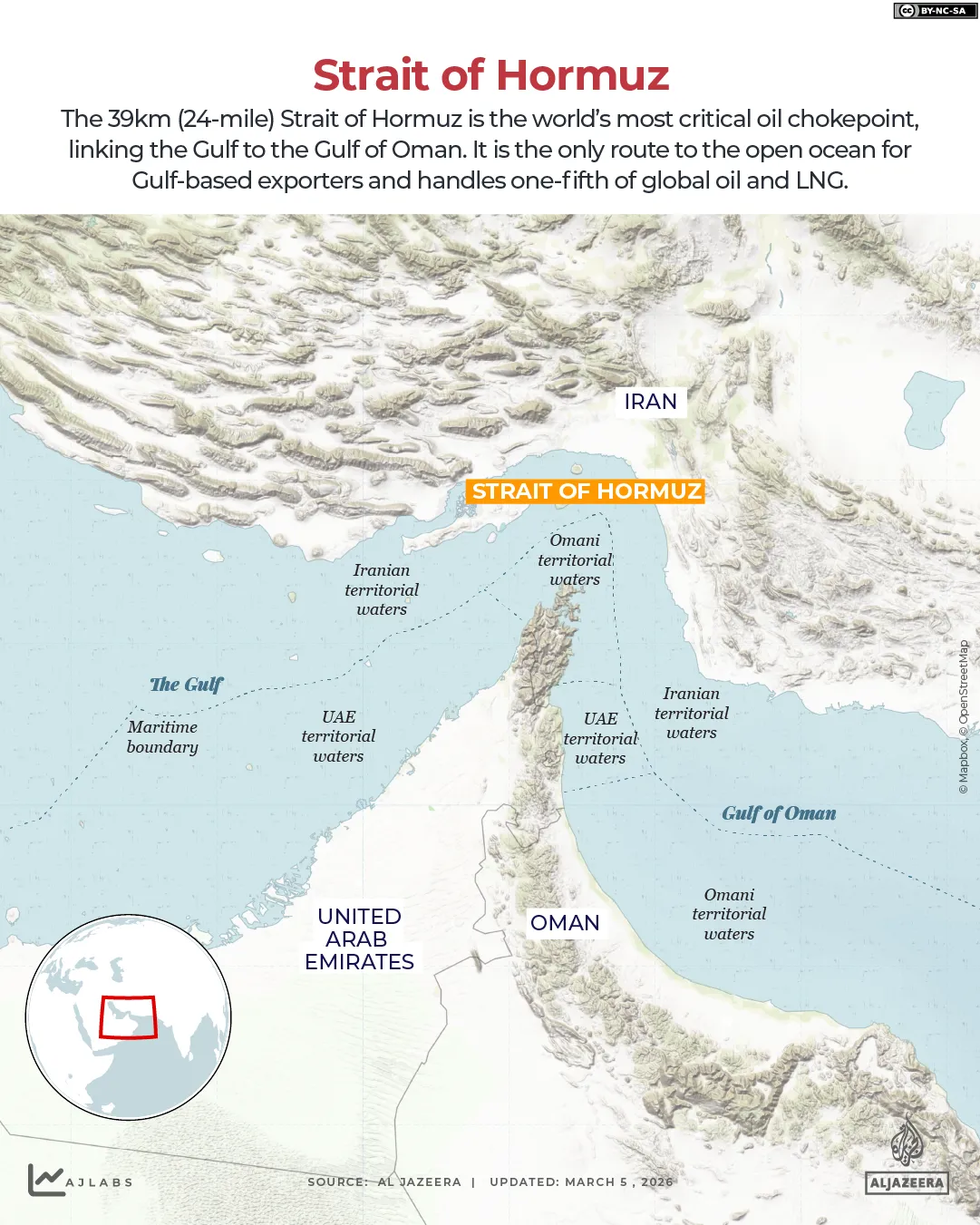
About one-fifth of the global crude oil and liquefied natural gas maritime shipments pass through the arterial waterway.
In its past proposals to end the war, Iran has proposed charging fees or tolls for vessels seeking to pass through the state. Washington has repeatedly rejected the prospect.
The advisory from the Department of the Treasury’s Office of Foreign Assets Control said Iran may offer shippers fiat currency, digital assets, offsets, informal swaps, or other in-kind payments.
It said those also included payments framed as charitable donations, including to the Iranian Red Crescent Society, Bonyad Mostazafan, or Iranian embassy accounts.
“OFAC is issuing this alert to warn US and non-US persons about the sanctions risks of making these payments to, or soliciting guarantees from, the Iranian regime for safe passage,” it said.
“These risks exist regardless of payment method,” it said.
Both the government of Iran and the International Revolutionary Guard Corps (IRGC) remain under US sanctions.
The advisory on Friday came as Iranian state media reported that Tehran had sent a new proposal for a lasting ceasefire to the Trump administration.
A White House spokesperson said it does not “detail private diplomatic conversations”, declining to confirm receipt of the proposal.
The spokesperson, Anna Kelly, added that “Trump has been clear that Iran can never possess a nuclear weapon, and negotiations continue to ensure the short- and long-term national security of the United States”.
Both sides have largely halted attacks since reaching a tentative agreement to pause fighting on April 7. Trump has repeatedly threatened to resume attacks amid the stalled negotiations.
Iran’s Foreign Minister Abbas Araghchi said Friday that Tehran remains open to diplomacy with the US if Washington alters its “expansionist approach” and “threatening rhetoric”.
Poll finds that Americans are concerned about impact of the war on the cost of living and sceptical of success thus far.
Published On 1 May 20261 May 2026
A new poll has found that a large majority of people in the United States believe that the decision to take military action against Iran was a mistake, as the war roils the global economy and fuels cost-of-living concerns in the US.
A Washington Post-ABC-Ipsos poll released on Friday shows that 61 percent of respondents believe the use of military force against Iran was a mistake, with just 36 percent saying it was the right decision.
Recommended Stories
list of 3 itemsend of list
The poll is the latest to find low levels of support for the war launched against Iran by the US and Israel in late February, which has killed thousands of people across the Middle East and sent global energy prices surging.
Asked if they had changed their behaviour due to higher gas prices, 44 percent of respondents said they had cut back on driving, and 42 percent said they had done the same for household expenses. Those figures increased to 56 percent and 59 percent for respondents making less than $50,000 per year.
Those concerns come at a time when President Donald Trump’s approval ratings have dropped to new lows, with voters expressing frustration over economic issues and the cost of living.
The war has also been depicted as a contrast with Trump’s promise to keep the country out of unnecessary foreign wars, and 46 percent of respondents said the decision to attack Iran was inconsistent with the position Trump took during his presidential campaign.
Despite relatively low casualty figures among US forces, the poll found that the war on Iran is as unpopular as the Iraq War was during a period of heightened violence in 2006 and the Vietnam War was in the early 1970s.
Asked whether US military actions against Iran have been successful thus far, 39 percent said they had been unsuccessful, while 19 percent said they had been successful. A plurality of 41 percent said it was too soon to tell.
Support for the war remains robust among members of Trump’s Republican Party, however. Nearly 80 percent of Republicans said that the decision to attack Iran was the correct one, even as they were split evenly between rating operations as successful or stating that it was too soon to tell.
Warning follows Jewish man’s arrest over brutal attack in which a nun was pushed and kicked in Jerusalem this week.
Published On 1 May 20261 May 2026
The head of a Greek Orthodox Church in Jerusalem has condemned a brutal attack on a nun in the city earlier in the week and warned of growing concerns over the future for Christians living in the Holy Land.
Archbishop Atallah Hanna said on Facebook that “the attack on a nun in the city of Jerusalem comes amid escalating violations against Christian institutions in the city”.
Recommended Stories
list of 3 itemsend of list
He added that “this reflects increasing concerns about the future of the historic Christian presence in the Holy Land”.
In his post, which was accompanied by a video, he warned that such attacks “are no longer isolated incidents, but part of a recurring pattern that threatens the Christian presence,” calling for international action to stop them.
On Thursday, Israeli police released a video showing what witnesses said was an attack by a Jewish man on a French nun in Jerusalem on Tuesday.
Video footage showed the man following the nun, forcibly pushing her to the ground, causing an injury to her head, then briefly walking away before returning to kick her as she lay on the ground, before bystanders intervened.
According to The Times of Israel, police said they had arrested a Jewish man suspected of assaulting the nun in Jerusalem.
“The suspect, a 36-year-old male, was identified and subsequently arrested by police,” the police said in a statement on Wednesday, adding it viewed with “utmost severity” any violent act “driven by potentially racist motives and directed toward members of the clergy”.
Father Olivier Poquillon, director of Jerusalem’s French School of Biblical and Archaeological Research, told the AFP news agency the 48-year-old nun is a researcher at the institution and did not wish to speak publicly.
Rising attacks on Christians
Attacks on Christian communities in occupied East Jerusalem and Israel have risen in recent years, according to the Rossing Center for Education and Dialogue, which tracks such incidents.
Churches in Jerusalem have repeatedly called on Israeli authorities to act decisively to put a stop to them.
On Tuesday, Israel’s Foreign Ministry called the incident a “shameful act” in a statement on X.
“In a city sacred to Jews, Christians, and Muslims alike, we remain committed to protecting all communities and ensuring those responsible for violence are held accountable,” the ministry added.
Last month, a viral photograph showing an Israeli soldier smashing a statue of Jesus Christ in southern Lebanon with a sledgehammer caused outrage.
The military said an investigation had been opened and that “appropriate measures will be taken against those involved in accordance with the findings”.
Israel later said the soldier had been jailed for 30 days, along with another soldier who had been filming him. Six other soldiers have been summoned for questioning.
Israel’s military reportedly seized 22 vessels sailing among the Global Sumud Flotilla.
Published On 1 May 20261 May 2026
More than 160 activists on board aid ships forming a flotilla bound for Gaza have been taken to the Greek island of Crete after Israeli forces seized their vessels in international waters near Greece earlier this week, Freedom Flotilla organisers have said.
The organisers told the Reuters news agency on Friday that 168 members of the flotilla crew had been taken to Crete while two activists remained with Israeli authorities.
Recommended Stories
list of 3 itemsend of list
According to the group’s tracker, 22 boats have been intercepted so far by Israel, while 47 others are still sailing.
On Wednesday, Israeli military forces intercepted the boats travelling with the Global Sumud Flotilla from Barcelona in Spain, using drones, communications jamming technology, and armed raiding parties to halt the humanitarian fleet in the middle of the Mediterranean as it headed to Gaza, according to organisers and Israeli media.
Israeli Foreign Minister Gideon Saar said the activists on the intercepted boats would be taken to Greece.
On Friday, an Israeli army ship transferred 168 members of the flotilla crew to Greek boats, which then took them to Crete, where buses and an ambulance car waited for them, organisers said and Reuters footage showed.
A source who asked not to be identified also told Reuters that the remaining 47 boats at sea were still sailing off southern Crete and planned to anchor there at some point before continuing onwards to Gaza.
Each ship is carrying about a tonne of food, medical supplies and other equipment, the source added.
Security camera footage shows crew members of the flotilla that sailed from the Spanish port of Barcelona, carrying humanitarian aid to Palestinians in Gaza, raise their arms as the vessel is said to be intercepted by the Israeli army off the coast of Greece, April 30, 2026 [Handout/Global Sumud Flotilla via Reuters]
‘A straight-up attack’
In an interview with Al Jazeera on Wednesday, Gur Tsabar, a spokesperson for the Global Sumud Flotilla, described Israel’s boarding of its vessels as “a straight-up attack on unarmed civilian boats in international waters”.
“This is illegal under international law. Israel has no jurisdiction in these waters. Boarding these boats amounts to illegal detention, potentially kidnapping on the high seas,” Tsabar added.
Officials around the globe have condemned the interception of the boats bound for Gaza as a violation of international law, with Turkiye calling it an “act of piracy”.
“By targeting the Global Sumud Flotilla, whose mission is to draw attention to the humanitarian catastrophe faced by the innocent people of Gaza, Israel has also violated humanitarian principles and international law,” Turkiye’s Ministry of Foreign Affairs said in a statement.
Spain called the interception “illegal”, while Germany and Italy expressed “great concern” and called for the release of detainees.
But in a statement on Thursday, the US Department of State threatened “to impose consequences” against those who support the flotilla, which it cast as “pro-Hamas”.
Pro-Palestinian activists say Israel and the United States wrongly conflate their advocacy for Palestinian rights with support for Hamas fighters.
Last October, Israel’s military intercepted about 40 boats from the first Global Sumud Flotilla as they tried to carry aid to besieged Gaza, arresting more than 450 participants, including the grandson of South African leader Nelson Mandela, Swedish campaigner Greta Thunberg and Member of European Parliament Rima Hassan.
Detained and taken to Israel, several of the flotilla activists claimed they were subjected to physical and psychological abuse while in Israeli custody.
Israel later expelled the arrested crew members and activists.
More commercial flights have been departing from Iran’s largest airport following its reopening last week.
Iranian authorities announced the resumption of flights at Imam Khomeini international airport after approximately 58 days of suspension since the launch of the US-Israel war on Iran. Flight information boards also went offline after the closure of Iran’s airspace.
Recommended Stories
list of 4 itemsend of list
For weeks, the suspension of flights stranded many travellers, disrupted businesses, and separated families.
Air traffic gradually resumed from April 25 with flights to 15 destinations operated by eight domestic airlines, covering regional and international destinations such as Medina, Istanbul, Muscat, China and Russia. Yet the number of flights is a fraction of what it was before the war.
Maryam, a passenger who planned to go to Toronto to see her daughters, told Al Jazeera: “After a lot of stress and problems, now I’ve found a ticket with an Iranian airline — flying first to Armenia with a long layover, and then on to Canada.”
Before the war, the airport was bustling with travellers and would witness 150 flights on a typical day. Now, terminals that were packed, then empty, are slowly filling up again as flights resume.
Ramin Kashef Azar, CEO of Imam Khomeini Airport City, told Al Jazeera that the return of foreign carriers, many of which have operated in the country for years, “will depend on political stability and their own risk assessments.” According to the Iranian Civil Aviation Organization, 20 aircraft have been destroyed and are no longer operational. However, the airport infrastructure has not been damaged and is approximately 95 percent ready.
These developments come after Iran’s gradual reopening of its airspace from April 19, in four phases. It encompasses transit flights followed by domestic flights, culminating in the full resumption of operations at international airports, as stated by the Iranian aviation regulator.
Foreign companies are apprehensive about returning to operate at Iranian airports amid the uncertainty surrounding the political and negotiating landscape between Tehran and Washington.
Targeting of airports
Iran’s civil aviation sector has suffered damage as a result of the war. More than 3,300 people have been killed in Iran, and thousands have been injured, in addition to widespread destruction of civilian infrastructure.
Another airport that was subject to US-Israel attacks several times was Mehrabad airport, also in Tehran. The airport mainly handles domestic flights. Located in the west of the capital, it was the official airport for international and domestic flights before the construction of Imam Khomeini airport in 2009.
In addition to Mehrabad, airports in Kashan, Tabriz, Ahvaz, Mashhad, Khoy and Urmia were also targeted. Several civilian aircraft have been damaged.
It is not the first time Mehrabad Airport has been attacked. In June 2025, it was reported that Israel targeted Mehrabad airport during the 12-day war. Iranian authorities, however, said the airport and its runways escaped damage.
The impact of the war goes beyond airports. It has affected other businesses, causing revenue losses, layoffs and operational disruptions.
Babak, a tour guide, said he and many of his colleagues lost their jobs “because there were no incoming or outgoing tours, as flights were suspended and the war was ongoing”.
Nowruz, the Persian New Year, which comes with a peak aviation season for Iranian airports, also witnessed flight suspensions and caused major disruption. According to Bijan, a travel agent, this affected tours, charter flights, and hotel bookings. He added that they are processing refunds and had to cut staffing from 20 to just two.
Airports are coming back to life, and passengers are returning, hinting at a fragile normalcy after weeks of silence. Each departure signals renewed connection with the world, even as uncertainty on the ground endures.
Iran says it will respond with “long and painful strikes” on US positions across the Gulf region if Washington renews attacks, and has restated its claim to the Strait of Hormuz, complicating the plans of the United States for a coalition to reopen the waterway.
Two months into the US-Israel war on Iran, the strait remains closed, choking off 20 percent of the world’s oil and gas supplies. That has sent global energy prices surging and heightened concerns about the risks of an economic downturn.
Recommended Stories
list of 3 itemsend of list
Pakistan-led efforts to resolve the conflict have hit an impasse. Despite a ceasefire in place since April 8, Iran continues to block the strait in response to a US naval blockade of its ports, preventing oil exports – Tehran’s economic lifeline.
Iranian Ministry of Foreign Affairs spokesman Esmaeil Baghaei defended the closure of the Strait of Hormuz. “This is because of the war and the defence of our right – that is, according to international law, it is legitimate, legal, and accepted,” he said on Thursday night, Iran’s official news agency IRNA reported.
He accused the US of “exploiting a waterway” of which Iran is the coastal state. “In such circumstances, you cannot allow this waterway to be misused,” he said.
Baghaei also justified attacks on US assets in Gulf countries.
“Unfortunately, the regional countries also truly acted unjustly; during the holy month of Ramadan, they cooperated with a foreign party in attacking an Islamic country, and this is something that will remain a permanent demand.”
On Thursday, the United Arab Emirates said it had banned its citizens from travelling to Iran, Lebanon and Iraq, and urged those currently in those countries to leave immediately and return home.
Then, on Friday, in response to Iran’s threat to hit targets in the Gulf, the adviser to the UAE’s president, Anwar Gargash, said: “No unilateral Iranian arrangements can be trusted or relied upon, following its treacherous aggression against all its neighbours.”
Bahraini King Hamad bin Isa Al Khalifa also condemned what he described as Iranian aggression against Manama and accused Tehran of threatening its security and stability and exposing internal collaborators.
In a statement, the king expressed anger at individuals and some legislators accused of siding with the attackers, warning that traitors could face imprisonment, loss of citizenship and expulsion. He stressed that loyalty to the nation is “paramount”, urging unity and accountability, and said parliament must be “cleansed” of those who support enemies.
New US strikes?
It is unclear whether the US is planning to renew its attacks on Iran.
Friday is the deadline for Congress to approve the war. Without that – or a 30-day extension, which the Trump administration must also justify by the day – the US will have to scale back its offensive significantly under the 1973 War Powers Resolution.
A senior administration official said late on Thursday that, for the resolution, hostilities had ceased with the start of the April ceasefire between Tehran and Washington, effectively resetting the clock.
President Donald Trump received a briefing from officials on Thursday on plans for a series of further military strikes to pressure Iran to negotiate an end to the conflict, US publication Axios reported, quoting sources.
US Democratic Senator Richard Blumenthal told CNN on Thursday that he had the “impression from some of the briefings”, as well as from other sources, that “an imminent military strike is very much on the table”.
He added that this prospect was “deeply disturbing” because it could “well involve American sons and daughters in harm’s way” and lead to “potential massive casualties”.
Bracing for attack
Meanwhile, Iran has been bracing itself for likely attacks. Air defence activity was heard in some areas of the capital, Tehran, late on Thursday, Iran’s semi-official Mehr news agency reported, and the Tasnim news agency said air defences were engaging small drones and unmanned surveillance aerial vehicles.
A senior official of the Islamic Revolutionary Guard Corps (IRGC) said any new US attack on Iran, even if limited, would usher in “long and painful strikes” on its regional positions. Iranian media reports, quoting the aerospace force commander, Majid Mousavi, said: “We’ve seen what happened to your regional bases, we will see the same thing happen to your warships.”
Supreme Leader Mojtaba Khamenei said in a written message to Iranians that “the enemies’ abuses of the waterway” would be eliminated under the new management of the strait, indicating that Tehran intended to maintain its hold over it.
“Foreigners who come from thousands of kilometres away … have no place there except at the bottom of its waters,” he said.
Multiple scenarios
Reporting from the White House, in Washington, DC, Al Jazeera’s Mike Hanna said: “There’s no doubt that there have been various scenarios laid out for him [Trump] by his military advisers and by his intelligence advisers as to what to do should the ceasefire no longer be extended.”
“Obviously, that would involve some form of armed action, some form of intensified economic action.”
“There’s absolutely no doubt that President Trump has all sorts of scenarios that have been laid out in front of him, but very clearly as well, it’s going to be him and him alone who will choose what to do next,” Hanna added.
Iran’s president calls the US siege ‘intolerable’ as Donald Trump says war may resume.
Published On 1 May 20261 May 2026
Tensions remain high across the region, with Iran, the United States and Israel trading warnings as violence continues.
Iran’s President Masoud Pezeshkian has described the US naval siege of Iranian ports as an “extension of military operations” that is “intolerable”, while US President Donald Trump said Washington “might need” to restart the war, adding that only a handful of people know the details of ongoing talks.
Here is what we know:
In Iran
Air defences activated in Iran: Air defences were heard in the Iranian capital, Tehran, on Thursday night after being activated to counter small aircraft and drones, Iran’s Tasnim and Fars news agencies reported.
Iran accustomed to harsher sanctions: Analysts say Tehran entered the blockade prepared, with oil stockpiled at sea, high prices cushioning the impact, and a large domestic market, noting the country is used to “much harsher” conditions after years of pressure.
War diplomacy
Impasse likely despite pressure tactics: Retired US General Mark Kimmitt said Iran’s strategy of military pressure and economic pain is unlikely to force Washington into talks, warning “the compass needle doesn’t change” and a deadlock could persist, though mounting international pressure would likely push for negotiations and prevent Tehran from asserting control over the Strait of Hormuz.
US urges meeting of Israel, Lebanon: The US embassy in Lebanon called for a meeting between Lebanese and Israeli leaders as the Lebanese Ministry of Public Health said Israeli strikes on the country’s south killed at least 15 people despite an ongoing ceasefire.
Trump mulls US troop cuts in Italy, Spain: The US president said he may pull US troops from Italy and Spain due to their opposition to the Iran war, a day after proposing a similar reduction in Germany.
In the Gulf
UAE urges citizens to leave Iran, Lebanon and Iraq: The United Arab Emirates has banned its citizens from travelling to the three countries and called on those already there to leave immediately and return home, citing regional developments.
In the US
Trump signals Iran war still possible: The US president said he has not ruled out restarting the war, claiming Iranian leaders “want to make a deal badly”, while touting damage to Iran’s drone and missile capabilities and predicting falling petrol prices once the conflict ends.
Hegseth on civilian deaths: US Defense Secretary Pete Hegseth told senators the Pentagon has “every resource necessary” to limit harm to civilians, after lawmakers pressed him over a strike early in the war that killed about 170 people at a primary school in Iran.
He said human oversight remains in place when AI is used in military decisions. The US-based Human Rights Activists in Iran news agency says at least 1,701 civilians have been killed in the war, including 254 children.
Hostilities ‘terminated’: For War Powers Resolution purposes, US hostilities with Iran that began in February have now “terminated”, a senior official in the US administration said. “Both parties agreed to a two-week ceasefire on Tuesday, April 7, that has since been extended,” the official said. “There has been no exchange of fire between US Armed Forces and Iran since Tuesday, April 7.”
In Israel
Israel warns Iran: Israel’s defence minister Israel Katz said his country may soon have to “act again” against Iran, to ensure the Islamic republic “does not once again become a threat to Israel”.
In Lebanon
Deadly Lebanon strike: Israeli strikes on three south Lebanon villages killed nine people, among them two children and five women, according to Lebanon’s Health Ministry, nearly two weeks into a ceasefire between Israel and Hezbollah.
Two Israeli soldiers wounded in Lebanon: Two Israeli military personnel were injured after an explosive drone detonated in southern Lebanon, according to the army. An officer and a non-commissioned officer sustained moderate wounds and were taken to hospital for treatment, Israeli media reported.
Global economy
Oil at four-year high: Oil prices soared to four-year highs, with the US crude benchmark Brent for June delivery spiking more than 7 percent to $126.41, while West Texas Intermediate was up 3.4 percent to $110.31, before later paring gains.
Price of petrol in US jumps by nearly 30 cents in one week amid Strait of Hormuz blockade and Iran diplomatic deadlock.
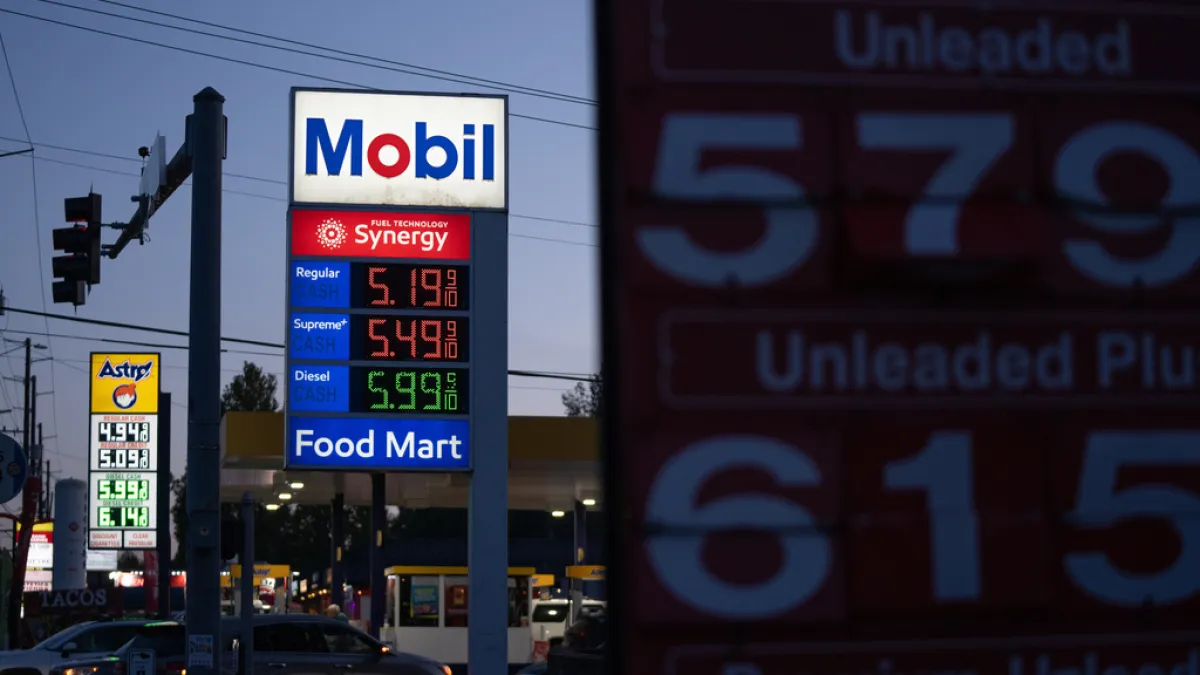
The average price of one gallon (3.8 litres) of gasoline in the United States has reached $4.30, according to the American Automobile Association (AAA), up from less than $3 before the February 28 start of the US-Israel war on Iran.
Thursday’s prices come as US President Donald Trump insists that time is on his side in the standoff with Iran, even as he refuses Tehran’s offers of a preliminary deal to reopen the Strait of Hormuz.
Recommended Stories
list of 3 itemsend of list
According to AAA, prices for gas or petrol went up by 27 cents over the past week amid the deepening impasse, with Iran blocking the strait and the US imposing a naval siege on Iranian ports.
“The national average is $1.12 higher than it was this time last year, as oil prices surge above $100/barrel with no indication of when the Strait of Hormuz will reopen,” AAA said in a brief report on Thursday.
“Gas prices are the highest they’ve been in four years, since late July 2022.”
California, home to nearly 40 million people, saw petrol prices hit more than $6 per gallon on Thursday.
The spike in energy prices has been fuelling inflation and economic uncertainty, adding to Trump’s political woes.
The US president’s approval rating is hitting record lows amid growing discontent with the conflict with Iran, recent public opinion polls show.
Since the start of the war, Trump and his allies have been trying to frame the hike in petrol prices as a temporary price worth paying to achieve the aims of the military campaign.
The US president reiterated that argument on Thursday when asked about the latest price increase.
“And you know what? And we’re not going to have a nuclear weapon in the hands of Iran,” the US president told reporters.
“The gas will go down. As soon as the war is over, it’ll drop like a rock.”
However, oil prices do not drop automatically after hostilities stop. Despite the ceasefire reached on April 8, the cost of gas in the US has continued to climb.
Iran denies seeking a nuclear weapon.
Although the US is one of the largest oil producers and is not heavily reliant on energy products from the Middle East, global prices affect what Americans pay at the pump.
On Thursday, Trump stressed that Iran is all but vanquished militarily and economically – a claim he has been repeating since the early days of the conflict.
“Iran is dying to make a deal,” he said, calling the naval blockade against the country “incredible”.
Tehran has projected defiance, refusing to hold direct talks with the US until the siege is lifted, even after Trump announced last week that he was dispatching his top envoys to Pakistan to negotiate with Iranian officials.
Earlier on Thursday, Iranian President Masoud Pezeshkian suggested that Iran is running out of patience with the current situation of no war and no peace amid the US siege.
“The world has witnessed Iran’s tolerance and conciliation. What is being done under the guise of a naval blockade is an extension of military operations against a nation paying the price for its resistance and independence,” Pezeshkian said in a social media post.
“Continuation of this oppressive approach is intolerable.”
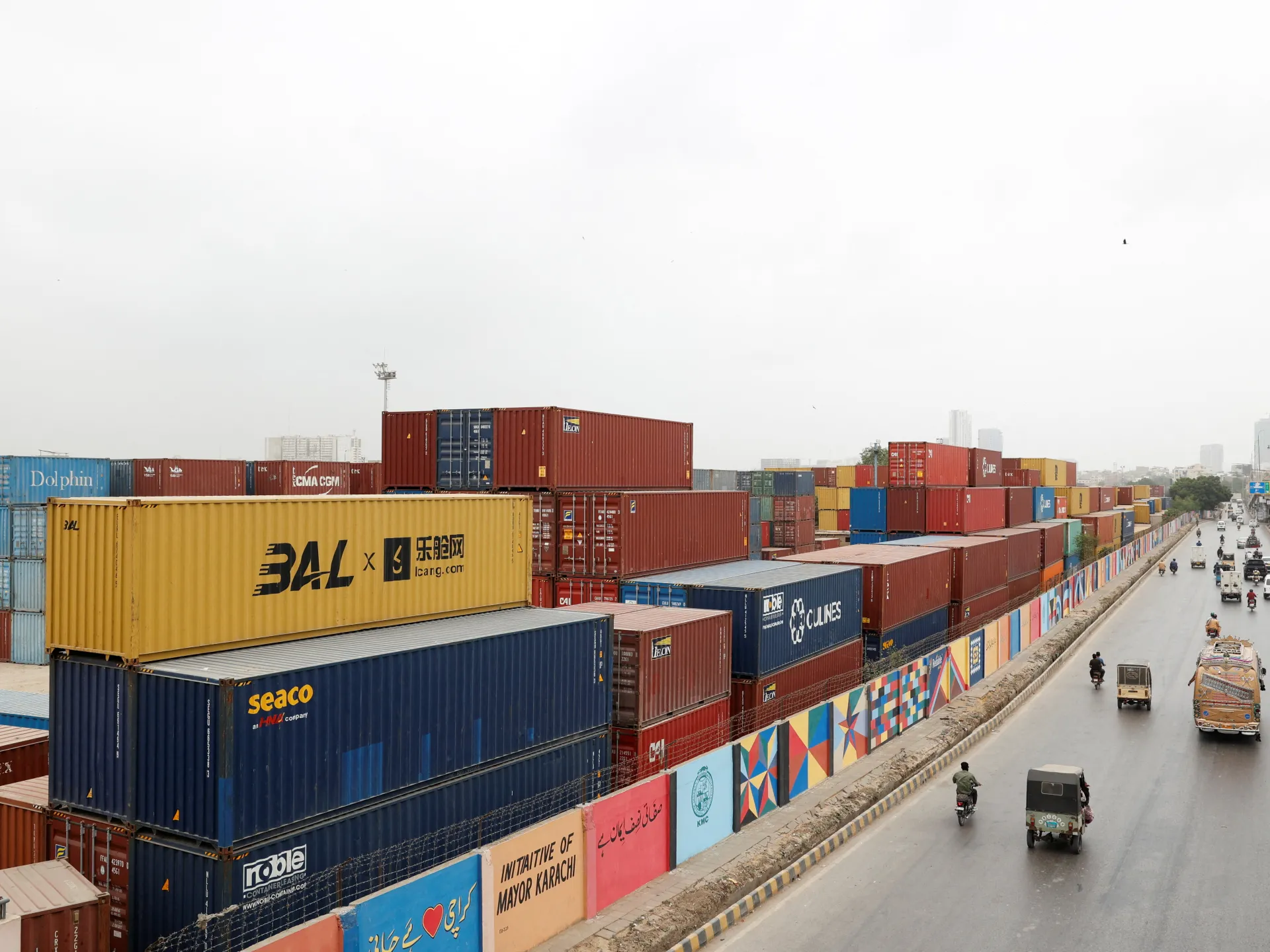
Islamabad, Pakistan – Pakistan has opened six overland transit routes for goods destined for Iran, formalising a road corridor through its territory as thousands of containers remain stranded at Karachi port because of the United States blockade of Iranian ports and ships trying to pass through the Strait of Hormuz.
The Ministry of Commerce issued the Transit of Goods through Territory of Pakistan Order 2026 on April 25, bringing it into immediate effect. The order allows goods originating from third countries to be transported through Pakistan and delivered to Iran by road.
Recommended Stories
list of 4 itemsend of list
The announcement coincided with Iranian Foreign Minister Abbas Araghchi’s visit to Islamabad for talks with Prime Minister Shehbaz Sharif and army chief Asim Munir, the latest in a series of diplomatic engagements as Pakistan seeks to mediate an end to the two-month war between Washington and Tehran.
Federal Minister for Commerce Jam Kamal Khan described the initiative as “a significant step toward promoting regional trade and enhancing Pakistan’s role as a key trade corridor”.
Iran has not publicly commented on the move, and Al Jazeera’s query to the Iranian embassy in Islamabad went unanswered.
The notification does not extend to Indian-origin goods. A separate Commerce Ministry order issued in May 2025, following the India-Pakistan aerial war that month, bans the transit of goods from India through Pakistan by any mode and remains in force.
Routes and regulations
The six designated routes link Pakistan’s main ports, Karachi, Port Qasim and Gwadar, with two Iranian border crossings, Gabd and Taftan, passing through Balochistan via Turbat, Panjgur, Khuzdar, Quetta and Dalbandin.
The shortest route, the Gwadar-Gabd corridor, reduces travel time to the Iranian border to between two and three hours, compared with the 16 to 18 hours it takes from Karachi – Pakistan’s biggest port – to the Iranian border. The Gwadar-Gabd route could cut transport costs by 45 to 55 percent compared with costs from Karachi port, according to officials.
But for Iran, firms sending their goods to the country, and transporters, all routes into Iranian territory today are viable options, with the principal maritime passage they have traditionally used – the Strait of Hormuz – blockaded by the US Navy.
Corridor shaped by conflict
The current US-Iran war began on February 28, when US and Israeli forces launched attacks on Iran.
In the weeks that followed, Iran restricted commercial navigation through the Strait of Hormuz, the narrow waterway through which roughly a fifth of the world’s oil and gas passes during peacetime, disrupting one of the most critical arteries of global trade.
Pakistan brokered a ceasefire on April 8 and hosted the first round of direct US-Iran talks on April 11, in Islamabad. The negotiations lasted nearly a day but ended without a deal. Two days later, Washington imposed a naval blockade on Iranian ports, throttling Tehran’s maritime access.
A second round of talks has since stalled. US President Donald Trump cancelled a planned visit to Islamabad by special envoys Steve Witkoff and Jared Kushner last weekend.
Iran has ruled out direct negotiations with Washington while the blockade remains in place, though Araghchi told Pakistani officials that Tehran would continue engaging with Islamabad’s mediation efforts “until a result is achieved”.
The transit order appears to be a direct economic response to that impasse.
More than 3,000 containers destined for Iran have been stuck at Karachi port for several days, with vessels unable to collect the cargo. War-risk insurance premiums have surged from about 0.12 percent of a vessel’s value before the conflict to roughly 5 percent, making shipping to the region too expensive for many operators.
Shifting regional dynamics
The corridor also signals a shift away from Afghanistan, whose relations with Pakistan have deteriorated sharply.
The two sides engaged in clashes in October 2025 and again in February and March this year, with skirmishes continuing along the northwestern and southwestern borders.
The Torkham and Chaman crossings have ceased to function as reliable commercial routes since tensions escalated, limiting Pakistan’s overland access to Central Asian markets.
“This is a paradigmatic shift. Pakistan’s relations with the Afghan Taliban, the de facto rulers in Kabul, have no reset switch,” Iftikhar Firdous, cofounder of The Khorasan Diary, told Al Jazeera.
“Kabul has been diversifying away from Pakistan towards Iran and Central Asia, but this move flips the equation. Pakistan can now bypass Afghanistan entirely for westbound trade. The impact on Kabul’s transit relevance and revenue is strategic, not immediate – but it is real.”
Firdous said the implications extend beyond bilateral ties.
“This corridor also reduces Pakistan’s reliance on longer maritime routes through the Gulf. Geopolitics, security, and infrastructure will ultimately determine which corridors dominate, but it places Pakistan as the main overland gateway for China-backed trade routes into West Asia and beyond,” he said.
Minhas Majeed Marwat, a Peshawar-based academic and geopolitical analyst, urged caution. “A cornered Afghanistan is a destabilised Afghanistan, and Pakistan knows better than most what that costs,” she wrote on X on April 27.
“The opportunity here is real. So is the risk. Security on the northwestern and southwestern borders remains the variable that could unravel everything. Pakistan is positioned well. It is not yet positioned safely. Those are different things.”
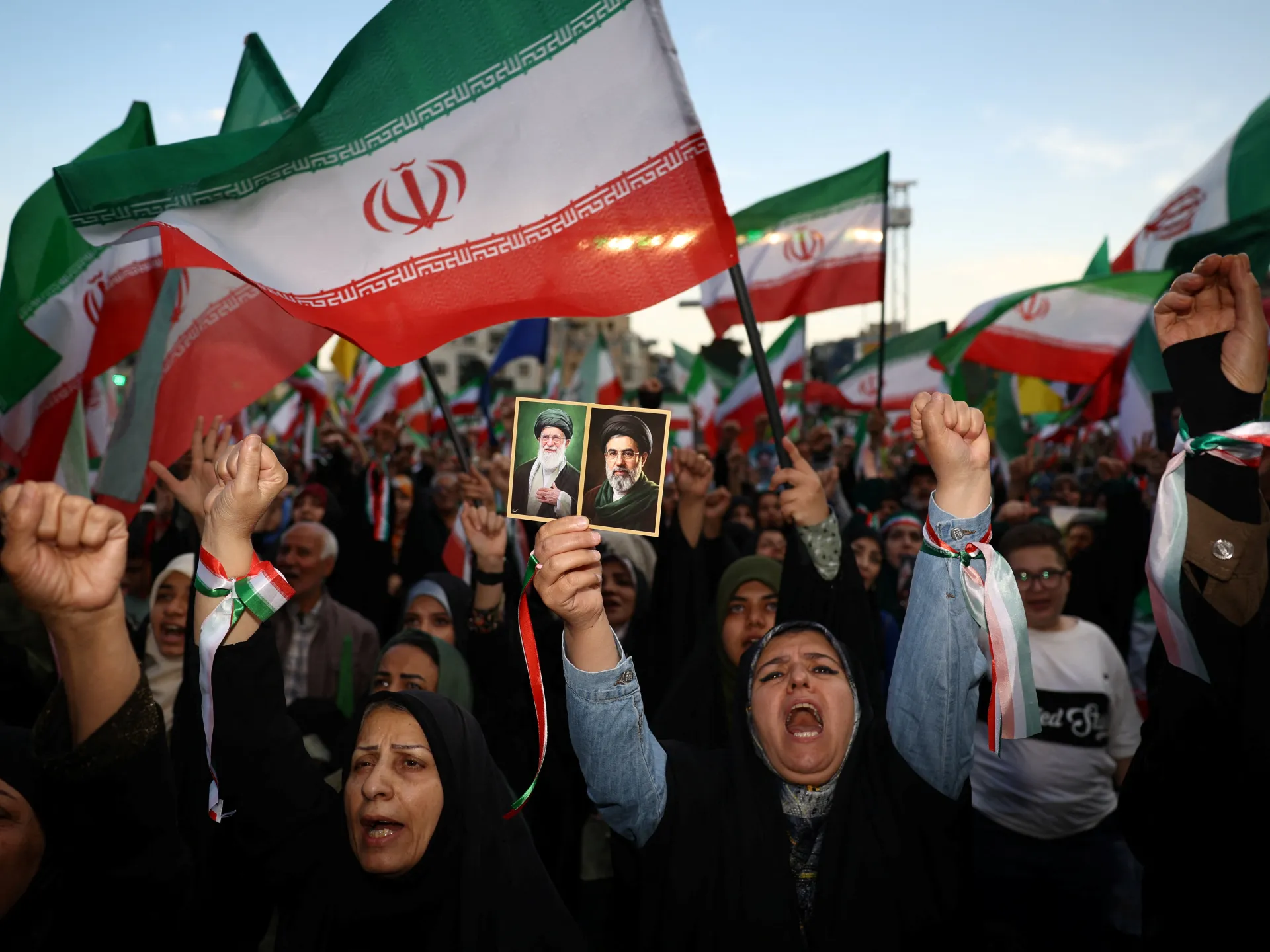
Hundreds of Iranians have rallied in Tehran to demand an end to US threats and the ongoing blockade of Iranian ports. The blockade is causing Iran’s already devalued currency to sink further.
Tehran, Iran – Iran’s national currency has plunged to new lows as authorities mobilise to dampen the impact of the naval blockade enforced by the United States.
The Iranian rial shot above 1.81 million to the US dollar on the open market by early afternoon on Wednesday before partially recovering. The embattled currency changed hands for about 1.54 million earlier this week, and its rate was about 811,000 per US dollar a year ago.
Recommended Stories
list of 3 itemsend of list
The rial had remained relatively stable over the past two months after experiencing an earlier drop as US forces amassed in the lead-up to the US-Israeli war on Iran, which began at the end of February.
The latest freefall follows on from unchecked inflation, which has been increasingly plaguing the Iranian economy as a result of mismanagement and sanctions, and continues to ravage households. Washington now has three aircraft carriers in the region and is bringing in more troops and equipment as Israel expresses readiness to restart fighting, three weeks after a ceasefire began.
Iran’s authorities this week projected a hardened stance on negotiations with Washington, and pledged to fight the naval blockade of Iran’s southern waters, which the US Central Command insisted on Tuesday had “cut off economic trade going into and coming out of” the country.
Amid threats by US President Donald Trump, the Iranian government has also tried to empower its own border provinces to import essential goods by reducing red tape. It has also allocated $1bn from the sovereign wealth fund to buy food, and made a partial policy U-turn to restart offering a preferential subsidised exchange rate with the goal of reducing prices, despite concerns about corruption.
Non-oil trade takes hit
According to customs data released by state media, Iran’s non-oil trade has been negatively affected after commercial ties were disrupted or cut off as a result of the war, and critical infrastructure was bombed.
Iran’s customs authority put the total value of non-oil trade in the Iranian calendar year that ended on March 20 at close to $110bn, with $58bn going to imports. The figure was about 16 percent lower than the year before.
The volume of non-oil trade was valued at approximately $9bn for the 11th month of the calendar year ending on February 19, and $6.46bn in the final month, indicating a drop of about 29 percent in connection with the war, which started on February 28. The final month was also about 50 percent lower than the more than $13bn estimated value for last year’s corresponding month.
Part of the drop is linked with the fact that shipping has been significantly disrupted through the Strait of Hormuz as Iran and the US spar over control of the strategic waterway. The US and Israel also directed some of their thousands of strikes against ports, naval facilities, airports, and railway networks across the country.
Iran’s top steel and petrochemical producers were also extensively bombed, as were oil and gas facilities, power stations, and major industrial zones. The US and Israel have threatened to take Iran “back to the Stone Age” through systematic bombing of civilian infrastructure like power plants.
To manage the impact and preserve domestic supply, Iranian authorities have imposed temporary restrictions on exports of steel, petrochemicals, polymers and other chemicals.
Oil exports in the crosshairs
The US is using its military capabilities and economic chokeholds to drive down Iran’s oil exports, a goal that it has also pursued over recent years through sanctions.
Since mid-April, the US military has been deploying its soldiers to take over or inspect ships transiting through waterways near Iran, in addition to targeting what is known as a shadow fleet of tankers used by Iran to circumvent sanctions and ship its oil.
Warships and thousands of troops could still launch a ground invasion or destructive aerial attacks against Iran’s Kharg and other critical islands, and the Trump administration expects increased pressure on Iran’s oil sector due to hampered access to export routes and supertankers keeping the oil stored on the water.
The US Treasury has been blacklisting refineries in China, the biggest buyers of Iranian crude oil, and going after the banking and cryptocurrency channels alleged to be facilitating Tehran’s oil trade, and having links to the IRGC – which Washington considers a “terrorist” organisation.
“We will follow the money that Tehran is desperately attempting to move outside of the country and target all financial lifelines tied to the regime,” said US Treasury Secretary Scott Bessent on social media.
Chinese refineries buy roughly 90 percent of Iran’s oil shipments, and imported a record 1.8 million barrels per day in March, according to Vortexa Analytics data cited by the Reuters news agency, which also said purchases were expected to slow due to worsening domestic refining and processing margins.
According to figures released by the General Administration of Customs of China, the volume of the country’s bilateral trade with Iran during the first quarter of 2026 stood at $1.55bn, down 50 percent year-on-year.
In March, the first month of the war, trade stood at $184m, which was nearly 80 percent lower than the year before and 64 percent lower than the month before. China’s imports from Iran and exports to the country were both considerably reduced as a result of the war.
The removal of the United Arab Emirates as a major trade partner and import market for Iran has also significantly affected the country’s economy, increasing its reliance on land neighbours like Turkiye and Iraq to the west and Pakistan to the east.
The UAE, a big part of the Trump-led Abraham Accords that saw multiple countries normalise relations with Israel, was heavily targeted by ballistic missiles and drones launched by Iran.
The UAE has closed down numerous Iranian institutions on its soil over the past two months, including financial facilitators, instructed Iranian citizens to leave, and has said it will take years to restore bilateral relations to previous levels.
The US naval blockade of Iranian ports and the Strait of Hormuz, in place since April 13, has raised concerns that Iran could run out of crude oil storage capacity and be forced to curb production.
Bloomberg reported analysis on Tuesday from the data and analytics company Kpler suggesting Iran could run out of crude storage in 12 to 22 days if the blockade persists.
Last week, United States Treasury Secretary Scott Bessent claimed that storage capacity at Kharg Island, where most of Iran’s oil is exported, would be full “in a matter of days”.
So how quickly could Iran run out of oil storage, and why does it matter?
What is happening in the Strait of Hormuz?
The Strait of Hormuz is a narrow channel that connects the Gulf to the open ocean. It spans the territorial waters of Iran on its northern side and Oman on its southern side. It is not in international waters.
During peacetime, 20 percent of the world’s oil and liquefied natural gas (LNG) supplies are shipped through the corridor.
Two days after the US and Israel launched their first air strikes in their war on Iran on February 28, Ebrahim Jabari, a senior adviser to the commander in chief of Iran’s Islamic Revolutionary Guard Corps (IRGC), announced that the strait was “closed”. If any vessels tried to pass through, he said, the IRGC and the navy would “set those ships ablaze”.
As the war has dragged on and negotiations have failed to achieve a settlement, Iran has at times in the past two months allowed some “friendly” ships and those that pay tolls to pass. It is currently refusing to allow any foreign-flagged ships, including those previously deemed friendly, to pass until the US lifts its own naval blockade.
Iranian First Vice President Mohammad Reza Aref said on April 19 that the “security of the Strait of Hormuz is not free”.
“One cannot restrict Iran’s oil exports while expecting free security for others,” he wrote in a post on X.
“The choice is clear: either a free oil market for all, or the risk of significant costs for everyone,” he added. “Stability in global fuel prices depends on a guaranteed and lasting end to the economic and military pressure against Iran and its allies.”
Since the US naval blockade on the strait began, the US has opened fire on and taken control of an Iranian-flagged tanker near the Strait of Hormuz while also redirecting vessels on the high seas transporting cargo to or from Iran. Iran’s armed forces have denounced these actions as “an illegal act” that “amounts to piracy”.
The US naval blockade of the strait means that Iran might have to store the oil it produces.
Iran is the third largest oil producer in the Organization of the Petroleum Exporting Countries (OPEC) after Saudi Arabia and Iraq and exports 90 percent of its crude oil via Kharg Island in the Gulf for shipping through the Strait of Hormuz.
What has the US claimed?
The US is eager to curb Iran’s oil revenues, which have risen since Tehran closed the Strait of Hormuz to other shipping. This is the primary motive behind Washington’s naval blockade of Iranian ports.
Iran exported 1.84 million barrels per day (bpd) of crude oil in March and shipped 1.71 million bpd in April, compared with an average of 1.68 million bpd in 2025, according to Kpler.
However, the US naval blockade since mid-April now means that most of its exports are having to be stored instead.
Bessent wrote in an X post on April 22: “In a matter of days, Kharg Island storage will be full and the fragile Iranian oil wells will be shut in.”
Iran’s domestic refineries have a production capacity of 2.6 million bpd, according to the energy consultancy Facts Global Energy.
Satellite data show the amount of oil Iran has in storage has risen sharply since the US blockade began, and in the days after the US tightened it, stocks were rising so fast that it appeared Iran had been barely able to export any oil at all.
From April 13 to April 21, data showed that stocks rose by more than 6 million barrels, according to the Columbia Center on Global Energy Policy (CGEP). From April 17 to April 21, the stock increased very rapidly, growing by 1.7 bpd.
As of April 20, the storage tanks at Kharg were about 74 percent full after the island alone had taken on about 3 million extra barrels of oil, the CGEP reported.
Generally, oil companies avoid filling their storage beyond 80 percent capacity to balance safety, emissions control and flexibility.
However, Iran and other oil producing countries have exceeded this limit before, for instance, during the COVID-19 pandemic. In April 2020, Kharg island’s stocks reached close to 90 percent capacity, an all-time high.
Iran also has some crude oil storage capacity in the form of “floating tanks”, or parked ships. About 127 million barrels can be stored in this way, Frederic Schneider, a nonresident senior fellow at the Middle East Council on Global Affairs, told Al Jazeera in an interview on April 14.
Will Iran need to cut oil production?
Muyu Xu, a senior crude oil analyst at Kpler, told Al Jazeera that the blockade could eventually force Iran to cut production.
“However, given there is still available storage capacity onshore (roughly covering 20 days of Iran’s current production), we expect any production reduction to be gradual over the coming week with a higher likelihood of acceleration into May,” she said.
Analysis by CGEP nonresident fellow Antoine Halff echoed this. Halff wrote in an article published by CGEP on Tuesday that it may be some time before the US blockade causes Iran to shut off its production “in a big way”.
However, Halff added, Iran may still choose to halt production “fairly aggressively” but this “would be more by choice than by necessity”.
He explained: “Doing so would have the advantage of providing Iran with relatively ample spare storage capacity after the shutdown and would allow for a smoother restart of operations once conditions permit, and the constraint is relaxed, thus minimising adverse impacts from the blockade on longer-term supply.”
Why does this matter?
Halting oil production risks damaging underground reservoirs by reducing reservoir pressure, allowing water or gas to encroach into producing layers and changing patterns of oil flow. This can make some oil harder or more expensive to recover later, experts said.
Restarting the process of oil production can also be slow and costly, involving repairs of corroded equipment or unclogging pipelines.
Halting production would also cause Iran’s export revenues to drop. However, analysts said that for a few months, Iran can continue to earn revenue from oil that is already in transit at sea.
Kenneth Katzman, former Iran analyst at the Congressional Research Service in Washington, DC, said Iran is not exporting new oil during the US blockade of Iranian ports but Tehran has 160 million to 170 million barrels of oil on ships around the world currently.
London, United Kingdom – Recent headlines from British newspapers speak to different areas of tension in the UK due to the United States-Israel war on Iran: economic woes, political friction and worries about the country’s readiness for the future, strategically and militarily, if the conflict persists.
On Thursday, the Financial Times blared, “Consumer confidence slumps to two-year low,” as The Guardian reported, “UK braces for price rises driven by Iran war as economic confidence plummets” and “UK prepared to deploy RAF Typhoons to keep Strait of Hormuz open after Iran war.” Earlier this month, The Independent reported that Prime Minister Keir Starmer risked US President Donald Trump’s wrath as he “refuses to let US use UK bases” for strikes on Iran’s infrastructure. And on Sunday, quoting a minister, The Times said the “economic fallout from the Iran war” would last at least eight months.
Recommended Stories
list of 4 itemsend of list
Beyond the headlines is real public angst about what the war in Iran means on a human level and what the economic and political fallout may be.
For Iranians living in the UK, there is a whole other level of worry.
Omid Habibinia, a man in his 50s who was born in Tehran but moved to the UK 25 years ago, described the impact on him personally.
“Since the first day of the war, connection has been cut off. I am witnessing the pain and suffering of those close to me, many of whom have no news of their families. Beyond the fact that around 90 million people inside Iran have effectively been imprisoned by the internet shutdown and millions more have been deprived of contact with their loved ones, the attacks on the country’s critical infrastructure – alongside the killing and injury of thousands of civilians and the displacement of many – are deeply distressing to me,” he told Al Jazeera.
It seems clear that the impact will last long after the conflict has ended or at least a long-term ceasefire is agreed. There are worries of higher mortgage costs and higher food and fuel prices amid a continued cost-of-living crisis.
Luke Bartholomew, deputy chief economist at fund manager Aberdeen, said the UK economy is “particularly badly exposed to the Iran shock as a big energy importer with weakly anchored inflation expectations and an already soft labour market”.
For many people still recovering from the energy inflation shock that followed Russia’s invasion of Ukraine in 2022, this is a hit to their household finances that is hard to manage.
Although the government has urged people not to worry, sporadic queues at petrol stations and talk of a return to panic shopping seen during the start of the COVID-19 pandemic are commonplace.
‘We will stand by working people’: Starmer
Starmer formed an Iran crisis committee that met on Tuesday to persuade people that “you can be sure we will stand by working people in this crisis”.
He hinted that people might change their holiday plans and might already be cutting back on food.
“I think we’ll see how long the conflict goes on. I can see that, if there’s more impact, people might change their habits, … where they go on holiday this year, what they’re buying in the supermarket, that sort of thing,” he said.
Critics said the government’s stretched finances mean it cannot afford the energy subsidy that may be needed. They have also lamented the government’s reluctance to exploit the nation’s untapped oil reserves in the North Sea. Experts disagreed on whether this would make any significant difference.
Before the Iran war began, the UK economy was turning a corner. Inflation and fuel costs were falling, government borrowing was down and unemployment was falling.
The hits to the UK population range from the relatively trivial to the potentially terrifying.
London house prices have tumbled as sellers become nervous and buyers sit tight, but some observers have noted that they were overpriced in the first place.
Flights being cancelled due to a lack of jet fuel might be an inconvenience. Higher prices for fuel and food and then everything else are a major problem for those whose incomes are already stretched.
Then there is the genuine fear of what a prolonged war could mean, such as a serious recession or military involvement.
Thomas Pugh, chief economist at the consulting firm RSM UK, said: “The Strait of Hormuz has effectively been shut since early March. The International Energy Agency called it the largest supply disruption in the history of the global oil market. Oil prices have spiked, gas prices are climbing and inflation fears are back. But the bigger risk is ‘demand destruction’.
“Demand destruction happens when high prices force people and businesses to buy less. We’re seeing it already in fuel rationing in emerging market economies. It means fewer cars sold, fewer homes bought, fewer restaurant meals, fewer business investments and eventually fewer jobs. Because this crisis is about more than oil, demand destruction appears across the whole economy.”
A man who describes himself as a ‘patriot counterprotester’ and supports the US-Israeli war against Iran demonstrates as antiwar activists protest outside RAF Fairford, where US Air Force personnel are stationed, in Fairford, England [File: Toby Melville/Reuters]
The Iran war arrived at a time when the UK population was already unhappy.
A survey by the polling company IPSOS in December reported: “Three quarters of Britons expect large-scale public unrest in 2026. 59 percent think there will be protests against the way their country is being run, highest in Peru (80%) and South Africa (76%). In Great Britain, 74% predict large scale unrest. Since 2019, three of the G7 countries – Great Britain, Japan (both+11pp [percentage points]) and United States (+10pp) – have seen a double-digit increase in the proportion that think there will be large-scale public unrest.”
Bartholomew added: “With inflation rising and wage growth sluggish after a sustained period of very weak employment activity, real wages are likely to turn negative in coming months, adding a further headwind to the economy. So it’s probably just too early for the full effects of the war to be felt or show up in the data yet. But one place the impact of the war is very clearly showing up is around the path of interest rates.
“It is very likely that were it not for the war, the Bank of England would be cutting rates at its April meeting. Instead, the market is pricing in a series of rate hikes this year. For households that were hoping for mortgage rate cuts this year, the prospect of rates staying on hold is almost as painful as renewed hikes.”
As Iran stares down the economic consequences of a prolonged blockade of the Strait of Hormuz, attention is shifting north.
With Gulf shipping lanes disrupted and oil exports constrained, Tehran may seek to depend less on the Gulf and more on a patchwork of railways, Caspian ports and sanctions-era trade networks linking it to Russia.
Recommended Stories
list of 4 itemsend of list
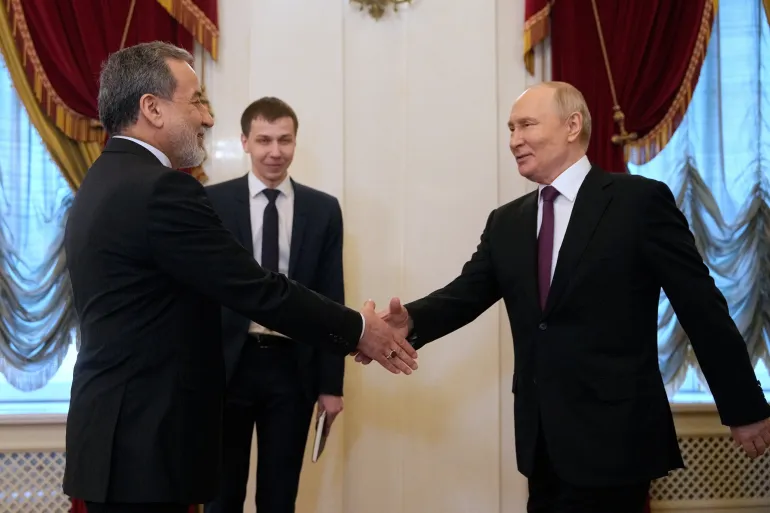
The importance of that relationship was underscored this week when Iranian Foreign Minister Abbas Araghchi travelled to St Petersburg for talks with Russia’s President Vladimir Putin, praising Moscow’s “firm and unshaken” support as the two sides discussed the war, sanctions and the future of the Strait of Hormuz.
But could Moscow really offer a lifeline for Iran’s beleaguered, war-torn economy, and would it even want to? We spoke to experts to find out.
Increasing but modest bilateral trade
Economic relations between Iran and Russia deepened after the US withdrew from a 2015 nuclear deal with Iran and other nations in 2018 and reimposed sweeping sanctions on Tehran.
Russia’s full-scale invasion of Ukraine in 2022 served to accelerate that trend as both countries found themselves increasingly cut off from the Western financial system. They turned to sanctions-evasion networks, alternative payment systems and non-Western trade corridors to keep goods, energy and money flowing.
Current trade is dominated by agricultural products – especially wheat, barley and corn – alongside machinery, metals, timber, fertilisers and industrial inputs. Tehran has also supplied Russia with low-cost Shahed drones, which Russia updated and has been using in its war on Ukraine.
“Trade turnover reached $4.8bn last year [2024], but we believe that the potential for our mutual trade is much greater,” Russian Energy Minister Sergey Tsivilyov told an intergovernmental commission on trade and economic cooperation between Moscow and Tehran in 2025.
Bilateral trade is reported to have increased by 16 percent during that period, driven largely by Russian exports of grain, metals, machinery and industrial goods.
But experts say that despite this increase, the overall trade relationship remains relatively modest compared with Iran’s trade with China or the Gulf countries.
Trade between the two is “not substantial, because both countries are producing almost similar products and the industries are similar”, Mahdi Ghodsi, an economist at the Vienna Institute for International Economic Studies, told Al Jazeera.
Russian President Vladimir Putin shakes hands with Iranian Foreign Minister Abbas Araghchi during a meeting at the Boris Yeltsin Presidential Library in Saint Petersburg, Russia, April 27, 2026 [Dmitri Lovetsky/Pool via Reuters]
Alternatives to Hormuz
The backbone of Russia-Iran trade is the International North-South Transport Corridor (INSTC), a network of shipping lanes, railways, and roads linking Russia to Iran and onward to Asia, bypassing Western-controlled maritime routes.
Goods move from southern Russian ports, across the Caspian Sea to northern Iranian ports, including Bandar Anzali, before continuing by rail or truck.
The route has become increasingly important for Russian grain, machinery and industrial exports to Iran.
This route can serve as a “viable but partial lifeline”, Naeem Aslam, chief market analyst at London-based Think Markets, told Al Jazeera, adding that Russian ports in Astrakhan, on the Volga River delta near the Caspian Sea, and Makhachkala, on the Caspian Sea, are already “primed for a surge in grain, metals, timber and refined products”.
A western branch also runs through Azerbaijan, though a key missing rail link between Rasht and Astara in northern Iran remains unfinished.
In 2023, Moscow agreed to help finance the line, with Russia’s president calling the agreement a “great event” that “will help to significantly diversify global traffic flows”.
Easier in theory than in practice
Analysts say that, although these routes may provide a temporary solution, the Strait of Hormuz offers a scale and efficiency that rail and land corridors cannot easily replicate.
Although maritime trade has been highly volatile in recent weeks, “from a historical perspective it is simply the quickest and the most cost-effective way of transporting anything”, Adam Grimshaw, an economic historian at the University of Helsinki, told Al Jazeera.
“Roughly 90 percent of Iran’s international trade is maritime trade that goes through the Gulf, which can’t be quickly or immediately replaced through land access to Iran or through air transport to circumvent the American blockade”, Nader Hashemi, an associate professor at Georgetown University, told Al Jazeera.
Ghodsi said Russia might be able to offer a “lifeline” in the short term, as it did when it exported grain during Iran’s droughts, but in the long run, it simply “cannot substitute” the vast amounts of maritime trade.
Re-routing trade routes via land “takes time”, pushing up prices for consumers and creating more food waste as perishables rot en route.
Does Moscow want to help Iran?
Most analysts say throwing an economic lifeline to Iran is not in Russia’s interests.
“They’ve got their own economic problems,” John Lough, head of foreign policy at the New Eurasian Strategies Centre, told Al Jazeera, pointing to signs of stagnation inside Russia, pressure on reserves and growing frustration over the prolonged war in Ukraine.
While Moscow could offer symbolic support or limited humanitarian assistance, “now is not a good time” to invest in Iran, he said, referring to the US-Israel war on the country.
Replacing maritime trade with overland routes would be extremely difficult, despite years of discussion about alternative corridors linking the two nations, he said.
It also won’t necessarily help Iran’s economy, which needs all the export revenue it can get, experts say.
“Much of Iran’s economy revolves around the sale of oil, and with that blocked or prevented by the American blockade, Russia really can’t help in that regard”, Hashemi said.
Others are more optimistic, however.
“Propping [up] Iran locks in higher global oil prices that buoy Russia’s war economy, cements INSTC dominance for Asian trade, and keeps a key anti-Western ally alive – no downside for Moscow in a fragmented Gulf,” Aslaam said.
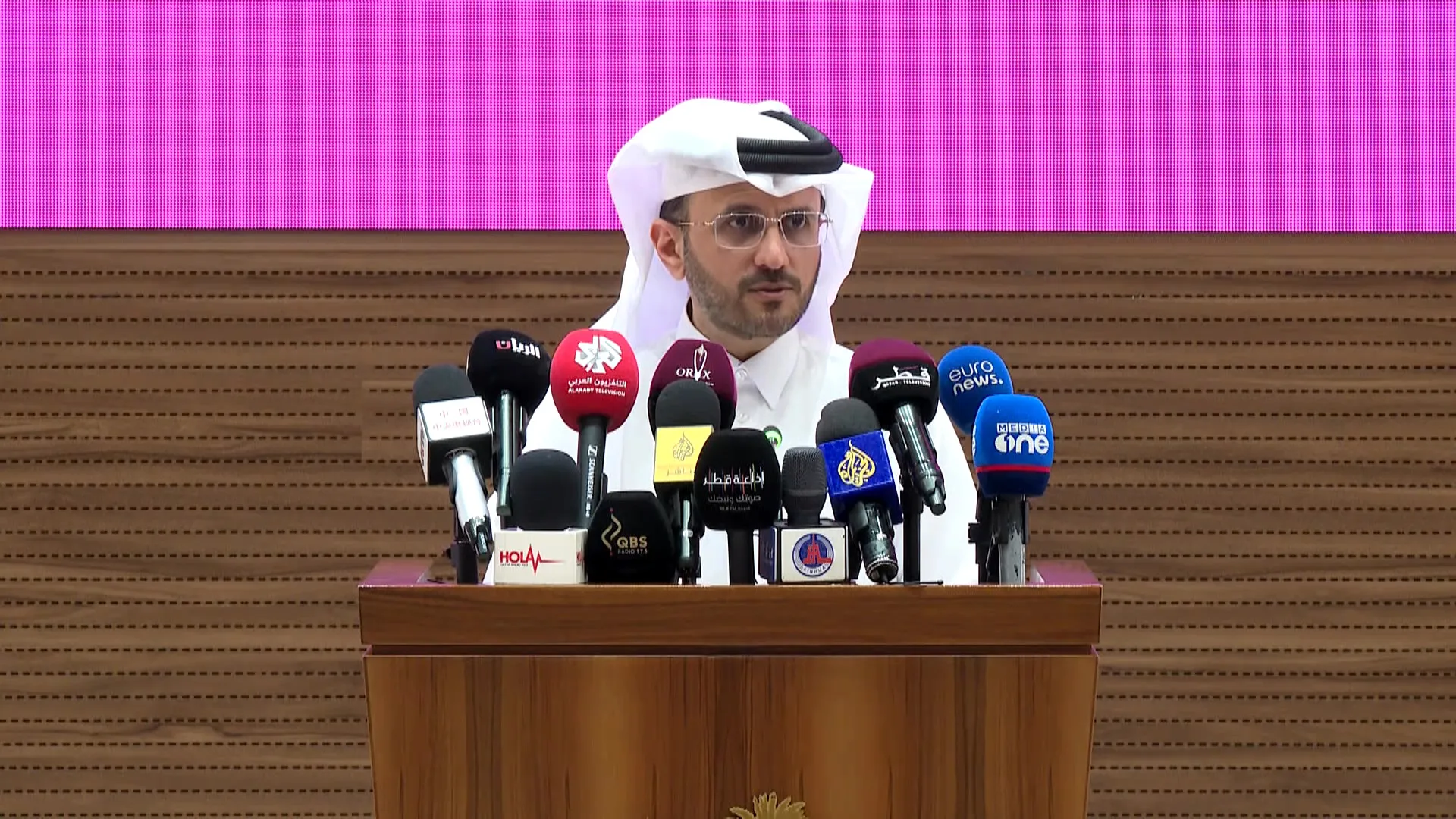
Qatar’s foreign ministry spokesman Majed al-Ansari told reporters at a weekly briefing that the Strait of Hormuz must not be used as a bargaining chip, as peace talks between the US and Iran continue to stall.
The United States is considering a new proposal from Iran to end the ongoing war amid a fragile ceasefire between the longtime adversaries.
The offer focuses on reopening the strategic Strait of Hormuz while postponing a deal on Iran’s nuclear programme, arguably the most contentious issue between Tehran and Washington.
Recommended Stories
list of 3 itemsend of list
According to US media outlets, the proposal has drawn scrutiny in Washington, and officials there have expressed scepticism.
Early indications from the Trump administration suggest the plan is unlikely to be accepted in its current form, potentially further delaying any prospect of permanently ending the currently paused US-Israel war on Iran, which has killed thousands and sent global energy prices soaring.
Here is what we know so far:
What’s in Iran’s latest proposal?
Iran’s latest proposal aims for de-escalation in the Gulf without immediately placing restraints on its nuclear programme, as the US has demanded. Tehran has offered to reopen the Strait of Hormuz on the condition that the US lifts its naval blockade on Iranian ports and agrees to end the war.
Iran has effectively closed the strait to shipping, creating global economic pressure by driving up energy prices and disrupting supply chains. In peacetime, one-fifth of the world’s oil and liquefied natural gas (LNG) supplies are shipped through the narrow passage, which links Gulf oil producers to the open ocean.
Days after the ceasefire began on April 8, Trump announced a blockade on Iranian ports and ships, restricting Tehran’s ability to export oil and cutting off a crucial source of its revenue.
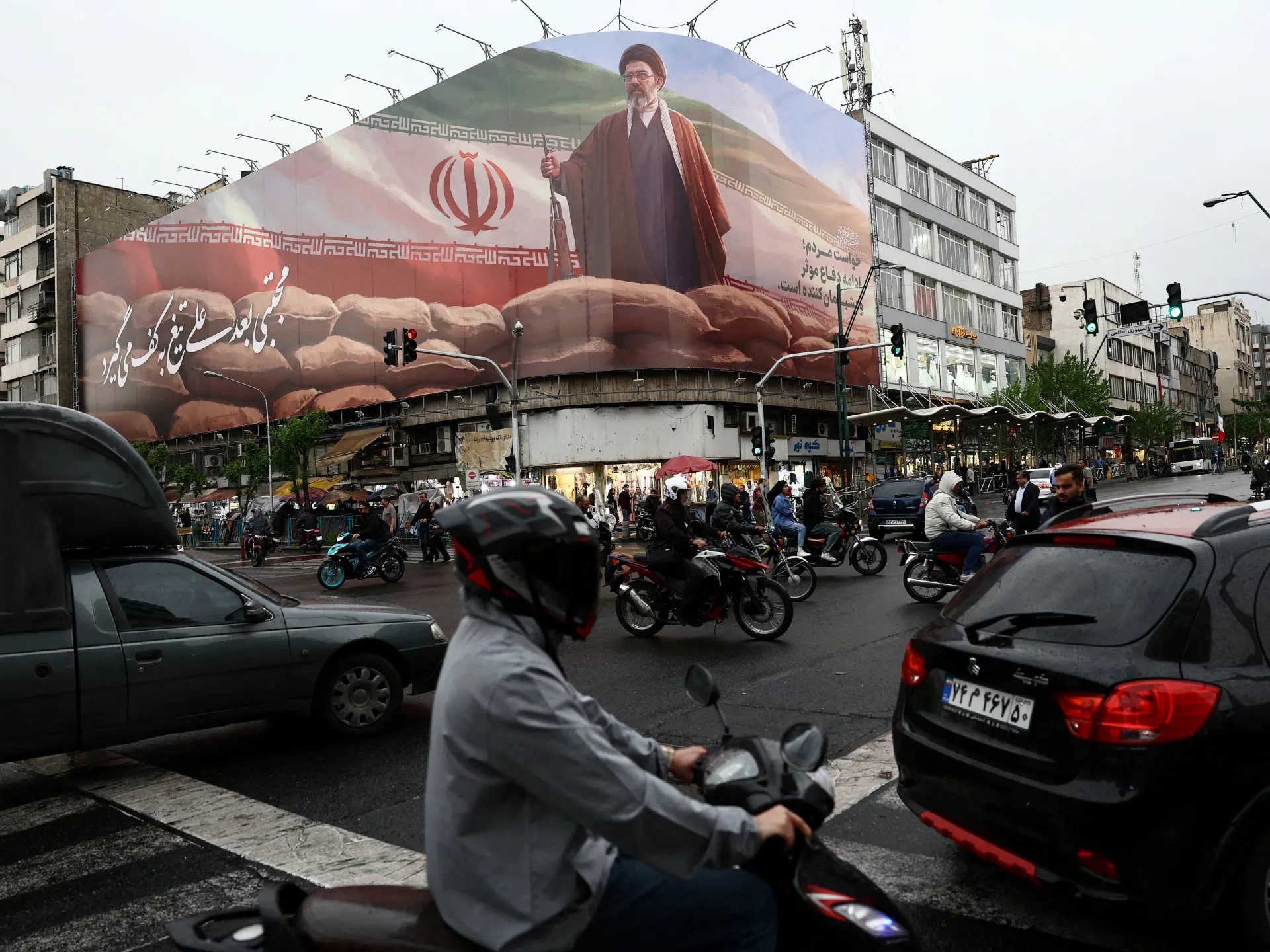
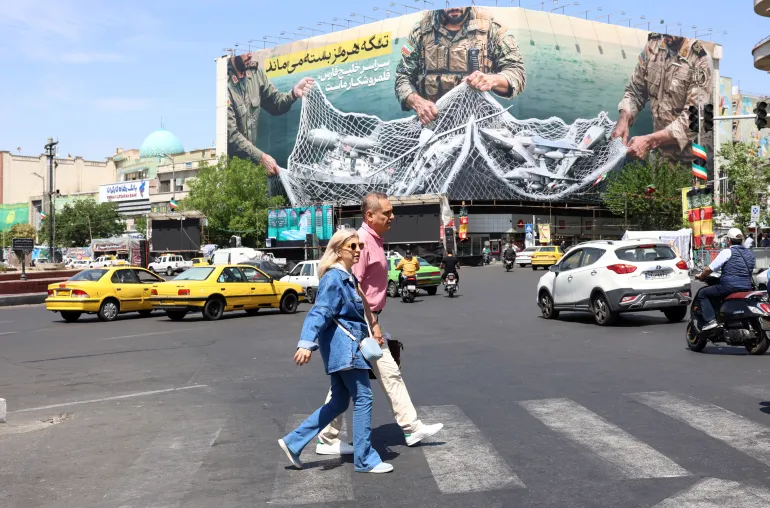
Iranians walk past a huge billboard carrying a sentence reading in Persian ‘The Strait of Hormuz remains closed’ at Enghelab Square in Tehran, Iran, 28 April 2026 [Abedin Taherkenareh/EPA]
However, a central feature of Iran’s offer to reopen the Strait to all traffic is that discussions over Iran’s nuclear activities would be postponed until after the war ends.
The proposal was conveyed to Washington through Pakistan, which has been acting as a mediator.
“These messages concern some of the Islamic Republic of Iran’s red lines, including nuclear issues and the Strait of Hormuz,” Iranian state media Fars News Agency reported.
“Informed sources emphasise Mr Araghchi is acting entirely within the framework of the specified red lines and the diplomatic duties of the Ministry of Foreign Affairs.”
The news agency said the messages relayed were “unrelated to negotiations” and are “considered an initiative by Iran to clarify the regional situation”.
Iranian analyst Abas Aslani said Iran’s latest proposal is based on an “altered” approach.
Aslani, a senior research fellow at the Centre for Middle East Strategic Studies, told Al Jazeera that Tehran believes its previous model – which was based on making compromises on its nuclear programme in exchange for economic sanctions relief – is no longer a “viable path towards a potential accord”.
“Iran believes this can also function as a trust-building measure to compensate for the trust-deficit issue,” he added.
On Monday, Tehran’s envoy to the United Nations, Amir Saeid Iravani, said “lasting stability and security” in the Gulf and the wider region can only be achieved through a durable and permanent cessation of aggression against Iran.
How has the US responded so far?
US President Donald Trump met with top security advisers on Monday to discuss the Iranian proposal, the White House confirmed.
However, according to media reports, the US response has been largely dismissive. According to Reuters, an unnamed US official said President Trump was unhappy with the proposal because it did not include provisions for Iran’s nuclear programme. The official noted that “he doesn’t love the proposal”.
Citing two people familiar with the matter, US media outlet CNN reported that Trump was unlikely to accept the proposal. It said Washington lifting its blockade of Iranian ports without resolving questions over Tehran’s nuclear programme “could remove a key piece of American leverage in the talks”.
Secretary of State Marco Rubio told Fox News on Monday that the proposal was “better than what we thought they were going to submit”, but questioned Tehran’s intentions.
“They’re very good negotiators,” he said. “We have to ensure that any deal that is made, any agreement that is made, is one that definitively prevents them from sprinting towards a nuclear weapon at any point.”
Al Jazeera’s Mike Hanna, reporting from Washington, said, “There’s been a complete lid over what was discussed” during the meeting between Trump and his national security team.
“It was so tight that we do not know exactly who in his national security team was present at that meeting,” Hanna added.
“Normally, there is some form of readout or some form of more information giving, fleshing out the details of a meeting like this.”
What has been the response from other countries?
While the “US and Iran feel that time is on their side, the longer this goes on, the more difficult it’s going to be,” Mohamed Elmasry, an analyst for the Doha Institute of Graduate Studies, said.
“I really don’t think time is on anyone’s side. I really do think the Europeans are losing patience,” he told Al Jazeera.
On Monday, German Chancellor Merz stated that the “Iranians are negotiating very skilfully”, Elmasry noted. He said this shows that Trump is coming under increasing pressure from his allies, “who believe he [Trump] got them into this big mess and isn’t able to clean it up”.
“Trump isn’t going to be happy hearing that and the chancellor is hitting Trump where it hurts.”
Rights groups have described the move as a “blatant abuse of power”.
Published On 27 Apr 202627 Apr 2026
Bahrain has stripped dozens of people of their citizenship for allegedly supporting Iranian attacks on the country.
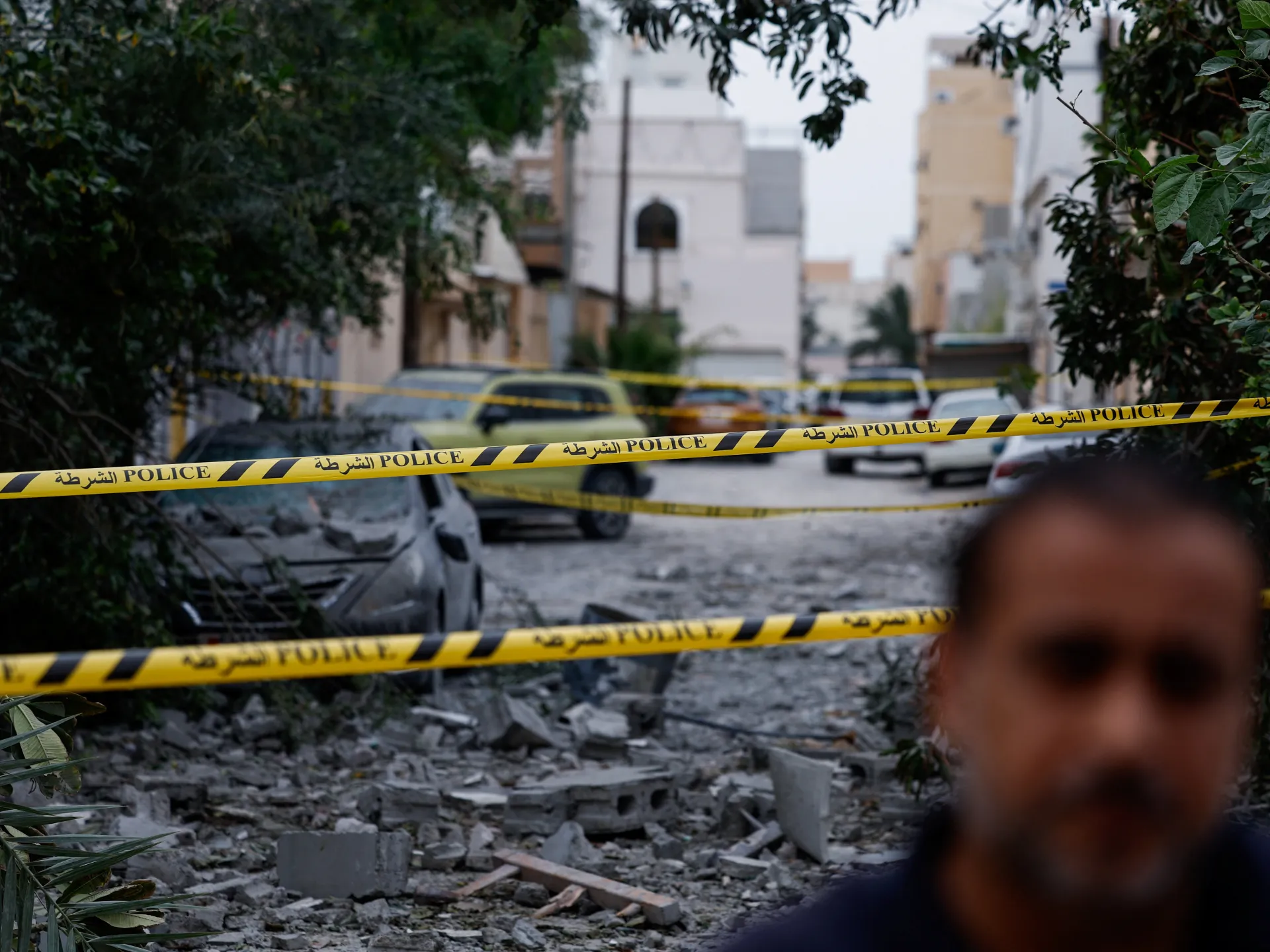
Bahrain’s Ministry of Interior announced on Monday that it had revoked the citizenship of 69 people, some of whom were related, after accusing them of sympathising with Iran and “colluding with foreign entities”. The move comes after Tehran carried out strikes on facilities in Bahrain as part of the war launched against Iran by Israel and the United States.
Recommended Stories
list of 3 itemsend of list
The directive, issued by King Hamad bin Isa Al Khalifa, stated that all 69 people were “of non-Bahraini origin”. Under Bahraini law, a person can be stripped of citizenship if they are deemed to have caused harm to the country or shown disloyalty.
The London-based Bahrain Institute for Rights and Democracy described the move as “dangerous” and a clear violation of international law.
The organisation said the individuals had not been publicly identified, and it remained unclear whether they had been arrested, whether they were inside or outside Bahrain, and whether they held another nationality.
Iranian strikes
Tehran began striking its Gulf neighbours on February 28, shortly after Israel and the United States began the war by launching attacks on Iran.
Tehran accused the targeted countries of allowing the US to conduct its strikes from their territory. Iran’s retaliatory attacks reportedly caused significant damage to US military sites across the region, including a Navy base in Bahrain, which was hit by missiles and drones.
Iran ceased its attacks on Gulf neighbours on April 9, following the introduction of a ceasefire brokered by Pakistan. Negotiations to permanently end the war are ongoing three weeks later.
Bahrain’s Shia population has long accused authorities of marginalising them. During the Arab Spring in 2011, mass protests against the country’s leadership broke out. The Bahraini government has long blamed Iran for fomenting unrest against it.
Abbas Araghchi will speak with ‘senior officials’ in Moscow, Iran’s Foreign Ministry says.
By AFP and The Associated Press
Published On 26 Apr 202626 Apr 2026
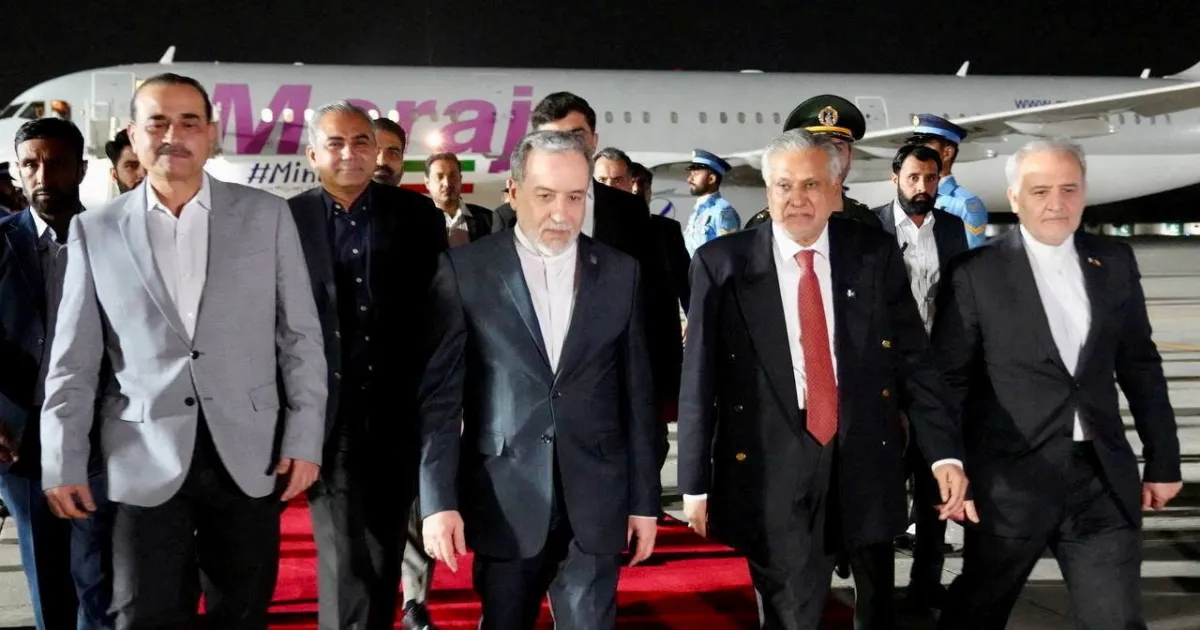
Iran’s top diplomat, Abbas Araghchi, has left Islamabad for Moscow, the Iranian Ministry of Foreign Affairs said, as mediators hope to keep the prospect of more Tehran-Washington talks alive.
Araghchi sandwiched a trip to Muscat, Oman, in between visits to the Pakistani capital, leaving on Sunday to be in Moscow the following day. But there was no indication that direct talks between Iran and the United States would resume.
Recommended Stories
list of 4 itemsend of list
However, in a sign that indirect efforts were ongoing, the Fars news agency reported that Iran had transmitted “written messages” to the Americans via mediator Pakistan, which were “about some of the red lines of the Islamic Republic of Iran, including nuclear issues and the Strait of Hormuz”.
But the messages were not part of any negotiations, Fars said.
US President Donald Trump last week indefinitely extended the ceasefire that Washington and Tehran agreed to on April 7, which has largely halted the fighting that began with joint US-Israeli strikes on Iran on February 28.
But a permanent settlement remains elusive, and the economic shockwaves of the war continue to reverberate around the globe.
Iran has effectively blocked the vital Strait of Hormuz, cutting off vast quantities of oil, natural gas and fertiliser from the global market, and sending prices soaring. The US has imposed a blockade of Iranian ports in response.
There had been hopes for a new round of talks on Saturday, with US envoys Steve Witkoff and Jared Kushner due to visit Islamabad, but Trump later told Fox News he had scrapped the trip, saying there was no point “sitting around talking about nothing”.
On Sunday, Trump told the same channel: “I said, we’re not doing this any more. We have all the cards. If they want to talk, they can come to us, or they can call us. You know, there is a telephone. We have nice, secure lines”.
Asked earlier whether cancelling the trip meant a return to open hostilities, Trump said: “No, it doesn’t mean that.”
Shuttle diplomacy
On Saturday, Araghchi met Pakistan’s military chief, Asim Munir, a key mediator, Prime Minister Shehbaz Sharif and Minister of Foreign Affairs Ishaq Dar, before flying on to Muscat. He returned to Islamabad on Sunday.
In Russia, Iran’s Foreign Ministry said he would speak with “senior officials”.
Russia’s Ministry of Foreign Affairs confirmed that Araghchi would visit Moscow, but did not say if he would meet President Vladimir Putin.
Amid the flurry of meetings, Araghchi signalled scepticism over Washington’s intentions, saying he had “yet to see if the US is truly serious about diplomacy”.