Disaster Capitalism in Haiti Gives a Glimpse Into the Imperialist Shock Doctrine That Could Rattle Venezuela Long After the Earthquakes
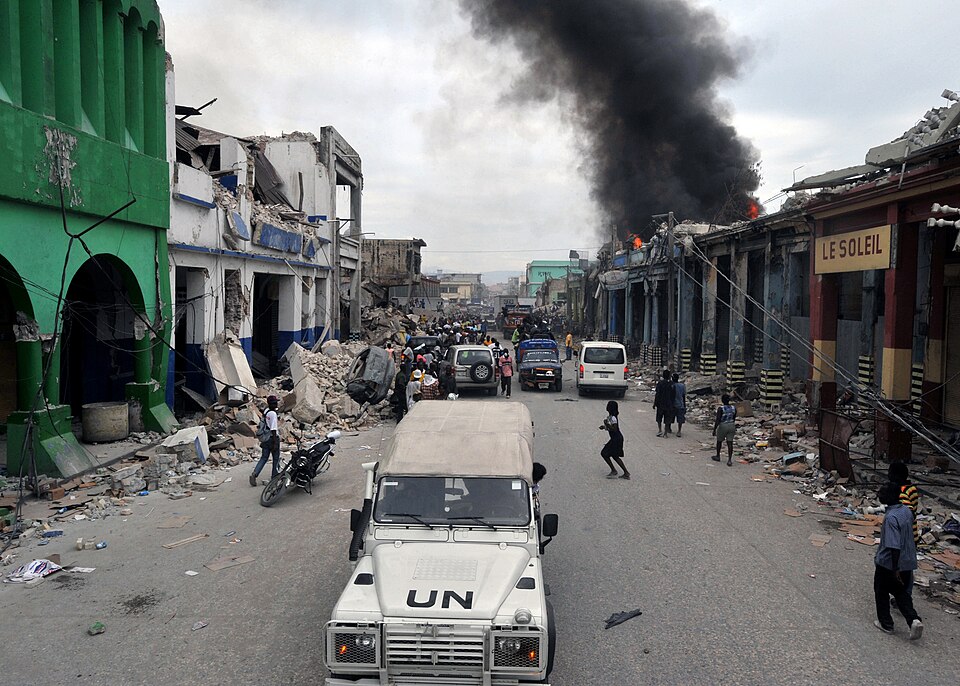
A UN peacekeeping truck in Haiti following the 2010 Earthquake. (Wikimedia Commons)
The U.S. has attacked Venezuela through various means for decades and kidnapped President Maduro but is now claiming to assist with earthquake relief. If it’s role in Haiti is any guide, that so-called aid from the U.S. is a Trojan Horse bringing more plunder and control.
For decades, the U.S. has waged a carefully planned and unrelenting attack on Venezuela’s economy using unilateral coercive measures, commonly known as economic sanctions, to destabilize and destroy the country’s socialist Bolivarian government. Though the earthquakes that devastated the nation were not caused by the U.S., the destabilization of the Venezuelan government, economy, and infrastructure was. The damage from those sanctions was so pervasive that any natural disaster large enough would be catastrophic, leading to foreign aid being used not only to produce enormous capitalist profits for foreign interests but also to bring the country more firmly under U.S. control. This is the situation Venezuela faces today.
George W. Bush imposed the first coercive measures against Venezuela in 2006. Democratically elected President Hugo Chávez had the nerve to criticize the U.S. for its bloodthirsty response to 9/11 and refused to support or participate in the U.S. sham counterterrorism efforts. Chávez did so in a very public and embarrassing way for Bush, as he declared from the lectern at the United Nations that George W. Bush was the devil, and that the podium that Bush had just delivered his own remarks from still smelled like sulfur. Bush responded by declaring Venezuela a state sponsor of terror along with Cuba and Iran (notice a pattern here). Bush also claimed that Venezuela refused to adhere to international counternarcotics agreements, breathing life into the claim that the Bolivarian government was a sponsor of narcoterrorism. But even before that, in 2004, Bush restricted non-humanitarian aid to the country, claiming they weren’t doing enough to stop human trafficking. Bush did all of this after the failed U.S.-backed coup against Chávez in 2002 that was tied to his administration.
The aggression toward Venezuela did not end with the Bush presidency. In December 2014, Obama signed the Venezuela Defense of Human Rights and Civil Society Act after U.S. intelligence agencies and the Department of State claimed that the Venezuelan government was committing human rights abuses against government opposition members. This was done in response to the Maduro government charging opposition members with engaging in conspiracies to overthrow him. Obama imposed sanctions on seven Venezuelan officials, and in March 2015, he issued an Executive Order implementing these sanctions and expanded them to block their visas and freeze the U.S. property of the targets. Obama publicly declared Venezuela an “…extraordinary threat to the national security of the United States.”
In response, President Maduro said in a nationally televised speech, “President Barack Obama, representing the U.S. imperialist elite, has personally decided to take on the task of defeating my government and intervening in Venezuela to control it.” One of the impacted Venezuelan officials, Diosdado Cabello, said, “What is being planned are attacks against our land, against our country, military attacks.” It took the U.S. a few years, but…
President Donald Trump imposed more, wider-reaching economic coercive measures in 2017 during his first term. In addition to recognizing unelected opposition figure Juan Guaido as president of Venezuela, Trump also sanctioned the state-run oil company PDVSA, denying the government access to U.S. financial markets. He froze PDVSA’s assets and finally imposed a near-complete economic embargo on the country. And in 2020, the Trump Justice Department indicted President Maduro on charging the president and 14 others with narcoterrorism, conspiracy to import cocaine, and gun charges. It also accused him of coordinating with the leftist guerrilla peasant militia Fuerzas Armadas Revolucionarias de Colombia (FARC), or Revolutionary Armed Forces of Colombia. Founded as the military wing of the Colombian Communist Party, which sought to redistribute land and resources that the Colombian government denied to the desperately poor peasants in rural areas. After years of fighting with the government, FARC was officially dissolved in the 2016 Peace Accord with the Colombian government. They are now a legal left-wing political party, initially called the Common Alternative Revolutionary Force and later renamed the Comunes (Commons). Trump then issued a $15 million bounty for information leading to Maduro’s arrest. Not to be outdone in attempting to enact regime change in Venezuela, President Joe Biden doubled the bounty to $25 million, with no additional indictments added.
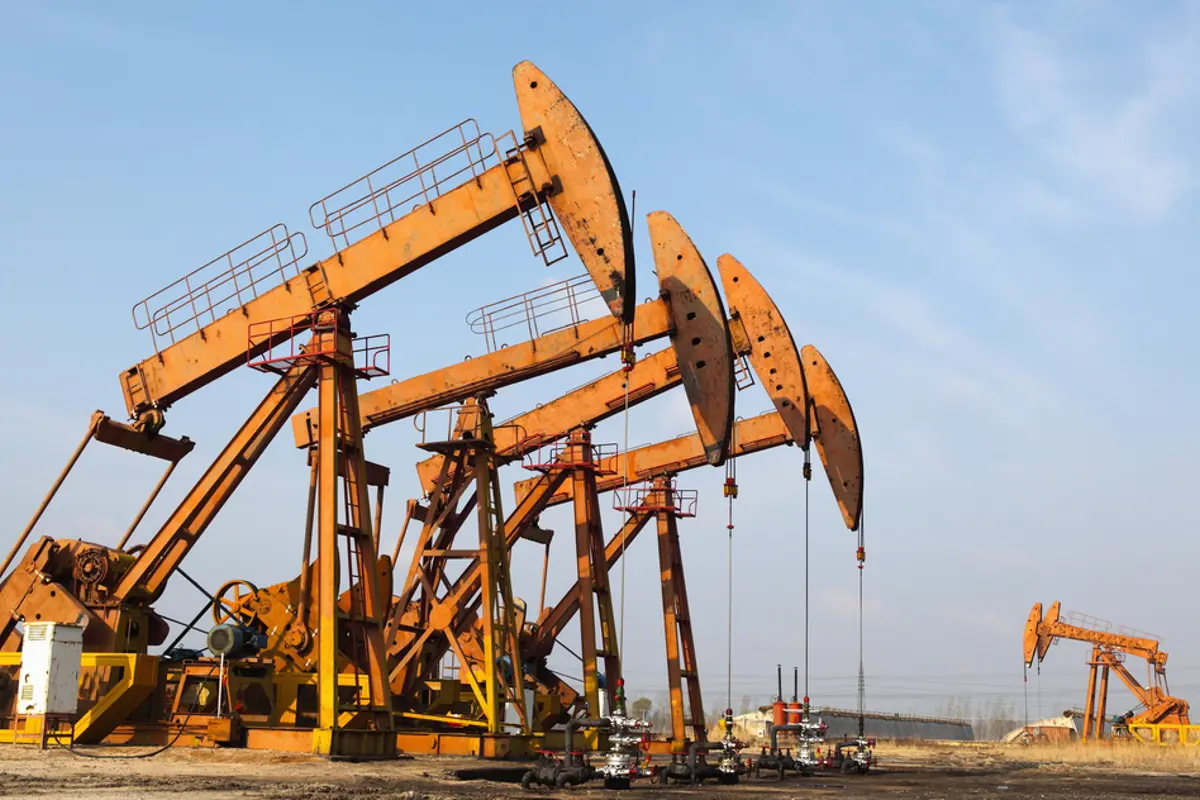
The measures barred Venezuela from importing equipment, spare parts, and industrial chemicals to maintain its oil production facilities and shipping capabilities. Oil infrastructure across the country deteriorated, and oil production was driven far below the previous 3 billion barrels a day at its 2008 height to barely above 300,000 barrels a day.
While many people accurately note that the U.S. is after control of Venezuela’s enormous oil reserves, the country’s mineral wealth is also crucial to the U.S. and much of the world, as it includes bauxite and rare earth minerals critical for weapons systems, satellite manufacturing, and AI technologies. When we consider the struggle we are engaging in to stop the proliferation of these technologies from being used to violate our privacy, whatever freedom we have left, our environment, and our very lives, consider that the U.S. pursuit of these materials has already directly caused the instability, suffering, worsened health outcomes, and deaths of tens of thousands of Venezuelans.
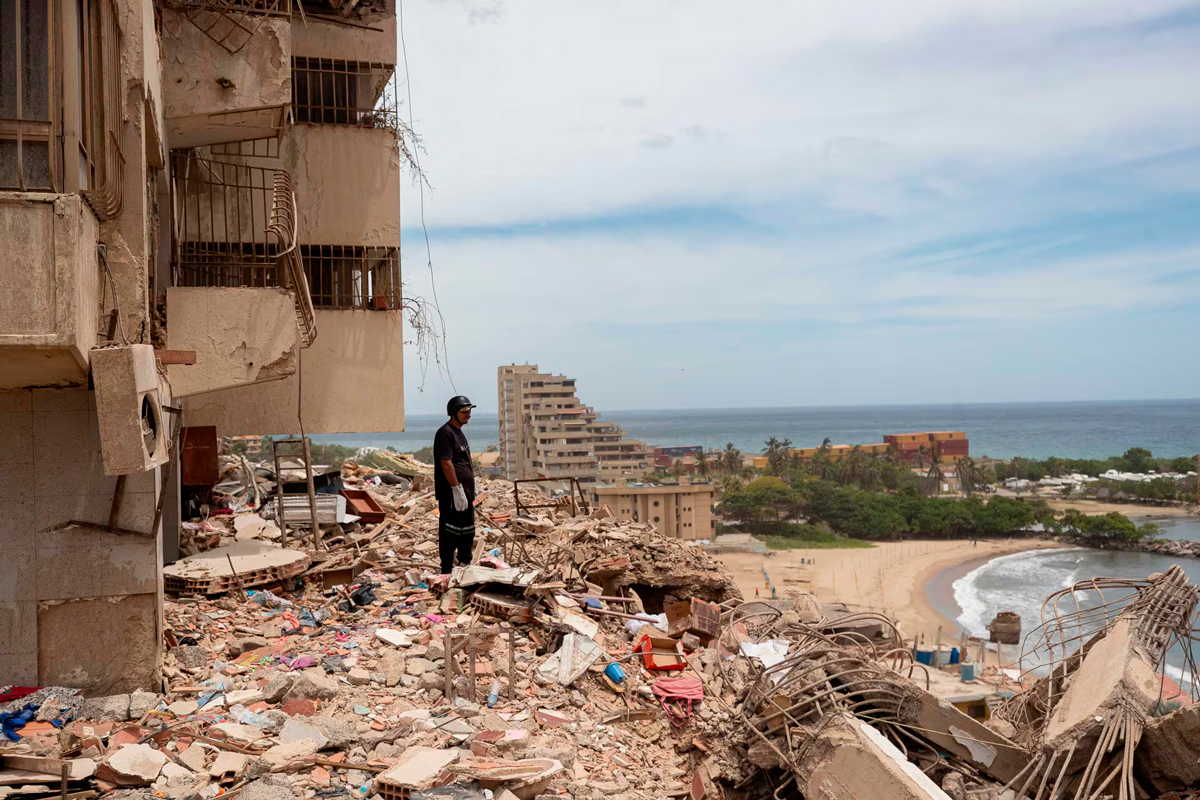
Venezuela relies largely on oil exports to fund its public sector commitments; the collapse of oil exports crippled its primary source of public revenue, making it impossible to import essential goods like food and medicine. The Center for Economic and Policy Research (CEPR) estimated that 40,000 Venezuelans died due to economic coercive measures between 2018 and 2019 alone. Former U.S. Special Rapporteur Alfred de Zayas estimated the deaths to have been over 100,000 by 2020. But this is neither unexpected nor unwanted by the U.S. government. Economic sanctions are designed to cause so much hardship for the people of a country that they will rise up in frustration and anger at their own government. U.S. officials understood that imposing economic sanctions on the country would prevent it from importing not just materials to maintain the oil sector but also necessities for the Venezuelan people, such as food, medicine, fuel, and even toilet paper. But public infrastructure, from hospitals and office buildings to apartment buildings and water systems, also fell into disrepair as materials needed to maintain it could not be imported due to sanctions. With the physical buildings weakened, the country was far more vulnerable to disasters like the June 2026 earthquakes than it would have been had the sanctions not been in place.
By the time Trump returned to the White House in 2024, despite the immense damage already done to the country’s economy and infrastructure, they had not done what successive U.S. presidents wanted: to bring about the collapse of the Bolivarian government in Venezuela. Trump imposed more measures after his return to office, doubled Biden’s bounty increase on Maduro to $50 million, and eventually carried out the violent kidnapping of President Nicholas Maduro and First Combatant Cilia Flores in the pre-dawn hours of January 3, 2026, with the help of the Navy and Marines of the Southern US Command (SOUTHCOM), which also carried out the indiscriminate murders of Caribbean fisherfolk in the months prior to the kidnapping. The bounty was never paid to anyone. He also added to the original 2020 indictment against Maduro by adding his now-kidnapped wife and National Assemblywoman Flores, and adding charges of “…narco-terrorism conspiracy, cocaine importation conspiracy, possession of machine guns and destructive devices, and conspiracy to possess machine guns and destructive devices against the United States.” They are both held in separate solitary confinement cells in the Metropolitan Detention Center (MDC) in Brooklyn, NY, awaiting their sham trials.
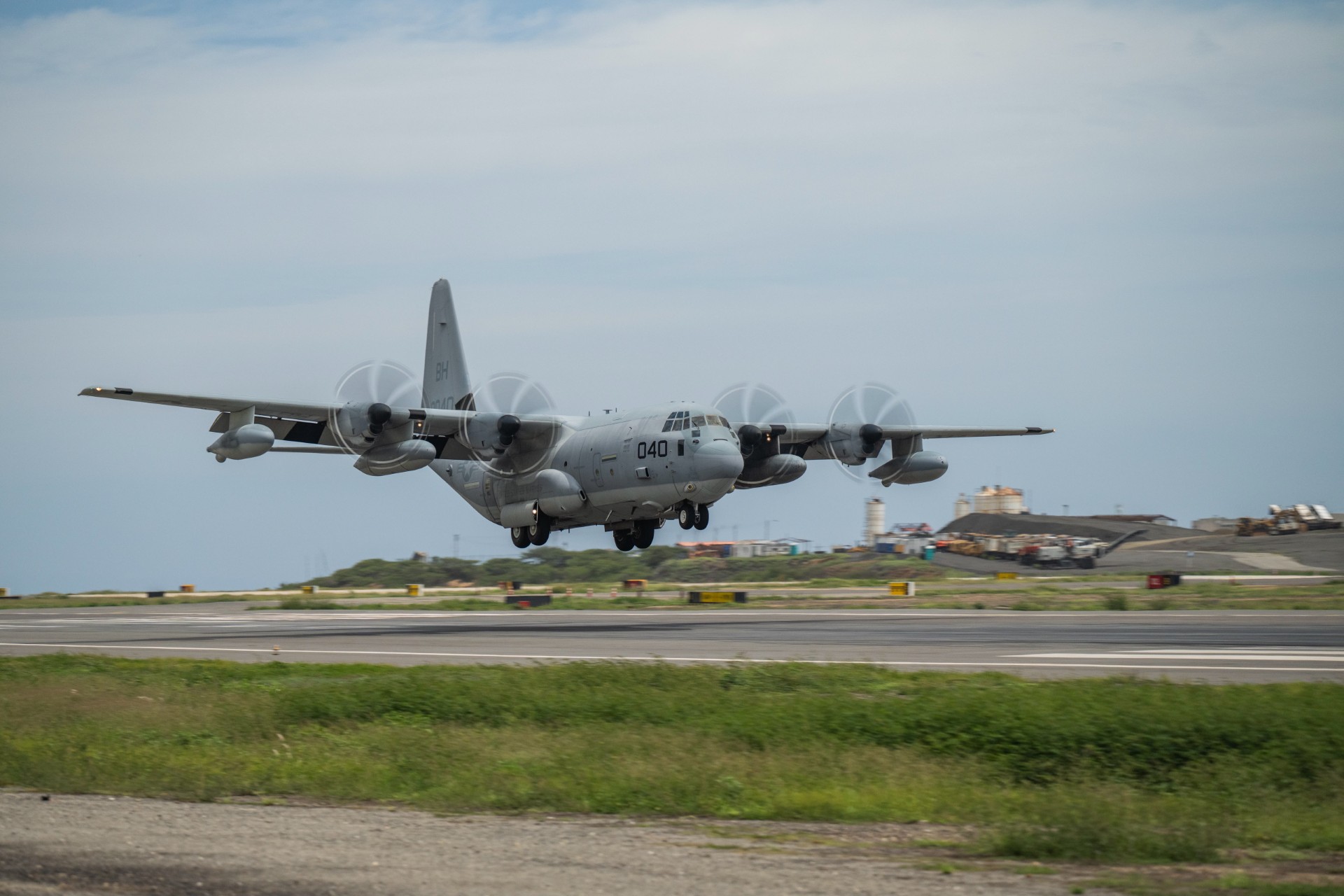
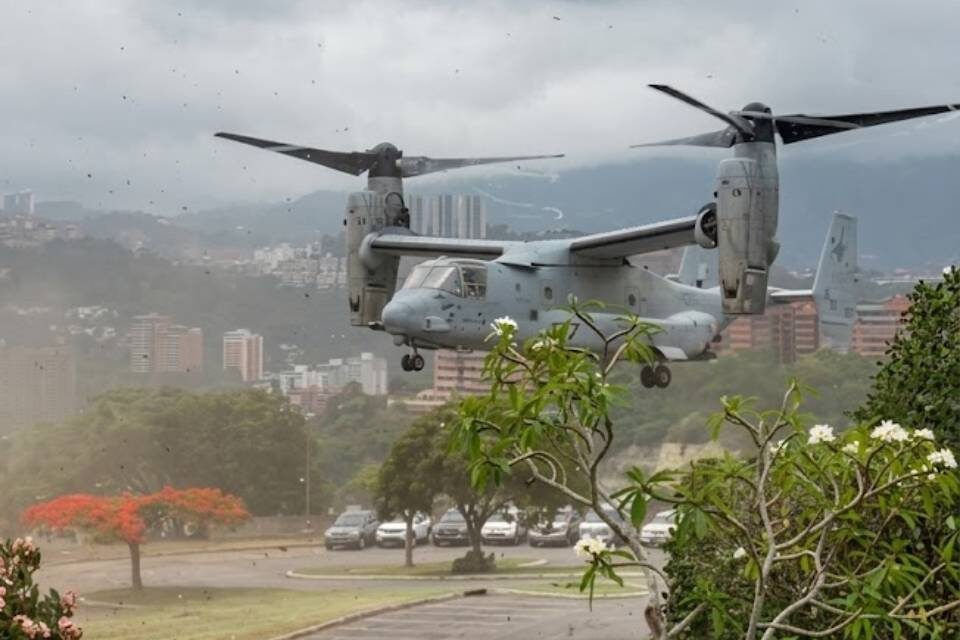
It is an obscenity that the same SOUTHCOM is now deploying forces to Caracas to provide post-disaster air traffic and airport support. But it is a greater crime that the U.S. has positioned itself and its interests to finally get what it wants – control of Venezuela’s oil and minerals sectors and eventual privatization of public services that define the Socialist Bolivarian government – even if it is a natural disaster that provides them the perfect opportunity to achieve it. This, after expropriating Venezuela’s oil industry and profiting from selling the stolen crude, Trump sending a measly $150 million in “aid” to the country he stole their sovereign materials from is a settler colonial level insult.
This is “disaster capitalism,” popularized by Naomi Klein in her book The Shock Doctrine, but a well-documented aspect of imperialist plunder. In the process of imposing economic shocks through sanctions by an external entity or through the implementation of neoliberal policies internally, Klein explains how governments and corporations exploit the shock of an unplanned, catastrophic event to impose radical, wholesale austerity and control. Disaster response becomes the vehicle for enormous foreign investment and development, foreign control of that development, and ultimately the usurpation of the existing but weakened state in favor of the foreign governments and corporate interests behind the aid money. Economic policies that would be rejected under normal circumstances are more easily imposed on an already vulnerable state when that state and its people are rendered desperate by a natural disaster.
The use of disaster relief as a Trojan Horse for neoliberal plunder and control after the 2010 earthquake in Haiti may give us a terrifying vision of what could be in store for Venezuela today.
The earthquake in Haiti was used as a pretext for the US to assert near-total control over the country’s recovery, if not the country itself, along with its foreign allies in the UN-imposed Core Group that governs the island nation. Aid and reconstruction, and the billions of dollars for it, were directed by those and other foreign governments and contractors, bypassing the Haitian state under then-president René Préval. International entities justified this by claiming Haiti was hopelessly corrupt. What they were, however, was in disarray after the earthquake destroyed much of the government’s infrastructure, including the National Assembly and the National Palace, and years of imperialist control usurped its sovereignty.
But this excuse was needed to justify the Haitian government seeing very little of the billions of dollars pledged for relief and reconstruction. The Associated Press reported in 2013 that CEPR found that out of the $1.15 billion pledged, only 1% went to Haitian companies. They found instead that “…the ‘vast majority’ of the money it could follow went straight to U.S. companies or organizations, more than half in the Washington area alone.” And what was constructed was for the benefit of foreign corporate and Haitian comprador interests, who had the protection of the United States government to bend Haiti to all of their will.
The $224 million Caracol Industrial Park, built with reconstruction funds allocated through the recovery mission co-chaired by former U.S. President Bill Clinton, is a continuing example of disaster capitalism and the nefarious ways that Western imperialists profit from natural and human catastrophe.
In 2011, scores of farmers and other residents were evicted from their fertile agricultural land, far from the impact zone, to make way for its construction. They were given little notice to leave and insufficient compensation. They fought for years to secure a reparations agreement with the Haitian government and the Inter-American Development Bank (IDB) in 2018, which included new land, jobs, equipment, and other compensation. Many finally received reimbursement in 2020, but not all, and not nearly enough for what was taken from them by the U.S., the IDB, and USAID, who were the major funders of the project.
The park was designed to attract foreign garment companies with tax exemptions and cheap labor, as wages were promised to be kept as low as $1.75 a day. The garment companies did come, and the Clintons promised hundreds of thousands of jobs. But fewer than 10,000 were produced, and they were at the same low rate of less than $2.00 a day that Haitians had been fighting to raise for years before the earthquake against a small group of Haitian manufacturing, import/export, and political elites controlling the country’s existing manufacturing industries with the backing of the U.S. government. When the Haitian government passed a law in 2009 to raise the country’s minimum wage for garment workers to $3 a day and $5 a day for other sectors due to the people’s agitation, foreign companies and the Haitian elite colluded with the U.S. State Department and, with a study from USAID that said raising the minimum wage would make the garment sector economically unviable, successfully blocked the legislation.
While Bill and Hillary Clinton have never admitted involvement in suppressing Haitian wages, Hillary Clinton was Secretary of State under President Barack Obama when the State Department cables that WikiLeaks published revealed the covert wage-suppression scheme that resulted in legislation being passed in the U.S. to favor the Haitian elite and foreign investors: the Haitian Hemispheric Opportunity through Partnership Encouragement (HOPE) Acts I & II. There was no way the Clintons were not involved, as it was the Clinton Foundation through which they did much of their work in Haiti, and Haitians hold them responsible for the abysmal outcome.
By the end of 2011, one year after the earthquake, most of the promised aid had not been disbursed, and what was went to projects unrelated to housing, feeding, or providing any aid or support to the displaced, like the Caracol Industrial Park. The scandal was compounded by revelations that some major aid organizations achieved very little with the funds they received, so no one could really account for where the billions of dollars went, other than into the pockets of non-Haitians.
Today, Haiti is still among the poorest countries in the world. Haitians have continued to protest not just against the minimum wage, but also the lack of sovereignty and human dignity imposed upon them as they endure a rise in U.S.-fueled gang violence, attacks on Haitian immigrants from this administration, continued control from the UN-appointed Core Group with no elected leadership chosen by them, and another UN invasion/intervention to quell unrest.
This is the future that the U.S. wants for Venezuela. To make Venezuela like Haiti or something close to it, at least in the manner of creating a dismantled state that the U.S. can swoop into, plunder, and control. Although Haiti and Venezuela may not be perfectly similar in many ways, but the use of an earthquake to further imperialist takeover of a country already weakened by relentless Western hegemony in response to the successful liberation struggle of largely Afro-descendent and Indigenous peasantry to free themselves from European settler colonial domination and capitalist exploitation are complementary examples of how a natural disaster is be used to deepen imperialist control under the guise of aid, instead of the most powerful and wealthiest country in the world using that power and money to help suffering human beings. And then the same country calls those states failed, and demonizes the government and the people as immature, unable to govern themselves, and an example of the failures of socialism or communism.
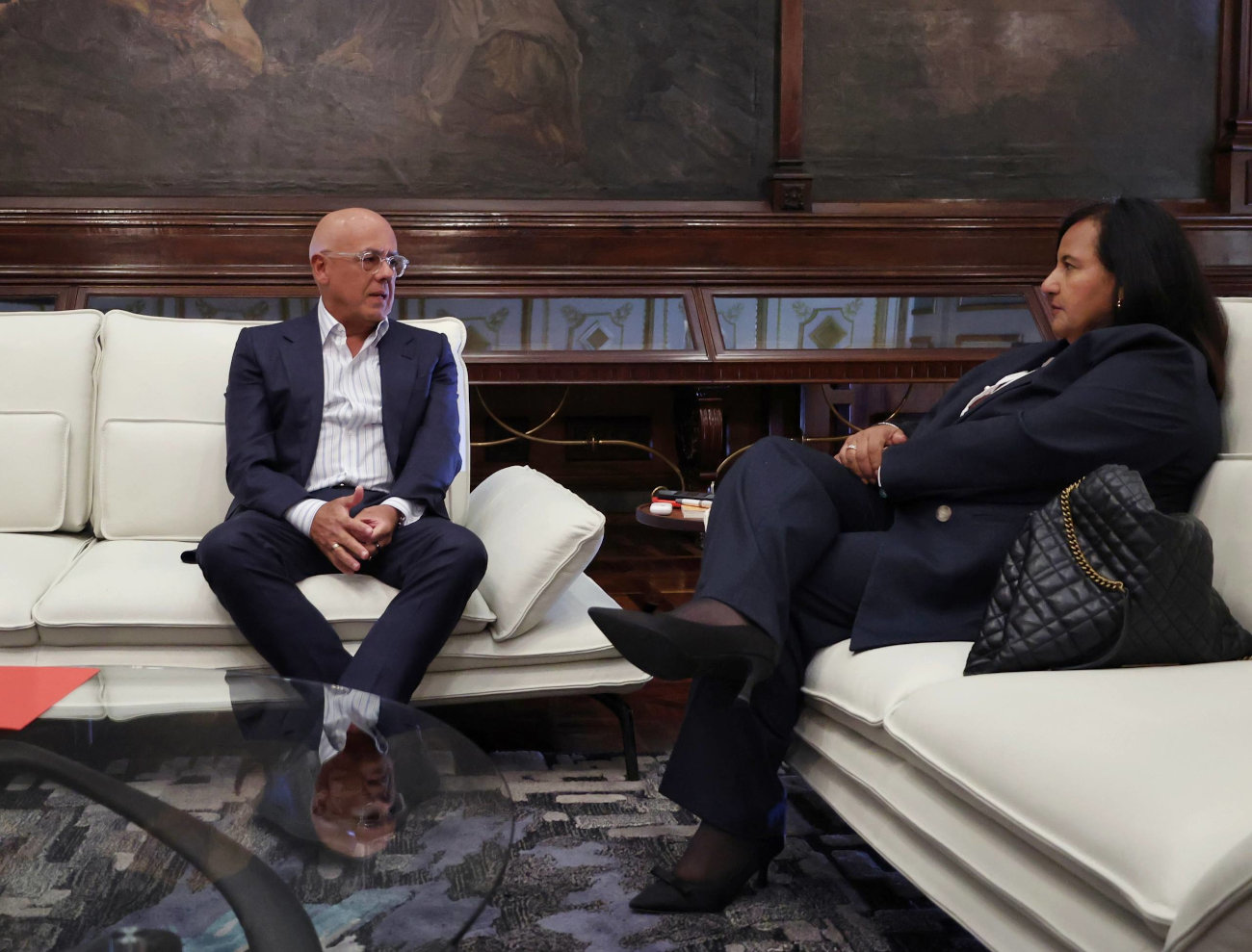
As U.S. officials are on the ground in Venezuela openly “coordinating” with the Interim President Delcy Rodriguez, it must be understood that this is done with the threat of her own indictment and imprisonment on bogus charges of narcotrafficking, human rights abuses, corruption, or grave robbing, depending on how amusing the U.S. wants to be with the sham accusations over her head.
And now, the U.S. is poised to use this unbelievably tragic disaster as an even bigger cudgel to force the Venezuelan state to concede much, much more, seizing this opportunity to tighten its control over the country’s oil and mineral resources, effectively absorbing it into the U.S. sphere of influence, to be used as a weapon against the rest of the U.S.’s designated enemies, Cuba, China, and Russia. Venezuela has had friendly relations with all of these countries, and all countries that the U.S. is also softening up with sanctions, embargoes, and threats of worse treatment.
We must expand and deepen the struggle against the U.S. re-colonization of the Western Hemisphere and join our struggling brothers and sisters in the Global South for an end to imperialist aggression, hegemony, and gangsterism, and we must target the enemy in whose camp we reside with clarity and purpose.
Because natural disasters will never stop happening. But disaster capitalism never has to happen again.
Not if we destroy capitalism and the empires that are erected upon it.
Jacqueline Luqman is a radical activist based in Washington, D.C., as well as a co-founder of Luqman Nation, an independent Black media outlet available on YouTube (here and here) and Facebook.
The views expressed in this article are the author’s own and do not necessarily reflect those of the Venezuelanalysis editorial staff.
Source: Black Agenda Report