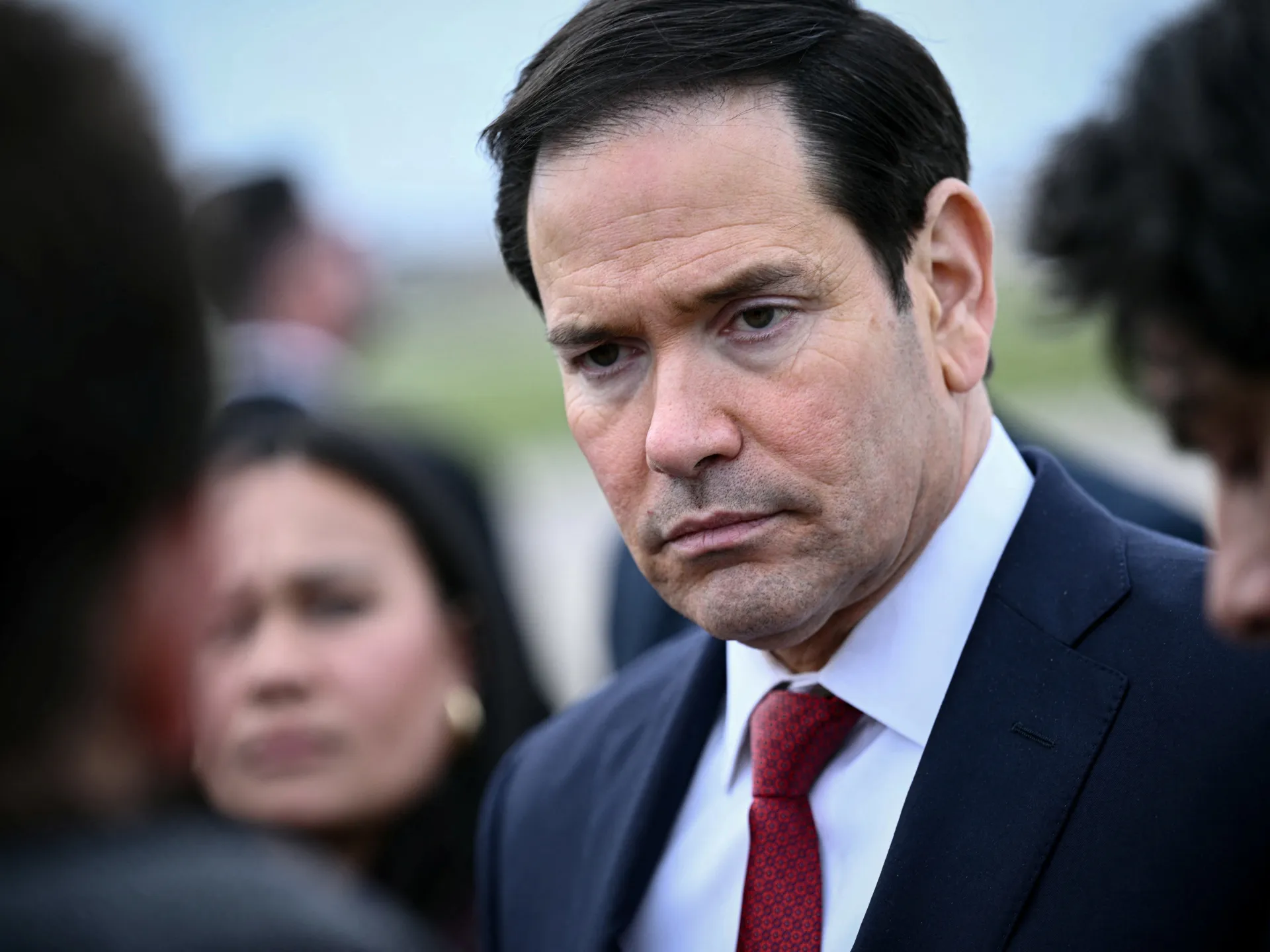
United States Secretary of State Marco Rubio has offered wide-ranging remarks upon his departure from the latest Group of Seven (G7) ministers’ meeting in France, denouncing Iran’s continued chokehold on the Strait of Hormuz as well as settler violence in the occupied West Bank.
Standing on an airport tarmac on Friday, Rubio fielded questions from journalists about reports that Iran plans to implement a tolling system in the strait, a vital waterway for the world’s oil supply.
Recommended Stories
list of 3 itemsend of list
Rubio used the topic to double down on pressure for countries to participate in securing the Strait of Hormuz, a demand US President Donald Trump has repeatedly made.
“One of the immediate challenges we’re going to face is in Iran, when they decide that they want to set up a tolling system in the Strait of Hormuz,” Rubio said.
“Not only is this illegal, it’s unacceptable. It’s dangerous for the world, and it’s important that the world have a plan to confront it. The United States is prepared to be a part of that plan. We don’t have to lead that plan, but we are happy to be a part of it.”
He called on the G7 members — among them, Japan, Canada, France, the United Kingdom, Italy, Germany and the European Union — as well as countries in Asia to “contribute greatly to that effort”.
Rubio calls toll plan ‘unacceptable’
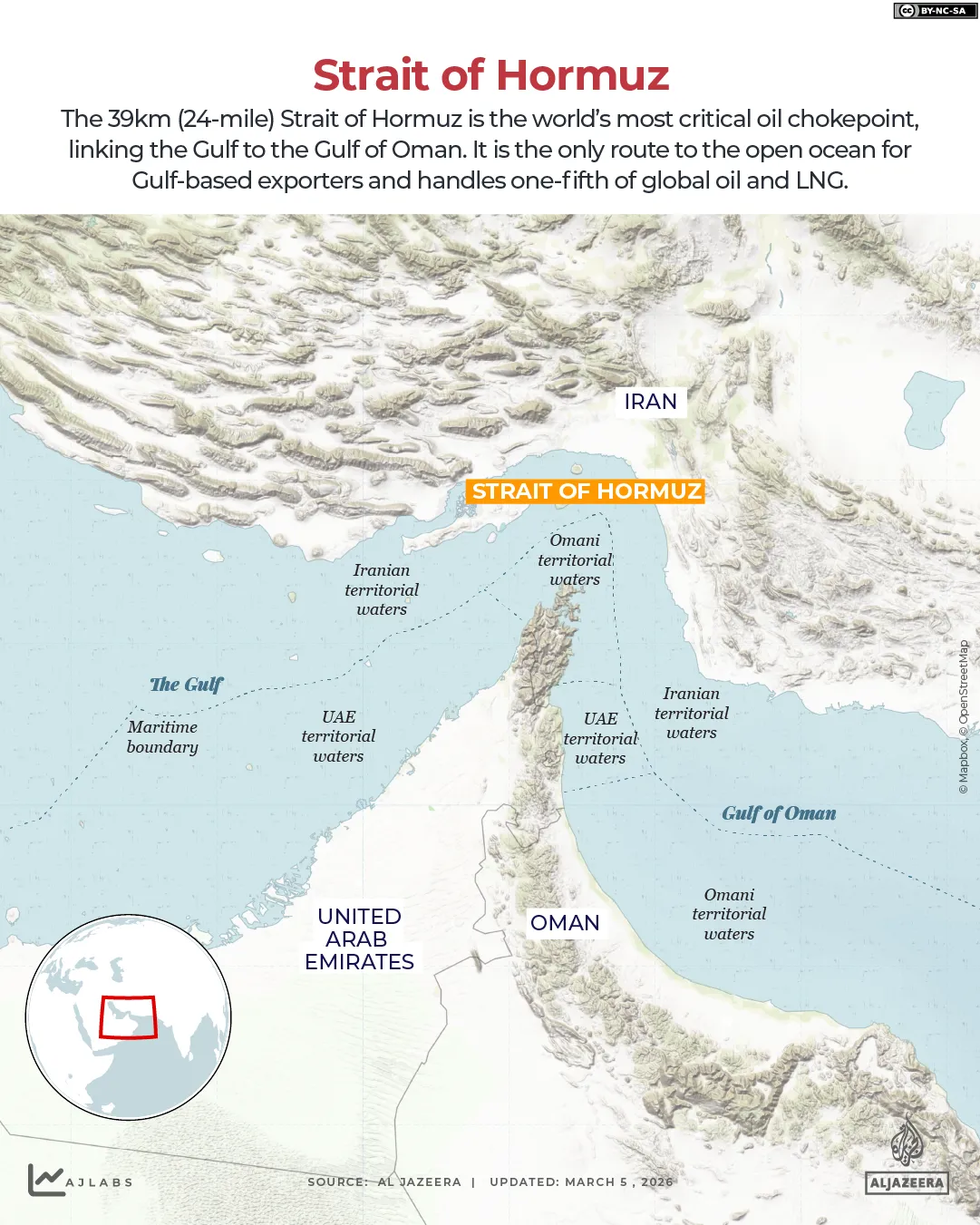
The Strait of Hormuz is a key artery for the global transport of oil and natural gas, and prior to the start of the US and Israel’s war against Iran on February 28, an average of 20 million barrels of oil per day passed through the waterway.
That amounted to roughly 20 percent of the world’s liquid petroleum supply.
But since the outbreak of war, Iran has pledged to close the Strait of Hormuz, which borders its shores. The threat of attacks has ground most of the local tanker traffic to a standstill, though a few vessels, some linked to Iran or China, have been allowed to pass through.
Media reports suggest that Iran is setting up a “tollbooth system” that would require passing ships to put in a request through Iran’s armed forces, the Islamic Revolutionary Guard Corps (IRGC). There would also be a fee to secure passage.
“ They want to make it permanent. That’s unacceptable. The whole world should be outraged by it,” Rubio said on Friday.
He added that he conveyed a warning about the polling scheme to his colleagues at the G7.
“All we’ve said is, ‘You guys need to do something about it. We’ll help you, but you guys are going to need to be ready to do something about it,’” Rubio said.
“Because when this conflict and when this operation ends, if the Iranians decide, ‘Well, now we control the Strait of Hormuz and you can only go through here if you pay us and if we allow you to, that’s not only is it illegal under international law and maritime law. It’s unacceptable, and that can’t be allowed to exist.”
The Trump administration, however, has struggled to rally allies and world powers to join the US in its offensive against Iran.
Legal experts have criticised the initial strikes against Iran as an unprovoked act of aggression, though the Trump administration has cited a range of rationales for launching the attack, including the prospect that Iran may develop a nuclear weapon.
Many of the US allies in Europe have maintained that they would limit their involvement to defensive actions. Trump, meanwhile, has accused members of the NATO alliance of being “cowards”, adding in a social media post, “We will REMEMBER.”
In a statement following the G7 meeting, member countries reiterated their stance that there should be an “immediate cessation of attacks against civilians and civilian infrastructure”.
They also underscored the “absolute necessity to permanently restore safe and toll-free freedom of navigation in the Strait of Hormuz”. But the statement fell short of pledging any resources or aid to the US and Israeli war effort.
Achieving goals ‘without any ground troops’?
It is unclear when the war might end. On Saturday, it reaches its one-month anniversary, having stretched for four weeks.
Rubio on Friday echoed Trump’s assessment that the war was going as planned and that the US was achieving its objectives, including to destroy Iran’s navy, missile stockpiles and uranium enrichment programme.
“ We are ahead of schedule on most of them, and we can achieve them without any ground troops, without any,” he said, addressing an oft-raised concern about the prospect of US troops being deployed to Iran.
Rubio also briefly addressed the increasing levels of Israeli settler violence against Palestinians in the occupied West Bank.
On March 19, the United Nations estimated that more than 1,000 Palestinians have been killed in the West Bank since Israel began its genocidal war in Gaza in October 2023. The international body underscored that a quarter of the victims were youths.
“ Well, we’re concerned about that, and we’ve expressed it. And I think there’s concern in the Israeli government about it, as well,” Rubio responded, adding that it was a “topic we follow very closely”.
He suggested that the Israeli government may take action to stop the violence, though critics argue that Israel has largely turned a blind eye to settler violence.
“Maybe they’re settlers, maybe they’re just street thugs, but they’ve attacked security forces, Israelis, as well. So, I think you’ll see the government going to do something about it,” Rubio said.
Upon taking office for a second term in January 2025, President Trump also moved to cancel sanctions against Israeli settlers accused of grave abuses in the West Bank.
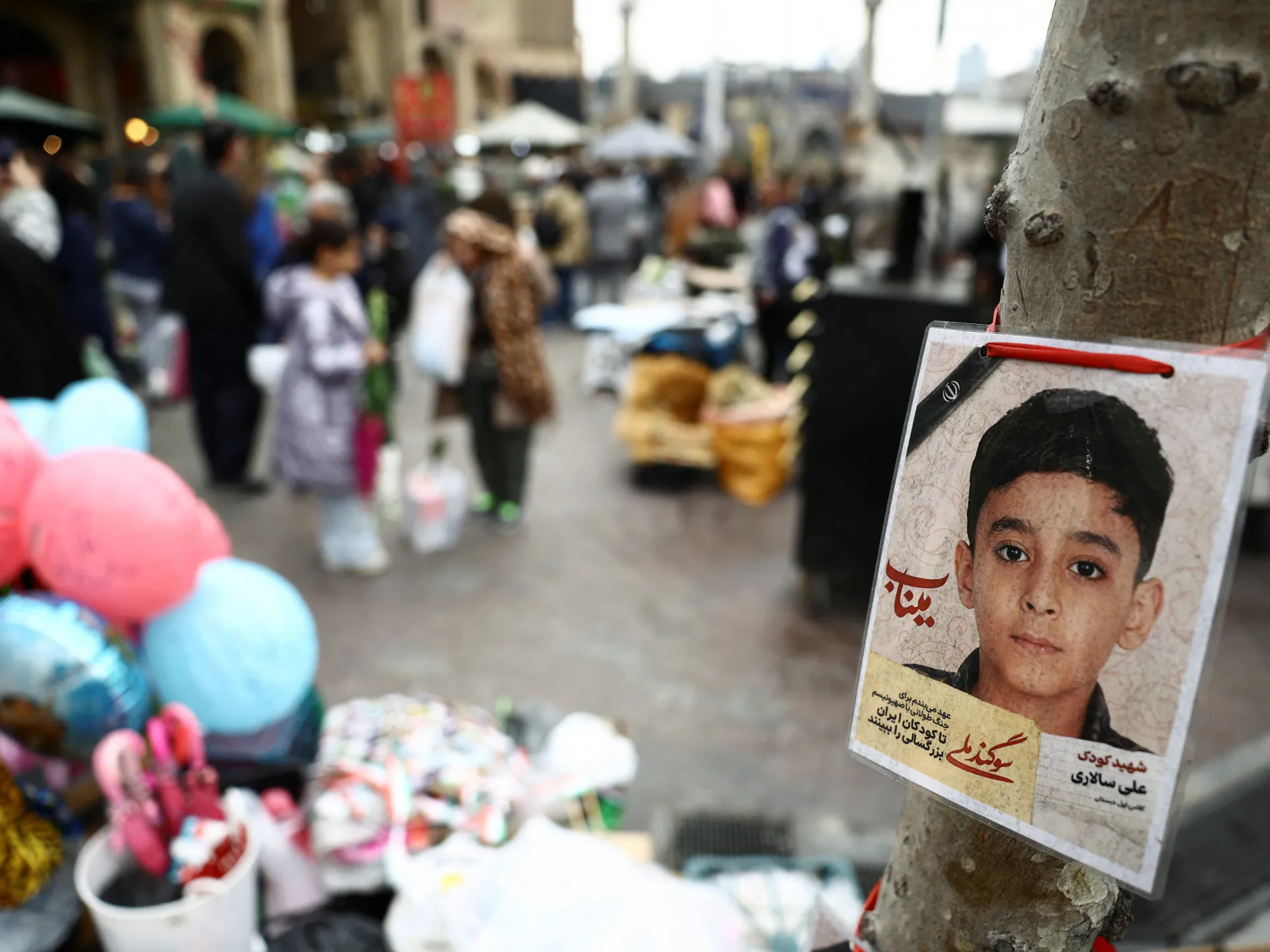
Iranian football players laid backpacks on a football pitch in Turkey to pay tribute to the children killed in a US-Israeli strike on Minab elementary school last month. The tribute came ahead of a friendly match against Nigeria.
Displaced Lebanese families ‘living in constant fear’ under Israeli bombardment, warns UN Refugee Agency official.
Lebanon faces the threat of a “humanitarian catastrophe”, the United Nations Refugee Agency (UNHCR) has warned, as Israel expands its weeks-long bombardment and ground invasion of the country.
UNHCR’s Lebanon representative Karolina Lindholm Billing said on Friday that Israeli strikes and forced displacement orders have affected people living across the country – from southern Lebanon to the Bekaa Valley, the capital Beirut, and further north.
Recommended Stories
list of 3 itemsend of list
More than 1.2 million people have been forced from their homes since Israel’s intensified attacks against its northern neighbour began in early March, according to UN figures.
“The situation remains extremely worrying and the risk of a humanitarian catastrophe … is real,” Lindholm Billing told reporters during a briefing in Geneva.
She noted that, as displacement numbers continue to rise, Lebanon’s already overstretched shelter system is struggling to meet families’ needs.
“Just last week, there were strikes that hit central Beirut, including in densely populated neighbourhoods … where many people had tried to find safety in collective shelters,” Lindholm Billing said.
“The families are … living in constant fear, and the psychological toll, particularly on children, will last far beyond this current escalation.”
Israel launched intensified attacks across Lebanon after Hezbollah fired rockets towards Israeli territory following the February 28 assassination of Iranian Supreme Leader Ayatollah Ali Khamenei in the US-Israel war on Iran.
The Israeli military has carried out aerial and ground attacks across the country while issuing mass forced displacement orders for residents of the country’s south, as well as several suburbs of Beirut.
On Friday afternoon, the Israeli military said it had begun a wave of air strikes on Beirut. It also issued more forced displacement orders for several areas in the city’s southern suburbs, including the neighbourhoods of Haret Hreik and Burj al-Barajneh.
Hezbollah has continued to fire rockets into northern Israel and confront Israeli troops in southern Lebanon, with leader Naim Qassem stressing this week that the group had no plans to stop fighting “an enemy that occupies land and continues daily aggression”.
Israeli Prime Minister Benjamin Netanyahu also announced plans to expand the country’s ground invasion in southern Lebanon, saying the military would create “a larger buffer zone” in Lebanese territory.
Rights groups have condemned the expanded operation and warned that preventing Lebanese civilians from returning to their homes in the south may amount to the war crime of forced displacement.
“Israel’s tactics of mass expulsion in Lebanon raise serious risks of forced displacement,” Human Rights Watch said on Thursday. “Forced displacement and collective punishment are war crimes.”
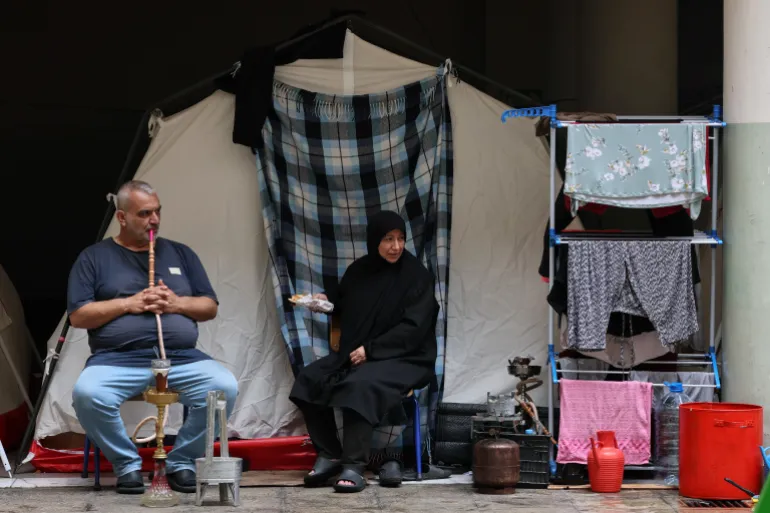
Displaced residents sit outside a tent in a local school in Beirut after fleeing their homes in southern Lebanon, on March 27, 2026 [Wael Hamzeh/EPA]
The Israeli military’s destruction of civilian homes and several bridges linking southern Lebanon to the rest of the country has also fuelled concerns that Israel is trying to isolate the area.
During Friday’s news briefing, UNHCR’s Lindholm Billing noted that the destruction of the bridges has made accessing southern Lebanon “increasingly difficult”.
“The destruction of key bridges in the south has cut off entire districts … isolating over 150,000 people and severely limiting humanitarian access with essential items to reach them,” she said.
Reporting from Tyre in southern Lebanon on Friday afternoon, Al Jazeera’s Obaida Hitto also stressed that Israel’s forced evacuation orders are “causing a lot of panic” among residents.
“Evacuation orders are happening in areas that were previously thought to be safe,” he said, adding that the destruction and damage to bridges over the Litani River in the south has made the prospect of finding safety more difficult.
“This is putting the government in Beirut in a very difficult situation to try and respond to the humanitarian crisis quickly growing in the south of the country,” Hitto said.
Israel’s Chief of Staff Lieutenant General Eyal Zamir issued a stark warning to the country’s cabinet this week: unless urgent measures are taken, the Israeli army is on the brink of collapse.
According to a report by Israel’s Channel 13 on Thursday, Zamir told ministers that he was “raising 10 red flags”, urging the government to move quickly on long-delayed legislation to alleviate the strain on its “exhausted” military.
The army has been overseeing what rights groups and the United Nations have determined is a genocide in Gaza, the de facto annexation of the occupied West Bank and numerous incursions into Lebanon and Syria.
Addressing ministers, Zamir stressed the need for a “conscription law, a reserve duty law, and a law to extend mandatory service”, adding that without these measures, “before long, the [Israeli military] will not be ready for its routine missions and the reserve system will not last”.
Israeli Prime Minister Benjamin Netanyahu has since said that plans will be made to extend mandatory military service. However, this is not the first time the alarm has been raised that the military is straining under the pressure of repeated operations, which have seen it involved in the killings of tens of thousands of civilians across the Middle East.
The first came as early as June 2024, just eight months into the genocidal war on Gaza, when France24 reported on shortfalls in troop numbers, exhaustion and a lack of supplies.
That situation has only worsened since.
So, how large was the army before October 2023, how active has it been and how has the current era of unprecedented regional aggression sapped the military’s reserves? Here is what we know.
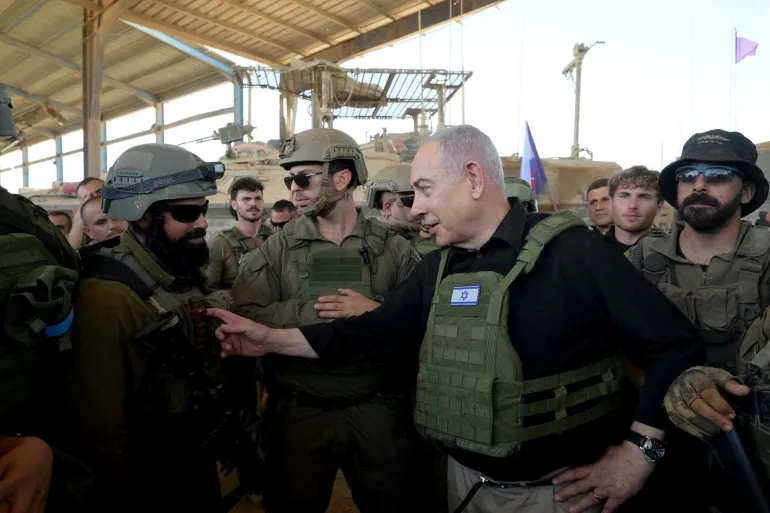
Israeli Prime Minister Benjamin Netanyahu visits Israeli soldiers in Rafah, in the southern Gaza Strip, in this handout picture from July 18, 2024 [File: Avi Ohayon/GPO/Handout via Reuters]
How suited is the Israeli army to its country’s forever wars?
Not very.
Launched in 1948, the idea of an Israeli military made up of a relatively small standing army backed by a large reserve corps of mobilised citizenry was the plan from the outset in order to instil a narrative of social cohesion, national identity and shared responsibility within the new country’s populace. Reservists would move between civilian life and military service to achieve this.
Before the war on Gaza began on October 7, 2023, Israel’s standing army numbered just 100,000. This was immediately bolstered by calling up 300,000 reservists, pulling Israel’s “citizen soldiers” from their jobs and families to take part in the bombardment and ground invasion of Gaza in response to the Hamas-led assault on southern Israel.
Ultimately, this means that the majority of troops serving are reservists rather than career soldiers.
Where are Israeli troops now?
On March 1, the day after US-Israeli strikes on Iran began, Israel announced the mobilisation of another 100,000 reserve soldiers.
That was in addition to 50,000 reservists currently on duty as a result of the Gaza war.
At the time, military sources said the additional troops would bolster existing positions along the border with Lebanon, its frontier and occupied positions within Syria, as well as in the Gaza Strip and the occupied West Bank.
Additionally, Israel’s Home Front Command called up 20,000 reservists, primarily for search and rescue operations, with reinforcements also deployed to the Israeli Air Force, Navy and Intelligence Directorate.
Israel has since deployed “thousands” of those troops to take part in its invasion of southern Lebanon, which it resumed in response to rocket fire from Iranian ally Hezbollah on March 3.
Addressing the same security cabinet meeting as Zamir, Central Command chief Major General Avi Bluth told ministers that government policies in the occupied West Bank were also placing increasing pressure on the military’s already stretched manpower.
According to the report, Bluth told ministers that over the past year, the government has approved the construction of multiple illegal settlements in the Jordan Valley and elsewhere in the West Bank as part of a wider operation characterised by rights groups and more than 20 countries as Israel’s “effective annexation” of the occupied Palestinian territory.
Bluth added: “This is your policy, but it requires security and a full protection package, because the reality on the ground has completely changed – and that requires manpower.”
Are Israeli troops exhausted?
According to many of the army’s own members, particularly reservists, they are.
Speaking to the Ynet News outlet, which is typically supportive of Netanyahu and his ruling Likud party, one reservist told the newspaper in December of his decision not to report for duty.
“We have battles to fight at home,” he said, explaining his decision. “There are guys on the team who were fired from their jobs, others whose families are barely staying afloat, or who have been dragging out their studies for a very long time. This is a problem, a complexity that is hard to describe.”
Resentment of the apparent exemption offered to members of Israel’s ultra-religious Haredim community, whose refusal to enlist for service is often overlooked by politicians, is also growing, Israeli media reports.
Responding to Zamir’s comments to the security cabinet, Israel’s opposition leader, Yair Lapid, took to Twitter to address the government directly.
“The government must stop the cowardice, immediately halt all budgets to the Haredi draft dodgers,” he said of the extensive social benefits many in Israel’s ultra religious community rely upon. “Send the military police after the deserters, draft the Haredim without hesitation,” he said.
“The warning has been given. It’s on your heads. It’s in your hands. You cannot continue to abandon Israel’s security, in wartime, for petty politics.”
As the United States-Israeli war on Iran enters its fourth week this weekend, pressure on oil and gas markets continues to mount due to severe disruption to shipping traffic through the Strait of Hormuz as well as attacks on and around key energy facilities in the Gulf.
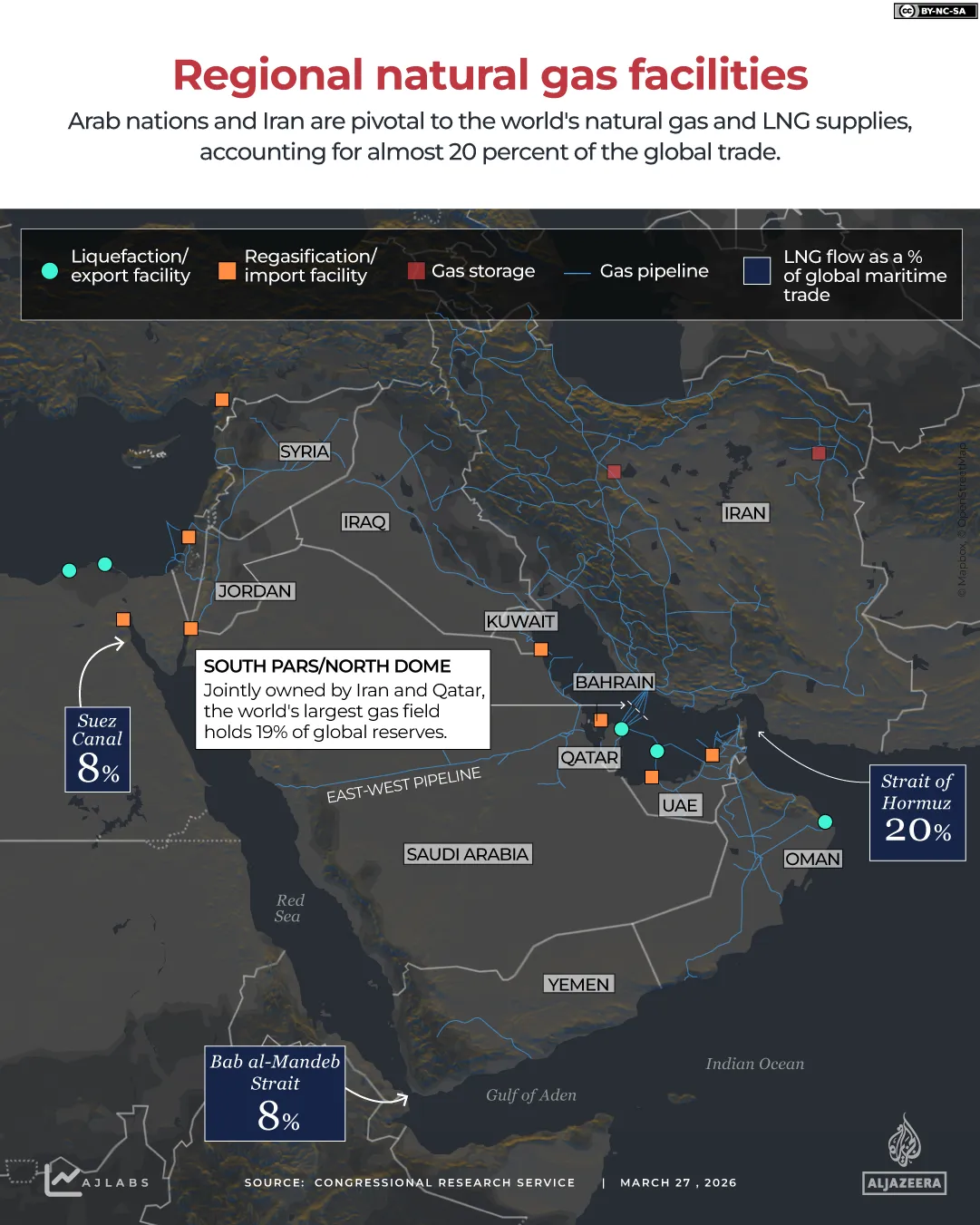
In peacetime, 20 percent of the world’s oil and gas is shipped from producers in the Gulf through the Strait of Hormuz – the only route to the open ocean – including 20 million barrels of oil per day.
To bridge the shortage its closure has caused, countries in the Middle East are exploring alternative routes to get energy exports out.
In this explainer, we look at three major pipelines in the Middle East that producers may be pinning their hopes on, and whether they can fill the gap.
What has happened in the Strait of Hormuz?
On March 2 – two days after the US and Israel began strikes on Iran – Ebrahim Jabari, a senior adviser to the commander-in-chief of Iran’s Islamic Revolutionary Guard Corps (IRGC), announced that the strait was “closed”. If any vessels tried to pass through, he said, the IRGC and the navy would “set those ships ablaze”. Since then, traffic through the strait has plunged by more than 95 percent.
Iranian officials have most recently stated that the strait is not completely closed – except to ships belonging to the US, Israel and those who collaborate with them – but have also laid down new ground rules. Any vessel must secure Tehran’s approval to transit through the narrow waterway.
As a result, over the past fortnight, countries have been scrambling to do deals with Iran to secure safe passage and a few, mostly Indian, Pakistani and Chinese-flagged tankers have been allowed to pass.
On Thursday, Malaysian Prime Minister Anwar Ibrahim thanked Tehran for granting Malaysian vessels “early clearance” through the strait.
Meanwhile, about 2,000 ships flying the flags of other nations are stuck on either side of the strait.
(Al Jazeera)
Which oil pipelines could serve as alternate routes?
The only alternative to shipping oil is piping it across land or under the sea. Three oil pipelines could work as ways around the Strait of Hormuz, including:
Saudi Arabia’s East-West Pipeline
The East-West pipeline is also known as the Petroline and is operated by Saudi oil giant Aramco. Aramco is one of the world’s largest companies, with a market capitalisation exceeding $1.7 trillion and annual revenues of $480bn. The oil giant controls 12 percent of global oil production, with a capacity of more than 12 million bpd.
It is a 1,200km (745-mile) pipeline which runs from the Abqaiq oil processing centre close to the Gulf in Saudi Arabia to the Yanbu port on the Red Sea, on the other side of the country.
However, the pipeline does not have the capacity to fully make up for the Hormuz closure.
In 2024, about 20 million barrels per day (bpd) passed through the Strait of Hormuz, according to data from the United Nations. Crude oil and condensate made up 14 million bpd of this, while petroleum was the remaining 6 million bpd.
The East-West pipeline has the capacity of transporting up to 7 million bpd. On March 10, Aramco said about 5 million bpd could be made available for exports, while the rest could supply local refineries.
Since the US-Israeli war on Iran began at the end of February, Saudi Arabia has ramped up its oil flow through this pipeline. In January and February, an average of 770,000 bpd flowed through the pipeline, according to data from Kpler, a data and analytics company. By Tuesday this week, this had increased to an average of 2.9 million bpd.
However, using the Saudi pipeline still carries a risk.
The Houthis, an Iran-backed Yemeni armed group whose attacks on ships in the Red Sea caused global shipping chaos during Israel’s genocidal war in Gaza from 2023 to 2025, could target the Bab al-Mandeb Strait, which connects the Red Sea to the Gulf of Aden, and the Indian Ocean beyond.
An unnamed Houthi leader told the Reuters news agency that the Houthis remain ready to attack the Red Sea again in solidarity with Tehran, the agency reported on Thursday.
“We stand fully militarily ready with all options. As for other details having to do with determining zero hour they are left to leadership and we are monitoring and following up with the developments and will know when is the suitable time to move,” the Houthi leader said.
The Bab al-Mandeb is the southern outlet of the Red Sea, situated between Yemen on the Arabian Peninsula and Djibouti and Eritrea on the African coast.
It is one of the world’s most important routes for global seaborne commodity shipments, particularly crude oil and fuel from the Gulf bound for the Mediterranean via the Suez Canal or the SUMED pipeline on Egypt’s Red Sea coast, as well as commodities bound for Asia, including Russian oil.
The Bab al-Mandeb is 29km (18 miles) wide at its narrowest point, limiting traffic to two channels for inbound and outbound shipments.
Iran could open a new front in the Bab al-Mandeb Strait if attacks are carried out on Iranian territory or its islands, Iran’s semiofficial Tasnim cited an unnamed Iranian military source as saying on Wednesday.
(Al Jazeera)
UAE’s Abu Dhabi Crude Oil Pipeline
The Abu Dhabi Crude Oil Pipeline is also called the ADCOP or the Habshan-Fujairah pipeline.
The 380km pipeline runs from Habshan, an oil and gasfield in the southwestern area of Abu Dhabi, United Arab Emirates, to the port of Fujairah on the Gulf of Oman.
The pipeline, which became operational in 2012, has a capacity of about 1.5 million barrels per day (bpd). It is unclear how much is now being transported through the pipeline.
However, oil exports from Fujairah do appear to have risen in the past month despite the closure of the strait, averaging 1.62 million bpd in March compared with 1.17 million bpd in February, according to Kpler analyst Johannes Rauball, who spoke to Reuters.
Iraq-Turkiye Crude Oil Pipeline
The Iraq-Turkiye Crude Oil Pipeline, also called the Kirkuk-Ceyhan Pipeline, links Iraq to the Mediterranean coast of Turkiye.
The pipeline, which has the capacity of 1.6 million bpd, currently carries about 200,000bpd.
Iraq is among the top five global producers of oil and is the second largest within the Organization of the Petroleum Exporting Countries (OPEC), exceeding 4 million bpd.
Can these pipelines replace the Strait of Hormuz?
No. While these pipelines can take on some of the capacity of Hormuz, their combined capacity is only about 9 million bpd, compared with about 20 million bpd for the strait.
Additionally, these pipelines are land-based and within the range of Iranian missiles and drones, which makes them just as vulnerable to attacks and damage in the ongoing conflict as ships travelling through the strait. Throughout the war, energy infrastructure all over the Gulf has suffered strikes.
Are there other options?
Theoretically, oil can be transported on trucks, but this is costly, slow and inefficient.
A standard truck can carry anywhere between 100 to 700 barrels per day, depending on the number of trips. Hundreds of thousands of barrels would be needed to meet needs, requiring thousands of trucks, which could also be targeted in strikes.
The meeting held in Washington, DC reviewed the ‘close strategic cooperation’ between Doha and Washington, Qatar’s foreign ministry said.
Published On 27 Mar 202627 Mar 2026
Qatar’s prime minister has held talks with senior US officials in Washington, DC, amid the ongoing US-Israeli war on Iran and fallout across the Gulf.
Sheikh Mohammed bin Abdulrahman bin Jassim Al Thani, who also serves as Qatar’s foreign minister, met US Vice President JD Vance and US Secretary Scott Bessent, Qatar’s Ministry of Foreign Affairs said on Friday.
Recommended Stories
list of 4 itemsend of list
They reviewed ways to strengthen the “close strategic cooperation” between Doha and Washington, “especially the defence partnership in light of the conditions the region is experiencing”, the ministry said.
Both sides stressed “ensuring the sustainability of energy supplies and maintaining the continued flow of liquefied natural gas from the State of Qatar to global markets”, in a way that “supports global energy security”, it added.
Vance hailed the “robust strategic partnership”, praising Qatar’s “active role in promoting regional stability and enhancing global energy security”.
The Gulf has been in a state of heightened tension since February 28, when the US-Israeli war on Iran began, which has killed more than 3,000 people across the region, a vast majority of them in Iran and Lebanon.
Tehran has since launched drone and missile attacks aimed at Israel, as well as Jordan, Iraq, and Gulf states. Iran insists it is targeting US assets in the Gulf, but the region’s leaders have urged Iran to cease attacks as they endanger civilians.
The war has created an unprecedented global energy crisis as Iran has effectively closed off the Strait of Hormuz, through which one-fifth of the world’s oil passes.
Meeting with Hegseth
On Thursday, Sheikh Mohammed also held a meeting in Washington with US Secretary of Defense Pete Hegseth, the Foreign Ministry said.
“The meeting took place in Washington on Thursday and focused on ways to support and develop defence and security collaboration amid regional challenges,” it added.
“Both sides stressed the importance of continued coordination and consultation on regional issues to promote security and stability locally and internationally.”
On Wednesday, the Qatari Cabinet renewed its condemnation of Iranian attacks on Qatar and its neighbours, calling for an immediate halt.
The United States-Israeli war on Iran has hit critical liquified natural gas (LNG) supplies in the Gulf, triggering the most severe disruptions in recent years to the global energy market.
Shipping through the critical Strait of Hormuz, which accounts for 27 percent of the world’s maritime oil trade and 20 percent of LNG, has been brought to a near standstill, with oil-producing nations such as Saudi Arabia rerouting oil through alternative pipelines and Qatar halting LNG production.
Recommended Stories
list of 4 itemsend of list
Natural gas makes up about a quarter of global energy consumption, raising concerns about how much the disruption to LNG will affect those most reliant on gas.
What is LNG?
Natural gas is formed over millions of years from decomposed organic matter subjected to intense heat and pressure beneath the Earth’s surface.
LNG is natural gas cooled to -162 degrees Celsius, known as cryogenic processing, shrinking it to a 600th of its gaseous volume.
In its liquid state, LNG is colourless, odourless and non-flammable, making it safe and efficient to transport across vast distances.
Composition and purification
Before liquefaction, the gas is purified through water-based solvents and molecular sieve beds to remove impurities including carbon dioxide, hydrogen sulphide, water and mercury.
Heavier hydrocarbons are then separated from methane and ethane through fractionation, and stored, used or sold as byproducts. The result is a fuel typically composed of 85 to 95 percent methane, with small amounts of ethane, propane, butane and nitrogen.
Storage and transport
LNG is stored in large insulated tanks without the need for high-pressure infrastructure. It is then pumped onto double-hulled carriers and shipped to terminals around the world.
Regasification
At its destination, LNG is heated using seawater or a warm water bath until it vaporises, a process known as regasification, before being moved through pipelines for consumption. It is sometimes blended with nitrogen or propane to ensure compatibility with local gas networks.
What is it used for?
Once LNG is returned to a gaseous state at import terminals, it is dispersed through pipelines for use in homes, businesses and industries around the world.
Residential uses include cooking, heating and generating electricity. In many parts of the world, LNG also supports hot water systems in homes and heating for commercial buildings.
It is used for power generation broadly, offering a comparatively low-carbon alternative to coal and oil.
In industry, it is used for fertilisers, plastics, paints and medicines. It is also used in transport to fuel heavy-duty vehicles and ships.
A man walks through a mustard field during the spring season on the outskirts of Srinagar, the summer capital of Indian-administered Kashmir, on March 24, 2026 [Farooq Khan/EPA]
Gulf nations export close to half the world’s traded urea – commonly used in fertilisers globally, leaving international agriculture deeply vulnerable to any interruption in the LNG shipping lane through the Strait of Hormuz.
The disruption has already forced fertiliser producers across the region to suspend or reduce operations, since natural gas is both the primary feedstock and the fuel that powers the manufacturing process.
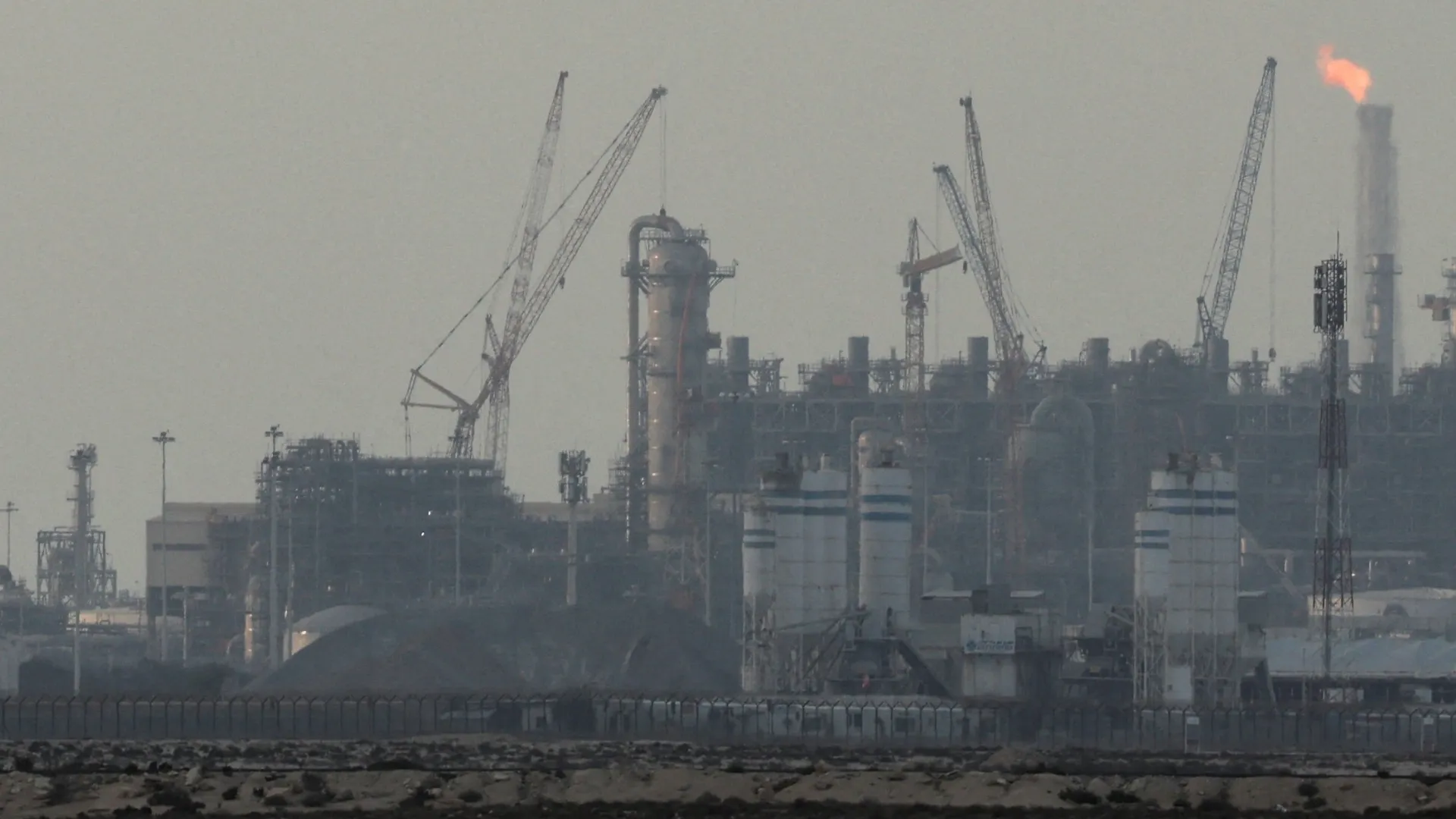
A picture of QatarEnergy’s operating facilities on March 3, 2026, in Ras Laffan Industrial City, Qatar. QatarEnergy announced a complete halt to liquefied natural gas (LNG) production at its Ras Laffan and Mesaieed facilities on March 2, 2026, after Iranian attacks targeted energy facilities [Getty Images]
QatarEnergy’s decision to halt gas production following attacks on its LNG infrastructure brought the world’s single largest urea plant to a standstill. In addition, the Omani port of Salalah on the Arabian Sea has been closed, which holds an ammonia storage terminal. The port was hit in a drone attack on March 11.
What are the by-products?
While LNG is primarily valued as an energy source, the processing and liquefaction of natural gas yield a range of by-products with industrial and medical applications.
The most notable by-product is helium, which is extracted during cryogenic processing at LNG facilities using distillation to separate the concentrations of helium from the gas.
Global helium production is estimated to be about 180 million cubic metres annually. The disruption to LNG facilities in Qatar means some 5.2 million cubic metres of helium is taken out of the market each month, accounting for about a third of global monthly production.
Helium is used primarily as a cooling agent for superconducting magnets in MRI and CT scanners, with the average MRI machine needing about 1,700 litres of liquid helium, and some older MRIs needing replenishment every two to three years.
A brain-scanning MRI machine is seen in Pittsburgh, United States, on November 26, 2014 [File: Keith Srakocic/AP]
Helium is also critical to the data centre industry, where it is used to conduct heat away from silicon, preventing parts of semiconductors from being damaged.
The natural gas value chain generates petrochemical derivatives that also form feedstock for manufactured goods.
For example, ethane and propane are cracked to produce ethylene and propylene, which are materials used in plastics such as IV bags, syringes and other medical-grade plastics.
Which countries supply LNG?
According to the International Gas Union (IGU) 2025 World LNG Report, some 411.24 million tonnes (mt) of LNG were traded in 2024.
The largest exporter of LNG is the United States, which in 2024 exported a total of 88.4mt, followed by Australia (81mt), Qatar (77.2mt), Russia (33.5mt) and Malaysia (27.7mt).
Together, the top five countries account for more than three-quarters of global supply.
Which countries import it?
China was the largest importer of LNG with 78.6mt imported in 2024, followed by Japan (67.7mt), South Korea (47.1mt), India (26.1mt) and Taiwan (21.8mt). The top five importers accounted for nearly 59 percent of all global LNG imports in 2024.
South Asian nations such as Pakistan and Bangladesh are also at high risk from the current conflict.
Motorists queue to refuel their motorcycles at a petrol station amid concerns over supplies amid the United States-Israeli conflict with Iran, in Dhaka, Bangladesh, on March 15, 2026 [Mohammad Ponir Hossain/Reuters]
Pakistan’s primary energy source is natural gas, which accounts for 28 percent of electricity generation for the country of more than 250 million people.
In Bangladesh, with a population of about 176 million, gas accounts for half of all electricity generation.
Qatar and the United Arab Emirates supply about 99 percent of Pakistan’s LNG imports and 72 percent of Bangladesh’s, according to trade intelligence firm Kpler.
Earlier in the month, Pakistan introduced emergency measures to tackle the energy shock, including moving to a four-day workweek for government employees and announcing spring holidays for schools from March 16 to the end of the month.
As a precautionary measure, the Bangladeshi government has also reduced gas supplies. Bangladesh is seeking nearly $2bn in loans from international lenders in a bid to fund energy inputs and keep prices stable.
Some petroleum gas tankers heading to India have managed to pass through the Strait of Hormuz despite the conflict — at least one Pakistani tanker has crossed the strait, too. In India, where 5 percent of electricity generation comes from gas, they are now relying more on coal as LNG disruptions continue. India gets about half of its LNG from the Gulf.
On March 9, an Indian government order redirected natural gas and regasified LNG to priority sectors, with curtailments affecting consumers and the petrochemical industry, according to S&P Global.
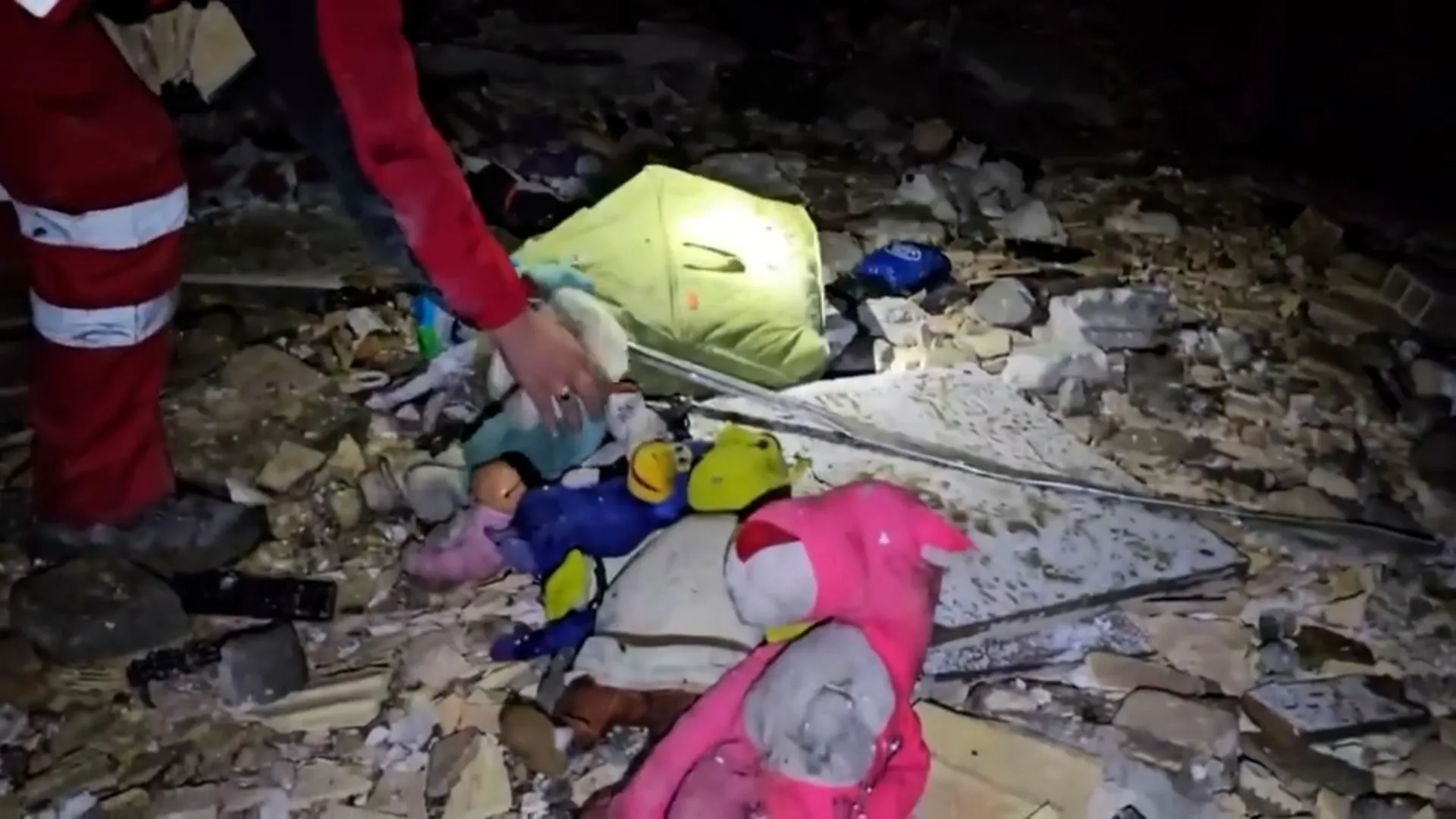
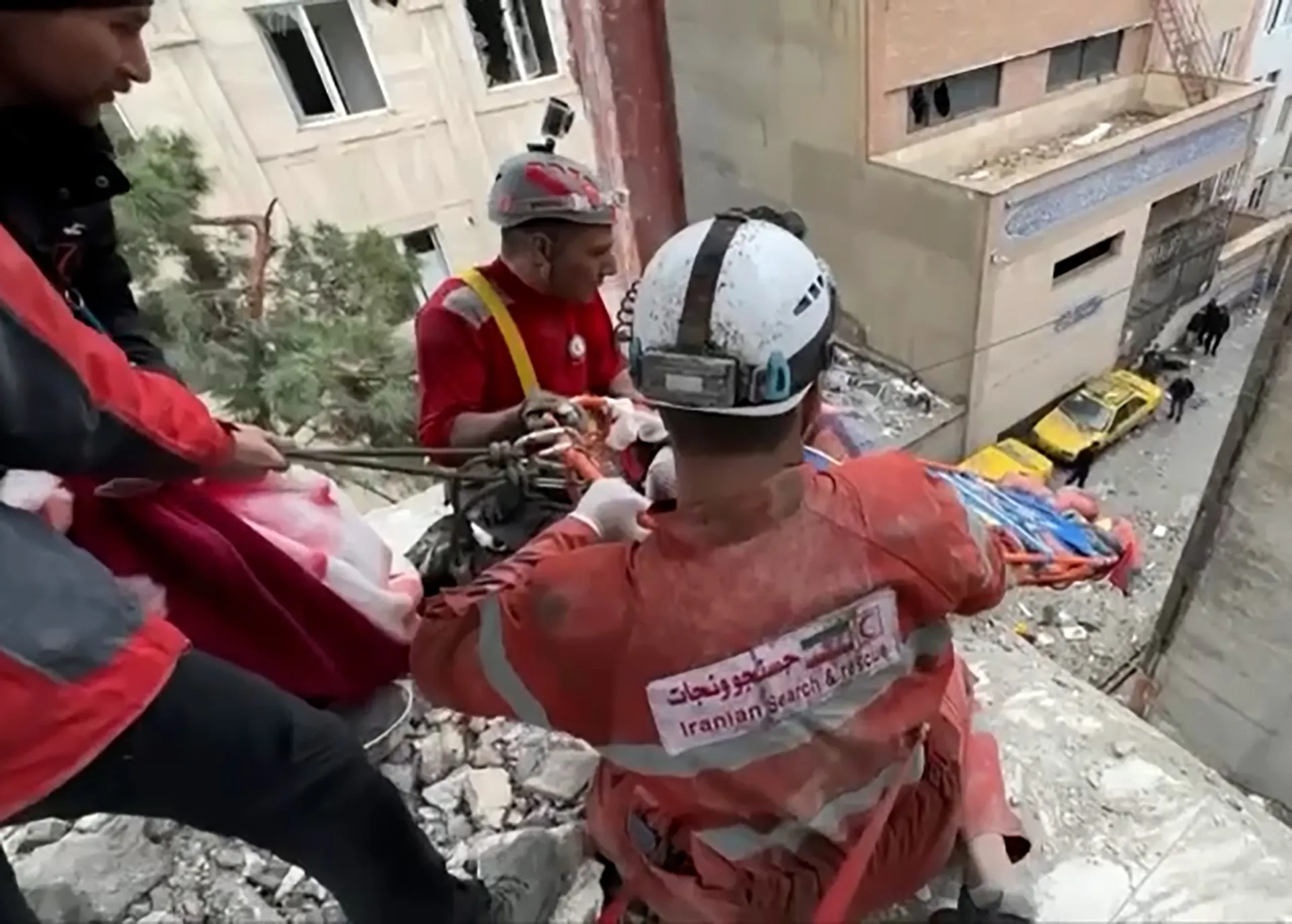
Rescue teams from the Iranian Red Crescent Society have been searching the rubble of residential buildings hit in US-Israeli attacks in Iran, where officials say around 2,000 people have been killed.
“A bit” is what United States President Donald Trump thinks about the scale of Russia’s military aid to Iran.
Moscow “might be helping them a bit”, he told Fox News on March 13.
A day later, Iran’s Foreign Minister Abbas Araghchi stated laconically that Moscow’s military cooperation with Tehran was “good”.
His words seemed to confirm earlier media reports that Russia is providing Iran with satellite and intelligence data on the locations of US warships and aircraft.
It may not sound like much, given the superiority of Western military satellites and Russia’s battlefield losses and communication problems after Elon Musk’s SpaceX company switched off smuggled Starlink satellite Internet terminals.
But data on US military assets Iran is receiving most likely comes from Liana, Moscow’s only fully functional system of spy satellites, according to an expert on Russia’s space programme and military.
“The [Liana] system has been created to spy on US carrier strike groups and other navy forces and for identifying them as targets,” Pavel Luzin, a senior fellow at the Jamestown Foundation, a US think tank, told Al Jazeera.
Eyes in the sky
Russia also played a key role in the development of Iran’s space programme and its key satellite, the Khayyam.
Launched in 2022 from Russia’s Baikonur cosmodrome, the 650kg (1,430 pound) satellite orbits the Earth at 500 kilometres (310 miles) and has a resolution of one metre (3.3 feet).
Moscow “can, in theory, receive and process data from Iran’s optical imaging satellite and share data from its own several satellites”, Luzin said.
On Wednesday, Tehran claimed to have struck the Abraham Lincoln carrier with multiple cruise and ballistic missiles, but the Pentagon called the claim “pure fiction”.
On Sunday, Iranian media claimed that a “massive blaze” was caused by a strike on a US destroyer refuelling in the Indian Ocean.
Washington did not comment on that strike.
Russia has, for decades, supplied weaponry to Iran, including advanced air defence systems, trainer and fighter jets, helicopters, armoured vehicles and sniper rifles, worth billions of dollars.
Since Washington and Tel Aviv began their strikes on February 28, Russia has continued aiding Iran with “intelligence, data, experts and components” for weaponry, Lieutenant General Ihor Romanenko, former deputy chief of Ukraine’s general staff of armed forces, told Al Jazeera.
While Moscow and Tehran loudly proclaim their strategic partnership, they do not have a mutual defence clause, and Moscow has not intervened in the conflict directly.
But the arms supplies have been mutual. Since Russia’s 2022 invasion of Ukraine, Tehran has provided Moscow with ammunition and artillery shells, firearms and short-range ballistic missiles, helmets and flak jackets.
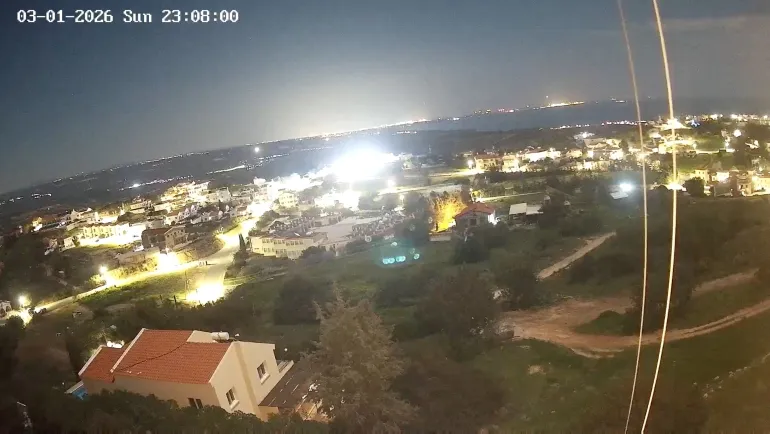
Flashes appear in the sky over RAF Akrotiri, as seen from Pissouri, Limassol District, Cyprus, in this screengrab taken from a handout video obtained on March 2, 2026 [KitasWeather/Handout via Reuters]
Drones with ‘comets’
And then there are the Shahed kamikaze drones – slow, noisy, yet cheap to manufacture – which have been launched on Ukrainian cities in swarms of dozens and then hundreds. Ukraine became so adept at bringing these down – now mass-producing cheap interceptor systems specifically to target Shaheds – that it is now providing its own know-how to Gulf states where US military assets have come under fire from Iran in recent weeks.
In the course of its war with Ukraine, Moscow has manufactured and modernised Shaheds, making them faster and deadlier, and equipping them with cameras, navigators and, occasionally, artificial intelligence modules.
And now, some of the upgrades have made their way back to Iran.
A Shahed drone with a pivotal Russian component launched by Iran-backed Hezbollah from southern Lebanon was able to hit a British airbase on Cyprus on March 1, the UK’s Times newspaper reported on March 7.
It reportedly contained Kometa-B (Comet B), a Russian-made satellite navigation module that also acts as an anti-jamming shield, making drones more resistant to interference.
Russia has also perfected the tactic of sending waves of real and decoy drones to exhaust and overwhelm Western-supplied air defence systems in Ukraine.
These days, the scheme helps Iran hit targets in the Gulf, Western officials say.
“I think no one will be surprised to believe that Putin’s hidden hand is behind some of the Iranian tactics and potentially some of their capabilities as well,” British Defence Secretary John Healey said on March 12 after Iranian drones struck a base used by Western forces in Erbil, northern Iraq.
However, if Iran is suffering a shortage of drones – as some analysts believe it is – that would render the use of Russian tactics, as well as Russia-supplied satellite data useless, experts say.
“Russia does supply data, it’s obvious, the data helps Iran, but not much,” Nikita Smagin, a Russian expert who has written extensively on ties between Moscow and Tehran, told Al Jazeera.
After four days of intensive strikes using up to 250 drones a day in early March, Iran has been launching only up to 50 drones a day, according to Nikolay Mitrokhin, a researcher with Germany’s Bremen University.
“Iran ran out of steam really fast,” he told Al Jazeera.
[Al Jazeera]
‘A goodwill gesture’
Moreover, Moscow is not necessarily particularly interested in an Iranian military victory, as the war is benefitting Russian President Vladimir Putin’s own conflict in Ukraine.
Skyrocketing oil prices make “Putin financially capable of further hostilities,” Lieutenant General Romanenko said.
As Iran strangles shipping through the Strait of Hormuz, the price of Brent crude – the international benchmark – has soared past $100 a barrel in the past three weeks. US President Donald Trump was forced to temporarily suspend sanctions on shipped Russian oil to ease the economic backlash. The result has been tankers laden with Russian oil bound for China making U-turns in the open ocean to divert to India, as countries scramble to grab Russian oil cargoes out at sea. The price of Urals crude has bounced.
Putin “hasn’t achieved his goals in Ukraine and will therefore use anything, including the war [in Iran] and lies to achieve his vision, press with his ultimatums,” Romanenko said.
The Kremlin “doesn’t pursue a breakthrough in this war, doesn’t help Iran break the United States and Israel,” Ruslan Suleymanov, an associate fellow at the New Eurasian Strategies Center, a US-British think tank, told Al Jazeera.
The current intelligence and military aid is “more of a goodwill gesture, an attempt to create an illusion of help, to show Tehran that despite the lack of formal commitments, Russia doesn’t leave its friend in need”, he said.
And Tehran fully understands how insufficient Moscow’s aid is – and therefore relies on its own stratagem of expanding hostilities to the entire region through strikes on neighbouring states and of crippling the global economy with soaring oil prices.
“Iranians understand that the forces are not equal and it’s impossible to defeat the United States and Israel on the battlefield, and no Russian aid is going to help,” he said.
It seems that Trump’s assessment that Moscow “might be helping them a bit” may not be too far wide of the mark.
The Iranian Red Crescent Society released video showing rescuers in Tehran lowering a man strapped to a stretcher from the wreckage of a building severely damaged in an airstrike.
Malaysian leader says oil tankers granted clearance by Iran as government introduces measures to conserve fuel.
Published On 27 Mar 202627 Mar 2026
Iran has allowed Malaysian ships to pass through the Strait of Hormuz, Malaysia’s leader said, amid the global energy crunch driven by the United States and Israel’s war with Tehran.
In a televised address on Thursday, Malaysian Prime Minister Anwar Ibrahim expressed thanks to Iran’s President Masoud Pezeshkian for granting Malaysian vessels “early clearance” through the waterway, which has been effectively closed by Tehran.
Recommended Stories
list of 4 itemsend of list
“We are in the process of securing the release of the Malaysian oil tankers and the workers involved so they can continue their journey home,” Anwar said.
Anwar did not elaborate on how many vessels had cleared the strait, which normally facilitates the transport of about one-fifth of global oil and liquefied natural gas (LNG) supplies, or under what conditions the vessels were cleared for safe passage.
The Malaysian government, which has traditionally pursued a policy of non-alignment in international affairs, did not immediately respond to requests for comment.
Anwar said that while Malaysia had been affected by the disruption to energy supplies, the Southeast Asian country was in a “much better position” than other nations due to the capacity of the state-run oil and gas company Petronas.
As one of the world’s top suppliers of LNG, Malaysia is a net energy exporter, but the country imports nearly 70 percent of its crude oil from the Gulf region.
Anwar said his government would take a series of measures to conserve fuel, including reducing the individual monthly quota for subsidised petrol and “gradually and selectively” moving civil servants onto work-from-home arrangements.
“Food supplies are affected; prices will certainly rise. Fertiliser as well, and of course, oil and gas,” Anwar said.
“So there are steps we need to take. There are countries whose impacts are far worse than ours, but that does not mean we are spared entirely,” he said.
While Iran has stated that the strait is open to ships that are not aligned with the US or Israel, Tehran has claimed the right to exercise control over the waterway and admitted responsibility for at least two of 20 documented attacks on commercial vessels in the region.
Iran’s parliament is also pushing legislation that would establish a toll system in the strait amid reports that Iranian authorities have been demanding vessels fork over as much as $2m to guarantee their safe passage.
Five ships were tracked transiting the strait via their automatic identification systems on Wednesday, up from four the previous day, according to maritime intelligence company Windward.
Before the war, an average of 120 vessels transited the waterway each day, according to Windward.
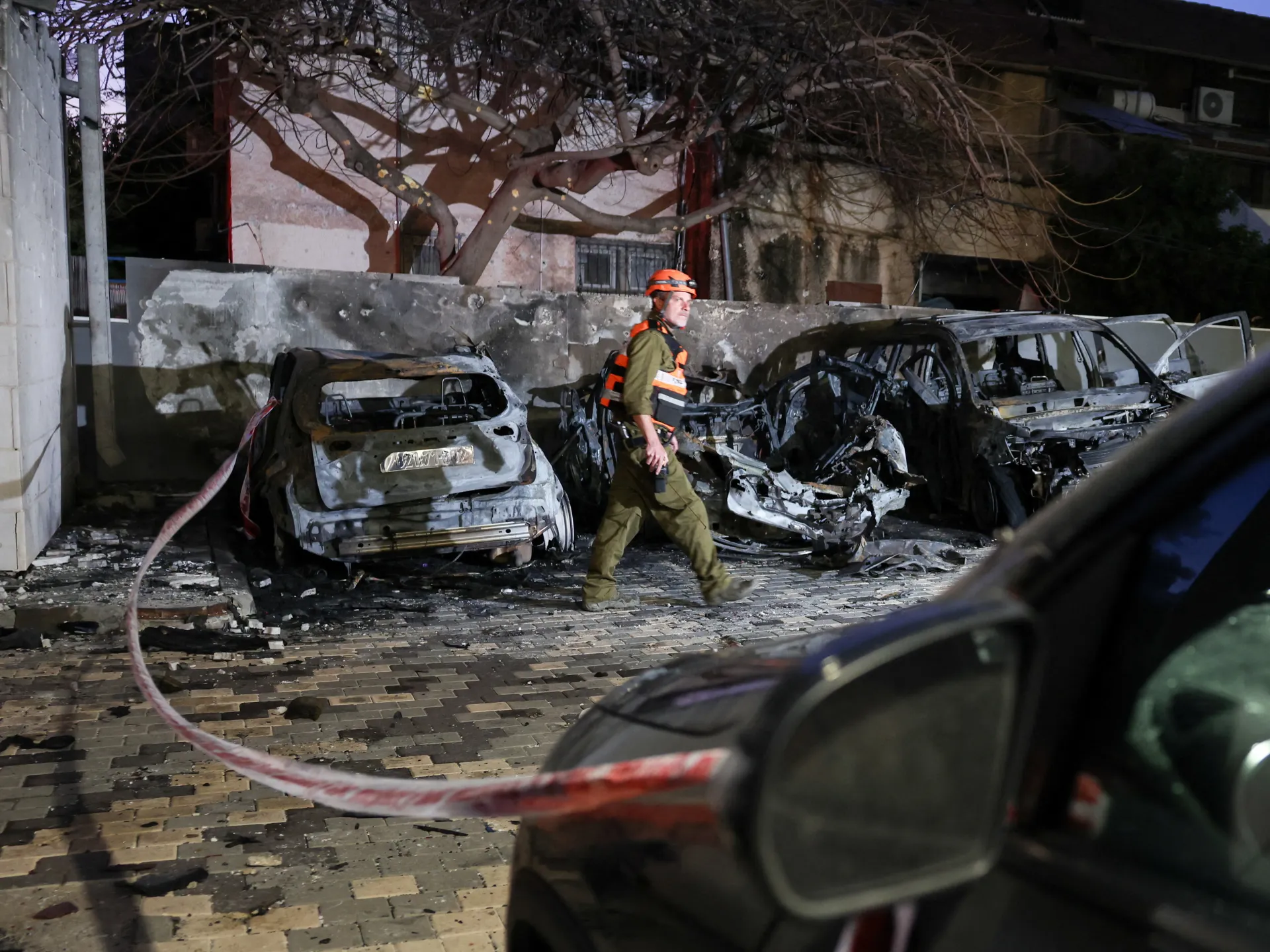
Video captured flames and black smoke where a projectile from Lebanon killed at least one person and injured 13 others in Nahariya, Israel. Burnt vehicles and extensive shrapnel damage could be seen at the site.
Watch this discussion between Ross Harrison and Hassan Ahmadian on US strategy regarding Iran. They conclude the US is still negotiating with old talking points, while Iran has moved on.
Iranian missiles have caused widespread damage across Israel in the latest wave of attacks, as President Donald Trump says US-Israeli strikes have destroyed the majority of Iran’s missile launchers.
My deepest sympathies lie with the Iranian people, whose hearts are torn in many directions. Many long for freedom and dignity, yet they remain wary of the long history of Western imperial intervention across the world, including their own country.
The Iranian people who took to the streets in recent years did not call for one form of domination to replace another. They demanded an end to oppression in all its forms, not the beginning of a new round under the Western thumb. Nor did they want change at any cost.
At every step, history teaches us – these promises of freedom offered by the West are never fulfilled.
The reason is simple. The freedom of others is simply not on the Western agenda, no matter its public rhetoric. Imperialism of this nature does not want freedom; it wants control, domination, power and profit.
On March 4, as bombs were falling around him in Tehran, Mohamad Maljoo, an Iranian dissident, was finally able to connect to the internet. He wrote on his Telegram channel: “Those who claim that one can rain fire on the body of Iran in the name of striking the Islamic Republic while imagining that the people will remain unharmed either do not understand the reality of war or deliberately choose to ignore it. Bombs do not discriminate. Destruction does not operate selectively.”
The truth of his warning echoes from Palestine to Iran: “Life does not flourish in the shadow of oppression. Nor does it grow beneath the rubble of bombs.”
As a Palestinian, I feel the pain and determination in these words. I cannot help but feel solidarity.
We, Palestinians, know the horror of war in our bodies. We understand the shudders caused by yet another explosion, the tears of orphans and the despair of sleepless nights as fires burn everywhere. From the 1948 Nakba (catastrophe) to the current Ibadah (destruction), we have felt the pain of genocide for many generations. We see the echoes of our experience in the plight of others.
The US-Israel war on Iran began with something all too familiar to us: a strike on a school.
According to UNICEF, an average of a classroom full of children was killed each day for two years in Gaza; 432 out of the Strip’s 564 schools sustained “direct hits” from the Israeli army.
The Shajareh Tayyebeh, a girls’ elementary school in the city of Minab in southern Iran, was also a “direct hit”. About 170 young girls between the ages of six and 12 and staff were killed by two high-precision US-made Tomahawk missiles on February 28.
After the initial strike, teachers rushed to protect the students. Paramedics hurried to the scene to rescue the wounded. And then, a second bomb fell.
It was a double-tap strike – a horror of modern-day warfare that people of Gaza know all too well. It is designed to kill its target and then kill again those who come to the rescue.
Like in Gaza, the attack on the girls’ school in Minab did not remain an exception. Over the past three weeks, Israel and the United States have rained death and destruction on public spaces across Iran. Schools, hospitals, sports halls, stadiums, stores, cafes, bazaars and historical sites have been attacked. More than 5,000 residential units have been hit, and over 1,900 civilians have been killed.
As in Gaza, the cumulative goal is not only physical destruction, but also the spread of fear and terror. The targeting of civilian spaces thus operates as a form of psychological warfare — an assault on the very idea of safety and normality.
Targeting civilian infrastructure is against international law. Yet the US and Israel view international legal norms through the lens of US Defense Secretary Pete Hegseth, who has repeatedly expressed his disdain for the rules of engagement, calling them “stupid”.
By now, it is clear that Gaza has served as Israel’s laboratory, as a testing ground, for the vision it seeks to impose across the entire region.
Just days ago, Israel’s Finance Minister Bezalel Smotrich issued a chilling warning: “Dahiyeh [in southern Beirut] will look like Khan Younis.”
The destruction of Khan Younis – my hometown – has become the new model of devastation to be repeated elsewhere. In Lebanon, in the span of 20 days, this model has resulted in the massacre of nearly 1,100 people, including 120 children – a full classroom every three days.
What we witness in Gaza travels to Lebanon, then on to Iran.
What is the ultimate goal? The consolidation of Israeli hegemony in the region. The strategy is not necessarily the complete overthrow of the Iranian regime, but rather to break the Iranian state itself and significantly curtail its capacity to project power. A weakened or broken Iran would no longer be an obstacle to Israeli regional supremacy.
All this is happening with the full support of the US. Just last month, US Ambassador to Israel Mike Huckabee voiced his approval for Israeli expansion into “Greater Israel”.
Other Western powers have also consented, supporting the illegal war on Iran, albeit refusing to commit their own troops, ships and aircraft.
In his poem “The Earth Is Closing on Us”, Mahmoud Darwish wrote:
“Where should we go after the last frontier? Where should the birds fly after the last sky? Where should the plants sleep after the last breath of air?”
Soon, this may become the reality for the entire region. Under Israel’s absolute and unrestrained dominance, we will all feel as if we have nowhere left to go. What will life under this reality look like?
If Gaza is the laboratory, then we can picture that the region will burn in flames for years to come. Whenever Israel wants to, it will “mow the lawn” to impose its will over any government and to suppress any rebellion from the people of the region.
The views expressed in this article are the author’s own and do not necessarily reflect Al Jazeera’s editorial stance.
The war launched by the United States and Israel has killed more than 1,500 people in Iran.
This number is considered conservative, as actual calculations are yet to be released by the authorities.
Recommended Stories
list of 4 itemsend of list
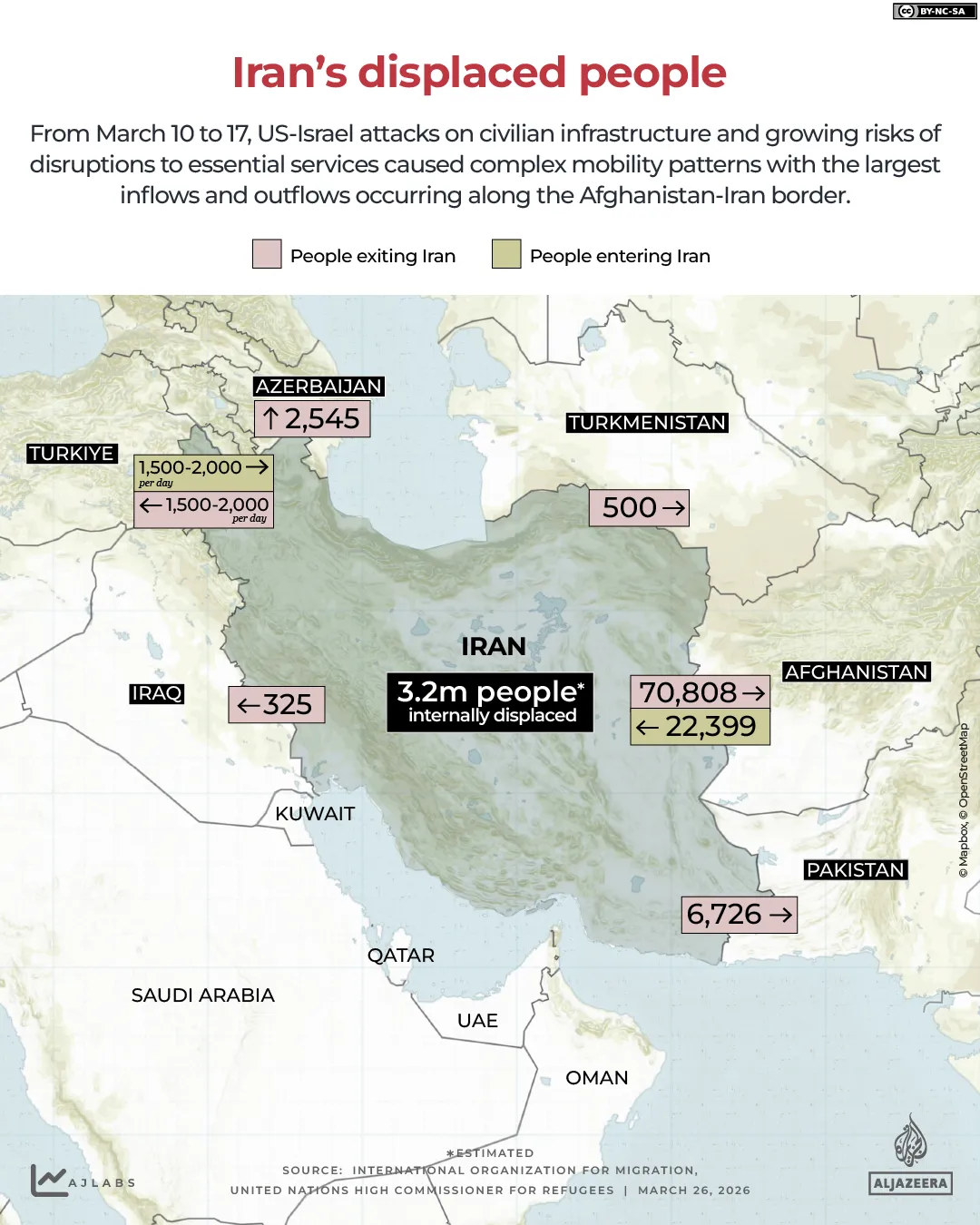
But the devastation from the war has also triggered mass displacement in the country: the United Nations refugee agency, UNHCR, estimates that 3.2 million people – more than 3 percent of the population – have already been displaced within Iran since US-Israeli strikes began on February 28.
Twenty-seven days into the conflict, aid agencies and countries bordering Iran are bracing themselves for a potential refugee crisis as civilians begin to flee the violence.
Cross-border flows have been limited and largely economic or short-term. In Afghanistan, most arrivals are Afghan returnees from Iran, citing insecurity or forced returns. Pakistan reports only authorised entries by citizens or traders, with no refugee inflows.
Turkiye, Turkmenistan and Azerbaijan report stable borders, limited authorised crossings, and occasional evacuations of third-country nationals.
Iraq has seen small-scale returns and 325 Iranian nationals crossing the border, citing the crisis. Within Iran, people have been forced from the ruins of their homes, and several hospitals, nuclear facilities, refineries and desalination plants have been hit.
However, pressure on the ground in Iran is mounting as more than 85,176 civilian sites have been damaged since the war began, including 282 healthcare facilities, 600 schools and 64,583 homes. In Tehran alone, the city administration said to local media that nearly 14,000 residential units in the capital have been damaged and at least 6,000 people have been accommodated in municipal hotels.
The growing risks of disruption to essential services are driving complex mobility patterns.
More than one million displaced in Lebanon
But Iran is not the only country where the rapidly expanding war has led to a displacement crisis.
According to the Norwegian Refugee Council, Israel’s sweeping evacuation orders now cover more than 1,470sq km (568sq miles), or about 14 percent of the country’s territory.
The map below shows more than 100 towns and villages across the country that are under forced evacuation orders from the Israeli military.
Israel’s ground troops are also now increasingly expanding their de facto occupation of parts of southern Lebanon, with Israeli authorities claiming that they want to create what they describe as a “buffer zone”.
Nearly one in five people in Lebanon – or 18 percent of the population – have been displaced over the past two weeks.
According to the International Organization for Migration, the total number of registered displaced people has reached 1,049,328, and the number of displaced people residing in collective shelters is 132,742.
The pace of displacement has outstripped the country’s shelter capacity. Many families have been unable to secure accommodation and are spending nights in streets, vehicles or public spaces as collective shelters fill up. For many of them, this is not the first time.
More than 250,000 people have left Lebanon over the past two weeks, a 40 percent increase compared with the last two weeks of February.
Much of the outward movement has been towards neighbouring Syria. As of March 17, more than 125,000 people had crossed the border. Nearly half are children. Most are Syrian nationals, with about 7,000 Lebanese among those crossing.
Southern Lebanon’s bridges attacked
Israel has struck several bridges in southern Lebanon, connecting the country through the Litani River.
Israeli forces have attacked:
Qasmiyeh Bridge.
Coastal Highway Bridge.
al-Qantara Bridge.
Khardali Bridge.
al-Dalafa Bridge.
Zaraiya-Tirseflay Bridge.
Footage and photos of the locations, verified by Al Jazeera, show each bridge specifically bombed, making them impossible to use. These were key crossings linking Lebanon’s south.
Israeli Defence Minister Israel Katz had last week ordered the military to destroy all crossings over the Litani River and homes close to the border between the two countries.
The areas in Lebanon near the Israeli border to the Litani River are the same locations where at least a million people have been pushed out.
Lebanese President Joseph Aoun has said the attacks on the bridges are “an attempt to sever the geographical connection between the southern Litani region and the rest of Lebanese territory”.
He said they fell “within suspicious schemes to establish a buffer zone along the Israeli border, solidify the reality of the occupation and seek Israeli expansion within Lebanese territory”.
Iran will play two friendly matches in Turkiye as they prepare for the FIFA World Cup in the US, Canada and Mexico.
Published On 26 Mar 202626 Mar 2026
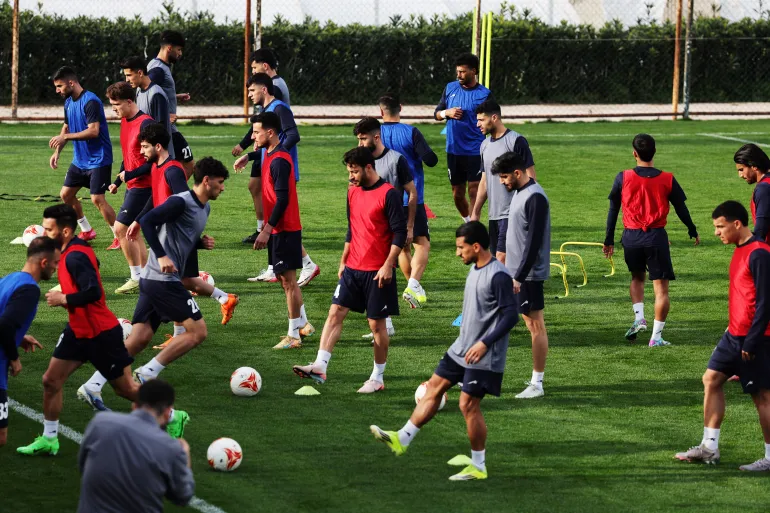
Iran’s men’s football team have been training in southern Turkiye as they prepare for two upcoming friendly matches before the FIFA World Cup, where the squad are likely to attract heightened attention against the backdrop of the United States-Israel war on Iran.
Team Melli held a training session in Belek, a resort area near the Mediterranean city of Antalya, with tightly restricted media access as officials said they wanted to avoid distractions before the matches described as critical to their World Cup preparations.
Recommended Stories
list of 3 itemsend of list
Iran’s football federation is in discussions with world governing body FIFA about moving its World Cup matches to Mexico from the US due to concerns over player safety, federation President Mehdi Taj said last week.
Iran’s camp has largely sought to keep a low public profile as the team builds towards the World Cup, where they are expected to face intense political and media scrutiny.
In Belek, no interviews with players or coaches were made available, and a team media representative said the squad were focused entirely on their immediate competitive programme.
Iran will play two matches in Antalya, against Nigeria on Friday and Costa Rica on Tuesday.
Iran’s football team trained at the Huseyin Aygun Football Center in Antalya, Turkiye [Umit Bektas/Reuters]
The friendlies were originally scheduled to take place in Jordan, but were moved to Turkiye following the outbreak of the war on Iran.
The players appeared relaxed during the session in sunny conditions, with staff and players at times chatting and joking.
Among those present was forward Mehdi Taremi, who has been in the spotlight in recent days after swapping shirts with an Israeli opponent while playing for his club Olympiacos in Greece.
Striker Sardar Azmoun was omitted from the squad after posting a picture on his Instagram feed of a meeting with Dubai’s ruler Mohammed bin Rashid Al Maktoum.
Iranian media reported that Azmoun, who has scored 57 goals in 91 internationals, had been expelled from the national team for a perceived act of disloyalty to the government.
The US and Israel’s war on Iran is intensifying, as Trump again claims Iranian leaders want to ‘make a deal’.
Published On 26 Mar 202626 Mar 2026
The United States and Israel’s war on Iran continues, with an Al Jazeera correspondent in Tehran reporting strikes are “increasing in number and in intensity” amid conflicting claims about whether negotiations are taking place.
US President Donald Trump says talks are happening, but Iran rejects the talks, saying it will continue to “resist” US aggression.
On Thursday, Iran carried out retaliatory strikes against Israel and several Gulf countries, as the Middle East conflict sees no signs of ending, and global energy and food prices continue to rise.
In Iran
Intensifying attacks: US-Israeli attacks on Iran are “increasing in number and in intensity”, according to Al Jazeera correspondent, with Israel announcing extensive strikes on central Isfahan. Alongside US forces, Israel has launched a “wave of extensive strikes” across Iran.
Civilian casualties reported: Iranian media reported that two teenage boys were killed in a recent US-Israeli strike on a residential area in a village in the county of Shiraz.
Iran talks: US President Donald Trump insisted that Iran was taking part in peace talks.
Iran chooses ‘resistance’: Foreign Minister Abbas Araghchi said Tehran will continue its “resistance” and does not intend to negotiate.
US targets missile capacities: The US has hit two-thirds of Iran’s production facilities for missiles and drones, a top officer said.
Threat to Iranian island: Tehran warned enemies may try to occupy one of its islands with support from an unnamed regional country.
Iran’s leverage: Jane Foley, an analyst from Rabobank, noted that Tehran’s position on negotiations leaves the ball firmly in their court. Because the critical Strait of Hormuz remains effectively closed, she suggests Iran could have the power to dictate the terms of any resolution.
New toll legislation: The Iranian parliament is preparing a draft law that would mandate the collection of tolls and duties from ships and tankers transiting the Strait of Hormuz, treating the waterway like a standard transit corridor.
In the Gulf
Hezbollah plot uncovered in Kuwait: Authorities arrested six people allegedly linked to Hezbollah, accused of planning assassinations in the Gulf state, the Interior Ministry said.
Saudi Arabia: Saudi Arabia’s Defence Ministry on Thursday morning announced the interception and destruction of a drone in the Eastern Province. Its air defence systems intercepted and destroyed at least two dozen drones targeting the Eastern Province, home to the majority of the kingdom’s oil facilities, on Wednesday.
Bahrain: A fire broke out at a facility in the Muharraq Governorate due to what the Interior Ministry described as “Iranian aggression”.
United Arab Emirates: The UAE’s Defence Ministry said on Thursday that its air defence systems have been actively responding to and intercepting incoming missiles and drones from Iran.
In the US
Trump says Iran wants a deal: Trump again claims Iranian leaders want to “make a deal so badly” but are afraid to say so “because they figure they’ll be killed by their own people”.
Trump threatens ‘hell’ if no deal: Trump is ready to “unleash hell” on Iran if Tehran does not accept a deal to end the war, the White House warned on Wednesday.
Strategic posturing: Jason Campbell, a former Pentagon official, said US threats to “hit Iran harder” are more about signalling than intensifying attacks.
Intentional vagueness: Campbell told Al Jazeera that Trump is deliberately omitting specific details because he wants the Iranian regime to believe the US is fully capable and willing to execute these harsher attacks.
In Israel
Missile salvoes: Israel’s army on Thursday morning said it had detected a wave of missiles from Iran heading towards the country, the second salvo in less than 30 minutes.
Rockets and missiles targeting Israel: Iranian missiles continue to target central and northern Israel. Additionally, Hezbollah has fired volleys of rockets into the Western Galilee region.
In Iraq, Lebanon
Gulf issues Iraq demand: Gulf states and Jordan have urged Iraq to stop attacks by pro-Iran armed groups from its territory.
Ground clashes with Hezbollah: Israeli troops have crossed the border into Lebanese territory and are actively engaging in ground combat. Hezbollah says its fighters are continuing to clash with invading Israeli troops in south Lebanon.
Defending Lebanese soil: Hezbollah’s Secretary-General Naim Qassem stated that the group is now in a war against both the US and Israel and will do everything it can to defend Lebanese territory.
Oil markets and food
Oil prices climb: Oil prices have climbed higher amid fading hopes of de-escalation in the Iran war following Tehran’s rejection that talks with the US are under way.
Food supply shocks: Antony Currie, a columnist for Breakingviews, warned that the Iran war will likely have a more severe impact on global food security than Russia’s 2022 invasion of Ukraine.
A week into the United States-Israeli war on Iran, and Iran’s attacks on its Gulf neighbours, Jaya Khuntia spoke – as he often did – to his Doha-based son Kuna on the phone.
It was March 6, about 10pm, and Khuntia and the family were worried. “He told me, ‘I am safe here, don’t worry,’” the father recalled from the conversation with Kuna.
It was the last time they spoke.
The next day, the family in Naikanipalli village of India’s eastern Odisha state received a phone call from Kuna’s roommate telling them that the son had suffered a heart attack after hearing the sound of missiles and debris from interceptions falling near their residence. He collapsed and was later declared dead. Kuna’s body reached home days later.
Al Jazeera cannot independently confirm the cause of Kuna’s death, but the family of the 25-year-old, who worked as a pipe fitter in Qatar’s capital, is among millions across South Asia directly affected by the war in the Middle East.
Of the eight people killed in the United Arab Emirates in Iranian attacks, two were Emirati military personnel, a third a Palestinian civilian, and the remaining five were from South Asia: Three from Pakistan, and one each from Bangladesh and Nepal. All three people killed in Oman were from India. An Indian national and a Bangladeshi national are the only deaths in Saudi Arabia.
Migrant workers from South Asia total nearly 21 million people in the Gulf nations, a third of the total population of the region. At stake, for their families back home, is the safety of their loved ones and the future of their dreams.
The Khuntia family had taken on a 300,000-rupee ($3200) debt in 2025 for the marriages of their two daughters. Kuna’s income in Doha – where he had moved only in late 2025 – of 35,000 rupees ($372) was helping them collect what they needed to pay back the loan. Kuna had been sending back about 15,000 rupees ($164) every month.
“We thought our suffering was finally ending,” Jaya said, his voice trembling. “My only son would say, ‘Baba, don’t worry, I am here.’ He was our only hope… our everything.”
That hope is now extinguished. “That one call finished us,” Jaya cried. “He promised to return after clearing our debts … but he came back in a coffin. We have nothing left now. Losing our only son is the biggest debt we have to live with.”
Kuna Khuntia, a 25-year-old pipe fitter from India’s Odisha, who died of a heart attack in Doha, Qatar [Photo courtesy the Khuntia family]
‘I thought we would be next’
In all, Bahrain, Kuwait, Oman, Qatar, Saudi Arabia and the UAE – the six Arab countries in the Gulf – host 35 million foreign nationals, who form a majority of their total population, 62 million.
They include 9 million people from India, 5 million each from Pakistan and Bangladesh, 1.2 million from Nepal, and 650,000 from Sri Lanka. Most of them are engaged in blue-collar work, building or supporting the industries and services that are at the heart of the Gulf’s success and prosperity.
But since the US and Israel launched their war on Iran, these migrant workers have often been among the most vulnerable. That vulnerability extends beyond deaths and injuries to the very nature of their work: Oil refineries, construction areas, airports and docks, where many work, have been targeted in Iranian attacks.
The suspension of work at many of these facilities, coupled with fears of a major economic downturn in the region, has also left many workers and their families worried about the future of their jobs.
Hamza*, a Pakistani migrant labourer working at an oil storage facility in the UAE, recalled a recent attack that he witnessed. “A drone struck a storage unit right in front of us. We were completely shaken. Most of us there are from India, Pakistan and Bangladesh.
“We couldn’t sleep for nights after that. The drone was so close that it could have killed us, too,” Hamza added. “For a moment, I thought we would be next.”
Despite these dangers, he said, leaving is not an option.
“We want to go back, but we can’t,” Hamza said. “Our families depend on us. It’s dangerous here, but if we stop working, they will have nothing to eat. We have no choice.”
Experts say Hamza’s sentiment is common across South Asian blue-collar workers in the Gulf, because of poverty and limited employment opportunities back home.
Imran Khan, a faculty member at the New Delhi Institute of Management working on migration economics, said migrant labourers from South Asia are often driven by desperation to take up jobs in the Middle East. He said Western countries have, in recent years, dramatically raised entry barriers for less-educated blue-collar foreign workers.
“These workers are the worst affected during crises – whether war or natural disasters,” he says. “I have been speaking to several migrant labourers, particularly Indians in the Middle East, and many are living in distress since the conflict began.”
But, like Hamza, most cannot afford to leave, Khan said.
“They cannot simply quit. Their income would stop immediately, and there are very limited opportunities back home,” he explained. “They have families to support, and without these jobs, survival becomes difficult.”
Indian labourers work at the construction site of a building in Riyadh, November 16, 2014 [Faisal Al Nasser/Reuters]
Families – and societies – that depend on remittances
Middle Eastern countries remain a key source of remittances for South Asian nations such as India, Pakistan, Bangladesh, Sri Lanka and Nepal. The remittances these five countries receive from the region, $103bn, are comparable to Oman’s total gross domestic product (GDP).
Just the remittances that India receives from the Gulf, $50bn, are more than Bahrain’s entire GDP. Pakistan receives $38.3bn in remittances, Bangladesh $13.5bn, Sri Lanka $8bn, and Nepal $5bn.
With the recent escalation of conflict in the Middle East, experts warn these flows could be significantly affected, especially if Gulf economies contract and layoffs follow.
Faisal Abbas, an expert in international economics and director at the Centre of Excellence on Population and Wellbeing Studies, a Pakistan-based research institute, said remittances from the Middle East form a crucial economic backbone for South Asian nations, not just families.
“Remittances are a critical pillar for Pakistan and other South Asian economies, and a large share comes from Middle Eastern countries,” he explained. “If the situation worsens, it will not be a positive development for the region.”
Pakistan’s remittances from the Gulf constitute nearly 10 percent of its GDP, about $400bn.
Abbas added that the effect may extend beyond remittance flows. “Migration patterns could also be disrupted. Many workers may return home, while those planning to migrate might reconsider,” he said. “This could further increase unemployment in a region already facing job shortages.”
Unlike Hamza, a number of South Asian workers are planning to return home.
Noor*, a migrant worker from Bangladesh employed at an oil facility in Saudi Arabia, said he no longer feels safe and plans to return home once his contract ends.
“I will never come back here again,” he said. “It’s too dangerous. We can’t even sleep at night. The fear never leaves us.”
Noor said drone attacks had occurred close to his workplace. “We saw it happen in front of us,” he said. “That fear stays with you… It doesn’t go away.”
His family, too, is deeply affected. “My children cry every time they call me. They are scared for my life,” he added.
He said he knows that returning to Bangladesh would mean more economic hardship for his family. But Noor said he had made up his mind.
“I would rather go back and struggle to survive with my family than live here in constant fear,” he said. “At least there, I will be with them.”
*Some names have been changed at the request of workers who fear retribution from contractors for speaking to the media.

















![Kuna Khuntia, a 25-year-old pipe fitter from India's Odisha, who died of a heart attack in Doha Qatar [Photo courtesy the Khuntia family]](https://i0.wp.com/www.aljazeera.com/wp-content/uploads/2026/03/Kuna-Khuntia-1774503793.jpeg?w=640&ssl=1)
