US-Israel war on Iran

Who’s in control in Iran and how will Gulf states react to attacks? | US-Israel war on Iran

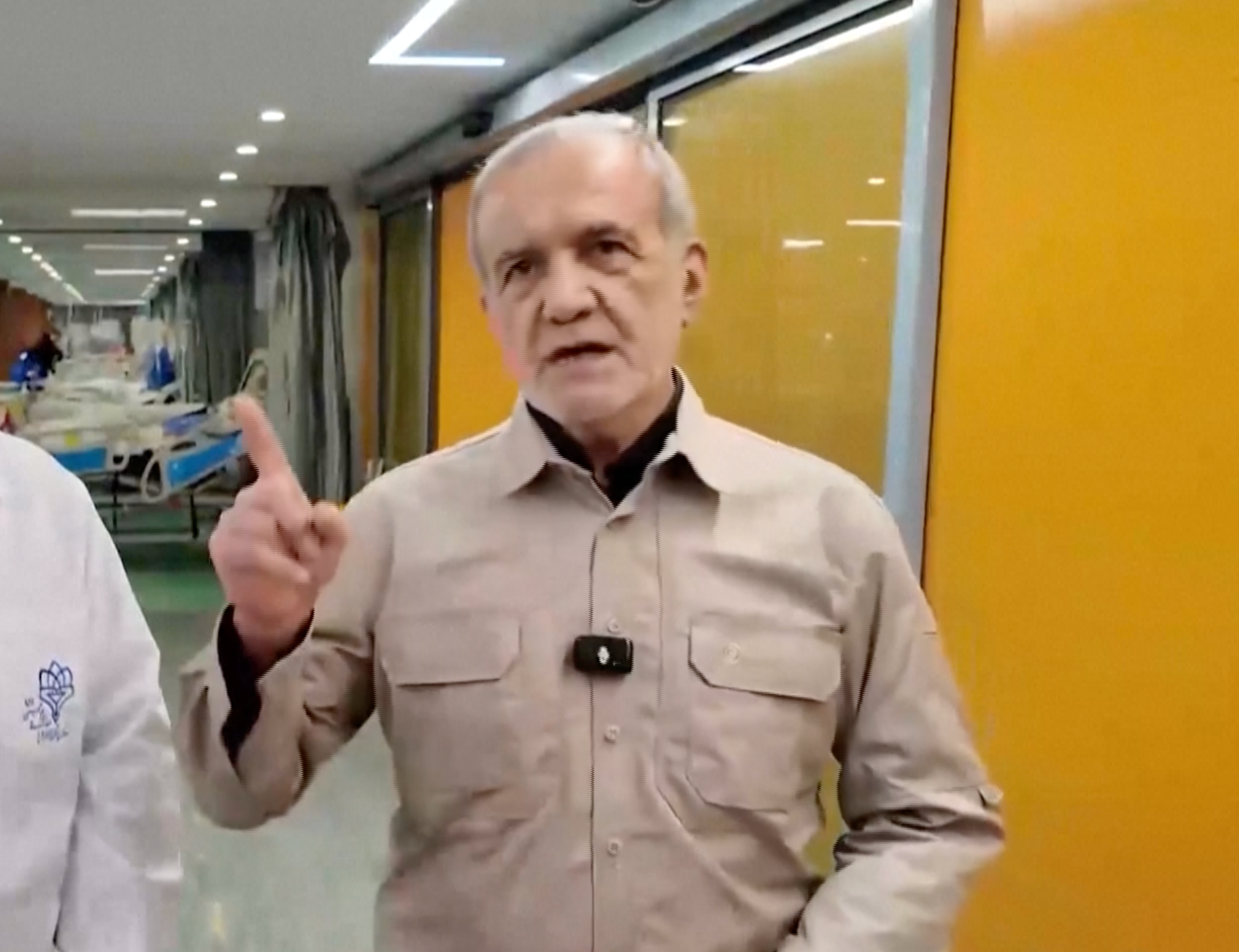
An apology comes from Iran’s president, yet missiles are still hitting neighbours.

Tehran has carried out more attacks on Gulf states – despite an apology by the president to Iran’s neighbours.

Civilian targets have been hit, including airports and vital infrastructure.

Who’s in control in Iran – and how will Gulf states react as the attacks continue?

Presenter: James Bays

Guests:

John Brennan – Former director of the Central Intelligence Agency under the administration of US President Barack Obama

Bader Al-Saif – Professor at Kuwait University and fellow at Chatham House, specialising in Middle East history and politics

Trita Parsi – Executive vice president of the Quincy Institute for Responsible Statecraft

Source link

Two killed in Saudi Arabia after ‘projectile’ falls on residential building | US-Israel war on Iran News

Iran’s IRGC had earlier said they targeted radar systems in locations including Al-Kharj, home to Prince Sultan base.

At least two people have been killed after a projectile fell on a residential location in Saudi Arabia‘s Al-Kharj city, Saudi authorities reported, as Iranian counterattacks on Gulf nations hosting US military assets entered a second week.

The Saudi civil defence said in a post on X on Sunday, without mentioning Iran, that an unspecified “military projectile” had hit a residential area in Al-Kharj, killing two foreign nationals – one Indian and one Bangladeshi – and injuring 12 people.

Recommended Stories

list of 3 itemsend of list

Iran’s Islamic Revolutionary Guard Corps (IRGC) had said earlier that it had targeted radar systems in locations including Al-Kharj governorate, which is home to the Prince Sultan airbase used by United States forces, and has come under repeated attack over the past week in the US and Israeli war against Iran.

Reporting from Doha, Al Jazeera’s Laura Khan said the projectile had landed on a residential site belonging to a maintenance and cleaning company.

“This is getting very volatile and dangerous for people across the Gulf,” she said. “It’s really important to emphasise that over 200 nationalities live and work across the Gulf nations. Many of these could be labourers.”

On Sunday, the Saudi Defence Ministry reported intercepting 15 drones, including an attempted attack in the diplomatic quarter of the capital Riyadh.

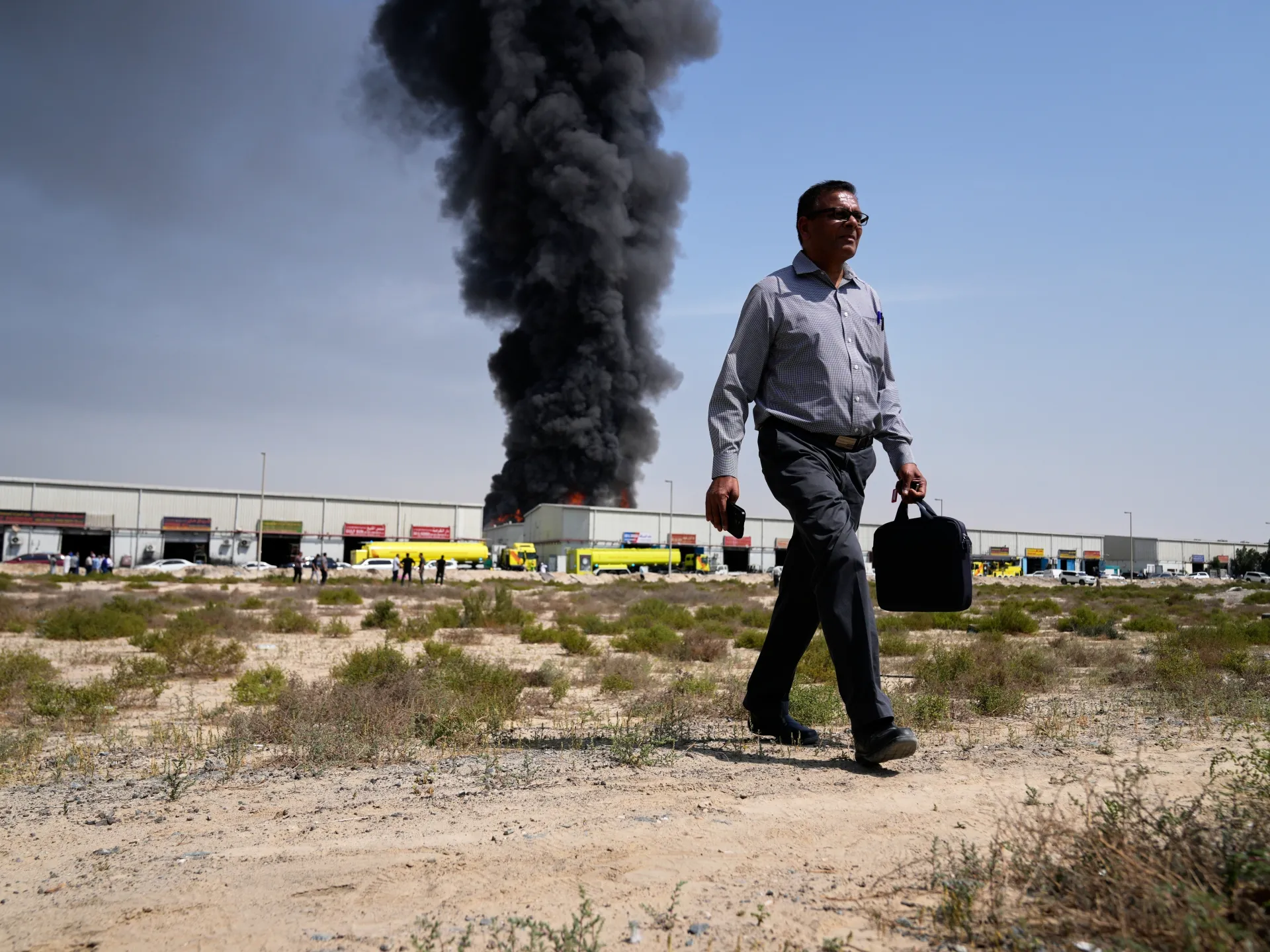
Kuwait, meanwhile, said an attack hit fuel tanks at its international airport, and Bahrain reported a water desalination plant had been damaged.

Sunday’s attacks came after Israeli warplanes hit five oil facilities around the Iranian capital, killing several people, according to a state oil executive, and blanketing the city in acrid smoke.

A spokesperson for the IRGC said Iran would retaliate if US-Israel attacks on its energy infrastructure did not let up.

“If you can tolerate oil at more than $200 per barrel, continue this game,” said the spokesperson.

As the war extended into its ninth day, the IRGC said it had enough supplies to continue drone and missile attacks across the Middle East for up to six months.

Ahmed Aboul Gheit, secretary-general of the Arab League, said Iran’s attacks on several member states were “reckless”, urging Tehran to reverse what he called a “massive strategic mistake”.

Iran’s Health Ministry said Sunday that at least 1,200 civilians had been killed and around 10,000 wounded since the US and Israel launched their war on Iran on February 28.

Source link

How targeting of desalination plants could disrupt water supply in the Gulf | US-Israel war on Iran News

Bahrain has said an Iranian drone attack caused material damage to a water desalination plant in the country, marking the first time a Gulf nation has reported targeting any such facility during the eight days of the war between Iran and the US and Israel.

The attack on Sunday comes a day after Iranian Foreign Minister Abbas Araghchi said a freshwater desalination plant on Qeshm Island in southern Iran was attacked by the United States.

Recommended Stories

list of 3 itemsend of list

“Water supply in 30 villages has been impacted. Attacking Iran’s infrastructure is a dangerous move with grave consequences. The US set this precedent, not Iran,” he said on X on Saturday.

While Tehran has not yet commented on the Bahrain attack, it has raised questions about the vulnerability of the Gulf countries, which depend on desalination plants for the majority of their water supply.

How important are water desalination plants to the Gulf region? Can water security in the Gulf be guaranteed amid a widening of military targets to include energy and other civilian sites?

What are desalination plants?

A desalination plant primarily converts seawater into water suitable for drinking purposes as well as for irrigation and industrial use.

The process of desalination involves removing salt, algae and other pollutants from seawater using a thermal process or membrane-based technologies.

According to the US Department of Energy, desalination systems “heat water so that it evaporates into steam, leaving behind impurities, and then condenses back into a liquid for human use”.

Meanwhile, membrane-based desalination involves “a class of technologies in which saline water passes through a semipermeable material that allows water through but holds back dissolved solids like salts”.

Reverse osmosis is the most popular membrane technology. Most countries in the Gulf Cooperation Council (GCC) use reverse osmosis since it is an energy-efficient technique.

Why are desalination plants important to the Gulf?

Water is scarce in the Gulf region due to the arid climate and irregular rainfall. Countries in the Gulf also have very limited natural freshwater resources. Groundwater, together with desalinated water, accounts for about 90 percent of the region’s main water resources, according to a 2020 report by the Gulf Research Center.

But in recent years, as groundwater has also begun to deteriorate as a result of climate change, Gulf countries have begun relying heavily on energy-intensive seawater desalination to meet their water needs.

More than 400 desalination plants are located on the Arabian Gulf shores stretching from the United Arab Emirates (UAE) to Kuwait, providing water to one of the most water-scarce regions in the world.

According to a 2023 research paper published by the Arab Center Washington DC, GCC member states account for about 60 percent of global water desalination capacity, producing almost 40 percent of the total desalinated water in the world.

About 42 percent of the UAE’s drinking water comes from desalination plants, while that figure is 90 percent in Kuwait, 86 percent in Oman, and 70 percent in Saudi Arabia. Saudi Arabia also produces more desalinated water than any other country.

Desalination has also played a crucial role in enabling economic development in the region, according to Naser Alsayed, an environmental researcher specialising in the Gulf states.

He noted that after the discovery of oil in the late 1930s, Gulf states had very limited natural freshwater resources and could not meet the demands created by population growth and expanding economic activity.

“Desalination plants were therefore introduced,” he told Al Jazeera, adding that the importance of desalinated water in supporting the Gulf’s development is often overlooked.

“As a result, targeting or disrupting desalination facilities would place much of the region’s economic stability and growth at significant risk,” he said.

“Secondly, desalination is the main source of freshwater for most GCC states, especially smaller and highly water-scarce countries such as Bahrain, Kuwait and Qatar. Because this water is primarily used for human consumption, desalination carries a strong humanitarian dimension and is essential for sustaining daily life in the region, making any disruption to these facilities particularly significant for the population,” he added.

Iran also uses desalination plants, which have been installed in coastal areas such as Qeshm Island in the Gulf. But Iran also has many rivers and dams and is not as heavily reliant on desalination plants as other countries in the Gulf region.

If a desalination plant is attacked, what is the impact?

The Gulf’s heavy reliance on desalination plants has made it vulnerable during times of conflict.

During the 1990-1991 Gulf War, Iraqi forces intentionally destroyed most of Kuwait’s desalination capacity, and the damage to its water supply was severe.

Raha Hakimdavar, a hydrologist, told Al Jazeera that in the long-term, attacking these plants can also impact domestic food production, which mostly uses groundwater.

“However, the pressures from competing needs can divert this water away from domestic production. This can be especially challenging because the region is also highly food import dependent and is facing potential food security challenges due to the compromising of the Strait of Hormuz,” said Hakimdavar, who is a Senior Advisor to the Deans at Georgetown University in Qatar and the Earth Commons.

A 2010 CIA report (PDF) also warned that while “national dependence on desalinated water varies substantially among Persian Gulf countries, disruption of desalination facilities in most of the Arab countries could have more consequences than the loss of any industry or commodity.”

According to Alsayed, the impact of a plant being attacked in the region, however, depends on the local scenario.

“For Saudi Arabia, which is the least dependent on desalination and has significant geographic space, facilities on the Red Sea provide resilience. The UAE has 45 days of water storage aligned with its 2036 water security strategy, so contingency plans are in place to manage potential disruptions,” he said.

“The effects are likely to be felt more acutely in smaller states that are highly dependent on desalination like Qatar, Bahrain, and Kuwait, which have minimal strategic reservoirs,” he noted.

“The most significant impact, in my view, is psychological,” Alsayed said. “Water is essential to human life, and the perception of risk can cause fear and panic, which is particularly challenging in the current environment in the region and where authorities are working to maintain calm.”

How can water security be guaranteed?

As attacks on Gulf countries continue, with energy and civilian infrastructure being targeted, Alsayed highlighted that it is important for GCC countries to view water security as a regional issue rather than an independent concern for each member state.

“The countries need to coordinate more closely and work together. The GCC has a strong platform to prepare for water challenges, but has not fully utilised it,” he said.

Alsayed noted that the GCC Unified Water Strategy 2035 called for all member states to have a national integrated energy and water plan by 2020, but this has not yet been achieved.

“Whether through unified desalination grids, shared regional strategic water reserves, or diversifying water resource goals, this is the way to usher a new era to strengthen Gulf water security,” he said.

Hakimdavar, the hydrologist, said there is no replacement for desalination in the GCC in the near-term.

But she added that the GCC countries can rely on strategic water storage reservoirs – many countries maintain large water reserves that can supply cities for several days or longer.

“Countries can also diversify water supply systems, and also invest in smaller, more distributed desalination plants powered by renewable energy to reduce reliance on a few very large facilities,” she added.

Source link

Amid escalation, Iran religious scholars signal new leader to be named soon | US-Israel war on Iran

Tehran, Iran – Senior religious leaders have signalled that Iran’s government may soon announce a new leader as hardliners and sidelined reformists deliberate their futures amid the quickly escalating United States-Israeli war on Iran.

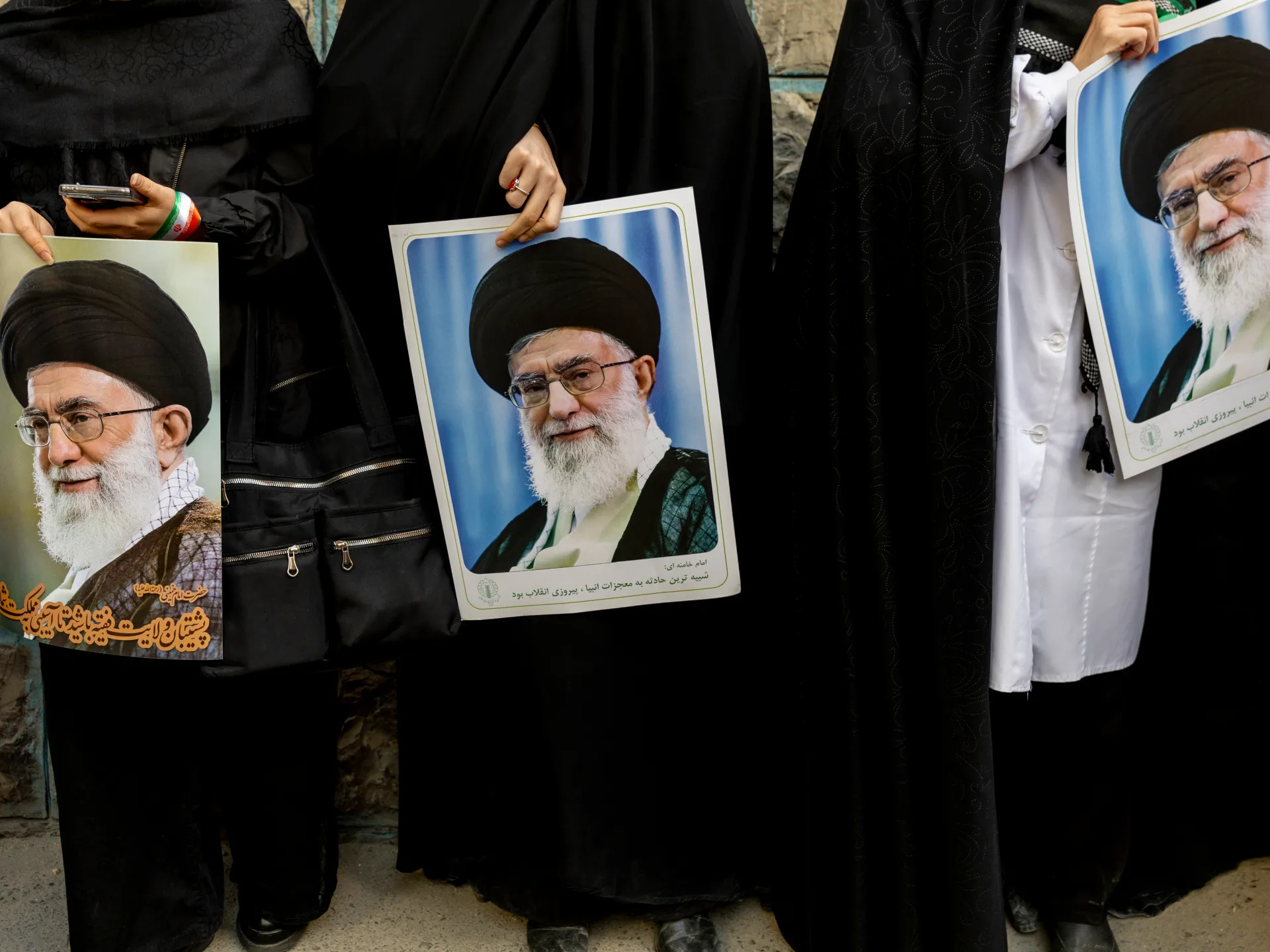
Mohammad Mehdi Mirbagheri – a top figure in the 88-member Assembly of Experts, which will appoint the new supreme leader after Ayatollah Ali Khamenei was killed in Tehran on February 28 – said the choice had to be made with care so it would be indisputable internally.

Recommended Stories

list of 4 itemsend of list

“An almost decisive opinion has been reached. A significant majority has been formed, but at the same time, some obstacles have to be removed, which we hope will happen soon,” the head of the Qom Academy of Islamic Sciences said in a video released on Sunday by the Fars news agency, which is affiliated with the Islamic Revolutionary Guard Corps (IRGC).

The top ultraconservative Muslim leader representing the holy Shia city of Mashhad in the Assembly of Experts, Ahmad Alamolhoda, said on Sunday that the leader has been chosen and the secretariat of the Assembly of Experts must soon announce the result.

Abbas Kaabi, a senior member of the Guardian Council, said on Friday that the powerful 12-member constitutional body was not given any names to consider for the next supreme leader by Khamenei during his lifetime, only attributes.

“He said: Among all attributes, the financial piety of the supreme leader is of primary importance because, given the important powers and responsibilities of leadership, if financial deviation occurs, it will spread to all other matters,” Kaabi was quoted as saying by the IRGC-affiliated Mehr news agency.

The religious leader also quoted Khamenei as pointing to “a rooted belief in the fundamentals of the [1979] Islamic revolution, having insight and knowledge of enemies and sedition, and especially being anti-arrogance and having faith and resistance in confronting America and the Zionist regime” as being among other top attributes for a future leader.

Mojtaba Khamenei, the second son of the late supreme leader, is believed to be a frontrunner for the position as he enjoys wide backing from powerful commanders in the IRGC who have been launching missiles and drones across the region over the past week.

US President Donald Trump, who has said he wants to play a role in determining the future leadership of Iran, has objected to the younger Khamenei’s ascension.

The Israeli army has said it will try to assassinate Iran’s remaining leaders and has bombed their offices and gathering spots in Tehran, Qom and other cities. Israel and the US have repeatedly expressed their interest in changing the government of Iran.

Israeli media reported on Saturday that Asghar Hejazi, a senior religious leader who was Khamenei’s acting chief of staff, was killed in a series of overnight air strikes targeting an underground compound in downtown Tehran used by the supreme leader and other officials. Iran has not commented.

Reformists weigh in as Pezeshkian creates row

President Masoud Pezeshkian came under fire after he released a video from an undisclosed location on Saturday and apologised to regional neighbours who have been fighting off Iranian missiles and drones.

The armed forces leading the military attacks, including the Khatam al-Anbiya Headquarters of the IRGC and interim leadership council member and chief justice of the Supreme Court, Gholam-Hossein Mohseni-Ejei, quickly released statements to emphasise that the strikes would continue, with Iran as well as the US and Israel, saying they are ready for months of war if necessary.

The row prompted more hardliners, including religious leaders, lawmakers and IRGC-affiliated media, to call on the Assembly of Experts to move quickly to announce the next supreme leader. Ayatollah Hossein Nouri-Hamedani said the process should be expedited to “disappoint the enemy and preserve the unity and solidarity of the nation”.

The disagreement has broken out after reformist factions within the establishment have been pushed aside by hardliners in recent years while the conservatives also have lost favour among an increasingly disillusioned public.

Mohammad Khatami, a reformist religious leader who was president from 1997 to 2005, released a statement to mourn Khamenei last week but also signalled that he sees a future for a reformed Islamic Republic.

The establishment is in need of “reforming approaches and practices objected to by the people”, he said without naming any examples.

“Our path is the path of freedom, independence, people-centrism and fair living, and that is a difficult path to tread and requires wisdom and tolerance,” he said.

Khatami and the Reformist Front of Iran also released general calls for reform after thousands of people were killed during nationwide protests in January.

The Iranian government said “terrorists” backed by the US and Israel were responsible for the killings, but the United Nations and international humanitarian organisations blamed state forces for a lethal crackdown against peaceful protesters.

The leaders of the Reformist Front were arrested or summoned by Iranian intelligence and judicial authorities last month for what the establishment called an attempt to “disrupt the country’s political and social order” and working “for the benefit” of Israel and the US during the antigovernment protests.

Most have since been released on bail, but some remain incarcerated as do many of the tens of thousands of people believed to have been arrested during and in the aftermath of the protests.

Hassan Rouhani, the moderate religious leader who was president from 2013 to 2021 and who rejected being part of a reported power grab last month, has remained publicly silent during the deliberations over the next supreme leader.

Former President Mahmoud Ahmadinejad, another influential figure, survived an assassination attempt last week, according to Iranian media.

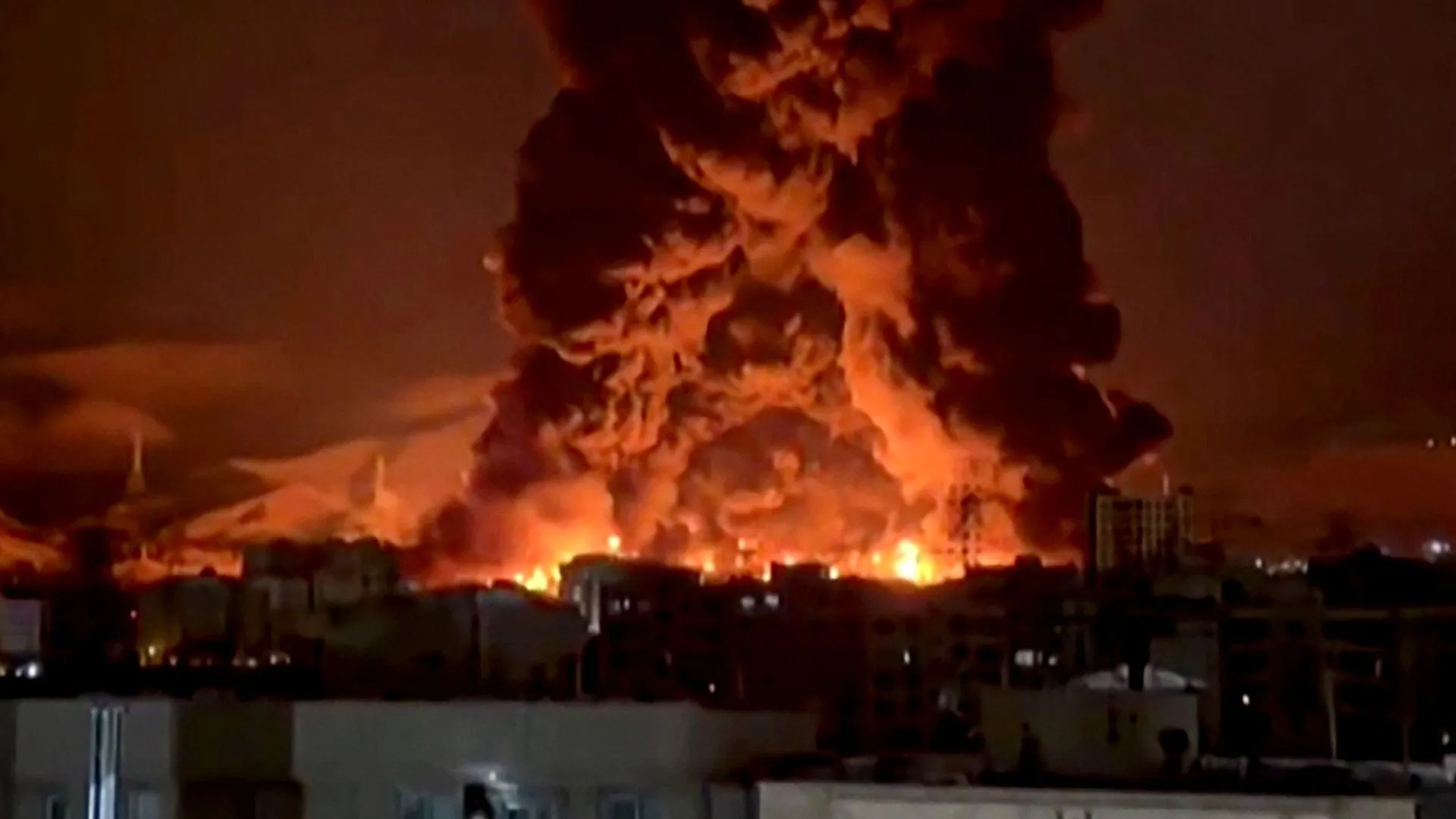
Fuel reserves and oil refineries in Tehran were bombed by the Israeli military overnight into Sunday, leaving thick plumes of smoke enveloping the sprawling city of 10 million people during the day as oil residue fell as part of a heavy rain.

Source link

Iran war threatens prolonged impact on energy markets as oil prices rise | US-Israel war on Iran News

The United States-Israeli war on Iran could leave consumers and businesses worldwide facing weeks or months of higher fuel prices even if the conflict, which is now in its eighth day, ends quickly, as suppliers grapple with damaged facilities, disrupted logistics, and elevated risks to shipping.

The outlook poses a global economic threat and a political vulnerability for US President Donald Trump leading into the midterm elections, with voters sensitive to energy bills and unfavourable to foreign entanglements.

Recommended Stories

list of 4 itemsend of list

Global oil prices have surged by more than 25 percent since the start of the war, driving up fuel prices for consumers worldwide.

The national average petrol price reached $3.41 per gallon ($0.9 a litre) on Saturday, according to the American Automobile Association (AAA), rising by $0.43 over the past week. Goldman Sachs warned oil prices could climb above $100 per barrel if shipping disruptions continue.

The US crude oil settled at just below $91 per barrel on Friday – its largest weekly gain on record in data dating back to 1983, indicating prices could continue to rise.

“The market is shifting from pricing pure geopolitical risk to grappling with tangible operational disruption, as refinery shutdowns and export constraints begin to impair crude processing and regional supply flows,” JP Morgan analysts said earlier this week, according to the Reuters news agency.

The conflict has already led to the suspension of about a fifth of global crude and natural gas supply, as Tehran targets ships in the vital Strait of Hormuz between its shores and Oman, and attacks energy infrastructure across the region.

A nearly complete shutdown of the strait means the region’s top oil producers – Saudi Arabia, the United Arab Emirates, Iraq and Kuwait – have had to suspend shipments of as much as 140 million barrels of oil – equal to about 1.4 days of global demand – to global refiners.

More than 80 percent of global trade moves by sea, according to the World Bank, meaning disruptions in the waterway could increase freight costs and delay deliveries of goods.

Storages in the Gulf filling

As a result, oil and gas storage at facilities in the Gulf is rapidly filling, forcing oilfields in Iraq and Kuwait to cut oil production, with the UAE likely to cut next, analysts, traders and sources told Reuters.

“At some point soon, everyone will also shut in if vessels do not come,” a ⁠source with a state oil company in the region, who asked not to be named, told Reuters.

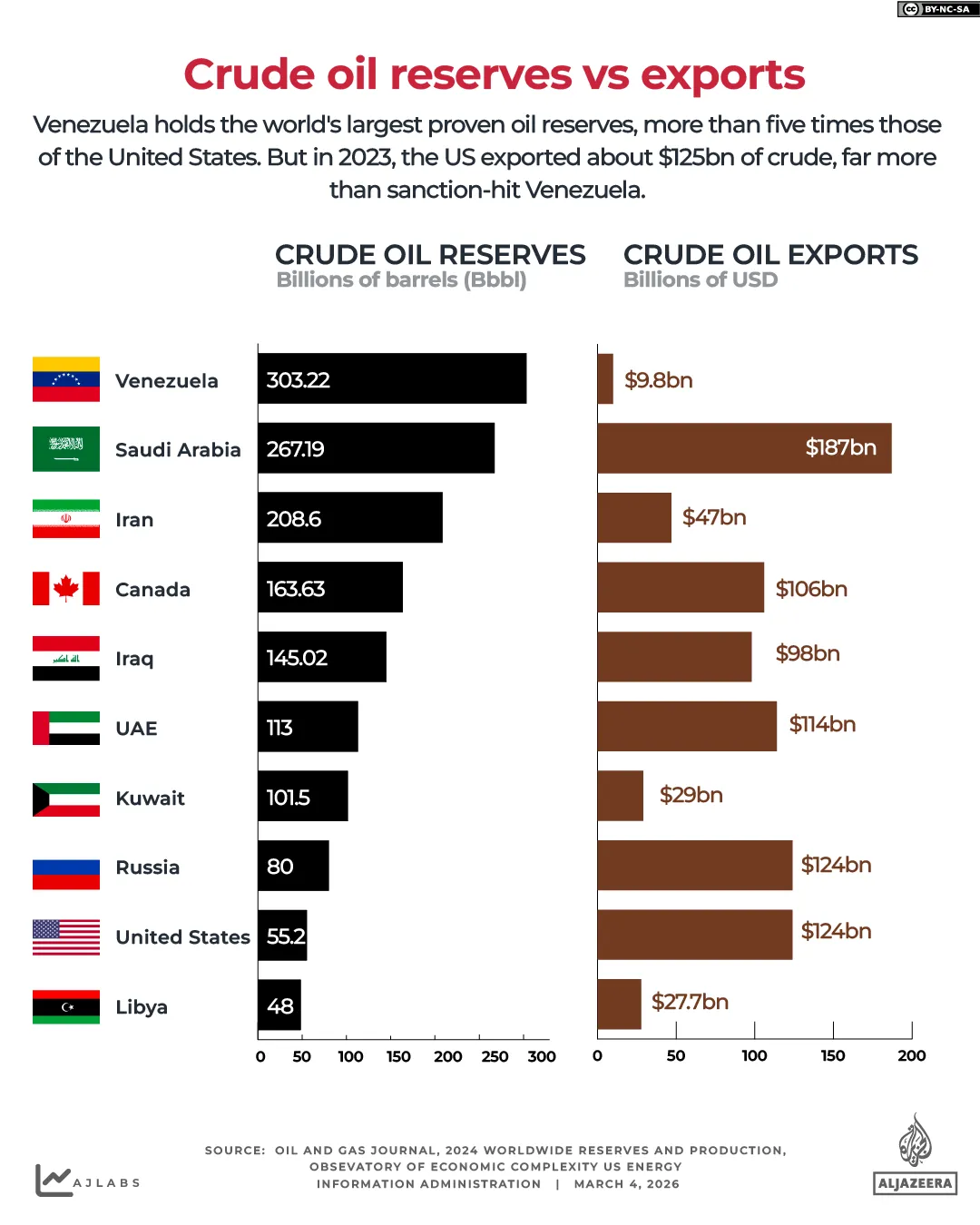
INTERACTIVE_IRAN_GCC_OIL AND GAS SUPPLY-CRUDE_OIL_MARCH4_2026

Oilfields forced to shut in across the Middle East as a result of the shipping disruptions could take a while to return to normal, said Amir Zaman, head of the Americas commercial team at Rystad Energy.

“The conflict could be ended, but it could take days or weeks or months, depending on the types of fields, age of the field, the type of shut-in that they’ve had to do before you can get production back up to what it once was,” he said.

Iranian forces, meanwhile, are targeting regional energy infrastructure, including refineries and terminals, forcing them to shut down too, with some of those operations badly damaged by attacks and in need of repairs.

Qatar declared force majeure on its huge volumes of gas exports on Wednesday after Iranian drone attacks, and it may take at least a month to return to normal production ‌levels, sources told Reuters. Qatar supplies 20 percent of global liquefied natural gas (LNG).

Saudi Aramco’s mammoth Ras Tanura refinery and crude export terminal, meanwhile, has also closed due to attacks, with no details on damage.

Economists warn that the situation could create a combination of higher prices and slower growth.

Source link