US-Israel war on Iran

Pakistan hosts four-nation bid to encourage US, Iran towards diplomacy | US-Israel war on Iran News

Islamabad, Pakistan – The US-Israel war on Iran has not paused. The strikes have not stopped from either side. However, diplomacy is now moving at a pace not seen since the conflict that affected Iran’s neighbours and rattled the world economy for a month.

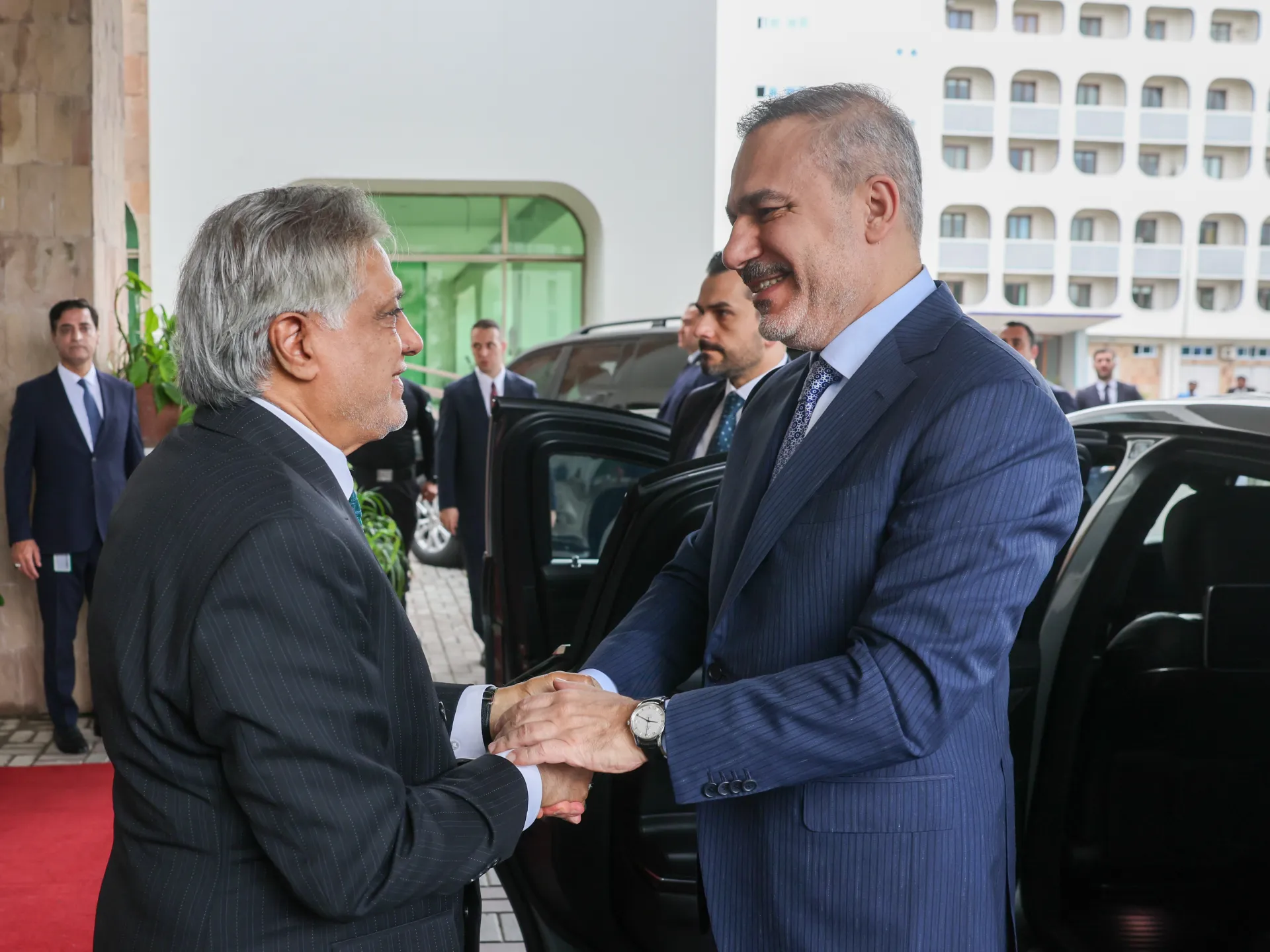
Two-day consultations of foreign ministers of Turkiye, Saudi Arabia, Egypt and Pakistan started in Islamabad on Sunday as the capital turned into the centre of a rapidly forming diplomatic track in what officials describe as the most coordinated regional effort yet to push the United States and Iran towards direct talks.

Recommended Stories

list of 3 itemsend of list

Hours before the meeting, Pakistan’s Prime Minister Shehbaz Sharif held a 90-minute phone call with Iranian President Masoud Pezeshkian – his second conversation with the Iranian leader in five days.

According to officials, the call focused on de-escalation and what Tehran calls the missing ingredient in all previous negotiations: trust.

Pezeshkian told Sharif that Iran had twice been attacked during earlier nuclear talks with the US and said the contradiction – talks on one hand, strikes on the other – had deepened Iranian scepticism about Washington’s intentions.

He stressed that confidence-building measures would be required before Tehran could consider direct dialogue.

The quad

The Islamabad meeting is not improvised. It is the evolution of a mechanism first discussed during a broader gathering of Muslim and Arab states in Riyadh earlier this month.

That mechanism has now hardened into a four-country diplomatic track, with Pakistan acting as the central interlocutor between Iran and the US.

Originally planned to take place in the Turkish capital, Ankara, the meeting was moved to Islamabad because of Pakistan’s deepening involvement in relaying messages between Washington and Tehran.

At the same time, China has conveyed support to Tehran for Pakistan’s mediation efforts and encouraged Iran to engage with the diplomatic process – a sign that global powers are beginning to line up behind the regional initiative.

Can they make Iran and the US talk to each other?

Diplomats say the four-nation meeting is not designed to produce a ceasefire itself. Its purpose is to align regional positions and prepare the ground for a possible direct US-Iran engagement.

Diplomacy over the war on Iran is no longer theoretical. A document exists. And now, the world is waiting.

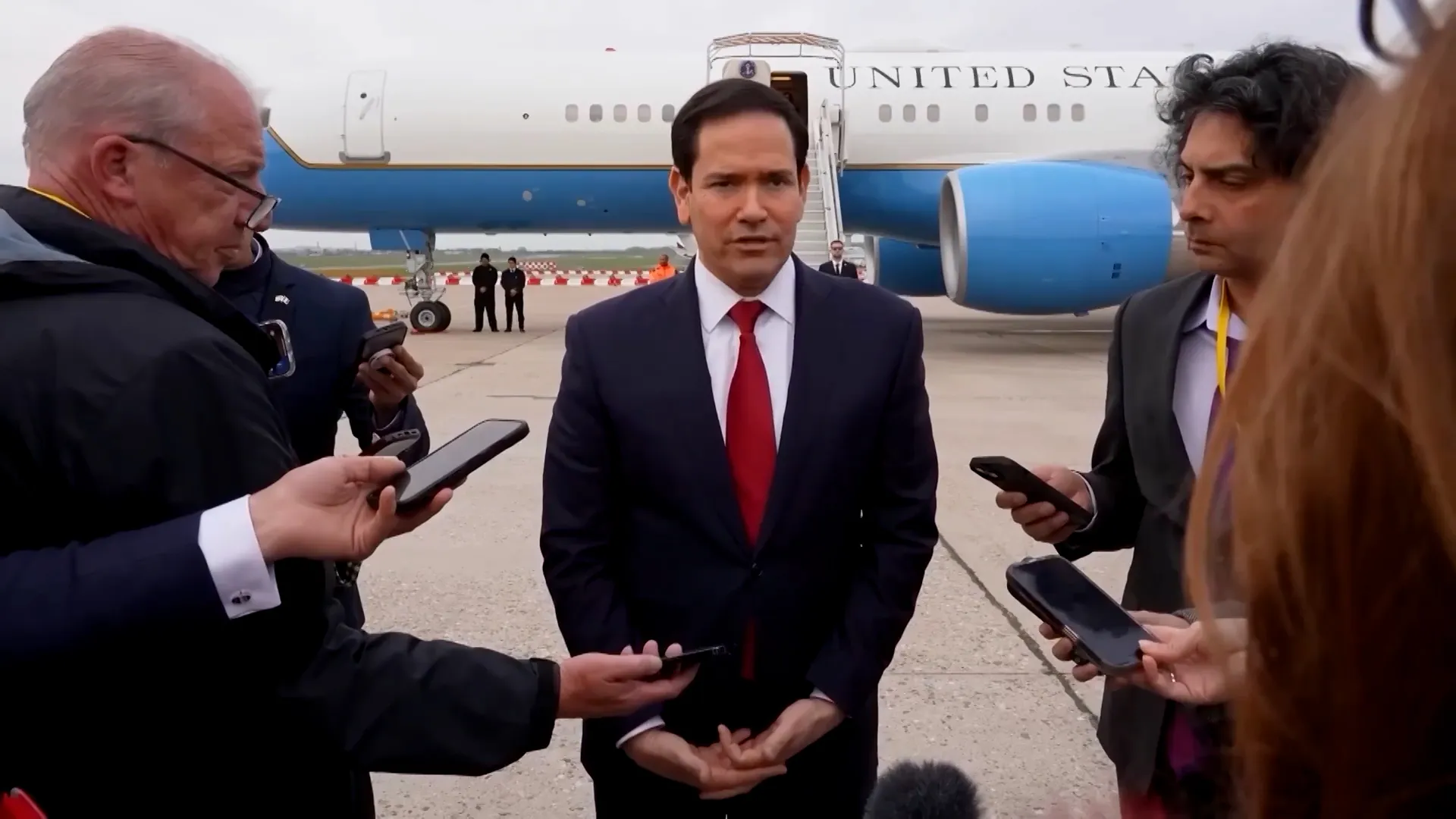
Officials suggest that if current contacts hold, talks between US Secretary of State Marco Rubio and Iran’s Foreign Minister Abbas Araghchi could take place within days, potentially in Pakistan.

US Vice President JD Vance has also been named as someone who could talk to the Iranians. However, timelines remain conditional.

One diplomat told Al Jazeera that any such meeting would likely require Washington to announce at least a temporary pause in strikes to meet Tehran’s demand for confidence-building measures.

A senior Pakistani source confirmed to Al Jazeera that Washington and Iran’s demands have been presented by Islamabad, and that is where Pakistan’s role ends.

“We can take the horse to the water; whether the horse drinks or not is entirely up to them.”

What does Tehran want?

The four-country meeting is expected to review Iran’s response and coordinate messaging back to Washington. Iran has already transmitted its reply to the US proposal via Islamabad, according to officials familiar with the process.

Tehran’s demands include an end to hostilities, reparations for damages, guarantees against future attacks and recognition of its strategic leverage in the Strait of Hormuz.

The meeting agenda

During his call with Sharif, President Pezeshkian warned that Israel was attempting to expand the conflict to other countries in the region and expressed concern over the use of foreign territory for attacks on Iran.

Islamabad’s view is that any dialogue must take place in an atmosphere of mutual respect and an end to the killing of Iranian officials and civilians.

Pakistan has condemned Israeli attacks and stood in solidarity with the Gulf countries regarding Iranian attacks on their infrastructure.

These statements underline a growing divide between regional powers and Washington’s military approach – even as those same powers work to prevent the conflict from spiralling further.

Limits to the Islamabad meeting

The talks in Islamabad do not include US or Iranian officials. It is not a negotiation. It is preparation.

Its goals are to consolidate regional backing for de-escalation. That requires harmonising positions on ceasefire sequencing and reducing the risk that competing mediation efforts undercut each other.

If successful, it could provide the political cover both Washington and Tehran need to enter talks without appearing to concede.

Officials say the next 48 to 72 hours will determine whether this diplomatic push produces a meeting. Pakistan has now spoken to Iran, hosted regional powers and transmitted proposals in both directions.

What happens next will depend on decisions taken not in Islamabad, but in Washington and Tehran.

For now, though, one fact is clear: the centre of gravity in the diplomatic effort to end this war has shifted to Pakistan’s capital. If this collapses under the weight of mistrust and continued fighting, a regional war risks becoming something far larger.
Source link

Analyst says that Iran’s interest is in an extended war | US-Israel war on Iran

Quotable

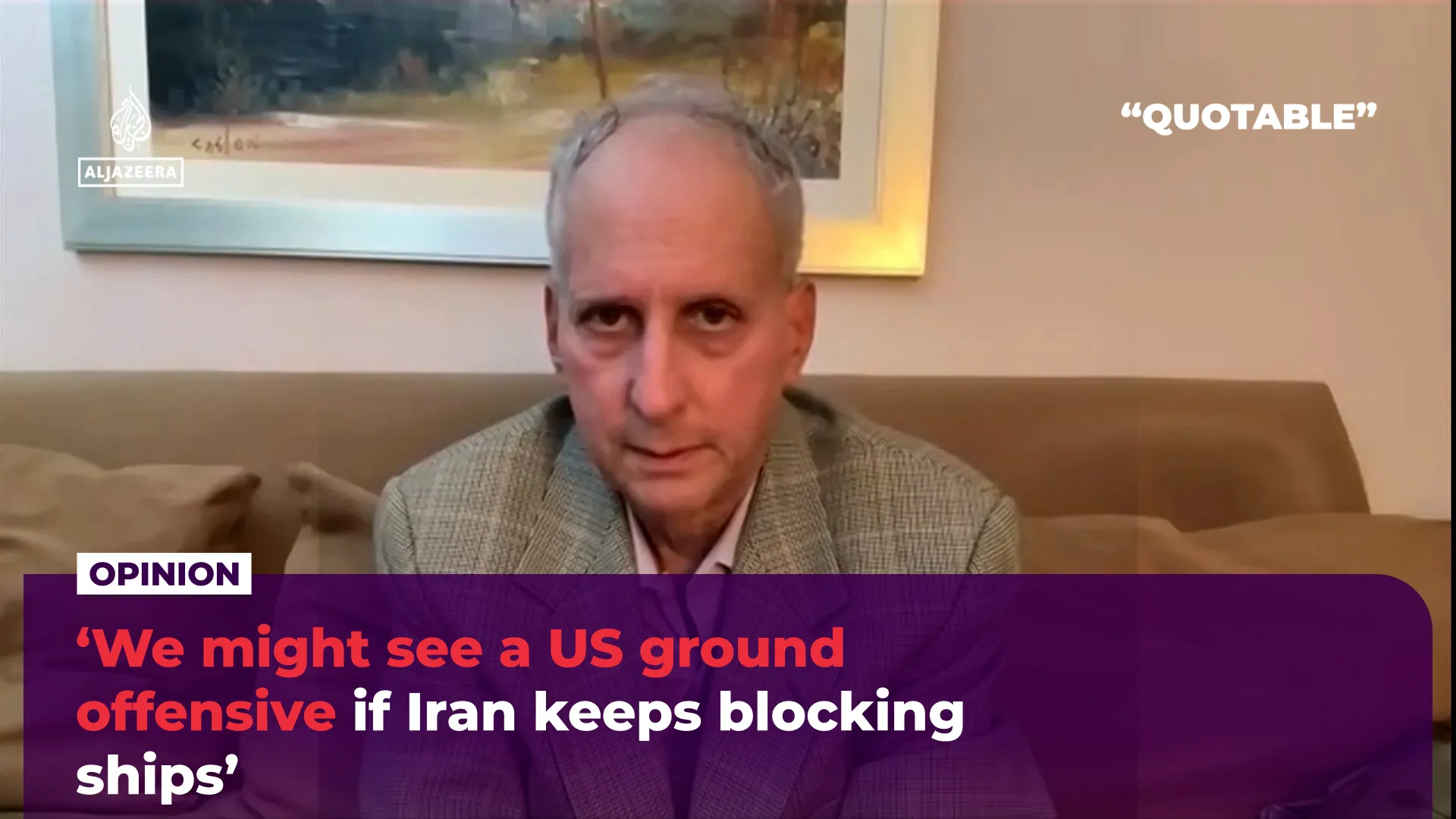
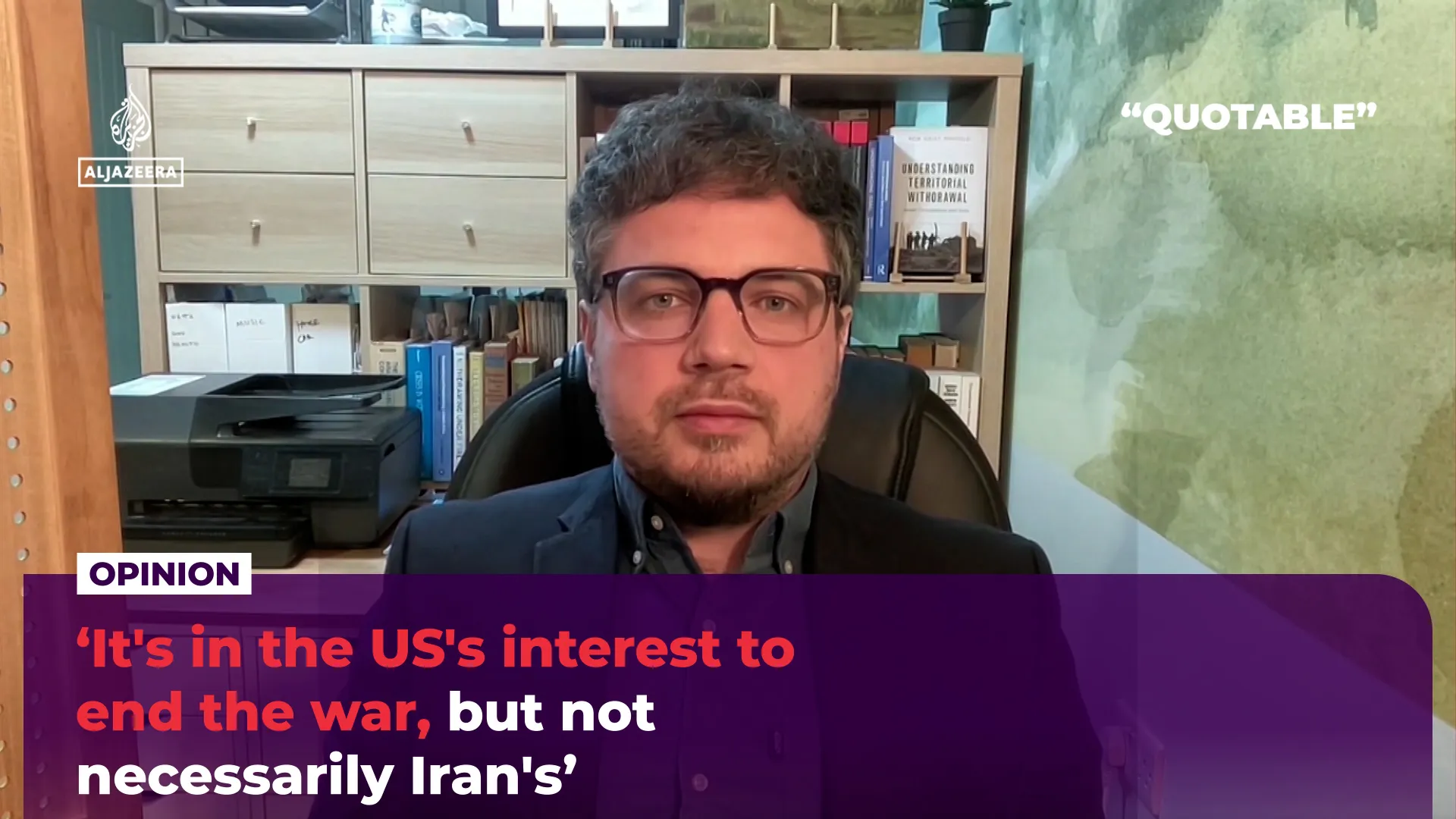
‘Iran has the ability to keep hurting the global energy markets.’
Rob Geist-Pinfold, a lecturer in International Security at King’s College London, says that the United States has an interest in ending the war on Iran, while Tehran is likely to prolong the conflict to increase pressure on global markets and force more favourable terms

Source link

Pentagon readies for weeks of US ground operations in Iran: Report | US-Israel war on Iran News

The plans, which fall short of a full invasion, could involve raids by special operations and conventional infantry troops, The Washington Post reported.

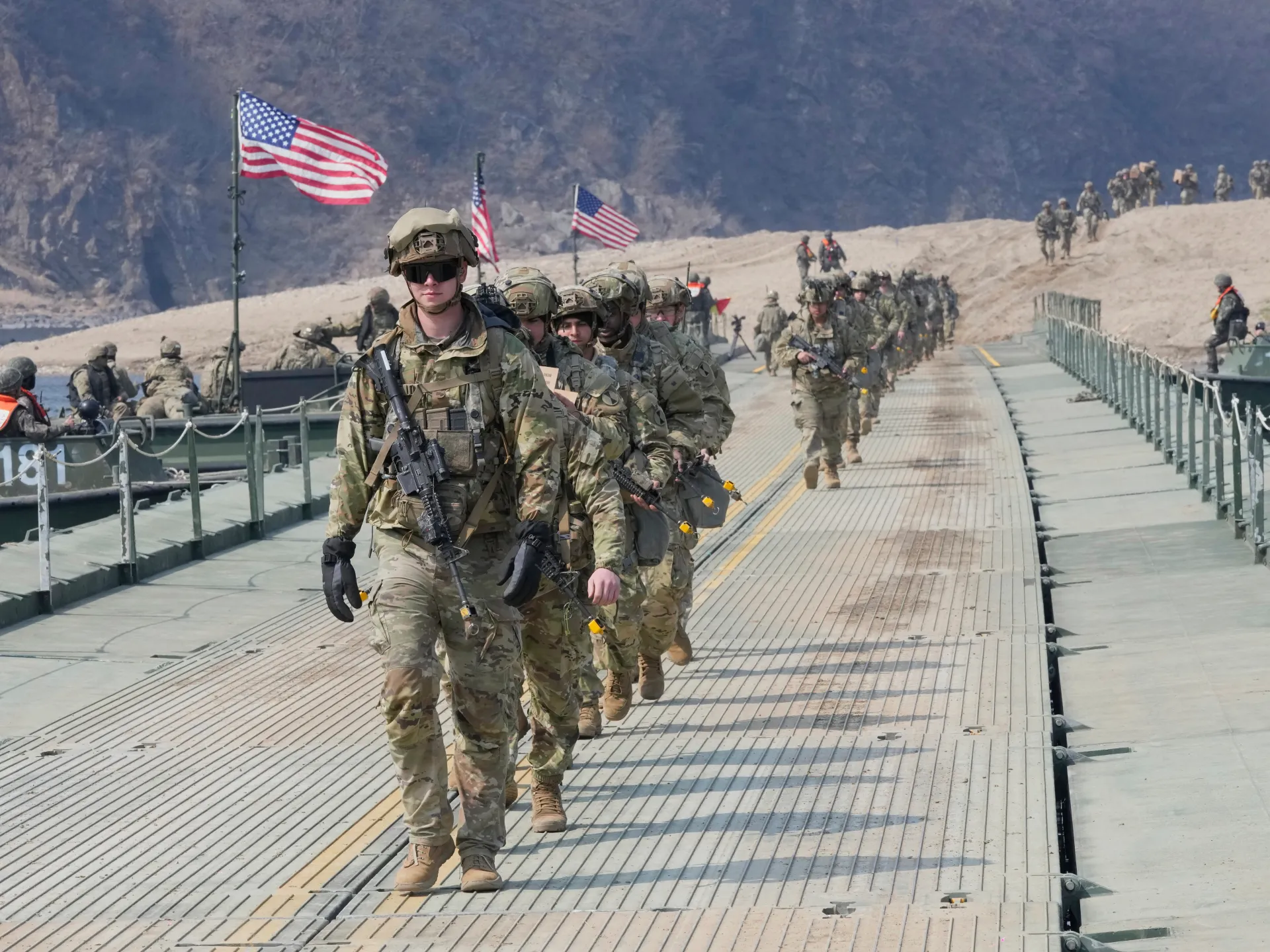
The Pentagon is preparing for weeks of limited ground operations in Iran, potentially including raids on Kharg Island and coastal sites near the Strait of Hormuz, according to United States officials quoted by The Washington Post newspaper.

The plans, which fall short of a full invasion, could involve raids by special operations and conventional infantry troops, the Post reported on Saturday, exposing US personnel to Iranian drones and missiles, ground fire, and improvised explosives.

Recommended Stories

list of 3 itemsend of list

Whether President Donald Trump would approve any of those plans remains uncertain, according to the report.

“It’s the job of the Pentagon to make preparations in order to give the Commander in Chief maximum optionality. It does not mean the president has made a decision,” White House press secretary Karoline Leavitt said in a statement, responding to questions over the Post report.

The Trump administration has deployed US Marines to the Middle East as the war in Iran stretches into its fifth week, and has also been planning to send thousands of soldiers from the army’s 82nd Airborne to the region.

On Saturday, the US Central Command (CENTCOM) said about 3,500 additional soldiers arrived in the Middle East on board the USS Tripoli.

The sailors and marines are with the 31st Marine Expeditionary Unit and arrived in the region on March 27, along with “transport and strike fighter aircraft, as well as amphibious assault and tactical assets”, according to CENTCOM.

Officials speaking to The Washington Post said discussions within the administration over the past month have touched upon the possible seizure of Kharg Island, a key Iranian oil export hub in the Gulf, and raids into other coastal areas near the Strait of Hormuz to find and destroy weapons that can target commercial and military shipping.

According to the report, one person said the objectives under consideration would probably take “weeks, not months” to complete, while another put the potential timeline at “a couple of months”.

The Pentagon had not responded on Saturday to the Post’s requests for comment. Iran has yet to respond to the report.

The report comes as Pakistan, which shares a 900km-long (559-mile) border with Iran, mediates between Washington ‌and Tehran, hosting two days of talks starting on Sunday with the foreign ministers of Saudi Arabia, Turkiye and Egypt.

Iranian threats

The Iranian parliament speaker, Mohammad Bagher Ghalibaf, said on Sunday the “enemy openly sends messages of negotiation and dialogue and secretly plans a ground attack”.

“Unaware that our men are waiting for the arrival of American soldiers on the ground to set fire to them and punish their regional partners forever. Our firing continues. Our missiles are in place,” the Tasnim news agency reported, quoting Ghalibaf.

“Our determination and faith have increased. We are aware of the enemy’s weaknesses, and we clearly see the effects of fear and terror in the enemy’s army.”

It was not clear whether Ghalibaf was responding to the Post report.

On Wednesday, Ghalibaf had warned that intelligence reports suggested that “Iran’s enemies” ⁠were planning to occupy an Iranian island with support ‌from an unnamed country in the region.

He said any such attempt would be met with targeted attacks on the “vital infrastructure” of the regional country – which he did not name – that assists in the operation.

Tasnim quoted an unnamed military source as saying on Wednesday that Iran could open a new front at the mouth of the Red Sea if military action takes place on “Iranian islands or anywhere else in our lands”.

The source told Tasnim that Iran can pose a “credible threat” in the Bab al-Mandeb Strait, ⁠which lies between Yemen and Djibouti.

Tasnim later quoted an “informed source” claiming that Yemen’s Houthi rebels, backed by Iran, are prepared to play a role “if there is a need to control the Bab al-Mandeb Strait to further punish the enemy”.

Source link

Dozens detained in Tel Aviv as anti-war protest turns violent | US-Israel war on Iran

NewsFeed

Police in Tel Aviv dispersed hundreds of protesters on Saturday opposing Israel’s operation with the US against Iran, now in its second month. Up to 18 people have been arrested so far, according to local media, as wartime restrictions on gatherings remain in place.

Source link

‘Trump has to open the Strait of Hormuz’ with ground forces | US-Israel war on Iran

Quotable

‘Once the US starts capturing territory in Iran, all bets are off.’
Kenneth Katzman, a senior fellow at the Soufan Center for Strategic Dialogue, says US war objectives in Iran that cannot be met with air power can be met with a limited ground invasion.

Source link

Kuwait airport hit by Iranian drone strikes | Conflict

NewsFeed

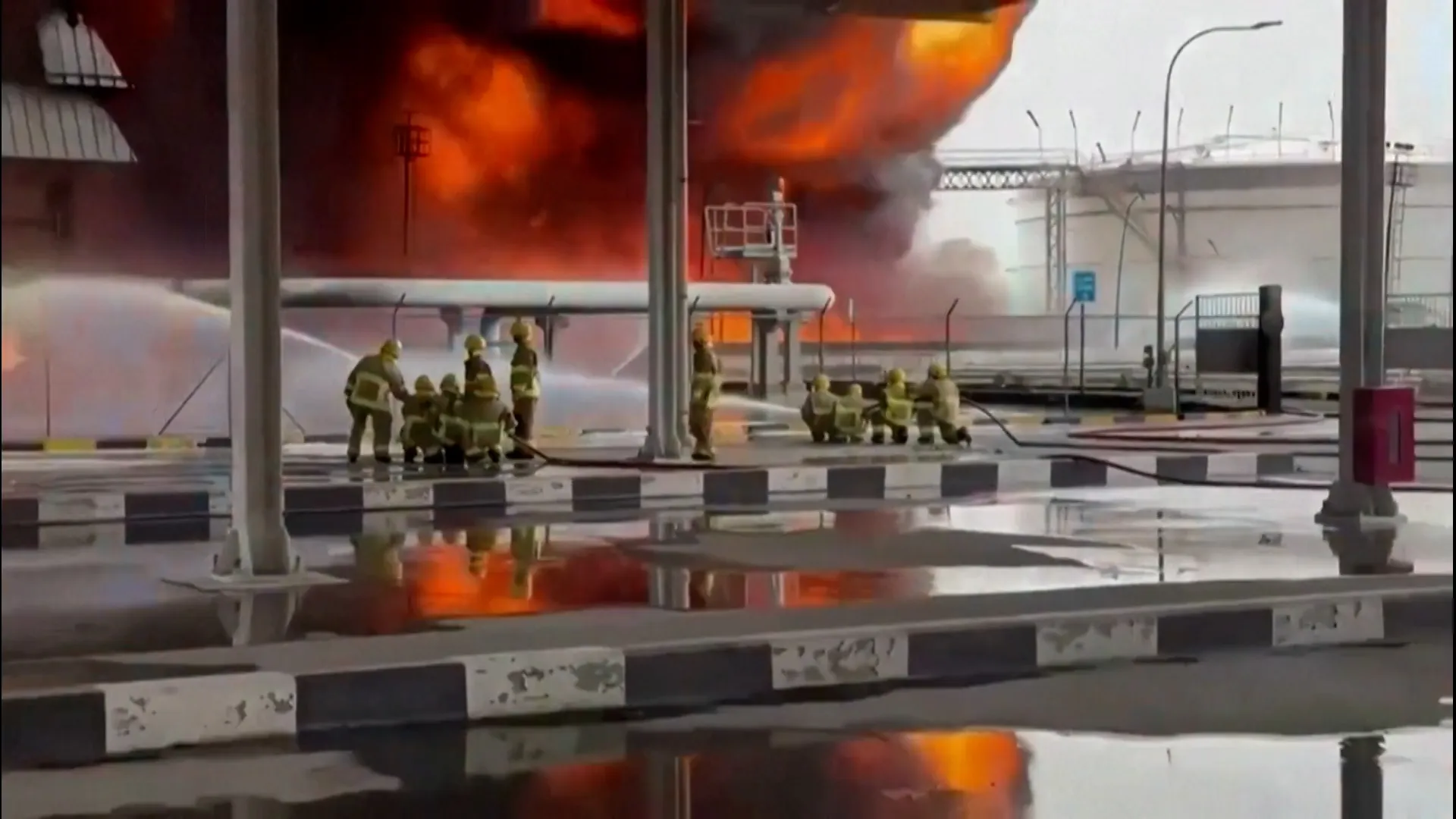
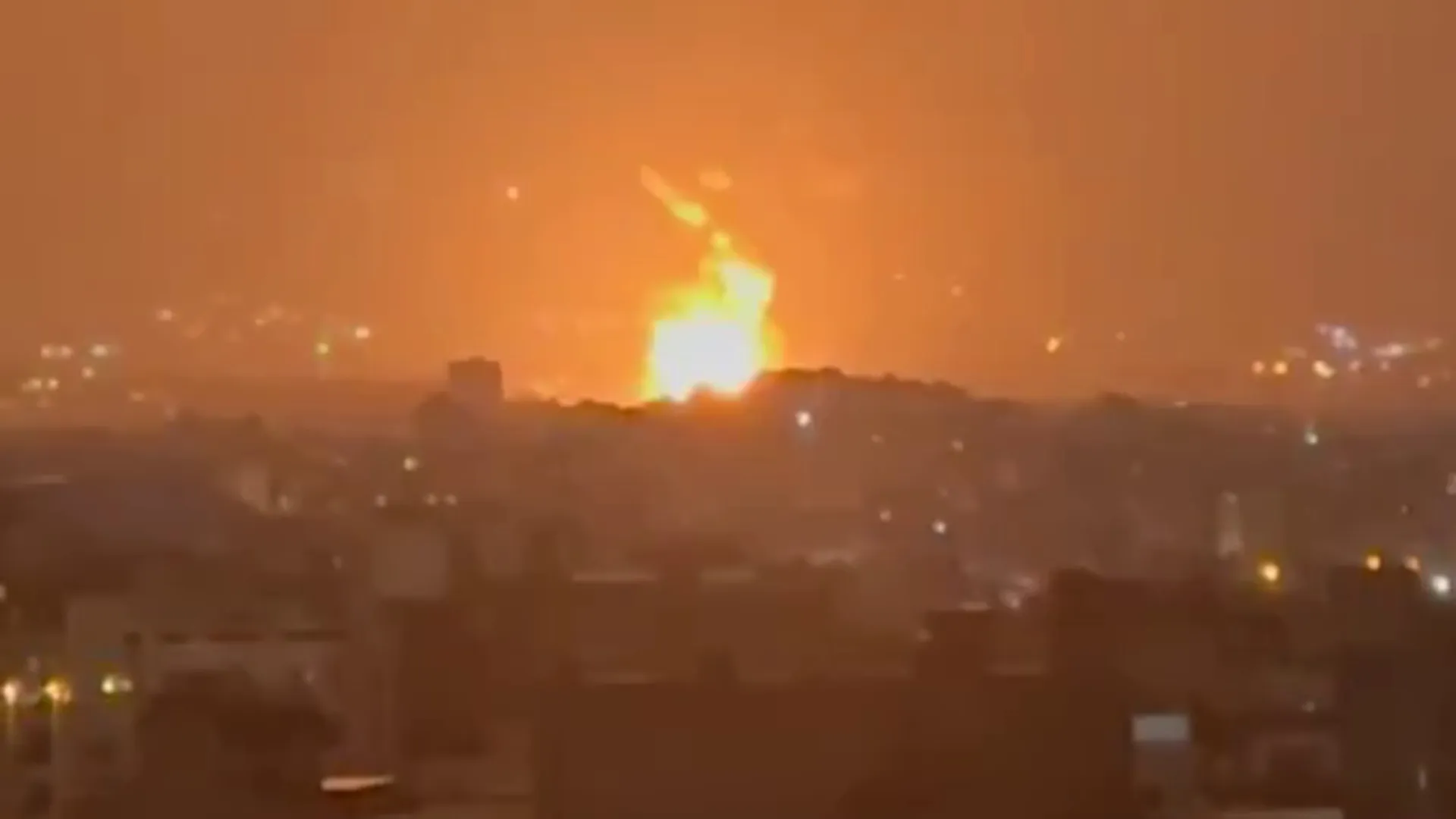
Thick, black smoke rose from Kuwait International Airport Saturday after suspected Iranian drone strikes damaged radar systems and fuel storage facilities, state media said. No fatalities were reported. The airport has been repeatedly targeted since the US-Israeli war on Iran erupted.

Source link

As war on Iran enters second month, Yemen’s Houthis open new front | US-Israel war on Iran News

Yemen’s Houthis have attacked Israel for the first time, a month after US and Israeli forces began striking Iran, opening up a new front in a rapidly escalating conflict that has killed thousands of people, displaced millions and rattled the global economy.

The Houthis, who control much of northern Yemen, entered the fray on Saturday with two missile and drone attacks on Israel in the space of fewer than 24 hours. The Israeli army said the attacks were intercepted, but the Iran-aligned group pledged to continue fighting in support of “resistance fronts in Palestine, Lebanon, Iraq, and Iran”.

Recommended Stories

list of 3 itemsend of list

The Houthis had sat out of the hostilities until now, in contrast with their stance during Israel’s genocidal war on Gaza, when their attacks on shipping vessels in the Red Sea upended commercial traffic worth about $1 trillion a year.

Their widely anticipated involvement in the latest conflict comes just as Iran has throttled traffic through the Strait of Hormuz, a vital chokepoint for about a fifth of the world’s oil, raising fears that the Yemeni group will again disrupt Red Sea traffic by blocking the Bab al-Mandeb Strait.

Reporting from Yemen’s capital, Sanaa, Al Jazeera’s Yousef Mawry described Bab al-Mandeb as the group’s “ace”.

“They want to make Israel pay economically. They want to disrupt their trade routes. They want to disrupt the imports and exports in and out of Israel,” he said.

‘Civilians bearing brunt of war’

The Houthi attacks came after US Secretary of State Marco Rubio said that Washington expected to conclude its military operations against Iran within weeks, even as a new deployment of US Marines has begun to arrive in the region, so US President Donald Trump would have “maximum” flexibility to adjust the strategy as needed.

With no immediate diplomatic breakthrough in sight as both the US and Iran harden their positions, many fear that the US-Israel war on Iran, which started on February 28 and has since engulfed the region, will spiral out of control.

The US and Israel continued their bombardment over the past 24 hours, with the Israeli military claiming it had struck an Iranian research facility for naval weapons, while a series of loud explosions rattled Tehran as night fell on Saturday.

Iranian media said at least five people were killed in a US-Israeli attack on a residential unit in the northwestern city of Zanjan. In Tehran, authorities said the University of Science and Technology was the latest educational facility to be struck, prompting Iran’s Revolutionary Guard Corps (IRGC) to issue a threat against Israeli and US universities in the region.

Separately, Iran’s Fars news agency said a water reservoir in the city of Haftgel, located in western Khuzestan province, had also been attacked.

The Iranian Ministry of Health announced that 1,937 people have been killed since the start of the conflict, including 230 children. Iran’s Red Crescent Society said US-Israeli strikes had damaged more than 93,000 civilian properties.

“Civilians are bearing the brunt of this war,” Al Jazeera’s Mohamed Vall, reporting from Tehran, said.

Devastation in Lebanon

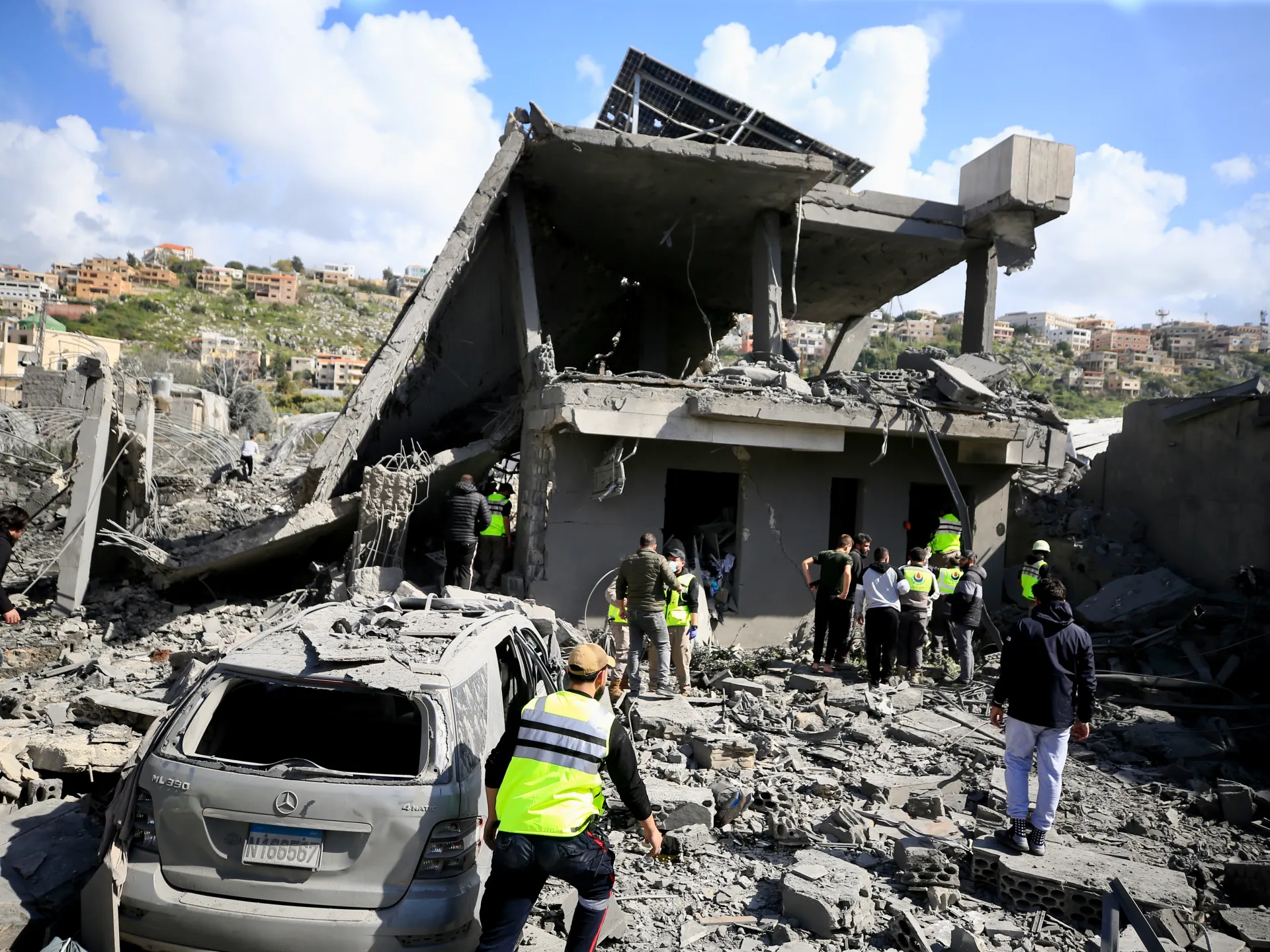
Meanwhile, Israel’s devastation of Lebanon continued apace, as the Lebanese Ministry of Health reported that 1,189 people had been killed in Israeli attacks since March 2.

The death toll has been mounting as Israeli troops have pushed further into the south, advancing towards the Litani River in their stated bid to wipe out Hezbollah and carve out a buffer zone along the lines of the “Gaza model”.

Among Saturday’s killings, an Israeli strike killed three journalists in southern Lebanon. In parallel, the Health Ministry announced that Israel had also killed nine paramedics, bringing the death toll among healthcare workers in the latest war to 51.

Lebanon’s Public Health Emergency Operations Centre said an Israeli attack on the town of al-Haniyah, in the Tyre district of southern Lebanon, killed at least seven people, including one child.

An Israeli air raid on the southern Lebanese town of Deir al-Zahrani killed a Lebanese soldier, Lebanon’s National News Agency reported.

Hezbollah, which attacked Israel amid a ceasefire that Israel kept violating in retaliation for the assassination of Iranian Supreme Leader Ali Khamenei, claimed dozens of operations against Israeli forces in the past 24 hours.

Mixed messages

Trump has threatened to hit Iranian power stations and other energy infrastructure if Tehran does not fully open the Strait of Hormuz. But he has extended the deadline he had imposed for this week, giving Iran another 10 days to respond.

With the US midterm elections coming up in November, the increasingly unpopular war is weighing heavily on the president’s Republican Party.

Trump’s envoy, Steve Witkoff, said on Friday that he believed Tehran would hold talks with Washington in the coming days. “We have a 15-point plan on the table. We expect the Iranians to respond. It could solve it all,” Witkoff said.

Pakistan, which has been a go-between between US and Iranian officials, will host foreign ministers from regional powers Saudi Arabia, Turkiye and Egypt in Islamabad for talks on the crisis.

Pakistan’s Minister of Foreign Affairs Ishaq Dar spoke with his Iranian counterpart, Abbas Araghchi, late on Saturday, urging “an end to all attacks and hostilities” in the region.

In a statement, the Ministry of Foreign Affairs said Dar had told Araghchi that Pakistan remains committed to supporting efforts aimed at restoring regional peace and stability.

Dar also announced that Iran had agreed to allow 20 Pakistani-flagged vessels to transit the Strait of Hormuz, calling it a meaningful step towards easing one of the worst energy crises in modern history.

Source link

Air strikes in Iraq kill three PMF fighters, two police | US-Israel war on Iran News

Ex-paramilitary group, set up to fight ISIL, but now integrated in Iraqi forces, blames US and Israel.

Air strikes targeting Iraq’s Popular Mobilisation Forces (PMF) have killed three fighters and two Iraqi police, as the US-Israeli war on Iran continued to spill over Iraq’s eastern border.

An Iraqi security source told Al Jazeera that Saturday’s double-bombing of the PMF’s headquarters near northern Iraq’s Kirkuk Airport also wounded two other fighters and six Iraqi soldiers.

Recommended Stories

list of 3 itemsend of list

A statement from the ex-paramilitary coalition, which is now integrated into the regular Iraqi army, blamed the United States and Israel, saying that those killed had been “subjected to a treacherous Zionist-American” attack.

Separately, the Reuters news agency quoted security sources as saying that two members of the Iraqi police were killed in an air strike targeting the PMF in Mosul, about 105 miles (170km) northwest of Kirkuk.

Reporting from Baghdad, Al Jazeera’s Nicolas Haque said that Iraq was turning into an “expanding battleground” in the crisis, which began on February 28 with US-Israeli strikes on Iran and now threatens to engulf the region in a protracted conflict.

Since the war broke out, pro-Iran armed groups within the PMF, which was formed on the orders of Najaf-based Grand Ayatollah Ali Sistani in 2014 to fight ISIL (ISIS), have claimed responsibility for attacks on US interests in Iraq and beyond and have themselves been targeted.

Haque said the PMF takes its orders from Baghdad, but some factions are loyal to Tehran.

“That makes it very difficult for Baghdad to hold all of this together. Up until the war, the government successfully brought everybody around the table [and] was able to manage the different factions,” he said.

But as the war expands into Iraq, Baghdad has found itself “on a tightrope” between the US and Iran, said Haque.

“They can’t afford to turn their back on their biggest neighbour, Iran. Nor can they afford to turn their back on the United States,” he said, noting the economic and security ties between Baghdad and both countries.

Saturday also saw two drones targeting an airbase serving as a hub for US and coalition forces near Erbil airport in Iraq’s semi-autonomous Kurdish region. Haque said the US C-RAM air defence system was activated and intercepted the drones.

Iraq attacks ‘a worrying development’: Macron

In parallel, Kurdish news outlet Rudaw reported a drone attack on the house of Nechirvan Barzani, president of the Kurdish region, in the western town of Duhok.

Masrour Barzani, the prime minister of the Kurdistan Regional Government in northern Iraq, condemned “in the strongest terms” the assault.

“Once again, we call on the federal government to act on its responsibility, bring these outlaw criminals to justice, and curb the continued terrorist attacks carried out by these groups,” he said in a statement.

French President Emmanuel Macron said on X that he had spoken to Barzani, calling increased attacks in Iraq a “worrying development”.

In other developments, the Iraqi Ministry of Defence said on Saturday that a drone had crashed into the southern Majnoon oilfield “without detonating, causing no damage or injuries”.

Source link

Reza Pahlavi pledges to ‘make Iran great again’ at 2026 CPAC conference | US-Israel war on Iran News

Iranian opposition leader calls on Trump administration to ‘stay the course’ as the US and Israel continue to wage war on Iran.

Amid questions about the future of Iran’s government, the son of the former shah has pitched himself to a right-wing summit in the United States and received a raucous welcome.

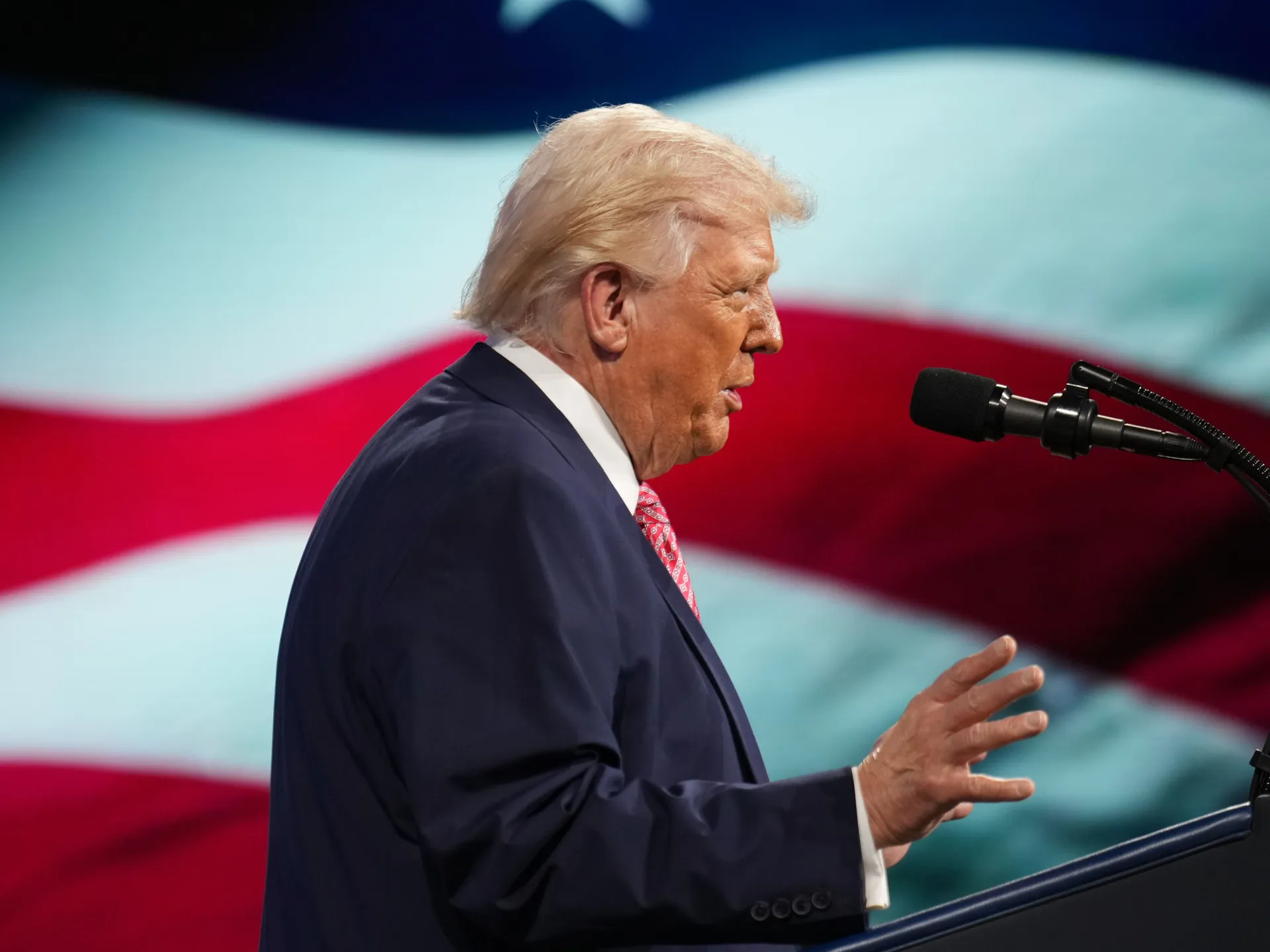
Reza Pahlavi spoke at the Conservative Political Action Conference (CPAC) in Texas on Saturday, urging US President Donald Trump not to cut a deal with Iran and instead seek regime change.

Recommended Stories

list of 3 itemsend of list

“Can you imagine Iran going from ‘Death to America’ to ‘God Bless America’?” the self-styled crown prince asked his audience in Grapevine, Texas.

“President Trump is making America great again. I intend to make Iran great again,” he added, receiving a standing ovation from the crowd.

His remarks came on the one-month anniversary of the US and Israel’s decision to launch a war against Iran. As the conflict enters its second month, at least 1,937 people in Iran have been killed, and tens of thousands more injured, with no end to the fighting in sight.

Pahlavi has become a central opposition figure in the Iranian diaspora, with a loyal base of supporters who often carry his image, along with Iran’s pre-revolutionary flag, at protests around the world.

During his speech, some in the audience chanted, “Long live the king!”

People wrapped in pre-Iranian Revolution "Lion and Sun" flags listen to a speech of Reza Pahlavi, the exiled son of Iran's last shah and an Iranian opposition figure, during the Conservative Political Action Conference (CPAC) USA 2026 at the Gaylord Texan Resort and Convention Center, in Grapevine, Texas, U.S. March 28, 2026. REUTERS/Callaghan O'Hare
Audience members wrapped in Lion and Sun flags, symbolising Iran’s deposed monarchy, listen to a speech from Reza Pahlavi, the exiled son of Iran’s last shah [Callaghan O’Hare/Reuters]

While some in the Iranian diaspora have expressed reservations about the US-Israeli attacks and their effect on the future of Iran, Pahlavi has emerged as an outspoken supporter of Trump, aligned with the administration’s most hawkish figures.

“This regime in its entirety must go,” he said on Saturday.

Analysts have warned that the Iranian government is not likely to collapse and could emerge from the conflict more hardened than before. Some exiles, meanwhile, have been criticised for lending their voices to support the US-Israeli war despite the heavy toll on Iranian civilians.

Trump has himself previously downplayed the possibility that the son of the former shah, who was expelled from Iran during the country’s 1979 revolution, could play a central role in Iran if the current government were to collapse.

Earlier this month, Trump said that Pahlavi “looks like a very nice person“, but indicated that the shah’s son lacks popularity in Iran.

“It would seem to me that somebody from within, maybe, would be more appropriate,” Trump had said.

Divides within the US right over the war in Iran were also in evidence at CPAC. Polls suggest that, while the war is widely unpopular among US voters, Republicans support it by large margins.

In a Pew Research Center poll, for instance, 71 percent of Republican voters felt the US had made the right decision to attack Iran. Overall, among voters regardless of party, 59 percent opposed the initial strikes.

Still, a handful of influential voices on the US right, such as Tucker Carlson and Steve Bannon, have emerged as vocal critics of the war. Younger activists have also expressed frustration with what they see as a betrayal of Trump’s promise to avoid military adventures overseas.

“We did not want to see more wars. We wanted actual America First policies, and Trump was very explicit about that,” Benjamin Williams, a 25-year-old marketing specialist for Young Americans for Liberty, told The Associated Press. “It does feel like a betrayal, for sure.”

Source link

Pakistan’s Naseem Shah under fire after criticism of politician’s PSL visit | Cricket News

Pakistan’s Naseem Shah under fire for slamming politician’s presence at start of closed-doors PSL game in Lahore.

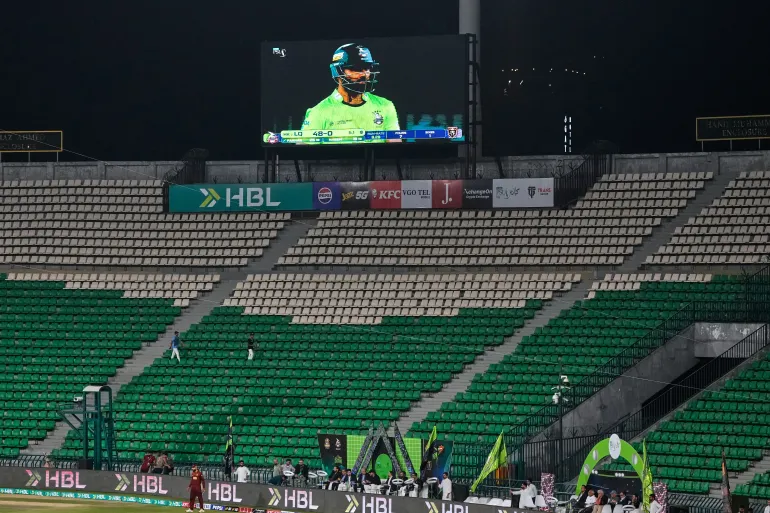
The Pakistan Cricket Board has attacked fast bowler Naseem Shah for criticising a politician’s presence at the start of the opening game of the Pakistan Super League, which is being played behind closed doors.

Fans are barred from attending games at the country’s premier domestic tournament, which was originally scheduled for six venues but now reduced to just two — Lahore and Karachi.

Recommended Stories

list of 3 itemsend of list

The Middle East conflict has resulted in exorbitant fuel hikes in the region, and Pakistan’s government is urging people to restrict travel and to work from home.

Chief Minister of Punjab Maryam Nawaz was invited to Lahore’s Gaddafi Stadium on Thursday, along with other dignitaries, and was introduced to officials of the eight franchises and players ahead of the opening game of the tournament between defending champion Lahore Qalandars and first-timers Hyderabad Kingsmen.

Shah commented on a tweet about the opening game by the PCB, with the bowler saying on X, “Why is she treated like the queen at Lord’s?” in an apparent reference to Nawaz’s presence at the stadium. He deleted the post soon afterwards and later said his account had originally been hacked.

A view of the Gaddafi Stadium, where opening cricket match of the Pakistan Super League between Lahore Qalandars and Hyderabad Kingsmen, is taking place without spectators
A view inside the Gaddafi Stadium, where the opening cricket match of the Pakistan Super League between Lahore Qalandars and Hyderabad Kingsmen took place without spectators [KM Chaudary/AP]

The PCB said in a statement that Shah had been issued a notice for violating the terms of his central contract as well as media policy and regulations.

“The show-cause notice has been served in accordance with the PCB’s disciplinary framework,” the PCB said. “Naseem Shah is required to provide a response within the stipulated time. Upon receipt and review of his response, the PCB will decide on any further action in line with the regulations.”

Last year, Pakistan all-rounder Aamer Jamal was slapped with a fine of $4,000 for displaying a slogan in favour of cricket great Imran Khan, Pakistan’s imprisoned former prime minister.

Shah is scheduled to play for new PSL franchise Rawalpindi Pindiz in Saturday’s game against Peshawar Zalmi, led by former Pakistan all-formats captain Babar Azam.

Shah, a right-arm fast bowler, has taken a total of 152 wickets while representing Pakistan in 20 Test matches, 34 one-day internationals and 37 T20 games.

Source link

The war on Iran faces a MAGA backlash | US-Israel war on Iran

Four weeks into the war on Iran, the White House continues to confuse the public and the press with constant pivots and contradictions.

Now the administration faces even more pressure as many of its own supporters have started to turn against it. This war has split up the MAGA movement, with an intriguing debate currently happening outside the mainstream and in the midst of their own media sphere.

Contributors:
Jamal Abdi – President, National Iranian American Council
Jude Russo – Managing editor, The American Conservative
Ben Lorber – Senior research analyst, Political Research Associates

On our radar

This week, the Israeli parliament approved the first vote on a bill that introduces a mandatory death penalty by hanging. This applies to any Palestinian convicted of killing Israelis in attacks defined as “terrorism” or motivated by “hatred”. Ryan Kohls reports on how this bill has been promoted in the media.

Memes, trash talk and AI – the online war between Washington and Tehran

The propaganda war in the ongoing war on Iran has taken a new form.

Beyond the traditional tactics, both the US and Iran are increasingly using memes and trash-talk mockery of the adversary through AI-driven animations, designed with virality in mind. We look at the strategies behind the different messaging coming out of Washington, Tel Aviv and Tehran.

Featuring:
Meredith Clark – Professor, University Of North Carolina
Roger Stahl – Documentarian and author, Militainment, Inc.
Marc Owen Jones – Associate professor, Northwestern University In Qatar

Source link

US-Israel war on Iran: What’s happening on day 29 of attacks? | US-Israel war on Iran News

Tensions continue to rise with Iran warning a ‘heavy price’ will be paid after Israeli attacks on nuclear and industrial sites.

President Donald Trump said he is “very disappointed” with NATO’s response to the United States-Israeli war on Iran, accusing the alliance of failing to support Washington despite years of US military spending on its allies.

Meanwhile, Iran warned a “heavy price” will be paid after Israeli attacks on nuclear and industrial sites, with Tehran accusing the US and Israel of “playing with fire” by targeting energy infrastructure. Iran also said there was no radioactive leak following attacks on two nuclear facilities.

The warnings come as fighting and tensions continue to escalate across the Middle East, with growing fears of a wider conflict.

Here is what we know:

In Iran

  • Israel hits Tehran: Israel’s military said it launched attacks on Iranian “regime targets” early Saturday.
  • Hopes for Iran talks this week: US envoy Steve Witkoff said he expects meetings with Iran “this week” and is waiting for Tehran’s response to a 15-point peace plan.
  • Iran pledges “heavy price” for plant strikes: Iran’s Foreign Minister Abbas Araghchi said Tehran would exact a “heavy price for Israeli crimes” after attacks on nuclear sites and two of the country’s largest steel factories.
  • Iran feels “forced” into talks: Al Jazeera’s Mohamed Vall, reporting from Tehran, said many Iranians believe they are being pushed into negotiations that are not in their favour, with the sense that “the Americans are bombing their way towards a negotiation table.” Rather than relying on US or Israeli promises, he said Iran is relying on “its missiles, its drones, and the resolve of its soldiers”.
  • Russia likely aiding Iran with satellite intelligence: Al Jazeera’s Mansur Mirovalev reported Iran is likely receiving data on US military assets from Russia’s Liana spy satellite system, according to a space programme expert.

War diplomacy

  • Trump criticises NATO over Hormuz: Trump said NATO allies “weren’t there” when asked to help secure the Strait of Hormuz, despite the US spending “hundreds of billions” protecting them. “I’ve always said NATO is a paper tiger. And I always said we help NATO, but they’ll never help us.”
  • Possible Pakistan meeting: Turkiye said talks with Pakistan, Saudi Arabia, and Egypt could take place in Pakistan this weekend as Islamabad mediates between Iran and the US.
  • UN nuclear watchdog urges “restraint”: The International Atomic Energy Agency repeated its call for “restraint” in the Middle East war after Israel struck two Iranian nuclear facilities, including a uranium processing plant.
  • “Regime change” unlikely: The war is unlikely to lead to “regime change” in Iran, said German Chancellor Friedrich Merz. “If that’s the goal, I don’t think you’ll achieve it. It’s mostly gone wrong” in past conflicts, he said, pointing to the Afghanistan war.

In the Gulf

  • Saudi Arabia intercepts missile: Saudi Arabia said it “intercepted and destroyed” a missile targeting the capital Riyadh. Meanwhile, at least 12 US military personnel were wounded, including two seriously, in an Iranian attack on an airbase in the kingdom, The Associated Press and Reuters news agencies reported on Friday.
  • United Arab Emirates: The UAE’s Ministry of Defence reported that air defence systems and fighter jets intercepted and shot down incoming missiles and drones from Iran.
  • Kuwait: Though experiencing some slower nights recently, residents in Kuwait say they have grown accustomed to the disruption of alarms sounding throughout the night.

In the US

  • US aims to finish war in “weeks”: Secretary of State Marco Rubio said Washington expects to complete its Iran war objectives in the “next couple weeks”, leaving Iran “weaker”.
  • US soldiers wounded: More than 300 American soldiers have been wounded since the start of the war on February 28, US Central Command said.

In Israel

  • Direct attacks: Israel continues to face significant incoming fire on multiple fronts. Iran launched a missile salvo that struck a busy commercial street in Tel Aviv.
  • Man killed: Israeli emergency responders said a man was killed in Tel Aviv on Friday, and several others were wounded across the country after the military reported missiles fired from Iran.

In Lebanon, Yemen, occupied West Bank

  • Houthis warn they’ll join the fight: Yemen’s Houthi rebels warned they would enter the war if attacks on Iran continue or if more countries join the conflict. The Houthis have in the past attacked shipping in the Red Sea in response to regional conflicts, but have so far not intervened in this war.
  • Israel expands ground war in Lebanon: Israeli troops entered Khiam and clashed with Hezbollah near Tyre as Israel pushes to create a “security zone” up to the Litani River. Hezbollah said it attacked Israeli tanks and fired at a warplane over Beirut.
  • Israel cites Hezbollah threat: Al Jazeera’s Rob McBride, reporting from Amman, said Israel is using the threat from Hezbollah in the north to justify expanding its ground incursion into southern Lebanon to push Hezbollah back and create a “buffer zone”.
  • Hezbollah escalation: Hezbollah forces have fiercely resisted the Israeli advance, claiming to have carried out 82 operations against Israeli troops within 24 hours.
  • West Bank violence continues: Israeli forces killed three Palestinians in the occupied West Bank, including a 15-year-old boy in Dheisheh refugee camp and two men in Qalandiya.

Oil, food, and gas crises

  • Strait of Hormuz: To prevent a “massive humanitarian crisis”, the United Nations has established a new task force led by Jorge Moreira da Silva. It aims to ensure ships carrying fertiliser and raw materials can safely cross the strait, warning that maritime trade disruptions could severely affect global agricultural production and humanitarian needs.
  • Egypt imposes business curfew: Egypt has ordered shops, restaurants, and shopping malls to close at 9pm (19:00 GMT) from Saturday, hoping to curb energy bills that have more than doubled because of the Iran war.
  • Overnight queues in Ethiopia: Many Ethiopians slept in their cars in hours-long queues for petrol as shortages caused by the war began to take their toll. The Horn of Africa country is particularly vulnerable as it imports all its petrol, primarily from the Gulf.
  • Tea stuck in Kenya: Between 6,000 and 8,000 tonnes of tea worth $24m is stuck at Kenya’s port of Mombasa because of the war, trade officials said. About 65 percent of the East African tea market has been affected by the war that began on February 28. This is happening because the war is disrupting shipping routes through the Red Sea and the Strait of Hormuz, which are key routes for trade between Asia, the Middle East and Europe.

Source link

Uproar in Bahrain after detainee dies in police custody | US-Israel war on Iran

NewsFeed

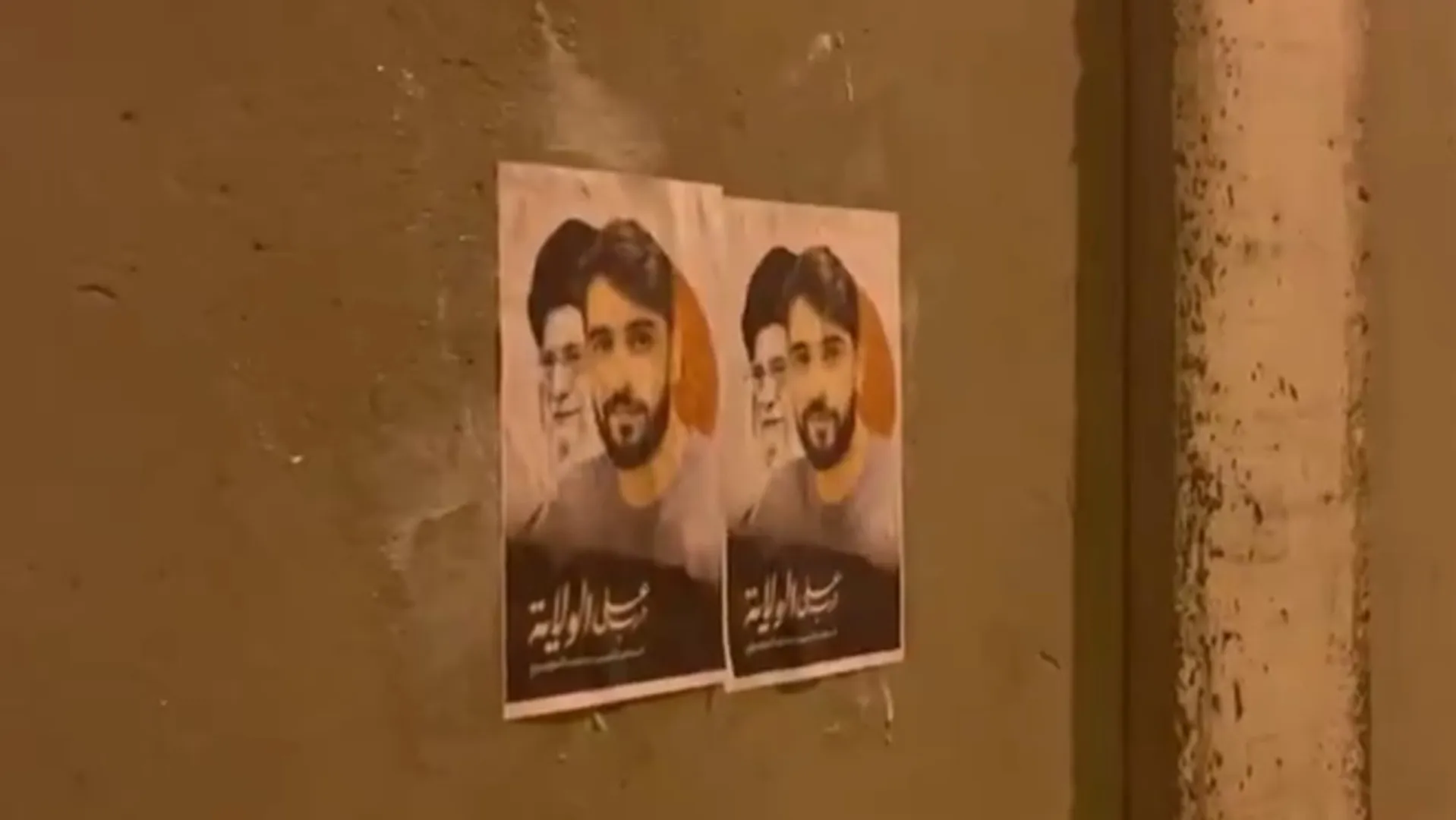
Rights groups in Bahrain say a 32-year-old man, arrested for opposing the war on Iran, was killed in police custody. Bahraini authorities dispute the account, but activists say the incident is part of a widening crackdown on opposition to the war.

Source link

Houthis warn ‘fingers on the trigger’ as US-Israel war on Iran continues | US-Israel war on Iran News

The Iran-aligned Yemeni group have the ability to target key shipping lanes around the Arabian Peninsula.

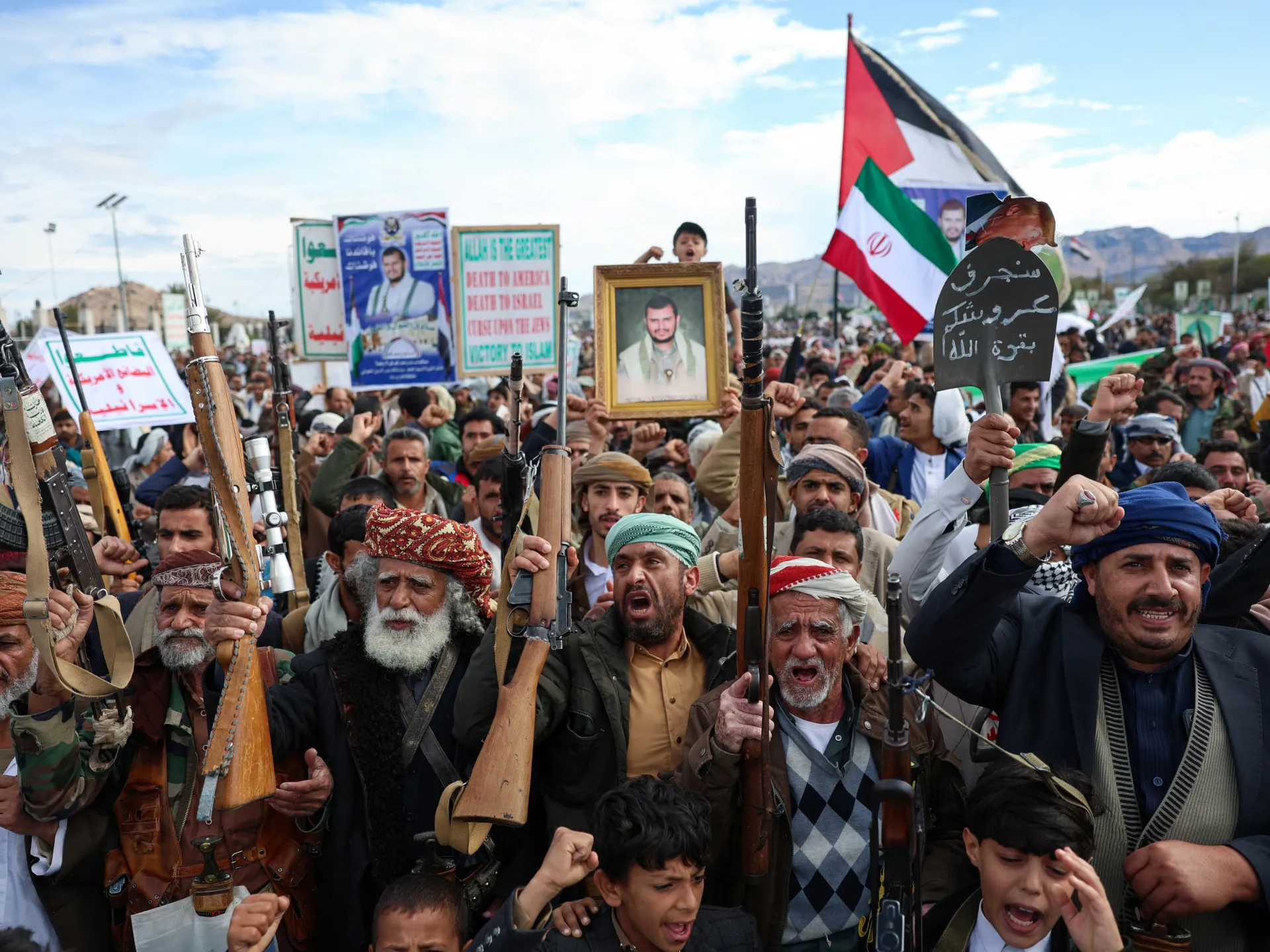
Yemen’s Iran-allied Houthis say they are prepared to intervene ⁠militarily if ⁠other countries join the United States and Israel in their war against Iran, or if the Red Sea is used to launch attacks on their ally.

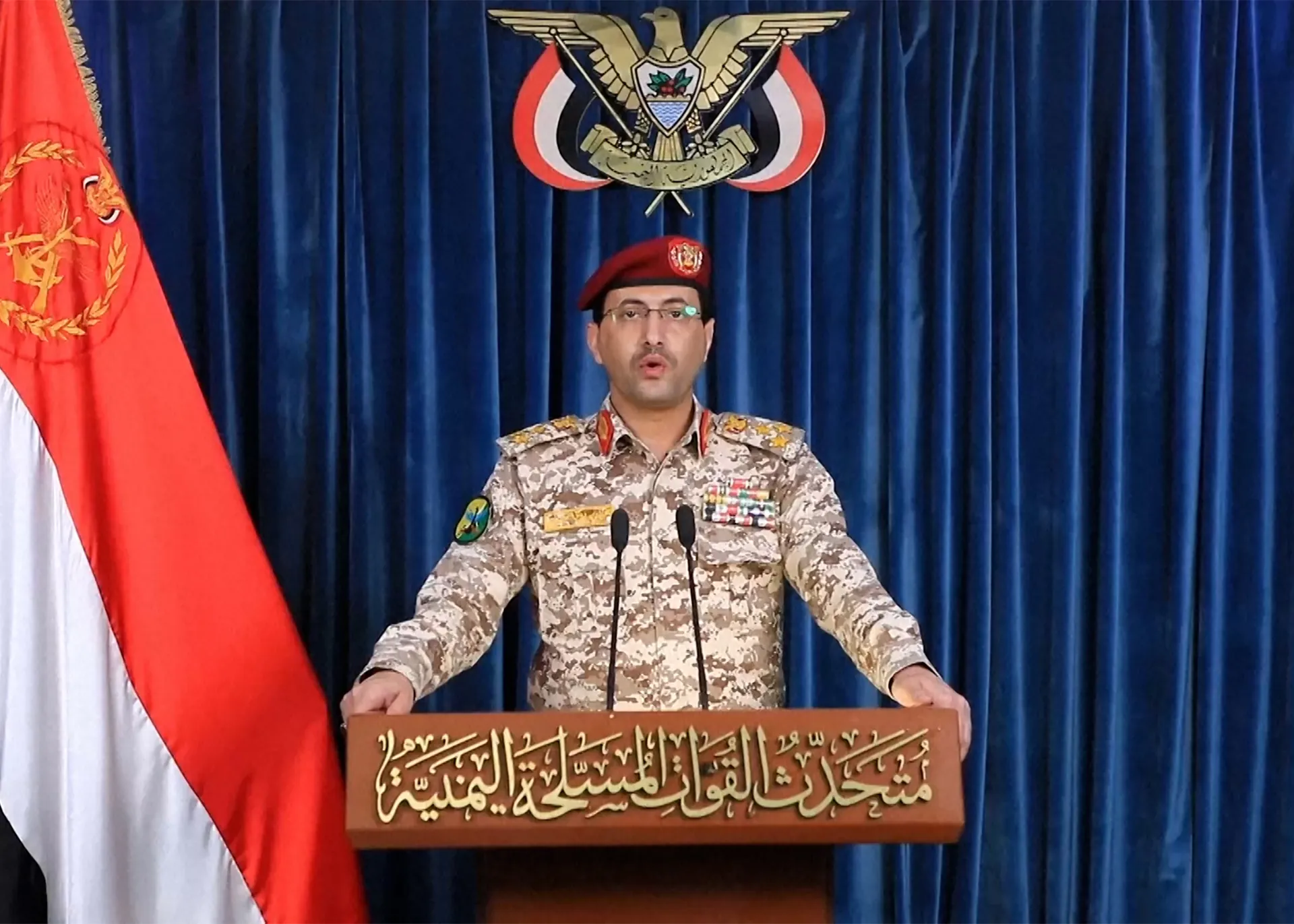
“We confirm that our fingers are on the trigger for direct military intervention” if any new alliances join Washington and Israel against Iran and its ⁠allies, or if the Red Sea is used for “hostile operations” against Iran, the group’s military spokesperson Yahya Saree said in a televised speech on Friday.

Recommended Stories

list of 3 itemsend of list

Saree also said the Houthis were prepared to act if what he called the escalation against Iran and the “axis of resistance” continued, ‌but did not say what form any intervention would take.

The warning raises the prospect of a broader regional war, particularly given the Houthis’ ability to strike targets far beyond Yemen and disrupt shipping lanes around the Arabian Peninsula.

The Yemeni rebel group has controlled the capital Sanaa and much of the country’s northwest since 2014.

After Israel launched its genocidal war on Gaza in October 2023, the Houthis targeted vessels in the Red Sea and carried out drone and missile attacks against Israel, saying that they are acting in solidarity with Palestinians under fire in Gaza.

Israel and the US have regularly struck the war-torn country, targeting civilian infrastructure, including residential buildings and the main international airport, while killing dozens at a time.

But in May, the Houthis and the US agreed to a truce, which included a Houthi agreement to stop attacks on US shipping in the Red Sea.

The group later stopped attacks on Israel and Israeli-linked shipping after the October Gaza ceasefire deal.

In his speech on Friday, Saree also said the group would not allow the Red Sea to be used to carry out “hostile operations” against Iran or any Muslim country.

He ⁠warned against any further tightening of what he described as “the blockade on Yemen”.

Saree called for an immediate halt to ⁠US and Israeli attacks on Iran, the Palestinian territory, Lebanon and Iraq.

Source link

Guns in the streets as US, Israel intensify month-long attacks across Iran | US-Israel war on Iran News

Tehran, Iran – Heavily armed state forces continue to control Iran’s streets, despite the United States and Israel launching more strikes and preparing for a potential ground attack, as the nearly one-month war proceeds with no clear end point on the horizon

Checkpoints, roadblocks and patrols, some manned by masked forces wielding assault rifles and machine guns mounted on pick-up trucks, have become a common sight in Tehran.

Recommended Stories

list of 4 itemsend of list

Many of the checkpoints, operated by the paramilitary Basij force of the Islamic Revolutionary Guard Corps (IRGC), police or plainclothes forces, have been targeted by deadly drone strikes over the past two weeks. They are, therefore, often on the move, or positioned on highways, in tunnels, and under bridges.

“I counted 40 cars moving through my neighbourhood late last night while honking, flashing their blinkers, waving flags and escorting a pick-up truck that had massive speakers fitted at the back and somebody shouting religious slogans from inside,” a resident of western Tehran told Al Jazeera on Friday, asking to remain anonymous for security reasons.

He said local residents have been invited from the loudspeakers on multiple occasions to join gatherings at the neighbourhood’s mosque to denounce the US and Israel and express support for the theocratic establishment that has been in power since Iran’s 1979 Islamic revolution.

Such state-backed gatherings are taking place in numerous mosques, as well as city squares and streets. But they come as the US and Israel urge Iranians to stay in their homes and wait for a “clear signal” to take to the streets and overthrow the Islamic Republic.

For their part, Iranian state television and other state-affiliated media outlets have encouraged supporters to maintain control on the streets, and have been increasingly releasing footage of armed pro-state people, including women, carrying guns.

Rahim Nadali, the IRGC’s deputy for cultural affairs in Tehran, claimed on state television on Wednesday night that people of all ages have expressed readiness to join intelligence and security patrols and checkpoints.

“We have brought the age limit [down] to over 12 years. So now, children aged 12 or 13 years are going to participate in this space,” he said.

‘Sinking feeling in your gut’

A series of new air raids landed across Iran on Friday afternoon, hitting a civilian nuclear site, as well as power posts and production lines for steel and other industrial factories, according to Iranian authorities.

Washington has also deployed thousands more soldiers to the region while signalling that an attempt to occupy one or more islands on Iran’s southern shores may be imminent.

Iranian officials have promised to retaliate strongly if that happens, including by striking critical infrastructure across the region.

Javad Mogoei, a prominent IRGC-linked media personality, released a video from the island of Qeshm earlier this week, suggesting that the IRGC could launch missiles and drones at Iranian islands if they were occupied by the US.

Despite that potential for even further escalation, and while numerous areas in Tehran have been struck by bombs dropped from Israeli and US warplanes, the city continues to function as people try to practise a semblance of a normal life.

Some people visit friends and loved ones indoors, while others go on daytime walks to hold a routine or work out at gyms that are open for limited hours.

“It looks like the war will last for weeks, if not months, so we can’t afford to get drowned in all the anxieties and fears that come with it,” said another resident of the capital, who had sought safety in one of Iran’s northern provinces earlier in the war, but returned last week.

“But you still can’t help but get that sinking feeling in your gut for a moment, not knowing whether you will be next when you hear the jets flying over,” he said.

Another resident, a woman who lives in the more affluent northern areas of Tehran where multiple senior officials have been assassinated in residential buildings since the start of the war, said she finds herself worried.

“My mind sometimes automatically goes back to the concern that some official might be living in an adjacent alley or a nearby home, and my family could become collateral,” she said, adding that she has only been outside her home three times over the past month to buy essentials or visit immediate family.

Iranian authorities have said nearly 2,000 people have been killed since February 28 by US and Israeli attacks, and a large number of residential units, hospitals, schools and civilian vehicles have been affected.

Economy under strain

More businesses are expected to reopen when the country’s official working week starts on Saturday, following the holidays for Nowruz, the Persian New Year.

But the internet has been completely blocked to the civilian population for nearly a month, the longest recorded shutdown in Iran. The internet shutdown has tormented the country’s more than 90 million population and further squeezed an economy plagued by an inflation rate of about 70 percent.

State media released footage of President Masoud Pezeshkian personally visiting a hypermarket in Tehran on Friday to make sure that all essential goods are available to the population, and ensure that vendors refrain from jacking up prices or engaging in hoarding.

The government also continues to hand out a small cash subsidy, which it began doing after nationwide protests initially driven by the country’s economic situation in January.

The United Nations and international human rights groups say many thousands of protesters were killed by state forces, mostly on the nights of January 8 and 9, amid another total internet shutdown, but the Iranian government blames “terrorists” and “rioters” backed by the US and Israel for the unrest.

Iranian authorities have warned that anyone who takes to the streets to protest the establishment during the ongoing war will be treated as an “enemy”. They have also announced multiple war and protest-related executions, many hundreds of arrests over security charges, and confiscation of assets belonging to Iranians found to be dissidents inside or outside the country.

Iran’s judiciary announced asset seizures on Thursday for Ali Sharifi Zarchi, a former professor of bioinformatics and artificial intelligence at Iran’s top institution of higher education, the Sharif University of Technology.

He was found by authorities to have “transformed into an anti-Iran element and supporter of the Zionist regime”, in reference to Israel, due to his tweets and interviews in recent months in opposition to the Islamic Republic while based outside the country.

“The modest belongings you confiscated were the result of 25 years of teaching adolescents and young people, and of striving for Iran. They are a small sacrifice for even a single smile from the families of the children and youths whom you unjustly massacred” during nationwide protests in January 2026, late 2022 and early 2023, and November 2019, Sharifi Zarchi said in a post on X in response.

Source link