The agency will increase robotic missions to the moon and launch a spacecraft called Space Reactor 1 Freedom.
Published On 24 Mar 202624 Mar 2026
NASA has unveiled a major overhaul of its moon and Mars strategy, scrapping plans for a lunar-orbit space station and instead committing $20bn over the next seven years to build a base on the moon’s surface, while also advancing plans to send a nuclear-powered spacecraft to Mars.
NASA Administrator Jared Isaacman outlined the changes on Tuesday during a meeting in Washington, DC, with partners, contractors and government officials involved in the Artemis programme, saying the agency will increase robotic missions to the moon and lay the groundwork for nuclear power on the lunar surface.
Isaacman, appointed by US President Donald Trump and who took charge in December, said the changes form part of a broader overhaul of NASA’s long-term Moon-to-Mars strategy.
The planned moon base is intended to support long-term human presence on the lunar surface, with robotic missions expected to help prepare the site, test technologies and begin building infrastructure before astronauts return later this decade.
The agency also disclosed plans to launch a spacecraft called Space Reactor 1 Freedom before the end of 2028, a mission designed to demonstrate nuclear electric propulsion in deep space on the way to Mars.
The spacecraft will deliver helicopters on the Red Planet, similar to the Ingenuity robotic test helicopter that flew with NASA’s Perseverance rover, a step the agency said would help move nuclear propulsion technology from laboratory testing to operational space missions.
The Ingenuity helicopter was the first aircraft to achieve powered, controlled flight on another planet. It travelled to Mars attached to NASA’s Perseverance rover and landed in February 2021.
Pausing the Lunar Gateway station
The Lunar Gateway station, a planned space station in lunar orbit being developed with contractors including Northrop Grumman and international partners, was meant to serve as a base where astronauts could live and work before heading to the Moon’s surface.
But NASA now plans to repurpose some Gateway components for use on the surface instead.
Repurposing Lunar Gateway to create a base on the moon’s surface leaves uncertain the future roles of Japan, Canada and the European Space Agency in the Artemis programme, three key NASA partners that had agreed to provide components for the orbital station.
“It should not really surprise anyone that we are pausing Gateway in its current form and focusing on infrastructure that supports sustained operations on the lunar surface,” Isaacman said.
The changes to NASA’s flagship Artemis programme are reshaping billions of dollars’ worth of contracts and come as the United States faces growing competition from China, which is aiming to land astronauts on the moon by 2030.
The Artemis programme, begun in 2017 during Trump’s first term as president, envisions regular lunar missions as NASA’s long-awaited follow-up to its first moon missions in the Apollo programme that ended in 1972.
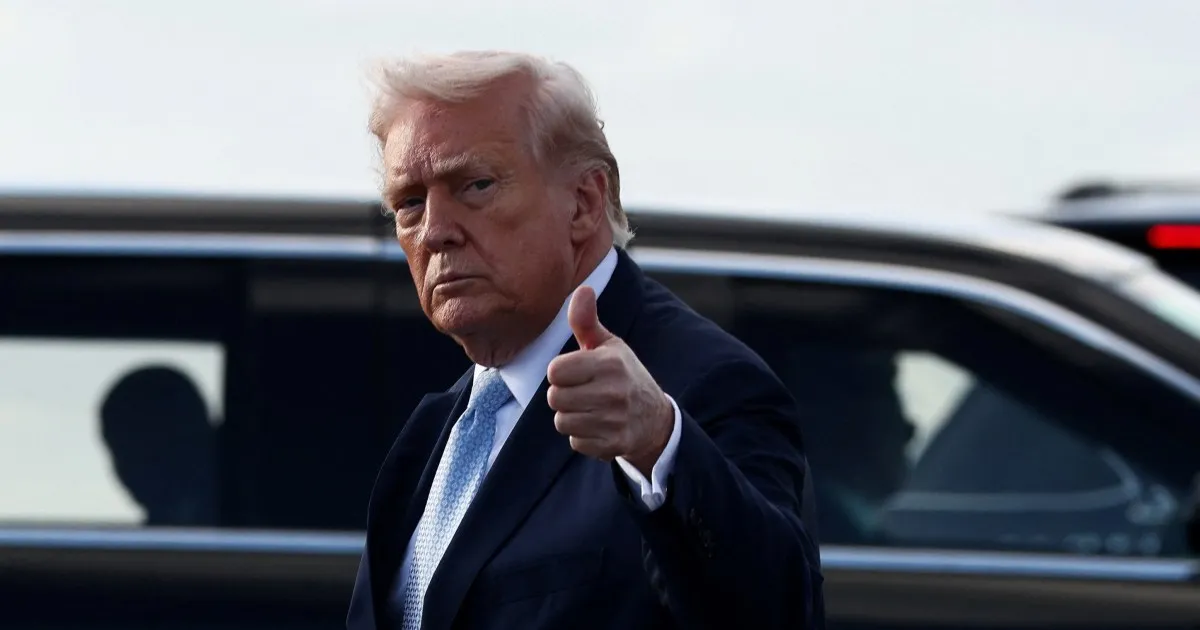
United States President Donald Trump is insistent that “productive” negotiations have taken place with Iran to end the war he launched with Israel’s Prime Minister Benjamin Netanyahu almost a month ago. The major problem with that narrative is that Iran’s top officials have repeatedly denied it.
Amid the fog of war and the propaganda being pushed by all sides, it is hard to know who to believe. But an analysis of what each side has to gain from any negotiations – and a potential end to the conflict – could bring more clarity.
Recommended Stories
list of 3 itemsend of list
Trump’s comments that there were “major points of agreement” after “very good” talks with an unnamed “top” Iranian figure came as stock markets opened in the US for the start of the trading week. The five-day deadline he gave for a positive response from Iran also happens to coincide with the end of the trading week.
Many have cynically noted that timing, especially as it comes after a two-week period in which oil prices have fluctuated in line with events in the Middle East, leading to a high of about $120 a barrel last week.
Trump’s talk of negotiations may also give time for more US troops to arrive in the Middle East, if Washington decides to conduct some form of ground invasion of Iranian territory.
Among those questioning Trump’s motives was the man believed by some to be the senior Iranian official Trump was referencing: the Iranian parliamentary speaker, Mohammad Bagher Ghalibaf.
“No negotiations have been held with the US, and fakenews is used to manipulate the financial and oil markets and escape the quagmire in which the US and Israel are trapped,” Ghalibaf wrote on social media.
The impact on stock markets and oil prices is not just relevant to the US and Trump, but also to Iran. However, for Tehran, the benefit comes in the damage the war is doing to the US and global economies.
The Iranian state wants the US to feel economic pain from the war, as a means of deterrence for any future Israeli or US attack on Iran.
Therefore, as much as it is in the US interest to play up talk of negotiations in order to calm the markets, it is also in Iran’s interest to downplay any talk to do the exact opposite, and not give the Trump administration any breathing space.
US benefits?
Consequently, both sides have their own narratives on negotiations, and public comments will do little to inform us as to whether those negotiations are really taking place, or in what form they may be.
That instead leads us into what each side has to gain from negotiations, and an actual end to the war at the current stage.
Trump appears to have underestimated the consequences of the conflict that he launched with Netanyahu on February 28, and the ability of the Iranian state to withstand the attacks against it without collapsing.
“They weren’t supposed to go after all these other countries in the Middle East … Nobody expected that,” he said last week, adding that even “the greatest experts” didn’t believe that.
Leaving aside that experts – including US intelligence officials – had repeatedly made those warnings, reality has now made Trump aware of the consequences he had previously ignored.
While some allies and supporters may continue to push him to plough on with the conflict, Trump has previously shown himself amenable to cutting deals to extricate himself from difficult situations, and it is not far-fetched to see the benefits of doing so in this instance.
The US president has already ordered his government to issue temporary sanctions waivers on some Iranian oil, in an effort to calm oil prices. This is the first time Iran has lifted sanctions on any Iranian oil since 2019, and it will not be lost on Iran that the waivers have come as a result of their policy to expand the conflict to the wider Gulf and the Strait of Hormuz, a key waterway through which a fifth of the world’s oil and liquified natural gas transits.
The war was already unpopular in the US – and now even more so, as consumers see the impact on petrol prices and potentially other areas of the economy, all in the run-up to congressional elections later this year, in which Trump’s Republicans are likely to do poorly.
Trump, therefore, has the options of extending this war – and suffering the economic and political cost, or ending it – and facing the criticism that he was unable to finish what he termed as a “short-term excursion”.
The Iranian perspective
But whatever Trump wants to do, the decision is not totally in his hands. Iran, attacked for the second time in less than a year, now appears to have less of an incentive to end the war without the establishment of an effective deterrent to another in the future.
Gone are the days of the telegraphed attacks on US assets and the slow climb up the escalation ladder. From the outset of the current war, it was clear that Iran had changed its tactics and was not as interested in restraint.
It is now arguably in the Iranian state’s benefit to drag out the conflict and inflict more suffering on the region, if it wants to ensure its survival.
There may also be a belief that interceptor stocks in Israel are running low, allowing Iran to strike targets more effectively. The thinking – particularly among the hardliners who now appear to be in the ascendancy in Iran – will be that now is not the time to stop, and allow those interceptor stocks to replenish.
And yet, Iran is suffering. More than 1,500 people have been killed across the country, according to the government. Infrastructure has been heavily damaged, and the power grid could be next. Relations with Gulf neighbours have nosedived, and, after repeated Iranian attacks, are unlikely to return to their previous levels after the conflict.
More moderate voices in Iran will look at that and think that things could easily get worse. They can argue that some form of deterrence has been achieved, and that the time is now ripe to talk. And if they can get some concessions – such as a promise of no future attacks, or greater authority in the Strait of Hormuz – they may decide that the time is right to make a deal.
The final qualification spots for the FIFA World Cup 2026 are about to be sealed via UEFA and intercontinental playoffs.
Published On 24 Mar 202624 Mar 2026
With the FIFA World Cup 2026 kicking off on June 11, the final spots that are still up for grabs are being fiercely fought by nations in qualifiers around the globe.
The last governing body to complete their continental playoff route is UEFA, with four European spots still up for grabs at the showpiece event.
Recommended Stories
list of 4 itemsend of list
Thereafter, FIFA’s Play-Off Tournament – an intercontinental competition – will provide the last-chance saloon for two more of the best non-qualified finishers from the other continental processes around the globe.
Al Jazeera Sport takes a look at UEFA’s final continental playoff path as that draws to a close.
Which UEFA teams are still in with a chance of World Cup qualification?
There will be more European teams than from any other continent at the World Cup: 16.
There are still 16 European teams, meanwhile, vying for the final four of the UEFA qualifying positions for the World Cup:
Italy, Northern Ireland, Wales, Bosnia and Herzegovina, Ukraine, Sweden, Poland, Albania, Slovakia, Kosovo, Turkiye, Romania, Denmark, North Macedonia, Czechia and the Republic of Ireland
Which UEFA teams have already qualified for the World Cup?
The 12 European teams that have already qualified for the World Cup are:
Germany, Switzerland, Scotland, France, Spain, Portugal, the Netherlands, Austria, Norway, Belgium, England, and Croatia
What is the pathway to the World Cup for the remaining UEFA teams?
The remaining teams are divided into four paths. Only the winner of each path will qualify:
Path A:
Italy vs Northern Ireland and Wales vs Bosnia and Herzegovina The winner of this path joins World Cup Group B (with Canada, Qatar, and Switzerland).
Path B:
Ukraine vs Sweden and Poland vs Albania The winner of this path joins World Cup Group F (with the Netherlands, Japan, and Tunisia).
Path C:
Slovakia vs Kosovo and Turkiye vs Romania The winner of this path joins World Cup Group D (with USA, Paraguay, and Australia).
Path D:
Denmark vs North Macedonia and Czechia vs Republic of Ireland The winner of this path joins World Cup Group A (with Mexico, South Africa, and South Korea).
When are the first set of UEFA playoffs for World Cup qualification?
The first round of pathway matches will be played by the 16 remaining teams on March 27, and are single-leg semifinals.
When are the second set of UEFA playoffs for World Cup qualification?
The second round of pathway matches will be played on March 31, with the four winners of each pathway final progressing to the FIFA World Cup 2026. These matches will also be played over a single leg.
How have the UEFA qualifiers reached this stage?
The four final UEFA qualifying places are being decided by the teams that were the 12 runners-up from the group qualifying stage and four based on performances in the UEFA Nations League.
How were the home teams decided for the UEFA playoffs?
The highest-ranked teams are hosting the semifinals. The hosts of the finals were determined by a draw.
Pressure on Italy as playoff hopefuls eye 2026 World Cup
There is no doubt that Italy are the biggest name not amongst those nations that have already qualified.
The four-time champions are seeking to avoid the ignominy of missing out on a World Cup for a third consecutive time.
The spotlight has been on the Italian domestic league, Serie A, for falling behind the other leagues on the continent with their clubs struggling to compete in European competitions.
There will be no greater evidence of Italian football’s fall from grace, however, than the failure to reach the finals.
“It’s undeniable that there’s nervousness,” coach Gennaro Gattuso said. “Only someone without blood running through their veins wouldn’t feel it.”
Will there be any more qualifiers for the World Cup after UEFA’s?
Yes. There is a different format for the intercontinental playoffs, which FIFA simply calls the Play-Off Tournament.
Two teams will advance from a field of six.
The lineup of teams was comprised of two nations from CONCACAF (Jamaica, Suriname) and one each from Asia (Iraq), Africa (DR Congo), South America (Bolivia) and Oceania (New Caledonia).
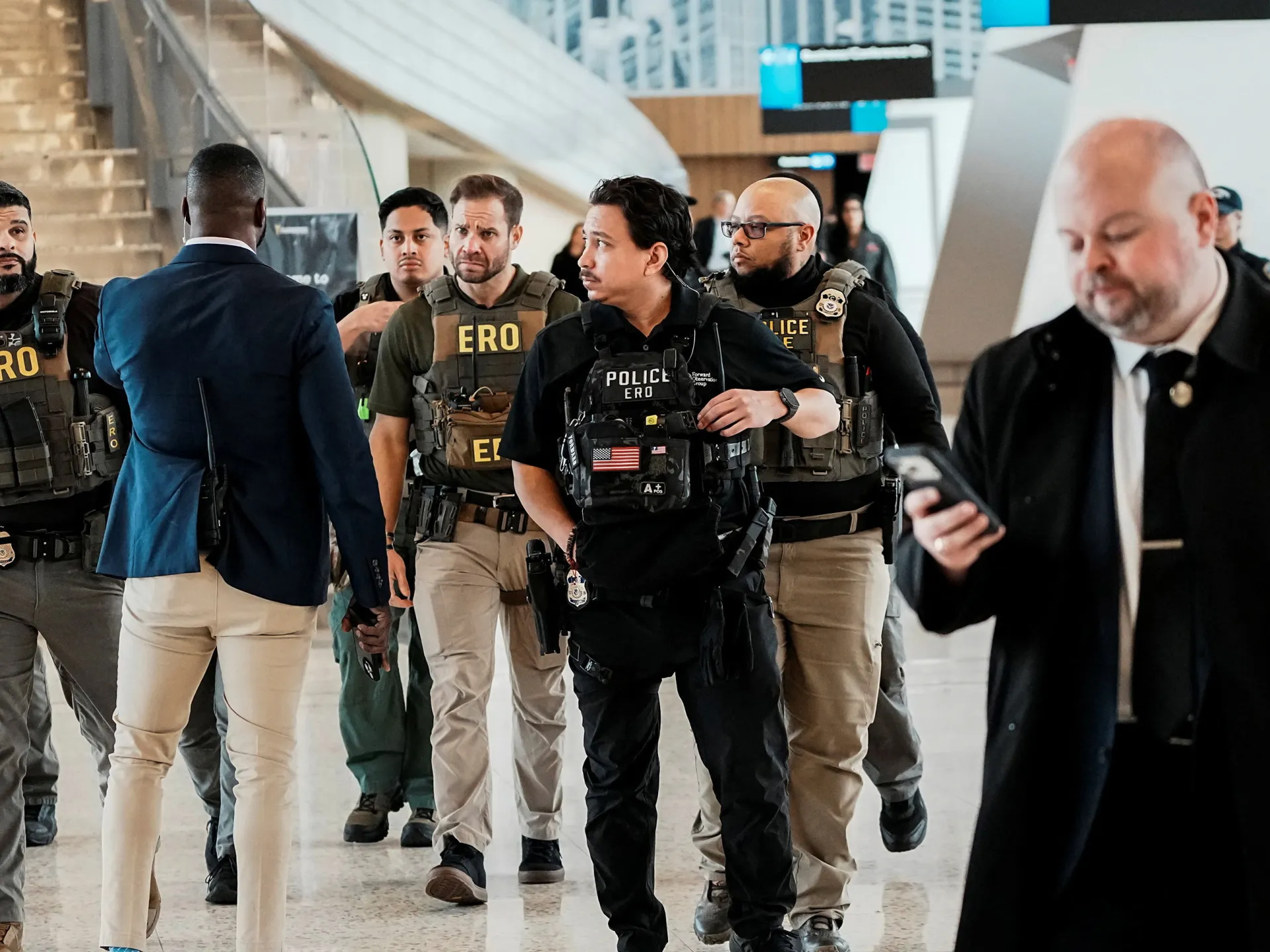
The Trump administration has deployed ICE agents to airports across the United States amid staffing issues and delays. It’s seen as a negotiating tactic in a funding dispute with Democrats, who describe it as a dangerous move.
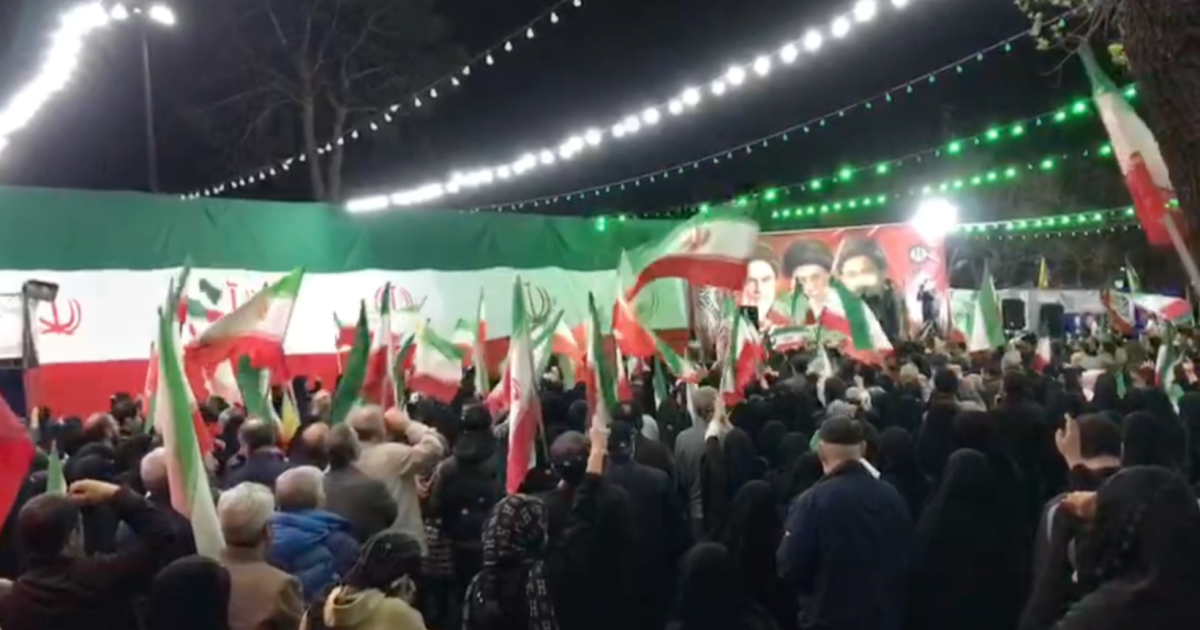
Videos show large demonstrations in Tehran, where crowds waved Iranian flags and chanted in support of the government. The rallies come as Iranian media highlights public backing amid the US-Israeli war on the country.
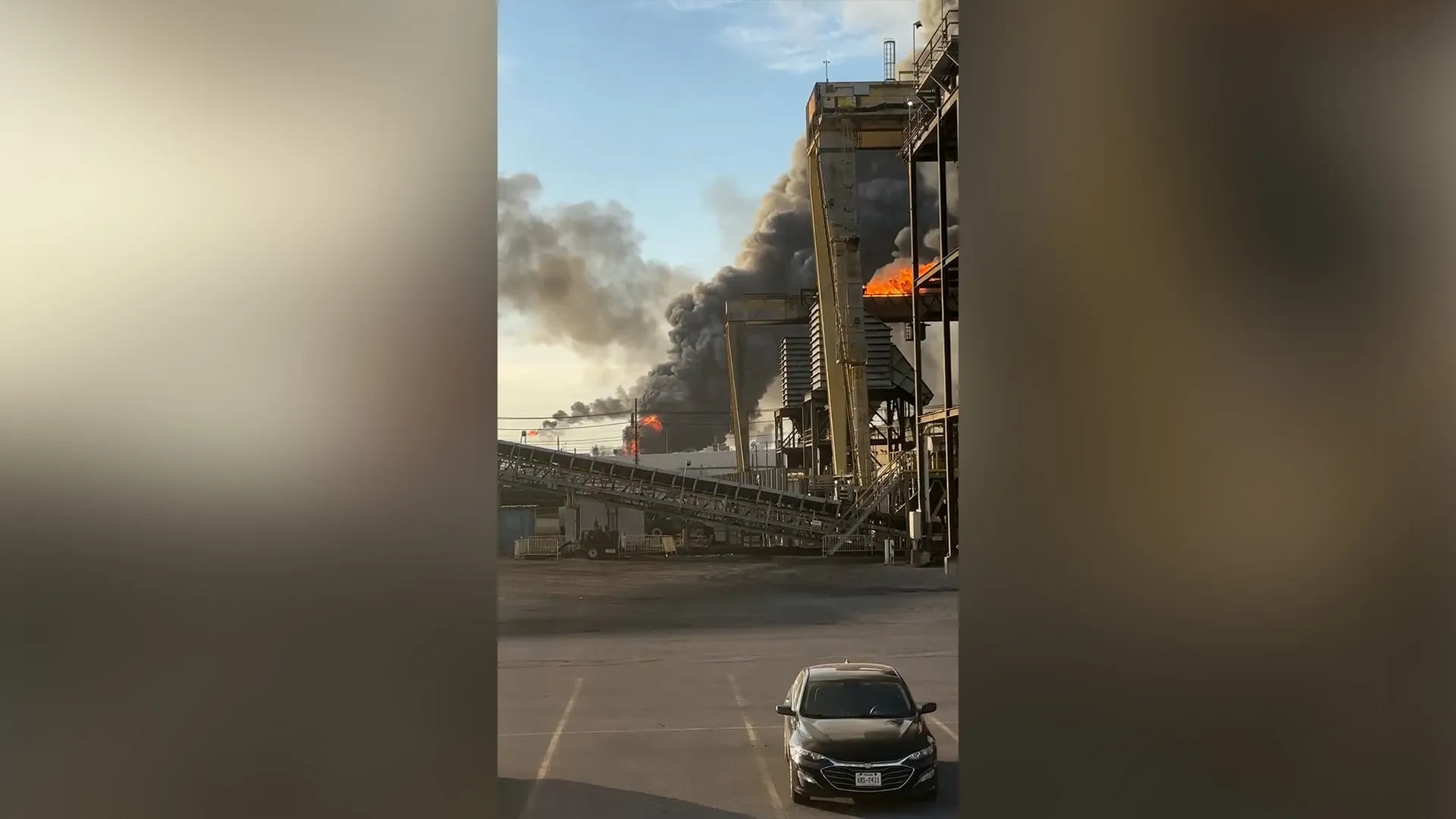
Videos show flames and a plume of thick smoke following an explosion at a Valero oil refinery in Port Arthur, Texas. Police have told local media they believe an industrial heater caused the blaze and there are no reports of injuries.
Since Donald Trump entered the political fray, critics have opined that if he ever faced a direct confrontation with Iran as United States president, the result would be chaos, endless war, and global instability. They have been proven wrong once again.
Today, the world is witnessing the swift decisive assertion of US power that is leading to a clear military victory over a terrorist state that has long threatened US as well as global peace and security.
For too long, US foreign policy was dominated by hesitation disguised as sophistication. US presidents, Democrat and Republican, advocated for “containment”, “strategic patience”, and “measured responses”, while adversaries grew bolder and more brazen. Iran expanded its influence across the Middle East, funded proxy militias, threatened global energy supplies, and openly challenged Washington’s credibility by attacking US interests, personnel and assets.
Trump rejected the conventional Washington approach even before assuming public office. He never believed that endless negotiations or carefully worded diplomatic statements would deter a regime that only yields to power. His critics called it recklessness. What it actually was, was clarity.
Instead of drifting into another conventional decade-long war, Trump chose a simple formula: hit hard, hit fast, and make it clear that the US will not capitulate to threats.
Today, most of the foreign policy establishment still defines “victory” the way it did in the 20th century: overthrow the regime, occupy the country, and rebuild its government in our liking. That post-World War II and Cold War model worked in Europe, Asia and Latin America. It did not in the Middle East. Iraq and Afghanistan proved that nation-building can be a futile endeavour.
Trump understands something Washington does not want to admit: the exercise of American power should not be to build democratic societies. It should be to eliminate threats.
From the outset, the Trump administration made clear that it was launching the attacks to control the outcome.
If Iran’s military leadership has been weakened, if its ability to threaten US forces and allies has been reduced, and if its nuclear ambitions have been significantly set back, then the mission has already succeeded, and it is time to end the war.
When Trump declares victory, he will not do it quietly. He will say it directly: America struck, America won, and America did so without engaging in another endless war.
Timing has always been one of Trump’s political talents. He understands momentum better than any of his predecessors of the past few decades did. If the military objectives have already been largely achieved, waiting months to say so would only weaken the message.
Declaring victory at the moment of peak strength sends a powerful signal — not just to Iran, but to the entire world. It ratifies that the US has red lines again. It makes clear that threats will be met with force, not speeches. And most importantly, it declares that the US is once again confident enough to act decisively.
Critics on the American left will predictably label any Trump victory “premature” and his methods “illegal” and reckless. But their genuine discomfort with his success has more to do with the use of American firepower to achieve objectives that they believe can or should only be had through diplomacy and multilateral rather than unilateral actions.
Trump’s “America First” foreign policy builds on US President Ronald Reagan’s peace through strength mantra by being willing to pre-emptively exercise American might to demonstrate American resolve and deter adversaries. It has proven effective before, and it is proven effective again today.
It destroys the critics’ primary thesis — that American strength must always be restrained, that military power should be used cautiously, and that multilateral strategies are a prerequisite.
Trump’s Iran victory speech will not be lofty and replete with platitudes. It will be direct, simple, and unabashedly America First.
He will explain that the US acted because it had to do so. He will declare that the imminent threat of a nuclear Iran has been eliminated. He will say American lives were saved. And he will end by stating that the world is safer because of this sacrifice by the American people.
Through Trump’s America First foreign policy, the US will act decisively and unilaterally. It will not apologise for defending its interests. And it will prove that acting boldly can change the course of events in a matter of weeks, not years.
After decades of vacillation, Trump’s message to the world is simple: America’s back and American interests come first.
America did not need another endless war. It needed a president willing to act.
And that is exactly what it got.
The views expressed in this article are the author’s own and do not necessarily reflect Al Jazeera’s editorial stance.
Iran’s paralysis of the Strait of Hormuz has led to major disruption in global oil and gas supply and many countries have begun tapping into their strategic oil reserves to evade an economic crisis.
Since the US-Israeli war on Iran began on February 28, Tehran, whose territorial waters extend into the Strait, has blocked the passage of vessels carrying 20 percent of the world’s oil and liquified natural gas (LNG) from the Gulf to the rest of the world. The strait is the only waterway to open ocean available for Gulf oil and gas producers.
Recommended Stories
list of 3 itemsend of list
Last week, the price of Brent crude topped $100 a barrel compared to the pre-war price of around $65.
The United States Trump administration has tried and failed to re-open the strait. First, it called on Western nations to send warships to help escort shipping through the strait – an option all have declined or failed to respond to. Then, on Sunday, Trump gave Iran 48 hours to reopen the strait or face US attacks on its power plants.
However, on Sunday, Iran said it would hit back at power plants in Israel and those in the region supplying electricity to US military assets. And, on Monday, Iran said it would completely shut the Strait of Hormuz if US attacks on its energy infrastructure continue.
Following Iranian attacks on energy infrastructure across the Gulf over the past three weeks, countries including Saudi Arabia, UAE, Iraq and Kuwait have also cut their oil output, raising further concerns about global oil and gas supply.
On Monday, Trump appeared to backtrack on his Hormuz ultimatum when he ordered all US strikes on power plants in Iran to be paused for five days and claimed the US was holding talks with Iran. Iran has denied this.
In the face of chaos, on March 11, the 32 member countries of the International Energy Agency (IEA) agreed to release 400 million barrels of oil from their strategic emergency reserves – the largest stock draw in the agency’s history. It is far higher than the 2022 release of 182 million barrels of oil by the group’s members after Russia invaded Ukraine.
What are strategic oil reserves and which countries hold them?
What is a strategic oil reserve?
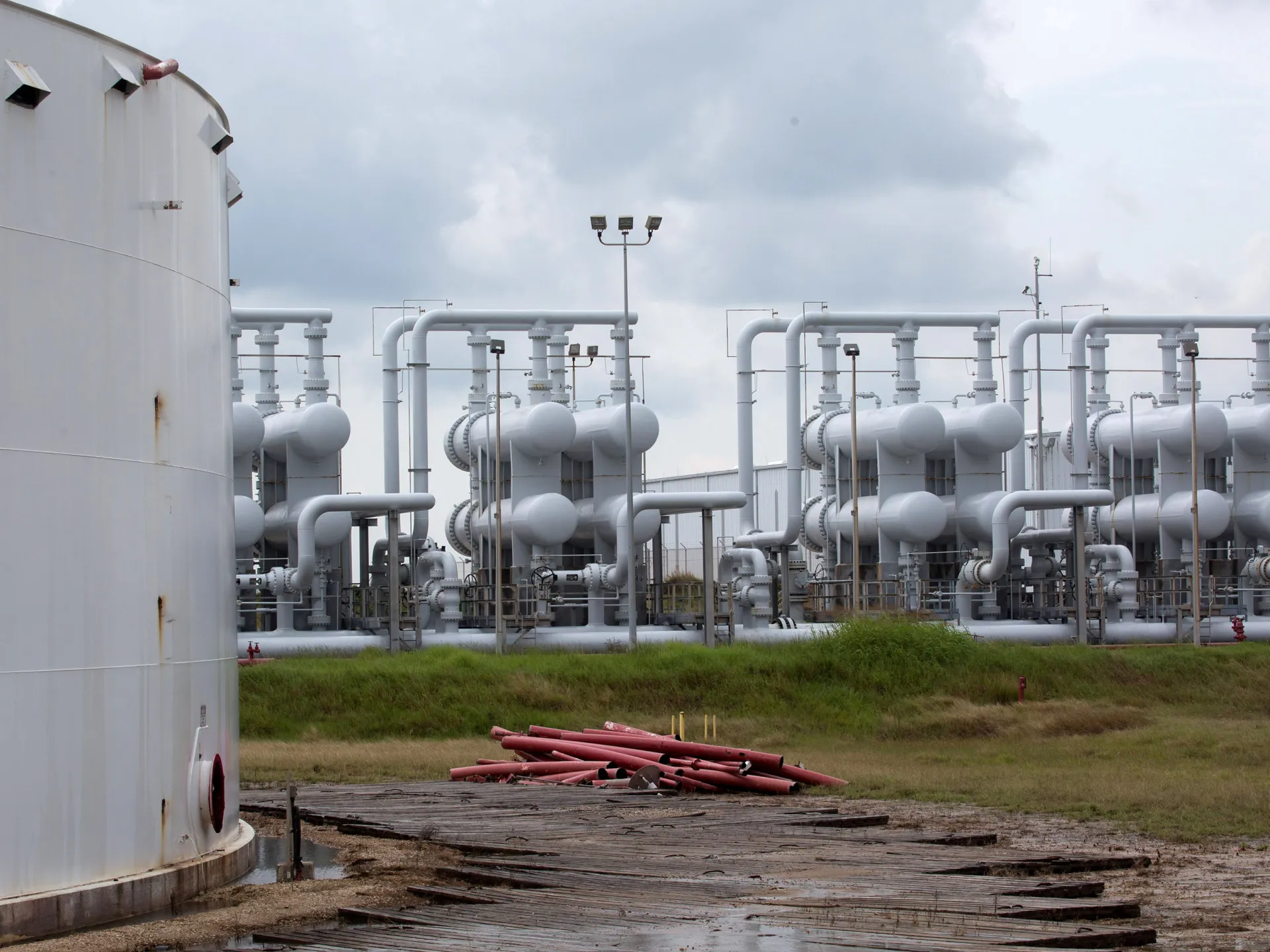
A strategic oil reserve or strategic petroleum reserve (SPR) is an emergency stockpile of crude oil which is held by the government of a country in government facilities.
This oil reserve can be drawn on in cases of emergencies like wars and economic crises. Governments generally buy the oil through agreements with private companies in order to keep their reserves filled.
According to the IEA, its members currently hold more than 1.2 billion barrels of these public emergency oil stocks with a further 600 million barrels of industry stocks held by private organisations but under government mandate to be available to supplement public needs.
Other reserves are also held by non IEA members like China.
Which countries have strategic oil reserves? Can they withstand the war in Iran?
China
Beijing is not an IEA member, but holds the world’s largest strategic oil reserve.
According to China’s Ministry of Ecology and Environment, Beijing “started a state strategic oil reserve base programme in 2004 as a way to offset oil supply risks and reduce the impact of fluctuating energy prices worldwide on China’s domestic market for refined oil”.
“The bases are designed to maintain strategic oil reserves of an equivalent to 30 days of imports, or about 10 million tonnes,” according to a 2007 report from Chinese state news agency Xinhua.
These strategic oil reserves are primarily located along China’s eastern and southern coastal regions such as Shandong, Zhejiang and Hainan.
China does not officially publish information about its crude inventories so it is not clear how much oil the country has in reserve. However, according to energy analytics firm Vortexa, in 2025, “China’s onshore crude inventories (excluding underground storage) continued to rise… reaching a record 1.13 billion barrels by year-end”.
According to data from Kpler, China bought more than 80 percent of Iran’s shipped oil in 2025. As the war in Iran escalates, therefore, Chinese companies such as refiner Sinopec have begun pushing for permission to use oil from the country’s reserves according to a Reuters report on Monday.
“We basically won’t buy Iranian oil, this is pretty clear,” Sinopec President Zhao Dong told a company results briefing in March, according to Reuters.
“We believe the government is closely monitoring crude oil and refined fuel inventories and market situations, and will advance policies at the appropriate time to support refinery productions,” he added.
US
Of the IEA members, the US holds one of the largest strategic oil reserves with 415 million barrels of oil. The stores are maintained by the US Department of Energy. It has confirmed that it will release 172 million barrels of oil from its SPR over this year as its contribution to coordinated efforts with the IEA.
On Friday, the Trump’s administration announced that it has already lent 45.2 million barrels of crude from the SPR to oil companies.
The US created its SPR in 1975 after an Arab oil embargo triggered a spike in gasoline prices which badly affected the US economy.
The reserves are located near big US refining or petrochemical centres, and as much as 4.4 million barrels of oil can be shipped globally per day.
The SPR currently covers roughly 200 days of net crude imports, according to a Reuters news agency calculation.
US presidents have tapped into the stockpile to calm oil markets during war or when hurricanes have hit oil infrastructure along the US Gulf of Mexico.
In March 2024, US President Joe Biden announced oil would be released from the reserve to ease pressure from oil price spikes following Russia’s invasion of Ukraine in February 2022 and amid subsequent sanctions imposed on Russian oil by the US and its allies.
Japan
An IEA member, Japan also has one of the world’s largest strategic oil reserves.
According to Japanese media Nikkei Asia, at the end of 2025, the country held about 470 million barrels of in emergency reserves which is enough to meet 254 days of domestic consumption. Out of this amount, 146 days worth of oil are government-owned, 101 days are owned by the private sector, and the remainder is jointly stored by oil-producing countries.
Japan set up its national oil reserve system in 1978 to prevent future economic disruptions following the global oil crisis in 1973. That oil crisis heightened Japan’s vulnerability and dependence on oil from abroad. The country remains one of the world’s largest oil importers, relying on fossil fuels from overseas for about 80 percent of its energy needs.
Japan’s reserves are primarily located in 10 coastal national stockholding bases with major storage sites in the Shibushi base in Kagoshima in southern Japan.
On March 16, Japan announced that it had begun releasing oil from its emergency reserves amid the global energy crisis sparked by the effective closure of the Strait of Hormuz.
Japanese Prime Minister Sanae Takaichi told journalists the country would unilaterally release 80 million barrels of oil from stockpiles amid supply concerns.
UK
As of February 26, according to the UK Department of Energy Security and Net Zero, the UK holds about 38 million barrels of crude oil and 30 million barrels of refined products, as strategic reserves. The reserves are thought to be able to last around 90 days.
The country established its reserves in 1974 following the oil crisis of the 1970s and also to meet its IEA obligations. Members of the organisation are required to maintain at least 90 days of net imports in reserve.
The UK’s strategic reserves are largely held by private oil companies, but are regulated by the government. Milford Haven in South Wales and Humber in northeast England are key locations of reserves.
The country is among the 32 IEA nations releasing oil from its reserve to address the oil crisis amid the war in Iran. The UK government will be contributing 13.5 million barrels as a part of the release.
EU
EU member nations including Germany, France, Spain and Italy, all IEA members, also hold strategic oil reserves.
Germany has 110 million barrels of crude oil and 67 million barrels of finished petroleum products which are held by the government and can be released in a matter of days, according to Germany’s economy ministry.
France reported about 120 million barrels’ worth of crude and finished products in reserve at the end of 2024, the most recent data publicly available. About 97 million barrels of that is held by SAGESS, a government-mandated entity, with a breakdown of about 30 percent crude oil, 50 percent gasoil, 9 percent gasoline, 7.8 percent jet fuel and some heating oil. Another 39 million barrels are held by the country’s oil operators.
On March 16, Spain approved the release of around 11.5 million barrels of oil reserves over 90 days to counter supply shortages caused by the effective closure of the Strait of Hormuz, Energy Minister Sara Aagesen told reporters. This is the country’s contribution to the IEA release. The country has around 150 million barrels of crude oil reserves in total.
Italy, by law, was holding about 76 million barrels of reserves, representing 90 days of Italy’s average net oil imports, in 2024.
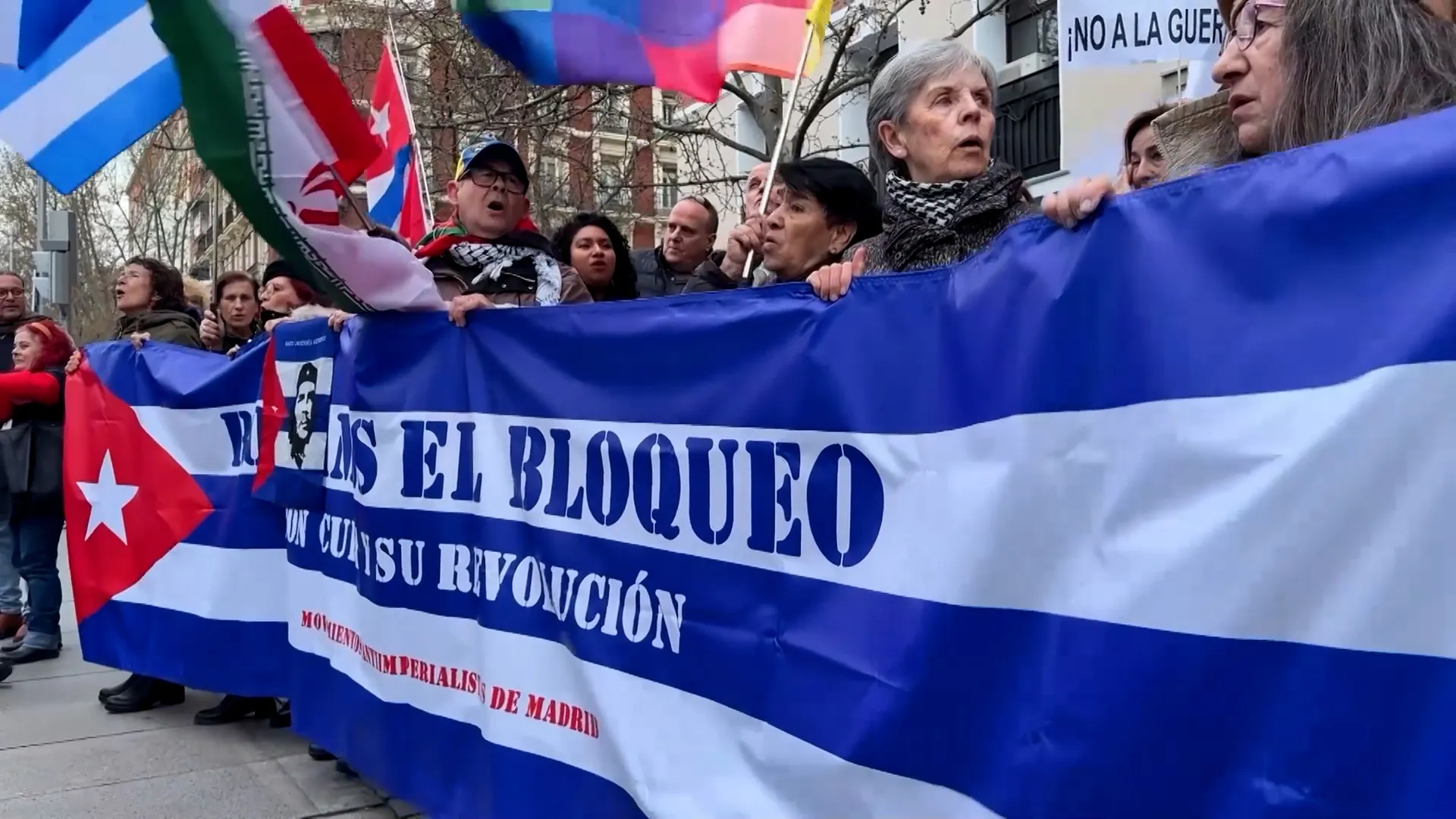
Protesters gathered outside the US embassy in Madrid as sanctions pushed Cuba into an electricity blackout. They called for an end to US intervention in Latin America and the Middle East.
A new UN report confirms the past decade was the hottest on record, warning that rising temperatures driven by fossil fuels demand urgent climate action.
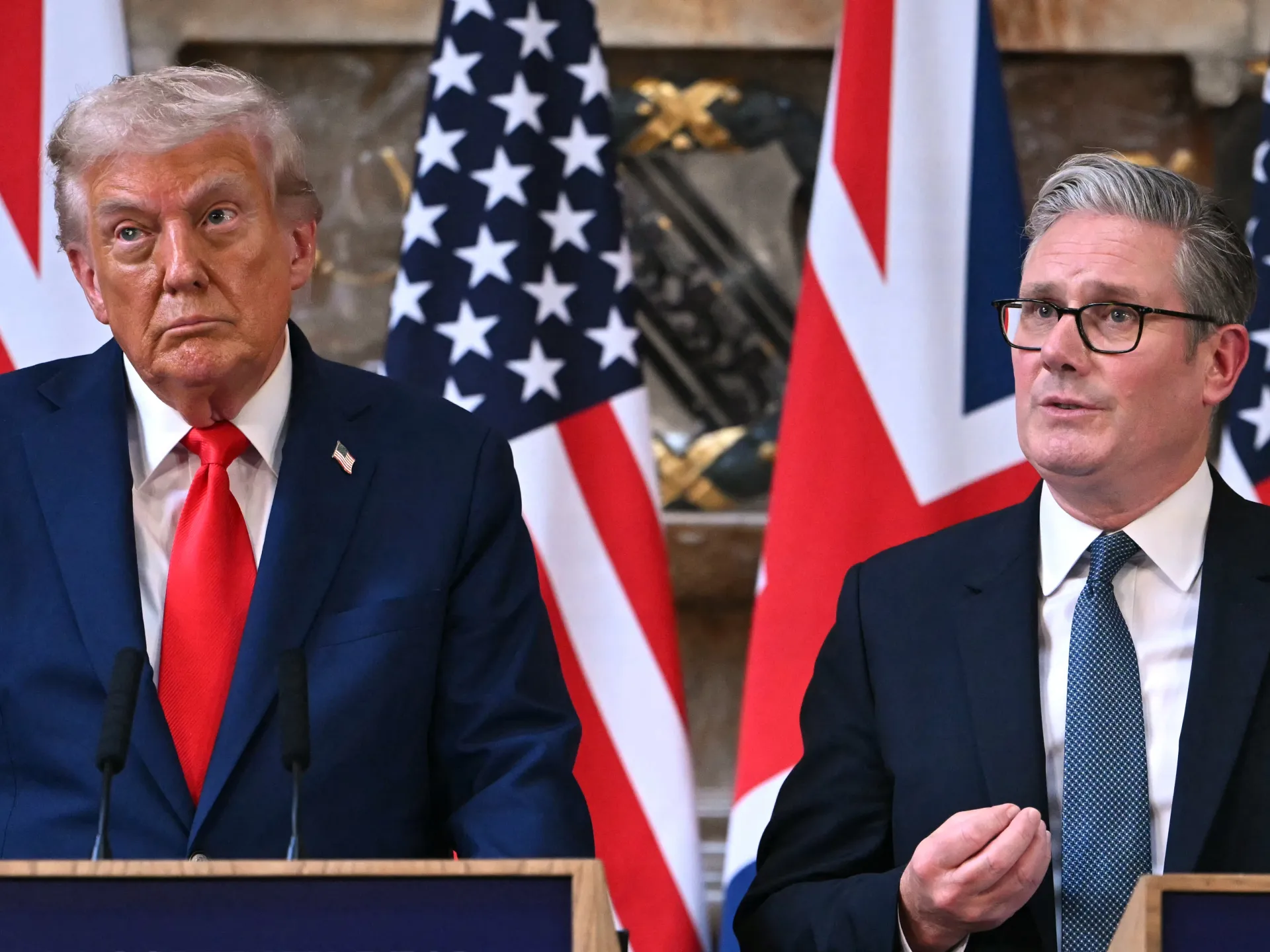
United States President Donald Trump has shared a Truth Social video of a TV comedy skit showing a panicked United Kingdom Prime Minister Keir Starmer trying to avoid his call, on the same evening the two leaders spoke about the US-Israel war on Iran.
The skit, aired on the premiere of the new British version of Saturday Night Live (SNL), adapted from the long-running US show, shows Starmer, played by George Fouracres, panicking inside 10 Downing Street at the prospect of a call with Trump.
Recommended Stories
list of 4 itemsend of list
Starmer turns to a fake David Lammy, his deputy prime minister, and says, “What if Donald shouts at me?”
When Trump picks up the phone, Starmer immediately hangs up, asking why it is so difficult to talk to “that scary, scary, wonderful president”.
“Sir, just be honest and tell him we can’t send any more ships to the Strait of Hormuz,” Lammy says, the vital shipping lane effectively blocked by Iran since the US and Israel launched strikes on Iran on February 28.
“I just want to keep him happy, Lammy. You don’t understand him like I do – I can change him,” Starmer says.
Trump did not post any comment alongside the video.
Trump has lashed out at his NATO allies, including Starmer, for not joining the US efforts to break the de facto blockade of the Strait of Hormuz, through which 20 percent of global oil passes. A week ago, he asked the UK to be more supportive of the US war efforts because Washington spends “a lot of money” on NATO.
The US president last week called the NATO countries “cowards” for their refusal to join the war. This, after European leaders rejected Trump’s demands to help ensure freedom of navigation in the Strait of Hormuz.
“Now that fight is militarily WON, with very little danger for them, they complain about the high oil prices they are forced to pay, but don’t want to help open the Strait of Hormuz, a simple military maneuver that is the single reason for the high oil prices. So easy for them to do, with so little risk,” he wrote on the Truth Social platform.
Separately, on Sunday evening, Starmer spoke with Trump to discuss escalating tensions in the Middle East, his office said in a statement. It was not clear if the call took place before or after Trump posted the SNL skit on Truth Social.
In a readout of the call, the Prime Minister’s Office said the two leaders focused on “the need to reopen the Strait of Hormuz to resume global shipping” amid growing concerns over energy security and regional stability.
“They agreed that reopening the Strait of Hormuz was essential to ensure stability in the global energy market,” the statement said.
The leaders also agreed to remain in close contact as the situation develops and “to speak again soon”, it added.
On Monday, Starmer said there had been no assessment that mainland Britain was being targeted by Iran.
Starmer asserted that any attempt to reopen the Strait of Hormuz needed careful consideration and a viable plan, and that his number one priority was to protect British interests and de-escalate.
‘Not Winston Churchill’
The US leader has repeatedly railed against Starmer since the start of the war, accusing him of not doing enough to support the US.
“This is not Winston Churchill that we’re dealing with,” Trump said earlier this month, after Starmer initially declined to let US warplanes use UK bases to strike Iran.
“I’m disappointed with Keir,” Trump has also said, slamming Starmer’s “big mistake”. “I like him, I think he’s a nice man, but I’m disappointed.”
On Friday, the UK government gave authorisation for the US to use its military bases to carry out strikes on Iranian missile sites that were attacking ships in the Strait of Hormuz.
Starmer initially rejected a US request to use British bases for the strikes on Iran, saying he needed to be satisfied that any military action was legal.
But the prime minister modified his stance after Iran conducted strikes on British allies across the Middle East, saying the US could use RAF Fairford and Diego Garcia, a joint US-UK base in the Indian Ocean.
The Argentinian star forward records his 901st career goal as Inter Miami beat New York City FC at Yankee Stadium.
Published On 23 Mar 202623 Mar 2026
Micael dos Santos Silva’s go-ahead goal in the 74th minute lifted Inter Miami to a 3-2 comeback victory over hosts New York City FC on Sunday.
Dos Santos headed home a beautiful ball from fellow defender Noah Allen, which found its way past NYCFC keeper Matt Freese and gave Inter Miami (3-1-1, 10 points) their first Major League Soccer (MLS) win since March 7.
Recommended Stories
list of 3 itemsend of list
Lionel Messi scored his 901st career goal, and Gonzalo Lujan scored his first career MLS goal for Inter Miami, which bounced back after being eliminated from the CONCACAF Champions Cup on Wednesday following a pair of draws against Nashville, with that side advancing on the away goals tiebreaker.
NYCFC (3-1-1, 10 points) suffered their first defeat of the season and snapped a three-game winning streak despite goals from Nicolas Fernandez Mercau and Agustin Ojeda.
Inter Miami’s Micael dos Santos Silva (#16) scored the match-winner in the 74th minute [Seth Wenig/AP Photo]
Maxi Moralez delivered a stellar assist to Ojeda in the 59th minute to put NYCFC briefly ahead 2-1.
Moralez sent a great ball through traffic down the middle of the field to Ojeda, who was uncontested, and flipped the ball past Inter Miami goalkeeper Dayne St Clair.
But two minutes later, Inter Miami earned a free kick, and Messi delivered. His shot deflected off NYCFC’s Hannes Wolf and redirected past Freese (five saves) to tie the game at 2.
Messi nearly had a multi-goal match as he came close on several chances. He hit the post in the 31st minute and the crossbar in the 42nd minute. He also had a late opportunity to pad Miami’s lead but missed wide.
German Berterame appeared to extend Miami’s lead in the 79th minute, but what would have been his first goal with his new club was nullified after he was ruled offside.
After Lujan scored in the fourth minute, NYCFC levelled the match with a fantastic free kick goal by Fernandez Mercau, who lifted a high shot that bounced just under the crossbar and in, freezing St Clair in place in the 17th minute.
NYCFC used Moralez as a decoy, having him approach as if he would take the shot, and then Fernandez Mercau ran up and booted it.
St Clair (three saves) made a huge save late in stoppage time to preserve Inter Miami’s win.
LaGuardia shut down after Air Canada Express plane hits ground vehicle upon landing from Montreal.
Published On 23 Mar 202623 Mar 2026
An Air Canada Express regional jet coming from Montreal struck a ground vehicle on Sunday evening while landing at New York’s LaGuardia Airport, leading to the airport’s closure.
The New York Fire Department in a statement said on Sunday that it was responding to a reported incident involving a plane and a vehicle on the runway at LaGuardia airport, but did not provide further details.
Recommended Stories
list of 3 itemsend of list
The CRJ-900 plane struck the vehicle at a speed of about 24 miles per hour (39 kph), flight tracking website Flightradar24 said. The jet was operated by Jazz Aviation, Air Canada’s regional partner.
The Federal Aviation Administration issued a ground stop for all departures to LaGuardia due to the aircraft emergency, with the airport closure in effect until 0530GMT. The probability of an extension was listed as high.
The FAA notice showed that the reason for the halt at the airport was an emergency and there was a high probability of an extension, without specifying any details.
Unverified footage on social media showed damage to the nose of the plane, as it tilted upward. Reuters could not immediately verify the footage.
LaGuardia’s website showed arriving planes had been diverted to other airports or returned to their point of origin.
In a separate notice to airmen, the FAA said that the airport could be shut until 1800 GMT.
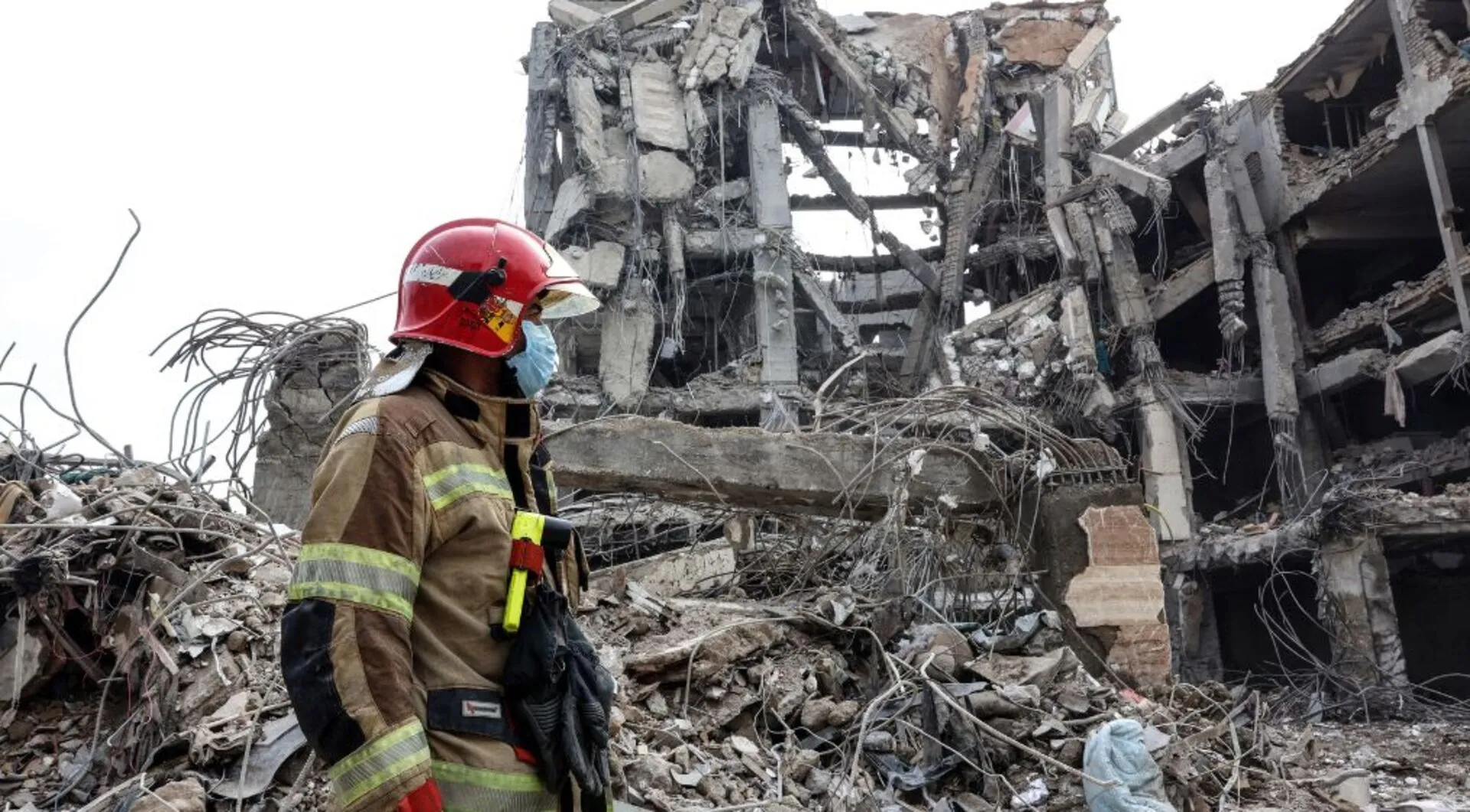
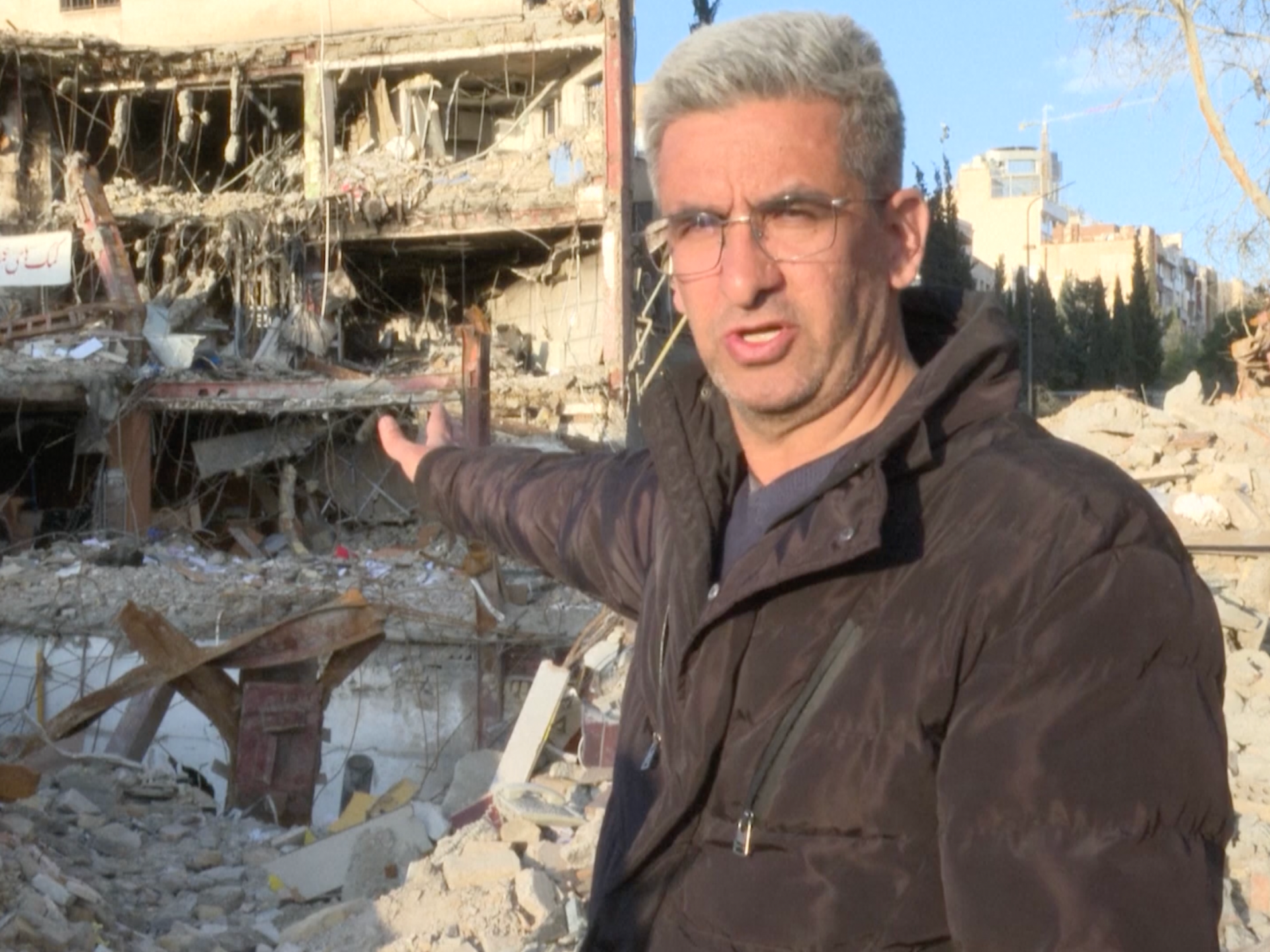
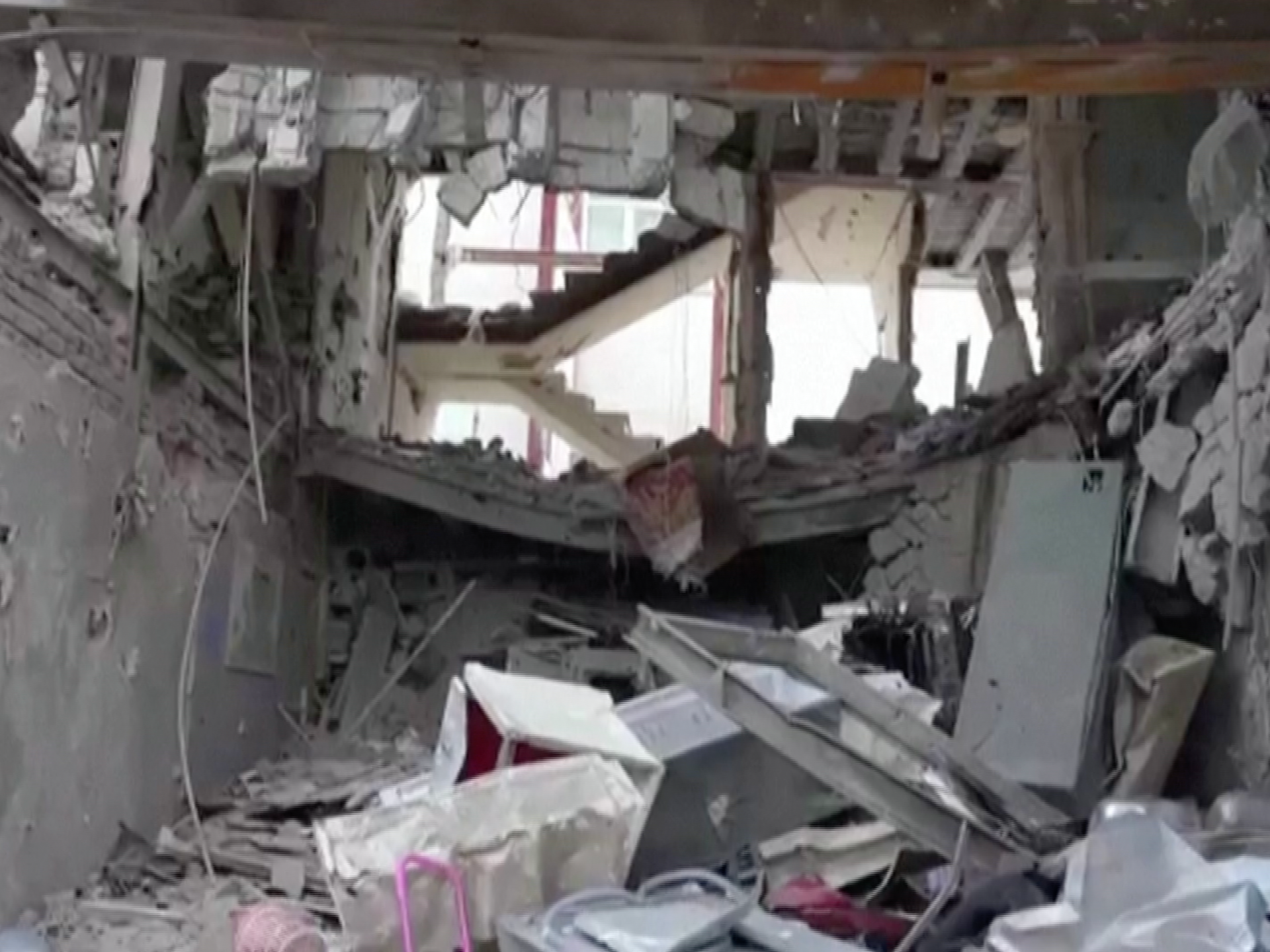
Five days after a strike destroyed a building in Tehran, Mahdi Mirzahosseini’s brothers are still searching through rubble for signs of their youngest sibling. They are holding onto hope of finding their brother who had gone to work insisting on serving customers for the Persian New Year.
Shutdown standoff forces US President Trump’s hand as airport queues spiral and security staff go unpaid.
Published On 22 Mar 202622 Mar 2026
Immigration enforcement agents will be deployed across major United States airports from Monday, President Donald Trump has announced, in an extraordinary move to ease a security crisis triggered by a prolonged political standoff in Washington.
Trump confirmed the plan in a social media post on Sunday, with his senior border official Tom Homan named to lead the effort.
Recommended Stories
list of 2 itemsend of list
This came after weeks of mounting chaos at airport security checkpoints and a day after Trump threatened the move unless Democrats backed down on a funding battle.
The crisis stems from Congress’s failure to renew funding for the Department of Homeland Security (DHS), the federal agency that oversees airport security.
Since February 14, tens of thousands of workers, including Transportation Security Administration (TSA) screeners responsible for passenger checks, have continued working without receiving paycheques.
More than 366 have since resigned, according to DHS, and unscheduled absences have more than doubled, leaving major airports struggling to cope.
“This loss significantly decreases TSA’s ability to meet passenger demand and leaves critical gaps in staffing, as each new recruit requires 4-6 MONTHS of training,” it said last week in a post on X.
Queues at Atlanta’s Hartsfield-Jackson and New York’s JFK airports stretched for hours at the weekend, with New Orleans advising passengers to arrive at least three hours before departure.
Union officials say some officers have taken on second jobs, while several airports have begun collecting food and gift cards for staff who can no longer make ends meet.
Homan said agents from US Immigration and Customs Enforcement (ICE), trained in law enforcement and immigration, not airport security, would take on supporting roles, such as monitoring exit lanes and checking identification, freeing TSA officers to focus on screening lines.
“I don’t see an ICE agent looking at an X-ray machine,” he acknowledged on Sunday, adding that a detailed plan for which airports and how many agents would be finalised by the end of the day.
Transportation Secretary Sean Duffy warned the situation was “going to get much worse” before it improves.
Democrats have refused to pass a full DHS funding bill unless the administration agrees to reforms of ICE. Their demands hardened after federal agents fatally shot two US citizens, Alex Pretti and Renee Good, during immigration raids in Minneapolis in January.
Democrat Senator Dick Durbin said his party had attempted nine times to pass emergency funding for DHS entities including the TSA, the US Federal Emergency Management Agency (FEMA), and the Coast Guard. Republicans have blocked each attempt, insisting on a single comprehensive funding package for the entire department.
House Democratic leader Hakeem Jeffries warned bluntly that deploying “untrained ICE agents” at airports risked repeating the conduct that had already cost lives.
In an unusual intervention, billionaire and Trump ally Elon Musk said he would “offer to pay” the salaries of TSA workers.
Videos show the aftermath of strikes in Iran, as search teams recover bodies from rubble. Residents are using torches to look for loved ones, as air raids appear to have knocked out power in some parts. Iran’s health ministry says more than 1,500 people have been killed during the US and Israel’s war.
Key indexes in Japan, South Korea and Hong Kong tumble as Iran threatens attacks on energy infrastructure across region.
Published On 23 Mar 202623 Mar 2026
Stock markets in the Asia Pacific have fallen sharply amid US President Donald Trump’s ultimatum warning Iran to reopen the Strait of Hormuz or face the annihilation of its energy infrastructure.
Japan’s benchmark Nikkei 225 and South Korea’s KOSPI plunged 4 percent and 4.5 percent, respectively, in early trading on Monday.
Recommended Stories
list of 4 itemsend of list
In Hong Kong, the Hang Seng Index tumbled about 2 percent.
Australia’s ASX 200 dropped about 1.6 percent, while the NZX 50 in New Zealand dipped about 1.3 percent.
Futures on Wall Street, which are traded outside of regular market hours, saw moderate losses, with those tied to the S&P500 and the Nasdaq Composite down about 0.5 percent.
Oil prices remained volatile amid fears of further disruption to global energy supplies.
Futures for Brent crude, the international benchmark, rose more than 1.5 percent to top $114 a barrel, before easing to about $112 as of 02:00 GMT.
Trump on Saturday threatened to “obliterate” Iran’s power plants within 48 hours if Tehran does not end its effective blockade of the strait, through which about one-fifth of global oil and natural gas exports usually transit.
Tehran has pledged to completely close the waterway, which is still being transited by a small number of Chinese, Indian and Pakistani-flagged vessels, and launch retaliatory attacks on energy and water infrastructure across the region if Trump follows through on his threat.
Based on the timing of Trump’s warning on Truth Social, the deadline for his ultimatum is set to expire at 23:44 GMT on Monday.
A woman stands beside a sign for prices at a gasoline station in Quezon City, Philippines, on March 19, 2026 [Aaron Favila/AP]
Trump’s threat has added to fears of a cascading global energy crisis as the US and Israel’s war on Iran approaches the one-month mark with no clear end in sight.
Oil prices have surged more than 50 percent since the start of the war, which began with US-Israeli strikes on February 28.
Analysts have warned that energy prices are likely to rise significantly further if the strait remains effectively closed, with some observers predicting oil to hit $150 or even $200 a barrel.
Trump on Sunday held a phone call with UK Prime Minister Keir Starmer to discuss the situation in the Middle East, including the effective closure of the strait.
The two leaders agreed that unblocking the strait is “essential to ensure stability in the global energy market”, Starmer’s office said in a statement.
Trump has provided conflicting messages about the goals of the war and how long it might last.
Hours before issuing his ultimatum on Saturday, Trump said that his administration was “very close to meeting our objectives as we consider winding down” military operations against Iran.
Israeli military spokesperson Lieutenant Colonel Nadav Shoshani last week told reporters that officials had detailed plans for at least three more weeks of war.
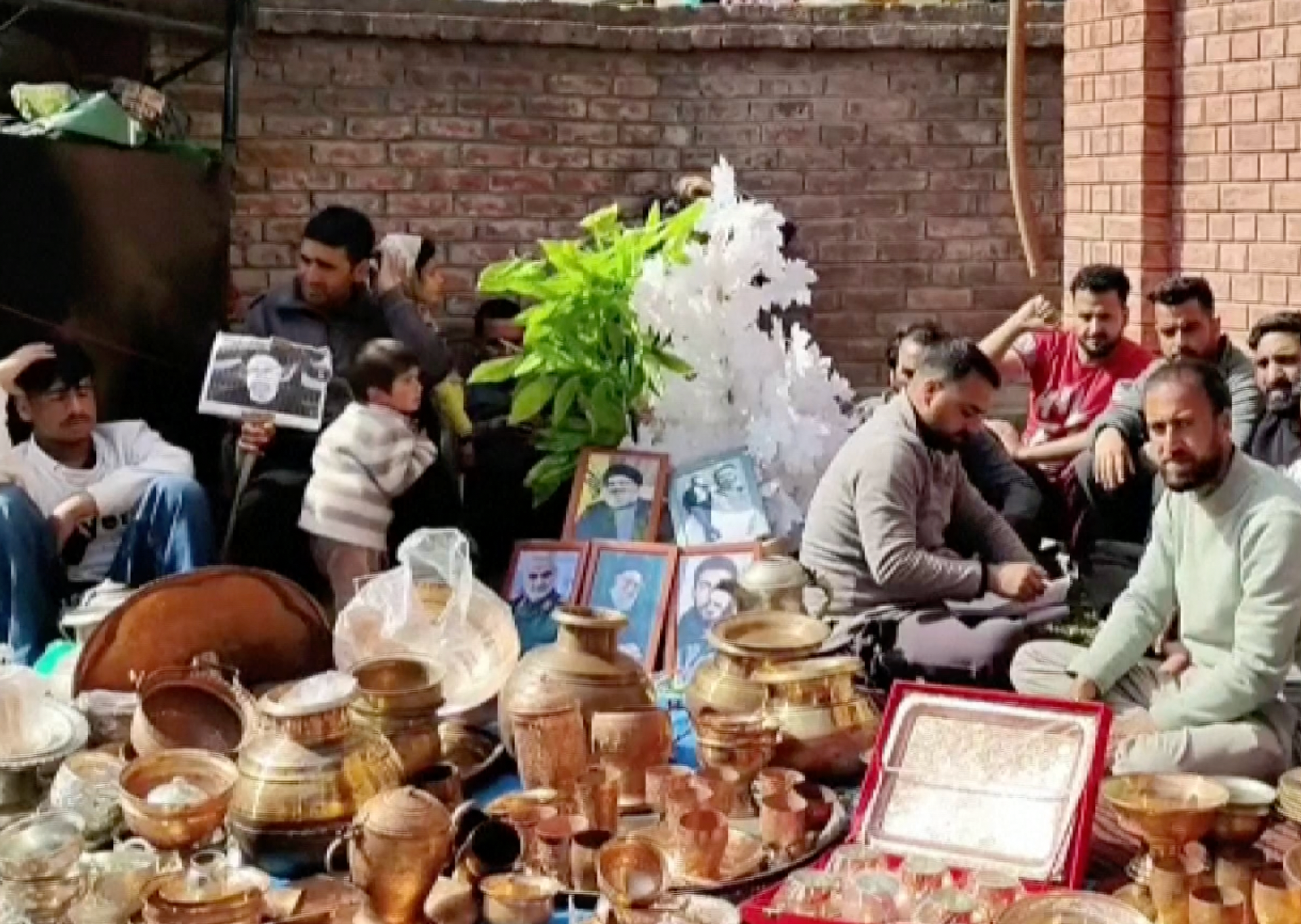
Residents in Indian-administered Kashmir are donating their gold possessions and cash to support Iranians impacted by the US-Israeli war. Iran’s embassy in India has acknowledged the gesture, saying their kindness ‘will never be forgotten’.
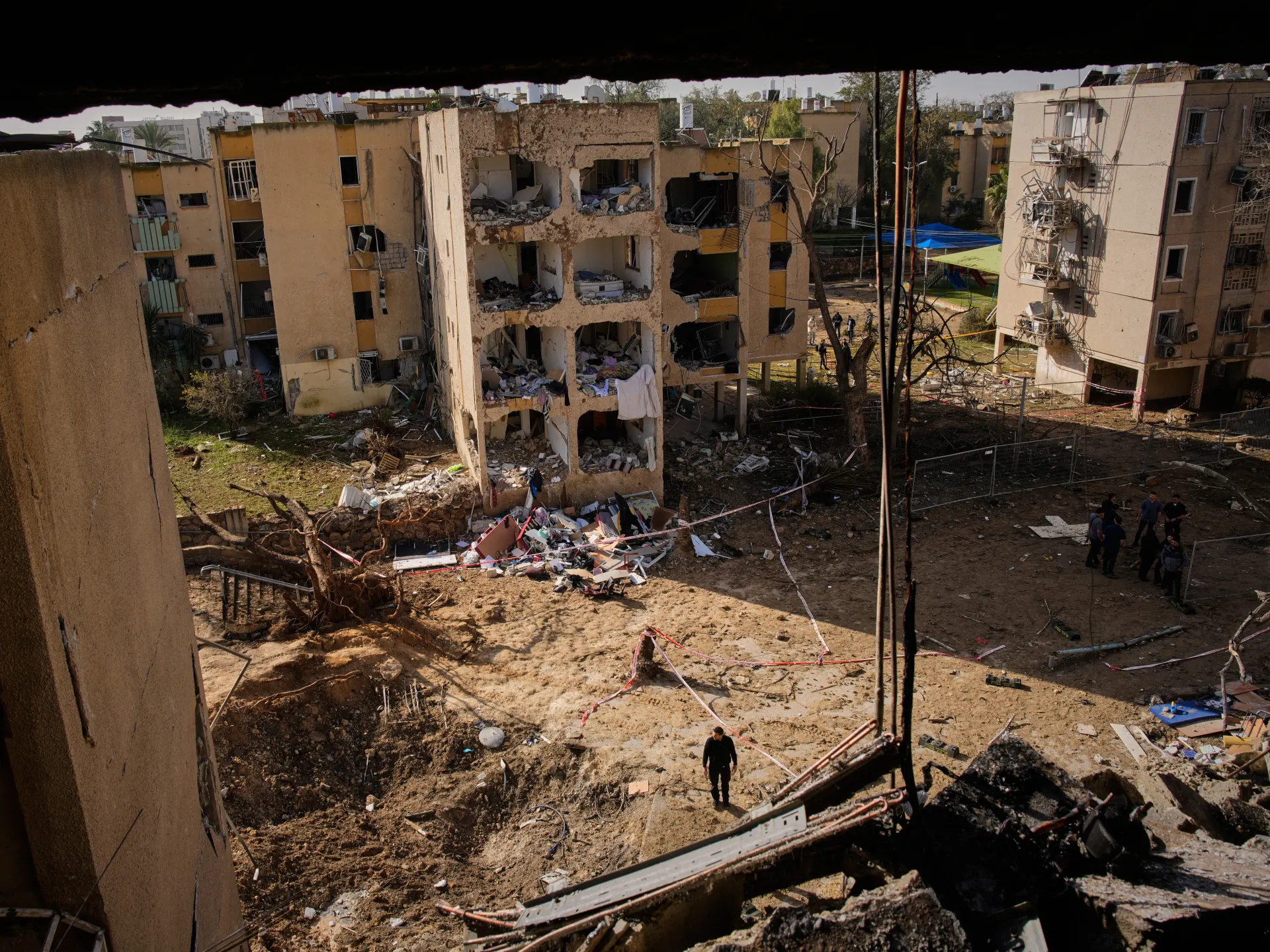
Iranian missiles have struck the towns of Arad and Dimona near an Israeli nuclear research centre in what Iran says was a response to an Israeli attack on its Natanz nuclear facility in Isfahan province.
At least 180 people were wounded in Saturday’s attack, and hundreds of people have been evacuated from the strategic towns as the Israeli-United States war on Iran is seemingly entering a new, more lethal phase of fighting.
Recommended Stories
list of 3 itemsend of list
Israeli Prime Minister Benjamin Netanyahu said his country had a “very difficult evening in the battle for our future”. There have been at least 4,564 people wounded in Israel, according to the Ministry of Health, since the start of the war on February 28.
Analysts said that while Israel has regularly waged military campaigns on Gaza, the occupied West Bank, Lebanon and elsewhere, it is rare for the Israeli public to feel the effects of war like it has over the past three weeks.
In Palestinian territory, including Gaza, Israeli forces have used disproportionate force against armed groups, who use rudimentary rockets to fire at Israel. Israel’s war on Gaza has been called a genocide by scholars and rights groups.
With Saturday’s high casualty count, the attacks in Arad and Dimona raise a question: Has Israel underestimated Iranian military capabilities?
What weapons is Iran using?
Defence analysts described Iran’s missile programme as the Middle East’s largest and most varied. Developed over decades, it contains ballistic and cruise missiles and is designed to give Tehran reach even despite its lack of a modern air force.
Iran has short- and medium-range missile systems and longer-range land-attack and antiship cruise missiles.
Iran’s short-range ballistic missiles have a range of roughly 150km to 800km (93 to 500 miles) and are built for nearby military targets and rapid regional strikes.
Their core systems include the Fateh variants: Zolfaghar, Qiam-1 and older Shahab-1/2 missiles. Their shorter range can be an advantage in a crisis. They can be launched in volleys, compressing warning times and making pre-emption harder.
Those medium-range systems include the Shahab-3, Emad, Ghadr-1, the Khorramshahr variants and Sejjil. They also have newer designs like Kheibar Shekan and Haj Qassem.
Iran’s land-attack and antiship cruise missiles include the Soumar, Ya-Ali and the Quds variants, Hoveyzeh, Paveh and Ra’ad.
The longest reaching ballistic missiles, the Soumar, have a range of 2,000km to 2,500km (1,243 to 1,553 miles). However, it was reported that two Iranian missiles were fired late on Thursday or early on Friday on Diego Garcia, the site of a joint US-United Kingdom military base in the Indian Ocean that is 4,000km (2,485 miles) from Iran. The UK said the attack failed, and an Iranian official denied firing the missile.
Former Iranian Supreme Leader Ali Khamenei had previously limited Iranian missile ranges to 2,200km (1,367 miles) but removed that limit after Israel’s 12-day war on Iran in June. The US joined Israel in that war as well, carrying out one day of attacks on Iran’s three main nuclear facilities.
“Iran has also used cluster munitions in its attacks on Israel. Each kind of warhead the Iranians have also uses a cluster warhead,” Uzi Rubin, founding director of Israel’s missile defence programme and a senior fellow at the Jerusalem Institute for Strategy and Security, told the US news agency Media Line.
What is a cluster munition or warhead?
Instead of a single explosive payload, a cluster warhead disperses multiple bomblets.
“The tip of the missile, instead of containing a big barrel of explosives, contains a mechanism which holds on to a lot of small bombs. And when the missile approaches the target, it opens its skin, it peels off and it spins around and the bomblets are released and released into space and fall on the ground,” Rubin told Media Line.
He added that Iranian cluster warheads may contain 20 to 30 bomblets or 70 to 80, depending on the missile.
These munitions are not new for Iran either. Iran reportedly also used cluster munitions in the 12-day war.
Amnesty International called Iran’s use of cluster munitions during that war a flagrant violation of international humanitarian law while Israel has also been accused of using cluster bombs in Lebanon.
Cluster munitions were banned in 2008 when the Convention on Cluster Munitions was adopted. Neither Iran nor Israel are signatories to the convention.
Why are they making an impact now?
An Israeli military spokesman said Israel’s air defence systems failed to intercept some of the Iranian missiles that hit Arad and Dimona despite being activated. He said Iran’s weaponry was not “special or unfamiliar” and an investigation was under way.
So why are these cluster munitions now making an impact? There are a few reasons.
For a ballistic missile equipped with cluster bomblets to be intercepted, it must happen before the payload opens and releases the submunitions. After the payload opens, the missile goes from a single point of attack to multiple points, making it difficult to stop.
On Thursday, The Times of Israel reported that the Israeli air force will start conserving interceptors. Military officials reportedly said at the time that Iranian cluster bombs are unlikely to cause significant harm if people have taken shelter and, therefore, may avoid shooting down some of them.
What is next?
In the next stage of the war, Iran, the US and Israel may continue to target important infrastructure.
The US and Israel struck Iran’s Natanz nuclear facility on Saturday, according to the Iranian Atomic Energy Organisation. This facility in central Iran is one of the country’s most important uranium enrichment sites, about 220km (135 miles) southeast of Tehran.
Israel previously struck fuel storage facilities in Tehran, leading to vast, toxic smoke over the Iranian capital. For its part, the US previously hit Kharg Island, Iran’s oil export hub, and threatened to do it again.
Iran has essentially closed the Strait of Hormuz, a vital chokepoint for global shipping and oil transport, and has targeted military bases and crucial energy infrastructure across Arab Gulf countries.
US President Donald Trump demanded the reopening of the strait and threatened to begin hitting energy infrastructure should Iran not comply.
“If Iran doesn’t FULLY OPEN, WITHOUT THREAT, the Strait of Hormuz, within 48 HOURS from this exact point in time, the United States of America will hit and obliterate their various POWER PLANTS, STARTING WITH THE BIGGEST ONE FIRST,” Trump wrote on Truth Social at 23:44 GMT on Saturday.
As the United States-Israeli war on Iran enters its fourth week, the conflict seems to have escalated beyond President Donald Trump’s control.
The Iranian government has been able to endure the killings of its top political and military leaders and has launched retaliatory attacks on Israel and Gulf countries despite weeks of air strikes.
Recommended Stories
list of 4 itemsend of list
Tehran has also been able to impose a de facto blockade of the Strait of Hormuz, a narrow waterway through which a fifth of the world’s oil and liquefied natural gas supplies pass, sending oil prices soaring. Analysts said the conflict risks unleashing a global recession. And that has put pressure on Trump, prompting his administration to allow the sale of sanctioned Russian oil to try to ease the energy crisis and pressure allies to police the strait, so far unsuccessfully.
Trump’s response in how to deal with the situation has been anything but coherent.
On Saturday, Trump upped the ante, issuing a threat to “obliterate” Iran’s power plants if Tehran does not reopen the Strait of Hormuz within 48 hours. This came a day after he said the US was “winding down” its military operations in Iran.
Analysts said Trump launched the war without a clear goal and misjudged how Tehran would respond. The conflict has expanded across the Middle East.
So is Trump looking to exit the war – or escalate it?
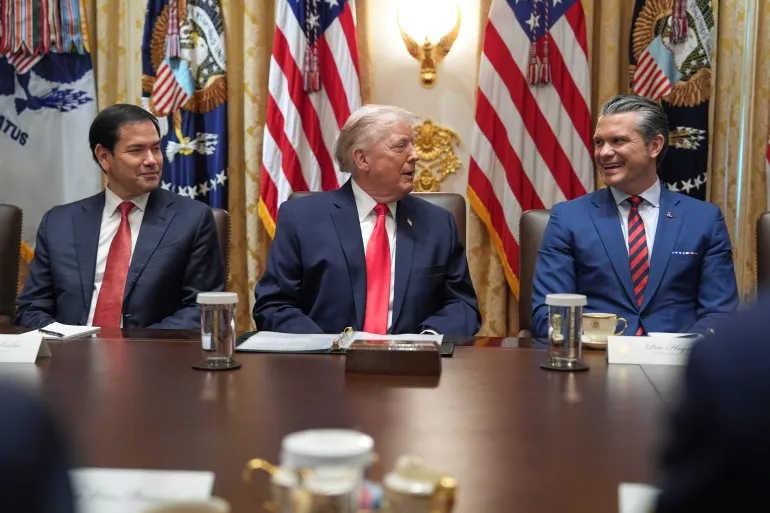
From left, US Secretary of State Marco Rubio, President Donald Trump and Defense Secretary Pete Hegseth attend a cabinet meeting at the White House [File: Evan Vucci/AP]
Trump’s mixed messaging on the Iran war
Here’s a brief look at the changing statements from Washington:
Is the war winding up or widening?
While one statement from Trump signalled that the US is considering “winding down” the war on Iran, another one indicated that the conflict would widen in the coming days.
On Saturday, Trump posted on his Truth Social platform that Washington was “very close to meeting our objectives as we consider winding down our great Military efforts in the Middle East with respect to the Terrorist Regime of Iran”.
Trump listed the goals of the war as: completely degrading Iran’s missile capability, destroying its defence industrial base, eliminating the Iranian navy and air force, never allowing Iran to get even close to having nuclear weapons, protecting Middle Eastern allies, and guarding and policing the Strait of Hormuz.
Both Trump and Israeli Prime Minister Benjamin Netanyahu have claimed repeatedly in the past few days that Iranian military capabilities have been “completely destroyed” even as Tehran continues to retaliate against Israel and strike countries in the region.
US military officials said they have carried out heavy bombardments of Iran’s coast, including with bunker buster bombs, but still have not been able to limit Tehran’s capacity to disrupt the Strait of Hormuz.
On Saturday, Trump said the US “has blown Iran off of the map” and insisted that he has “met my own goals … and weeks ahead of schedule!” He also reiterated that Iran’s “leadership is gone, their navy and air force are dead, they have absolutely no defense, and they want to make a deal”.
Iranian leaders have consistently denied reaching out to the US with a ceasefire offer.
Just an hour later, Trump returned to his Truth Social platform with a warning for Iran.
“If Iran doesn’t FULLY OPEN, WITHOUT THREAT, the Strait of Hormuz, within 48 HOURS from this exact point in time, the United States of America will hit and obliterate their various POWER PLANTS, STARTING WITH THE BIGGEST ONE FIRST!” Trump wrote.
Iran has since responded by saying it will hit energy sites across the Middle East if its power facilities are targeted. It has already fired hundreds of missiles and drones on Gulf countries, targeting US assets as well as energy facilities.
Between Trump’s claims to be “winding down” operations and upping the ante later, his administration announced it is sending three more warships to the Middle East with about 2,500 additional Marines.
The US military said about 50,000 military personnel are already deployed for the war against Iran.
(Al Jazeera)
When will the war on Iran end?
That has been among the foremost questions posed to US officials, including Trump, since the war on Iran was launched on February 28.
The next day, Trump told the Daily Mail that “it will be four weeks or so. It’s always been about a four-week process.” A day later, Trump said at the White House: “We projected four to five weeks, but we have capability to go far longer than that.”
On March 8, Defense Secretary Pete Hegseth told the CBS TV network’s 60 Minutes programme: “This is only just the beginning.” The next day, the US president told the same channel that he thinks “the war is very complete, pretty much.” And the US military operation was “way ahead of schedule”.
Then, on March 9, Trump said one could say the war is “both complete and just beginning”. Later the same day, the president said: “We’ve already won in many ways, but we haven’t won enough” and promised to go further and harsher against Iran.
On March 11, Trump said: “We don’t want to leave early, do we? We’ve got to finish the job.”
Why did US and Israel launch strikes on Iran?
Responses to this question are perhaps the most telling about US posturing in the war against Iran.
On March 2, Hegseth said the attacks were aimed at ending “47 long years” of war by “the expansionist and Islamist regime in Tehran” and were launched because Iran refused to negotiate with the US.
Hours later, Marco Rubio, the secretary of state, told reporters the US knew Israel was about to strike Iran, adding that the Trump administration believed the US needed to launch a pre-emptive strike before Iran’s retaliation potentially targeted US forces. “We went proactively in a defensive way to prevent them from inflicting higher damage,” he said.
This sparked a massive row in Washington with critics saying Israel had forced the US into war with Iran. Soon Trump rebutted his top diplomat, saying: “They [Iran] were going to attack. If we didn’t do it, they were going to attack first. … So if anything, I might have forced Israel’s hand.”
The next day, the White House press secretary, Karoline Leavitt, concluded that Trump just had a “good feeling” that Iran would strike so Washington attacked Tehran.
The launch of the war came as Washington and Tehran were scheduled to meet for another round of talks that were started late last year. Before the war, their Omani mediator said a deal was “within reach”.
The US and Israeli assertion that Tehran was on the verge of making a nuclear bomb has not been backed up by the United Nations nuclear watchdog. Last week, US Director of National Intelligence Tulsi Gabbard also told Congress that Iran was not in a position to make an atomic bomb.
Some analysts said the Trump administration was convinced to go to war by Netanyahu, who has been seeking US military intervention in Iran for decades. They said Trump was buoyed by a swift US military operation in Venezuela and did not think through Iran’s strengths before going into the war. In January, the US military abducted President Nicolas Maduro in a military operation in Caracas that took two and a half hours.
US President Donald Trump, left, greets Israeli Prime Minister Benjamin Netanyahu at the White House on September 29, 2025, on the fourth of his six visits to the US during Trump’s second term, which began in January 2025 [Alex Brandon/AP]
What does the conflicting messaging mean for US strategy?
Analysts said the moving goalposts in the Iran war show the policy limits of the current Trump administration as well as its strategy, to some extent, of keeping off-ramps available.
Zeidon Alkinani, a Middle East analyst at the Arab Perspectives Institute, told Al Jazeera that in the earlier days of the hostilities, there appeared to be clearer targets and limited objectives.
“There now seems to be a more chaotic reaction,” he said. He described the attacks as increasingly reciprocal, suggesting strikes on oil or energy facilities could prompt further escalation.
Last week, Iran attacked energy facilities in Qatar and caused “significant damage”, knocking out 17 percent of Qatar’s liquefied natural gas (LNG) export capacity. Qatar produces 20 percent of global LNG supplies. Iran said the attack was in retaliation for Israeli attacks on a gas plant.
Paolo von Schirach, president of the Global Policy Institute, told Al Jazeera that Trump changes his mind “very quickly” and it is hard to predict what his next step could be in the war on Iran.
The analyst said it was unclear to him what “tools” Trump has to end the war.
“We look at his message saying the war is winding down. OK, good. Things are quiet. Maybe there is an off-ramp somehow. But now he says that if the Iranians don’t open the Strait of Hormuz, then we [the US] are going to unleash hell and what have you,” von Schirach noted.
“It is not quite clear to me what he wants and what the tools are to accomplish this.”
Von Schirach added that it would be difficult to predict whether the US could force Iran into submission, given its size and population. Using as a reference Iraq, where 150,000 American soldiers were deployed during the Second Gulf War, the analyst predicted that the US might need as many as half a million soldiers if Trump “wants to take over Iran”.